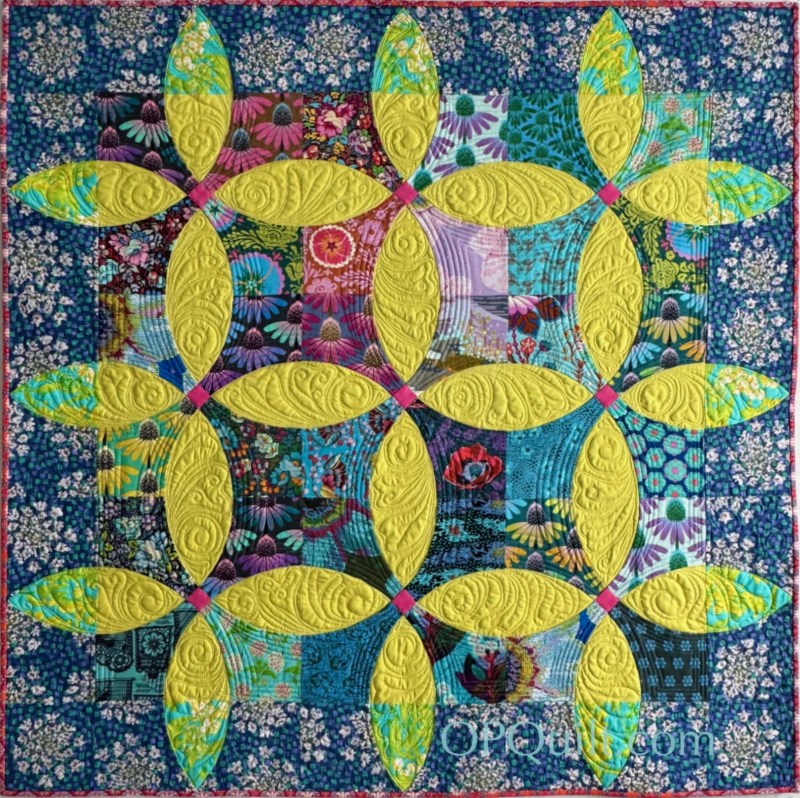
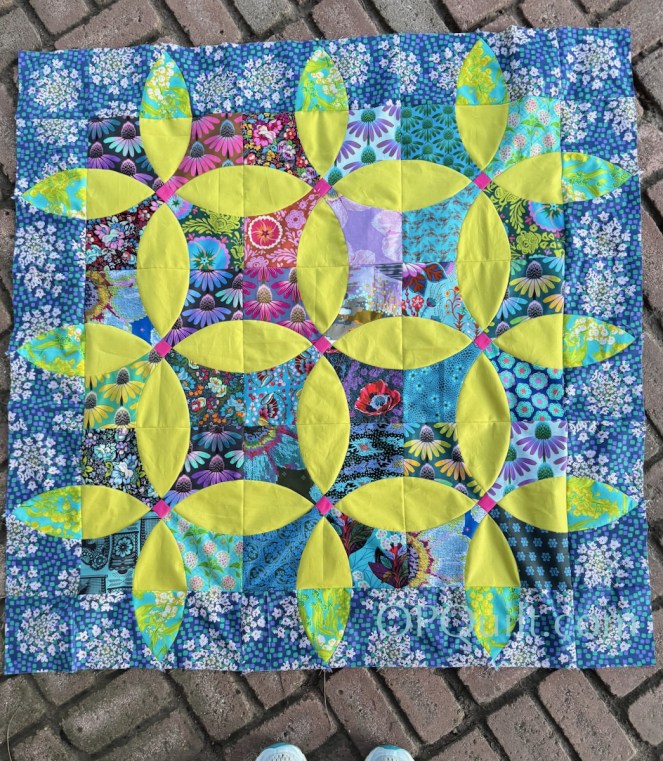
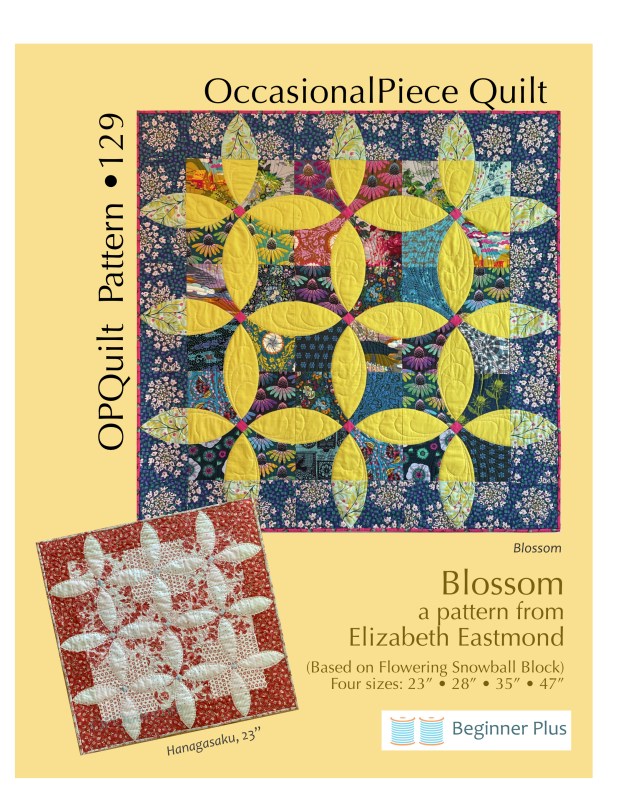
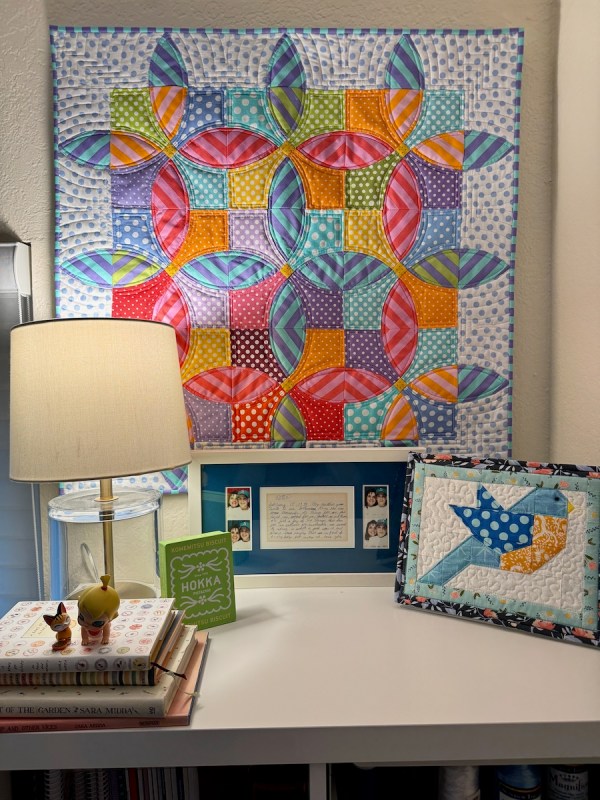
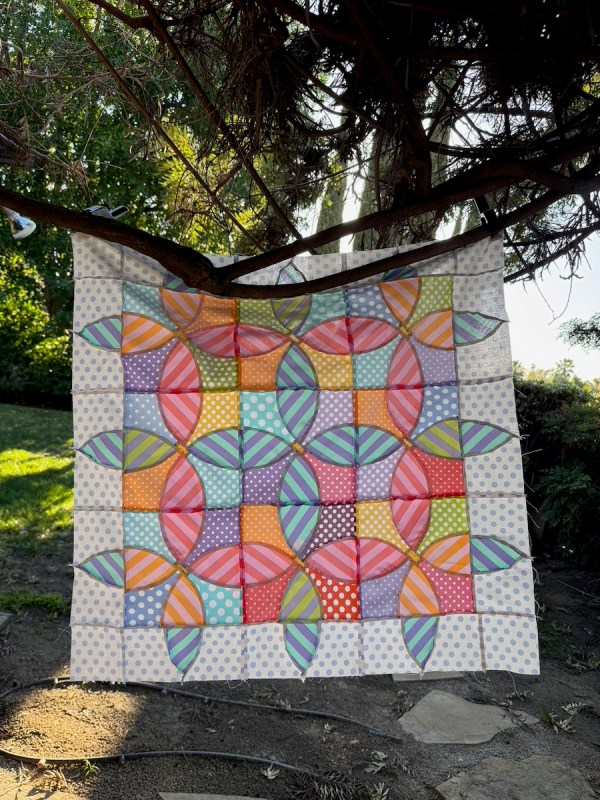
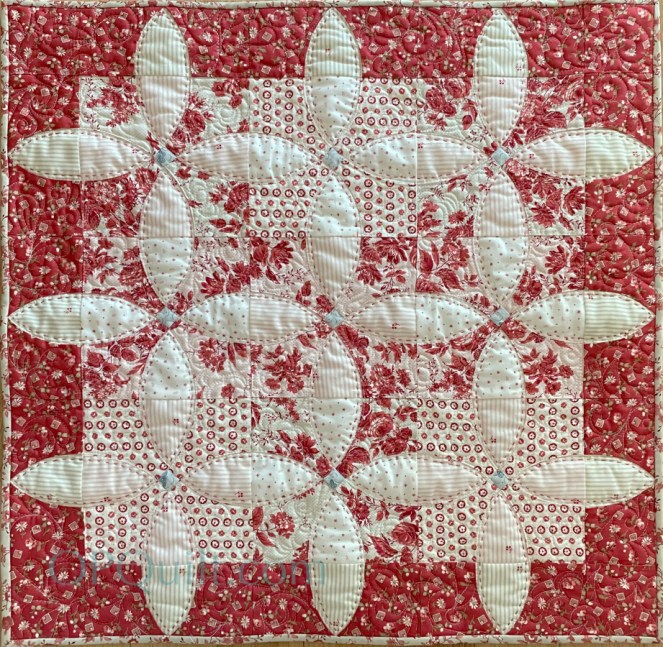
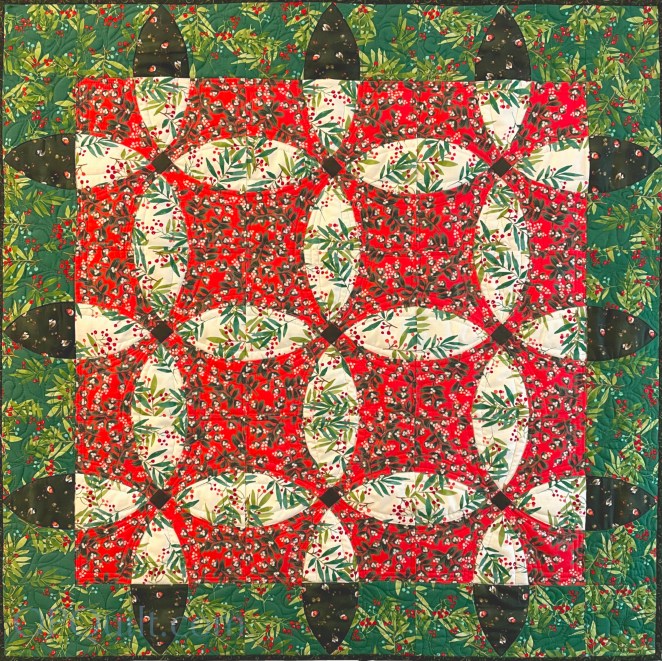
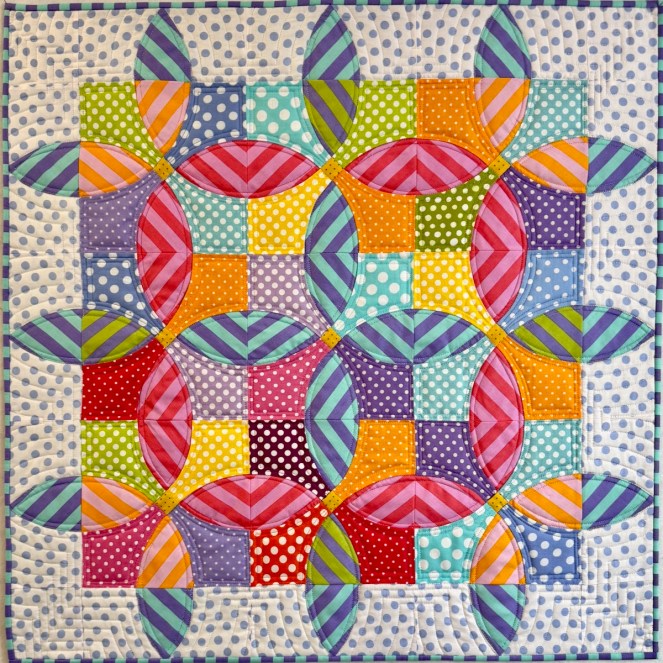
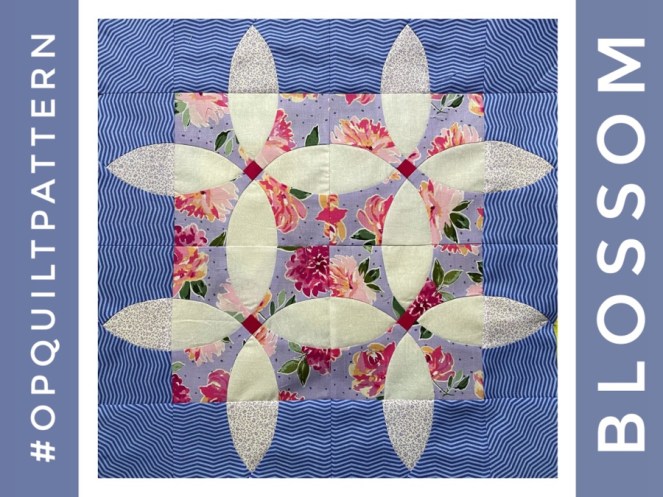
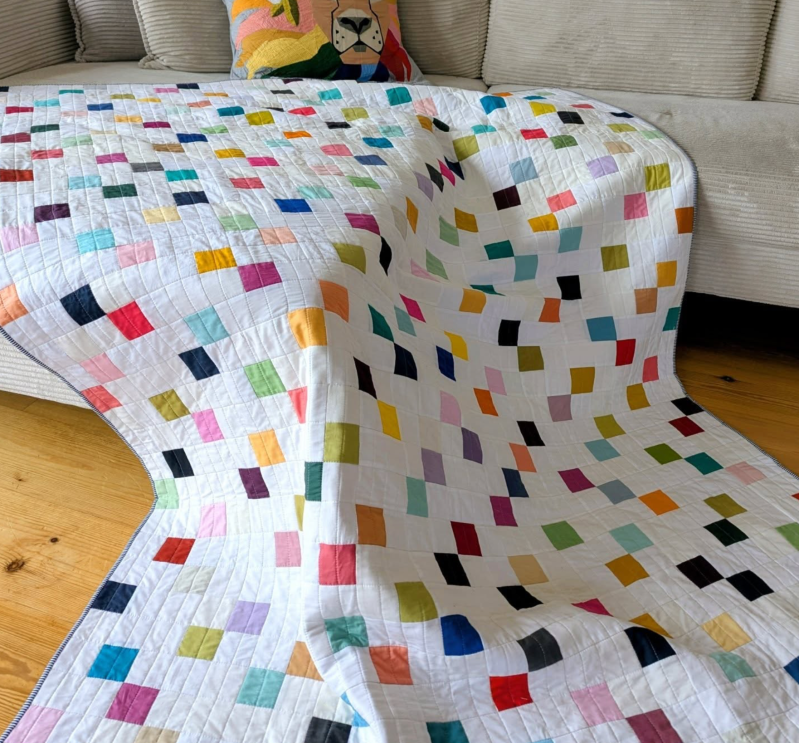
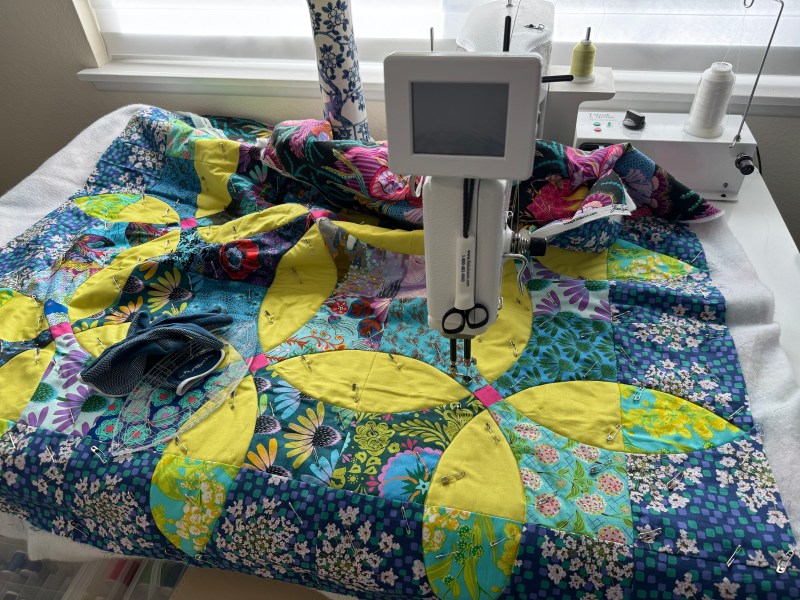
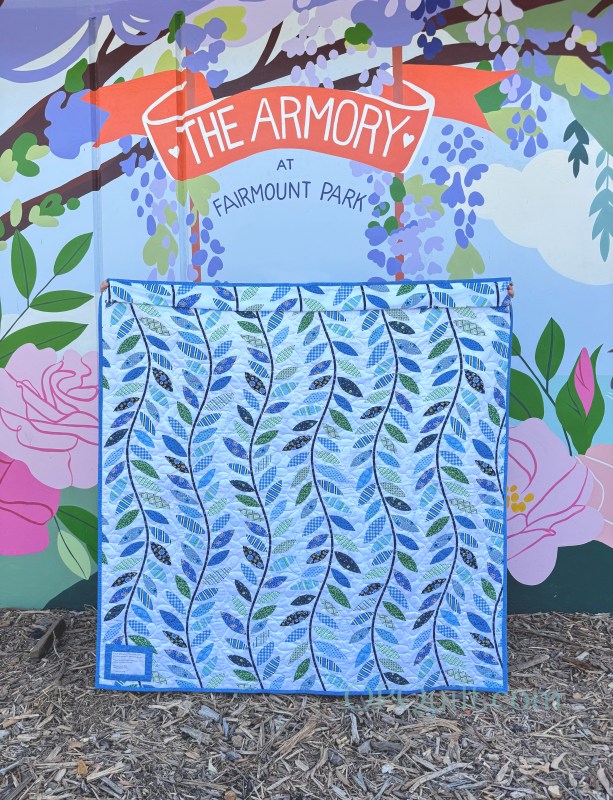
I gave my sister my original Blossom quilt (happily) yet I missed it so much, I determined if I ever found the AMH border fabric again, I would remake it. At Road last year, I found the exact fabric; the personal challenge was on, and now it’s finished.
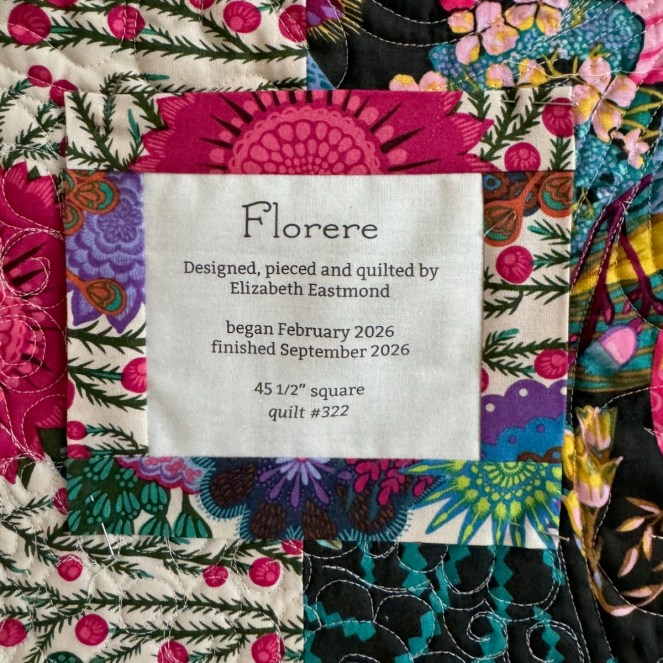
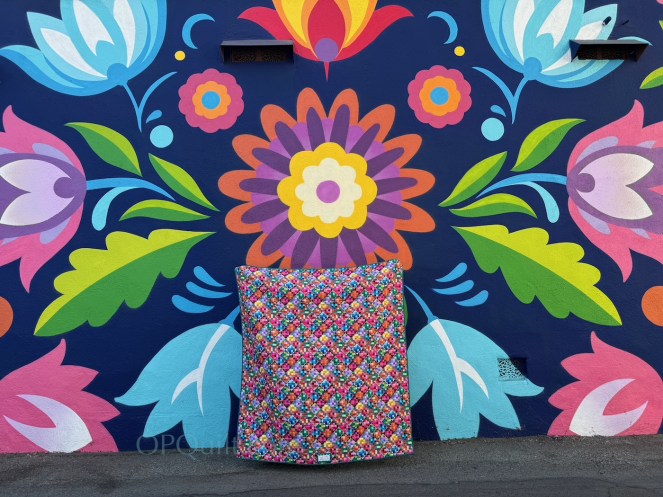
This is quilt #322, and is titled Florere, the Latin word for bloom (or so the internet says). I used a combination of all Anna Maria (and AMH fabrics), Soft and Bright batting, and I quilted it myself using a combination of Superior Magnifico thread and YLI Elite thread.
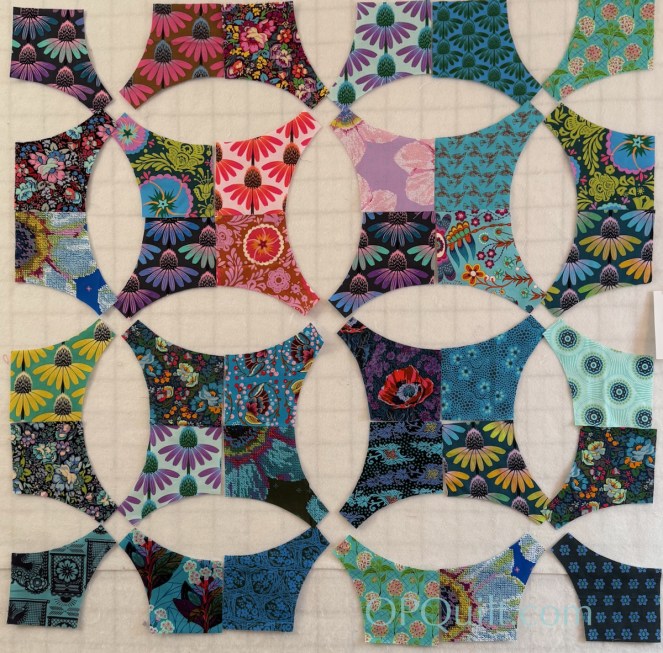
I cut out the 12″ size from my pattern. While many fabrics are similar, there are some changes, as Anna Maria had made some different ones that I wanted to use (like the coneflower fabrics).
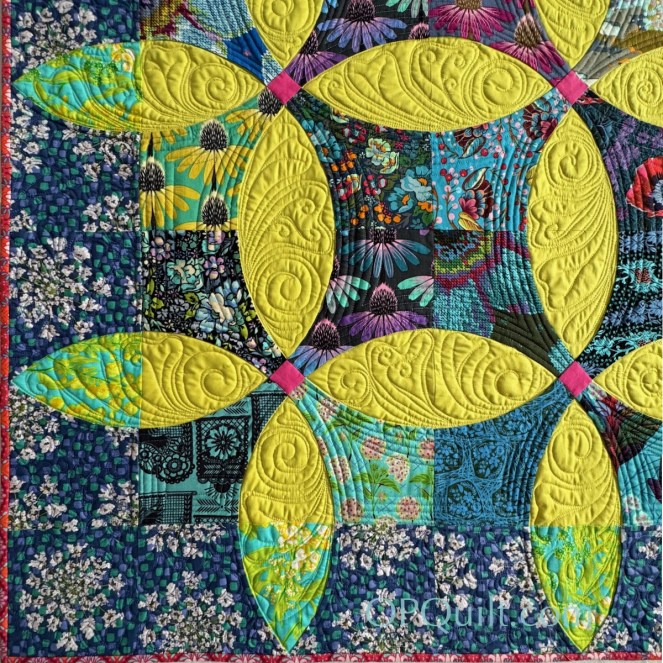
There’s that border fabric. I started cutting this out in February 2026, only a month after Road (not bad).
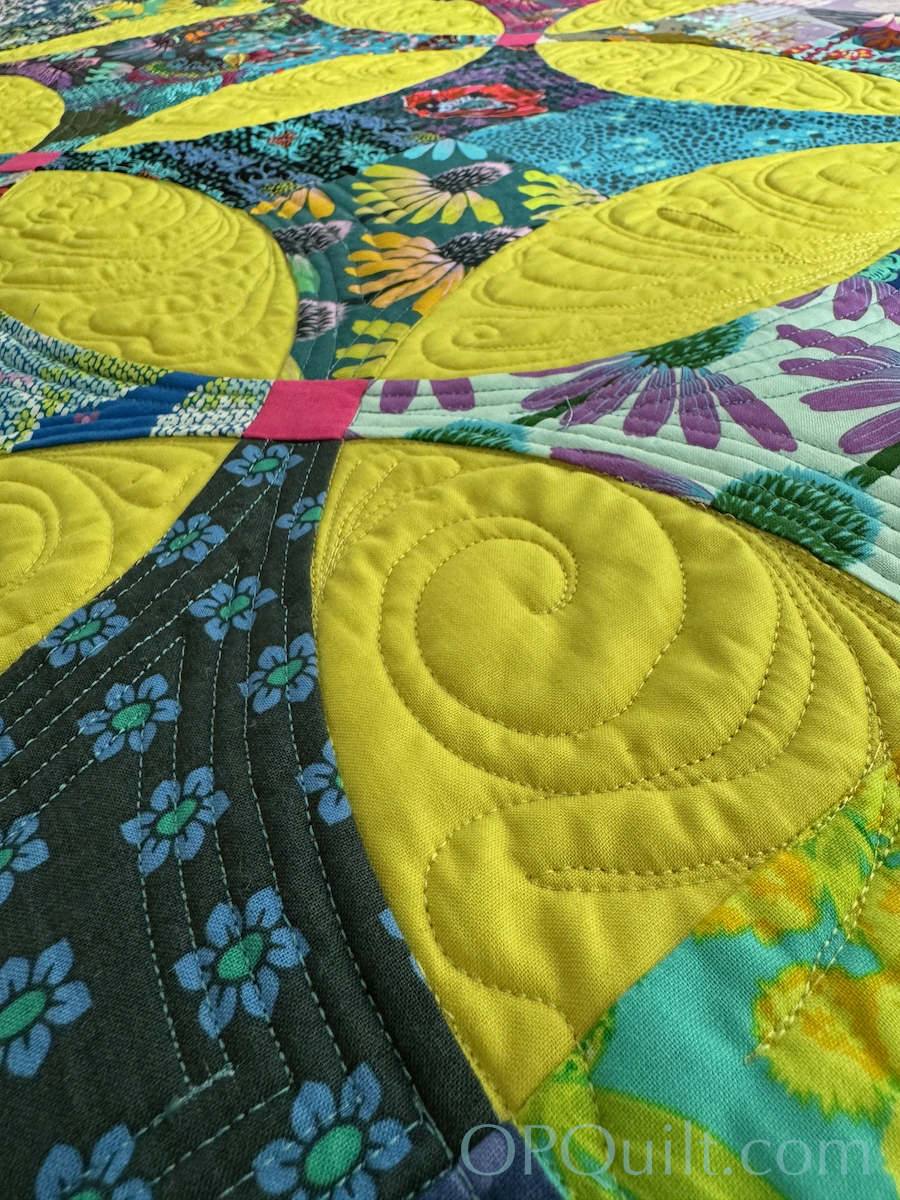
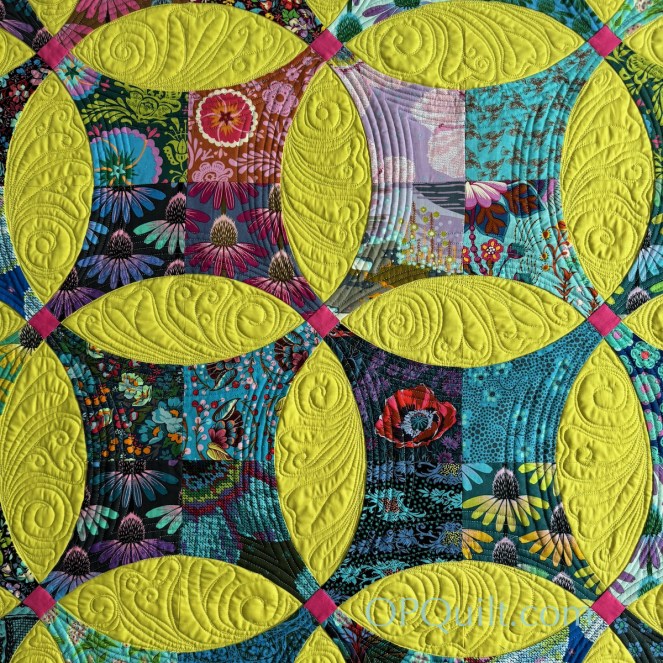
While the top gets finished and pinned, it takes me a while to think of ways to quilt it. I went a little swirlier in the yellow-green petals. (That fabric is a Painter’s Palette Solid.)
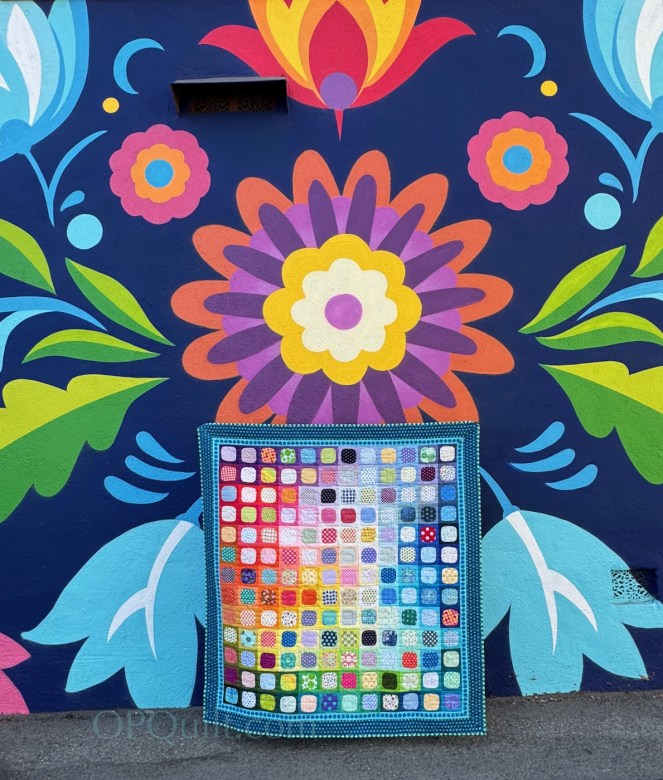
I really liked making this quilt, but it’s good to have it done. My husband found a perfect mural for us for the backdrop, and it echoed all the right colors.
No big thoughts today, just a bit of happiness over the outcome and more than a few photos.
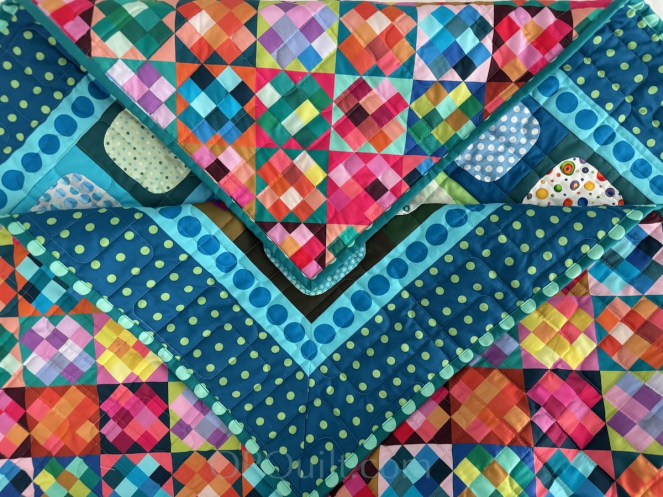
What I found interesting about this backing was that close-up it appeared random. But from a distance, I detected a rhythm of color and pattern.
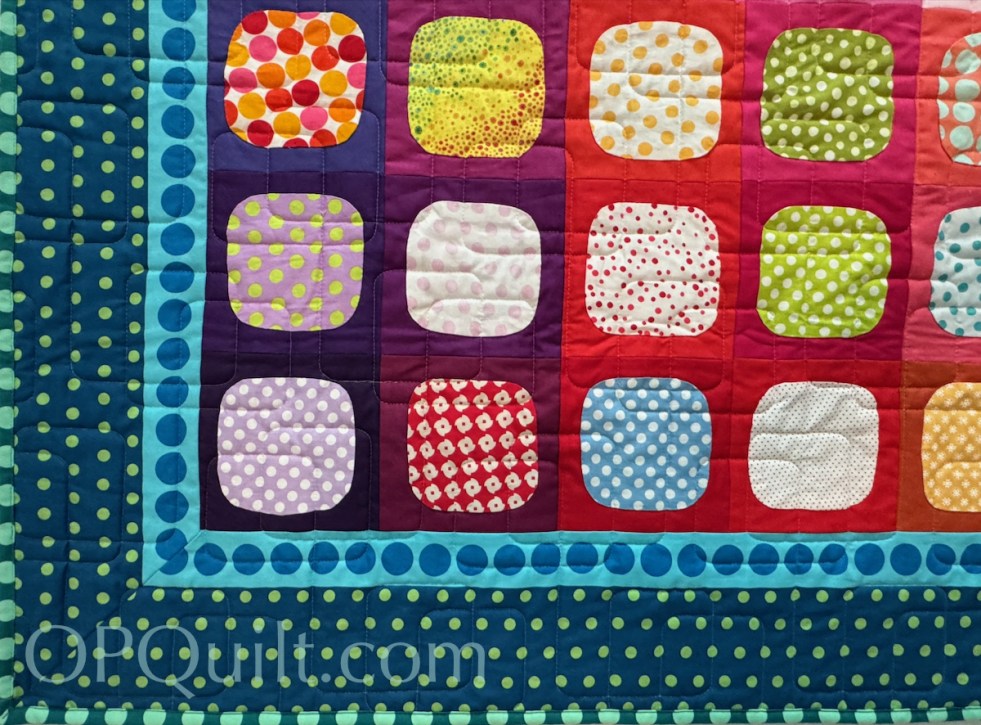
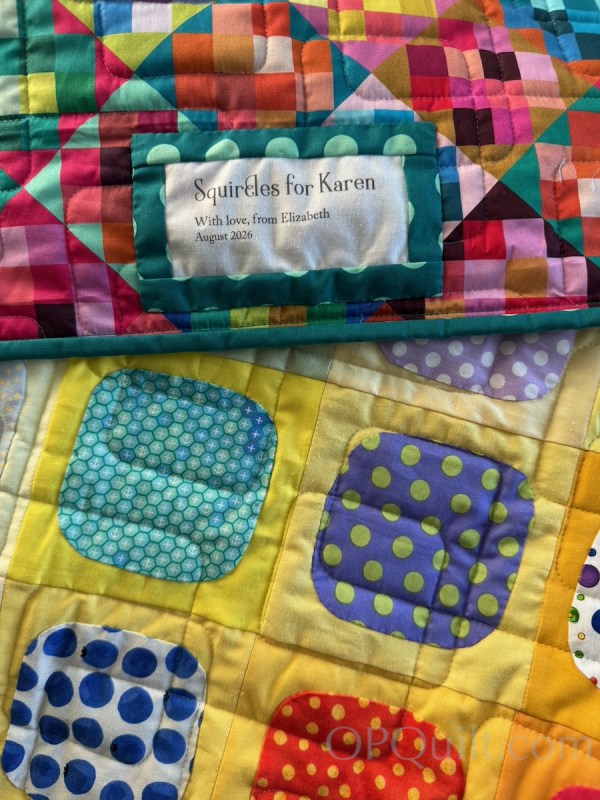
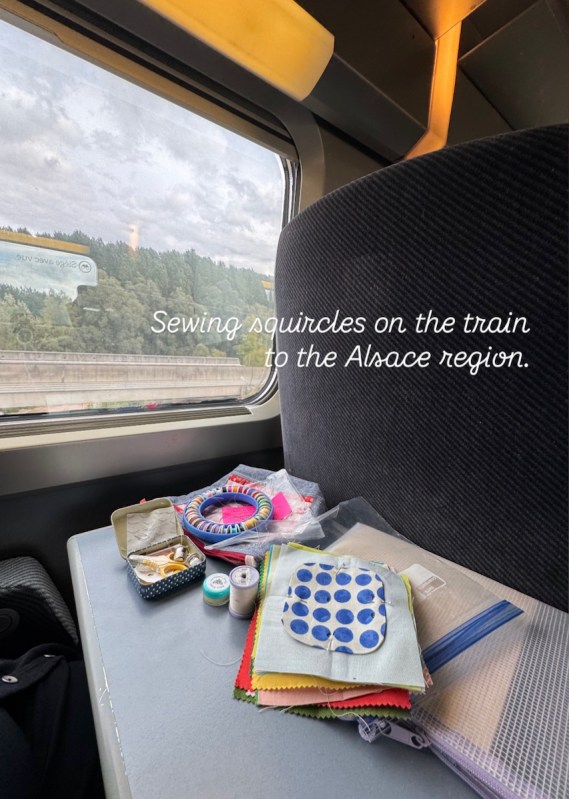
This week I gave it to my daughter-in-law, Karen. When I was trying to figure out the borders, I asked what her favorite colors were: those were the colors I had planned for. Obviously this quilt was meant to be hers, as when she saw the beginnings of the blocks — the squircle (square with rounded shape) — she said that was one of her favorite motifs. And from then on, I stitched with her in mind.
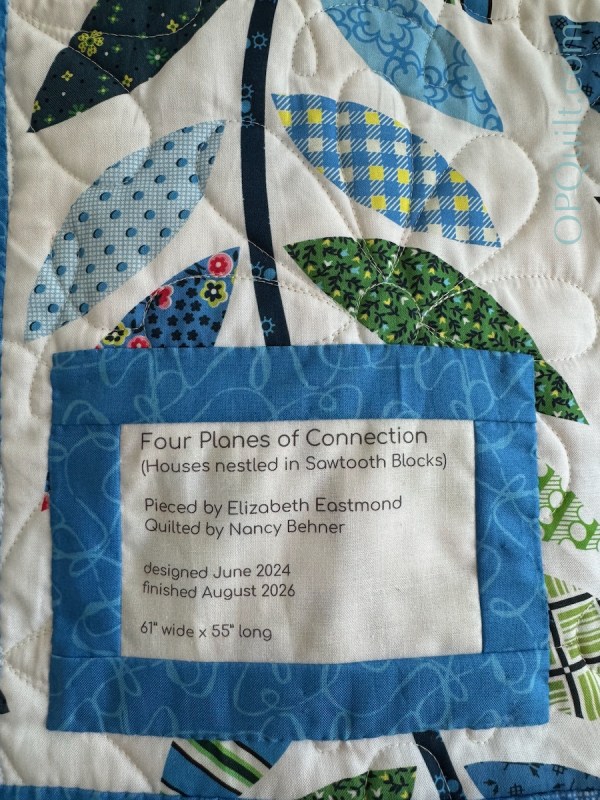
Quilt #321 • Began August 2025 • Finished August 2026 Pieced by Elizabeth Eastmond • Quilted by Nancy Behner • 65 1/2” wide x 71” long FMQ pattern is Four Square Rounded by Urban Elementz • Thread: Superior Microquilter, color 7007
Lots of color in this one. Hope it will be well-loved, and well-used.
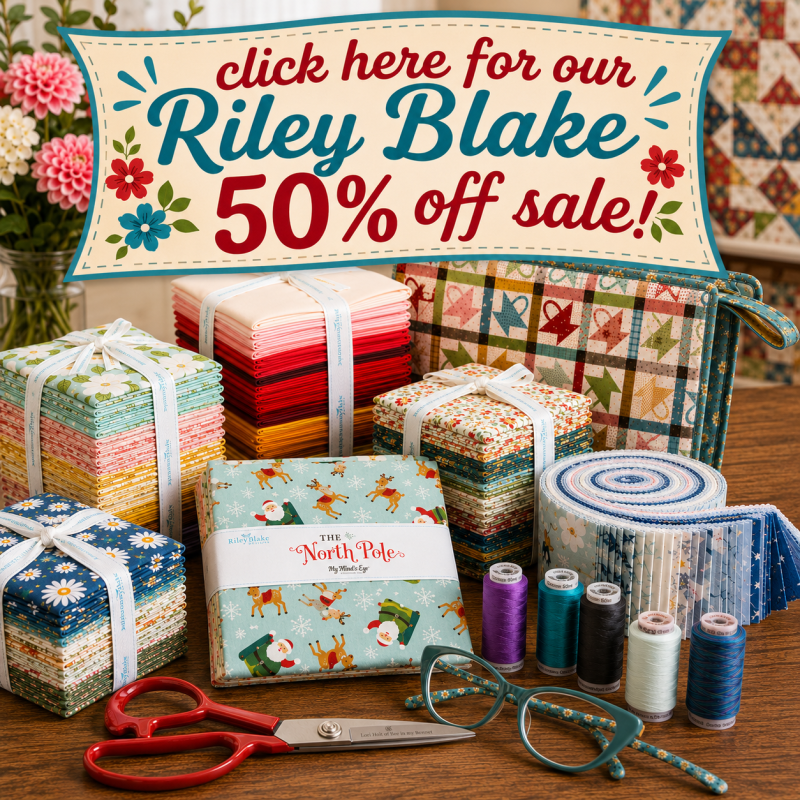
Can I just get this off my chest? I am not a fan of AI, even though — it appears — that we will all soon be swimming in it if we aren’t already. This ad is from a prominent mail-order quilt shop. Love the three parts of the glasses in the front: the lenses part, the eyeglass arms…and the other eyeglass arm, sticking out from the right. Every fat quarter fabric is a perfect shape-replica of the one underneath it/above it.
And then there’s this:
Should I be honored that the Giant Vacuums of AI have hoovered up (if you know the reference, you are showing your age) my blog, the thing that I’ve spent years writing and creating and making quilts and talking and thinking up? And if they’ve come for mine, they’ve come for yours, as well as the text in your gmails, the fun stuff on Instagram and Threads and anything that is online. And now, to make money to pay their data center loans, they are selling MY content back to the world?
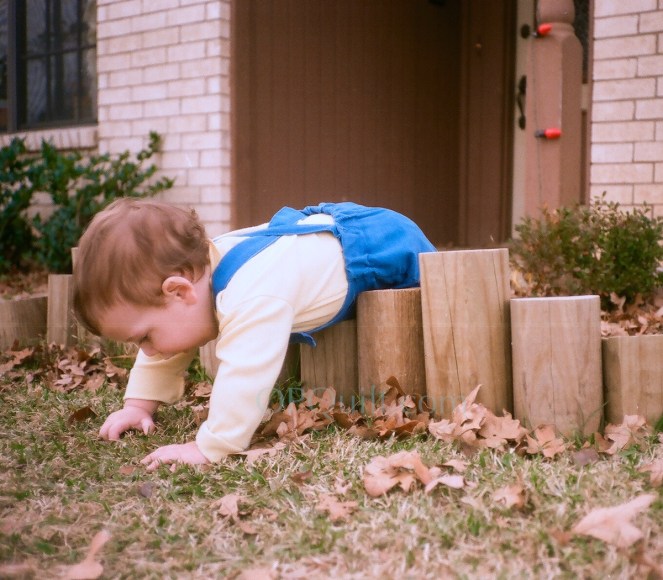
Such a cute baby!
Yes, I’m a bit ragey when I think about this. In my last post, I wanted to grab a picture of a baby crawling. Fifteen years ago, that would have been no problem. I was happy to share my images with others, and they shared their with me. But now every illustration is AI. I don’t want to put AI on my blog — I want it an AI-free zone. So I went back in my personal photo archives and pulled up a picture from long ago of my child, knowing that by putting it on my blog, I was now subjecting it to the Giant Vacuums of AI (I should copyright that phrase) and now it will also become AI by the very fact that it’s been published online. All my quilts are not now “my” quilts. And if you’ve posted online, yours aren’t either.
Ok, rant over. Sigh. Do I feel any better? Please be assured that I don’t use ANY AI to generate any writing either here on the blog, or in the emails I type back to you.
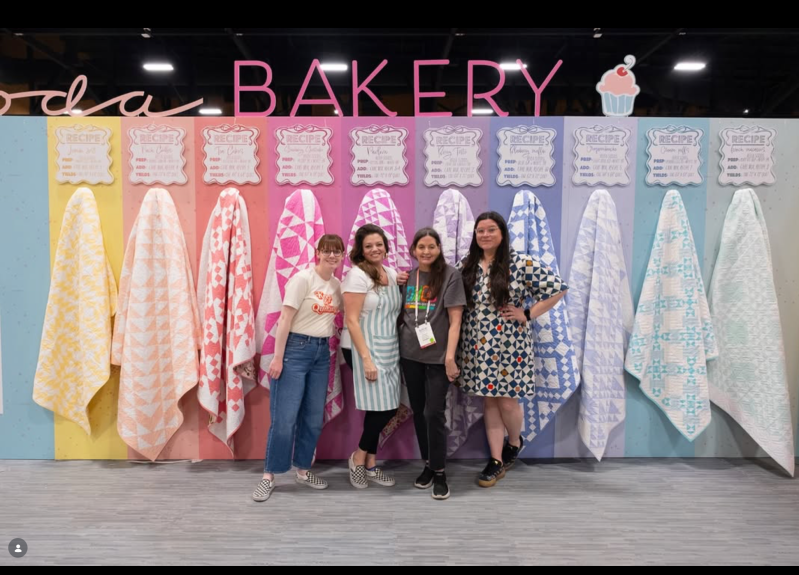
Moving on…A random shot from Moda’s display at Market a couple of years brings joy to my heart: look at these amazing (mostly) two-color quilts! We generally think in red/white, or blue/white, but definitely I want to make a periwinkle/white quilt now! (Add it to the list, she hollers!)
For a mere $5,000, you, too, can wear a Gee’s Bend Jacket made out of old jeans. Don’t forget your $3,000 tote bag!
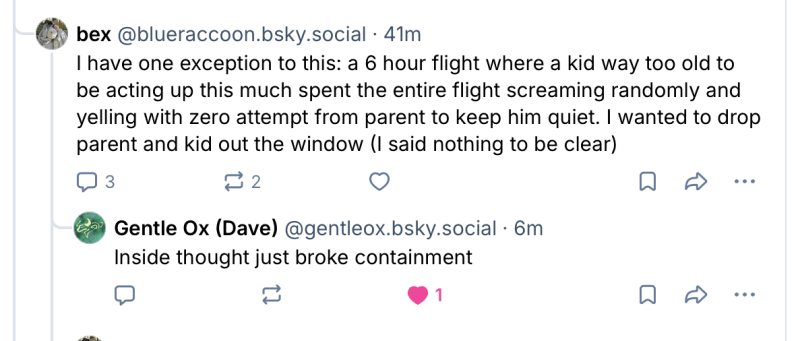
In a recent social media post about screaming children on airplanes, I read this:
“Inside thought just broke containment,” may apply to those paragraphs at the beginning of this blog. I apologize.
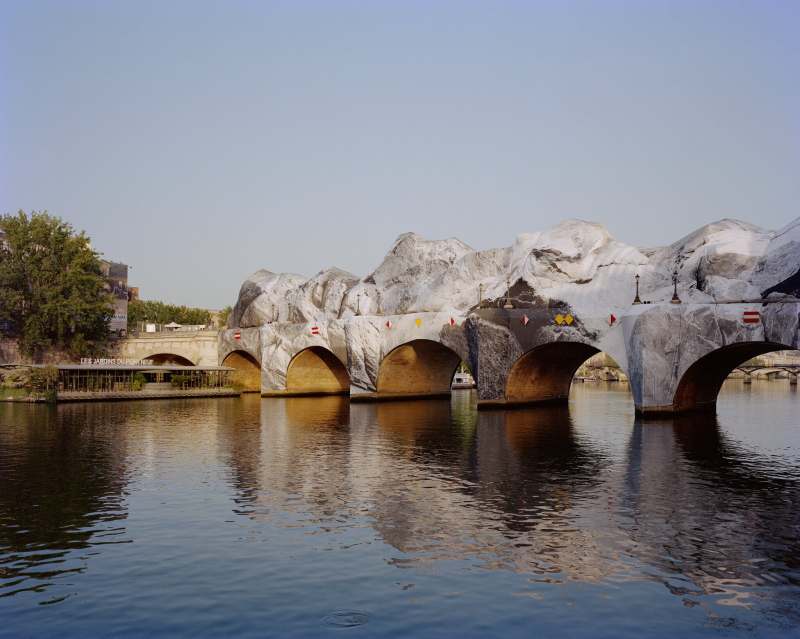
Recently an artist covered the Pont Neuf Bridge in Paris in order to make it look like a big mountain.
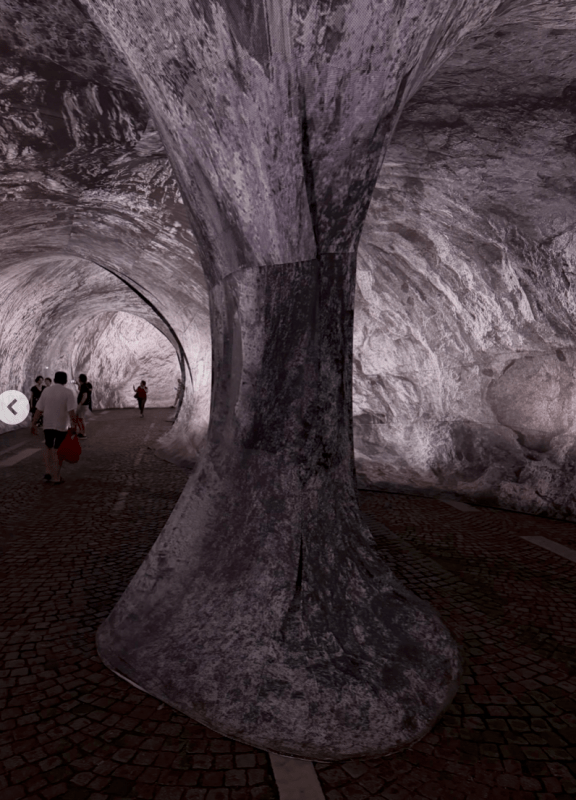
And inside, you could walk through tunnels to some interesting soundscape music. Please click on the Instagram of @kristinetghardeberg to listen. And thank you to her for posting!
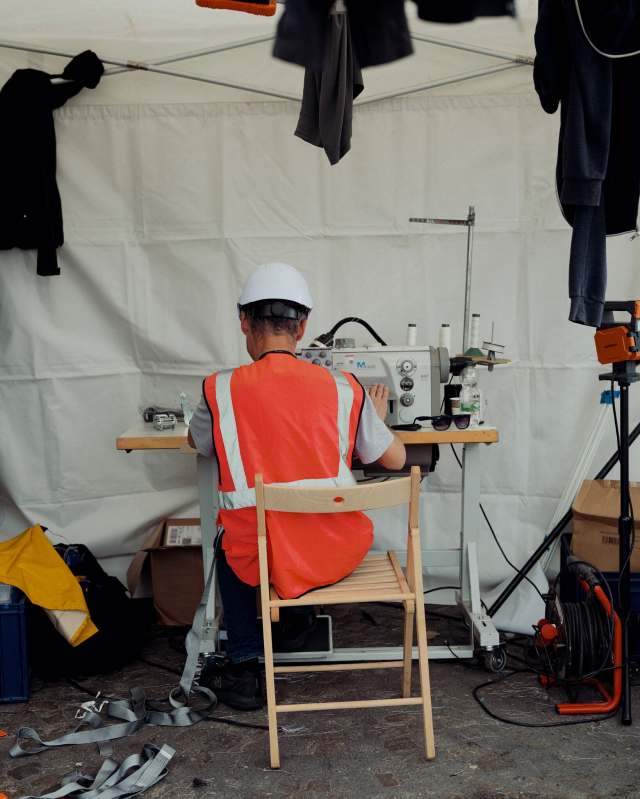
This is why that is so fascinating to me: here’s the guy sitting at his (industrial) sewing machine, cranking it out. Oh, I’m sure those belts and geegaws also played a part.
I don’t know about you, but this is more my speed this summer. I did finish up a couple of quilts, but the energy overall has been so incredibly low, for some reason. Good thing I make quilts to nap with! And of course, that’s a screen shot from somewhere and I don’t know who to give credit to. When I did a Google Search, a whole lot more really fun “confetti” quilts pop up. Now I have lots more ideas of what to do with all those leftovers squares from my Oh! Granny quilt.
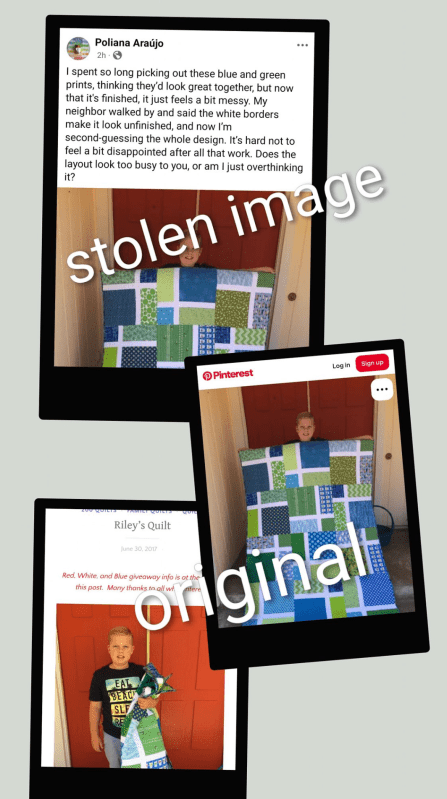
I don’t know who Poliana Araújo is, but really? She spent “so long picking out these green and blue prints?”
And even though I have this declarative statement on my website? Happily my wonderful readers saw the stolen quilt images and connected it to this one that Riley and I made some years ago, and called her out on it. Hmmm. Is this the early version of the Giant Vacuum of AI? Link to her ill-gotten Facebook post.
BACKGROUND UPDATING IN PROGRESS!
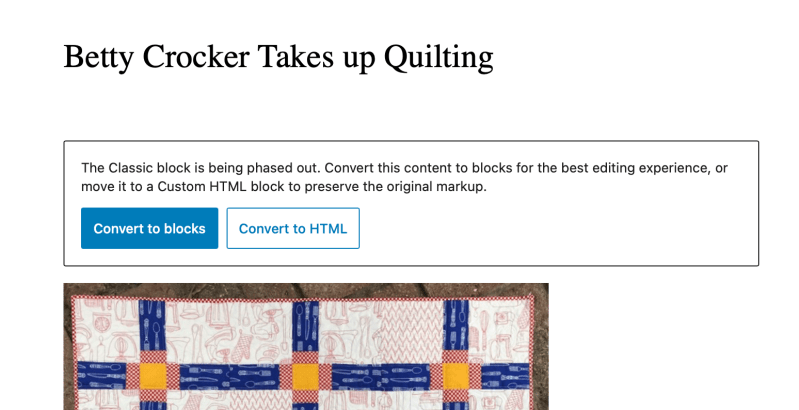
Apparently the “Classic Block” is being phased out. So I’ve been busy updating all my posts to the recommended “Block” style. Besides working on that, I’ve also been working on updating the Blog Index that shows a photo from every blog post, as well as a little bit of the writing.
Here’s a video showing a page from far back…and right in the middle of it is Riley, making his quilt! (Sure hope this works on your computer/browser/whatever.)
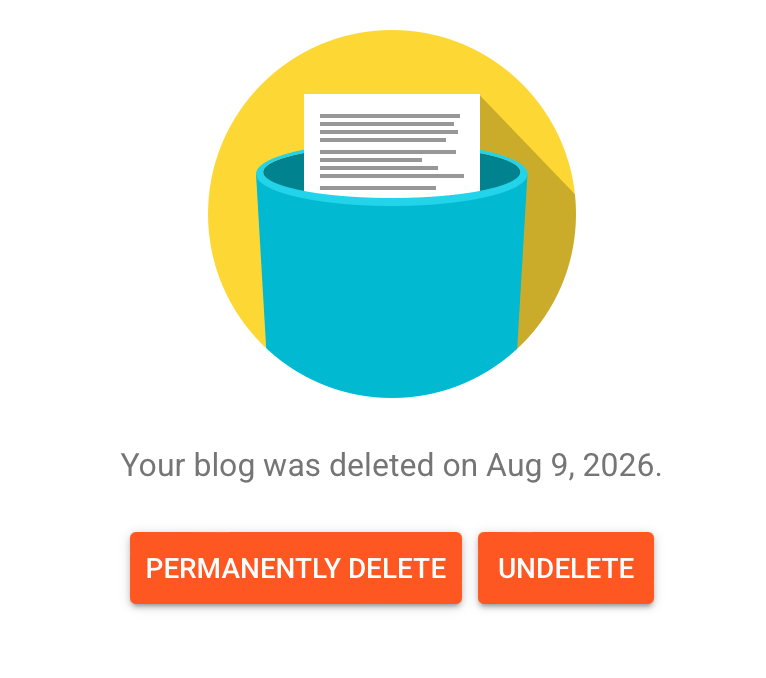
These represent the blog Four-in-Art blog on Blogspot/Blogger, as well as the Mid-Century Modern blog. I was supposed to delete them several years ago, but just now (sadly) said good-bye. Here’s a record of the quilts I made in the Mid-Century Modern, as well as other bees. The Four-in-Art quilts are scattered through the Quilt Index, above, or you can do a search by typing that phrase into the cute little box, above right.
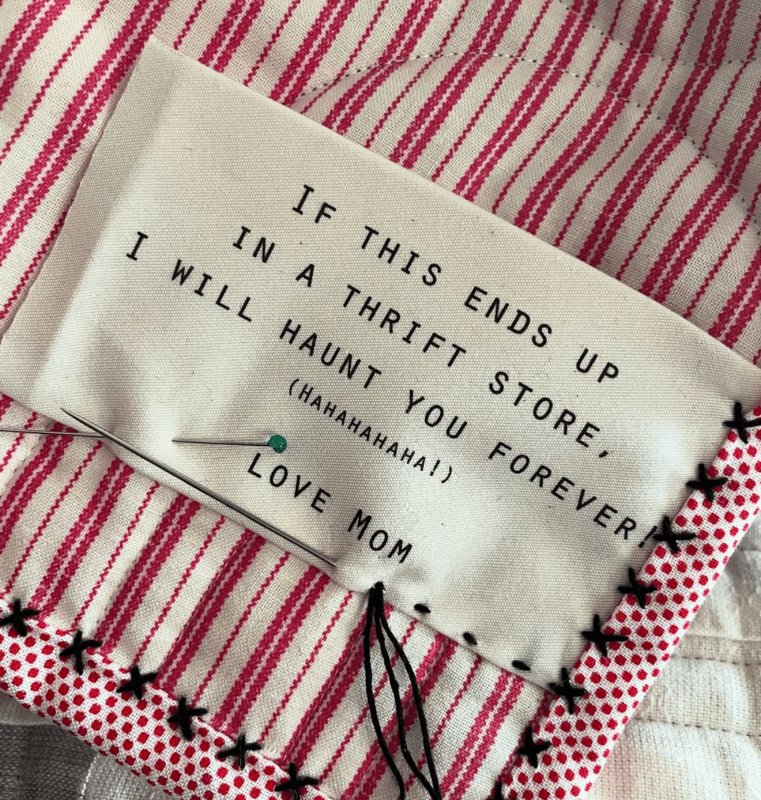
As I’m starting to distribute my quilts more frequently now, I *need* this label! Clever way to tack down a binding, too.
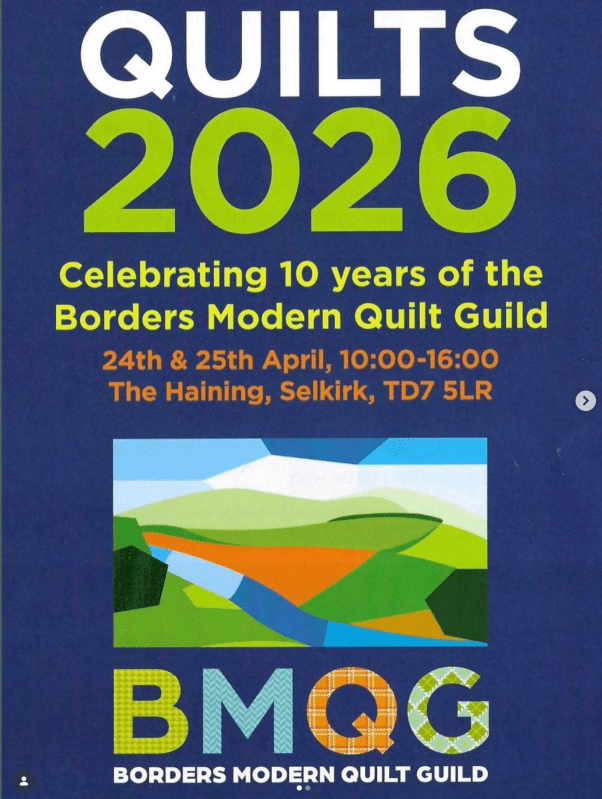
As my husband and I are taking a trip to Scotland soon, I’ve been looking at what connections I can make there with quilters. I’m a bit too late for this one!
However, I did find a quilt shop in Edinburgh, as well as a tartan shop (or twenty).
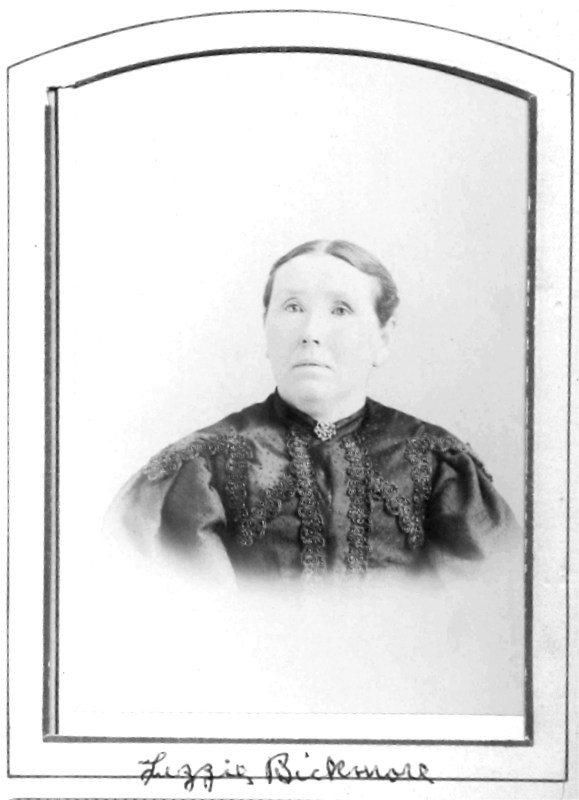
I was named for two “Elizabeth” great-grandmothers. One of them was my great-grandmother who came from Haddington, Scotland. (The other great-grandmother was born in England). Because of this, I’m figuring out bus routes and times, so I can pay a visit to that village, as my mother did when she visited Scotland some time ago. My husband’s forebears also immigrated from the Edinburgh area, so we have another small village to visit for his relatives, too.
I’ve been doing my searching on Family Search, an online archive of lineage and memories. You can find your relatives, too, by going there and setting up an account. I’m not a genealogist, by any stretch, but my friend Dayna is and she’s teaching me how to use it. I’ve got so many things I want to upload on my relatives’ pages, to “make them known to their grandchildren,” as Dayna says. Maybe I’ll bring back a photo or two of her Scotland for her page?
Lest you think I’m a total slacker, this has been patiently waiting for me while I run around like a chicken with her head cut off…wait…wrong image…while I laze around like a woman in August, trying to beat the heat and keep her sanity. (Better.)
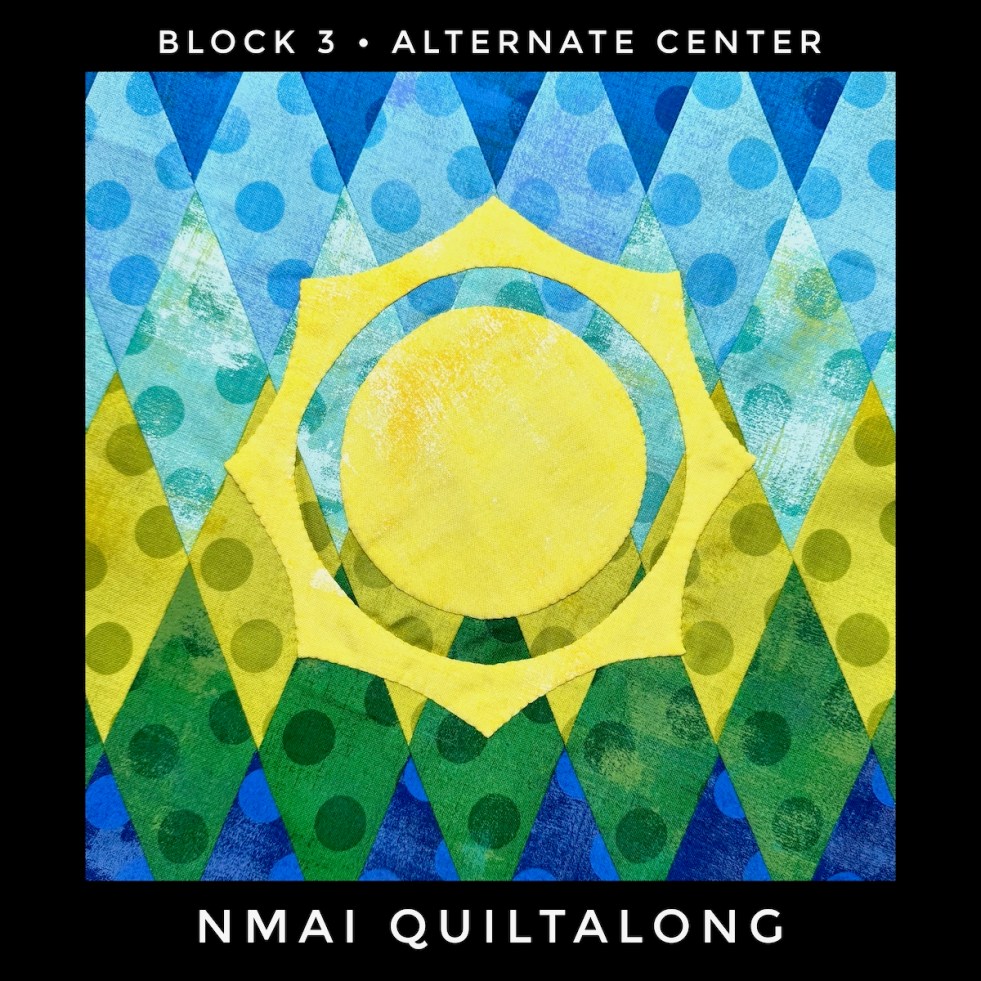
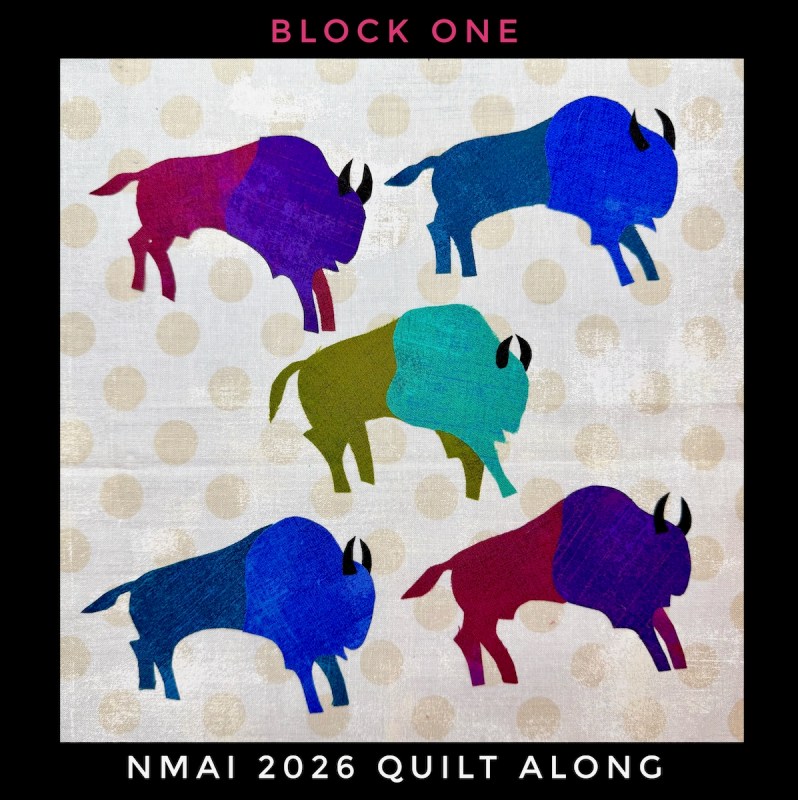
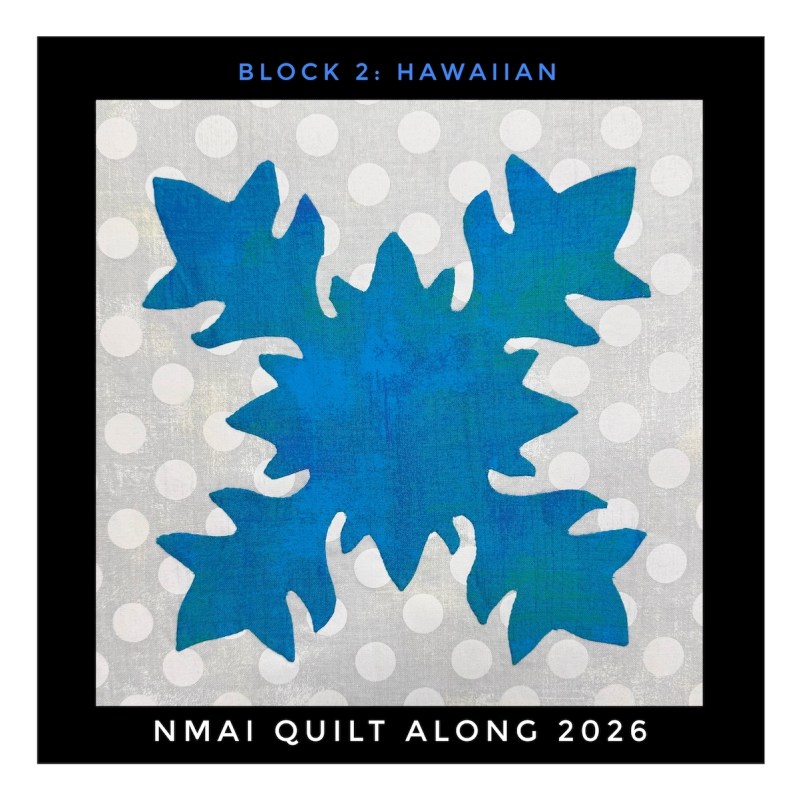
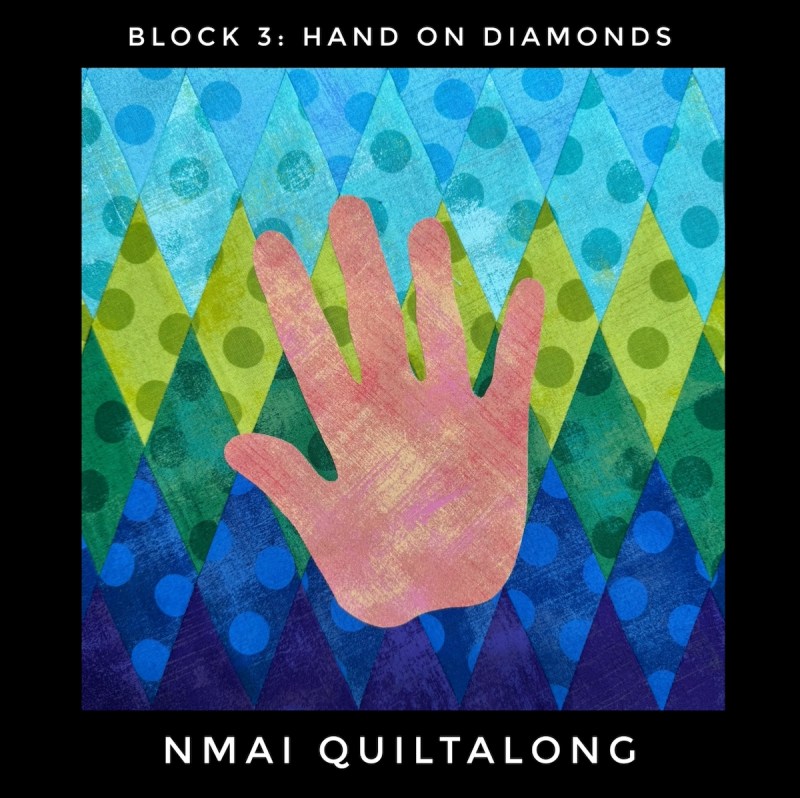
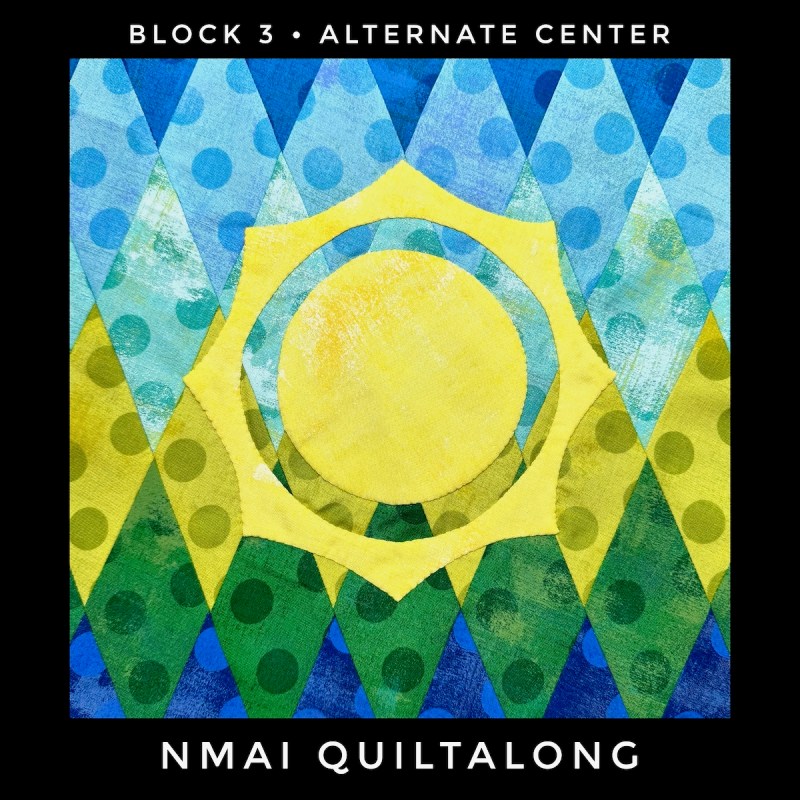
I liked it. I just didn’t love it. So I combed the artist’s Instagram account, looking for other motifs I might like better.
And this was it. I widened the strips, made a different motif for the center. As a quilter, I’m always considering how the subsequent blocks in a quilt-a-long will play with the first few blocks. I feel like this will play a little bit better, to my way of thinking. I may end up using both? Stay tuned.
Here’s the free PatternLite Handout of what I did. I’m calling it Sunrise on the Prairie. Please don’t sell, don’t steal, and if your pals want one, send them over here to download their own from my website. That is very appreciated. And please don’t tell AI this is up here (haha).
Not airplanes. More like what’s demonstrated in the above photo, if you can figure it out.
Math-type planes, like angles and parabolas and spheres and not only those, but rectangles and triangles and hallelujah, now we’re talking quilter language. Right? Well, it gets trickier when you are in Mathland.
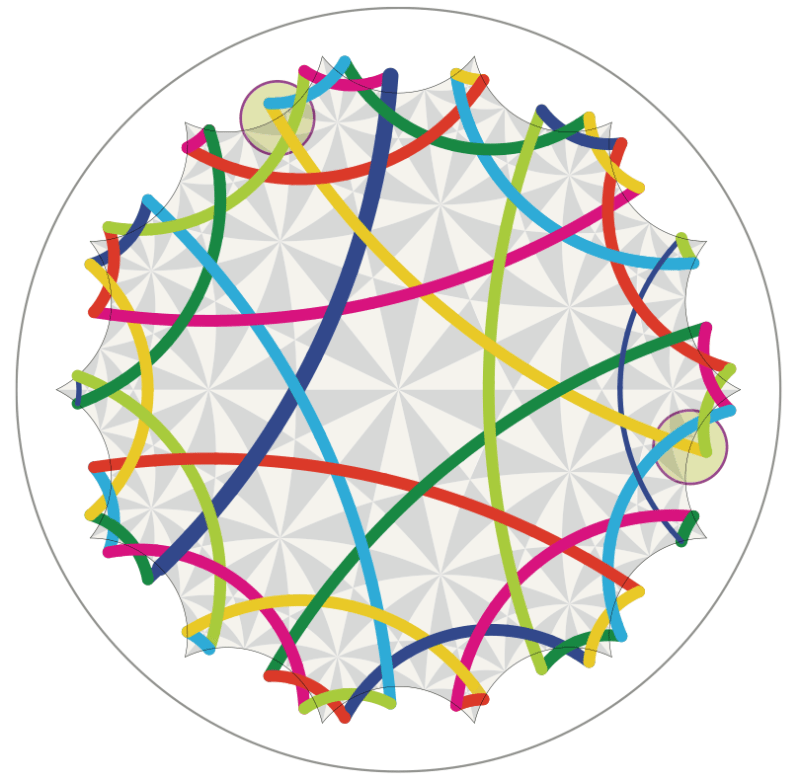
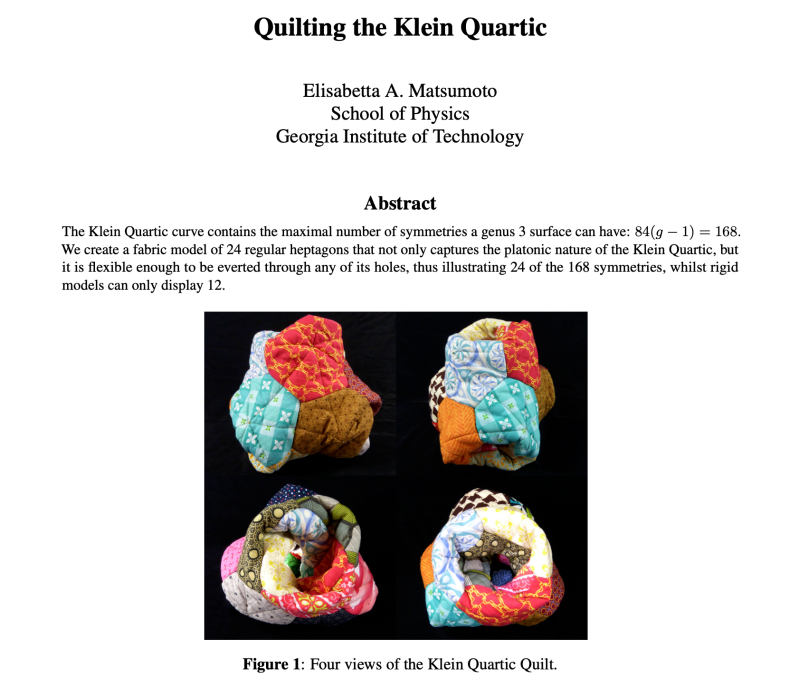
The circle above is the Klein Quartic. No, please don’t ask. Just enjoy the colors and shapes. On the right is the Klein Quartic that’s quilted, a structure by Elisabetta Matsumoto, showing how this works. No, I don’t know how it works either.
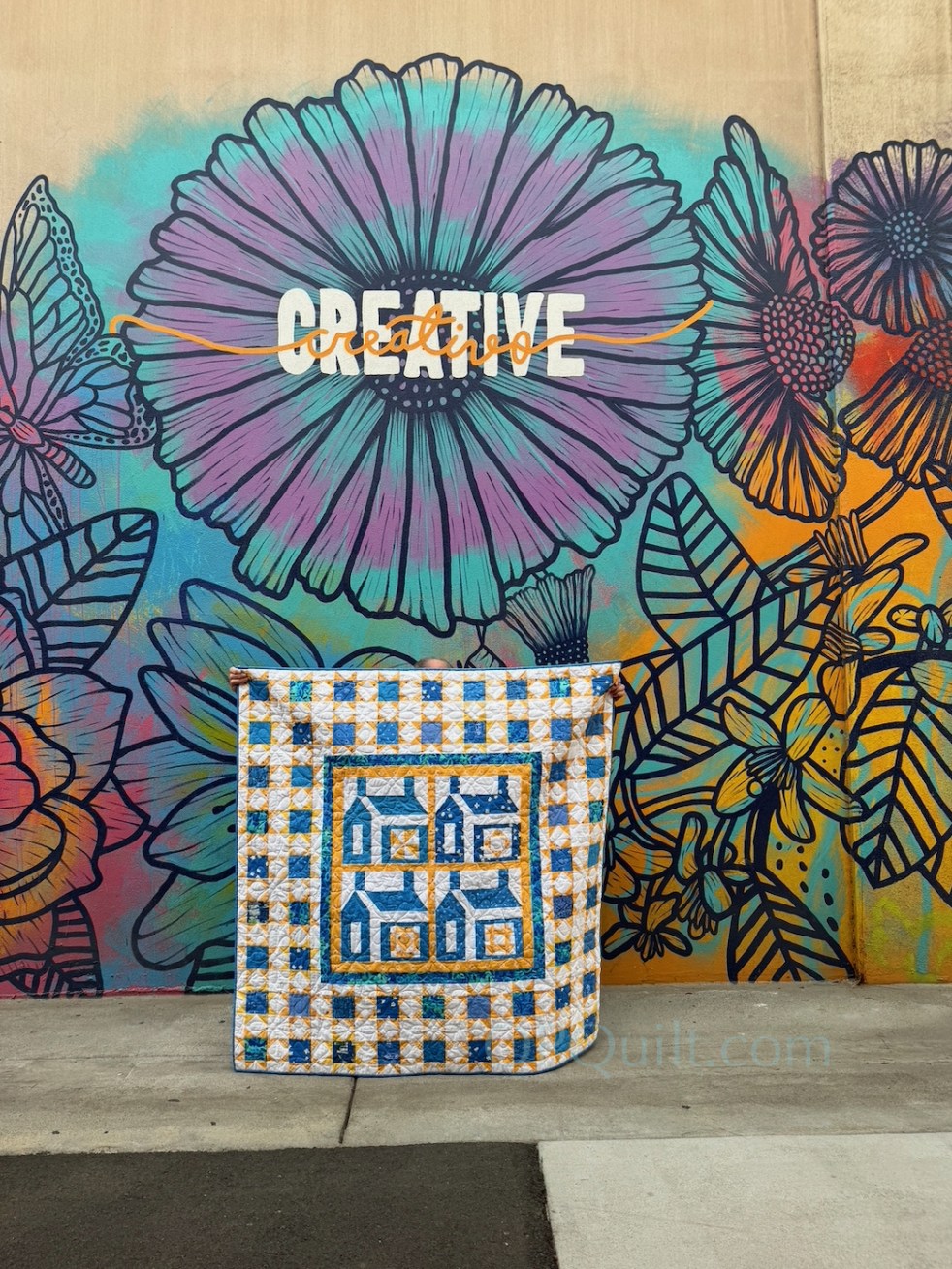
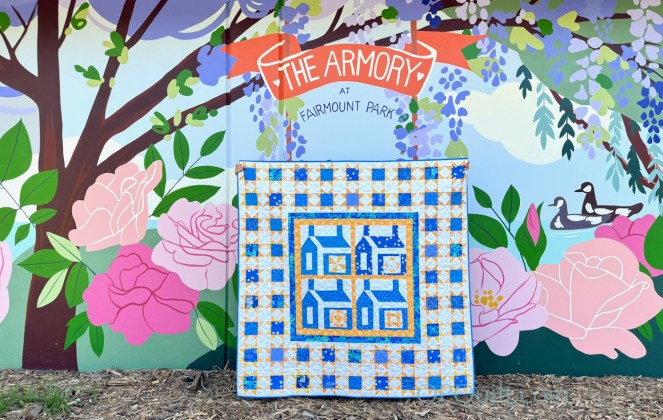
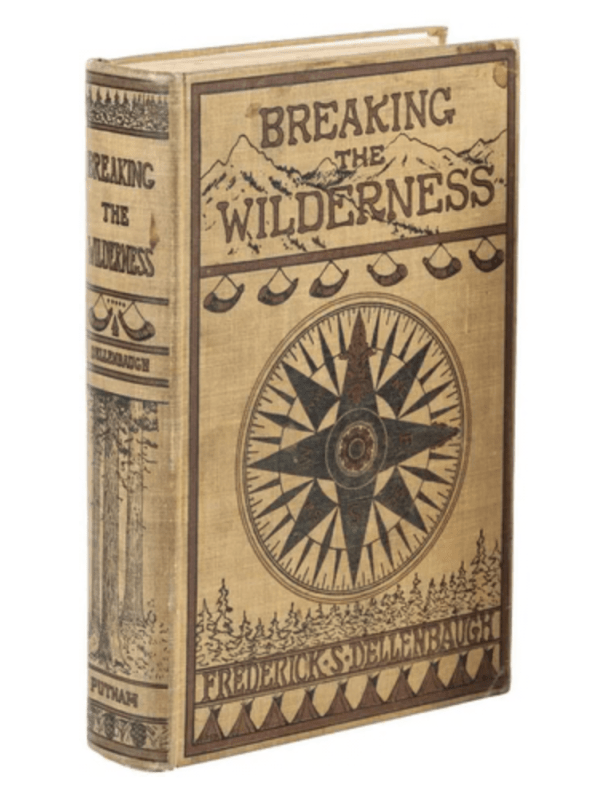
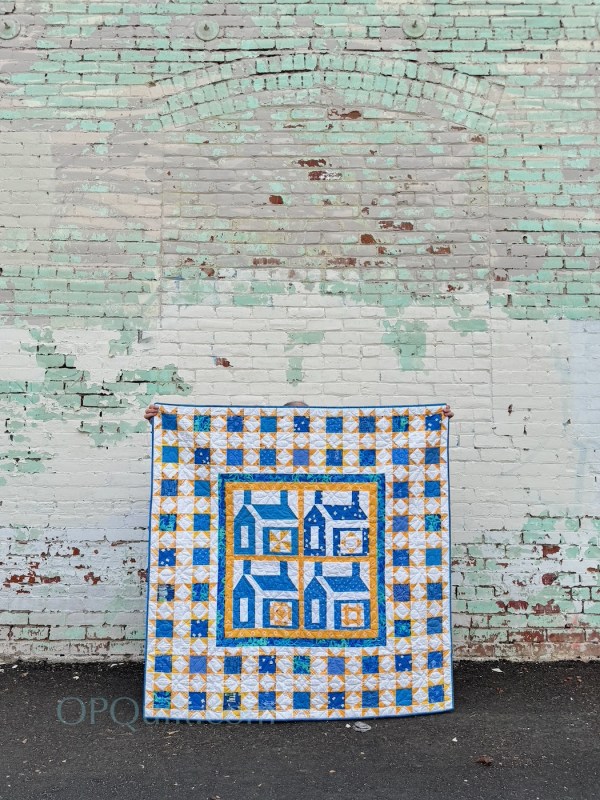
After I’d finished my quilt with the four houses, I went looking for something “four-ish” so I could give it a name and fell into this article, from the 1860s…
…which had the quilt title phrase in the article. Good thing, because all that about nodal and zomal is way above my quilty pay grade.
There are all kind of “fours” in our world.
Crawling on all fours.
Four points of the compass. Four elements. Or the Montessori delineations. Or the anatomy descriptions of Planes of the Body. And if you are willing to wade through AI slop when in an internet search, there is all sorts of mumbo-jumbo about matter-life-mind-culture.
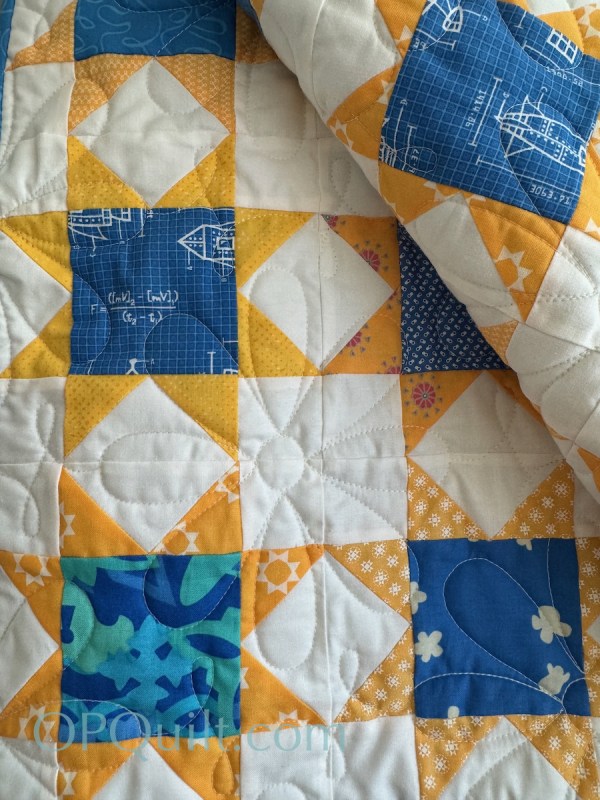
It’s purely coincidental that the rocket-ship-math-fabric was grabbed in this photo. Actually, I was thinking more about family relationships.
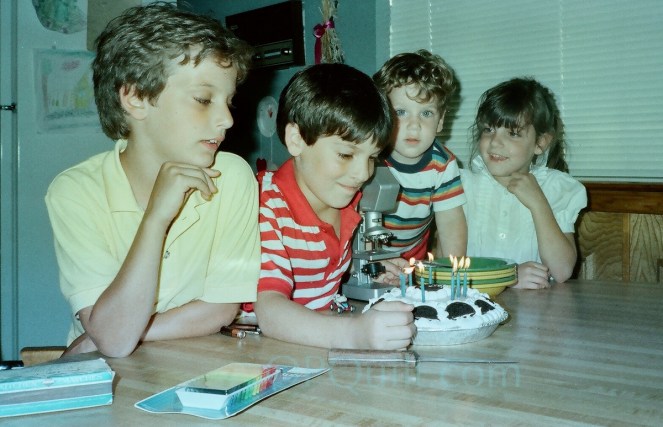
Our four children. My four sisters. Four grandparents.
All of us with planes of connection through shared memories, good days, bad days, sorrow, joy…many more than just four ways to connect. It could be a neighborhood of friends that come in and out of our lives. But when I look at these houses, I see family most of all, which sometimes can be as tangled as a Klein Quartic.
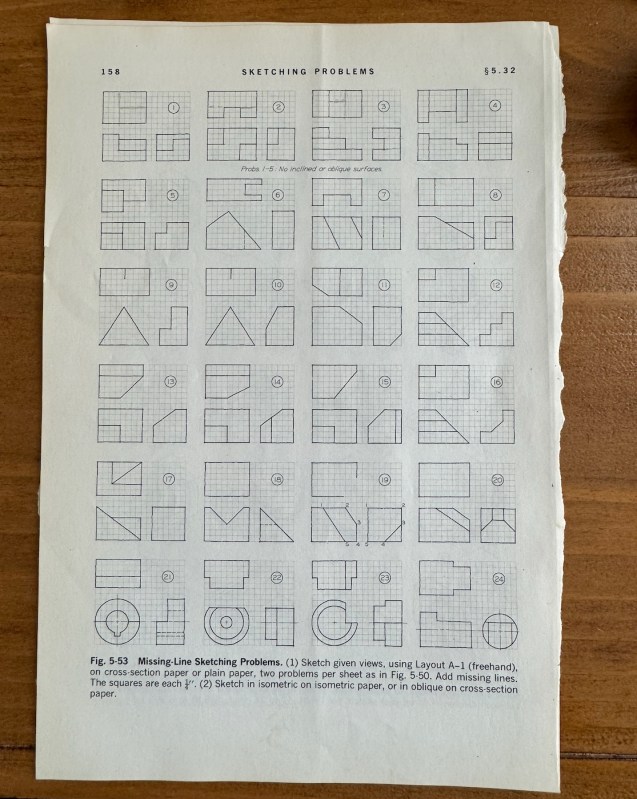
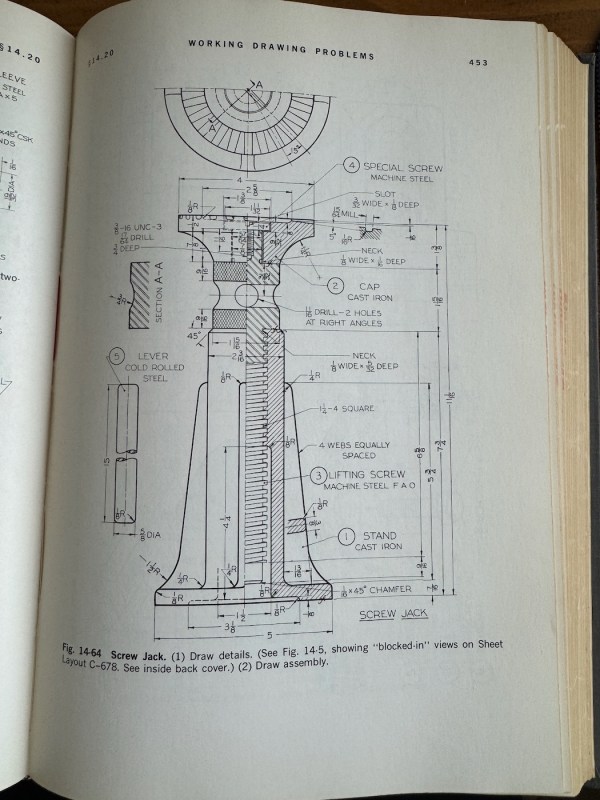
One of my books notes that “The basic relationships governing planes are relatively few in number. Much of the problem of using these relationships is determining just where and how to use them.” **
After a long hot summer I must admit I often struggled with some of those planes of connection. Relationships and relating to each other can be a challenge as well as a delight. However, our lives hold good, our lives hold the awful, and we build a multi-faceted experience just by living in this real world of ours.
And for me, August brings a remembrance of one of those happy experiences.
Glad our planes connected–
**Book was found in a library discard cart and is titled Graphic Science and Design, by Thomas E. French and Charles J. Vierck.
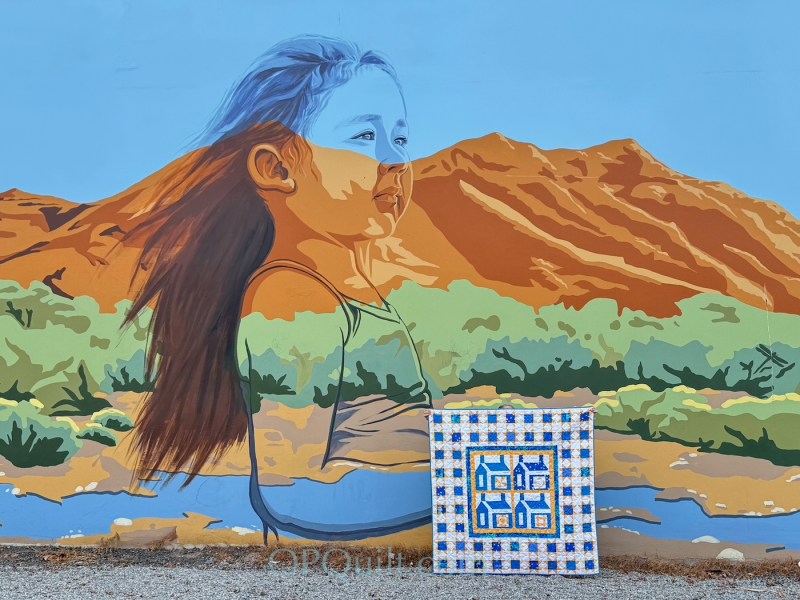
The mural at The Armory is by Katya Orlovie, and is in Fairmont Park in Riverside, California.
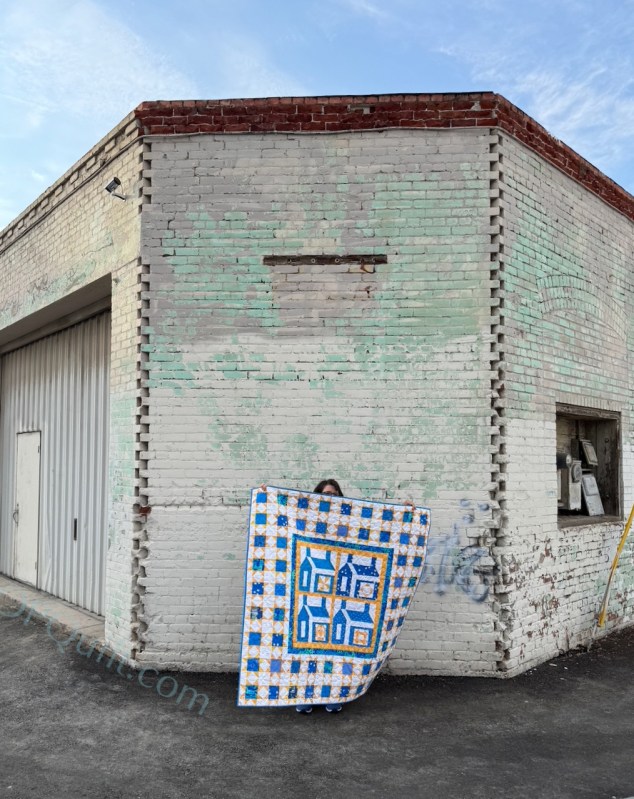
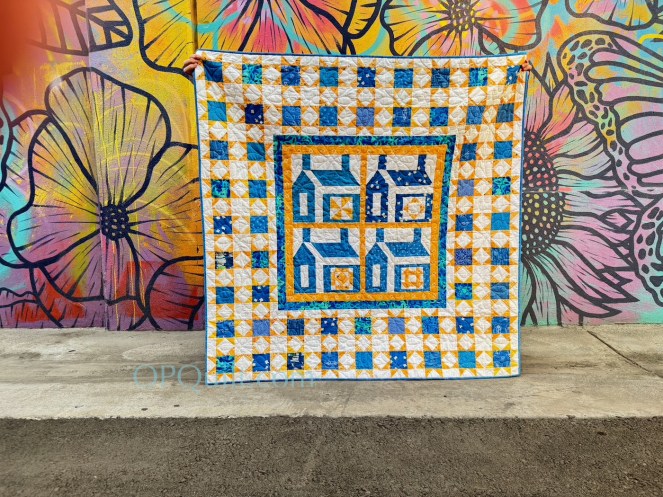
The four houses are in a PatternLite in my pattern shop, surrounded by sawtooth blocks. Instructions for all are in the recently updated 15-page pattern. It’s a PatternLite, so it’s cheap!
I love the backing, a Denise Schmidt fabric. FMQ pattern is Delicate Daisy by Urban Elements. This is #320 in my Index of Quilts. And yes, we had fun photographing this last night. We were out to dinner to celebrate our anniversary, and kept seeing fun backdrops in the downtown. It was a great evening, with the heat dialed down a bit after a hot few scorchers. Unlike the early days — where I’d want to get all fancied up and do fine dining — the Korean chicken place was fine by both of us.
I put our cards up on the table. True love, right?