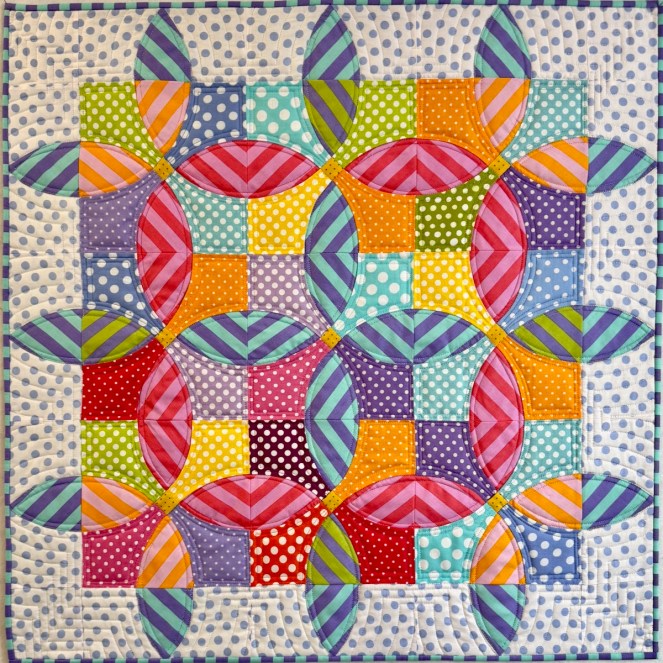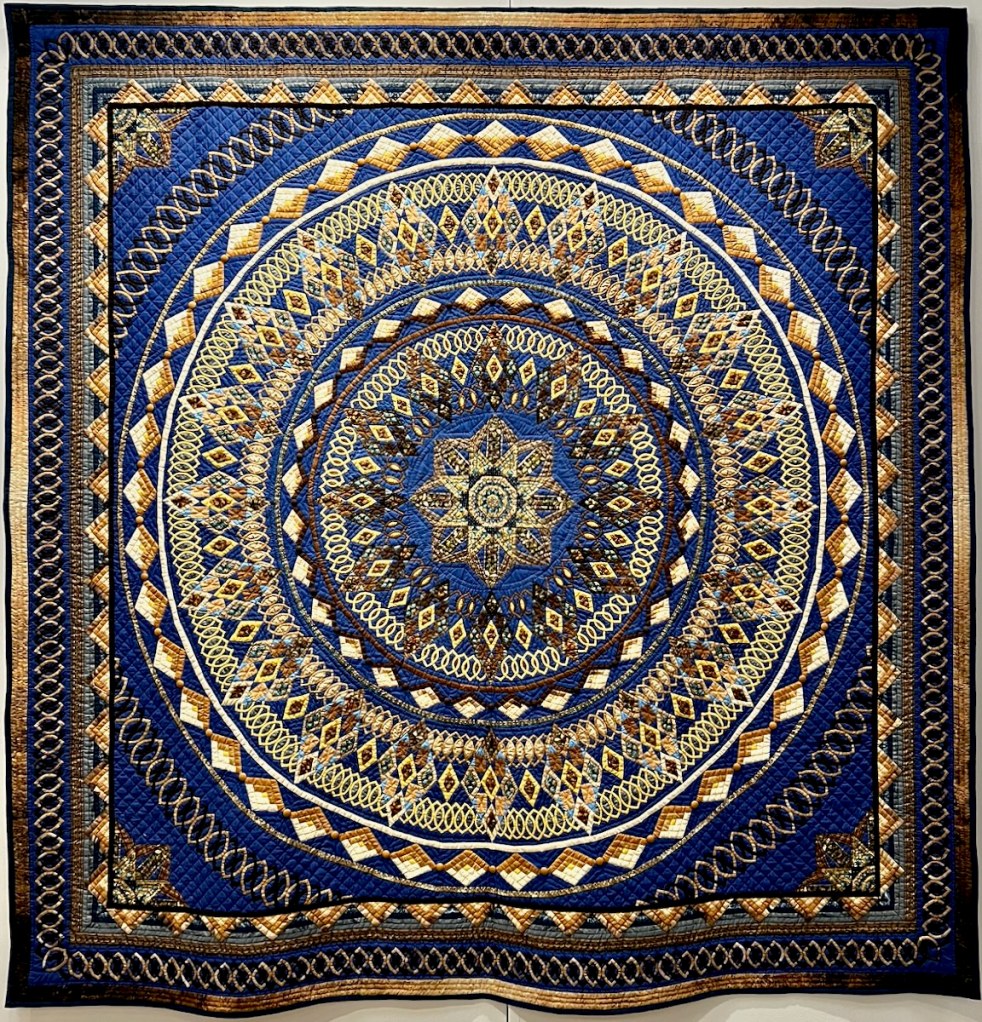

This treasure of a quilt by Satoko Kase of Tokyo Japan is about 10 inches square. I would have measured it, but didn’t have a tape measure nor did I dare get my fingers near it. It’s titled Dance of Migratory Birds.

The quilt was in a show not too far from our home and was held in San Diego. It’s called Quilts Japan; it’s the 17th Quilt Nihon exhibit, and the Vision Museum of Textile Art was one of four US venues that will be showing it.
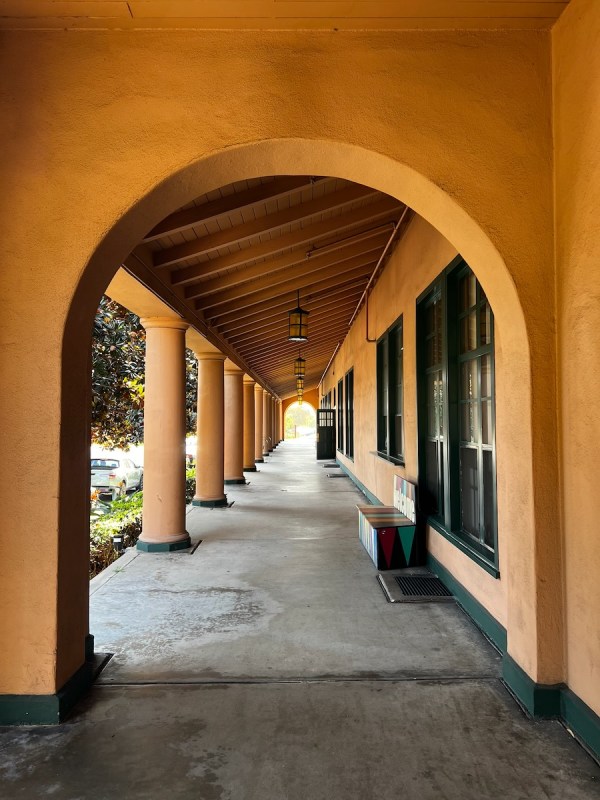
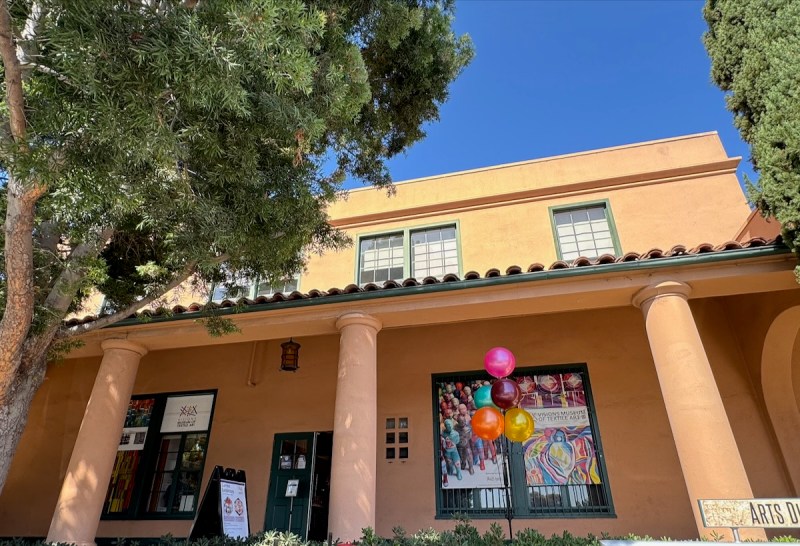
The Museum is housed in part of the re-purposed naval base in San Diego, and I loved seeing signs like the ones below, showing that many spaces are filled with interesting enterprises (across from Barracks 19 is a charming cafe):


The exhibit was in about three rooms, not a huge display, but they packed a lot in.
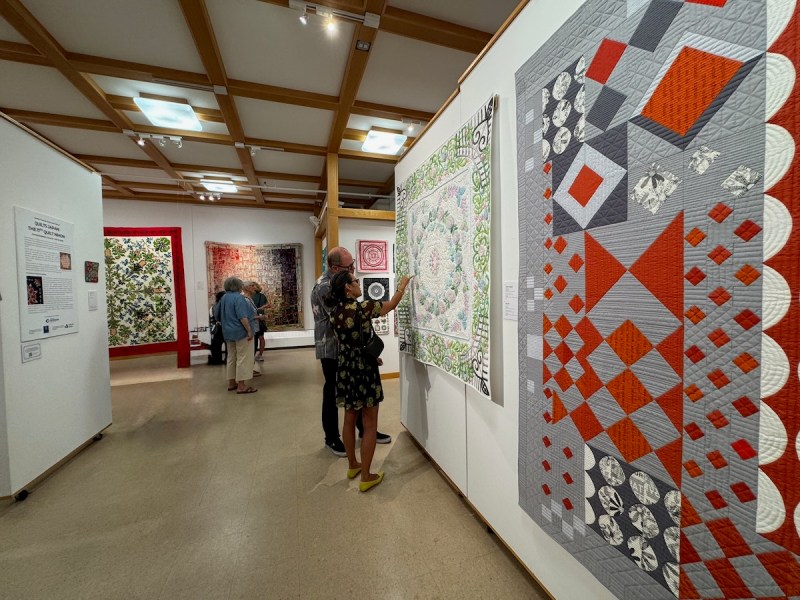
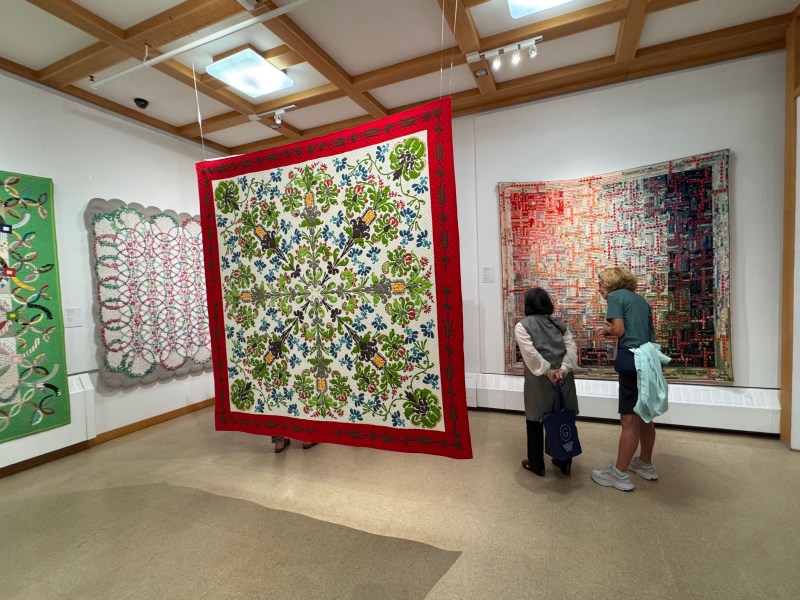
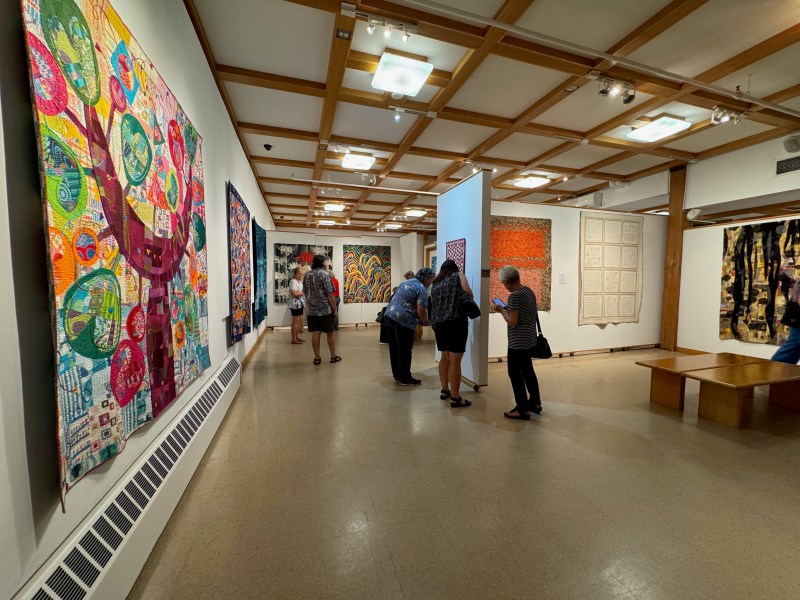
Now that the introductions are over with, here are some of the quilts.
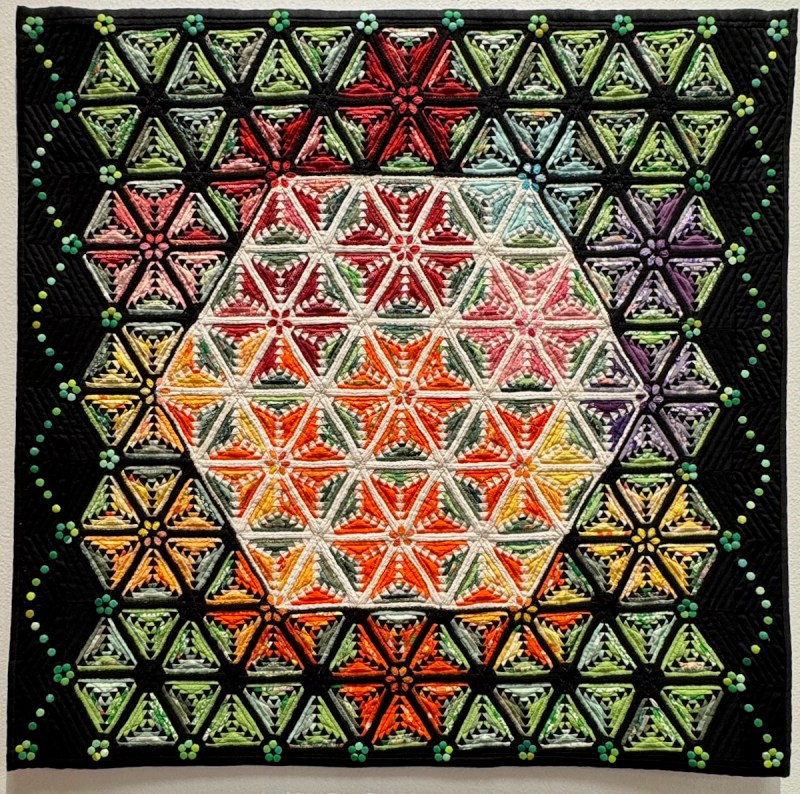
Hemp Leaf Pattern Window by Satoko Kase. This received a Publisher’s Award from Quilt Mania in the Award Category of Miniature, just like its friend at the top of the post. The category states: “quilts must measure less than or equal to 60 cm on each side [about 23 inches]. All aspects of the quilt are reduced and miniaturized.”
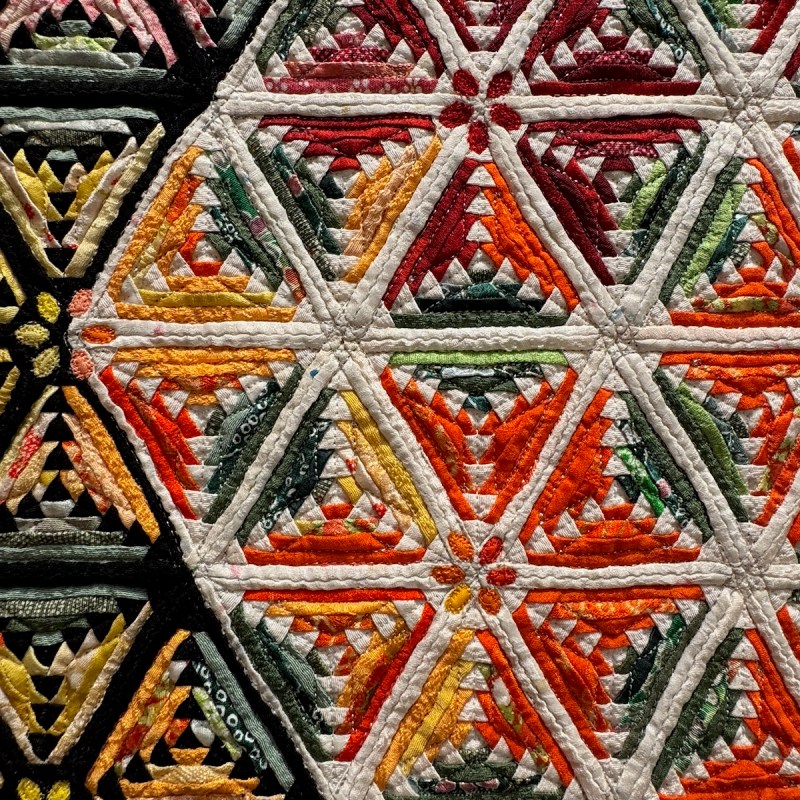
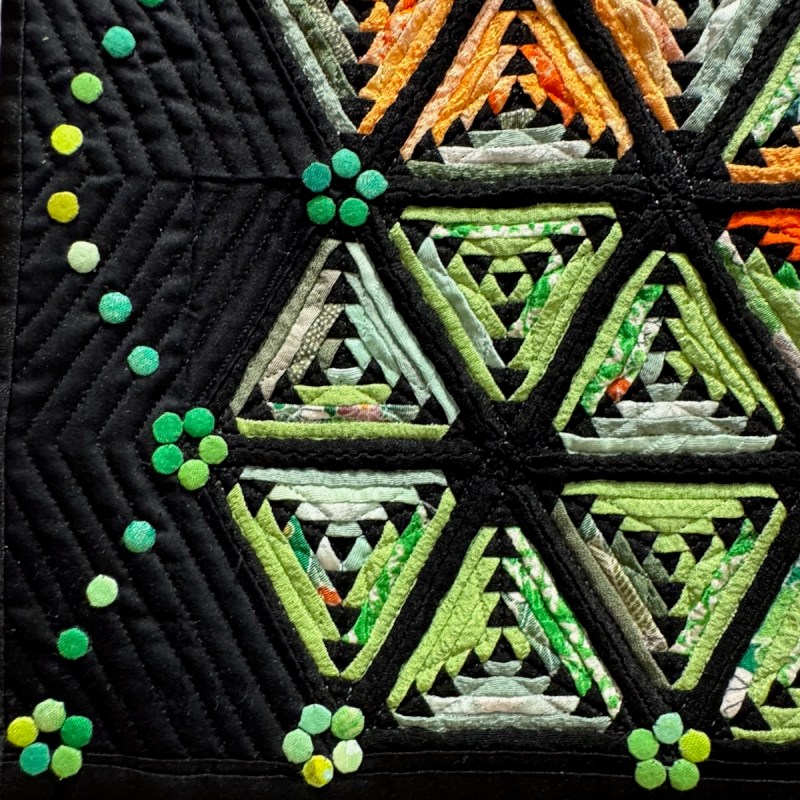
Those dots are about the size of a paper-punched dot –about a fat 1/8-inch.
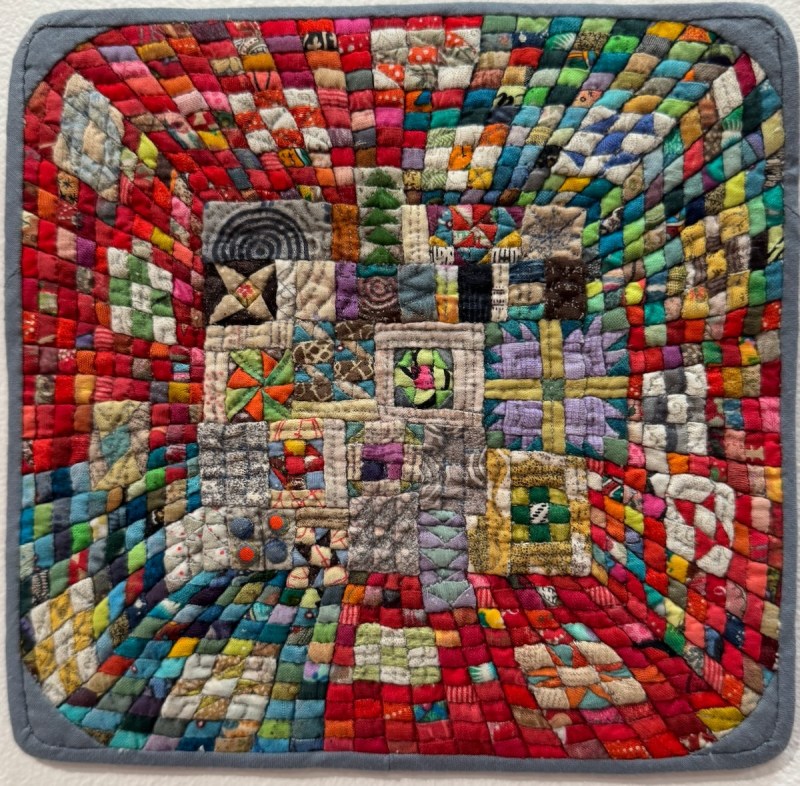
Jump Out!! by Mayumi Yamagishi is about 9 inches square. It was awarded the Gold Award and the Governor of Tokyo Award. It felt like it was a very tiny room with quilty walls.
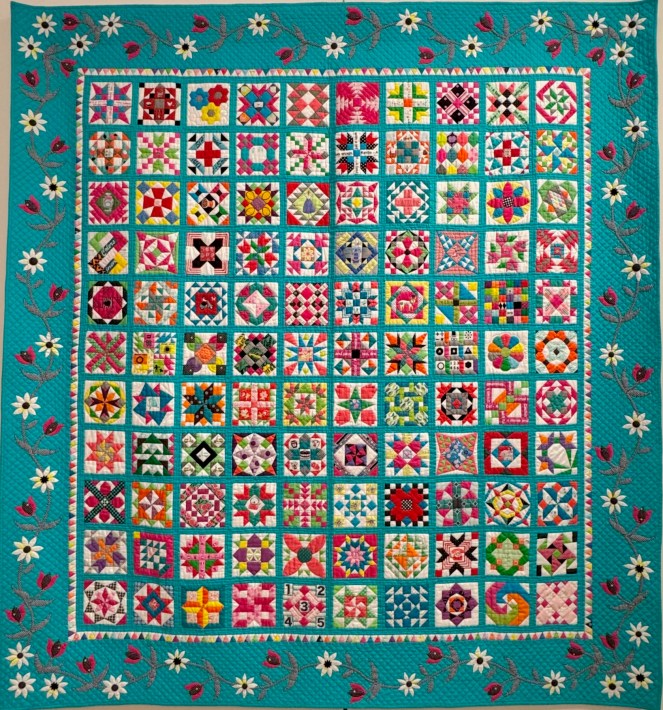
Pattern, Pattern! Pattern!! by Kuniko Kasai reminded me of the Chuck Nohara quilts that Susan Snooks (of Australia) and I did a few years back: lots of small blocks that are intensive patchwork.
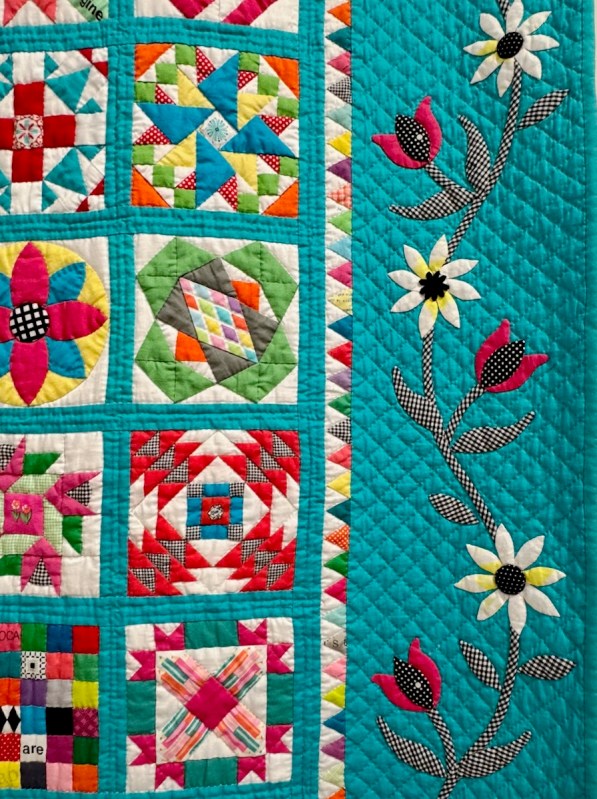
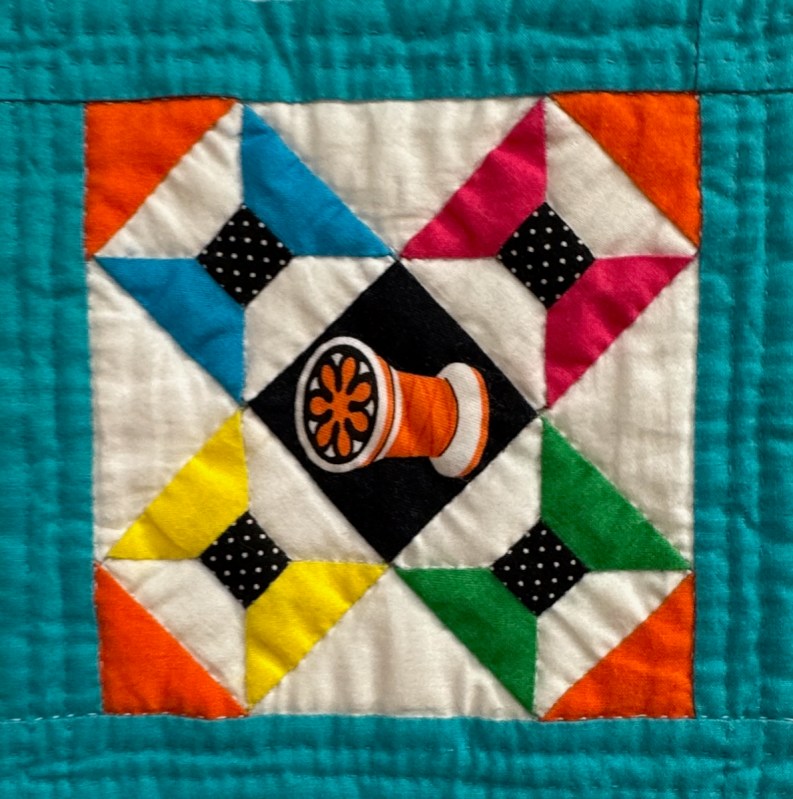
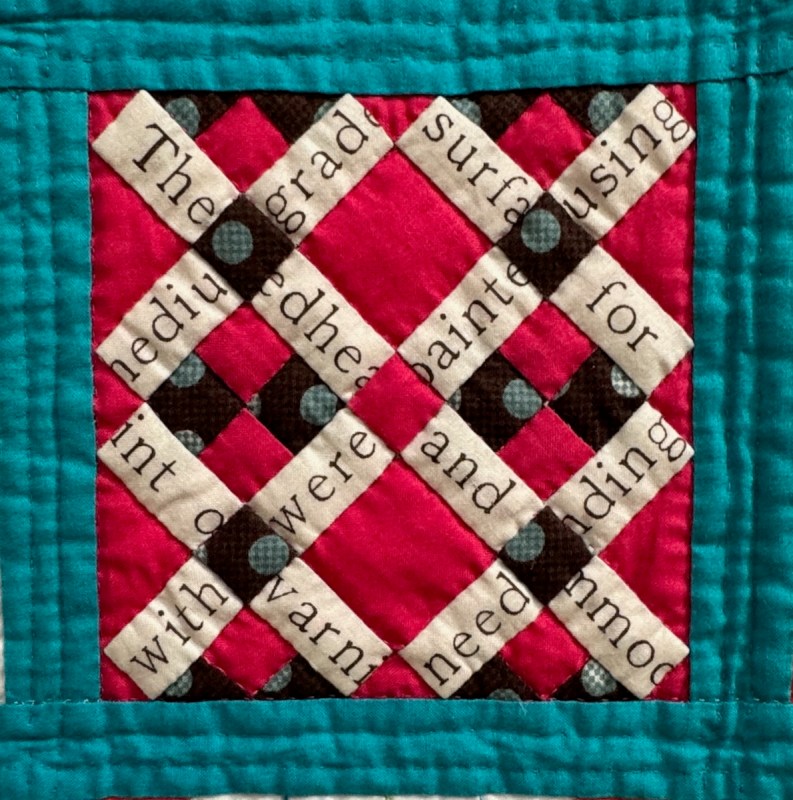
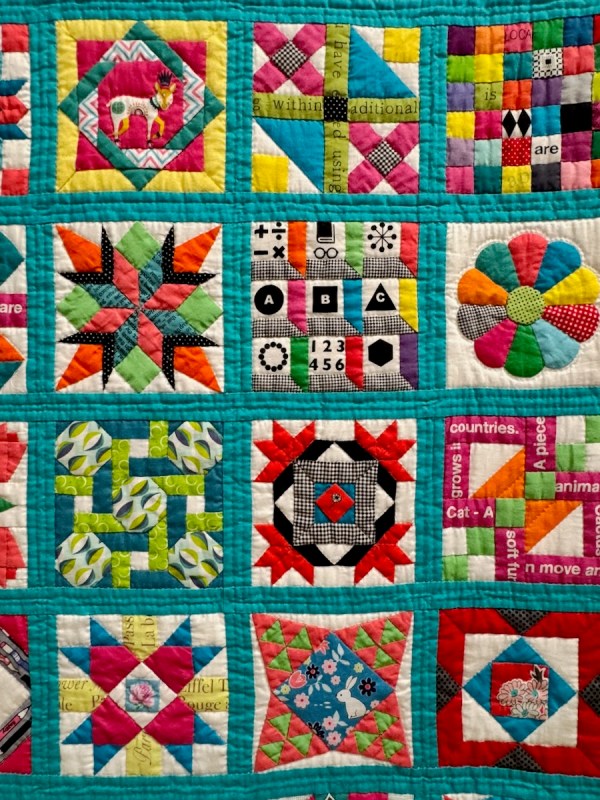
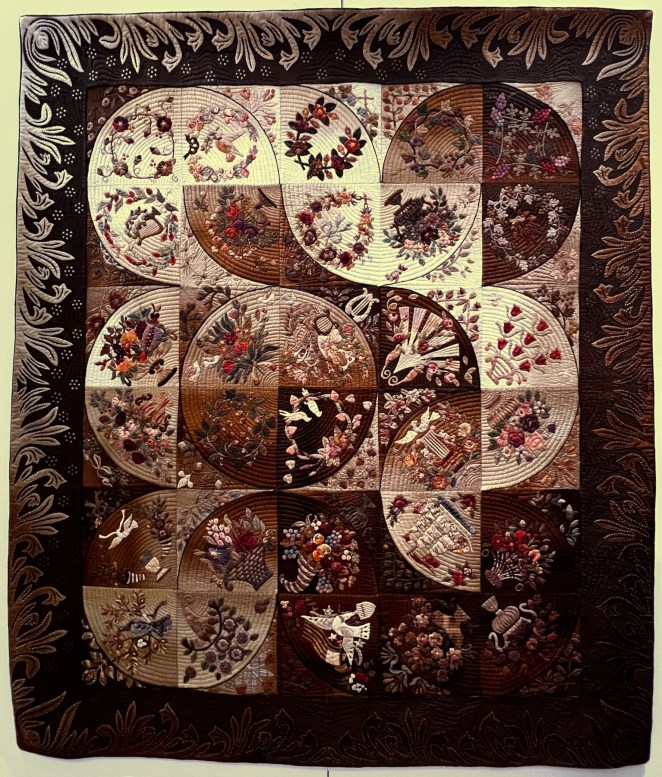
Atsuko Oshio’s Wish. We struggled with the exposure levels and lighting. The quilts were brightly lit but sometimes this creates havoc in the picture taking. My apologies. This really was an exquisite quilt.
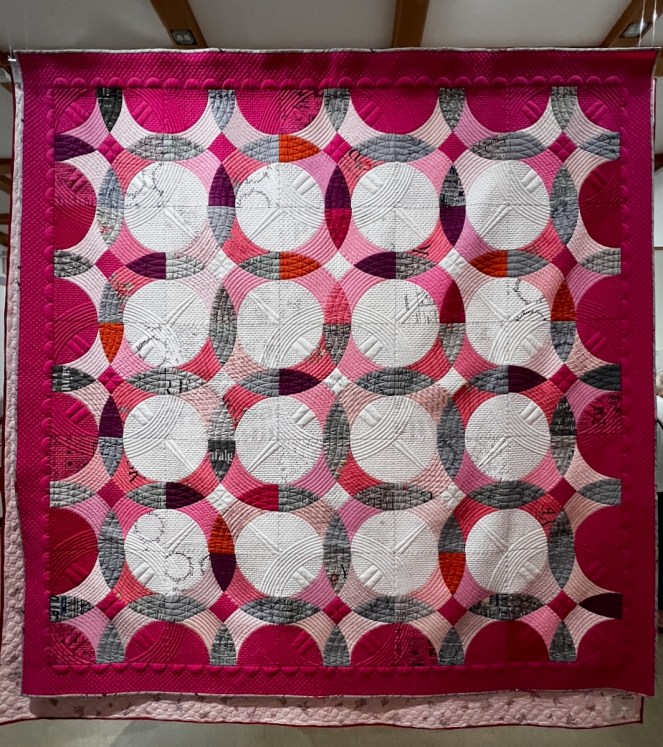
As You Like, by Chizuoko Kojima
This is for all intents and purposes, a simple block. However, the quilting elevates it to a special realm. It was amazing.
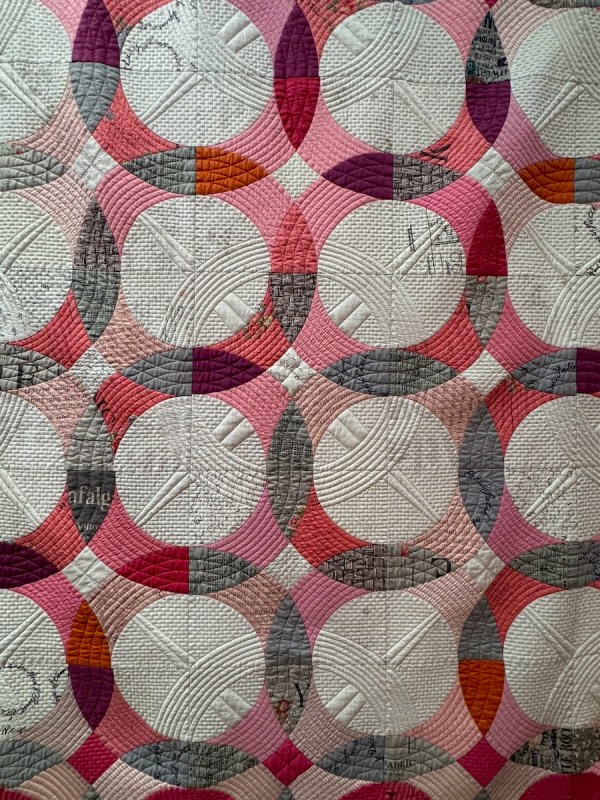
Overlap and underlap and skip.
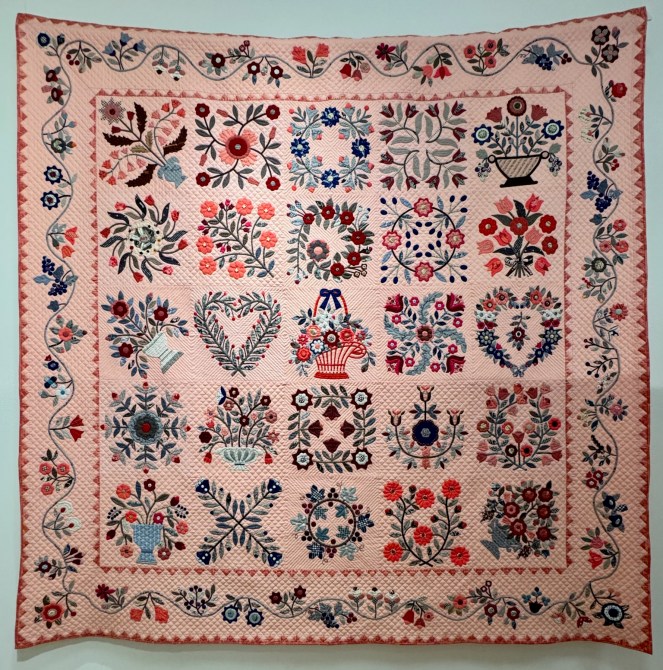
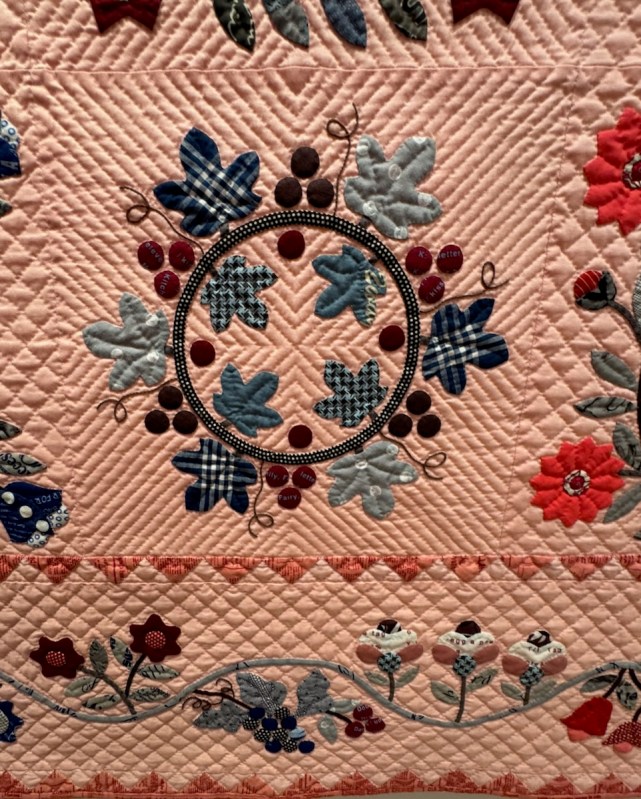
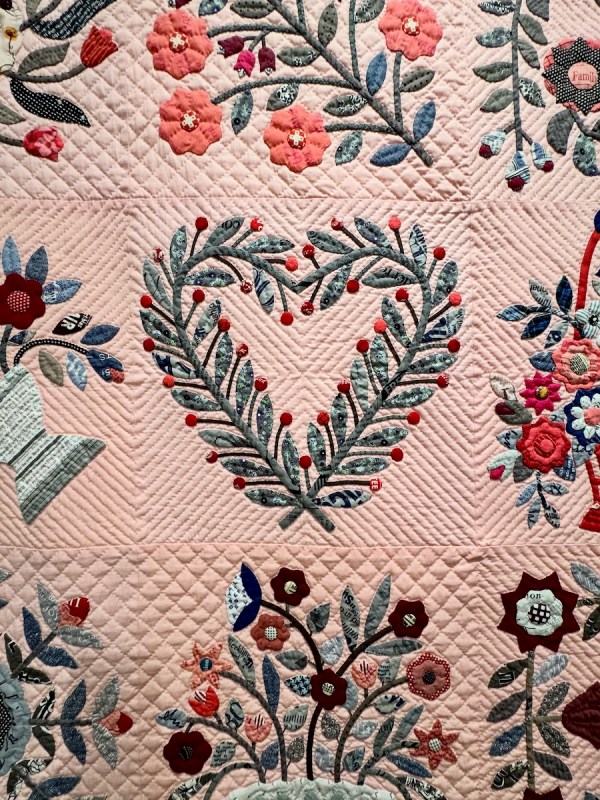
Traditional, but pink? And that choice just made this quilt. This is Reiko Miyamura’s Coral (Baltimore Style).
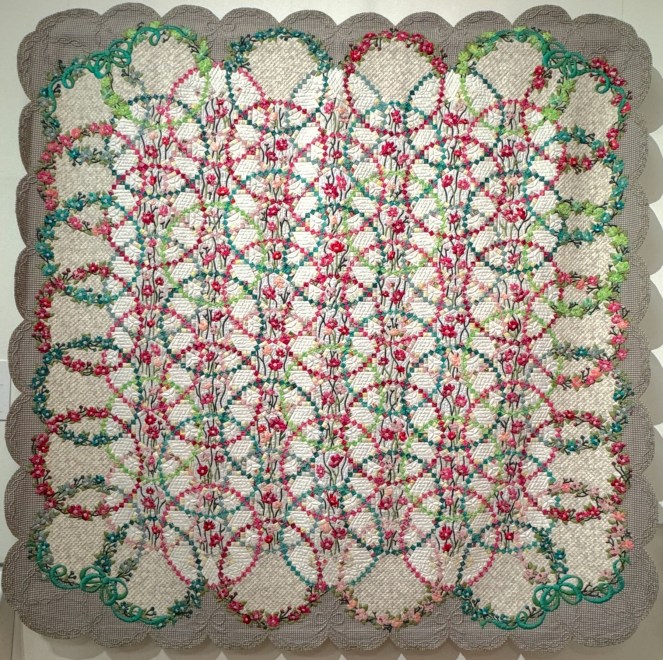
I have a soft spot in my heart for Jack’s Chain variations, but this one towers above all else. A basic Jack’s Chain is based on nine-patches and they are linked together. However, Flower Tour, by Misako Sano, takes this to a new place with her borders, her sixteen-patches and appliqué.
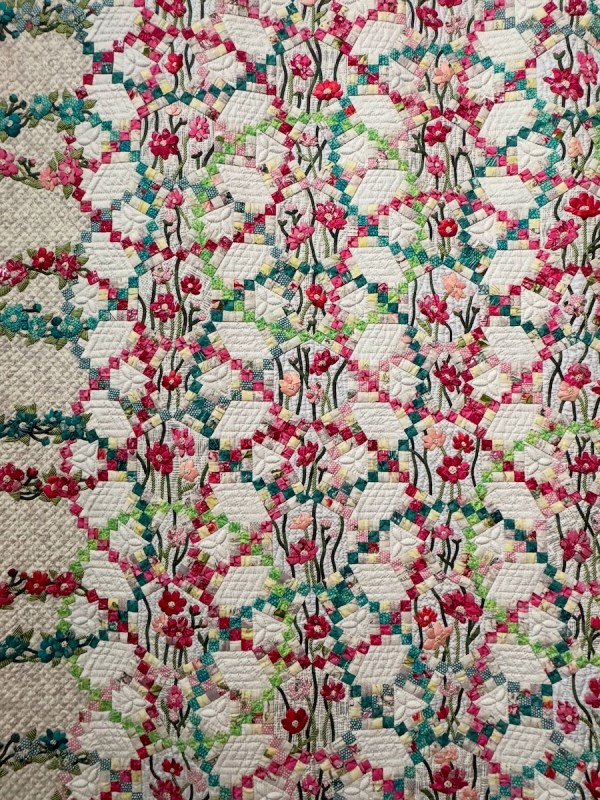
I hope you can see the tiny blocks.
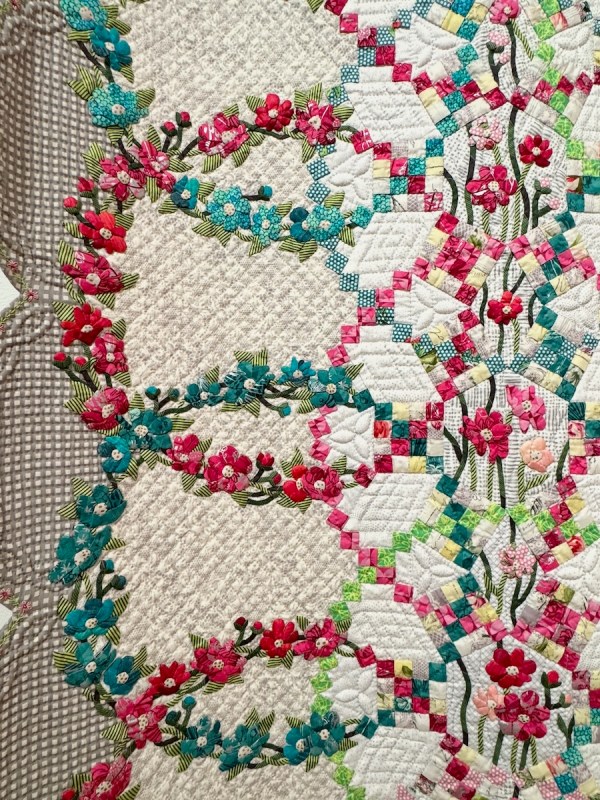
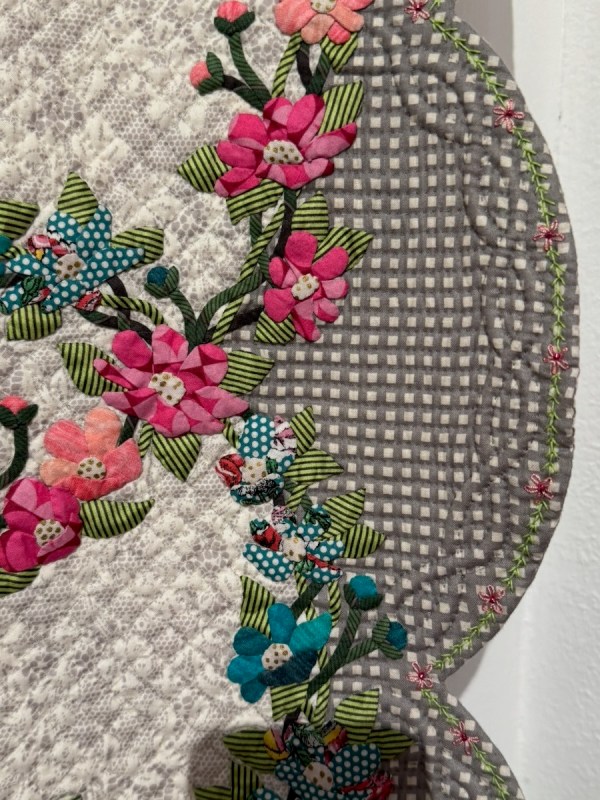
I did a Jack’s Chain using giant nine-patches, and drew up the pattern — found in the public domain, which can be found in my pattern shop for free. But you are on your own if you want to make this one. I loved the subtle trapunto in the border scallops.
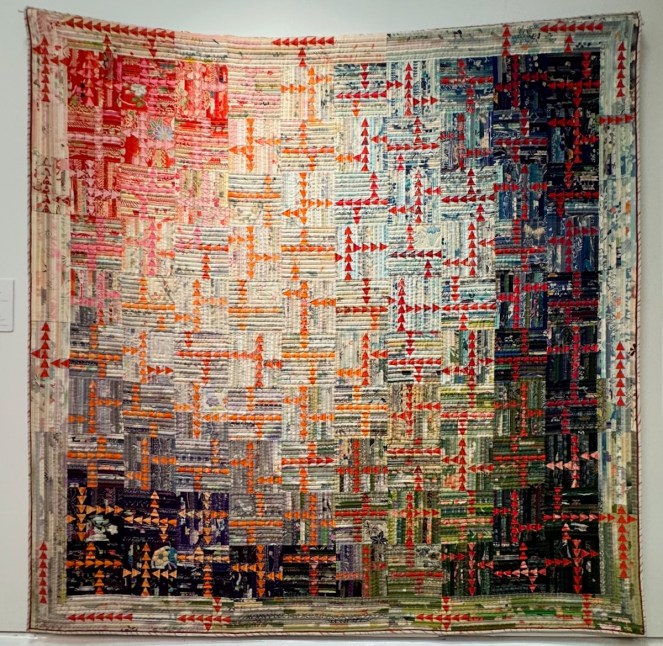
Good Day by Michiko Oobuchi
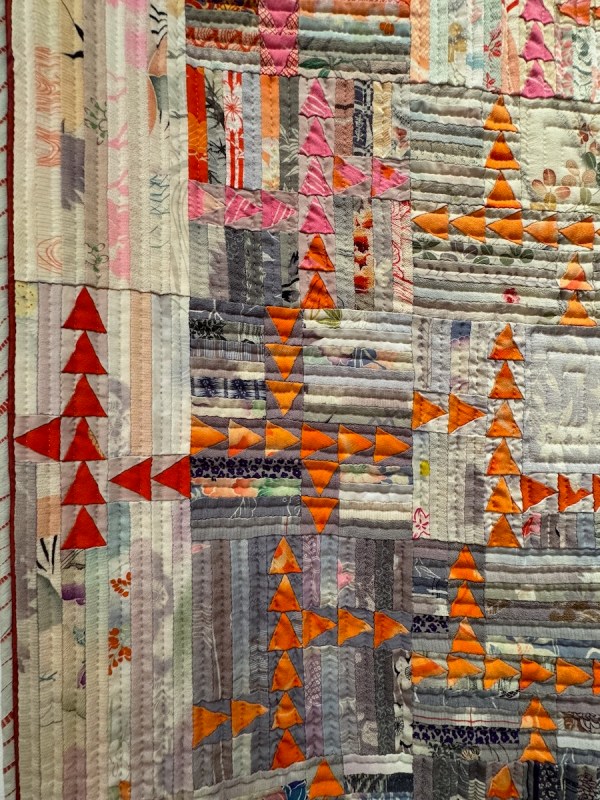
Detail. Seeing it up close changed how I interacted with this design. I could see it as being one of those quilts where you make the blocks singly, maybe scraps after finishing up a big project, and then put them away one by one. Then when you have enough blocks, you make the quilt top. These blocks all appear to be of a similar “design” (or two), but the color variations are what change them. I realize, of course, that I am a sucker for Flying Geese, and there are plenty of them in this quilt!
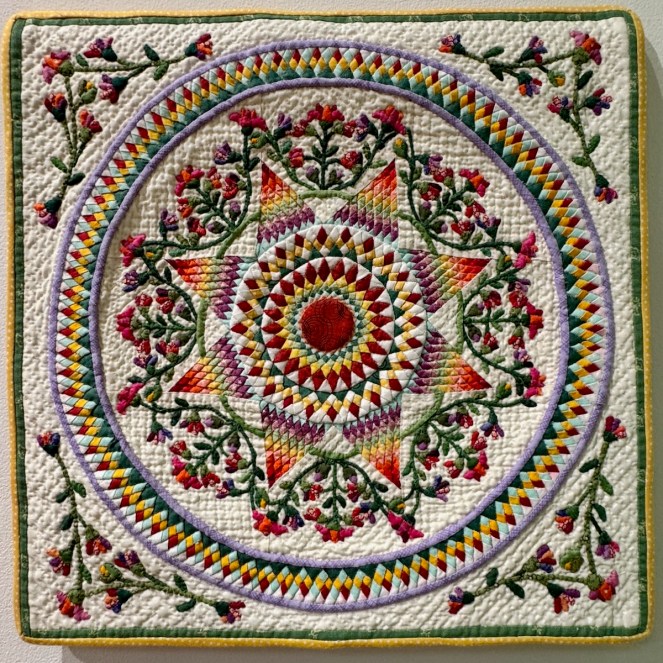
Another miniature. This is Yoko Euhara’s Florence. I’m assuming that is in Florence, Italy? The city? But maybe it’s a woman’s name. It won the Publisher’s Award.
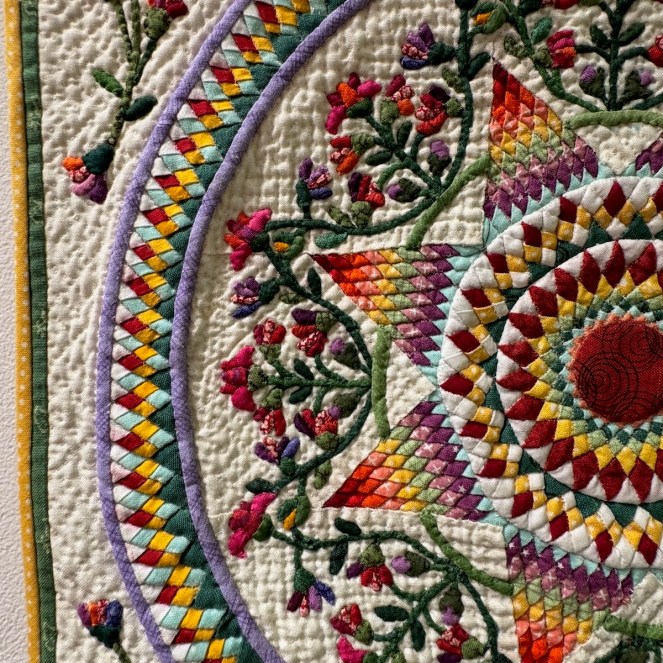
Teensy diamonds!
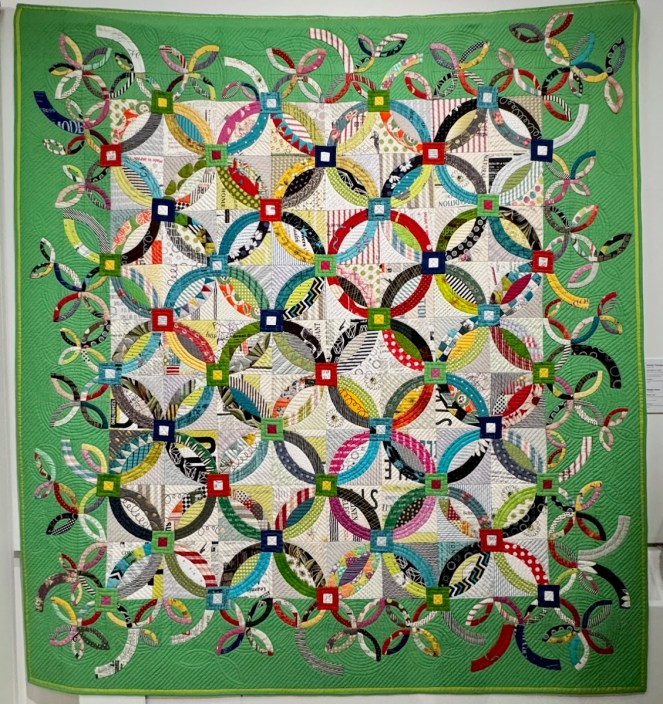
Another sort of simple traditional block taken to new heights by those borders! It’s titled Let’s Play in a Circle, by Chieko Yamaguchi.
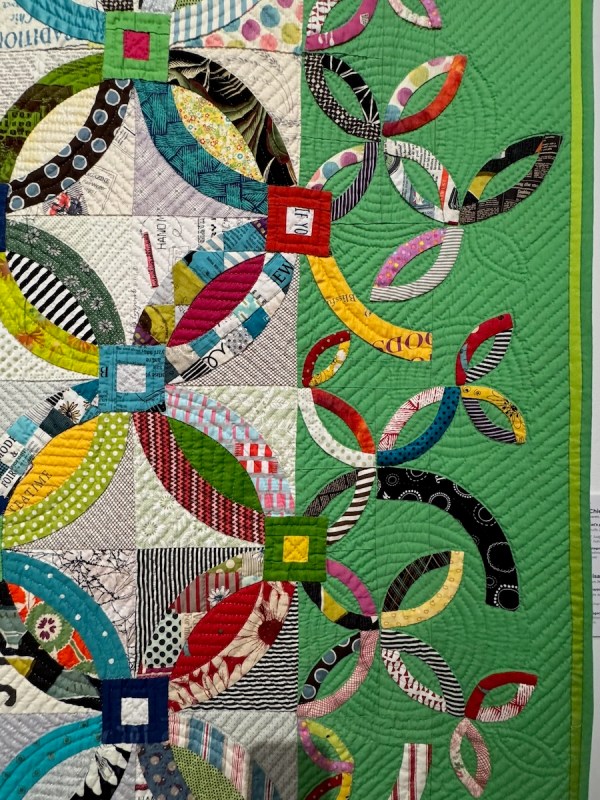
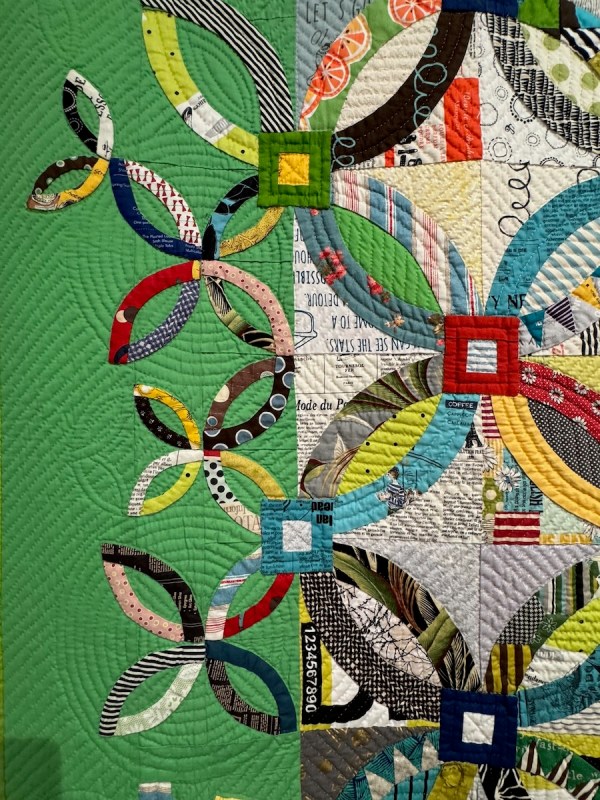
As with all the gallery images, you can right-click to open them in a new tab to see them larger.
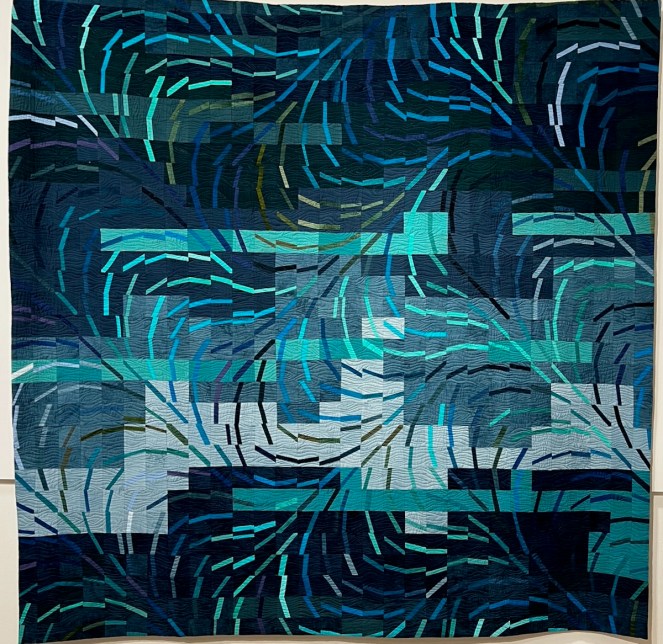
Stormy Sea, by Klein Elke
I really loved this one. Simple shapes with huge design impact. What if you just kept a stack of squares in a limited range of hues and sewed a narrow rectangle on a diagonal, splitting it. Then what if you just trued them all up to the same size? And then after a while, you started arranging them into a design, led by color? I make this piece of art sound simple, don’t I?
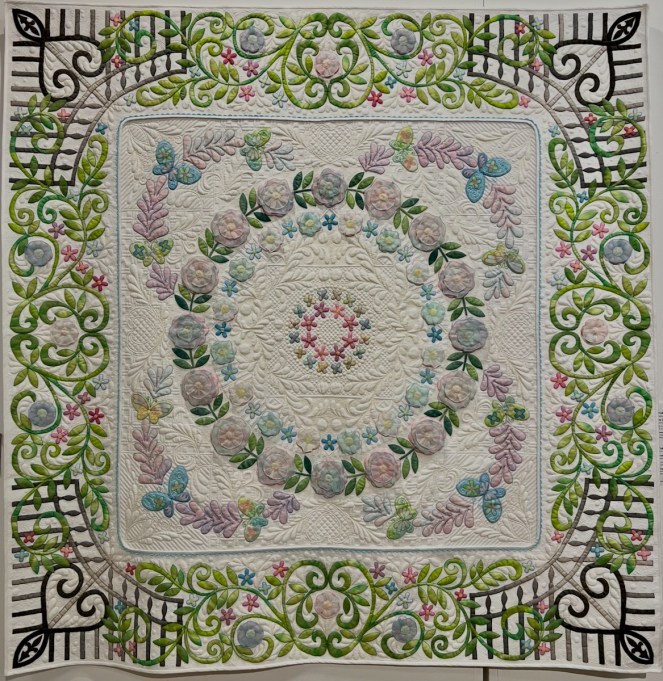
This one is a wall-sized quilt (no, they didn’t have measurements on them). It’s My Garden, by Yukiko Sugaya. She has layered regular quilting cottons with sheers. I hope you can see it:
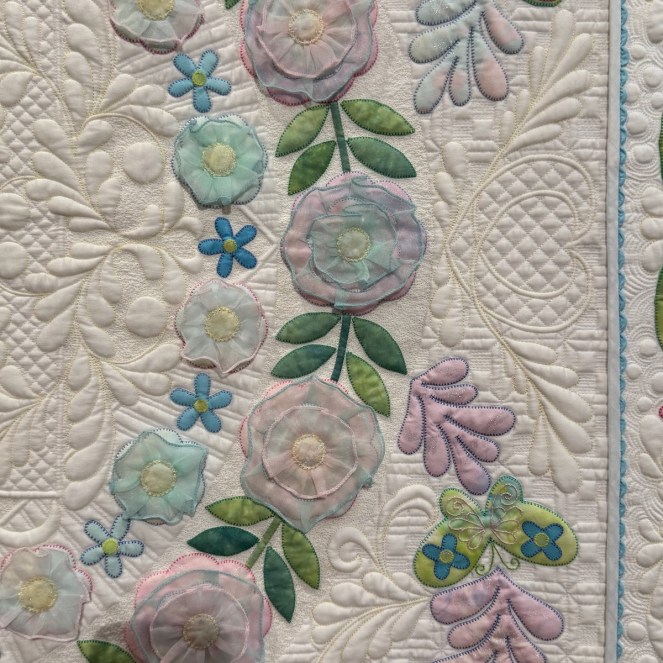
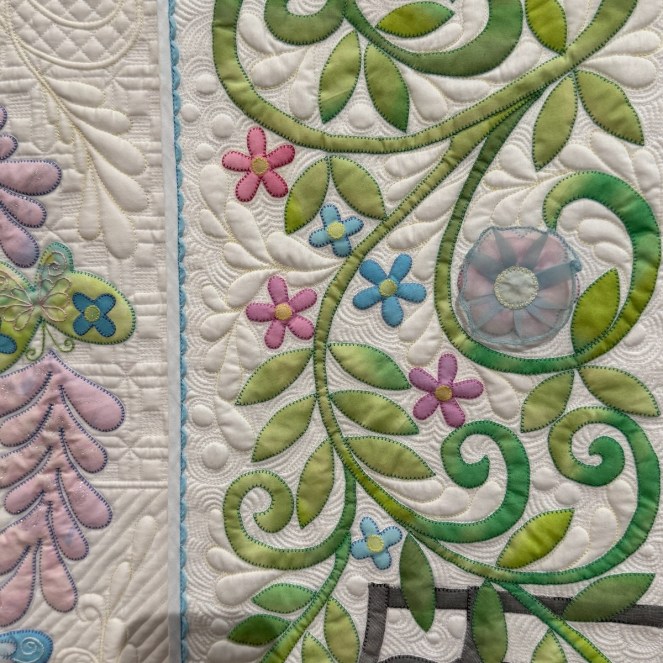
And I loved her borders:
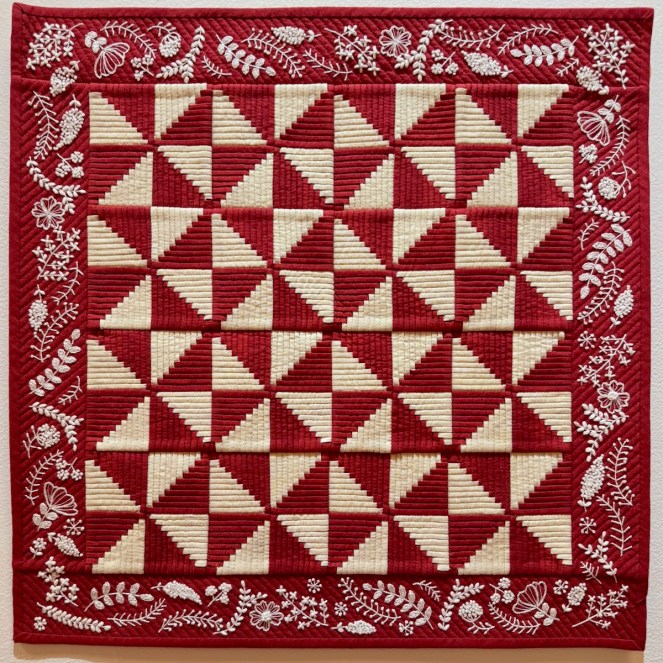
5 mm 2 by Hiromi Yokota. Just for reference, 5 millimeters is less than a quarter of an inch and each of the those logs in her small log cabin blocks are about that big. It was so charming.
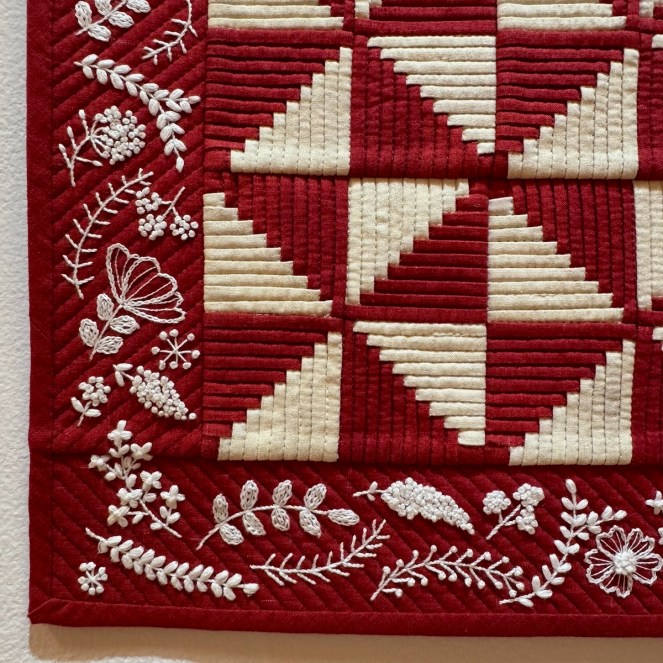
If you start now, you might have it done by Christmas of 2027, I think. (But if it’s paper-pieced, it might take you to Christmas of 2028 to get the papers off.). It’s just perfect, and about 20″ square, if I had to take a guess.
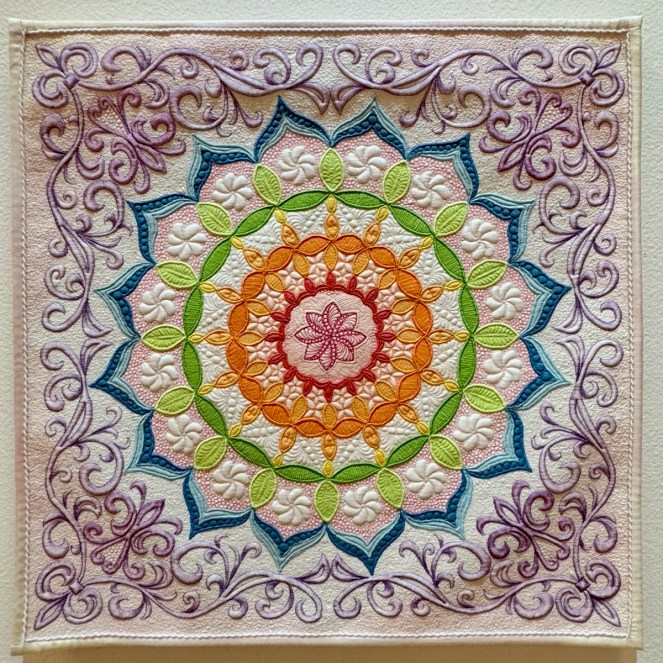
Longing for a Mandala, by Mini Naomi Iida. A last miniature, but this wasn’t all of them. I’ll try to slide the last ones into different posts as I go along, over the next few weeks.
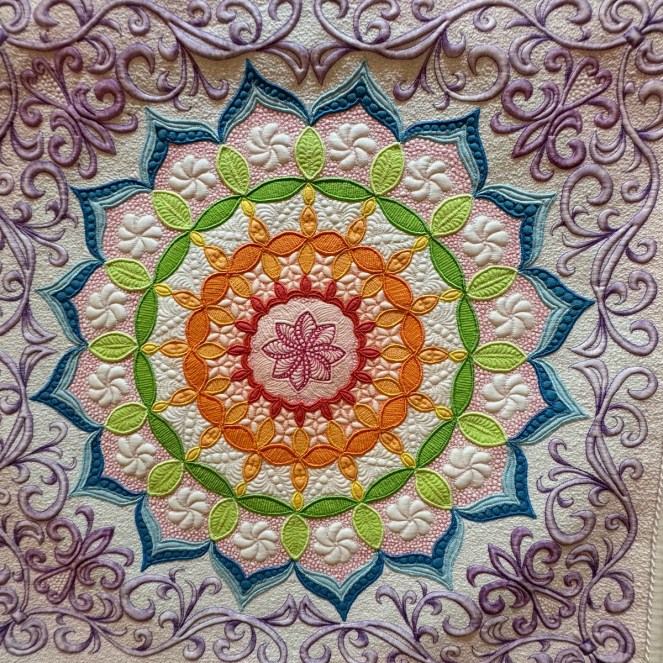
A bit closer. Just exquisite!
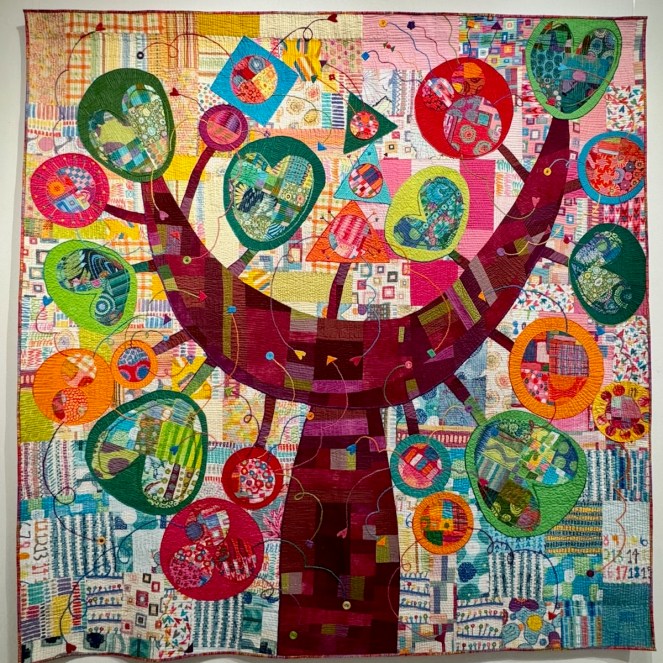
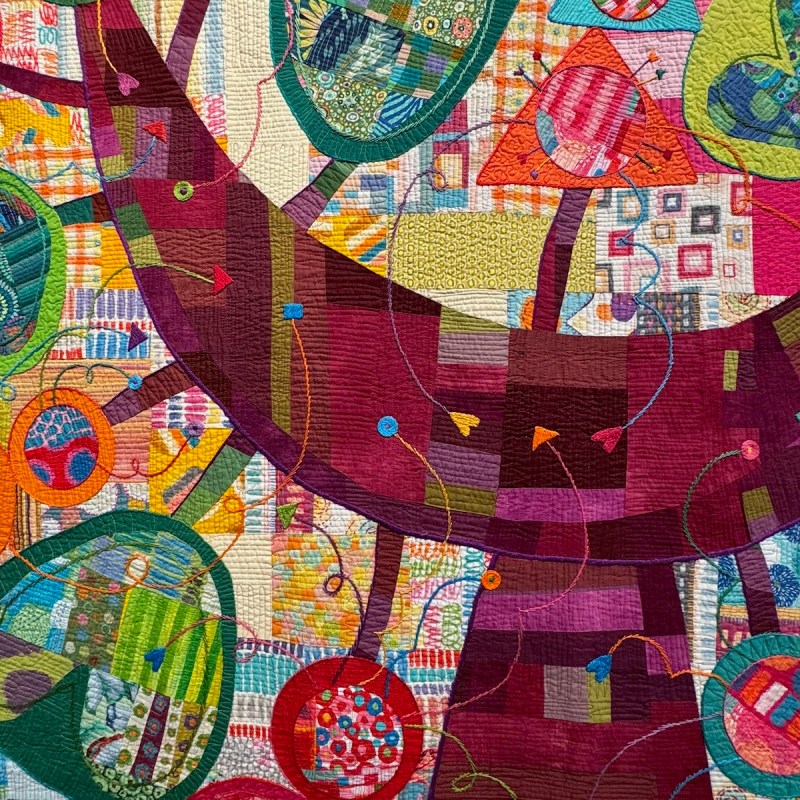
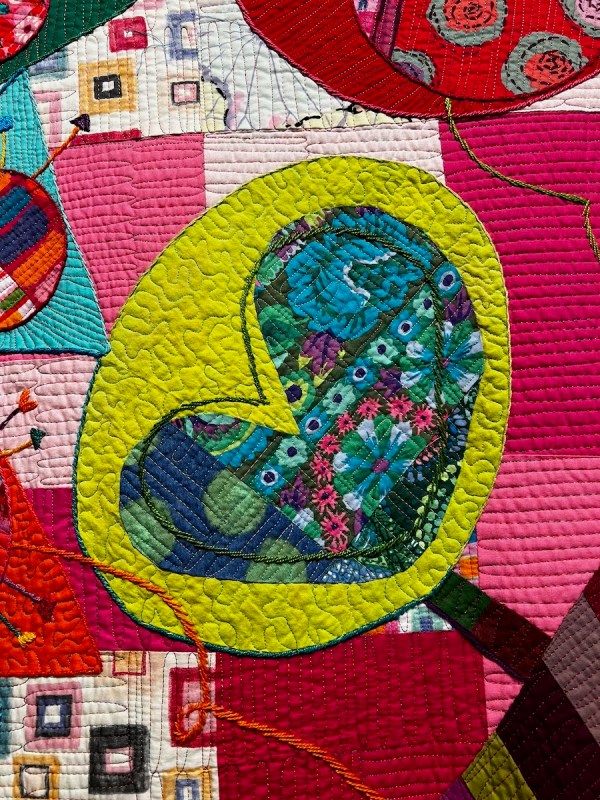
Under a Big Tree, by Chieko Akada. This was a good-sized quilt (you can see it in one of the first few photos) and we really could imagine getting under this tree.
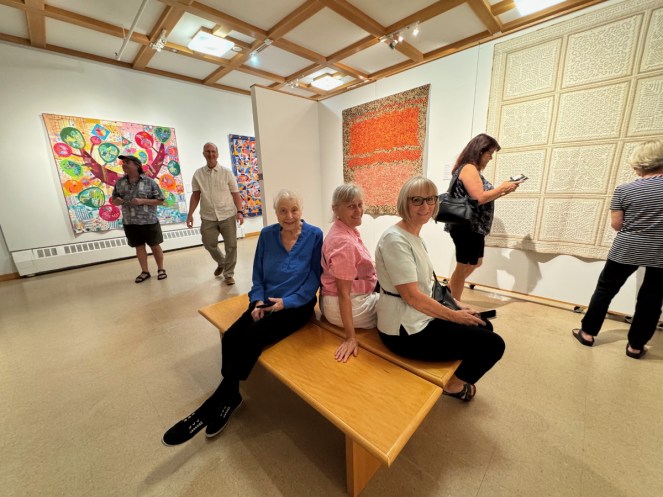
As always, when at a quilt show, I talk to the quilters who are there, and that’s how I met (from left to right): Jan, Carleen, and Mary. Hi ladies! and thanks for chatting with me as I wandered around. That tall guy smiling on the left in the white shirt is my husband, and he helped me take all these photos (he’s quite good at quilt photos!).
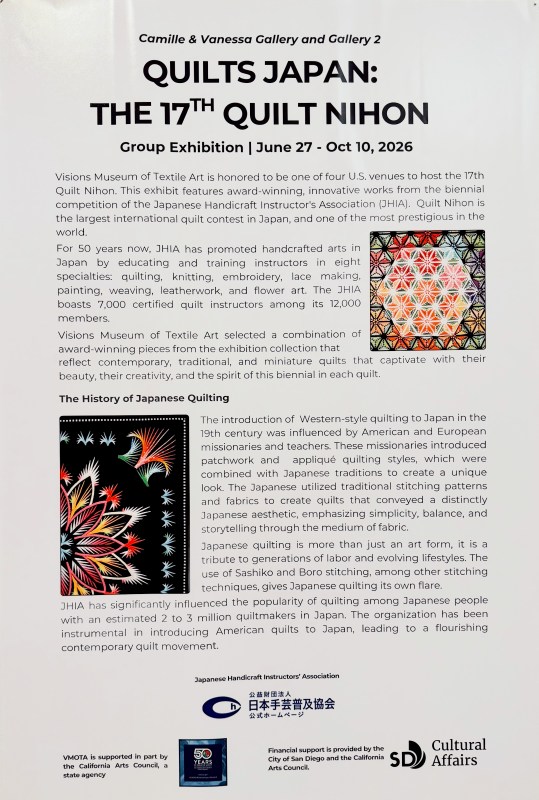
The opening placard.
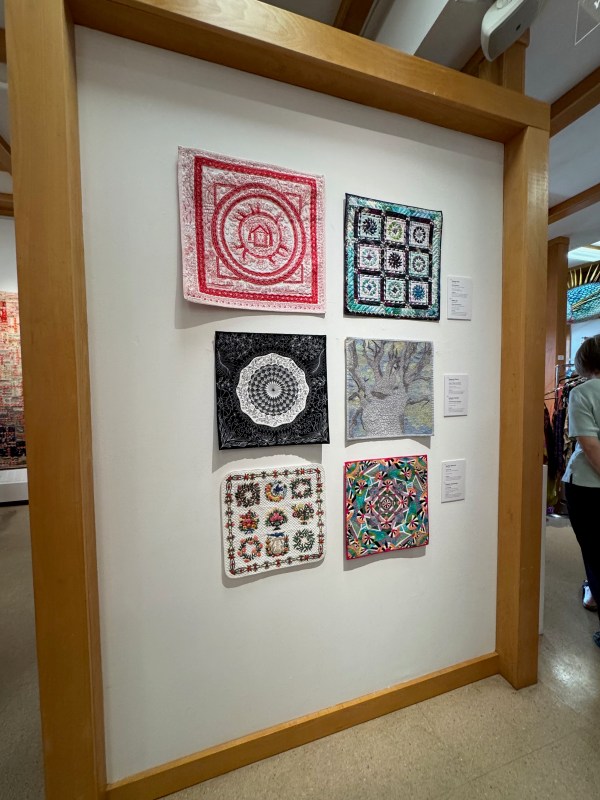
I had a wonderful time — a Grand Day Out — in San Diego. I have my eye on another exhibit, and then Road to California is coming up in January. In between we have ThanksgivingChristmasNewYear, or it feels like that. Let’s hope for some quilting here and there!

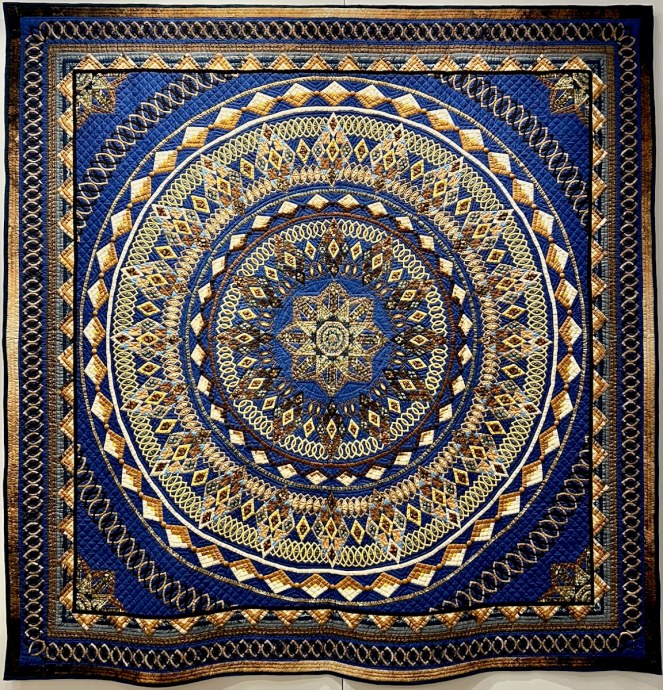
Quilt in thumbnail (and above) is Seirenka, by Hiroko Hoshino.