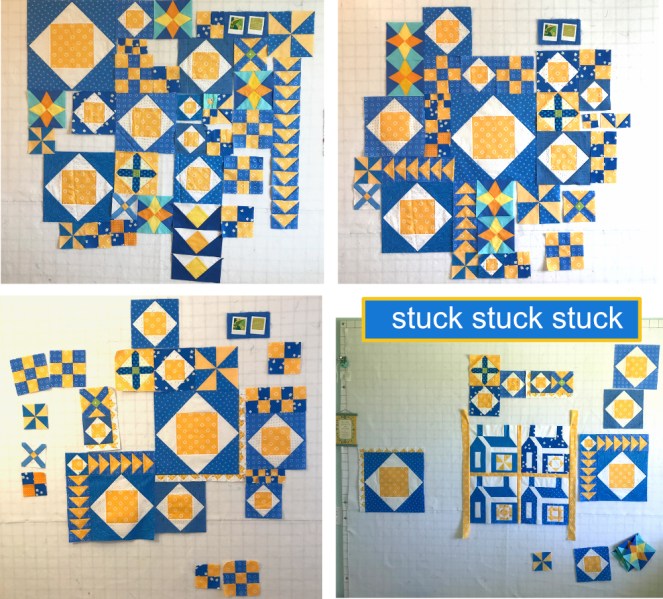
When you are stuck, it is. I love those houses, but…No.
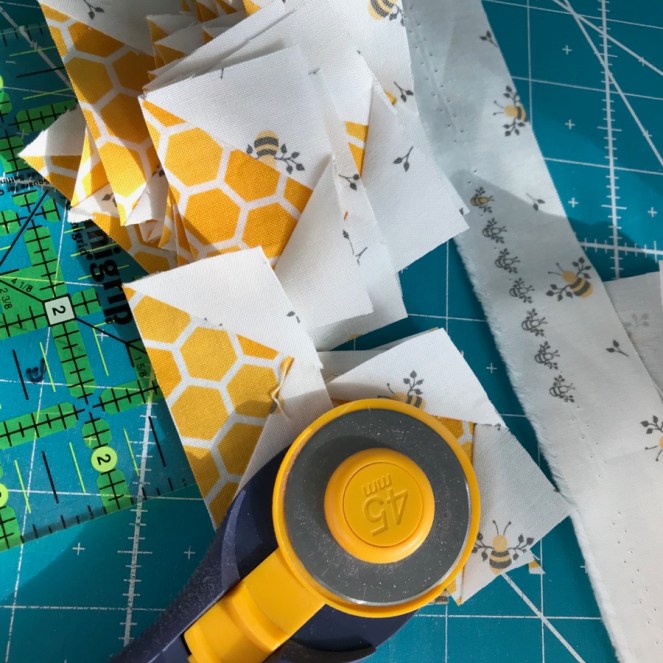
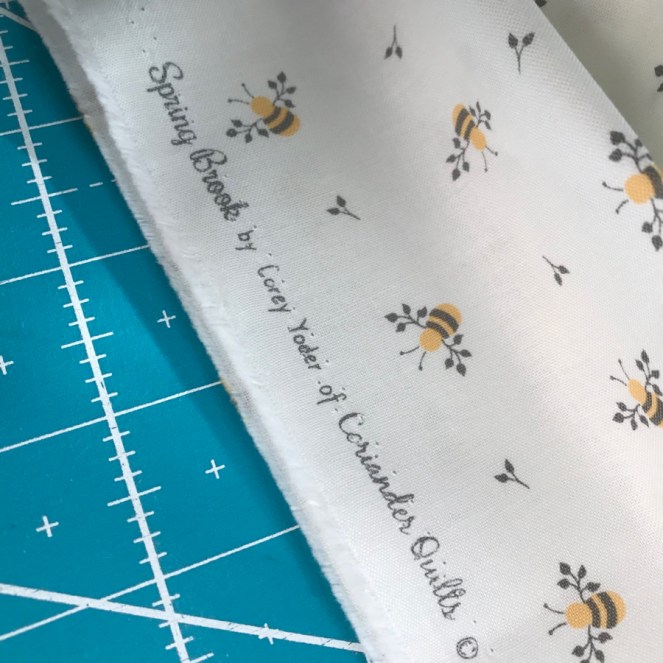
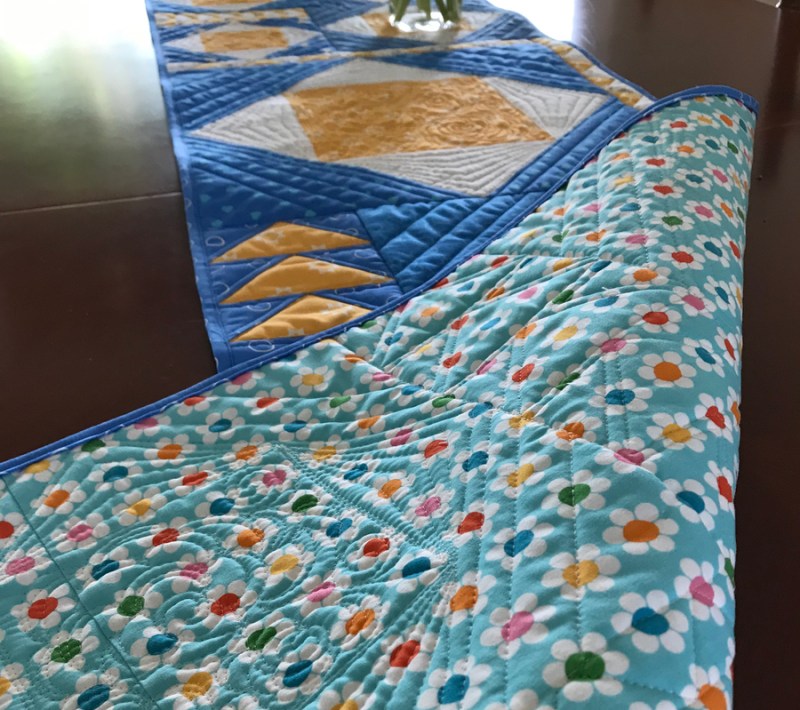
New favorite. I ordered two more yards.
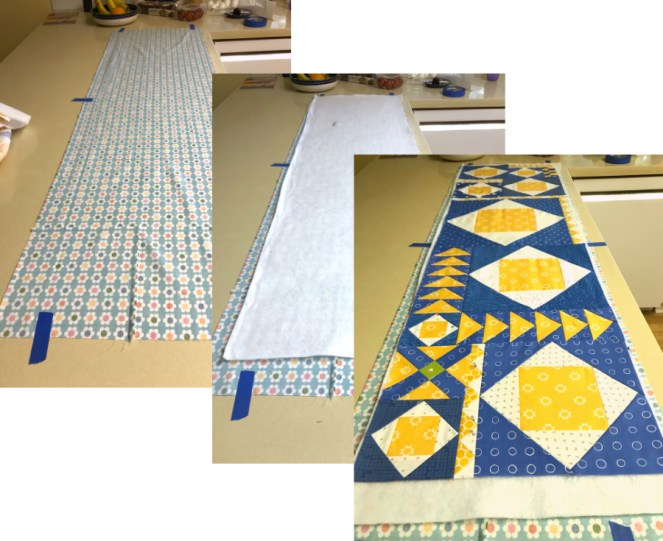
I love having scraps of batting that are just the right size.
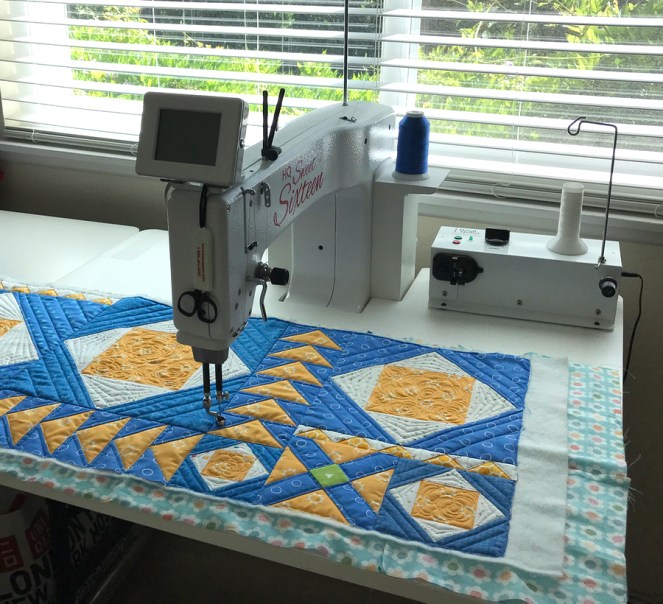
Letting us both rest after a few hours of quilting.
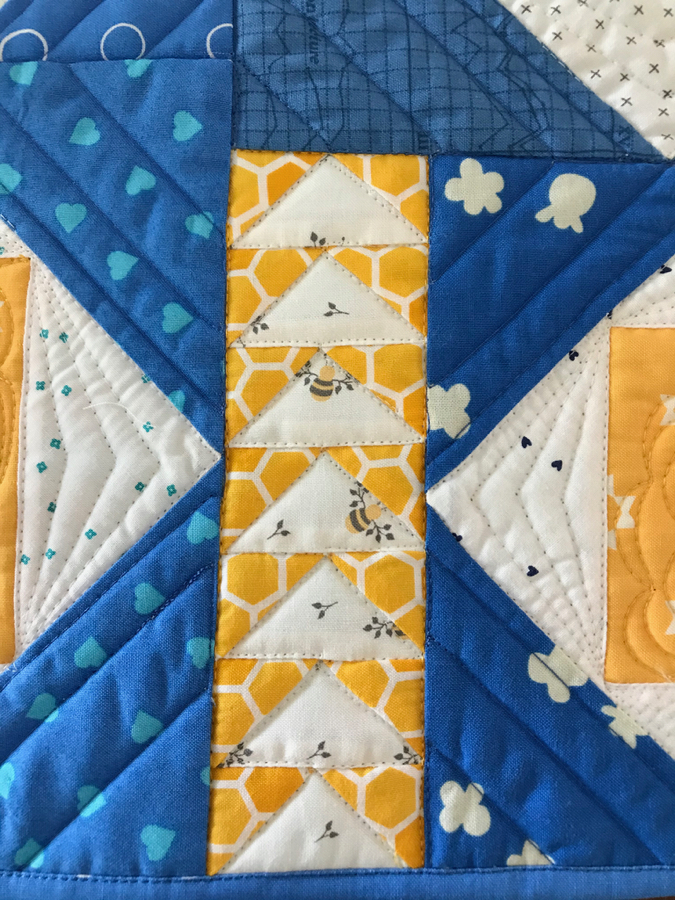
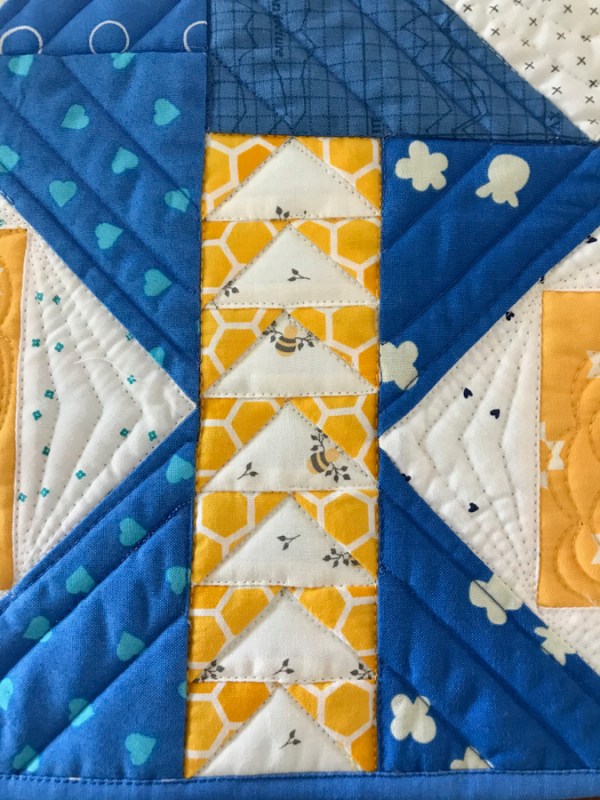
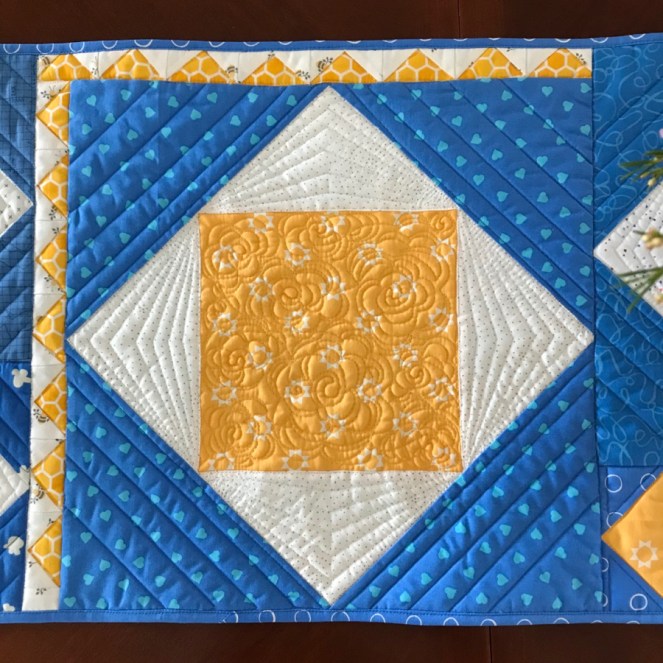
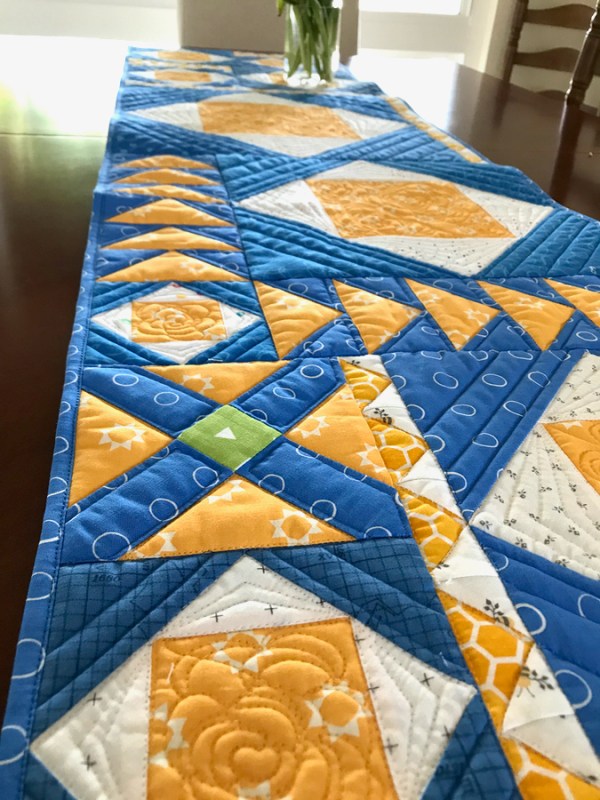
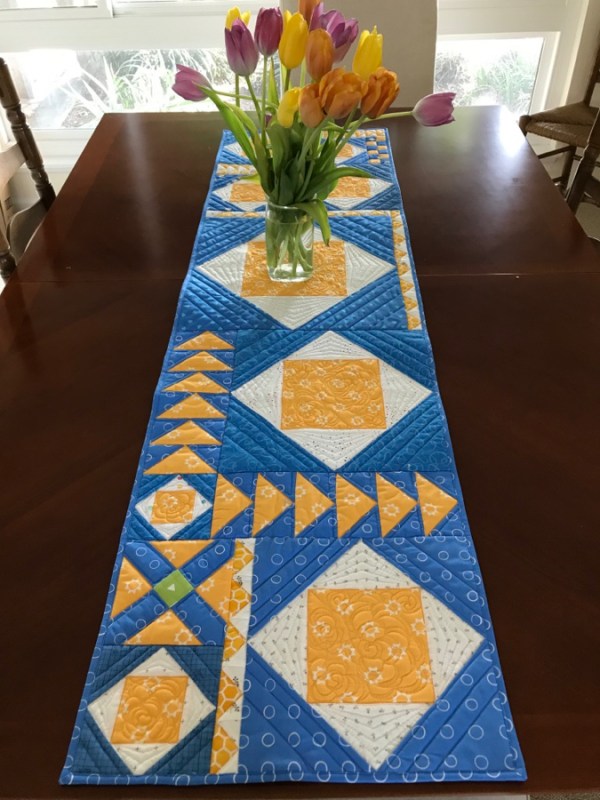
Here come the beauty shots. (Isn’t that little bee with the branch arms the cutest?)
I quilted whatever came into my head.
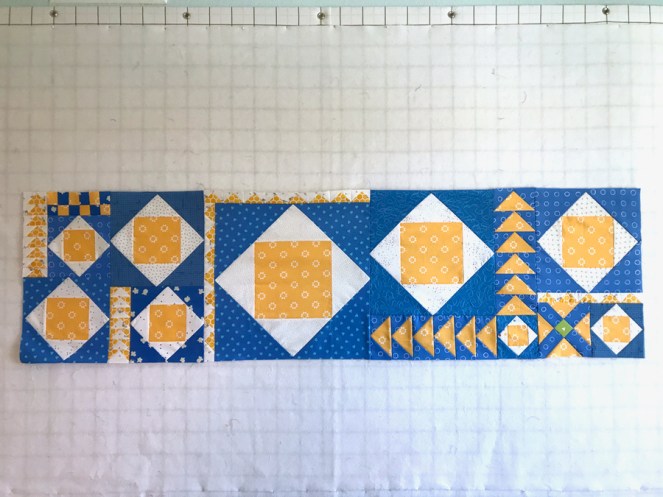
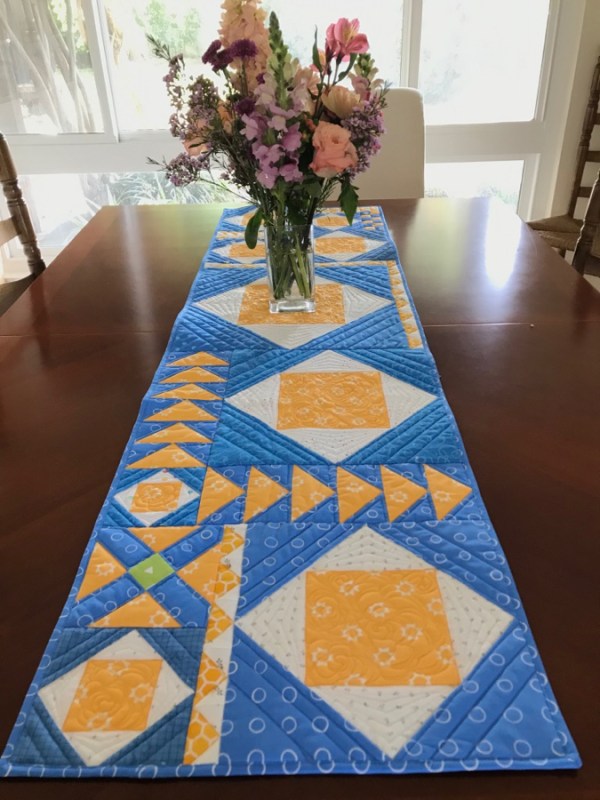
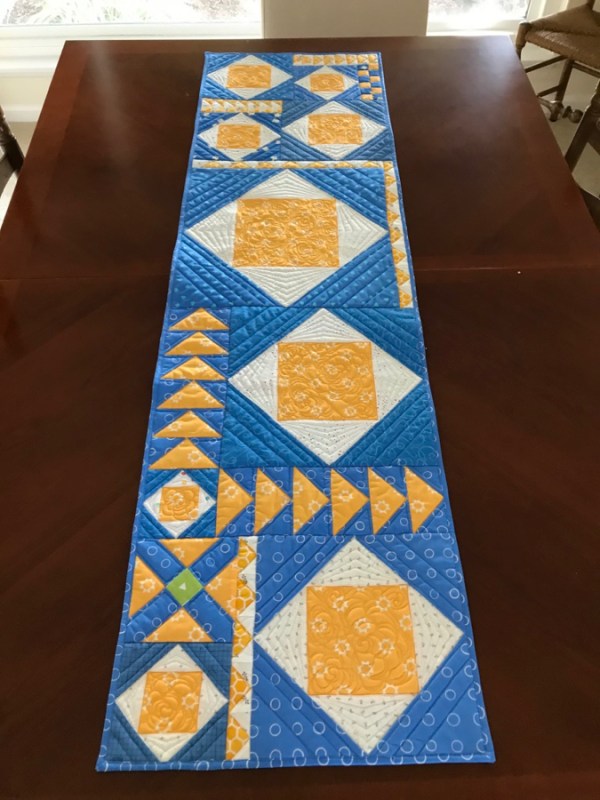
I haven’t measured it, I haven’t labeled it, but the saga of the Orphan-Blocks-into-Table-Runner is now complete. I’m sorry to say, it didn’t empty out my orphan blocks bin much. Now I have to think up another way to use some of those up. And I have to think up a name. These orphan blocks came from when I taught the First Monday Sew-day class of beginners about Square-in-a-Square, or Economy blocks.
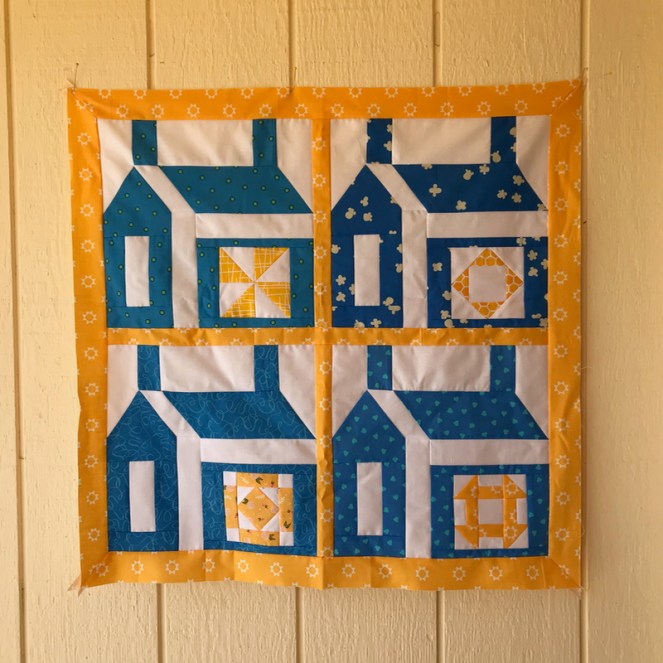
I still love these little houses. Now I have the beginning of another quilt! Get the Pattern Lite here.
Happy Memorial Day Weekend.
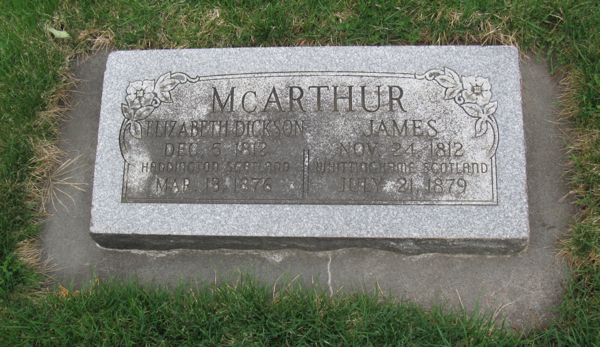
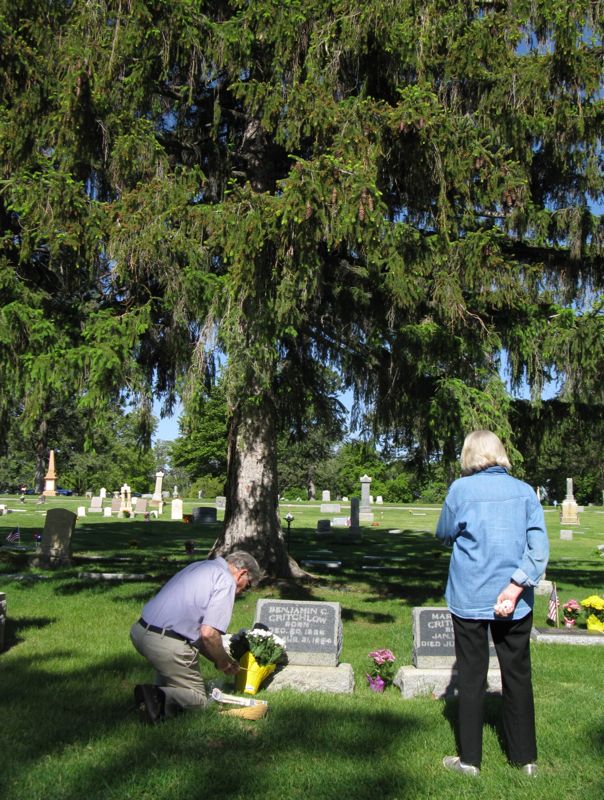
Or, as my mother would say, Happy Decoration Day (some fascinating reading in this link). The weekend before Memorial Day, my mother and father would go out and decorate the graves of their grandparents and great-grandparents with flowers, the cemetary made beautiful with pots of mums everywhere. This is the gravestone of my Scottish gr-grandmother. I have two namesake gr-grandmother Elizabeths and I remember them both on this Decoration Day. While the origins of Memorial Day are generally thought to be about the war dead, because of my mother, I remember it also as a day to honor those long gone.
I’ve been thinking a lot lately about our world of quilts, and by that I don’t mean the larger world–just our own little world. I’ve made some hideous quilts, some use-up-this-fabric quilts (above), some quilts I consider my best masterpieces. Our own little world is echoed out into our guilds, our social media, our quilt shows, publications and then it echoes back to us in terms of the materials we can use. It’s a cycle, a circle, but at the nub of it is that one quilter looking at her one stack of fabrics, or the sketch she made while waiting at the doctor’s office and seeing the print on the back of the chairs. It could be she was messing around with a traditional block, or created one of her own. And from that nub, that spark, hopefully art begins.
I’ve been thinking about this because of an article by Guy Trebay (found while cleaning out) where he asks straight off, “Who gets to make art?” Written about the International Folk Art Market in Santa Fe, it is an interesting overview of this age-old question.
Do you get to create art? Do I? Or is it only relegated to that famous quilter that is all over Instagram? The lady who has her face on the ads of the sewing machine you like? Does more fame equal more entitlement to call it art? And then there is the pressure from the outside world, debating forever and ever if making a quilt is a craft or an art?
Trebay attributes this question to Luke Syson, and says that “In asking [this question], Mr. Syson was adding his voice to a growing chorus of museum professionals who are challenging traditional hierarchies of art production. He was talking, in this instance, about the obscure craft of scrimshaw, subject of a fine study show at the Fitzwilliam, but more broadly about the importance of recognizing and celebrating those gifted artists whose work is so often relegated to the stepchild status of crafts.”
Luke Syson, now the director of the Fitzwilliam Museum at the University of Cambridge (Britain), shares his experience of having to address some of his biases about what iconic art is in his TEDTalk, which he titled “How I learned to stop worrying and love “useless” art.” It’s worth a listen, if you have a few minutes. In that afore-mentioned Instagram post about scrimshaw art, he asks “Who gets to be an artist?” In the text he writes ” I thought about the scrimshanders then – working class, almost entirely anonymous, using their time to making things that were beautiful and that documented their lives. Amateurs, yet completely excluded from the world of leisure that this word implies. But I’m guessing there was a collectors market for these objects early on – that these were a sideline rather than simply the making of personal souvenirs.”
Which leads me to think about the anonymity of women, making their art for years and years, hidden in plain sight. They were making that which was beautiful to them, and which represented their lives. And yes, amateurs, all. We’ll leave this discussion here, with a quote from Trevor Bell:
“Art condenses the experience we all have as human beings, and, by forming it, makes it significant. We all have an in-built need for harmony and the structures that create harmony. Basically, art is an affirmation of life.”
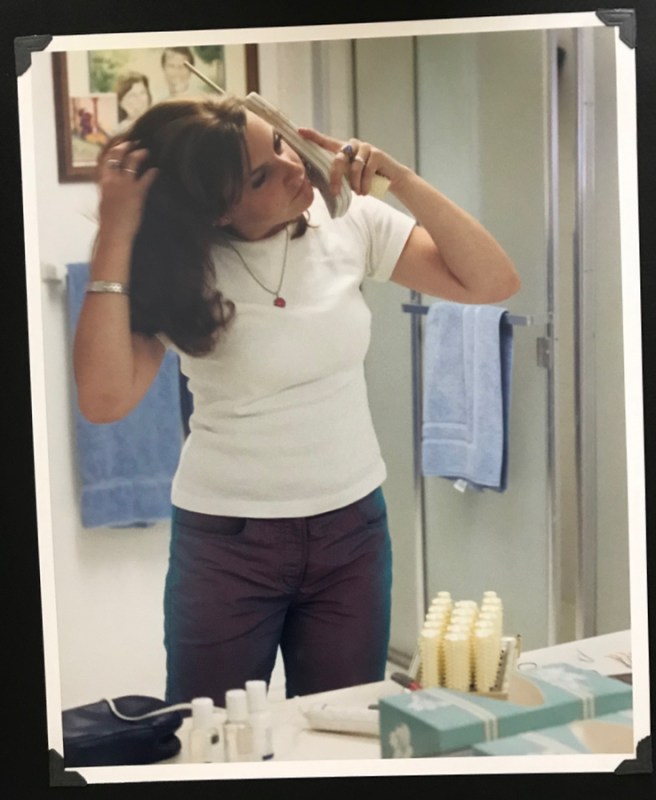
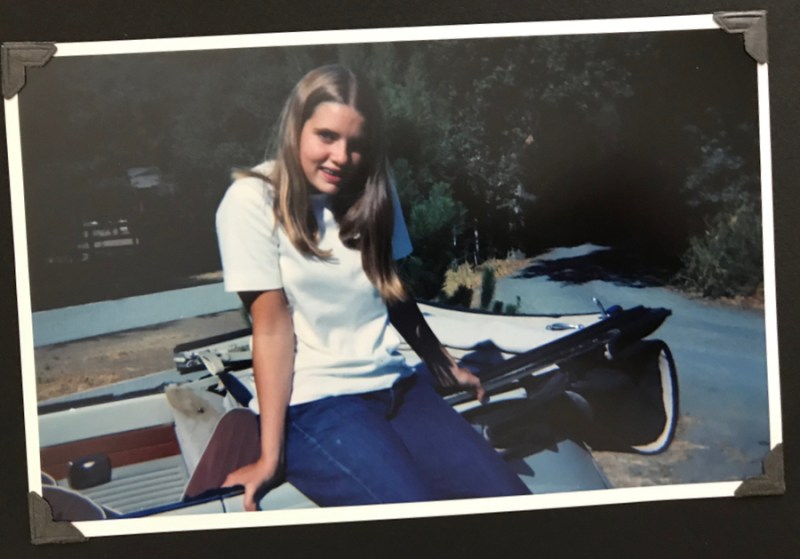
Today is Mother’s Day. My mother is on the left (c. 1948), my daughter (named after her) is shown in the center in a photo from high school (c. 1998). (I sent this photo to her when she complained about one of her children being always on her phone.) I’m on the right (c. 1972).
My mother made art: seven of us. She never quilted. She read. She never painted, as did my father. She did do dishes, laundry, dressed elegantly, organized us, kept us going. I owe her everything, and as she approaches her 93rd birthday, this Mother’s Day I celebrate her as a different kind of unsung, ungalleried, un-media-ed, unknown sort of artist, but she was significant and affirmed us all.
I’ll be in my happy place this week, hanging out with the Orange Grove Quilters. We’re making Merrion Square in our Workshop. If you want to hear my program of Abecedary of Quilts or participate in a live/online workshop, please contact Pat (the Workshop Chairman) at workshops@orangegrovequiltersguild.com or drop me a note (and I’ll check with Pat). I love teaching this little quilt, as there are as many different quilts and there are quilters. Each one makes this little village their own.
And as life moves on, it seems this will probably be the last time I teach this class. Let me know if you are interested.
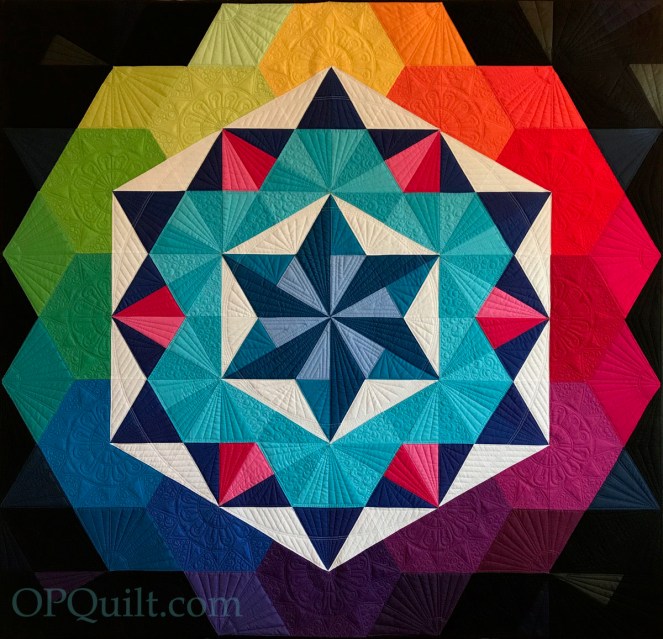
My version of Annularity sat rolled up on my guest bed for ages, until I realized it wasn’t going to get quilted that way. There are no Quilting Fairies, not that I know of. (Shucks.)
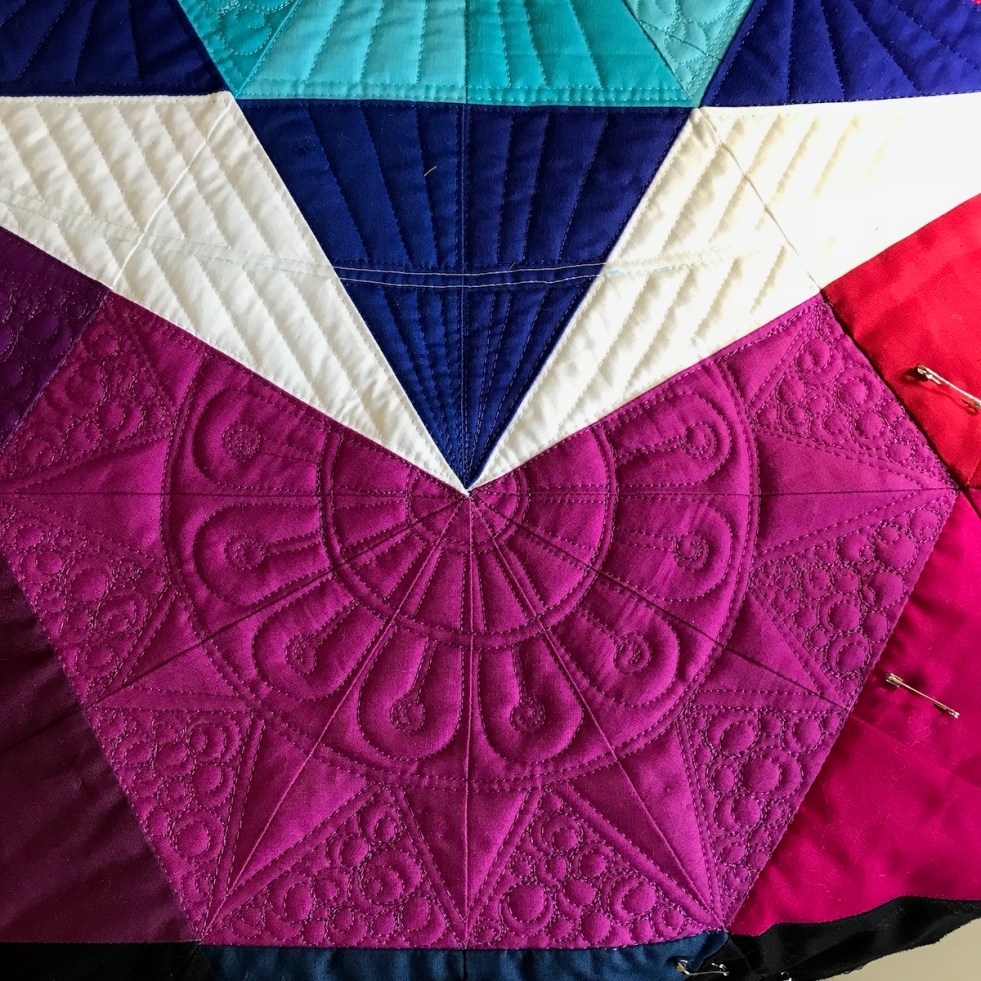
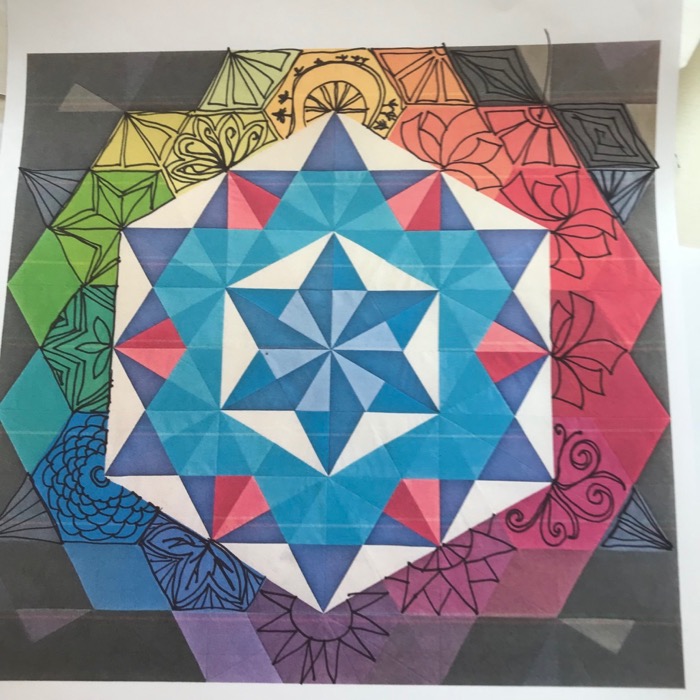
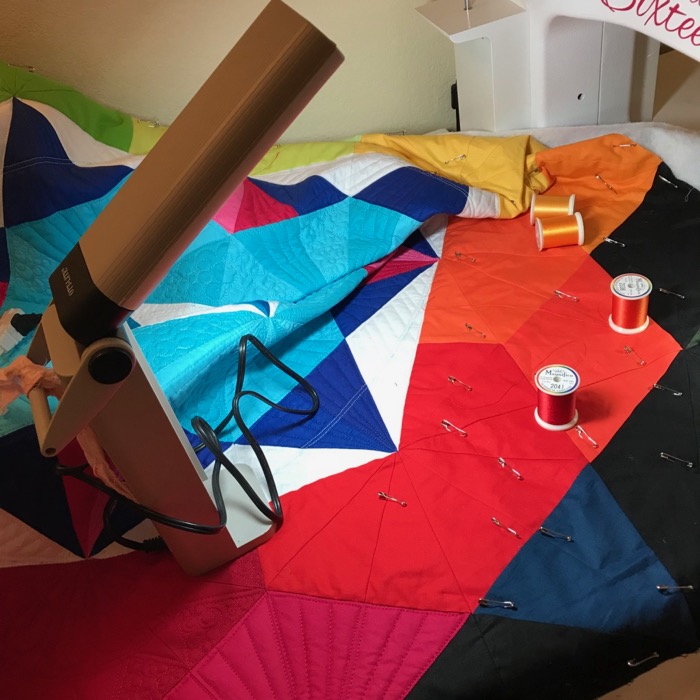
Where does quilting begin? It begins in the tortured anguished cry of “How am I going to quilt this thing?” an endeavor I described in this blog post titled Don’t Let the Process Overtake the Purpose— a terrifying something about careening off a mountain cliff sort of feeling. Yep. That’s how it starts…or doesn’t. But finally, using some advice I’d been given at QuiltCon, I started drawing and drawing (above). It got me through the center.
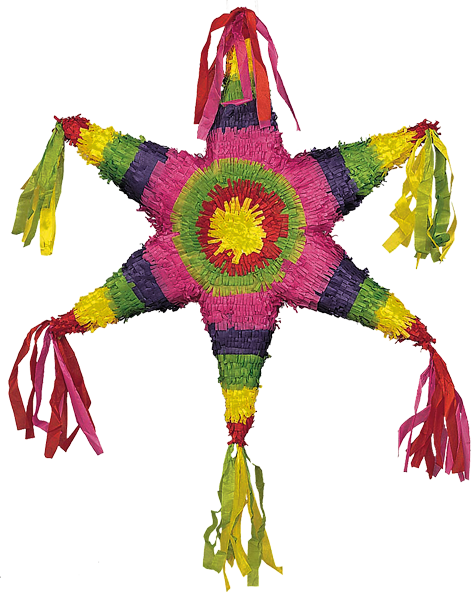
Then the outer ring of colors. I opened any random artsy book in my house, pulling up the one from an exhibit of Japanese screens from the Smithsonian, which prompted those bold ribbon designs in the upper right, which looked to me like the ribbons at the end of a piñata.
No.
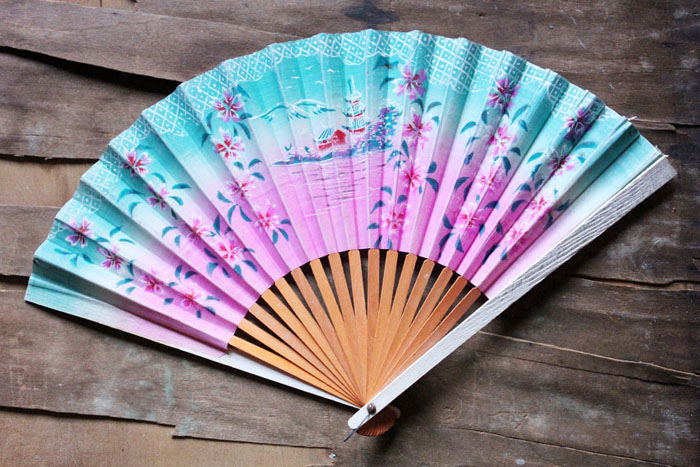
But that same book gave me the idea to think of those shapes as fans, and to fill in the design as if someone had opened one of those and was showing me the designs.
It became easier to visualize the design that way.
Am I 100% thrilled with this? No, but I am 100% happy that I’ve figured it out enough to get the quilt quilted, knowing — again — the truth in that old slogan I repeat to myself more than once a day: The Perfect is the Enemy of the Good. (or Done.)
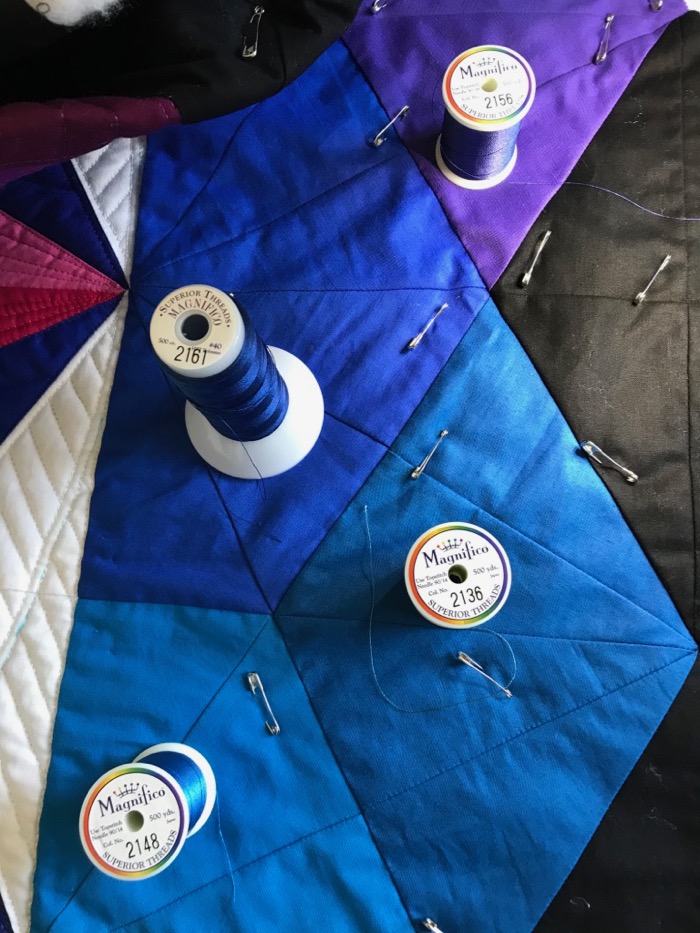
I had purchased a number of spools of Superior Thread’s Magnifico, which is my go-to thread for quilting. It lays down a lovely, slightly thicker, line of thread, but it doesn’t sit on top of the quilt like some thicker threads. I’m always trying to match the thread well, taking photos of the colors to keep myself on target.
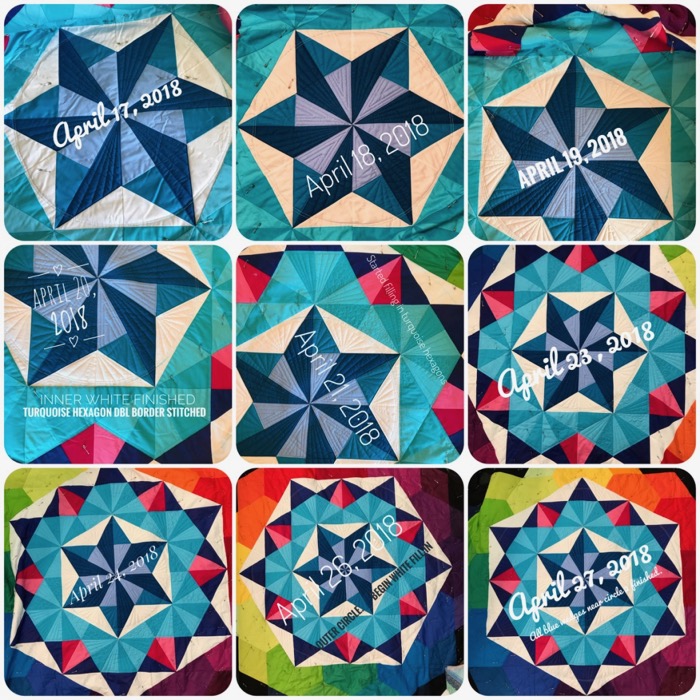
So I wouldn’t get discouraged over taking this in small bites, I took a photo at the end of each quilting session, threw it into my Snapseed app on my phone and labeled the date and the progress. Above is the first grouping.
It was celebration once I quilted out of the reds into the yellow, which you can see happened last week.
Here’s where I am now. I’ve got to take a break for a while (some traveling and family stuff), but look forward to getting back at it. The dark outer quadrants have already been planned, mostly quilted in black thread, letting them recede away from the rainbow of colors.
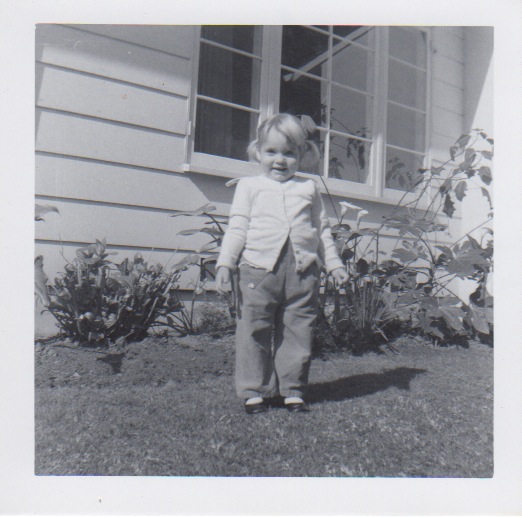
This has to do with quilting, but it doesn’t start out that way. It starts out this way, with a two-year old girl posed on her family’s front lawn.
Then all of a sudden, I was a young mother, then a mother of three-soon-to-be-four children, then a grandmother. When I was that young mother, I took a class on how to make a quilt. I was a Clothing and Textile major in college, so I knew how to sew, but I thought there was something extra you had to know to make a quilt. And with one young child at home, I had absolutely no extra time (or so I thought then) but figured I could squeeze it in somewhere. Between then and when the fourth child was born, I made about eight quilts: each child had a baby quilt, I had a quilt for the bed, and I’d even made a baby quilt for my sister and one I sold in a consignment shop.
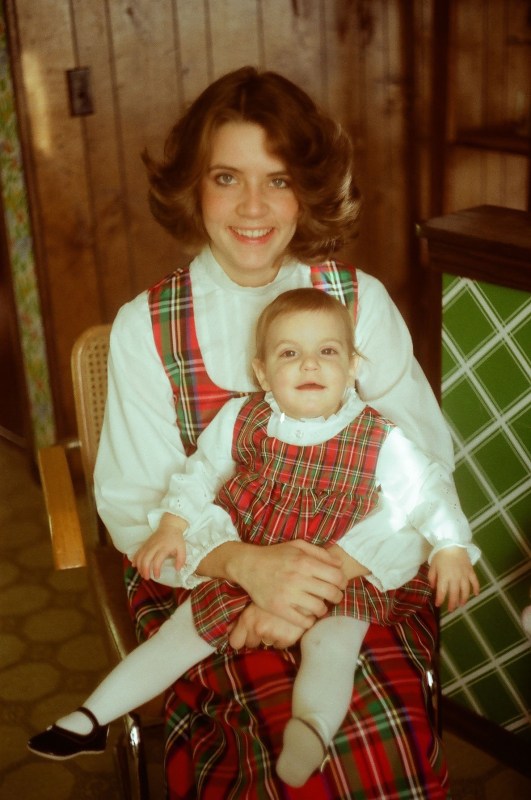
That daughter and I, long long ago.
Mothering was that life. That was what I chose and on balance, the kids seem to have turned out all right. But somewhere in that life as mother, I also chose a life as a Mary Kay Lady and a seamstress– I was always sewing, making all the outfits the children and I wore. And somewhere after I finished my undergraduate education (I was on the 28-year plan), the number of quilts I made took off like a rocket, blogging happened, rotary cutting happened; things just changed. Again.
I’ve been thinking about this because of two experiences:
The first was the presenting of my quilts at a trunk show at my local guild. I reviewed all my quilts, and each represented some life I lived at the time of the making of that quilt, from the simplest beginning quilt (a small whole cloth quilt with the knots on top) to the recent finish of The Circles Quilt, with all the blocks I designed. It was a satisfying evening and I was happy to share some of my life’s work.
The second was when I flew home last week after visiting my mother for her birthday, and I stitched improv appliqué blocks while on the plane. The young man next to me was reading DeLillo’s White Noise, a book I had read in grad school. The title fit the book perfectly, and that was about the only comment I could make when he and I visited. I realized he saw this grandma-person stitching away and that was the only life of mine he could see. But, I wanted to say, I’ve had so many other lives!
So if all my lives were strung together as pearls on a necklace, what might I see? Would I see only the failures, the quilts I gave away, the moment I lost it and yelled at a child? Would I see the classes I had to drop, the cosmetic saleslady I could never be? Or would I focus more on the pearls burnished from the striving and from the use: a creative life, a life with laughter, traveling and family. A life with happiness, because in addition to all that, I get to walk into my sewing room every day, thread a needle and get to making.