300 and Beyond · Appliqué · Free Download · Free Quilt Pattern · Museums · Patterns by Elizabeth of OPQuilt · Quilt Finish · Quilt-A-Long · Quilts

NMAI • Top Finished! (Twice)

I nearly always put the finished quilt top at the beginning of the post.

Not this time.

I’m putting the Finish, Before I Really Finished It, at the top of the post. Here it is:
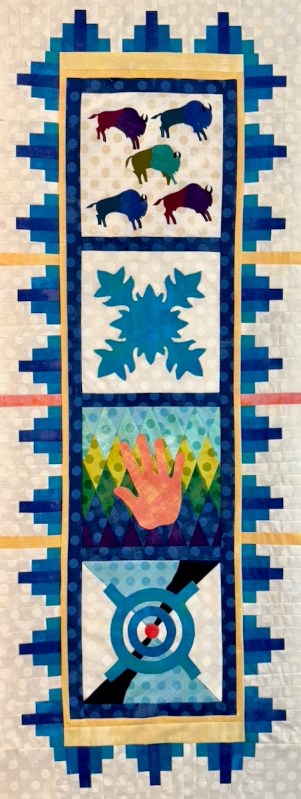
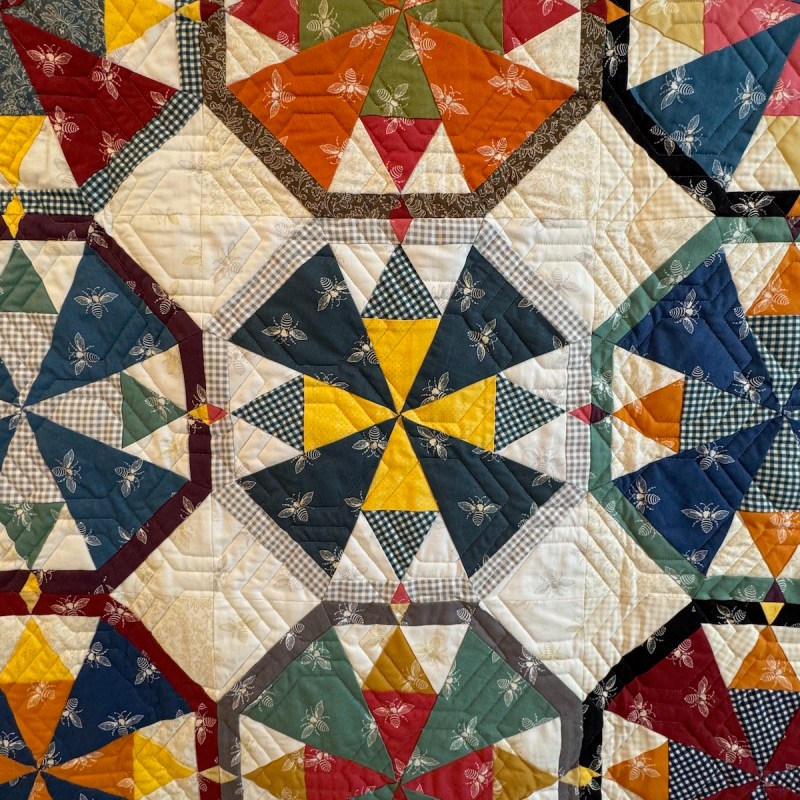
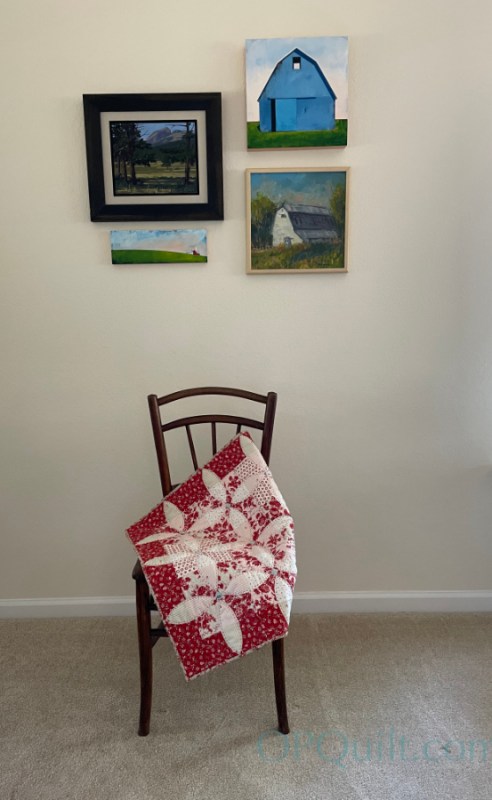
This is the finished layout from the 2026 quilt-a-long project from the Smithsonian’s National Museum of the American Indian, with a few tweaks. As I mentioned in my BlueSky post, I absolutely am not a fan of piano key borders. You know those ones with a million little pieces that NEVER FIT? Sure you do.

And this was a type of piano key border, but the bits were subdivided to mimic a step design, seen on baskets from the designer’s region and people. I can honor that, but I was not keen about making it. That’s why you see two extra bands of yellow on top and bottom, as I’m trying to get that border to fit somewhat. I finally gave up because I knew I was going to do this:
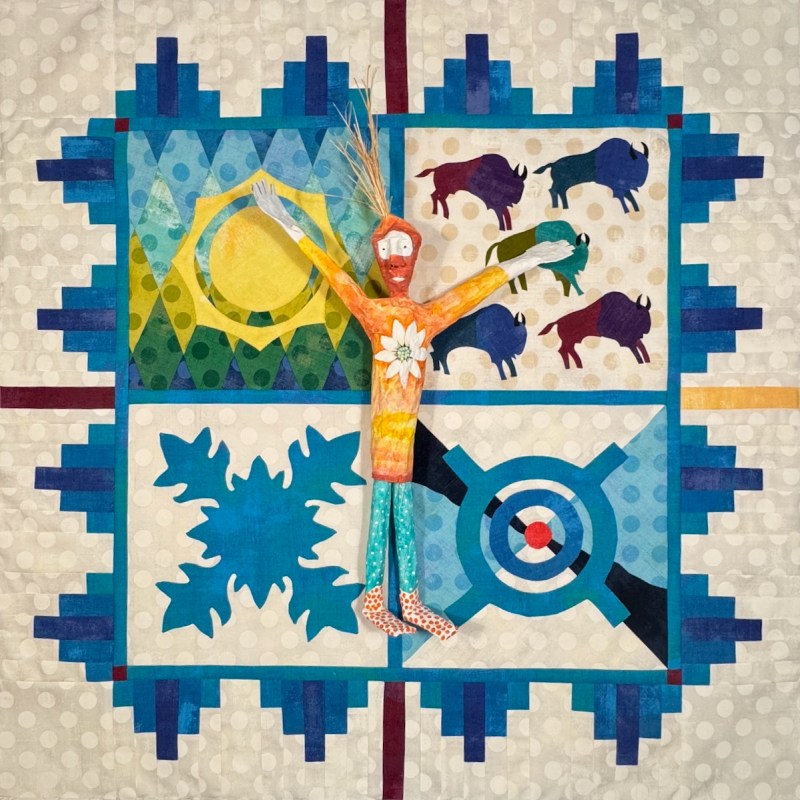
(That fun figure I purchased in Northern Arizona is helping to show off my Really Finished quilt top.)

I got rid of all the inner borders, swapped out my sun symbol block for the hand, and tried to set the design to balance as well as it could. In her narrative about the basket inspiration used for the final border, Margaret Wood noted that the break in the design always points East. I intimated at this with my one yellow spacer, pointing to a traditional east.
So I consider this a successful finish.
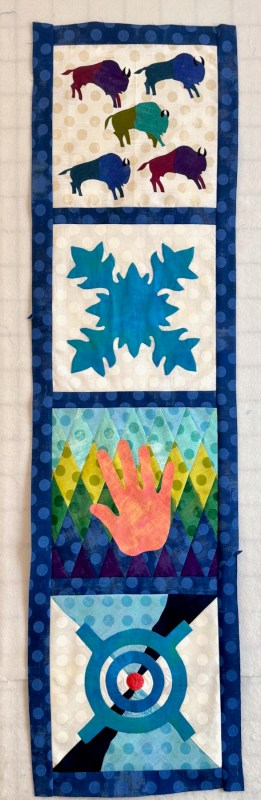
(Early version)

But let’s talk about that final block.
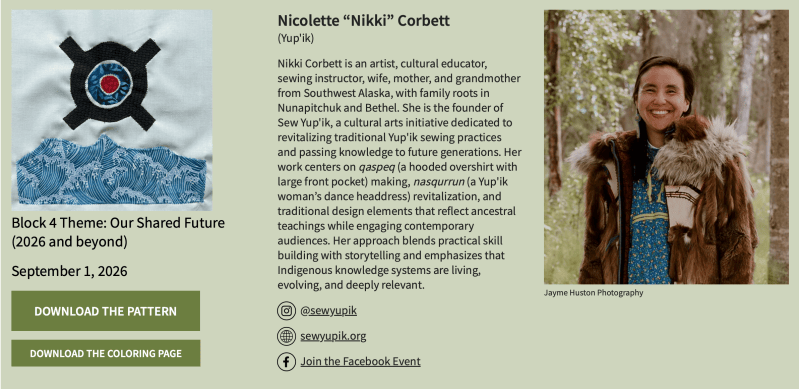
Which leads me to ask, what is the real point of this quilt-a-long? Past all the designs, past all the paragraphs and aspirations? At first I viewed it as another traditional quilt-a-long, you know: get a free pattern, make a block, repeat.

But when I hit this one all that process abruptly ceased for me, because there was no way I was going to make that block. I went away for a couple of weeks (here, and here…always good for the quilty soul), and while gone saw another quilter on BlueSky make hers, changing it to suit her.

And then I started reading and reading; I read about the Yup’ik people. I read about their designs, where they lived. I found other artists in other venues. I searched for “Ellam Yua,” which is the black symbol floating over that random wave up there. And then I found this:
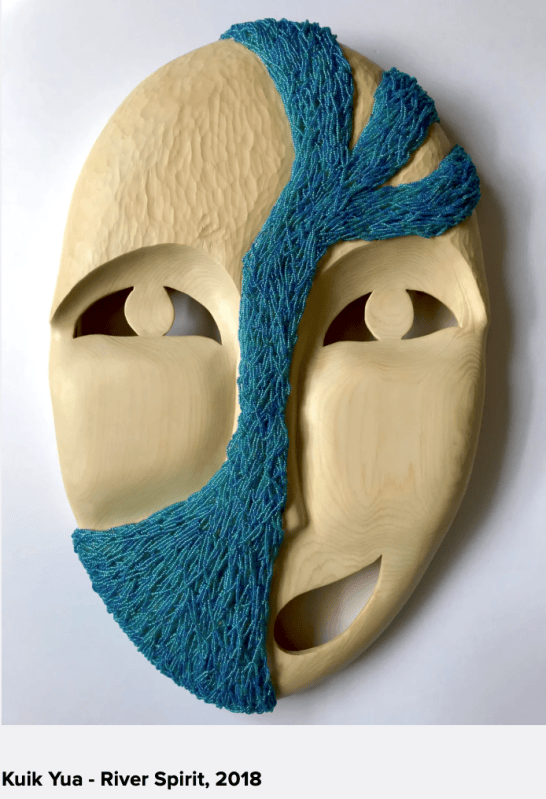
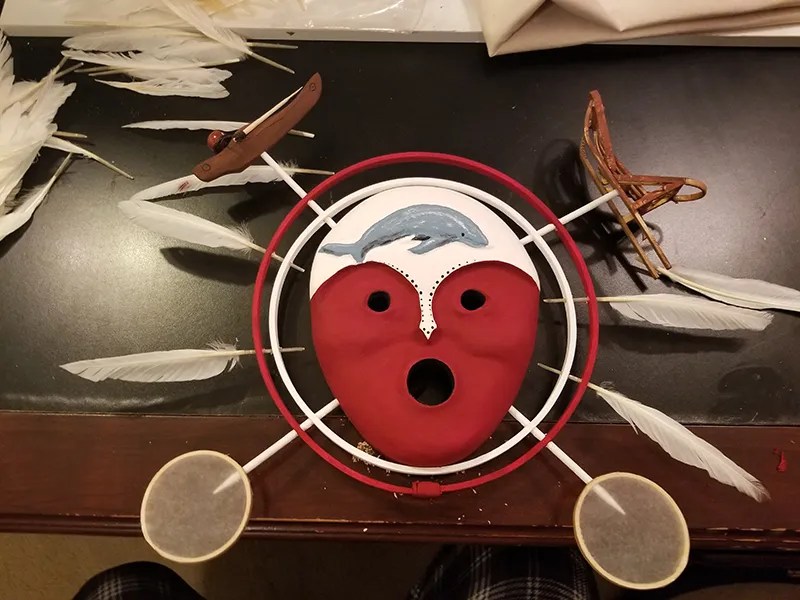
This hand-carved mask, from Jennifer Angaiak Wood of the Yup’ik people shows the river flowing from the upper right to the lower left. Things fell into place. Instead of that ocean wave representing water, I’ll do a river flowing over mountains.
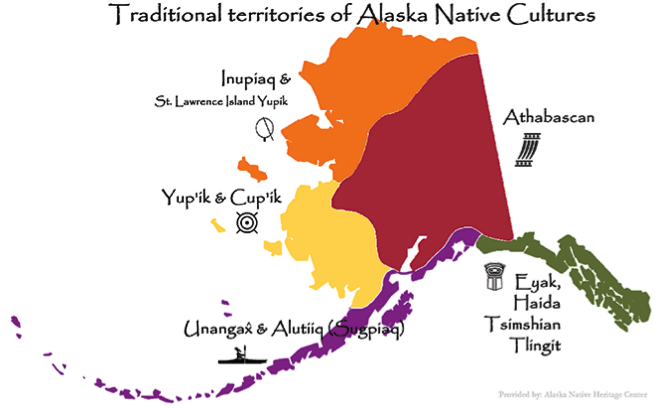
The Yup’ik live in this area of the world where there are rivers, and oceans and mountains. After I borrowed Ms. Wood’s idea the creating began for me. I was — I think — finally catching the spirit of this adventure: learning about the native peoples who lived here before America was even a glimmer of an idea; perhaps that’s why the National Museum of the American Indian (Smithsonian) was doing this for the America 250 celebration.

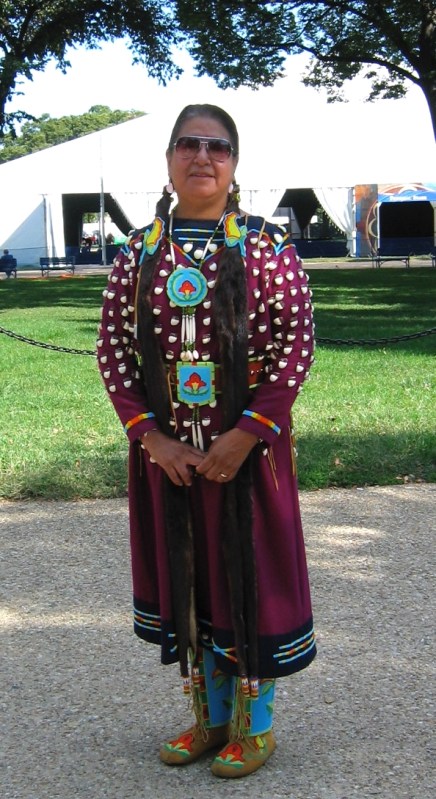
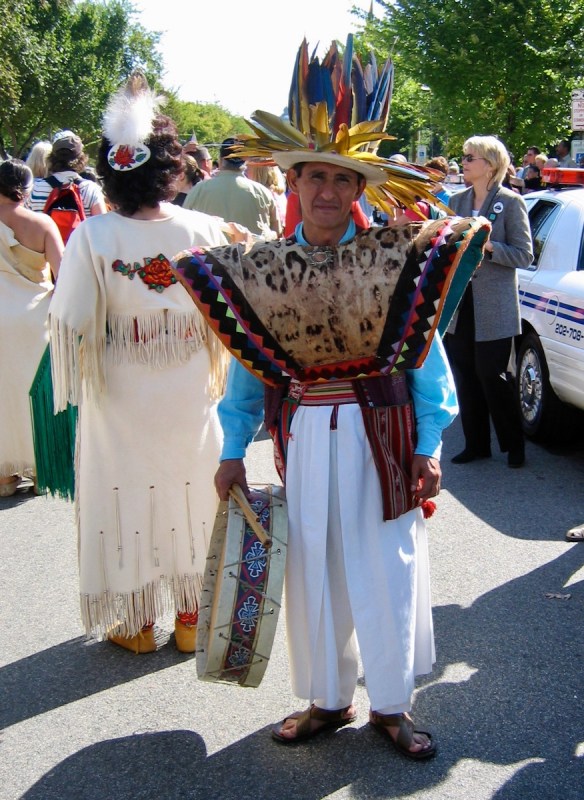
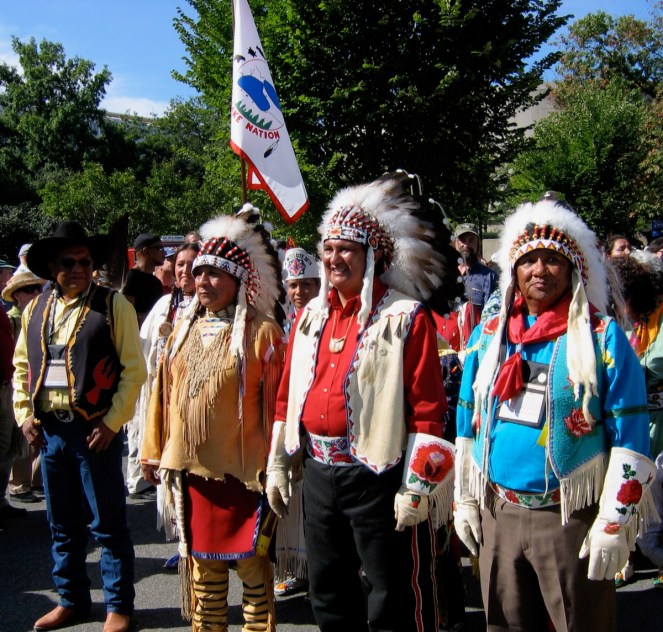
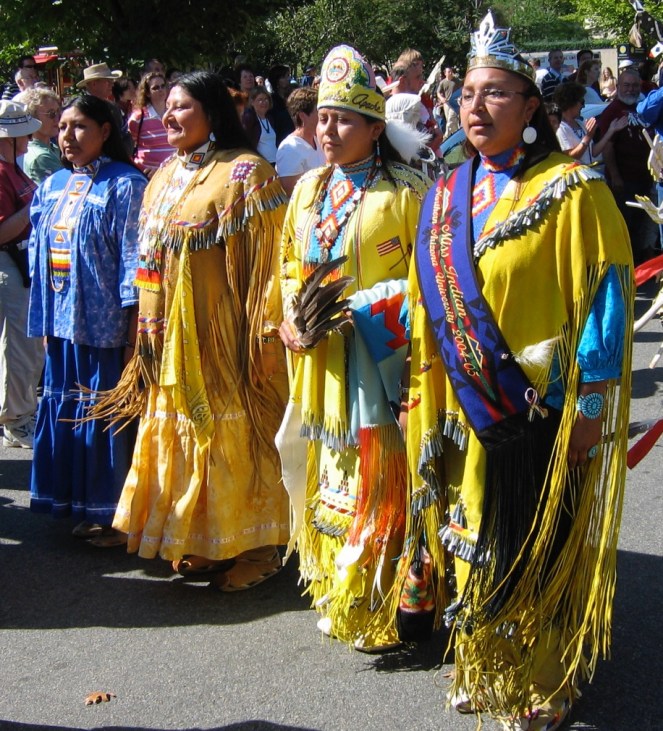
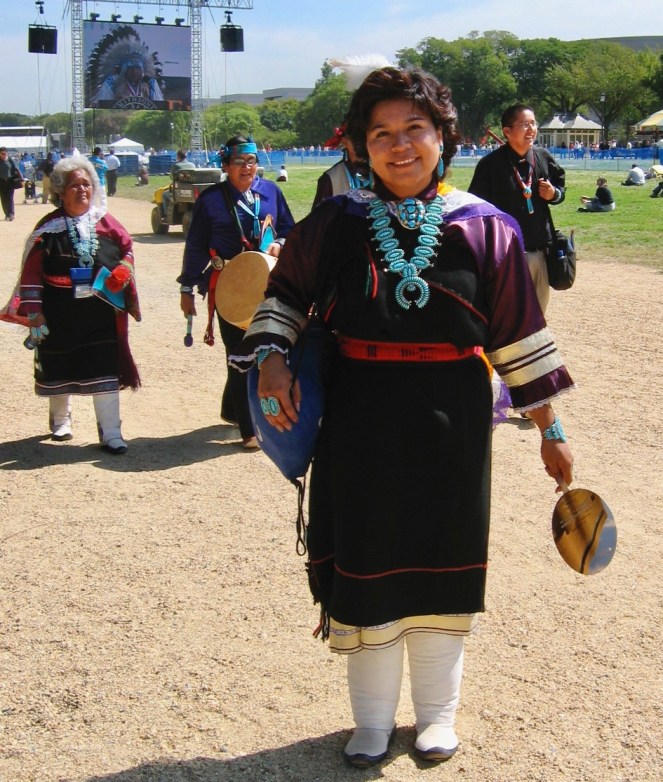
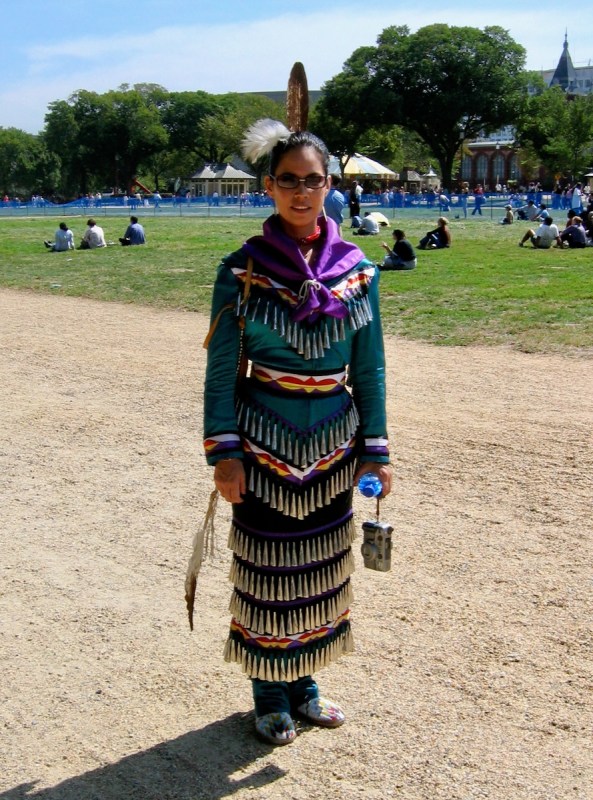
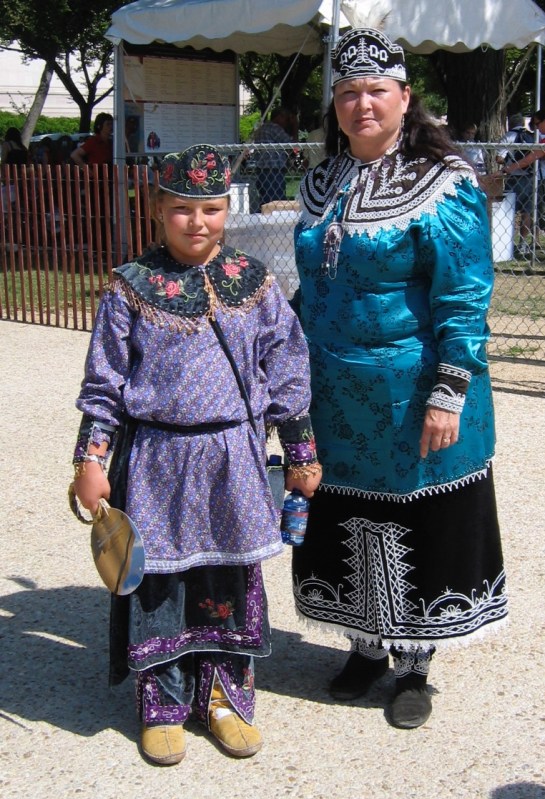
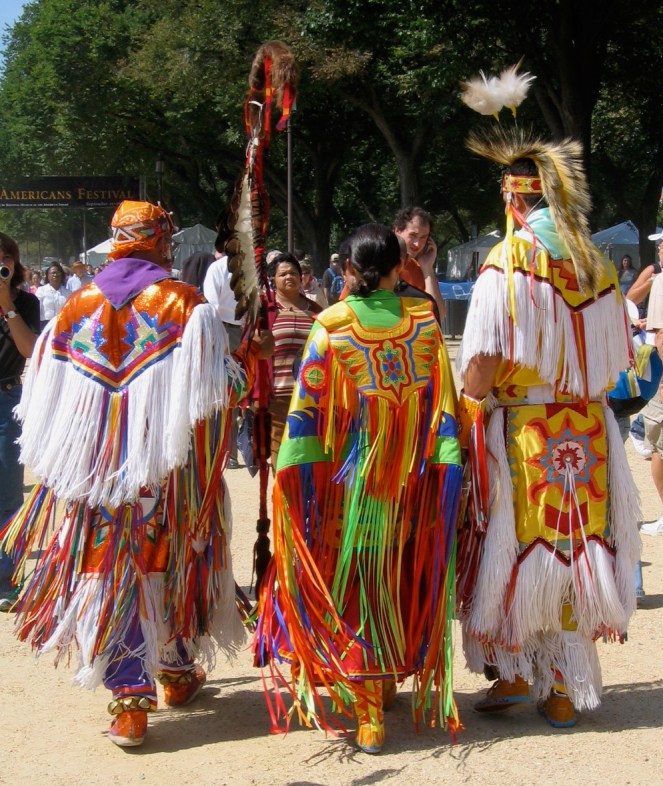
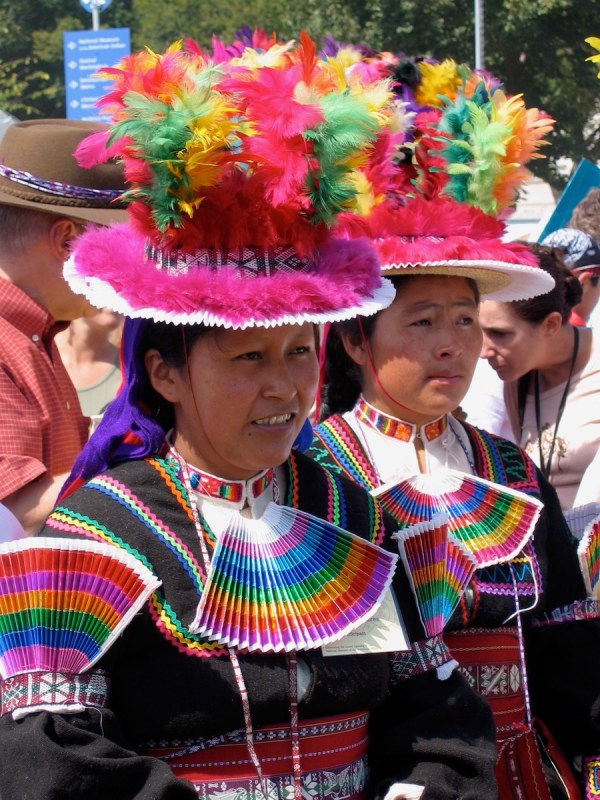
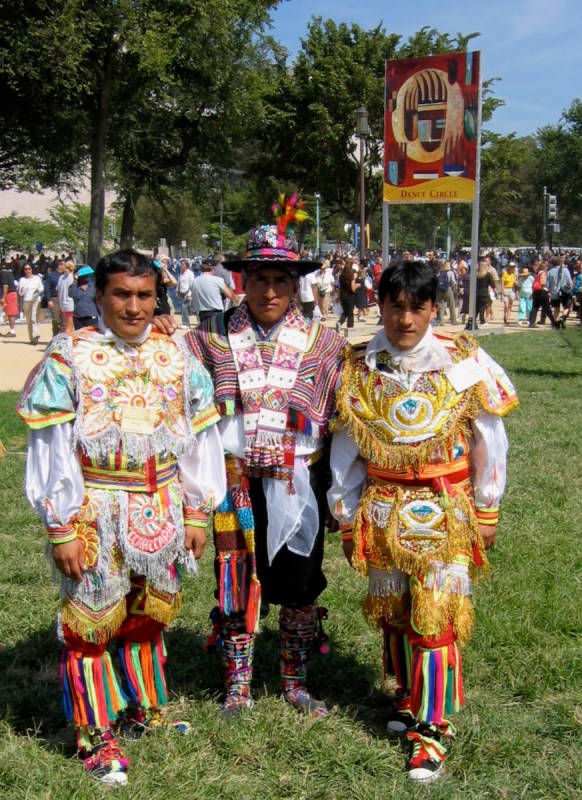
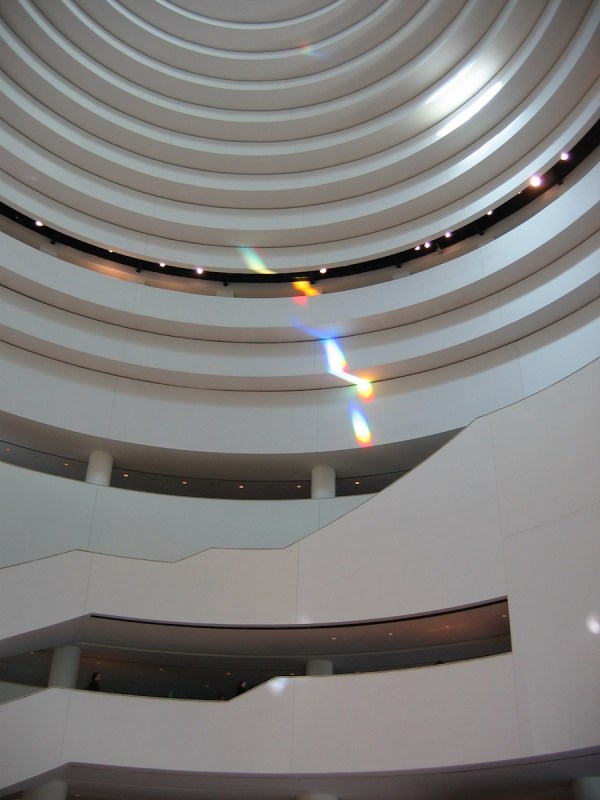
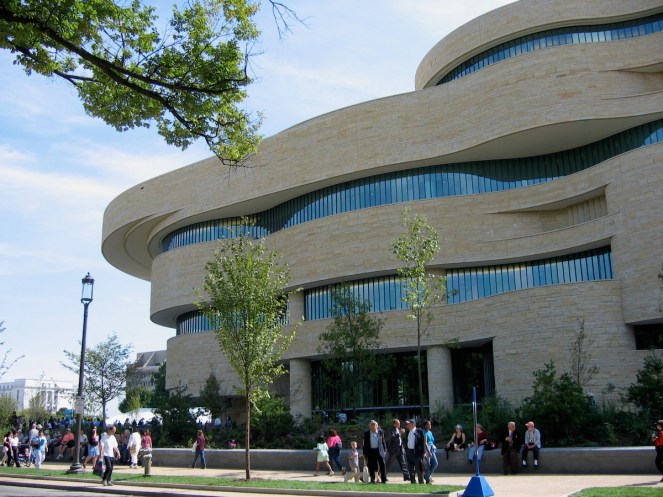
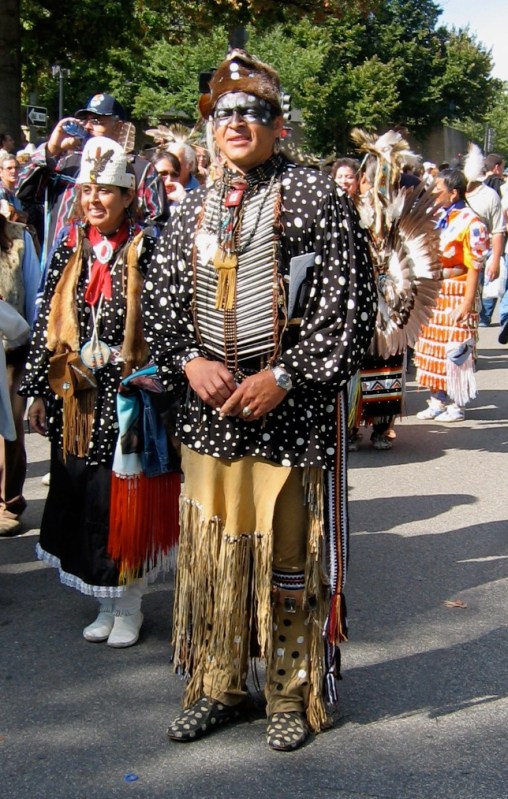
And if you haven’t been to that museum, please do put it on your list. We were in Washington, D.C. when it opened and it was just a party of different peoples from all over the American Continent (north and south) with a parade, food, programs. A good memory. And here’s a slideshow of that day, with all the amazing dresses (I love the Ojibwa Jingle Dress, slide 11) and regalia of the different nations. The first slide is a partial glimpse of the museum itself. The last three slides are inside the atrium, with the rainbows shining through the windows and down the walls.
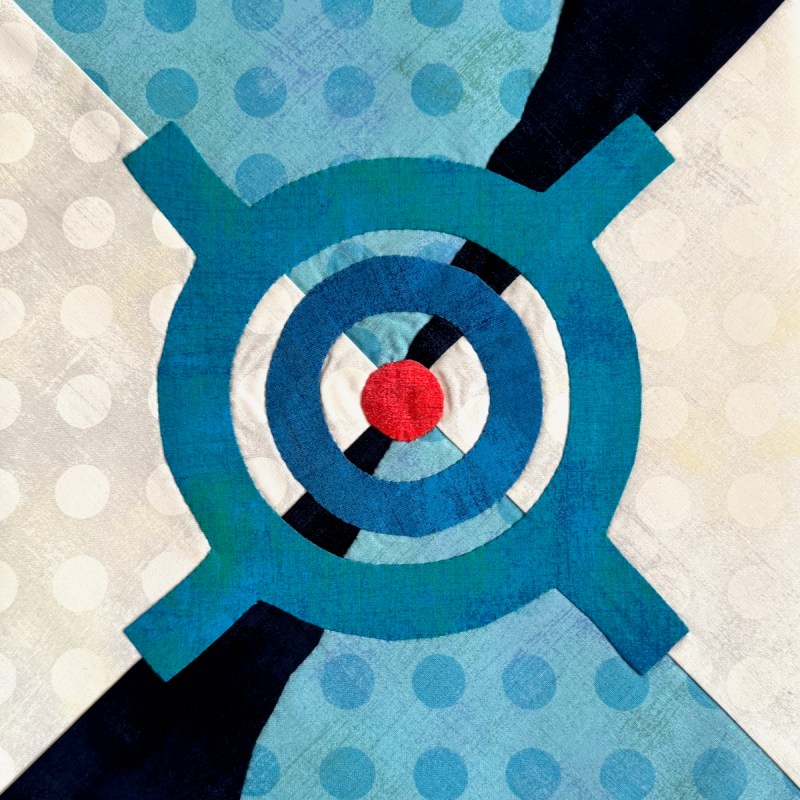
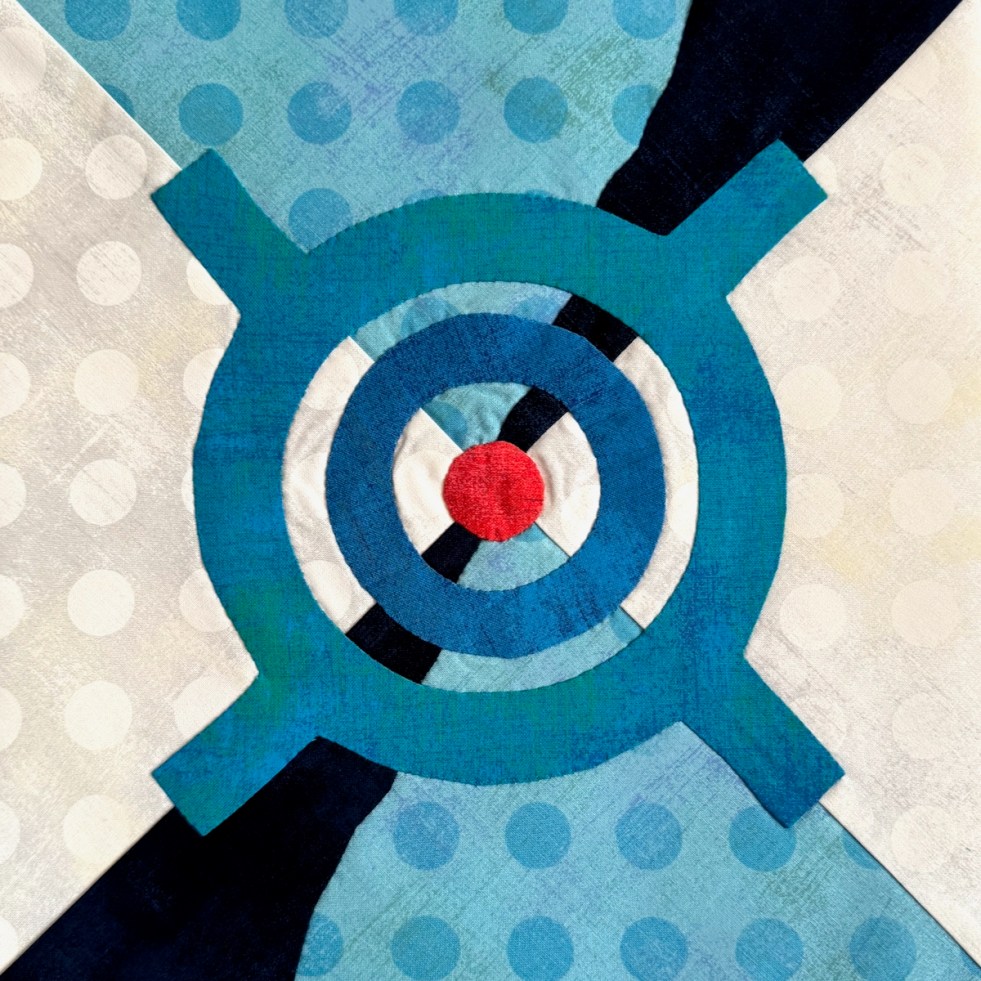
Here’s a free pattern of my version of the final block for you to download. Please do not post this on your own site, but send others here to get it for themselves. Thank you. (This is already up on my pattern site, and eventually I’ll take this one down and the pattern will live over there.)

Okay, a quick review of how I made the block. I like using freezer paper when I do appliqué that has a tricky edge.
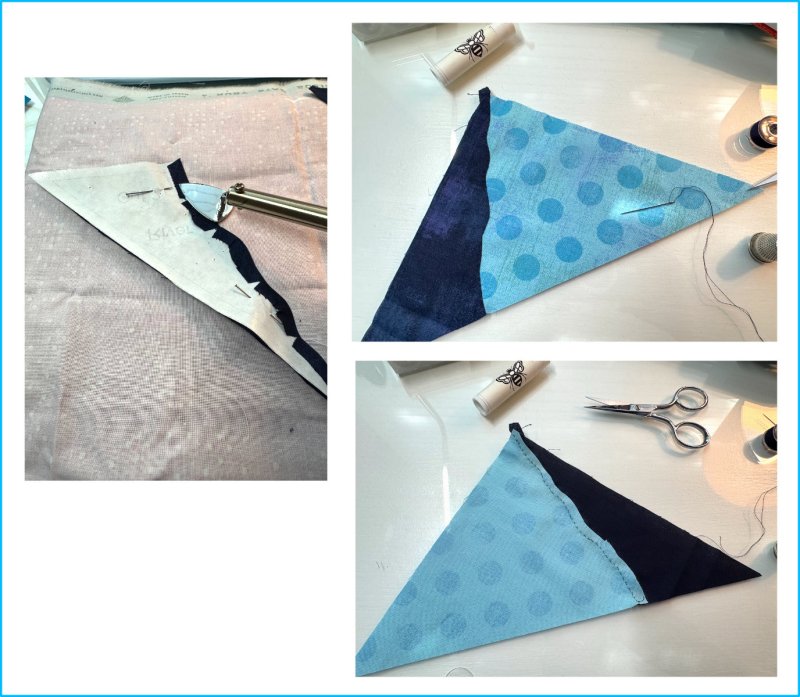
I pressed the raw edge (clipping at the curves) over the freezer paper. NOTE: please do pin your piece to the freezer paper as there is a tendency for it to move as you press.

Once cool, I removed the freezer paper, then put it into place on the “mountain” triangle, matching straight edges. I appliquéd it down, then cut out the excess behind. I chose to use hand appliqué but if you are familiar with using monofilament thread and a small zig-zag stitch, it would work well in this instance.
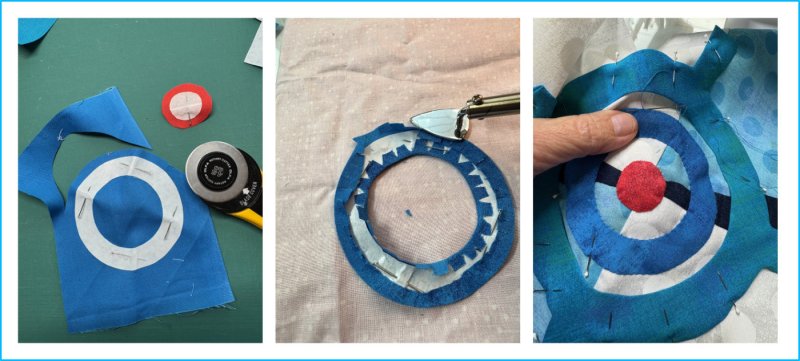
Similar process for the inner ring (the red center was appliquéd first, then I did cut out behind that). I trimmed the pattern piece on the lines, cutting away the seam allowances. Then, using a small-tipped iron, I pressed the clipped seam allowances over the edges of the waxy side of the freezer paper pattern. I pinned it to the block, then stitched down the inside of that first smaller ring. Then I removed the freezer paper, pinned it down again and went around the outside edges with my stitching.
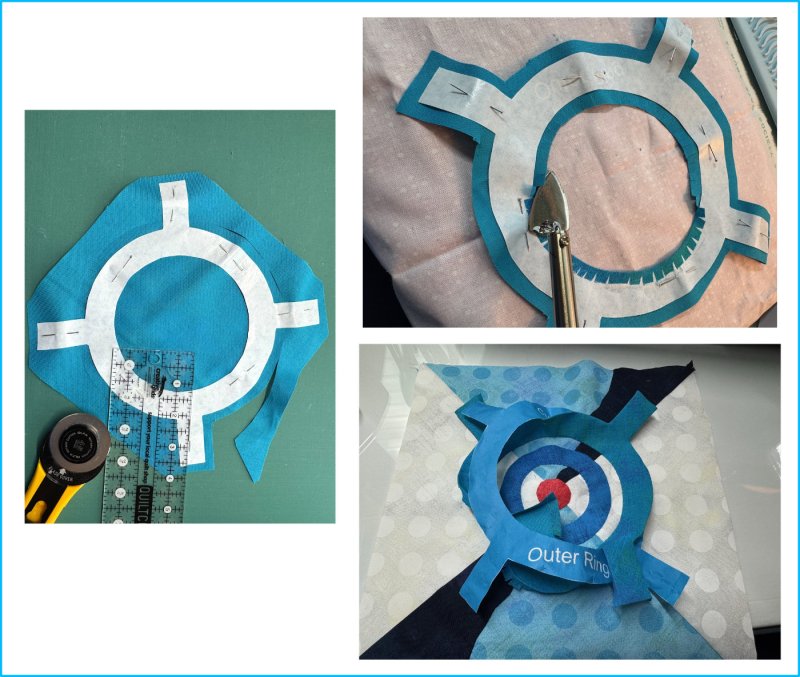
Same steps. I clipped into the corner when the lines poke out from the circle, and tucked the raw edges under the shape.

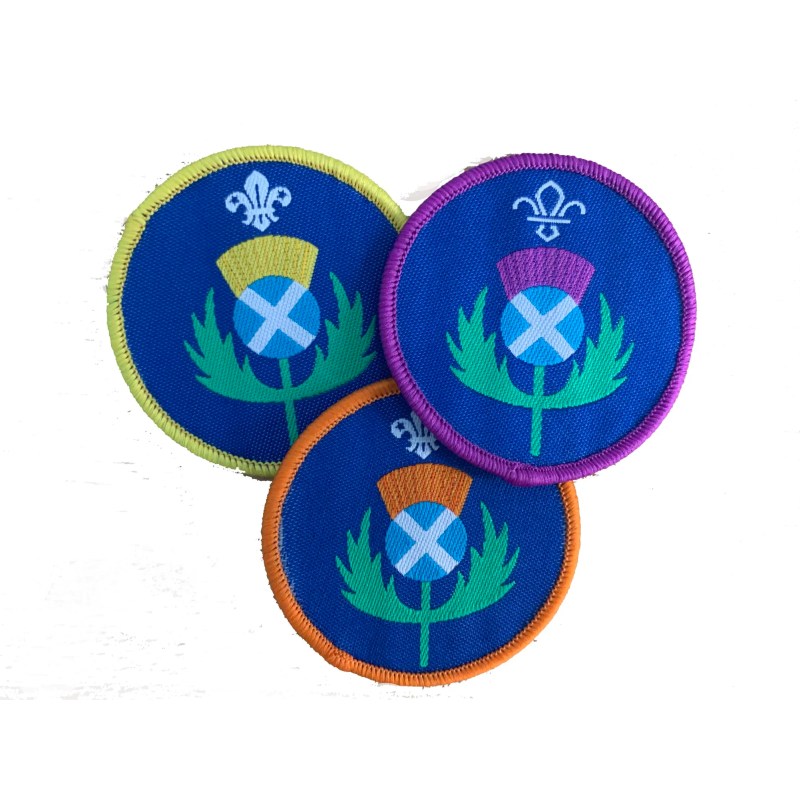
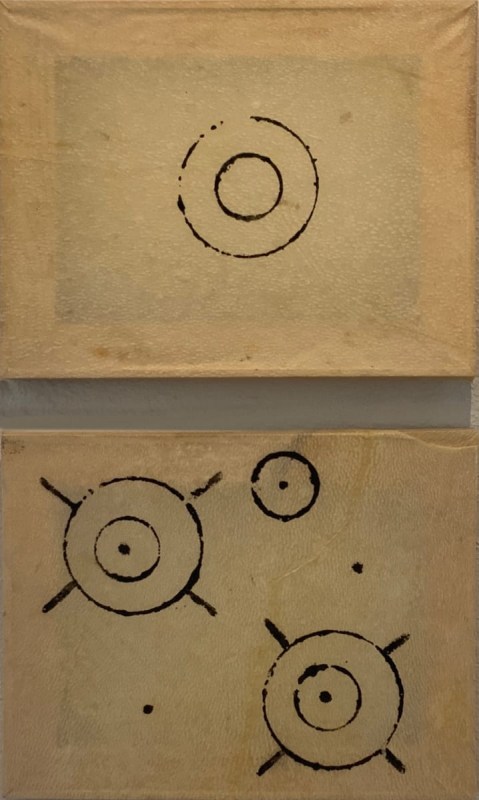
I was in Scotland and England when researching this Ellam Yua shape and found it interesting that there were echoes of it where I was: a circles with the four points jutting out:
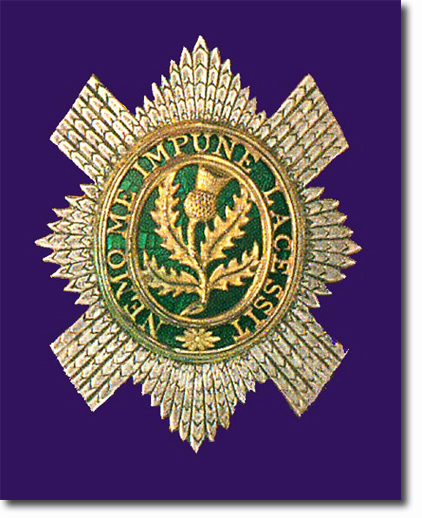
I learned a lot on this block, really enjoying my exploration of the Yup’ik art. And I learned a lot with all the other blocks and borders, too — expanding my horizons while doing a good challenge. Many thanks to the Smithsonian’s National Museum of the American Indian, and thanks to Congress’ America 250 Committee, which contrtibuted to this.
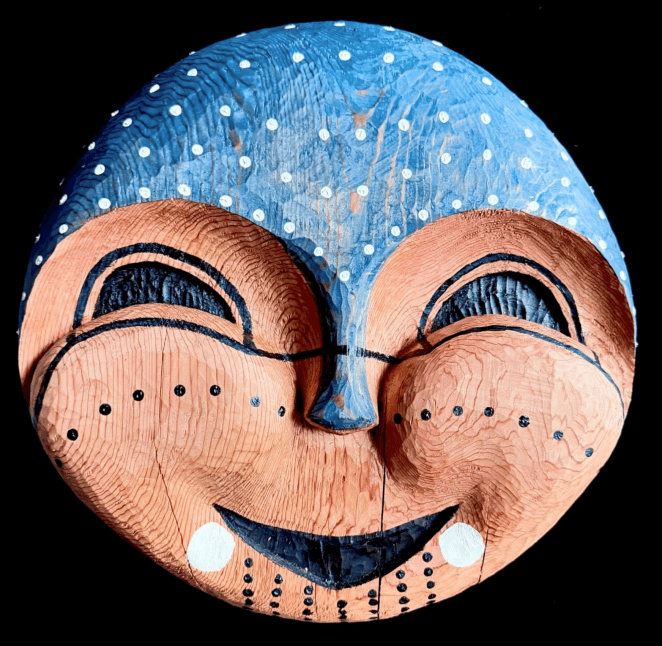
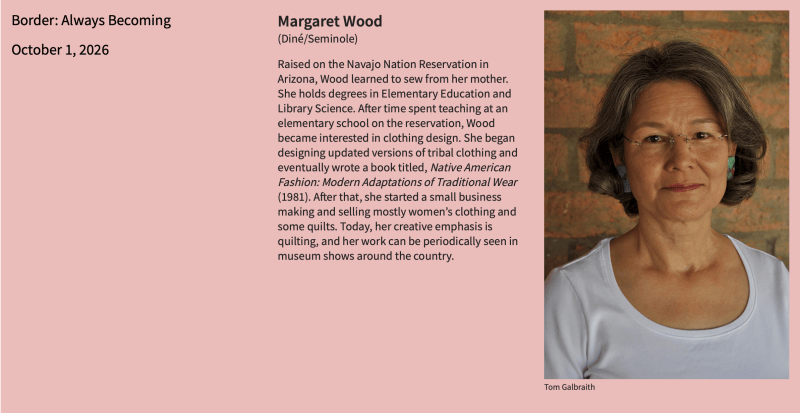
This final image is of a mask that Jen Wood made and put up online. In the text she notes that “the blue with white dots on the forehead represents the sky and stars, as well as our ancestors.” I liked the idea of this, so maybe the dots for my backgrounds evoke the same idea?

Thanks, Jen.

Happy Stitching!

Other posts about this quilt:

The Friction of a Hawaiian Quilt Block

This and That for JulyAugust 2026

Bits and Pieces are in this Post

300 and Beyond · Patterns by Elizabeth of OPQuilt · Quilt Finish · Quilt Patterns · Quilts

Florere • Quilt Finish

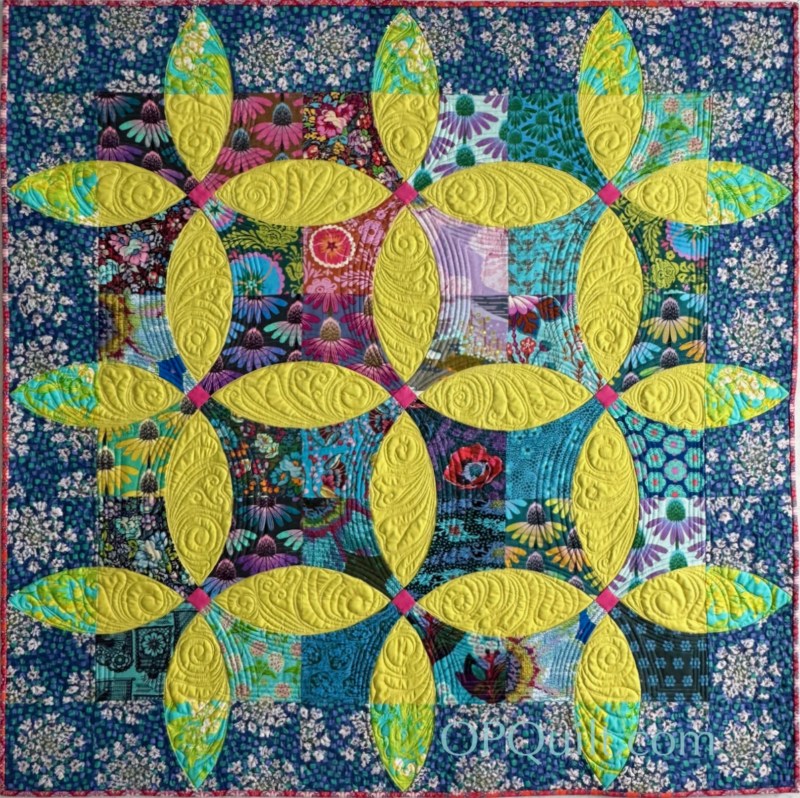
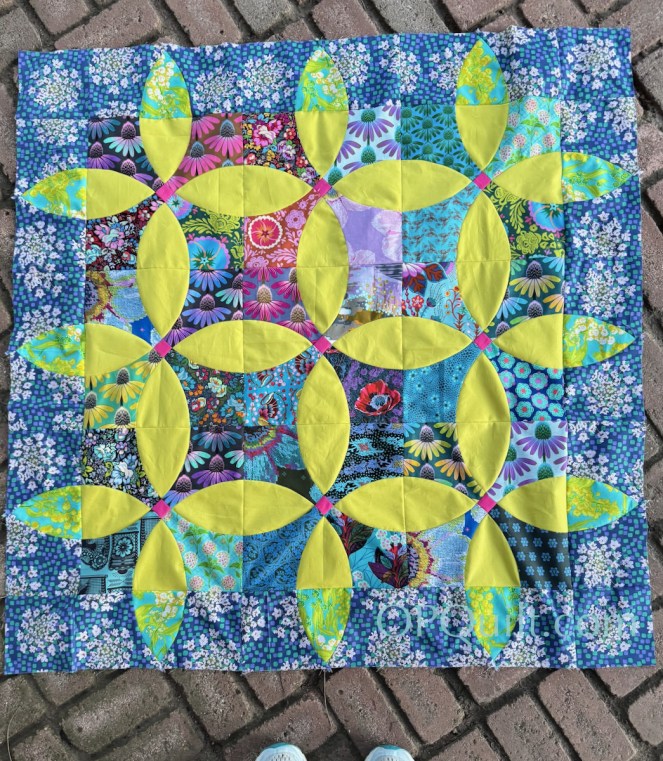
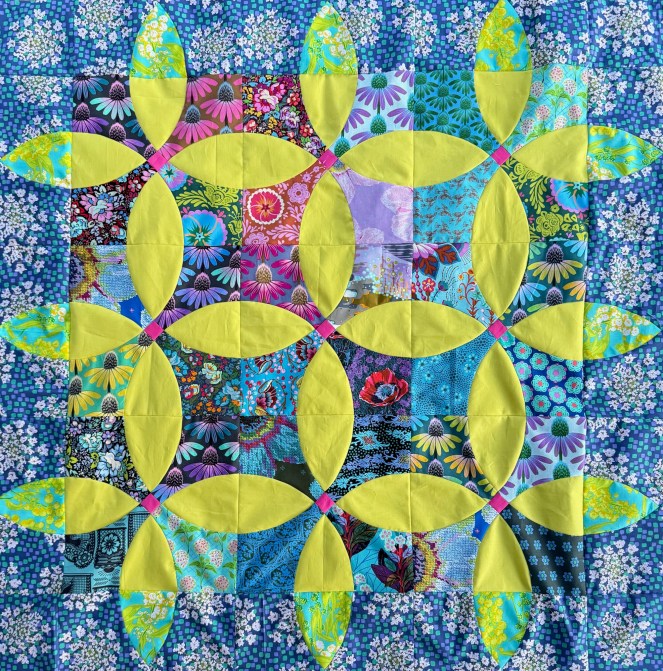
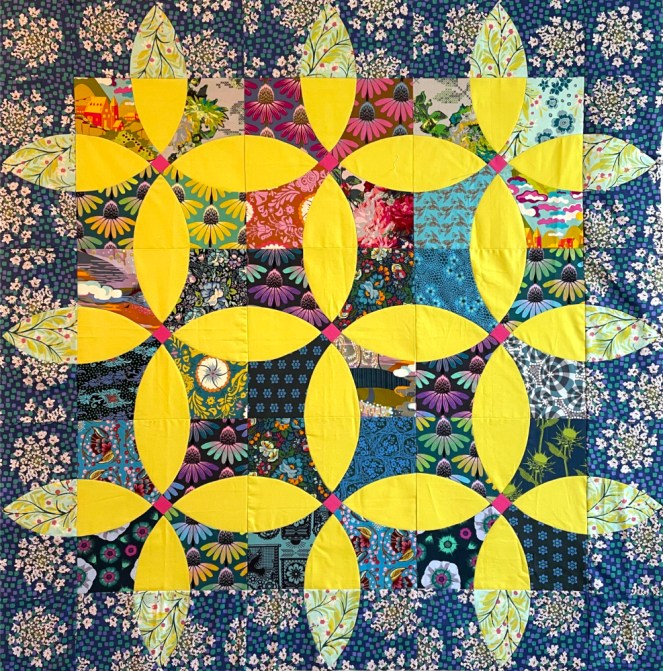
I gave my sister my original Blossom quilt (happily) yet I missed it so much, I determined if I ever found the AMH border fabric again, I would remake it. At Road last year, I found the exact fabric; the personal challenge was on, and now it’s finished.

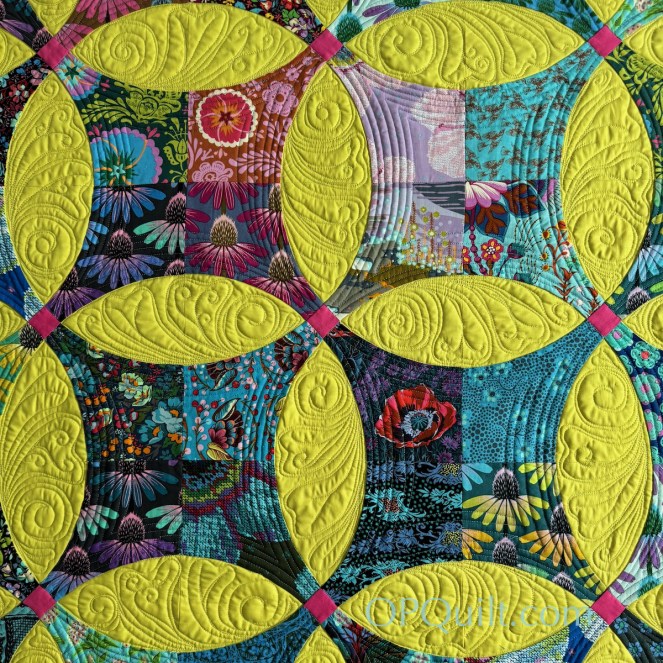
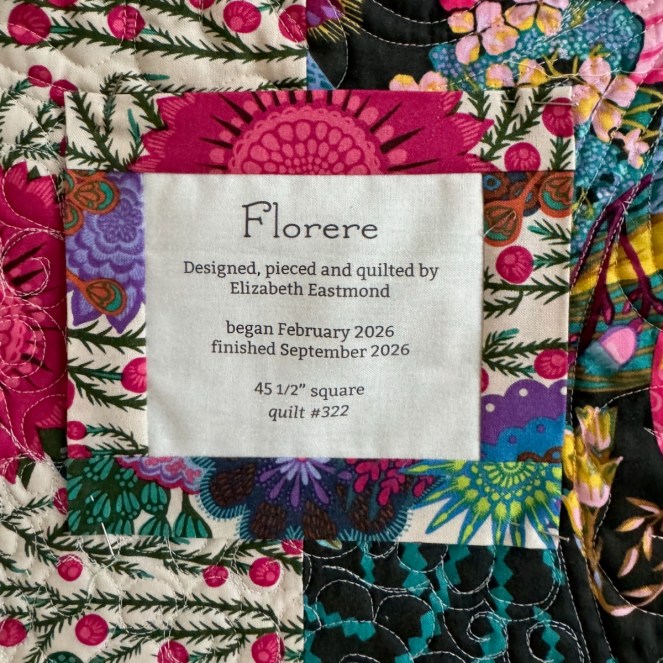
This is quilt #322, and is titled Florere, the Latin word for bloom (or so the internet says). I used a combination of all Anna Maria (and AMH fabrics), Soft and Bright batting, and I quilted it myself using a combination of Superior Magnifico thread and YLI Elite thread.

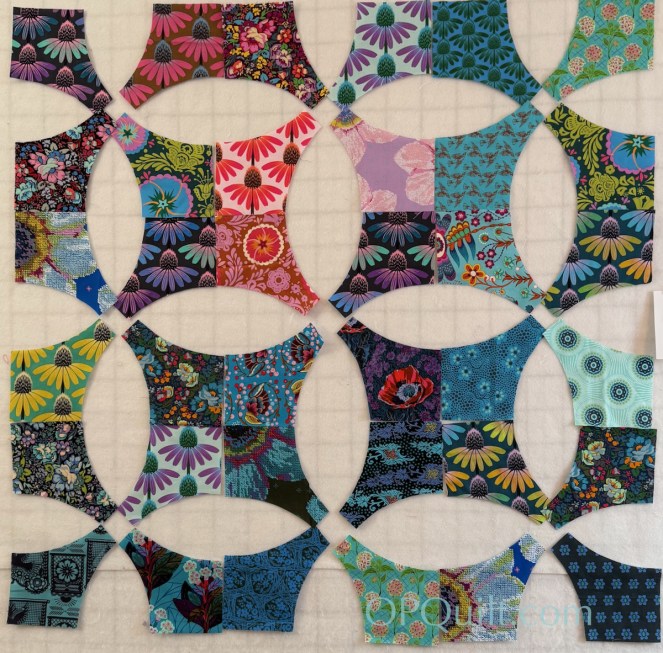
I cut out the 12″ size from my pattern. While many fabrics are similar, there are some changes, as Anna Maria had made some different ones that I wanted to use (like the coneflower fabrics).

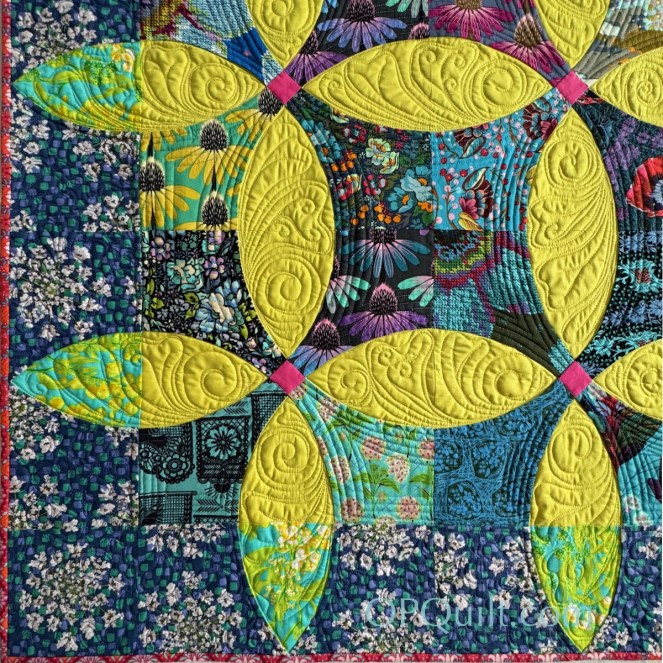
There’s that border fabric. I started cutting this out in February 2026, only a month after Road (not bad).

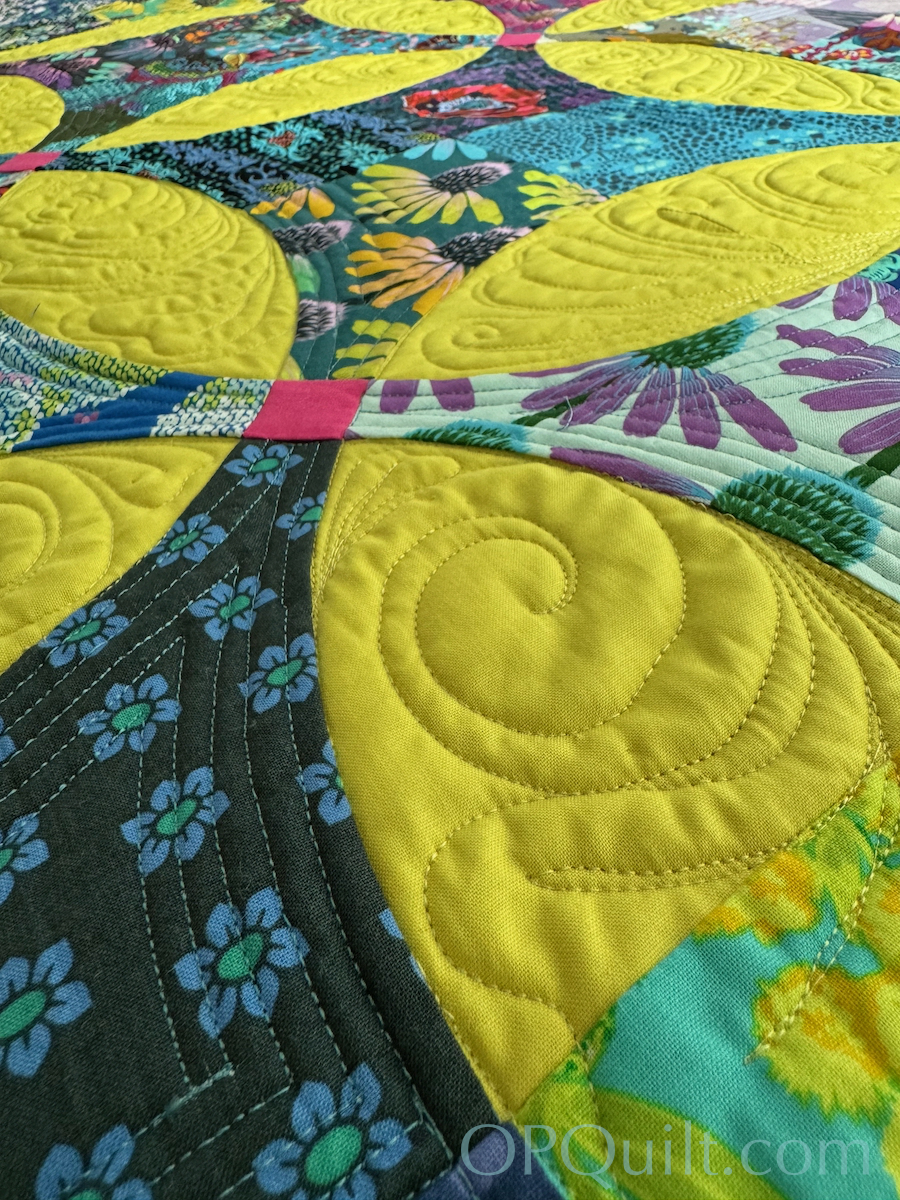
While the top gets finished and pinned, it takes me a while to think of ways to quilt it. I went a little swirlier in the yellow-green petals. (That fabric is a Painter’s Palette Solid.)

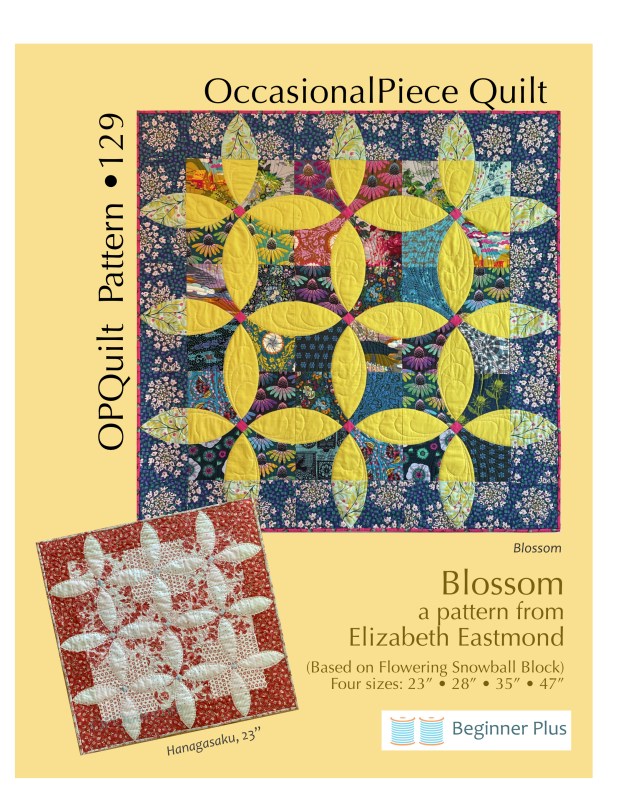
Pattern can be found here.

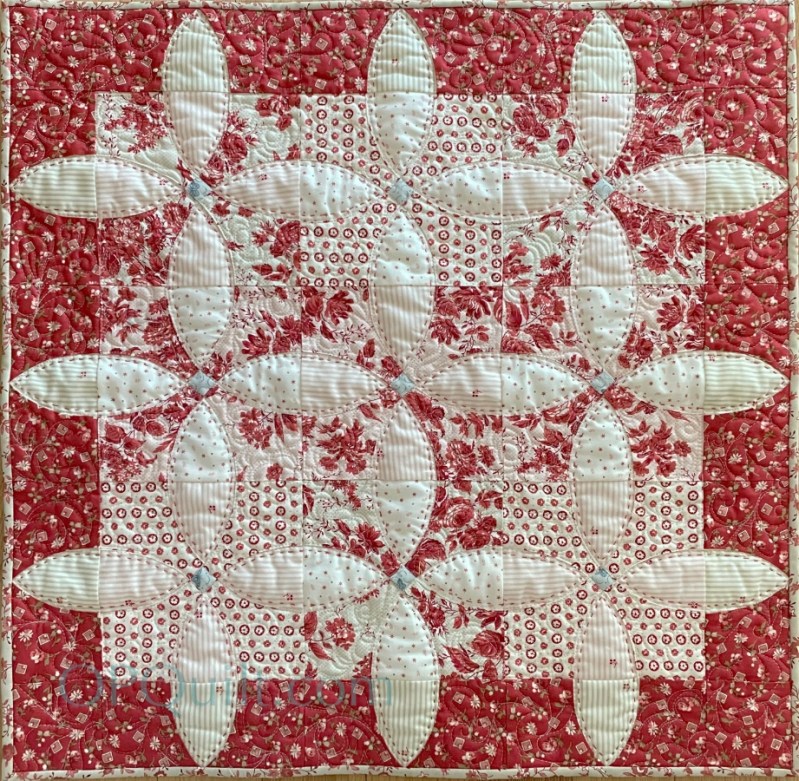
I liked it so much, that earlier I made another one, smaller and for springtime. All four sizes are in the pattern.

A little stained-glass view for you.

300 and Beyond · PatternLite · Patterns by Elizabeth of OPQuilt · Quilt Finish · Quilt Patterns · Quilts

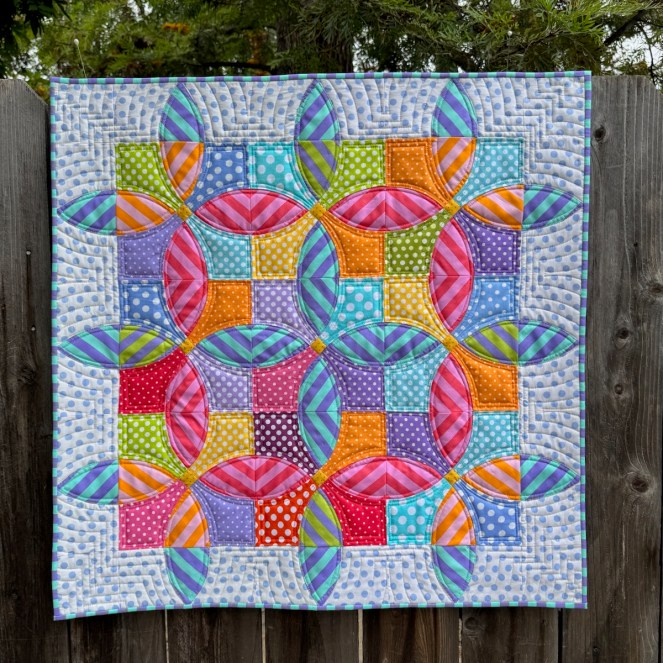
Pursuit of Craft with Spring Dots & Stripes • Quilt Finish

One of the challenges in our modern life is to deal with disruptions, distractions, and never letting us have a minute without someone telling us the five steps to a better life, to better breathing, to being a better whatever. Or as tech, culture and political writer Derek Thompson observed on his podcast Plain English, these voices tell you “everything is figureoutable. And if I just listen to these five steps, I can figure out all my life’s problems” (from here).

But for me, I escape to quilting to not figure everything out. I mean, yes, sometimes just cranking out on a pattern and whipping up a quilt is a good time and I like that as much as anyone. But hopefully, as Thompson noted, “you can have intimacy with a craft.” The challenge “is if we are constantly being distracted or interrupted, it’s hard to find that intimacy. It’s hard to get into the slipstream or the pocket of a creative project” (same source as above).

I like my pursuit of my craft. Of taking a well-known-to-me pattern like my Blossom, and seeing what I can do with it that sends me into discovery, of finding a new way to see what I’ve seen before. Because, really, haven’t we all seen it all before: make a cut, stitch a seam, sew it together, quilt it, and don’t forget the label?

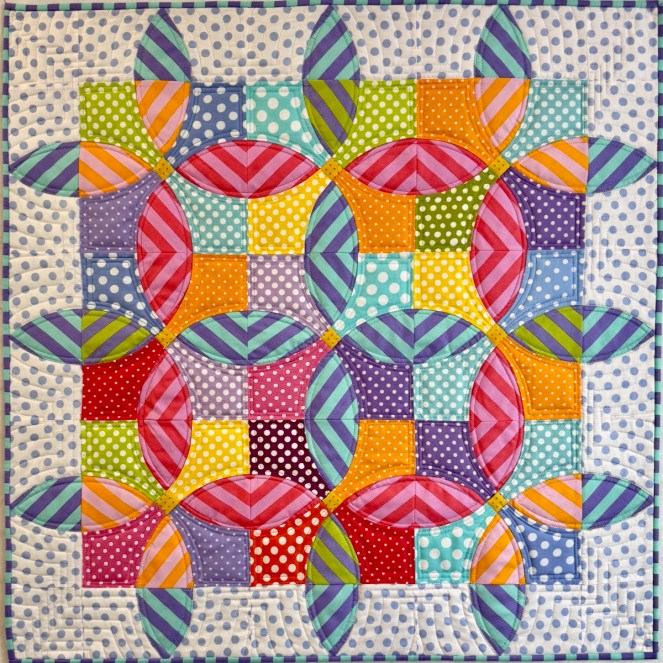
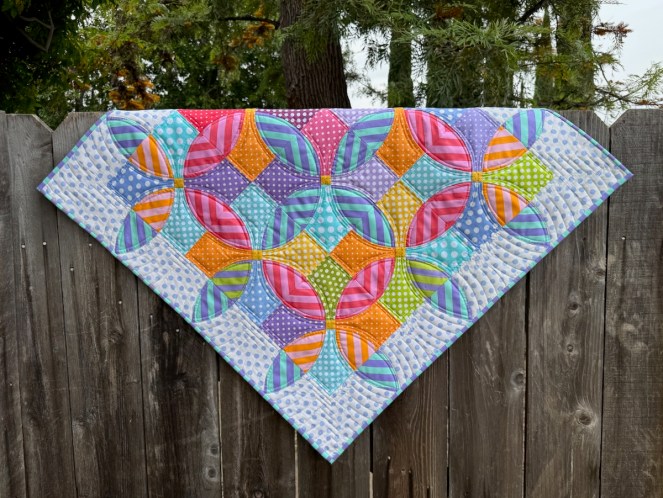
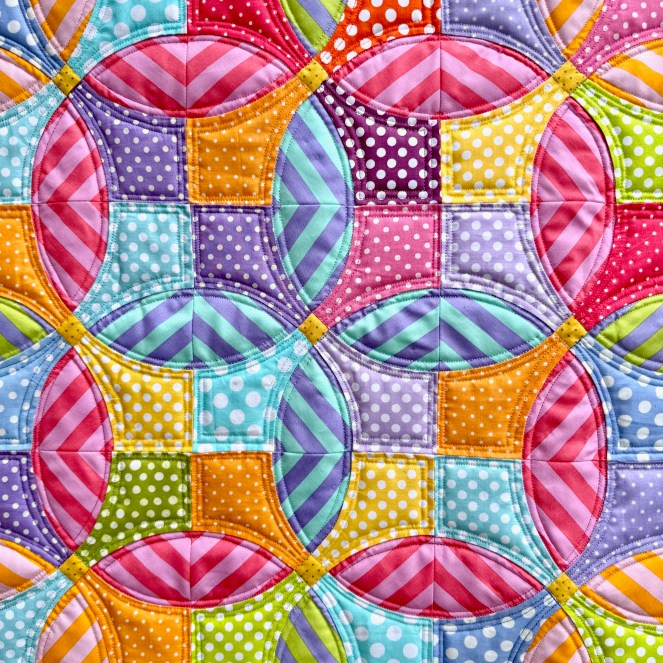
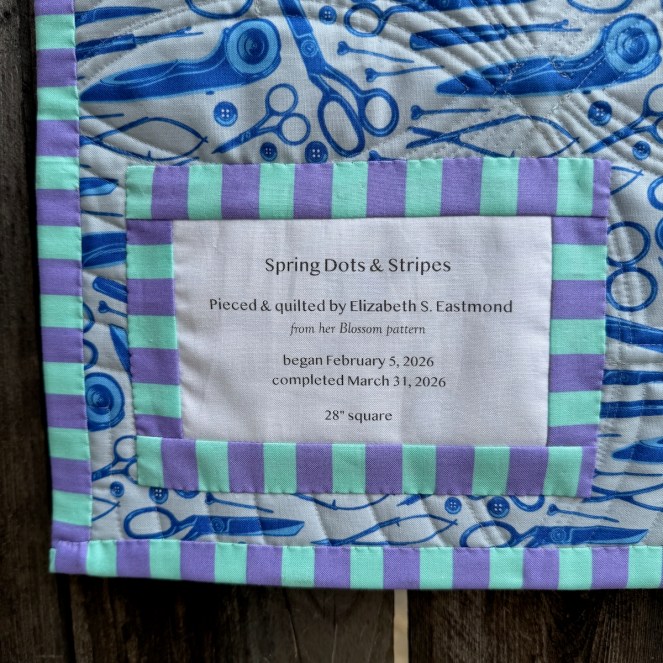
For this quilt (Spring Dots & Stripes), I chose to work with just two elements:
• dots and stripes (had to be white dots on bright colors),
• Tula’s Tent Stripes (in only four colorways).

It was this challenge that coaxed me into flow.

What is flow? The Czech psychologist Mihaly Csikszentmihalyi coined the word “flow” to refer to the psychological state of optimal performance.

“He recalled in an interview how he would watch painters in their studios and how he was fascinated by their ability to forget everything while working. He was also surprised by what happened when they were done: They’d finish a work of art, and instead of enjoying it…they would put it against the wall and start a new painting. They weren’t really interested in the finished painting. What these artists were after, Csikszentmihalyi realized, wasn’t the finished work itself but the experience of full immersion and absorption in the act of creation” (from here).

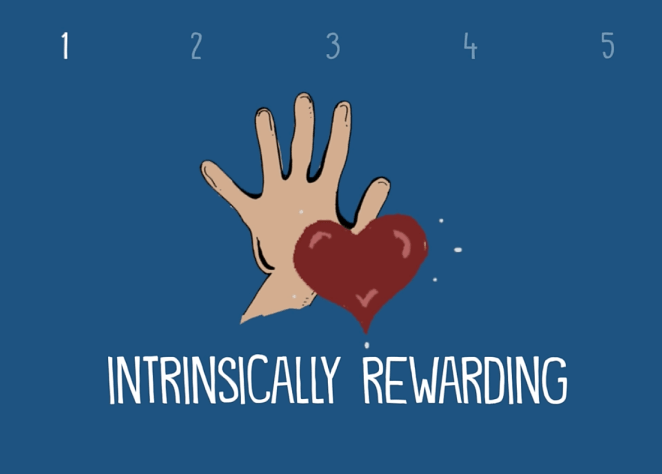
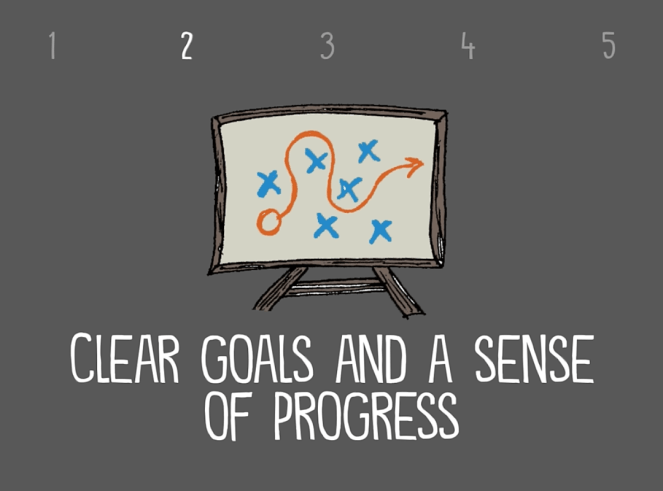
To understand it better, I watched several videos online, and liked the one from John Spencer, titled “What is Flow Theory?” He highlighted it like this (click arrows to advance):

Since no matter what I tried, the slides kept getting out of order, the basics are:

  1. The task has to be intrinsically rewarding;
  2. The task has to have clear goals and a sense of progress;
  3. Clear and immediate feedback is critical;
  4. It’s a balance between the challenge of the task and the set of skills needed to complete it; and
  5. The person in the flow state has an intense focus on the present.

I cut out pieces in certain colors — the ones I thought I would want — and started putting them up on the design wall. And then in an a-ha! moment, I could see that I could group them differently to create a pattern of interest. Maybe that came from trial and error, maybe it came from being in the flow? I was able to discover a different way as I grouped the petals into colors, cutting and discarding and pinning up and sewing, as I ignored all that was going on around me.

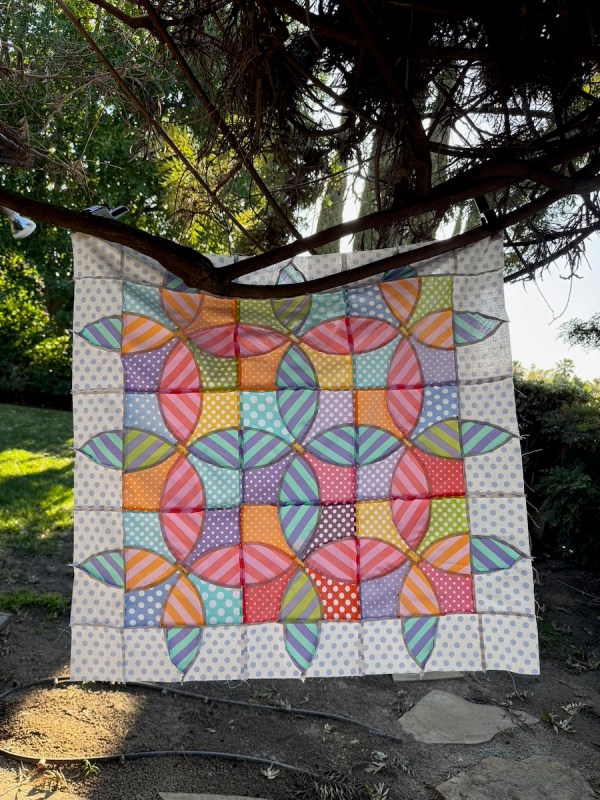
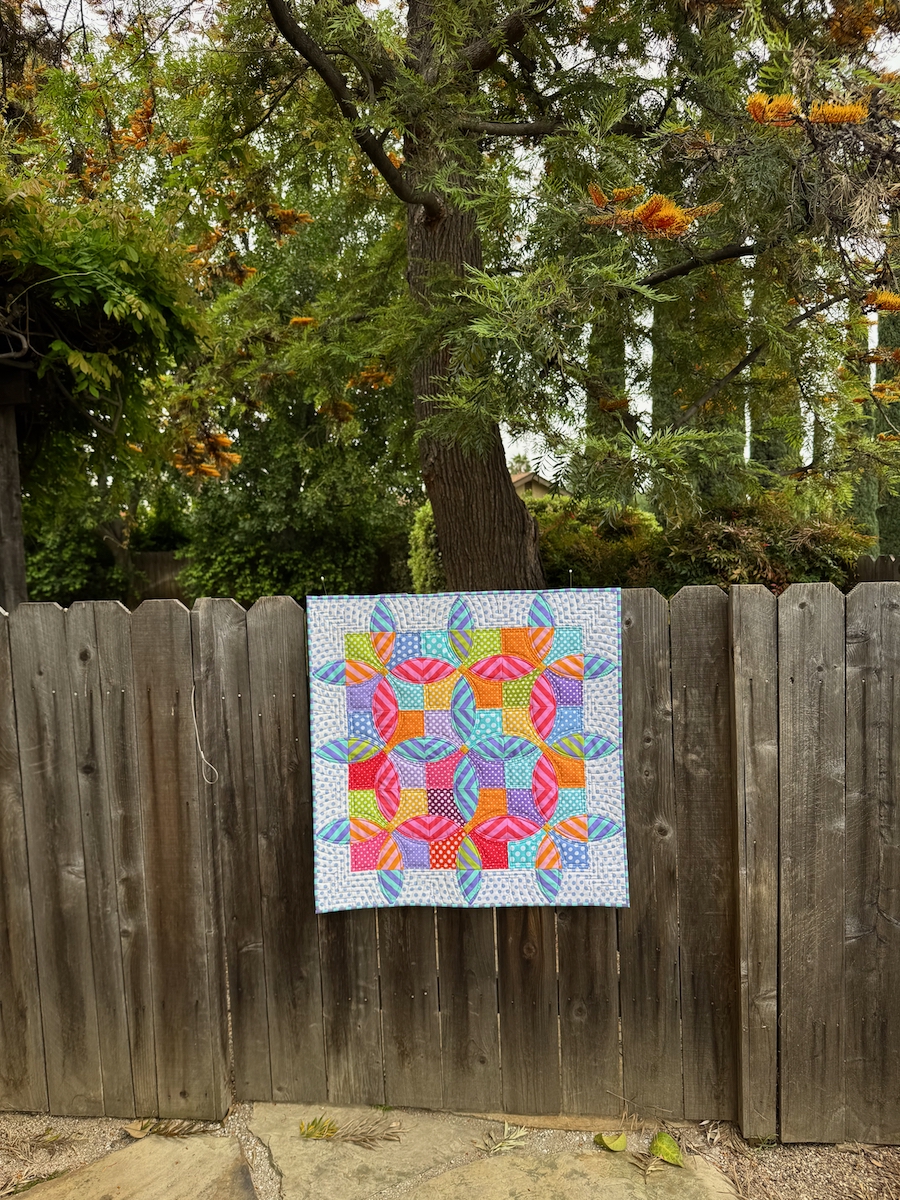
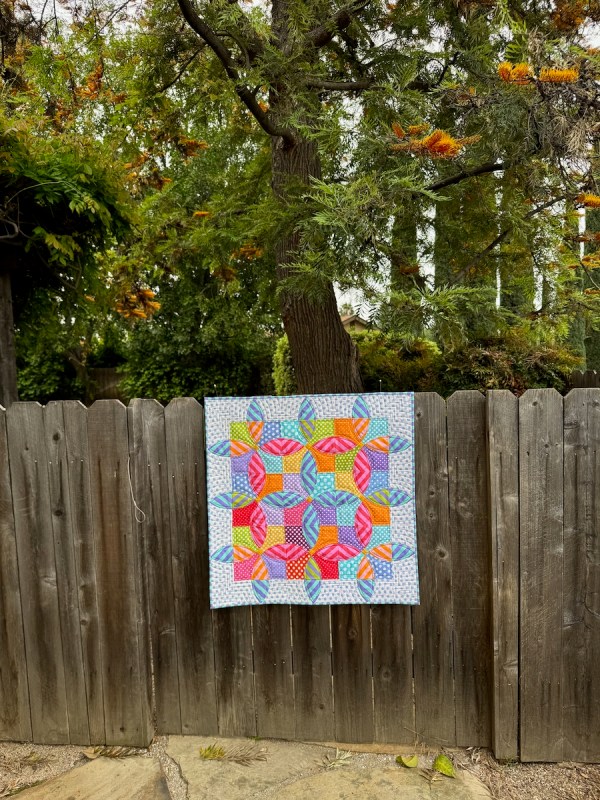
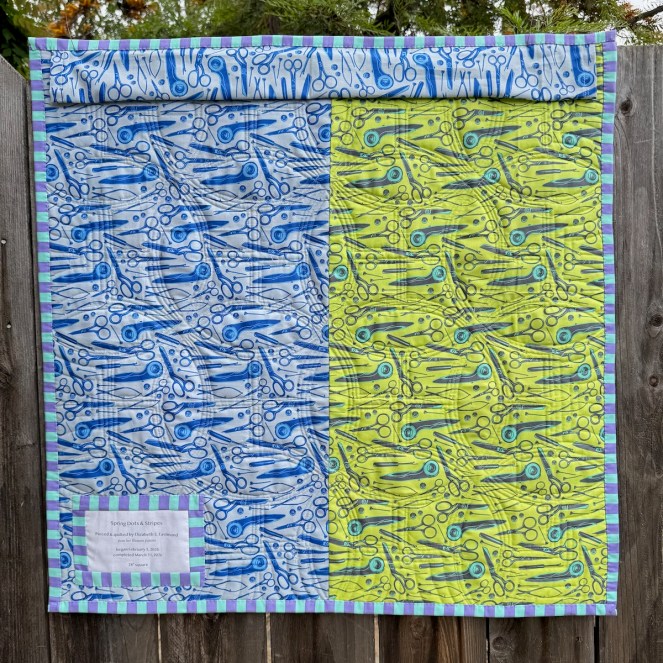
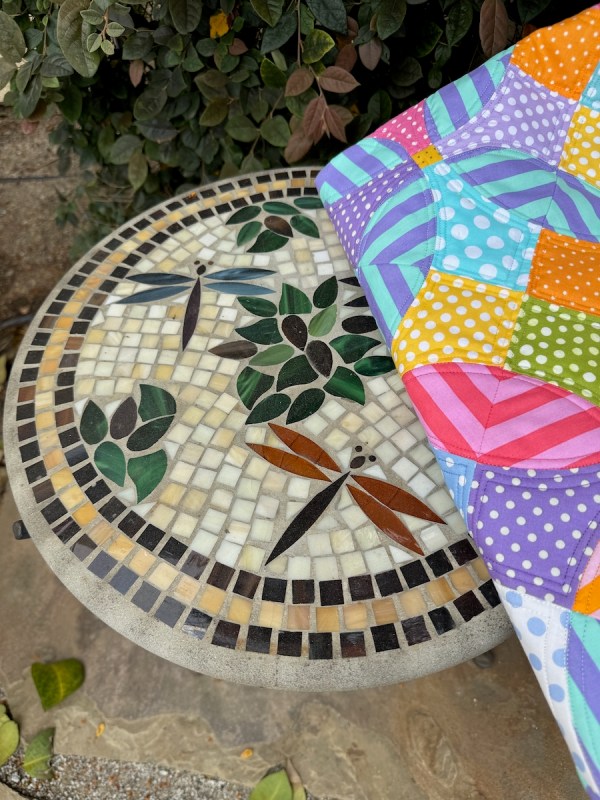
I took the finished quilt out into the garden for some photos this week.

Side Note: I’ve decided there are two categories of fabric design that I don’t like on the front of my quilts: the first is sharp things, like anything on this fabric. The second is insects, so these often end up on the back. (Cute small bee prints are the exception.)

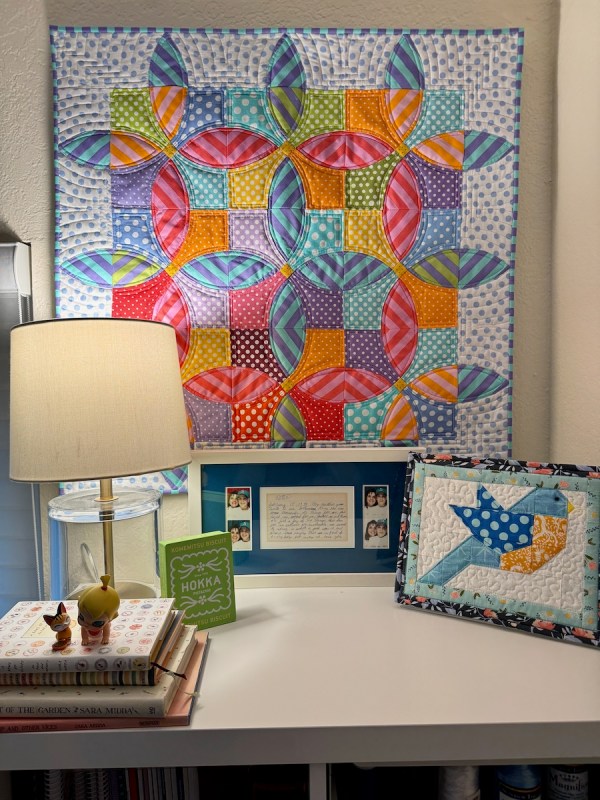
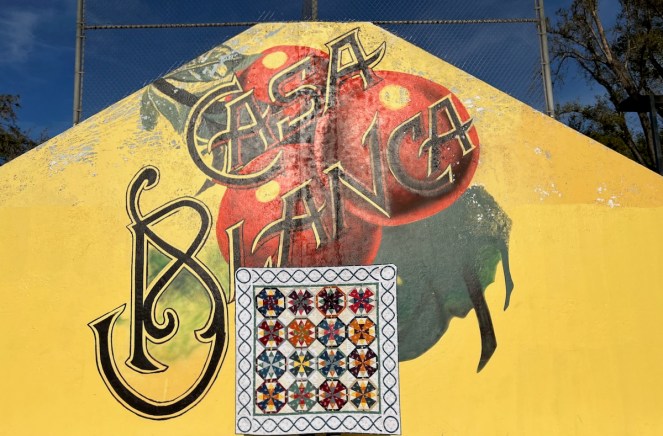
I needed a mini-quilt of just the right size to fit in a specific space (photo near the end), and it needed to be spring colors.

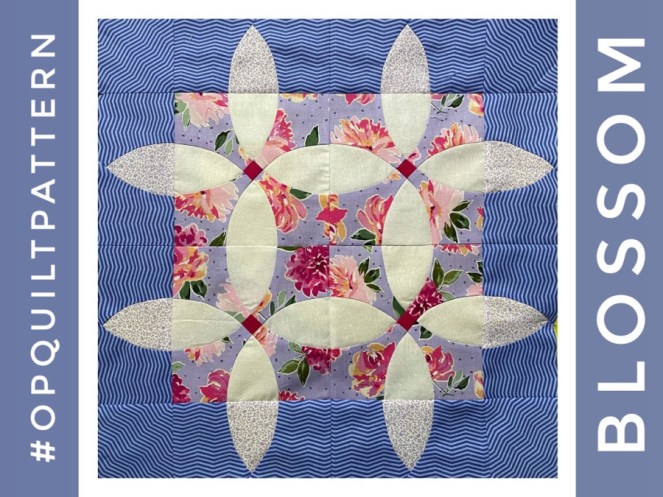
So when I turned to the Blossom pattern (which in turn has it beginnings in the traditional Flowering Snowball block), I didn’t have the right size. Because…

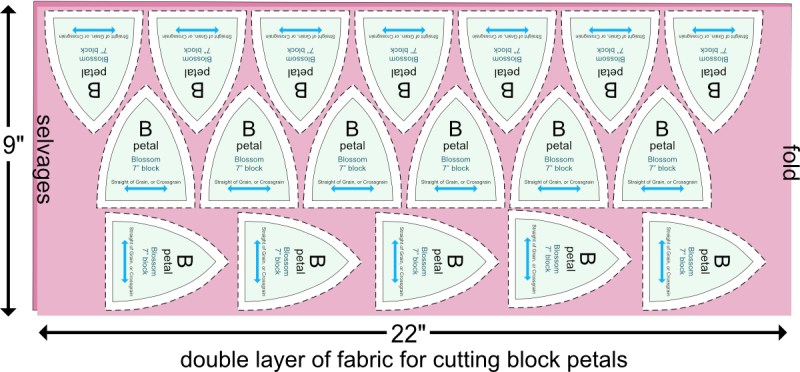
…last spring I discovered that over half of my computer files were corrupted. Not a virus. Just gone (it’s complicated). And 50 percent of those were my more recent pattern files. So many patterns that I’d written could never be updated. Unless…unless…I recreated all the missing, corrupted files to revise the pattern. Like this one:

So I have been busy re-drawing the files I lost, and while I was at it, adding a new size (7″ block), and re-writing the pattern. If you’ve purchased Blossom from me before, you can go to the email you received with the pattern and re-download it. And for those who haven’t made one of my patterns, and want to try it, I put it on sale for a few days if you want to grab it now in my pattern shop.

This a photo of another quilt, Aerial Beacon, that is stuck in re-write-land. I was about a month away from the release when I discovered the corrupt files. Talk about a way to stop the flow! I’ve slowly been re-creating this one, too. (Slowly is the operative word here, but it’s coming.)

UPDATE: The quilt patterns (there are actually two different Aerial Beacon quilts) are finished, and can be found in my pattern shop.

Yes, I should have had it done by now, but this is what I call a “reverse flow” task. All those glowing ideals in the list in the beginning have their counterpart: discovering and ferreting out and crying inside over lost work and then redoing the lost work, I would say are just about the opposite of the bliss of being in the flow.
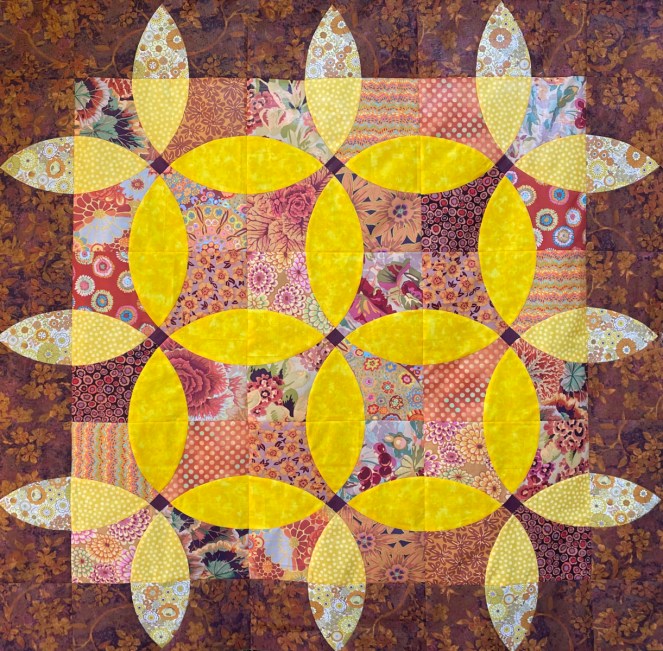
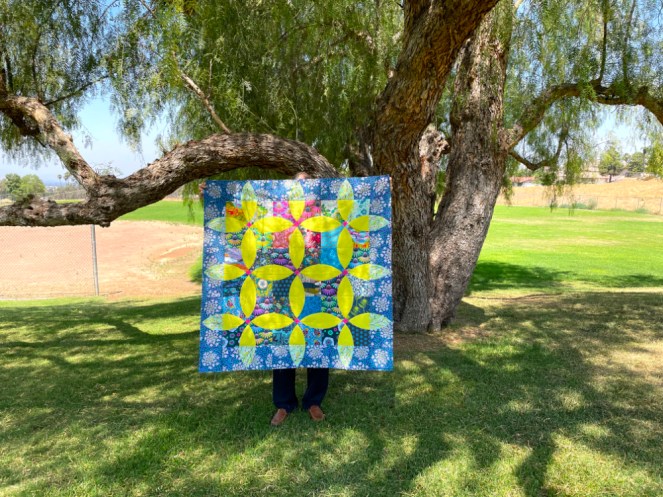
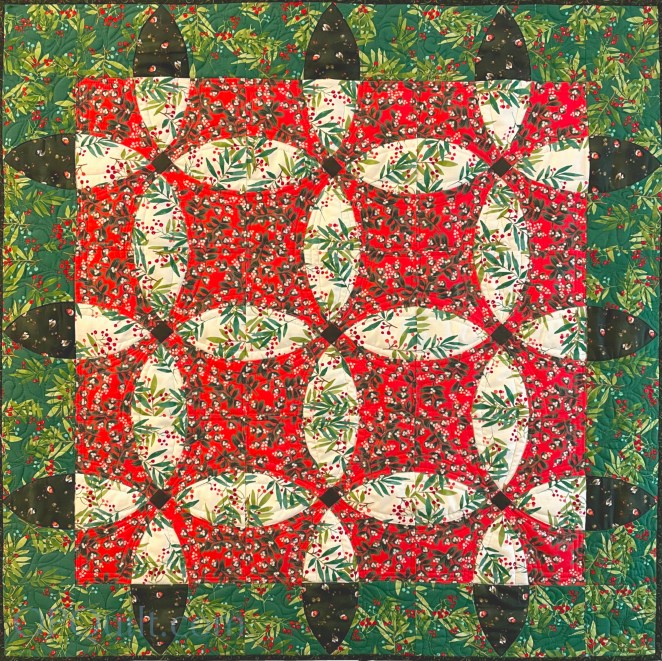
Since I was in the Blossom flow, I re-made the larger 12-inch block version as well, especially since I found that outer border fabric at Road to California this year. It’s in the needs-to-be-quilted stack.

Quilt #316 • 28″ square, shown in that space where I needed a quilt

I’ll let this paragraph from Mihaly Csikszentmihalyi’s book, flow The Psychology of Optimal Experience, close up this post:

I wish you all a week of flow, of enjoyable quilting, and a most happy Easter–

Other posts about Blossom, the pattern and quilts:

The newly updated Blossom Pattern (on sale), can be purchased in my pattern shop.

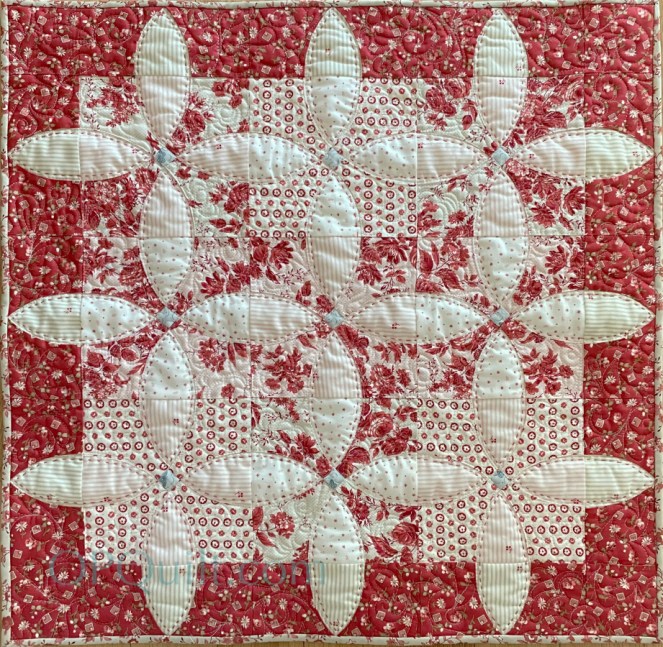
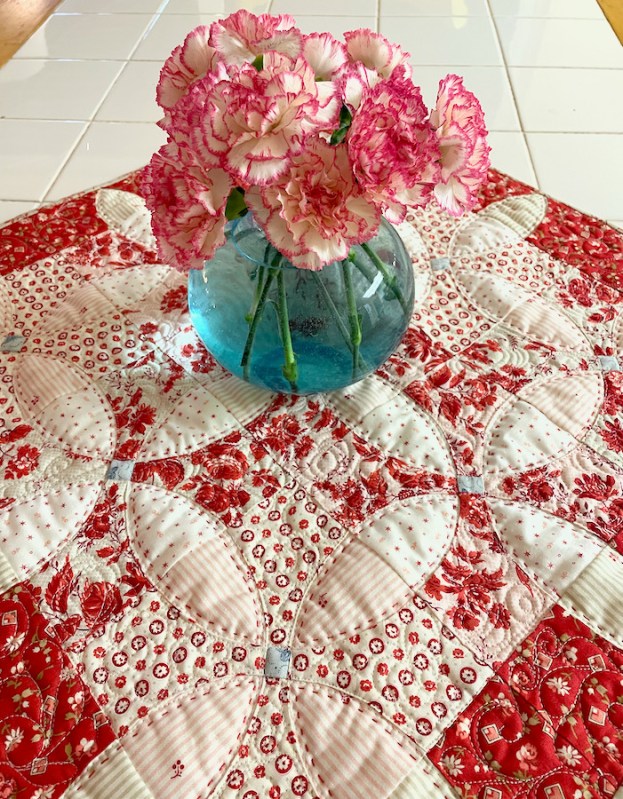
6″ block version: Hanagasaku, made in honor of the Olympics held in Japan

Hanagasaku: Flowering Rings • Quilt Finish

For a while I was a traveling quilter, teaching and visiting at Guilds in Southern California. During the covid shutdown, I taught several classes of this pattern, and the one above is Robin’s quilt — a study in the tones of autumn — a very successful one! You can read about her quilt here, and more, if interested.

Lastly, a post about how I moved from the simple traditional block to the larger quilt is found in this post.

I think Easter is a good time to sit in the garden.

300 Quilts · Patterns by Elizabeth of OPQuilt · Quilt Finish

Merry Christmas in August: Advent • Quilt Finish

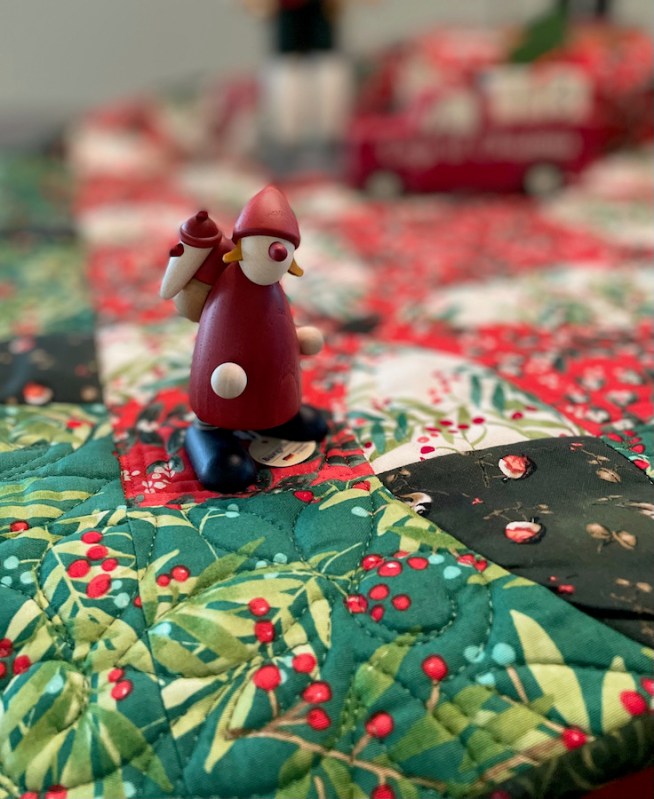
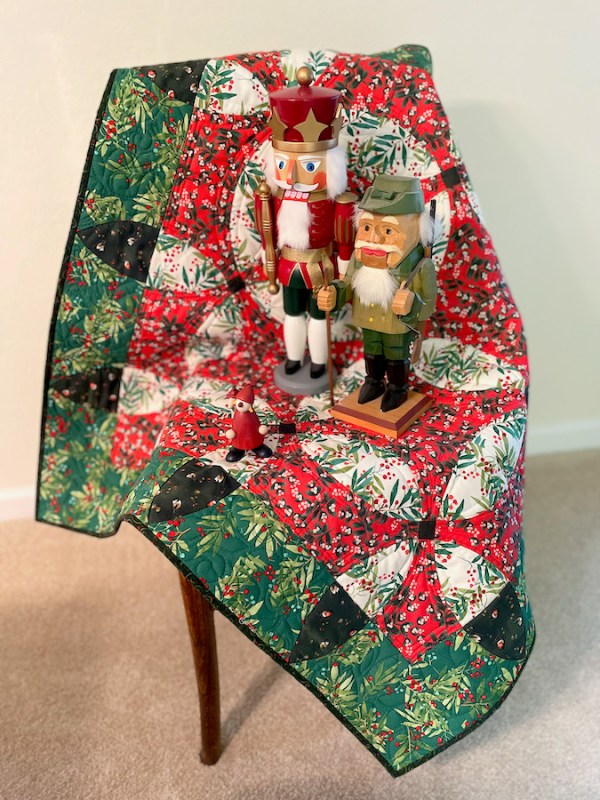
Mrs. Claus, from Berlin, Germany
133 days until Christmas
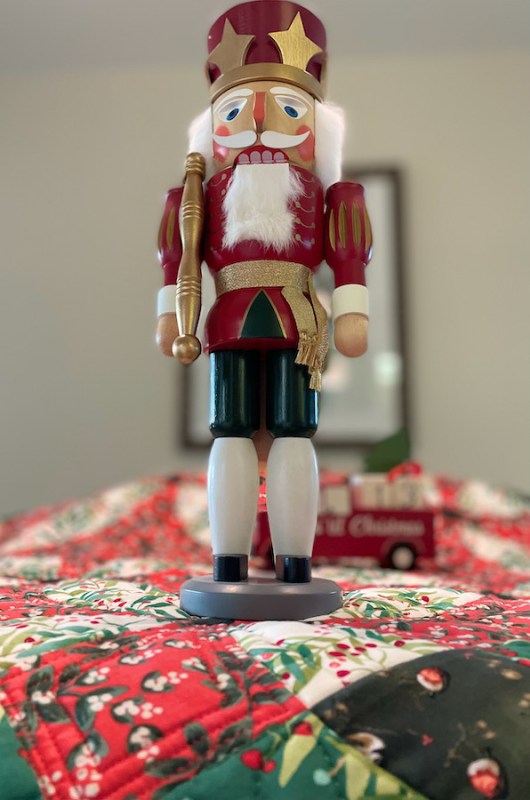
We always have nutcrackers around our house.

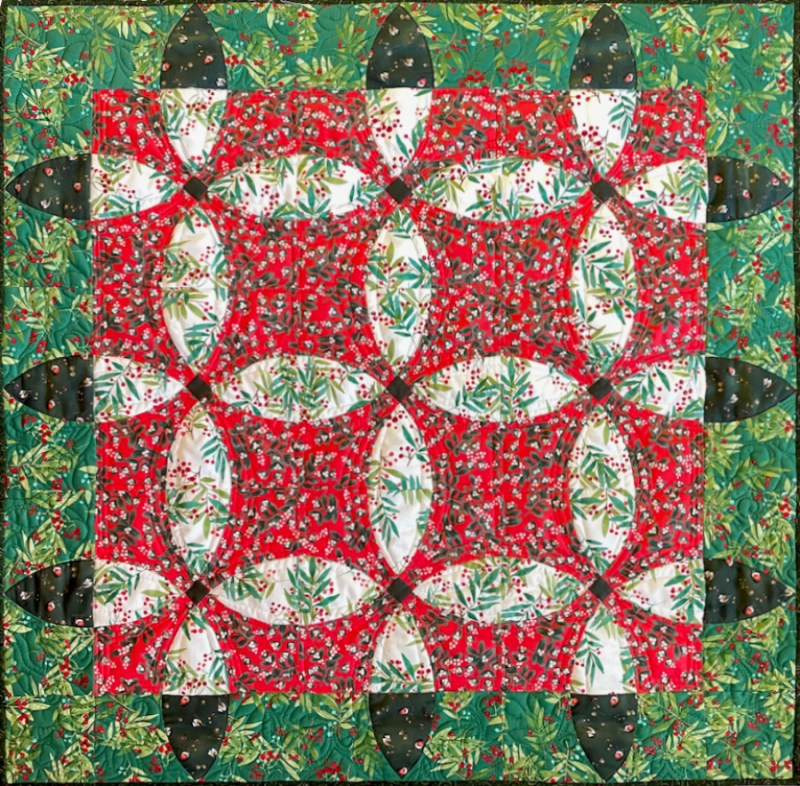
Advent
Quilt Number 256 • 35″ square
Blossom (pattern based on the Flowering Snowball block)

I’m teaching the Blossom pattern in a Workshop for the Santa Clarita Quilt Guild this coming month, and in celebration of finishing all three samples, shooting and uploading five videos for their workshop and figuring out how to make fancy-schmancy title cards for the videos, I’m celebrating by giving you a coupon for 20% this new pattern.

Right now. In the pattern shop.
Use the code: Blossom20 at checkout.
Expires at the end of the month, August 31st.

Blossom, version #1: Colorbright Blossom (47″)

Blossom, version #2: Advent (35″) (see above)

Blossom, version #3: Hanagasaku (23″)
They are made with different sizes of blocks, and the pattern has these three different sizes, plus three different (original) border patterns to fit.

Here’s the full line-up, available only through the workshop. Now, since I worked all day in a medium I’m not used to (video editing), and I think I don’t have any brain cells left to think, I’ll end here.

A version of the final end title on my videos, which I think might make a nice new logo.

Happy Quilting!