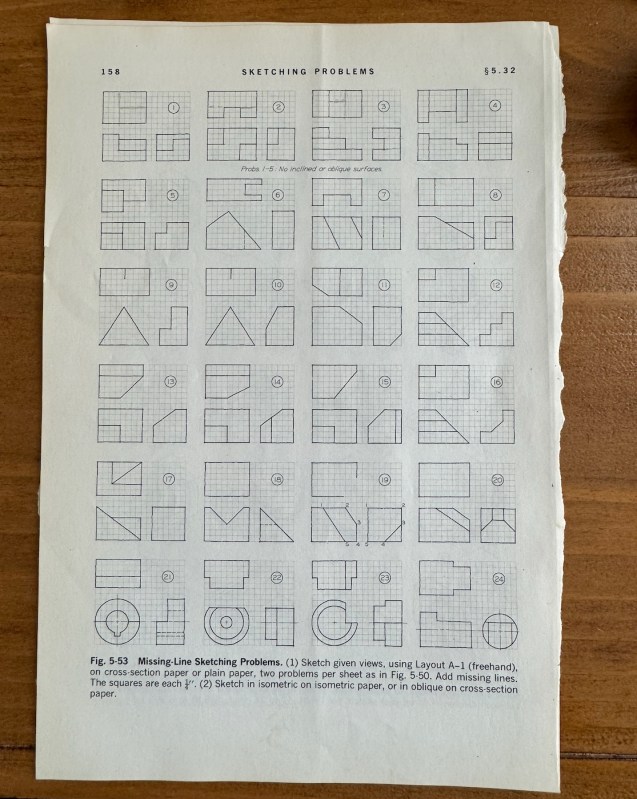
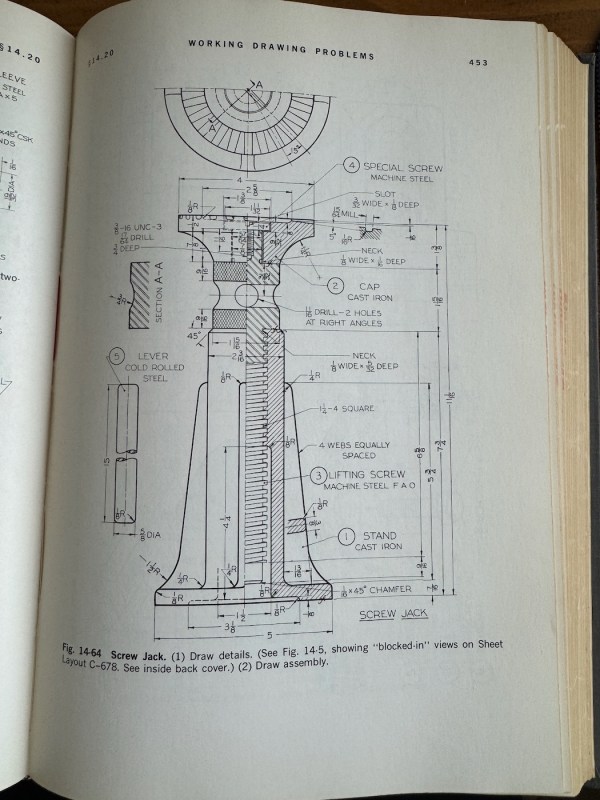
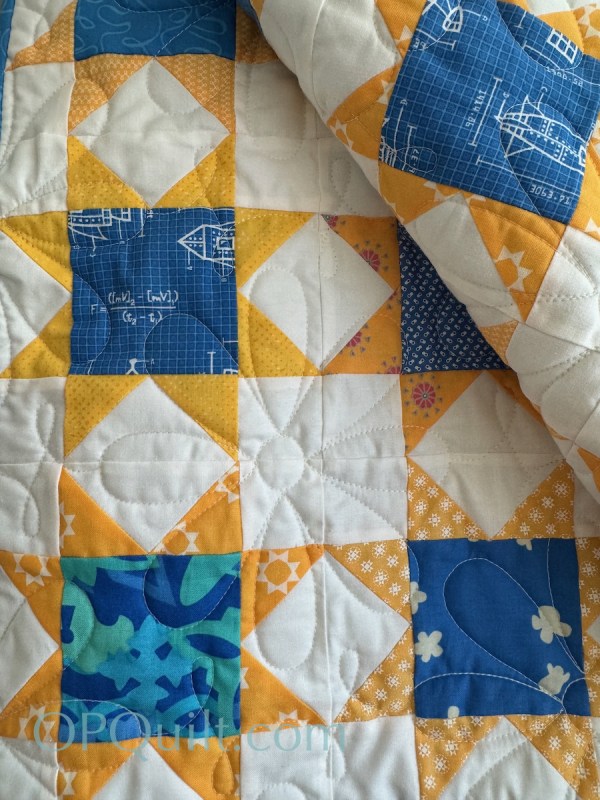
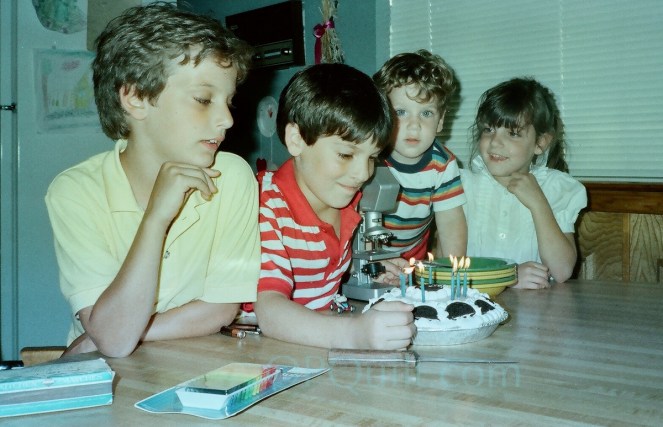
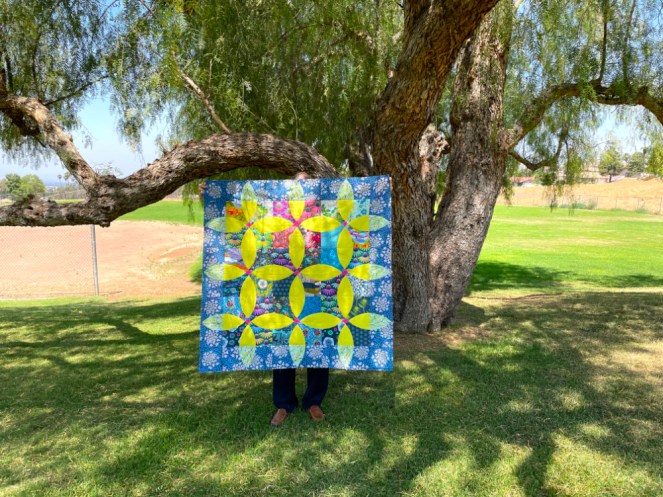
Not airplanes. More like what’s demonstrated in the above photo, if you can figure it out.
Math-type planes, like angles and parabolas and spheres and not only those, but rectangles and triangles and hallelujah, now we’re talking quilter language. Right? Well, it gets trickier when you are in Mathland.
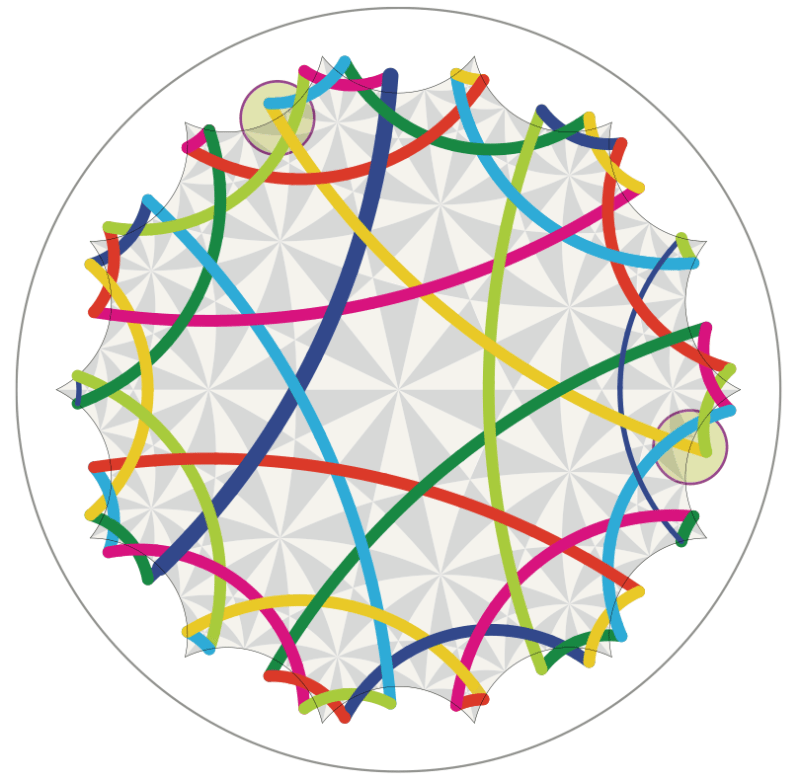
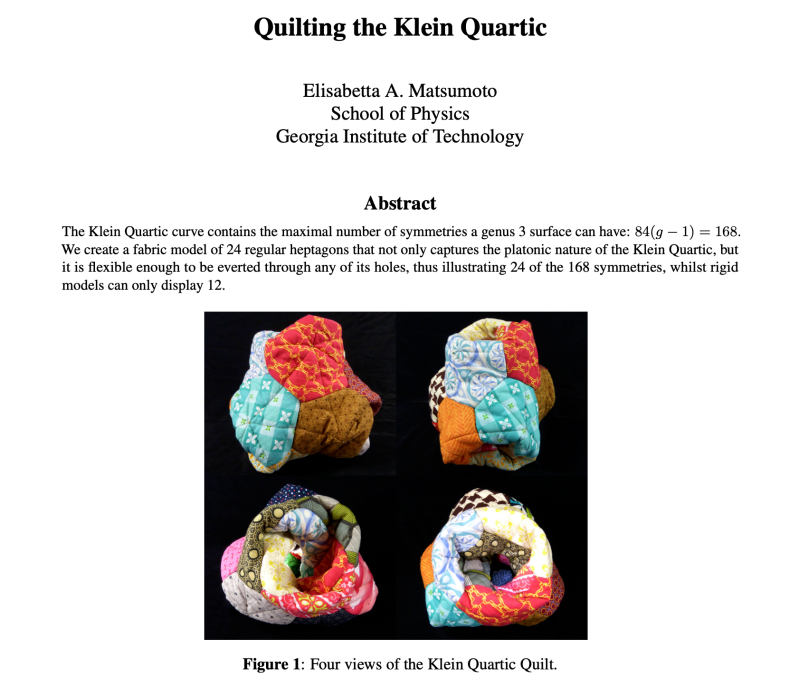
The circle above is the Klein Quartic. No, please don’t ask. Just enjoy the colors and shapes. On the right is the Klein Quartic that’s quilted, a structure by Elisabetta Matsumoto, showing how this works. No, I don’t know how it works either.
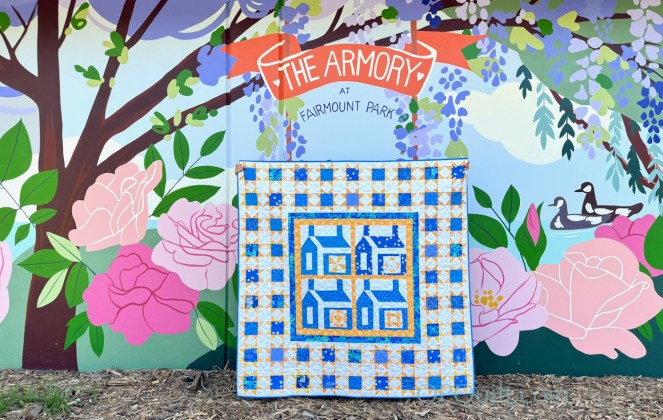
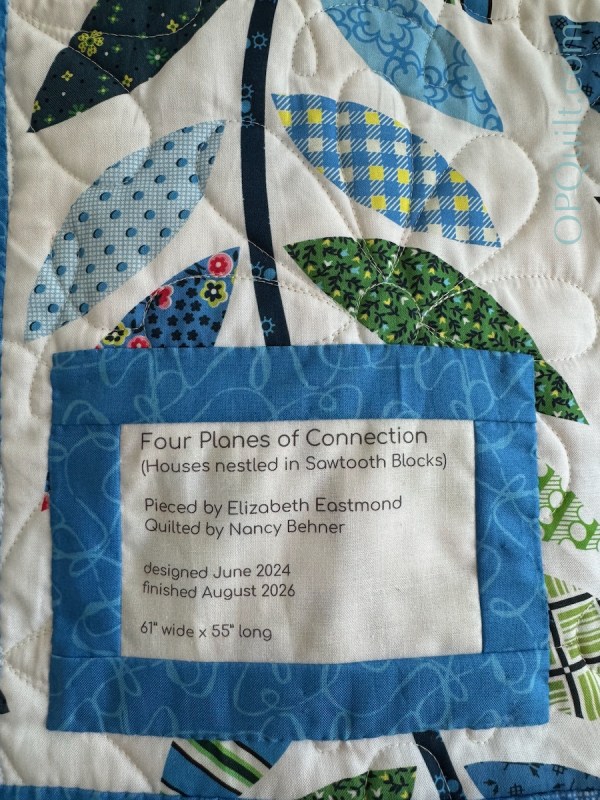
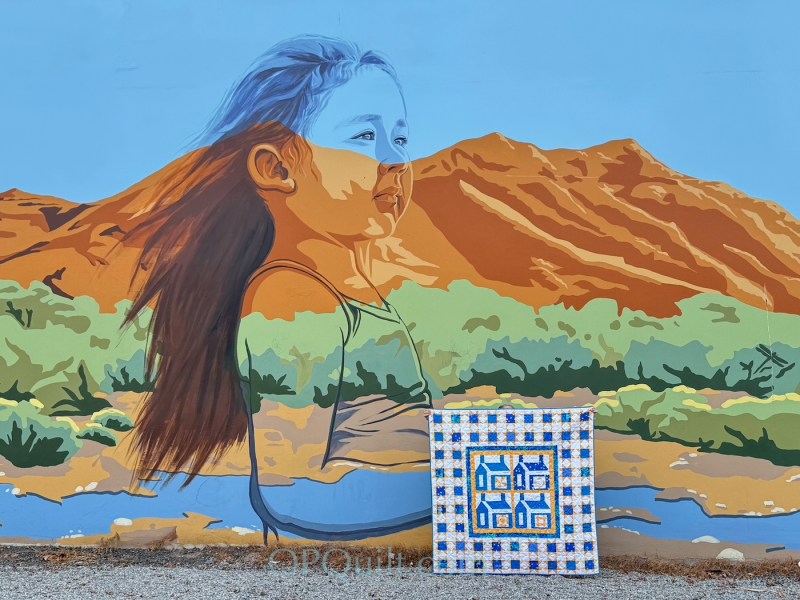
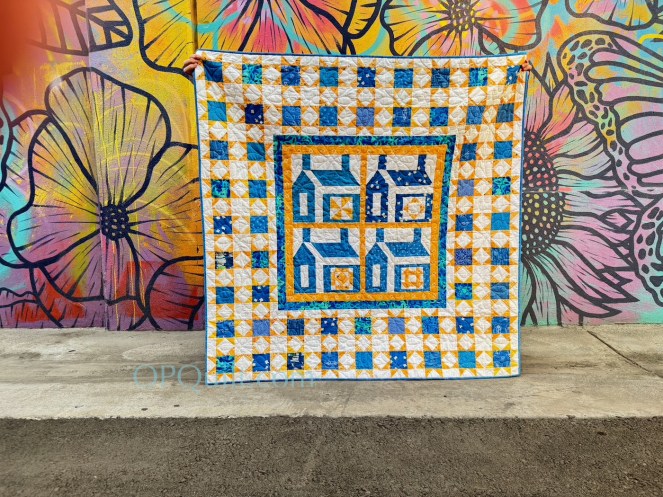
After I’d finished my quilt with the four houses, I went looking for something “four-ish” so I could give it a name and fell into this article, from the 1860s…
…which had the quilt title phrase in the article. Good thing, because all that about nodal and zomal is way above my quilty pay grade.
There are all kind of “fours” in our world.
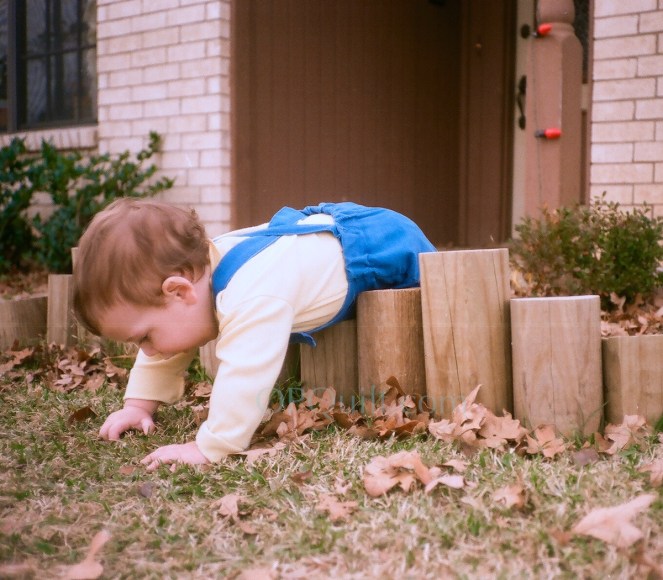
Crawling on all fours.
Four points of the compass. Four elements. Or the Montessori delineations. Or the anatomy descriptions of Planes of the Body. And if you are willing to wade through AI slop when in an internet search, there is all sorts of mumbo-jumbo about matter-life-mind-culture.
It’s purely coincidental that the rocket-ship-math-fabric was grabbed in this photo. Actually, I was thinking more about family relationships.
Our four children. My four sisters. Four grandparents.
All of us with planes of connection through shared memories, good days, bad days, sorrow, joy…many more than just four ways to connect. It could be a neighborhood of friends that come in and out of our lives. But when I look at these houses, I see family most of all, which sometimes can be as tangled as a Klein Quartic.
One of my books notes that “The basic relationships governing planes are relatively few in number. Much of the problem of using these relationships is determining just where and how to use them.” **
After a long hot summer I must admit I often struggled with some of those planes of connection. Relationships and relating to each other can be a challenge as well as a delight. However, our lives hold good, our lives hold the awful, and we build a multi-faceted experience just by living in this real world of ours.
And for me, August brings a remembrance of one of those happy experiences.
Glad our planes connected–
**Book was found in a library discard cart and is titled Graphic Science and Design, by Thomas E. French and Charles J. Vierck.
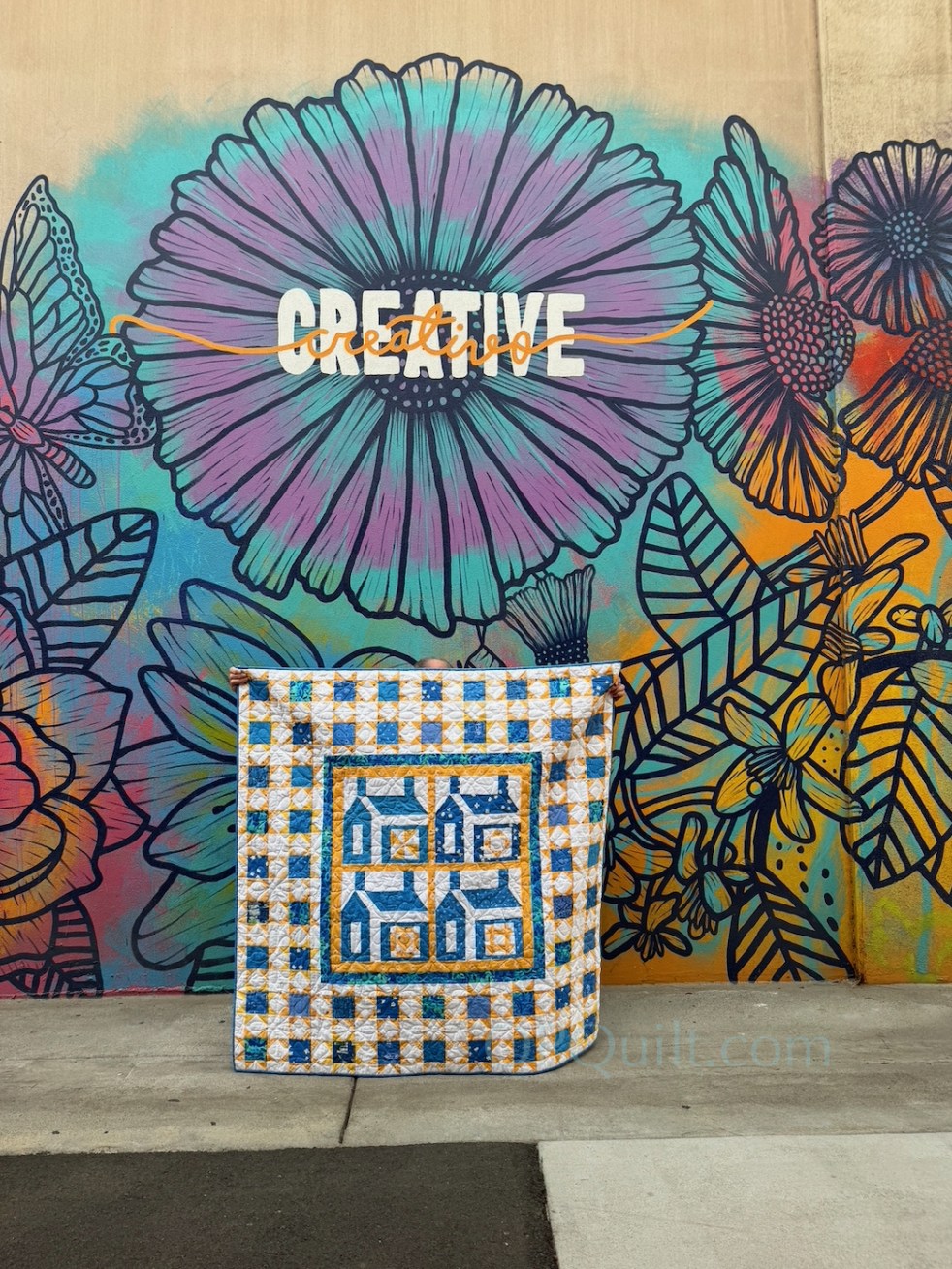
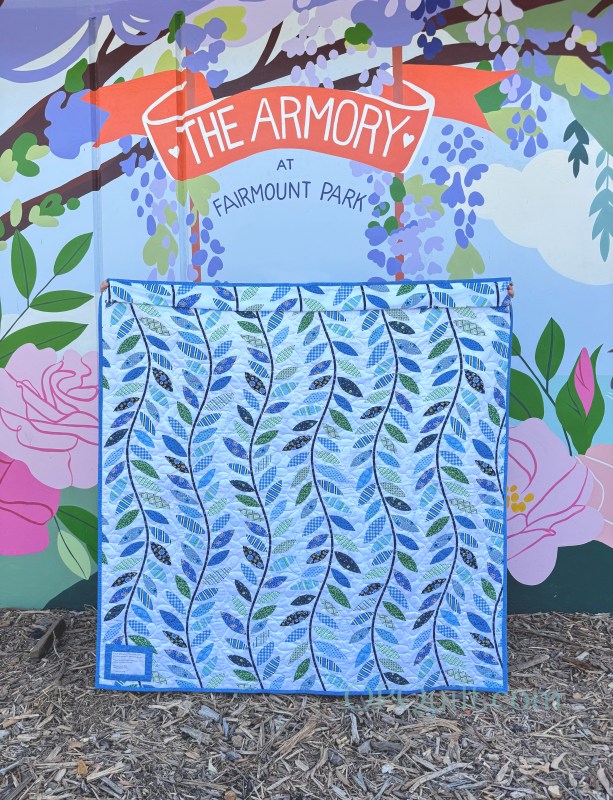
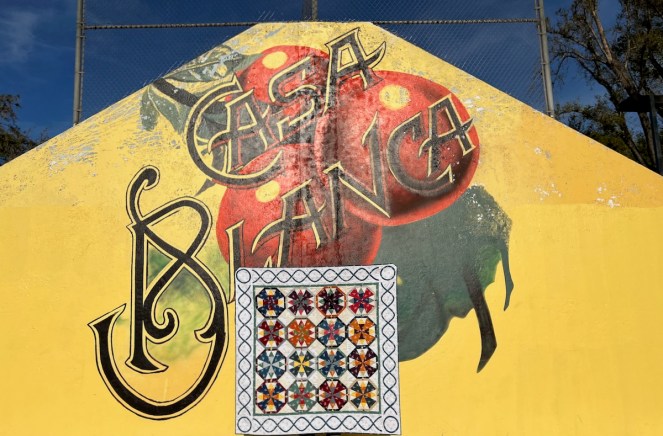
The mural at The Armory is by Katya Orlovie, and is in Fairmont Park in Riverside, California.
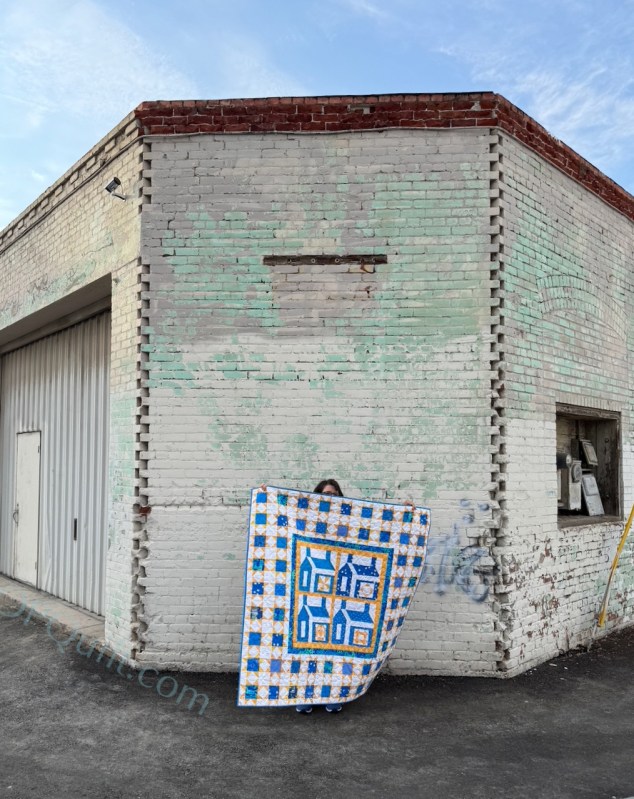
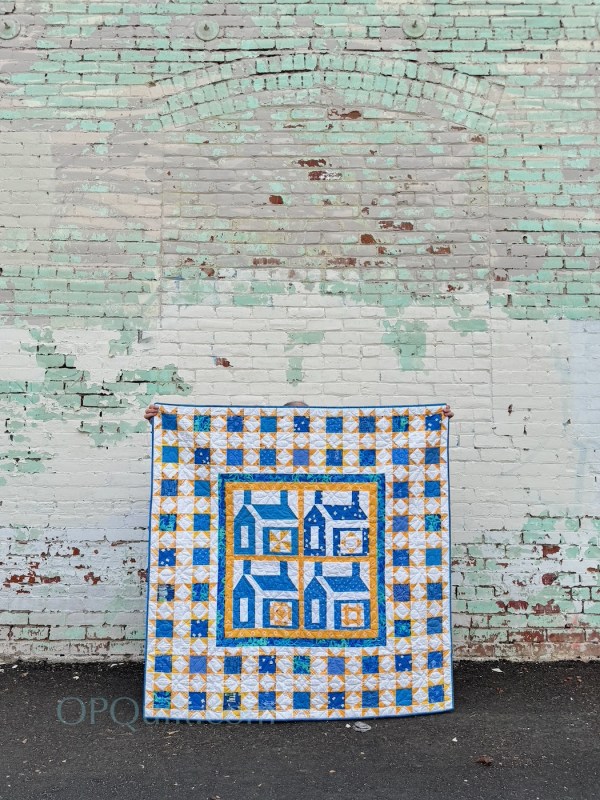
The four houses are in a PatternLite in my pattern shop, surrounded by sawtooth blocks. Instructions for all are in the recently updated 15-page pattern. It’s a PatternLite, so it’s cheap!
I love the backing, a Denise Schmidt fabric. FMQ pattern is Delicate Daisy by Urban Elements. This is #320 in my Index of Quilts. And yes, we had fun photographing this last night. We were out to dinner to celebrate our anniversary, and kept seeing fun backdrops in the downtown. It was a great evening, with the heat dialed down a bit after a hot few scorchers. Unlike the early days — where I’d want to get all fancied up and do fine dining — the Korean chicken place was fine by both of us.
I put our cards up on the table. True love, right?
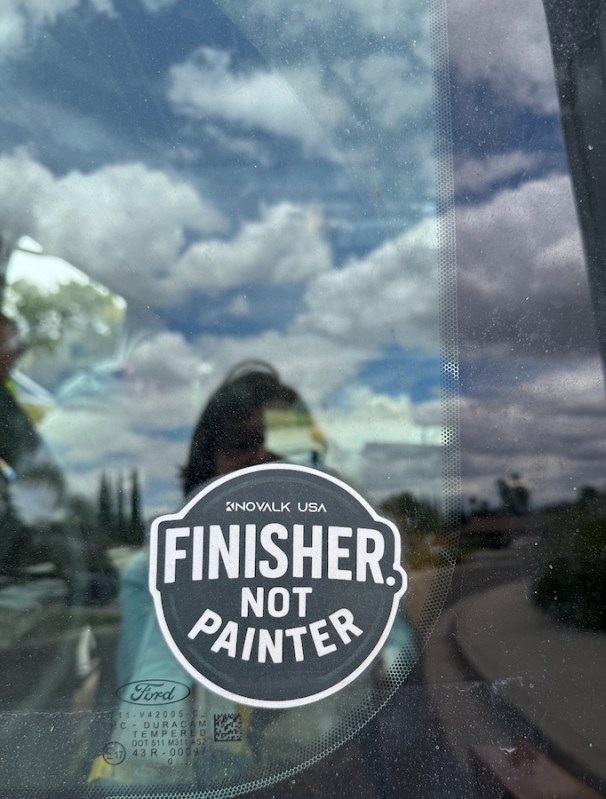
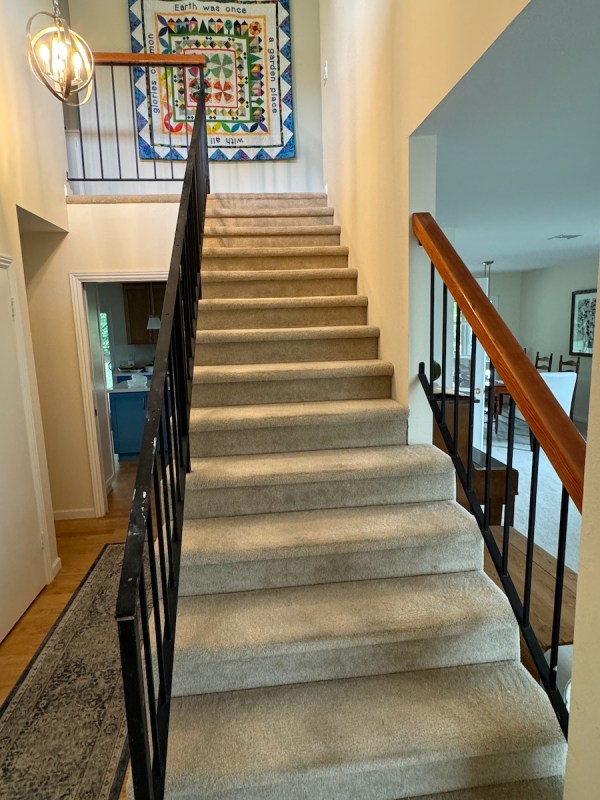
Let’s begin this overdue missive with the mundane: the stair rails in our house. This sticker belongs to Bryan, who I finally called in to finish the project after mucking around with it since March 6th.
I need a sticker that has the words “finisher” and “quilter” in it, although I haven’t yet figured out in which order the words would go.
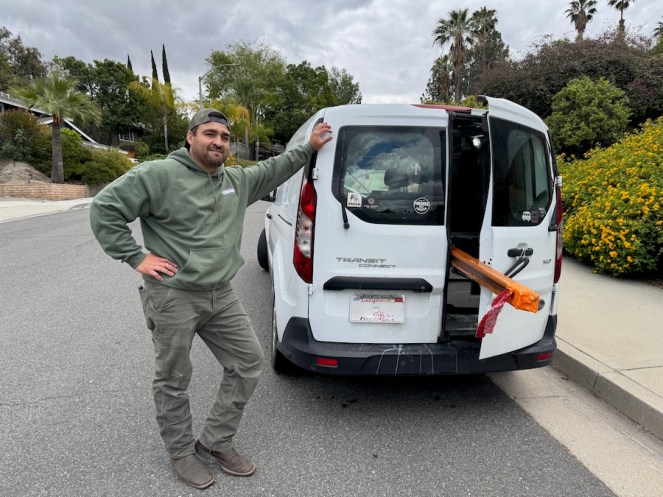
This is when I called him. We’d had other recent attempts at this project of refinishing the stair rails, including a feeble attempt by Yours Truly, but in the end I called Bryan of Fine Wood Finishers to get the job done. It was needed as they probably hadn’t been refinished in the life of the house (about 50 years).
Do we exude this kind of confidence and fun? He spent some time trying to get it in his shorter van, and in the end needed a bit of a red flag. I’m your gal! I called as I zipped upstairs, ripped off a strip of red fabric and brought it back down to him. Now we just let him do his magic; I’ll keep you updated. (He does have a bigger van for delivery; no worries.)
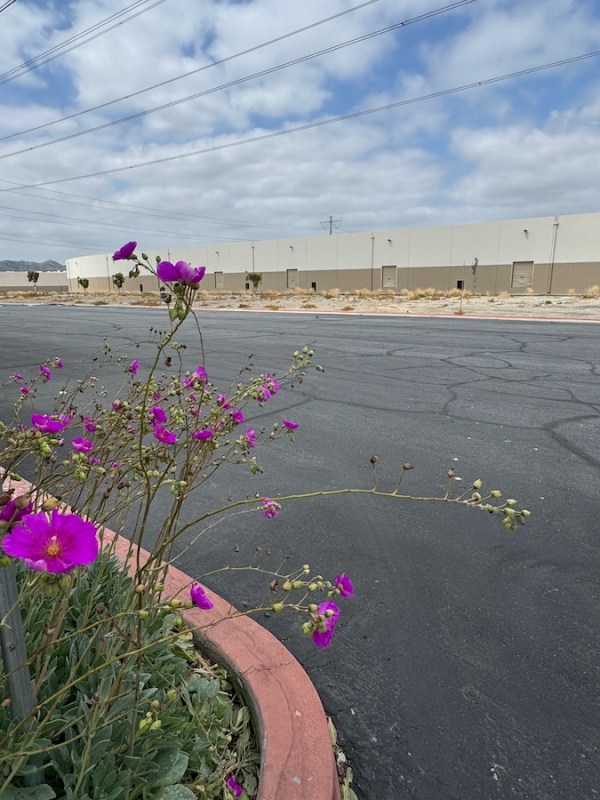
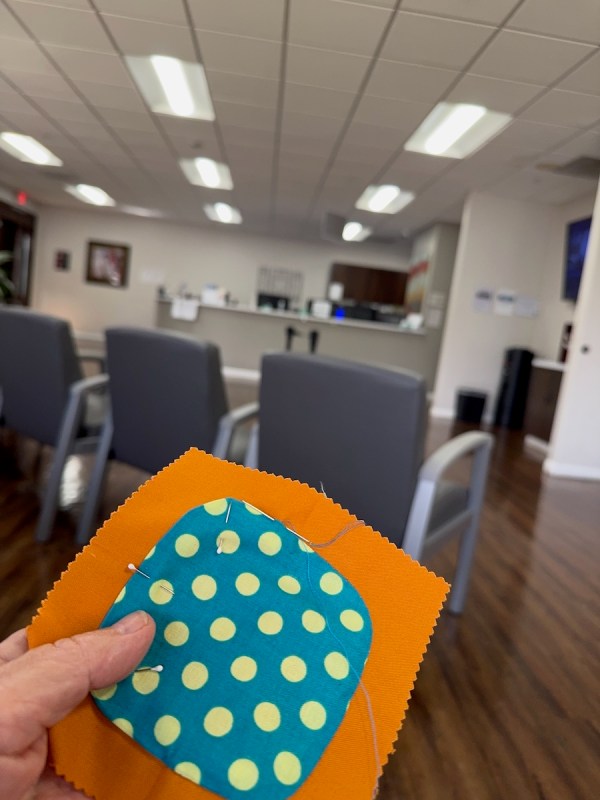
Apparently all our businesses are in warehouses now. I took my husband to his physical therapy and was off by one block. We were at Jump and Shout Therapy, instead of Marketplace Therapy. While he was in there, I sewed squircles while I waited in the car…
…but first I took a walk around the complex where I took photos. (I’m always taking photos.)
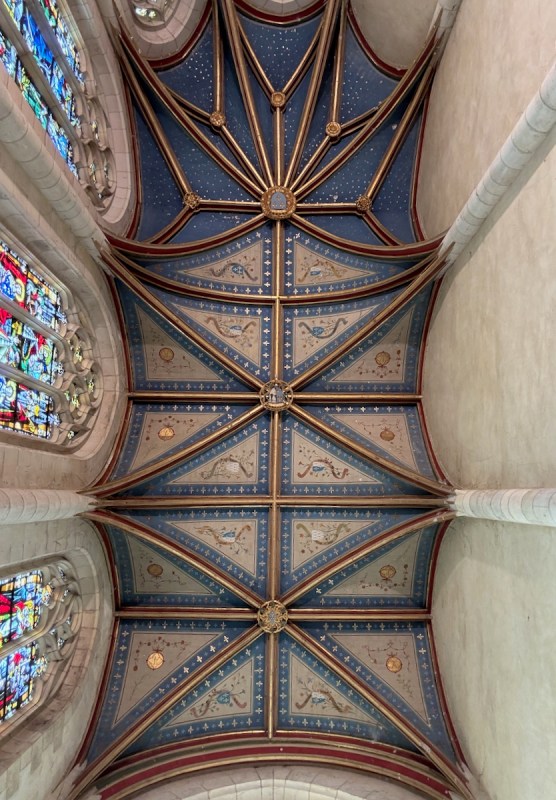
That skeleton of metal reminded me of this sweet little chapel in the Blois Chateau in Blois, France, where even the ceilings were amazing. And this reminded me that I wanted to show you this:
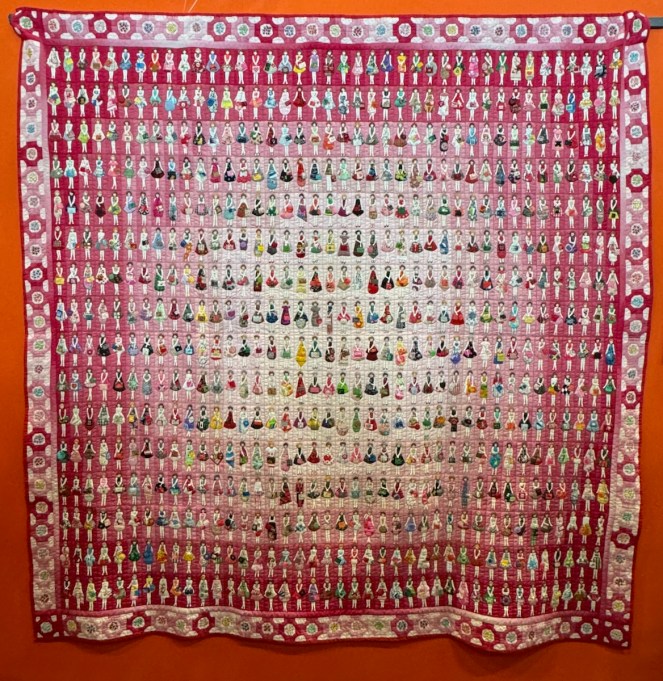
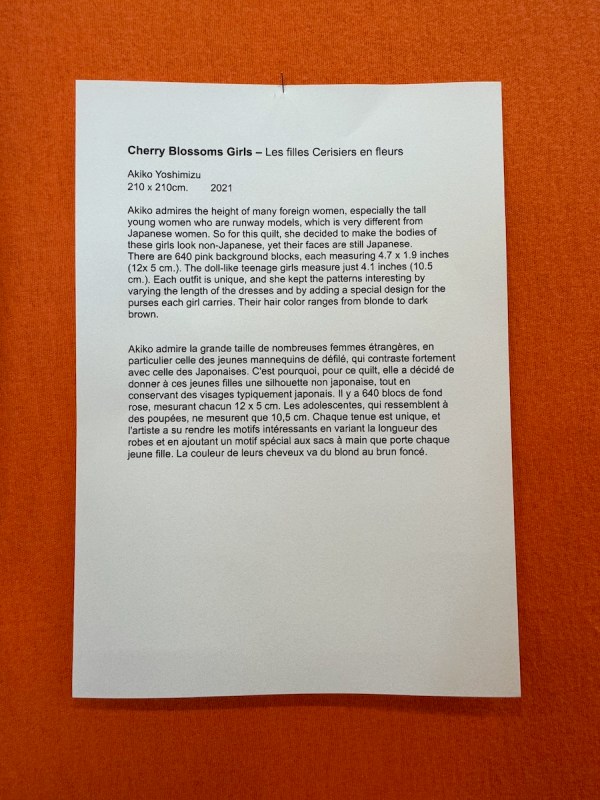
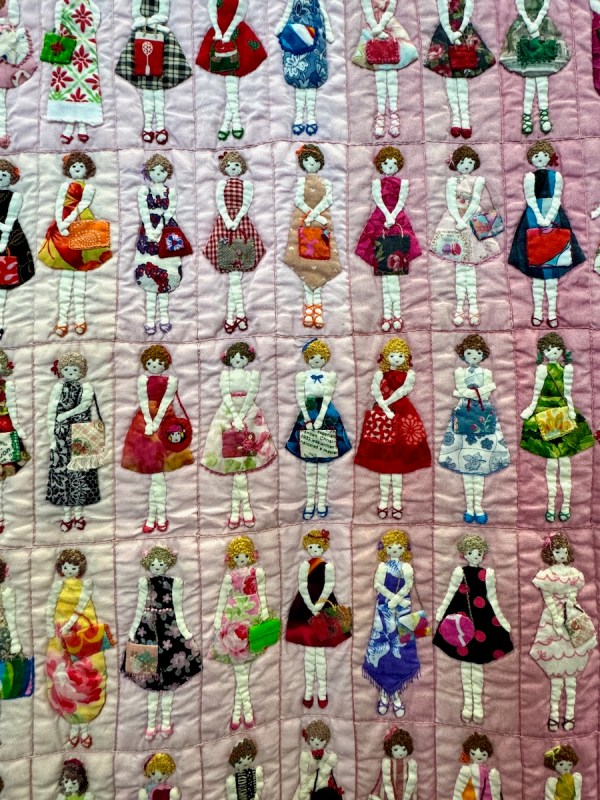
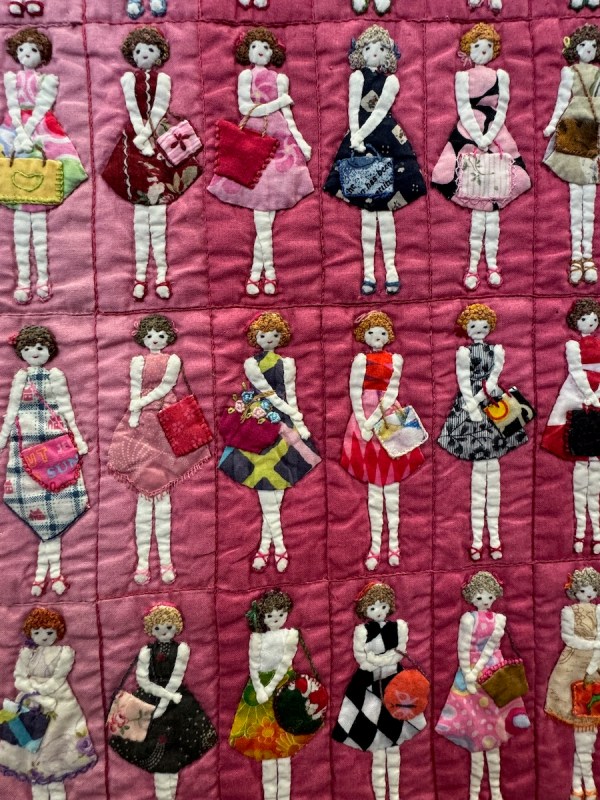
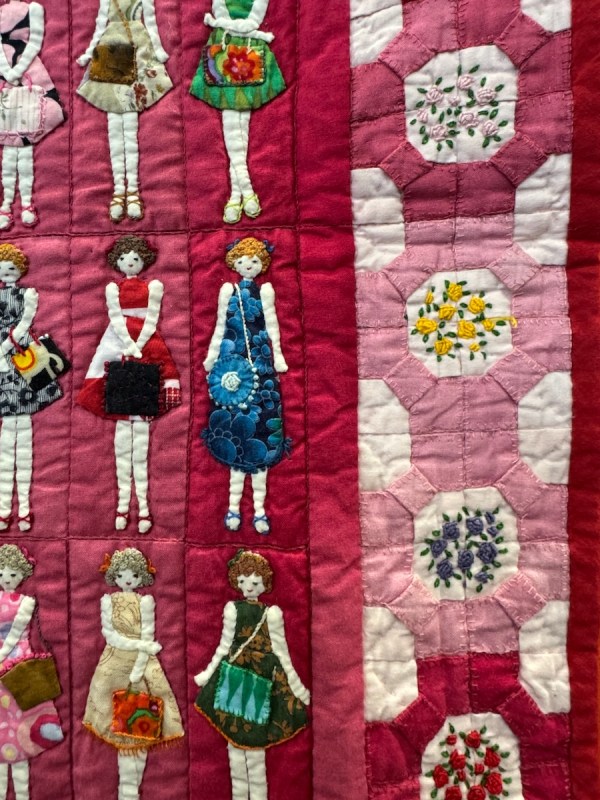
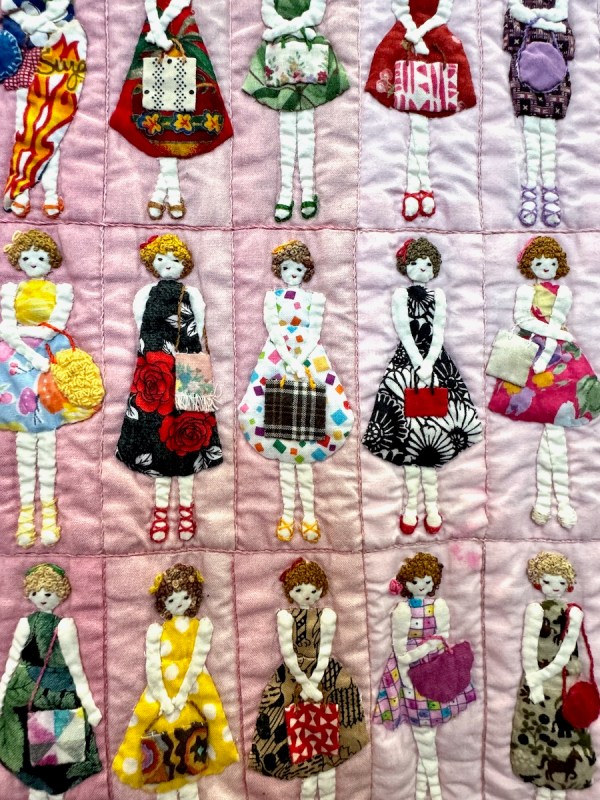
Now that you know there are 640 of them, and that she made each one different, you’ll want to see some detail shots (click to enlarge any photo):
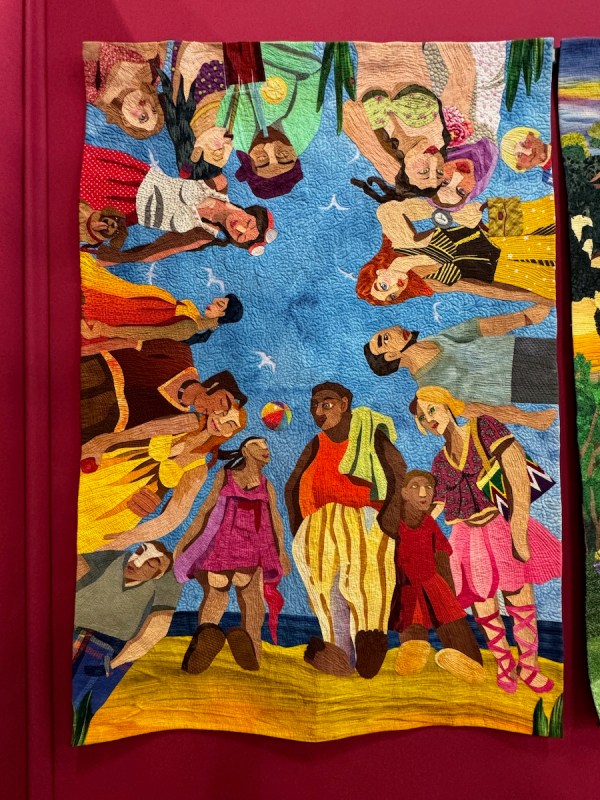
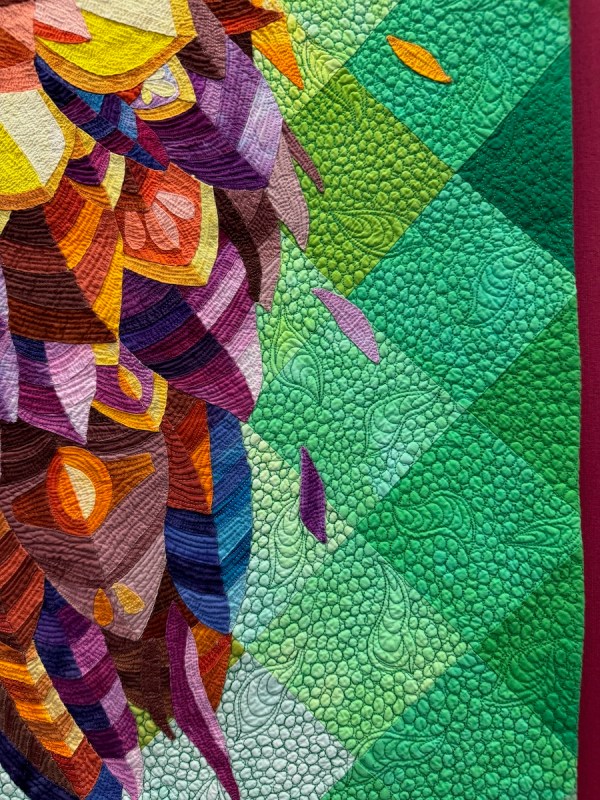
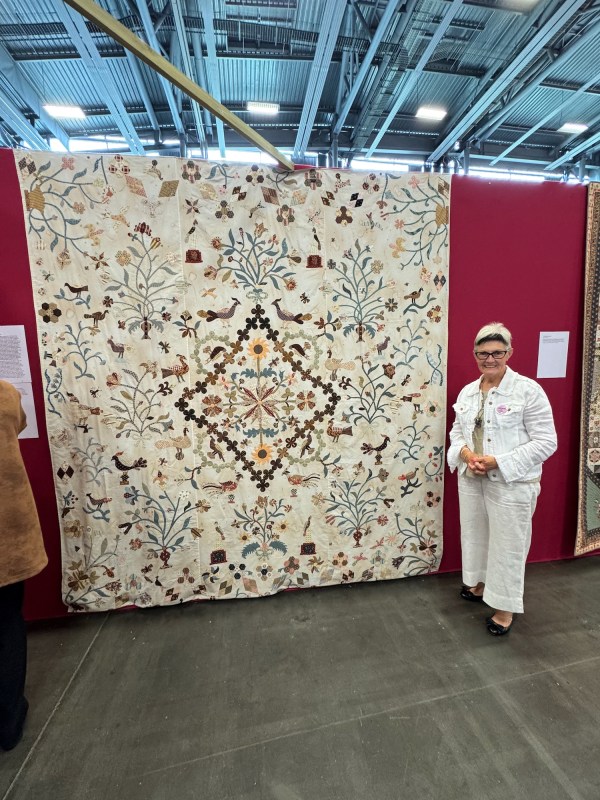
This is a quilt from the Pour l’Amour du Fils show in Nantes, France. I did include some more photos in the most recent post, but rather than overwhelm you, I’ll drop some more in here and there over the next while, like this one with 640 different little purses and dresses.
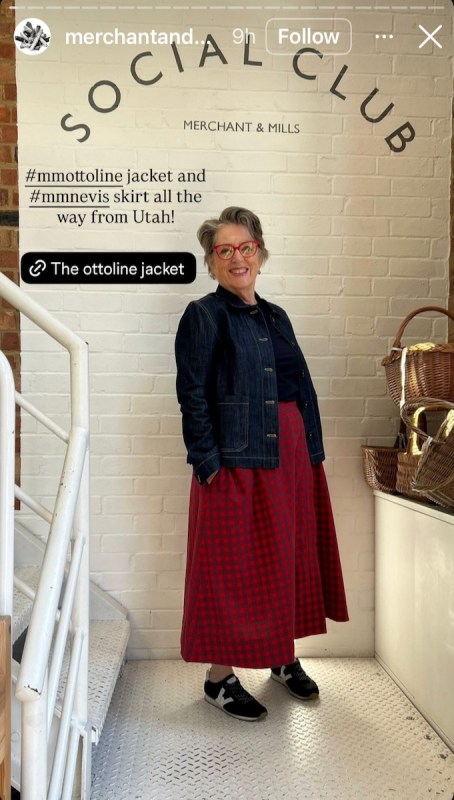
My sister Susan also did some traveling, but to London. She’s become an avid sewer, getting me interested again in garment sewing. She’s a fan of Merchant & Mills, so traveled out to Rye to see their enterprise and buy fabric. While there, they photographed her for their well-known inspiration called Social Club, and put her up on Instagram. Wow! (Doesn’t she look fabulous?)
I squircled while in doctor’s offices this month, too, keeping vigil while my husband was there. I’m really getting close to done, as I’m trying to keep up with Gladi, who has finished her squares.
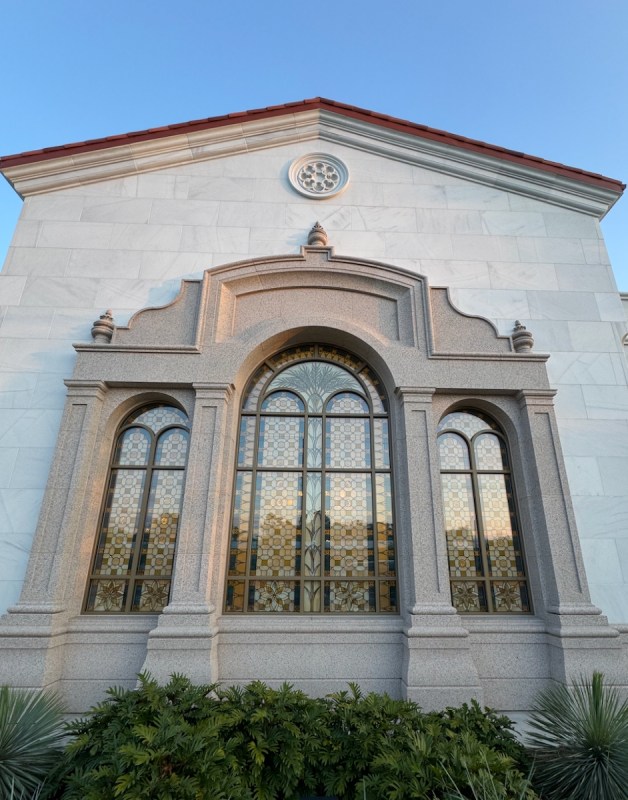
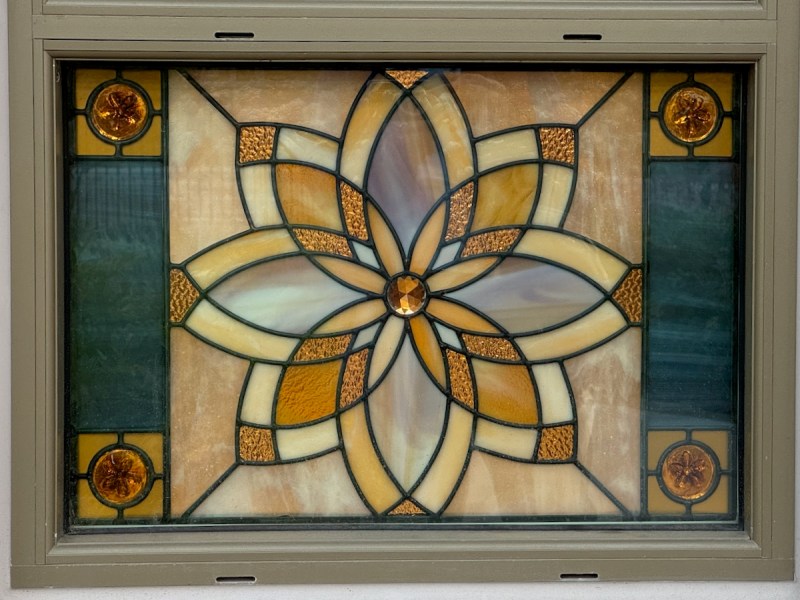
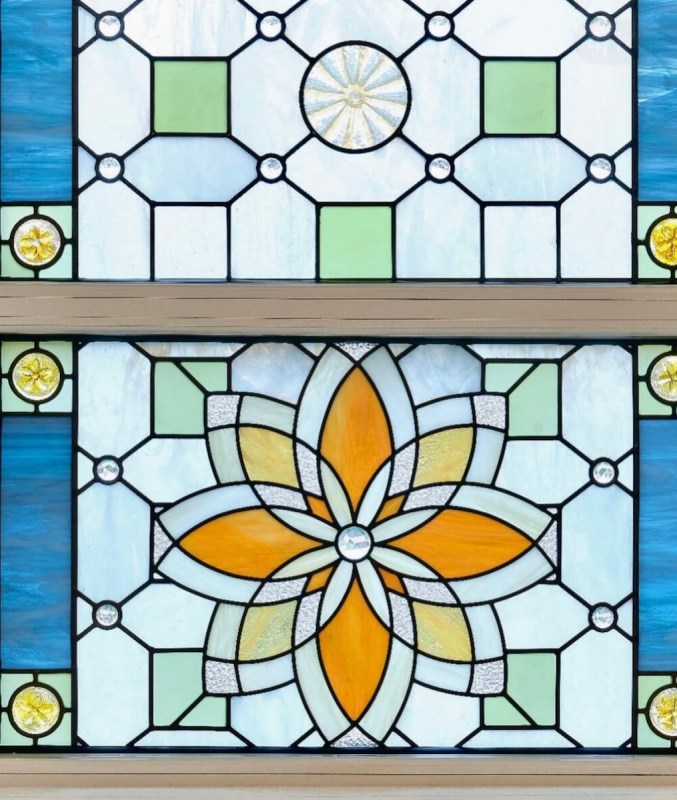
Our church is dedicating a new temple not too far from our house, the Yorba Linda Temple, and we had a chance to go for their Open House to tour the building before it’s closed to the public. As always, I’m drawn to pattern and visual texture, so I loved the stained glass, done by Holdman Studios.
My photo at dusk, on the left. Another photo of this motif, from the Holdman Studios’ Instagram, is on the right (which also has more pictures). That would make a marvelous center to a quilt, right?
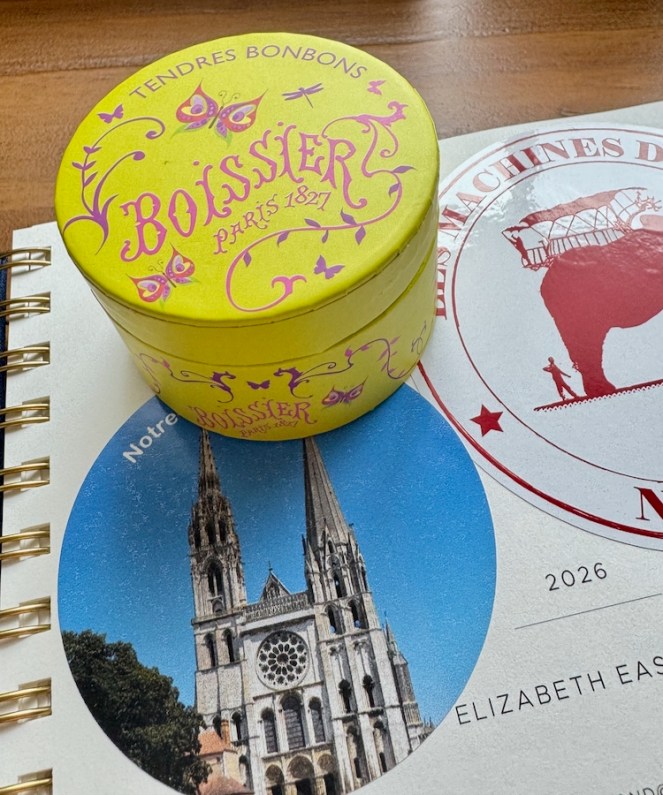
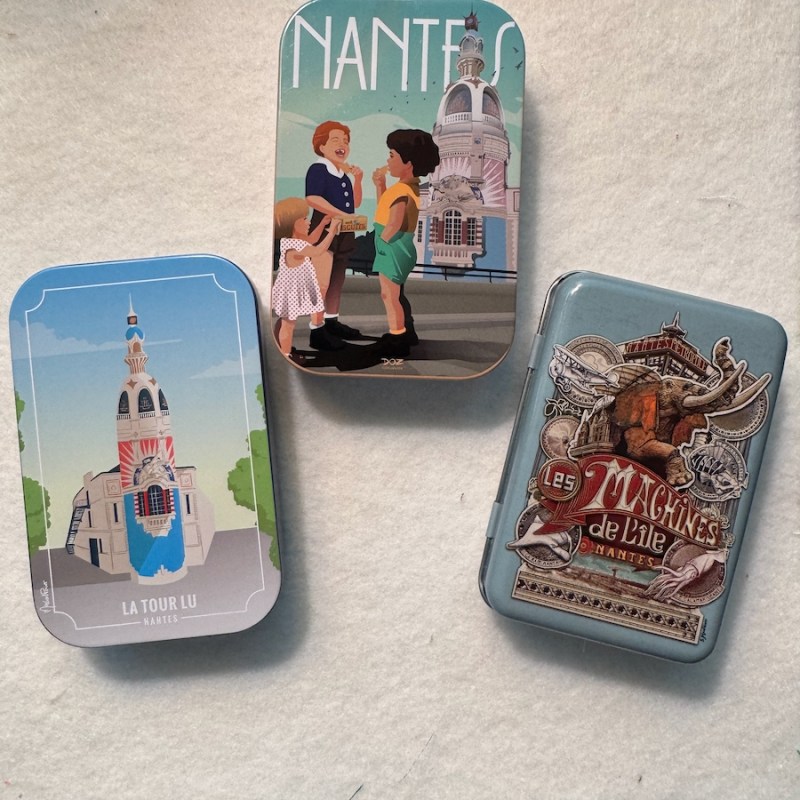
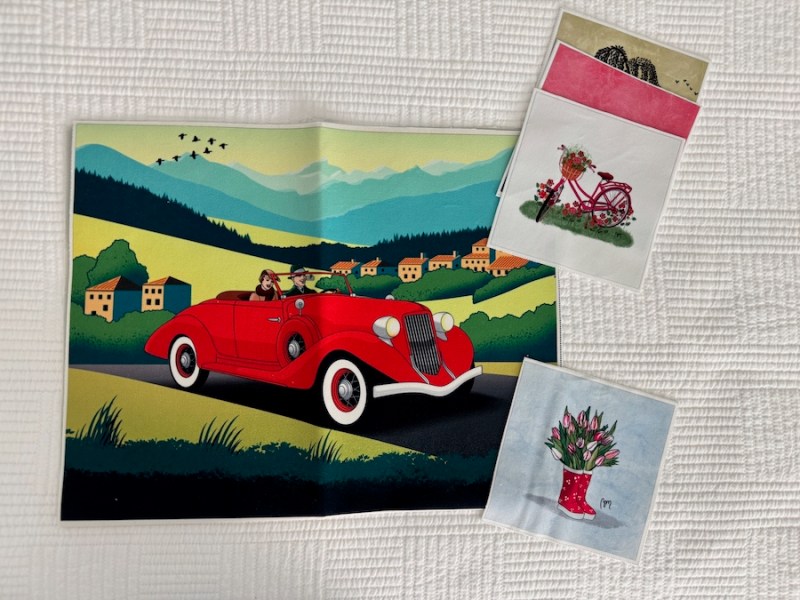
I tend to carry home smaller things from my travels, like stickers and an elegant candy box. Sadly, I ate the last one of the little sweet bits inside while writing this post.
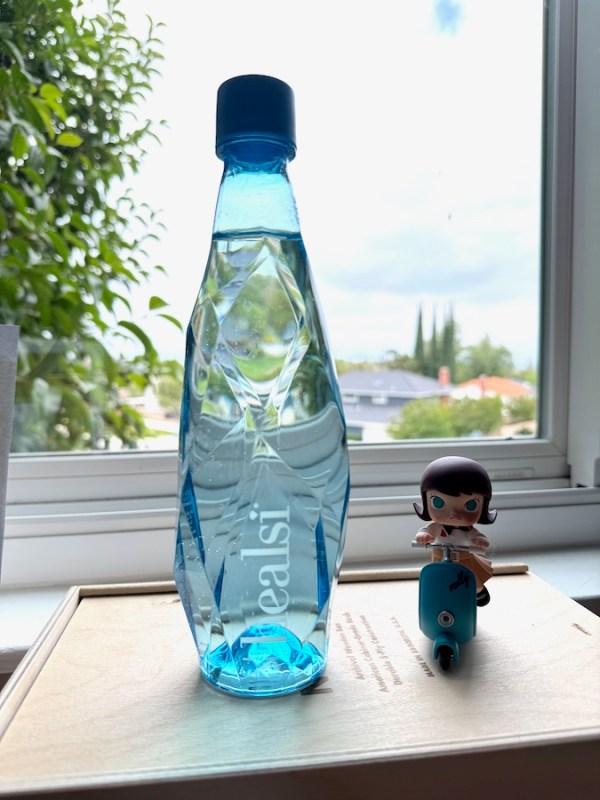
But water bottles are also a prime souvenir for me, as they remind me of my experiences. Oh, and tote bags for my grocery shopping (our state has a no plastic bag rule), but I won’t show you my collection at this time.
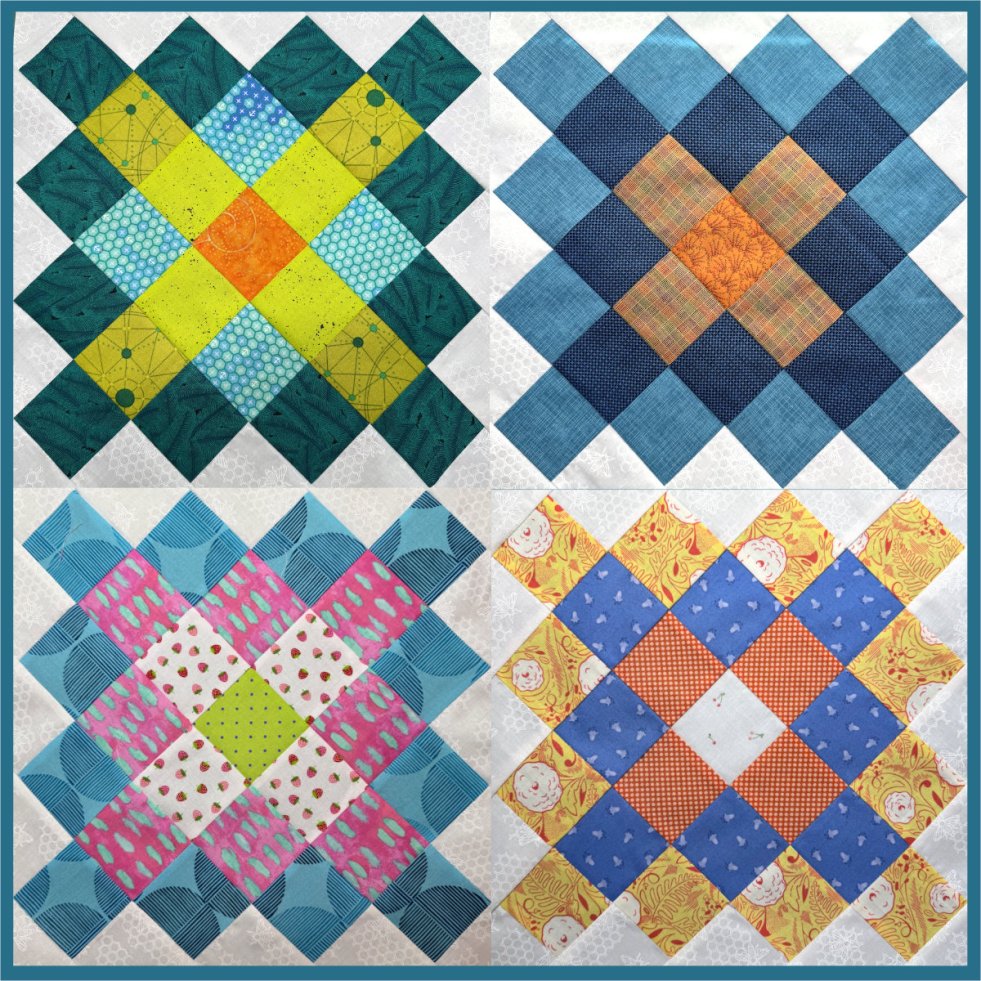
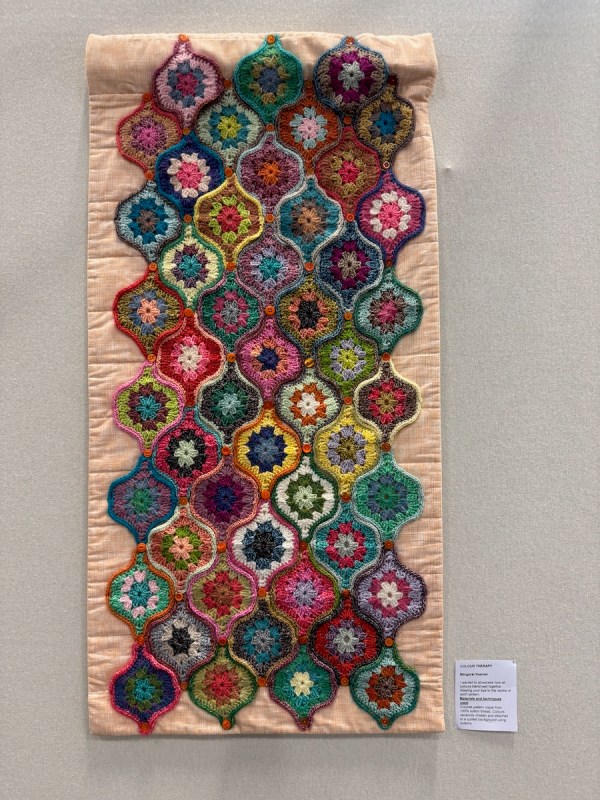
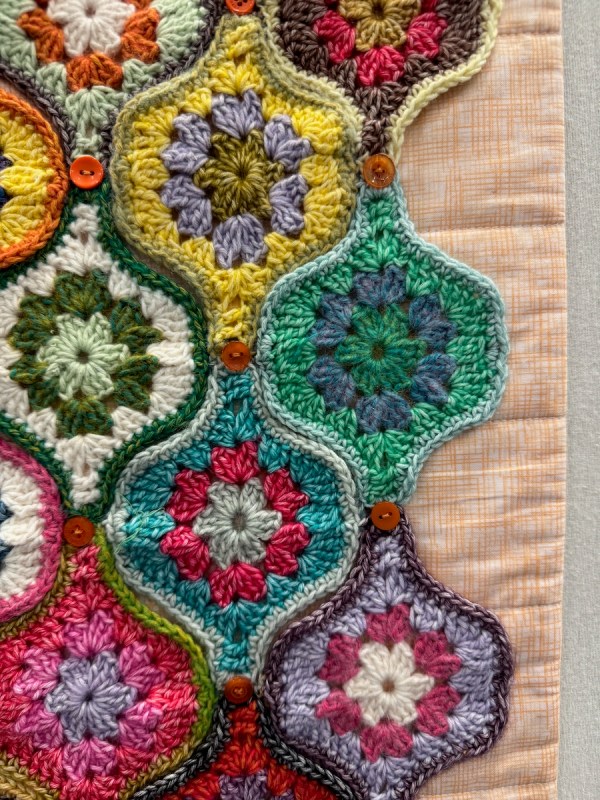
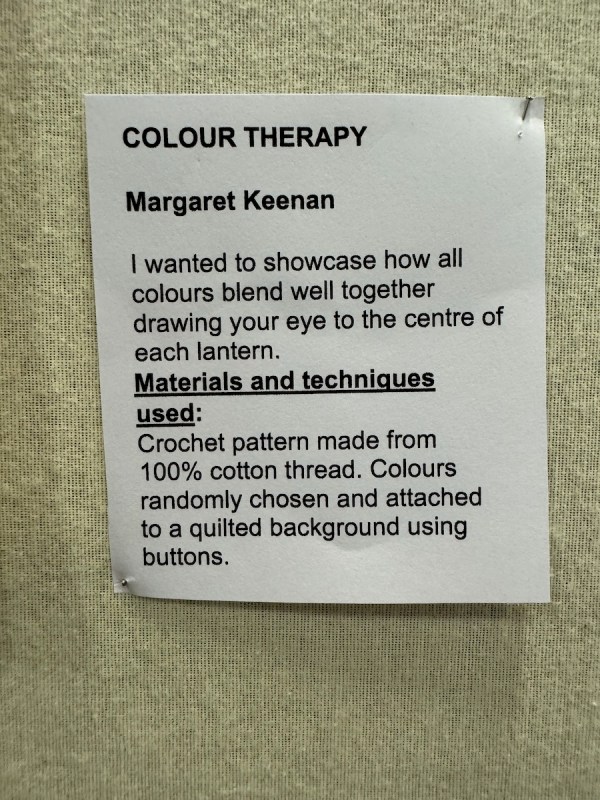
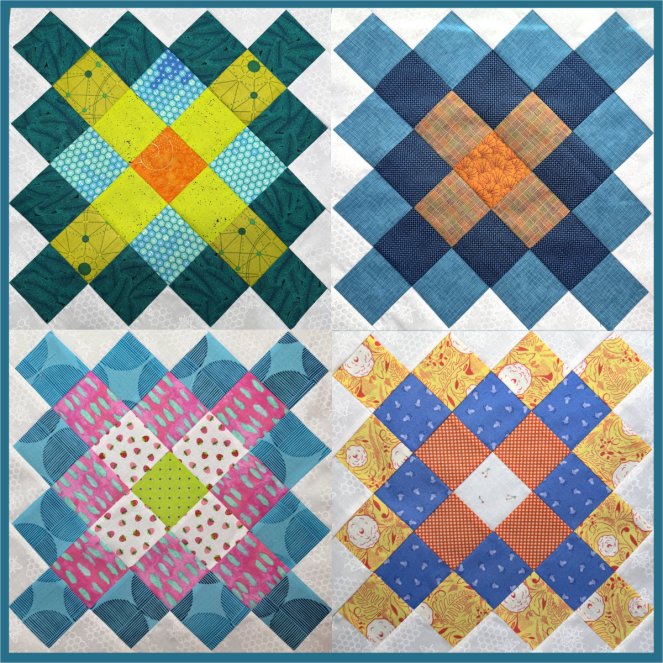
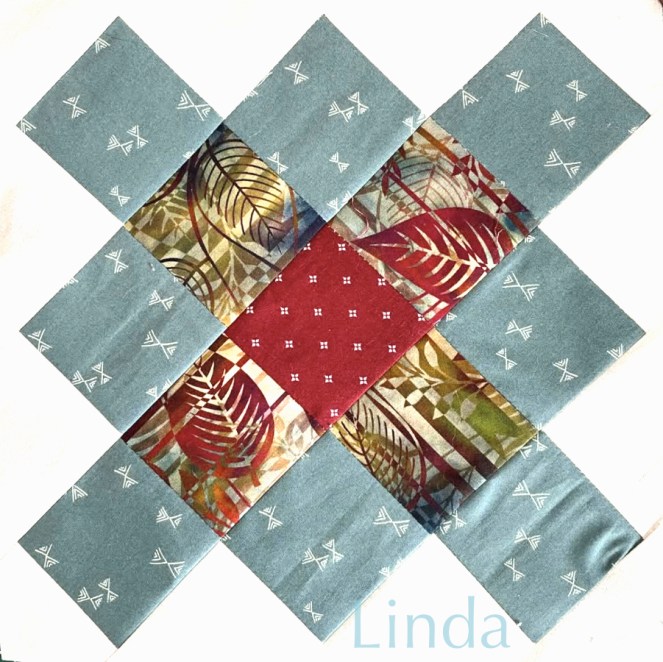
One last quilt from Nantes: a granny square-inspired quilt, with “granny lanterns.”
Besides the one you saw a couple of weeks ago, here are four more. I need to make eight total for May’s allotment, so have a few to go. Others who are playing along have posted theirs, too, on Instagram:
Since hashtags are dead in Instagram, if you want to join the gang, either leave a comment on this post, or on This Instagram Post, and I’ll add your account to the list I’m keeping on that post. If you have a a photo and don’t use Instagram, I’m happy to post it up here, or link to your blog. I’m also on BlueSky for those who have left Meta behind, although I don’t know if you need to join to see my blocks on there.
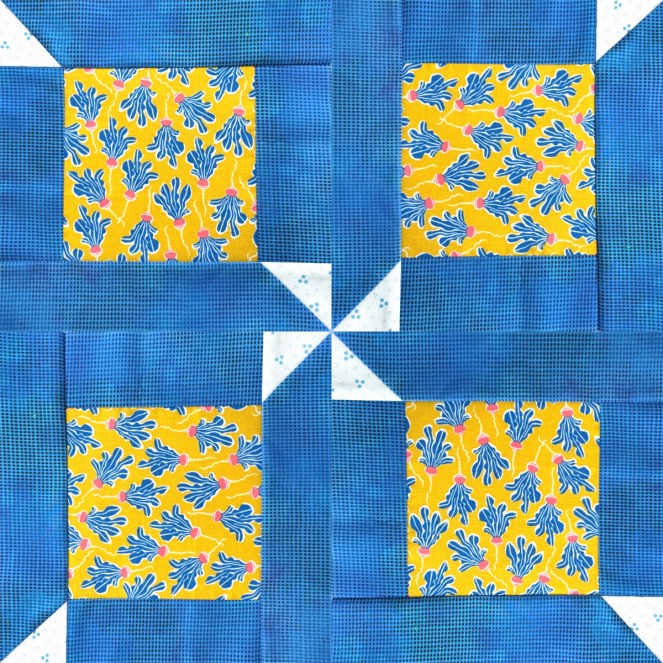
I’ve also reworked some earlier handouts and patterns. This is a digital image of four pinwheel blocks, but I really only made one. The original post shows it in red and white; here’s the free download, if you want it:
I’d read about this quilt show — For the Love of Thread — in the QuiltMania magazines for years. This year my husband and I were finally able to travel to Nantes and attend the show.
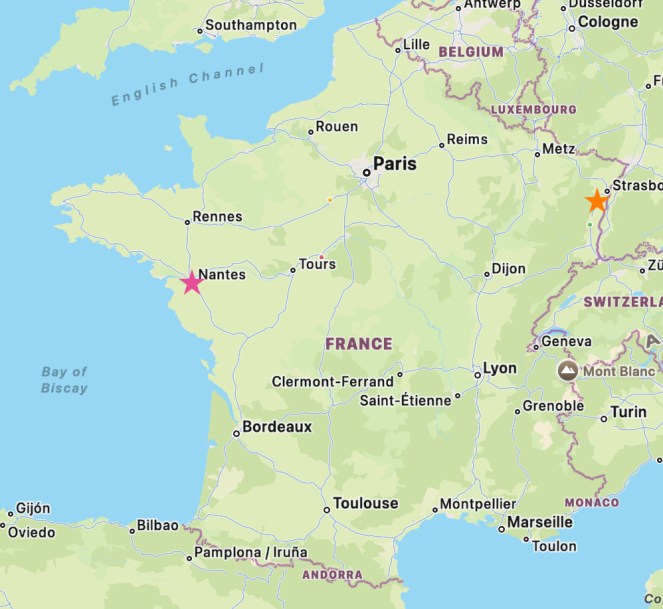
First, some basics: Nantes (pink star) is in Western France, near the Atlantic side of things; most people head to Paris, which is north-central France. The orange star is in Eastern France, and that’s where the Carrefour European Patchwork Show that’s held in the villages of Val D’argent is located. There are commercial tours to both shows, but we were able to plan and travel there ourselves. The Nantes show is held in April; the Carrefour is held in September. (Just do a web search if you are trying to find tours.)
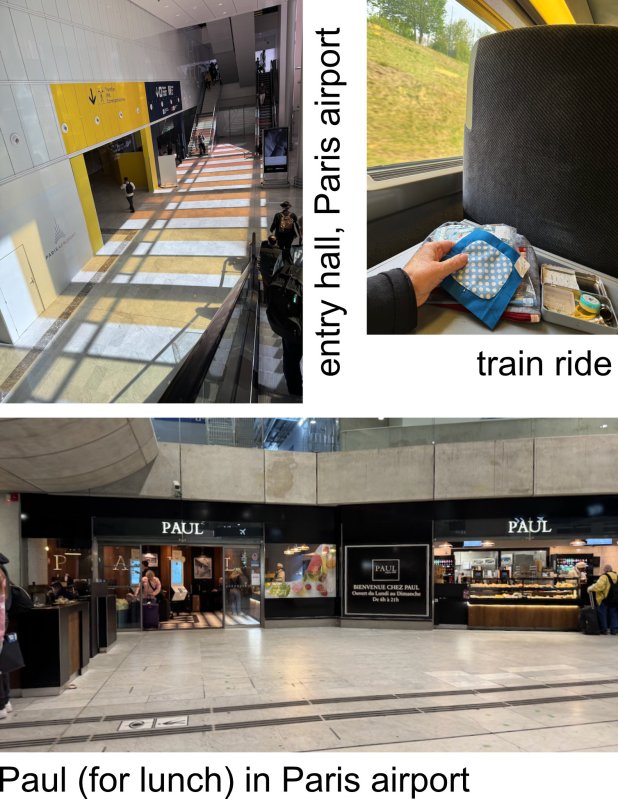
Having traveled to other parts of France, Nantes was a total surprise to both of us — a delightful surprise. It’s the sixth largest city in this country, and has a different flavor than other regions we’ve visited. We arrived at Paris Charles De Gaulle airport at about 1 p.m., then took a train across the country (train left at about 5 p.m. and arrived in Nantes about 3 hours later). This gave us time at the airport to clear customs, catch a bit of lunch, check out the convenience store for chocolate (I’m crazy about the chocolate in France, even the drugstore variety), and then catch our train. While in Nantes, we stayed within walking distance of the Gare (or train station), which also allowed us to catch the tram to the quilt show the next morning.
We checked with the hotel clerk, who confirmed what we planned and after buying our tickets, we got on the tram with other women, carrying interesting bags and totes (a sure giveaway for a quilter). I saw so many interesting bags and totes while there, that I made a video.
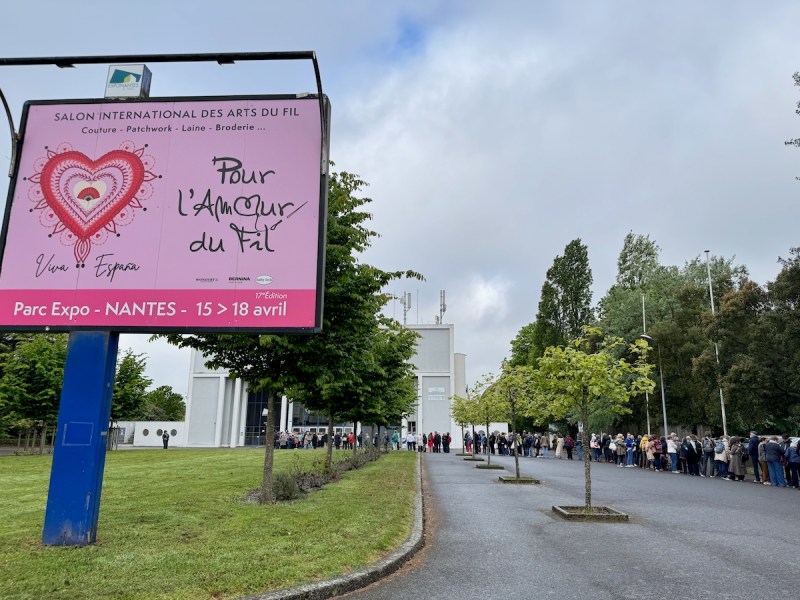
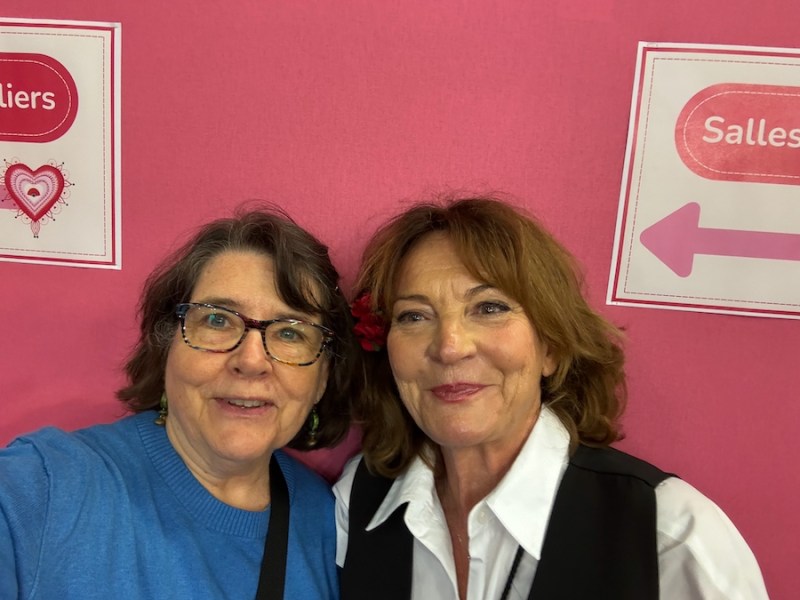
After riding for a bit, wondering how we would figure out where to go when we got off the tram, a woman (I later learned her name was Sylvaine), got on the tram and started doing embroidery, so we struck up a conversation. After about a 20-minute ride, she walked us over from the tram when it arrived at the convention center, or Parc Expo. The quilters were already lining up a few minutes early.
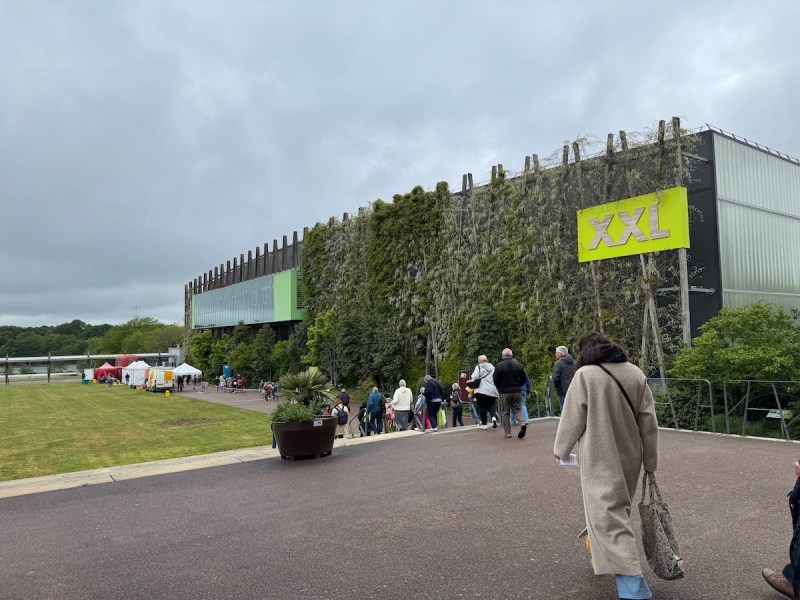
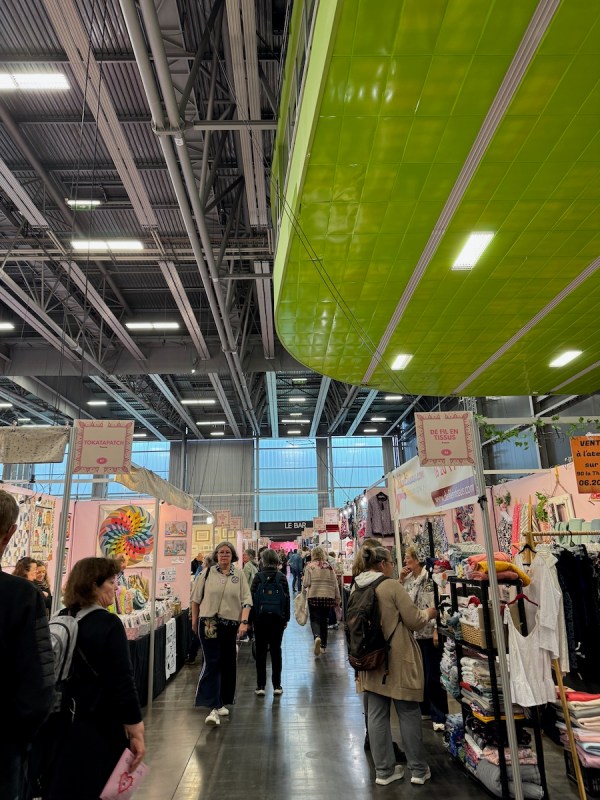
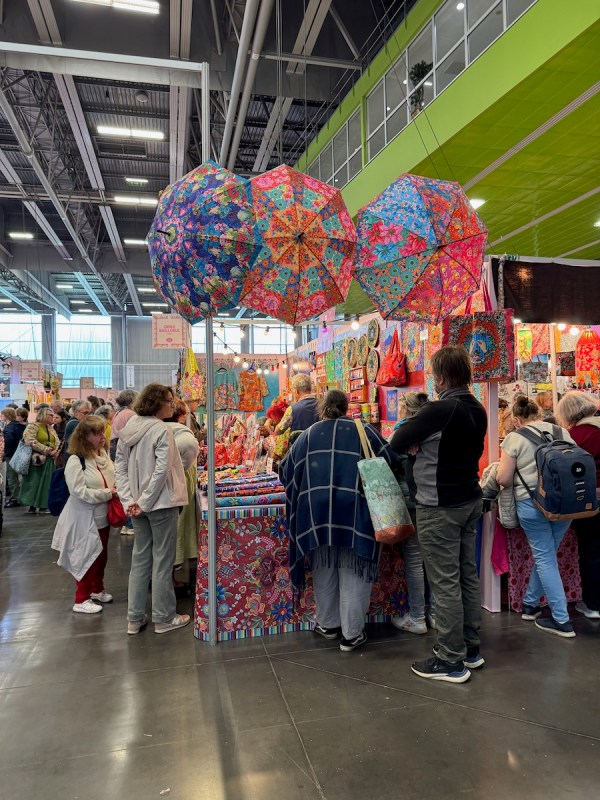
We came in the main door (in the white building in the first photo) where they checked our bags, and walked out the other side. We followed the crowds as they walked over to this building, where the quilt show was being held. The white tents you see are the lunch places. We showed our tickets, got our wristbands (we had purchased a two-day ticket), and were in!
[Hope this video works…] Yes, everything’s in French, but fabric and smiles are a universal language. Most of the booth vendors spoke English as did many of the guest artists (many were from Australia), so I didn’t have a problem. Even buying tickets at the tram stop you can switch to English, and I kept Google Translate handy on my phone for places I needed to know the language.
The guitarist was in front of The Red Dress, and both were beautiful. Haven’t heard about The Red Dress? I hadn’t either until I went to the show’s website before the show and read about it.
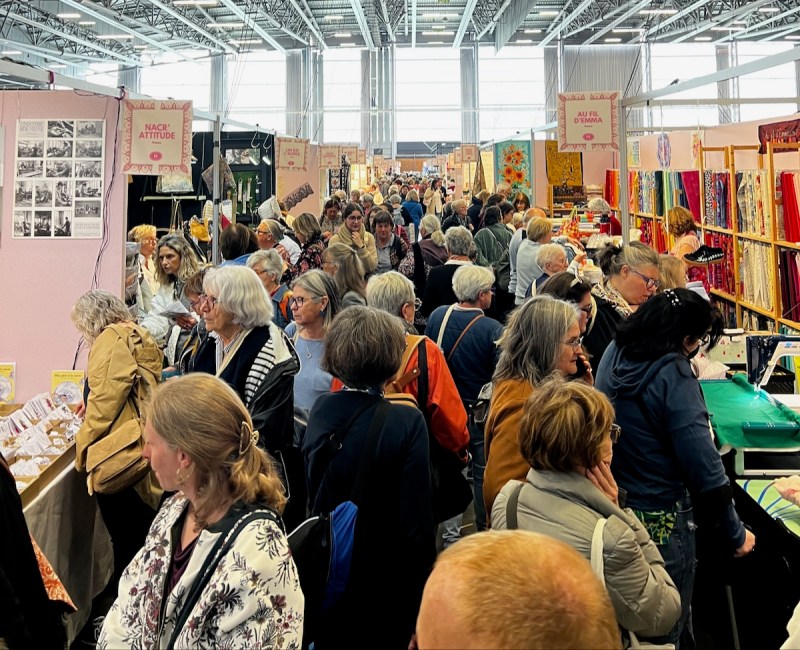
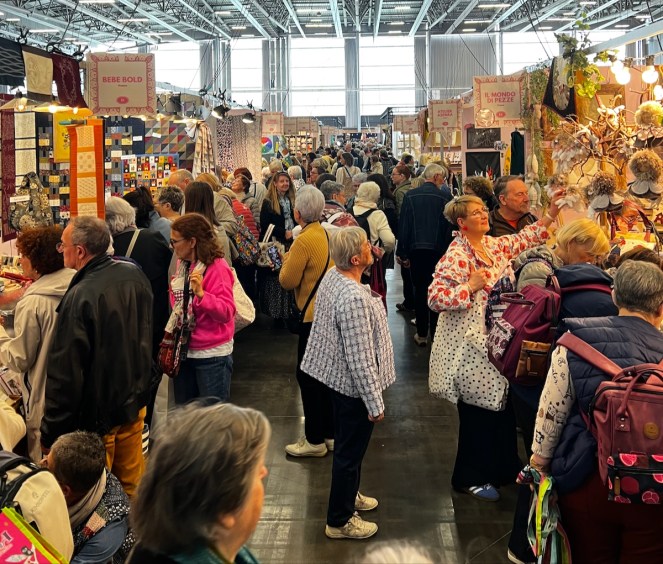
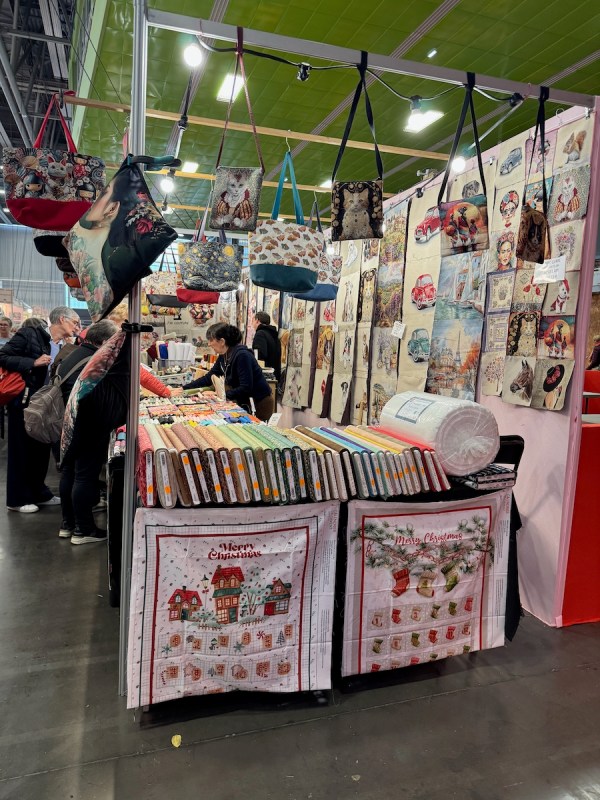
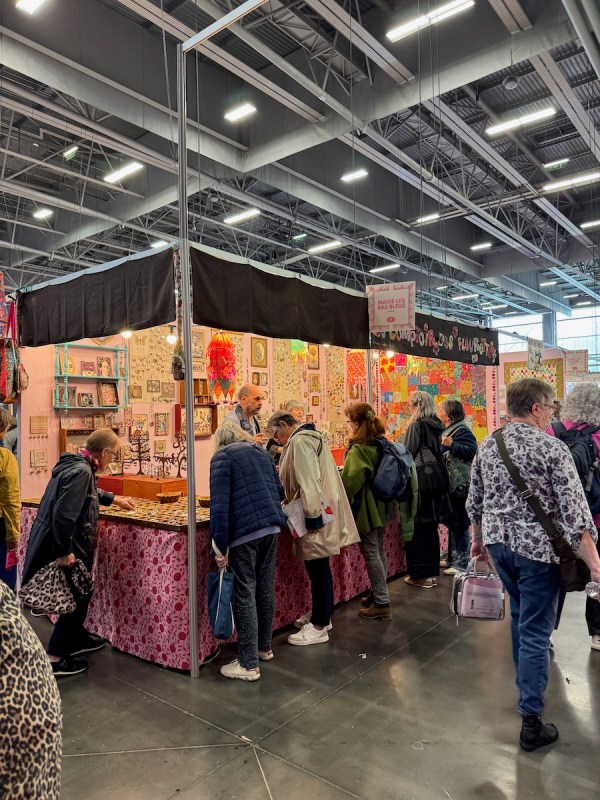
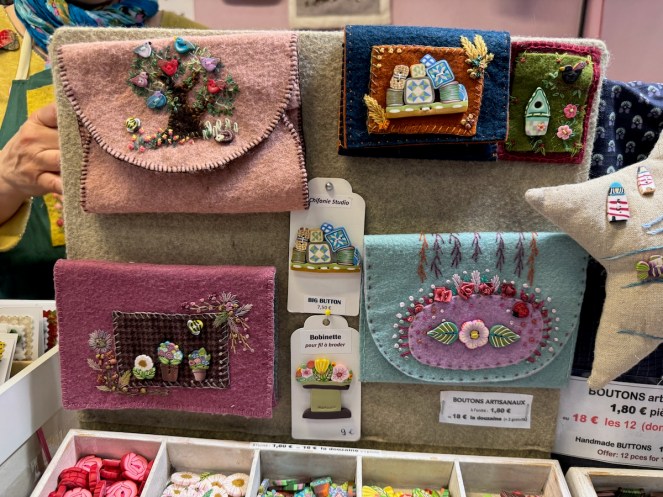
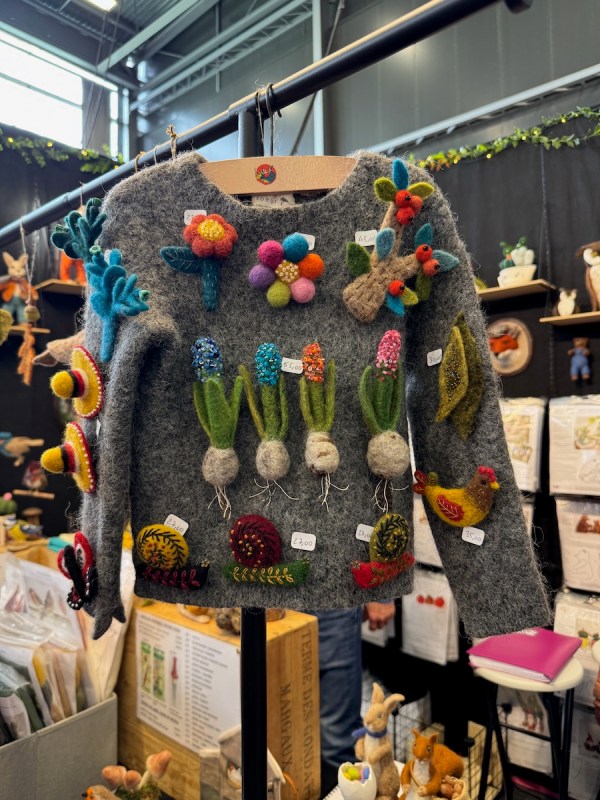
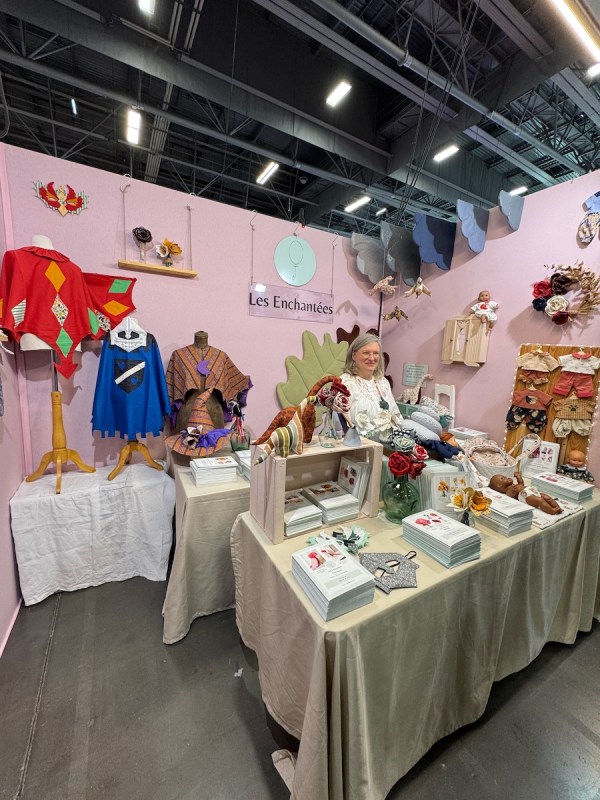
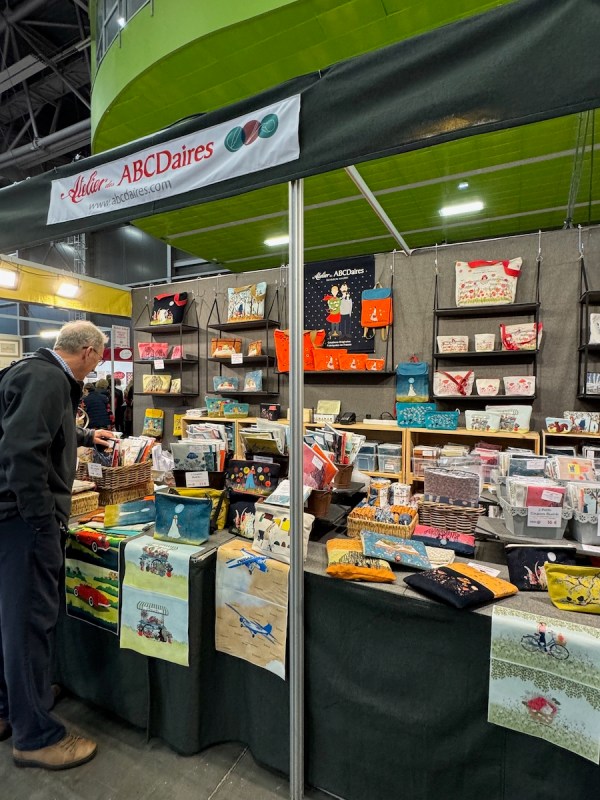
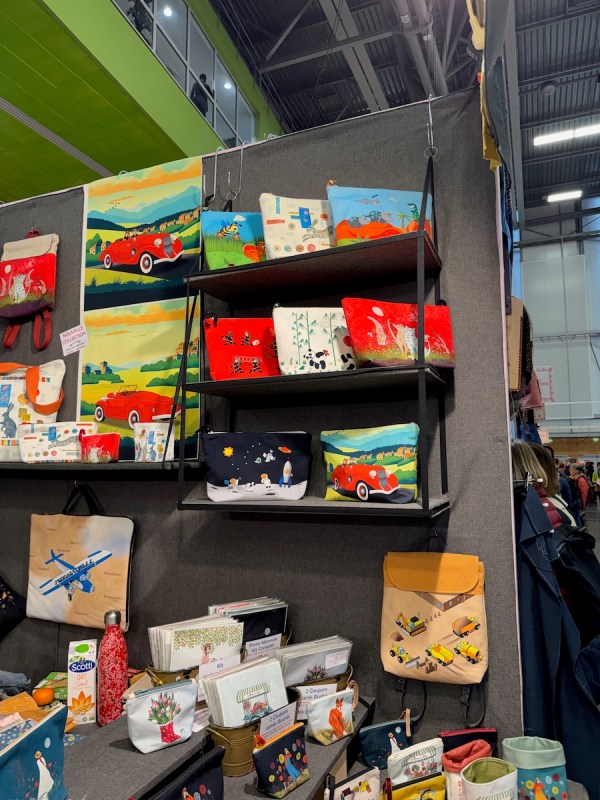
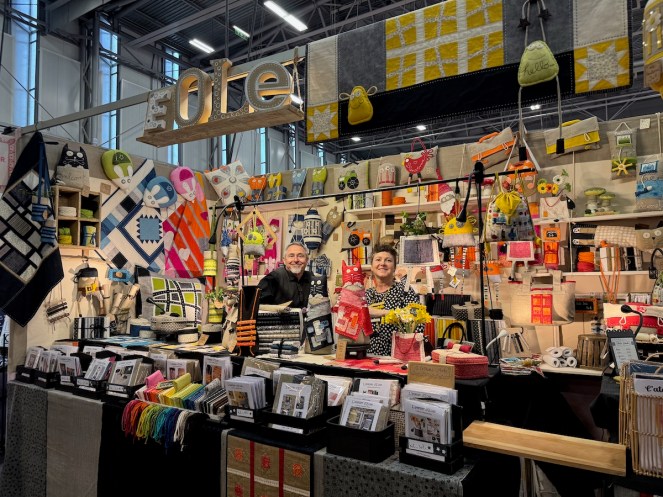
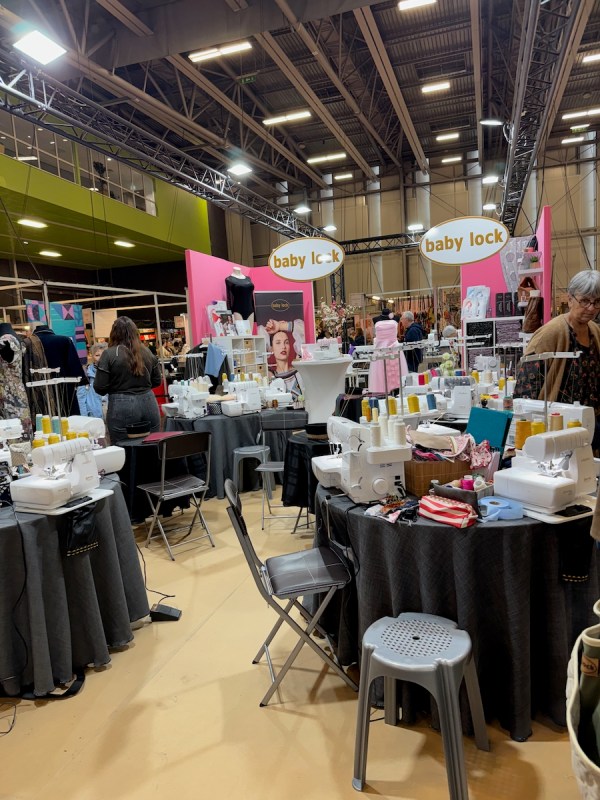
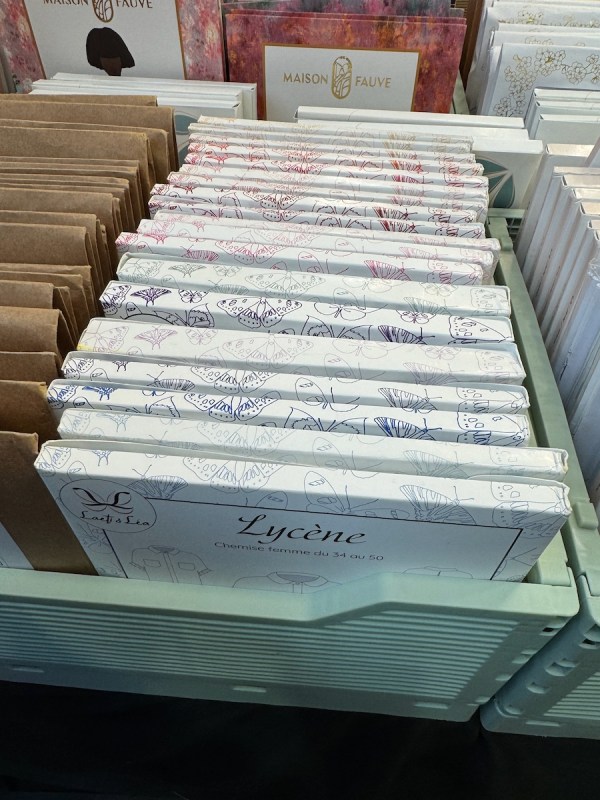
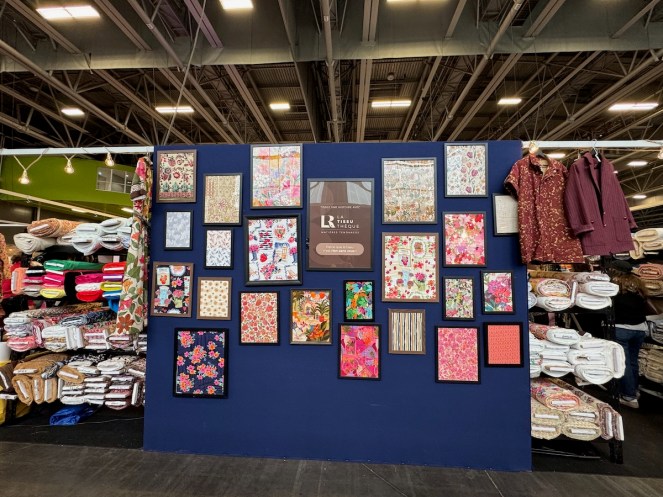
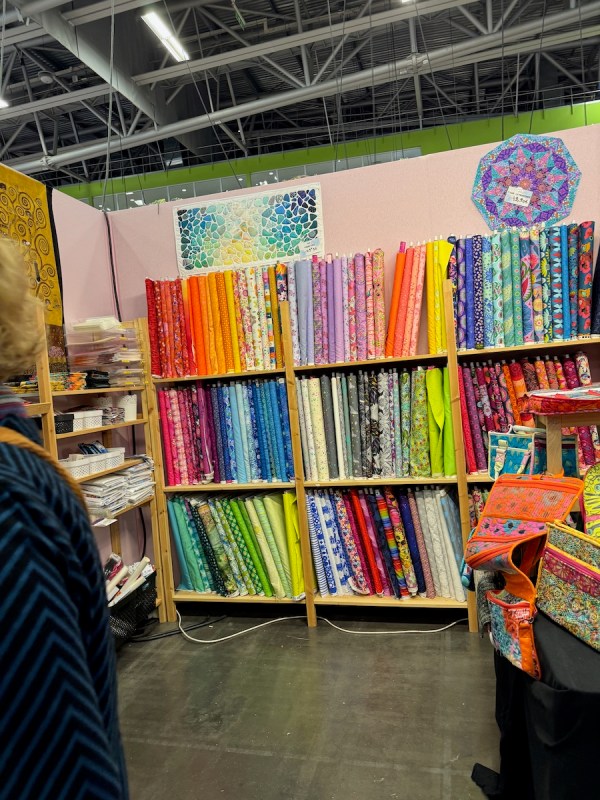
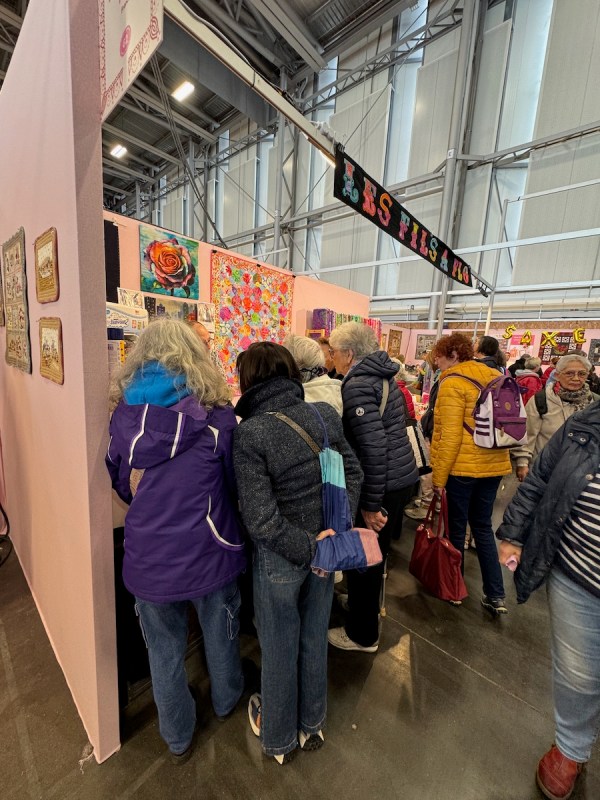
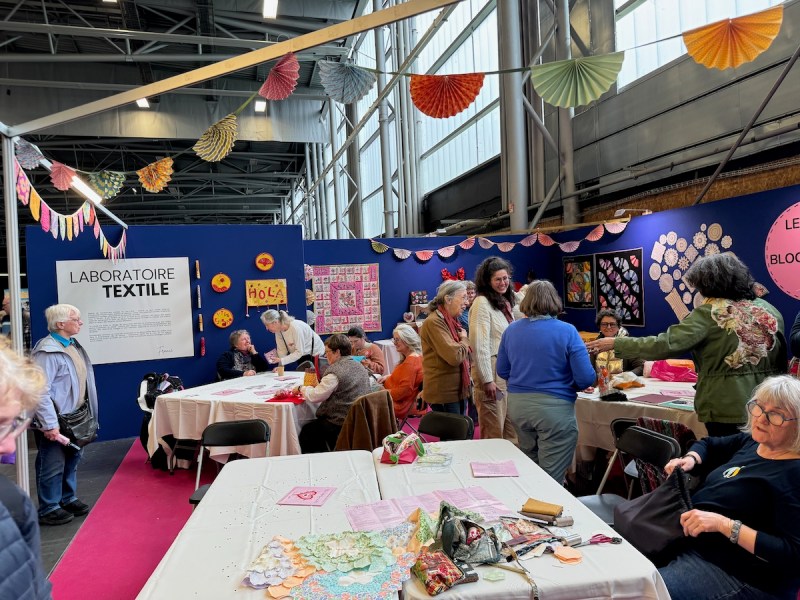
The photo on the left was when we first arrived, when the show opened. The photo on the right was taken after lunch. Quilters had arrived! But it wasn’t just quilters: it was embroiderers, sewists, crocheters, purse and bag makers, and I even saw a jewelry booth. Here’s a slide show of the vendors; click to advance the images:
Note: except for a few crowd shots and candids, I received permission to take photographs.
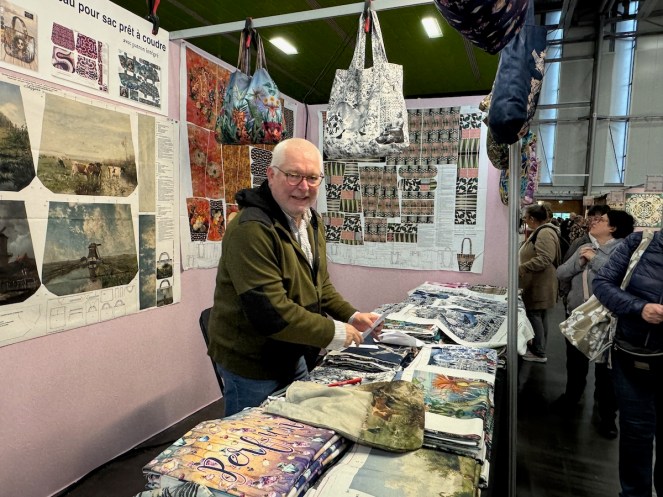
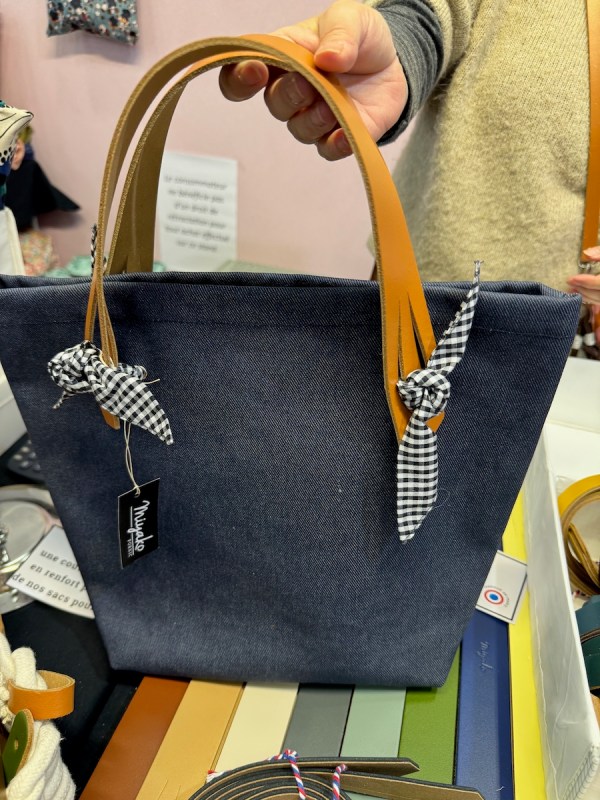
I saw so many beautiful things and purchased a few, here and there. Here’s something I didn’t see: pre-cuts. That whole American-merchandising thing seems to be missing from here as well. The vendors are small, specific, art-driven, and some of the things they sell are kits, new ideas (like the leather handles from Miyako that you can move from bag to bag, instead of having to have one handle per one bag — genius). But unfortunately, because of the tariffs here in the US, it is nearly prohibitive to ship to the US market for many of these vendors, but I can sometimes find them on ETSY or other small marketplaces.
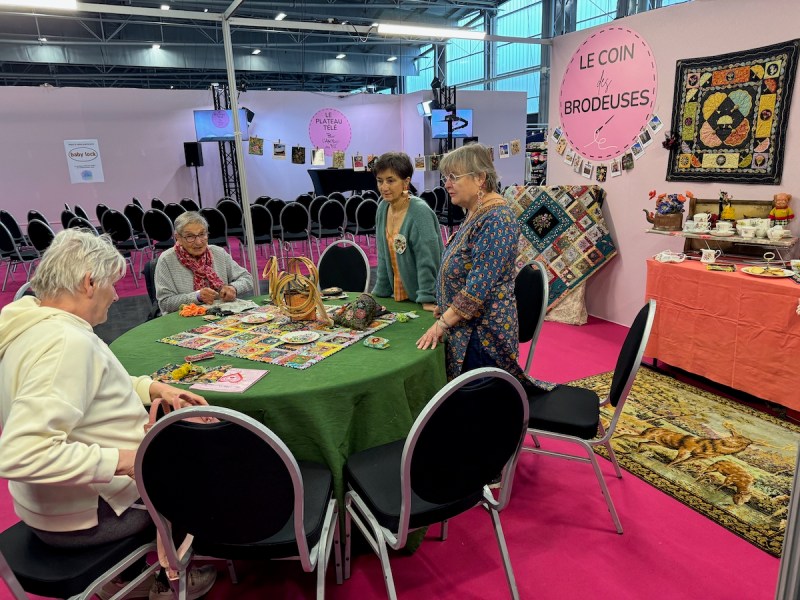
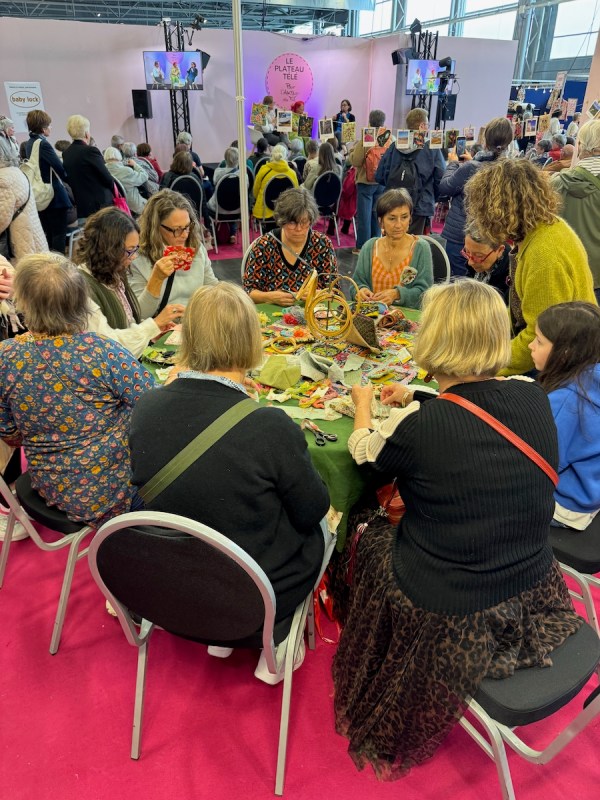
In several places around the show are make-and-take tables. This was the embroidery table. On the left, at the opening; on the right, after lunch. It was popular!
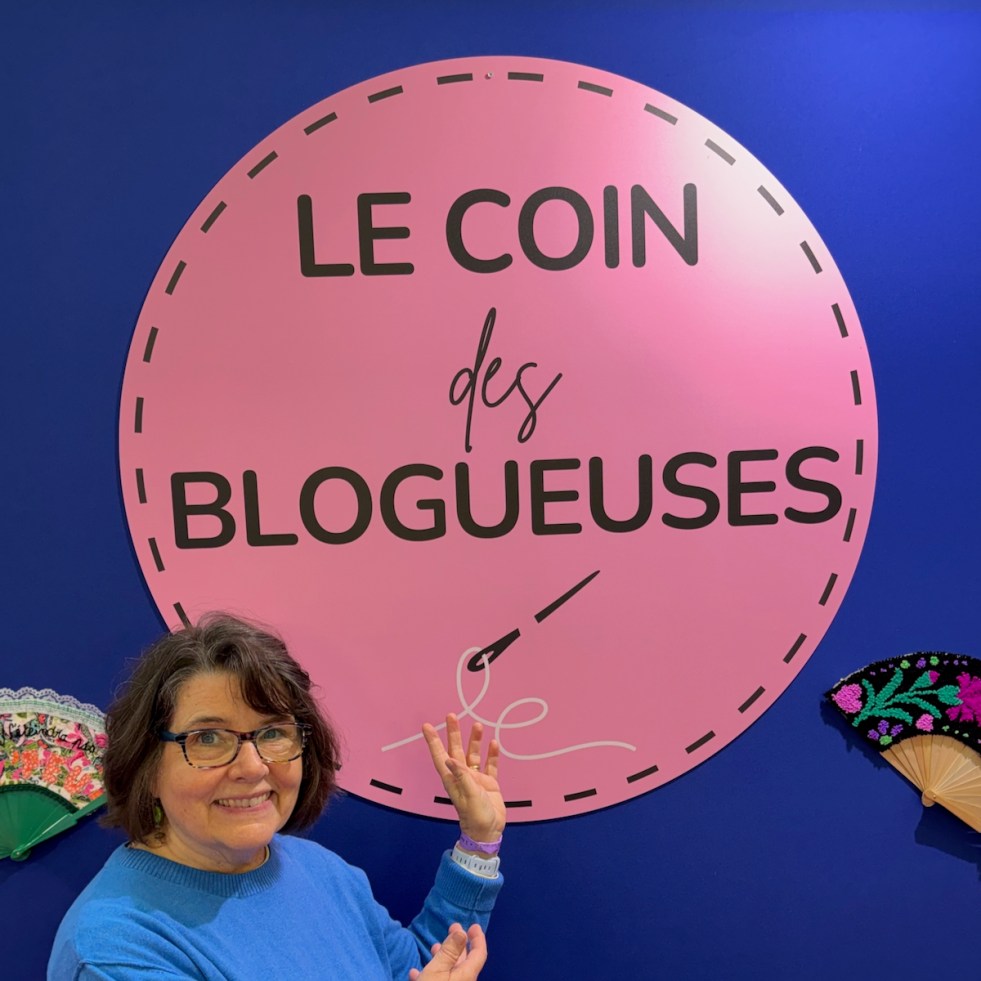
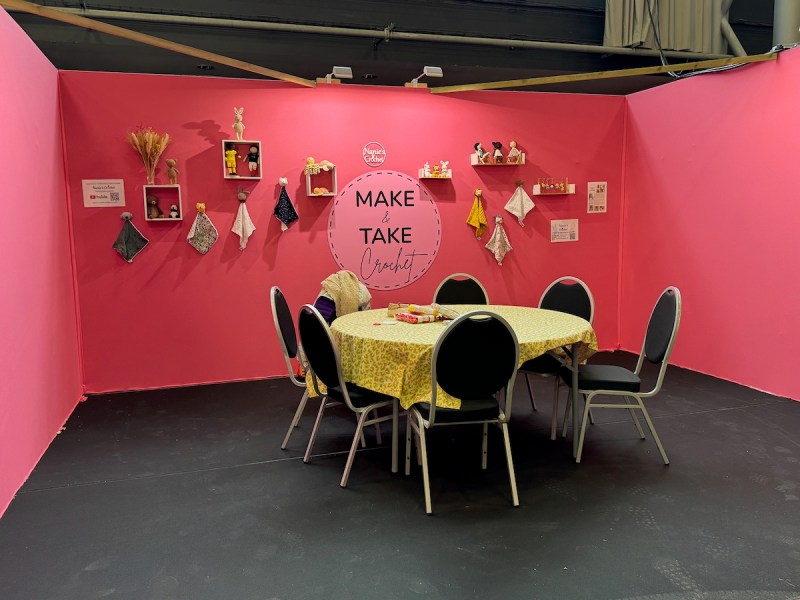
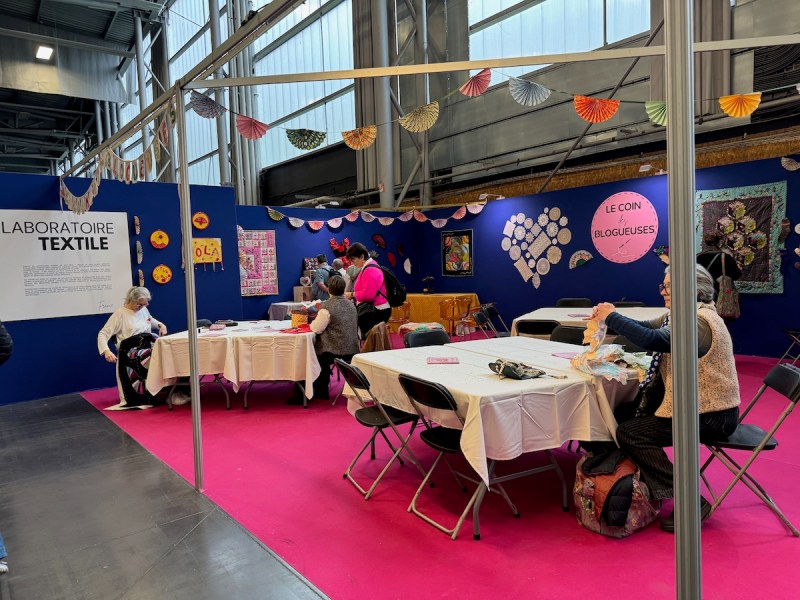
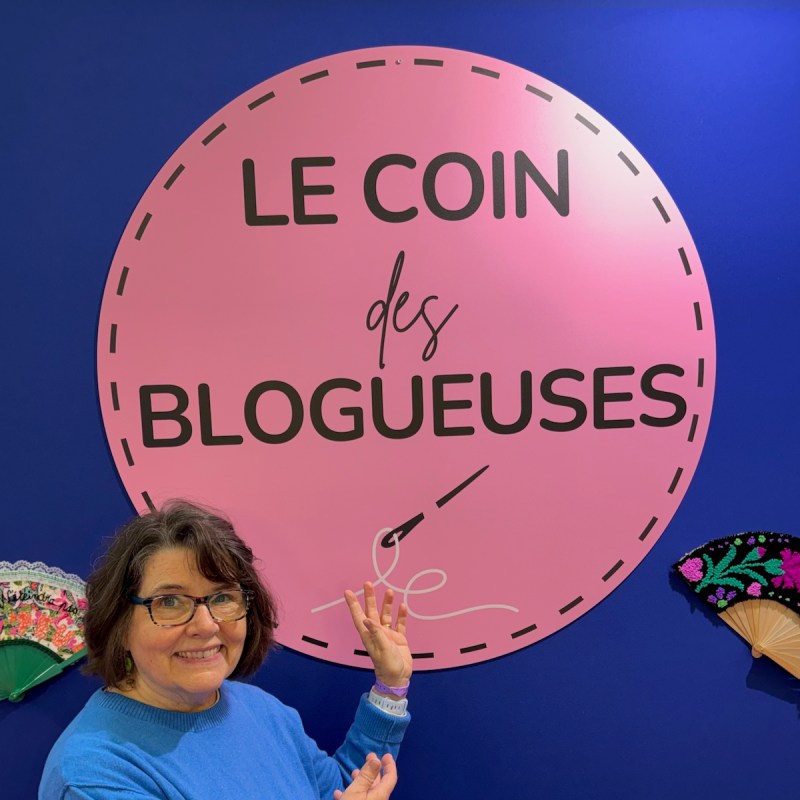
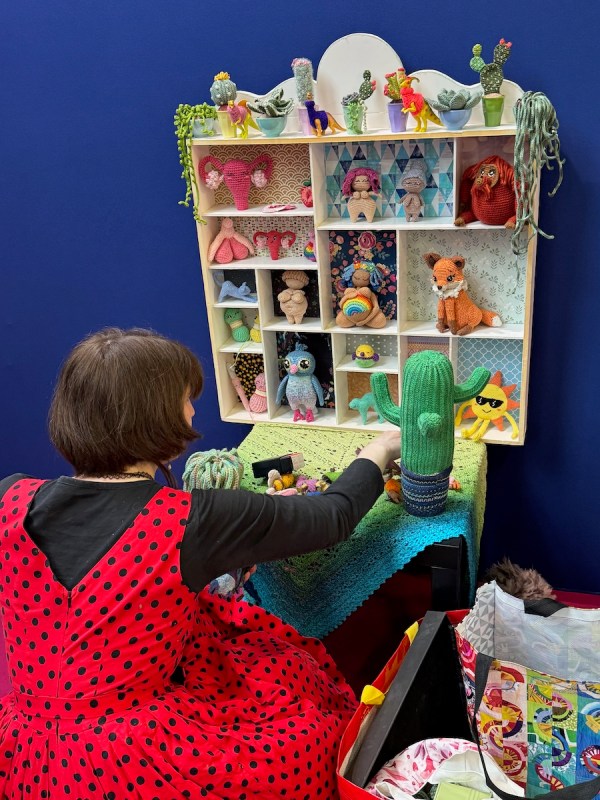
The crochet table, top left. The “Corner for the Bloggers” are the other three photos…and me! It got busier and busier as the day went on. When my husband was tired of following me around, he retreated here.
The crocheter setting up a display. It was fascinating to see. There were four or five booths for those who liked to crochet.
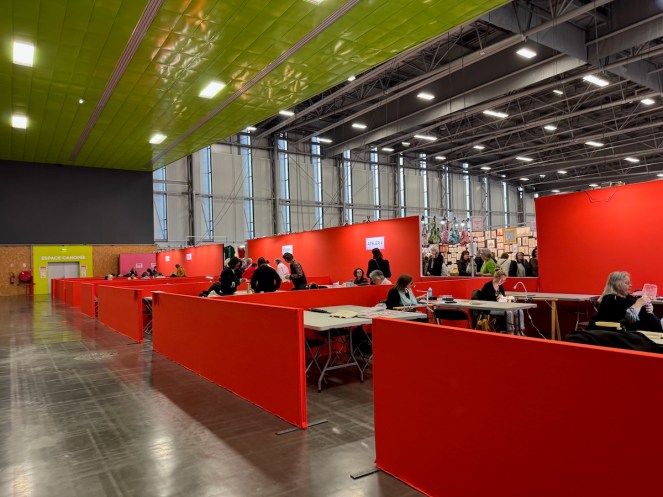
On one side of the Vendors Hall were the “classrooms.” These were surprisingly quiet, and I saw several classes in session.
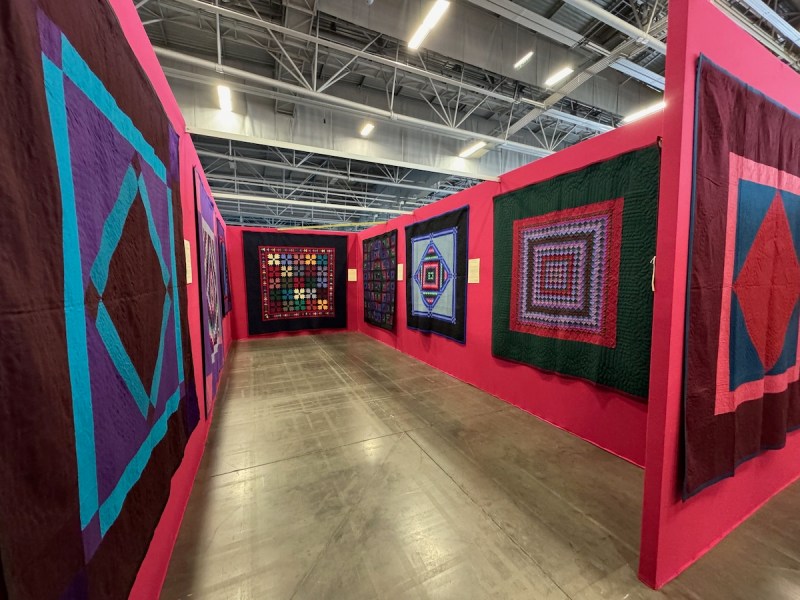
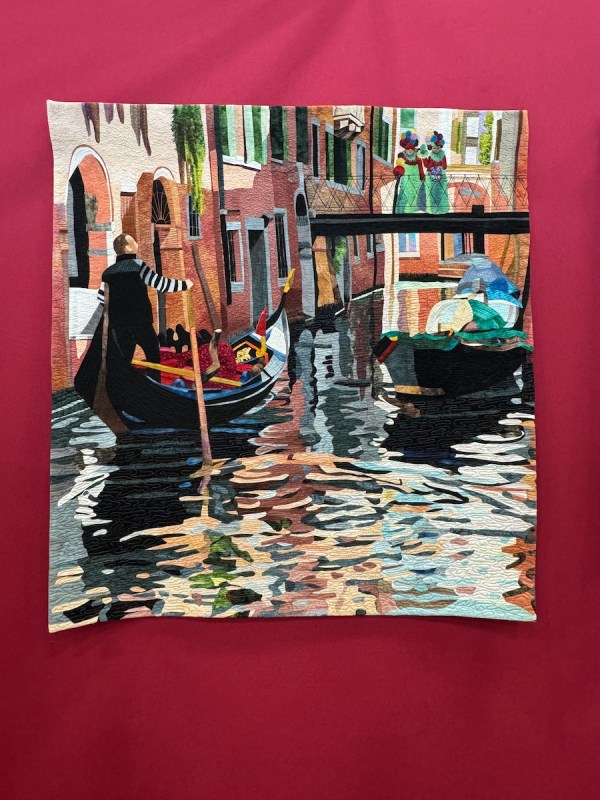
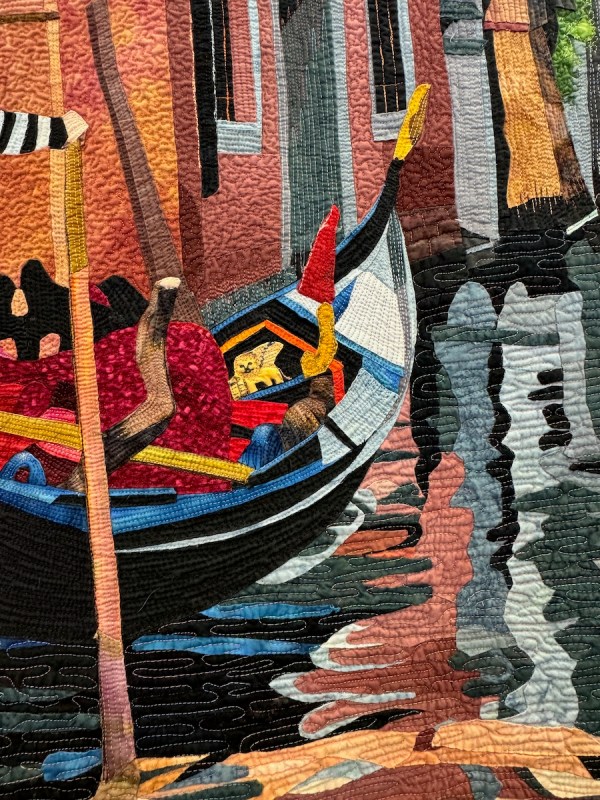
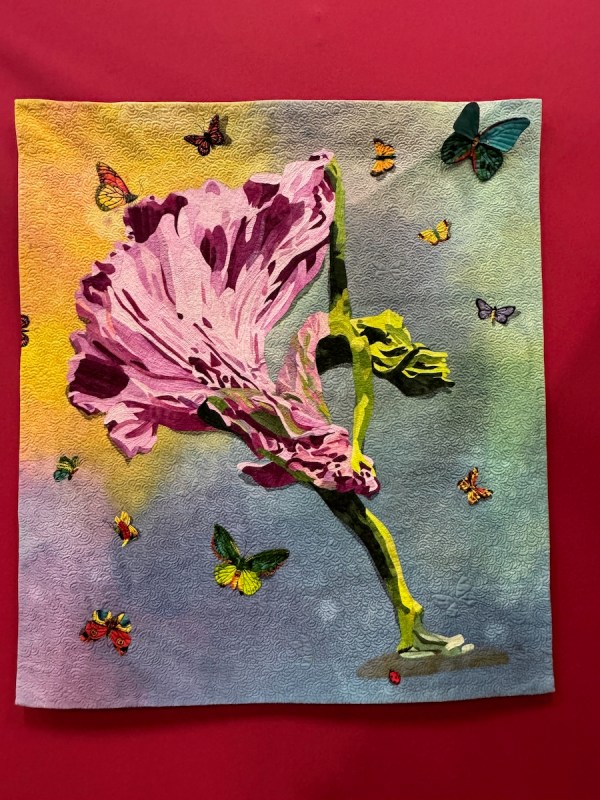
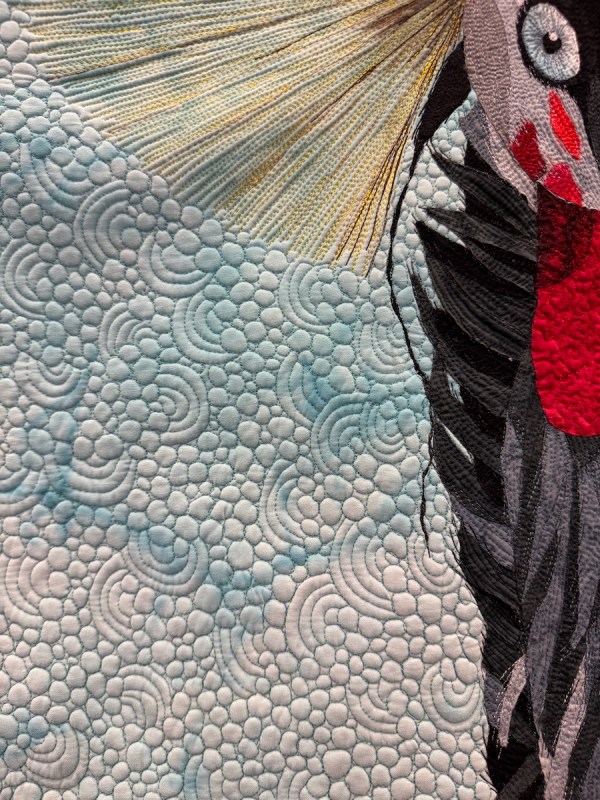
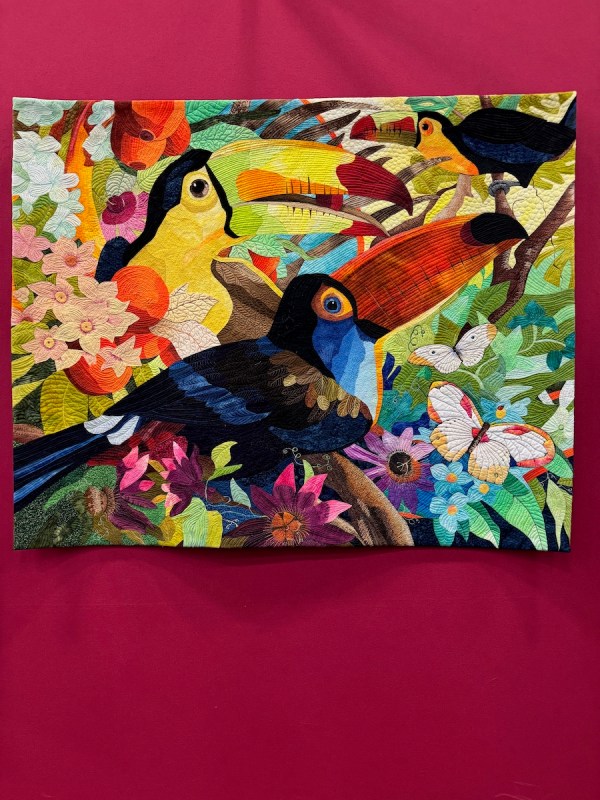
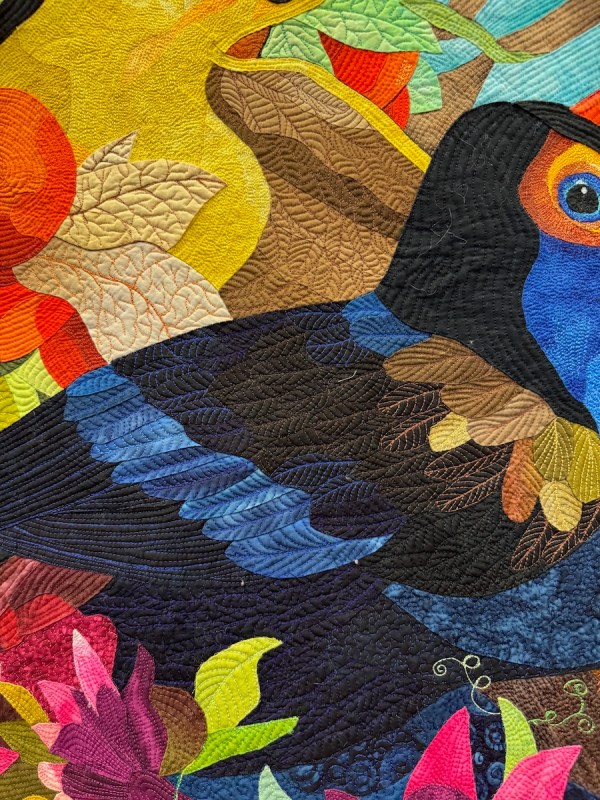
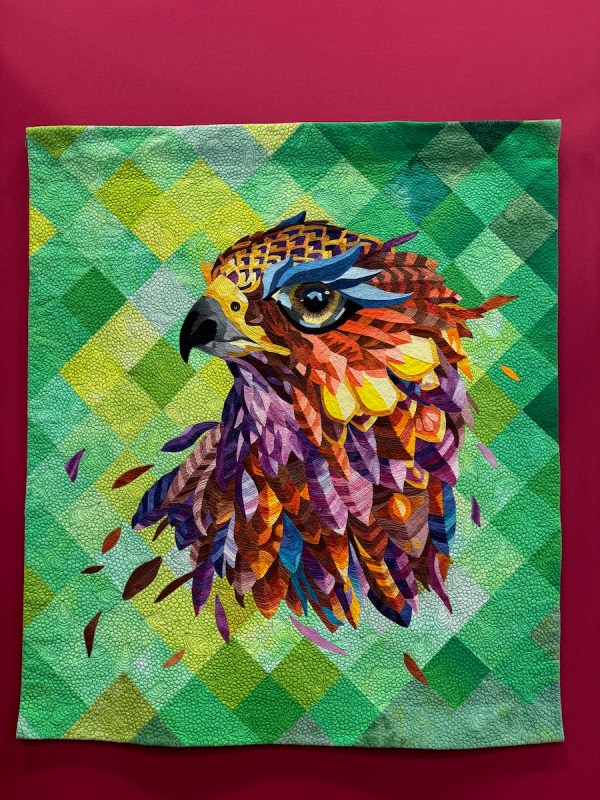
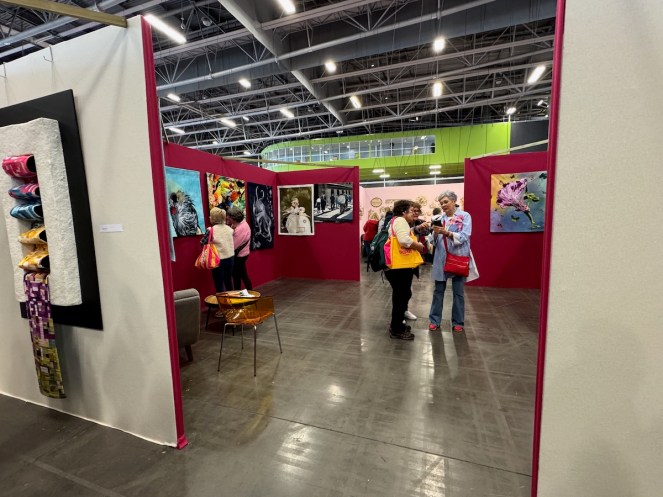
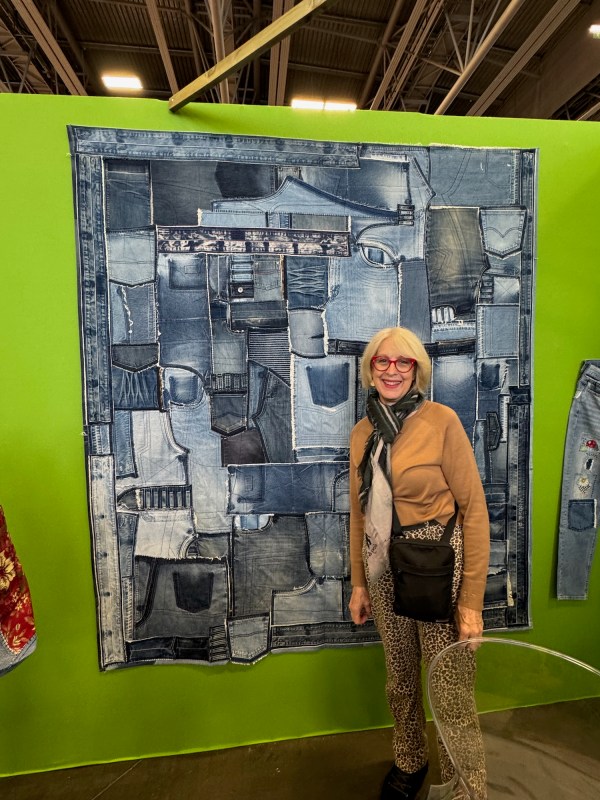
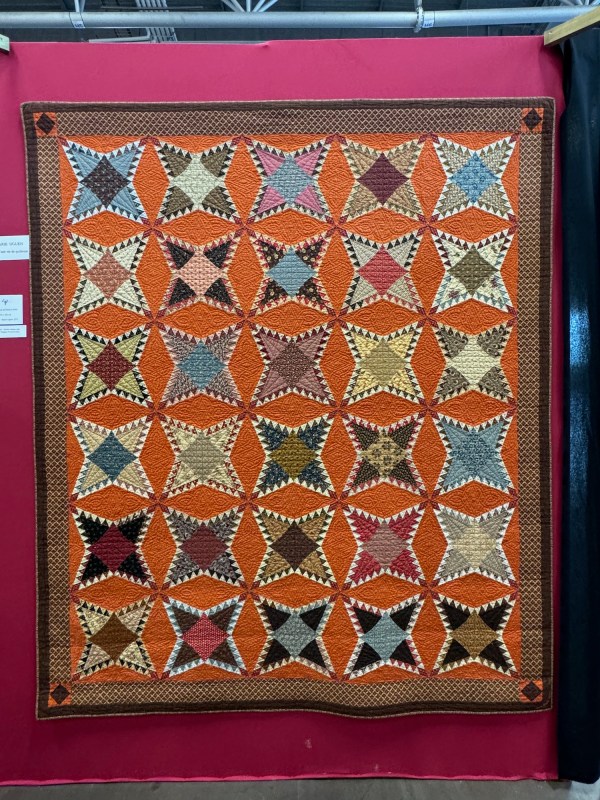
On the other side of the Vendor Hall were the quilt displays, rooms created out of movable walls, done in brilliant colors. I used my Google Translate on some of the signs. Sometimes I even used my Husband Translate (he speaks French).
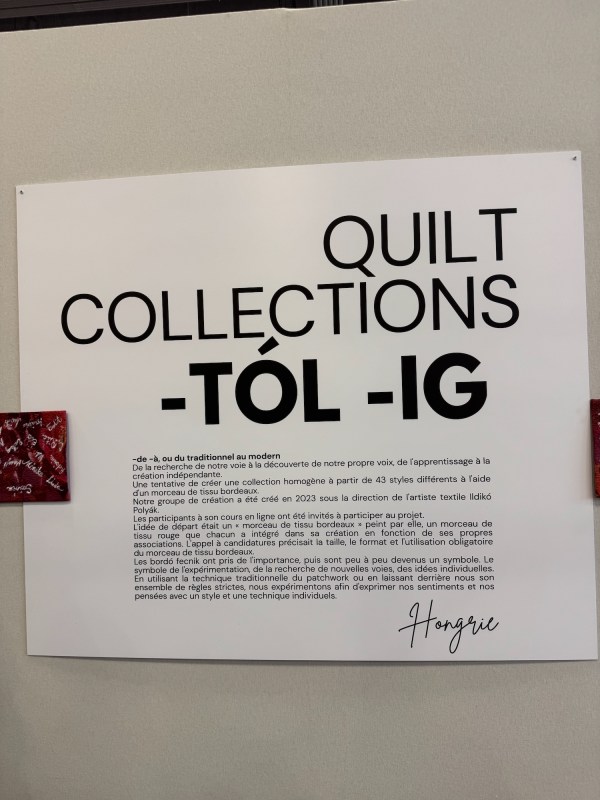
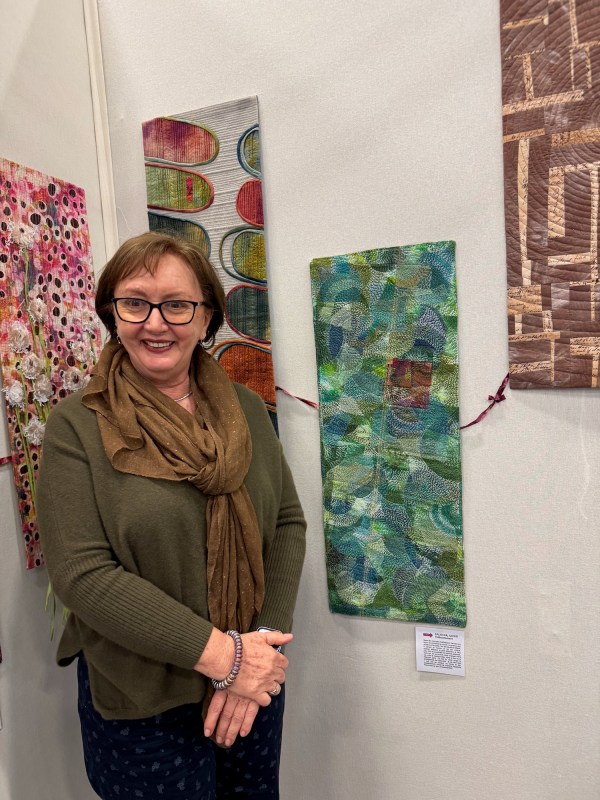
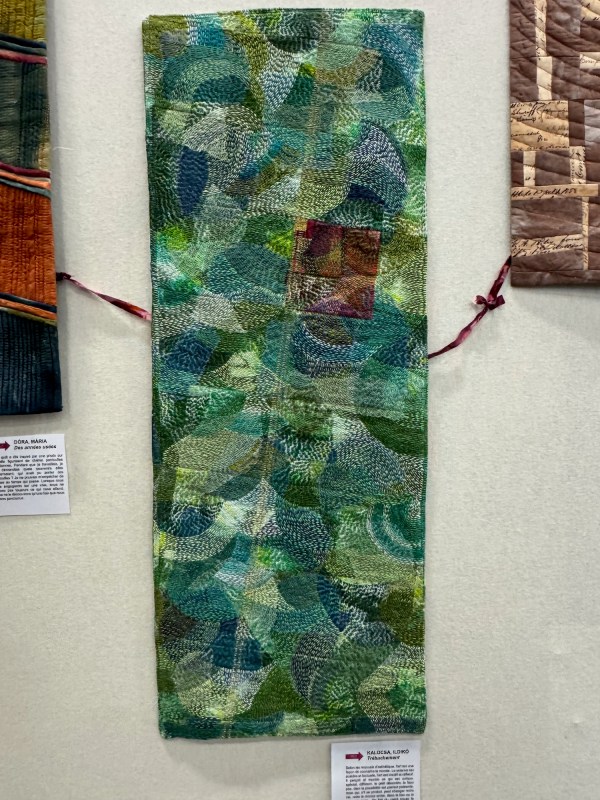
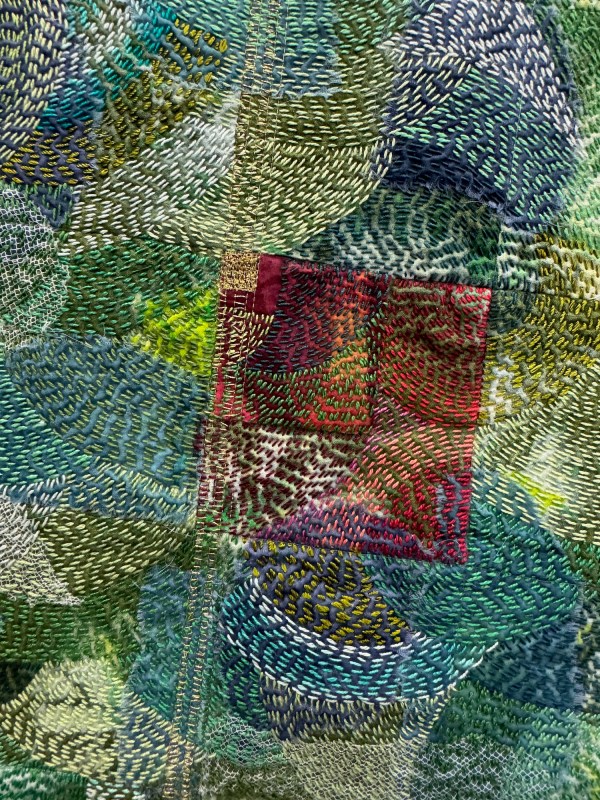
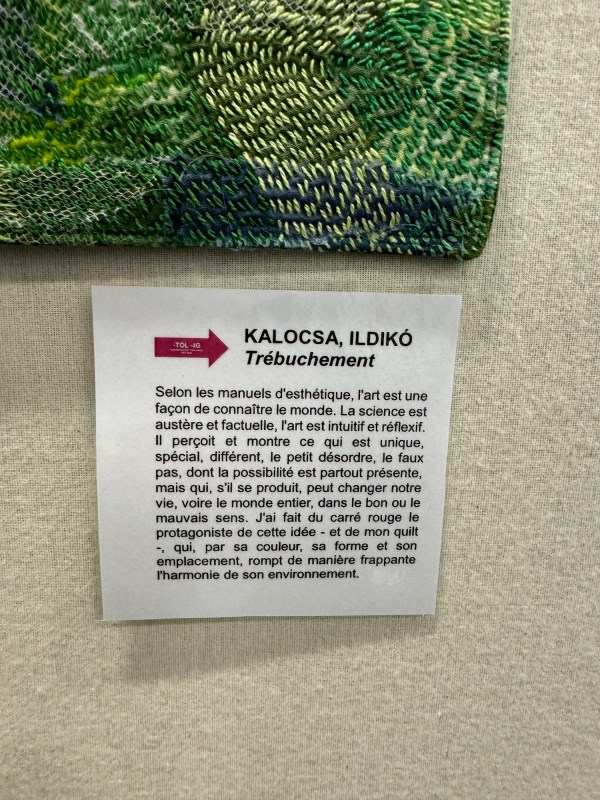
This exhibit was Collections, from Hungary. We talked to this quilter, Ildikó Kalocsa, about her work, and thanked her for coming to France. I loved the texture in her work. We also asked her about Hungary’s recent elections, and she said “Oh, we are so happy!” It was evident in her smile.
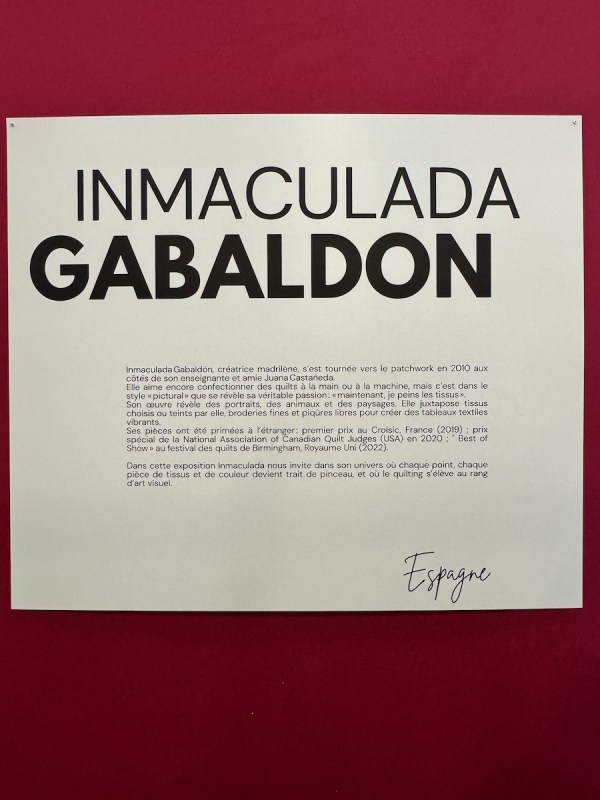
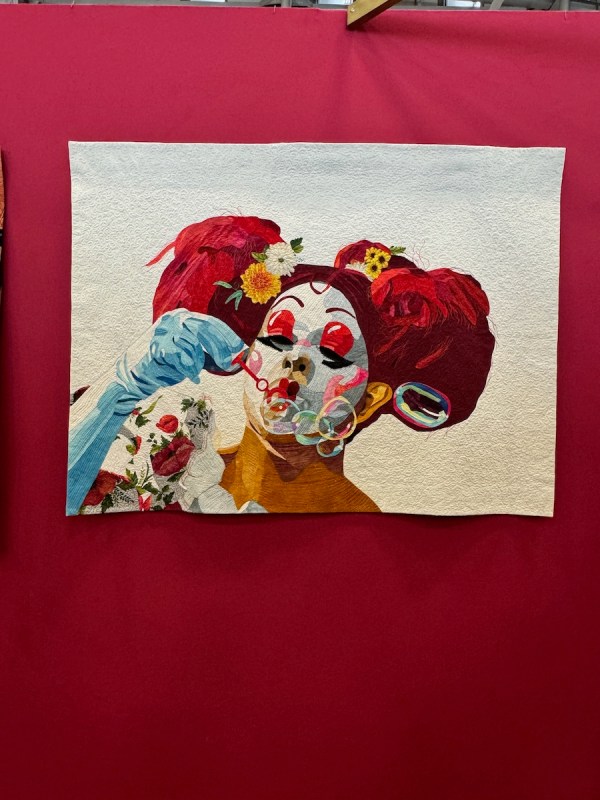
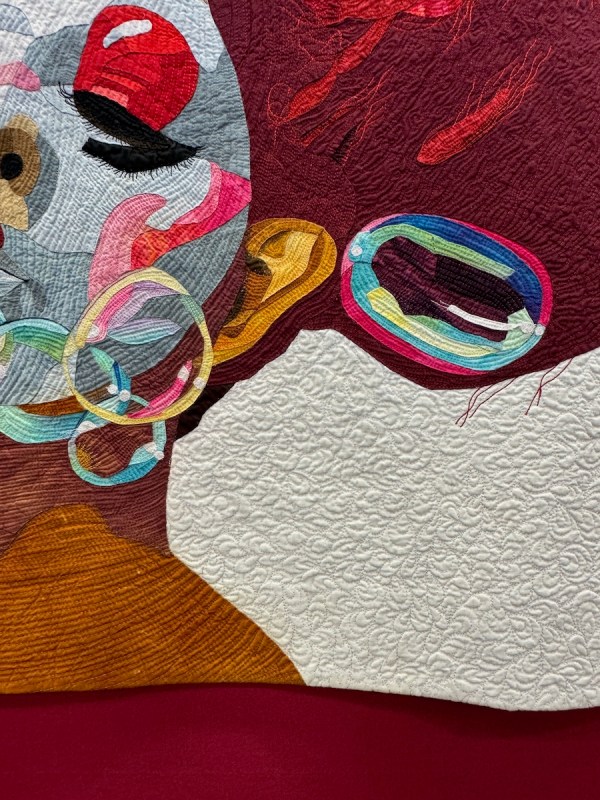
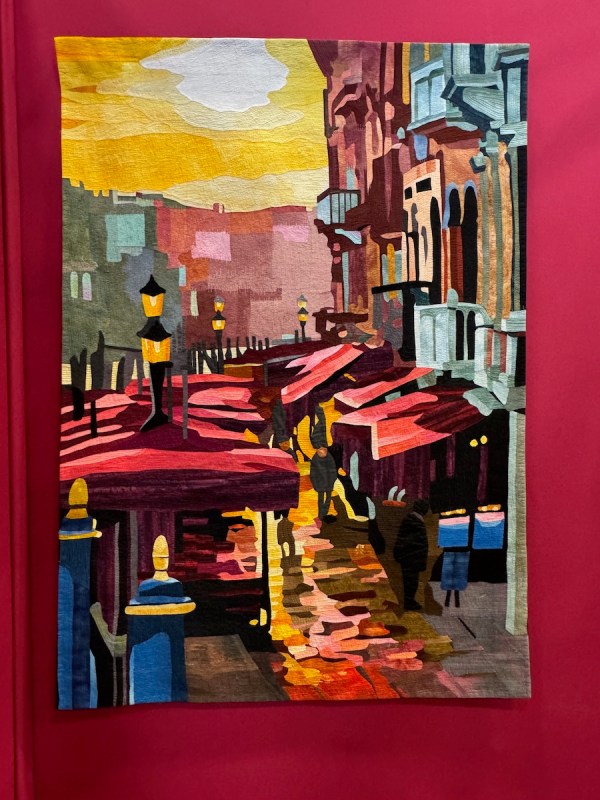
Slideshow for Inmaculada Gabaldon, from Spain (photos on this post were taken both by my husband and I):
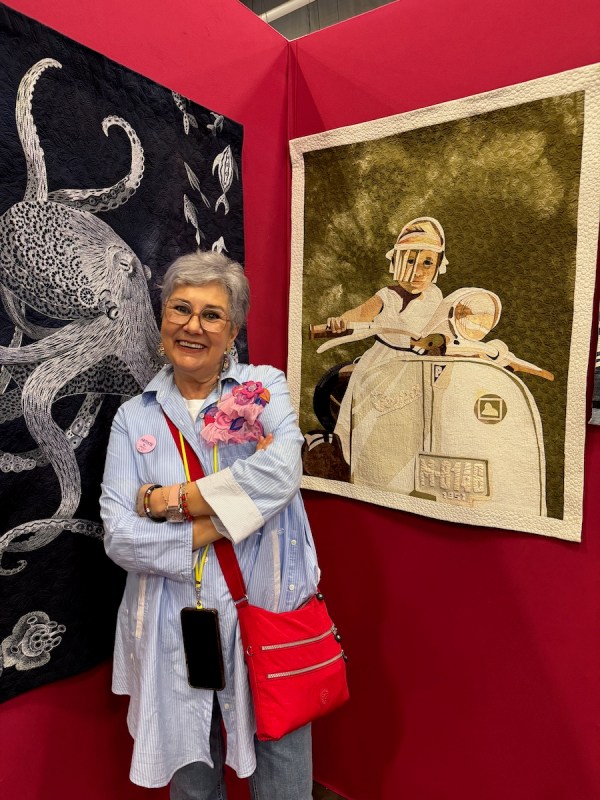
Click to advance the images. She does all her own quilting on a domestic machine, not a long arm. In the photo I took of her, she chose the background, and it was a photo of herself as a child. The last photo is of me in an adjoining “room” looking back toward the main hall, with Inmaculada talking with quilters.
Carolyn was a joy to visit with, welcoming and happy to answer questions about her unique approach to doing her reproduction quilts: she actually has the background fabric printed to mimic the spots and bits and discolorations of antique quilts, and uses it when she makes her reproductions. (Carolyn on Instagram) If you go to her website, you can order some.
Finally, it was time to leave, but not before I tried to find Carol Veillon and thank her.
I felt invisible in the quilt world until Carol, in her magazine QuiltMania, published a quilt of mine that was hanging in the Road to California Show, where I first met her. She is kind and charming and encouraged me to continue submitting. I had several more published by her and every time it was like Christmas had come.
I thanked her for this, and for her kindness towards me, and grabbed a quick photo as she was incredibly busy. She is someone who had made a different in our quilting world, for all of us.
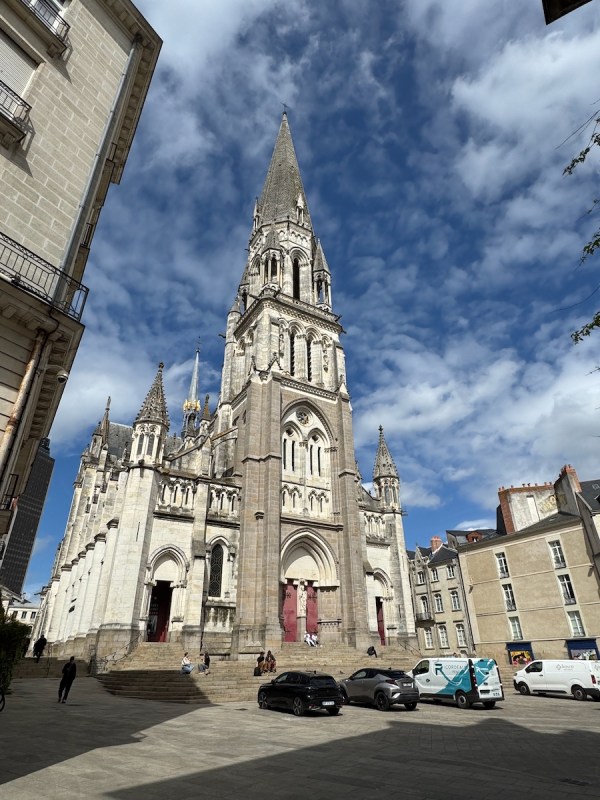
We walked back to the tram, and as we rode back to our hotel, were joined by families, strollers, children, mothers, teenagers; it was a far cry from the quiet ride in the morning. I will probably post the quilts I did take photos of here and there as I go forward, but I can’t leave this post without giving you some photos of Nantes.
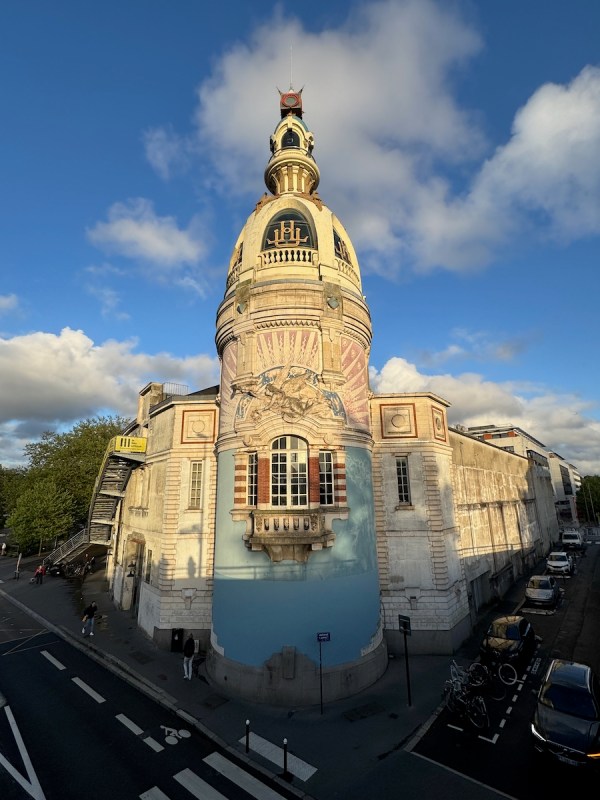
The old LU biscuit factory, around the corner from the Gare, taken in sunset.
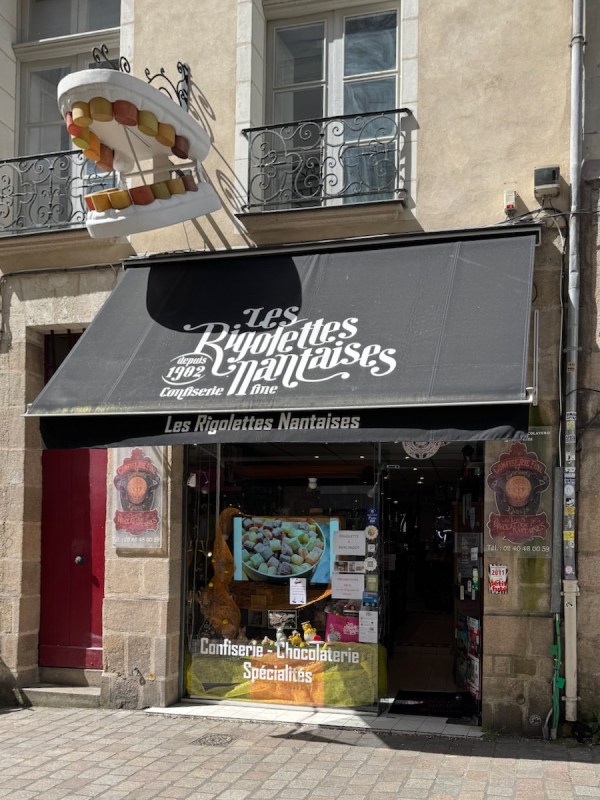
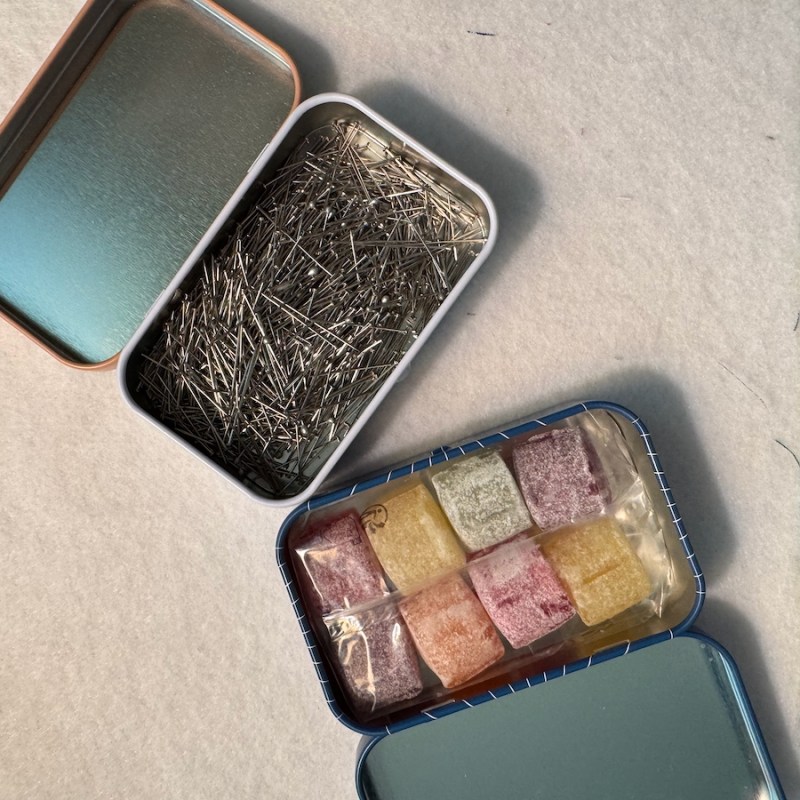
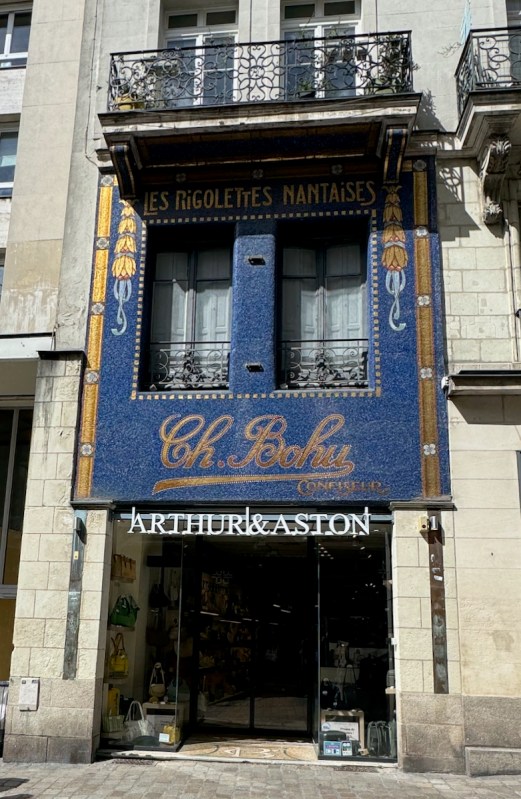
A store selling the town sweets: Les Rigolettes Nantaises. They seem like hard round little candies, but once in your mouth the outer hard shell dissolves and they are chewey and delicious. They come in five traditional flavors: lemon, raspberry, blackcurrant, mandarin, and pineapple.
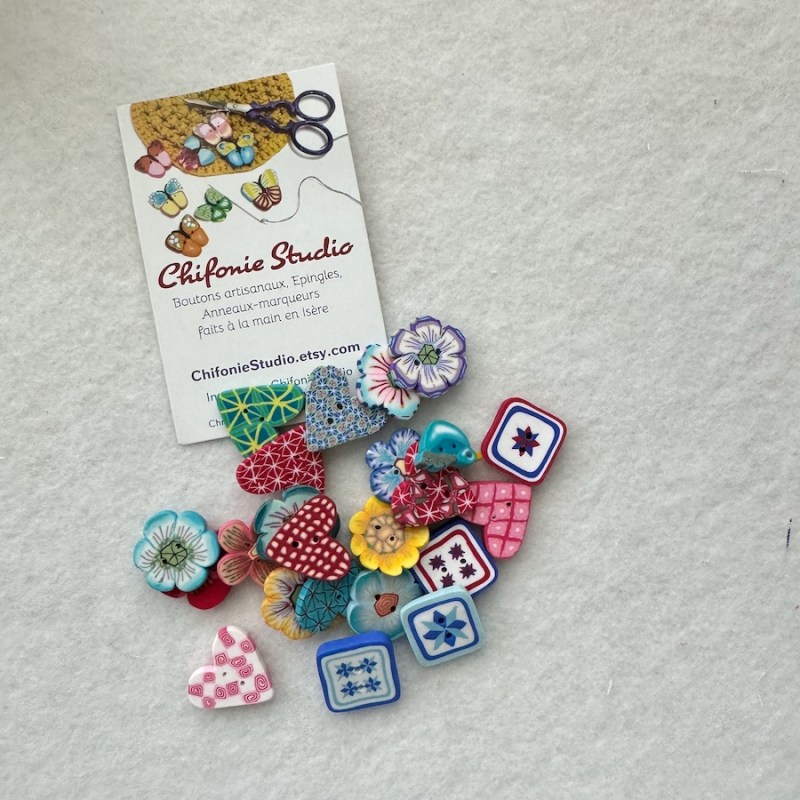
They come in these charming tins (well, the elephant was a different candy), and I’ve already repurposed one for straight pins.
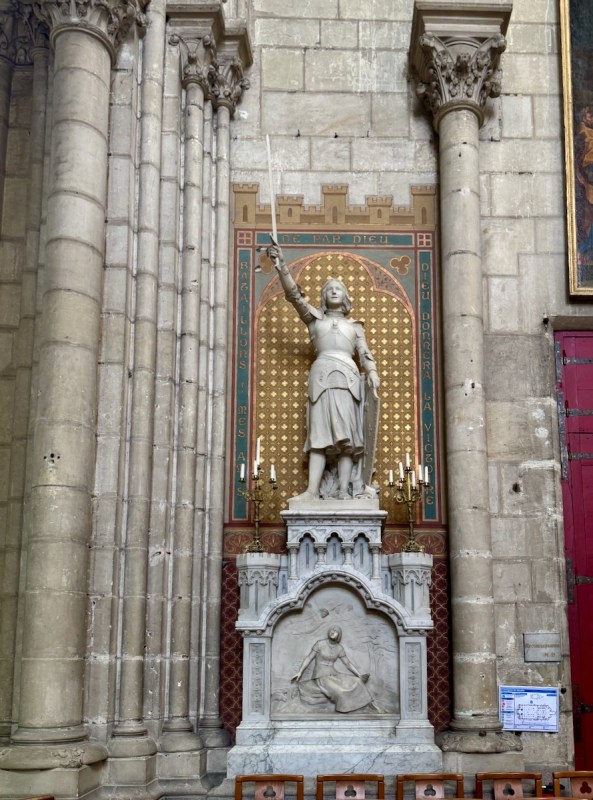
Joan of Arc is big around here. This statue inside the church is dedicated to her, as she hails from Orléans, which is up the road a bit in the Loire Valley.
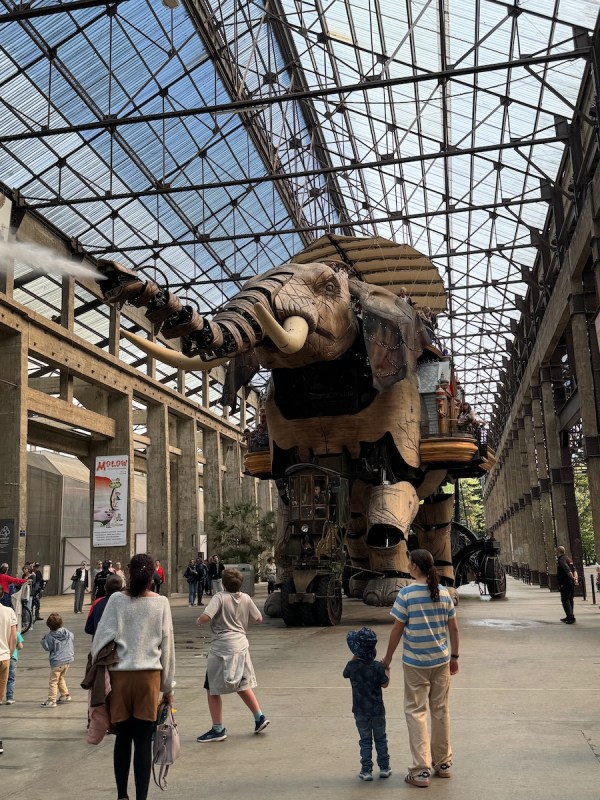
The Elephant, one of “Les Machines” on the small island in the Loire River adjacent to the city center. A huge mechanical creation, it moves slowly around as it takes a walk, squirting tourists and children with water. We had a great time seeing this.
A few more sights (click to advance):
And what did I take away from the quilt show?
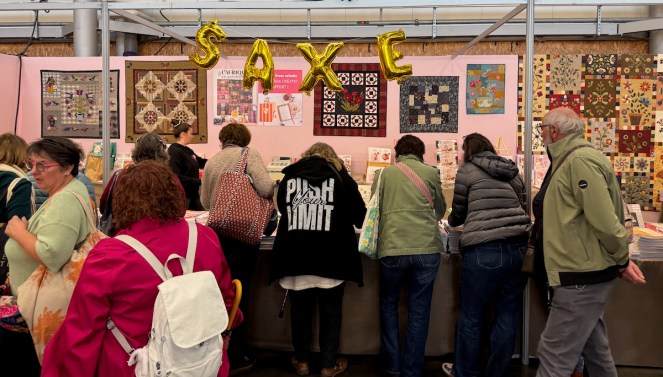
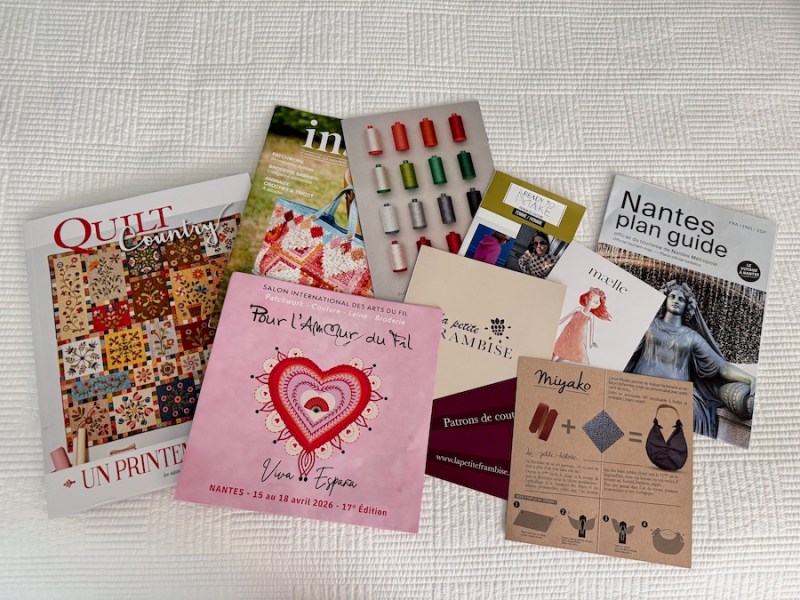
A book from the SAXE bookseller booth, and some fliers
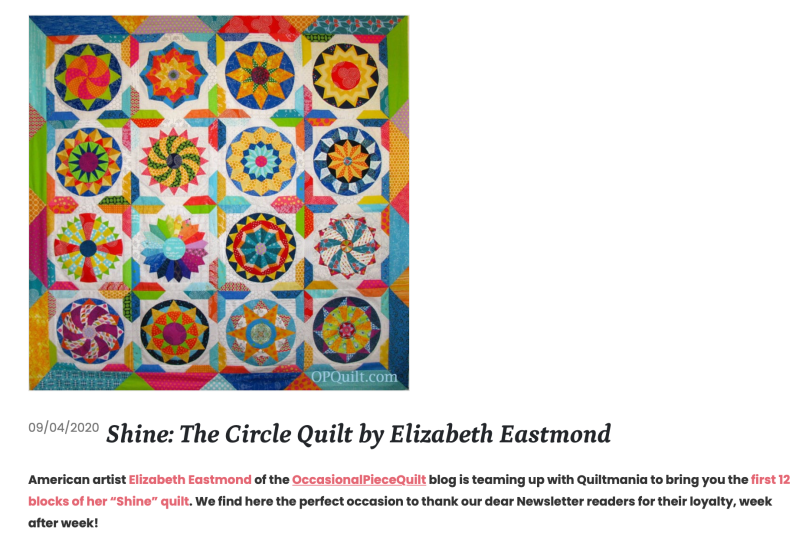
During the pandemic, I agreed to let them share my blocks with readers of the QuiltMania newsletter. The patterns have now come home to stay, and most are free (see tab, above).
One of the challenges in our modern life is to deal with disruptions, distractions, and never letting us have a minute without someone telling us the five steps to a better life, to better breathing, to being a better whatever. Or as tech, culture and political writer Derek Thompson observed on his podcast Plain English, these voices tell you “everything is figureoutable. And if I just listen to these five steps, I can figure out all my life’s problems” (from here).
But for me, I escape to quilting to not figure everything out. I mean, yes, sometimes just cranking out on a pattern and whipping up a quilt is a good time and I like that as much as anyone. But hopefully, as Thompson noted, “you can have intimacy with a craft.” The challenge “is if we are constantly being distracted or interrupted, it’s hard to find that intimacy. It’s hard to get into the slipstream or the pocket of a creative project” (same source as above).
I like my pursuit of my craft. Of taking a well-known-to-me pattern like my Blossom, and seeing what I can do with it that sends me into discovery, of finding a new way to see what I’ve seen before. Because, really, haven’t we all seen it all before: make a cut, stitch a seam, sew it together, quilt it, and don’t forget the label?
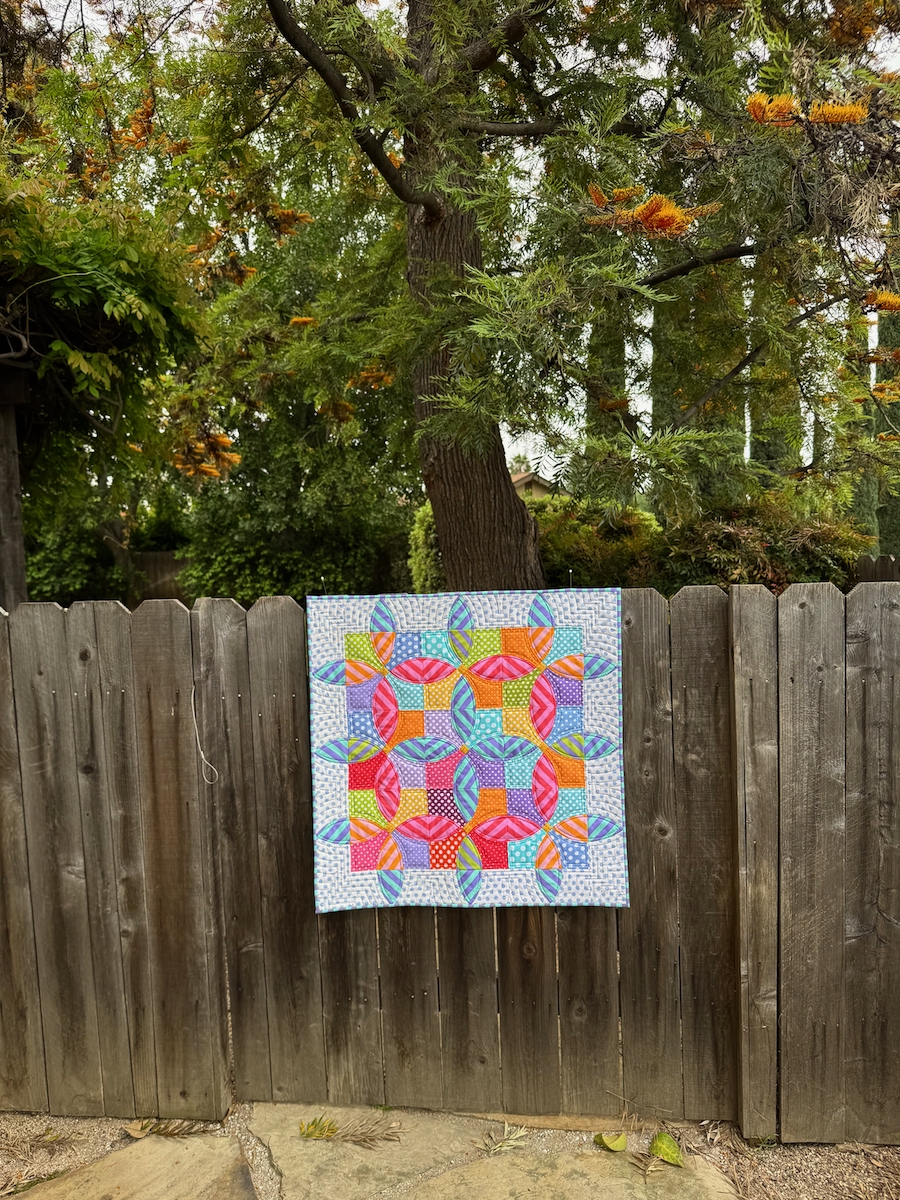
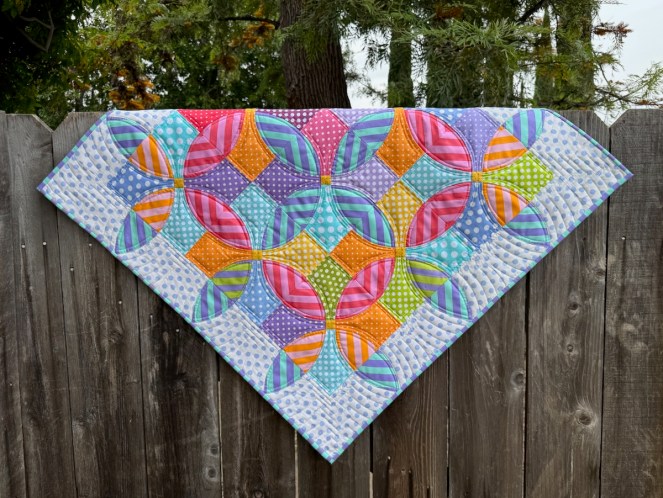
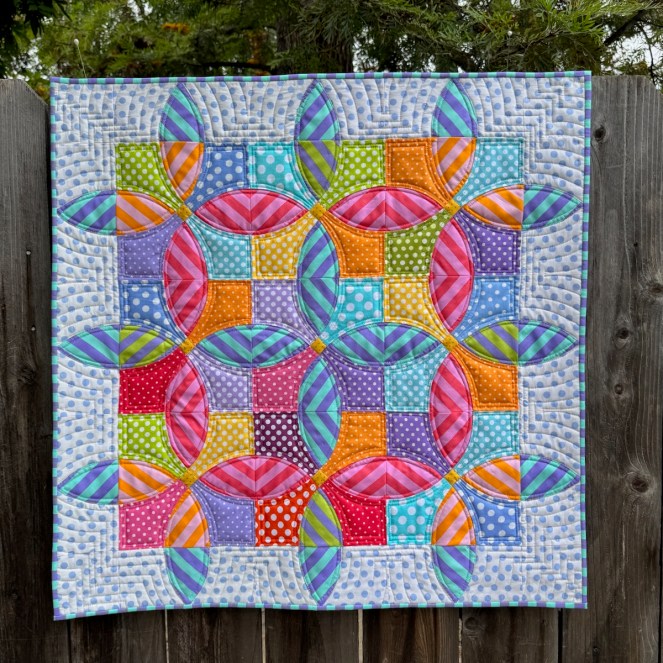
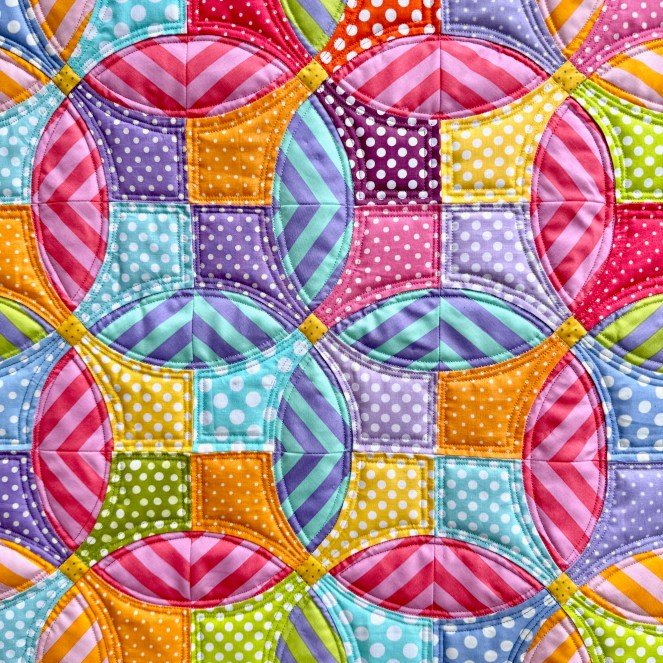
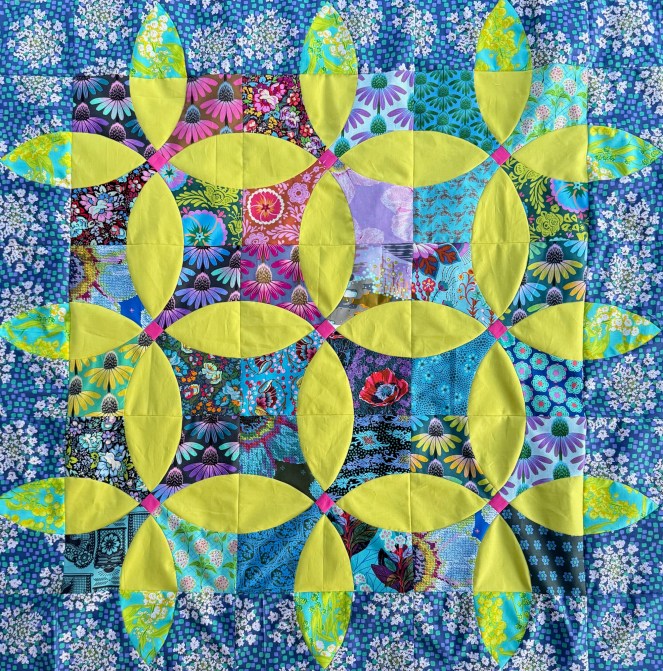
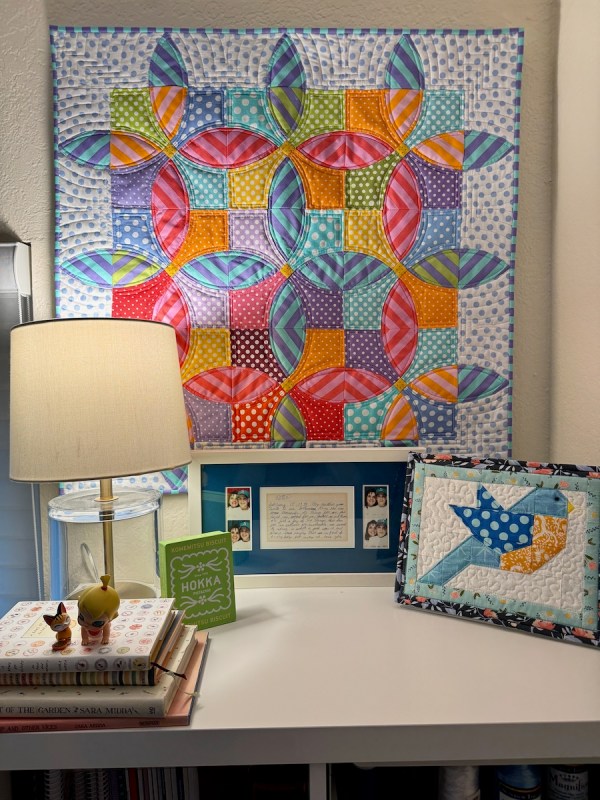
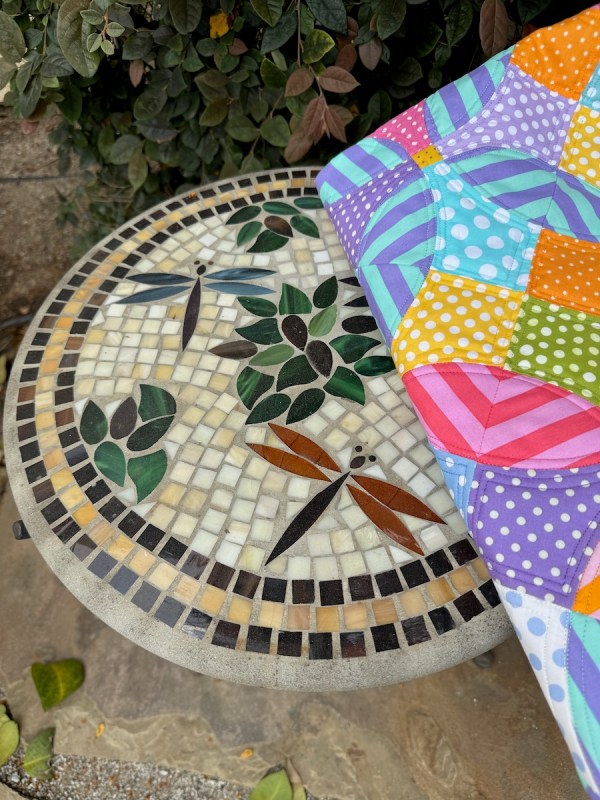
For this quilt (Spring Dots & Stripes), I chose to work with just two elements: • dots and stripes (had to be white dots on bright colors), • Tula’s Tent Stripes (in only four colorways).
It was this challenge that coaxed me into flow.
What is flow? The Czech psychologist Mihaly Csikszentmihalyi coined the word “flow” to refer to the psychological state of optimal performance.
“He recalled in an interview how he would watch painters in their studios and how he was fascinated by their ability to forget everything while working. He was also surprised by what happened when they were done: They’d finish a work of art, and instead of enjoying it…they would put it against the wall and start a new painting. They weren’t really interested in the finished painting. What these artists were after, Csikszentmihalyi realized, wasn’t the finished work itself but the experience of full immersion and absorption in the act of creation” (from here).
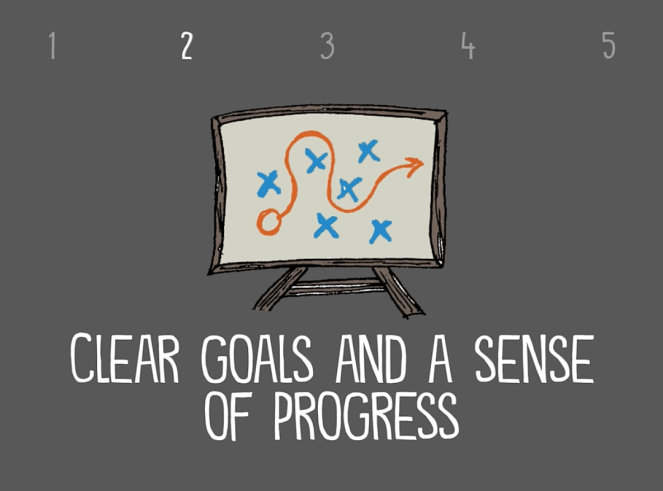
To understand it better, I watched several videos online, and liked the one from John Spencer, titled “What is Flow Theory?” He highlighted it like this (click arrows to advance):
Since no matter what I tried, the slides kept getting out of order, the basics are:
The task has to be intrinsically rewarding;
The task has to have clear goals and a sense of progress;
Clear and immediate feedback is critical;
It’s a balance between the challenge of the task and the set of skills needed to complete it; and
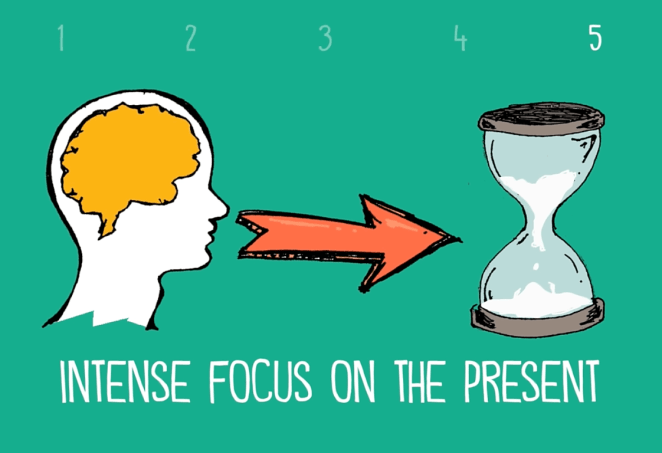
The person in the flow state has an intense focus on the present.
I cut out pieces in certain colors — the ones I thought I would want — and started putting them up on the design wall. And then in an a-ha! moment, I could see that I could group them differently to create a pattern of interest. Maybe that came from trial and error, maybe it came from being in the flow? I was able to discover a different way as I grouped the petals into colors, cutting and discarding and pinning up and sewing, as I ignored all that was going on around me.
I took the finished quilt out into the garden for some photos this week.
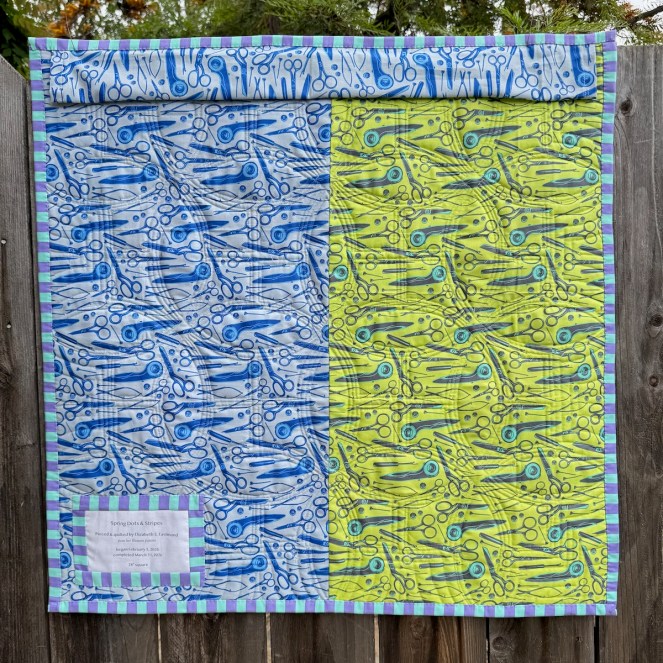
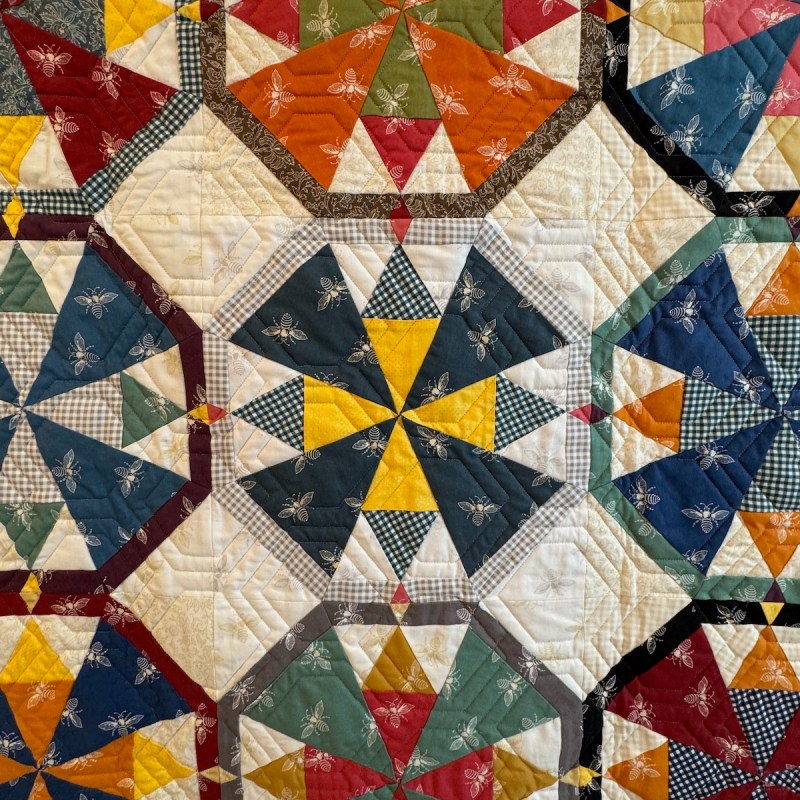
Side Note: I’ve decided there are two categories of fabric design that I don’t like on the front of my quilts: the first is sharp things, like anything on this fabric. The second is insects, so these often end up on the back. (Cute small bee prints are the exception.)
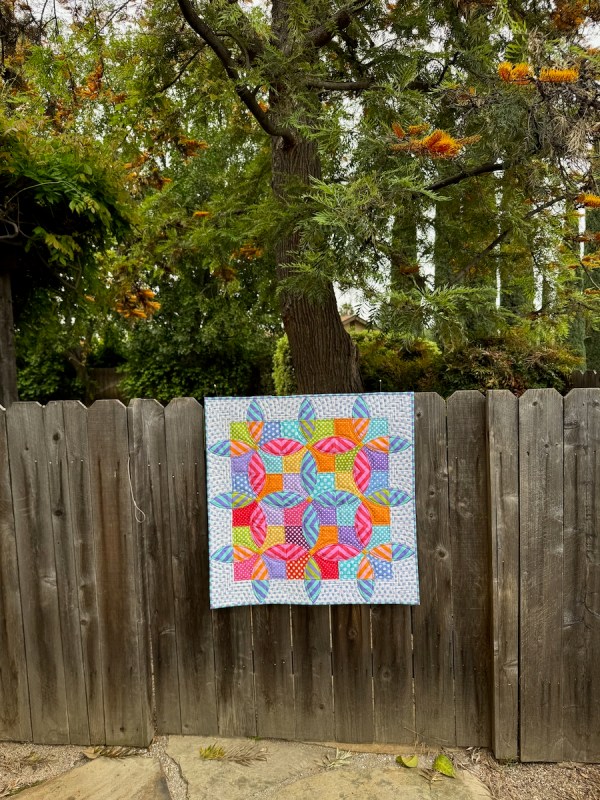
I needed a mini-quilt of just the right size to fit in a specific space (photo near the end), and it needed to be spring colors.
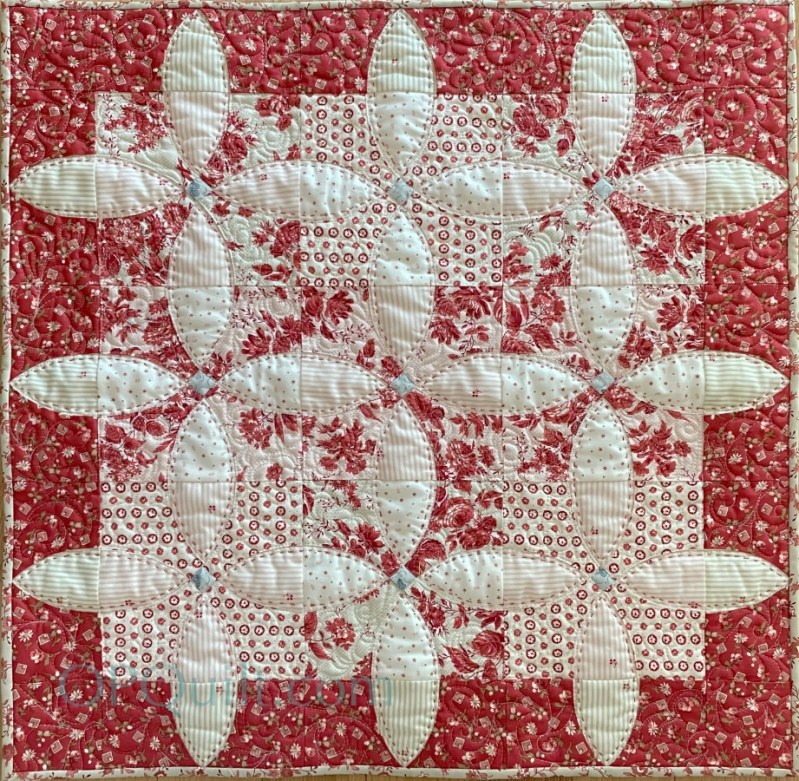
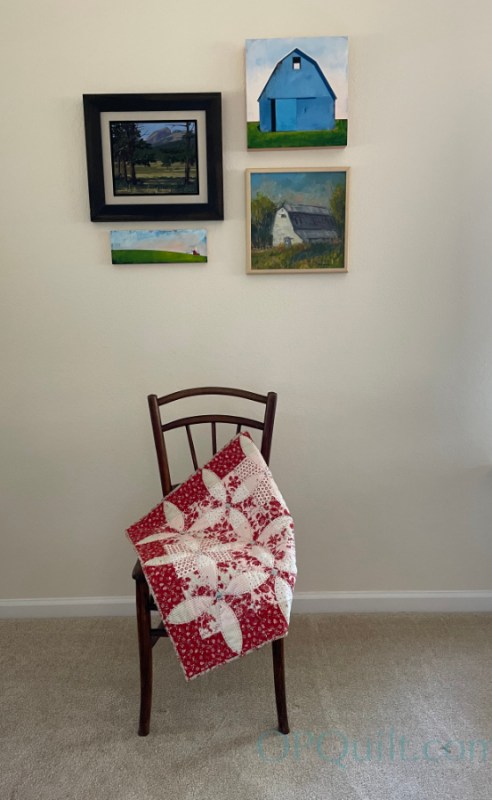
So when I turned to the Blossom pattern (which in turn has it beginnings in the traditional Flowering Snowball block), I didn’t have the right size. Because…
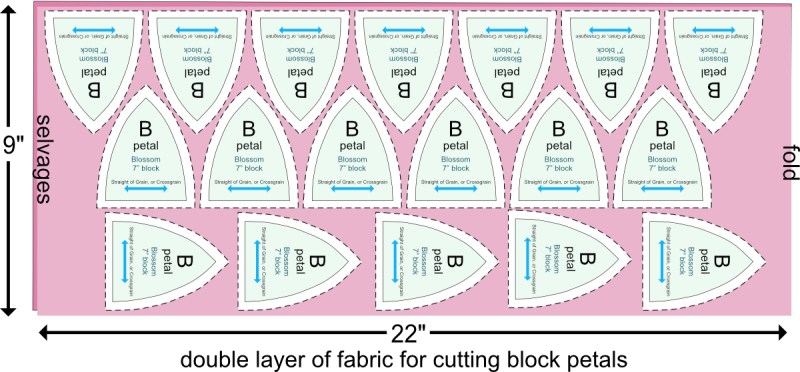
…last spring I discovered that over half of my computer files were corrupted. Not a virus. Just gone (it’s complicated). And 50 percent of those were my more recent pattern files. So many patterns that I’d written could never be updated. Unless…unless…I recreated all the missing, corrupted files to revise the pattern. Like this one:
So I have been busy re-drawing the files I lost, and while I was at it, adding a new size (7″ block), and re-writing the pattern. If you’ve purchased Blossom from me before, you can go to the email you received with the pattern and re-download it. And for those who haven’t made one of my patterns, and want to try it, I put it on sale for a few days if you want to grab it now in my pattern shop.
This a photo of another quilt, Aerial Beacon, that is stuck in re-write-land. I was about a month away from the release when I discovered the corrupt files. Talk about a way to stop the flow! I’ve slowly been re-creating this one, too. (Slowly is the operative word here, but it’s coming.)
UPDATE: The quilt patterns (there are actually two different Aerial Beacon quilts) are finished, and can be found in my pattern shop.
Yes, I should have had it done by now, but this is what I call a “reverse flow” task. All those glowing ideals in the list in the beginning have their counterpart: discovering and ferreting out and crying inside over lost work and then redoing the lost work, I would say are just about the opposite of the bliss of being in the flow.
Since I was in the Blossom flow, I re-made the larger 12-inch block version as well, especially since I found that outer border fabric at Road to California this year. It’s in the needs-to-be-quilted stack.
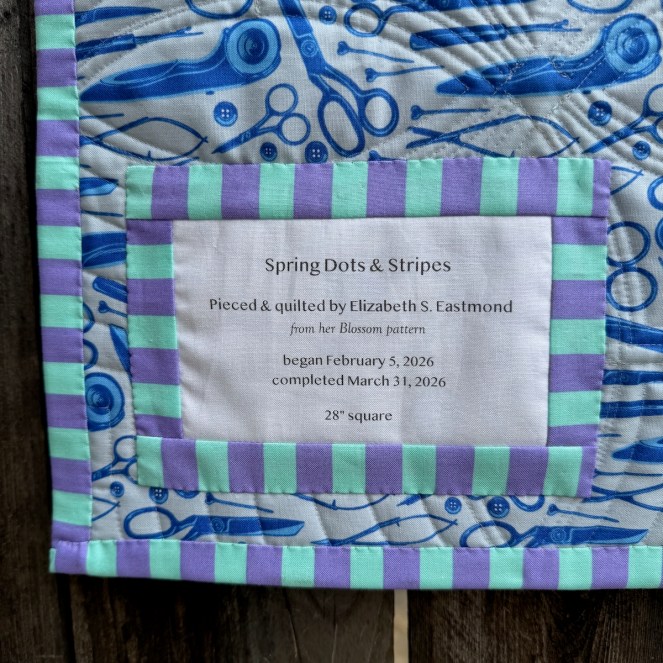
Quilt #316 • 28″ square, shown in that space where I needed a quilt
I’ll let this paragraph from Mihaly Csikszentmihalyi’s book, flow The Psychology of Optimal Experience, close up this post:
In the course of my studies I tried to understand as exactly as possible how people felt when they most enjoyed themselves, and why. My first studies involved a few hundred “experts”—artists, athletes, musicians, chess masters, and surgeons—in other words, people who seemed to spend their time in precisely those activities they preferred. From their accounts of what it felt like to do what they were doing, I developed a theory of optimal experience based on the concept of flow—the state in which people are so involved in an activity that nothing else seems to matter; the experience itself is so enjoyable that people will do it even at great cost, for the sheer sake of doing it. (from here)
I wish you all a week of flow, of enjoyable quilting, and a most happy Easter–
Other posts about Blossom, the pattern and quilts:
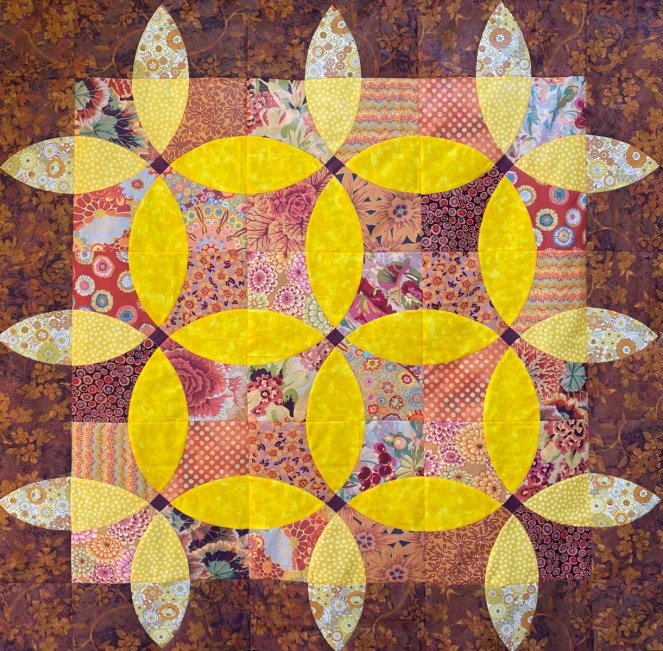
For a while I was a traveling quilter, teaching and visiting at Guilds in Southern California. During the covid shutdown, I taught several classes of this pattern, and the one above is Robin’s quilt — a study in the tones of autumn — a very successful one! You can read about her quilt here, and more, if interested.
Lastly, a post about how I moved from the simple traditional block to the larger quilt is found in this post.
I think Easter is a good time to sit in the garden.