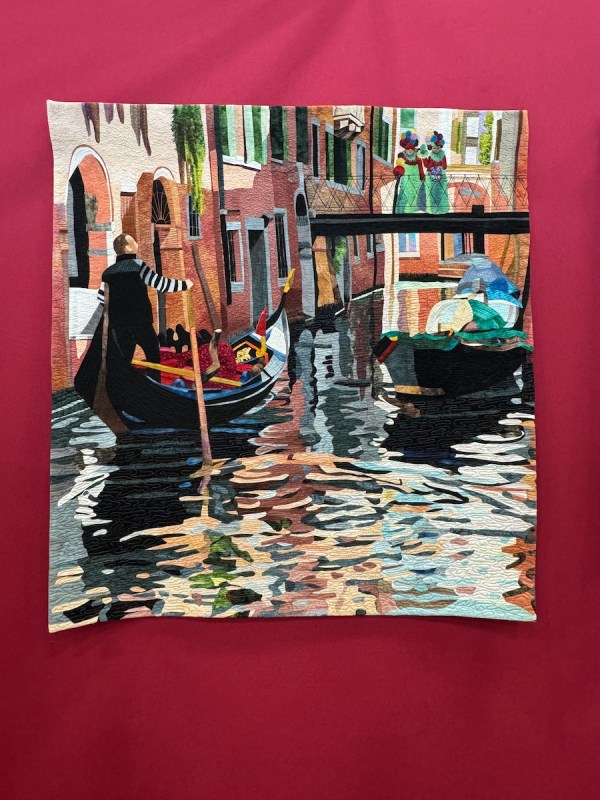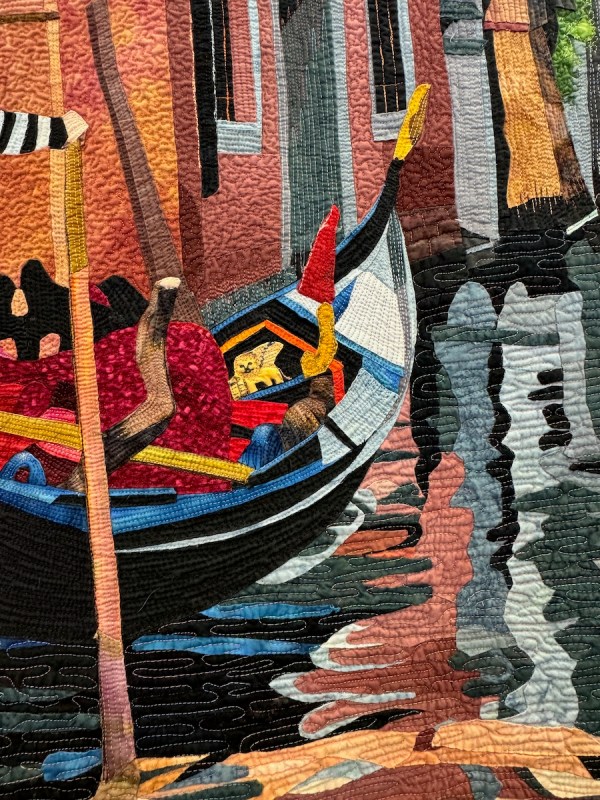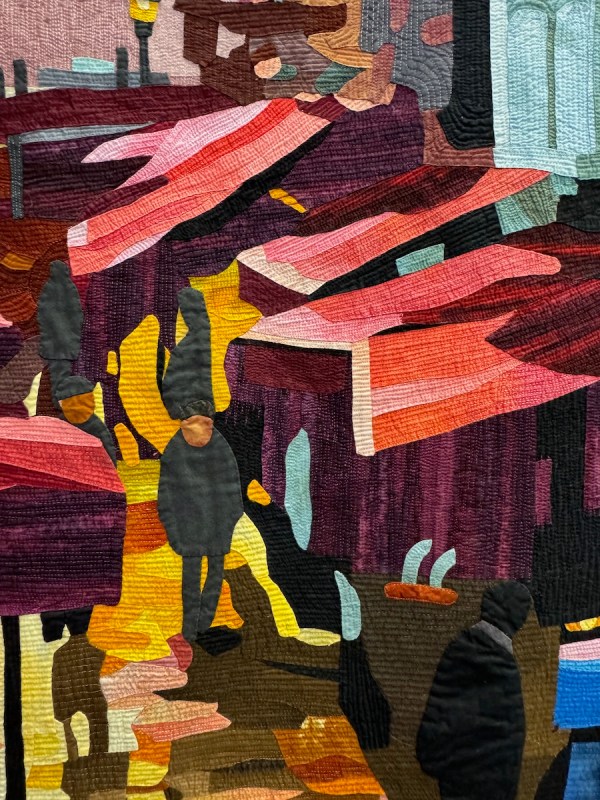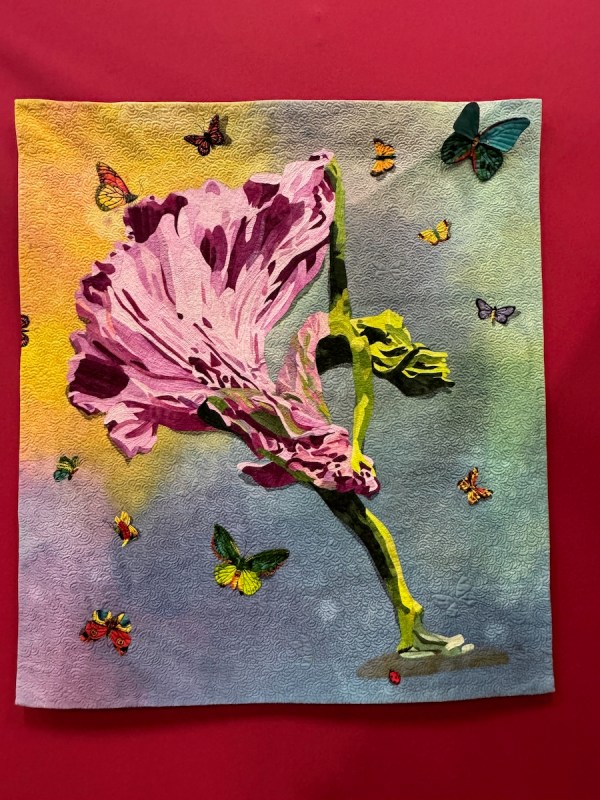

Publications · Quilt Shows · Quilts · Travels

Pour l’amour du Fils • Quilt Show in Nantes, France 2026

I’d read about this quilt show — For the Love of Thread — in the QuiltMania magazines for years. This year my husband and I were finally able to travel to Nantes and attend the show.
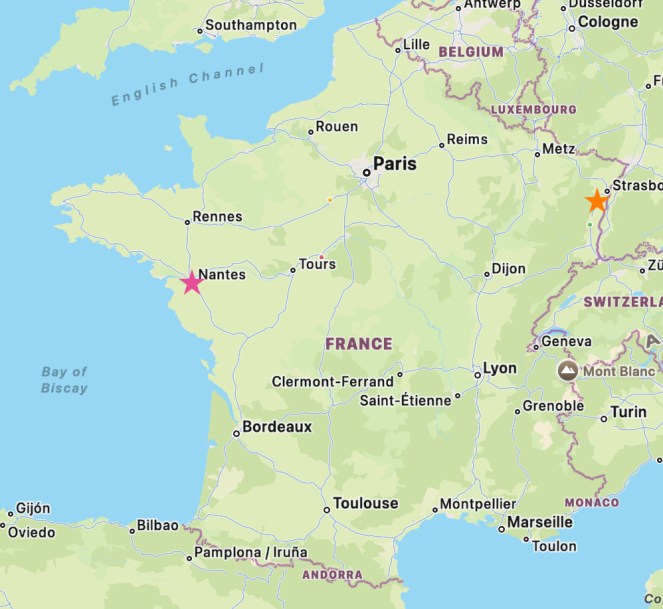
First, some basics: Nantes (pink star) is in Western France, near the Atlantic side of things; most people head to Paris, which is north-central France. The orange star is in Eastern France, and that’s where the Carrefour European Patchwork Show that’s held in the villages of Val D’argent is located. There are commercial tours to both shows, but we were able to plan and travel there ourselves. The Nantes show is held in April; the Carrefour is held in September. (Just do a web search if you are trying to find tours.)
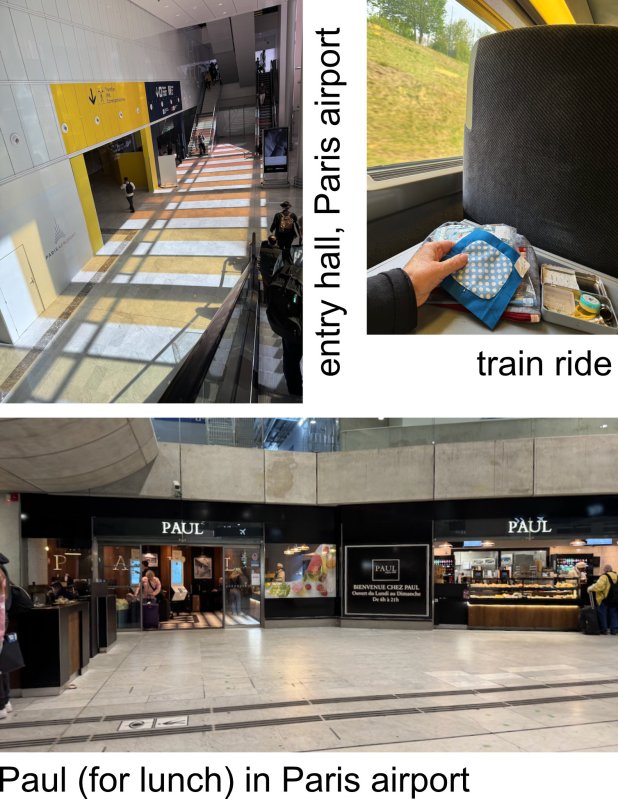
Having traveled to other parts of France, Nantes was a total surprise to both of us — a delightful surprise. It’s the sixth largest city in this country, and has a different flavor than other regions we’ve visited. We arrived at Paris Charles De Gaulle airport at about 1 p.m., then took a train across the country (train left at about 5 p.m. and arrived in Nantes about 3 hours later). This gave us time at the airport to clear customs, catch a bit of lunch, check out the convenience store for chocolate (I’m crazy about the chocolate in France, even the drugstore variety), and then catch our train. While in Nantes, we stayed within walking distance of the Gare (or train station), which also allowed us to catch the tram to the quilt show the next morning.
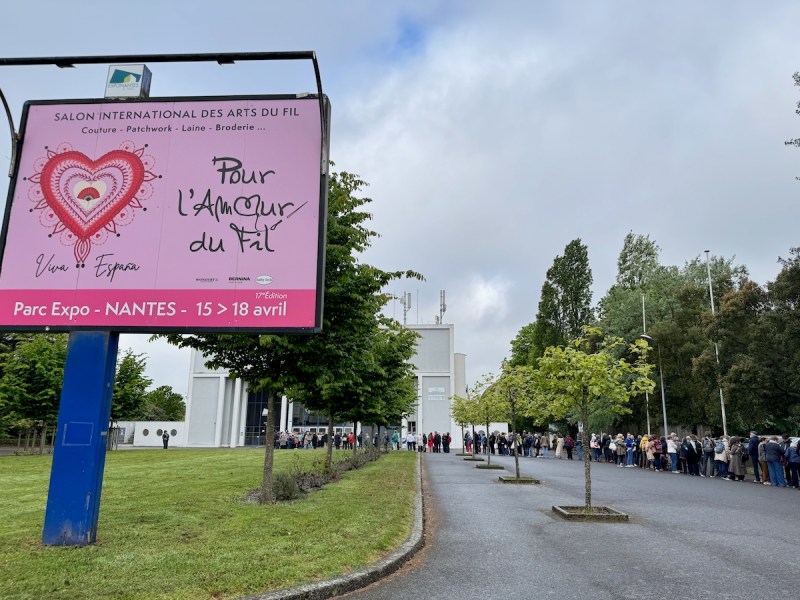
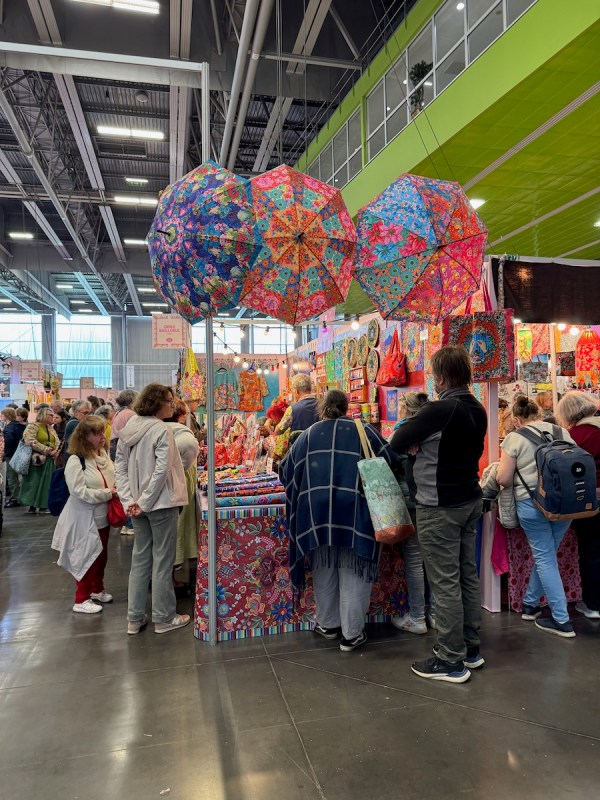
We checked with the hotel clerk, who confirmed what we planned and after buying our tickets, we got on the tram with other women, carrying interesting bags and totes (a sure giveaway for a quilter). I saw so many interesting bags and totes while there, that I made a video.

After riding for a bit, wondering how we would figure out where to go when we got off the tram, a woman (I later learned her name was Sylvaine), got on the tram and started doing embroidery, so we struck up a conversation. After about a 20-minute ride, she walked us over from the tram when it arrived at the convention center, or Parc Expo. The quilters were already lining up a few minutes early.

[Note: Here’s a link to a collection of photos of people I met this day.]
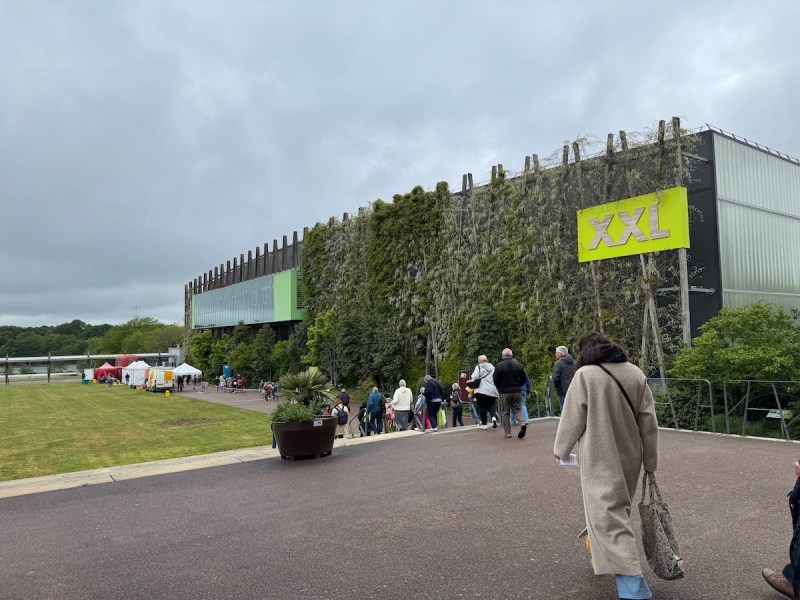
We came in the main door (in the white building in the first photo) where they checked our bags, and walked out the other side. We followed the crowds as they walked over to this building, where the quilt show was being held. The white tents you see are the lunch places. We showed our tickets, got our wristbands (we had purchased a two-day ticket), and were in!

[Hope this video works…] Yes, everything’s in French, but fabric and smiles are a universal language. Most of the booth vendors spoke English as did many of the guest artists (many were from Australia), so I didn’t have a problem. Even buying tickets at the tram stop you can switch to English, and I kept Google Translate handy on my phone for places I needed to know the language.

The guitarist was in front of The Red Dress, and both were beautiful. Haven’t heard about The Red Dress? I hadn’t either until I went to the show’s website before the show and read about it.
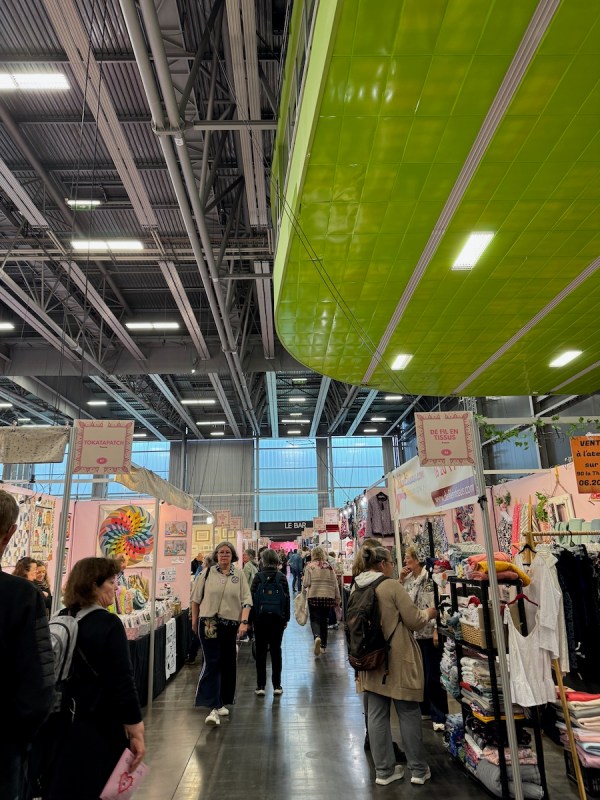
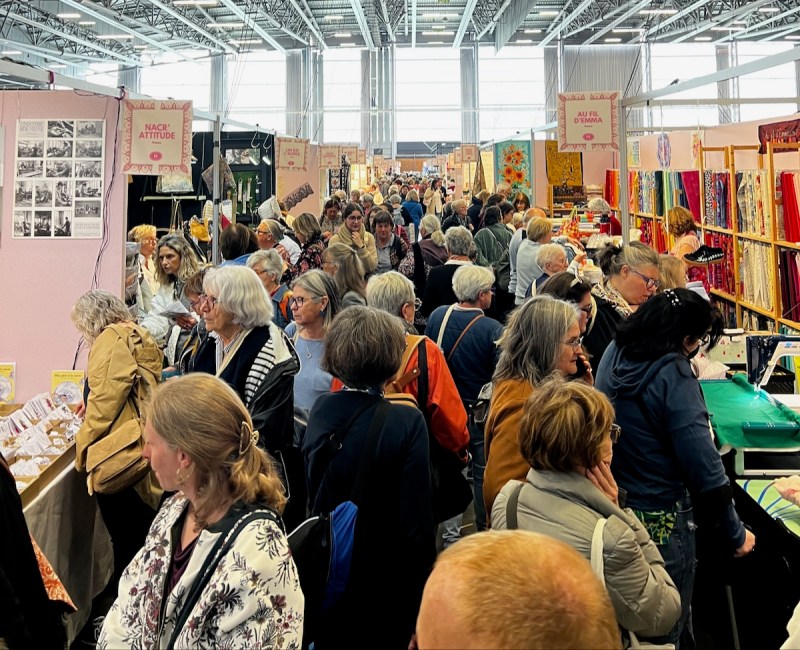
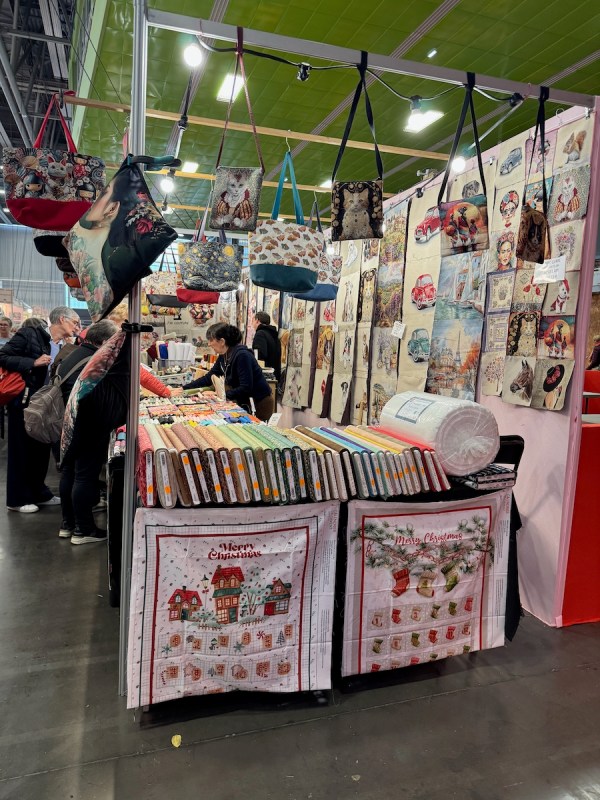
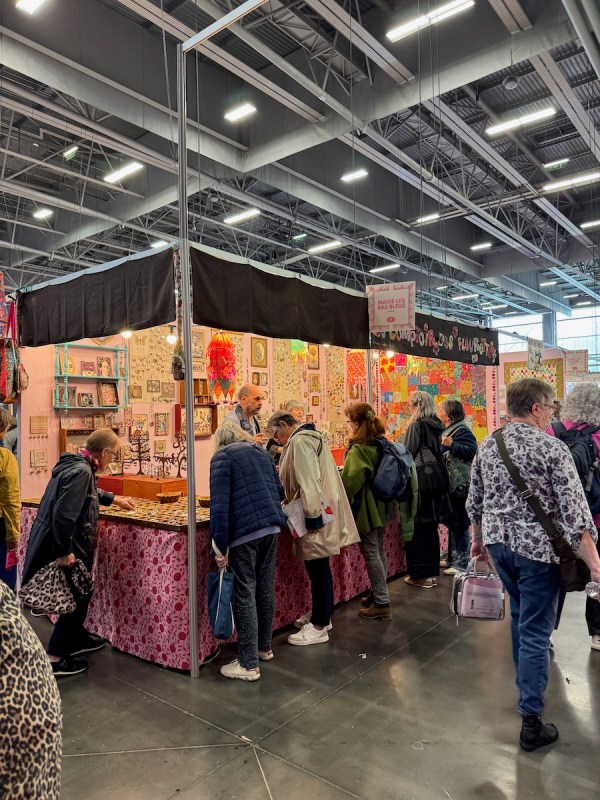
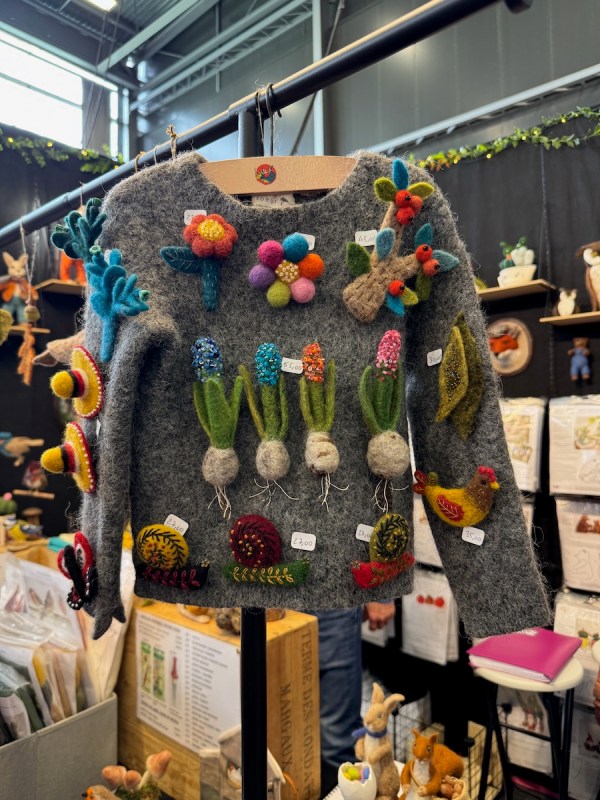
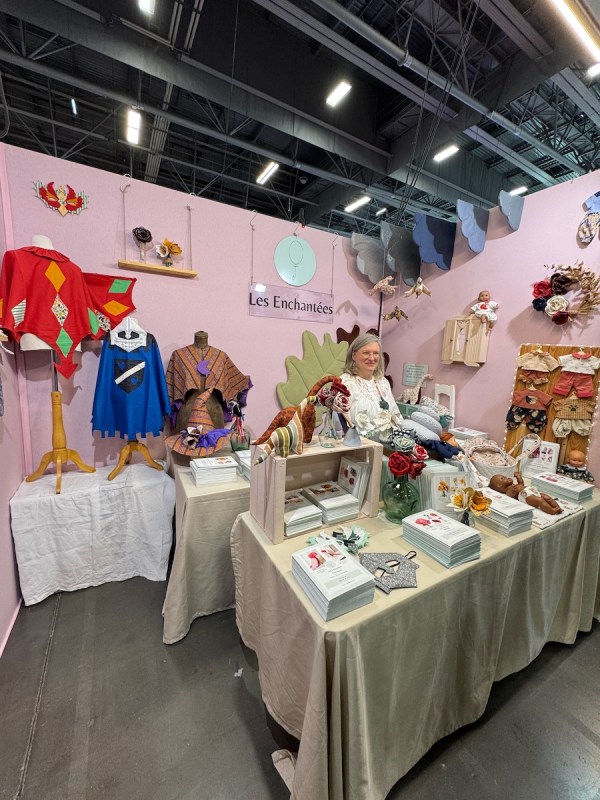
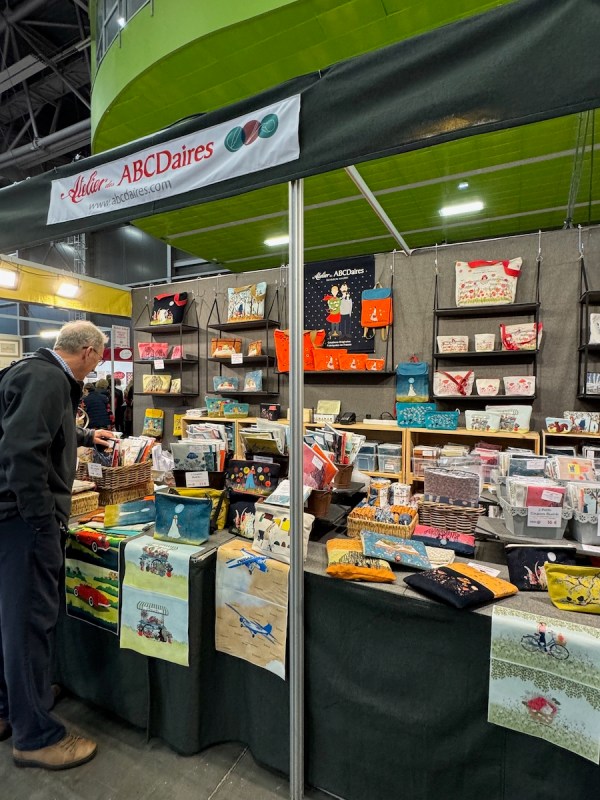
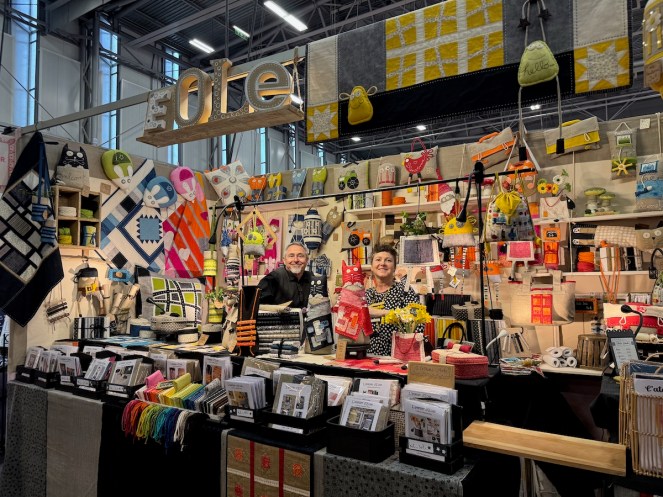
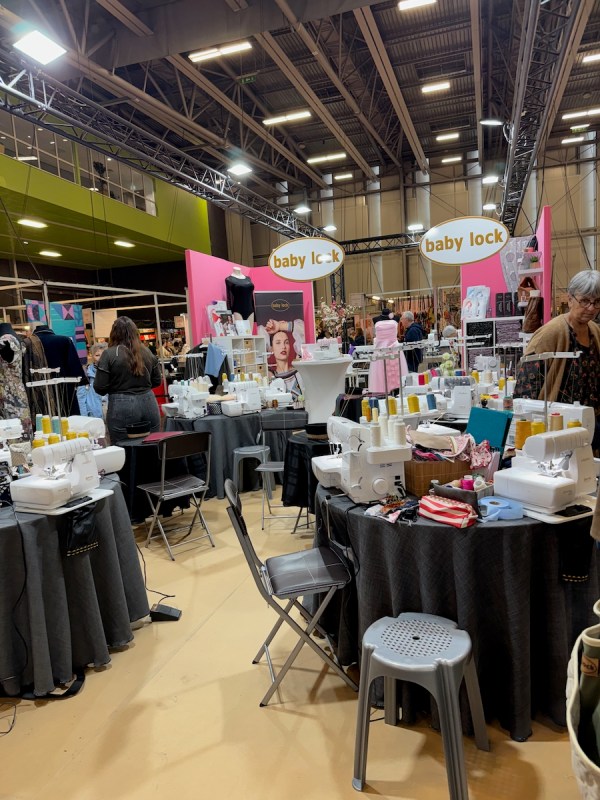
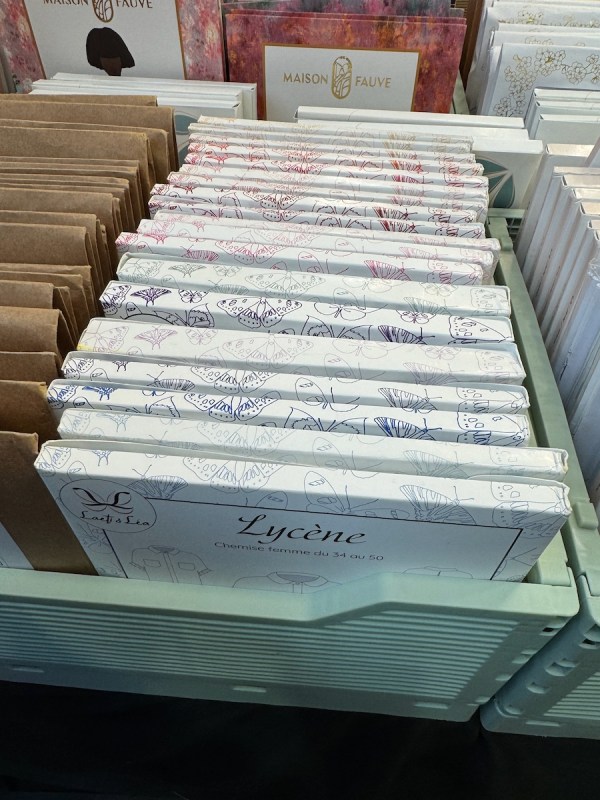
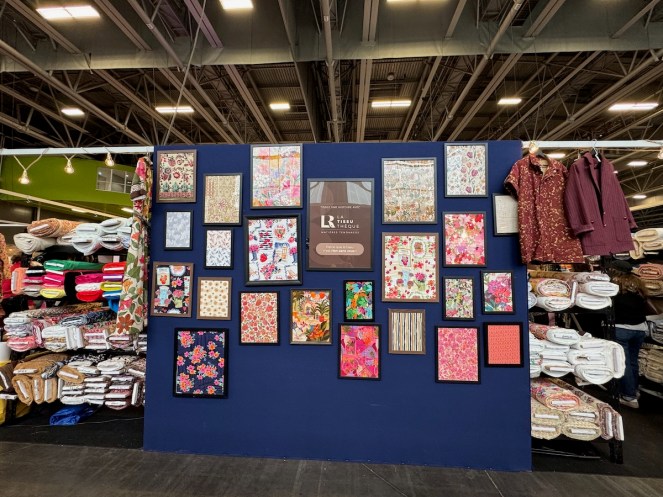
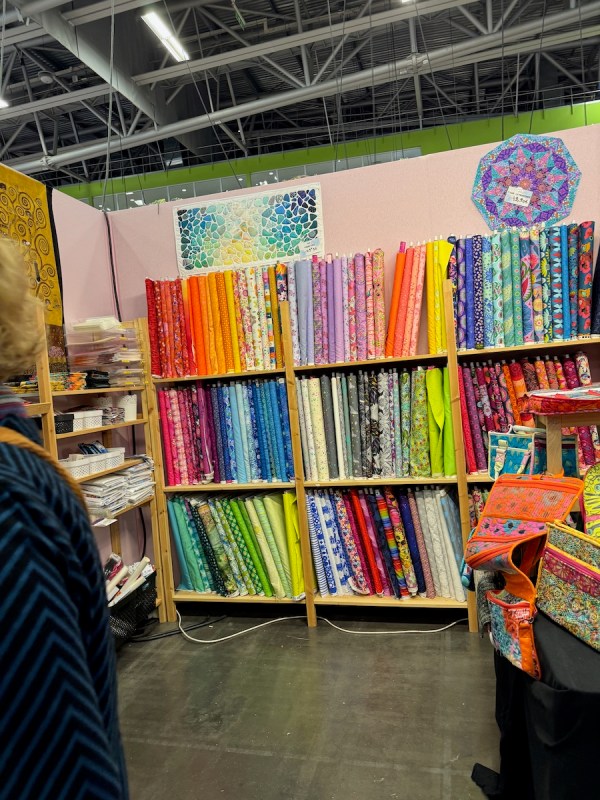
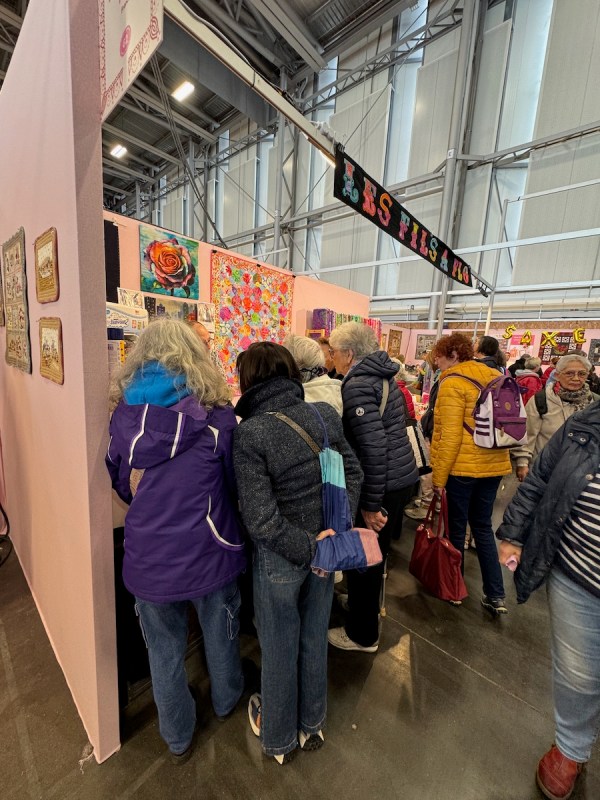
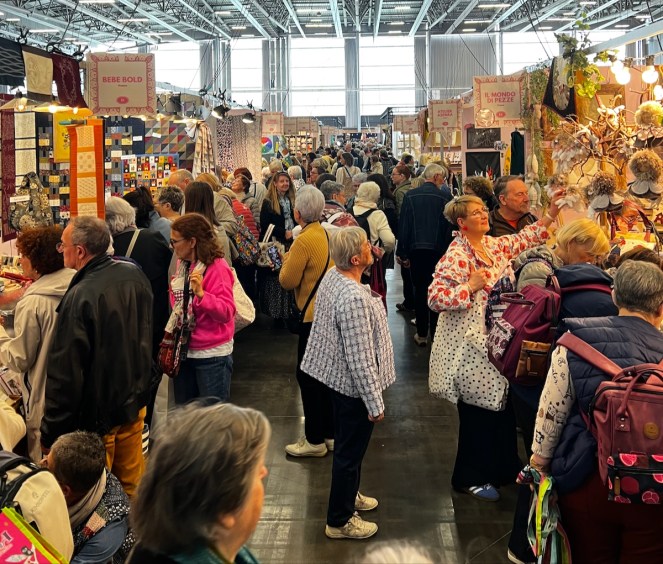
The photo on the left was when we first arrived, when the show opened. The photo on the right was taken after lunch. Quilters had arrived! But it wasn’t just quilters: it was embroiderers, sewists, crocheters, purse and bag makers, and I even saw a jewelry booth. Here’s a slide show of the vendors; click to advance the images:
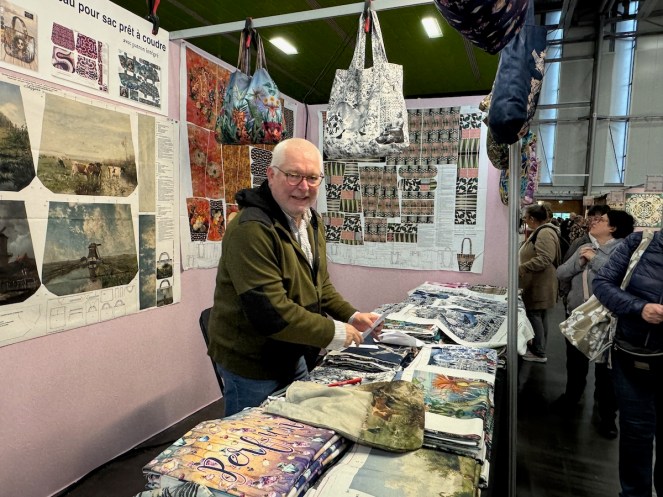
Note: except for a few crowd shots and candids, I received permission to take photographs.

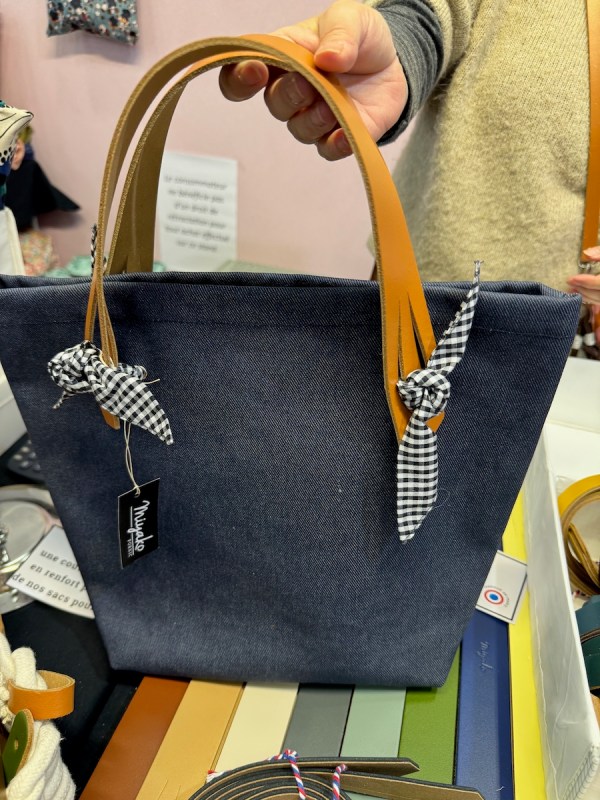
I saw so many beautiful things and purchased a few, here and there. Here’s something I didn’t see: pre-cuts. That whole American-merchandising thing seems to be missing from here as well. The vendors are small, specific, art-driven, and some of the things they sell are kits, new ideas (like the leather handles from Miyako that you can move from bag to bag, instead of having to have one handle per one bag — genius). But unfortunately, because of the tariffs here in the US, it is nearly prohibitive to ship to the US market for many of these vendors, but I can sometimes find them on ETSY or other small marketplaces.
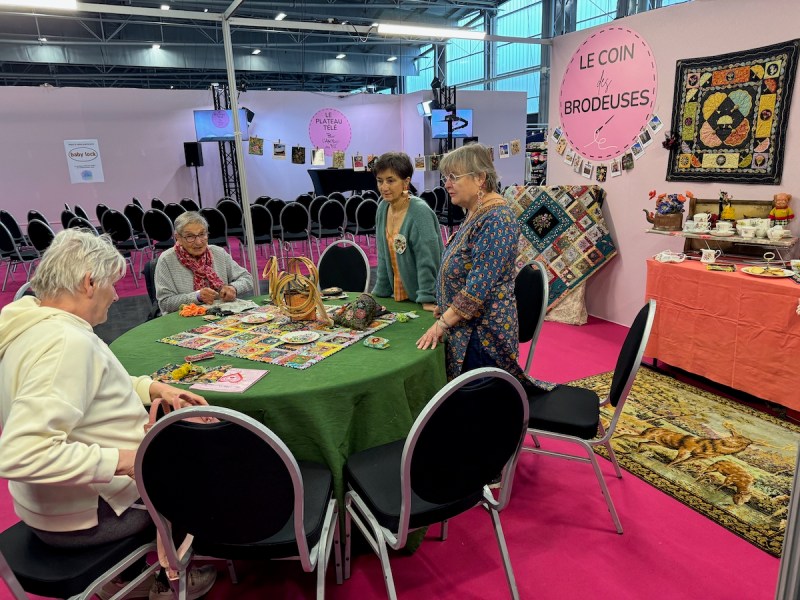
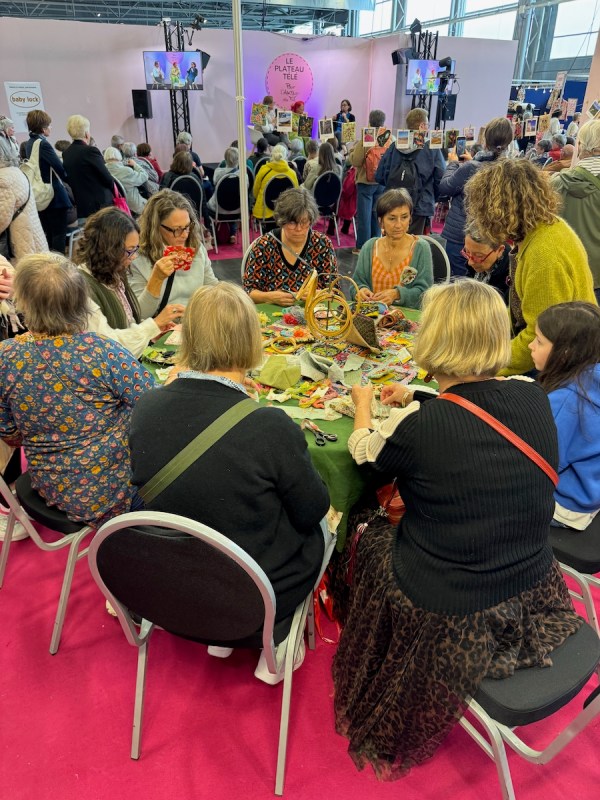
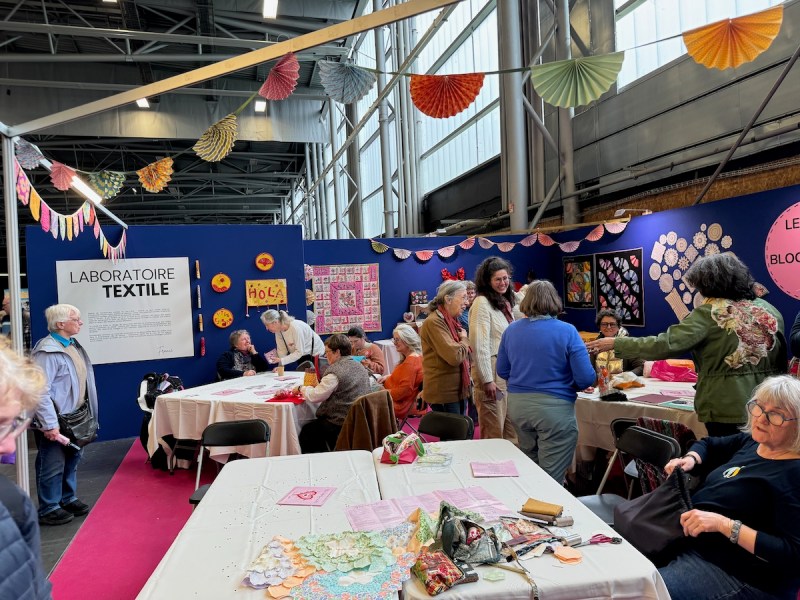
In several places around the show are make-and-take tables. This was the embroidery table. On the left, at the opening; on the right, after lunch. It was popular!
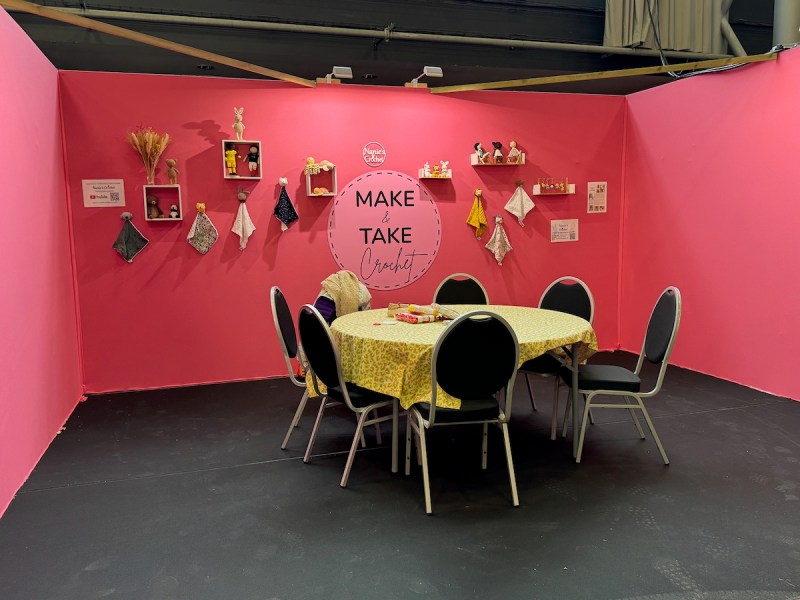
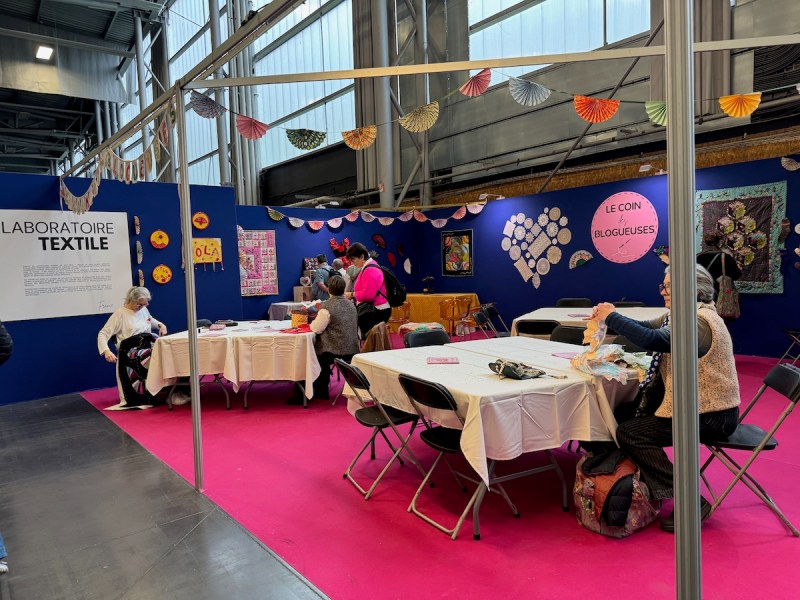
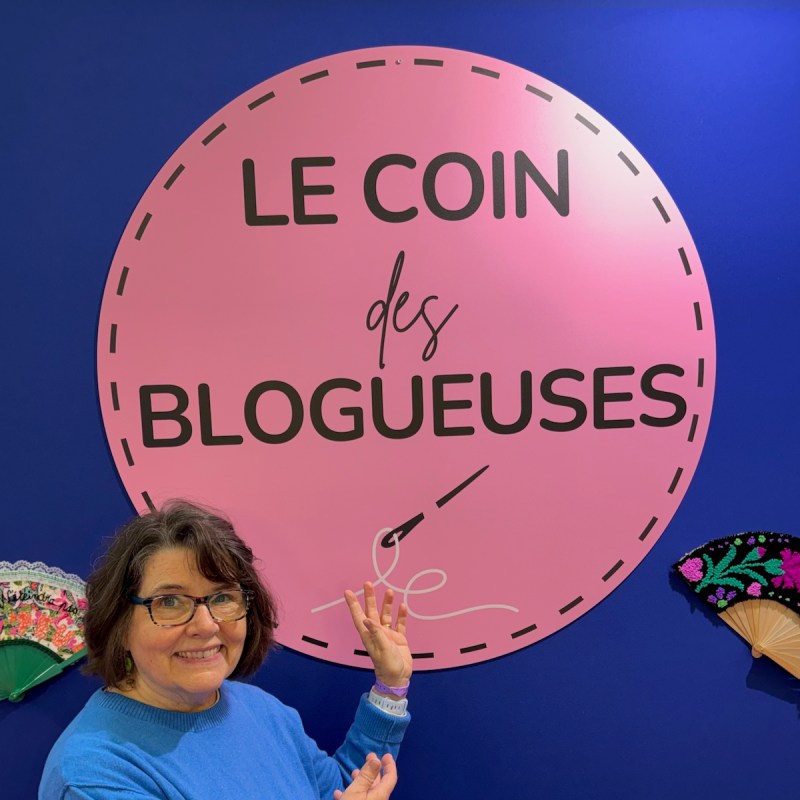
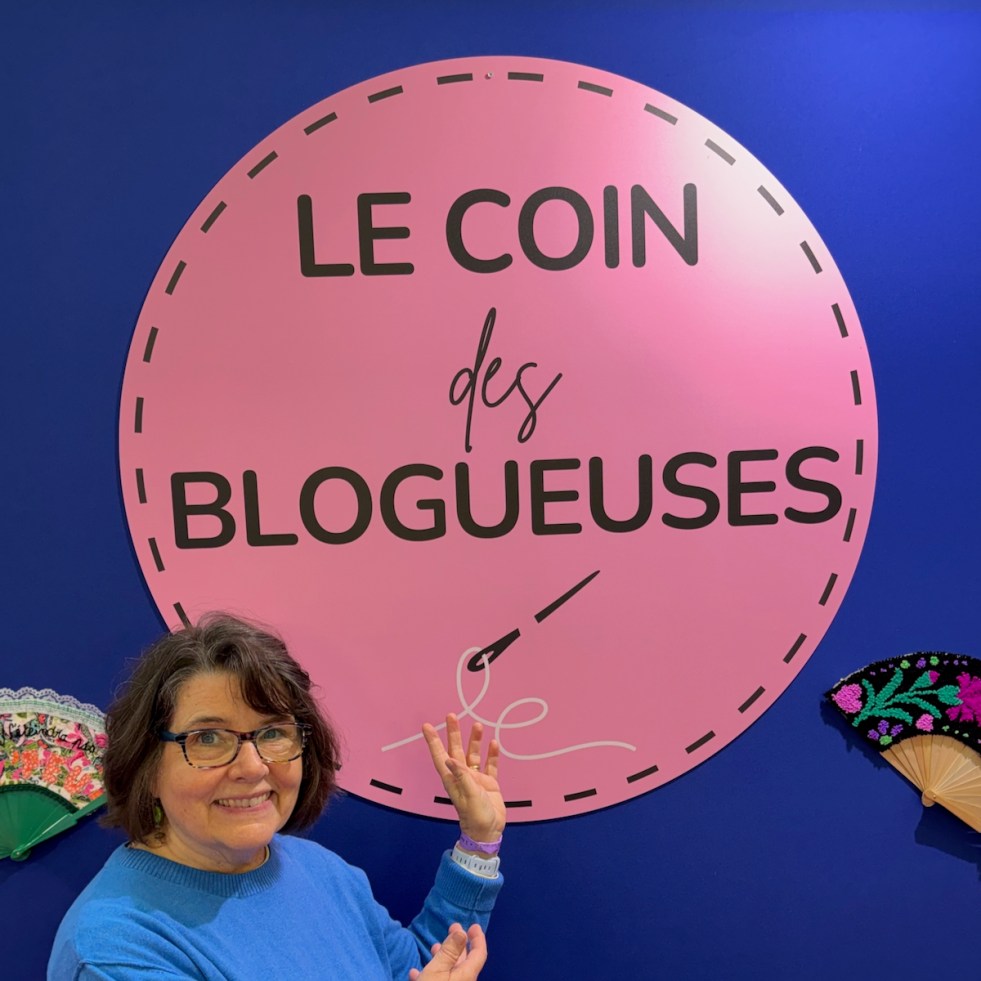
The crochet table, top left. The “Corner for the Bloggers” are the other three photos…and me! It got busier and busier as the day went on. When my husband was tired of following me around, he retreated here.
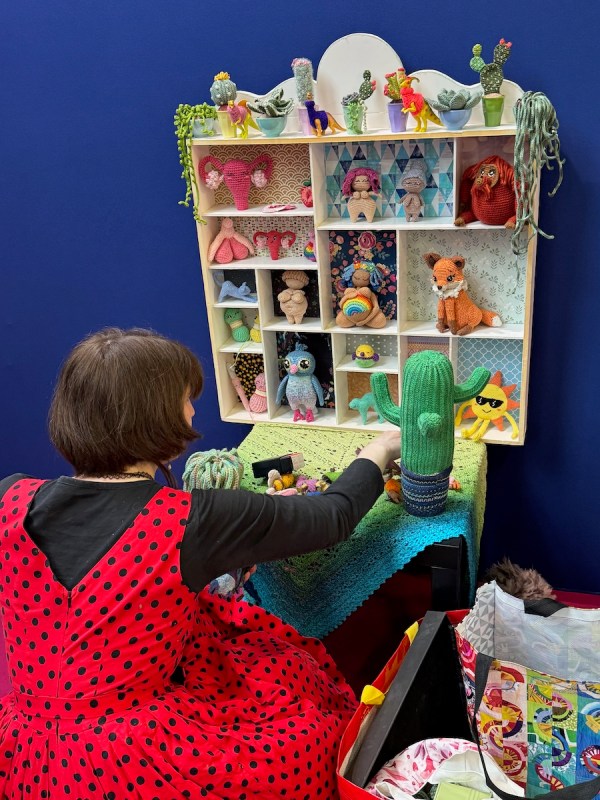
The crocheter setting up a display. It was fascinating to see. There were four or five booths for those who liked to crochet.
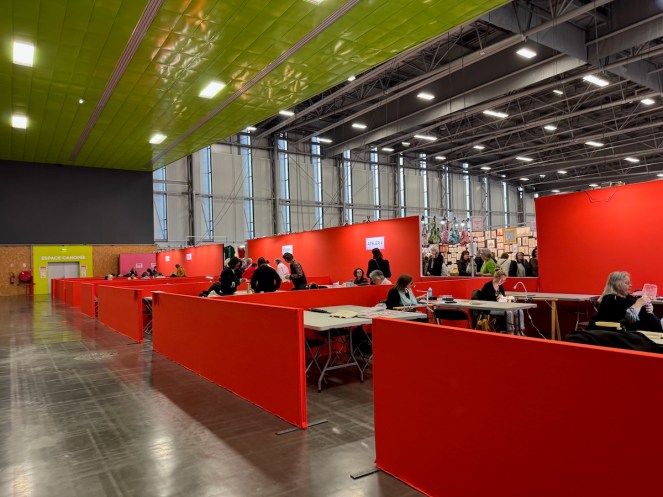
On one side of the Vendors Hall were the “classrooms.” These were surprisingly quiet, and I saw several classes in session.
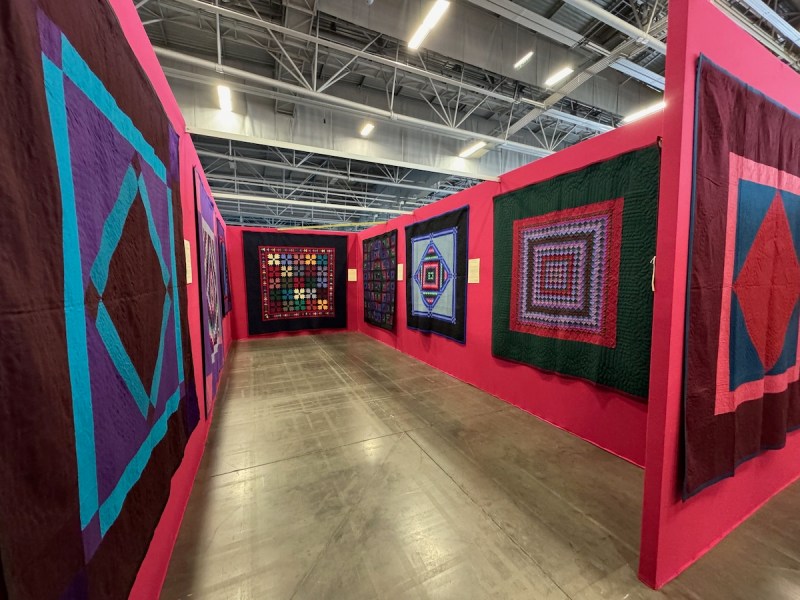
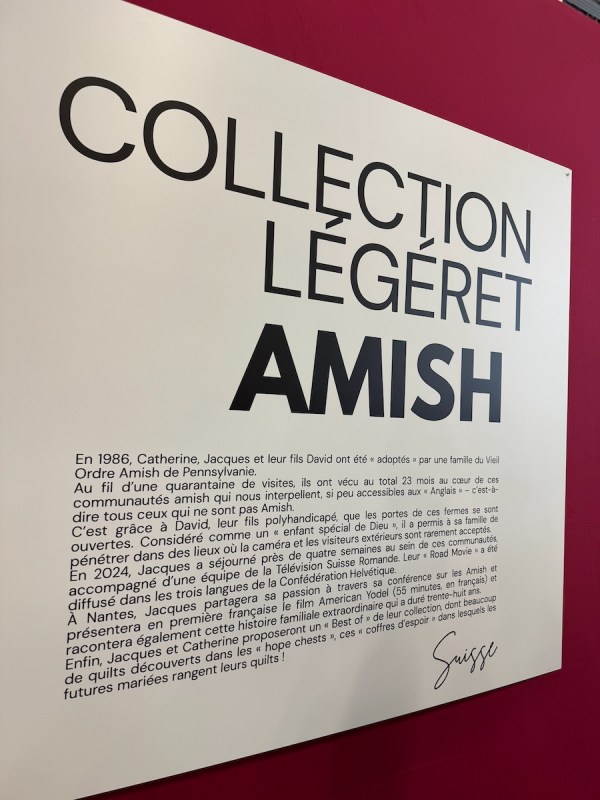
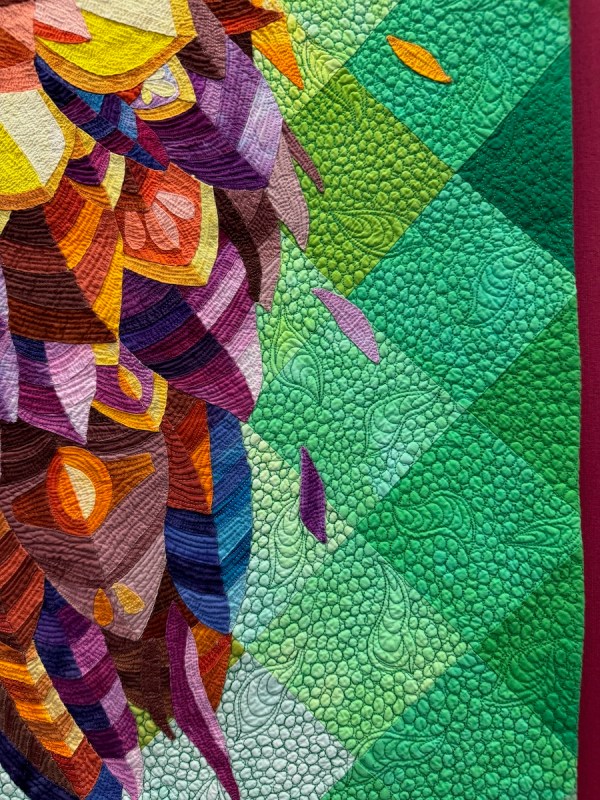
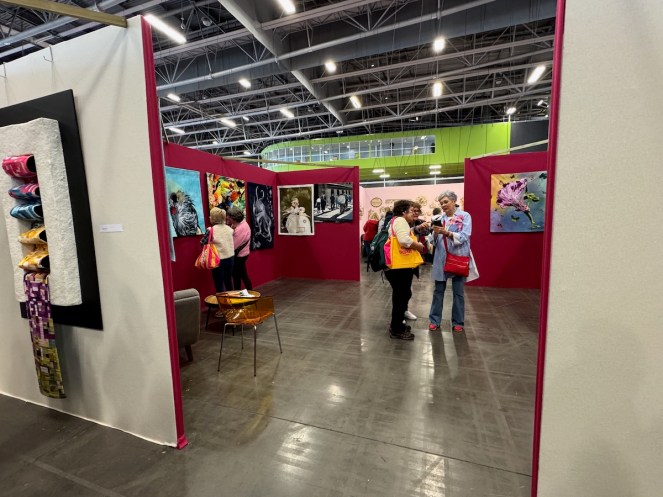
On the other side of the Vendor Hall were the quilt displays, rooms created out of movable walls, done in brilliant colors. I used my Google Translate on some of the signs. Sometimes I even used my Husband Translate (he speaks French).
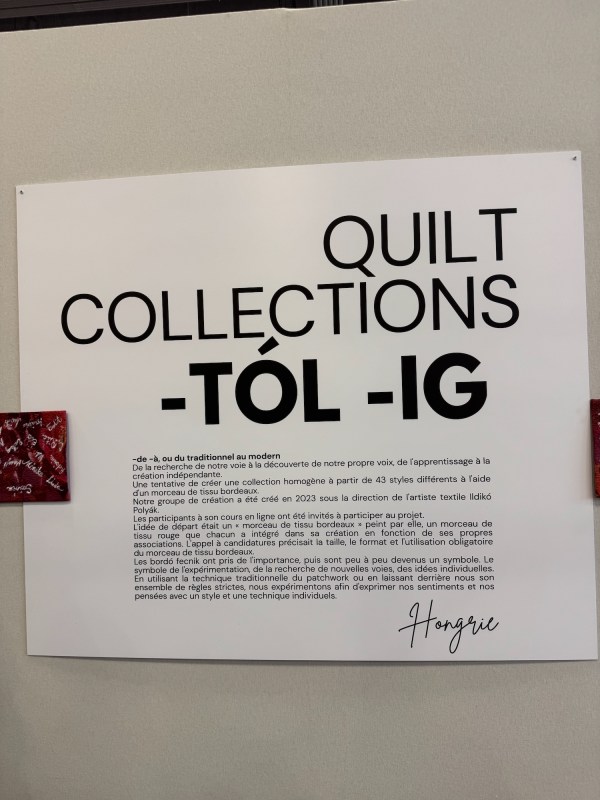
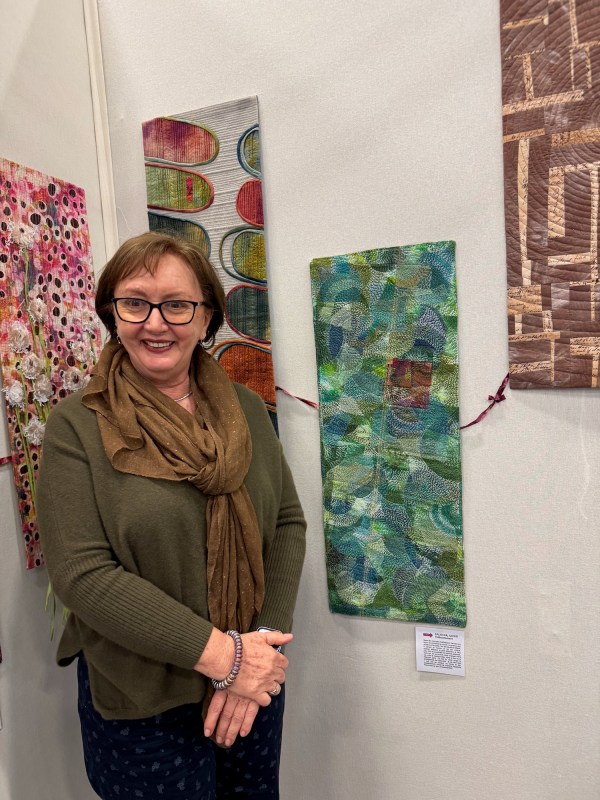
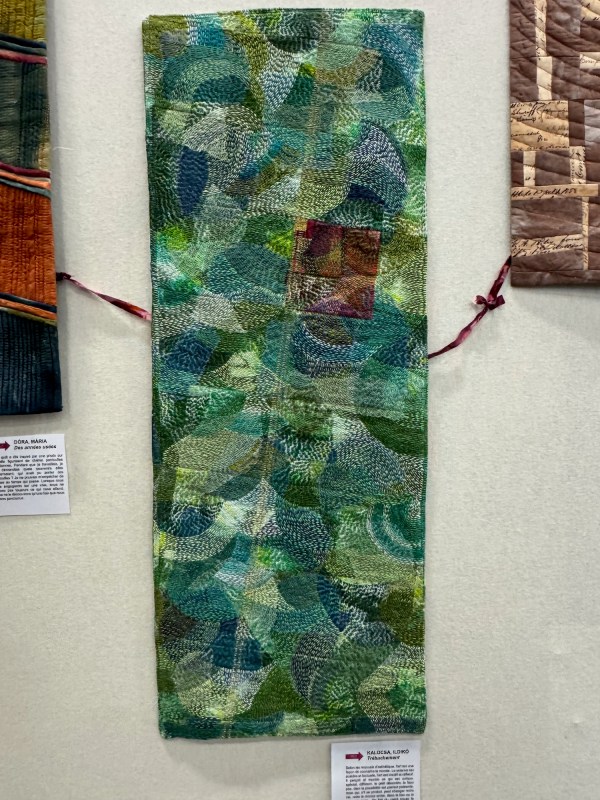
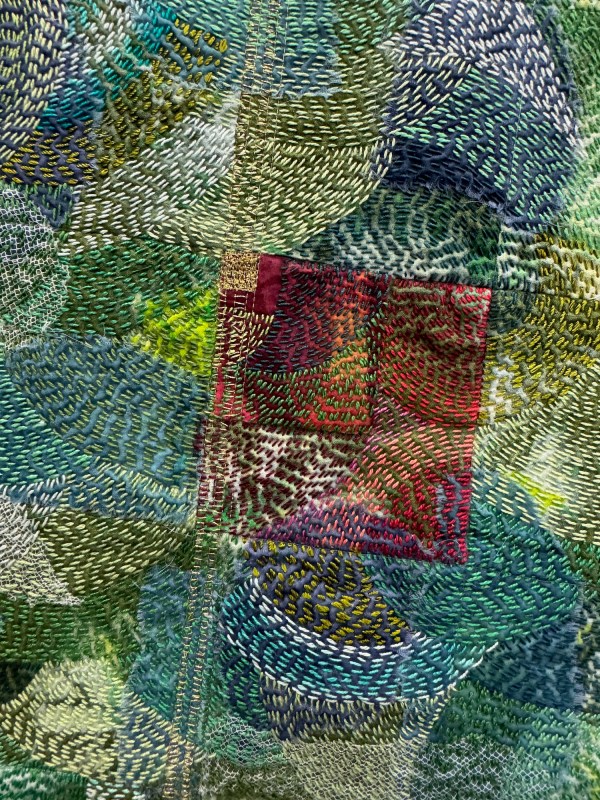
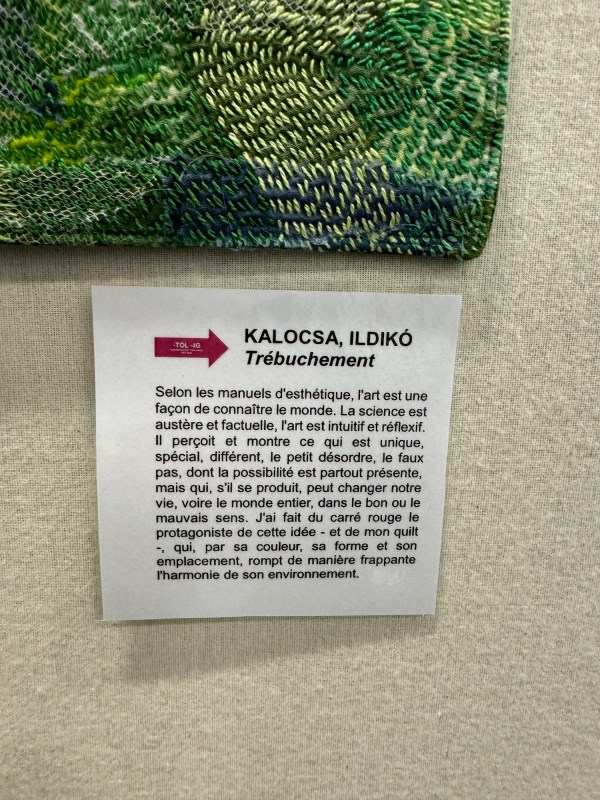
This exhibit was Collections, from Hungary. We talked to this quilter, Ildikó Kalocsa, about her work, and thanked her for coming to France. I loved the texture in her work. We also asked her about Hungary’s recent elections, and she said “Oh, we are so happy!” It was evident in her smile.

Slideshow for Inmaculada Gabaldon, from Spain (photos on this post were taken both by my husband and I):
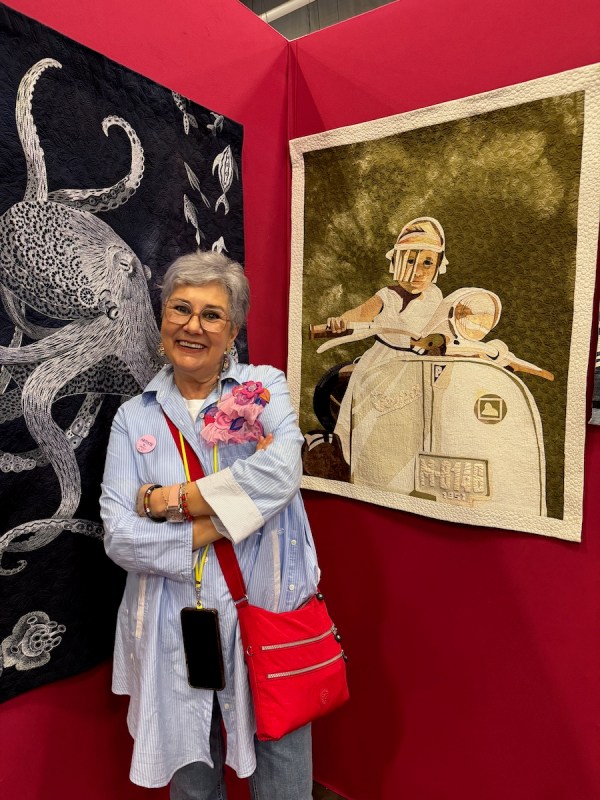
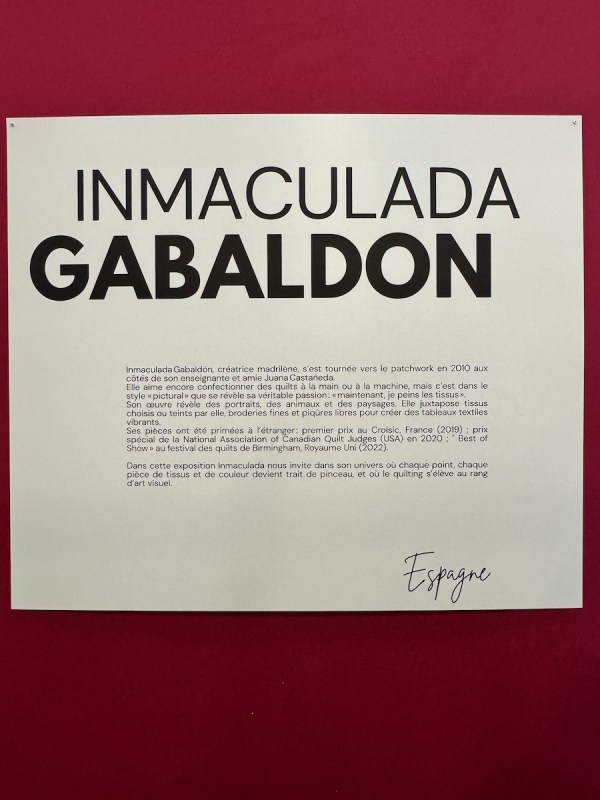
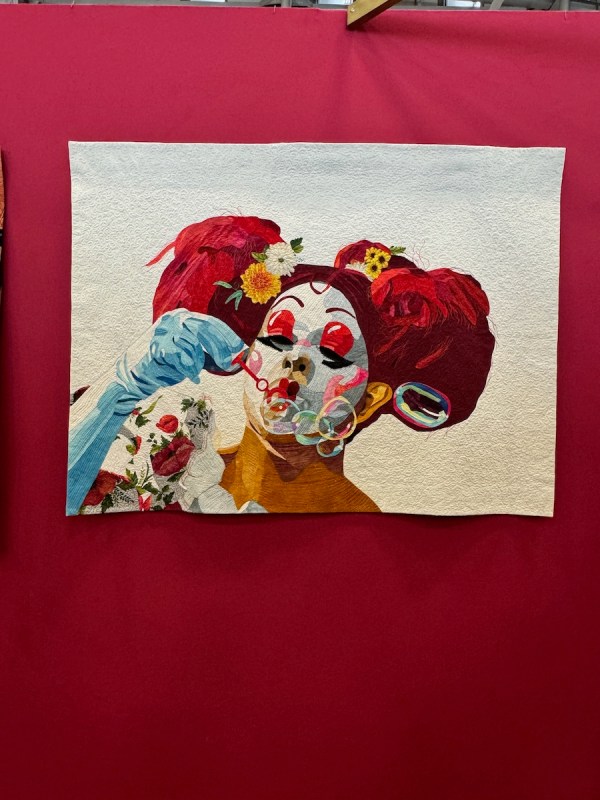
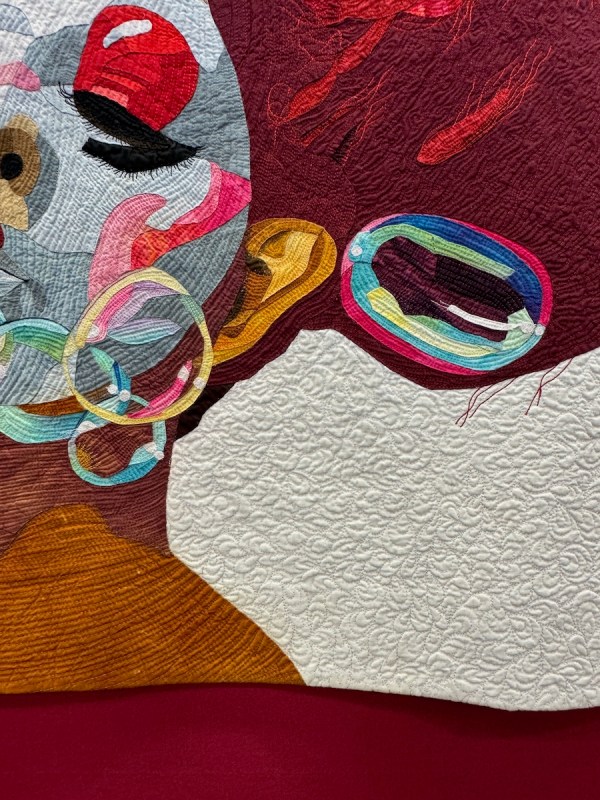
Click to advance the images. She does all her own quilting on a domestic machine, not a long arm. In the photo I took of her, she chose the background, and it was a photo of herself as a child. The last photo is of me in an adjoining “room” looking back toward the main hall, with Inmaculada talking with quilters.

I put up a couple more slideshows on Instagram:
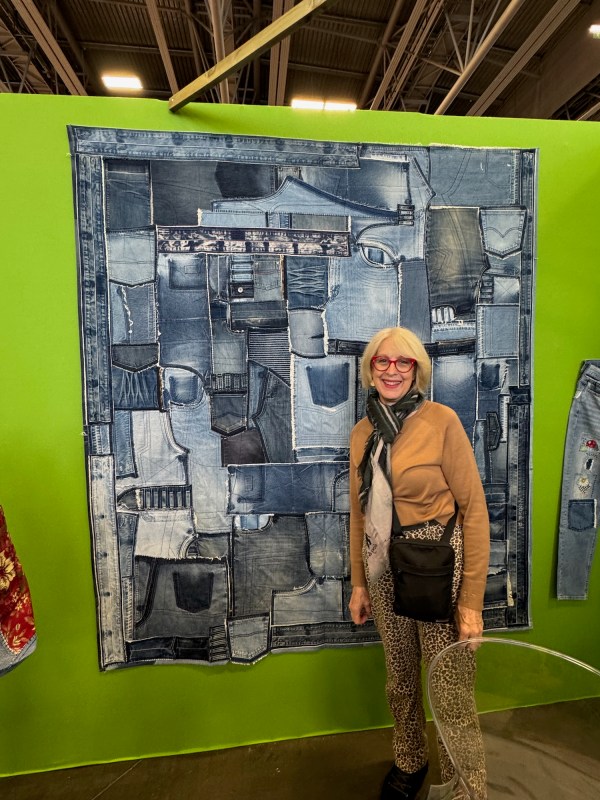
Denim by Elisabeth Dubbelde

She is known for her denim work, as well as recycling to keep the fabrics out of the landfill.
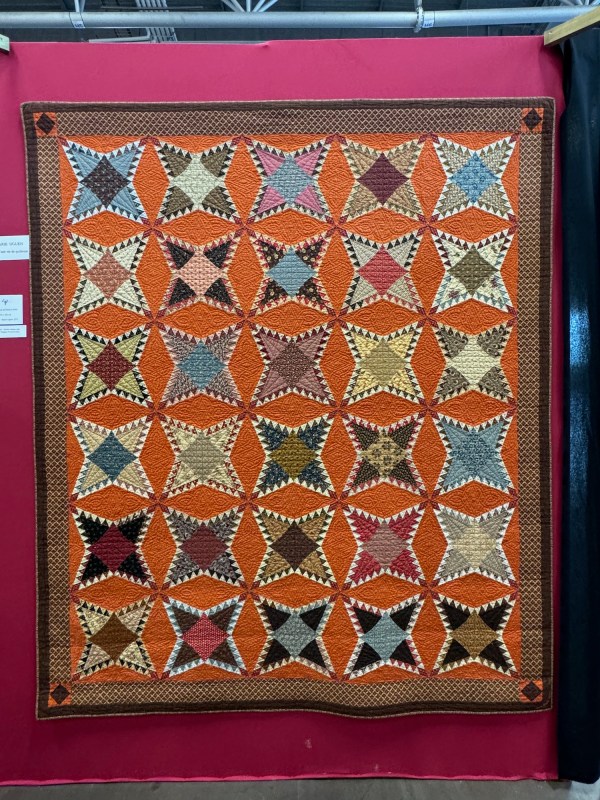
Quilts En Rêve

I’ve followed them on Instagram, as they make beautifully perfect quilts, many by hand. They are interested in reproductions of antique quilts.
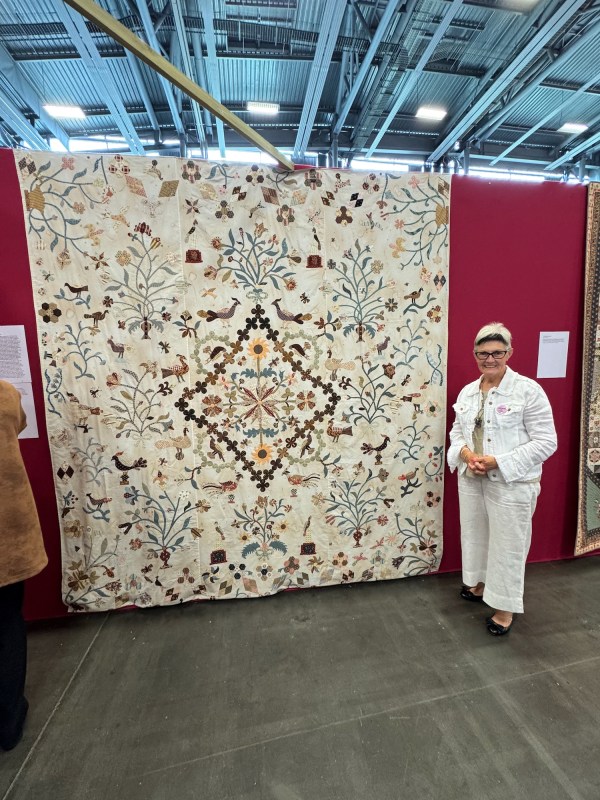
Carolyn Konig

Carolyn was a joy to visit with, welcoming and happy to answer questions about her unique approach to doing her reproduction quilts: she actually has the background fabric printed to mimic the spots and bits and discolorations of antique quilts, and uses it when she makes her reproductions. (Carolyn on Instagram) If you go to her website, you can order some.

Finally, it was time to leave, but not before I tried to find Carol Veillon and thank her.
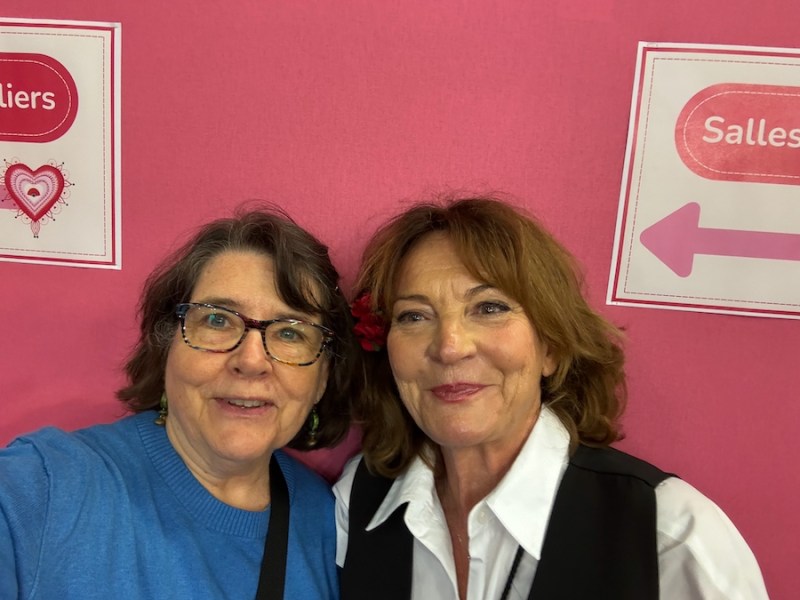
I felt invisible in the quilt world until Carol, in her magazine QuiltMania, published a quilt of mine that was hanging in the Road to California Show, where I first met her. She is kind and charming and encouraged me to continue submitting. I had several more published by her and every time it was like Christmas had come.

I thanked her for this, and for her kindness towards me, and grabbed a quick photo as she was incredibly busy. She is someone who had made a different in our quilting world, for all of us.

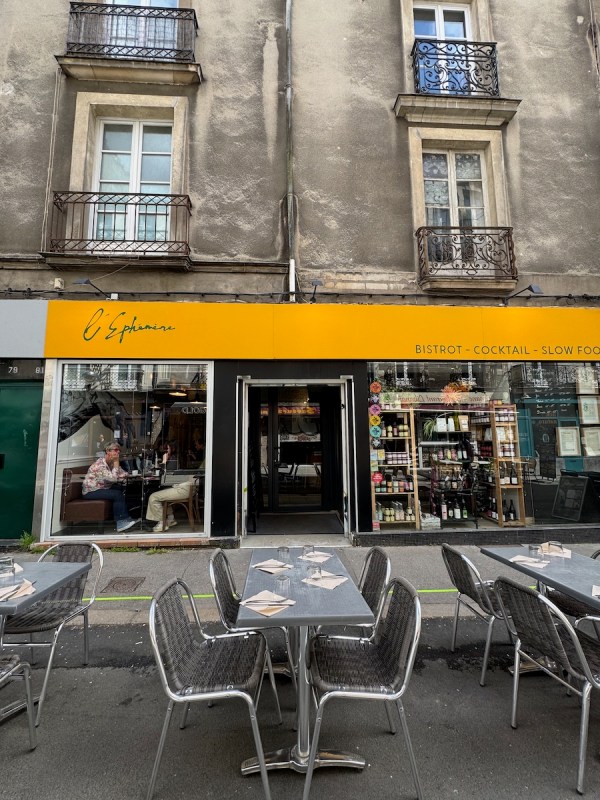
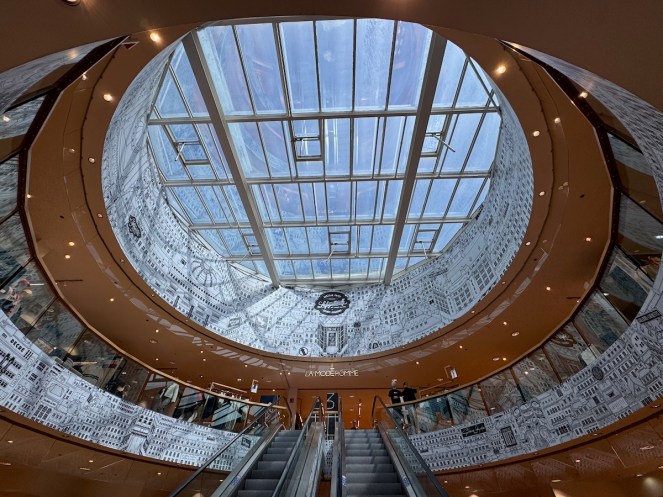
We walked back to the tram, and as we rode back to our hotel, were joined by families, strollers, children, mothers, teenagers; it was a far cry from the quiet ride in the morning. I will probably post the quilts I did take photos of here and there as I go forward, but I can’t leave this post without giving you some photos of Nantes.
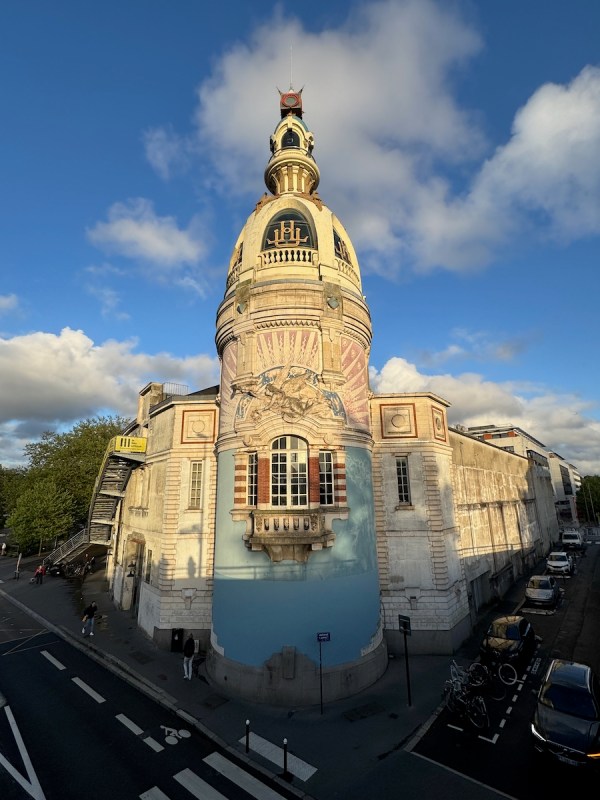
The old LU biscuit factory, around the corner from the Gare, taken in sunset.
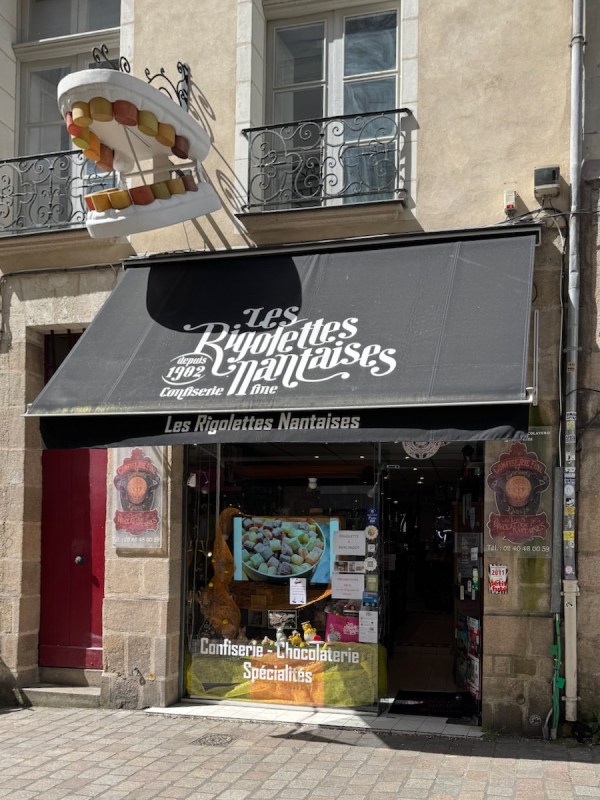
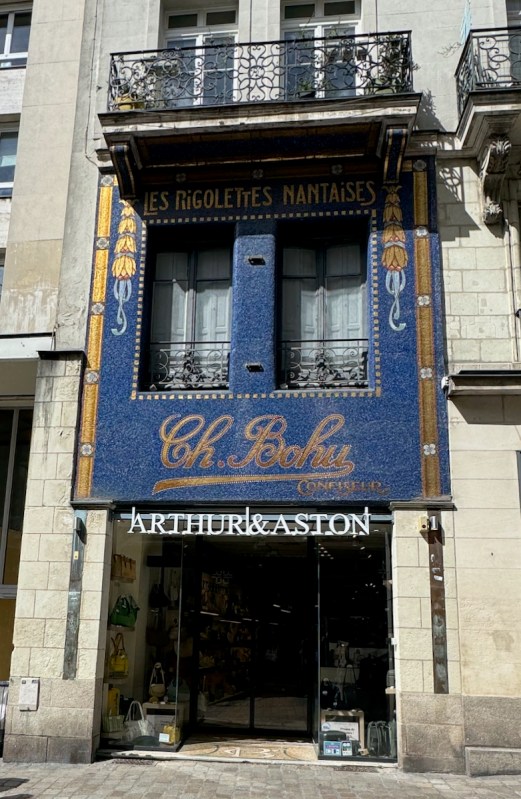
A store selling the town sweets: Les Rigolettes Nantaises. They seem like hard round little candies, but once in your mouth the outer hard shell dissolves and they are chewey and delicious. They come in five traditional flavors: lemon, raspberry, blackcurrant, mandarin, and pineapple.
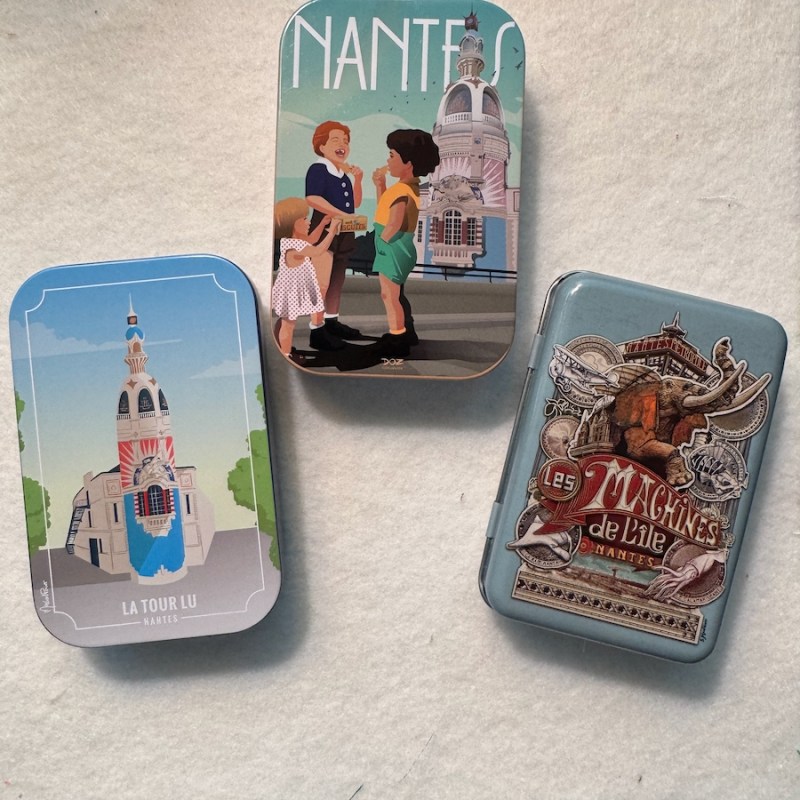
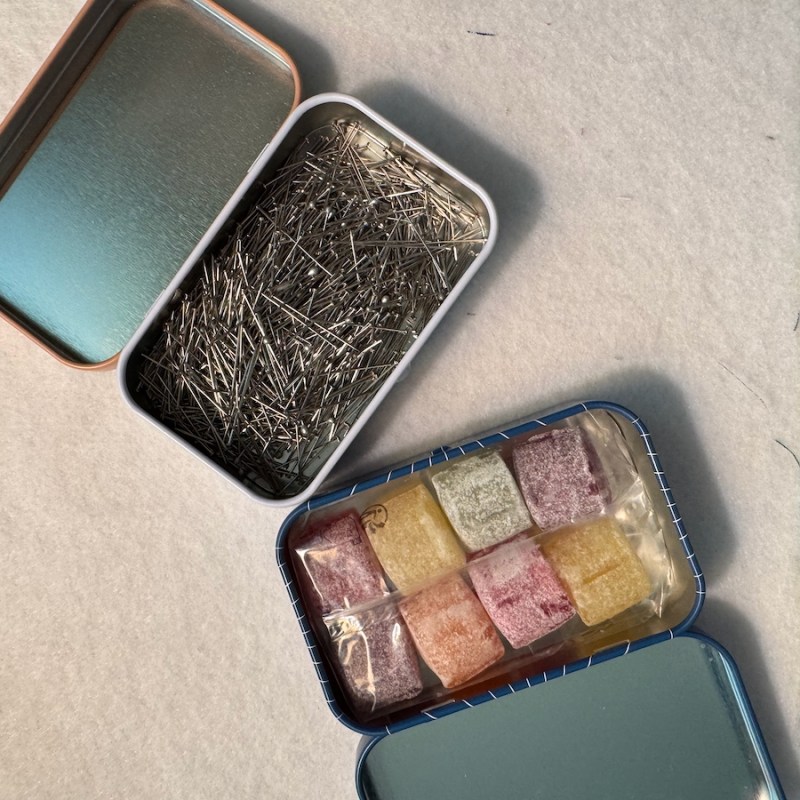
They come in these charming tins (well, the elephant was a different candy), and I’ve already repurposed one for straight pins.
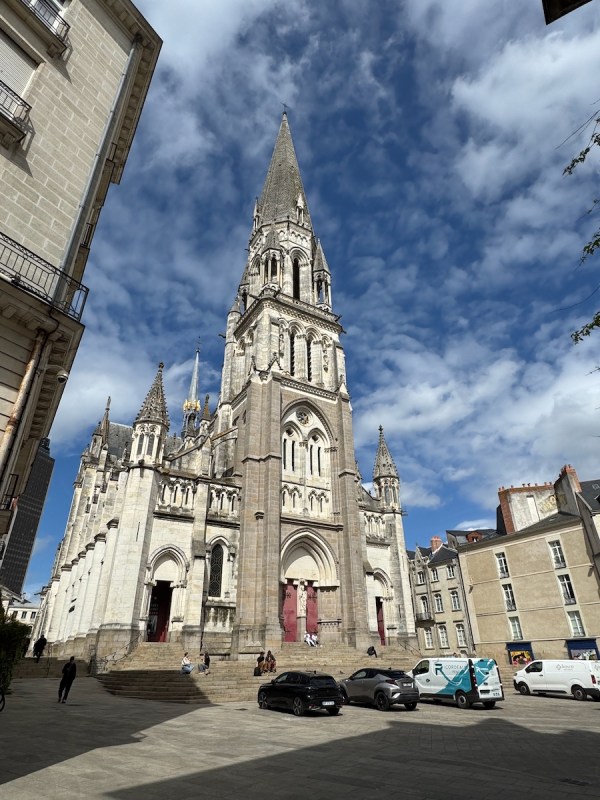
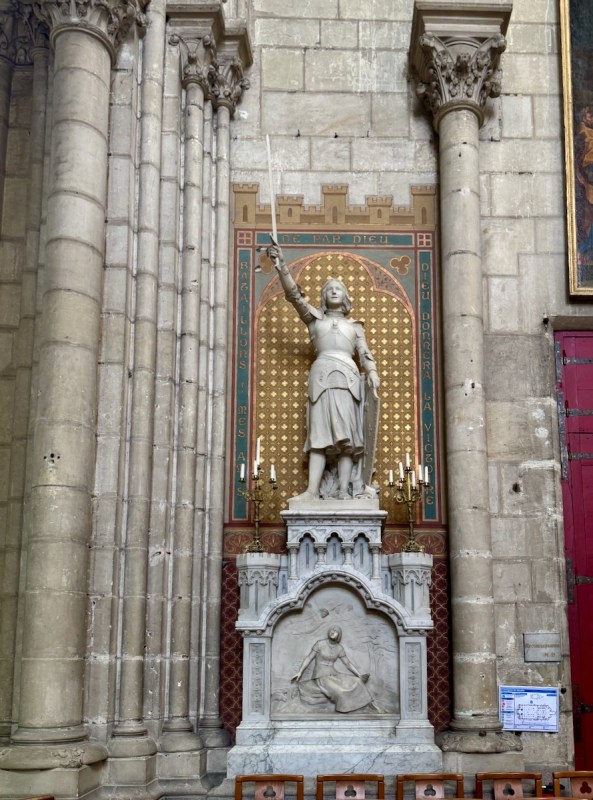
Joan of Arc is big around here. This statue inside the church is dedicated to her, as she hails from Orléans, which is up the road a bit in the Loire Valley.
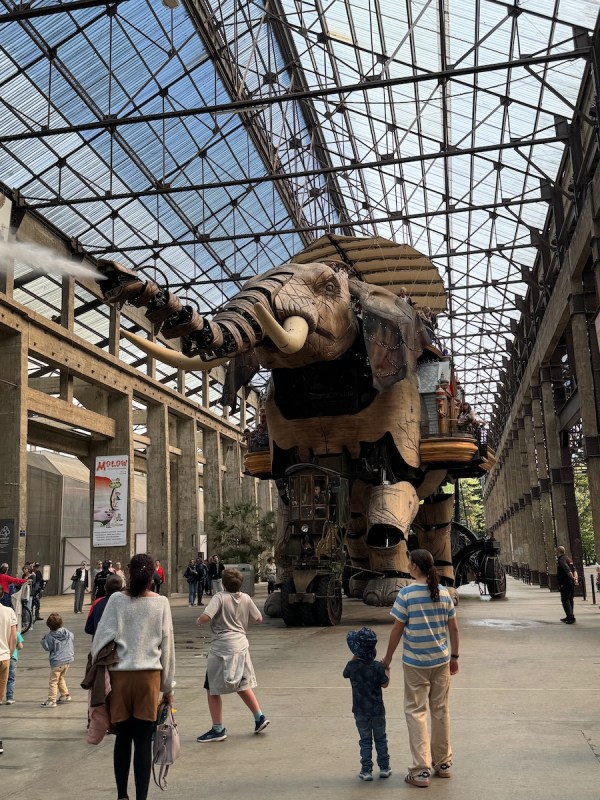
The Elephant, one of “Les Machines” on the small island in the Loire River adjacent to the city center. A huge mechanical creation, it moves slowly around as it takes a walk, squirting tourists and children with water. We had a great time seeing this.

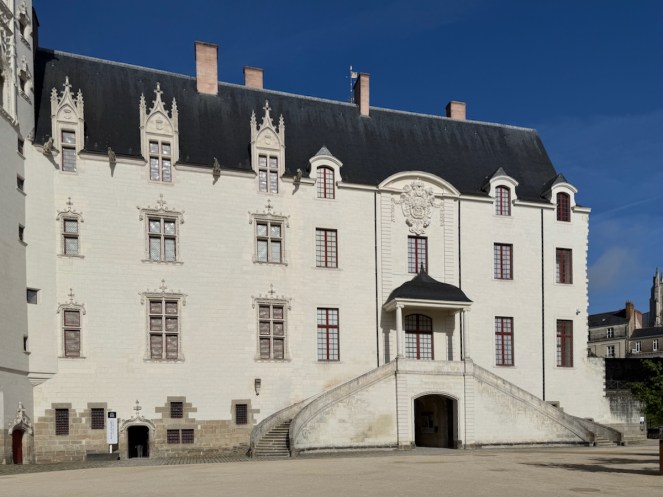
A few more sights (click to advance):
And what did I take away from the quilt show?
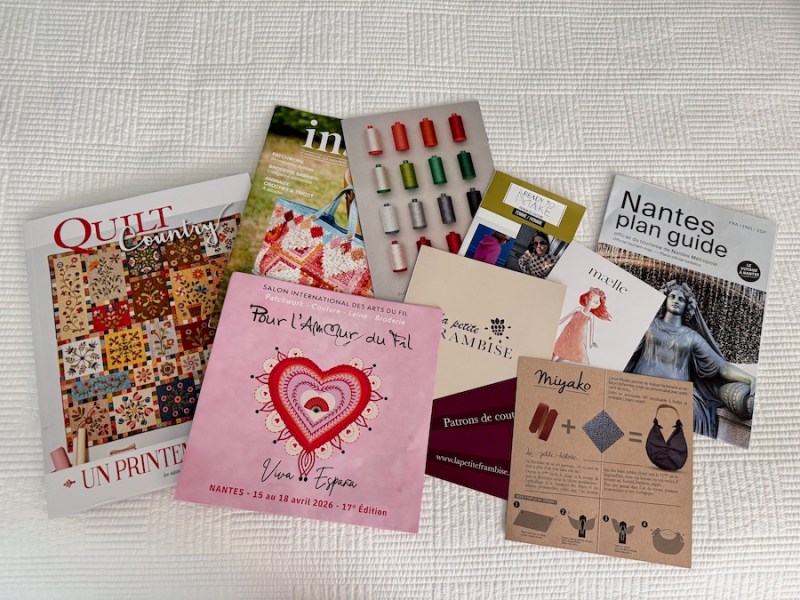
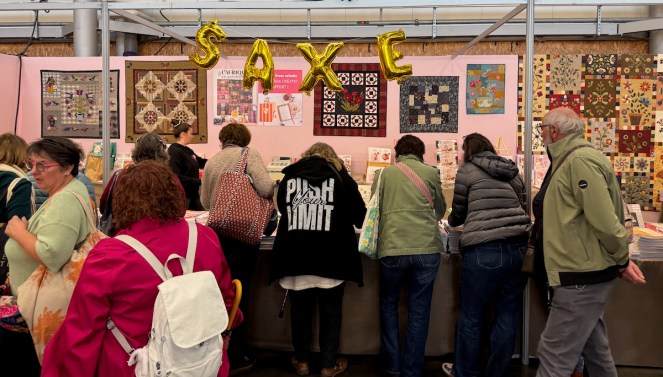
  1. A book from the SAXE bookseller booth, and some fliers
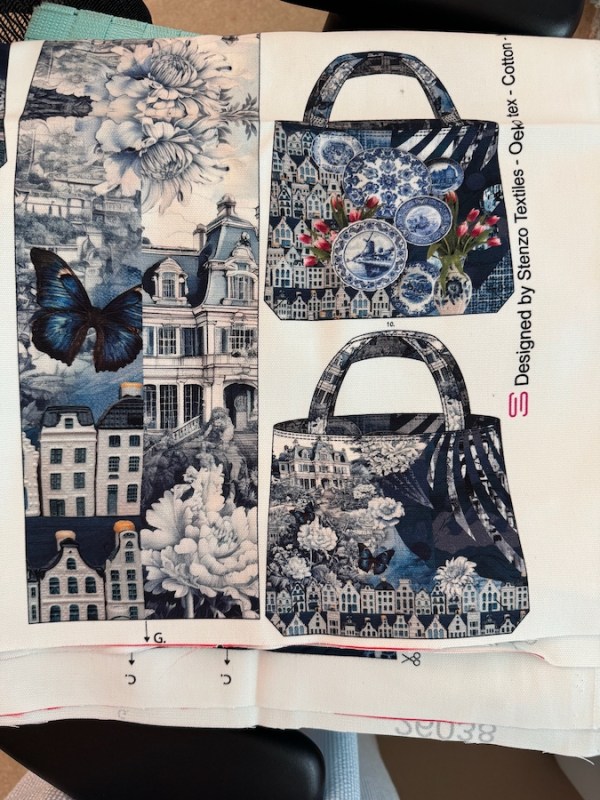
  2. a preprinted canvas to make a bag (Stenzo Textiles)
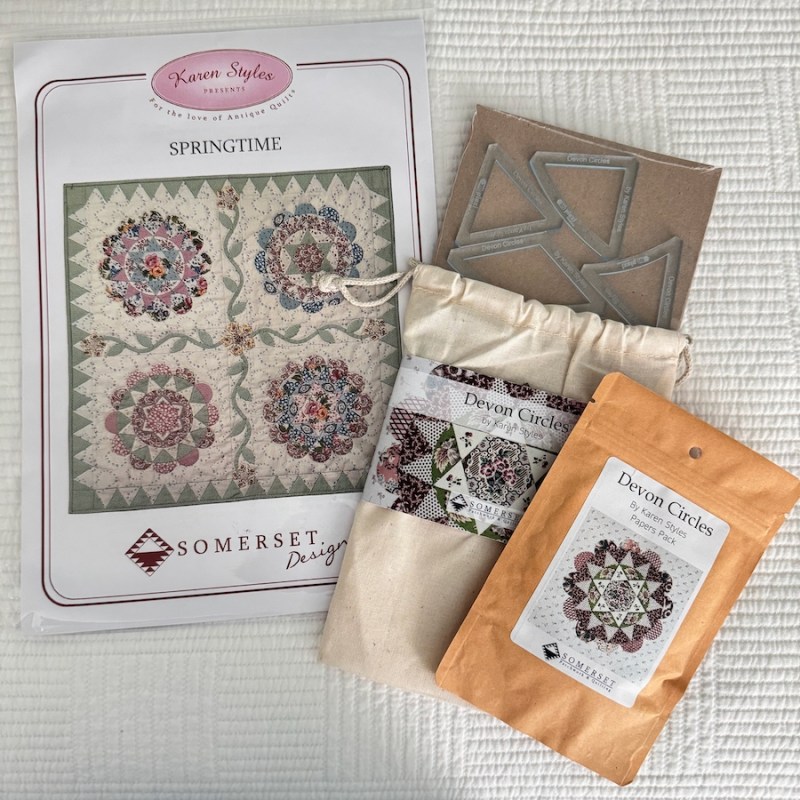
  3. sweet mini-quilt with papers and templates (Somerset Designs)
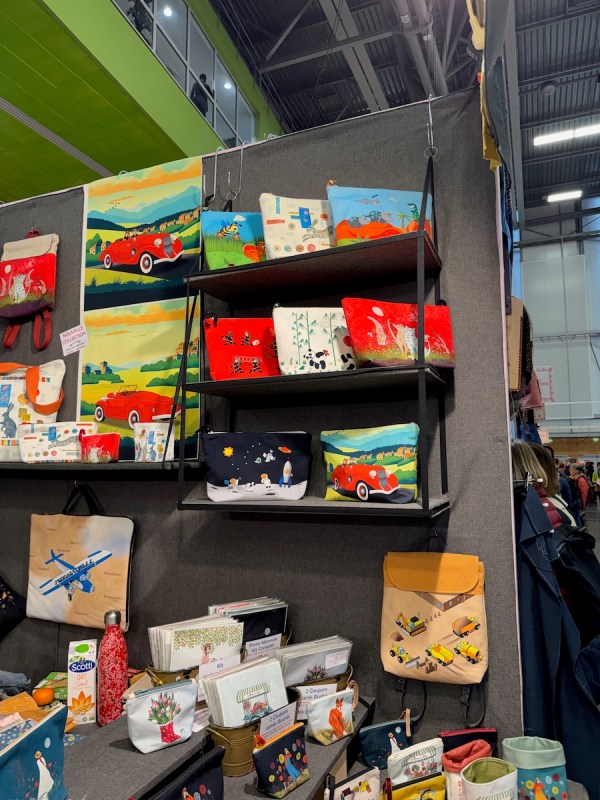
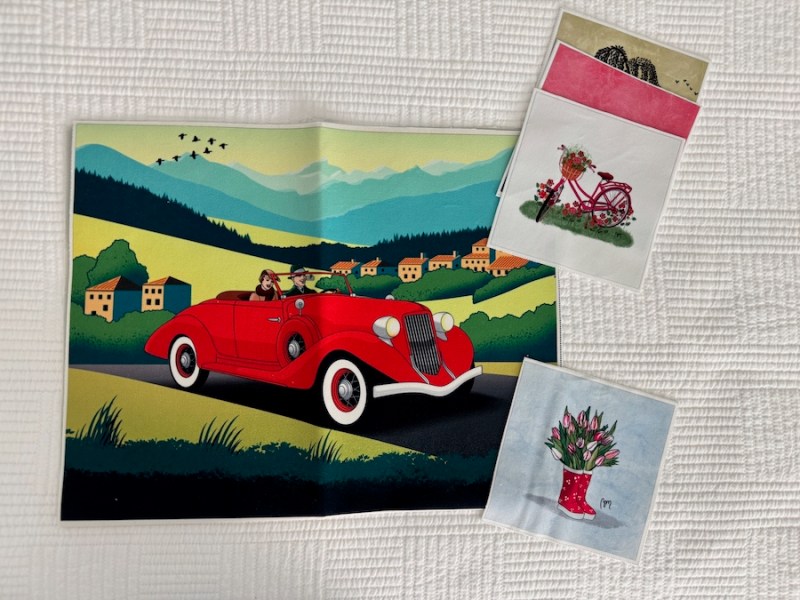
  4. a panel to make a small bag (ABCDaires), a favorite
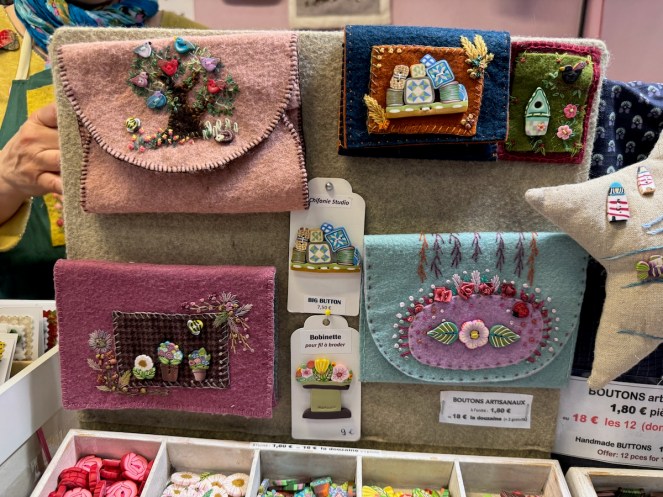
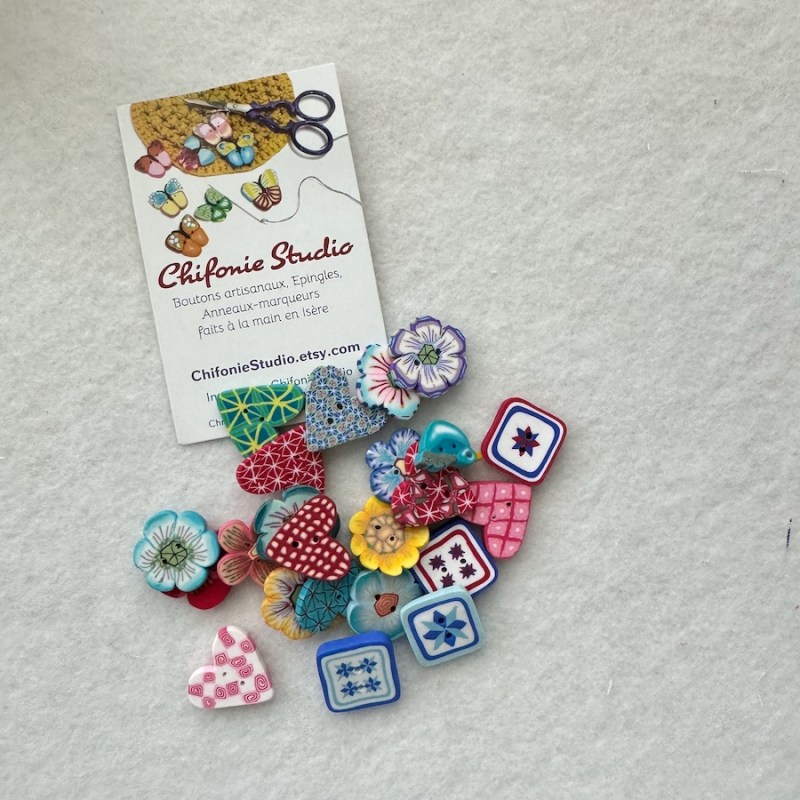
  5. buttons from Chifonie Studio

My suitcase is compact so while the purchases are small, the memories are huge!

QM published quilts:
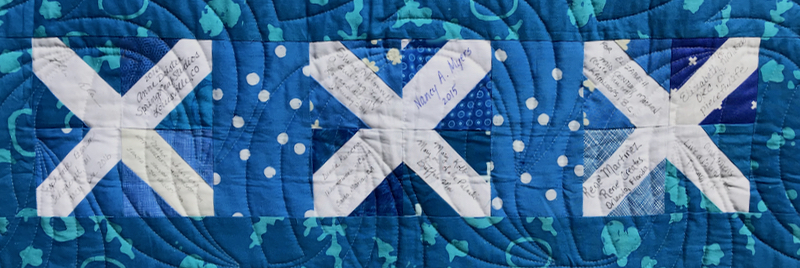
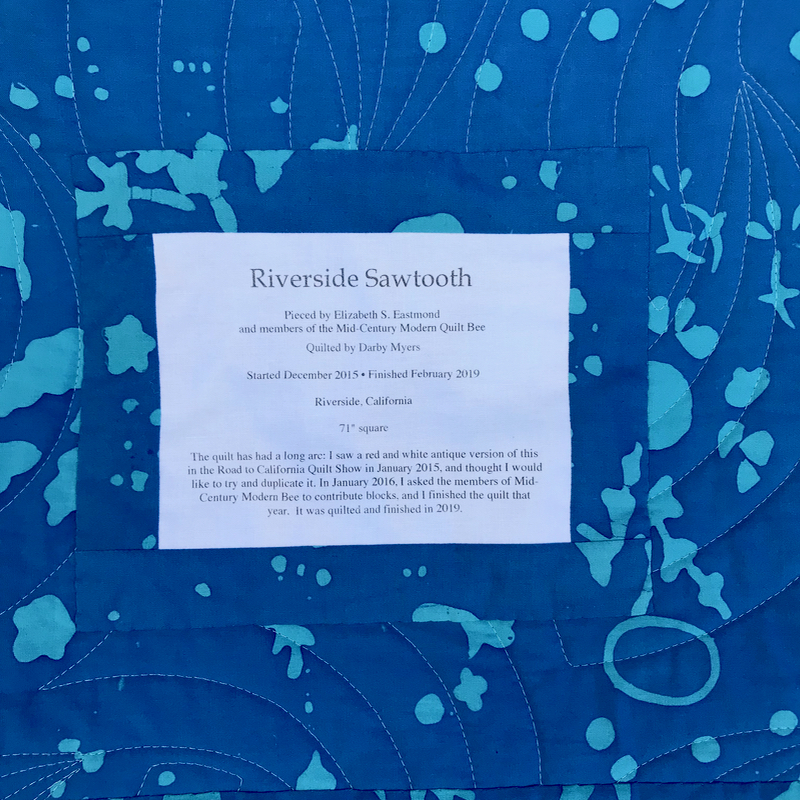
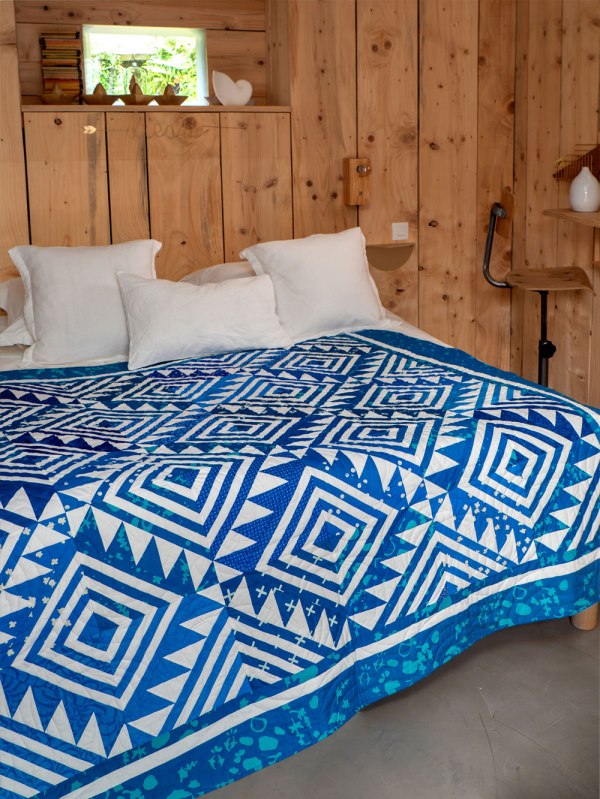
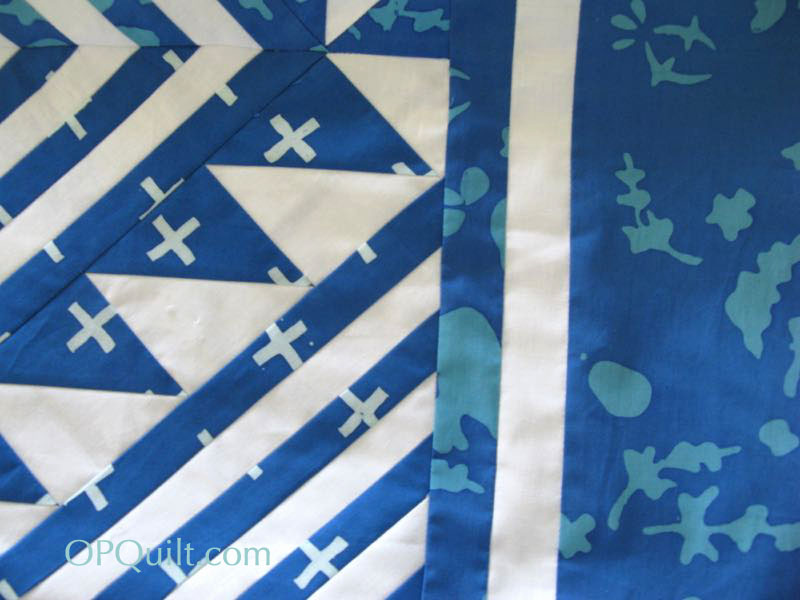
Riverside Sawtooth (in QuiltMania)
Elizabeth’s Lollipops (in QuiltMania: a photograph from a quilt show, but I’m counting it!)
Crossroads (in Simply Moderne)
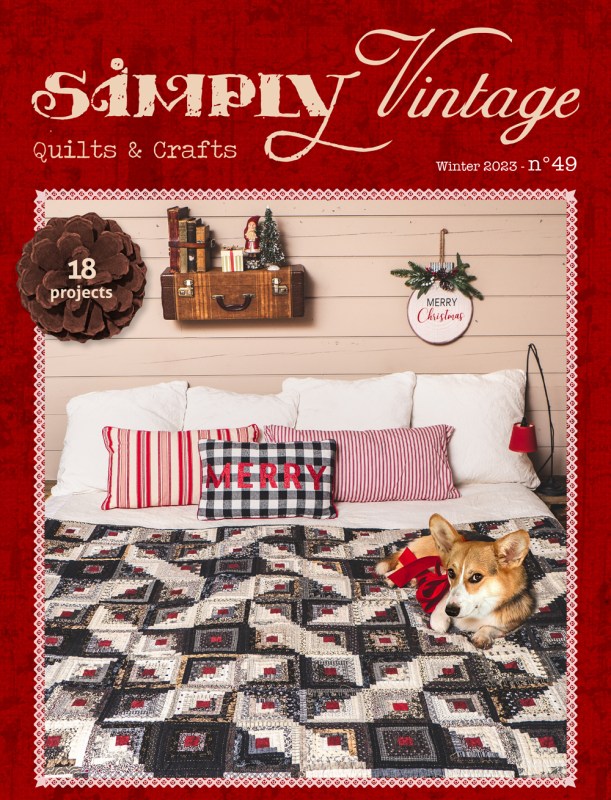
Santa’s Night Ride (in Simply Vintage)
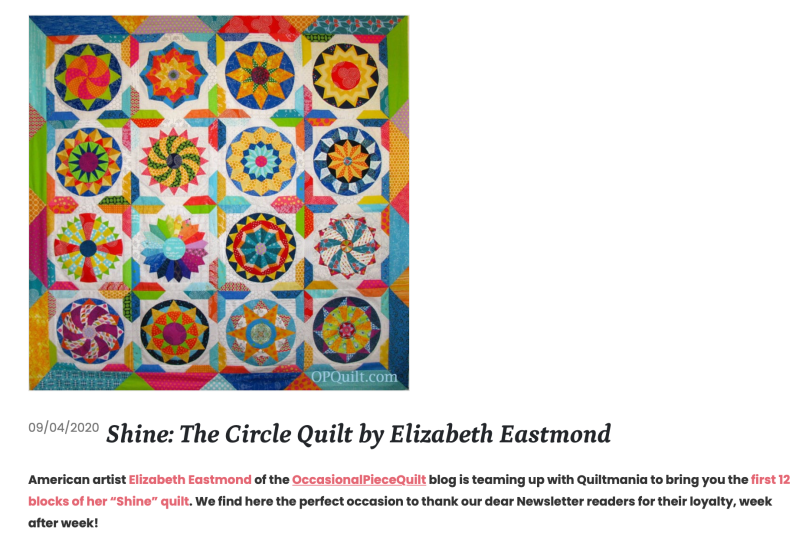
During the pandemic, I agreed to let them share my blocks with readers of the QuiltMania newsletter. The patterns have now come home to stay, and most are free (see tab, above).

300 Quilts · Patterns by Elizabeth of OPQuilt · Publications

Santa’s Night Ride • Quilt Finish

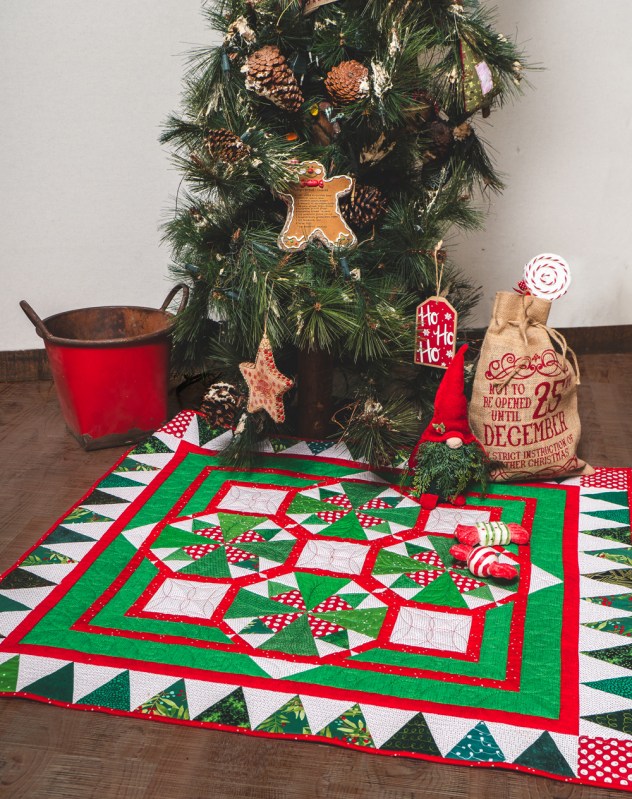
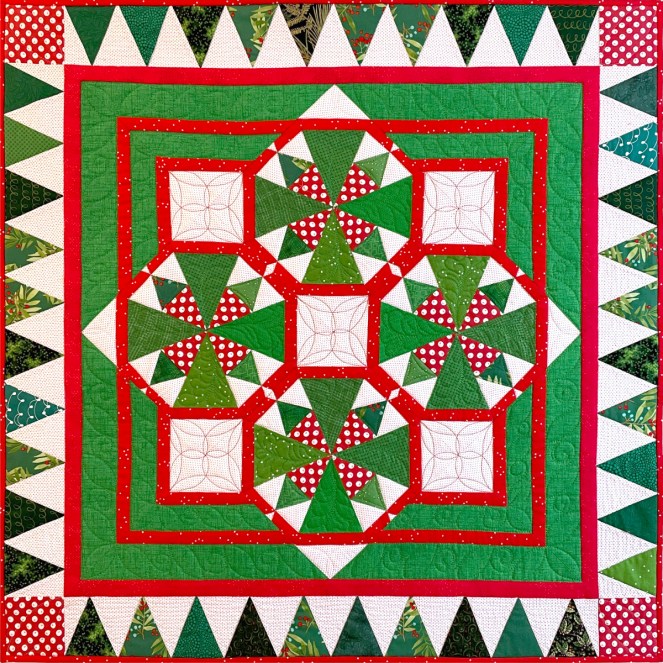
This quilt has been on quite a ride. A Santa’s Night Ride, to be exact.

It has flown over to France, to the QuiltMania people, who publish three fine magazines: QuiltMania, Simply Moderne and Simply Vintage.

It has flown home.

And it will be making its debut in one of the QuiltMania magazines: Simply Vintage!

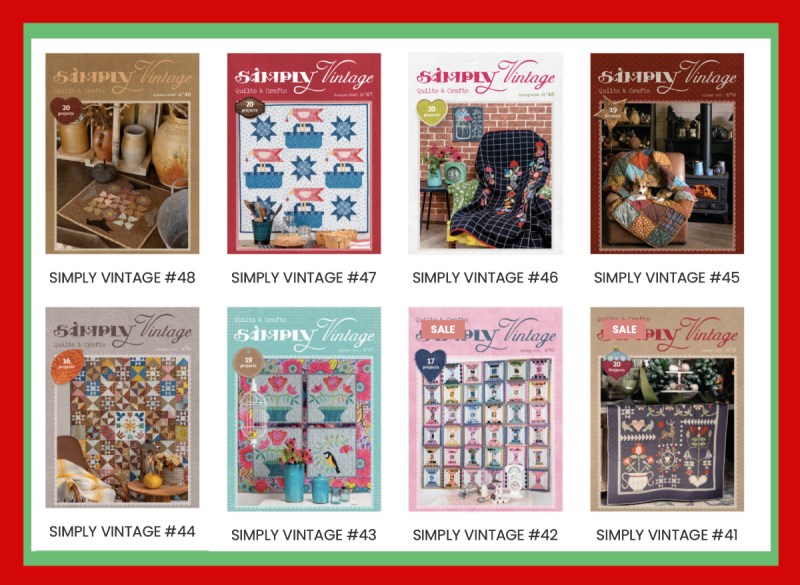
I know my friend Carol will like the Corgi on the bed. I do too! My quilt, Santa’s Night Ride will be in this issue, Number #49, which should be out about now. For those of you not aware of the THREE Mania magazines, let me introduce you to this one. While it says “Vintage” on the top, you might instead think of it as more traditional than vintage. It has a lot of our favorite quilt designs, as well as some new ones. I’m just pleased as punch to have my quilt published, and you can buy it from them directly here. Just click on the newest issue, with the Corgi on the front.

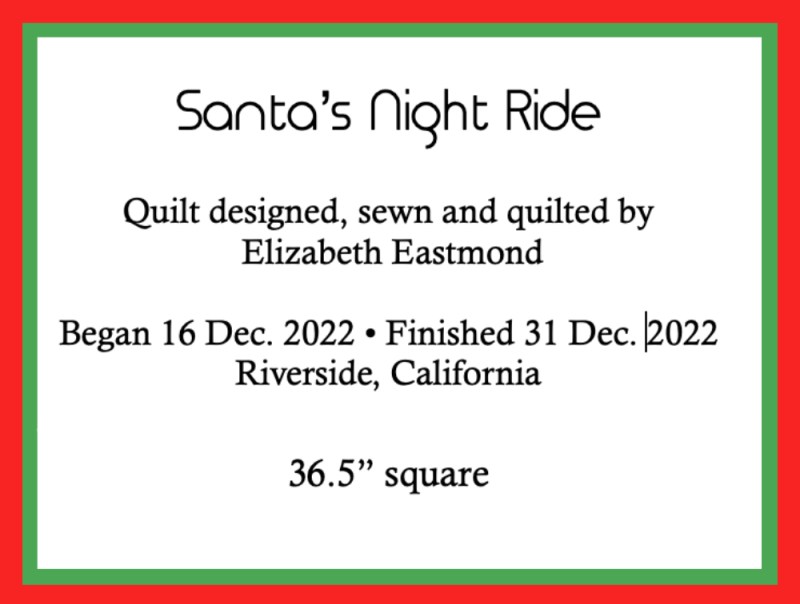
label

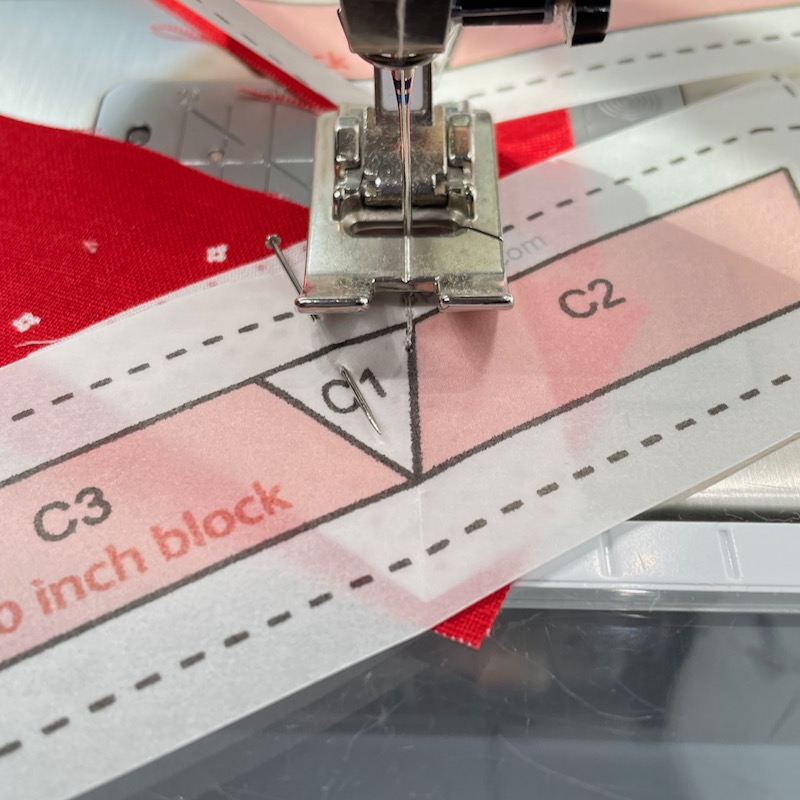
The center blocks are Foundation Paper Pieced (FPP) and they go together quickly.

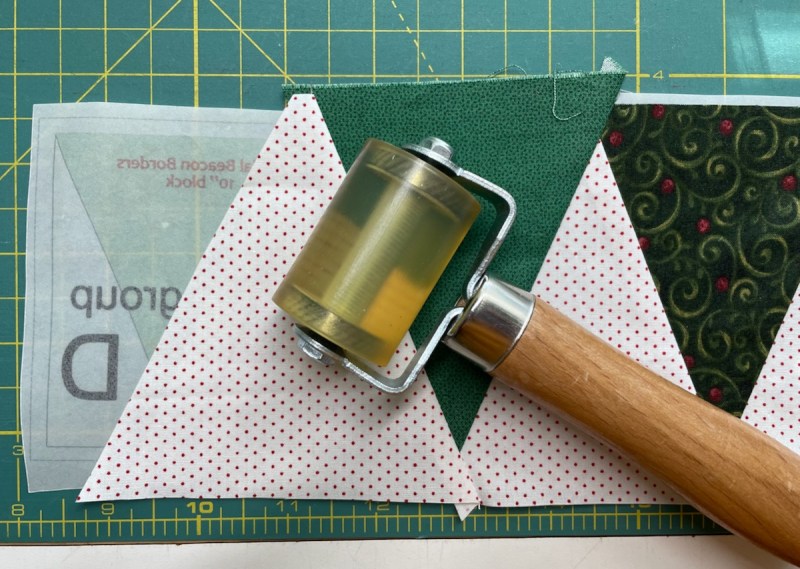
I also made the border with FPP, and here you see my favorite roller. Instead of running to the ironing board, just use this tool, an automotive tool, with ball bearings — I prefer it to the old wooden one I used to use, and it’s $cheaper$.

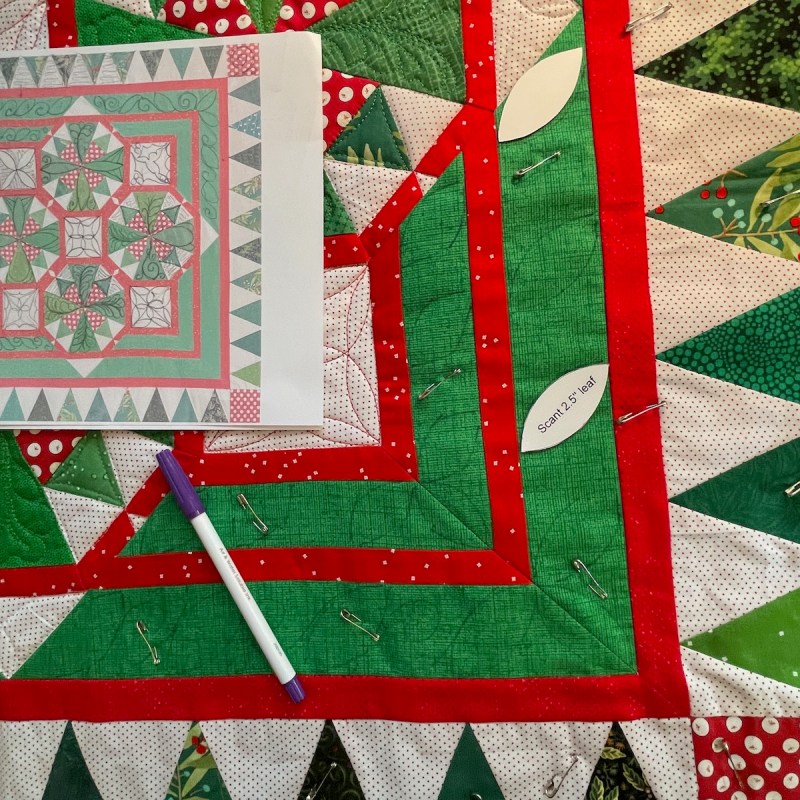
I always print out a light version of my quilt and map out my quilting. Then I will often use a disappearing pen to transfer my ideas to the quilt.

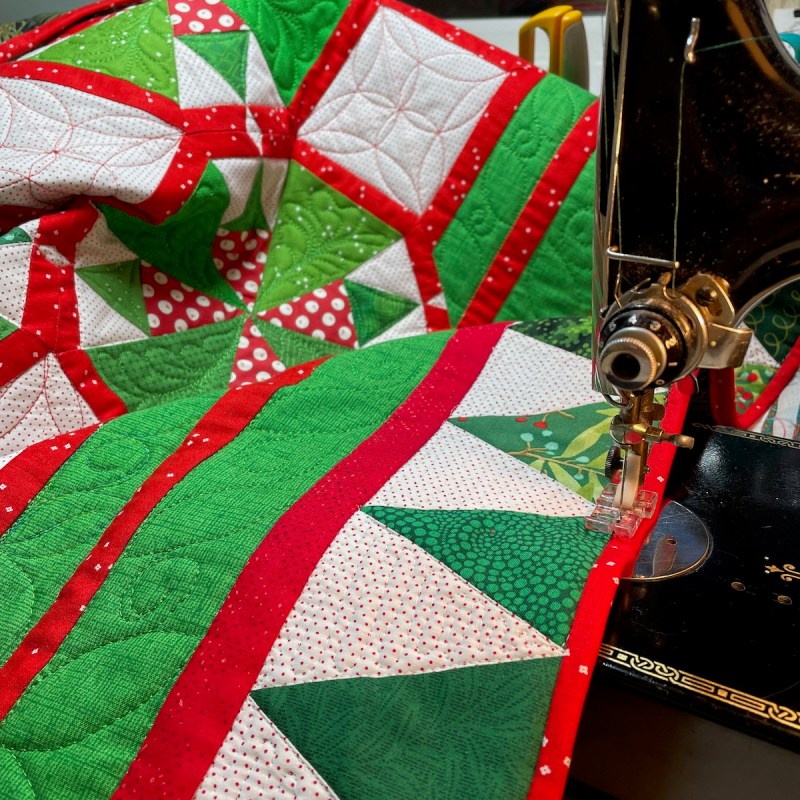
I even sewed on the binding by machine. It seems like every December, when I’m deep in the Christmas season, I get the bug to make a quilt, but I always finish it up in January. Not this one! This is Quilt #272 in my Quilt Index.

Some tips on using scraps: Keep them in similar values for the center blocks. All my blocks are different, but they “read” the same because I used the same red/white for the inner triangles, and while I used four different greens for the large triangles, they are distributed evenly throughout each block.

Go for one fabric for the light background for both the center blocks and the outside little tree-triangles in the border, as it helps tie the quilt together. You can see above all the different fabrics I used in the outer tree-triangles: cut loose and cut from your scraps.

This has been in the works for nearly a year, so while you may have had a glimpse or two of this small quilt, I was waiting for the day when I could share the happy news, of this publication.

Happy almost December!

Other QM published quilts:
Riverside Sawtooth (in QuiltMania)
Elizabeth’s Lollipops (in QuiltMania: a photograph from a quilt show, but I’m counting it!)
Crossroads (in Simply Moderne)

During the pandemic, I agreed to let them share my blocks with readers of the QuiltMania newsletter. The patterns have now come home to stay, and most are free (see tab, above).

Giveaway · Publications

Giveaway! Encyclopedia of Pieced Quilt Patterns

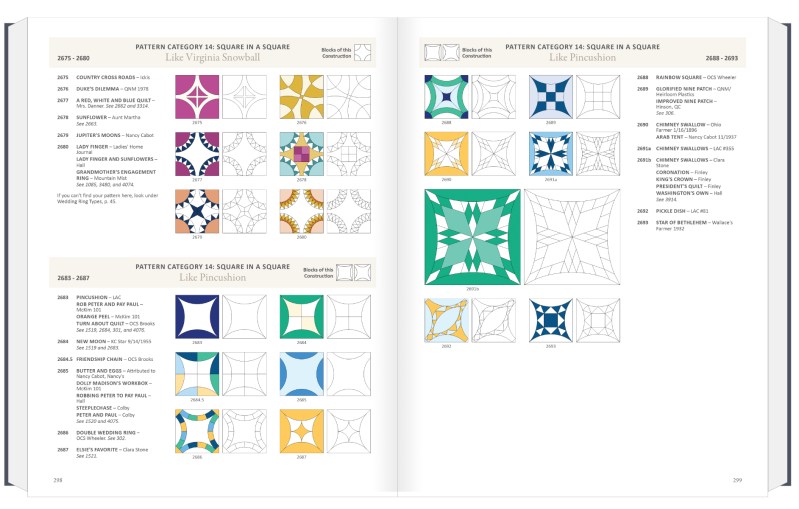
The new edition of this classic — which every quilter should have on their desk — is a quilter’s dream come true.  It has clean illustrations of the blocks, as well as a depiction of the same blocks in full color.  I reach for my original version almost daily as I try to puzzle out a block, or dream up new combinations in making my quilts.  While I didn’t think Barbara Brackman’s Encyclopedia of Pieced Quilt Patterns could be improved, I was wrong. This new version will make it easier to find interesting blocks to make, to research the history of our work, as well as to link us to our rich heritage of quilting. 

That blurb at the top is what I wrote for Electric Quilt, the publishers, when they contacted me earlier this fall. As long-time readers know, I’m an enthusiatic user of this book (my edition was published in 1993). When I need an idea for a baby quilt, I turn to the Nine-Patch section. When I am creating quilts for my classes, I peruse the more complicated sections, as well as the traditional Four-Patch. She has Wheels! She has Fans! She has uneven Nine-Patches! And the best part is that now it comes in color, AND in black and white, as you can see by the sample illustrations. That way the coloring can be suggested, or you can go hog-wild, coloring up your own blocks.

But the absolute best part (if there can be only one best part) is that now we can connect our blocks to those of those early quilters. We can identify them, linking all of us together with those women who drew their blocks out on paper, working their quilting in among their gardening, their laundry, the raising of their families, their teaching, their mending. Now you can use Barbara Brackman’s careful research to make your quilts, coupled with the updated and colorful version of this book. I am so excited!!

Here’s my True Story: while the bulk of my blocks in SHINE: The Circles Quilt come from a church in Slovenia, when I was just getting started on this idea, I turned to my Encyclopedia of Pieced Quilt Patterns and found Feathered Star, block #3389. I made it, and when I visited that church, I was able to show the guard in the kiosk a photo of this block — “my art” is what I said — and he gave me permission to take more photos of the glorious art in that Serbian Orthodox Church. That quilt, which is still cooking along, had its genesis from this book, a block from around 1933, according to Brackman’s notes on its provenance. And one of you can win this book. Keep reading.

  • Electric Quilt, the publisher, is currently offering 30% off the book if customers “pre-order” it on their website by November 24 . I’m just telling you this, so that in case you are not the lucky winner, you can still have the opportunity to take advantage of the 30% pre-order discount. Details here:  https://electricquilt.com/pre-order-and-save/
  • EQ expects to start shipping the book December 1, 2020. Perfect for holiday giving. (And yes, I plan to have a Christmas holiday this year, and although more kilos may join the Covid kilos, it will still be worth it.)
  • If you want any other information about the book, they have general info at their website, such as FAQs, a blog post, and reviews (maybe you’ll see mine there?) Click to head there: https://electricquilt.com/online-shop/encyclopedia-of-pieced-quilt-patterns/

Here’s the official details:

  • Enter to win a copy here, or pre-order the book through November 24th at ElectricQuilt.com.
  • Giveaway winner will receive one copy of the book shipped in December, 2020.
  • The Electric Quilt Company will ship to U.S. addresses for free, others will have the option to pay for shipping costs, so yes, international readers you can enter (but you’ll just have to pay for shipping–they will contact you).
  • The book will be shipped directly from Electric Quilt. I’ll forward them your info after contacting the winner by email.
  • You can also enter on my Instagram Account @occasionalpiecequilt It’s a slightly different set of guidelines; pay attention, so you’ll be in the running.

Okay, gushing over! Get ready, get set, go! I’ll choose the winner on All Saints Day (November 1st) because I know you’ll be too busy on Halloween to pay attention.

GIVEAWAY IS NOW CLOSED. THANK YOU TO ALL WHO ENTERED!

Leave me a comment below telling me what you want for Christmas. Get creative, get close to the heart, get wild, or shoot for the stars.

300 Quilts · Patterns by Elizabeth of OPQuilt · Publications

Made to Withstand the Proof of Time

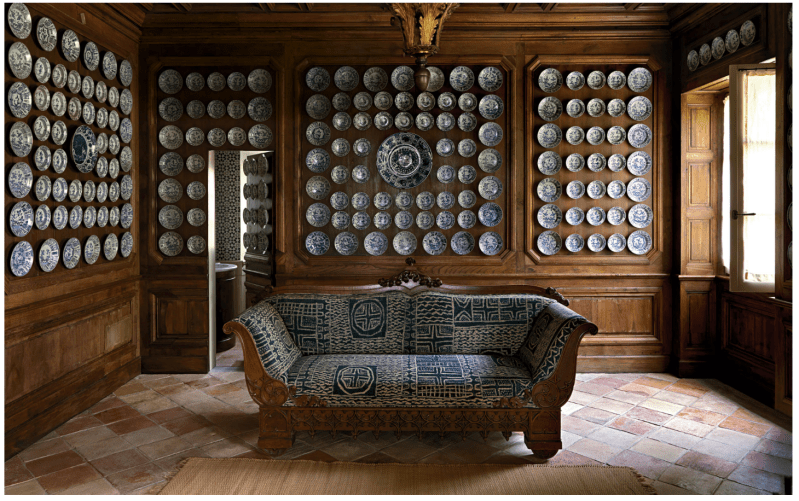
from here; more about this in a minute

As quilters, we have an relationship to time. We begin something, knowing it won’t be done for days, or months or even years. We work towards a daily or weekly goal of finishing the quilt, even though we might sometimes abandon the effort. But there is always this gap from beginning to end.

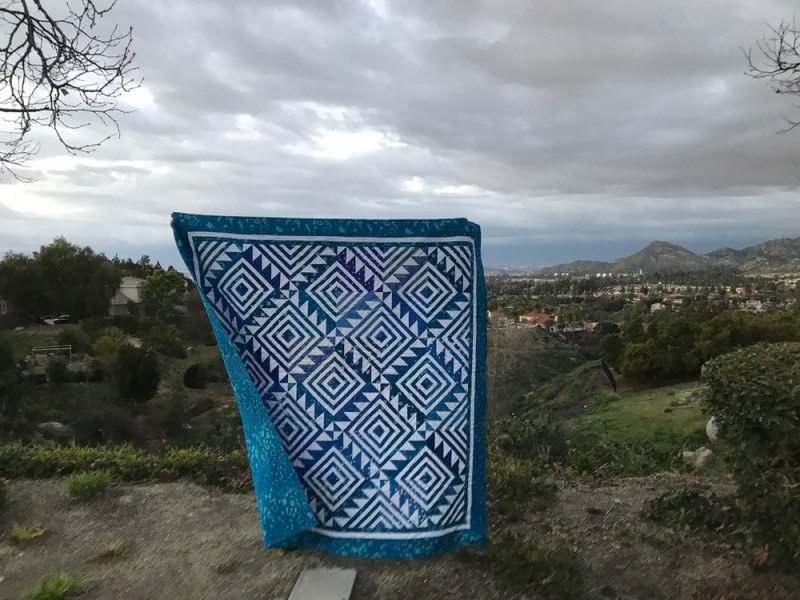
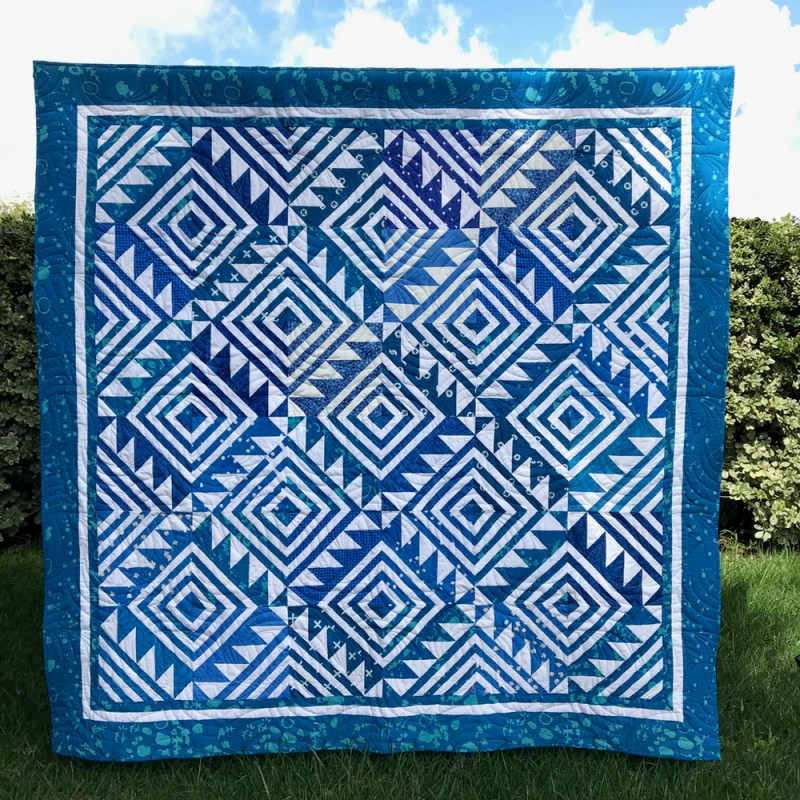
I started this quilt in December 2015, the design inspiration taken from an antique red and white quilt I’d seen in a quilt show. I couldn’t figure out how that quilting sister from 150 years ago put her quilt together, so I modernized it, and then in January 2016 sent the instructions to a bee I was in, asking them to make some blocks. Then I made more blocks, thinking about how that woman so long ago might envy our ability to have such an array of fabrics, to sew like the wind on our modern machines, to have such a distant circle of friends still gather together in a quilting bee.

I wrote about the finished quilt top, and then it sat. Time passed.

I wrote a pattern, but when QuiltMania accepted the quilt for publication, I took it down from my PayHip shop.

Time passed. And then some more time.

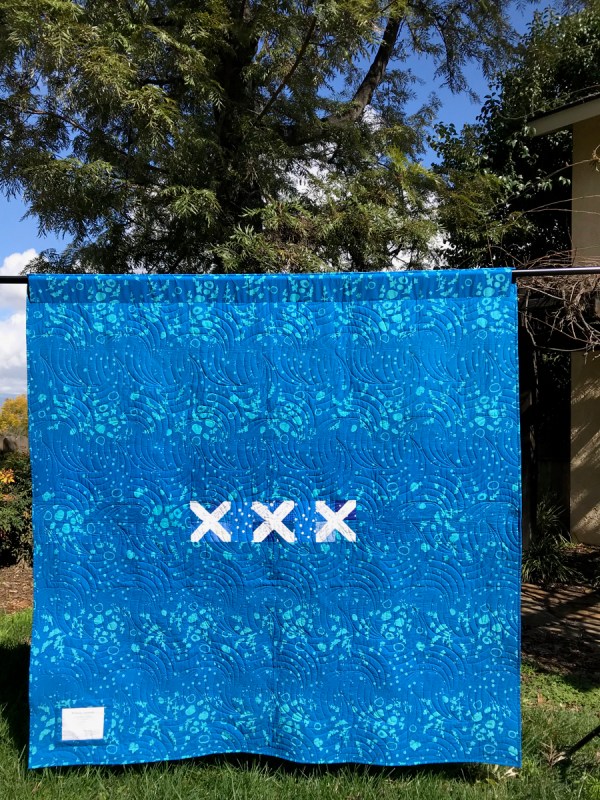
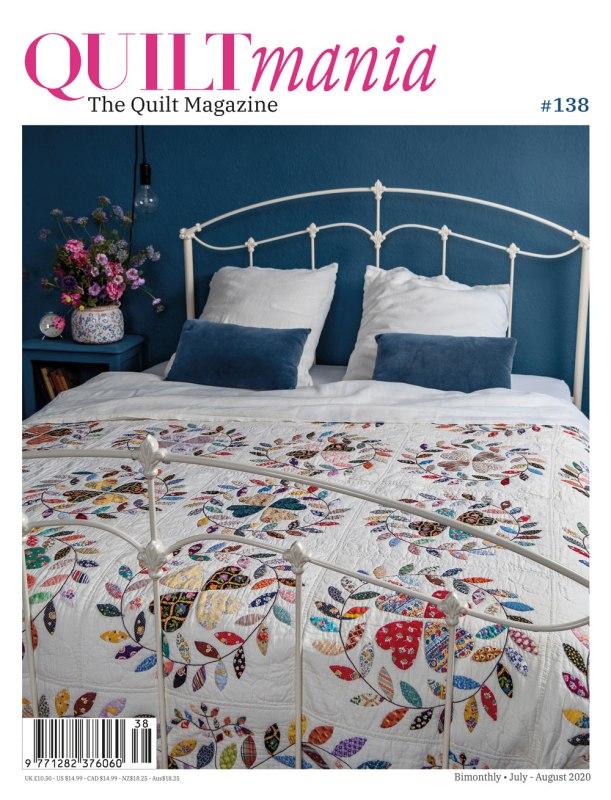
This week I received this picture in an email, along with the picture of the cover:

From December 2015 to August 2020 is nearly five years. In that time I’ve counted off changes in our family, health issues, deaths in our family, births and birthdays, personal highs, and personal challenges, a pandemic and now extremely grateful to have a quilt published in a respected quilt magazine. And to quote a common phrase seen in our quilty culture: I have #allthefeels.

Which brings me back to that photo at the top of this page. Several designers and architects were asked to “reflect on a changing world, their creative process, and the future of design.” I enjoyed reading their thoughts, as they echoed some of my own feelings about the creative life. Here’s two:

Pierre Yovanovitch (Provence, France) said: “I try to look at the silver lining and see this as an opportunity for a creative reset, taking a pause from our overly scheduled lives to tap back into what inspires us.”

Milanese designers Laura Sartori Rimini and Roberto Peregalli, who designed the room of plates at the top of the post:

“Regarding the future effects of this pandemic, on one hand it has been recognized the importance of the house as a center, a place of the soul in people’s life. On the other hand, the inevitable economic impact that will follow this situation will, we hope, generate among people the idea that the house isn’t just an object that follows the trends to be discarded and replaced for the next upcoming thing. You should aim for an object of beauty, made to withstand the proof of time.”

I guess that’s why we quilters are willing to start a quilt in December and nearly five years later, see it completed. That’s why we pick out fabrics and squirrel them away, knowing that sometime in the future — maybe even in a pandemic — we will pull out the projects we’ve collected and start the long process in the midst of the distraction, the sorrow, the uncertainty.

And as always, we will send our quilt out into the world as a veritable declaration of hope, our handiwork created to withstand the proof of time.

Happy quilting. Yes, especially now.