
Something to Think About

Creatives Talk

Iris van Herpen designs

Somewhere between the shock of a pandemic shutting the entire world down and its ripple effects, and this month’s realization that this quarantine stuff — if everyone plays nice — will probably go on for another year, I found an article where two creative forces, the designer Iris van Herpen and the choreographer Damien Jalet had a conversation.

It was May 2020, and after holding our breath since mid-March, we slowly began to exhale, wondering how we were going to get through this, would we ever get through this, and how to pick up the pieces of lives, covid-style. And then this article came into view (one in a series from The Big Ideas in the New York Times).
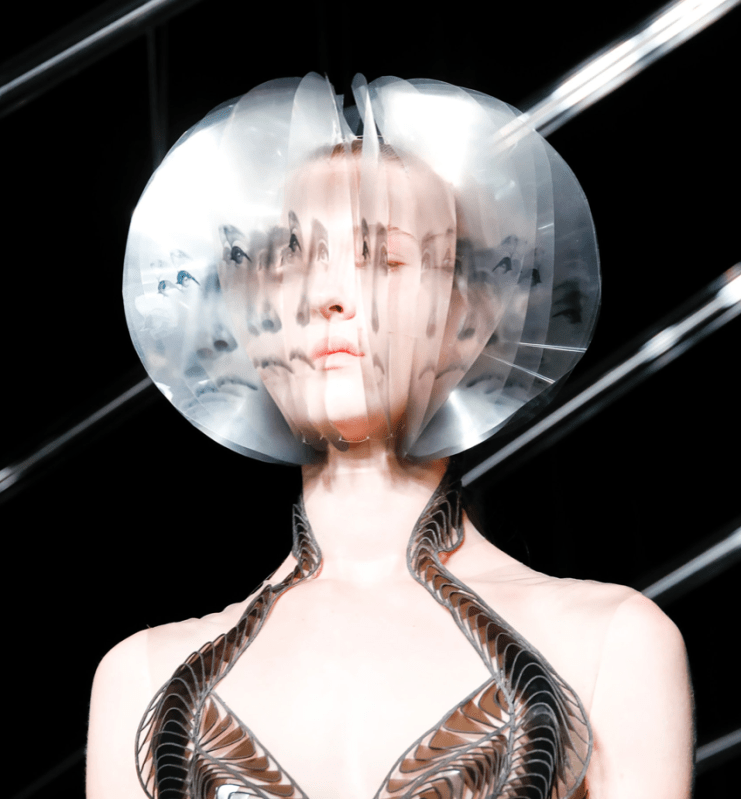
As you can see from van Herpen’s designs, she is not your average fashion designer. So this excerpt surprised me (Damien Jalet, asking the question):

Stanley Kubrick said that some of the artistic failures of the 20th century came from an obsession with total originality, and that innovation didn’t happen through abandoning the classical art form of your own discipline. . . Does the question “Is what I’m doing original?” ever come up in your creative process?
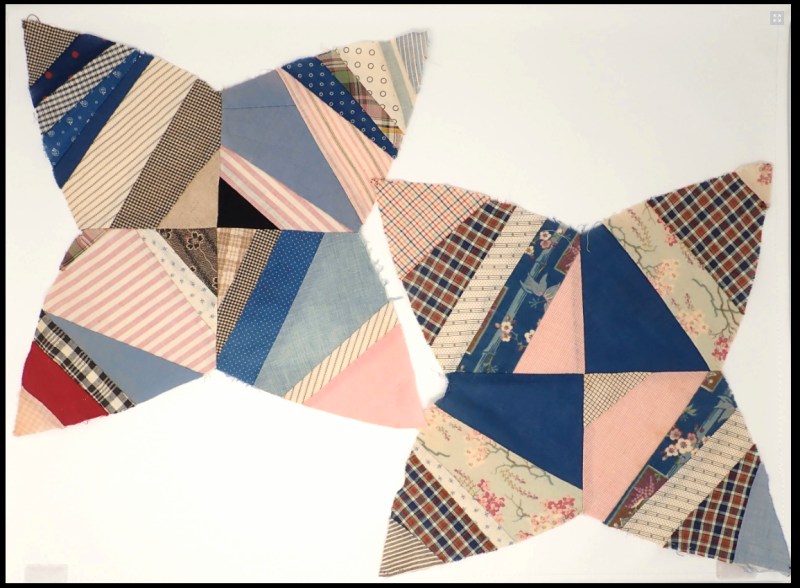
cotton quilt blocks from 1890, from here

At one point in our quilting world, we quilters spent a lot of time and spilled a lot of ink (figuratively speaking) over this issue. We were rabid with the question of who came up with this idea first? Who was the first one on the planet to draw a particular block, make a particular quilt, yada yada yada.
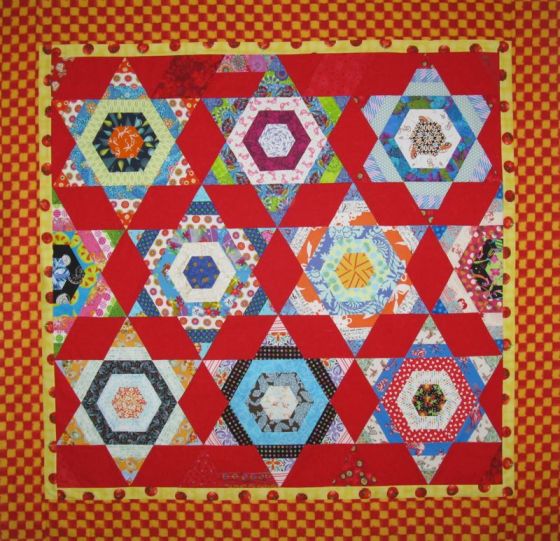
Scrappy Stars, from here

Ms. van Herpen replies:

Nothing comes out of nothing, so the craftsmanship that we master we can attribute to a long evolution of craftsmanship and innovation combined throughout so many centuries. And we are looking at that constantly. So in that sense, I don’t believe at all in originality. But at the same time we are combining it with technologies of today and newer techniques… Without the knowledge of the traditional craftsmanship, we would not be able to integrate these new techniques at all. So they really need each other.

Nothing comes out of nothing. This implies that we quilters, without the history of what has come before us, would not be able to create our designs and our quilts. In her words, “we really need each other.”
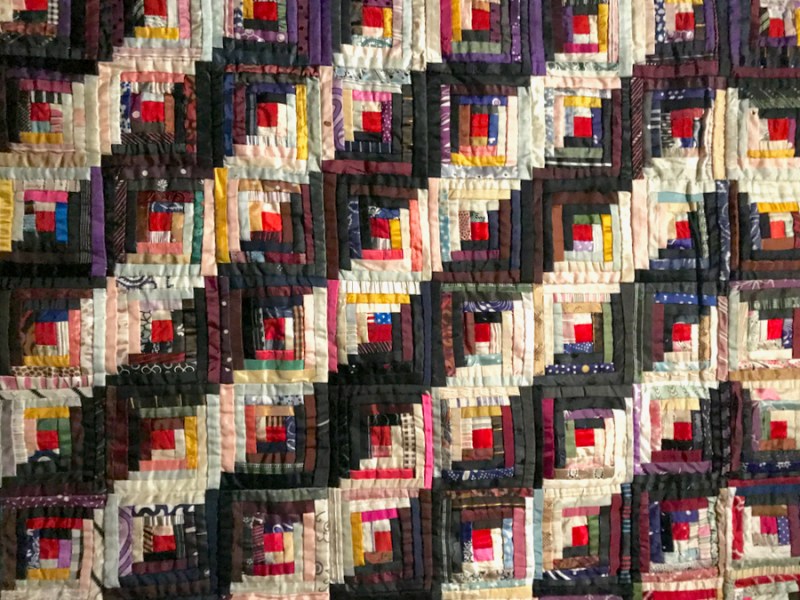
Log Cabin quilt, 1870

Back to Kubrick’s idea. I remember in my earlier days striving mightily to create something totally my own, something that had no origin from anything that we were familiar with. Anywhere. My early attempts were, as he says, “failures” as they “came from an obsession with total originality.”
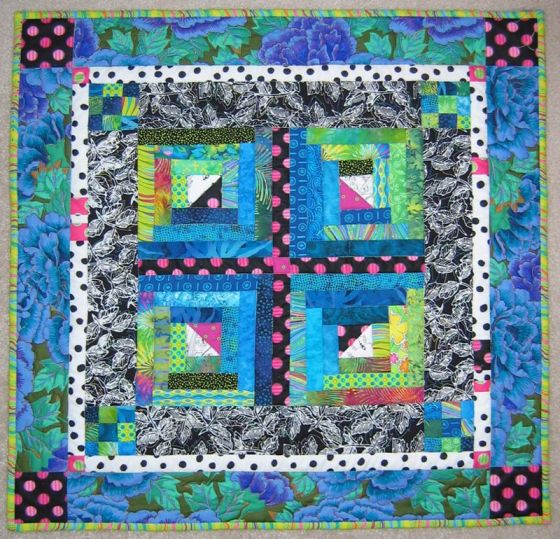
D.C. Dots & Dithers, from here

Slowly I began to remember that when I was in college, in photography class, one of my professors noted that we don’t have to be original, that most of the best ideas are really only 10% new — anything more and they would be too far out of the mainstream to be accepted or enjoyed. An article on The Next Web reiterates this:

There is no such thing as a new idea. One of the most beautiful things about humanity is our ability to build on each other’s ideas, making small tweaks and giant leaps into new innovations. That doesn’t mean your ideas aren’t potentially interesting and even important — just don’t ever call them “original.”

The idea, that I don’t have to be original or new or startling or gee-whiz-bang, and that I can just make a solid quilt with good color choices and a somewhat fresh take, is a relief.
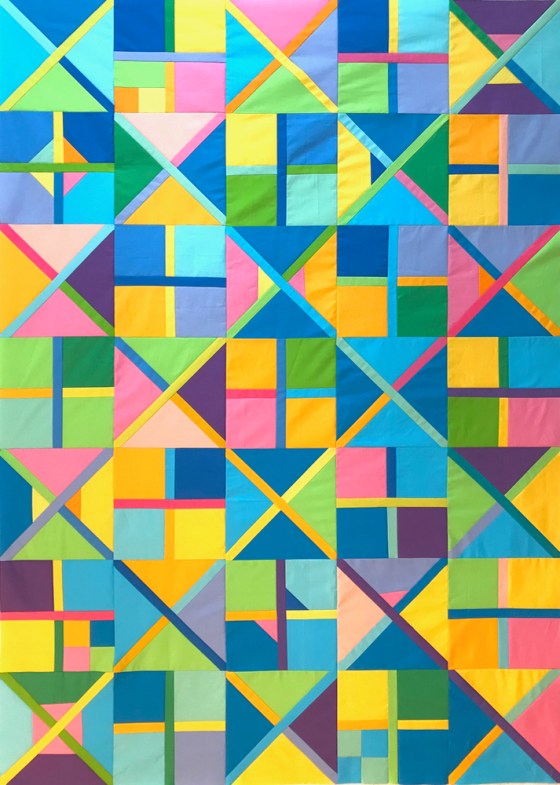
Criss-Cross Color

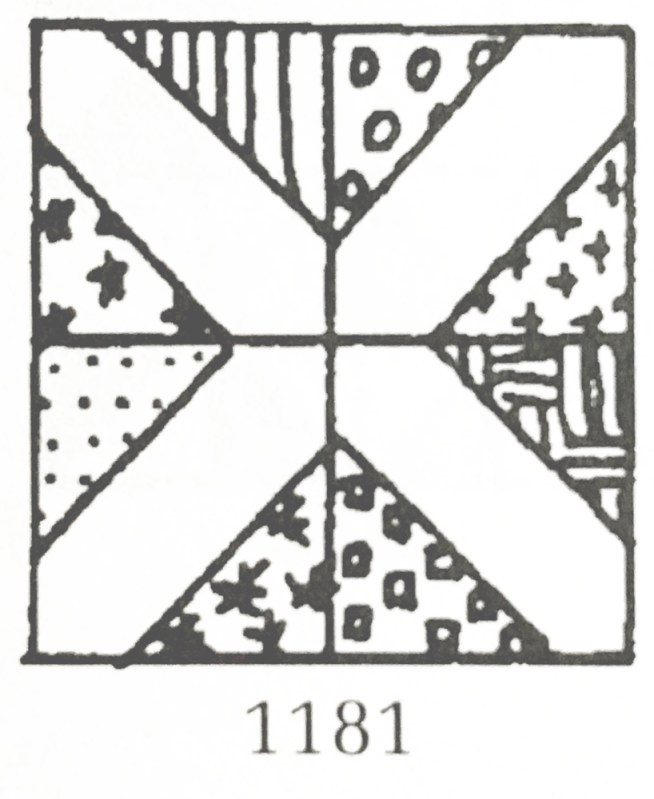
from Barbara Brackman’s Encyclopedia of Quilt patterns: a four-patch block known as a Lattice block
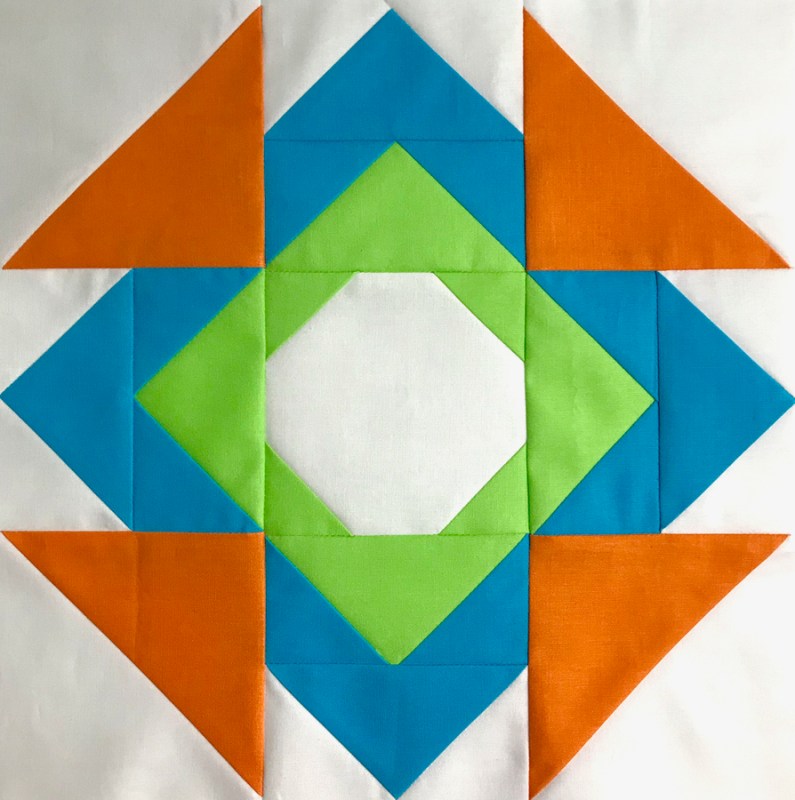
from here

This month’s Gridster Bee Block, chosen by Bette has its origins in a Churn Dash variation, known as Puss in the Corner, from Nancy Page in the 1920s:
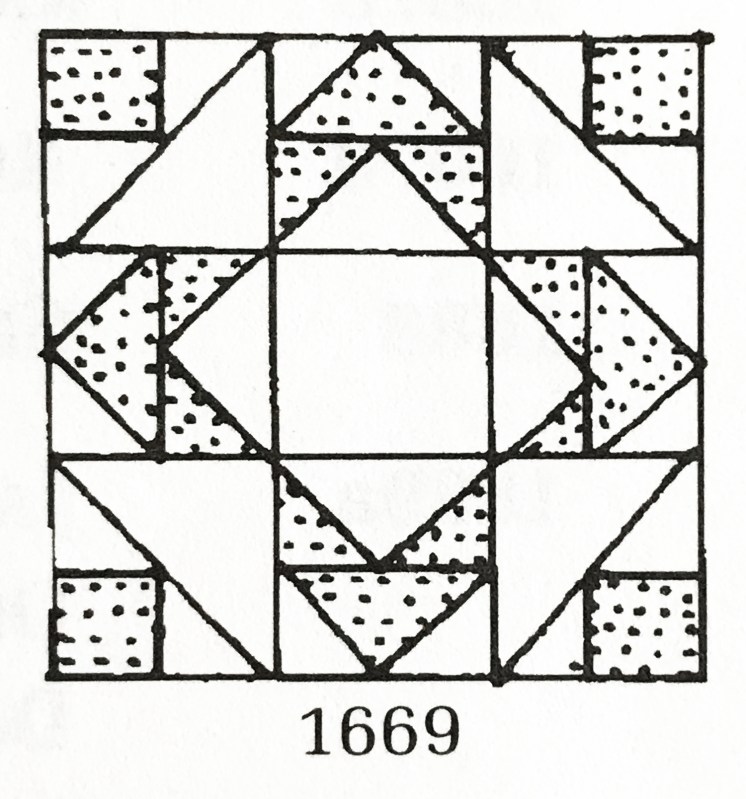
I admit, sometimes I doodle around and then hit Barbara Brackman’s book to see what our early quilters did, and often what I think is something I’ve discovered, is actually on the pages of the Encyclopedia of Pieced Quilt Patterns. There’s a whimsical sort of — well, of course — that goes on, but also another link from me to those women long ago. I honor this connection to our “classical art form of [our] own discipline.”

Happy Stitching!

Classes · Quilt Patterns

Crazy Cushion Class

If you could scroll down for just a second and locate on the right blog sidebar where there is a link to a video titled Create. This was taken from a talk from one of the leaders of my church, and if you are not a religious type, then substitute in your version of God for what Elder Uchtdorf says.  I watch it everyone once in a while to remind me that what I do is more than stitching, or cutting up pretty cloth.  Being creative is my connection to — and a conduit for — the divine.

Crazy Cushion Class_6a

I had an inkling of the power of a lot of creative women, when I attended Becky McDaniel’s class for her Crazy Cushion pattern.  Yes, there was fatigue and frustration, but there was also a spirit of wanting to create (above, watching a demo).

Crazy Cushion Class_6b

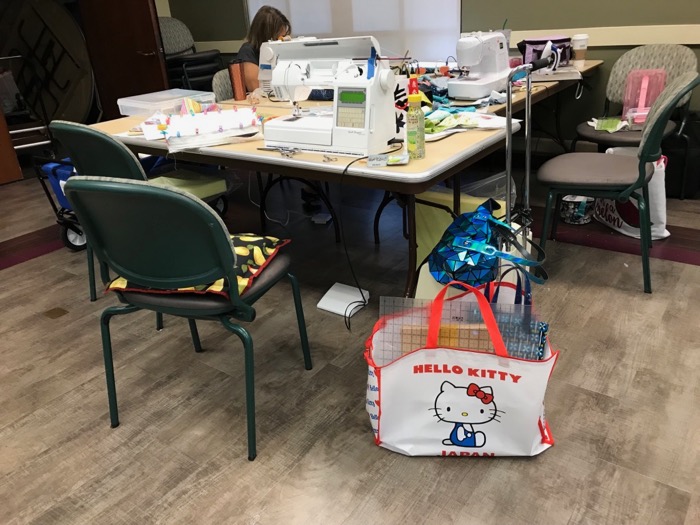
My workspace.  I had a nice visit with the two quilters at my table, Sandie and Marie (absent), and was totally impressed with the women in the Nite Owl Guild.

Crazy Cushion Class_7

Becky was energetic, funny and taught some new skills: like working with a light table while paper piecing, and we all promptly handed over our cash to buy her cool flat light table, while stories swirled around about the light tables we had at home.

Crazy Cushion Class_8

Yeah, we weren’t in this room, but the ping-pong table was.  The class was held in the Senior Center for a nearby town and was a great place to have a workshop.  Below, Becky’s table of supplies.

Crazy Cushion Class_9Crazy Cushion Class_10

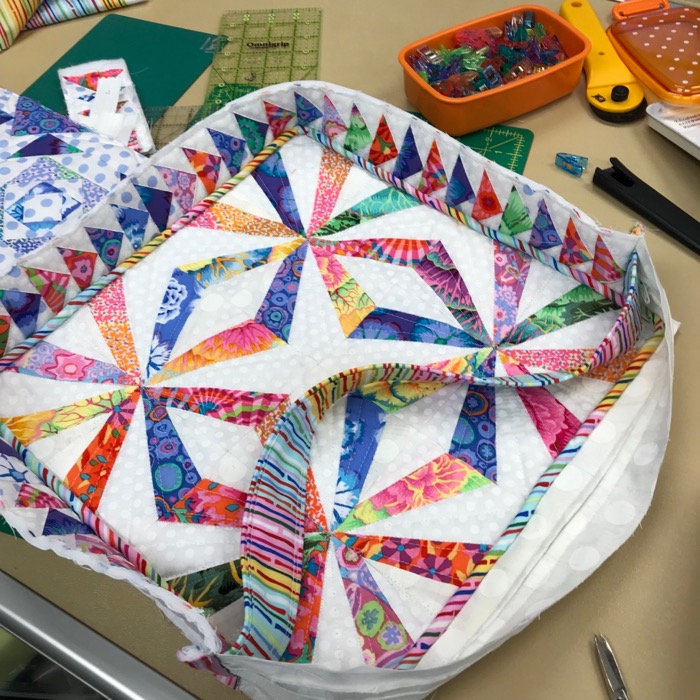
Even though I had all my sections pre-pieced, at this point I felt like I’d run a marathon, just getting that welting stitched in between the flying geese band and the cushion top/back.  The band includes a handle for carrying (seen serpentining in the photo above).

Crazy Cushion Class_10a

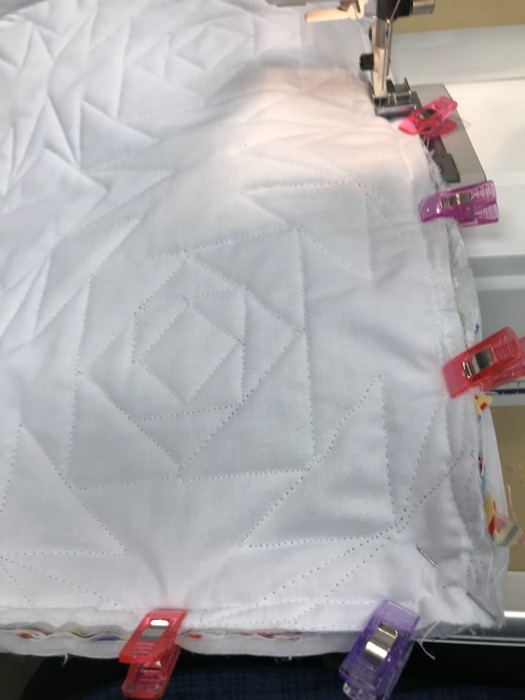
More than one use for those binding clips.

Crazy Cushion Class_11

Because of all my sewing beforehand, I was able to finish my cushion.  Above, the photo with Becky McDaniels.

Crazy Cushion Class_11aCrazy Cushion Class_11b

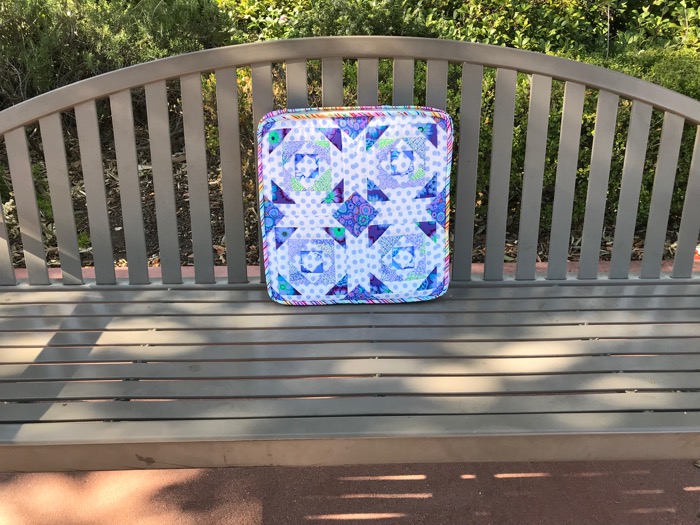
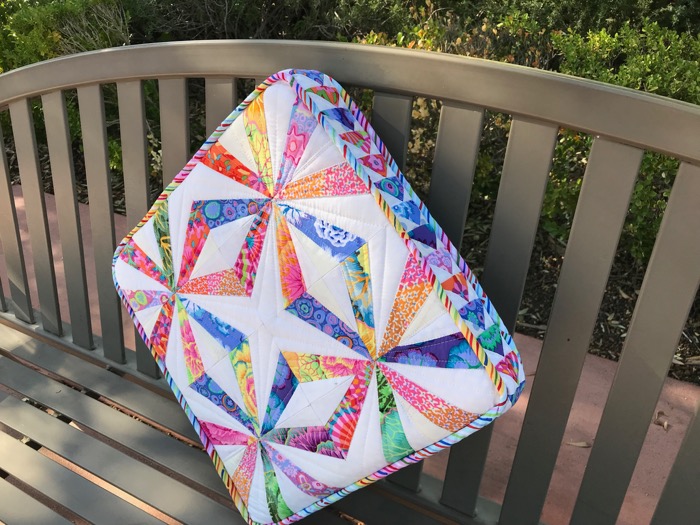
I posed my cushion with hers (the larger of each).  Mine measures 14″ x 2″ and hers is 16″ x 3.”  If you decided to take this class, do your homework beforehand, if you have done paper-piecing before, so you can have a finish, too.

Crazy Cushion Class_12

And then outside in their gardens, before leaving.

Crazy Cushion Class_12aCrazy Cushion Class_12c

Now I’ll have something to sit on when I go to workshops!

  • The pattern can be found on her website, along with more information.
  • Kaffe Fasset fabrics recently purchased at Blue Bird Quilt Shop, near me, including that cool stripe.
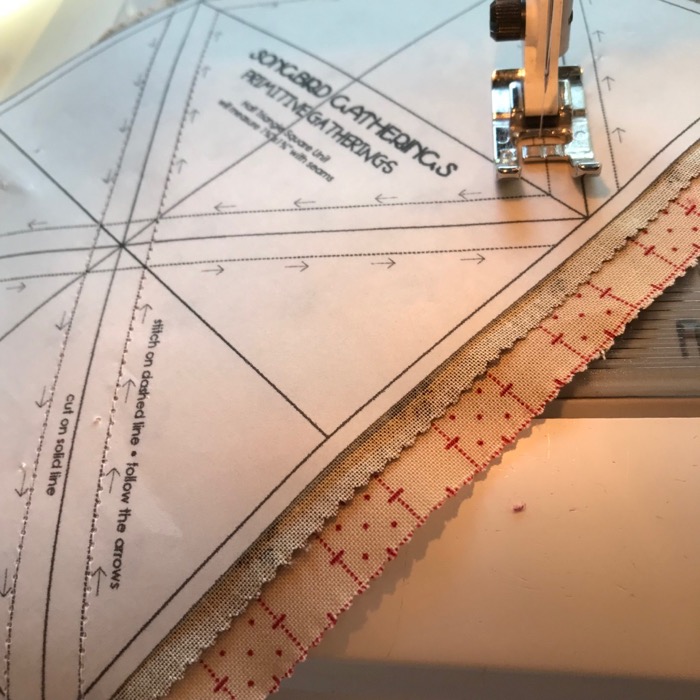
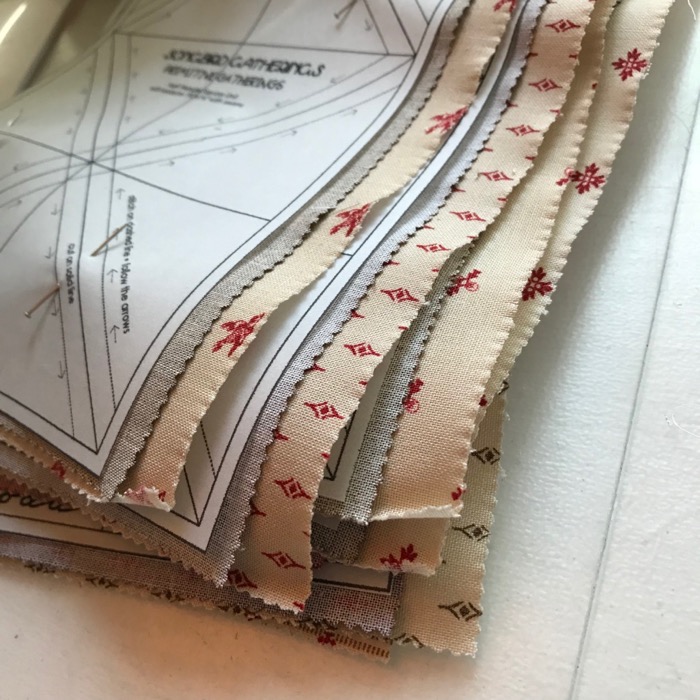
  • I use transluscent vellum paper by Neenan for my paper piecing because I can see through it and it rips off easily.  I purchased a ream about 10 years ago from Kelly Paper, and it cost way more than I wanted, but hey–10 years use?  Not bad.
Gridsters · Quilts

Getting the Work Done: Artist vs. Addict

Frivols 7_19

A recent reviewer of Steven Pressman’s book Turning Pro, pointed out that:
“What is distraction, if not self-sabotage, sabotage of one’s future self?”   Pressman, who wrote the War of Art, a must-read for creatives,  writes about about the difference between being an artist and being an addict, about the difference between being a professional (focused on the work) and an amateur (talking about the work, but not really doing it).

Frivols 7_21

Pressman has written three books, and as another reviewer described them:

The War of Art discusses the decision to start, while [his second book] Do the Work takes on the concept of sustaining the discipline it takes to finish a piece of work. Turning Pro takes things up a notch by insisting the artist must establish a rigid discipline and trust the Muse.”

Frivols 7_23

It’s easy to forget why we work at something.  There we are, putting our focus on our machines and in our sewing spaces, cutting and sewing, and all of a sudden, it’s oh wait a minute, let me check what my friends on Instagram are doing.

Frivols 7_24

According to Pressman, that doesn’t get the work done.  What it does do instead, is turn our work, our lives, our posts into an endless loop of sort of getting things done, but not really forging ahead into new places.

As Jocelyn K. Glei put it, “I was particularly struck by his distinction between “the artist” and “the addict,” wherein the former is living out a productive, creative career, while the latter is caught in an endless loop of aspiration and yearning that never gets backed up with meaningful action. Glei also noted that: “The amateur is an egotist. He takes the material of his personal pain and uses it to draw attention to himself. He creates a “life,” a “character,” a “personality.”  Using the term “shadow novel,” he draws out the life of a person is sort of working towards something, but not really.  Like I was after grad school: wanting to be an author, but not writing a word.

Frivols 7_25
I soon figured out that being a fiction writer was not the direction I was doing to go. I was able, however, to take my MFA training and love of the written word, combine it with sewing, in order to write about quilting — a completely unplanned, but incredibly satisfying endeavor.

Frivols 7_26
Frivols #7, in process

Cindy and I have talked more than once about the world of social media (namely Instagram) and how it sometimes interferes with getting the work done.  I love a good stroll through the posts as much as anyone, and I love to read blogs and see what creative juice is running through my community.

I recently watched the entire launch video of IGTV, that futzy little button in the top right of your screen.  As they went through all the scenes of creators (our new name, I guess), I realized that they were all barely older than my grandchildren…and with that realization came the understanding that IG “allowed” me to have my community, but what they were really about was the selling of “new media,” geared to “young influencers” gaining followers, gaining media attention and earning money.  Hence, the screwed up IG feed for the rest of us.

Chronology is out.  Connectiveness is in (which is different from “connections”).  Process is out.  Profits are in, including the data mining of all our click and taps and touches.

July 2018 Gridsters _ Leisa
Gridsters Bee Block for Leisa–July 2018

What does this have to do with artist/professional vs. addict/amateur?

As Pressman states, “The artist and the professional, on the other hand, have turned a corner in their minds. They have grown so bored with themselves…What were once their shadow symphonies become real symphonies. The color and drama that were once outside now move inside….When we [choose being an Artist], the energy that once went into the Shadow Novel goes into the real novel. What we once thought was real – “the world,” including its epicenter, ourselves – turns out to be only a shadow. And what had seemed to be only a dream, now, the reality of our lives.

It’s all about where you focus, where you put your attention.  Make use of the tools that help you, but don’t let them dominate allotted time, or dilute creative energy.


Giveaway · Something to Think About

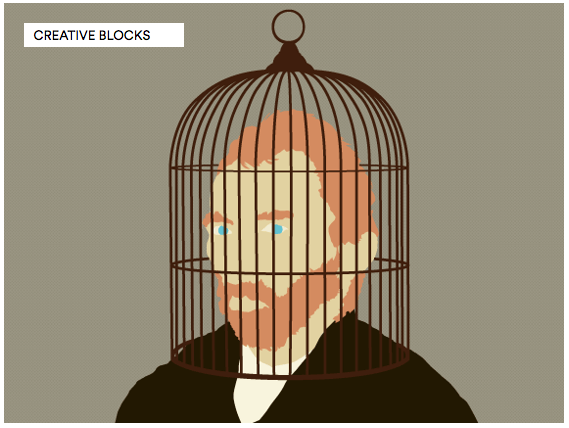
creative block

(Yes.  Lower case title, just to reclaim some of my quirkiness.)

I recently posted about taking a break from the creative world, from the quilty world, from whatever and while I was gone, I had some to time to think about how I’d gotten to that non-creative place.

irons in a fire

I’d say, for me it was a factor of four: Time, Health, and Mental/Physical Fatigue, as well as a Too Much to Do.  My Dad used to say “Too many irons in the fire put out the flame.”  While a reference to the bars of iron that blacksmiths use, I did have too much going on.

creative block_99U
from here

I was intrigued with the idea of Creative Block, and one article “7 Types of Creative Block and What to Do About Them,” from my favorite place online (99U) discussed this issue, that apparently is a very-much-real thing.  In that piece, I liked the sub-topic of  Work habits that don’t work, as I have been struggling to (re)learn three new computer programs: EQ7 (I learn it, then forget it, and there’s so many hurdles with the design of this software…but then that’s another post), Affinity Photo (to replace Photoshop) and Affinity Designer (to replace Illustrator).  Three more irons in that proverbial fire.

99U’s advice to “[s]tep back and take a good look at how you’re working, and where the pain points are….If you don’t have enough energy, are you working at the right time of day? If you feel paralyzed by freedom, introduce more structure and order into your day. If you feel constrained by routine, find room for improvisation” felt like it was just for me.

I always love the Brain Pickings articles, and the review on a book from Danielle Krysa (Creative Block: Get Unstuck, Discover New Ideas. Advice & Projects from 50 Successful Artists) seems to hit some of those stuck spots:

Creative Block_Alex Cornell

Jessica Bell noted that “When I can’t make progress, it is often because I am mentally scattered; this happens when I am overcommitted or have a schedule without any breathing room in it. I have to have a lot of space and quiet in my head to think my best thoughts. An artist I admire told me a few years ago that “you can’t make art in the cracks.” Carving out a block of time devoted to nothing else but the pursuit of new work has never steered me wrong.”

So,  Miss Gasoline Station stepped aside and made space for some creative time.  I’ll be posting a few projects in the next post, but since it’s summer and it’s time to play, it’s good to keep a balance between working and quilting and cooking and playing and family and friends…

Family Reunion_stone house
Eastmond Family Reunion, atop Brian Head Peak (11,000+ feet)

Thanks to all of you who wrote and left comments on my last post.  We headed out that day for a family reunion and I left the keyboard behind, but I read them all and appreciated your encouragement.  I’m slipping back into the creative life, one stitch at a time.

7 Magic MountainsThe block of granite which was an obstacle in the pathway of the weak becomes a stepping stone in the pathway of the strong. –Thomas Carlyle
Each is given a bag of tools,
A shapeless mass and a book of rules;
And each must make, ere life is flown,
A stumbling block or a stepping stone.

–R. L. Sharpe

Giveaway Banner

Because who knows what might spur your creativity, I’ve got some books to give away.  If what I’m giving away (this will go on, erratically, for several posts) tickles your fancy or appeals to you in some way, if you leave a comment, please let me know you’d like to enter the giveaway.  Some of the books are ones I’ve purchased and read, and no longer need; others were publisher giveaways at Quilt Market, and it’s time to pass them on.

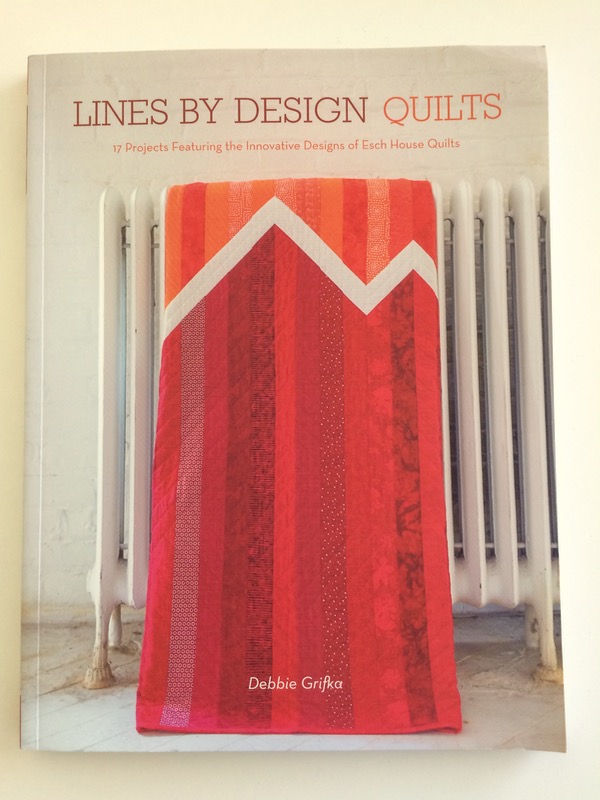
Grifka Book1

The first one is Lines by Design by Debbie Grifka, a lovely book on how to make elegant modern quilts.  Good luck!  Giveaway will close in a few days and I’ll contact the winner by email and get it sent out.