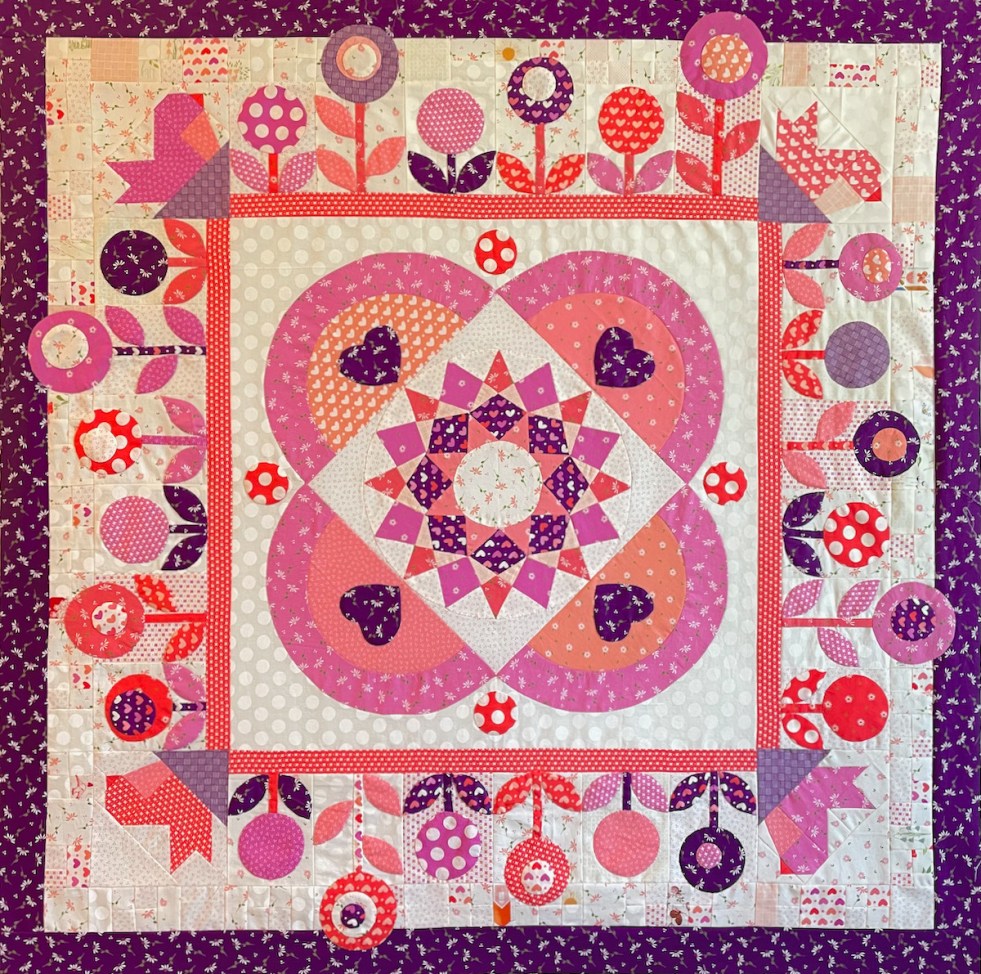
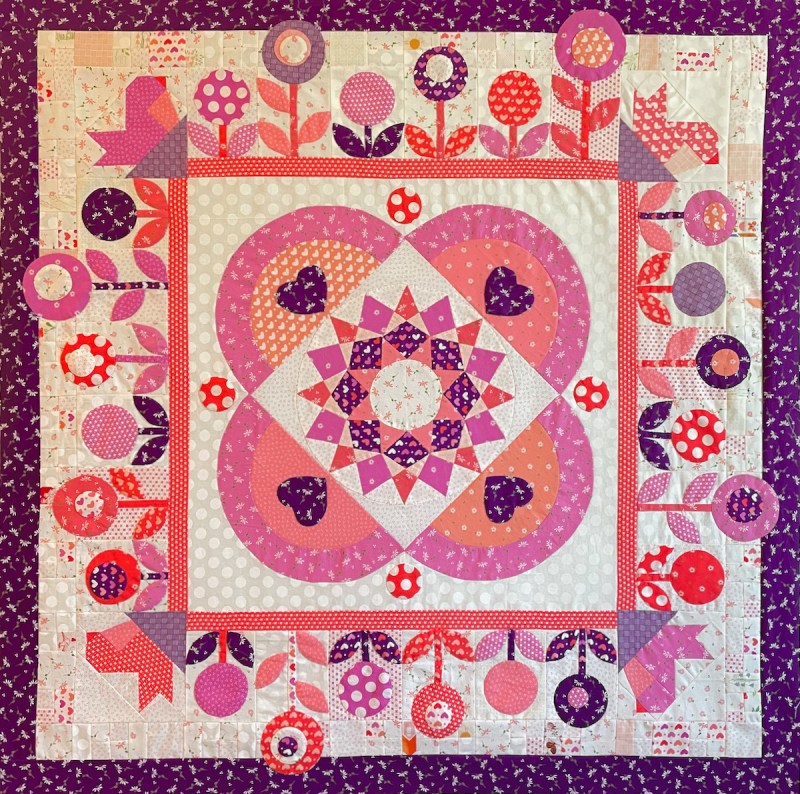
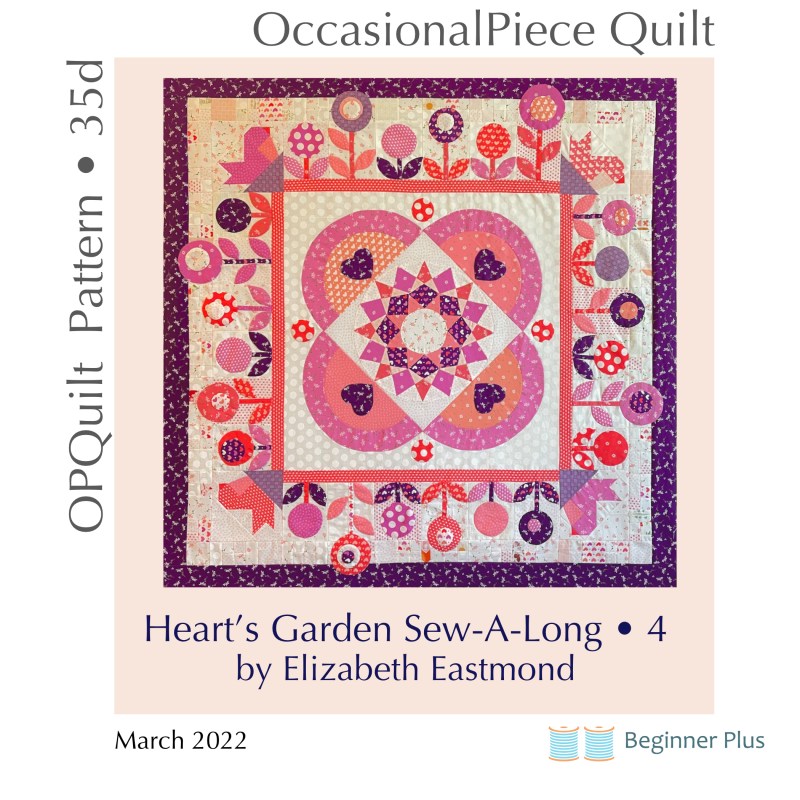
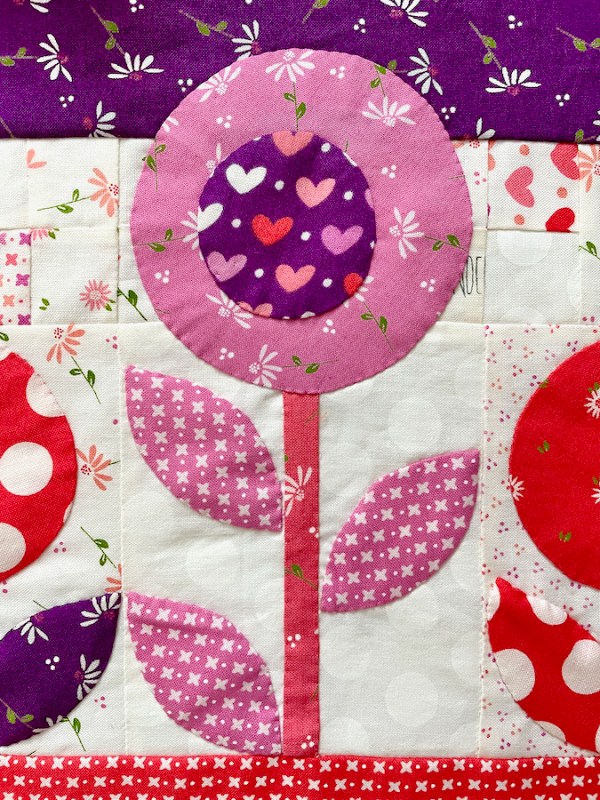
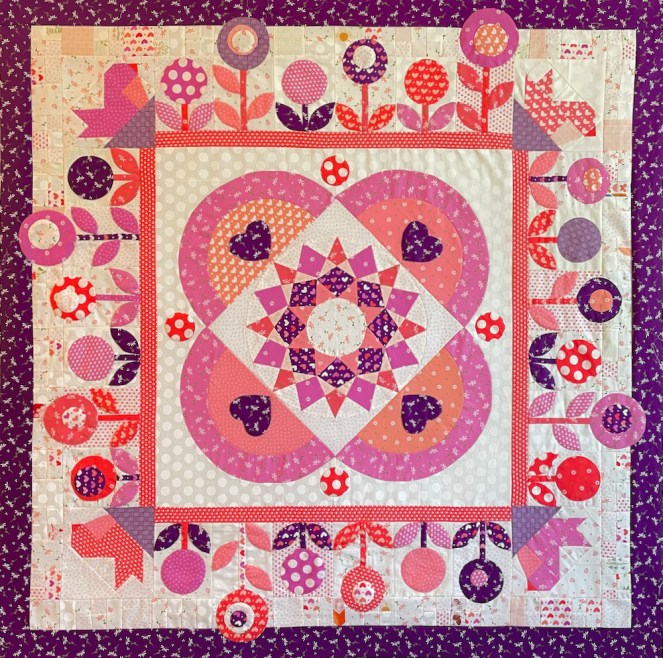
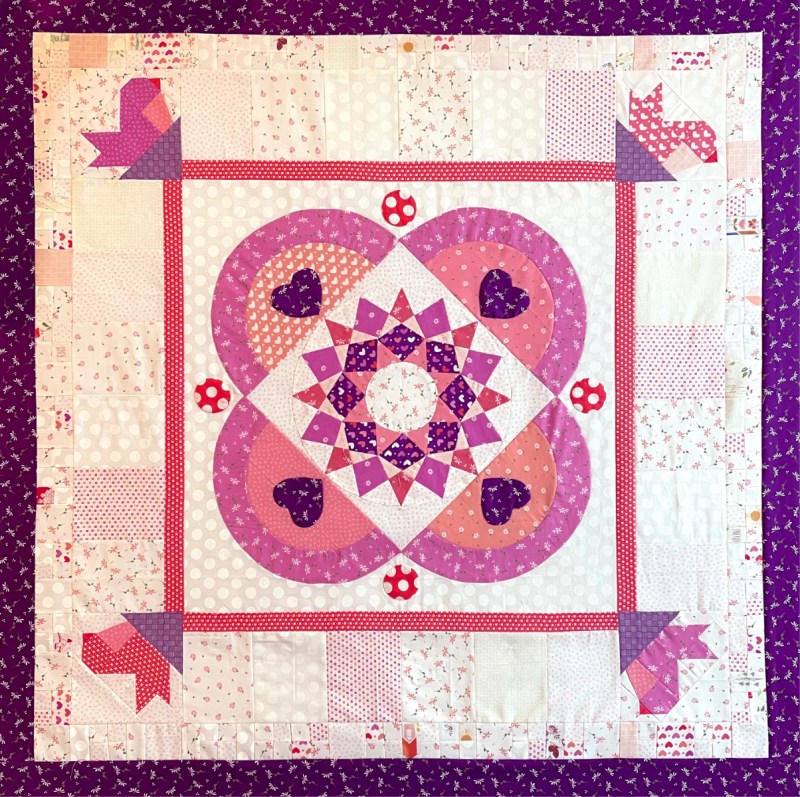
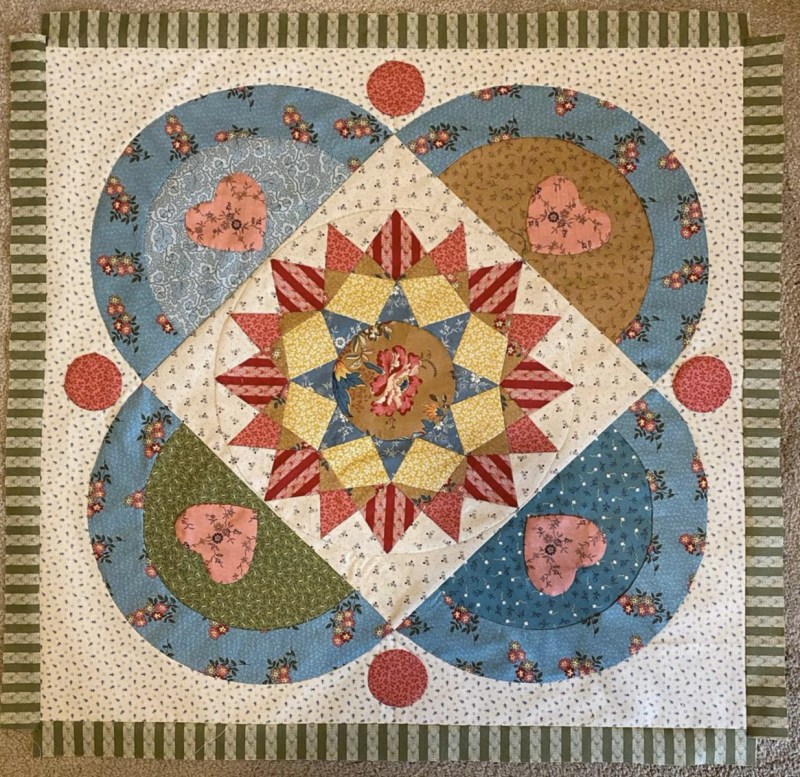
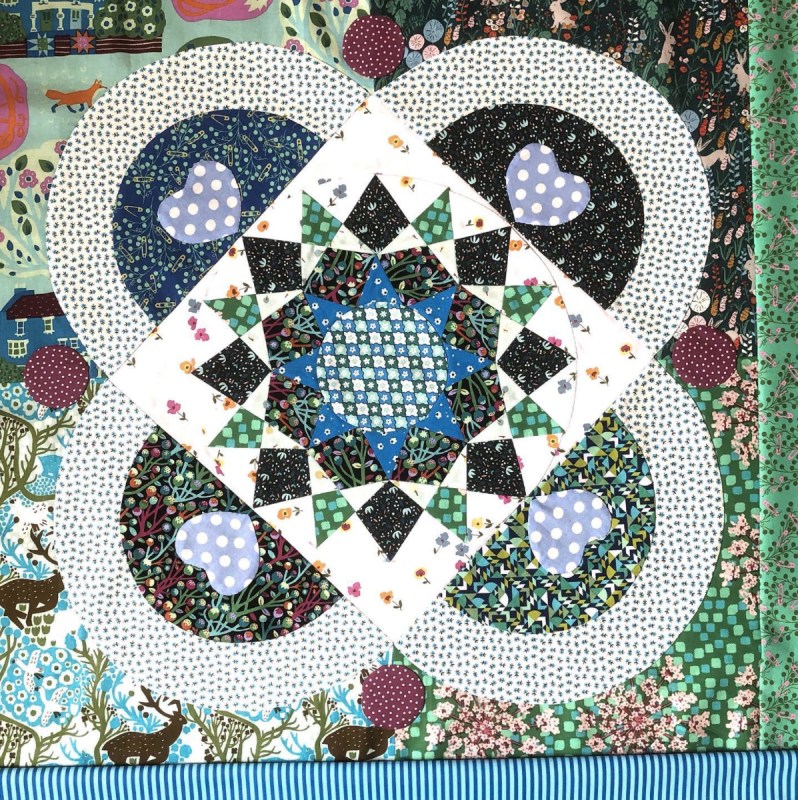
The Heart’s Garden has been planted. It is filled with flowers of all colors, and in many sizes. The birds are nestled in, the outer border acting as a fence for the blossoms to climb. Part Four is appliqué, but the appliqué can be done by hand or machine. Examples of appliqué are in this post.
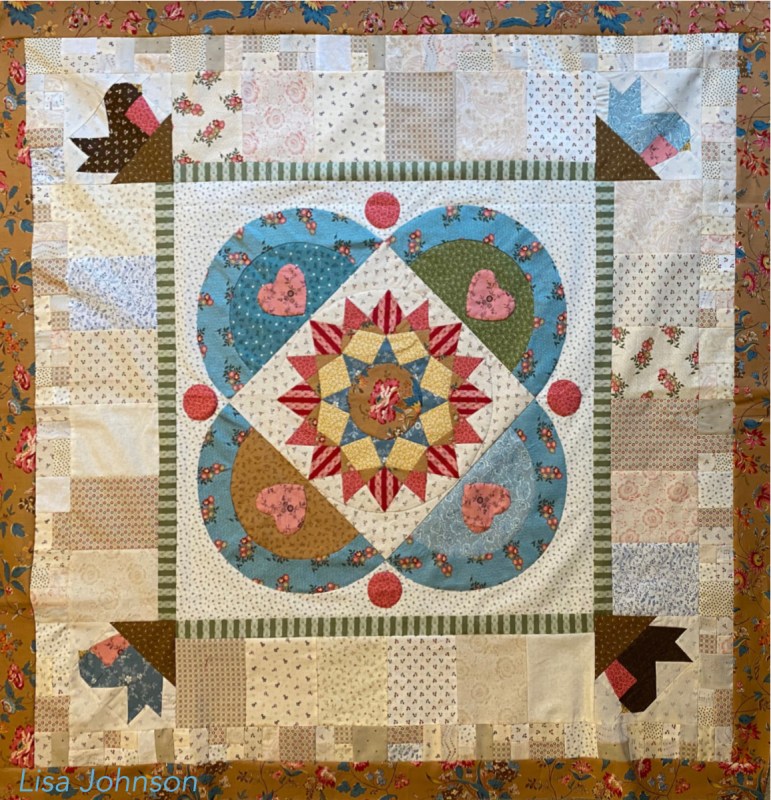
I always like to feature those quilters who are sewing along with us; and who have finished Part 3: Lisa Johnson, Susan Snooks, and Joan Hinchcliff. Their quilts are all so beautiful.
In looking at our home at this Instagram hashtag, I also found the beginning of Linda’s quilt:
I am fascinated by how different all the quilts are. (Linda was my roomie at QuiltCon in Phoenix, in February, and is an awesome EPP-er.)
[UPDATE: Pattern is now all together and can be found in my pattern shop.] The pattern for Heart’s Garden Part 4 is now up in my shop, and you can download it for free.
As usual Part 3 will be switched to a purchased pattern, but if you are just starting in, all the earlier parts can be purchased individually, or you can wait until mid-summer when the full pattern will be available. More at the end of the post.
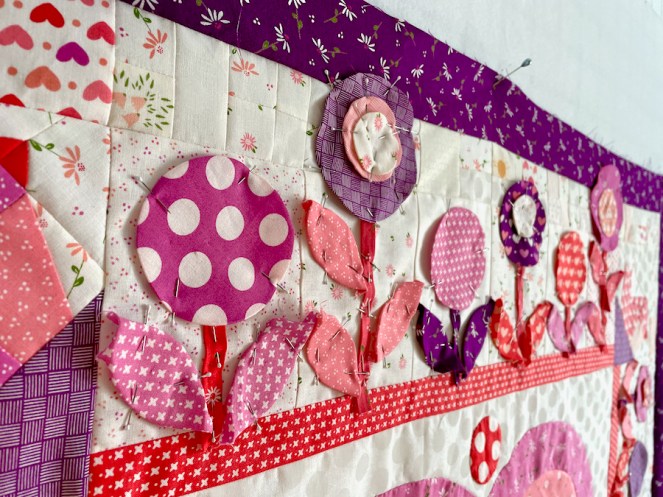
My first planting. I started by pinning the stems around the quilt, having them overlap the inner border by 1/2″ on the bottom, as shown.
I take a lot of process pictures, but in reality, everything changes all the time.
Flowers, stems, leaves are all pinned up. Some like to use the glue method, some like the machine method (I do too), some like hand appliqué. I give tips and tricks in the pattern, including how I “dig” that stem into the “dirt” of the inner border, so it looks like it’s planted. You might also want to watch a wee video showing the basic technique for Karen Kay Buckley’s Perfect Circles.
Part 1 can be purchased here. Part 2 can be purchased here. Part 3 can be purchased here.
Part 4 is now live and living in my online pattern shop and can be downloaded for free.
Hope you enjoy making this fourth part–post them so we all can enjoy them. P.S. If you can’t manage another project, feel free to download for another time. I keep the posts organized on this page (also in the header at the top of the blog). A full pattern with all the parts will be available for purchase in mid-summer.
There is always the option to stop here, with the garden all planted, but there is a reason why it’s called Heart’s Garden. This will be obvious to you when Part 5 is released in May.
Happy Spring and Happy Quilting, and most of all, Happy Easter.
This month is what I call a supporting month in the Heart’s Garden Mystery QAL. Of course you can figure out that flowers will be planted here next go-round, and so you’ll keep that in mind as you create your garden beds for them to grow in. There are three borders: the first inner one with large blocks and corner birds; a second one of interesting bits; and finally, a third one for stability and delineation for what’s coming next. All things rest on your creation this month, but first! some eye candy from Part 2 from Joan, Lisa and Susan:
Joan has put a butterfly in the center. Lisa (middle) also fussy cut her center and the striped border is really perfect. Susan decided to create a four-patch in the background of her Part 2 as she didn’t have any one piece of fabric that she liked. I’m really enjoying the creativity of these quilters!
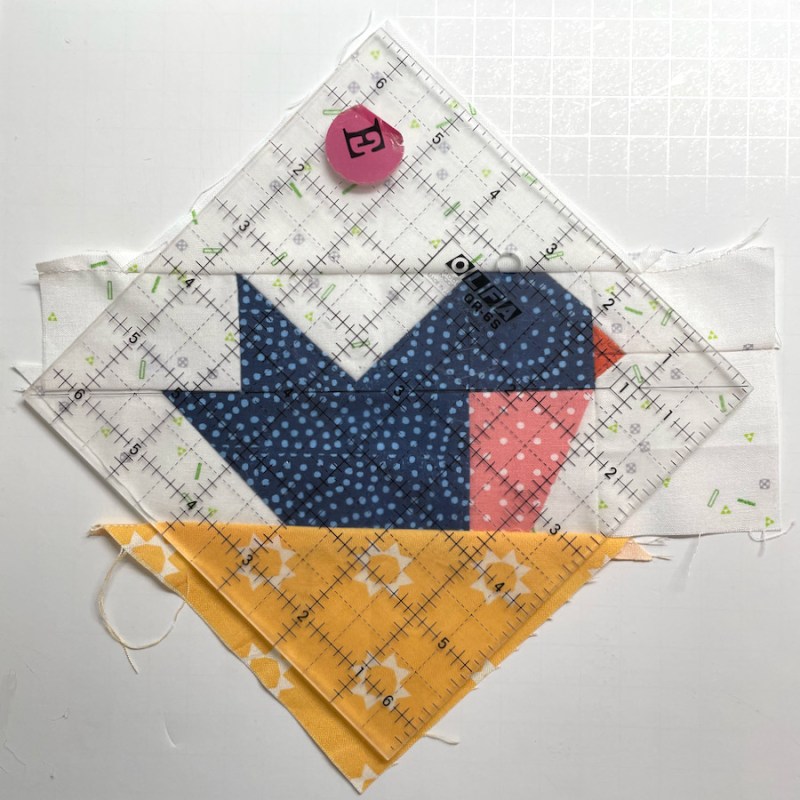
This month includes making four sparrows in the garden.
I made more samples out of scraps to refine the pattern, but most of the fabrics I’m working with are Sherri and Chelsi’s line of Sincerely Yours, with a lot of warm pinks, reds and fun neutrals. After seeing the quilters above, I now want to remake it in something different.
Then the rest is cutting small bits, creating a background for what comes in Part 4–easy, peasy, right? I know it’s hard to create without knowing the future of a design, and my hat is off to Joan, Lisa and Susan for giving this mystery a go. As I mentioned in the last post, it was a bit of a mystery to me, too, after I scrapped the design of what I’d been headed toward and reworked it into a medallion quilt, but now I’m full steam ahead.
Here’s the front of this month’s installment. Parts 1 and 2 have come down, but all parts will be available in a stand-alone pattern, for sale in mid-summer. Our Instagram hashtag:
[UPDATE: The pattern is for sale in my online pattern shop.] Hope you enjoy making this third part. If you can post them on Instagram they will be fun to see! P.S. If you can’t manage another project, feel free to download for another time.
Happy Quilting!
P.S. This is how I feel about Daylight Savings Time.
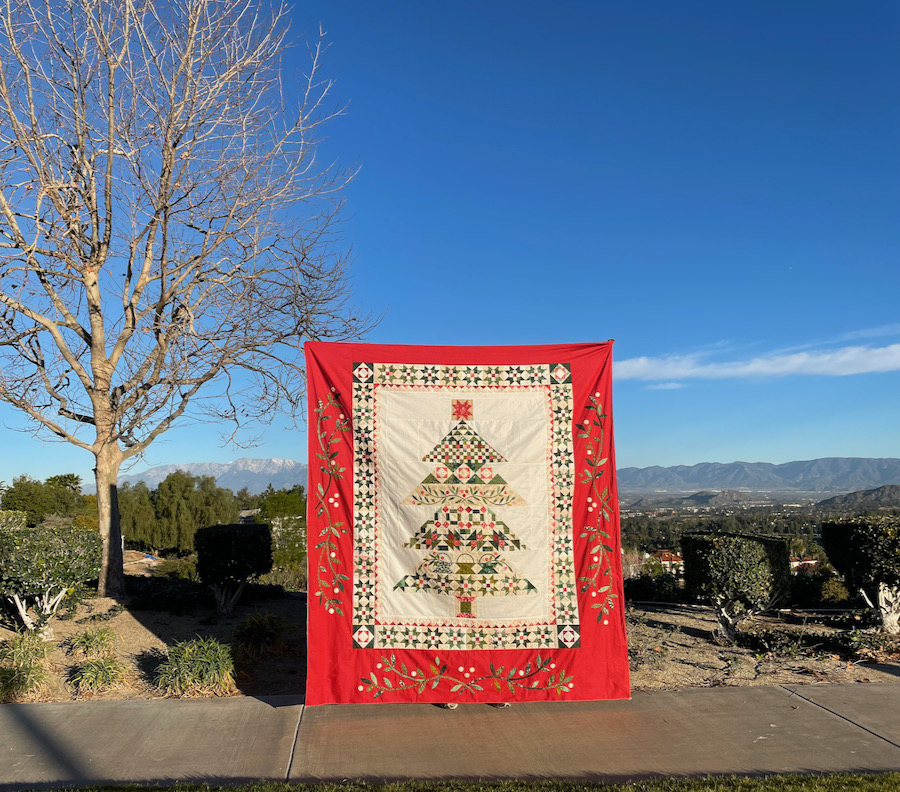
Not Yet Named or Quilted or given a number in the Quilt Index Current size is roughly 84″ x 95″ Top only is completed; taking it to my quilter this week
Anguish Level–Center:
The center was pretty straight forward as all the pieces were pre-cut. A bit of heart-failure when cutting directions by the designer were off for one section of the tree. Pieced it. Did the bulk of it in two days with my friends. We started December 9, 2019 and made it to Block Four. Picked it up again on December 10, but the center wasn’t finished until a couple of weeks later. Lots of piecing, but having friends there made it fun. It was pre-covid, so we didn’t worry about anything.
Anguish Level — Borders:
Hard to gauge because now we’re two years into covid and everything feels harder (really) especially design (really really). It’s also been out of my hands for two years, so I have to re-acquaint myself with this. Anguish Level is also a bit higher because I’m trying to blend in the designer’s style with my style. My first draft is above, but I realized everything was pretty tan/beige/cream. I’m replacing a red/blue/green Christmas quilt (below) and wanted something traditional and something with RED.
Construction Report:
Flying blind, so that’s always interesting. Hardest thing is to figure out fabric amounts, so I ordered a jelly roll of greens, half yards of reds/creams, and then 3 yards of red for the borders. I ended up ordering 2 more yards of red; I just hope the approximated yardage in the pattern will be okay for most people. Fun to make Border One, really fun to make Border Two (sawtooth stars, she says!), and once I got the hang of the scale of leaves and vines and figured out how I could explain what I did, the appliqué went quickly. I am really happy it’s done, and it’s ten months early for Christmas!
More Photos/Illustrations/Yammering:
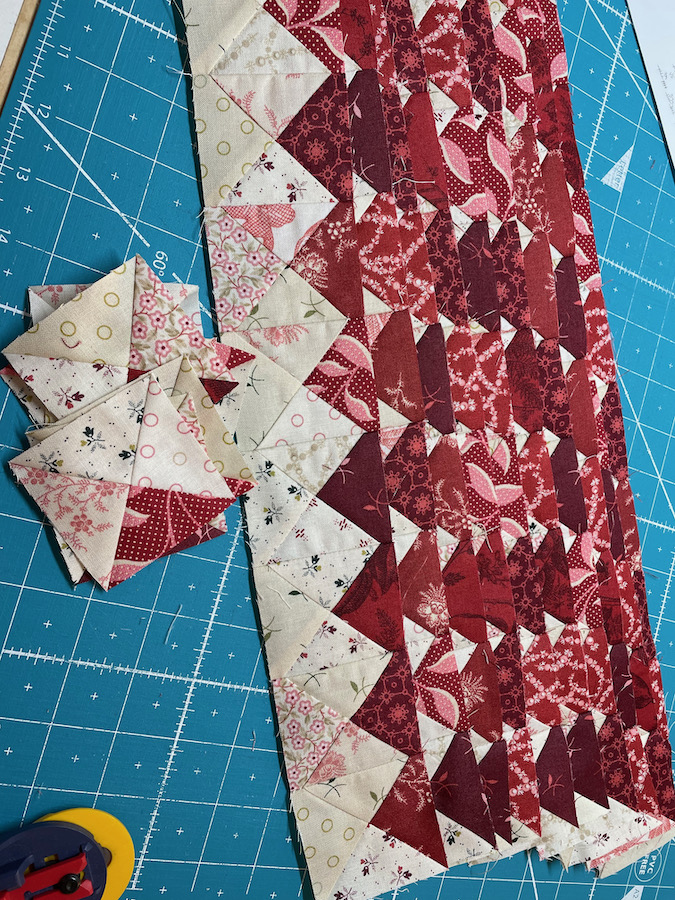
Border One is Double HSTs. I learned a nifty trick from Yvonne of Quilting JetGirl about how to cut these, which made things go more smoothly.
One of those lovely late-at-night photos, but the borders are on and the quilt is growing. I am not worried about all the piecing in the background of the tree part, but my very smart friend Laurel appliquéd down her tree onto a solid piece of fabric, instead of all those cuts. And yes, I did swap out the tan fabric in the kit for something a bit lighter.
I’m in my favorite sandbox now, with sawtooth blocks.
I like all the variety of the many fabrics in the same hue.
Moment of Truth:
It fits on the bed!
Final Border Photos/Illustrations/Yammering:
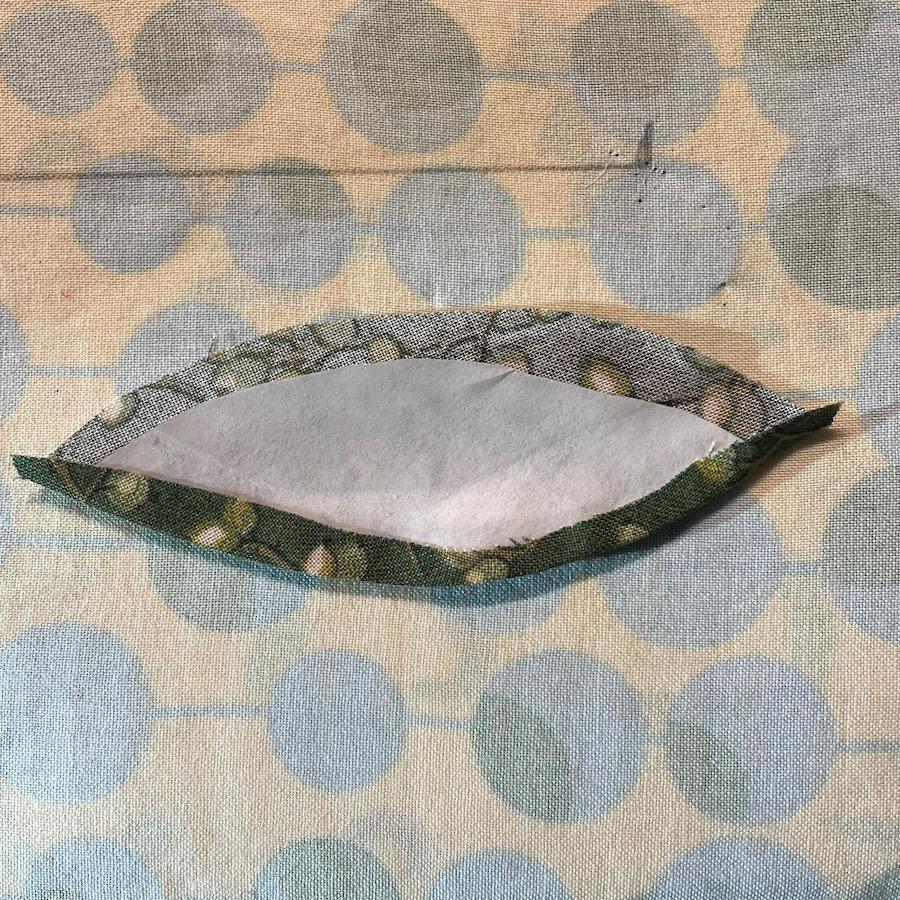
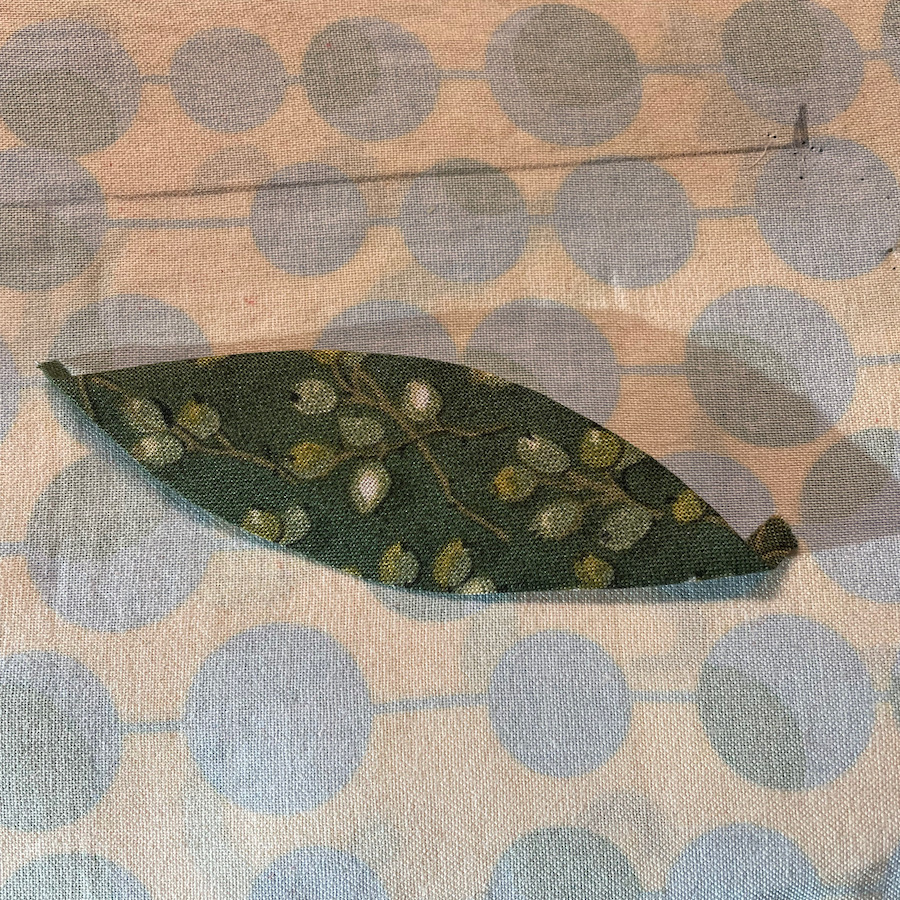
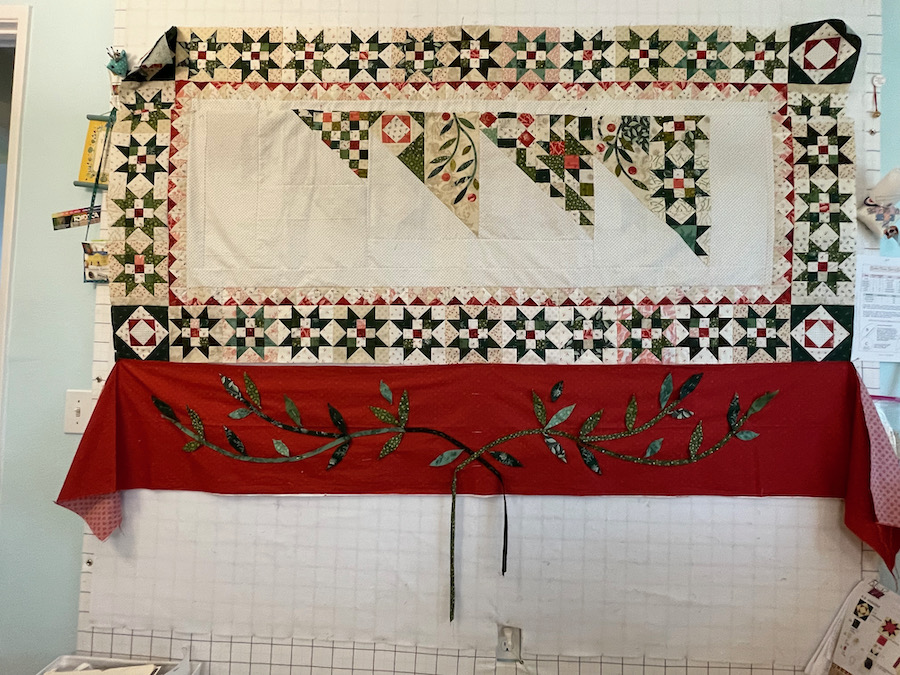
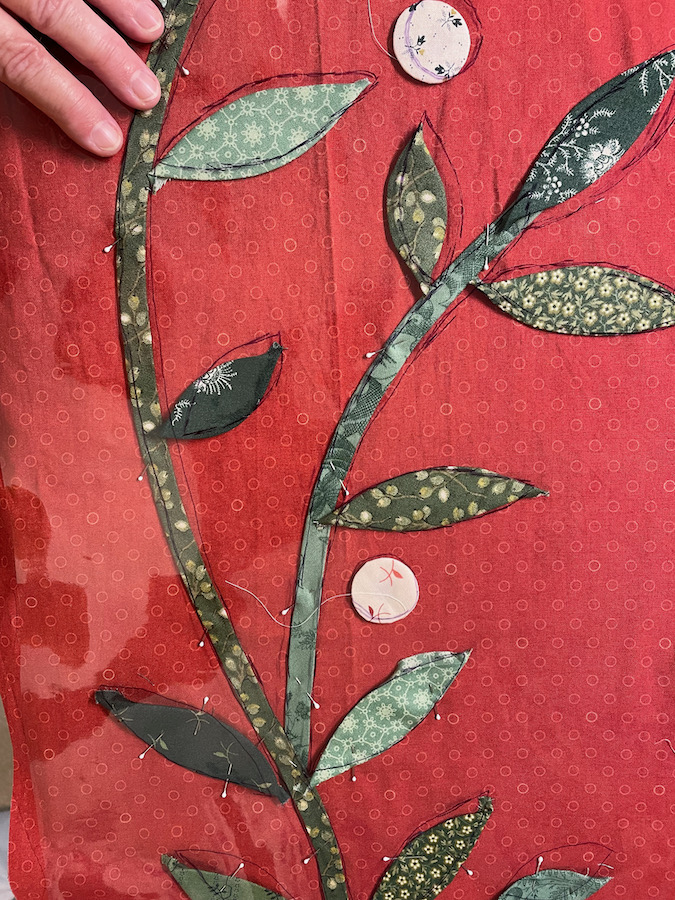
Heading deep into Vines and Leaves. I cut two template shapes for the leaves: one with seam allowances (see red line) that I use to place on the bias and rotary cut around. I also cut a massive amount of leaf shapes with NO seam allowance out of freezer paper.
Photo #1: I place the dull side of the freezer paper to the wrong side of the fabric leaf. I use the iron to press the seam allowance onto the shiny side of the freezer paper, where it mostly sticks. Photo #2: Repeat with the other side. Photo #3: Prepped Leaf. Yes, I do have to pin the shapes down and mess with them sometimes, but that doesn’t bother me.
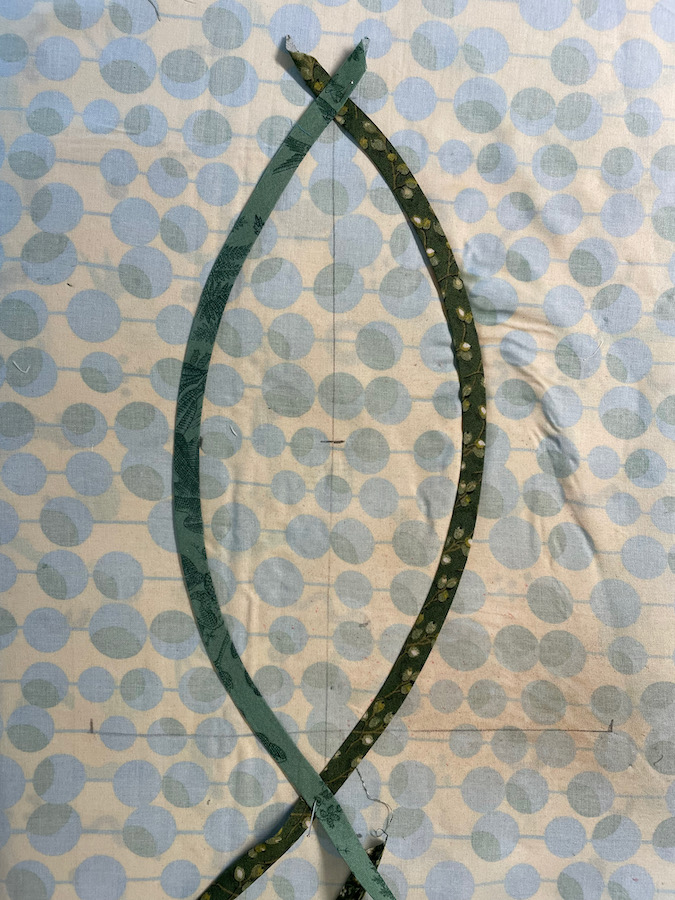
I shape the bias-tape vines on an old piece of fabric atop my ironing board, so I could draw the guidelines, and pin into it while pressing the curvy shape into the strip. Worked pretty well!
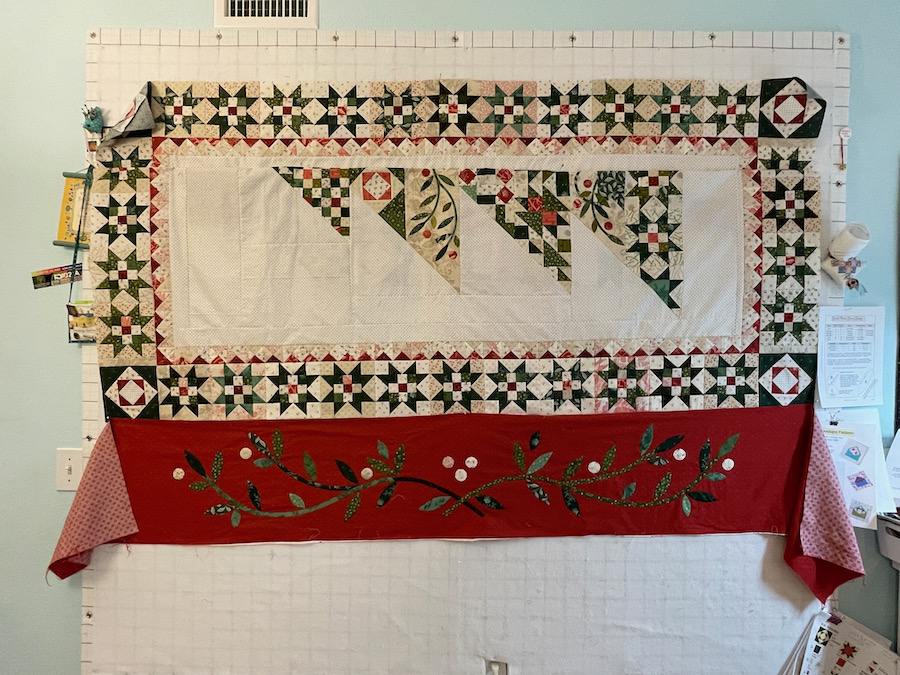
See the creases pressed into the borders? I tell you how to measure these guides properly. I’m working on my design wall now, as the quilt’s kind of big and I’m trying to see how to shape these vines/leaves. It’s not hard. Just fiddly, as the Brits and Australians say.
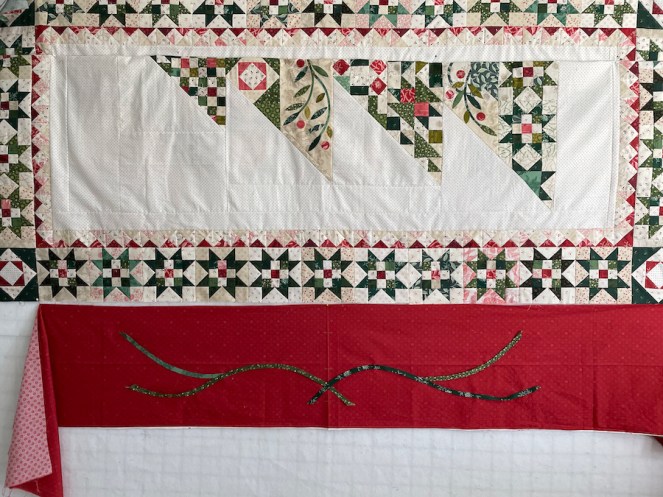
After I arranged one set of vines/leaves the way I liked it, I used Becky Goldsmith’s plastic overlay technique. I unpinned it from the design wall and laid it on the ironing board. I had purchased the plastic by the yard from JoAnn’s, then laid it out over the first set. I traced it, and then used it as a template for the other two, working with them one by one on the ironing board, and pinning down like crazy using small appliqué pins from Clover. I nudged the pieces into place here and there; that overlay is such a great help.
Nighttime photo of all three!
The first two borders are sewn on the sides. I knew I was going to miter the lower two corners because they are more prominent on our bed. But the top border would just be sewn straight.
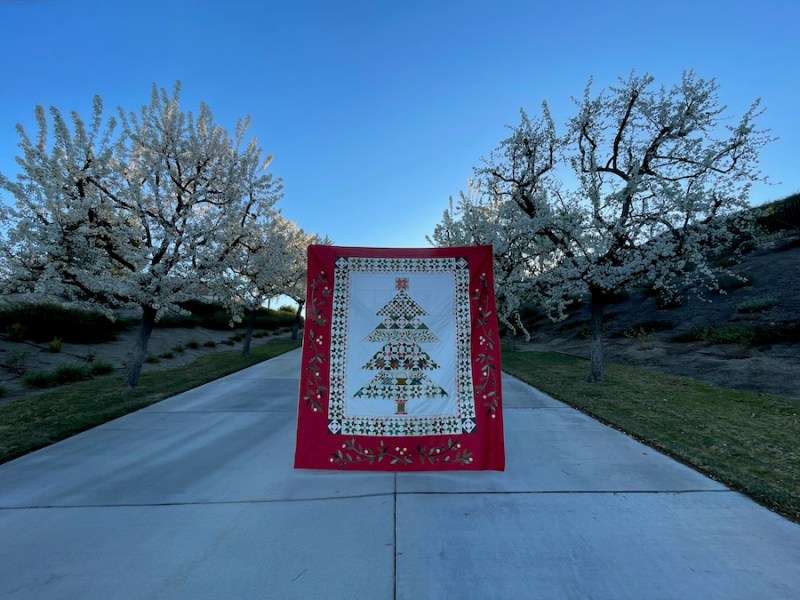
We took it out for a beauty shot one early morning. Thanks, dear, for holding it up!
The “snowy” photo. The only way we can look like a winter wonderland is if the spring popcorn blossoms are out on the trees.
Overall Assessment:
I’m now going to do some easy piecing for a while. Maybe even sew a skirt or two (had the fabric for longer than I care to admit). Keep working on Heart’s Garden. Enjoy Spring. Plant tomatoes.
Note: I do have a pattern for the outside border, but the famous designer made me stop selling it (long story). I can send it to you, free of charge, if you are interested.
I received a stack of fat eighths as a gift from my friend Sherri last fall, from her new line of Sincerely Yours, and the question of what to do with this yummy range of fabrics has been percolating in my head ever since.
A Sew-A-Long? A Mystery? A Freebie Pattern? How about all three? So yes, this is a sew-a-long, mystery, free pattern that should run for several months. I thought it was only four, but then I had another idea, so I had to add an extra month. I will put the patterns up on my pattern site, one month at a time. The usual caveats apply: Don’t print them off for your mother or eighteen of your closest friends; instead send them to my pattern shop to download their own.
The pattern is found here. (The free pattern timeframe has elapsed.)
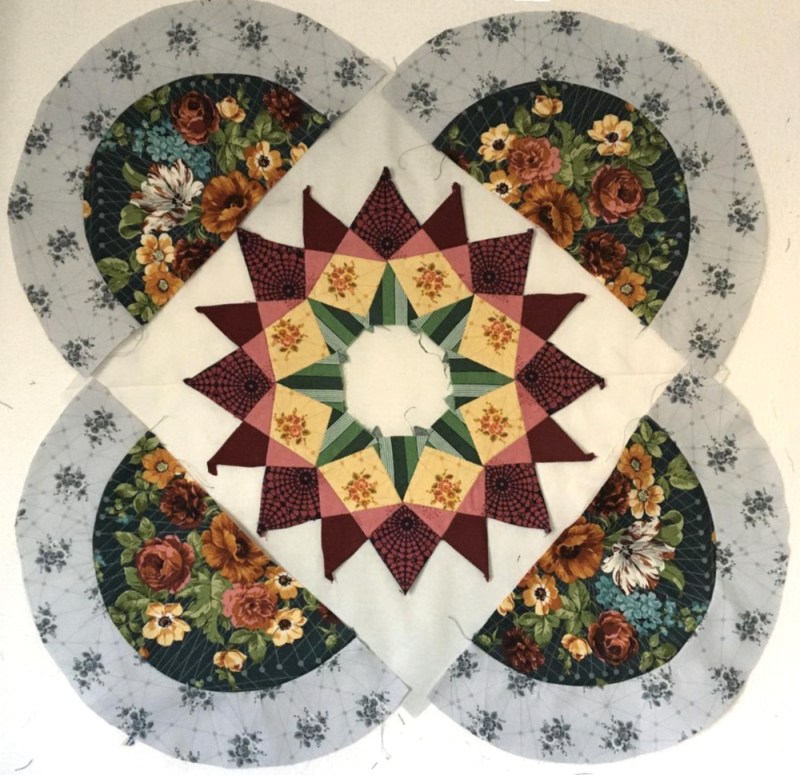
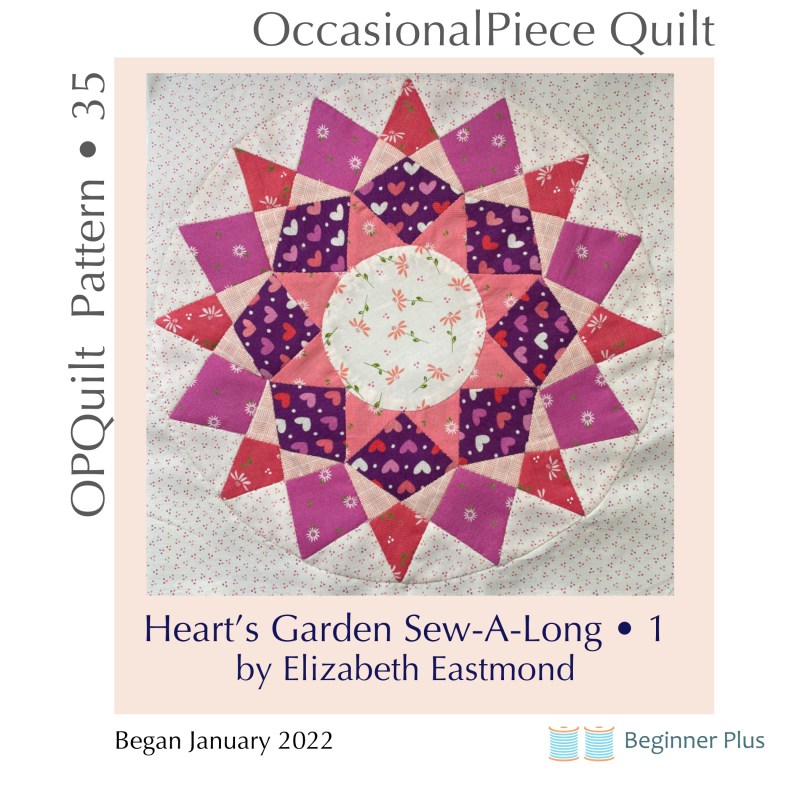
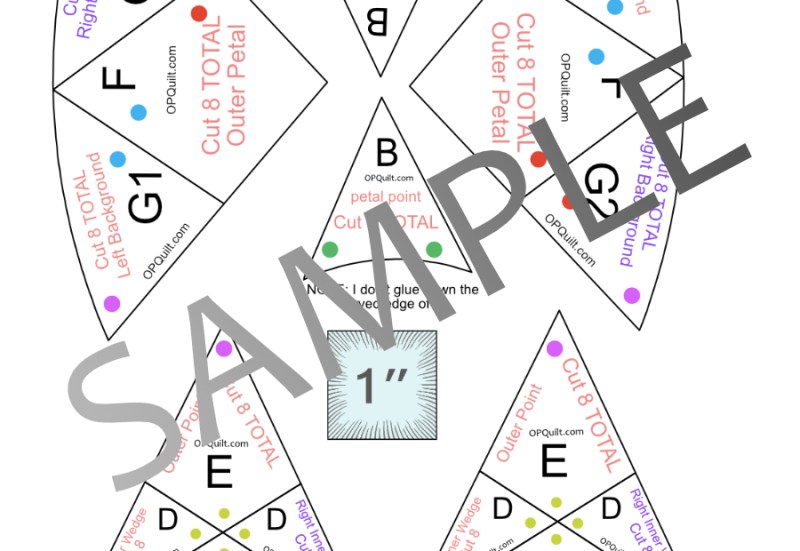
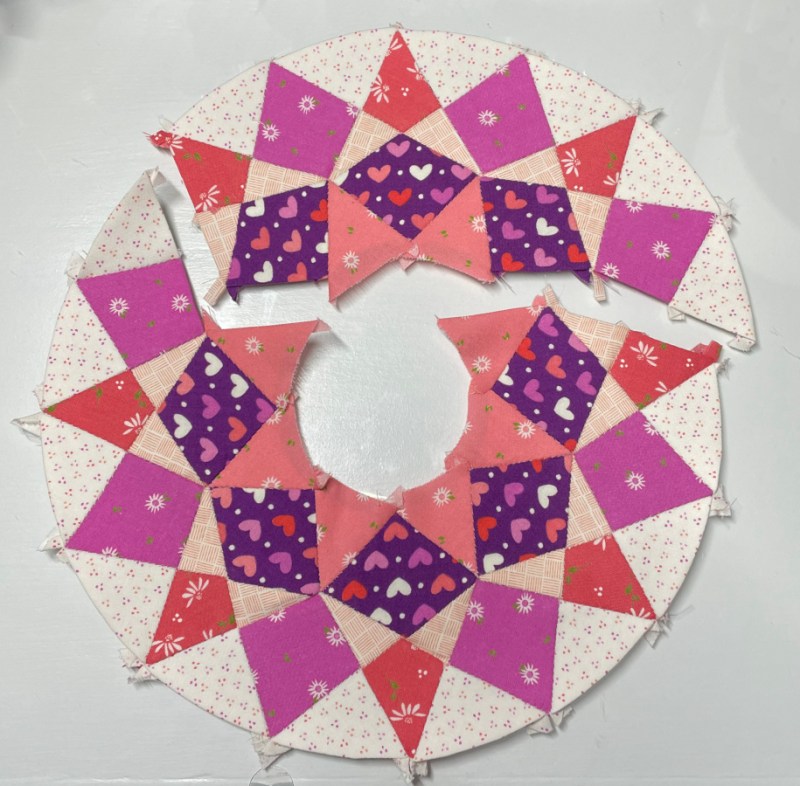
Follow the directions and print off four pages of Page 4, then cut them apart on the lines. Prep them for English Paper Piecing {see this post (which uses thread basting) or this post (which uses glue basting) for some tips}, then start stitching them back together in the units.
I’ve placed small colorful dots to help guide you in getting the pieces sewn. Follow the guidelines on the pattern.
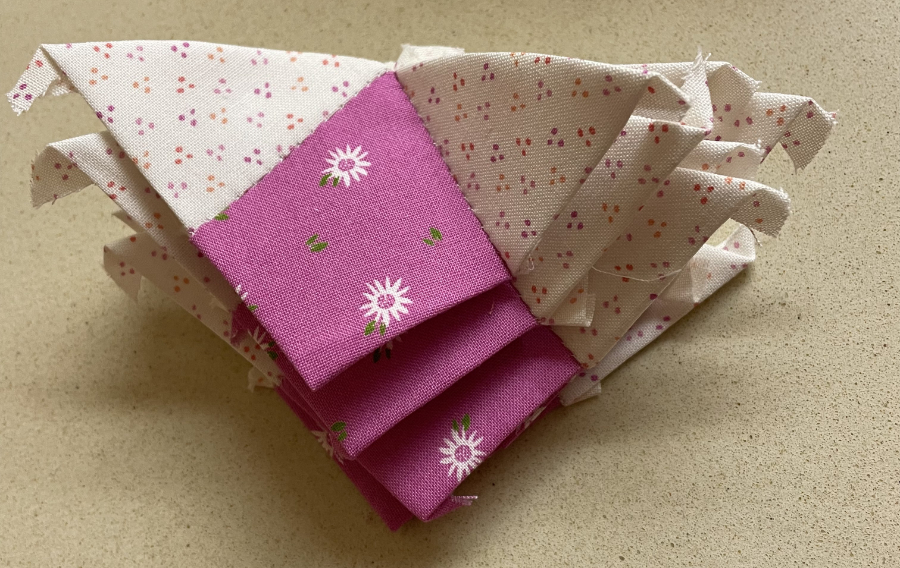
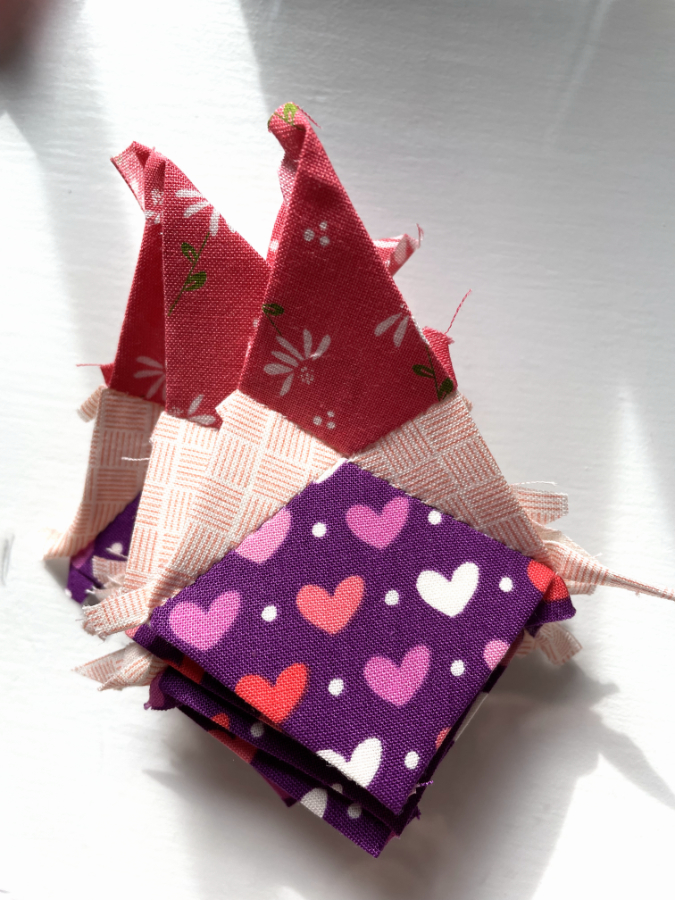
I like to sew it in two sections, as it is easier to hold it. I also like to take stitches across the seam points on the outside curved edge, for stability. For example, I join one G1 to the F point, then add the G2, taking an extra stitch at that outer point. It will make more sense as you sew it.
Once I’ve gotten this far, I sew those last two seams.
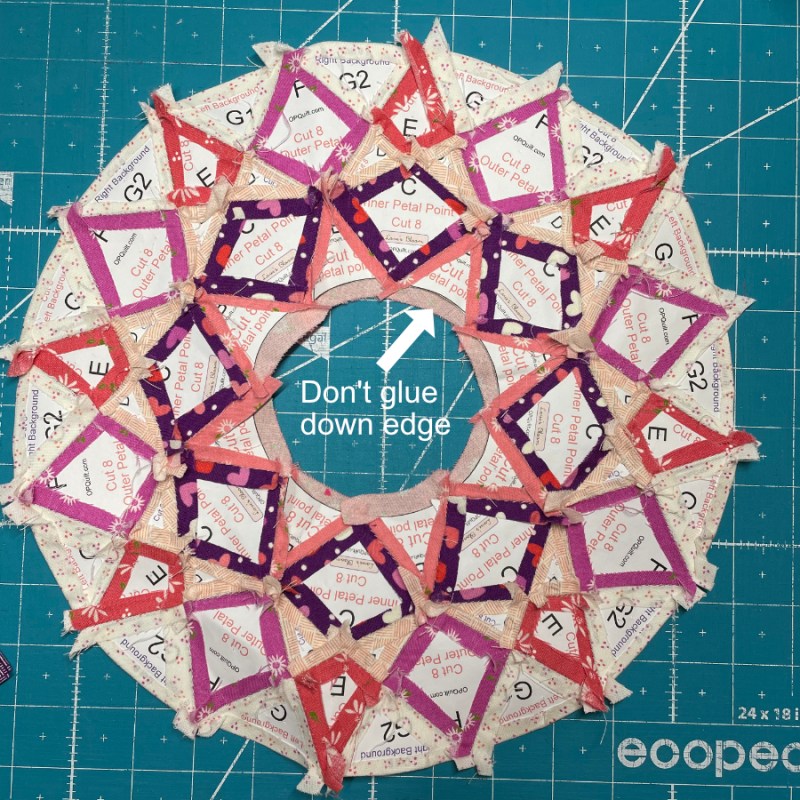
I always love the look of these from the back. One trick I use for the inner circle is that I don’t glue down the inner curve, instead leaving it flat. This helps when you go to stitch on the center circle.
I write about how I do the center circle in this post, and I will again express my undying love for Karen Kay Buckley’s Perfect Circles: both sizes. Sometimes I put the circle on first, then appliqué it the background. Other times I appliqué it to the background square, then sew on the center circle.
For this round, do the center circle first.
Then cut a large square the size mentioned in the pattern. I always iron creases: fold in half, iron; fold in half the other way; iron. You’ll have a giant cross so you get your circle centered. Pin it evenly around the circle while on a flat surface. Then start to sew it down.
Yes, I’ve been doing the EPP-circle-bit a while now, and there are lots of tips and tricks under the tab SHINE: The Circle Quilt (found above). And yes, I’ve probably made millions of mistakes, but after sewing over three dozen EPP circles, I’m getting the hang of it.
Here it is, sewn to the background. Don’t trim this yet. If you are curious, your circle will probably measure about 12 1/4″ in diameter, largely due to the thickness of all those fabrics spreading it apart. We will deal with any variations in the next post, coming mid-month February.
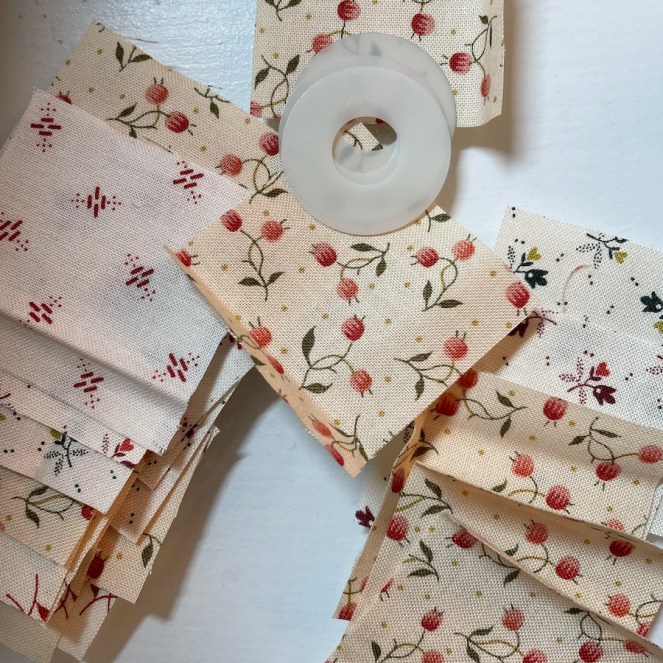
I use several methods of construction: piecing, appliqué, English Paper Piecing for starters. While the theme is Heart’s Garden, there aren’t a billion hearts on this quilt, so you could make it in other palettes or groupings of fabric or from scraps. I started with one fat-eighth stack of Sincerely Yours, from Sherri and Chelsi, then purchased four one-yard lengths of the lights (always good for the stash, if I don’t use them all). I also bought two half-yards of the strongest colors; perhaps that is overkill, but I didn’t want to let this line get away from me. I am happy to have this great inspiration, so thank you Sherri and Chelsi!
So head over now to my pattern shop on PayHip, and download your pattern. At the end of this series, I will combine all the sections into one pattern, and will list it for sale in the same place. Feel free to stash the pattern until you see the end, or to just pick up a little piecing here and there as we go. [UPDATE: Pattern is now available.]































 OccasionalPiece--Quilt!