I nearly always put the finished quilt top at the beginning of the post.
Not this time.
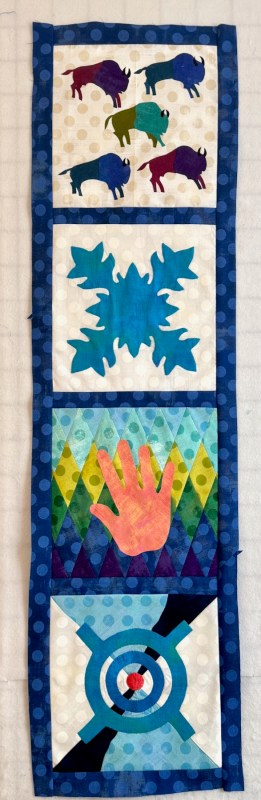
I’m putting the Finish, Before I Really Finished It, at the top of the post. Here it is:
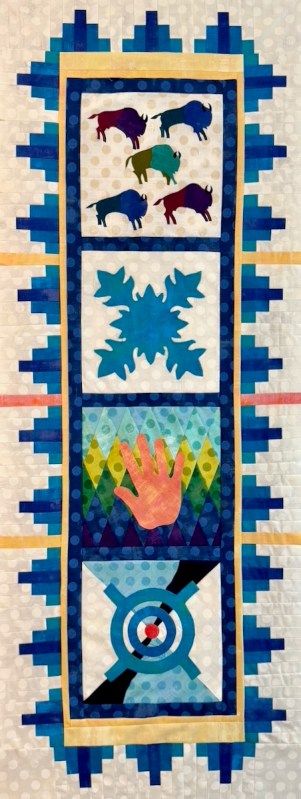
This is the finished layout from the 2026 quilt-a-long project from the Smithsonian’s National Museum of the American Indian, with a few tweaks. As I mentioned in my BlueSky post, I absolutely am not a fan of piano key borders. You know those ones with a million little pieces that NEVER FIT? Sure you do.
And this was a type of piano key border, but the bits were subdivided to mimic a step design, seen on baskets from the designer’s region and people. I can honor that, but I was not keen about making it. That’s why you see two extra bands of yellow on top and bottom, as I’m trying to get that border to fit somewhat. I finally gave up because I knew I was going to do this:
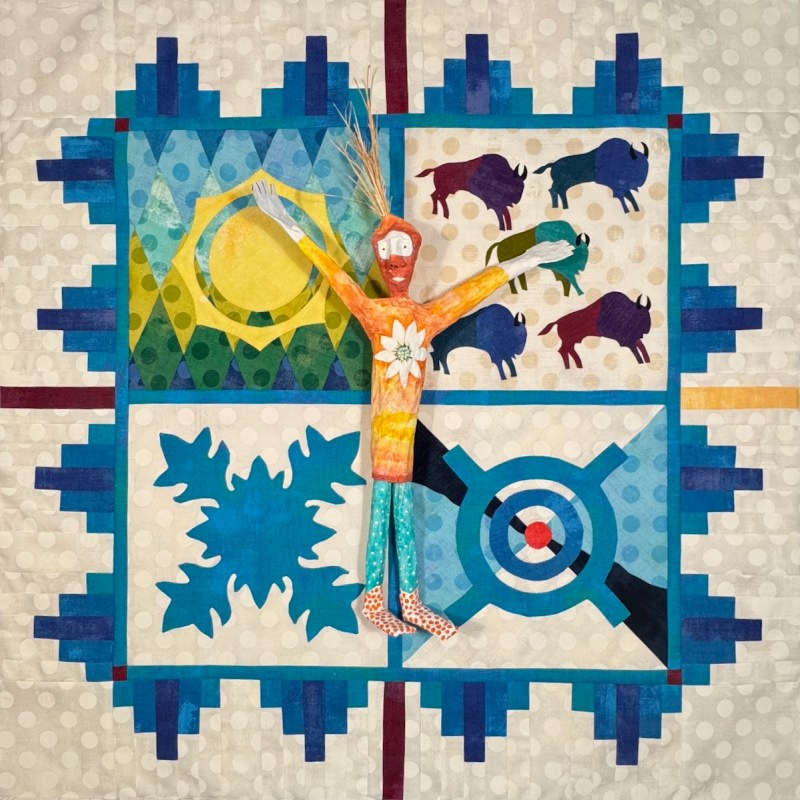
(That fun figure I purchased in Northern Arizona is helping to show off my Really Finished quilt top.)
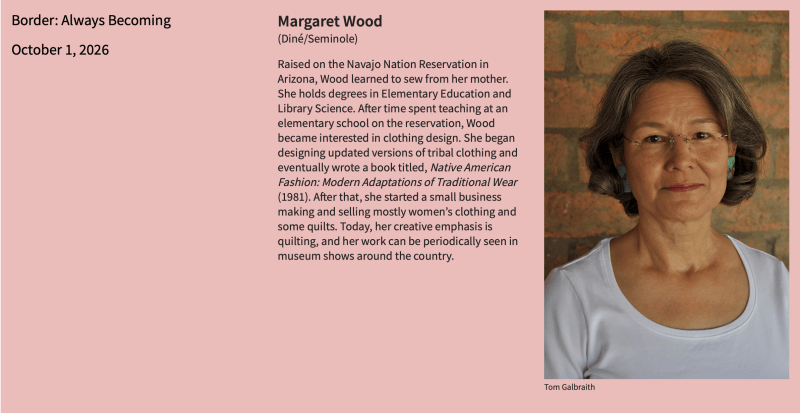
I got rid of all the inner borders, swapped out my sun symbol block for the hand, and tried to set the design to balance as well as it could. In her narrative about the basket inspiration used for the final border, Margaret Wood noted that the break in the design always points East. I intimated at this with my one yellow spacer, pointing to a traditional east.
So I consider this a successful finish.
(Early version)
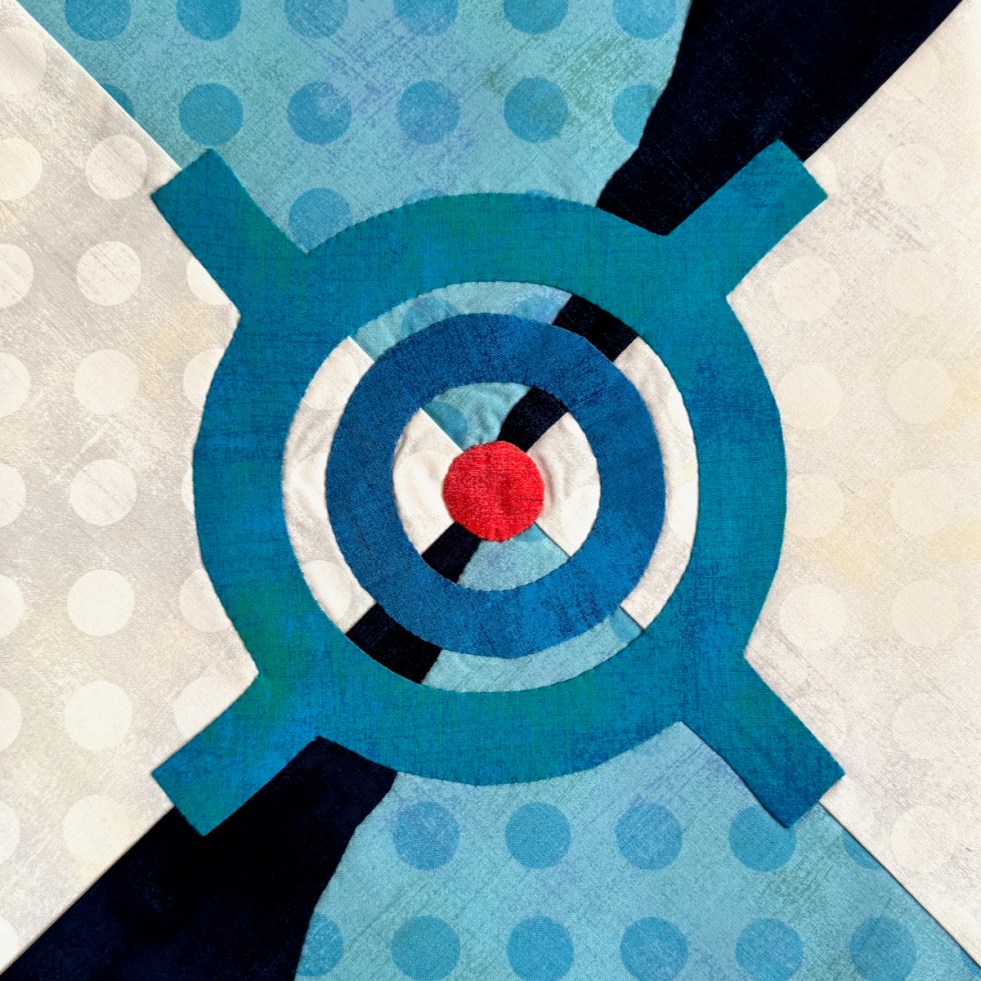
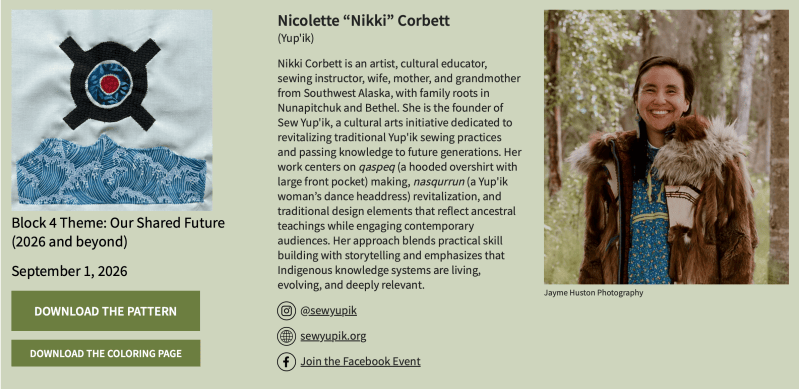
But let’s talk about that final block.
Which leads me to ask, what is the real point of this quilt-a-long? Past all the designs, past all the paragraphs and aspirations? At first I viewed it as another traditional quilt-a-long, you know: get a free pattern, make a block, repeat.
But when I hit this one all that process abruptly ceased for me, because there was no way I was going to make that block. I went away for a couple of weeks (here, and here…always good for the quilty soul), and while gone saw another quilter on BlueSky make hers, changing it to suit her.
And then I started reading and reading; I read about the Yup’ik people. I read about their designs, where they lived. I found other artists in other venues. I searched for “Ellam Yua,” which is the black symbol floating over that random wave up there. And then I found this:
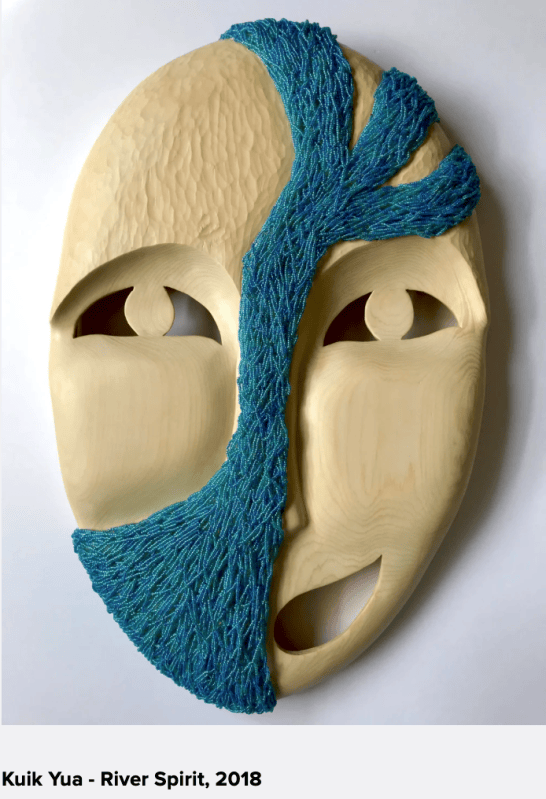
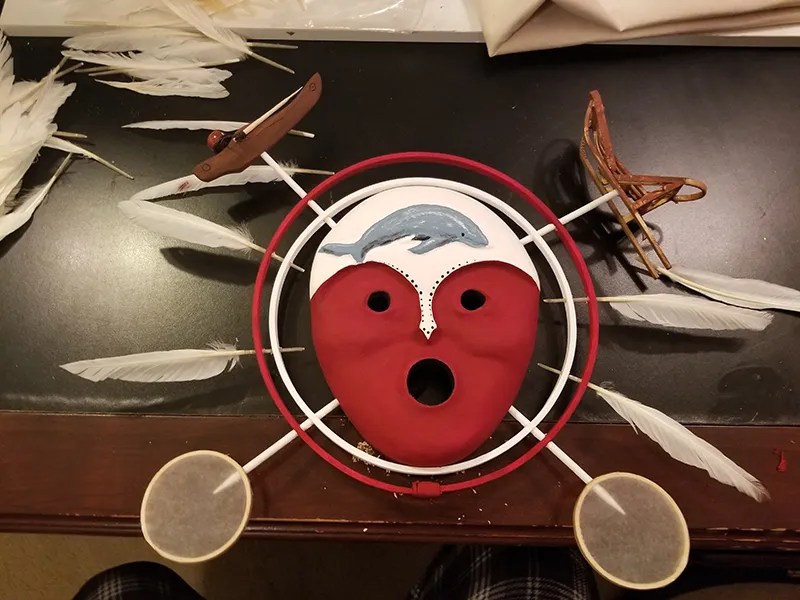
This hand-carved mask, from Jennifer Angaiak Wood of the Yup’ik people shows the river flowing from the upper right to the lower left. Things fell into place. Instead of that ocean wave representing water, I’ll do a river flowing over mountains.
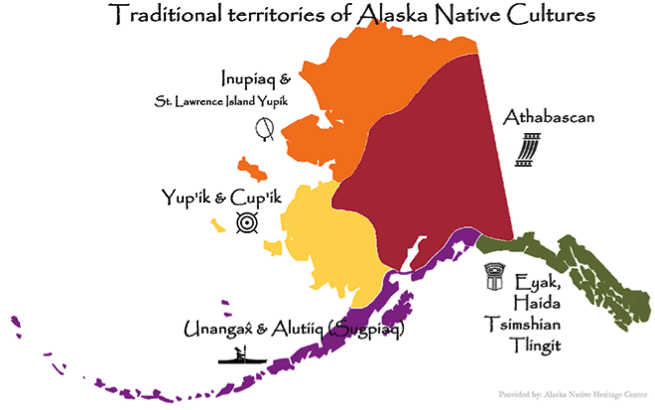
The Yup’ik live in this area of the world where there are rivers, and oceans and mountains. After I borrowed Ms. Wood’s idea the creating began for me. I was — I think — finally catching the spirit of this adventure: learning about the native peoples who lived here before America was even a glimmer of an idea; perhaps that’s why the National Museum of the American Indian (Smithsonian) was doing this for the America 250 celebration.
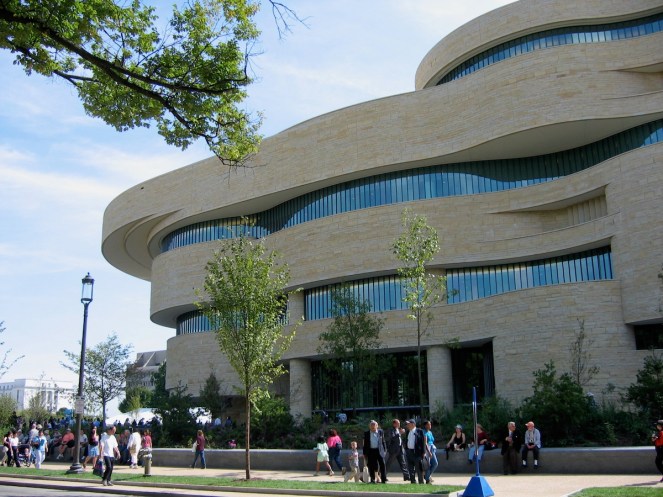
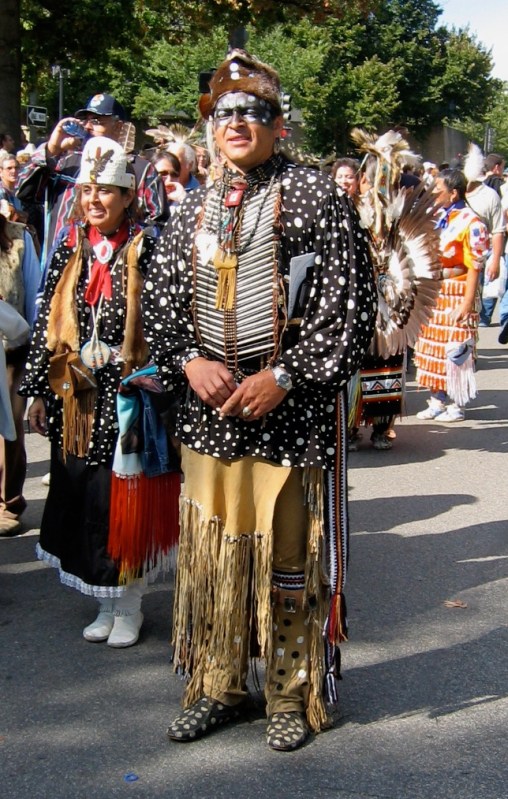
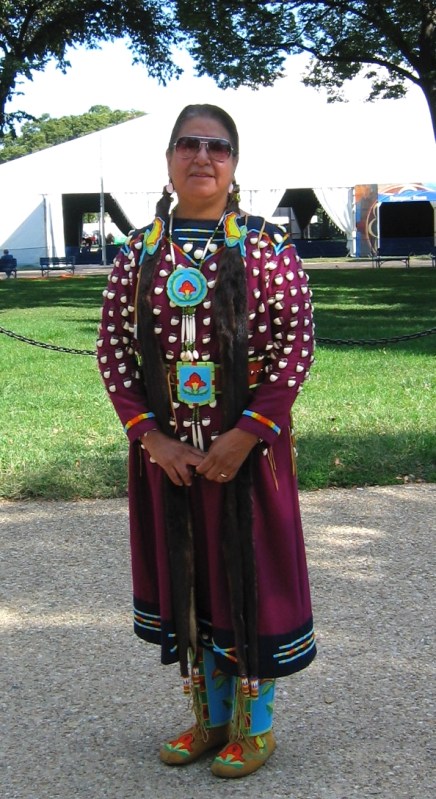
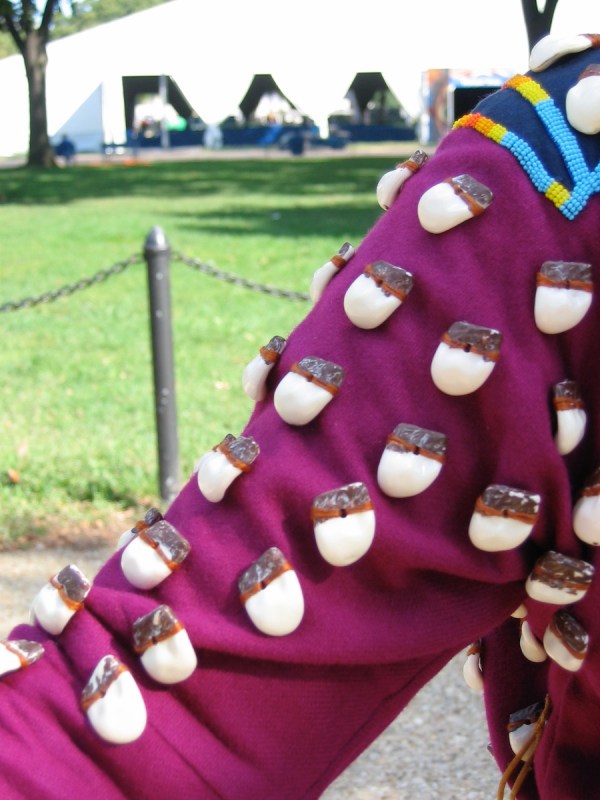
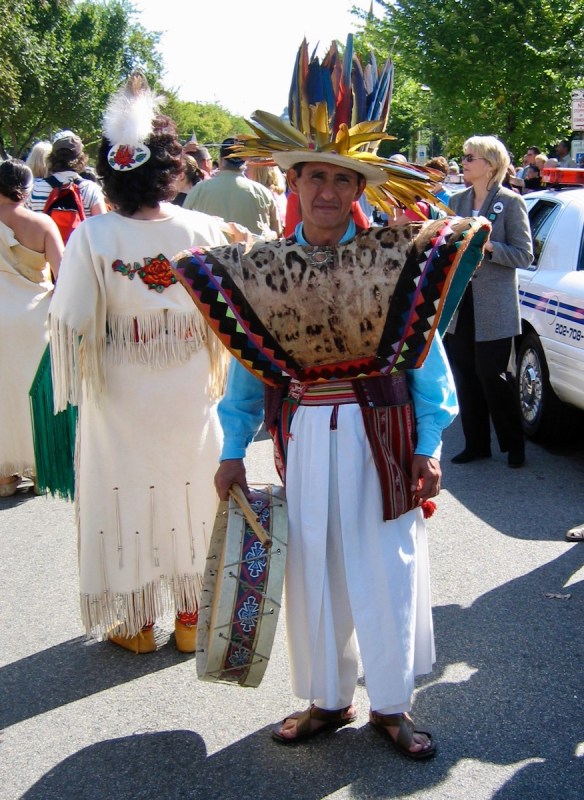
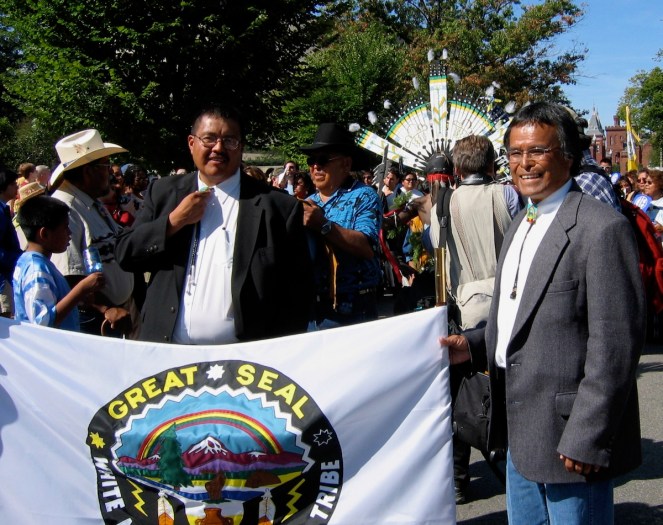
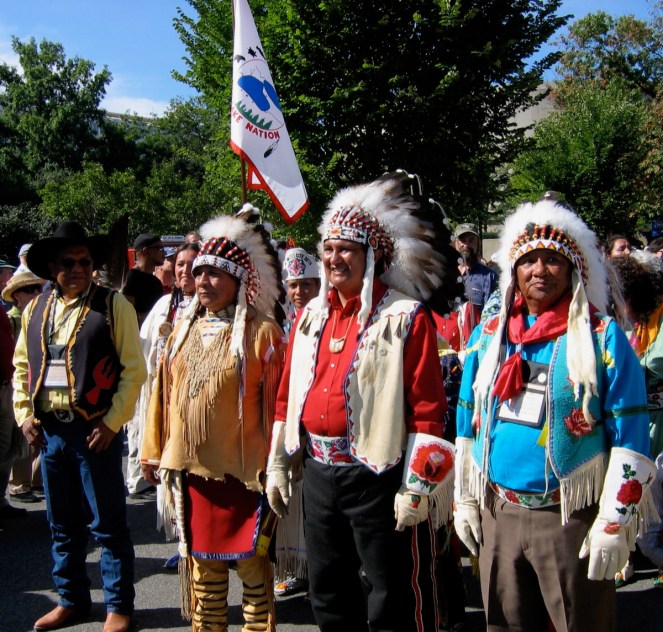
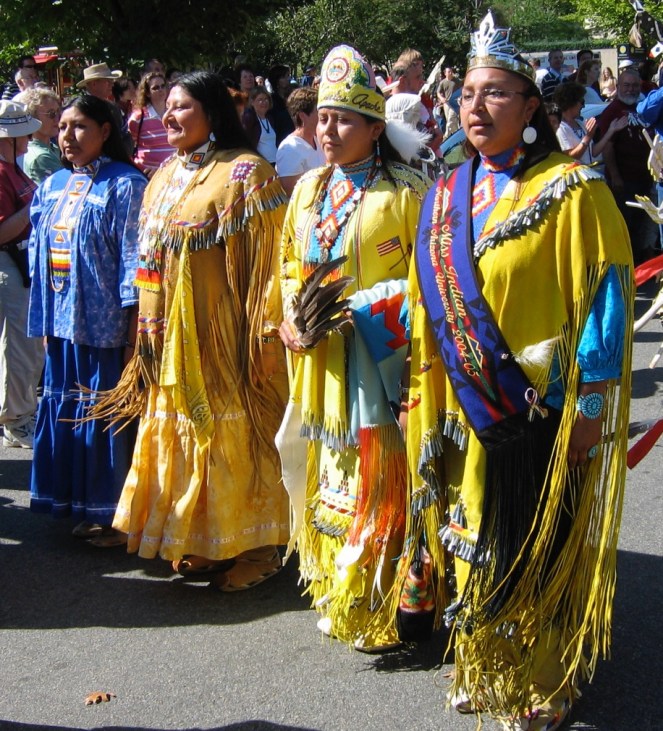
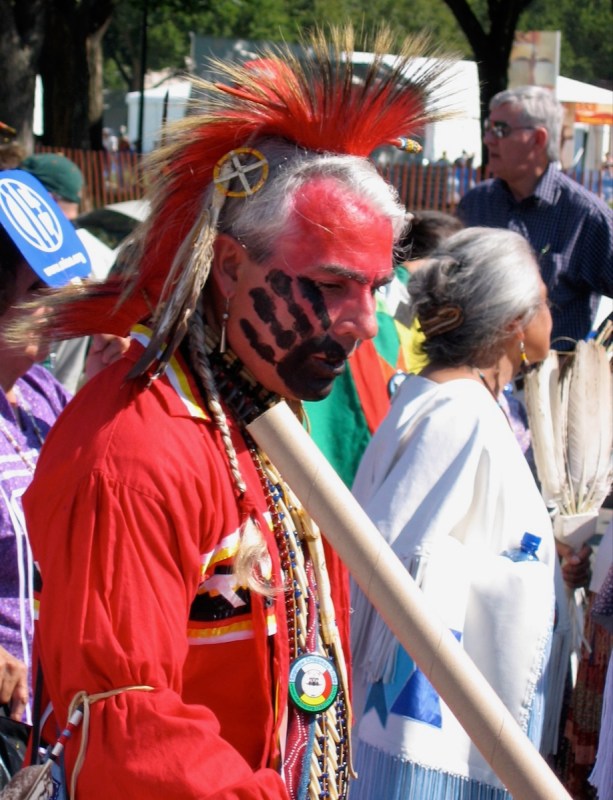
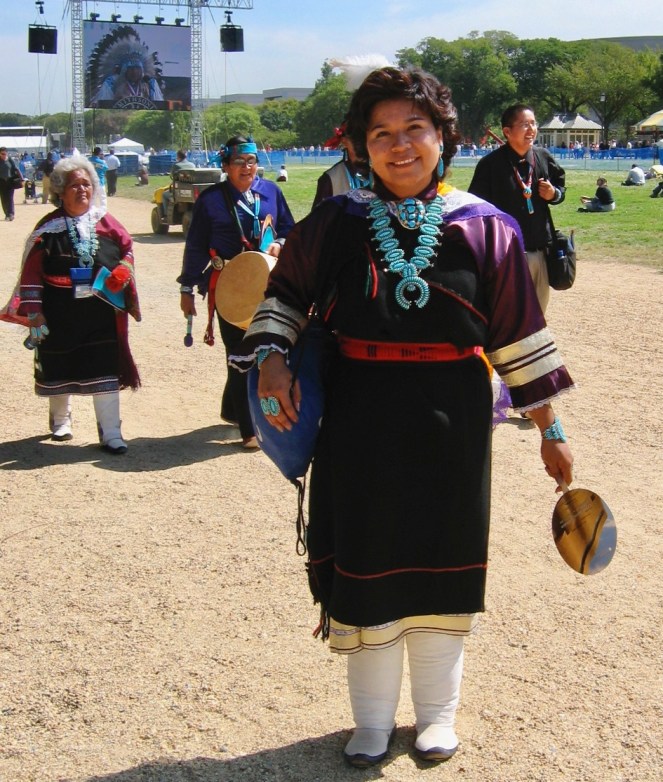
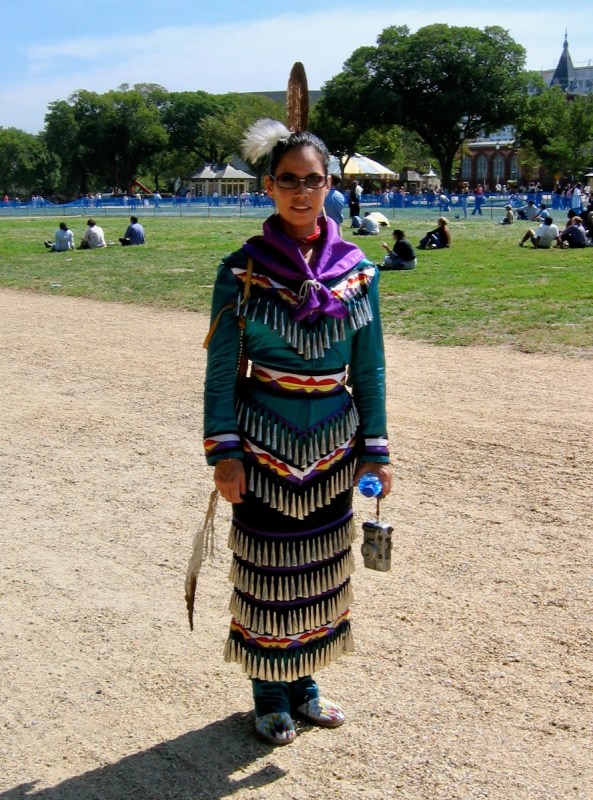
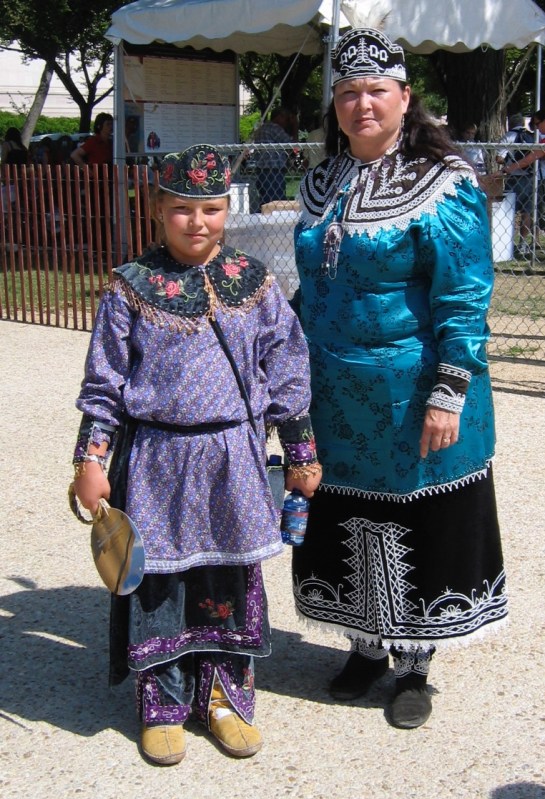
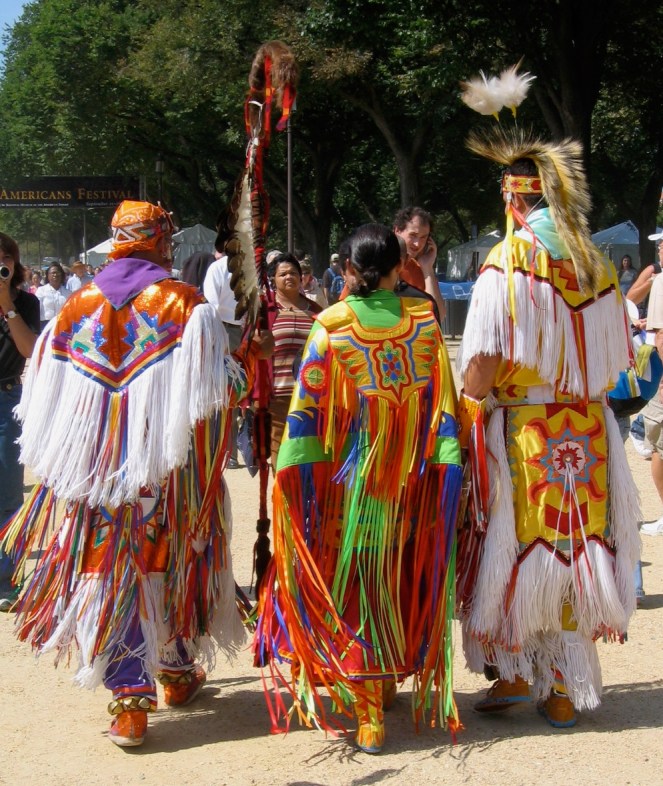
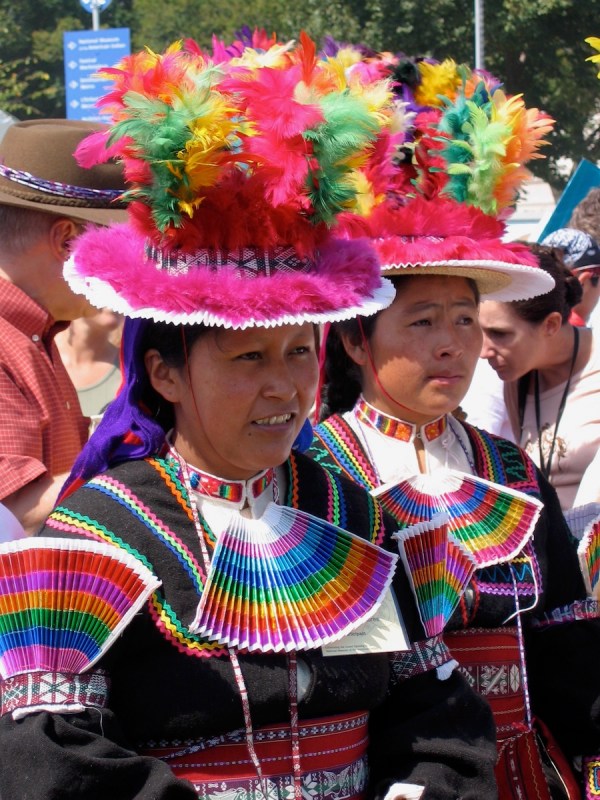
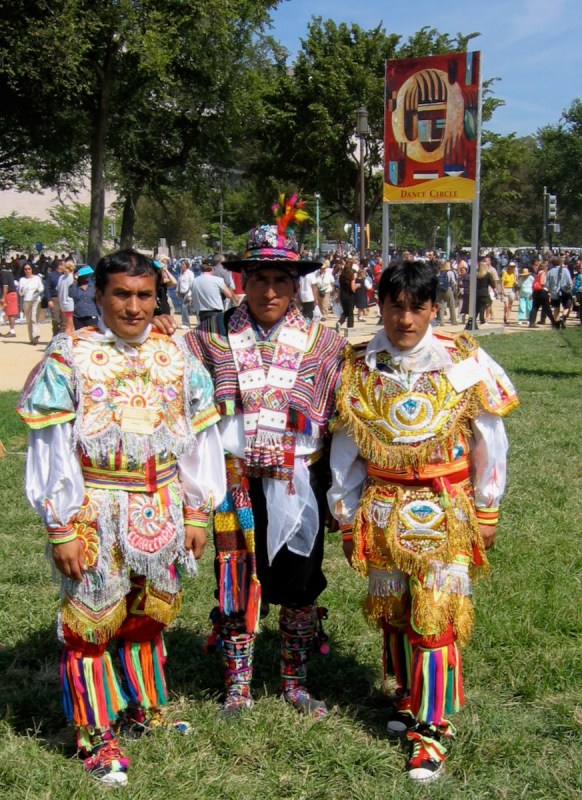
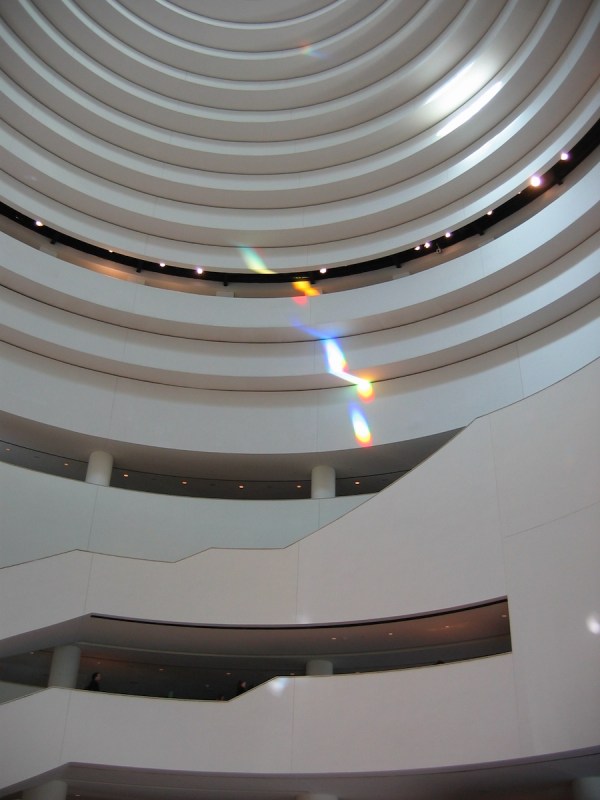
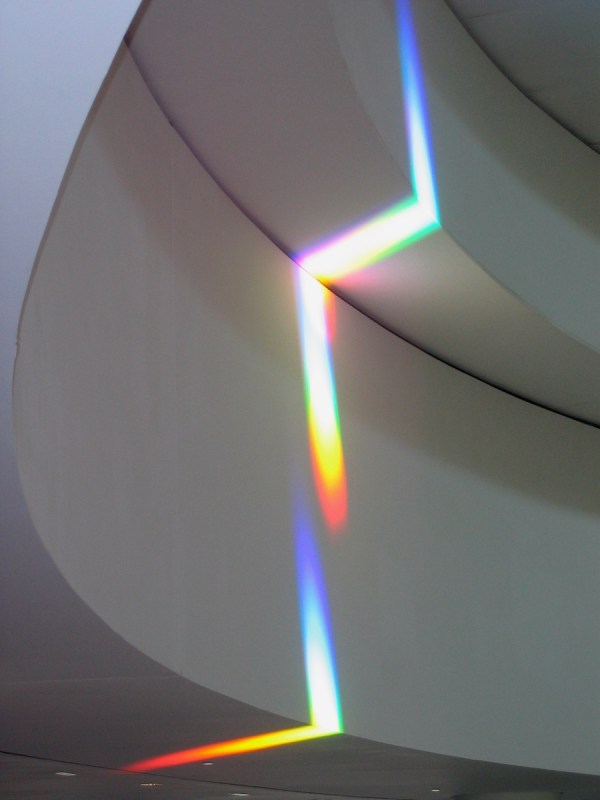
And if you haven’t been to that museum, please do put it on your list. We were in Washington, D.C. when it opened and it was just a party of different peoples from all over the American Continent (north and south) with a parade, food, programs. A good memory. And here’s a slideshow of that day, with all the amazing dresses (I love the Ojibwa Jingle Dress, slide 11) and regalia of the different nations. The first slide is a partial glimpse of the museum itself. The last three slides are inside the atrium, with the rainbows shining through the windows and down the walls.
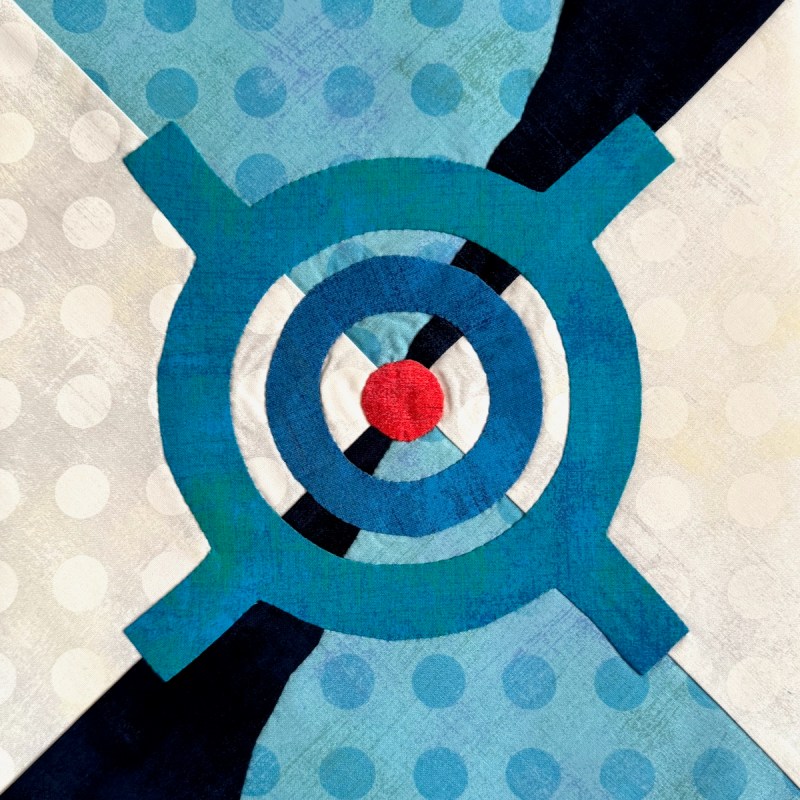
Here’s a free pattern of my version of the final block for you to download. Please do not post this on your own site, but send others here to get it for themselves. Thank you. (This is already up on my pattern site, and eventually I’ll take this one down and the pattern will live over there.)
Okay, a quick review of how I made the block. I like using freezer paper when I do appliqué that has a tricky edge.
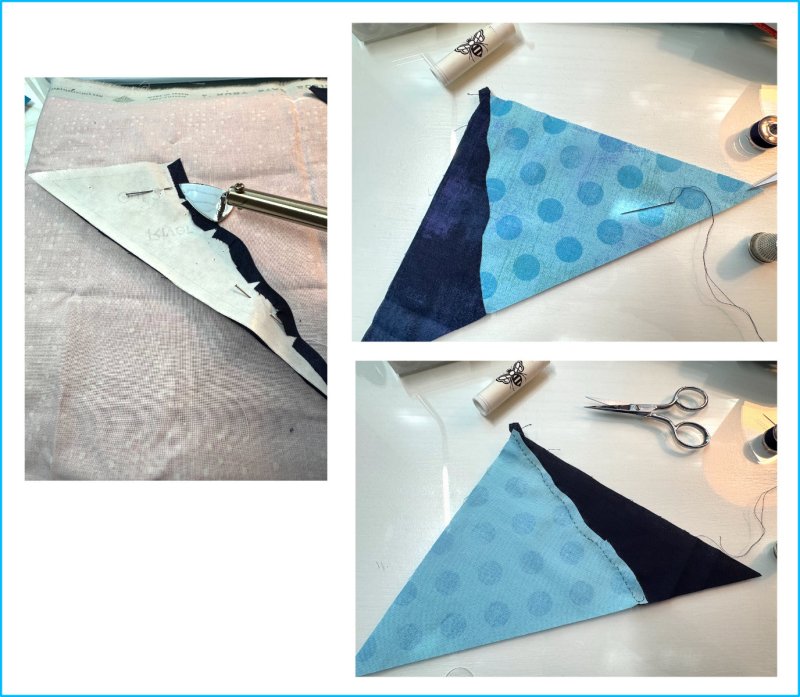
I pressed the raw edge (clipping at the curves) over the freezer paper. NOTE: please do pin your piece to the freezer paper as there is a tendency for it to move as you press.
Once cool, I removed the freezer paper, then put it into place on the “mountain” triangle, matching straight edges. I appliquéd it down, then cut out the excess behind. I chose to use hand appliqué but if you are familiar with using monofilament thread and a small zig-zag stitch, it would work well in this instance.
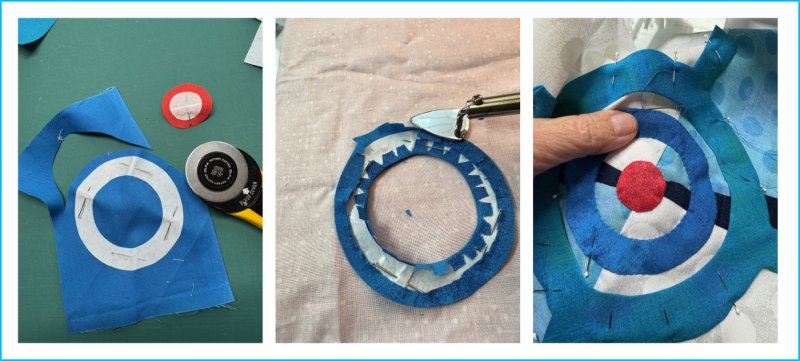
Similar process for the inner ring (the red center was appliquéd first, then I did cut out behind that). I trimmed the pattern piece on the lines, cutting away the seam allowances. Then, using a small-tipped iron, I pressed the clipped seam allowances over the edges of the waxy side of the freezer paper pattern. I pinned it to the block, then stitched down the inside of that first smaller ring. Then I removed the freezer paper, pinned it down again and went around the outside edges with my stitching.
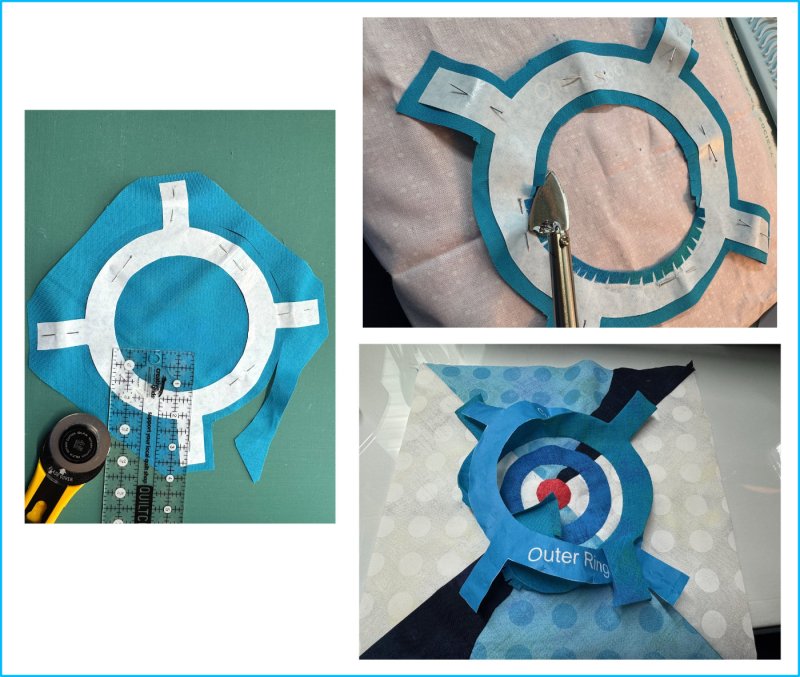
Same steps. I clipped into the corner when the lines poke out from the circle, and tucked the raw edges under the shape.
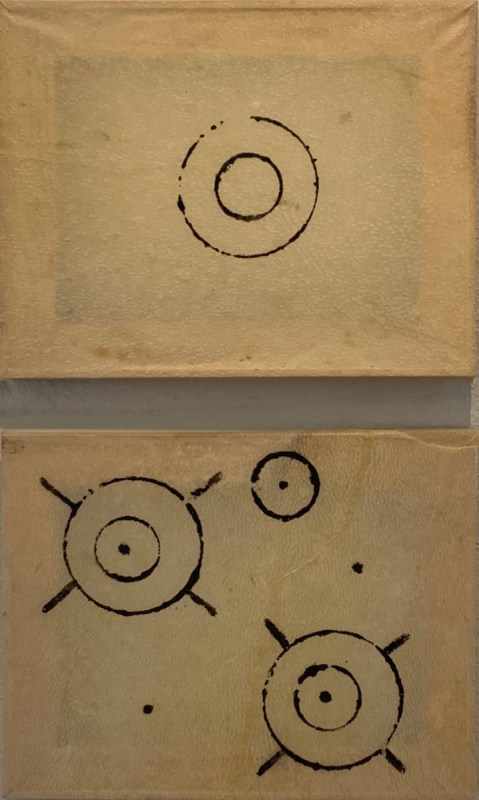
I was in Scotland and England when researching this Ellam Yua shape and found it interesting that there were echoes of it where I was: a circles with the four points jutting out:
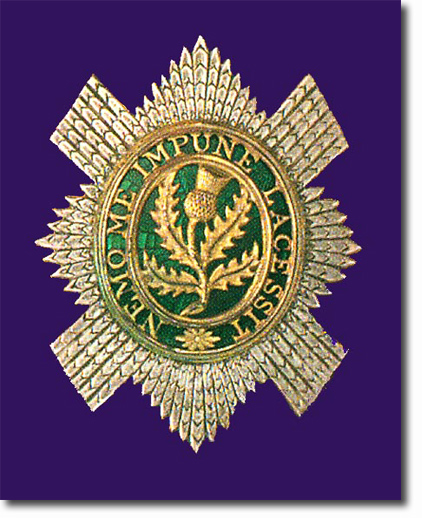
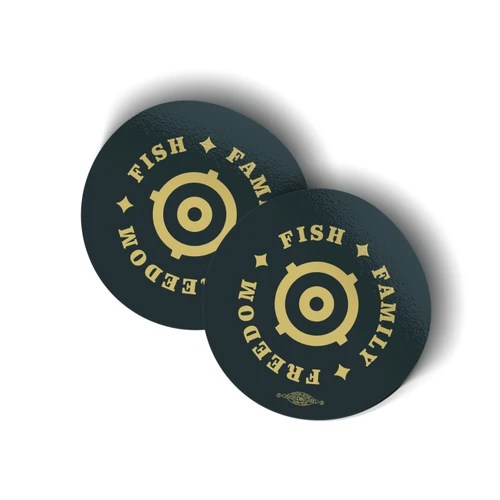
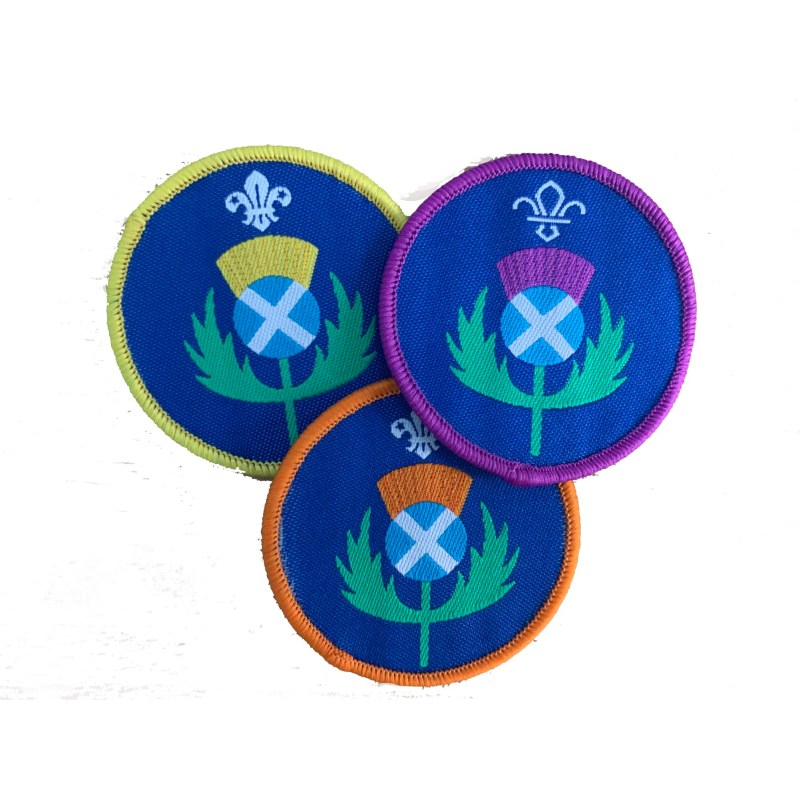
I learned a lot on this block, really enjoying my exploration of the Yup’ik art. And I learned a lot with all the other blocks and borders, too — expanding my horizons while doing a good challenge. Many thanks to the Smithsonian’s National Museum of the American Indian, and thanks to Congress’ America 250 Committee, which contrtibuted to this.
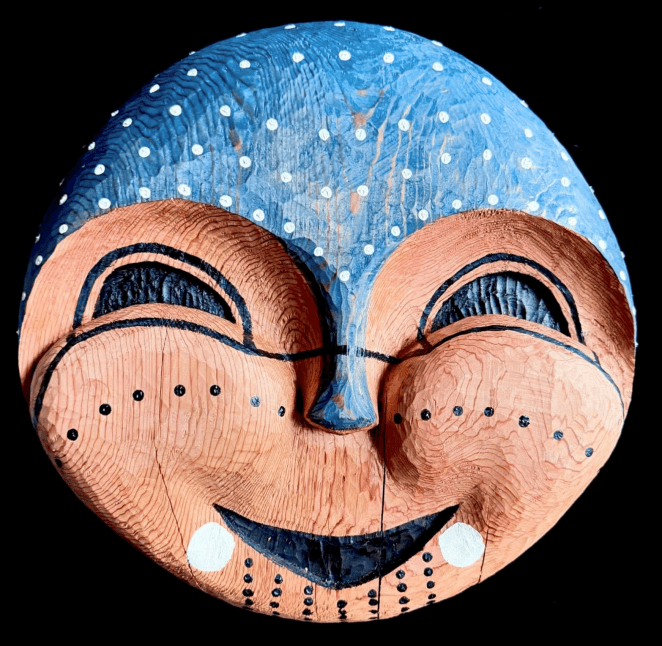
This final image is of a mask that Jen Wood made and put up online. In the text she notes that “the blue with white dots on the forehead represents the sky and stars, as well as our ancestors.” I liked the idea of this, so maybe the dots for my backgrounds evoke the same idea?
Thanks, Jen.
Happy Stitching!

Other posts about this quilt:
The Friction of a Hawaiian Quilt Block
This and That for JulyAugust 2026
Bits and Pieces are in this Post