Totes and Purses · Travels

Sewing in Translation

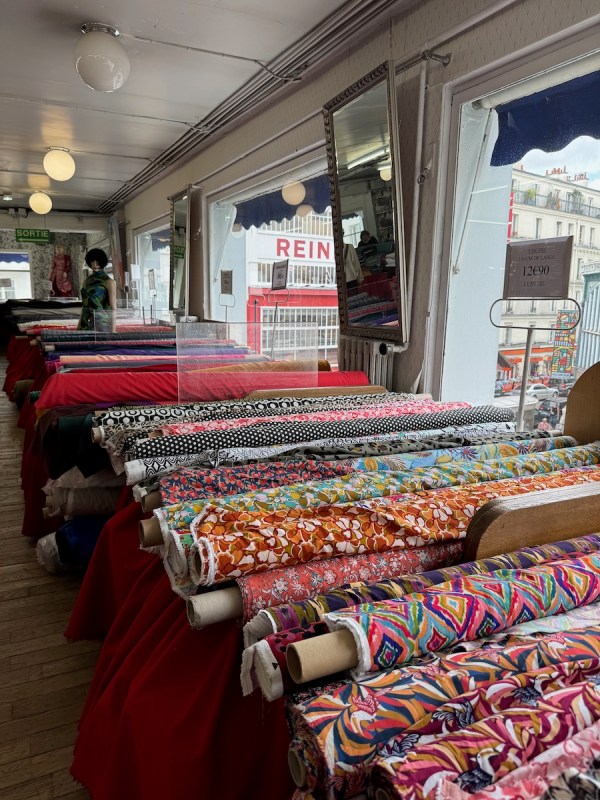
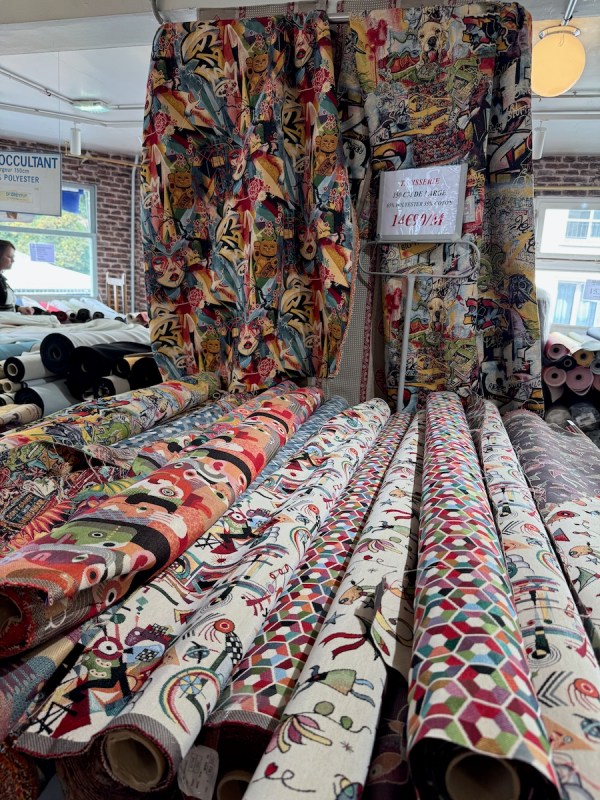
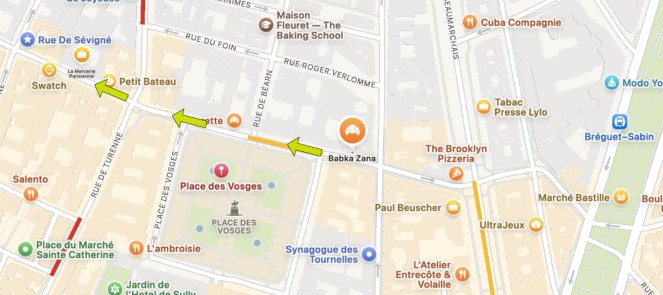
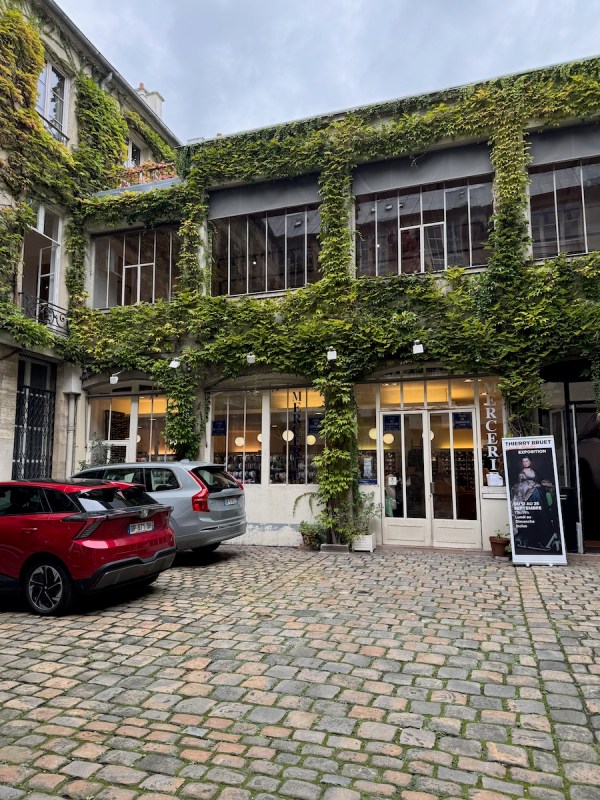
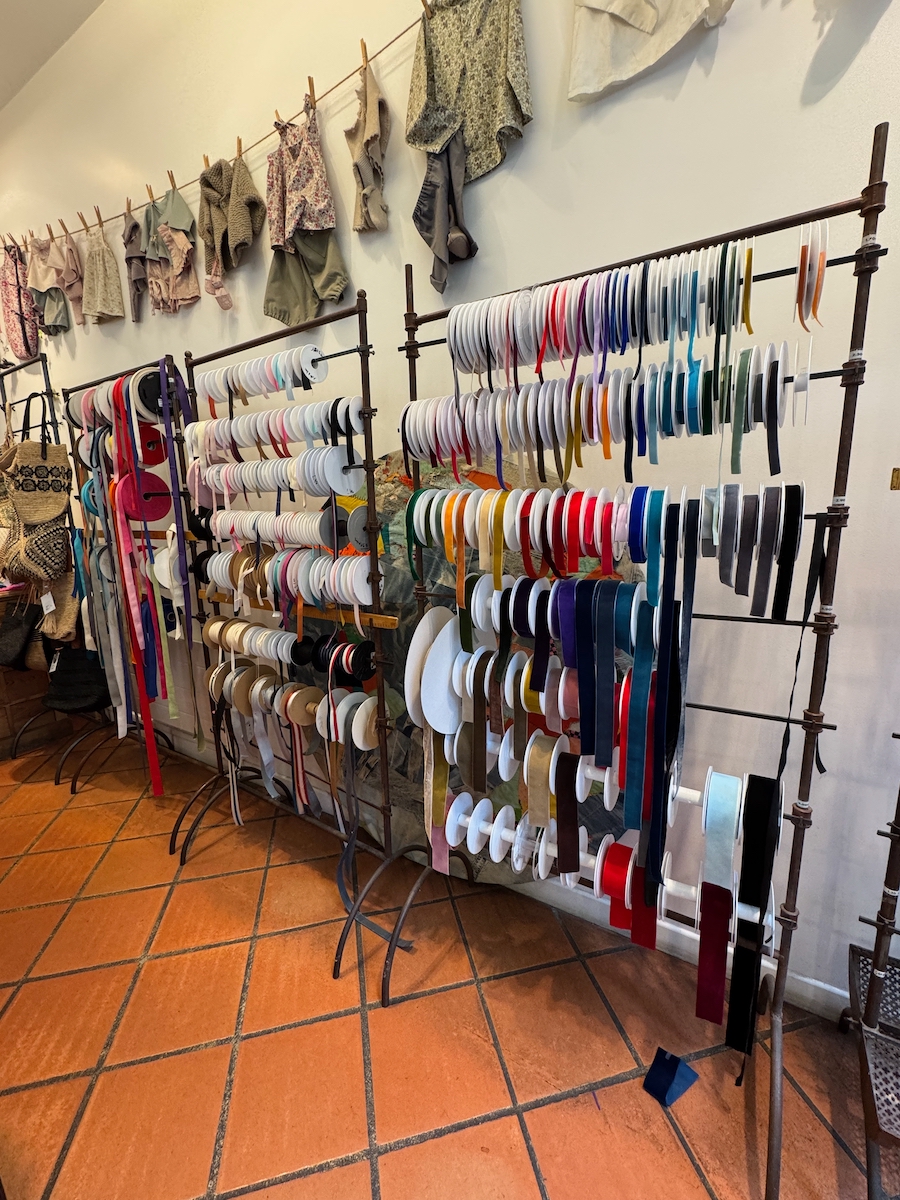
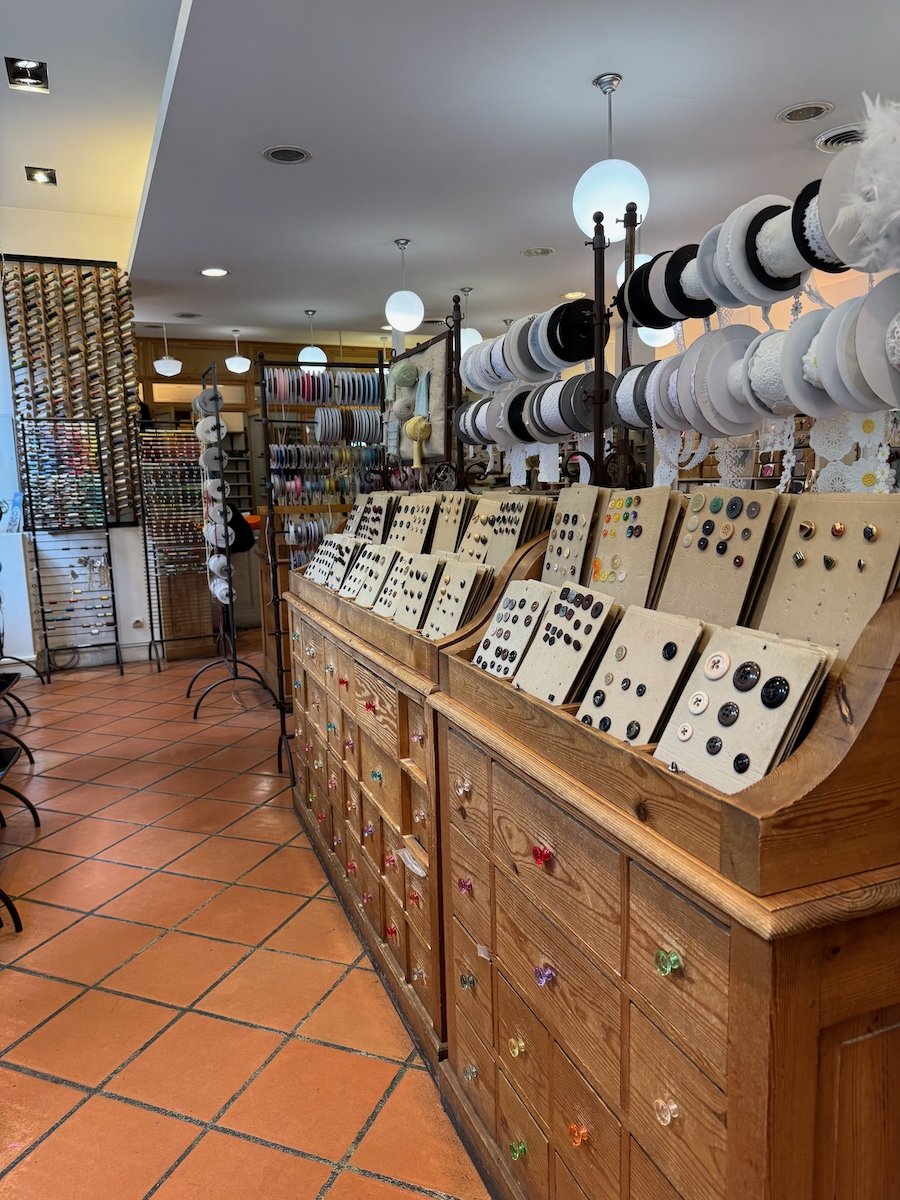
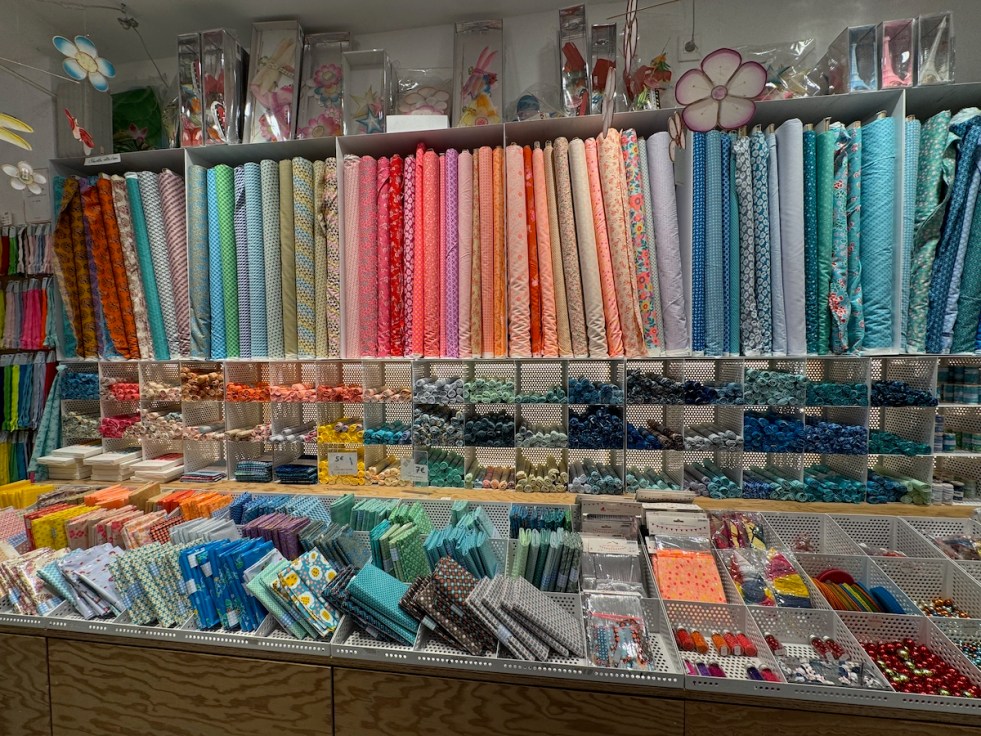
You know when I stood in the shopping area of Carrefour Quilt Show last September (2024), I wanted to buy up all the fabrics and patterns and everything, but alas my suitcase was small, so I had to limit myself. One of the choices was a series of small pouches from ABCDaires, with a soft velvety fabric with absolutely charming printed designs. I tend to buy something that I won’t see in the States, and this fit the ticket. I bought three: two kits and one that just had the printed fabric.

(taken with permission)
There is a front and a back to each pouch with different designs. One kit was pink with a girl in flowers on the front, and then just the flowers on the back. The colors were rich and saturated, so I was hooked.

However…Note to future self: Just.Buy.The.Kit. For the un-kit purchase, I luckily had a zipper that was a perfect match. However, the zippers in the kit were just a bit heavier duty, plus she included the lining, a waxed lightweight canvas.

But how can I sew it if it is in another language? you ask. Google Translate to the rescue. Let’s start with their website, ABCDaires:

I have the Google Translate in my browser, so I just click on the little icon in the upper right of the search bar; in some reading I did it suggested that now you have to use Chrome as your browser to get that. (I don’t know–do some searching online.) Or you can head to Google Translate and paste in the URL of the page you want to see in English:

This is Google Translate (above). Click on the Websites box, paste in your URL and it should translate most of the language for you.

Now the website is all in English, and you can click around to purchase the little kit you want. Yes, you will still have to convert the metric measurements while sewing. I have a small ruler that I use for just this.

She was very helpful and just lovely and spoke English! They also have a downloadable PDF of instructions on their website. I’ll talk about that in a minute.

This is the smallest of the three I purchased. You can see the little ruler I use that has cm and mm marked on it. The first thing you do it mark off small squares in the corners, but she has two different measurement options. This was the first wrinkle in the translation business. Which one? I tried using my Google Translate on my iPhone. You open up the app, choose PHOTO and hold it over the paragraph:

After a second or two, all the French is in English (I chose the language, but you could choose any). I learned a “coupon” is a “pouch” or maybe “fabric” or not (it’s not always perfect). So I went to the section about the corners, but alas, still couldn’t figure it out. I then went to math, something we quilters are good at. If the fabric measured X by X then I used the larger dimension, and if it was a different X by X, I would use the smaller. I measured the printed fabric, which gave me my answer. (I’m using “X” so I don’t give away her pattern.) I’m just saying, don’t be frustrated, but try another angle to solve your translation difficulty. Onward.

Ends go on the zipper, zipper gets sewn to the fabric…a usual sequence of steps for a pouch.

Since this is a velvet minky, I didn’t want to put a hot iron on it and scorch it, so I found my roller came in handy for flattening the seams. On the pink pouch, I opted to topstitch down the fabric with the zipper (she gives two options). I won’t do that again — in a minute I’ll show you why. [Of course it could be that I’m a dweeb at sewing pouches, and the results have everything to do with that.]

In the first photo, the designer fabric is shown smoothed away to the left, away from the stitching going on on the lining/zipper tape. As usual, when your presser foot approaches the zipper pull, leave the needle in the fabric, raise the presser foot slightly, and move it to the back where you’ve already stitched. This will eliminate bumps in the stitching line.

First one done! She has a clever way to put in the velvet ribbon so it becomes a nice zipper pull on a traditional zipper.

Here we go again. I used a bit of fabric from the stash for the zipper ends. I chose a spotty lining fabric (in upper right corner).

Done! The second one went so much faster, and I only top-stitched on the zipper, not the top designer fabric.

Back designs on both.

Notice how wonky the zipper ending is on the pink? I mean, it’s functional, but not as lovely as the blue zipper. I chalk it up to how the top-stitching impeded the inner seam. (I need to find a cute ribbon for the blue bag.)

UPDATE: I’ve since sewn the last blue pouch, and now I think it was the coated lining fabric “zipper ends” that gave me so much trouble. The fabric “end,” shown above, was much easier to manipulate. So maybe, if you make these, find a coordinating fabric, rather than use the coated fabrics.

I love how the bag color blends into a second color for the base.

Baby Molly and St. Patrick Day Girl posing with the pink bag. (You know I have to put Molly in here somewhere.)

Now, a caveat. This was an easy translation task, relatively. The company had an English download for the instructions, and I already had the Google Translate installed in my browser. I was also familiar with how the iPhone’s Google Translate worked too, having tried it out on an earlier trip to Japan, where I found out that my breakfast roll was made with the “breath of heaven.” (Okay, so it doesn’t always work so well with idioms, but I took that to mean it had flour in it.) The app has improved greatly since then, I assume because of a a positive use of AI in our lives.

I struggled more on this project, made from a book I’d purchased at Carrefours and also published in French. The trip-up came because it was a JAPANESE bag, translated into French:

I did use a lot of “how to sew Japanese bags” searches on the internet, with questions like “Do I trace the pattern off the pattern sheet in the back of the book?” (yes) and “Are seam allowances included?” (no). This required a huge MIND shift, and aside from sewing the bottom to the top edge of the bag, I made it. (That’s why it looks upside down, ahem.) I did a lot of improvising, but I also love it, too.

I guess what I want to say is that it is a big world of quilting out there and we can always stand to have our horizons enlarged and widened, helping us to bridge all the acrimony and bitterness that can sometimes be found around us. I am in minor grief just about every day with the parts of what I once held dear being taken apart and sold for dross. So I’ve stepped up and purchased another subscription to a news organization, donated to three different local public broadcast stations, apologized to my Canadian friend Kaylie for who I’ve made two baby quilts, apologized to some scientists I know who won’t get funding for their research saving crops from pests (I do like to eat). I guess I’ll soon be apologizing soon to Greenland, too. And Mexico. And Europe, where I’ll be this year — I hope they let me in. I hope America lets me back in, and lets me have my phone after going through customs. I remember traveling in Italy when Hilary Clinton was running for President and the taxi driver went on and on about how her opponent was like Berlusconi, a real rat, he said. I assured him that she would win. Haha, spoke too soon.

I guess I just want to say that make friends with our international neighbors, sew their projects, buy American products (so they can survive the boycotts from other nations), but mostly just sew. I could go on and on, but I have many friends who are very happy right now, and I love them too. Mostly I just try to translate my complicated feelings and make the results come out with a bit of peace, a bit of kindness and a lot of forbearance.

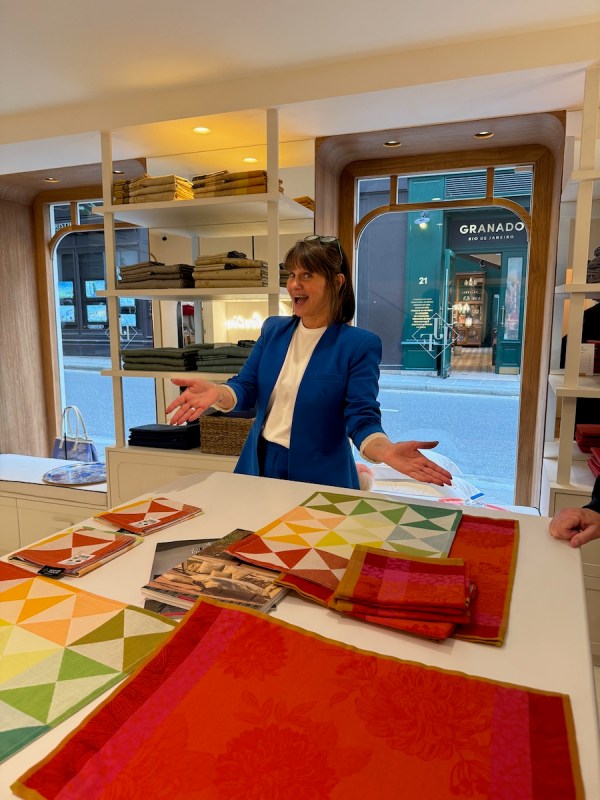
Sort of like sewing with beautiful fabrics from a lovely French shopkeeper–

Update: I had some questions about what kind of fabric this was. After reading this post, I’d say it hews closer to a product similar to Celosia Velvet, as the back is very sturdy and is not stretchy, nor drapable.

200 Quilts · Quilts · This-and-That

March 2025 This and That

A post where I go wild with cultural references, quilts and art, but don’t worry–everything fits right into a This-and-That.

My friend Jamie sent me this photo of one of my quilt designs in the wild. I did a Quilt Guild visit there; it was the last one before Covid-19 hit, and this was their project. That’s five years ago this month, and wow — so glad to see their Guild is still having fun.

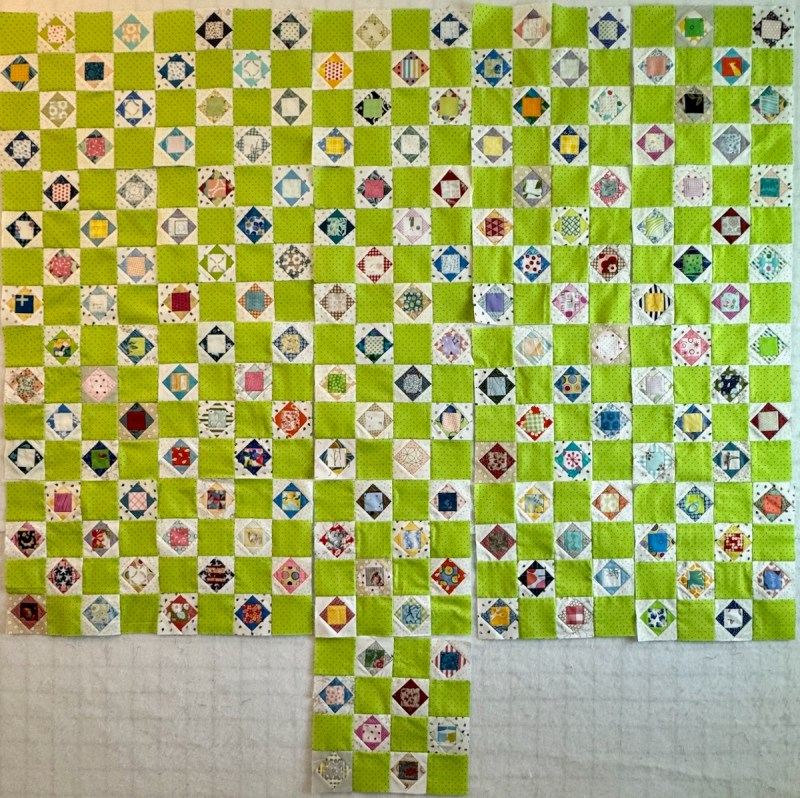
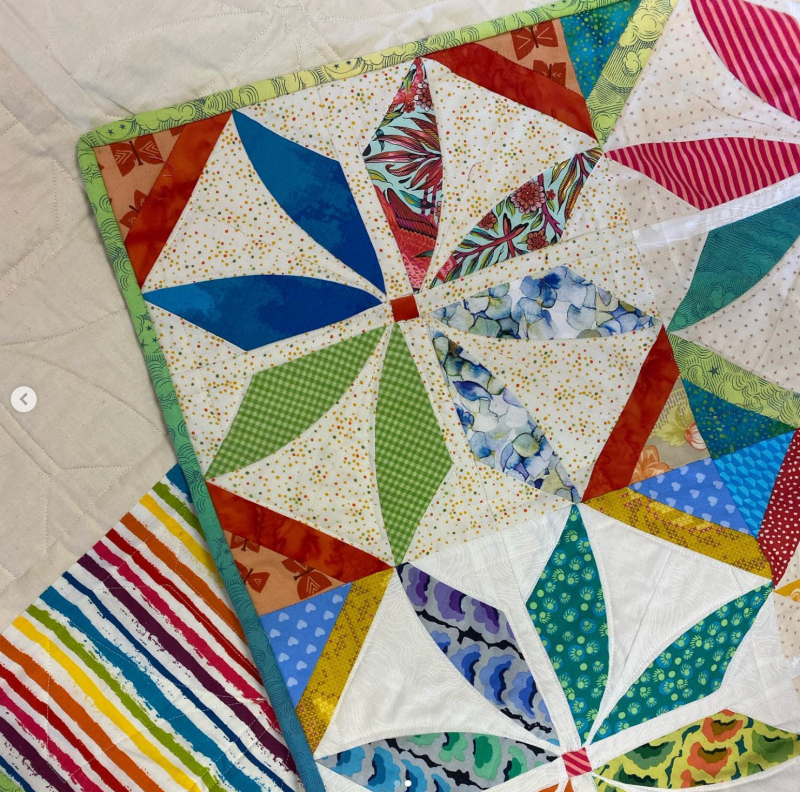
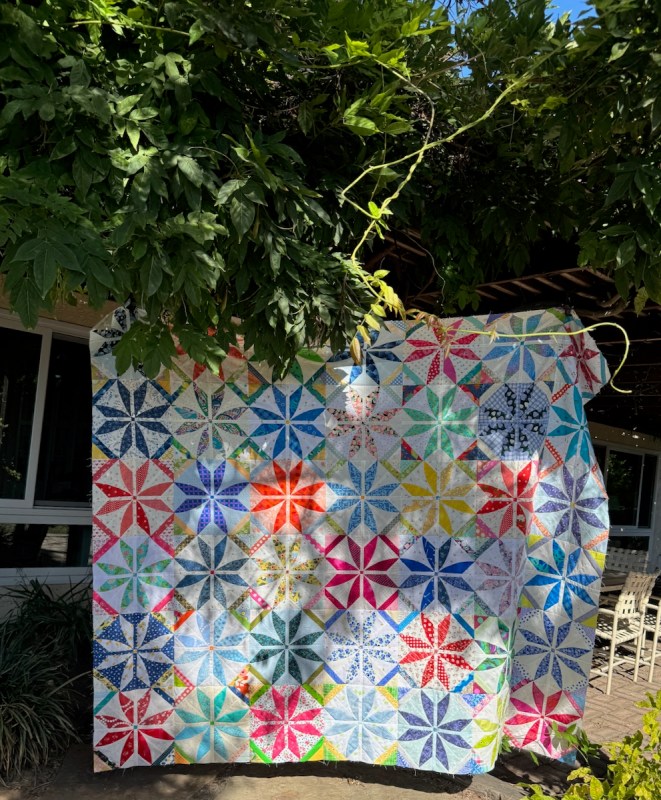
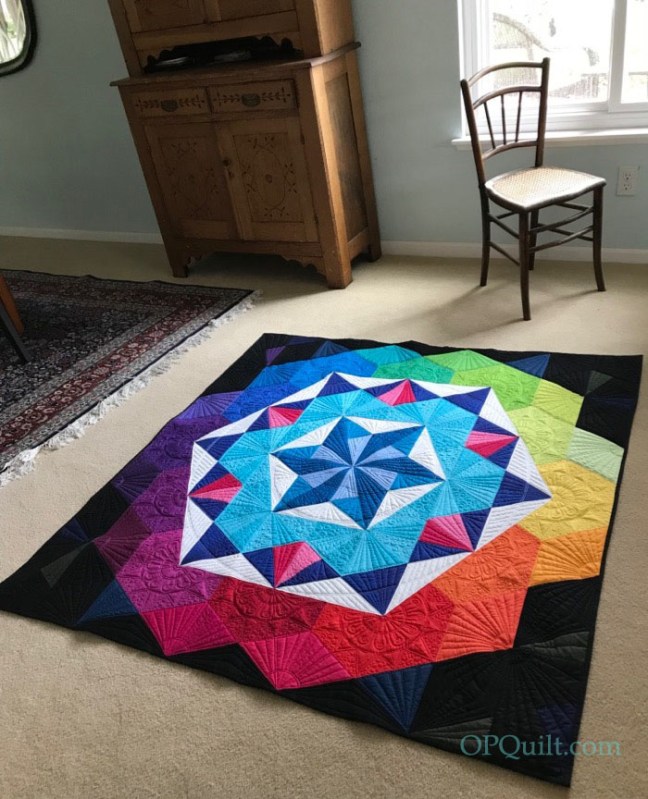
As many of you know, I’ve been cleaning out my Quilt Orphan Blocks where I found this. It’s really only 1/4 of the quilt, and yes, it was a class taken online. I think I realized pretty quickly that I was not cut out to do wobbly cutting. I tried it her way at the beginning, but by the end, I had my rulers out and the quilt changed dramatically. But I love it.

The pattern is called Finger Paints and it is by Laura Loewen. Should I finish it? IDK. I think it can stand on its own. The plan is to quilt it while testing out some new threads.

We’ve been planning a trip overseas (hope we Americans are still welcome), and laughed at the photo of this room for rent. My BIL told me it was reminiscent of the scene from Willy Wonka, with all the grandparents in bed. Only with this model, they could have a table to eat at. (No, we didn’t book that one.)

I have a new thing: when I see a fabric bundle I like, I save the photo and keep it on my desktop for a while. Hey, I’ll even print it out every once in a while, and pin it to the design wall. I don’t do very well sewing from a bundle, which is unfortunate because there are a lot of beautiful bundles out there. But often I fall in love with a bundle because of the colors, and in this case, it was those blue-purple fabrics in the upper left that caught my eye.

Judging by the colors shown on the catwalks for Fall Fashion 2025 in Paris, this color must be in the zeitgeist, and *slouch* must be the posture.

More from the runways, from left to right:
(1) A designer coat that looks very much like our quilty coats.
(2) A giant bra shirt?
(3) A shopping bag shirt?

I got a degree in Clothing and Textiles in another life, so the fashion shows have always held a fascination for me. I did once see a woman at the Houston quilt show who had made a vest out of the souvenir bags…complete with all the handles hanging down in loops around her hips.

I had to mention this Tilda pattern. I see quilts like this and think I’d like to try it, as I have acquired a stash of Tilda fabrics. But after doing the cacti quilt, it will be a long while before I try all those itty-bitty pieces again. It’s a free download on her website.

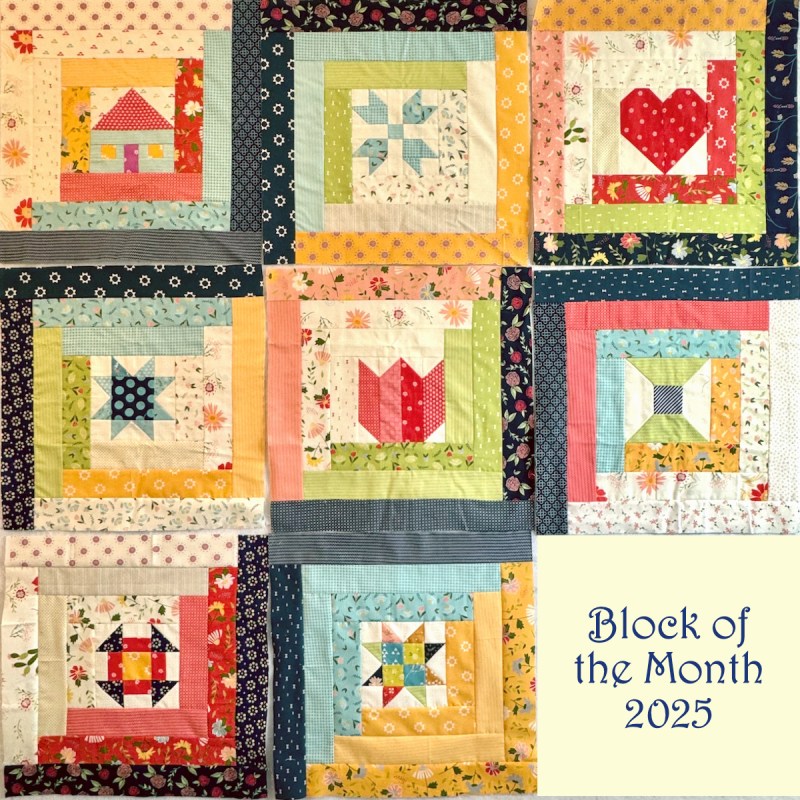
BLOCK OF THE MONTH 2025 PROGRESS

I finished Sherri’s Block of the Month for March.

And here are the first three. I’m using a collection of her fabric lines, and on the right side, the strip that’s north-south is (I think) from her first line of fabrics. It was very Southwest in flavor — and her subsequent fabrics have shifted from that motif and palette. My most favorite Sherri fabric is the yellow north-south strip on the outside of the second block. I once purchased 3 yards of it, and I’m getting down to the end of it.

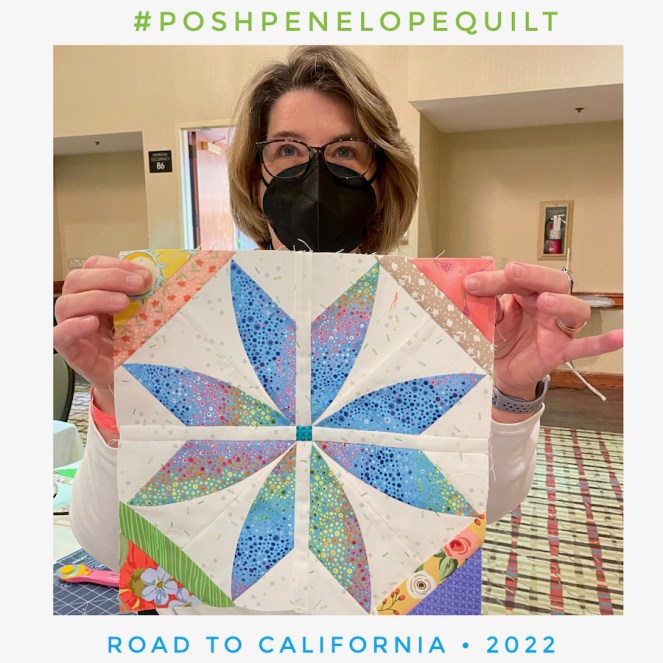
POSH PENELOPE BLOCKS PROGRESS

Here’s the danger: doing this (more-complicated) block only once a month causes an occasional oops. I was trying to do this in a hurry and whacked off the seam allowance. And then I ran out of the yellow strawberry fabric. But I had enough of the original background fabric that I think it turned out okay:

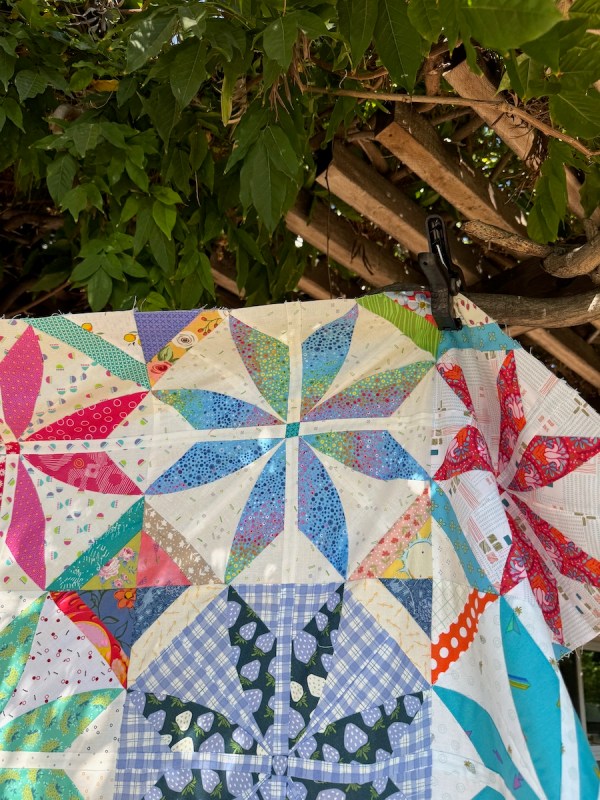
This round, after I got going, seemed to be about switching out the backgrounds, and keeping the petals all the same. I still like the violas in the top photo the best. (Or you might call them Johnny-jump-ups.)

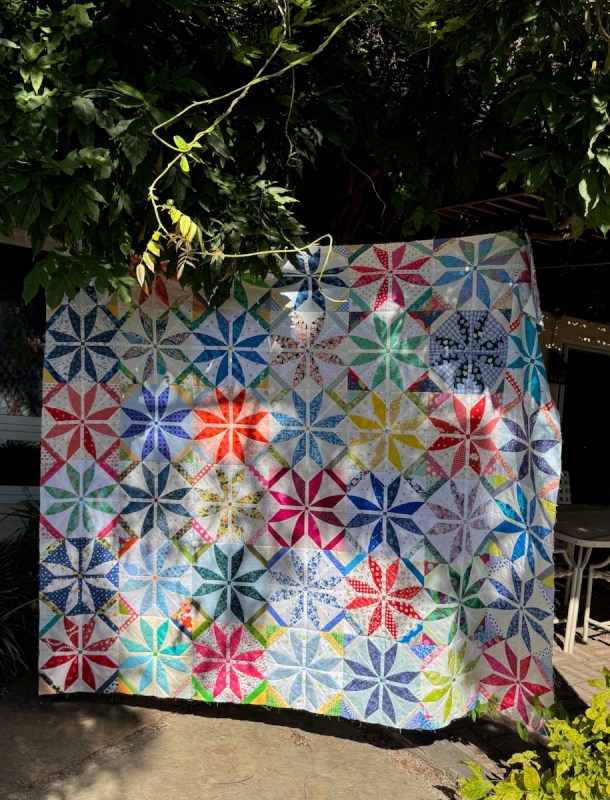
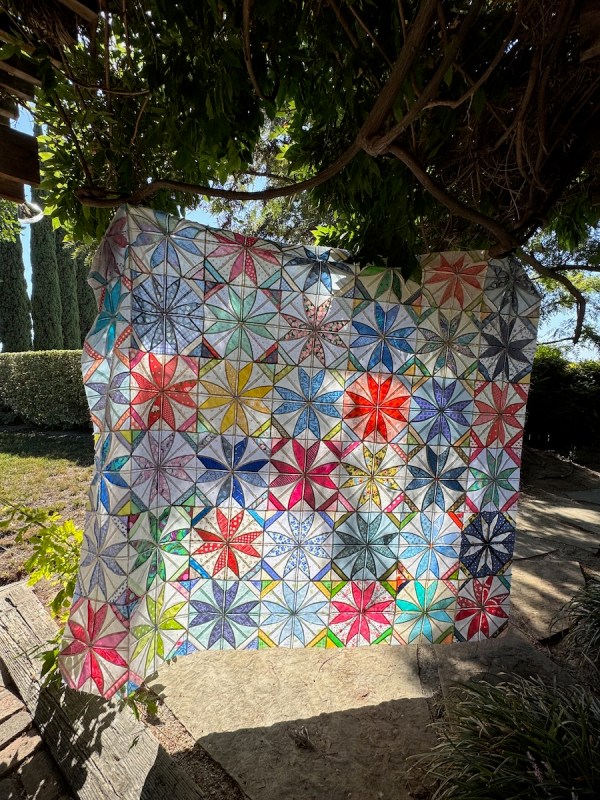
In this view, all those fancy petals are slightly distracting. I guess “read-as-a-solid” or in that general direction might be the best choice for the petals. Still not a fan of that purple one in row three, though. Fifteen blocks are finished out of the 42 that Carol and I have planned.

Speaking of petals, we went to Austin TX to visit family, and I fell in love with these towering shapes at the Blanton Museum. Head to this website to read more. This website also calls them “petal-like sculptures” and has more info on the museum. Regretfully the small chapel, Austin, by Ellsworth Kelly was closed, but we still enjoyed ourselves at the Blanton, enamored of the exhibit that included this:

The title of the car is classic: El Muertorider Katrina Car, 2006
(Muerto means death in Spanish)

From the title card: “[Artemio] Rodríguez collaborated with John Jota Leaños on El Muertorider Katrina Car, a refurbished 1968 Chevy Impala. They painted it a sleek black with white skeletal designs reminiscent of Posada’s elaborate figures. Rodríguez and Leaños center the Catrina figure on the car’s hood, altering the spelling of “Catrina” to “Katrina” to make a dedicatory reference to the victims of the devastating Hurricane Katrina that ravaged New Orleans in 2005. Recurring references to oil and money throughout the car’s imagery refer to the Iraq War (2003-11): the slogan “War Is Money!” echoes war protestors’ frequent chant: “No Blood for Oil!” Thus, El Muertorider embodies several cultural practices: lowrider culture, political protest, Day of the Dead commemorative practices, and La Catrina’s enduring symbolism among contemporary Mexican and Chicano communities.

More photos of the entire car are here and here.

Calavera de la Catrina [Skeleton of the Female Dandy], circa 1910

It was also a treat to see this photo-relief etching by José Guadalupe Posada [1852-1913].
[Source: The Blanton Museum of Art, The University of Texas at Austin, Gilberto Cárdenas Collection, Gift of Gilberto Cárdenas and Dolores Garcia.]

I used her image in a guild challenge quilt when I made her the center of a quilty ofrenda. I threw everything on this one, including the little milagros attached with ribbons. I enjoyed seeing one of the original prints of Catrina.

From the title card: “Posada invented this famous skeletal character in 1910, just as the Mexican Revolution was catching fire. At first, he called her La Calavera Garbancera, using the derogatory term for Mexicans who claimed solely European ancestry and rejected their Indigenous roots. In her ostentatious hat, this bony fashionista was intended as a symbolic epitaph for the wealthy privileged classes, a satirical emblem of the sins of vanity and greed, and an allegorical representation of government corruption under dictator Porfirio Diaz (1830-1915). However, her naive, beguiling nature soon endeared her to the disgruntled masses. Posada renamed her La Calavera Catrina, after catrin or ‘well-dressed.’ Reproduced repeatedly in the penny press, La Catrina became a national icon among popular folk, who embraced her as a demure champion of the underdog.”

Now you know.

Austin food: two plates of tacos from Velvet Taco, and they were all standouts with an interesting combo of flavors. Unfortunately, the closest Velvet Taco is in Phoenix. My husband Dave said that the “fish and chips” taco (lower left) had bits of potato-like chips under the fish, which was topped with a yellow curry sauce. Who dreams up these things? I don’t know, but an award to them. And then this impulse purchase of pineapple-flavored popcorn at Buc-ee’s, which now I have to order from the Evil Overlord in a box of 25. It’s always good to expand your food horizons, but it can get more expensive.

And the penultimate image is of a cool Lego spray of flowers, courtesy of my son-in-Austin’s passion of building with Legos. It was amazing to stand in his “Lego room” and see all the things he’s built. Long ago, when all the children were at home, he and our other son built a Lego village that encompassed the top of all the dressers, desks, TV tables in his room. He would have probably put some Lego houses on the bed, too, but I said no.

I think his passion is just like our passion for quilts and color and shapes and making. And while we like our quilts, isn’t the messing-around-in-cloth the fun part? In the Life Kit podcast last week, Dr. Stuart Brown, founder of the National Institute for Play, said that “when you’re doing something for the end result, you lose joy in the process.” I realized that pulling a quilt or too from the closet to put on the beds for our new guests (daughter and granddaughter below), was just this: I enjoyed the process of making my quilts, so that others can gain joy from them as well.

My granddaughter and I spent time one night at the dining room table, each of us working on our stitcheries. We visited, chatted, and she learned a new stitch: French knot, to put in the center of her flowers. It was a lovely time.

Oliver Burkman: “When you get to the end of your life, the sum total of all the things you paid attention to will have been your life. If there are some friendships there that you never actually paid any attention to, well, you didn’t really have those friendships, right? I mean, if there was an interest that you had, that you never actually spent any attention pursuing, well, you didn’t really have that interest. So it really matters what we’re paying attention to because it just adds up to a life.” (from Life Kit podcast)

Whether it be fashion or tacos or art or popcorn or embroidery, enjoy!

Visiting Ladybird Johnson’s Wildflower Center.

Lego and Hexie Mania

Headed to Home Sweet Home.

This hexie project was something I just grabbed at the last minute. However I am curious: what do you like to take along to keep your hands busy?

Quilts

Personal History of Quilting

I first read about Kaba’s idea of hope being a discipline in an interview with Ed Yong, who also confirmed that hope “is a practice that you cultivate through active effort.” [Link should give you access to the interview.] And then ideas about hope kept popping up everywhere.

My friend Melanie shared:
“We must accept finite disappointment, but never lose infinite hope.” ~MartinLuther King Jr.
“Hope is like the sun, which, as we journey toward it, casts the shadow of our burden behind us.”

We start out any journey with hope: hope the car won’t get a flat, hope the plane won’t be delayed, hope the hotel room is clean, hope the people on the other end are okay, and so on.

Likewise we start all our quilts with hope that we like the fabric we chose, or that we hope we have the skills to complete the quilt. But a lot of the time, hope is not that obvious. We pick up cloth or brush or pencil or paper, urged by a need to create beauty or explore or solve an internal riddle. We just keep working, sometimes unable to define the goal or endpoint, as the work itself meets a need inside. Sometimes I create because if don’t, I’ll slump into a depressive mood, unable to rouse myself, unable to console that unbidden sorrow inside. Sometimes I create because it’s just a good day and I can hardly wait to cut into that new (or old) fabric. Sometimes I create because I need to have to figure out a structural puzzle, or solve for the x in the quilt to get the y.

A selvage is a bit of the fabric’s dna-ish coding: colors, alignment, a manufacturer and a designer. Sometimes there is a phrase or a quote. Often instead of a line of color registration dots, there might be houses, or shells or flowers. It gives a clue to the person (mostly a woman) who was behind the beginning of this piece of cloth. I’m building on her work, and by the people in the future choosing how this quilt will be used, someone else will carry us both forward.

I took the first stitch on this quilt eleven years ago, in March of 2014, and finished it this month. Did I “cultivate through active effort” my forward journey, hopeful that one day I would finish? Perhaps. Whatever propelled me, it’s lovely to look at this, to see my personal history of quilting writ in cloth, each selvage a clue to where I was, who I was, placing me firmly in time and space in a mostly unknowable past.

And with a bit of discipline, I will carry hope forward into an unknowable future–

(My own version of a selvage is above, if I were designing fabrics. Which I’m not.)
Quilt #305 Title: Personal History of Quilting
Quilter: Nancy Bahner; the pattern is Funky Fans by Urban Elements

Other posts about this process & quilt, in no particular order:

WIP Wednesday (Selvage Blocks)
Selvage Block-A-Long
Selvages
Incomplete
Goals for Fall 2014
Straighten Up and Sew Right

This backing reminds me of the Very Large Array in New Mexico. A peak experience.

If you’ve read this far, here’s the free downloadable Tip Sheet for this Selvage Quilt:

300 and Beyond · Family Quilts · Quilt Finish · Quilts

Two Quilt Finishes • March 2025

What is this mess? My exploded Orphan Quilt Box. I’ve been putting things in here for nearly two decades (the little airplane blocks are for my grandson’s baby quilt, and he just went off to college), and it was time to excavate and see what to toss and what to keep.

I pretty much threw out all blocks with red fabric. I love reds, but that color of fabric went through a hard time for a while, bleeding every time it was used. I started to test the blocks one-by-one, but then just tossed them all. What’s that old song say? Know when to hold ’em and know when to throw ’em away. Yep.

I found several blocks that were orphans of a different quilt. Baby Hurren is getting a little sibling, and we don’t know yet whether it’s a boy or a girl, so I tried to make a jolly quilt that could go either way for his mother. (I need to change out the February quilt behind it.) Here’s a wee pattern for it on my pattern shop–for a tiny price!

A simple outlining of the blocks did the trick. It was a fun project to sew while we feel like we are watching our world collapse. (Baby Hurren’s mom is Canadian, and I feel like I need to apologize all the time.) The last time I felt this chaotic was when I had three teenagers living at home.

Now to switch gears: when we stayed in my daughter’s home last time, in our room were these cute cactus pots. In fact there were several of them. So yes, that cactus quilt you’ve seen being made is to hang out in this room, which has huge shelves on one side, filled with pillows and blankets and quilts, as the teen uses the room to watch movies with her friends, and to hang out (it also has a small kitchenette, complete with microwave and fridge — Teen Haven!). I thought this next quilt could join them all:

She’s received it now, so I can post about it.

We took Kingman Cacti out to a neighboring street where the cacti were in wild profusion.

It was a dance…close enough to get the quilt with the cactus forest, yet far enough so as not to get stuck. And to get a photo with an almost-in-bloom yellow cactus flower (in the upper left).

Thanks, always, to my Quilt-Holding Husband, Dave. He suggested the location and it was perfect.

I tried a new-to-me edge-to-edge pattern: Edgy from Intelligent Quilter. I like how it almost looks sharp-edged and then it doesn’t. I make a diagram so my quilter knows my preference on size:

I have two or three long-armers I’ve used over time, and Nancy is new; we are still getting used to each other’s vibe. She really rocked this one — I’m so happy how it turned out.

My friend Lisa is teaching me how to do binding by machine (shown here being attached to the back). I’ve started using it on quilts I think will get a lot of abuse/use as I’m hoping it will make them nice and sturdy. I think I’m getting the hang of it.

The cactus quilt in process–so many tiny pieces! And the quilt “packages” all wrapped up in selvages, with the edges to go at the top all marked with a removable and reusable tag. Yes, that’s my selvage quilt on the left, and the next post will feature that one, and that’s all I’ll say about that. Baby Hurren is Quilt #303 and Kingman Cacti is Quilt #304. I’m not trying to hit a goal or anything. Writing them down on my Quilt Index is more about keeping track.

And since this will publish the weekend of March 9th, Happy Daylight Savings Time Day, haha. I’m a morning person, and the thought of being dragged back to dark mornings is not a fun one. The sun will do what it does, and I’ll get up when I want — the blessings of not having to awaken to an alarm.

A reminder: turn your clocks forward on Saturday when you go to bed–

More posts on the Kingman Cacti quilt:

Incomplete

Back of the binding

Front of the binding