Heart's Garden · Something to Think About

Adding To Do Items onto a To Do List

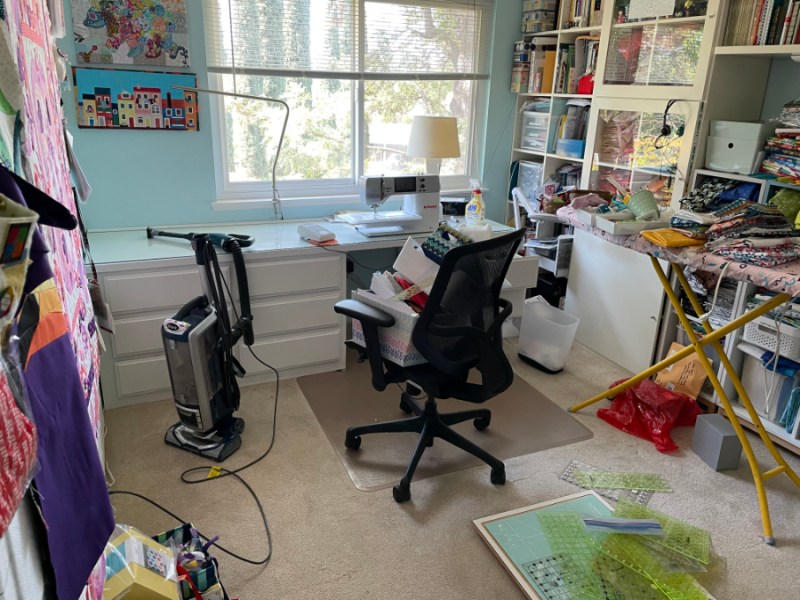
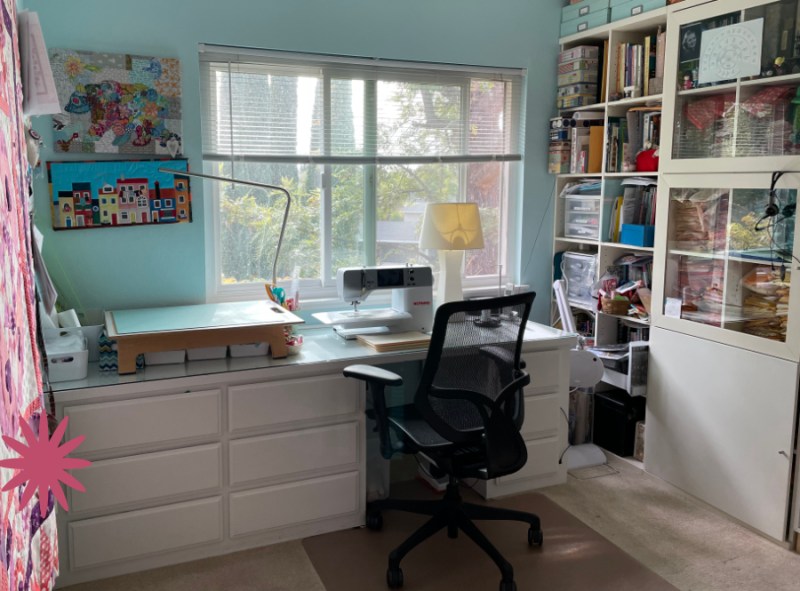
So many organizational systems do not account for a trip to the fabric store, where immediately I have to reshuffle, re-prioritize not only my To Do List, but also my sewing room. I have five red tabs in my Get To Work Book and they read To Do 1, To Do 2 and so on to the fifth one. I have half-filled lists in my quilting planner. A lot is crossed off using my yellow highlighter, but when your organizational lists get out of control, how do you organize and get things done?

Research: I read this article which suggests compiling four different types of lists: Master, Monthly, Weekly, Daily (he describes them on the site). Lisa Jackson recommends a service called WorkFlowy under the post title of A Tool for Organizing Your Brain. Bette has declared this the Year of Focus and has organized segments of the year dedicated to her sewing goals. Sherri of A Quilting Life has a good planner for quilting goals.

And here’s my classic Goals List from over two decades ago. I should frame this–what an ambitious woman I used to be! (I’ve abandoned housework, physical fitness goals and scrapbooks — but did complete most of the quilts in the list. I also got the children raised.)

As we’ve noticed, our lives have shifted underneath us. We kept going, but perhaps our outlook changed, our friendships dwindled or expanded. I liked Brad Stulberg’s article, where he writes:

“Many of us felt seen when, last April, the organizational psychologist Adam Grant wrote of languishing, “a sense of stagnation and emptiness … as if you’re muddling through your days, looking at your life through a foggy windshield.” There was a relief in having a name for our experience, and a kind of solace in realizing that we weren’t alone in experiencing it. But now, nearly a year later, as with just about everything related to Covid, we’re sick of languishing too.”

Perhaps that’s why when I went to QuiltCon in February, I tried to find things to give me a spark. I loved my two classes from Cassandra Beaver and Verushka Zarate, and enjoyed the lectures. It was fun to see people again in the wild, but there were some interesting moments of confusion in identifying people because we were all masked. And perhaps that’s why — when I went into a real-live quilt shop in Phoenix, and maybe because they gave QuiltCon-ers 20% off, I snapped up a range of beautiful colored semi-solids. Some one in line asked me what I was going to do with all those, all I say was, “We’re supposed to have a plan before we buy?”

Perhaps I was exhibiting Stulberg’s mention of “behavioral activation…based on the idea that action can create motivation, especially when you’re in a rut.” He writes:

“The challenge with behavioral activation is mustering enough energy to start acting on the things that matter to you: Make that phone call, schedule that walk with friends, write that email, get off social media and start on the creative project you’ve been procrastinating on. This may sound simple, but when you are languishing, simple does not mean easy.

“But a mind-set shift can be a powerful tool. When you feel down, unmotivated or apathetic, you can give yourself permission to feel those feelings but not dwell on them or take them as destiny. Instead, you shift the focus to getting started with what you have planned in front of you, taking your feelings, whatever they may be, along for the ride. Doing so gives you the best chance at improving your mood.”

So To Do lists can sometimes become exercises in bloodless planning, an attempt to get organized (which is why my planner often has blank spaces). But walking into a fabric shop now becomes behavioral activation. That, we can all get behind.

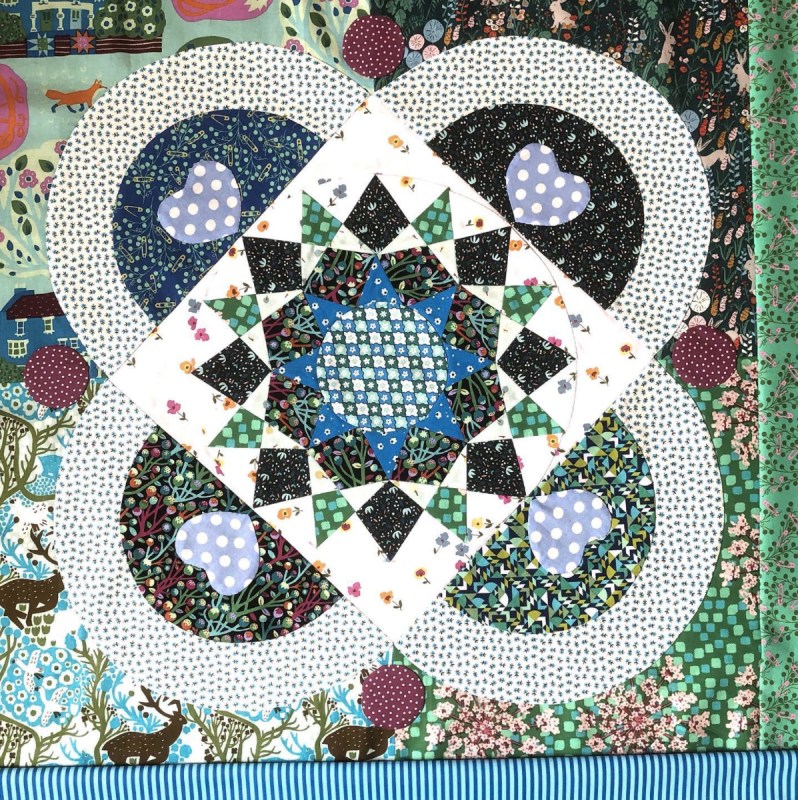
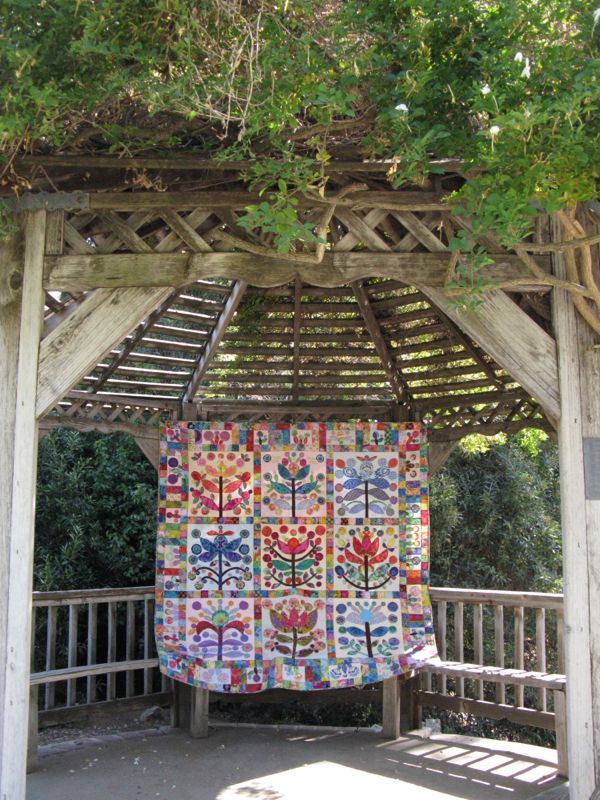
So my To Do lists are more random. This was going to be my year of Focus, a la Bette, but then I started the Heart’s Garden Mystery Quilt-A-Long, which I had all sketched out. And which I totally scrubbed after Step One and rebuilt it anew. Which was no where on my Yearly To Do List. Here’s my first sketch:

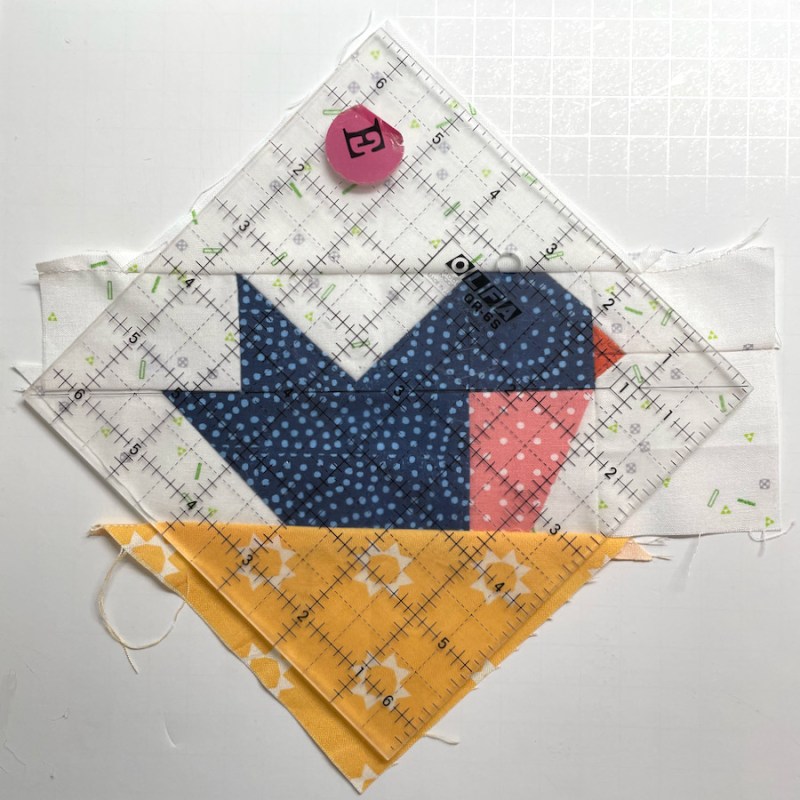
Yep. Pretty hideous, excepting those EPP circles. I even got the birds around the border, but they look more like quail, than sparrows or finches. I’ve been working on writing up Part 3, which is coming next week, and part of that is making birds over and over, as I perfect the pattern:

blue and yellow blocks, for Ukraine (from Hearts Garden pattern)

So I write — and cross off — “sparrows” on my To Do List, and wander back into the sewing room for some pleasant Behavioral Activation. I wish the same for you.

Happy Quilting!

Christmas Quilts · Patterns by Elizabeth of OPQuilt

Tannenbaum Top Finished!

Quilt Bio:

Not Yet Named or Quilted or given a number in the Quilt Index
Current size is roughly 84″ x 95″
Top only is completed; taking it to my quilter this week

Anguish Level–Center:

The center was pretty straight forward as all the pieces were pre-cut. A bit of heart-failure when cutting directions by the designer were off for one section of the tree. Pieced it. Did the bulk of it in two days with my friends. We started December 9, 2019 and made it to Block Four. Picked it up again on December 10, but the center wasn’t finished until a couple of weeks later. Lots of piecing, but having friends there made it fun. It was pre-covid, so we didn’t worry about anything.

Anguish Level — Borders:

Hard to gauge because now we’re two years into covid and everything feels harder (really) especially design (really really). It’s also been out of my hands for two years, so I have to re-acquaint myself with this. Anguish Level is also a bit higher because I’m trying to blend in the designer’s style with my style. My first draft is above, but I realized everything was pretty tan/beige/cream. I’m replacing a red/blue/green Christmas quilt (below) and wanted something traditional and something with RED.

Construction Report:

Flying blind, so that’s always interesting. Hardest thing is to figure out fabric amounts, so I ordered a jelly roll of greens, half yards of reds/creams, and then 3 yards of red for the borders. I ended up ordering 2 more yards of red; I just hope the approximated yardage in the pattern will be okay for most people. Fun to make Border One, really fun to make Border Two (sawtooth stars, she says!), and once I got the hang of the scale of leaves and vines and figured out how I could explain what I did, the appliqué went quickly. I am really happy it’s done, and it’s ten months early for Christmas!

More Photos/Illustrations/Yammering:

Border One is Double HSTs. I learned a nifty trick from Yvonne of Quilting JetGirl about how to cut these, which made things go more smoothly.

One of those lovely late-at-night photos, but the borders are on and the quilt is growing. I am not worried about all the piecing in the background of the tree part, but my very smart friend Laurel appliquéd down her tree onto a solid piece of fabric, instead of all those cuts. And yes, I did swap out the tan fabric in the kit for something a bit lighter.

I’m in my favorite sandbox now, with sawtooth blocks.

I like all the variety of the many fabrics in the same hue.

Moment of Truth:

It fits on the bed!

Final Border Photos/Illustrations/Yammering:

Heading deep into Vines and Leaves. I cut two template shapes for the leaves: one with seam allowances (see red line) that I use to place on the bias and rotary cut around. I also cut a massive amount of leaf shapes with NO seam allowance out of freezer paper.

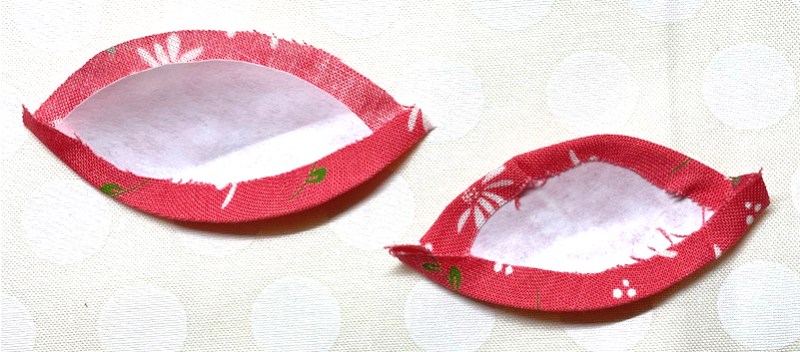
Photo #1: I place the dull side of the freezer paper to the wrong side of the fabric leaf. I use the iron to press the seam allowance onto the shiny side of the freezer paper, where it mostly sticks. Photo #2: Repeat with the other side. Photo #3: Prepped Leaf. Yes, I do have to pin the shapes down and mess with them sometimes, but that doesn’t bother me.

Cutting circles. I used the plastic circles by Karen Kay Buckley; follow her directions.

I shape the bias-tape vines on an old piece of fabric atop my ironing board, so I could draw the guidelines, and pin into it while pressing the curvy shape into the strip. Worked pretty well!

See the creases pressed into the borders? I tell you how to measure these guides properly. I’m working on my design wall now, as the quilt’s kind of big and I’m trying to see how to shape these vines/leaves. It’s not hard. Just fiddly, as the Brits and Australians say.

After I arranged one set of vines/leaves the way I liked it, I used Becky Goldsmith’s plastic overlay technique. I unpinned it from the design wall and laid it on the ironing board. I had purchased the plastic by the yard from JoAnn’s, then laid it out over the first set. I traced it, and then used it as a template for the other two, working with them one by one on the ironing board, and pinning down like crazy using small appliqué pins from Clover. I nudged the pieces into place here and there; that overlay is such a great help.

Nighttime photo of all three!

The first two borders are sewn on the sides. I knew I was going to miter the lower two corners because they are more prominent on our bed. But the top border would just be sewn straight.

We took it out for a beauty shot one early morning. Thanks, dear, for holding it up!

The “snowy” photo. The only way we can look like a winter wonderland is if the spring popcorn blossoms are out on the trees.

Overall Assessment:

I’m now going to do some easy piecing for a while. Maybe even sew a skirt or two (had the fabric for longer than I care to admit). Keep working on Heart’s Garden. Enjoy Spring. Plant tomatoes.

Happy Quilting!

Other posts about Tannenbaum:

Many photos are on Instagram, and some are linked above • #tannenbaumquilt has a mix of photos

Purchased the kit at PIQF, October 2019

Christmas Reveal 2019 for the Center

Diving Back In after nearly two years

Small Updates

Note: I do have a pattern for the outside border, but the famous designer made me stop selling it (long story). I can send it to you, free of charge, if you are interested.


Heart's Garden · Mystery Quilt · Quilt-A-Long

Heart’s Garden • Mystery QAL Part 2

Here we go again, this time for Part 2 of Heart’s Garden.

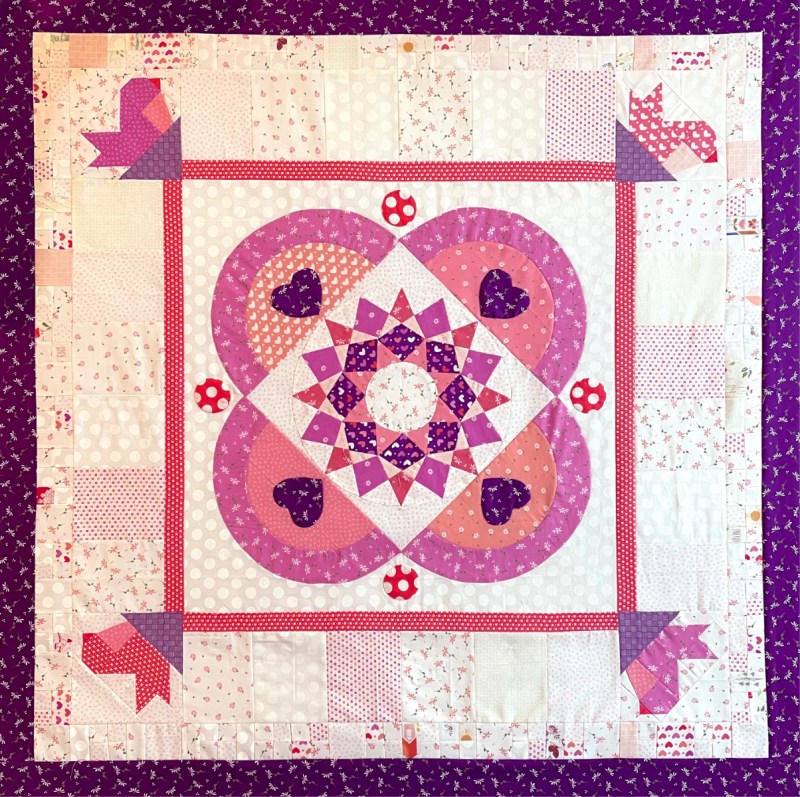
How did I arrive at this design? I thought I was going to go for a whole quilt of EPP circles, yes I did. But I became increasingly unhappy with the quilt that was up on my screen, so I scraped all the pixels off the computer and threw them into the trash. I wanted to expand, yet honor, the circle but leave enough room in the design to go where I wanted it to go.

First, some eye candy:

Lisa was the first to send me a photo of her completed circle. I love this group of fabrics, and Lisa’s placement of colors.

Susan’s was next, a photo grabbed from her IG feed. Can hardly wait to see how this one evolves, as I love those deep colors playing all together.

I’m keeping to one bundle of Sherri and Chelsi’s Sincerely Yours fabric line, so that helped determine what I chose next. I went with one fabric for all the arcs, and a variety of fabrics inside the arc. I’m keeping in mind how I want the quilt to flow outward from the colorful center circle, and this made the most sense to me.

back of the first part of the assembly

The arcs are sewn together, then the seam allowance on the outside large arc pressed under. I made a template of the large arc pattern out of freezer paper, and used that to help me get that pressed edge, but you can also eyeball it. Don’t burn your fingers with the iron!

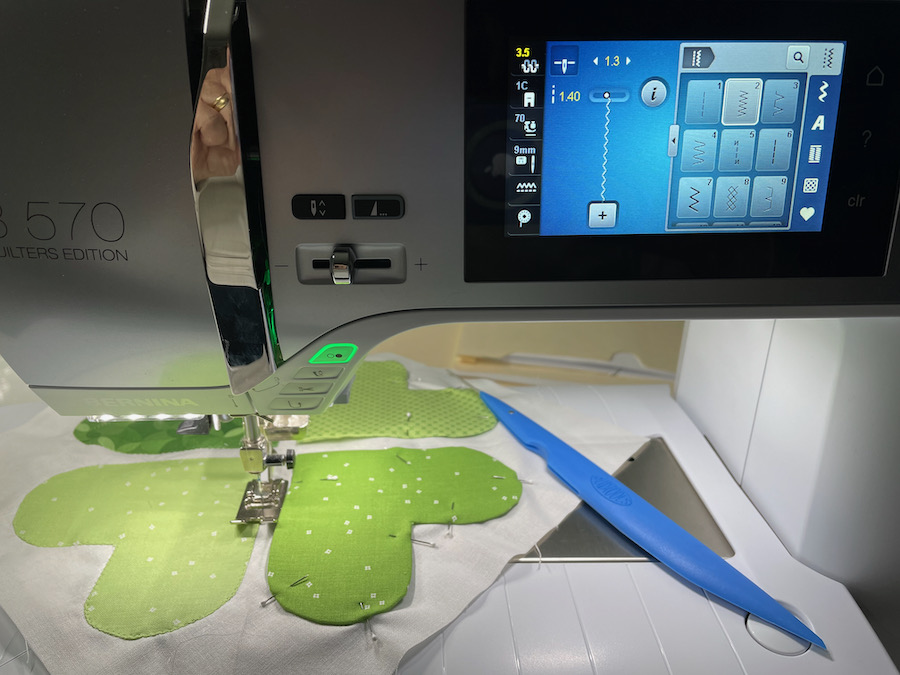
I put the arcs to the feed dogs, so I can help manage everything from the center circle side, keeping a straight seam when the presser foot hits the center circle and wants to wobble.

The twidgiest part is where the arcs meet the corner. You can just stop sewing at the larger arc’s pressed outer edge, or you can sew the seam (photo #2 and #3) and then unpick those four stitches later. I did that method. Both methods work.

Then you’ll appliqué the whole unit to a larger square. Tips are in the pattern.

Cut out the back and save it for more uses.

(Hint: Yes, there will be more uses–coming in March!)

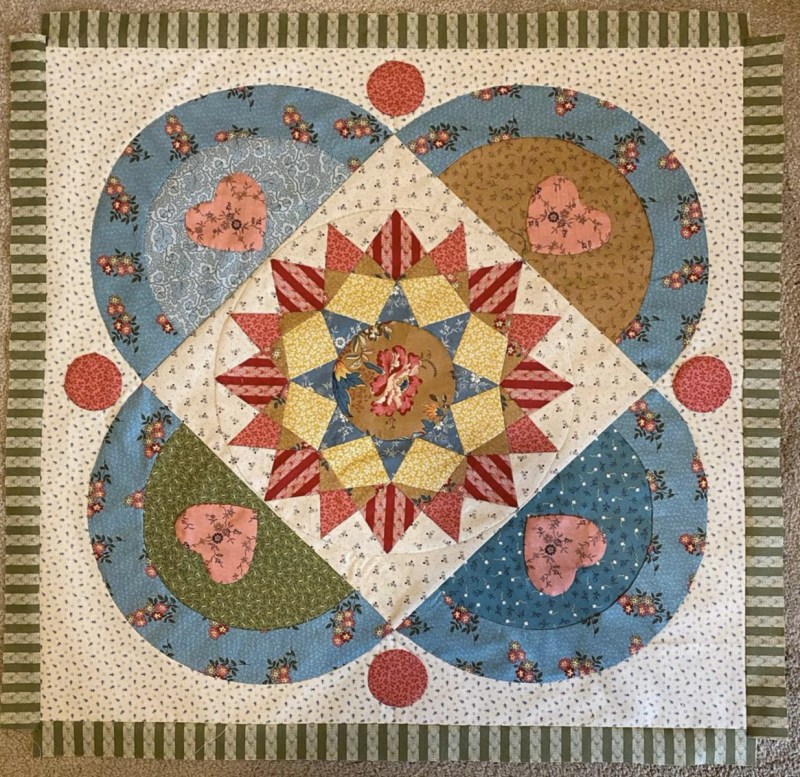
I had a pretty good idea of what colors I wanted for the inner appliqué hearts (pinned on here), but I dithered on the outer circles, ending up with red. My advice: wait until you choose the border before you decide on those circles.

I have had fun working with this group of cheery fabrics, but after seeing Susan’s and Lisa’s I’ll want to try some different fabrics, too.

I have a hashtag going on Instagram (yes, with the heart on the end):

If you are making this, please tag it when you post, and I’ll draw from there for some photos next month.

[UPDATE: The entire pattern is now live and living in my online pattern shop.] Hope you enjoy making this second part–post them so we all can enjoy them. P.S. If you can’t manage another project, feel free to download for another time.

Happy Quilting!

Pillows · Quilt Shows · This-and-That

This and That • February 2022 • Sticky Issues

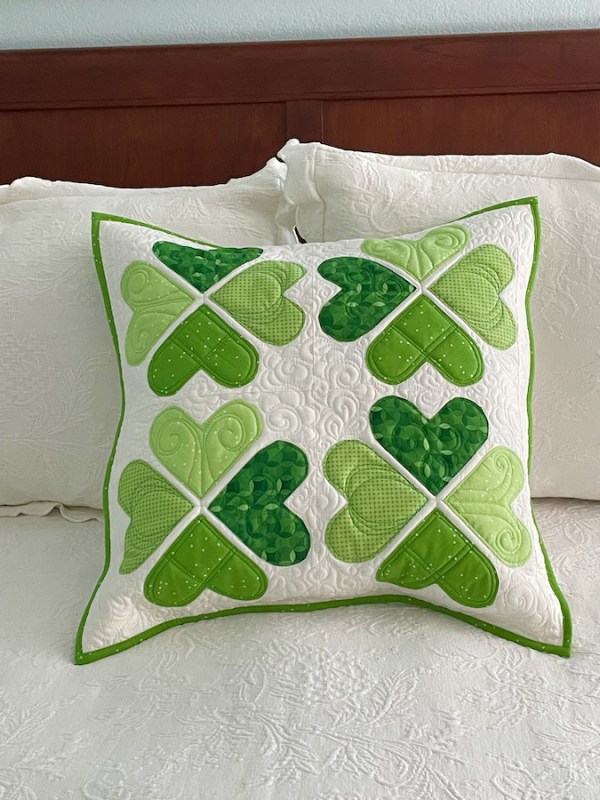
It’s February, so I’m leading with hearts…quilted hearts.

My first finish for February, and it seems, like the whole of 2022. The sludge I’m walking through these days seems to be rather marshy and thick, filled with Instagram rabbit holes, fascinating detours, some sighing and looking out the window, but certainly, no energy to Get My Stuff Done (best video ever). All of this is to say, I’m celebrating this pillow’s completion.

It’s month two of a new year for the Gridster Bee, and Shelley has autumn leaves on her mind, as did all the people doing the Riley Blake sampler quilt. I was off to a great start.

Not.

I wasn’t the only one having trouble with getting this block together, and I wonder if it was the pattern? My 7th grade Home Ec. teacher taught me that one–that sometimes it IS the pattern and not us.

Got it right, but that wasn’t the first mistake I’d made, either. Back to the pattern thing.

This popped up. It must explain why my energy level is so low, if I’m only getting about three hours of sleep per day. It’s because I’ve been writing patterns. One pattern is massively overdue (Borders for Tannenbaum), but I’ve finished the third draft and it’s 12 pages (I like to explain things). The other is the ongoing (and upcoming) release of Part 2 of Heart’s Garden. I have had hundreds of people get their free download of the Part 1, so look for the next installment very soon. Very Soon. Now to address two sticky issues.

Sticky Thing #1
In my last Road to California blogpost, I celebrated Linda Anderson’s quilt art. I still celebrate it, but my friend Dot commented on how one of the photos in her recent Piecework Magazine was a twin, a clone, to one of Linda’s quilts.

The above photo in Piecework, taken by Eric Sebastian Mindling.

I didn’t see any attribution on Linda’s title cards at the exhibits, so as realization slowly dawned that perhaps this quilt might have been a quilty copy of someone’s photo, I began looking for other similar examples. I found the following photograph online:

I couldn’t find a direct link to it, but it seemed to lead to Eric Sebastian Mindling, who has lived over twenty years in Oaxaca. You can see it behind Linda’s head in the photograph I took of her. I wrote in that post about the moving picture of the mother and child. I found that one on Mindling’s website. And here, below is another photo from Mindling:

This one is Linda’s.

I wrote back and forth to Dot about this copying without attribution. Dot offered, “Perhaps Linda was on one of his tours, and they both took photos of Maria at the same time”? But there are too many instances where the poses are exactly the same, the perspective the same.

When we enter any quilt contest now, we are asked to identify the sources of our inspiration. When I submitted SHINE: The Circles Quilt, I mentioned the ceiling of that church in Ljubljana, Croatia with all its painted circles. I don’t think it takes anything away from any of our creations to acknowledge the spark that led us to our make our quilt. In Linda’s case, and the way quilt shows are run now, if we use someone’s pattern or use a photo, we have to get their permission. It’s a mystery as to why this was not done in this instance, as the quilts are beautiful in their own right, even if they were taken from someone else’s photo.

Sticky Thing #2

This is the title of Mary Fons latest contribution to the quilt world, and is from the short video she recently put up on YouTube. Fons is commenting on the trend that has been around for a few years now: of cutting up old quilts to be re-made into clothing. She has some hilarious examples, some designer examples, some hideous examples. I get that not every quilt is beautiful (I’ve known that for a quite a while), and doesn’t deserve the “heirloom” treatment of a museum storage in acid-free tissue. But does that mean we are all destined for the scrap heap? The cutting room floor? The comment I put up there in support of Mary’s video was quickly rebutted by someone else. I wrote back to the commentor:

“But [Mary’s] larger point, which often seems to be subsumed in many of these tit-for-tat [comment] responses, was the query: is our craft merely to be a tool for someone else’s particular novelty, fame and glory? Or do our quilts, from now and back into the ages, have value by themselves? Can we acknowledge them and revere them or are we quilters just part of the excessive consumer machinery? Perhaps both, but I prefer to think that what I spend time on, and what my mother and grandmother spent time on, have value, and carry their particular history.”

Watch the video. See what you think.
Happy Quilting!