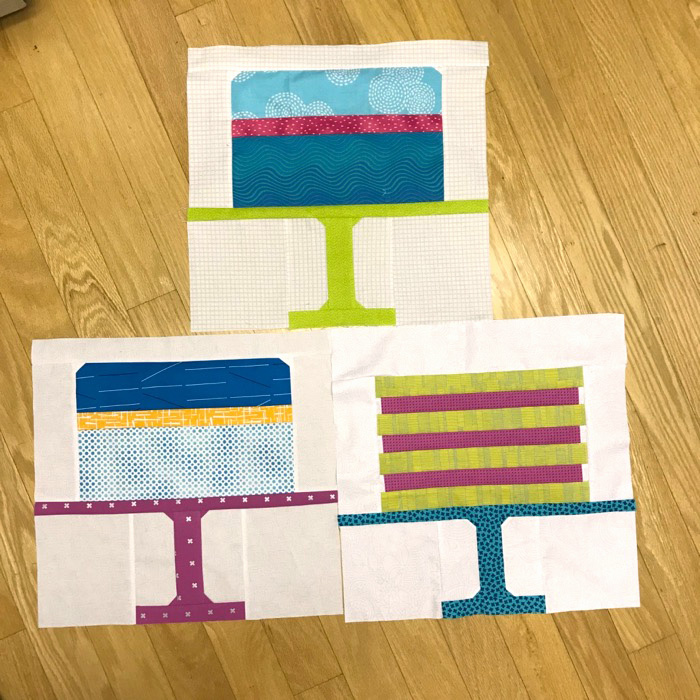
Four of us got together to do the last block of 2017 for Afton, of Quilting Mod.
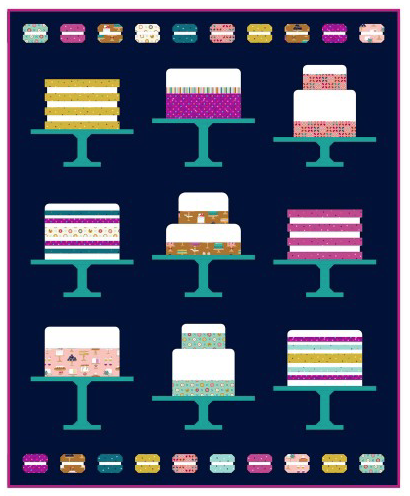
She’d asked that we do a cake from Patty Sloniger’s pattern (for Michael Miller Fabrics), and Afton mapped out our plan of which stand for which cake. I had a different cake from Lisa, Leisa and Simone, but our stands were all the same. Luckily.
The quilter who made the cake on the left was the first to finish, but whoops…she had to redo the cake stand.
One of us had to leave early to pick up kids, so I don’t have that quilter’s block, but here are three of the cake blocks finished. In all the fun, I never took a photo of my block by itself, but I’m the stacked layer cake on the lower right. The pattern went together without too much drama, and we shipped them off to Afton. That’s the end of the Gridster Bee for 2017, but we’re gearing up and are all ready to go for 2018.
This is the last sew day for all of us together, as Lisa (in blue sweater) has moved away to another state. She and I started our little quilt group of twenty years, and it is odd not to see her around, or to be able to pop up and borrow some fabric (she lived close to me). I wish her all the best in her new home, and hope she finds lots of quilters to hang out with!
It was the last day of our trip to Tokyo and Seoul. I was laying in bed, so so tired from our trip, and already the events and obligations of home were pressing in. I communicated to my husband that all I wanted to do that day was lay in bed. He leaned over and said “There’s a quilt museum here in Seoul.” I was dressed and ready to go in a flash.
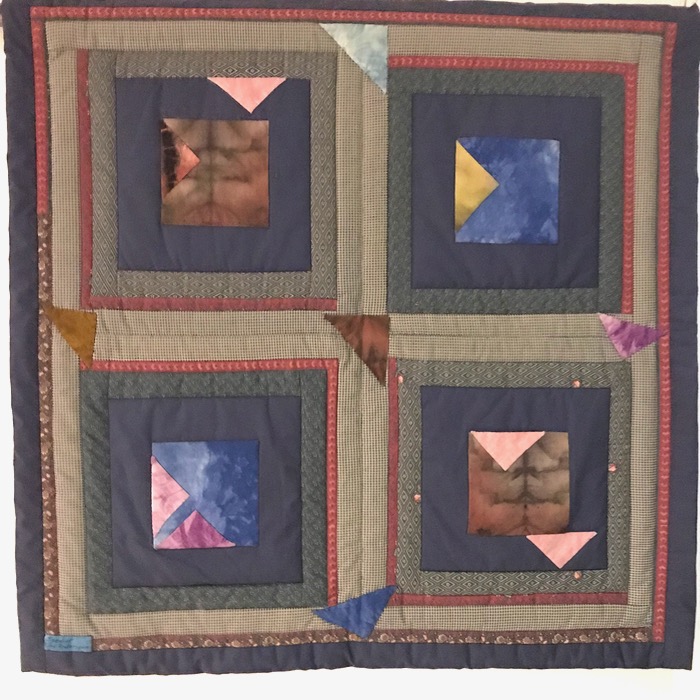
The Chojun Textile and Quilt Art Museum wasn’t too far from our hotel, up a narrow street, and it is very small: a room for the entry, a side room for the gift shop and more, a hallway and a one-room display. Right off the bat, we see Yvonne Porcella’s quilt hanging up on the right side of the display room. When we were talking about it, the assistant curator, Jeehye OK, who spoke English and was a good guide and help, lifted it up to see if there was a label. There wasn’t, but instead a hand-written note on the rod pocket: “Top.” The quilt was displayed upside-down, but apparently the curator likes it that way. I wondered if it were because of the way language functioned in Korea until the early 1990s: written right to left, but I’ll never know.
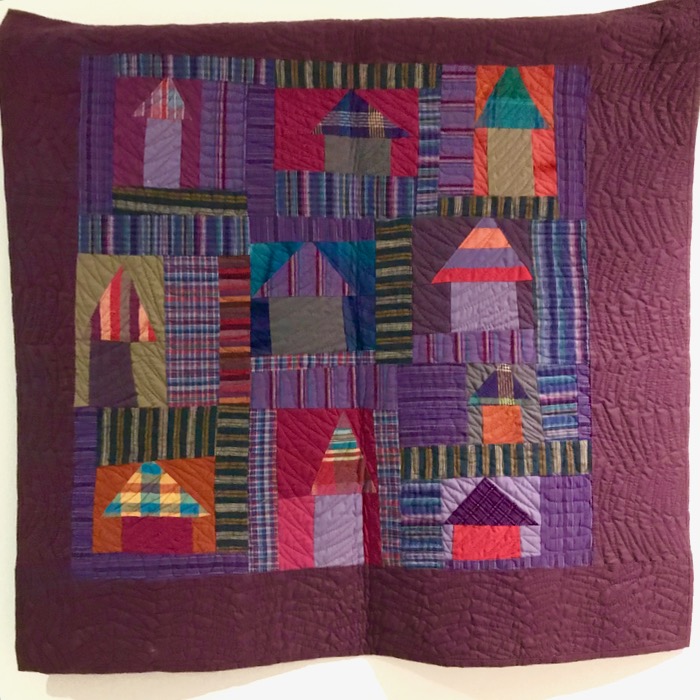
This quilt was on the left side of the door. Again, no name or title. Most of the quilts were down a long poorly-lit hallway (below), but my husband’s camera picked up amazing amounts of info in dim lighting.
So here is a collage of the quilts, however dimly colored they are:
You can click on any quilt to get a larger photo. What I found interesting were the colors they used, the placement of motifs or accents, and the general symmetry of the quilts. The little birds are just a photo fragment of a quilt–I thought they’d be cute improv pieced as a filler block.
I also find interesting the impact of American traditional quilting, as shown in the quilt with the scenes of an old-time quilting bee. I don’t think we often realize the impact we from the US have on other countries, and not just in quilting. Maybe we’d tread a little more lightly if we realized that others have good ideas, many countries do a lot of things better than we do, and that we could all learn from each other. (It’s that traveling thing, again.)
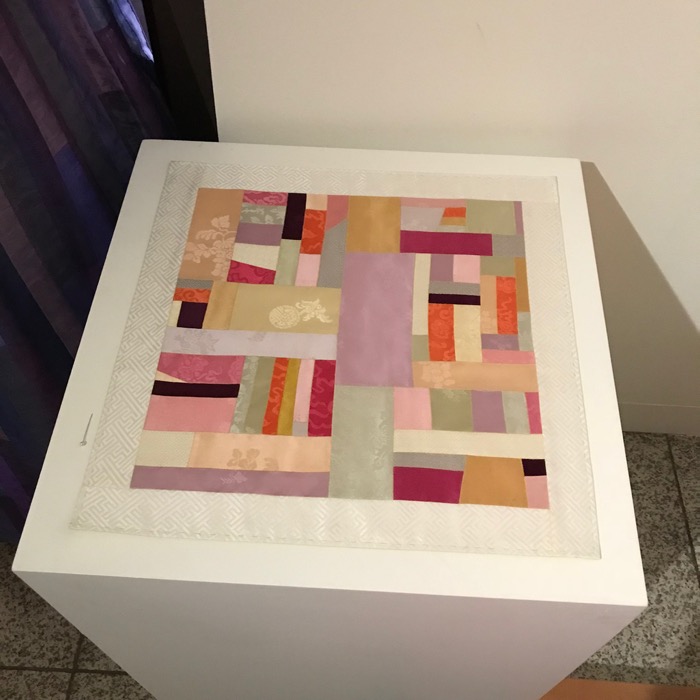
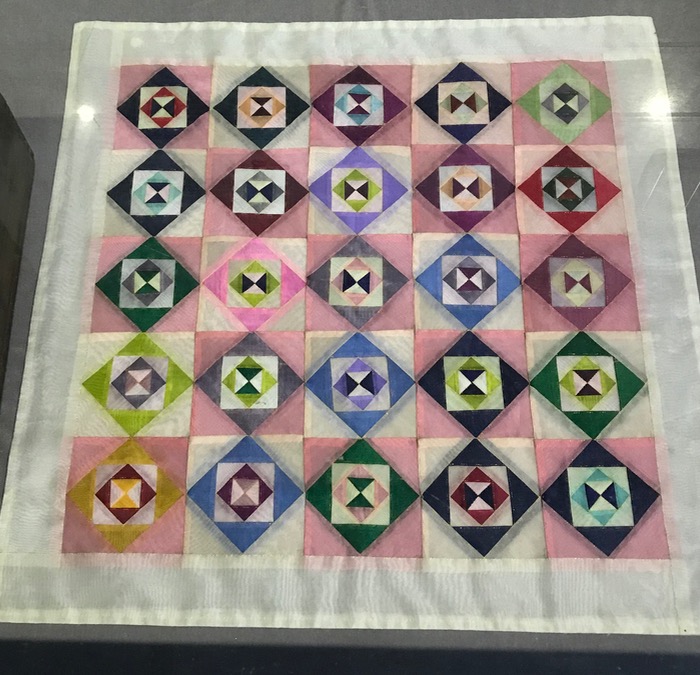
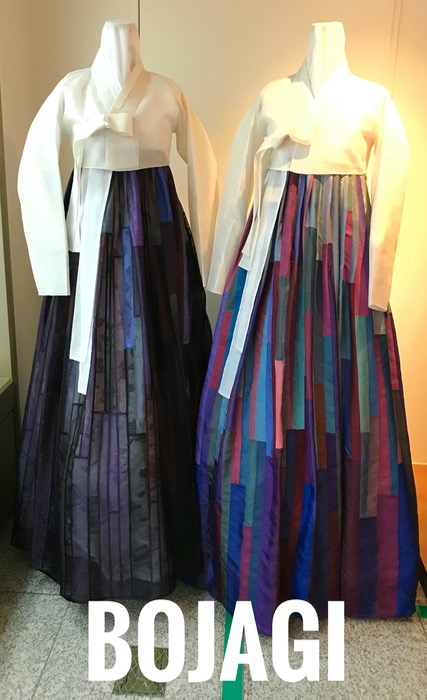
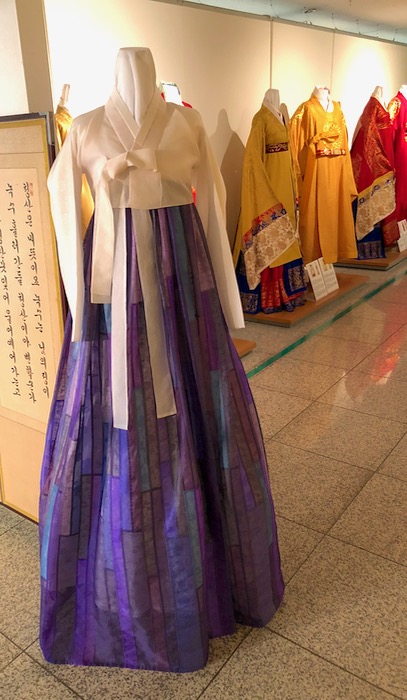
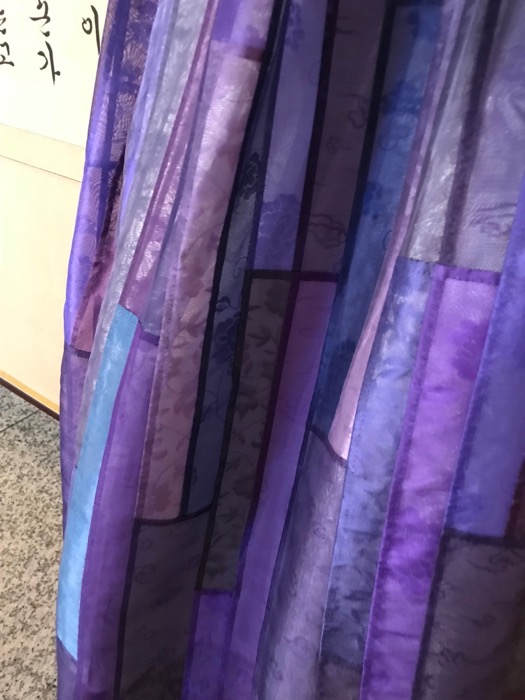
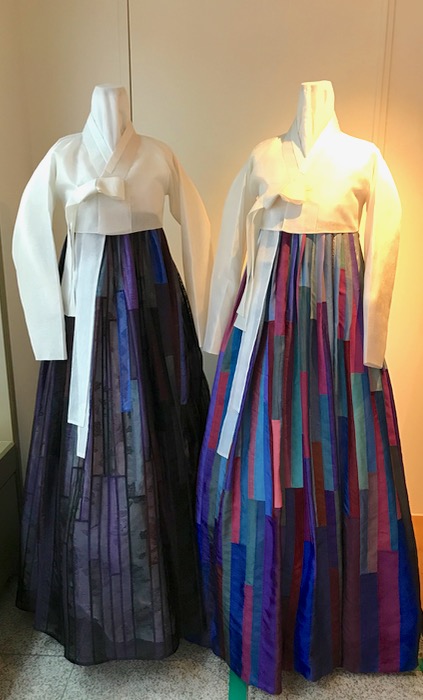
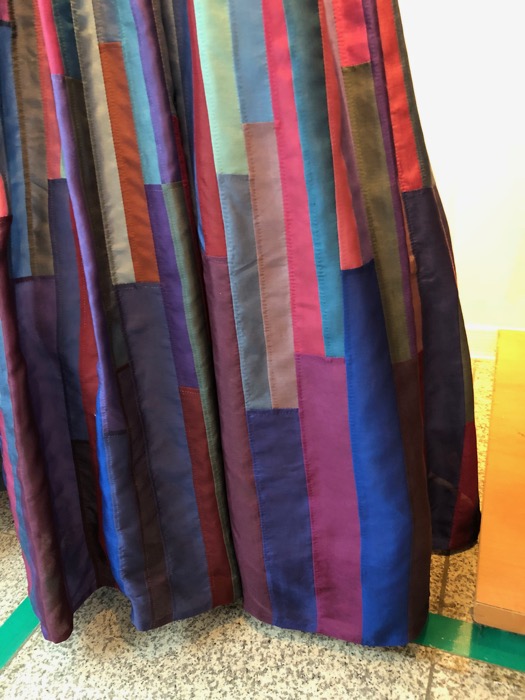
These three displays of quilts, seemingly made of organza or other transparent fabrics, were in between the hanbok, or traditional Korean clothing. I think we in the U.S. think of transparent patchwork as “bojagi,” but really that is a word for a square cloth that can cover something, or be used as a wrap. The patchwork style is known as “chogak bo,” or so Jeehye explained to me. I had a hard time figuring this out, given my belief that bojagi is patchwork cloth. All this new info was not so clear cut. {And by the way, it’s bo-jag-i, which rhymes (nonsensically) with “row-hag-ee” with a hard-sounding “g.”}
When I got home, I looked it up on Wikipedia, and found these tidbits:
“Bojagi were used for transporting items, as well as covering, or keeping things together in storage….Min-bo or chogak bo were “patchwork” bojagi made by commoners. In contrast with the royal [wrapping cloths], which were not patchwork, these cloths were created from small segments (“chogak”) of fabric from other sewing, such as those left over from cutting the curves in traditional hanbok clothing. Both symmetrical ‘regular’ and random-seeming ‘irregular’ patterned cloths were sewn, with styles presumably selected by an individual woman’s aesthetic tastes.”
This is what we saw when we entered, and immediately I leaned over for a closer look.
All these contemporary bojagi were made by local artists, demonstrating the concept of pieced cloth. They appear to be all sorts of organdy, printed organza and perhaps some chiffon here and there? I said to Dave that they must have gone shopping at Dongdaemun to get this range of cloth. I don’t think I could find this many kinds of sheer cloth in this range of colors here in the States.
I also think their jeogori (or the little top with sleeves) is longer on the artists’ interpretations, than in the traditional versions. I like the bit longer one better.
Silks?
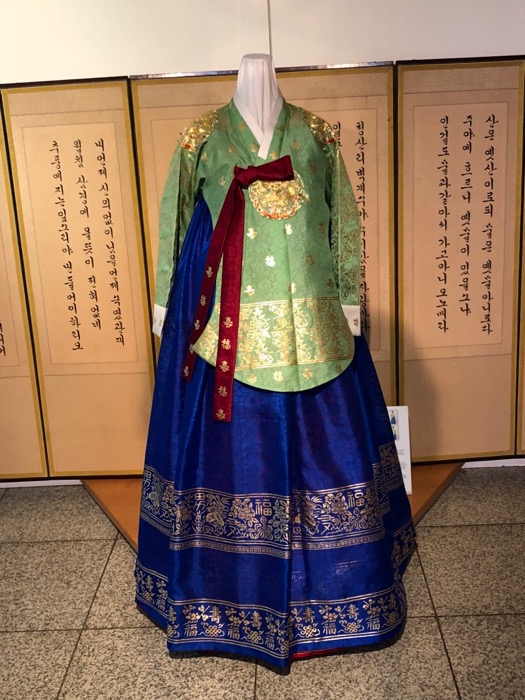
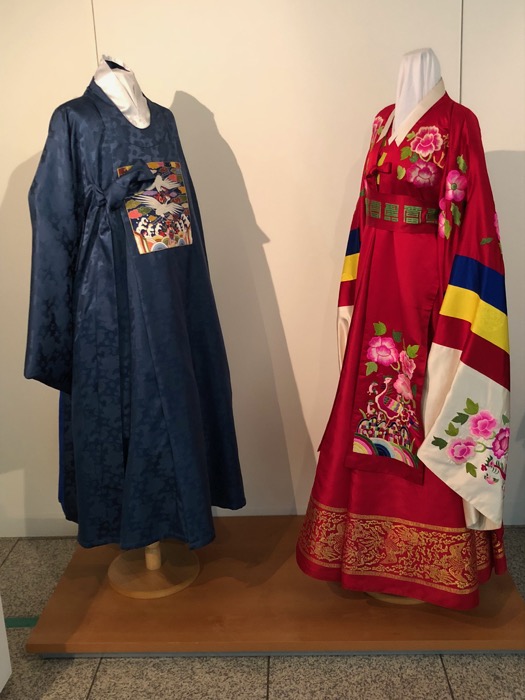
This is the more traditional woman’s hanbok with the long bib-front. I think this is the perfect outfit for the mature woman (forget Kimono, which show everything!).
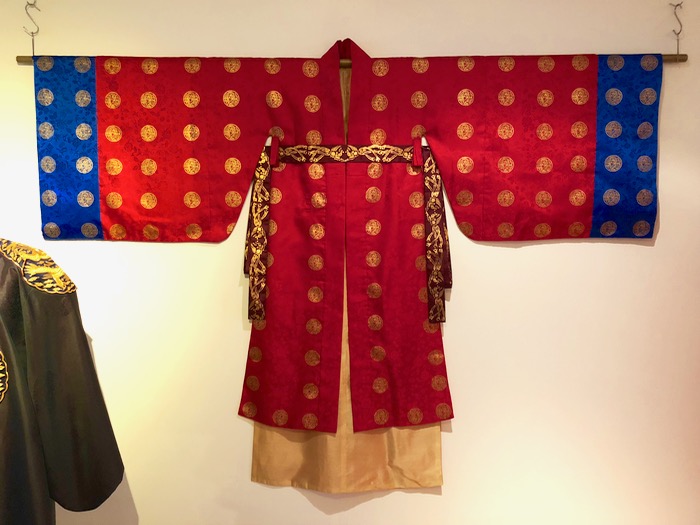
Men’s hanbok.
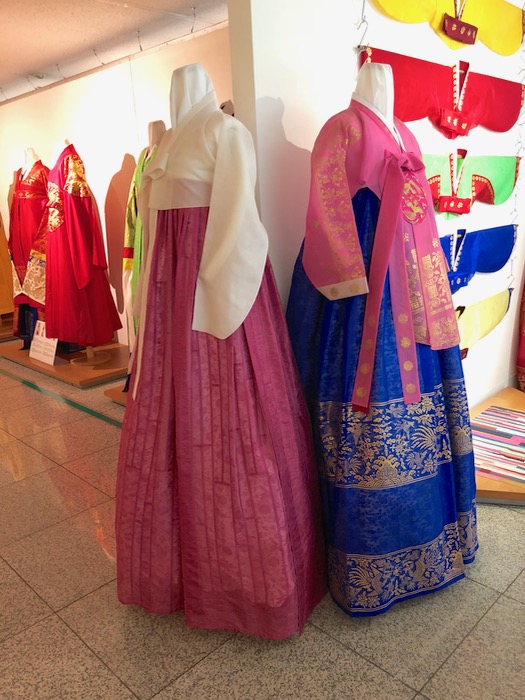
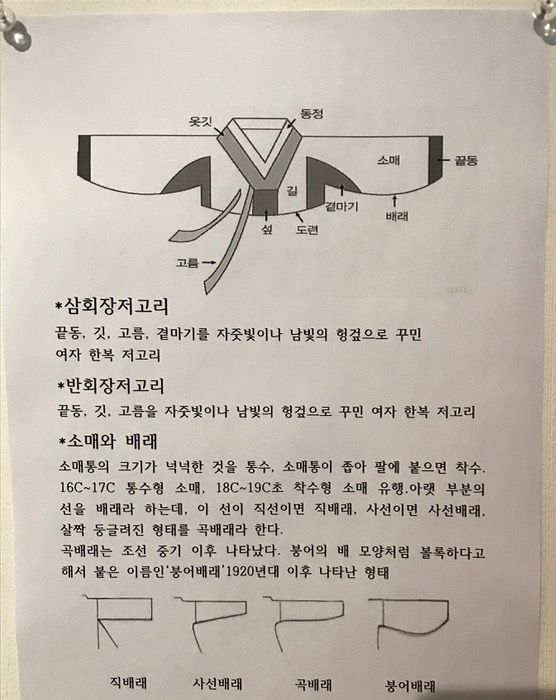
I liked the juxtaposition of the new and the old back to back. On the wall behind the blue hanbok is a diagram/display of types of sleeves on the jeogori:
The woman’s outfit also has an underskirt, an overskirt that in the past was nothing more than a gathered length of cloth on a band which was tied tightly above the bust But now there are straps to keep it from falling down (all this is from Jeehye, who as very patient with my questions).
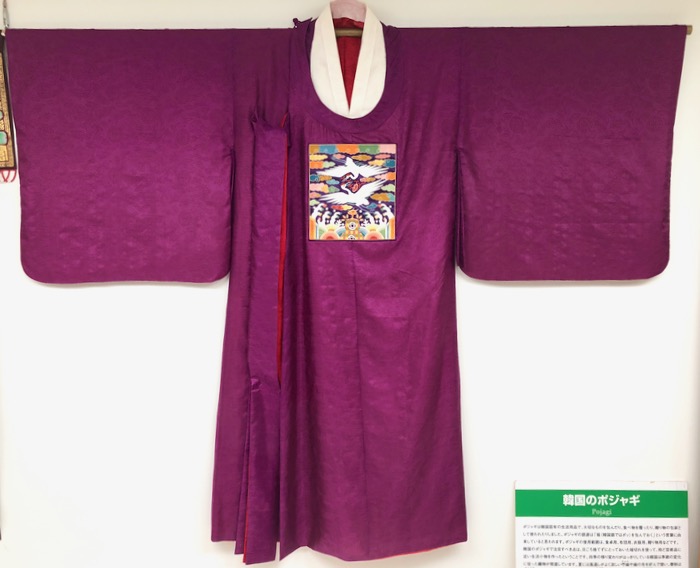
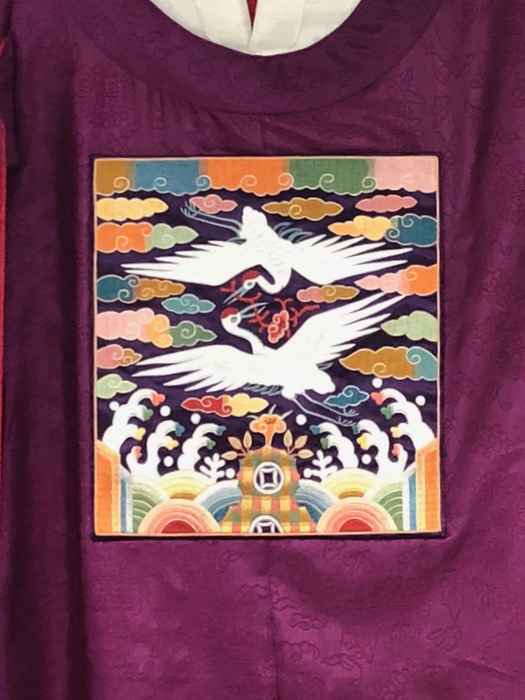
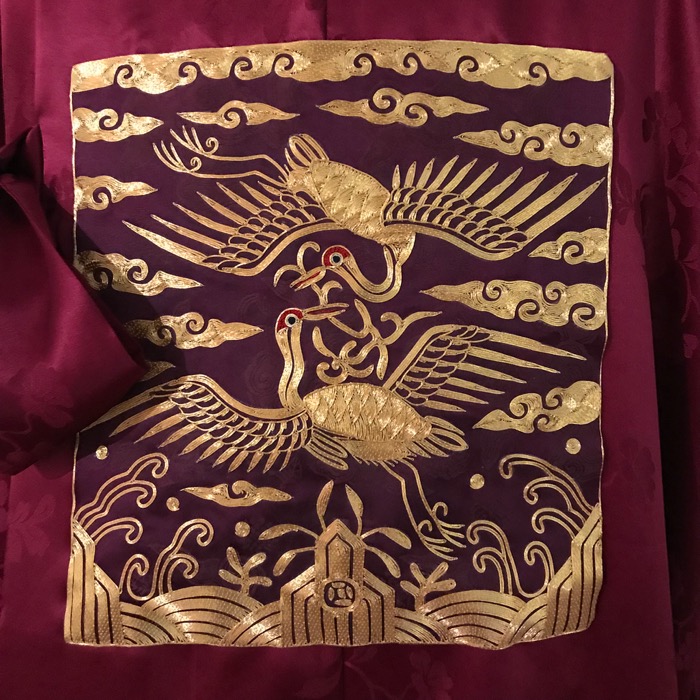
Men’s, with close-up of the embroidered panel. Most of these photos were taken by my patient and understanding husband, while I chatted.
Jeehye and I, in front of Porcella’s quilt.
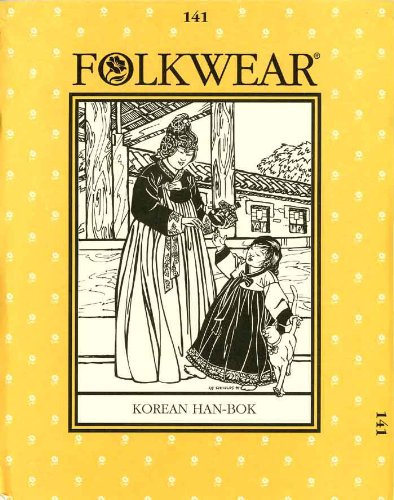
I did some research and found that many would-be-sewers of hanbok used this Folkwear pattern as a basis for their costume. Tempting, but how will I finish all those UFO quilts hanging around on my guest bed, if I attempt this? I do have a modern-day Seoul fashion story for you, though. It’s about a purse just meant for quilters.
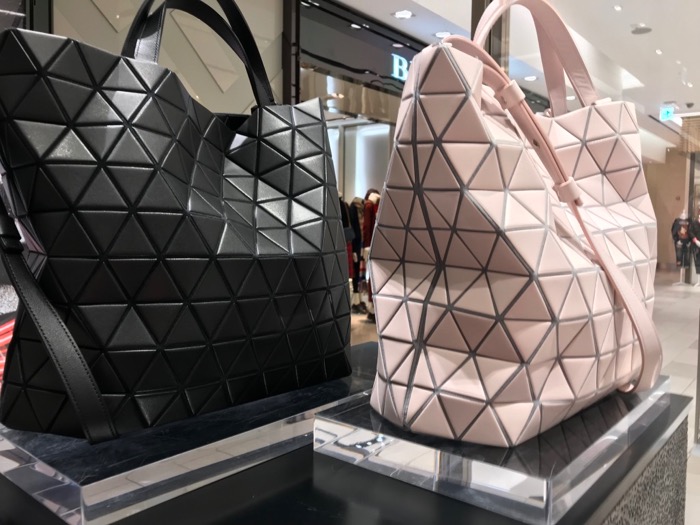
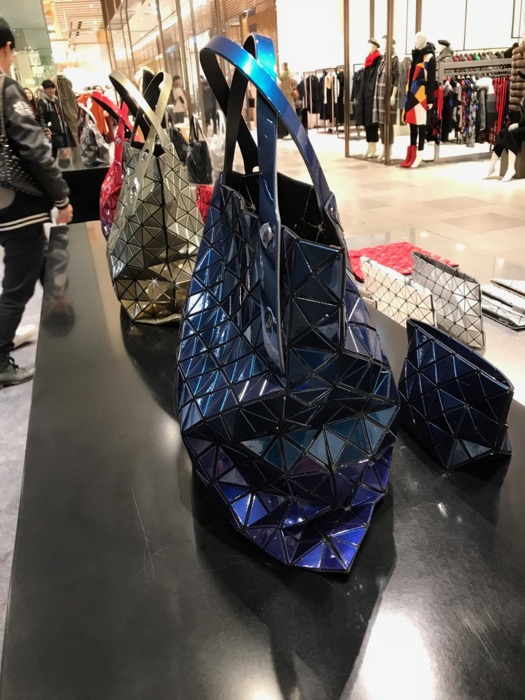
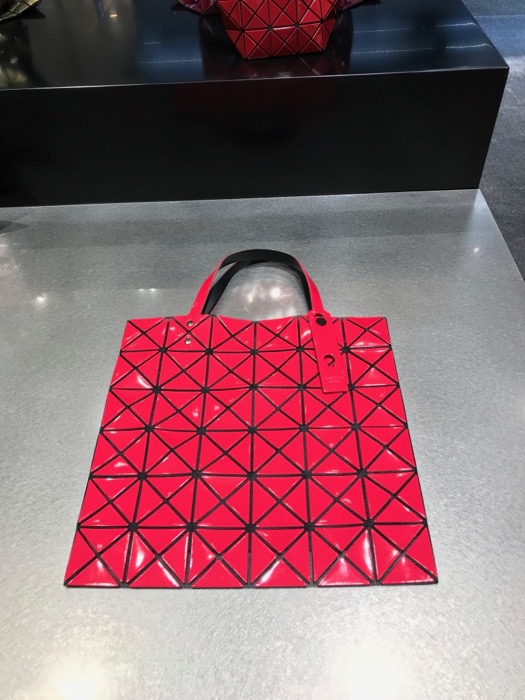
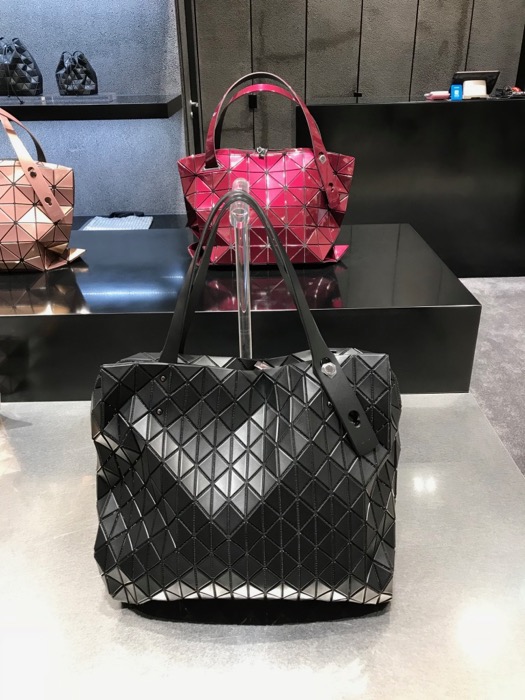
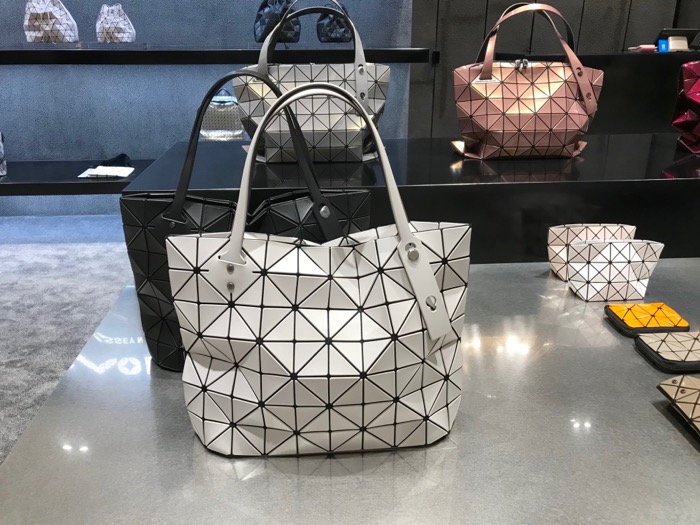
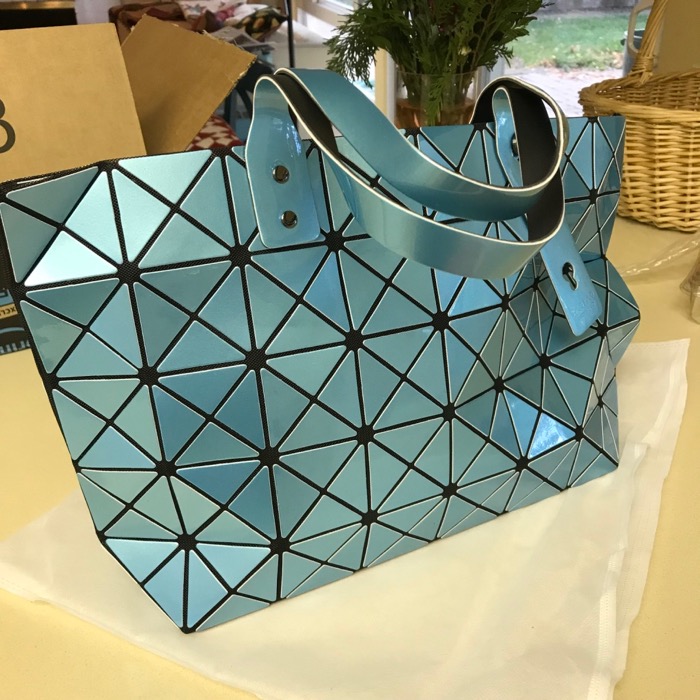
While we were in Tokyo or Seoul (can’t remember which) I saw this geometric purse, carried by a woman my age. Her daughter was with her (and she spoke English), so told me it was a bag by her mother’s favorite designer, but I couldn’t understand what she said. (This happened a lot.)
The last night, we were over by the Shinsegue Department Store to look at their lights, and as we were wandering through the store, I stopped in my tracks: The Purse! And of course, it was by Issey Miyake (slaps head).
The way it draped and moved, was beyond amazing. So was the price tag. I snuck a few photos (asked permission, finally, and the sales clerk said it was okay), and snapped a few more. Sigh.
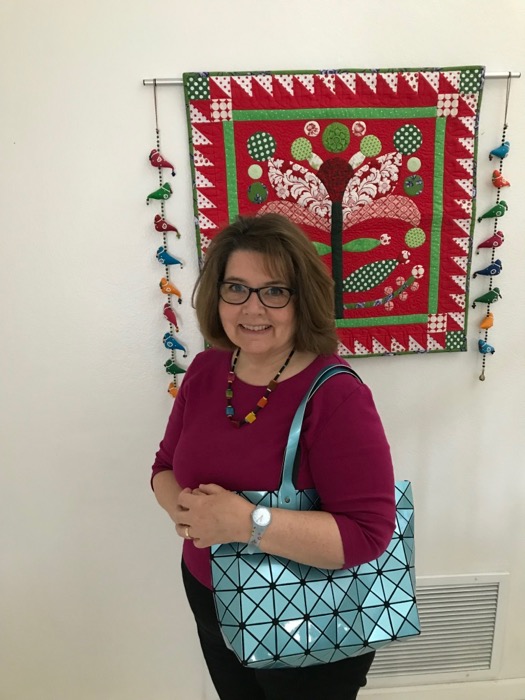
Fast forward a few days, when I was talking to my sister, who is totally with it in fashion, unlike me. “Oh,” she said. “That’s been around so long there are knock-offs.” Cue up Amazon, type in BaoBao, and after a few mouse clicks and a couple of days, the aqua knock-off arrived in my kitchen.
I plan on bringing it to all the Quilt Shows, as it is definitely a purse for quilters: very cool, very light and holds a lot.
So, no hanbok for me, but yes! to a geometric purse and yes! to bojagi patchwork.
Now it’s back to those UFOs on the guest bed. Oh, and maybe get ready for Christmas!
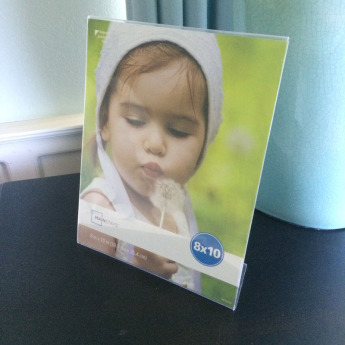
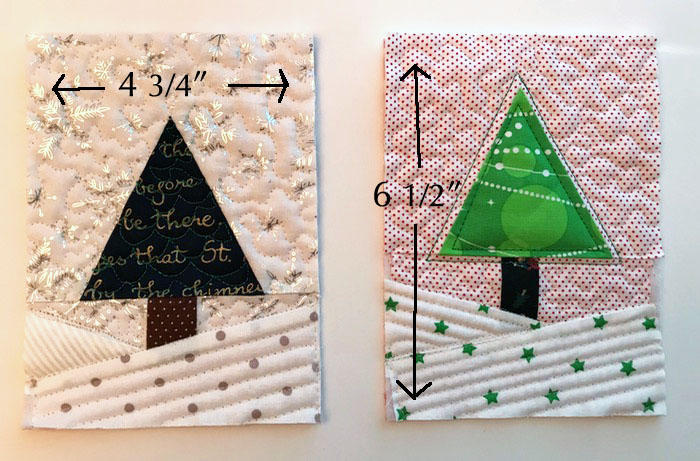
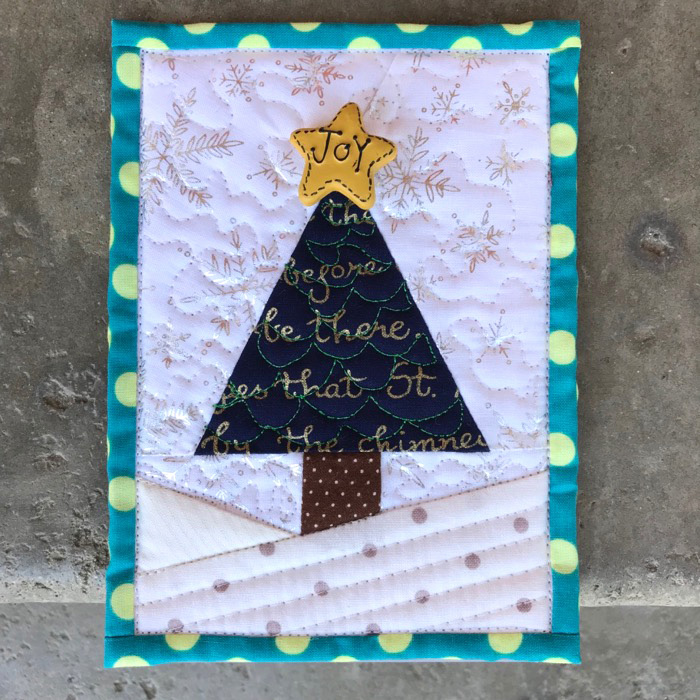
I’m decorating for Christmas and wanted to change out my Tiny Quilt from Autumn to Christmas, but then got wondering how a teeny-weeny quilt would look, so got busy. These little quilts fit onto plastic picture frames:
I have two free patterns for you here, but please remember the drill: Don’t print off umpteen for your next class, or guild meeting swap or your mother. Please send them here to get their own pattern.
As you can see from the samples I made up, I play fast and loose with some of the placement of pieces, really using them more as a guideline for cutting, than anything else (although I did cut out the tree exactly).
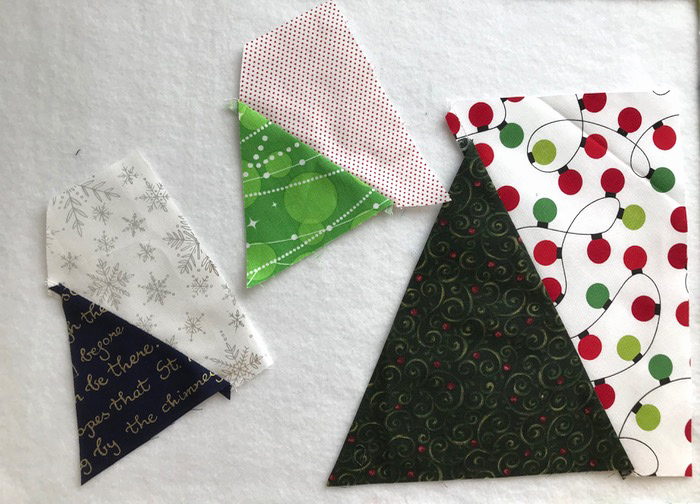
Cut out all the pieces for the pattern you’ve chosen. As I noted above, sometimes I used the pattern (shown here before I added the labels) as sort of a general guidelines. You need an accurate tree, and a nice straight edge where you’ll sew it to the tree (the diagonal line in the photo, above).
I sewed the “sky” pieces to the sides of the trunks then trimmed the edge that would attach to the tree. More detailed tutorial is also on my OTHER Christmas Tree block tutorial, which is sized somewhere in between these two tree sizes. (I should open up a Christmas Tree lot with all these patterns.)
Sew the “right” side onto the tree. Make sure you keep the marked top triangle point pointing upwards.
Trim any stray areas (above), then add the other side.
Straighten out the bottom of the tree assembly. Center, then sew on the tree-trunk unit, pressing seam towards tree (so it looks like the trunk is under the tree).
Now to add the snowdrifts on the little tree. On the left, I sort of place that wedge-shaped piece, determine the angle but flipping it up and down (on the right). When I have the angle I like, flip it back up so right sides are together, and stitch along the upper edge. Trim.
Repeat for lower snowdrift. Trim excess.
For the bigger tree, I added on 2″ strips to frame the tree. It needed something to jazz it up, so I got rid of the bottom strip on the pattern and just used strips all around.
Layer with batting and backing and quilt. I did a meander in the sky area around the trees, then some straight lines in the snowdrift on the teeny tree, and some straight lines in the frame around the bigger tree:
I also quilted some swirls in the center of the tree.
Time to trim. The teeny trees trim to 4-3/4″ by 6-1/2″ and the larger tree is trimmed to 8-3/4″ by 10-1/2.”
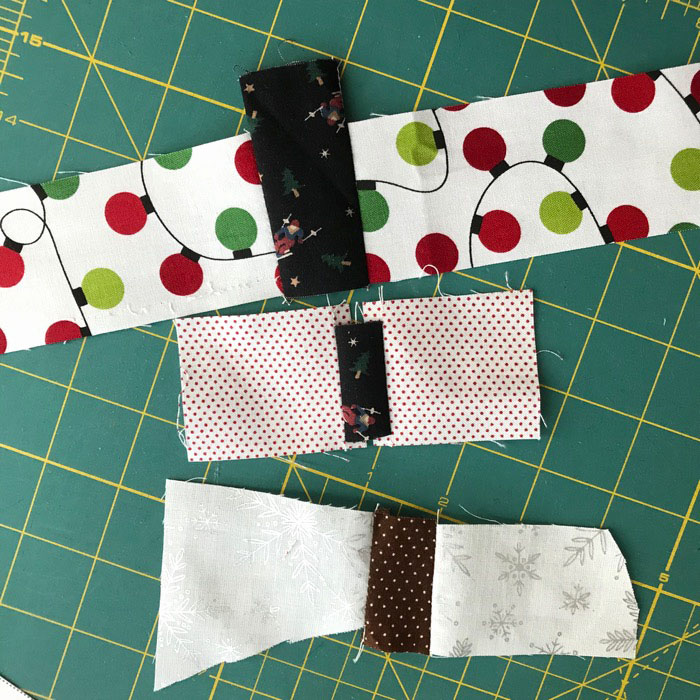
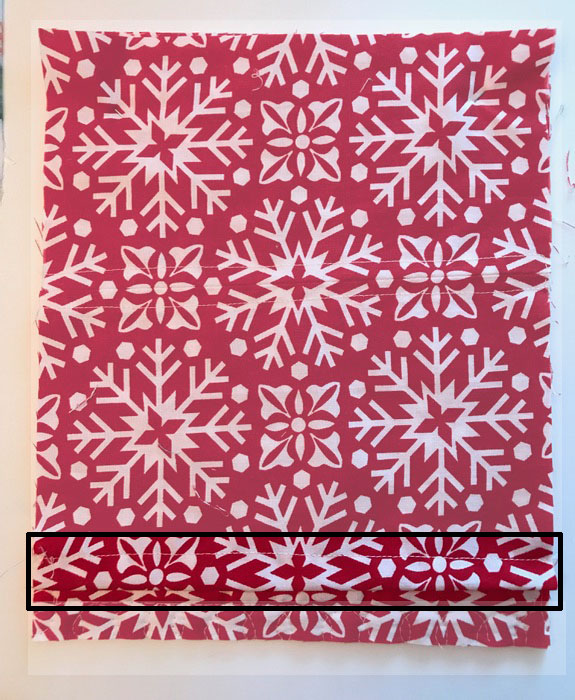
Make a sleeve for the back by cutting a piece the same size as the quilt top, but then hem the lower edge, turning it up twice and top-stitching. I know it’s hard to see in this print, but again, feel free to check out the other tutorials of tiny quilts.
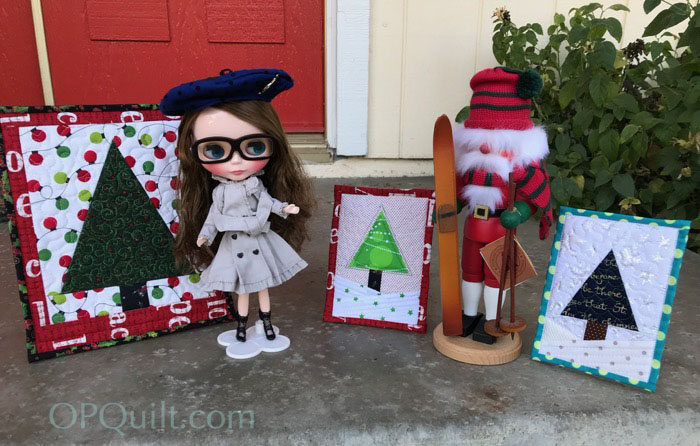
I brought out my Blythe doll and one of my husband’s nutcrackers to pose by the quilts.
Looks like Blythe has the hots for the Santa skier. And here I thought she’d go for the more traditional guy:
He does look a little formal. Hmmm. Evidently not her type.
This is the second post on shopping for fabric in Toyko and South Korea. My last post talked about the famous Tomato Fabrics and Nippori Fabric Town.
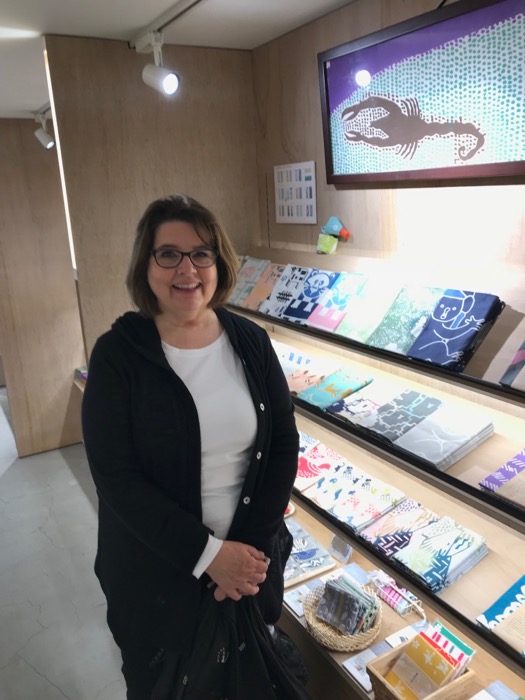
It looks like I’m standing in a fabric shop. However, it is a tenugui shop, a place that sells fabric that is narrow in width, with unhemmed ends. A tenugui is translated as a “wiping cloth” and is used for bandanas, napkins, drying towels, and this place also sells really long tenugui that can be used as scarves.
This shop is found in 2k540, an artisan collective near Akihabara station.
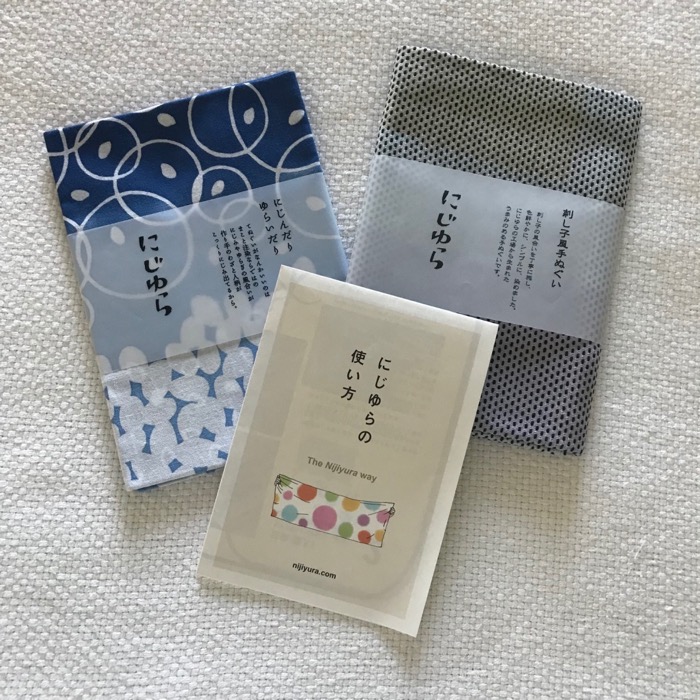
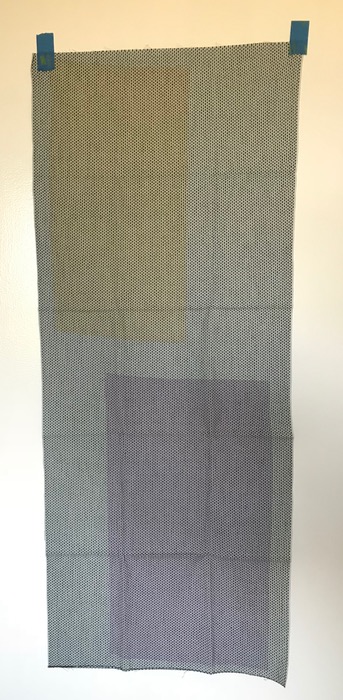
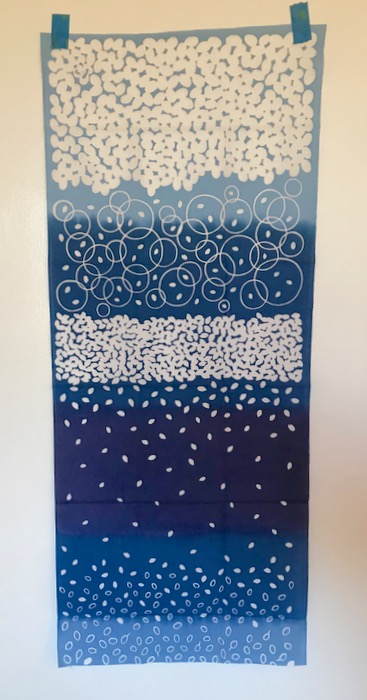
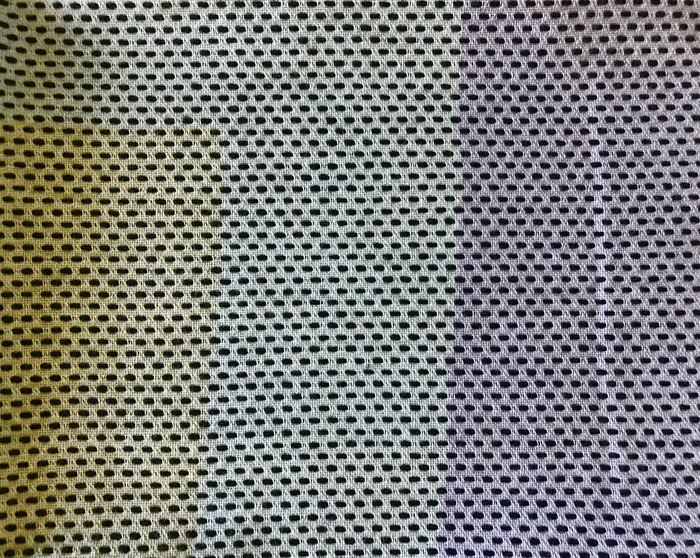
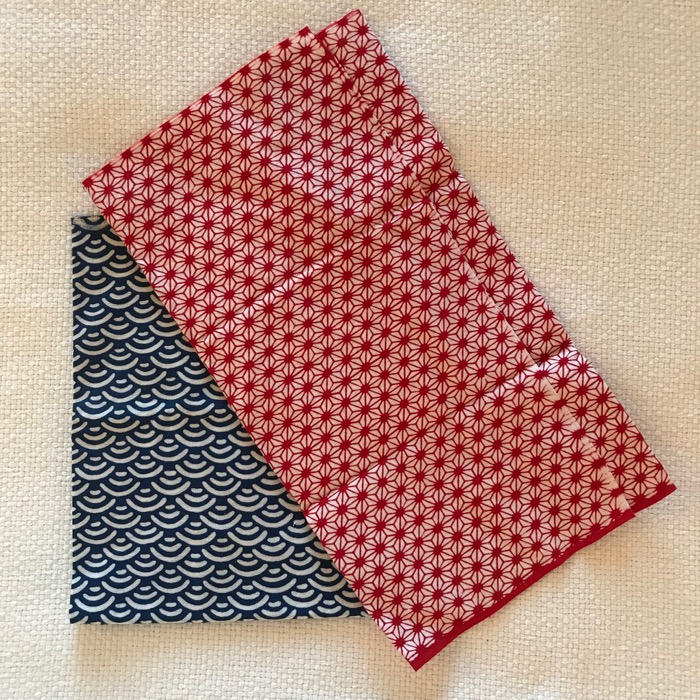
These are the two tenugui that I purchased, and below is the detail of the one on the left, with its subtle coloring. They are about two feet long. I plan to wash them up before using them in my sewing, or maybe I’ll just leave them in the kitchen downstairs for some fancy dish drying.
My husband gave me these a couple of years ago, and I didn’t understand what they were for. Now I do.
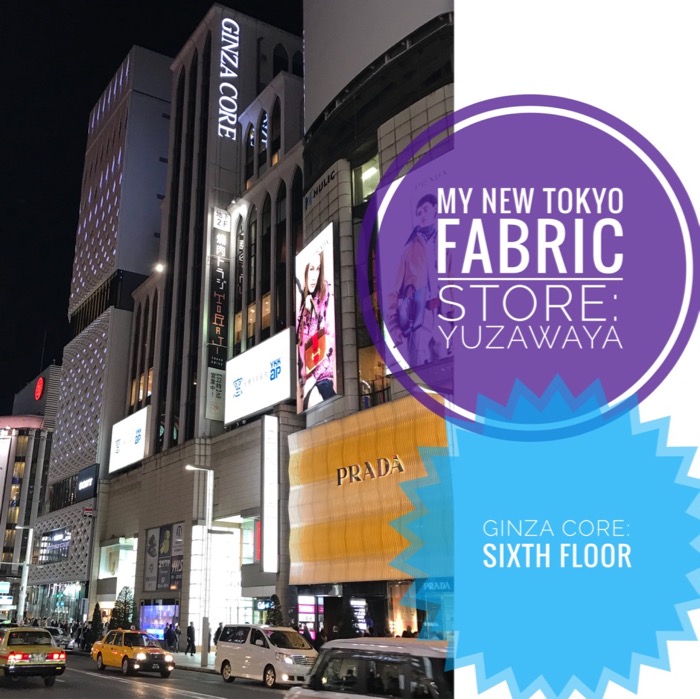
If ever I go to Tokyo again, I’m headed here: Yuzawaya in the Ginza area, although I understand they have other locations. I used my Google maps to get to Ginza Core, the tall building in the middle of the photo. I walk in and a young woman all dressed up, even with a hat, is at the “concierge” desk for the building. I show her the name and she says “Oh, yes. Sixth floor.” I keep forgetting that different stores can be on any floor here.
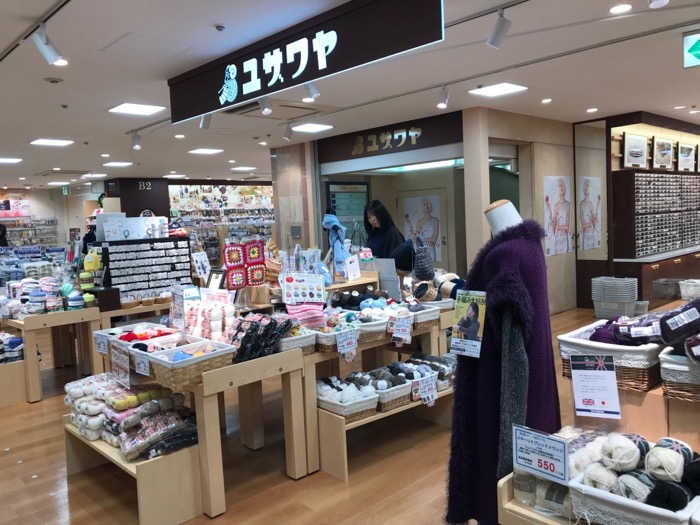
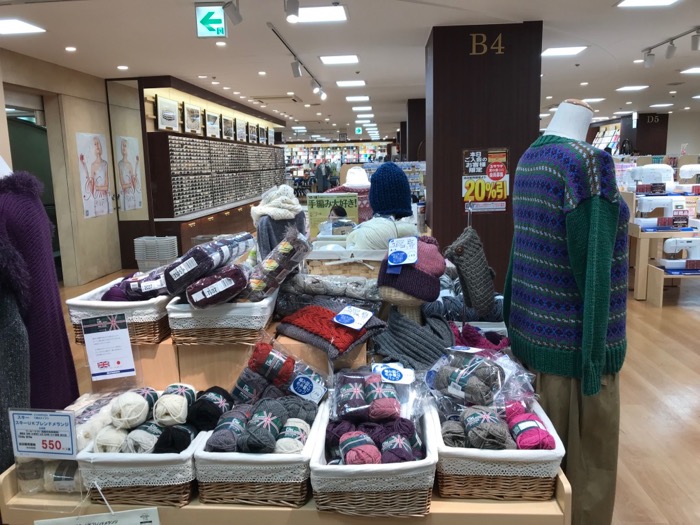
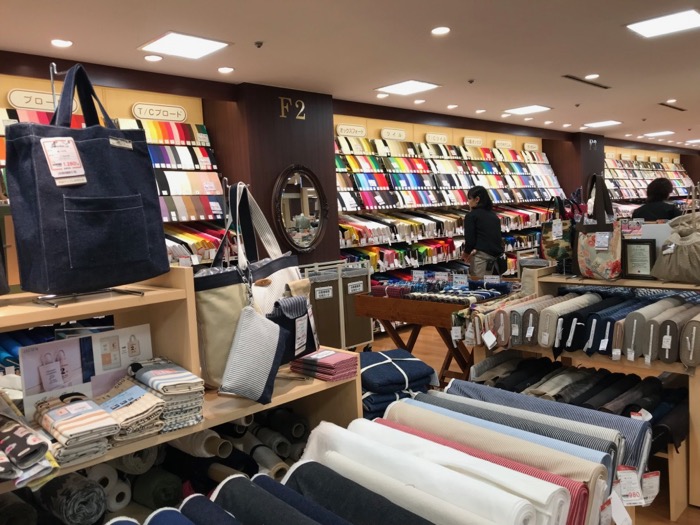
The elevator opens onto this scene. Wow–a real fabric shop. I don’t know if they allow photos, and I don’t have the language to ask, so I kept taking undercover photos as I walked around. They have yarns, embroidery, crafts, magazines, notions, fabrics, woollens for mens’ suits, patchwork (what they call quilting) and so many other things.
You can see the button wall on the upper left in this photo: rows of boxes. I imagine someone might have to help you? but it does look self-service.
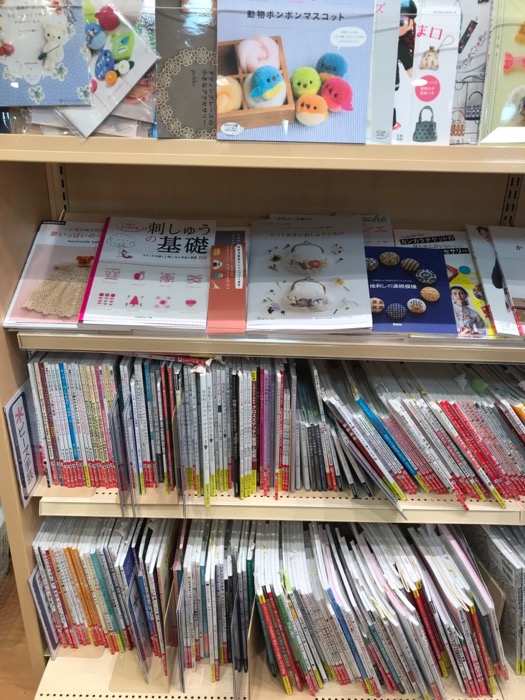
There was someone just to the right of me, kind of blocking access, otherwise I would have plopped down and spent all evening looking through these magazines.
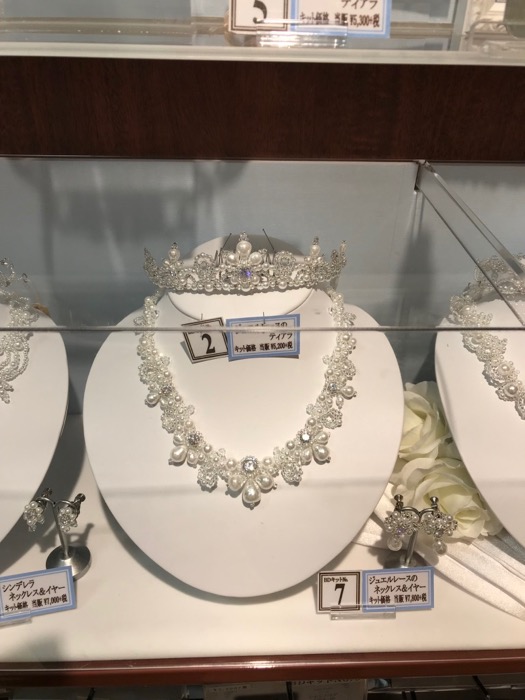
Tiaras…just in case. Obviously this was the bridal section.
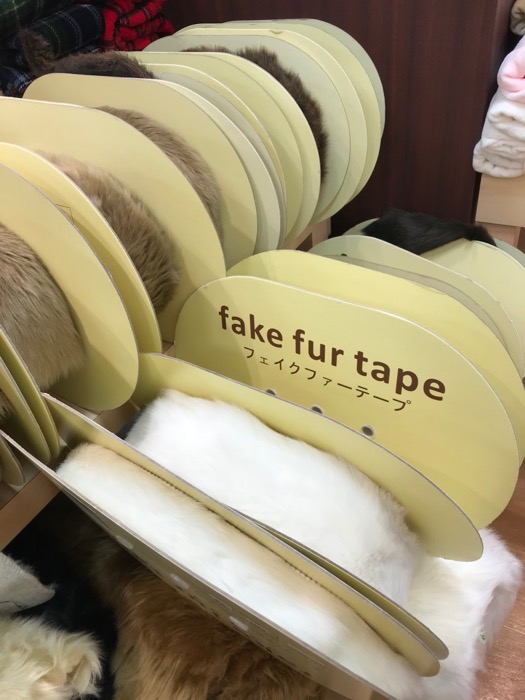
Fur trim is big here. I didn’t see any mink balls here, though.
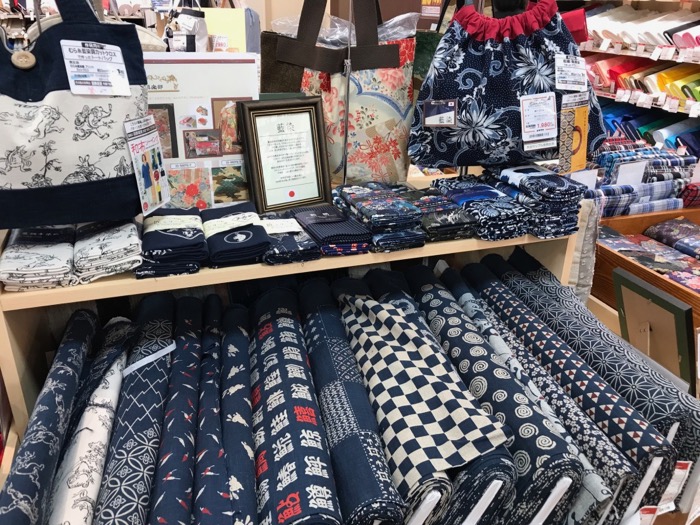
Blue and white fabrics–maybe from Japan, but possibly from China.
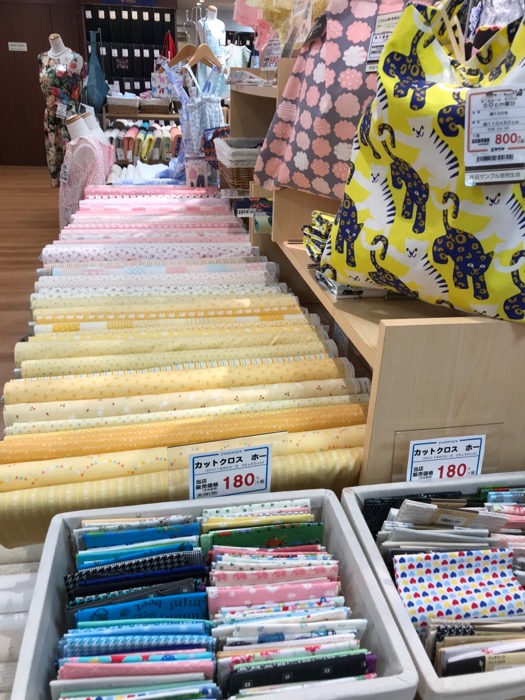
Quilting cottons and their equivalent of fat quarters in front. 180 yen is about $1.60, and these pieces are suitcase-sized, coming in at about 14 by 19 inches.
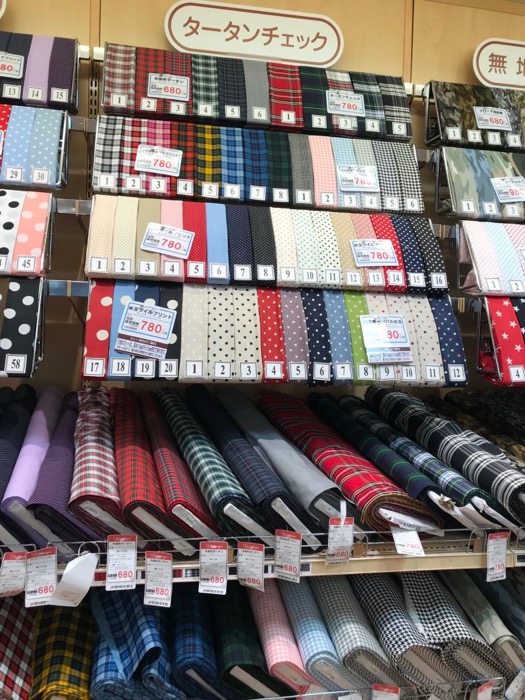
Regular sewing fabrics. I wonder if you have the sales clerk pull the bolt for you after you give them the number. This is the real challenge in shopping in a foreign country: you just don’t know how things are done. After being in Tokyo for a few days, it gives me much greater appreciation for visitors to our own country must experience.
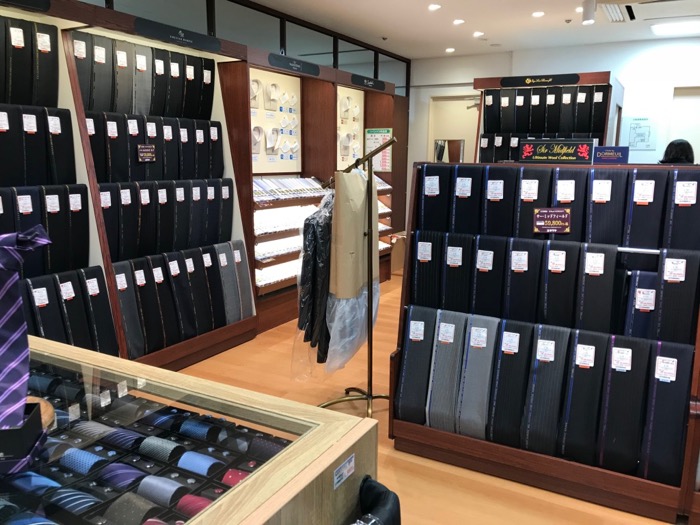
Men’s suitings. I had picked up a basket while shopping, but was determined that I would not buy any more things than would fit in the small basket; I got pretty good at packing it in. What did I buy?
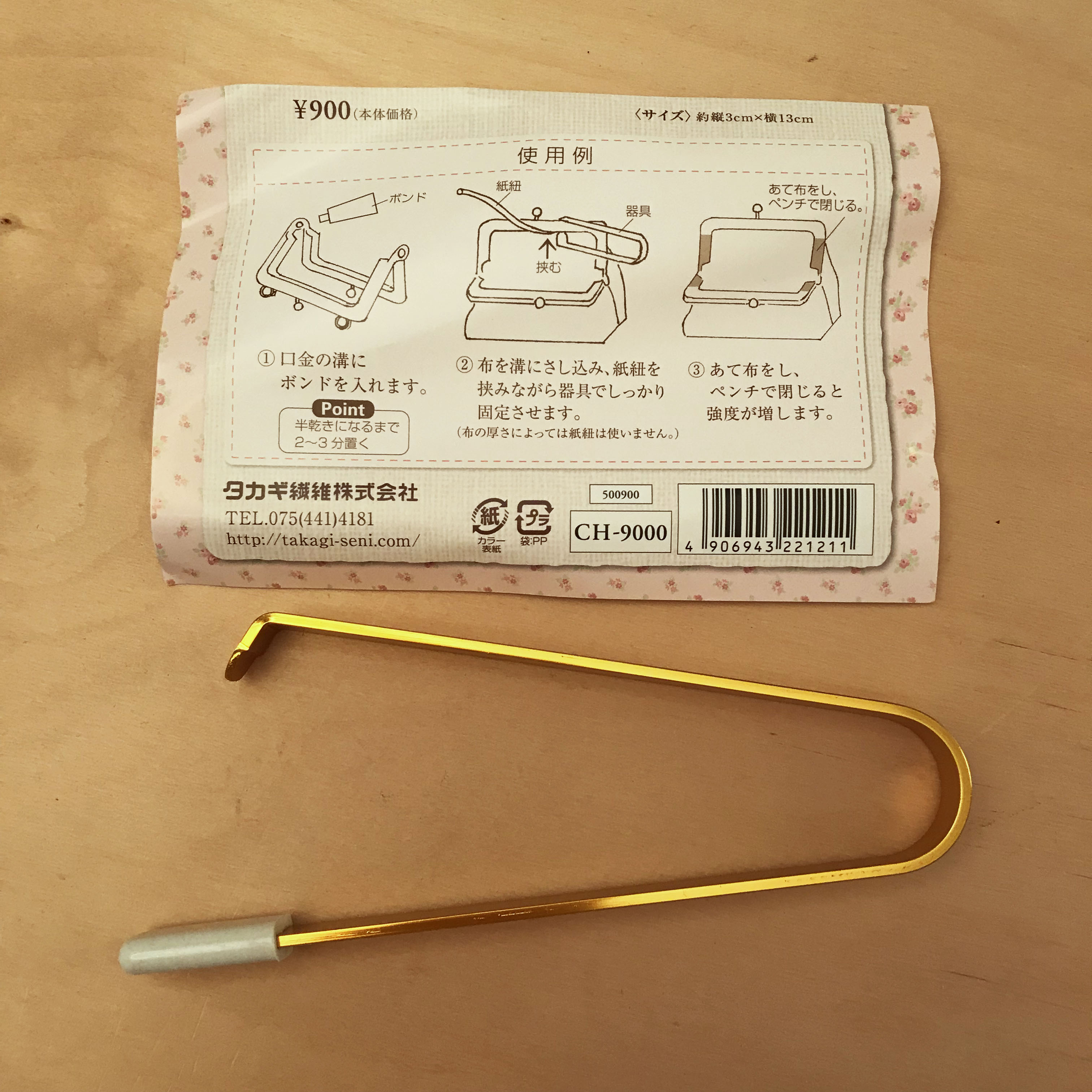
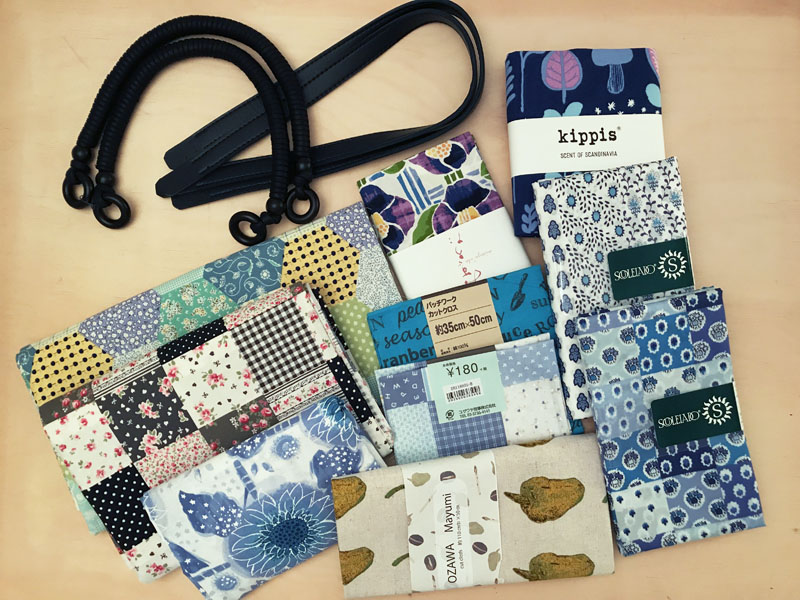
I bought this gadget, that will help you make clutch purses without getting your fingers all full of glue (brilliant gadget). They use a string to help tuck the fabric into the frame–all the frame kits and the string.
I bought two sets of purse handles, as they were selling about 75% cheaper than what I can buy in the states, plus the above fabrics. The French fabrics on the lower right are coated, so they’ll make a nice lunch sack. I found fabrics from Japan, France, Scandinavia, and some bits of American fabrics, but not much and all the prices were reasonable.
Next fabric challenge, in a new country: Dongdaemun Shopping in Seoul. Wikipedia tells me that “Dongdaemun Market opened in July 1905 in Yeji-dong whose name means “a neighborhood for learning politeness”, so the market was originally called Baeugaejang (“market for learning”)….The market sells all types of goods but notably silks and fabric, clothes, shoes and leather goods, sporting goods, plumbing and electronics, office supplies, fortune tellers, toys and food areas specialising in Korean cuisine. It also has many pet shops.
“DDM [its abbreviation] was traditionally a night market and wholesalers once operated from 1:00 am to 1:00 pm. Now, the area is open for 18-½ hours a day from 10:30 am to 5:00 am, with some stores open 24 hours a day, although most close on Mondays and holidays.”
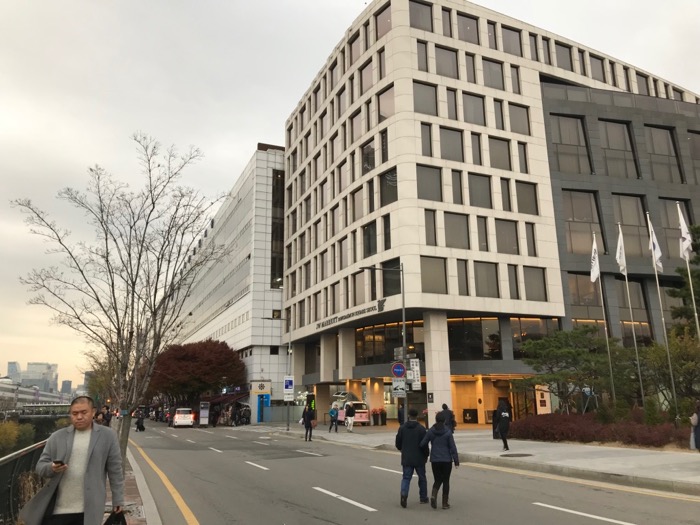
We went over in the afternoon, not knowing about their 5 a.m. closing time. We came up out of the subway using Exit 9, and I’d done some research that told me to look for the J.W. Marriott and it would be to the right of that. That white gridded building with the yellow-lit area underneath is the Marriott. But there were also two uniformed, English-speaking guides standing at the subway exit, and they helped us find our way.
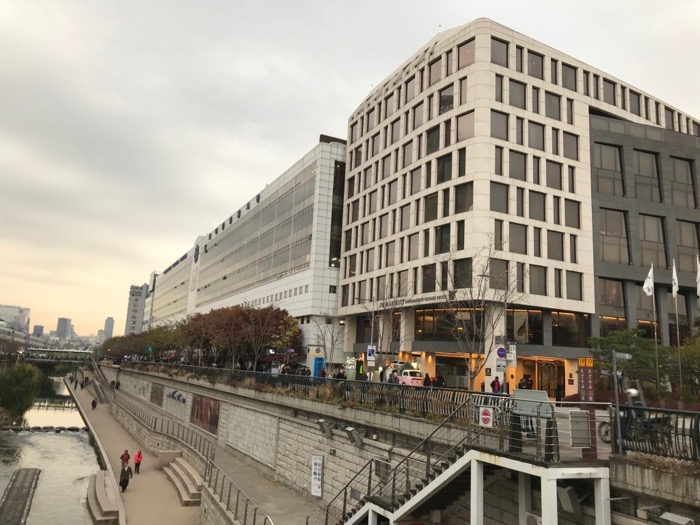
This side of the river is the fabric shopping.
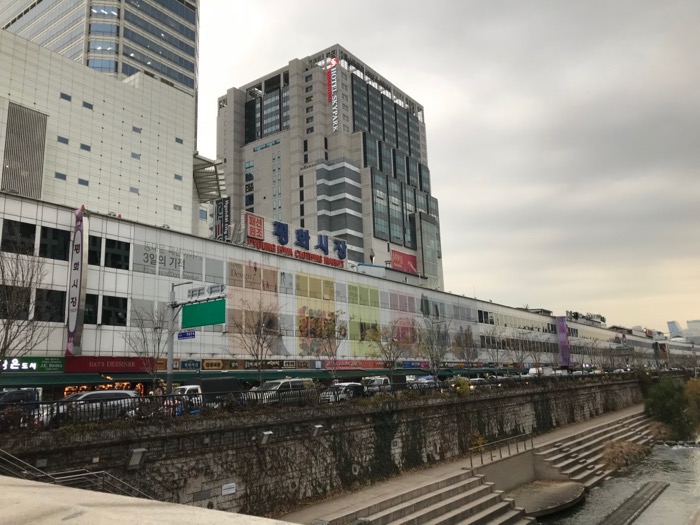
I understand that the other side, that massively long building is clothing.
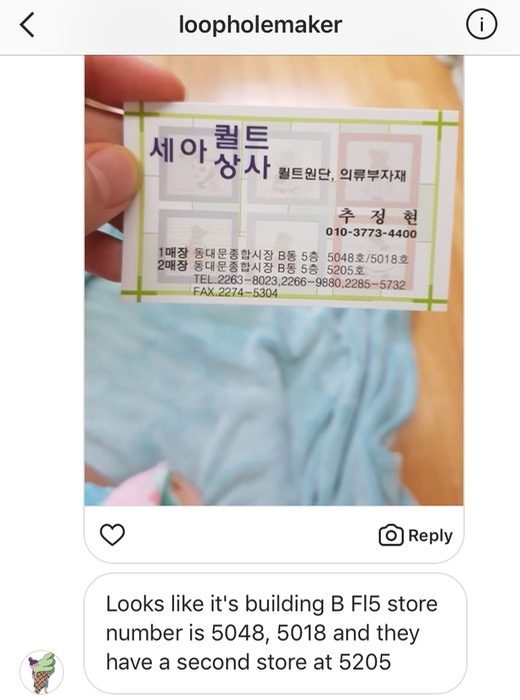
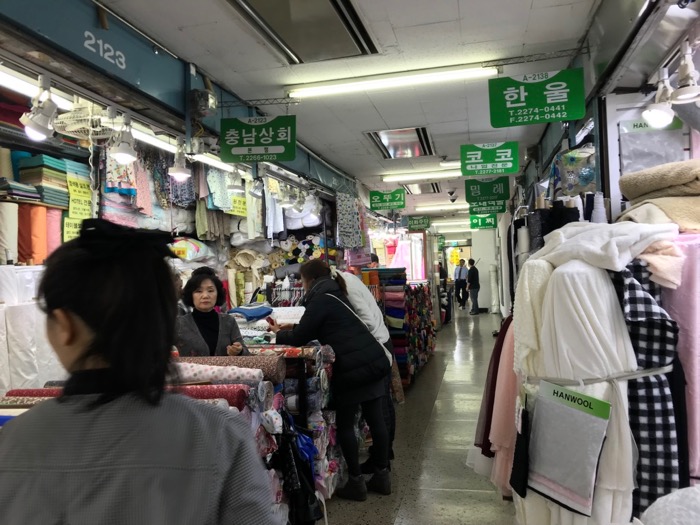
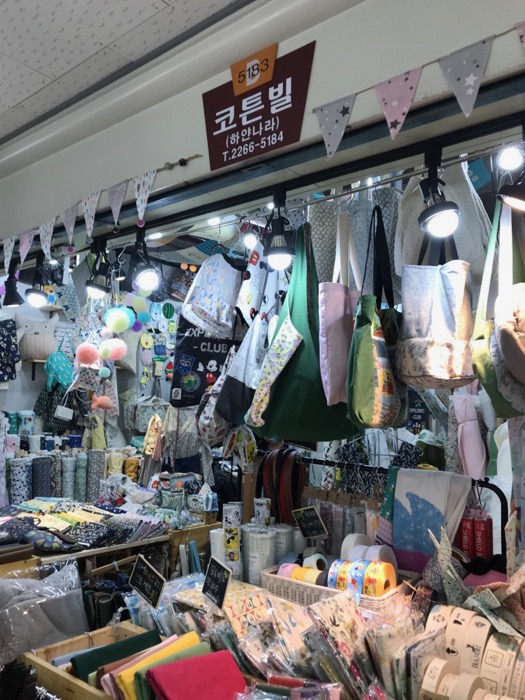
Maya, an IG friend who we’d met for lunch in Seoul, had all sorts of tips for Seoul, and we found her advice really helpful. Basically each stall has a number, led by the floor number (so 5018 is on the fifth floor). There’s also a building number, as you can see.
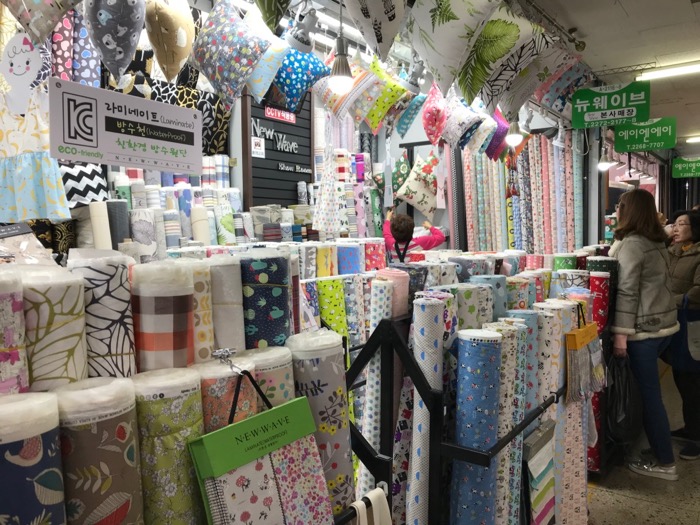
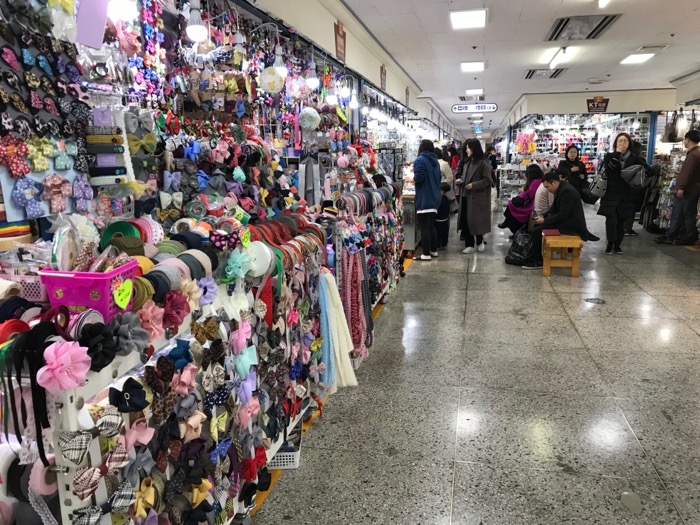
But truthfully? Once you get inside, give it all up. Just wander. We did eventually find the booths that Maya tipped us off to, as well as about a fifty-thousand others. (There are multiple blog entries about this place–just Google it.) It’s a market made for business, but they put up with the rest of us.
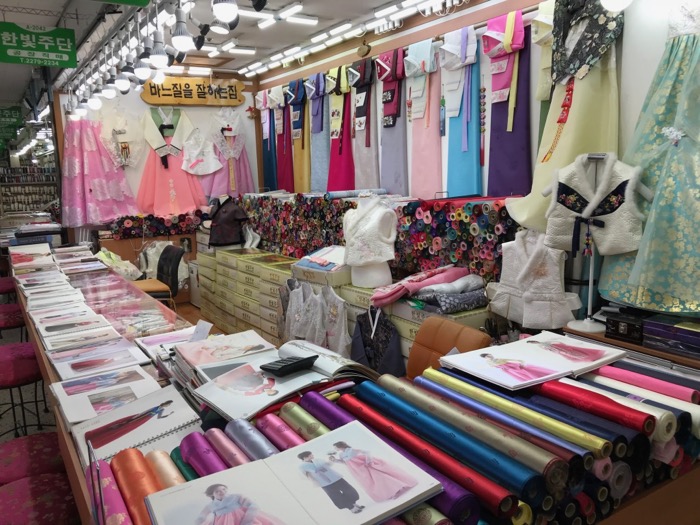
Because I was in love with all things hanbok (their traditional dress), we happened on the booths selling their fabrics. In the neighboring booth, a young woman was being measured for her own hanbok.
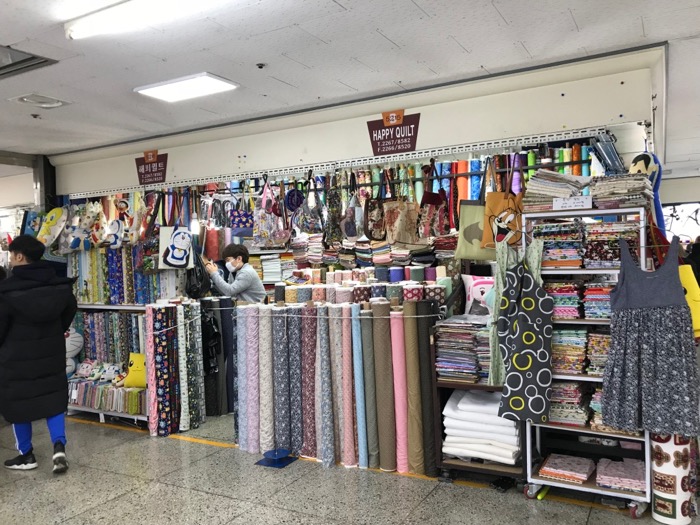
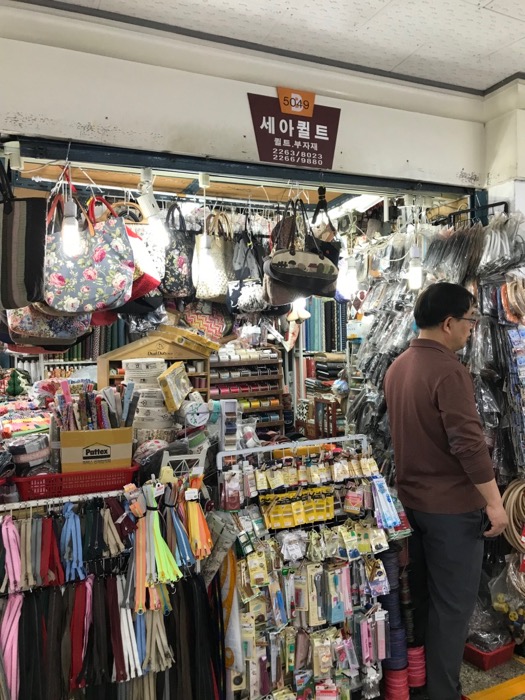
The renowned Happy Quilt booth. If you ever want to go here, keep track of the number on the sign overhead.
Booth after booth after booth for as far we could see–this place was huge. Many booths just had swatches of fabrics, and if you liked it, they would call the warehouse, get it cut and deliver it to your hotel. If you got like 60 yards, they would deliver it for free.
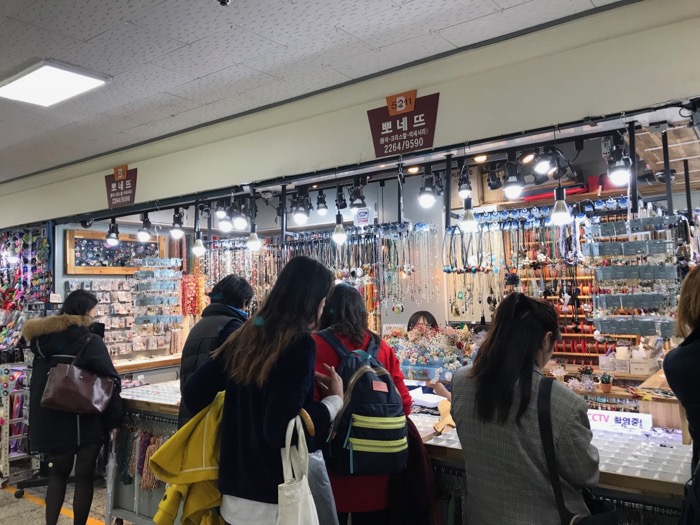
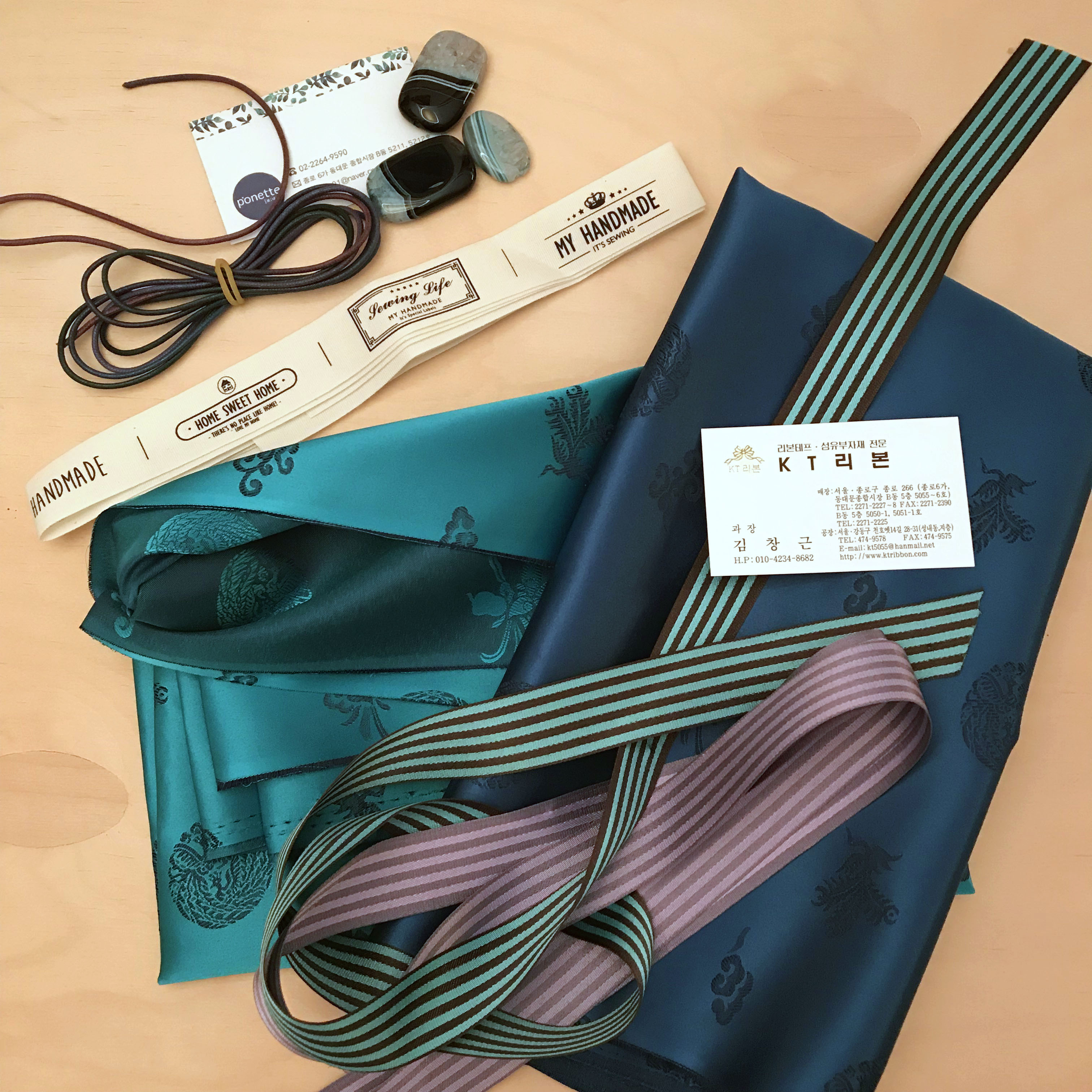
I like to bring home a piece of jewelry from my travels, but from what I could tell, the women in these two countries don’t wear a lot of costume jewelry, except for pearls. So we stopped at this booth and picked up some polished stones, another booth (below) had cording, and I’ll make myself a necklace.
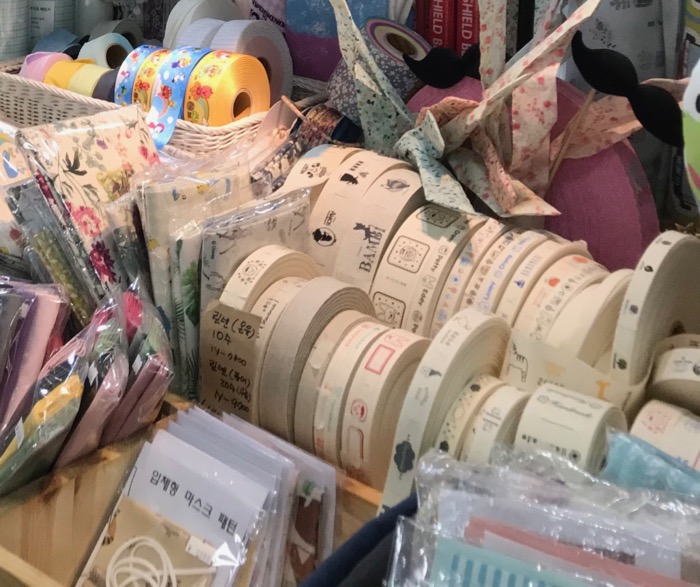
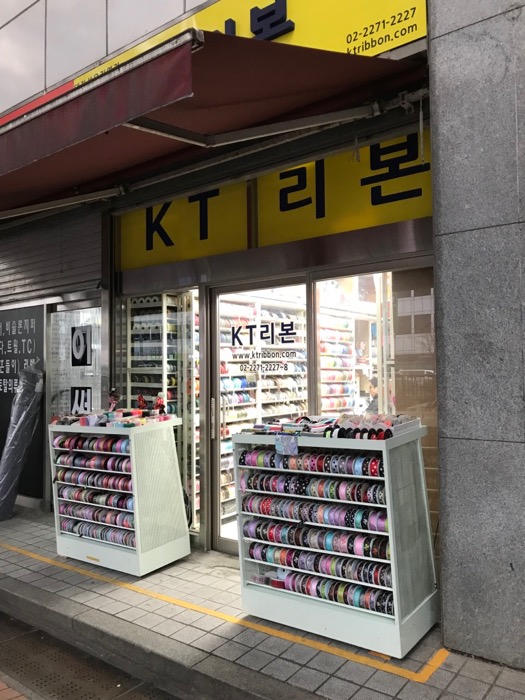
Last stop, outside: ribbons.
It’s about now — after walking forever inside, realizing that we’ve only touched the very edge of this area for shopping — that it dawns on us that so much of our fabrics and our clothing must come from this area of the world. Of course we know that, given that America labels all its clothing and purchases, but that is not usual. But from now on when I walk into a fabric shop in America, I’ll remember that much of what I see had its genesis from this area of the world, maybe even represented by one of these little booth sellers in this massive building.
The purchases were few.
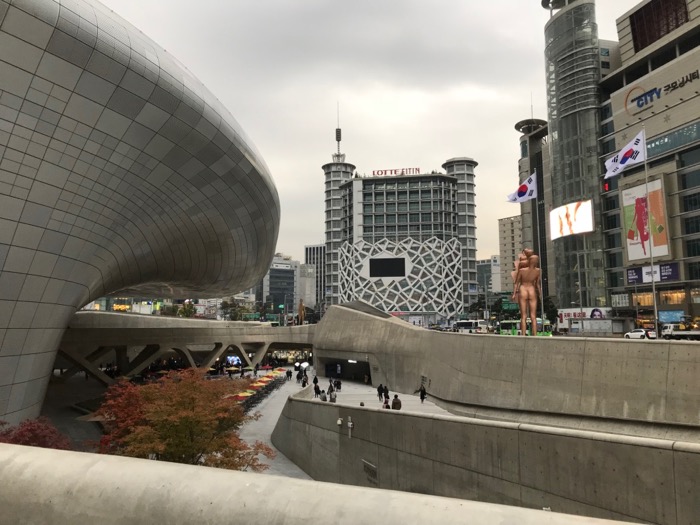
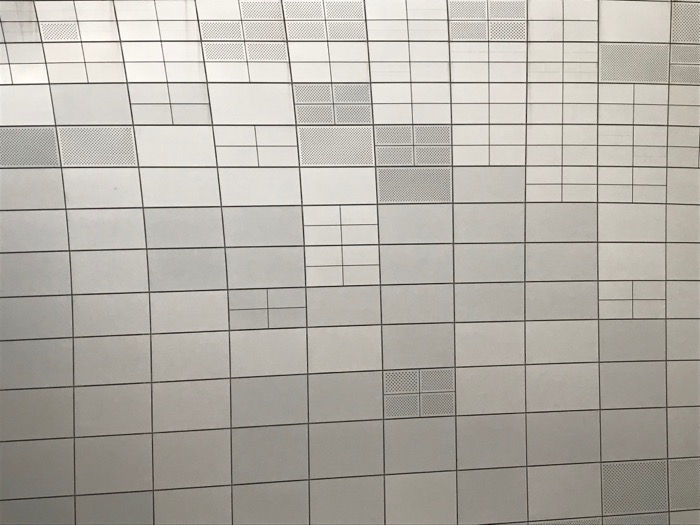
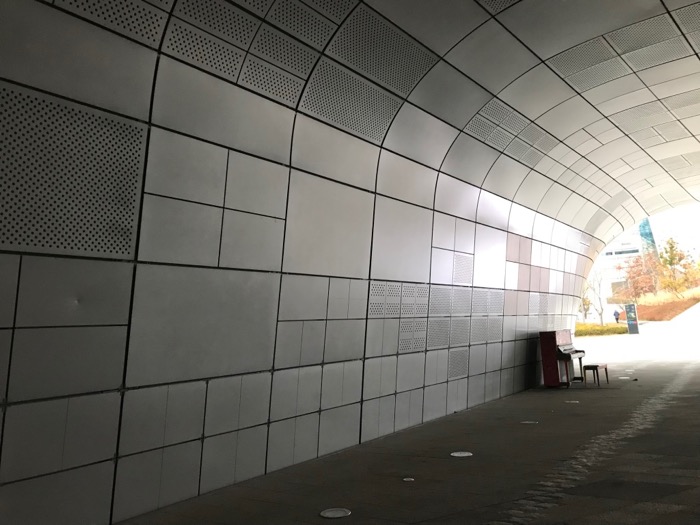
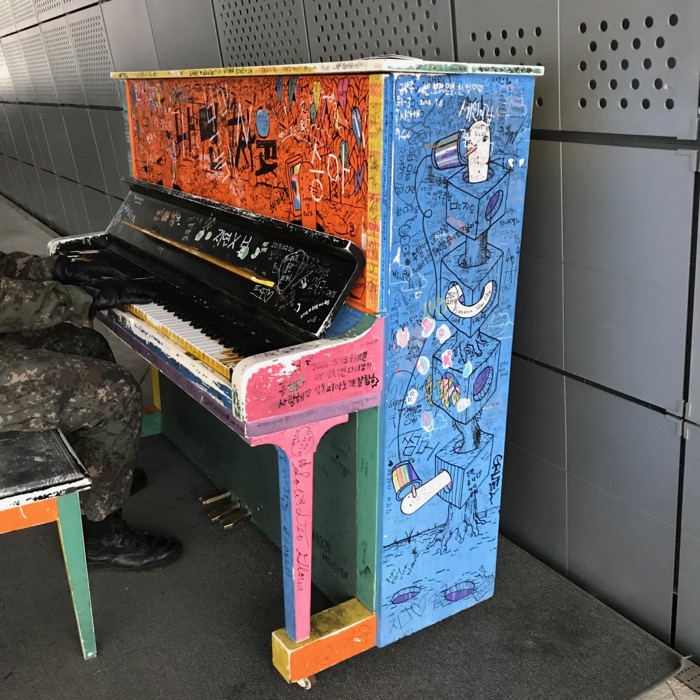
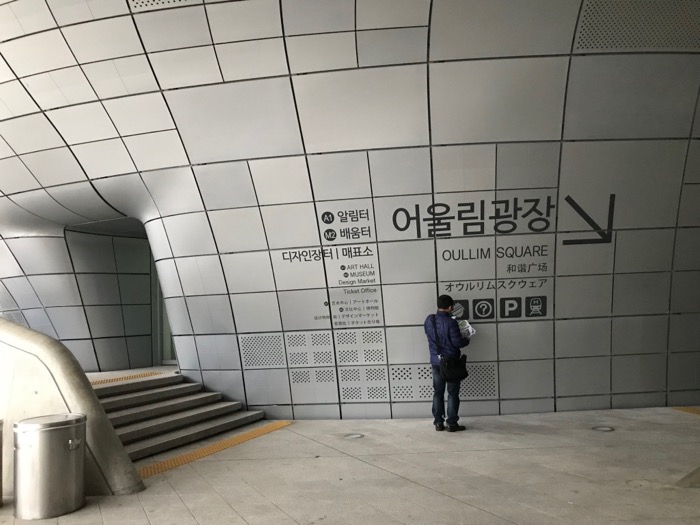
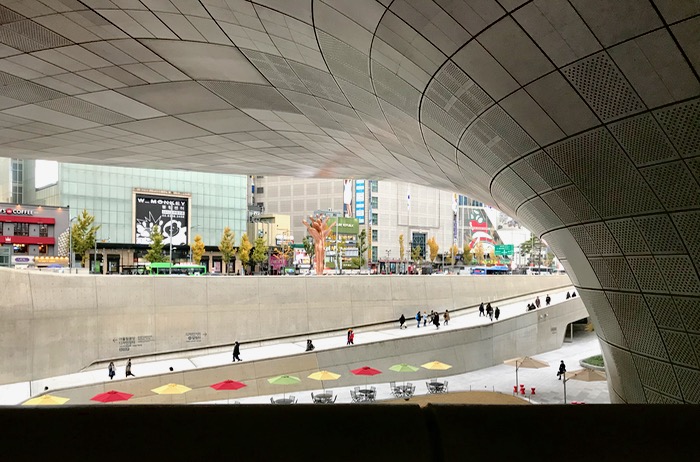
Dongdaemun also has this huge plaza with buildings designed by the famous female architect, Zaha Hadid.
Apparently every one of the panels is cut to a different size. All I could think was: quilt design.
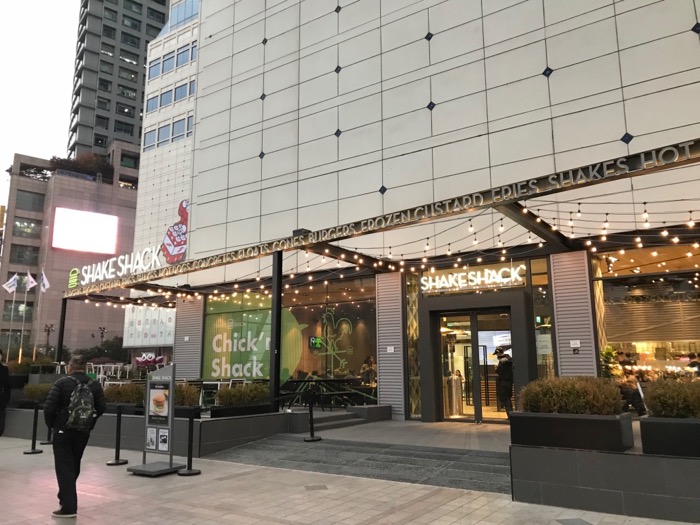
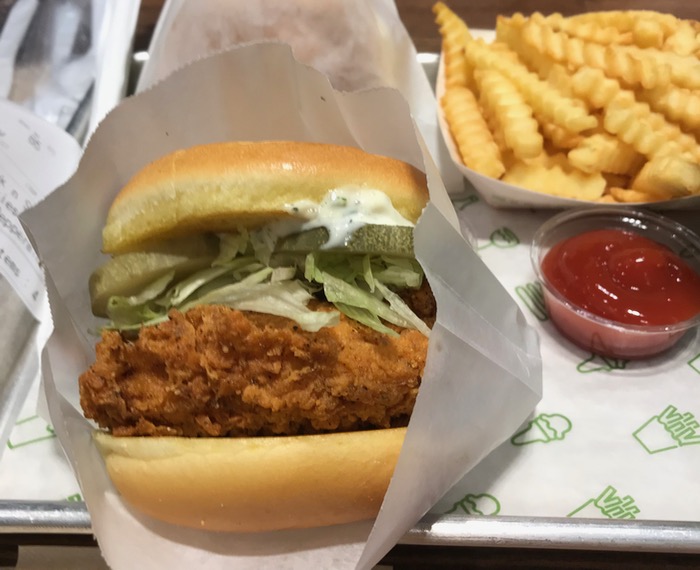
This was our last night in Seoul, the end of our Asia trip, and all I wanted was a meal from Shake Shack. I guess you could say I was ready to not have to be adventurous in my menu choices anymore, ready to go home, ready to grab the rotary cutter and explore with fabric some of the designs I’d seen in our travels.
I have one more post from our trip, about our visit to the Quilt Museum in Seoul. Also coming up: the drawing for the zippers (tomorrow morning) and I’ll contact the winners by email. Thanks for reading, and thanks for your interesting comments. You are all a well-traveled group!