Heart's Garden · Something to Think About

Adding To Do Items onto a To Do List

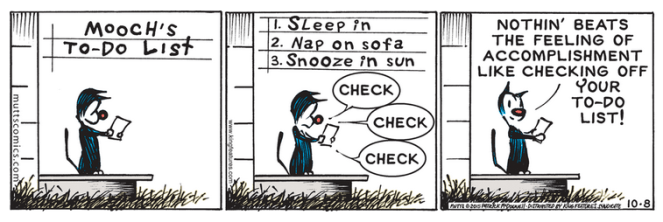
So many organizational systems do not account for a trip to the fabric store, where immediately I have to reshuffle, re-prioritize not only my To Do List, but also my sewing room. I have five red tabs in my Get To Work Book and they read To Do 1, To Do 2 and so on to the fifth one. I have half-filled lists in my quilting planner. A lot is crossed off using my yellow highlighter, but when your organizational lists get out of control, how do you organize and get things done?

Research: I read this article which suggests compiling four different types of lists: Master, Monthly, Weekly, Daily (he describes them on the site). Lisa Jackson recommends a service called WorkFlowy under the post title of A Tool for Organizing Your Brain. Bette has declared this the Year of Focus and has organized segments of the year dedicated to her sewing goals. Sherri of A Quilting Life has a good planner for quilting goals.

And here’s my classic Goals List from over two decades ago. I should frame this–what an ambitious woman I used to be! (I’ve abandoned housework, physical fitness goals and scrapbooks — but did complete most of the quilts in the list. I also got the children raised.)

As we’ve noticed, our lives have shifted underneath us. We kept going, but perhaps our outlook changed, our friendships dwindled or expanded. I liked Brad Stulberg’s article, where he writes:

“Many of us felt seen when, last April, the organizational psychologist Adam Grant wrote of languishing, “a sense of stagnation and emptiness … as if you’re muddling through your days, looking at your life through a foggy windshield.” There was a relief in having a name for our experience, and a kind of solace in realizing that we weren’t alone in experiencing it. But now, nearly a year later, as with just about everything related to Covid, we’re sick of languishing too.”

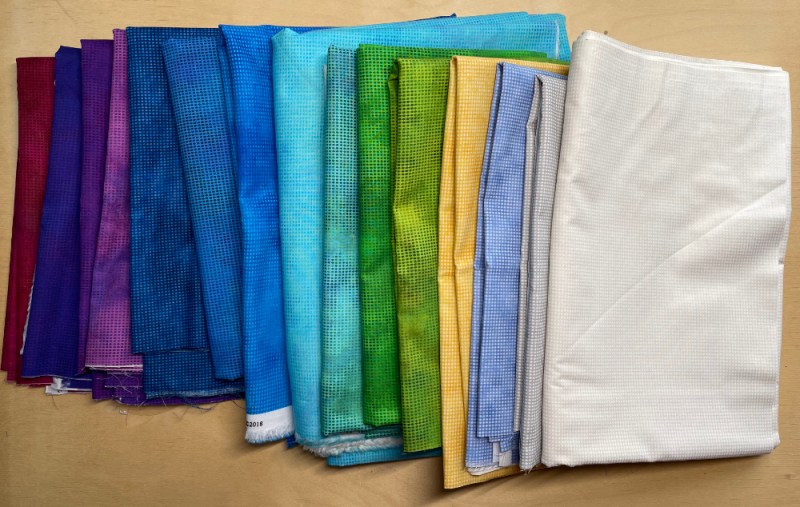
Perhaps that’s why when I went to QuiltCon in February, I tried to find things to give me a spark. I loved my two classes from Cassandra Beaver and Verushka Zarate, and enjoyed the lectures. It was fun to see people again in the wild, but there were some interesting moments of confusion in identifying people because we were all masked. And perhaps that’s why — when I went into a real-live quilt shop in Phoenix, and maybe because they gave QuiltCon-ers 20% off, I snapped up a range of beautiful colored semi-solids. Some one in line asked me what I was going to do with all those, all I say was, “We’re supposed to have a plan before we buy?”

Perhaps I was exhibiting Stulberg’s mention of “behavioral activation…based on the idea that action can create motivation, especially when you’re in a rut.” He writes:

“The challenge with behavioral activation is mustering enough energy to start acting on the things that matter to you: Make that phone call, schedule that walk with friends, write that email, get off social media and start on the creative project you’ve been procrastinating on. This may sound simple, but when you are languishing, simple does not mean easy.

“But a mind-set shift can be a powerful tool. When you feel down, unmotivated or apathetic, you can give yourself permission to feel those feelings but not dwell on them or take them as destiny. Instead, you shift the focus to getting started with what you have planned in front of you, taking your feelings, whatever they may be, along for the ride. Doing so gives you the best chance at improving your mood.”

So To Do lists can sometimes become exercises in bloodless planning, an attempt to get organized (which is why my planner often has blank spaces). But walking into a fabric shop now becomes behavioral activation. That, we can all get behind.

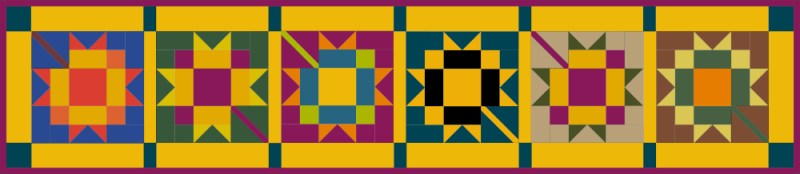
So my To Do lists are more random. This was going to be my year of Focus, a la Bette, but then I started the Heart’s Garden Mystery Quilt-A-Long, which I had all sketched out. And which I totally scrubbed after Step One and rebuilt it anew. Which was no where on my Yearly To Do List. Here’s my first sketch:

Yep. Pretty hideous, excepting those EPP circles. I even got the birds around the border, but they look more like quail, than sparrows or finches. I’ve been working on writing up Part 3, which is coming next week, and part of that is making birds over and over, as I perfect the pattern:

blue and yellow blocks, for Ukraine (from Hearts Garden pattern)

So I write — and cross off — “sparrows” on my To Do List, and wander back into the sewing room for some pleasant Behavioral Activation. I wish the same for you.

Happy Quilting!

PatternLite · Patterns by Elizabeth of OPQuilt · Something to Think About

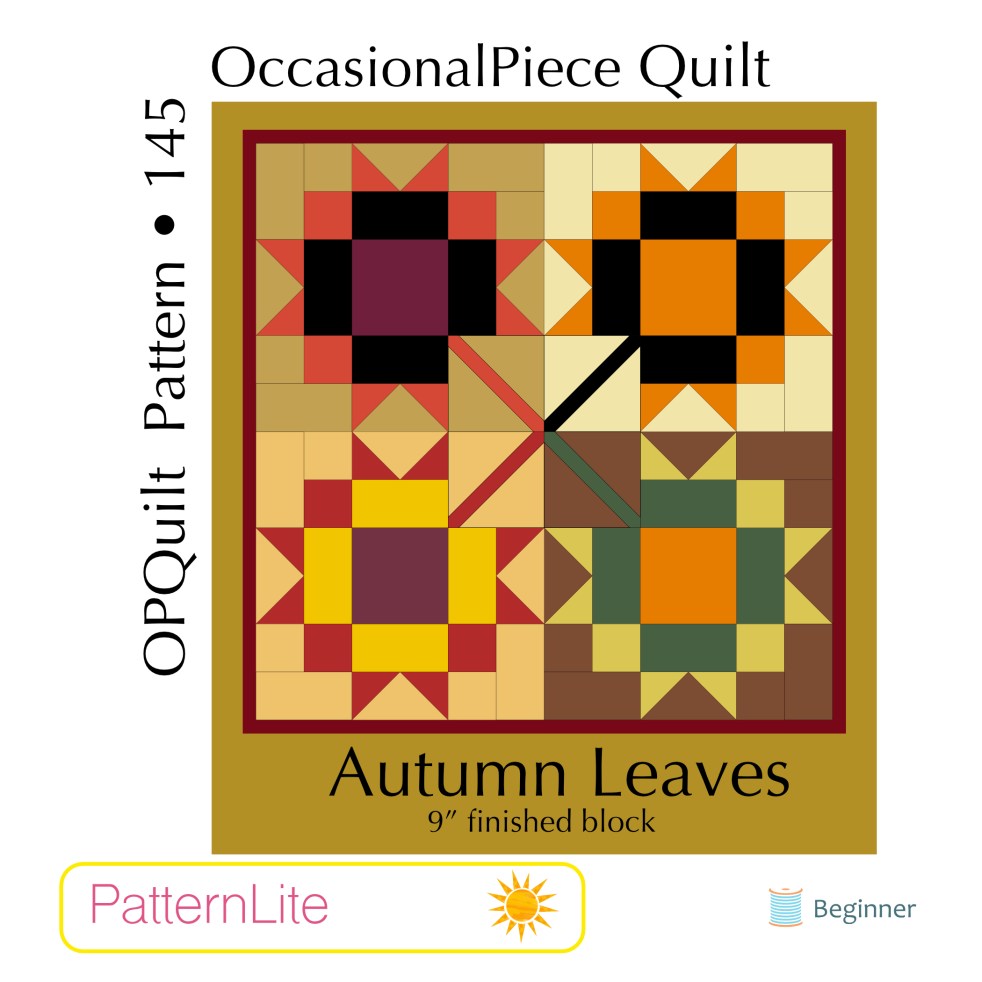
Autumn Leaves • PatternLite

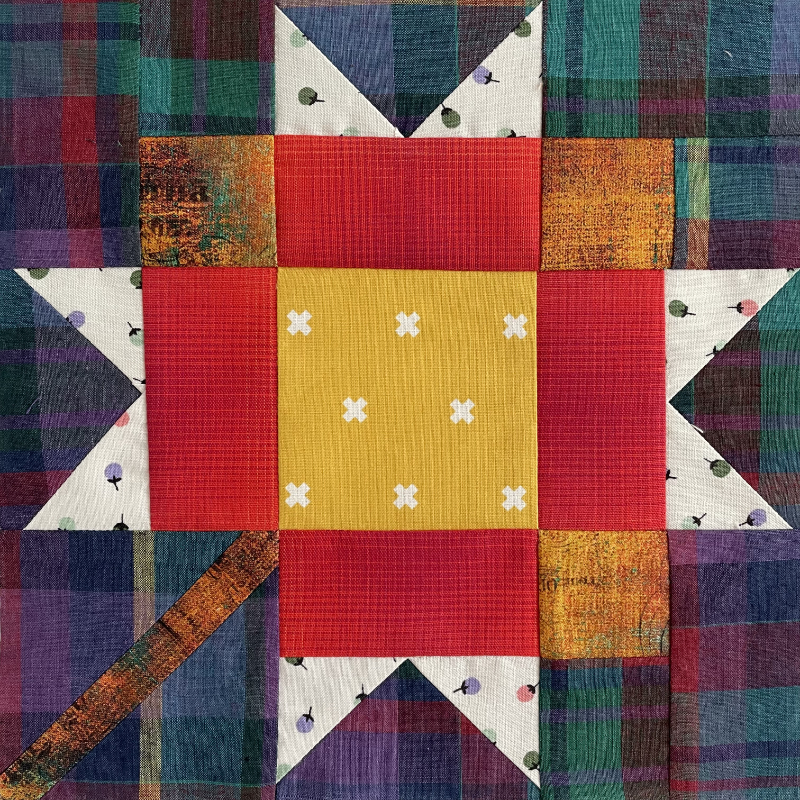
Confession: I got caught up in Fall Color. A few particular trees in Southern California and even the leaves on my wisteria arbor are turning yellow, getting ready to drop. In addition, we put together another round of Gridster Bee, and those of us who were experienced thought we should get sample blocks up on the spreadsheet as an example.

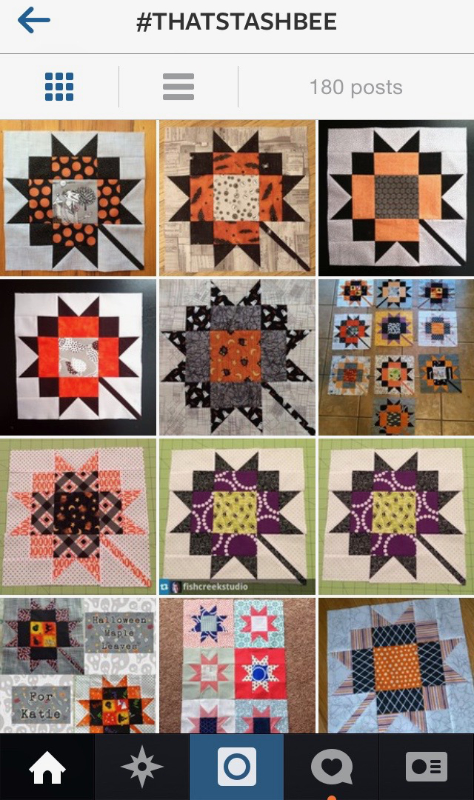
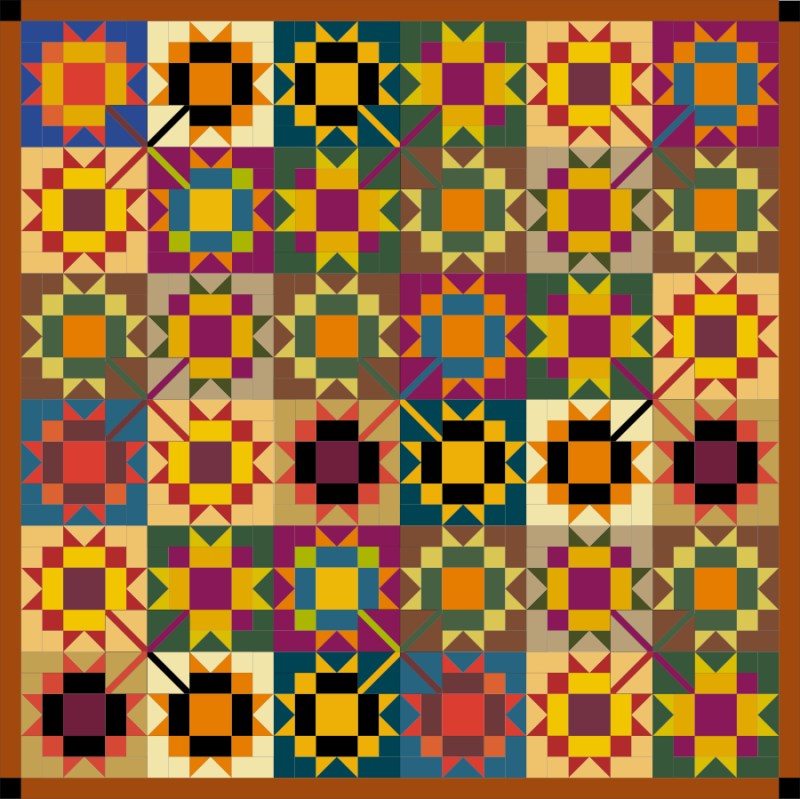
I have been hanging on to this screenshot (see how old those IG icons are?) for some time, as I’ve always wanted to do it in a bee. The pattern is a variation of Maple Leaf:

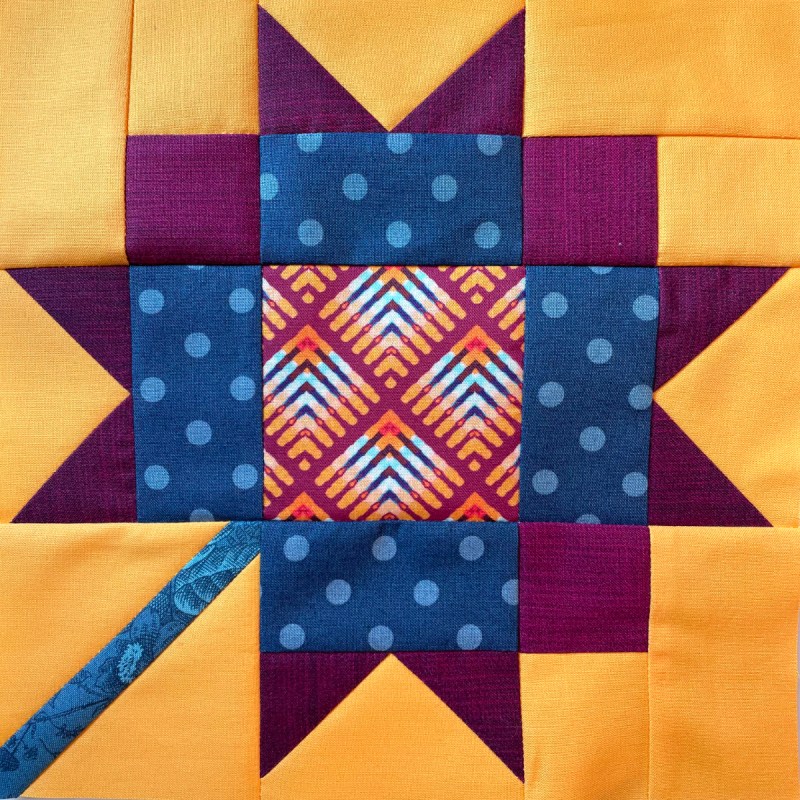
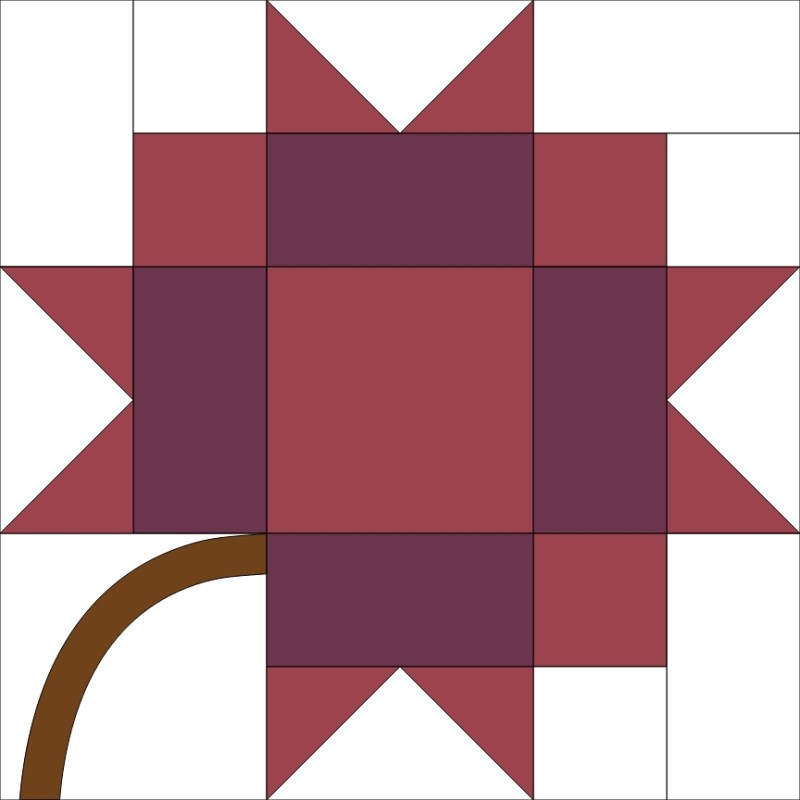
To be precise, it’s Maple Leaf–Brackman #1740, which originally debuted in Aunt Martha’s booklets in the 1930s. Like the Flickr group, above, I changed out the stem so it could be pieced. And is my wont, I wondered if anyone else was interested in this block. I certainly I had a few words to say about how to make up a leaf in autumn colors, so I put it all into a PatternLite, and then up in my PayHip Shop. I also included how to make a Four-at-a-Time Flying Geese block, giving away the secret formula, freeing you from charts forever.

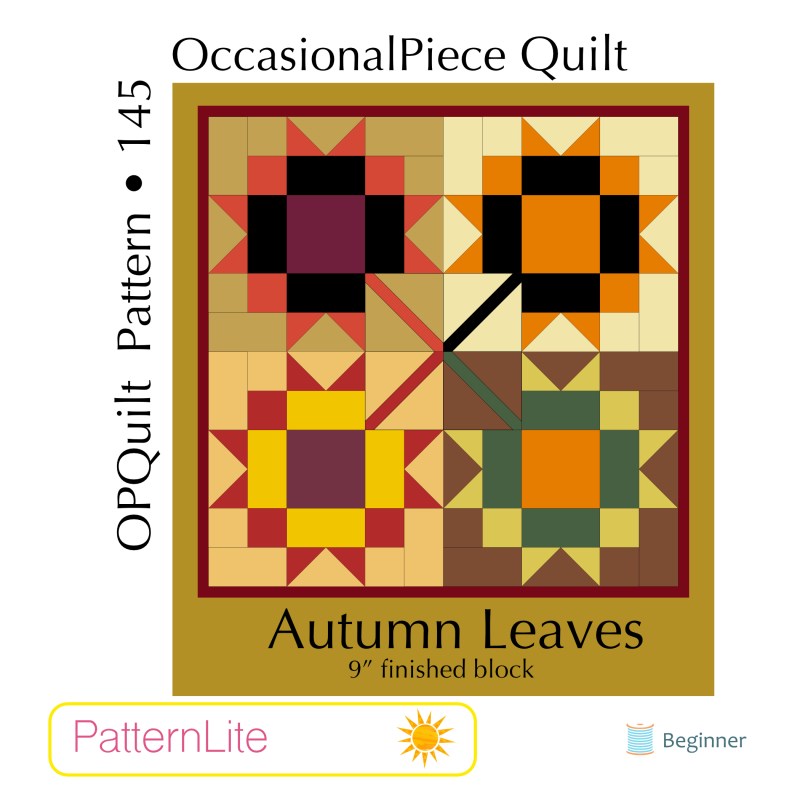
PatternLite Patterns, if you are new here, are not-quite-all-of-a-pattern, for not-quite-all-of-the-price. They are less than a fancy pink drink at Starbucks. They are cheaper than a slice of pizza from that place around the corner from you. They are for those quilters who can see a block and take off with it in their own way, and don’t need comprehensive instructions on construction. But I did do up a couple of sketches for what can be done with this block:

How about a table runner for your holiday table?

Or a quilt? It’s there now in the shop, if you want to grab it.

I had some other ideas, but I will let time work them out for me, or sleep as John Steinbeck noted:

“It is a common experience that a problem difficult at night is resolved in the morning after the committee of sleep has worked on it.”

This may take me more than a few nights, I think.

And then there’s this, that’s been rattling around in my head:

“Creativity is just connecting things. When you ask creative people how they did something, they feel a little guilty because they didn’t really do it, they just saw something.” (Steve Jobs)

Lately, I’ve been concerned with sameness, or the inability to make connections between two different things, because so much is all the same.

an “un-same” landscape

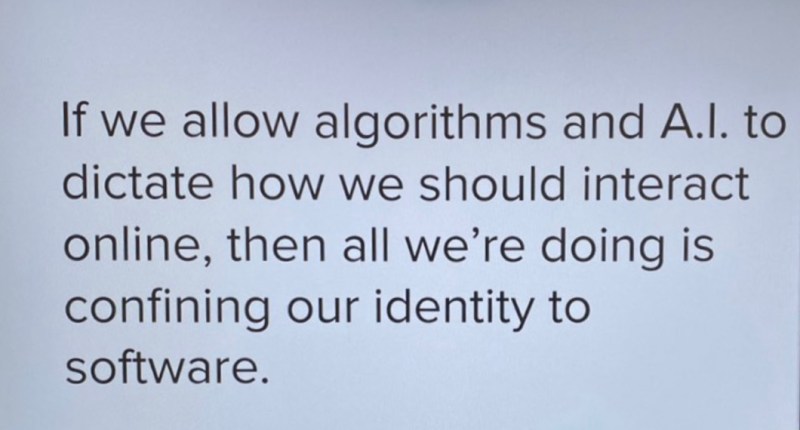
If we are mostly in our houses, with our same stashes, in the same room, making those same projects we dreamed up some time ago, where are the differences that allow us to make connections? I think many of us get it through social media, but beware:

from a recent Honors symposium my friend attended

I had been sort of dependent on my Instagram feed for variety and for seeing new things, until I realized that over time the random things I had selected had become more of “the same”–repeating back to me the images I had selected precisely because they were new and different. What with the algorithm changing how we interacted with that media, and the selectivity with which it feeds us our friends’ posts on our feed, what had once fed my need for new and novel things just came unraveled.

When you are traveling in a new space, trying to juggle all that’s coming at you, you make new connections. Perhaps you discover a different way to think about a dilemma, or even how to navigate physical space:

I did eventually make it to TechnoPark-ro, and enjoyed all that I saw. This has been on my mind because of what I’ve noticed in my correspondence, that there’s been a refrain of not feeling enthusiastic about what you used to do. Some describe it in that time-honored way of “lost my sewjo.” I could also describe it as longing for the thunderbolt of a new idea, one that just grabs you and has you on the run to try to express it.

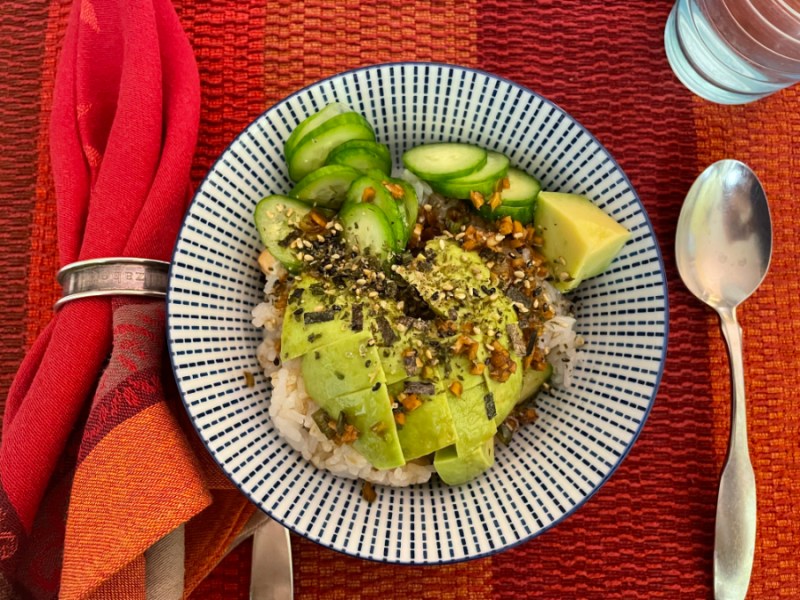
Because I feel like drowning in sameness is a situation to escape, my tactic of late has been to look for old quilt blocks to explore in new ways (hence, Autumn Leaves). I also like seeing new fabrics, other than the same three designers carried by my quilt shop, so recently I went to Fat Quarter Shop to their pre-cuts and read ALL 38 pages of it, learning about what’s coming. I vary my walks around my neighborhood, cook new recipes:

What I call Sushi in a Bowl: sushi rice, salmon, cucumbers, slaw, avocado and dressing

Three reasons why people are motivated to be creative: 1) need for novel, varied, and complex stimulation; 2) need to communicate ideas and values and 3) need to solve problems. A scholarly listing of thoughts about creativity can be read here.

Right brain? Left Brain? Anna Abraham begs to differ: “The brain’s right hemisphere is not a separate organ whose workings can be regarded in isolation from that of the left hemisphere in most human beings. It is also incorrect to conclude that the left brain is uncreative. In fact even the earliest scholars who explored the brain lateralization in relation to creativity emphasized the importance of both hemispheres.” A high level Q & A with her is here.

“As strange as it sounds, creativity can become a habit,” says creativity researcher Jonathan Plucker, PhD, a psychology professor at Indiana University. “Making it one helps you become more productive.” Read about it here.

A quote from an article from my favorite resource, 99U: “Creativity is a skill that allows you to draw understanding of the world around you, connect those observations to your existing knowledge reservoirs, and imagine new applications of your knowledge on the world.” Read it here.

Keep at it, find the new and novel, and keep quilting!

(More info on this one, coming soon!)

300 Quilts · Sewing · Something to Think About

Little Bits

#1

“Human beings are creatures made for joy. Against all evidence, we tell ourselves that grief and loneliness and despair are tragedies, unwelcome variations from the pleasure and calm and safety that in the right way of the world would form the firm ground of our being. In the fairy tale we tell ourselves, darkness holds nothing resembling a gift.
“What we feel always contains its own truth, but it is not the only truth, and darkness almost always harbors some bit of goodness tucked out of sight, waiting for an unexpected light to shine, to reveal it in its deepest hiding place.”
by Margaret Renkl, from her book, Late Migrations

#2

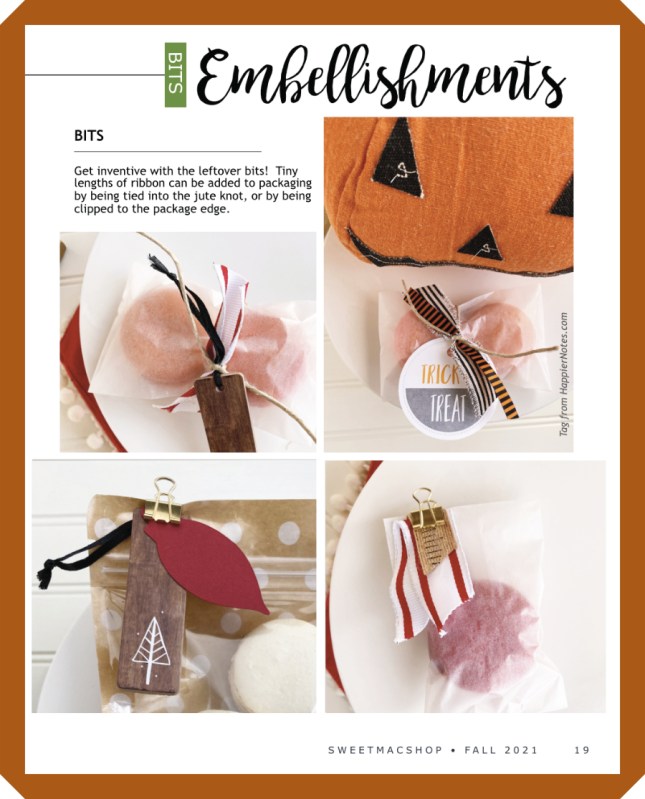
I have spent the better part of the last two weeks working with my daughter on her Fall 2021 Lookbook on packaging for mac makers, published Tuesday. She purchased Affinity Publisher and took a stab at working in it, her first time using some sort of design software. (Good for her.) We used all her photos of all her macs (she had over 400, but we winnowed it down to about 70); however, I was quite entranced with Page 19 of her book: it was about little bits, and how these ends of ribbon bolts or tiny clips, or shaped pieces of paper could embellish a package.

#3

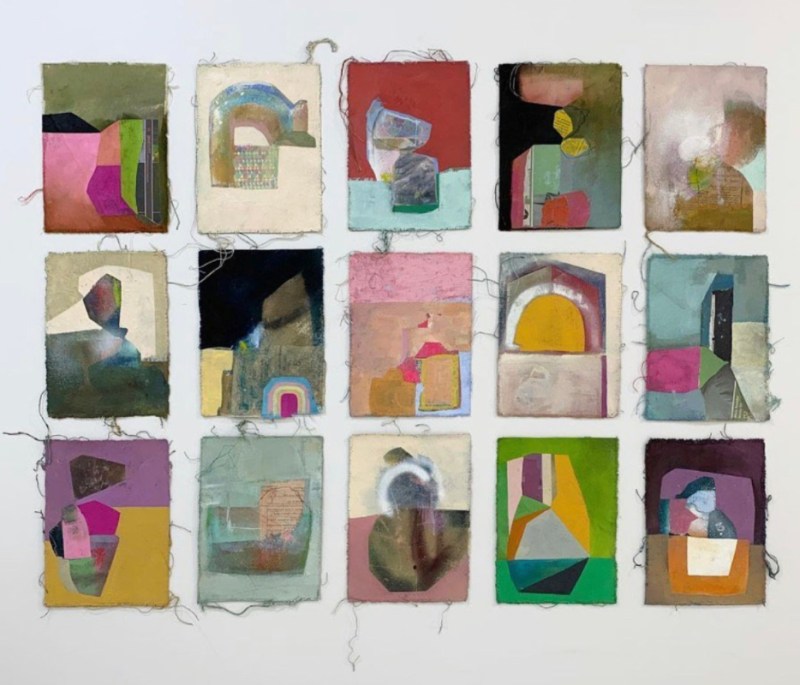
The artists above (L) Alayne Spafford and (R) Anna Mac are making art with a gallery of tiny things.

All my life I’ve been enamored of little things. As a child, I once shaved the wood off the tips of 7 colored pencils with my father’s discarded razor blade, broke off the tips, and made a teeny set of colored pencils, complete with their own paper case (also handmade). I have collections of tiny things, in jars, in boxes, in drawers. Obviously I was drawn to the sewing world, with all of its collections of tiny bits (thimbles, needles, wee scissors and of course, scraps).

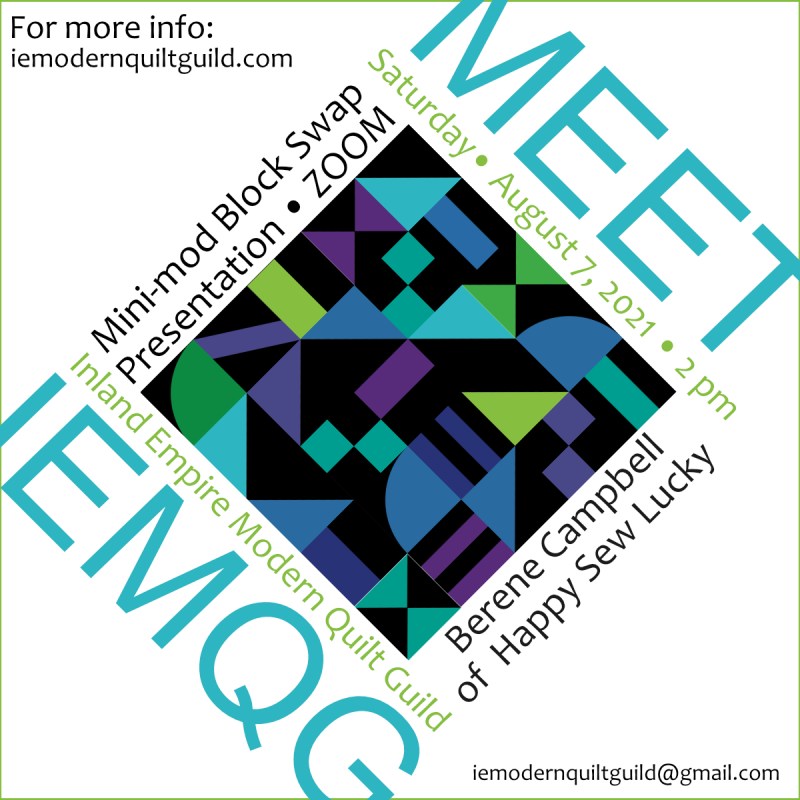
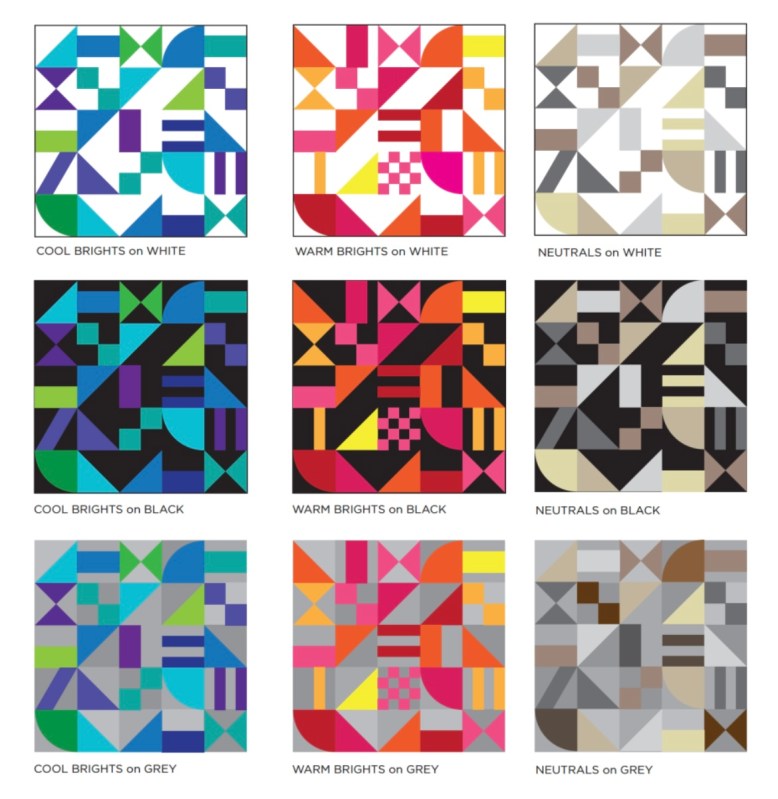
So when our Inland Modern Quilt Guild decided to host Berene Campbell, showing her idea of a Mini-mod Block Swap (they are all 1 1/2″ finished), I was all in. Earlier this year, I helped make advertisements for the guild’s blog, and I put together all those shapes using Affinity Designer. (Again, I mention this software so you know you can buy an excellent digital design software for about $55. That’s $55 once, not a monthly fee.)

She uses this concept–of going around and talking to Guilds as a charity fundraiser, but the guilds will sort out how to set up the swap, and she gives good support. Her series of YouTube videos help anyone make tiny bits of a block.

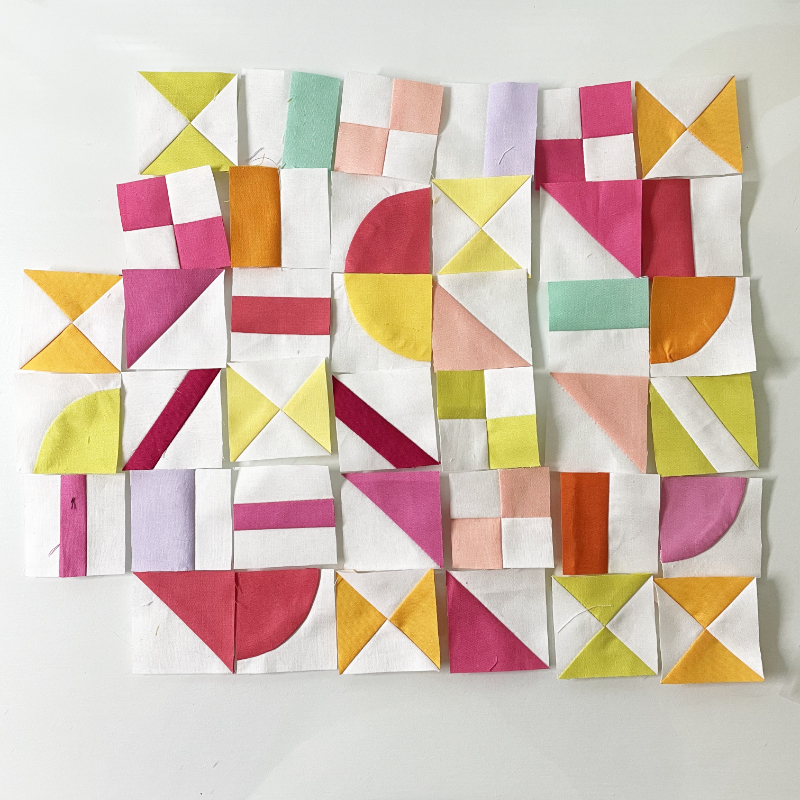
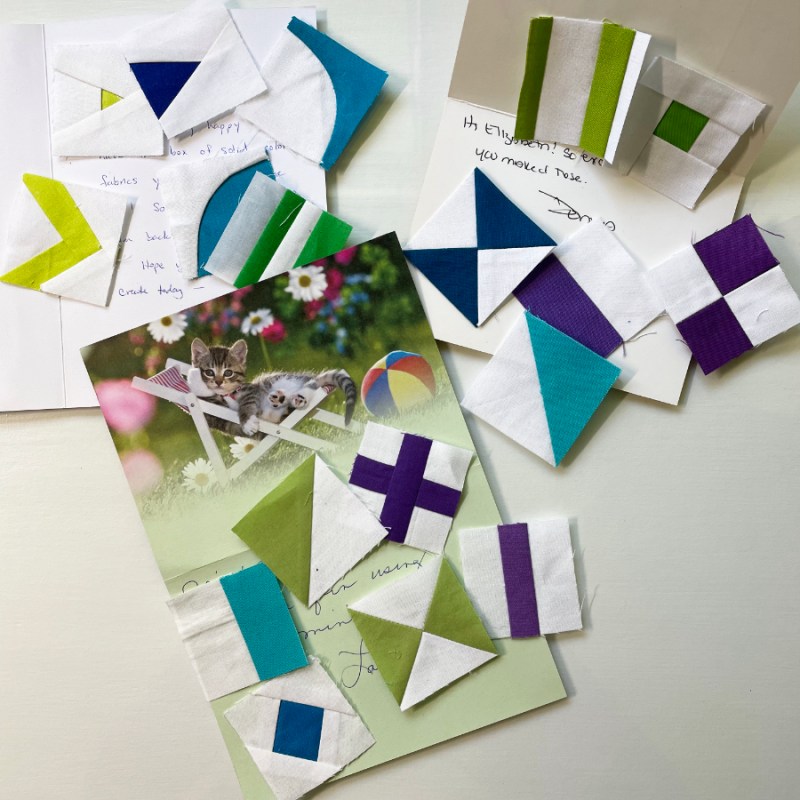
Three of my four batches of bitty blocks (2″ unfinished) have arrived.

All arrayed in rows.

I made a bunch to send out but I got confused and made too many. They joined what I had received.

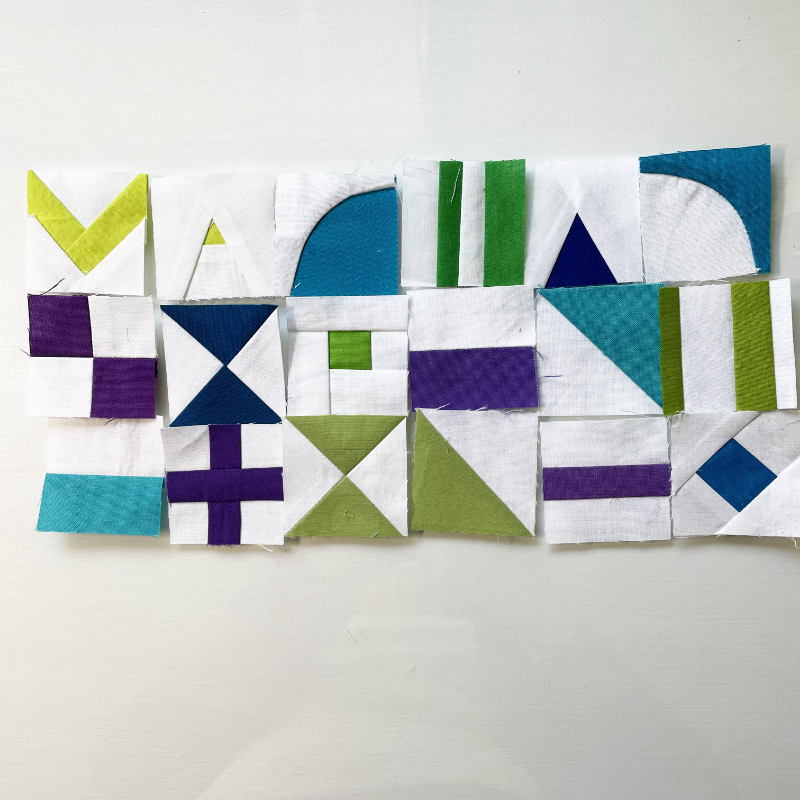
An afternoon of playing with solid scraps yielded this bundle of wee blocks.

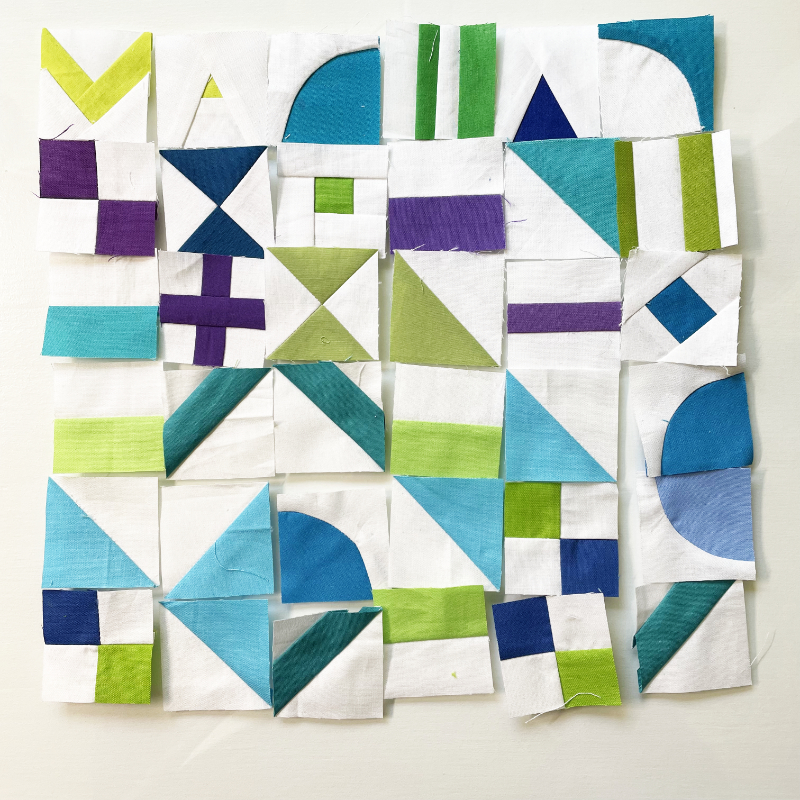
The challenge from our Guild is to make something for our December meeting from all our blocks. I have an idea, but it’s a bit of one, so I’m holding onto it and letting it grow. I did pretty well in the last challenge, winning the vote at the Guild Meeting. That made me more than a bit happy. Thank you, Guild Members.

#4

I read many bits of happiness when I read all your comments on your Happy Days. From start to finish, they were all wonderful, inspiring. I loved how often they included family and friends, fall traditions, and near misses with disaster. My husband and I read them together, commenting on how often you epitomized the Renkle quote from above, finding how “darkness almost always harbors some bit of goodness tucked out of sight” and I love that you shared them with me, with others.

I did choose a recipient (Pat A.), and have sent her a note to arrange the mailing of the jelly roll. Thank you again to Sherri McConnell for donating this so I could host the giveaway.

But most of all, thank you for sharing your Little Bits (and some Big Bits) of Happy Days. It was a treasure.

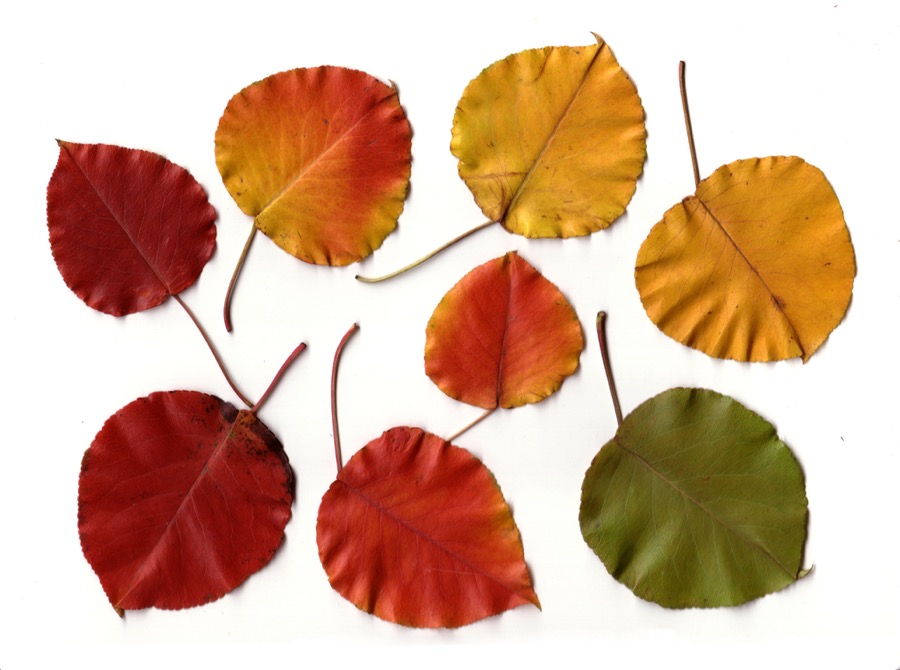
Fall leaves, Alexandria, Virginia: I lived there for a year and ended up scanning so many leaves on my flatbed scanner, as I loved them all and wanted to capture them forever!

Digital/Virtual World · Guild Visits · Something to Think About · Zoom

To follow the notes of a disappearing bird

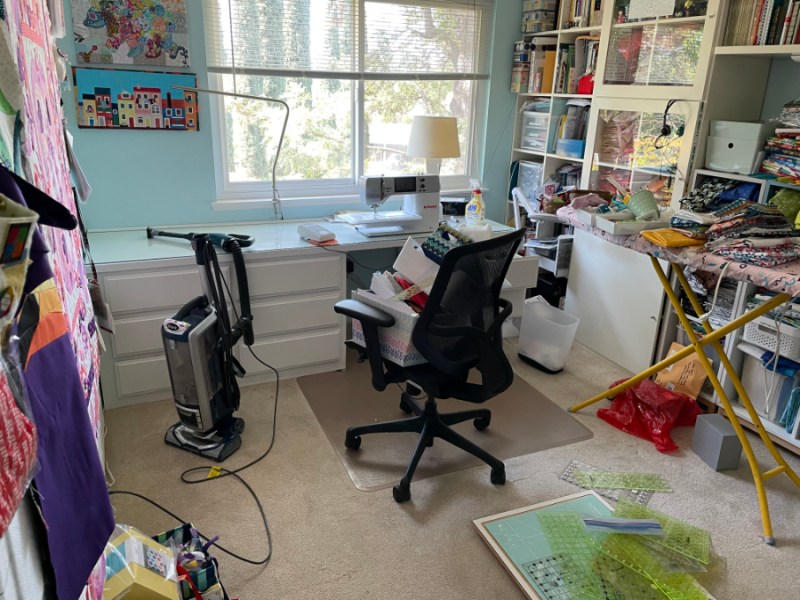
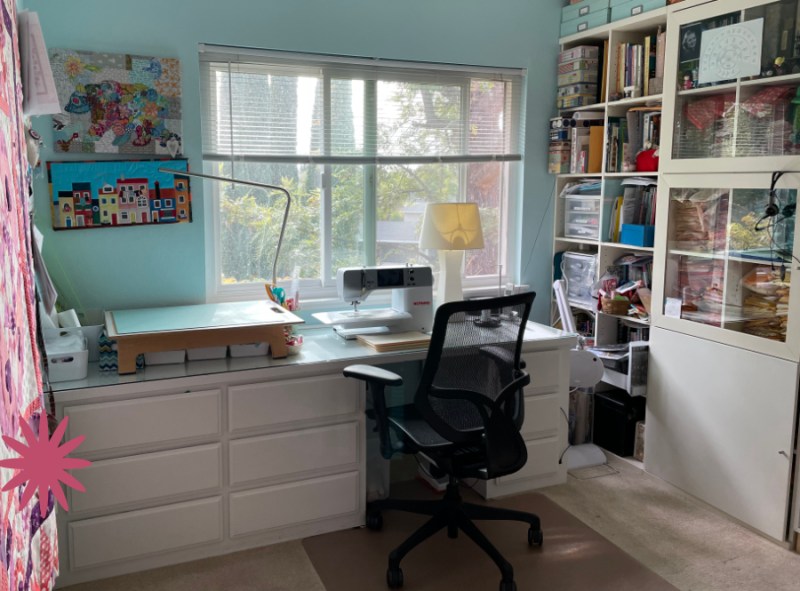
I work upstairs in a bedroom at the end of the house in what used to be my daughter’s room, before this penultimate child burst out into the world, leaving home at twenty, coming back only for visits — an ending I didn’t see coming, for sure. In that room, my sewing machine sits on a desk that runs underneath a double-wide window, and my view is visually sheltered there by the boughs of a silk oak tree, like a frame.

Just below the window, and sometimes climbing up the screen, is an enormous wisteria vine — no it’s really two vines — stuck in the earth some thirty years ago when we moved to this house. In the spring it’s an uncontrolled explosion of heavy blossoms, followed quickly by incessant leaves and sinewy vines and tendrils, climbing, growing, spreading, taking over the old arbor full of termites and carpenter bee holes, and reaching over the pathway to the silk oak.

Two days ago I was startled by a squirrel that leapt from the roof of our house onto the silk oak limb, and as the wisteria has its tendrils wrapped around that one, too, the whole green carpet above and just below my window was set into motion with the squirrel’s landing, a rustling that kept me watching until everything stilled and the squirrel descended down the trunk and onto to other things.

I took a leap of sorts last year when I figured out how to do everything Guild-related from this desk in front of this window: videos, Zoom lectures, demos with two cameras on camera stands that I always have to wrestle into submission for at the time, I was unaware of the fancy ones that moved at the touch of a finger. I loved the Zoom teaching, especially.

I loved all the students in their places and their spaces, their fabrics right at hand, the mess underfoot, the walking back and forth from cutting station to ironing board to sewing machine. It was a rich, varied tapestry of individuals all honing their craft, this pattern they’d chosen, and we worked together as a very long-distance team. Most of the time.

I had a few failures, when I couldn’t reach through this digital space to show them how I trimmed, or to look at the blocks arranged on a wall that was in the hallway just around the corner, with no way to show me. I’ve had classes where it was deathly silent, everyone on Mute, watching my class videos or just being extra-respectful to not bother everyone with their usual noises: phone calls to friends, TV on for company, or the singing along to the radio. I could see them having a life, but there I was at the desk, sipping my water: the girl in the digital box.

Concentrating on getting the talk set up

I loved the Guild Presentations, too: the rows and rows of shining-faced quilters, and before I start, we are all expectant, all of them present in their easy chairs, propped up against their pillow towers on their beds, or the living rooms where husbands/friends/children/dogs wander through, and at the kitchen tables, all of us beaming at each other.

As you know, I recently taught a second class for the Santa Clarita Quilt Guild and my husband asked me if I had any repeats from the first time. I hadn’t looked up the previous class, but when I saw one student’s beautiful wall, I knew she had taken from me before. The space was familiar, for, in a way, I’d spent several hours there last year.

I now have two lectures, four online classes, but almost no gigs lined up. Is this an ending? I love teaching, but maybe it’s time to take longer to watch that squirrel with her descent or
“To follow the notes of a disappearing bird
out into the trees, up and out along the farthest / branch…”

I don’t know. Maybe it’s not?

I pinned all the Blossom quilts on the design wall before class.

I recognized an ending last time I came to this familiar junction. And I recognized when I had written everything I needed to say at another place in time. But this is all sort of unfamiliar to me now, for I don’t think I’m done, but yet somehow it feels like it might be that way. Or, it might not.

I gave the final scheduled lecture for 2021 last week. It was a hybrid: with a small cohort in their Guild’s usual meeting place at the Fellowship Hall, and the rest of us on Zoom. It was an interesting push-pull, a tension between the recent months of Covid and our isolation and this guild meeting was kind of at the reverse place — wanting to get out, but also wanting to stay in.

I recognized the impulse. Here in California we are all feeling sort of safe with masking in place, numbers down, vaccines in arms, and so we are venturing out to normalcy. However, I figured out some time ago that I would never visit a Guild in person again to teach or give a talk, much preferring the Zoom format. So perhaps this hybrid meeting was the opening of that proverbial door, the notes of that disappearing song beckoning me to the edge of a different wood, in a different territory.

Perhaps.

I’ll still be quilting, I’ll still be writing here on this website. I have a thousand-and-one projects lined up, and I may yet figure out how to schedule my own classes, turning students loose in my videos and handouts and structure. And I know Santa Clarita wants me to come back, too.

Stay tuned.


“Some Ants for Henry,” by Ralph Black
[….]
To begin each day among the weeds, crouched
   and hungry for a sign of complete desire, this
is my small prayer. To pull a blade of grass and watch
   a single globe of dew fade and blink out.
To follow the notes of a disappearing bird
   out into the trees, up and out along the farthest
branch, laying my fingers against the pulse
   of that blue-fletched, warbling throat.
Such moments can kill a man, or startle him back
   to his senses. [….]
(from here)