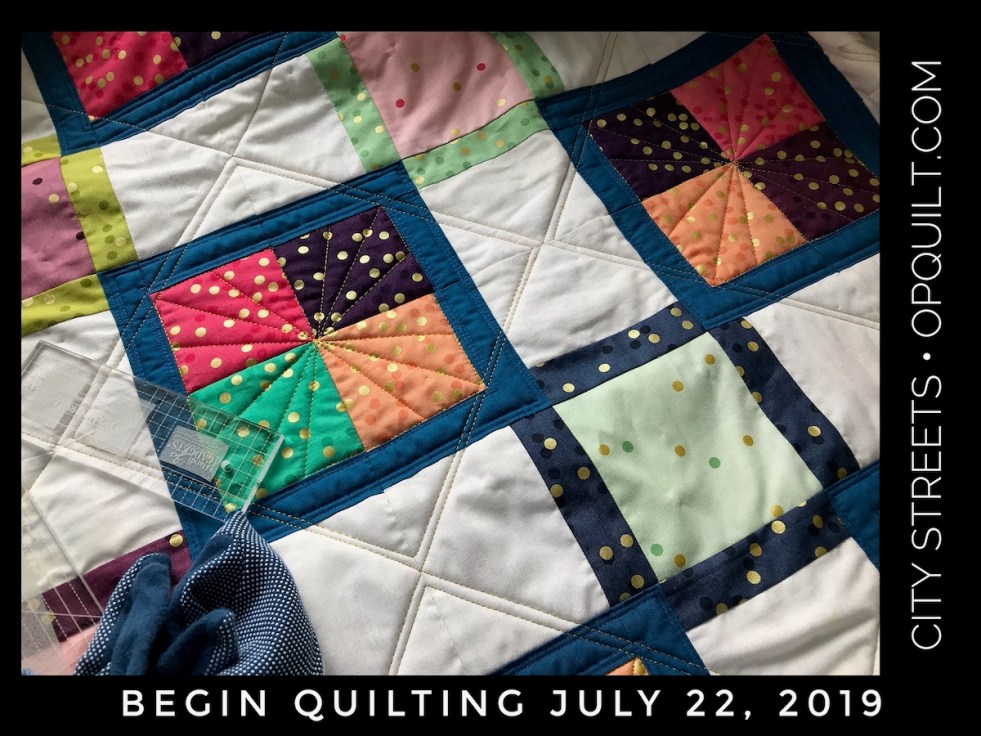
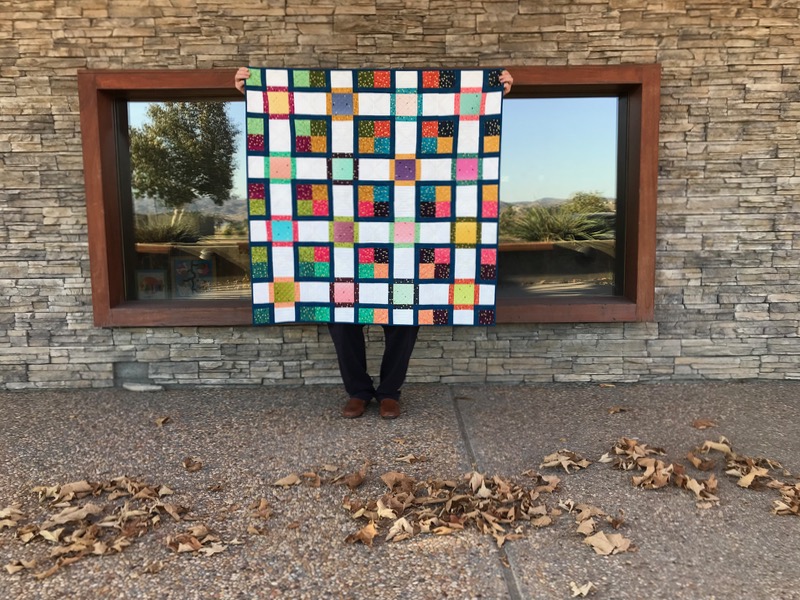
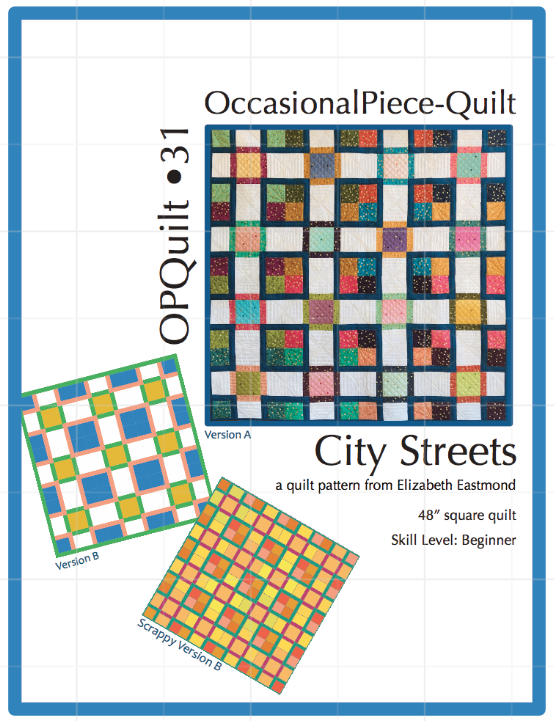
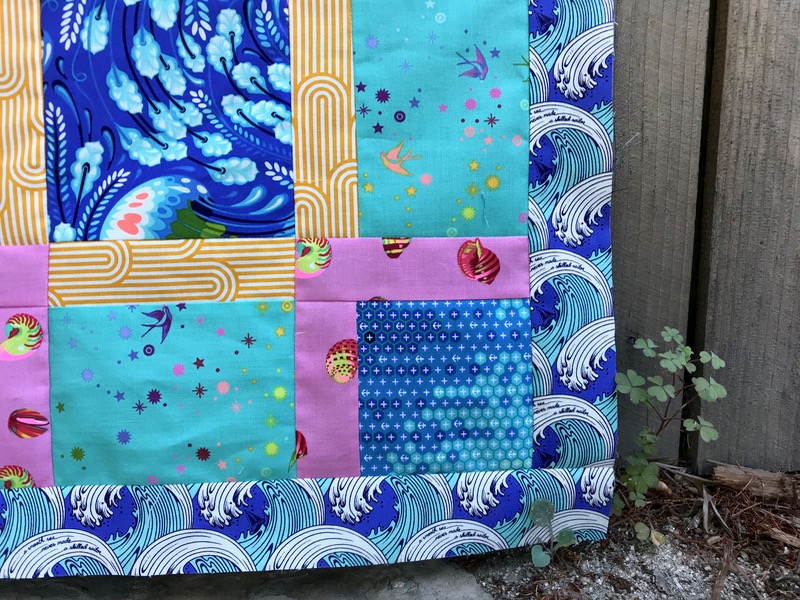
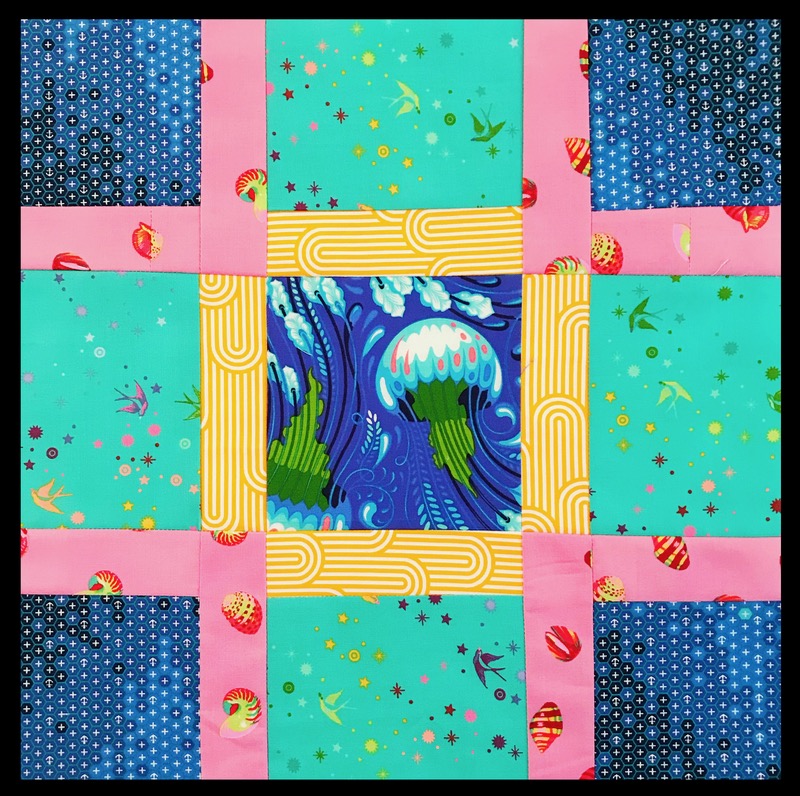
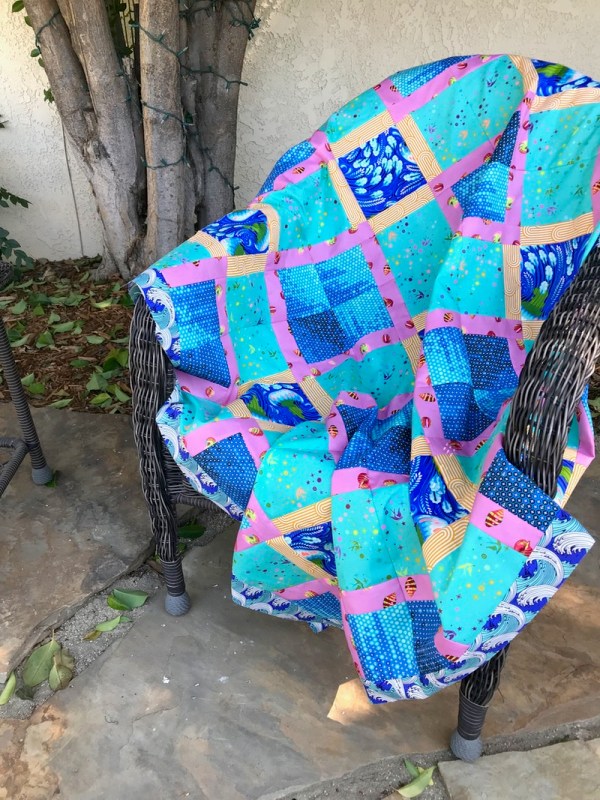
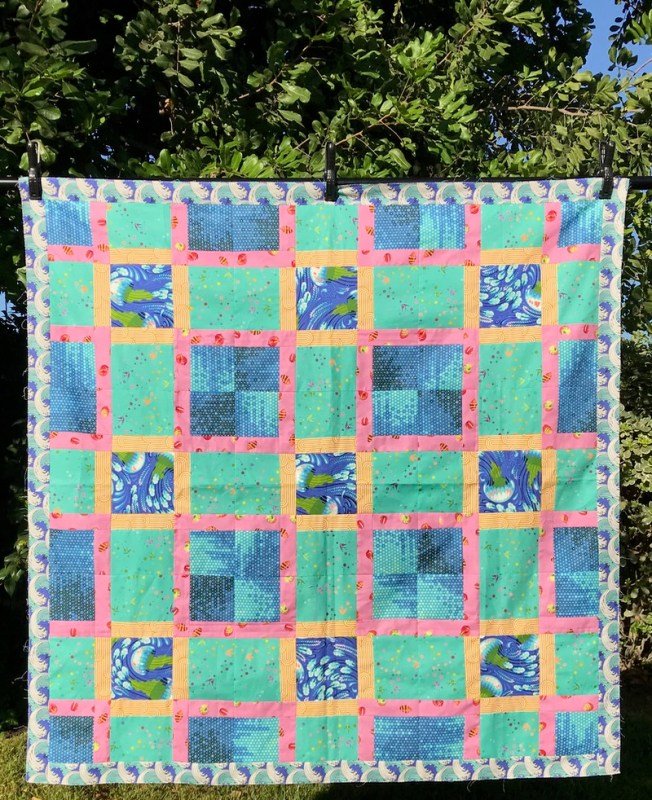
I made it up in a 15″ block pattern, and broke into my meager Tula stash to create a colorful quilt. This pattern is made for beginners, with no triangles anywhere. I envisioned the 15″ block to sew up quickly for baby quilts and other times when you need a quilt. Fast.
I cut and sewed this all in a long morning, which leaked a bit into the afternoon. It’s a pretty quick sew if you are experienced, but a bit longer if you are a newbie.
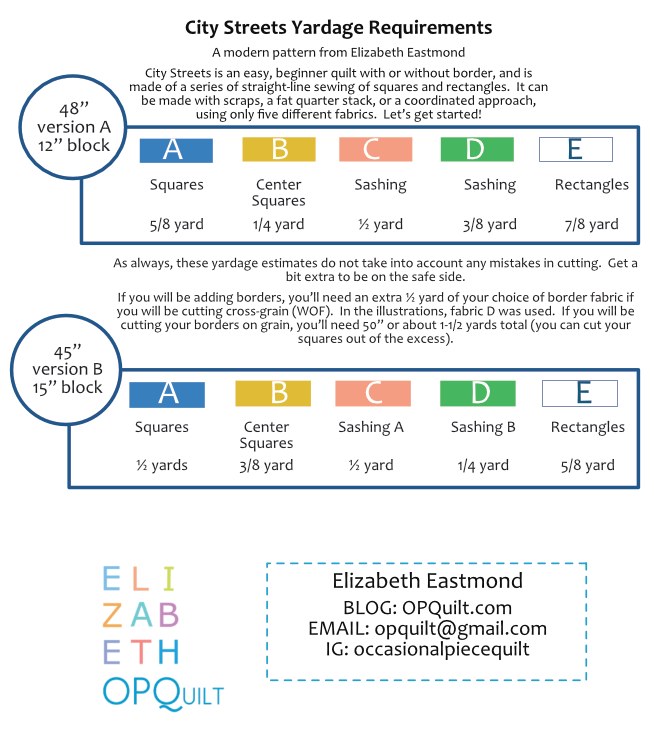
I also learned a few new things in my Affinity Publisher Software, making the pattern more colorful and easy-to-read. Above is the yardage chart for both versions.
Here’s a coupon code for you in case you want to pick it up. Head over to PayHip and use CITYSTREETS20 — it will get you 20% off the price for a little more than a week (it expires on September 17th).
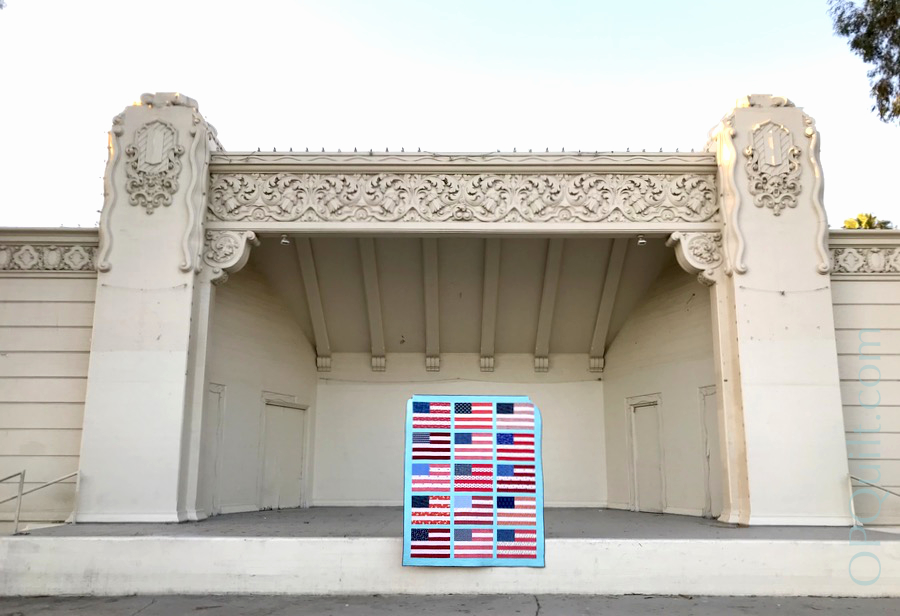
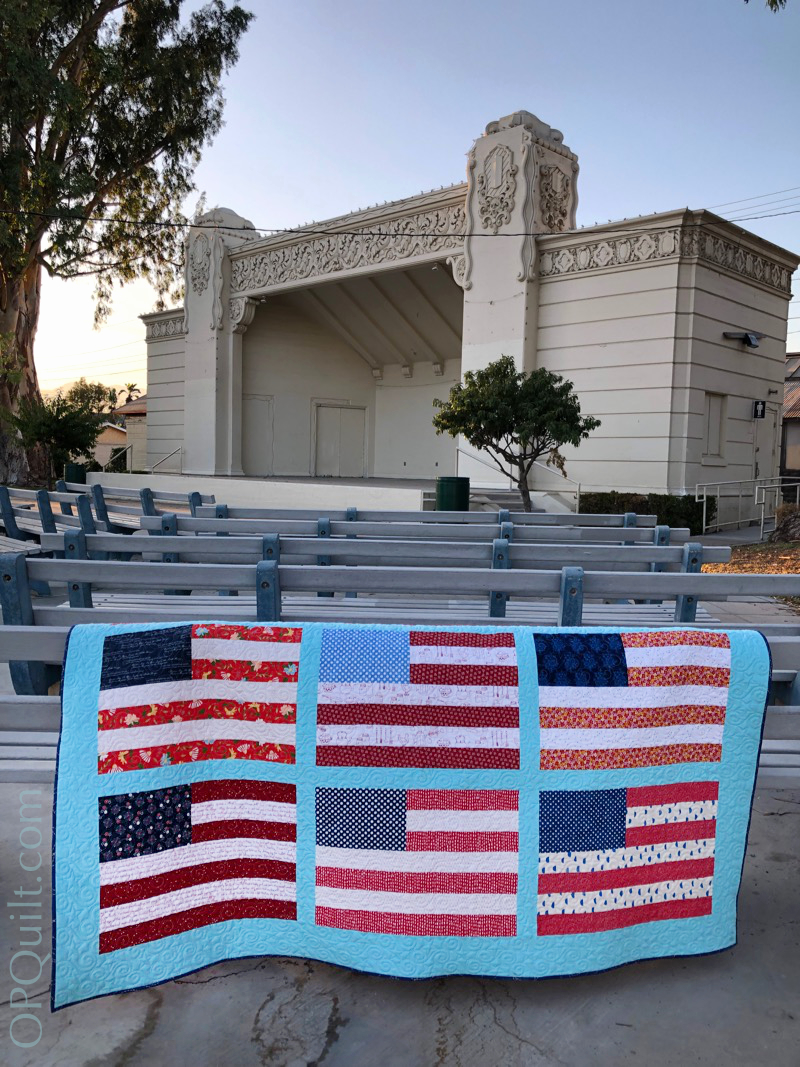
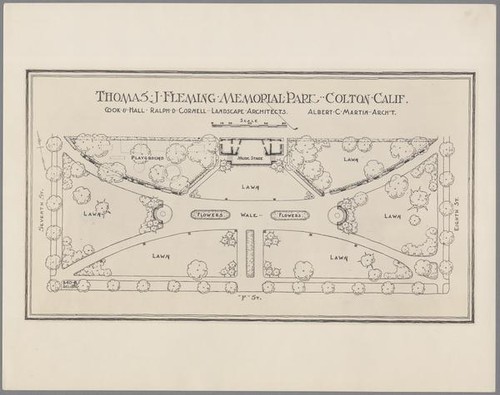
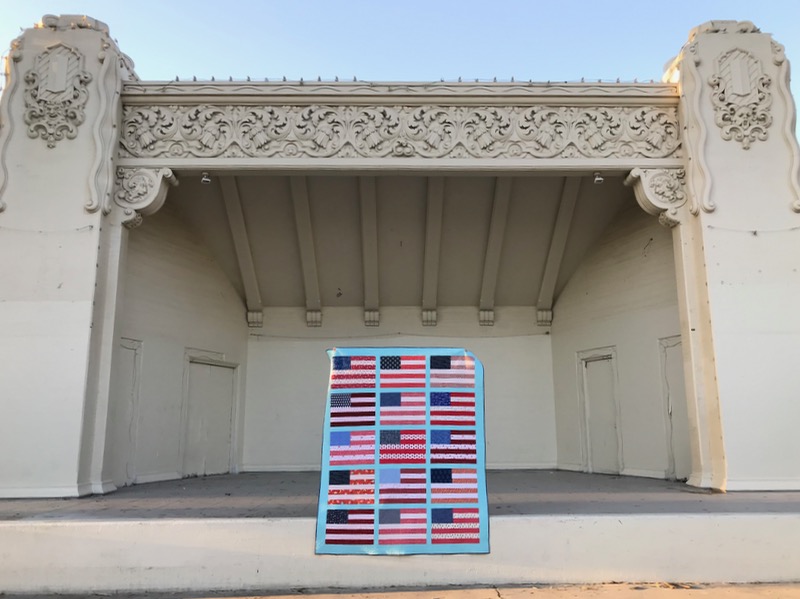
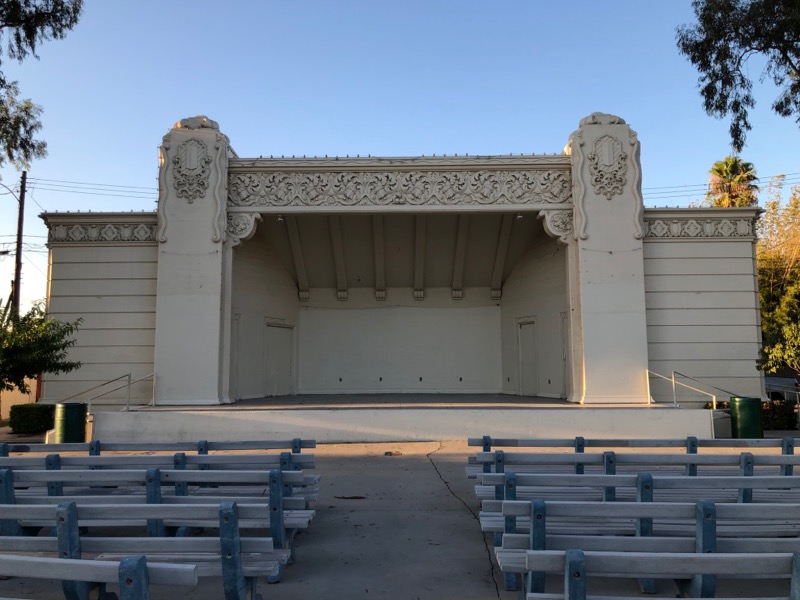
I found this 1920s vintage park with a grandstand in a small town just to the north of me and took my husband and my most recent finished quilt there, so we could do some photographing. And some reminiscing.
It’s a sweet little small-town-built-long-ago park that for some miracle has remained. Named for an officer of the local cement company at the time, it’s known as the Thomas J. Fleming Memorial Park, built circa 1922-1925. Why is this important?
I grew up in a small little town (not so little anymore), but it had that feeling of walking downtown on a hot summer’s evening, catching the fireworks on the 4th of July after seeing the parade that morning. It had the feeling of being able to drop your school bag at the door, change in to your “play clothes,” and head over past the Muehlstein’s home to send this and that sailing down their irrigation canal until you knew it was time to go home for dinner. (And did I mention that my childhood nickname was Betsy?)
We’d walk up to Heber’s house and offer to find the eggs in his chicken coop for him. He’d let us. We would wind crepe paper in our bicycle spokes and all show up for a local parade. This was also a place where I was smallminded at times, like when I teased Marlene in fourth grade over something dumb, and then used up all her Scotch tape. It’s a place where others can also be mean, like when I got beat up by the Mitchell boy, and cried all the way home. (Later my mother saw him on the road, rolled down her car window and gave him a talking-to like I’d never heard.)
This small town in America was my place, where I learned to behave myself so no neighborhood mother would ever have to lean out her car window and give me a scolding. And how I wish I could go back in time and find Marlene and tell her how sorry I am. It was a place to be small, to grow up, and to leave behind.
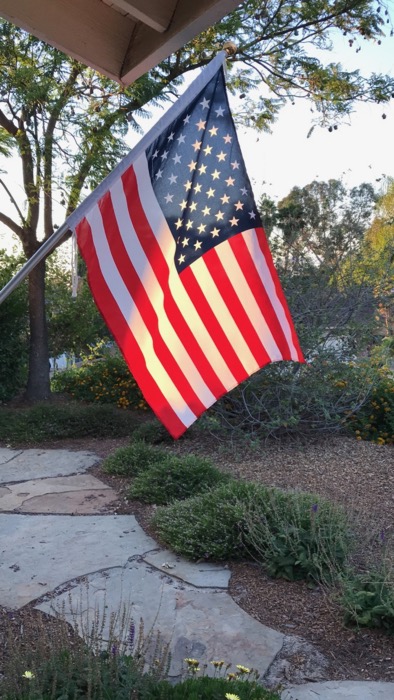
But I catch glimpses of it when I think of it as a land of red, white and blue, where we love flags and fireworks and the Fourth of July. It’s a land of learning to get along with your neighbor because you never know when that person with the different name would give you a lifetime memory. Like when I needed to learn to ride a bike and Joan Muehlstein gripped the back of the seat, ran alongside me, and hollered, “Turn towards the wobble!”
It’s mountains and vast plains, it’s small towns and big cities. And America is where I like to be the most, even though now I’ve traveled and love Berlin and Bologna and other different places with wonderful people who’ve gone themselves through nice and mean, dark and light, thick and thin. It’s when I return from far away and see that flag on the wall at the airport with a sign that says “Welcome to the United States,” well, I get a misty-eyed, just like in those movies from the 1940s.
It’s my home, this America. And to me, it’s a pretty great place.
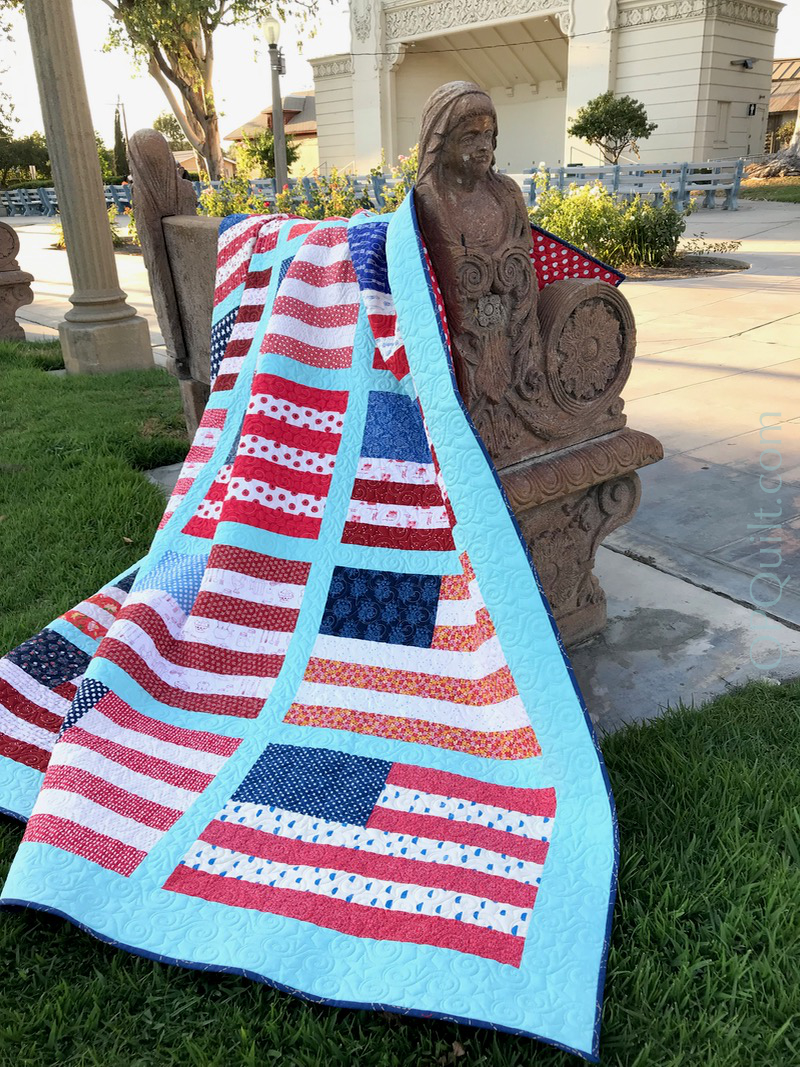
Betsy’s Creation • Quilt #225 Pieced by Elizabeth Eastmond • Quilted by Cathy Kreter 72″ wide x 86″ tall
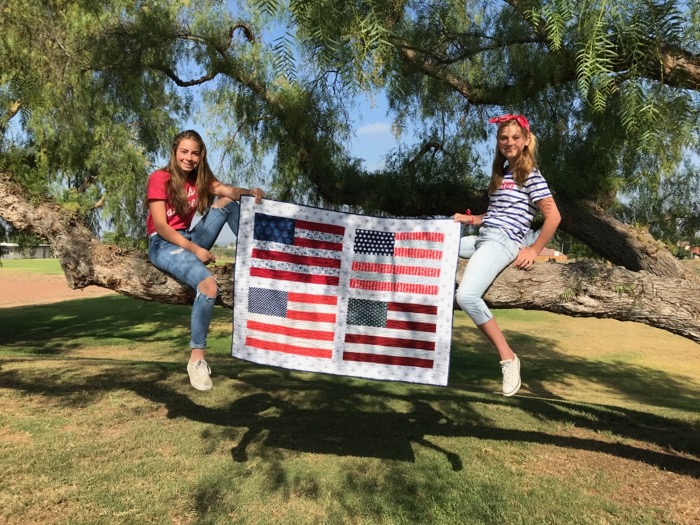
Quilt began on Flag Day: June 14, 2019 Finished August 20, 2019 More info and a free worksheet for making this quilt can be found here. I also made a companion smaller flag:
The classroom behind me was abuzz as I set up my Shine quilt on its frame. I turned around to see that the room had filled up with women from the Inland Empire Quilters Guild, who had come to take my class on English Paper-Piecing (EPP). I have many Guild visits coming in the next year, but only one group has chosen EPP. So I challenged myself to come up with something unusual and interesting that would provide a chance for them to learn a variety of skills.
IQSC Collection: Clyde E. and Joan B. Shorey Collection IQSC Object Number: 2006.056.0012
First I gave them a brief history of EPP, showing them quilt pictures from the International Quilt Museum in Lincoln, NE.
International Quilt Study Center, 2006.043.0143, Ardis and Robert James Collection
The International Quilt Museum calls these types of quilts “mosaic” patchwork quilts, and they write: “The earliest examples of mosaic patchwork, from 1700s England, were typically made from lighter-colored silks. Later, during the third quarter of the 1800s, dark-colored silks predominated. Their availability, and the paper-piecing technique, spread widely throughout the United States.”
The three tasks I designed for the Inland Empire Quilters were:
baste fabric to hexies and then sew them together
learn how to work with paper EPP patterns (batch-cutting, glueing and sewing)
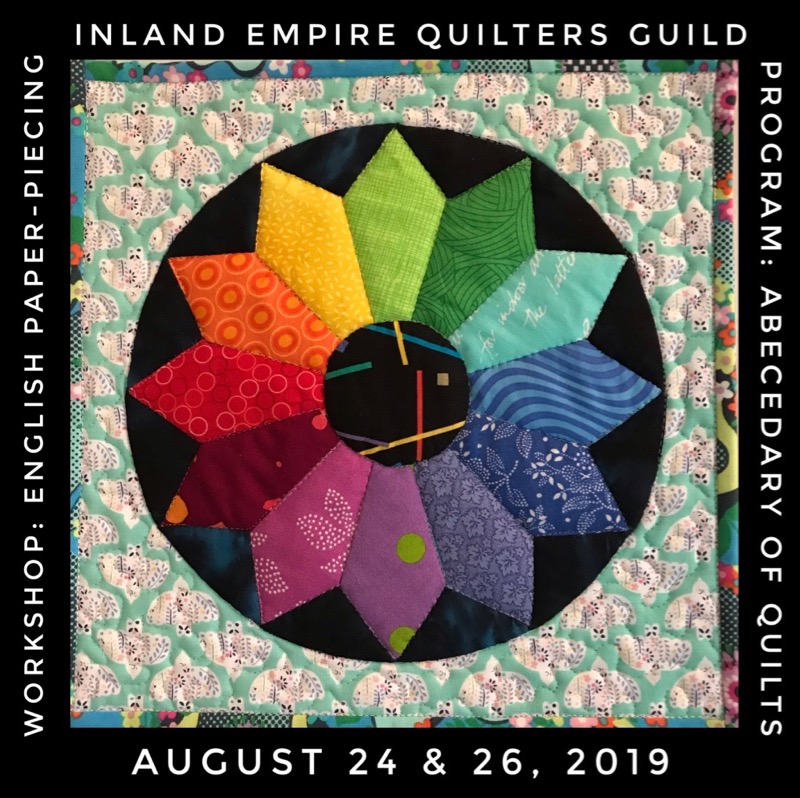
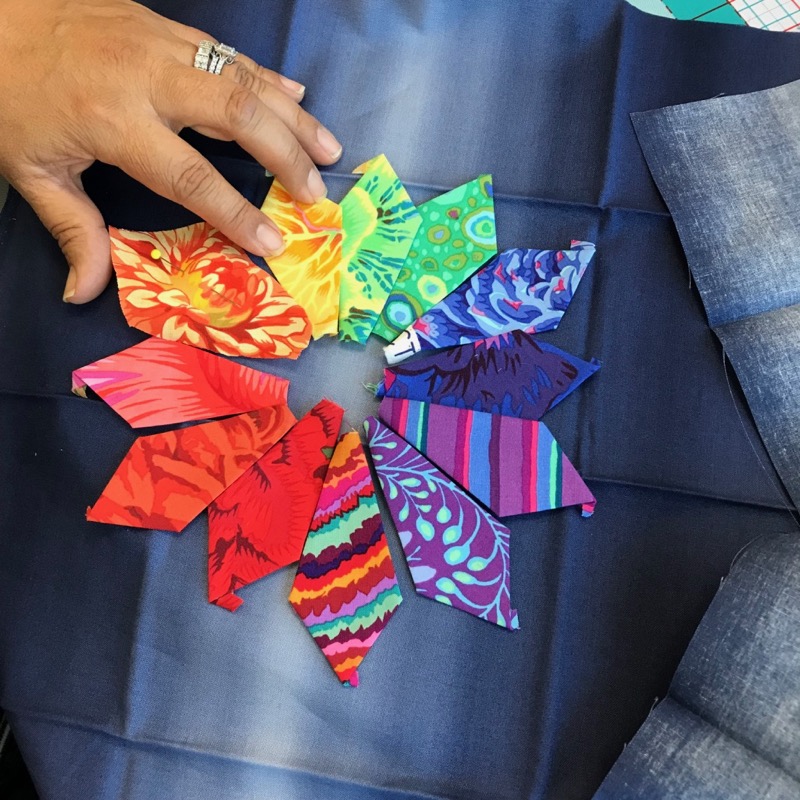
work with color and value in creating Spectrum, a circular mini quilt
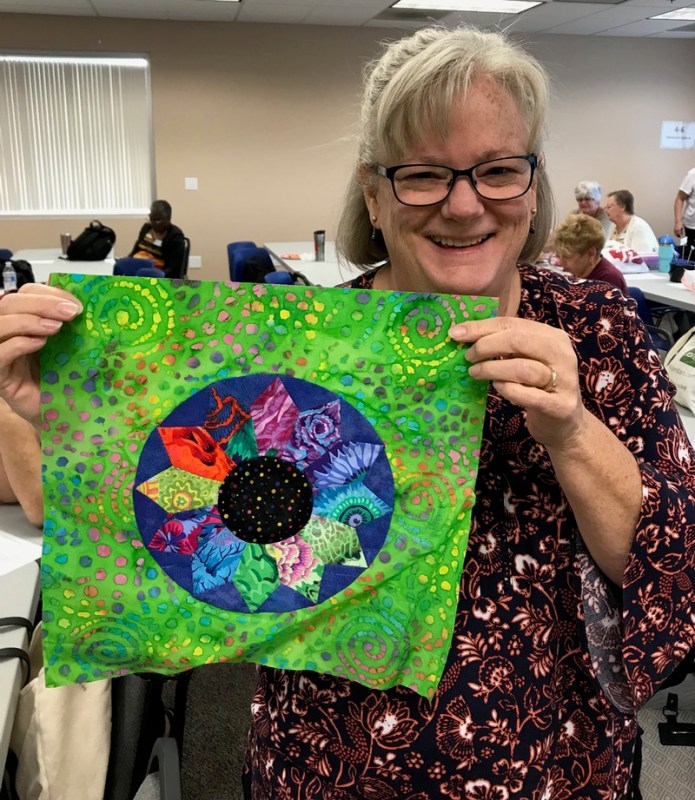
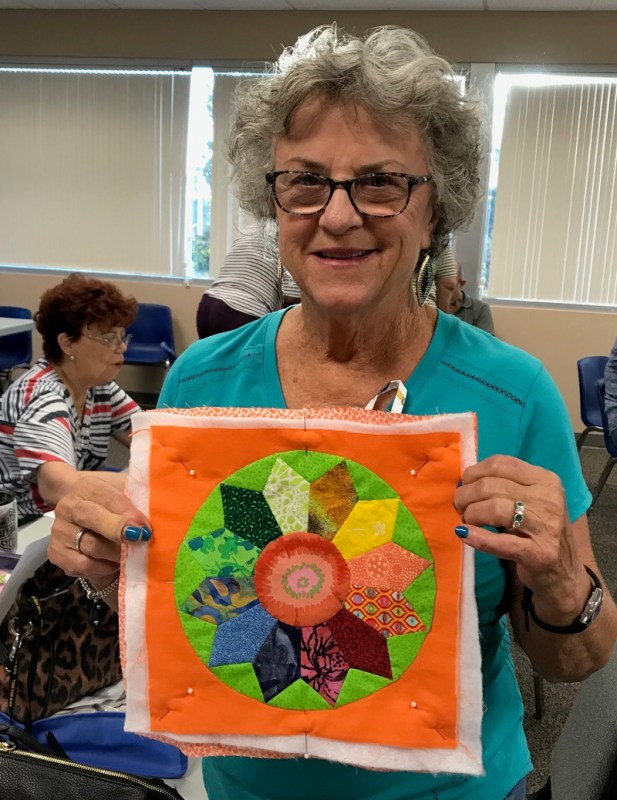
Sue worked diligently on her hexie flower, finishing it up. Most others shifted off to the mini-mini quilt: a Kansas Sunflower variation, shown at the top of this post.
I was impressed with their designs and the variety of colors they used.
After lunch, we shifted full gear into working on Spectrum, with collections of Kaffe Fasset fabrics being displayed on tables everywhere. I was most impressed with the generosity of these women, who shared different colors with each other, helping their fellow quilters get all the hues they needed.
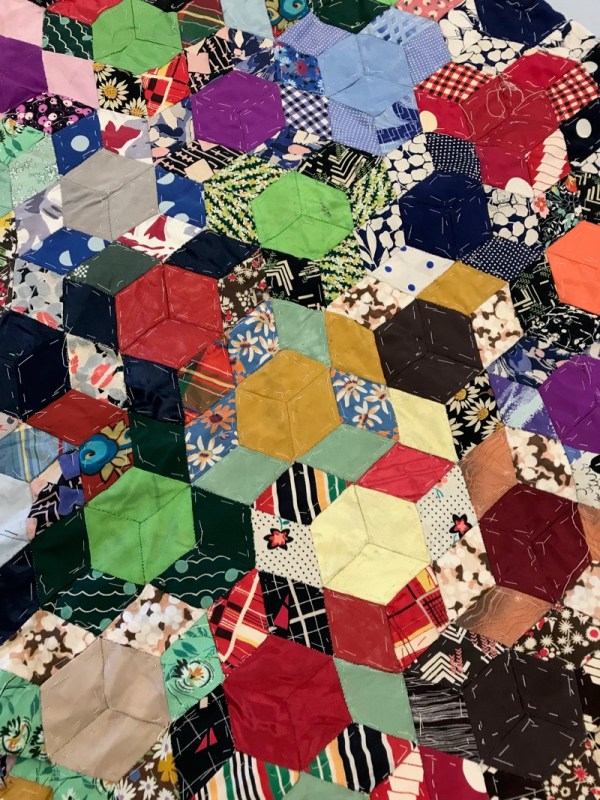
At the end of class, Carol went down to the car and brought up this old EPP quilt, with the papers still in it. We pulled out a few stitches, removed a few papers and decided it was from the 1930s as the papers were really postcards from a Chicago hotel. What tales this quilt could tell!
Monday night, I returned to present a program for them, and at the beginning, those who had made progress on their projects held them up for everyone to see.
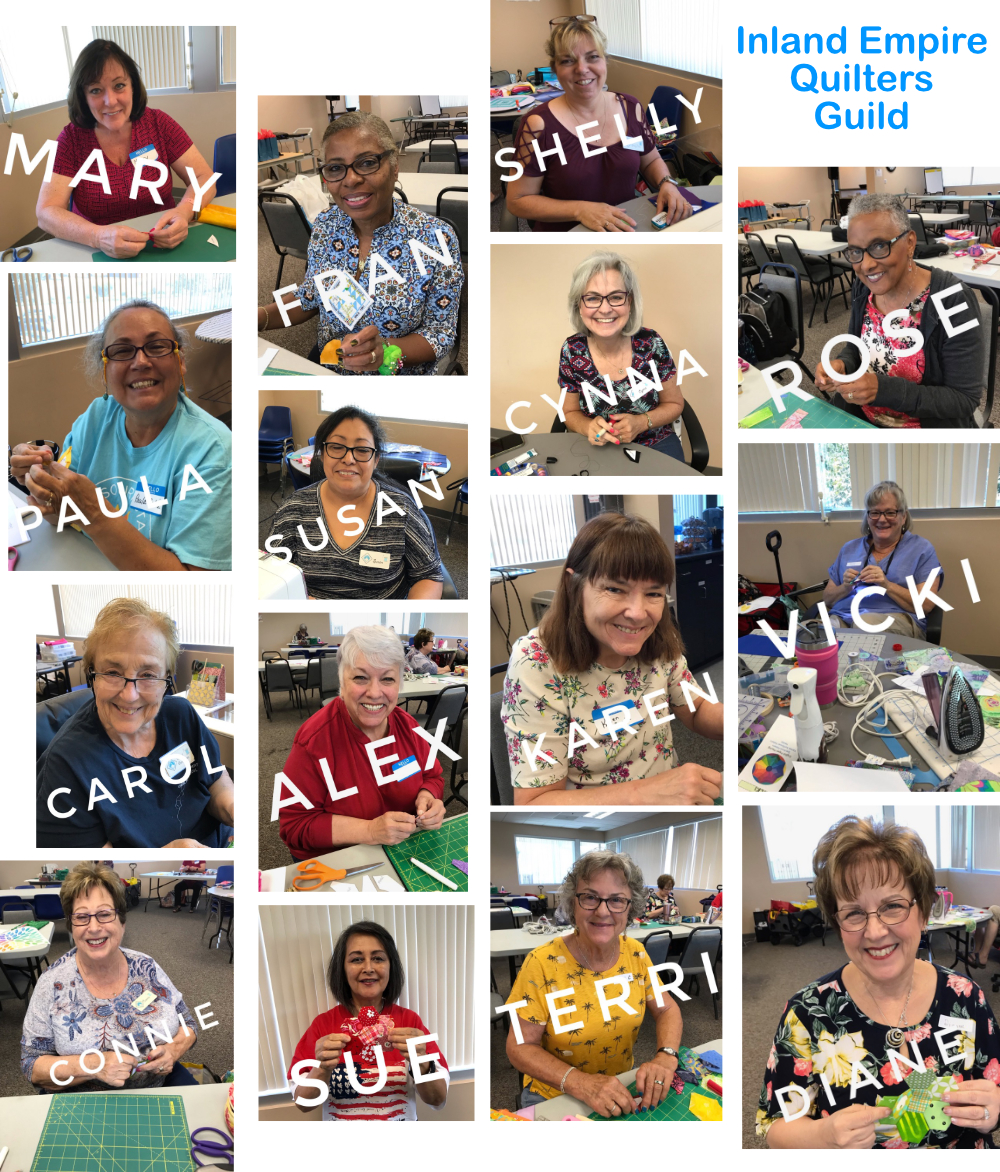
I snapped photos of some who came up to show me (including Vicki and Terri). That’s Cynna’s Spectrum color wheel taking shape, above left, and Paula’s Kansas Sunflower (variation) and small hexie quilt below left. I was very impressed with everyone’s work.
Susan, the Program Chair, was busy at her table, but she and others had worked hard to show their projects for the meeting. She has arranged a visit by a noted designer next year and was busy taking sign-ups for that workshop to be held in March. Program Chairs are critical to a Guild’s success, and this Guild has a wide array of interesting presentations for their members. They also have engaged chairs for Charity, Outreach, and other, but most of those are discussed at their other meeting (they have two per month). This month was also the kick-off for their Block of the Month, which looks really fun.
One of the best sounds ever is the cheery voice of quilters greeting each other, which you can hear in this video. I had a wonderful time visiting the Inland Empire Quilters Guild. Thank you for inviting me!
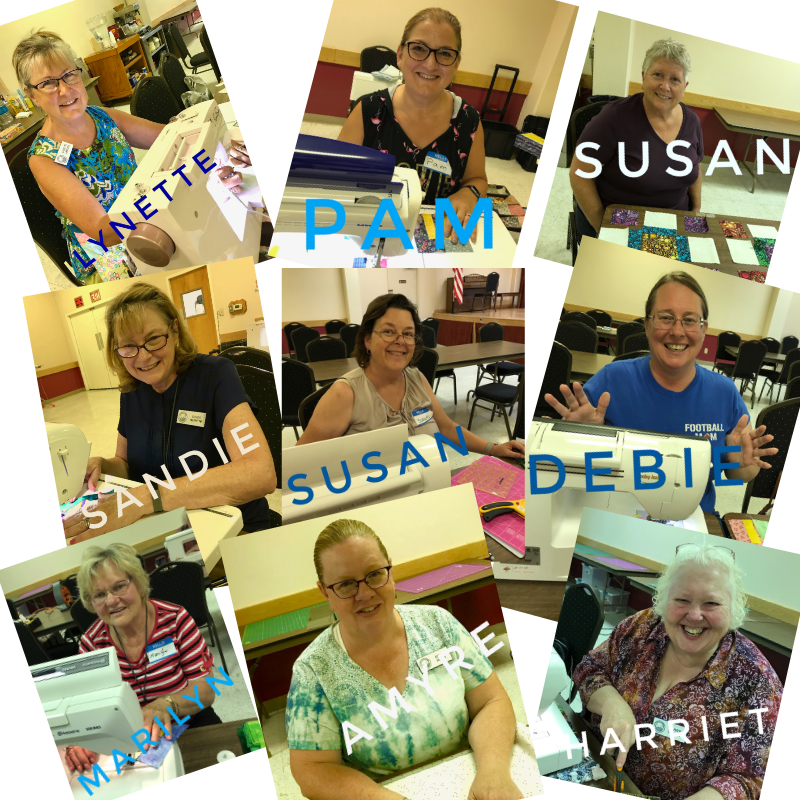
I’m leading off this post about my visit to the Pass Patchers Quilt Guild, with a look at the friendly faces and bright smiles of the talented quilters who were at the workshop today. I arrived early, but Pam, the Workshop coordinator had beat me there, bringing in irons, cords, lunch, treats, fruit trays, vegetable trays and drinks to keep us supplied while we worked. But first, let me back up to yesterday morning:
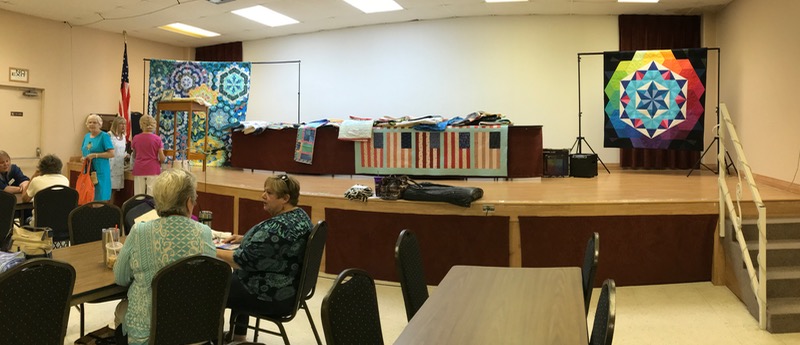
Because their regular place in Beaumont was under some renovation, we met in the neighboring town of Yucaipa, but really it was almost to Calimesa, out in the foothills. After setting up, the stage looked like the photo above.
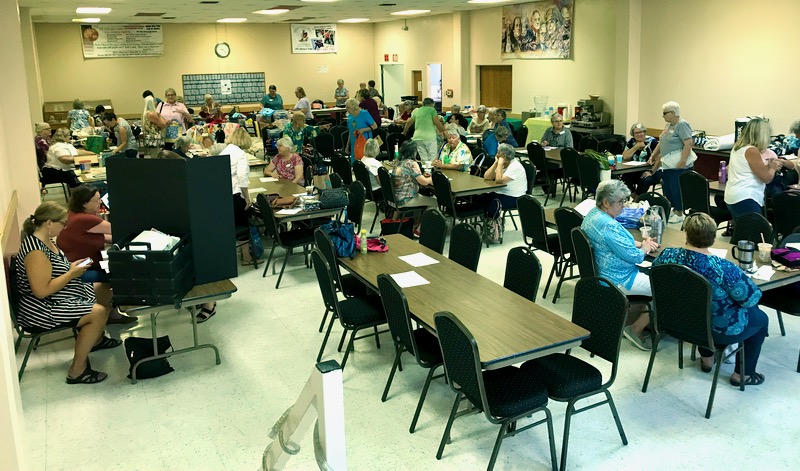
I turned the camera outward to show the room where all the Guild Chairmen had set up tables for Workshops, Grab-n-Go, Charity, Membership, among other things. This is a busy guild, drawing members from the San Gorgonio Pass area, about ninety miles east of Los Angeles. I was honored to come and speak with them on Wednesday morning.
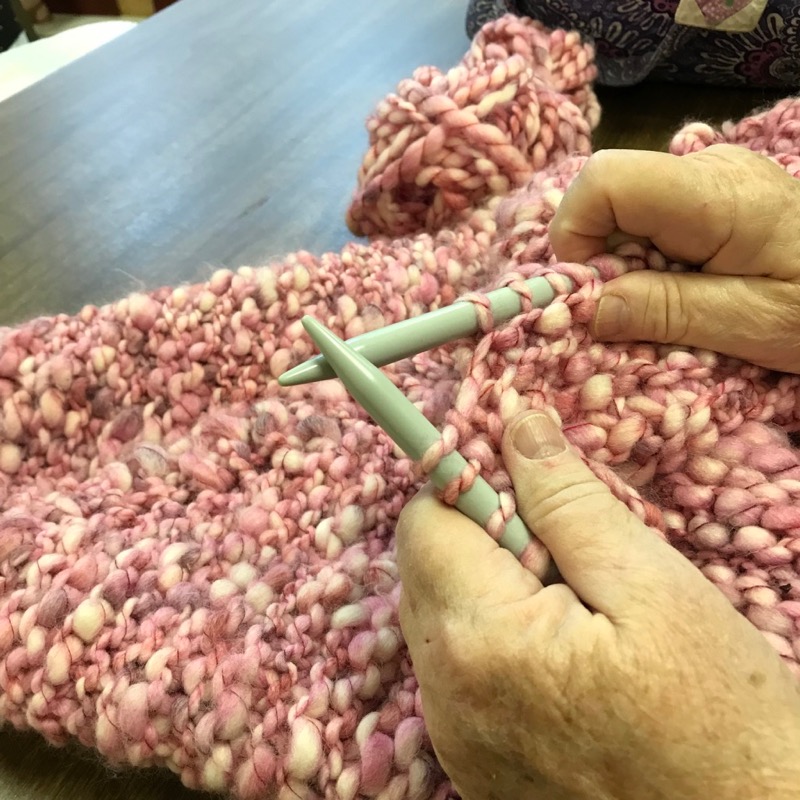
I usually bring some stitching when I go to my own Guild meetings, so I was happy to see that Harriet brought her knitting–a woman after my own heart.
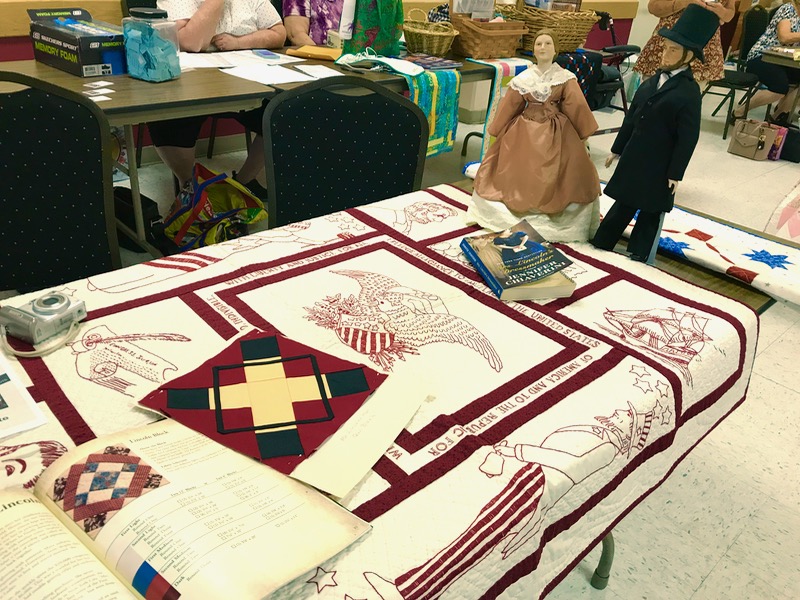
One interesting feature of the meetings is the Historian, who looks up details from history. This month was Mr. Lincoln and his wife, and the quilts and blocks inspired by this couple. The Historian, Vivian, even made up a block called Lincoln’s Hat, shown here in red, cream and navy on top of the quilt.
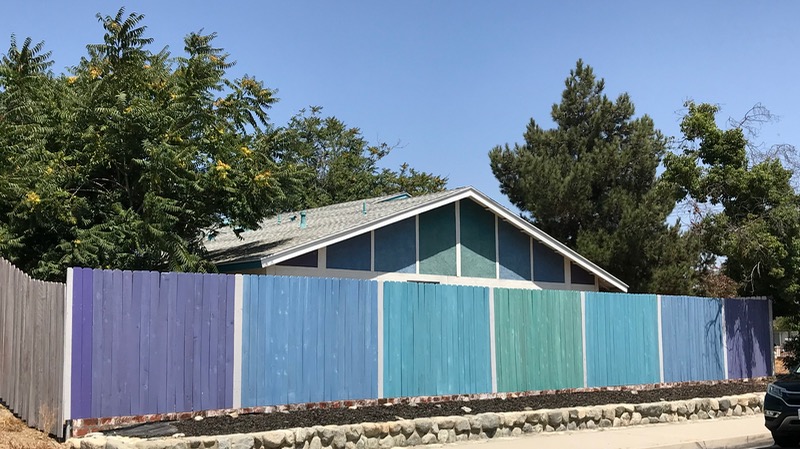
I took one of the Guild members home after the meeting, and near her house was this colorful fence. I don’t know how she felt about it, but it was fun seeing these cool colors — a reminder to look for quilt inspiration wherever you are.
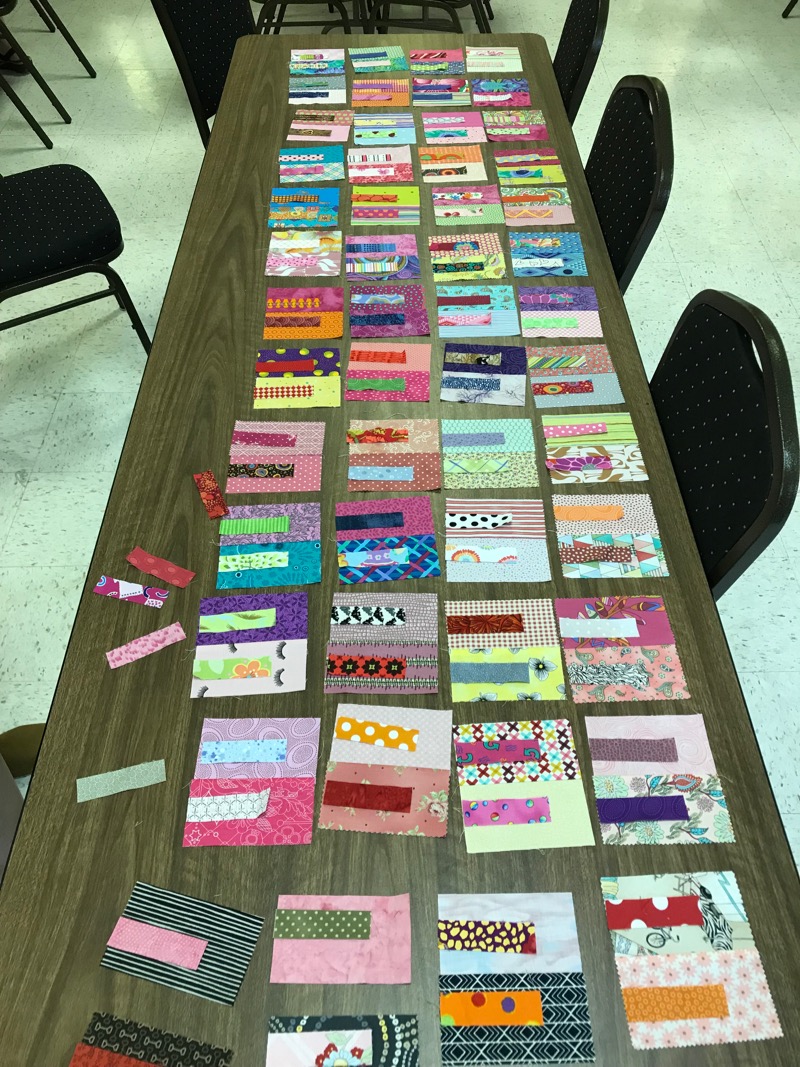
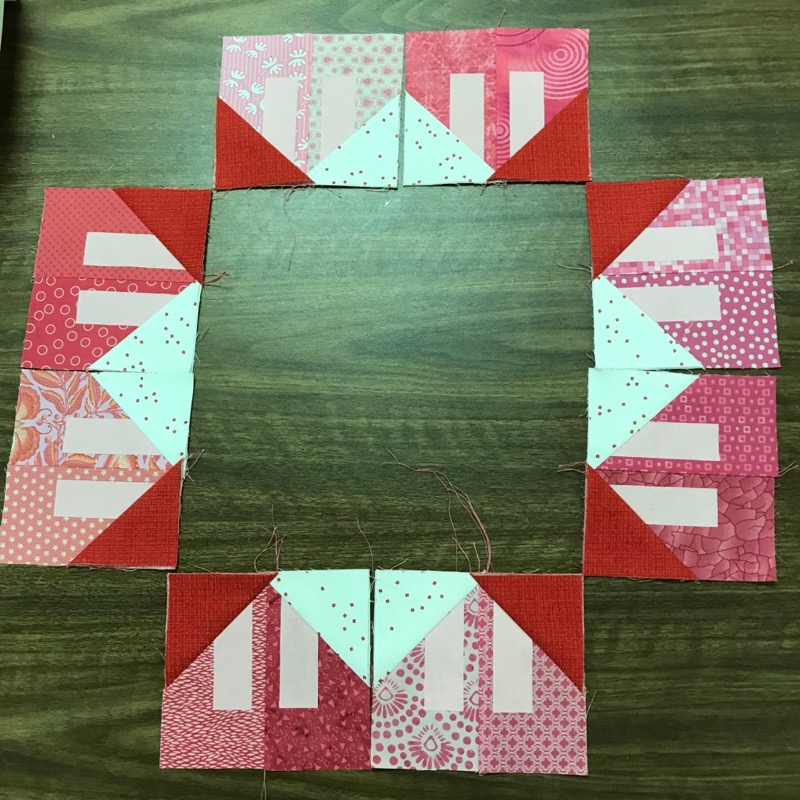
The next morning (Thursday) was the Merrion Square Workshop. Susan cut out 96 different doors and 96 different houses, and we had a great conversation about recognizing about when fabrics have a conversation with each other, or when it’s time to let them clash a bit, to bring up a strong contrast.
Amyre took the pattern and designed her own version, just begining (above). I’m impressed how she is making the Merrion Square pattern her own.
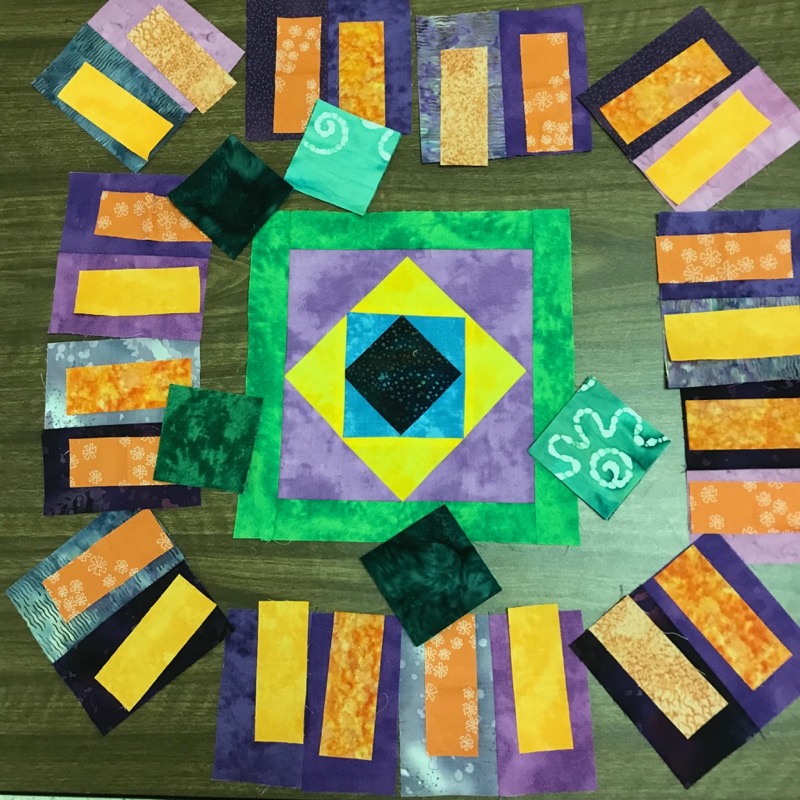
We laid out houses and doors and centers whenever a quilter would get to this stage (this is Sandie’s, but there were others).
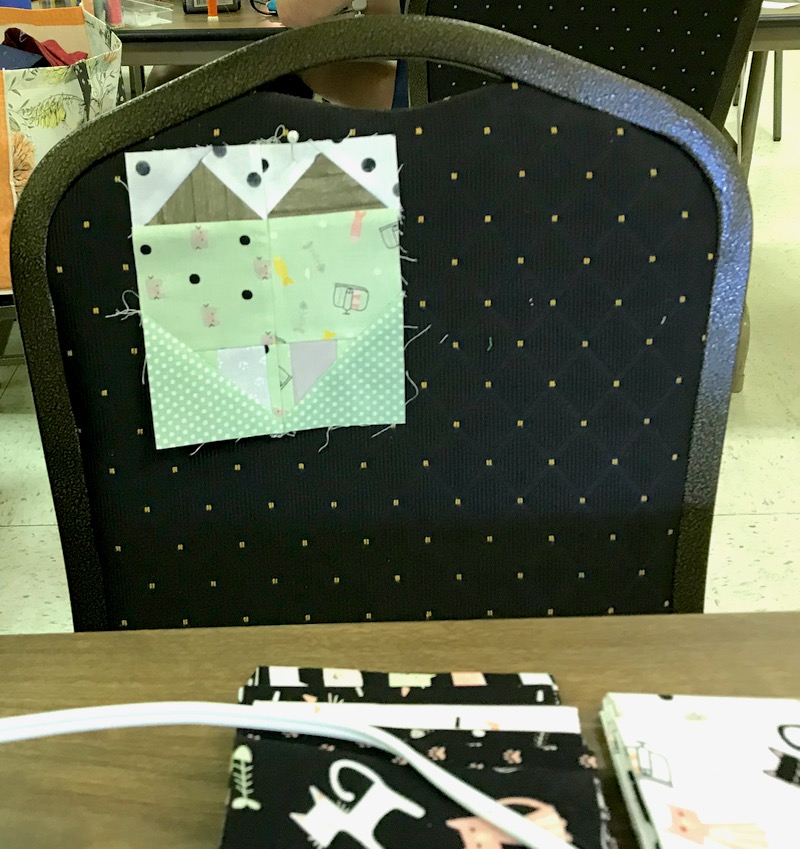
I thought this was clever how Lynette tacked up her first sample on the padded chair across from her, like a mini-design wall. She also took the pattern and made some changes; it’s fun when a design can inspire others to create.
I made the all workshop members promise to send me photos of their finished quilts; I look forward to seeing them come together. It was a great day and great fun to spend time with these women of Pass Patchers Guild. Thank you for inviting me!











 Monday night, I returned to present a program for them, and at the beginning, those who had made progress on their projects held them up for everyone to see.