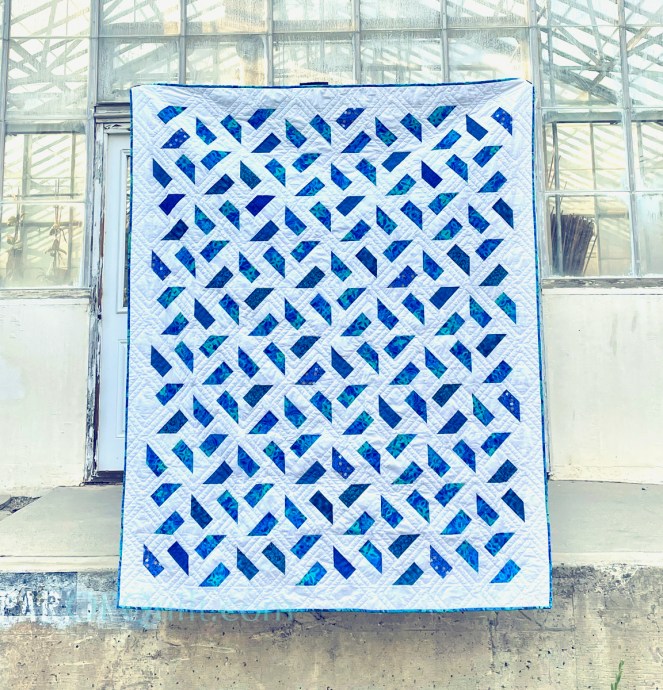
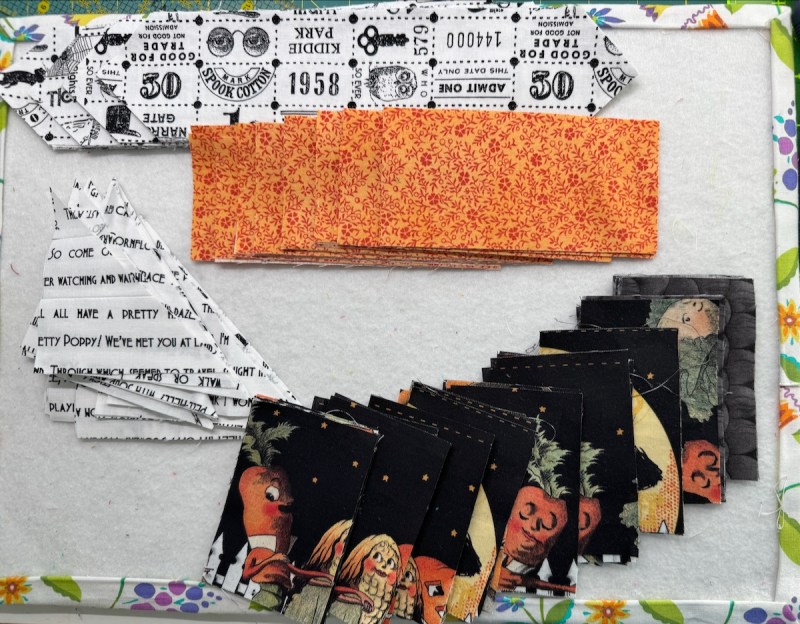
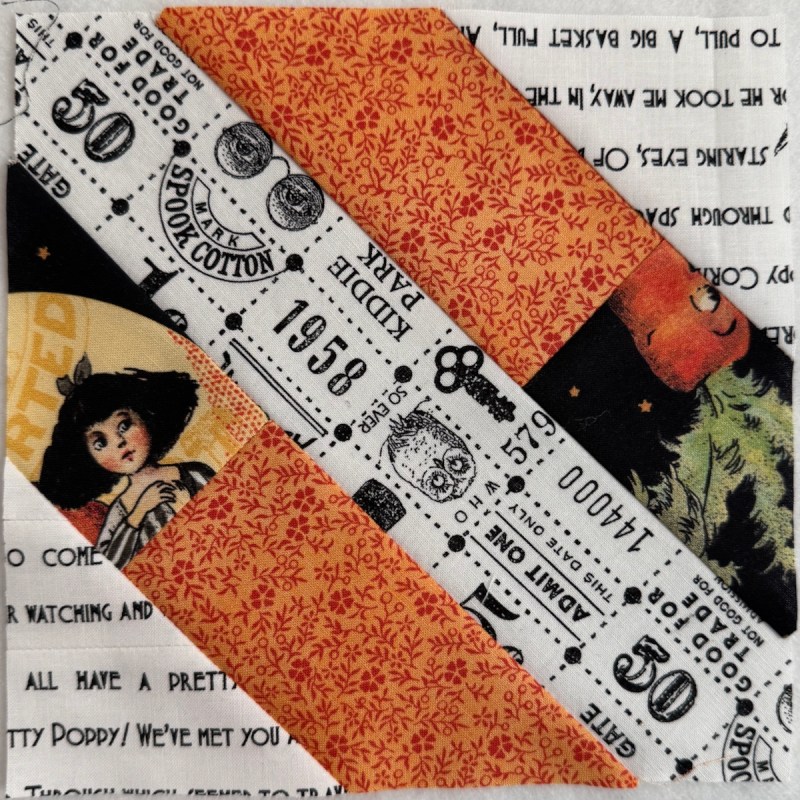
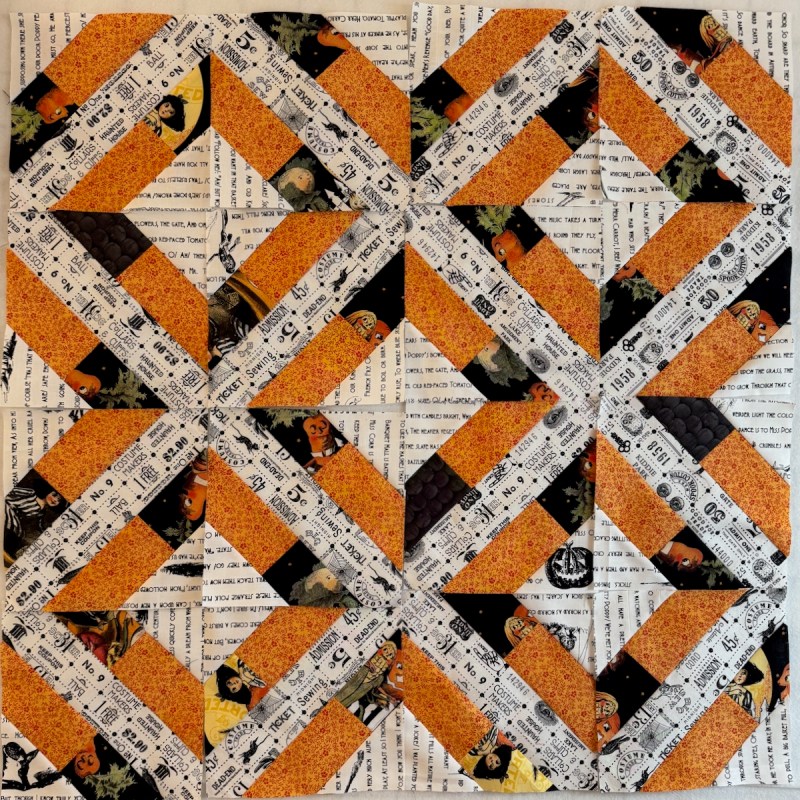
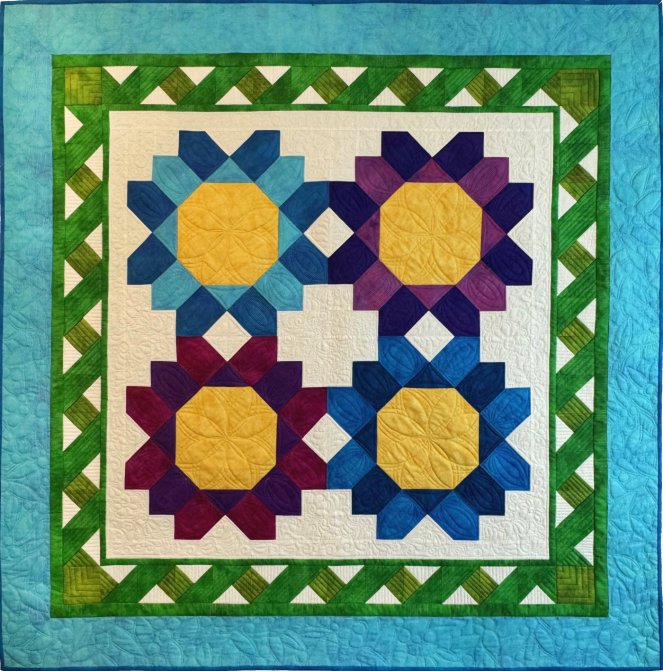
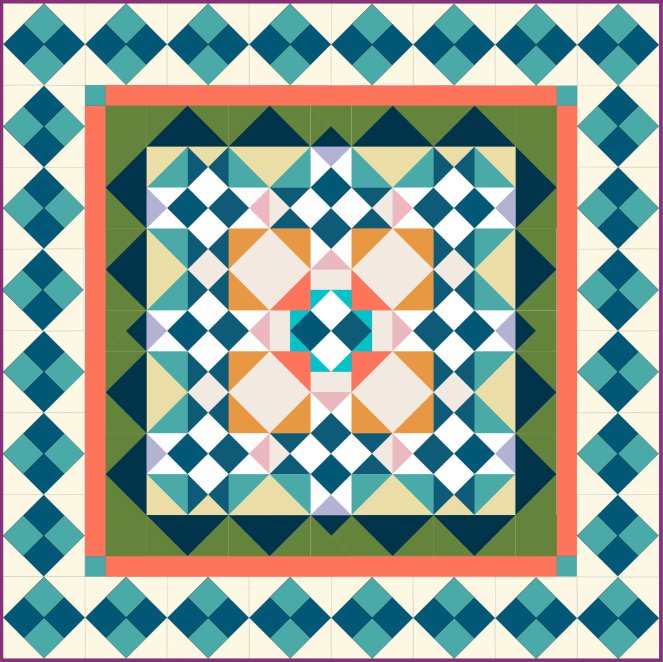
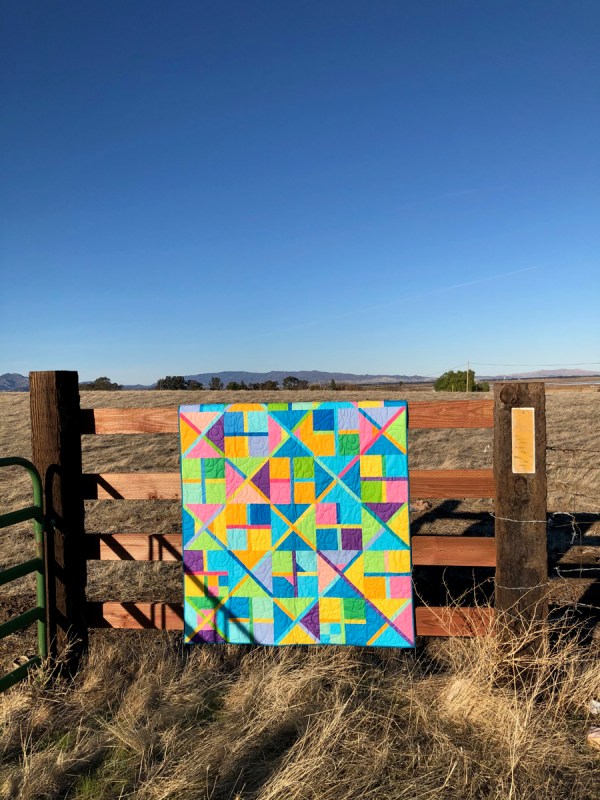
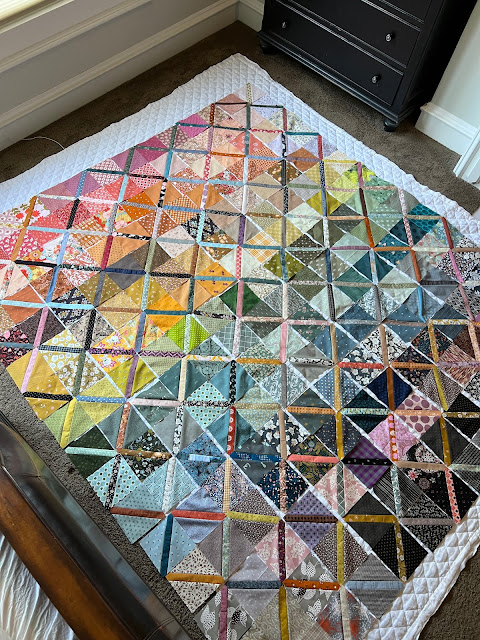
2) a need to make a quick quilt, which Azulejos is, and…
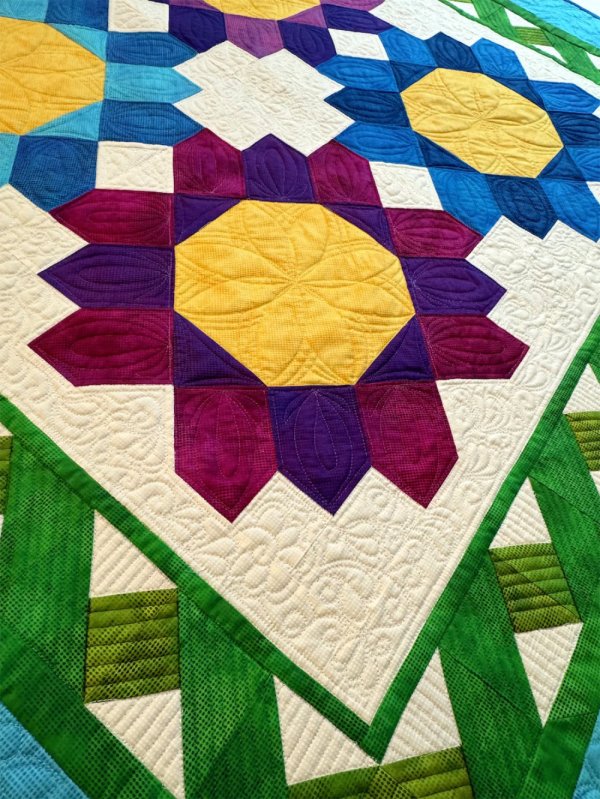
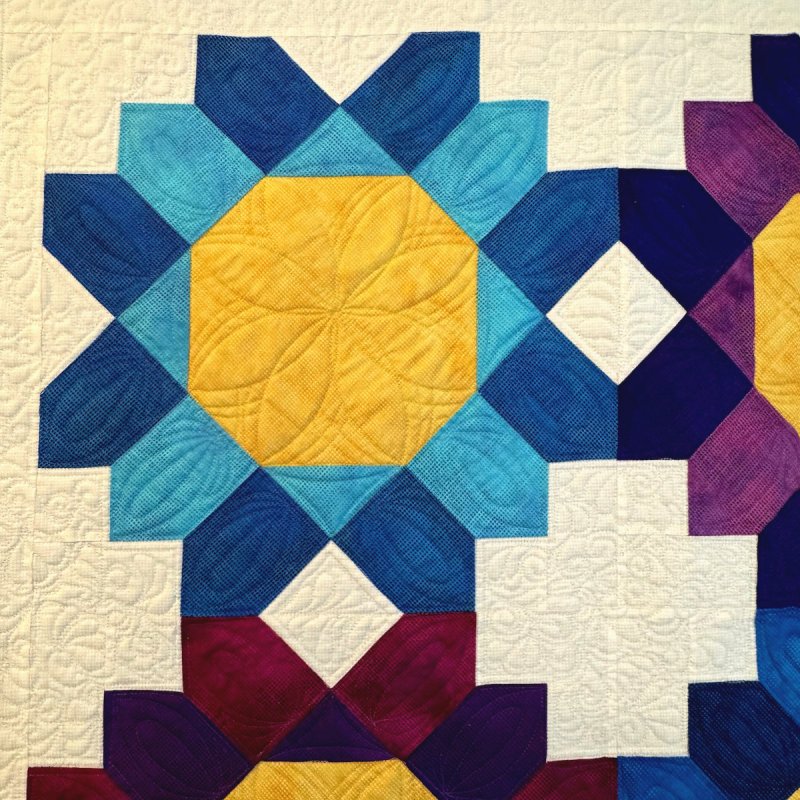
3) After the Great Computer Debacle and File Deletion Tragedy, I’ve been trying to put back together my pattern files, and Azulejos was the first one I finished. So I needed to test it out, and…
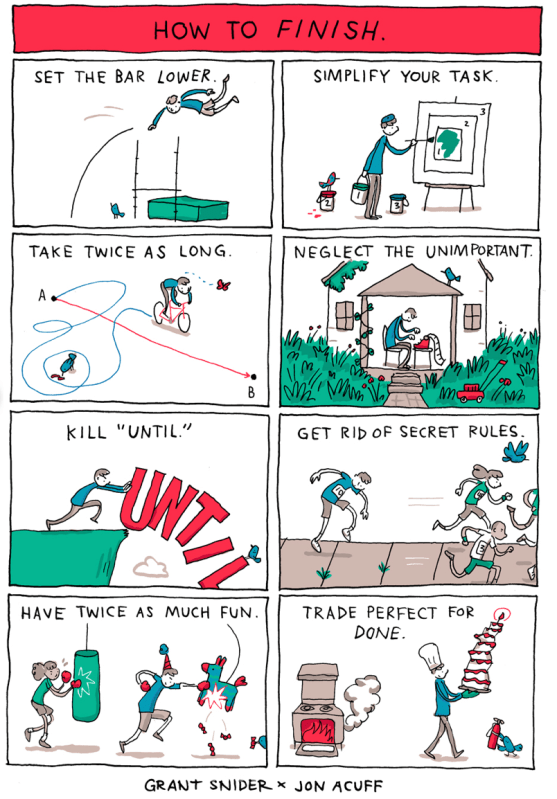
4) This cartoon from one of my favorites (Grant Snider) and a collaborator (Jon Acuff), and…
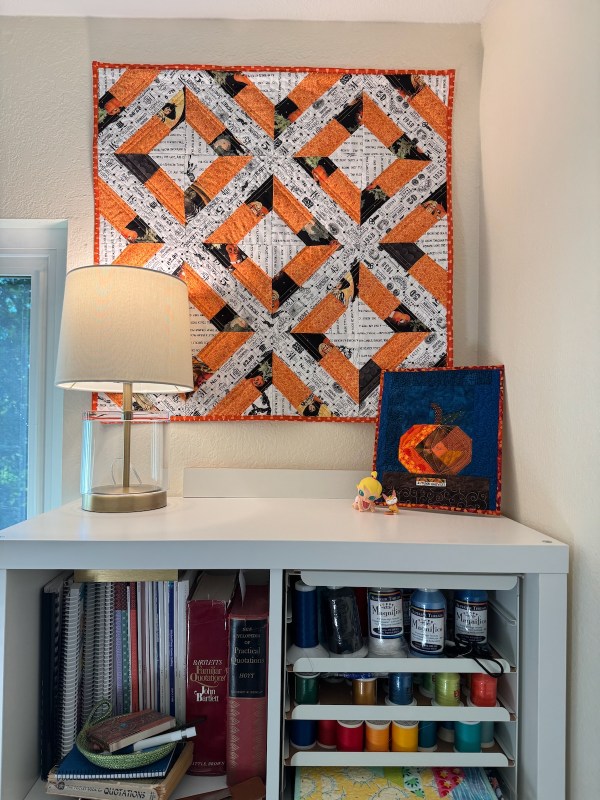
5) Realizing that I still had the 4th of July redwhiteblue quilt above this cupboard and now it was the orangeblackwhite season.
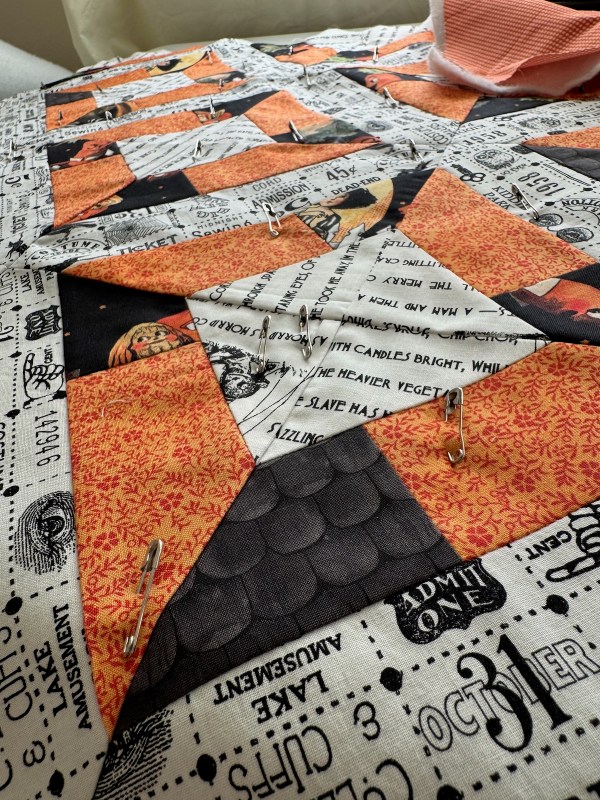
This is how it came together in two days (click to enlarge any photo below):
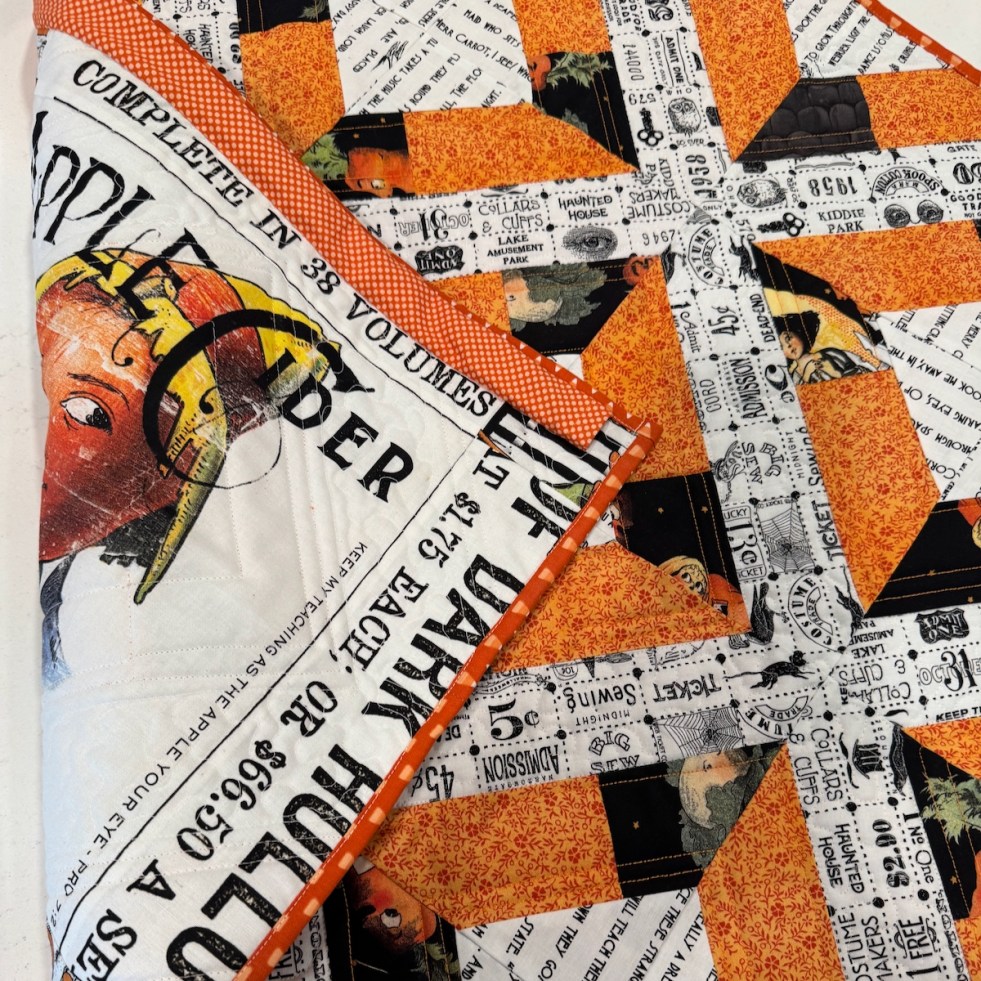
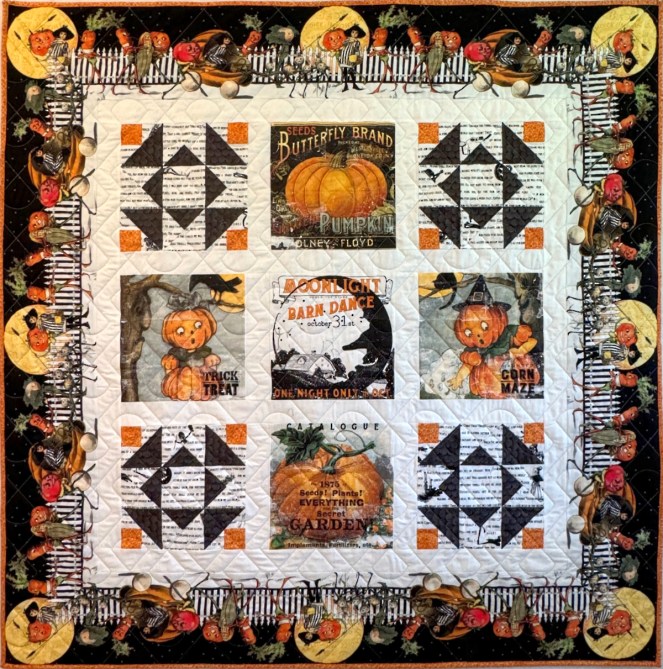
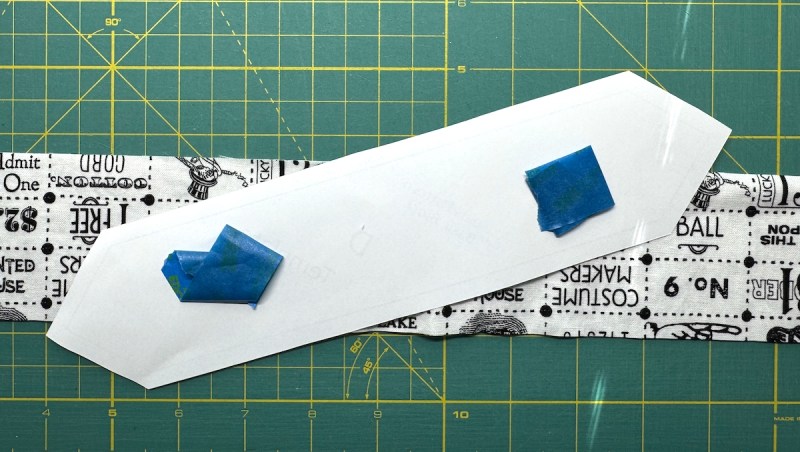
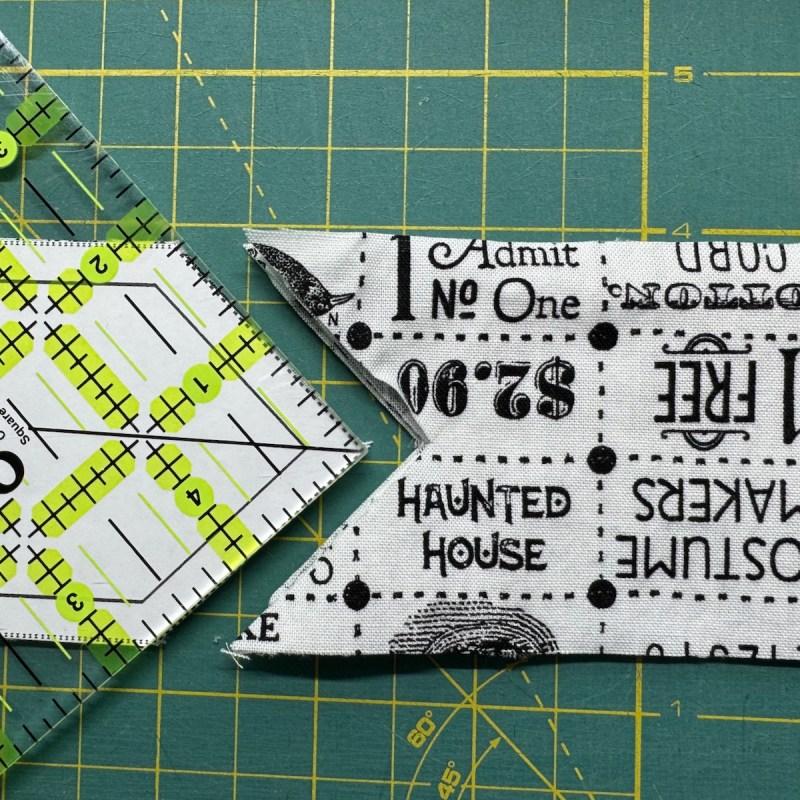
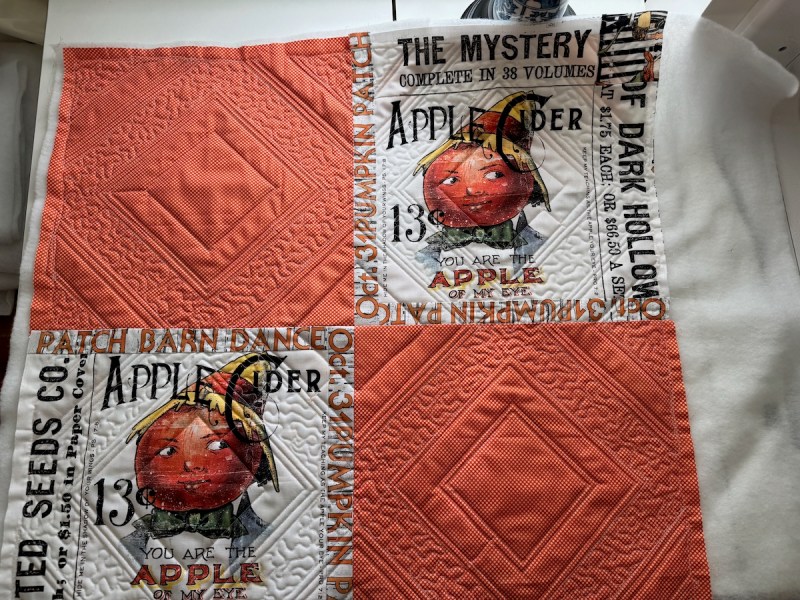
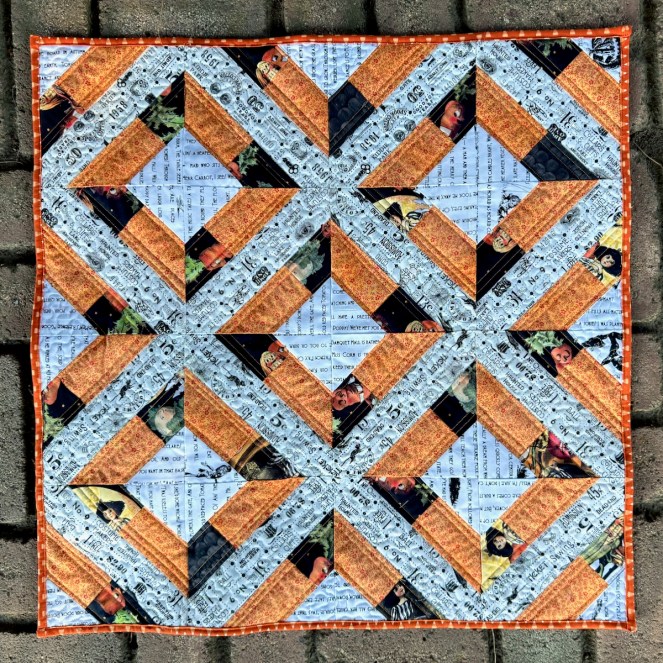
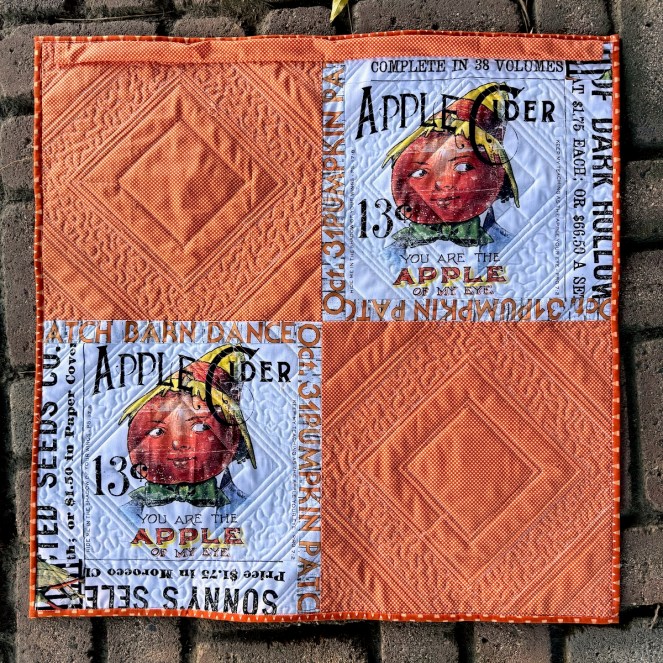
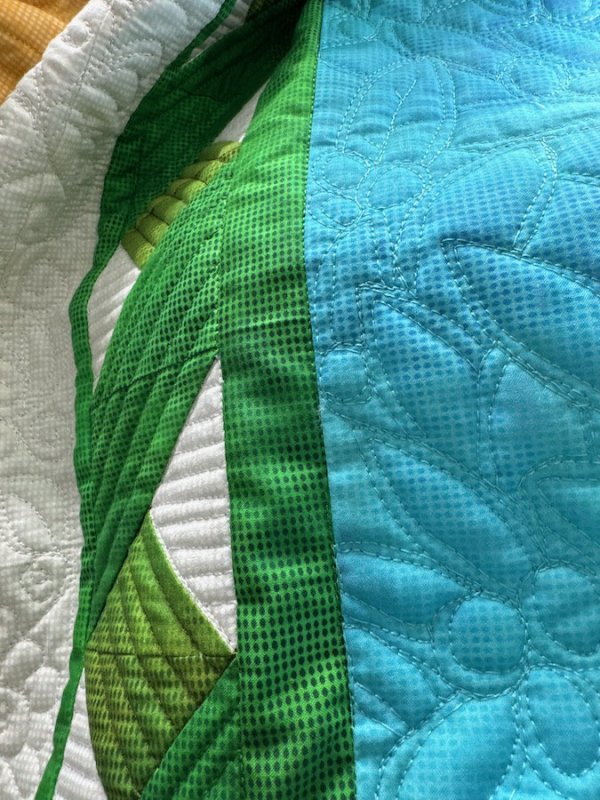
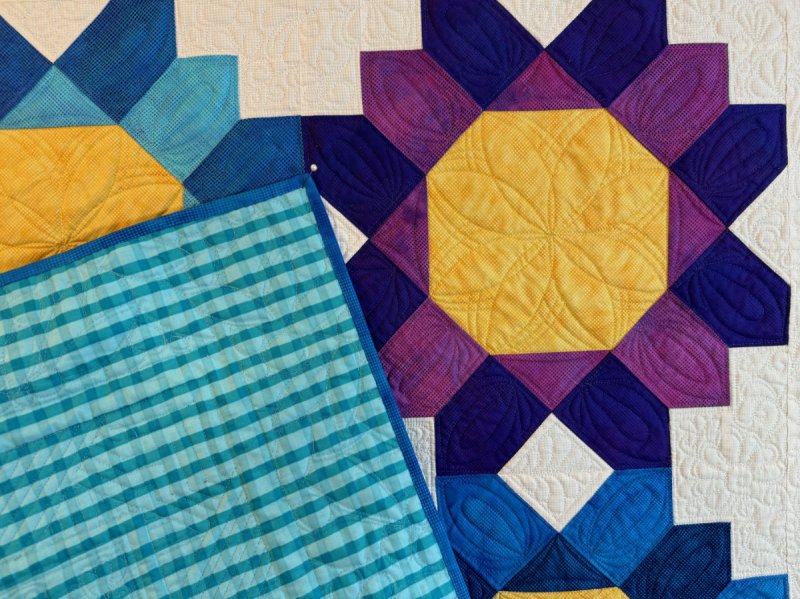
I kept the quilting simple. On the back were two leftover panel blocks from the original kitted Halloween Quilt, along with some rando orange dot fabric from the stash. I used the bits we’d cut off to border the panels, so they’d be large enough. And since this pattern — while quick and easy — calls for a template, I put tape on the back so it won’t move around, then I use a ruler to help in the cutting.
Quilt #308 | Halloween Mini-quilt | approximately 28″ square.
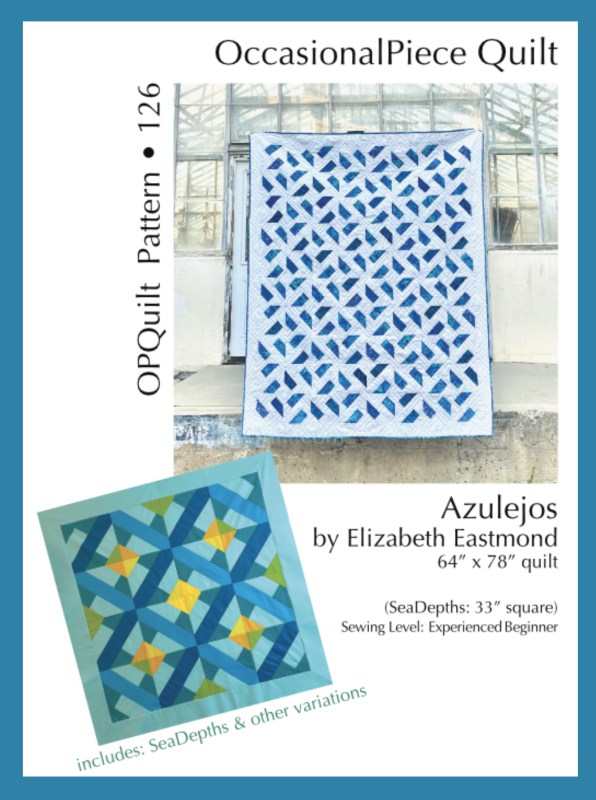
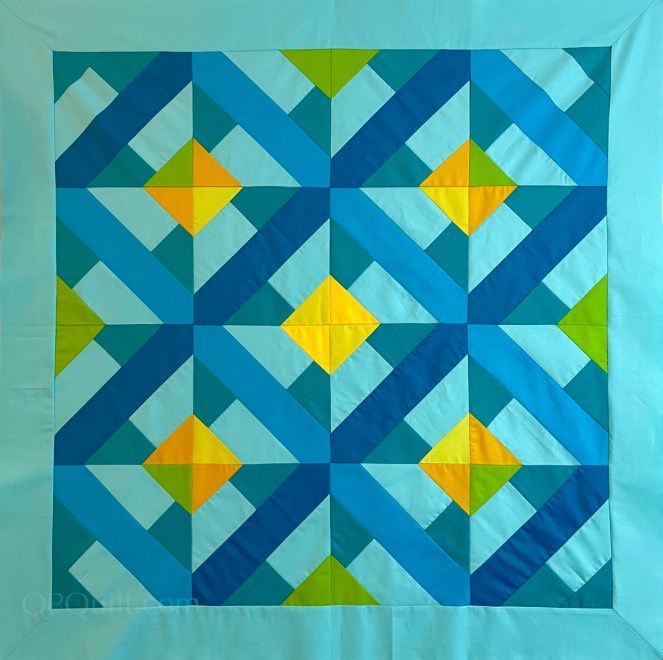
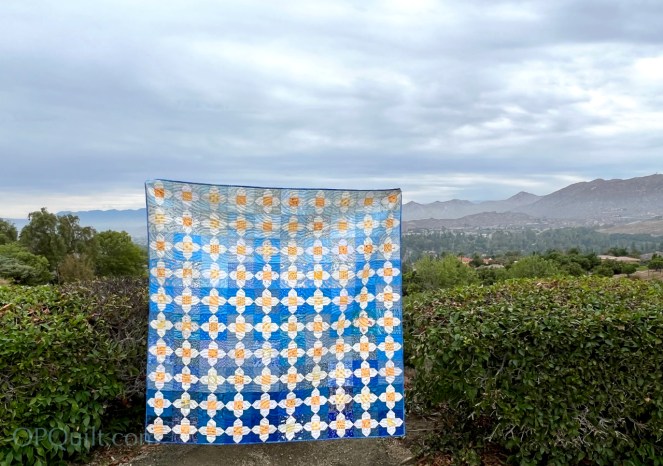
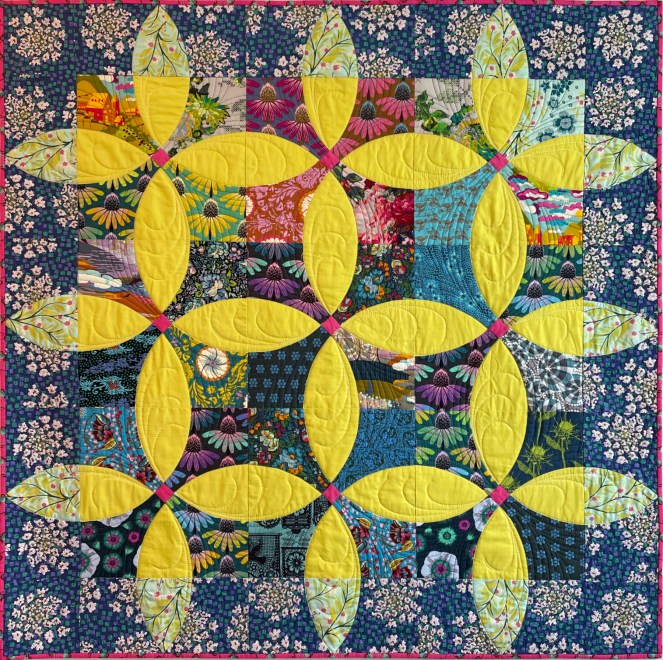
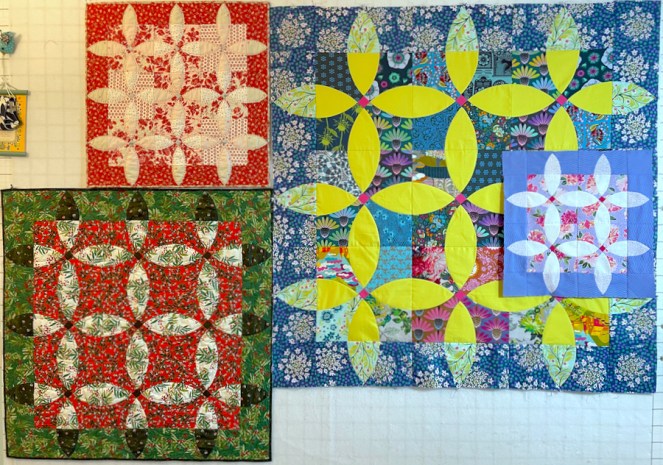
This is still one of my favorite versions of this pattern: SeaDepths. I have one more version to try, a deep blue and cheddar combo. Some of this is that I realize that every corner of my room holds the promise of a project/quilt-to-be. I’d been saving the scraps since last year and the bag kept kicking around the edges. GONE! I have been saving the deep blue/cheddar fabrics since 2019. They are washed, and stacked, ready to go next week. And yes, I threw away the scraps from the scraps, as there was so little left.
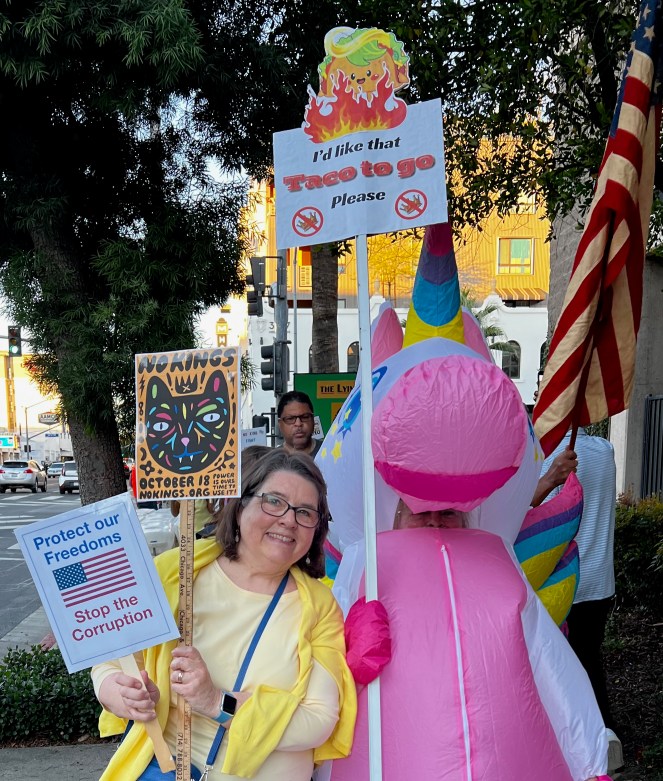
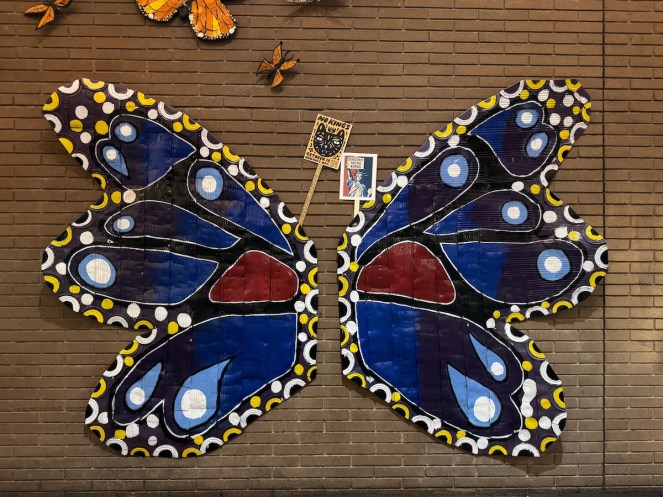
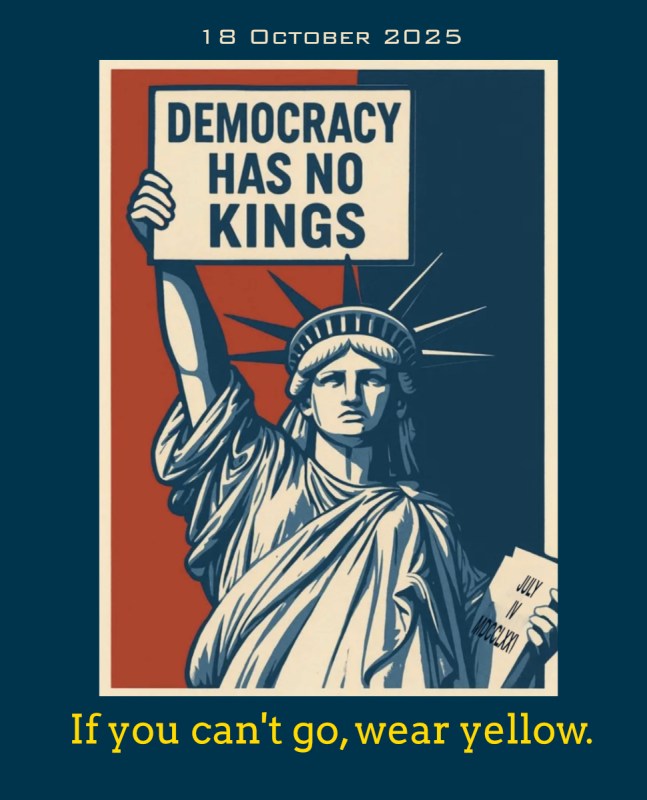
You know I wouldn’t want to miss America’s throwing itself a party. One of my signs was a cat print-out from Martha Rich’s art (used with permission), and the other sign was my husband’s (Protect Our Freedoms) with the wording he chose. We both wore yellow, as did others.
Bravo to all the unicorns who came out to walk and gather. Lots of flags, lots of good will and as I noted in my Instagram post, we detoured into the Korean chicken place mid-way. It was delicious. Then back to the march. Then home.
Our signs posed together in the Butterfly Alley, near the gathering.
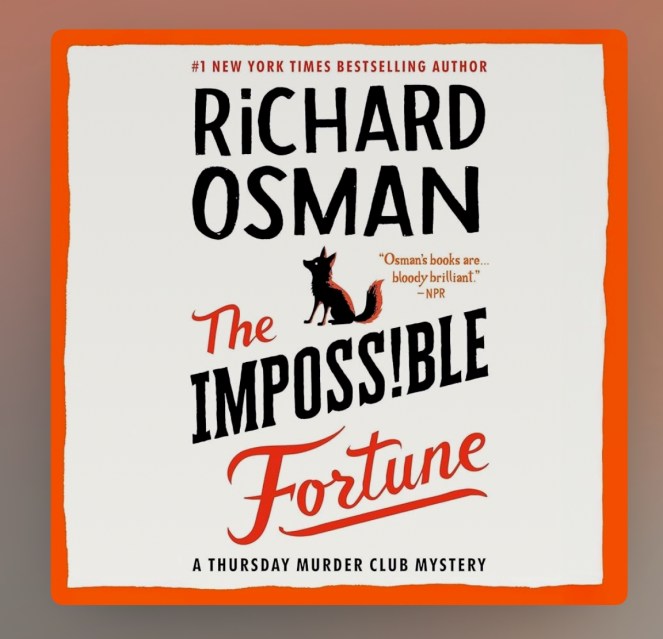
Started the latest Thursday Murder Club listen: The Impossible Fortune.
How does he come up with these plot lines? I am really loving this.
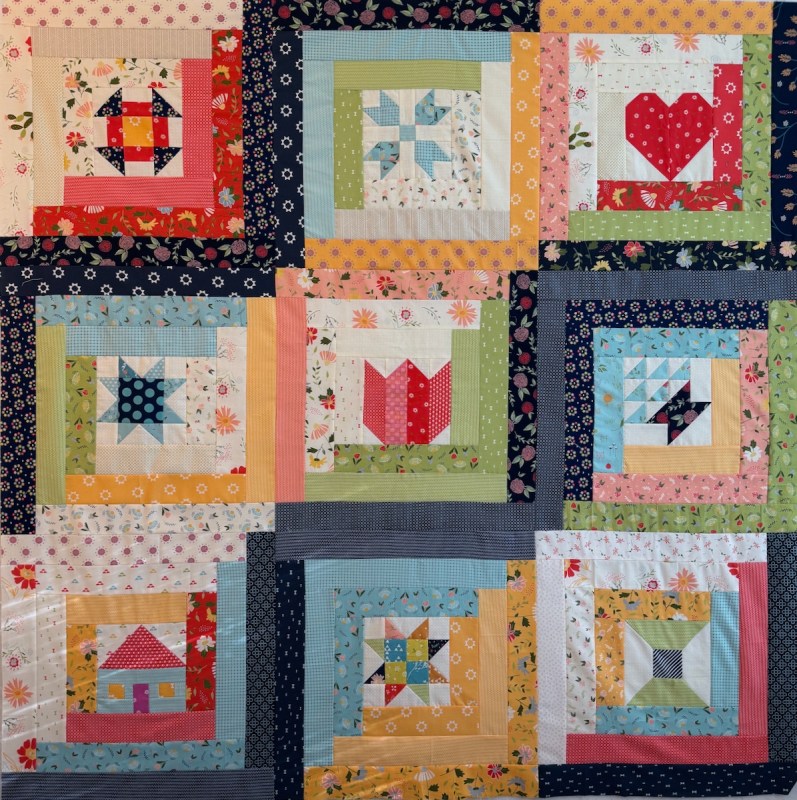
Even though there are technically three more blocks to this A Quilting Life 2025 Block of the Month Quilt, I’ve using Grant Snider’s advice #6 — getting rid of rules — and calling it done here. It’s been a fun project and hats off to Sherri for her creativity and for sharing these free blocks with us. Now to figure out a border, and get it quilted.
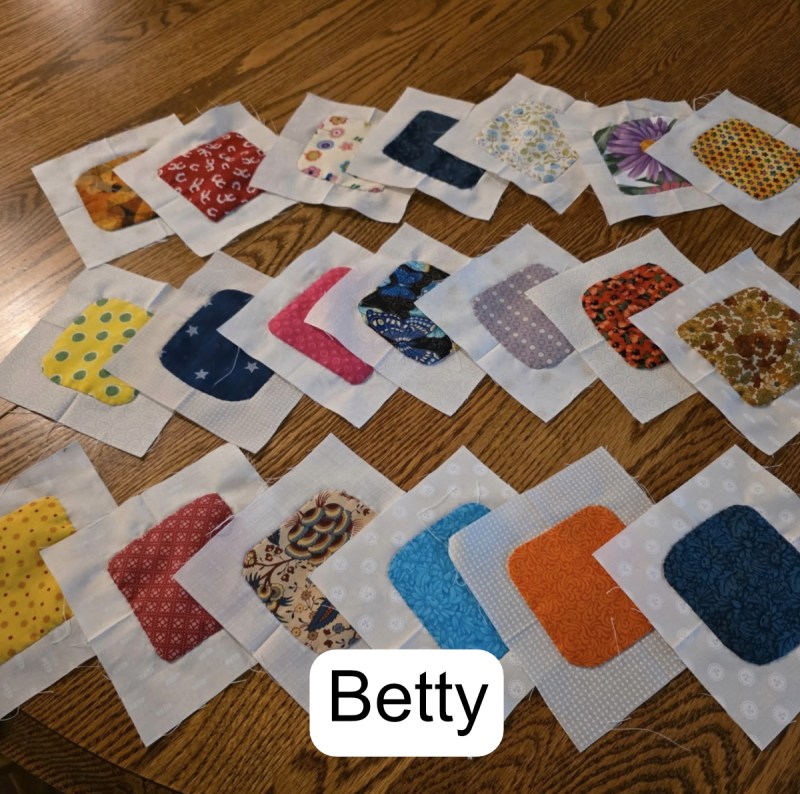
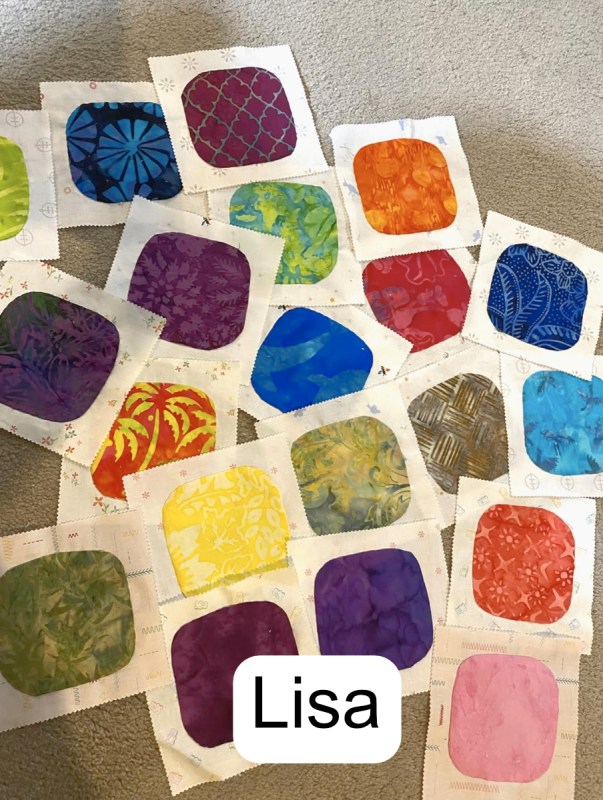
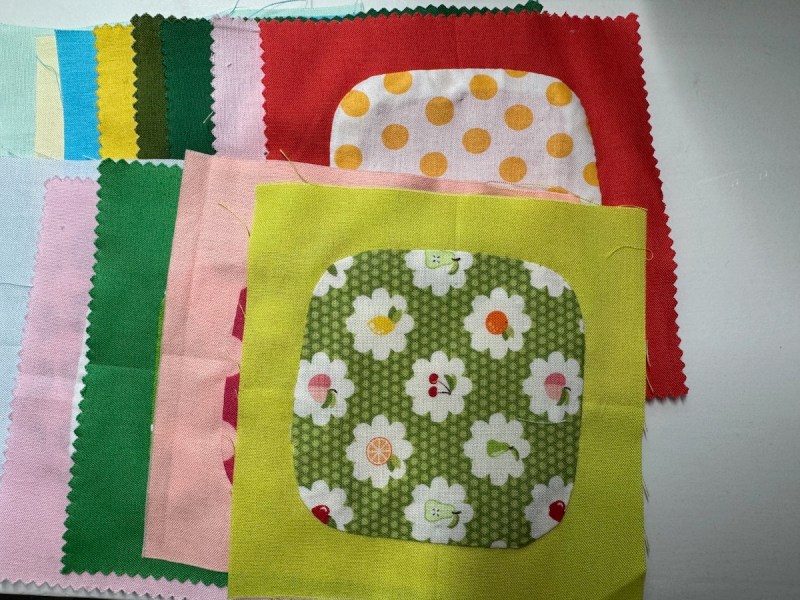
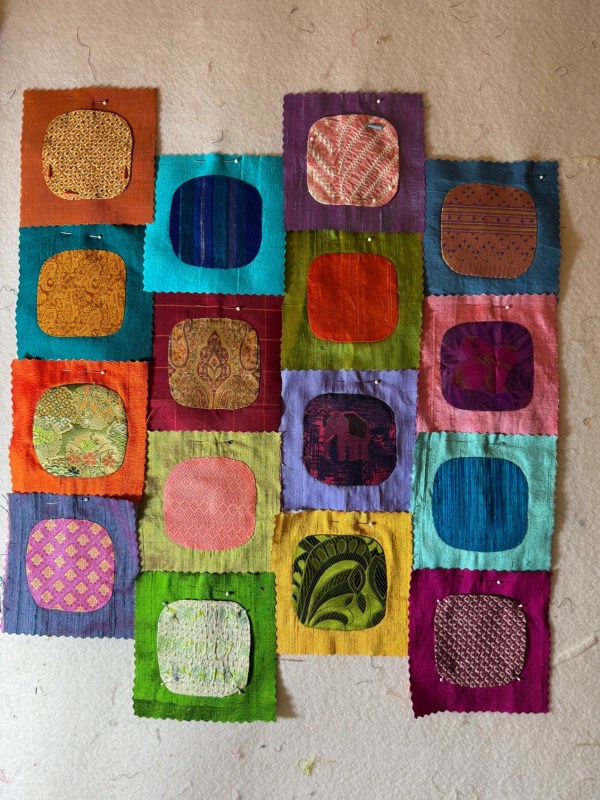
Finally, Squircles will finish this edition of This and That for October 2025. The hashtag we’re using — #backtosquircle — showed up with two more squircle makers: Lisa and Betty, both from the mountain west.
Mine are on the above left, and Gladi has some that are shown on the above right, out of beautiful brocades and silks.
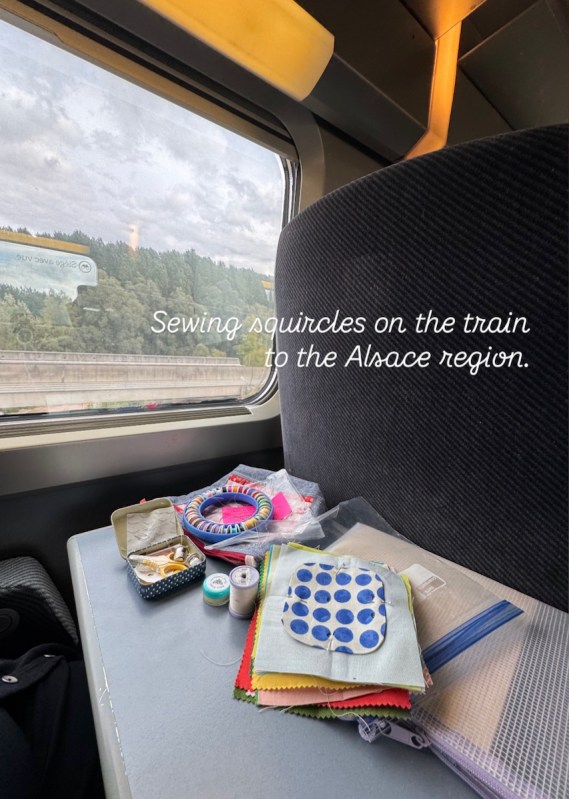
On the train to Strasbourg.
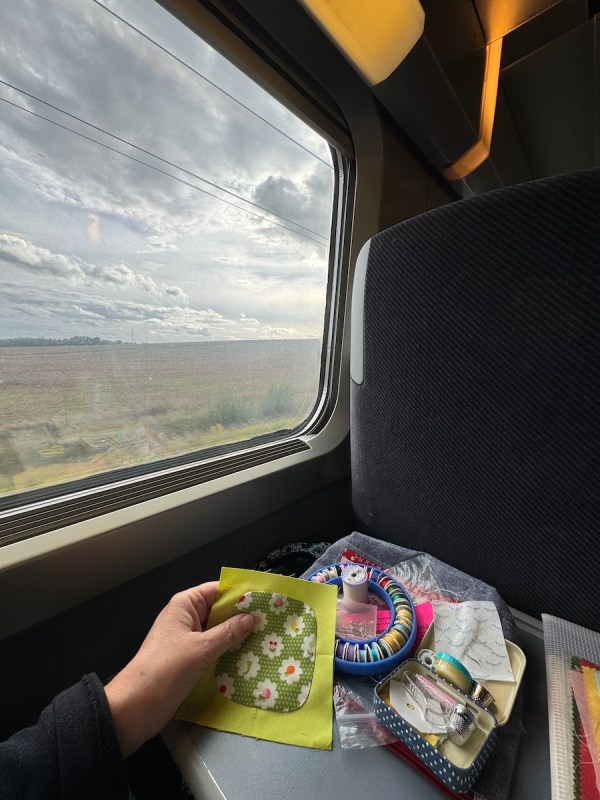
On the train to Colmar. I must admit that I looked out the windows a lot.
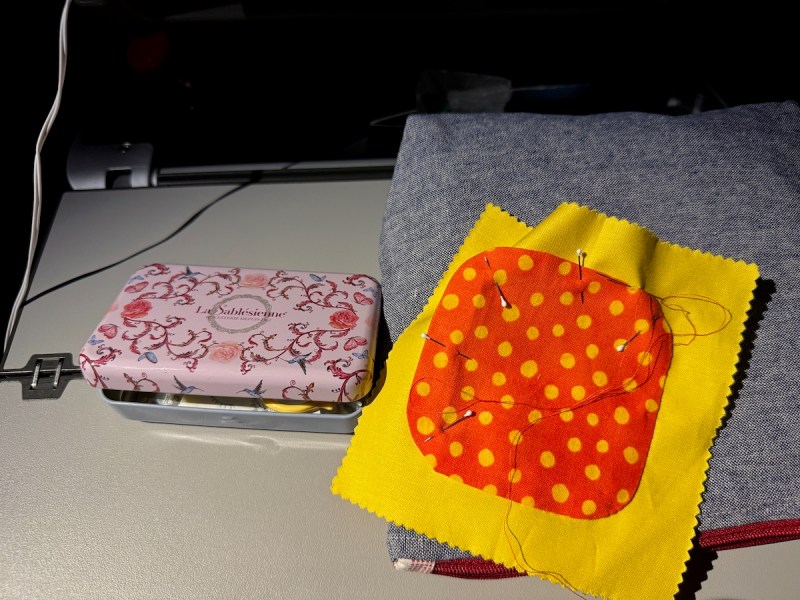
Now, with a new sewing box, courtesy of a run through Le Grande epicerie in Paris (where I purchased some cookies just.for.the.tin), this is me stitching in the airplane on the way home. In the dark (again). Why do we never put up our window screens anymore to see the miracle of flying through the air? Nevermind. #screensrule
I’m almost to 60 squircles finished, one-third of the way there. Keep stitching, keep stitching!
Backside of my husband’s sign. As I was working on this, and having just been in Colmar, the town in France where the creator of the Statue of Liberty lived, I realized I didn’t know what was written on the book she holds. So I looked it up: the date of our Declaration of Independence from the king of Britain. I thought it was a good motif for Saturday.
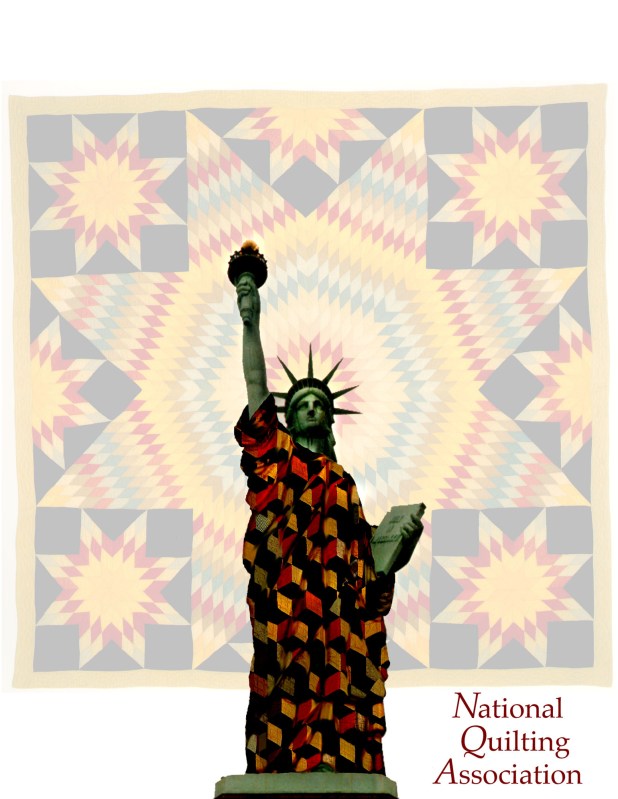
From an old homework assignment in my Digital Art class. (They were all amused that I would use a quilt.)
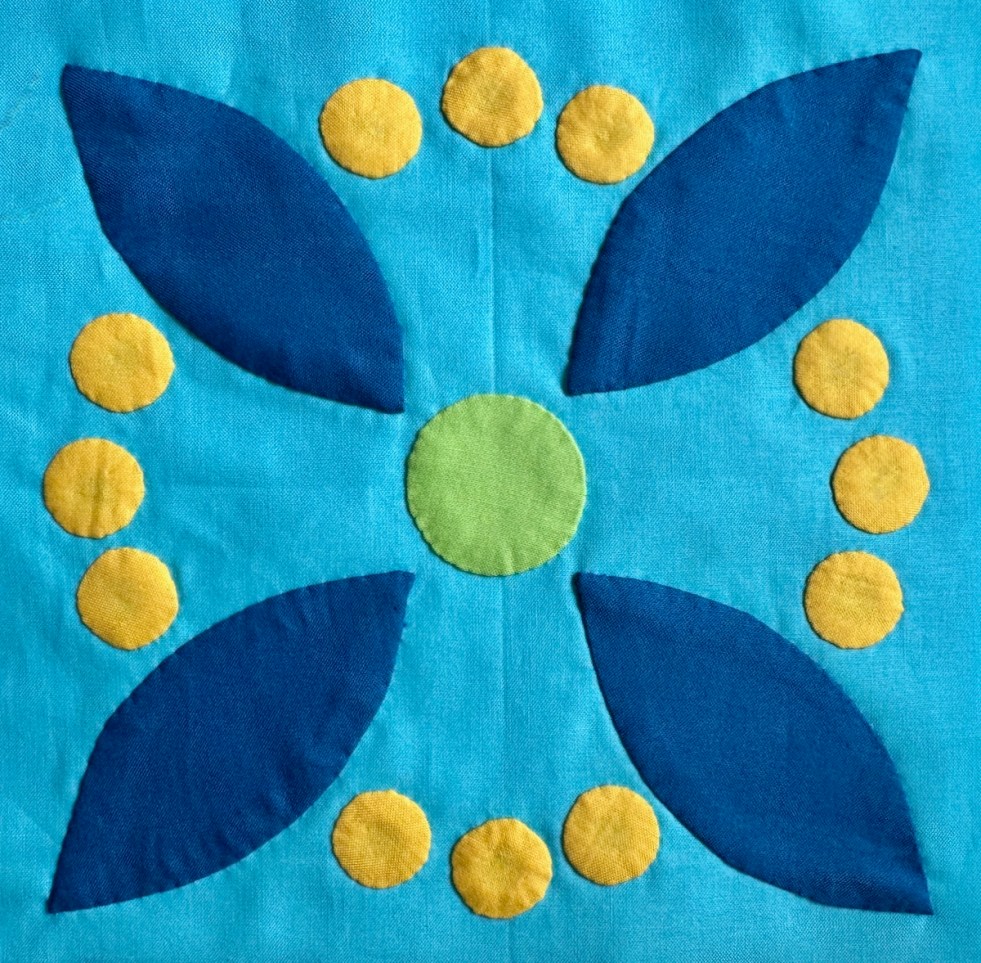
I have this line of patterns I call PatternLite. Usually they start out as just a block I’m kind of doodling around with and want to share. Then I decide I want to make it, and take a lot of photos, and work out some helps and aids and tips and tricks, and before I know it, it has blossomed into a full-fledged — or at least partly-fledged — pattern.
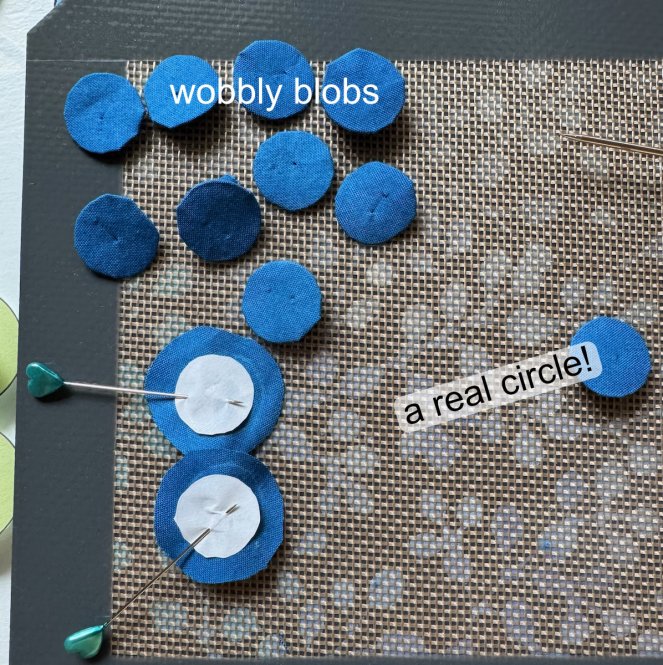
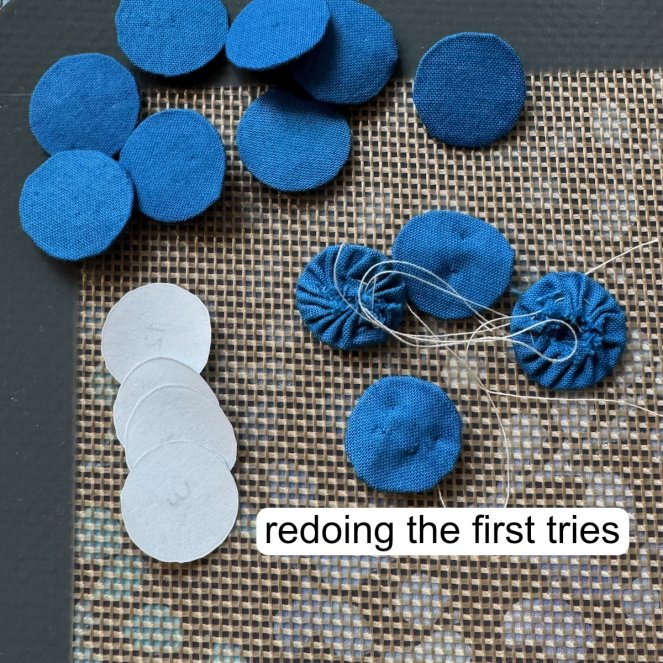
Kraków Circle started out as a free block on the post about my visit to that city, and touring all the churches. Then I thought it might be interested to try out Sharon Keightley’s circle method, since there are bunch of little circles in this design. And then I added a different view, different color way, and so on. Here’s my first stab at the little circles:
She has you use a long pin as your handle, and then using the shiny side of freezer paper, you ease up the fabric, ironing to make it stick (Iink is below) I usually do the gather-stitch around the outside, and then slip in a plastic circle and press, with some spray starch. That just did not work on these little orbs:
You can see how over-full they are. The first try with this, it took me about five minutes and the circle was a bit of a mess. But after about 7 or 8 tries, they were nice and round, so I re-did the gather-circles.
Here’s my one-minute video and I hope inserting the video works! (I’m trying something new.) I know there is a little bump on the circle’s outside, but when I appliqué that, I can ease it in with my needle.
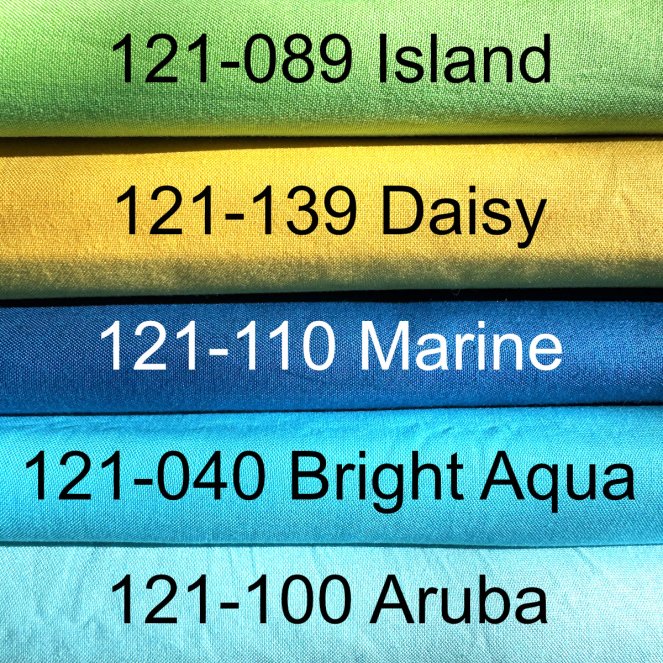
I use Painter’s Palette Solids, purchased from here. This has been my go-to color scheme for years, ever since this quilt, but I was happy to see that it also drew on the stained-glass windows from Krakòw.
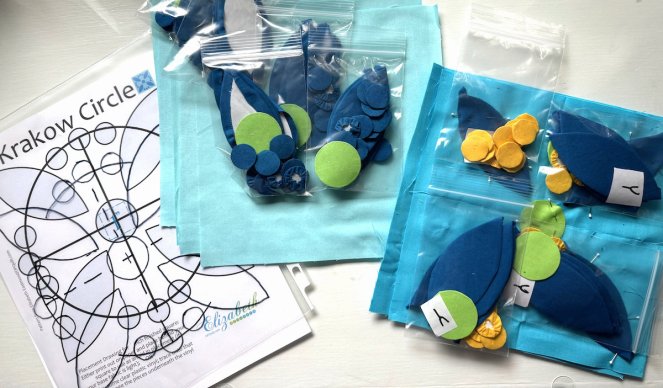
I bagged the pieces for the blocks, so I wouldn’t get lost.
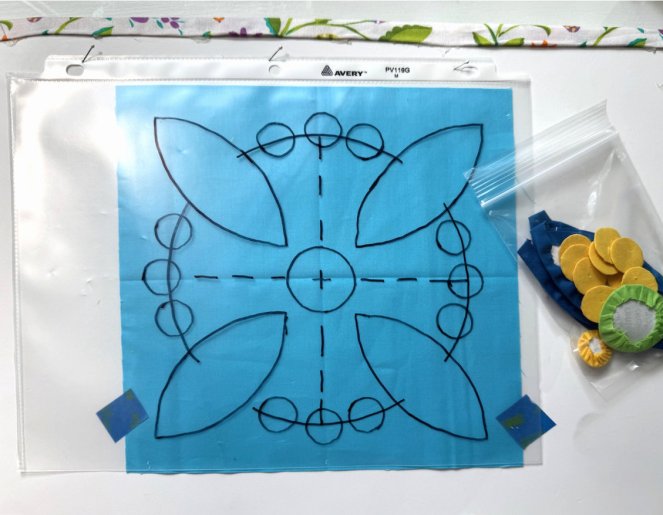
I made a placement guide for the block, which is included in the pattern. I also added a print-a-ton-of-circles-at-once page, at the end.
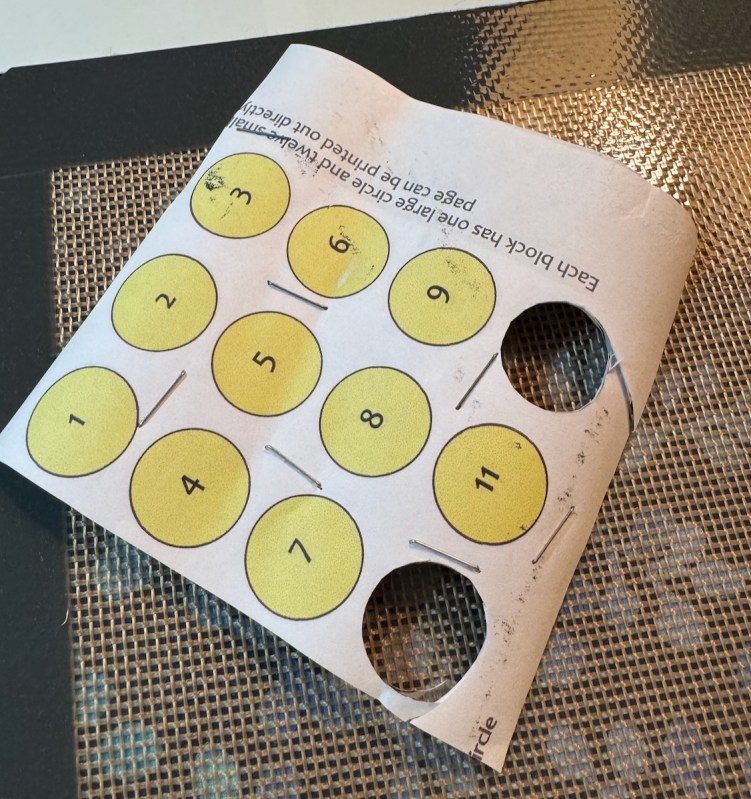
I printed that page onto freezer paper, the how-to shown on this post. Sometimes, I chunked the 12 circle sections together, layered them up carefully, stapled the pages together, and then cut them out.
I also folded the freezer paper into smaller pieces, layering it up, then traced on a petal. Staple the layers so they won’t shift, as shown.
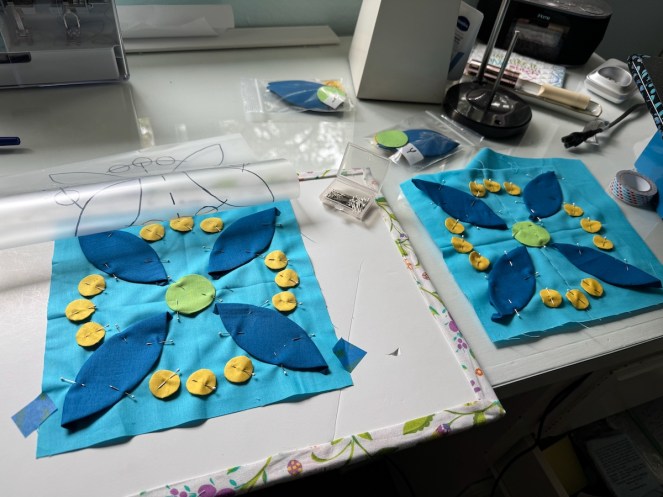
In the pattern, I give the tips for tracing the placement guide, and here, I’ve slipped the block underneath, taping it into place. (The placement guide is pinned to a board, but you could also tape it to a workspace.)
One all pinned into place, and another ready to come off the pinboard.
I was listening to a book, so I can’t tell you how long it took me to appliquè these all in place (maybe 90 minutes?) but it didn’t feel tedious, as the circles had been prepared.
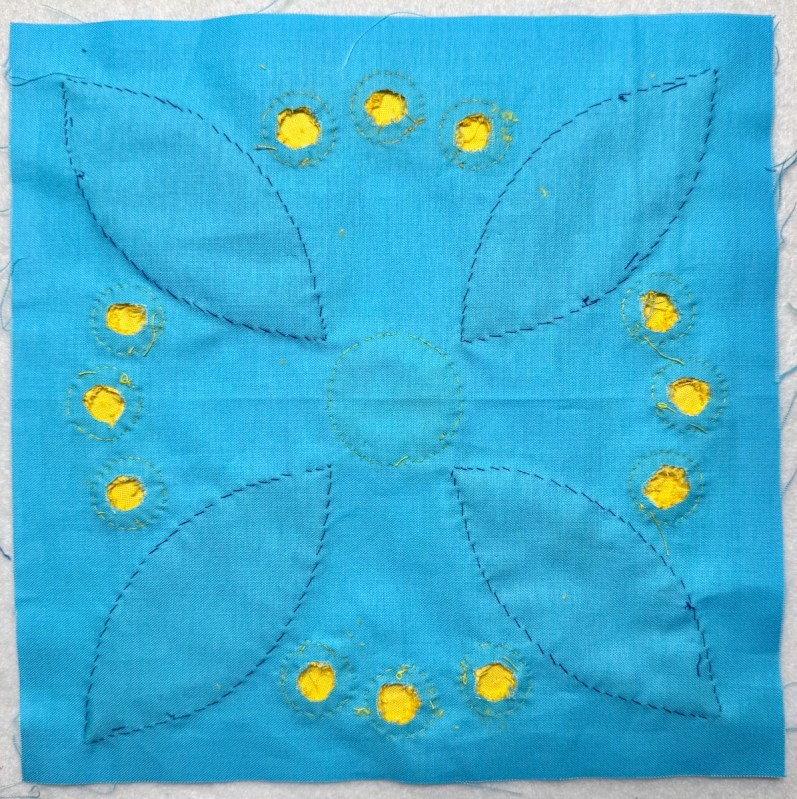
I flipped over the block when I was finished, and cut out a small circle from the back — and slipped the paper out. Sharon Keightley suggests that cutting it out in a circle (instead of just cutting a slash) will keep the quilt back more intact.
I slipped out the freezer paper from the larger pieces as I appliquéd them.
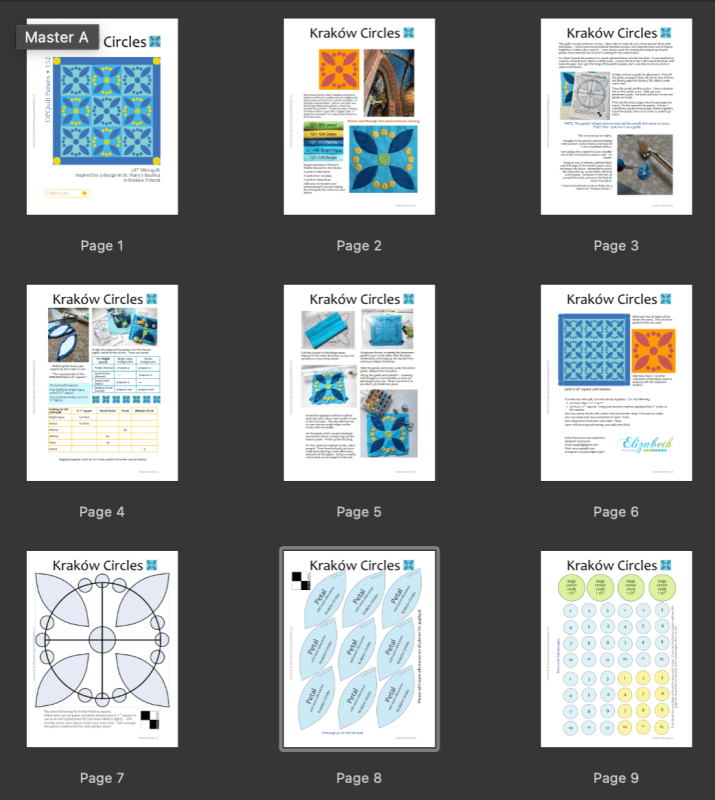
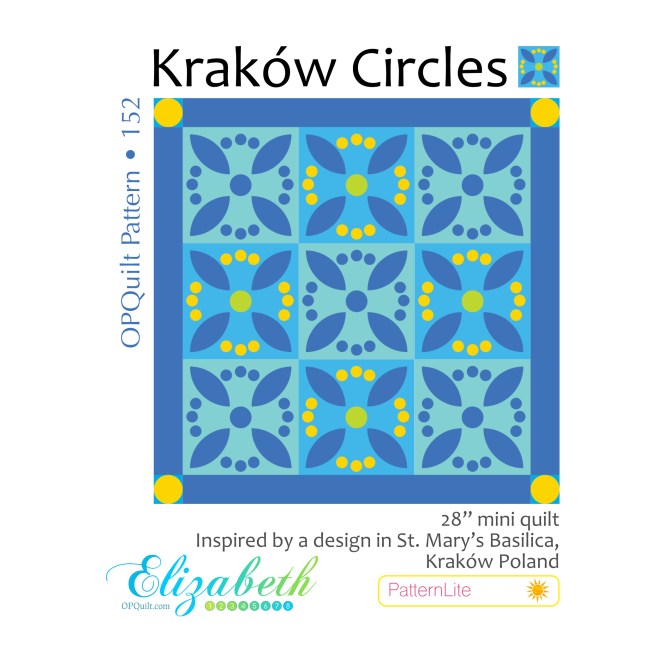
Here’s the thumbnail of the pattern: it grew from 3 pages to nine. However, I’ve still priced it as a PatternLite — less than a slice of pizza, a pot of basil from Trader Joe’s (ask me how I know), or a Kouign Amann pastry from a bakery in Kraków.
I’ve made several quilts with prominent flowers in my tenure as a Quilter Who Just Keeps Making. Scroll quickly and you’ll have a flower show in deepest December.
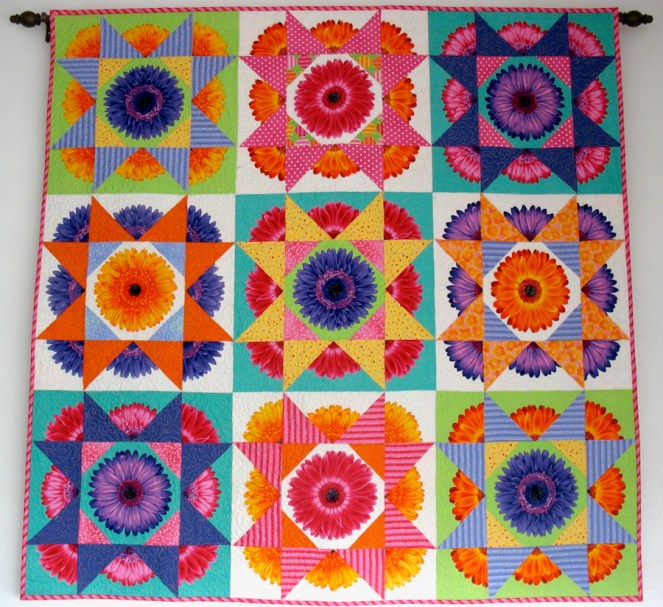
Daisy Star Quilt (#76) Whoa, that is Early Days (2009). Fabric from Lakehouse inspired this one.
Lyon Carolings (#88) which is kind of flower-like.
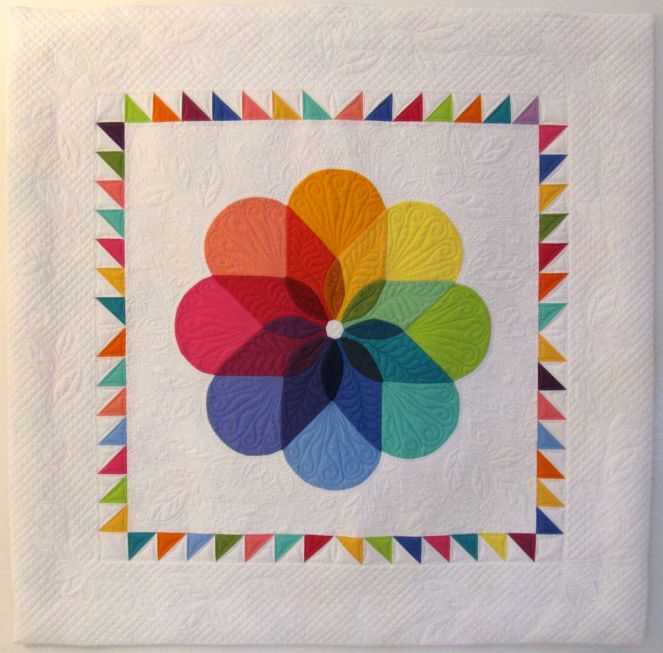
Colorwheel Blossom (#140) where I totally riffed on a popular image (on our phones).
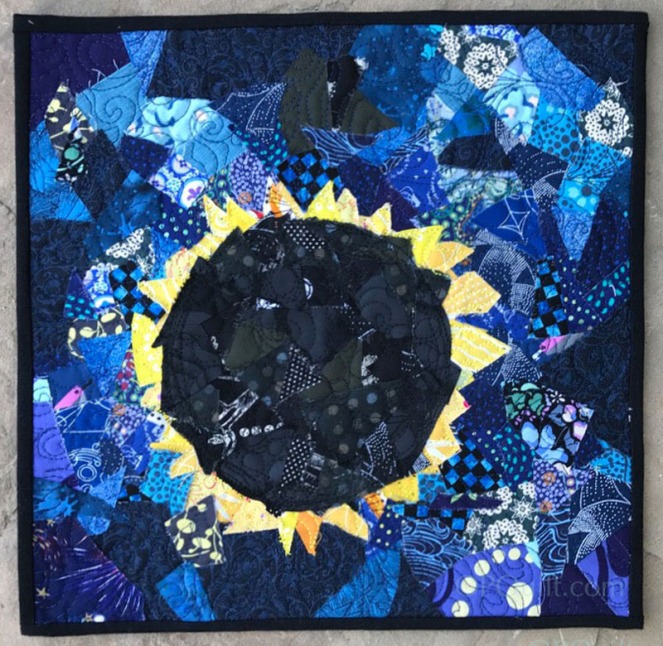
Tell me this little quilt (Eclipse, #189) doesn’t look like a giant sunflower…I think it does. But after it was pointed out to me once, I can never not unsee the pair of eyes in the upper right staring out at me.
And then I went big:
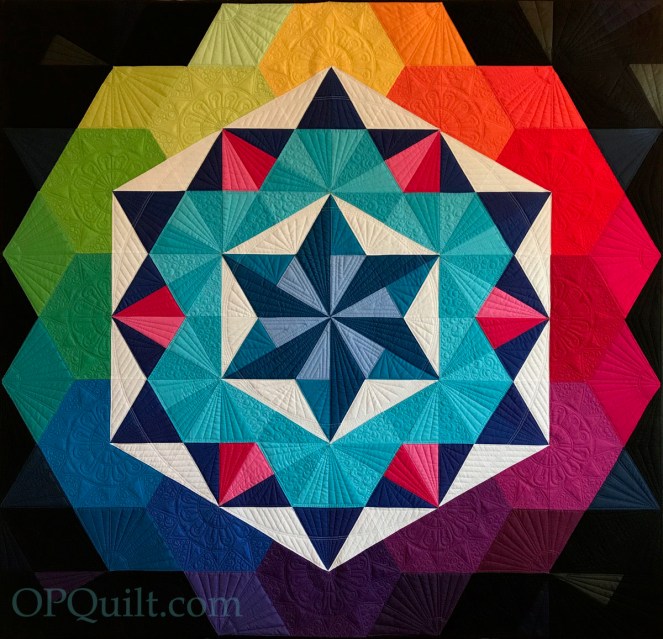
Annularity, #203, with rainbow petal-like structures around the outer edge.
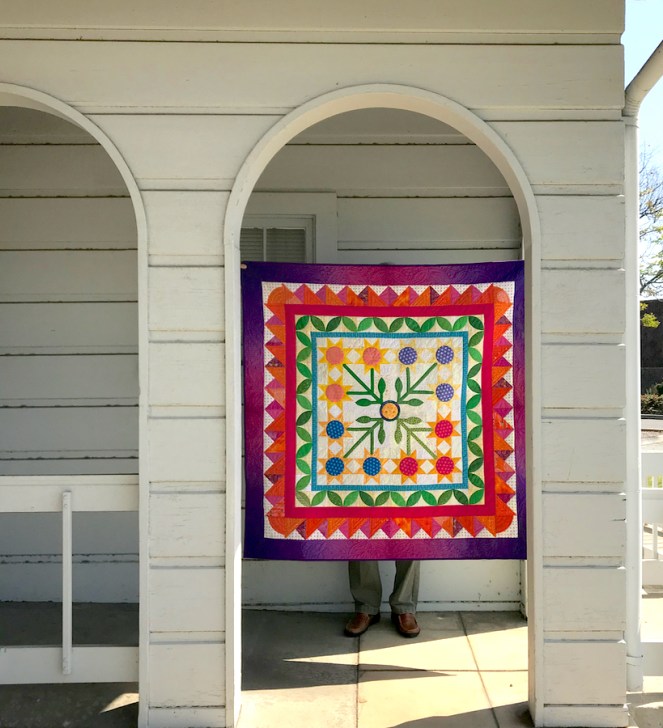
Serious little dainty flowers in #217: Field Flowers.
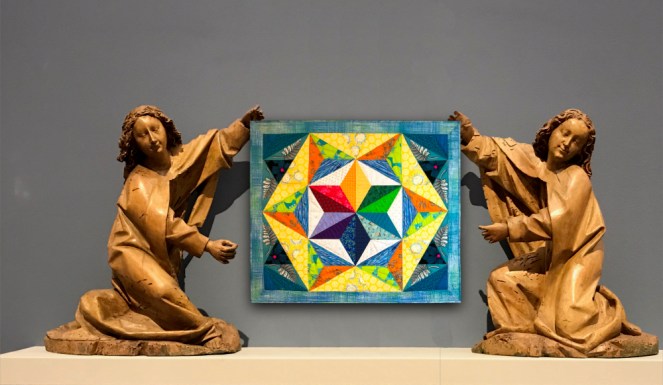
Okay, maybe this is technically not a flower (not even the title says so), but with those yellow petal-like pieces on the outside, I’m going to slip it in here. Choose Something Like a Star (#238) is held by a couple of angels from Berlin.
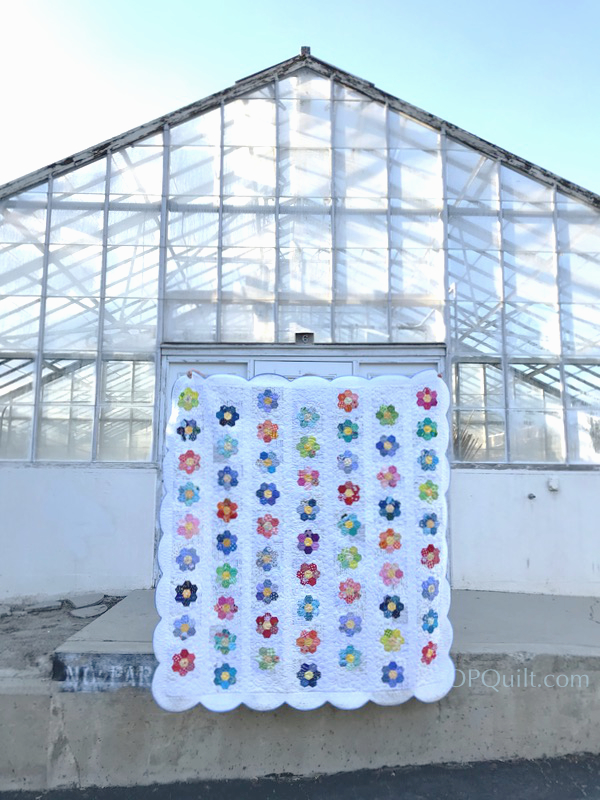
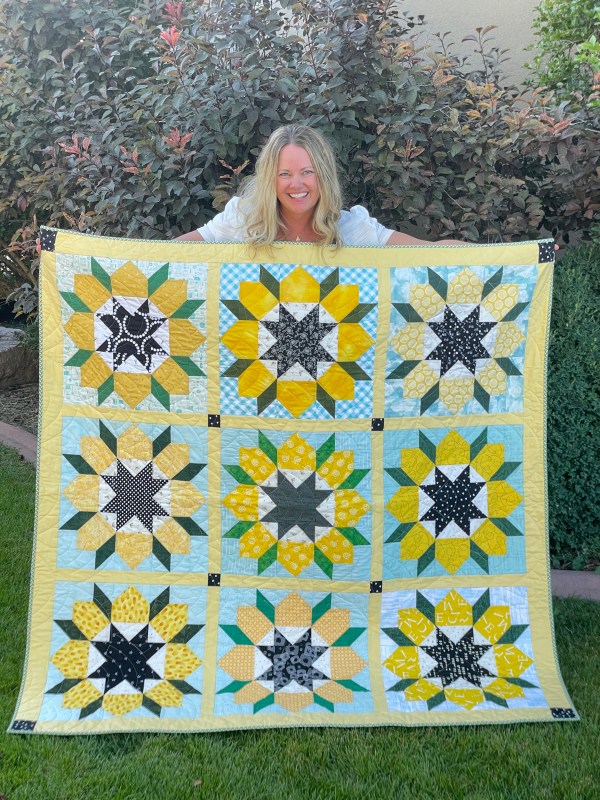
Sunny Flowers (#246) is still a favorite.
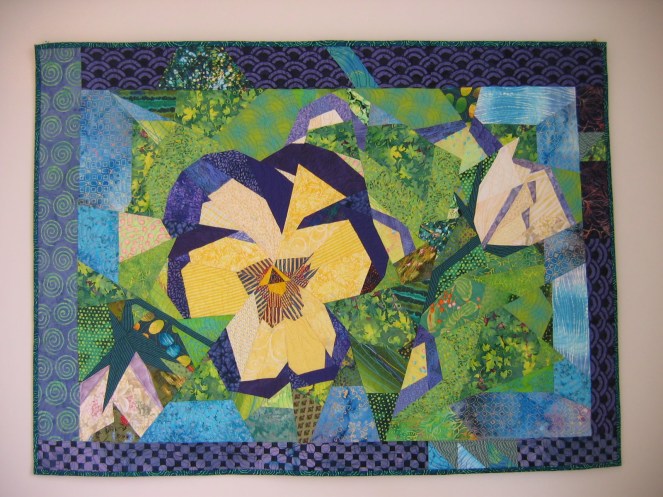
Heart’s-Ease #52 (went backward for this one). Made in a Ruth McDowell class, and if you know who she is, you are fortunate.
Heart’s Garden, #264, from 2022, when I ran a Mystery Block on here, because we were all going stir-crazy from being shut in for a year or two from covid. No worries, we are almost done with the flower show.
Blossoming, which I take naps under because it is just the right size (#267).
Sunflowers for Kim (#268) –guess who that is?
A pattern from Yvonne, which I titled Primula Ballerina (#274); made to keep me sane while we remodeled our kitchen.
Blossom (#276) but you also have to see all the variations together for a class I taught on Zoom, during the pandemic:
I think all of these have been given away.
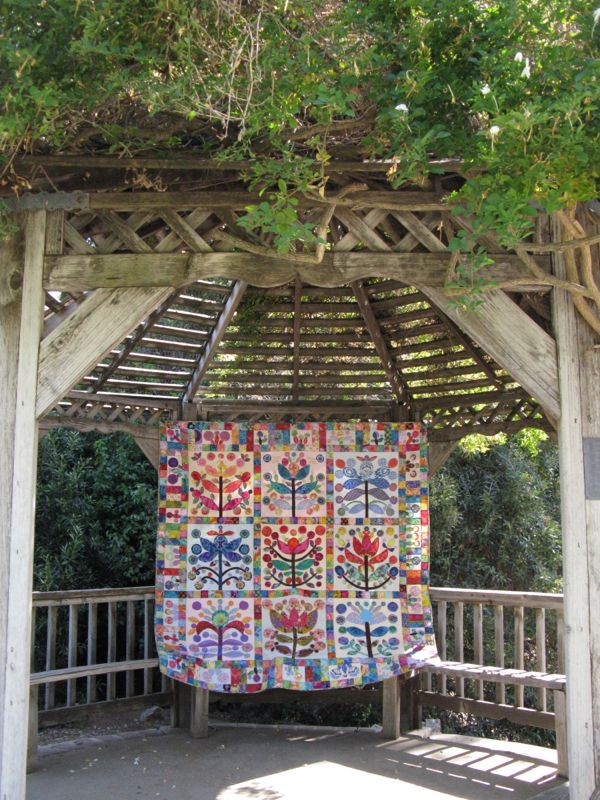
Lollypop Trees are definitely floral, with all those Kaffe fabrics. This is #132, from 2014.
Coquelicot (Poppy) which is #290, and has an earlier variation in just a simple layout.
Twilight Garden (#292) which I stitched while on the Total Eclipse Trip.
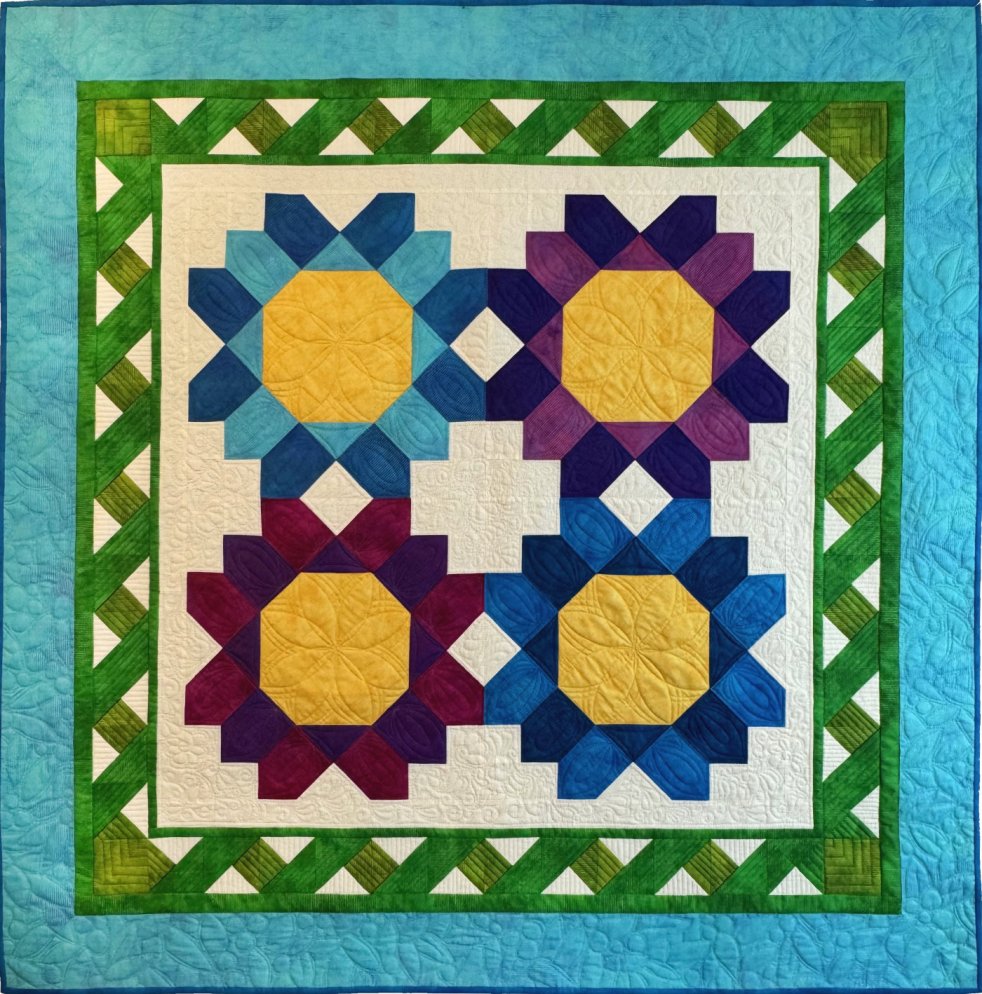
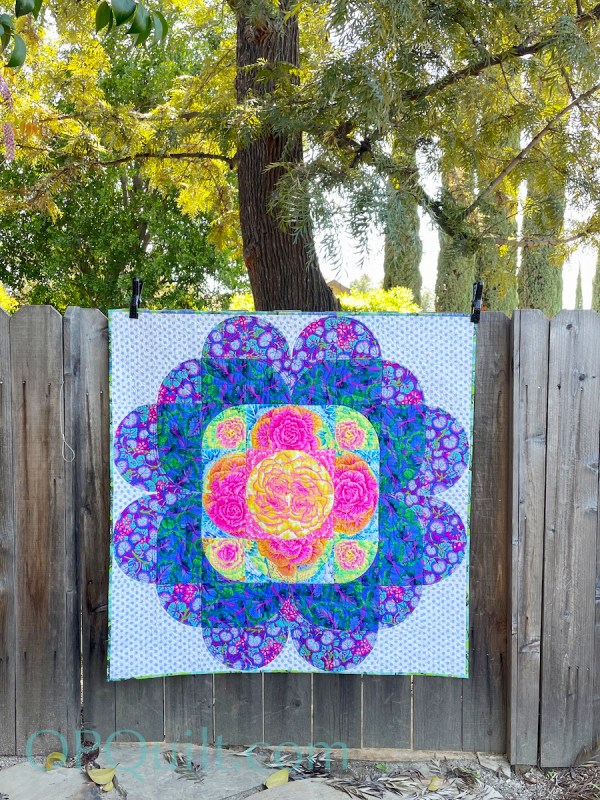
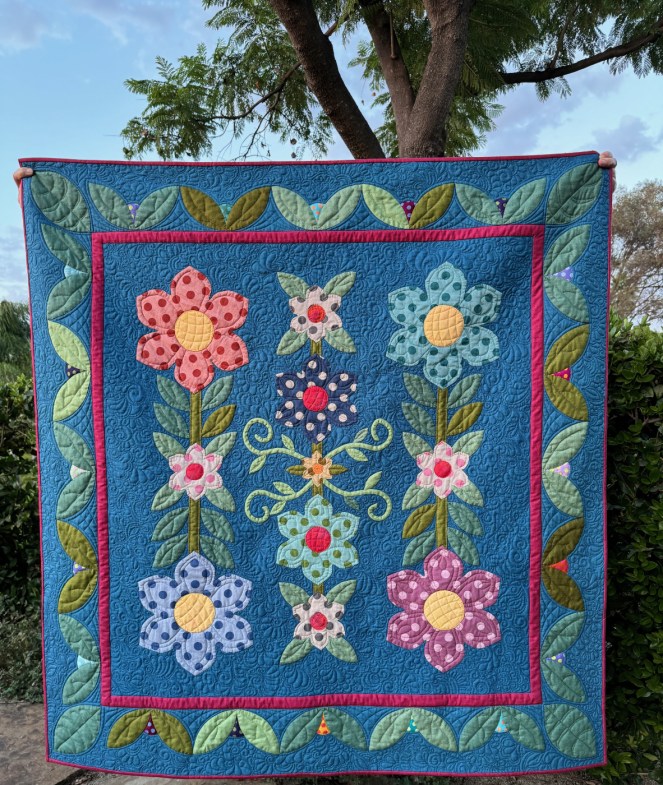
And now, of course, the last flower quilt in the parade: Giant Flowers, #299. It’s about 52 inches square.
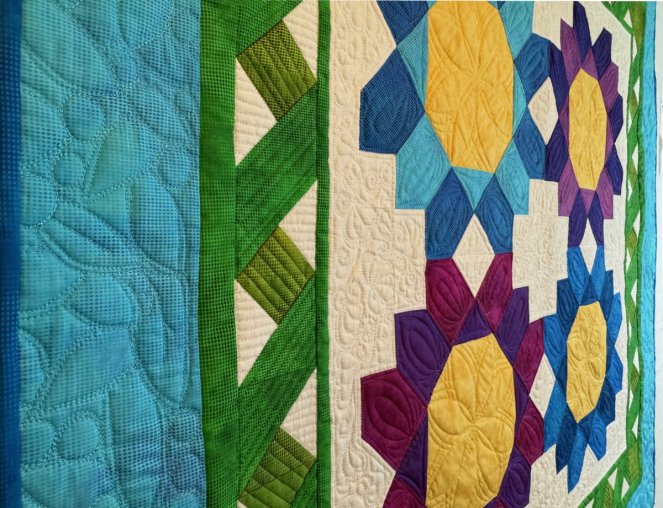
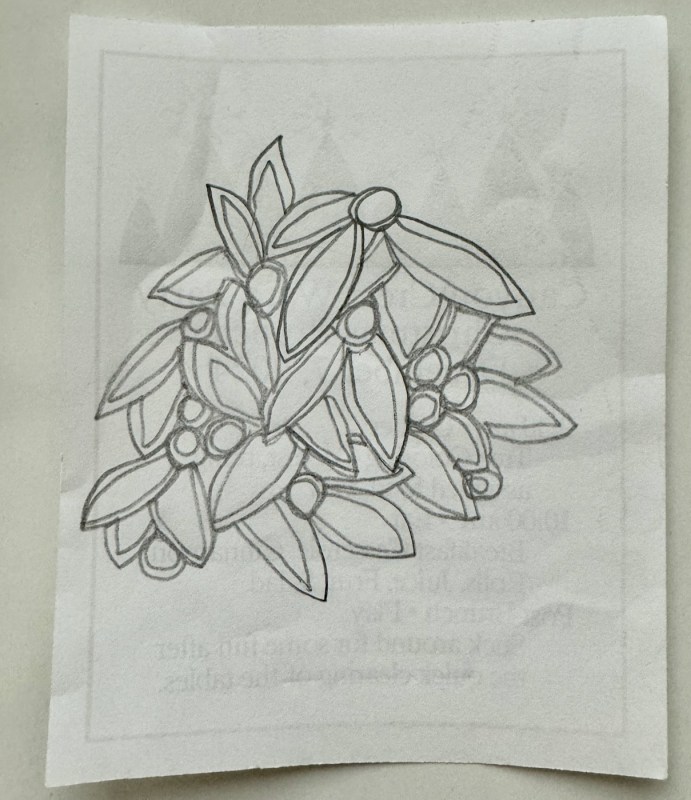
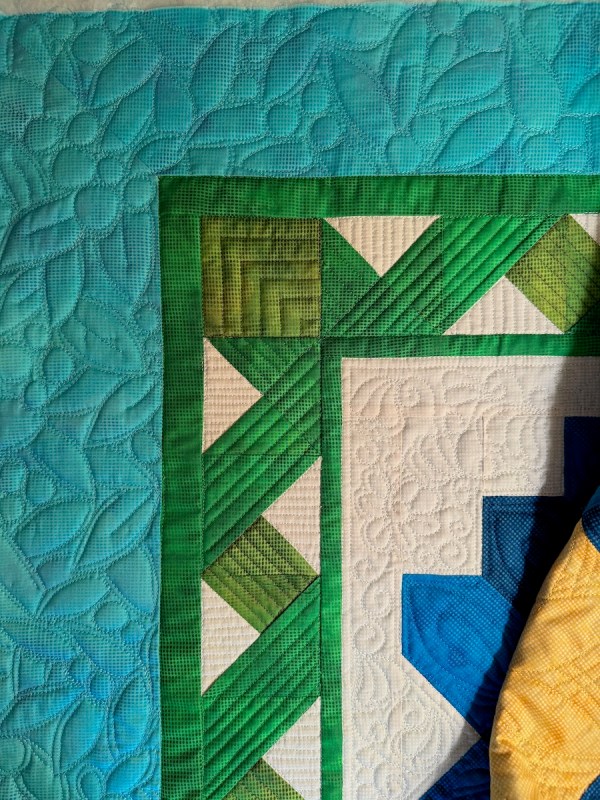
I had a fun time quilting this, moving from the radiant design I talked about here, to the lattice work of the garden fence, and then I got stuck on that outer border. I had something really ornate planned, but in a conversation with Yvonne I mentioned that while looking at #fmq and #customfmquilting and other tags, my eyes began to glaze over. I can quilt a thick carpet of flowers and vines and whatever on a quilt, but on that afternoon, considering this quilt, it all just seemed like #toomuch. So I paused. While in a church service a few days later, I began studying the carpet (tell me you’ve done this). I did listen, but was also trying to figure out how to replicate the flower-structures. Here’s my drawing, from when I got home:
Yes, it’s still dense, but it’s a different visual than the tightly packed swirly vines and petals in the interior white section. I like the larger scale, but it was a bit of a leap for me. I have to ask: if our quilts aren’t a place where we can experiment and try something new, then why are we making them?
Giant Flowers, showing its checked backing, is quilt #299. I wanted to make it to three-hundred quilts this year, but didn’t quite hit it. Looks like I have something to look forward to at the new year.
I’ve been playing around with this one on the Affinity Designer artboard. Maybe this piece has legs, and can go the distance? I first heard that saying from a professor, when he commented on my short story we’d just discussed in class. I was getting my undergraduate degree in Creative Writing. That short story, turned into a novel, which is now hidden in my bottom drawer after my father said: Don’t Write About Me.
But we writers mine our lives for ideas, for stories, for the beginning strands of a narrative which will take us where? we don’t know. I should have said to my Dad, if you don’t want to be written about, don’t hang out with a writer, but he was my Dad and it wasn’t a command so much as a wish, so I listened. In the end, it turns out maybe I didn’t have the nerve to bring all the bits and pieces of my life — even if disguised — into a novel. Some of my classmates did, and I admired them. But writing can be hard work, and as you saw from the beginning of this post, I’m very happy to take a walk among flowers.
I can do it literally, or just in pieces of cloth and color. The title of this blog tries to capture this idea of staying curious and seeing where dabbling in pieces will lead: it could be a short story or a poem, or a quilt block, or a quilt.
This month last year I saw an eclipse and cranked out not one, but two quilts to the quilter that month.
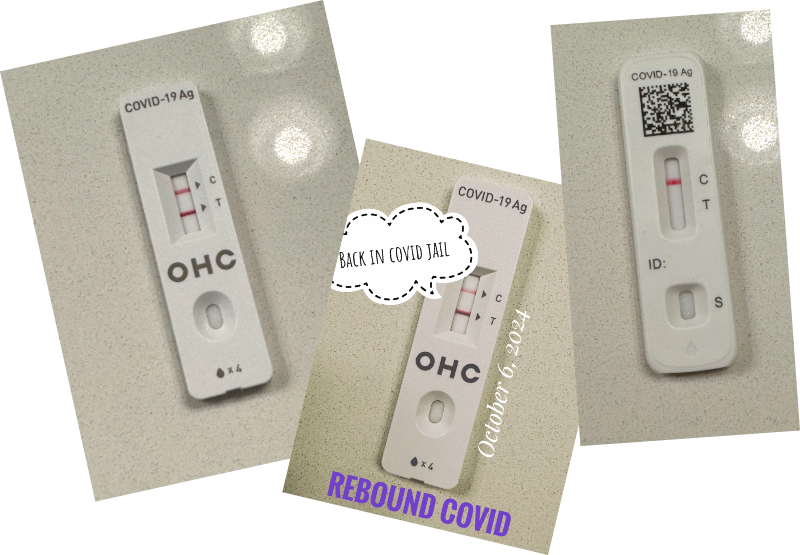
And this year?? A slog through covid, which still lingers with the double whammy of cough and fatigue.
So what a difference a year makes. Oh, maybe I’ve got a triple whammy with the brain fog, which is real. But at any rate, here we go with a This and That, which I haven’t done in a while.
Because I was just hanging around a lot, coughing, I read one book (Orenstein) on my digital reader, and one (Garten) in Real Book form. I learned a lot from both, including the tidbit that Garten and Martha Stewart at one time were friends. But mostly I loved a lot of what Orenstein wrote when she was making “the world’s ugliest sweater.”
“We hang by threads, we lose the thread, we pick up the thread, we have common threads, we thread through crowds, our reasoning is threadbare—and that is not even starting on metaphors involving sheep, wool, fabric, weaving, sewing, knitting. Textile analogies loom large in our world” (Orenstein).
and
She quotes Catherine McKinley, a writer and curator: “This idea that the end product is more important than anything [is] an erosion of something fundamental, of that intense combining of the spiritual with all the other aspects of our lives (McKinley, qtd. in Orenstein).
It was too hot in October, bookending our summer that began all the way in May, which was also too hot.
As you might suspect, this word appeals to me. I’m an autumn-sort-of-girl. (TIL=Today I Learned)
Have I sewn anything? I participated in a bee, and just about half the blocks were unusable. So with my fever-covid-fog (FCF) brain, I unpicked some that were too small and re-sewed them, I was happy I purchased more fabric than I needed, so I could make-from-scratch a handful more. One quilter had eye surgery and I was happy to make hers for her. I was sent some blocks half-finished, and finished them. Some blocks were a couple of weeks late, which gave me angst because of my FCF-brain: I’d grabbed a slot with my quilter so I could have this back for the holidays, and time was slipping away. I decided, in the end, that maybe I’d picked too complicated of a block for some of the quilters, or maybe it was just a bad-karma month for a lot of other people. That happens. But in end, as with most quilts, Mercato Square was finished. I sent it off, after agonizing about which quilting panto to use. Stay tuned.
I sewed my October blocks and November blocks for the bee. One more month to go. I put a tip-sheet on how to make the strawberries and it’s a free download. The block on the right has been around for a while and pops up in different iterations.
Here’s the first example I have for you, from 2013, and I screen-grabbed some of what this quilter wrote:
The above is from a blog titled D & D Adventures (it’s defunct now).
I did a version of cut-block-insert-strip, Criss-Cross Quilt, that uses larger blocks, some with the insert going diagonally and some, vertically/horizontally. I don’t know if you remember, but there is a 31%-off coupon for any one thing in my pattern shop, so if you want this version (or something else), grab the coupon and get it (it expires on Halloween).
This time around, the Queen Bee sent us to Amber of Gigi’s Thimble, where she has a free tutorial, and her quilt (shown above) is so beautiful. I’ve used Amber’s tutorials before and they are solid. Speaking of quilt patterns, there was a recent kerfuffle online about a pattern maker who resisted the idea that other people could make patterns similar to hers (not copied…just similar). I think, unless it’s a direct plagiarism, ideas get recycled and re-worked. I also check Barbara Brackman‘s Encyclopedia of Pieced Quilt Patterns. If it’s in there, it’s been done before.
And I don’t think I posted about these blocks?
These were spools blocks done in April, and I made a tip sheet for those, too.
from here. Lisa has all the blocks arranged from the Gridster Bee. These are large blocks, not tiny, and what a good way to use up all those long skinny scraps of fabric!
For silliness’ sake, I opened one of my Molly blind-box toys. It was one of those days when FCF-brain was in abundance, I was tired, oh, and about a billion other things, and it was only lunchtime. I make a big deal out of opening these little toy boxes (Baby Molly stands about 4″ tall) by taking it in to sit by my husband in the office and asking him to watch. It was love at first sight with this version, but the motto on the card told me everything: “I can handle it.” (Like, get a grip on things.) The Molly store is far away from us, so I bought two and saved one for Bad Days. Or Good Days.
I have been a collector of political trinkets for ages, even buying one for George Bush from a vendor on the street when we travelled in China in 2001 (after the fact, I know). I have a tin in my trunk holding badges going back to Nixon, the first President I ever voted for (my generation was the first batch of 18-year-olds to get the vote). So when Carol sent me these, I am quite happy to wear them to wherever I go, trying to put country over party, having voted both ways in my life. But won’t we all be happy when these interminable election cycles go away next week!
Please notice I am wearing my Halloween vest in the photo above. I get to wear it about 3x a year, and it makes me smile.
Last October, I was also in Bologna eating persimmons with nuts for breakfast. My husband, Dave, found some more persimmons here at the street market, and we’ve been enjoying them. We peel them, dig out the giant seeds (some varieties have them, some don’t), cut them in half and add a few nuts. Be sure to wait until they are really really soft. If you have a tree, here’s some info and then my version of Persimmon Bread.
I had to look up when my mail-in ballot would be counted. It’s been counted! We’ve used mail-in ballots for a while, and they are so convenient. Last cycle we took them to the drop box at our county building, but this year? The mailbox in front of our own home was so appealing to this FCF-brain. But on balance, we have stupid stickers. After seeing other states’ versions online, our state needs to step up its game.
This year I’ve seen several quilt-a-longs (to get the free patterns you have to agree to sign up for the mailing lists of all the people involved). This one that I’m interested in right now, the #sweaterweathersampler, led me to the QuiltScouts, where I found these badges and stickers. They have more badges, but they ask you to be “on your honor” in buying only the ones that apply. I qualified for most of them, which is what happens when you’ve been quilting for a bazillion years.
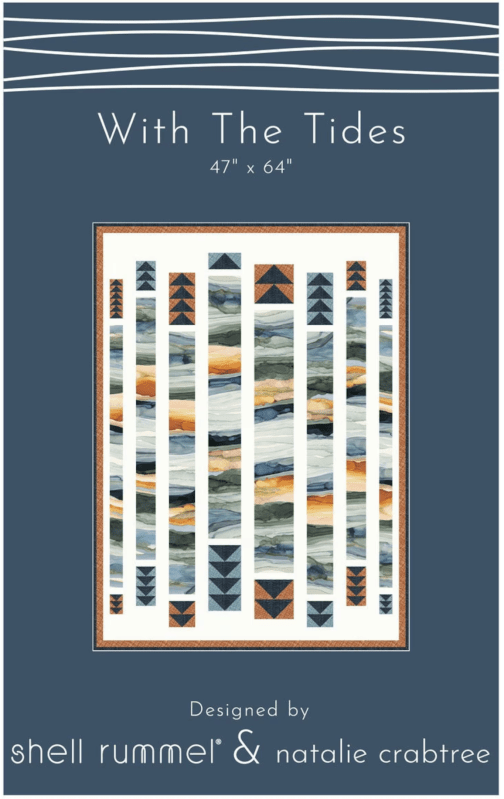
On a day where I was feeling better, I opened up my bin of painterly fabrics that I’ve been collecting for a while. I had wanted to make the first pattern (below).
But since they didn’t have any of that panel left I improvised, still using fabric from Shell Rummel (along with William Reue, and snippets from Deborah Edwards & Melanie Samar). I just noticed they’ve updated the pattern (on the right) to accommodate the newest panel and line. My only advice is to lay it out on a large flat surface when stitching everything together. I just sewed, like normal, and when I finished, the left side of the quilt was about 6″ longer from the right, and I still can’t figure out how that went wrong (FCF-brain?). But I fixed it, and have finally figured out how I want to quilt it.
This is me, on the patio of our City Hall building on the Saturday where I went from “being over covid” to feeling crummier and crummier by the end of our tour and rebounding into covid, a surprising frustrating experience. But at least I have this cool photo of this inset medallion, because you know us quilters: always looking for pattern and color wherever we can. And I’m happy to have covid in 2024, not 2020, when we all suffered through the horrific pandemic. And interestingly, that’s the time period of Peggy Orenstein’s book, which brought to memory how awful it all was, and to what a debt we owe so many who took care of us all.
I’ll leave you with a quote from Orenstein, when talking about the mortification of being judged (often harshly) for what we make, which often discourages us:
The alternative, and the best defense against those potentially psychologically lethal blows, is to focus more on experience than evaluation: to resist “good” and “bad” altogether and instead ask questions, identify what works, wonder what can be improved. It’s recognizing that the gift of creativity is in the way it challenges you, allows you to make meaning, enriches your life.