300 Quilts · New York Beauties

Blooming • Block 5 • New York Beauties

I don’t know. Maybe she’s right.

Annie Dillard, in The Writing Life, says “how we spend our days is, of course, how we spend our lives. What we do with this hour and that one is what we are doing.”

It was a hard week, with me unable to sleep one of the nights and in the wee hours, I tried reading until exhaustion. I tried the cup of hot chocolate in a darkened kitchen, looking out at the city lights in the distance. I tried going back to bed and pretending to sleep. I tried designing a quilt, for they are like putting together puzzles and couldn’t that make me sleepy?

I tried more reading until my brain couldn’t focus, then tears and exhaustion and the just worn-out-from tryingness slid me into slumber. I slept in until 9 a.m. when my husband, always the golden light in very dark hours, went with me on a short walk, but it was enough. It was a way to spend an hour that seemed a good way to spend a life. He talked to me about a difficult group meeting I’d had the night before, with hard realizations about my limitations. We talked through all the slights, the snubs, the hurts — the usual sort of stuff that happens when a group of 80 different women get together. We talked about who the true friends were. We walked and talked.

I spent the day in idleness, quiet. We had a simple lunch.

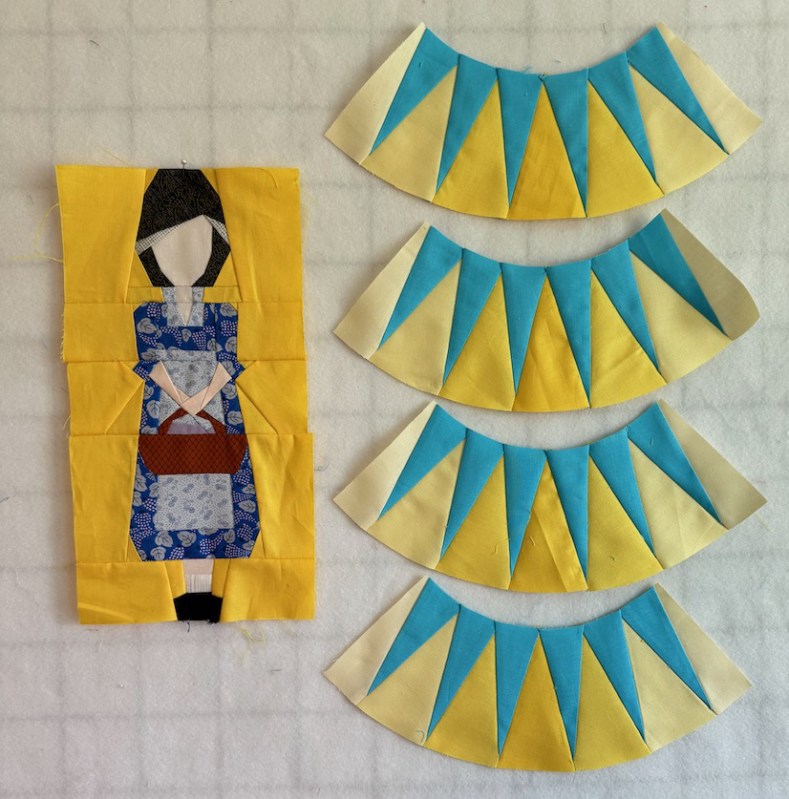
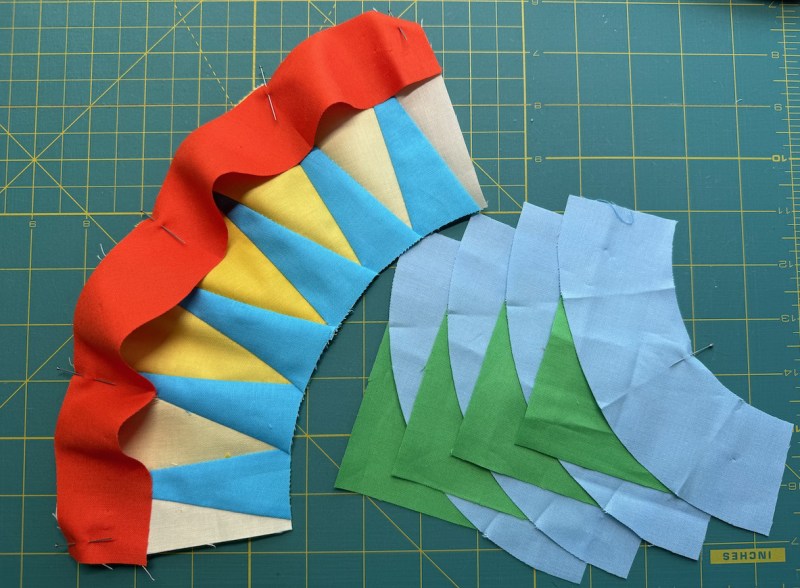
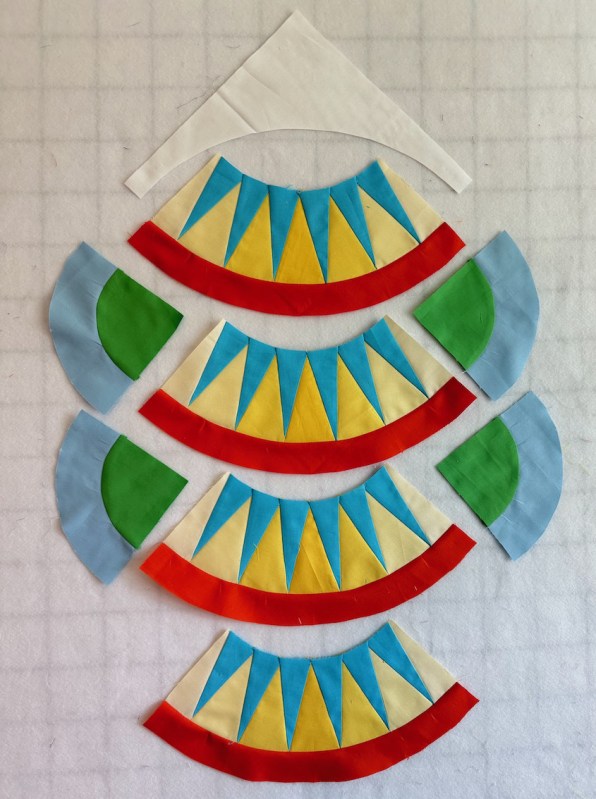
Then in the late light of the afternoon, I picked up this and sewed it together.

Then this. And then it was dinner. When I talked, my voice wavered. Speech can sometimes be too hard. Better to go back to the quiet of stitching. And of course there are always about fourteen things converging all at once: broken expectations of my place in an organization, lingering sorrows from family deaths, missing people who I love, failed assumptions and so on: a heady list. I’m sure you’ve been here. Bad days come for everyone.

In an article I wandered across, I found this comment:

“l’ve gradually come to believe grief is not an episodic event with a beginning and an end, but something indistinguishable from life itself. We may have a brief time in our youth where grief is not part of our daily lives. But otherwise, as humans, we eat, work, sleep and grieve. Grief is not something from which we recover, it’s not a mental illness. It’s as much a part of life as breathing. We are born, and ultimately, we spend our lives letting go. If we are fortunate, we will find moments of joy.”

I returned to myself the next day. I put on a novel and sewed, making space only for the creating, the stitching, the people in the book in my ears, the welcome interruptions from my husband, a simple meal. A luxury, for sure. And after a time, I arrived at this:

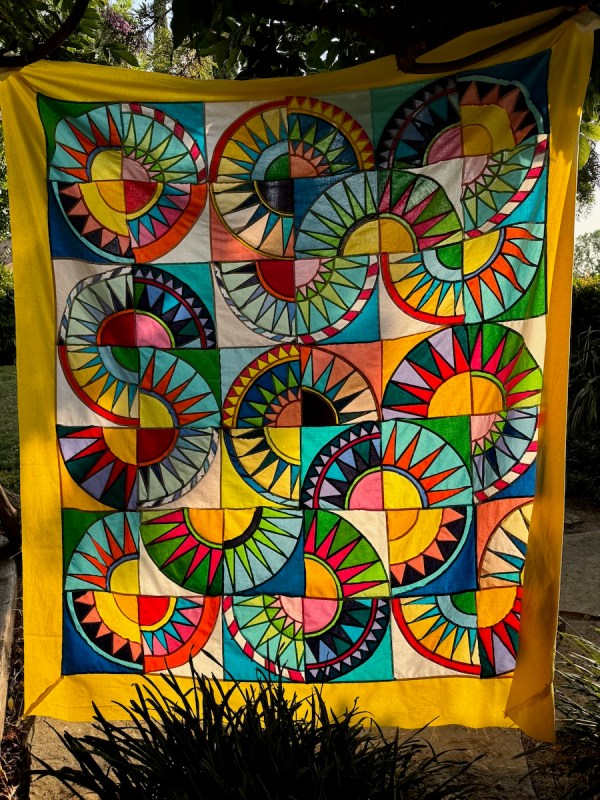
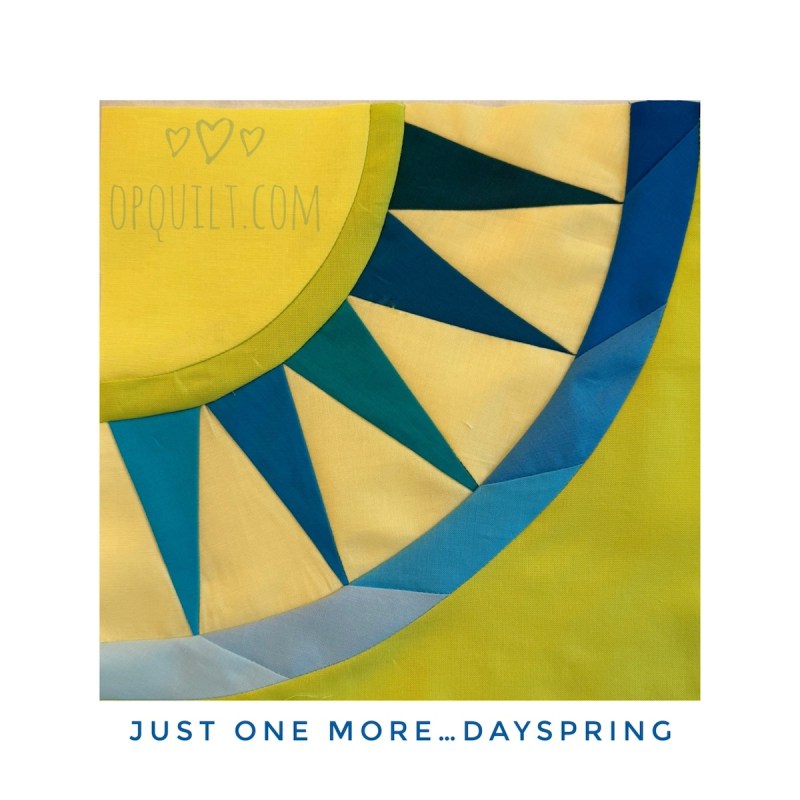
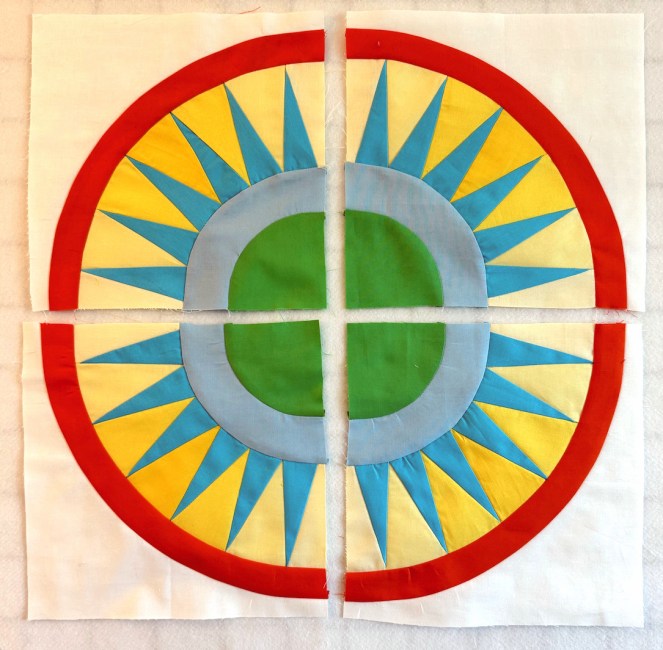
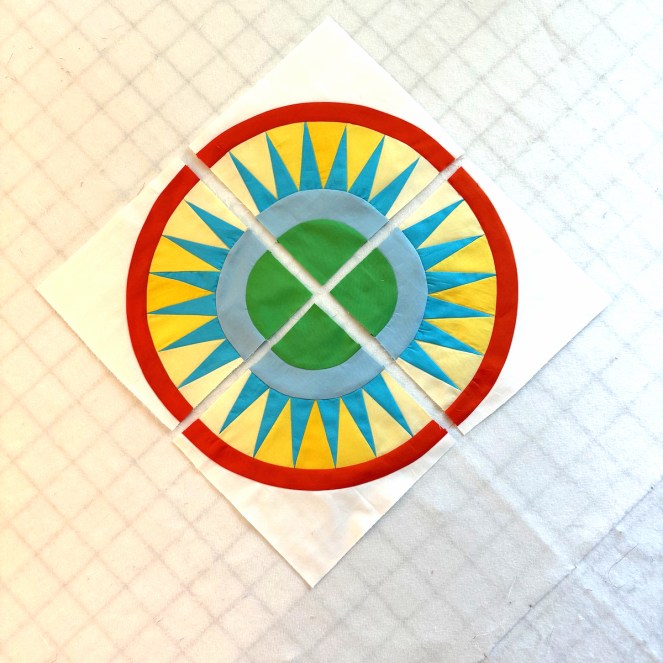
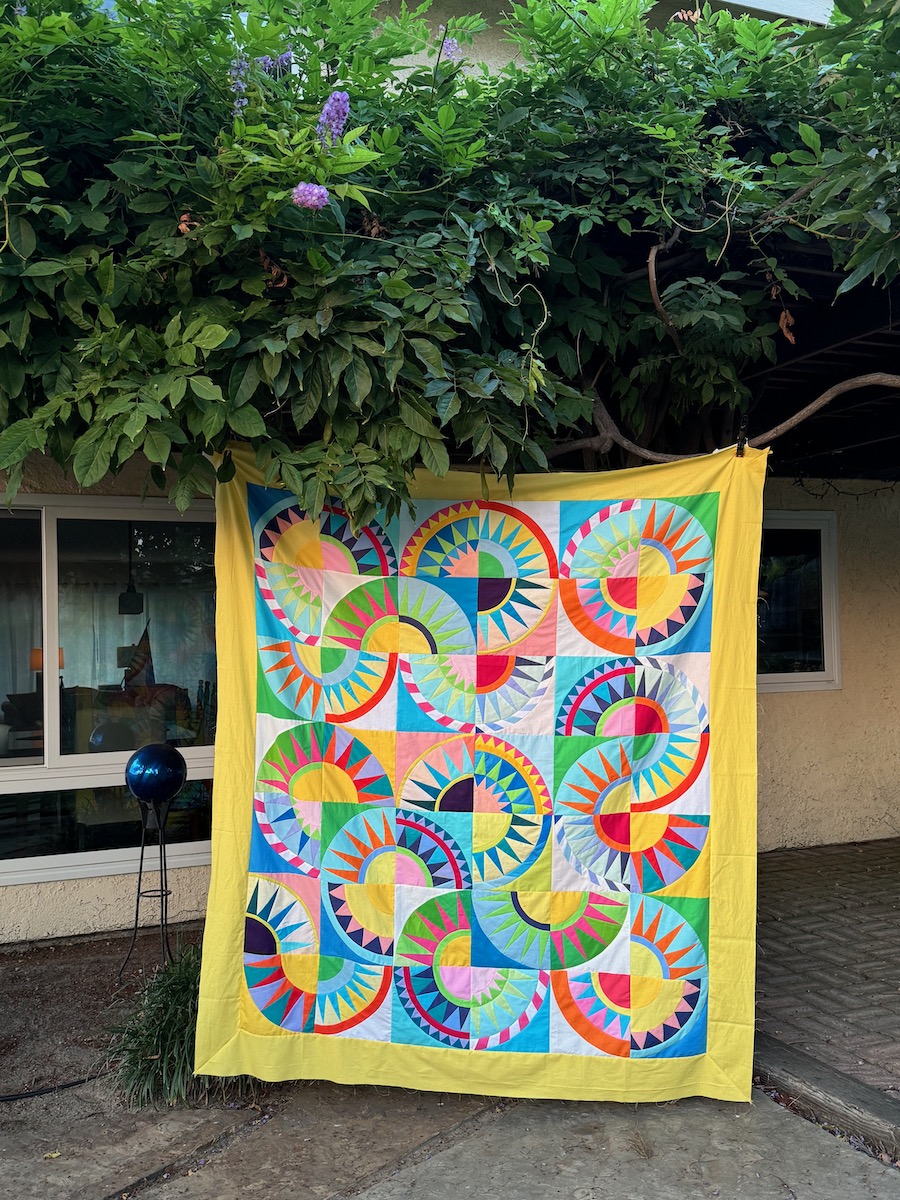
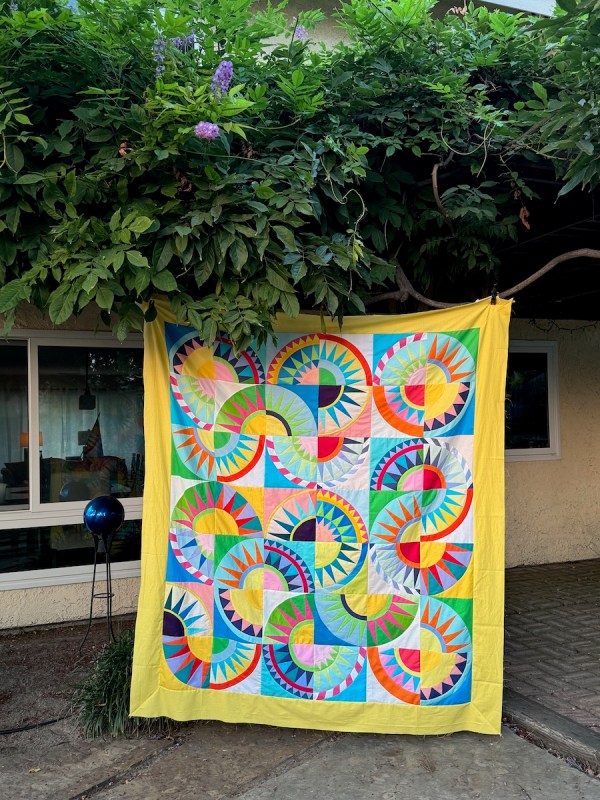
Blooming, New York Beauties Block Five. A happy ending of sorts, I think. That scrambled night still needs to be dealt with, as does grief, as do phone calls, and missing phone calls, and doctor appointments, and grocery shopping — all hours that may not make it into a novel, but are my life. The mellow light from this block eased me through a bump (or two) in the road, and I’m ready to go again.


Below are the photos, because by now, you know the drill for the freezer paper construction and if you don’t, scan through the rest of the posts.

I am still failing in many ways in my life, but I am also succeeding. Sometimes the hours spent look like sand slipping through my fingers. Other hours bring me this: intervals of joy.

Hope you find your happy moments this week–

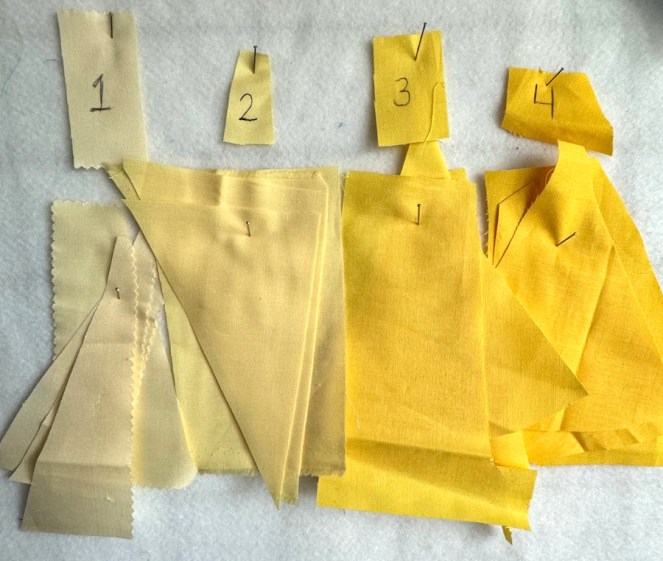
Four colors in this background!

300 Quilts · New York Beauties

New York Beauties • Block 12 • Hopeful

Are we there yet? millions of traveling children must have asked, as the miles piled up. And maybe you are asking if we are done yet with these New York Beauties blocks. Not yet, the happy mother from the seat said. Or maybe after traveling in the arid West with no air conditioning, she wasn’t quite so happy. My sister, Susan Rugh, wrote this book about the golden age of traveling across America — all of us in cars, but probably no seat belts. I love showing off her work (available here).

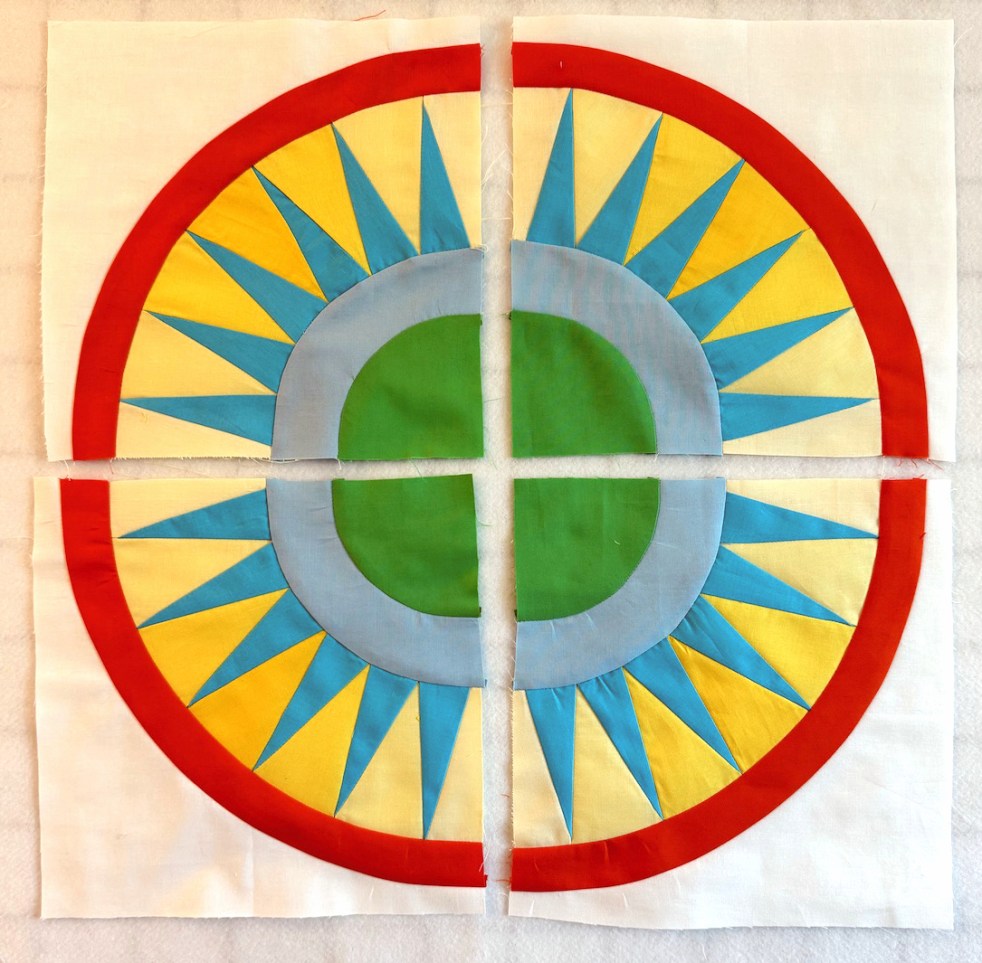
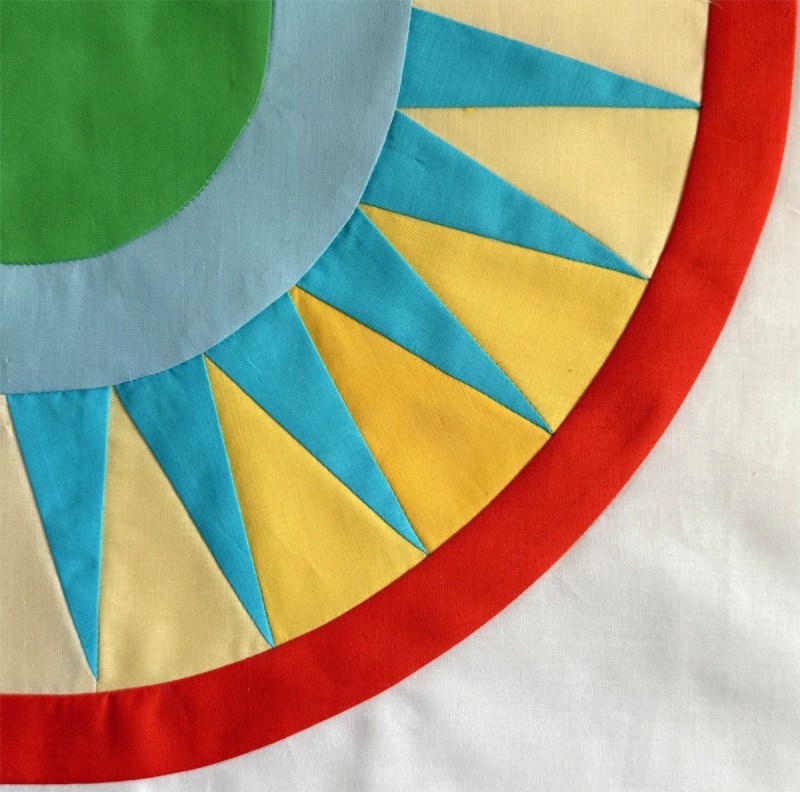
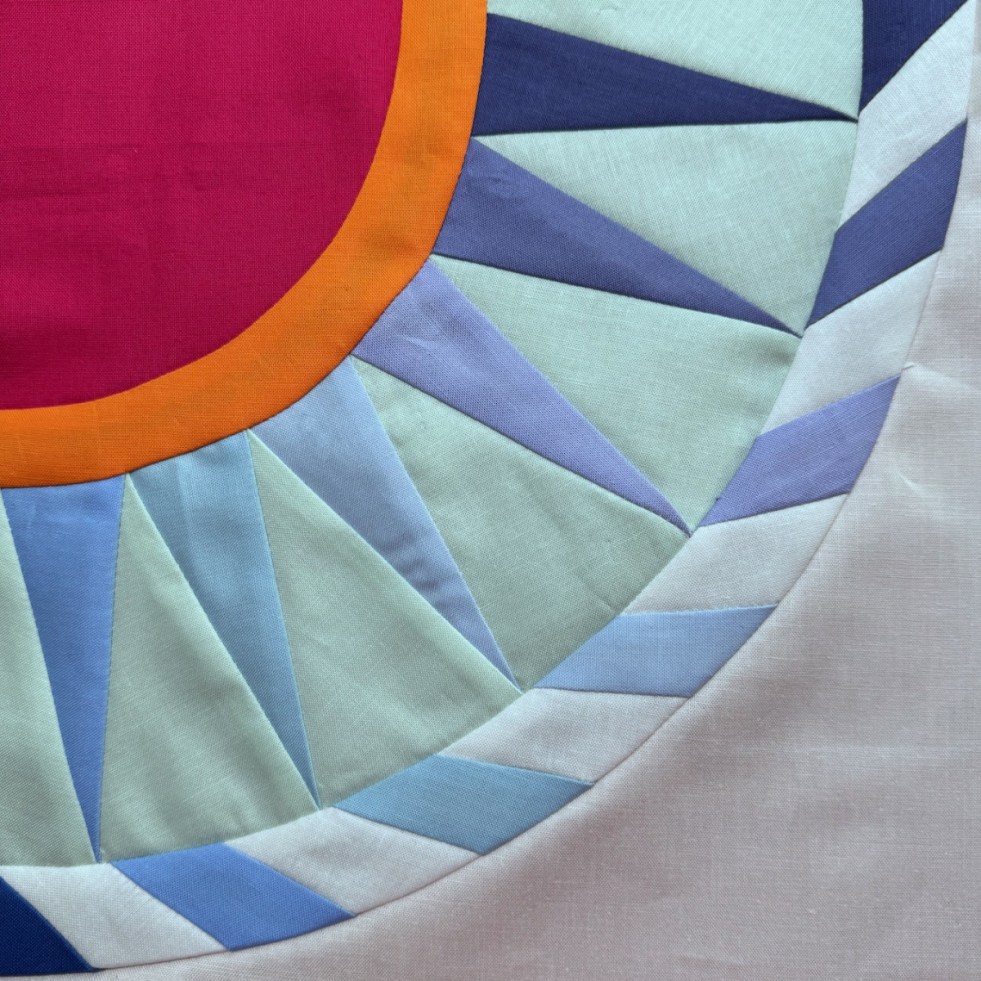
The schedule of our blocks is up on this page, and we are getting there. Really we are. But I chose to do a more intricate one this time around, which leaves mostly easier blocks at the end. Actually, Hopeful, is one of my more favorite blocks, as I like the twisting effect around one of the outer bands. And that red sun-like center is actually not quite so red, but most cameras struggle to photograph red colors, if you hadn’t noticed.

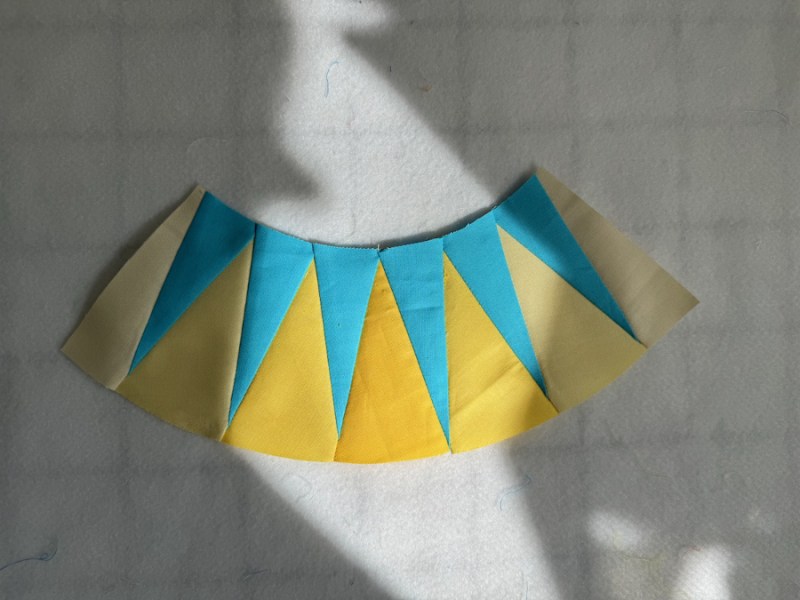
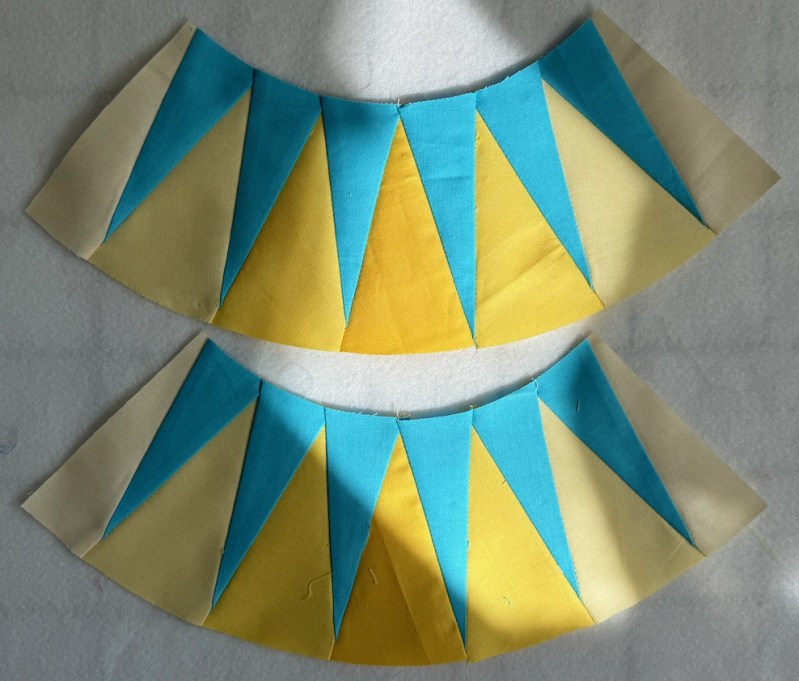
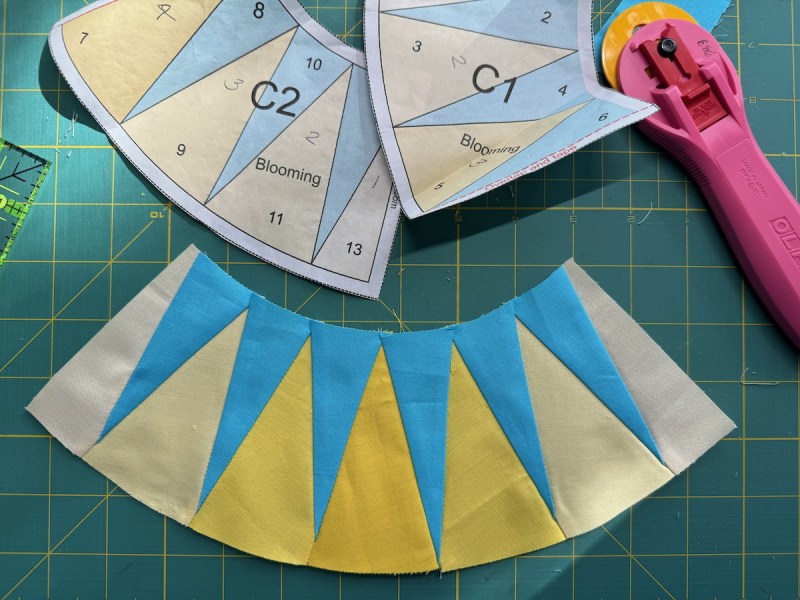
I like to start with building the semi-circles of rays. This post will give you tips and tricks for making this this block (pattern available here). Cut out around the outer black dashed lines, and then figure out your colors. You can see my penciled-in numbers on the rays (C1 and C2 have a soft green background; B1 and B2 have a white background, so no numbering there).

This girl watches over all my Foundation Paper Piecing. I learned in a class from Verushka Zarate (she is coming to Road 2025!) and I made this girl in that class. Underneath her you can see I’ve clipped swatches and numbered them, from 1 to 7, and then I went a little further and cut ray shapes (I only need three of each) and pinned them below. You can pin a length of fabric underneath, if you don’t want to cut a shape of fabric.

Take time to fold them both on the line, and then reverse direction on the line (hope that makes sense).

I iron down the first bit, then lay the second fabric underneath, making sure to keep the fold like this for a second. I’m checking to make sure that Section 8 will fit on the underneath white fabric. It will.

I sewed that, trimmed it, pressed it, and now moving on to Section 9, again making sure that the blue behind is as large as the next section.

Reminder: stitch along the folded edge of the freezer paper.

Here I’m doing the larger rays, and the same process is the same: fold back the freezer paper so you can see the needed shape. I went ahead cut some ray shapes the needed size before I started, but I most often will just put a hunk of fabric back there.

I usually sew a couple of these sections at a time.

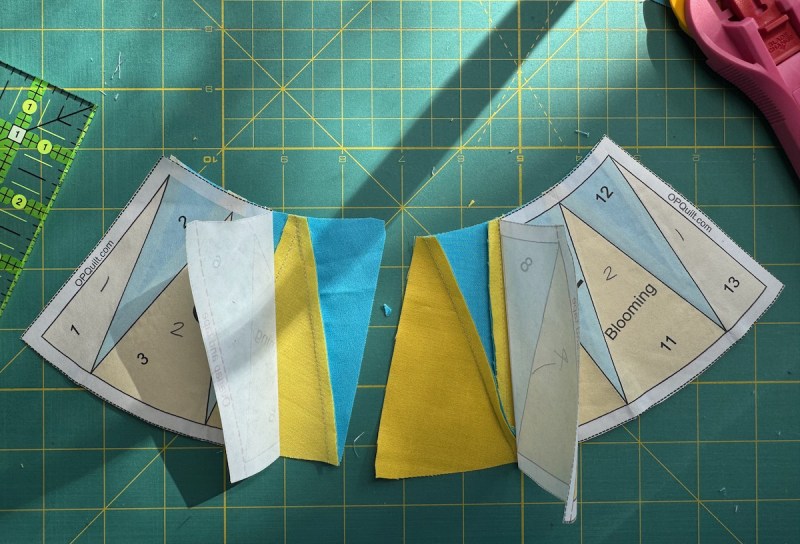
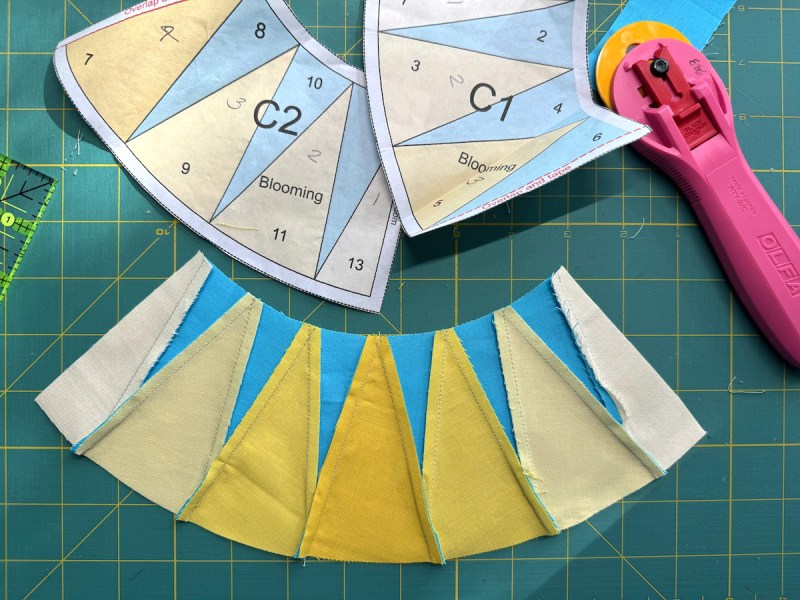
With all the sections sewn (1) they look kind of globby, but trimming them up (2) makes them look neat. I’m prepping in image 3 to join them together, carefully and s l o w l y pulling back the freezer paper. If you rip it off quickly, you are liable to pop your seams. Pin the units together (4) and you are rolling.

Yeah. Whoops.

I used the wrong color. Those who read this blog know that I would probably just leave it, as in the final quilt, it won’t be noticed. But leaving it now…on the first block…while you all are watching? No.

I picked the section apart and cut an exact replica in the correct fabric, weird angles and all.

Better.

And with that, block 12, Hopeful, is completed. Please make three.

There are many more tricks for freezer paper sewing on the other blog posts about these blocks. You can find them listed in order on my New York Beauties page, above. Apparently I’m supposed to make two of these blocks in June; I guess I got in a rush. One more is coming and it’s Block 5: Blooming.

And yes, you are allowed to second-guess yourself on your colors, but you are not encouraged to get stuck. I’d probably make that center sun part a little pinker, than redder, but as you can see in the image below…it’s really just fine.

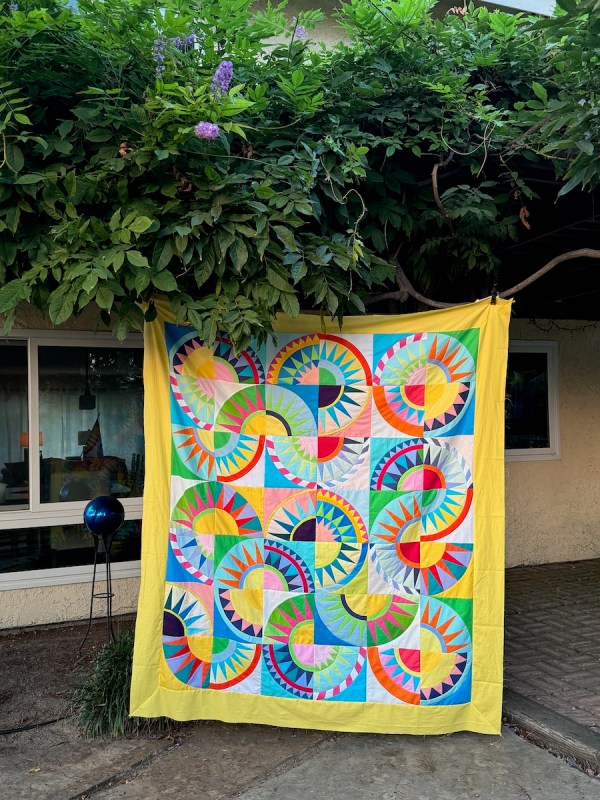
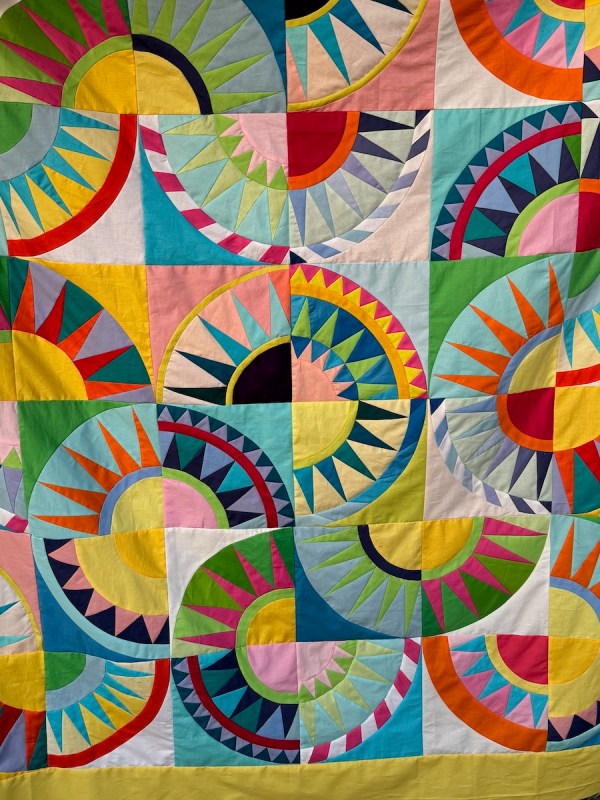
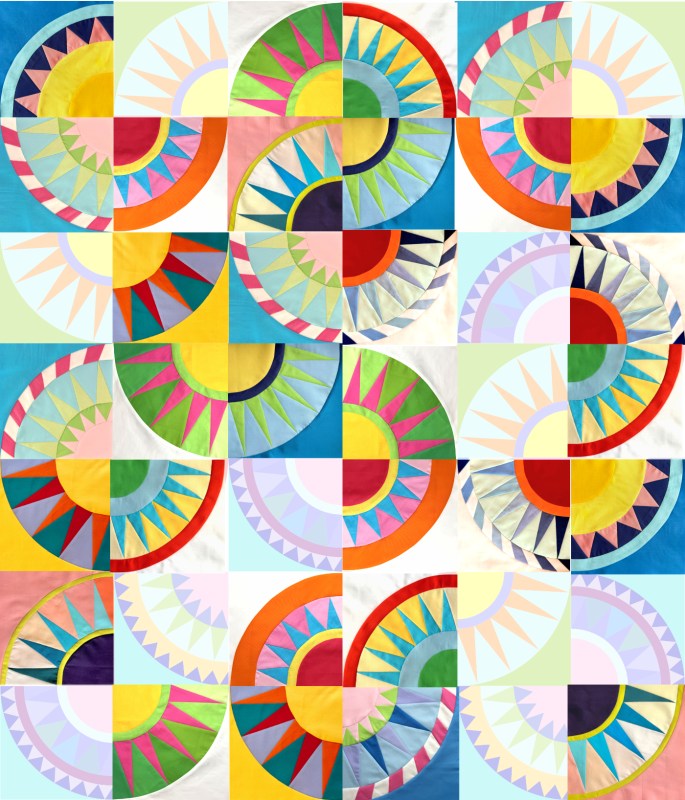
Eight blocks finished.
Four to go.
And one bonus, if you want to make one.

New York Beauties
Gridsters · Patterns by Elizabeth of OPQuilt

Mercato Square • new pattern

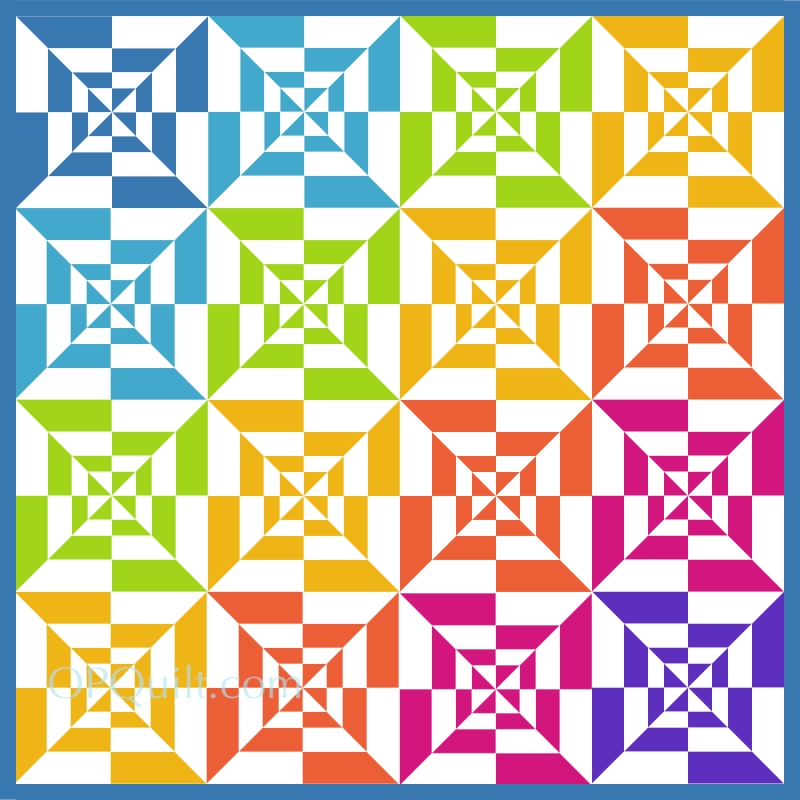
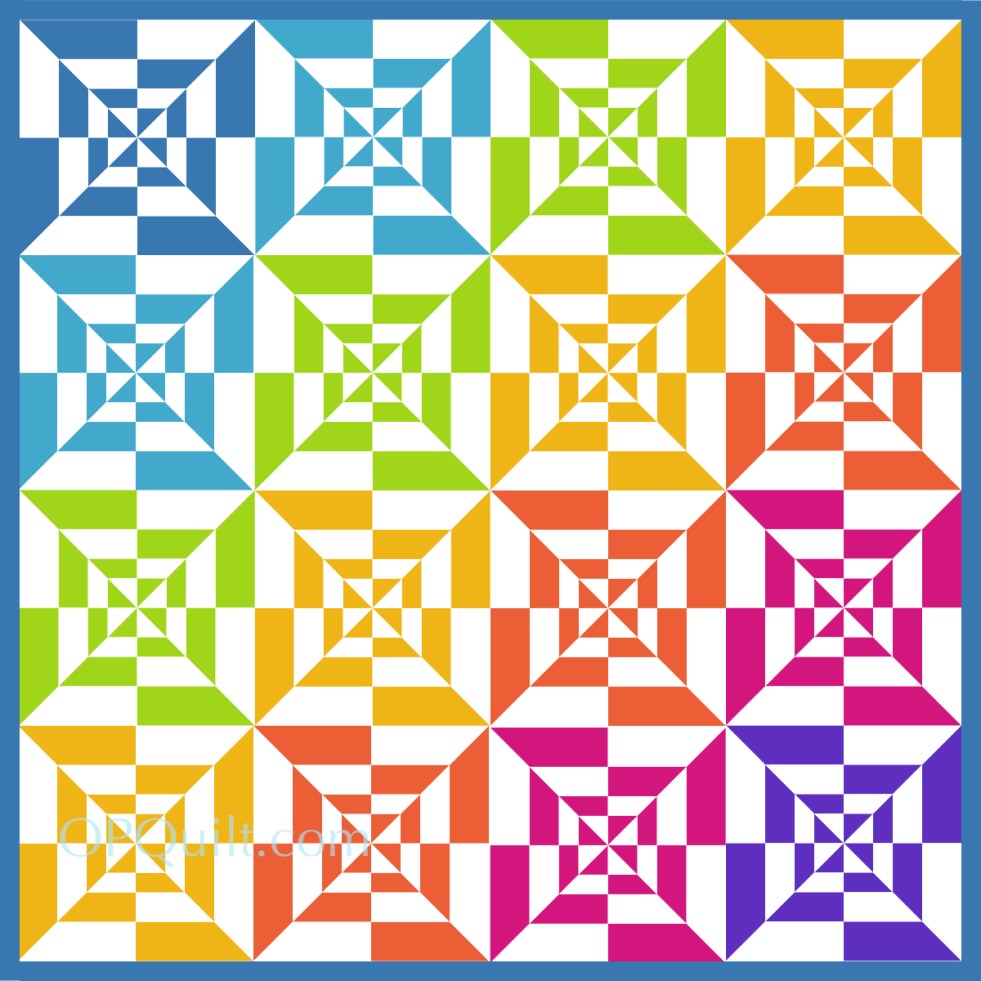
Mercato = market = me thinking about Italy, and really how fun the market squares are wherever you are, but especially in Italy. Okay, and maybe in France. Couple this with needing a block for my turn in the Gridster Bee, and after some searching and trying different ideas out (I think I wrote and erased a few bee Google Spreadsheets) but now! Finally! I’ve settled on this:

As always when I try out a new pattern, I try for different looks:

How about Christmas?

How about colorful?

And then I tried merging some pieces, for Blues, a smaller 24″ quilt with a pop. There are a few more options on the pattern. But I wanted to get back to trying freezer paper-piecing on this one. But then I thought, what if someone doesn’t want to try that? So in the main pattern there are three different ways to make the block: paper-pieced (I used freezer paper), traditional templates, and then rotary cutting. In Blues, there are two ways to get it together. We aim to please.
But first, fabric.

I wrote this about a gazillion times, working to get all the info in there. Like, should be pattern pieces be right-side up? Or did it matter? (It matters if you are using print fabrics, but not solids.)

I also tried it with freezer-paper again, as I’m really liking this method. I took about a quadrillion photos to illustrate this post, then decided your eyes would glaze over, if they haven’t already. So here’s the basics in a free PDF handout:

Click on the button to download. Click on the title to get a sneak peek.

There are places I press the seams to the dark, making it easier to put them together (as they will nestle).

There are times I think the seams should be pressed open, so there is no see-through. (Doesn’t that look fancy?)

I believe in pinning.

And there are times you should not sew the seam at all, like taking a little break right at the center, moving the seam allowances to the front as you approach that center, and then lifting the needle/presser foot, hopping over the center by one or two stitches. Sweep the seam allowances to the back, then continue. When you are finished sewing the seam, clip the loop of sewing thread at that place.

Mrs. Quinn kept me company. I heartily recommend this book.

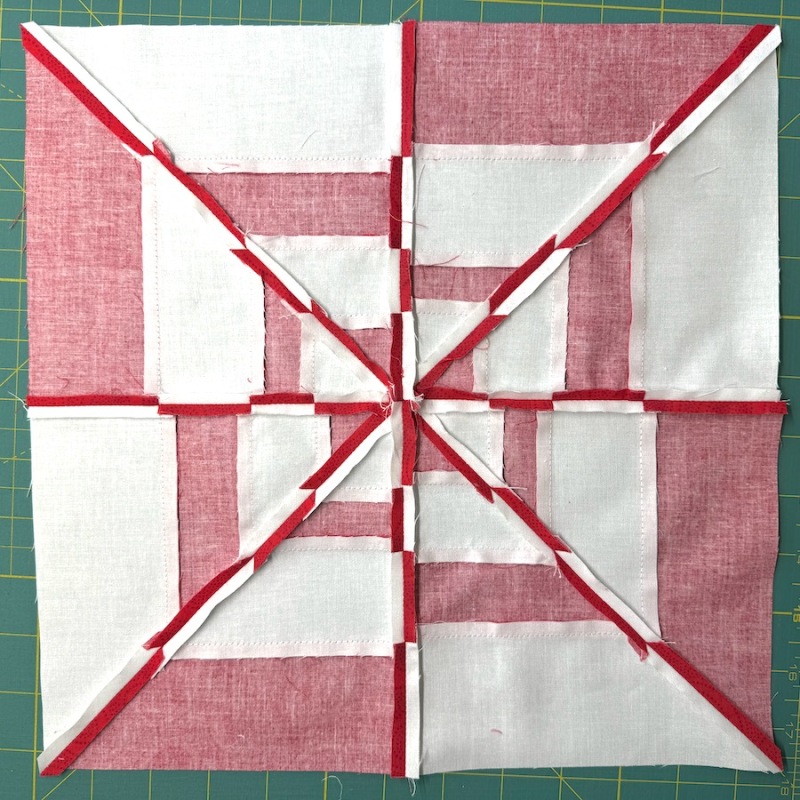
I made these in quadrants, trimming them up as I went. One done.

BIG HEADS UP! If you are making this for the Gridster Bee, make sure your outside reds are “pointing” the right direction. In my version the outside edge red pieces point counter-clockwise. It might be easy to get them going the wrong way.

Two done, this one in a different method (templates), and fabric.

Overall, I still prefer the freezer paper method.
The first time I tried that method, I was quite wobbly.
Second time, just sorta’ wobbly.
Third time, breezed through it.
This time? So easy: I loved it.
I have other posts on using freezer paper for foundation paper-piecing, but for this one, don’t forget to download the handout (above).

Cousins. I thought I wanted my bee-mates to make it scrappy, but then a package arrived and my Past Self had ordered 4 1/2 yards of Painters Palette Solids in Poppy Red from Keepsake Quilting.

Guess I’m doing Solids.

And this is why I like Painters Palette: I washed all four-and-a-half yards of the red in the washer with one color catcher sheet, and you can see the barest, faintest shimmer in a couple of places. I pre-washed because I was curious; generally I don’t pre-wash my Painters Palette solids, as I know they are pretty colorfast.

Gridster Beemates, keep reading after the end as I’ll have some tips for you.

There are 25 blocks in the larger quilt, so my bee-mates will make two each and I’ll get started on the rest. And a note to my bee-mates: I’ll send out the fabric a couple of months early.

Look for it, and have fun making!

To the members of the Gridster Bee: I’m sending you each a quarter yard of Poppy Red and White.

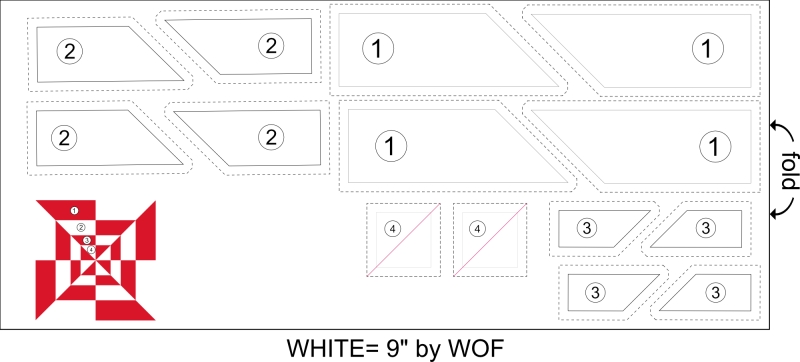
I worked out the layouts using the dimensions of the fabric, so you can get TWO blocks out of what I’m sending. (I marked the fold of the fabric on the right.)

Admittedly this is a layout for templates. If you want to use the Foundation Paper Piecing (freezer paper, or otherwise), it might be helpful to think in terms of strips:

Remember that because this is a solid fabric, and there is no right or wrong side, you can flip the fabric around as is needed. No, there is not TONS of fabric, but there is plenty. If you can’t get the two blocks out of what I’ve sent, send me back the scraps, if you wouldn’t mind, and I’ll combine and get them all finished. I’m trying to get all the blocks out of one dye lot of Poppy Red, which is why I’m calculating this all out.

And if you are a newbie quilter, take it one step at a time. I’ve tried to provide lots of materials and handouts. If you are just *done* after one block, that is fine. Send it, along with your signature block and the scraps, and I’ll take it from there.

Thank you so much for making for me in September–

300 Quilts · Free Motion Quilting · Something to Think About

Small Steps: Push-Pull

I’ve been thinking a lot about Push, and Pull.

The terms are popularly used when discussing how we interact with the internet. We receive Push Notifications, which means that someone, somewhere is sending us information or things that can be helpful. Or not. We can choose where we go, pulling information to us in terms of blogs (like this one, thank you). We can also pull information from bank sites, news sites, school and medical sites so we can gather information or read for pleasure.

We are familiar with push-pull in our own lives, aside from the internet. For example, when I go to a Guild meeting like I did this week, and have to show up early to set up the book sale, take minutes, make sure the substitute photographer is squared away (because the regular one didn’t show up), serve on the Nominating Committee (hallelujah — we got our President-Elect!), it is a push because NONE of those jobs are what I officially do (I run the website). Some activities in our lives are push-pull: volunteering, for example. Or paying attention to the weeds in the garden because you want to plant flowers.

But if I can plan an appliqué project, take a 3300-mile road trip visiting family (and grandson Alex, below) and enjoy time with my husband, I’d call it mostly a pull.

This idea of push-pull on the internet was discussed in a radio interview of Kyle Chayka with Ezra Klein. During their discussions about the nature of the internet these days, as well as Chayka’s newest book, Filterworld, I became interested in this idea. What is pushed onto me, and how does it affect how I feel about the quality of my life? And what is the effect of all that pushing? Chayka feels like it changes how we view things on the internet, and why — perhaps — our eyes glaze over quickly:

CHAYKA: “I mean, most of the encounters we have with culture online are pretty bad, I think. We do have much more choice in what we consume and all of these other possibilities surround us. But what we lack is that kind of museum-like experience or movie theater-like experience where you do have to sit with something and think about it and puzzle your way through it without flipping to get an answer.”

EZRA KLEIN chimed in: “And the problem with the push internet is it’s not really under your control, right? It’s about what the force pushing is doing. But as that became bigger, people stopped doing the things that allowed the pull internet to exist. There aren’t so many blogs anymore. Not none, but there are fewer. People put their effort — because it’s the easier way to find audience and eventually to make a living — into the algorithmic spaces. And so there’s simply less of this other thing there to explore.”

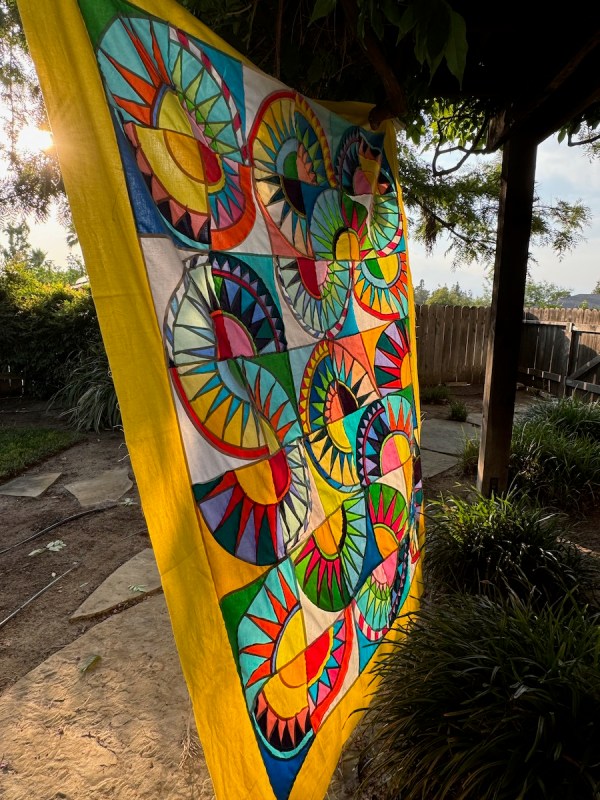
Top finished: April 2024

CHAYKA: “I think a feeling I’ve been having a lot lately is that scarcity is often what creates meaning. When you’re surrounded by infinite possibilities, when you know around the next corner is another video that might be funnier or more to your liking, you’re never going to sit with the thing that’s in front of you. You’re never going to be forced to have the patience, or the fortitude maybe, or the kind of willpower to fight through something and figure out if you truly like it or not.” ~ Kyle Chayka

Sitting with the thing in front of you.
Museum-like experience.
Algorithmic spaces.
Push is not under our control.
Scarcity creates meaning.
Puzzle our way through it.

How much of our life is a “push” experience? How much of our activities and interests are “pull”? Do we value our time at the machine, or with cloth, or with the needle because it is a “scarce” activity? Or because we had the patience and stick-to-it-iveness to finish the stitching, the quilting, the cutting?

I guess it could be both. I guess it could be all.

Final image: Made in the 1600s for one of the popes, this smallish curio cabinet is a classic example of sitting with the thing in front of you until it is finished. Although I have to admit that if I were the cabinet-maker on the other side of the centuries, it might be feeling like a push. And that’s how it goes, right? I saw this in the Getty Museum in March.