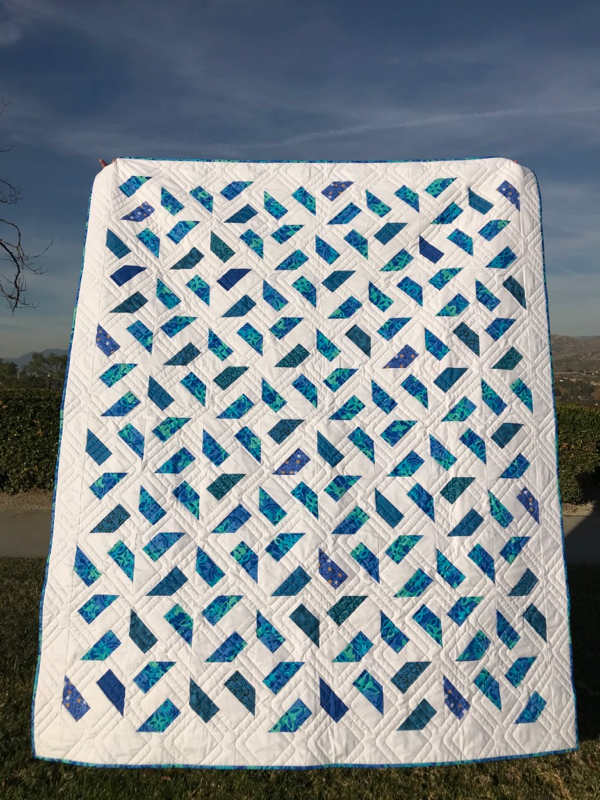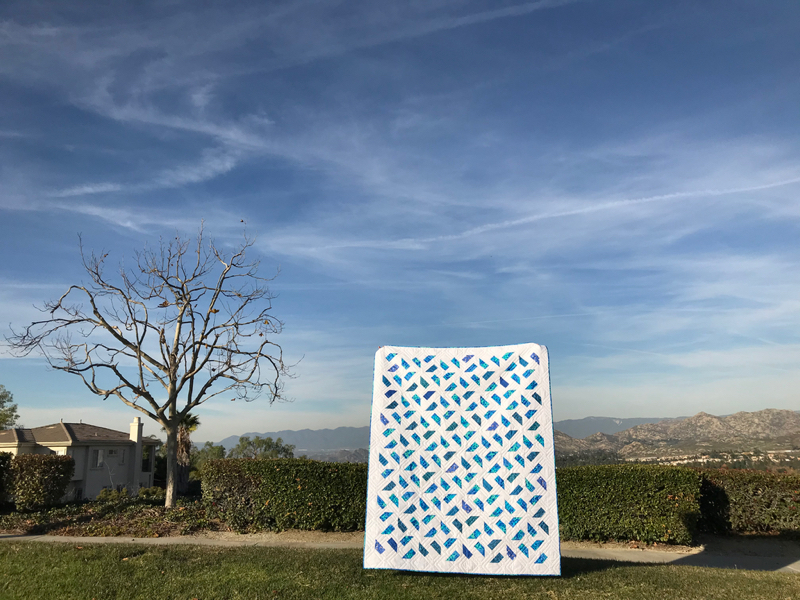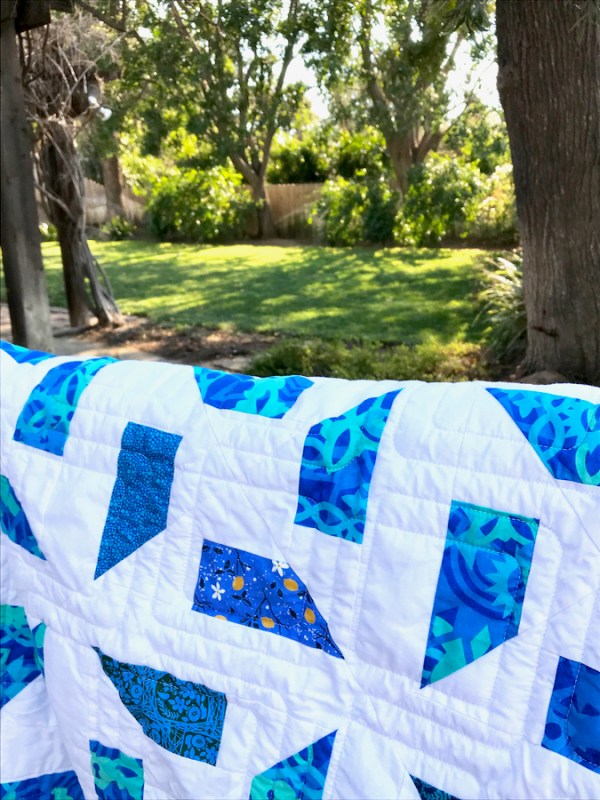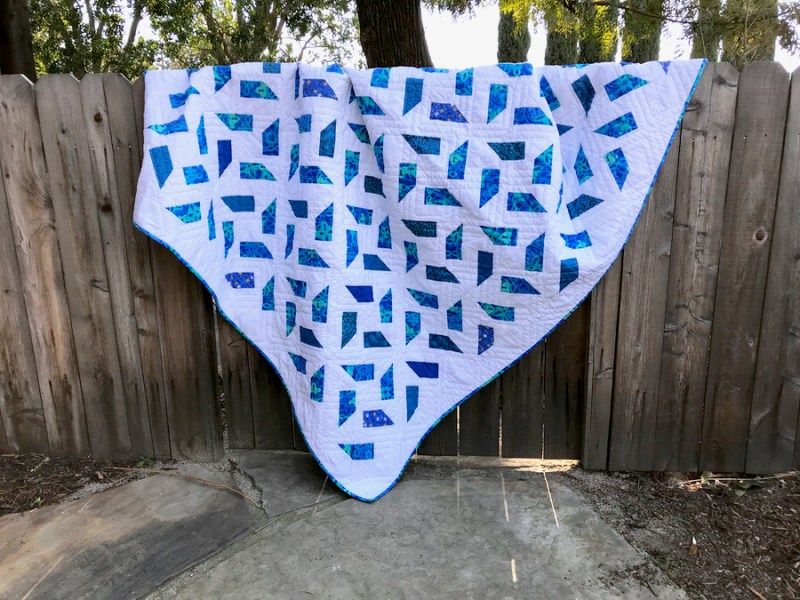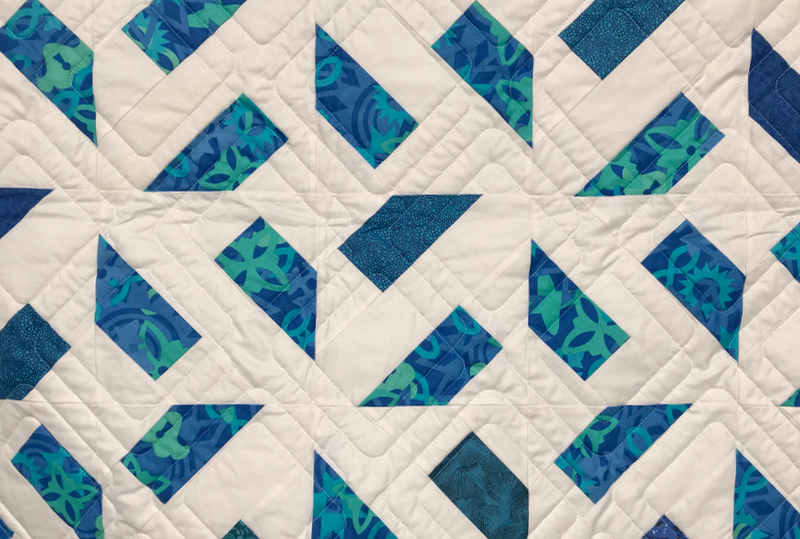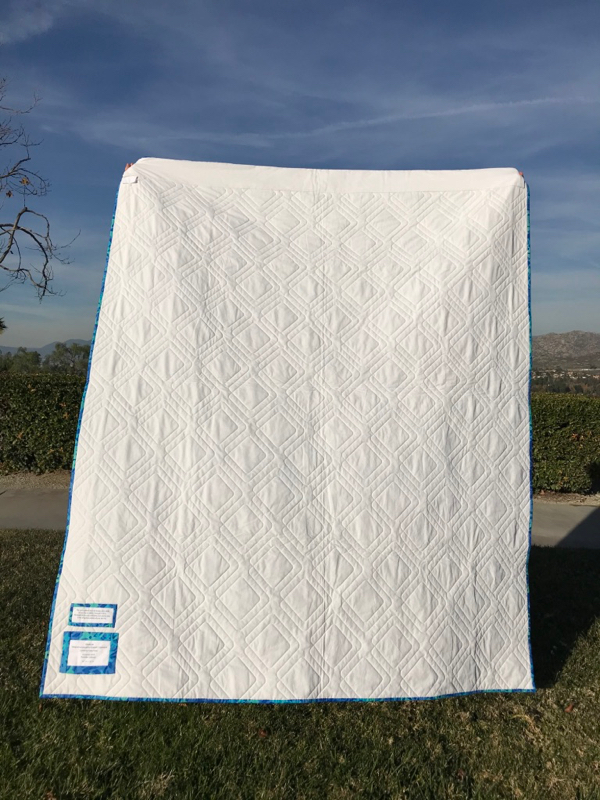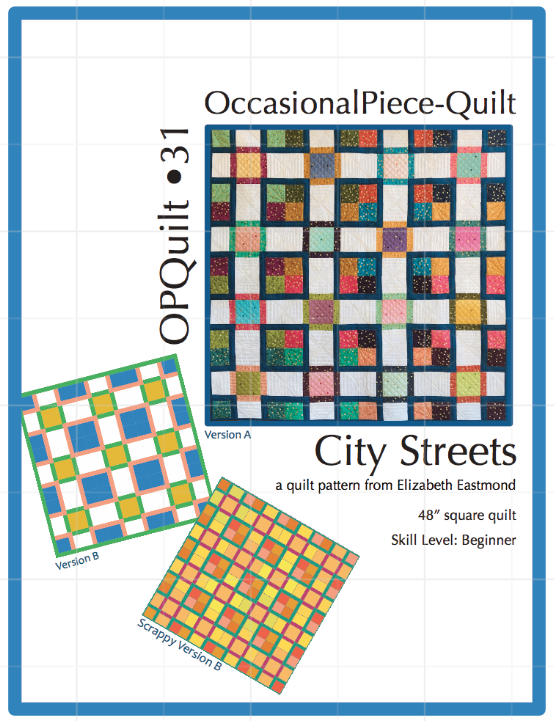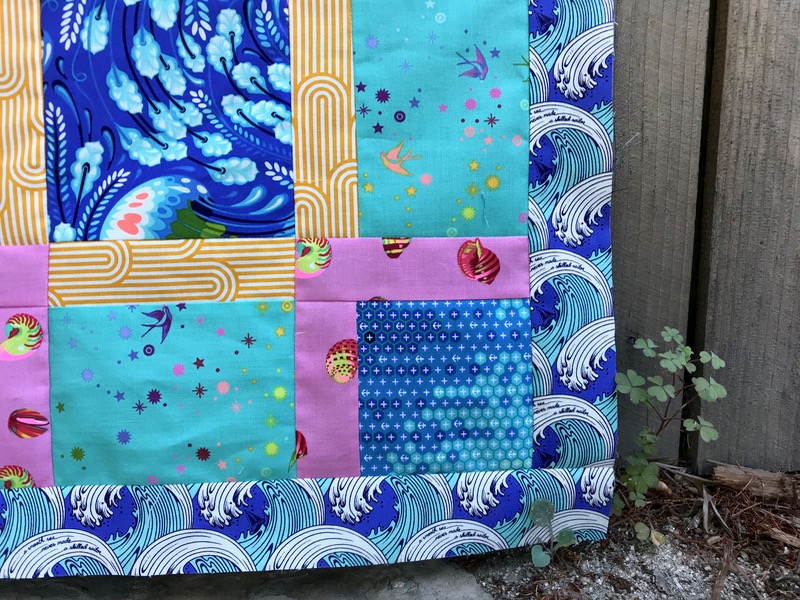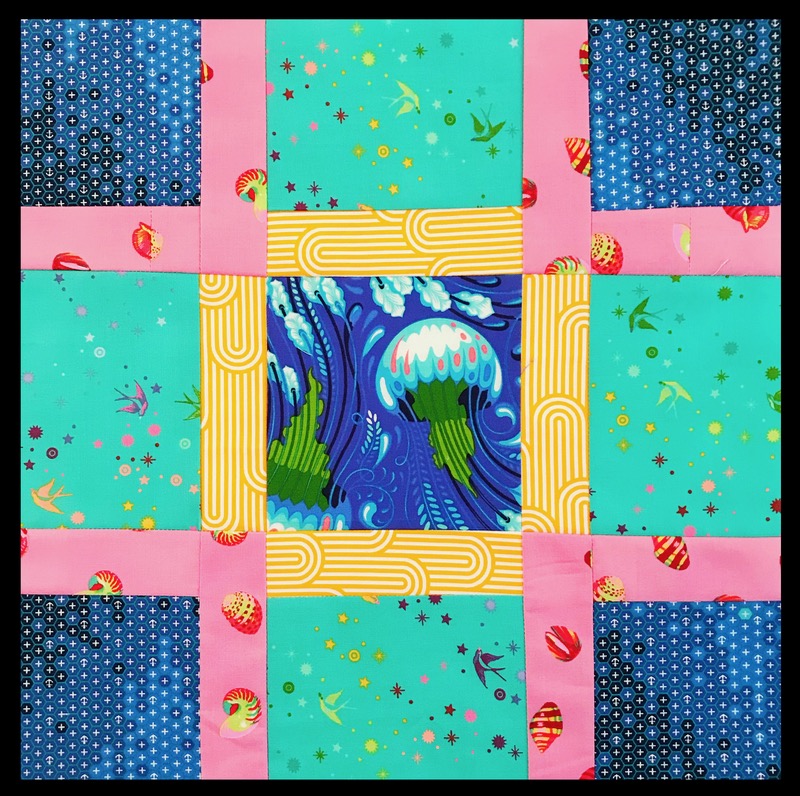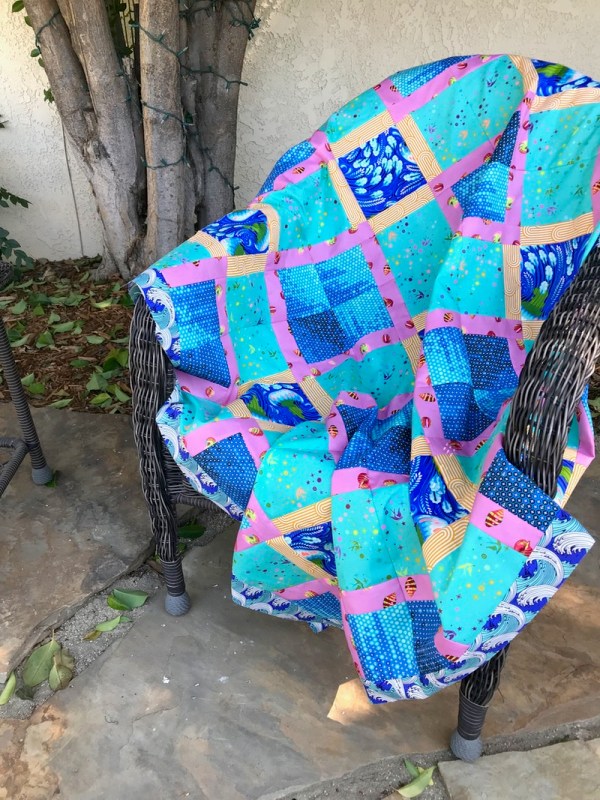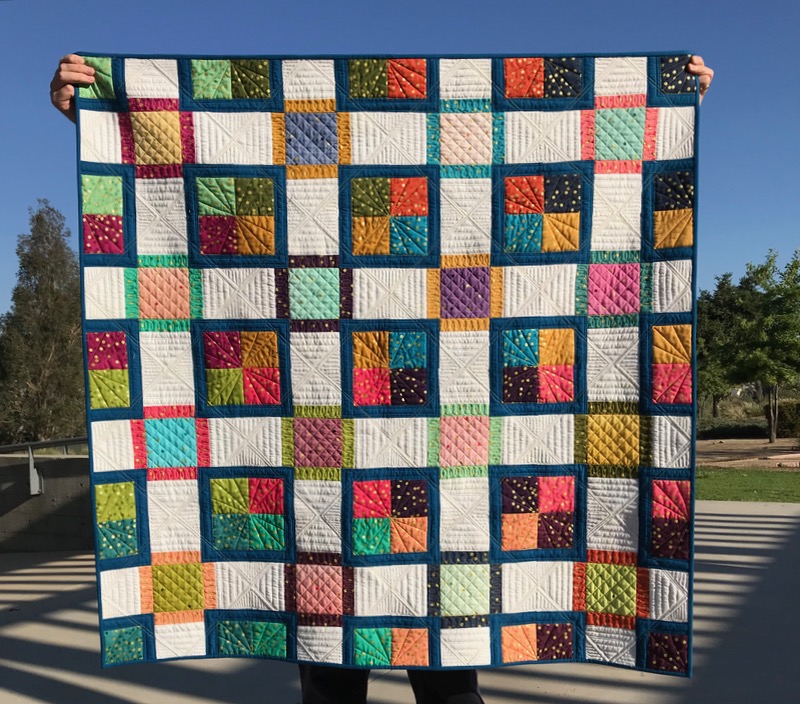
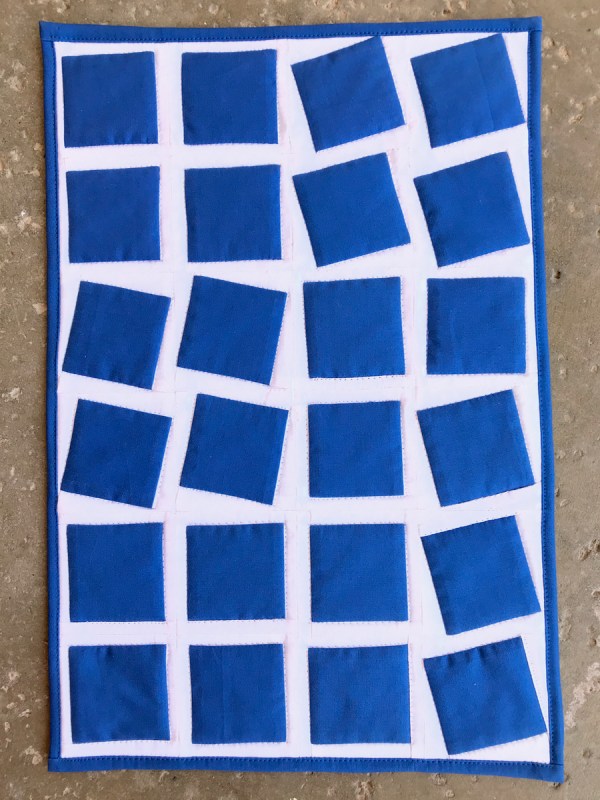
I made it up in a 15″ block pattern, and broke into my meager Tula stash to create a colorful quilt. This pattern is made for beginners, with no triangles anywhere. I envisioned the 15″ block to sew up quickly for baby quilts and other times when you need a quilt. Fast.
I cut and sewed this all in a long morning, which leaked a bit into the afternoon. It’s a pretty quick sew if you are experienced, but a bit longer if you are a newbie.
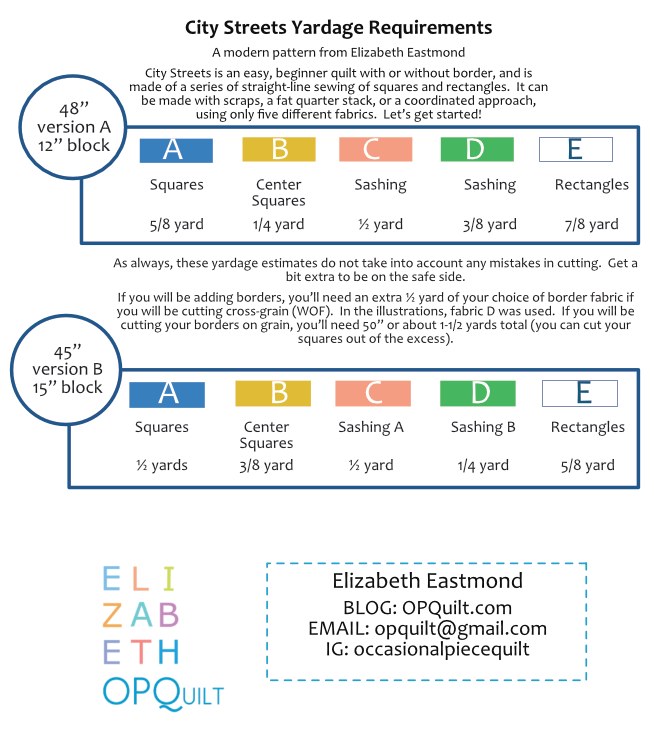
I also learned a few new things in my Affinity Publisher Software, making the pattern more colorful and easy-to-read. Above is the yardage chart for both versions.
Here’s a coupon code for you in case you want to pick it up. Head over to PayHip and use CITYSTREETS20 — it will get you 20% off the price for a little more than a week (it expires on September 17th).
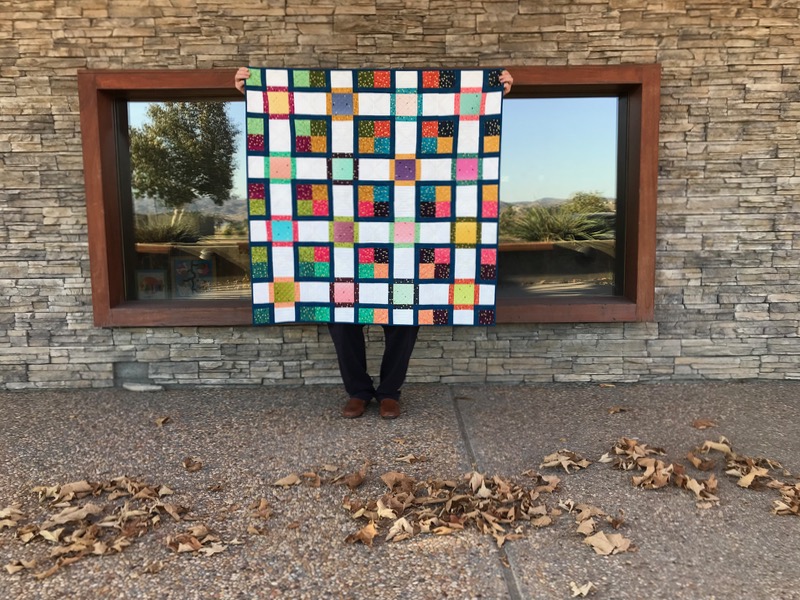
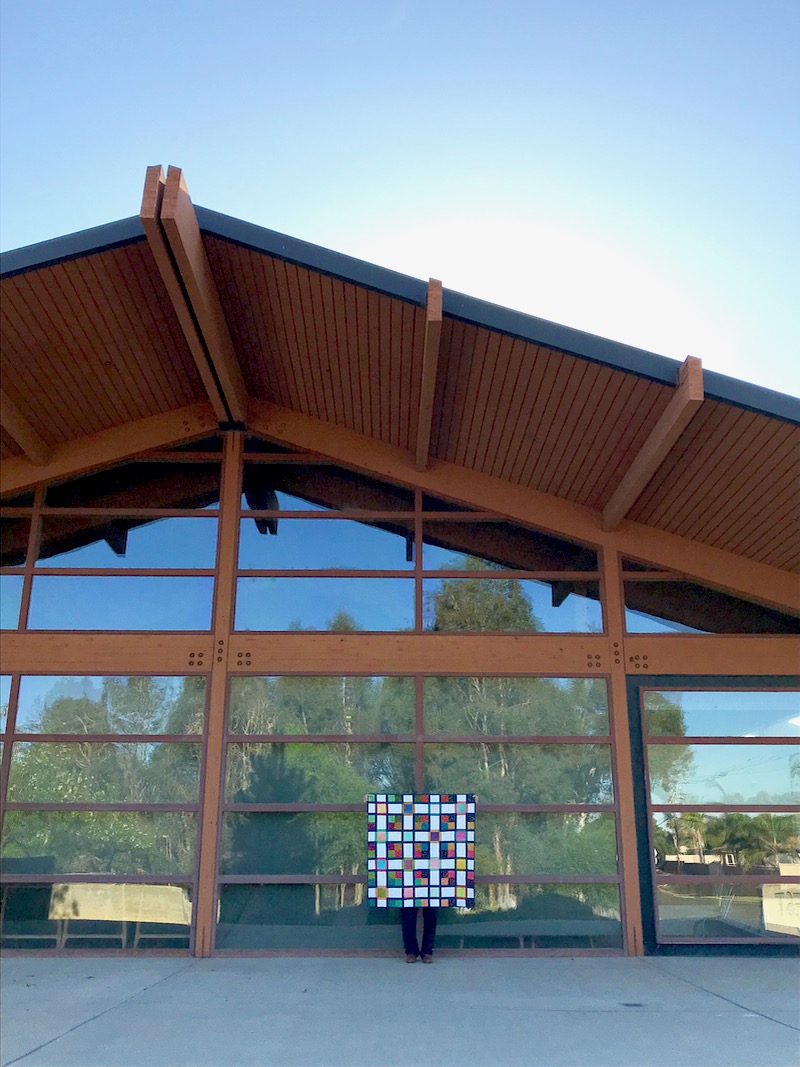
Recently my husband and I took my latest quilt, City Streets, out to a small branch library in our town for some photos. It was a deserted Sunday afternoon, perfect for us to find interesting shadows and backdrops.
City Streets, 2019 Quilt No. 224, 47″ square
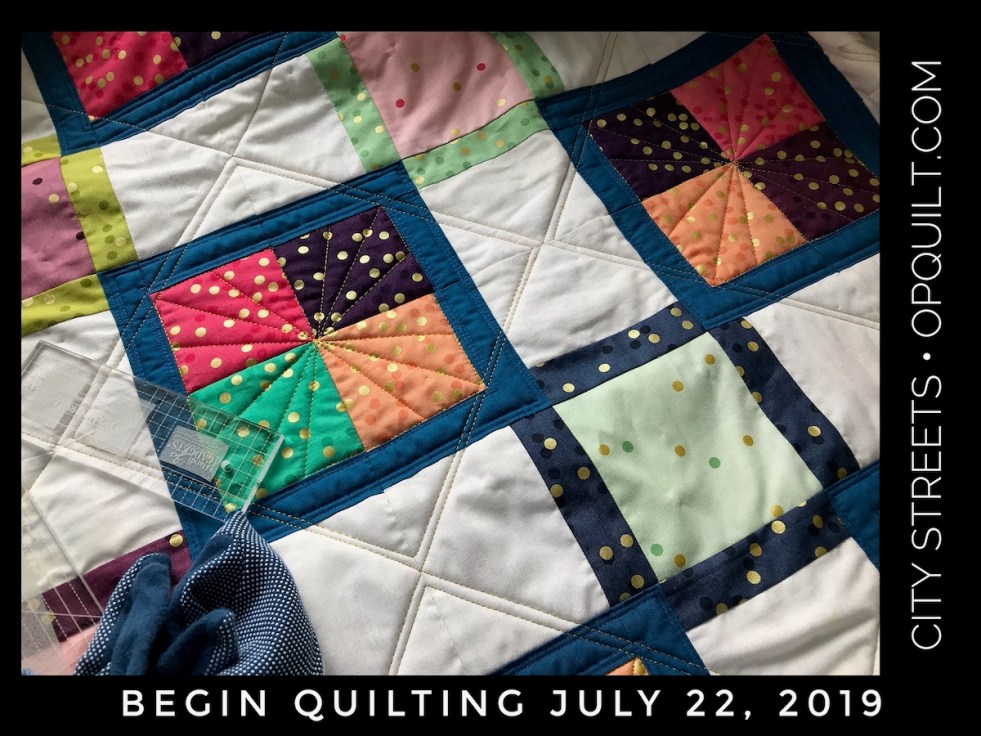
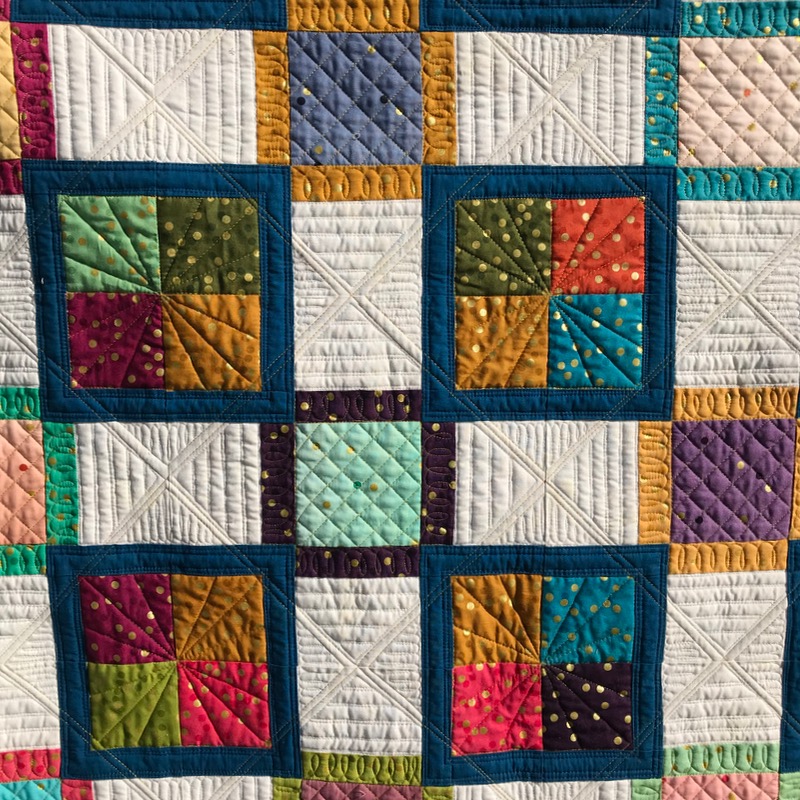
I made this with a fat quarter stack of Vanessa Christensen’s ombre confetti dots: I wanted to see if it was possible for me to work with one line of fabric. I almost made it, but pulled in some white grunge and a solid to offset the colorful squares. I quilted it on my Handquilter Sweet 16 using Art Studio Color 101, which looks like gold, but it’s not a metallic thread. I did the background using So Fine color 401, which is a white, but not stark white hue. I only mention these details because our last guild meeting had a speaker who emphasized this point: we should tell people what thread and fabric we quilt with.
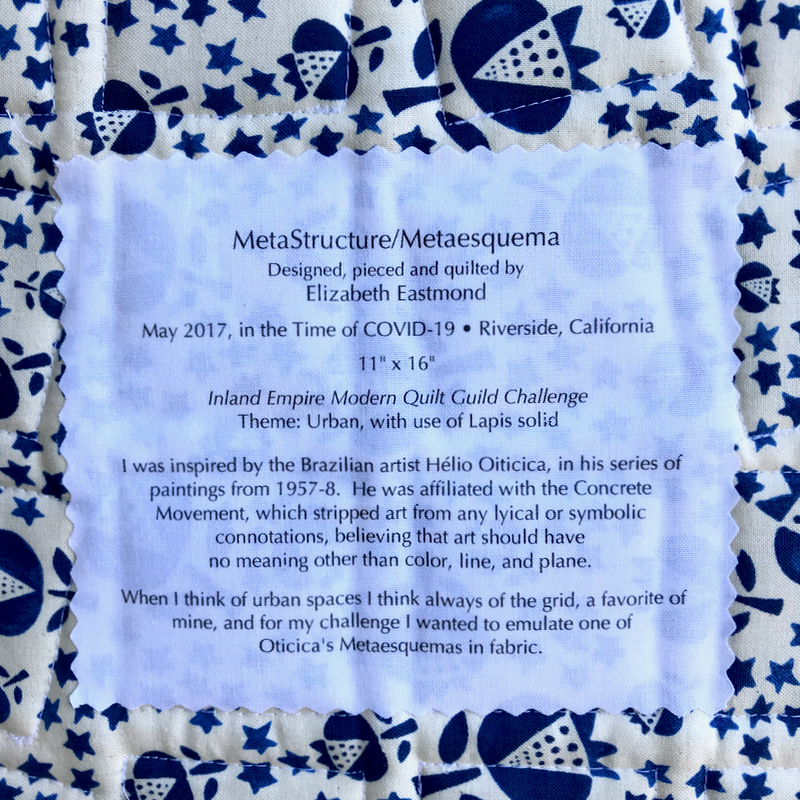
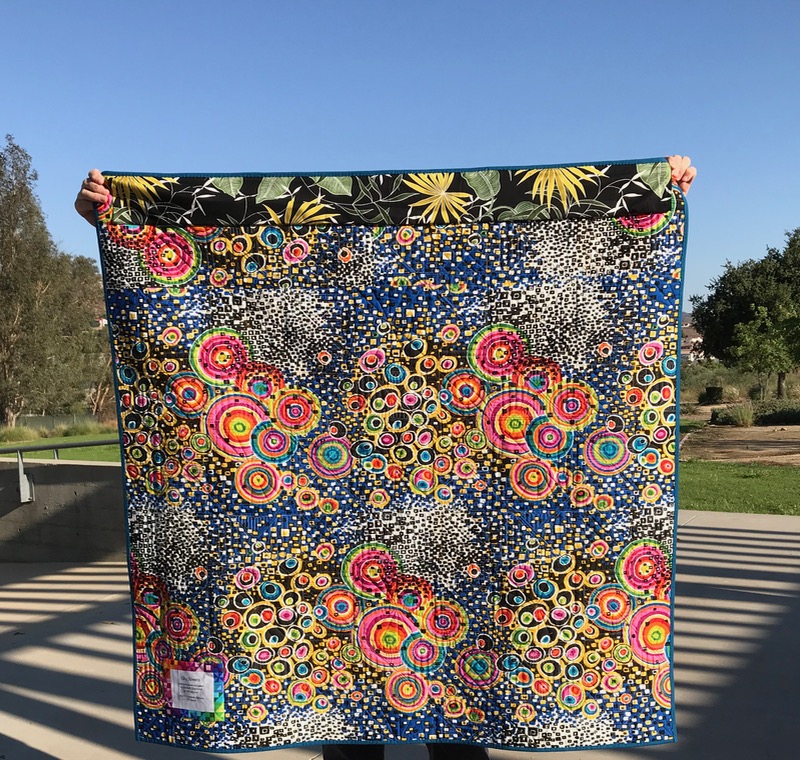
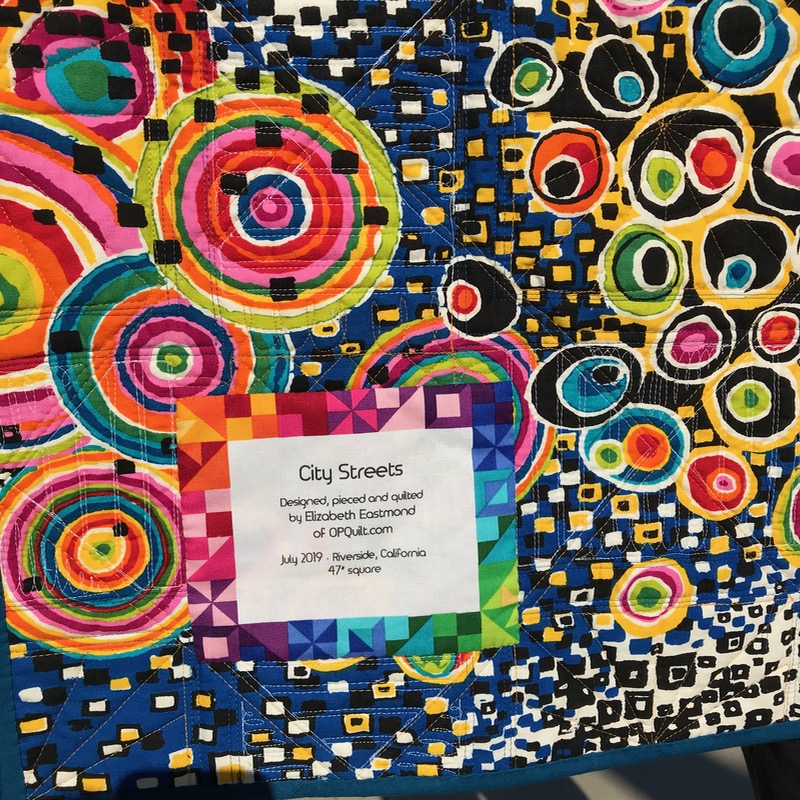
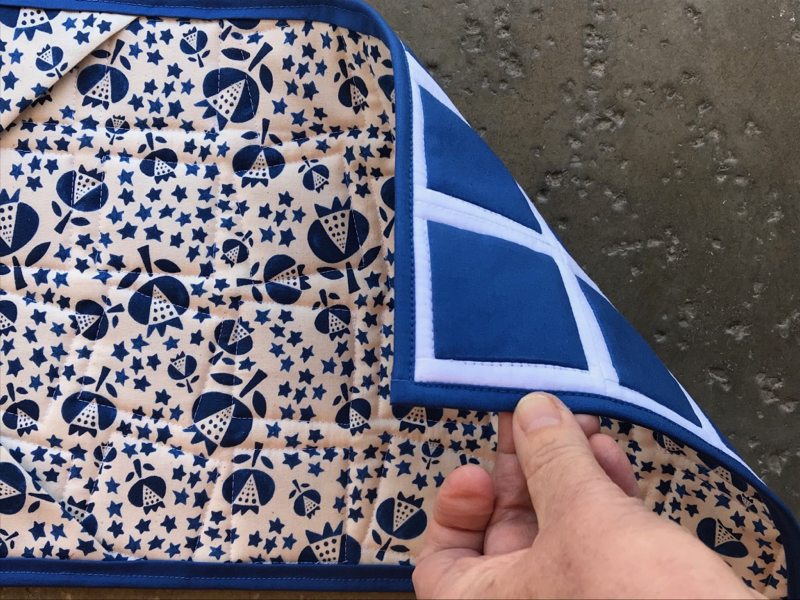
The back, and the label:
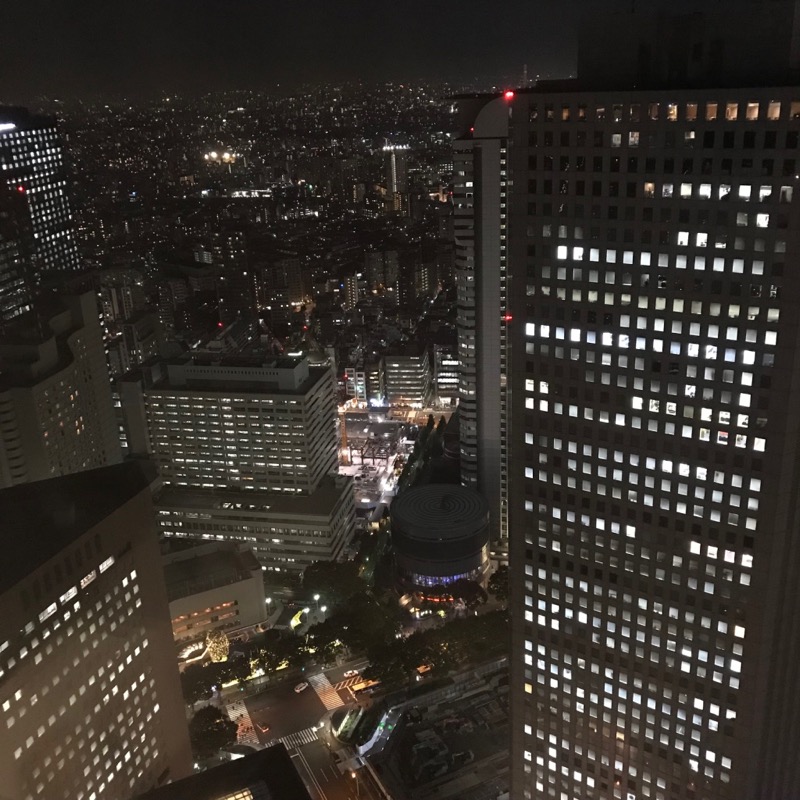
Maybe my original design was inspired by this scramble intersection in the Ginza area of Tokyo, or by this view of Tokyo from the Government Building (below)?
Thanks to my ever-supportive husband for holding quilts, and helping find great locations for photography. Pattern coming soon.
Maybe there is more of the magical in the idea of a door than in the door itself. It’s always a matter of going through into something else. But
while some doors lead to cathedrals arching up overhead like stormy skies and some to sumptuous auditoriums and some to caves of nuclear monsters
most just yield a bathroom or a closet. Still, the image of a door is liminal, passing from one place into another one state to the other, boundaries
and promises and threats. Inside to outside, light into dark, dark into light, cold into warm, known into strange, safe into terror, wind
into stillness, silence into noise or music. We slice our life into segments by rituals, each a door to a presumed new phase. We see
ourselves progressing from room to room perhaps dragging our toys along until the last door opens and we pass at last into was.
Far Away Doors Quilt No. 216 • 49 1/2″ wide by 43 1/2″ tall Some blocks sent to me by the Gridsters Bee
Finished!
I originally named it “Home-keeping Hearts” but that was just its milk name as it had just been born and I was in a cheezy mood of Hearts and Deep Meanings and All That. Marge Piercy said it best about doors, even quilty ones inspired by far away doors from Dublin, Ireland:
“the image of a door is liminal, / passing from one place into another / one state to the other, boundaries // and promises and threats. Inside / to outside, light into dark, dark into / light, cold into warm, known into / strange, safe into terror, wind // into stillness, silence into noise / or music.”
The photograph on the truck? It went like this: on our way to get some Vietnamese bùn châ for lunch, we trekked down to our newest neighbors’ home to ask if we could please pose the quilt on their cool car, and so I knocked on their door and it opened to a crying baby in the other room and a smiling baby in his father’s arms and good-natured parents, owners of a new-to-them truck and the mother’s name was Genesis and the father’s name was Nate and we introduced ourselves and they said yes, of course, and then they headed back inside because it was about a hundred degrees outside, as they smiled and waved and shut the door behind them, the lovely music of a home with a young family and a Ford Ranger just made for quilt posing.
And so, this variation of Merrion Square is finished. I pass out the how-to sheet as a freebie when people take my Merrion Square classes, so hopefully you’ll be in one soon. Check my schedule to see if there’s a workshop near you.
And finally, many thanks to all who entered the giveaway for the ruler. The winner has been notified by email and I’ll get the ruler off to her this week. I am leaving the post up because there are so many great responses to my question. You are all a significantly talented and experienced group of quilters — thank you for your ruler advice!
Ladybird, the name a shortened version of ladybird beetle (or ladybugs as we call them in the States), has a rich folkloric history, with allusions to religion, good fortune, death, and old rituals. This original quilt, with its split block design, evoked the tiny beetle, a godsend to gardeners everywhere.
We’d had a bumper crop of their babies around the yard when I started this, little crawly things that my husband identified as the early stage of ladybird beetles (the official name).
I don’t know how I came up with this original pattern, but the colors and the accents just sort of found their way to this quilt. I also don’t know how I figured out the quilting, but like anything in my life, the starting is the hardest.
Finishing is easier.
Background fabric is from Jane Sassaman.
Of course you are familiar with the rhyme:
Ladybird, ladybird, fly away home, Your house is on fire, and your children will burn.
There are multiple, maybe even a hundred, versions of this rhyme in many different languages and countries. The one I quoted above is dated to 1744, and is often thought to reference the burning of stubble in the fields after harvest, a practice discouraged now because of air pollution, but common in early times.
My husband found the photography site for us at University of California-Riverside. It’s the artwork on the front of the Genomics Building by Jim Isermann, the sculpture influenced by geometric shapes of molecular structure and its illustration. Yeah, I’m in love with this. And did I mention my husband broke three ribs last week? Yet he still helped me schlep around the quilts (and holding one up for me in another upcoming post), even clamping on one side where I couldn’t reach. (It was a small household altercation with a huge yard waste container; he will be fine in about six weeks, but for now I do the trash.)
After dinner at our newest Vietnamese restaurant, we flew away home. Thankfully, our house is not on fire, but, regretfully, our children are gone.