
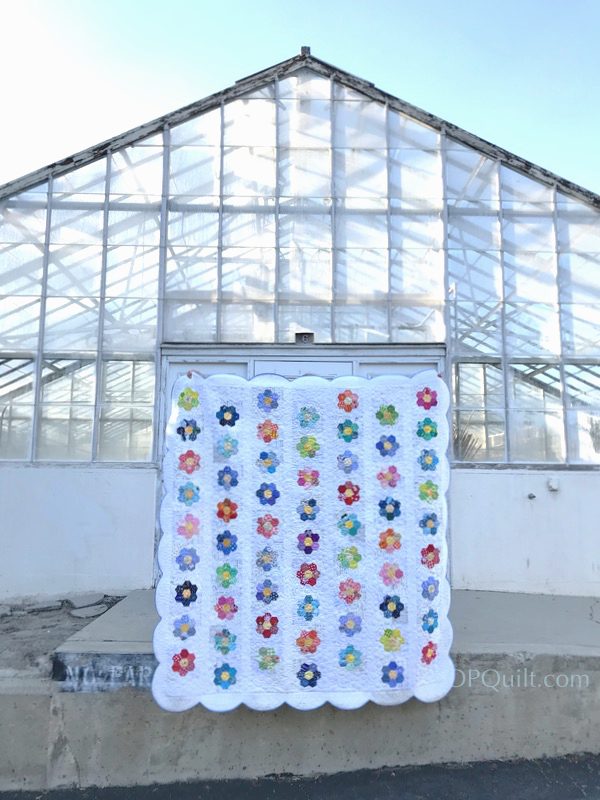

One of the challenges of finishing a quilt is figuring out where to photograph the thing. So one night last week my husband and I went over to University of California-Riverside (UCR) to find some places that would set off the two quilts I was toting around.
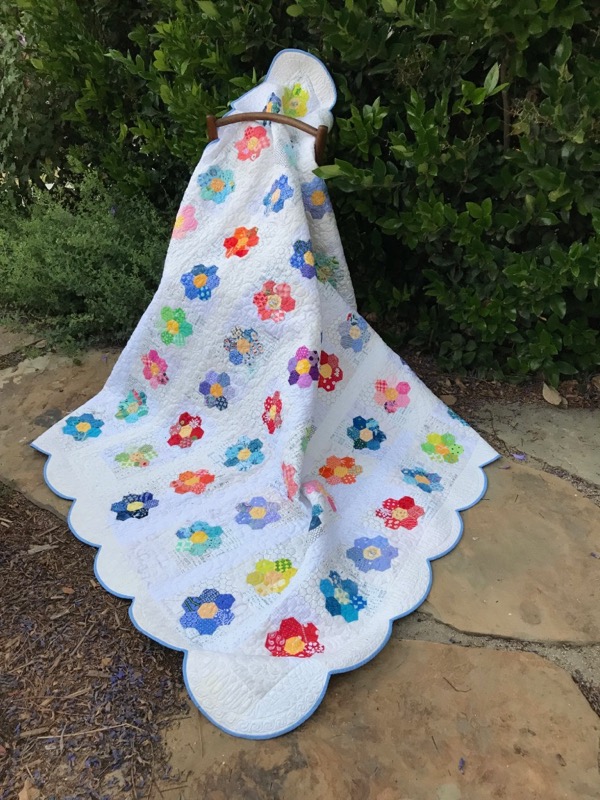
I’d originally thought about the Botannic Gardens, with all their lush greenery and wooden benches; I’ve snapped photos in this place before, and Field Flowers, with its scalloped edges is so old-fashioned looking I wanted to head there. It was closed. As we walking back to the car to leave, I spotted this old greenhouse. UCR is noted for its agricultural emphasis, as we breed a lot of the oranges you are eating now (Cuties, anyone?). This greenhouse seemed the perfect place, for my husband, with three broken ribs, to be able to hold up the quilt. (By the way, he has a Qh.D: a doctorate in Quilt Holding.)
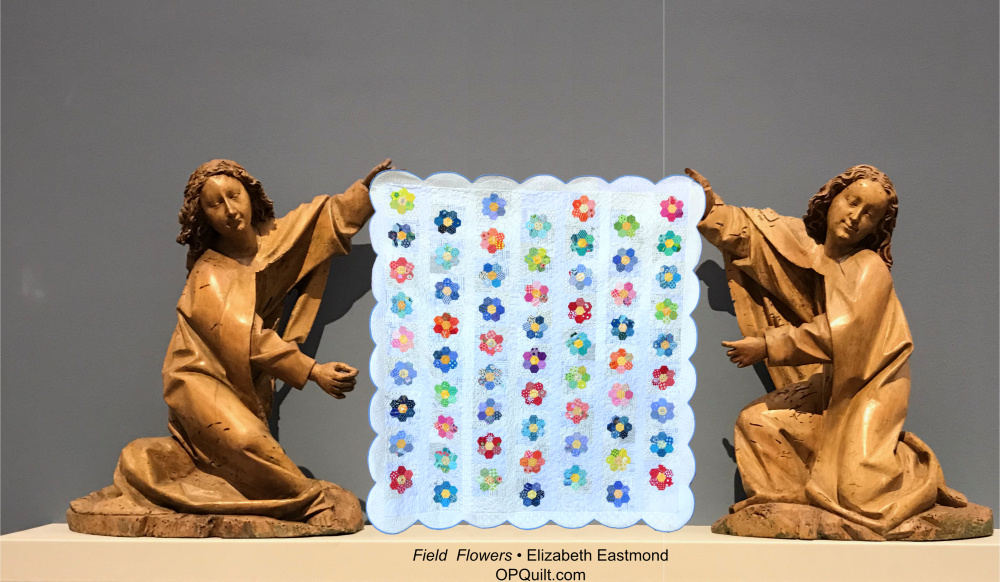
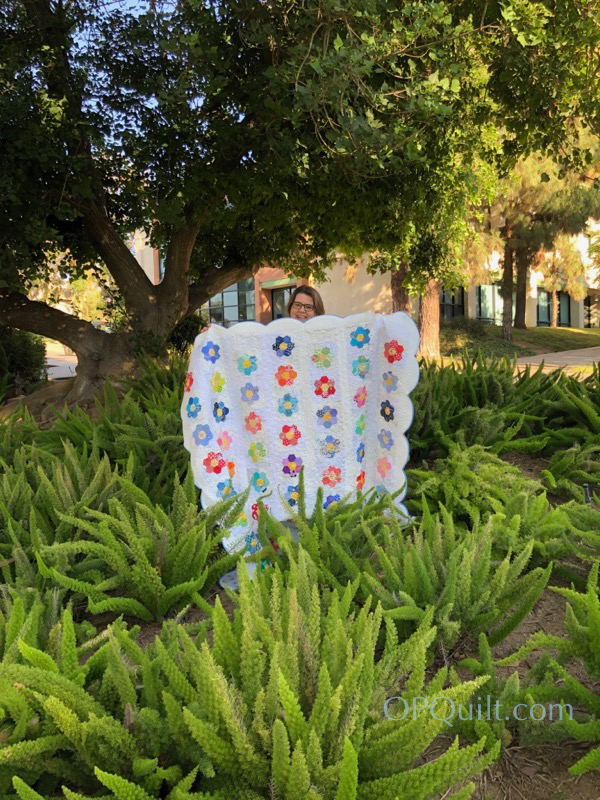
I also recruited two bystanders from the museum in Berlin to help me show off Field Flowers. Although their expressions are a little wooden, they held it in place without moving, so I was able to get a good photograph.
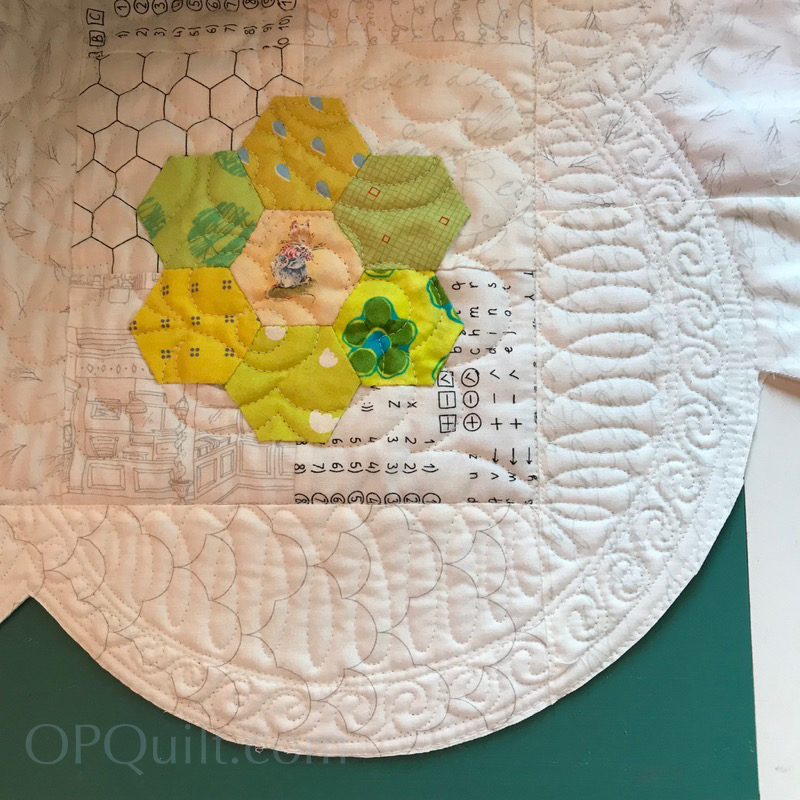
The center of this quilt was quilted by my regular quilter, Cathy of CJ Designs. She left the basting in the borders and then turned it over to me to finish up those scalloped edges. Since the pattern is by Sherri McConnell of A Quilting Life, I knew she’d have good ideas of how to finish the quilt, so I pretty much mimicked what her quilter did. More information about the pattern can be found on *this post.*
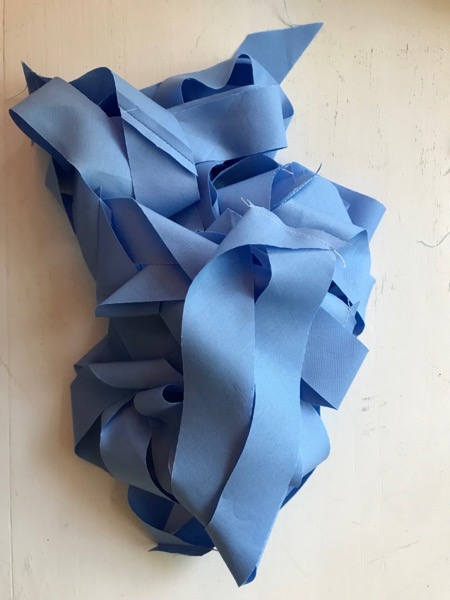
I followed Sherri’s directions for cutting bias binding, but used a 20-inch square as I’d added more hexies to my quilt. I needn’t have, as her directions would have provided enough length.

The single fold binding went smoothly around each curve, and didn’t add too much bulk.

Earlier that day, we’d gone over to Gless Ranch, a local purveyor of oranges, as they had old farm equipment around their property, and lots of (newly trimmed) orange trees:

When we got home, I noticed it had gotten dirty from traipsing around, so threw it in a cool-water wash with a couple of color catchers (first invented in the UK, by the way), and dried it until almost dry on a low heat. Like all other quilters everywhere, I love how the washed quilt looks (although I also like unwashed quilts). Lay flat to dry, so there is no transferring of ink to other damp spots. (As me how I know this.)

ield-flowHappy Photographing!
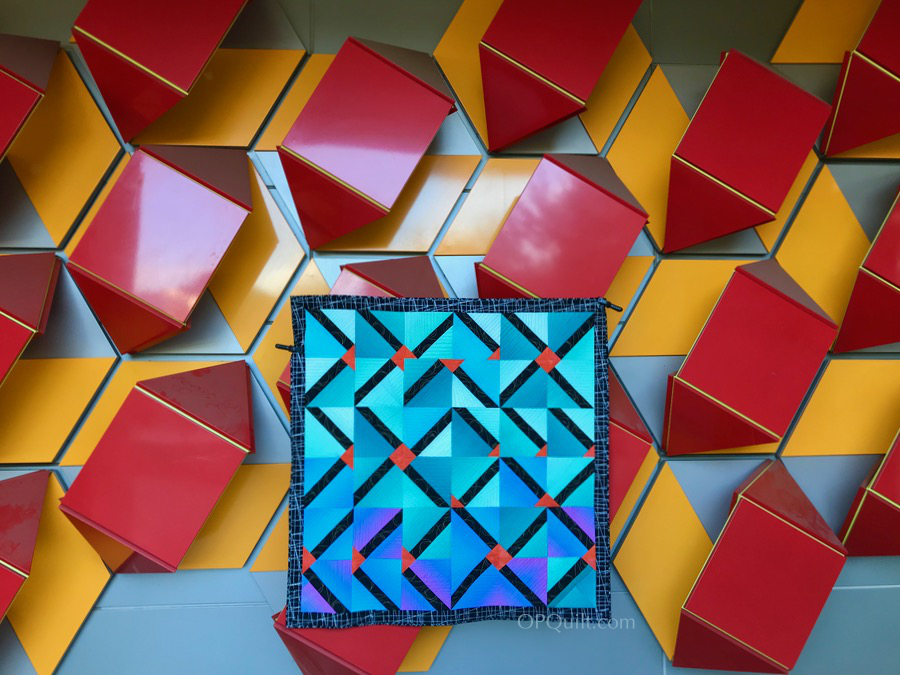
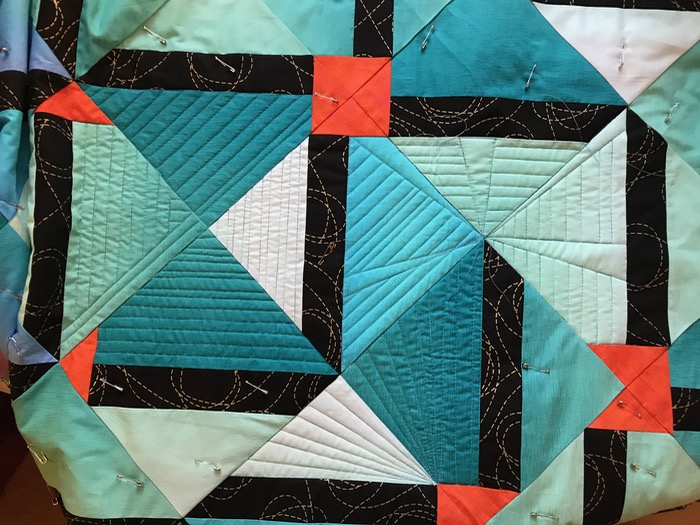
 Ladybird is finished.
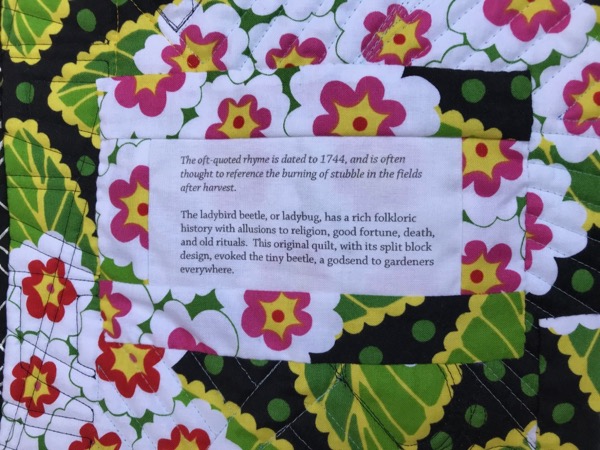
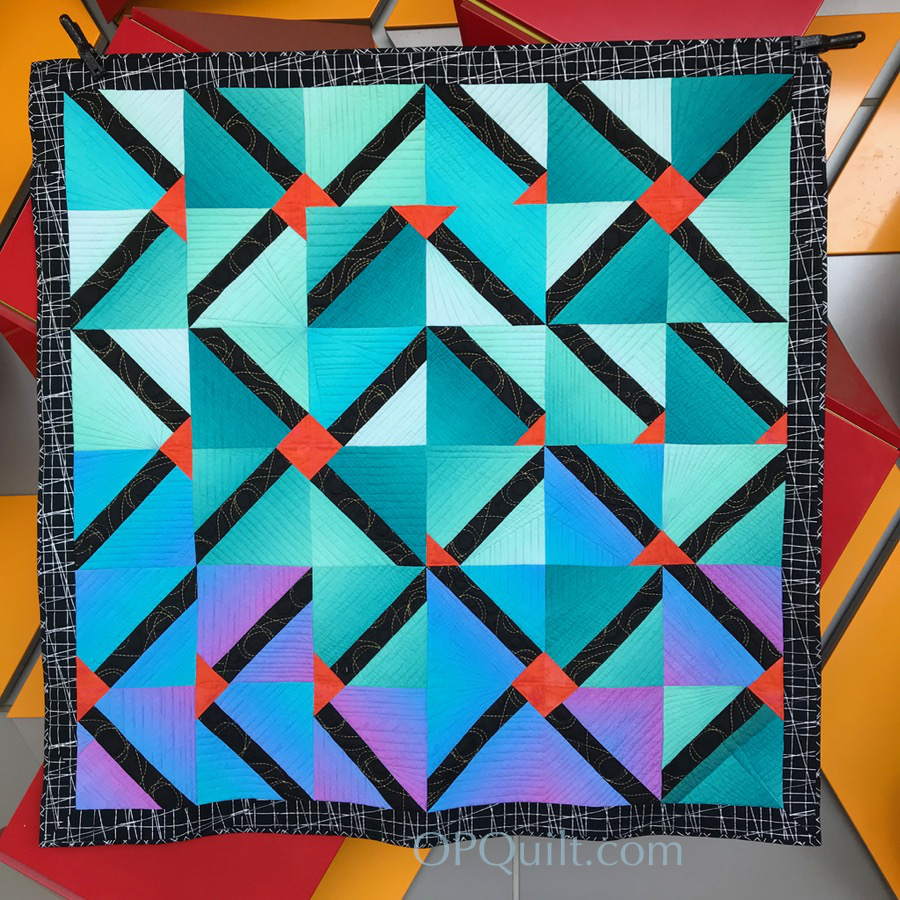 Ladybird, the name a shortened version of ladybird beetle (or ladybugs as we call them in the States), has a rich folkloric history, with allusions to religion, good fortune, death, and old rituals. This original quilt, with its split block design, evoked the tiny beetle, a godsend to gardeners everywhere.
 We’d had a bumper crop of their babies around the yard when I started this, little crawly things that my husband identified as the early stage of ladybird beetles (the official name).

 My husband found the photography site for us at University of California-Riverside. It’s the artwork on the front of the Genomics Building by Jim Isermann, the sculpture influenced by geometric shapes of molecular structure and its illustration. Yeah, I’m in love with this. And did I mention my husband broke three ribs last week? Yet he still helped me schlep around the quilts (and holding one up for me in another upcoming post), even clamping on one side where I couldn’t reach. (It was a small household altercation with a huge yard waste container; he will be fine in about six weeks, but for now I do the trash.)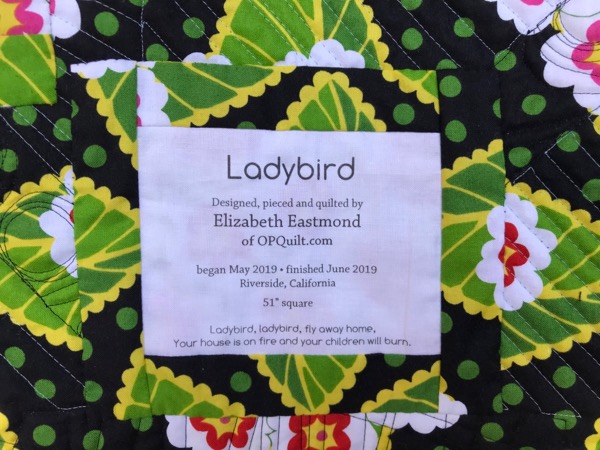








 OccasionalPiece--Quilt!