Something to Think About · Textiles & Fabric · Travels

When You Can’t Create You Can Work

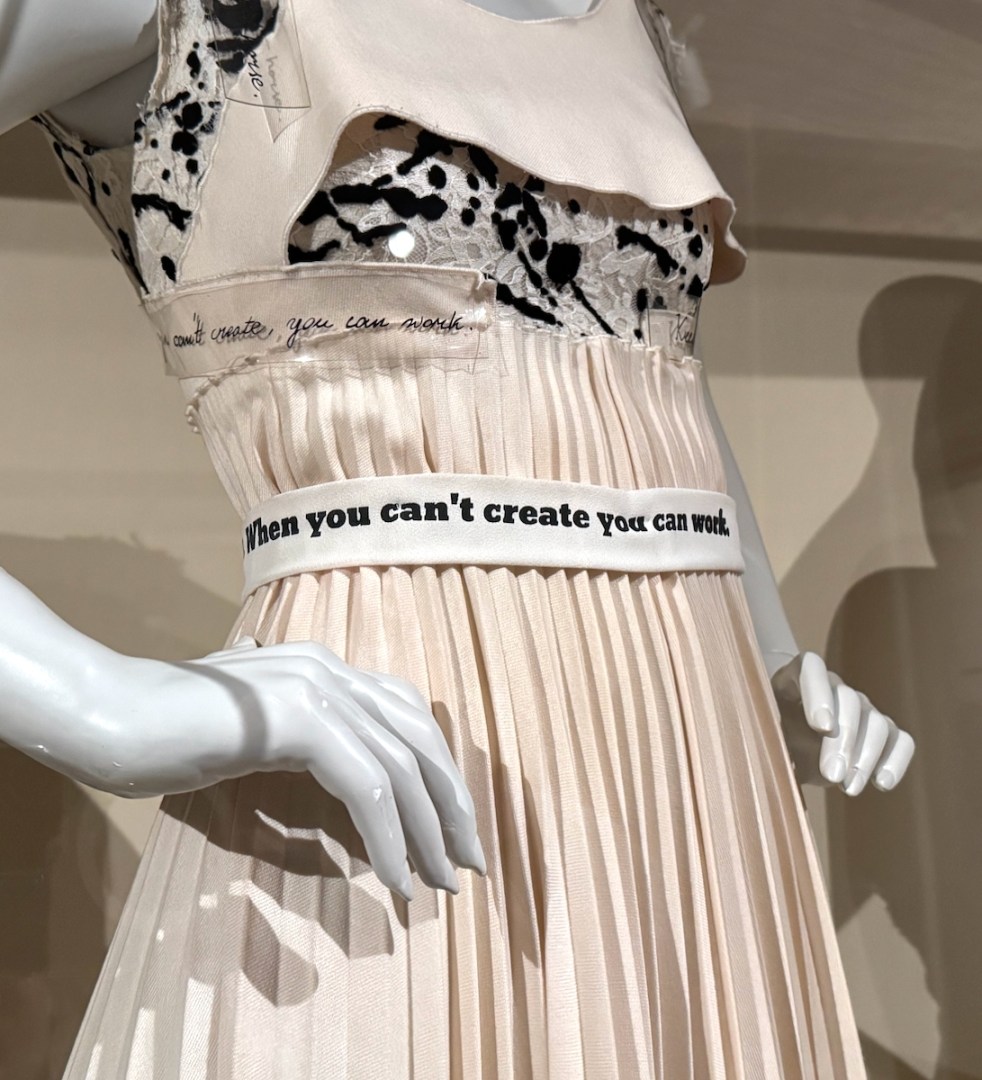
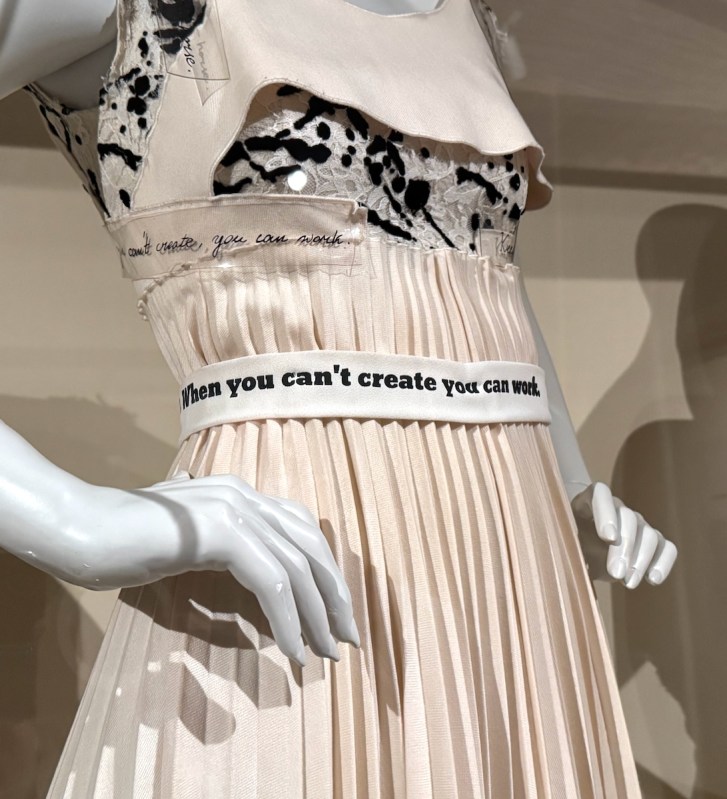
Henry Miller, a writer in the early part of the 20th century, devised a list of rules for himself when writing his first book (Black Spring). I found this whole idea while zipping through an exhibit in Kraków, where a designer tried to incorporate pieces of his so-called Eleven Commandments. One of them, “When you can’t create you can work,” was printed on ribbons and strips of whatever. Of course this phrase caught my eye, and I paused a nano-second to snap a photo then moved on. Tourists! (Look at the end of the post for Miller’s complete list.)

So it’s been that kind of a week, still snowed under by jet lag, I didn’t feel up to creating not one quilty idea. But I could work.

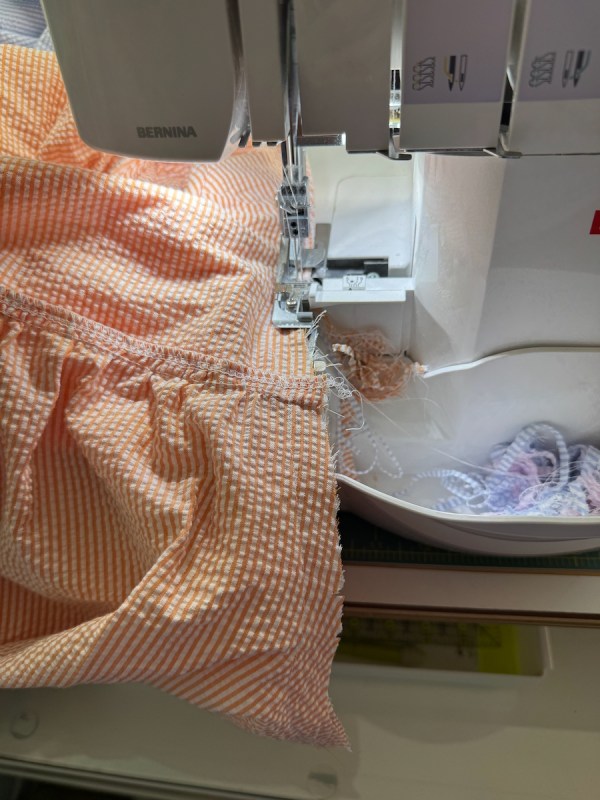
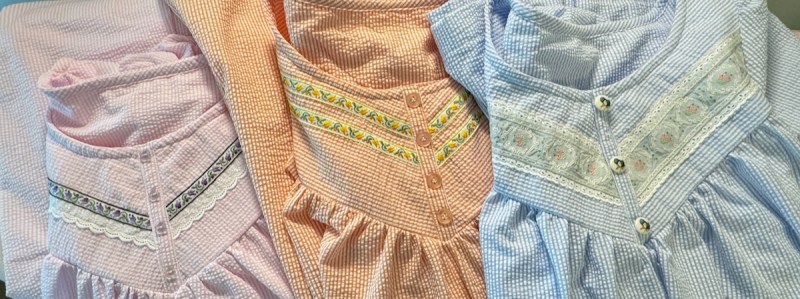
Our weather has started to turn to the hot, dry summer kind of weather, which means that the seersucker that I stashed back in October was going to have to get cut up into my summer nightgowns, using the same pattern that I’ve been using for half my life.

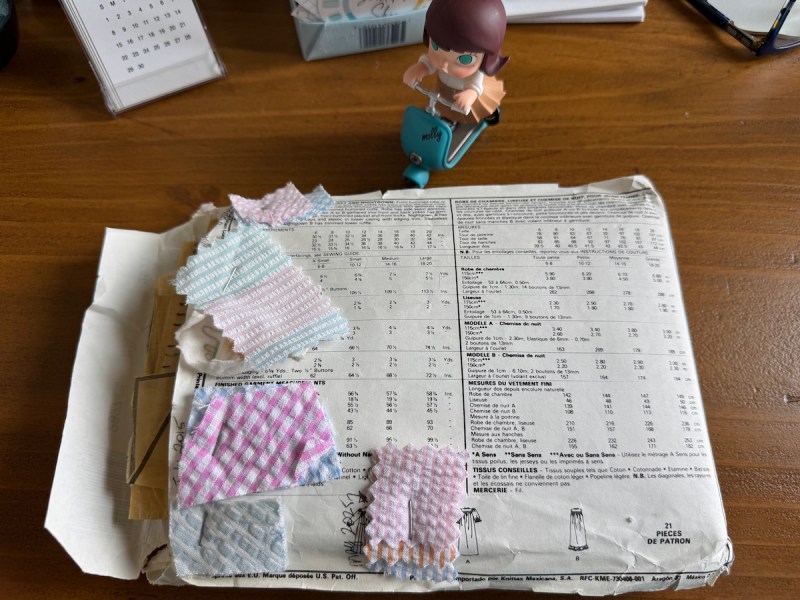
I usually only make two at a time, but this time went for three. I scavenged ribbons, which necessitated digging deep into the garage (more on that, later). The laces bordering the woven ribbon (pink/blue) were picked up on a trip to Austria, a millennia ago. The woven ribbons were purchased when I working at a local fabric store before I had my first child, and when they had wonderful local fabric stores.

I’d given the Jemima Puddleduck buttons to my mother, which she gave back to me at some point. (Three for only one dollar??!!)
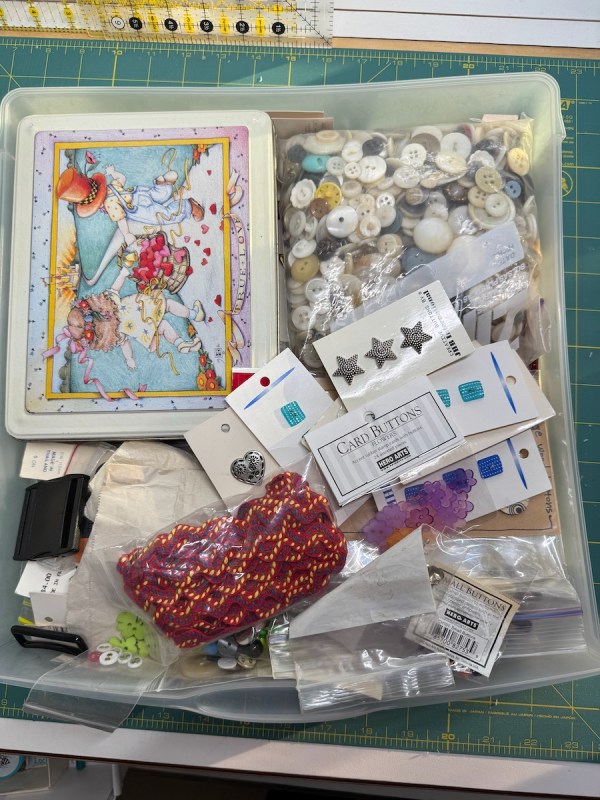
I found them in my button box, still wrapped in the tissue paper the shop lady in Britain had wrapped up for me. Before JoAnn’s closed, I would have felt guilty for stashing away all these treasures. Now I feel sort of proud of myself. We quilters are funny people.
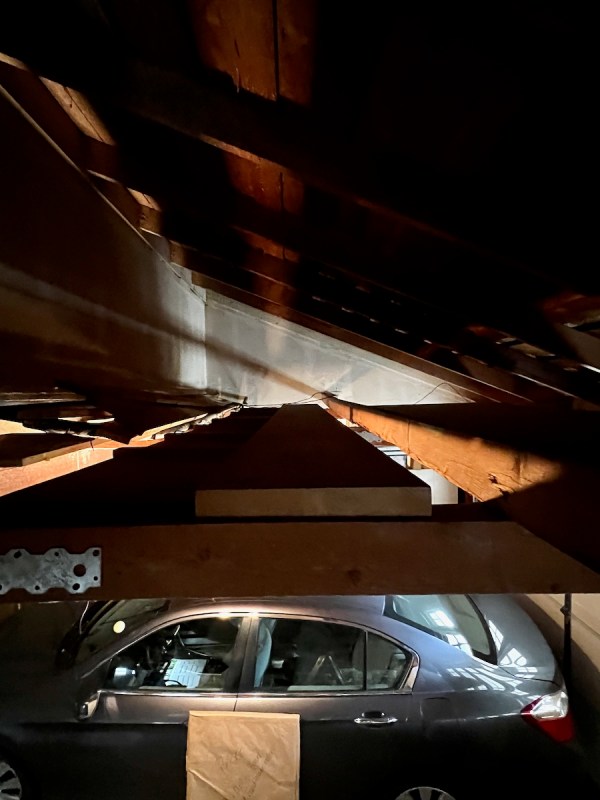
Last time she was here, my daughter said, “Mom, you need to clean out.” Implied was the rest of the sentence: “Clean out before you die so I don’t have to.” Message received; rafters cleared. Working on the rest…later.
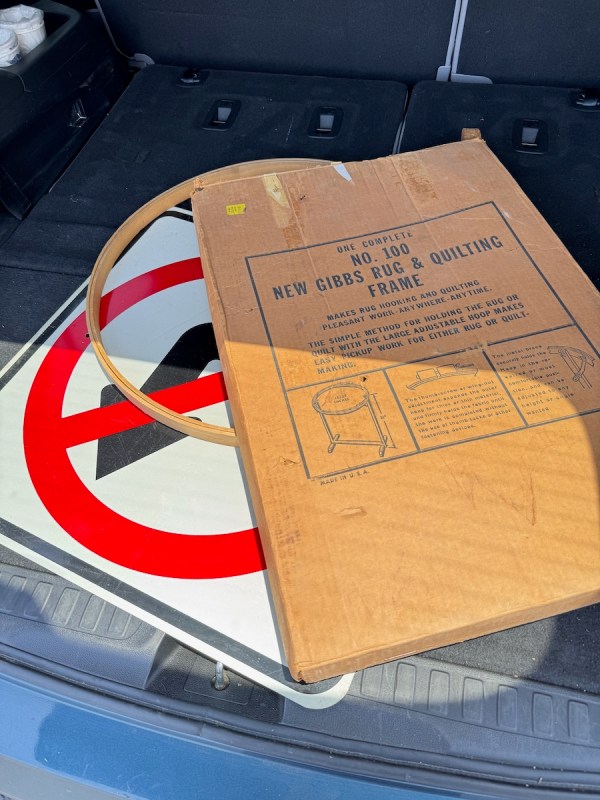
This standing quilt hoop was a heart breaker to leave at the thrift store. The boy taking this treasure from my husband turned it upside, and one side of the stand fell out onto the floor. He kicked it to the side and dumped the rest into the bin. (Perhaps it’s best if we don’t watch what happens to our treasures.)

Sick and tired of podcasts and newscasts, and realizing my stubborn jetlag was still with me — which answers the question about why it took me soooo long to make the nightgowns — I started listening to a new book, recommended by my sister. So far, so good. I will say that I have gotten things put away from the trip, but so much else needs to be dealt with, primarily the emails. Thank you for your lovely notes on the Kraków churches!

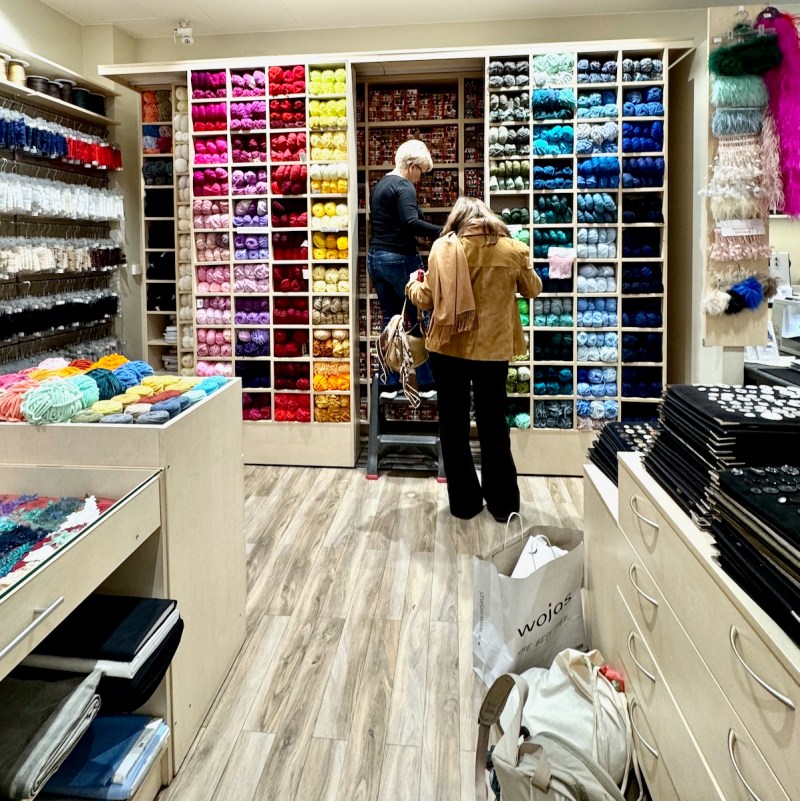
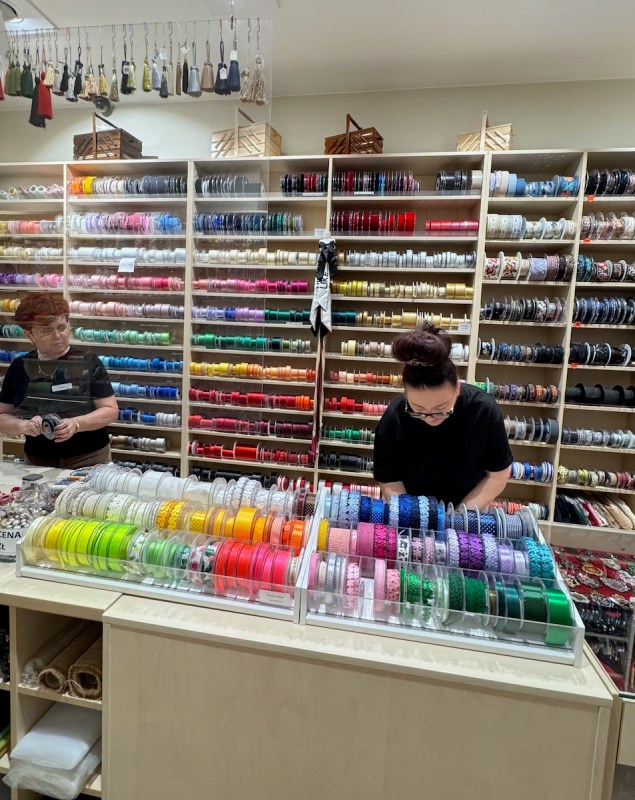
I could have used this Pasmanteria (the word for this kind of a store in Czechia) when I was hunting buttons and trim for the nightgowns. Yes, I found a fabric/notions store while traveling! I purchased the usual: two thimbles.
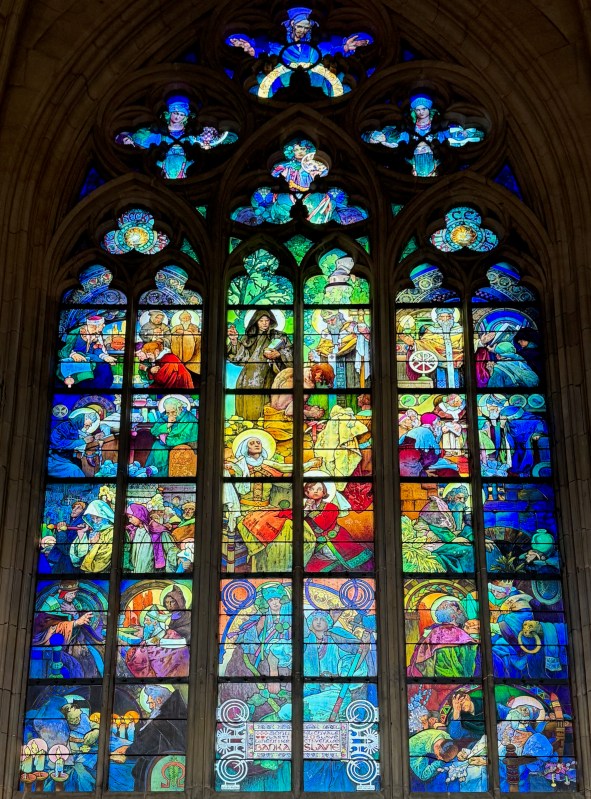
Alphonse Mucha window, St. Vitus Cathedral

I’ll leave you with this two glorious stained glass windows from the St. Vitus Cathedral in Prague, along with (below) this tiny wrought iron work of a woman spinning thread into cloth, from one of the chapel gates:

Happy Working, if not Creating–

Here are the ELEVEN COMMANDMENTS, if you are interested:

  1. Work on one thing at a time until finished.
  2. Start no more new books, add no more new material to ‘Black Spring.’
  3. Don’t be nervous. Work calmly, joyously, recklessly on whatever is in hand.
  4. Work according to Program and not according to mood. Stop at the appointed time!
  5. When you can’t create you can work.
  6. Cement a little every day, rather than add new fertilizers.
  7. Keep human! See people, go places, drink if you feel like it.
  8. Don’t be a draught-horse! Work with pleasure only.
  9. Discard the Program when you feel like it—but go back to it next day. Concentrate. Narrow down. Exclude.
  10. Forget the books you want to write. Think only of the book you are writing.
  11. Write first and always. Painting, music, friends, cinema, all these come afterwards.
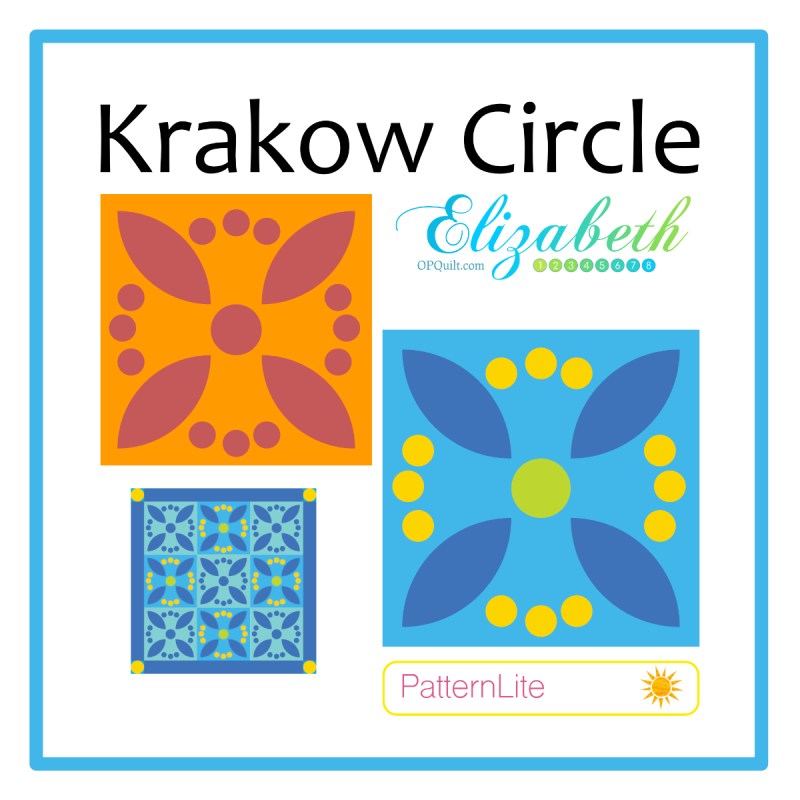
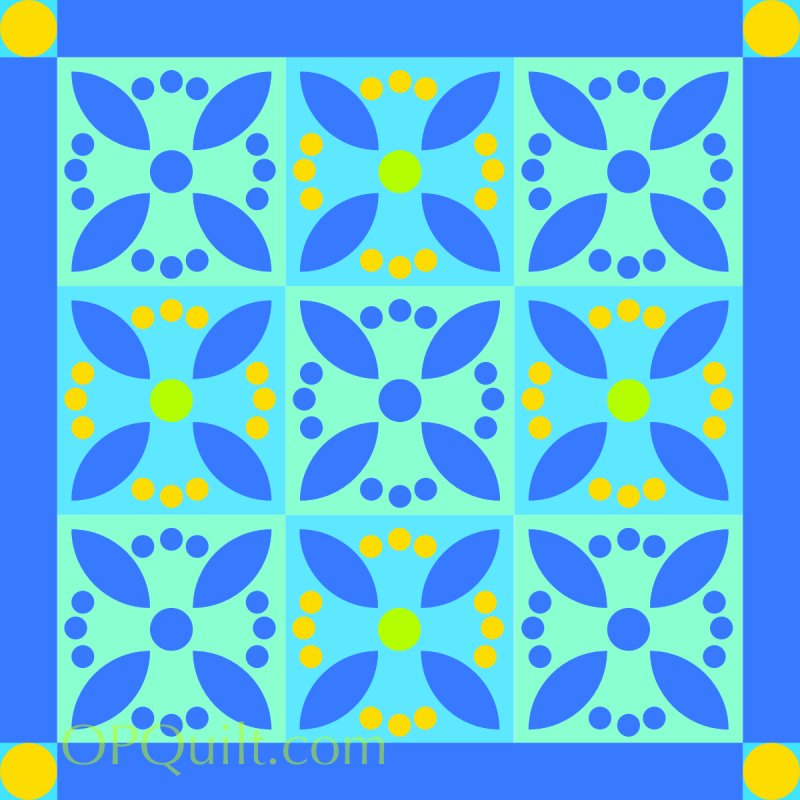
This little PatternLite pattern is a reminder of what we see when we get out of our own town.

You can find it in my Quilt Shop, on PayHip. Enjoy!

Patterns by Elizabeth of OPQuilt · Textiles & Fabric

This and That • May 2022

I so appreciate you all: thank you, thank you! I was able to pass on the info to WordPress, my blog software company, a reliable source for writing these past fifteen years and three months. Bugs climb in everywhere and I’m hoping they get this one resolved.

And thank you also for all the beautiful things you wrote. I treasured and read them all–often out loud to my husband. I have the best readers!

Usually I write for a Sunday publication, but this week got tripped up a bit, so I’m late.

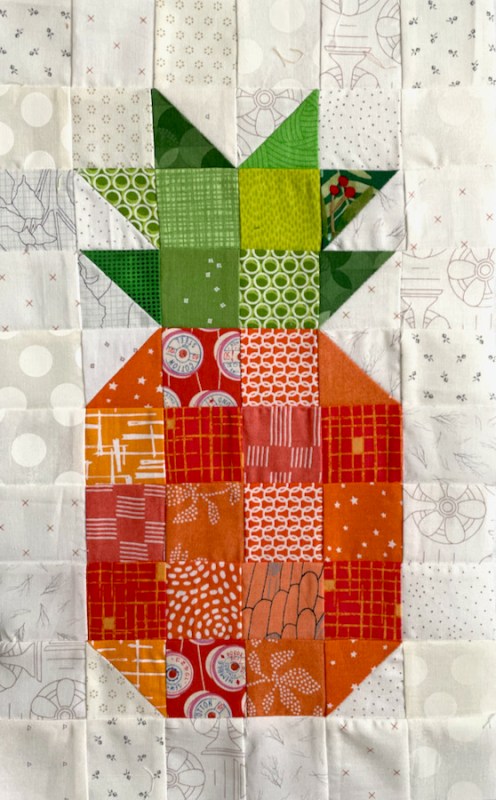
Laurie, our Queen Bee for the Gridsters chose a pineapple block, two if we didn’t mind, and she asked for them in yellow and orange. I had made these blocks once before, with a free download of the pattern here, but the crown this time is a little different, a little taller with an extra row of blocks. We also added an extra border of low-volume blocks that wasn’t on the pattern. It took me a minute, but if you treat the extra low-volume blocks as part of a row, it goes better. (The other way is adding strips of blocks when the pineapple is finished: that’s a not-so-great method.)

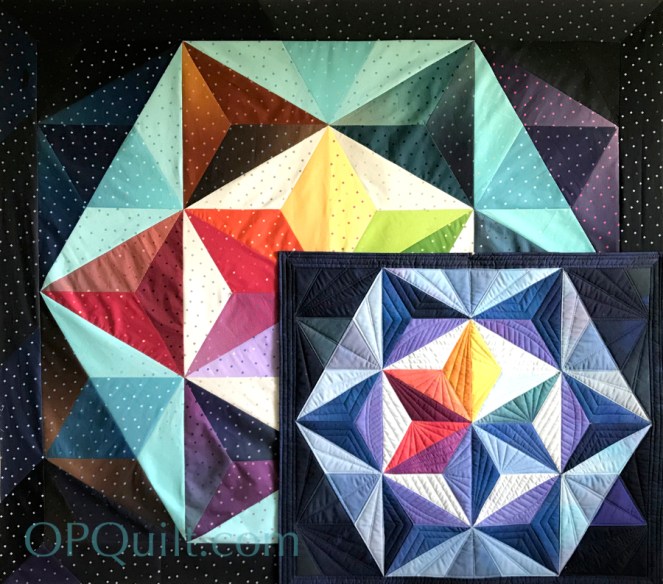
Started quilting one of my own designs: Triad Harmony. I’ve made several in ombre fabrics which are fun to work with. I picked out all the thread colors for the star points, then went a different direction, decided to quilt them as one unit, so only one color of Magnifico thread was needed. Then I quilted a wrong color (hence the seam ripper).

I like to date-stamp my quilting along with what was finished. Lovely night-time fluorescent-lighting photo.

Here’s a comparison of the two quilt sizes in the pattern. I originally had a working name of Spectral Light for the larger one, but I just changed it up today to Eris. I’ll explain later on, when it’s finished.

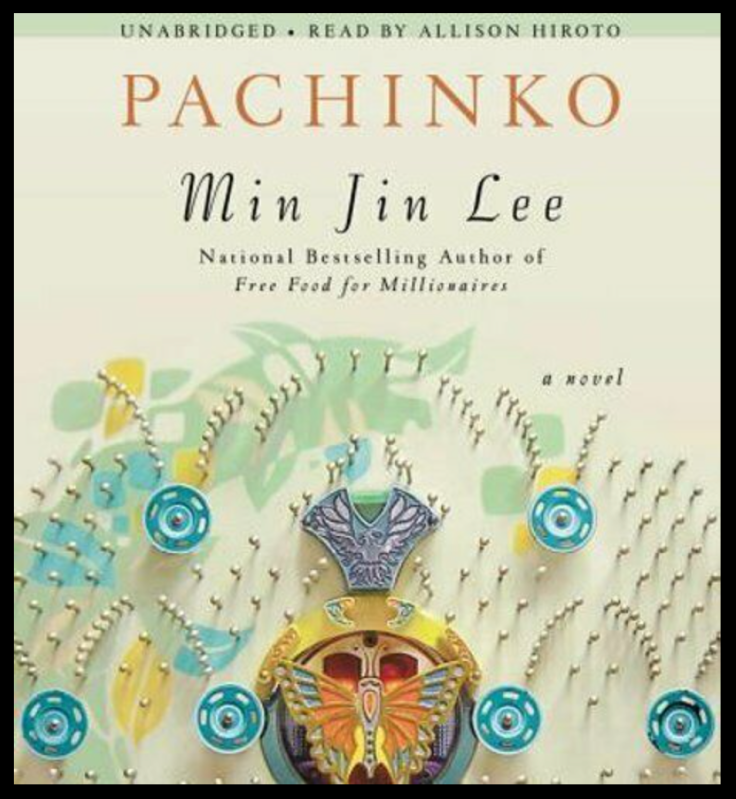
Now I’m working on the red stack of nine-patches for another Christmas quilt. There is something so lovely about occupying my hands with nine-patches. It leaves me free to listen to audiobooks like Pachinko.

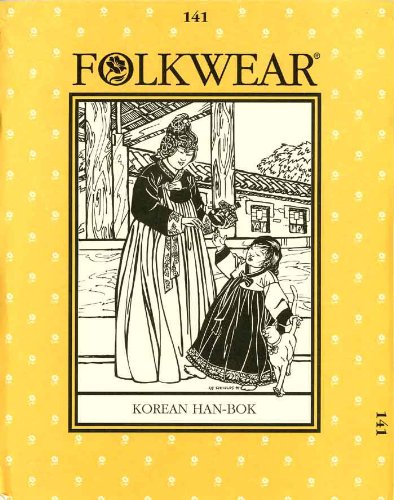
Those of you who are long-time readers of this blog, know that I am fascinated by and appreciate traditional clothing; the hanbok is no exception, having written about it when we visited the Chojun Textile & Quilt Art Museum when we in Seoul.

I was also interested in this article from the New York Times about the history of the hanbok.

You can make your own! Folkwear Pattern for Hanbok

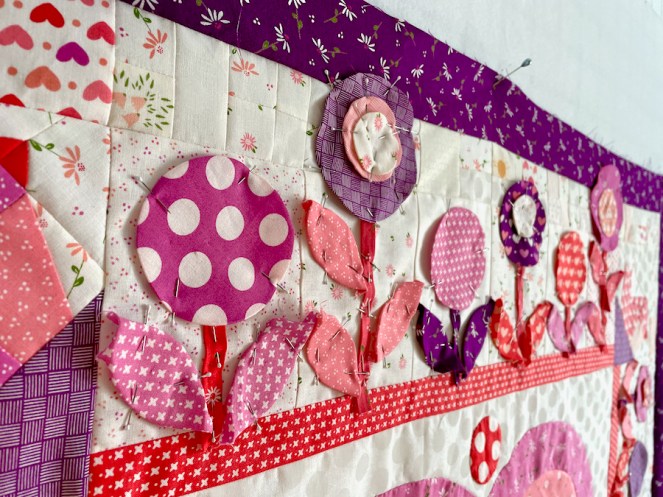
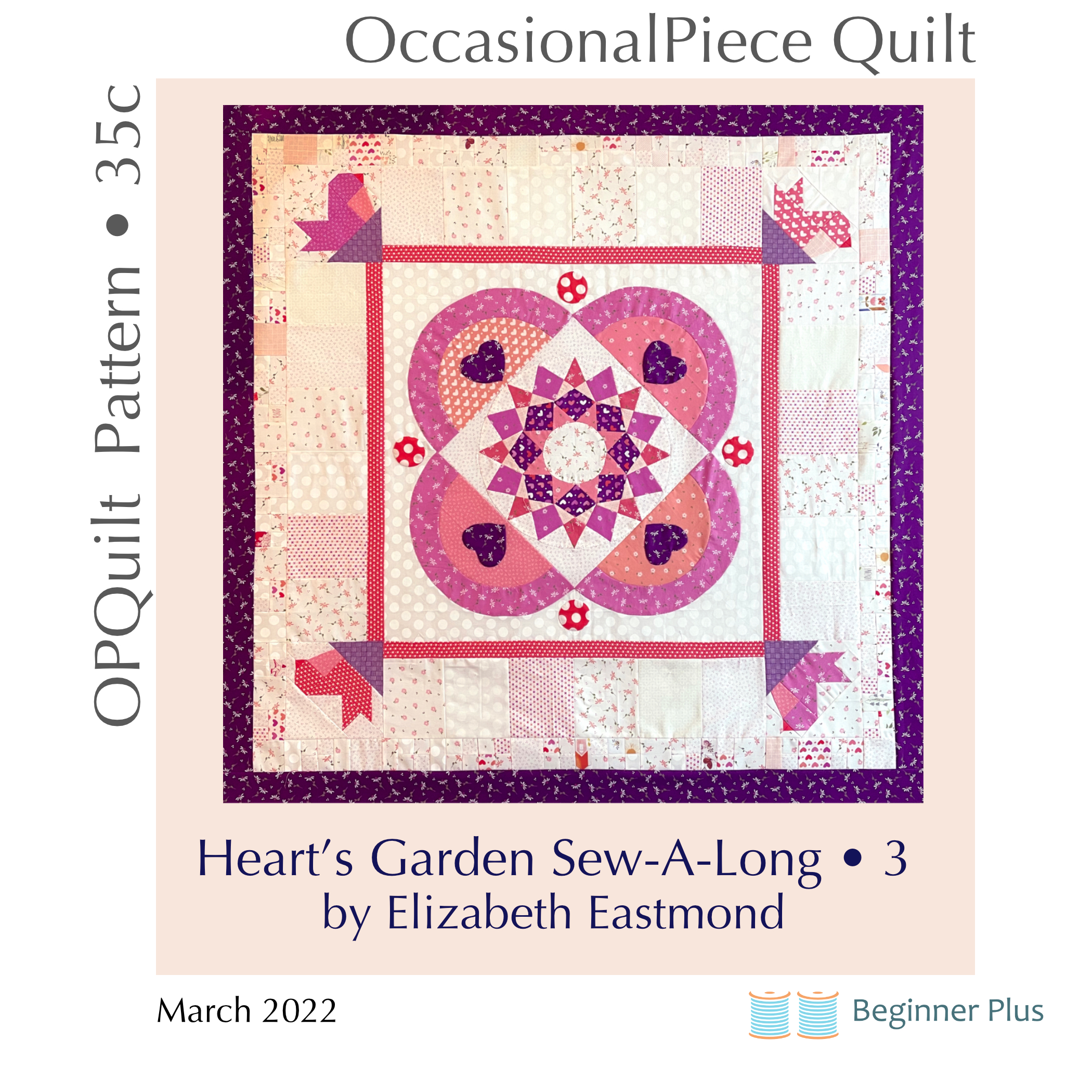
Mother’s Day is coming up, then the last part of Heart’s Garden will drop. Krista, who is quilting it, has sent me images of the quilt up on her frame, and I’ll be excited to show it to you when it is complete. So far there are four parts:

On May 15, 2022 Part 5 (free pattern) will drop. [UPDATE: Pattern is now available in my pattern shop.]

If you have missed any of the parts, Part 4 is free until May 14th, and Parts 1, 2, and 3 are available for purchase. Part 5 will be free until the pattern comes out. Soon I will consolidate all the parts and have one pattern for sale, but that will come closer to June. I will have one more: Part 6, but that will be a blog post. If you don’t have time to sew this now, be sure to grab the free patterns for later. I have three quilters who are sewing along with me, and I love what they have done. A couple have made changes to the pattern, which are also fun to see. As I remind them, they are not pattern testers, but quilt makers. Feel free to make it your own!

Happy Quilting,

eQuilt Universe · Quilts · Textiles & Fabric

COVID-19 Face Masks

Not Social Distancing
Not Social Distancing!

NOTE: There are some updates to this post below.
(Sunday, April 5, 2020)

Our Inland Empire region of California hit print yesterday (New York Times), when speaking about the many quilters and sewists who are making facemasks:

“Sewers, we’ve always stepped up and done this thing,” said Denise Voss, the head of the Inland Empire chapter of the American Sewing Guild. “We’re made for this time. We’re happy to stay home and sew. And we all have stashes of fabric.” Her group, with about 130 members in Southern California, is making hundreds of face masks at the request of the Riverside University Health System Medical Center.” (New York Times)

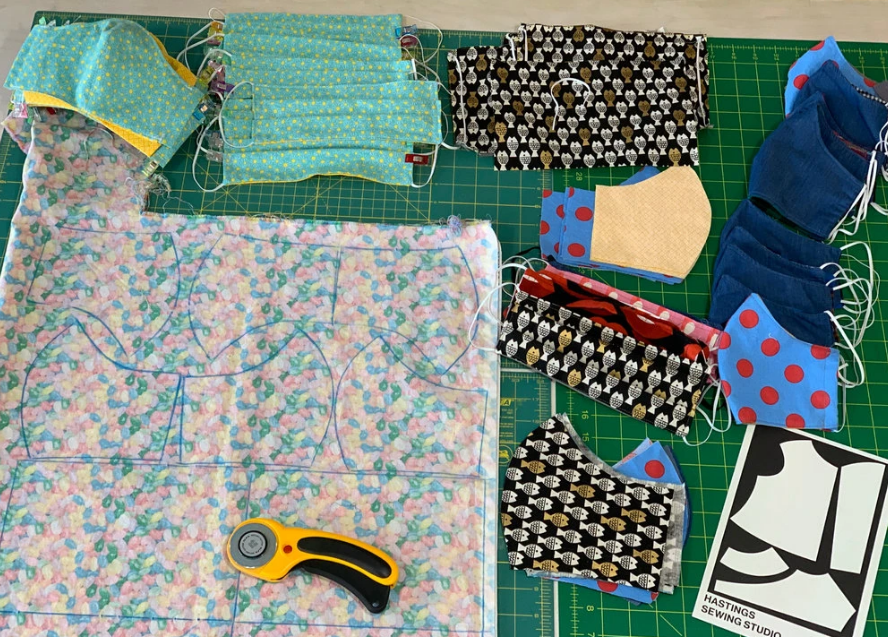
Today I’m here to pass on information about face masks.  I mentioned I was going to use the mask pattern from Dora of Orange Dot Quilts, as I think it seals up higher on the cheeks and nose. I see so many mask posts on Instagram, that I’ve started a Favorites tab for them.  I’m most drawn to the stories of people who are making them, as I’m sure you are too.

Tamara, who commented on my last post, alerted me to JoAnn Fabrics’ kits for making face masks, also detailed in the publication Business Wire.  An examination about whether or not we should even be sewing face masks came across my feed; The Craft Industry Alliance article says proceed, but with caution, making sure you have a place to send/bring your facemasks in this time of social distancing.

Face Masks France
Even sewists in France are being asked to help.

Our efforts as sewists across the nation were also covered in a couple of national news outlets:

Face Masks NYTimes.png

The New York Times covered it from a more human interest viewpoint, telling the story of an army of sewists, from nearly-out-of-work costumers to those who have chosen to set aside their regular work to make masks:

“But the D.I.Y. pieces — generally stitched together with a few layers of cotton, elastic straps and, on ambitious designs, a flexible bridge over the nose — offer at least some protection. “Better than nothing” has become a popular phrase in the tight-knit sewing community. Some doctors are wearing the homemade fabrics over surgical or N95 masks, trying to prolong the coveted masks’ limited life spans. Other masks are being handed out at health clinics and nursing homes.

“It frees up the surgical masks for the people who are the highest risk,” said Dr. Nicole Seminara, a doctor at NYU Langone Health who is volunteering in the coronavirus ward. Dr. Seminara started a social media campaign, Masks4Medicine, to solicit homemade masks from the public.

“Are they effective like an N95? No,” she said. “We’re not claiming they are. If we had all the N95s in the world, it would be wonderful. But there’s a shortage right now.”

Face Masks
Source: New York Times

The Huffington Post covered Face Masks For Personal Use, and Face Masks For Medical Use, listing sources and quoting experts.

Generally it seems to be that we can make masks for those who don’t have direct contact with patients, perhaps front office workers who still could use the masks — thereby saving the short-in-supply N95 masks for critical care use.

One last thing: please write to your senator/congressman as well, telling them how you feel about the fact that we are tasked with providing masks for critical care usage.  While we all are happy to do our part — as we have generous hearts — I’m sure we’d prefer that our nurses and doctors on the front line are well-protected as our nation struggles through this horrifying disease.

UPDATED NEWS ARTICLES/SOURCES:

  • Some hospitals are not collecting masks, some are.  Should we be sewing them?
  • Deaconess Hospital list of Where to Donate Face Masks  Use the filter for your state, and scroll down.  It’s not always apparent to me that they are wanting home made masks, as some list N95s as their request.
  • Liz wrote in with these tips: “Using a modified Deaconess pattern, starting with two 7×10.5″ instead of 6×9, and stitching seam binding across the top and bottom of the mask (40″ piece for top, 36″ for bottom). Also very important to make an OBVIOUS FRONT and BACK side to the mask, by using two different fabrics or the reverse side of the main print on the back/inside portion.”  I think her caution to make an obvious front and back side, if you are using the Deaconess pattern, is a great idea.  If you are using the Orange Dot Quilts pattern, the shape of it denotes a front and back already.
  • PBS broadcast a segment about all the mask makers. (new!)

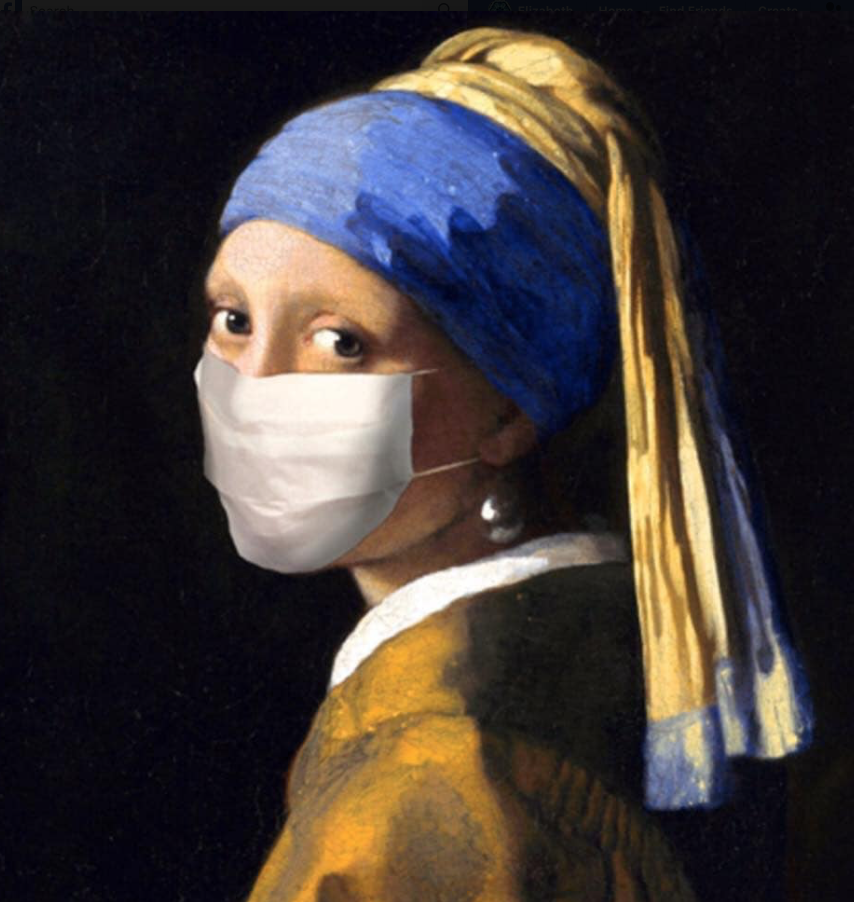
Face Mask Vermeer
One of many COVID-19 memes on Instagram

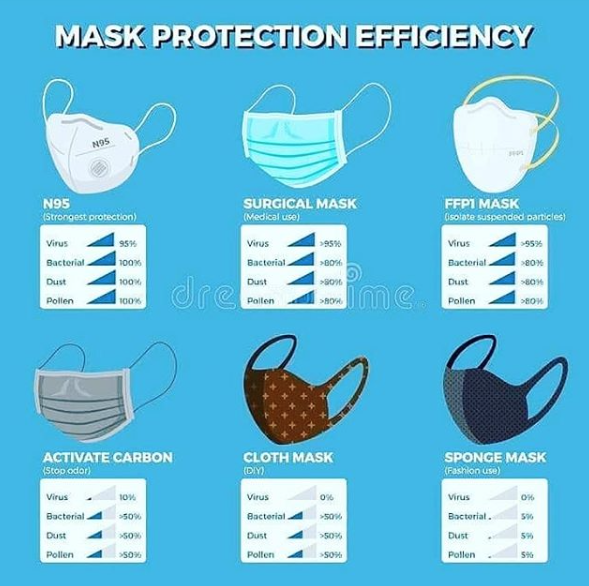
Below is a little graphic I found while browsing IG.  I have no source on it, but it looks believable and makes me feel better about our efforts.  While it does say that fabric masks do not filter viruses, they may offer some protection against the droplets that carry the viruses (according to other sources).

face masks filtration.png

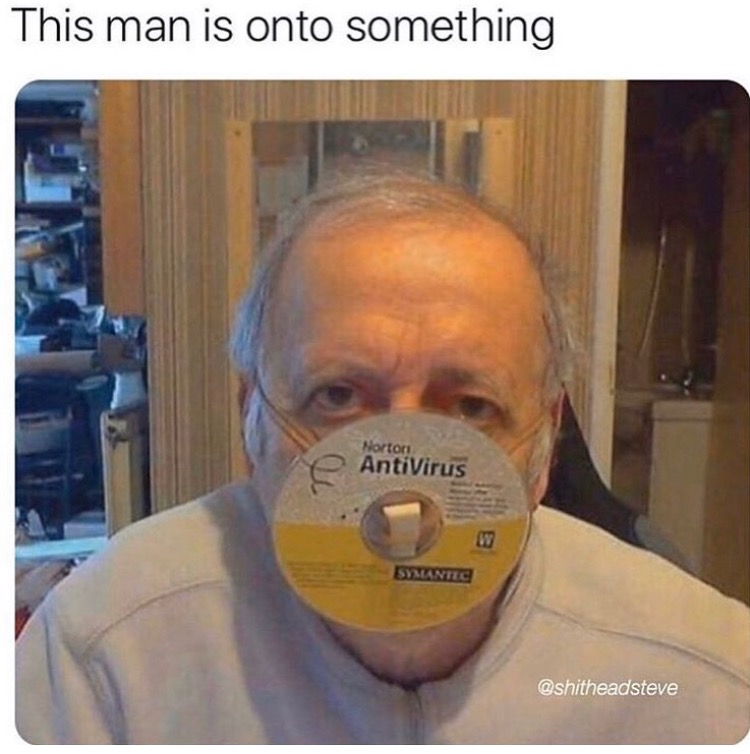
I saw one video where the maker cut up a HEPA filter to use in the mask.  I have no info on that one!  I’ve also seen people suggest lining them with coffee filters, nonwoven interfacing and used dryer sheets.  That last one sounds pretty dubious, however I do like this one:

Face Mask Antivirus.jpeg

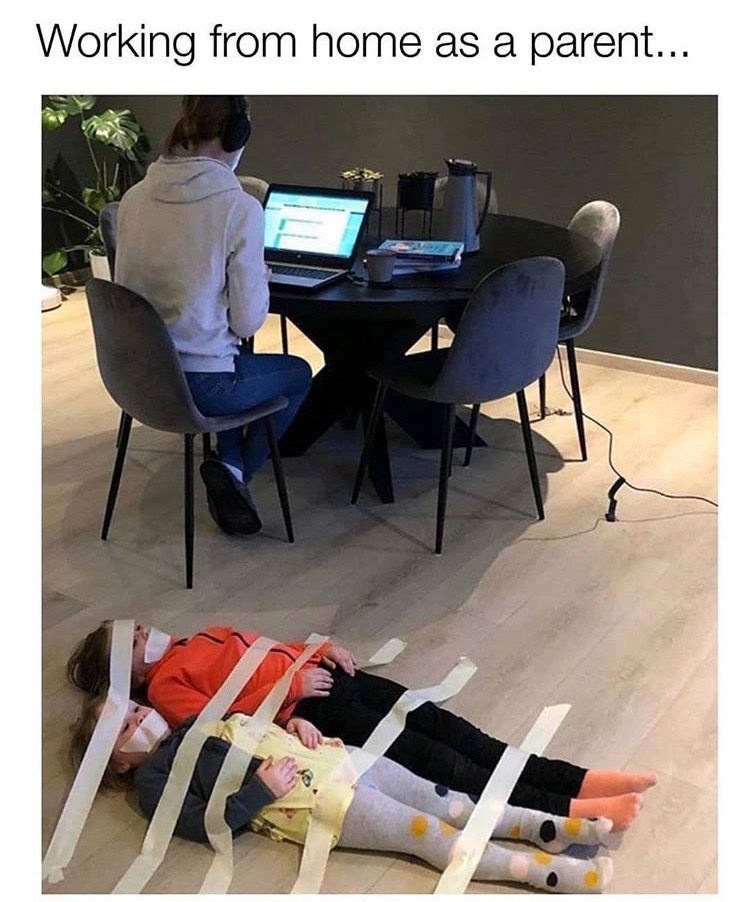
Kidding!  But looking at all the humorous memes has helped my mood a lot (my daughter posts a ton of them), as did all your very kind letters from the last post.  I still seem to be distracted a lot, and my mood goes up and down too much, but in hearing from other friends I realize I am not alone.  Finally, my sympathies go out to those who all of a sudden have children home.  Here’s a meme for you:

covid19 working from home.jpeg

Carry on, quilters.  You are awesome!


Clothing · Museums · Something to Think About · Textiles & Fabric

Power of Pattern: Central Asian Ikats

Ikat_1

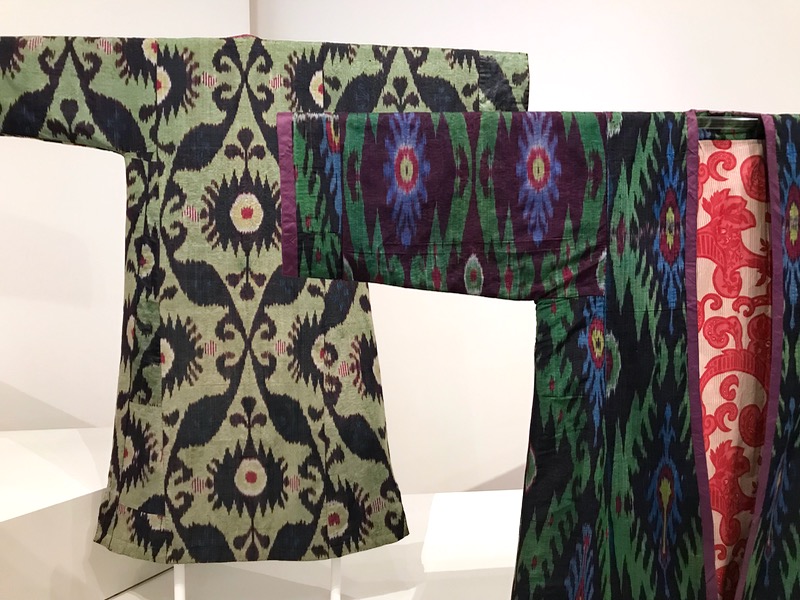
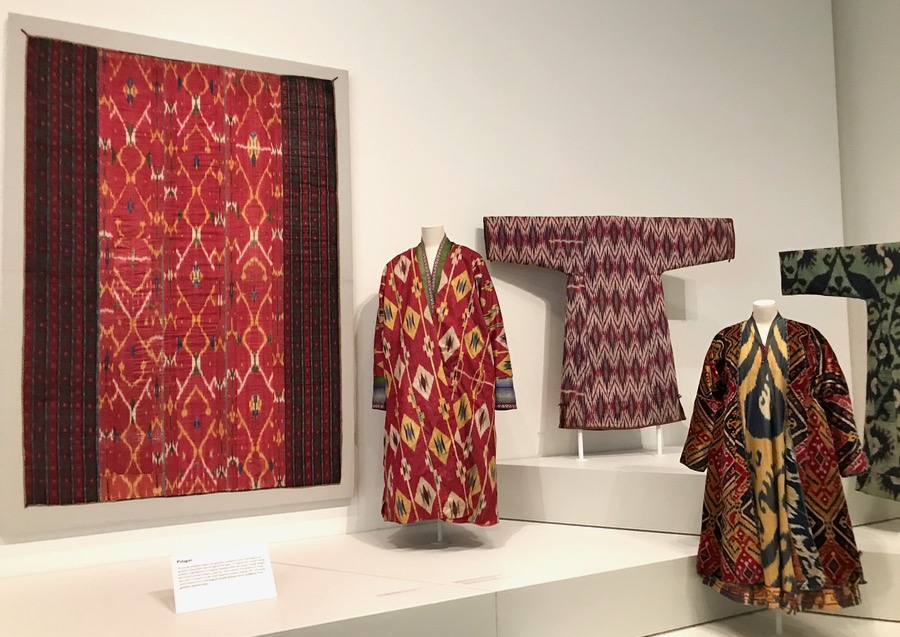
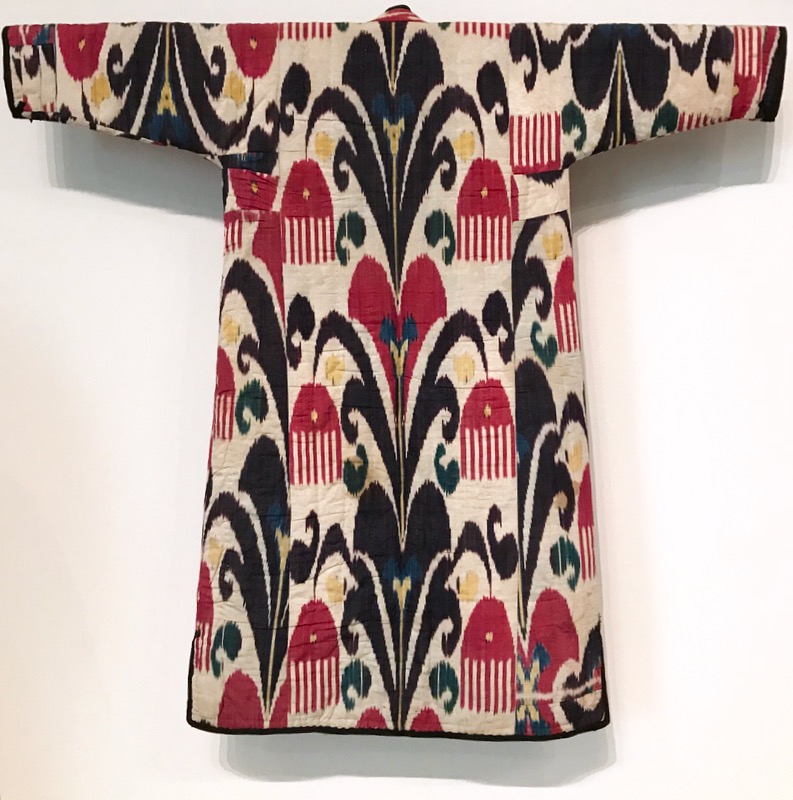
Among the most colorful clothing in the word, ikat robes — which hail primarily from the “the Stans,” or Central Asia — employ “creative use of scale, proportion, and orientation.” They are created by dying the warp (or vertical) threads of silk and cotton, sometimes multiple times.

Ikat_2Ikat_3

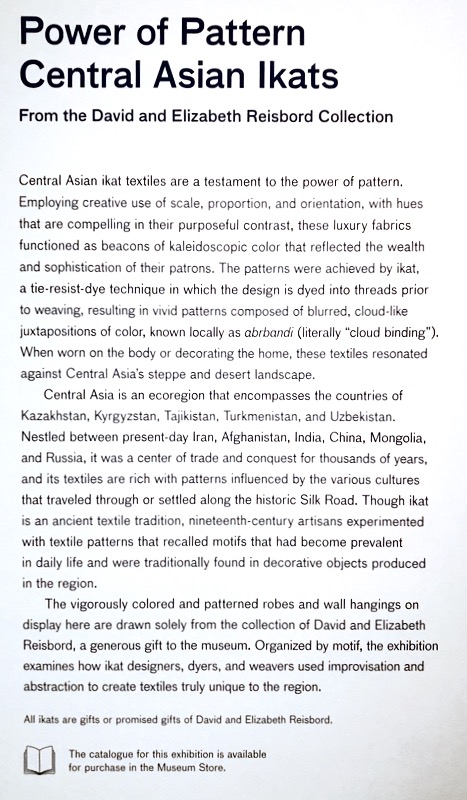
This past week, my husband and I had a chance to head into Los Angeles County Museum of Art (LACMA) to see this collection.  Here’s the notice in the gallery:

IkatTitle_1

Ikat_4

Ikat_4a
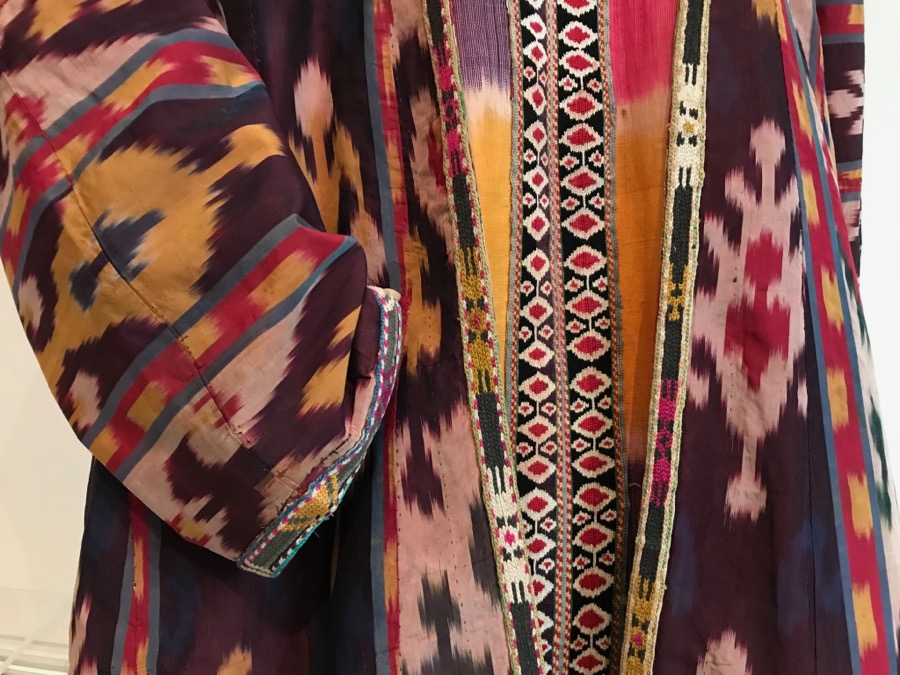
Note the embroidered cuff.

Ikat_5 Tajik Wedding Ritual

This photo of a Tajik Wedding ritual (1865-1872) shows the rich patterns of both men and women in their ikat robes.  I did a Google Image search, which has lots of results, but these older robes, as shown in LACMA, are rarer now.  In that Image search, I saw lots of machine-made ikats, which don’t have the subtlety of the hand-dyed.

Ikat_6

On the right is a series of threads which will form the warp threads in a loom, showing their various patterns from dying them using a resist process:

“Fabricating an ikat design demands vision as well as time. Before any actual weaving takes place, the lead craftsperson must picture a fully fleshed-out color pattern. Next, assistants soak the warp threads of the textile-to-be in a series of dye vats—up to eight in total—accumulating hues along the way. Prior to each dying phase, all stretches of warp are strategically bound with dye-resistant greasy thread, leaving exposed only those portions meant to be colored.

“By repositioning the dye-resistant thread before every immersion, textile makers gradually cover the entirety of the warp in an array of different tones. The most skilled designers will subject some sections of the material to multiple immersions, combining red and yellow dye to produce sunset orange, or red and blue dye to yield rich royal purple.

“Finally, when the Technicolor warp is ready, loom operators stretch it taut and gird it with a cotton or silk weft. The result is a long, narrow oblong textile bearing the designer’s repeating geometric pattern. This can be shaped into an eye-catching coat, or alternatively kept two-dimensional and made into a wall hanging” (from an article in the Smithsonian Institution Magazine, when they mounted their exhibit of ikat).

IkatTitle_3
LACMA’s didactic label in the exhibit

Ikat_7
I love the visual doubling and tripling of pattern and color in this robe.

Ikat_7bIkat_8

I think the guards thought I was crazy when I came to this robe.  I kept crouching down, zooming in, trying to capture the details of what I would call a type of kantha stitching, embroidery, hand overcasting.  It was a riot of color and texture and pattern:

You can see the nature of the ikat weaving, which blurs the edges as the weft yarns are woven through those pre-dyed warp yarns.  To make velvet, two rows of weft yarns are needed, instead of just one, so velvet robes were considered top of the line.  In the outfit above, it is the outermost robe.

IkatTitle_2

I took so many photos, that I’m not really sure which title goes with which picture, but I enjoyed reading the names of the clothing: a woman’s robe is a Munisak, a woman’s dress is a Kurta, and a man’s robe is a Chapan.

“Defined by an hourglass sihouette produced by the gathered fabric at each side of the waist, a munisak was used throughout a woman’s life for significant events, from her wedding to her funeral.  As such, it was an important part of her dowry” (LACMA text).

Ikat_9Ikat_10Ikat_10aIkat_11Ikat_12

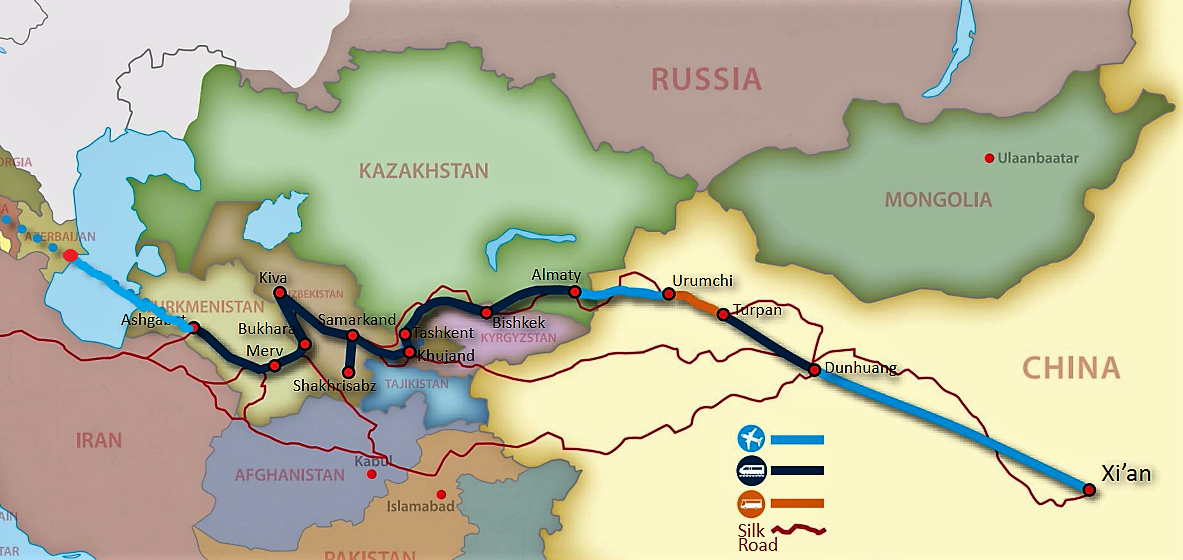
Recently, my friend Judy had traveled to this area with her husband, so I was familiar with the term “the Stans,” and what the area looked like.  Although some consider that term a snub (“stan” means land, as in Afghanistan is the land where Afghanis live), I think it works well for those of us not familiar with where these countries are:

Map of The Stans
Image sneaked off of her travel blog, *here*

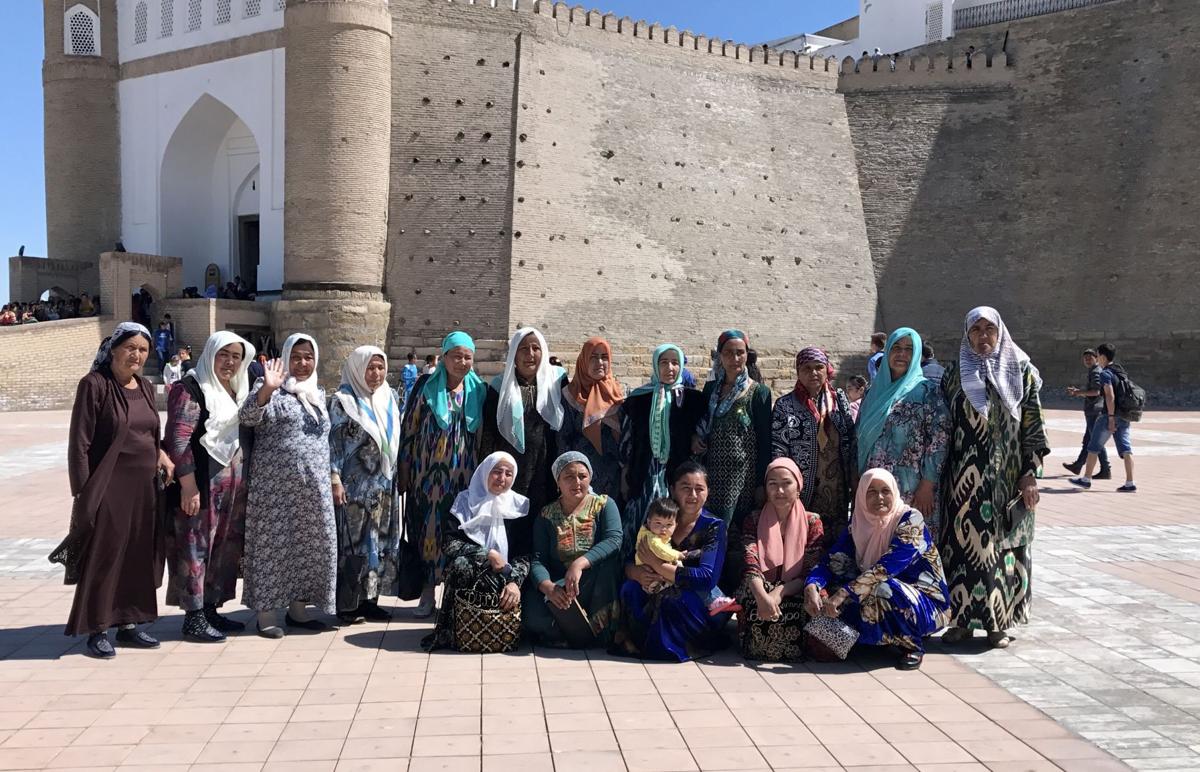
Women and Ikat_2017
Women and their Ikat Robes (2017), from *here*

106-Turkish-Coat_Folkwear
Turkish Coat, pattern #106

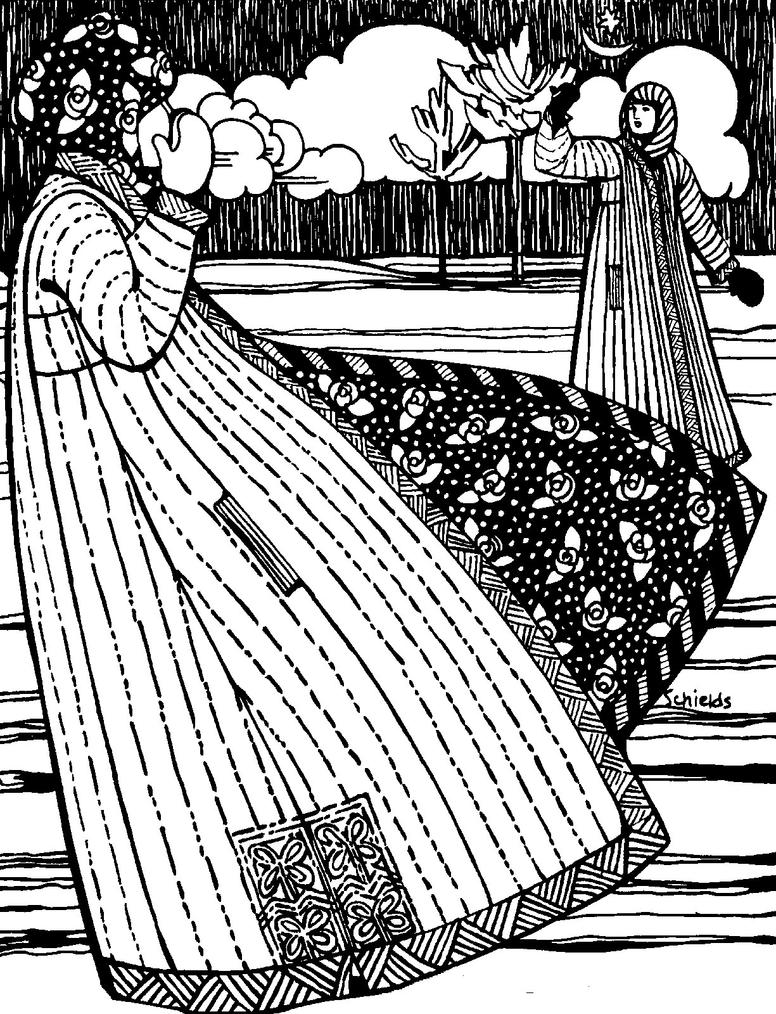
While we were in the LACMA exhibit, I told my husband that many quilters have used FolkWear patterns to make a similar robe, and added detailed surface decoration.  I first learned about ikat when I took a class in Houston several years ago from Roberta Horton, a reknowned quilter, who showed us ikats from her line of fabrics, made in India:

Ikat_14.jpg

Although I was a Clothing and Textile Major in college, I’d didn’t remember hearing about this fabric before; perhaps that why I wanted to blog about it today.  But in the quilting world, we also have variants of these colorfully patterned robes worn by these people from Central Asia.

Tabula Rasa Jacket_thequilttree.png

I’ve seen the Tabula Rasa jacket and all its variations, from a pattern by FitForArt.  Perhaps it’s the blurring of the lines between our patterned quilts and these beautiful ikat robes?  The more surface decoration the better?

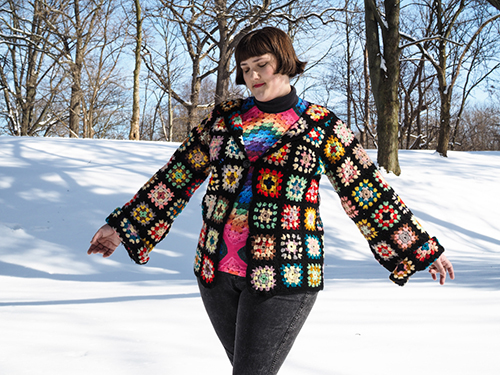
crocheted jacket

Not always. I’ve also seen some not-so-great versions of handmade clothing that were patterned to within an inch of their lives, certainly showing their makers’ skill but not always on the level of what was in that exhibit.

The brilliant thing about these ikat robes is the sense of balance that is present.  Even in the layering of the different patterns, something pulls them together, links in either color or design.  A worthy goal for our own creating, wouldn’t you say? whether it be in quilts or robes or clothing.

Ikat_13

This was another experience that showed me that old truth: it’s always good to get out of my head, my studio, and the endless loop of social media, in order to gain inspiration from other places in the world.

Happy traveling, and Happy Father’s Day!

Wedding Day for Us
The day my husband became a father to four children.