Classes · Quilts

Joe Cunningham Lecture * QuiltFest Palm Springs • Sept 2016

cunninghamtalk_1
Self Portrait, by Joe Cunningham

The evening of my class with Joe Cunningham, he had a lecture in the hotel, and since there were only four of us, he told the organizers he could hold up his own quilts and talk at the same time.  So we began with a song of his (guitar and all) and then he pulled out his quilts. In between we got “four lectures in one,” as he talked about how he came to quilting.  He’d started collaborating with Gwen Marston in 1975, and then she taught him to quilt.  They were both inspired by the collection of an older quilter with her handmade quilts, a woman who kept the quilting tradition alive during the middle years of the past century.  In 1990, he ended his collaboration with Gwen Marston, moved to New York, then to San Francisco to work with the Esprit Collection of quilts.  He never left.
cunninghamtalk_2
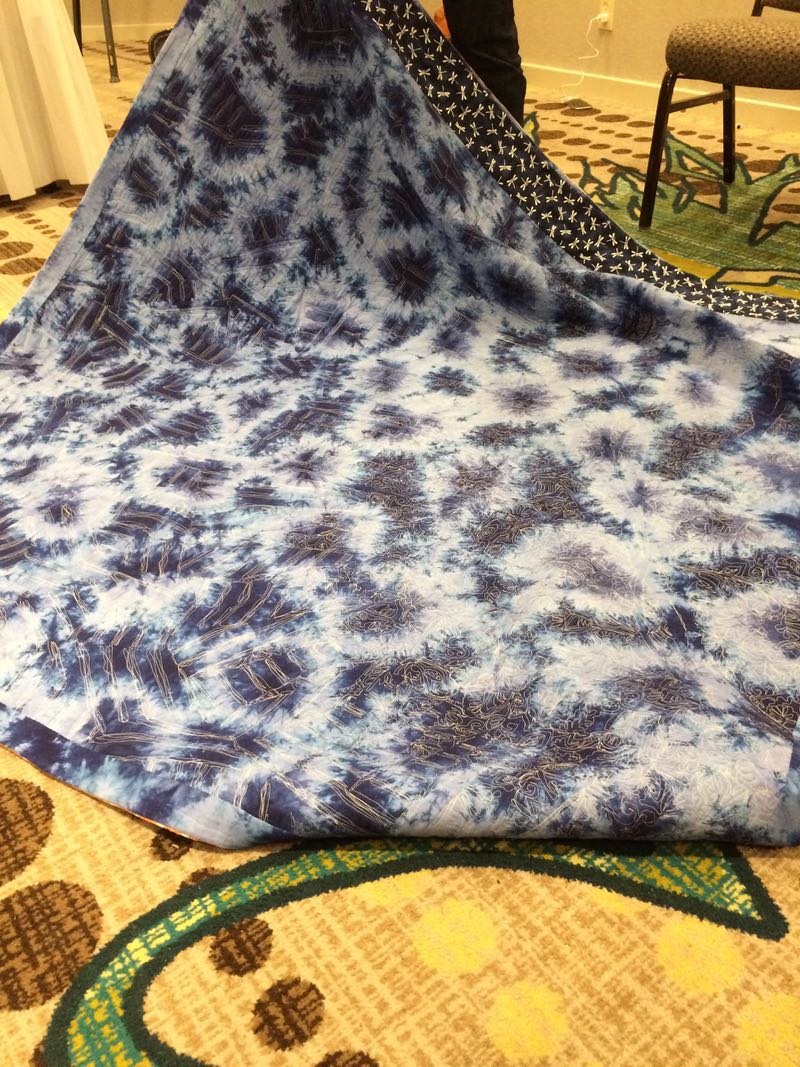
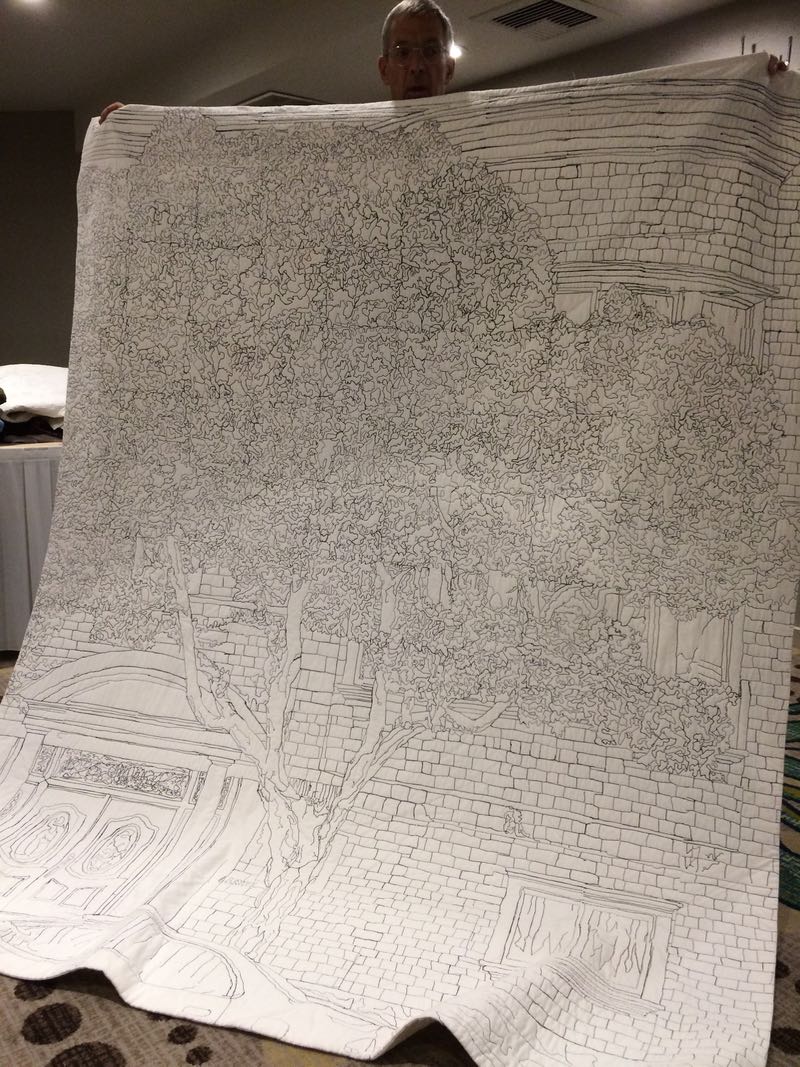
Lake Street House, by Joe Cunningham

He developed this quilting process working in conjunction with the people at Handi Quilter, where he could enter in a complex pattern into a computer and “tile” it back onto his quilt in the quilting.  Each tile takes about 45 minutes to quilt, but creates all sorts of interesting patterns in the quilting.  I asked him about the trend to matchstick quilting, and he had only one thing to say: “lost a chance to be creative.”
cunninghamtalk_3

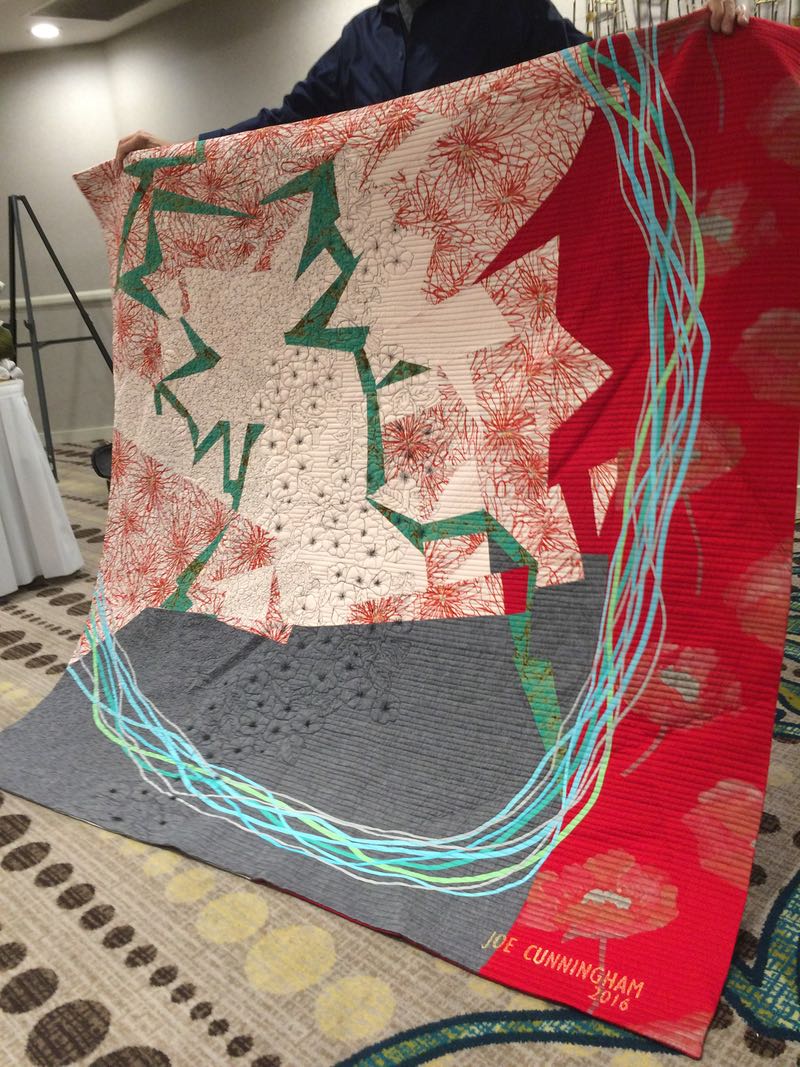
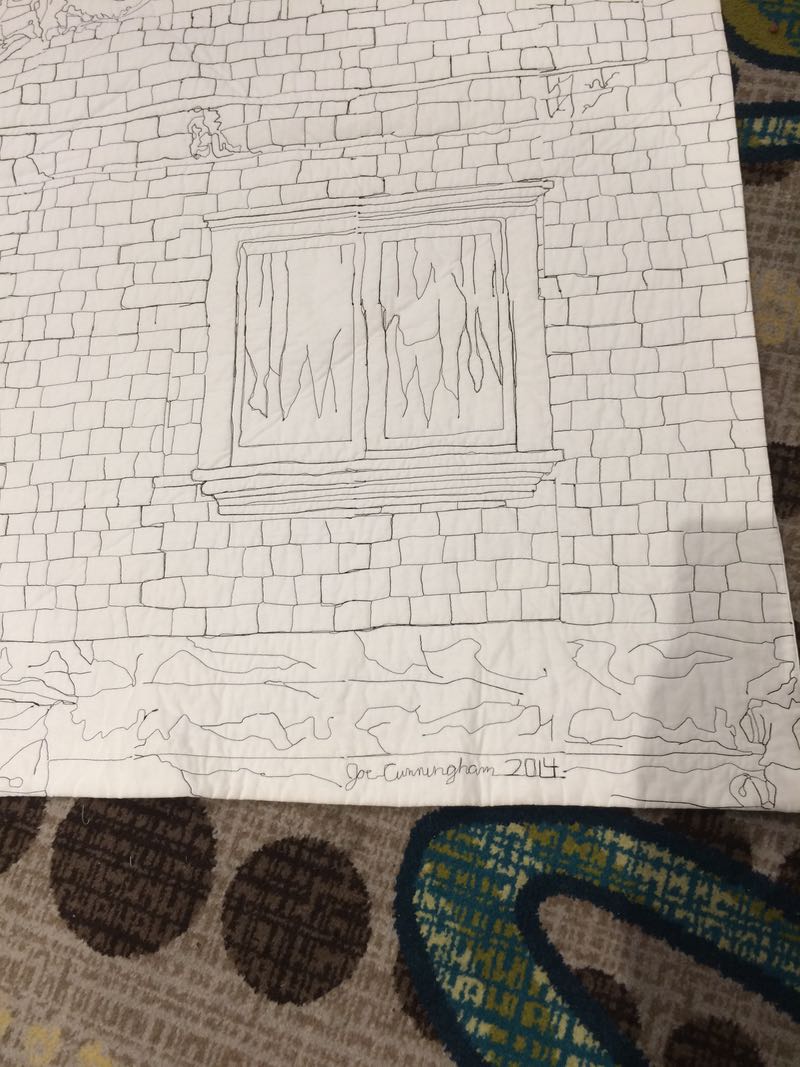
And this is how he labels/signs his quilts: his name and the year stitched into the top.
cunninghamtalk_4
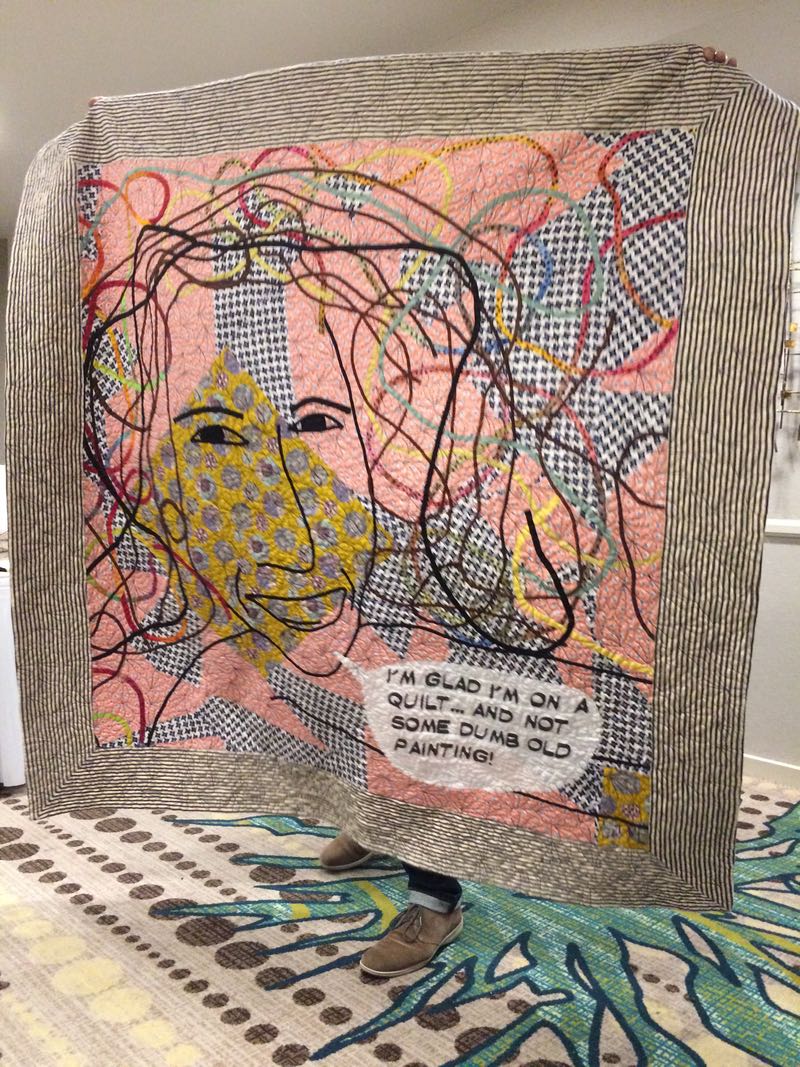
I’m on a Quilt, by Joe Cunningham

Both Joe and Luke Haynes, another art-centered quilter who is male, seem to be quite adventurous in the use of large blocks of particularly unattractive (ugly?) fabric and making that fabric hew to their vision of the quilt, an approach worth learning.  So much of what I see is that we quilters are the ones commanded BY the fabric to the end result, rather than the opposite tack.

Something else I noted in his approach — that I also see in Luke Haynes —  is figuring out the space where quilting and the art world collide and how to use that tension and friction.
cunninghamtalk_5

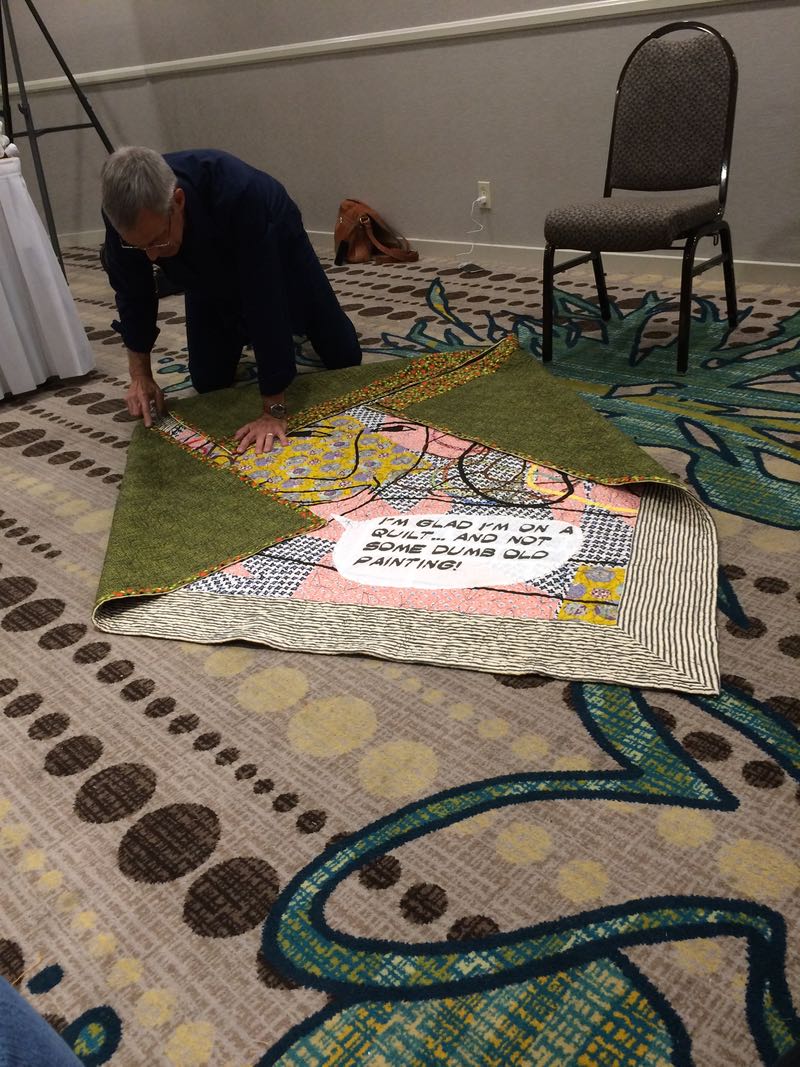
(Of course, I’m fascinated by the mundane: how he folds his quilts so there are no creases.)
cunninghamtalk_6
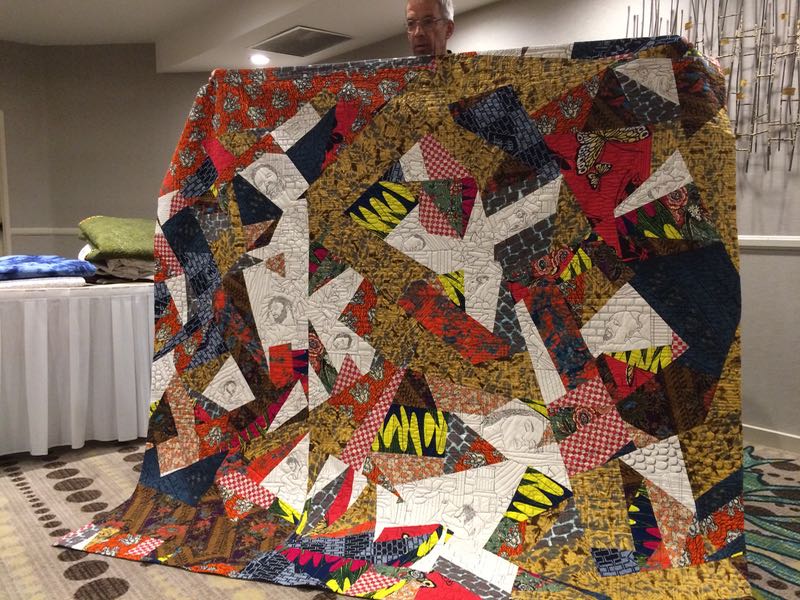
Kiev Protesters Quilt, by Joe Cunningham
cunninghamtalk_7
Detail, Kiev Protesters Quilt

He talked about how a quilt is allowed to say several things: I love you.  I’m thinking about you. Memorial quilts.  But he was fascinated one day by the blockades in Kiev, and how those who were protesting just fell to sleep anywhere.

For me this quilt reminded me of what he said in class: that he makes a quilt to see what it will look like.

cunninghamtalk_8
Bicameral Lovers Knot, by Joe Cunningham

Log cabin blocks are in the background.  Look up what bicameral is, if you don’t know.
cunninghamtalk_9
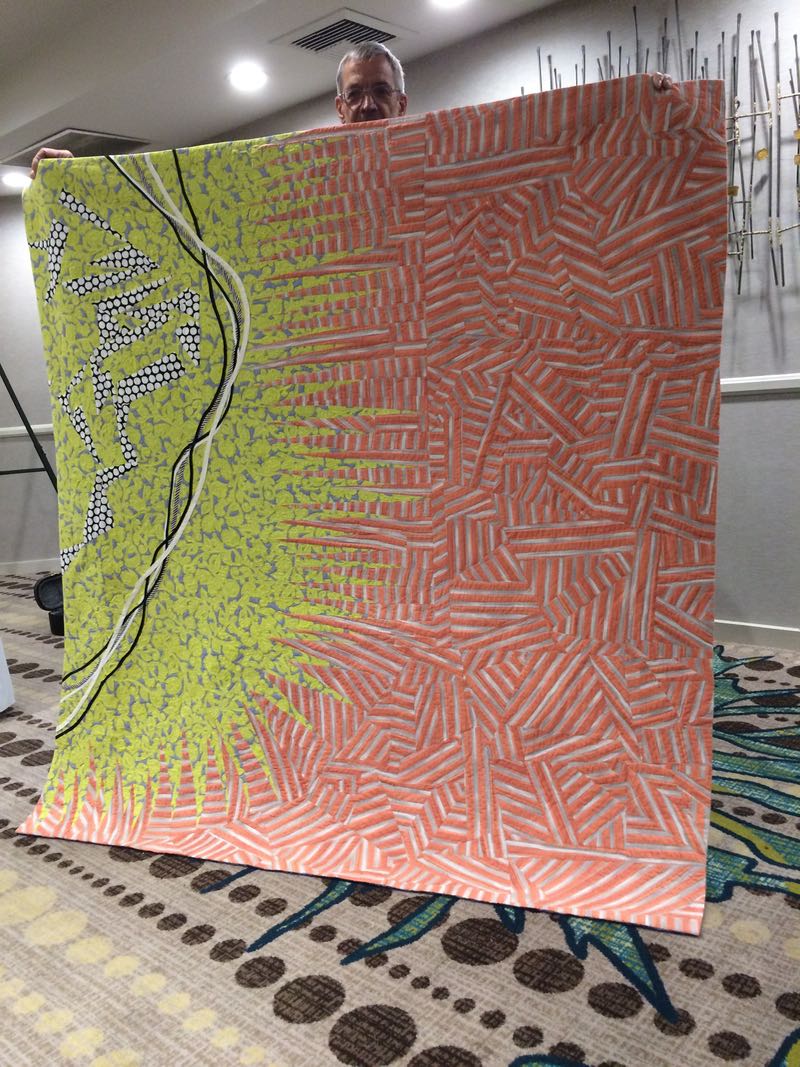
New York Beauty, by Joe Cunningham
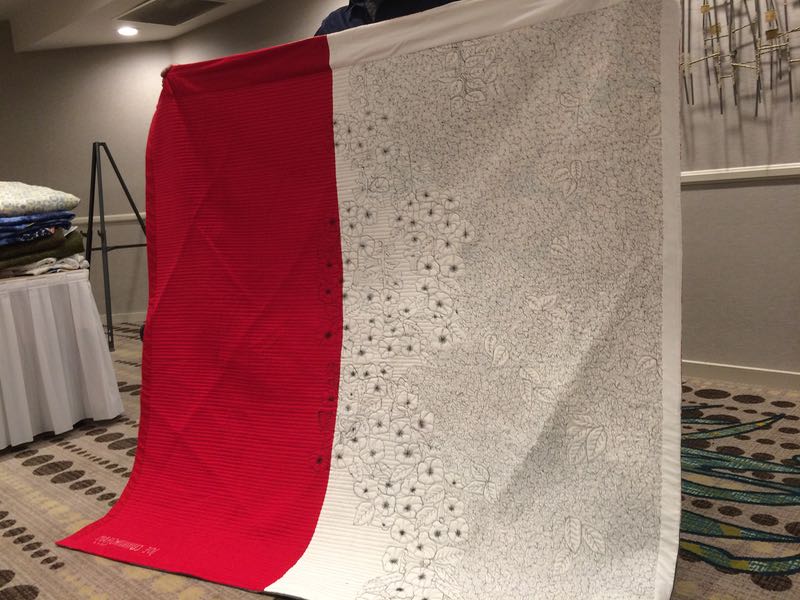
cunninghamtalk_10
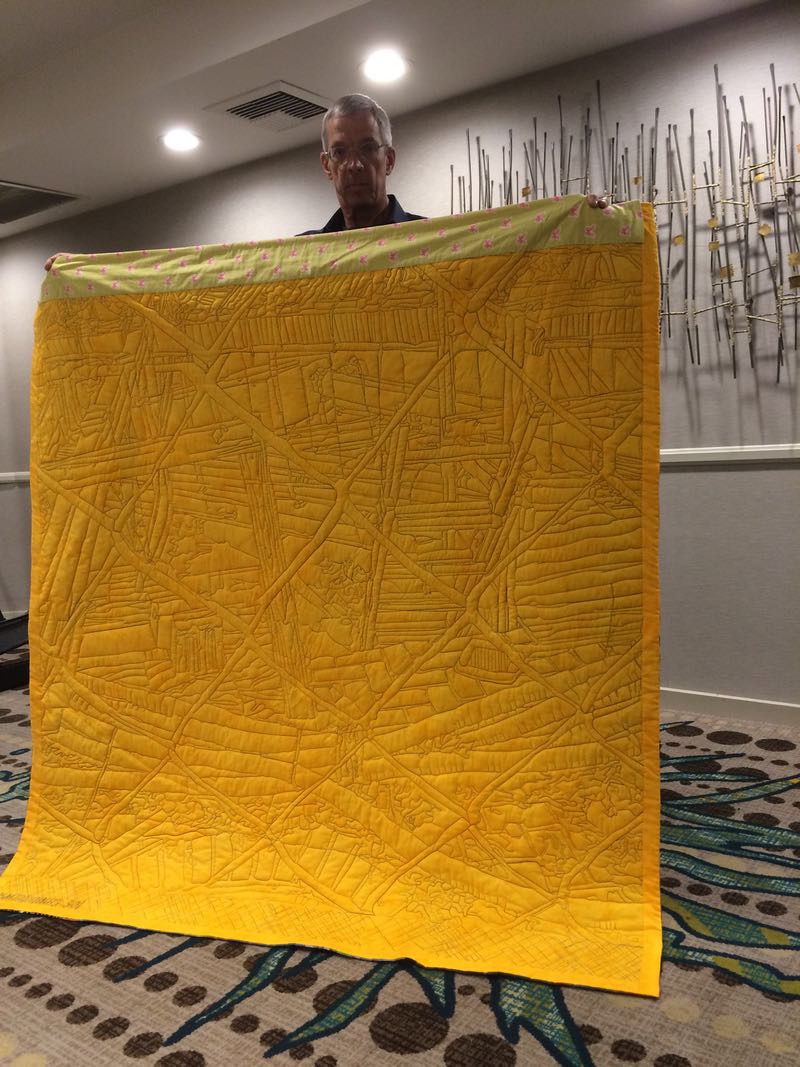
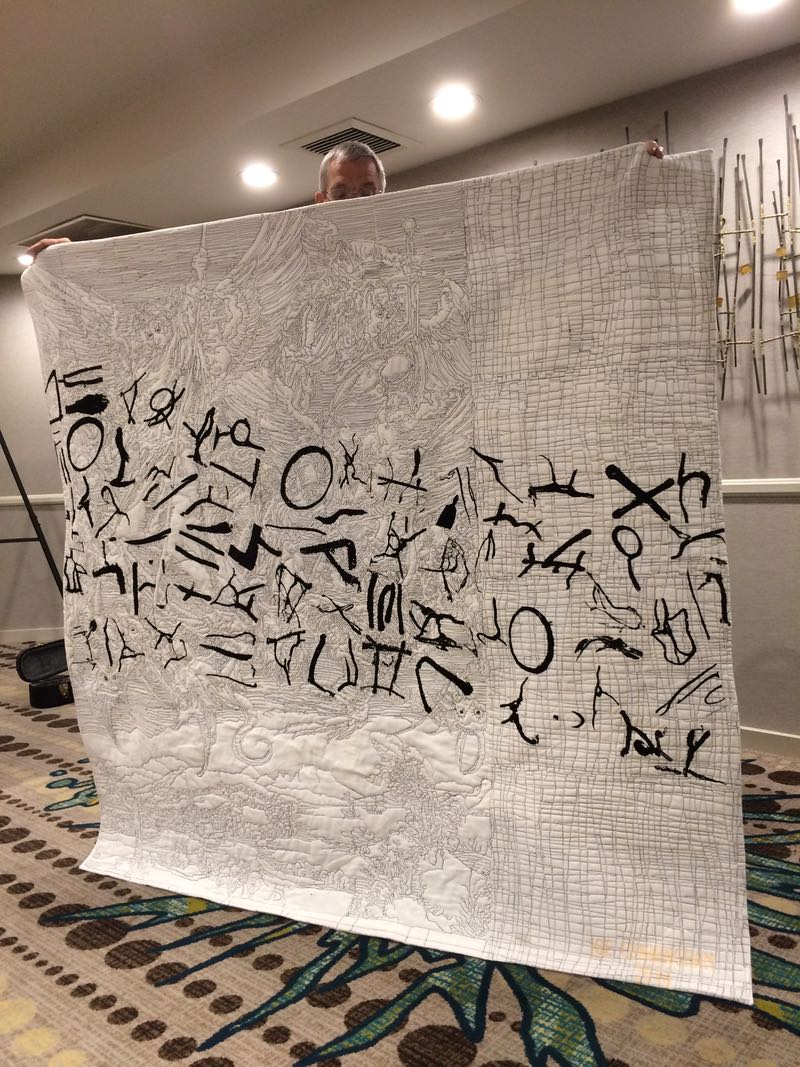
Back of New York Beauty, showing the quilting
cunninghamtalk_11
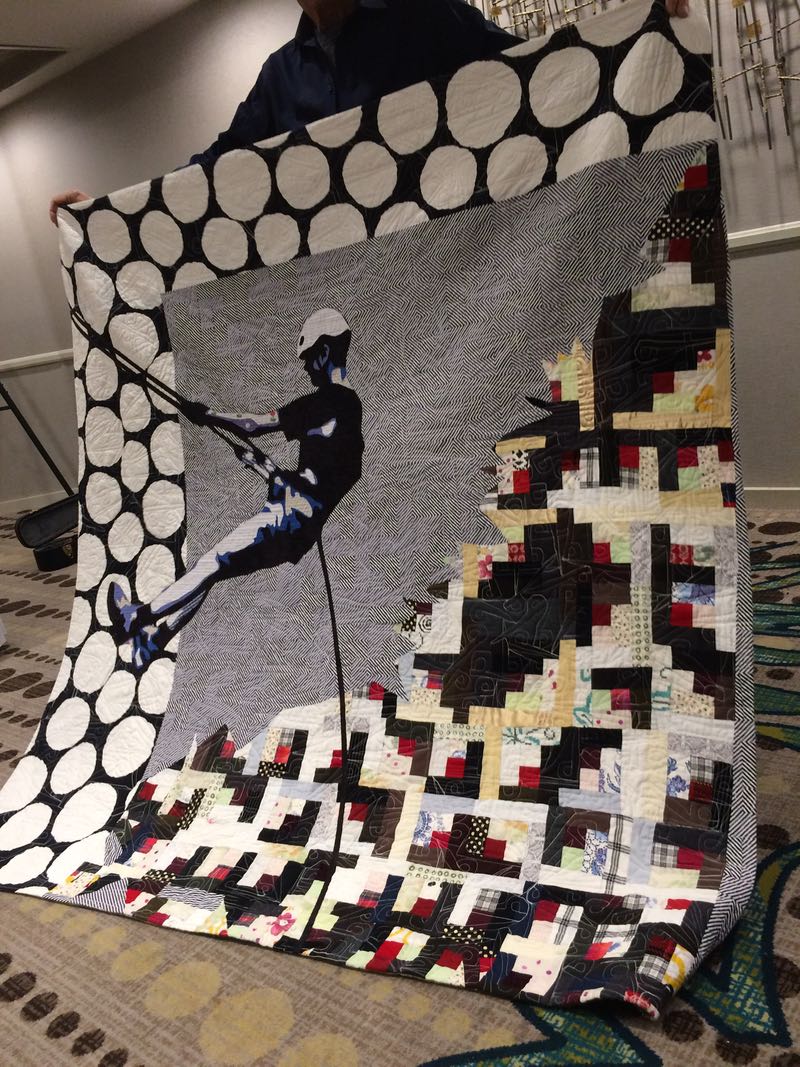
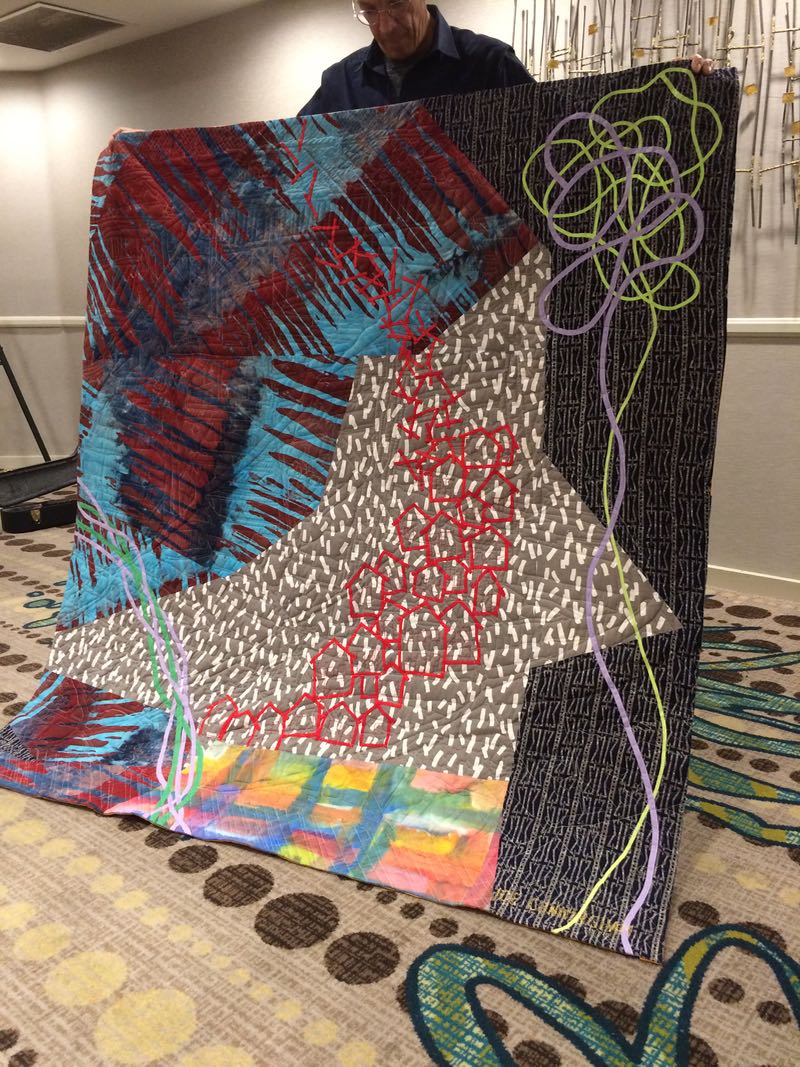
Mountain/Mountaineer, by Joe Cunningham

Luke gave him some of the leftover Log Cabin blocks from his recent exhibit, and Joe made them into this quilt, minus the mountaineer.  His wife walked in where it was hanging and said that he needed a figure there, so Joe gave it back to Luke, who added the climber
cunninghamtalk_12
Crazy City–San Francisco, by Joe Cunningham
cunninghamtalk_13
Back of Crazy City–San Francisco
cunninghamtalk_14
Crazy City–the Creek, by Joe Cunningham
cunninghamtalk_15
Back
cunninghamtalk_16
Tar Patch Quilt, by Joe Cunningham
cunninghamtalk_17
Detail and Signature

cunninghamtalk_18

He covered so many topics that I can’t write them all here, but they were fascinating and I thought about them all the way home, such as (I’m paraphrasing):

  • If a piece of art looks like art, then it’s somebody else’s art.  [Can’t we apply this to our quilts?]
  • The brilliance of quilts in the colonies [our early American colonies] was in the egalitarian nature of it.  It wasn’t just for the rich, which it had been earlier when quilting was done in imitation of European quilts, but it was for the masses.
  • These women changed the definition of a quilt from a commercial item to a gift.  The quilting, done around a frame, cost no money.  Because of this, it remained in the realm of women and was invisible to the men, especially the merchant class.
  • Quilts from Europe in the earliest days were of four types: whole cloth, honeycomb (think EPP), strippy or medallion.  From there, we invented blocks.  From four types, we know have over 400,000 different patterns, an independent realm created by women.
  • And finally: “We make quilts like everyone else…unless you don’t want to.”  A trap door exists for us to escape the sameness and make our own vision.

I love classes where I have as much for the brain as I do for the creative, visual, tactile side of the equation, and this lecture certainly gave me everything.  I’m so glad I was able to go, and so glad QuiltFest brought out this great speaker.

Quilts

Yvonne Porcella

yp-1993

Since I am an older quilter, I am familiar with many of the early pioneers in quilting, and one of them was Yvonne Porcella (photo above is from 1993).  I just learned of her death after her six year ordeal with ovarian cancer, and thought I would pass on pictures of her creativity.  Upon her death, the Modesto Bee wrote:

fb-post-yvonne-porcella

I lived in the Bay Area when she was well-known, and it was another quilter, Elinor Peace Bailey who told me about Yvonne and told me I should learn about her and look at some of her work.

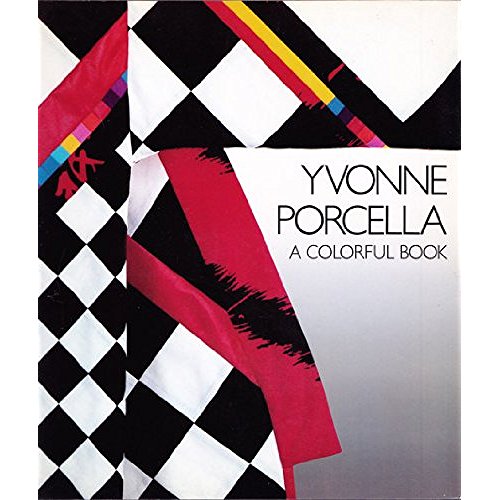
a-colorful-book-yporcella

So I purchased this book, and fell in love.  You can buy it for a penny on Amazon right now.  And then I bought another:

pieced-clothing_yvonne-porcella

Here is some of her work:

yvonne-porcella-quilt-81897

2011-porcella-article-6-i-love-america-1988

(from here)

1ginza_yvonne-porcella

3camel_yvonne-porcella

(many images from here)

paris_yvonne-porcella

porcella-quilts-1

Asked to reflect on her career, how it began and what drives her as an artist, Porcella says:  “As a child, motherly love taught me to knit and sew, and rip mistakes and make it right. Curiosity led to self education, enhanced by a collection of books, visits to museums, and exploration of textiles from other countries. Imagination generated inspiration and freedom led to invention. I learned creativity comes from making your own rules, understanding the limits of your chosen materials, and having confidence in personal skills.”

I’ll miss your influence and quilts, Yvonne.  Thank you for teaching me not to be afraid of color.
12733411_1214148581947011_5052371840640640146_n

Quilt Shops · Quilts

A Visit to Missouri Star Quilt Company

missouristarquilt_1

This past week I accompanied my husband on a long weekend, when he went to a scientific conference in Kansas City, Missouri.  I’ve been going to this conference with him for many years, and have a close friendship with Beth, the wife of another scientist.  When she found out the meeting was in Kansas City (the venue changes every year), she looked up on the map how far it was to Missouri Star Quilt Company (about an hour from the city center). Tuesday morning I hopped in her car and we were off to see the Wizard Missouri Star Quilt Company.missouristarquilt_1a

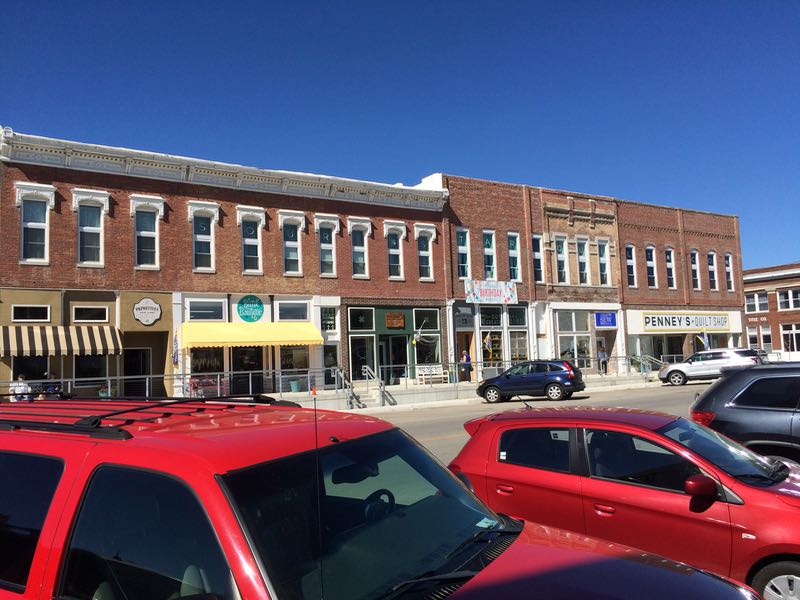
Missouri Star Quilt Company is in Hamilton, Missouri, a small one-blinking-stoplight town in the rolling plains of the Midwest.  I snapped this photo while walking in the crosswalk underneath the blinking red light.missouristarquilt_1b

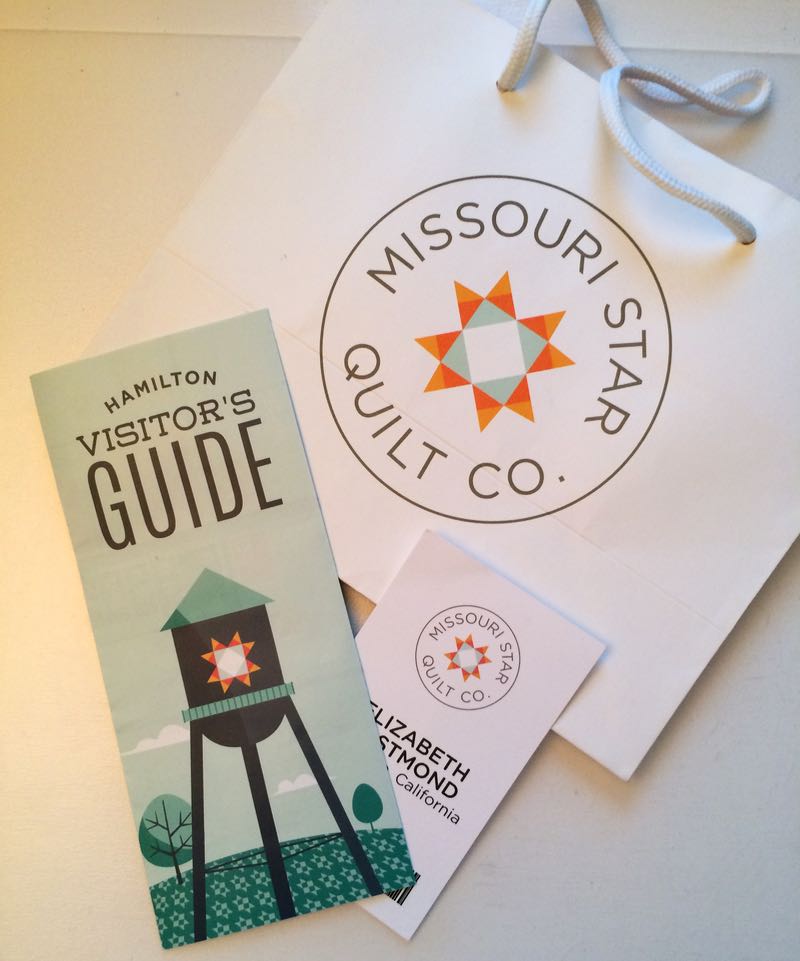
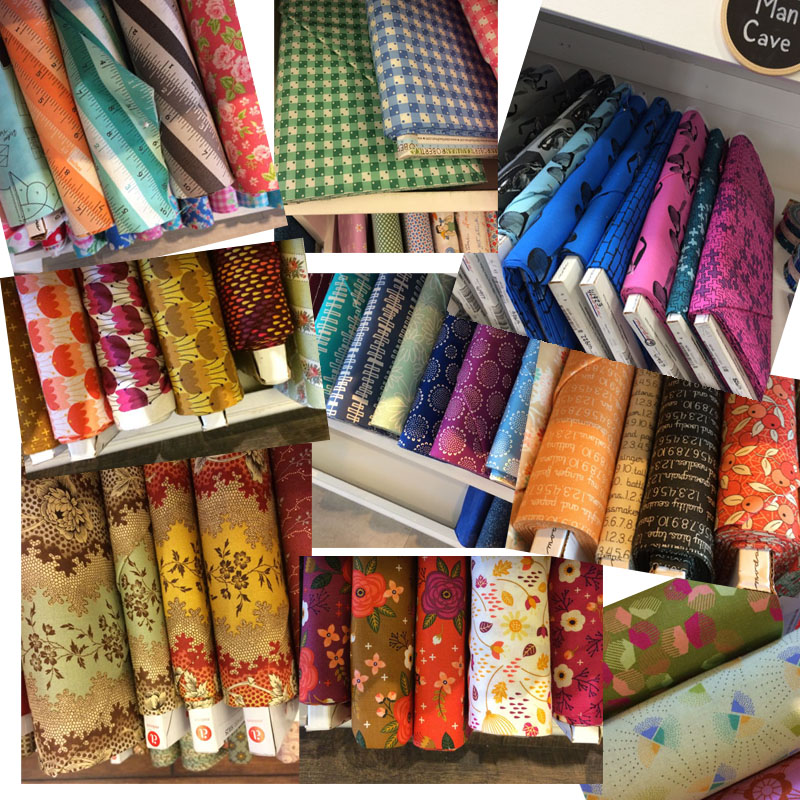
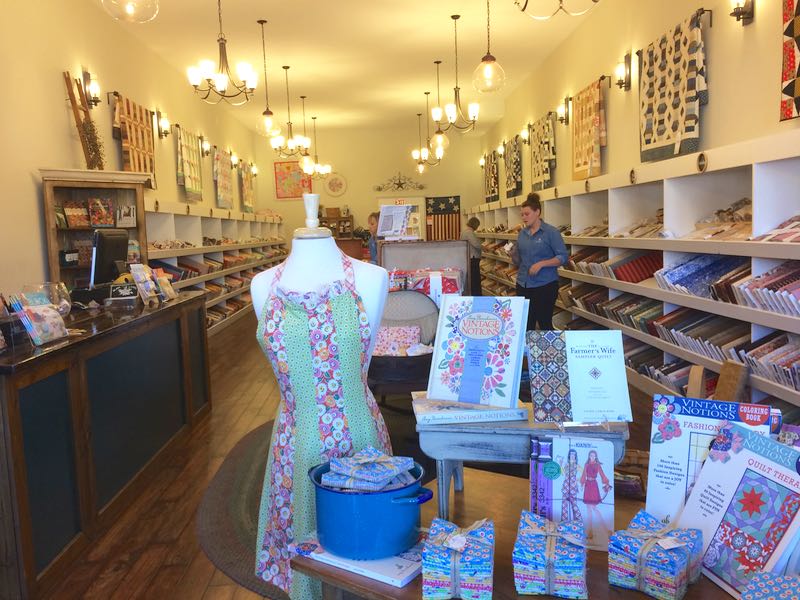
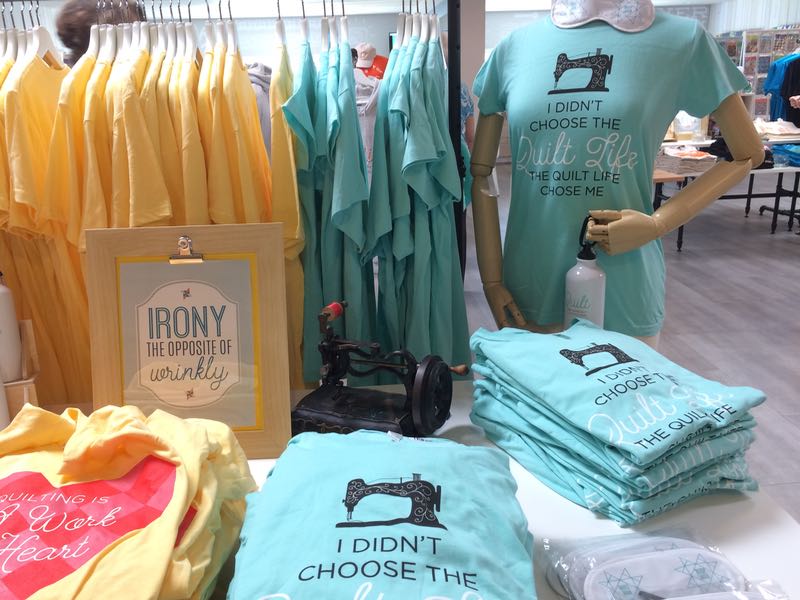
It does have other shops than the Missouri Star Quilt company, such as the grocery store above (pronounce the name out loud), as well as a bank and a park, which notes it is the site of the boyhood home James Cash Penny, the man who started the J.C. Penny stores.missouristarquilt_guide1Here is the merchandise bag, when you buy a T-shirt or other such souvenirs at the main shop.  They also hand you a brochure, and you fill out a badge that you let them scan in every shop, saving you the hassle of giving them your email every time, and also helps you acrue their quilt bucks, or whatever they call it; every time I made a purchase, I’d gathered a bit more savings, which I applied to my purchase.  I didn’t get all this until the third shop we stopped in, but I put it here to give you an overview.missouristarquilt_guide2missouristarquilt_guide3We parked in front of Shop #24, and walked across the street to begin our fun.missouristarquilt_2 We start with Florals.missouristarquilt_3Nearly every shop is like the one above, long and narrow, as shops were back in the day.  The fabrics are in slightly tilted shelves along each wall, with bins/buckets/containers in the center, near the cutting tables.  All the quilts that you’ve seen in Block Magazine are lining the walls, which made me feel like I was in quilt heaven–and that I needed to add about 20 more quilts to the Get These Made Before You Die list.missouri-star-fabric-collageWe soon realized that we could be in serious financial danger if we bought as we went, so we decided to browse, then buy.  To keep track of what I was interested in the first time through all the shops, I started snapping photos.
missouristarquilt_4

Next up is what we called Vintage, but looks like on the map is Mercantile.  It was filled with lots of Civil War, reproductions and 1930s prints.missouristarquilt_5

I don’t think this character is part of the Missouri Star Quilt displays, but I loved his look.missouristarquilt_6

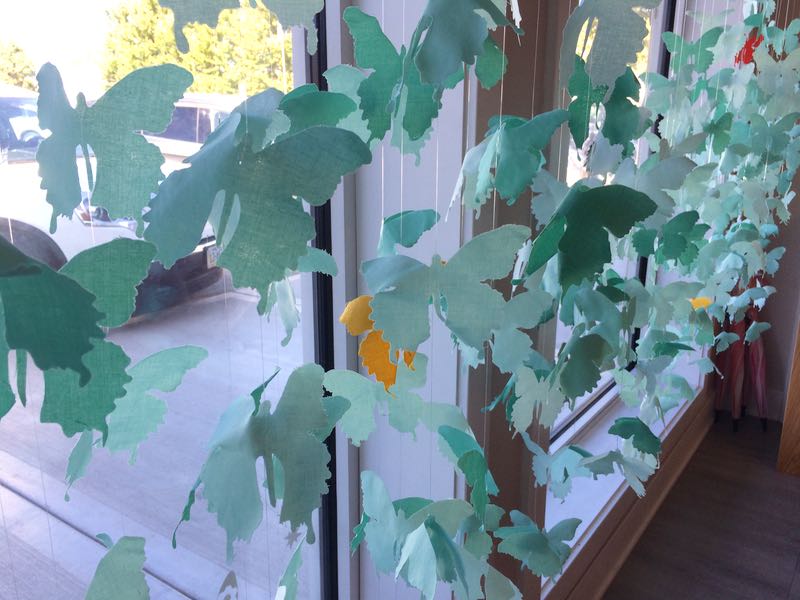
I was consistently impressed with the little touches–like these fabric butterflies in the Main Shop window.
missouristarquilt_6a

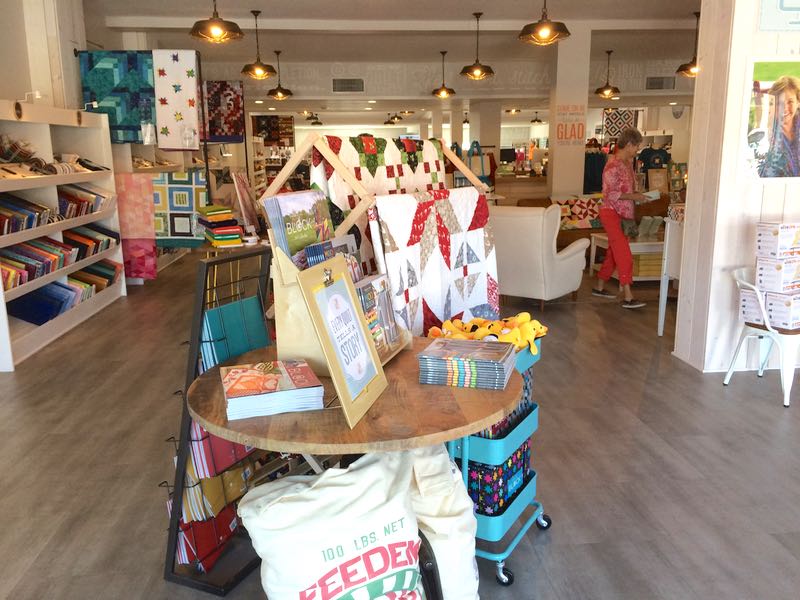
Sometimes I kind of felt this was like a cross between a quilt shop and Pottery Barn, which is really fun.  Lots of light, well-curated extra touches (like the seating area up above by the woman in the pink) and great displays with lots of charm.  In the Main Shop, we picked up our badges, looked at all the merch (see below) and noticed that around the edge of this shop were sections of fabrics that matched the shops around on the street: florals, baby, primitives, modern, etc.missouristarquilt_6b missouristarquilt_6c missouristarquilt_6d

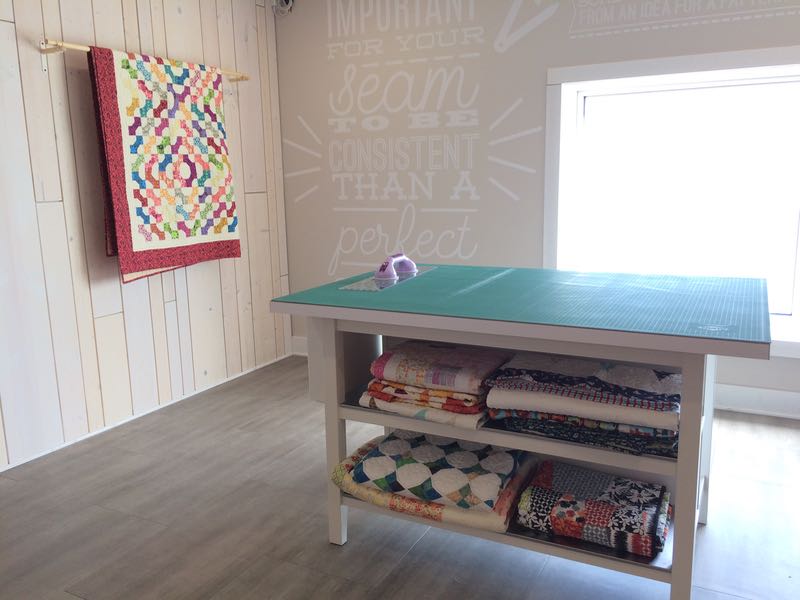
Quilts are everywhere…even under the cutting tables.missouristarquilt_6e missouristarquilt_7

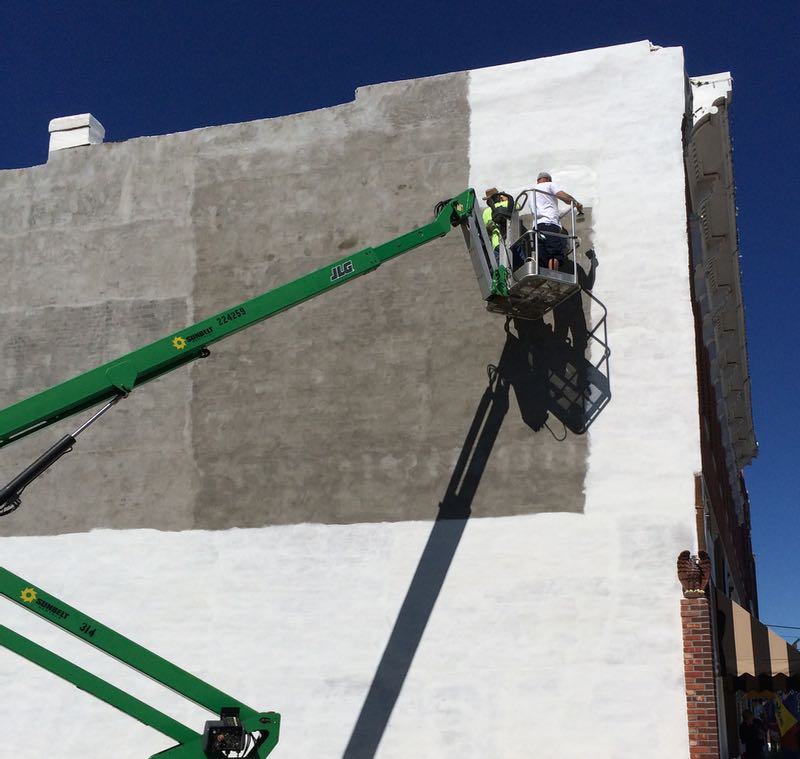
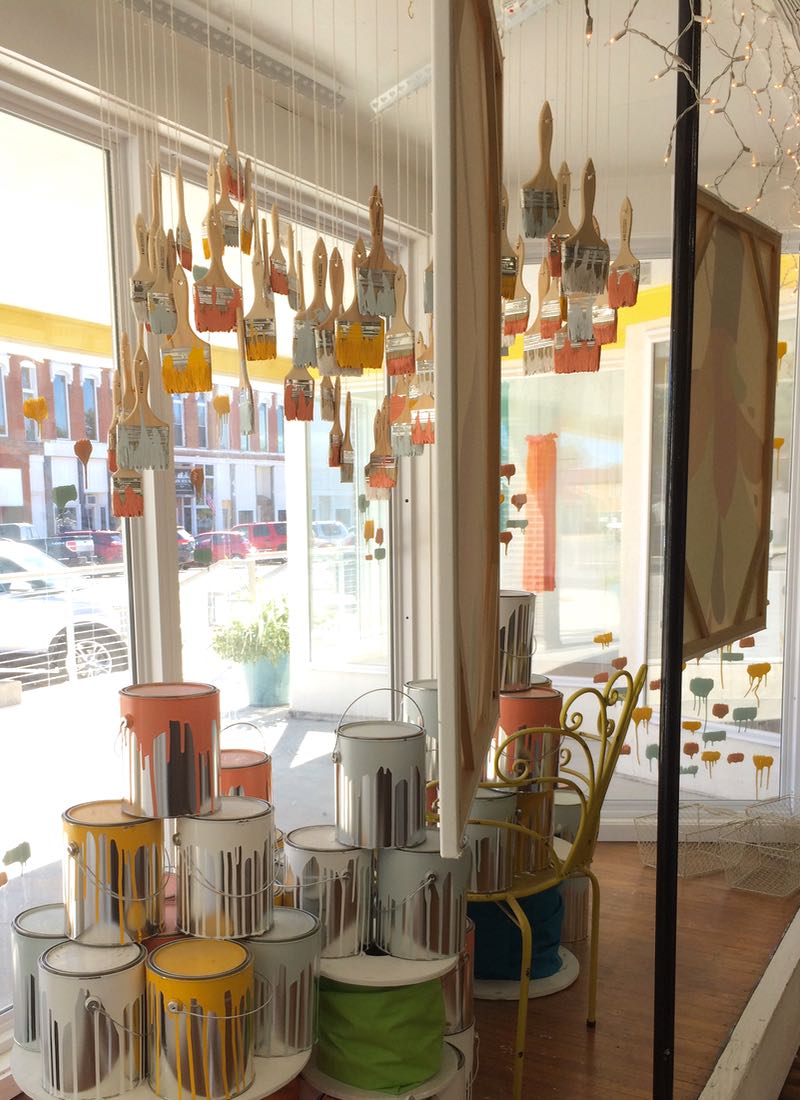
Moving on, we enjoyed the murals on three of the buildings.  The first is above, and I laughed when I saw them painting the side of this building (below) with BRUSHES!missouristarquilt_7a missouristarquilt_8

We were headed to Penny’s.missouristarquilt_9

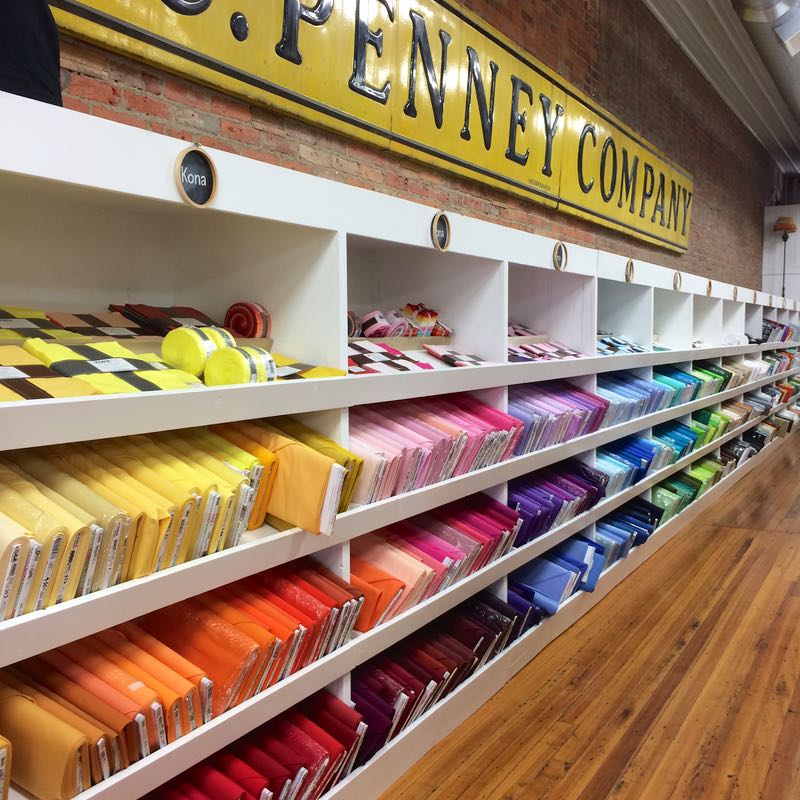
Store front window, because this place is filled with solids, or near-solids, of every kind (just not my favorite solids: Paintbrush Studios).missouristarquilt_9a

Again, there are lots of small vignettes of color, and lots and lots of quilts and quilt tops.  The big crime was that because my plane was leaving that night, we only had a few hours to spend here, but I could see that a quilter could save up all their money and stay for a long day or two.  You’d better drive, though, because you’ll be hauling a lot home.  Since both Beth and I had small suitcases, we limited our purchases (another crime), which was hard to do, because everything is so beautiful and well-displayed.missouristarquilt_9b missouristarquilt_9c

Above each section of shelves is a small round blackboard, with the name of the manufacturer written in chalkboard paint, and framed by a small embroidery hoop.missouristarquilt_10

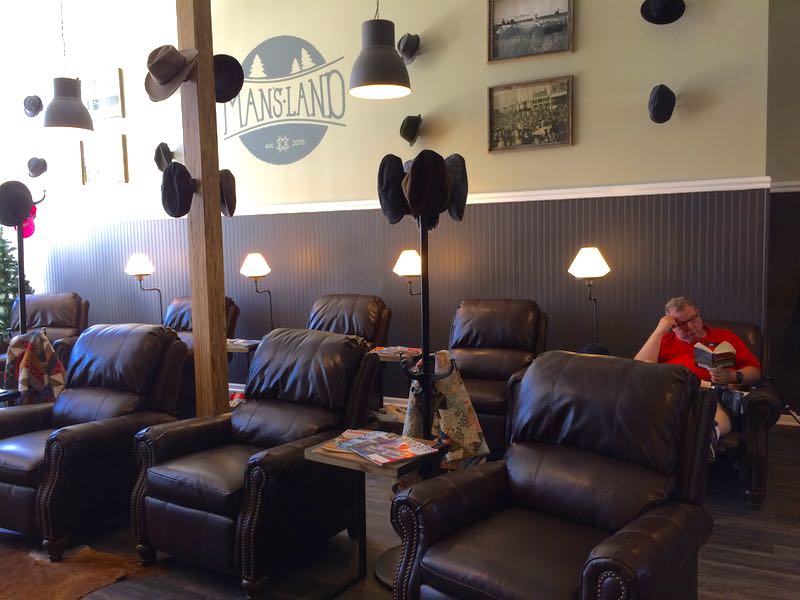
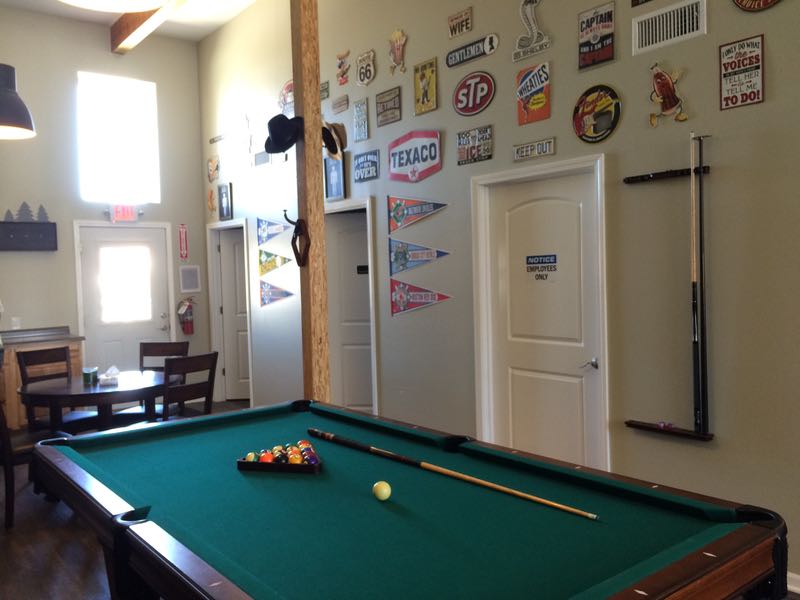
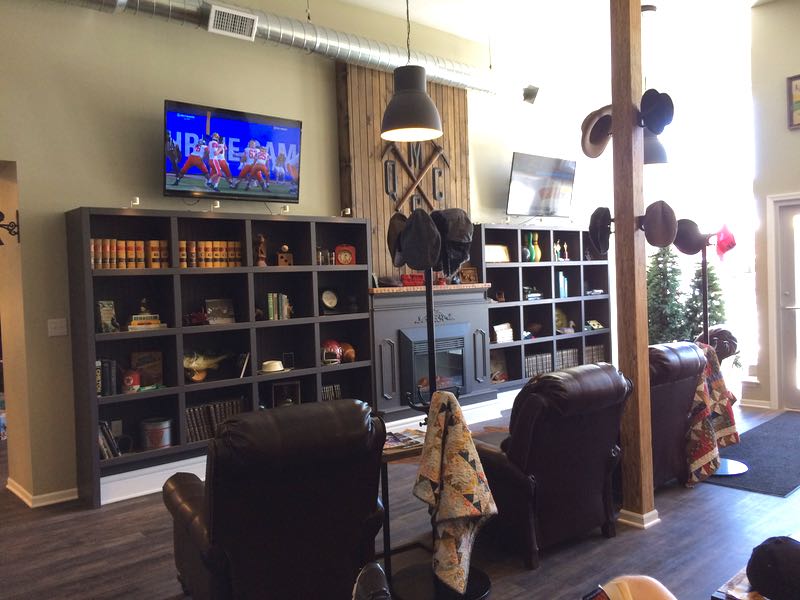
We peeked into the Man Cave, or as they call it, Man’s Land.  It is equipped with big recliners, wide screen TVs, and a pool table.missouristarquilt_10a missouristarquilt_10b missouristarquilt_11

Upstairs, above the row of shops on the Penny’s side, are four side-by-side upstairs quilt shops: Kids & Baby, Backing and Trims, Sew Seasonal, and Modern.missouristarquilt_11a missouristarquilt_12 missouristarquilt_12a missouristarquilt_12b

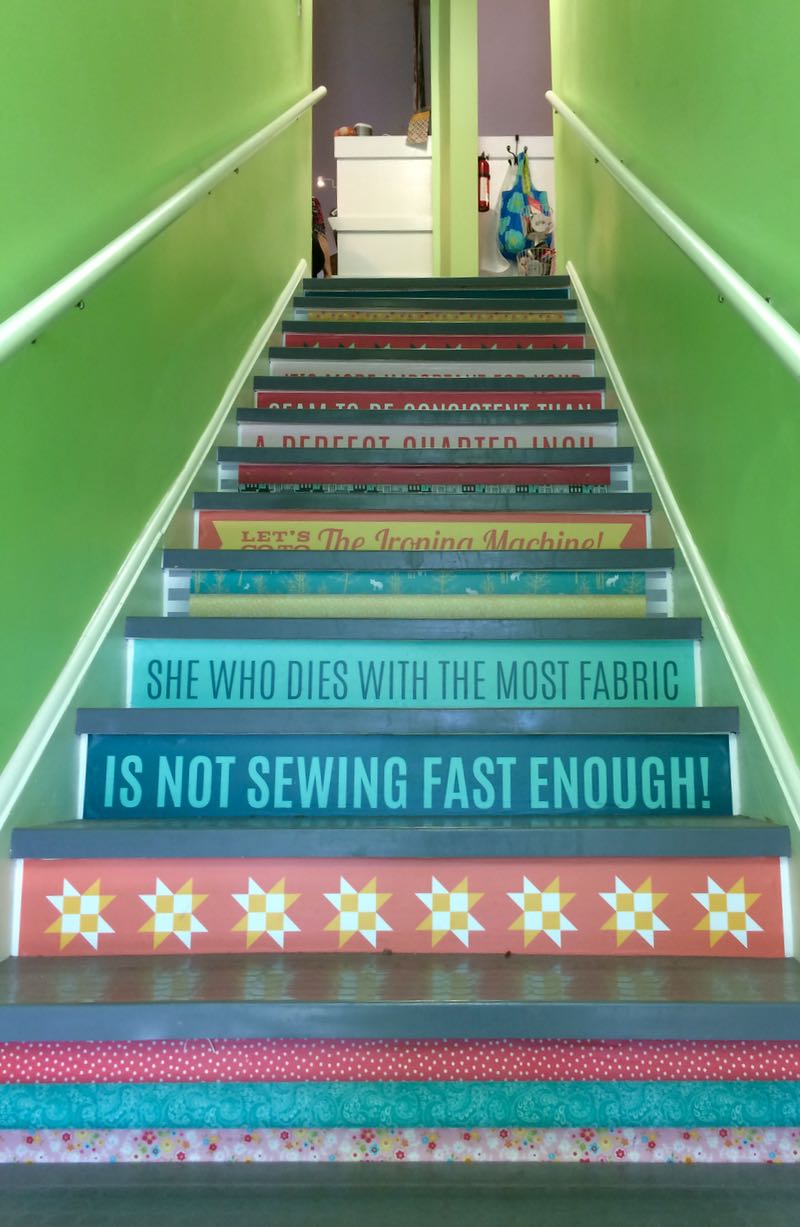
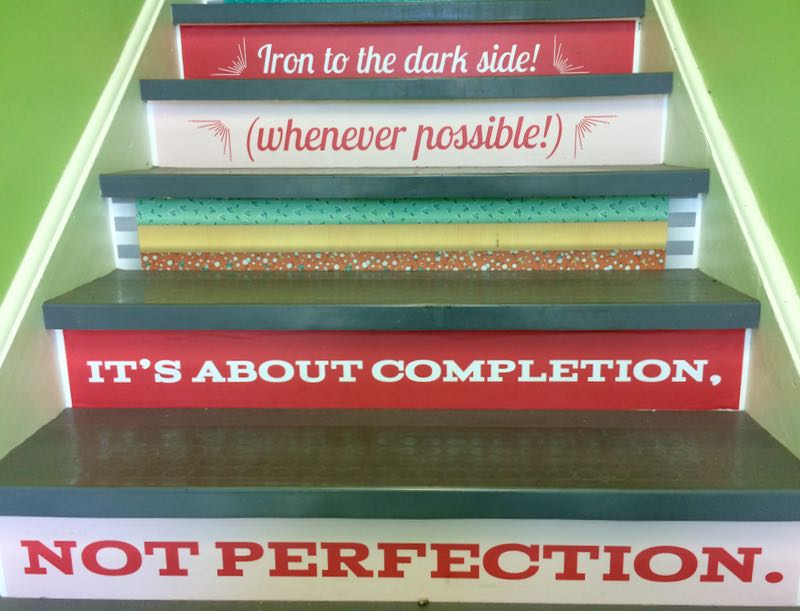
Access is via these steps, or another set of wide ones (with a bright yellow wall–the colors here are really fun and bright) in the Licensed to Sew Shop, or via an elevator.  They’ll get you up there every way they can.  About this point, I asked about all the charms I was seeing: different ones in every shop.  If you spent more than $50 (pre-tax) in any one of their shops (you can’t carry the total forward between shops), you get a free charm.  I ended up buying a few, instead of qualifying (I told you I had a small suitcase).  They give you the little bracelet at the Main Shop, when you print out your badge.
missouristarquilt_13

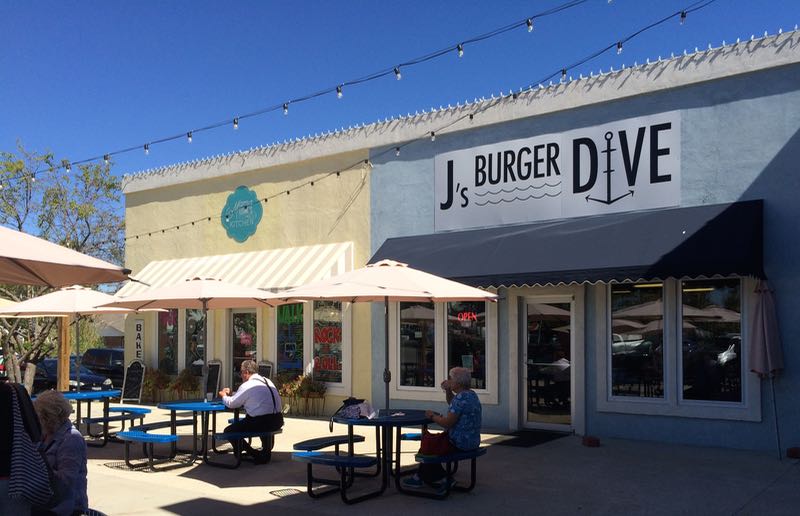
Okay, lunchtime!  J’s Burger Dive was highly recommended for great burgers, but we went with Mama Hawk’s Kitchen, where we each got a salad.missouristarquilt_13a

Another mural and a couple of locals.missouristarquilt_14

We circled back around through the shops, picking up the fabrics we wanted, where I snapped this last picture at the “Machine Shed,” where they had notions and machines.  One other place is the Sewing Center, but they had a retreat, so we couldn’t go in (but we peeked through the window–it was packed!) I also heard that Rob Apell was around somewhere, but I didn’t spot him.  Beth and I tucked our goodies and ourselves back into our car and headed back to Kansas City, happy to have stolen a few hours to browse Hamilton and visit the Missouri Star Quilt Company!

˚˚˚˚˚˚˚˚˚˚˚˚˚˚˚˚˚˚˚˚˚˚˚˚˚˚˚˚˚˚˚˚˚˚˚˚˚˚˚˚˚˚˚˚˚˚˚˚˚˚˚˚
My blogging software puts ads here so I can use their site for free.  
I do not know about, nor choose the content, nor do I receive any money from these ads.
˚˚˚˚˚˚˚˚˚˚˚˚˚˚˚˚˚˚˚˚˚˚˚˚˚˚˚˚˚˚˚˚˚˚˚˚˚˚˚˚˚˚˚˚˚˚˚˚˚˚˚˚˚˚˚

EPP · Quilts

Rosette #6 for the New Hexagon Millifiore Quilt-A-Long

rosette-6_whitebckgrnd

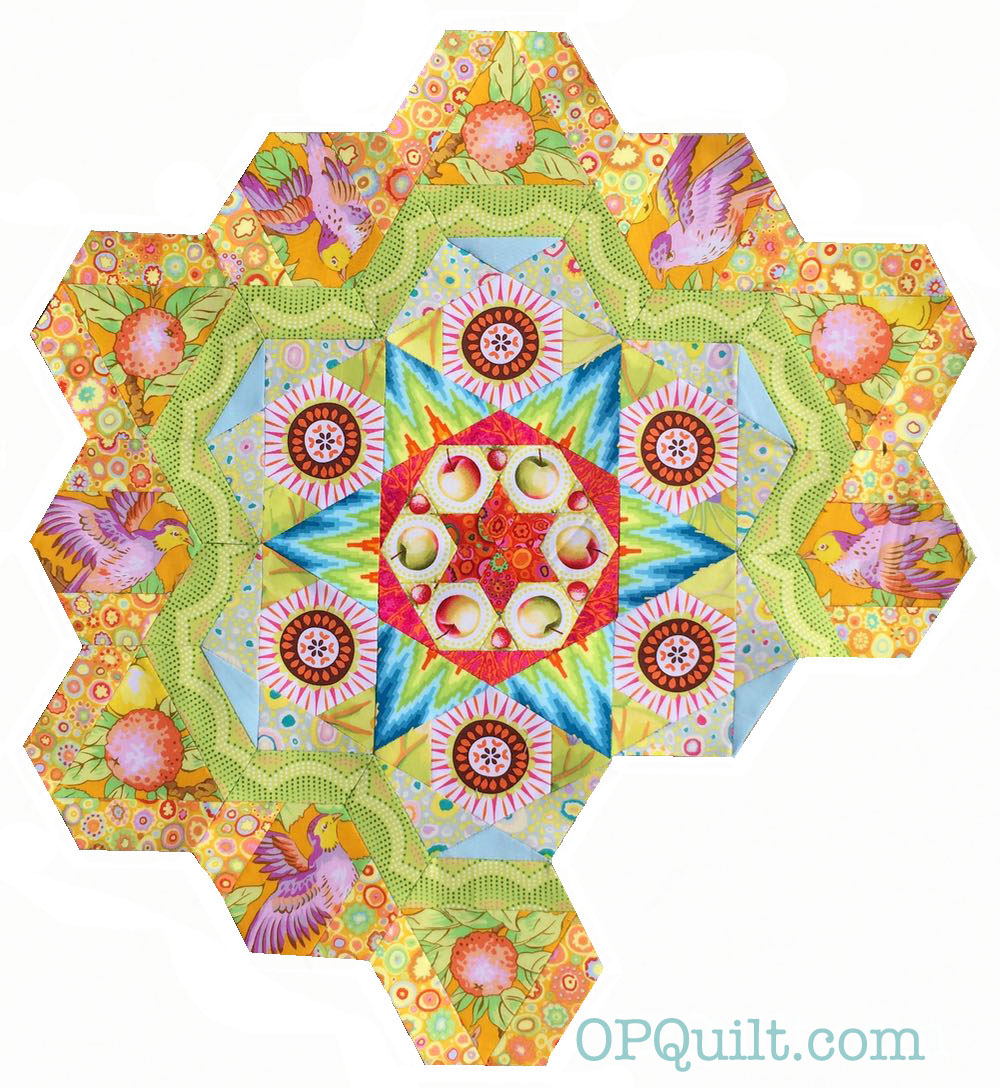
Here’s my rosette #6 for The New Hexagon Millifiore Quilt-Along.

marek-rosette-6

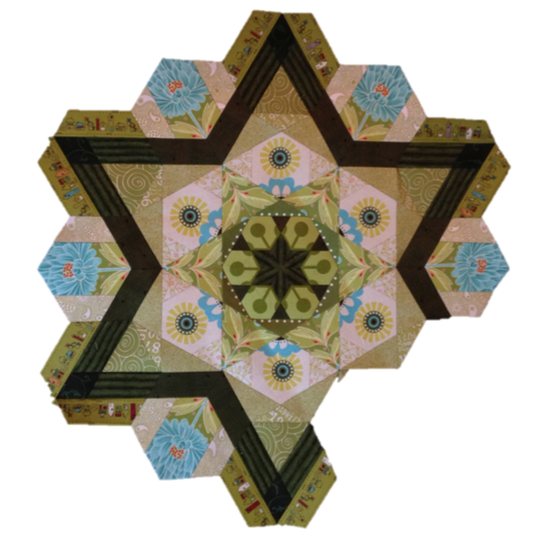
And here is the original.

Why did I change it?  I started looking at all the composite views of the rosette and just thought the star was too prominent, that it started a new conversation in the middle of the living room when the party around it was already having a nice chat, thank you very much.  While I thought the original design was very clever, I needed it to change.

rosette-6_opquilt-com

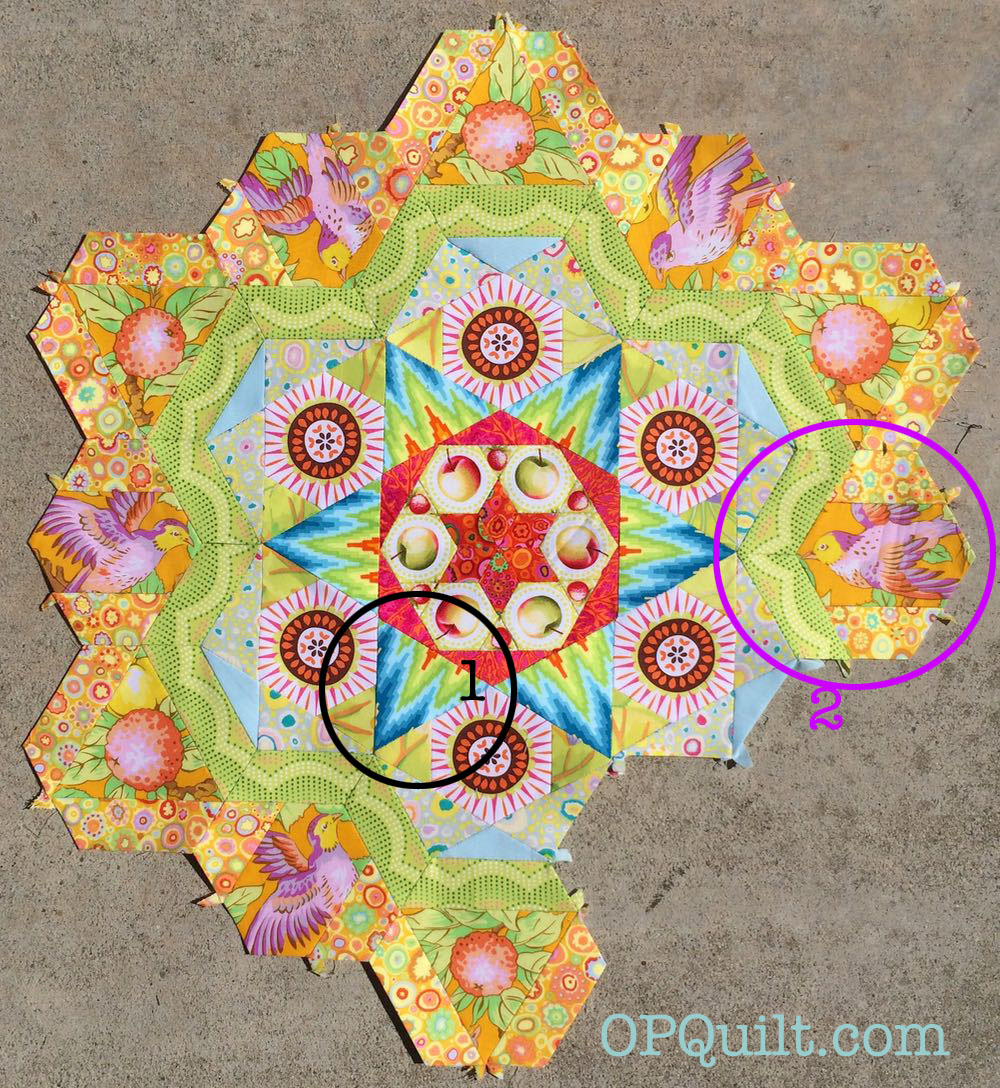
Here are the changes I made:

In the black Circle #1, I created a new piece — that of two tall 30-60-90 triangles merged into one equilateral triangle.  I studied my friend Laurel’s rosette (she is all finished with her quilt top) and noticed that in hers, as well as in many others, the right triangles of 30-60-90, when placed back to back with another, create a third pattern.  It does the same thing in the original block, above.  But I wanted to use this bargello/flame fabric and I only had a little bit, so that made my decision for me.

In the dark pink Circle #2, I looked at other blocks that I’d sewn in my previous rosettes, because I wanted to nab their papers and re-use them.  I found this shape in an earlier rosette, figured out that it would work, and am happy with the “ribbon” the multi-colored light-green fabric made.

I had to sew on my equilateral triangles on the center section first, then the next inner row of partial hexies, in order to make it fit (the ones with the bold radiating circle design).  Then it was add the last round, alternating the birds and the citrus fruit hexies.

all-rosettes_opquilt

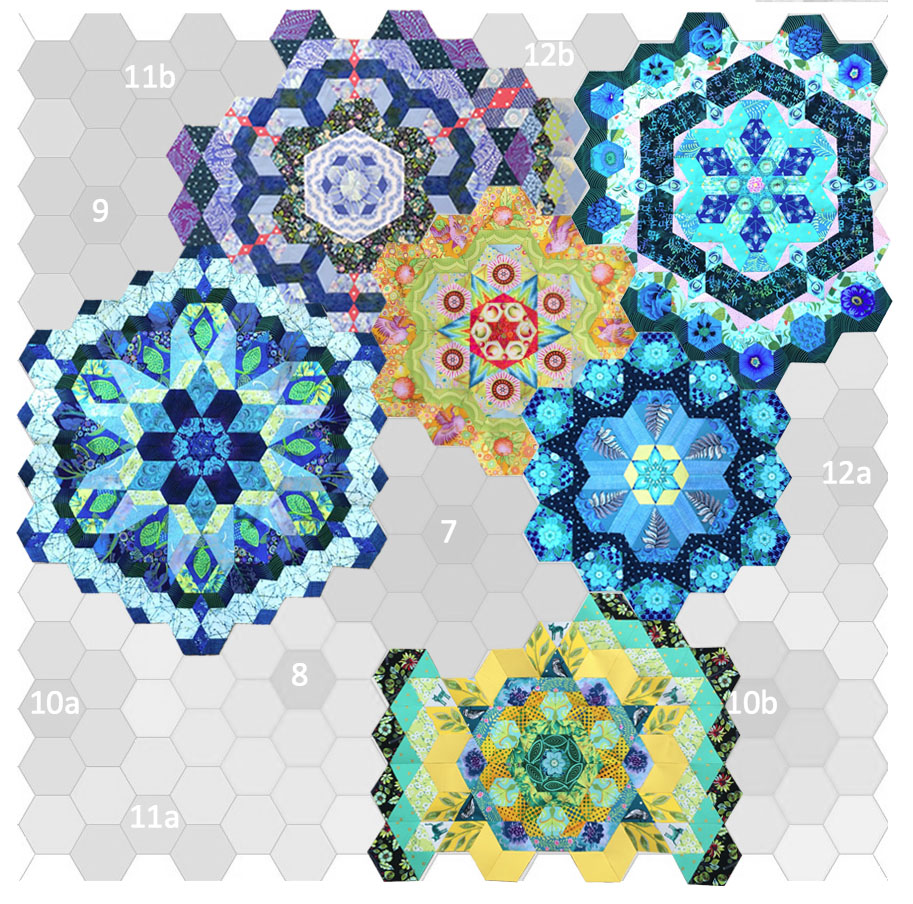
Here it is, laid out in Photoshop, which isn’t really the greatest approximation of how it looks in real life, but I’m not yet to the sewing-it-together phase. I’m still not 100% sure about the colors of Number Six, but I will try to bring in one more yellow spot somewhere — maybe in 10a — so I can balance those brights.

Stay tuned.

˚˚˚˚˚˚˚˚˚˚˚˚˚˚˚˚˚˚˚˚˚˚˚˚˚˚˚˚˚˚˚˚˚˚˚˚˚˚˚˚˚˚˚˚˚˚˚˚˚˚˚˚
My blogging software puts ads here so I can use their site for free.  
I do not know about, nor choose the content, nor do I receive any money from these ads.
˚˚˚˚˚˚˚˚˚˚˚˚˚˚˚˚˚˚˚˚˚˚˚˚˚˚˚˚˚˚˚˚˚˚˚˚˚˚˚˚˚˚˚˚˚˚˚˚˚˚˚˚˚˚˚