300 Quilts · Patterns by Elizabeth of OPQuilt · Quilt Finish

Quilt Finish: Aerial Beacon

To get across great distances, way back in the day, early airplane pilots would focus on visual landmarks, or sometimes lit bonfires if they needed to find their way in the dark: “In February 1921, an airmail pilot named Jack Knight put this to the test with his all-night flight to Chicago from North Platte, Nebraska. Knight found his way across the black prairie with the help of bonfires lit by Post Office staff, farmers, and the public” (from here). When I found this Aerial Beacon block, it sent me gathering information about this idea: that there were physical beacons to guide those airmail pilots before we had modern navigation. Really? I’d never even thought about this.
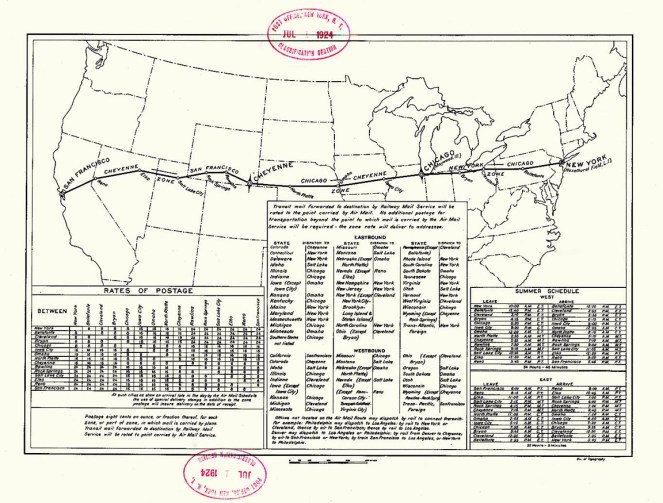
An early map showing one of the routes across the United States.

Many aerial beacons were atop tall city buildings. This is from a vintage postcard of Chicago.
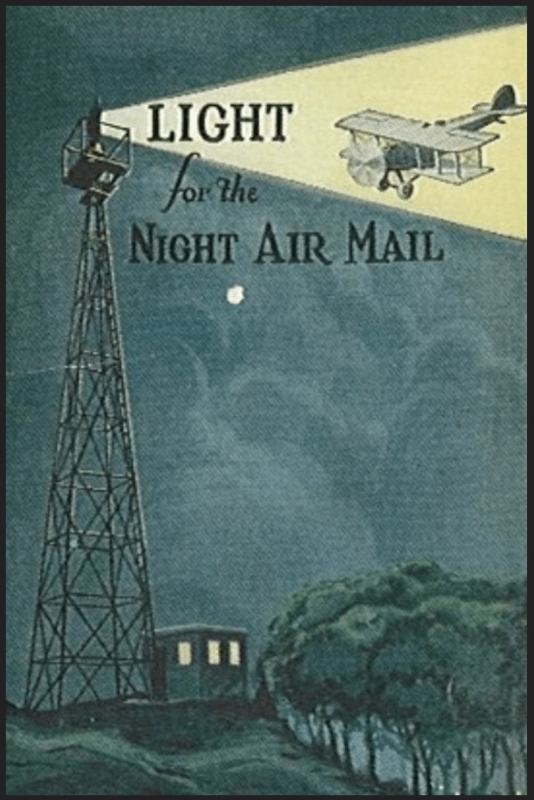
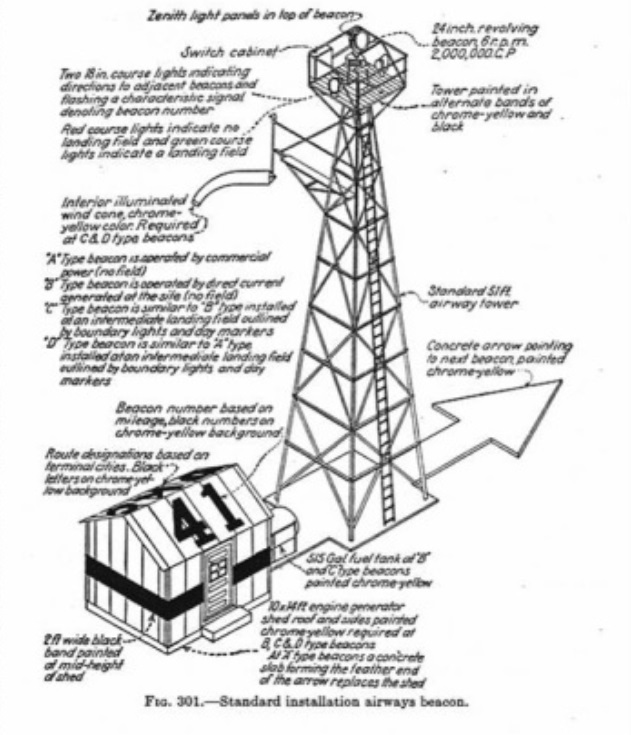
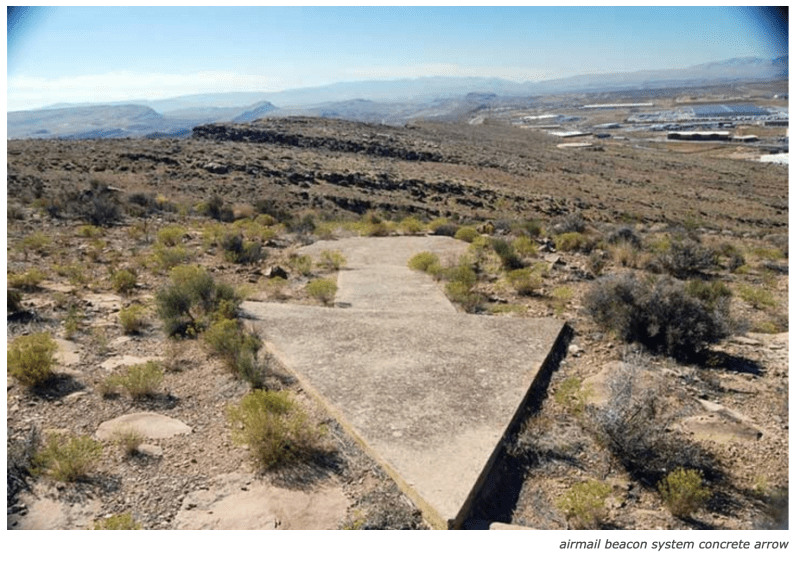
Some aerial beacon were little huts with a number painted on the roof. They were next to the tall beacon, with a concrete arrow pointing on to the next one. These are still found in the United States on hilltops, beside cities, although there are very few extant arrows.
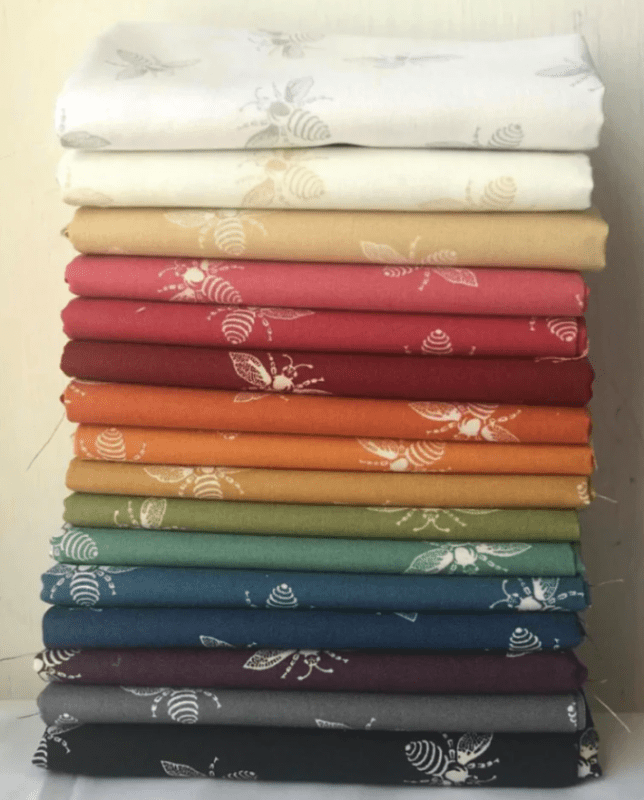
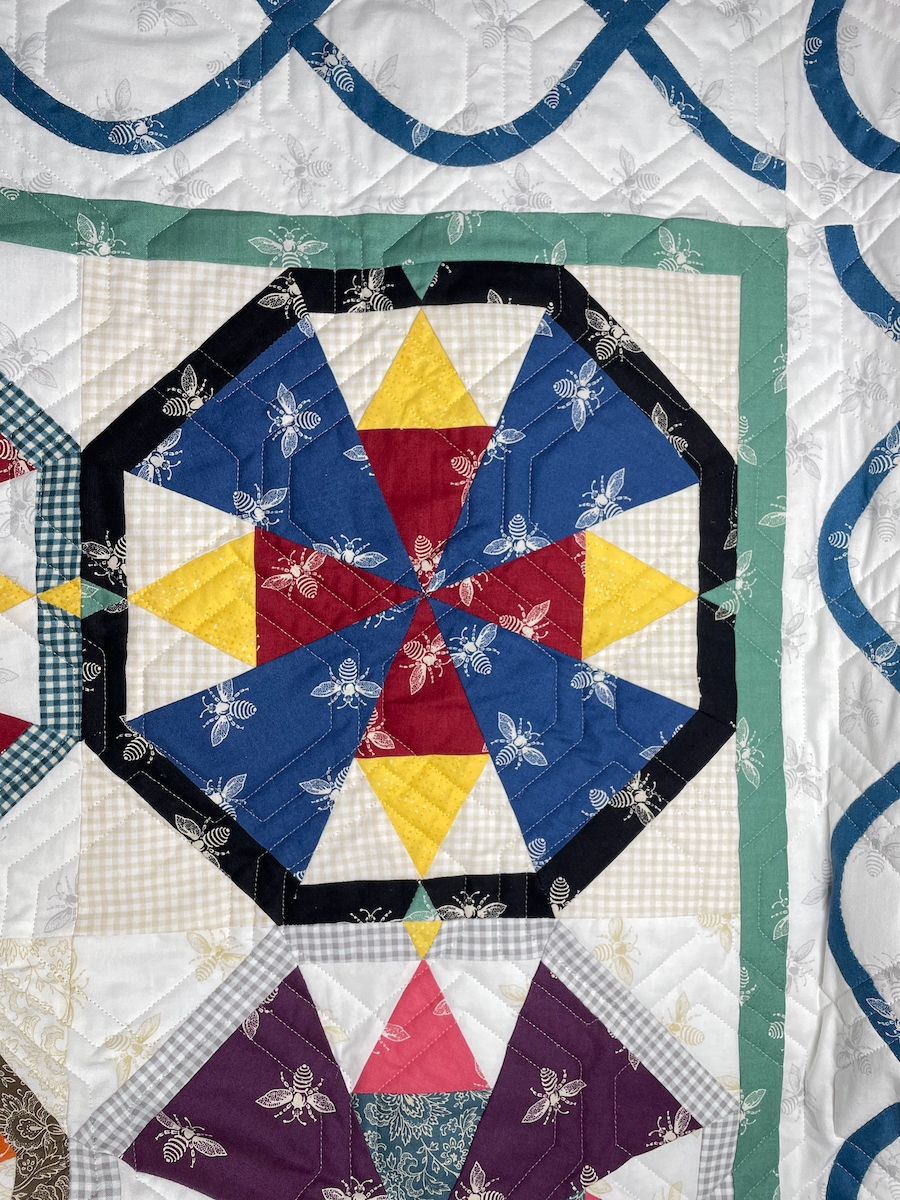
This quilt began with these French Bee fabrics by Renee Nanneman. I kept trying to think of names for the bees, and thought up “sky pilots.” Nope. That’s an established term for clergymen/women, which I also didn’t know. So I kept looking, and then found this:
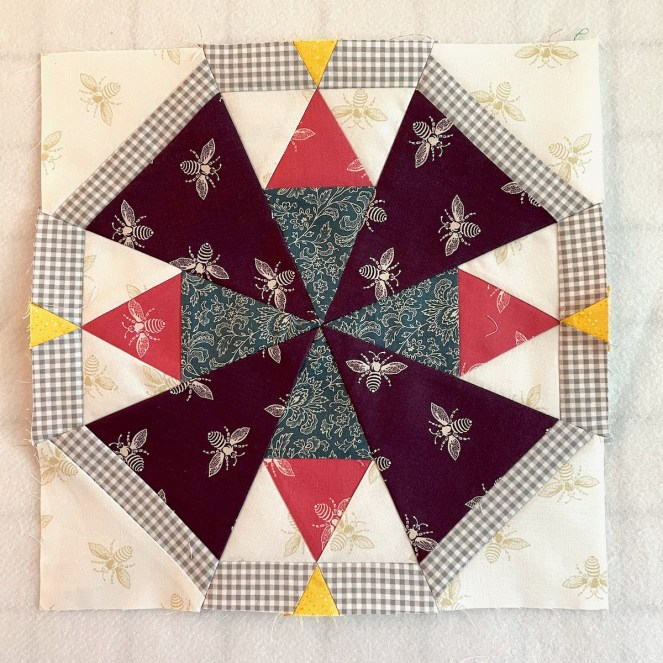
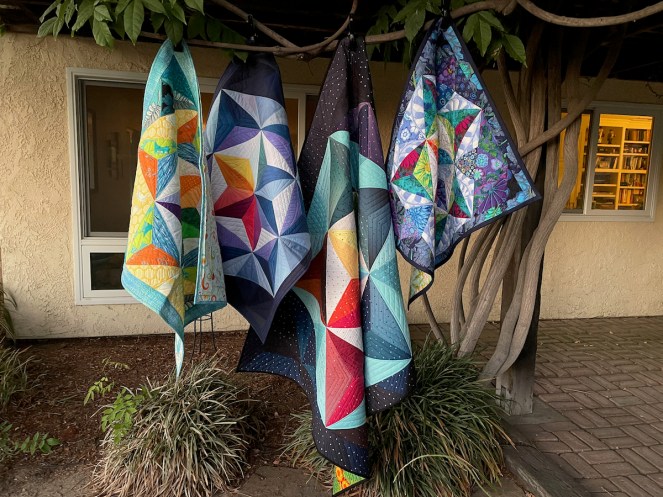
A traditional block, which would let the bees show off nicely, as well as the coordinating fabrics. I loved those four big triangles; sort of like propeller blades (another reference to flight). So I made my first block, wondering if could I even do this? I chose to make this a foundation paper-pieced block, so as to get those snappy points and to keep everything in place (pattern coming next year some time).
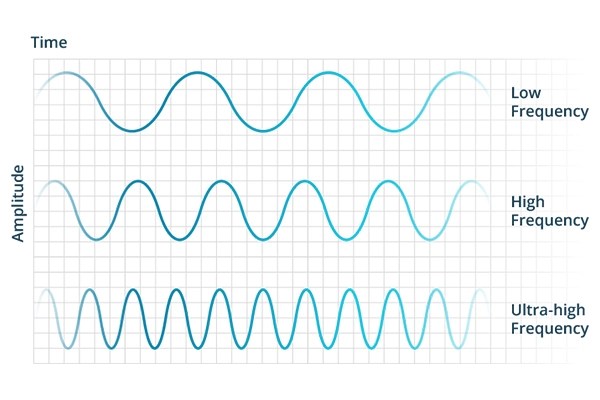
ultra-high radio frequency waves (RFID, or radio frequency identification)

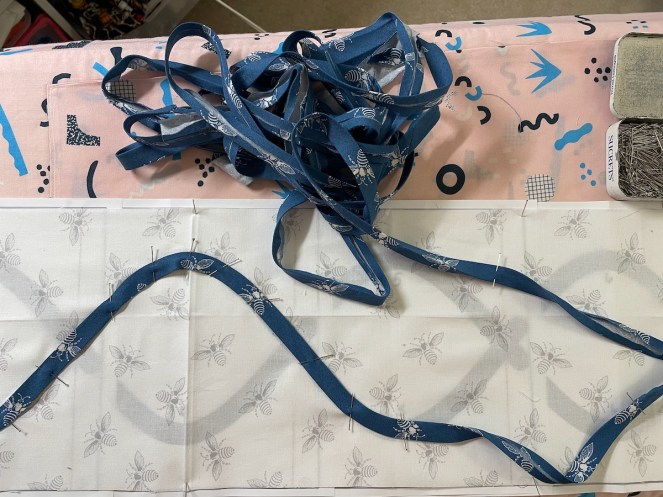
Then, thinking about the idea of RFID waves, and the communications that replaced the aerial beacon huts, I referenced them with a waved border made with bias binding. It was a good exercise to figure it out, and I love how it looks.
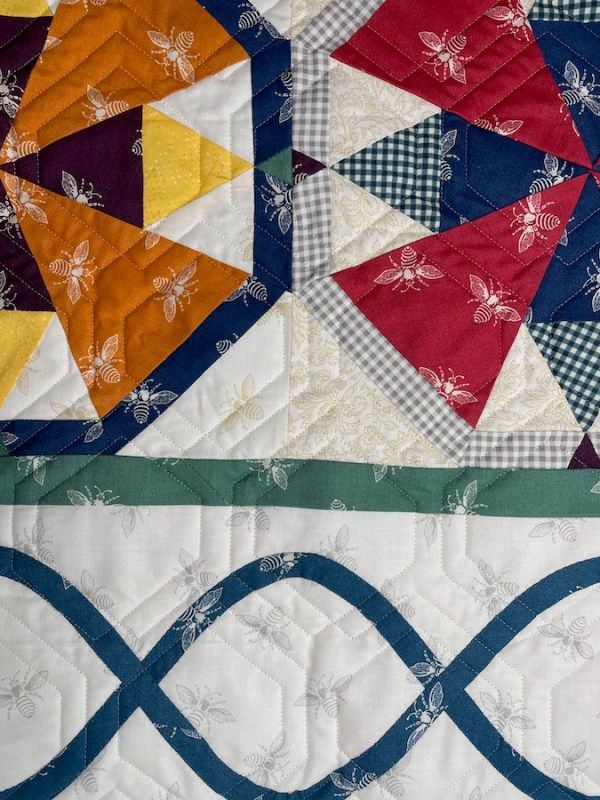
Jen of Sew-Mazing Quilting went the extra mile in the quilting. I had many strong colors in the blocks and a very light border and backgrounds and I asked her to use Superior’s MicroQuilter thread in silver (7007). Bob Purcell (who founded Superior) told me it was their best blender, and he was right.
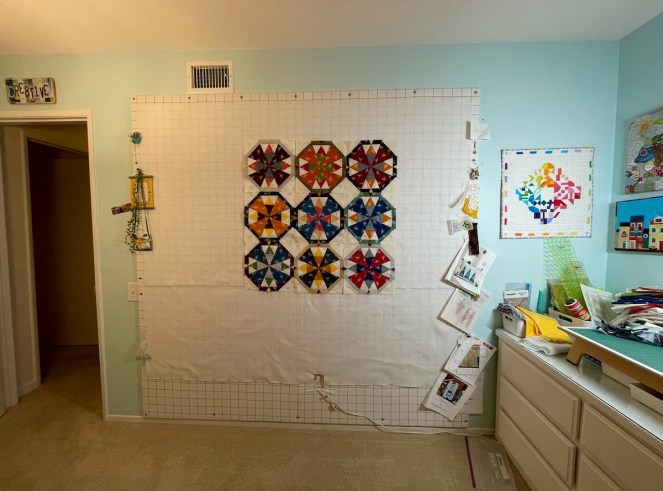
late-night sewing

I did begin making the blocks way back in October, first thinking about a design with nine blocks. But there was so much fabric left from each French bee color, that I made more. And took trips to Utah. And tried to sew. And took trips to Utah. And I kept trying to write the pattern, because it was such a fun block. And took a final trip to Utah. Then unlike those early pilots ferrying mail, in the next few weeks I felt more than once like I had lost my way. This quilt spent a lot of time wadded up in the corner, as I just didn’t have the moxie to work on it.
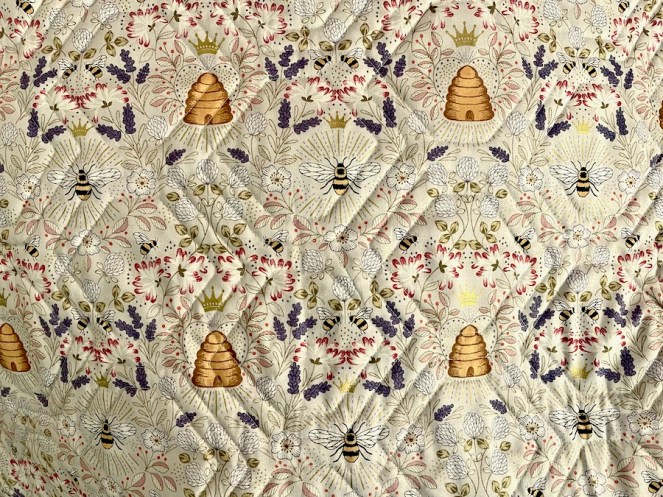
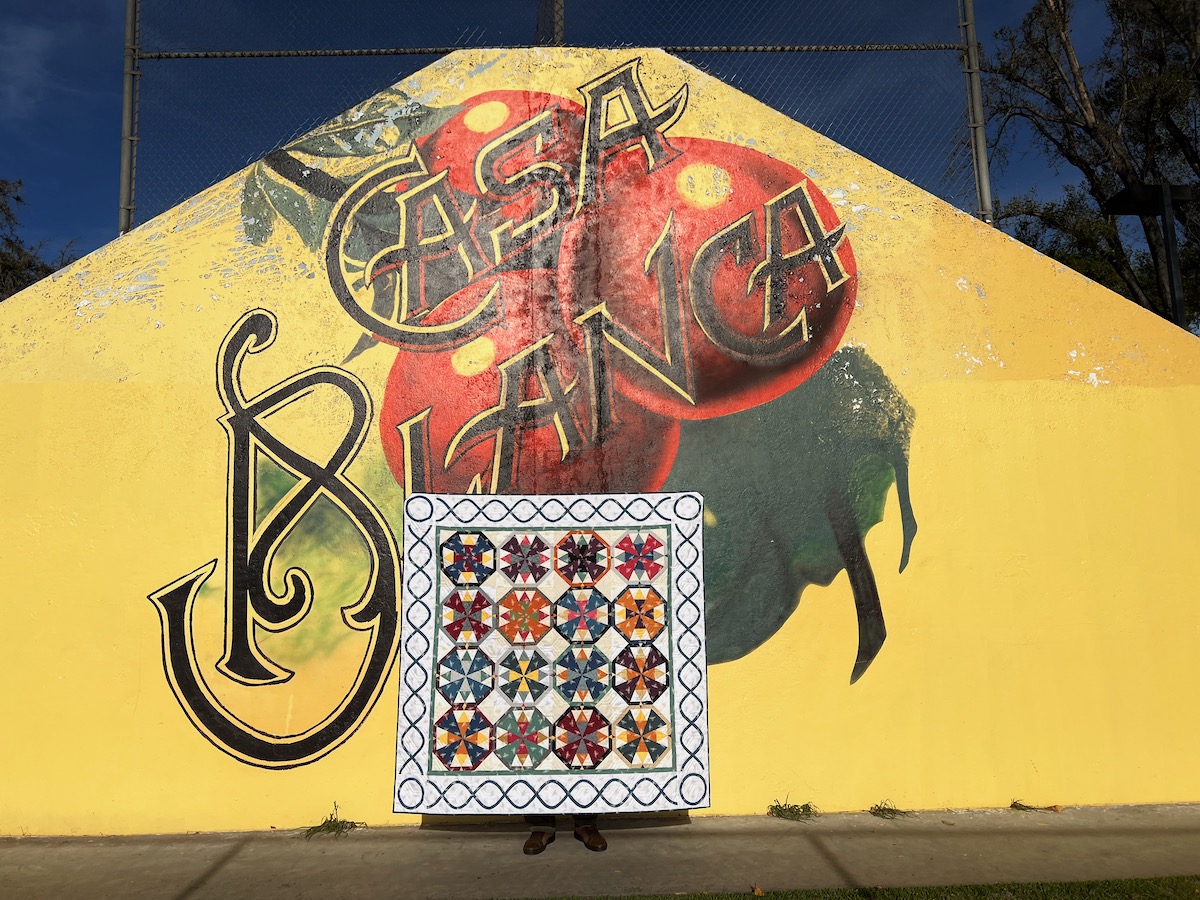
I even had the backing ready to go as I dithered and dithered about whether I should quilt it myself or not. I finally realized that given my current state, you-know-what would freeze over before I got around it it. When Jen returned the quilt, it sat some more time. Finally this past week, I found my way to binding it. (Binding is a lot less stressful since learning this trick.) And then I indexed it: Quilt #273.
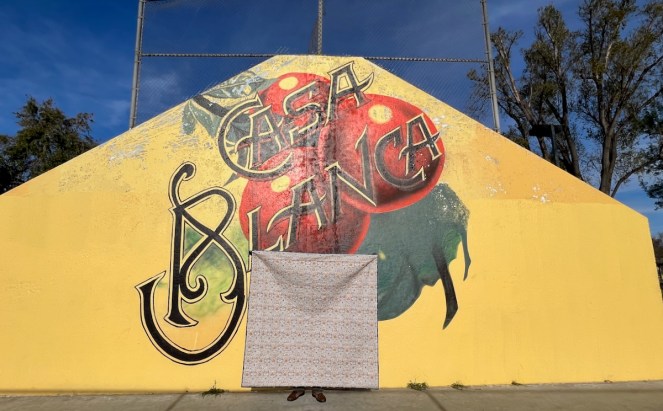
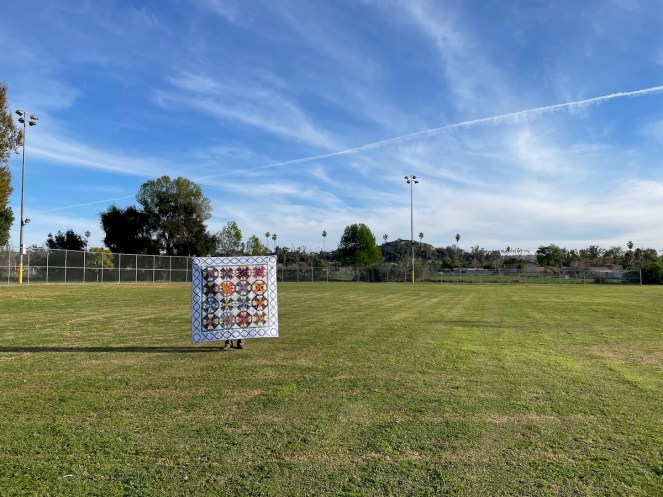
the back of the quilt, held by the best Quilt-Holding Husband, at a local park

Since I often write about my own life on this blog, I will share that I have often wondered how I would react when my mother died. I thought about it off and on in my life, sometimes thinking I’d be perfectly fine and then other times thinking I’d be a total wreck. My mother lived to be 94, so she had been with me my entire life and really, truly, I liked her a lot. Yes, we had our differences, and no, she was not perfect, but in her later years (before it got really hard for her), we had an easy camaraderie. The truth is many days I am perfectly fine, and at other moments, in other days, I’m quite tender around the edges, breaking into tears. You probably know how it goes. When I was a teenager, Dad got all the credit, but I came to realize — and even more now that she is gone — that she did all the heavy lifting of relationships, of sending me little gifts, of checking in with me. I always knew she was my best cheerleader.

I had a chance a couple of years ago, after a presentation with the Utah Valley Quilt Guild, to go up to her condo and give her and Dad and one of her friends a mini Guild Presentation. Her eyesight was failing then, but we passed around the quilts so she could look at them up close and feel them; she enjoyed it all. She apologized that she didn’t have more of her friends there, but that wasn’t who the show was for.

It was for her, my mother, now my very own aerial beacon.
Other posts about this quilt:
Bias Binding Fun

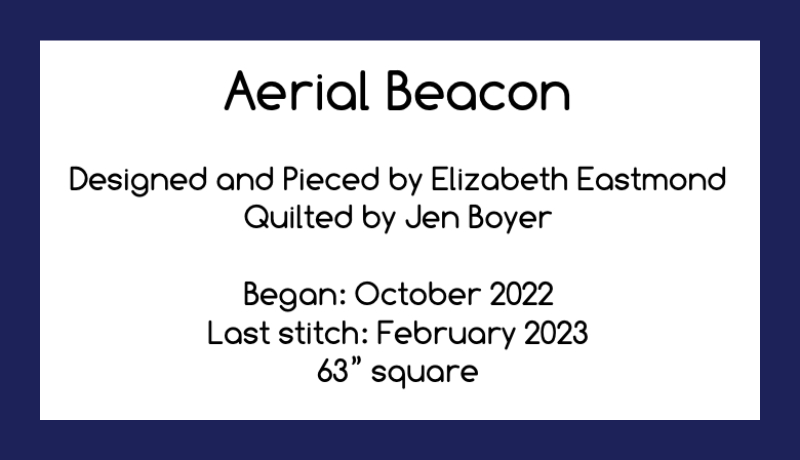
the label, a simple one this time
Quilt Finish

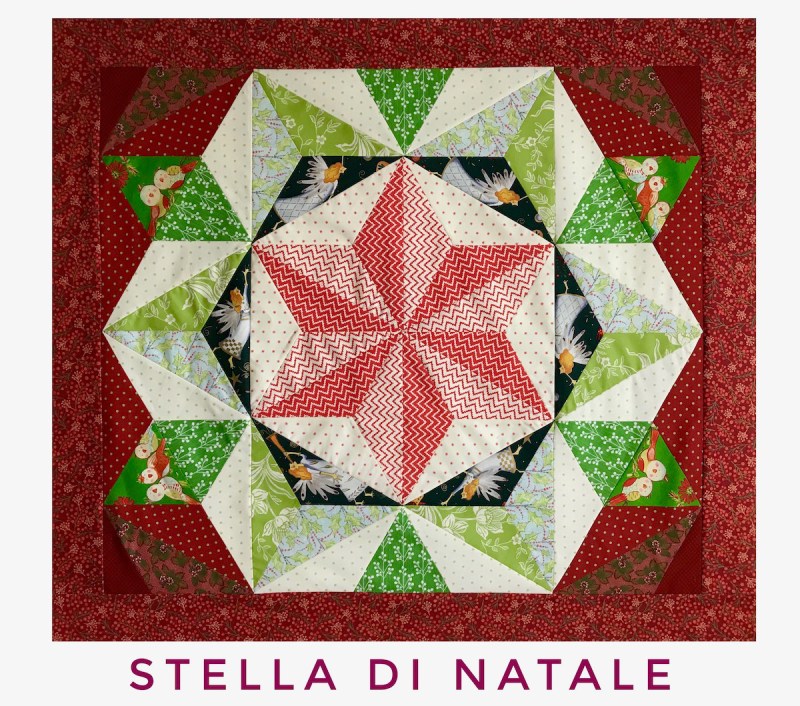
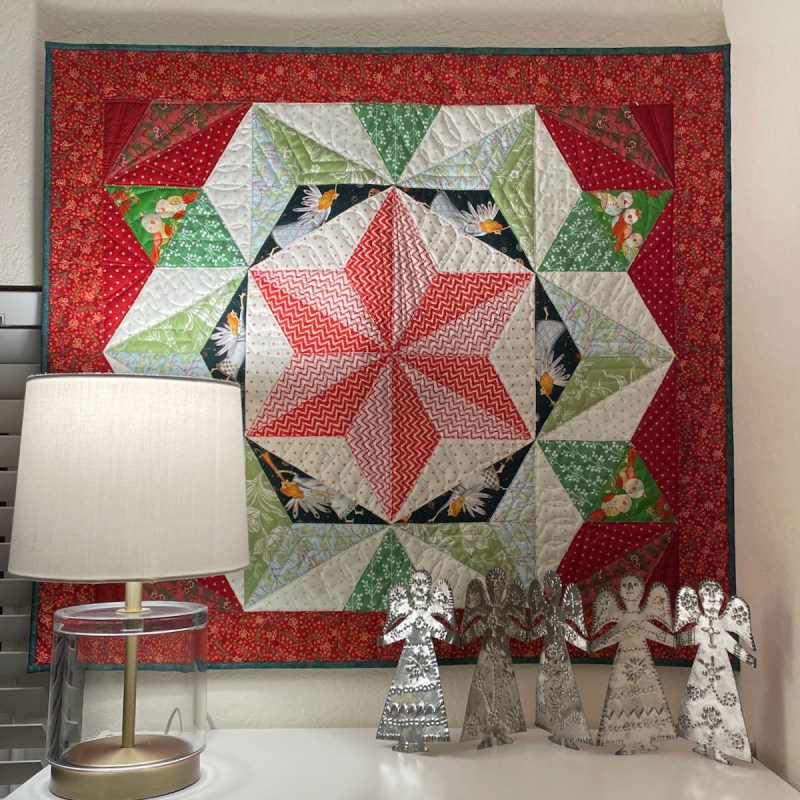
Stella di Natale • Quilt Finish

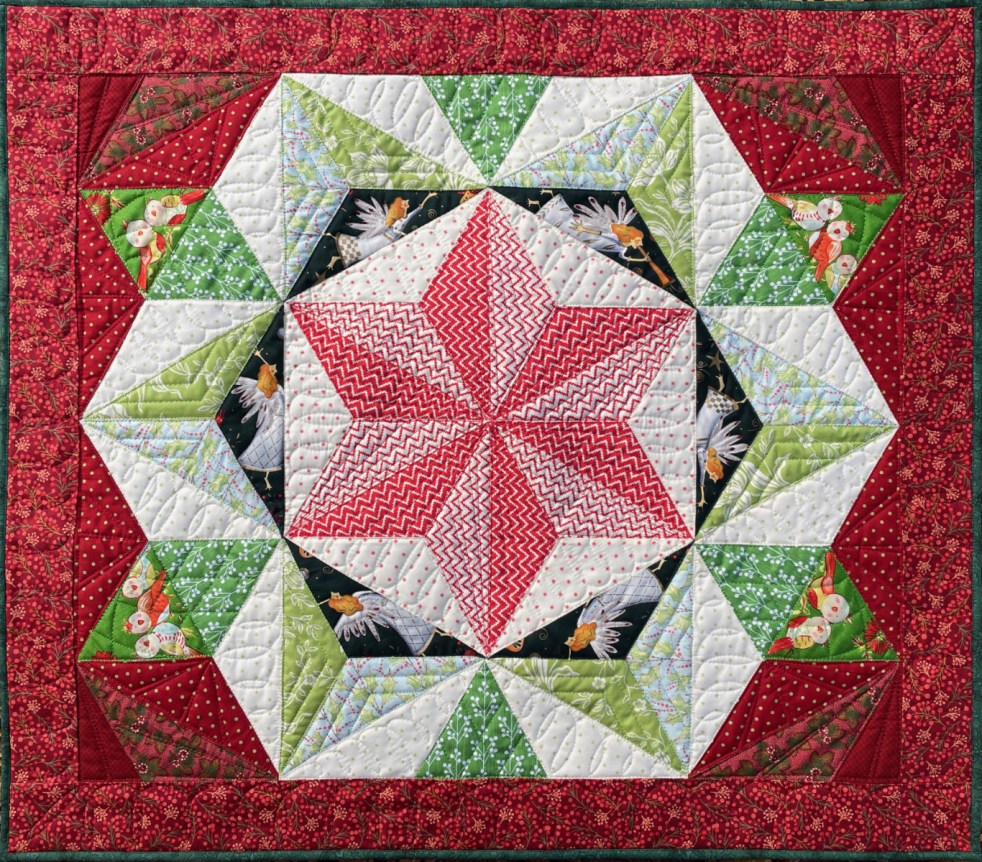
I started this quilt as another class sample for the Triad Harmony quilt pattern. The name “Stella di Natale,” is my version of Star of Bethlehem, but it is also a cake and the Italian name for the poinsettia plant. Every time I make a pattern, I try to do them three ways: the way it came to me, one in a completely different style of fabric, and of course, a Christmas version.

Having come home from my mother’s funeral with a roaring cold (no covid!) and Overwhelmed by Everything, I sat down at the Sweet 16 the next day and quilted away while listening to the latest Inspector Gamache novel, by Louise Penny. The label:

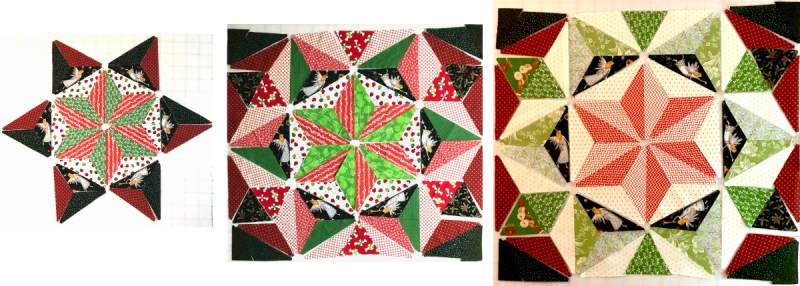
Back in October 2020, this is how it started. It all was about those wedges of flying angels, the last bits of a fabulous Alexander Henry Christmas fabric. The first two images are before the Run to the Fabric Store (I was trying to use my really old stash). I like the last one much better after a fabric transfusion.

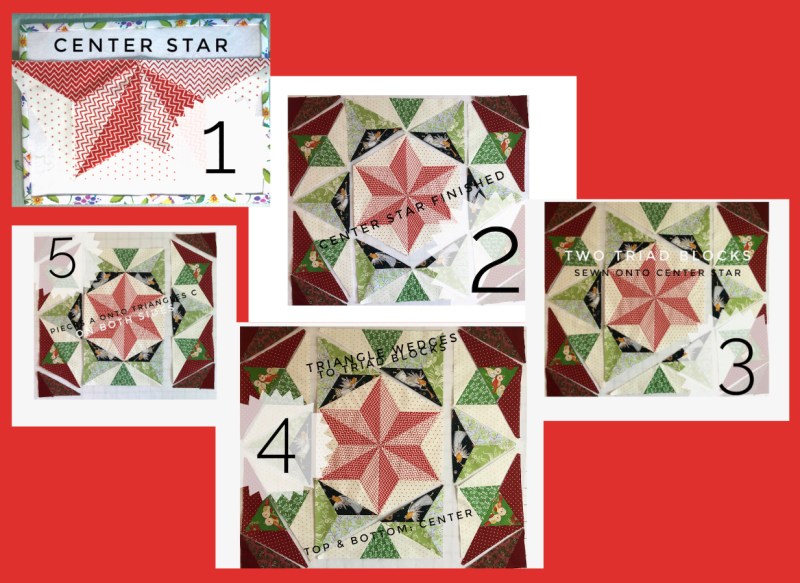
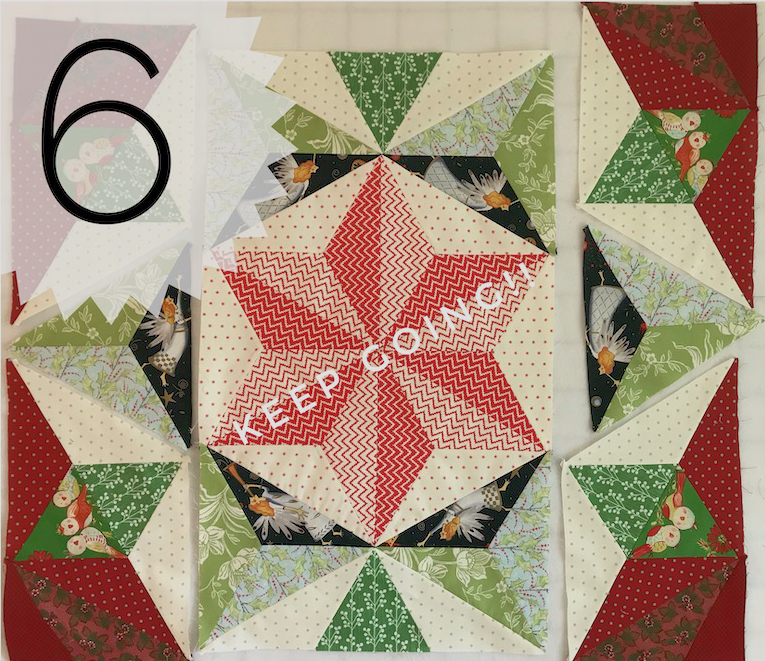
I made a video of how to construct this for my Guild Workshop, and these are some stills from that video. It’s all explained really nicely in the pattern, too. If you click through to the workshop post, you can see all their versions of this pattern.

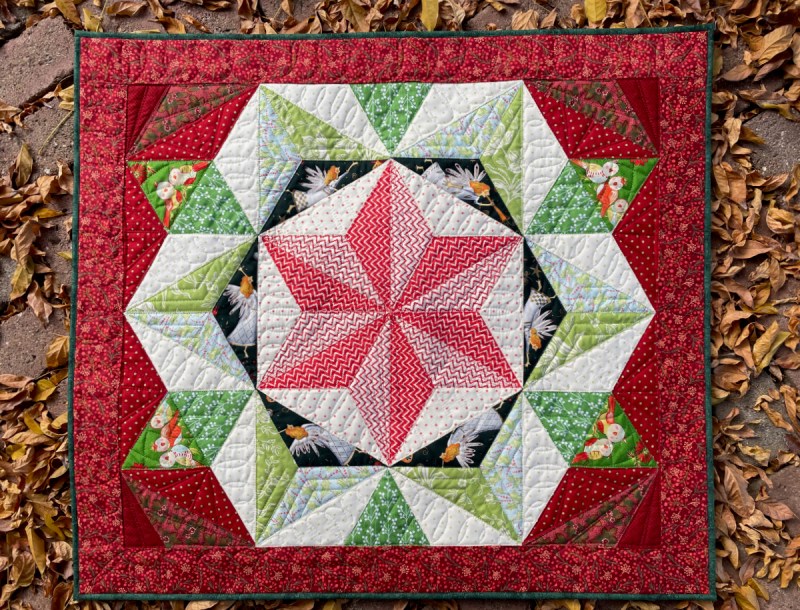
I never quilted it up, because I used it in teaching to show the back — how I pressed the seams, and other questions about that center point (just be bold and follow the pattern directions). But this past week, as I thought about my own personal star in heaven — my mother — it just seemed time to quilt it up. So I did. By the way, that first picture of it surrounded by dried leaves is how December looks here in Southern California, when all the leaves of the wisteria vine coat our patio.

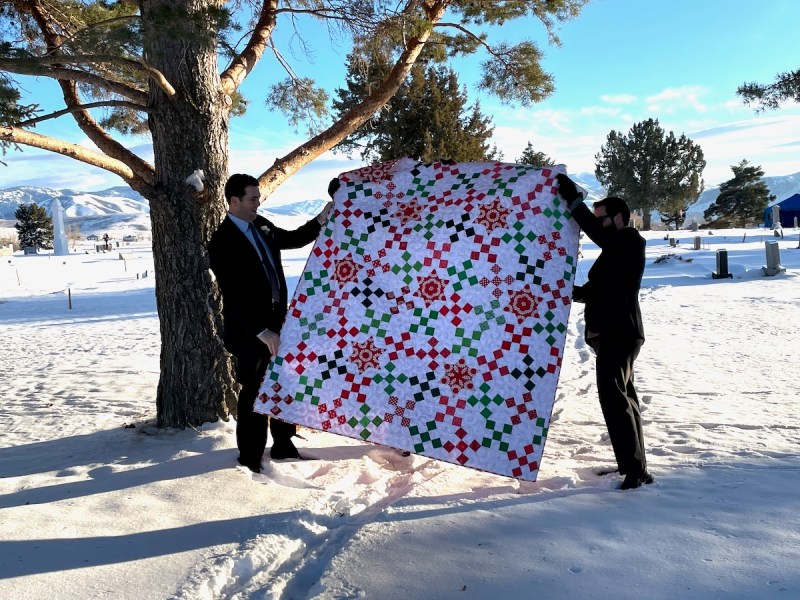
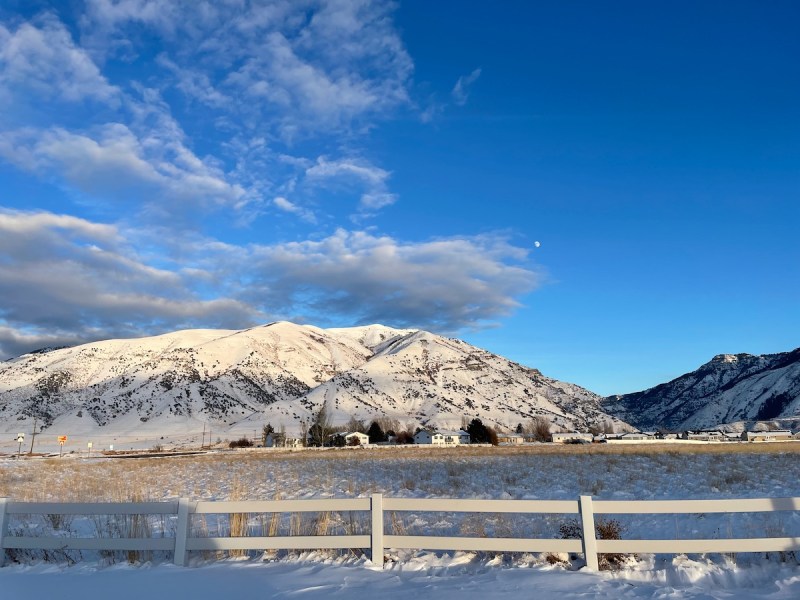
Here’s a shot of another quilt, but in a wintry landscape; this was after the graveside service was over with, and our two boys (now, men) helped hold Jingle Bells for a photo.

My mother was laid to rest where she was born: Paradise, in Cache Valley. Yes, it was very cold that afternoon, but the morning services in Salt Lake City were lovely, the talks heartwarming (all seven of us children spoke), and the scenery at her little cemetery was beautiful.

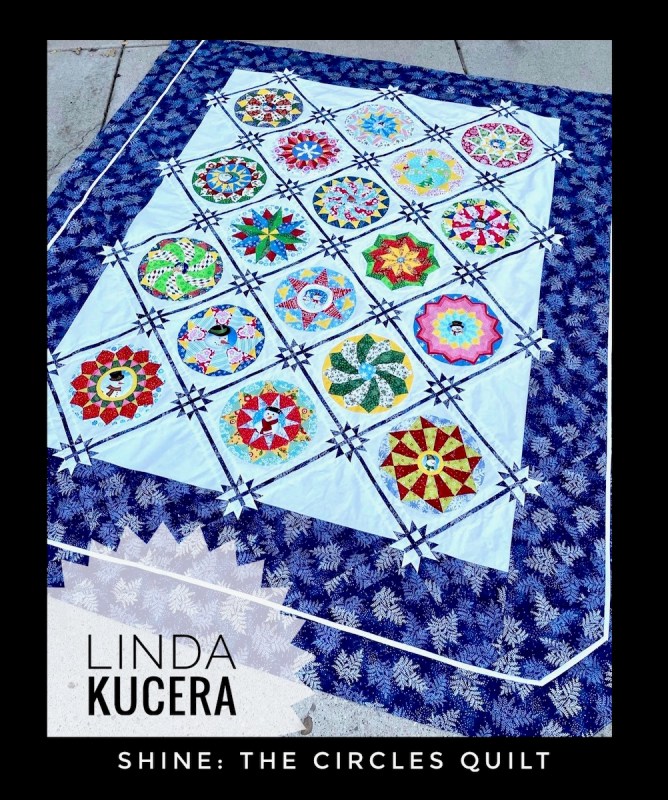
Here’s another wintry quilt. It’s Shine: The Circles Quilt made up in snowman fabrics and with a unique and playful setting, all done by Linda Kucera. I have a closer look at her blocks in an earlier post. Most of the Shine blocks are free on this website, and the index is found above.

And this happened. I entered two, but only Eris will be in the show. Now I have something to look forward to.

detail, Eris

I now close a chapter in my life: that of having a mother nearby to call, to talk to, to share something like the good news about my quilt. I’ve observed from many of you that this may be a long transition. On the morning of her service, I sat quietly in the corner before it began, so bereft, so incredibly sad. My niece Melinda sat down beside me and said “I know there will be times you will want to call your Mother. You can call me, instead.” Her words were a treasure, as was the support from my husband, family, sisters. This past month I also have received many treasured messages of love and support from all of you, and so appreciate them. Thank you all for your kindnesses; it has made this difficult road easier to travel.

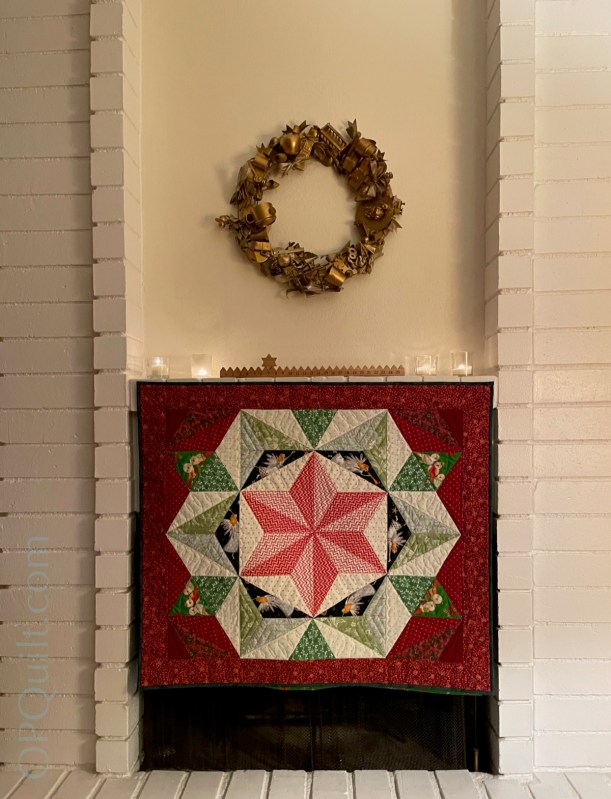
Stella di Natale • quilt #271 • 34″ wide x 31″ high

Other posts about the Triad Harmony quilts:

Triad Harmony • Quilt Finish where another variation is revealed.

Triad Harmony Workshop and a whole galaxy of beautiful quilts.

Secret Garden • a Triad Harmony Pattern Quilt Finish, as in, can you believe there is another one?

Spectral Light (aka Eris) • a Triad Harmony pattern quilt shows some steps in creation, and a few words about contrast.

Eris • a Triad Harmony Pattern Quilt Finish and a new place for photographs, which inspired a reflection on breathing.

Choose Something Like a Star • a Triad Harmony pattern Quilt Finish: scrappy, but fun!

300 Quilts · Christmas Quilts · Quilt Finish

Jingle Bells • Quilt Finish

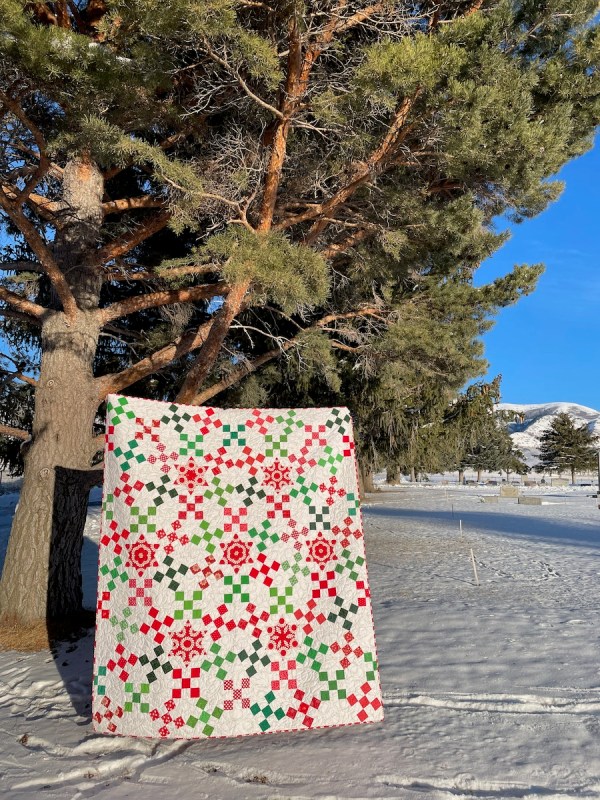
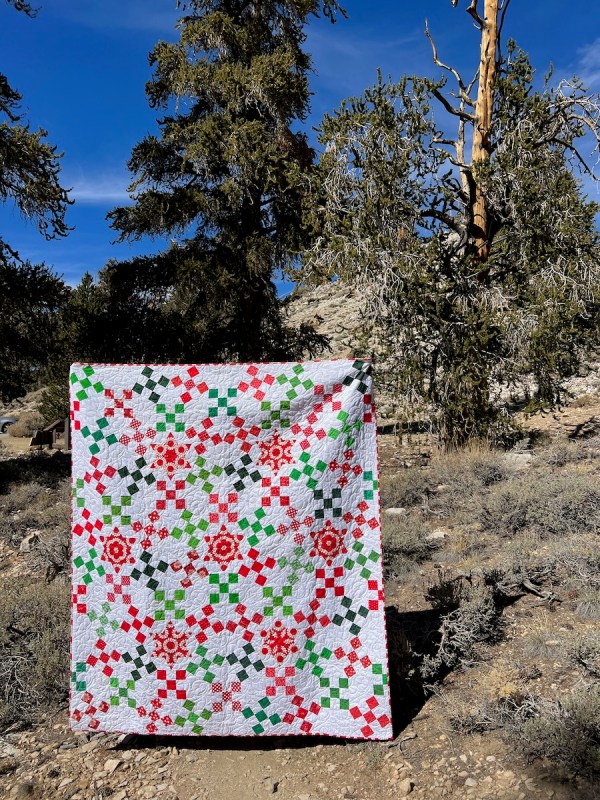
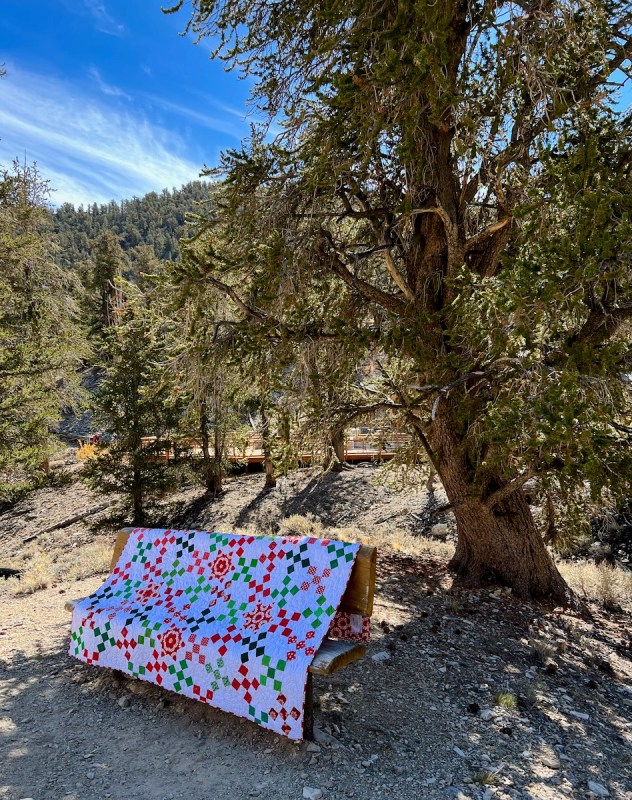
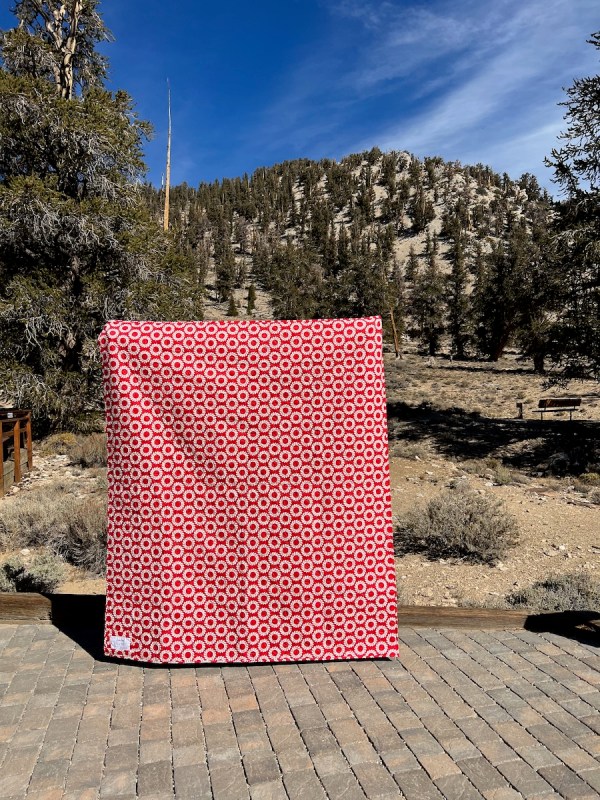
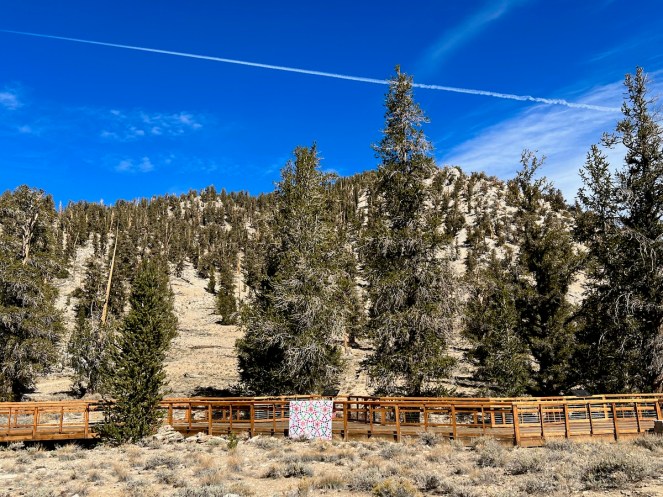
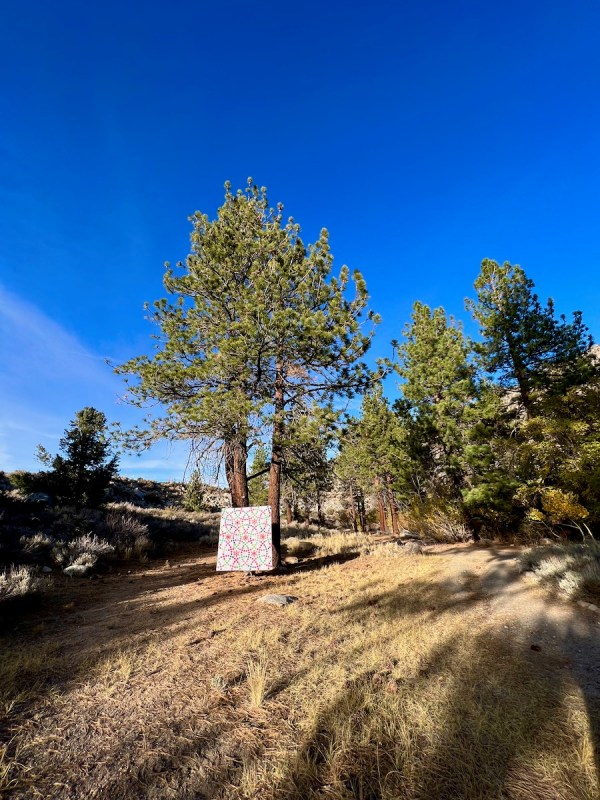
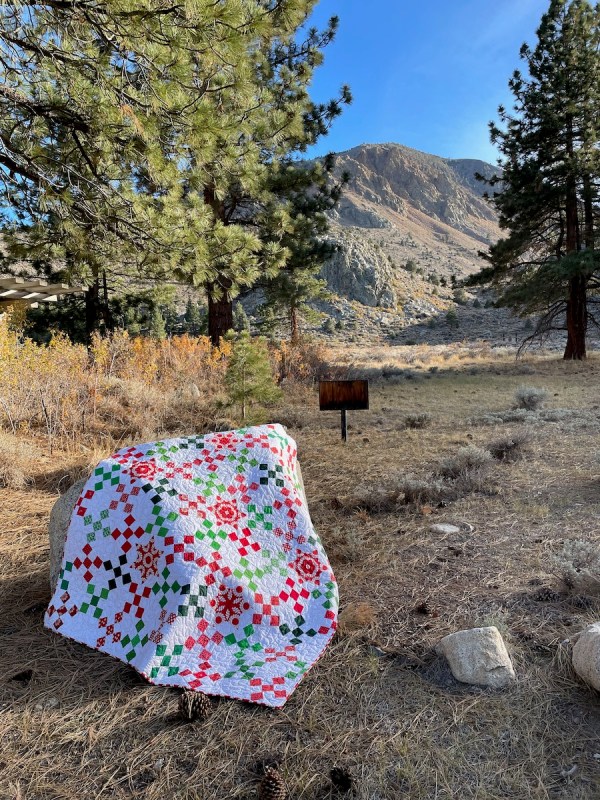
We recently took a small road trip up to see the Bristlecone Pines in the White Mountains. Pine trees = Christmas, right? And while we were up there at 10,000 feet at the Ancient Bristlecone Pine Forest Visitor Center at Schulman Grove, we took some pictures with those old pines of my latest Christmas quilt, Jingle Bells.

The song “Jingle Bells” is actually a Thanksgiving song, what with the sleigh and all that, and since these circles make me think of those jingley bells — not during November — but in December, that became its name.

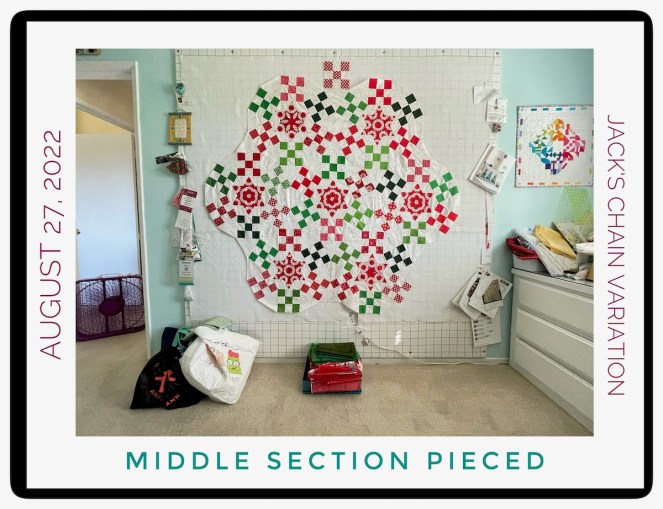
However, that’s not the name of the block. Jack’s Chain is the name it’s most commonly known by. The earliest mention of this block is around 1939 and it’s called Rosalia Flower Garden, but the name Jack’s Chain comes into play in 1978. For not knowing about this, all of a sudden the name Jack’s Chain was everywhere. I ordered another early quilt book and it’s in there, too. It’s in Brackman. In fact, for being such a well-recognized pattern, the origins seem to be shrouded in mystery. To see how the current version relates to the old one, take a look at this video:

After the Jack’s Chain is exploded, with the rings set beside each other, it morphs into another well-known, more contemporary version of this block (center construction shown below).

My good friend Dot sent me this photo of her Jack’s chain from 1999. She writes: “The quilt was made for a 1999 South Bay Quilters Guild challenge: to make a quilt using the guild’s logo, which is the traditional Mayflower Block. It’s not that exciting a block, so I found a fun way to set it. I drafted my own pattern from a little sketch in a quilt-block book.” [corrected 10/23/22]

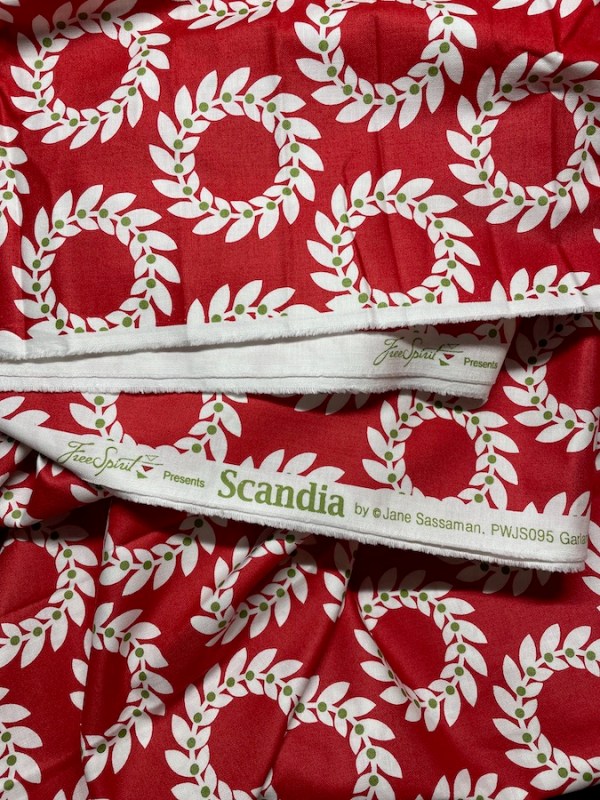
The backing, and fussy-cut centers of the circles were cut from this Jane Sassaman fabric.

Yes, I really liked those old Bristlecone Pines, and liked the fact that we were walking around among these giants, both in age, wisdom, adaptability and scarcity. If you watched the Highlight reel (above), some of the wood looks fluid, as if it were poured into place. A good lesson for me, for this quilt has been a struggle.

After I put up this earlier post on Instagram, and then wrote about it on this blog, I was blasted by those who police the Other Well-known Name of this design. The origins, of course, were Jack’s Chain, but morphed. That morphing was lovely and allows the viewer to see giant circles, a secondary pattern. After I was castigated for calling it Jack’s Chain (seven pages worth!), I started doing research and found multiple places where this pattern resides. One of the places even offers acrylic templates for sale (do your own search, if you are interested). There are two basic sizes, 3″ nine-patch blocks, and 6″ nine-patch blocks. Sometimes there are diamonds in the center, and sometimes not. Sometimes the center is done with English Paper Piecing, then the nine-patches added on via machine. Sometimes the version is a table-runner (and there is a YouTube video for that one). There are as many variations of this block as there are blocks in this quilt; something for everyone — plenty to share. There is however, only one “official” pattern of that contemporary version smaller nine-patch, so if you want the complete how-to, it’s best to make sure your nickels and dimes get to her.

I originally obtained my pattern from a very fine and brilliant quilter, who no longer sells her pattern online. So when it came time to figure out how to put the sides on the center, I was stuck. So I drafted my own. The quilting on this quilt was done by Jen of Sew-Mazing Quilting.

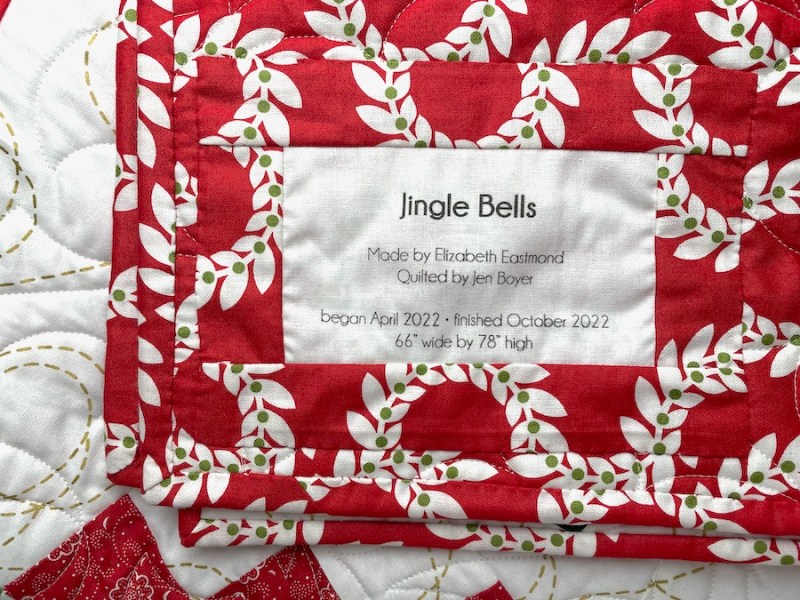
In the Quilt Index, this is Quilt #270 and my second Christmas quilt finish for 2022 (the first). As the label notes, it’s 66″ wide and 78″ tall.

At the midpoint of this quilt, after being harangued and scolded, I wanted to wad it all up and throw it away. Our quilts often carry our hopes, dreams and emotions and I felt like this quilt had been dumped on. Maybe it was just me. Could be. I always consider my own foibles first, but in the end? I kept going. And now that I’ve taken it to 10,000 feet and let those Bristlecone Pines shed their magic on it, it’s a keeper.

Be as kind as you can, in all the ways that you can–

We also headed up Bishop Creek to get these shots, as we don’t really have many pines around here:

If you go to Bishop, I can recommend Great Basin Bakery for lunch. And breakfast! If you are down in Lone Pine, the Alabama Hills Cafe & Bakery is also really good (named for the hills at the base of Mt. Whitney).

Gridsters · Patterns by Elizabeth of OPQuilt · Quilt Finish

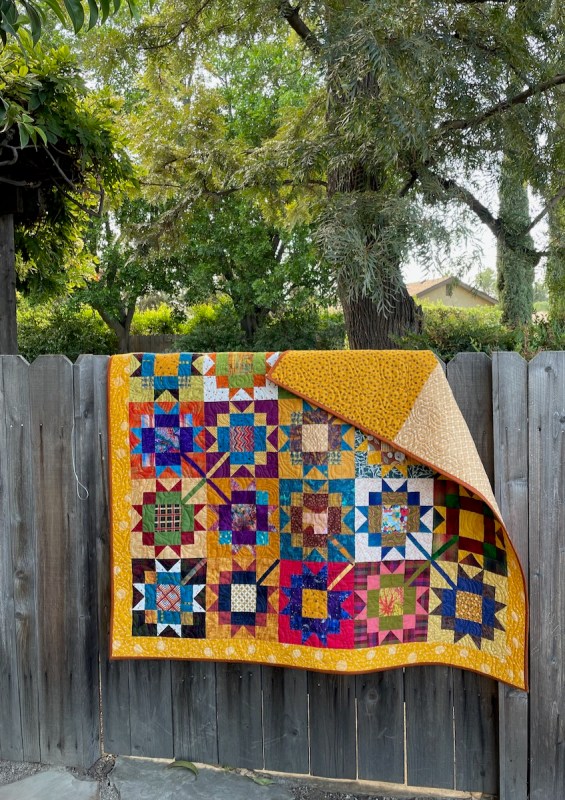
Autumn Leaves • Quilt Finish

“When all that cautions the eyes toward the imminent
slide of autumn to arctic winds, the canopy of English elm
and sycamore leaves like colored coins fall and widen
a hole letting more light spill in, heaven’s alms
to earth…”
~from the poem “Washington Square,” by Major Jackson

And Denise Levertov’s poem asks Autumn: “can you pull me / into December?”

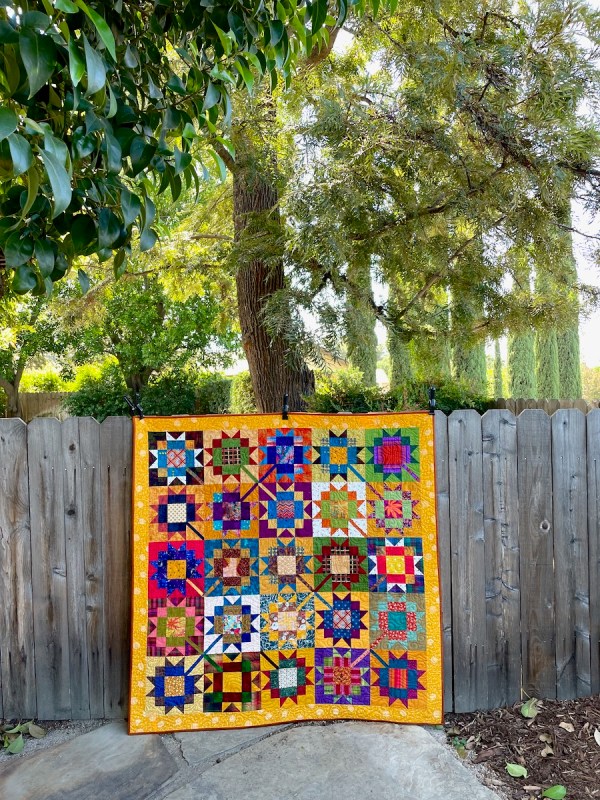
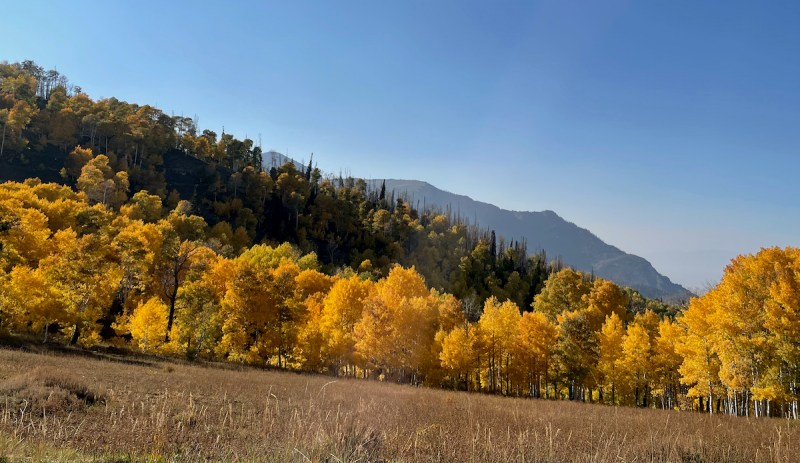
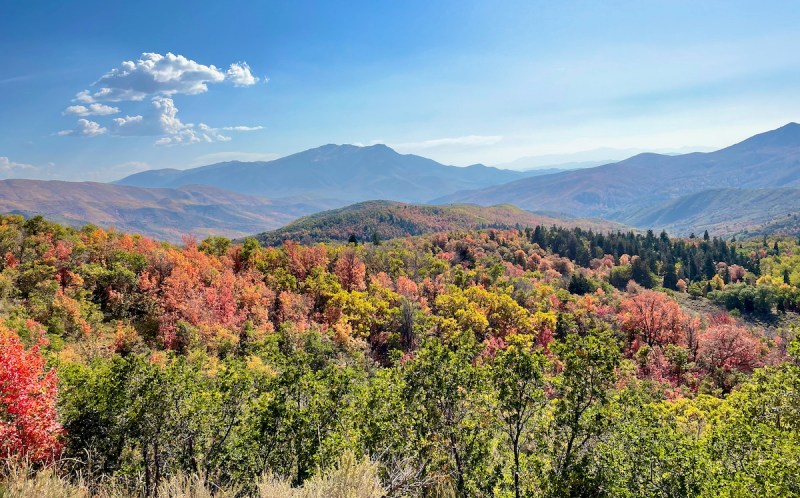
But wait, Denise. I’d like to stay here awhile, and enjoy the recent fall color all squeezed into this quilt:
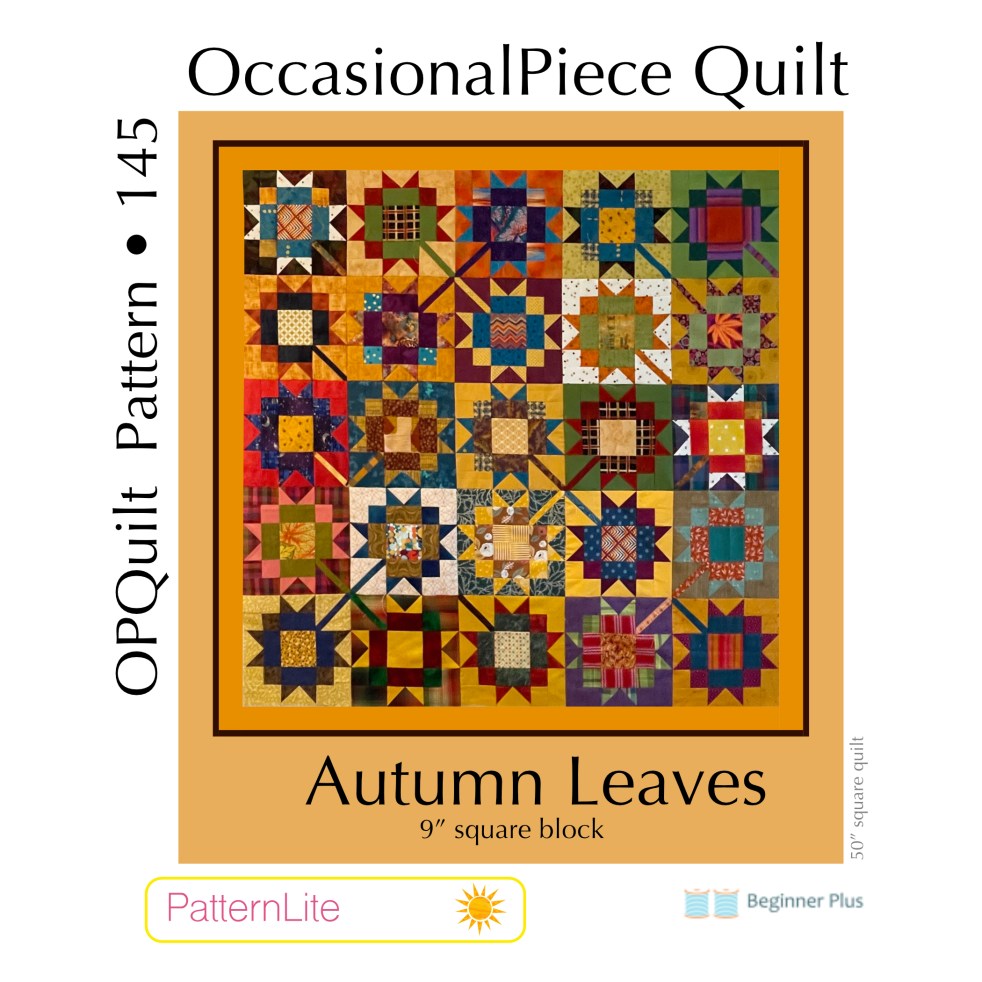
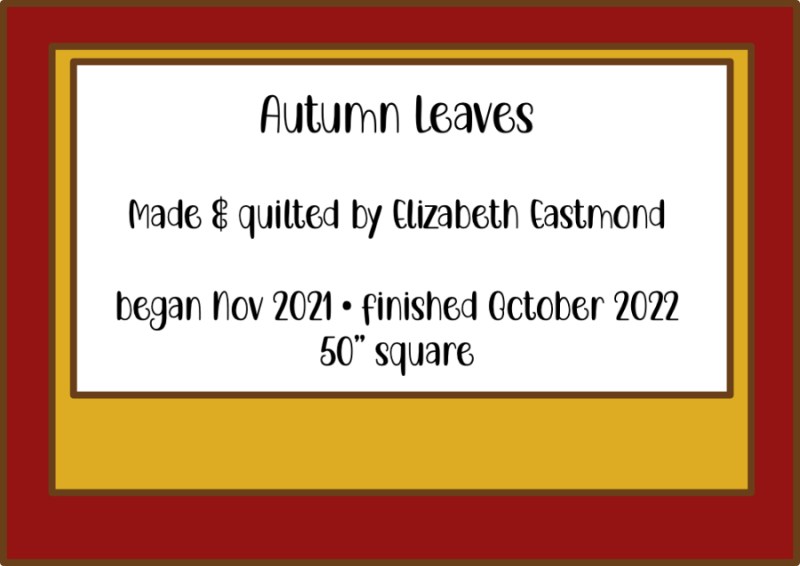
Autumn Leaves • Quilt #269 • 50″ square

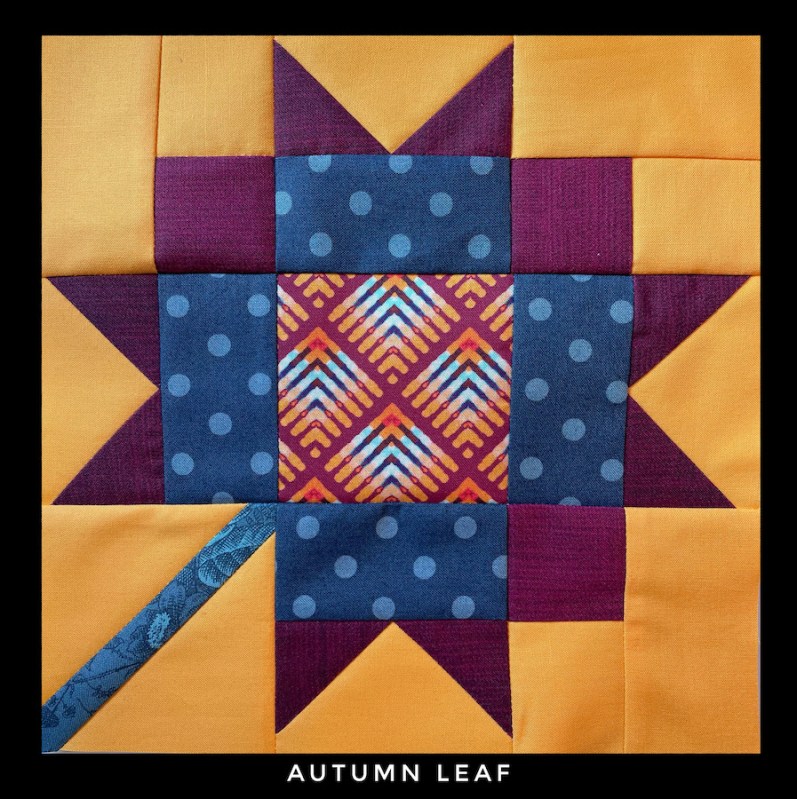
This was a group effort from Gridster Bee, a collaboration, much like when the forests in winter climates all talk to each other: “You do red this year,” says one. “I’ll do gold and brown. How about you do crimson?” and so on until the forest is “liked colored coins” that will eventually fall and widen. While more blocks than shown arrived, I had to widen the quilt to let that light spill in, so some are saved for another project, letting heaven’s alms fall to earth in more than one spot.
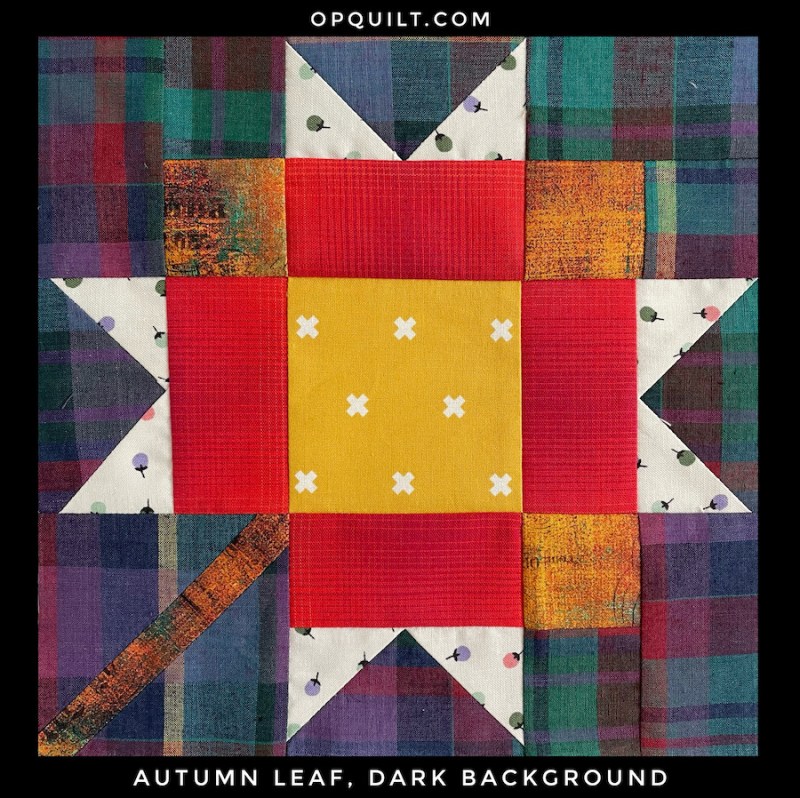
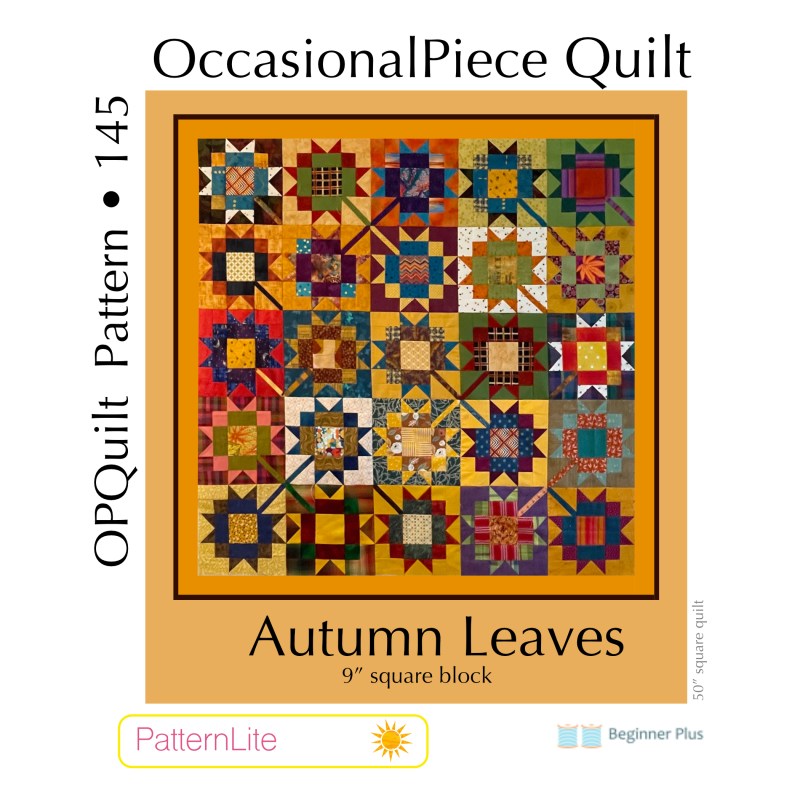
It started with these two, and morphed into a Pattern Lite, which you can grab here for under the price of a slice of pizza or a basket of beignets at our local beignet place. While you are there, don’t forget to snag the SpiderWeb pattern, which is free until the end of October.

Pattern Shop: PayHip.com/opquilt

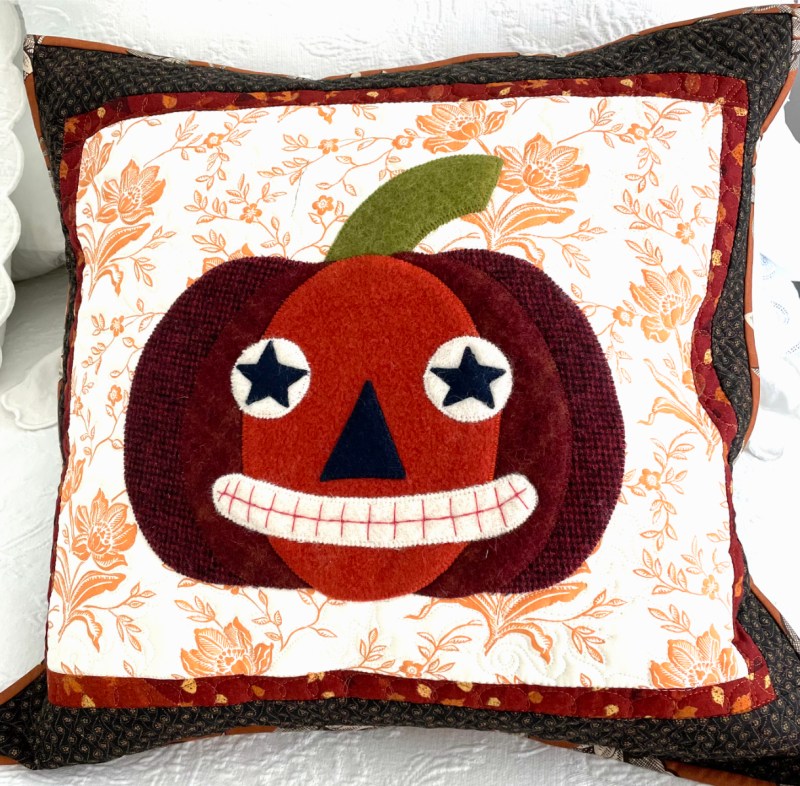
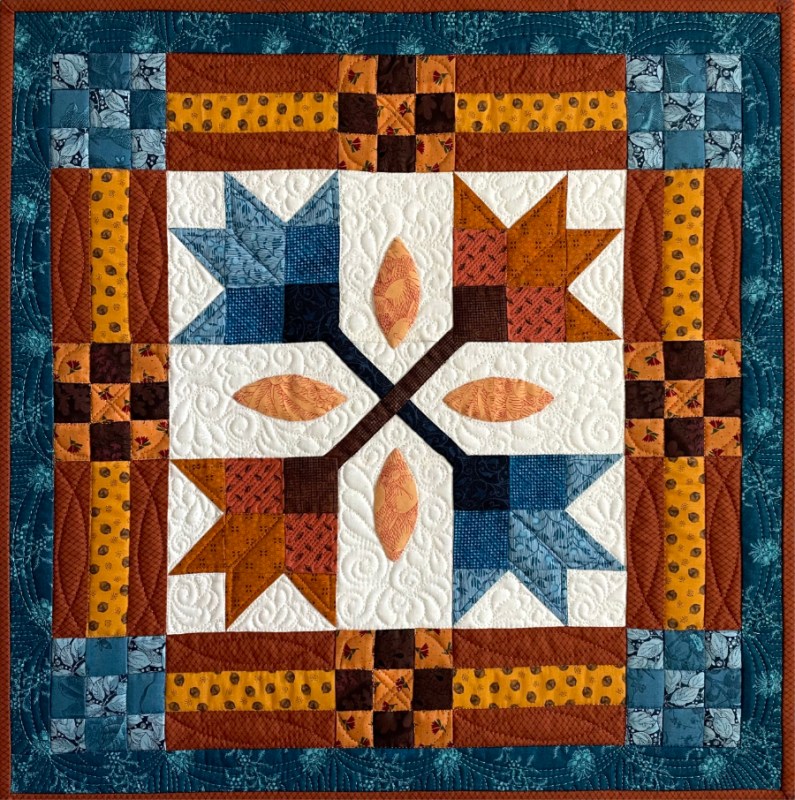
Last year around this time, I had a different quilt slung on the fence, and was working on two autumn-themed pillows Mr. Pumpkin and Crossed Lillies; seems like working with these colors is an annual festival.

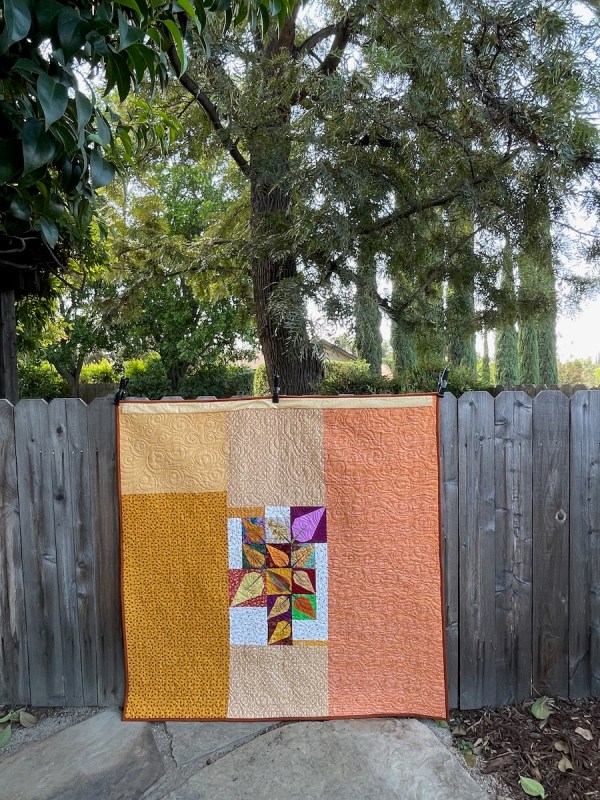
The back, showing all the signatures of my beemates: Patti, Shelley, Bren, Carlene, Laurie, Melanie, Robin, Susan, Carolyn, Ramona, and Meredith. I am so grateful they all contributed. And gosh, I know I’m missing a label (coming soon), and double-gosh, the back almost looks like a Modern Quilt!

Portfolio of Group Quilts

And to honor — and catalogue — all the collaborations I’ve done, I added a new category to My Quilt Index tab, above: Portfolio of Group Quilts. I only have my quilts listed (not the group’s quilt), although I have done posts about the others in the past.

Here’s to roads diverging into yellow woods, and copper woods, and crimson–