Quilts

Sentimental Journey: Bee Blocks for the Mid-Century Modern Bee, part II

Carlas Quilt-smaller

I’m back to the Sentimental Journey–a round-up of all the bee blocks I’ve made, and the quilts or collections where my blocks ended up.  Carla, of Grace and Favour, inspired by Jen Kingwell’s Green Tea and Sweet Beans, asked us all for a sampler block with a texty background.
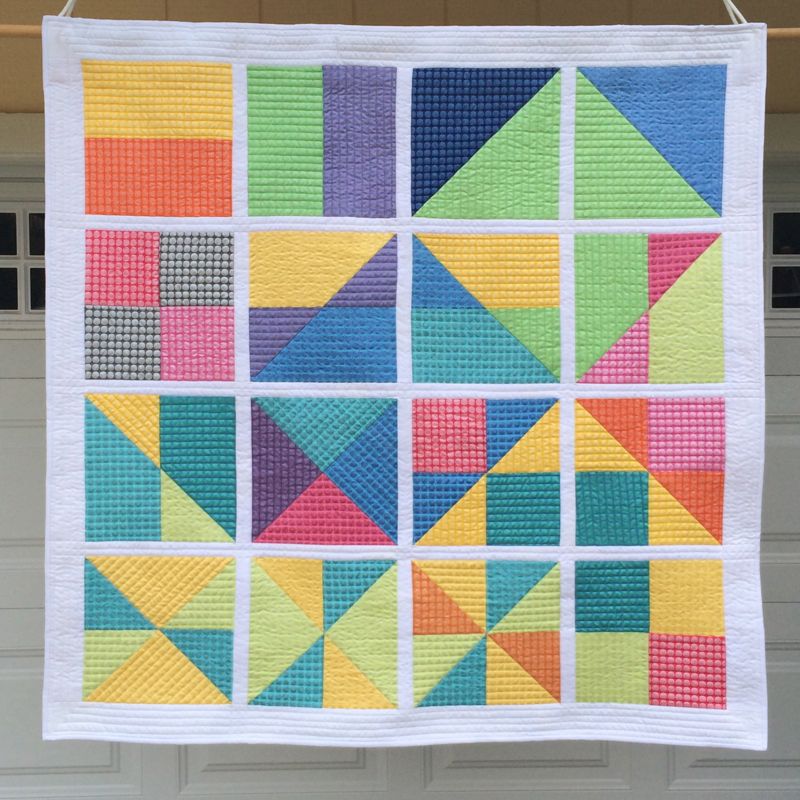
MCM4 quilt square

Here’s mine.  Of course, I loved this quilt so much, I copied it for January 2015–now I have one too.
Carla Feathers

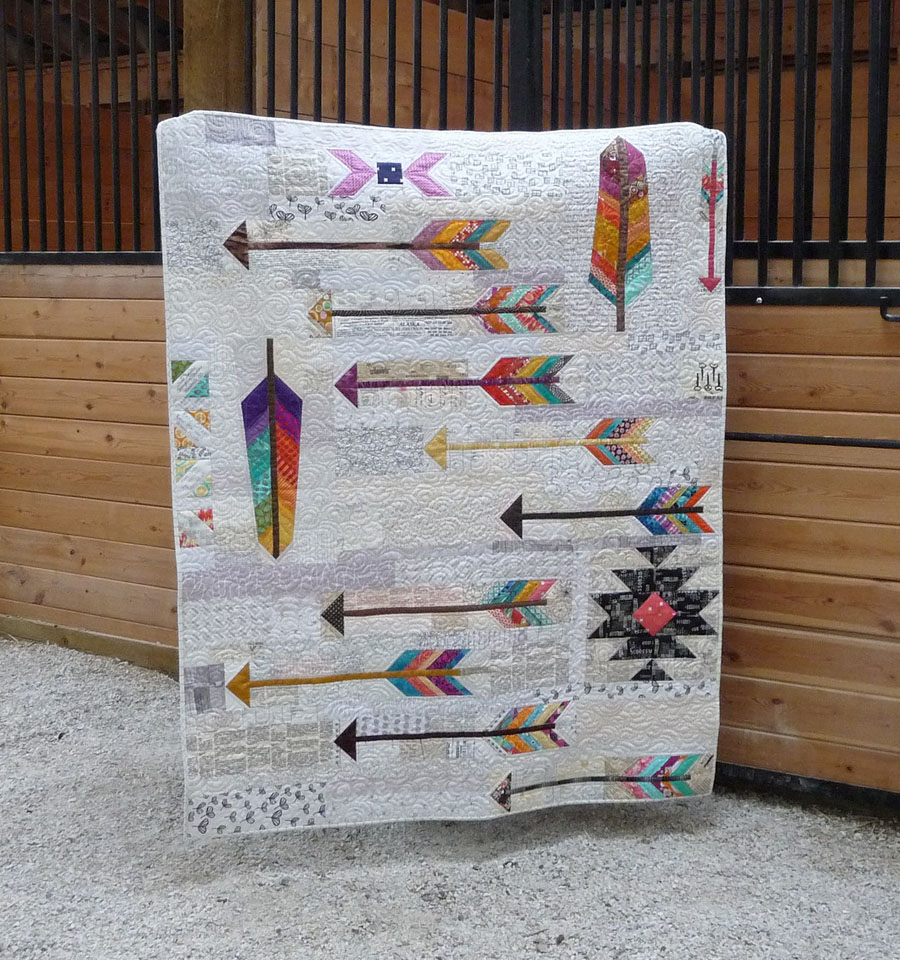
Another year, Carla dreamed up this terrific tutorial for making an arrow, and she combined it with a couple of other blocks, some neutral backgrounds to make this quilt.
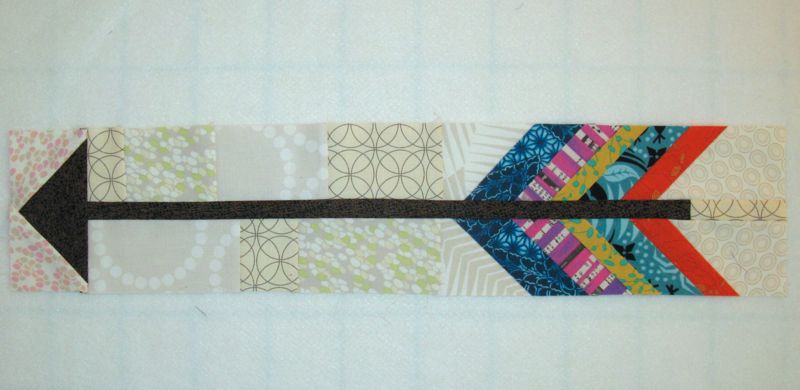
MCM May 2014

Here was mine.  This was fun because I was able to use a lot of stash fabrics and it still looks interesting and modern-ish.
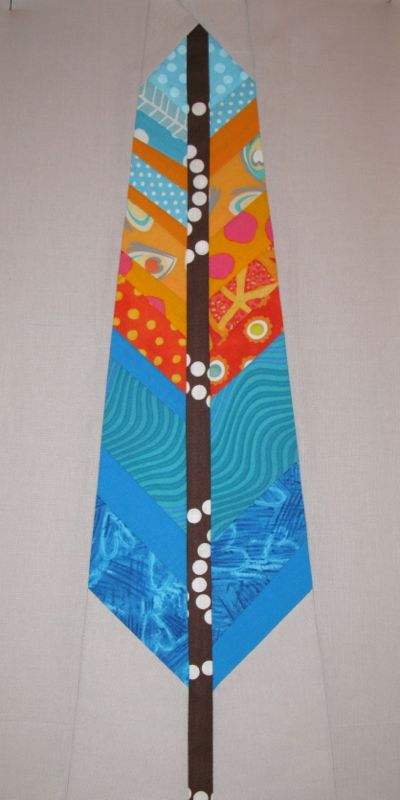
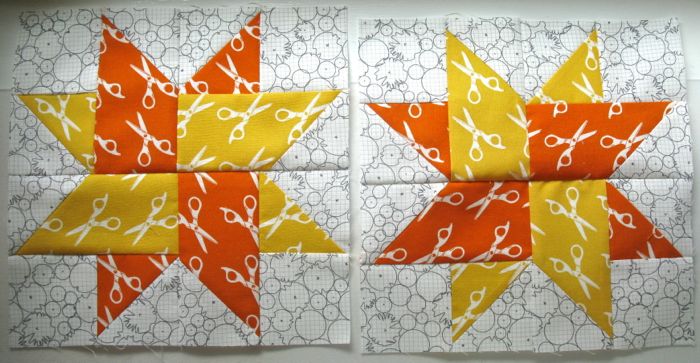
MCM5 Feather BlockA feather block, this time for Susan of PatchworknPlay, from a now-defunct tutorial by Anna Maria Horner.   Susan sent us the greige background fabric, and asked us for the two-color combo shown above.
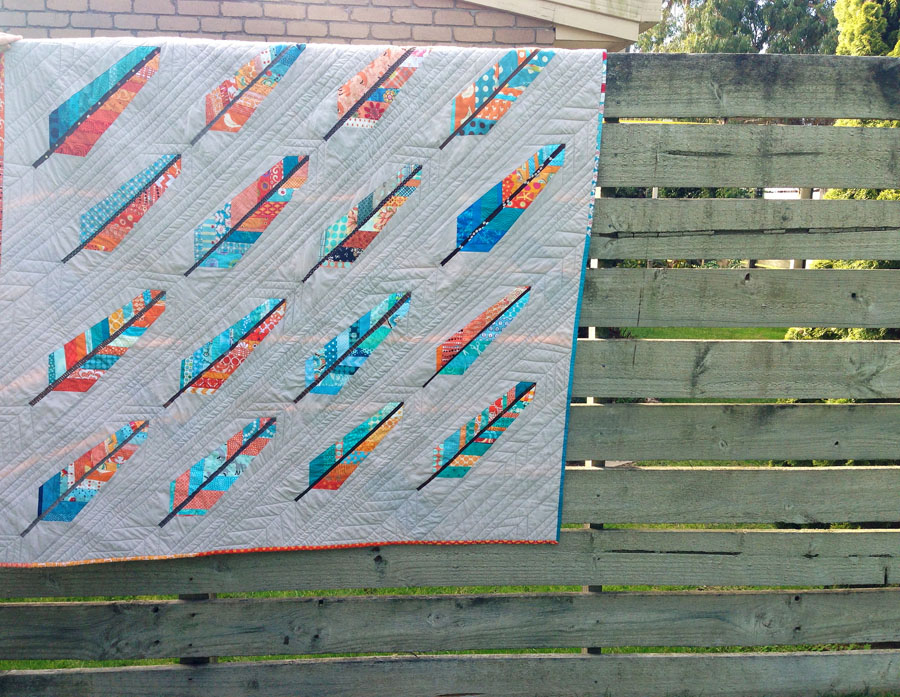
Susan's Feathers

She ended up having some feathers in different sizes (probably because of some printer scaling not set to 100%), but I loved the way she set them all on the diagonal, making this beautiful quilt.
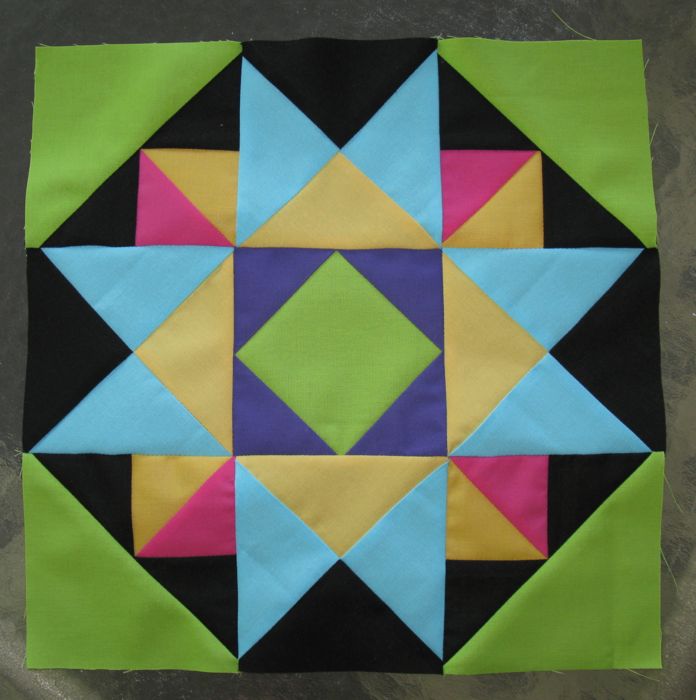
MCM July Bee Block

Inspired by a quilt she saw on Pinterest, one round Susan asked us for brightly colored solids with black background; above is my block.  It took me forever to get her my signature block (I really miss my mind when it wanders) but she waited for me and added it to the back.  Here is the front of her gorgeous quilt:
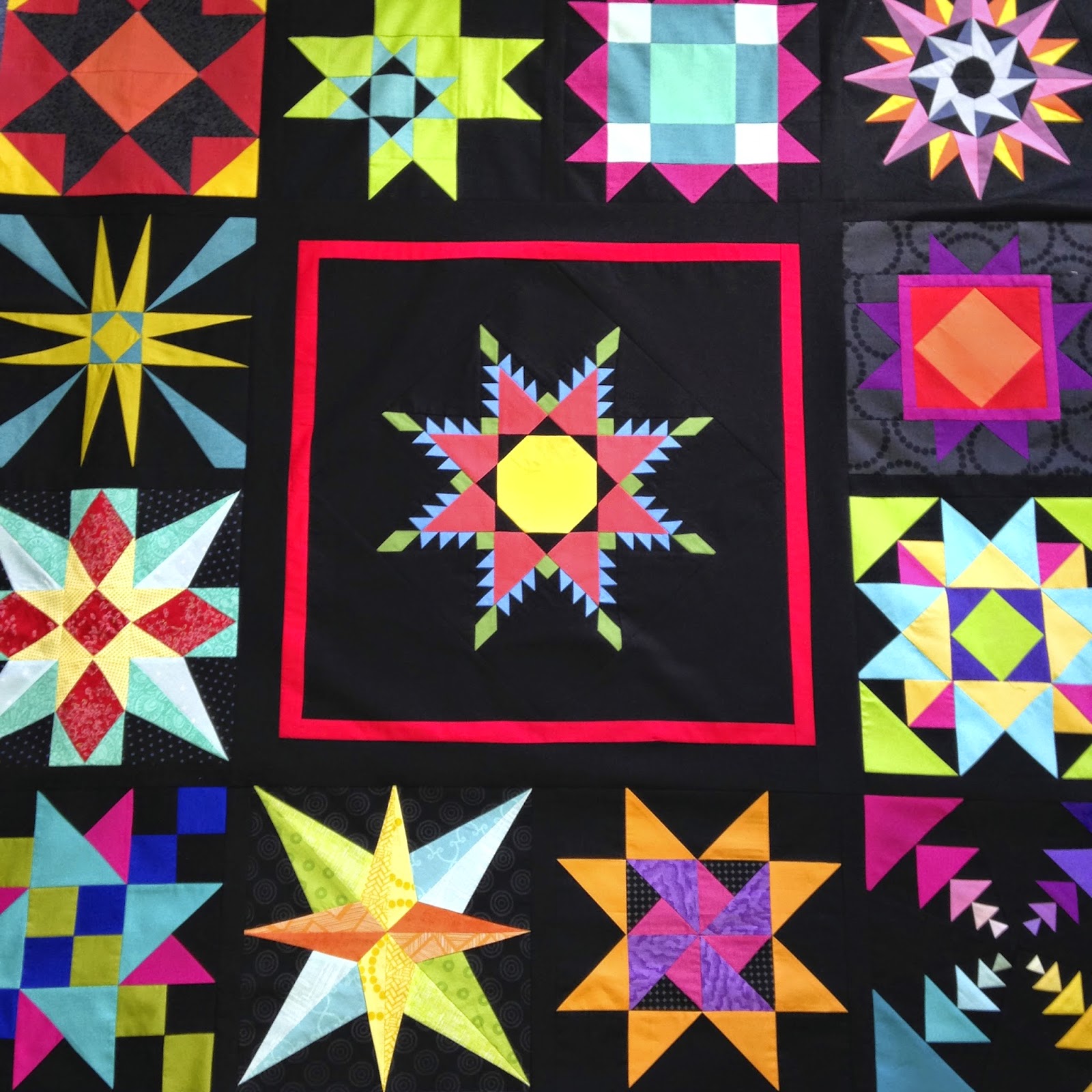
SusanS Amish Quilt

MCM Block June 2014

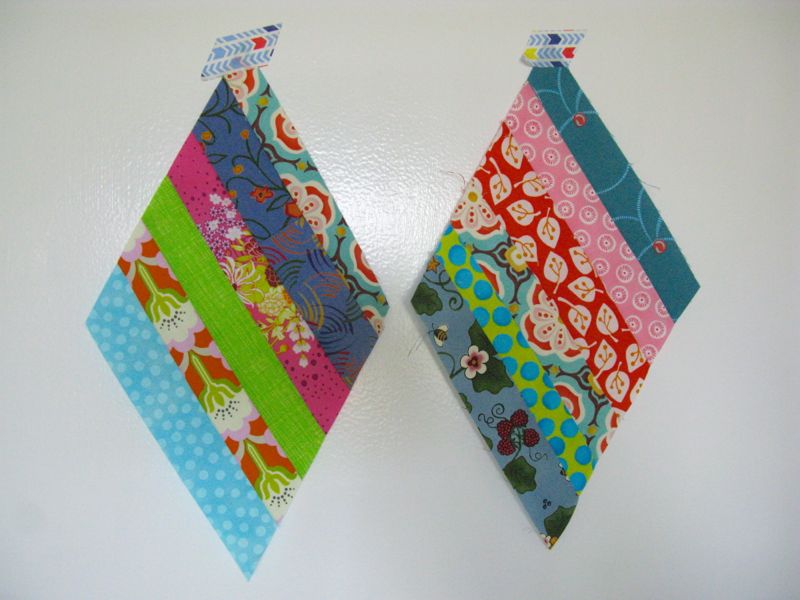
Linda of Flourishing Palms asked us for strip-pieced diamonds.  The tricky part is to get the strips going the right way (trust me on this).
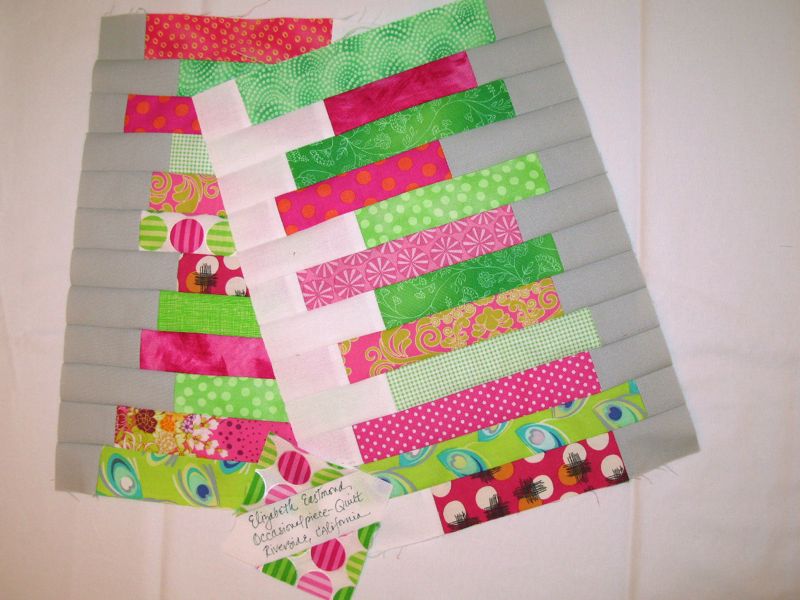
Lindas block signature

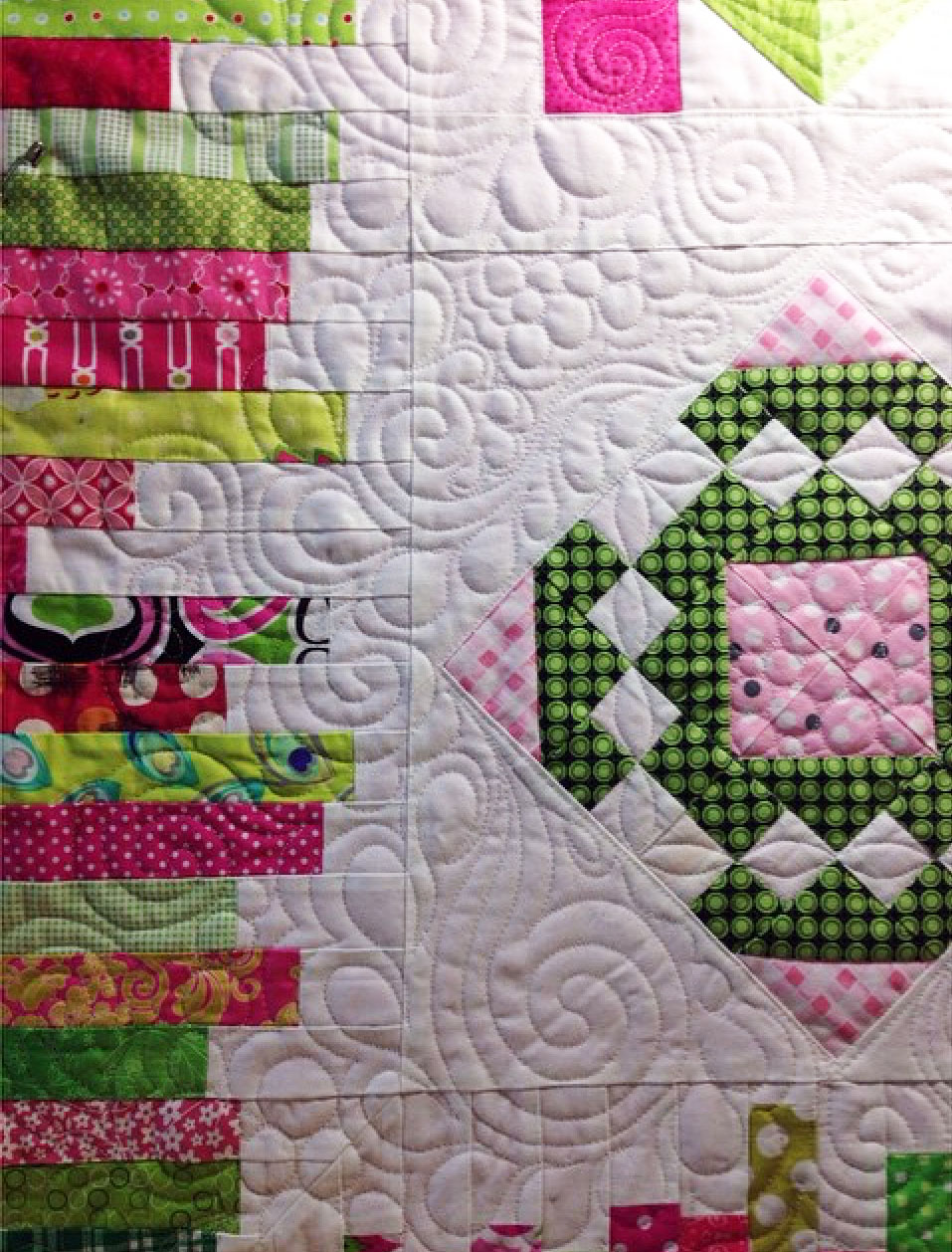
She also asked us for pink and green “bar” blocks, which she has now used to complete her “Strawberry Fizz and Lime Pop” quilt.
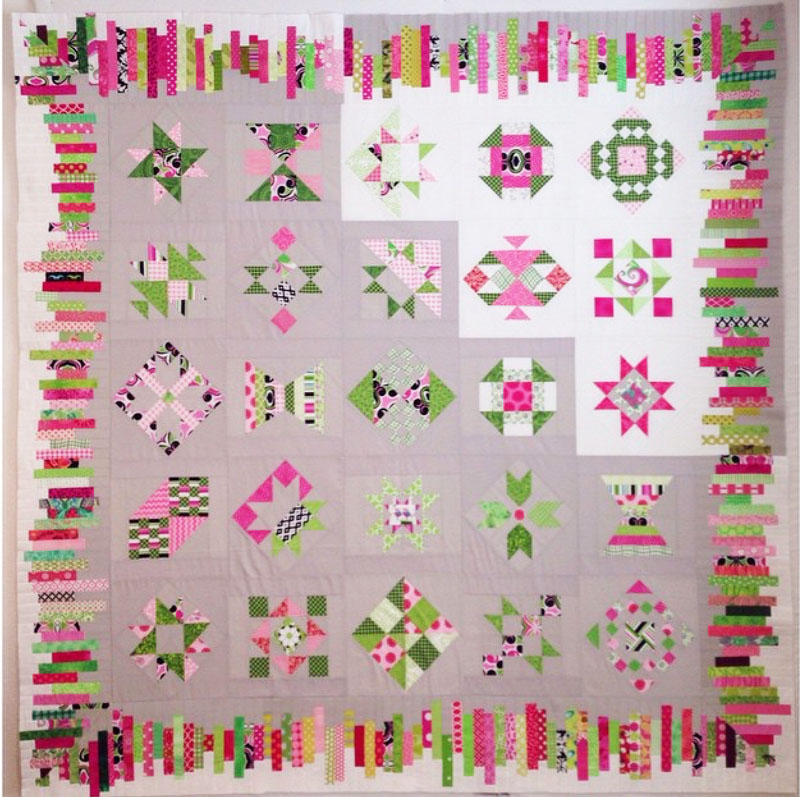
Linda_2quilt

Linda_1quiltdetailA gifted domestic-machine quilter, she has now started to quilt it.  These photos are taken from IG, so aren’t that great, but click on the link to her quilt name and see many more!
MCM August Bee Block

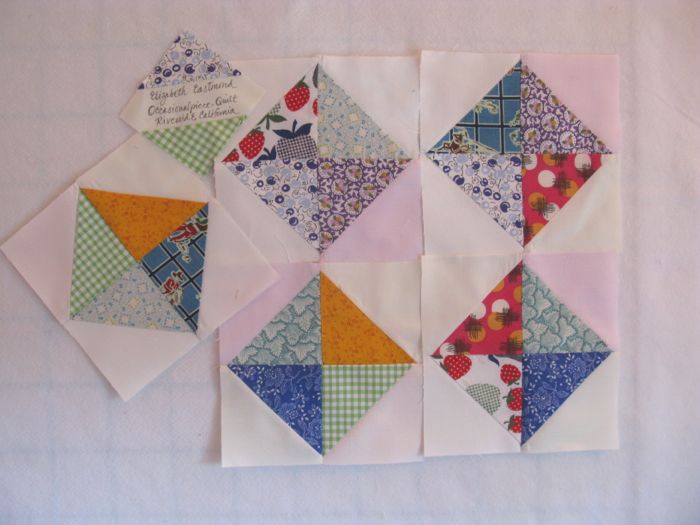
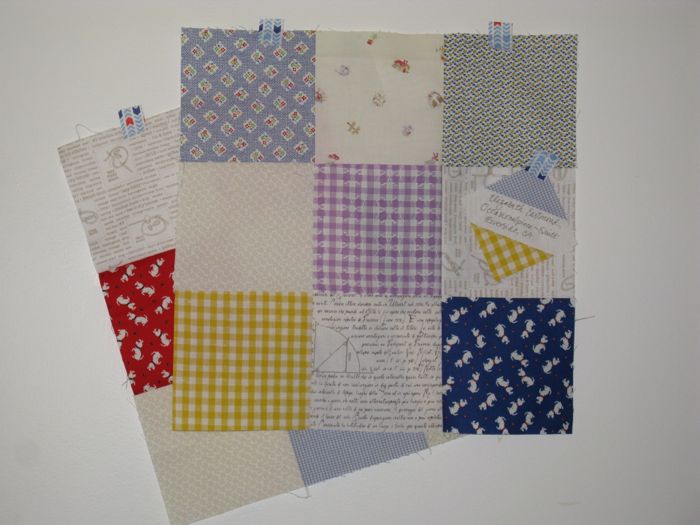
Mary of Molly Flanders asked us for this set of triangles (above) as well as this set of blocks (below), but is planning on making a larger quilt using both, so doesn’t have a grouping to share.
Dec MCM Bee Blocks_2

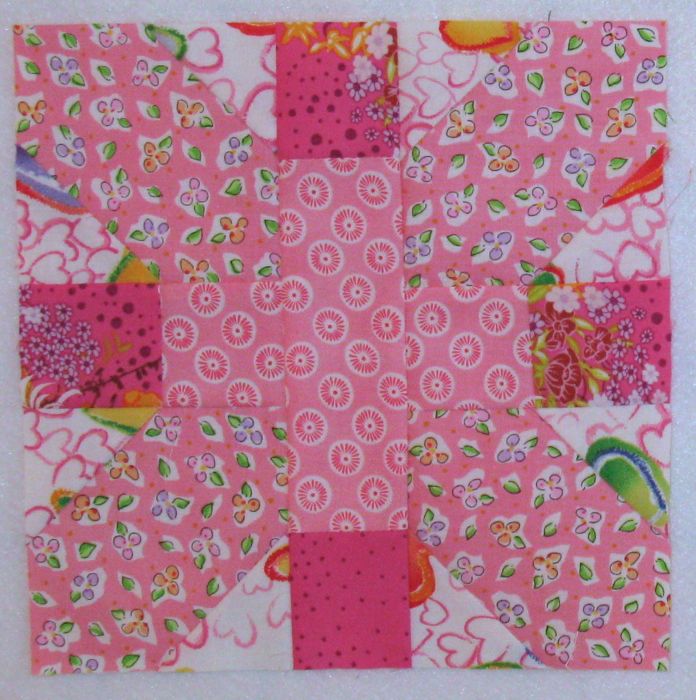
MCM Aug Block 2 MCM Aug Block 1

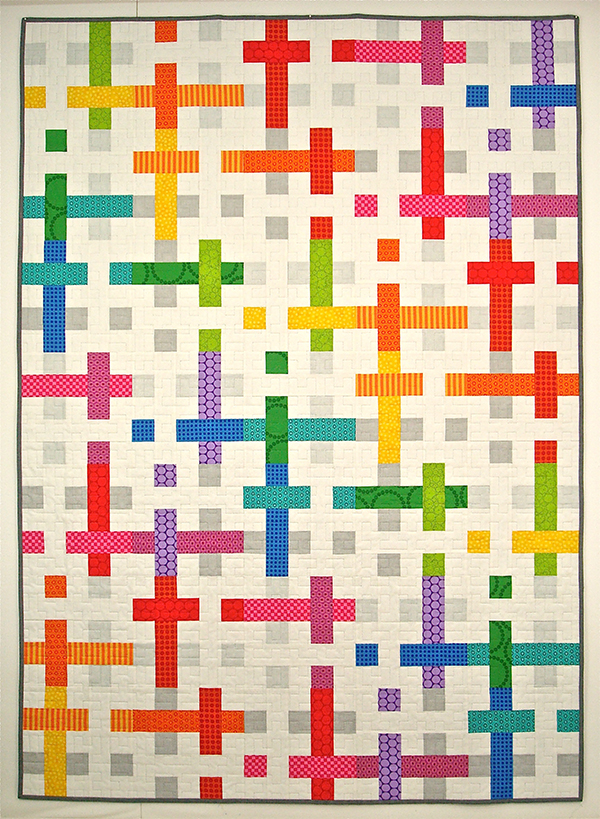
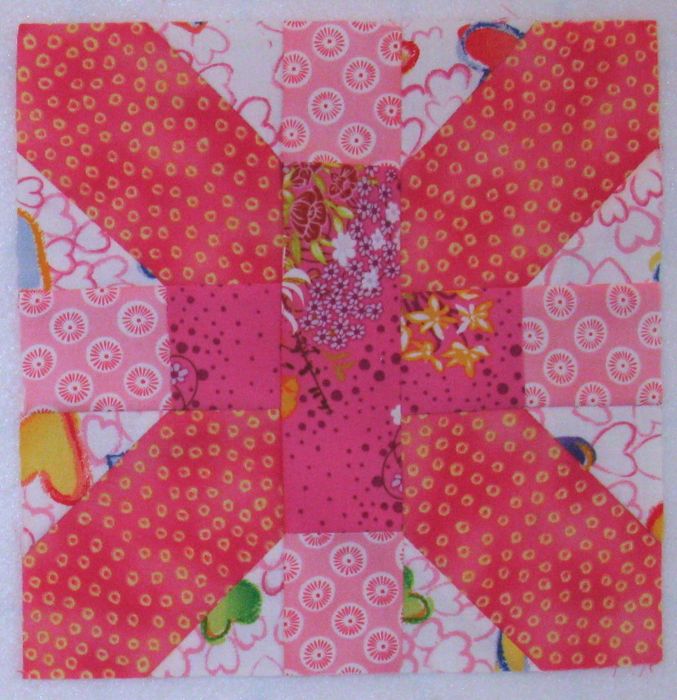
These two fun pink Cross-X blocks were for Mary, of Mary on Lake Pulaski.  She turned our blocks into this quilt:
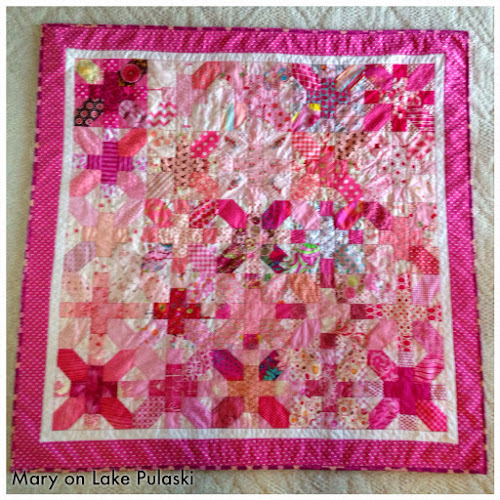
Kolb Cross X

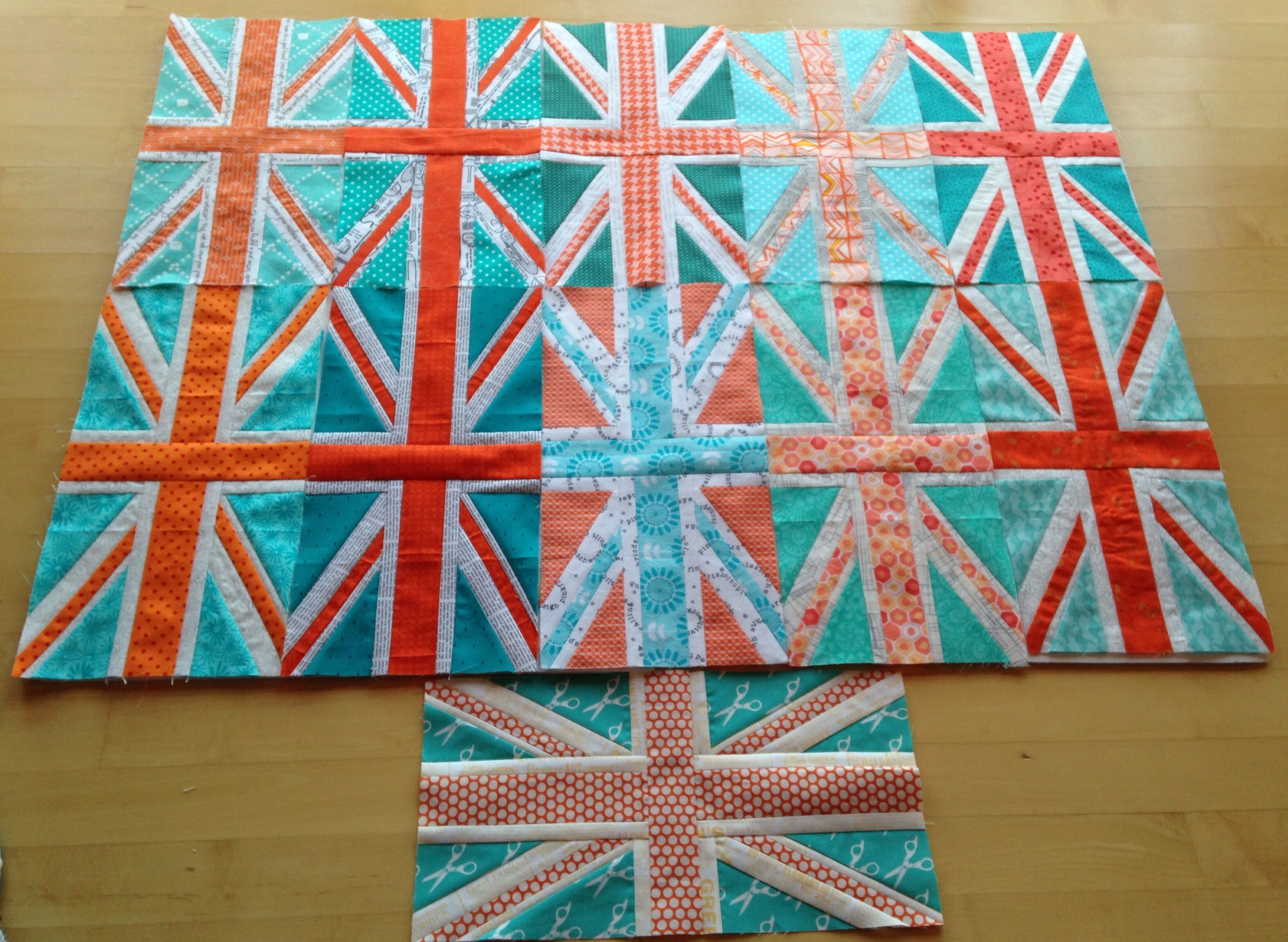
Kolb Union Jacks

And this is her collection of the Union Jack blocks she asked us to make for her.  I won’t tell you where mine is, because even though I ripped it out three times, I still don’t think it was very good.  It looks fine in this grouping, though, proving there is strength in numbers, even if the numbers are quilt blocks.
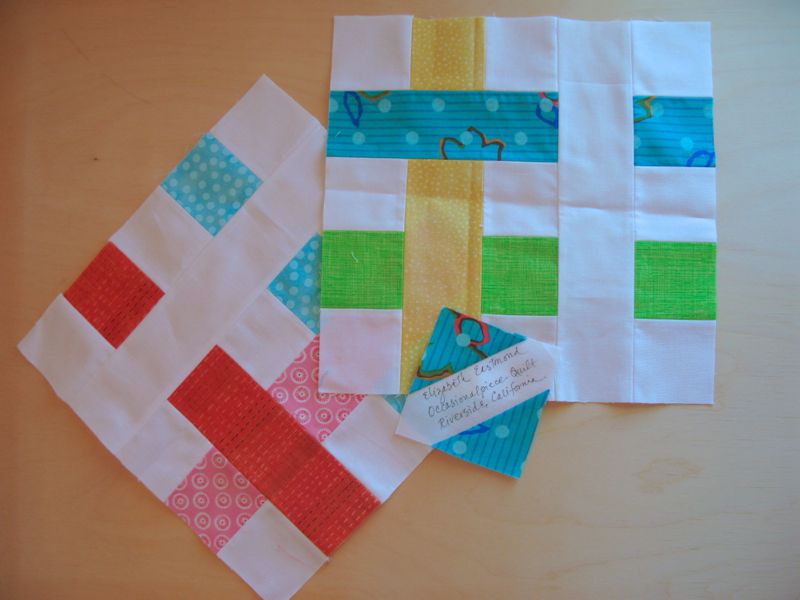
Deister Block

The final set of blocks and quilts are for Anne Deister, of SpringLeaf Studios.  I loved making Anne’s blocks because I always felt as if I were in on a big secret, as she is a pattern designer and we were helping her figure out, and pattern test, her designs.  So here’s one set of blocks, above, which turned into the quilt top below:
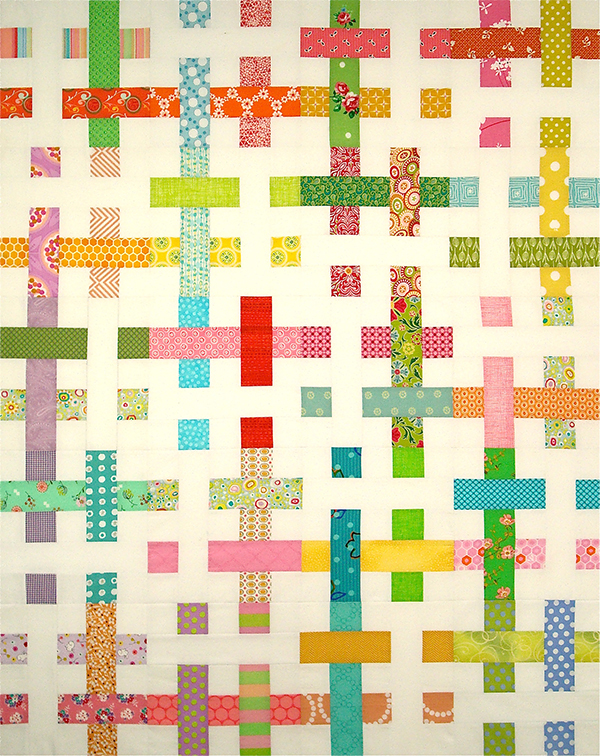
Deister Matrix scrappy

Deister Mtrix2 blogWhich she then refined, and made up in her stash, turning out this beauty, above. She calls it Matrix, and it should be released soon (she gave me permission to post these photos).  It was easy to make, and fun to see the finished product.
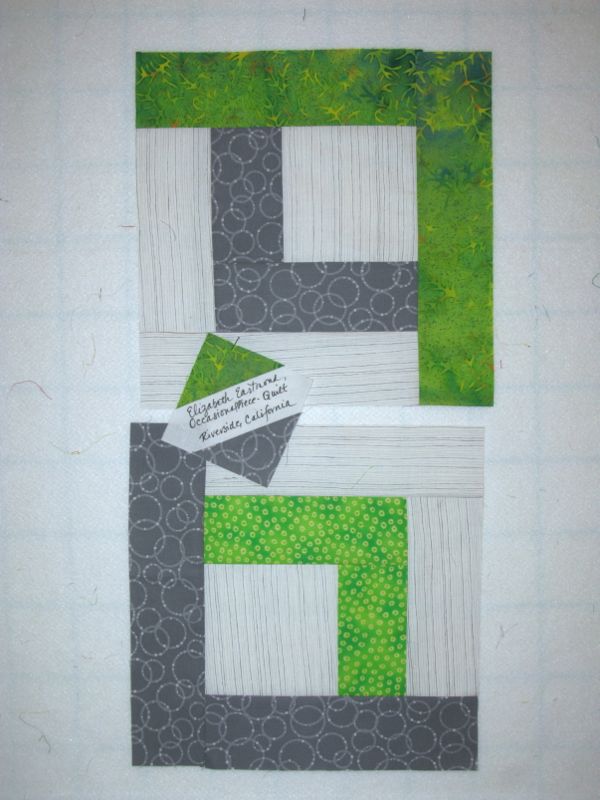
2014 MCM October

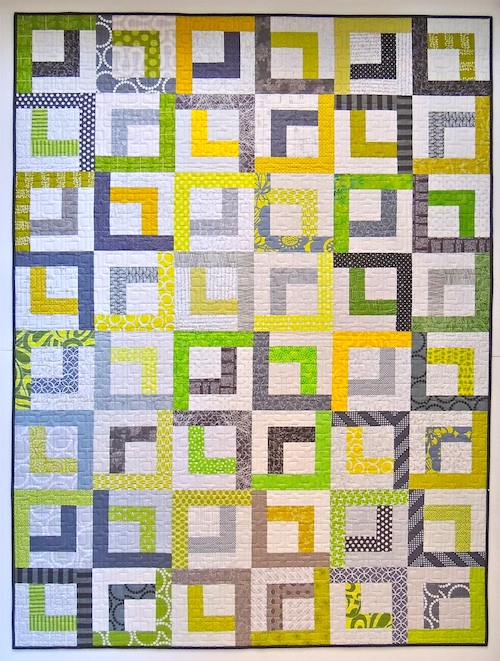
And then this block turned into this terrific quilt:
Deister tumble flat

Anne calls this Tumble, and again, the pattern should be released soon.  We’ll probably do a blog hop/giveaway, so I’ll keep you posted.
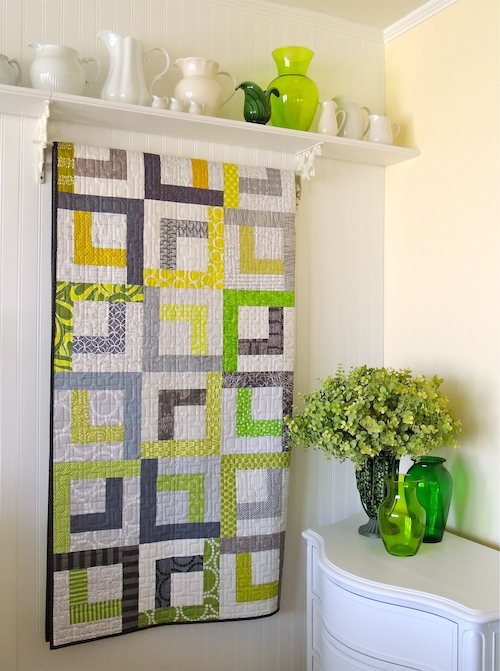
Deister tumbler bedroomShe has an artist’s eye for staging her quilts.  I love this photo.

So that’s it for the originals.  We have had some leave our group, and some newbies join us, which I have written about as I’ve made their blocks.  It’s been a rewarding experience working with all these women!

MCMBee Logo Button

Quilts

Stopping by Woods on a Snowy Evening, a Four-in-art Quilt

4-in-art_3

StoppingbyWoods_front1

Stopping by Woods on a Snowy Evening
#1 in the Literature Series
Quilt #142

Moving a different direction, the Four-in-Art quilters have chosen a year-long theme of Literature for this current series, and within that, we each have chosen our own way to think about literature.  Some have chosen to focus in fiction or non-fiction or others have chosen children’s literature.  I have chosen poetry.

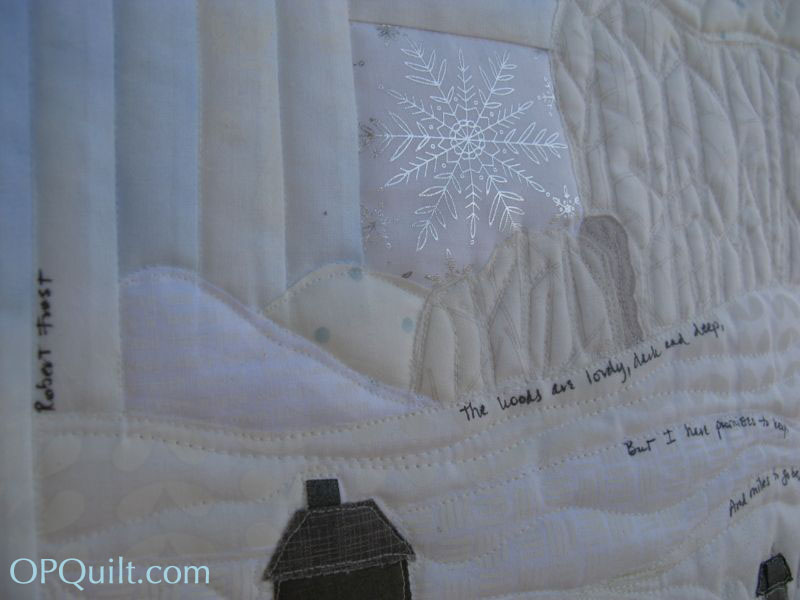
StoppingbyWoods_detail

Robert Frost’s poem, “Stopping by Woods on a Snowy Evening,” is one that I taught in my literature class at school, which gave me a chance to really research it, to hear a recording of him reading his work, to explore what others have thought about it.  Depression runs in our family, and many writers have commented about the intimation of suicide — the struggle over this — buried deep in the implied meaning in many of the lines.  Frost, of course, has denied that, but I think that while the writer may write the lines, it’s the readers who get to interpret what they see in the poem.  Time for you to see the poem:

“Stopping by Woods on a Snowy Evening”
by Robert Frost

Whose woods these are I think I know.
His house is in the village though;
He will not see me stopping here
To watch his woods fill up with snow.

My little horse must think it queer
To stop without a farmhouse near
Between the woods and frozen lake
The darkest evening of the year.

He gives his harness bells a shake
To ask if there is some mistake.
The only other sound’s the sweep
Of easy wind and downy flake.

The woods are lovely, dark and deep,
But I have promises to keep,
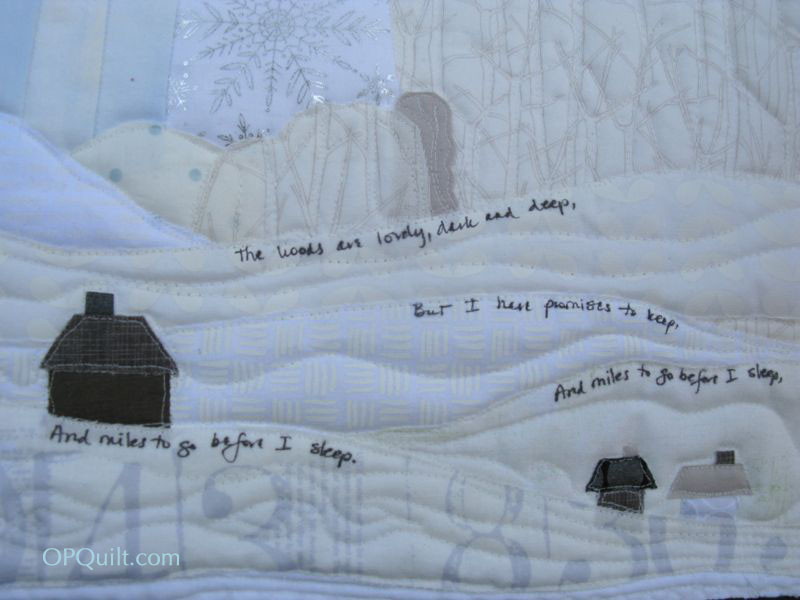
And miles to go before I sleep,
And miles to go before I sleep.

In class we study the iambic tetrameter, the rhyme scheme, the internal rhymes and then focus in on those repeated lines.  When you watch Frost read his poem, the first line of that last stanza really comes through that the woods are dark and deep, although lovely, and then he raises his eyebrows, almost in a shrug, saying he has promises to keep, as if that prevents him from exploring the darker woods before him.  And many times our obligations do keep us on a certain track, keeping us from veering off into depression or getting lost in other ways.  When you have to put food on the table for your young family, you have fewer minutes to ruminate or cry or sit in the corner and stare out the window.

StoppingbyWoods_detail2

I think the first line, “And miles to go before I sleep,” might refer to the tasks we all face: the laundry, work, family and social obligations, that daily list of compiled chores that pile up before us.  I know I certainly had a week like that, and even though some were delightful obligations that brought great pleasure, there was no extra space on the calendar, no breathing room to stop and look at woods filling up with snow.

Perhaps that second repeated line refers to the longer view, past calendars, past busyness, past the To-Do list.  We all need purpose in our lives as it is the engine that drives us to get up and get dressed, to engage with the world and to lay out our days in ways that not only contribute to the lives of those around us, but more importantly, lets us focus on the miles both behind us and in front of us.  Frost’s genius lay in crafting the lines that cause us to reflect on the bigger picture.  His poem reminds us to pay attention to the journey of our lives, rather than than the mere detritus of our lives.

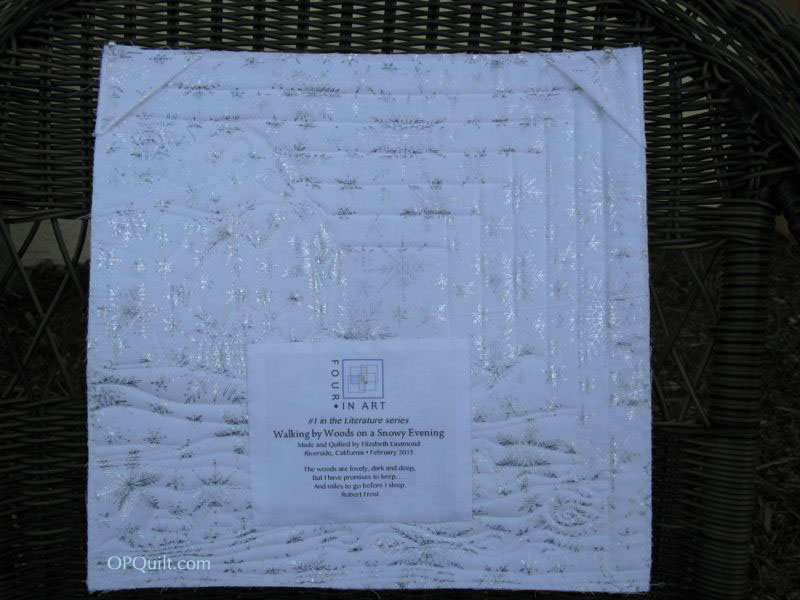
StoppingbyWoods_back

While some may think of the quilting as just a hobby, for me it has become part of my purpose in life: to explore and to create, to reach across the world or country and build friendships, like this small art quilt group.  Certainly I can outline the big ideals that inform my choices, but when traveling miles to bring a quilt to fruition, I take heart in Frost’s reminder to keep to the journey.

I like this new challenge for this year.  I’ve already chosen my poem for the next reveal, which is in May, and yes, all mine this year will have a seasonal theme.

Tiny Nine-Patch

Please take time to visit the other Four-in-Arters, who have also put up their Challenge Quilts today
(just bits and snips of their quilts are shown–be sure to see the full quilt at their sites):

Betty Lit1
Betty at a Flickr site: http://www.flickr.com
Katherine Lit1Catherine  at Knotted Cotton
Elizabeth at opquilt.com (you are here)
Jennifer Lit1
Jennifer at her Flickr account
Nancy Lit1
Nancy at  Patchwork Breeze
Rachel Lit1
Simone Lit1Simone at Quiltalicious
Tiny Nine-Patch
PS: My blogging software places ads here so I can use this site for free.  I do not control the content of these ads.
Quilts

Christmas Tree Skirt

christmas-tree-skirt-2014

Christmas Tree Skirt 2014
Quilt #141 on the 200 Quilts List
(Post updated August 2019)

Comparing oldnew Christmas Tree Skirt

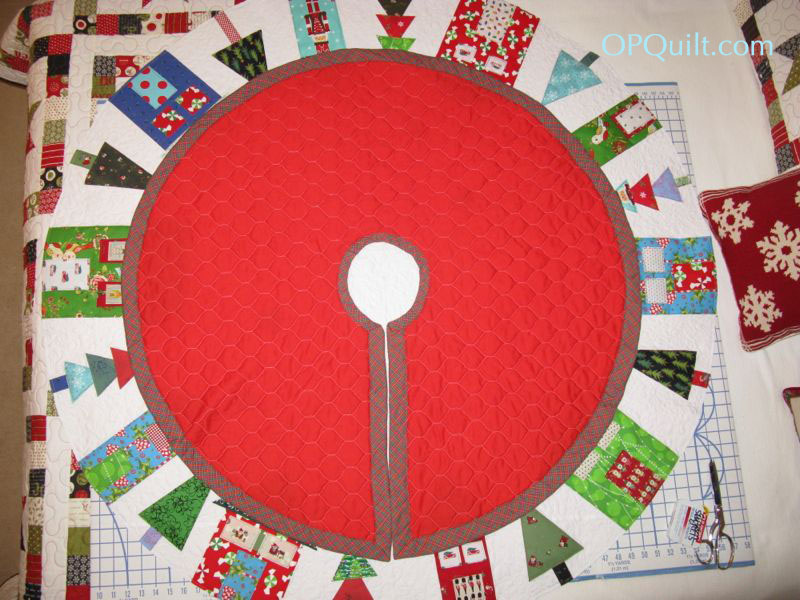
Here I laid out the old Christmas Tree Skirt on top of the new one;  it was made in the early 1970s out of pre-quilted fabric with a tricot backing, and homemade bias tape.

Christmas Tree Skirt wo Binding

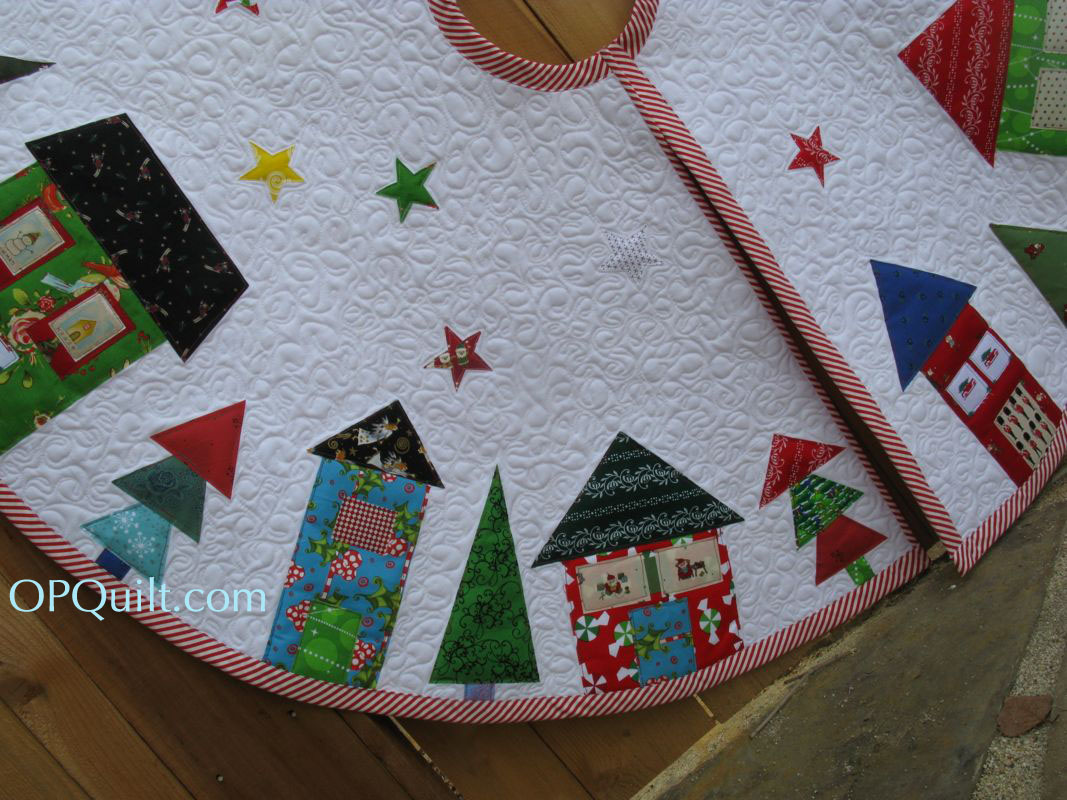
I was inspired by Betty’s skirt that she made last year, as well as others.  The original inspiration was a tree skirt from Fat Quarterly 2013, but since I didn’t have a pattern and it was all proportional squares, triangles and rectangles, I just started cutting. Here I’ve laid an embroidery hoop so I could judge how the center circle would look.  It took me about two days to get all the houses and trees arranged, partly because I wanted to use my stash and it that necessitated some color and value balancing.  I have a piece of fabric from my first quilt in here, as well as some scraps from dirndls made from German fabric (which I love).  I even have scraps of fabric from cotton I’d purchased in Rome, Italy some 14 years ago, as well as some Japanese fabrics, also purchased on a trip.  Build your stash, everyone.  It’s a fun place to visit.

UPDATE 2019, BASIC DIMENSIONS:

Fuse a series of fun fabrics to Steam a Seam II.  I cut everything a bit larger, then trimmed to make sure the fusing covered the back completely.

  • Basic skirt circle: 52″ diameter (piece some white cotton fabric to allow for this dimension of circle)
  • Center hole is a traced 6″ circle embroidery hoop.
  • Tall Skinny House: 9″ tall by 3.5″ wide
  • Pointed triangle roof is 6.6″ wide and 4.5″ high.  Follow the basic directions for tall Christmas Trees to cut yourself a wonky triangle.
  • Two-story house, short: 7″ tall by 6″ wide
  • Two-story house, taller: 9″ tall by 7″ wide
  • Trapezoidal Roof measures 8″ across the bottom, 3″ across the top and is 3″ high.  So, cut a rectangle 8″ by 3″ and fold in half.  From the outside lower corner, draw a line so it ends 1.5″ from the fold.  Cut that section off and you’ll have the roof.
  • Pointed Roof for two-story house measures 7″ wide by 4″ tall.
  • Tall Christmas Trees: Cut a rectangle 7″ tall by 4″ wide.  Fold in half lengthwise, and cut from lower outside corner to the center fold at the top, making a Christmas Tree shape.
  • Medium Christmas Trees: 6″ tall by 4.5″ wide (cut as above)
  • Stacked Christmas Trees are formed the same, but the dimensions are 3.5″ tall and 3″ wide.
  • Christmas Tree Trunks are 3.5″ tall by 1″ wide…but some are shorter (like 1.5″ tall).  Cut them to your liking.
  • Wonky-cut stars (Do a search for a 2″ pattern online; trace the outlines onto fused fabric, then cut).  —-> Or use this one: 5-sided-stars    <——

Use my photograph at the top of this post to plan and map our your pieces, but cut some different dimensions if that’s what you like (like making a shorter, skinny house).

WARNING:  Prewash your reds!!!  I did them once with Dye Catcher Sheets.  I should have done it three times, so my tree skirt suffered.  We still use the tree skirt, as the discoloration is up near the binding in the center circle, but I wish I’d washed them more than once.  Now we call it Christmas Tree Skirt at Sunset.

Deciding on Binding

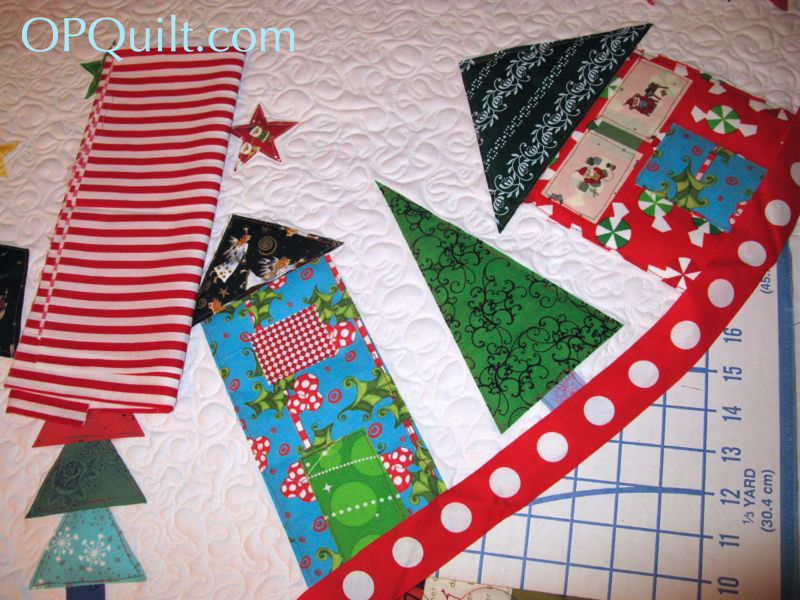
I thought I’d use a large red/white dot for the binding, but when I cut it on the bias, I got this effect.   So I went with a narrower stripe than the one shown, cutting it on the bias so it would go around the curves.  I pieced it, then folded it in half, then sewed it to the back and topstitched it to the front.  A trick I learned in Clothing and Textiles in college was to press a curve into the bias tape.  It went on like a charm.

Christmas Tree Skirt 2014_detail1

In working on this, I zipped through two books and am in the middle of one more.  The two I couldn’t wait to listen to were both Inspector Gamache mysteries, set in Canada. One was titled Still Life and the other was titled A Fatal Grace, both by Louise Penny.  And I’m halfway through The Snow Child by Eowyn Ivey.  Fitting, isn’t it?

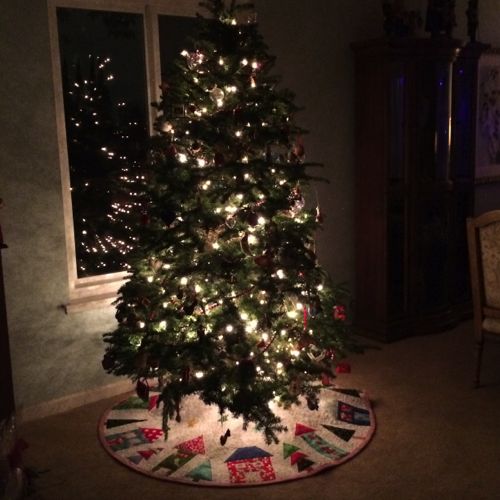
Christmas Tree 2014 w new skirt

We finally finished decorating the tree, and I’m enjoying the new tree skirt!

 Bobbin Statistic: 5 (in other words, how many bobbins it took to get this thing quilted)
Quilting: First I stitched through the quilt sandwich on the raw-edges of all the house and tree shapes, letting it be slightly wonky as I went.  Then the top-stitching on the stars.  I switched to white thread and did a loose, large meandering quilting around all the shapes.

Quilts

QuiltCon/Quilt Show Fun

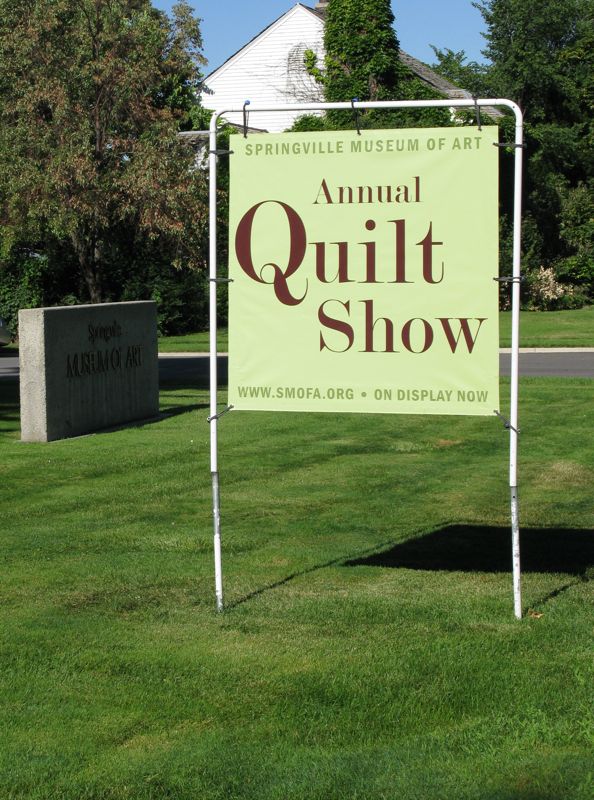
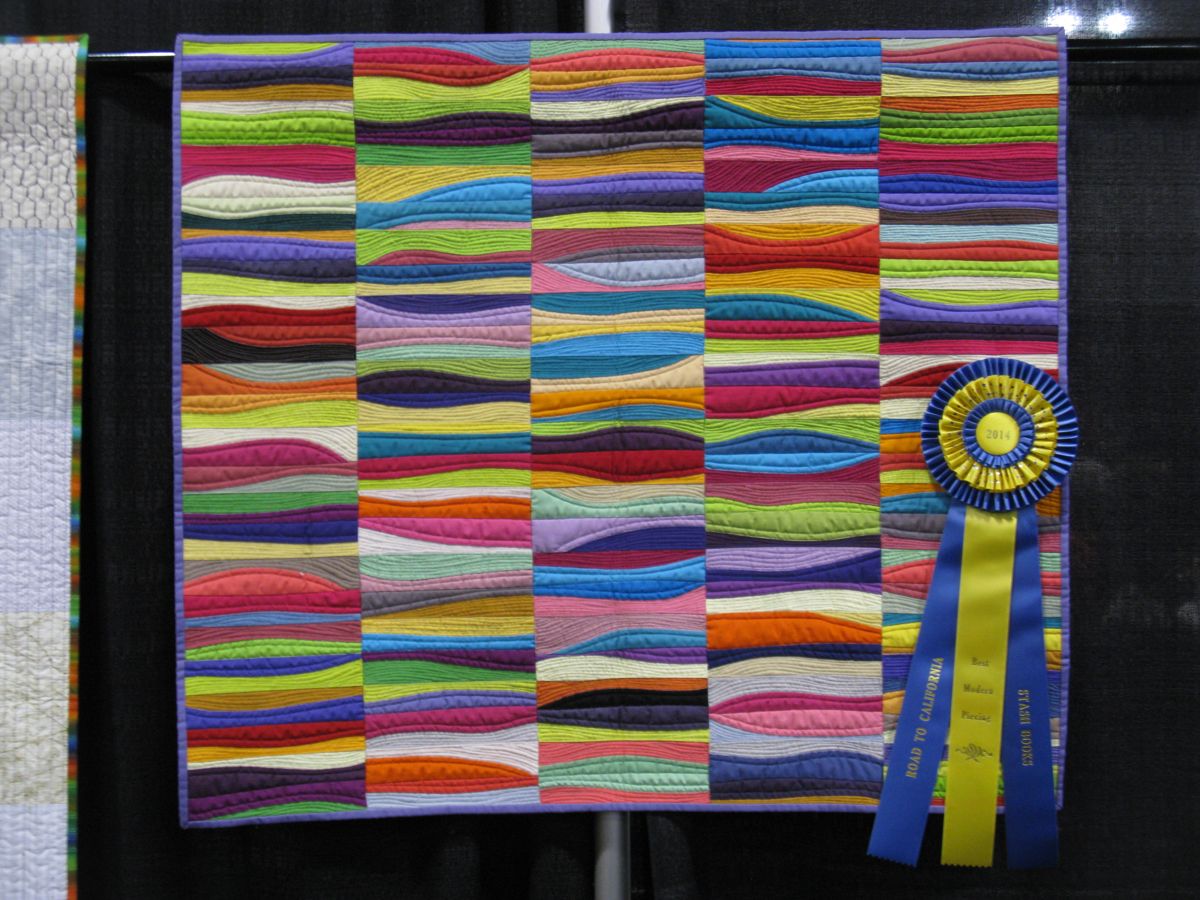
Road Booths1I’ve been entering quilt shows since about the time I moved here to Southern California.  The closest one was Road to California, and in those days, I always was accepted.  Schooling interrupted my quilting, and when I got back to my craft, the ground had shifted underneath me.  I couldn’t get my quilts accepted any more.

I felt pretty badly about this the first time it happened, especially since the quilts I saw at the show seemed to be all spangle and sparkle and glitz and flash, along with quilting that was perfection, due to the advent of the longarm-quilted piece.  To say I was discouraged would be an understatement.

Grading Research Papers

I kept trying, and kept getting rejected. It felt a lot like grad school, where I’d write up my short story, or poem, and take it into workshop and they’d get out their figurative knives, blades, guns and other weapons and slash my pieces to bits, then shoot holes in them.  I think I cried all the way home that first time, but it got easier to separate myself from my work, and take the critiques in stride.  Some were helpful.  Some were NOT helpful.  I had to know that my writing still had value and worth, and to keep going.  It was the work that mattered.

Fast forward to this week, watching the feed blow up on Instagram as people cooed or moaned about their acceptances/rejections to QuiltCon.  Whether the organizers like it or not, they have created a couple of problems and I was watching the fallout happen in realtime, in people-time, as comments started flying.  The problems most prevalent appeared to be:

Sign Quilt Show

1) Too many entries.  This came about because there was no limit on how many quilts could be entered.  I haven’t checked every show, but the ones I’m familiar with limit how many quilts you can enter.  Because QuiltCon had 1300+ entries, and maybe only space for 400 quilts, well. . . you do the math.  But the odd thing was this line in the rejection letter (yes, I got rejected on all three of my quilts): “Please do not be discouraged. We received more than 1,350 quilt submissions and the jurors had to make many difficult decisions.”

This was weird how they commented on the recipient’s emotional state and then flipped it around so that the person being rejected should feel sorry for the jurors and their difficult work of wading through over a thousand quilts in order to chose the ones they wanted for their show.  Just the facts are necessary: “You didn’t get in.  It was a good effort.  Try again next time.”

TarrSnapshots
Timna Tarr’s Valley Snapshots

2) The perception that there is a mysterious criteria that determines who gets in and who doesn’t.  The key word is “perception.”  And the perception, judging by what I read on IG, is that this mysterious set of rules is not given out to mere mortals, but only those in the inner circle, the claque, the clique, the friends and buddies of those running the show.  I can hear the snorting going on now.  Yep.  But this problem persists because the modern quilt movement can’t figure out what it thinks is a modern quilt enough to be able to describe it, or communicate it to the masses.  People like me.  And then they hold a contest in which we are all supposed to submit, which feels very much like going to the top of a busy freeway overpass and throwing our quilts over the edge, watching them sink down into the morass.

On top of that, there seems to be an overabundance of graphic artists at the helm, or with some graphic arts training.  Might this not mean that the graphic punch, that visual snap, the elements of high contrast off the grid have become ascendent?  Maybe.  Then put that into the judging/juror criteria and disseminate it.

When I entered, I was surprised to see there were really no categories to select into.  Yes, there are categories, but I didn’t get to nominate my entries into any of those; the assumption is that those on the other end of my internet connection will do that for me, further confusing the experience.  So I don’t know if my quilt was judged against other similar quilts, or if it was thrown into the pool of 1300+ entires, with bleary-eyed jurors watching quilt after quilt pass by their eyes, until the whole thing collapses into Let’s Get This Done, sort of like I feel when I’ve graded too many papers in a row.  I have total empathy with the jurors, but perhaps there are some solutions that might rectify this difficult situation. I hope they find them.  And I hope the show I’m about to see in Austin in February will put aside some of my concerns and be a great experience.  I am happy for those who got in, and can’t wait to see the quilts.

Sol LeWitt's Patchwork Primer_finalone of my rejected quilts

But in the end, what matters?  Are you only as good as your last rejected quilt?  Or are you the sum total of your work, the cutting, the sewing, the creating?  Given the number of times I’ve been rejected, I could have melted into a puddle on my floor.  But my training in grad school, although sometimes painful, gave me stories like this one:  a famous author used to mutter to himself “I’ll show them this time,” every time he started a new novel.  And the knowledge that I am more than just my latest quilt.  And that I won’t melt if someone tells me “no,” although it feels really good when they tell me “yes.”

colorwheel blossom beauty shotanother rejected quilt, soon to appear here on the blog for the first time–stay tuned!

One lovely side effect of all this sturm und drag (storm and stress) is that I have loved the reading on the #quiltconreject and the #rejectedbyquiltcon hashtags on Instagram.  I’ve been introduced to some fine new quilters, and fallen in love some new works from familiar quilters. It’s been quite the wild ride.

JosephCampbellBigQuestion

Yes, the modern quilt movement may or may not survive the problems I mentioned above.  But it’s not really my concern.  My concern is to get going on the next quilt, to say a hearty yes to this creative adventure.