100 Quilts

Using the Other Side of Fabrics

First off, after I finally figured out how to use Mr. Random Number Generator, and making sure that comment included a trip, I’m happy to announce that the winner of the Itsy Bitsy Scissors is Mary, of Needled Mom.  Congrats!

I figured since I subjected you to a swath of vacation photos, I needed to get real and get some real quilts back up here on the blog.  I started yesterday on the newest Schnibbles for June, Dulcinea, beginning with the background fabric in a navy-blue print:

background dulcinea

A high-quality iPhone photo, uploaded, then recaptured as a screen shot.  Love technology.  Kidding, but it does come in handy.

mockupDulcinea

I filled in with mostly Comma prints, but a few others (I hate doing one line of fabric), but it just wasn’t going anywhere for me, until I turned the background fabric over to the “other side,” not the “wrong” side (shown in pink circle).  Why do I not say “the wrong side”?  It comes from the era of watercolor quilts, when we tried to blend blend blend our tones across multitudes of itty-bitty squares.  We learned to consider both sides of a piece of fabric as possibilities.

Watercolor Quilt

Here’s my version: Color Study: Night Infolds the Day.  My friend Leisa got us started on this adventure–I think it was her first quilt ever.  We cut about a zillion little squares, and since that cool gridded fusible web hadn’t been invented yet, we pieced them all.
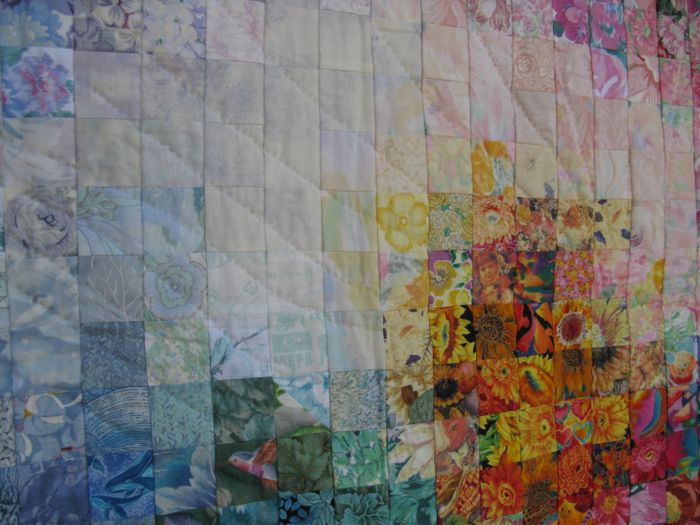
Watercolor detail 2

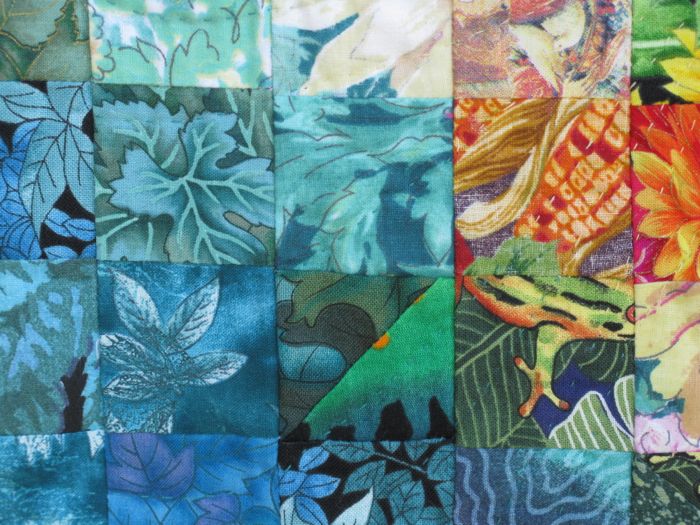
So the technique was to smooth the colors across the colorful sections, and sometimes no matter how many little squares you browsed through, it just wasn’t possible.
Watercolor detail1

So you flipped the piece over and used the “other side,” like the middle partial square in the upper row, and the full right-hand square in the second row.
Watercolor Back

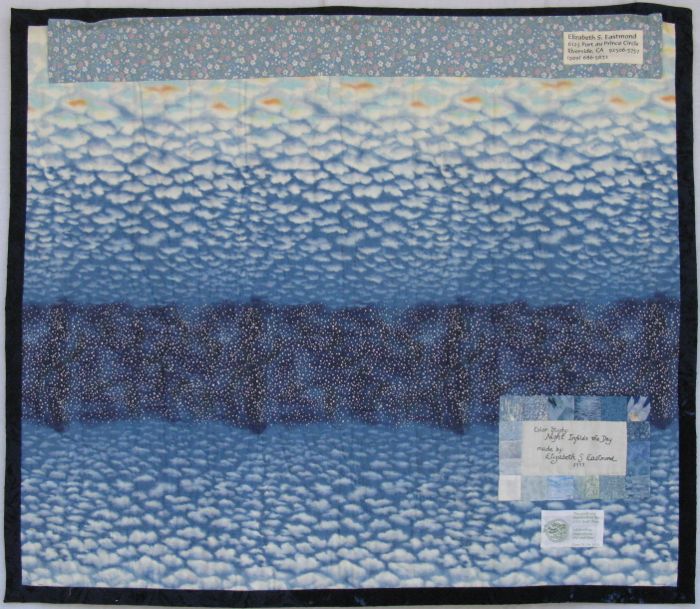
I used an allover celestial print for the back–that was pretty daring for that time — all of 14 years ago.
Watercolor Label

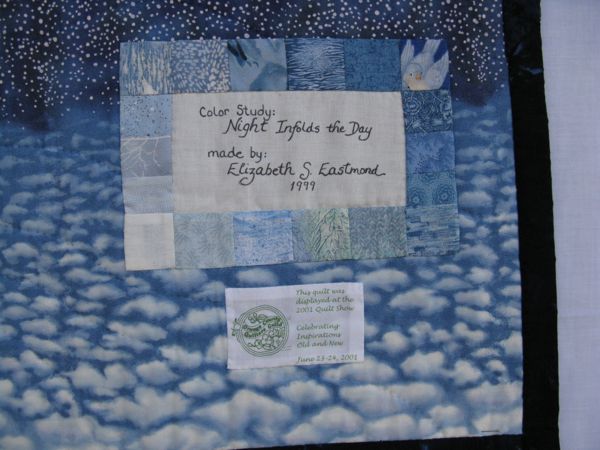
The label.  I exhibited this is a local quilt show, and stitched on their label, too.  The best part of this story is that our friend Tracy adopted our six pizza boxes full of squares (we sorted them by value, from light to dark), added about a zillion white squares and made herself a wonderful quilt from our leftovers, another value of getting together in a quilt group.  This is #29 on my 100 Quilts List.

Carmel BluesAnother quilt where I used the “other” side sometimes, was on the quilt I made for my mother (mentioned in last week’s post).  We’d gone to a quilt show in Carmel, where I’d picked up a fat quarter pack of blues.  This is titled The Blues of Carmel, and is #19 on my 100 quilts list.  It’s named not only for the ocean at Carmel’s edge, and that pack of blues from the quilt show, but also because my mother has blue eyes.
Carmel Blues Back

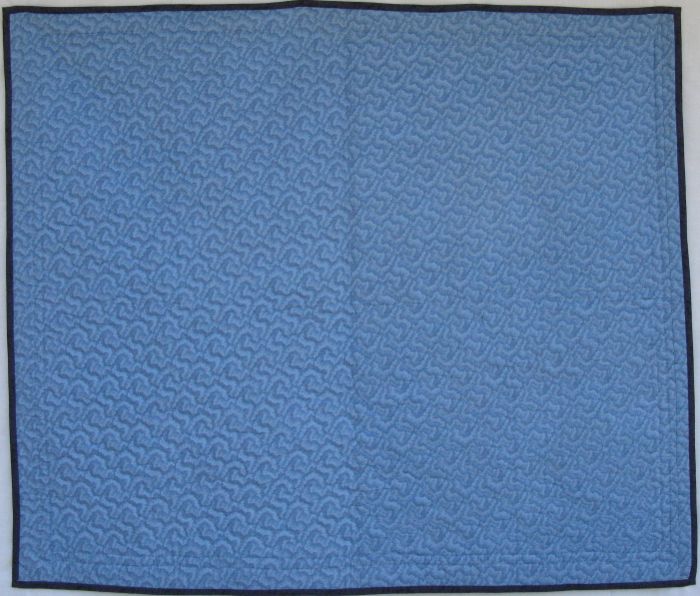
The back of this is merely a whole cloth, allover design, which I used as a guide to hand-quilt.  Pretty much the only people who machine quilted their quilts at that time were J. C. Penny’s or Sears.  It was hand-quilt, or yarn-tie.  Quite a range of options, right?  Since this was made in my earlier days, it doesn’t have a label.  I need to remedy that.  This quilt was published in Joen Wolfrom’s book Color Play (page 64). Don’t know who Joen Wolfrom is?  Google her.  Her book, Patchwork Persuasion is ground-breaking.  And just typing “#19 of 100 Quilts” makes me realize how far I’ve come, and how far quilting has evolved, in the nearly two decades since I made this.  Of course, I’M not any older.

Dulcinea Label

This was on my melon for lunch, which reminds me I need to get back to sewing that Schnibbles quilt, another one in Sherri and Sinta’s Another Year of Schnibbles!

Quilts

Punching the Creative Buttons

IttyBittyScissors

{NOTE: If you are looking for the teensy scissor giveaway, you can find it *here.*}

*************************************

Manhattan Skyline

If you’ve never traveled to New York City, the question of whether that city is worth all the hype may cross your mind.  I can’t answer that one, but  from a quilting perspective, the stimulus provided by this “town,” as the cabbie called it one time, gives me a chance to look at things in a different way.  I’ve had the unique opportunity to travel there three times in the past year and half and have come at the city as a tourist, not as a resident, so can’t answer whether it would be lovely to be there 24/7. Is my experience so different from any travel, anywhere? Don’t know that, but here are three things that punched my creative buttons this past week (along with some quotes on creativity).

“Creativity now is as important in education as literacy, and we should treat it with the same status.” –Ken Robinson

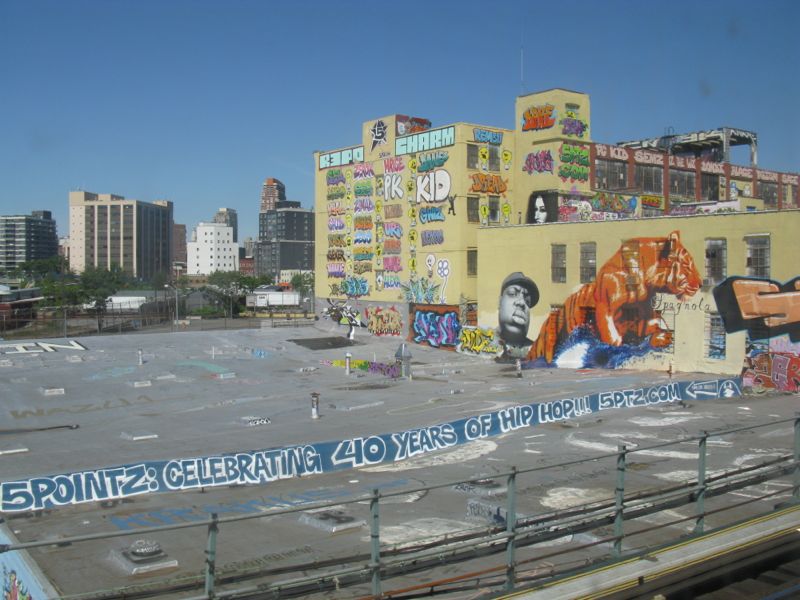
Five Pointz, Queens, New York–scheduled to be demolished in September of this year (2013), so hurry if you want to see it

5Pointz1

Take the 7 train from Grand Central towards Queens, and as you round the curve, the elevated track passes an old factory, completed decorated with street art.  Yep, like you, I don’t really want this on MY house, but here in its urban setting, it was amazing.

5pointz2

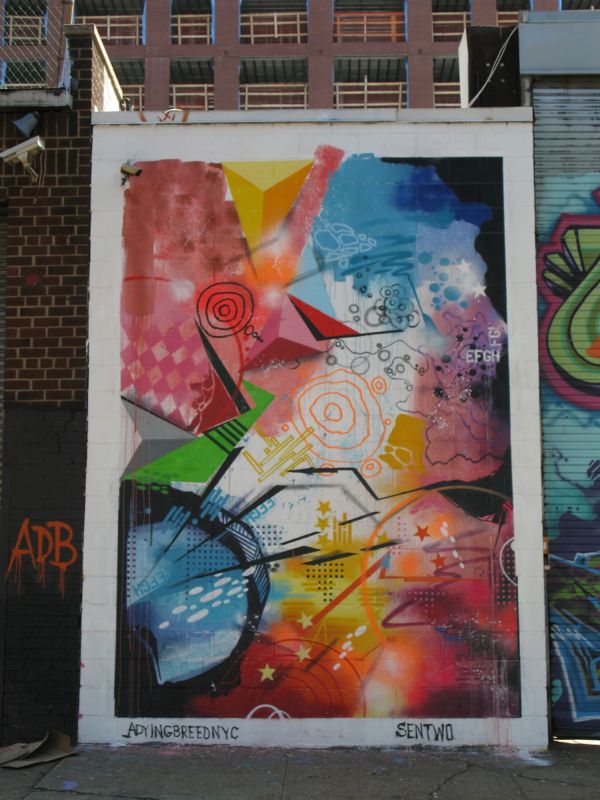
On Memorial Day when we were there, the area was deserted and quiet, with only a few tourists like ourselves strolling around, cameras clicking away.  I put quite a few of these up on my Instagram feed and within hours, the street artists were identifying each other’s work, noting for me who created these and in some cases, which country they were from.  The taggers (but most of these weren’t really tags, but full-fledged art) have to get permission to put their art up here, and I felt like I was interacting with a community as tightly-knit as our quilting community.

5Pointz3

5Pointz4

5Pointz5

5Pointz5.1

Detail of above

5Pointz8

5Pointz7

I liked also how people interacted with the art.  This family was from France.

5Pointz9

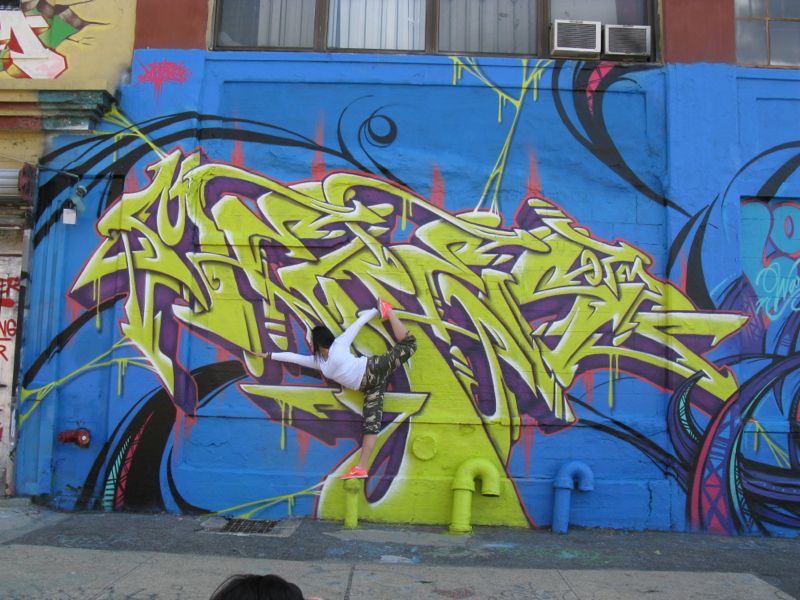
This young woman was there with three of her friends (can you see her in the middle?), and they did yoga poses in front of several pieces.  We talked to one set of spray paint artists (the best paint is apparently purchased from art stores–no Home Depot for them) as they worked, and they said this building could look completely different next week, as it continually being painted over.  There is one man who kind of runs the place, and to be able to paint here, new artists have to work their way up from scraping and cleaning the site, in order to adorn a wall with their creation.

5Pointz10

As quilters, we have quilt shows, blogs, and places to show our art.  And while the street art at 5Pointz may not be your thing, I thought it was interesting how this community had evolved in this particular place and time.  I hate the blight of graffiti on my town, the tags scrawled across buildings, defacing them.  But I loved coming here. My takeaways: passion for your art, dedication to completion, ability to put it out there and let it go, colors, shapes, novelty.

“You were probably steered benignly away from things at school when you were a kid — things you liked — on the grounds that you would never get a job doing that: ‘Don’t do music, you’re not going to be a musician. Don’t do art, you won’t be an artist.’ Benign advice — now, profoundly mistaken.” –Ken Robinson

El Anatsui–exhibit at the Brooklyn Museum  (click on this link and watch the video of them putting up the pieces–reminds me of hanging a quilt show.  Sort of)

bottletops

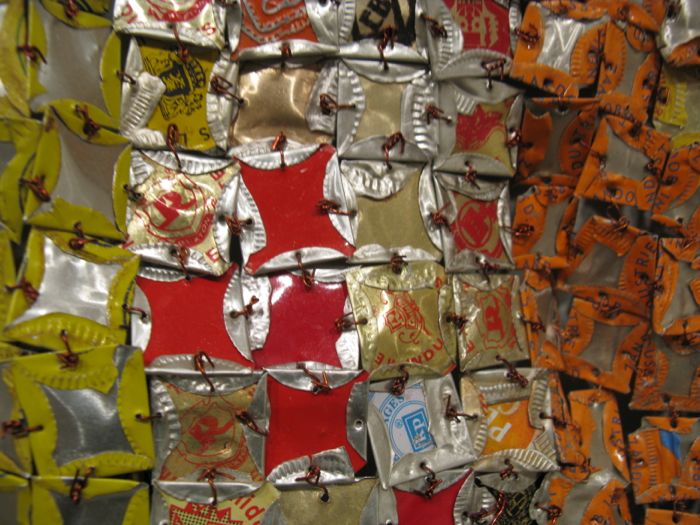
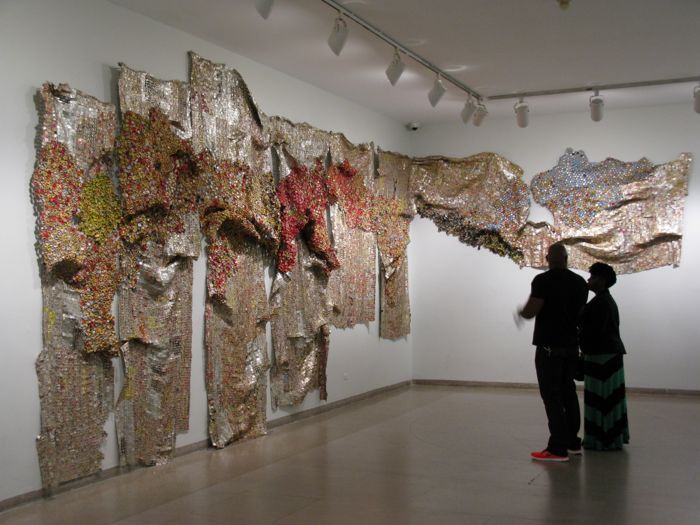
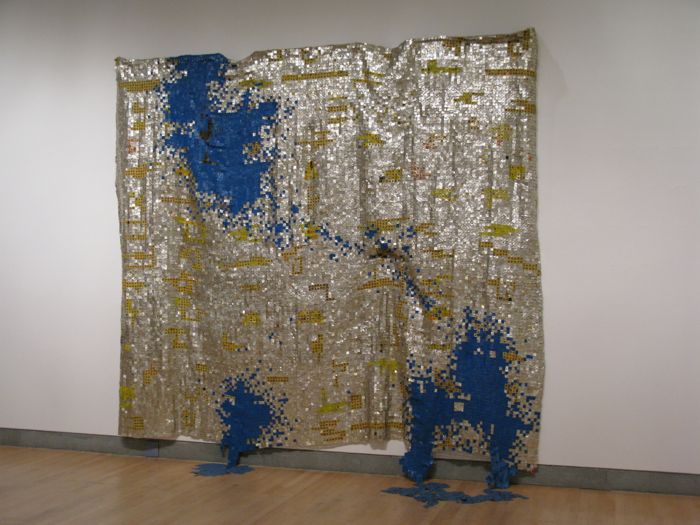
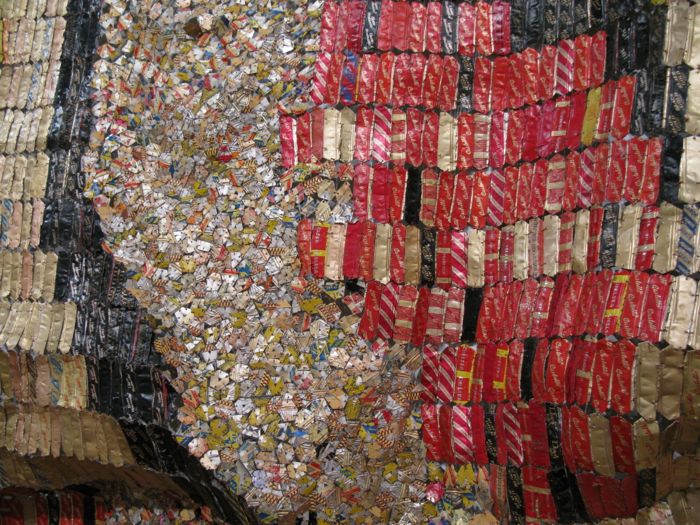
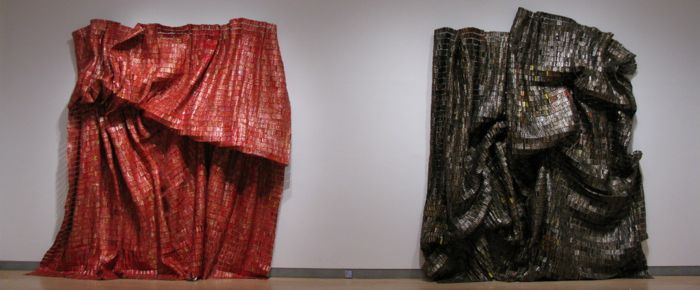
El Anatsui is a Ghanian artist working in Nigeria and is a master at using materials at hand to create his art.  These squares are all bottle tops, bent and shaped and then put together to create massive “quilts” of color and form and shape.  In a video at the exhibition, he used the word “patchwork” to describe his work of creating pieces and put them together.  There are a lot of similarities to what we quilters do, only ours are cloth, not liquor bottle tops.

ElAnatsui bottle tops

ElAnatsui5
ElAnatsui6

ElAnatsui7

ElAnatsui8

ElAnatsui9

ElAnatsuiRedBlockBlackBlock

My sister had gone the week before and said it was an amazing exhibit.  Be sure to watch the video on the Brooklyn Museum’s website about how they installed these pieces.  Although they are huge, they look as light as air. Takeaway: explore all kinds of colors, materials, shapes and forms.  Don’t be afraid to reshape or move things around to get a different result.

“Human life is inherently creative. It’s why we all have different résumés. … It’s why human culture is so interesting and diverse and dynamic.” –Ken Robinson

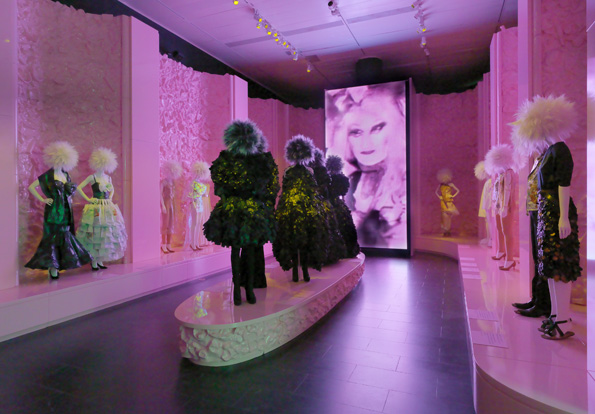
Punk: Chaos to Culture–showing at the Metropolitan Museum of Art

27-gallery-view_diy-hardware

Like the above street art, I am not drawn to punk naturally, but this exhibit at the Met I thought was brilliant, because it talked about the influence of punk fashion on the greater world of fashion–and it brought together some of the things I’d been seeing this week in my touristing. [All photos are from the internet.]  To get a fuller perspective on the show, watch the video, narrated by Andrew Bolton, the curator.

bricolage

This gallery, titled Bricolage, was where the culmination of recycling trash to treasure was noted, and I loved what what used in the skirt and shirt below:

bottlecapskirt

Bottle Tops!  Couldn’t believe it. They also had dresses that had graffiti sprayed on them, and how graffiti can be incorporated into T-shirt and dresses.  I thought of the current obsession we have with text on cloth, and wondered if we were also feeling a wave of punk influence, in a more refined way.

“If you’re not prepared to be wrong, you’ll never come up with anything original.” –Ken Robinson

I won’t show you any more of that exhibit, as it was punk-ish, after all, better seen in context, as is all art.  But I will leave you with one more picture:

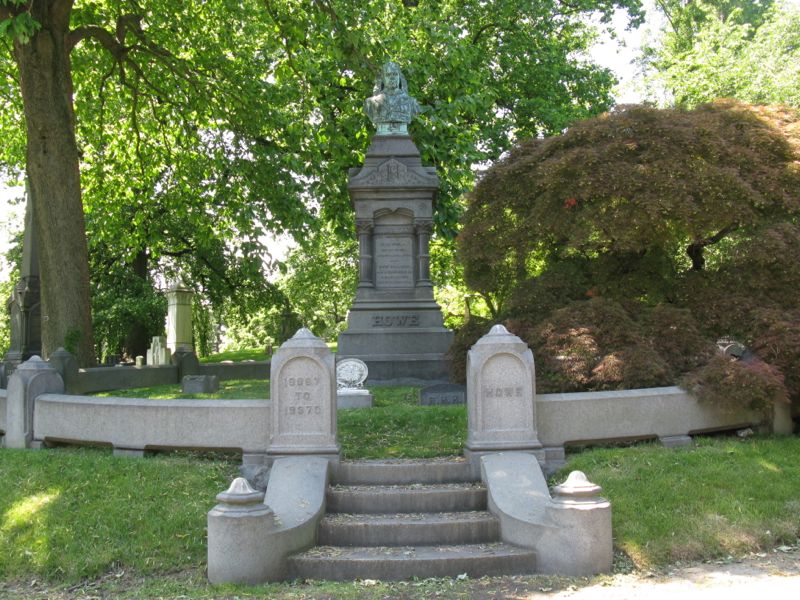
Howe

This is the grave of Elias Howe in the Green-Wood Cemetary in Brooklyn (hey–it was Memorial Day, after all), in the who we all owe a great debt, as he was the inventor of the modern sewing machine.  Apparently the biggest sticking point was where the eye of the needle should go, and this account from a family story, tells how he came to invent this (from Wikipedia):

“He almost beggared himself before he discovered where the eye of the needle of the sewing machine should be located. It is probable that there are very few persons who know how it came about. His original idea was to follow the model of the ordinary needle, and have the eye at the heel. It never occurred to him that it should be placed near the point, and he might have failed altogether if he had not dreamed he was building a sewing machine for a savage king in a strange country. Just as in his actual working experience, he was perplexed about the needle’s eye. He thought the king gave him twenty-four hours in which to complete the machine and make it sew. If not finished in that time death was to be the punishment. Howe worked and worked, and puzzled, and finally gave it up. Then he thought he was taken out to be executed. He noticed that the warriors carried spears that were pierced near the head. Instantly came the solution of the difficulty, and while the inventor was begging for time, he awoke. It was 4 o’clock in the morning. He jumped out of bed, ran to his workshop, and by 9, a needle with an eye at the point had been rudely modeled.”

Wikipedia also notes that “Howe received a patent in 1851 for an “Automatic, Continuous Clothing Closure.” Perhaps because of the success of his sewing machine, he did not try to seriously market it, missing recognition he might otherwise have received.”  In other words, he invented the zipper, too.

Sorry for the long post, but sometimes it’s interesting to note where we get “refilled” when we’ve run out of ideas, or are tired, or have too many UFO’s lurking in the closet and have lost our creative mojo. (Plus, we had a great time in The Big Apple.)

*******************

Quotes are from Ken Robinson, who has given many TED talks on creativity and our educational system.

200 Quilts · Quilts · Schnibbles

Spoolin’ Around

SpoolinAroundTop

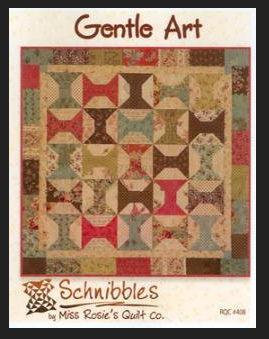
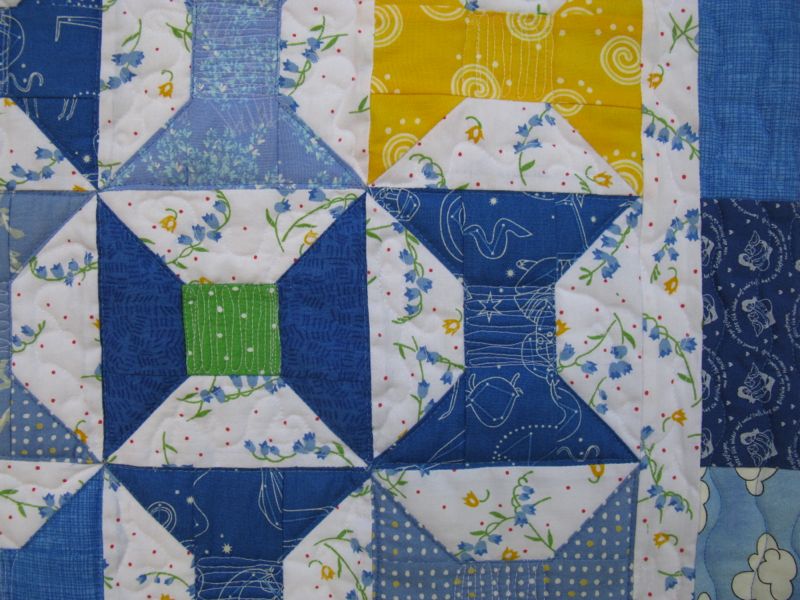
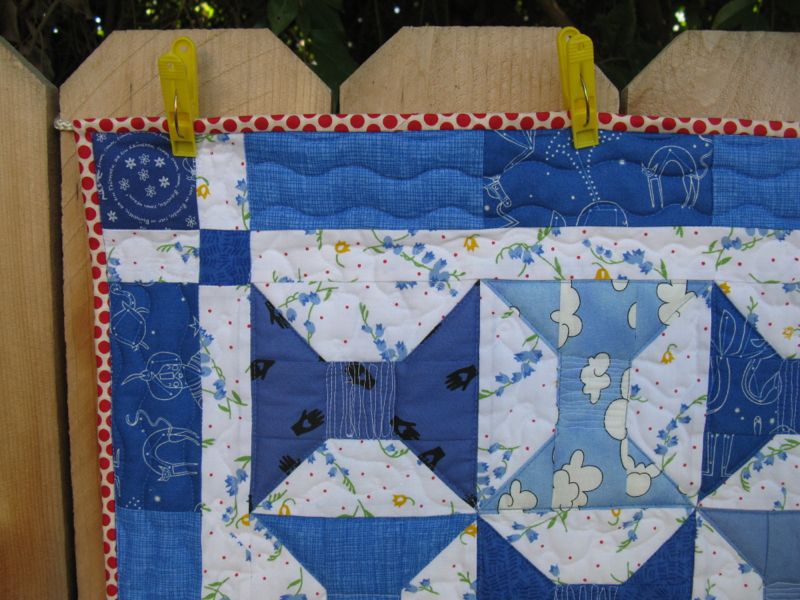
This is my latest Schnibbles quilt: Spoolin’ Around.  Sherri, Sinta and I assume, Carrie, pick the Schnibbles pattern we are going to use, but then we all go to town putting it together in our own inimatable way.

GentleArtSchnibbles

I changed up the borders a little, because I wanted mine to all line up a little more, creating a different corner look. Read *here* about my fabrics, including using some sheets from the Porthault design vault.

Spoolin Around1

Spoolin’ Around, au natural

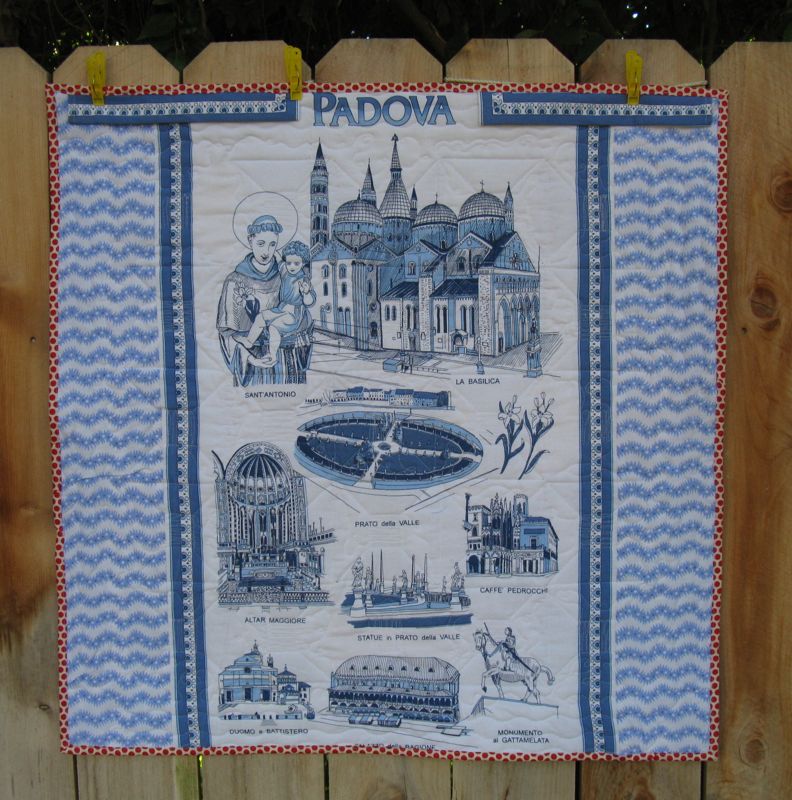
Spoolin Aroundback

I feel like I’m also creating a Tea Towel series, but really I’m not trying to.  It’s just that this towel from Padua, Italy was blue and white and the top just called out for this to be used here.  St. Anthony is a Big Deal in that town, as you can tell by his likeness, his basilica, his . . . We went to Padua to see the  Scrovegni Chapel.  Getting this tea towel was a side benefit.

Spoolin Aroundbackdetail

Spoolin Arounddetail

I quilted this during the last week of class, while listening to Barbara Demick’s novel, Nothing to Envy: Ordinary Lives in North Korea, and I quilted and quilted.  Not perfectly, but that’s also the beauty of making these small quilts–nothing’s so terribly precious about them.  They’re fun, not a chore.  And I aim to keep it that way, just enjoying the process.

Spoolin Arounddetail2

I struggled with the border choices: green soft plaid, or yellow spheres, or red/white dots?  Not sure I’m entirely happy about this, but I did want something that wasn’t so serious.

Spoolin Aroundsleeve

I split the sleeve on the back, because I didn’t want to cover up the words.

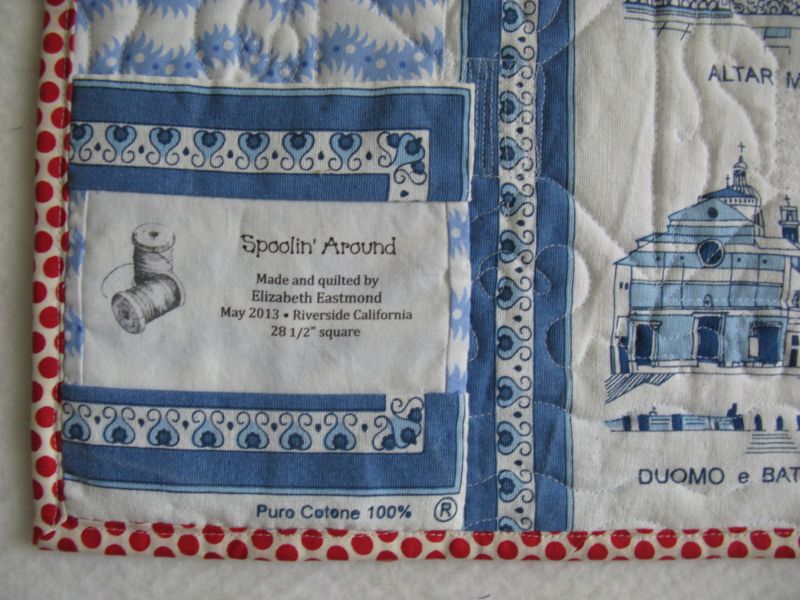
Spoolin Around Quilt Label

And I kept their label: Puro Cotone, because I liked it.  I used bits and pieces of the border that was cut off from the top of the towel around my label.  I have to say it’s a bit wild looking, but again–I was having fun, and that’s not a bad thing when you are  quilter.  And that’s my June 1st deadline Schnibble, finished a bit early!

This is #114 on my 200 Quilts list.

WIP

Really? It’s Wednesday?

I’m not yet “jammified” (in my p.j.’s) but I could be, for how energetic I (don’t) feel.  Bob Hope noted that “You never get tired unless you stop and take time for it.”  So I’ve taken some time for it this week, after my Ta DA! post of earlier.  I also heard Joyce Carol Oates once talk about how, after a novel was newly finished, she took her time to coming back from working–she read poetry until she felt sufficiently ready to start work again.

I was asked to teach a class on the Lollypop Tree quilt, as I’ve noted before, I made up my own pattern, and thought I should get going on the class sample.  It was intended to be a Kaffe-fabricked Christmasy design on Kona red.  What it ended up becoming was a whimsical Kaffe-fabricked design on aqua polkadots.  The red one is still in my future. . . perhaps tomorrow, after I grade some of the late essays and finish up prep for class.

Leaf Progression LollypopI became stuck on this one leaf.  You can see the progression, of trying desperately to become unstuck, and I just noticed I put two of the same in the photo.  Ignore that.

Lollypop Tree Wallhanging ESE

I finally got to this point, and although I’m still not happy with parts of it, most of it is coming together.

Eric Maisel said that “If, because of anxiety and self-doubt, you procrastinate and only think about working, you’ll feel more exhausted than if you’d created for hours.” I certainly had a lot of that going on today, but I think it was also because I was listening to the end of a Graham Greene novel, which was driving me a bit batty.  Then I switched to This American Life and listened to the two-part episode about Harper High School, which starts *here* and ends *here,* which I’m still thinking about, and which should be required listening for every American, no matter where you stand on the gun-control debate.  It was sad, frustrating, illuminating and it got me working through my puny problems of how different pinks should go where.  Perspective is always a valuable thing.

Then I went downstairs to the kitchen and made two dinners: tonight’s and tomorrow’s, as I don’t get home from class until later and my husband and I just aren’t up for cooking, or for going out.

Leon Golden Egg

After dishes, I finished off a good book–the latest Guido Brunetti mystery–and then traced off and cut out another Lollypop Tree, ESE-style, to begin again tomorrow with a red background, for my  shop sample for the class.

I was talking to a biologist friend once, describing how sometimes I felt as there was nothing creative coming forward (this was when I was an undergrad in Creative Writing) and yet the deadlines didn’t seem to go away.  “Ah,” she said.  “You’re in lag phase.”  I didn’t know exactly what it meant, but the gist of it was that while I felt like I was doing nothing, my ideas were percolating, growing, or “metabolically active” as a biologist would say, before I entered a time of real growth (log phase, if you must know).  I’ve experienced this more than once.  During that time, I feel unfocused, blasé, wiped out, or just plain stupid, if you must know the truth.  I ingest vast amounts of silly internet videos, or lollygag through quilt images online, or read blogs without commenting.  Then slowly, something shifts, I become truly bored with being bored and I get back to work.

“If you work it will lead to something. It’s the people who do all of the work all the time who eventually catch on to things.” –Sister Corita Kent

WIP new button


Linking up to WIP Wednesday at Freshly Pieced.