300 and Beyond · New York Beauties · Patterns by Elizabeth of OPQuilt

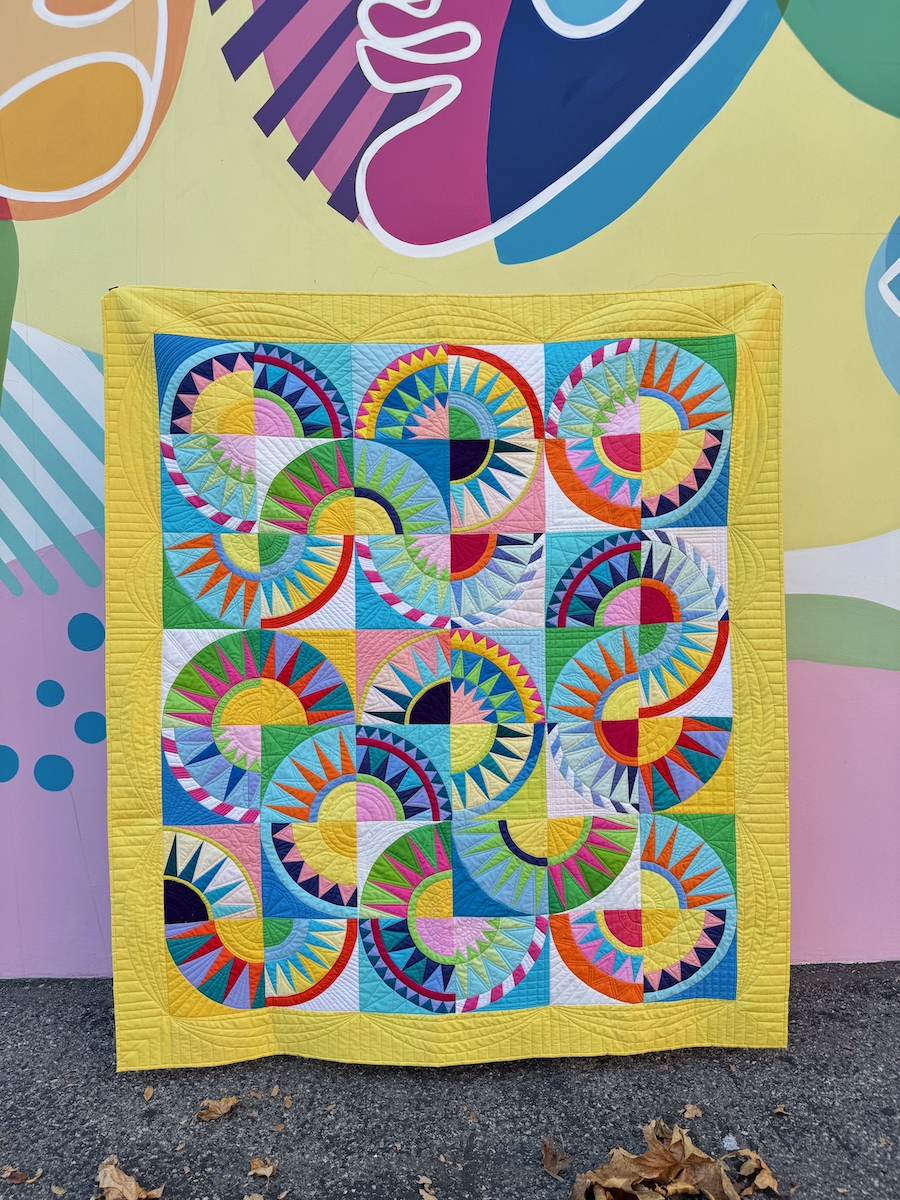
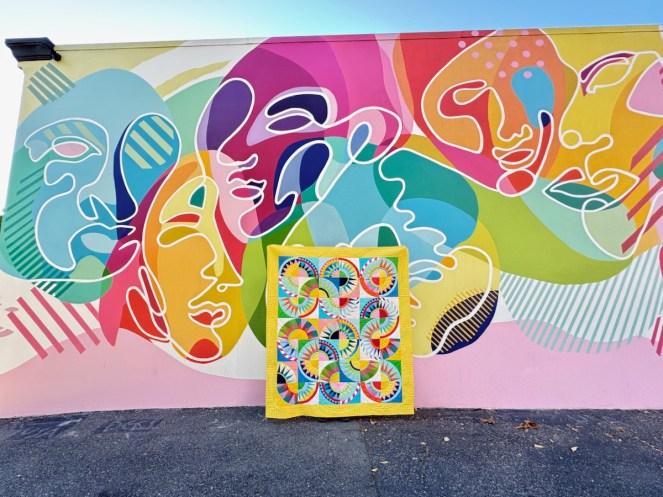
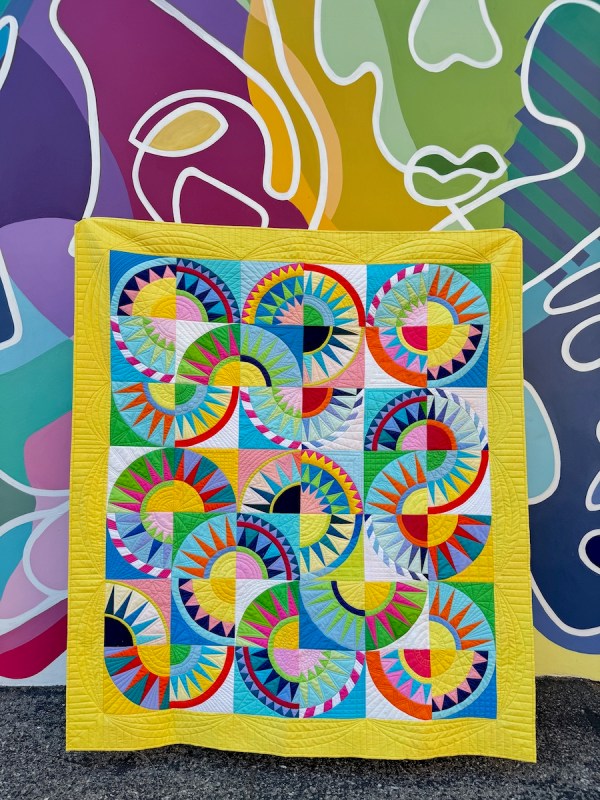
New York Beauties • Quilt Finish

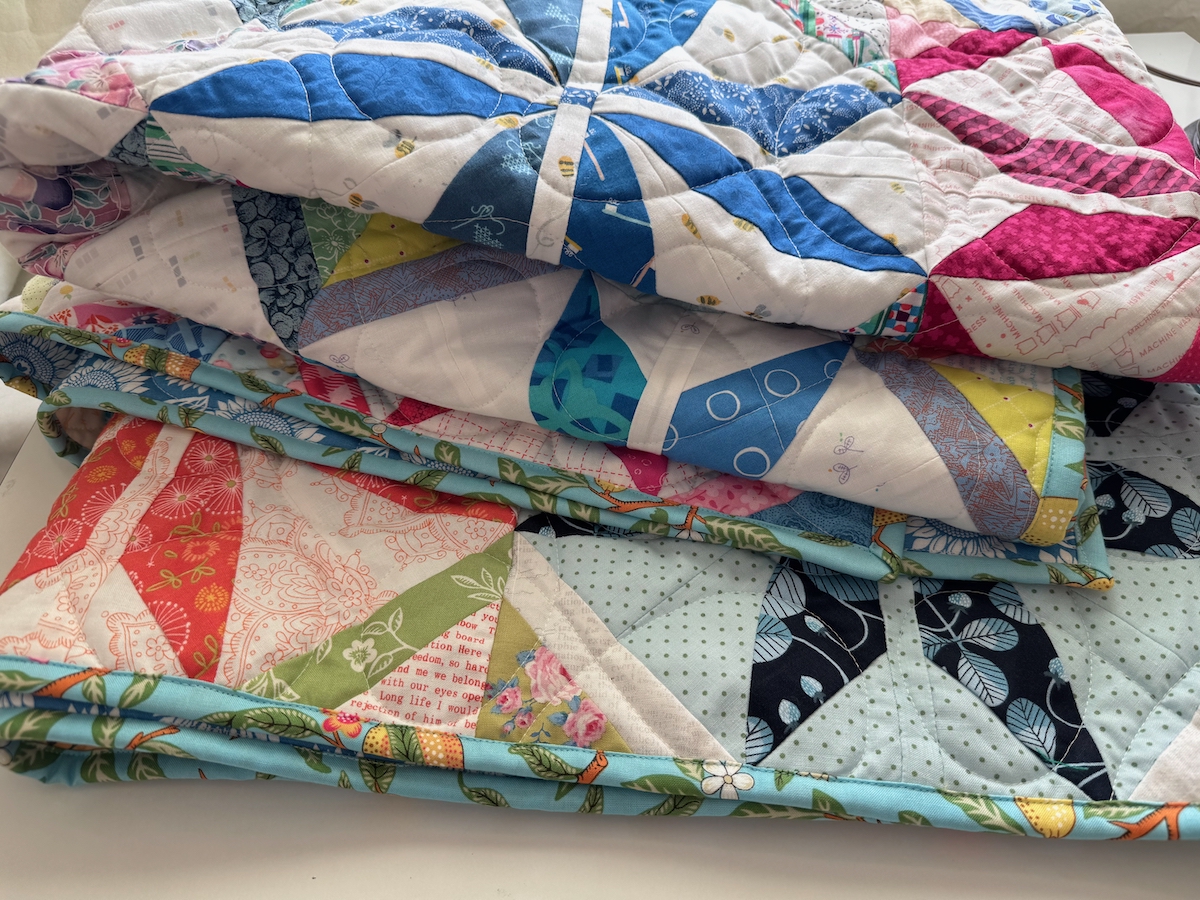
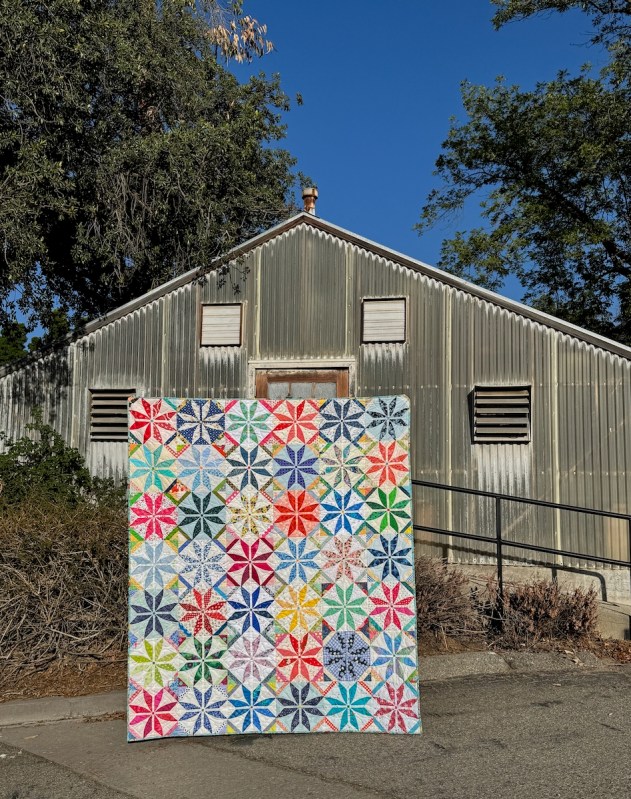
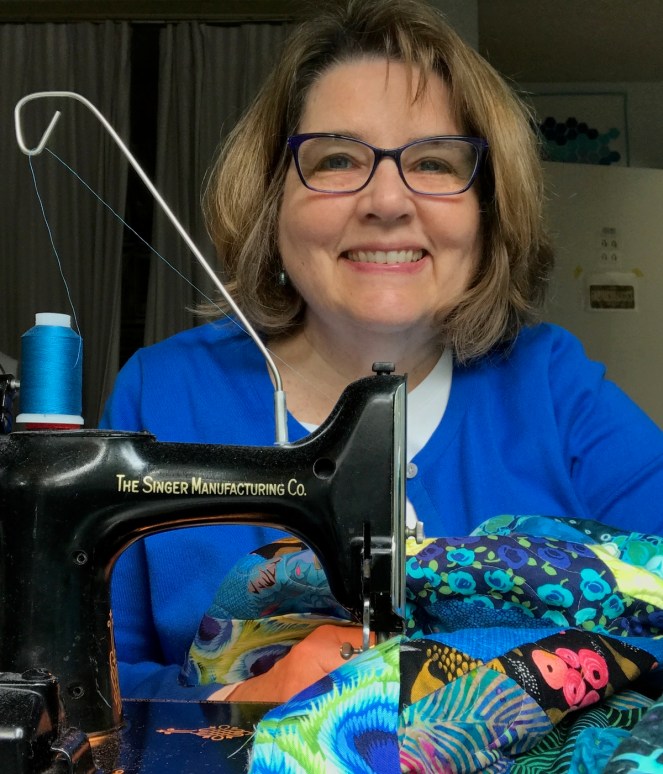
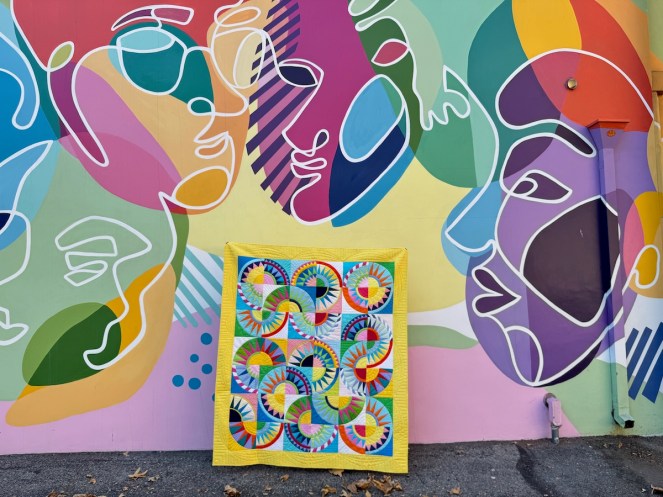
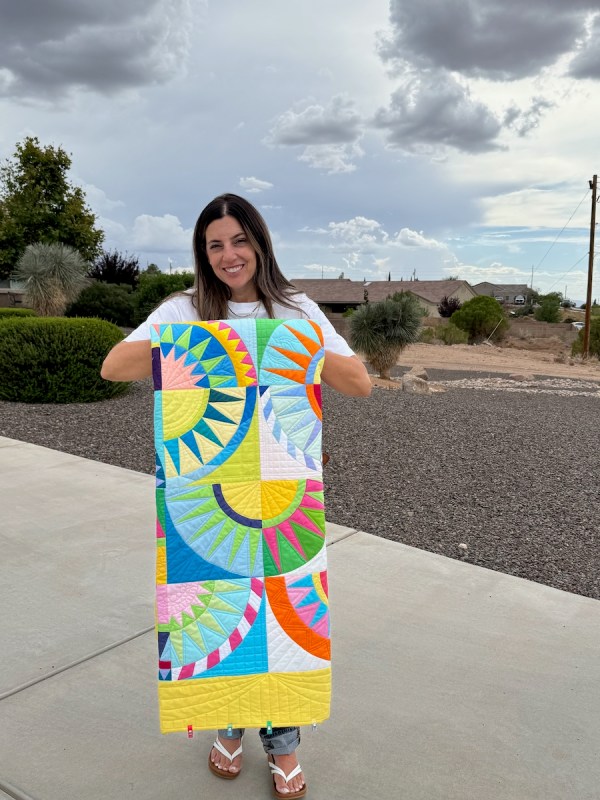
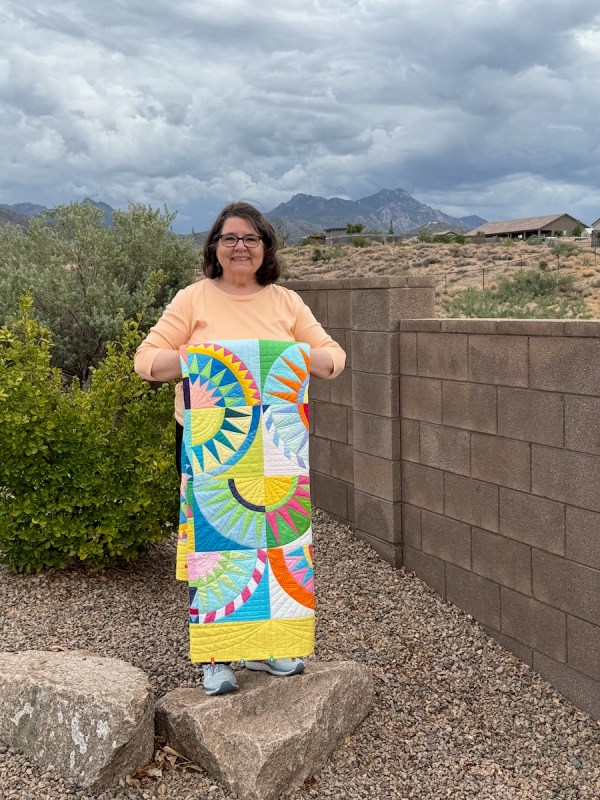
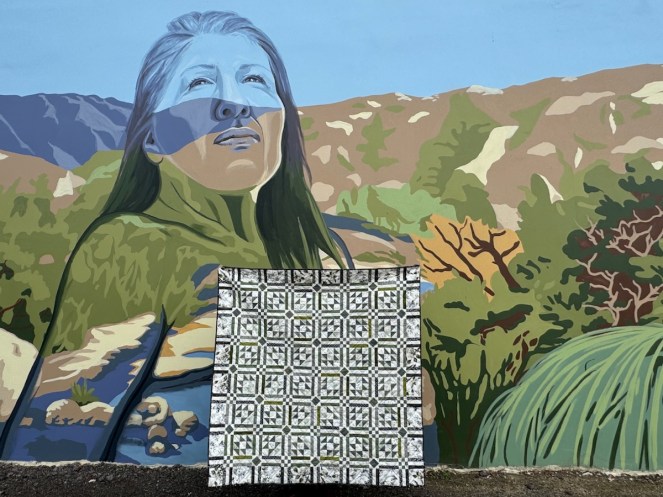
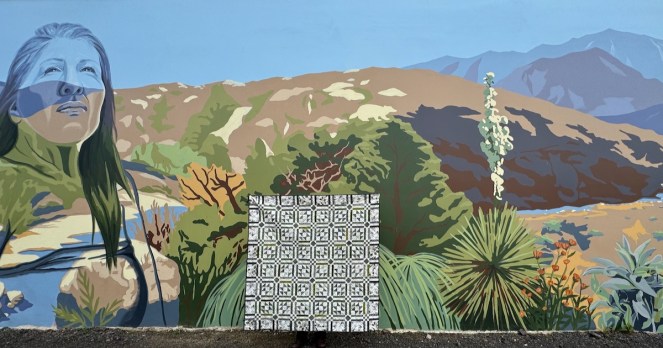
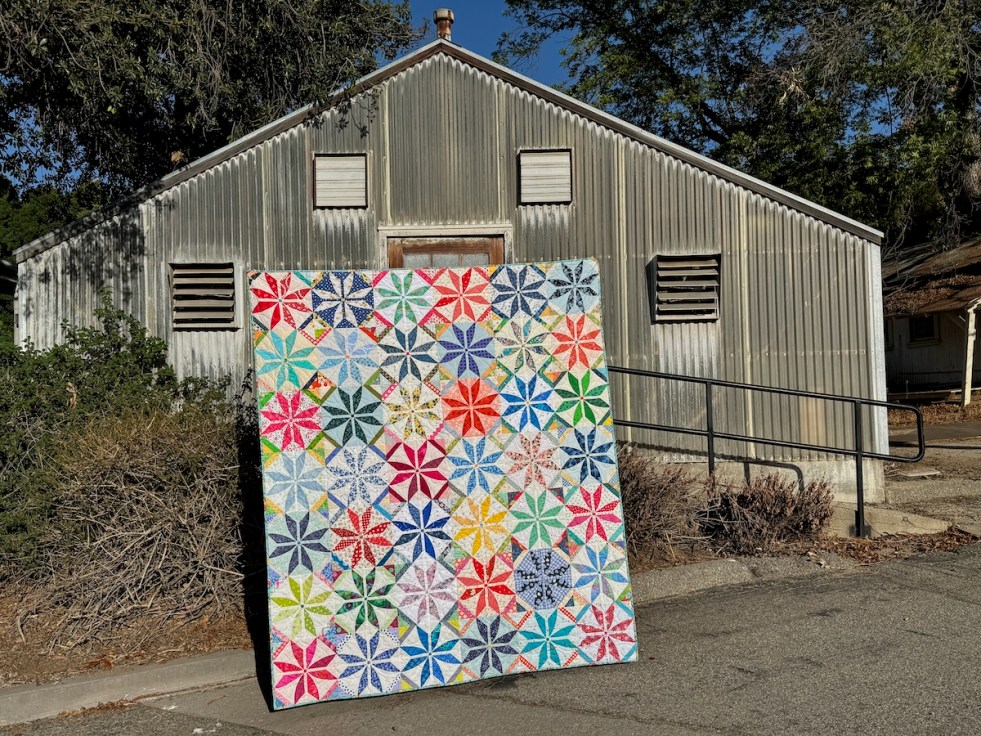
New York Beauties took a long time to get here: about three years. Started in 2022 from the spark of an idea, with a pillow of four New York Beauty blocks, it quickly morphed to quilt size, with a series of block tutorials. Then it moved from there to the new rage of freezer-paper piecing, tired as we were of ripping off papers from the back of our precision piecing.

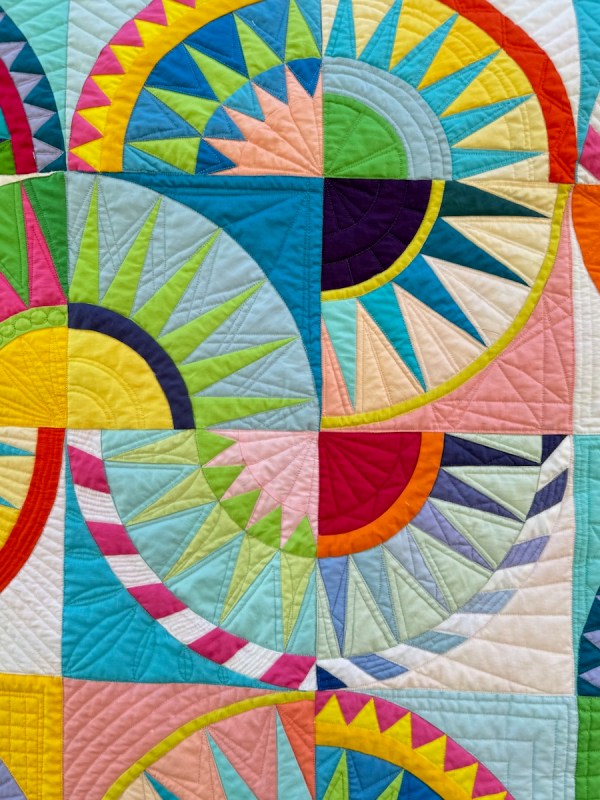
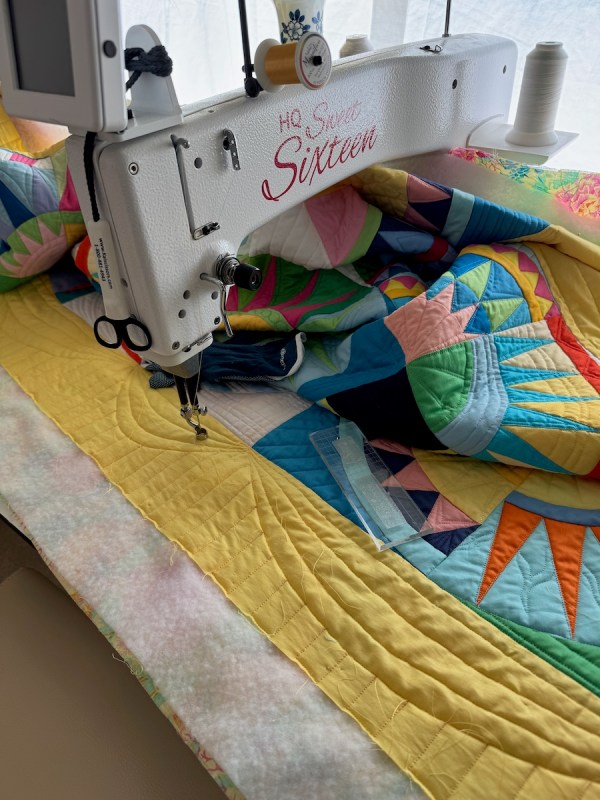
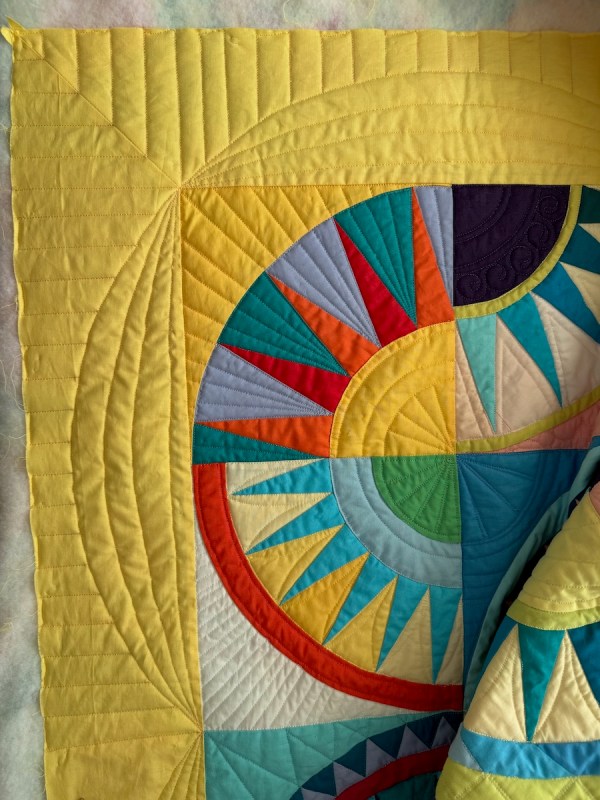
While that took some time, to get all those blocks designed and drafted, then figure out a tutorial, then make the required number — it seemed to take longer to quilt it myself. Every block called for a new idea, a new way to outline the rays, or fill in the backgrounds, or sculpt the arcs. Many times I seriously doubted I was up to the task.

I unpicked some areas and re-did them. I’m still not sure about some of them, but it’s time to let this rest.

Quilt #300
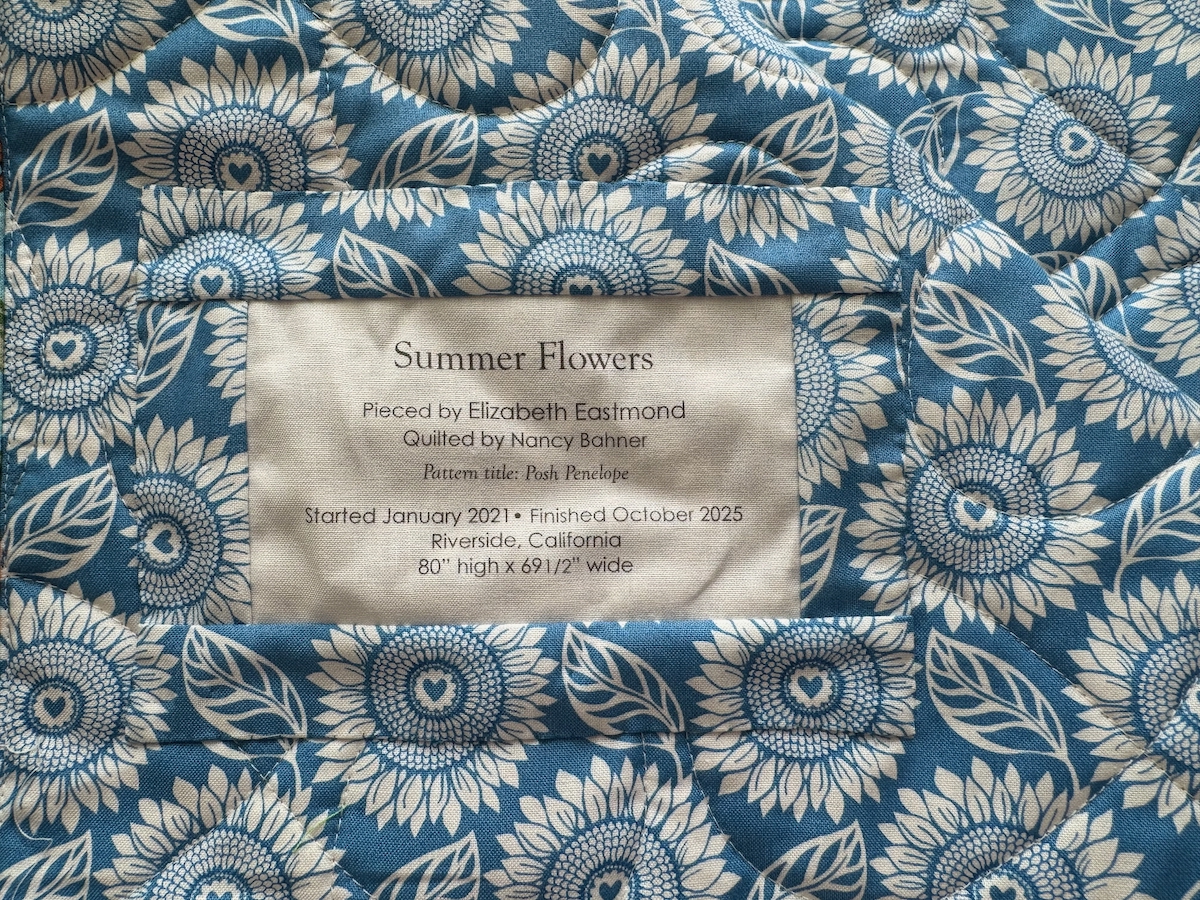
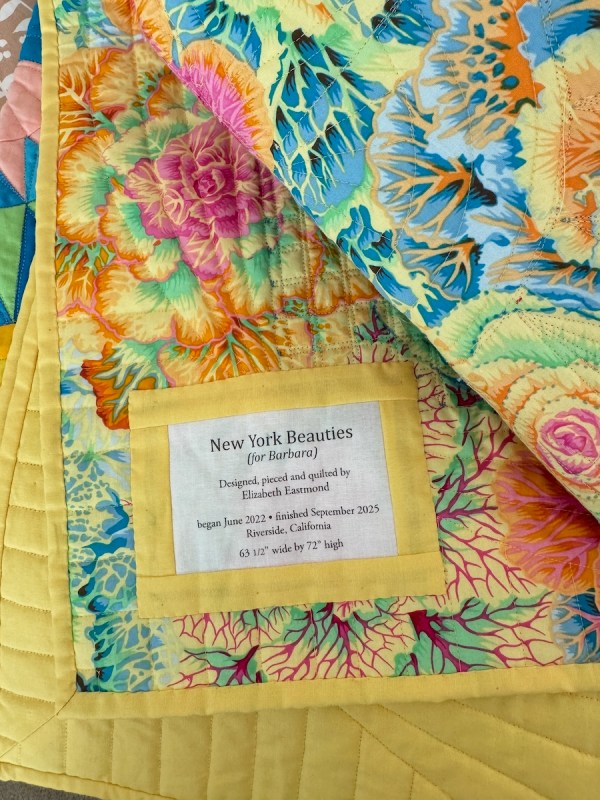
Started June 2022 • Finished September 2025, with the label being sewn on this afternoon.

I’ve learned a lot about what colors are my favorites (butter yellow seems to be right up there, along with a bluey aqua).

I found out my machine’s limitations. Neither it — nor I — are high-precision longarm machines, although we do our best.

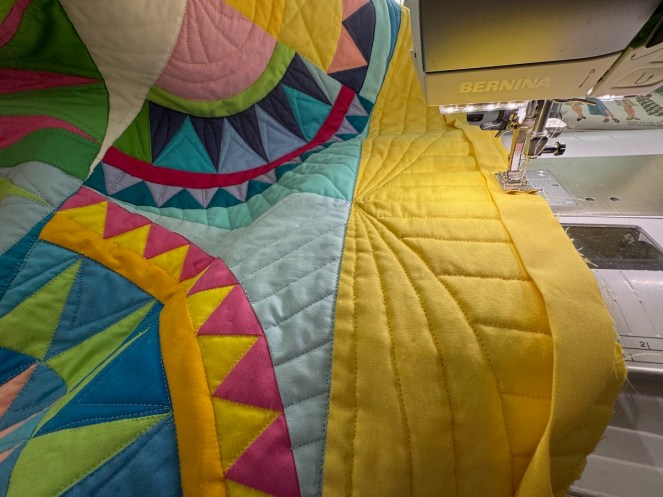
I remembered that sometimes simple borders are best, and that a ruler and a disappearing marker can get those designs sewn into cloth.

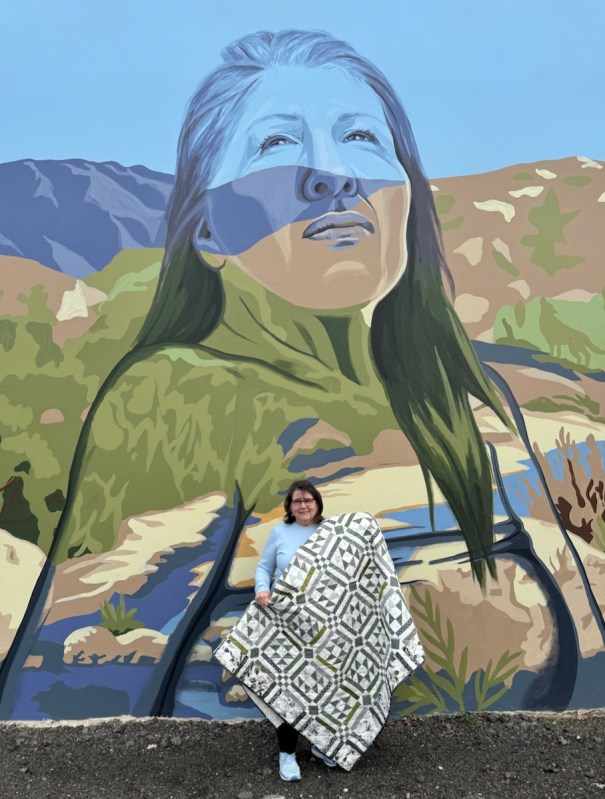
I thought about my very own New York beauty, born in the Empire State. She has fallen in the love with the Big Apple (New York City’s nickname) and tries to go there often. This quilt is for her….

…from me, her mother.

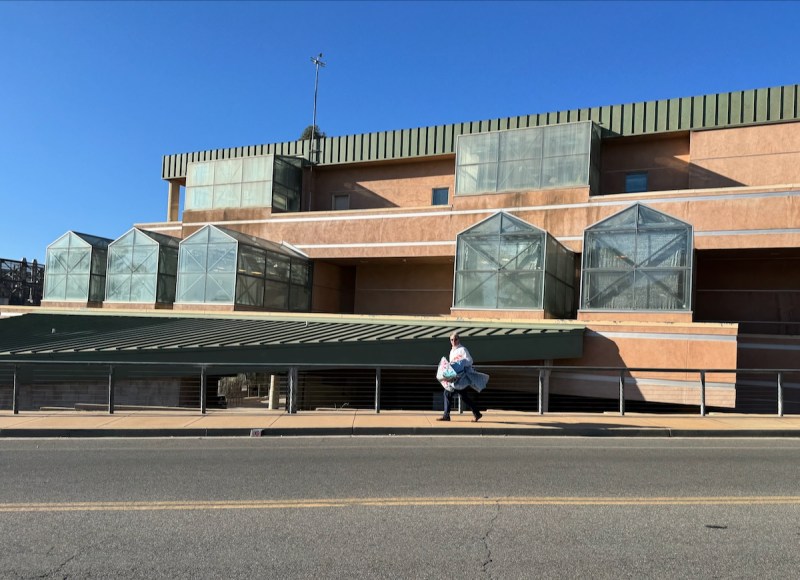
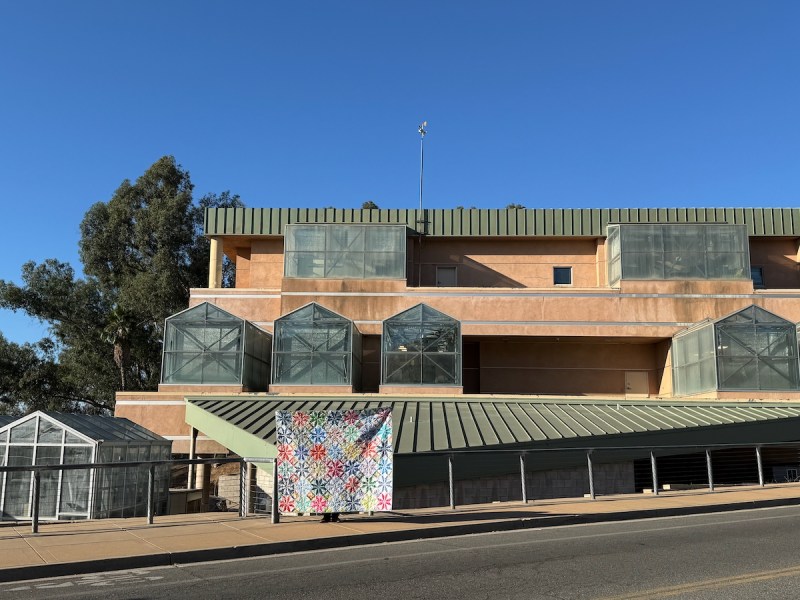
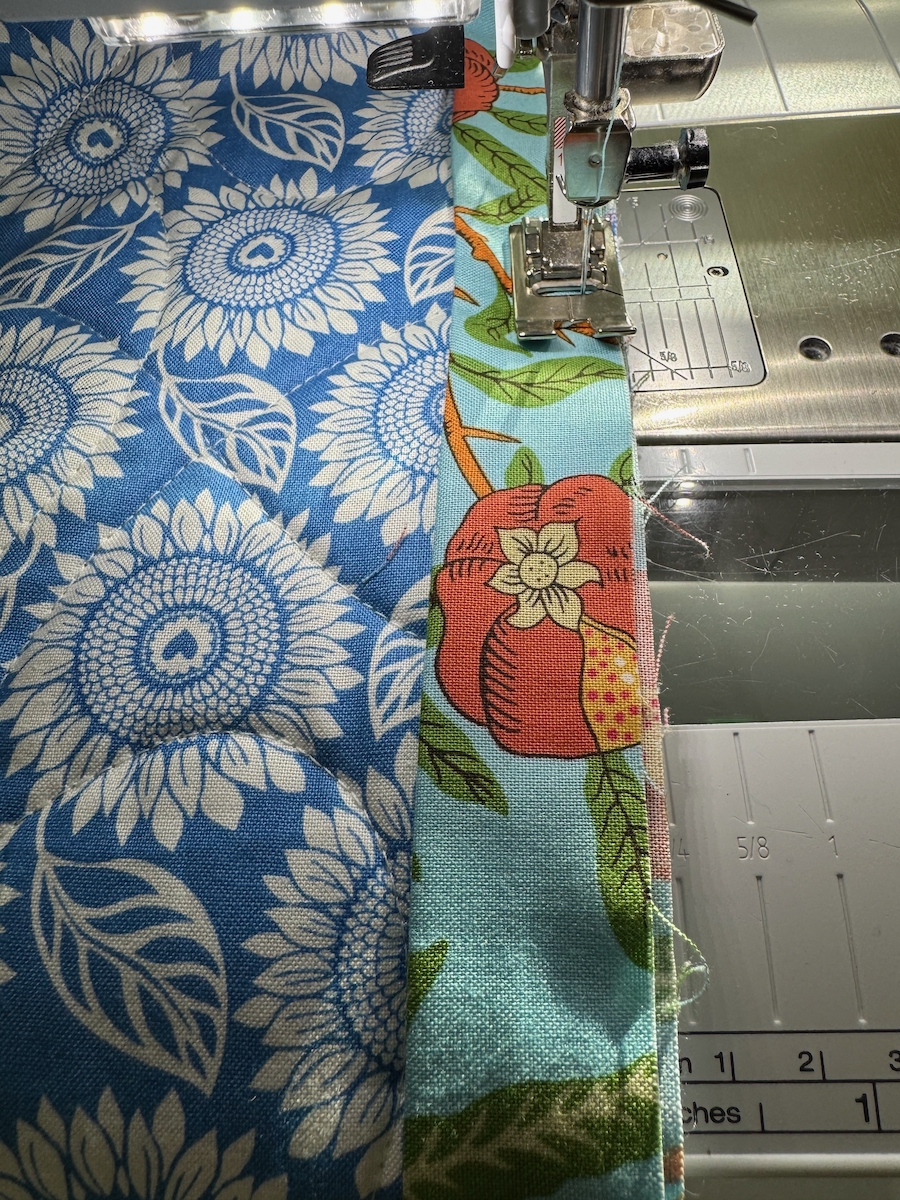
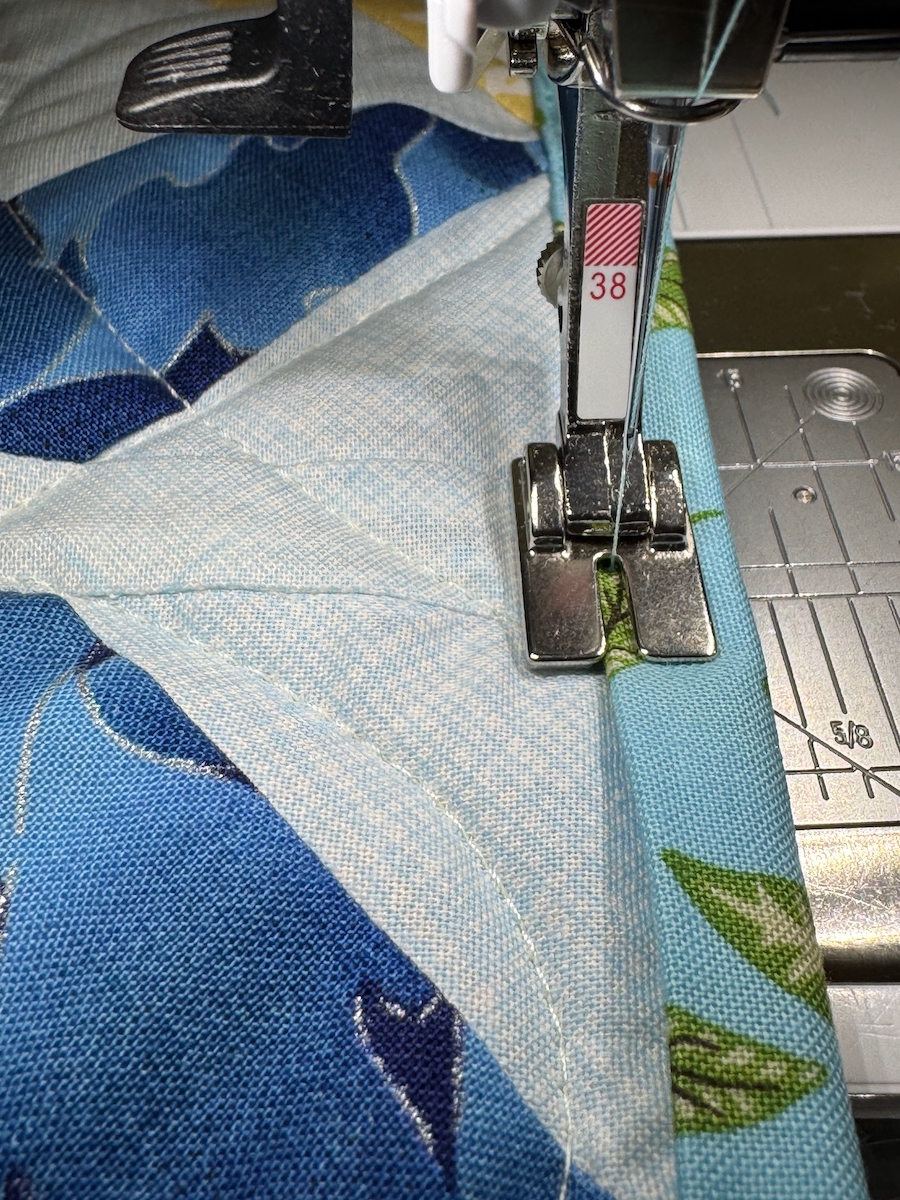
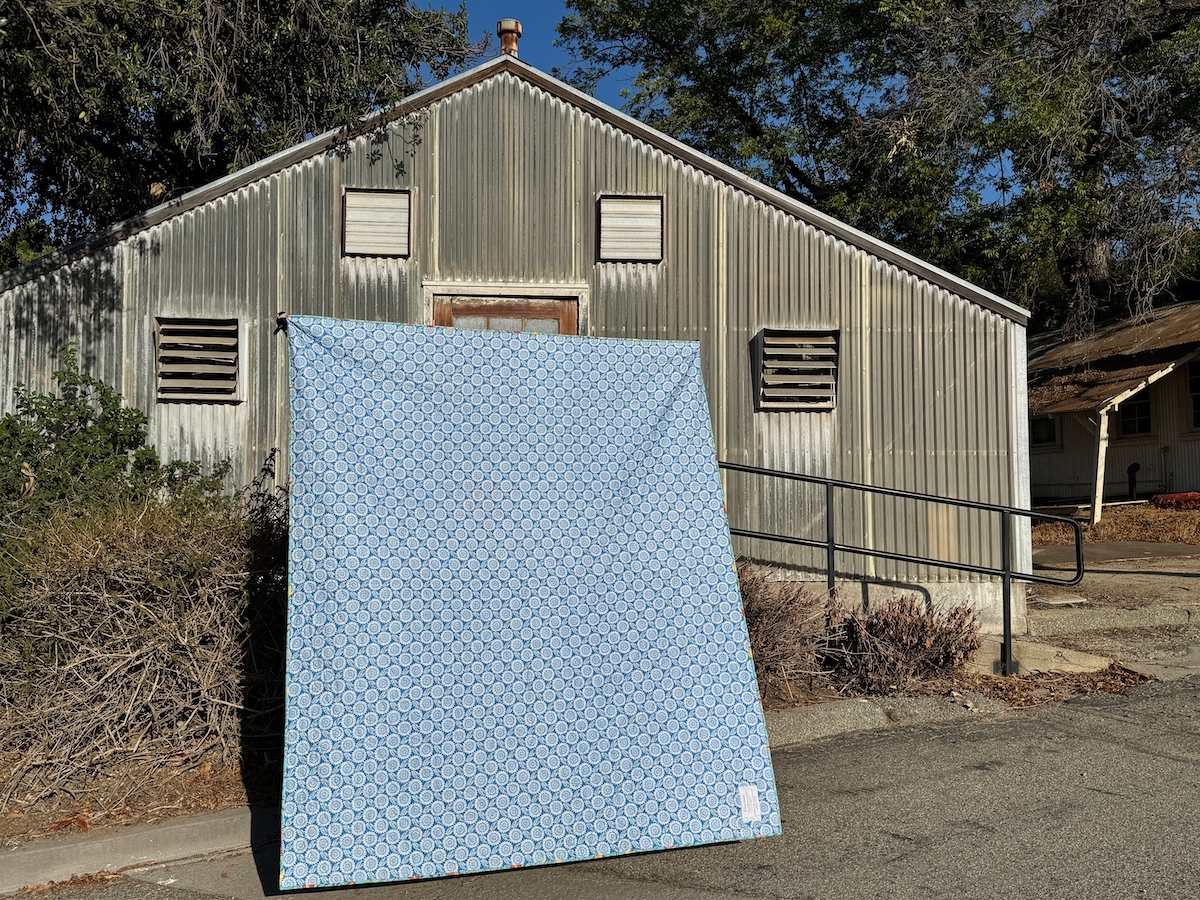
I was stitching the binding down while we were at her house this past week, so yes, you do see little binding clips. Kinda’ adds to the color, don’t you think? But I didn’t want to leave without a picture of her with this quilt, since the full title is:

Usually I do a round-up of blog posts at the end of a Quilt Finish, but this time I’ll just send you up to the New York Beauties page with everything listed, including a free block or two. The rest of them are in the pattern, found in my pattern shop on PayHip.

I will say that the border was cut 5″ wide, then mitered on. I will probably update the pattern at some point in the future, complete with new photos, etc. If you have purchased it, you can re-download it. I’ll announce it on here.

Lastly, I am now working on a visual index for my quilt blog. It’s called Blog Index, and it’s up at the top.

Take a look!

300 and Beyond · Quilt Finish · Quilts · Something to Think About

Duck Creek • Quilt Finish

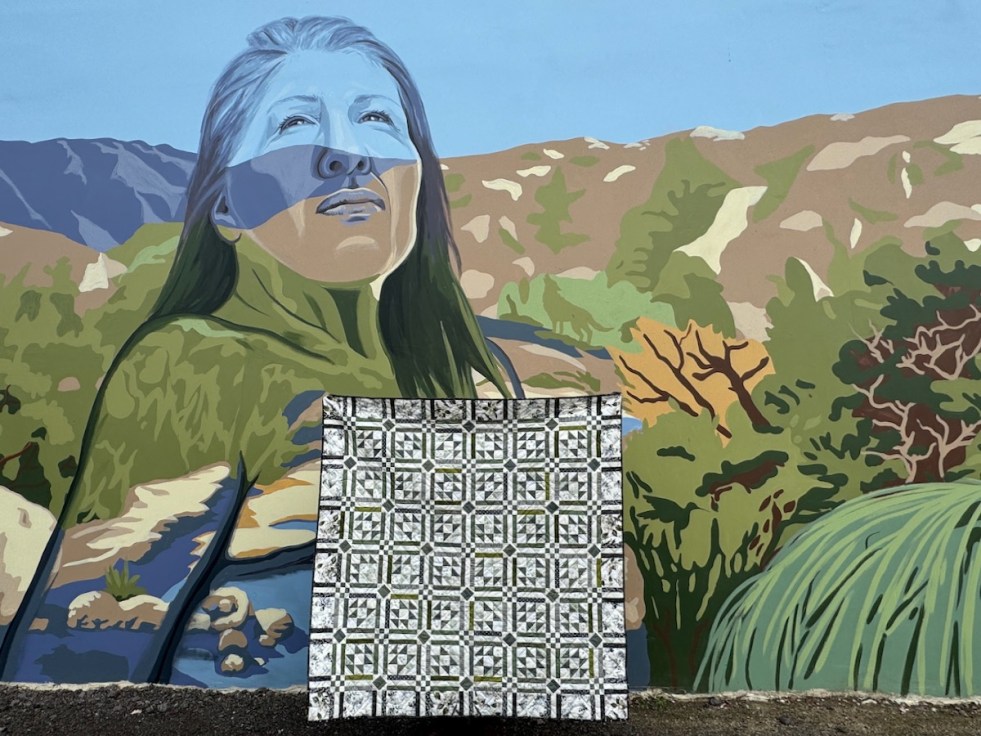
Duck Creek • quilt #302

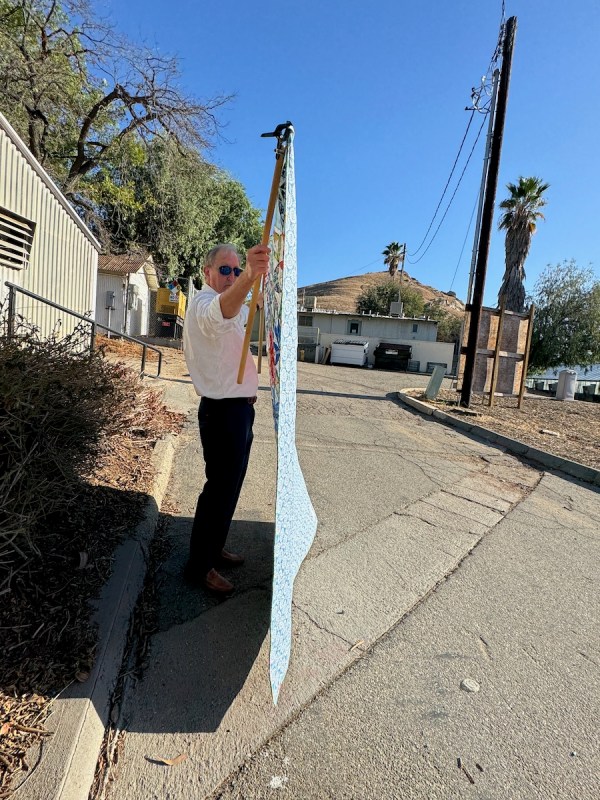
I know you are really here to see the info on this beautiful mural. It’s by Rosy Cortez, and was done under her guidance by a team of helpers. (Links point to her Instagram page as well as to the website for the mural.) I really love that it’s three different ages/stages of women, honoring our local native tribes. I’ve been two of these ages, and am now in the third (hint: I’m not pregnant).

Sometimes the title of this mural, We Are Still Here, reminds me of all my quilter friends. We cut and piece and hang out in our sewing rooms, studios, basements, garages, spare bedrooms. Every once in a while we pop up with another quilt top finished, the binding on another, and still another in stages of quilting. Dedicated, we follow in the way of artists everywhere: we have the vision. We have to see it through.

Recently an article titled “The Art of the Steal,” discussed the number of original book plots possible. In 330 B.C. Aristotle thought there might be just two: “simple (change of fortune) and complex (in which the change of fortune is accompanied by setbacks and reversals)” (by Emily Eakin, link above should allow you to read the entire article). By 1892, Rudyard Kipling thought there were 69 plots. Between Kipling and our current day, the number fluctuated, and by 2004, Christopher Booker proclaimed there were just seven: “the quest, vanquishing the monster, rags to riches, voyage and return, comedy, tragedy and rebirth” (Eakin, ibid). Not to let the number lay there, another group used a computer in 2016, and proclaimed that the “world’s stories boiled down to ‘six basic shapes‘ (Eakin, ibid.)

So how many original quilts are there in our quilting world? Like the novelists, do we have just six basic shapes?

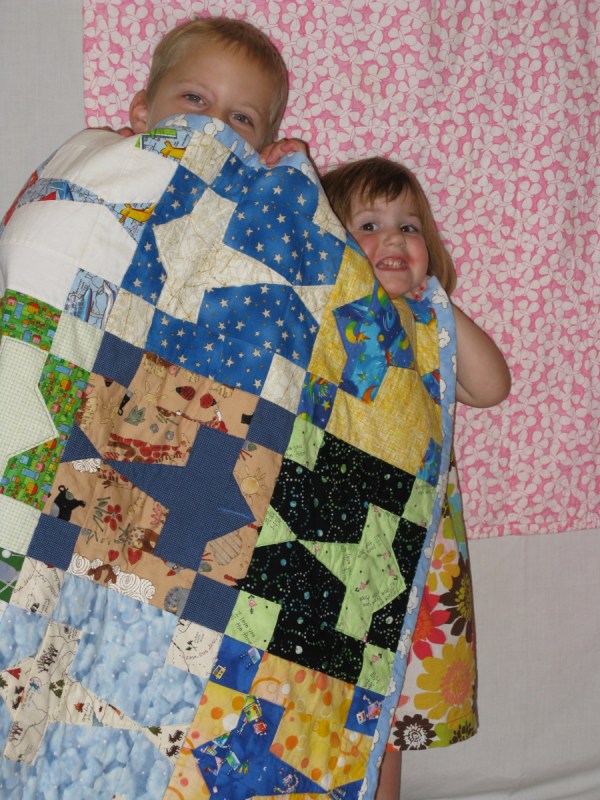
Two of these are triangles, the rectangle is just a stretched-out square, and the curved wedge is just a segment of a circle. We have rectangle triangles, skinnier triangles, ray-shaped triangles. You’ve used them, I’ve used them. Are we like novelists then? Taking a few basic shapes (boy meets girl, etc.) to make our quilts? I have a child who really likes triangles. Another of mine just likes big quilts, bypassing design altogether. Another likes red quilts, and the last child just wants them all (bless her).

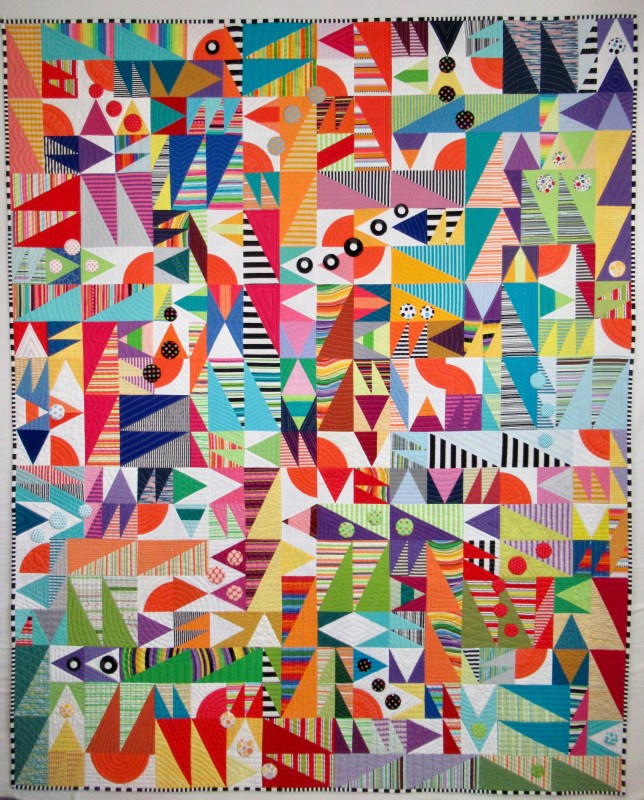
I can satisfy all their requests, for sure. And like my children, some of us are attracted to medallion quilts (my hand is the air), others like samplers, and still others would be happy making intricately pieced quilts for the rest of their lives in a blissful sort of who-cares-about-shapes-let’s-throw-them-all-in-at-once attitude, and come out with spectacular pieces of art. The reality is we take, we borrow, we steal, we adapt, we climb on top of, we turn it around, and then make it ours. Here’s one of my recent favorites, from Linda Hungerford, of Flourishing Palms.

Feelin’ Groovy, by Linda Hungerford (used with permission)

So the bottom line is for me, at least, I think there may be very few original quilt designs. No one gets to claim copyright on a triangle, or a circle; we all know that. But where our creativity comes in, and why we are still here, sewing machines humming, has to do with how we use those shapes, those fabrics, and how big we make it and how small we make it.

I have two copies of Barbara Brackman’s Encyclopedia of Pieced Quilt Shapes, and I also have her version of that for Appliqué. Sorry to say that I feel the same about appliqué: most of us are imitating the vines, swirls, flowers, stars and animals of the appliqué world that we’ve seen before. I have twice had famous quilters threaten me with a lawsuit because they believed I was making money off their designs (seriously?). One was well-known for pinching other people’s designs, too. I pulled that pattern, and have made it free for those who are interested, for who needs a lawsuit? The other quilt I never went far with, but I’ve seen variations of it. One last episode of being accused of plagiarism left me shaken, and I lost a good friend over it, even though the design was available freely online. I really hate run-ins with famous territorial quilters, as most of the time I’m just in my tiny world, doing my thing.

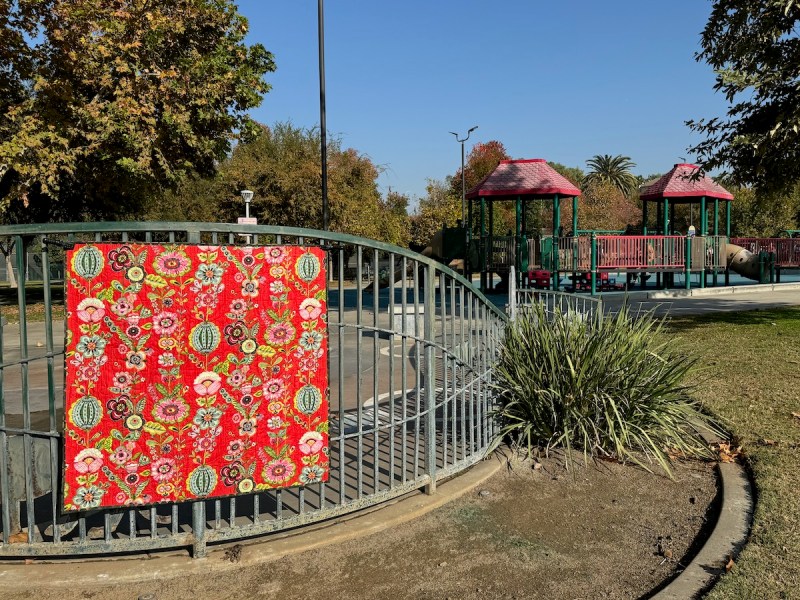
The Duck Creek quilt is made of Cat’s Cradle blocks, sashed with cornerstones and pieced rectangles, and it is the design of Lisa Alexander & Susan Ache, from their book Celebrate with Quilts. I saw this pattern at our Guild night, when Char brought her book to show a couple of us. I was hooked on this design, bought the book and went for it.

The subtitle of the Times’ article has the phrase “Copy that” as in, we get it. But sometimes we quilters seem to be the least able to “get it,” I think. I have seen some incredibly original and interesting quilts this last year, and yes, most all used the shapes above. But they are originals because of the way they used the shapes, colors, negative space and so on; maybe we don’t need to get so territorial about our shapes? We quilters can be “original” even when working with those basics, like Linda’s amazing Feelin’ Groovy.

Nobody can “copy that!”

Keep making, keep quilting, keep being here–and have fun at QuiltCon this week, everyone!

UPDATE: Some truly unique and original quilts were hanging this year at QuiltCon 2025. Here’s a post that will show them off. And here. And here. And here. And here. And here. And here. And here.

300 Quilts · Patterns by Elizabeth of OPQuilt · Quilts

Turning of the Year

Thus times do shift, each thing his turn does hold;
New succeed, as former things grow old.
Robert Herrick, from Ceremonies for Candlemas Eve

I don’t know how many more turns this life does hold, but I’m getting better at recognizing them. That’s what living for a while will do for you: give you practice at the painful, help you recognize delight, and deliver the ability to watch calmly as another year turns.

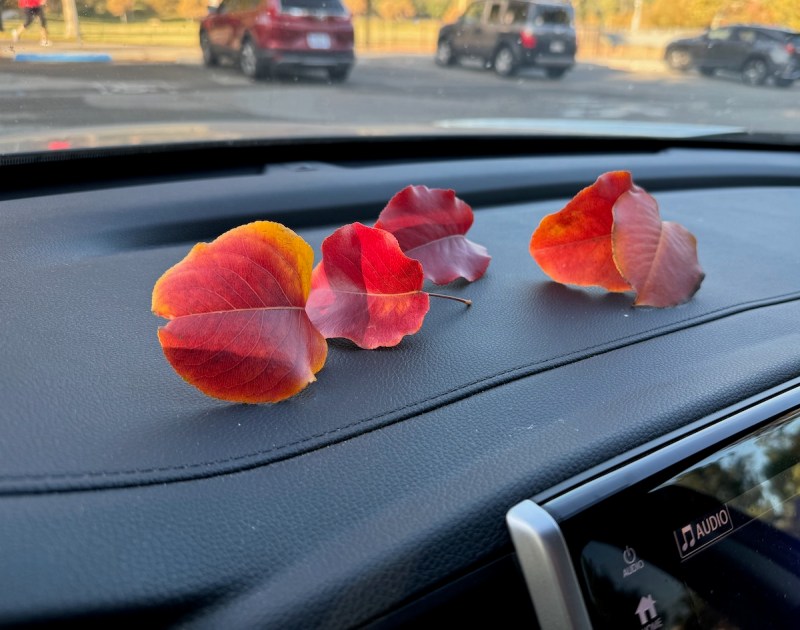
We get our fall this time of year, here in Southern California. We pretend to have colorful autumn arrive with the Northern and Eastern States, putting out our russet and pumpkin and burgundy decorations all through October and November, but really our trees don’t have their turn until December. I gather up a few to rest on my dashboard as I drive around (for we also do that in Southern California), and celebrate the colors.

I made the top to this quilt in December 2020, so it’s appropriate that I finish it when we have turned away from the pandemic, its memory triggered only when we find our cloth masks in the sock drawer, or the junk drawer, or realize that a box of N95s has taken up permanent residence in our hallway closet, a talisman to ward off the unthinkable.

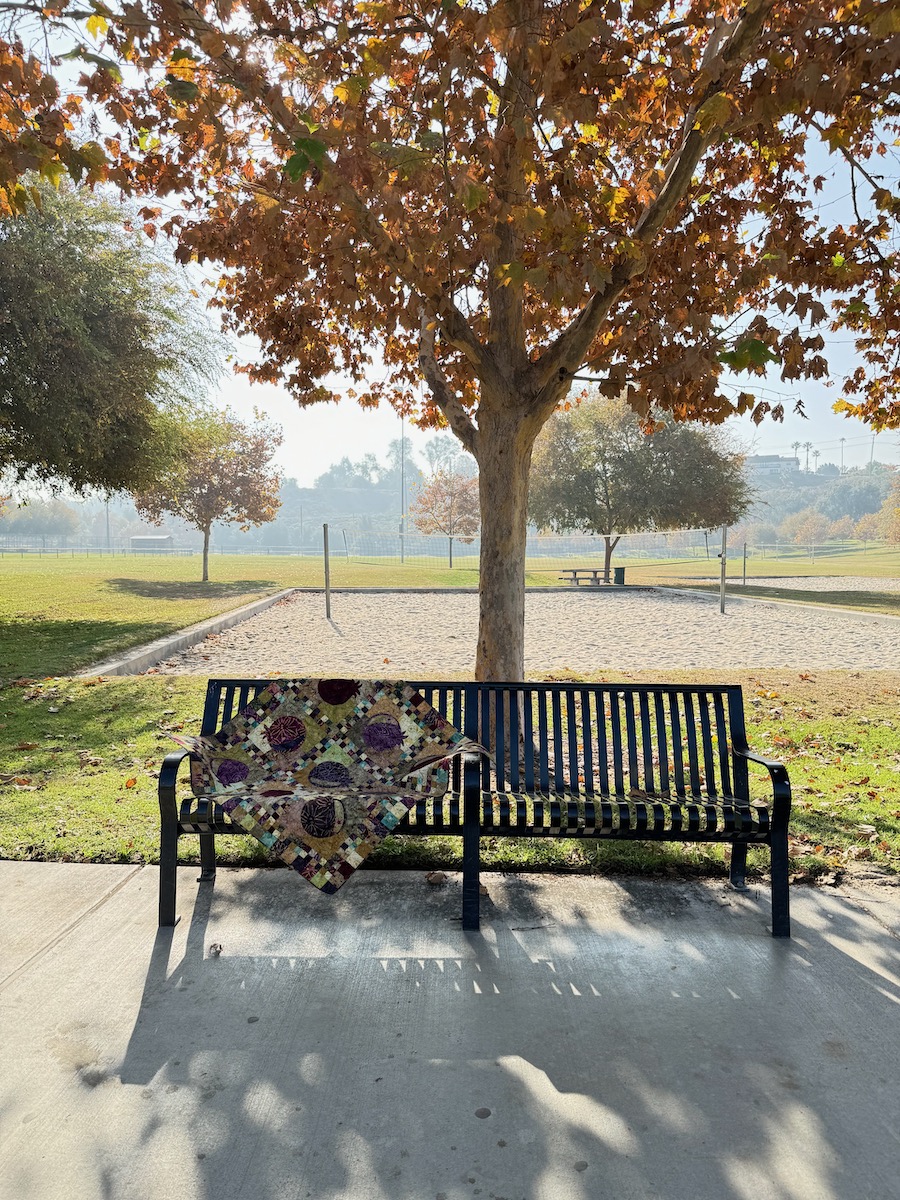
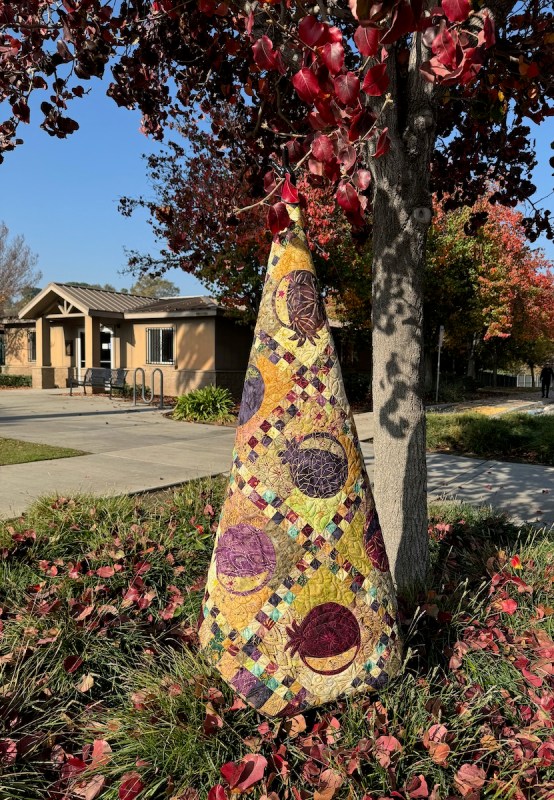
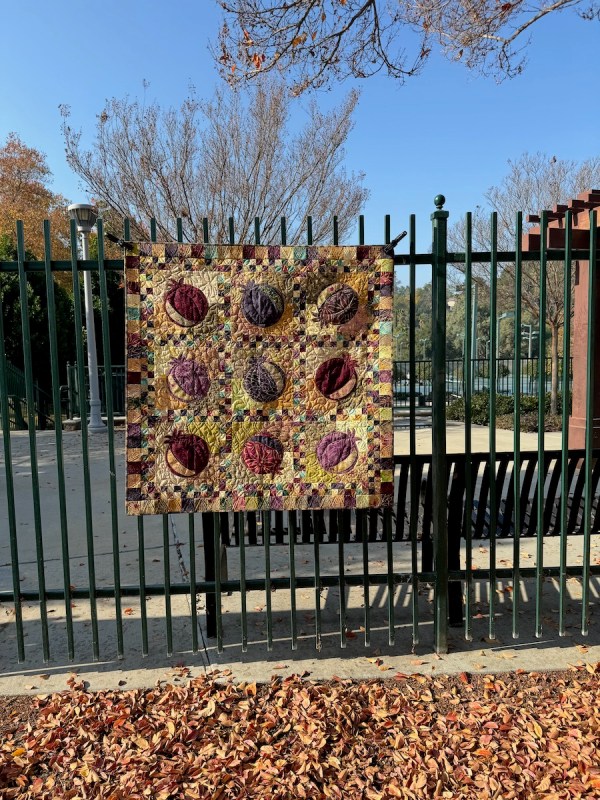
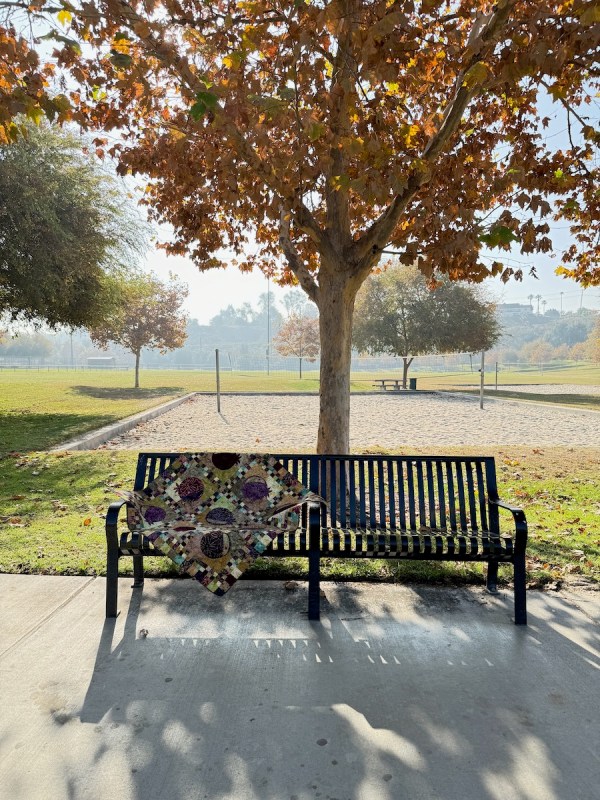
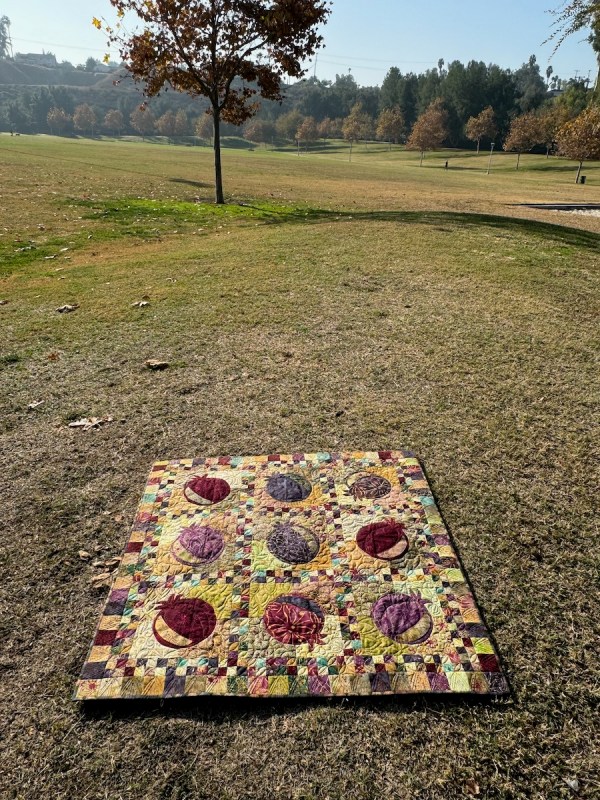
It’s nice to be able to crunch around my “walking” park, the leaves crisp underfoot, finding places that echo the muted tones of this quilt, Pomegranates.

Many of our leaves go from green to brown, a dimming of our usual colorful landscape. It’s as if they say, we gave it all for the year and now are tired, just needing rest. I can understand this. I have times of dimming, as well as times of bright.

Herrick reminded us that “each thing his turn does hold” and I don’t have to have only one season of quiet and rest. I have had many years to watch the days grow shorter, the nights grow longer and then again, and decades to watch the reversal of it all.

I’m lucky that way. Hopefully, so are you–

Quilt # 298 • 42″ square, with a simple single-binding
No label, as I’m sending this off and think they may like the backing of this quilt (a treasured piece from Alexander Henry) as well as the front.

Another post about this quilt

Yes, it is up in my pattern shop and for December, you can choose your own discount if you want to stash it away for New Year’s sewing (another turning for all of us).

Heart's Garden · Mystery Quilt · Quilt-A-Long

Heart’s Garden • Mystery QAL Part 2

Here we go again, this time for Part 2 of Heart’s Garden.

How did I arrive at this design? I thought I was going to go for a whole quilt of EPP circles, yes I did. But I became increasingly unhappy with the quilt that was up on my screen, so I scraped all the pixels off the computer and threw them into the trash. I wanted to expand, yet honor, the circle but leave enough room in the design to go where I wanted it to go.

First, some eye candy:

Lisa was the first to send me a photo of her completed circle. I love this group of fabrics, and Lisa’s placement of colors.

Susan’s was next, a photo grabbed from her IG feed. Can hardly wait to see how this one evolves, as I love those deep colors playing all together.

I’m keeping to one bundle of Sherri and Chelsi’s Sincerely Yours fabric line, so that helped determine what I chose next. I went with one fabric for all the arcs, and a variety of fabrics inside the arc. I’m keeping in mind how I want the quilt to flow outward from the colorful center circle, and this made the most sense to me.

back of the first part of the assembly

The arcs are sewn together, then the seam allowance on the outside large arc pressed under. I made a template of the large arc pattern out of freezer paper, and used that to help me get that pressed edge, but you can also eyeball it. Don’t burn your fingers with the iron!

I put the arcs to the feed dogs, so I can help manage everything from the center circle side, keeping a straight seam when the presser foot hits the center circle and wants to wobble.

The twidgiest part is where the arcs meet the corner. You can just stop sewing at the larger arc’s pressed outer edge, or you can sew the seam (photo #2 and #3) and then unpick those four stitches later. I did that method. Both methods work.

Then you’ll appliqué the whole unit to a larger square. Tips are in the pattern.

Cut out the back and save it for more uses.

(Hint: Yes, there will be more uses–coming in March!)

I had a pretty good idea of what colors I wanted for the inner appliqué hearts (pinned on here), but I dithered on the outer circles, ending up with red. My advice: wait until you choose the border before you decide on those circles.

I have had fun working with this group of cheery fabrics, but after seeing Susan’s and Lisa’s I’ll want to try some different fabrics, too.

I have a hashtag going on Instagram (yes, with the heart on the end):

If you are making this, please tag it when you post, and I’ll draw from there for some photos next month.

[UPDATE: The entire pattern is now live and living in my online pattern shop.] Hope you enjoy making this second part–post them so we all can enjoy them. P.S. If you can’t manage another project, feel free to download for another time.

Happy Quilting!