European Patchwork Meeting · Quilts · Textiles & Fabric

Gabrielle Paquin: Design and Graphics

All posts in order are on the European Patchwork (Carrefour) page.

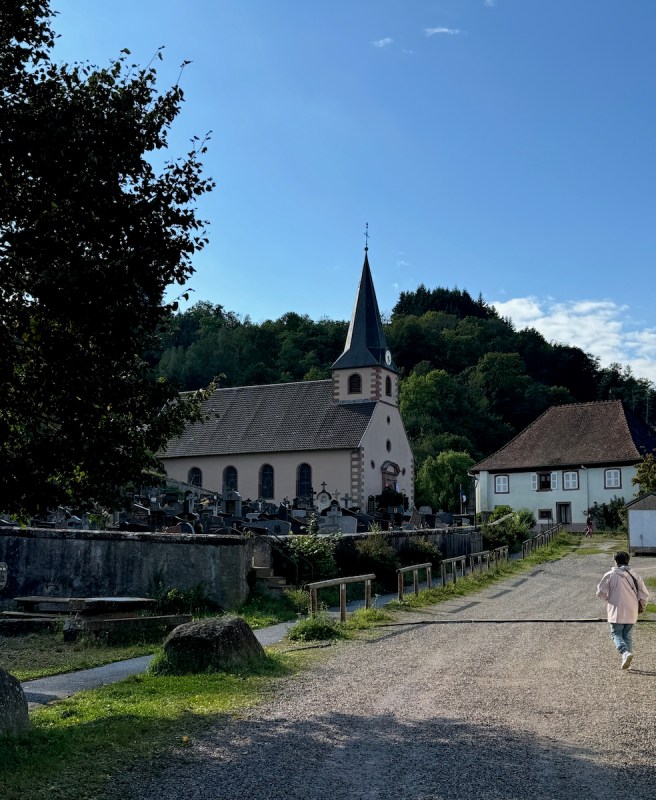
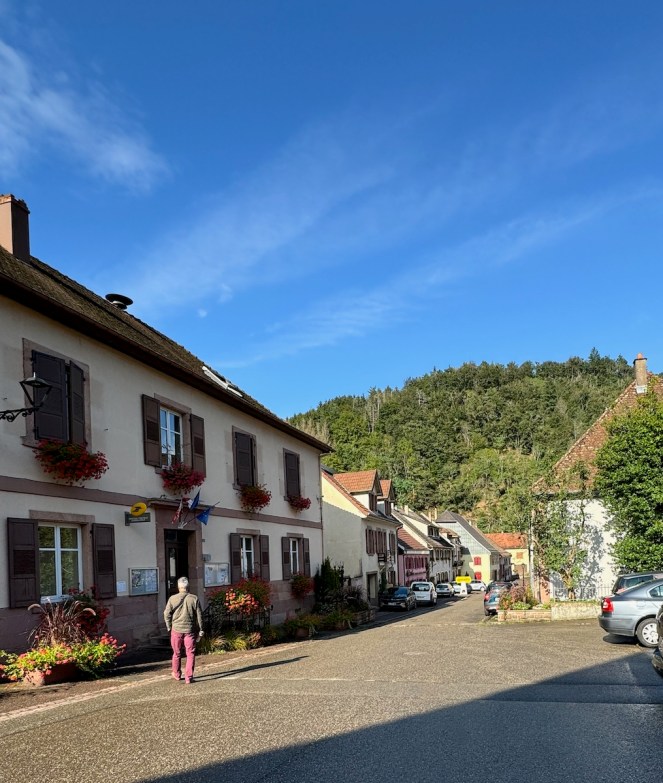
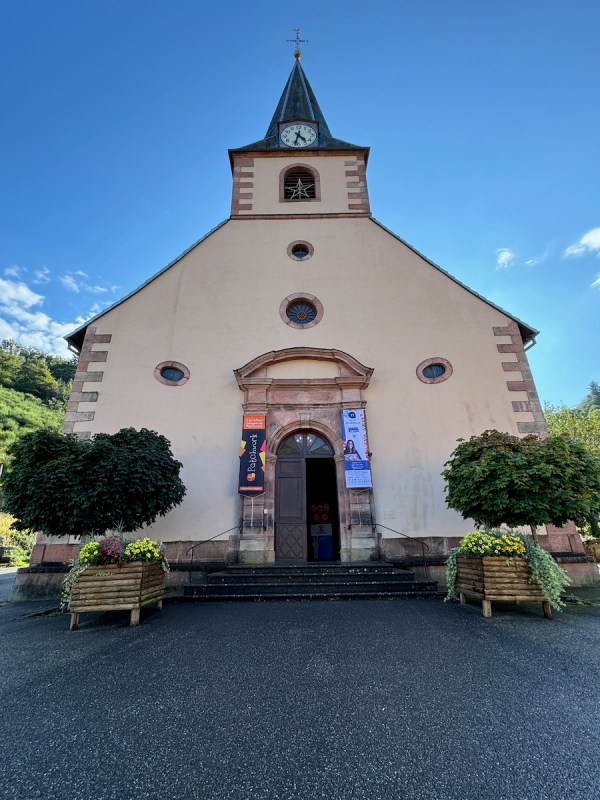
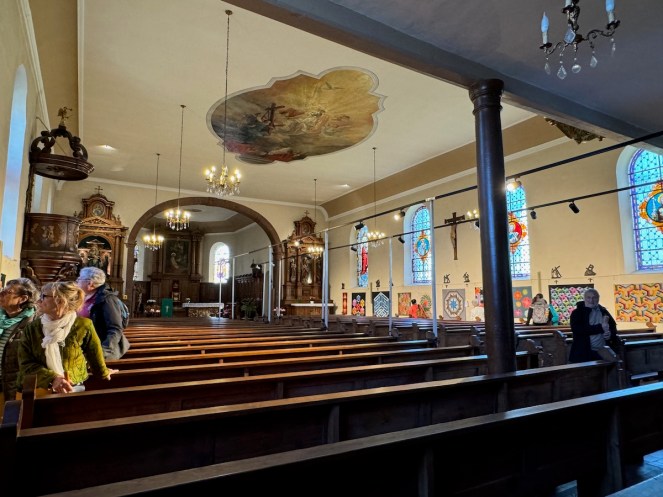
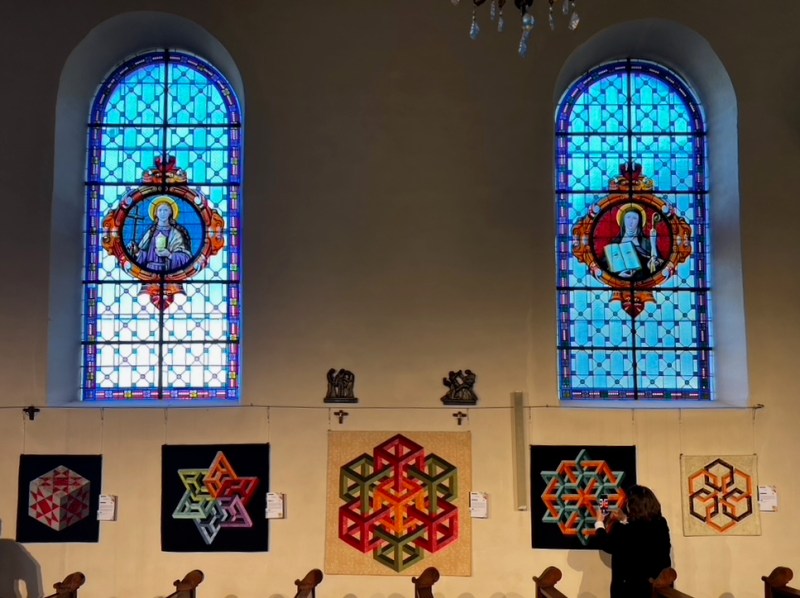
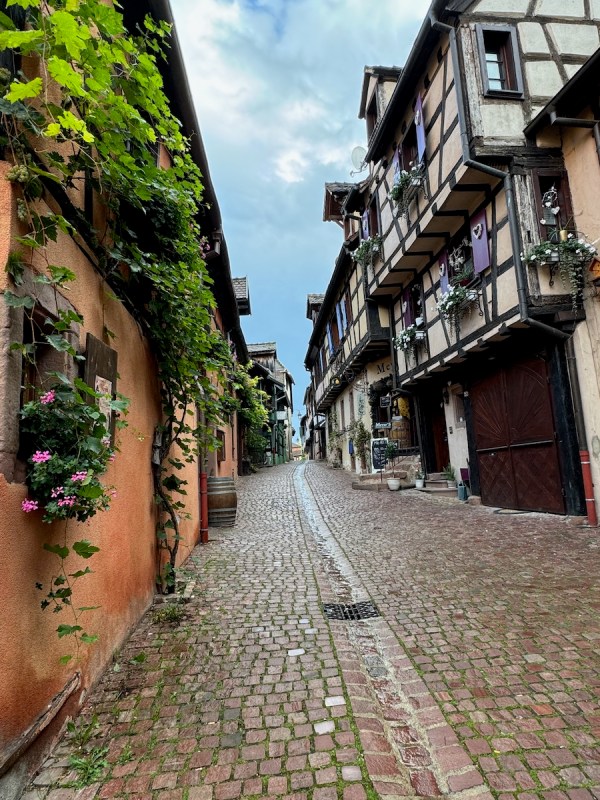
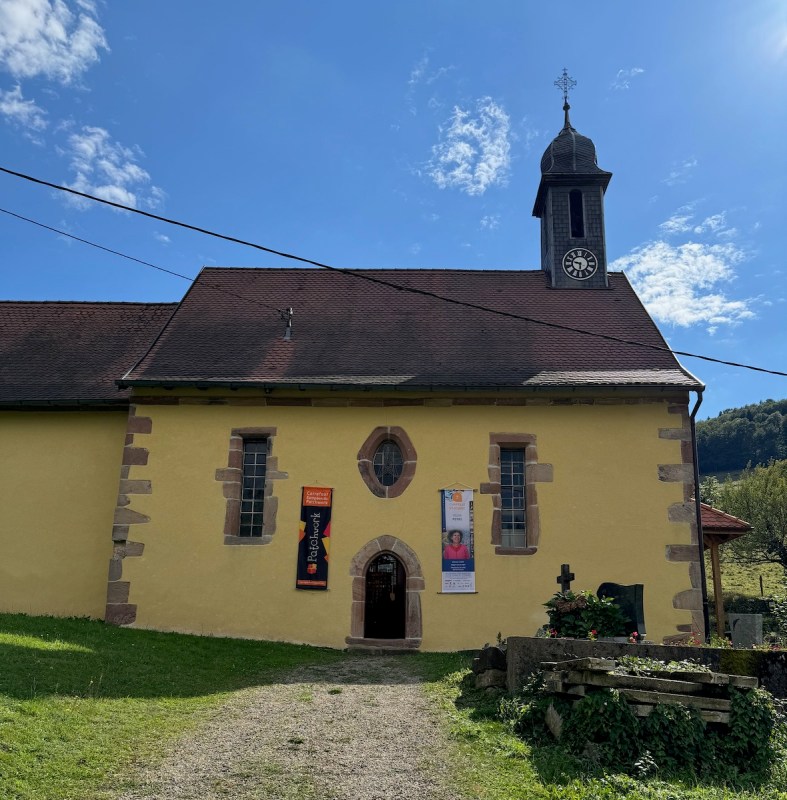
Moseying along the main street, we headed to Site #7, the Eligse St-Louis, where I wanted to see the French quilter Gabrielle Paquin.  Previous to this, in my hotel room in Geneva, I had previewed all the exhibits, looking up the artists and deciding which ones interested me.  Paquin was one of them.

EPM Paquin_site1b

EPM Paquin_site1d

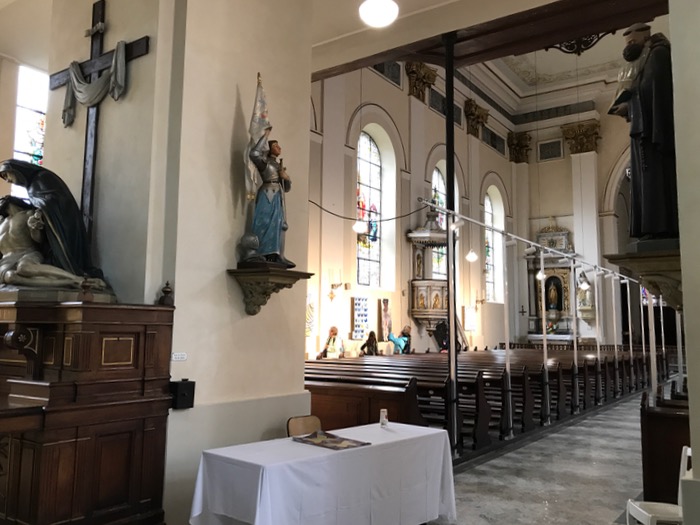
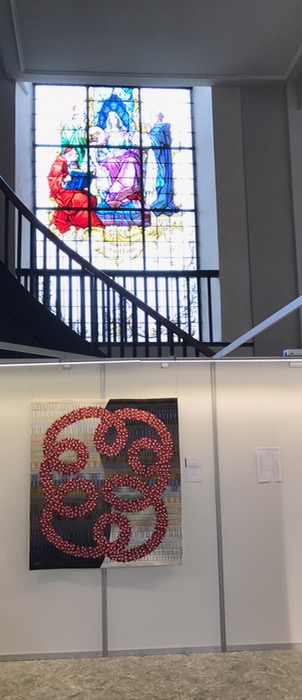
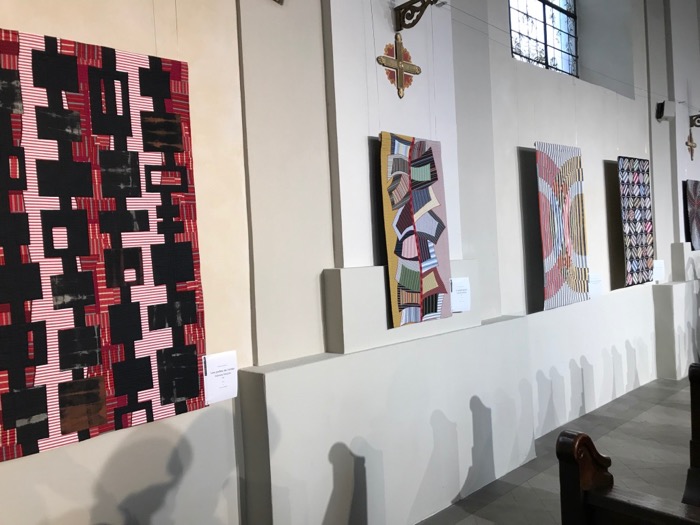
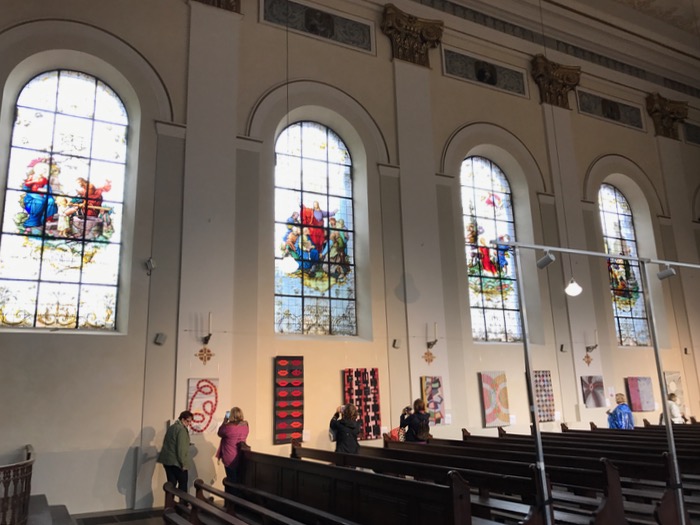
I had seen photos of previous years’ exhibits, and the fact that many of them were in churches.  But it just doesn’t prepare you for the juxtaposition of the sacred and the quilting, the symbols of religious life coupled with the themes and ideas and colors and patterns of the quilts along the sanctuary walls.  It was wonderful.

EPM Paquin_ESE

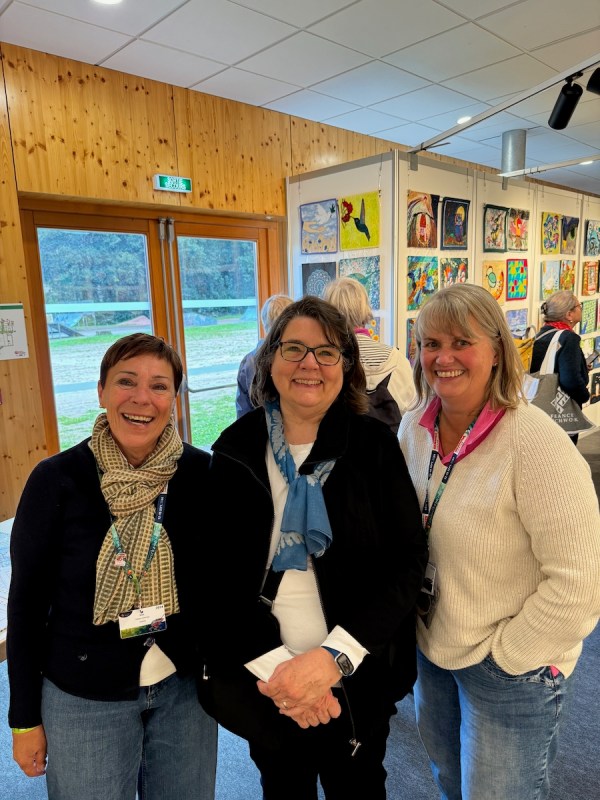
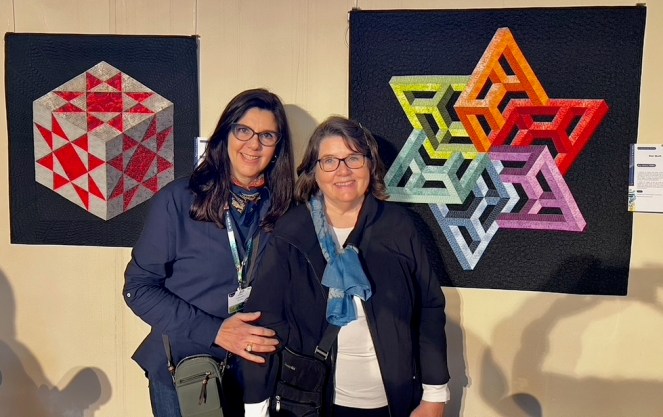
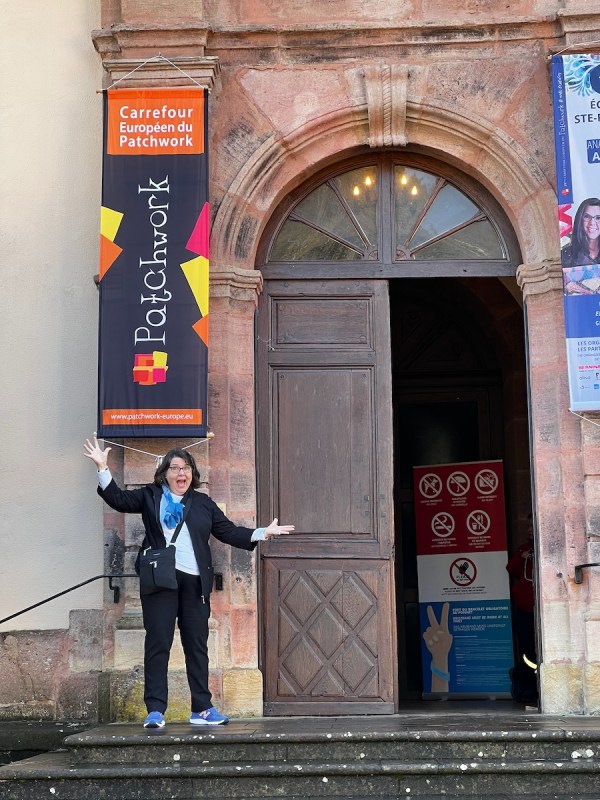
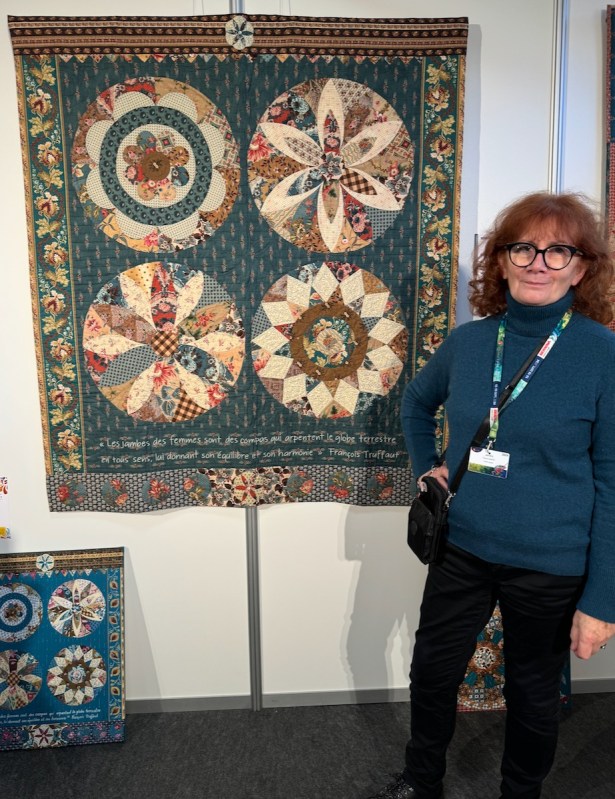
She spoke some English, and agreed to pose with me.  Check out her sweater.

EPM Paquin_1
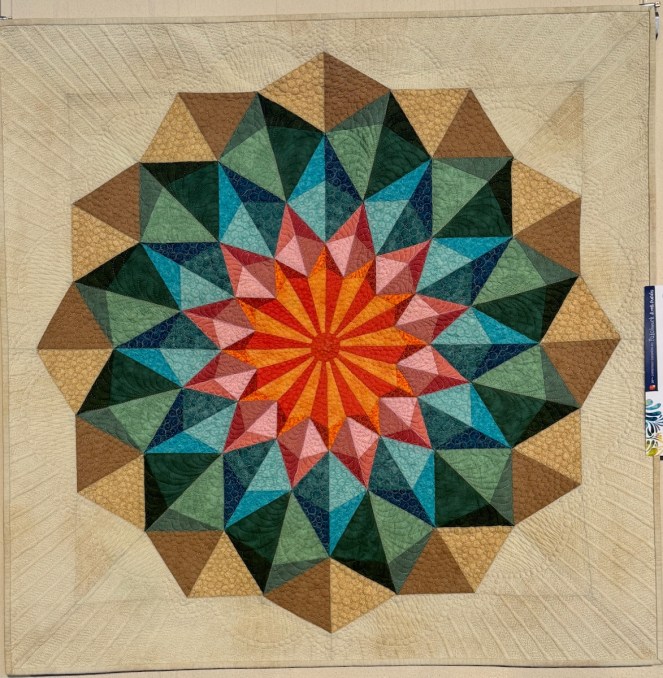
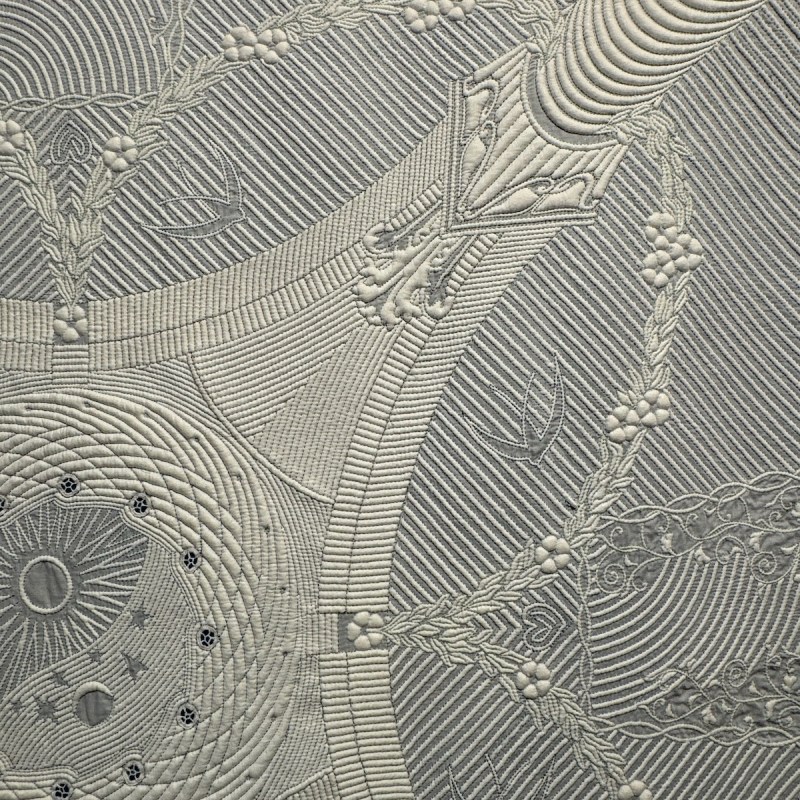
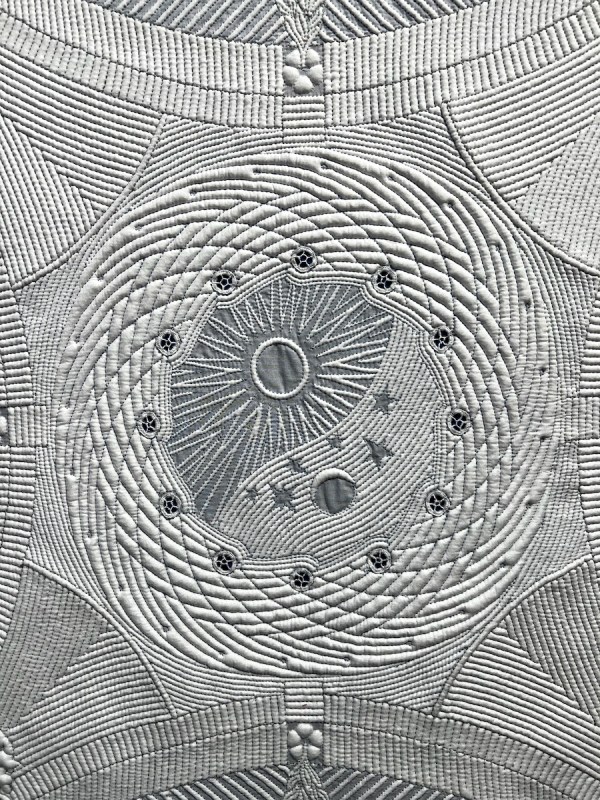
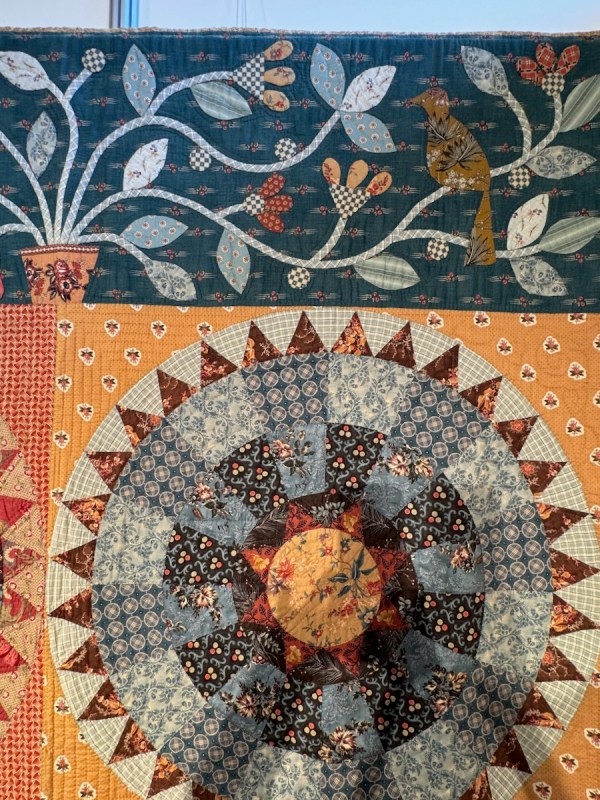
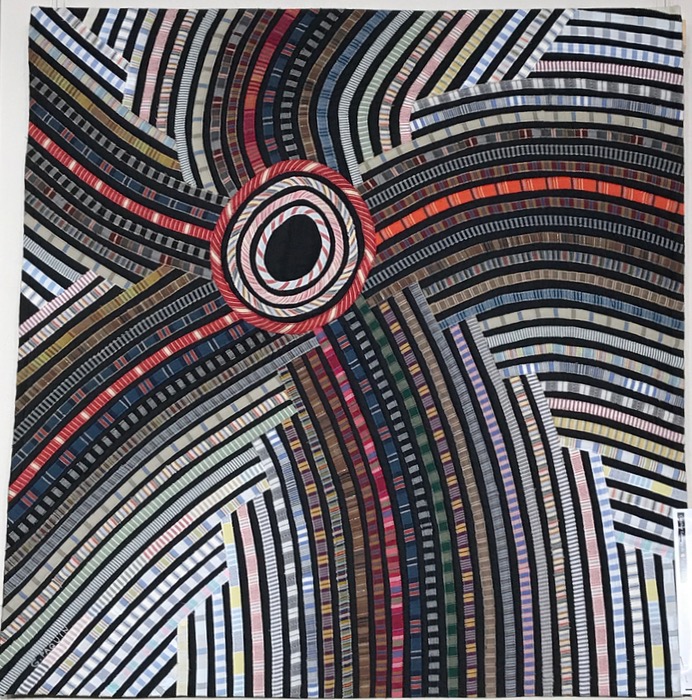
The Round, 2017

In her biography, she writes:

“For several years, I studied drawing and painting in a school of Fine Arts, my first vocation, and since then, I practice painting as an amateur. Simultaneously, I realized traditional patchworks inspired by American models large format of the 18th and 19th centuries.

“This practice evolved towards the contemporary patchwork and the textile art that I have been practicing assiduously for ten years, thanks to a constant inspiration and stimulated by the numerous exhibitions proposed with selection by a jury of artists and curators of museums.”

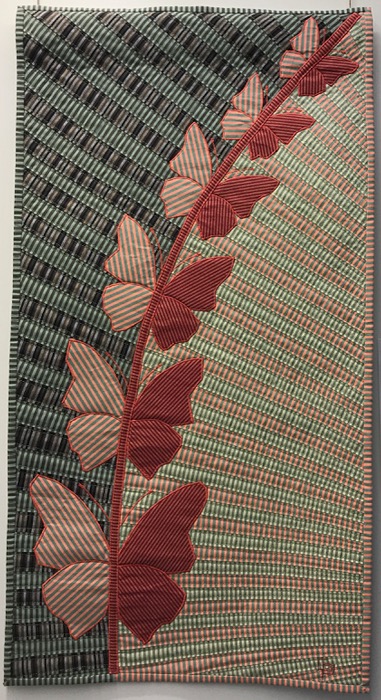
EPM Paquin_2
Spring, 2016.

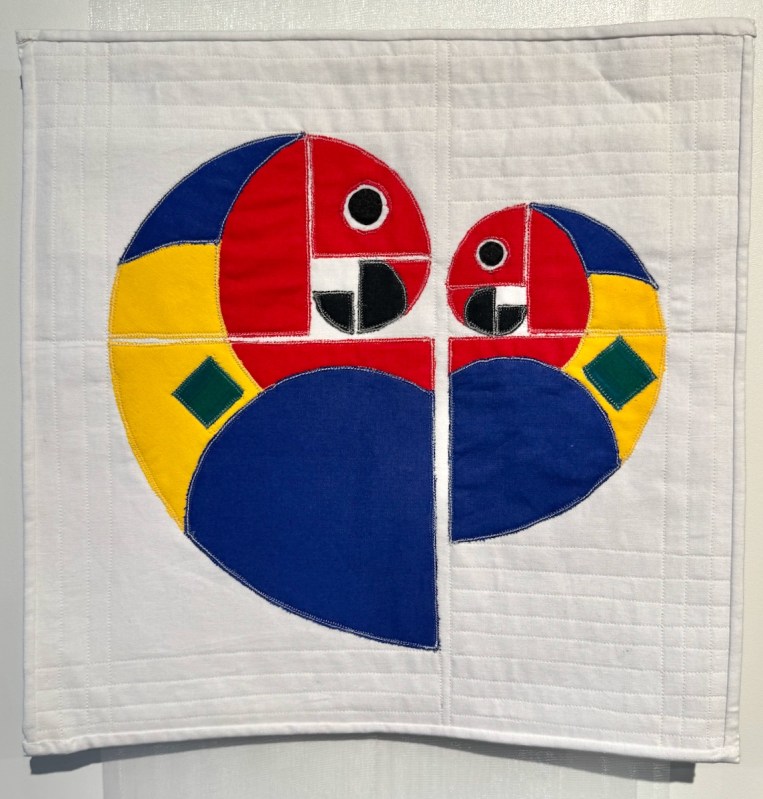
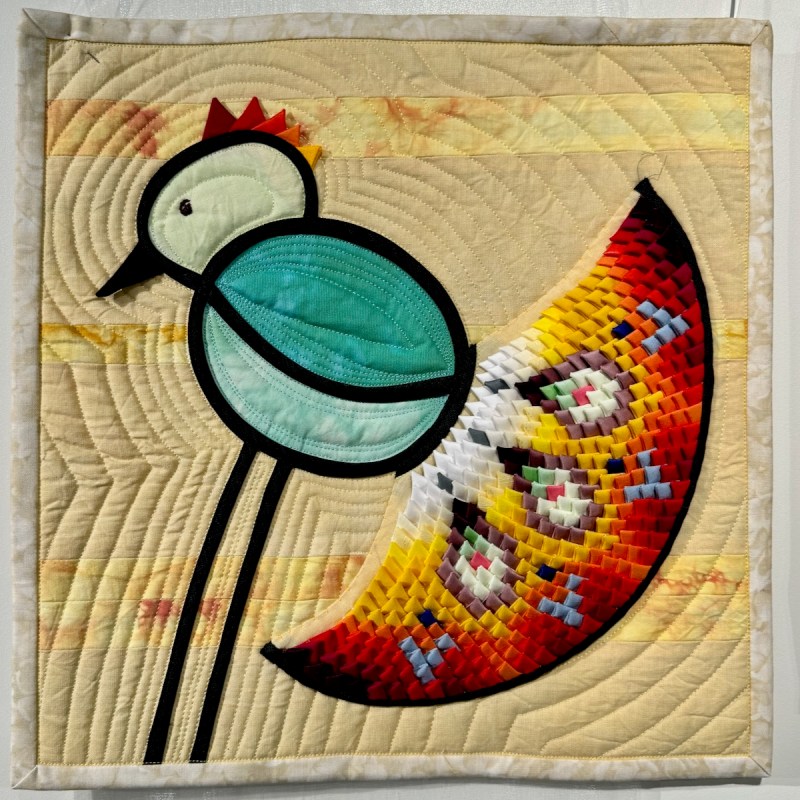
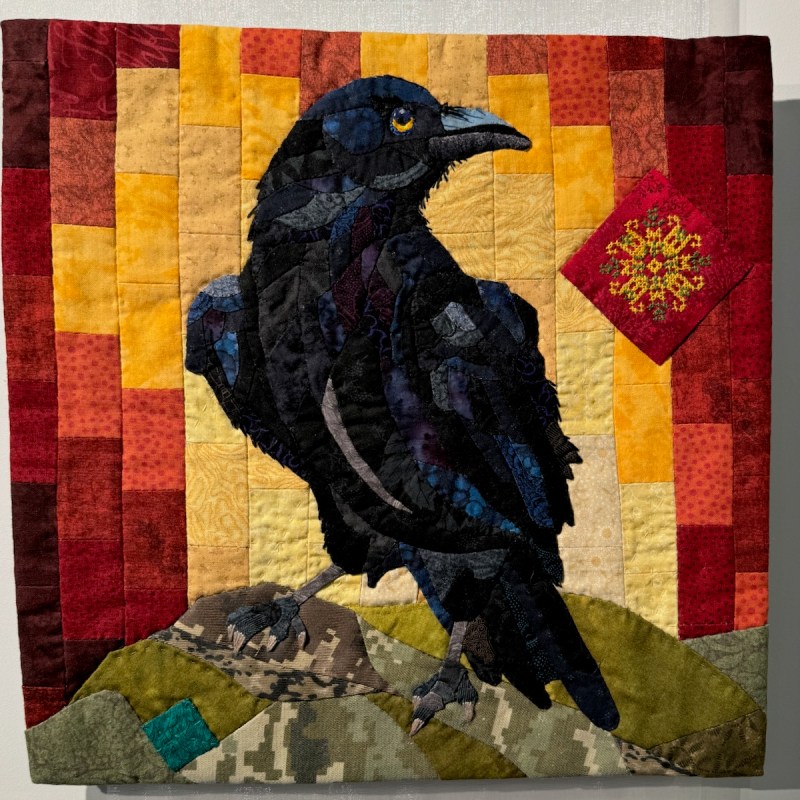
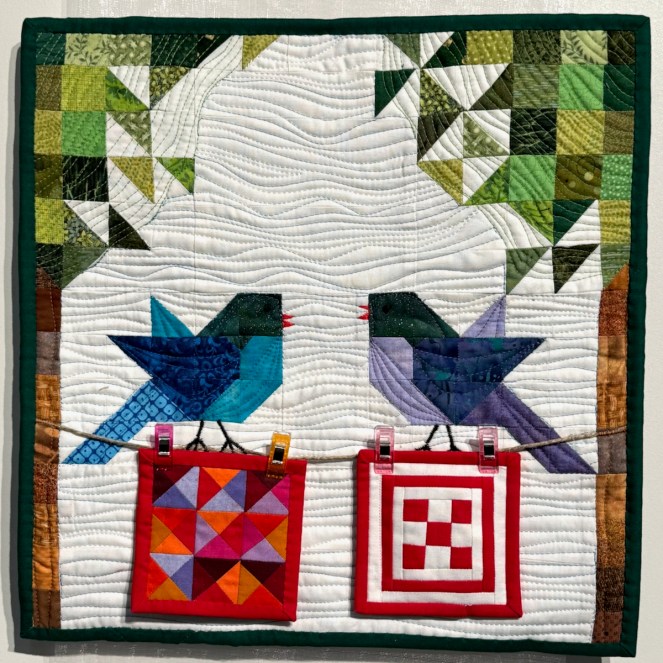
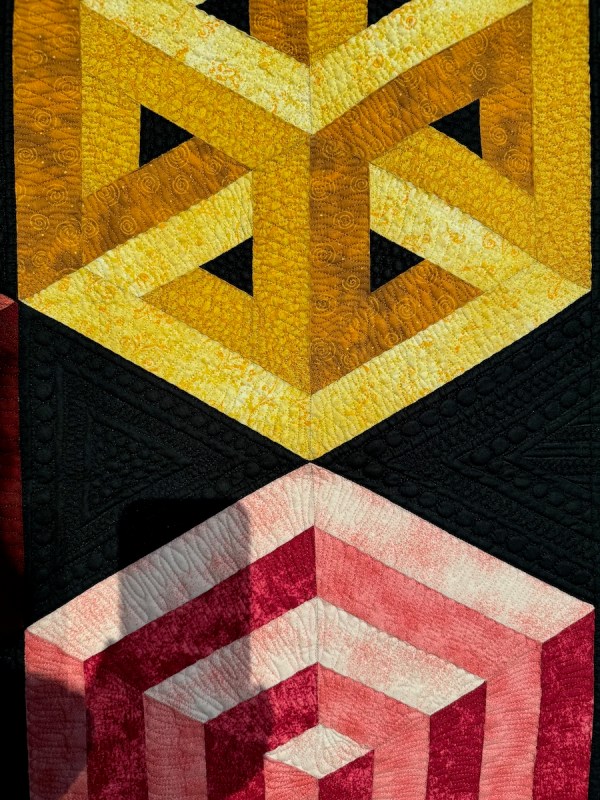
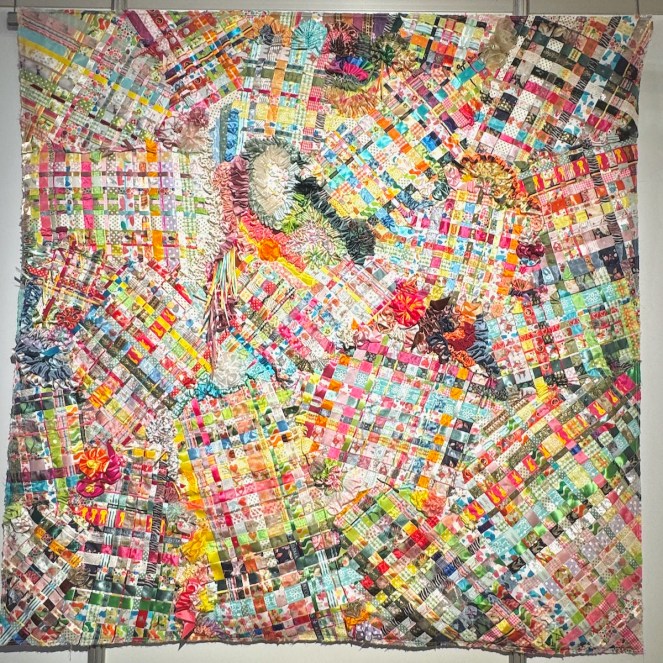
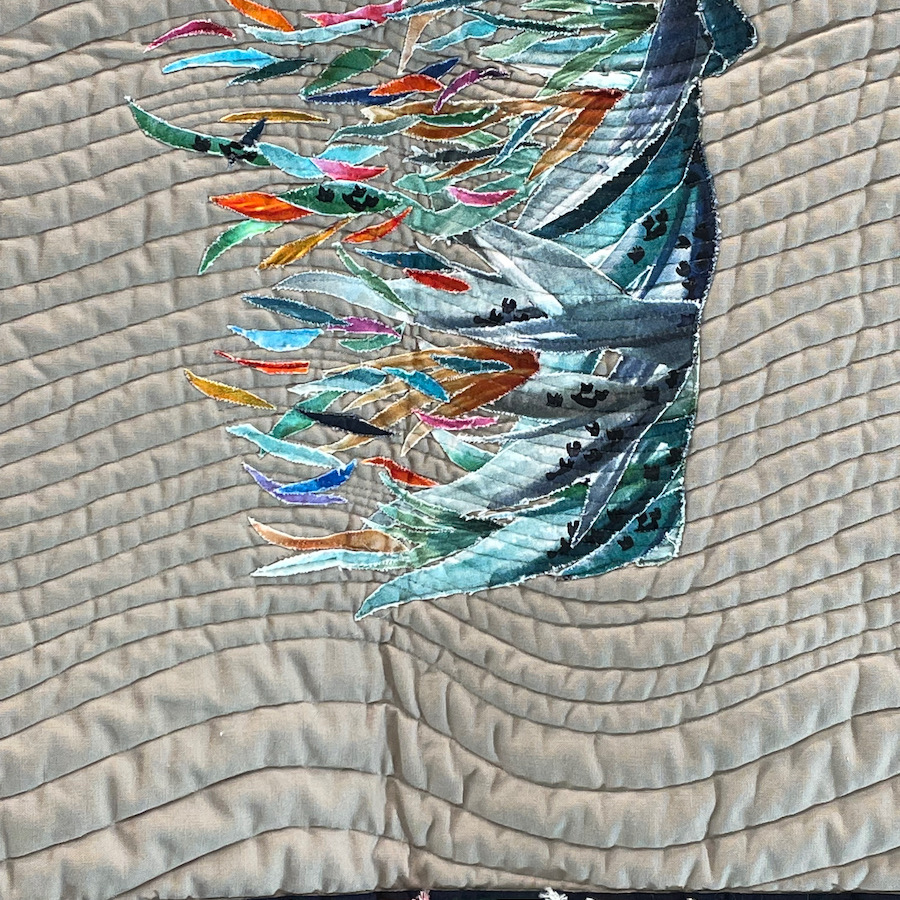
You can start to get a sense of the materials that Paquin works in: striped cloth.  In this one, she uses larger pieces that her usual strips, and has appliquéd them down to the background with a satin stitch on her machine.  I like her small monogram in the lower right corner.

EPM Paquin_3

EPM Paquin_3a
Twilight and Stripes, 2008 (?)
EPM Paquin_3b
Detail.
EPM Paquin_4
EPM Paquin_4a

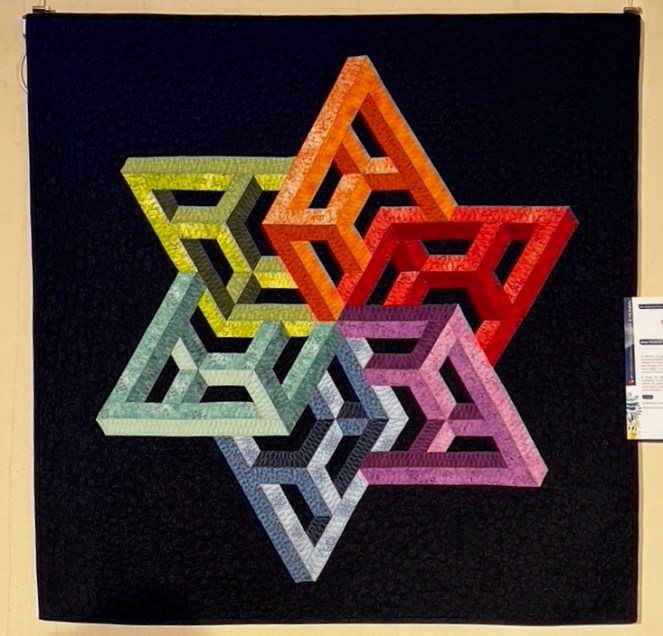
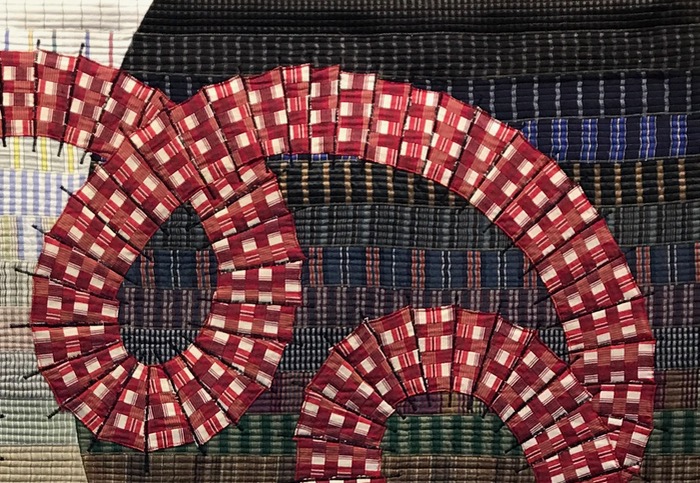
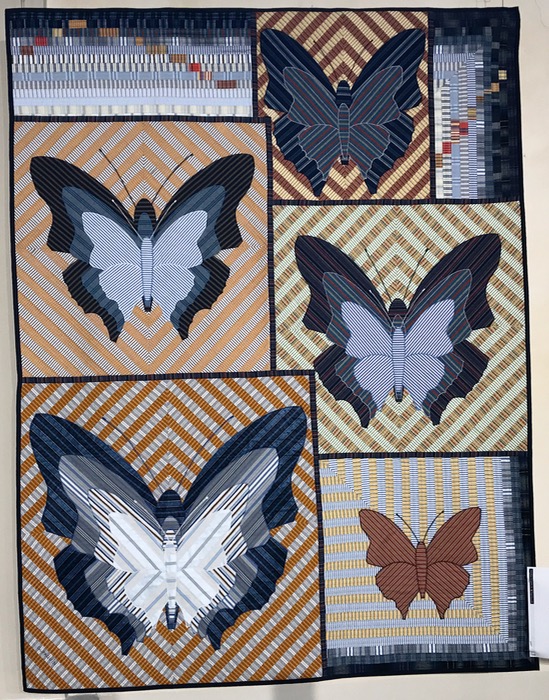
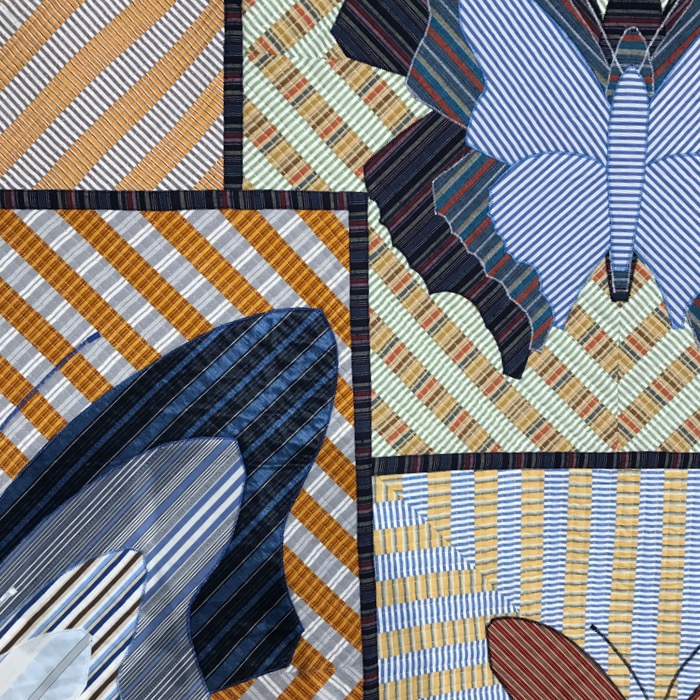
I didn’t quite catch the name of this one (top, and detail, bottom), but it shows her use of her striped material.  I kept wondering if she cut up old shirts, or old clothing, or haunted fabric shops to find all these variations.

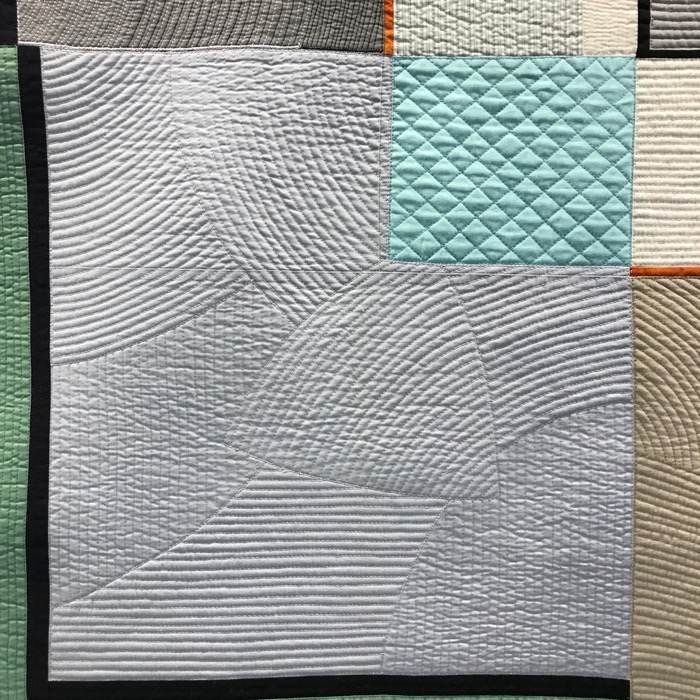
EPM Paquin_5
In/Out, 2017.
EPM Paquin_5a
Detail.

I was impressed with the quilting on this piece, as it gave me great ideas.

EPM Paquin_6
Flight II, 2015.

All the placards were in French, so I’m using Google Translate to write them in English, plus heading over to her website where she has some of these quilts.

EPM Paquin_6a
Detail.
EPM Paquin_6b
Detail.

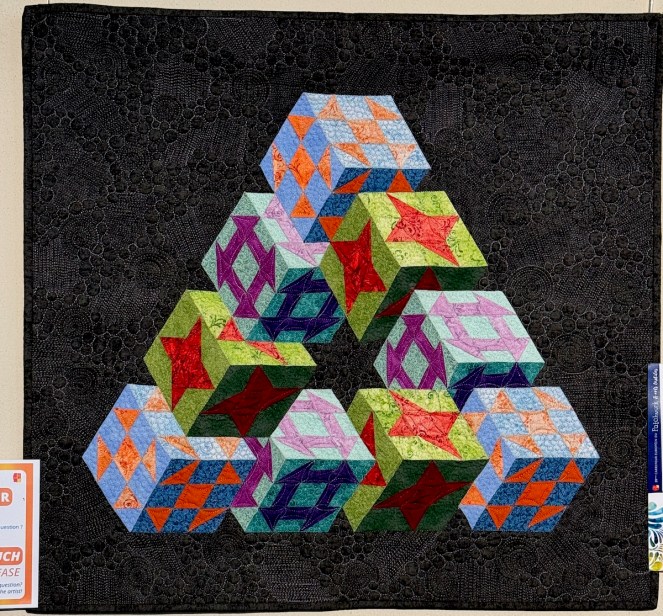
She has found so many ways to use this fabric; I didn’t include all her quilts in this series, but many of them.

EPM Paquin_7
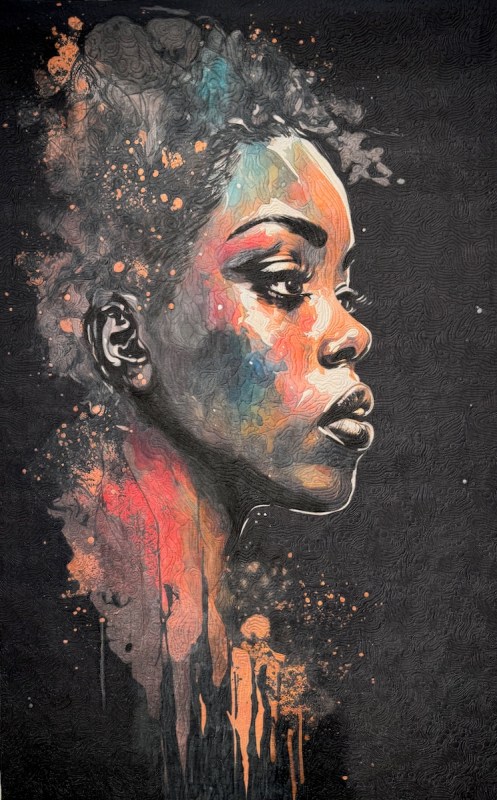
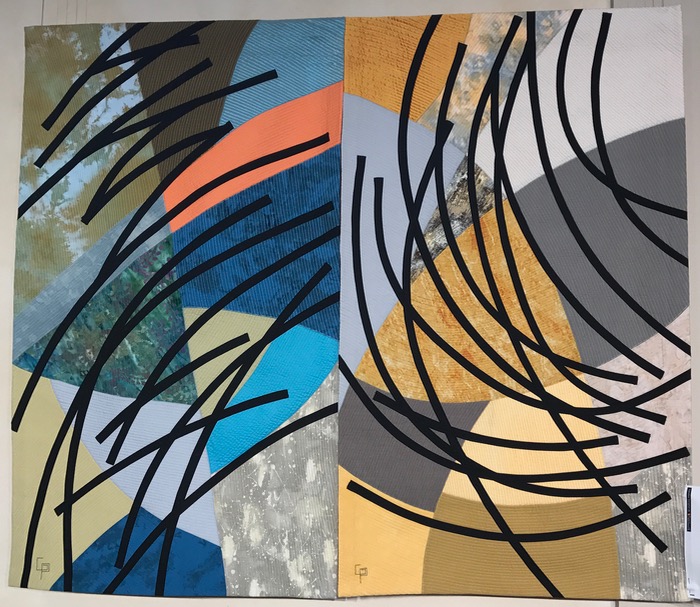
Two Black Sisters, 2016.
EPM Paquin_8
Storm II, 2012.

What a huge impact the simple reversal of value (light-dark) can make!
EPM Paquin_9asite
Looking towards the back of the church.  She is sitting there at the table with the white tablecloth, waiting for people to come and talk with her.

EPM Paquin_10
R-évolution, 2017.
EPM Paquin_11

EPM Paquin_12
The Eye of the Cyclone, 2009.

We call cyclones “hurricanes,” and after this year, can definitely relate to the eye of such a storm.

EPM Paquin_13

This title says something about a spider, and it was pinned up to show the creature responsible for this exotic web.

EPM Paquin_9site

Please visit the gallery on her website for more quilts and inspiration.


Note: this series about the European Patchwork Meeting has a main page, with a listing of posts.

Creating · European Patchwork Meeting · Quilts · stitchery

Shopping at the European Quilt Meeting

All posts in order are on the European Patchwork (Carrefour) page.

EuroPatchwork Meeting Program

The brains of the meeting.  I’d done some prepwork (looking at the website) so I knew what I wanted to see.  The very first thing: see the vendors.  I told my husband it would be like going to Disneyland for quilters.  Everything was new and different to me, but since I only have a small suitcase, I had to choose fun and interesting things.

EuroPatchwork 2017_Vendorsprices
Since fat quarters were running about $5 a piece (with the conversion rates) and fabric was 22 Euro (about $25 dollars) per meter, I knew right off the bat I wouldn’t be buying any “American” fabric, and gained instant sympathy for European quilters at these prices!
The vendors were in a combination of inside “Espace Commercial” and outside tents, with one side of the tent opening to the passersby (and the weather).  I saw many of the drapes drawn to close in the booths when it was raining.

The Commercial Space was weather-proof, but hot and stuffy.  I took these photographs early in the morning.  When we doubled back before leaving, it was very crowded.

EuroPatchwork 2017_VendorsVenue4

Who wouldn’t want to shop at this booth, with its array of Kaffe fabrics and a vendor with bright pinky-red hair?

EuroPatchwork 2017_VendorsVenue6 Moda

This isn’t exactly a vendor, but the distributor (Rhinetex) who’d rented out the ground floor of this old house, displaying some Moda fabrics (don’t they always do it spectacularly?).

EuroPatchwork 2017_VendorsVenue6 Moda3EuroPatchwork 2017_VendorsVenue6 Moda2

And inside, the famous Tula quilt for her new line, and a sweet scene at the fireplace, with their logo on the felt backdrop.  Lots of quilts in here, and it was fairly mobbed.

EuroPatchwork 2017_VendorsVenue5 creatives

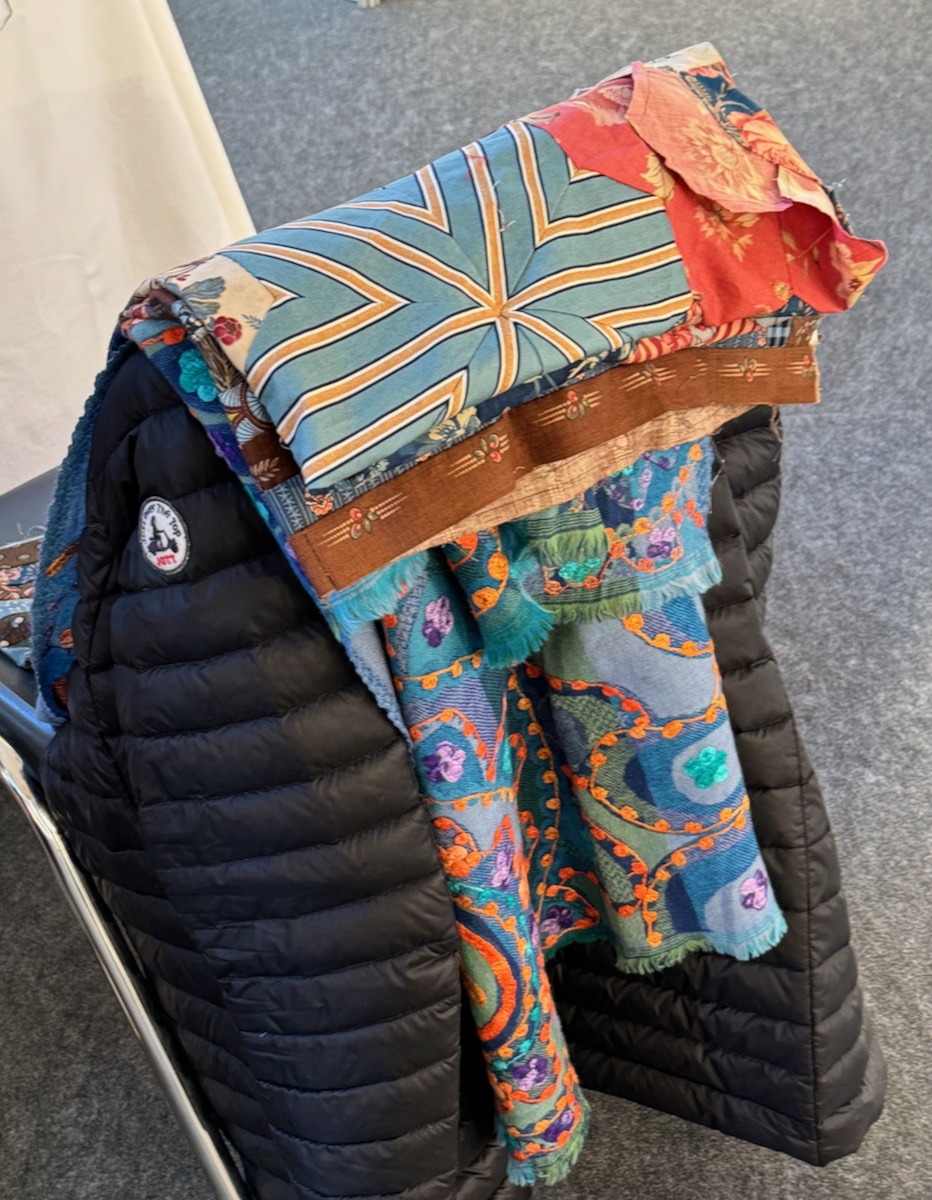
The last venue I want to mention was titled “Les Createurs” and was filled with beautiful handiwork from “designers and craftsmen.”  I definitely coveted a few pieces of jewelry, as well as that blue coat in front. Now to show you what I bought and what their booths looked like.  I asked permission for all photos, but was told more than once they’d only like me to take a “general” photograph (imagine this word with a French accent); I totally understood their request and why they made it.

EuroPatchwork 2017_Vendors1

These folks are from the west side of France; she has a book out (I saw it at the book booth, but since it’s all in French, well…)  I’m always thinking small, so I picked up these two fat quarters.


EuroPatchwork 2017_Vendors1aEuroPatchwork 2017_Vendors2
Across from them was the Costuretas de Moly booth, with the most charming kits and small handmades.  I saw a lot of sweet little bags and pouches with detailed scenes appliquéd and embroidered on the fronts and backs.  They are from Catalan, Spain.

EuroPatchwork 2017_Vendors2a

A small bracelet, a quick blurry shot of the bins of bracelets (they didn’t want their booth photographed) and random German Christmas Tree, the only thing I regret buying.  The vendor had tacked green rosettes of fabric around all the outside edges, and I thought maybe I could tie on some green primitive rags instead.  Oh well, we’ll see.

The handmade, laser-cut embellishments were purchased next, from a booth that made it hard to decide, given their categories of sewing, animals, children, family, house, etc.

EuroPatchwork 2017_Vendors5aEuroPatchwork 2017_Vendors5

Even though I said to myself “no fabric” the Filarte booth drew me in with their linens.

EuroPatchwork 2017_Vendors6

My husband and I both liked the scarf on the outer upper edge of the houses, but when I tried on the leafy print next to it, well, that one came home.  It is wool and cotton so I will be very warm in sunny old Riverside. (I’m wearing it now, as I type this next to the chilly window in our hotel in Geneva.)

EuroPatchwork 2017_Vendors7c

I had a total fangirl moment when I realized whose booth I was standing in front of: Un Chat dans l’aiguille.  The lady on the right is the artist who makes up all these beautiful pieces (and whose name I think is Christel–hard to figure it out when you don’t speak the language).  I fell in love with her Matryoshka needle case, that I saw in a shop when I was here in Geneva last year, but they didn’t have any more (it’s out of print).  So when I got home, I looked up who made it and read all about her and her designs.

EuroPatchwork 2017_Vendors7aa
But what to chose?  None of them are cheap, so I had to choose carefully.

EuroPatchwork 2017_Vendors7aEuroPatchwork 2017_Vendors7b

I went with this little pouch with all its flowers and scalloped edge detail.

EuroPatchwork 2017_Vendors7aab

When I looked inside, I can see why her kits are so popular: everything is well-labeled, ordered and she even included a needle.

EuroPatchwork 2017_Vendors9

Sometimes what draws you in to fabric is that it is the exact opposite of what you’d normally buy.  Like the dusky shades of printed and dyed linen on the left.  Then you spend the next two hours mentioning to your husband that it won’t be enough fabric to do anything with, so you circle back around (my husband is a saint) and then pick up two more fat quarters to round it out.  I’m assuming it was the wife of the man (below) sort of strongly suggested that it was not good to put the heavier weight linen next to the quilt-fabric-weight linen on the right.  But I loved the look of the thicker threads in the first pack and couldn’t be persuaded to change.  If only they’d had the colors on the right in the heavier.  The vendors are from Germany.

EuroPatchwork 2017_Vendors9a

EuroPatchwork 2017_Vendors9b

Here’s the back of the package, in case you ever run into them.  Like I said, nearly everything I saw was unique, unusual, and not seen in the American markets.

Like these doll heads:

EuroPatchwork 2017_VendorsRandom HeadsEuroPatchwork 2017_Vendors10EuroPatchwork 2017_Vendors10a
We saw this sign while walking between exhibit locations, and entered into the little lane where several booths were set up with bolts of fabric.  At the back was a burned out house (?) with buttons for sale in what looks like the garage.  Or maybe the whole house was under renovation?

EuroPatchwork 2017_Vendors10bEuroPatchwork 2017_Vendors10c

The quilts are pretty backdrops for what I purchased: the two buttons, above, and a necklace.

EuroPatchwork 2017_Vendors11

The penultimate purchase was this dishtowel from the Beauville exhibit in Sainte Croix-aux-Mines, one town away from where we started.  I have one more purchase, but I’ll mention it when I get to the various exhibits.

Alsatian Dress Lady

Here’s the woman in the Alsatian dress again.  It is so beautiful, and of course, I wondered where I could get that apron fabric.  We saw her again later in the Old Theater venue, so stay tuned.

SaveSave

SaveSave

SaveSave

SaveSave

Quilt Shows

Road to California Quilt Show, 2017

road2ca_unknown

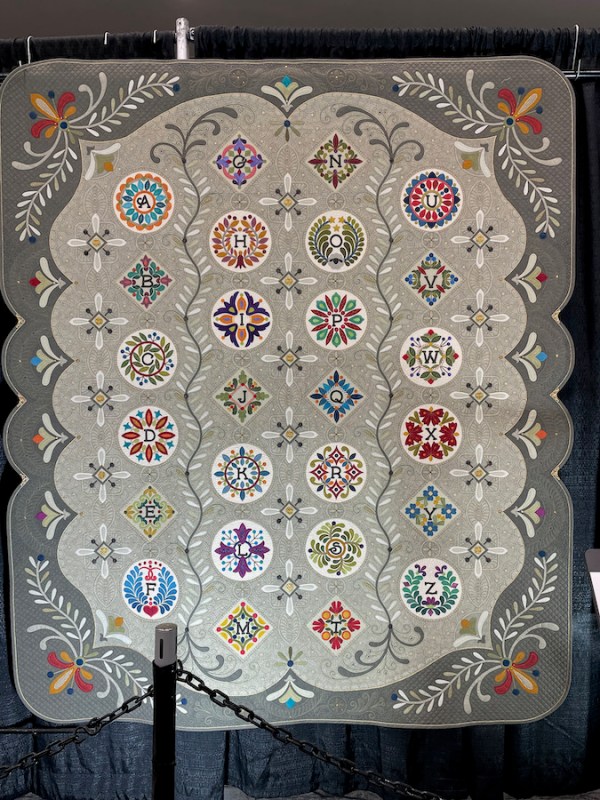
The Road to California Quilt Show was held this past weekend, and I think it was my 22nd year of going…or something like that.  The highlights for the first day are found on my Instagram Account ( as well as some found in #roadtocalifornia2017), but here are quilts that I didn’t post up.  road2ca_unknown2

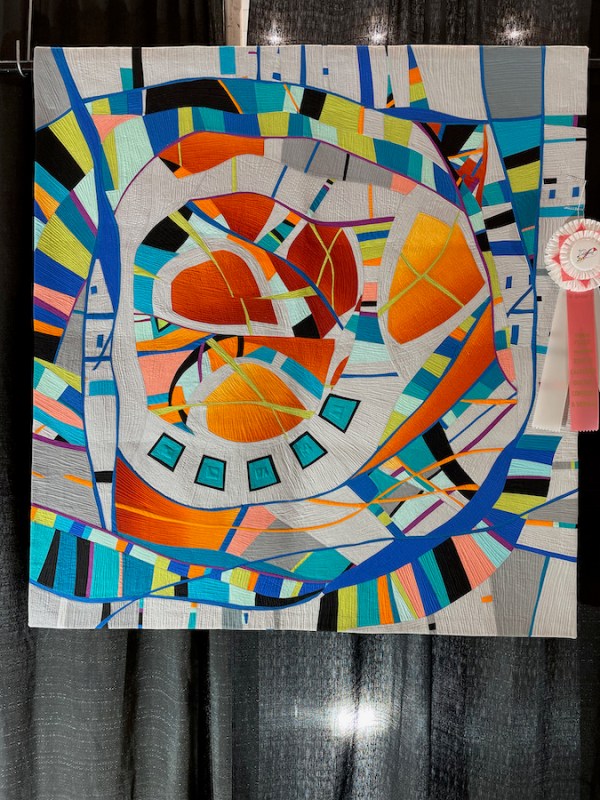
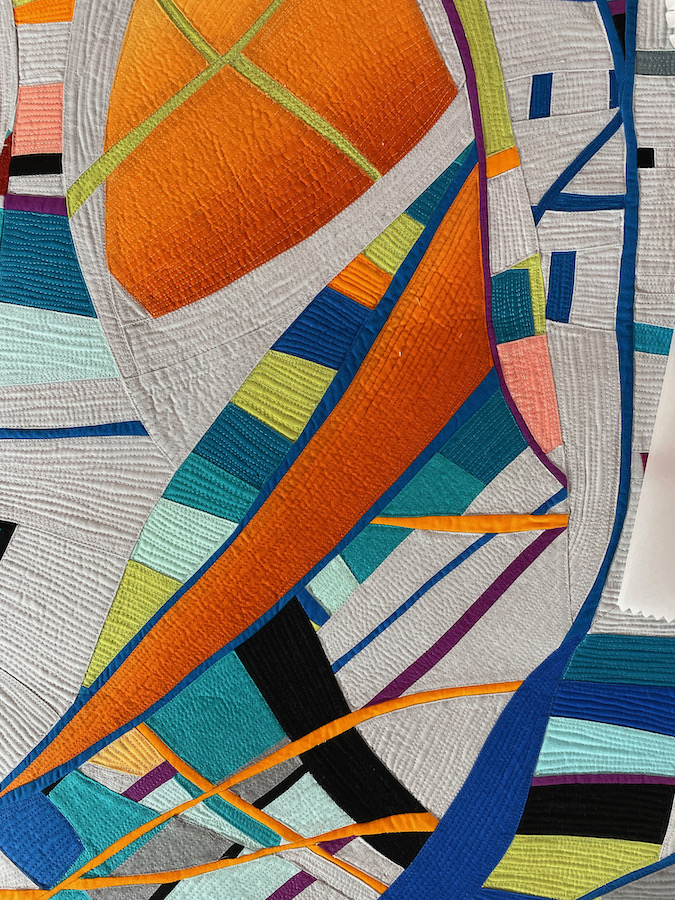
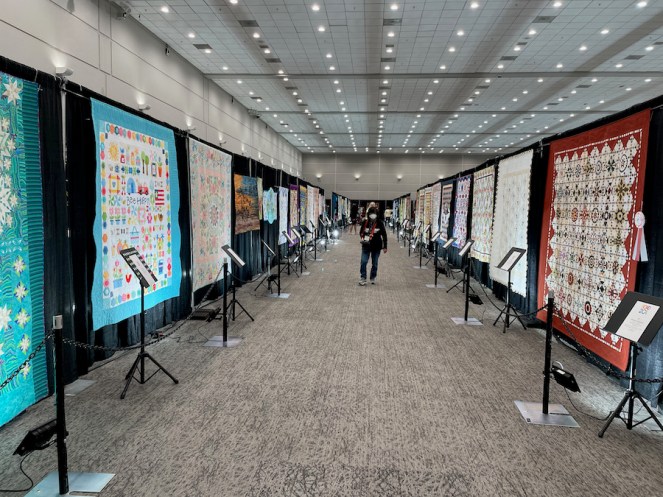
This was the gallery for the Art Abstract quilts, and yes.  They were abstract.  Sometimes it’s helpful just to see how they are laid out.
road2ca2017_jeanimpey_benito

I liked the collage effect of this one by Jean Impey, titled Ernestine Benito.  It was started in a class with Susan Carlson, using “Susan’s collage techniques as well as some ‘reckless and raw edge’ appliqué and India Inks.”road2ca2017_jeanimpey

Jean Impey also made Dance in the Wind, started in a class with another teacher who “taught me how to look at something and abstract it, to see things in different colors.”road2ca2017_hahn

Birth of a Storm is by Betty Hahn, who used the “color and movement of the Doppler radar forecasts of tropical storms” as her inspiration.road2ca2017_beach

Orange You Glad I Got the Blues? is by Mel Beach, representing the “influence of improvisation within Jazz music.road2ca2017_blairknight

The tape keeping people out was placed too far out this year, so the only way I could photograph these horses was side-by-side.  The one on the left is White Knight, by Patt Blair.  The one on the right is Wendy Knight’s Here’s Looking’ at You.  I was mesmerized by her quilting, shown in the next images.
road2ca2017_knight_1 road2ca2017_knight_2 road2ca2017_knight_3 road2ca2017_cynthiaengland

Cynthia England’s Reflections of Cape Town took a year to make and has about 8400 individual pattern pieces in it.  Detail of this is below.road2ca2017_england_2 road2ca2017_bianchi_1

This small quilt, probably 14″ by 18″ is loaded with buttons.  Beacon, by Susan Bianchi, represents her “impression of an antique lighthouse lens and prism.”road2ca2017_bianchi_2 road2ca2017_kona-yellow_1

Kona Fabrics had a series of small quilts (around 16″ square) using that bright lemony yellow from last year (above and below).  There was also a wonderful exhibit by Cherrywood Fabrics of Lion King, but I could never get a good shot at it as people were always looking at them all closely.road2ca2017_kona-yellow_2 sarahannsmith

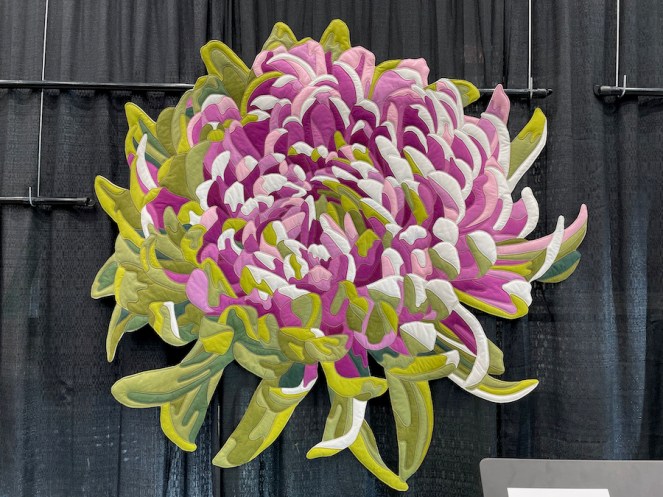
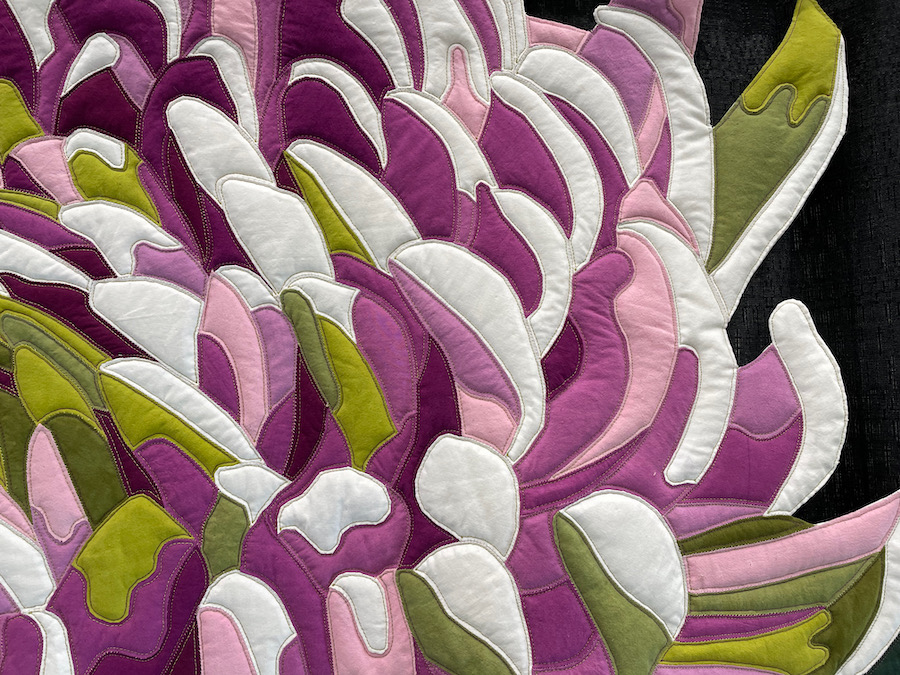
Peony, by Sarah Ann Smith, is a stunning blossom interpreted in fabric.

road2ca_brokenshire

But I couldn’t help constrasting it with the bluesy-purpled Blue Anemone, by Andrea Brokenshire, admiring its use of periwinkle, turquoise and other colors, and that exquisite quilting.

Overall impressions (including these and the images on Instagram): thankfully the use of sparkly bling has fallen to new lows, with the few quilts that did add crystals keeping them to appropriate usage.  Margaret Solomon Gunn’s quilts (here and here) are always exquisite, and I realize that I’m never going to measure up to her long-arm quilting skills.  In fact, I heard the moans of “I’m not good enough” over and over.  Aside from the usual don’t-compare-yourself-to-others cliches that I could offer, I say the only good remedy for that one is to go home and make a one-patch quilt and have something to show for your time, and that will allow you to realize that every quilt has a beauty all its own.  We have quilt shows to admire the best of the best, and the others and to use them to inspire us.

I was very happy to see my friend Simone’s quilts hanging in the show (here and here), as well as other people I know.  Those friendships are what tie us all together in our quilting community.

I didn’t choose a “Most Ugly” quilt this year, although there were several that might have qualified.  And I’ve decided to change that award to “Didn’t Live Up To Its Promise” so as not to offend.

I took two classes; one was awesome and the other — even though the teacher was so nice and knew her stuff–not worth it.  Why?  Because they sent a long-armer to do teaching about quilting on a domestic machine.  And because they made us use machines that were difficult to use, and we spent a ton of time re-threading them, fighting their built-in stitch regulators and waiting for the tech to come.  And because when we showed up, these complicated machines were not threaded or ready for sewing, so we spent nearly 90 minutes of class time getting them up to snuff.

One last gripe: the practice of teachers charging us Beaucoup Bucks for our “kits” of materials that we have at home, for supplies that we already own, and for threads that we don’t care to try.  Unless it’s some specialty item that we wouldn’t think to buy, I’d prefer a teacher include a detailed supply list for us to bring.  Yes, we will buy the teacher’s stuff in class if we forget ours, or hunt for it down on the vendor floor, but I now have another blue marking pen, two spools of thread that I probably won’t use again (I’m a Superior Thread fan) and a 18″ by 44″ marked quilt sandwich.  Those three things cost me $45 (!).

I like having such a high-quality show so close to me, and I enjoy seeing my “yearly” friends.  I heard lots of gripes about no printed showbooks, the cheezy Road to California bag, and no lanyard-style name tag holders (and no, I’m not buying their blue Road badge holder), but I think we were all happy to be there.

Until next year, Road!

Quilt Shows · Quilts

A Look at the Quilts at Quilt Market 2016

Giveaway Banner

First, I need to report on the giveaway held in the last post–all your comments were terrific! and seemed to be a healthy range from “just the kids” to “adults have a great time, too.”  I really liked the ones that said to include them both–so now you know.

The winner was Number 7HalloweenGiveawayJune2106. . . and it was Leslie, so I’ll get those shipped out to her right away so she can keep going on her Halloween quilt.  She wrote: Leslie comment HalloweenI do miss the homemade donuts that our neighbor used to make and for which we, as children, would double back around for.  Now it’s only wrapped candies, and we Moms all sort even those for scary things, but I do like Leslie’s perspective.  Okay, here we go with the quilts.

QMBleiweiss_TuttiFruittiAlleyway1

Tutti-Frutti Alleyway, by Susan Bleiweiss.  She writes: “This quilt is part of my ongoing series of art quilts which celebrate the use of vibrant color and whimsical imagery.”QMBleiweiss_TuttiFruittiAlleyway2 QMBranjord_BlueprintLife15347 Redfox Circle. . . Blueprint of a Life, by Sandra Branford.  Her artist’s statement: “Using my collage skills, I created a fantasy story board of my imaginative home.  Through my original designs, I define myself and take the viewers on a journey through my mind. . . some wit, a few brains, and loads of imagination.”

QMBranjord_BlueprintLife2

And as an English teacher, I smiled when I saw the misspelling in this text.  (You’ll have to find it yourself, and no, it’s not “hors d’oeuvres.”) Whenever I find typos and misspellings in things I write, I die a little of embarrassment, so I understand how things can get overlooked.QMBrown_Triology

Trilogy, by Peggy Brown.  “My goal,” she writes, “was to start with a painted free-flowing design, add collage and overlays of more paint, and compose a well-designed and unique painting on fabric — an art quilt.”QMCoatesPerez_PinkBird1

Pink Bird, by Judy Coates Perez  (Check out the quilting in the following photos!)  She write that she likes “painting images inspired by nature, using photos of real birds as reference for a pose, then altering them graphically; simplifying details, creating new patterns, and choosing different colors to create unique stylized birds and plants.”QMCoatesPerez_PinkBird2 QMCoatesPerez_PinkBird3 QMCoatesPerez_PinkBird4 QMDaniels_LongWinter1

Long Winter Flower Basket Sampler, by Eileen Daniels.  During a “long, cold winter in Wisconsin” she “became addicted to embroidery.”  She writes that she “spent hours listening to podcasts by Jonathan Welton and to my husband reading books aloud as I designed and embroidered this quilt.”QMDaniels_LongWinter2

I noticed more embroidery in this show than I’ve seen before–a welcome addition!QMDaniels_LongWinter3 QMDay_CubanBallerina1

Cuban Ballerina, by Jennifer Day.  She writes: “This quilt is based on a photograph that I took of a ballerina with the National Cuban Ballet in Havana.  She is dancing in a wonderful old building built in the early 1900s that has fallen into ruin since 1959.  This quilt is a testament to the young ballerina who is gracing the building with her beauty in dance.”QMDay_CubanBallerina2

More threadwork, but this time by machine.  It was stunning.QMRehak_TeaforTwo1

Nancy Rehak‘s Tea for Two.  “Inspired by Cindy Needham,” she writes, “I took an old tablecloth of my mom’s and created a quilt.  It was a challenge for me to design my quilting to highlight the tablecloth.  I named it Tea for Two because my dad used to sing that song to us when we were little.”QMRehak_TeaforTwo2 QMRidgway_TreeTokyo

A Tree Grows in Tokyo, by Helen Ridgeway and her friends: Anita Crane, Mary Ann Hildebrand, Linda Humphrey, Marilyn Lampman, Holly Nelson, Bonnie Sprado and Barbara Woodman.  The artists’ statement reads: “This was a collaboration by the eight members of the Sew Be It Bee.  We each hand appliquéd a block from Kumiko Sudo’s book.  One of our members, Mary Ann Hildebrand, designed and made the tree, using a scrunching technique, and made the cherry blossoms out of Yo-yos from a synthetic fabric.”

QMShearer_EagertoLearn1

Gillian Shearer’s Eager to Learn – Afghanistan.  “In 2011, in Wakhan Corridor, Afghanistan, Ellend Jaskol recorded this image of two girls eager to learn at a new school in Sust,” she writes.  “They were studying in a temporary tent until the school was completed.  The power of educating girls is slowly breaking through.  ‘When you educate a girl, you educate a nation.’ ”
QMShearer_EagertoLearn2 QMSim_Journey1

Journey, by Grace Sim.  She writes that “This quilt allowed me to try techniques I have wanted to try for a long time — fabric manipulation, liberated blocks, crazy quilting, modern quilting, Broderie Perse, and the use of buttons and crystals.  I used them to form my favorite Italian landscape.”QMSim_Journey2 QMSim_Journey3 QMSim_Journey4

More quilts are coming.

I realized in doing this post that if a person desires to become a quilt artist, it’s pretty important that they create a place in space to reside: whether it be a blog page, or a gallery of images, or just a single place where people like me can go and search in order to read more about them. There are many platforms that can be used: Instagram, Pinterest, blogging, Tumblr, etc.

I was unsuccessful in a finding a couple of the above artists.  In this day and age of >instant< and >quick< and rushrushrush there is a tendency to overlook the long form of blogs.  But they become important when looking at the bigger picture, or, your journey as a quilter. So if you are just starting, you might consider building your own little place where people can find you.  While there may not be much more than four walls and a piece of carpet (where others might have several fully-furnished rooms), it will be your space.