
In a series of interviews with new poets, they each expressed their confusion, discussed their work ethic, and acknowledged the daily drudgery — and joy — of being able to create and work. (See some quotes, below.) Do I wish I’d saved the source information for my series of quotes from these young poets at the beginning of their career? Yes, but knowing the internet, it is probably gone. I copied and pasted them into my digital calendar, and they pop up like clockwork every January. Fitting. We all begin creating at the beginning.

We seem to go full-steam in January, the new year giving us a fresh start. But lately, on Bluesky and Instagram, I am hearing often how the well some quilters usually dip into has run dry, that their “sewjo” or “mojo” is just not there. Is it because we are tired of winter? Or that we have early spring fever? Or just that creativity runs in spurts, and we have to step away every once in a while and get back to “real life” with its rainbows, as well as its tornadoes and sudden squalls?
In a slightly related idea, my husband’s father hung crystals in his window so they could flash rainbows around in random ways when the sun came shining through. Today, as my hands fly over the keyboard, typing this post, rainbows are dancing on my fingers, courtesy of two crystals hanging in our window right now from my husband.
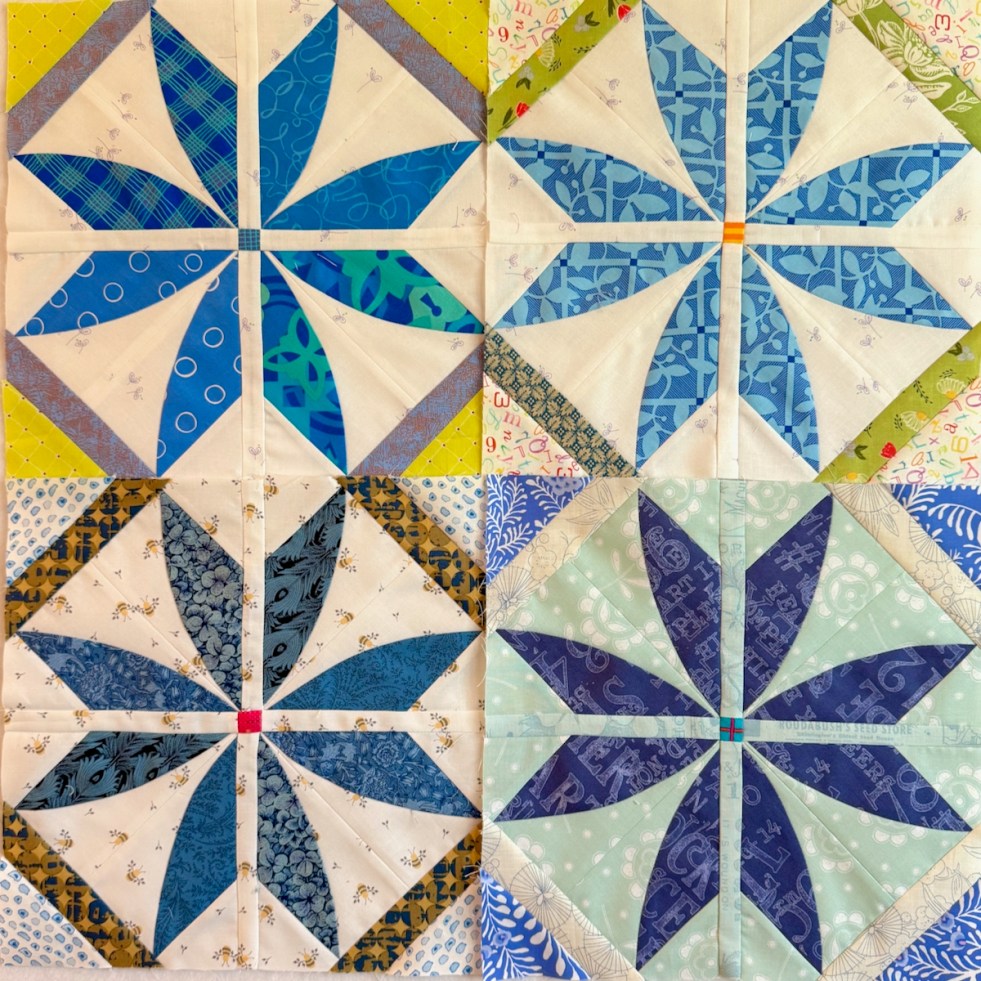
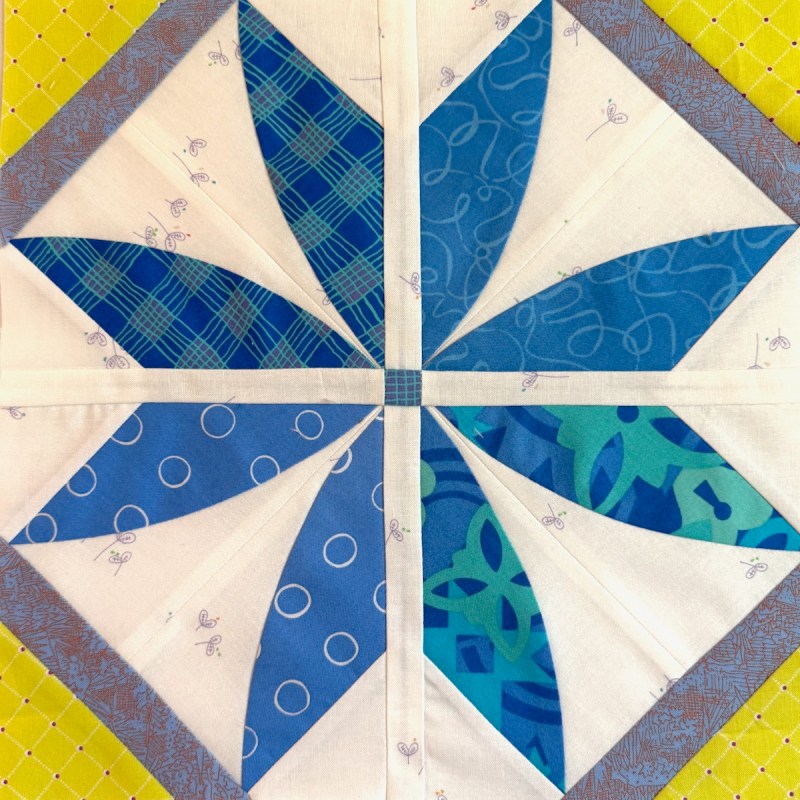
Carol and I made a pact to apply our rotary cutters to fabric and our noses to the grindstone and Make This Quilt: Posh Penelope by Sew Kind of Wonderful. While I usually like to be sewing my own designs, this year, this level of drama, this level of chaos has sent me to “let go of the pressure to be innovative,” as Jane Freilicher puts it (qtd. in Emily Skillings, below). We committed to making four blocks per month.

But even in creating between someone else’s lines, there is room for fabric choice, pawing through the stash or scraps — for as Carol noted this week, all our fabrics are soon going to cost a bazillion dollars — and this month, I went for blues. I thought the blues might calm down the riot of colors I had going on, with their steady approach. After all blue is the color overhead in our sky and of the water that surrounds us and we’ve been crazy for blue way before Yves Klein first mixed up a batch of his trademark Klein Blue. Klein noted that:
“Blue has no dimensions. It is beyond the dimensions of which other colors partake.” Fascinated by … it, [he made] …roughly 300 monochrome paintings in his signature International Klein Blue” (qtd. in article linked above).

(These blues read a bit more red-blue, or purple.)
All of these notes are to say, take a look at these young poets’ advice on if you get “quilter’s block,” or “writer’s block” and just give it time. Take a break to breathe in some of the blue overhead, or swim in the watery blue. Or catch a rainbow on your keyboard, courtesy of a defracting hung crystal.


Block by block, I’m making a quilt. I’m up to 23, and the goal is 42.
Advice if you are going to make this pattern: Do more than one block at a time. Do…like four. It’s easy, but complicated, and better if you don’t have to remember all the bits every time. And I say, make the “petal blocks” but before you sew it all up with the sashing, choose your itty-bitty center then, when you can see if it needs a pop, or if it’s okay to just have a fabric from one of the petals. Or do as Carol is, using a single fabric in all the centers. Hers is a black and white linear pattern, and it looks great.
Now I’ll put these all away in their box until next month, along with a a few scraps and bits and bobs, and it will wait for me until next time. After all, as Fatimah Asgha notes, “you’re on no one else’s timeline.”
One Last Thing
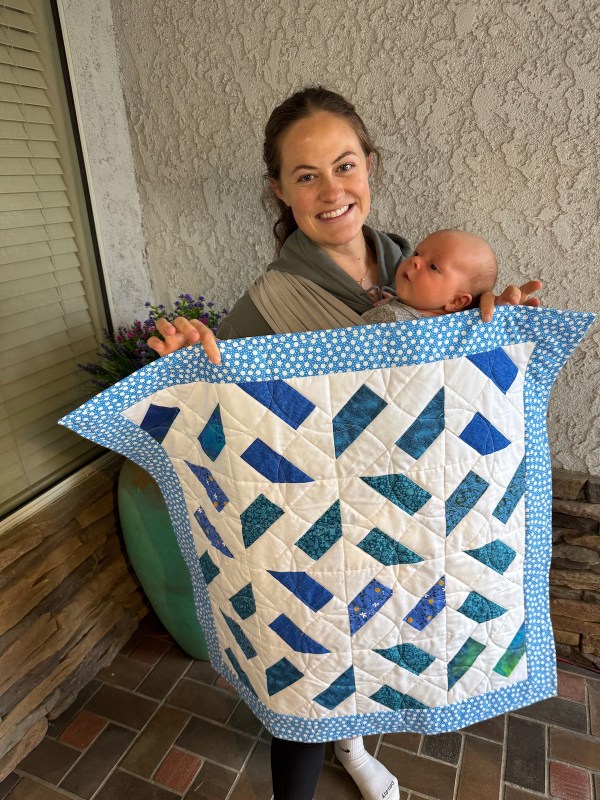
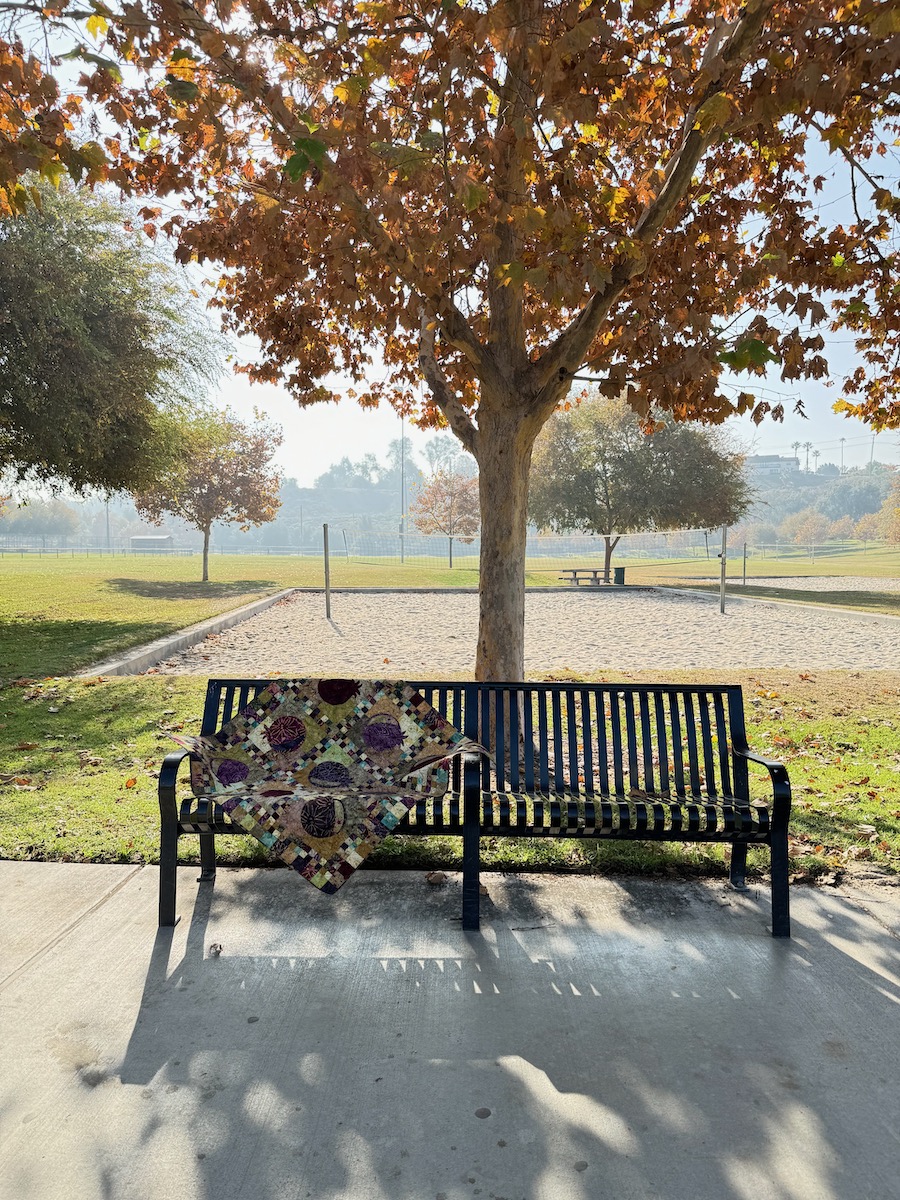
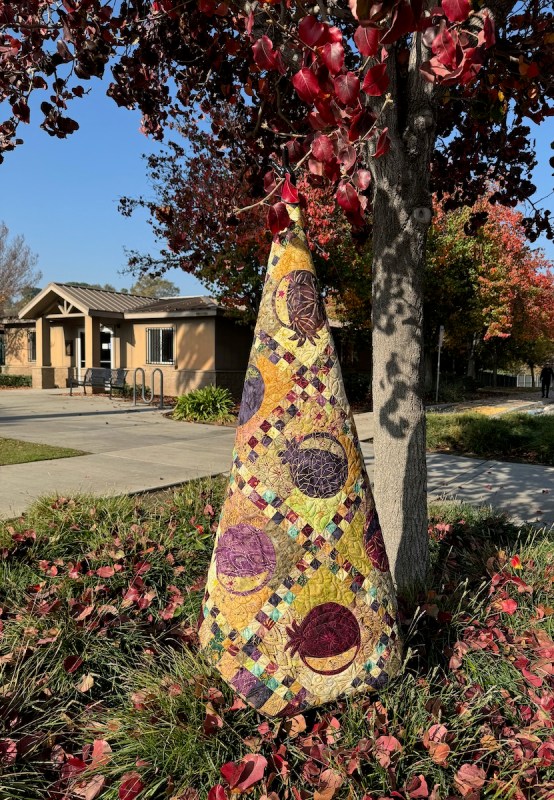
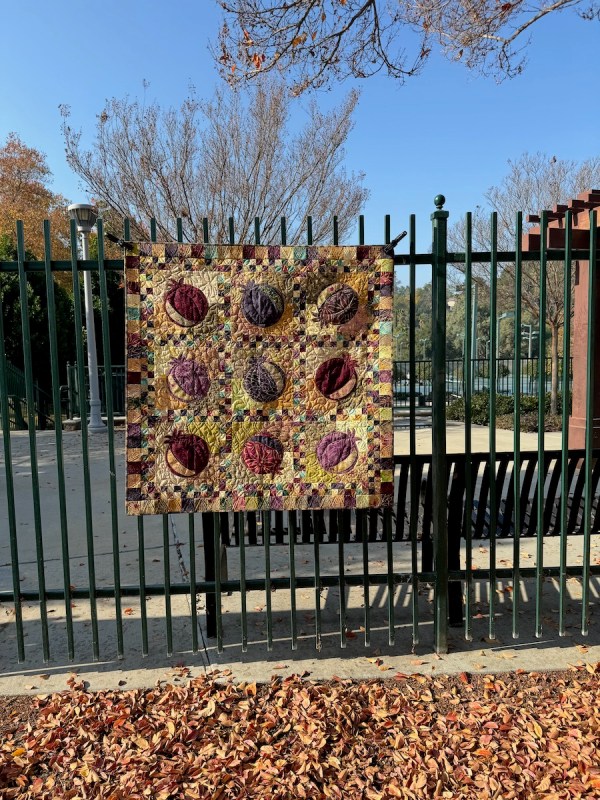
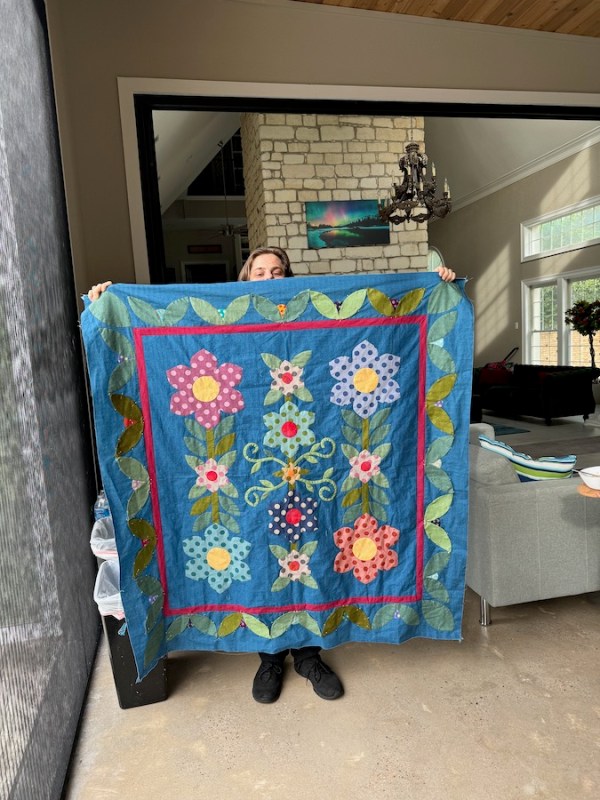
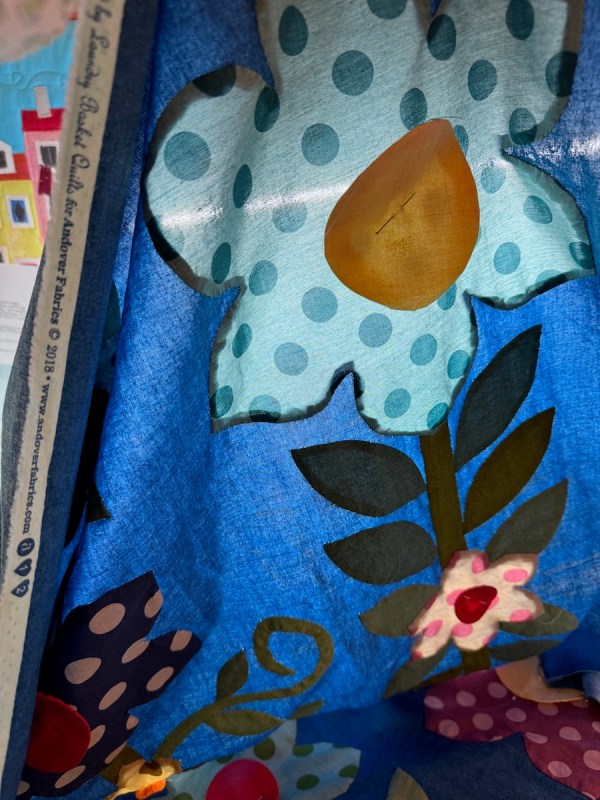
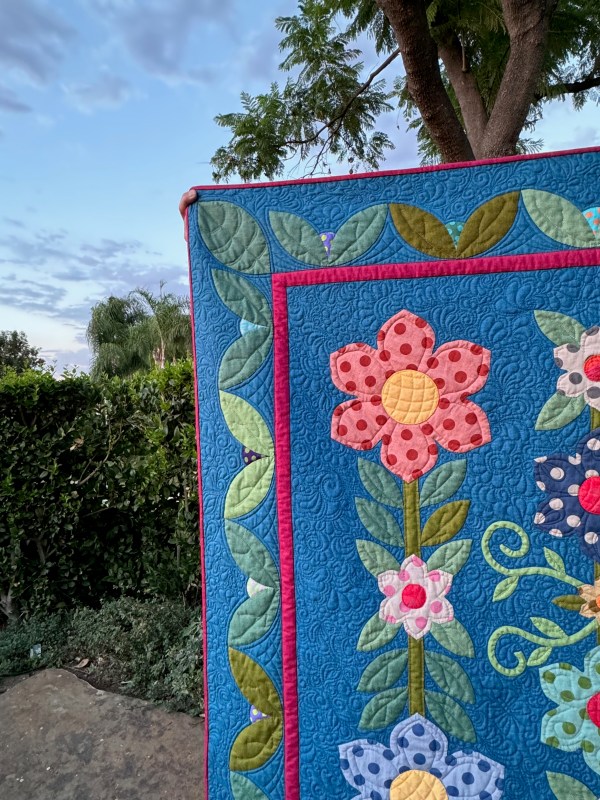
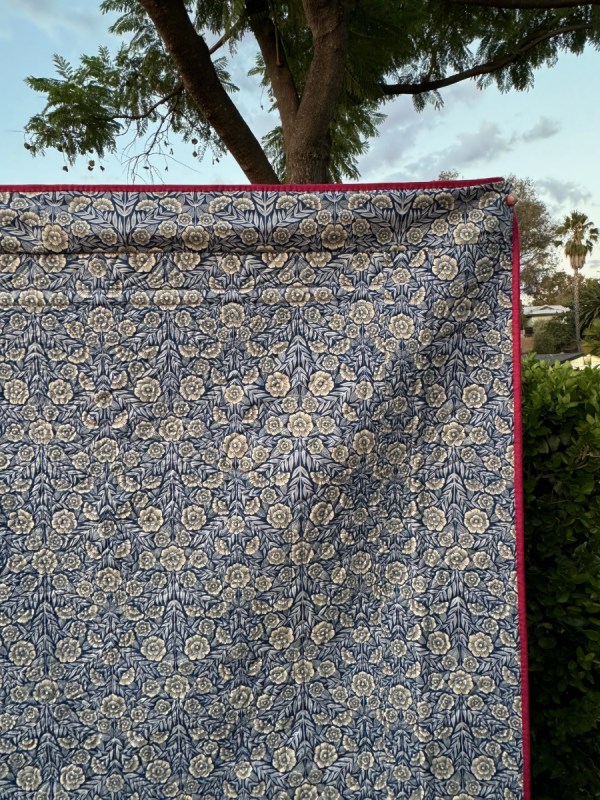
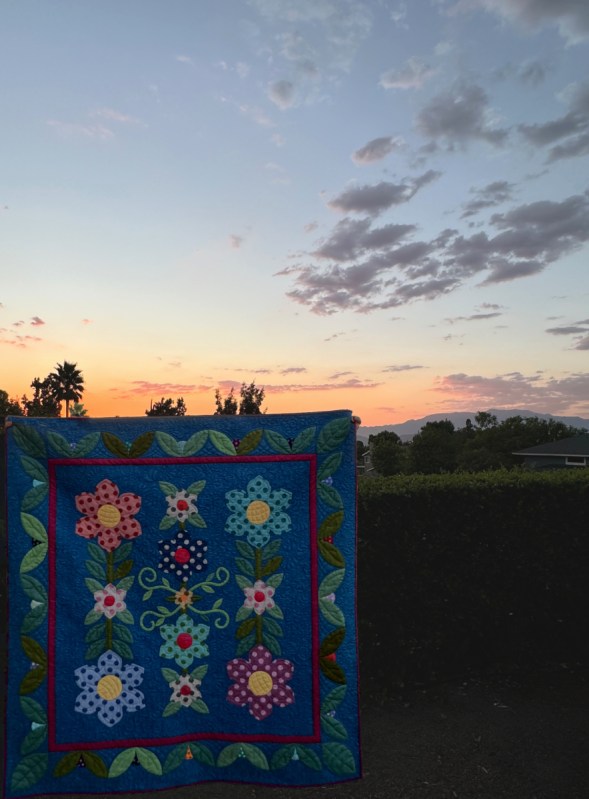
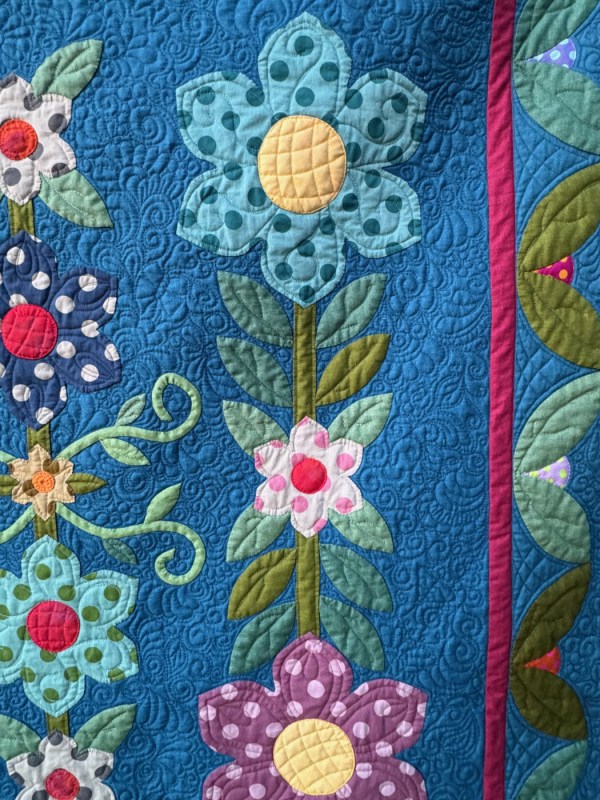
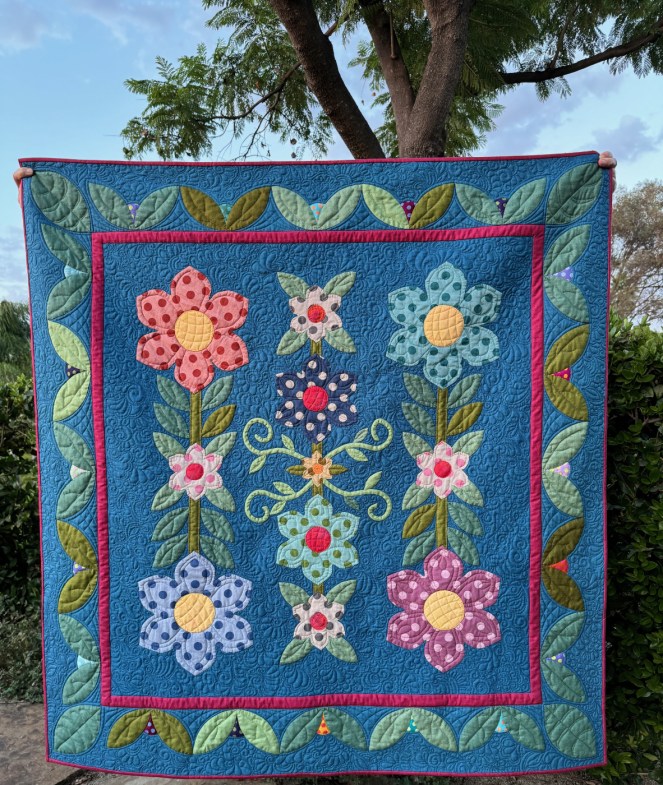
A friend had a new baby boy and I made them a quilt.
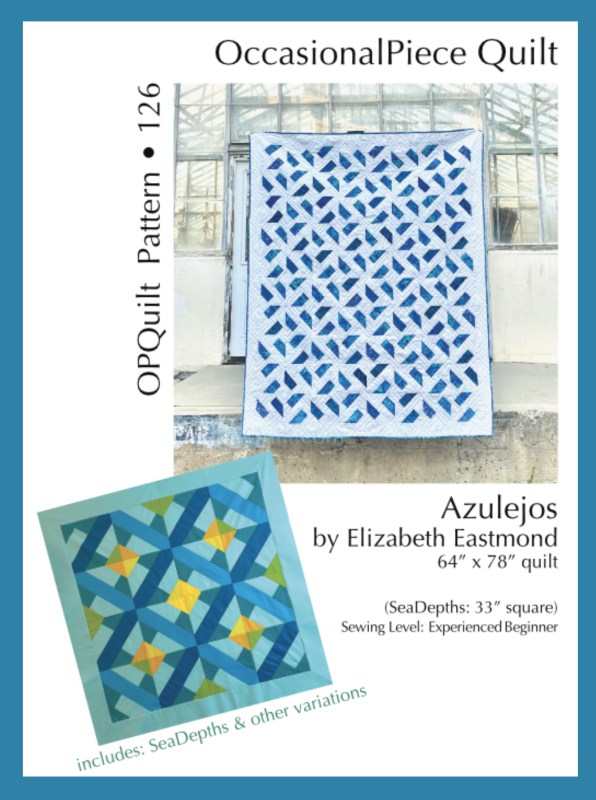
Pattern is Azulejos, from my pattern shop on PayHip. I just used fewer blocks to make it baby-sized. (And she gave permission for the photo.)
Happy Waiting-Until-You-Feel-Like-Stitching!

Quotes from Young Poets
Emily Skillings–
One question I am still grappling with is how to negotiate a balance between “innovation,” constraint, and intuition. The painter Jane Freilicher put it best, I think, when she said, “To strain after innovation, to worry about being on ‘the cutting edge’ (a phrase I hate), reflects a concern for a place in history or one’s career rather than the authenticity of one’s painting.” There’s also, I think, a quieter quote somewhere about her letting go of the pressure to be innovative, and that she felt she could really paint after that, but I can’t seem to find it anywhere.
This sounds a little strange, but I like to think of my life so far as a writer as a kind of oscillation between states of openness and movement and states of stillness and solitude. There are islands of production, productivity, and then pockets of…nothing. I think I am grateful to my depression in this way, in that it often forces me to be still.
Phillip B. Williams–
Writer’s Block Remedy: I go for months without writing and then write nonstop for about a month or so. An impasse for me is a sign that I simply have nothing to say, and that is fine. I had to learn that it was fine not to write. As far as what keeps me going, I’m still not sure. Something just clicks on and stays on until it runs its course.
Mario Chard–
Writer’s block remedy: The impasse is never with the writing itself; it is with the reasons to keep going.
Fatimah Asghar–
Writer’s block remedy: I take a break. I think that if you bang your head against the wall trying to create, you’re going to resent the process of creation. Usually when you reach an impasse it’s a signal to move on to another thing. Maybe you haven’t slept in a while. Maybe you need some time to ponder, to just stare at the wall. Maybe you need to live, truly be alive for a little and not near a computer [or sewing machine]. Maybe you need to read, see, watch—to refill your well.
Advice: I’d say you’re on no one else’s timeline.
Solmaz Sharif–
Writer’s Block Remedy: If the causes are perfectionistic, I pull out the collected poems of a poet I greatly admire and flip through to remind myself how many mediocre poems their oeuvre contains. It is my duty, I remind myself, to write even those mediocre, messy poems. These failures are the ones that create openings in the conversation for subsequent writers and poets to enter—I’m not trying to kill the conversation, after all. I pull out journals—André Gide’s, Franz Kafka’s, Susan Sontag’s—to remind myself how long the process is and how often the sense of failure or impasse hits. I watch a movie. Advice: Write a book you want to fight for. Fight for it.
I don’t have answers about “how to be an artist”; I’m not trying to make it sound like I do. But I do want to have that conversation. What do you want to do as a writer in the world? What do you see the arc of your writing life to be?
My corollary: Make the quilt you want to fight for. Fight for it. Acknowledge the arc of your quilting life.












 OccasionalPiece--Quilt!