PatternLite · Patterns by Elizabeth of OPQuilt

Flowers!

Since this link is out in the universe for a Poppy Block, and a lot has happened in those intervening years, let’s cut right to the chase.

The pattern has been updated, and the links below reflect that. Now you can find the pattern in my pattern shop on PayHip here.
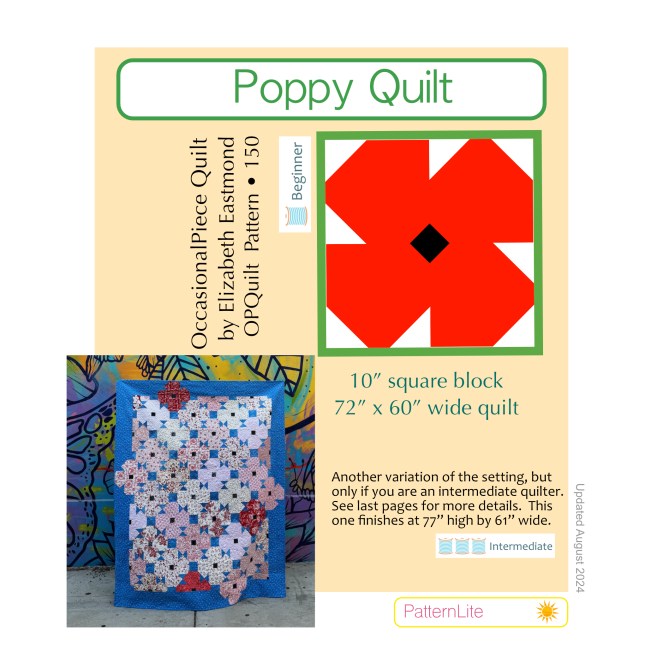
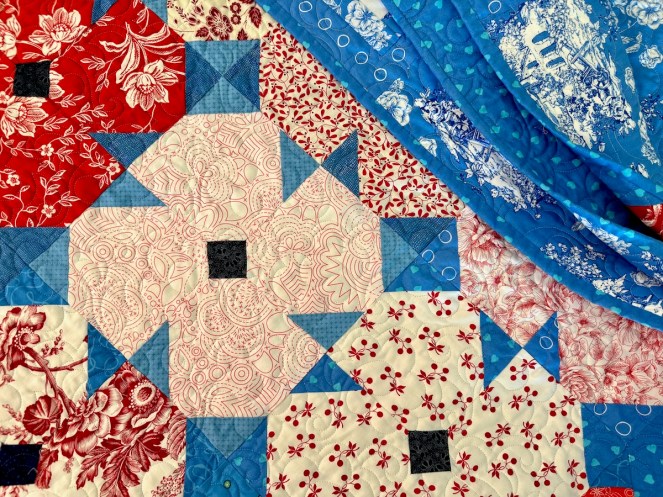
While the original poppy block is in the pattern, I’ve also given different ideas for setting your blocks, so it’s not the same old thing:
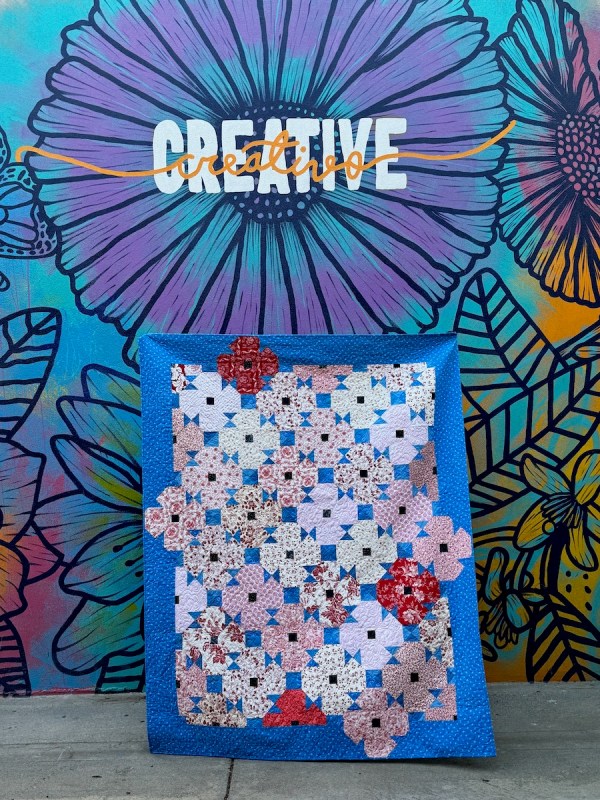
I wrote all about this quilt on this post.
Here’s some more flower/pattern information.
The Poppy shows up here, along with Sunflowers.
Okay, back to the originally written post.


Original Post

My nephew’s wife, Grace, wrote to me and asked for help.  She is a young quilter, who makes awesome gooseberry jam (she shared a jar with me), so I wanted to help. The quilt was for someone close to her who had just been diagnosed with breast cancer, and she thought a quilt was needed.  I agree.
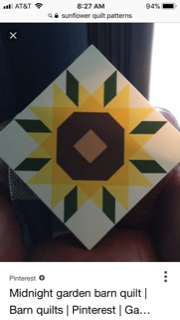
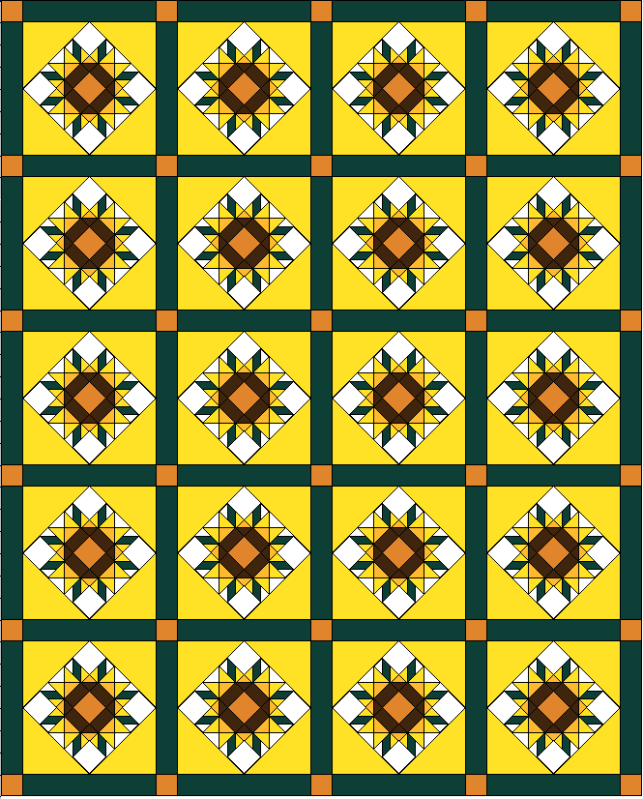
Sunflower1

She sent me the screen shot you see above, and since it was on Pinterest…and you know how much I LOVE their search engines (NOT), I thought it was easier to draft it on my computer using QuiltPro than try to find the original design (I tried…and failed…but kudos to whoever dreamed it up).  Besides, that was one of those “barn” quilts, painted on wood, not a cloth quilt.

This is what I came up with.  But I knew Grace wanted to move quickly, and yeah–all those pieces?

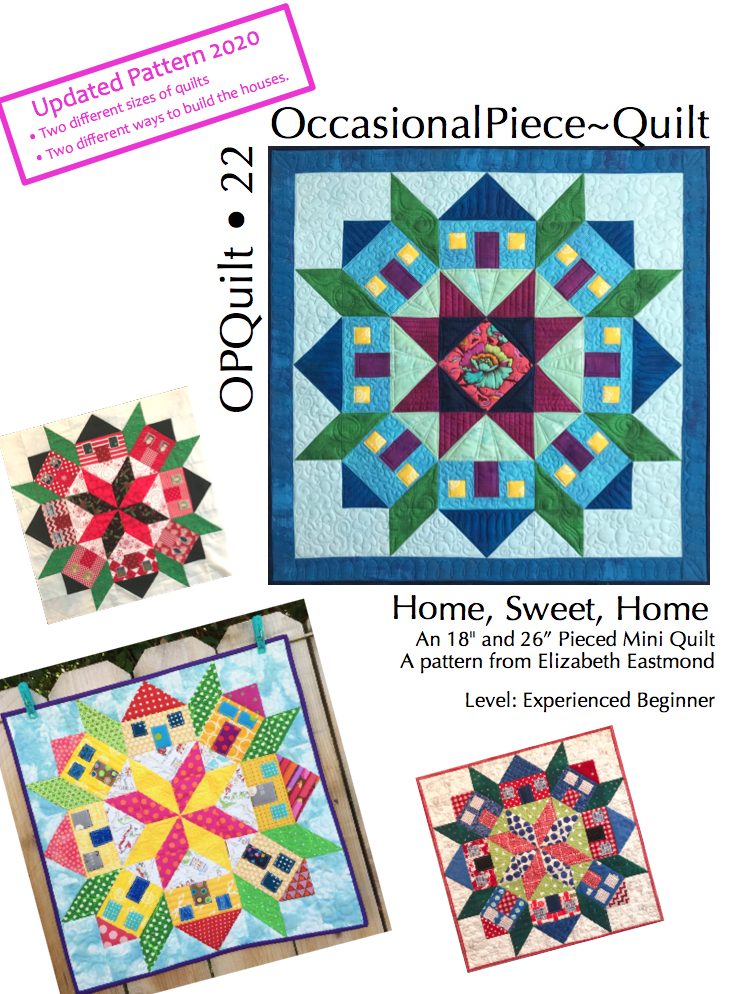
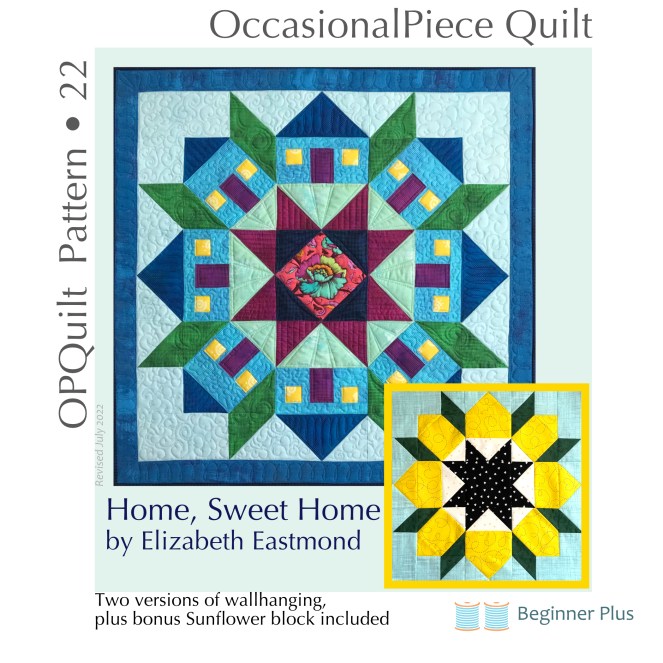
I thought about my Home Sweet Home mini quilt, and how she could make fewer blocks, but bigger blocks?

UPDATE: There is now a pattern for this sunflower quilt.
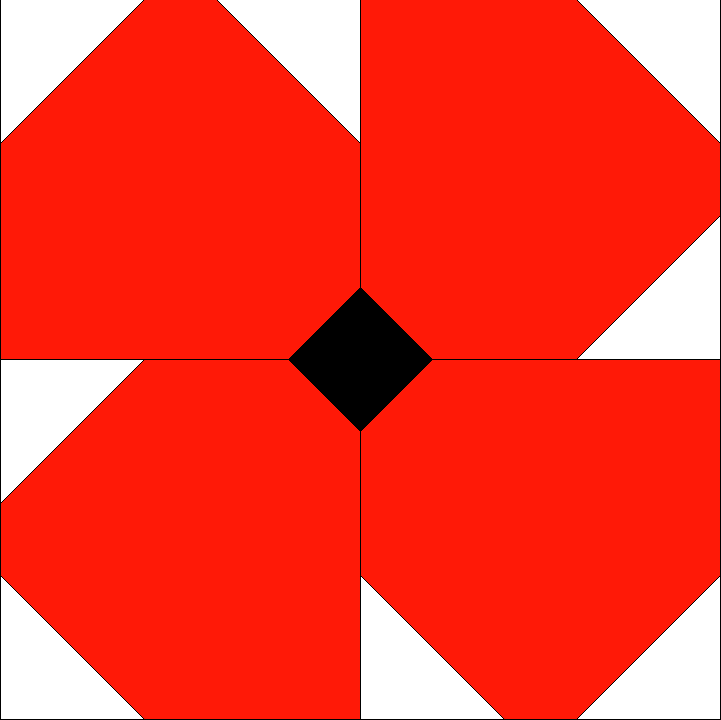
Grace wrote back.  She loved what I’d done, but now they were thinking poppies. She sent me a sample of a quilt she’d seen.  I drafted it up in my quilt software and drew up a quilt.  But I thought I should test out my own pattern, so I made a Poppy Block:
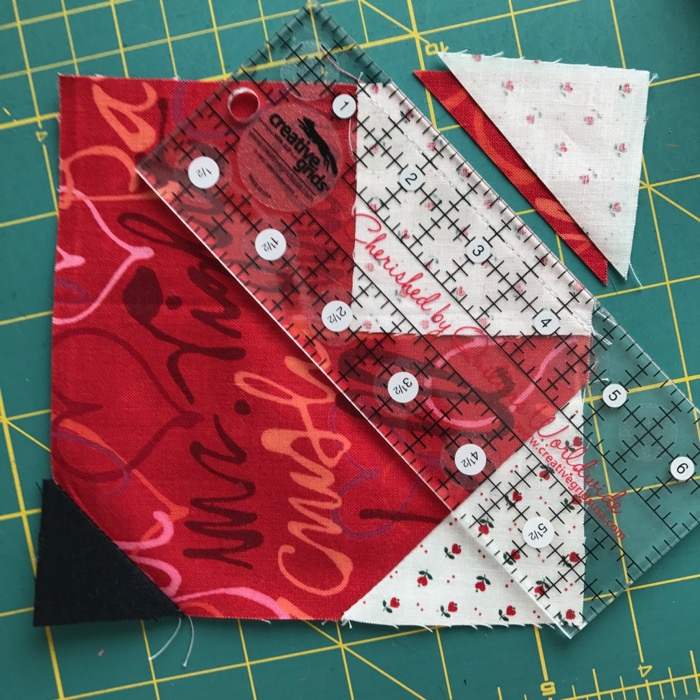
Poppy block constructon1
trimming snowball corners
Poppy for Grace

I think it will be cute quilt.  

It can be made in reds and greens and be thought of as poinsettias for Christmas.  Or made to commemorate Anzac Day in April, for the Australians.  Or red and white for a bouquet of posies for Valentine’s Day.  Have fun, and if your friends want a poppy pattern–send them to my pattern shop to get their own PatternLite pattern.  Thanks. PatternLite patterns were developed as they were simplified, and cheap — less than your drink at Starbucks.
redwhite triangles1
redwhite triangles2

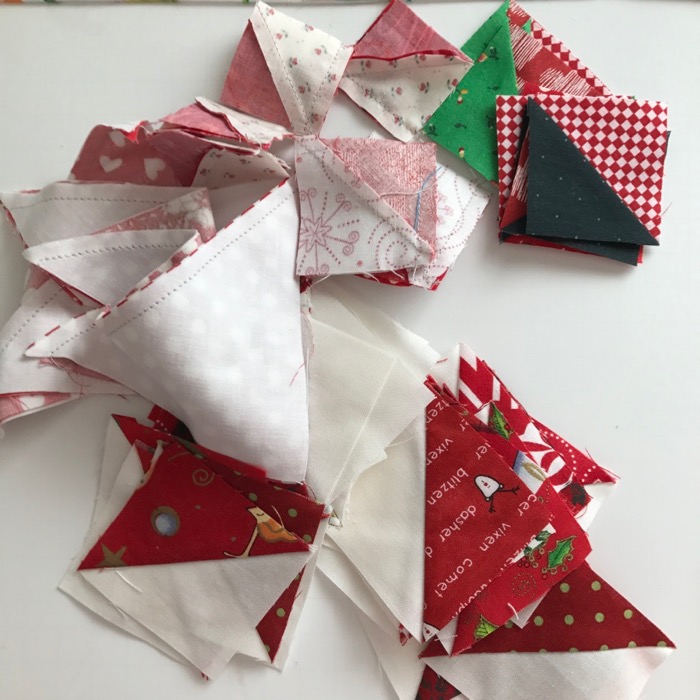
Making that block added to my collection of red and white triangles (ignore the interlopers in the upper right corner).  I trim them to whatever measurement’s closest, without it being a weird number, and save them.

Every once in a while, I sew them into four-patches.

I haven’t decided yet what to do with them, but a couple of questions arise: do I include the Christmas prints?  Or do they get their own collection? (I think so.)

Do you ever quilt with “rules”?  It’s about all I remember from my beginning art classes, ages ago in college.  The assignments laid out rules to create by — an edge to the sandbox — if you will, and went something like this:

  • Take an old piece of clothing, adhere it to a canvas and paint it like something else.
  • Use three shapes only.
  • Create a composition by taking a square of black paper, cutting out some shape and using the negative and positive pieces.
  • This assignment will use only two colors, but you may use any range of those colors.

And so on.  There are many books out there in the marketplace for guided creativity, but they all start with a rule.

Sometimes I find little bags of treasures in my sewing room, with pieces inside that have been collected according to some rule.  Like the red and white triangle rule.  Or the 3-inch square rule, but I kind of think that last one’s a bit of a cheat.
HST quilt
source

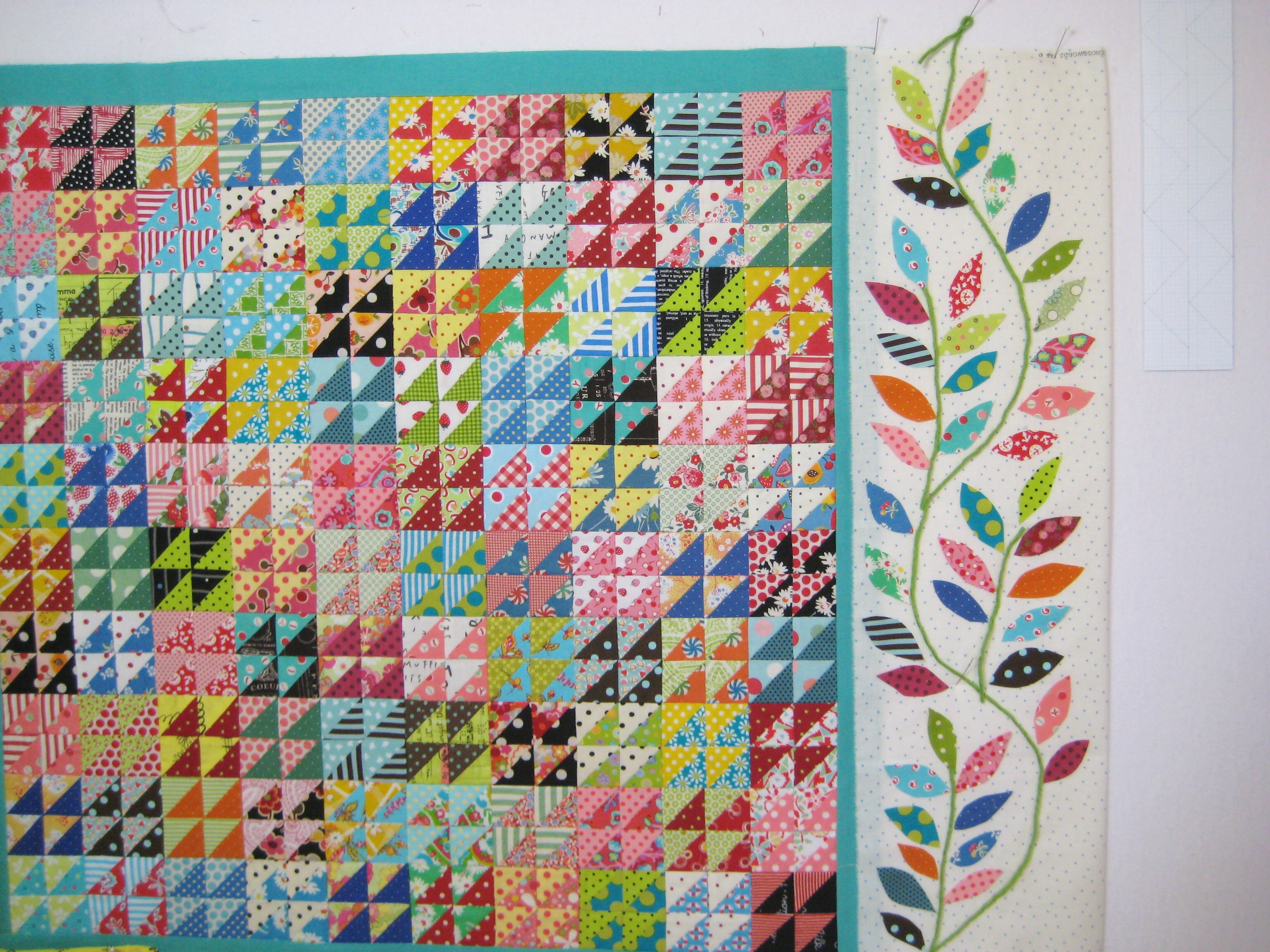
Several years ago, I saw this on Jan Burgwinkle’s blog, Be*mused, and fell in love with it.  Maybe that’s why I started making little HSTs.  (While she doesn’t seem to update her blog much these days, it’s still amazing to read through the archives.) So that’s my rule and I’m sticking with it: red and white triangles, although seeing this quilt again does make me wonder if I should break it.

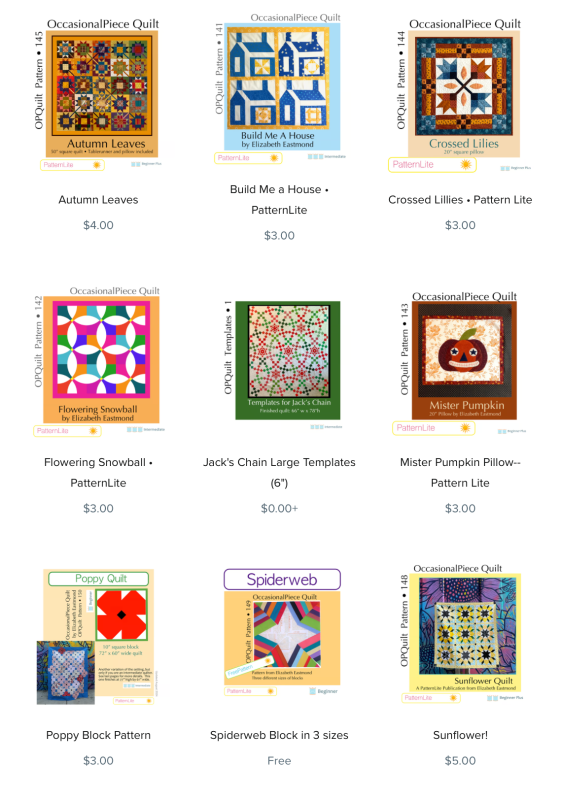
Round up of some recent patterns:
All the PatternLite patterns can be found here.
300 Quilts · Christmas Quilts · Free Quilt Pattern · Patterns by Elizabeth of OPQuilt · Tutorial

Christmas Tree Block Swap

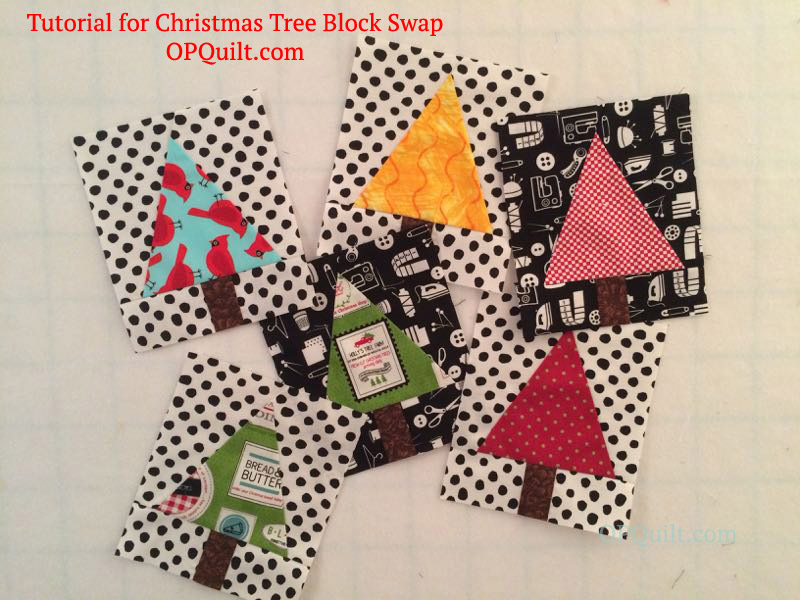
xmastreeswap
xmastreeswap_1

My friend Leisa saw a Christmas Tree Block Swap that was going on online, and said “Why don’t we do one like this with our group?” Sure, why not?  We don’t have anything else going on, do we? (right)

I drafted a pattern, just drawing this way and that, then made up a test block.  My graphic design guru Simone approved it, and we were off.  I transferred my dimensions to Quilt Pro, my quilt software program and here it is for you to download:

That’s FREE, no charge, but as usual please don’t print off one for your mother or your sister, but instead, send them here to get theirs.  Many thanks.

AND…as a reminder.  Please be sure to set your scale to 100%.

Now, the tutorial.  I apologize in advance for the pitiful lighting.  Chalk it up to working on a deadline, because our swap is in a a week and a half, and I need to get this to my quilt group for our Flash Mob Quilt Night.  (I hope they bring Christmas cookies to share…just saying…)

xmastreeswap_2

I also apologize for filling up your mailboxes with two posts so close together.  But then again, you might need this too, to spread a little holiday cheer around your sewing room.

xmastreeswap_3

This tutorial is for one block.  It took me a grand total of about one minute to make one block.  Choosing and cutting the fabrics took a little longer.  For our trees we are using clear bright tones/prints, such as green, yellow, pink, aqua, purple/lavender, orange, red.  For the backgrounds, we are using black or white prints.  For the tree trunk: something trunkish, please.  Here are all the pieces laid out. (Thank you Mary, for my cool board.)

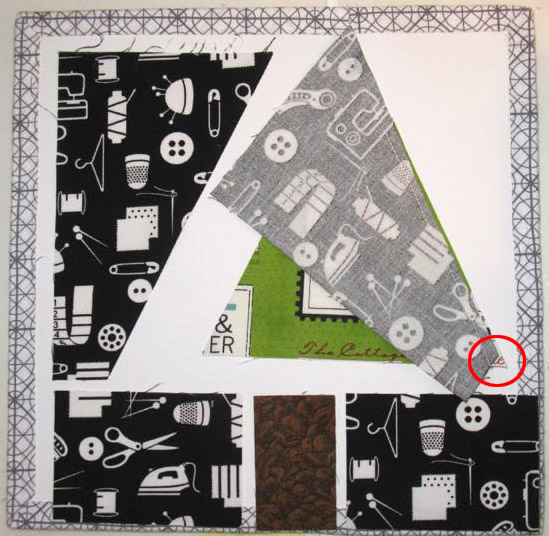
Sew the Upper Background piece onto the tree.  Leave that tiny wedge of 1/4″ goodness at the bottom right corner (shown in the red circle), and let the top of the upper background just hang off the tree.  Stitch 1/4″ seam.

xmastreeswap_4
xmastreeswap_5
xmastreeswap_6

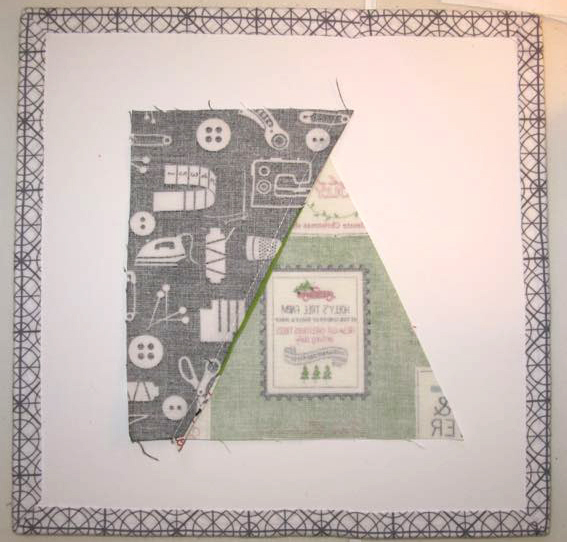
Backside of that piece.  Now the 1/4″ wedge of goodness is at the lower left, and the extra background is at the top.  Press seam towards the tree.

xmastreeswap_7

Repeat with other side.  

xmastreeswap_8
xmastreeswap_9

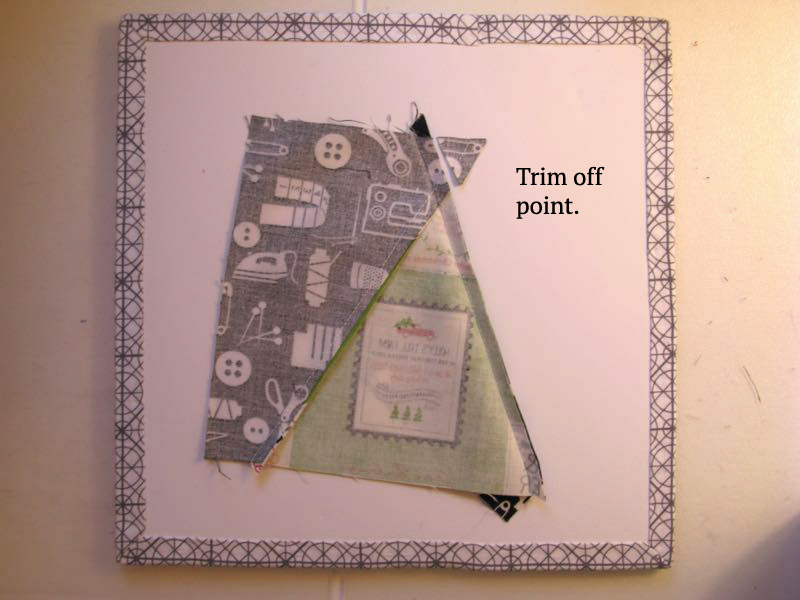
Trim off the extra point.  Press towards tree (see below).

xmastreeswap_10
xmastreeswap_11

Seam the Lower Background pieces on either side of the tree trunk.  Press towards the trunk.

xmastreeswap_12

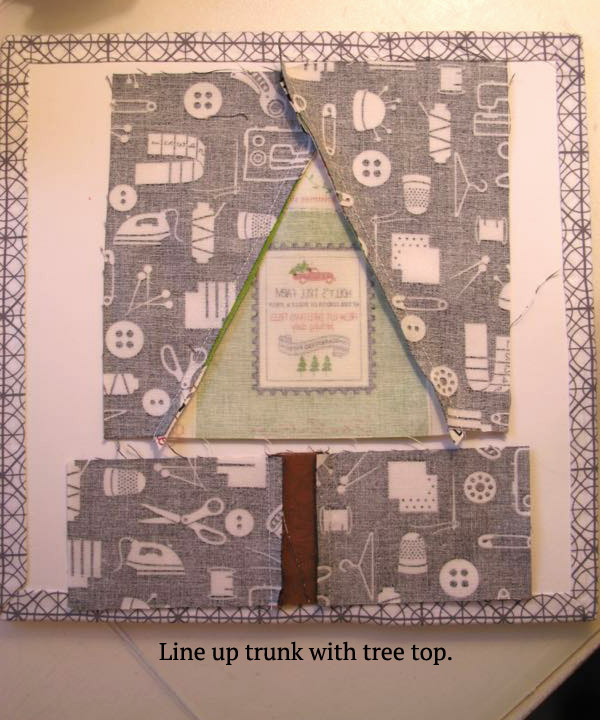
Line up the tree trunk with the tip of the tree, to get it on straight.  I’ve left a bit extra on either side, so if you want it wonky, feel free.

xmastreeswap_13

Press all seams toward tree.  You can see here the extra I’ve left you so you can adjust the trunk as needed.

xmastreeswap_14

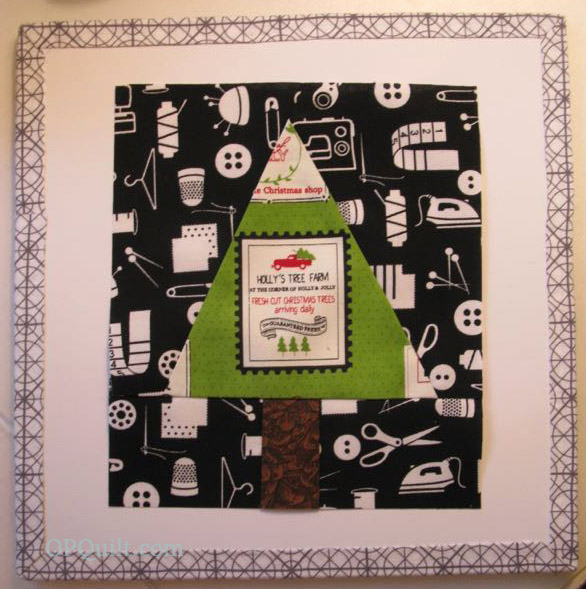
Trim the block to 6 1/2″ by 7 1/2″ like this: Leave space above the tree tip, roughly 3/4″.

xmastreeswap_15

Then whack off the bottom, so the total height is 7 1/2″.  This tree will finish at 6 by 7″.

xmastreeswap_16

Fussy cutting is always encouraged.

Now if you want to cut out a lot of Upper Backgrounds at once, do this:

1-Layer two pieces of fabric with wrong sides together (like it comes off the bolt).

2- Cut a square 5 1/4″ by 6 1/8″.

3- Measure up 1 1/8″ on opposite sides, and draw or cut a diagonal line.  It should be the same size as your piece B or D.

Remember that these pieces are opposite of each other, so don’t layer up your fabrics with all right sides up, or this won’t work.

xmastreeswap_final1

Here’s my first batch.  Now I’ll go do this some more.

Have fun making a forest!

tiny nine patches
Quilts

Mini House Quilt Finished!

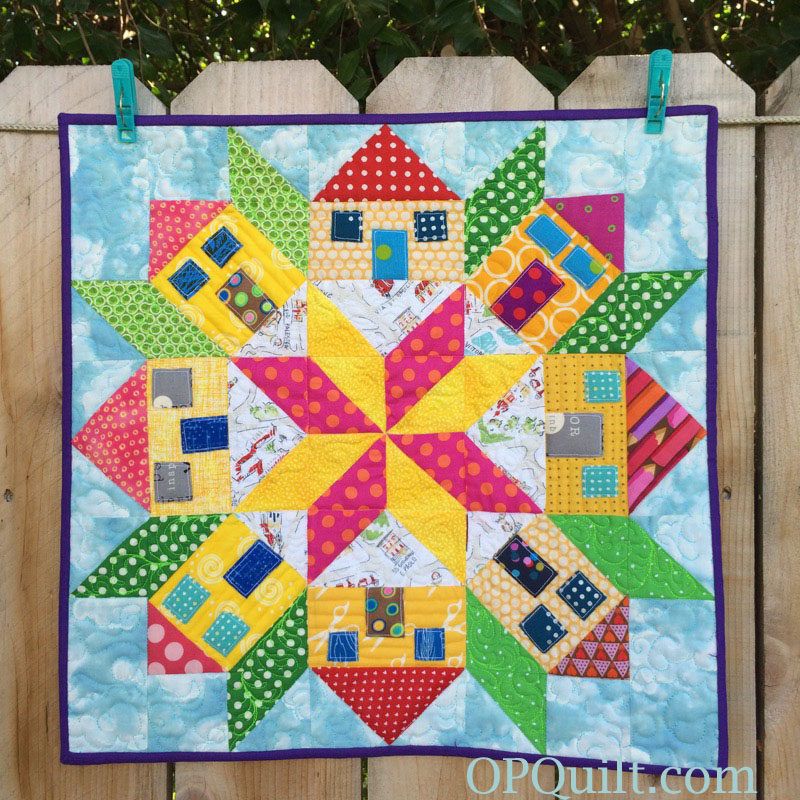
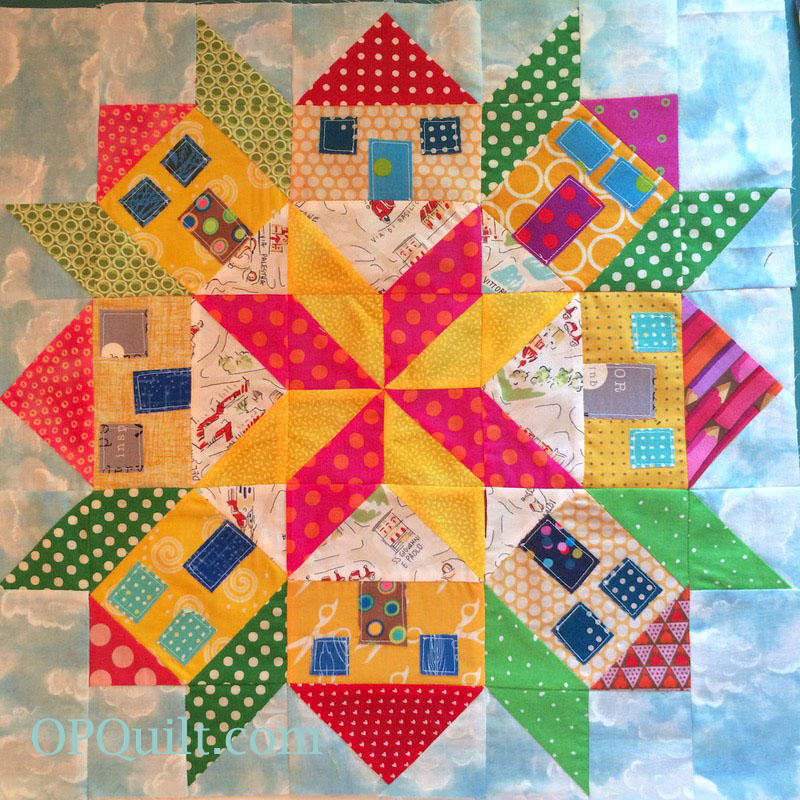
Mini House_frontlabeledMy mini houses quilt is finished!  I know you’ve heard that line before, but let me go back in time to a galaxy far far away, to this:

Fail Mini House

Mini House Fail.  Yep.  That center certainly is puckery, demonstrating clear signs of the Training Bra Effect. Evidently, something, somehow was just not right.

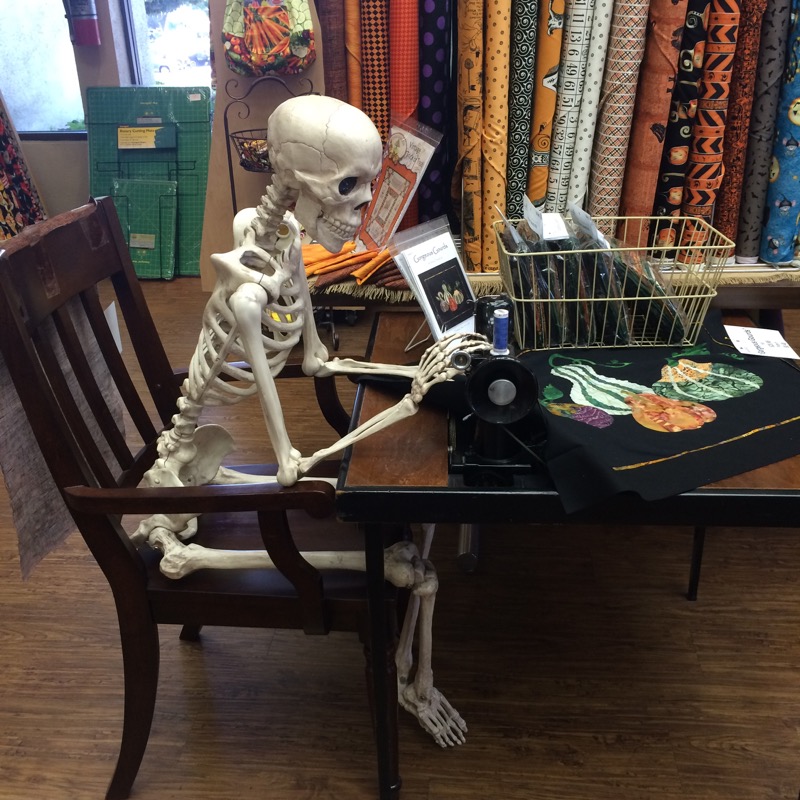
Sewing Skeleton

It feels like I’ve been sewing on this for ages. . .

Mini House Redo

But, armed with new templates, I persevered.  I cut six different combos for the center before I was finally happy.  If the center fabric was too busy. . . fail.  If the center was too washed out. . . fail.  The yellow and the pink below are really strong colors, but the visual texture is “flat.”

Mini House Redo_2

Everything seamed and pressed.

Mini House Redo_3

To quilt a small  quilt, I use straight pins to baste, sinking the point into the batting.  First stabilize the quilt by sewing the strong verticals and horizontals (think: nine-patch), then sew around the rest of the straight line pieces, using a walking foot and fine thread.  (I use Bottom Line by Superior Threads for this work as the thread is nice and fine and disappears.)

Mini House_front detail

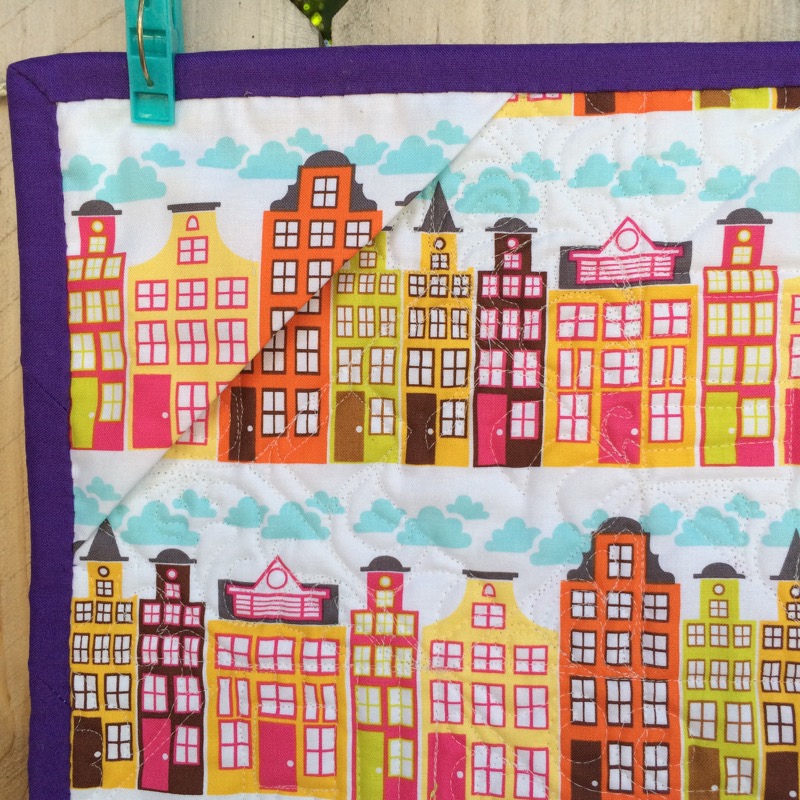
I stitched in clapboard on the houses, horizontal on the flatter houses and vertical on the squares, but broke out into curvilinear on the dotty houses.  I swirled in a bush, did a curvilinear on the front porches and the yellow points of the Lemoyne Star, then outlined and stitched in the sky in a random fluffy cloud effect.  A strong binding finished it off. Mini House_back detail

To help with hanging, I cut giant 6″ squares, folded them in half diagonally, then attached them in to the corners; I’ll insert a dowel cut to size, insert in the corners, and suspend the quilt from a push pin.

Mini House_frontlabeledThis is quilt # 147 on my 200 Quilts List and is 18″ square.

Houses Label

I still feel this way about my home!
NOTE: I’ve recently updated this pattern, adding another view, with a different contruction.  I’ve also revised the original construction techniques, making it easier to put together:

Home Sweet Home pattern front 2020

You can find it for purchase on PayHip.

Download a copy of the pattern front for reference here: 

Quilts

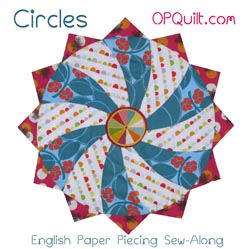
Circles Block #13–EPP Sew-A-Long

Circles EPP Button
Circles Block 13 EPP_OPQuilt.com

Tiny Swirly Gig
Circles Block #13 of the Circles EPP Sew-A-Long

Since I so rationally decided that I needed SIXTEEN blocks to make up my quilt, all I can chalk it up to is summer heat (coupled with our drought, we are going to have so.much.fun), regular old garden variety stress (having cloth in your fingers lowers blood pressure so I heard), or a blissful existence of sitting on sofas eating bonbons while watching videos and stitching.  Choose one.

But here I am again on the Final Four of the Circles Blocks, created because I wanted something more than straight lines to English Paper Piece.

Block 13 is found in my shop, together with all its friends of Blocks 13-19.

As usual, I assume you know how to do some EPP, but do like to give tips and more instructions here on the blog. For starters, I print out my papers on 24-lb. weight copy paper, a bit heavier than the usual stuff, and make sure my printer scaling is at 100%.  Print off four copies of the pattern, and cut them out around all the lines. You only need one circle, though.

EQ7 Block 13

I also print off a color picture of the block (this one made in EQ7) and keep it in my little baggie full of pieces.  It helps when my brain fades, or too much is going on around me, or I’m trying to remember what the heck all those little pieces are for.

Circles 13_1fabric selection

Fabric selection is usually based on what falls out first of my stack, as I glance over at all my blocks up on my pin wall and try to find fabrics that I’ve used before, so the quilt will blend.

The other day I put a photo up on IG and someone asked me what my fabrics were.  If you’ve been following me for any length of time, while I am totally impressed that a designer can make up a line of 14 fabrics that all go together, and I love love love them, doesn’t mean I’m going to use them all in a quilt at the same time (although I have done it once.  Or twice.)  And I’m a selvage cutter-offer, so the chances of me knowing what they are might probably be very slim.  I’ll probably know the designer, but the name of the fabric?  I have a thing for using a LOT of different fabrics in a quilt.  I mean, it’s a great big fabric universe out there.  Why not have fun?

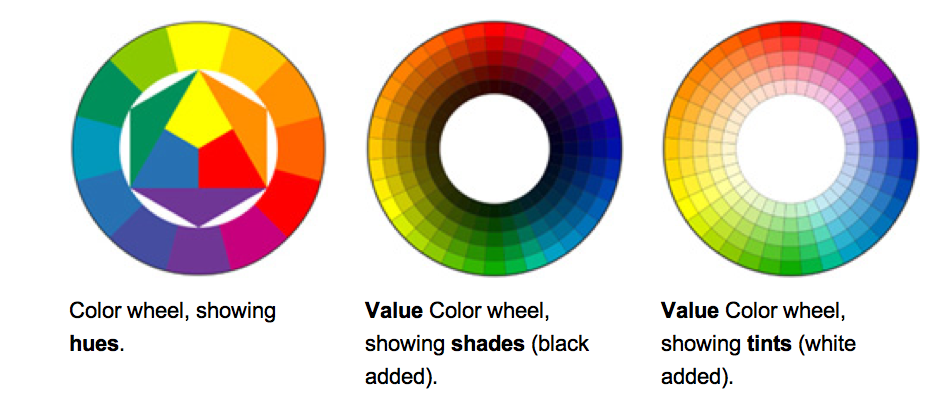
Color and Value Wheels

The other tip to picking good fabrics is to know your color wheel–how it works, as well as your value scale (light-to-dark).  (Illustration above from *here* which has a quick primer on color and value.) More quilts have been ruined by the inclusion of medium-value fabrics only, especially by the use of medium gray (ACK! ACK!).  Try to get a range of hues (colors) in light (tints) to dark (shades).

Circles 13_2

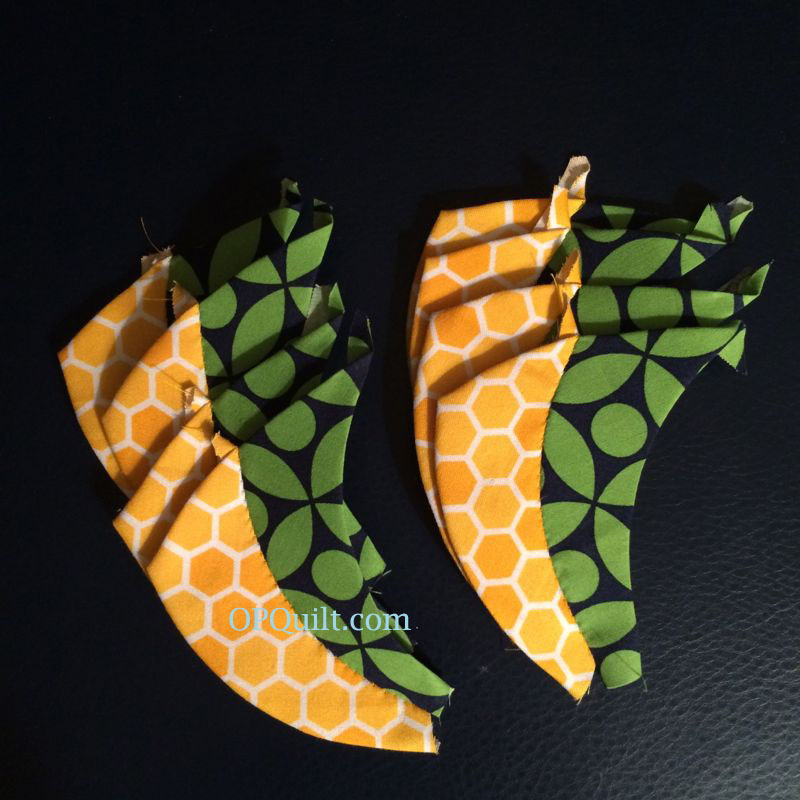
Which direction do you want your swirls to go?  If you want it to look like the pattern, place the printing face down on the wrong side of the pattern.  Whichever way you do it, be consistent on both colors of swirls.  I pin the pieces, slice around them with my rotary cutter (no, I am not exact), then use the glue method of getting the fabrics on the papers. (Your pattern pieces will look different than what is in the photo above, as I have revised and improved the pattern multiple times.)

Circles 13_3

Ta Da! All glued down. I don’t glue down that inner bit as it will be covered by the center circle.

Circles 13_4

I like to lay out all the pieces to see how they play together.  I like this bunch.  Often this is where I’ll switch out fabrics, trying to catch it before I get everything sewed together and then hate it.  If the choices will fight with each other, let it be at this stage.

Circles 13_5

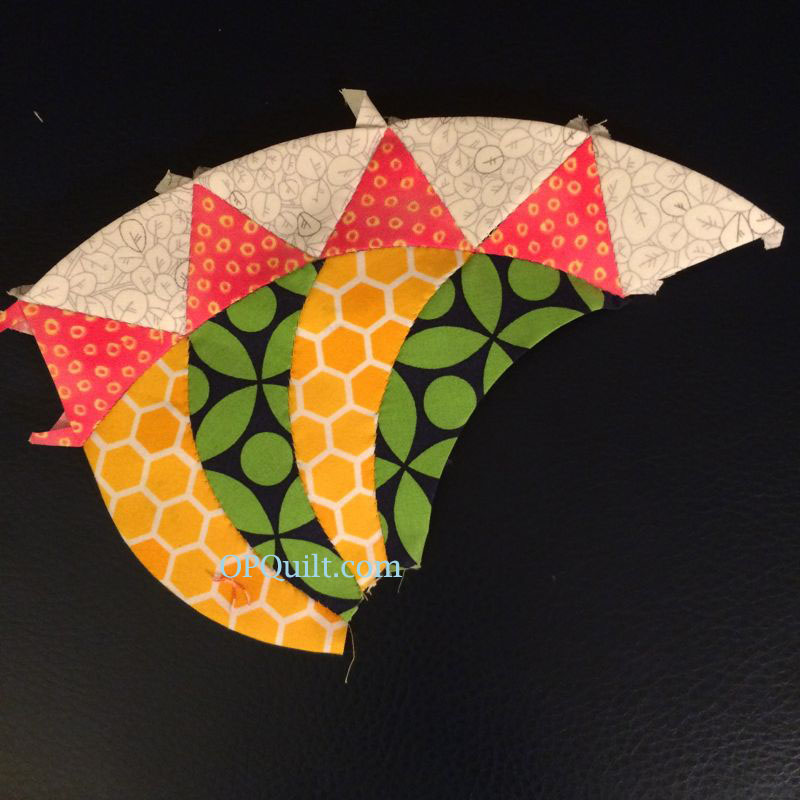
Sew a light swirl to a dark swirl, being consistent as to which color is on the left or the right.

Circles 13_6

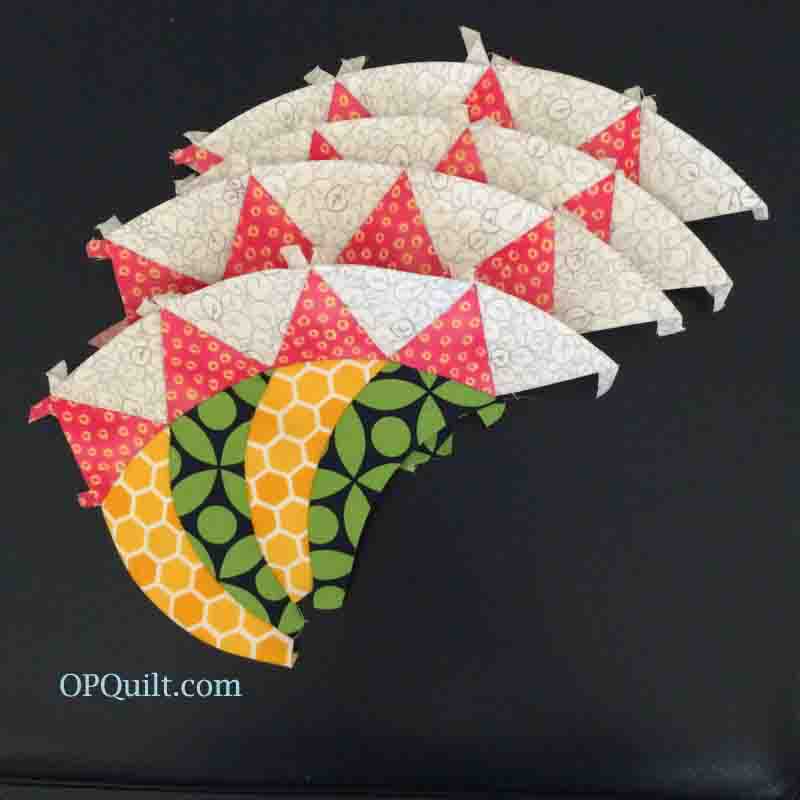
Sew the sets of two into sets of four.

Circles 13_7

Add the points to the sets of four, attaching the rounded edge of the pointy piece to the swirls.

Circles 13_8

Stitch the background points in between those.  I make sure that the “extra” background point always ends up on the same side, in this case, the right.

Circles 13_9

Don’t they look great?

Circles 13_10

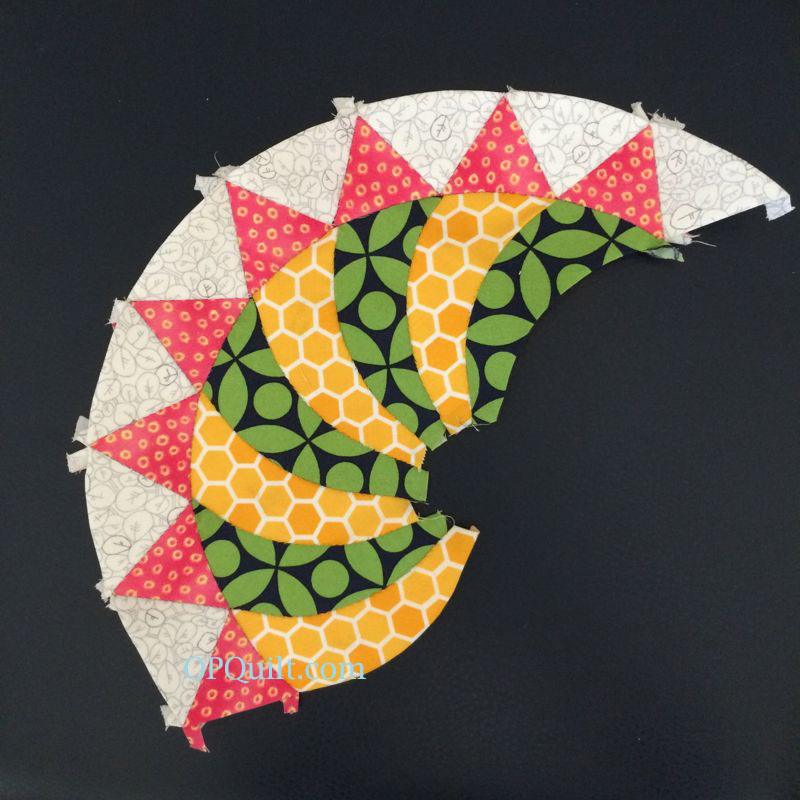
Now join two sets of four to make a set of eight. Beauty shot.  I stitch at night while watching movies with my husband and this dark leather foot rest makes a good backdrop.

Circles 13_11

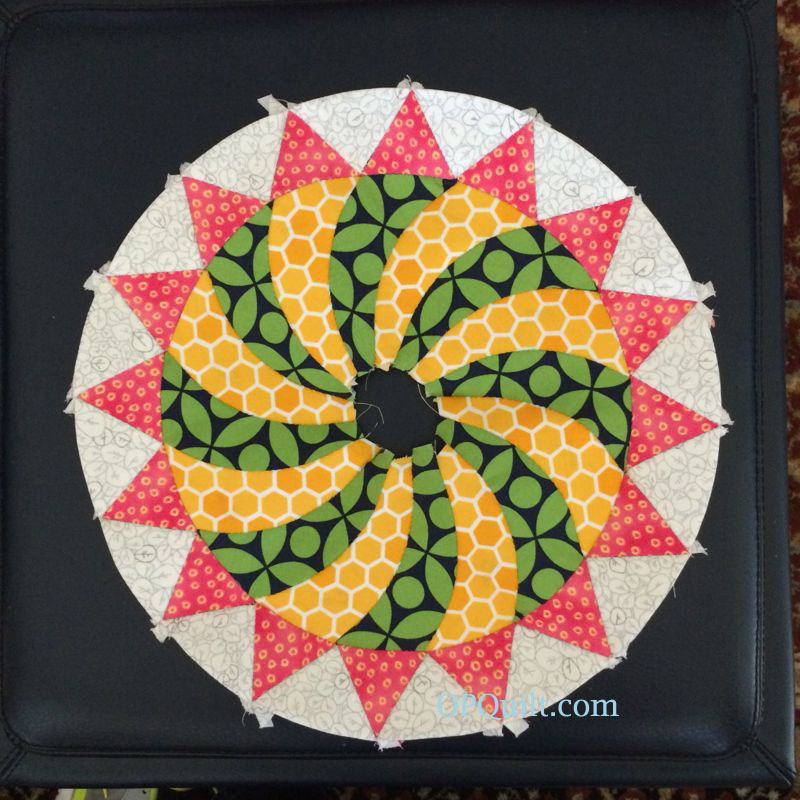
Now join the last two seams.  Yes, it’s okay to switch thread colors if you want to along one seam.  In this case I used yellow on the swirls and white on the points.

Circles 13_12

Another beauty shot.  

Circles 13_14

And another, from the back.

Circles 13_15

Cut a 14 1/2″ square of background fabric, fold in fourths and lightly iron in the creases so they will serve as registration marks for aligning your circle.  Remove all but the outer-edge papers.  If you see some wild seam allowances, trim them now (you’ll do it again at the end). While this is what you will cut for a background, in the Finishing Pattern, the block may be smaller when trimmed.

You know the point-up or point-down drill by now. (If you don’t know what I mean, I have lots of tips and tricks in the other twelve circle patterns.  Click on the SHINE tab, above, to see the other circles.)  Take time to try yours out on your background.  Obviously I went with point up.  Now I am not liking the center circle I had planned.

Circles 13_16

I have a bag of Rejected Center Circles, and I’m trying more out now.  

Circles Block 13 EPP_OPQuilt.com

But in the end, I went with this one, because often you just need a dark center to anchor the circle.  Appliqué the large circle to the background, then cut out the back, as shown in earlier circle posts (again, you can access them all by the tab up above). Remove all the papers. Now is the time to trim any wild seam allowances.  

Now appliqué on your middle circle, using tiny stitches.  When finished, press face down on a well-padded ironing board (or a folded towel, if your board isn’t padded). Now you have another circle!

The circle patterns for numbers 13-16, plus new blocks 18-22 are available in my pattern shop.

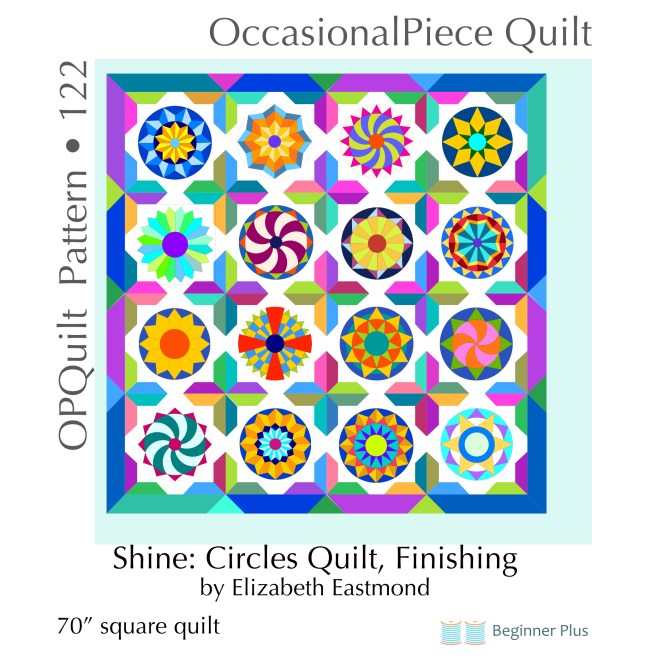
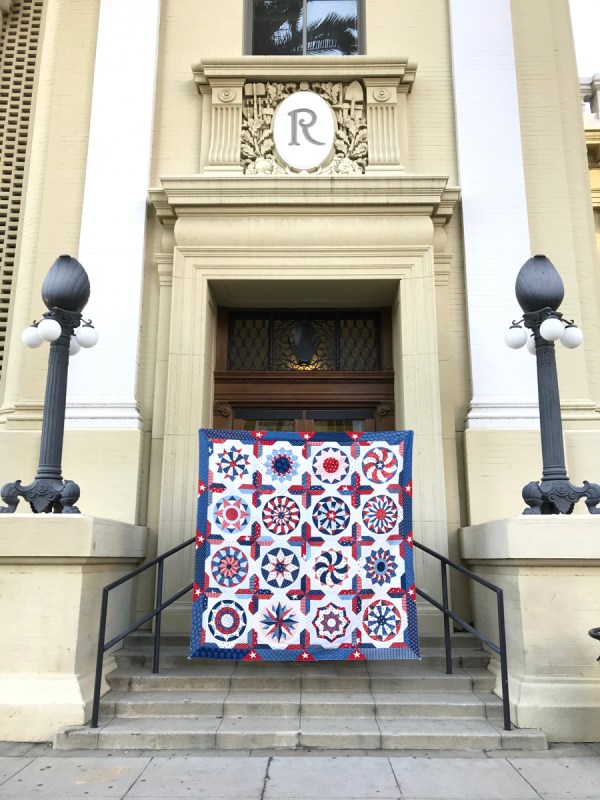
Also available is the pattern for finishing SHINE: The Circles Quilt.

Happy Making!

updated July 18, 2022