eQuilt Universe · Museums

Bisa Butler • World of Color and Artistry

Bisa Butler, The Safety Patrol (2018) Cavigga Family Trust Fund (© Bisa Butler)

Bisa Butler recently mounted her first museum exhibition at the Art Institure of Chicago and “surmounted biases in the contemporary art world against both people of color and fiber arts” as Deborah Brehmer puts it in an article in Hyperallergic. This recent article was sent to my by my artist sister, Christine Petty, a screenprinter, who, when her studio was shut down, made her way through the pandemic by learning the art of natural dying, and diving into the world of seeds, flowers and yards of softly hued cloth. My sister and I talk art, the drive to make art, and color. I’ve been sent links to Butler’s art from several sources, but the link from my sister sent me to the blog so I could share it all with you.

detail of Bisa Butler’s The Safety Patrol (2018) Cavigga Family Trust Fund (© Bisa Butler)

I created The Safety Patrol while in my last year of teaching high school and simultaneously preparing to debut my artwork with the Claire Oliver Gallery. I was constantly thinking about my career change and at the same time having strong feelings about my students. It was during this time that Trayvon Martin was killed while walking home from the store by a vigilante. Trayvon’s killer had just been acquitted under the Stand Your Ground law in Florida, and I was distraught. I couldn’t reconcile my emotions about the future well-being of my children and my students in a society where their lives are expendable.

To keep reading, artist’s statement is from here

Many quilters use color in their work. But Bisa Butler’s floating figures are drenched in color, not only from multiple layers of fabrics, but also by the use type of fabric: African Dutch Wax prints, which bring not only color, but texture. She artfully cuts and combines her fabrics and includes bits such as the key around the young girl’s neck and the patrol boy’s belt made of carefully fussy-cut kente cloth.

I Know Why the Caged Bird Sings, 2019
Minneapolis Institute of Art; Promised gift on long-term loan from a private collection. Photo by Margaret Fox. © Bisa Butler

The skirt on the left: earrings, and the skirt on the right: high heels, chosen by Butler in honor of Michelle Obama’s trip to Ghana.

Bisa Butler, The Storm, The Whirlwind, and The Earthquake, a portrait of Frederick Douglass, from here

In this article in Juxtapoz Magazine (another article worth reading), her migration to cloth from paint is described:

“as an art student at Howard University, she began using fabric to avoid paint, which made her nauseous while pregnant. But she realized something deeper was at play, her actual dissonance with paint. “I could follow the rules technically but I didn’t have the voice. The paint didn’t connect to me.” Butler was introduced to textiles by her mother and grandmother, both dressmakers, who taught her how to make her own clothes. “Fabric was of my family, so using kente related to my heritage. When I made the portrait of my grandfather whom I’d never met, I realized I needed to use all African fabrics, and I used my grandmother’s fabrics that were old because I wanted to assert that this man lived before,” she said.

Reading the Juxtapoz article, I was fascinated by the history and meanings of the Dutch Wax prints and kente cloth, especially the names given to the pieces in Douglas’ portrait, or those in the I Know Why the Caged Bird Sings, above.

In the Hyperallergic Magazine article, Brehmer notices some women who gather around one of the quilts:

“I watched a group of three white women take in a piece called “Survivor” (2018), which addresses female genital mutilation. They discussed the technical aspects of quilting. One explained what a “long-arm” sewing machine is. They shared observations regarding the meandering lines of stitching and the way Butler layers transparent lace, silk, and tulle over opaque fabrics to create depth and shadows. They were in awe of the technical mastery of the work.”

Brehmer has noticed how we quilters often interact with many quilts as we notice the technical aspects: “How did she quilt this?” “Is there a pattern?” “Where can I buy that fabric?” I’ve seen it happen at quilt shows and so have you, when we get so involved with “how did the quilter make this” that we forget to notice (in Butler’s case) the joy, the history, the placing of historical figures in our time, asking us to put human lives and needs and challenges at the center of of our gaze. We want to own or borrow that particular quilt artist’s approach and those questions come from that impulse, I’m convinced. While my quilts will never be on par with Butler’s, and my subject matter is — oh, so different — I can learn from how she comes to the work. I can learn to let art climb in and infuse the making with joy and meaning, and yes, with color.

On the Art Institute site, in a short video interview with Butler, we see her studio, get a sense of how she works, and listen to talk about her education and guiding principles in her art. I pulled the images above from that video, and loved the two above of her obvious delight in seeing this exhibit of quilts, of textiles, of history, of her vision in such a storied place as the Art Institute. I think we are all familiar with the Gee’s Bend and Amish quilts, both earlier exhibits in major national museums. I view this exhibit as another break-through show, intended to showcase the art and craft of quilts.

Happy Quilting!

Free Quilt Pattern · Gridsters · Something to Think About · This-and-That

This and That • May 2021

This has been a busy week, with zooming and teaching at the Orange Grove Quilters Guild, but I’ve managed a few things around the edges.

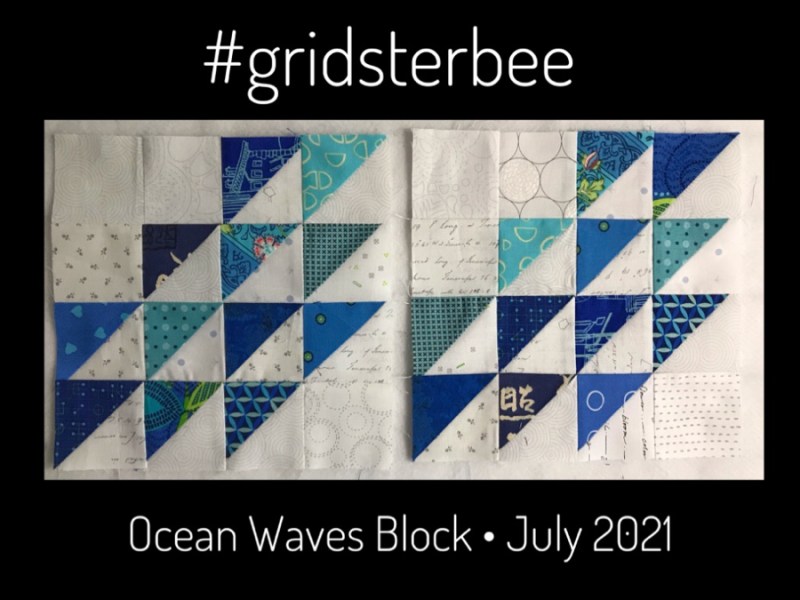
This was April’s Gridster block, requested by Nancy. She sent out the blue fabric, and we chose the other, with her guidance.

This was May’s Gridsterbee block, chosen from my Sawtoothmania pattern by Allison. She also sent out fabric, but we provided the center color patches.

She had us do a wonky Christmas Tree. Allison asked for the one from another quilter, but I also have a free tutorial sheet on making little Christmas trees, too. Such a clever idea!

My husband brings me flowers every day…well, photos of flowers. This one measures about 1 inch across in real life.

I finished Vesper Flights, and went on to this one: The Midnight Library. I listen to them at the same time my mother does, but this is one I wish I had in print, so I could underline things that caught my heart and imagination. Now I’m deep into Obama’s A Promised Land. It’s moved much faster now he’s been elected, and hearing about the 2008 economic meltdown, as well as the hog-trading of politics has been interesting. I am SURE I never want to be a politician. I’m sticking with quilting.

This is a close-up of one of the panels I used on my Wealth of Days quilt backing. I was stoked that it had our city on it. I tell most people, “we are between Palm Springs and LA,” but here we are!

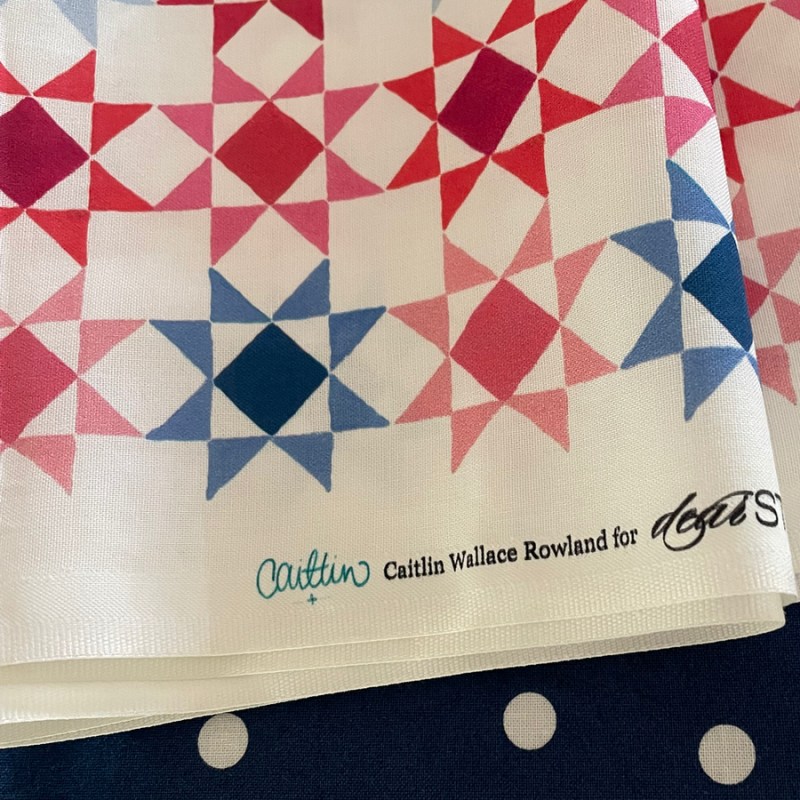
Fabric receipts? Now the fabric just shows up in my mailbox, like magic, or something.

Occasionally, when writing this blog, or trying to color in a design, I can’t quite make the program give me the color I want (like this background). That’s when I turn to this no-frills site which shows a ton of colors with all their hexadecimal codes. I always start with the Blues page, which is what I’ve linked you to. I just copy the #code, pop it into my software or blogware, and I’m good to go.

I love following people who know what they are doing. I love reading their blog posts, their Instagram posts, and while I’m not a total fangirl of them all, I have several favorites (there are too many to list here; see my list at the bottom of my blog). I appreciate their sharing what they’ve discovered and learned. However, recently a famous maker of absolutely necessary quilting supplies popped the above Instagram ad up on my feed. (I’ve blocked out all the identifying marks to protect the marketing department.) She may be qualified, but is she an expert?

Shouldn’t she be referred to instead, more appropriately, as an Influencer?? I like Aurifil’s word for their influencers: “Ambassadors,” which my macaron-making daughter let me know, is also used in her industry. Rather than the previous ad campaigns of simple extolling of excellence of product, we now use people for that. (In my English classes of yore, this was a type of logical fallacy, using celebrities to sell products; however, we’ve morphed from random celebrities to using established personalities in the field to sell products.) Carolyn, a sewist/sewer who I’ve read for years, knows her stuff and has an excellent post on the rise of Influencers. I love this part of the post:

My criteria is based upon:
– Can they actually sew?
– Are they learning to better their craft?
– Do their garments fit well or are they just photographed well?
– Do they have any actual fabric knowledge or are they just taking stuff because it’s free?
– Do they understand why notions are important and why they’re needed to perform a task?
– Is all of their knowledge YouTube/Internet based or have they actually read a sewing book?  Not all YouTube videos show you the correct techniques.
– Is this just a way to make them Social Media Famous?

A reminder for us creatives from Grant Snider

And lest you think I just sit around, I am working on a scrappy blues quilt, but it’s pretty shy right now and I just can’t coax it out from underneath the bed. I’ve even tried leaving spools of thread and colorful scraps to lure it into the daylight. Maybe later I can get a photo of it.

This is a quilt for a college-girl’s bed. My granddaughter shyly asked me last time I was at her house, “Grandma, will you make me a quilt for college?”

Me, inside:

Me, outside:
“Absolutely!”

We traded designs and pictures back and forth, but I quickly discovered that she is a minimalist, and likes gray. She knows I hate am not a fan of gray (generally), but she told her mother she thought I would come around after working on her quilt.

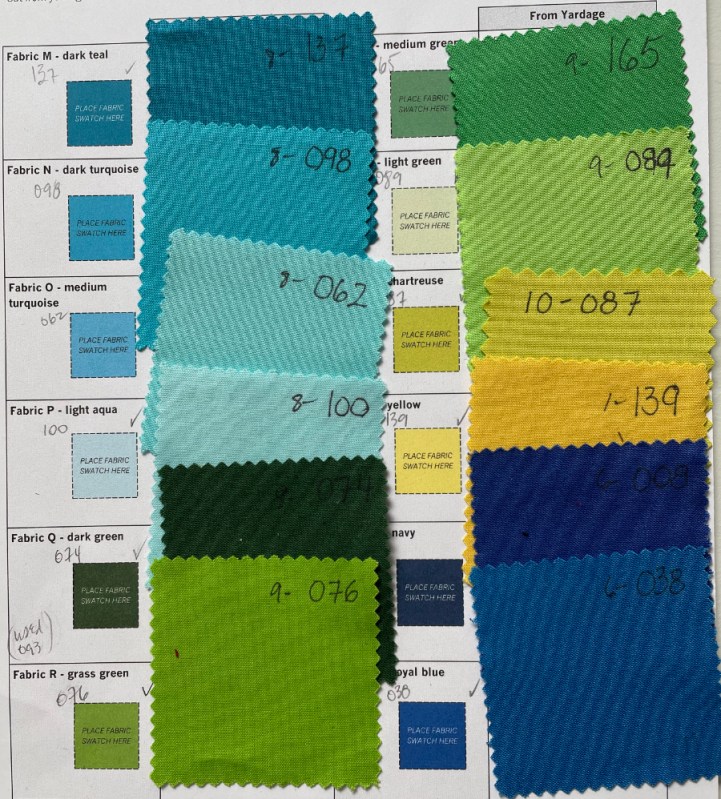
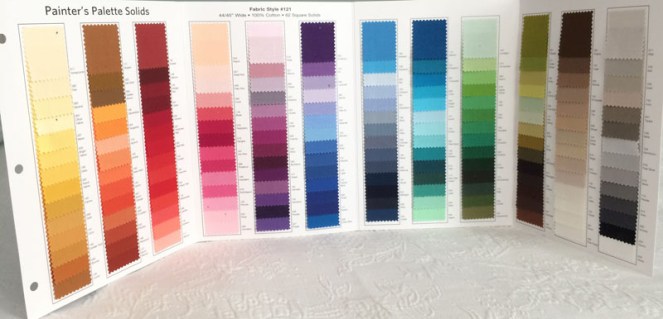
The red line in the drawing above is to approximate her queen-sized bed. I ordered yards of Painters Palette solids from Pineapple Threads, and they arrived last week. Between the shy scrappy blue quilt hiding out of sight, and this one, I’ll be keeping busy.

I can’t believe I signed up for this, but I swear it was because they come in cute little boxes. I do have some undressed pillow forms around her that need some clothes, and these seemed to call out to me (although if you know me, it won’t surprise you that I’ll be changing up some of the designs…looking at you Miss Christmas). But I’m excited to get a little fun package every month in the mail. (Guess this means I’m in covid-recovery–that I’m actually planning into the future.)

Lastly, I listened to/watched this show about the writer Amy Tan, called “Unintended Memoir.” It gave me so much to think about as I worked on the shy scrappy quilt, and now I want to go back and read her books again from her first, Joy Luck Club. She speaks movingly about her mother, and Tan chronicles their relationship as well as the writing of her novels. It lasts about 90 minutes; I recommend it.

Happy Quilting!
Guild Visits · Something to Think About

Who Gets to Make Art?

I’ve been thinking a lot lately about our world of quilts, and by that I don’t mean the larger world–just our own little world. I’ve made some hideous quilts, some use-up-this-fabric quilts (above), some quilts I consider my best masterpieces. Our own little world is echoed out into our guilds, our social media, our quilt shows, publications and then it echoes back to us in terms of the materials we can use. It’s a cycle, a circle, but at the nub of it is that one quilter looking at her one stack of fabrics, or the sketch she made while waiting at the doctor’s office and seeing the print on the back of the chairs. It could be she was messing around with a traditional block, or created one of her own. And from that nub, that spark, hopefully art begins.

from here

I’ve been thinking about this because of an article by Guy Trebay (found while cleaning out) where he asks straight off, “Who gets to make art?” Written about the International Folk Art Market in Santa Fe, it is an interesting overview of this age-old question.

from here

Do you get to create art? Do I? Or is it only relegated to that famous quilter that is all over Instagram? The lady who has her face on the ads of the sewing machine you like? Does more fame equal more entitlement to call it art? And then there is the pressure from the outside world, debating forever and ever if making a quilt is a craft or an art?

from here

Trebay attributes this question to Luke Syson, and says that “In asking [this question], Mr. Syson was adding his voice to a growing chorus of museum professionals who are challenging traditional hierarchies of art production. He was talking, in this instance, about the obscure craft of scrimshaw, subject of a fine study show at the Fitzwilliam, but more broadly about the importance of recognizing and celebrating those gifted artists whose work is so often relegated to the stepchild status of crafts.”

from here

Luke Syson, now the director of the Fitzwilliam Museum at the University of Cambridge (Britain), shares his experience of having to address some of his biases about what iconic art is in his TEDTalk, which he titled “How I learned to stop worrying and love “useless” art.” It’s worth a listen, if you have a few minutes. In that afore-mentioned Instagram post about scrimshaw art, he asks “Who gets to be an artist?” In the text he writes ” I thought about the scrimshanders then – working class, almost entirely anonymous, using their time to making things that were beautiful and that documented their lives. Amateurs, yet completely excluded from the world of leisure that this word implies. But I’m guessing there was a collectors market for these objects early on – that these were a sideline rather than simply the making of personal souvenirs.”

Which leads me to think about the anonymity of women, making their art for years and years, hidden in plain sight. They were making that which was beautiful to them, and which represented their lives. And yes, amateurs, all. We’ll leave this discussion here, with a quote from Trevor Bell:

“Art condenses the experience we all have as human beings, and, by forming it, makes it significant. We all have an in-built need for harmony and the structures that create harmony. Basically, art is an affirmation of life.”

Today is Mother’s Day. My mother is on the left (c. 1948), my daughter (named after her) is shown in the center in a photo from high school (c. 1998). (I sent this photo to her when she complained about one of her children being always on her phone.) I’m on the right (c. 1972).

My mother made art: seven of us. She never quilted. She read. She never painted, as did my father. She did do dishes, laundry, dressed elegantly, organized us, kept us going. I owe her everything, and as she approaches her 93rd birthday, this Mother’s Day I celebrate her as a different kind of unsung, ungalleried, un-media-ed, unknown sort of artist, but she was significant and affirmed us all.

I’ll be in my happy place this week, hanging out with the Orange Grove Quilters. We’re making Merrion Square in our Workshop. If you want to hear my program of Abecedary of Quilts or participate in a live/online workshop, please contact Pat (the Workshop Chairman) at workshops@orangegrovequiltersguild.com or drop me a note (and I’ll check with Pat). I love teaching this little quilt, as there are as many different quilts and there are quilters. Each one makes this little village their own.

And as life moves on, it seems this will probably be the last time I teach this class. Let me know if you are interested.

Happy Quilting! (turn the sound on)
Free Download

Fly those Geese!
Wealth of Days underneath a poster of one of our town’s vintage packing labels

When I first starting making this quilt, I cut each flying geese block by hand because I was not able to rotary cut. I drew out the lines, cut a triangle, and piled up the cut pieces in bags for their corresponding temperatures. After constucting them, I found out how unstable the edges were, how inaccurate a method this was. Of course, it didn’t help that one arm was in a sling, but hey, a quilter’s gotta’ do what a quilter’s gotta do.

I’ve also done the snowball-on-the-square method, which is good for single Flying Geese.

But I’m a fan of the four-at-a-time, provided you use the Mostly-Magical-OPQuilt method of trimming them. I showed this trick to my friend Cindy of LiveAColorfulLife the other day and she said it changed her life. I took that with a grain of salt, considering the covid-lives we’ve been living, but I was happy it worked so well for her. Here we go.

NOTE: In the free Tips and Tricks Handout, downloadable below, I give you a formula for figuring out what sizes the large squares and the small squares should be. No more charts!

I use a 4-inch ruler for smaller Flying Geese, and a 6-ish-inch ruler for larger. (Can we talk about Rulers?) It’s all in where you take your first cut, and the angle of that first cut.

Step One. Make your Flying Geese, and grab a ruler, preferably one that has a diagonal line.

Step Two: With the flying geese point FACING TOWARDS YOU, line up the ruler’s diagonal line with that right-hand folded edge.

Step Three: Concentrate on where the r.h. tip of the ruler is, and where the measurement for your Flying Geese is. I’m trying to make a Flying Geese that will finish at 3″ by 1 1/2″ tall, so I’m concentrating on the 3 1/2″. If you have done your measuring and cutting correctly, don’t worry about the lower edge right now. Line up the r.h tip ON THE FOLD.
Line up the target measurement on the LEFT-HAND FOLD, as shown. Note: I am now free to make Flying Geese any size I want, not just what’s out there in the manufactured acrylic cutting rulers.

Step Four: Trim the RIGHT excess and the TOP excess.

Step Five (and final): Rotate the Flying Geese block so the tip is pointing away from you. Line up the LEFT (3 1/2″) and LOWER (2″) side or the measurement at which you want the block to finish. Trim away the remaining excess (as shown).

I can crank through a ton of flying geese using the four-at-a-time and the Mostly-Magical-OPQuilt-method of trimming. So can you.

Okay, because everyone likes a free handout, here it is: Tips and Tricks from OPQuilt.com — Flying Geese.

Happy Quilting!