Quilts

Project Folio–Part II

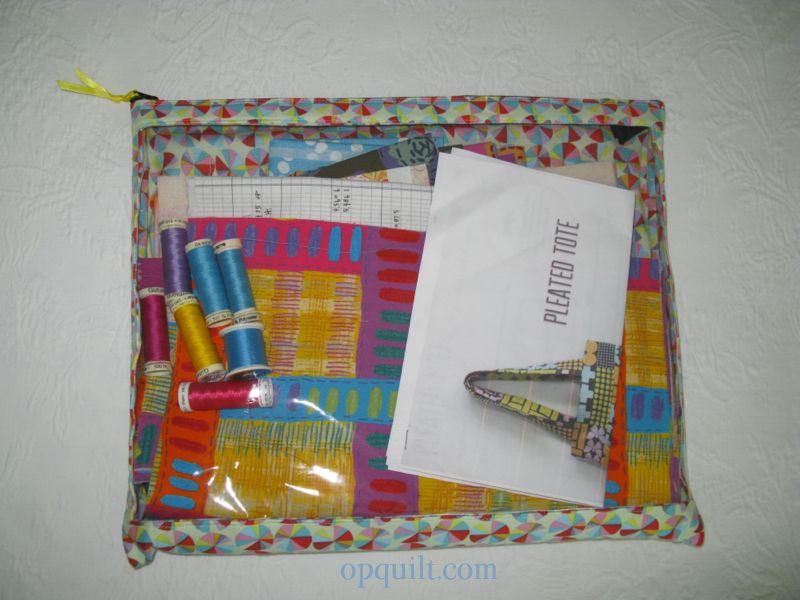
Project Portfolio Filled_1

This is part two of the tutorial for the Project Folio.  Click *here* for part one.

STEP TWO: Making the Front Vinyl Window

8Sandwich Vinyl

The side (1 1/2″ wide) strips go on first, on the shorter (15″) sides of the vinyl rectangle.  Sandwich the vinyl between one interfaced piece of fabric and the other (un-interfaced, or plain) piece of fabric, lining up the raw edges, with right sides facing each other and towards the vinyl.
9StitchVinyl

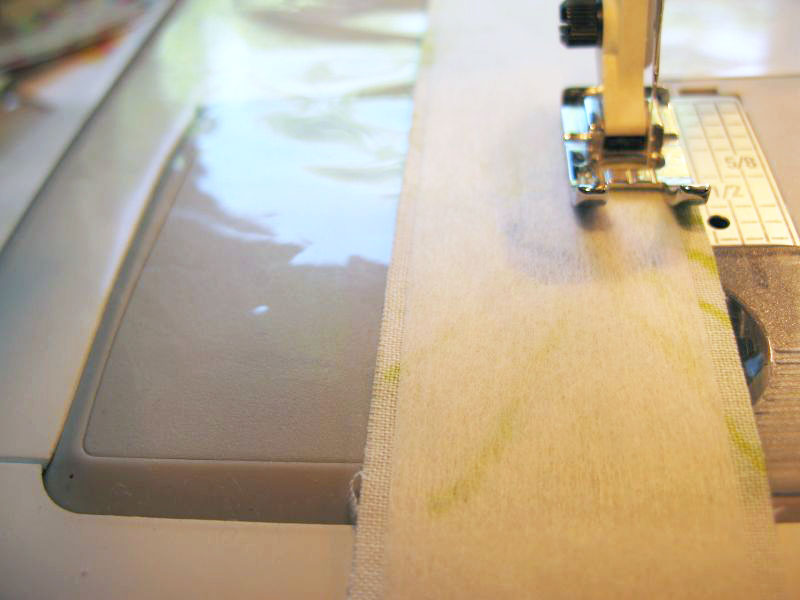
If your strips are longer than your vinyl, don’t freak out.  Just center the vinyl and stitch along the long edge, using a 1/4″ seam.  Carefully press the strips away from the vinyl, keeping your iron ONLY on the fabrics.  Don’t touch the vinyl.  You won’t be happy if you do.  Topstitch on the fabric, about 1/8″ away from the vinyl.  You may use contrasting or matching thread.  I was whipping through these, so whatever I was sewing with was what I used for topstitching.

10Trim Edges

Trim the fabric strips even with the vinyl.  Repeat on other shorter side.

11Top Strip_2

To put the upper, top strip on, sew ONE piece of wider (2 1/2″) interfaced fabric to the vinyl, right sides together.  It’s easier if you put the vinyl to the feed dogs to do this step, and kind of ease it along.

11Top Strip_3

Fold the long  edge over 1/2″ and press.  You are working on the TOP edge of the vinyl front window at this point.
11Top Strip_4

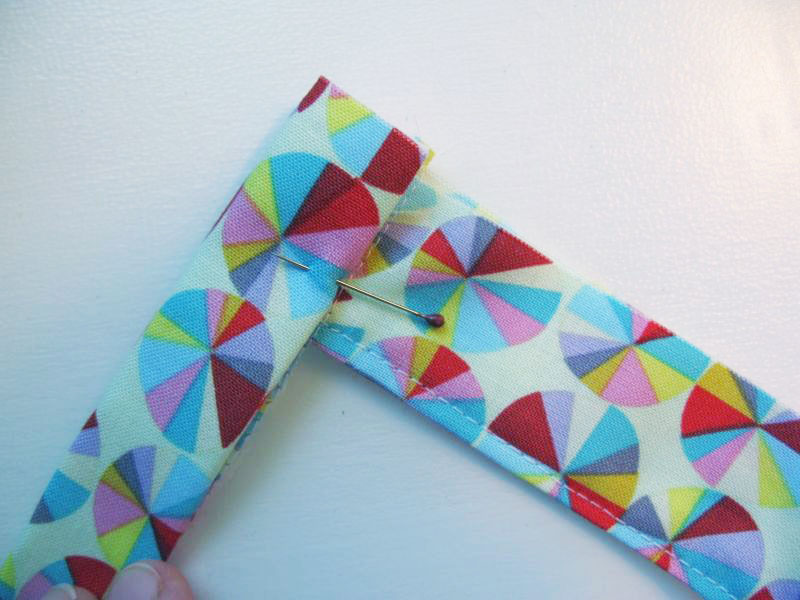
Turn to the back, lining up the folded edge with the seamed edge, peeking through the vinyl to make sure they line up.  Topstitch this down, encasing the vinyl edge.  After stitching, if the raw edges extend beyond the existing side pieces, trim.
11Top Strip_5

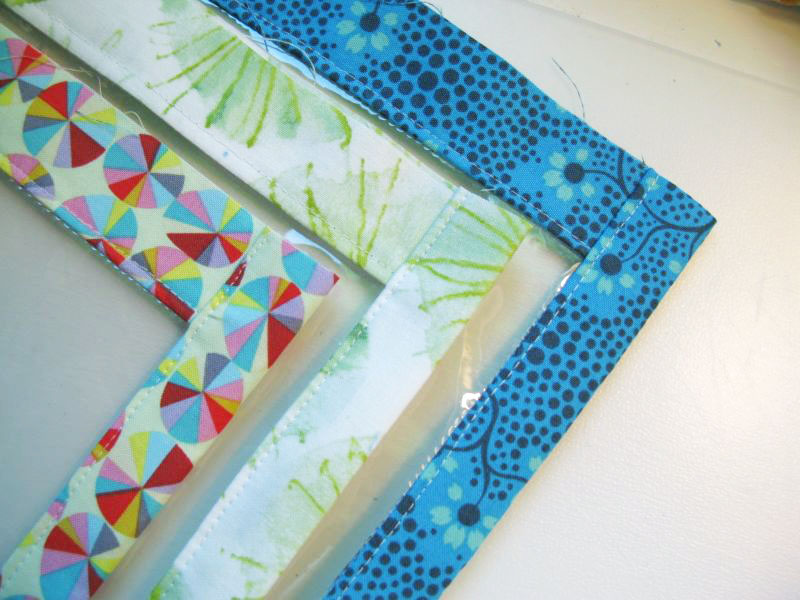
Here are all three of my folios, showing trimmed edges and stitched-down tops.

To add the edging to the bottom of this window, use the sandwich technique you used with the shorter sides.  Sandwich the vinyl in between one interfaced piece of fabric and one (un-interfaced, or plain) piece of fabric, right sides facing each other and towards the vinyl.  Stitch in a 1/4″ seam, then press away from the vinyl.  (Carefully.)
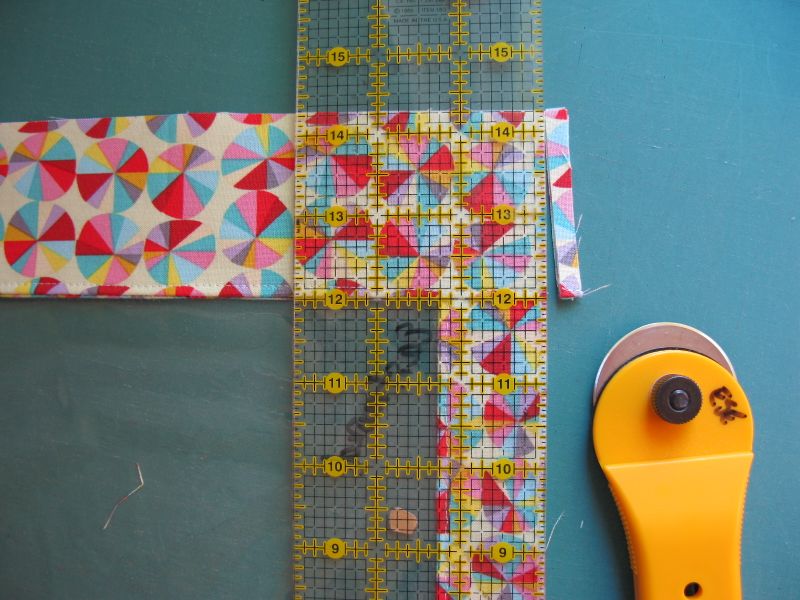
12Bottom Strip

I’m trimming the excess fabric off the bottom strips in this photo.

STEP THREE: Trueing-Up the Back and Front

Confession: I had a scrap of vinyl that was slightly smaller than the desired size, but I used it anyway.  But then that makes the front a different size than the back.  I can fix this with my rotary cutter.

No, I didn’t obsess about cutting down the back, either. BUT! I only trued up the sides.  The front is LONGER than the back, in the top-to-bottom measurement.  DON’T TRIM THE TOP OR BOTTOM!!

13 Truing Up_1

Just lay the back down onto the vinyl window front, centering it as shown in the photo above, so you can trim the exact same amount from the sides.

13 Trueing Up_3

I’m only trimming down the sides here.  I kept the differences in the top-to-bottom and only cut the sides to be the same width.
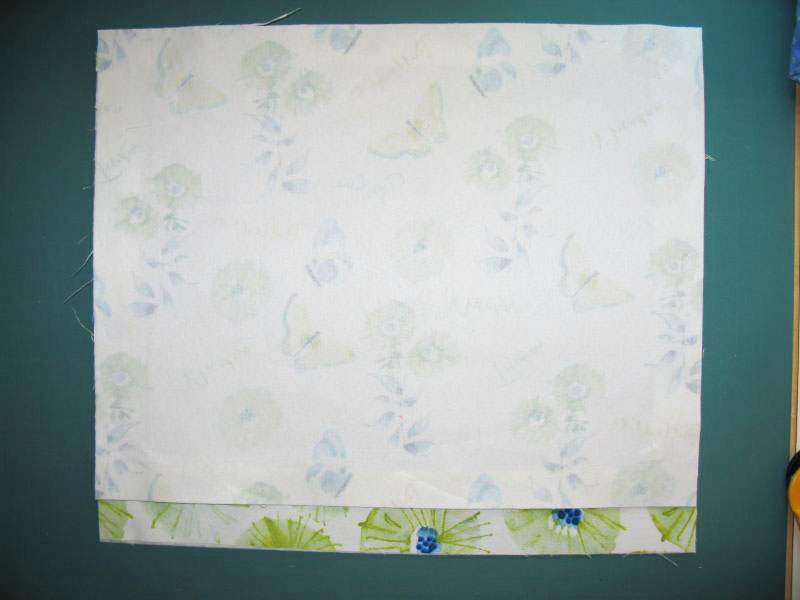
13 Trueing Up_2

Sides are trued up; notice longer length on vinyl window front, peeking from behind the back pieces.

Next post: Zippers!! and Finishing.  And a Giveaway!!

Three Portfolios_corners

All of these folios measure roughly 11 x 17.  You are more than welcome to make these for your own use, or sell them in a craft faire, but please please, don’t take any of my tutorial and copy it onto your blog.  Practice Friendly Attribution, if you please, by linking back here, if you would.  And please please don’t steal my content to make your own pattern, and call it your own. 

Quilts · Tutorial

Project Portfolio Tutorial–Part I

Project Portfolio Three_top

A long time ago, in a foreign market, I bought zip portfolios to hold stuff.  But they weren’t always quite right–too small, too rigid–for my projects, too wrong-sized.  So I decided this summer to make my own.

1Project Portfolio

But that’s just a way to lead you into thinking about your fall, now that schools are beginning to start and you can finally finish a sentence — or a seam —  without being interrupted by your offspring or husbands or pets or whatever.  And now you are going to be sewing up a storm, and need a way to keep all your projects organized as you head out to sewing circles, sew days, quilt nights, or just stay home and quilt in your jammies.  Because it’s almost fall, after all, and you can. (My apologies to my Southern Hemispheric readers–just substitute in the appropriate season.)

Project Portfolio_chair

Materials:
Two coordinating fabrics.  One will show on the outside, and the other will be the lining, but will show through the vinyl window
Clear medium-weight vinyl from the upholstery department.  Save the tissue they have with the vinyl–it’s easier to store that way
Fusible medium-weight interfacing
Zipper, approximately 20″ (you’ll be trimming it to size)
Matching thread

(Note: I am using three different fabrics in the following illustrations, so you may see some switching out.)

Project Portfolio Cutting Diagram

STEP ONE: Fusing

2Fusing back piece

Lay the fusible interfacing shiny side (resin-coated side) down onto the Wrong Side (WS) of your outer backing piece.  If you like to live dangerously, don’t use a press cloth while fusing the interfacing to the back in an ordered fashion: overlapping the iron shape, giving it a shot of steam, counting one-two-three-four in each position of the iron.

3Fused Pieces

Lay the interfacing fusible-side down and fuse to TWO of the four narrower pieces that will border your clear vinyl window on the side.

Then fuse interfacing to only TWO of the wider strips, as these will be used on the upper and lower edges of the “vinyl window.”

The results are above: one large rectangle of interfacing fused to main back fabric, and four pieces of interfacing fused to the four strips of main fabric.

4Trim to Interfacing

Trim up so the backing is even with the interfacing.  Try not to fixate on the fact that now your portfolio will be a hair smaller.  It’s really not important what the final dimension is, as you can still pack a ton of stuff in there.  Trust me.

5 Trim Lining

Lay the fused backing piece on top on the lining piece, making sure that both right sides of the fabrics are facing outward.  Pin.  Trim.

6 Trimmed Backing Complete

So this is what you’ll have: a two-sided rectangle.  Unpin the two layers, and set aside for now.

Tomorrow’s post will show STEP TWO: Making the vinyl window front.

All of these folios measure roughly 11 x 17.  You are more than welcome to make these for your own use, or sell them in a craft faire, but please please, don’t take any of my tutorial and copy it onto your blog.  Link back here, if you would.  And please please don’t steal my content to make your own pattern, and call it your own.  Practice Friendly Attribution, if you please.

Four-in-Art · Quilts

Four-in-Art: Maps

The Four-in-Art group has chosen Urban as our overarching theme for this next year of quilts.  We will reveal quilts on the first of November in 2013, and February, May and August of 2014.

Our challenge for November 2013 is Maps, so it was with great interest that I viewed the exhibit sponsored by Quilts on the Wall, hanging at the Long Beach Quilt Show.  Their theme was also “maps.”

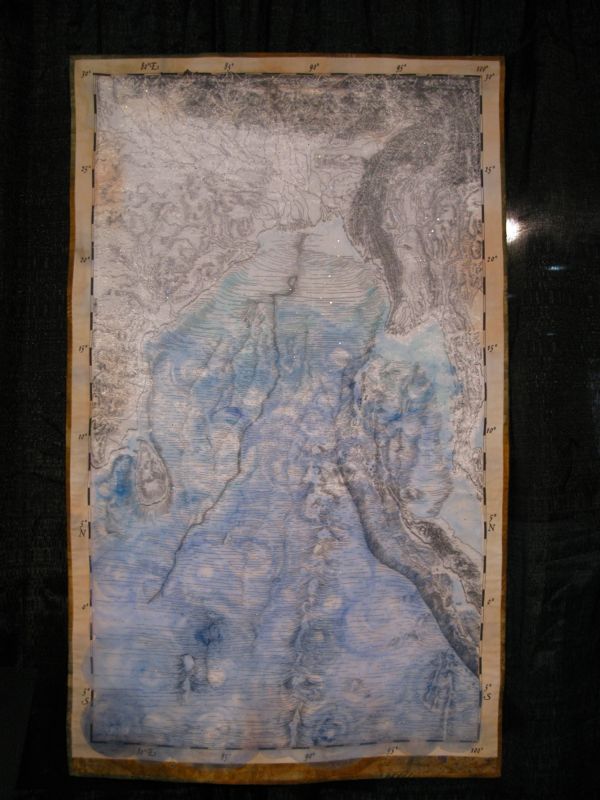
Maps12_Baltgalvis

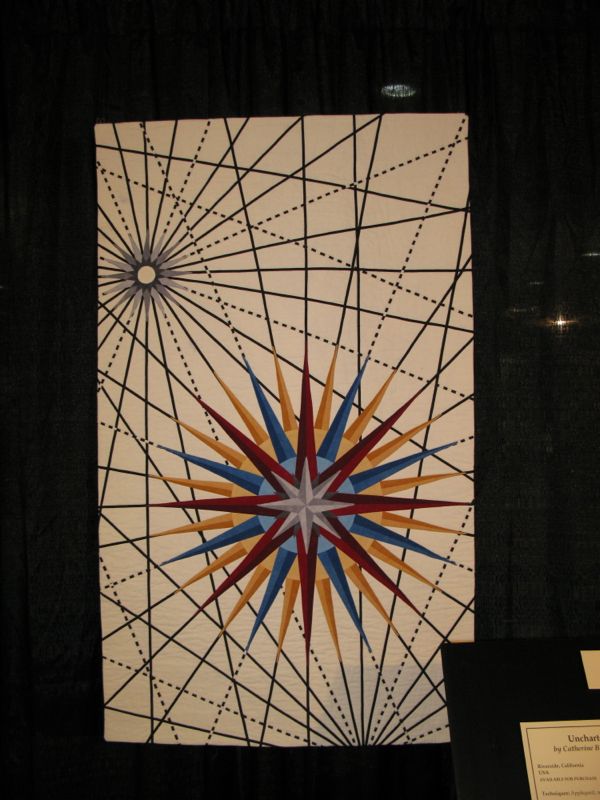
Uncharted, by Catherine Baltgalvis
Based on an antique chart with traditional compass symbols

Maps 12_Wintemute

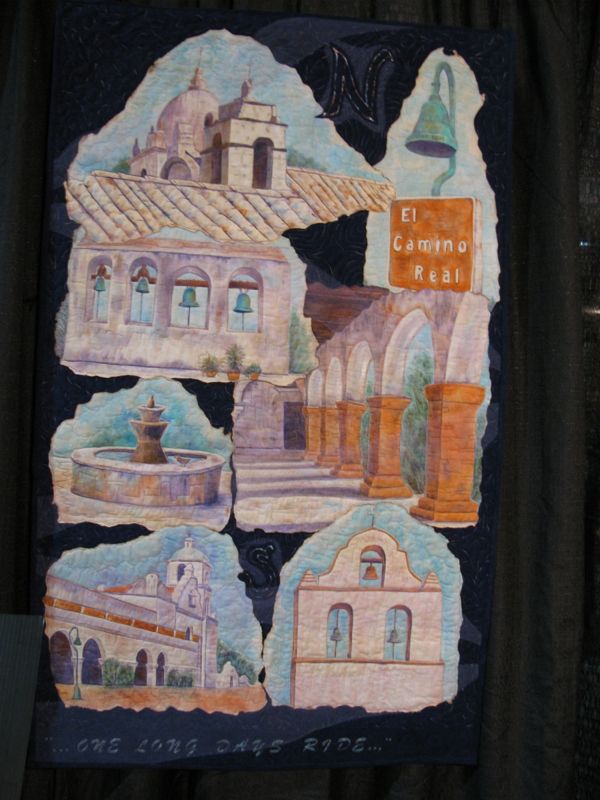
El Camino Real, by Eileen Wintemute
Views of the early California Missions, found by traveling “The Royal Road”

Maps8_Wright

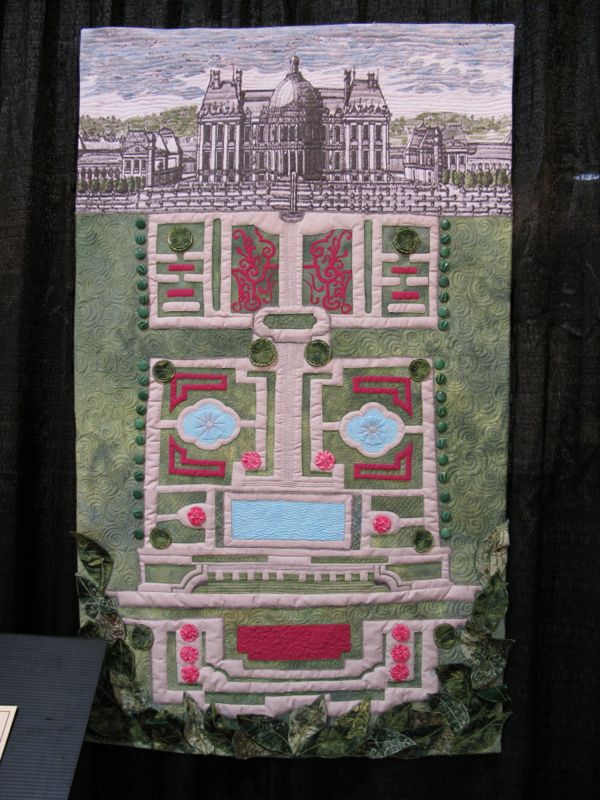
A La Carte, by Shirley Wright
A garden plan for Vaux-Le-Viconte, a great chateau in France, built in the late 1650s

Some map quilts might be literal, as in the renditions above, from a garden to a quilt paying homage to traditional compass symbols.

Maps3_Bisagna

Gone, by Laura Bisagna
An aerial map of her street, showing the houses claimed by wildfires

Other map quilts might show traditional maps, like the one above, but reveal pieces of the heart, like when Bisagna was evacuated from her home during a run of California wildfires.  She searched aerial photos, trying to discover any news about her house.  And through one of these photos, she realized that her “house was indeed gone,” as she wrote in her artist’s statement.

Maps4_Villars

Tour de Apple Valley, by Carolyn Villars depicts a 50-mile race completed by her daughter-in-law, the map in the background showing the route taken.

Maps6_Anderson

Linda Anderson created this exquisite map of the “Mother Road,” or Route 66 in her quilt One Man’s Dream.  While I couldn’t discover from her statement whether or not her husband had actually traveled the road, I think the bas relief of the white quilting is effective not only as a map, but also as a background for the motorcycling figure.

Maps5_Guerrero

“This quilt (Ice Core) was inspired by ice cores that are used to map climate change” wrote Annette Guerrero, the maker.

Maps5a

I loved the secondary layer of quilting over the color bands.

Maps15_Friedman

Body Map in Honor of  DaVinci’s Vetruvian Man, by Linda Friedman, pays homage to the classic map of the human form by Leonardo Da Vinci.

Maps14_PCharity

I loved this rendition by Patricia Charity of the romantic era of travel, of steamships and steam trains and great adventures.  She titled it It’s the Journey, for in those days, getting from point A to point B was a huge part of travel.

Maps10_Markley

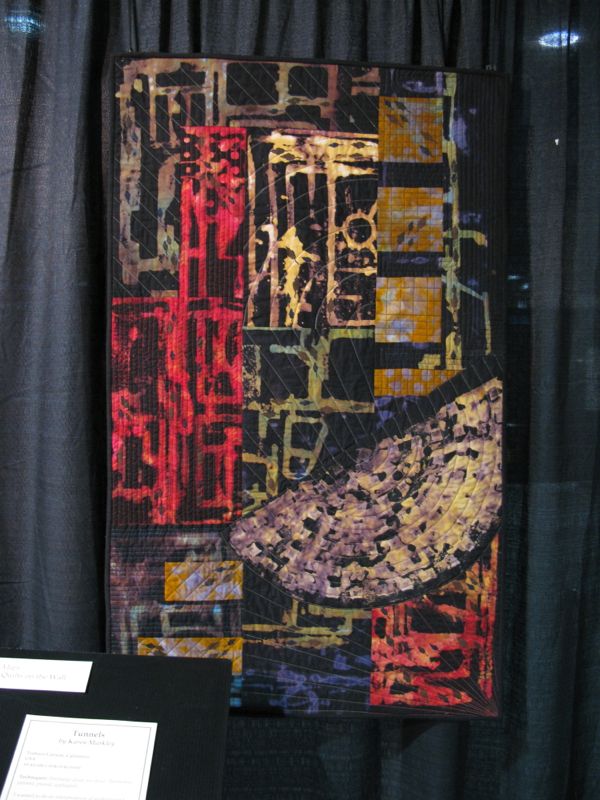
Karen Markley wanted to make a map of subterranean tunnels, such as those that contain subways, water and electrical lines, in her quilt titled Tunnels. This quilt is less representative and more evocative of what a person might find under their feet.

Maps11_Shibley

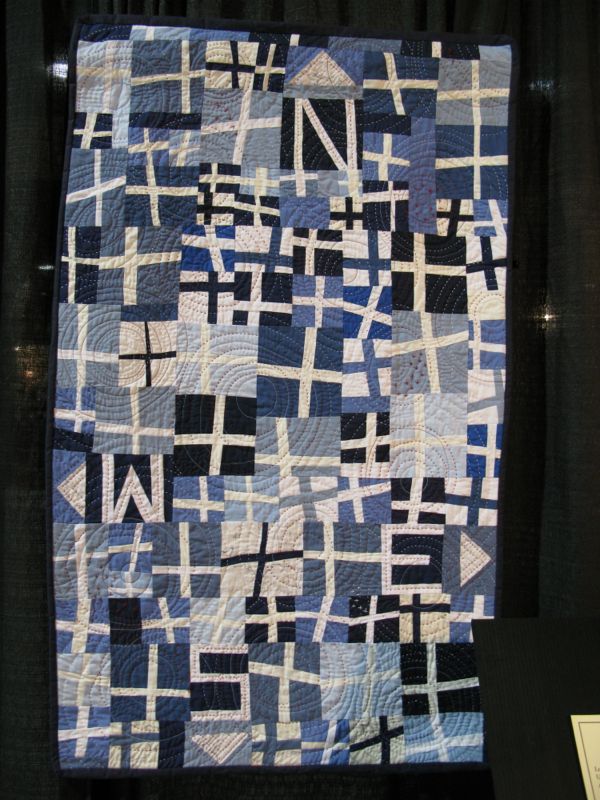
Beth Shibley’s Finding North is a rendition of a “modern compass,” and includes bits of maps that her husband used while hiking the Pacific Crest Trail.

Maps1_Connolley

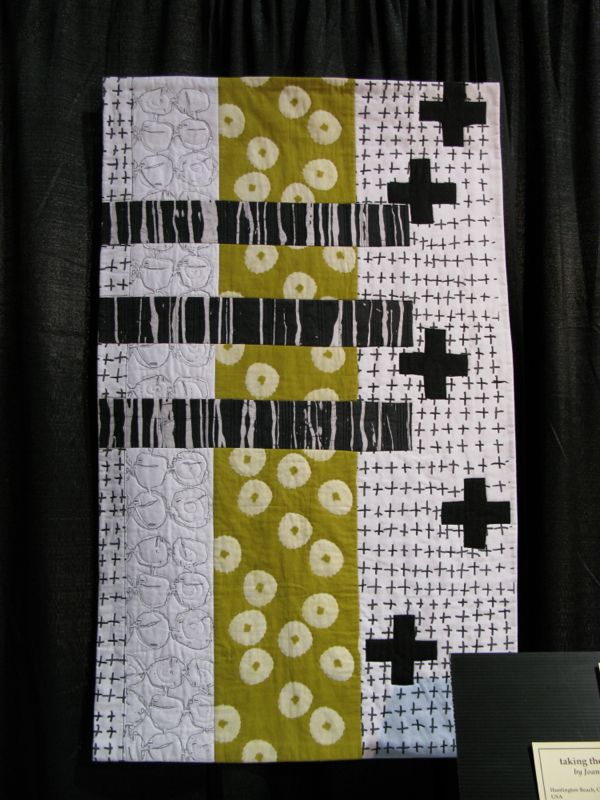
taking the back roads, by Joanell Connolly was so interesting to look at.  While you might decide that the crosses imitate a vast cemetery or that the white circular shapes might represent trees as if drawn by an architect, Connolly gives no indication of what her map might represent, only saying “when life gives you a choice. . .”

Maps2_Nilson

How many times have I peered out of an airplane window, snapping pictures of irrigation circles with my phone?  This aerial photograph by Tom Lamb, inspired Carol Nilsen to create Layered Marks From the Sky, a map of a runway and taxiway at nearby John Wayne Airport in Southern California.  But it’s not just the landscape she’s mapped in her quilt, but “the routes of a millions of people aboard thousands of aircraft.”

Maps13_Griffith

Last three map quilts.

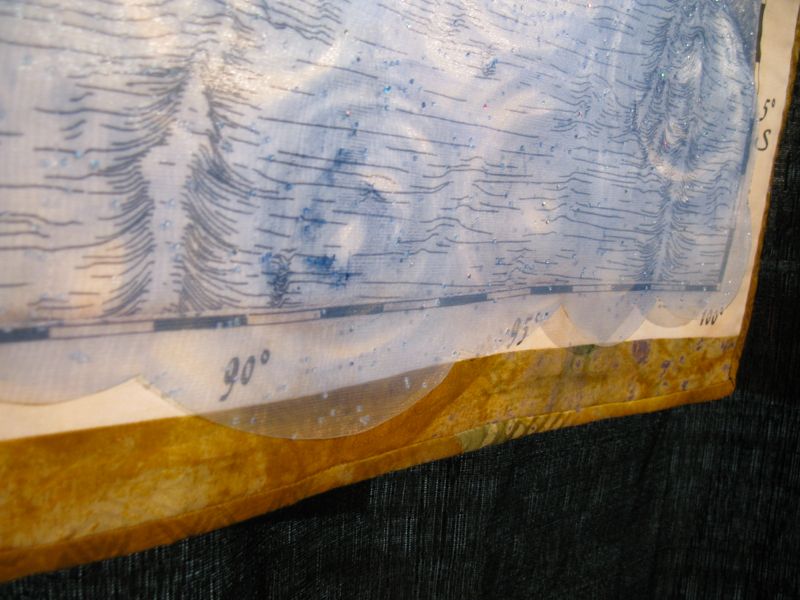
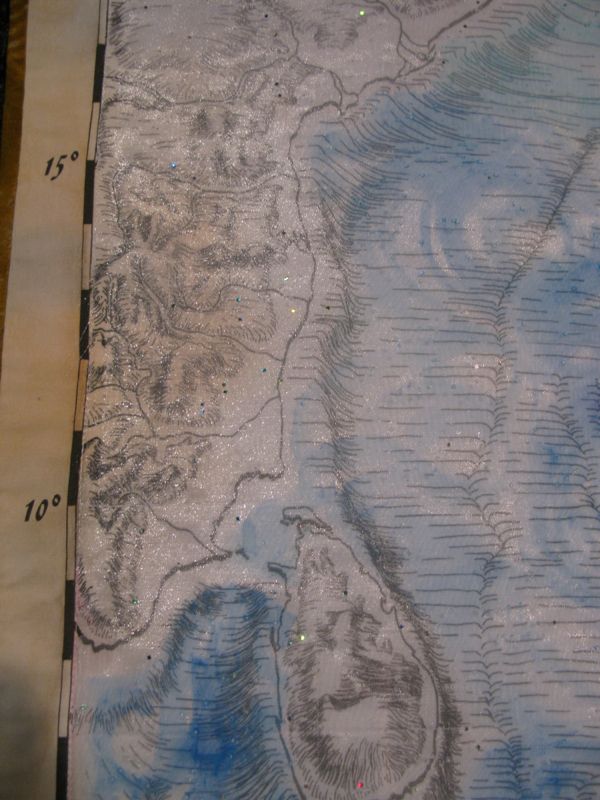
Somewhere Between Science and Fantasy, a quilt by Jo Griffith had a chifffon overlayer on a drawn, or printed, background.  Two closeups are below.

Maps13a_Griffith

Maps13b_Griffith

Maps9_Charity

Bit Map, by David Charity.  All the puns you need.  Close up below.

Maps9a_Charity

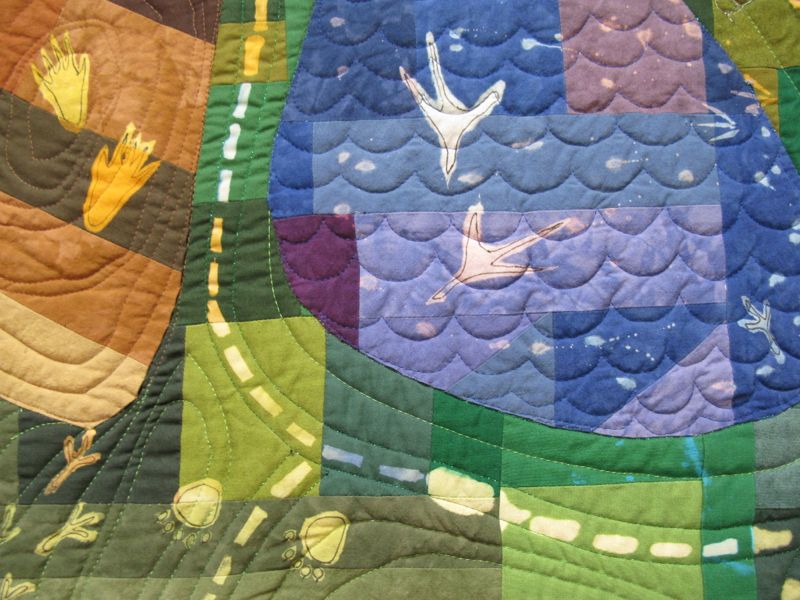
Maps7_TabarGaits of Lake Hodges, by Mary Tabar

Not only is this a map of a lake, but also the “gaits” of the critters who frequent there.

Maps7a_Tabar

I’ll leave you with Tabar’s thoughts:
“Every trail starts with a map.  A map helps us navigate our desires.”

I look forward to our group’s challenge quilt, coming this November.

Quilts

Summer Giveaway Winners

Summer Achievements 2013

You are all winners in my book–just take a look at all that was accomplished this summer!

I’m generally terrible at picking winners; I personally LOATHE the random number generator, but don’t mind their List Generator.  So I typed up all your accomplishments into a list and let the random generator help me choose.  Of course, I personally would have gone for the running-while-not-re-injuring foot, given the fact that my summer consisted of foot surgery, but in the end, Amy C. and Ashley, of Wasn’t Quilt in a Day,  were the winners for this giveaway.

I still have a couple of more little things I picked up at Long Beach, so I’ll probably have to find another reason to host a giveaway.  Thanks to all who entered and congratulations on having so many stupendous achievements over the summer!