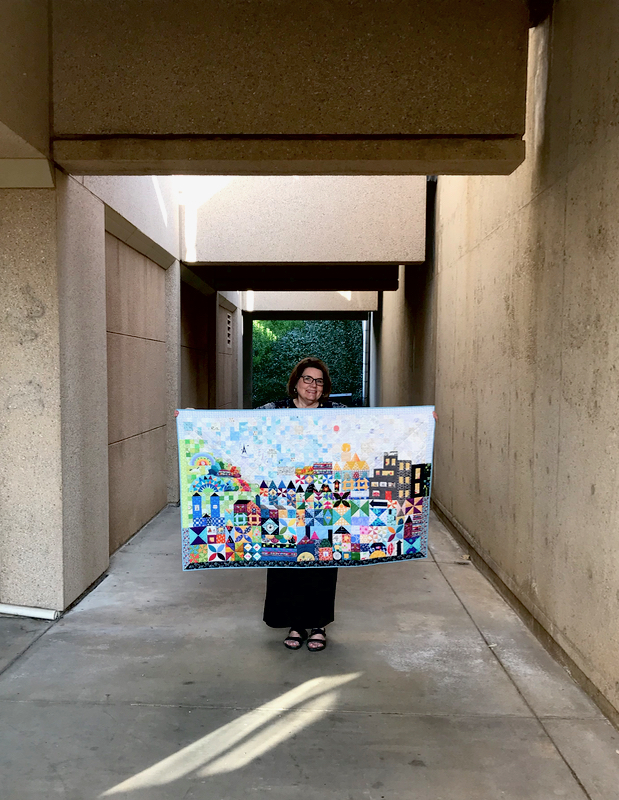
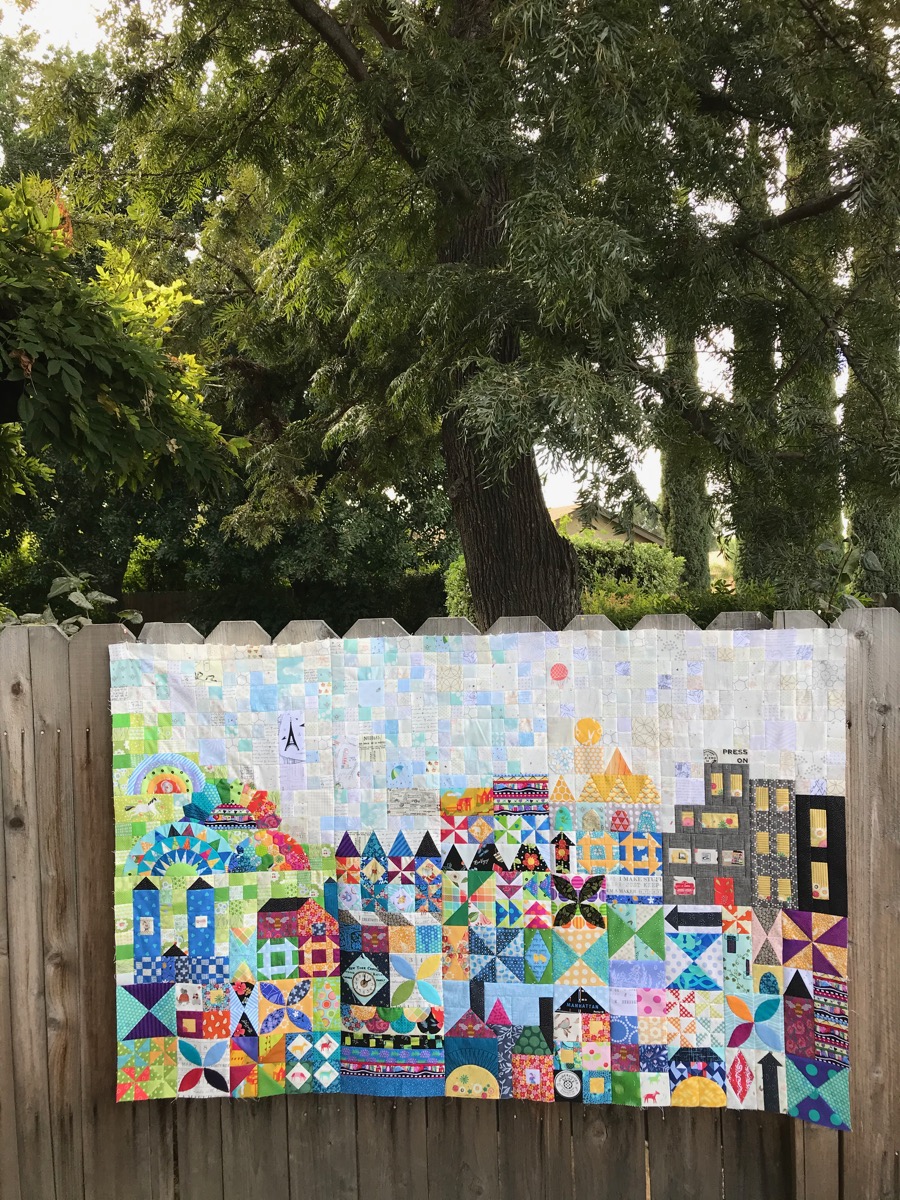
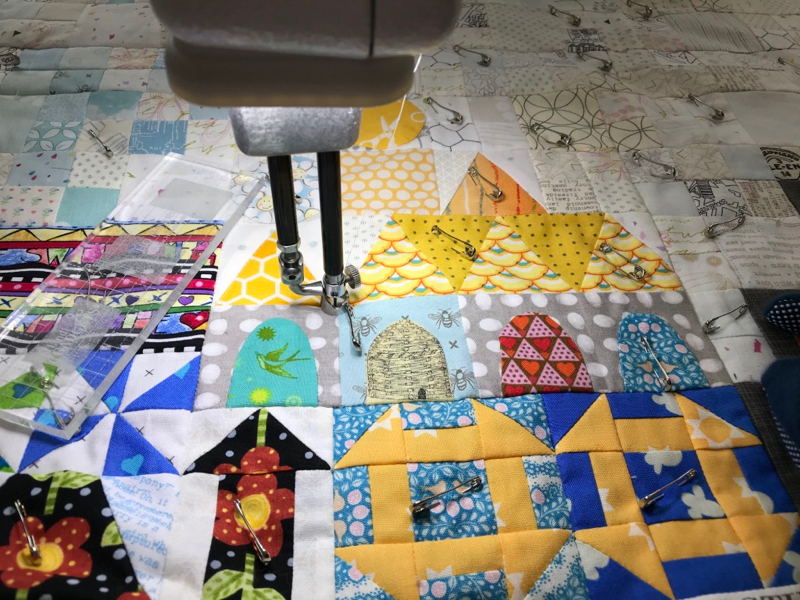
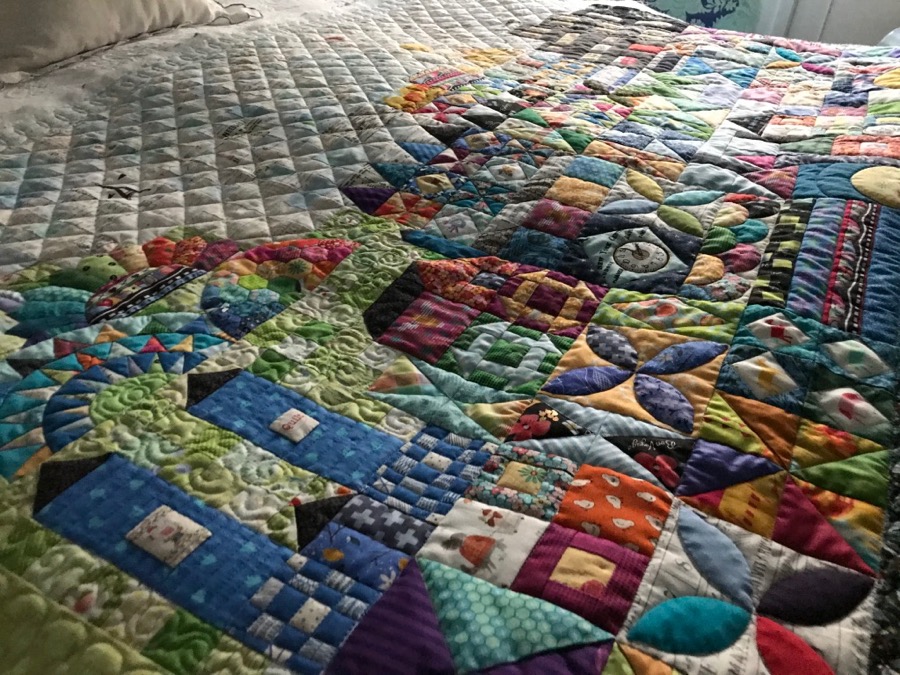
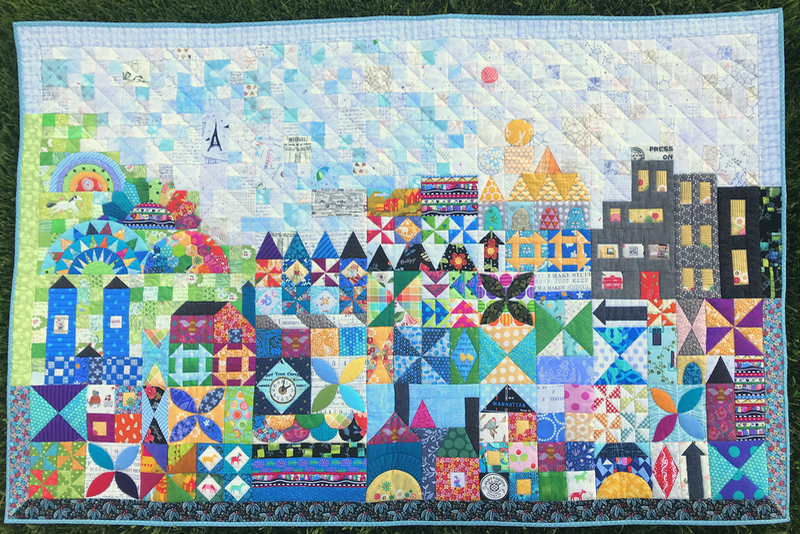
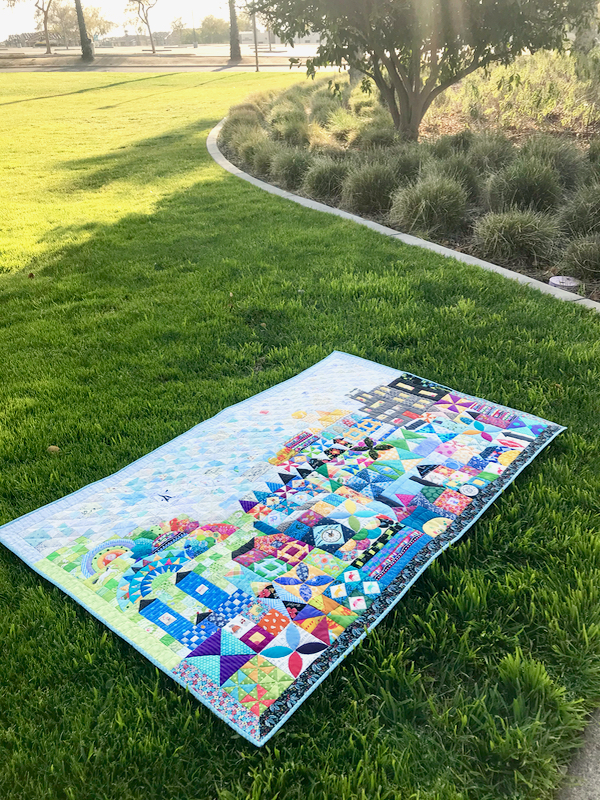
Golden California (Small World) Quilt #229 • 55″ wide by 36″ high
I mean, you already know what this quilt looks like, having seen various permutations of this on my blog, on the web, on Instagram. It’s kind of like the quilt that keeps on giving, rolling out forward from the talented mind of Jen Kingwell, and until we all finish up all those My Small World UFOs, it’s likely this quilt will become a quilter’s version of eternity.
[Aside: a cook’s version of eternity is defined as a ham and two people. An old joke.]
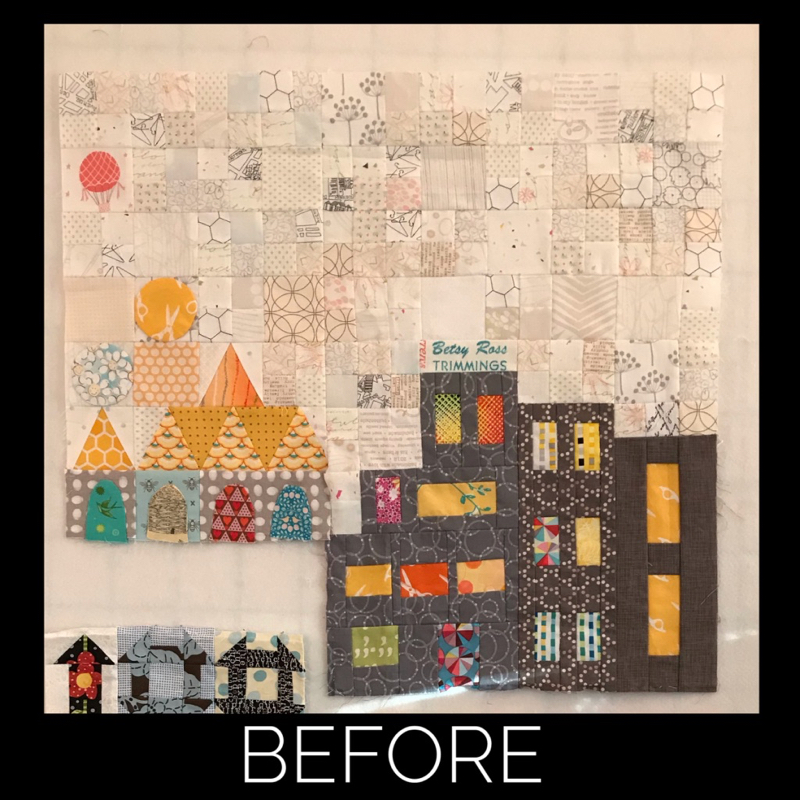
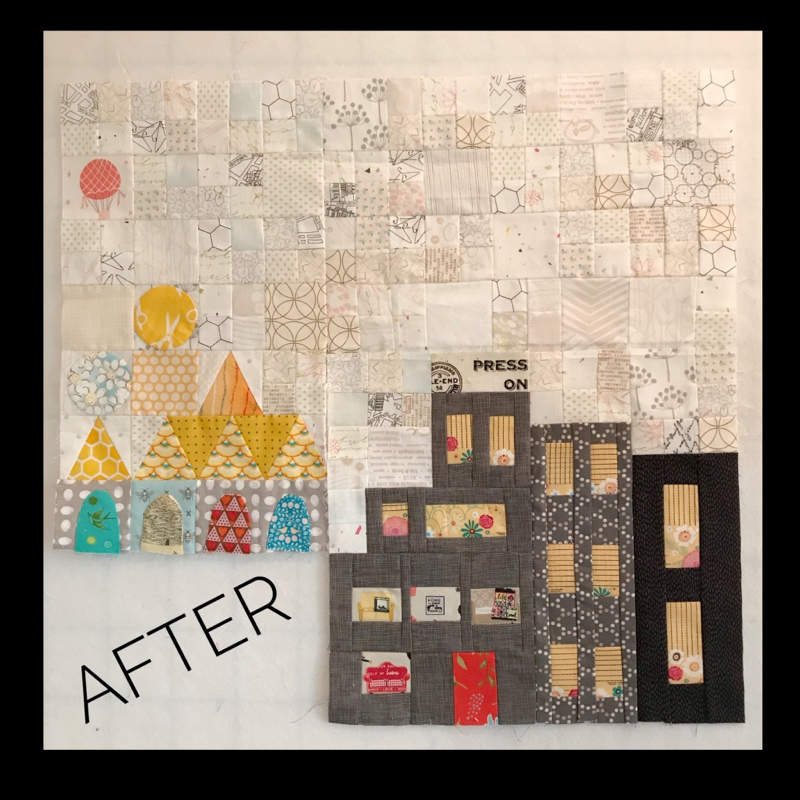
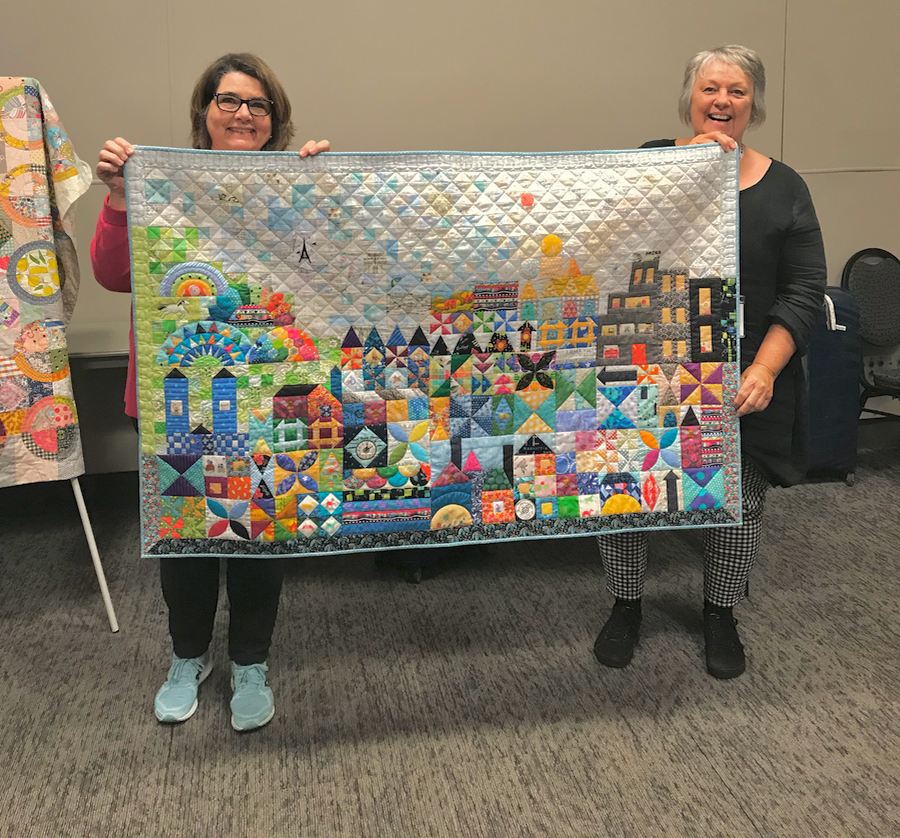
I had a Before…back when the pattern was in the magazine and it sold out like hotcakes. Then this quilt languished until I had vowed to make Three Hard Quilts in 2019. It was mostly finished then, but I didn’t have binding sewn on until just before Road to California, where I was taking classes with Ms. Kingwell, herself, and wouldn’t you know it? I don’t have ONE photo of myself with her and this quilt. I thought I took one, but, nope. Can’t find it.
Breaking News!! My friend Lisa sent me a photo of the quilt with me and Jen Kingwell, so here it is. Thank you, Lisa!
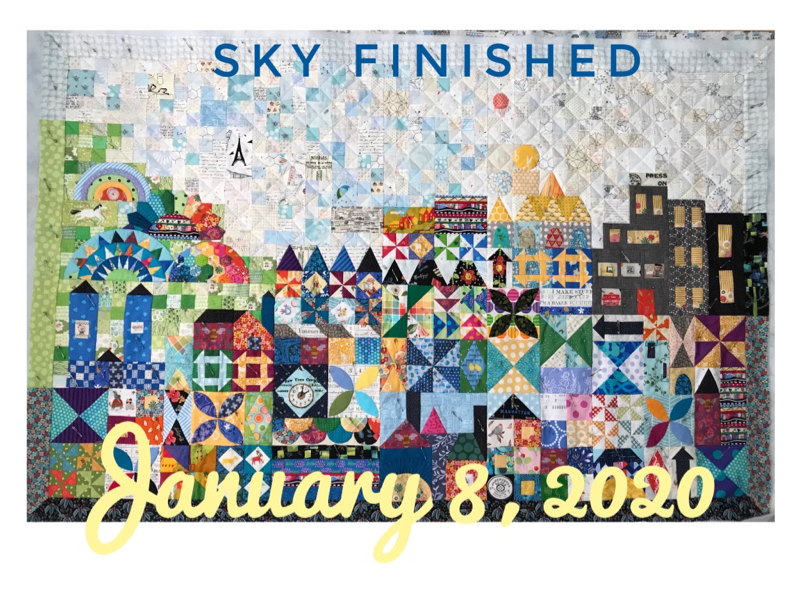
To keep myself sane when working on a long project like this, I take little snapshots of progress, title and date them, and keep going. It reminds me that quilts — like children — will one day be all grown up.
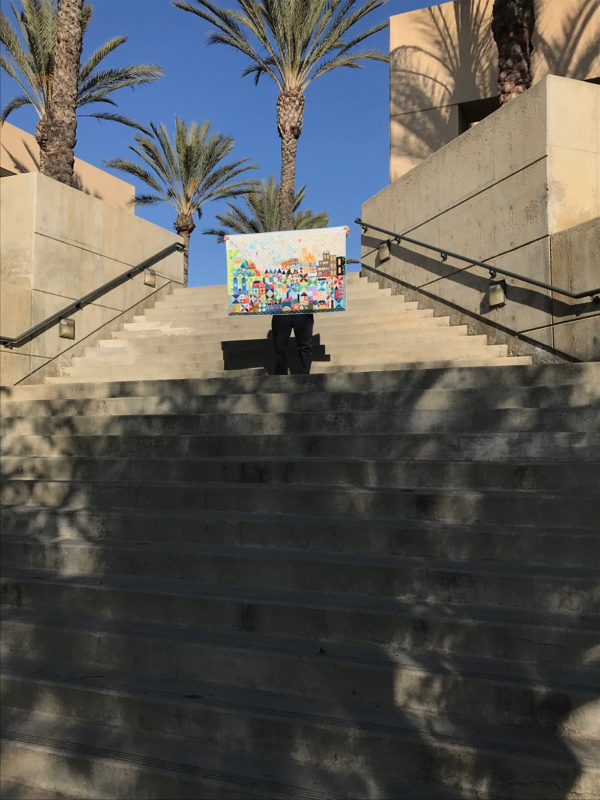
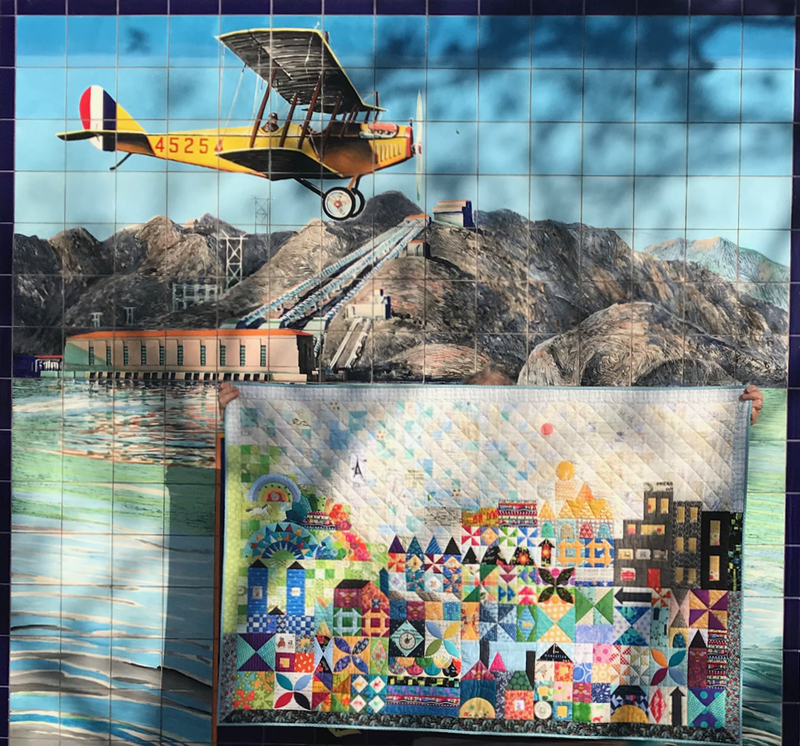
My photo shoot locator (AKA my husband) suggested we head out to the neighboring town where they had some cool tile murals of different parts of that city. We battled the shadows, however, but he was right: they were cool murals.
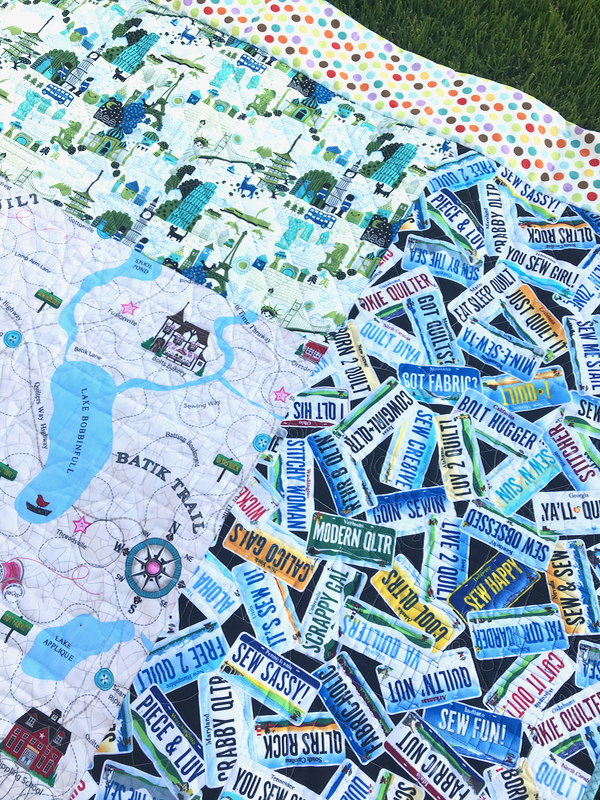
For the backing, I chose something that had cities in it, and two pieces that represented quilters.
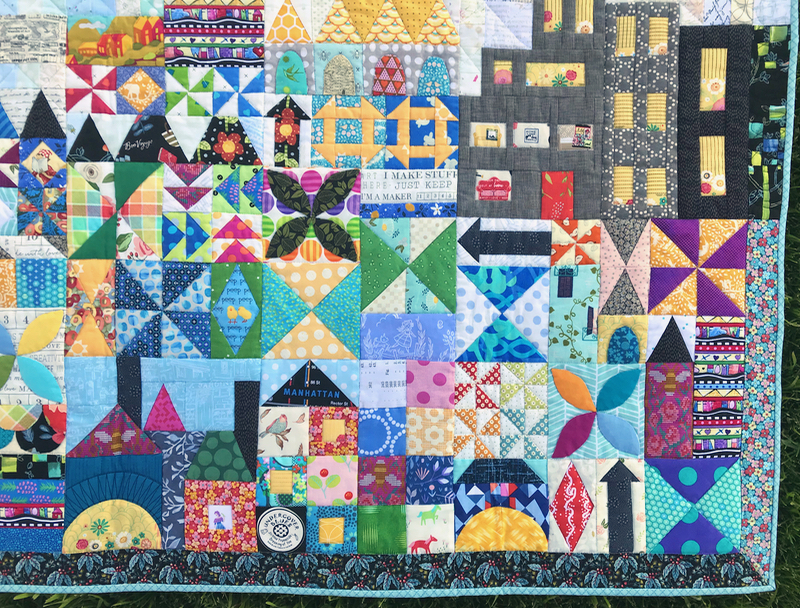
See that golden sun? One of California’s monikers is The Golden State, so Susan suggested to me that instead of just taking on Jen Kingwell’s name for the quilt (based on the drawings of the Small World ride in Disneyland), I should incorporate something to suggest this quilt’s origin. So I did.
Each of my posts about this quilt have the tag “My Small World” so you can click on them to be taken to other posts about this, if you are still making yours. Carry on! Keep on! and soon yours will be finished, too.
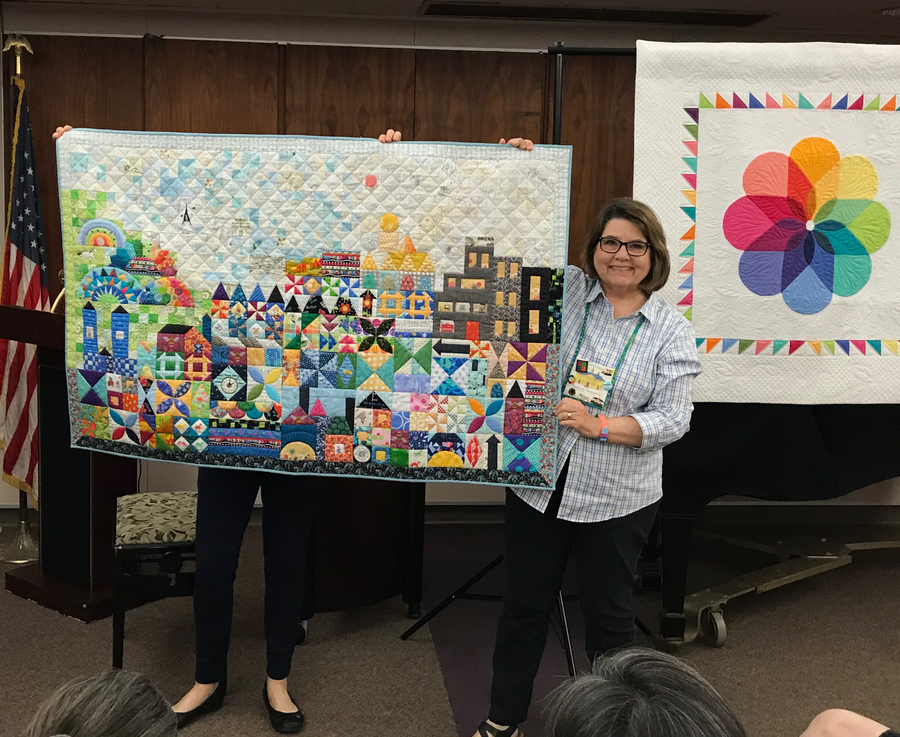
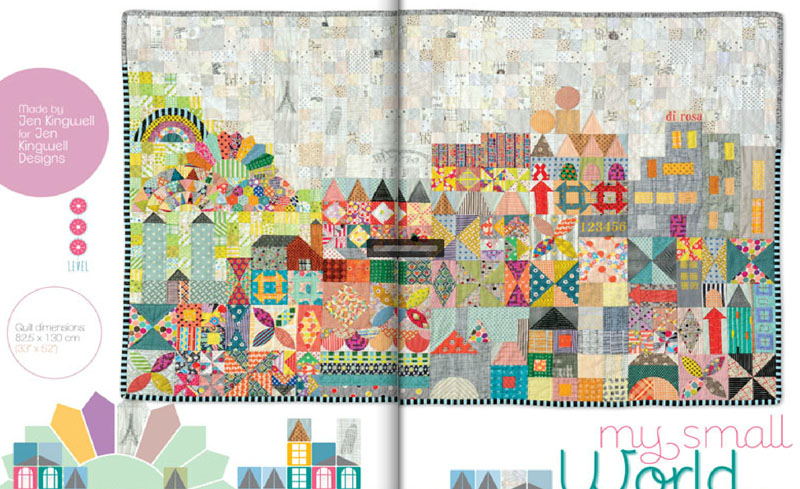
Show and Tell at our Guild’s February Meeting. Now this quilt will go for a long rest, while it waits for me to put on the label.Original magazine layout of quilt, from the QuiltMania Special Spring Edition, 2015 (now out of print). Kingwell sells the patterns on her website.
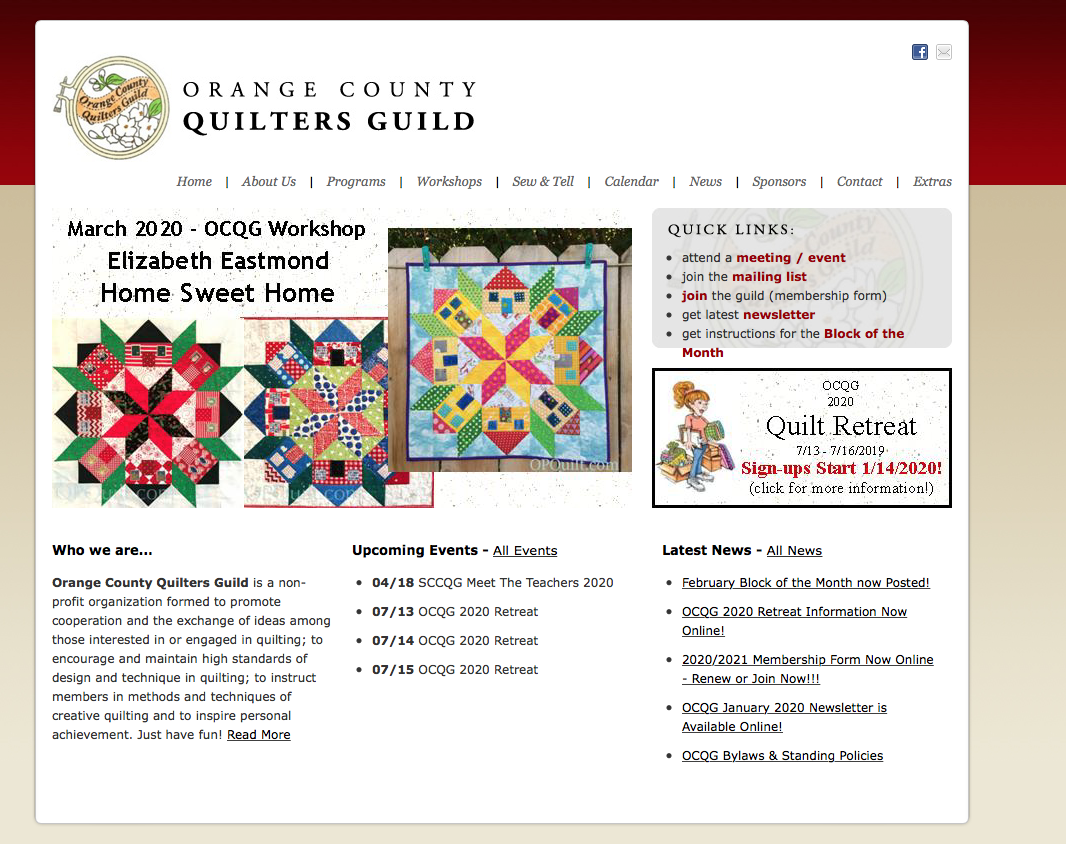
Next week, March 10-11, I’ll be at the Orange County Quilters Guild, giving my Abecedary of Quilts lecture, and teaching a workshop. Here’s a screenshot from their webpage (kudos to the Communications people for this nice display).
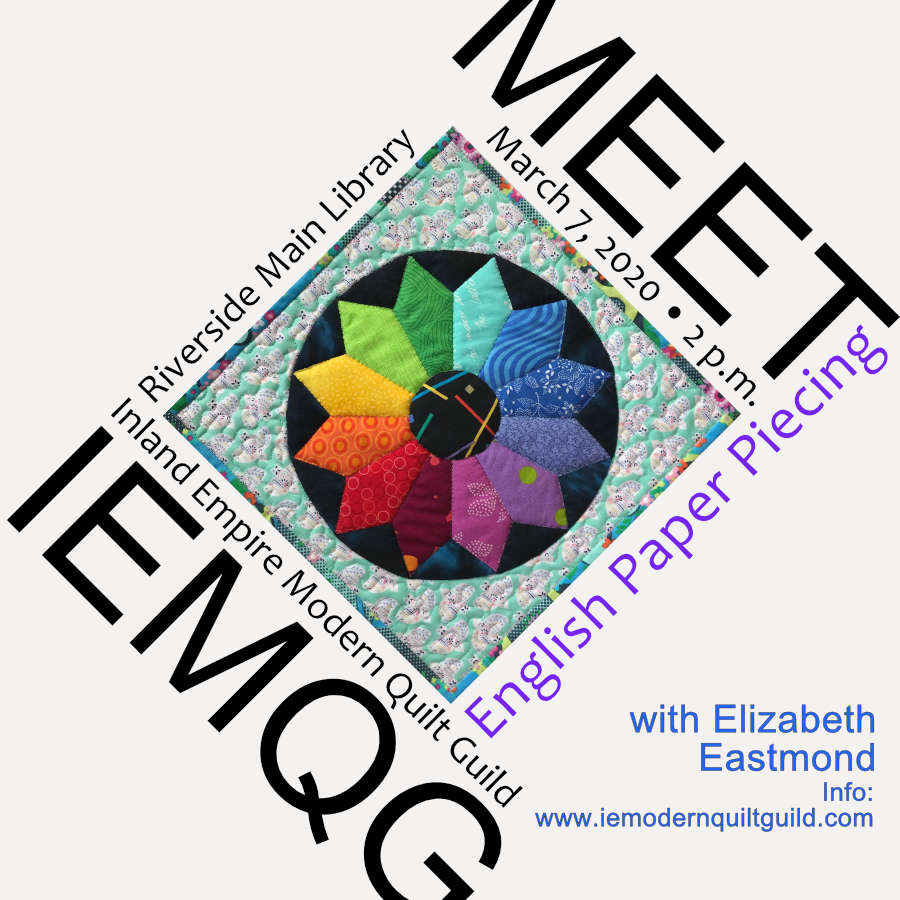
This week I’ll be giving a hands-on lecture at the Inland Empire Modern Quilt Guild, teaching them an abbreviated version of my all-day workshop on English Paper Piecing. Excited to teach and meet new quilters!
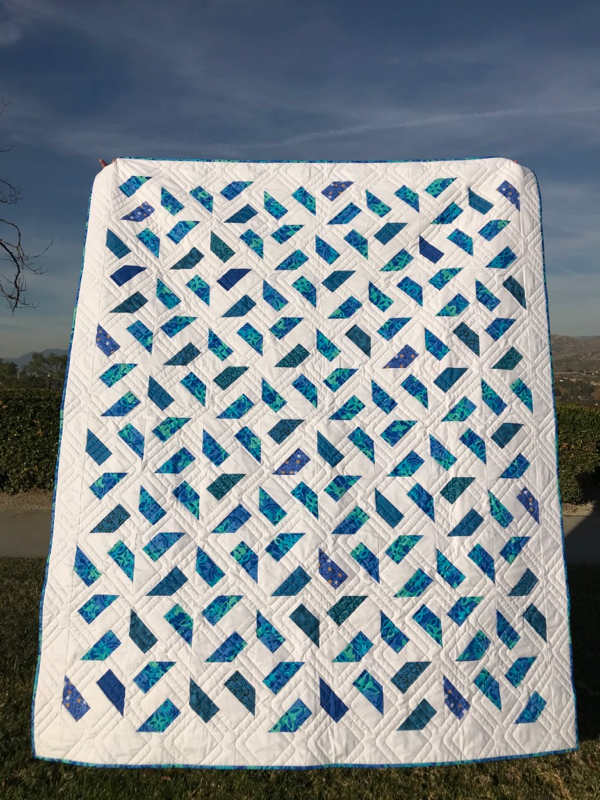
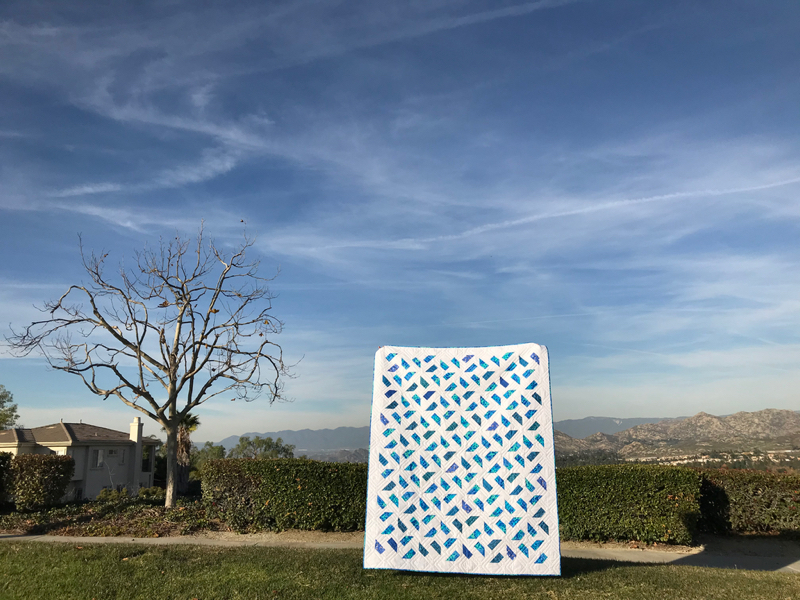
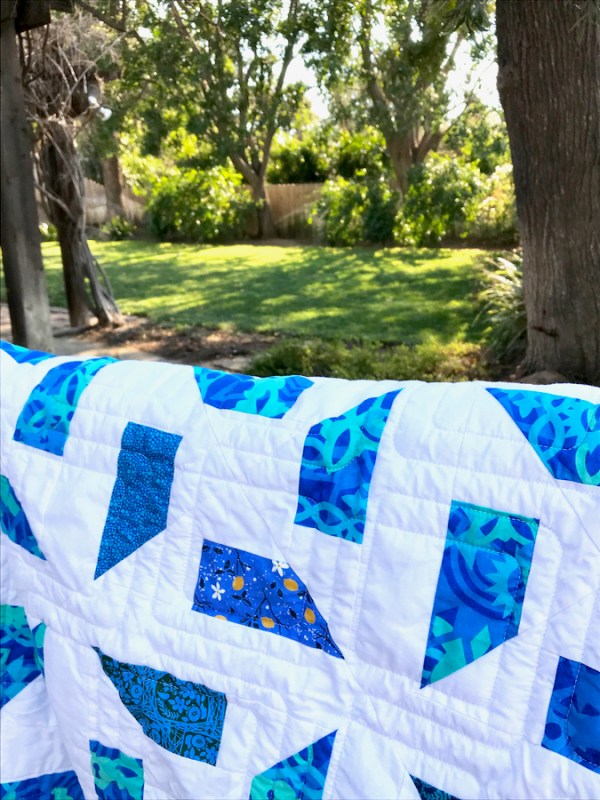
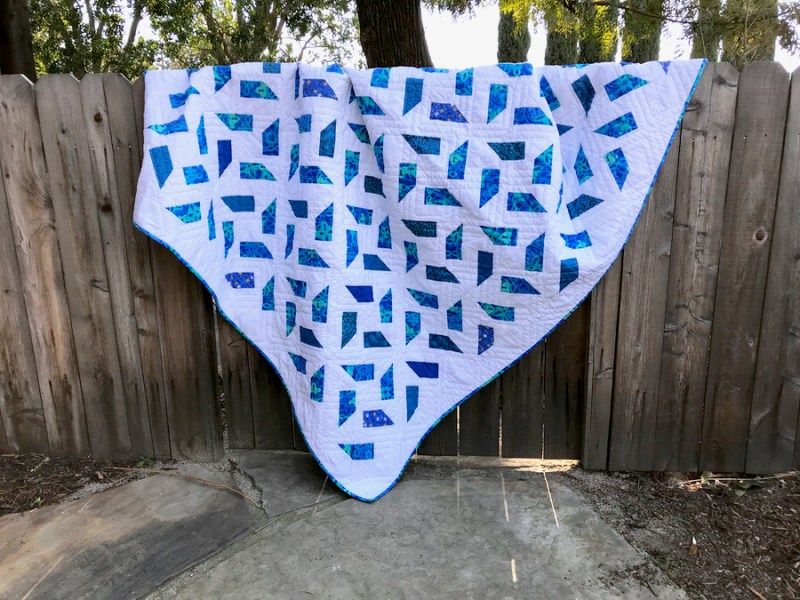
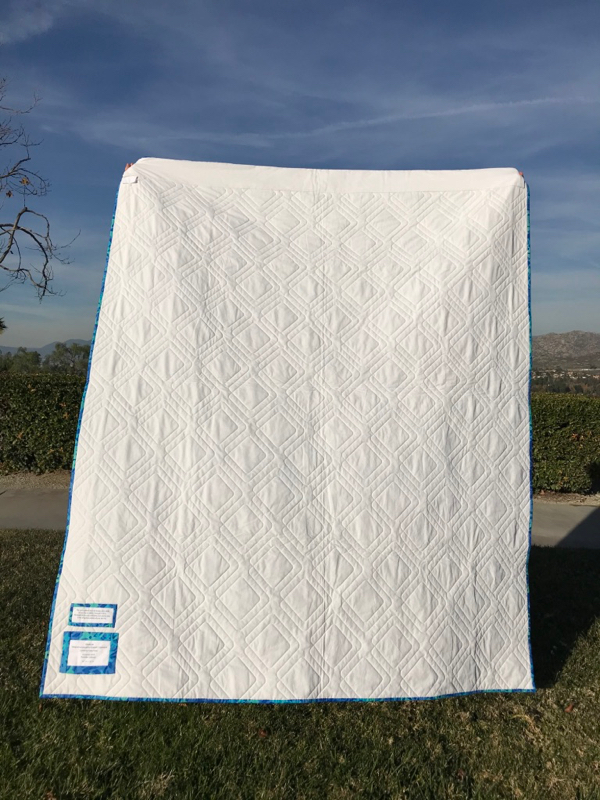
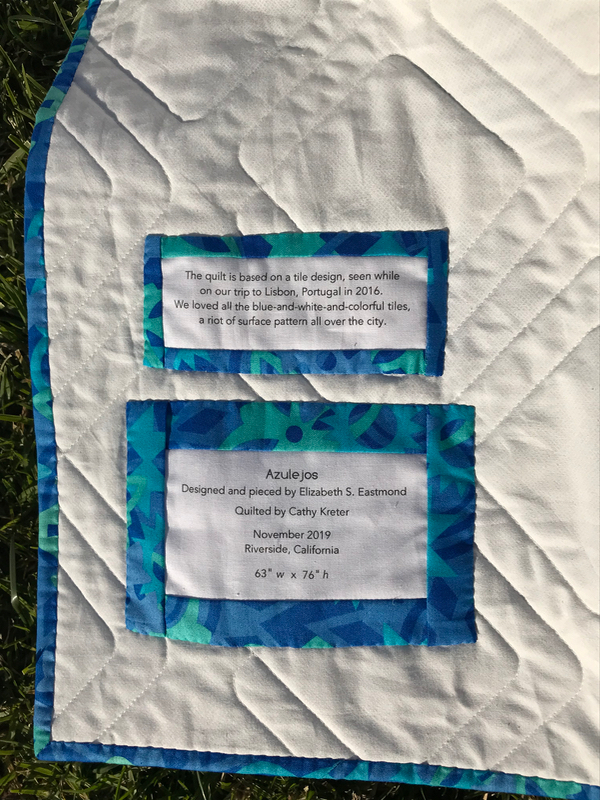
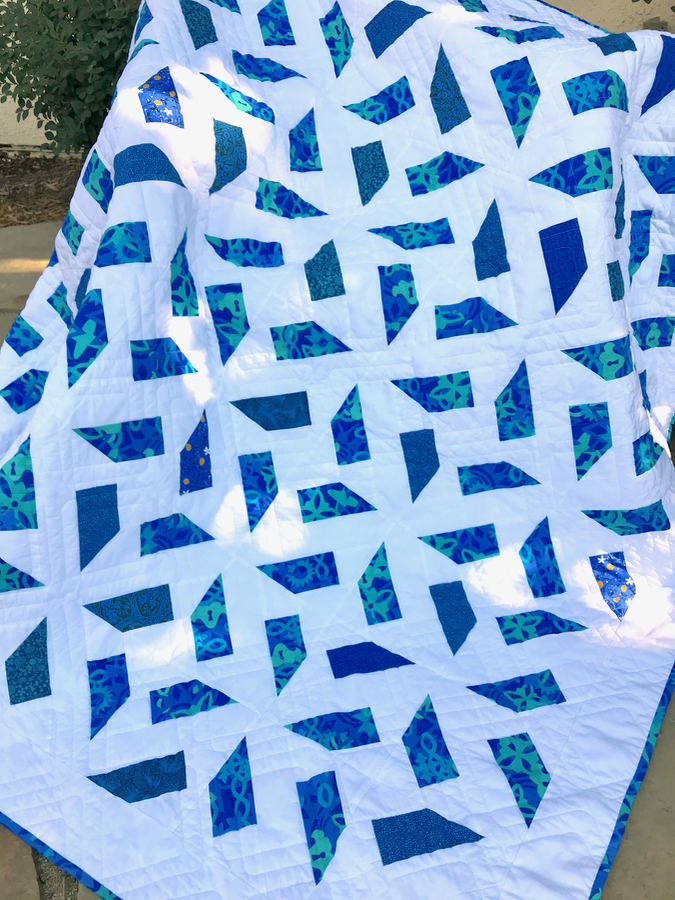
Azulejos • Quilt #227 61 1/2″ wide by 75 1/2″ long
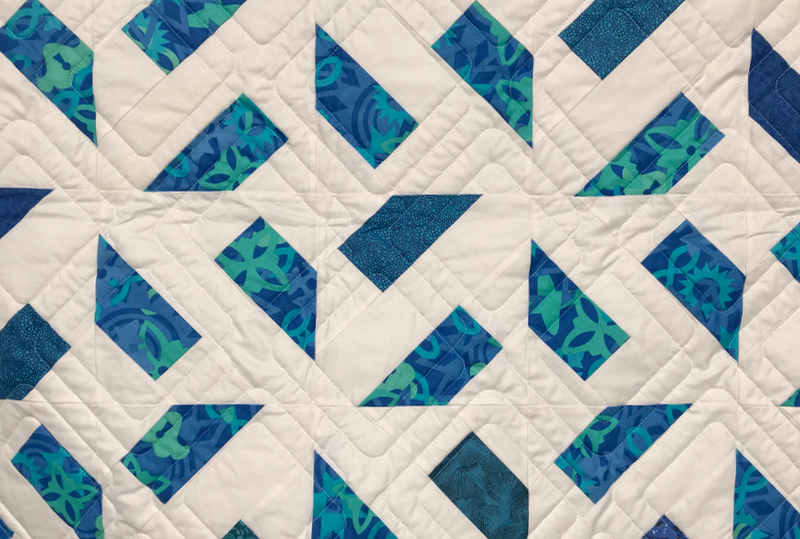
It was a rainy, wet day in Lisbon, and we’d made our way by bus to the Lisbon National Museum of the Azulejo, or the Tile Museum. We were rewarded for our efforts as I began to call it the Quilters’ Resource Center. If you are a grid enthusiast, as I am, it was heaven to walk through, with all sorts of interesting ways to think about what’s in a grid, as well as how to use color and negative space to make a design. And so, from a small sketch on that day in 2016, I created this quilt.
I was also inspired by a beautiful fabric created by Alison Glass from her Handiwork Collection. It was just so….azul (or blue, in Portuguese). I filled in with other treasures from my stash, and got to work trying to make it easier to construct.
Cathy Kreter, my quilter, did a nice tight design for the quilting.
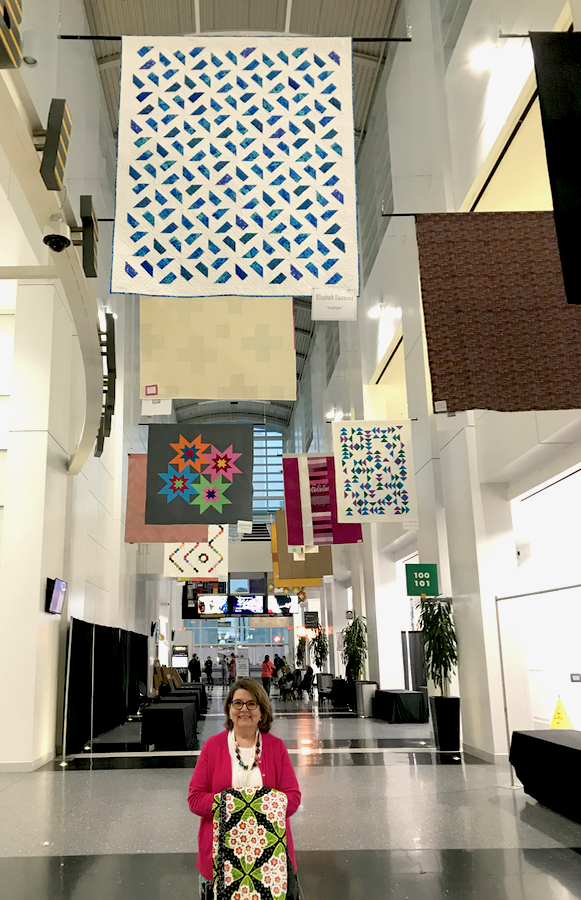
So why if I finished it in November, have I not put it up here until now? Two reasons: one is I was seeing if my favorite magazine was interested (not this time, they said), and secondly, it was slated to hang at Road to California with a collection of modern quilts made by my guild, the Inland Empire Quilt Guild. We were honored to be able to have our quilts hung in the atrium as quilters entered, so I kept it quiet. There are more pictures on our Guild’s blog, taken by our President’s husband, a professional photographer.
On Sunday after Road was over, I had to wait like forever to pick up the three quilts I had at Road. My husband snapped this as we were leaving, Ladybird in my hands (well, the backing for Ladybird — a stellar print by Jane Sassaman).
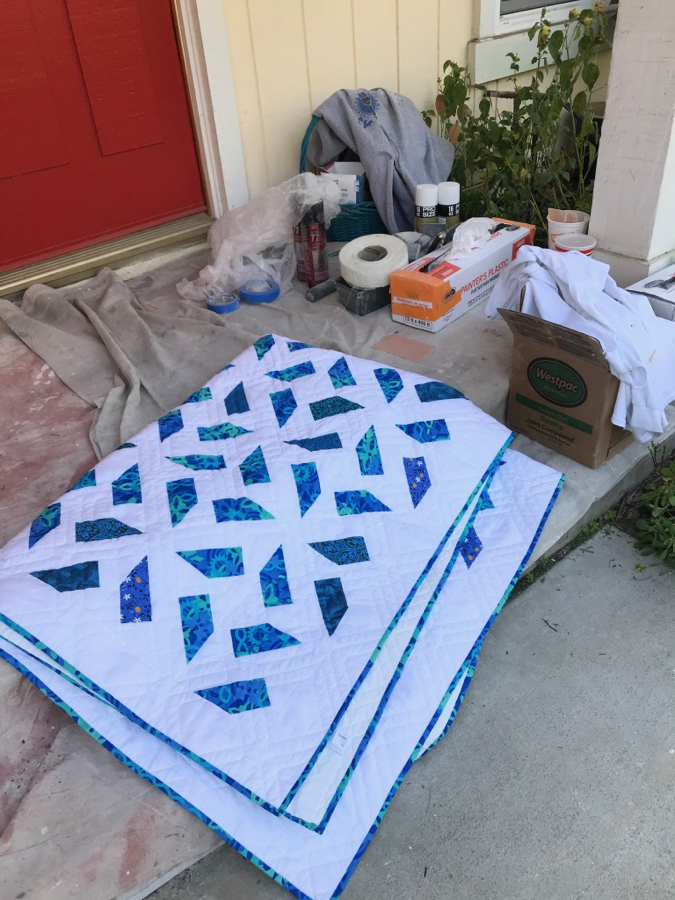
Today I took some more photos of Azulejos, laying it down by the tools of the painters who were working at our home that day, scraping popcorn ceilings painting. It’s nice how a quilt can brighten any corner!
I figured in December that a post about High Productivity and Strenuous Piecing and Hours of Quilting might better be replaced with something of lower impact. So, let’s go to Guatemala, look at fabric and maybe do some shopping.
This view of Antigua shows the bowl-shaped valley surrounded by volcanoes, where we spent two days, as well as two days in Guatemala City. Who was “we”? My sister Cynthia and her husband Gary are on an eighteen-month humanitarian mission in Guatemala City for our church; they spend long hours in a dental clinic, where Gary donates his services. My sister is his assistant, so we took advantage of their time there and went to see them for a short weekend. (Now I wish it had been much longer.)
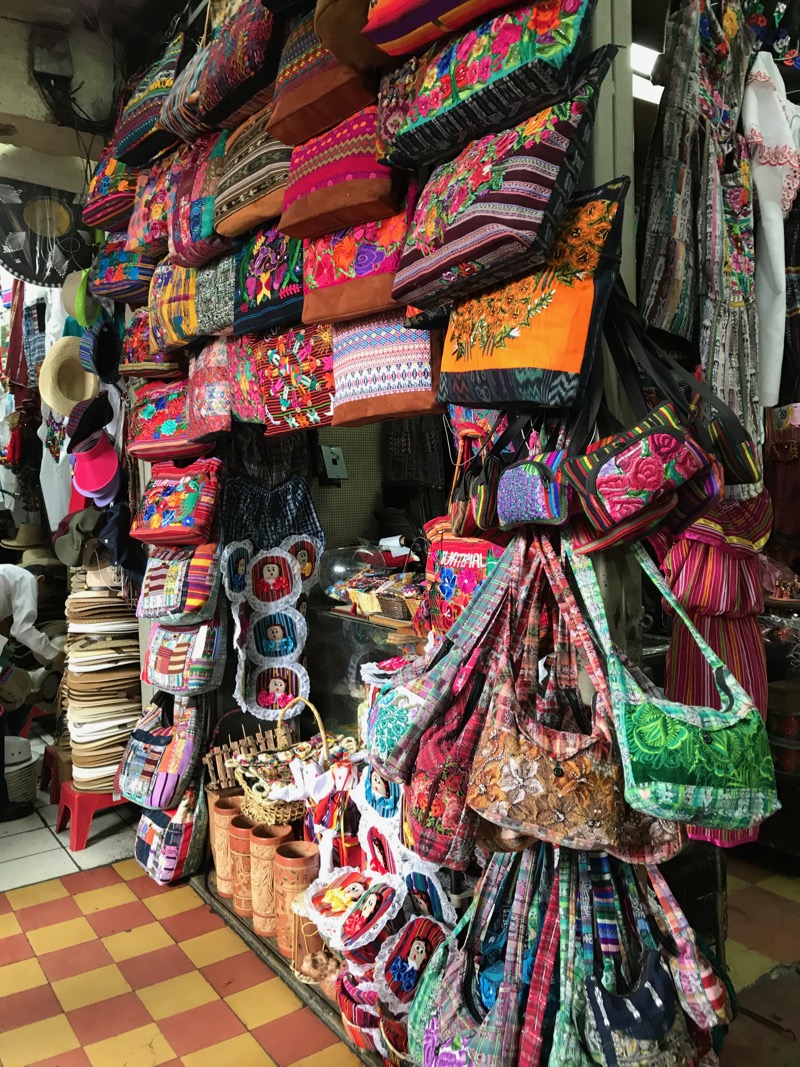
We took a red-eye from LAX to Guatemala City, and that first day we went to a market in Guatemala City, where I tried to not pick up everything and buy it. Surface pattern everywhere: it’s what a quilter loves.
They sell everything here, including bouncy balls for play.
My first purchase was this huipil, a hand-loomed top that is worn by Guatemalan women. There are many different styles; this one happened to be embroidered; some have woven designs instead, like those shown below:
Here is the queen of her village (R), with her mother (center) and her older sister, at an indigenous ceremony where they choose the Queen from 100 different villages. My sister has a blogpost about these young queens that is fascinating reading (where many more fabrics and textiles can be seen). Cynthia (my sister) also sent me a lengthy YouTube video for me to watch before I went to Guatemala, which taught me a lot about their native and artisan textiles. We explored that first market, where I showed incredible restraint, but I must admit to already having sent a letter to her, asking her to pick up a couple of more things.
We walked a couple of blocks away to Lin Canola (door on the right) where they had two big rooms full of fabric wrapped on circular bolts. (I obtained permission for these photos.)
Bliss. (My sister knows me well.)
From all those bolts, I first chose these.
Then I added some accents, as I want to make this:
I have vivid fantasies.
The next day we boarded a chicken bus and went to Antigua.
Just kidding–we went in a nice car, but oh, how I love to see these fabulous, re-purposed school busses. Here’s a video. They have a person who rides along, calling people to get on, and helping with all the luggage atop the busses. In the video you can hear the callers, as well as see some un-decorated American school busses.
We went first to Carolina’s Textile Museum, where in the entry courtyard, a young woman was weaving on hand loom, anchored above her head, and strapped around her hips. She was quick with her hands and interesting to watch. I have many videos on Instagram using the #fiestaguatemala2019 hashtag, as well as in my stories.
Textiles Carolinas flier
This huipil is rare–completely woven back and front, and done by a woman for her future mother-in-law. The young bride gifts it to her mother-in-law on the wedding day, and it is used in many ways: a shawl, sewn up the sides for a huipil top, or folded up and placed on her head to shield her from the sun. Then, the mother-in-law is buried with it. (I’d have a hard time parting with it, if I were a new bride!)
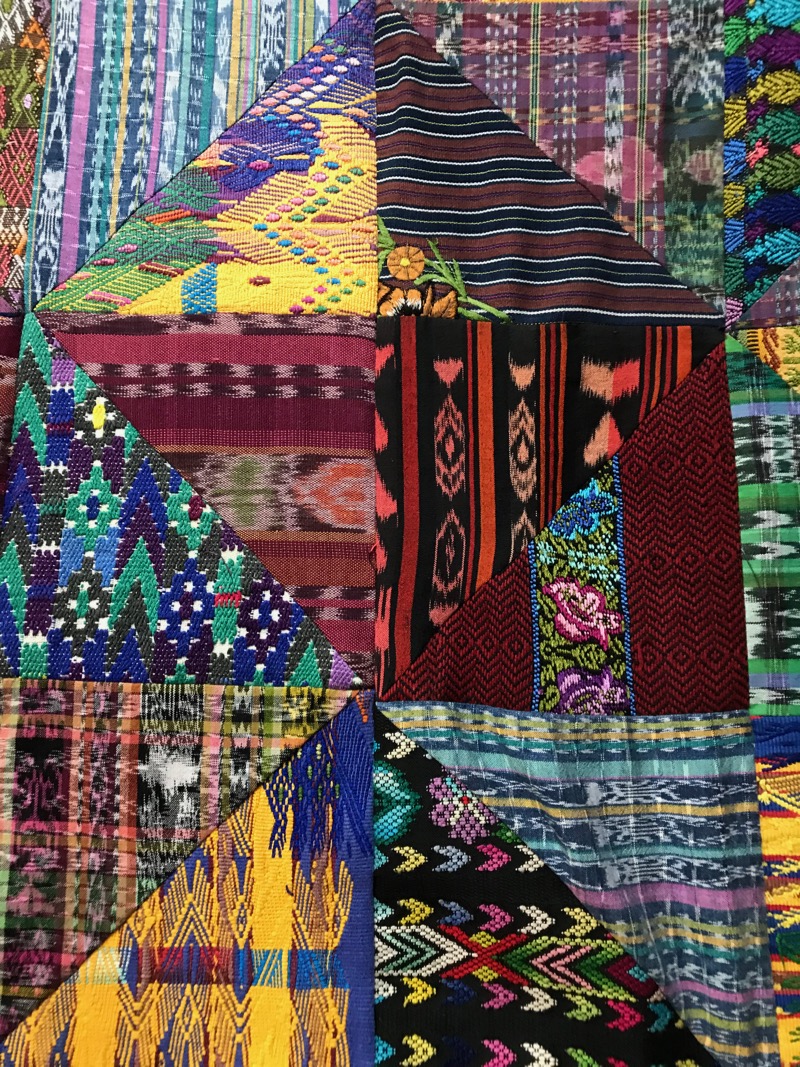
The my sister noticed this patchwork quilt up on the wall. Carolina (below) brought out two more quilts:
The too-worn fabrics are cut up into patches, or parches in Spanish. Yes, I came home with some.
My sister and I, with Gary in the background. (I purchased the scarf.)
We left Carolina’s, which was on the outskirts of Antigua, and headed into town to pose with all the street vendors near the iconic arch.
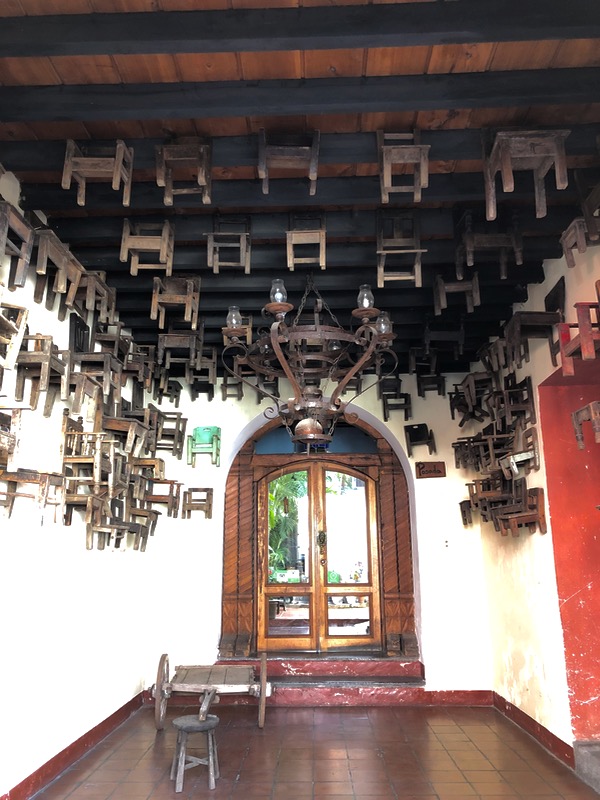
Our hotel was El Convento, mentioned in this article in the NYTimes. I took about a billion pictures of this small, perfect, hotel, which I’m not posting here. Above is the swimming pool.
In the area just outside my room, they had tourist-safe water to drink (not shown) and little flowered meringues to enjoy. I did enjoy them, and often.
We spent some time in the main plaza, where I purchased some souvenirs from this young girl and her brother. Interesting to see our thrift store clothing show up here.
Wares for sale one day in our hotel. I kept trying figure how to pack it ALL up into my suitcase, but only purchased a doll for a friend who collects.
One early morning we went down to the bus depot (where we took the chicken bus video) and enjoyed all the colors there.
Thearch and volcano, early on the morning we left to head back to Guatemala City.
We brought home the two stacked wreaths the angel, a few table runners, placemats and the fabrics, but if I’d had another suitcase, I would have brought home so much more. It’s truly a textile-lovers’ paradise.
Before we left, I had to call to make sure our credit/ATM card would work overseas and ended up talking to a young woman who was born there, but has only returned once. When we came home, this note was in our mail, a thoughtful sentiment.
I do appreciate my sister and her husband hosting us for a long weekend in the middle of their busy, giving lives. I was especially thankful to spend time with my sister. I have three sisters, but all of them live far away from me, so it was lovely to talk to her, stroll around Antigua with her, and deepen our relationship.
The last thing I want to say is that it’s Christmas time, so be kind to yourselves in the rush. I know you are all busy with your final preparations for family, friends, and a day or two to yourselves, but take time to listen to a carol, take a breath, and enjoy this season of light.
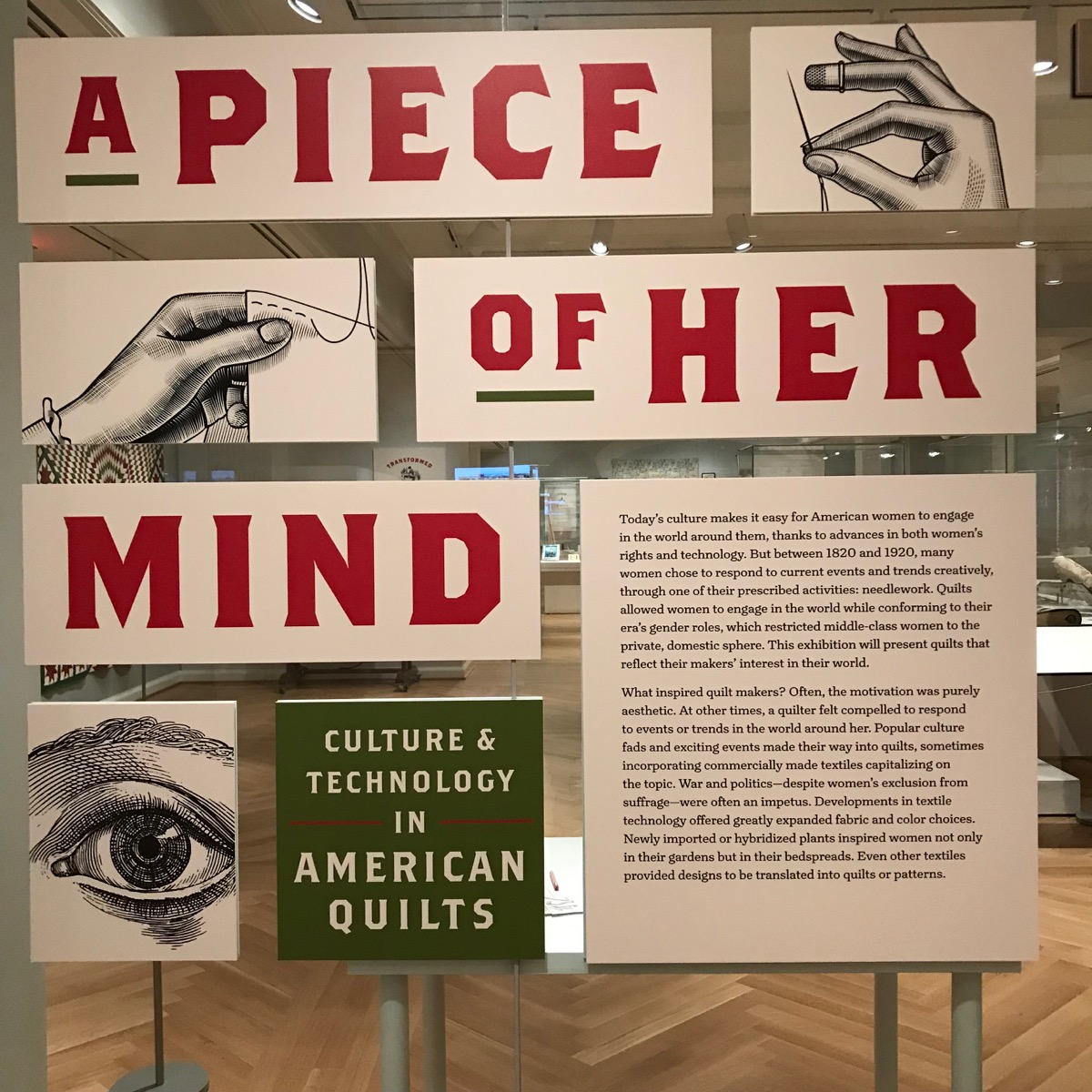
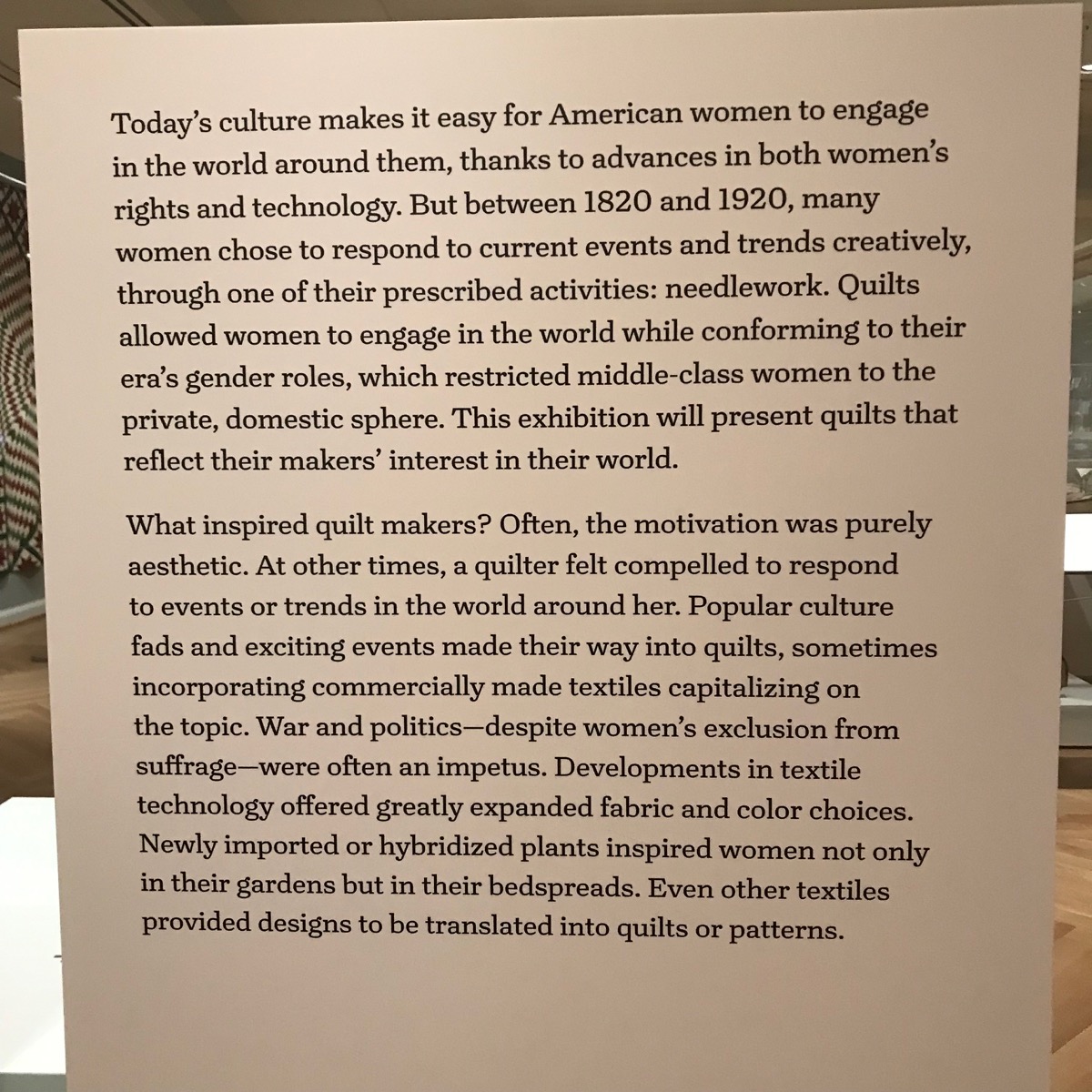
When my husband and I traveled to Washington, D.C. recently, we took in an exhibit at the DAR Museum titled, A Piece of Her Mind. It had a focus on how technology — in an historical sense — affected quilters at an earlier time, just as much as it affects us today. I thought you’d like to see some of the quilts, so here we go.
I actually have to give a lecture in 2020 about the impact of technology, and all that was swirling around in my mind were topics such as social media, rotary cutters, our fancy high-speed sewing machines. But this showed me that technology’s impact is not just a recent phenomena.
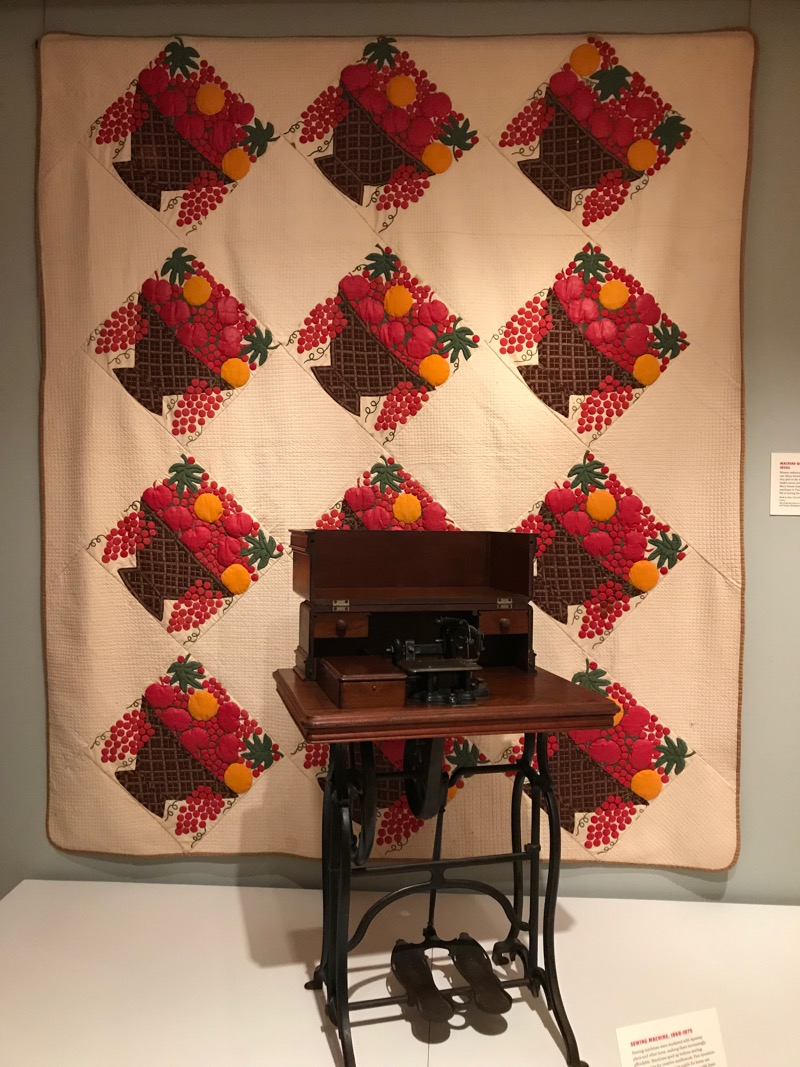
An example of a table-top sewing machine with foot pedals was in front of a beautiful quilt of basket blocks.
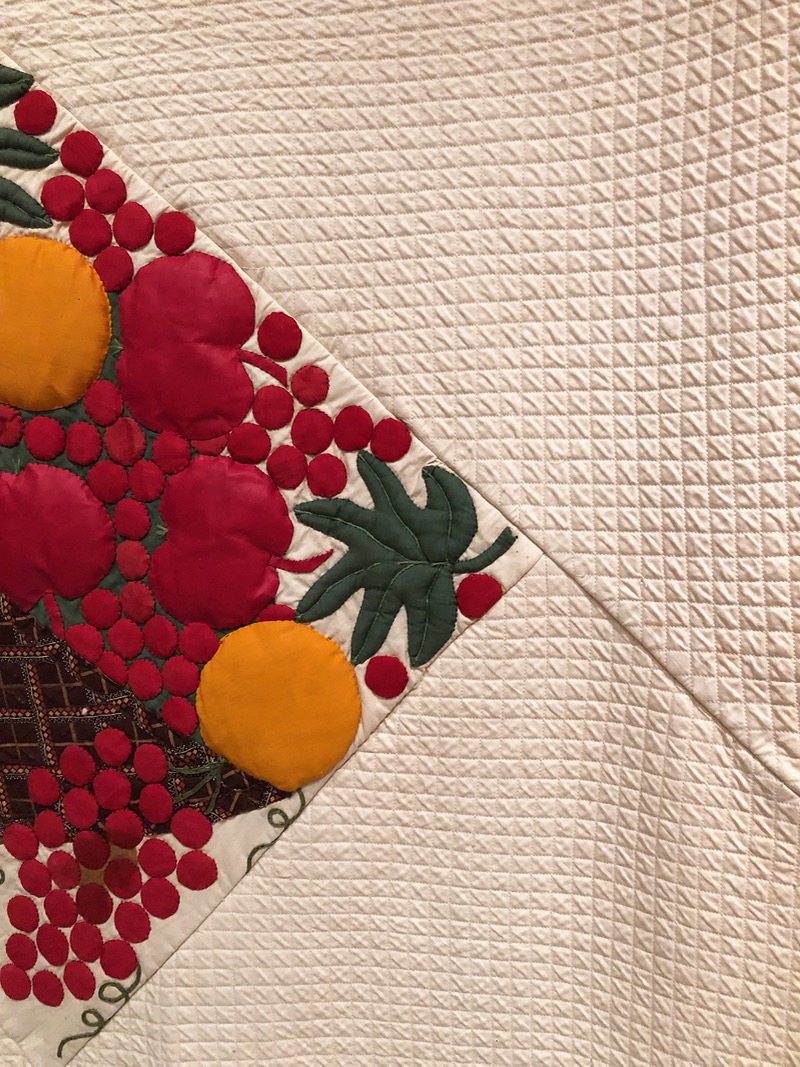
The blocks were appliqued (interesting to note her use of black thread, no matter what color the fruit), and from the appearance of it, stuffed (trapunto?). It also looks like she quilted the “plain” blocks first, then sewed the basket blocks in between the quilted blocks — a really unusual way to construct a quilt.
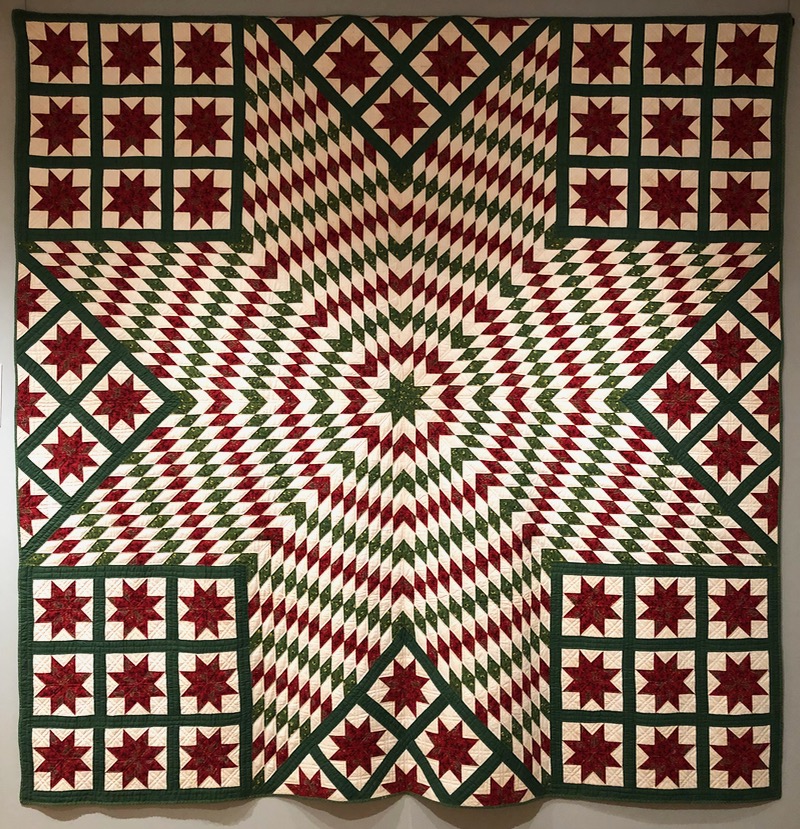
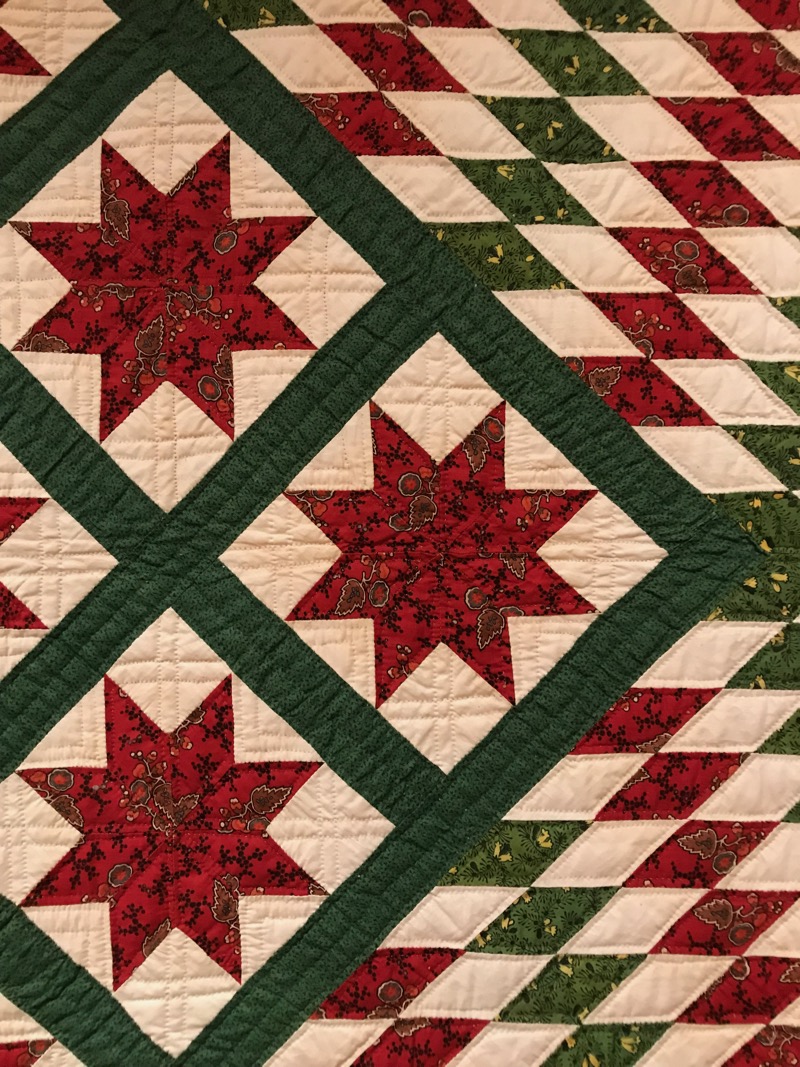
The Red and Green Bethlehem Star Quilt (1840-1860) benefitted from the relatively new ‘Turkey red’ dyes. According the title card, previous to this invention, “dying cloth this color of red was a complicated dye process. [In addition] [g]reen had to be dyed in two steps (yellow, then blue) until late in the 1800s, but a more reliable option called ‘chrome green’ provided the leafy and emeral hues seen in mid-century quilts.” This cotton quilt was made by Sarah Hall Gwyer (1819-1882) in North Carolina, or Omaha, Nebraska.
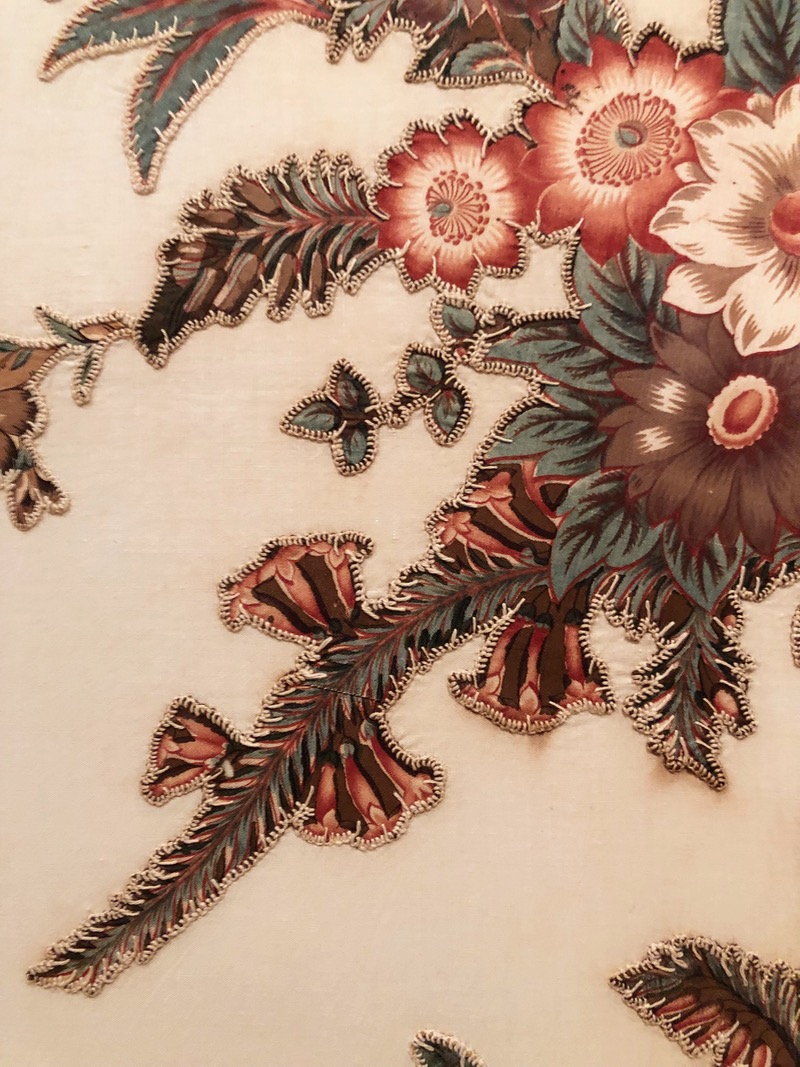
I loved this broderie perse (or appliquéd chintz panel) quilt from the 1820s not only because of the design, but because of those stitches! Seeing evidence of another woman’s handwork always makes a quilt more personal for me.
This Baltimore Album Quilt is from about 1850, and is made by a member of the Hayden family from Baltimore, Marlyand. It’s cotton, with wool embroidery.
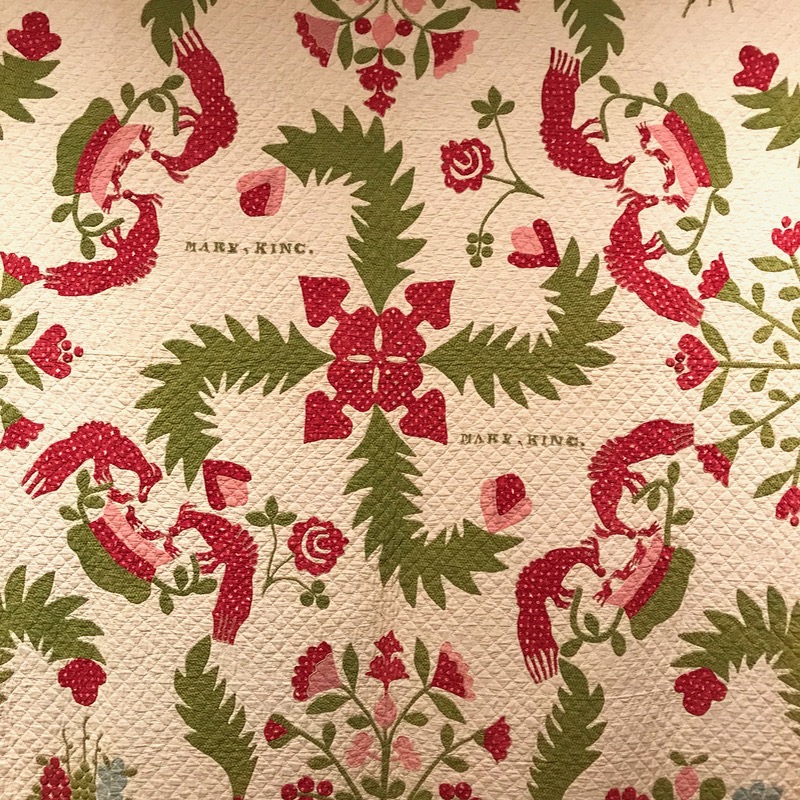
This appliqué quilt was made by Mary Swearingen King (1811-1902) in Findlay, Allegheny County, Pennsylvania. I loved the applique birds:
They look almost pre-historic, here, feeding berries to their young.
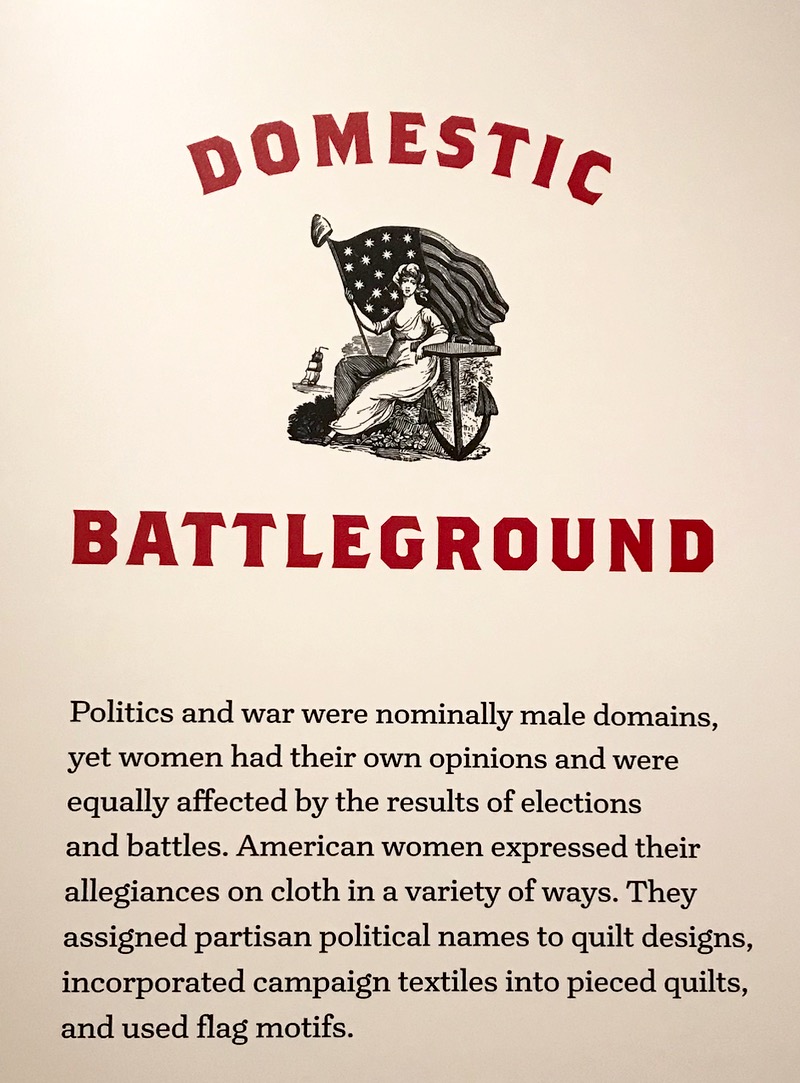
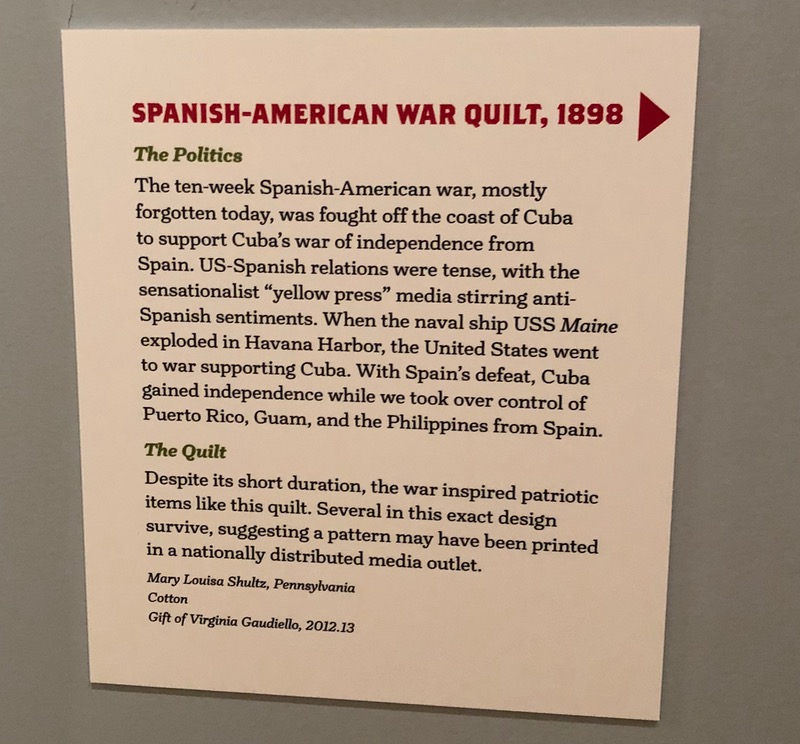
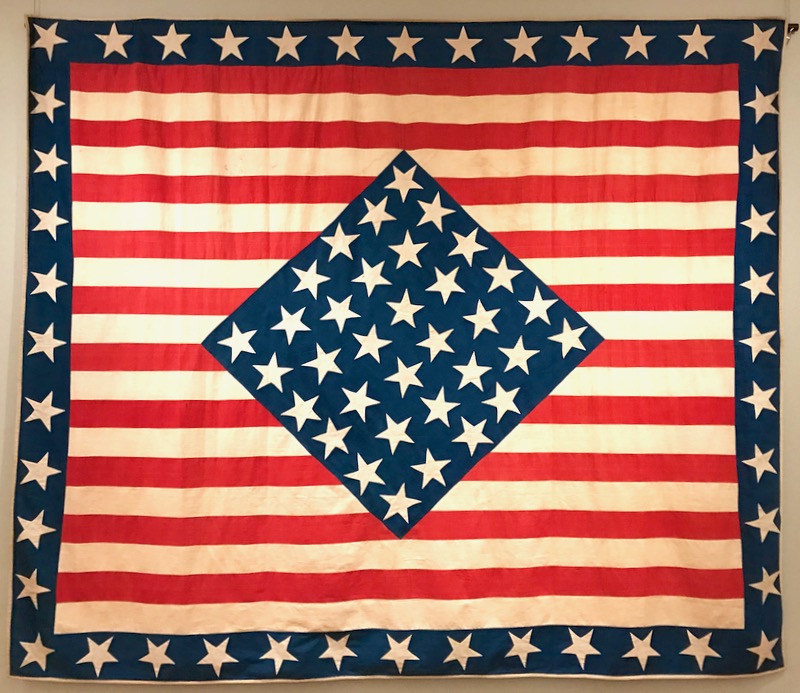
Beyond the technology-oriented quilts, there was a section on quilts that were affected by the culture of the day. I was drawn to the red, white and blue quilts. That center block is the flag from Cuba, explained below:
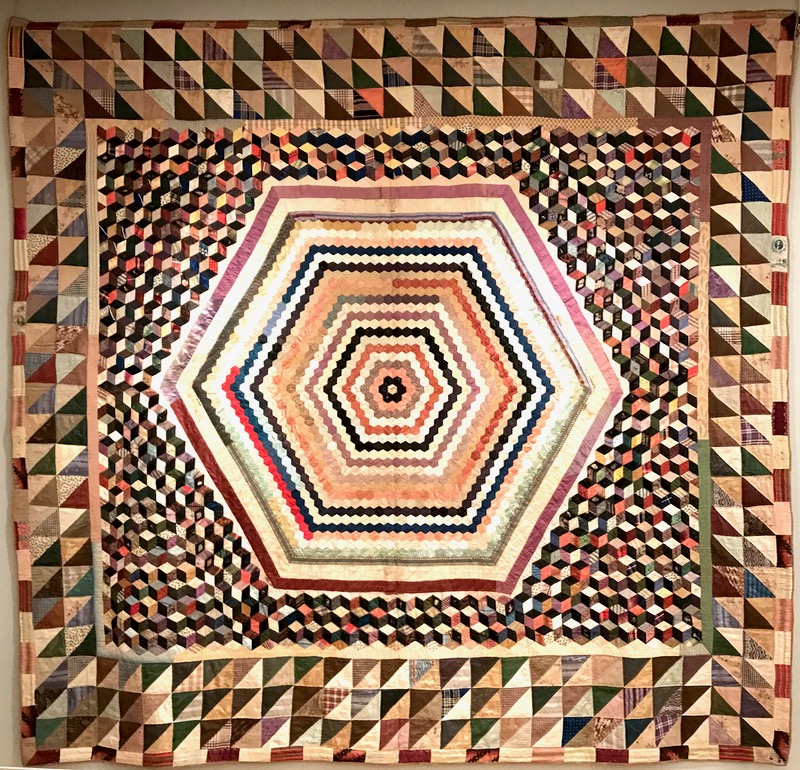
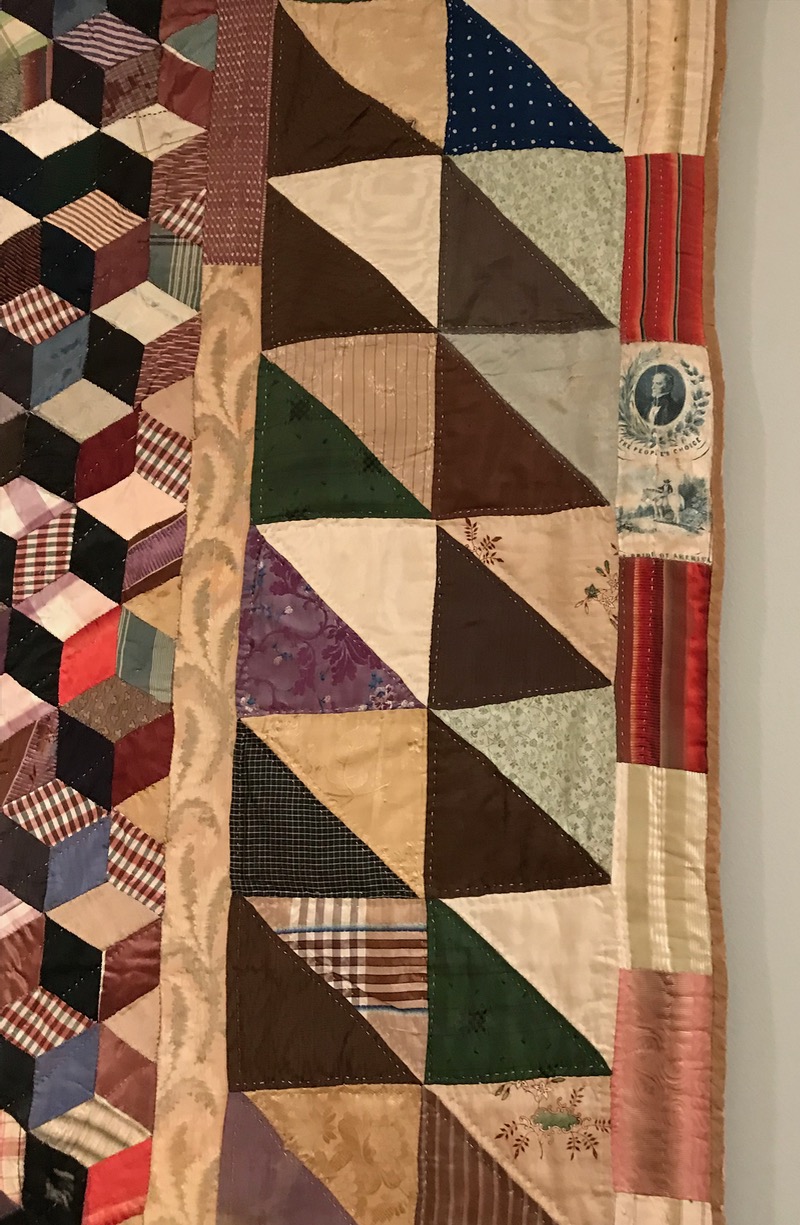
I zoomed way in (the ropes around the quilts didn’t permit close inspection) so the picture is a bit globby, but you can see the Clay ribbon in the outside border.
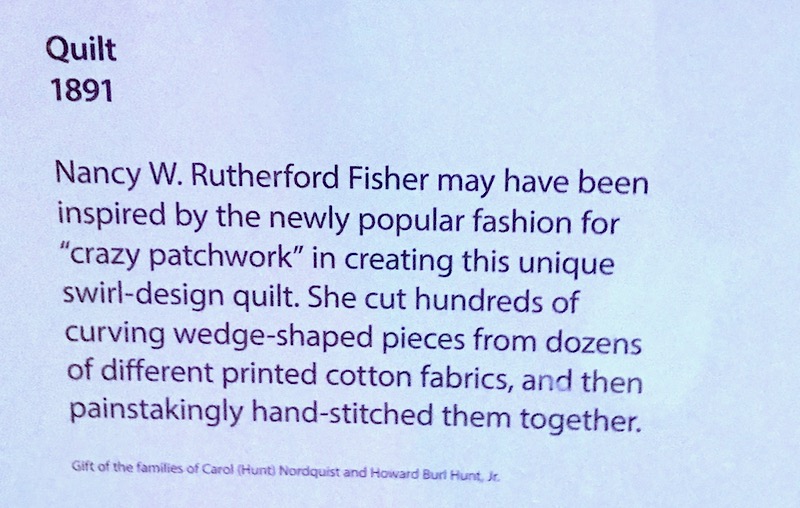
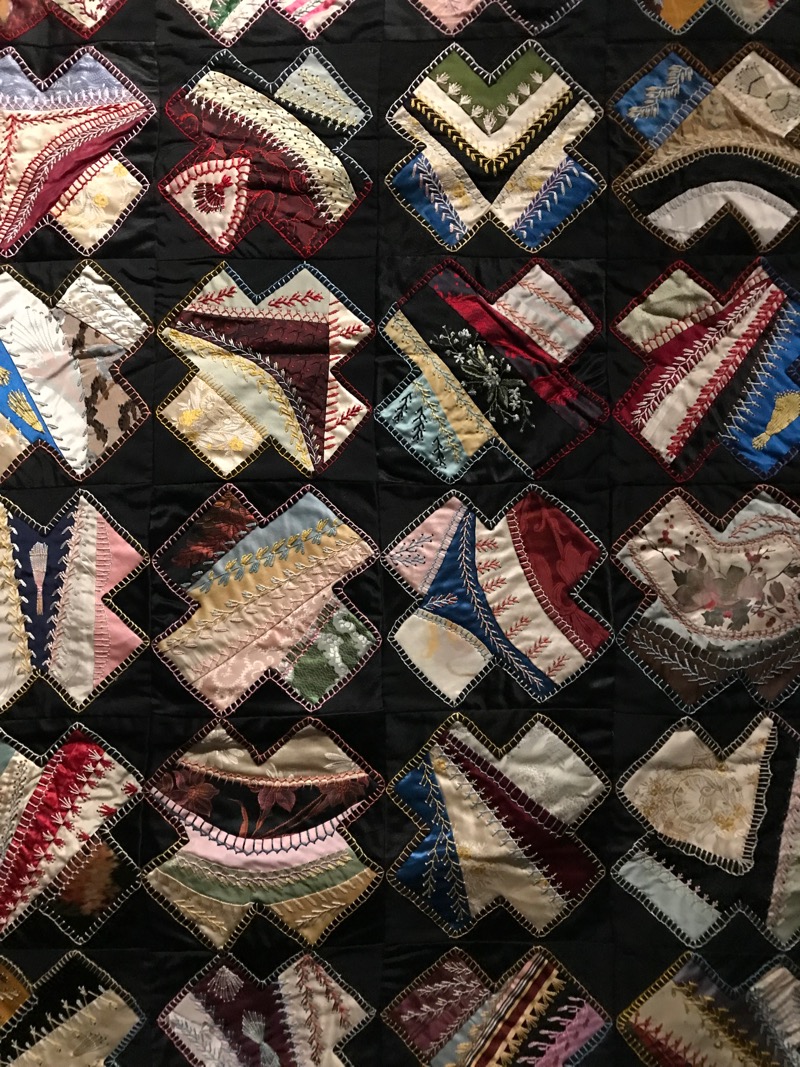
The exhibit also had a series of crazy quilts, some quilts made with toile prints, and quilts inspired by popular fictional characters.
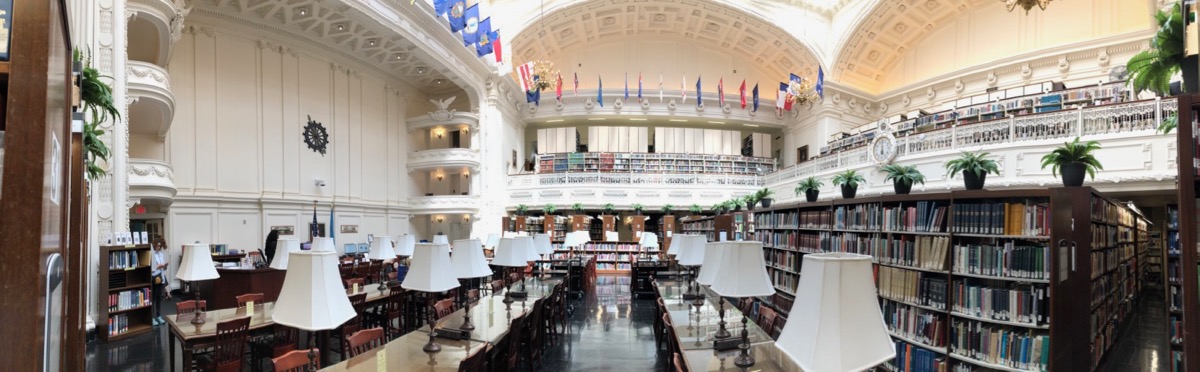
Afterwards we went to the library–quite stunning in a panoramic view.
There was also a quilt of another kind in the Renwick Gallery, just up the street, made out of snippets of movie film. The title of this is “Fibers and Civilization (1959)” and was made in 2009, using 16 mm film and polyamide thread. This piece of art is from Sabrina Gshwandtner, and I’d seen some of her work before at LACMA.
Then we hopped on the Metro and went over to the National Museum of American History. Can you tell I looked up on the internet where all the quilt exhibits were?
Unfortunately, this spectacular quilt was behind a piece of highly reflective glass, so the only way I could get a photo was to gently lean my photo lens on the glass to cut the glare. This means that I couldn’t get a photo of the complete quilt, but here are some segments.
In another small exhibit, they had a lot of crazy quilts.
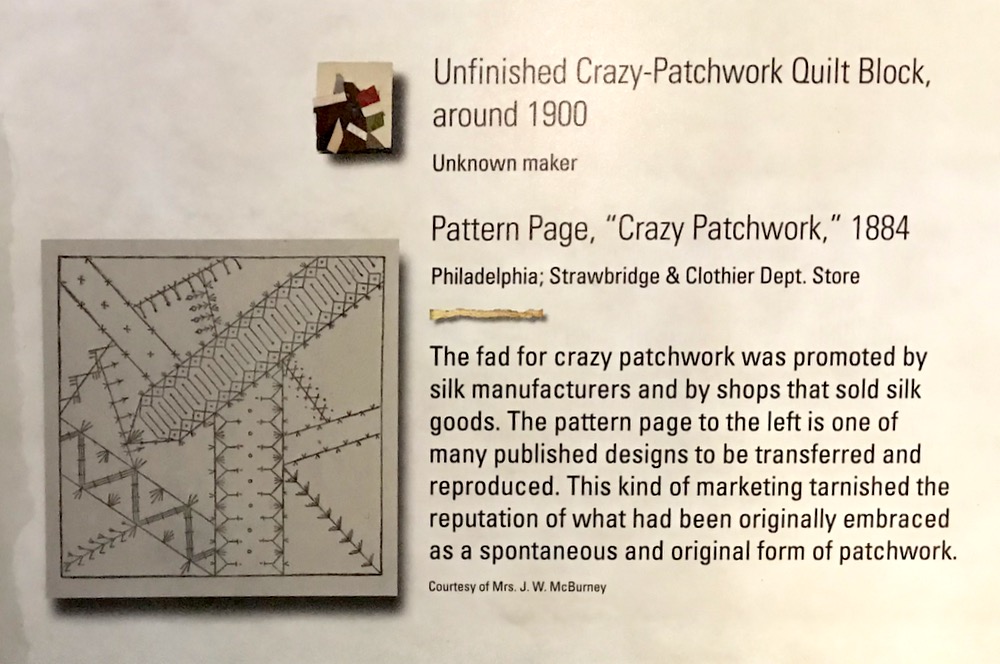
I was quite interested in what this title card (above) said about the advent of patterns for crazy patchwork.
In between all this, we stopped for some lobster rolls at Luke’s Lobster shop, meandered around the Mall, and hung out together. We really like DC, as you probably know. More photos can be found on Instagram.
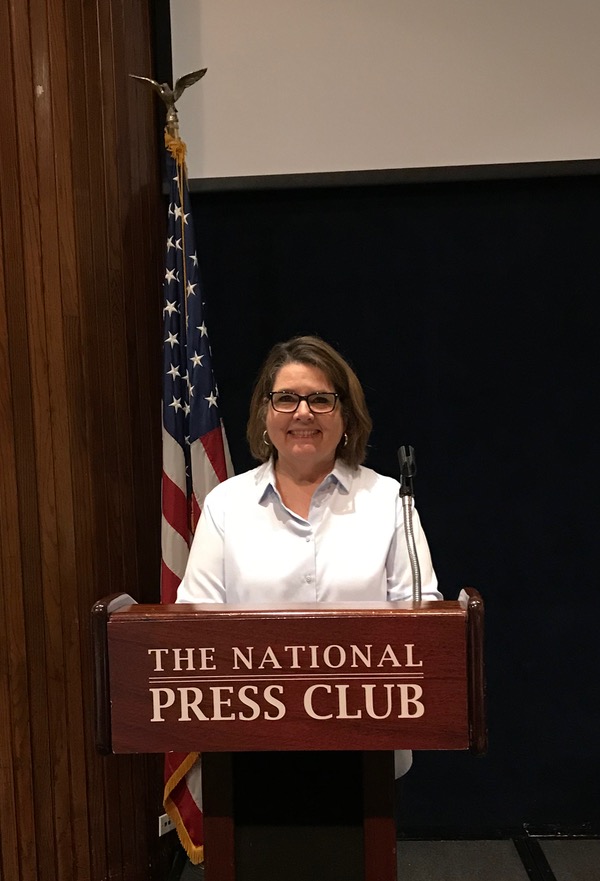
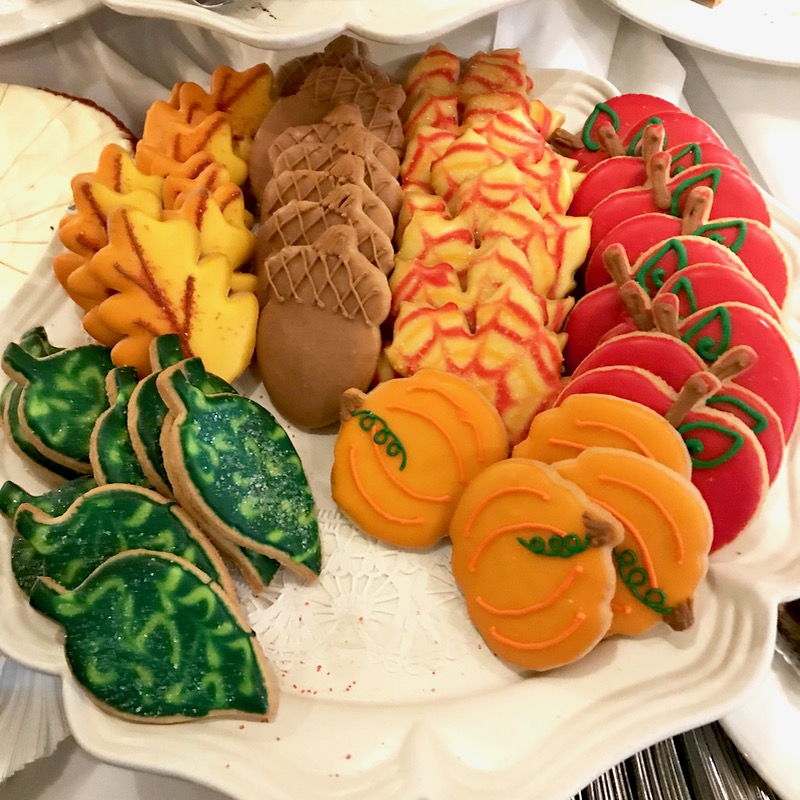
Later that week we had a gathering at the The National Press Club in D.C., where they host the White House Correspondent Dinners, and we had a spread of yummy desserts to choose from. I chose one of these (it’s the color, naturally!) after I’d had the requisite chocolate treat.
So, here’s your spot of fall color–happy quilting!























 OccasionalPiece--Quilt!