Carrefour Quilt Show · European Patchwork Meeting · Quilt Shows · Quilts · Travels

Carrefour VI: RachelDaisy Dodd, Ruth De Voss, Lorena Uriarte, Diane First, France Patchwork & Ulla Hoppe

This is the sixth, and final post about the Carrefour European Patchwork show 2025. The post covers:

• Venue 13: Villa Burrus, with RachaelDaisy Dodd
• Venue 14: Église de l’Assomption, with Ruth De Vos
• Venue 15: Salle Polyvalente, with Lorena Uriarte, Dianne Firth, ASL Liépvre, EQA, France Patchwork
• Venue 16: Ulla Hoppe

I have a main Carrefour Quilt Show page that lists all the posts of all the meetings I’ve gone to, and includes the posts from this year too. If I haven’t mentioned it before, you might enjoy these posts more if seen on a desktop computer or even a tablet. Cell phones re-format the layout and can sometimes do strange things to how it looks on the screen.

If you are interested in going to Carrefour, I wrote two posts for them about our travel, and how we put the trip together. You can find them here and here. Their main website is HERE, where you can subscribe to their newsletter (scroll to the bottom).

Thank you so much for reading and traveling along with me by way of these posts. Enjoy!
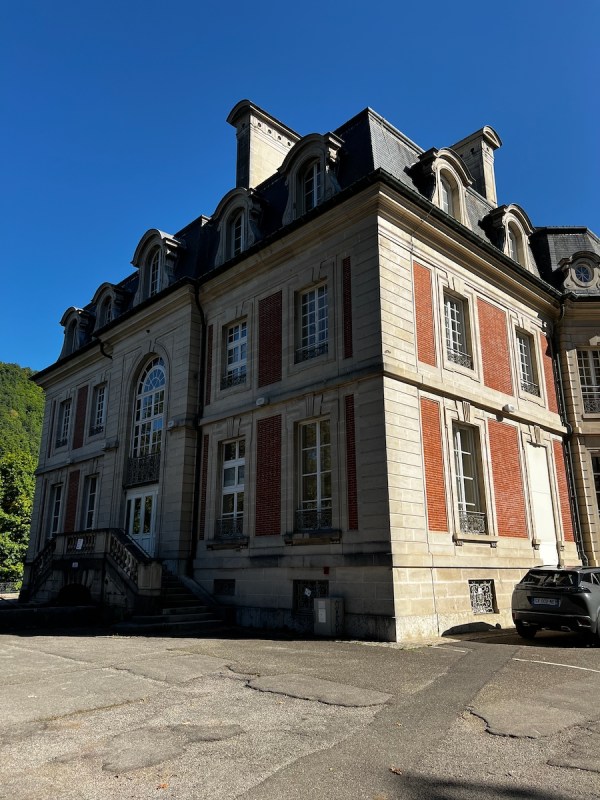
This venue, Villa Burrus, was just a few short steps from the Party Room (Salle Des Fêtes, from the previous post) and although we’ve been to Carrefour twice before, it was new to us.
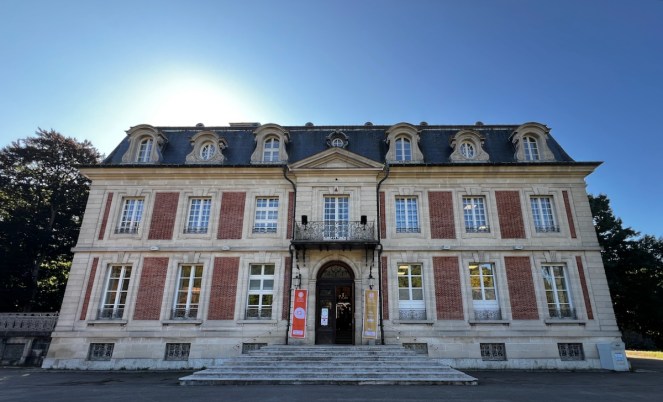
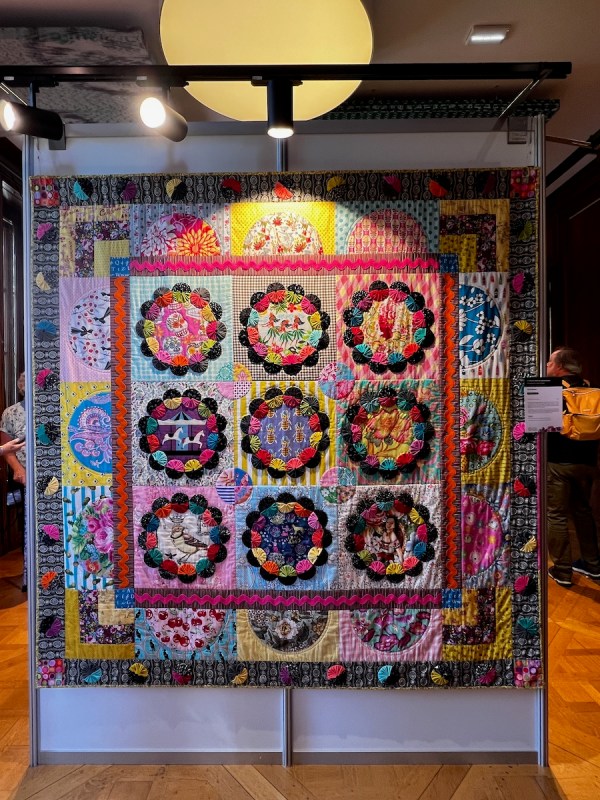
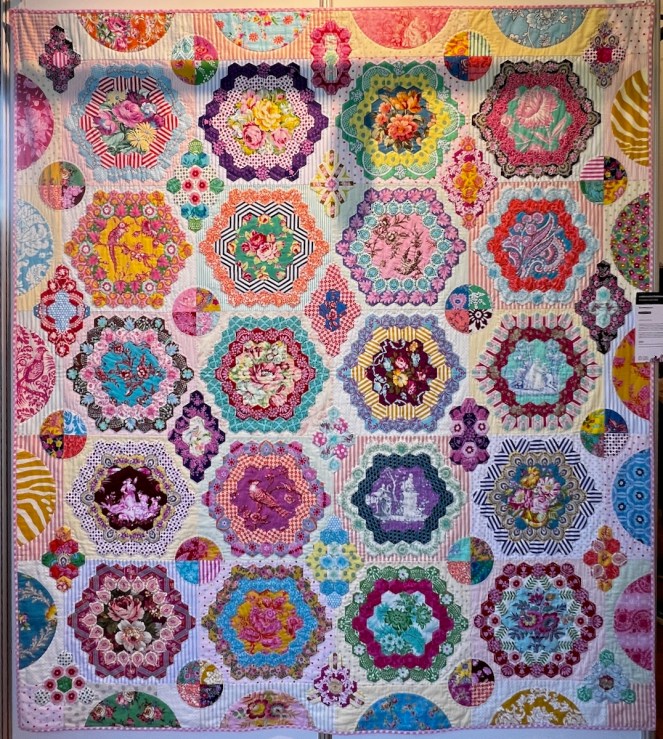
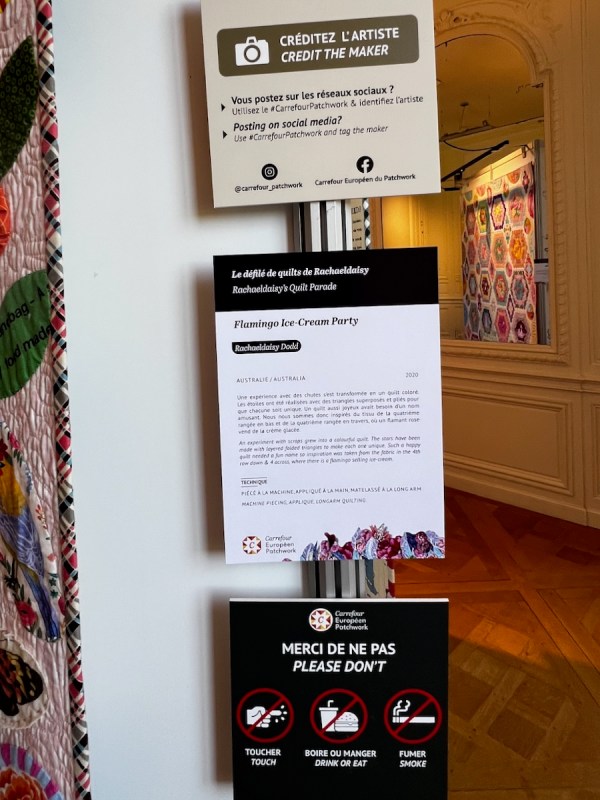
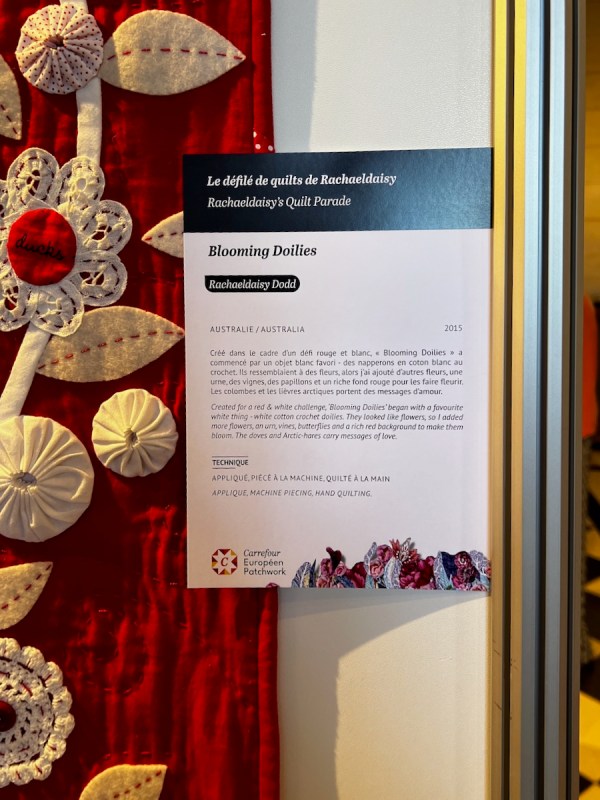
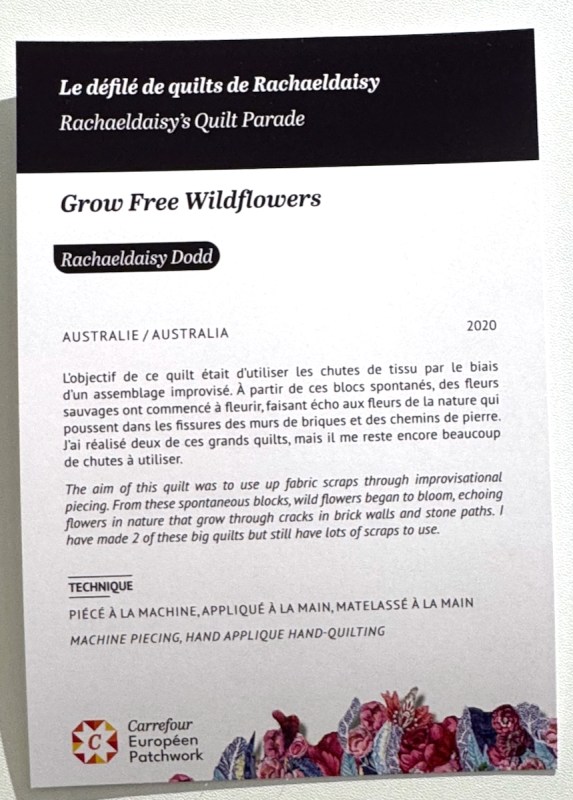
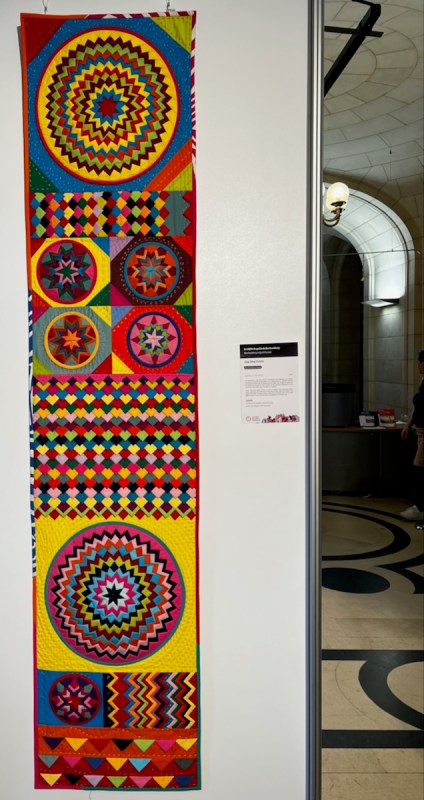
Sited on Le Parc de las Villa Burrus, this mansion was built in 1900, at least as I can figure out for the literature we picked up was all in French, printed for their Patrimonie — or Heritage — Days, when many buildings are open to the public. Whatever its origins, it was a great place to see quilts, and RachaelDaisy Dodd had her solo exhibit here.
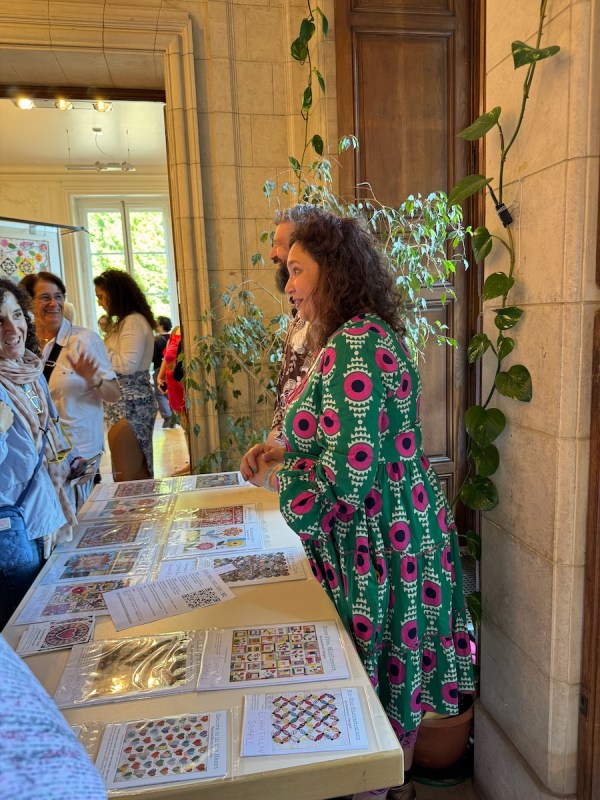
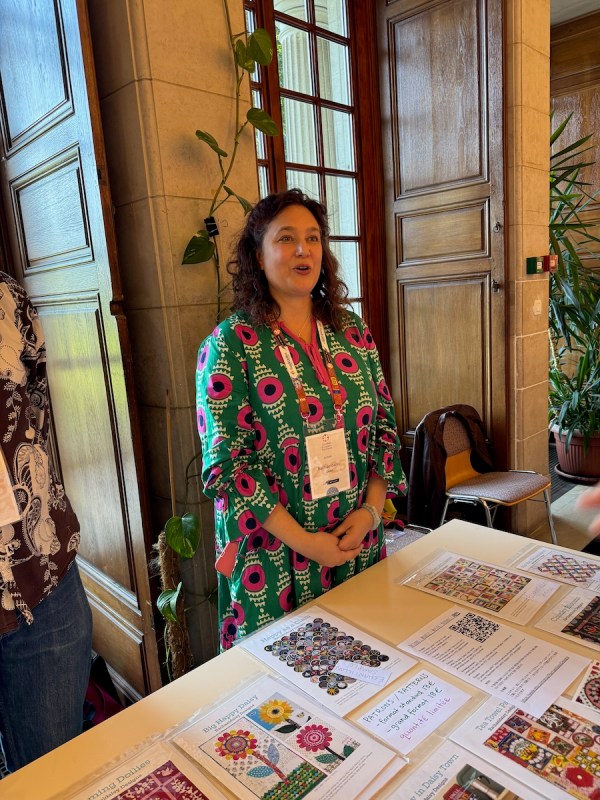
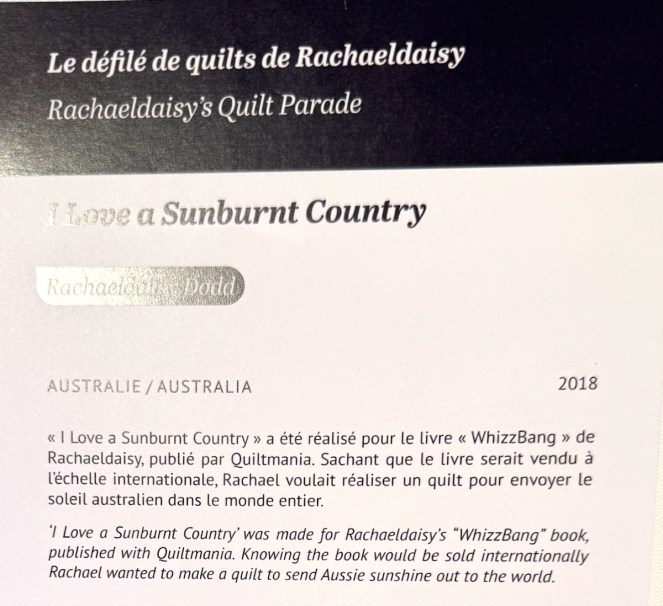
She was always thronged by, and visiting with, quilters, so I’m afraid I didn’t get the best photos of her. But her we go with some of her quilts.
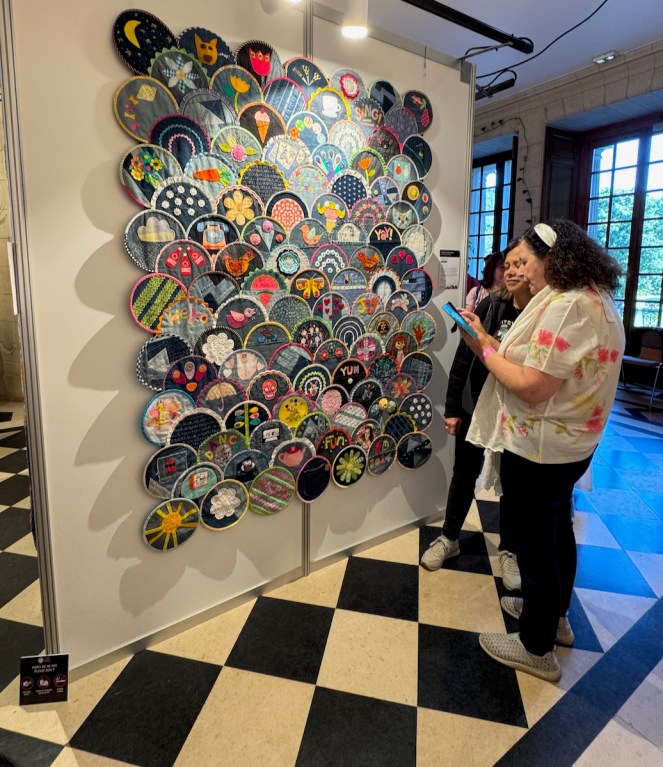
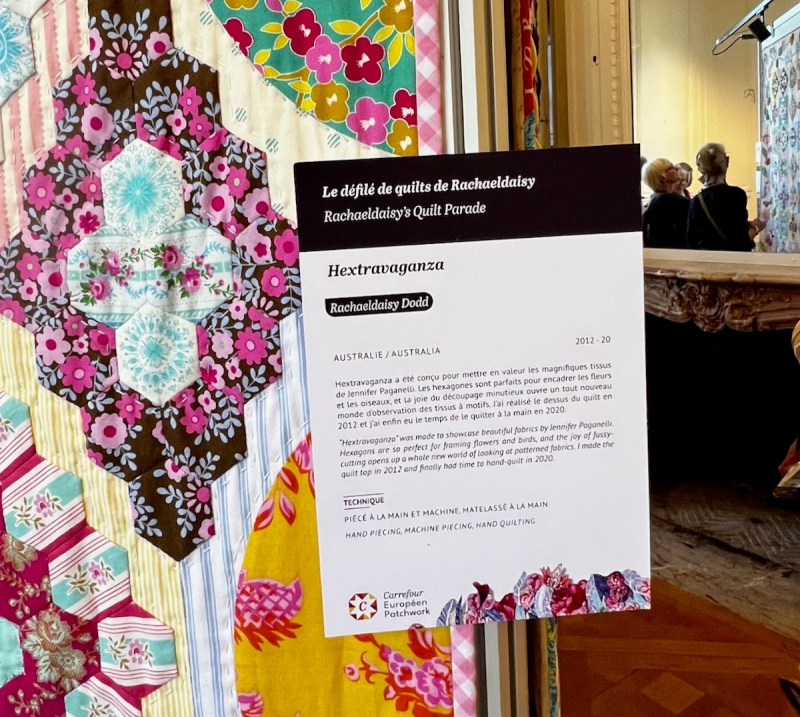
In the front hallway, just across from where her table was, and I apologize, but I have no title card for this.
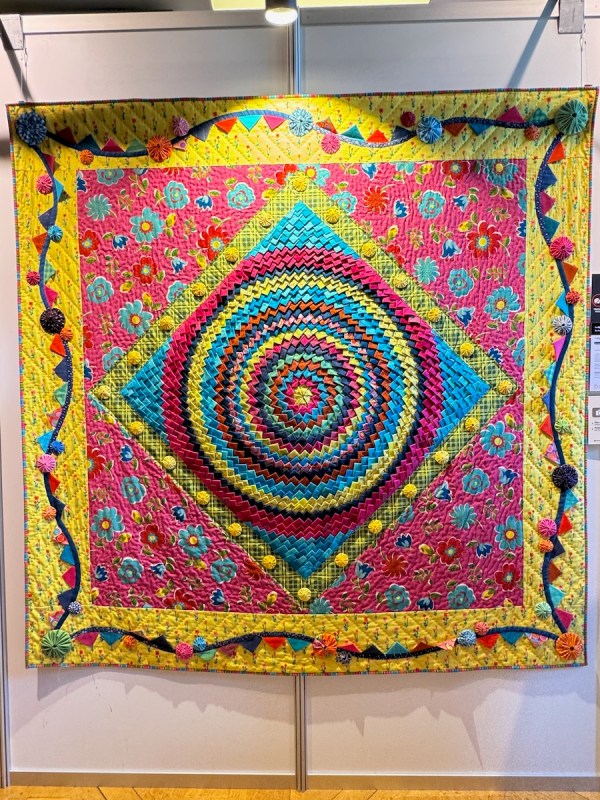
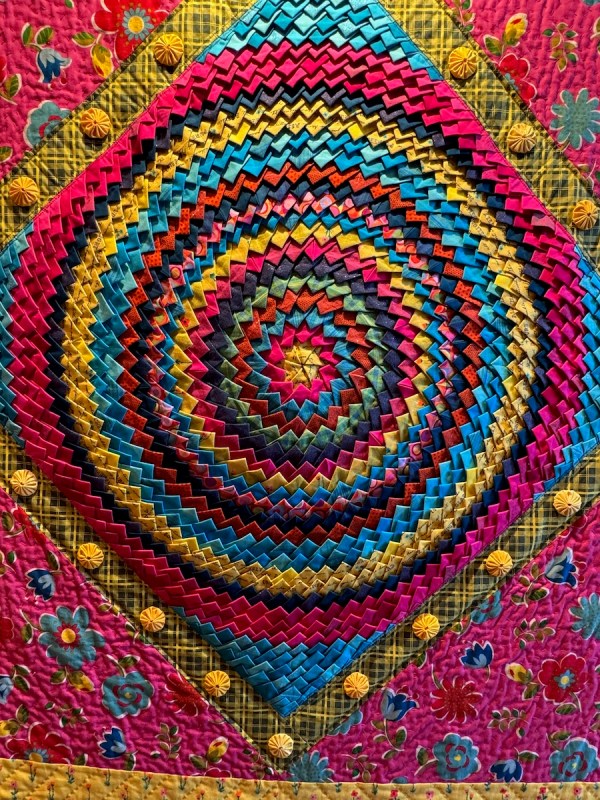
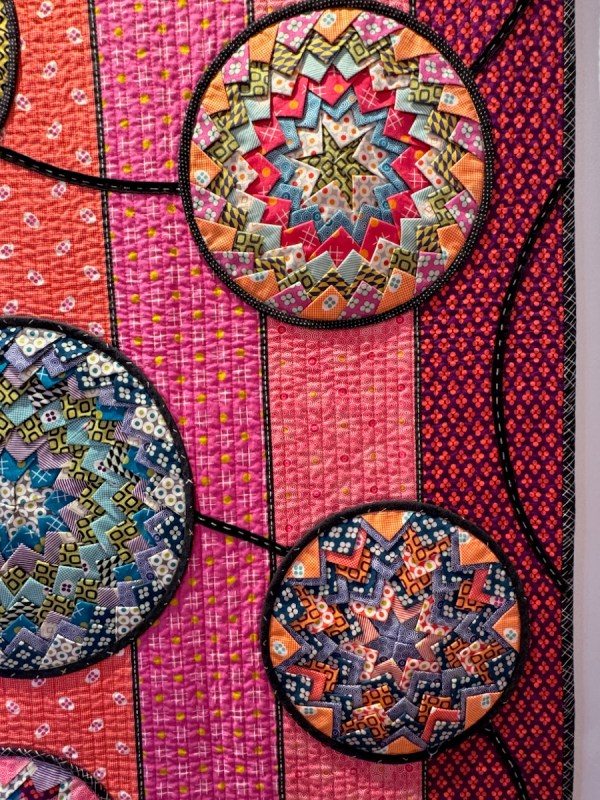
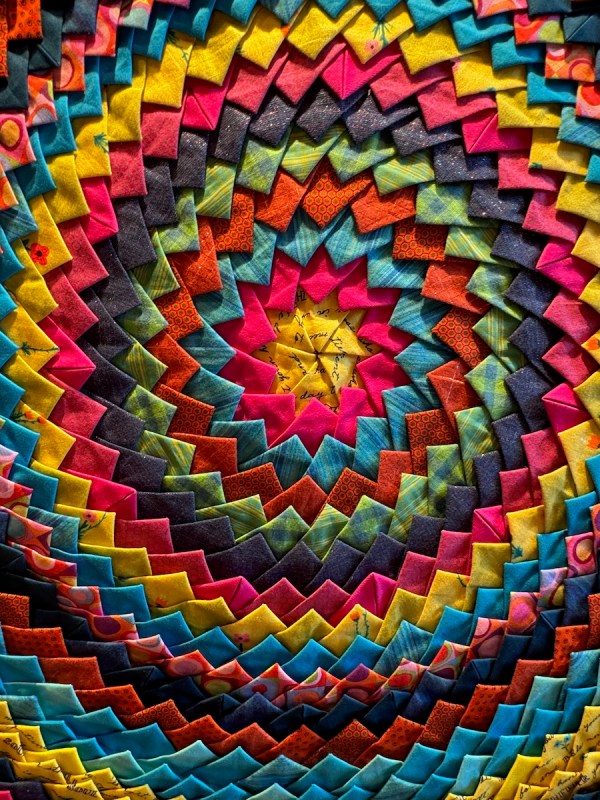
Her signature is a variation of the pine cone (or pine burr) block.
Followed by another motif she commonly uses: the yo-yo, a gathered circle with the gathers on the top.
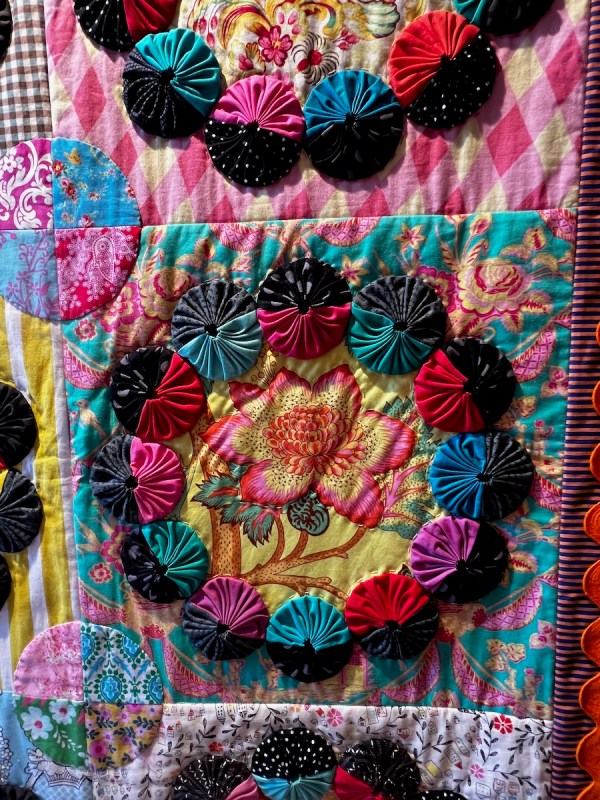
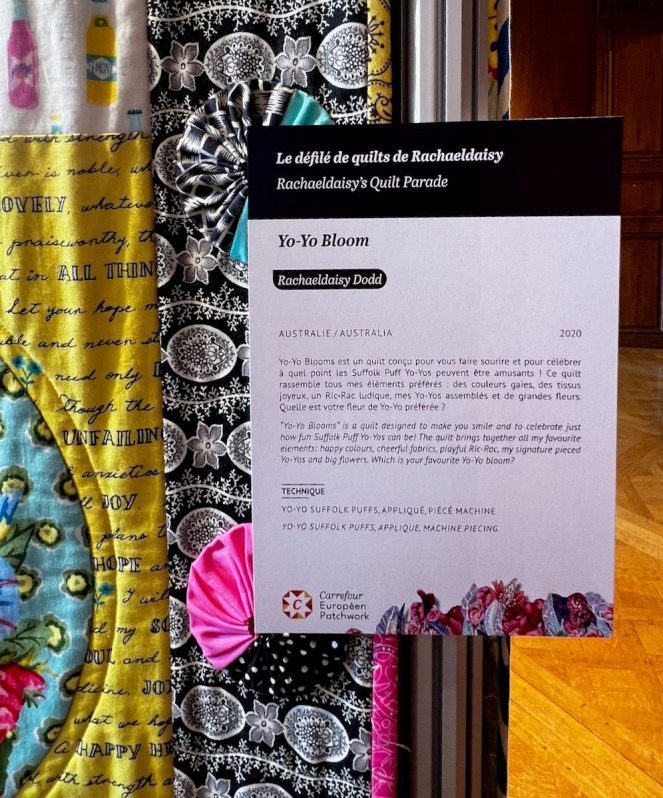
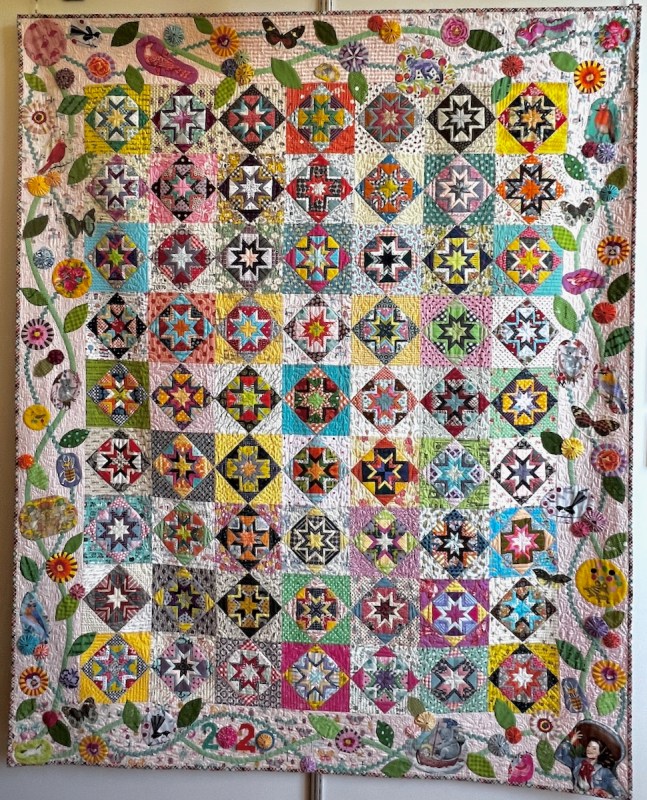
Title: Yo-Yo Bloom
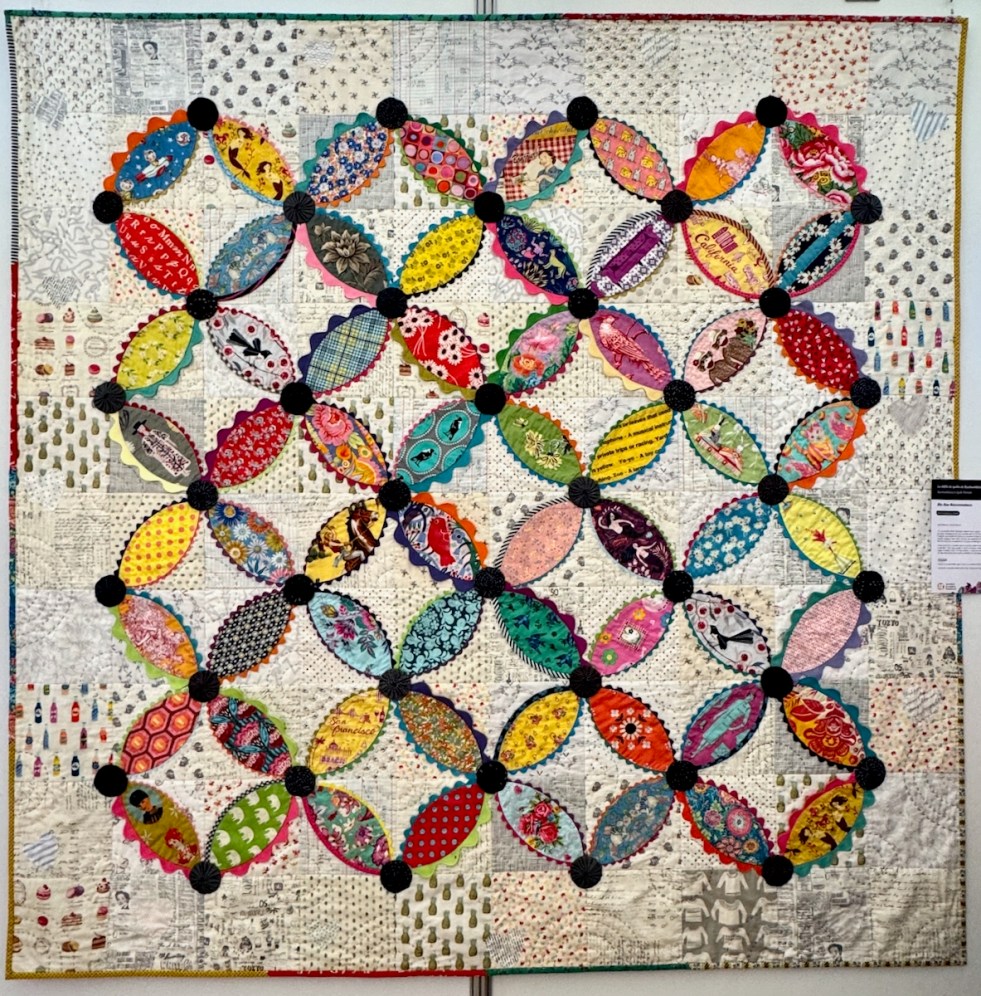
Title Card: “Yo-Yo Blooms is a quilt designed to make you smile and to celebrate just how fun Suffolkd Puff Yo-Yos can be! The quilt brings together all my favorite elements: happy colors, cheerful fabrics, playful Ric-Rac, my signature pieced Yo-Yos and big flowers. Which is your favorite Yo-Yo bloom?”
Technique: Yo-Yo Suffolk Puffs, Appliqué, Machine Piecing.
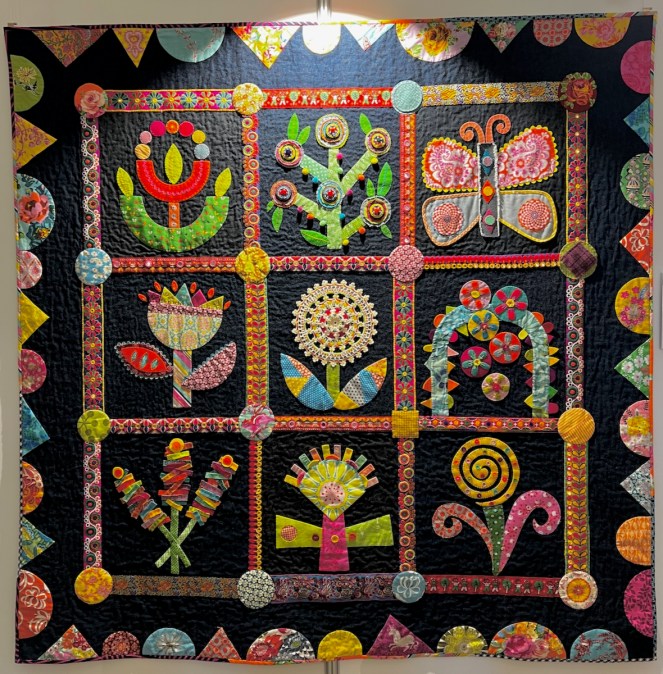
Fun and funky shapes that delight.

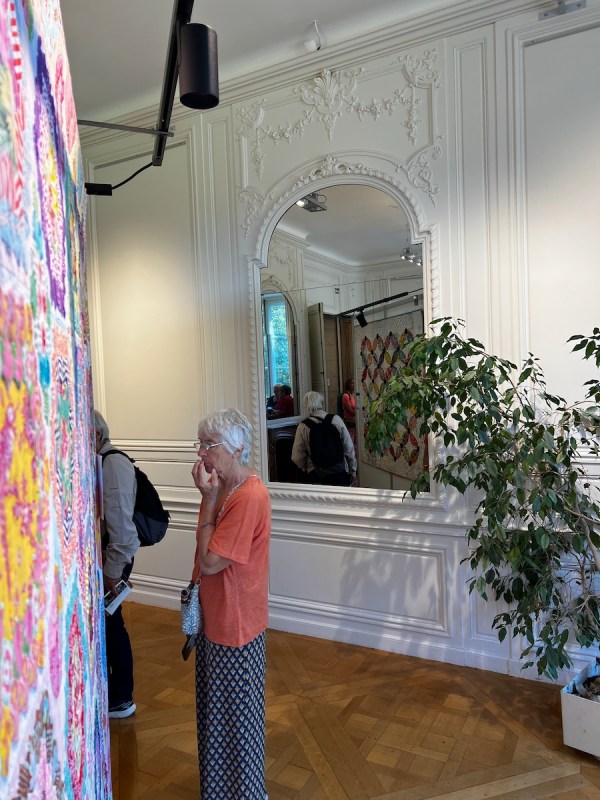
Several rooms held her quilts, with large moveable frameworks. In the next room, the frame was set up in the center, and the large mirrors and windows and her quilts all echoed with pattern and color.
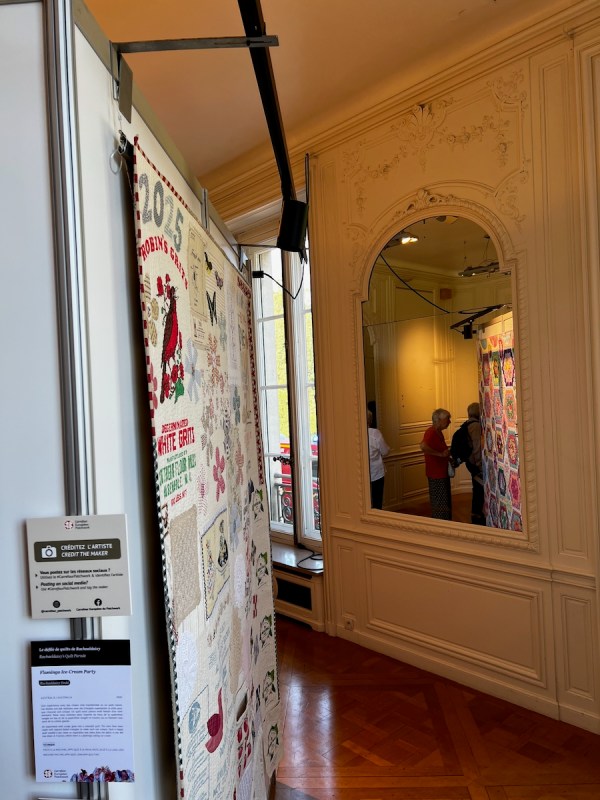
Click to enlarge.
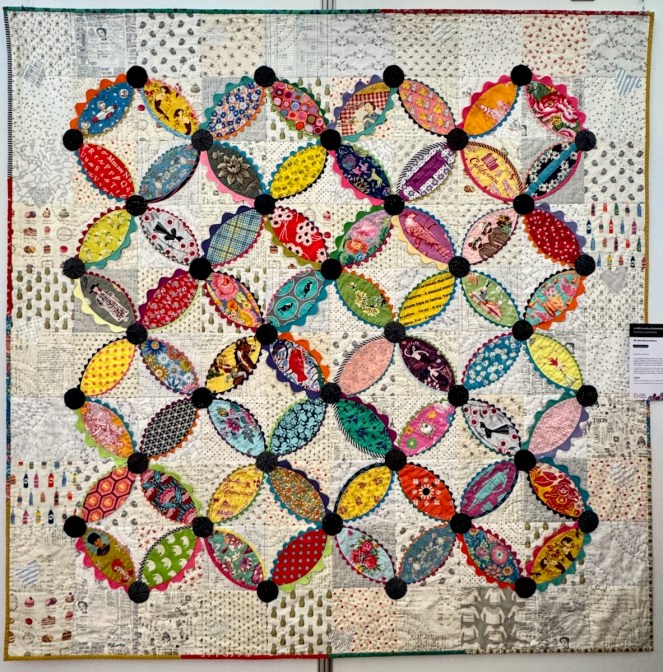
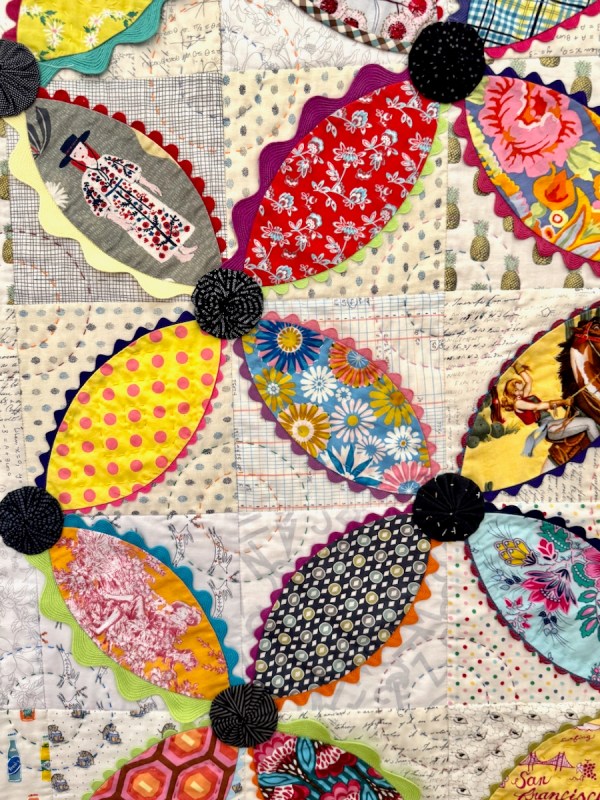
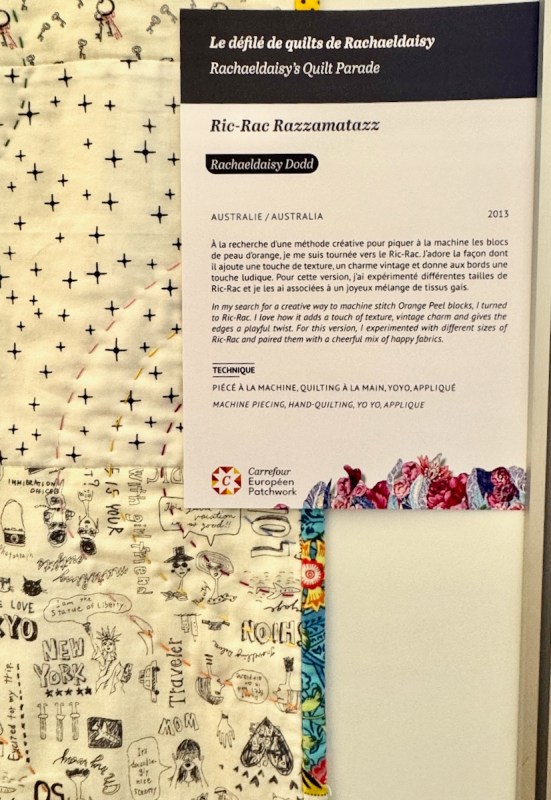
Where does she get all her ric-rac? I think a lot of it is vintage, as she alludes to in her title card.
This one was always hard to get a photograph of. I also kind of liked that the man is carrying his wife’s (his??) purse.
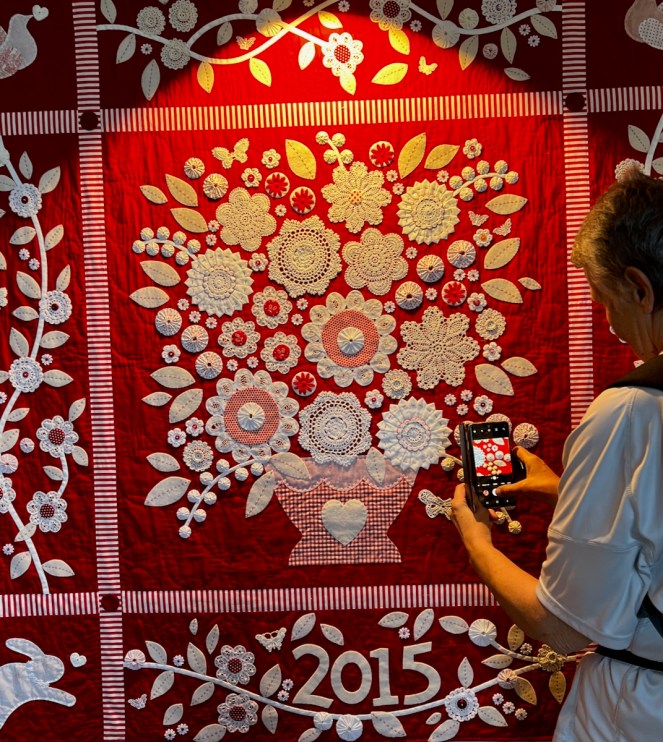
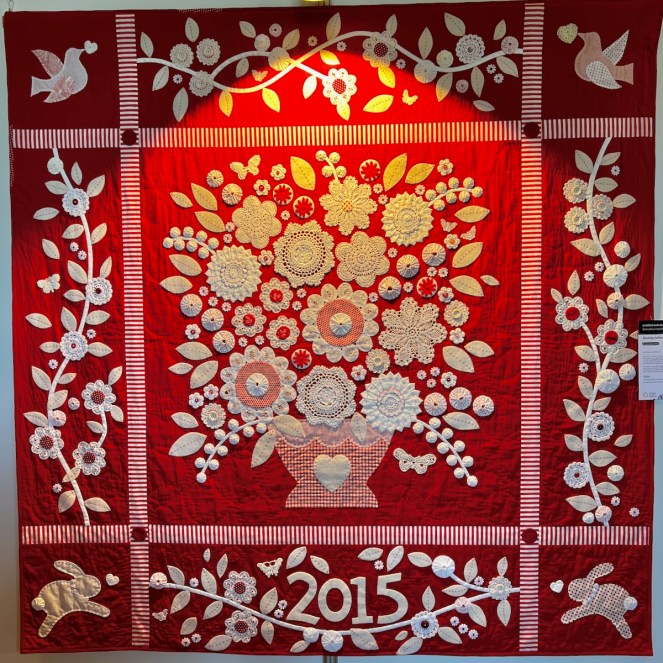
Yo-yos galore, along with doilies and appliqué; she is not a minimalist, and I love it all.
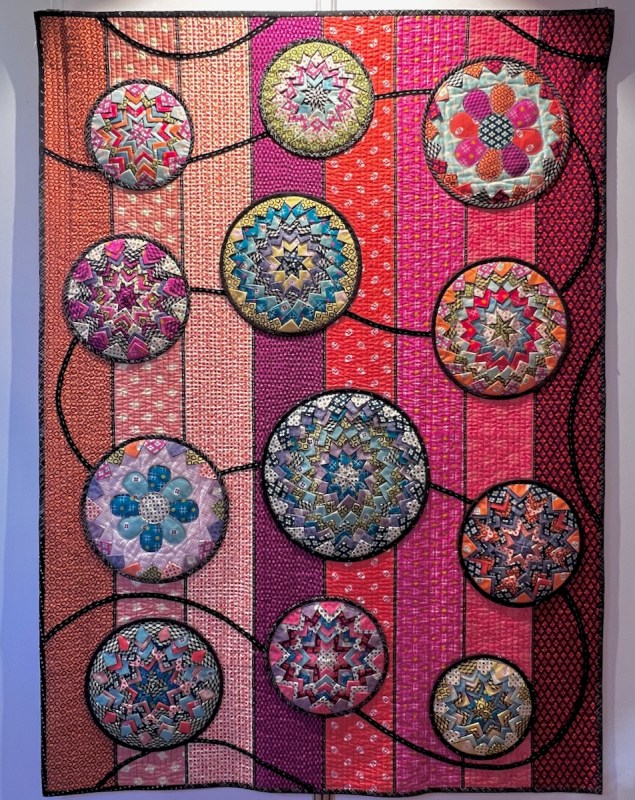
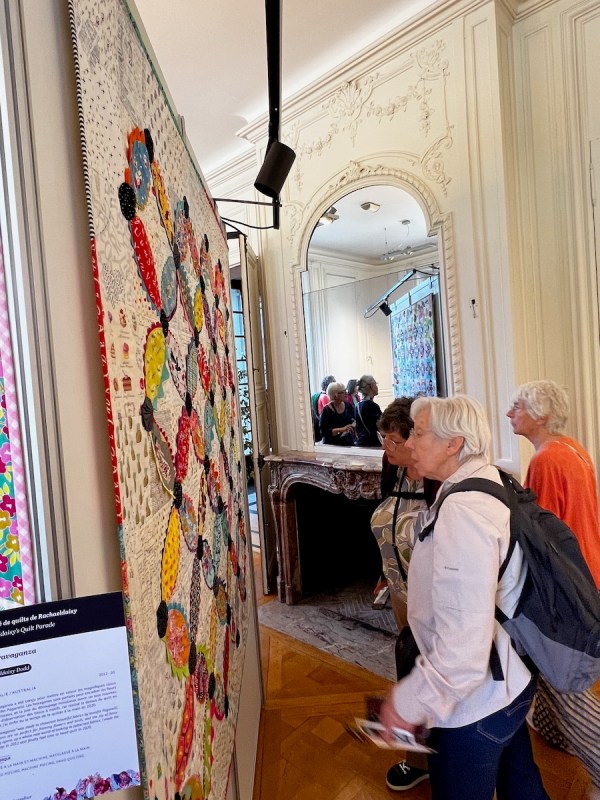
Apologies: no title card. But what do you think? Did she quilt the background, and then add the giant circular pine burr blocks afterwards? My brain is always whirling with questions at these shows.
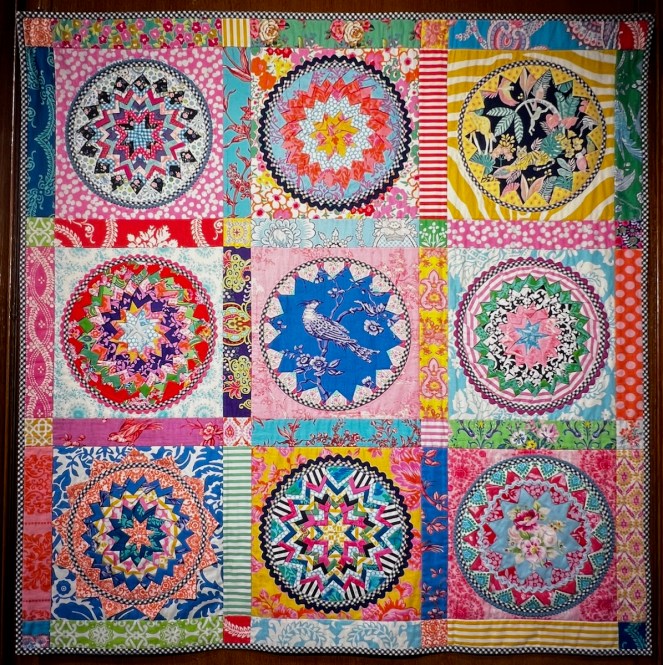
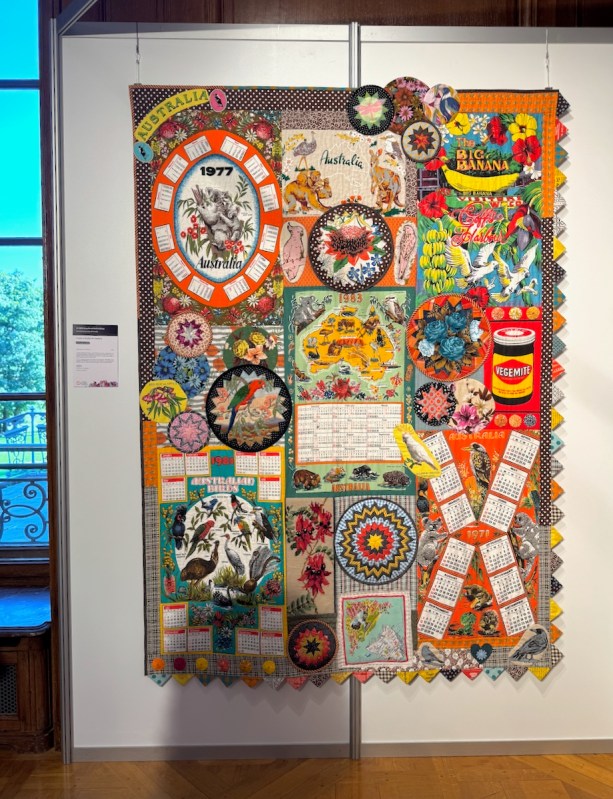
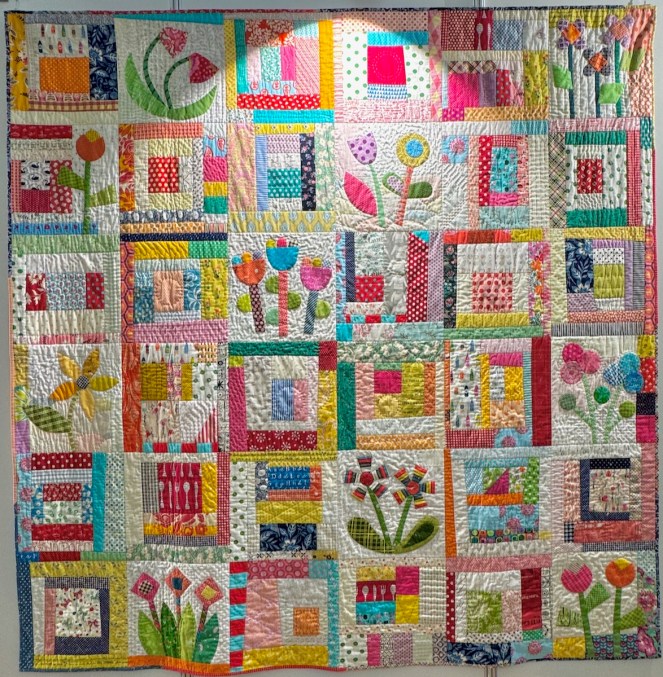
Another scrap quilt, another inspiration.
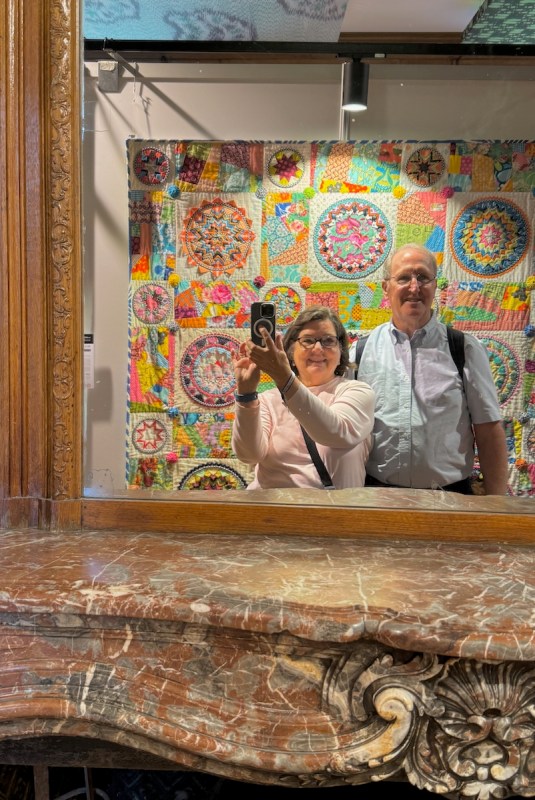
A couple of random tourists, haha.
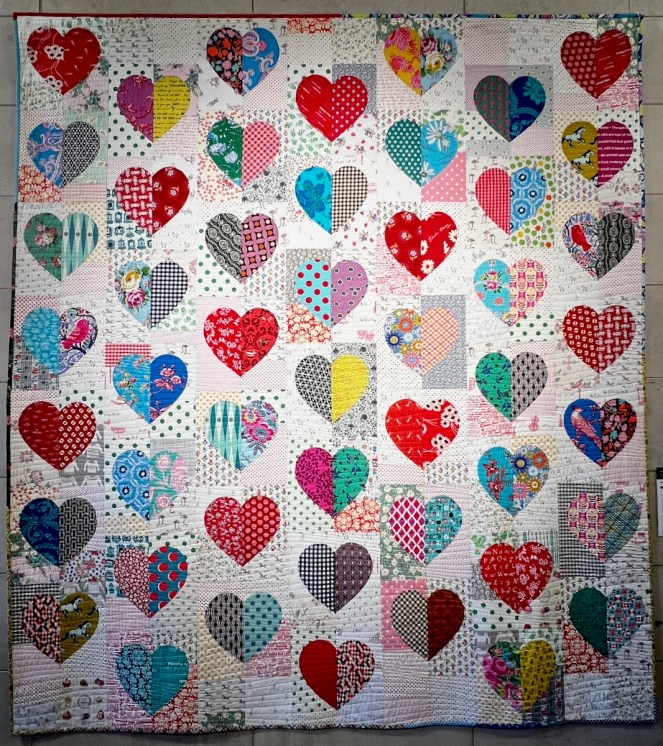
I just saw a smaller version of this on my friend’s IG feed. Link. Makes me want to put it in the queue for a handwork project while traveling to Pour l’Amour du Fills in Nantes in 2016.
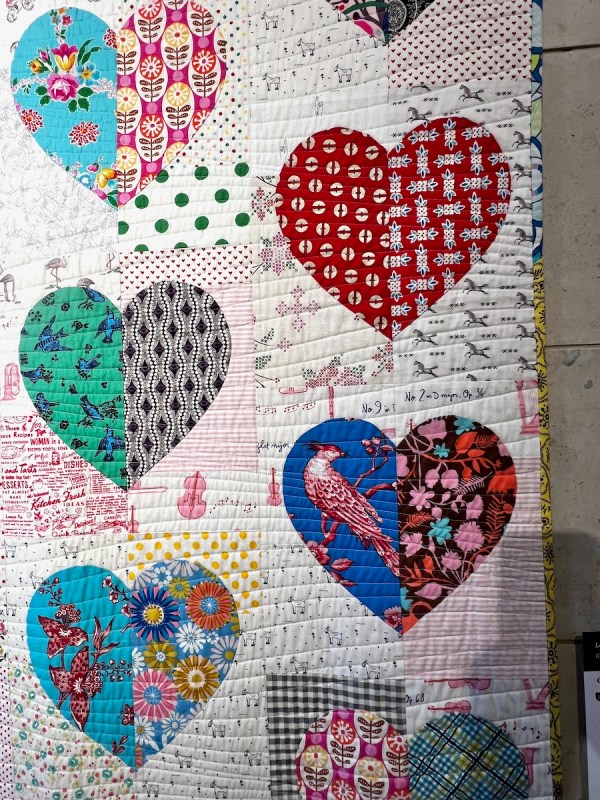
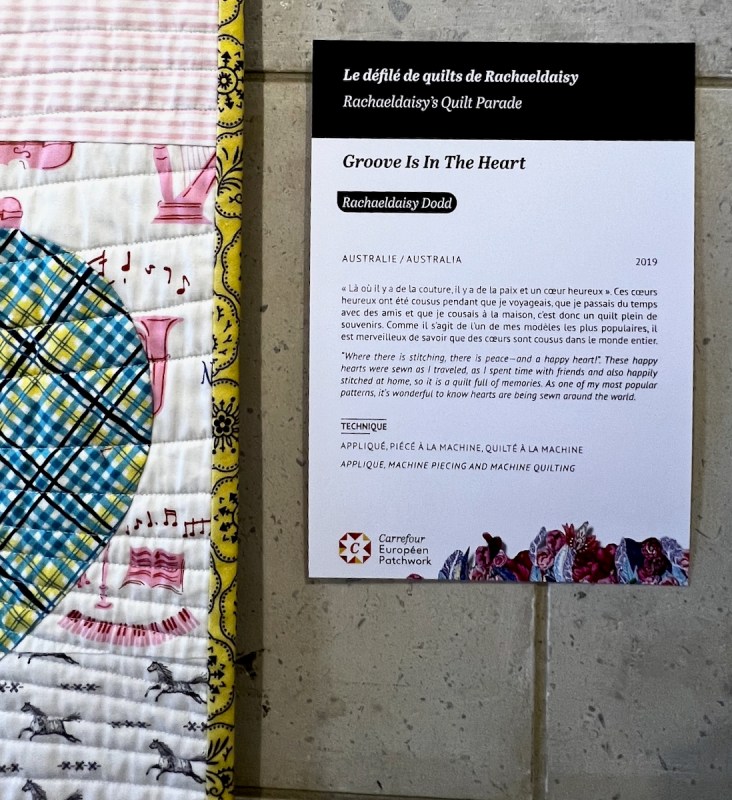
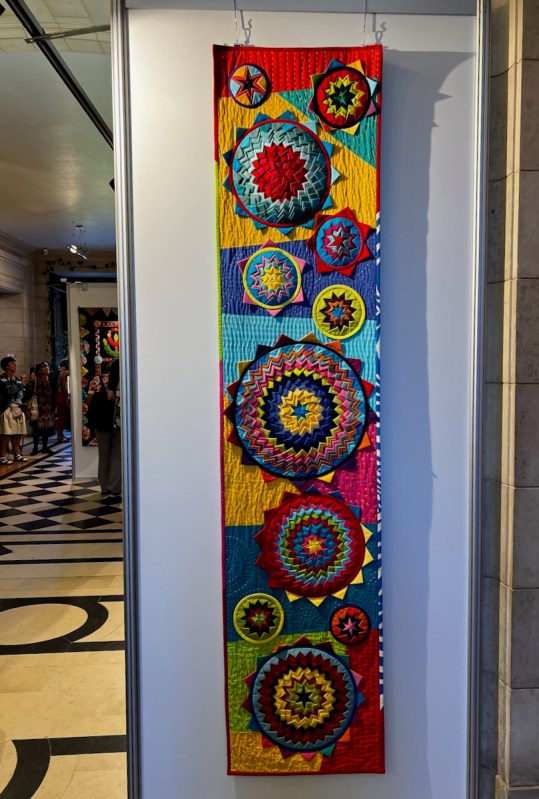
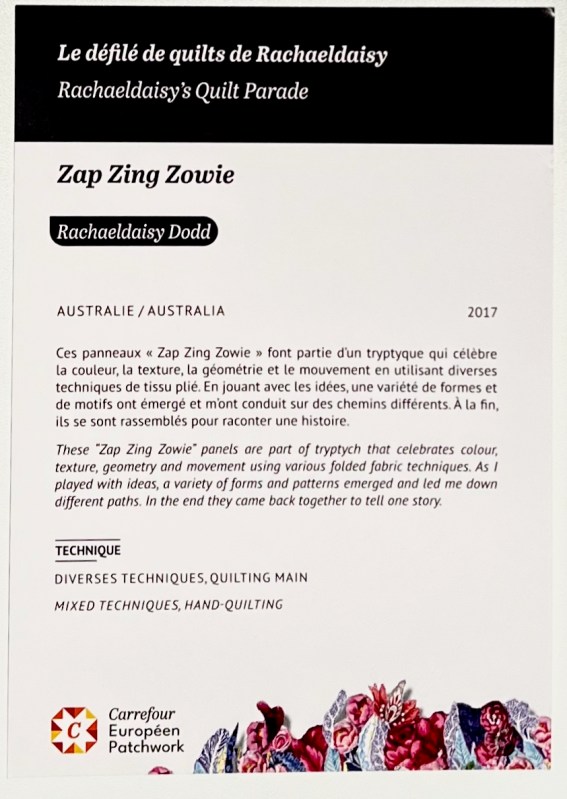
We only noticed two of the triptych of quilts. Click to enlarge the title cards and banner quilts. These were hanging by the entry/exit hall, and we were on our way out.
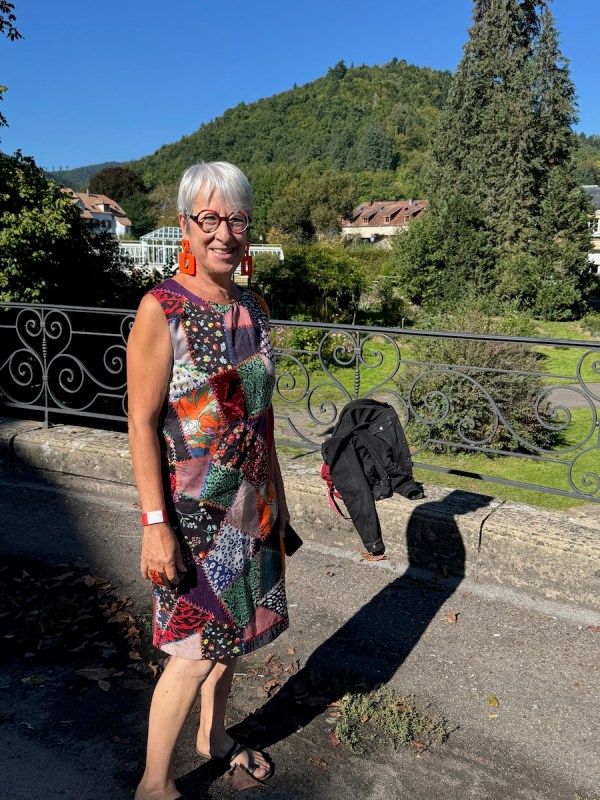
Loved her dress. I need to get a patchwork-appropriate dress for quilt shows.
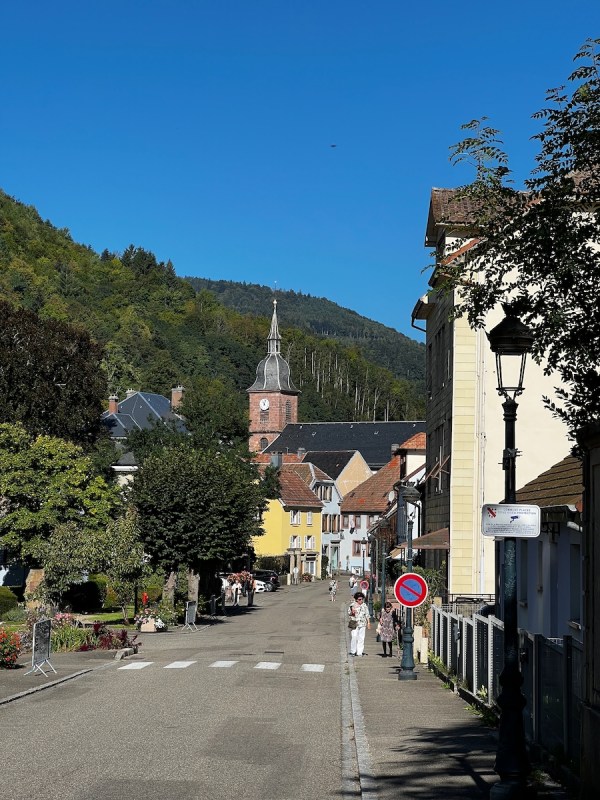
The small towns of Val d’Argent; we are currently in Sainte Croix-aux-Mines, heading to Lièpvre. The church above is Église St. Nicolas, venue 11, written about in the previous Carrefour post.
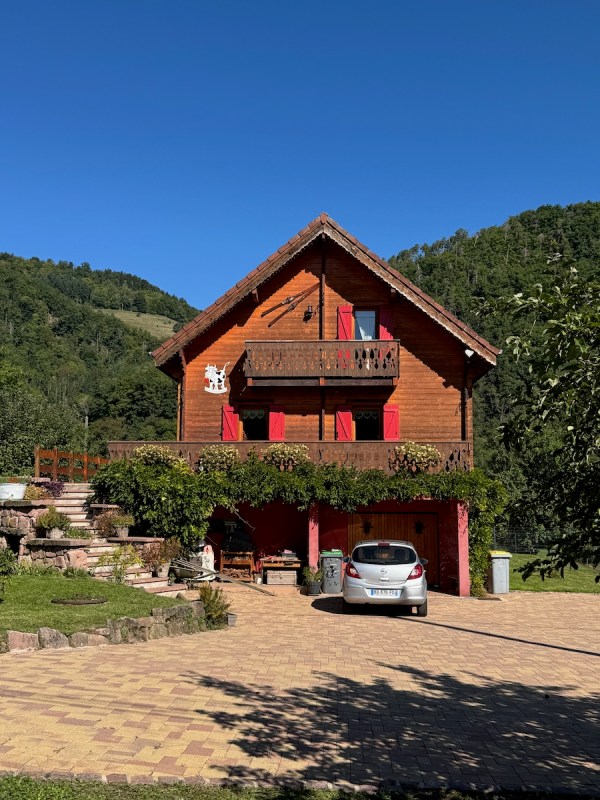
This reminds us that this portion of France went back and forth between Germany and France several times. If you’ve traveled in this area, it gives you an appreciation for the diverse, yet subtle differences between these neighboring countries (and add in Switzerland, too).

Venue 14: Église de l’Assomption, with Ruth De Vos
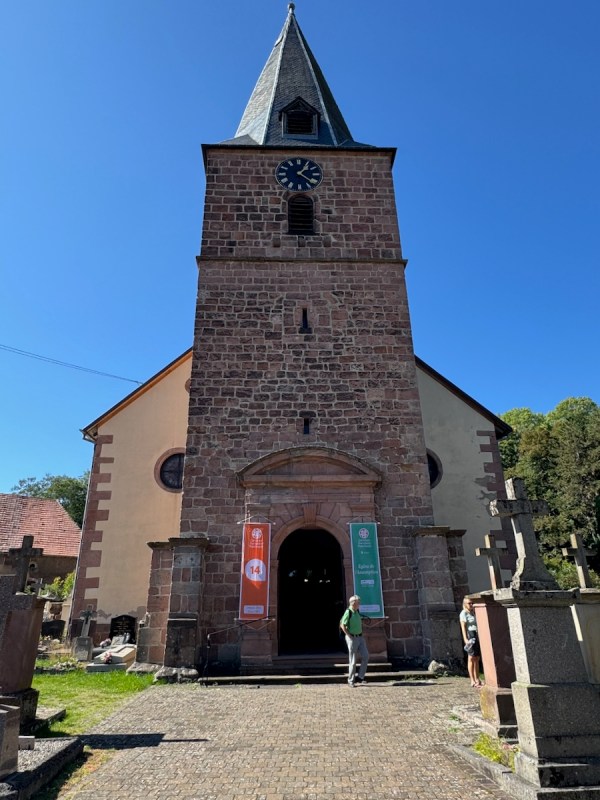
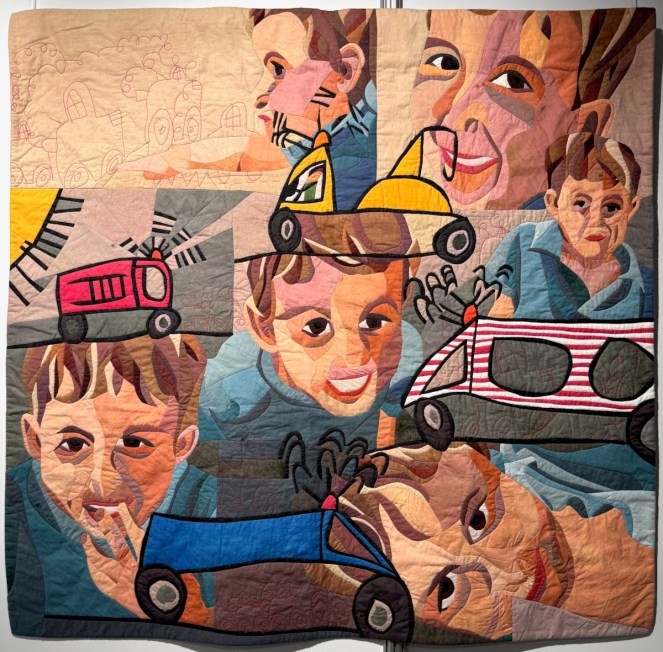
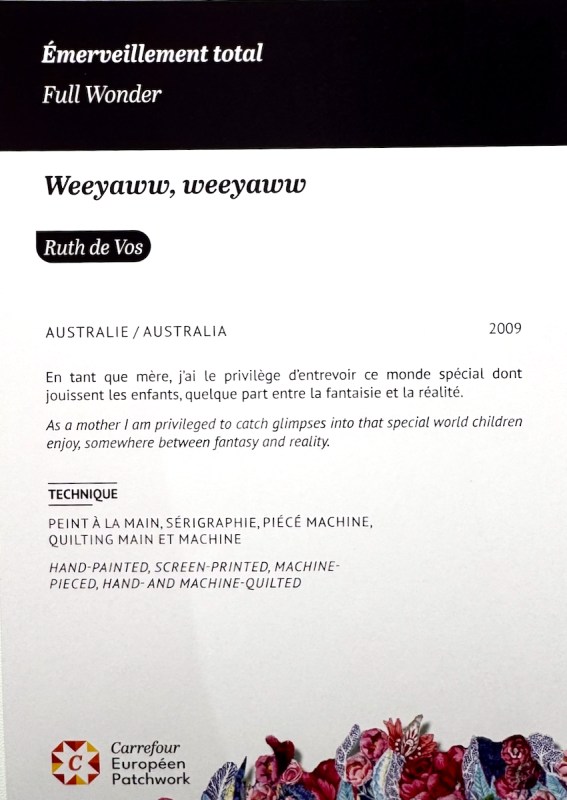
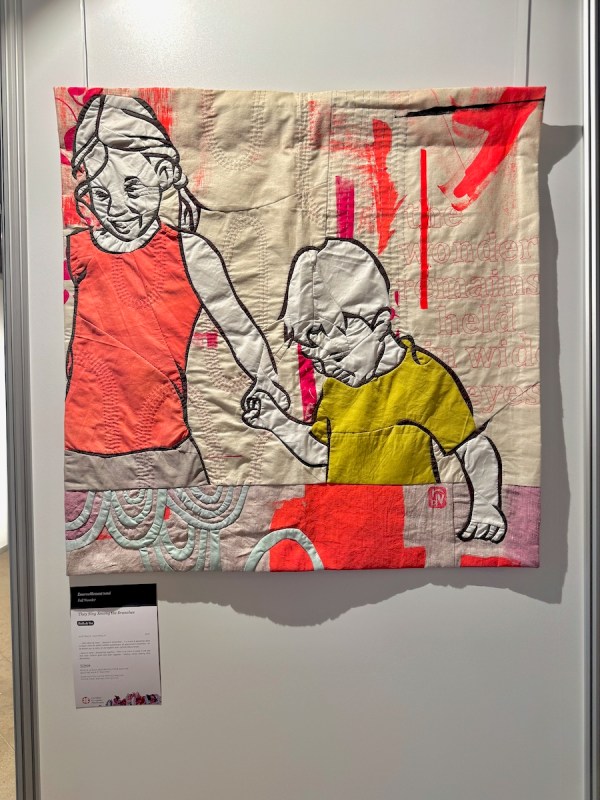
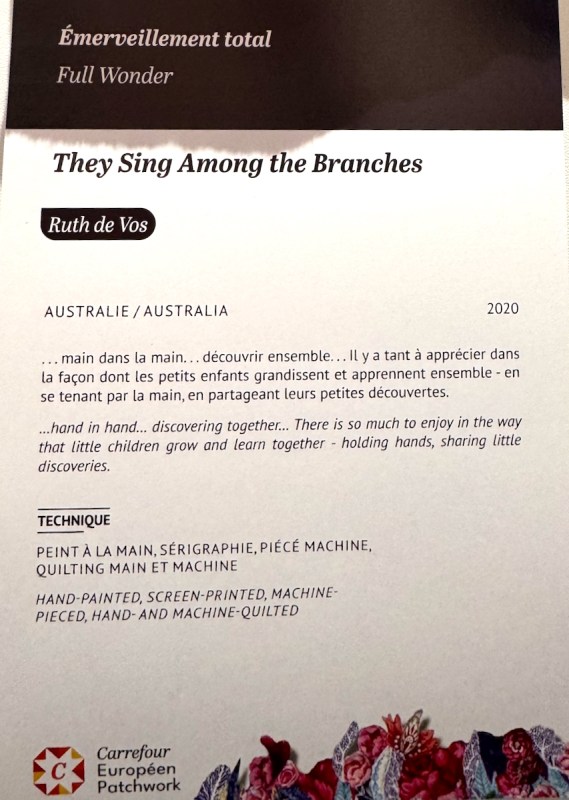
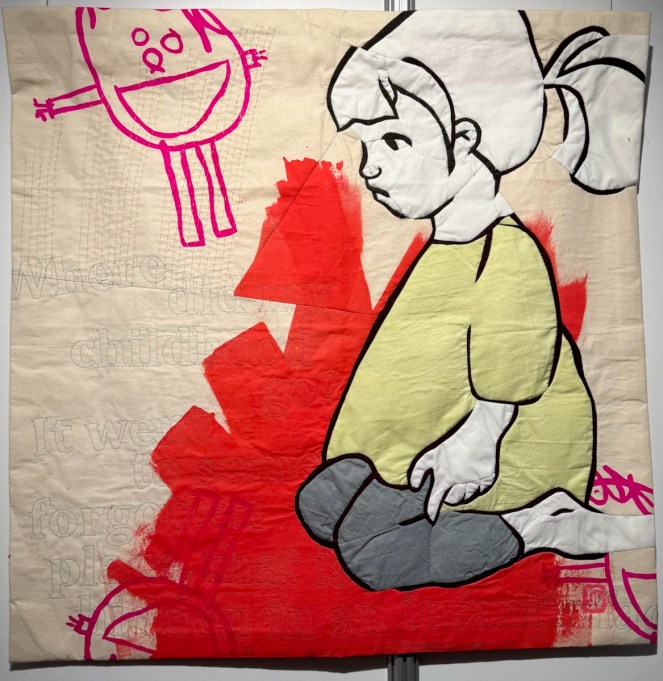
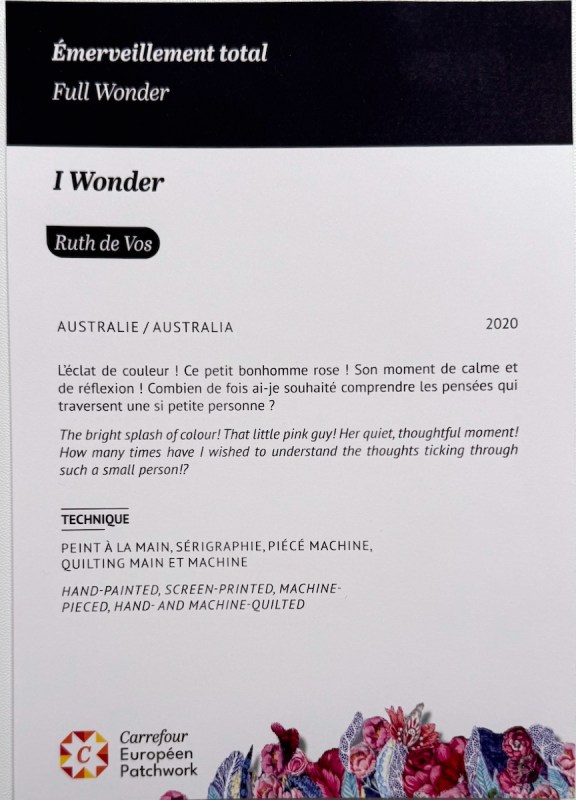
A small church in the town of Lièpvre, one of two sites in this village. Inside were new works from Ruth De Voss, she of flower fame. You can find her on Instagram @ruthdevosart.
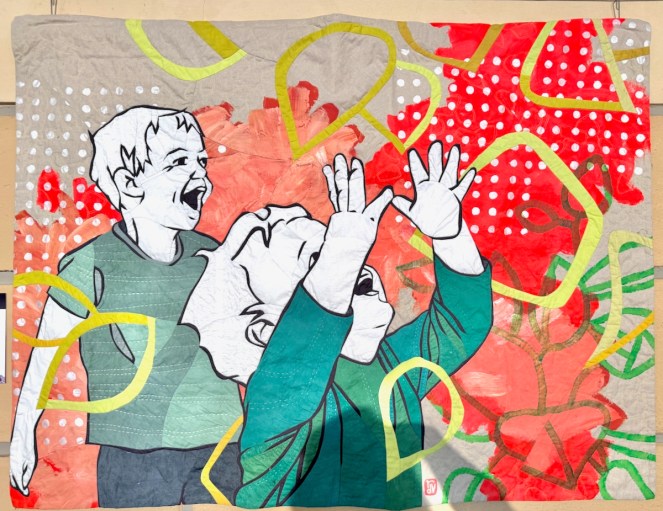
Now she has turned her piecing and printing and surface decoration skills from flowers to children. Her children, which I loved. Many women seem to avoid this side of their lives, and often in the art world they are expected to, but De Voss celebrates it.
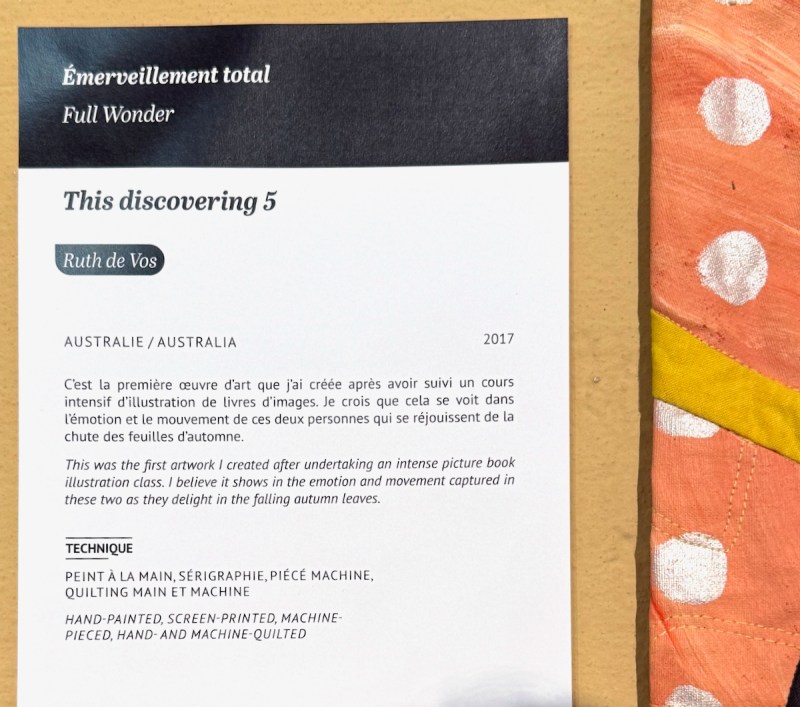
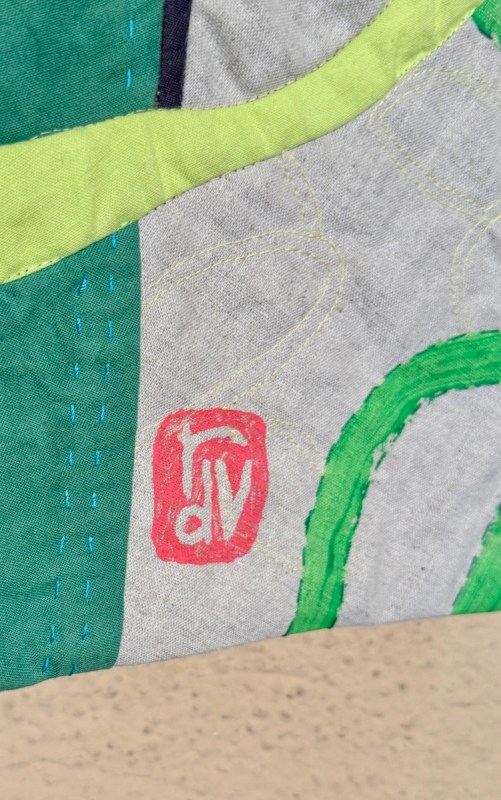
(click to enlarge) The church had many of her art pieces; I’m only showing a selection. They were colorful, drawn with strong lines.
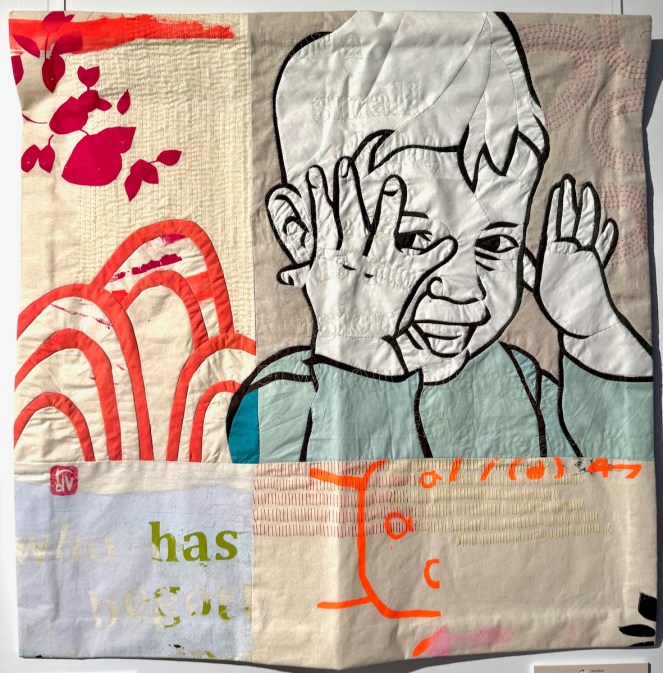
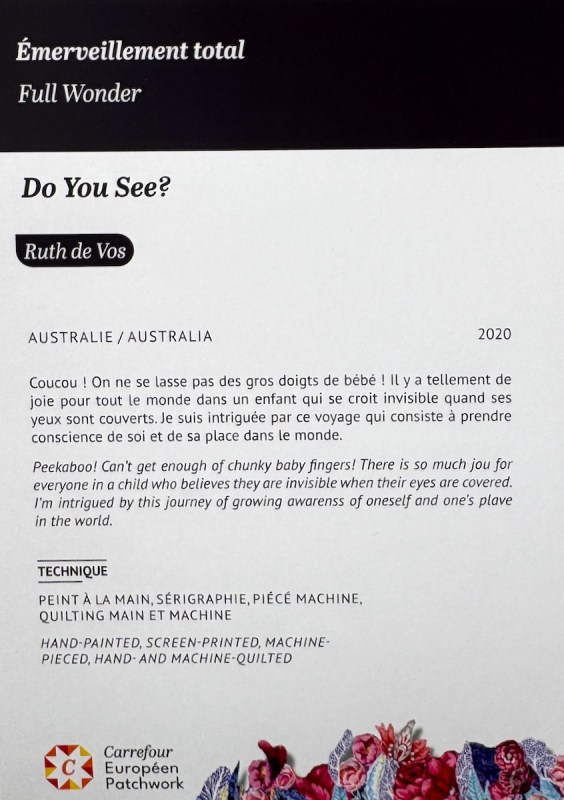
Click on small arrows to advance this slideshow to see more of her pieces.

Venue 15: Salle Polyvalente, with Lorena Uriarte, Dianne Firth, ASL Liépvre, EQA, France Patchwork
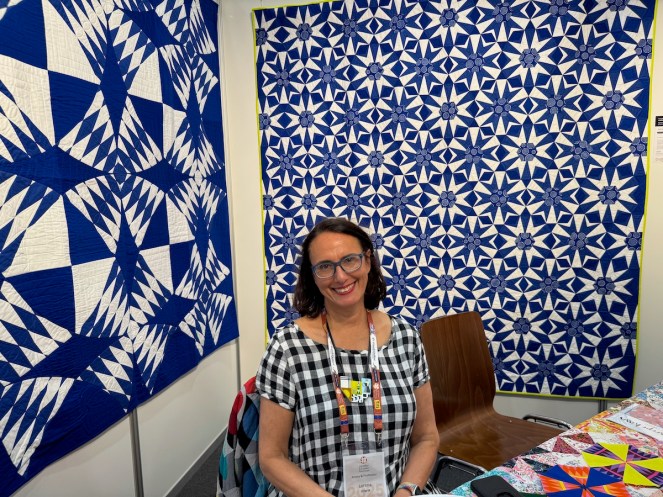
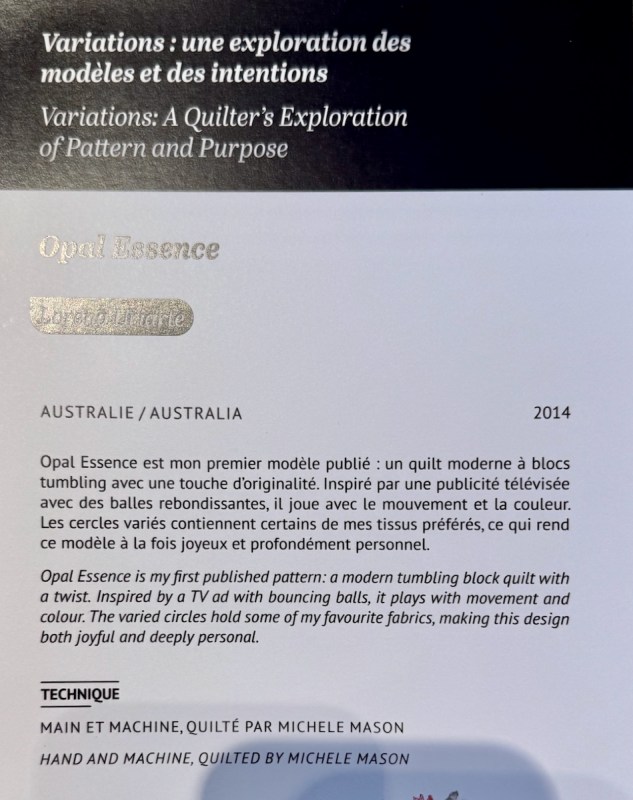
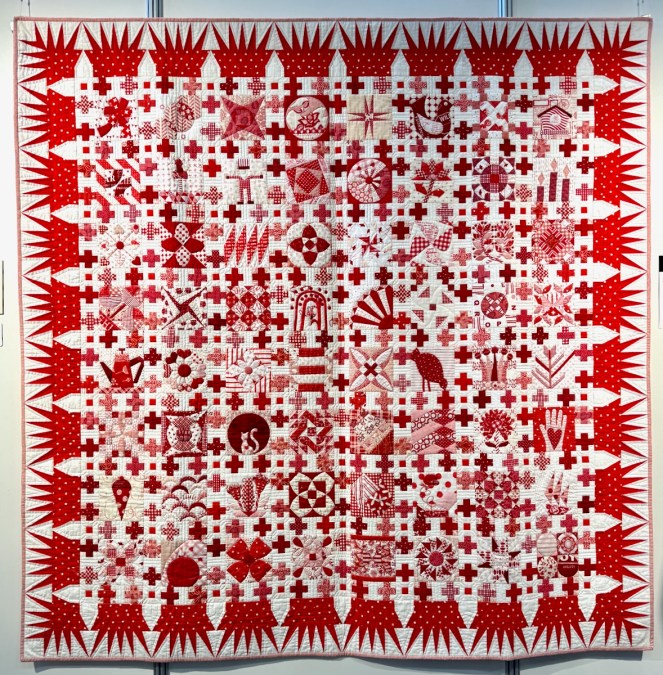
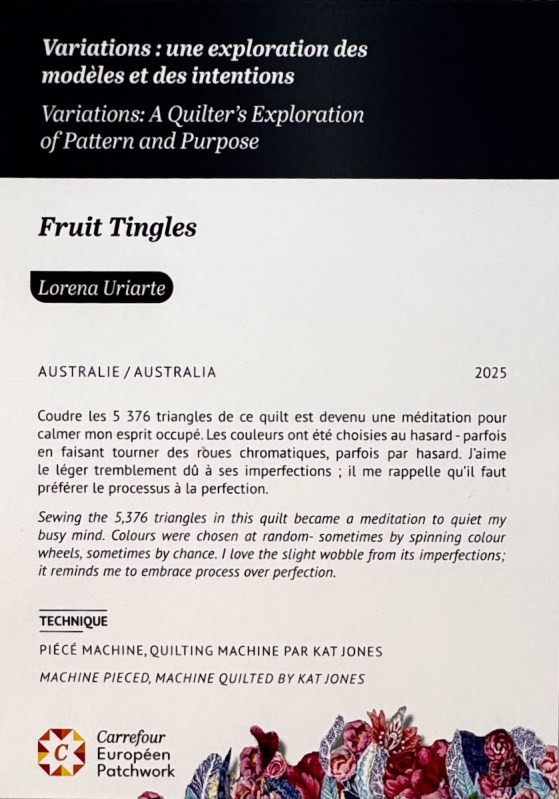
Lorena Uriarte is a well-known Australian quilter, who has been active in teaching, making patterns, and championing good design in quilts for years. You can follow her on Instagram @lorena_in_syd, as well as enjoy her quilts, below.
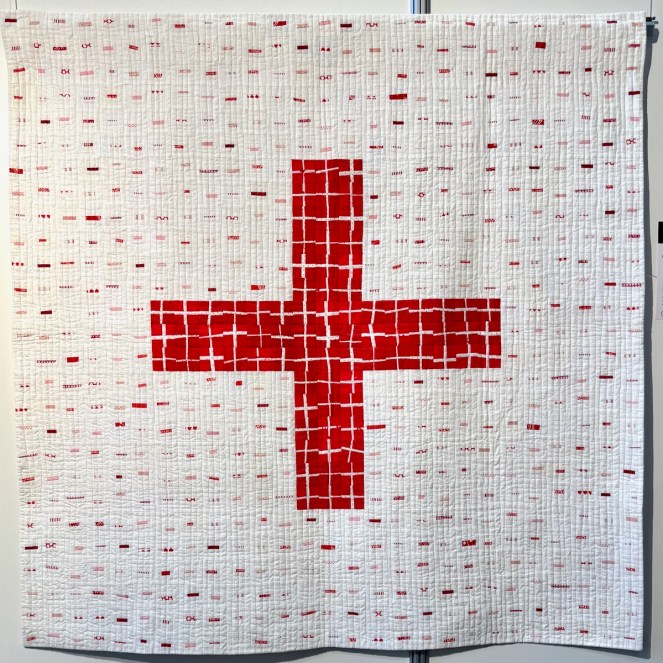
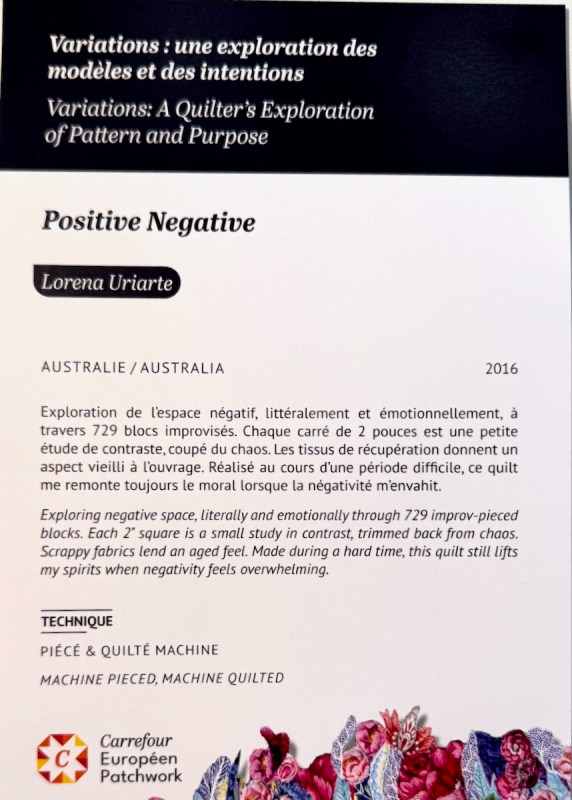
Title: Wingdings: A Variety of Symbols
Title Card: This quilt “is my red and white interpretation of Chuck Nohara’s Symbol Quilt Using self-drafter blocks from her book 2001 New Patchwork patterns, I explored every piecing technique to create a playful and personal visual language.”
Techniques: Hand and Machine; Quilted by Michele Mason
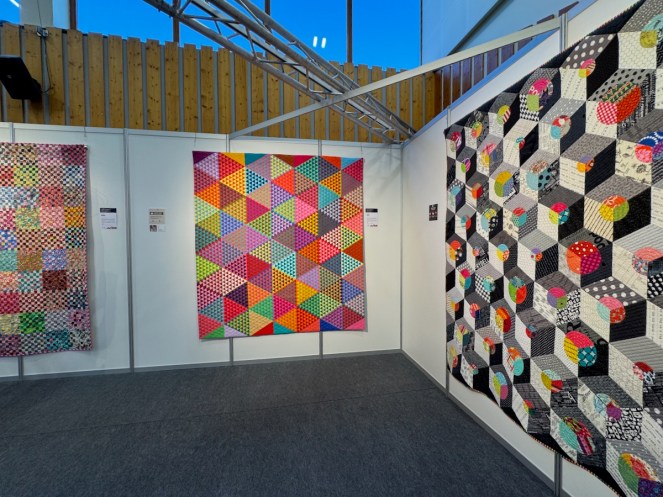
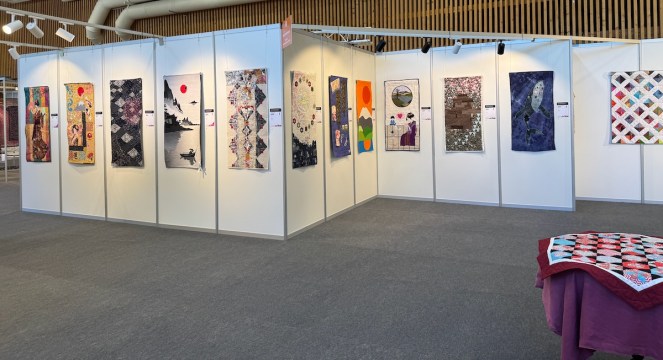
She had a range of her quilts hanging in this venue; they had a bold and colorful impact.
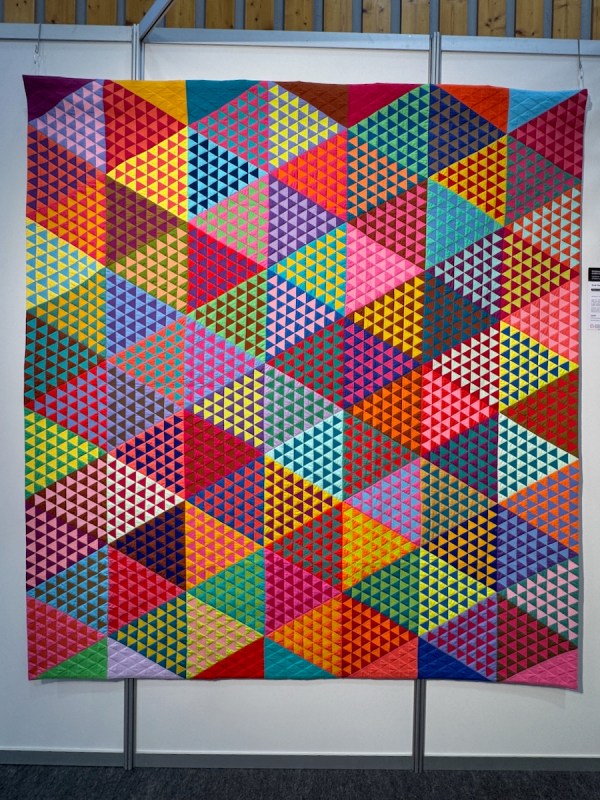
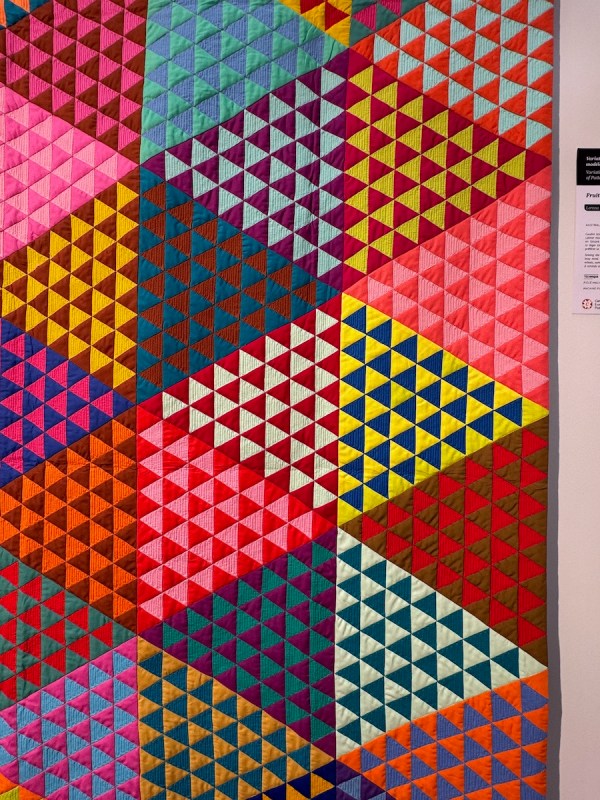
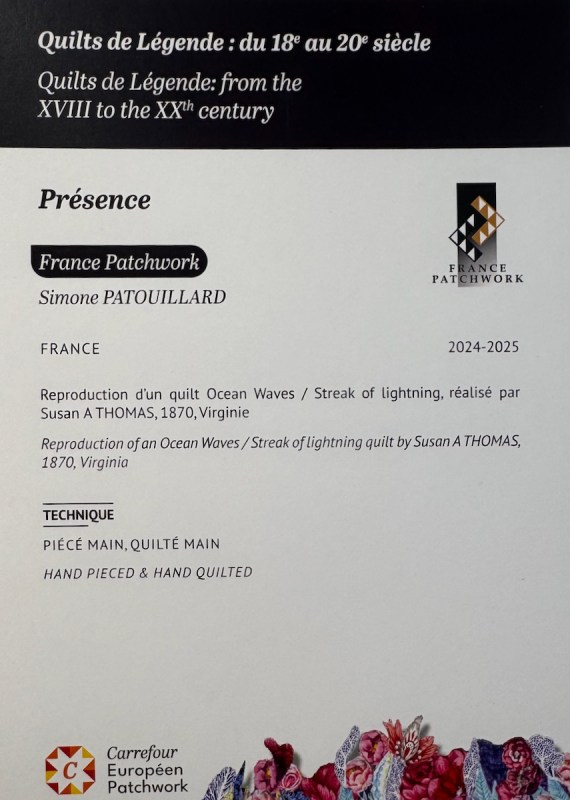
France Patchwork, and others

As always, France Patchwork, the national quilting guild, had a few quilts on display.

“France Patchwork is the French quilting guild, with over 6,000 members. Founded in 1984 and still thriving thanks to its volunteers, its mission is to promote quilting and its various forms through competitions, Friendship Days, and a quarterly magazine: Les Nouvelles de France Patchwork (from website).

They can be found on Instagram @france_patchwork_news. Happily this year I was there early enough to snag one of their tote bags. (One can never have too many tote bags!)
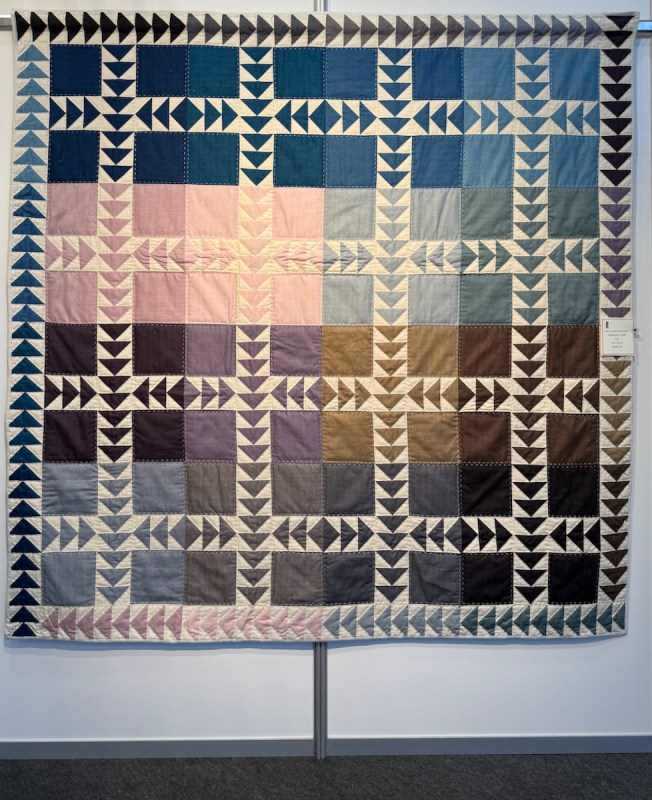
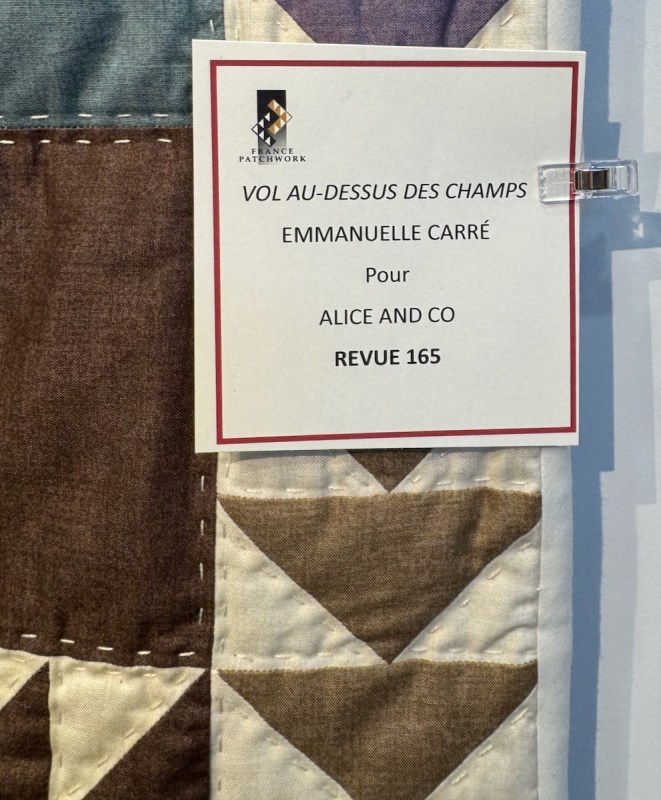
The quilting is done by hand, with heavier thread, and is more spare. I believe these quilts are the cover quilts for their magazine, Les Nouvelles, but I can’t find any working links to their magazine or their organization, beyond the Instagram account.
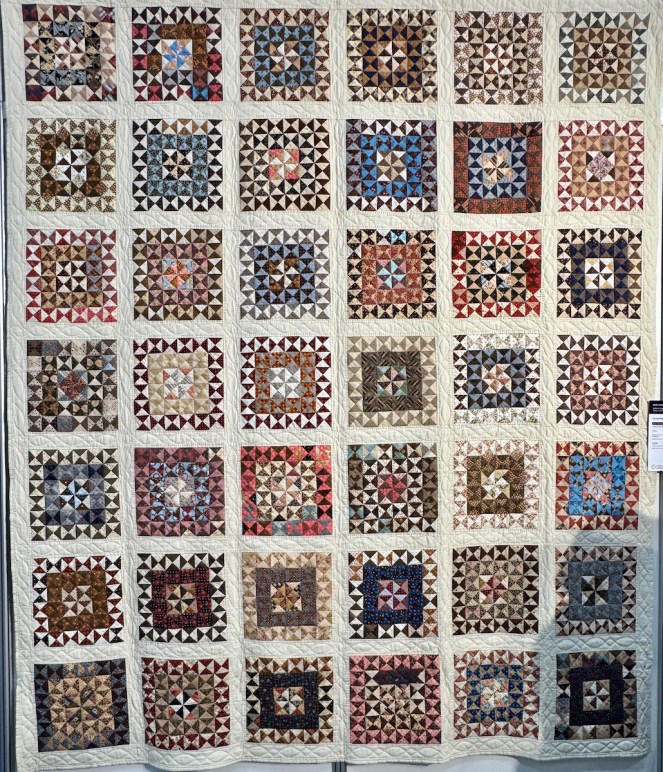
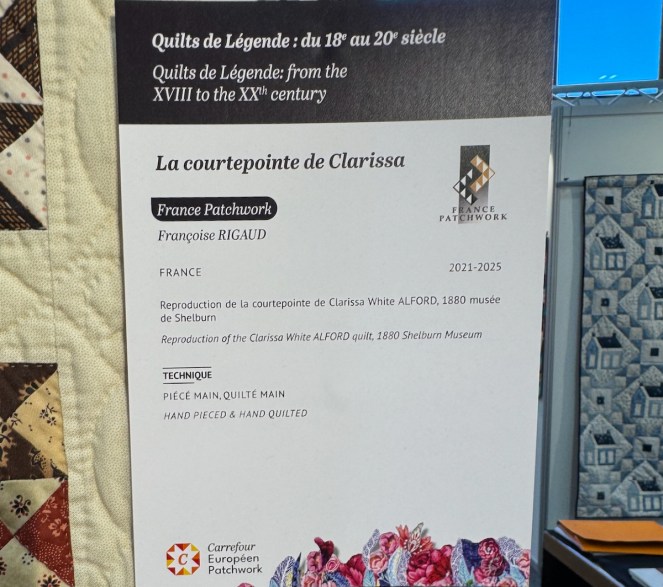
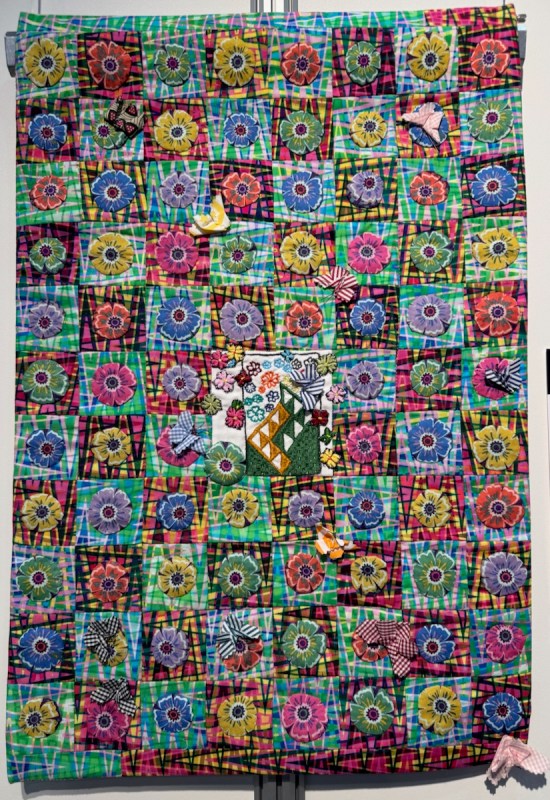
I wonder if Françoise Rigaud is with the group quilt_en_reve on Instagram? If so, they always do such beautiful work in making reproductions of antique quilts. They had a display in 2024 at Carrefours, and I wrote about them here.
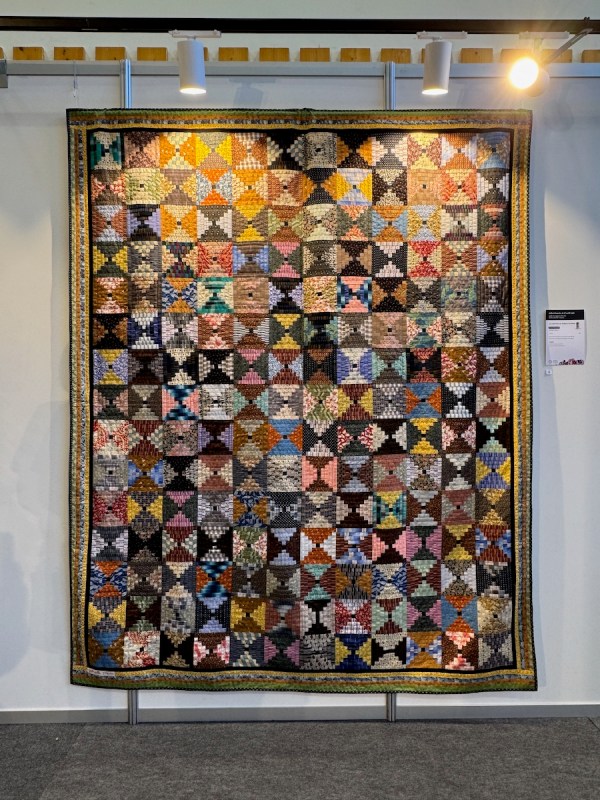
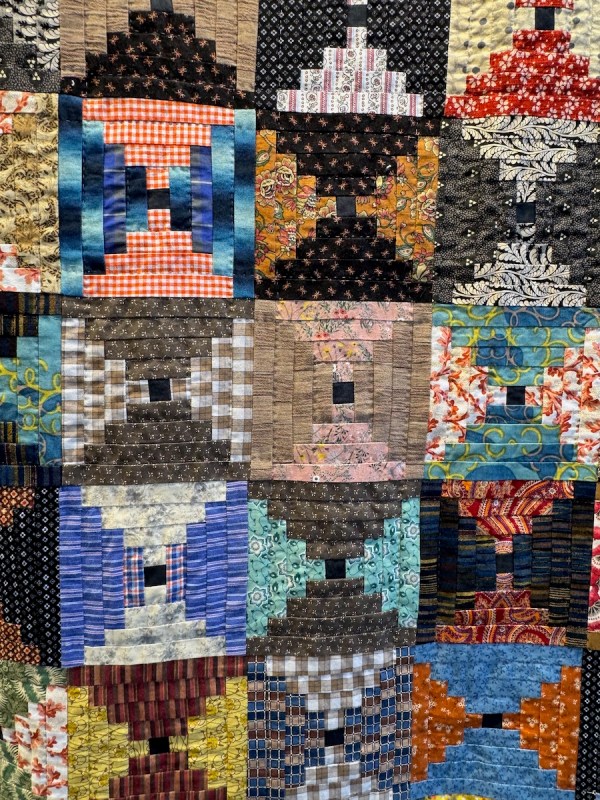
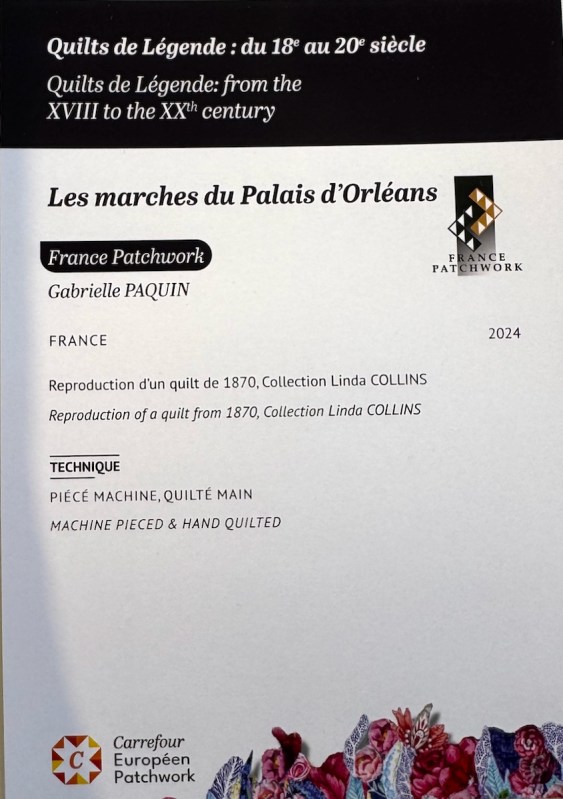
I loved the use of that ombre fabric in the one block. Gabrielle Paquin is a favorite of mine; I saw her the first time I went to Carrefour (link) and began to see I had a lot to discover and learn about our beloved patchwork.
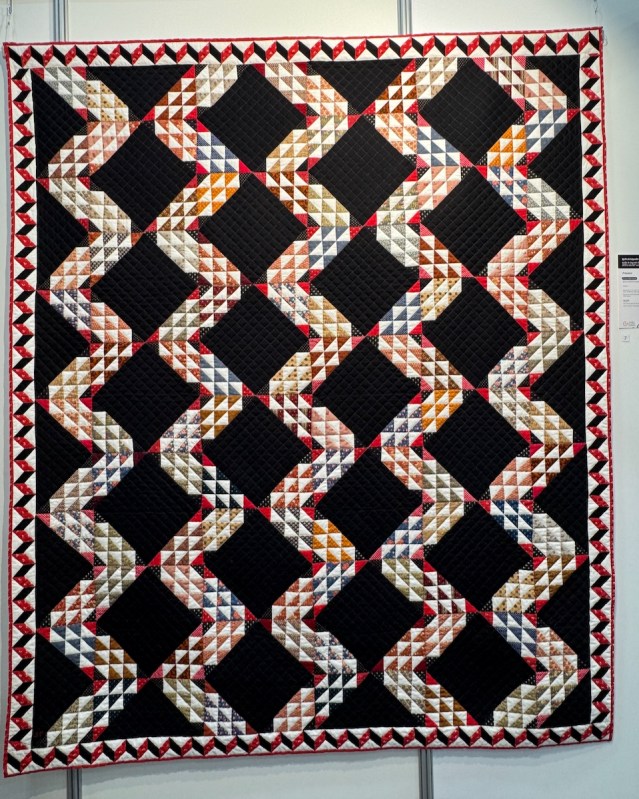
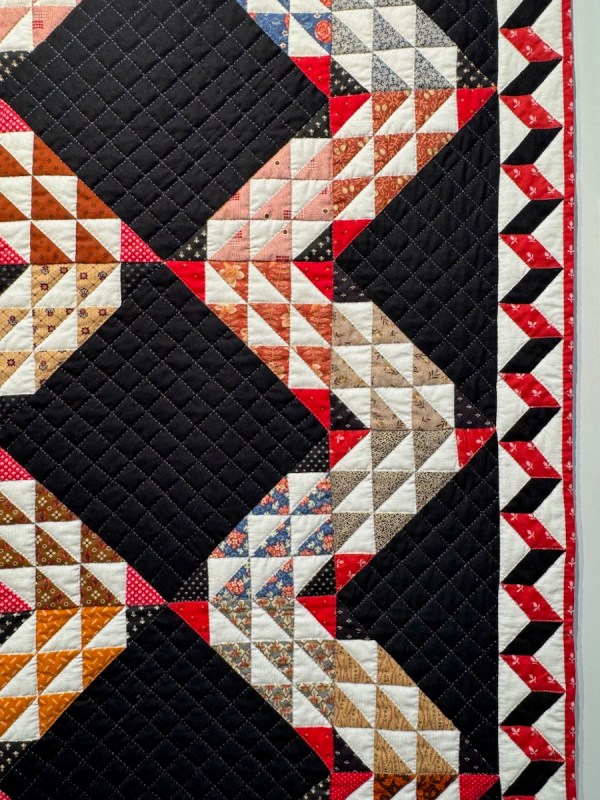
I recognized the France Patchwork logo in the center of the quilt.
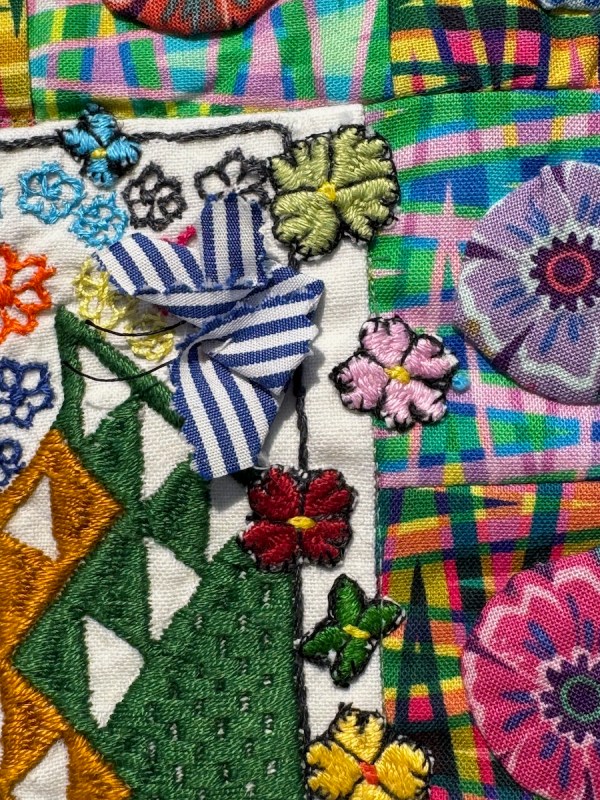
And I loved the combination of appliqué and these interesting little butterflies.
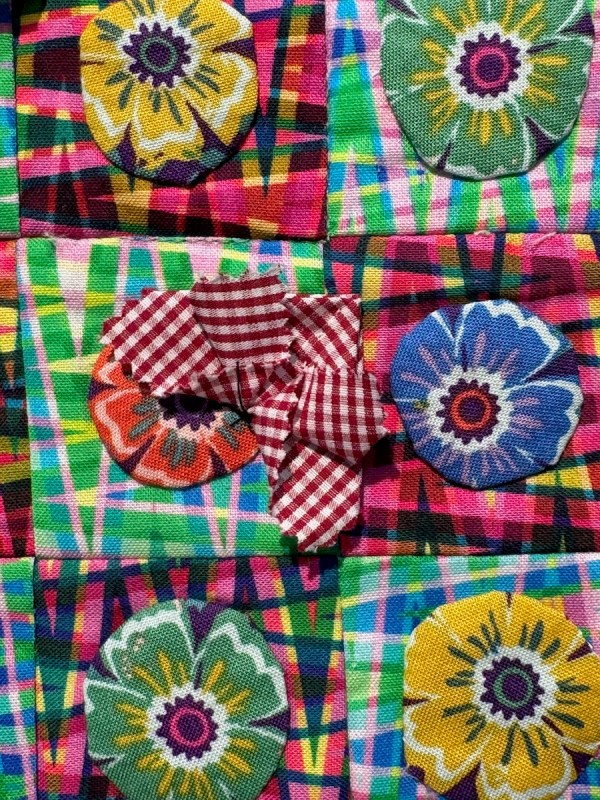
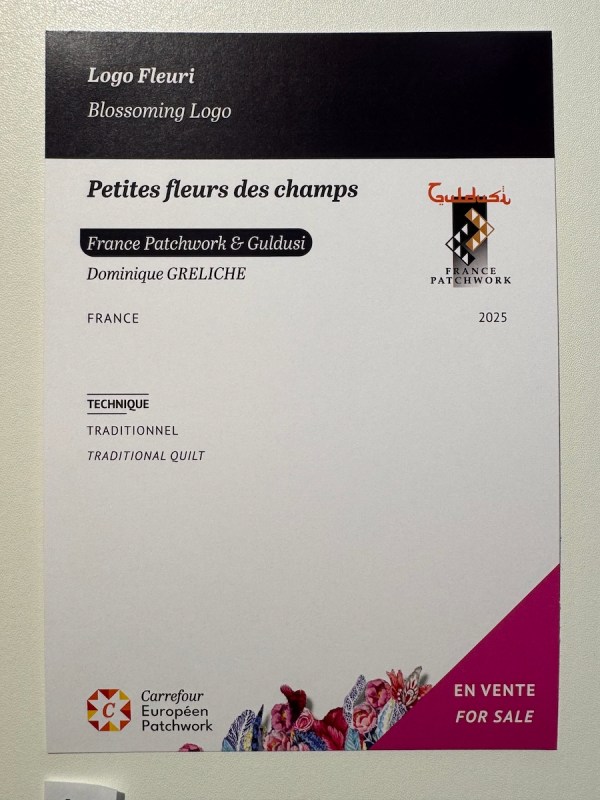
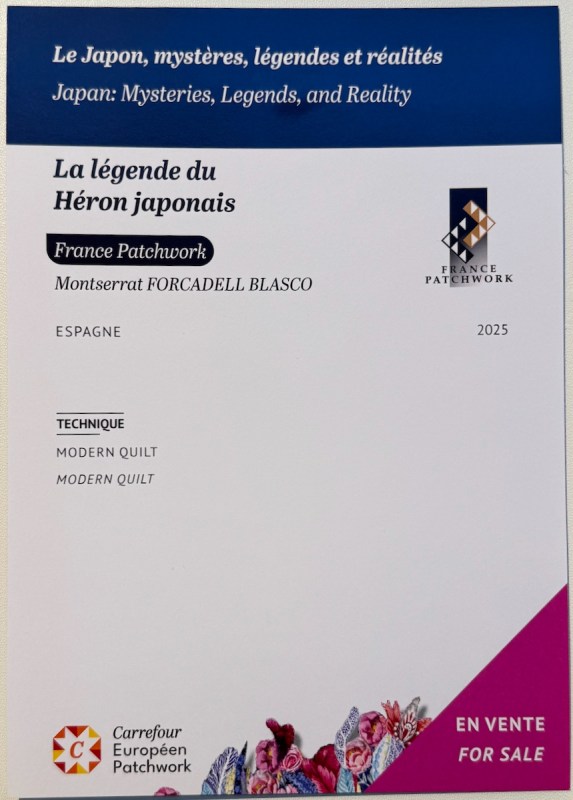
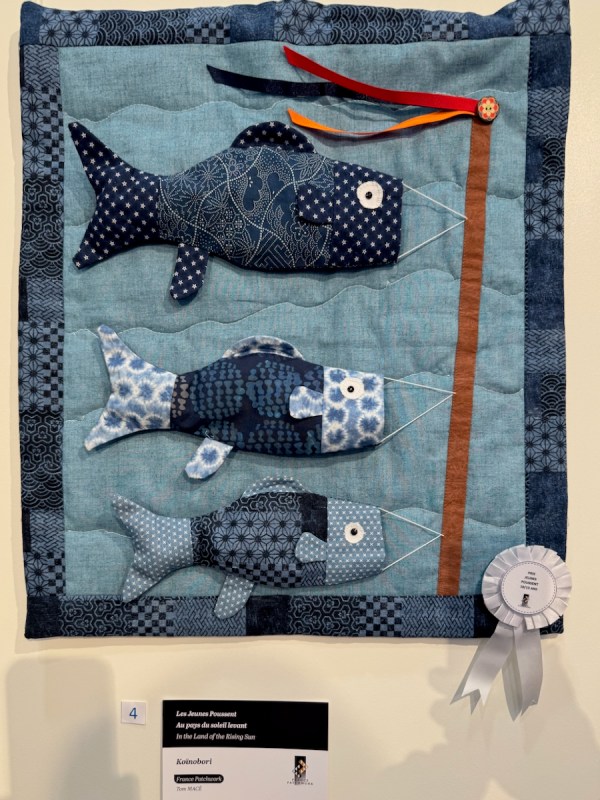
A tribute to Japan, from France Patchwork.
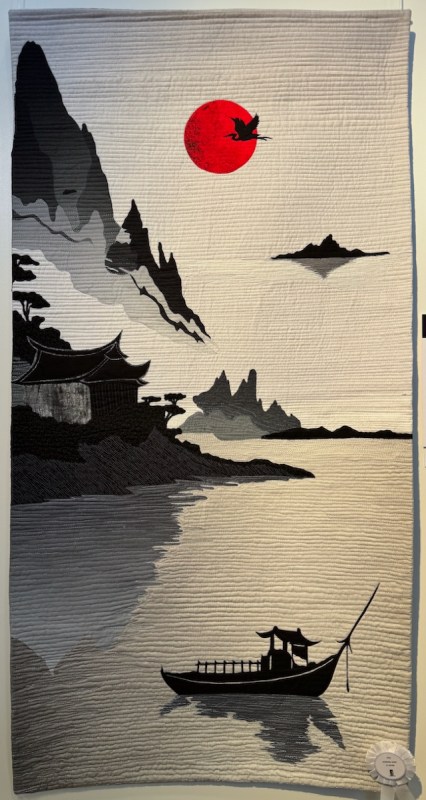
Title: Koïnobori
Artist: Tom Mace, France
This is from the category of “Les Jeunes Poussent” in the grouping In the Land of the Rising Sun, and was in the age group of 10-13 years old. (Literally it translates to “The Youth Are Growing.”)
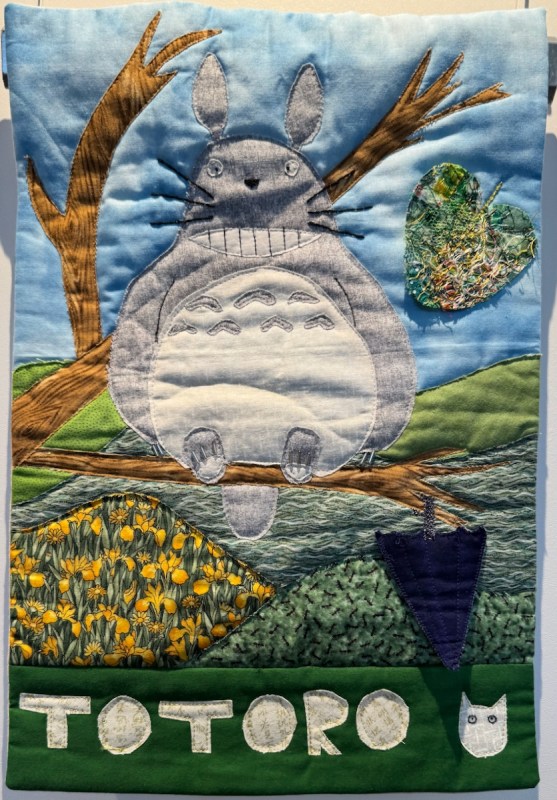
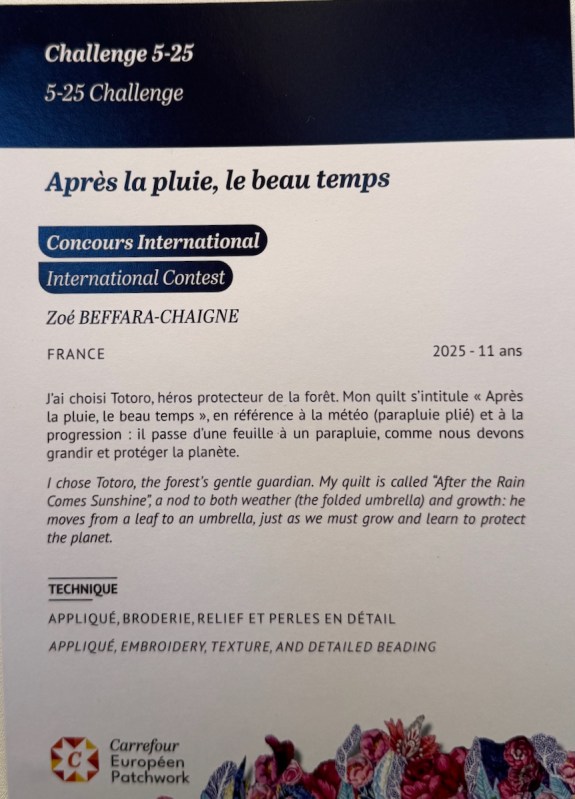
The Challenge 5-25 was to encourage the interest of the youth. The website says:

“For the 30th anniversary of the European Patchwork Meeting event, we’re inviting budding artists and young prodigies to take part in the “HEROES” competition, inspired by those people and characters they admire, on screen or in real life.

The challenge is to create a patchwork quilt: a work made up of different pieces of fabric, illustrating the theme of heroes. Think of everyday heroes and heroines, cartoon characters, bright colors and comic books for inspiration!”

Diane Firth
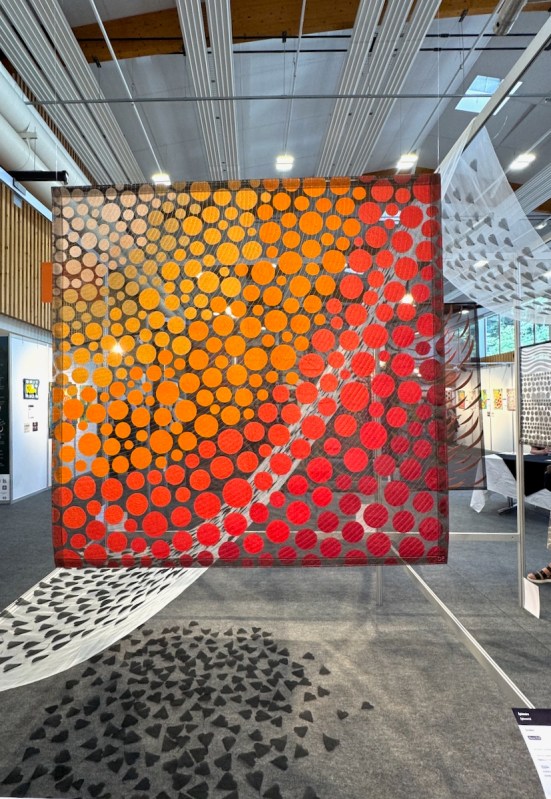
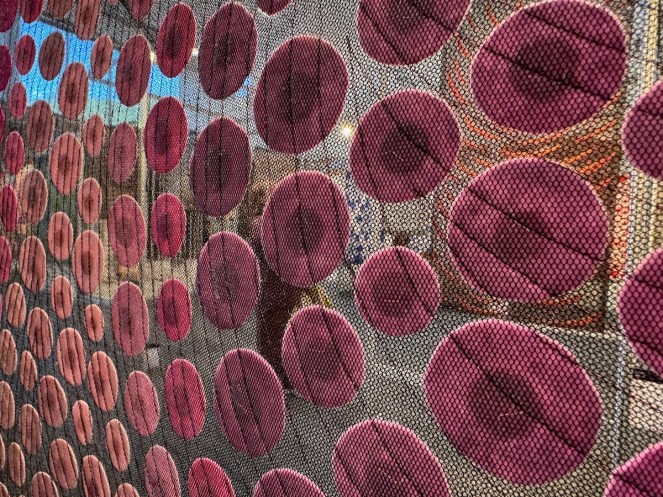
And now, for a complete change of pace in quilting, here are some transparent quilts made by Diane Firth, of Australia. This is titled Scatter, which was inspired by the dispersal of seeds.” The title card also notes, under techique, “Assembled and Machine stitched on Bernina 770.”
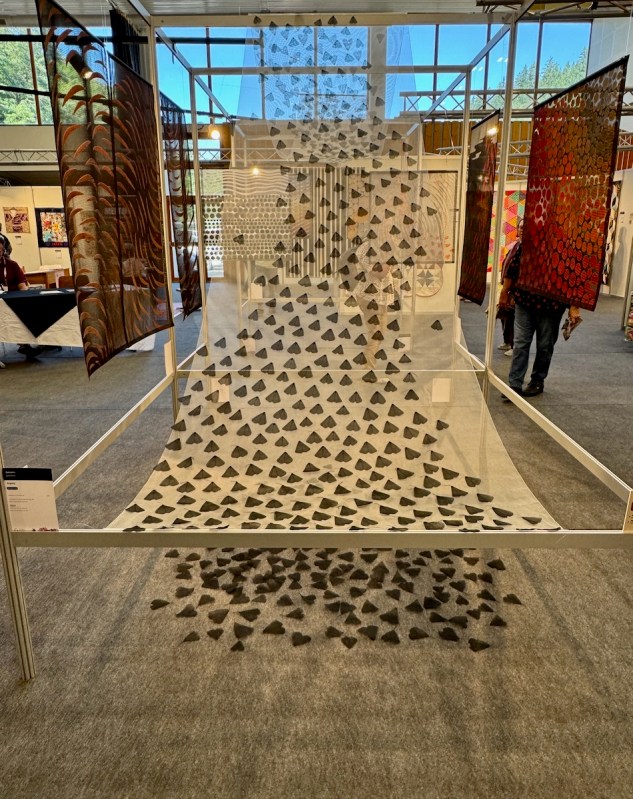
Title: Bogong
Description: The moths emerge from the black soils
Technique: Machine and hand-stitched

Bogong is a type of moth.
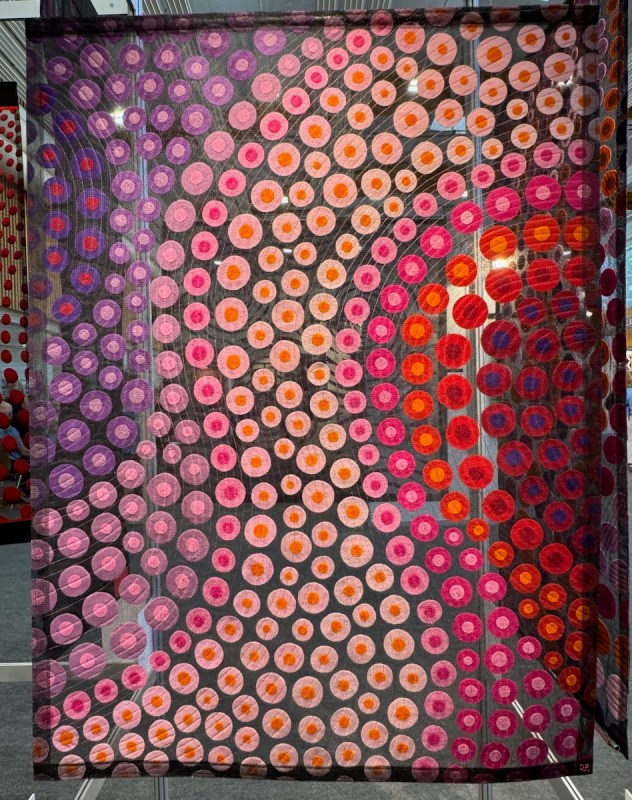
Title: Floriade #4
Description: Floral Abundance
This black mesh netting was in several of her pieces, holding the circles (which looked like felt) in place. The Carrefour website says this about Diane: “Dianne Firth, a quilter for almost 50 years, is a landscape architect and academic. She exhibits regularly in juried exhibitions and her works are held in public and private collections around the world.” The OZquilt Network has a page about her where you can read more.
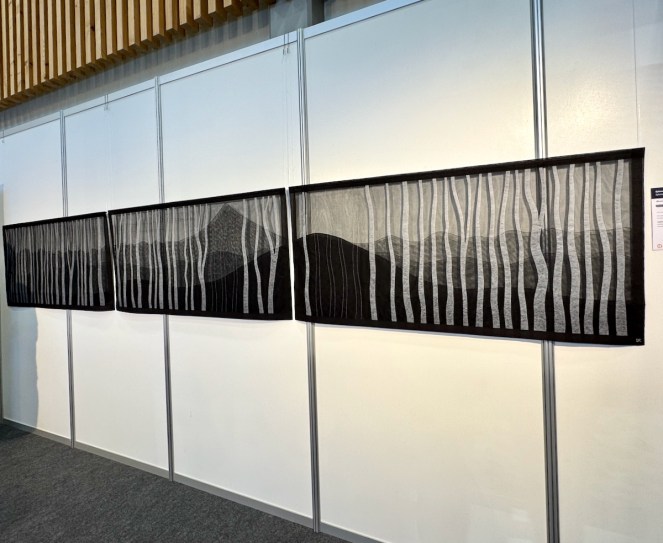
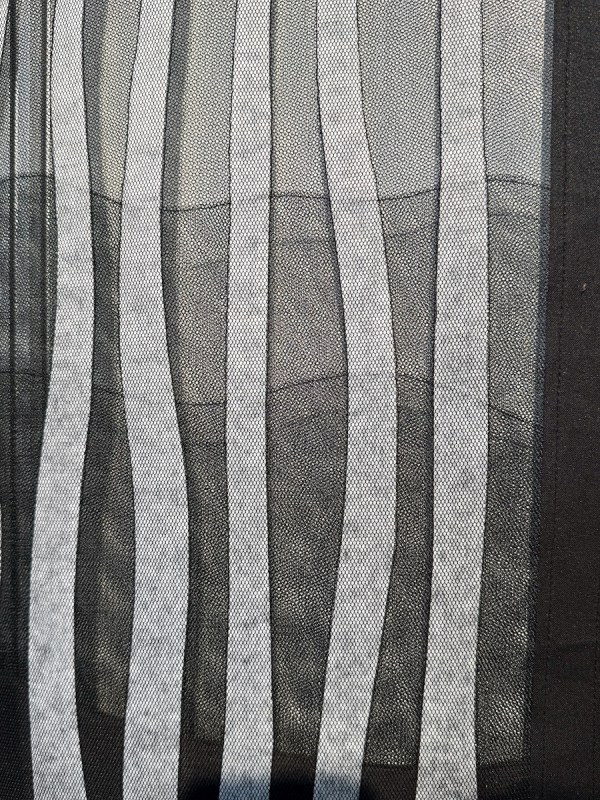
Title: Black Mountain
Description: An exploration of changing landform
This is one of the larger pieces, but the entire display was intriguing and again made me ask the question about what is a quilt? Clearly, hers has three layers, but it is so inventive and structural.
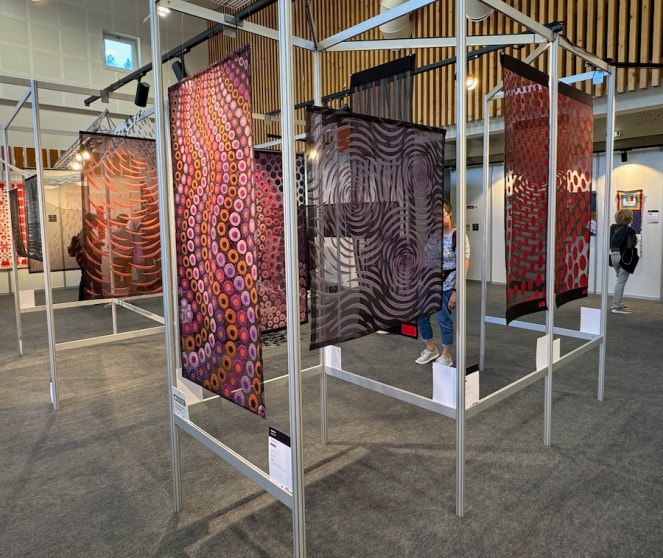
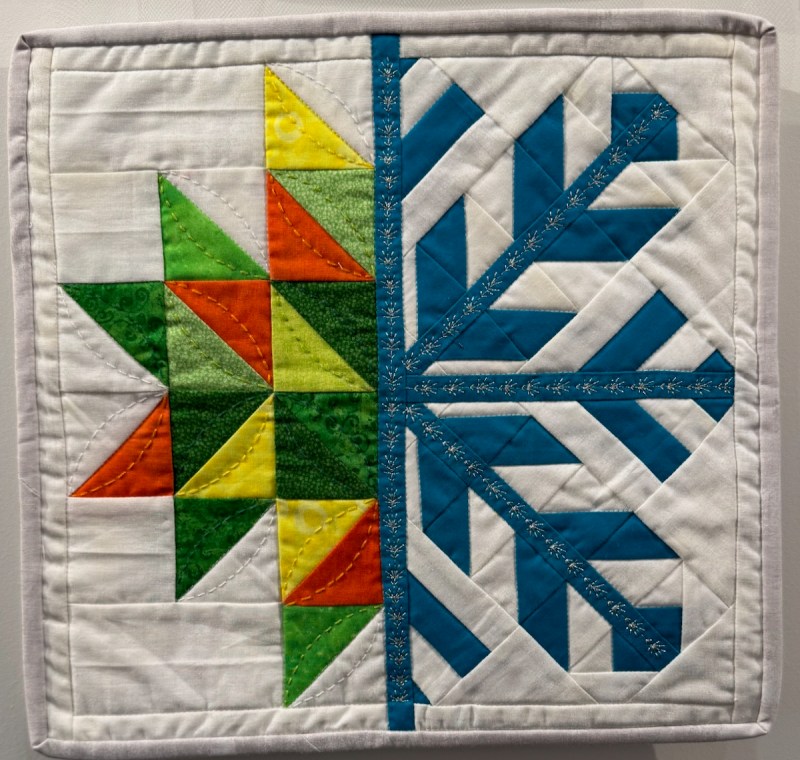
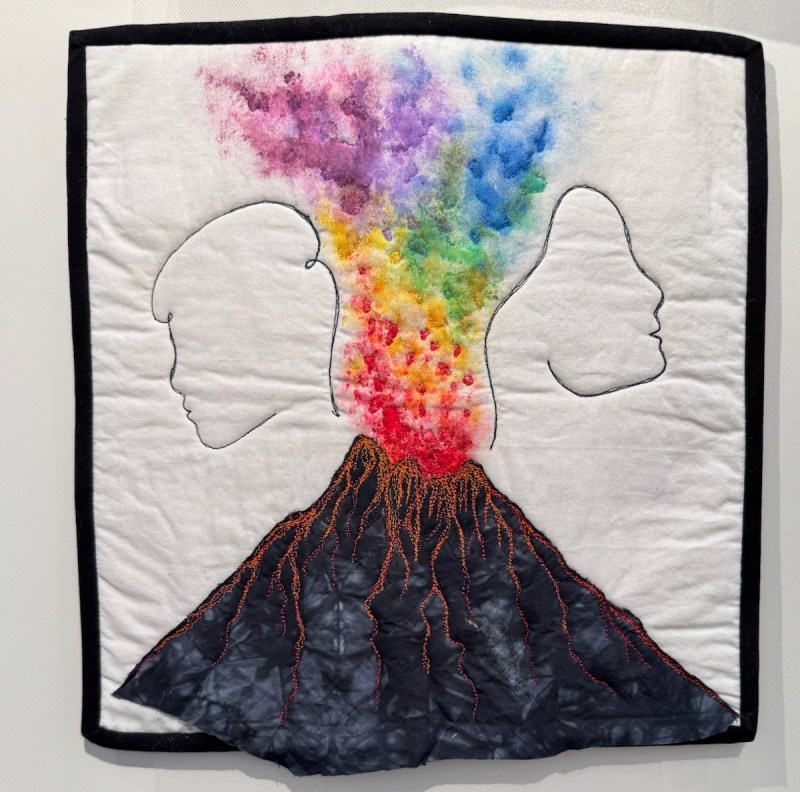
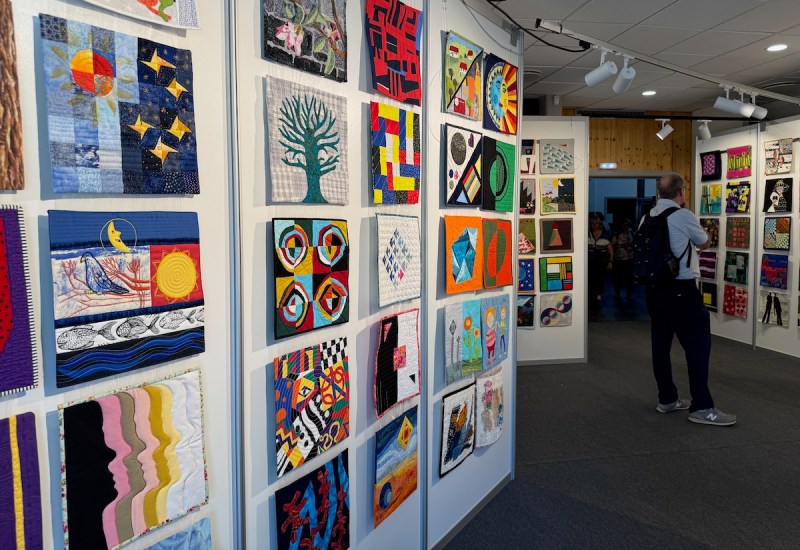
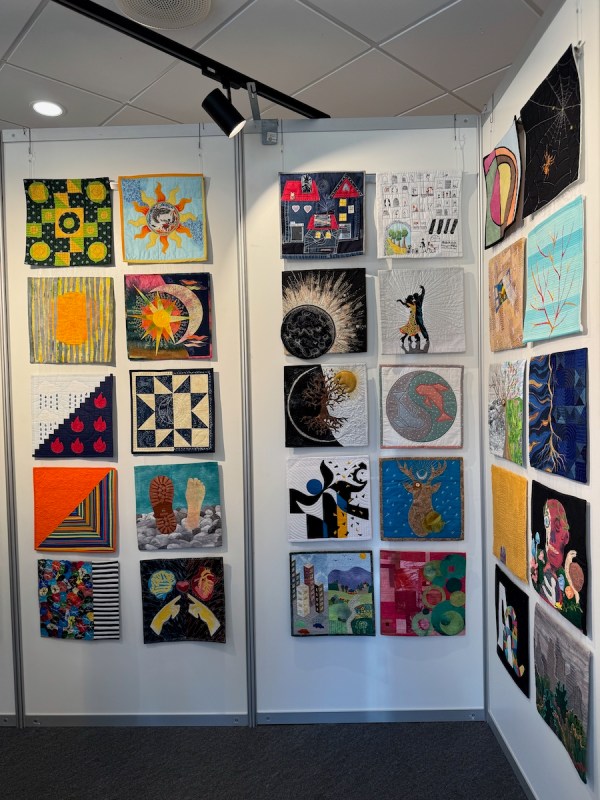
EQA: European Quilters Association: Contrasts (2025 Exhibit)
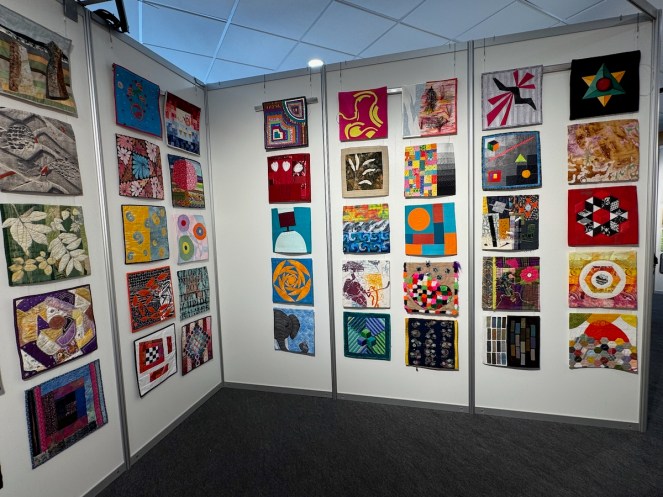
The EQA is a cooperation between the European quilt guilds, and has a yearly challenge of small quilts (35 cm square, which is about 14 inches). As always, I spent a lot of time looking at the artworks. Here’s the Challenge:
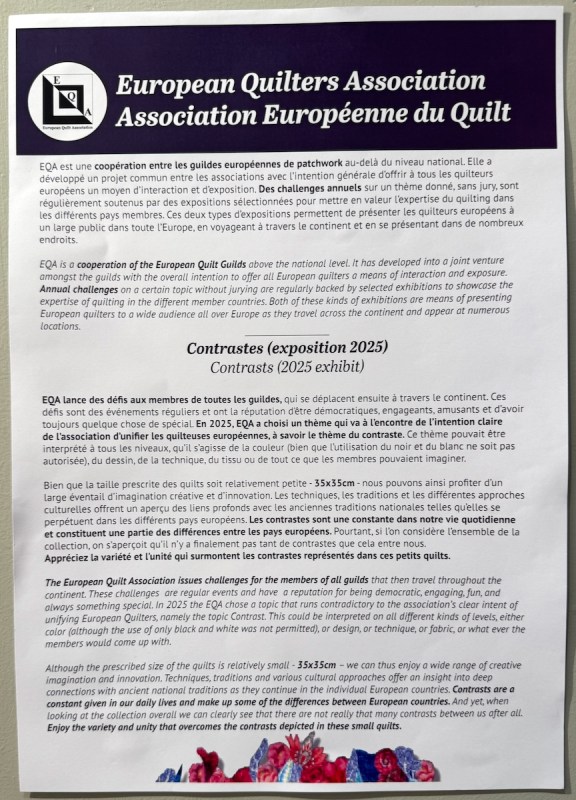
(If you right-click to open this in another tab, it may enlarge for you.) What intrigued me was the line in the last paragraph: “Contrasts are a constant given in our daily lives and make up some of the differences between European countries. And yet, when looking at the collection overall we can clearly see that there are not really that many contrast between us after all.”

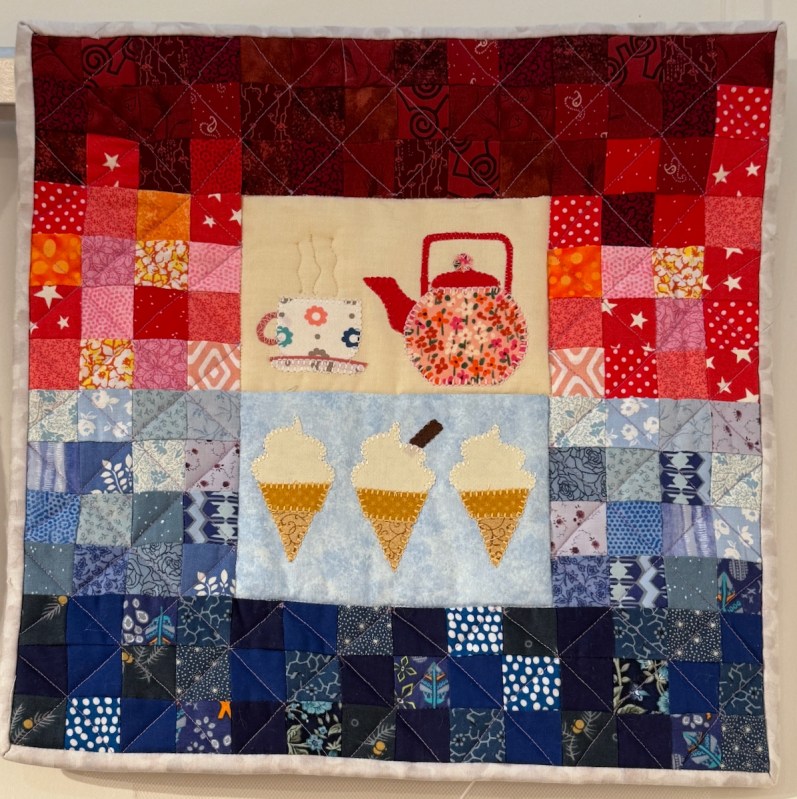
Here are a few of the many, many wonderful quilts.
After this, we leave the venue and try to decide if we hungry, as this year…they have a full lunch service just outside. Tempting, but we went to the market at the edge of town, grabbed something and drove to Rombach-Le-Franc, the last town. We parked outside the Espace Raymond Hestin, and ate our shared lunch in the car, in the shade as the day had grown hotter.

We were on the last two venues of the show. We’d started the day before, and went through the vendors and other spaces in Sainte Marie-aux-Mines, then headed to Saint Croix-aux-Mines and got to Venue 12, before calling it day and driving back to Colmar.

We got up early the second day, picked up again with the Australian quilters in Venue 12, and progressing through the show. Now, eating lunch there in the parking lot, we talked about if we’d be back next year (no), and what we liked and didn’t like. My husband is a great partner in this adventure and I regularly talk quilting with him. Many of the photos you’ve seen have been taken by him.
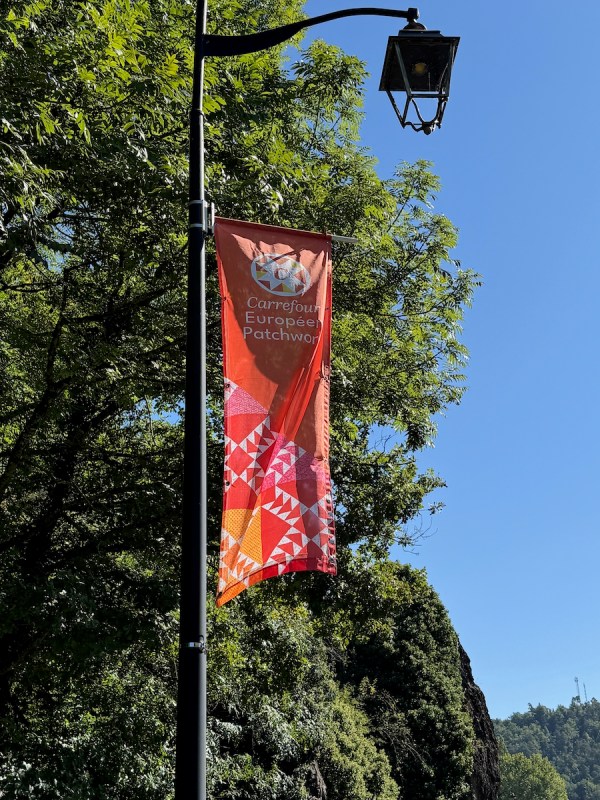
Along the road to Romach-le-Franc. We tried for this three times, pulling U-turns to double back to get the wind just right in the banner.

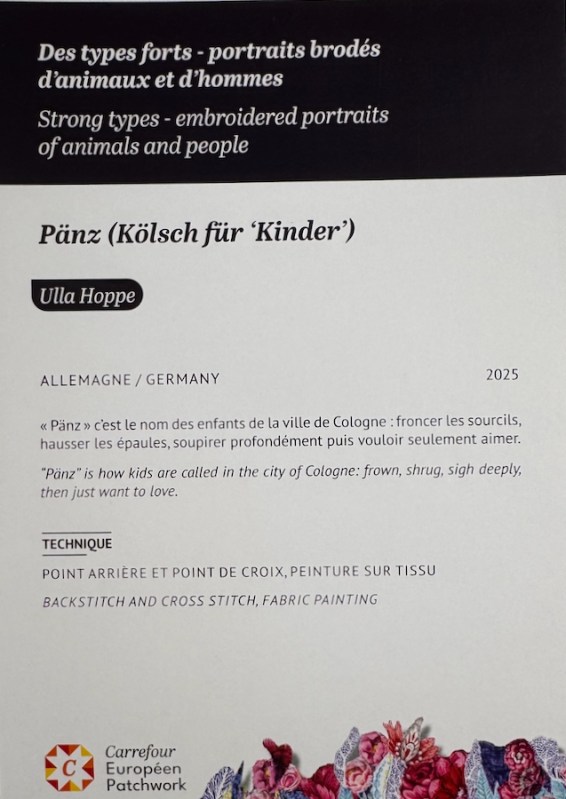
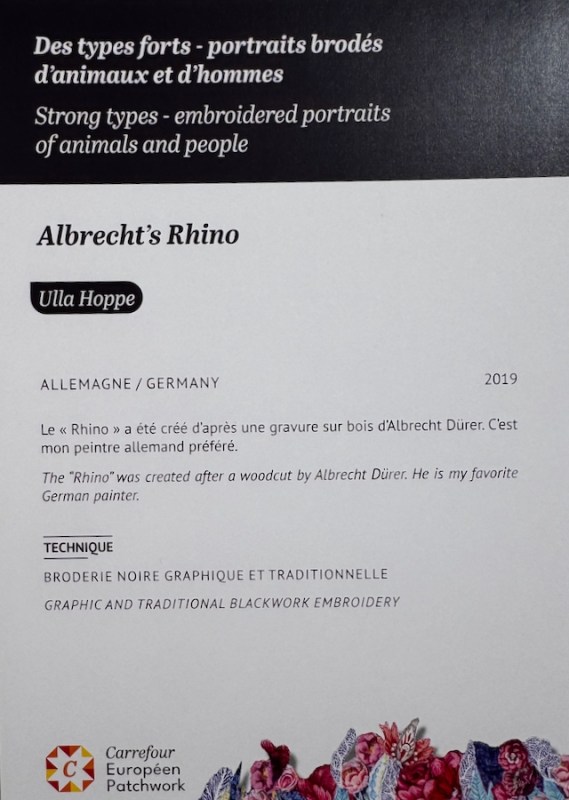
Venue 16: Ulla Hoppe
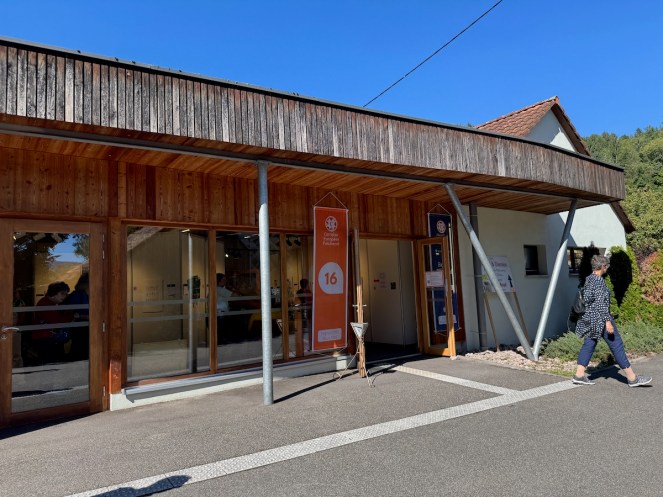
Here we go! This venue is quite small, and while there were a couple of exhibits there, I’ll mention only one.
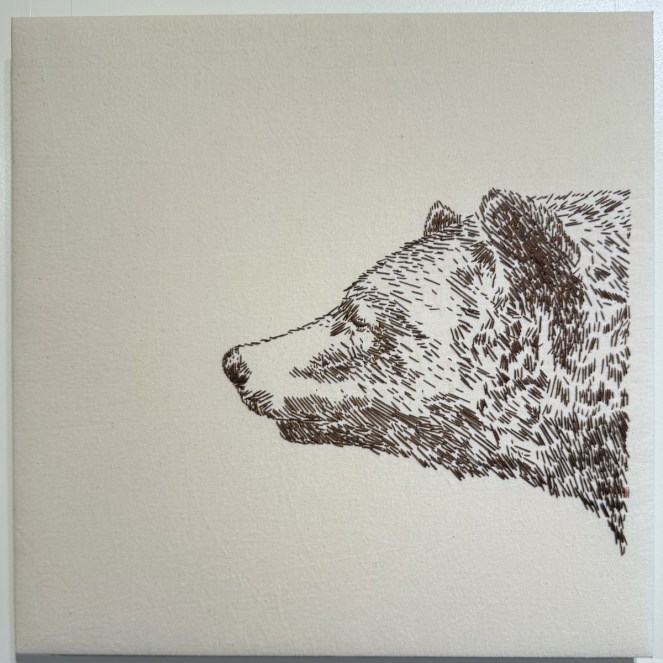
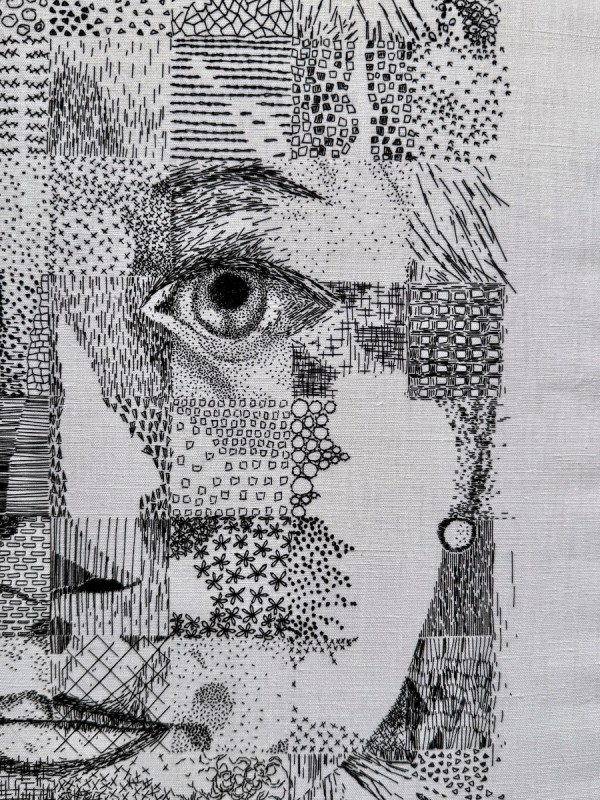
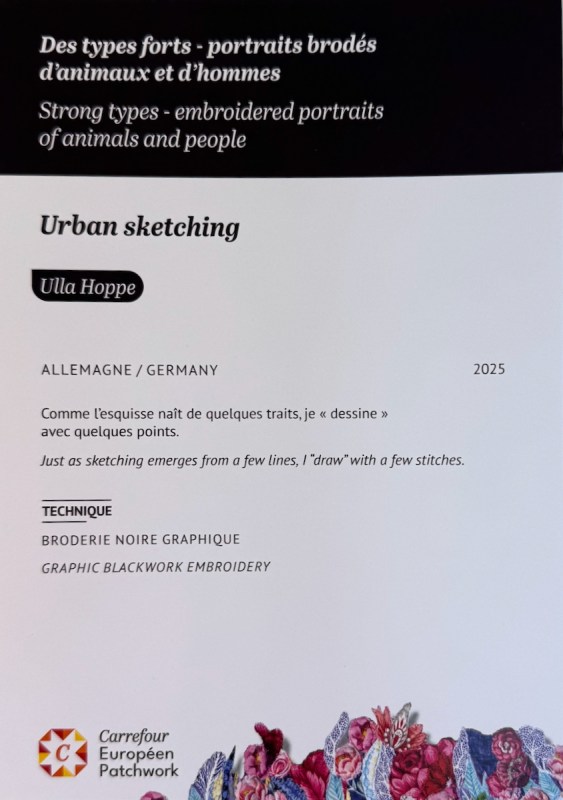
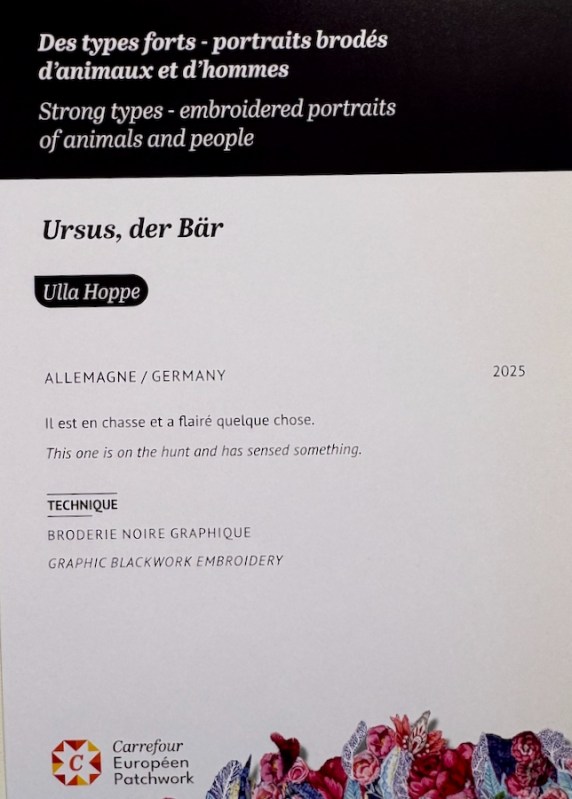
Ulla Hoppe, from Germany, was exhibiting her stitching, embroidery. Not quilting, but I thought it was amazing.
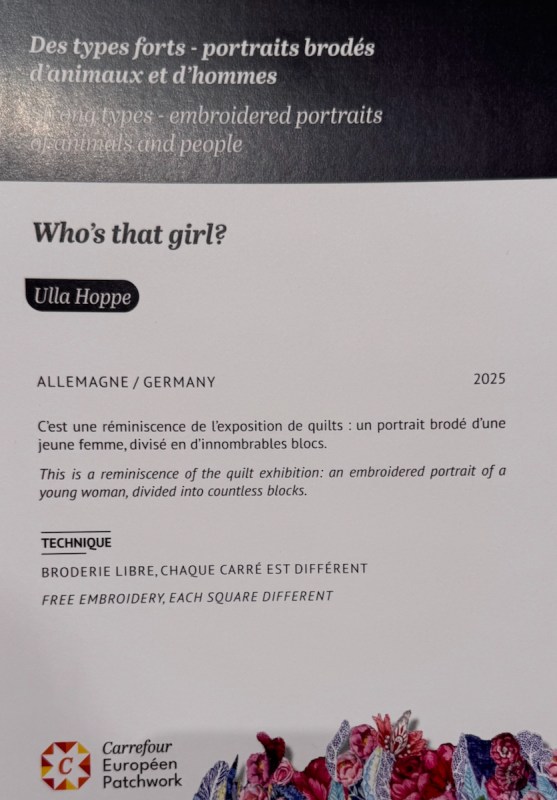
The range of blackwork stitches really brings the complexity of the young woman into focus: aren’t we all full of discreet “countless blocks?”
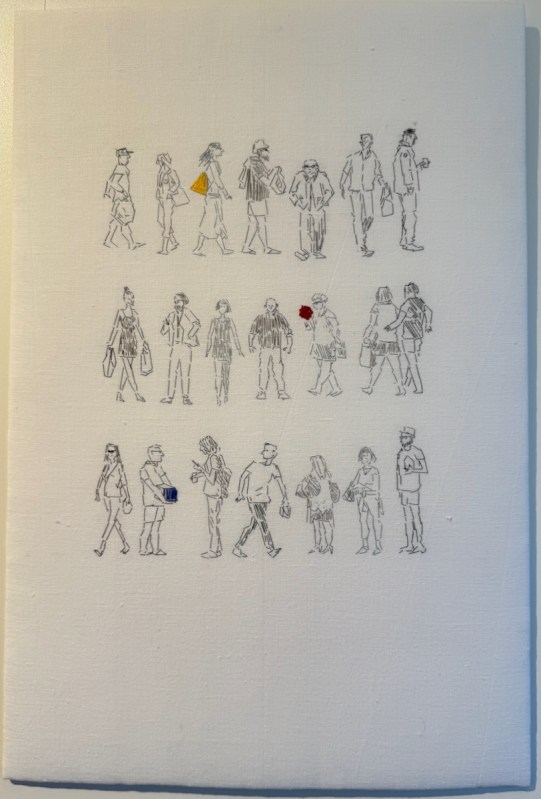
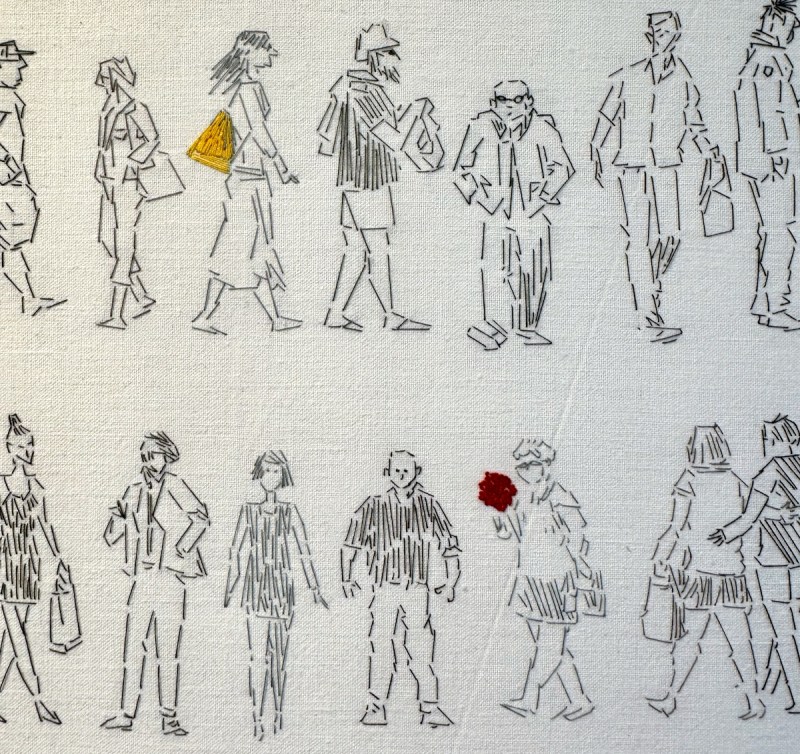
I loved the title of this piece.
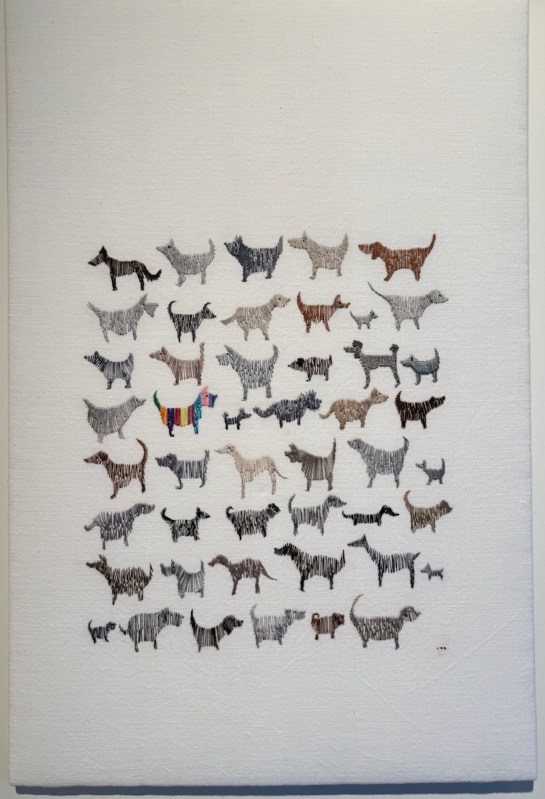
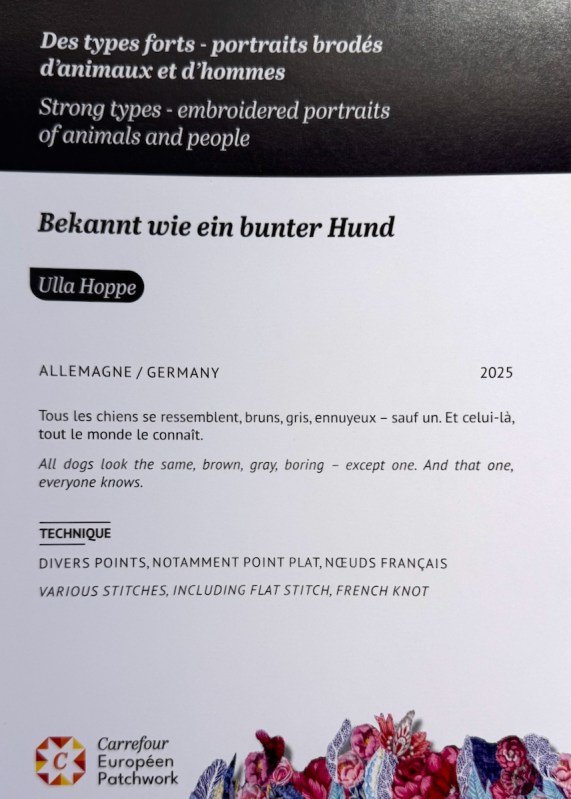
“That one” lives across the street from me!
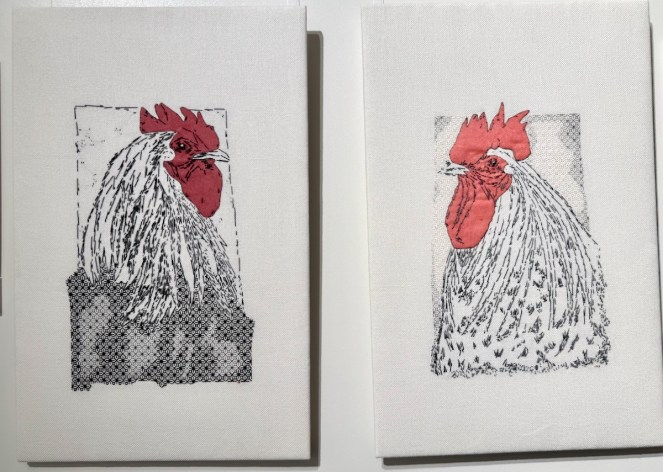
What is notable in this one is the inversion of the stitches, although done in different colors: what is foreground in the black rooster’s image is background in the white rooster’s image. (If you open it in a “new tab” it will be enlarged.)
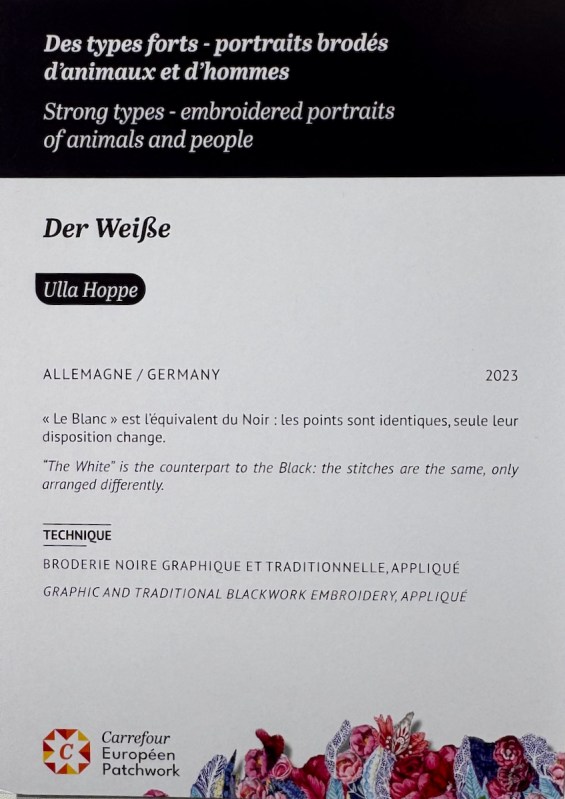
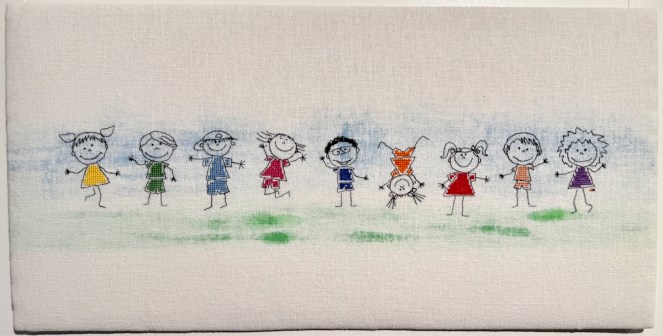
You can find her on Instagram @ulla_stickt
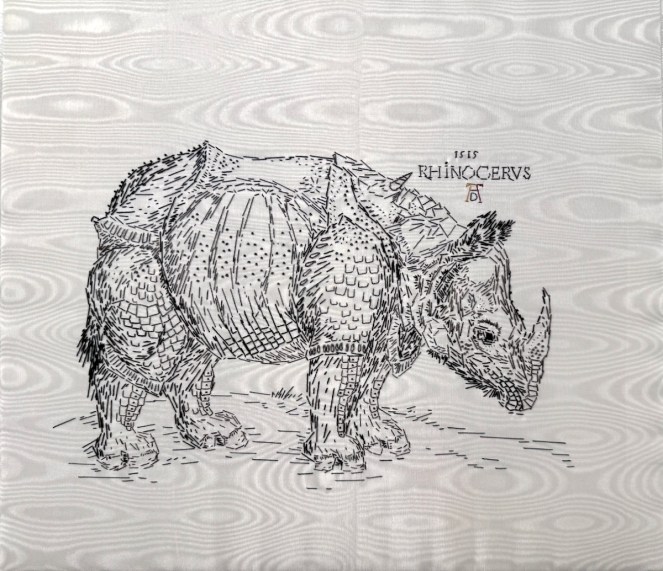
She even stitched in Dürer’s insignia. Last one:
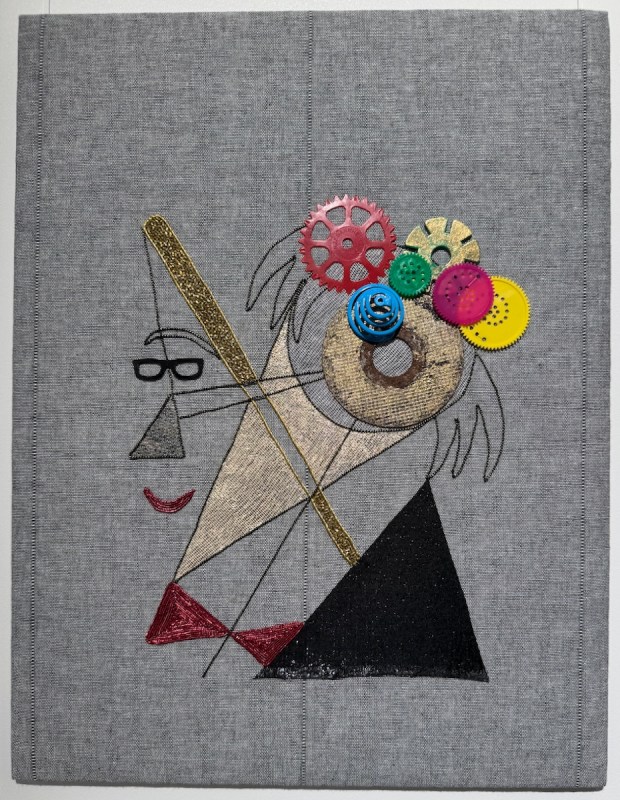
Title: Der Nobelpreisträger
Artist: Ulla Hoppe, Germany
Description: Nobel Prize winners: often “grey eminences,” yet crowned with gold.
Technique: Gold embroidery, collage, partially gilded
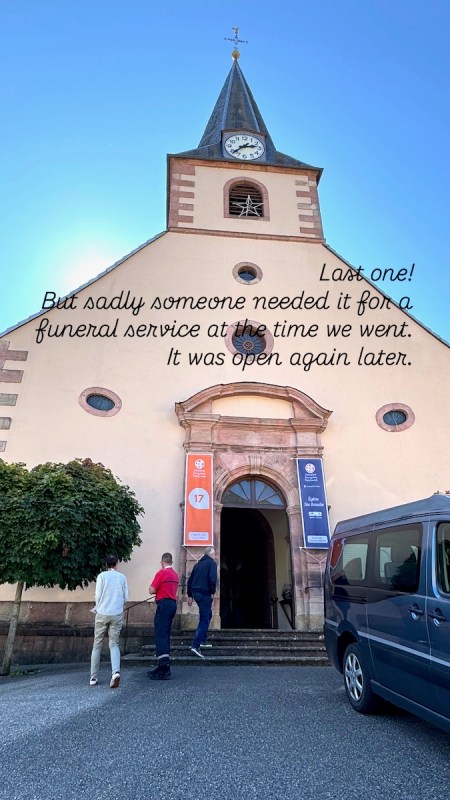
Alas! We could come back in two hours, but alas! alas! we wanted to see another small town on the way home, so we missed seeing Fabia Diniz. We missed a LOT! I went onto the Carrefour website and downloaded this:
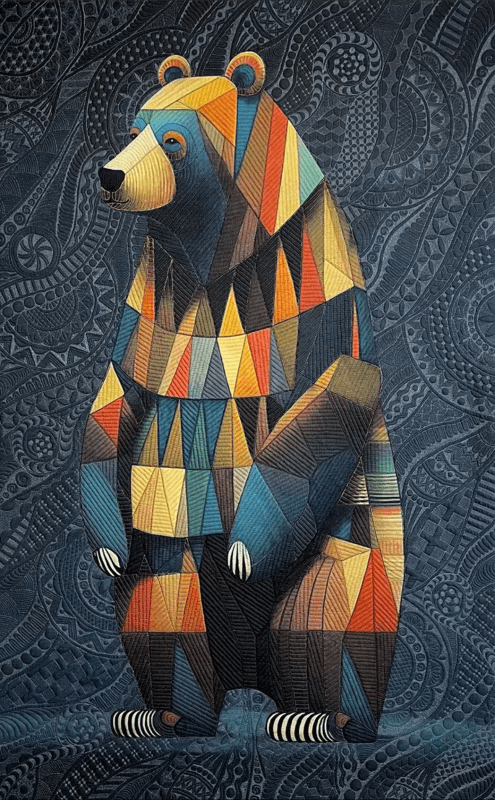
I hesitate to put a link because I know they change their website a lot. But head to her Instagram, and click on her Story, Carrefour, and you’ll see her story about coming to France, along with some of her creations.
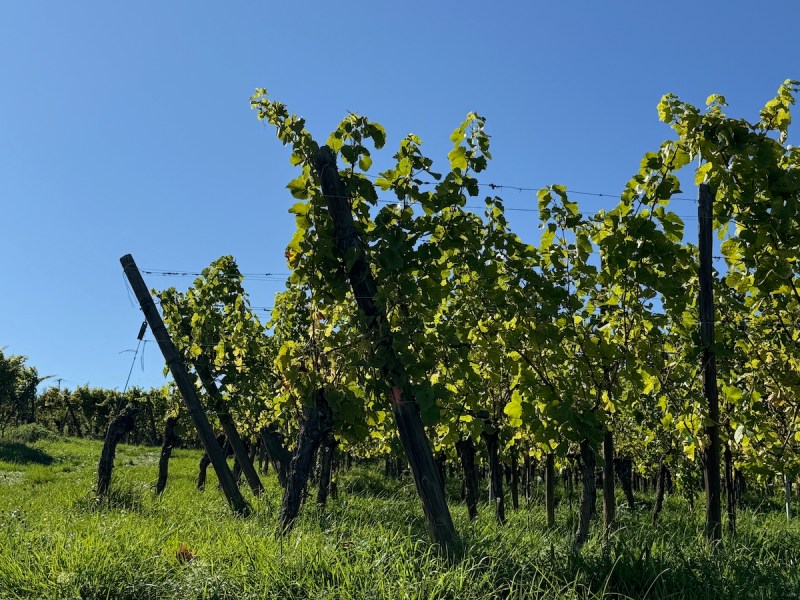
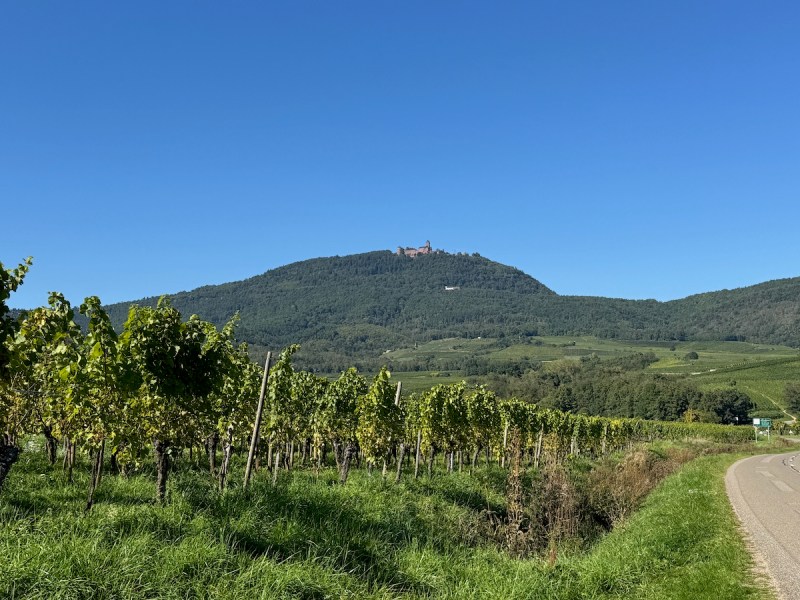
We drove over the hill, and back down into the next valley on our way to Equisheim.
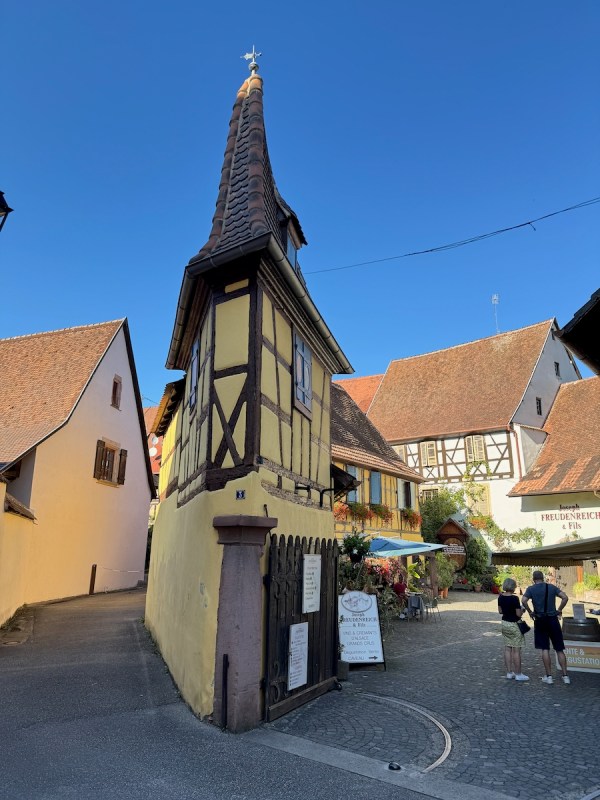
And this is where we’ll leave our adventure, where the light was just right at the end of the day.

European Patchwork Meeting · Quilts · Travels

Paris Mercerie (Fabric) & Paris Markets

Now, where were we?

Everyone travels for different reasons. Some to go to a place and look around. Some to escape the routine and breathe some fresh air. Me? I go for fabric. Okay, I’ll look around and enjoy the sights, see the wonders, visit the museums, but it’s like an internal radar: where are the fabric shops?

We recently returned from a trip to the Carrefour Quilt Show in the Alsace region of France, with an additional few days in Paris. Yes, the quilt posts are coming (and will be spread out), but as I’m emptying my suitcase (singular — which is part of the challenge) and my backpack and unpacking what I purchased for souvenirs, I thought I’d share a little. Or a lot. This can also serve as a resource for others heading that direction.

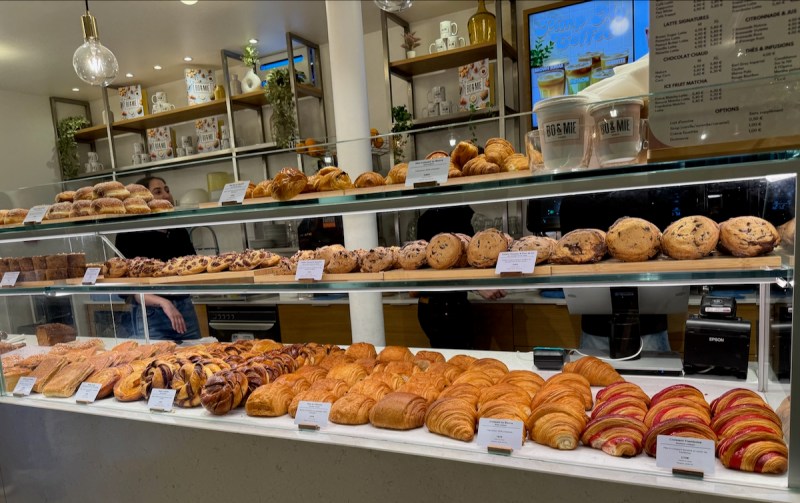
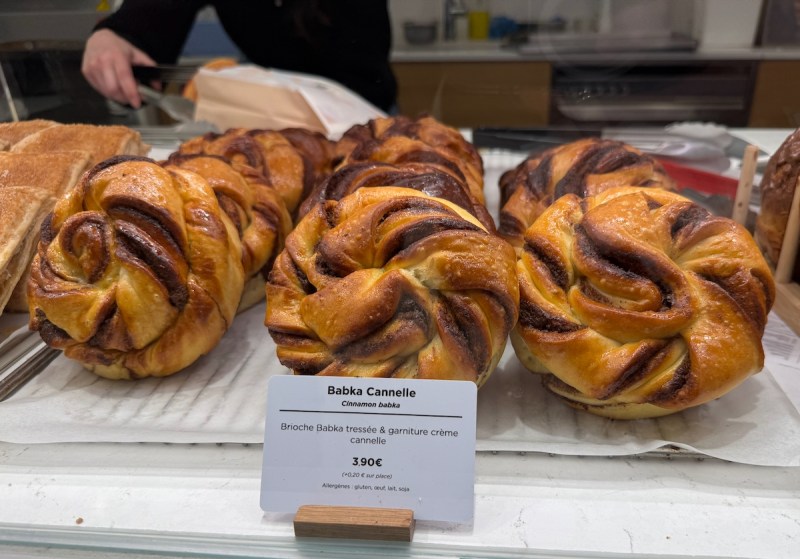
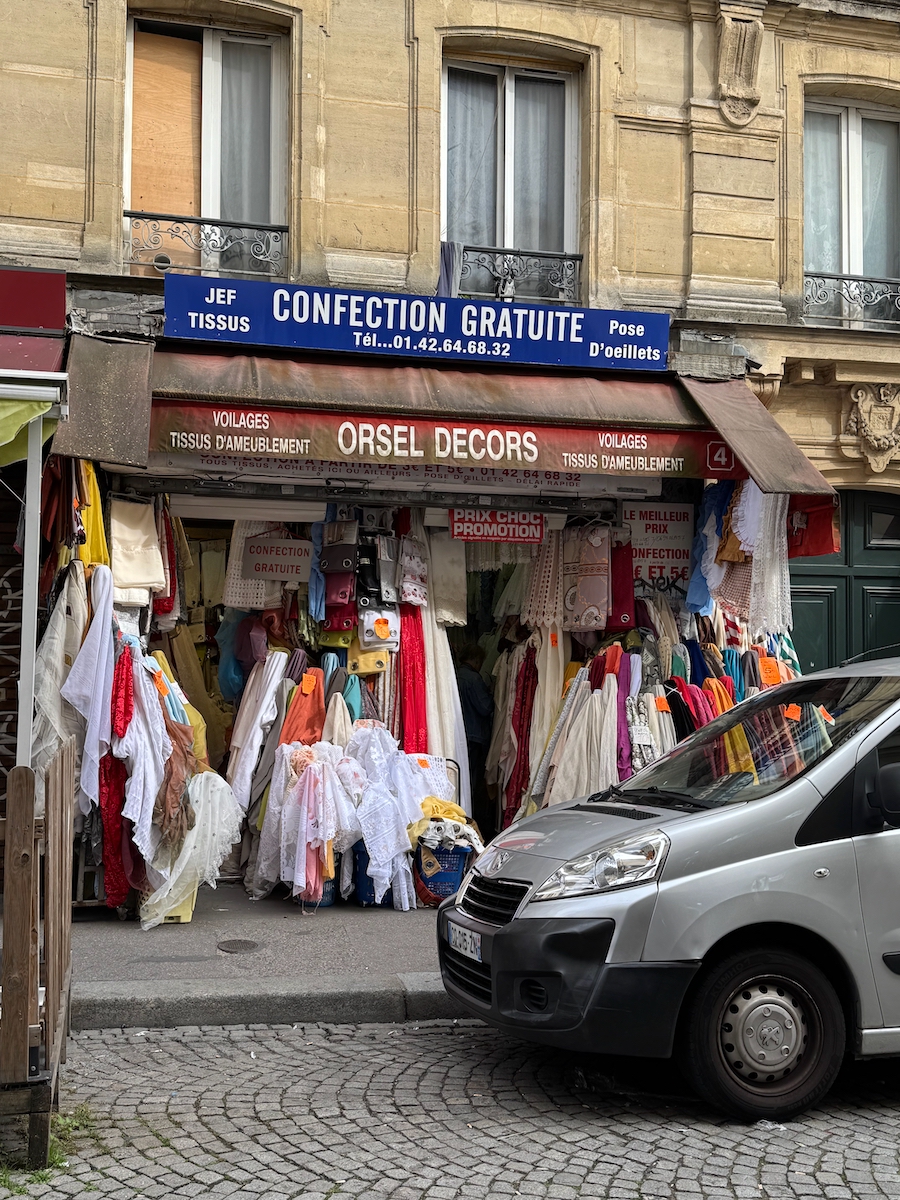
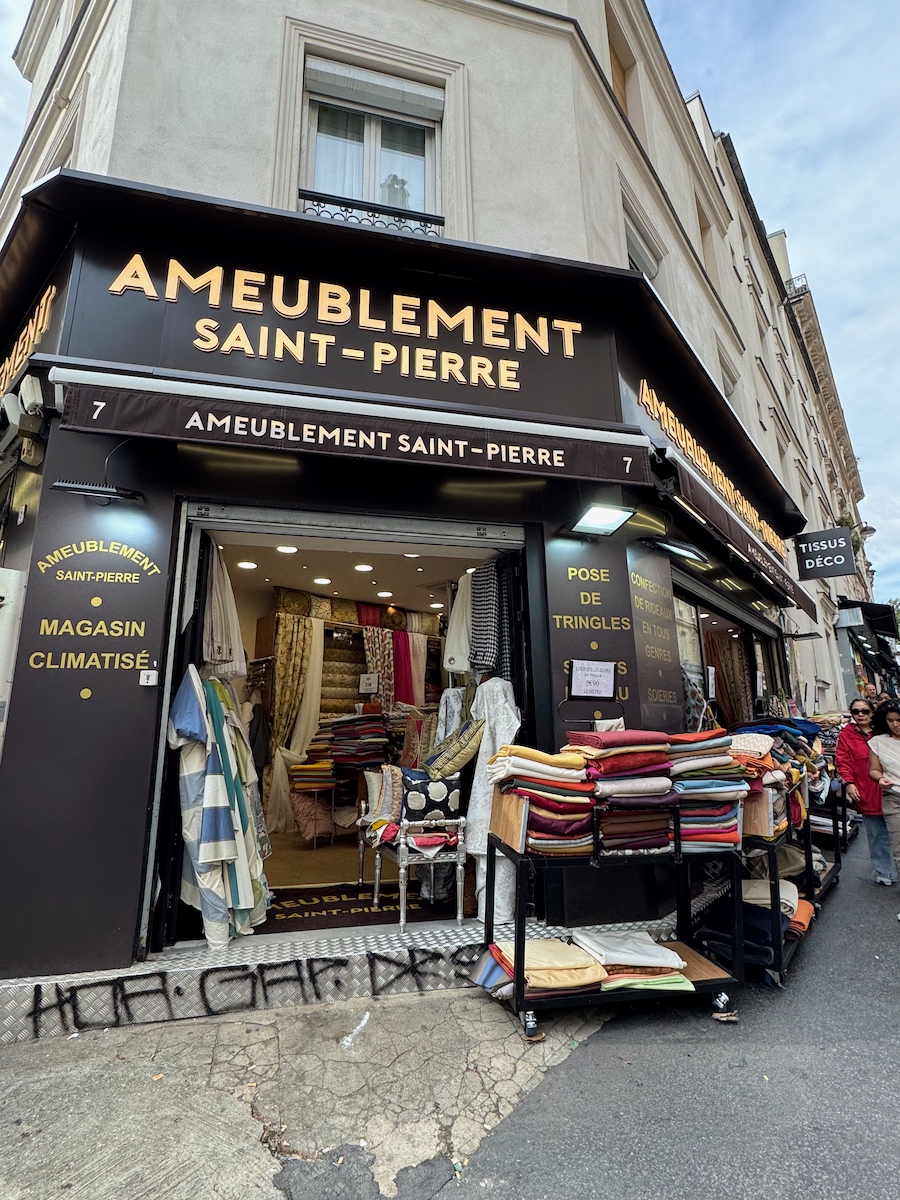
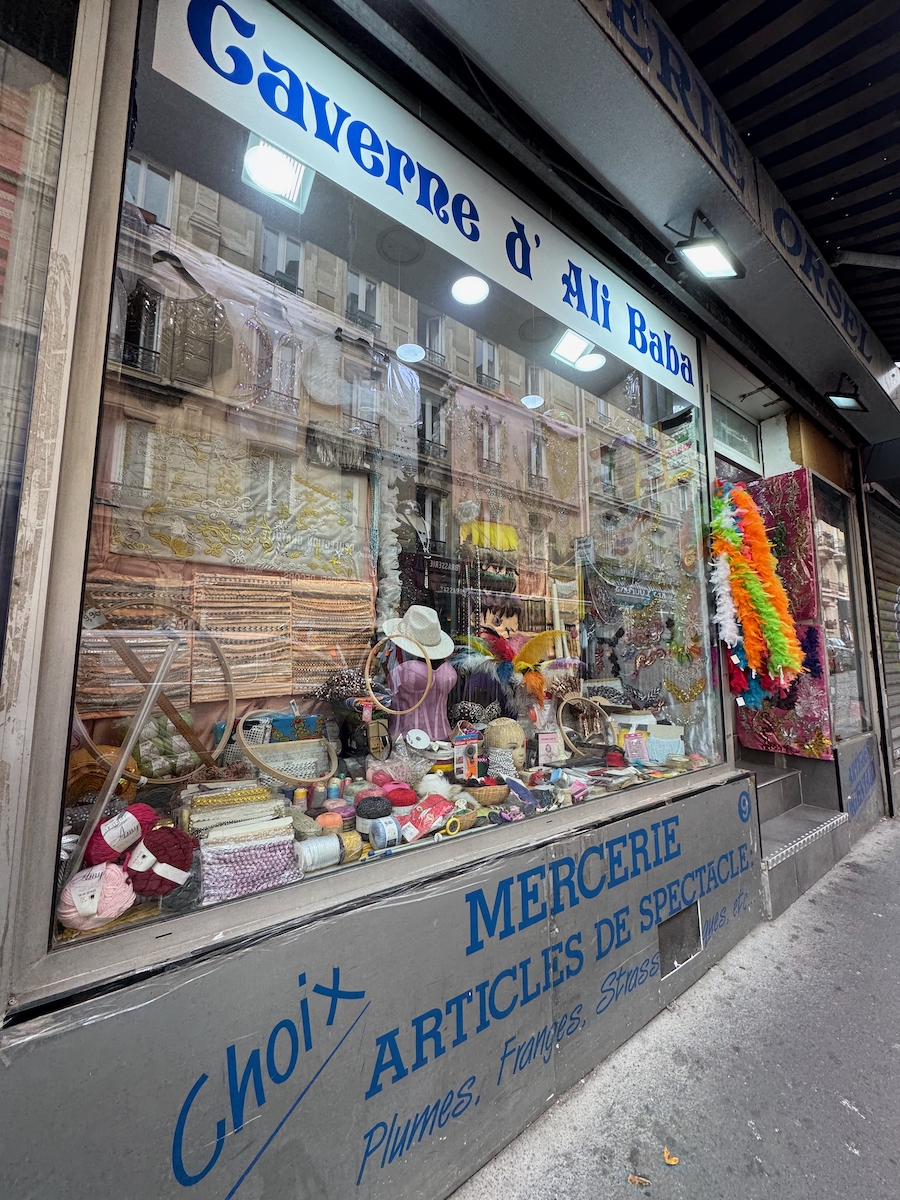
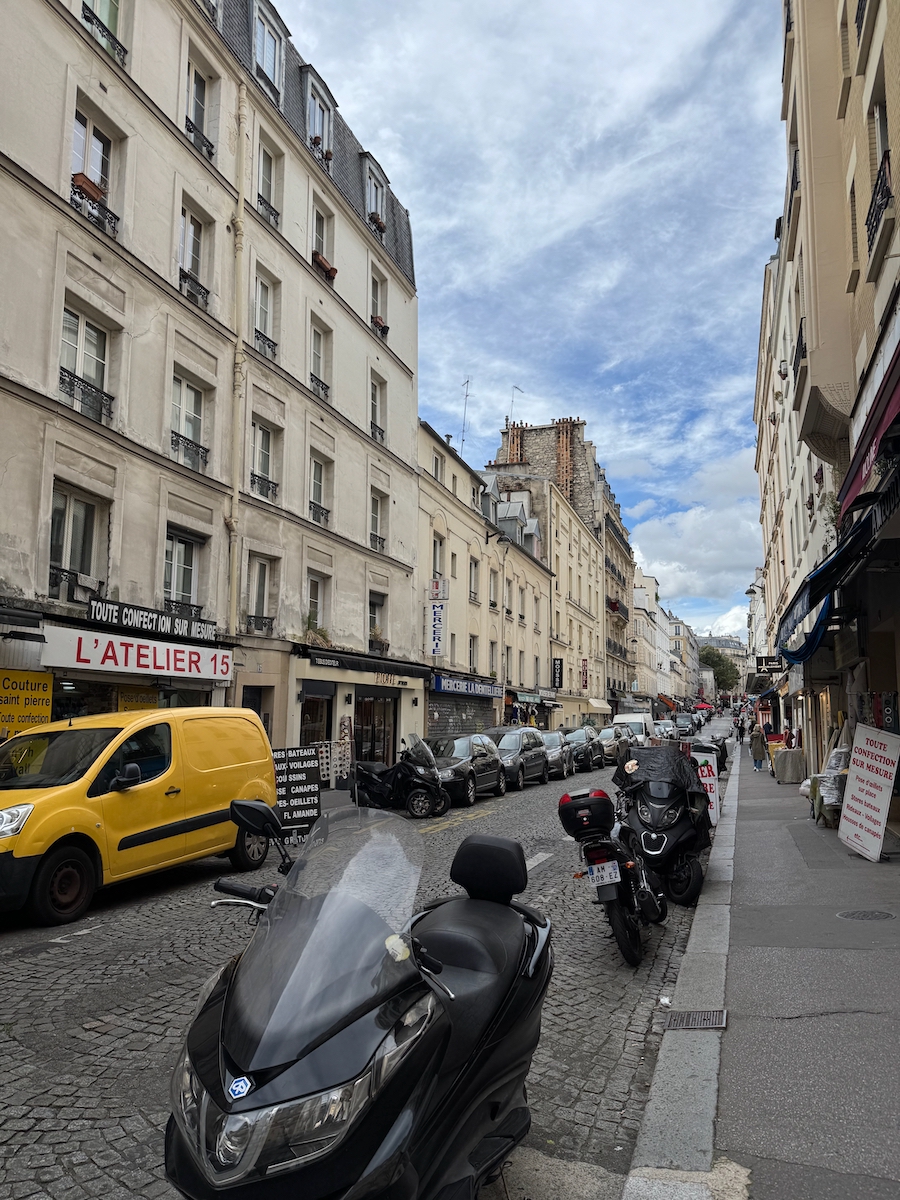
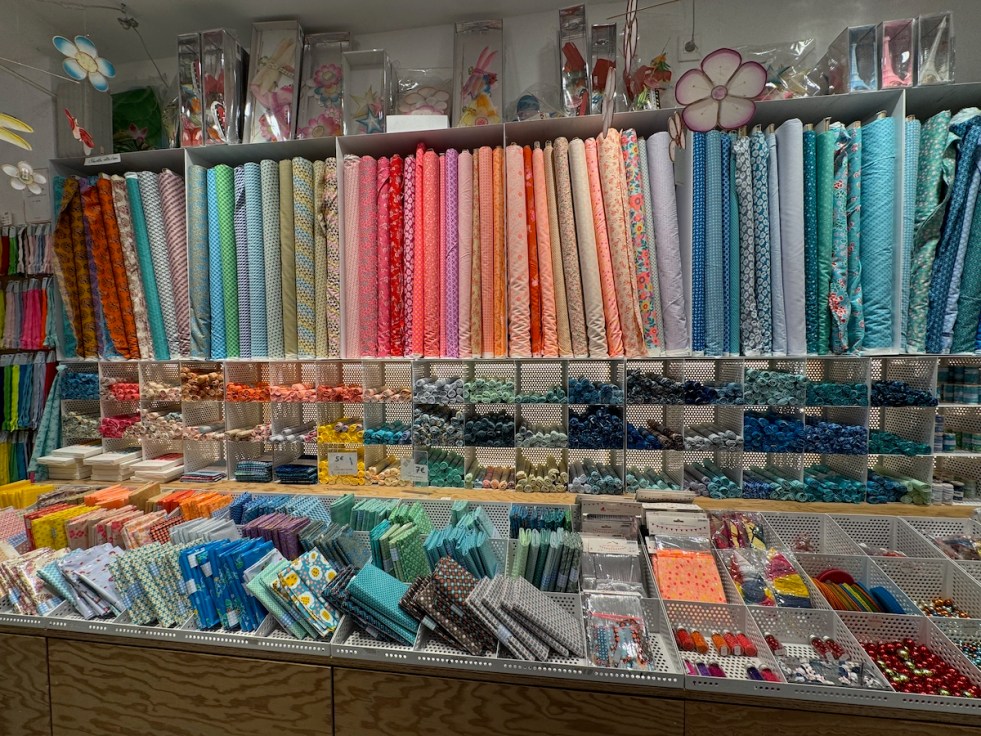
One morning, after stopping by the local boulangerie (this one was Bo & Mie, and that babka cannelle went right into the bag), we headed up to Montmartre, a hilly, historic district in Paris’ 18th Arrondissement. From a previous trip I knew that at the base of the Montmartre basilica were lots and lots of fabric (mercerie or tissus) shops. As I mentioned before, I only had one carry-on bag, so decided to focus on ribbons (ruban), as I was also carrying what small amounts I’d purchased in Alsace at Carrefour.

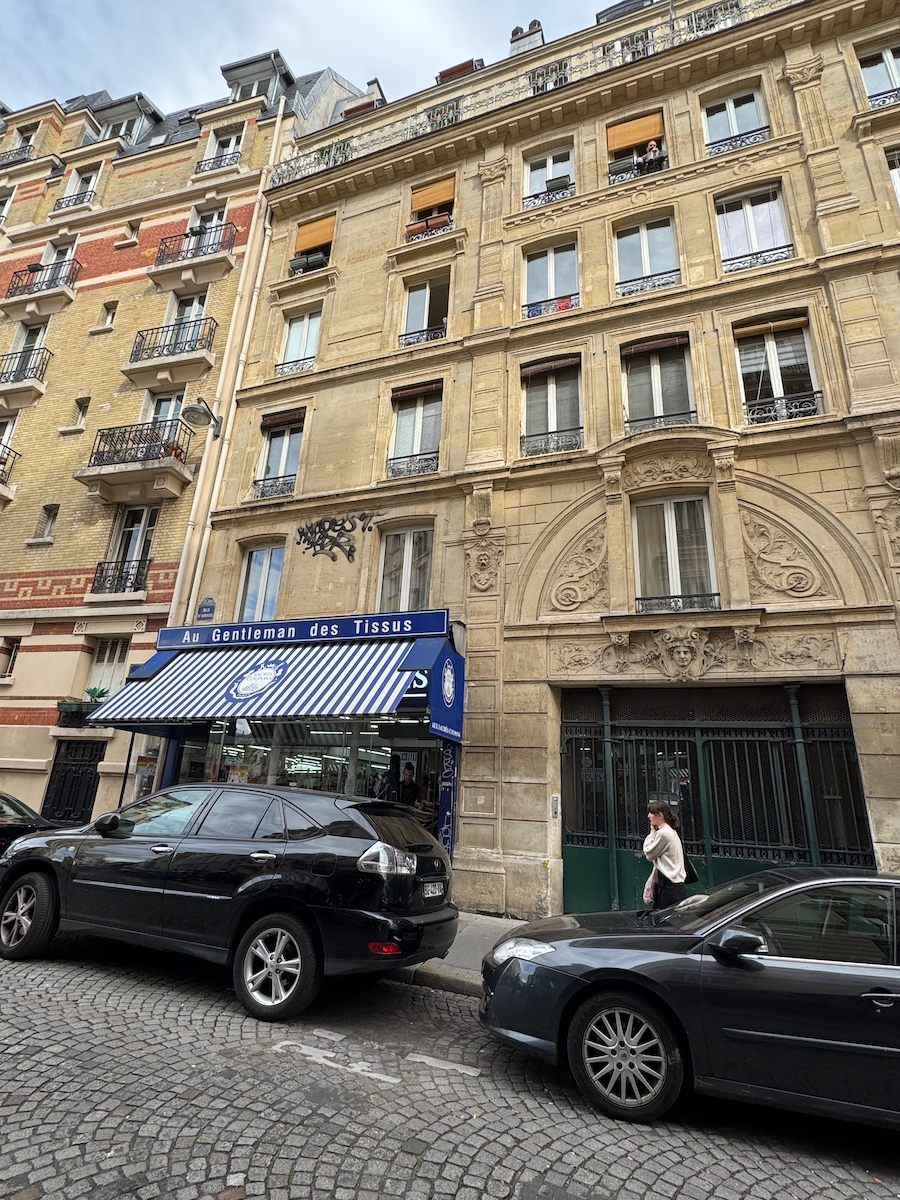
We rode the metro up to near Montmartre then got off and walked up through streets. I’d typed in “mercerie” into my map program (I mostly used Apple Maps, but my husband used Google Maps and between us we usually made it somewhere).

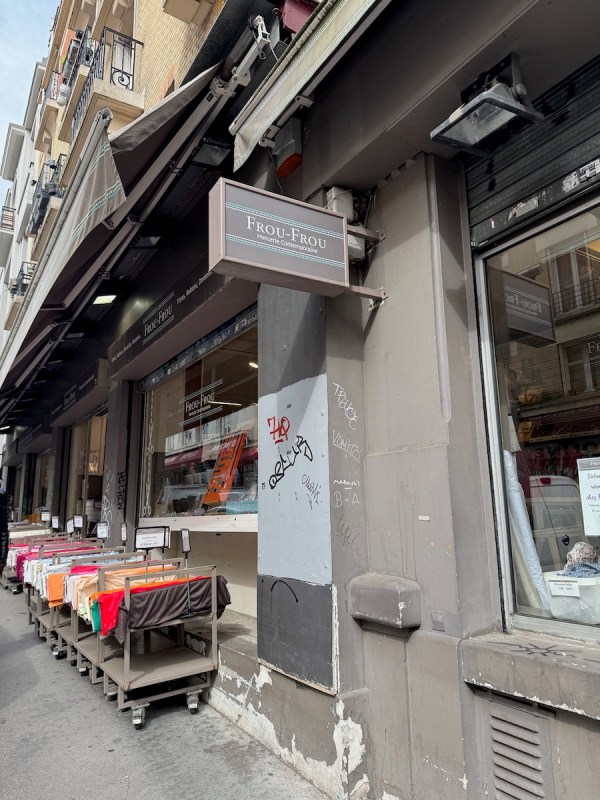
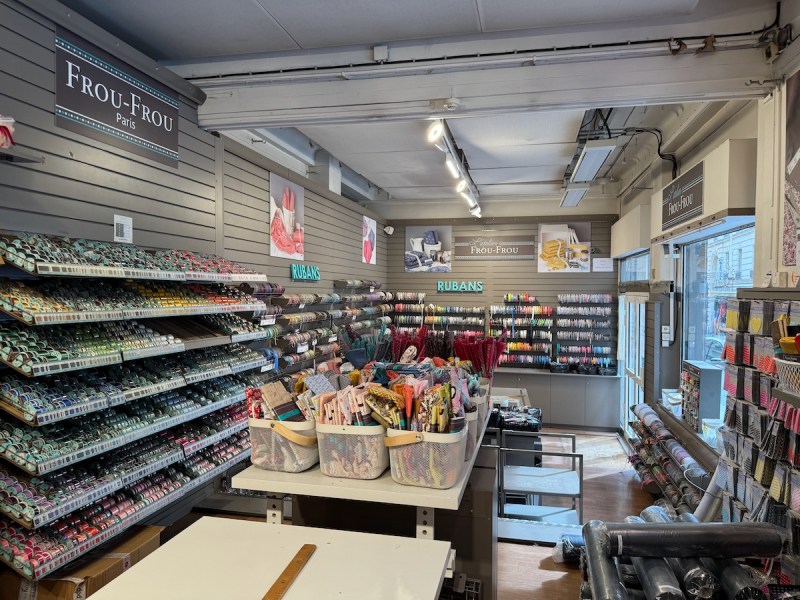
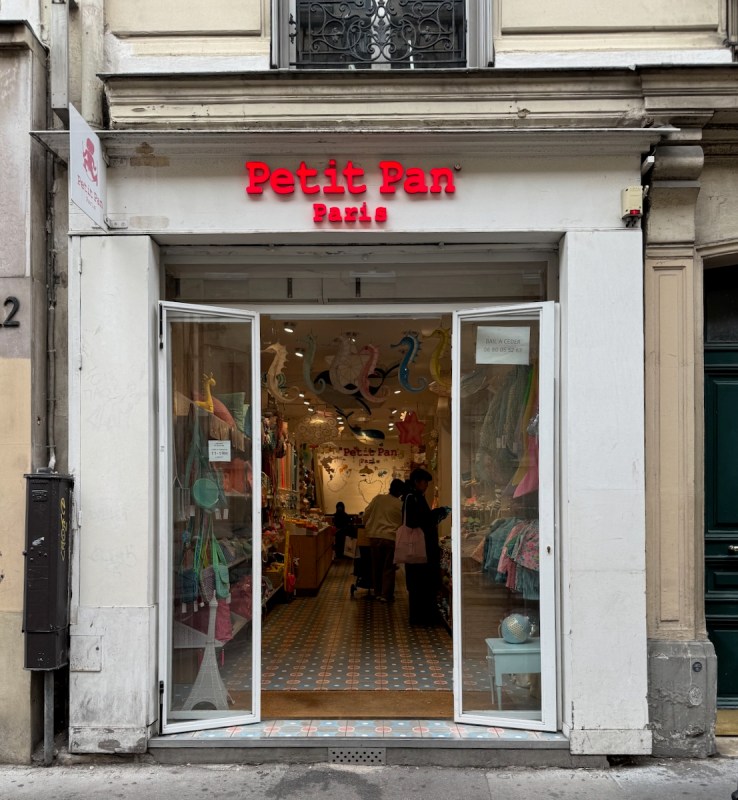
I could see through the window that Frou-Frou had ribbons. Many people speak English; my husband speaks French, so I brought the bolts of ribbon that I wanted to the front desk. Right there, she measured off what I needed — no walking to a neighboring counter this time — and rung me up.

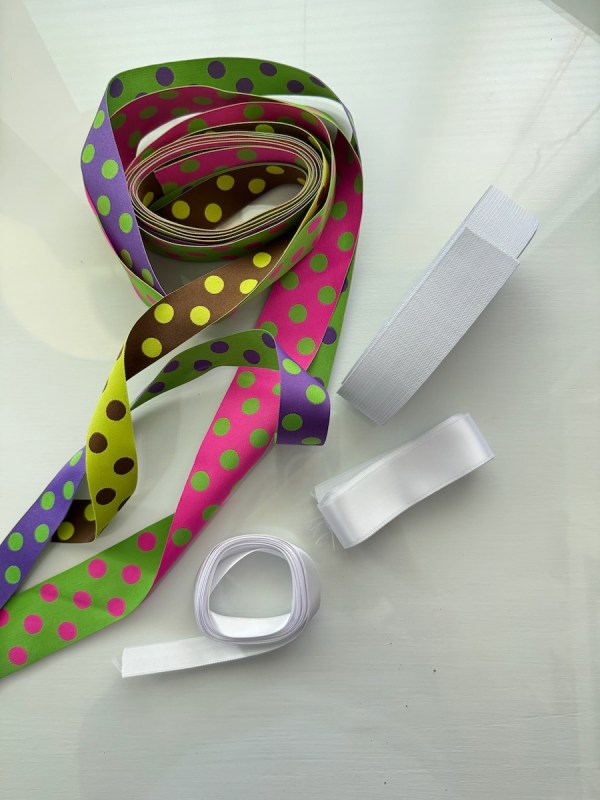
I purchased fun dots and some basic white ribbon for an article of clothing I needed to mend back home. The elastic, and a different width of white ribbon (for some reason, the size I wanted was out everywhere), were purchased at the next place we stopped…

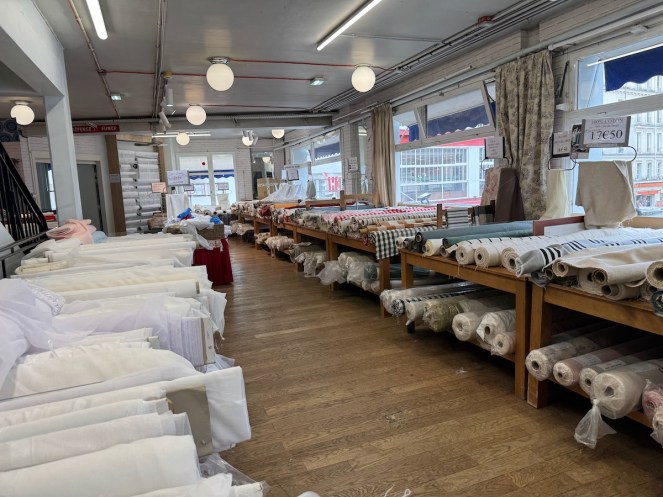
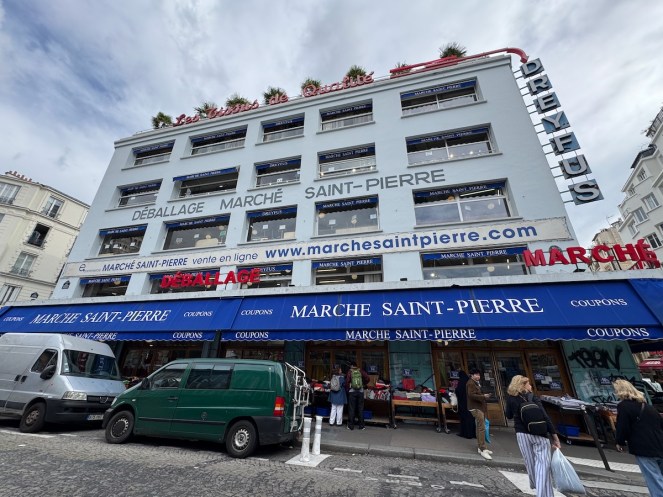
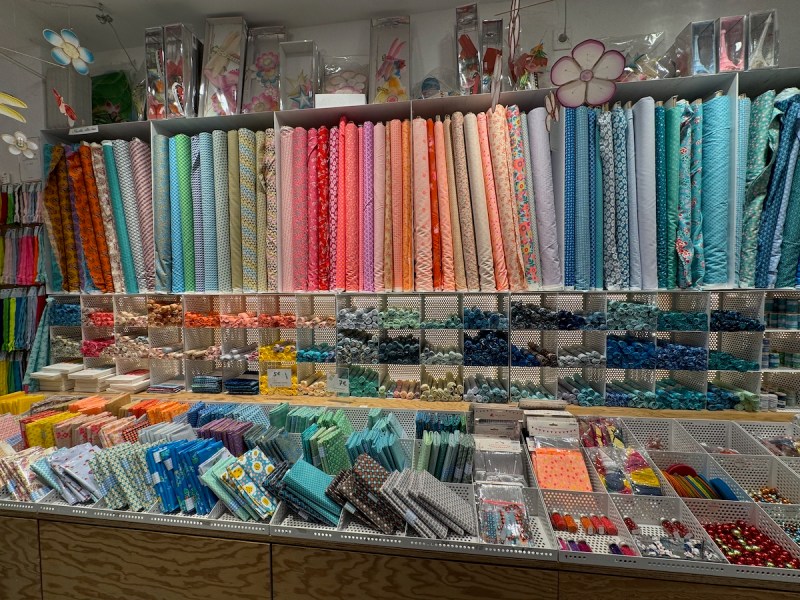
…which was this jumbo place. There are several large stores in this area with lots of fabrics to choose from. It’s almost like going to the Los Angeles fabric district, but before ICE decimated the area with their raids. I never made it to the rooftop to see those trees growing up there, but I probably wasn’t allowed to go there.

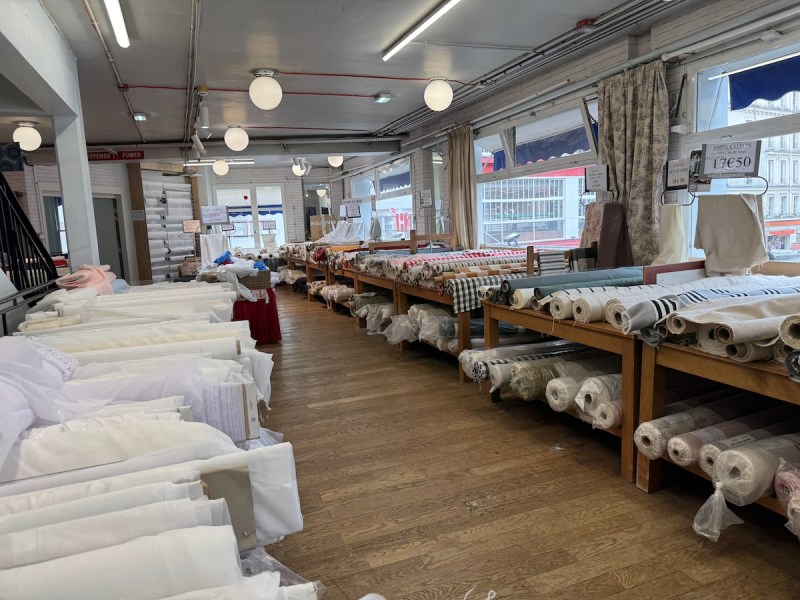
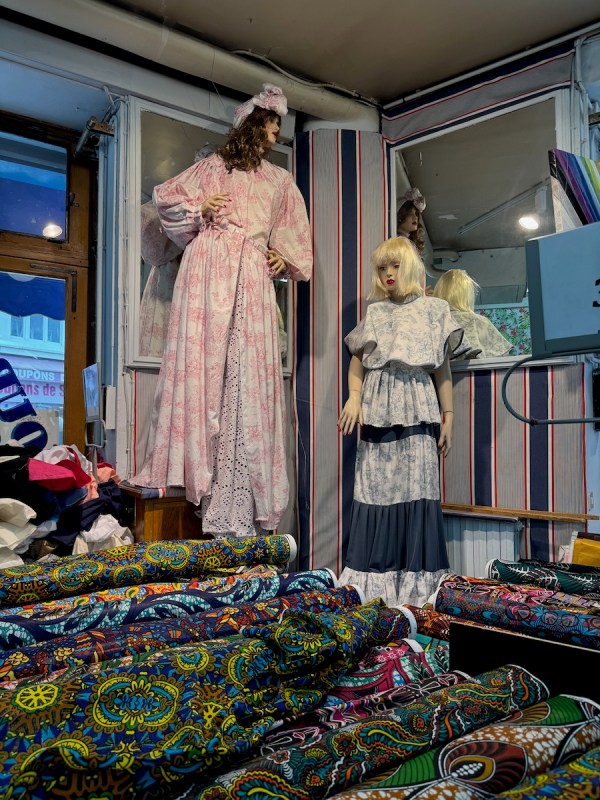
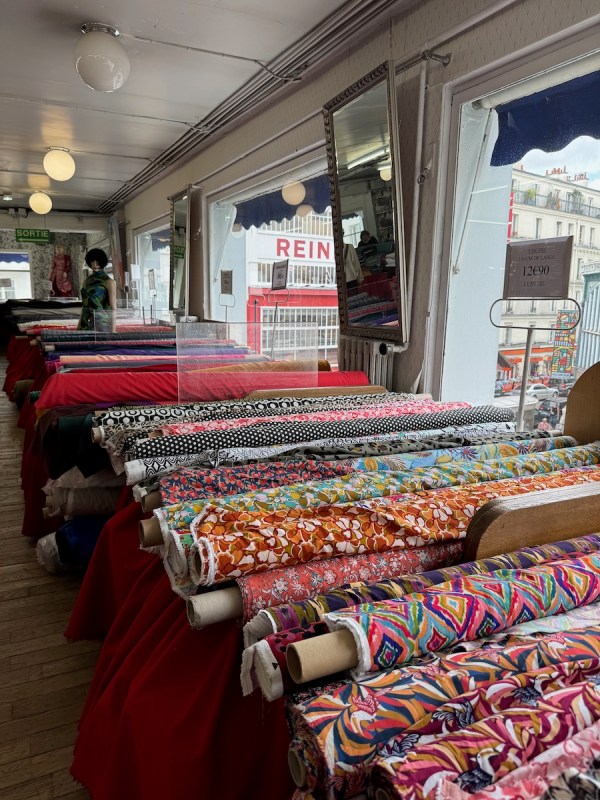
On the first floor, you get the layout of the place, with long tubes of fabrics laid out on tables. This place also had mannequins dressed in sample dresses (in this case, very strange sample dresses–more like they were tucked, gathered and pinned onto the models). Click individual pictures to enlarge them.

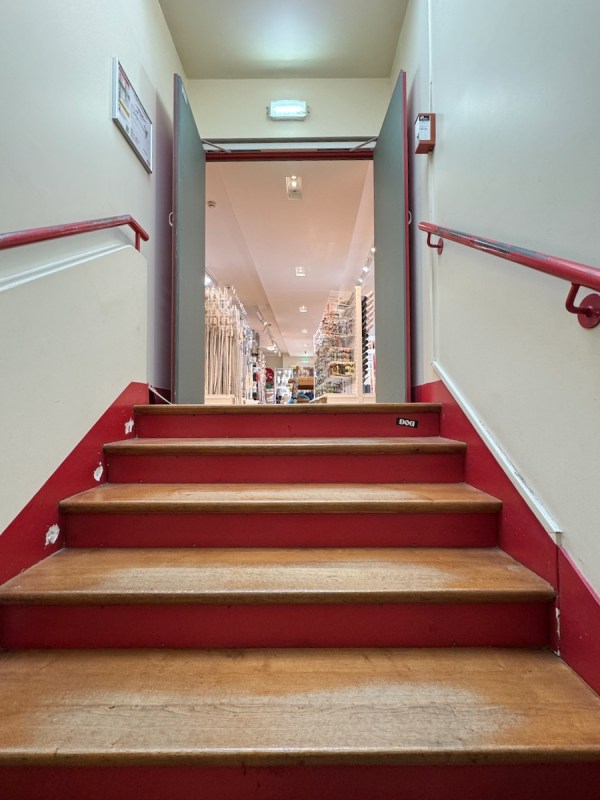
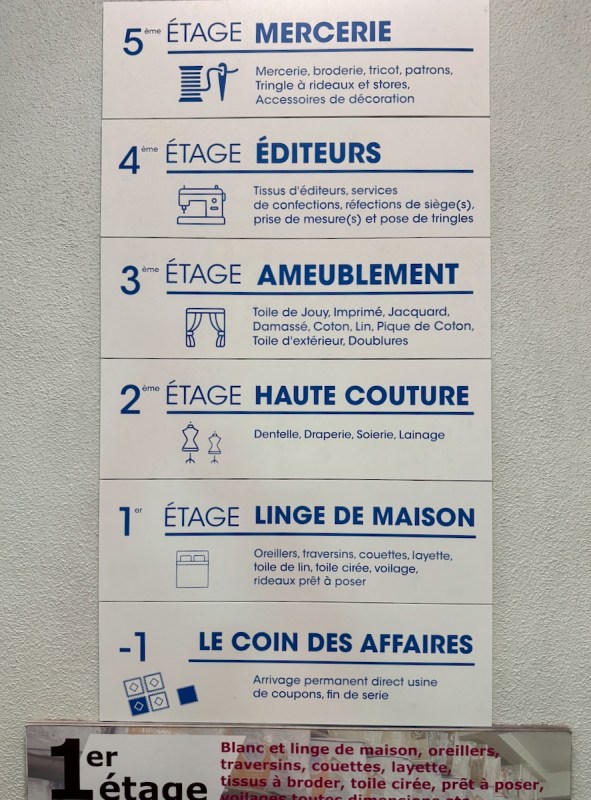
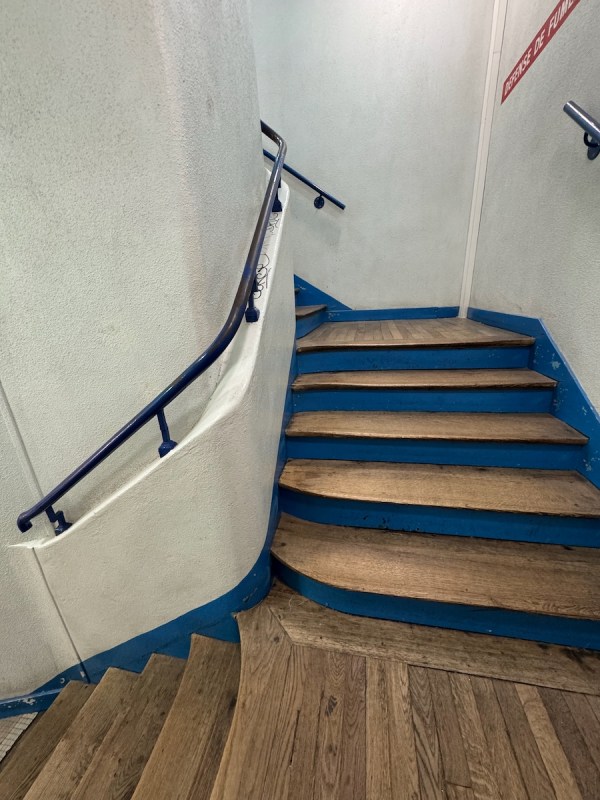
The map in the stairwell gives you a sense of what’s on each floor and there is no elevator for customer use. Everyday is “leg day” in Paris.

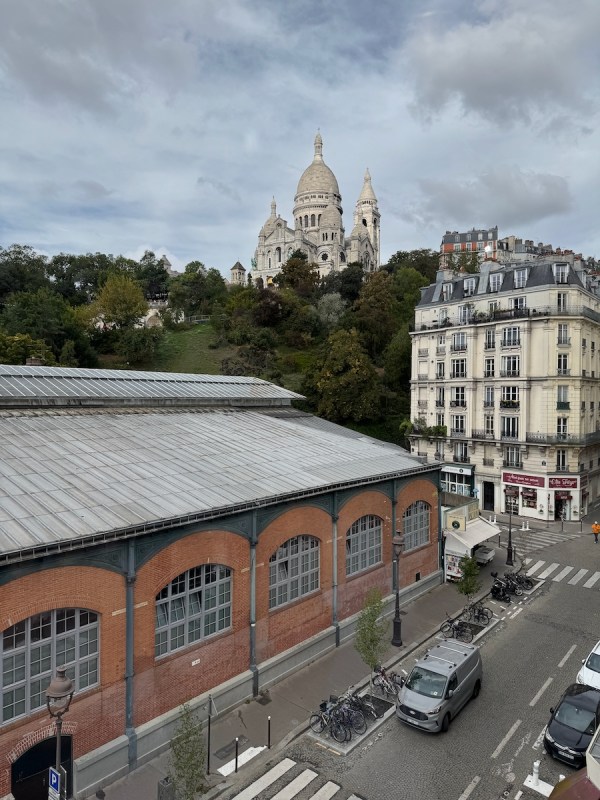
On one floor I looked out the window to see the Sacre-Coeur Basilica at the top of the hill.

When I see all this, it’s easy to forget that our locations for fabric in the States have sort of dried up, with the closure of JoAnn’s.

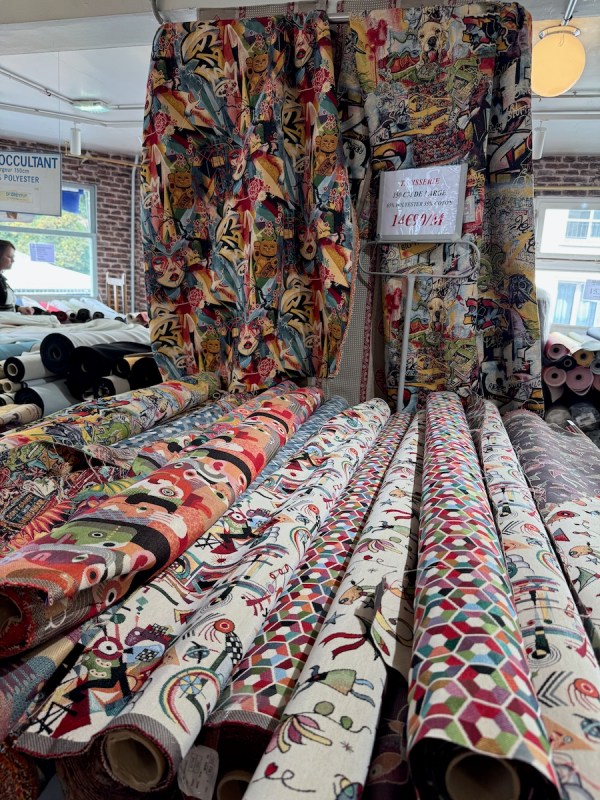
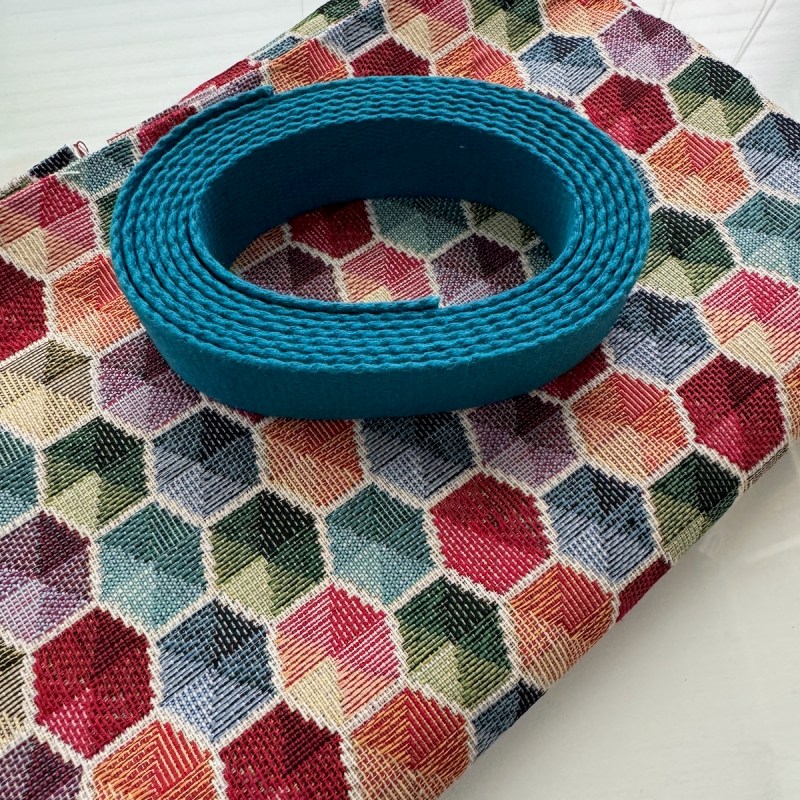
This table reminds me of what I purchased at our last stop at the Carrefour Quilt Show: a thick geometric woven tapestry, plus cotton webbing to match. Because of this, I’m drawn to the fabrics on the table.

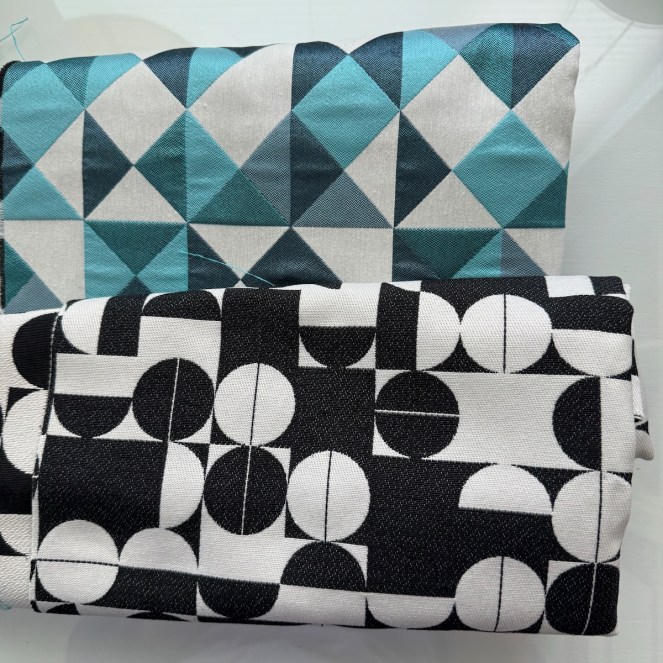
I found these on a neighboring table (it’s dangerous to walk around in strange fabric stores). There were many other shops to explore, but we pressed on to see the Basilica. Later, when we walked on the other side of the hill, we saw this shop:

Given the weight of the tapestries in my backpack, I asked the shopgirl to cut some small pieces that they didn’t already have cut. “Non,” the girl said. “We don’t have those in smaller pieces.” Given that the yardage above was there and waiting, and that she obviously was not going to cut anything for me, we left without any of this fun fabric, and went down the street for a yummy Cambodian meal at Le Cambodge.

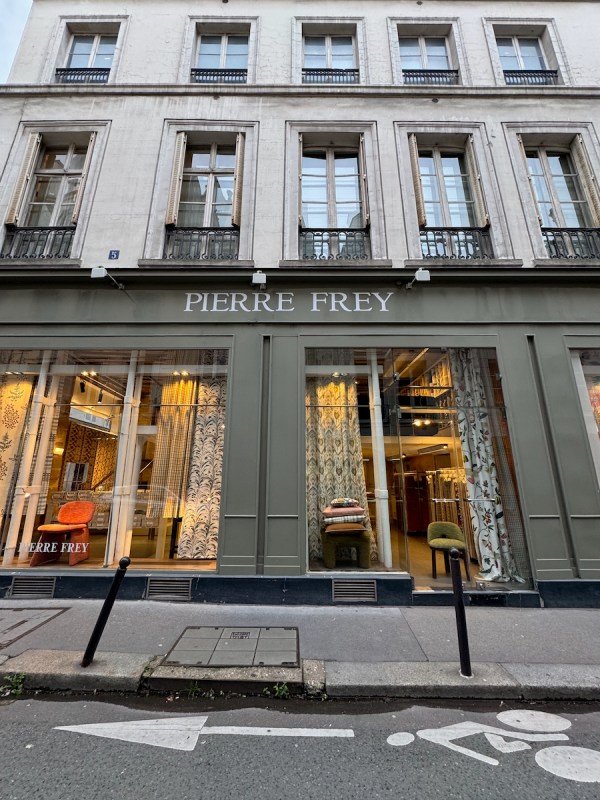
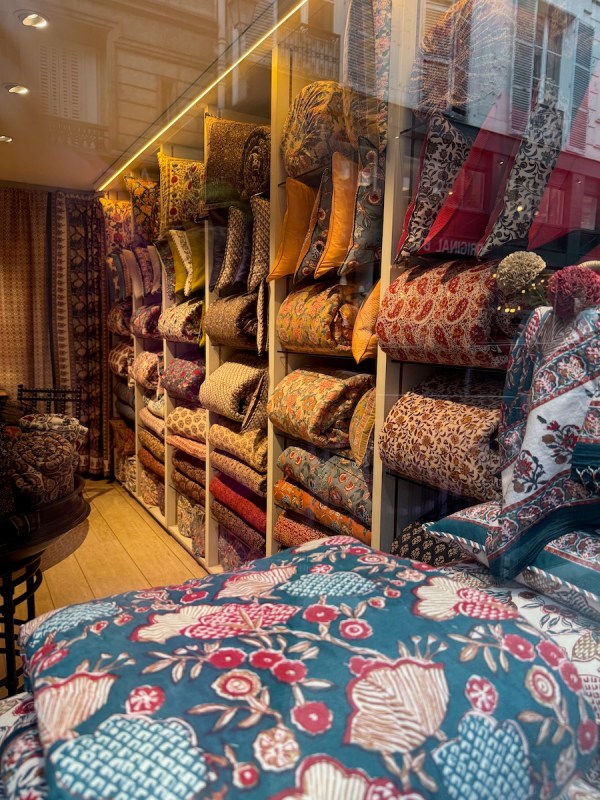
In another section of St. Germain (5th Arrondissement), we window-shopped at Pierre Frey. We were on our way to buy my other favorite souvenir, table linens.

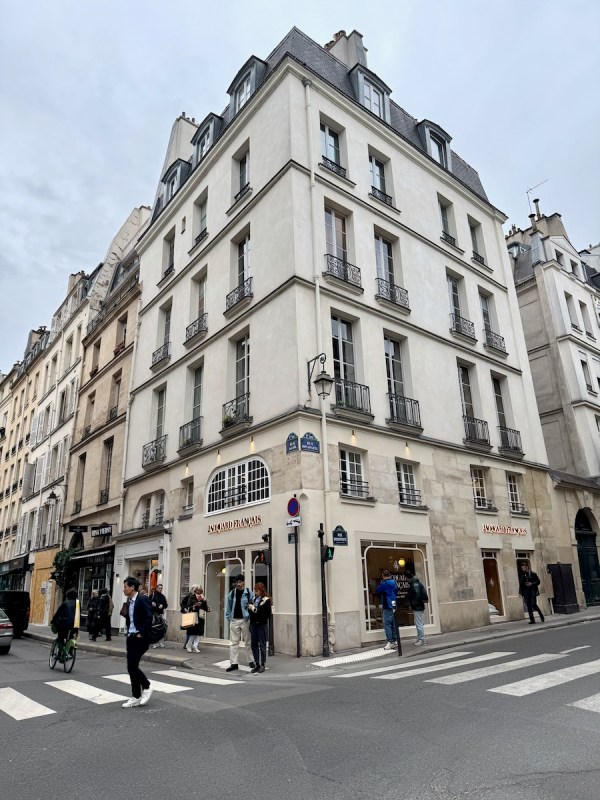
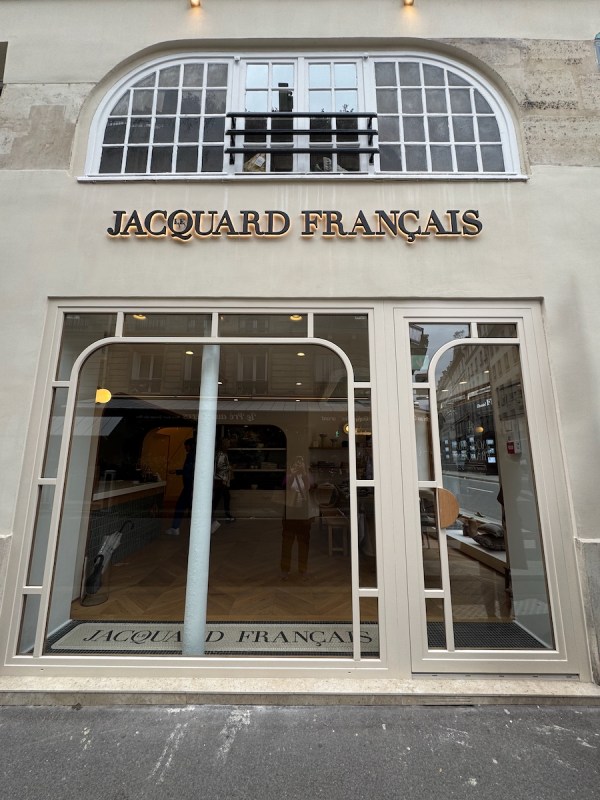
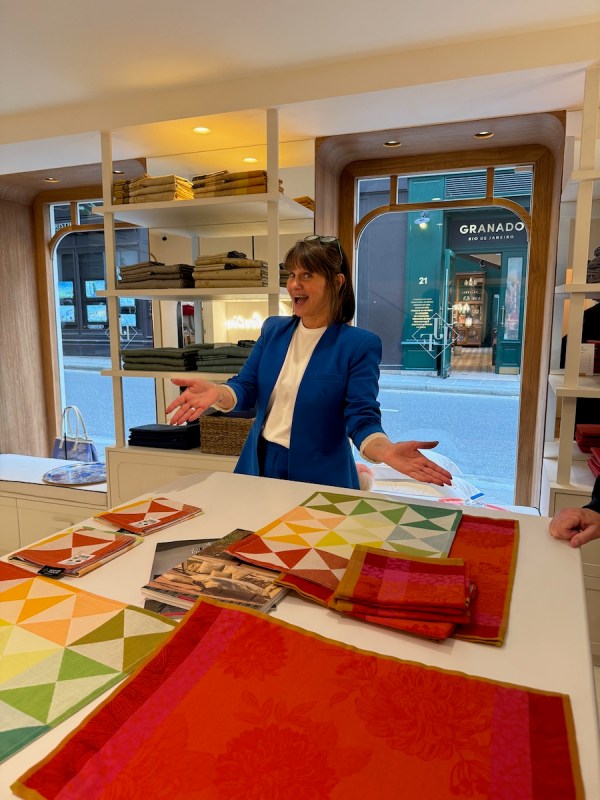
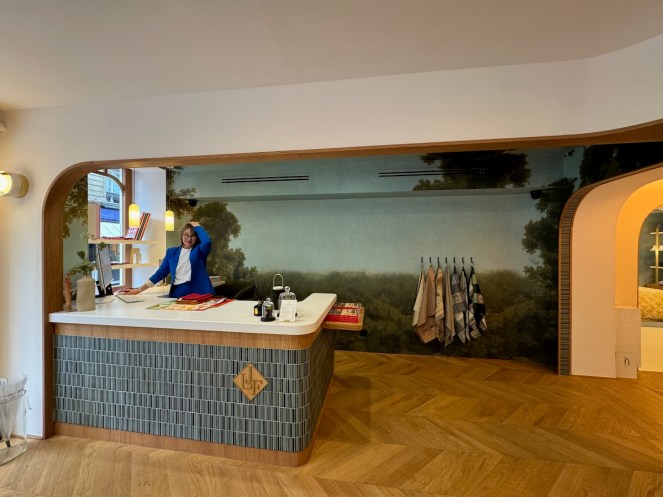
This is Jacquard Français, a linen shop, introduced to me by my big sister. I am a big fan of buying usable souvenirs, like cheap-o shopping bags (we live in a state where we bring our own to the grocery store). Last time we were here, we purchased placemats and napkins and every time we use them, we remember our time in France. We’d purchased cool colors (blues, greens) last time around, so warm colors was what I was looking for. (Available in the states through this shop.)

Julie, an owner of the shop here in Paris, agreed to pose for this shot for me: the cool blues of her suit against these poppy, yellow and bright colors. We bought two of the orange placemats and two of the Half-square Triangle placemats although she referred to them as “origami.” When I explained to her that I’d just been at a patchwork show in Alsace, and we called the pattern by a different name, she understood. “Ah! Patchwork!” she said.

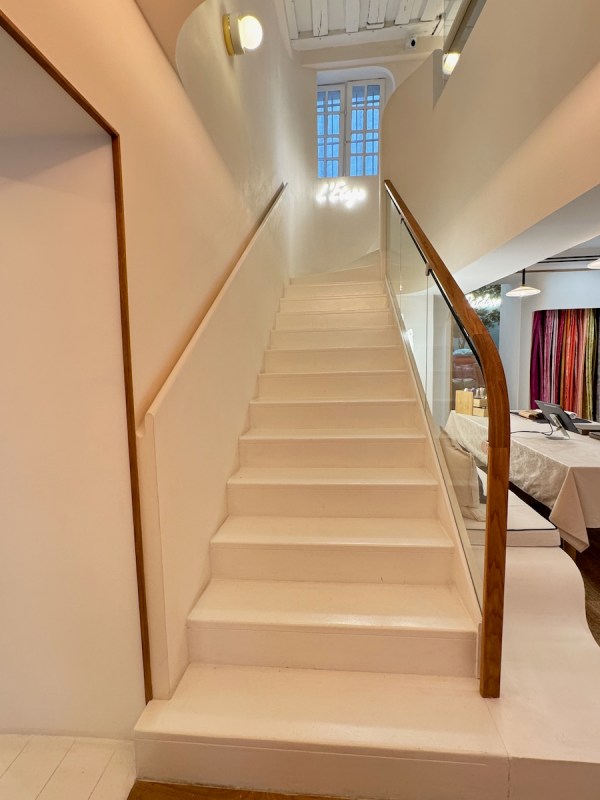
Did I mention how beautiful this shop was? It’s a new one, she explained, as they just moved over from their old one, a few blocks down the street. (We did know, as we went to the old one first, courtesy of our maps.) (This is the correct location.)

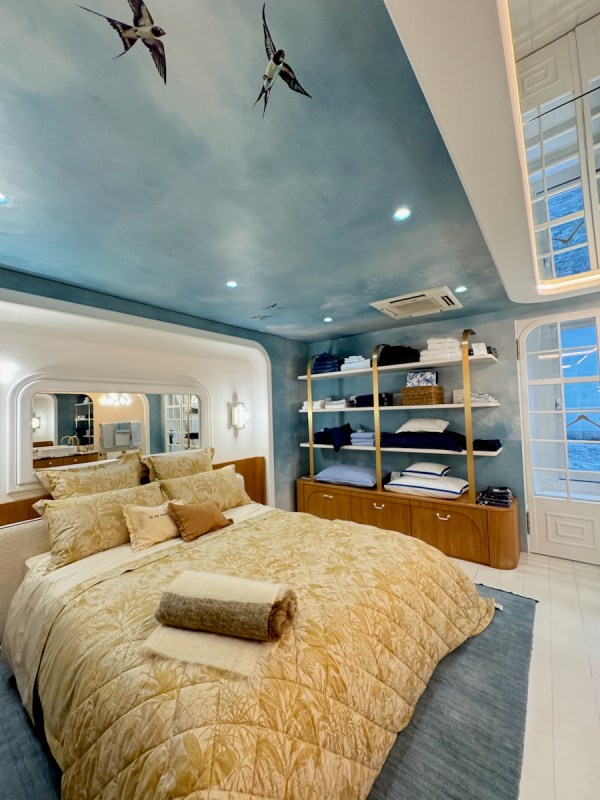
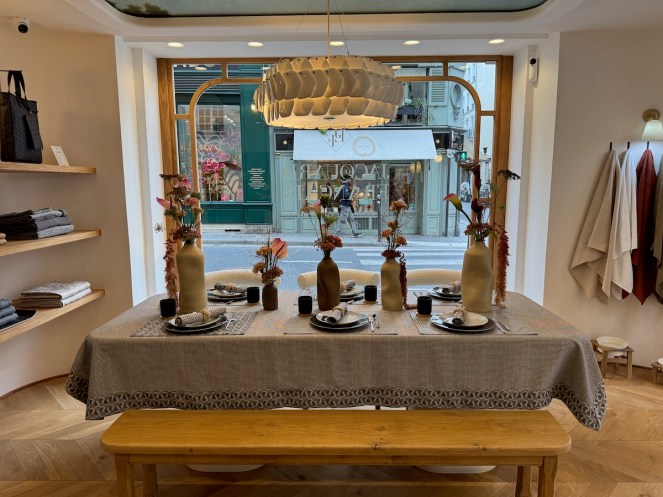
The whole shop is just so beautiful, with curving lines, perfect use of backgrounds:

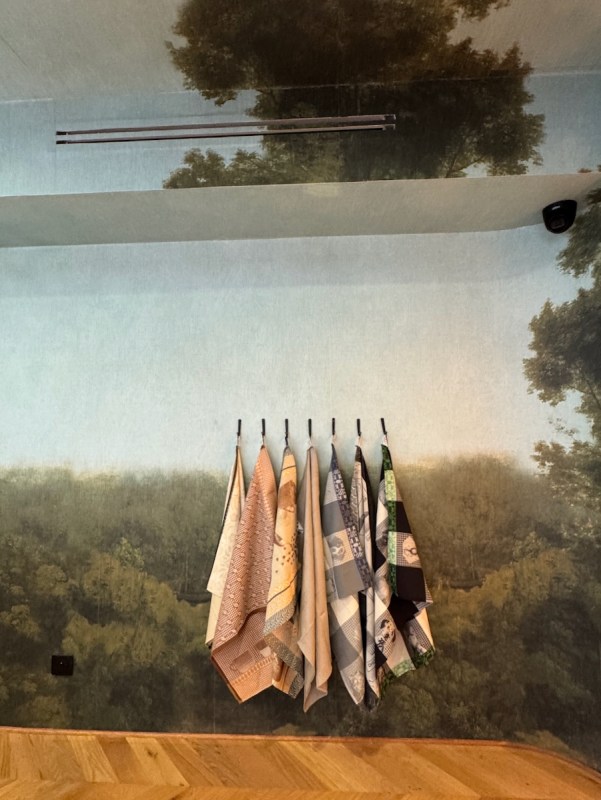
She rang us up and then presented me with a tea towel that was patchwork! It was made for a promotion their company recently did. I was honored.

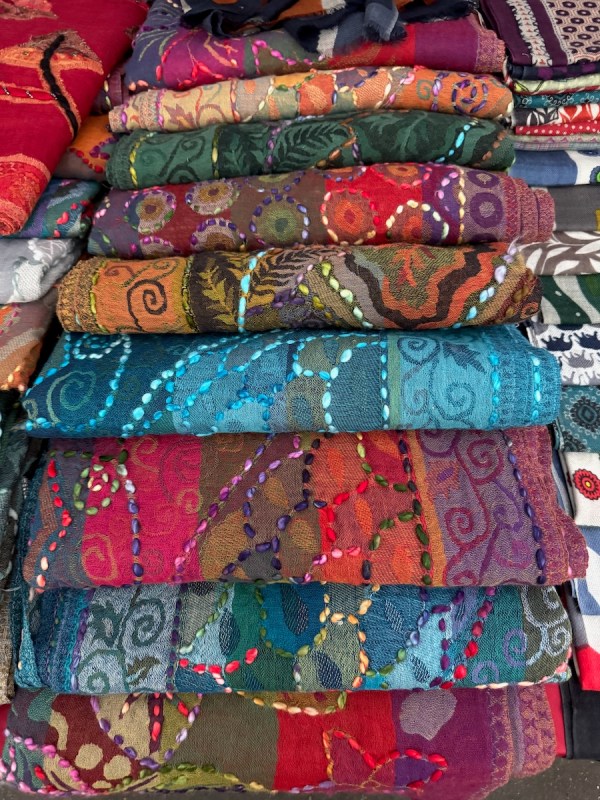
I’ve written about the Marché Bastille, too, and put up some Highlights you can watch. The scarves (above) are from there.

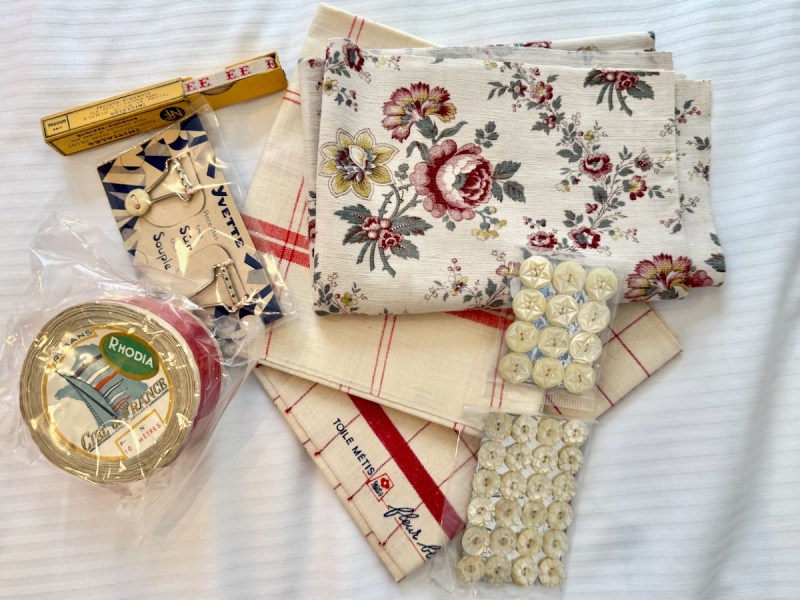
I’ve posted about our day at the Le Marché aux Puces de Saint-Ouen at Clignancourt, or Les Puces, as everyone calls it, here and here. What I purchased in one shop is above.

I wrote up a document to keep track of the Thursday markets, but there is other info on this, as well as a link to a page that helped me keep track. (downloadable PDF)

Are you still with me? (Hope so.)

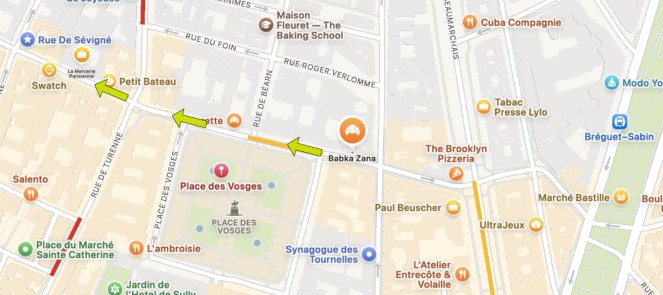
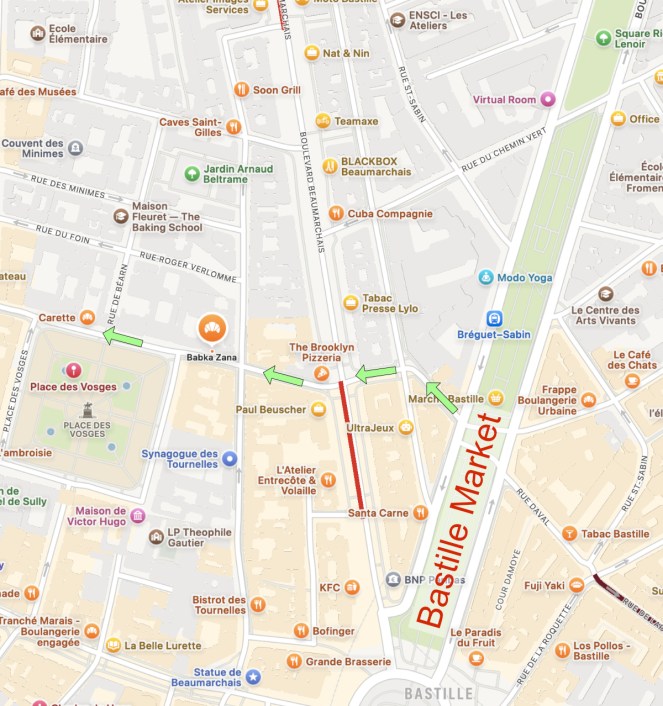
Thursday morning, after we went to the Bastille Market, we then walked down a neighboring street into the Marais District (follow the green arrows). We ate at Babka Zana, enjoying an amazing sandwich made on challah bread, and filling chicken salad on the side.

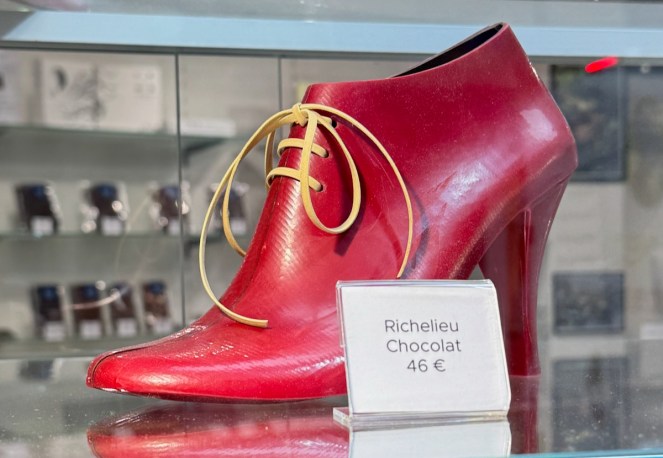
Found this fabulous chocolate shoe on this street.

Chocolate, no kidding.

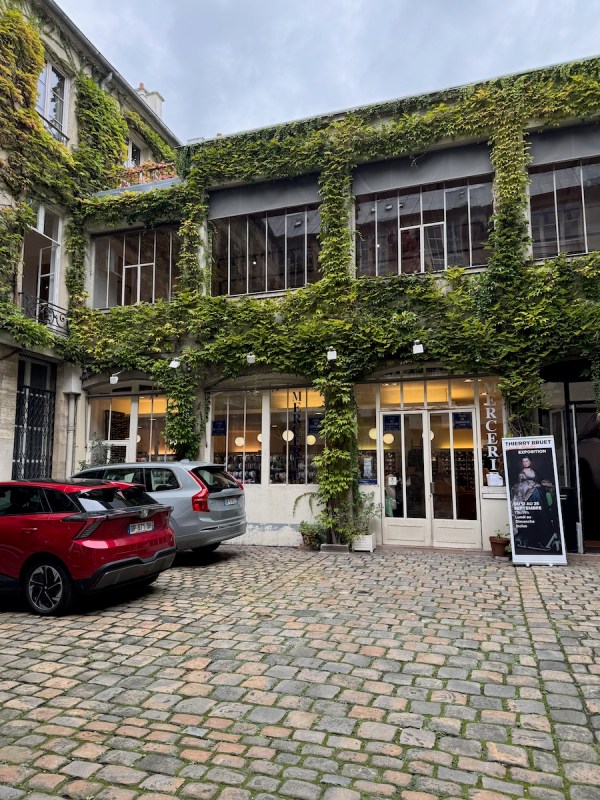
Keep going along this street which has about a bazillion parfumeries, until you look into an opening and see La Mercerie Parisienne through the courtyard:

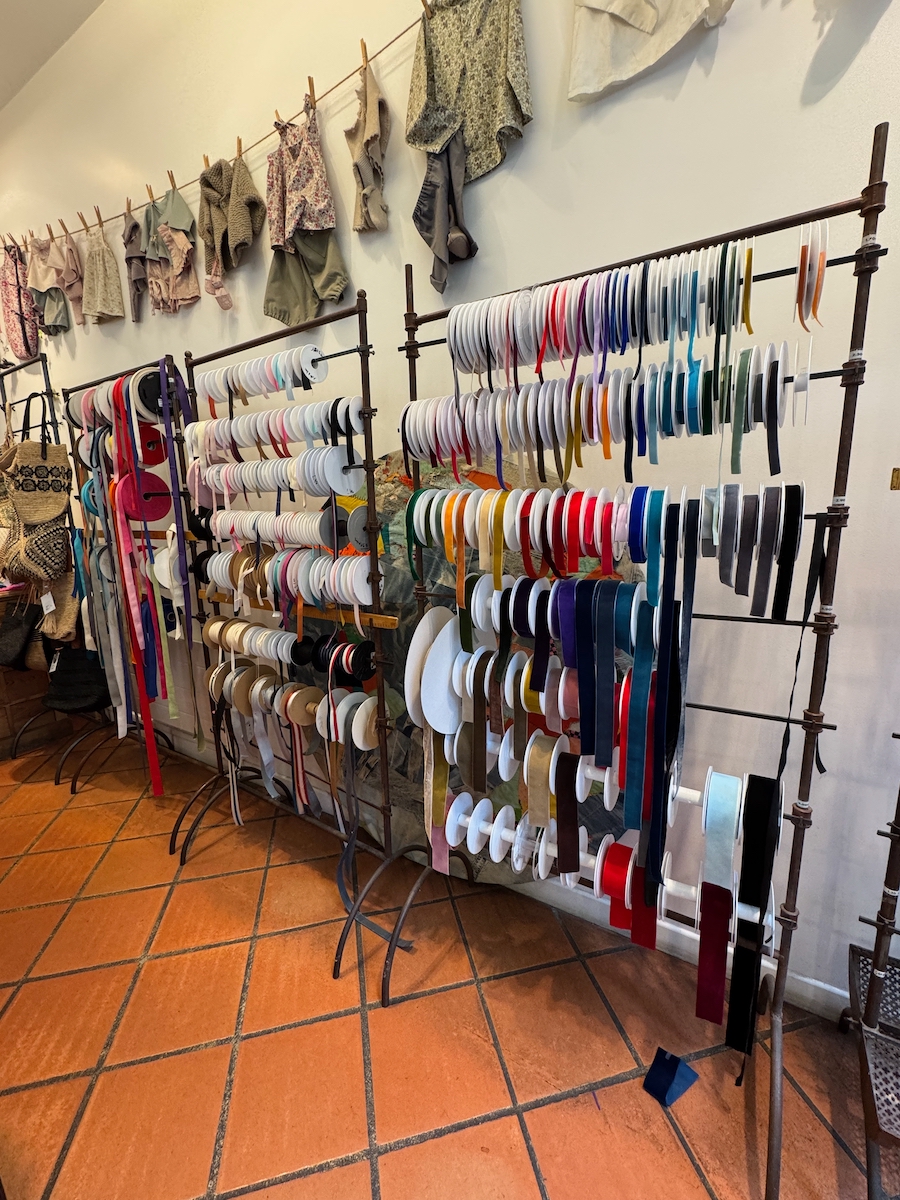
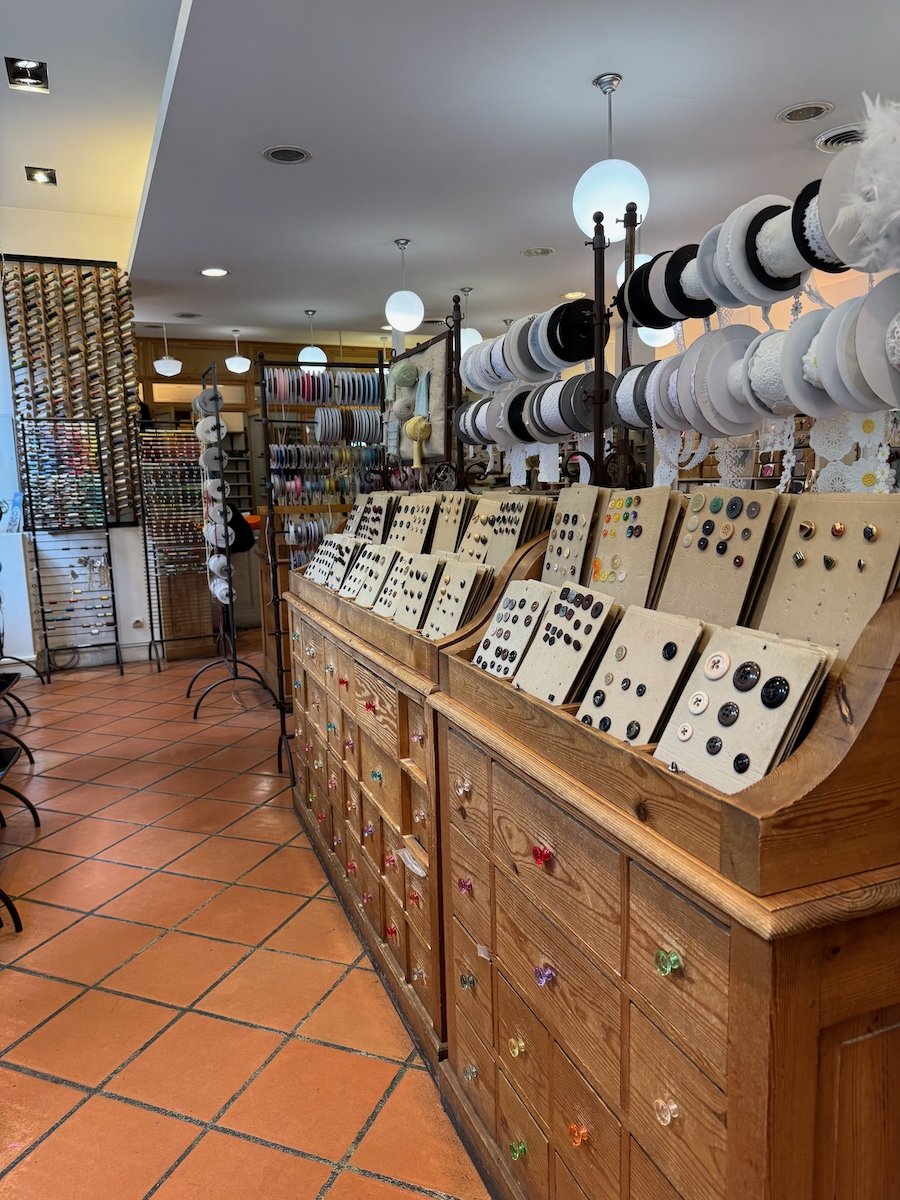
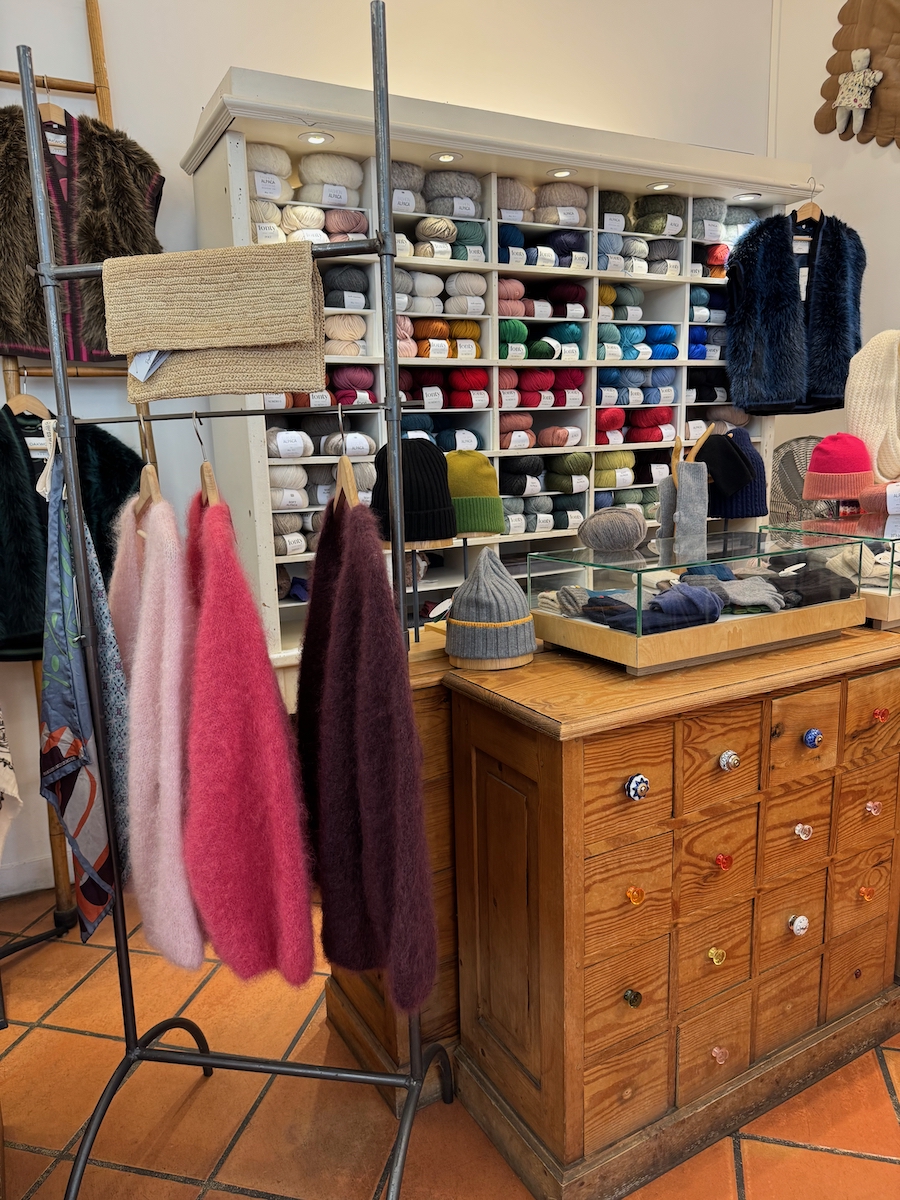
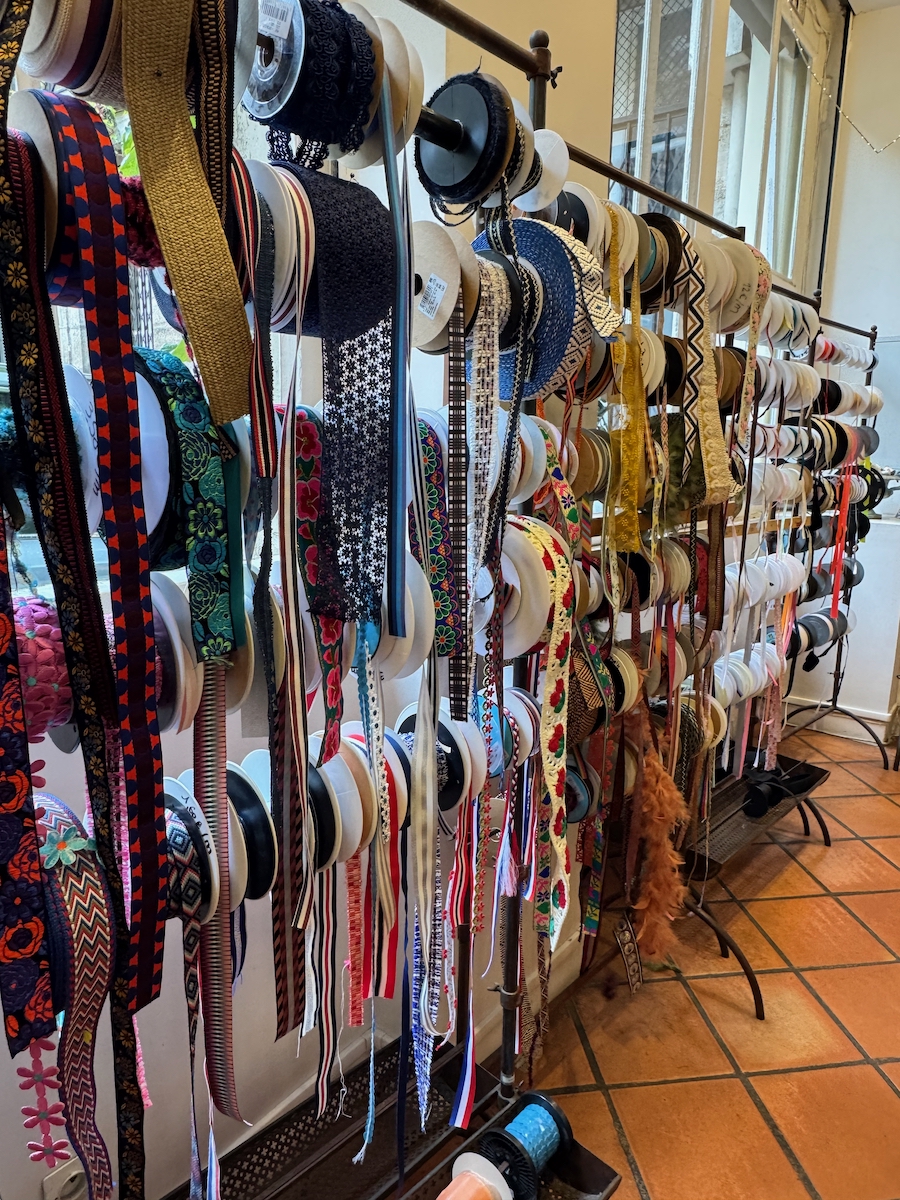
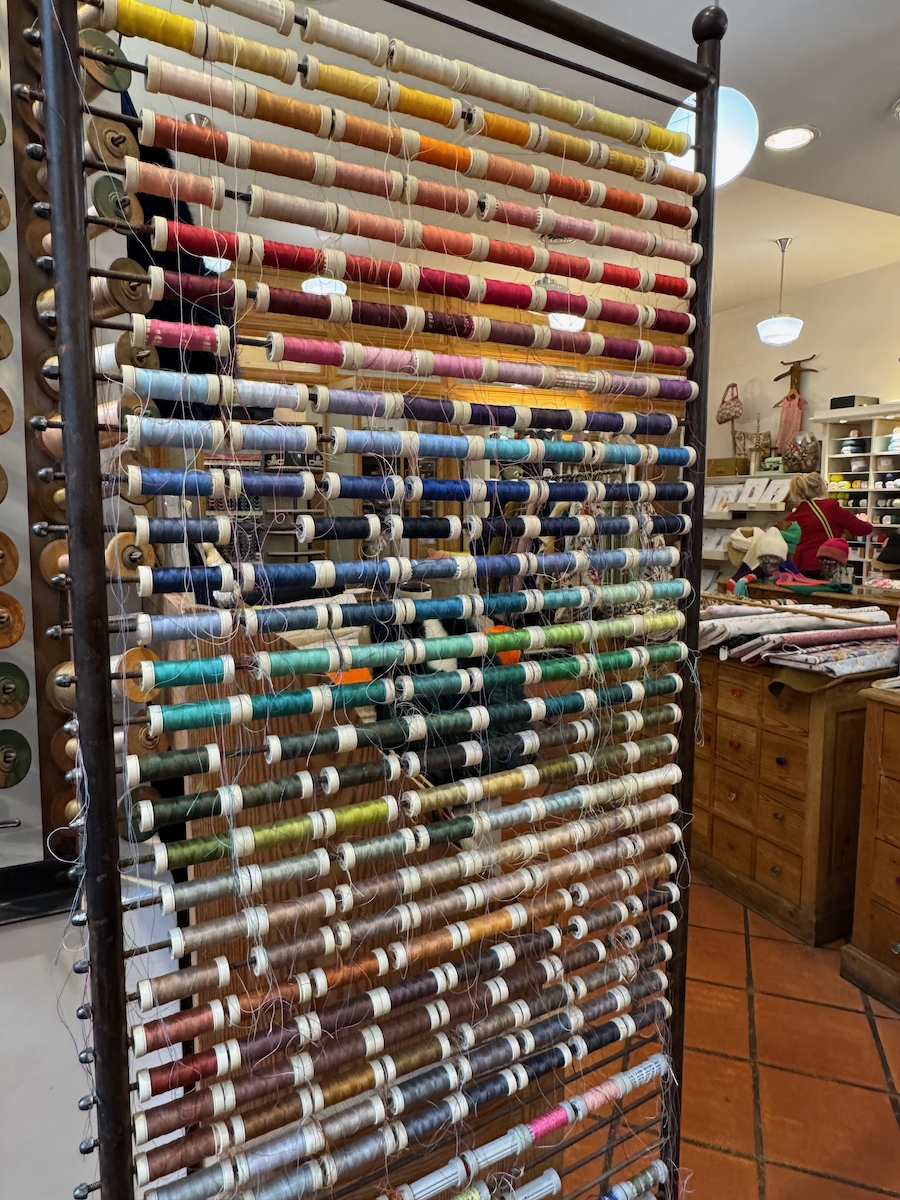
So much fun, so many ribbons. The last photo of threads on a rack is just for looks, she said. Real thread is….and she swung open a door to show all the threads. Tiny, but gorgeous. I purchased…white double-faced satin ribbon (again).

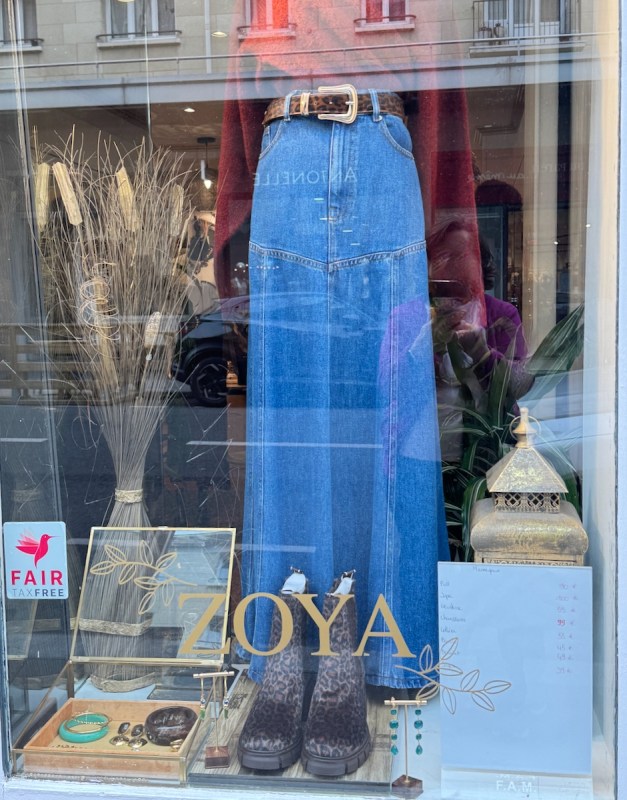
Part of being in a new place for a few days is noticing. Like this terrific jeans skirt.

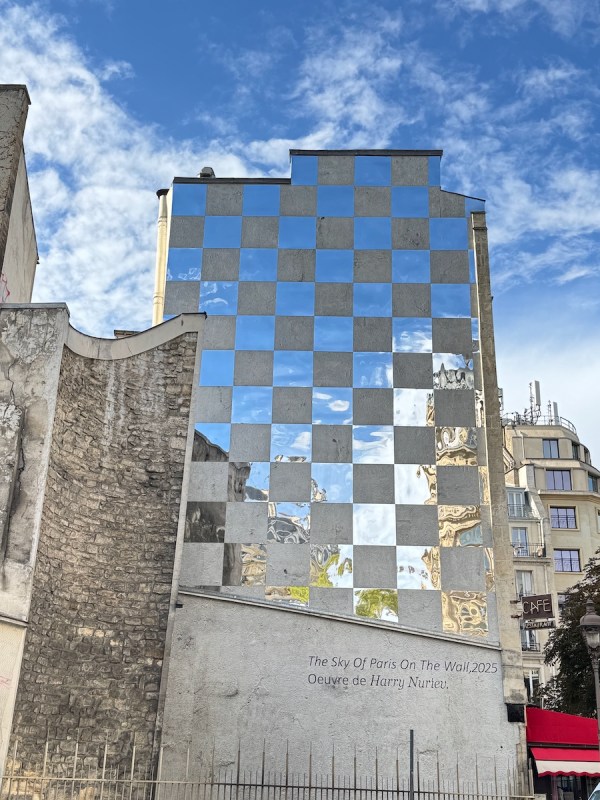
Or The Sky of Paris On The Wall, 2025. Round a corner and there’s some new…

…object to appreciate or to capture with your camera.

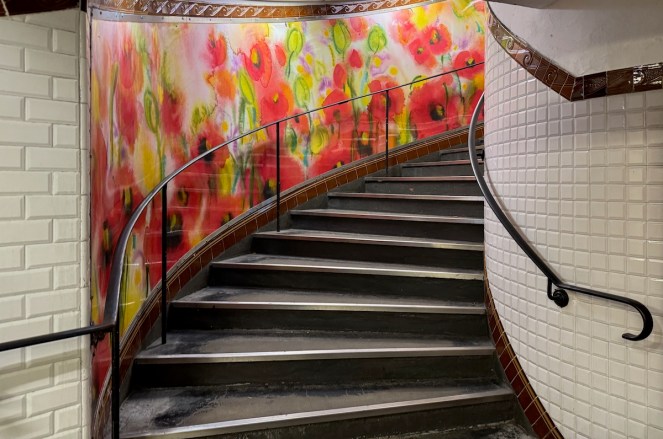
Metro stairs, Abbess Station

It does help to be in a new place, for all the little miracles in our neighborhoods have already been seen a thousand or more times…so we don’t see them anymore.

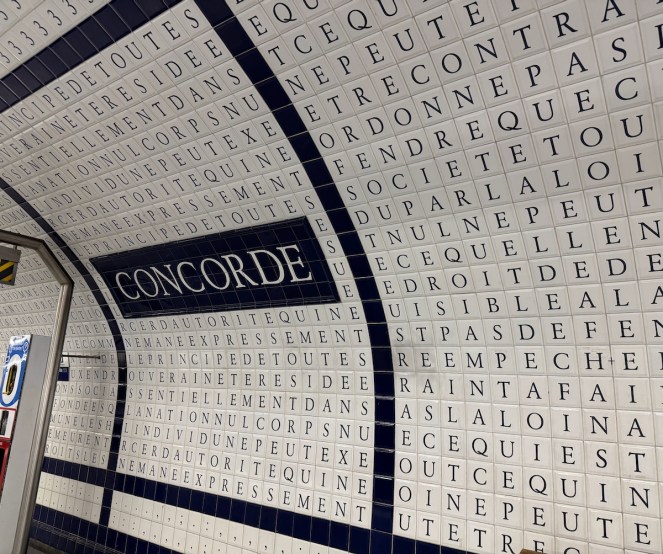
Concorde Metro Station wall. (Notice the punctuation at the bottom.)

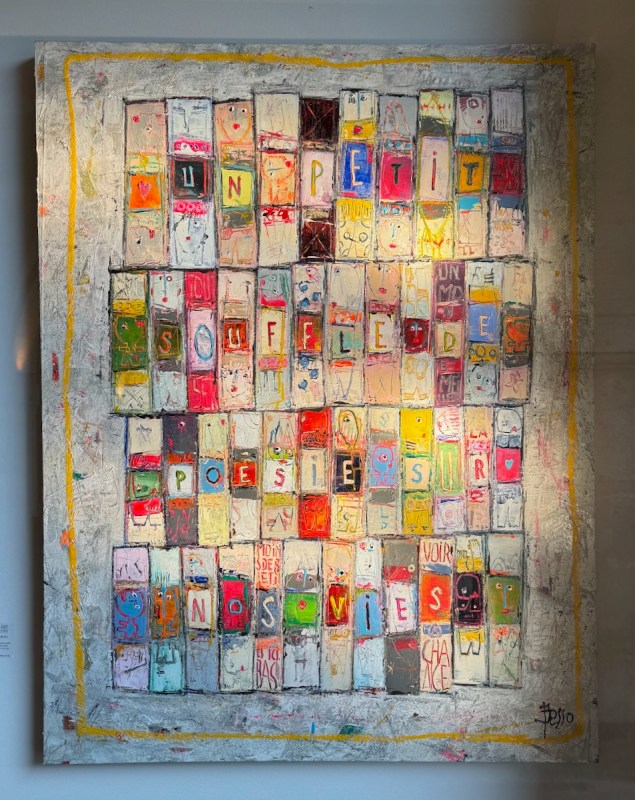
Rough translation: A little breath of poetry around our lives.

I might add that quilting is a little breath of poetry around our lives–

P.S. I’ll probably do another post about the Les Puces flea market and how to navigate that, but first:

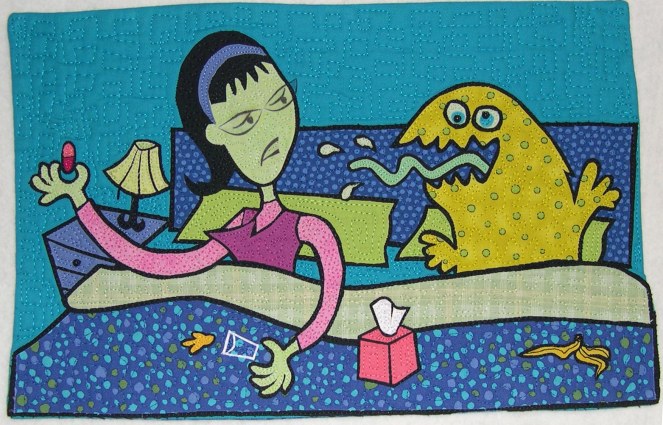
In Bed with a Bad Cold by Pam Rupert

I’ve been sick in bed with a bad cold, and memories of Paris.

And more fun upon returning: my computer has eaten about a third of my files (long story, you don’t want to know), but if you are using iCloud as a back-up for your Apple computer, don’t. Get yourself a hard drive and back it up that way. iCloud is just so all your devices can talk to each other, NOT a back-up. And to those who ask, yes, I had both and yes I’m still having problems, but according to Reddit, iCloud is the problem. But what do they know? What does anyone know?

(And I’ll probably remove this rant in the future, but for now, this is the state of my life!)

Something to Think About · Textiles & Fabric · Travels

When You Can’t Create You Can Work

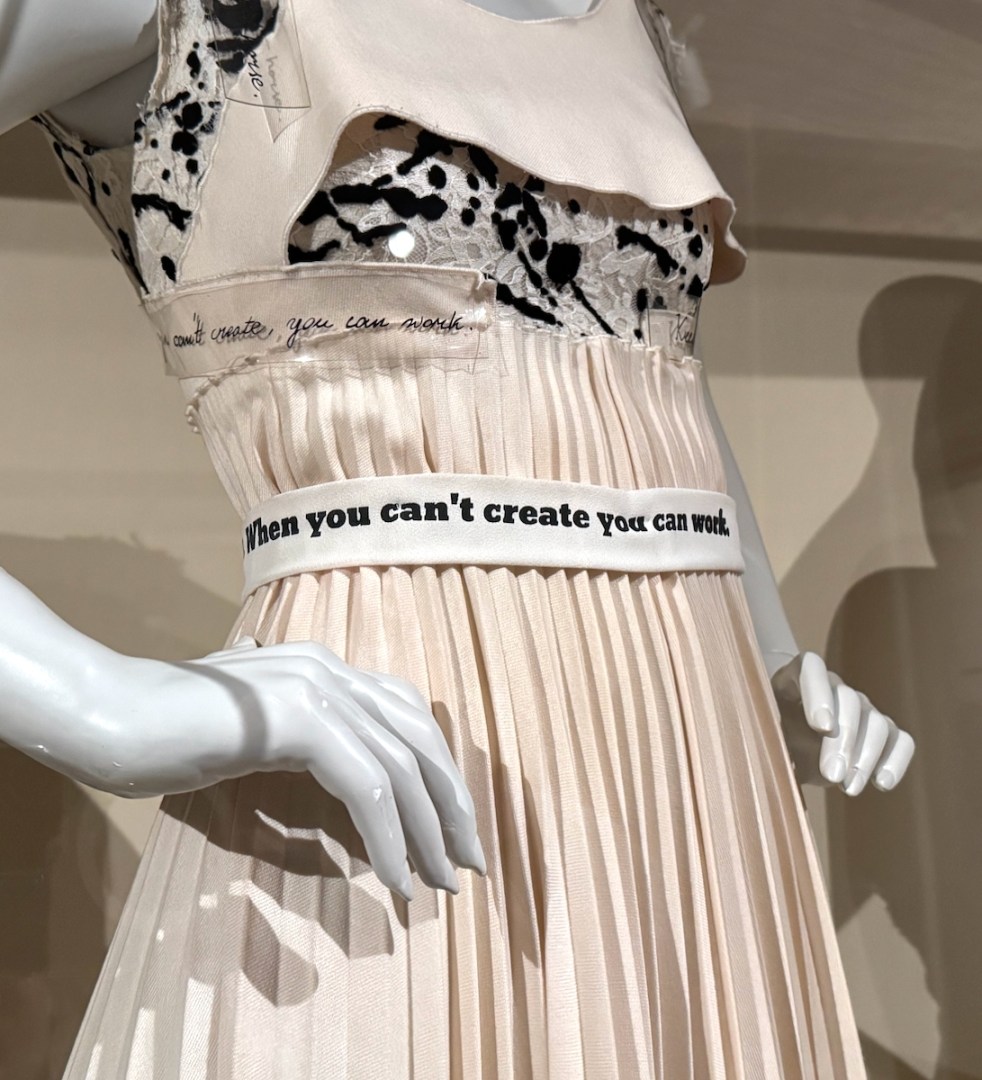
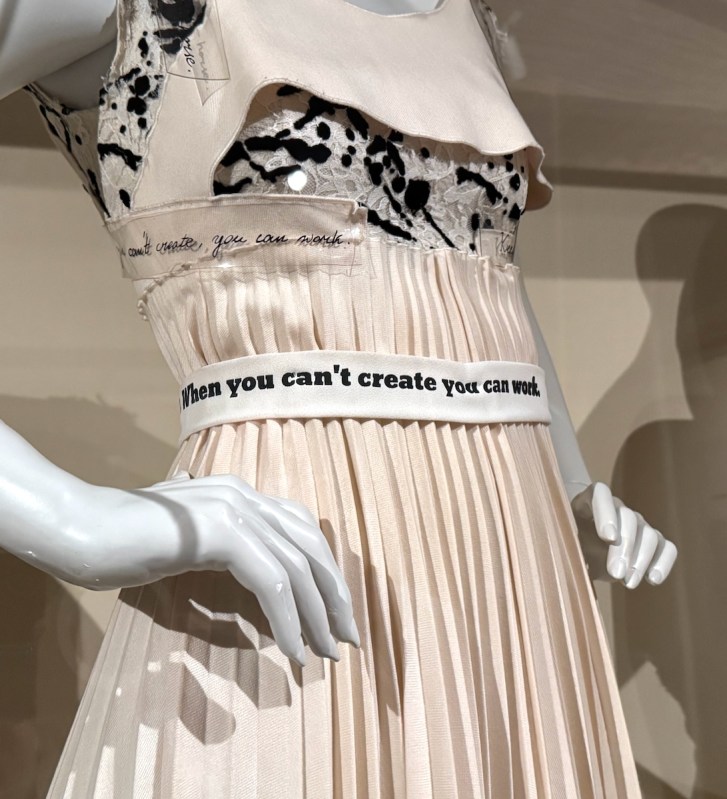
Henry Miller, a writer in the early part of the 20th century, devised a list of rules for himself when writing his first book (Black Spring). I found this whole idea while zipping through an exhibit in Kraków, where a designer tried to incorporate pieces of his so-called Eleven Commandments. One of them, “When you can’t create you can work,” was printed on ribbons and strips of whatever. Of course this phrase caught my eye, and I paused a nano-second to snap a photo then moved on. Tourists! (Look at the end of the post for Miller’s complete list.)

So it’s been that kind of a week, still snowed under by jet lag, I didn’t feel up to creating not one quilty idea. But I could work.

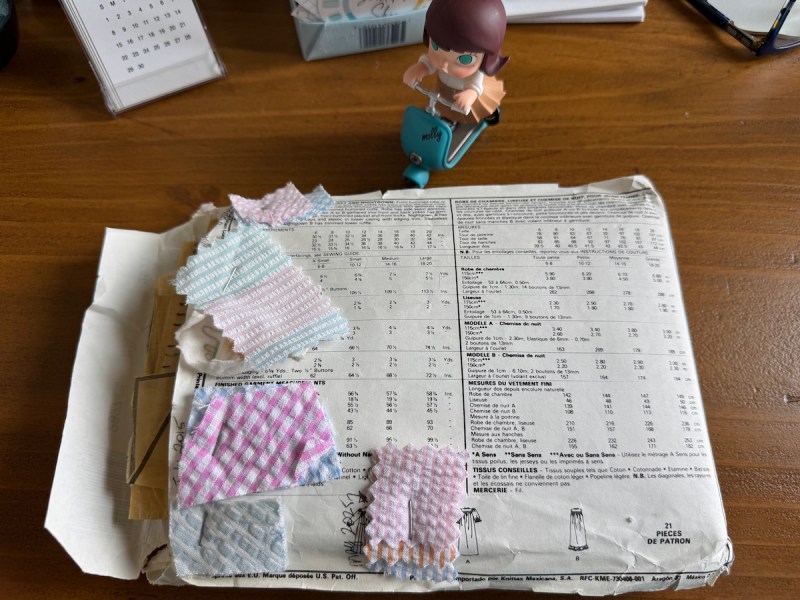
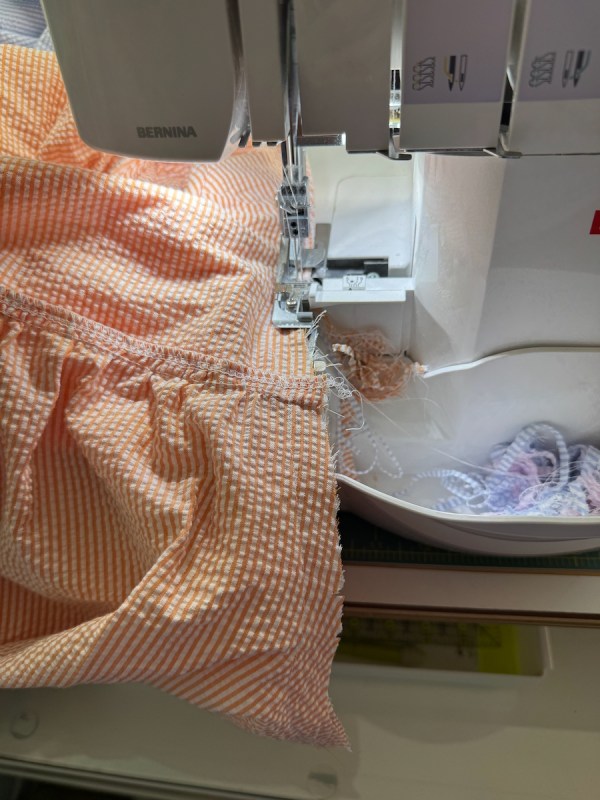
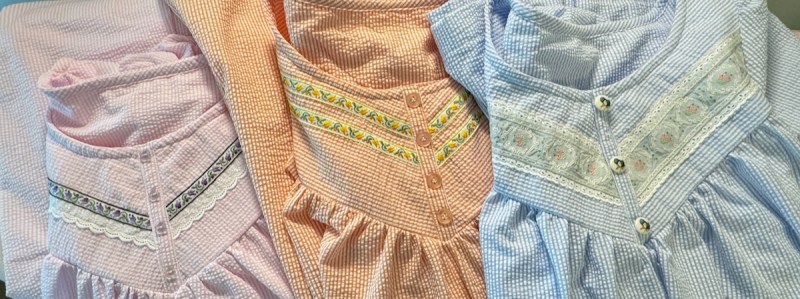
Our weather has started to turn to the hot, dry summer kind of weather, which means that the seersucker that I stashed back in October was going to have to get cut up into my summer nightgowns, using the same pattern that I’ve been using for half my life.

I usually only make two at a time, but this time went for three. I scavenged ribbons, which necessitated digging deep into the garage (more on that, later). The laces bordering the woven ribbon (pink/blue) were picked up on a trip to Austria, a millennia ago. The woven ribbons were purchased when I working at a local fabric store before I had my first child, and when they had wonderful local fabric stores.

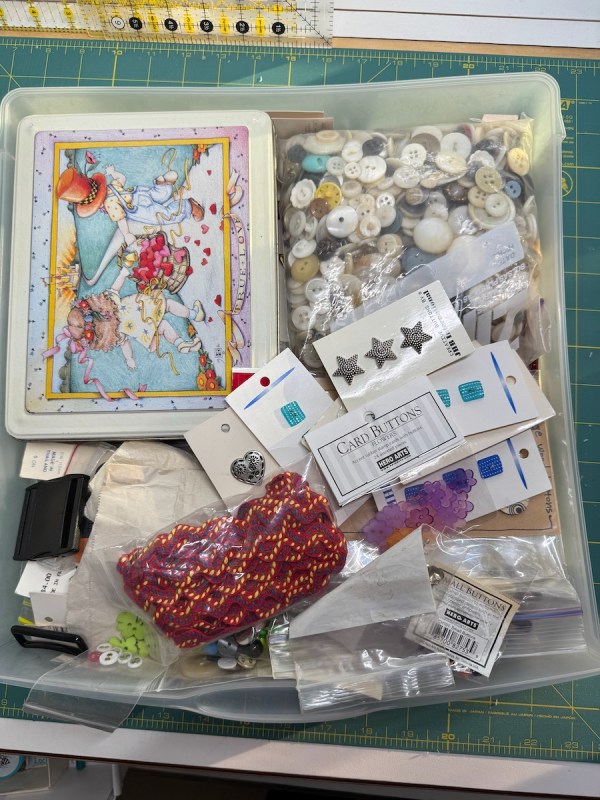
I’d given the Jemima Puddleduck buttons to my mother, which she gave back to me at some point. (Three for only one dollar??!!)

I found them in my button box, still wrapped in the tissue paper the shop lady in Britain had wrapped up for me. Before JoAnn’s closed, I would have felt guilty for stashing away all these treasures. Now I feel sort of proud of myself. We quilters are funny people.

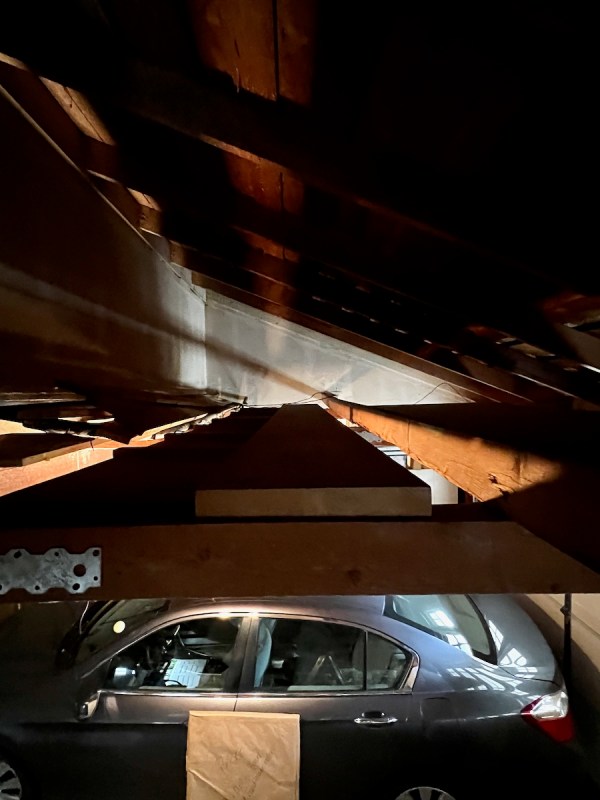
Last time she was here, my daughter said, “Mom, you need to clean out.” Implied was the rest of the sentence: “Clean out before you die so I don’t have to.” Message received; rafters cleared. Working on the rest…later.

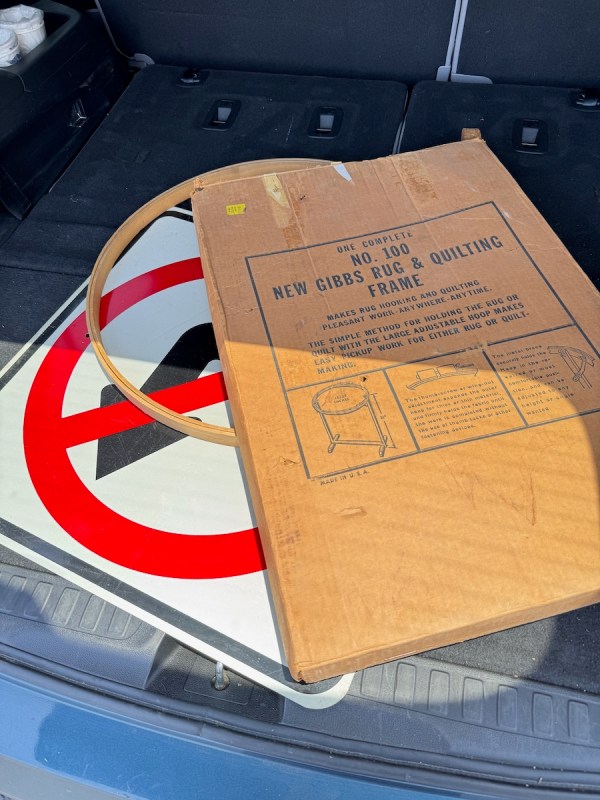
This standing quilt hoop was a heart breaker to leave at the thrift store. The boy taking this treasure from my husband turned it upside, and one side of the stand fell out onto the floor. He kicked it to the side and dumped the rest into the bin. (Perhaps it’s best if we don’t watch what happens to our treasures.)

Sick and tired of podcasts and newscasts, and realizing my stubborn jetlag was still with me — which answers the question about why it took me soooo long to make the nightgowns — I started listening to a new book, recommended by my sister. So far, so good. I will say that I have gotten things put away from the trip, but so much else needs to be dealt with, primarily the emails. Thank you for your lovely notes on the Kraków churches!

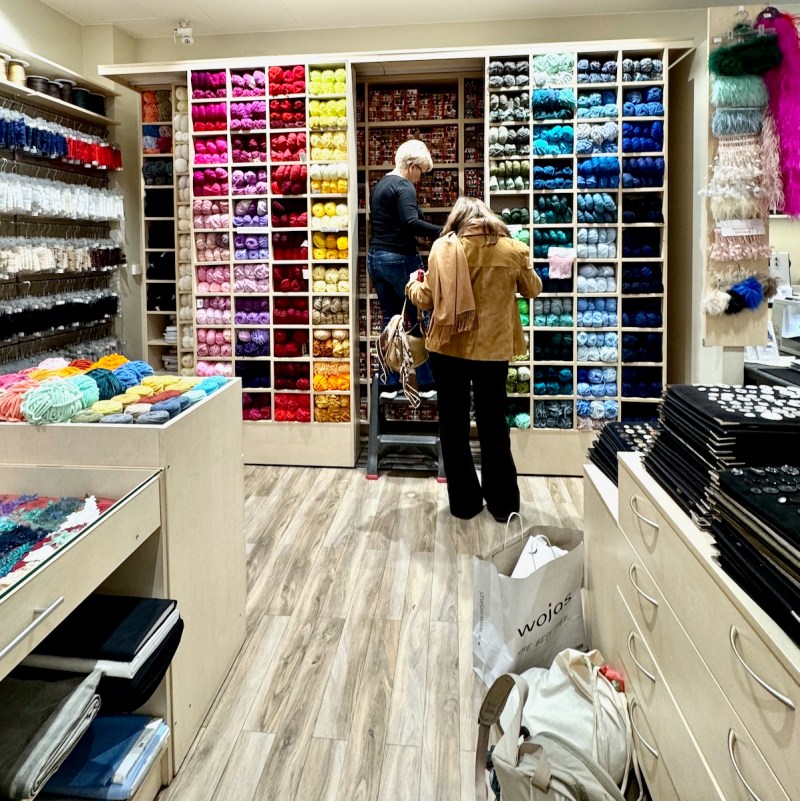
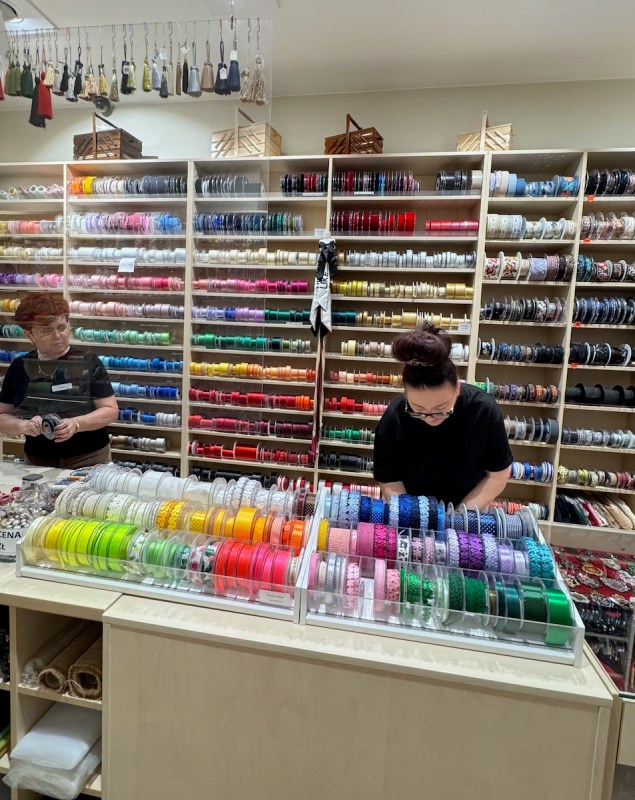
I could have used this Pasmanteria (the word for this kind of a store in Czechia) when I was hunting buttons and trim for the nightgowns. Yes, I found a fabric/notions store while traveling! I purchased the usual: two thimbles.

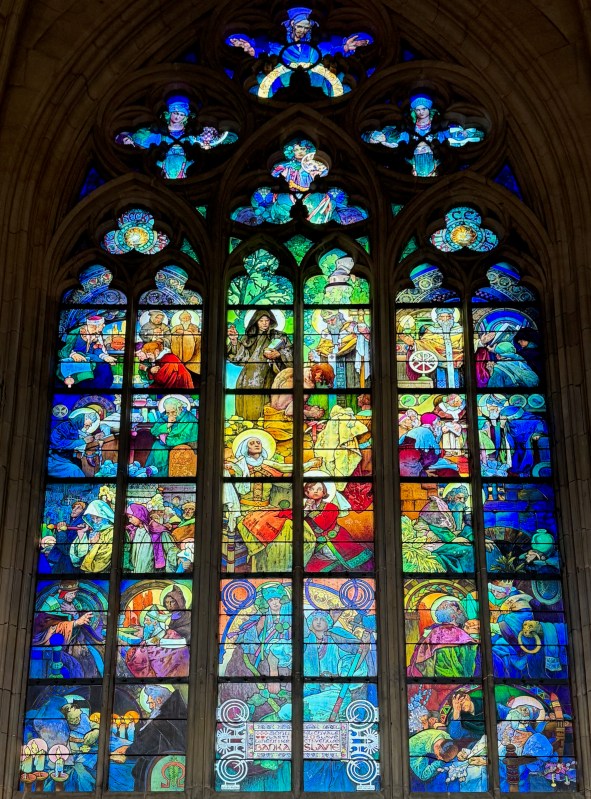
Alphonse Mucha window, St. Vitus Cathedral

I’ll leave you with this two glorious stained glass windows from the St. Vitus Cathedral in Prague, along with (below) this tiny wrought iron work of a woman spinning thread into cloth, from one of the chapel gates:

Happy Working, if not Creating–

Here are the ELEVEN COMMANDMENTS, if you are interested:

  1. Work on one thing at a time until finished.
  2. Start no more new books, add no more new material to ‘Black Spring.’
  3. Don’t be nervous. Work calmly, joyously, recklessly on whatever is in hand.
  4. Work according to Program and not according to mood. Stop at the appointed time!
  5. When you can’t create you can work.
  6. Cement a little every day, rather than add new fertilizers.
  7. Keep human! See people, go places, drink if you feel like it.
  8. Don’t be a draught-horse! Work with pleasure only.
  9. Discard the Program when you feel like it—but go back to it next day. Concentrate. Narrow down. Exclude.
  10. Forget the books you want to write. Think only of the book you are writing.
  11. Write first and always. Painting, music, friends, cinema, all these come afterwards.

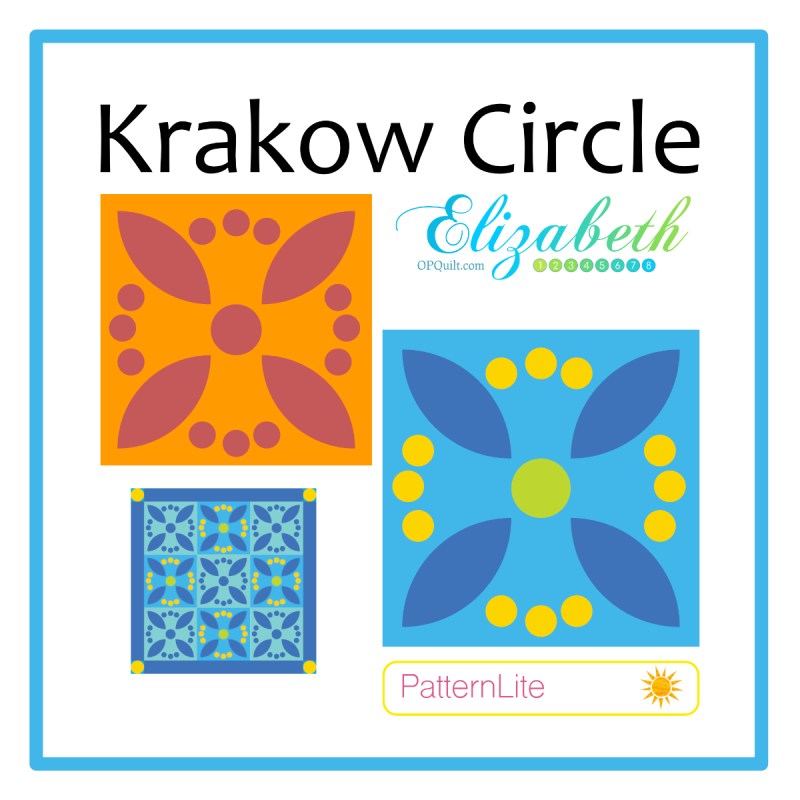
This little PatternLite pattern is a reminder of what we see when we get out of our own town.

You can find it in my Quilt Shop, on PayHip. Enjoy!

Patterns by Elizabeth of OPQuilt · Something to Think About · Travels

Quilting and the Churches of Kraków

Traveling is a blitz on the senses, a clearing of the mind, and making connections that are new or novel. I’m always making quilting connections when I travel, I suppose you are too: new patterns, repetitive designs that could be a quilt are not uncommon on our Instagram feeds or in quilt shows.

If you are new here — and welcome — I often take a small diversion from the *making* to the ideas that propel our quilts. This is one of those posts, and it centers around the creativity shown by a group of Polish parishes during the Communist years in this country. And actually, they are all over the country of Poland, not just in Kraków.
Screenshot of Instagram post

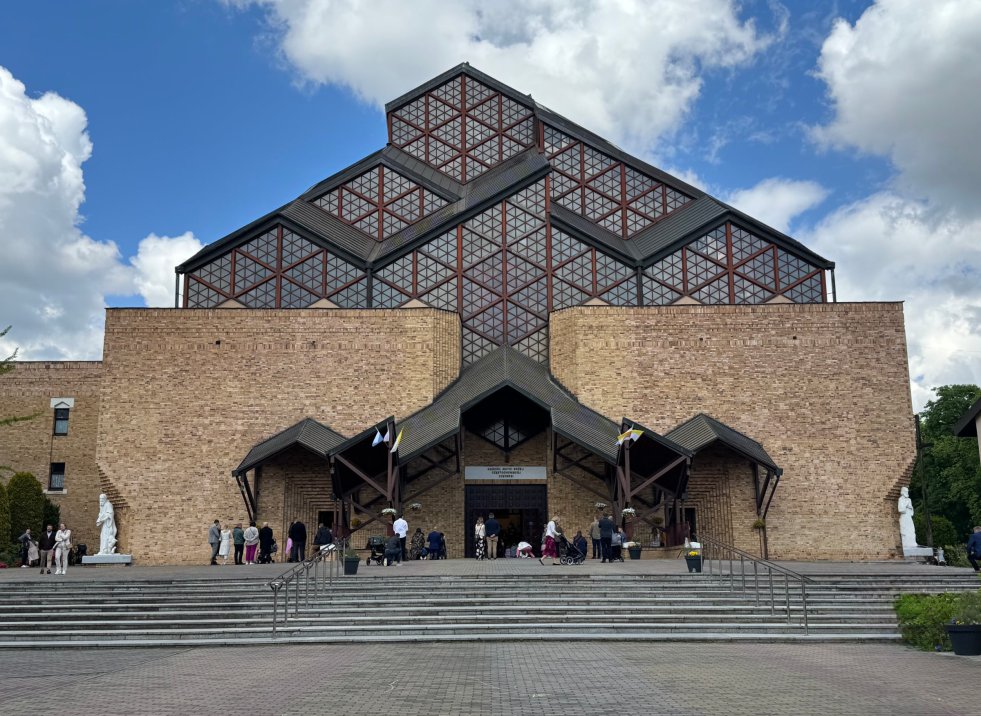
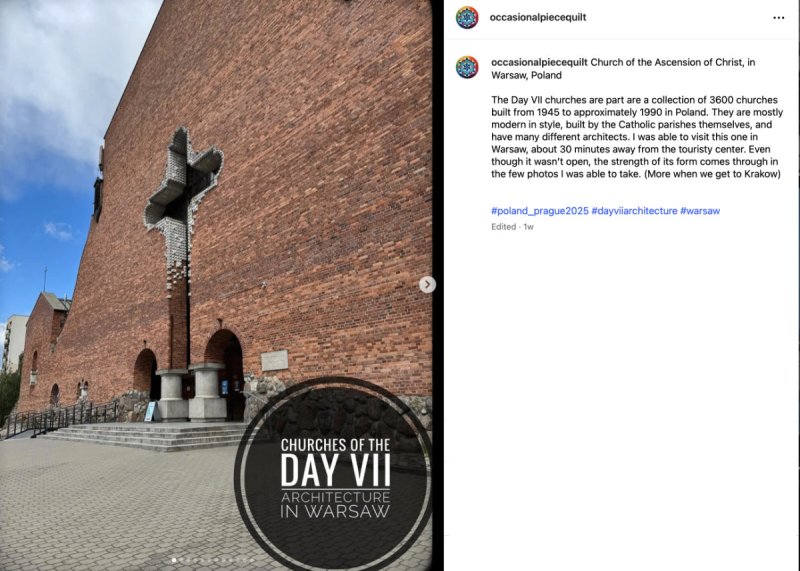
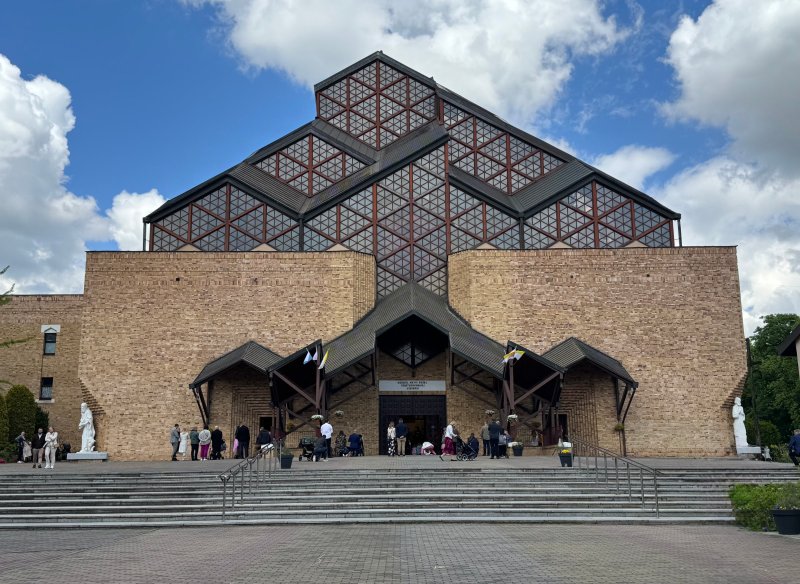
I wrote about the church in Warsaw, our first one to see, and believe me — now that I am home — I vow that if I ever go back to that lovely country my husband and I will rent a car and go see more. They are so different that the usual gothic and decorative churches that we tourists usually go to. (I do like some of these and will show a couple more in this post.) I first found out about what’s known as the Day-VII Churches during the usual pre-trip fatigue: searching for what to see in a given city, I typed in “churches in Kraków” and saw a photo of this church:

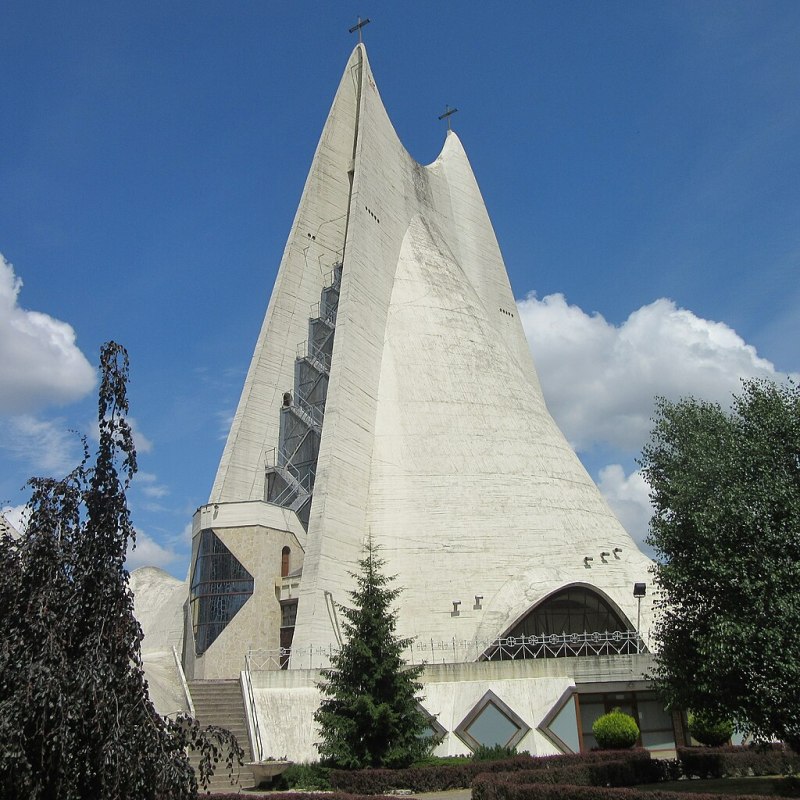
Our Lady of Częstochowa Parish, Kraków – Poland

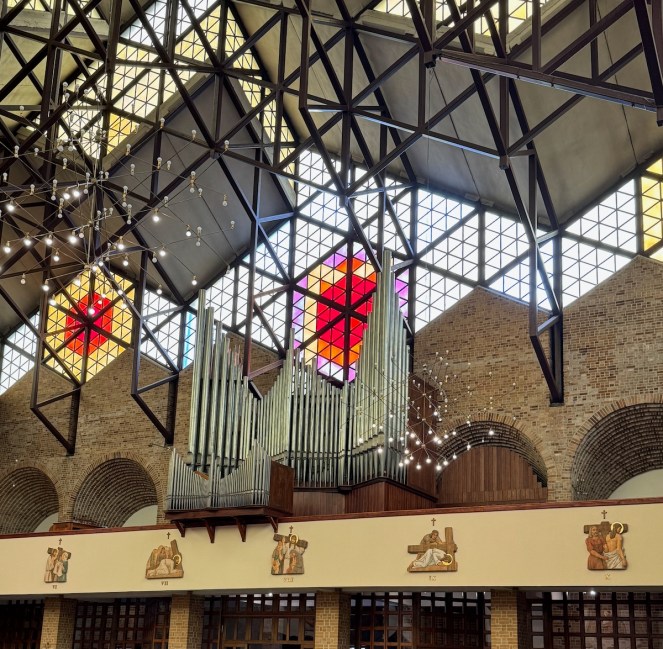
Whoa. All those triangles, the different angles, the airiness — some architect had been incredibly creative in making this. I found out that there were about 3600 churches with similar heritage. The man who hunted down and gathered all these — Kuba Snopek — also worked with Izabela Cichońska and Karolina Popera; together they compiled a catalogue, which I ordered and read. I watched his Powerpoint presentation. I hunted and searched and read and soon realized that I was limited by my time in Poland and had to choose what we would go see. Sometimes there was information and in English, and other times there was not.

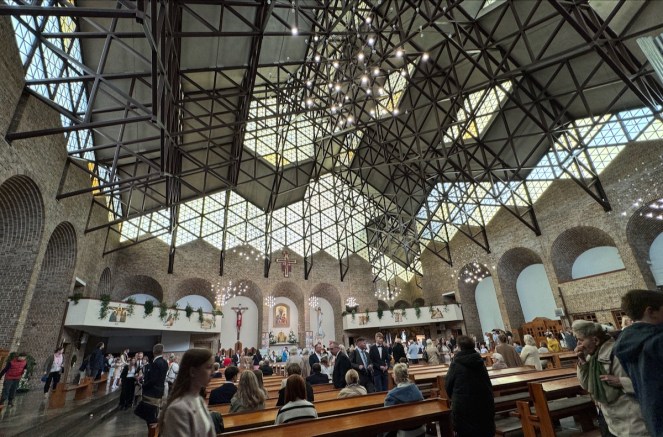
Interior, Our Lady of Częstochowa (Some video of the interior)

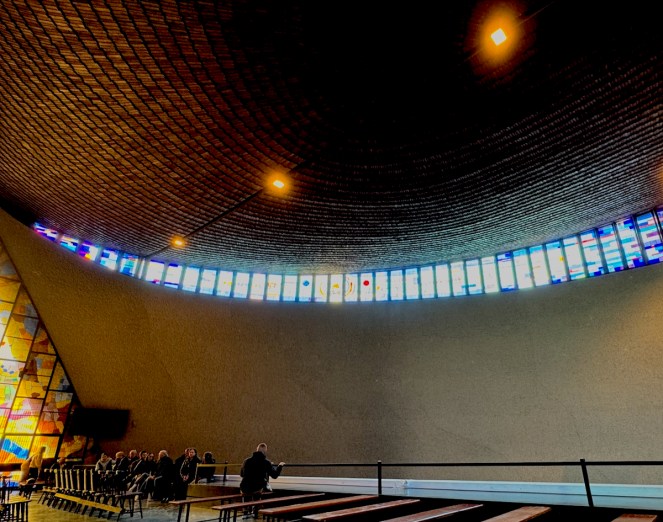
A lot of these churches were impacted by the changes of Vatican II. In reading about this preciously unknown subject, I learned a lot about how the desire to have the priests more in front of the congregation and to include the participants in the worship experience, changed how the architects designed the churches. Communication with the Vatican was spotty, at best, during the early years after the war, so some parishes/architects turned to the ideas found in theater construction; broad expanses became more common instead of the more traditional narrow nave and side aisles.

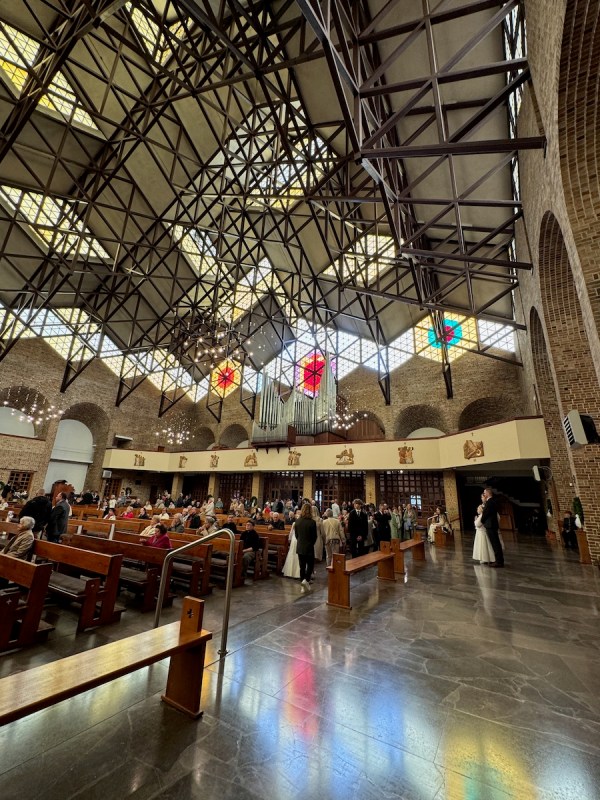
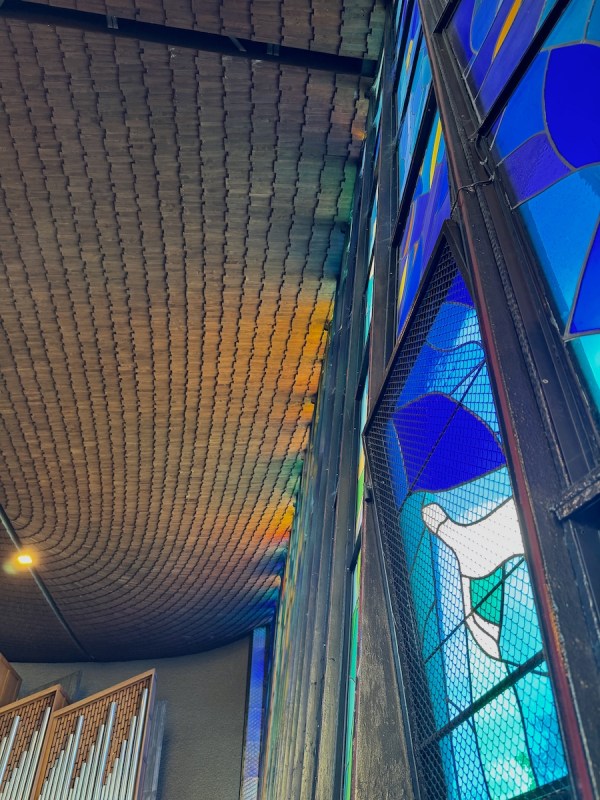
(looking toward the rear of church, with hexagon windows)

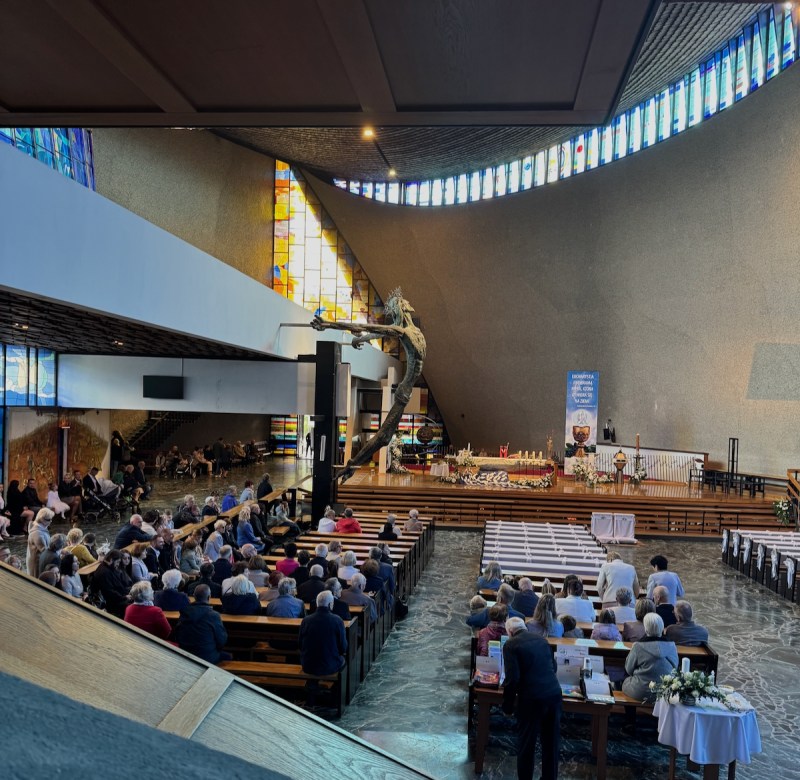
While we did go to these on a Sunday, we worked to not take photos during their services, with only a couple of exceptions. However, there were many photographers around that day, as it was a celebration of First Communion for a whole group of young people, and the joy and celebration was palpable and only added to the experience we had.

(zoom-in of hexies and organ)

Often when I see a new quilt design, I’m asking How did they do that? Why are the colors distributed that way? Why were those colors used? and finally, Can I replicate this?

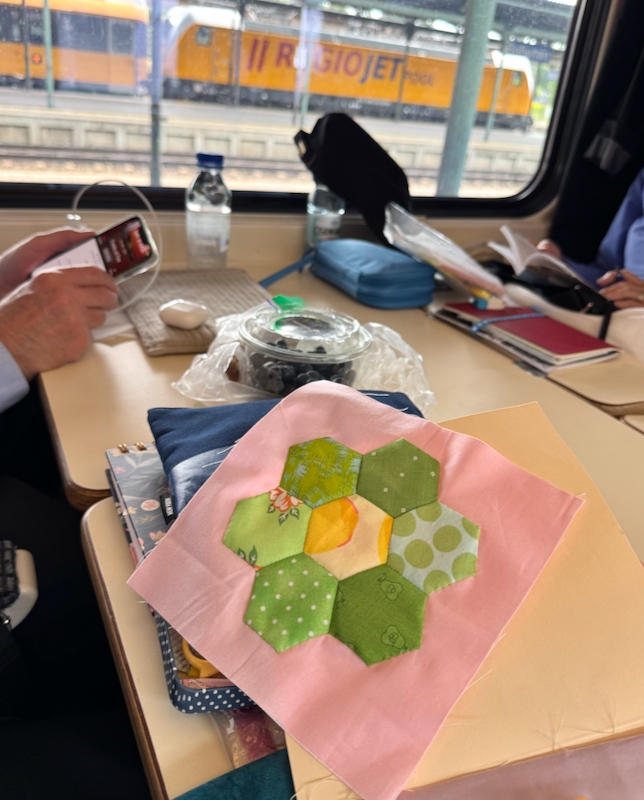
I was already working on hexies on our train and airplane rides, so I was familiar with this element, certainly.
But what prompted the architect to insert them where they were? Was the lack of materials the reason for subdividing all those larger triangle windows? I knew that many of these churches were made from whatever was available, and sometimes the parishioners themselves were working at night by the lights of car headlights, using their own small concrete mixers to help pour the larger structural elements.
from here. This church has a nickname of the White Batman, which we did not get to see. Be sure to link over to see the construction photos, all very rudimentary, with lots of scaffolding since there were no cranes (which couldn’t be obtained at that time).

Do we arrange designs by the amount of fabric we have? All.The.Time. I found myself thinking about the nature of making, of design. Do our construction techniques vary according to the design we have in mind? Yes.

However, mostly I was in awe.

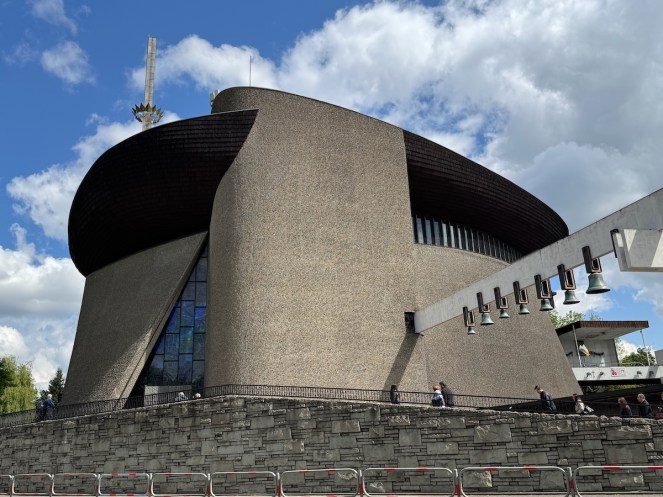
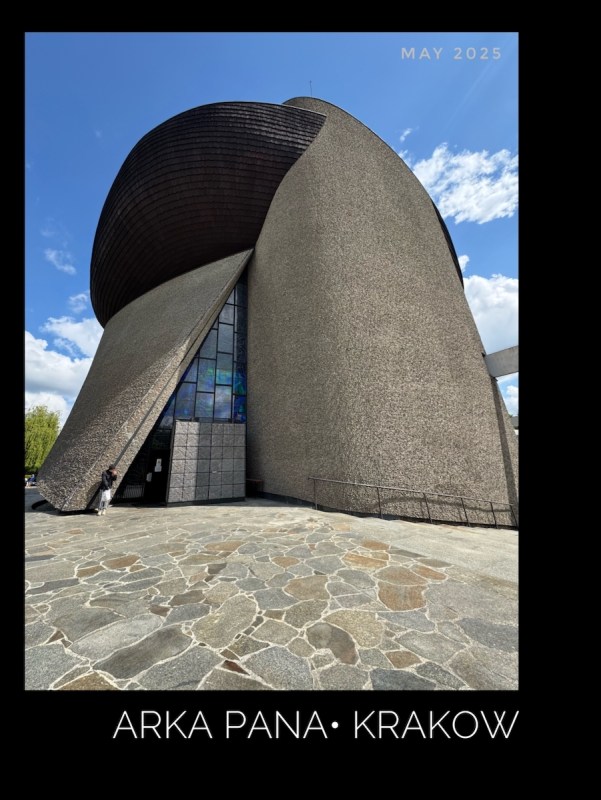
Another church, close by, was built in a giant housing project, nestled beside buildings, as were many churches. Imposing in stature, they nonetheless adapted to the area they were in.

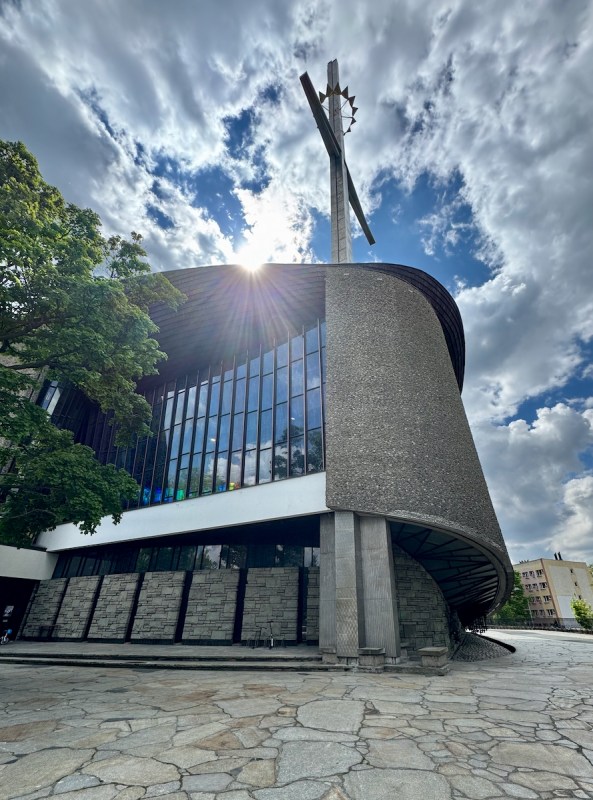
The entry is behind that square stone wall. We arrived about 10 minutes before their services started. I had done my research, but somehow open hours were hard to find, but I knew from my own experience that Sunday was probably a good day to visit a church.

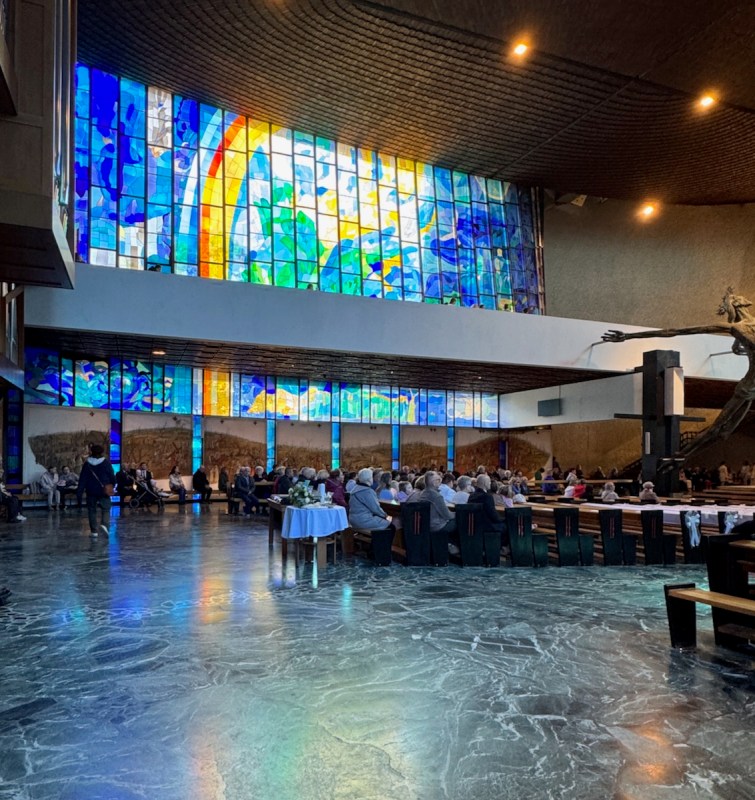
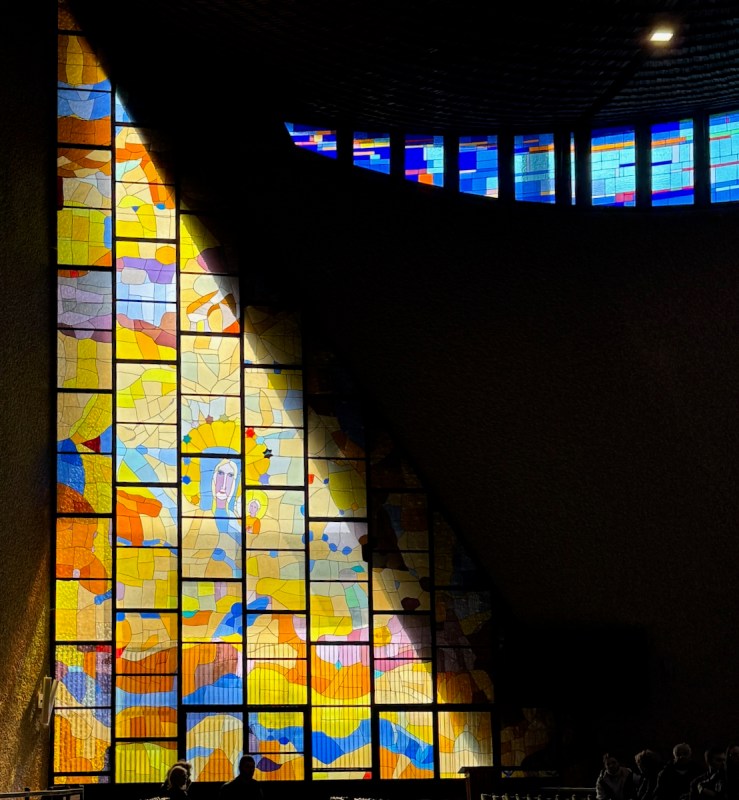
The full name of this church is Church of Our Lady Queen of Poland, Kraków, but they call it Arka Pana, and it is in the Nowa Huta section of the city. The outside is clad in small rocks, and St. John Paul II, who had been given a moon rock, donated it to the church (although I think it is not embedded in this concrete).

(upper balcony) We left just as the service started, and went outside:

I wrote this on Instagram:
Our Lady Queen of Poland Church, also known as Arka Pana, is in Kraków, Poland and is one of the Day-VII churches. They are a group of churches built from 1945 to approximately 1990 in Poland, and they are mostly modern in style, built by the Catholic parishes themselves, with different architects. This church was about 30 minutes away from the touristy center, and we walked through a huge Communist housing block to reach the church. It was well worth the effort. We snapped a few shots before Mass began, and only after seeing all the rest of the congregation snapping photos (it was First Communion Day) did we sneak a few more. We then slipped outside to admire this church, reminiscent of Le Corbusier’s Notre Dame du Haut in France.

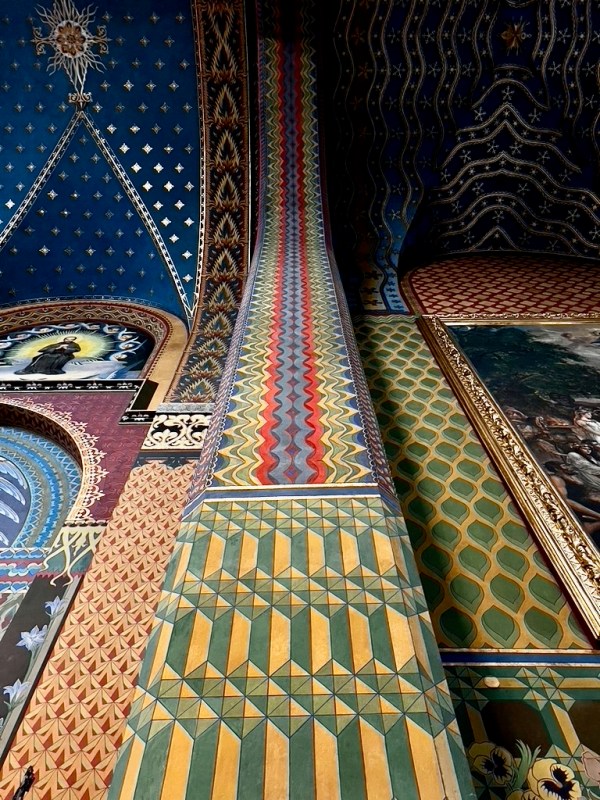
Now for the more traditional inspiration, the Basilica of St. Francis of Assisi. It’s more modern –haha– as compared to some of the other churches in the area. I learned that:

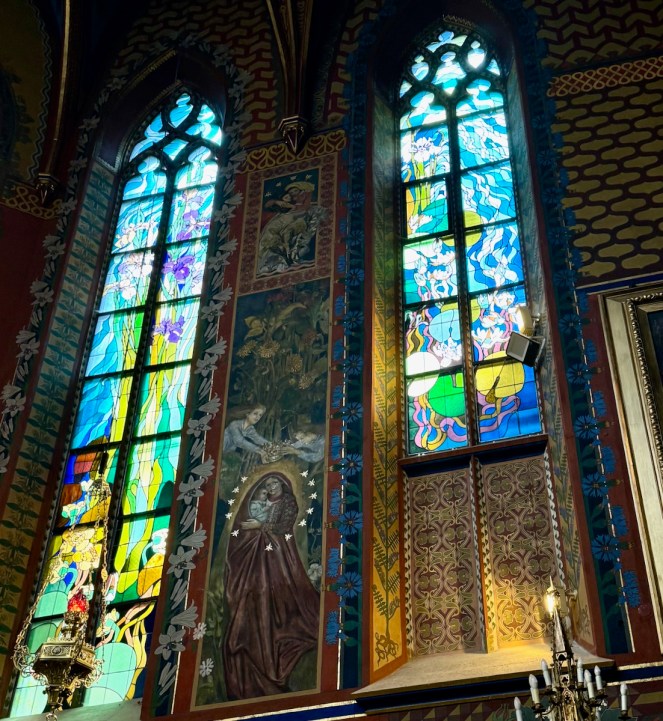
It’s that design by Wyspiański which engaged me:

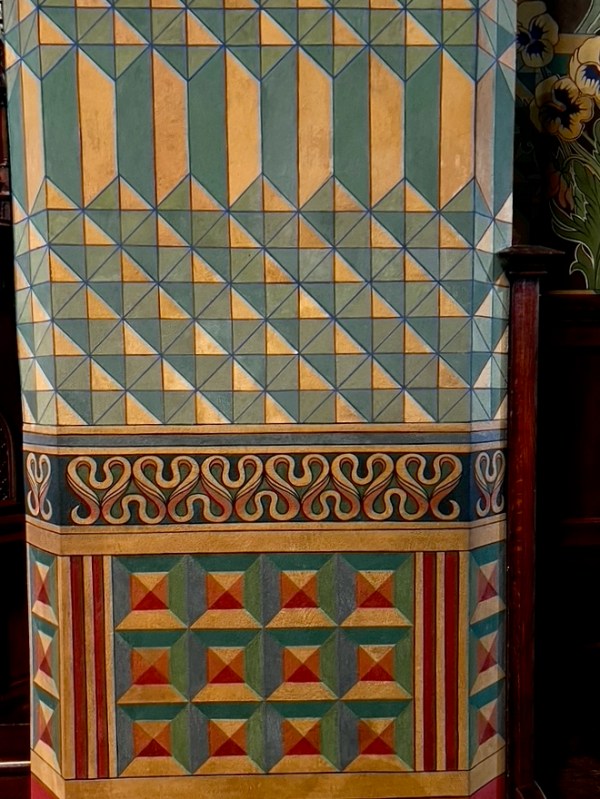
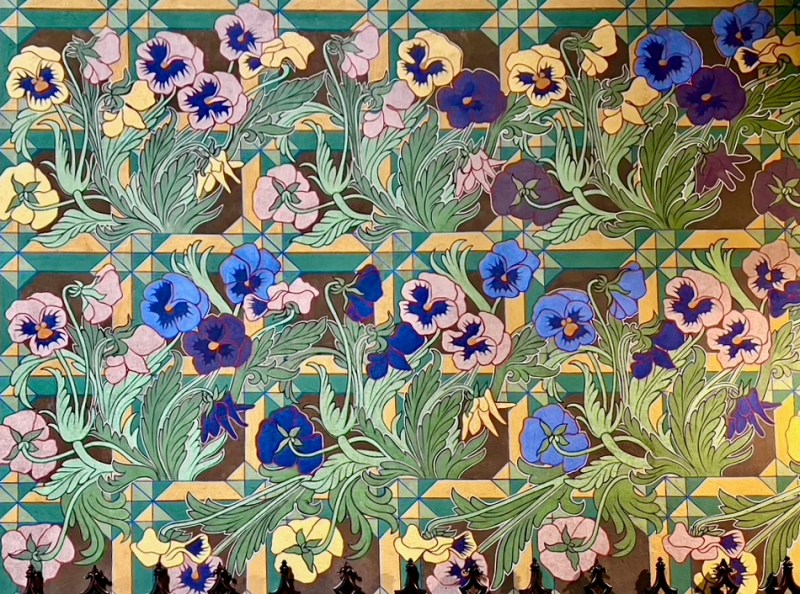
Parts of these images remind me of the economy blocks I’m currently working on.

It’s not exactly the same, but a suggestion.

Yep. I collected pattern and image and ideas and great ideas to fold into quilts in the next little while.

a Wyspiański window; I loved all his wall paintings of flowers!

Our trip tag on Instagram is #poland_prague2025 if you want to see more of our trip.

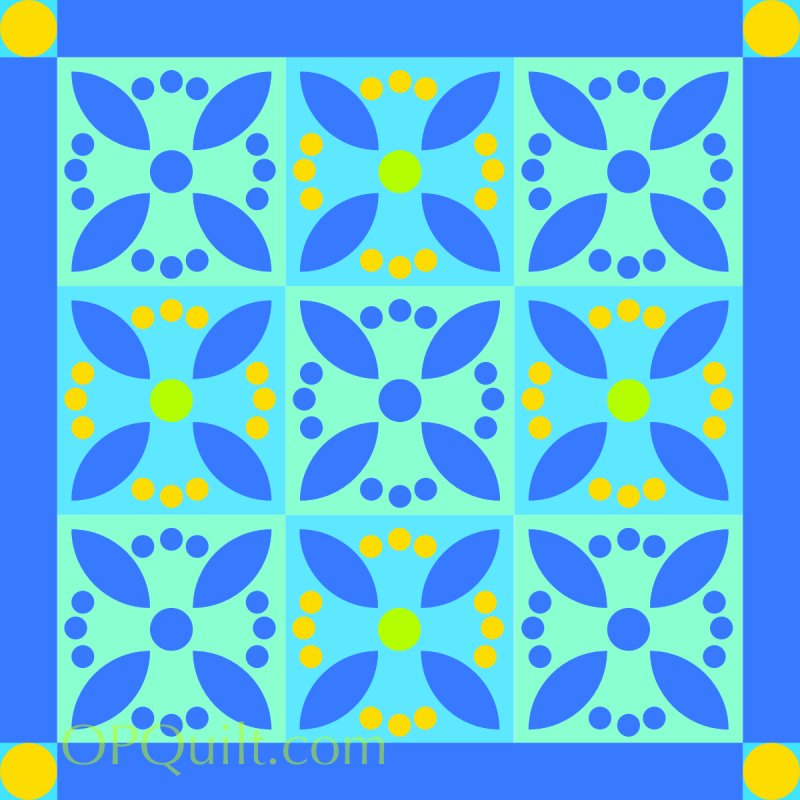
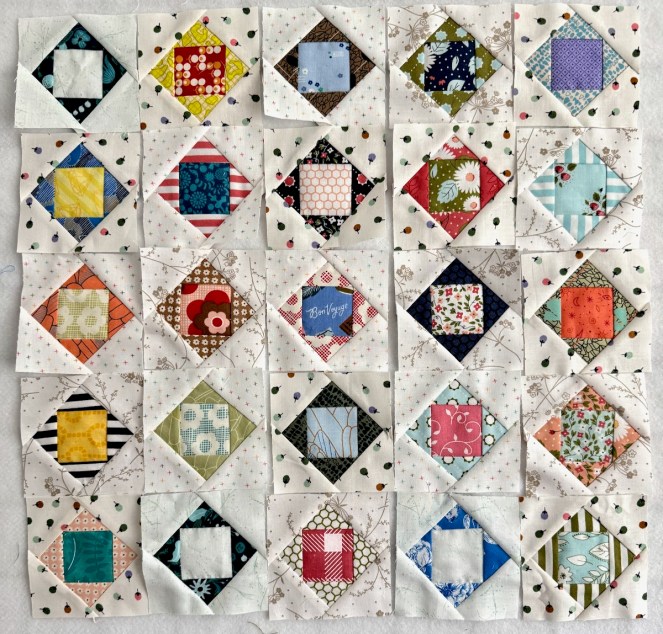
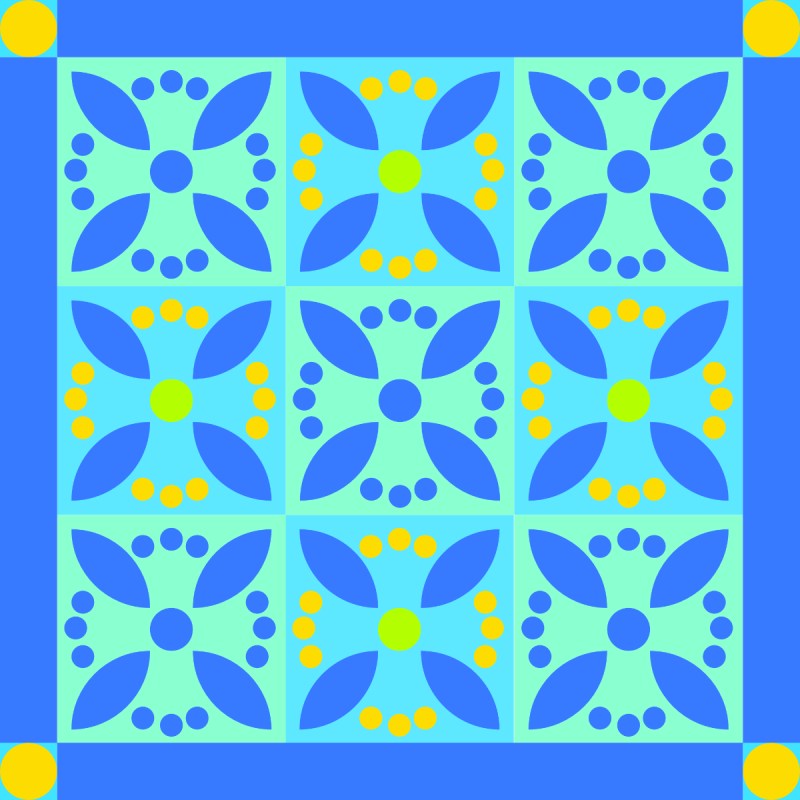
And because you’ve been so patient in exploring these ideas, I worked up a small idea from the blocks in St. Mary’s Basilica. Below is an illustration of the pattern and a mock-up of colors. Link to quilt pattern is here.

Obviously, I drew color inspiration from the windows of Arka Pana and Stanisław Wyspiański!

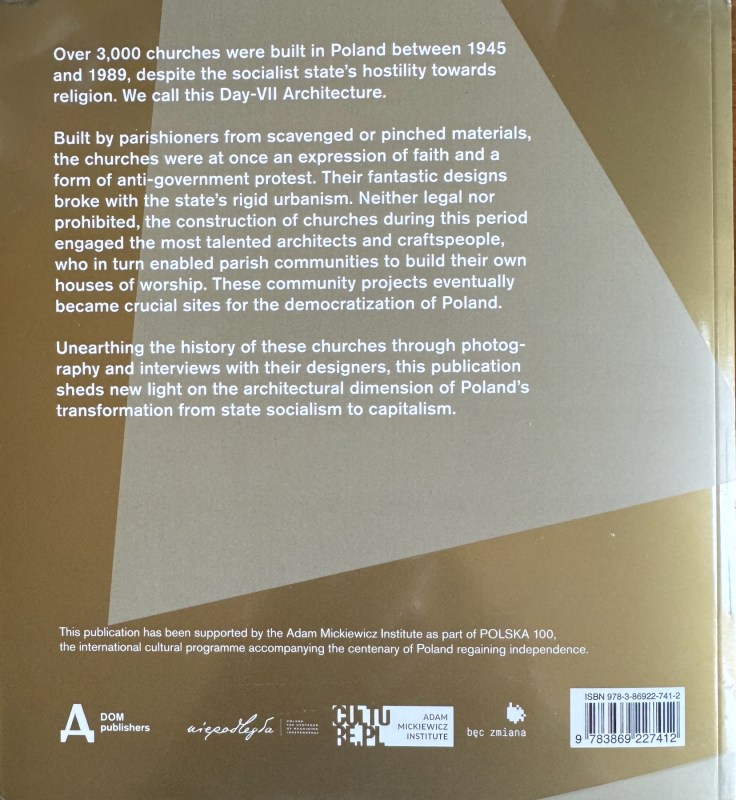
(back of catalogue)

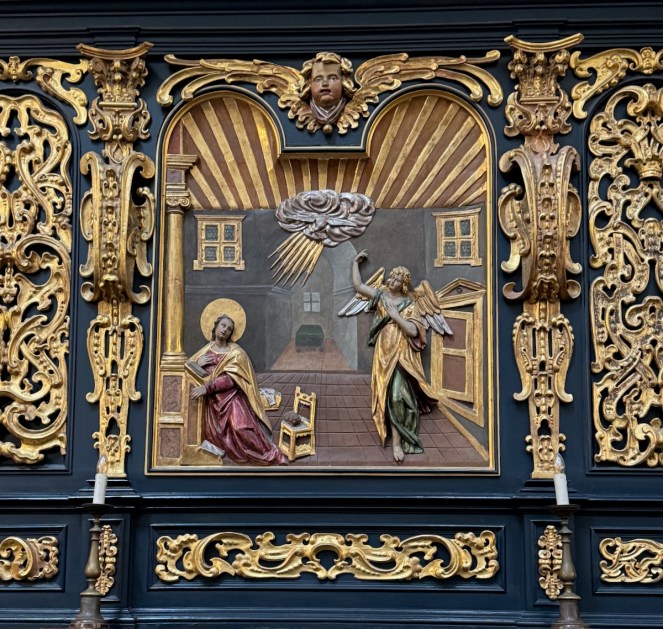
Also from the Basilica of St. Mary in Kraków’s main square. I love seeing depictions of the Annunciation.