Books · Quilts

Polaroid Blocks

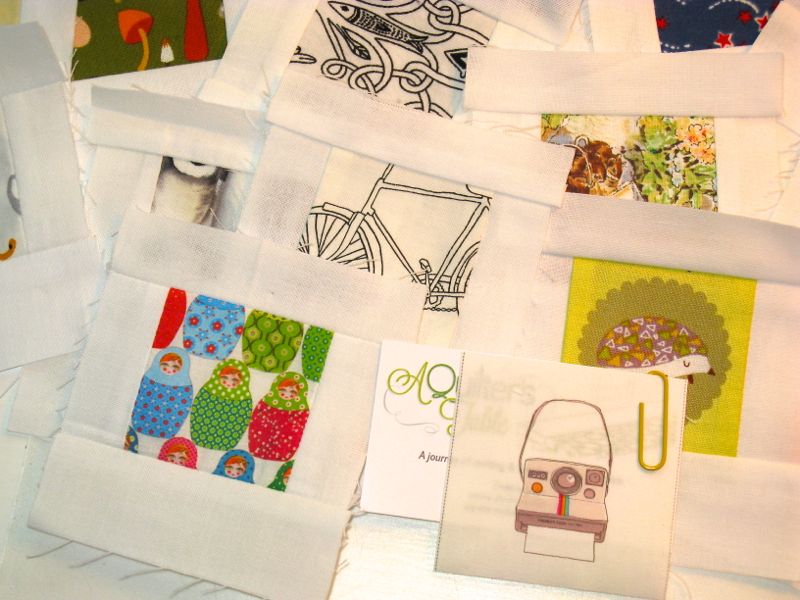
Woo-hoo!  All the little Polaroid blocks arrived from the Polaroid Block Swap.  I laid them out and looked at them all, and really thought some lovely quilters somewhere had done a fine job making little bits of fabric in a frame.

On the left is one of my favorites, a series of matryoshka dolls (Russian nesting dolls) of which I have a small collection, and the small bit of cloth that Debbie sent along with the batch of blocks: a Polaroid image on a 2″ square, which can be either a label on the back, or made into a block to go with the others.  I had a great time participating in this and appreciate Debbie’s efforts.

And from those pictures, to another kind — the old-fashioned kind — taken at local quilt shows.  I used to take a few rolls of film (remember film?) in my bag along with my camera, come home and get them developed, then put them into little photo books to look at in between shows.  At one time, we traded photos, made our own little books, bought magazines in order to get our ideas for quilts.

This is my friend’s quilt, hanging in Road to California, with another friend standing beside it.  These are all in the pre-internet days, but even so, it’s kind of hard to remember what we did before we could just pop onto a series of blogs, or to Pinterest, or even Instagram.

I have six of these little books, tucked away.  On the left in that picture are Dave and I standing by my quilt that was hanging in Road to California (a different year than Lisa’s quilt).  And yes, I’m wearing a quilted jacket.  (Boy, do I look like an early quilter.)  Even though quilt styles change and the modern quilt movement has influenced a lot of our designs, I still like looking through these when I come across them occasionally.

Last book-y thing: I shopped C & T’s clearance sale and came up with these fun books.  While not all the books are new, and even some are sort of “vintage” it is enjoyable to browse through them when you’ve only paid a pittance for them.  You really should get on C & T’s mailing list, if you aren’t already.

So, now I’m off to sew sew sew before reality will hit and I’ll have to grade the Argument Terms Test that I gave in class on Wednesday.

You can bet that I’m putting off reality as long as I can.

Quilts · Something to Think About

PTQ/WIP

PTQ is how I’ve taken to calling the Portuguese Tile Quilt since writing out the long name is tedious.  But tonight when my husband came upstairs to check on me (his cave is downstairs, mine is upstairs) and I said, we really have to go to Portugal.  Really, really.

Here’s my work in progress, which I’ll be posting on Lee’s blog Freshly Pieced, on her regular Wednesday Feature of WIP Wednesday (found *here.*)

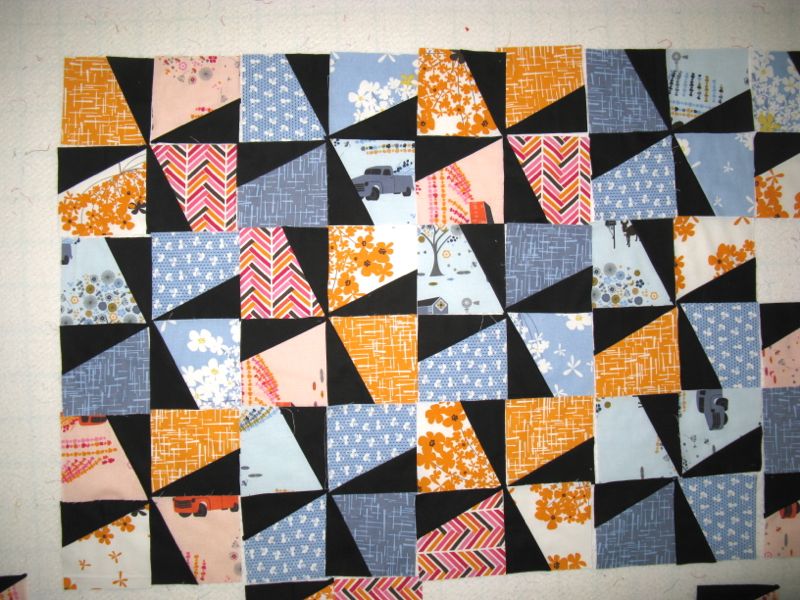
Here I’m working the windmill effect, striving always to keep the pinks in the same place.  I had to cut some more blues, because I’d cut the first ones upside down and backwards.  And I have lots of black points, so I’m wondering if I gave the right amount in the how-to post?  Pretty sure I did.

I noticed that the pattern seemed to be lost in the fabric I chose, so this version is my trying an entire block of blue and an entire block of pink/orange.

Nah.

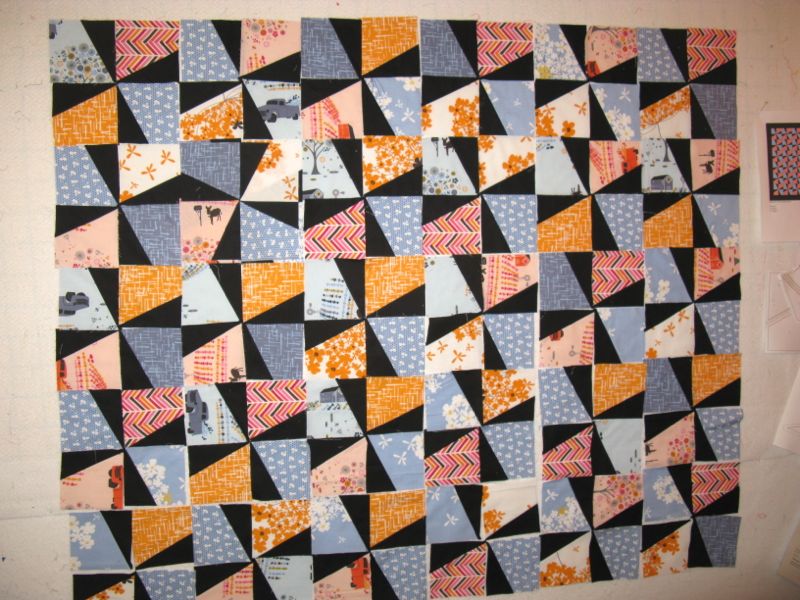
I laid out what I had and decided I liked the not-square version of 5 rows by 6 rows.  It’s good to change your mind once in a while.

I decided to make up a batch of those “backward” blocks.  I placed one in here–spot the ringer?  I would be tempted to leave it in but it would drive my symmetry-loving husband nuts. I was just trying it.

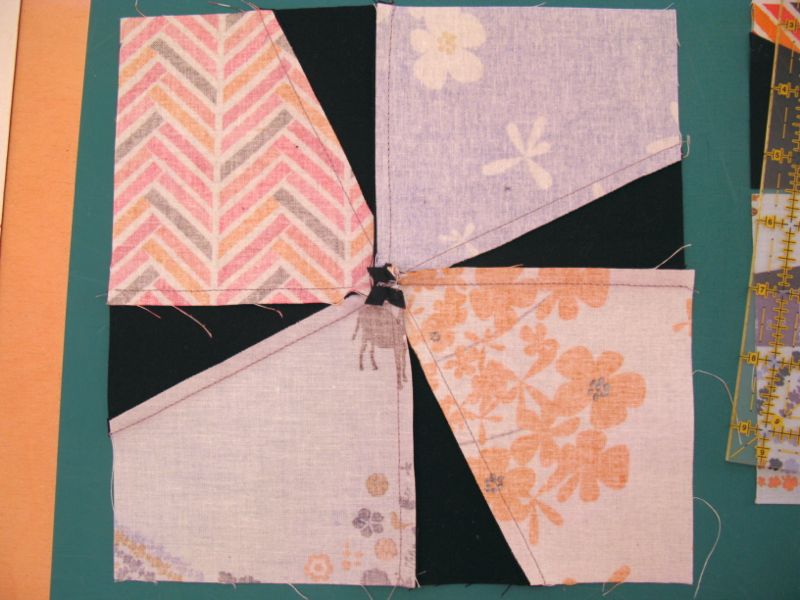
I pressed the seams towards the black pinwheels on all pieces.  Then you have a lump in the middle, so clip a couple of stitching threads to release it, and pressing down with your thumb, “swirl” to flatten out that center.  This is the backwards block, so your seams will look reversed.

The back of the backwards block.

I was really tempted to sew this row by row, with no regard to the block.  But I need that block to be distinguishable in a subtle way, so decided to start piecing blocks together first, then sew them in rows.  That way the block will be its own entity before losing its identity to the overall tile pattern.

Just like my hair stylist who married a guy with four children.  I went in to get my hair cut today on her first day back at work since her honeymoon.  She said they spent a week on Maui, then got home late Saturday night. Monday morning, he went to work early and didn’t return until late.  She told me she went from “single woman” to “single Mom” in one week.  I admire her and think about her a lot because of my story: my husband Dave married me and my four kids.  He We survived, but even so, it doesn’t stop me from keeping her in my prayers, hopes and thoughts.

So as I work on this quilt, I think about how all of us are individuals with our own lives, quilts, loves, hates and troubles, and sometimes it just doesn’t seem to make sense until we put it all together and see the pattern.  I like that about quilts.  I like that about life, now that I’m old enough to discern some of those patterns now and again — one of the great advantages of hanging in there.

Quilts

Exhaustion

Life is one long process of getting tired. (Samuel Butler, novelist)

If you see a whole thing, it seems that it’s always beautiful. Planets, lives… But up close a world’s all dirt and rocks. And day to day, life’s a hard job, you get tired, you lose the pattern. (Ursula K. LeGuin)

It isn’t the mountain ahead that wears you out; it’s the grain of sand in your shoe. (Robert W. Service)

This slideshow requires JavaScript.

What does exhaustion feel like?  It changes, I think.  When I was a child it was at the end of a day of playing, of sun or making snowmen.  It was physical exhaustion of going full tilt with my brothers and sisters, and falling right to sleep.  When I was a teenager, I remember the sudden quiet after an evening of being at a dance, the sound expanding, filling the spaces abandoned by guitar, drums and voice.  This delicious quiet followed me home and I felt the weight of the blankets on me as I drifted off to dreams.  Young mother exhaustion is every kind: mental, emotional, and physical.  But instead of falling to sleep, you lay awake at night, worrying about all those things you can’t control, but want to: will they do well in school? will my husband finish his school?  should we take the new job?  should we move?  will the children marry the right person? and sleep eludes you for hours and you wake up more exhausted than when the night began.

This week’s exhaustion is a continuation of the last four, but rooted in a day that began too early, sitting at the laptop composing the second essay assignment, then another assignment, and another as I make my way through a new class and prepare for that day’s evaluation by a colleague.  It continues with a day-long-non-stop schedule that would not faze me if I were 40, but I’m not, and ends at a women’s gathering, getting hair tips from a lovely lass with lovely long hair, but all I can think about is that I’m tired and I need to go home.  Sleep is interrupted, fitful, with the aches that come from that not-40 place, and with the worries about all your children and their young families, and your parents, and a family member or two, the remembered exhaustion piling on in dreams that encumber, all parts of you feeling the weight of some other-worldly place.

So after my husband left this morning, I opened a Flickr file, ignoring the 5″ stack of essays-to-grade in the bag behind me, and clicked through photo after photo, my mind unscripted, my interests wandering.  I found a Flickr set of tiles from Portugal and wondered how our quilt blocks might have taken their cues from these ancient and oh-so-faraway constructions of mortar and glazed tile, pattern scrolling into pattern.  (I have no idea.)  But I liked looking at the grid-ness of it all, glimpsing some of our traditional and some of our modern patterns click into view.

And finally, I roused myself, delaying the grading for tomorrow to give me some space, for I took to heart the thought from Charles Haddon Spurgeon: There is no fatigue so wearisome as that which comes from lack of work.

Which in my world, today, needs to be quilt work.

Classes · Quilt Shows · Quilts

Long Beach Quilt Festival, classes

I still have a bag or two to unpack, but I wanted to post about my days at International Quilt Association’s (IQA) Quilt Festival at Long Beach.  I went two years ago, when the quilt portion of it was okay with a couple of stand-out exhibits, missed last year, but happy to report that this year’s quilt display was waaaay better than the first time I saw it.  Or as my friend says, they only had one way to go–Up.  And they did.

I left my town at 6 a.m. on Thursday morning, headed through the Los Angeles traffic to Long Beach, arriving there around 8:15 a.m.  I left my car at the hotel, along with my luggage, and their shuttle gave me a ride over to the Long Beach Convention Center.  I stayed at the Hilton, only about a 10-minute walk, but there are three hotels that are closer if that’s too far.
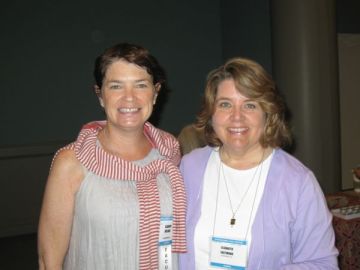
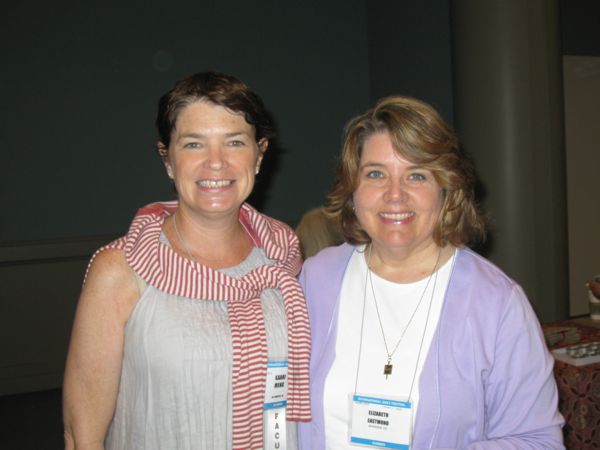
Kaari Meng of French General fame.  She’s wonderful as a teacher, explaining everything crystal clear.

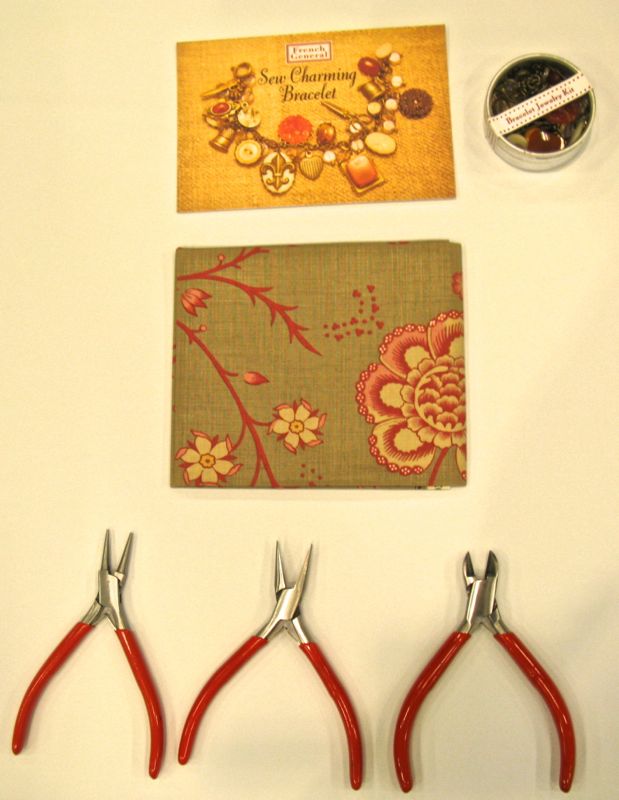
This was on our table when we arrived: the jewelry kit, tools and a fat quarter of her fabric to use as a working mat.  Like many others, I tucked the fat quarter away in my bag–no way I was going to get glue on that!
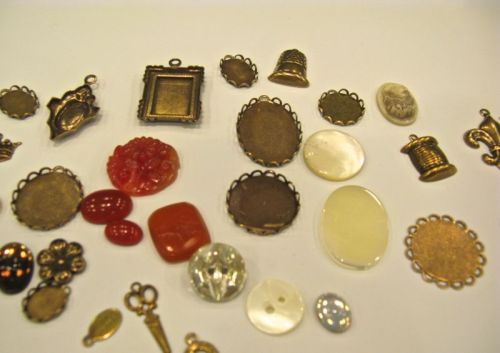
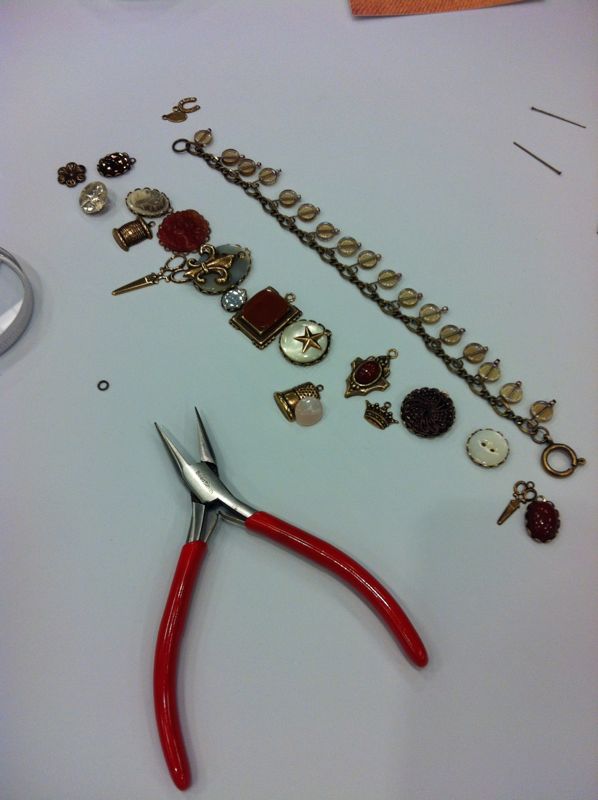
Pieces spread out: the cabochons and the bezels and the charms.  You had to be there.
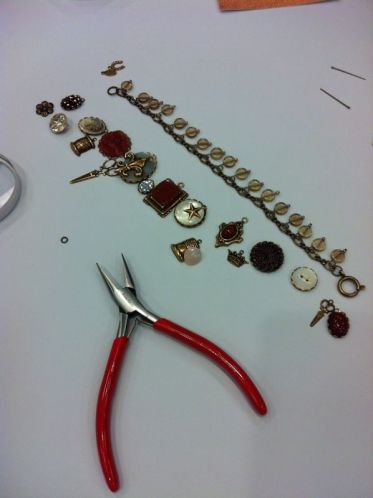
Gluing done, we worked on attached things with jump rings.  I learned a lot, which gave me confidence to do the kit I ordered from her store over six months ago, and which has sat unassembled as I had no idea what I was doing.
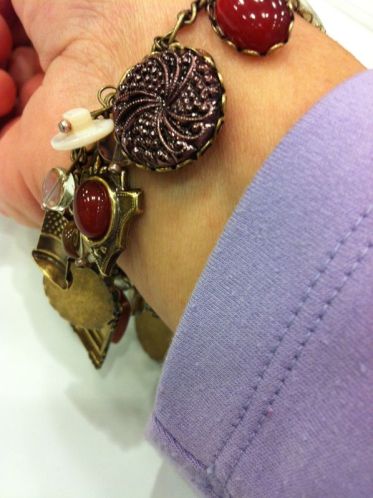
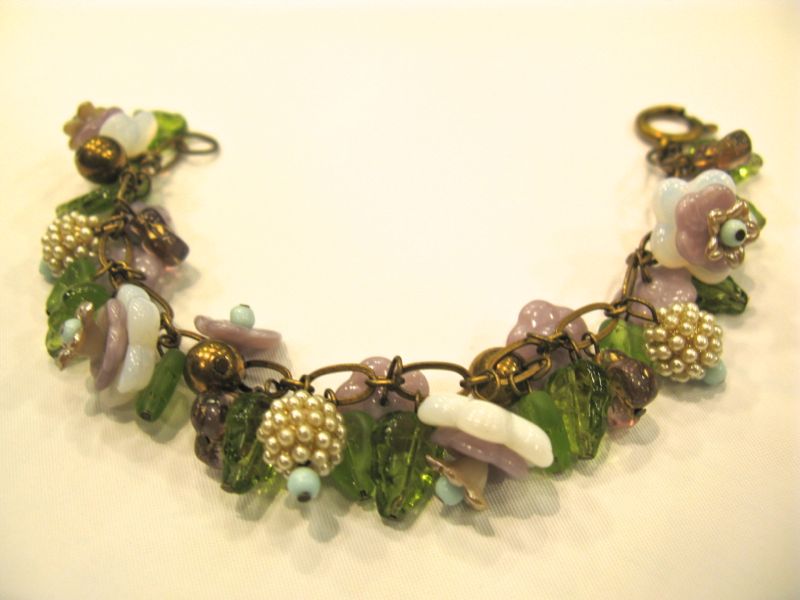
The bracelet, modeled.  I put this and a few other pictures on my Instagram account: occasionalpiece, if you are interested in following me there.
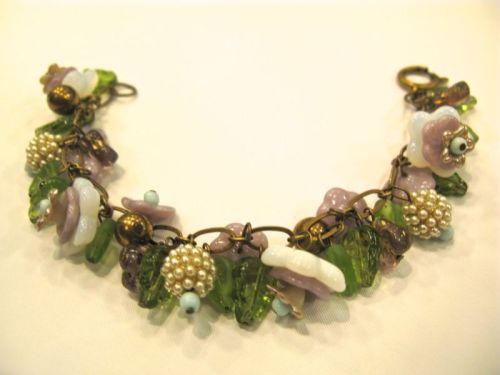
She had a few other kits there to buy, so I took this one home.

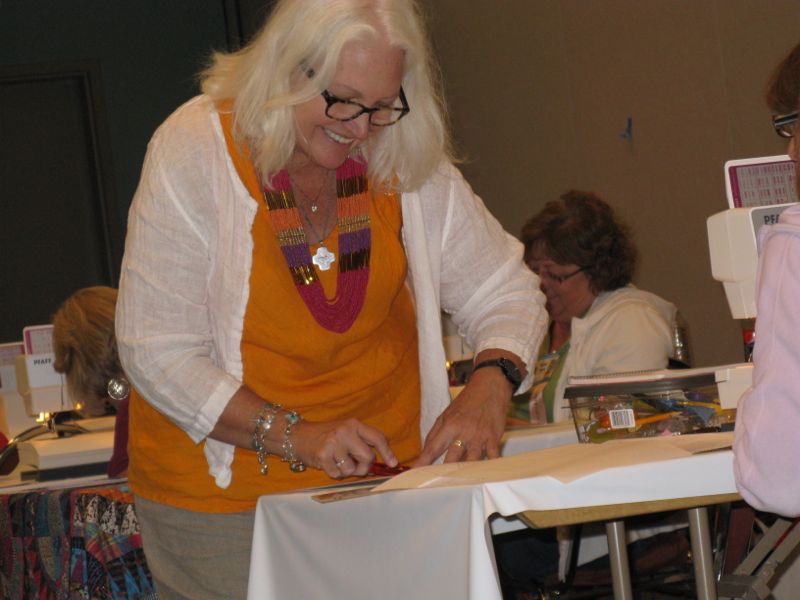
I took two classes from Karen Stone, who is amazing, lovely and has great lines that she’s always throwing out in class:  “Have I told you more than I know?” and when working with piecing curves, she noted that instead of wishing away our troubles with piecing, we should “Learn to love the devil that you know.”  Good advice on so many fronts.

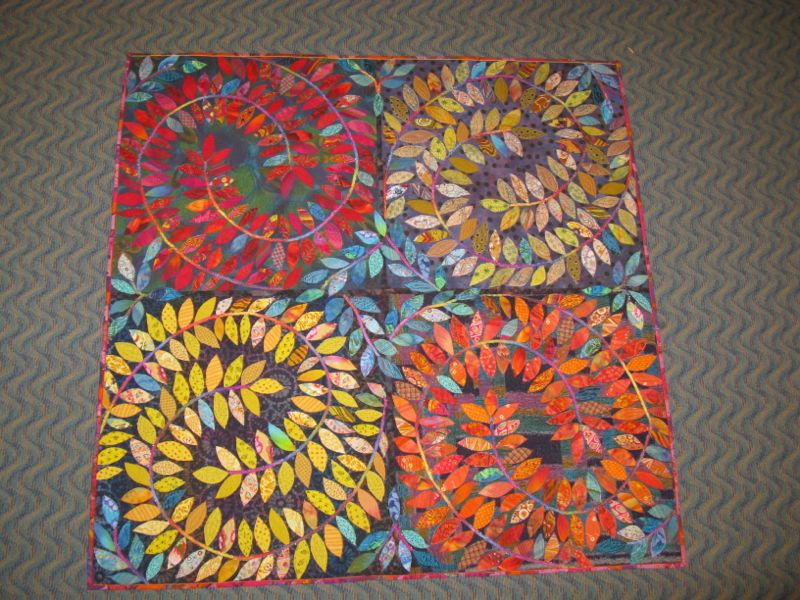
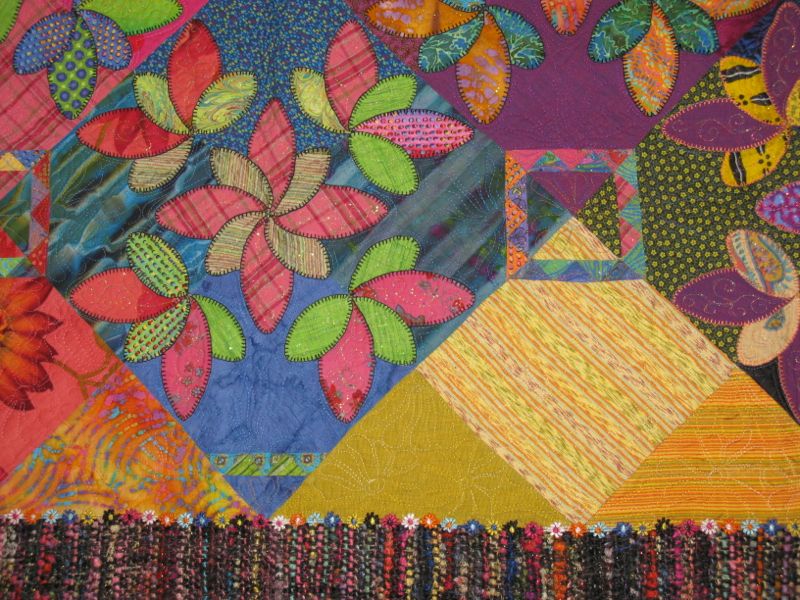
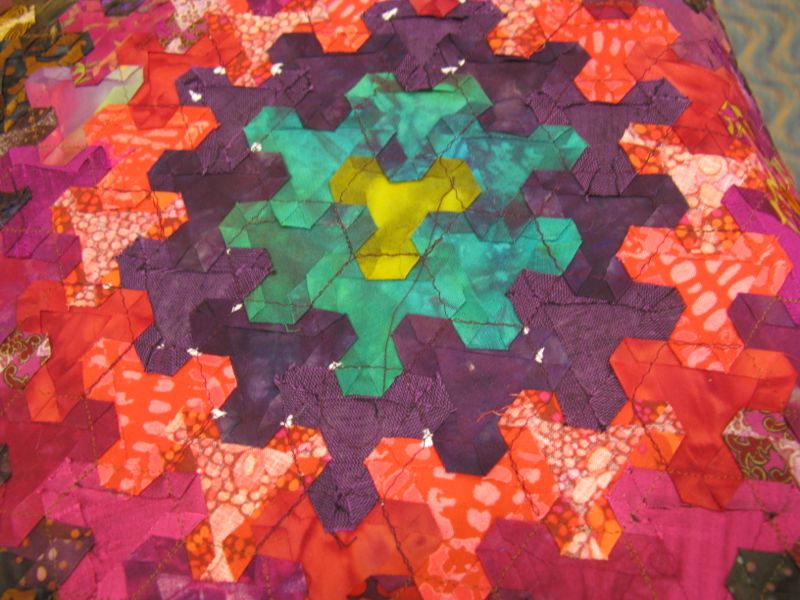
Karen Stone makes me laugh.  Like when she brought out this first quilt (above, and detail just below it), a sample for another class, and asked, “Do you want to see some irrelevant quilts?”  Of course we did, and I loved this one with all the raw edge applique leaves coiling around.
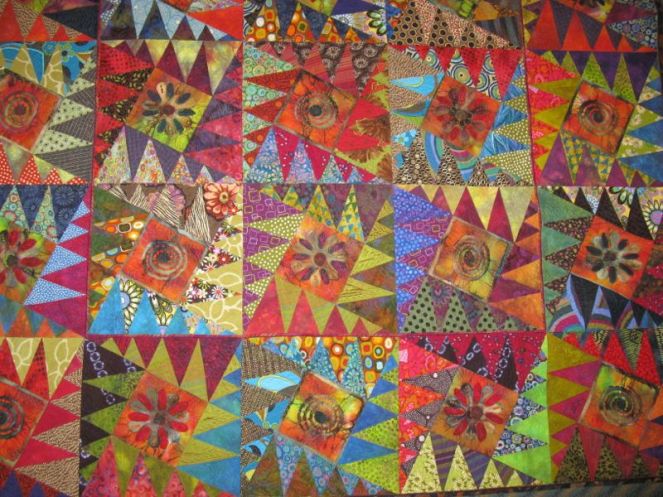
This sample was for another class also, but her combination of colors is just inspiring–not any that I would have gone for but that work together beautifully.  She says to mix everything up: batiks, 1930s prints, modern, calico, Kaffe Fassett. . . everything.
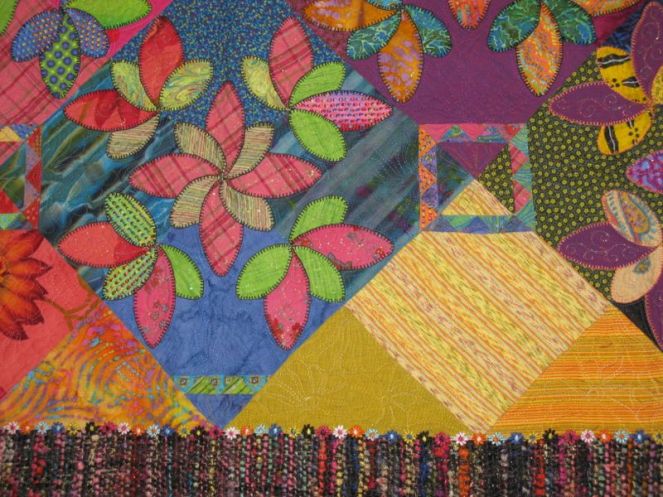
An earlier quilt, which she says was  snapshot of who she was as a quilter at that time.  As I work on my Quilt Journal, I feel the same way about my earlier quilts.
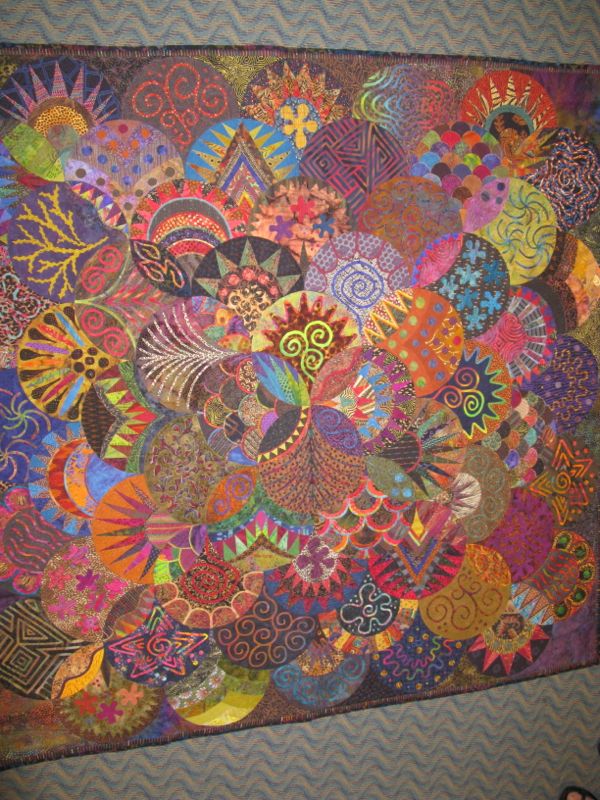
Clamshell quilt.  A lovely and invigorating riot of textures, design, colors.
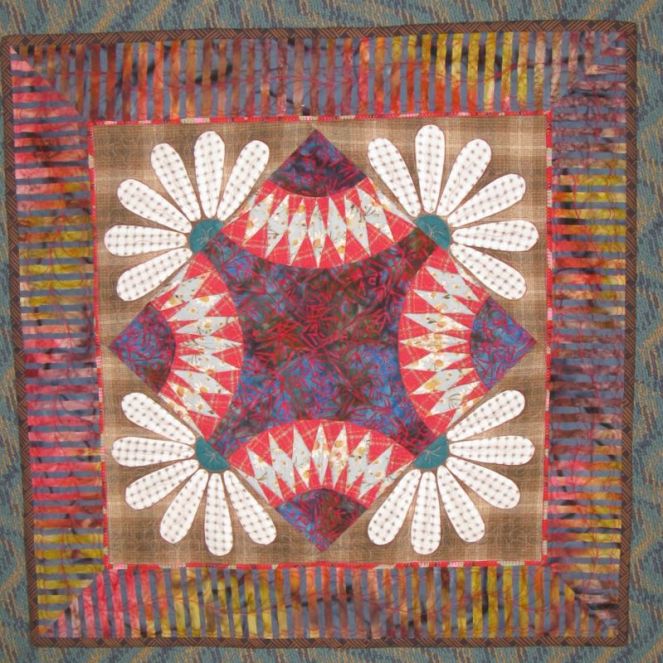
All of these were laid out on the floor, so you are looking at a tilt in all the photos.  (Sorry.)

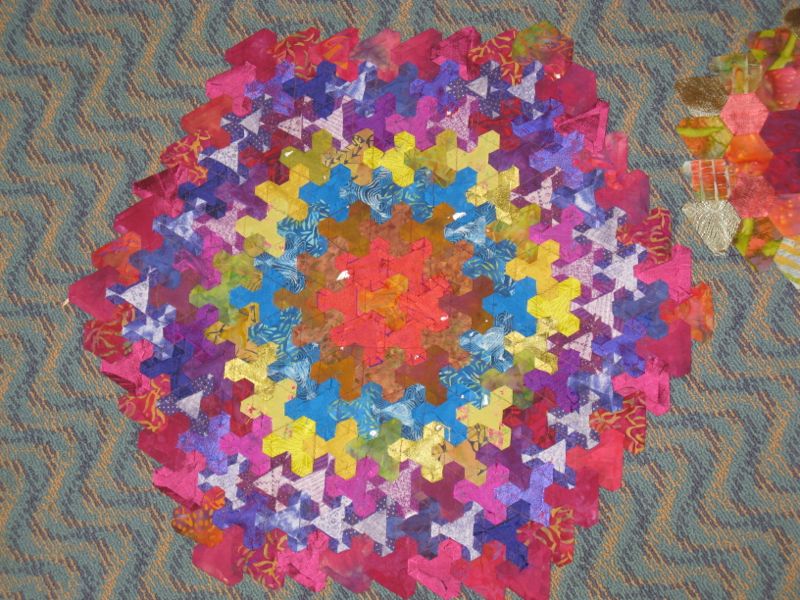
Hexies.  One-inch hexies, sewn by machine.  And that was the thrust of our class: Old Favorites, New Ways.
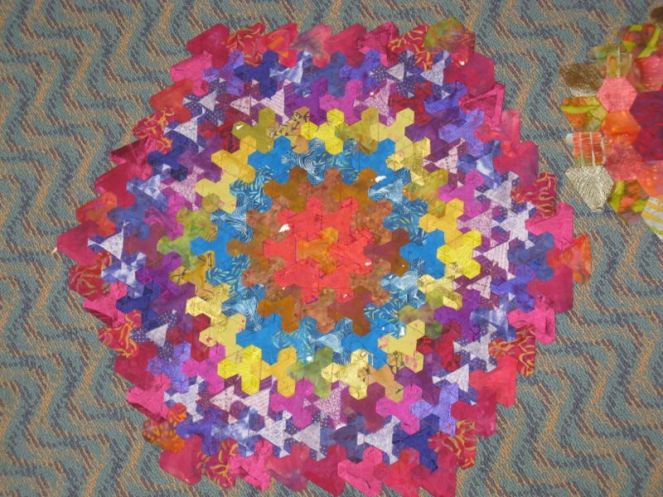
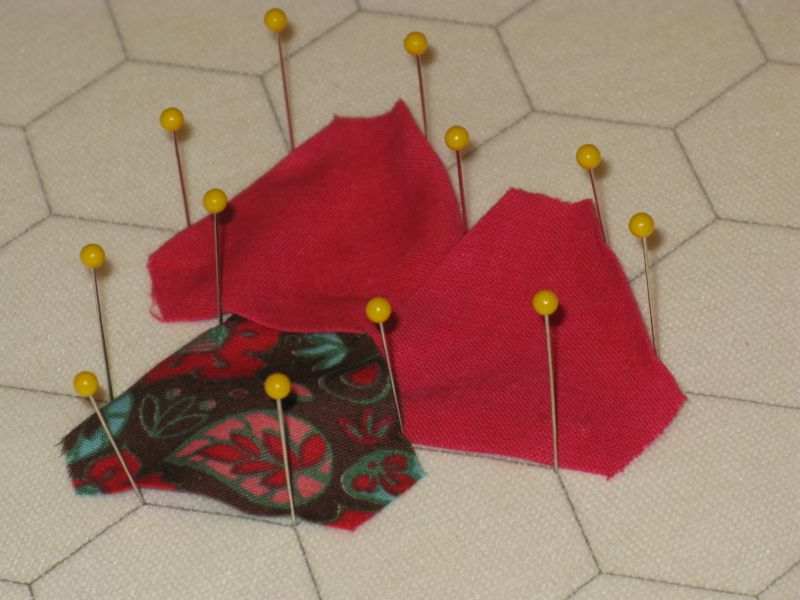
It looks like a puzzle on the back.  Using a lightweight cardboard template, iron just three sides of the hexagon, then fit them together, joining them with a narrow zig-zag stitch done with monofilament thread.
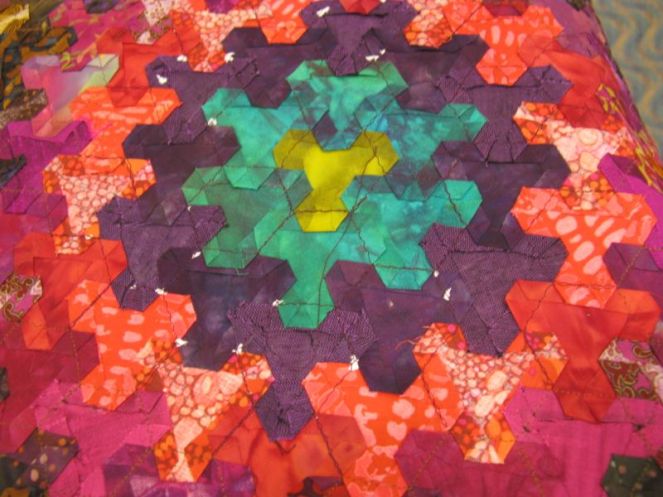
A closer view.
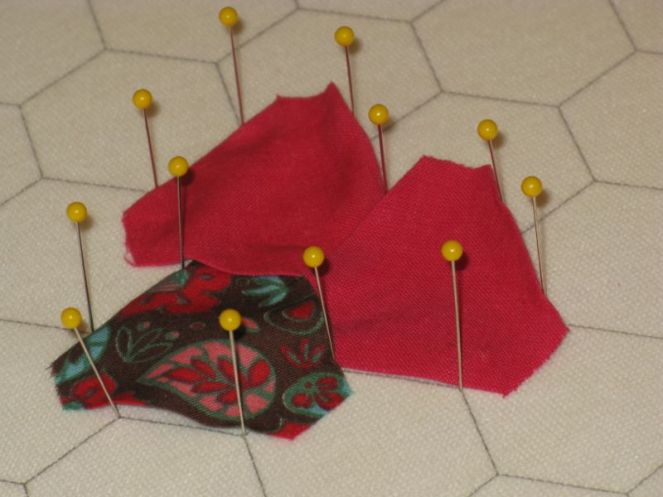
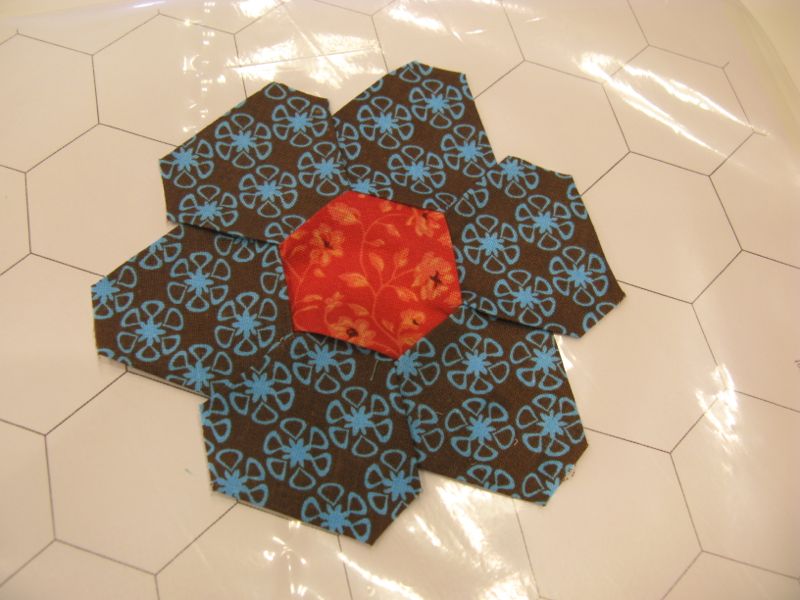
Lay out the hexies on heavy-duty water-soluble stabilizer, using a paint brush with water to “glue” down the pieces.  Notice how we are weaving them: raw edges under a pressed edge.  When I first started this technique, I was thinking how wierd it was.  But as I picked up speed, using the grid to align them and glueing them down as I went, I thought about the possibilities.
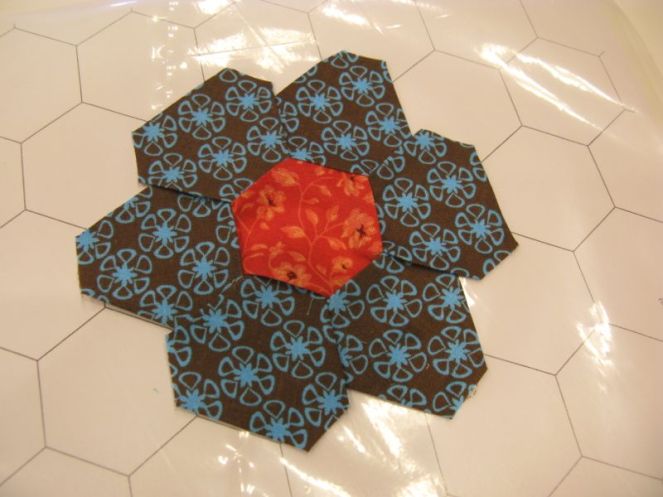
My sample complete, but not yet stitched down.  I then took it to the machine and zig-zagged along the folded edges.  It’s practically invisible that way.

And now the New York Beauty class, the block that catapulted her to fame and reknown.  I had purchased her book at the end of my first class and that night went home and read it from cover to cover.  It’s a great book with lots of tips and tricks about how to assemble these blocks, as well as a whole section on color selection.

Showing us how to cut curves–use the natural movement of the arm to cut an arc.

It was interesting to me as she talked about fabric choices, that it makes a difference when picking fabrics for the pieced arc, as to which fabric is used for the pointy things and which is used for the background.  Choose the fabric that pops off the other, she said.  In this photo you can see she draws from many many fabric types and colors, but she noted that each block should have the colorway of the whole quilt so it’s harmonious.

Upper corner of this quilt, showing the borders.

“Irrelevant quilt,” as she would say, but I was interested in how she used interior piping to set off a series of blocks as the borders of the quilt.

Demo-ing the piecing of the arcs.  “Learn to love the devil you know.”
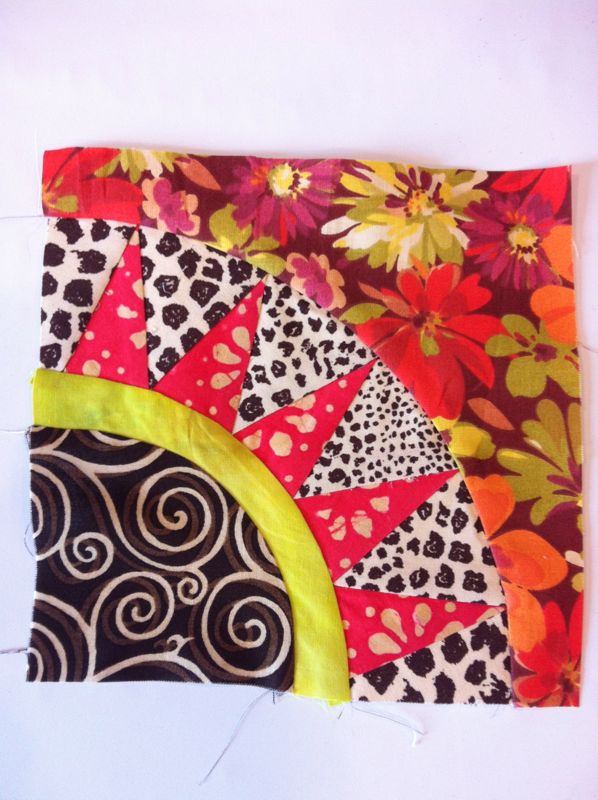
My little wobbly block.  She said don’t trim them, as it will all work out.  I was interested that these fabrics “worked” together, as I never would have chosen them.  But this block does work and that interesting animal spots background that changes sizes works to pull the viewer’s eye into the block.
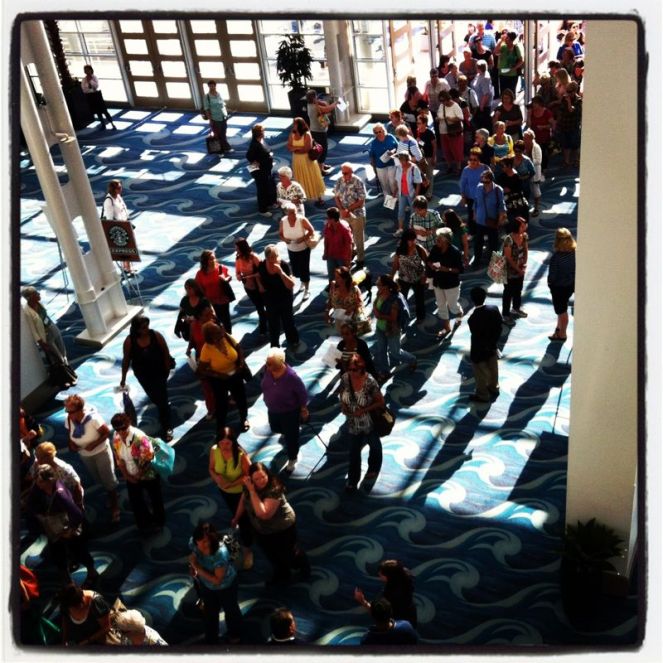
After classes, we all headed into Preview Night, where we could get first crack at the vendors and see the quilt show.

Here’s the booth selling Ghanian fabrics.

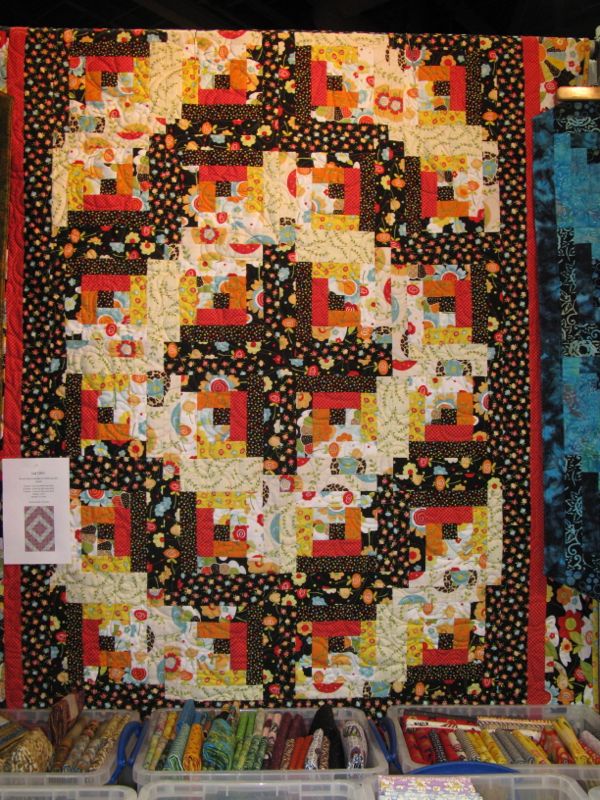
Another vendor booth showing a bright Log Cabin quilt.
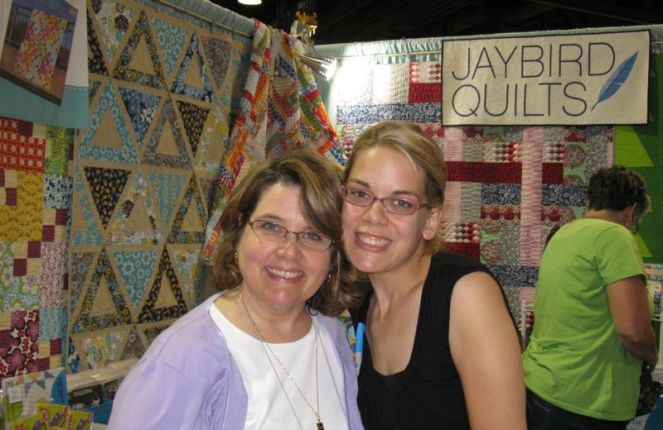
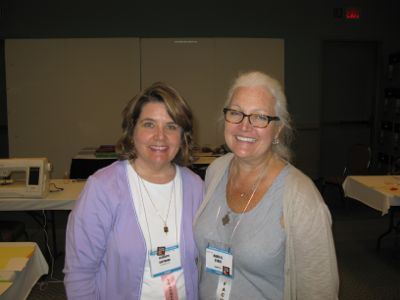
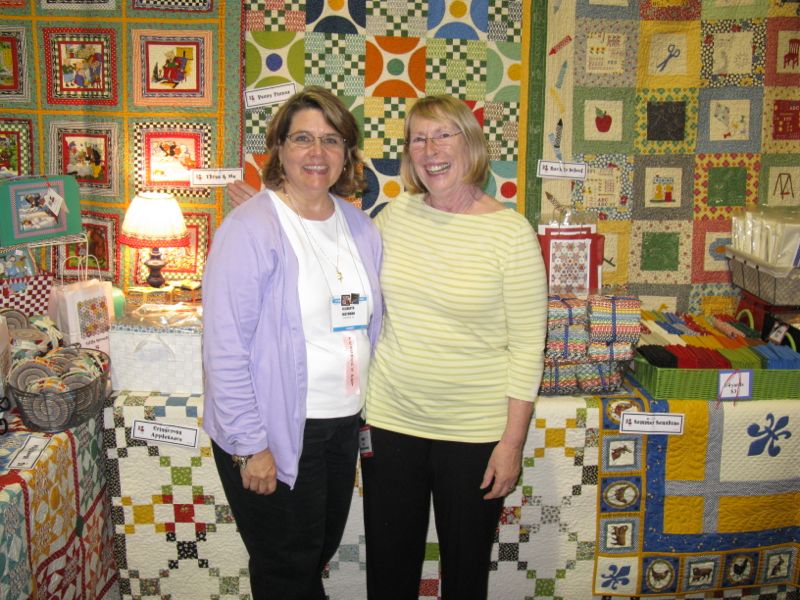
Julie Herman of Jaybird Quilts–I follow her in Instagram and also read her blog.  She’s written a book and I’m happy to say that it’s a solid effort, with clear concise directions, and few new tips and lovely quilts.  She is very talented and recently relocated to Southern California from Philadelphia.  It’s a family affair–her mother was working the booth, beaming from ear to ear at her very talented daughter.
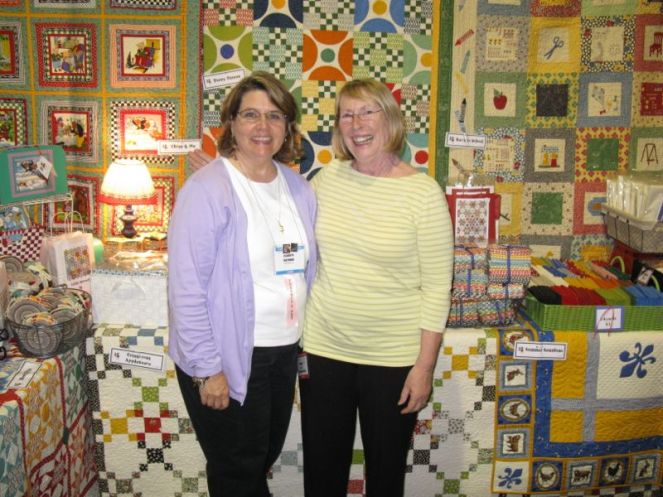
Sandy Klopp, of American Jane.  I told her my camera was a “younger-lighter” brand, explaining that it was magic and made the person in the photo look 10 pounds lighter and 10 years younger.  We wish.

Jane Tenorio-Coscarelli of Quarter-Inch Publishing.  Amazing coat.

The last night I was there, the traffic was backed up all over the freeways, so I parked the car after dinner and went in for the last hour.  All the tour busses had gone home and the vendor area was pretty empty.  I felt like this guy, tired and wanting a nap.

So I went over and found my friend Heather, of Superior Threads, and we walked around.  It was pretty interesting being at the side of a vendor, as she greeted her fellow vendors.  I told her was like those children’s stories that when after the children are tucked away and are asleep, all the toys come to life.  She laughed, but agreed.  I have to remember that I show up at quilt shows a few times a year, but all these people see each other about every month.  She knew their stories, asked them about their vacations, commented on new products they had in their booths.  When I’m there, I just see them as temporary brick-and-mortar shops where I can glean new quilt fabrics and buy the latest.  But with her, I realize that we are all part of a large industry, all of us like pieces in a incredibly wonderful quilt.

More, next post, on some incredibly wonderful quilts in the show.