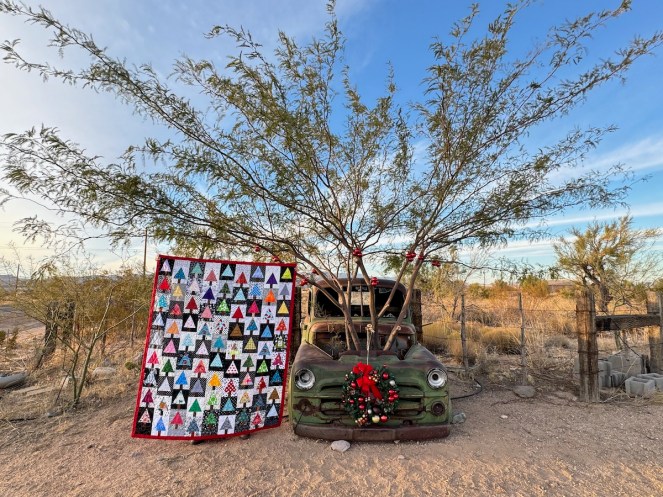
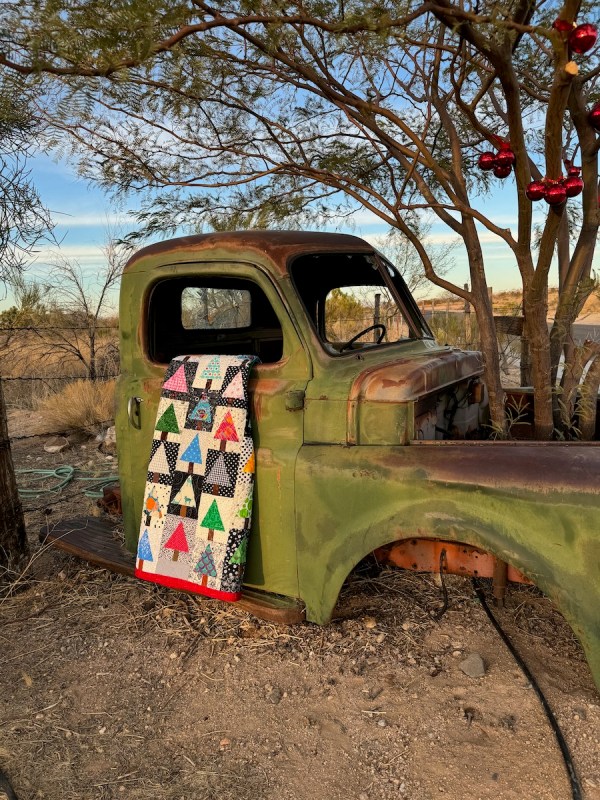
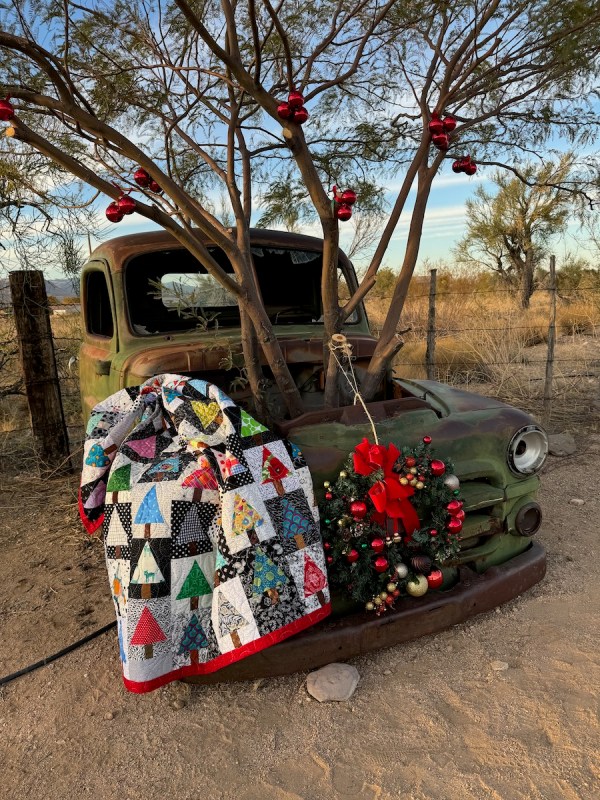
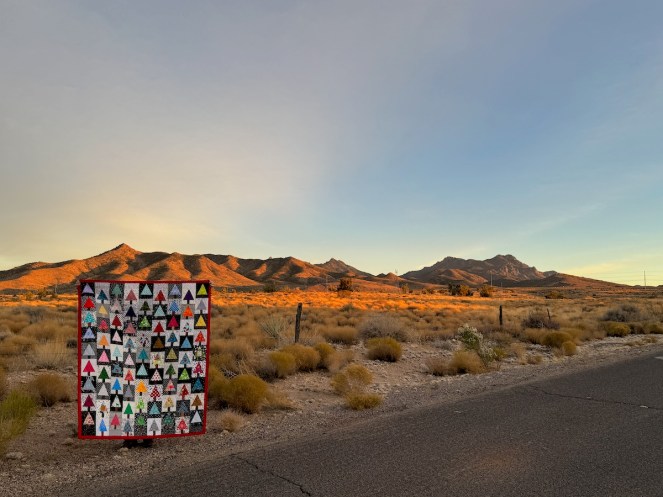
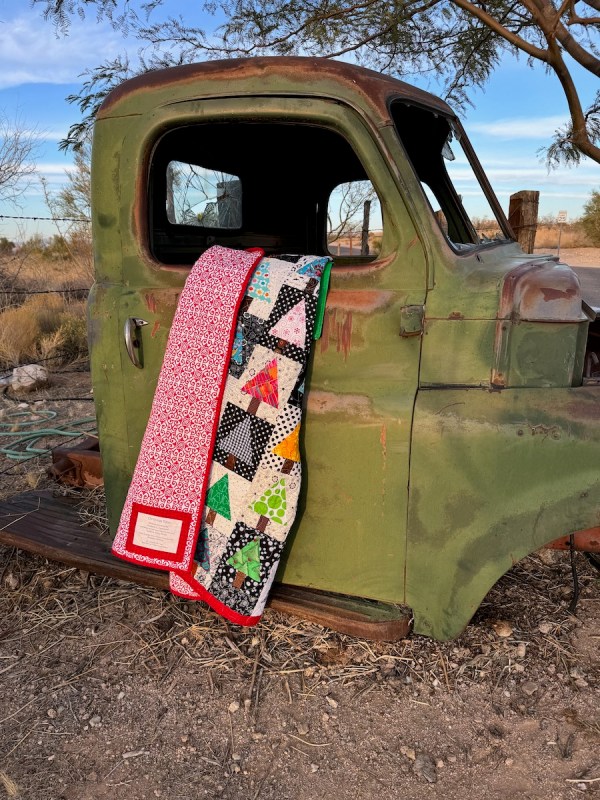
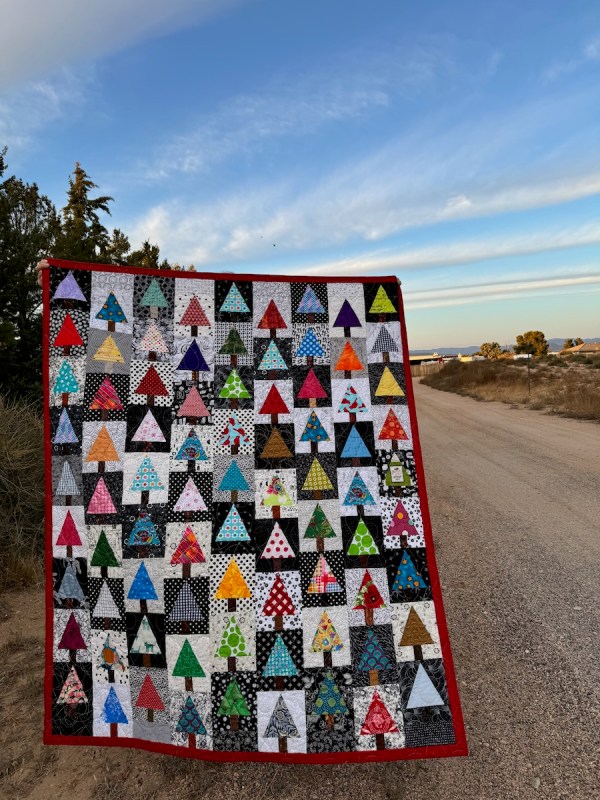
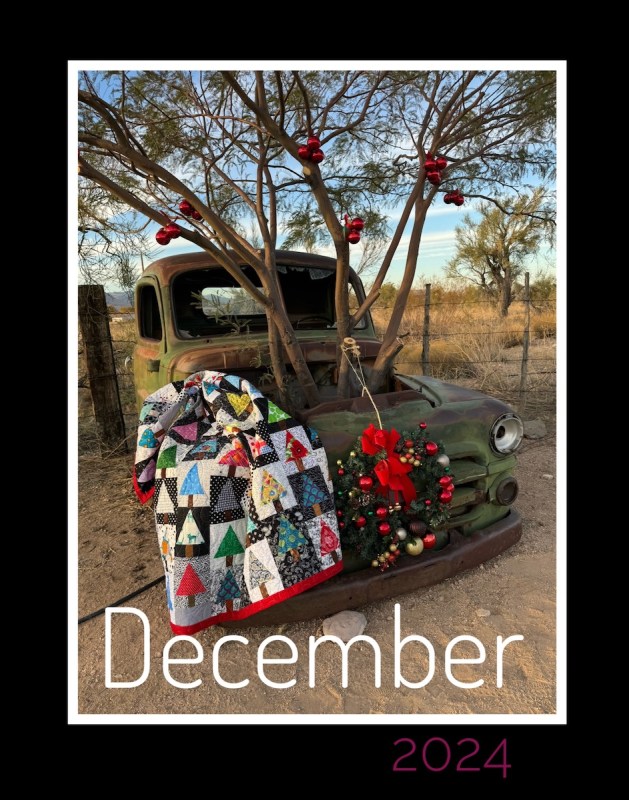
Factoid #1: It could be Christmas Trees. It could be Easter Trees. It could be Halloween Trees, even though I posed it in a Christmasy setting in a small town in Arizona.
Factoid #2: Started in a small sewing group swap in 2016, it lingered in a bag somewhere in my closet. I found it again this year, and when my friend Lisa finished hers up and prompted me to Get Going.
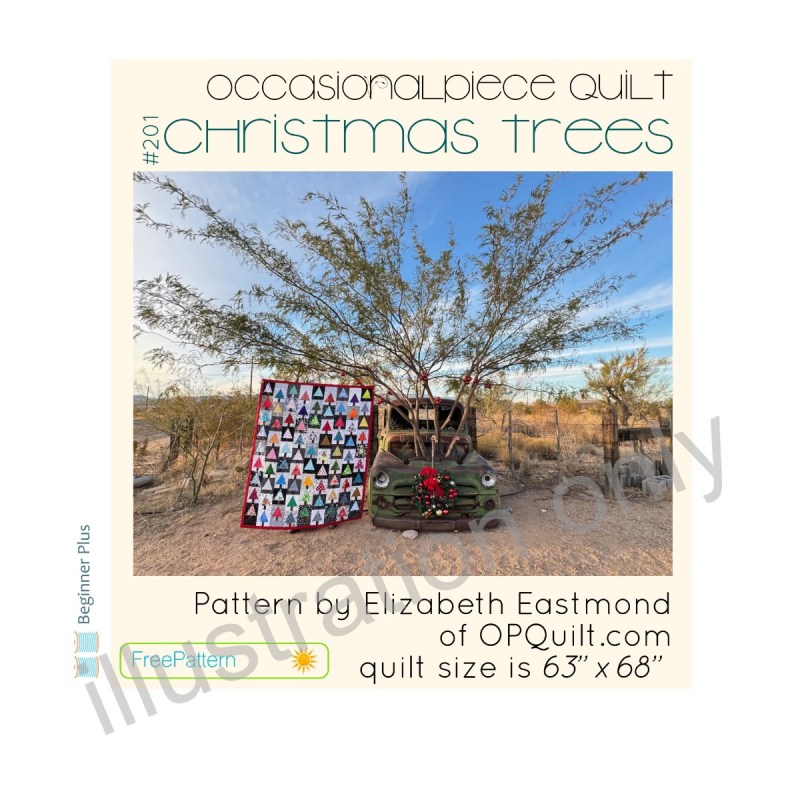
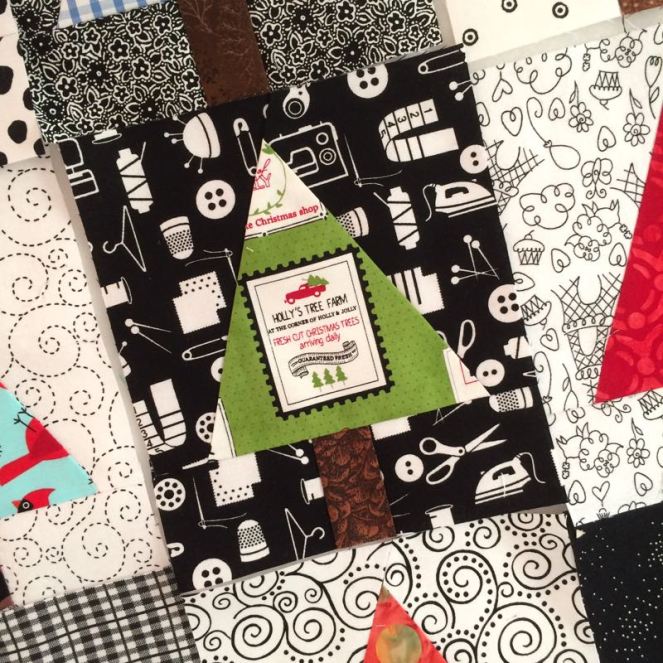
Factoid #3: The block pattern has been spruced up into a charming new version of itself. Get it yourself by clicking on the Download button:
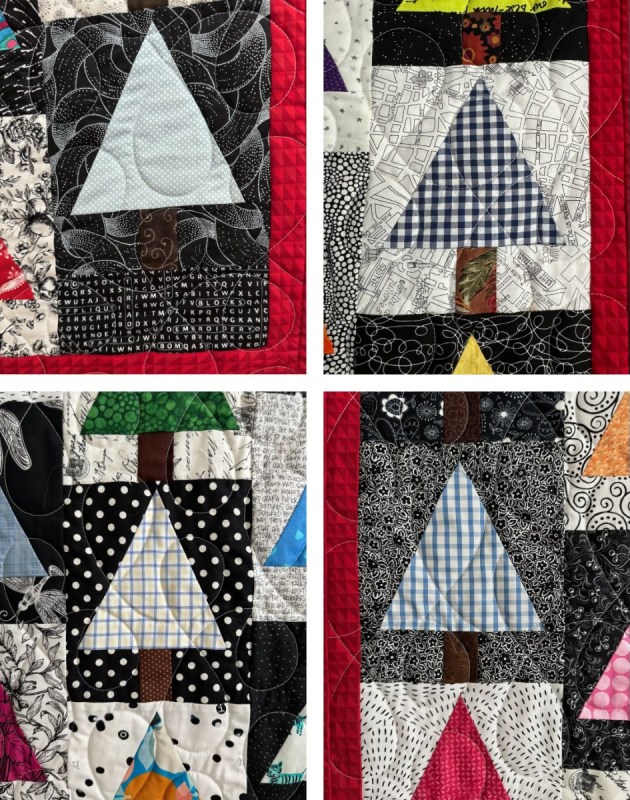
Factoid #4: This is a great quilt for using the shirt from your husband/boyfriend/son that has worn out. Or your Dad (see different trees from different shirts, below–somehow blue checks are popular).
Factoid #5: These make up fast. What takes the most time is picking out the fabrics. I decided a slim border with a fun binding would finish it off nicely.
Factoid #6: This is the second “holiday-ish” quilt I finished this year. I never seem to get into the mood until Thanksgiving rolls around. Next on the list: order the Christmas Cards. (eye roll)
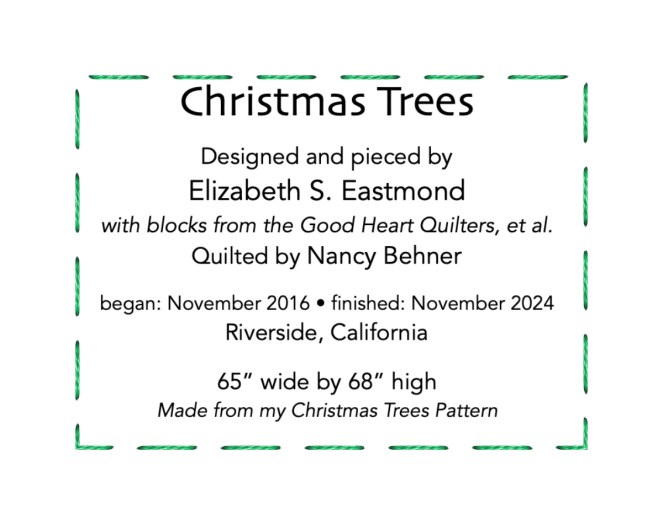
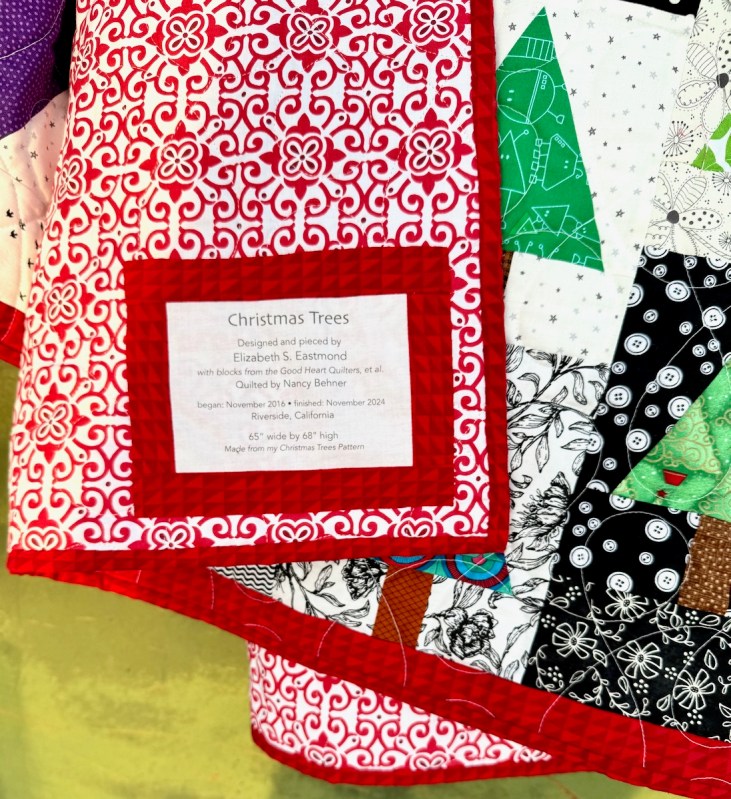
Factoid #7: Label
Factoid #8: (last one) This is quilt number 296. Four more to go to reach my goal of 300. Then what? (I don’t know. Probably not much will change.)
Have fun choosing fabrics and breezing through a fast quilt–
Other posts about this quilt:
Christmas Tree Block Swap Original Block freebie pattern is here, but it’s gone now. Do yourself a favor and use the new one (download above). However–> Step-by-step directions are found here, if you need them.
Tiny Tree and Teeny Trees — if you want to make little ones, this post gives you instructions for how to make wee quilts that slide over dime-store plastic frames. Again, free pattern.
You’ve seen this quilt in a sketch — before — but here it is finished. In that linked post, I showed all different kinds of ways to color this quilt, and in different sizes, too.
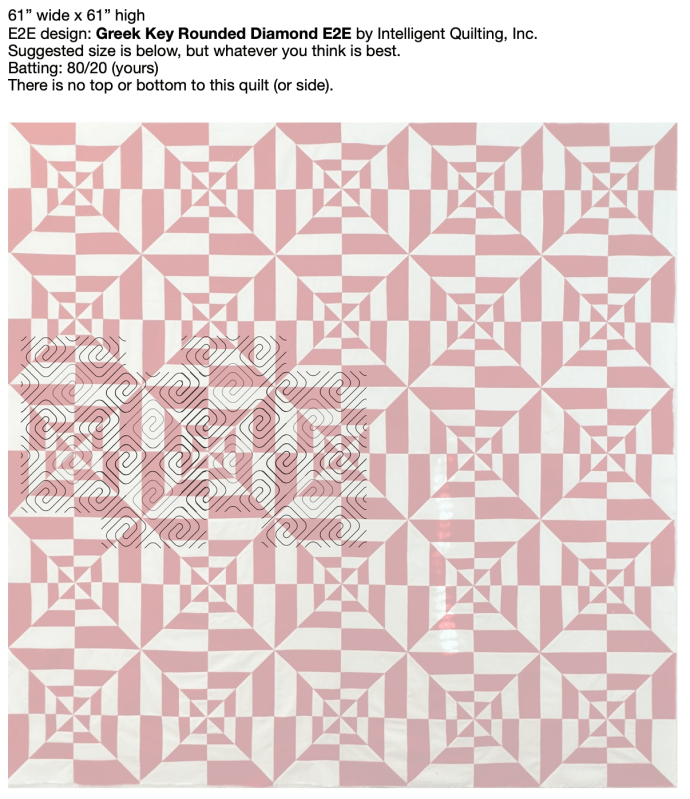
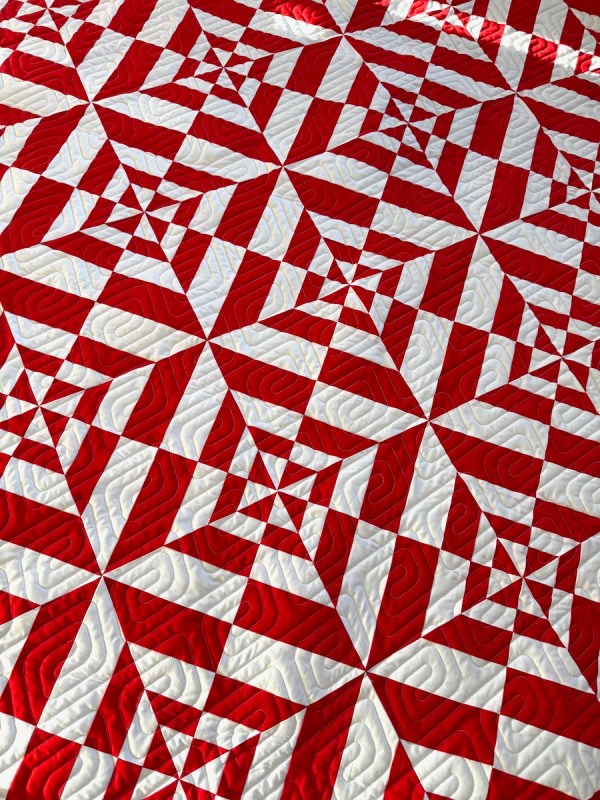
Since this quilter lives far away from me, I can’t show with my hands how big I want the panto to be. So I mock it up on an illustration. (Thanks, Affinity Designer, which is now half-off in price.) I sort of obsess about the right panto for the right quilt; in this one I didn’t want any sharp points, but I didn’t want any curlicues either. In a “what do you think about this quilt design?” discussion, and Carol said “that one works” I felt better about it.
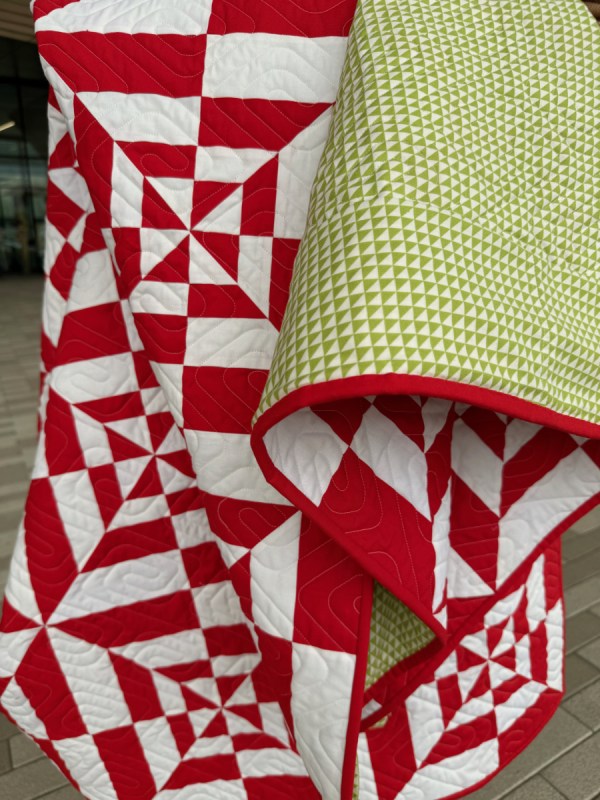
When I opened the box when it was returned to me and unfurled it onto my living floor, I fell in love all over again. In the end, I had the Greek Key design lean to the left, for no apparent reason. You have to call them like you see them.
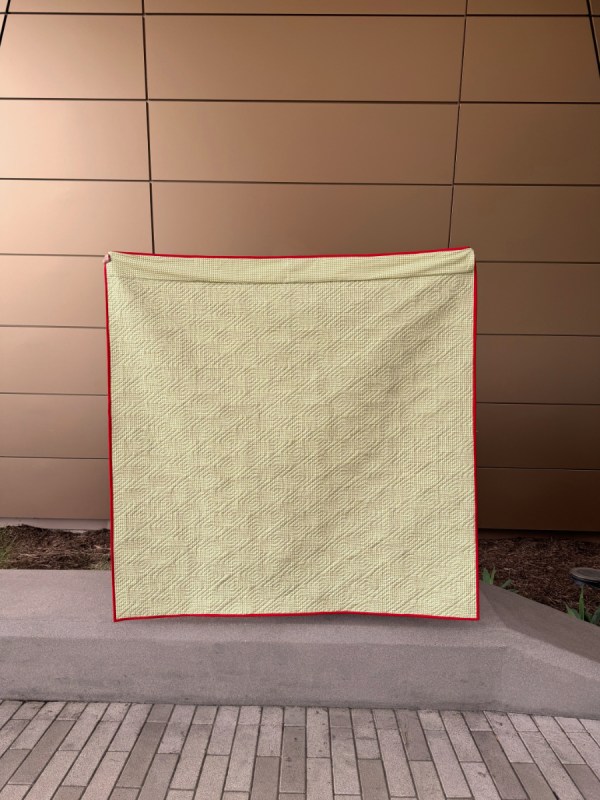
Last year, I scooped up the backing fabric for a song when our LQS closed (sad sad to see them go), and I ended up loving this bright fresh green against that poppy red fabric.
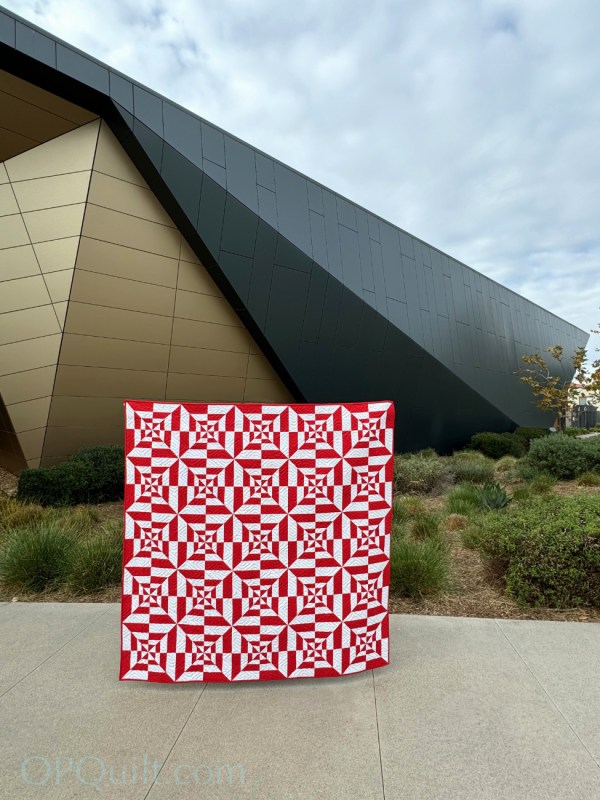
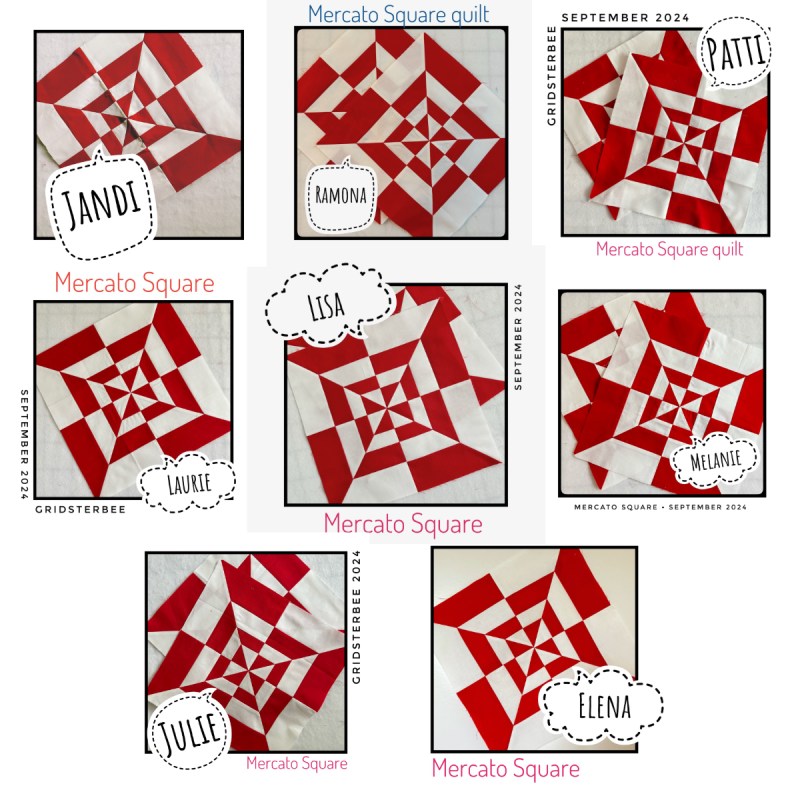
Many of these blocks were made for me by members of The Gridster Bee; some are missing because of health reasons — theirs or a loved one. I finished up what blocks were missing, and sent it off to my quilter. I started the Gridster Bee several years ago, and when I needed to retire, Patti took it over. This year I joined for one last time. As a thank you, I sent Patti this little badge: she deserved it. (badge from here).
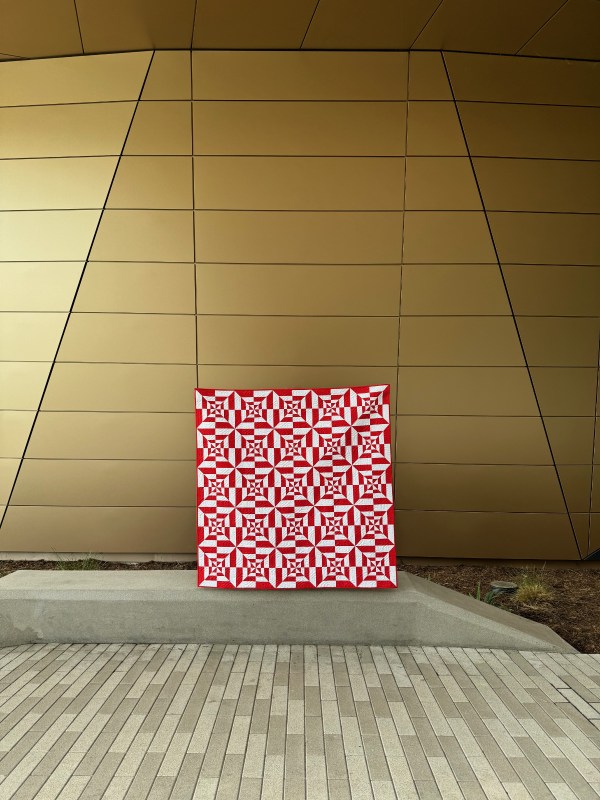
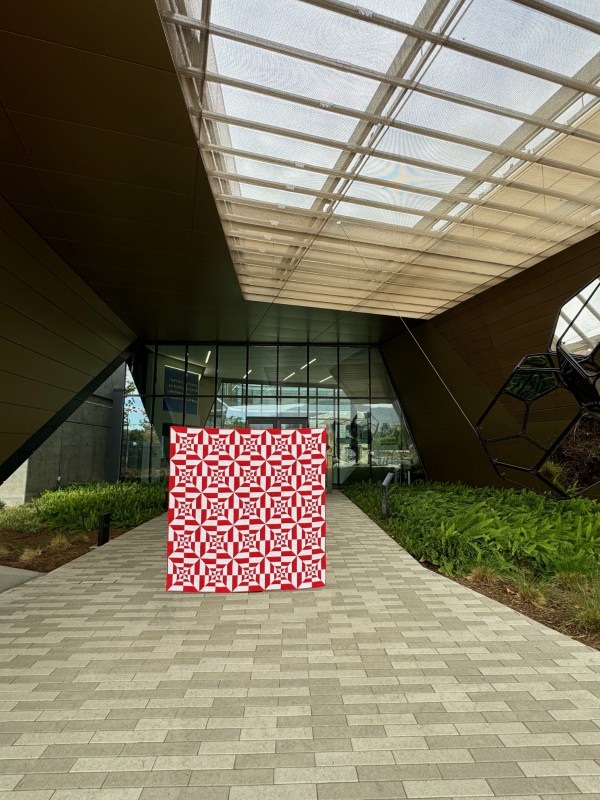
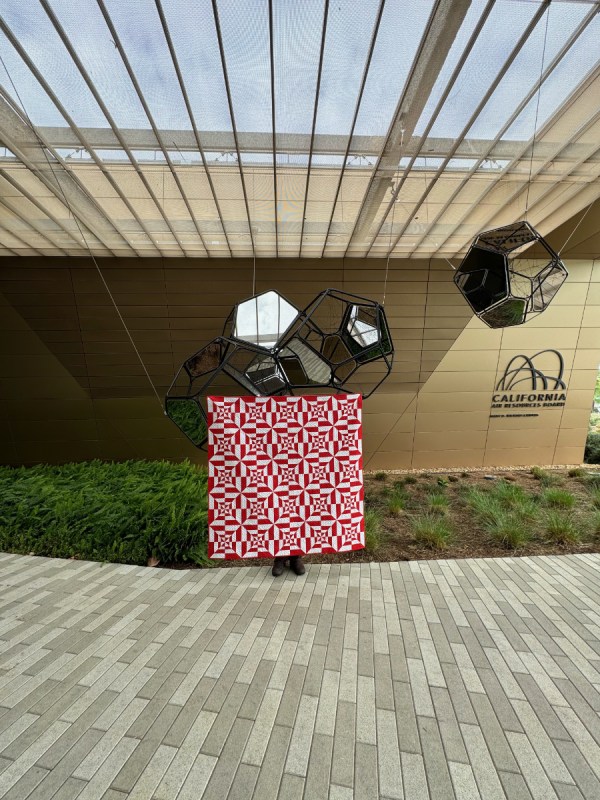
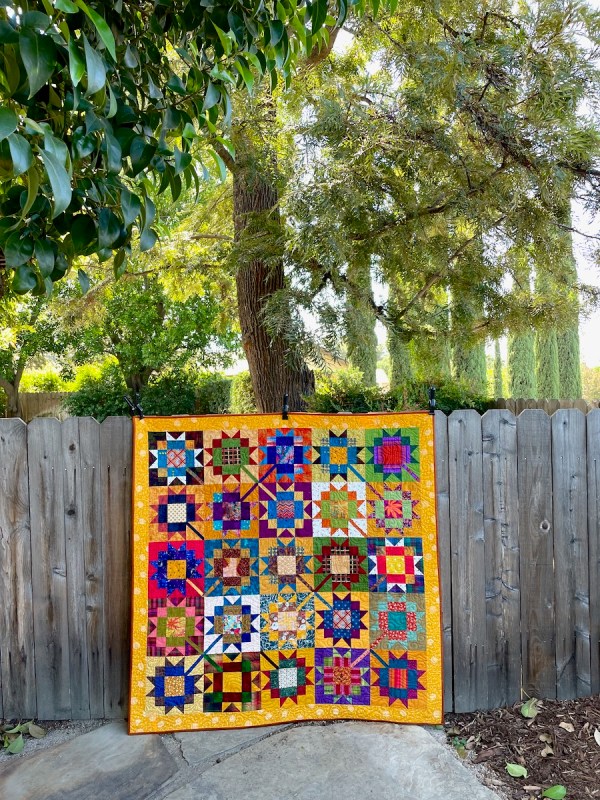
We went over to a favorite place for photos: the exterior entrance of the California Air Resources Board. We had about 6 minutes of sun today and that’s when we snapped these photos. This is quilt number 295 in my Quilt Index. I also get to put it up on my Portfolio of Group Quilts. And I’m thankful for my husband, who gamely goes with me to hold my quilts, and cheers me on.
Twenty-one quilts made with friends: quite a history. Something more to feel grateful for this week.
This month last year I saw an eclipse and cranked out not one, but two quilts to the quilter that month.
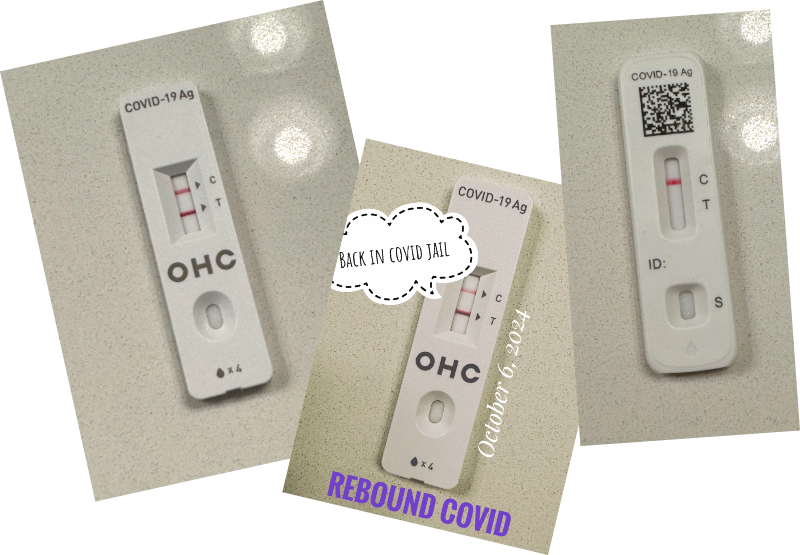
And this year?? A slog through covid, which still lingers with the double whammy of cough and fatigue.
So what a difference a year makes. Oh, maybe I’ve got a triple whammy with the brain fog, which is real. But at any rate, here we go with a This and That, which I haven’t done in a while.
Because I was just hanging around a lot, coughing, I read one book (Orenstein) on my digital reader, and one (Garten) in Real Book form. I learned a lot from both, including the tidbit that Garten and Martha Stewart at one time were friends. But mostly I loved a lot of what Orenstein wrote when she was making “the world’s ugliest sweater.”
“We hang by threads, we lose the thread, we pick up the thread, we have common threads, we thread through crowds, our reasoning is threadbare—and that is not even starting on metaphors involving sheep, wool, fabric, weaving, sewing, knitting. Textile analogies loom large in our world” (Orenstein).
and
She quotes Catherine McKinley, a writer and curator: “This idea that the end product is more important than anything [is] an erosion of something fundamental, of that intense combining of the spiritual with all the other aspects of our lives (McKinley, qtd. in Orenstein).
It was too hot in October, bookending our summer that began all the way in May, which was also too hot.
As you might suspect, this word appeals to me. I’m an autumn-sort-of-girl. (TIL=Today I Learned)
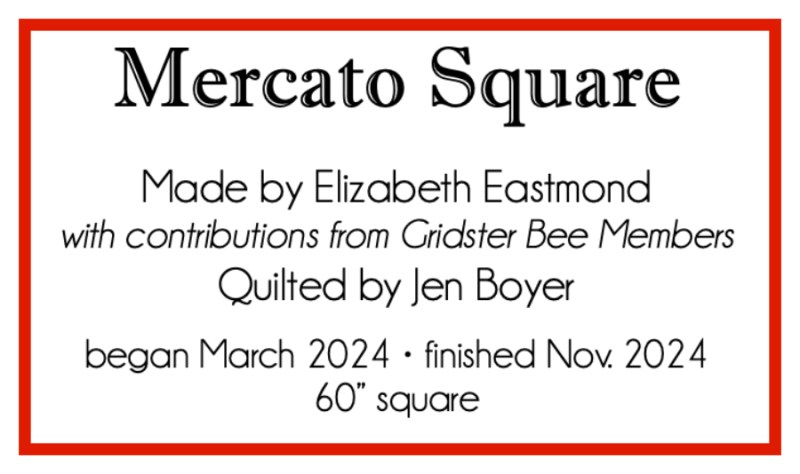
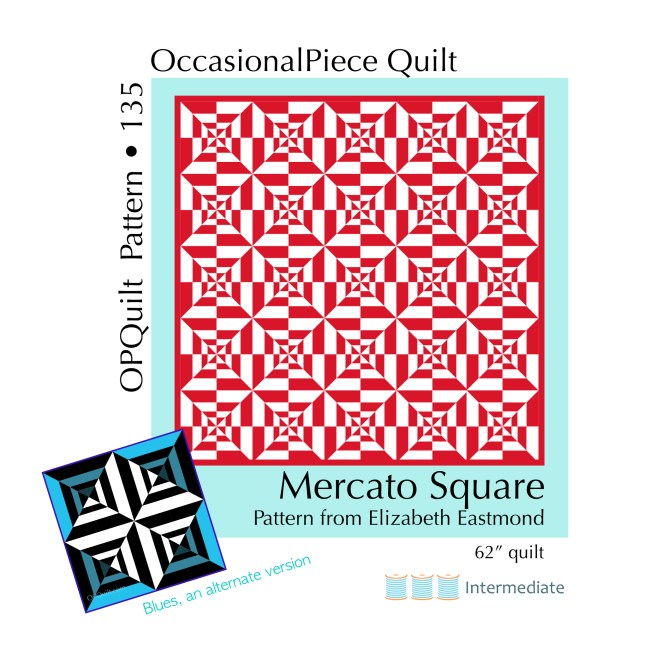
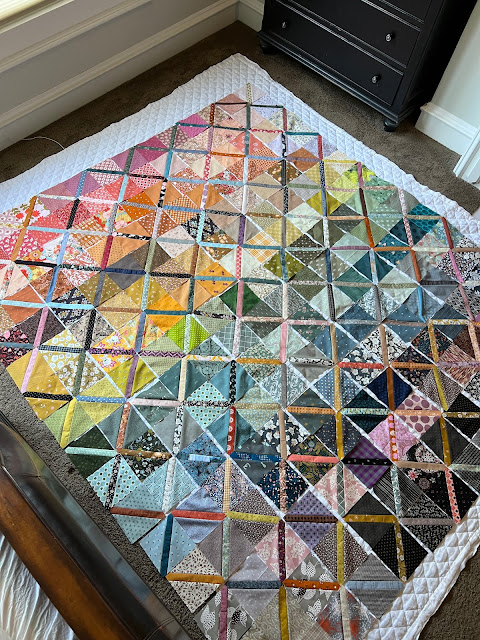
Have I sewn anything? I participated in a bee, and just about half the blocks were unusable. So with my fever-covid-fog (FCF) brain, I unpicked some that were too small and re-sewed them, I was happy I purchased more fabric than I needed, so I could make-from-scratch a handful more. One quilter had eye surgery and I was happy to make hers for her. I was sent some blocks half-finished, and finished them. Some blocks were a couple of weeks late, which gave me angst because of my FCF-brain: I’d grabbed a slot with my quilter so I could have this back for the holidays, and time was slipping away. I decided, in the end, that maybe I’d picked too complicated of a block for some of the quilters, or maybe it was just a bad-karma month for a lot of other people. That happens. But in end, as with most quilts, Mercato Square was finished. I sent it off, after agonizing about which quilting panto to use. Stay tuned.
I sewed my October blocks and November blocks for the bee. One more month to go. I put a tip-sheet on how to make the strawberries and it’s a free download. The block on the right has been around for a while and pops up in different iterations.
Here’s the first example I have for you, from 2013, and I screen-grabbed some of what this quilter wrote:
The above is from a blog titled D & D Adventures (it’s defunct now).
I did a version of cut-block-insert-strip, Criss-Cross Quilt, that uses larger blocks, some with the insert going diagonally and some, vertically/horizontally. I don’t know if you remember, but there is a 31%-off coupon for any one thing in my pattern shop, so if you want this version (or something else), grab the coupon and get it (it expires on Halloween).
This time around, the Queen Bee sent us to Amber of Gigi’s Thimble, where she has a free tutorial, and her quilt (shown above) is so beautiful. I’ve used Amber’s tutorials before and they are solid. Speaking of quilt patterns, there was a recent kerfuffle online about a pattern maker who resisted the idea that other people could make patterns similar to hers (not copied…just similar). I think, unless it’s a direct plagiarism, ideas get recycled and re-worked. I also check Barbara Brackman‘s Encyclopedia of Pieced Quilt Patterns. If it’s in there, it’s been done before.
And I don’t think I posted about these blocks?
These were spools blocks done in April, and I made a tip sheet for those, too.
from here. Lisa has all the blocks arranged from the Gridster Bee. These are large blocks, not tiny, and what a good way to use up all those long skinny scraps of fabric!
For silliness’ sake, I opened one of my Molly blind-box toys. It was one of those days when FCF-brain was in abundance, I was tired, oh, and about a billion other things, and it was only lunchtime. I make a big deal out of opening these little toy boxes (Baby Molly stands about 4″ tall) by taking it in to sit by my husband in the office and asking him to watch. It was love at first sight with this version, but the motto on the card told me everything: “I can handle it.” (Like, get a grip on things.) The Molly store is far away from us, so I bought two and saved one for Bad Days. Or Good Days.
I have been a collector of political trinkets for ages, even buying one for George Bush from a vendor on the street when we travelled in China in 2001 (after the fact, I know). I have a tin in my trunk holding badges going back to Nixon, the first President I ever voted for (my generation was the first batch of 18-year-olds to get the vote). So when Carol sent me these, I am quite happy to wear them to wherever I go, trying to put country over party, having voted both ways in my life. But won’t we all be happy when these interminable election cycles go away next week!
Please notice I am wearing my Halloween vest in the photo above. I get to wear it about 3x a year, and it makes me smile.
Last October, I was also in Bologna eating persimmons with nuts for breakfast. My husband, Dave, found some more persimmons here at the street market, and we’ve been enjoying them. We peel them, dig out the giant seeds (some varieties have them, some don’t), cut them in half and add a few nuts. Be sure to wait until they are really really soft. If you have a tree, here’s some info and then my version of Persimmon Bread.
I had to look up when my mail-in ballot would be counted. It’s been counted! We’ve used mail-in ballots for a while, and they are so convenient. Last cycle we took them to the drop box at our county building, but this year? The mailbox in front of our own home was so appealing to this FCF-brain. But on balance, we have stupid stickers. After seeing other states’ versions online, our state needs to step up its game.
This year I’ve seen several quilt-a-longs (to get the free patterns you have to agree to sign up for the mailing lists of all the people involved). This one that I’m interested in right now, the #sweaterweathersampler, led me to the QuiltScouts, where I found these badges and stickers. They have more badges, but they ask you to be “on your honor” in buying only the ones that apply. I qualified for most of them, which is what happens when you’ve been quilting for a bazillion years.
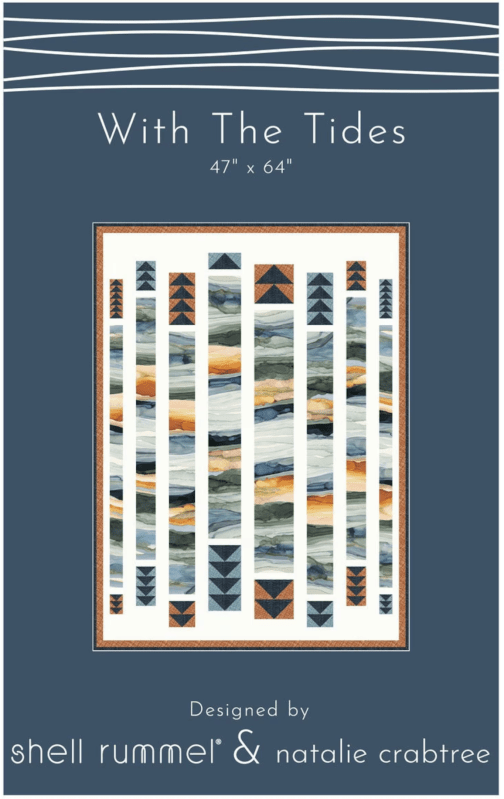
On a day where I was feeling better, I opened up my bin of painterly fabrics that I’ve been collecting for a while. I had wanted to make the first pattern (below).
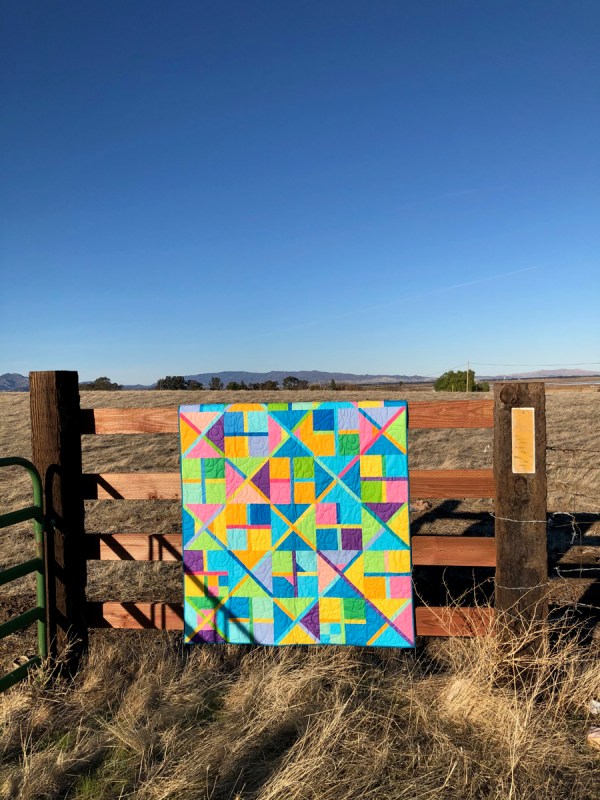
But since they didn’t have any of that panel left I improvised, still using fabric from Shell Rummel (along with William Reue, and snippets from Deborah Edwards & Melanie Samar). I just noticed they’ve updated the pattern (on the right) to accommodate the newest panel and line. My only advice is to lay it out on a large flat surface when stitching everything together. I just sewed, like normal, and when I finished, the left side of the quilt was about 6″ longer from the right, and I still can’t figure out how that went wrong (FCF-brain?). But I fixed it, and have finally figured out how I want to quilt it.
This is me, on the patio of our City Hall building on the Saturday where I went from “being over covid” to feeling crummier and crummier by the end of our tour and rebounding into covid, a surprising frustrating experience. But at least I have this cool photo of this inset medallion, because you know us quilters: always looking for pattern and color wherever we can. And I’m happy to have covid in 2024, not 2020, when we all suffered through the horrific pandemic. And interestingly, that’s the time period of Peggy Orenstein’s book, which brought to memory how awful it all was, and to what a debt we owe so many who took care of us all.
I’ll leave you with a quote from Orenstein, when talking about the mortification of being judged (often harshly) for what we make, which often discourages us:
The alternative, and the best defense against those potentially psychologically lethal blows, is to focus more on experience than evaluation: to resist “good” and “bad” altogether and instead ask questions, identify what works, wonder what can be improved. It’s recognizing that the gift of creativity is in the way it challenges you, allows you to make meaning, enriches your life.
To kick off the month October, I’m offering up a coupon for 31% discount on anyone pattern in my PayHip shop until the 31st. Those of you who hang out here know I rarely do sales, so figure out which pattern you want and get a Halloween treat. Get the code at the end of the blog: good on one item only.
(My website media files when I type in the search term “Halloween.”)
Given that I am no longer nine years old, don’t these major holidays seem to be pretty quick on the return these days? I have set up a Links List below that has all my Halloween stuff (finishes, progress reports, freebies, etc.) so enjoy a Halloween Parade.
All Hallows Eve, a Quilt-A-Long I ran on this blog. Pattern info (not mine) is found on the links, but alas — it’s out of print. I think you can draw yourself a pumpkin, and cat and moon, but I did a complete post on making of wonky pieced stars, complete with free download for the stars.
Crossed Lilies (pillow) which isn’t technically a pumpkin or Halloween-themed, but it does have the pumpkin colors.
Make yourself a Tiny Quilt with a free downloadable pumpkin.
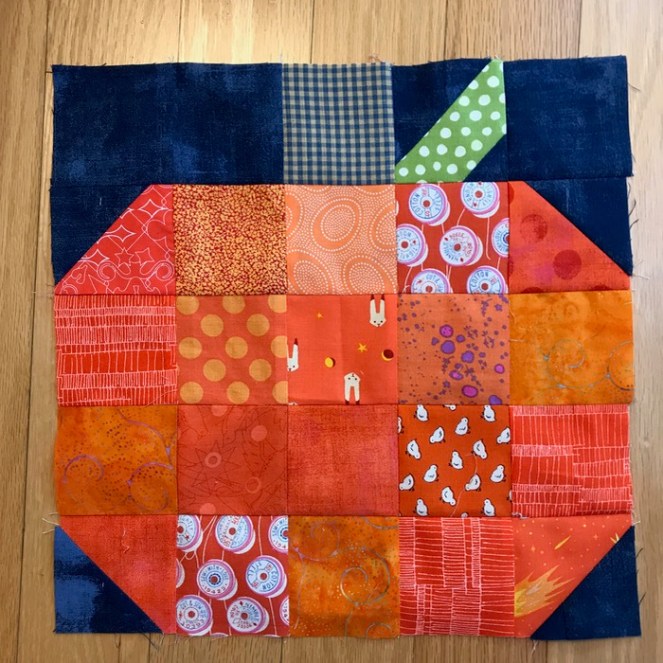
Pumpkin Block for our online bee, The Gridsters, with free pattern.
Pumpkins –– a race to the finish with Carol (a commercial pattern).
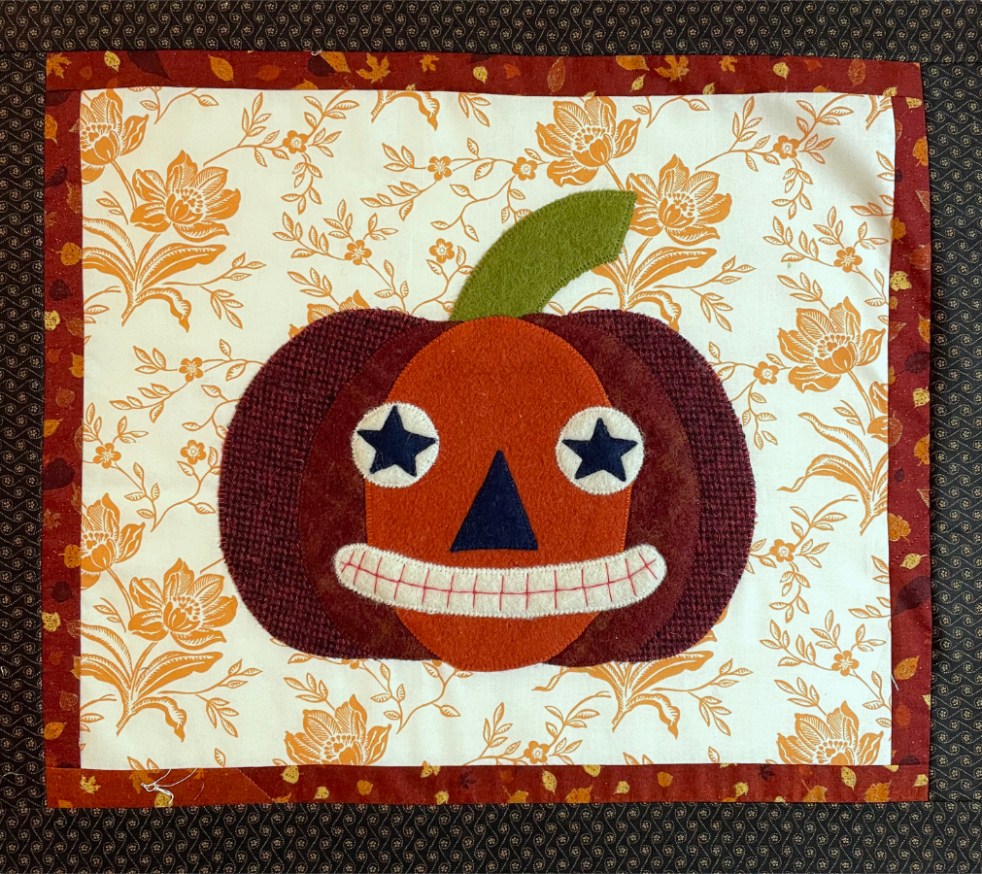
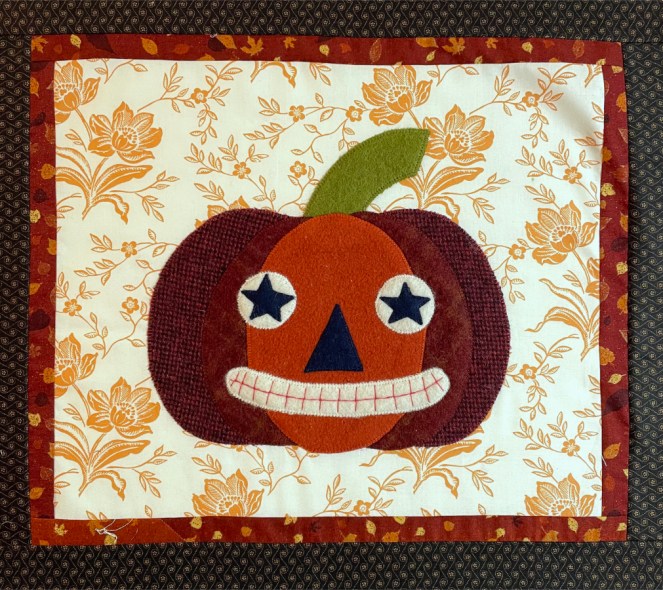
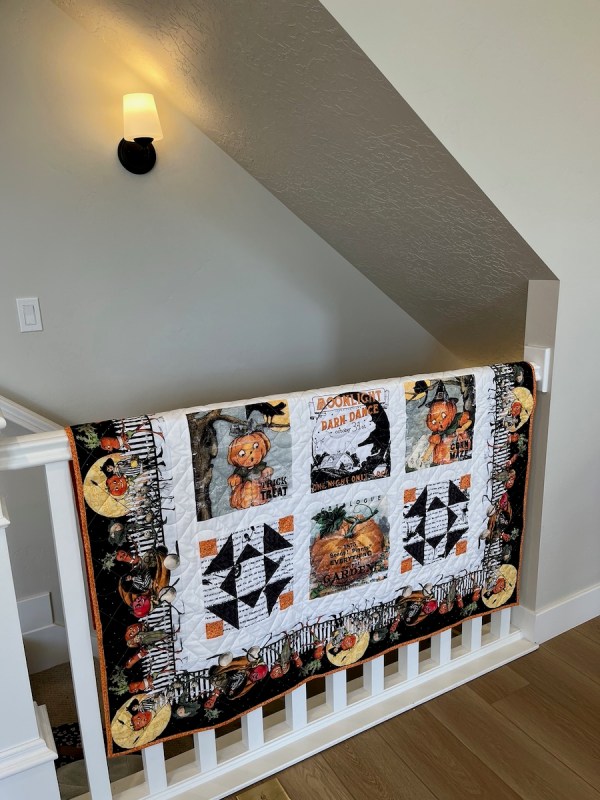
And the one I finished last month from a kit, Halloween in the Vegetable Patch. Here is it, draped over my sister’s stairwell railing.



















 OccasionalPiece--Quilt!