300 and Beyond · Free Download · Quilts

Happy 50 Years!

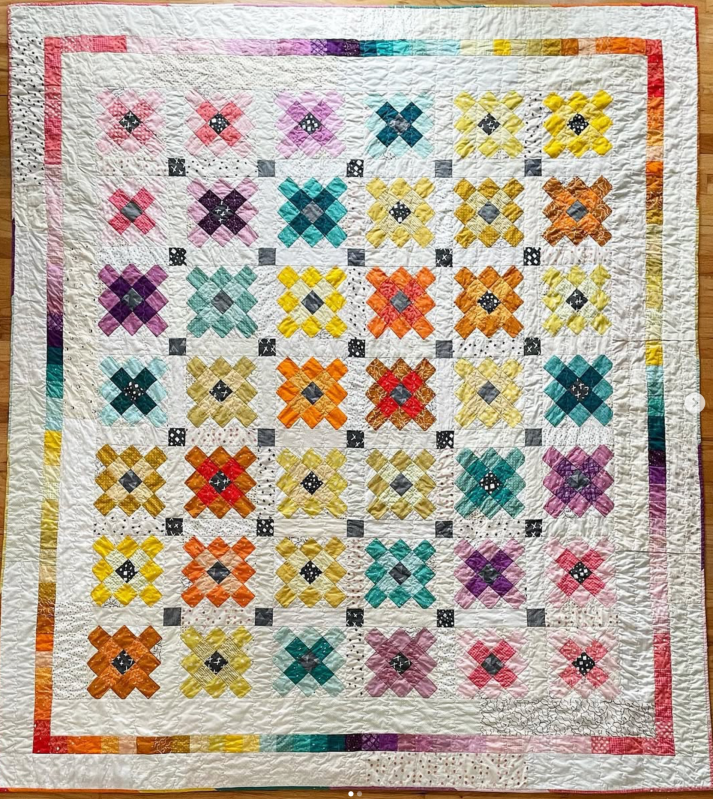
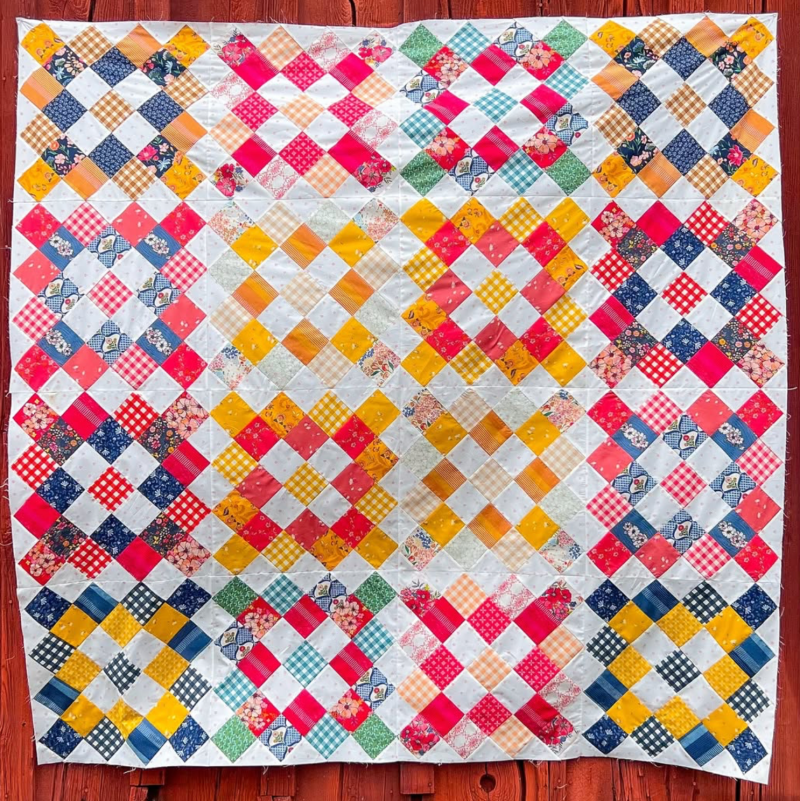
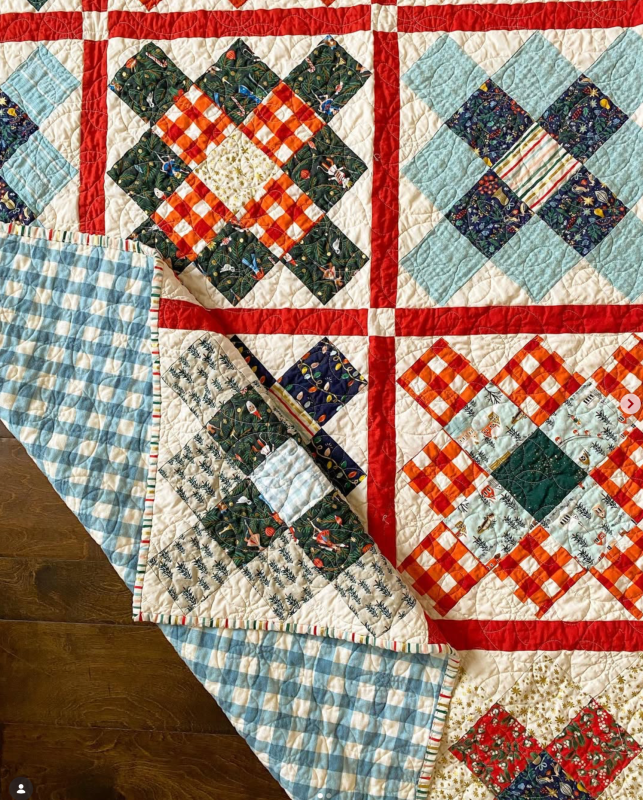
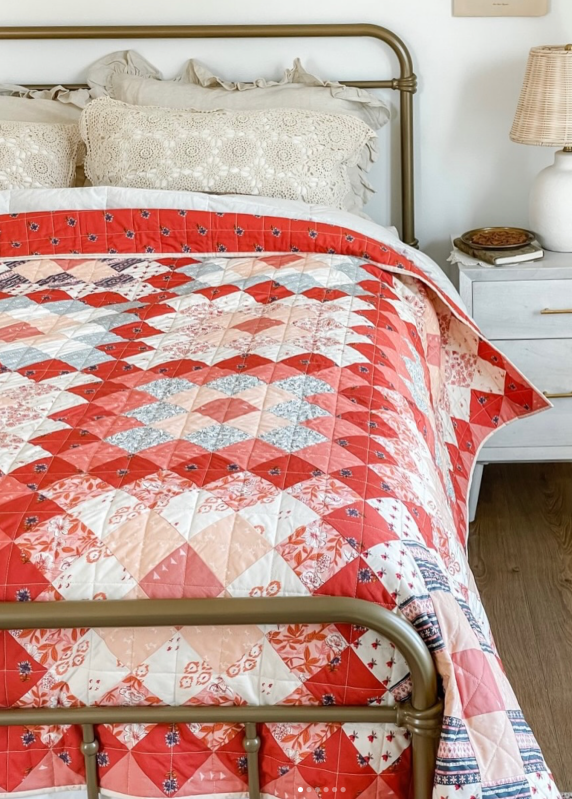
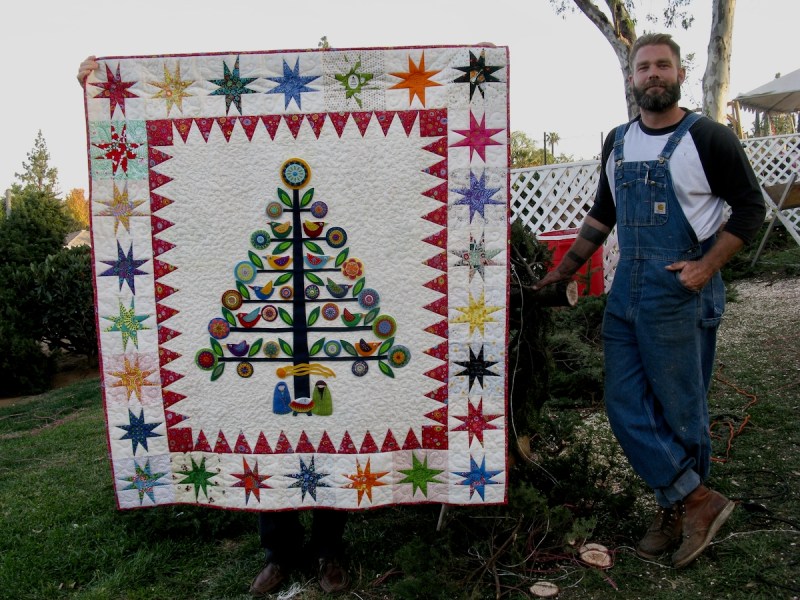
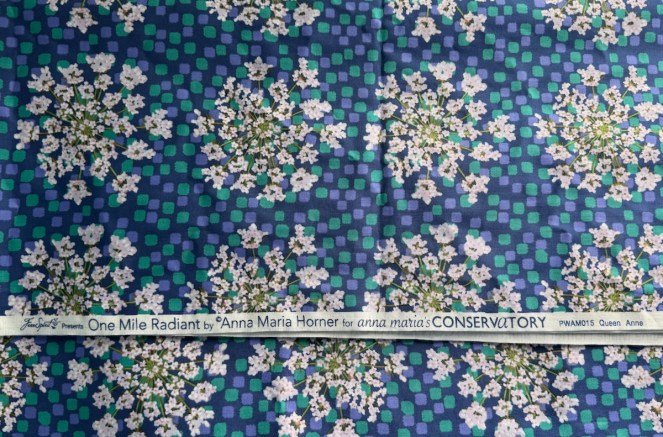
First, a continuation of a story. Remember this quilt? And how when I went to find the binding, I couldn’t…and then a friend wrote to say, “Oh, you sent me that fabric!”

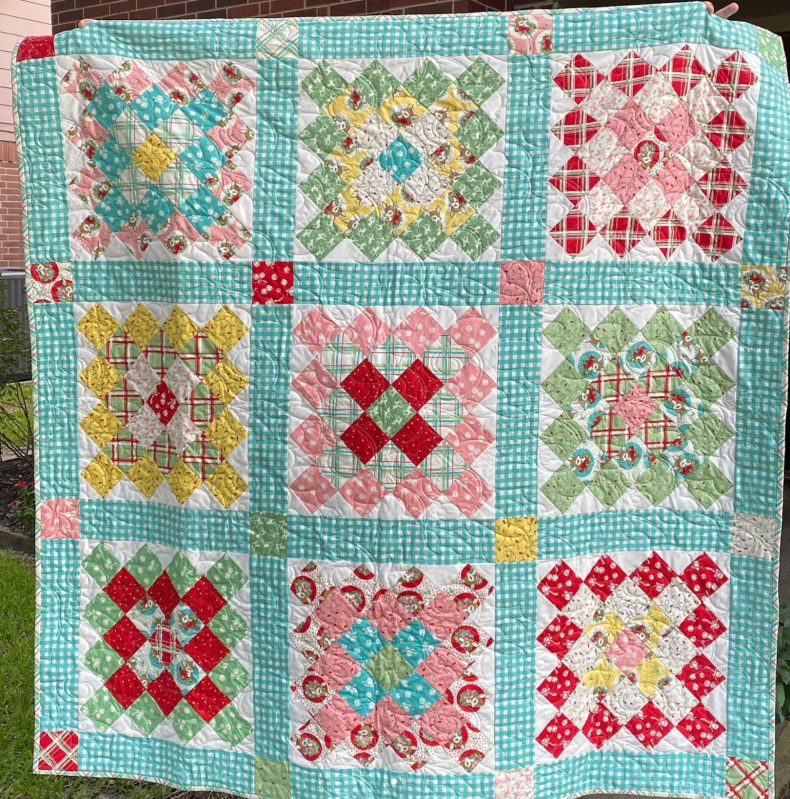
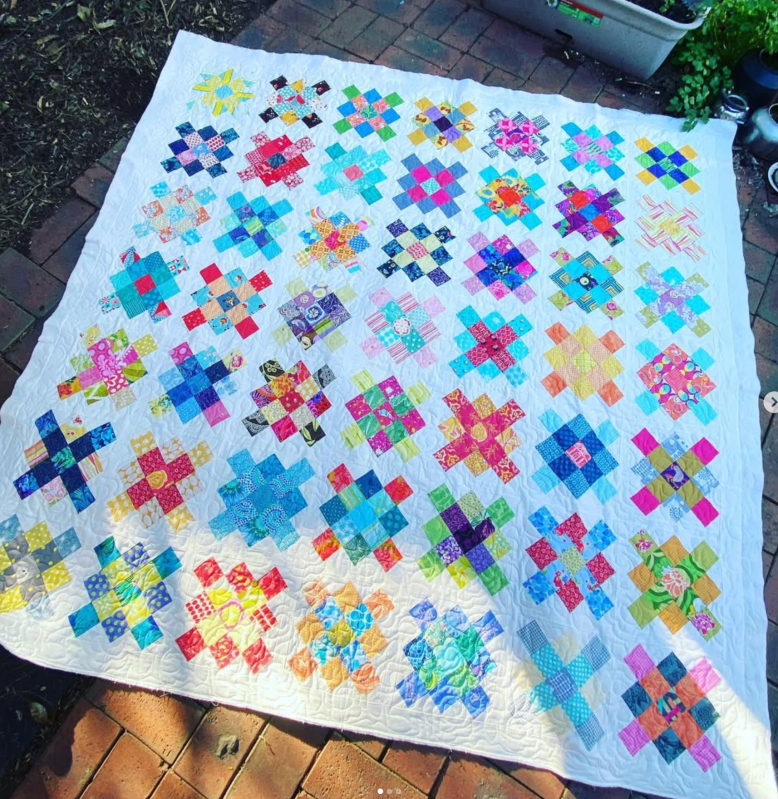
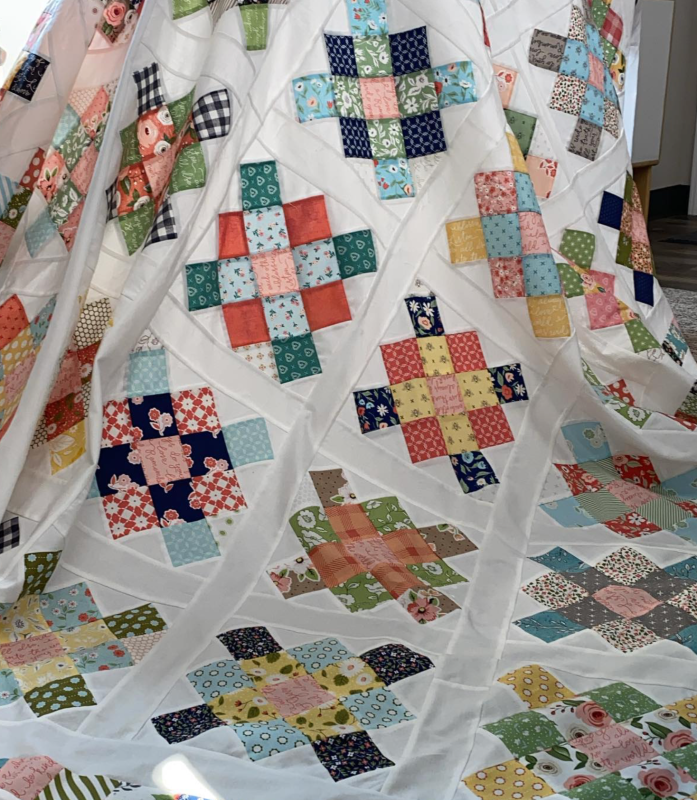
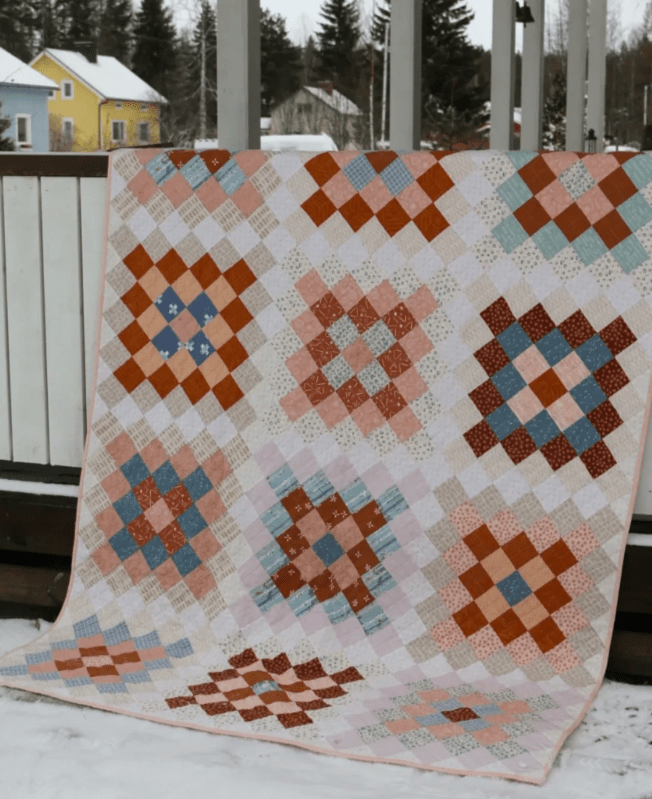
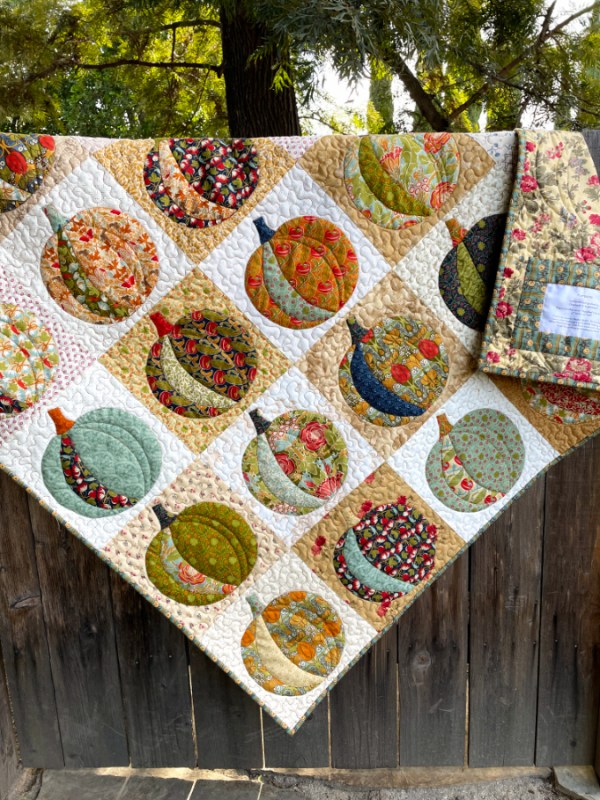
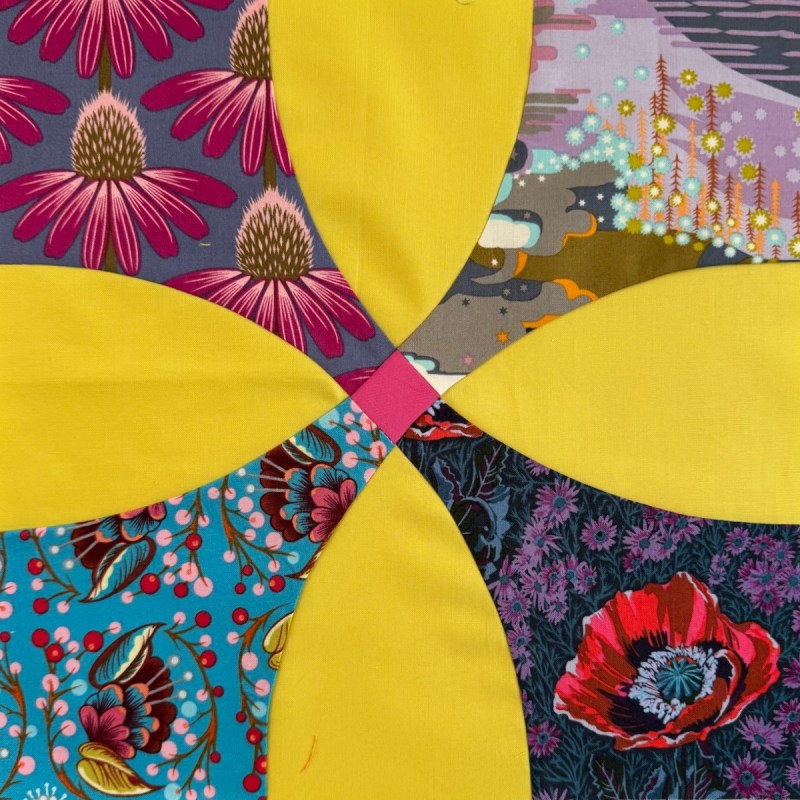
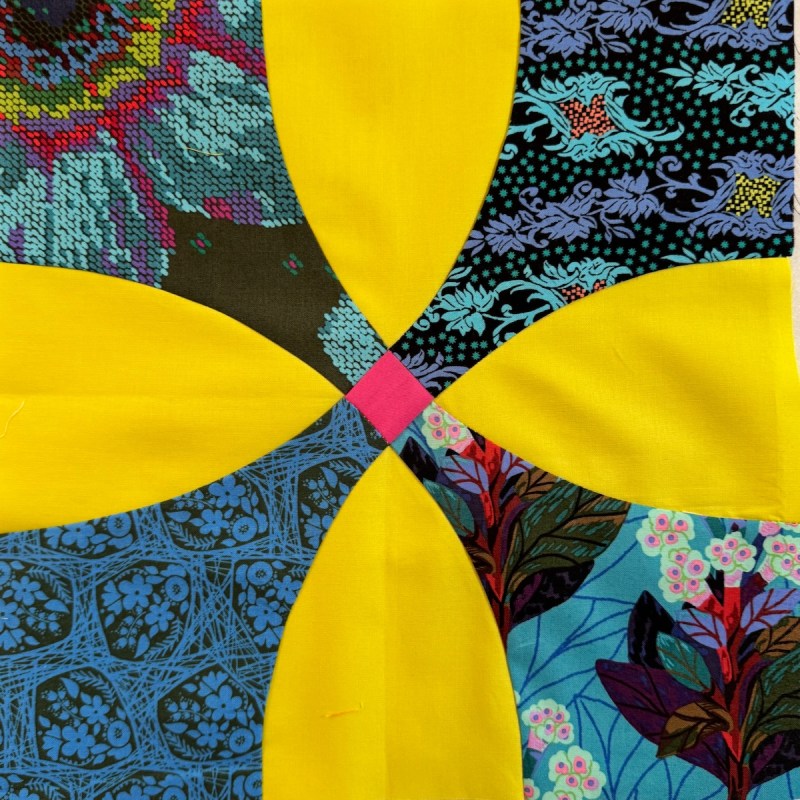
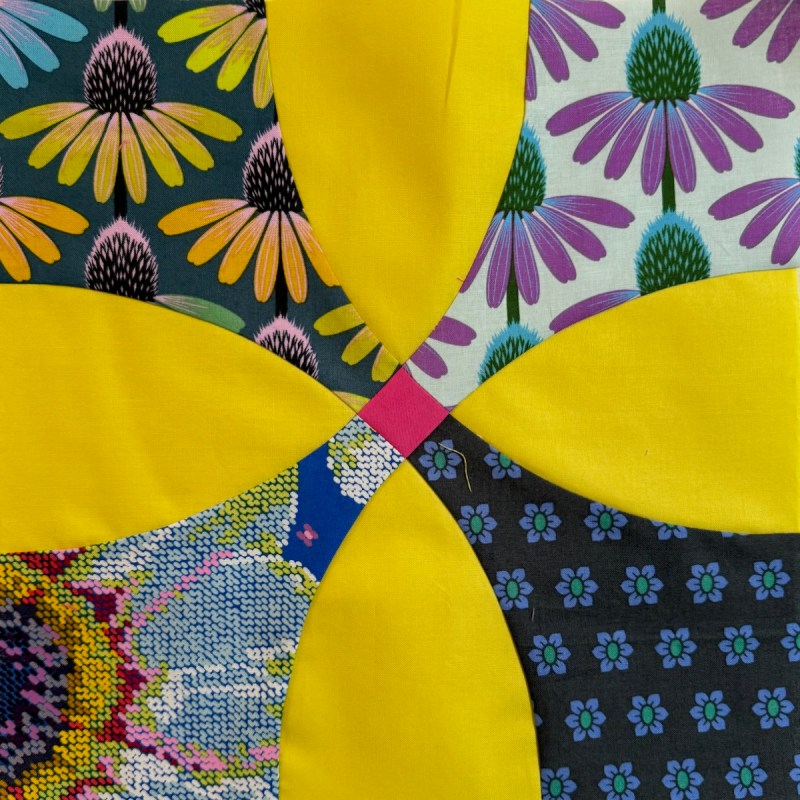
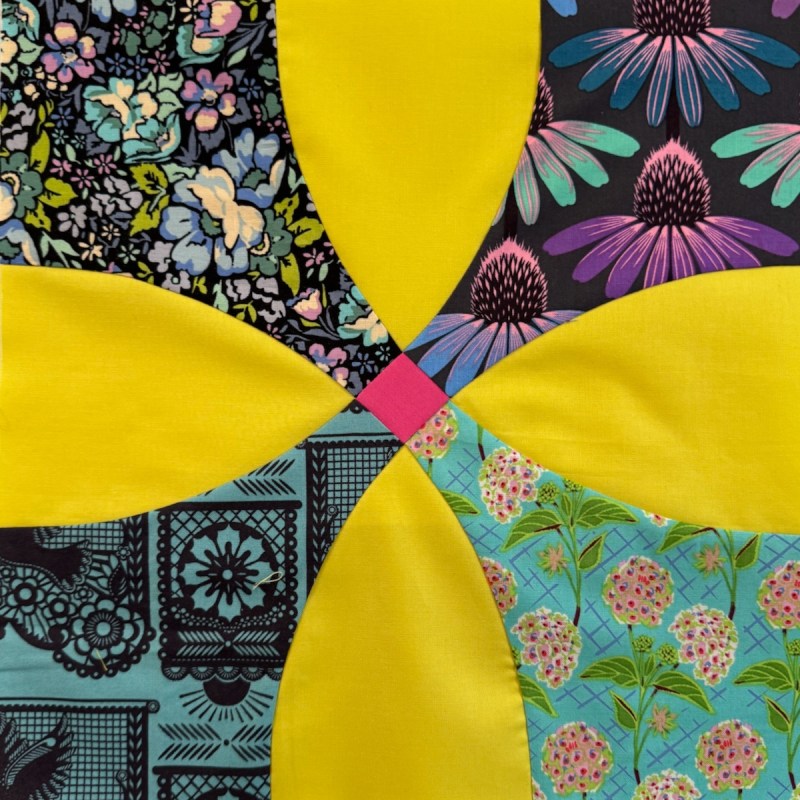
Then that friend, Mary of Zippy Quilts, performed her usual magic and using that fabric and my Criss-Cross pattern, made this up in no time. Or at least it seems like that. And then, she didn’t have enough for an outside border, but went with what she had in her stash. She wrote it up on her blog, Zippy Quilts, which is always worth reading.

While clearing/cleaning out in another spot, I found this bag of –yes– cut binding for that quilt. But now all that fabric is really gone — to a good home in the guild grab bag. So that’s the end of that story.

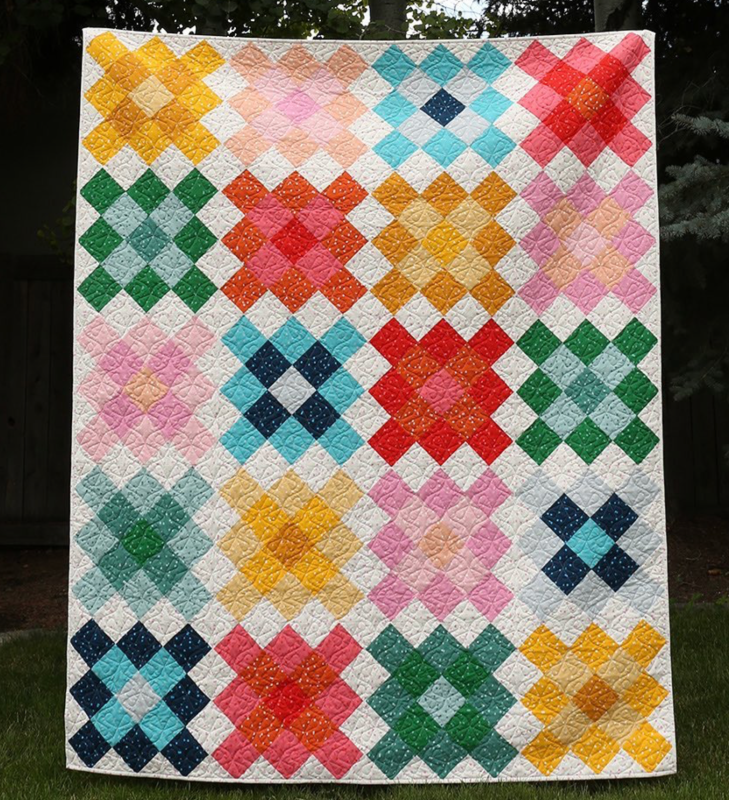
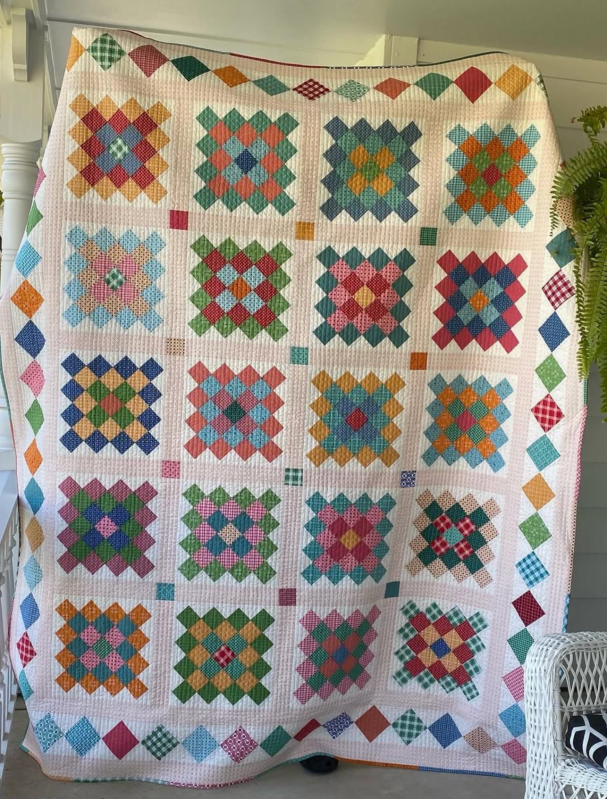
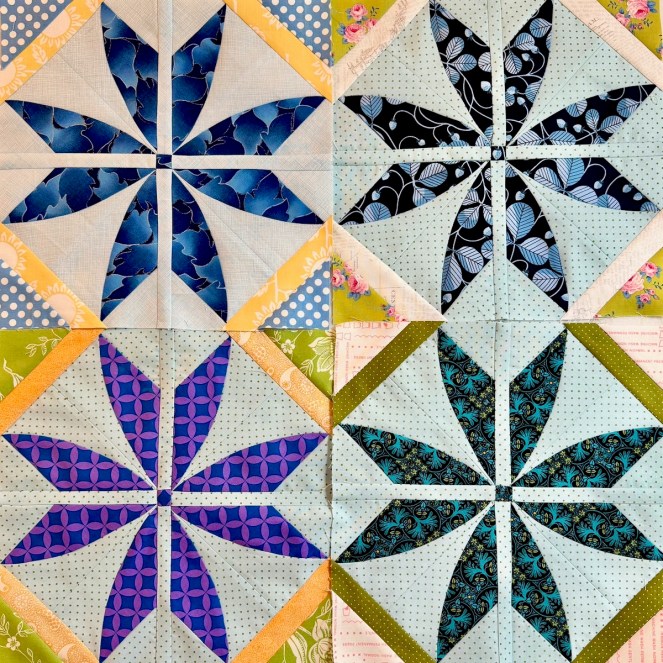
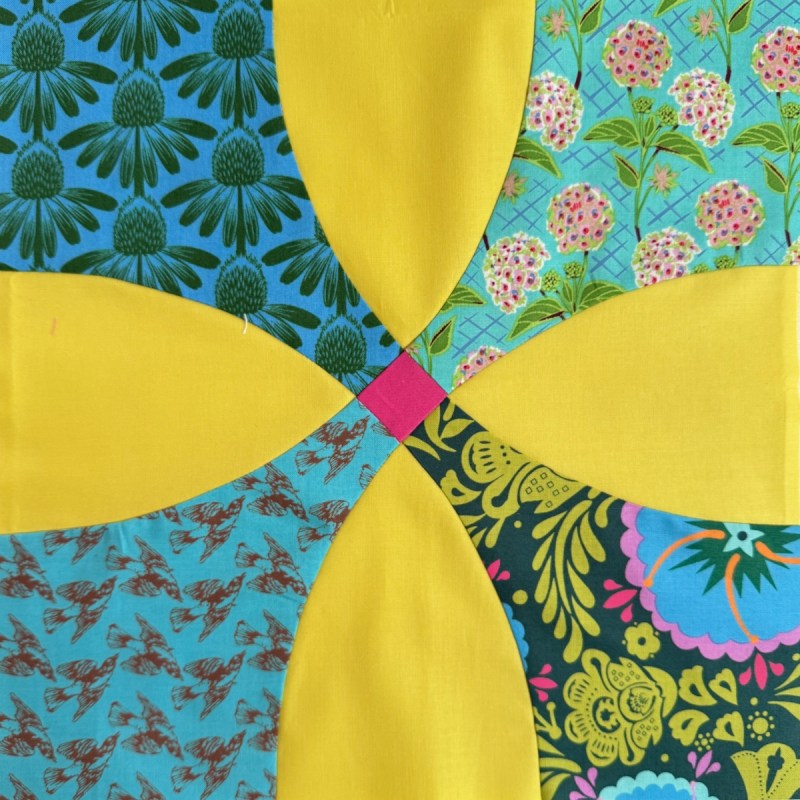
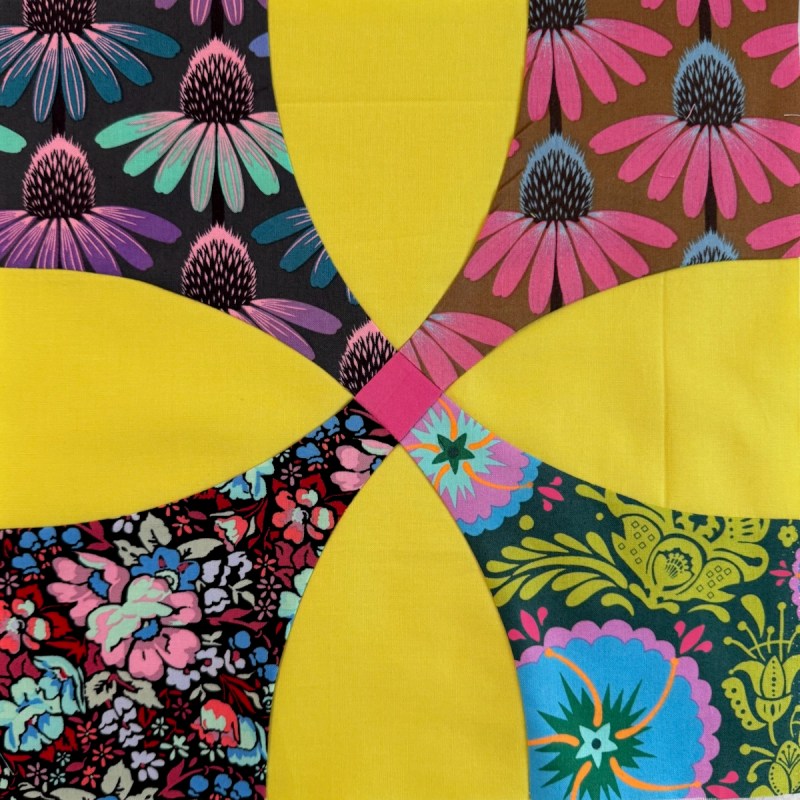
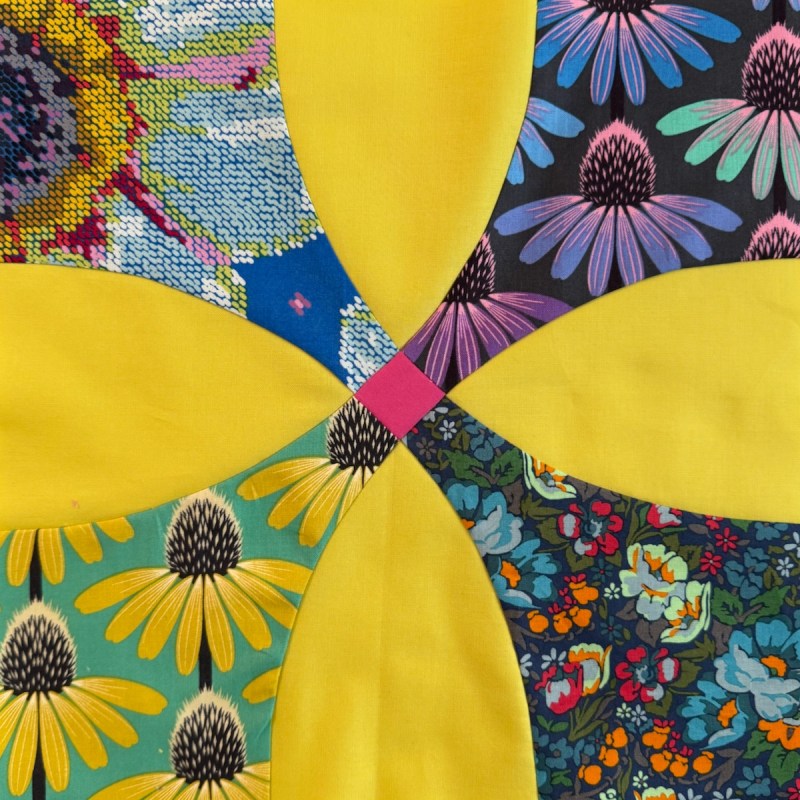
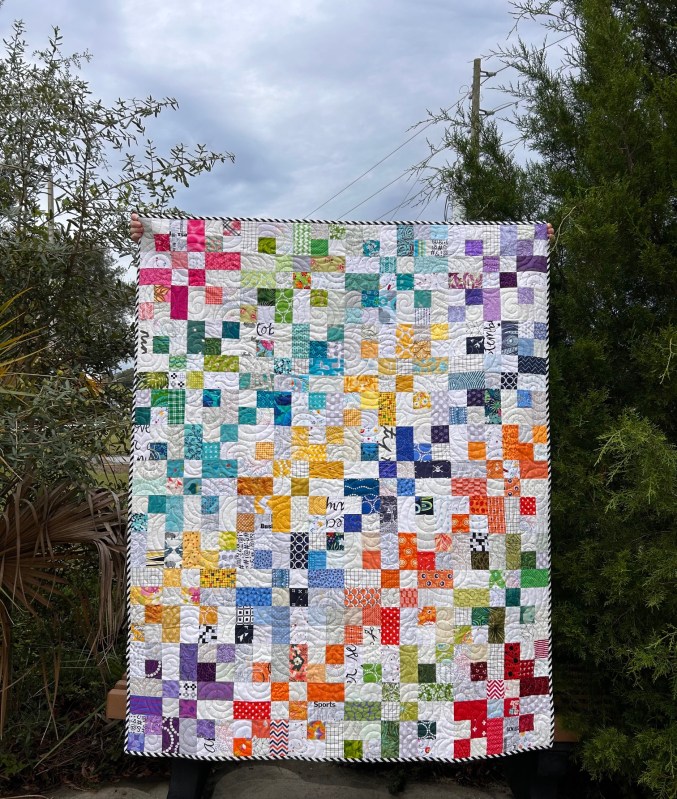
Here’s my version of Criss-Cross Color, done all in richly colored solids. One of my children now has this quilt, and I hope it gets lots of use.

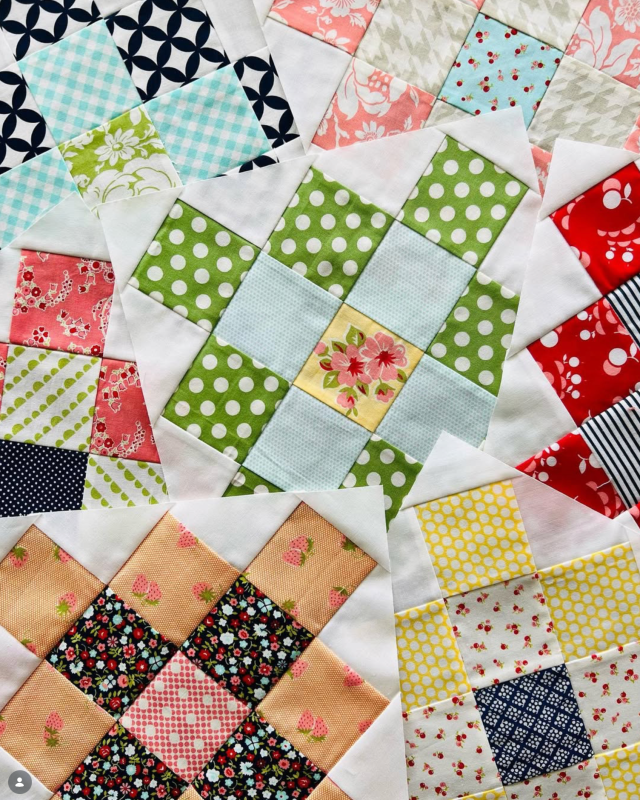
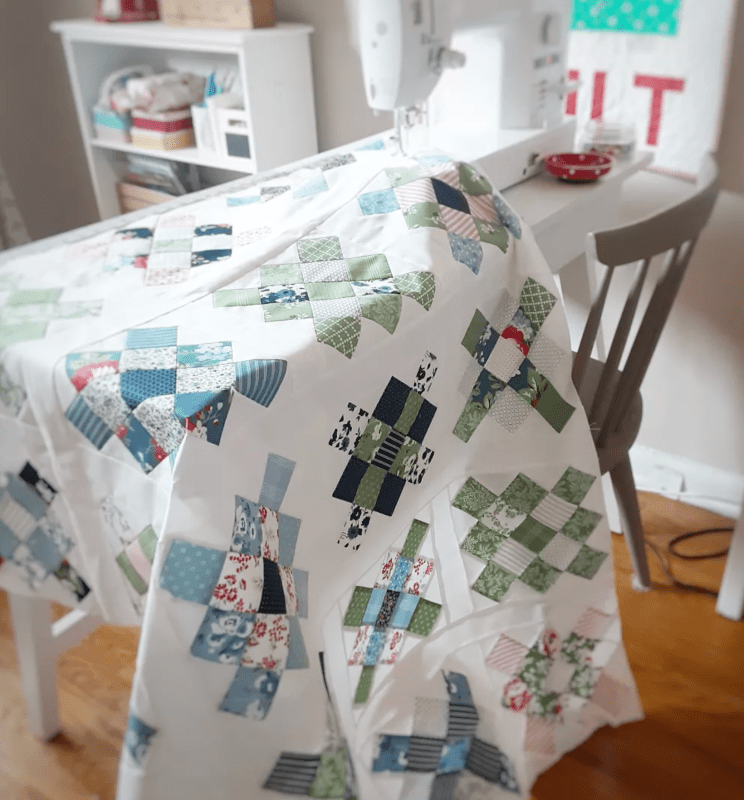
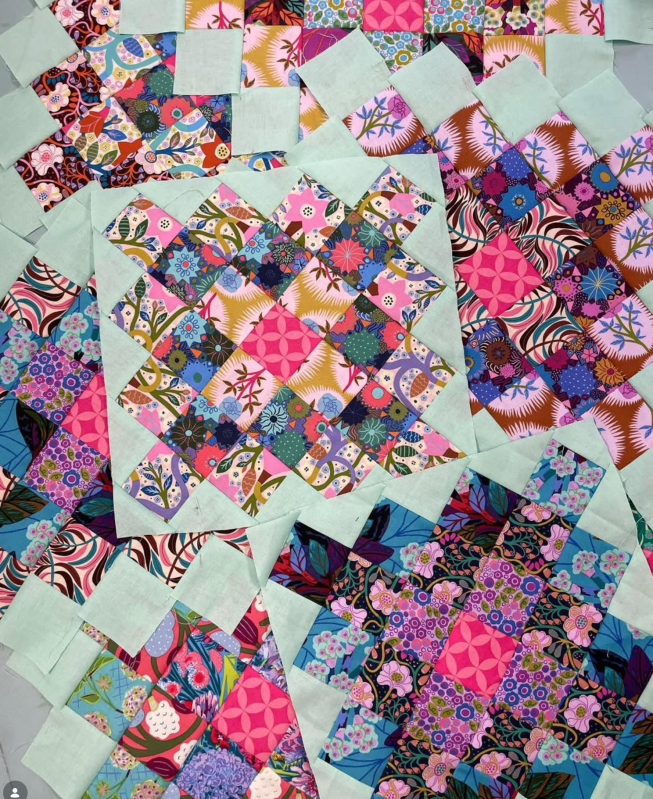
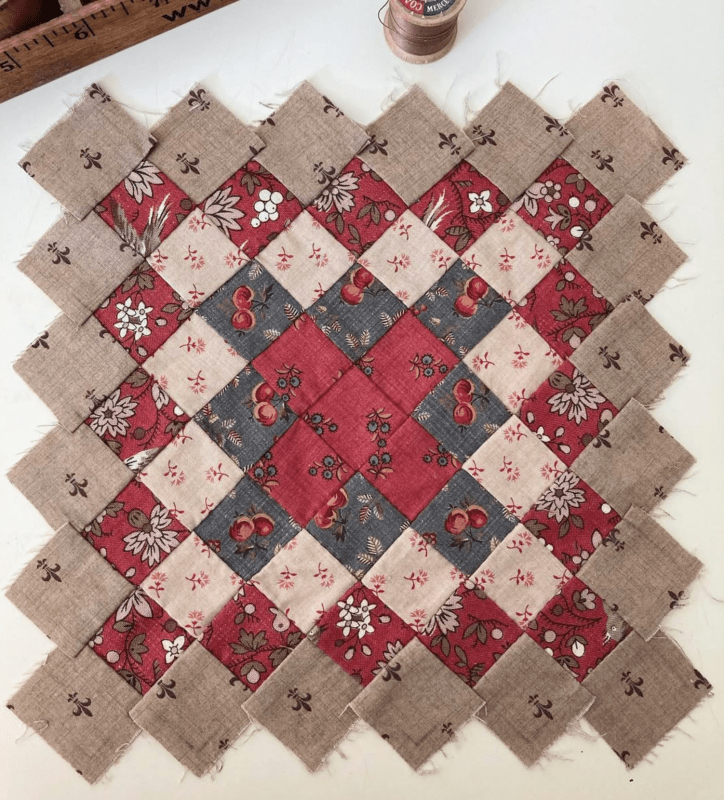
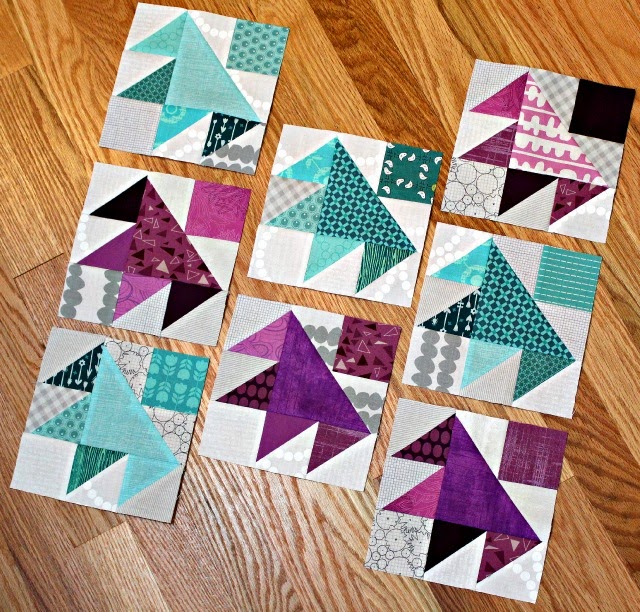
In keeping with my discovering more and more WIPs from Days Gone Past, I found seven selvage blocks (mentioned in an earlier post). And since I’m playing the News Avoidance-Call Your Congressman game, I figured it was as good a time as any to finish up this stray project.

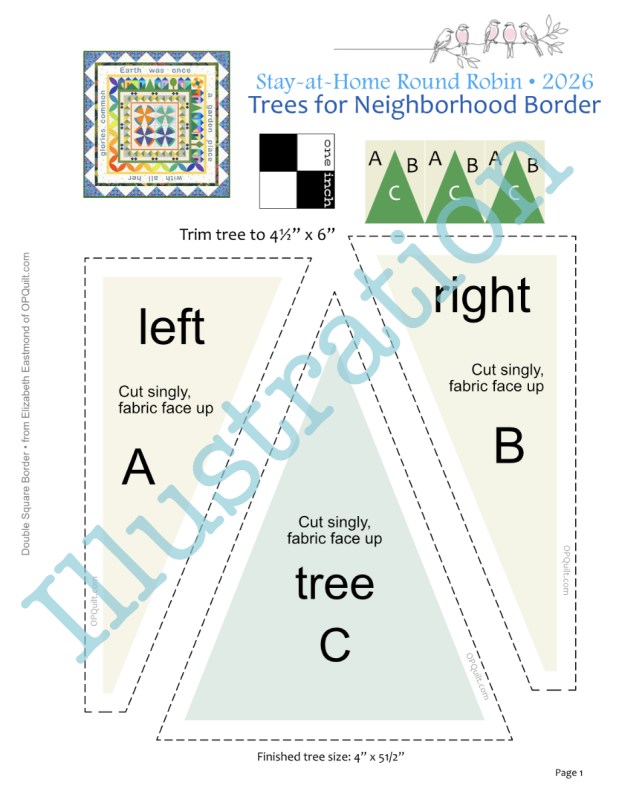
Since the universe served me up this quote (which is unverified at this point) I knew what had to be done: write up a free tipsheet on how make these blocks, just in case you might want to sew some up. Keep reading for my final thoughts on this (at the end).

Click below to download the file:

(Don’t click on the illustration—>)

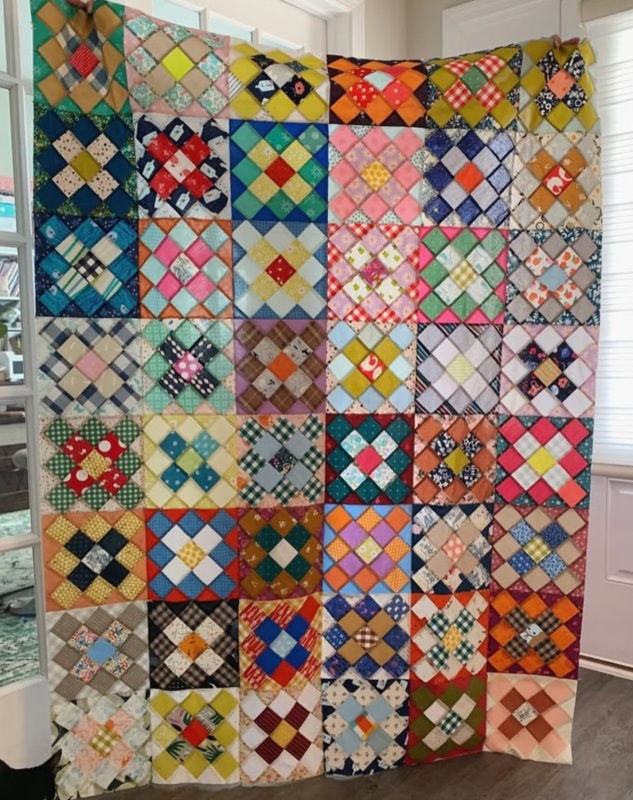
So I had seven, but made two more in the last few days, so here are all nine. I keep wondering about that white in the middle, but I’m in the business of rehoming my orphan blocks, not creating more. It will stay white.

What kept me going in ripping out all those papers:
I’m now going through the fourth book of Osman’s and have the fifth one in my wish list, but it’s not going to be released until September. I think you can also get them through public libraries, too.

Basic Tips for Selvage Blocks

(Tips are also in the free download, above, but here’s some different photos)

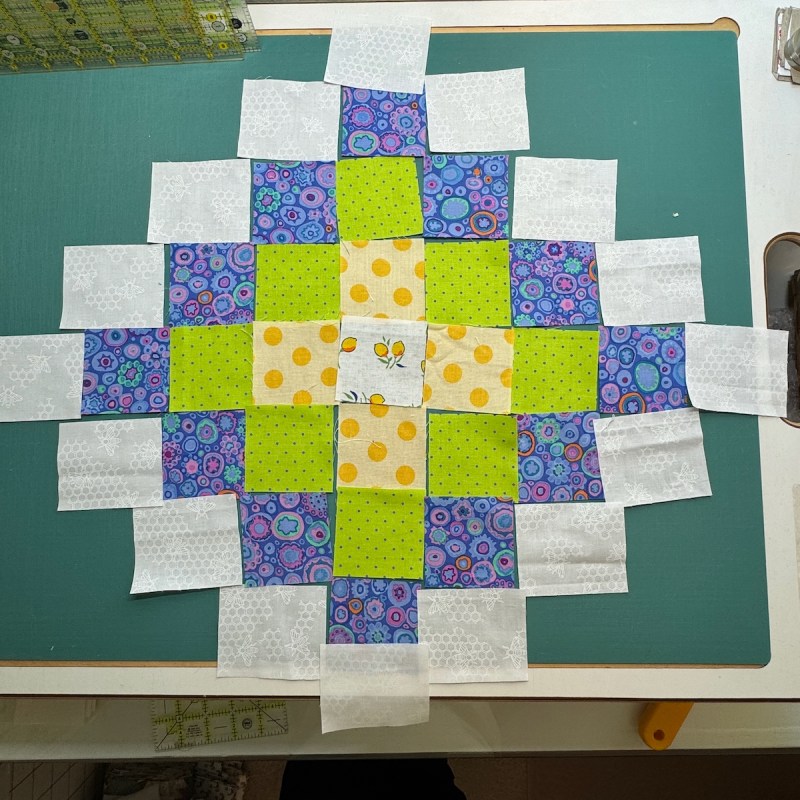
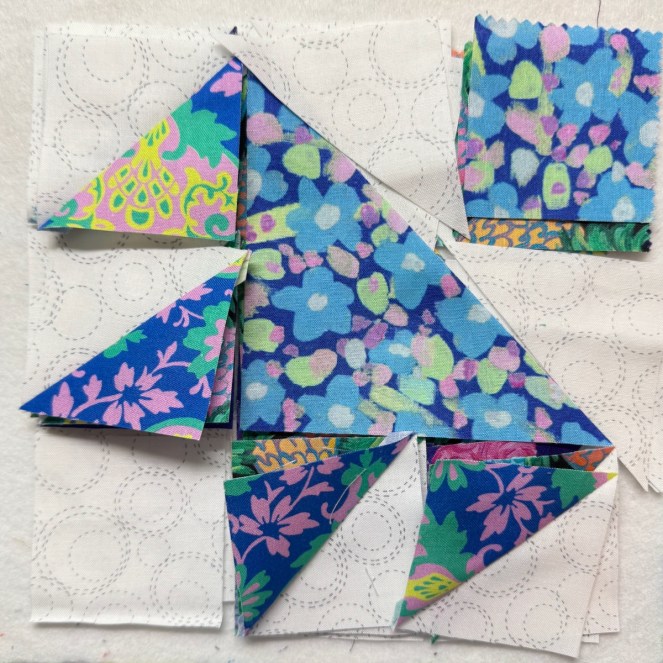
The triangles are cut and pinned, and now I’m ready to add my first round of selvages. I check to make sure I’m overlapping at least a 1/4″ and then sew it down, keeping my needle about 1/8″ from the edge.

Since I have a range of blues ready to go, I add more. On the upper left, I pieced the selvage so the pears would end up next to the words. It’s not the most perfect piecing job, but the bright side is that it allows you to see that I did piece it. I do try and arrange the markings (words and designs) when I’m cutting and arranging the strips, so they don’t get cut off. And in the last photo, I’m happy that the bright blue will run around the very center of the block (more on that in the Tip Sheet).

In the top left (I assume you are reading this on a desktop, but if you aren’t, it’s probably the first photo in this group if you are reading on a mobile), I noticed I was not as careful as I should have been in getting the strips on straight, and it was only going to get worse.

So I threw in a “half-length” of selvage on the right and stitched it down. Then the next strip would be more straight and level, and I could move forward. This process is pretty forgiving, so try not to sweat the small stuff. The rest of the photos show an early phase (half done), then a fully covered square. Notice that the “tip” has a rather large piece of selvage on there. I have been known to grab a length of fabric from my stash and cut a selvage to fit.
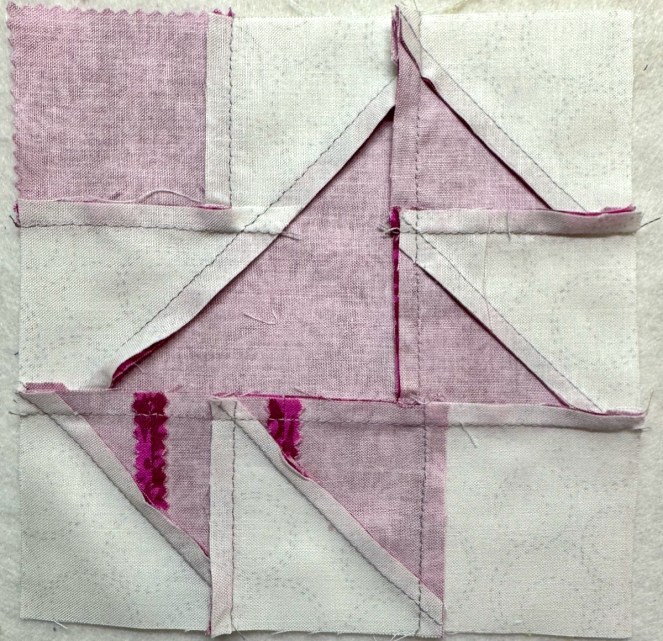
Flip over your completed piece, and trim to 10-1/2″ square.

Four of them, sewn together, yield this pretty thing.

One last tip: I did plan to keep the paper on until the very end, but hey — paper doesn’t move, stretch, or give. [Or if you’ve been watching all the Saturday Night Live (SNL) videos this week, it also doesn’t kick…stretch…or kick.] While some of these selvages are from 25 years ago, they aren’t as old as Sally O’Malley (she’s 50!).
Although, if you need a good laugh, let me stop you right now and remind you to watch the More Cowbell skit. We burst out laughing one early morning, and in spite of the News (shudder), had a smile on our faces for most of the morning.

The other night I couldn’t sleep so wandered into my sewing room. I typically don’t sew in the middle of the night (you know, sharp things) but I decided to piece together my big blocks. I had some repairing to do after taking all the papers off, so did that, then started –very carefully — pinning and sewing the blocks together. It was a wonderful time to think of the fabrics that I’d used, from baby fabrics to bright bolds, to textures. I found repeats in different color ways, backings (they give the longest lengths of selvage), and bits and pieces of other fabrics.

I realized this quilt is now kind of like a fabric journal, a history of my materials and where my quilting journey has taken me over the last fifty years. Just as SNL is celebrating their 50 years of doing comedy sketches, I guess I should celebrate my fifty years of quilting.

Happy 50 to me!

Guess I’ll go and sew something!

European Patchwork Meeting · Free Download · Quilts

Strawberry & Saint Marie-aux-Mines

I have so much to share from my trip to the Carrefours European Patchwork Show in Alsace, France last month, but first…strawberries.

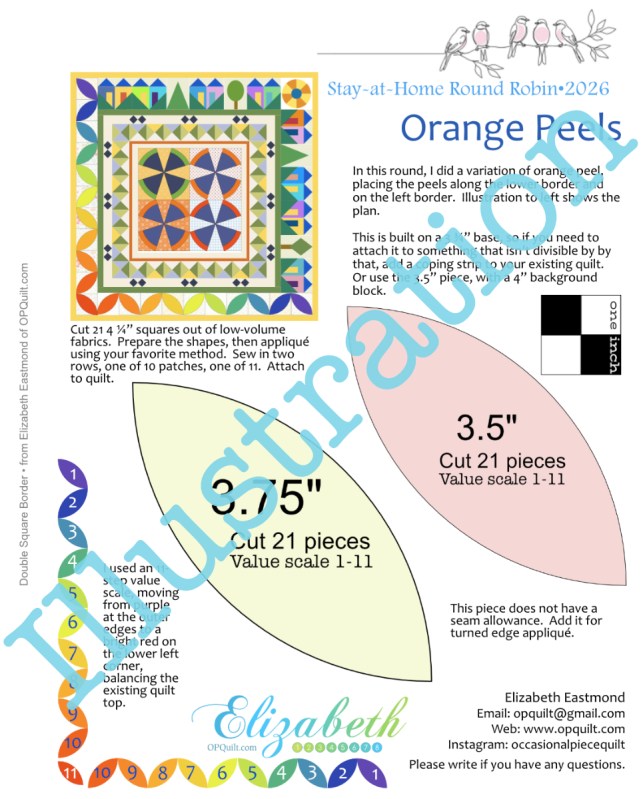
I know we just did Halloweeeeen, but when my beemate asked for strawberries for her block in October, I couldn’t resist drawing up a free block guide for you to download.

Click to download:

Almost as soon as I got my suitcases cleared out then I came down with a case of covid, which meant Paxlovid (cue: grimace, for the taste it leaves in your mouth, but cue: happy face, for having this drug). I’m just now coming up to the top of things and curating my photos. All is coming, but here’s a taste of things:

Yes, it really is in a series of small villages set in the beautiful Alsace region of France (just below Strasbourg), and there really were amazing quilts to be seen in beautiful venues, but it’s coming, I promise!

El Niño, by Brazilian artist Sarah Luise Kaminski. Done with various fabrics, thread painting and free-motion quilting and layers of metallic thread.

One of the many sites where quilts and art were displayed: this was an old church filled with Amish-style quilts, honoring the early emmigrants from this region to America.

Au revoir!

Free Download · Museums

Quilt Care | Surface Designs

Freebie alert!

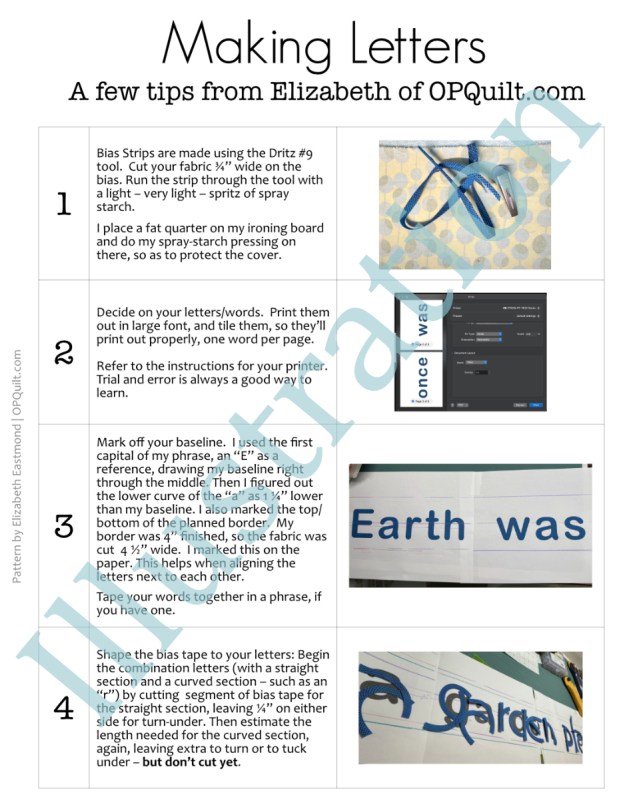
Now you can give them to the people who get your quilts. Download the freebie below by clicking on the button.

This is what it looks like: four to page. Print it out on cardstock, cut it apart and pass them out with your quilts.

I did have an old Quilt Care Card, but when my sister Susan needed one for the quilt she was making, I rustled up a new one. Much better.

As a person who often wishes she’d studied graphic design (our as they sometimes reference it: surface design) in college, I’ve been amazed by all the graphics I saw on our nightly broadcasts of the Olympics. I want to do something with them all, like making a heart block seen above. Or that very cool half-circle in segments. Another color way is below:

Here’s some links to gaze at, if you’d like seeing some of the graphics in motion:

The cool pictograms denoting the different sports
You know that box the Olympians receive with their medals? Here’s what’s inside.
I liked the little video on this post.
And the connection between the pictograms and a few sports.


Oh. Okay. (Need to update my thinking.)

Dreams Between the Earth and Sky, 2018 by Judithe Hernández from here

We went over to The Cheech [museum] last week, on the last day of Judith Hernández’s exhibit, most done in pastel chalks. So many intrigued me, but the two ladies on either side of this triptych were “clad” in the embroidered designs from huipils, a typical dress.

Here’s a snapshot of the huipil I brought back from Guatemala in 2019, when I visited my sister Cynthia (she has since returned from her church mission), and she took me to so many interesting places that involved needles, thread, looms, cloth. I could have stayed a week, but we only had a weekend.

Here we are, clowning around in a woven shawl. Don’t worry; I bought a couple.)

Three women, one of them just crowned Queen of her Village, all wearing huipils (woven and embroidered tops).

Patchwork quilt made of woven scraps, with some embroideries here and there. Somewhere I have about 10 of these parches, tucked away (of course). This entire post has more information if you are interested.

But back to the tryptich, above.

In the linked video, Hernández explains the iconography of the red ram in the center image. It’s that thing that seems to come around and interrupt the smooth flow of whatever you are doing. Of course, I’m paraphrasing. I’m all too aware of red rams in my life, in the life of friends far away, in our families. I loved that this idea was put into a visual image.

My husband and I walked on the beach this last week, as we had a mini-celebration for our anniversary. The waves drawing out the different grains of sand into patterns fascinated me.


Celebrate the bits and pieces of surface design you run across in your lives–

Post Script:

One can never have too much paper or too many pencils. The pencil above is a quilt clapper made by Modern American Vintage, with the loot from the Field Notes most recent sale: I’m a sucker for small notebooks. The pencil below is a Blackwing, purchased last year. It glows 🙂 in the dark!

trying to figure out the quilting

Free Download

Fly those Geese!

Wealth of Days underneath a poster of one of our town’s vintage packing labels

When I first starting making this quilt, I cut each flying geese block by hand because I was not able to rotary cut. I drew out the lines, cut a triangle, and piled up the cut pieces in bags for their corresponding temperatures. After constucting them, I found out how unstable the edges were, how inaccurate a method this was. Of course, it didn’t help that one arm was in a sling, but hey, a quilter’s gotta’ do what a quilter’s gotta do.

I’ve also done the snowball-on-the-square method, which is good for single Flying Geese.

But I’m a fan of the four-at-a-time, provided you use the Mostly-Magical-OPQuilt method of trimming them. I showed this trick to my friend Cindy of LiveAColorfulLife the other day and she said it changed her life. I took that with a grain of salt, considering the covid-lives we’ve been living, but I was happy it worked so well for her. Here we go.

NOTE: In the free Tips and Tricks Handout, downloadable below, I give you a formula for figuring out what sizes the large squares and the small squares should be. No more charts!

I use a 4-inch ruler for smaller Flying Geese, and a 6-ish-inch ruler for larger. (Can we talk about Rulers?) It’s all in where you take your first cut, and the angle of that first cut.

Step One. Make your Flying Geese, and grab a ruler, preferably one that has a diagonal line.

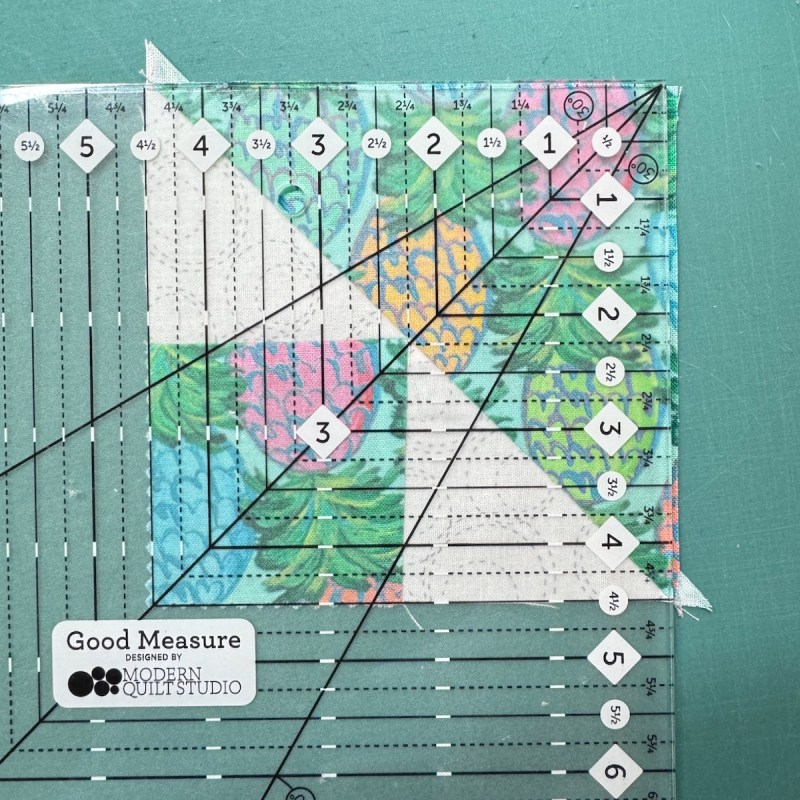
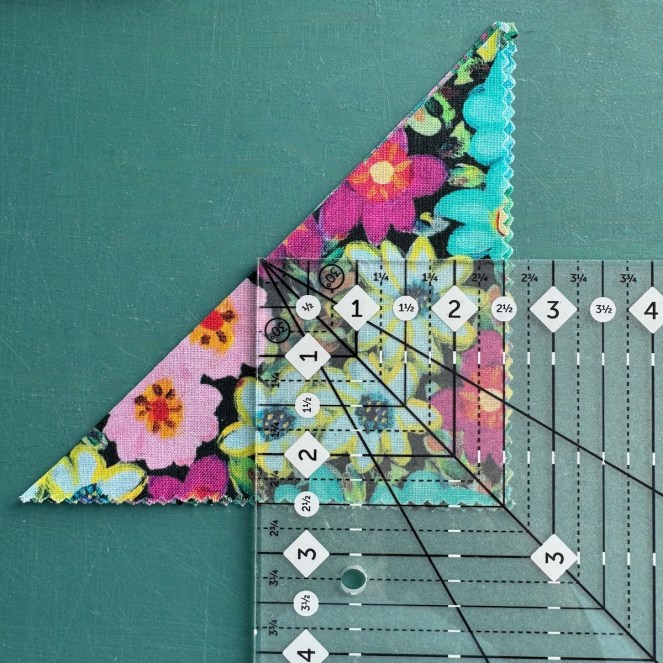
Step Two: With the flying geese point FACING TOWARDS YOU, line up the ruler’s diagonal line with that right-hand folded edge.

Step Three: Concentrate on where the r.h. tip of the ruler is, and where the measurement for your Flying Geese is. I’m trying to make a Flying Geese that will finish at 3″ by 1 1/2″ tall, so I’m concentrating on the 3 1/2″. If you have done your measuring and cutting correctly, don’t worry about the lower edge right now. Line up the r.h tip ON THE FOLD.
Line up the target measurement on the LEFT-HAND FOLD, as shown. Note: I am now free to make Flying Geese any size I want, not just what’s out there in the manufactured acrylic cutting rulers.

Step Four: Trim the RIGHT excess and the TOP excess.

Step Five (and final): Rotate the Flying Geese block so the tip is pointing away from you. Line up the LEFT (3 1/2″) and LOWER (2″) side or the measurement at which you want the block to finish. Trim away the remaining excess (as shown).

I can crank through a ton of flying geese using the four-at-a-time and the Mostly-Magical-OPQuilt-method of trimming. So can you.

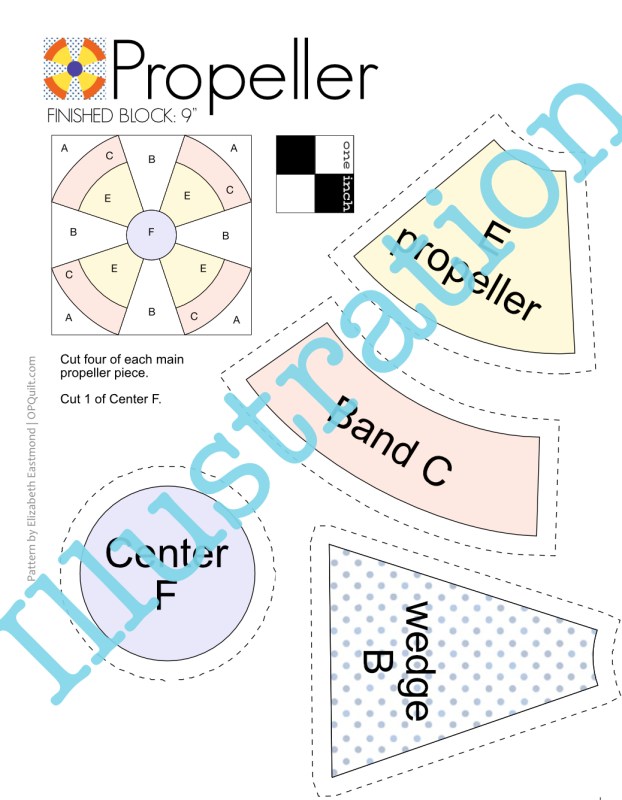
Okay, because everyone likes a free handout, here it is: Tips and Tricks from OPQuilt.com — Flying Geese.

Happy Quilting!