300 and Beyond · Quilt-A-Long · Quilts

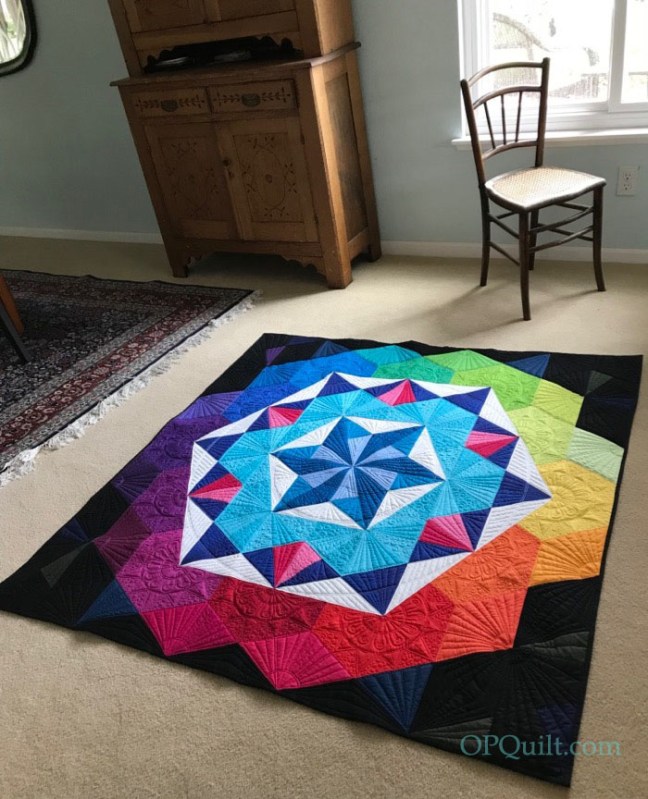
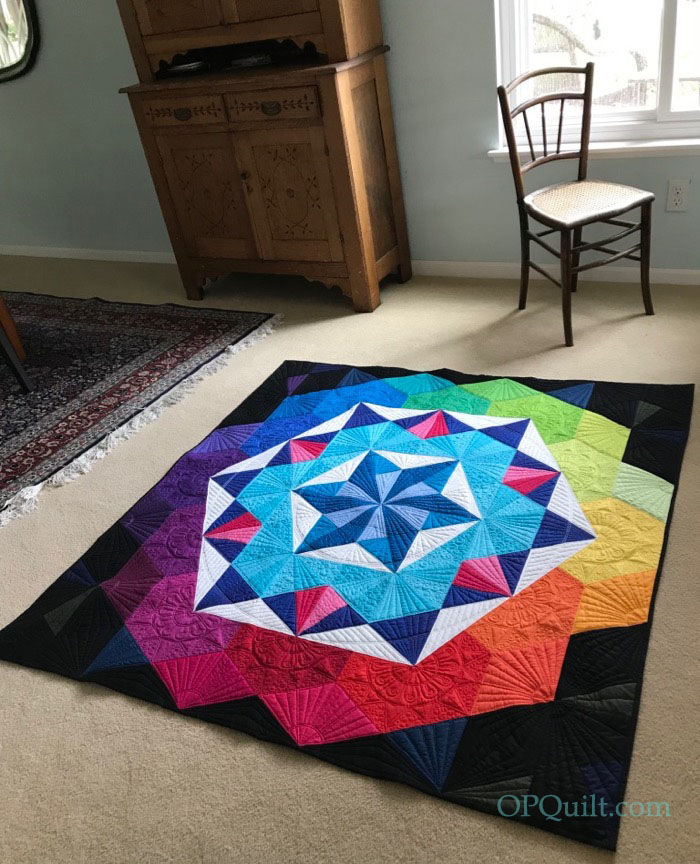
Flying Through Rainbows

In a series of interviews with new poets, they each expressed their confusion, discussed their work ethic, and acknowledged the daily drudgery — and joy — of being able to create and work. (See some quotes, below.) Do I wish I’d saved the source information for my series of quotes from these young poets at the beginning of their career? Yes, but knowing the internet, it is probably gone. I copied and pasted them into my digital calendar, and they pop up like clockwork every January. Fitting. We all begin creating at the beginning.

We seem to go full-steam in January, the new year giving us a fresh start. But lately, on Bluesky and Instagram, I am hearing often how the well some quilters usually dip into has run dry, that their “sewjo” or “mojo” is just not there. Is it because we are tired of winter? Or that we have early spring fever? Or just that creativity runs in spurts, and we have to step away every once in a while and get back to “real life” with its rainbows, as well as its tornadoes and sudden squalls?

In a slightly related idea, my husband’s father hung crystals in his window so they could flash rainbows around in random ways when the sun came shining through. Today, as my hands fly over the keyboard, typing this post, rainbows are dancing on my fingers, courtesy of two crystals hanging in our window right now from my husband.

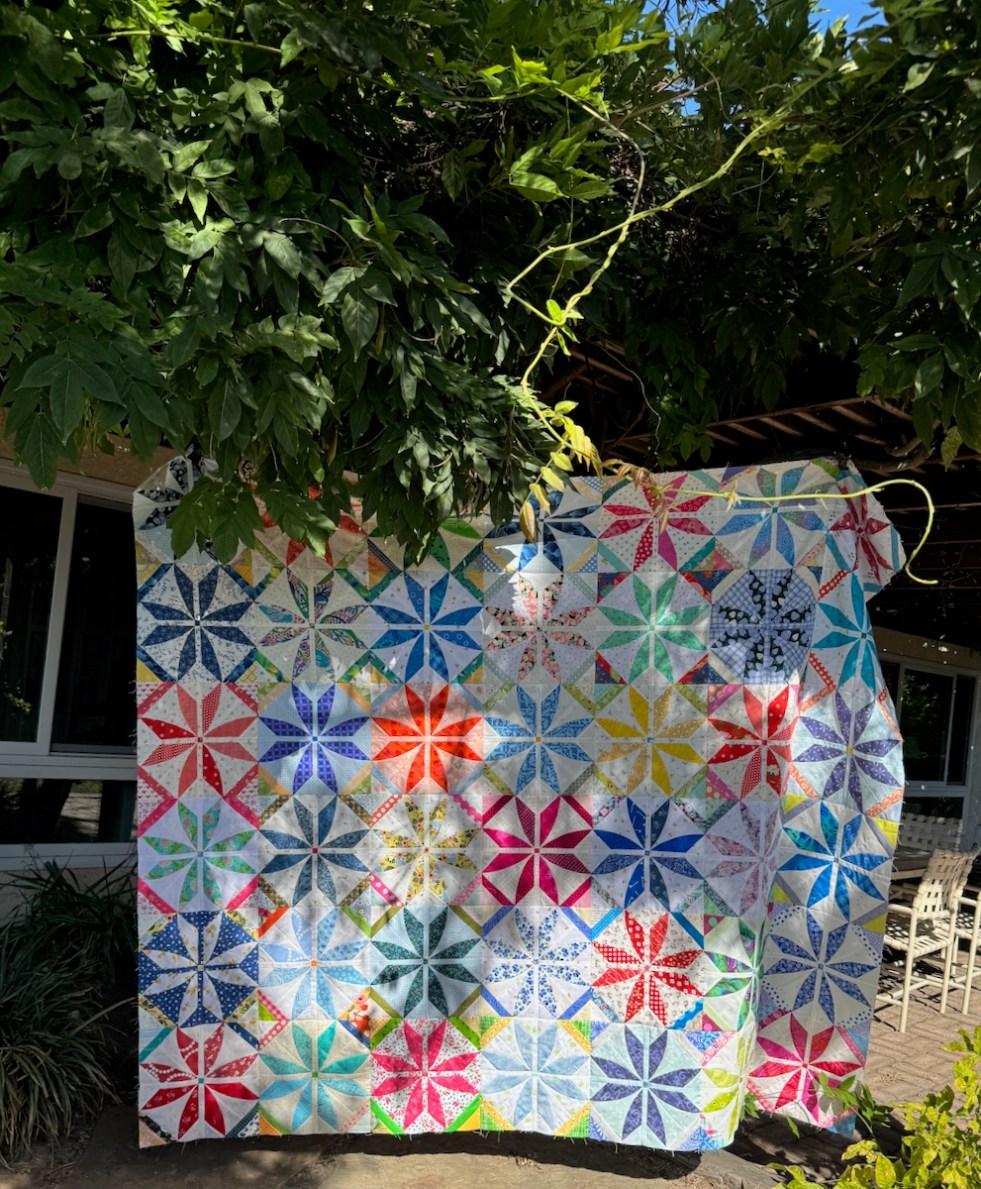
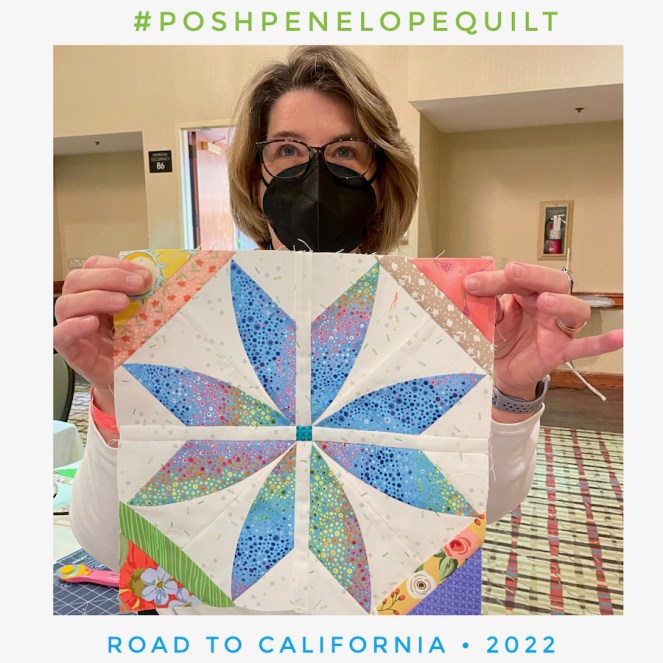
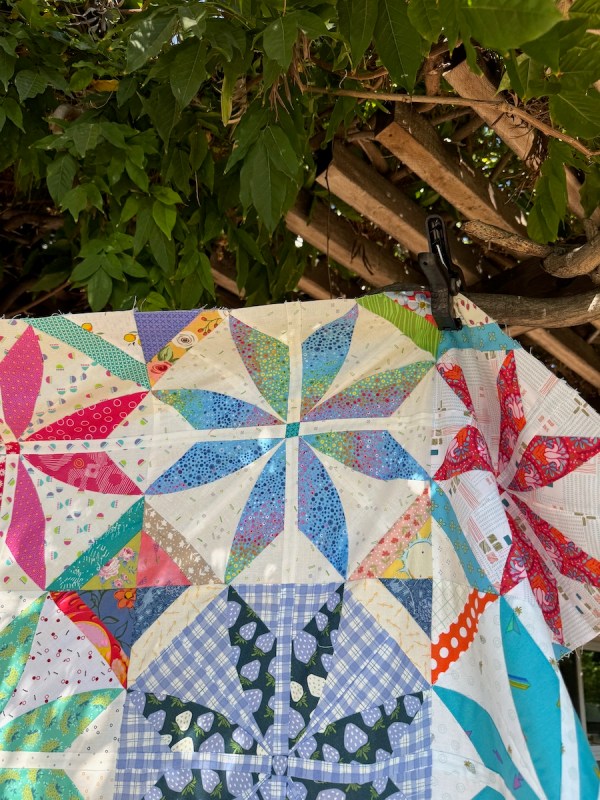
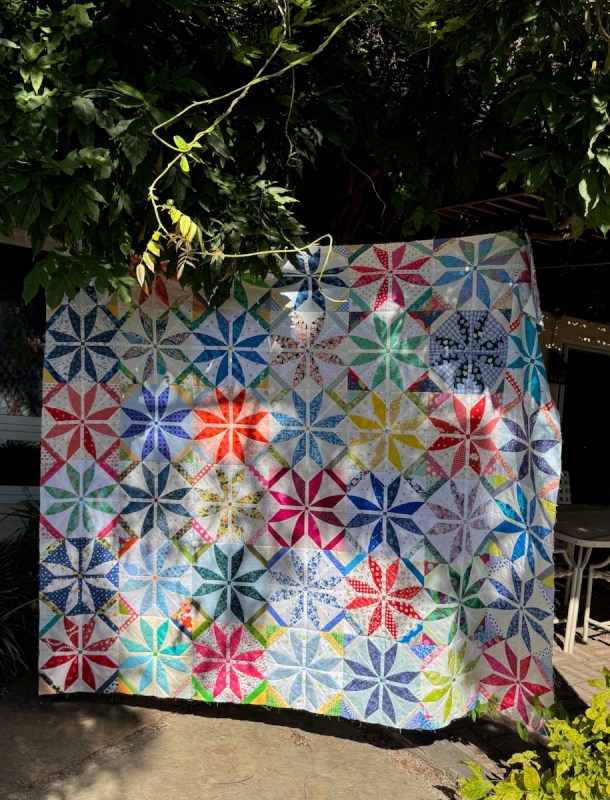
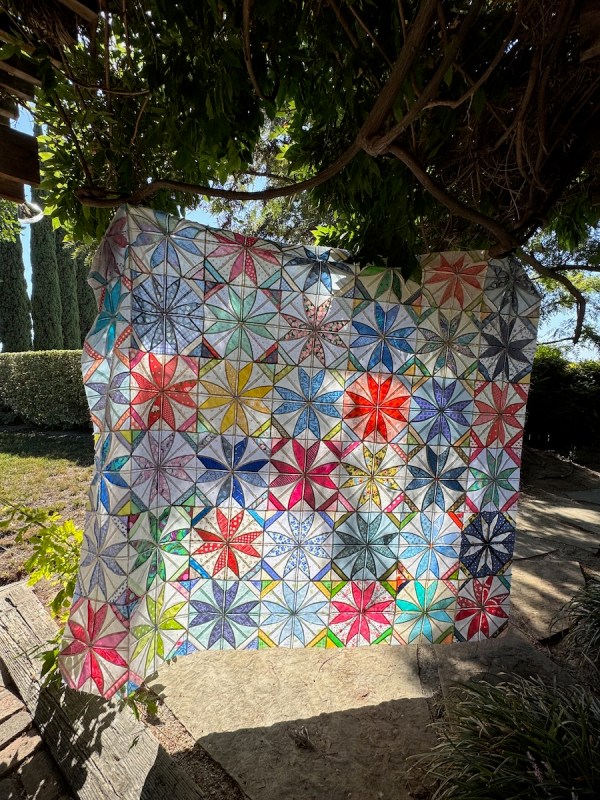
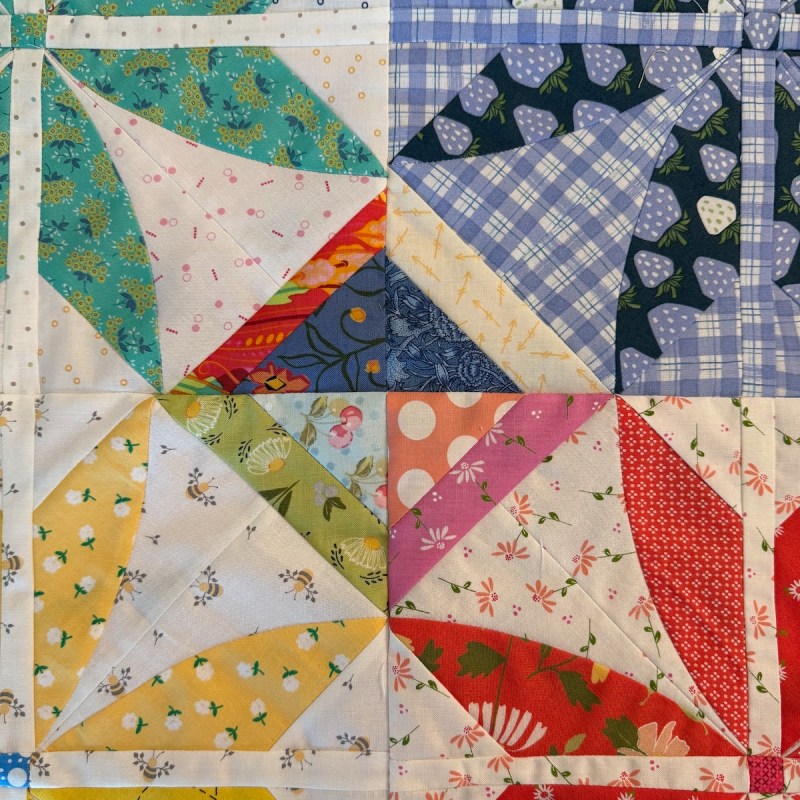
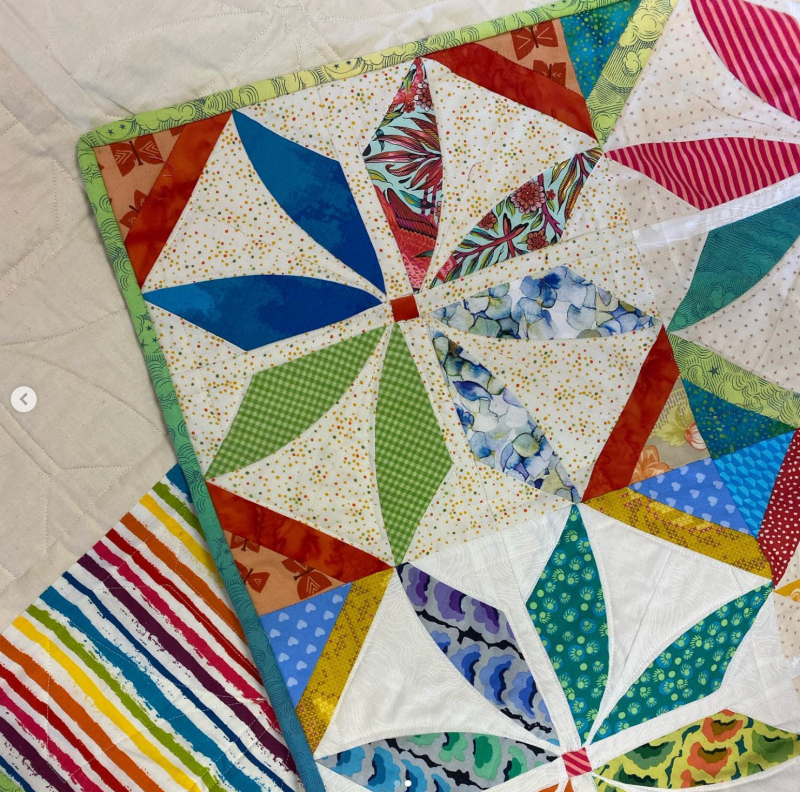
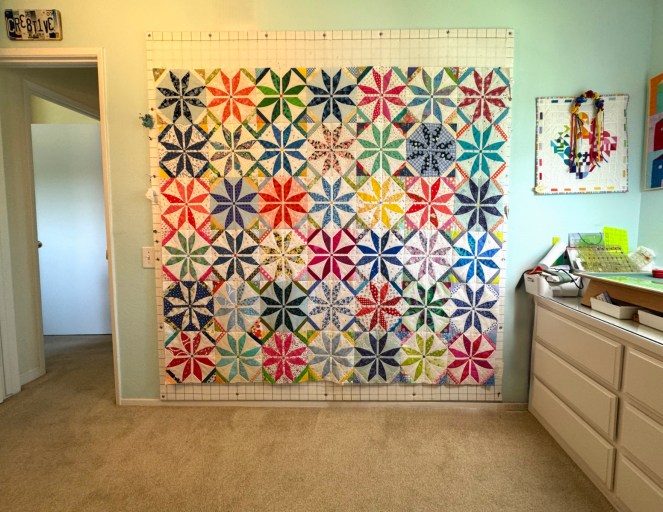
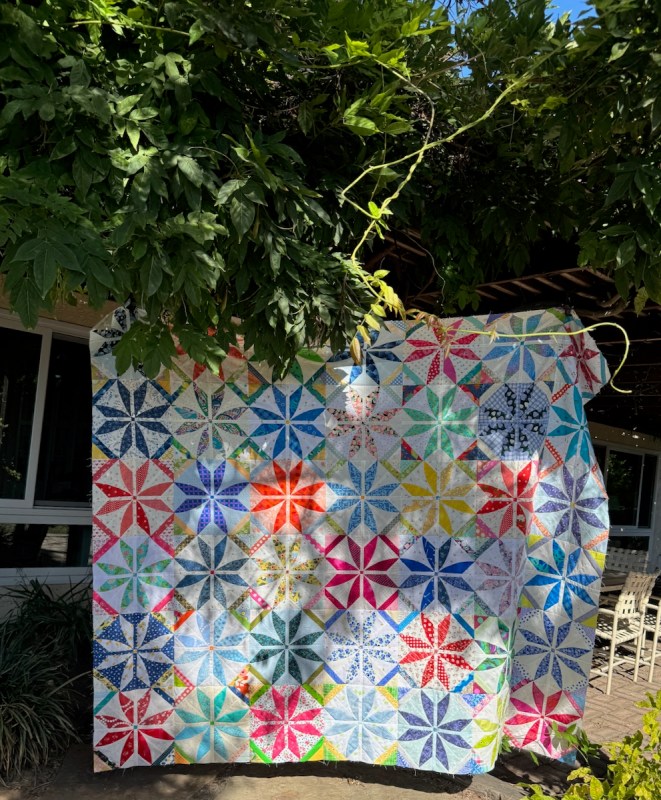
Carol and I made a pact to apply our rotary cutters to fabric and our noses to the grindstone and Make This Quilt: Posh Penelope by Sew Kind of Wonderful. While I usually like to be sewing my own designs, this year, this level of drama, this level of chaos has sent me to “let go of the pressure to be innovative,” as Jane Freilicher puts it (qtd. in Emily Skillings, below). We committed to making four blocks per month.

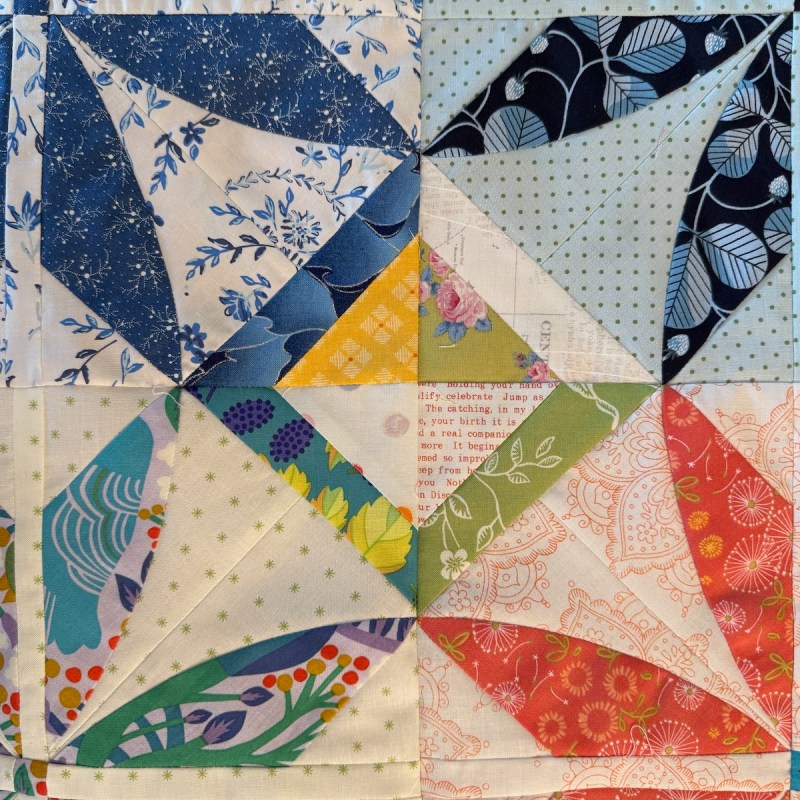
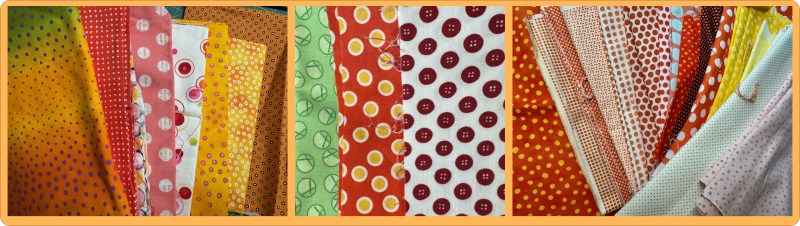
But even in creating between someone else’s lines, there is room for fabric choice, pawing through the stash or scraps — for as Carol noted this week, all our fabrics are soon going to cost a bazillion dollars — and this month, I went for blues. I thought the blues might calm down the riot of colors I had going on, with their steady approach. After all blue is the color overhead in our sky and of the water that surrounds us and we’ve been crazy for blue way before Yves Klein first mixed up a batch of his trademark Klein Blue. Klein noted that:

“Blue has no dimensions. It is beyond the dimensions of which other colors partake.” Fascinated by … it, [he made] …roughly 300 monochrome paintings in his signature International Klein Blue” (qtd. in article linked above).

(These blues read a bit more red-blue, or purple.)

All of these notes are to say, take a look at these young poets’ advice on if you get “quilter’s block,” or “writer’s block” and just give it time. Take a break to breathe in some of the blue overhead, or swim in the watery blue. Or catch a rainbow on your keyboard, courtesy of a defracting hung crystal.

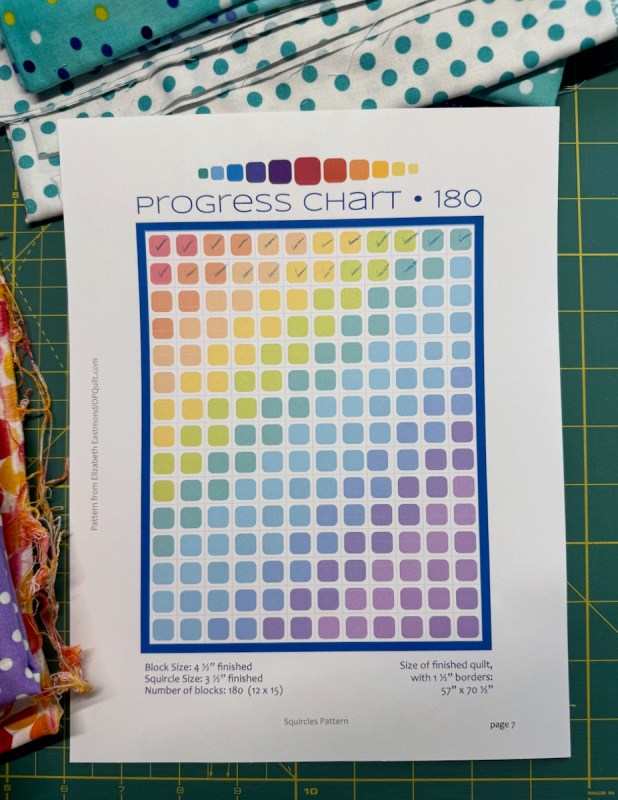
Block by block, I’m making a quilt. I’m up to 23, and the goal is 42.

Advice if you are going to make this pattern: Do more than one block at a time. Do…like four. It’s easy, but complicated, and better if you don’t have to remember all the bits every time. And I say, make the “petal blocks” but before you sew it all up with the sashing, choose your itty-bitty center then, when you can see if it needs a pop, or if it’s okay to just have a fabric from one of the petals. Or do as Carol is, using a single fabric in all the centers. Hers is a black and white linear pattern, and it looks great.

Now I’ll put these all away in their box until next month, along with a a few scraps and bits and bobs, and it will wait for me until next time. After all, as Fatimah Asgha notes, “you’re on no one else’s timeline.”

One Last Thing

A friend had a new baby boy and I made them a quilt.

Pattern is Azulejos, from my pattern shop on PayHip. I just used fewer blocks to make it baby-sized. (And she gave permission for the photo.)

Emily Skillings–
One question I am still grappling with is how to negotiate a balance between “innovation,” constraint, and intuition. The painter Jane Freilicher put it best, I think, when she said, “To strain after innovation, to worry about being on ‘the cutting edge’ (a phrase I hate), reflects a concern for a place in history or one’s career rather than the authenticity of one’s painting.” There’s also, I think, a quieter quote somewhere about her letting go of the pressure to be innovative, and that she felt she could really paint after that, but I can’t seem to find it anywhere.
This sounds a little strange, but I like to think of my life so far as a writer as a kind of oscillation between states of openness and movement and states of stillness and solitude. There are islands of production, productivity, and then pockets of…nothing. I think I am grateful to my depression in this way, in that it often forces me to be still.

Phillip B. Williams–
Writer’s Block Remedy: I go for months without writing and then write nonstop for about a month or so. An impasse for me is a sign that I simply have nothing to say, and that is fine. I had to learn that it was fine not to write. As far as what keeps me going, I’m still not sure. Something just clicks on and stays on until it runs its course.

Mario Chard–
Writer’s block remedy: The impasse is never with the writing itself; it is with the reasons to keep going.

Fatimah Asghar–
Writer’s block remedy: I take a break. I think that if you bang your head against the wall trying to create, you’re going to resent the process of creation. Usually when you reach an impasse it’s a signal to move on to another thing. Maybe you haven’t slept in a while. Maybe you need some time to ponder, to just stare at the wall. Maybe you need to live, truly be alive for a little and not near a computer [or sewing machine]. Maybe you need to read, see, watch—to refill your well.

Advice: I’d say you’re on no one else’s timeline.

Solmaz Sharif–
Writer’s Block Remedy: If the causes are perfectionistic, I pull out the collected poems of a poet I greatly admire and flip through to remind myself how many mediocre poems their oeuvre contains. It is my duty, I remind myself, to write even those mediocre, messy poems. These failures are the ones that create openings in the conversation for subsequent writers and poets to enter—I’m not trying to kill the conversation, after all. I pull out journals—André Gide’s, Franz Kafka’s, Susan Sontag’s—to remind myself how long the process is and how often the sense of failure or impasse hits. I watch a movie. Advice: Write a book you want to fight for. Fight for it.
I don’t have answers about “how to be an artist”; I’m not trying to make it sound like I do. But I do want to have that conversation. What do you want to do as a writer in the world? What do you see the arc of your writing life to be?

My corollary: Make the quilt you want to fight for. Fight for it. Acknowledge the arc of your quilting life.

Quilts · This-and-That

If I Do This, Can I Do That? April 2025

If I go to see all my kids, will I be able to recover from the trip? If I buy this, can I buy that? If I choose to sew this project, will I have energy to tackle that other thing? Or, this is all another way to title a This-and-That post for April 2025. First, the mundane and then the sublime. (Hint: an introduction to one of my favorite artists.)

Feeling a lot of the time like a blue-footed booby; this photo was harvested from Bluesky, from the #naturesky tag. Bluesky is also where I have a new account. We need more quilters over there (tag: #quiltsky) so come on over. If you set up an account, I’d love a follow: OPQuilt on Bluesky. (If you need to know more about this platform, search, and research, buy this book, or ask me a question.)

Apple’s Photo app has a new fun toy: Clean-up, behind the three sliders at the bottom of a photo (apparently not on all phones, my husband tells me). I click on that, then follow the instructions. Can you see what I did in this next pair of photos?

I probably wouldn’t use it to clean up everything, as that can give your photos (this one, of my neighbor’s cactus flower) a sterile and weird look. Life is messy, life has hoses in the foreground and angels in the background.

Early warning notice. I did none of those when the earthquake came, but did decide to hold off on getting in the shower. Just in case.

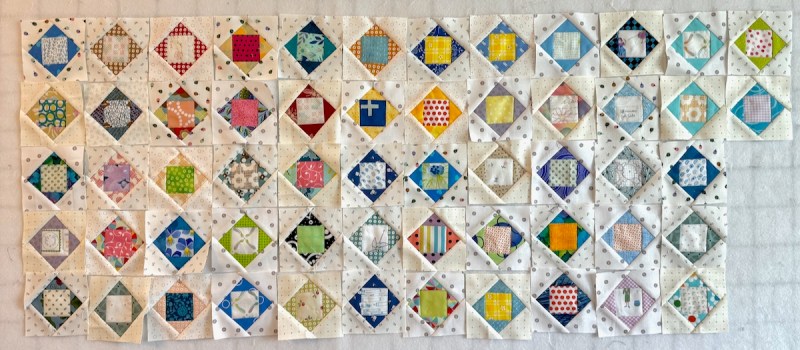
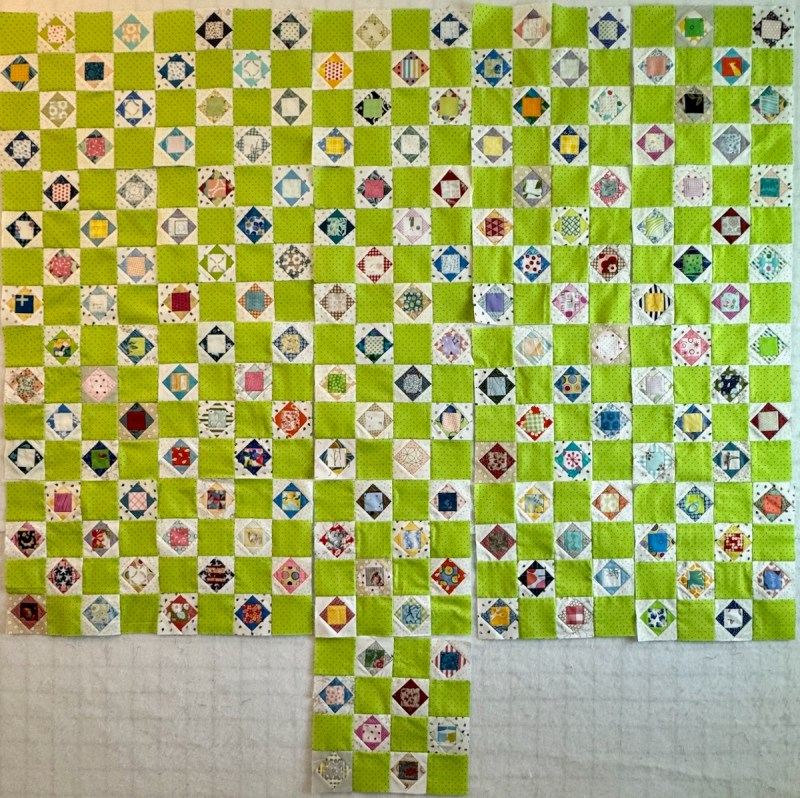
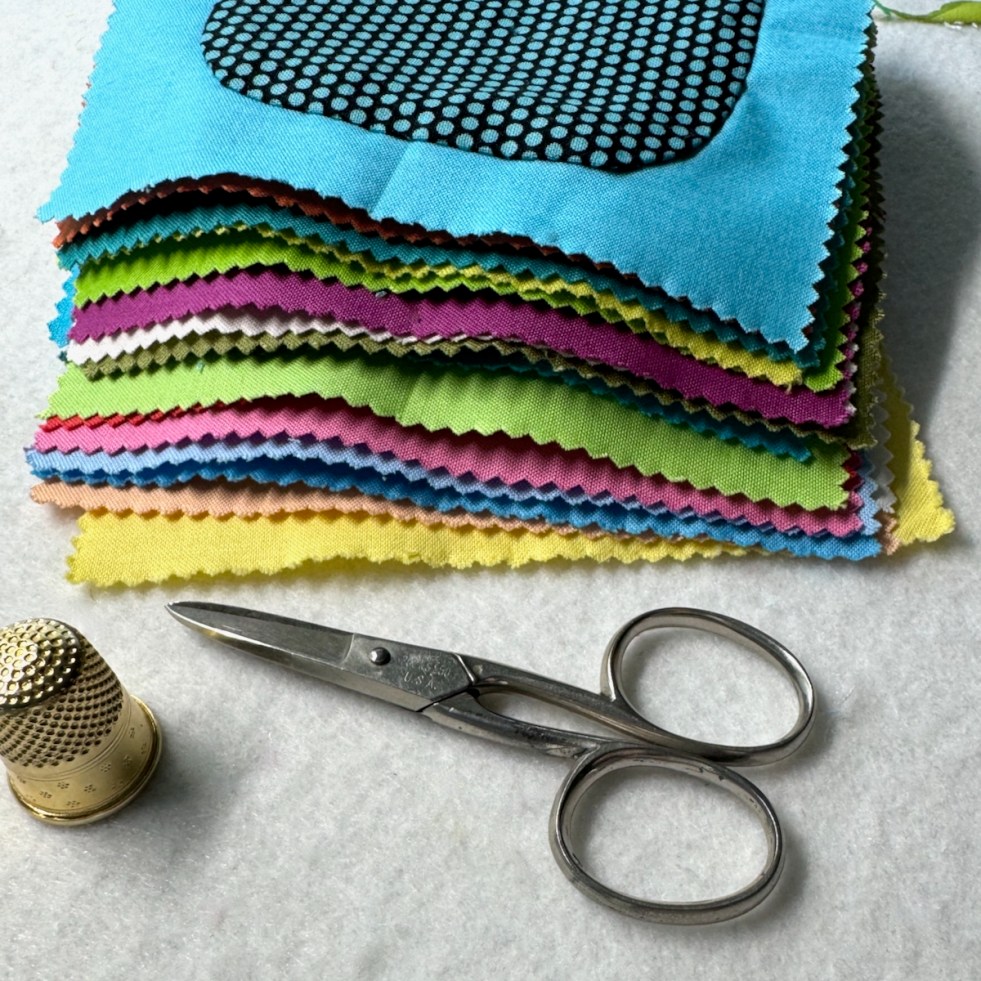
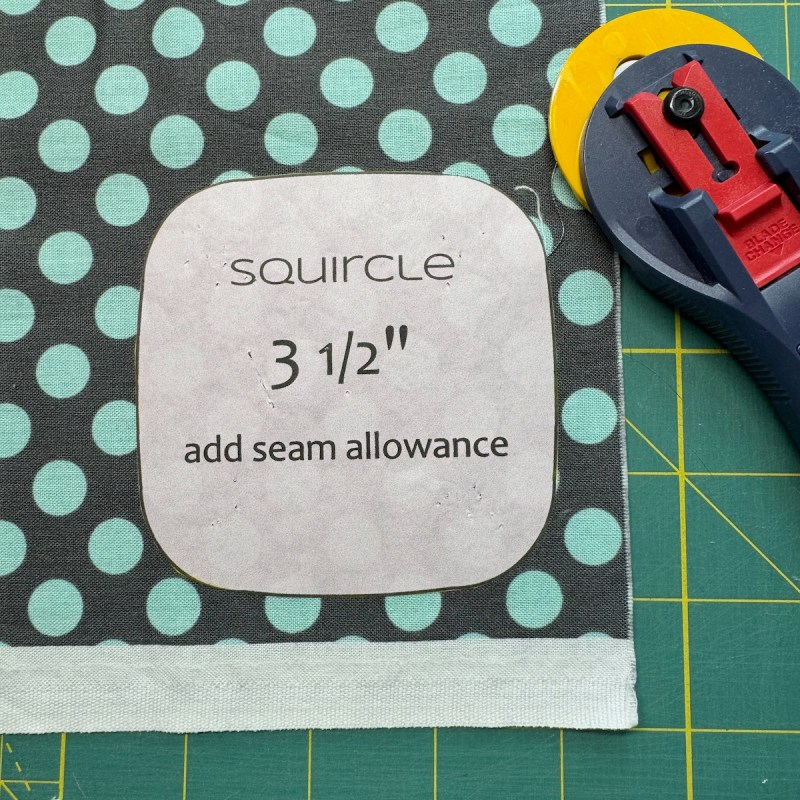
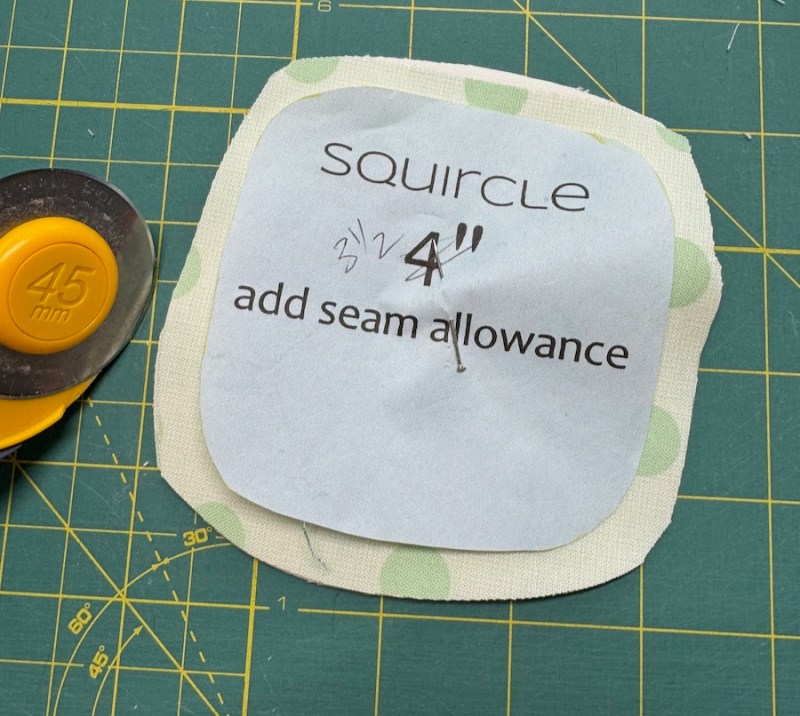
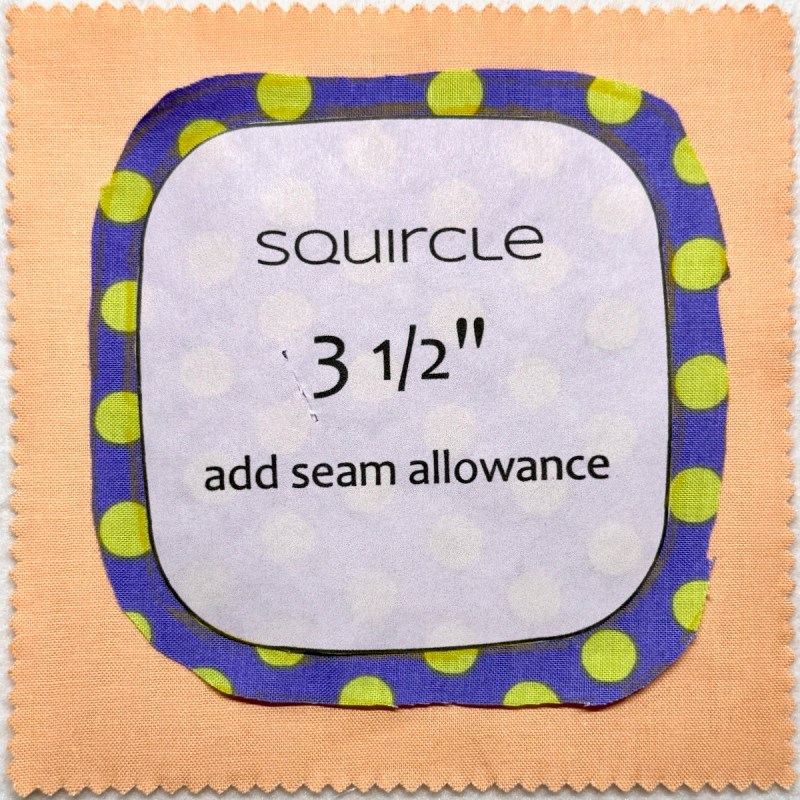
I sewed up my next batch of 25 Economy/Thrift/Square-in-a-Square blocks. In my first post about these, I noticed that one of the quilters I mentioned had sewn each of hers to a background block, so I decided to do the same. Eventually I will sew them into blocks of 10-patch units, as suggested by Taryn, who is running this (9-patch units? 12-patch units?).

To make all my economy blocks, I opened my drawers and just used up old scraps, cut nearly a decade or more ago. It’s a lovely time-travel experience. Most centers are not fussy-cut, but this one spoke to me, as my heart aches a lot for what is going on. Other centers of other blocks also hold meaning, but I won’t detail them here.

I can’t work if all my projects are stacked up around me, calling me to come pay attention. So after completing this batch, I carefully put them away until some time in May, giving me some mental space. (Fun video, here, with a perky little tune.)

So, March’s 25 blocks are done.
April’s 25 blocks are finished, too.

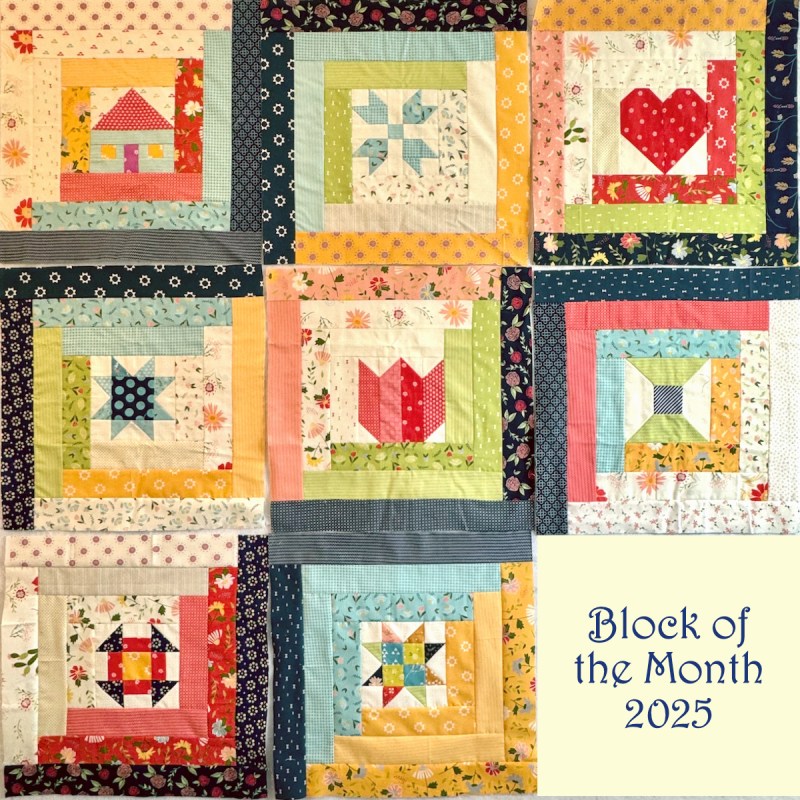
This came out next. It’s Sherri’s BOM for 2025. April’s block is finished, and now I’ve tucked that away, too, until May.

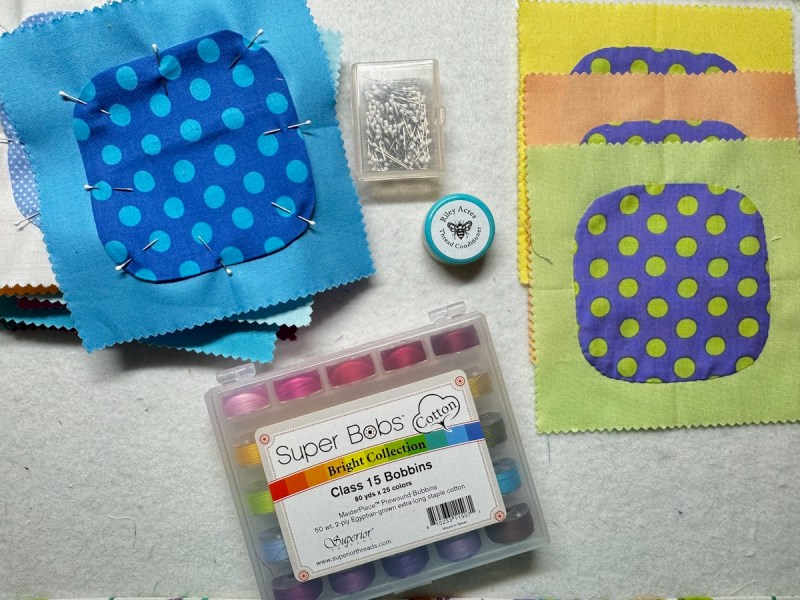
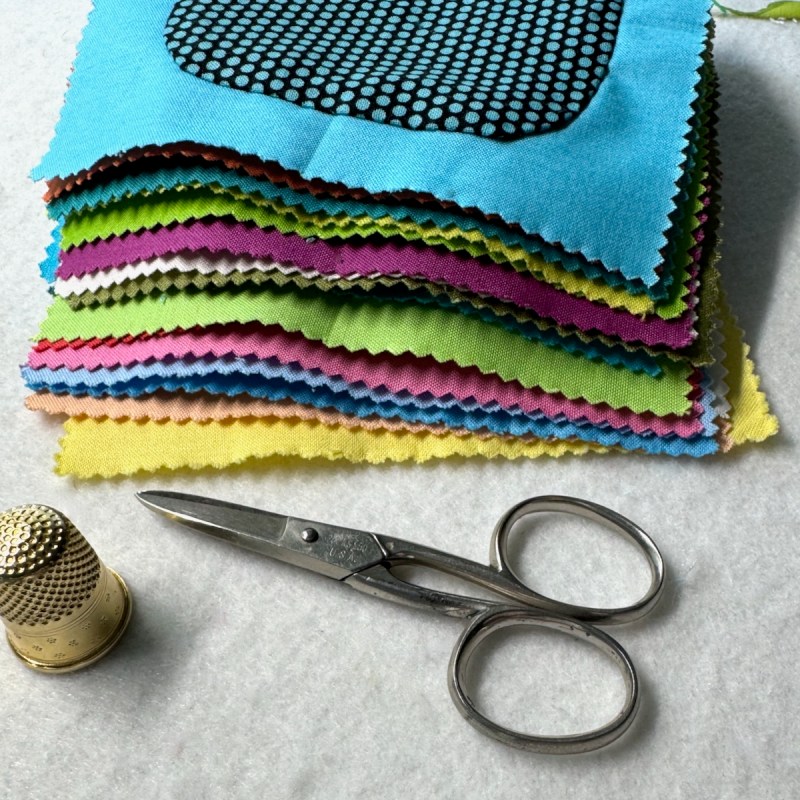
Posh Penelope blocks are up next, but I’ll wait to work on them until after Easter. (It makes a big happy mess in my sewing room.)

Every April and October, our church holds their Semi-Annual General Conference, which we listen to via streaming broadcast. Through all the talks, I sink deeply into thinking about ways to better my tiny life, but this year I also enjoyed the sights of this young choir, dressed much as I did back when I was their age: hair streaming down from a middle part at the top of their head, their dresses all smocked and ruffled and gathered and puffed sleeves, too! I didn’t have a camera when I was 17, nor were many photos taken of me, so you’ll just have to trust me that I looked like them.

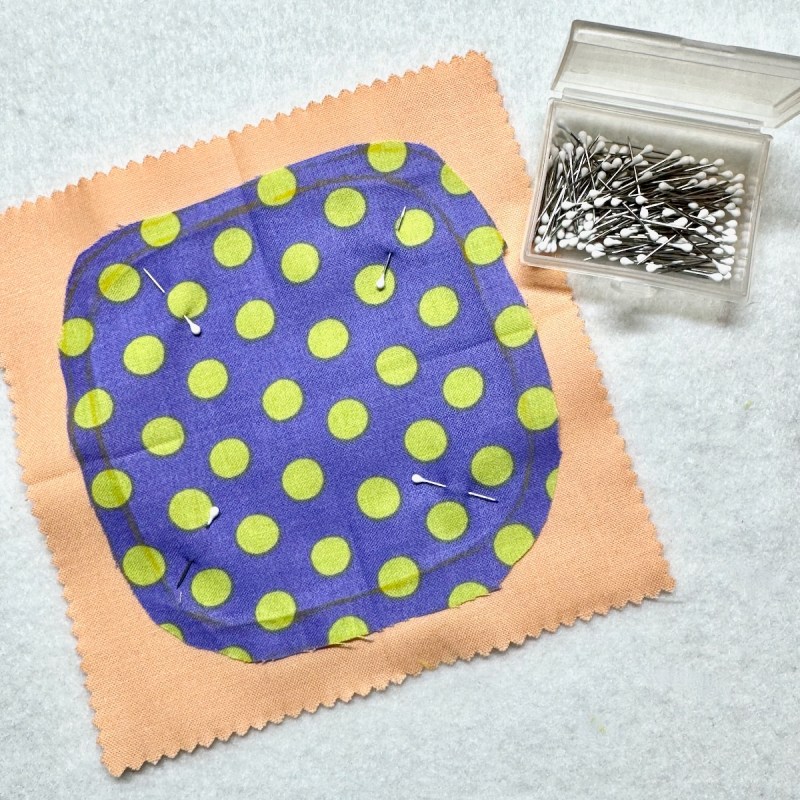
I also like to sew while I listen (hence making good progress on the economy blocks!). I tried sewing them without paper, but it was harder to keep them square. So, here I’m using the freezer paper method. Here’s a free handout, in case you missed it on the last post:

Utah’s Virgin River Gorge

My husband Dave and I took a trip up to see grandchildren and family, as I mentioned.

We also had a chance to visit some of our siblings. My sister showed me the wonderful tree of life weaving she purchased on her last trip. I love all these birds perched on the branches, with companions flying all around.

Another highlight of the trip was to see a mid-career retrospective of the artist Brian Kershisnik at BYU’s Museum of Art. Kershisnik’s exhibit began with a video of him working and talking and interspersed in between were snippets of his TEDx talk, which is worth watching, ending with something to think about. Kershisnik has long been a favorite of mine; he paints the quirks and slivers of human life that we are all familiar with, but don’t seem to see in traditional paintings. He also has a sense of humor about things, so valuable these days.

In this trio of paintings of women, the titles read (left to right):
Holy Woman, 2001
Climbing Mother, 2013
Madonna and Child with the Infant John the Baptist, 2003. Yes, the infant Jesus is poking young John in the eye.

from title card: “While not undermining his holy nature, the baby Christ (still with a visible halo) acts more like an actual child than most traditional versions. Kershisnik humanizes saints and holy figures, suggesting that perhaps they are not as different from us as we might have previously supposed.”

I found so many paintings that echoed into my life. As my father would have said, it was a peak experience. Since this is the week before Easter, here’s a few more.

Even if you aren’t religious, Christ’s palpable straining to let the souls of hell escape their awful fate helped me understand the whole idea of sacrificing for others in a most visceral way. And Christ gesturing, says, “Go.” Get going, get doing, make something of yourselves. Below is a link to a video clip of Kershisnik below where he says he is reticent about “explaining” the meanings of paintings for others, not wanting to limit them. I also don’t want to limit you. This is just my take, after standing there gazing at this enormous painting, a couple of weeks before Easter.

Death has hung around my life in a significant way in the last couple of years, so yeah, I lingered at this painting.

Are we like these little ones in Kershisnik’s painting, Jesus and the Angry Babies (2014)? Maybe. The angels in the background are there to help. (video clip of the artist discussing this painting) Last one, with a theme pertinent to our sewing experience:

The morning after we arrived home, I took a walk in our local park. Right after that photo I saw that some children (not angry babies, not angry adults) had decorated up the sidewalk with all colors of chalk, including a hopscotch diagram, which I most definitely took time to jump through, before continuing. I conclude one of the artist’s names, below.

I had a field day listening to Brian talk on numerous videos. I’m putting these here so I can come back and listen.

Spring Open House Video (long)

On his painting, Bearing News

Brian Kershisnik’s Instagram

On Interpretations [On What Paintings “Mean”]

Working with [Your] Media I love when he says “you have the let it [the media] do what it does.” Boy, do we know this about our fabrics and threads!

Smile!
300 and Beyond · First Monday Sew-day · Quilt-A-Long · Quilts

A Life Full of Yes

Candy Clark, who has just published a book of Polaroid photographs of her younger life with the Hollywood stars of her era noted in a recent article that looking backward to this time wasn’t “necessarily a bad thing. I found out who I was putting this book together,” she said. “It’s a life full of a lot of yes.”

And then I saw this. Here.

And I said yes.

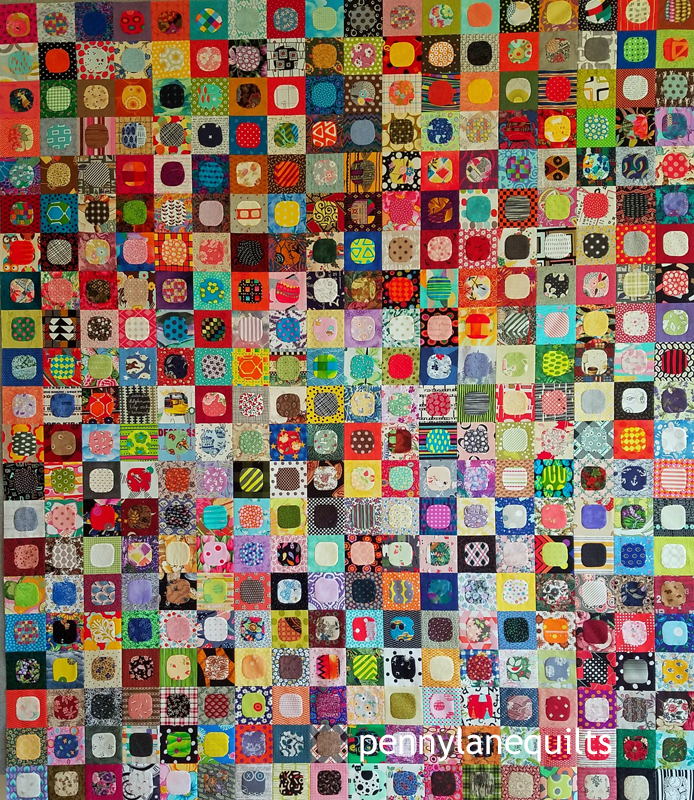
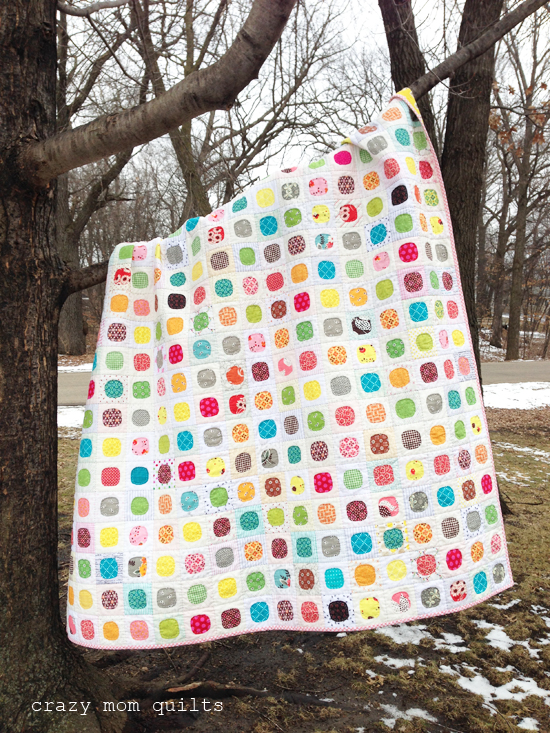
And with that, I met a whole other world of quilters, who do hand-sewing, EPP, have repro in their stash, spend a year to make 900+ wee little blocks, and think nothing of it. They say yes on an enormous scale.

Thank you Taryn, for introducing me to another leg of the three-legged quilting stool: traditional, modern, and art. I don’t know quite where I fit into that schematic, and it’s not like I’ve not known about traditional, but really…I haven’t known about this.

Gladi’s blocks drew me in (1); Anna has used EPP for her blocks (2); Susan hand-pieces hers and they travel with her, and writes the location where the block was sewn. I’ve been looking for a travel project, and so this intrigues me. I might say yes to this.

My tiny start (click arrows to advance the slides):

Initially, I’m trying it out with freezer paper, but I might use all methods of construction. I like the idea of carrying it around for a bit, but I also like sitting at the machine and sewing, too. Here’s the little video I put up this week showing my enthusiasm. Whether it be for this new project, or an enthusiasm for avoiding all the tasks I had on my To-Do List that day, I don’t know.

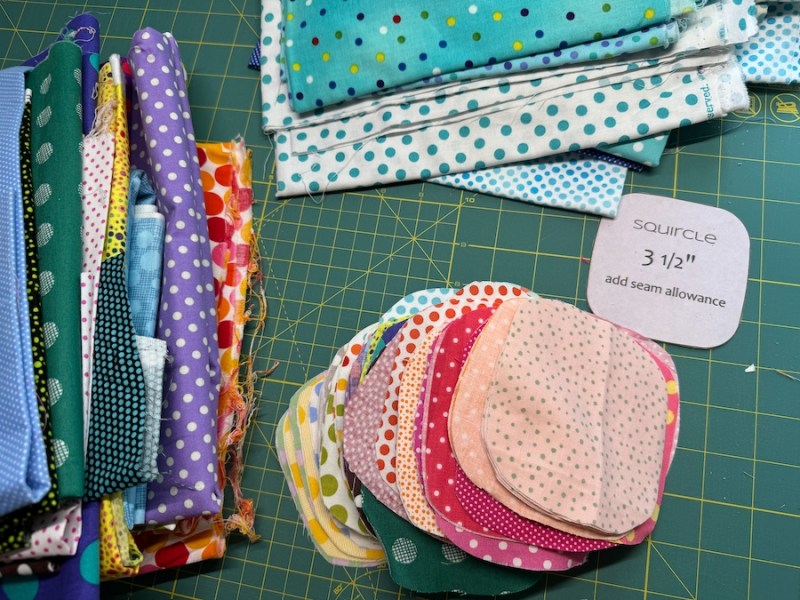
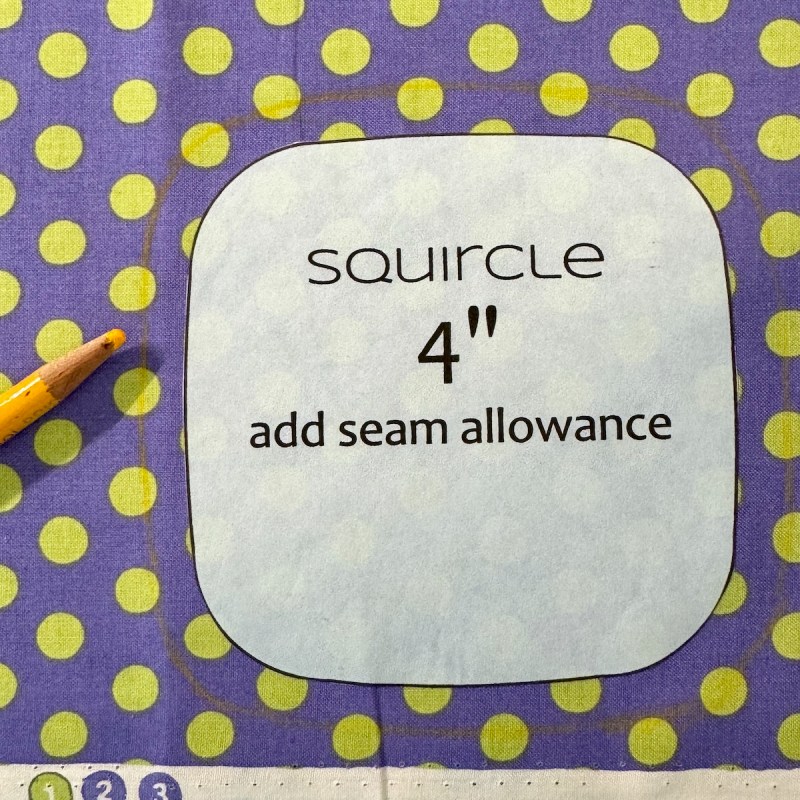
Before the pandemic hit, we had a little beginner’s sewing group going (called First Monday Sew-day — more beginner lessons are found at the link). I did samples of all every size of the Square-in-a-Square blocks in yellow and blue then sewed them up into a table runner ( so this is not my first Thrift/Economy Block rodeo). Here is the free downloadable 2-page handout we gave out to help the group learn to sew these blocks, with lots of sizes:

illustration of the front page

And below is the free downloadable Economy Blocks handout to go along with this version of Taryn’s wonderful gathering of happy quilters. The first page has some tips and tricks for freezer paper piecing, if you haven’t tried it before:

NOTE: This does not in any way replace Taryn’s handout, nor include you in the group of quilters she has gathered (use the Instagram links above). The pages with all the blocks, however, may also prove useful if you are using paper-piecing, as you can print off more blocks at once. I put it up here in case you might find what I worked up helpful in any way. As always, I include my request: Please do not print off millions for friends, but instead, send them here to download their own copies. Thank you.

I figure if I decided to do EPP, I can print out the page of blocks onto heavier paper, and use that. For the record, I’m making 3″ blocks, as the smaller size is just too much for my tiny brain to process right now.

Lastly, I had fun watching this video of Karen, from Just Get It Done Quilts make these blocks in three different ways. She’s amazing! And please note my tip for keeping the freezer paper on the block in my Economy Blocks handout (above).
I know this is being published a bit earlier than usual, but I’m heading out to see these cuties, now mostly all-grown. See you when I return!

Totes and Purses · Travels

Sewing in Translation

You know when I stood in the shopping area of Carrefour Quilt Show last September (2024), I wanted to buy up all the fabrics and patterns and everything, but alas my suitcase was small, so I had to limit myself. One of the choices was a series of small pouches from ABCDaires, with a soft velvety fabric with absolutely charming printed designs. I tend to buy something that I won’t see in the States, and this fit the ticket. I bought three: two kits and one that just had the printed fabric.

(taken with permission)

There is a front and a back to each pouch with different designs. One kit was pink with a girl in flowers on the front, and then just the flowers on the back. The colors were rich and saturated, so I was hooked.

However…Note to future self: Just.Buy.The.Kit. For the un-kit purchase, I luckily had a zipper that was a perfect match. However, the zippers in the kit were just a bit heavier duty, plus she included the lining, a waxed lightweight canvas.

But how can I sew it if it is in another language? you ask. Google Translate to the rescue. Let’s start with their website, ABCDaires:

I have the Google Translate in my browser, so I just click on the little icon in the upper right of the search bar; in some reading I did it suggested that now you have to use Chrome as your browser to get that. (I don’t know–do some searching online.) Or you can head to Google Translate and paste in the URL of the page you want to see in English:

This is Google Translate (above). Click on the Websites box, paste in your URL and it should translate most of the language for you.

Now the website is all in English, and you can click around to purchase the little kit you want. Yes, you will still have to convert the metric measurements while sewing. I have a small ruler that I use for just this.

She was very helpful and just lovely and spoke English! They also have a downloadable PDF of instructions on their website. I’ll talk about that in a minute.

This is the smallest of the three I purchased. You can see the little ruler I use that has cm and mm marked on it. The first thing you do it mark off small squares in the corners, but she has two different measurement options. This was the first wrinkle in the translation business. Which one? I tried using my Google Translate on my iPhone. You open up the app, choose PHOTO and hold it over the paragraph:

After a second or two, all the French is in English (I chose the language, but you could choose any). I learned a “coupon” is a “pouch” or maybe “fabric” or not (it’s not always perfect). So I went to the section about the corners, but alas, still couldn’t figure it out. I then went to math, something we quilters are good at. If the fabric measured X by X then I used the larger dimension, and if it was a different X by X, I would use the smaller. I measured the printed fabric, which gave me my answer. (I’m using “X” so I don’t give away her pattern.) I’m just saying, don’t be frustrated, but try another angle to solve your translation difficulty. Onward.

Ends go on the zipper, zipper gets sewn to the fabric…a usual sequence of steps for a pouch.

Since this is a velvet minky, I didn’t want to put a hot iron on it and scorch it, so I found my roller came in handy for flattening the seams. On the pink pouch, I opted to topstitch down the fabric with the zipper (she gives two options). I won’t do that again — in a minute I’ll show you why. [Of course it could be that I’m a dweeb at sewing pouches, and the results have everything to do with that.]

In the first photo, the designer fabric is shown smoothed away to the left, away from the stitching going on on the lining/zipper tape. As usual, when your presser foot approaches the zipper pull, leave the needle in the fabric, raise the presser foot slightly, and move it to the back where you’ve already stitched. This will eliminate bumps in the stitching line.

First one done! She has a clever way to put in the velvet ribbon so it becomes a nice zipper pull on a traditional zipper.

Here we go again. I used a bit of fabric from the stash for the zipper ends. I chose a spotty lining fabric (in upper right corner).

Done! The second one went so much faster, and I only top-stitched on the zipper, not the top designer fabric.

Back designs on both.

Notice how wonky the zipper ending is on the pink? I mean, it’s functional, but not as lovely as the blue zipper. I chalk it up to how the top-stitching impeded the inner seam. (I need to find a cute ribbon for the blue bag.)

UPDATE: I’ve since sewn the last blue pouch, and now I think it was the coated lining fabric “zipper ends” that gave me so much trouble. The fabric “end,” shown above, was much easier to manipulate. So maybe, if you make these, find a coordinating fabric, rather than use the coated fabrics.

I love how the bag color blends into a second color for the base.

Baby Molly and St. Patrick Day Girl posing with the pink bag. (You know I have to put Molly in here somewhere.)

Now, a caveat. This was an easy translation task, relatively. The company had an English download for the instructions, and I already had the Google Translate installed in my browser. I was also familiar with how the iPhone’s Google Translate worked too, having tried it out on an earlier trip to Japan, where I found out that my breakfast roll was made with the “breath of heaven.” (Okay, so it doesn’t always work so well with idioms, but I took that to mean it had flour in it.) The app has improved greatly since then, I assume because of a a positive use of AI in our lives.

I struggled more on this project, made from a book I’d purchased at Carrefours and also published in French. The trip-up came because it was a JAPANESE bag, translated into French:

I did use a lot of “how to sew Japanese bags” searches on the internet, with questions like “Do I trace the pattern off the pattern sheet in the back of the book?” (yes) and “Are seam allowances included?” (no). This required a huge MIND shift, and aside from sewing the bottom to the top edge of the bag, I made it. (That’s why it looks upside down, ahem.) I did a lot of improvising, but I also love it, too.

I guess what I want to say is that it is a big world of quilting out there and we can always stand to have our horizons enlarged and widened, helping us to bridge all the acrimony and bitterness that can sometimes be found around us. I am in minor grief just about every day with the parts of what I once held dear being taken apart and sold for dross. So I’ve stepped up and purchased another subscription to a news organization, donated to three different local public broadcast stations, apologized to my Canadian friend Kaylie for who I’ve made two baby quilts, apologized to some scientists I know who won’t get funding for their research saving crops from pests (I do like to eat). I guess I’ll soon be apologizing soon to Greenland, too. And Mexico. And Europe, where I’ll be this year — I hope they let me in. I hope America lets me back in, and lets me have my phone after going through customs. I remember traveling in Italy when Hilary Clinton was running for President and the taxi driver went on and on about how her opponent was like Berlusconi, a real rat, he said. I assured him that she would win. Haha, spoke too soon.

I guess I just want to say that make friends with our international neighbors, sew their projects, buy American products (so they can survive the boycotts from other nations), but mostly just sew. I could go on and on, but I have many friends who are very happy right now, and I love them too. Mostly I just try to translate my complicated feelings and make the results come out with a bit of peace, a bit of kindness and a lot of forbearance.

Sort of like sewing with beautiful fabrics from a lovely French shopkeeper–

Update: I had some questions about what kind of fabric this was. After reading this post, I’d say it hews closer to a product similar to Celosia Velvet, as the back is very sturdy and is not stretchy, nor drapable.