Quilts

In Bed With a Bad Cold

cold and quilt

In Bed with a Bad Cold
by Pam Rupert

Posted without permission. (Pam, if you wish, I’ll remove it, but thanks for your great rendition!)

UrgentCareTree

And this was the Christmas Tree down at Urgent Care this morning (my second trip–I’m going to lick this yet!)

ToteBagClass

But I need to digress backwards and show off the three totes made in my Tote Bag class by three wonderful students.  They worked hard and all finished up.

Quilting Santa_1

I had taken some time this week to work on the quilting on my Santa quilt, and as always, How to Quilt This can really take over my mindset and stop me in my tracks.

So Fine Thread

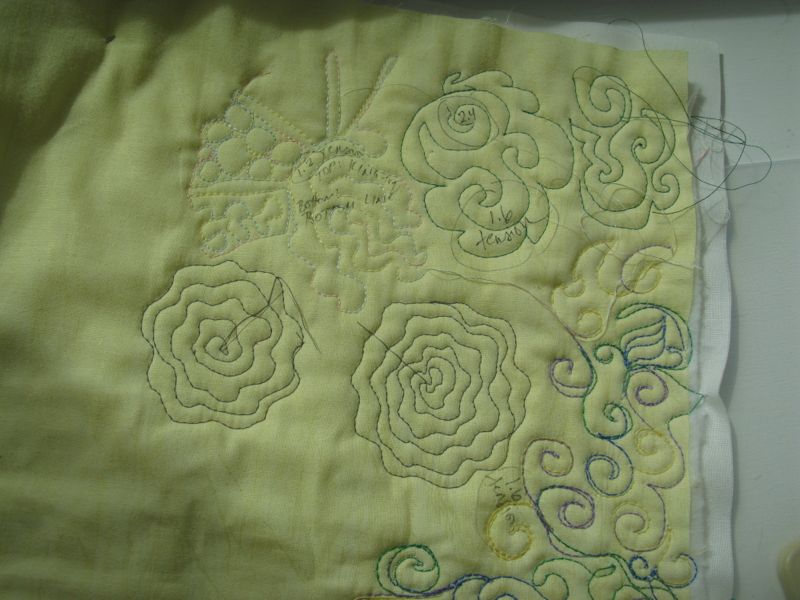
I have had troubles free-motion quilting (FMQ) in the past, and have worked to figure it out.  I now have three different FMQ feet (the last one was the one that worked best), and am still experimenting with threads.  This one, So Fine by Superior Threads, is a dream, as is using their topstitch size 12 needles.  I purchased, and read, both of Diane Gaudynski’s books on quilting, which nudged a bit further along on this path. Both were helpful, but I don’t really see myself heading in her direction of teensy-weensy quilting decorated by gorgeous swooping feathers and lots of echo quilting.

Wide Open Spaces

This week, Judi Madsen’s book arrived, and this is more what I hope to quilt like.  I’m already behind because she has a huge quilting machine, so our techniques of moving the cloth and figuring out the quilting stitches will be different, of necessity.  But I found it really helpful in so many ways.  She also has a video up on YouTube which is also instructive.  So I quilted until the Bad Cold determined that I would not be quilting.

Quilting Santa_2

So the quilt is loosely folded up on my sewing room floor, waiting until I get better, get the Christmas tree decorated, the Christmas caramels made, the stack of research papers graded, the final given, the final graded. . .  But you know, Santa doesn’t come until the 24th of December, does he?  I doubt mine will arrive much before that either.  And somewhere in there we need to do a little bit of shopping.  Yessiree, it’s a bad time of year to be in bed with a bad cold.

Quilts

Ay-Yi-Yi! It’s Christmas!

Nutcrackers

Well, that tune is playing right now on the iTunes list, and it’s true–no presents yet.  But we’ve started setting out my husband’s nutcracker collection, and pretending that Christmas isn’t 22 DAYS AWAY!!

Quilt Doodles

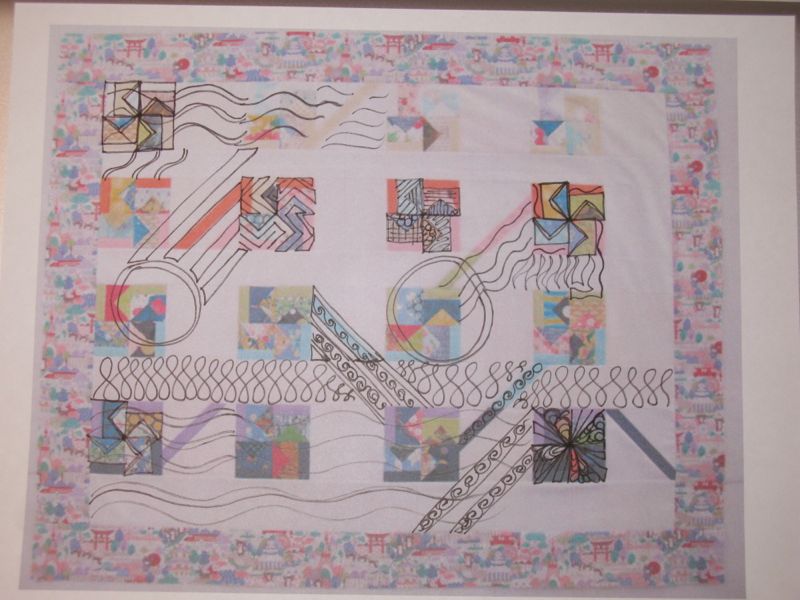
So in order to really tackle that list of Christmas jobs, I got right to work doodling some quilting ideas on my Santa Quilt mock-ups.  I set the intensity to 50% and print them out, then doodle away.  It’s my map, because I don’t feel uber-confident in the FMQ Skills Department.

SantasVillage Center Quilt

I should be joining the crazies at the Mall, but instead I’m listening to Christmas Carols, working on my Santa–my main work in progress.  Besides, the Christmas cards.  And getting the tree.  And cleaning up the house. . .

Like I said: Ay-Yi-Yi, It’s Christmas!!

WIP on

Linking up with Lee of Freshly Pieced Fabrics.  Today it is hosted by Cindy Lammon from Hyacinth Quilt Designs.

Quilts

Friendship Cross-X Block Swap, part 1

ESEOctBlocks2013

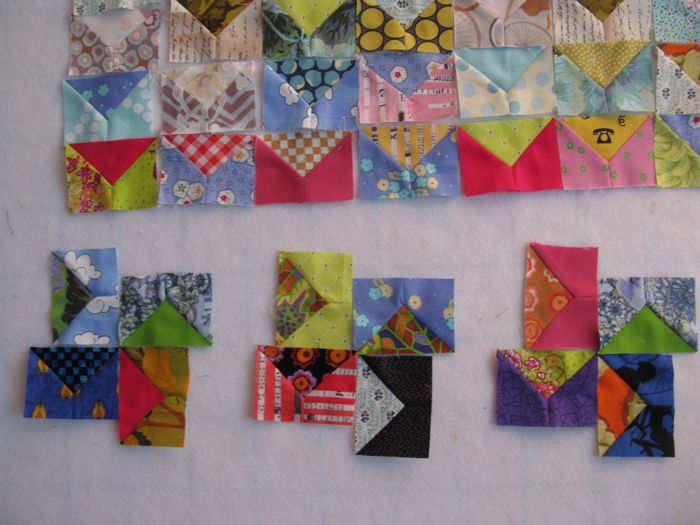
First, start with four blocks, and plan to send two to Krista in October. Realize that this was merely a good intention, and as you missed October’s Friendship Swap post, you’ll save them to send later.

ESEBlocks_OctNov2013

Next, make eight more blocks and send four to Krista in November, along with the two from October.  (Actually, I made December’s and sent to her already, but you’re not seeing them until our Official Blogging Date of the Last Friday of Every Month.  Or so say the instigators of this fun swap, Carla at Lollyquiltz and Susan of Patchwork ‘n’ Play.)

KristaBlocksOctNov2013

Receive Krista’s blocks in the mail and do a happy dance, but remind her. . . hey lady, send me one more!

AllBlocks_OctNov2013

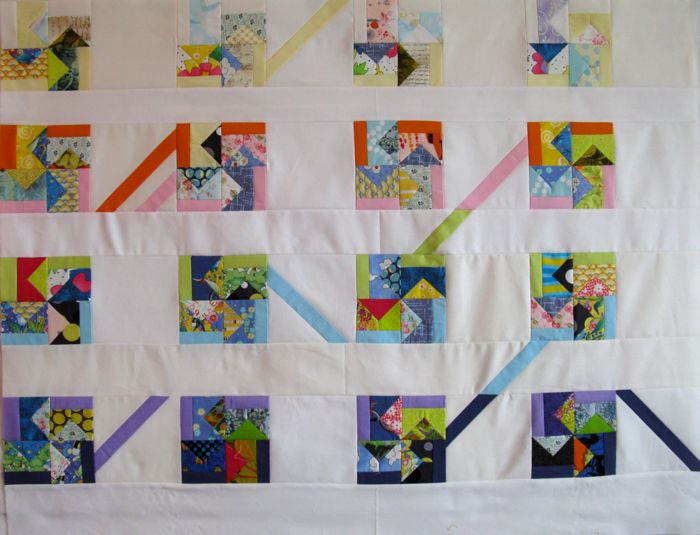
Put them all together: Krista’s and mine from October and November, plus one orphan block you had when you wanted to start this quilt about two years ago, but never did, so are infinitely grateful to Krista for inviting you to be her swap partner in this Friendship Swap.  Thanks, Krista!

Japanese+x+and+%2Bquilt

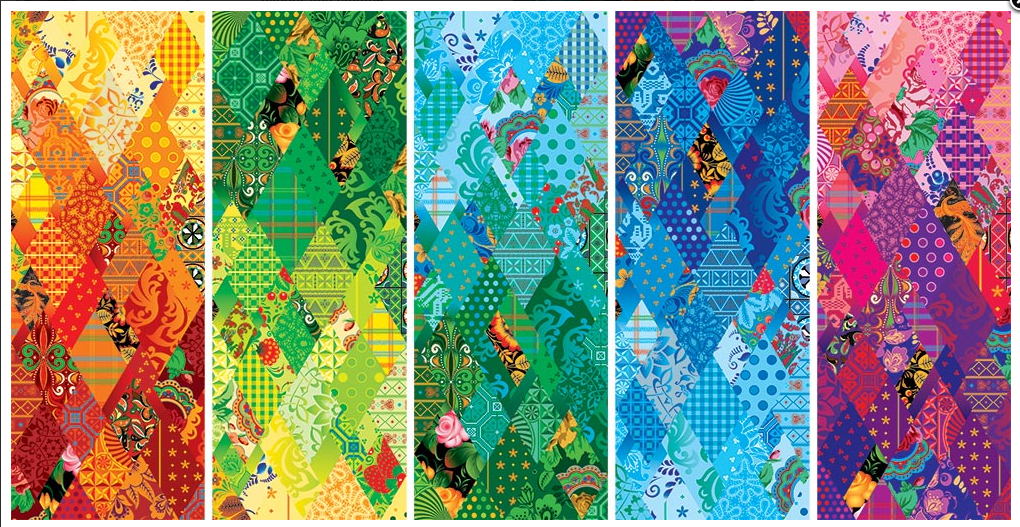
Here’s an inspirational photo, just so you know where we’re going with all this.  Every last Friday of the month until we reach 63 blocks and declare it a quilt!

P.S.  Some call it x and+ swap.  Some call it cross and plus swap.  Whatever you call it, take a look at our Flickr feed and join in the fun!

Quilts · Tutorial

Y-Seam Tutorial

During Thanksgiving Week, I thought it was time to re-post this tutorial from Leanne’s blog, from the Third Quarter Finish-A-Long Tutorials. As background, I’ve been sewing and quilting for more years than I should admit to, and during that time have completed over 120 quilts.  So I’ve faced down more than my share of the Dreaded Y-seams.

In June of this year, I made this quilt for my sister.  As you can see there are lots of peaks and valleys in this thing–lots of Y-seams going both ways (some people call them Y-seams and V-seams) but really, let’s keep it simple.

They are called Y-seams because the V-part of the letter Y usually has fabric with no seam, and the tail of the Y has a seam. I’ve marked the Y for you in red in the picture on the left.  The picture on the right is the other type of Y-seam.  I’ll show you both.

Let’s start with the first type of Y-seam, where the “tail” of the Y is facing toward you and the “V” of the Y is underneath.  Place a pin at the 1/4-inch mark through the seam, and into a spot that would be the peak of the 1/4″ seamline, if you could draw it on and imagine it.

Most beginners want to pin that seam to death.  Run screaming in the other direction.  The success of the Y-seam depends on the “float” of the fabric.

I sometimes will place one pin on either side of the seam, just to anchor it as I get going, then another pin or two along the starting point.  Then I take out the (above) pin.  I want my fabric to float — don’t want to anchor that second half of the seam too much, as I need it to pivot.

Start sewing from the left edge, as the seam faces you, using a 1/4″ seam allowance. Fold the seam toward you, and as you approach the seam, slow down and use a bit smaller stitch.  You are trying to anchor the stitching a bit.

When you get to the seamline, when you are on top of the thread marking that other seam, STOP.  Make a tiny stitch on top of the one before to anchor, but DON’T GO OVER THE SEAM LINE.

Lift your needle out of the cloth.  I pulled it away to show you what I mean, but you don’t need to do that.  Just give yourself a little room to smooth the (green) seam allowances out of the way, and to find the place to insert your needle again.

Re-insert your needle just on the other side.  Then line up the next two raw edges, smoothing the fabric away from the needle and your presser foot.  Sounds more confusing than it is.  Take a few tiny stitches to anchor, then change your stitch length back to normal.

Another shot of my needle placed just on the other side of the seam allowances (which I flipped to the back of my presser foot).

Depending on the amount of cloth in your Y-seam, and if you just feel better about it, go ahead now, and pin those raw edges together and stitch the rest of the seam.

When you are through sewing, clip the thread if it is restricting the ability of the seam allowance to open up and lay flat.  If you left a bit of thread there (pulled it away from the needle as in my photo above) there should be no problem. 

Press, keeping the tail of the Y-seam open.

From the front, it looks like this.

Now we’ll tackle the other kind of seam–where the seam of the Y’s tail is underneath, and you see the “V” part of the Y.

First locate the valley of the one-quarter-inch seamline and put a pin there.

Snip to within a couple of threads of the pin.  Leaving the pin there insures that you won’t cut too far.  If that happens, curse a little.  You can sometime rescue the piece with a bit of fusible interfacing.  Better to not cut too far.  Half of the seam (1/8″) is all that’s needed.

Find the 1/4-inch peak of the seam below, and poke the pin in to anchor.  You can leave in that center pin to hold it, and if you are afraid it will slip, it’s okay to put one pin on the backside.  If you can, try to avoid that pin on the right.  Again, the success of a Y-seam lays in the ability of the fabric to move and pivot.

Just as in the first type of seam, start stitching from the left side of the seam, towards that center pin.

When you get to the pin, STOP with your needle down in the fabric.  Remove the pin, then pivot the fabric so that you can match raw edges.  Move the first seam out away from you, as you align the new sides.  It may feel a bit bulky under your foot, but smooth any excess fabric out away from you.

Here you can see that I’ve pivoted, repinned the new raw edges together and am starting down the other side of the seam.

This is what it looks like from the back. That deep fold is the V part of the Y-seam.

The front.  Give it light press.  Resist the urge to saturate it with your pressing goo and mash it flat with your iron.

Sometimes your seam gets a little jig-jaggy.  As long as it’s not too bad, it will be fine.  I did the same kind of stitching process on this one: shorten your stitches as you approach the point, then lengthen them out on the other side.

A better point.  All of these work fine in the quilt, because you haven’t a) stitched it to death, and b) murdered it with your iron.

You can see one type of Y-seam where I joined the green roofs to the yellow houses.  And you can see the other type where I joined the purple roofs to the sky.

Now you know all my dressmaker/quilter tricks: never be afraid of Y-seams again!

One more time, thanks to Leanne, of She Can Quilt, for hosting a series of guest tutorials for the Finish-A-Long Motivational Program.  (Just kidding on the name of it, but it does help get those UFOs out of the closet and onto the bed.  Or wall.)