
Traveling is a blitz on the senses, a clearing of the mind, and making connections that are new or novel. I’m always making quilting connections when I travel, I suppose you are too: new patterns, repetitive designs that could be a quilt are not uncommon on our Instagram feeds or in quilt shows.
If you are new here — and welcome — I often take a small diversion from the *making* to the ideas that propel our quilts. This is one of those posts, and it centers around the creativity shown by a group of Polish parishes during the Communist years in this country. And actually, they are all over the country of Poland, not just in Kraków.
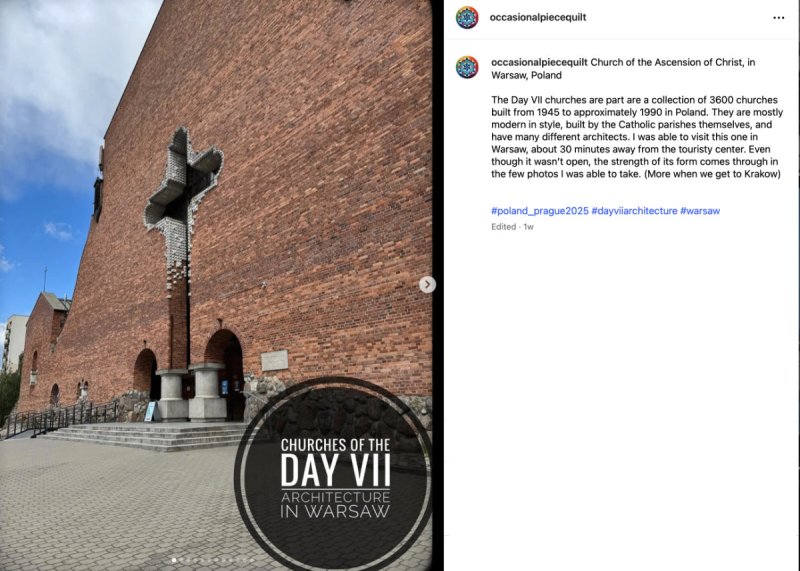
I wrote about the church in Warsaw, our first one to see, and believe me — now that I am home — I vow that if I ever go back to that lovely country my husband and I will rent a car and go see more. They are so different that the usual gothic and decorative churches that we tourists usually go to. (I do like some of these and will show a couple more in this post.) I first found out about what’s known as the Day-VII Churches during the usual pre-trip fatigue: searching for what to see in a given city, I typed in “churches in Kraków” and saw a photo of this church:
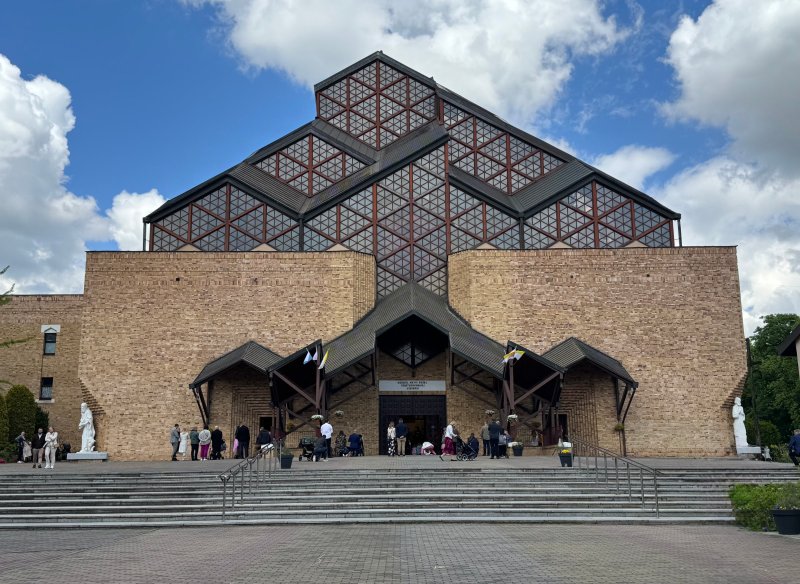
Our Lady of Częstochowa Parish, Kraków – Poland
Whoa. All those triangles, the different angles, the airiness — some architect had been incredibly creative in making this. I found out that there were about 3600 churches with similar heritage. The man who hunted down and gathered all these — Kuba Snopek — also worked with Izabela Cichońska and Karolina Popera; together they compiled a catalogue, which I ordered and read. I watched his Powerpoint presentation. I hunted and searched and read and soon realized that I was limited by my time in Poland and had to choose what we would go see. Sometimes there was information and in English, and other times there was not.
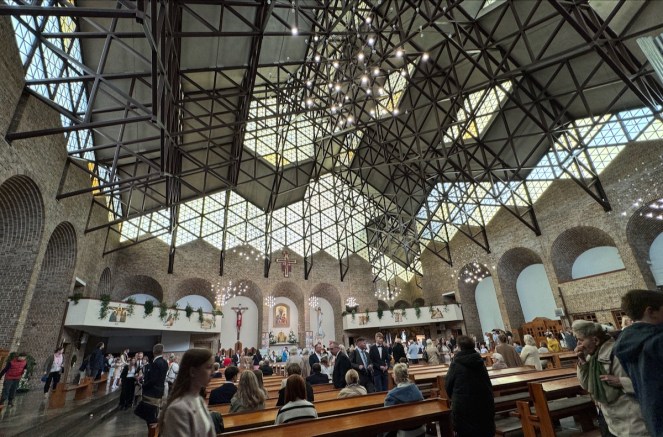
Interior, Our Lady of Częstochowa (Some video of the interior)
A lot of these churches were impacted by the changes of Vatican II. In reading about this preciously unknown subject, I learned a lot about how the desire to have the priests more in front of the congregation and to include the participants in the worship experience, changed how the architects designed the churches. Communication with the Vatican was spotty, at best, during the early years after the war, so some parishes/architects turned to the ideas found in theater construction; broad expanses became more common instead of the more traditional narrow nave and side aisles.
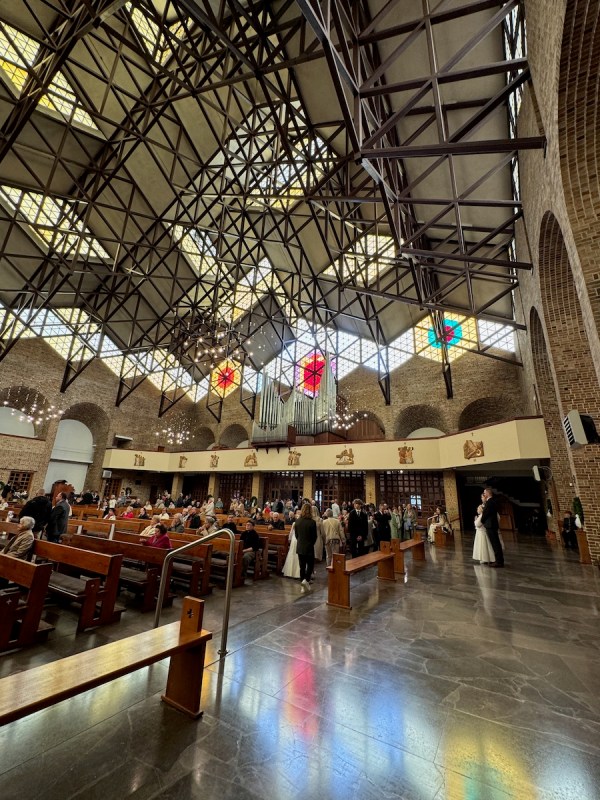
(looking toward the rear of church, with hexagon windows)
While we did go to these on a Sunday, we worked to not take photos during their services, with only a couple of exceptions. However, there were many photographers around that day, as it was a celebration of First Communion for a whole group of young people, and the joy and celebration was palpable and only added to the experience we had.
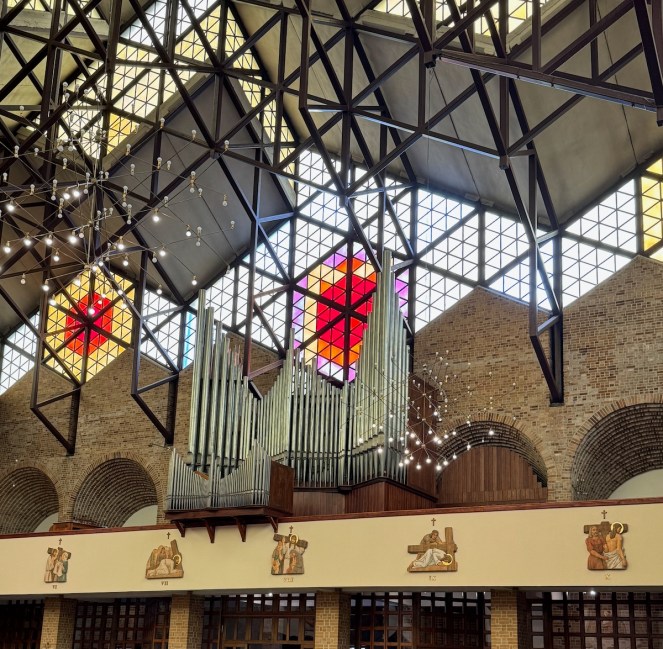
(zoom-in of hexies and organ)
Often when I see a new quilt design, I’m asking How did they do that? Why are the colors distributed that way? Why were those colors used? and finally, Can I replicate this?
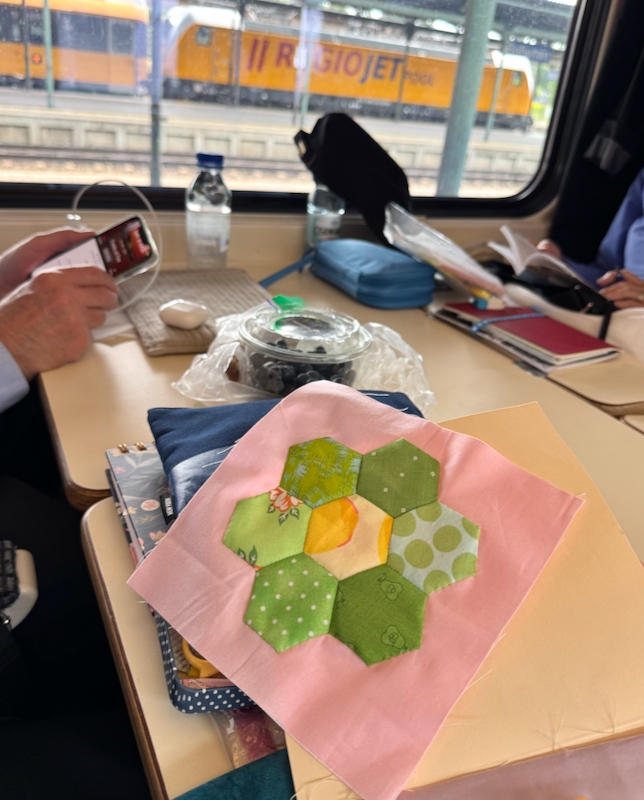
I was already working on hexies on our train and airplane rides, so I was familiar with this element, certainly.
But what prompted the architect to insert them where they were? Was the lack of materials the reason for subdividing all those larger triangle windows? I knew that many of these churches were made from whatever was available, and sometimes the parishioners themselves were working at night by the lights of car headlights, using their own small concrete mixers to help pour the larger structural elements.
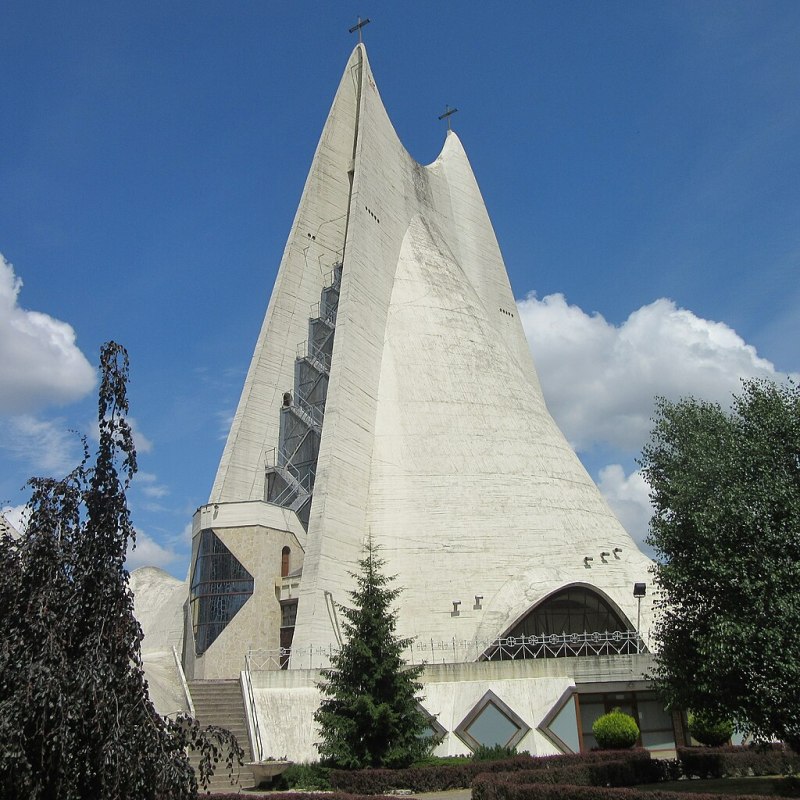
from here. This church has a nickname of the White Batman, which we did not get to see. Be sure to link over to see the construction photos, all very rudimentary, with lots of scaffolding since there were no cranes (which couldn’t be obtained at that time).
Do we arrange designs by the amount of fabric we have? All.The.Time. I found myself thinking about the nature of making, of design. Do our construction techniques vary according to the design we have in mind? Yes.
However, mostly I was in awe.
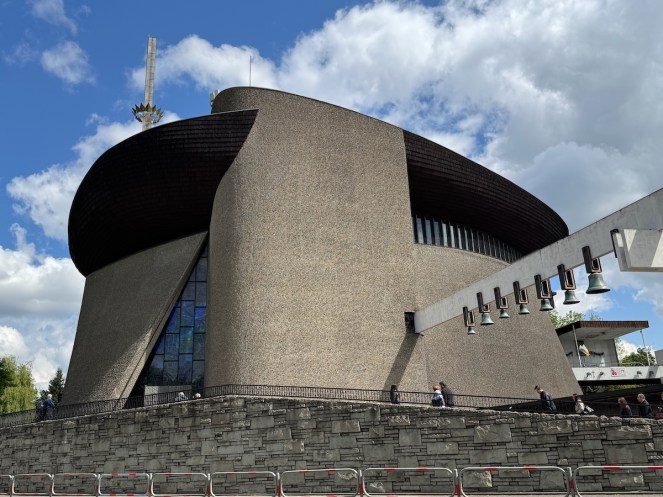
Another church, close by, was built in a giant housing project, nestled beside buildings, as were many churches. Imposing in stature, they nonetheless adapted to the area they were in.
The entry is behind that square stone wall. We arrived about 10 minutes before their services started. I had done my research, but somehow open hours were hard to find, but I knew from my own experience that Sunday was probably a good day to visit a church.
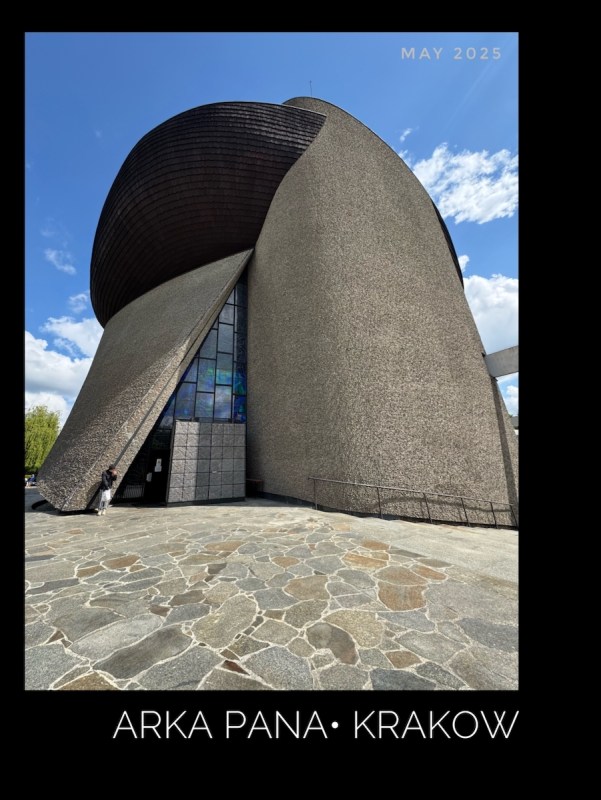
The full name of this church is Church of Our Lady Queen of Poland, Kraków, but they call it Arka Pana, and it is in the Nowa Huta section of the city. The outside is clad in small rocks, and St. John Paul II, who had been given a moon rock, donated it to the church (although I think it is not embedded in this concrete).
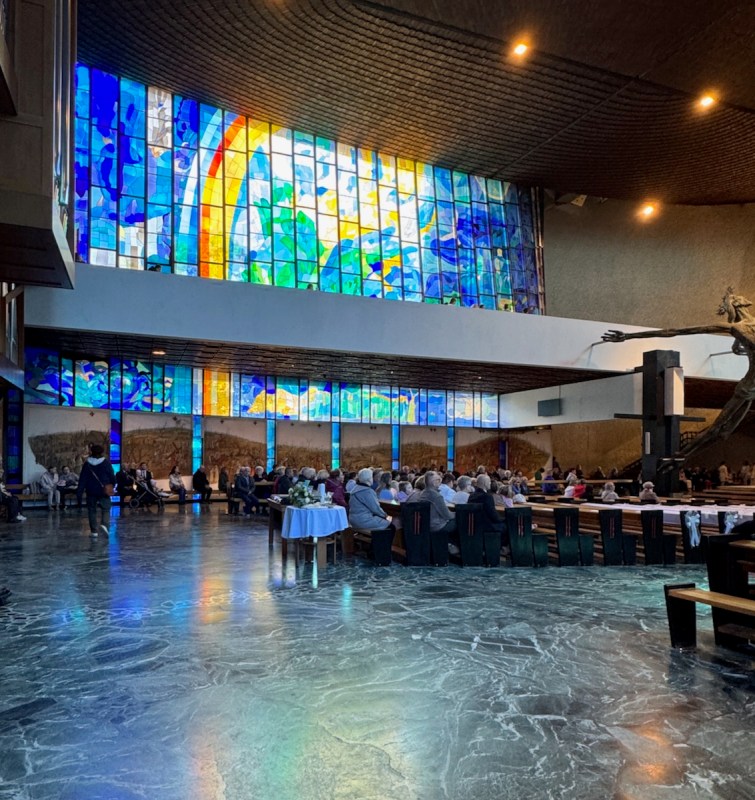
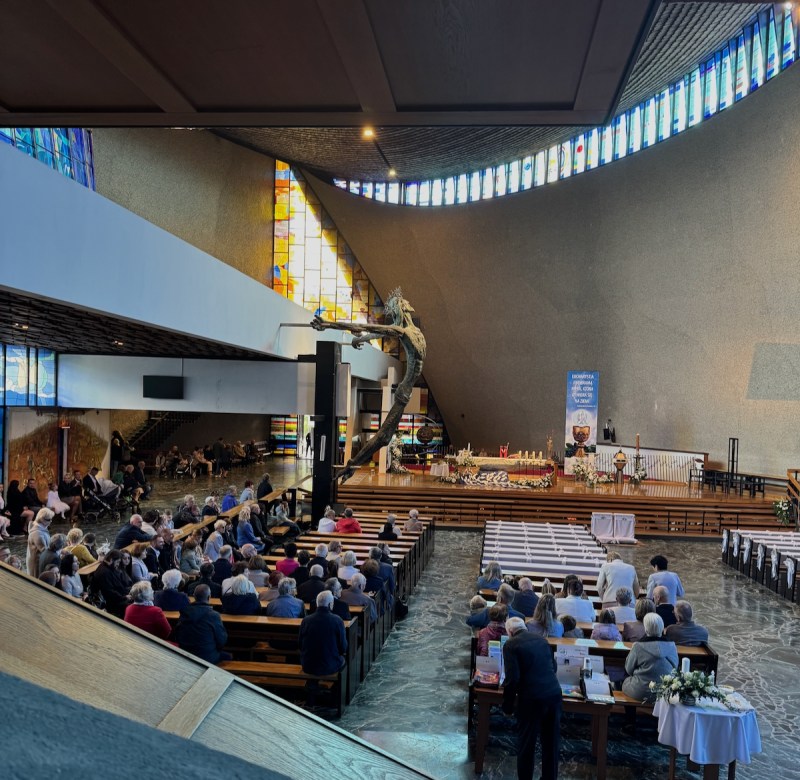
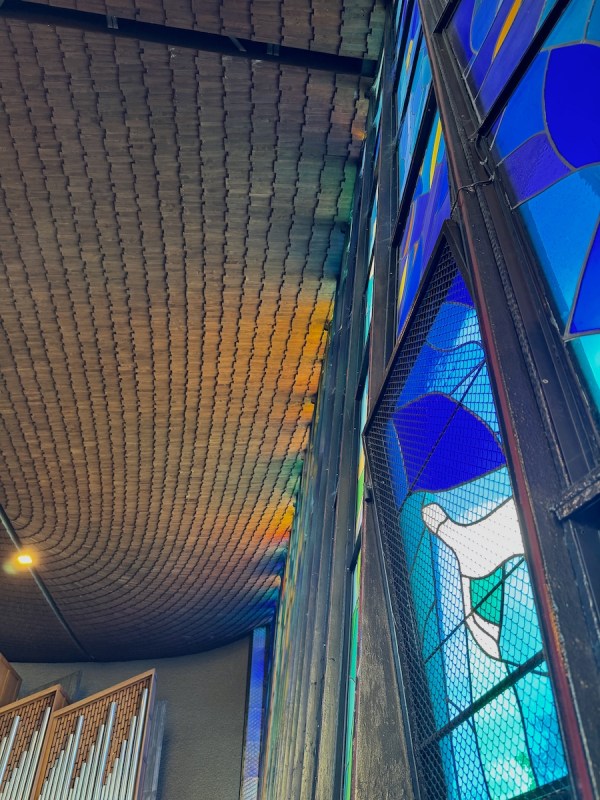
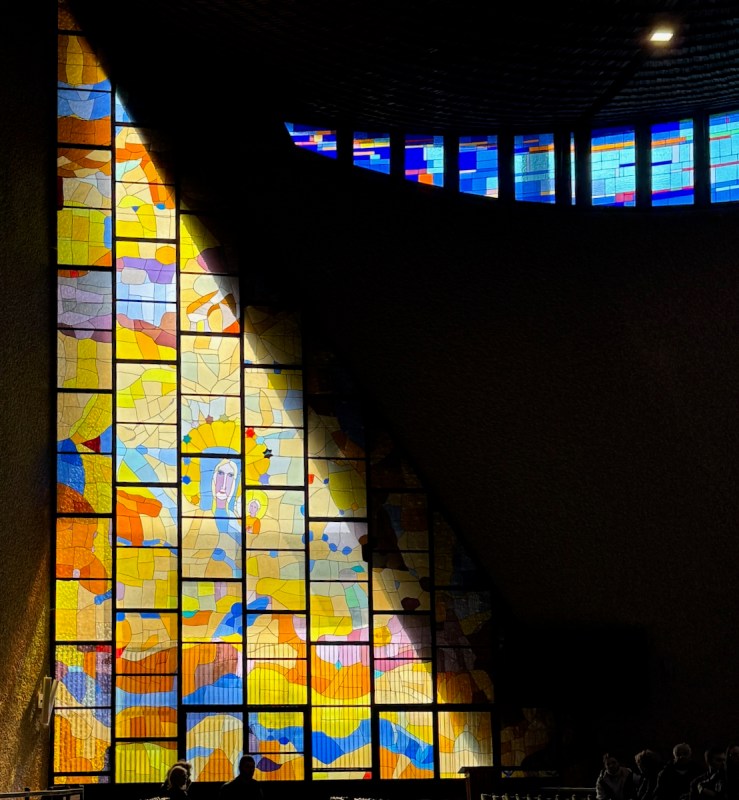
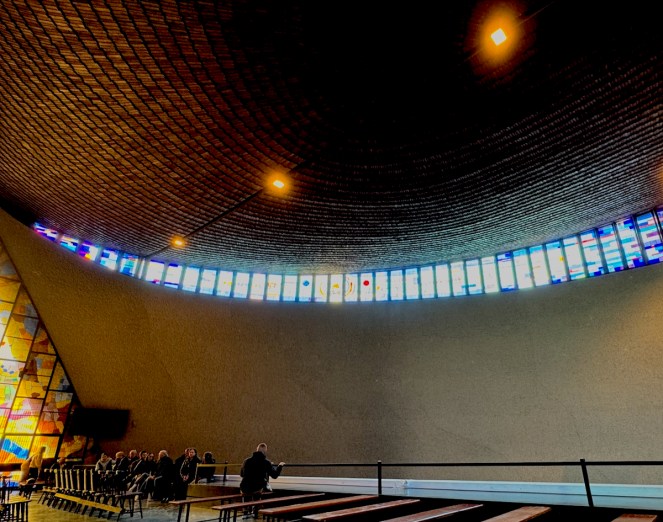
(upper balcony) We left just as the service started, and went outside:
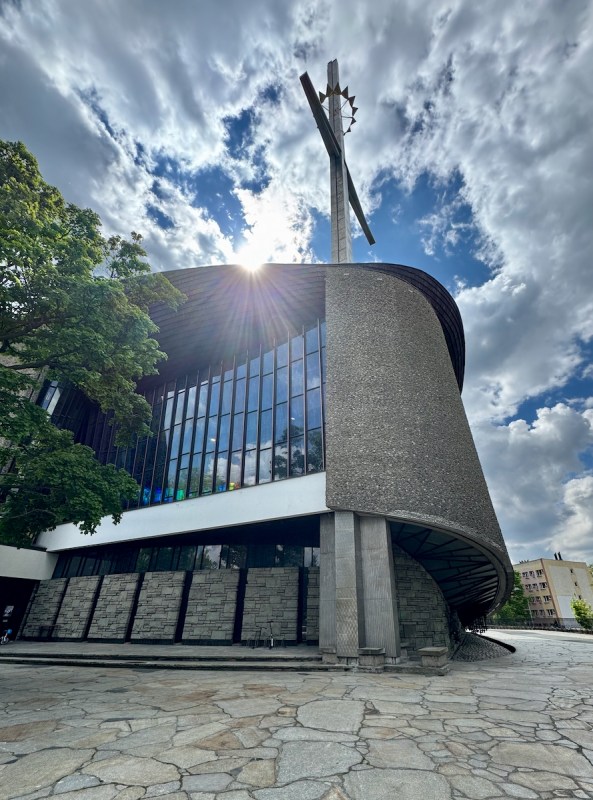
I wrote this on Instagram:
Our Lady Queen of Poland Church, also known as Arka Pana, is in Kraków, Poland and is one of the Day-VII churches. They are a group of churches built from 1945 to approximately 1990 in Poland, and they are mostly modern in style, built by the Catholic parishes themselves, with different architects. This church was about 30 minutes away from the touristy center, and we walked through a huge Communist housing block to reach the church. It was well worth the effort. We snapped a few shots before Mass began, and only after seeing all the rest of the congregation snapping photos (it was First Communion Day) did we sneak a few more. We then slipped outside to admire this church, reminiscent of Le Corbusier’s Notre Dame du Haut in France.
Now for the more traditional inspiration, the Basilica of St. Francis of Assisi. It’s more modern –haha– as compared to some of the other churches in the area. I learned that:
The church, among the first tall brick-and-sandstone built in Krakow, was originally consecrated in the 13th century. Hundreds of years, later, St. Francis’ Basilica found itself in the center of a very different city. Krakow became the center of the “Young Poland” art movement between 1890 and 1918, a modernist style that became known for its art nouveau style. One of the founders of the movement, Stanisław Wyspiański, won a contest to repaint the church and turned it into what is still the most original church design in Poland today. (from here)
It’s that design by Wyspiański which engaged me:
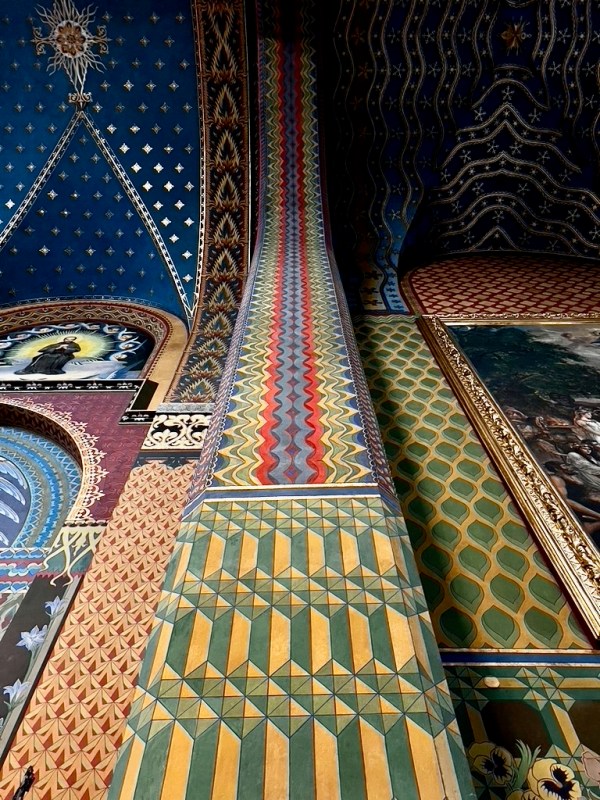
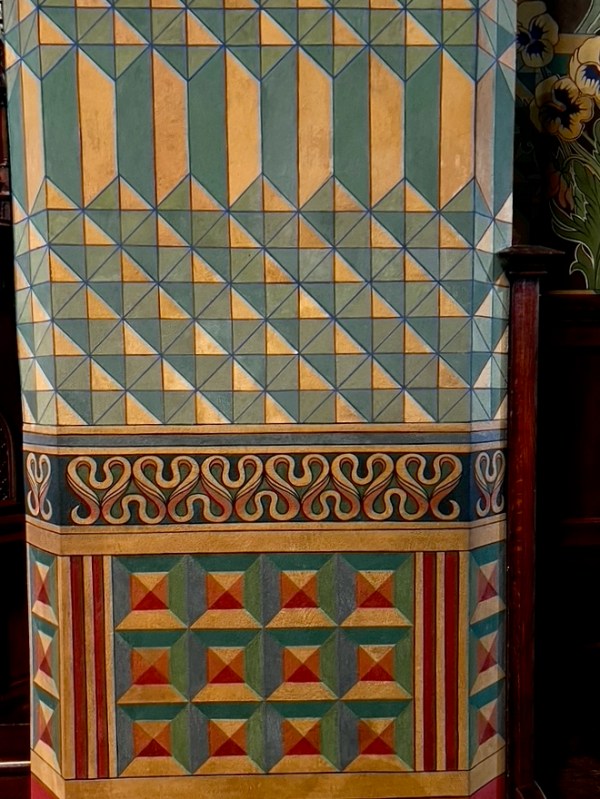
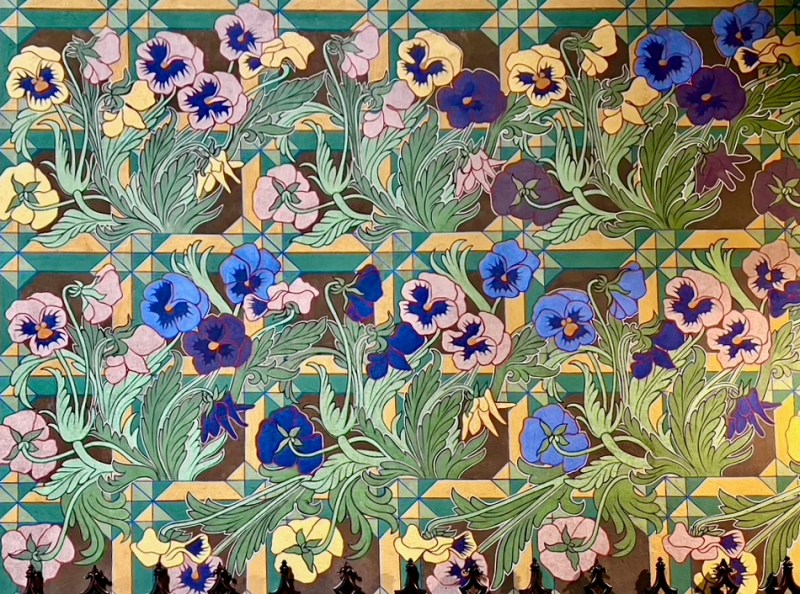
Parts of these images remind me of the economy blocks I’m currently working on.
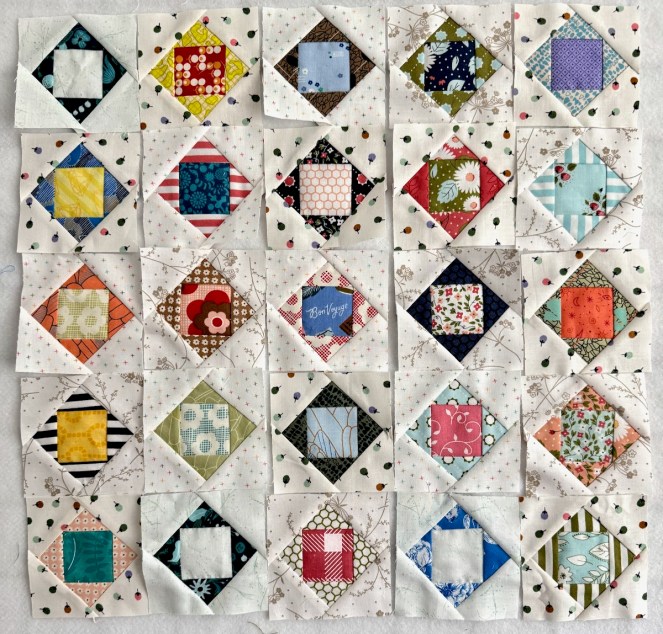
It’s not exactly the same, but a suggestion.
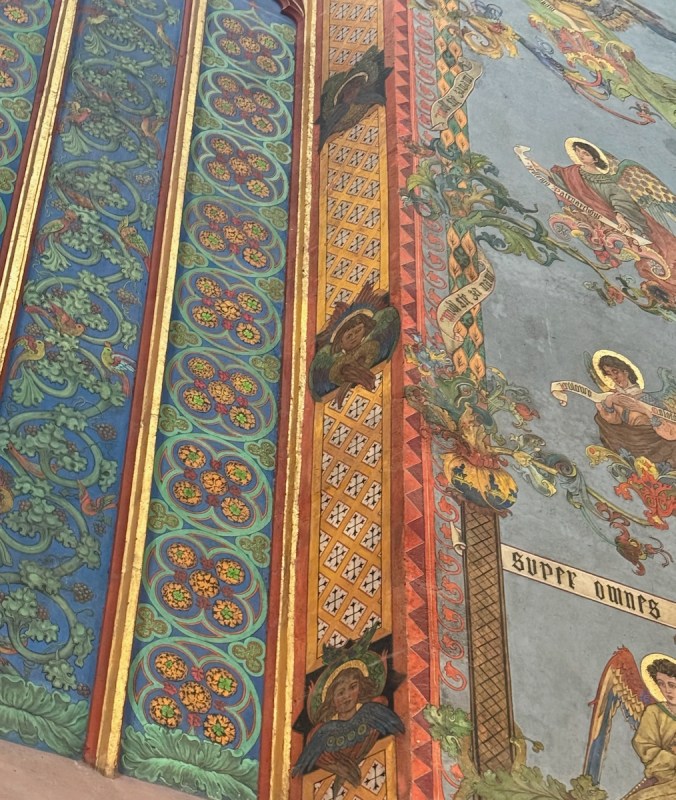
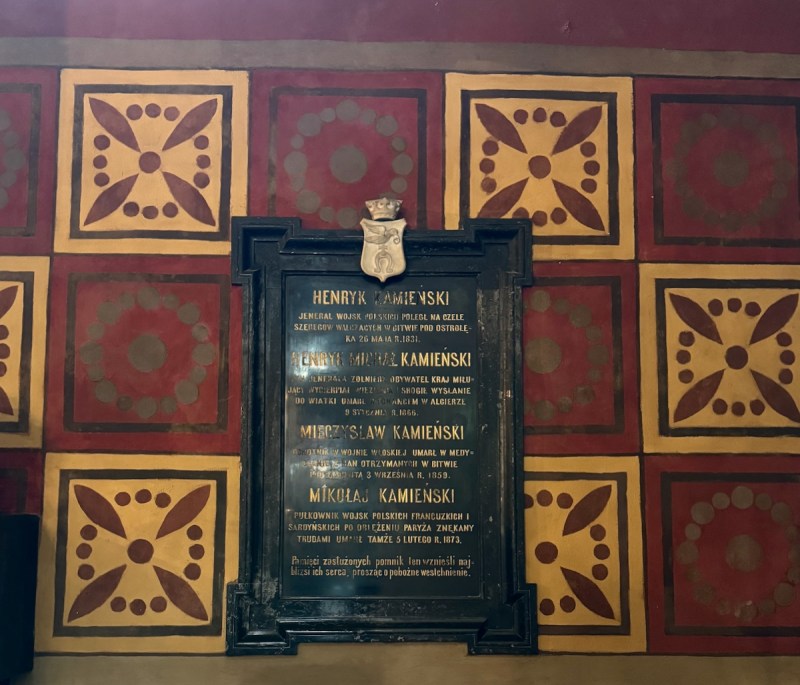
Yep. I collected pattern and image and ideas and great ideas to fold into quilts in the next little while.
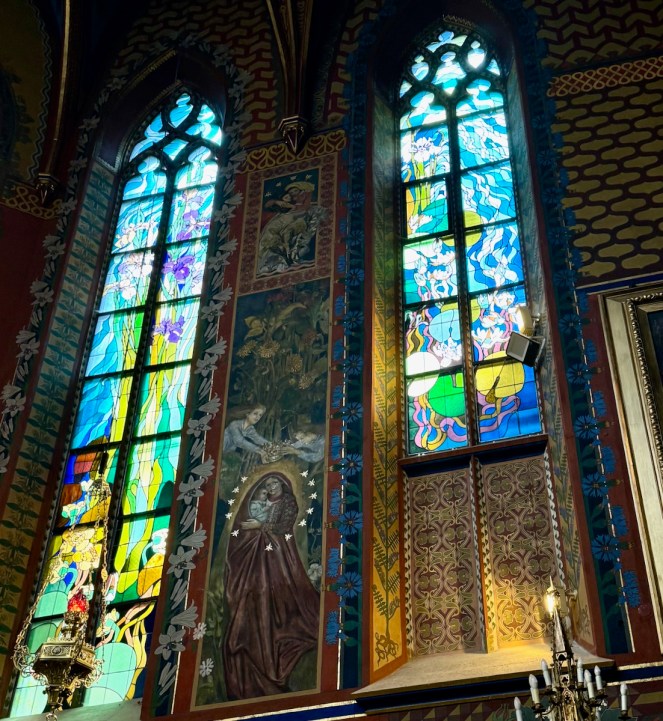
a Wyspiański window; I loved all his wall paintings of flowers!
Our trip tag on Instagram is #poland_prague2025 if you want to see more of our trip.
And because you’ve been so patient in exploring these ideas, I worked up a small idea from the blocks in St. Mary’s Basilica. Below is an illustration of the pattern and a mock-up of colors. Link to quilt pattern is here.
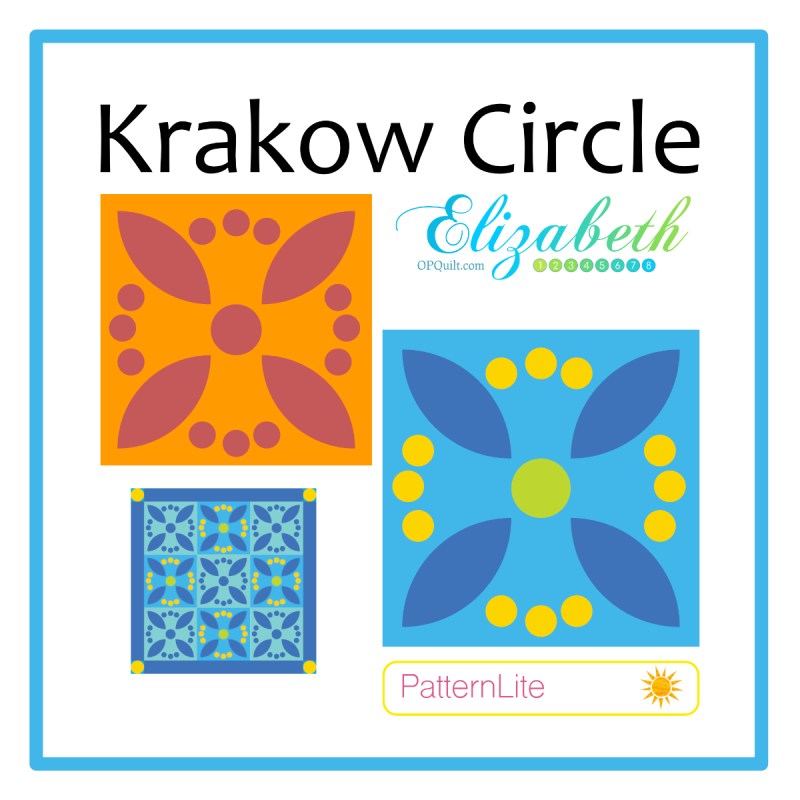
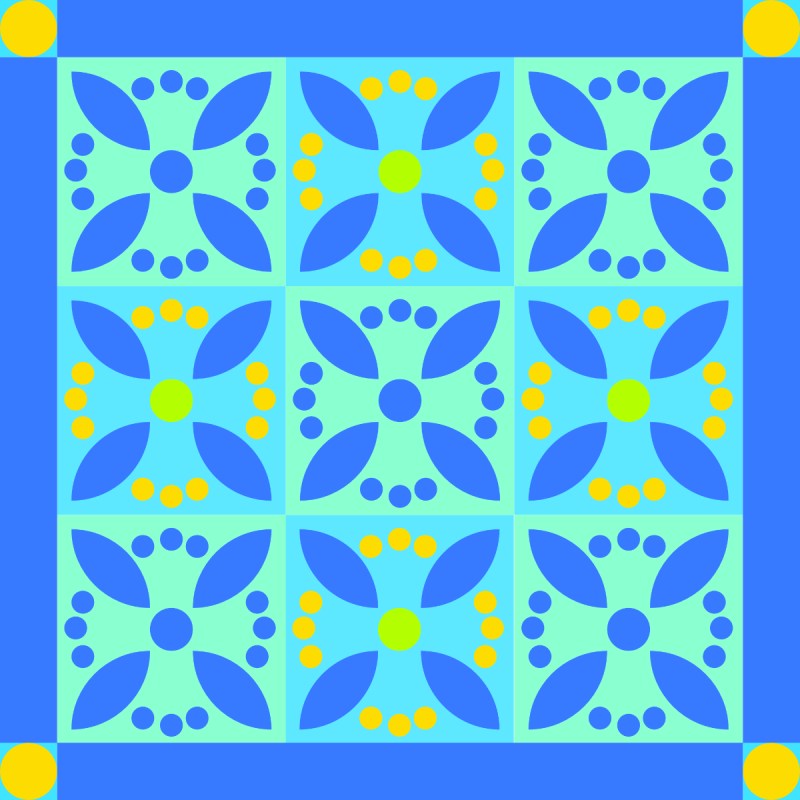
Obviously, I drew color inspiration from the windows of Arka Pana and Stanisław Wyspiański!

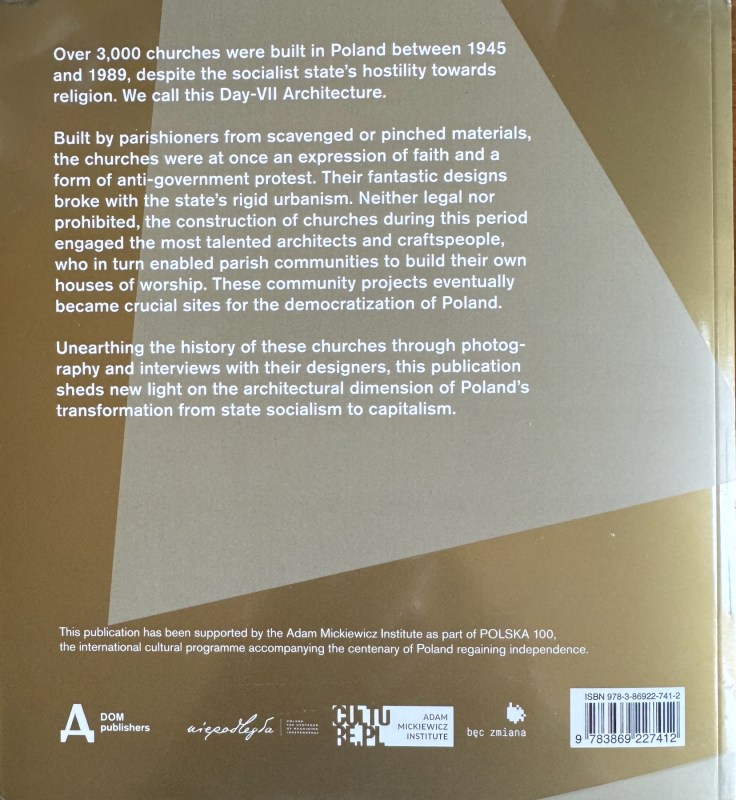
(back of catalogue)
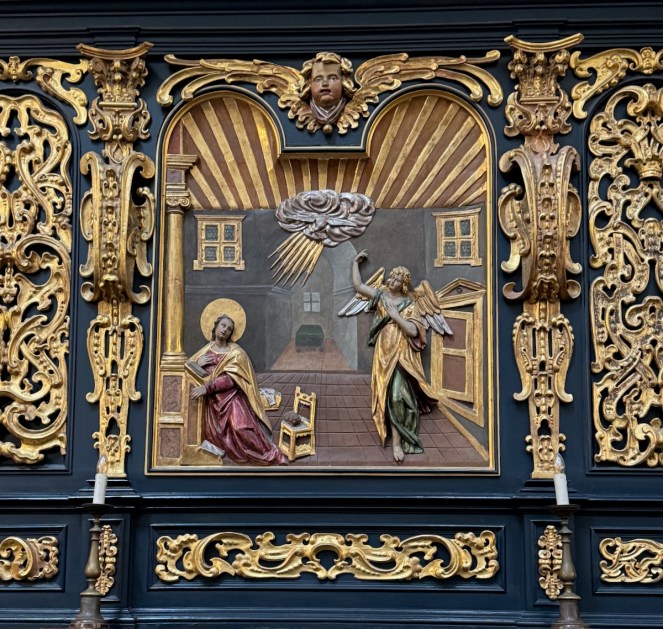
Also from the Basilica of St. Mary in Kraków’s main square. I love seeing depictions of the Annunciation.
Discover more from OccasionalPiece--Quilt!
Subscribe to get the latest posts sent to your email.

 OccasionalPiece--Quilt!
Wh
This is all quite fascinating. I had no idea churches could look like this – so contemporary, open-air, and inviting! Worshipping in such a place would be a wonderful experience. Obviously, the history of these church designs and construction only enhances their appeal. I hope they are well-attended and that spirituality is in abundance. Your economy blocks are charming, and I can see their subtle similarity to those wonderful Wyspiański designs. Yes, you definitely found great inspiration for future quilts. May we all live long enough to complete our creative aspirations!
Fascinating! Thank you for taking us on that discovery with you. I love the pictures of the stained glass at Arka Pana – it’s glorious. And I can’t wait to see where those economy blocks go – they are already wonderful and I definitely see the echoes to the Wyspianski painting (the universe telling you that you were meant to be in that spot).
It was interesting to follow along on your church visits. Very wise to visit on Sunday! The architecture is certainly not what one would expect. Welcome home.
Lucky we were to be long for the ride! ⛪️🚄🚏
The churches are amazing both in their back story and design. Thanks for sharing. I need to catch up on all your IG travel posts. Been on a road trip and behind on social media stuff.
Thanks for sharing your photos and insights Elizabeth! Travel certainly broadens one’s horizons! I love the graphic nature of your Krakow Circle block! I wish I had had access to that while I was making my orange peel blocks!
Fascinating!!! And beautiful! Plus I enjoyed your musings on creativity. Thanks for sharing!
Such interesting church buildings! And I like your block, too ; )
Third try to comment…Wordpress is having a day, I guess.