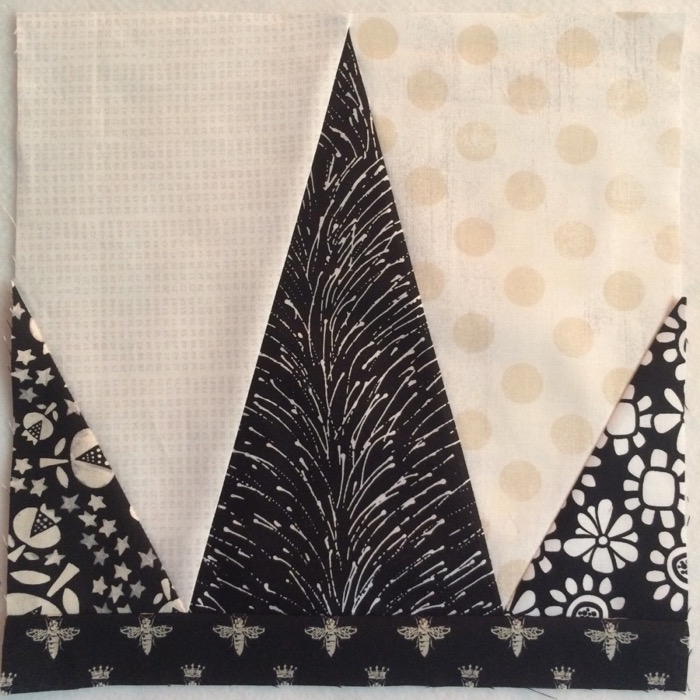
Simone, the Queen Bee for September, visited Grand Teton National Park over the summer and wanted a block to commemorate her visit. I can hardly wait to see this one.
Leisa’s mother used to live in Ghana, a missionary for the LDS church. While she was there, she sent Leisa a box of fabrics that she’s turned into African Queen blocks. In case you want one, here’s the info on the pattern by Anne Batiste.
I have to admit, even though it’s a bit more than I’d usually pay for a single issue, I do enjoy this publication, as it generally focuses on the regular people of quilting, not the big Brand Names of Quilt Stardom. A nice change, which exposes me to a wider range of our quilt world (and lets me find an African Queen pattern!).
Here’s another I really enjoy–Uppercase Magazine. This issue hit it out of the park, in my view, so if you decide to subscribe, make sure you start with #35. Neither of these publications have advertisements, they are subscription based only, which is why they cost a bit more: the advertisers aren’t subsidizing the costs. I like advertisements okay; it helps me know what my favorite companies are doing. But I also like not having advertisements, too.
If you join up with Jeanine’s mailing list, she’ll give you a deal on a new subscription, plus you get her cool little missives. Never heavy, only intriguing and fun, filled with art and creativity everywhere. I’m sure you can sign up to get those all by themselves, if you want. (And no, Uppercase doesn’t pay me.)
Okay, as long as we are in the panting-over-something-but-don’t-know-if-I’ll-get-it phase, look what came in my mailbox this morning:
You get one box at a time, filled with stuff to make two Di Ford blocks. I’m not even a Di Ford aficionado (although you might persuade me) and I’m tempted. They are only making 400.
This news comes from someone who has the complete set of Frivols, yes, boxes 1-12. It was my retirement gift to myself. I still haven’t made ONE of those quilts, although I still like seeing the boxes. Soon.
My box fetish comes honestly from my mother, who always had a cupboard full of empty boxes for gift-giving, and a stack of them outside in the garage next to the freezer, just in case we needed one. I’m sure there are other box-hoarders out there, besides me, right?
Coming November 1st: my final quilt in the Four-in-Art experience. Although I’ll not be a part of it, the art quilt group still continues on, however, as Endeavourers, with Janine and Catherine at the helm.
They had such a nice response that their slots are full, but having run a few groups, I know that the line-ups change all the time. If you are interested in joining them, drop either one of them a note and ask to be added to their waiting list. It has been a wonderful experience to make art quilts these past five years, and being a part of a group is wonderful.
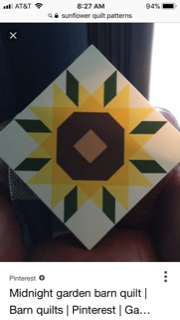
My nephew’s wife, Grace, wrote to me and asked for help. She is a young quilter, who makes awesome gooseberry jam (she shared a jar with me), so I wanted to help. The quilt was for someone close to her who had just been diagnosed with breast cancer, and she thought a quilt was needed. I agree.
She sent me the screen shot you see above, and since it was on Pinterest…and you know how much I LOVE their search engines (NOT), I thought it was easier to draft it on my computer using QuiltPro than try to find the original design (I tried…and failed…but kudos to whoever dreamed it up). Besides, that was one of those “barn” quilts, painted on wood, not a cloth quilt.
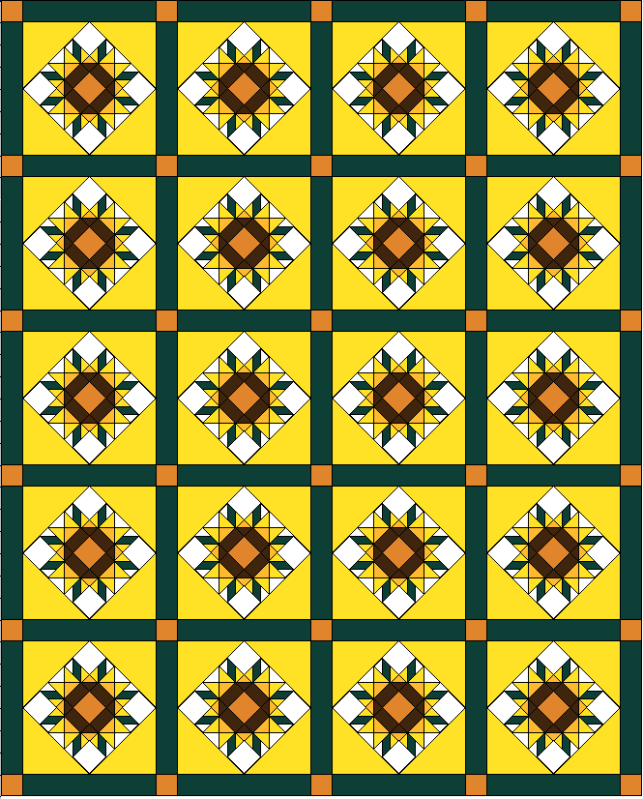
This is what I came up with. But I knew Grace wanted to move quickly, and yeah–all those pieces?
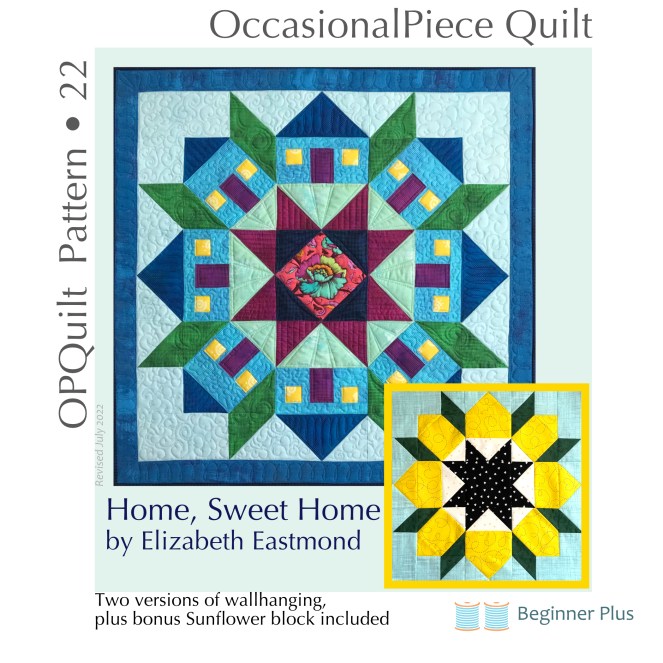
I thought about my Home Sweet Home mini quilt, and how she could make fewer blocks, but bigger blocks?
UPDATE: There is now a pattern for this sunflower quilt.
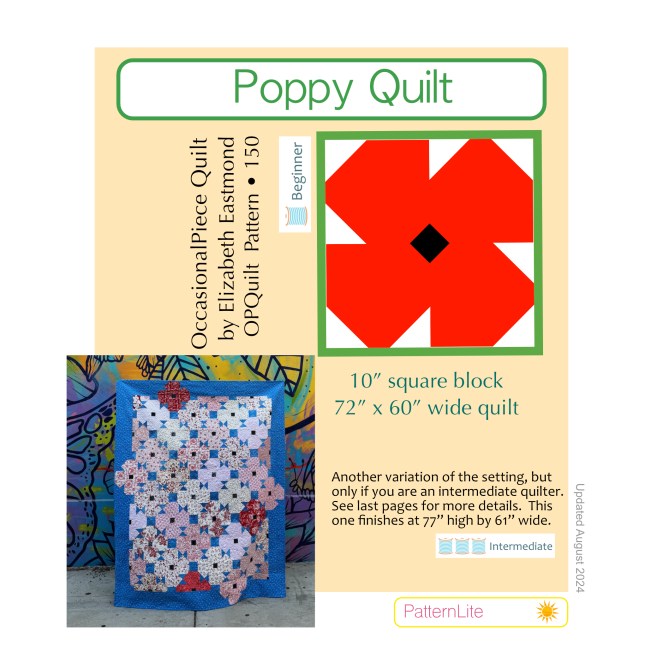
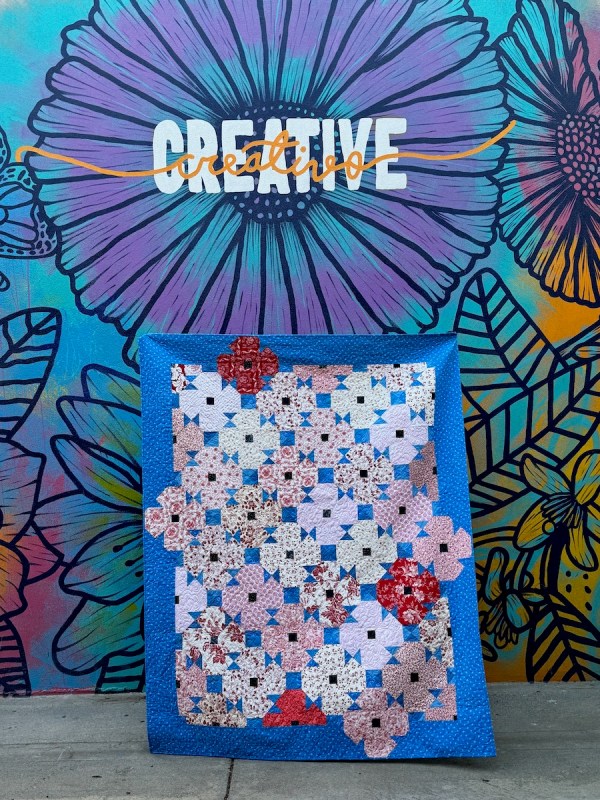
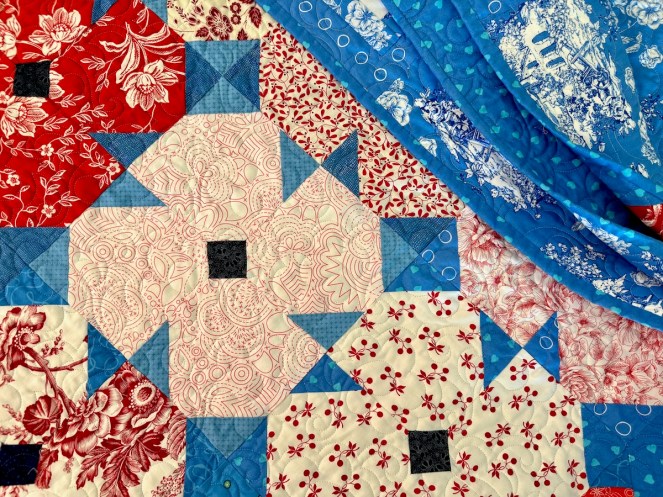
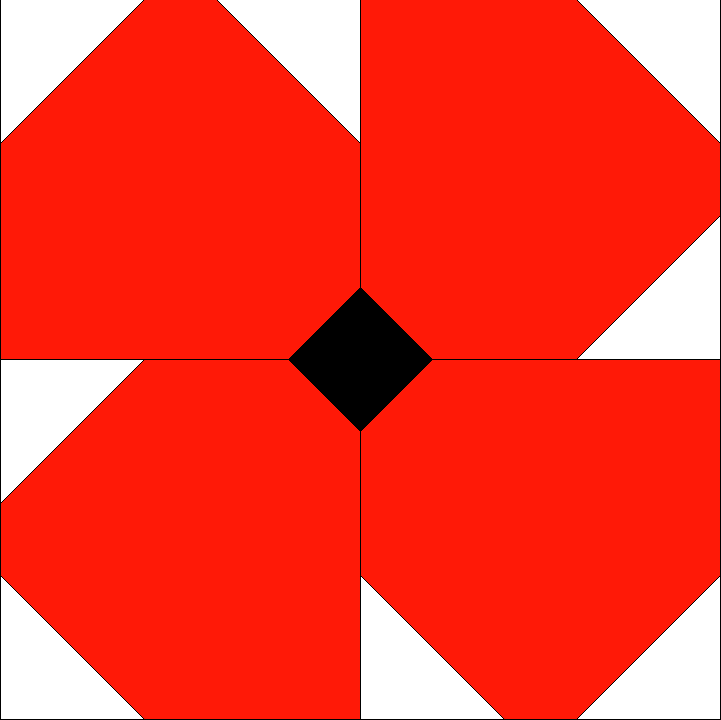
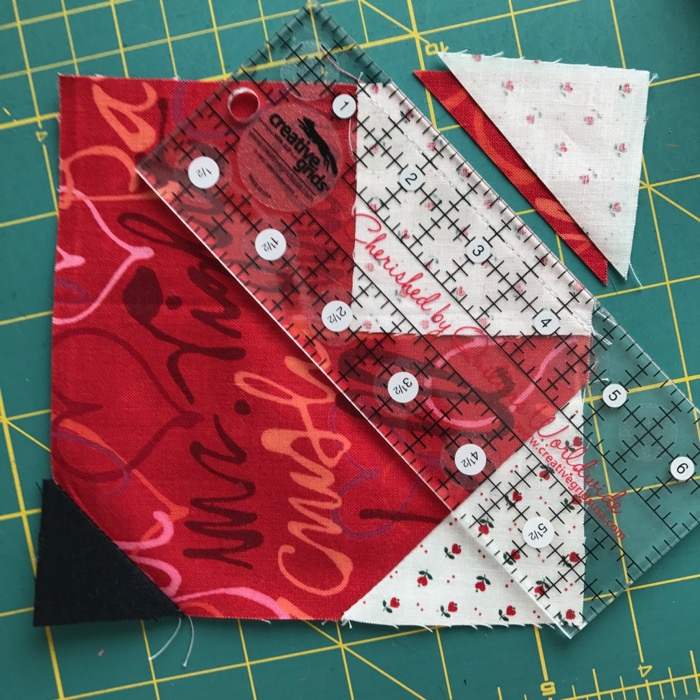
Grace wrote back. She loved what I’d done, but now they were thinking poppies. She sent me a sample of a quilt she’d seen. I drafted it up in my quilt software and drew up a quilt. But I thought I should test out my own pattern, so I made a Poppy Block:
trimming snowball corners
I think it will be cute quilt.
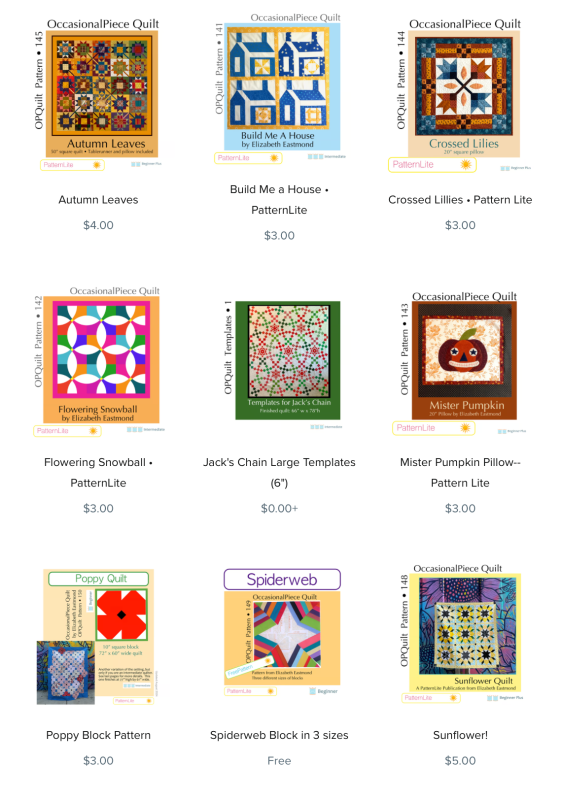
It can be made in reds and greens and be thought of as poinsettias for Christmas. Or made to commemorate Anzac Day in April, for the Australians. Or red and white for a bouquet of posies for Valentine’s Day. Have fun, and if your friends want a poppy pattern–send them to my pattern shop to get their own PatternLite pattern. Thanks. PatternLite patterns were developed as they were simplified, and cheap — less than your drink at Starbucks.
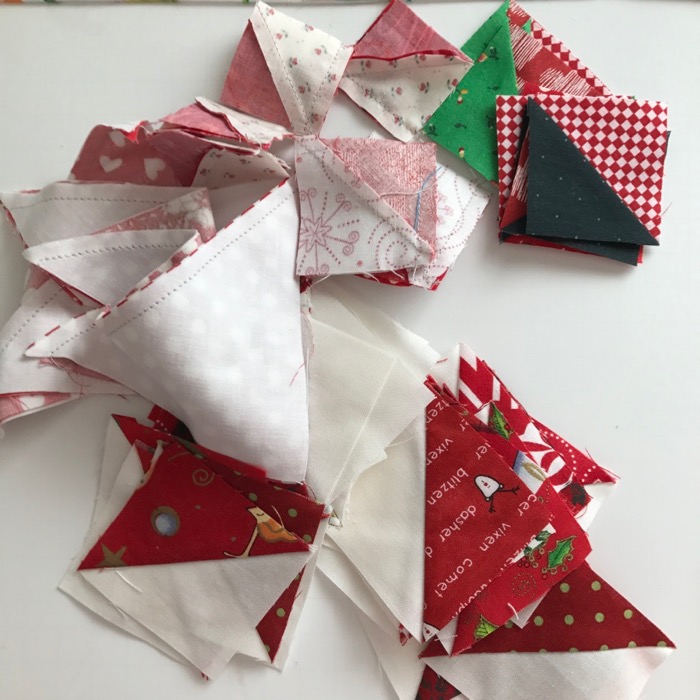
Making that block added to my collection of red and white triangles (ignore the interlopers in the upper right corner). I trim them to whatever measurement’s closest, without it being a weird number, and save them.
Every once in a while, I sew them into four-patches.
I haven’t decided yet what to do with them, but a couple of questions arise: do I include the Christmas prints? Or do they get their own collection? (I think so.)
Do you ever quilt with “rules”? It’s about all I remember from my beginning art classes, ages ago in college. The assignments laid out rules to create by — an edge to the sandbox — if you will, and went something like this:
Take an old piece of clothing, adhere it to a canvas and paint it like something else.
Use three shapes only.
Create a composition by taking a square of black paper, cutting out some shape and using the negative and positive pieces.
This assignment will use only two colors, but you may use any range of those colors.
And so on. There are many books out there in the marketplace for guided creativity, but they all start with a rule.
Sometimes I find little bags of treasures in my sewing room, with pieces inside that have been collected according to some rule. Like the red and white triangle rule. Or the 3-inch square rule, but I kind of think that last one’s a bit of a cheat.
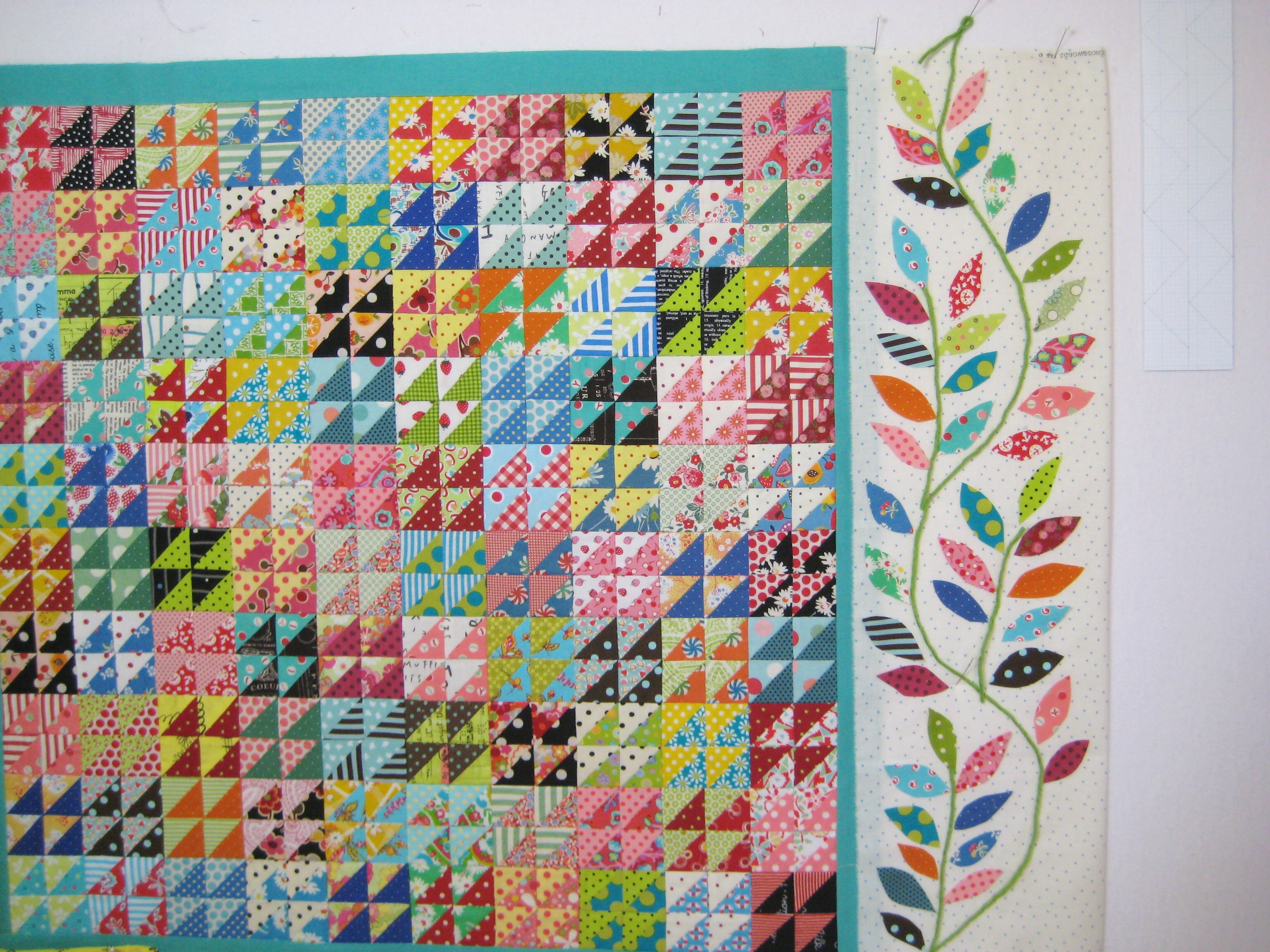
Several years ago, I saw this on Jan Burgwinkle’s blog, Be*mused, and fell in love with it. Maybe that’s why I started making little HSTs. (While she doesn’t seem to update her blog much these days, it’s still amazing to read through the archives.) So that’s my rule and I’m sticking with it: red and white triangles, although seeing this quilt again does make me wonder if I should break it.
This has a billion pictures, so get ready to scroll. I need to wrap this up and bring my head back to what I’m doing in real life. This is the final post of my visit to the European Patchwork Meeting in the Alsace region of France, this past September. I have a main page that lists all the posts, in case you come at this from a side street on the web.
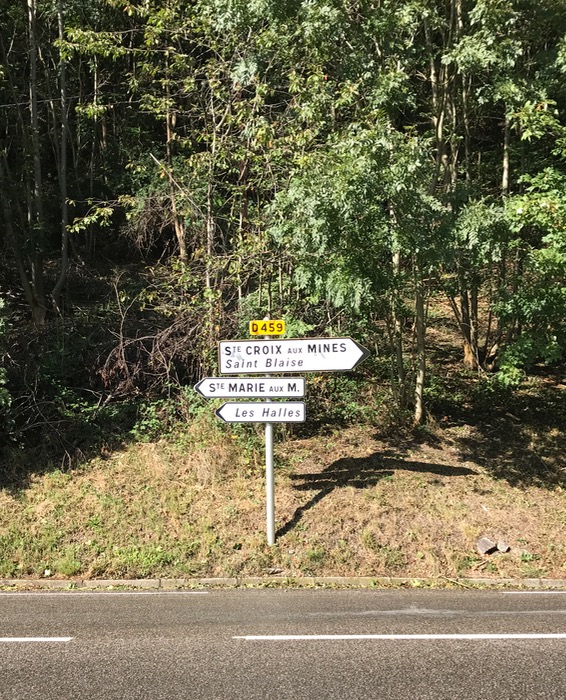
This quilt show, or meeting, was held in four different towns in France, and I’ll wrap up the first town, Sainte Marie Aux Mines, then move to St. Croix Aux Mines, and finally Liepvre. We didn’t make it to the last town, Rombach le Franc, but Jodie Zolliger, who lives in Europe, has written several great posts about what she saw, including the Amish exhibit. If you are interested, feel free to click over to her blog to catch more.
The Amish exhibit was beautifully laid out in this venue, and as I mentioned, Jodie wrote a great post about it, with better titles and information than I gathered.
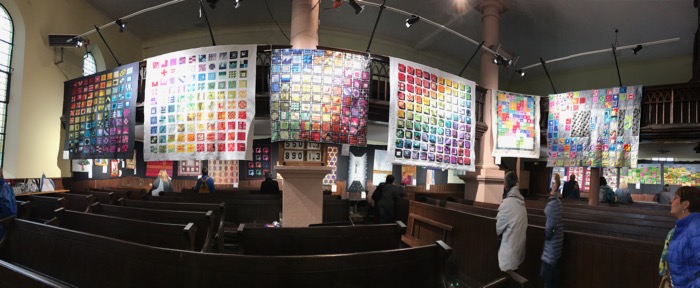
We walked down to the Temple Reforme, where the Val Patch Association, the local guild, had an exhibit titled “La Maison,” or Home. All of the quilts in that exhibit centered around the theme of home, showing slices of daily life.
I took a panoramic of the colorful quilts across one side of the church.
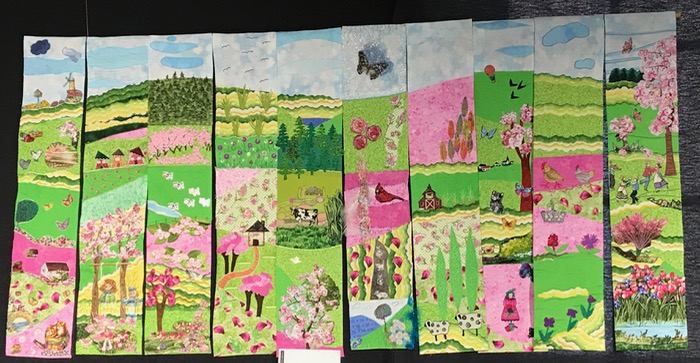
But fell in love with these panels, made by several members. Jodie has a great post on this one, too.
Off we go to the next town.
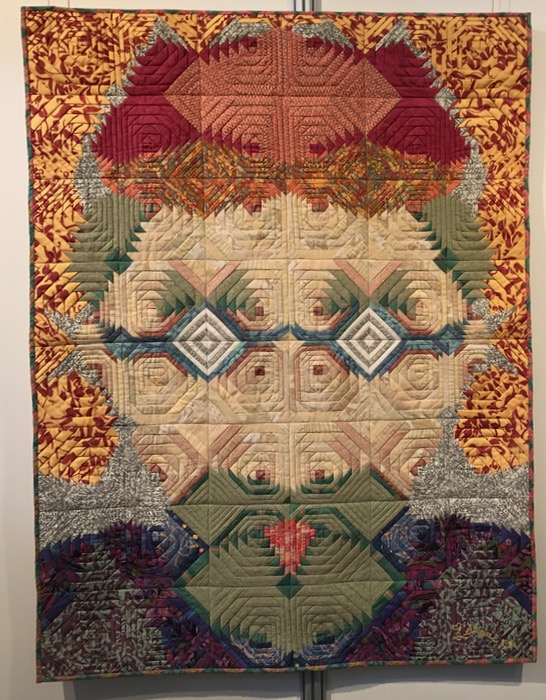
Pilot, 1995 • 100cm x 126 cm
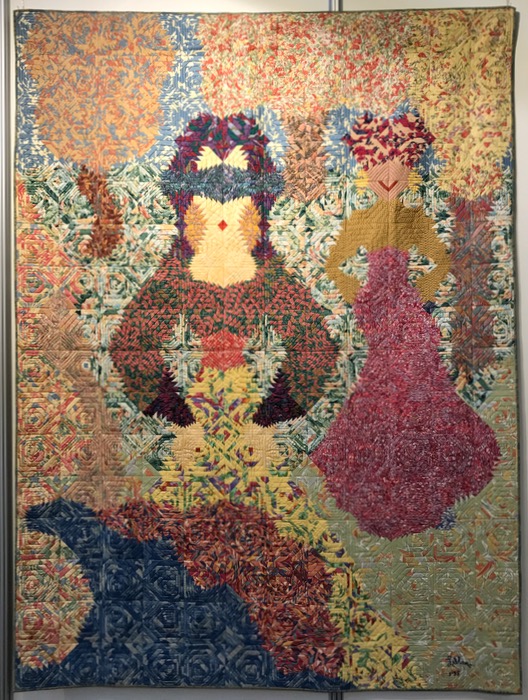
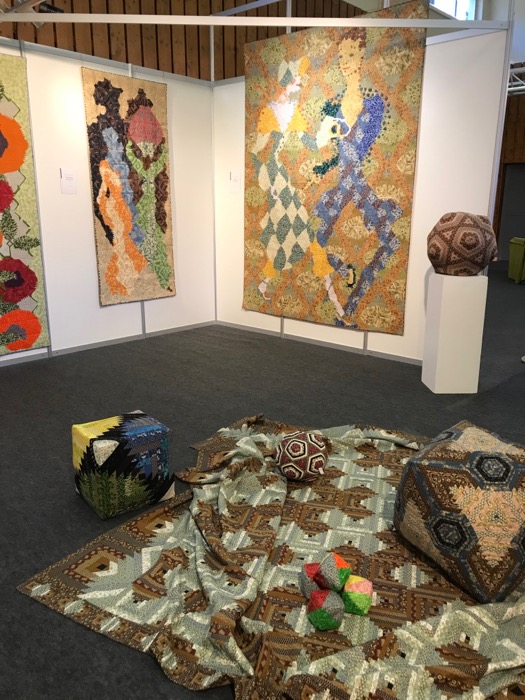
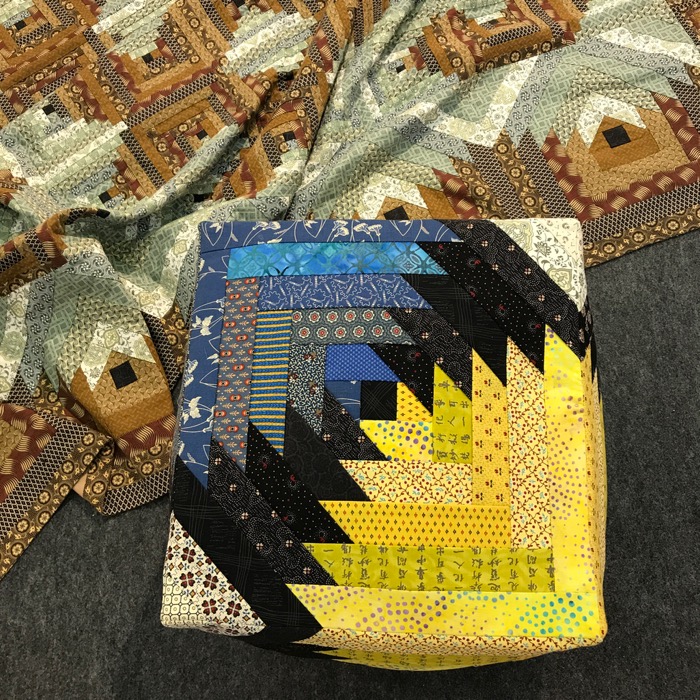
I selected to head to the Espace Expositions first, to see the Beauville Company’s exhibition of prints from their archives, but was entranced by the skilled and exquisite use of log cabin construction by Andrée Leblanc in her quilts. I am listing the sizes of the quilts in centimeters, as noted on their title signs. (100 centimeters is roughly equal to 39 inches.)
Pilot, detail
It was pretty amazing to me how she’s used the width of the strips to create her portraits and pictures. Again, the lighting was superb.
Professor, 1996 • 76 cm x 100 cm
I laughed at this one, because my husband is a professor (but he doesn’t look like someone out of 10th century Russia, or what I thought this man looked like). Detail of the glasses, below.
Oasis, 2011 • 103 cm x 103 cm
While this isn’t a figurative portrait, the use of these fabrics was so interesting–not ones you’d associate with creating a design of any kind. Detail, below.
Colin-Maillard, 1995 • 110 cm x 220 cmColin-Maillard, detail showing fabrics
I like how they’d put other constructions of hers in a tableau on the floor. She had many quilts there.
Grand-Pere
She was always busy talking to people at her table, so I could only get this sideways shot of her. Her website shows many different parts of her creativity. [update June 2025: the link is broken as she does not appear to have a website anymore.]
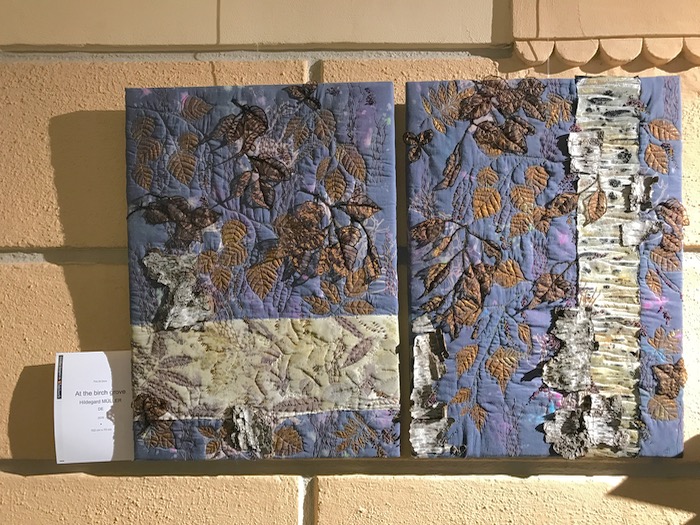
We headed down the road, again, to Liepvre (and try as I might, I cannot get my blogging program to allow the accents over their words, so I apologize–it keeps kicking them out when it spellchecks), to the Eglise de l’Assomption where an exhibit of Hildegard Muller (Germany) was hung. The lighting was very “contrasty” so I did a little photoshopping on these to render them closer to what I saw.
At the birch grove, 2016 • 102 cm x 70 cm
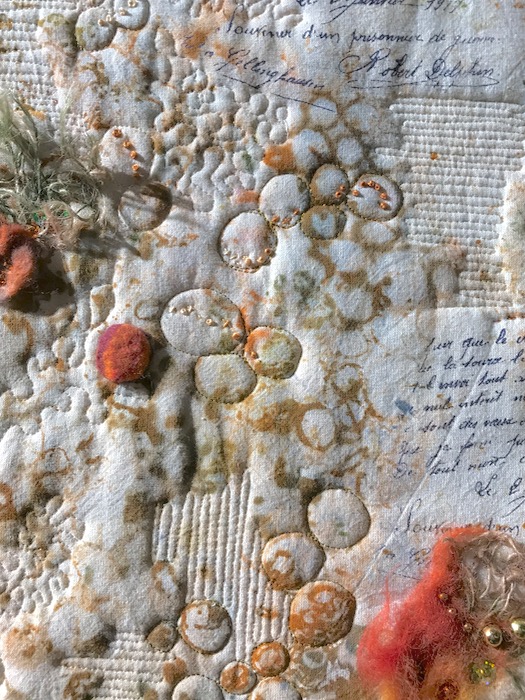
Detail. She hand-dyed her fabrics and then let her mind find the scene that was in the cloth, or so she told me later, when I asked. However, other times, she had an idea in mind when she was dying the cloth, and made it that way.
Love in wartimes, 2015 • 102 cm x 70 cmDetail.Dreams of Amsterdam, 2014 • 102 cm x 70 cmDreams of Amsterdam, detail.Imagination
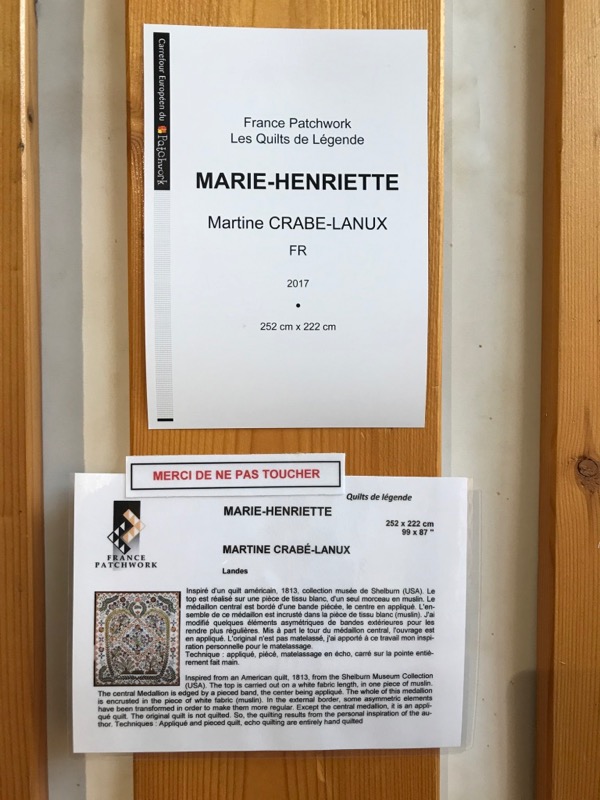
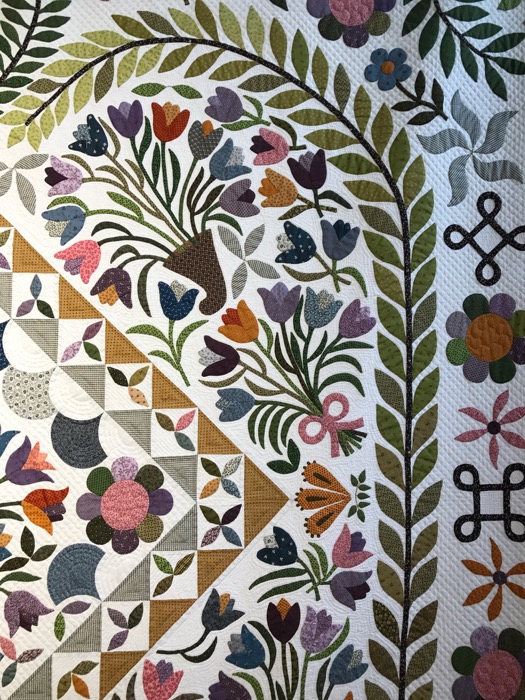
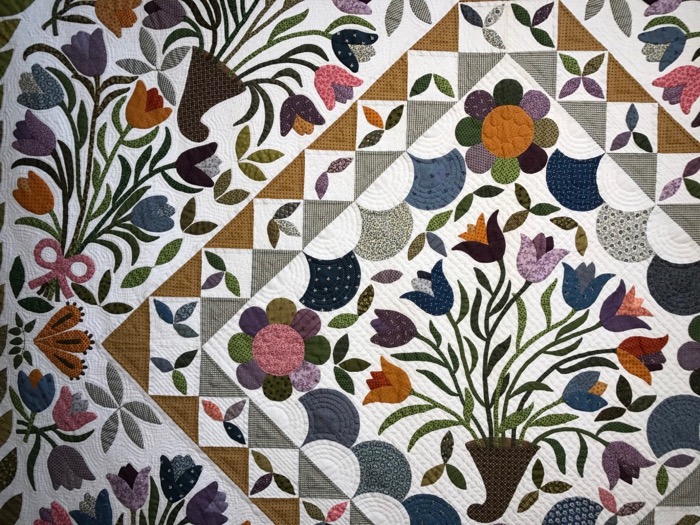
We walked from their to the Exhibition Hall to catch a couple of exhibits; we had to choose as we didn’t have time to see them all. So many of the quilts in this building were perfectly done, all Best-of-Show-type quilts. The one above took my breath away, so I have a few details shots of it. I loved that it was an imitation of one in the Shelbourne Museum — another way our patchwork influence crosses the ocean. The title of the quilt was Marie-Henriette, and was made by Martine Crabe-Lanux.
The Twinkle-Stars Remake Quilt by Helga Huisman Hildebrand was also in the “France Patchwork” association section. There were several countries represented in this hall.
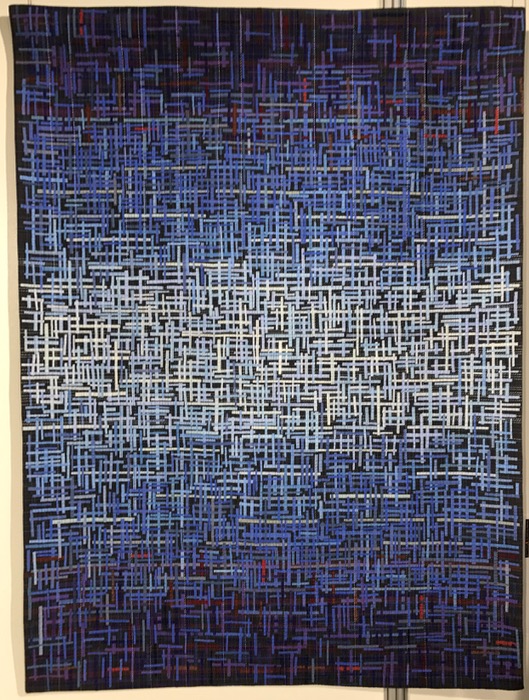
Another France Patchwork quilt, titled Bleus, and made by Maria Vuilleumier.
She also had one done in gray, black and white strips, but that one was called Insomnie, or Insomnia. (Because I’m trying to wrap this up, I’ve heavily edited what I’m posting.)
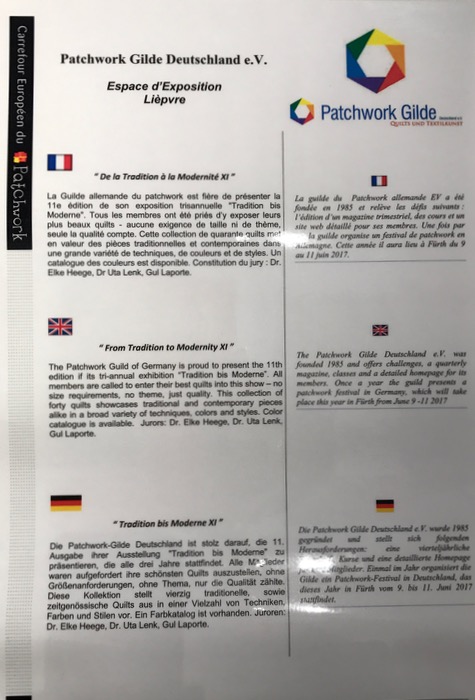
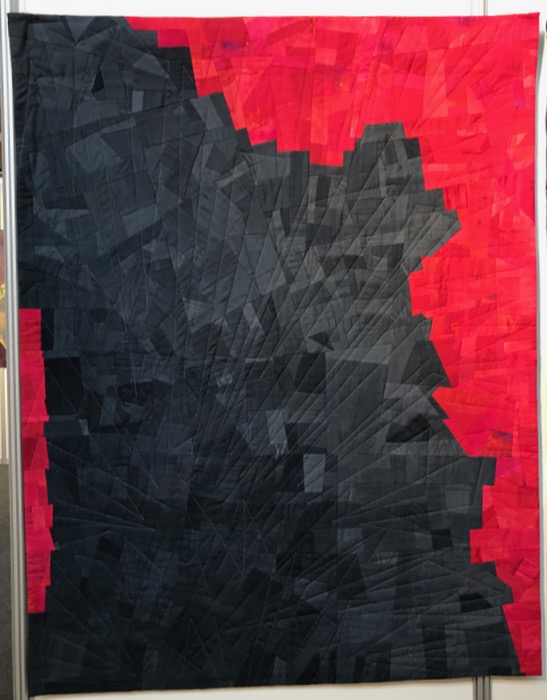
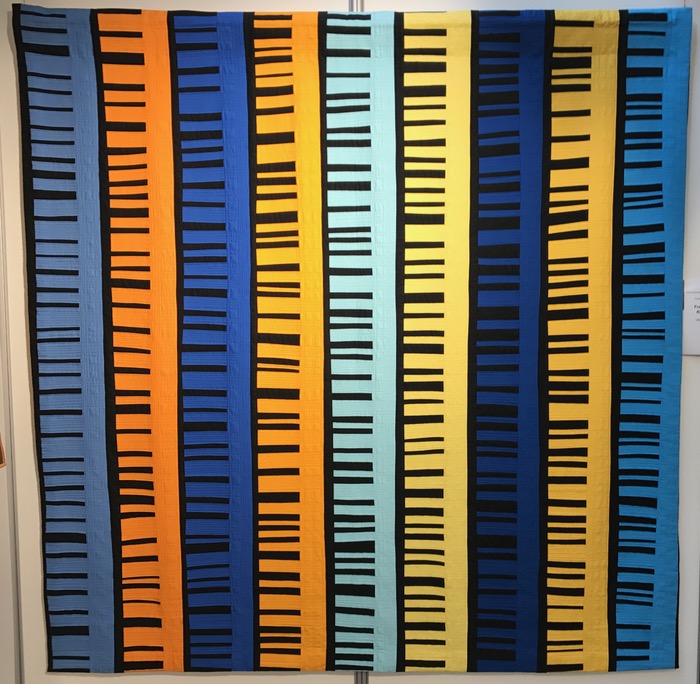
Last section, last group of quilts is from the Patchwork Gilde of Germany. These quilts blew me away. Every year they have an exhibition and members are asked to enter what they’ve been working on (more info on the placard, below). This grouping was titled “From Tradition to Modernity 21.” Because your scrolling fingers are probably worn out at this point, I’ll post the title and the maker on the quilt; some titles are in German.
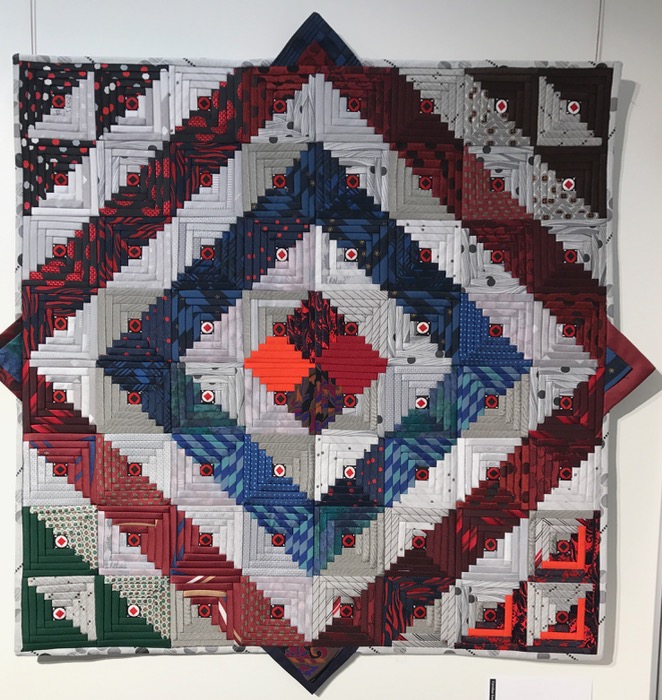
Komposition, by Christa Ebert • 110 x 142 cmDetail, KompositionFrau Hansen Klaverquilt, by Uta Rodemerk • 183 cm squareMannerschmuck in Frauenhand, by Sabine KochMannerschmuck in Frauenhand, detail
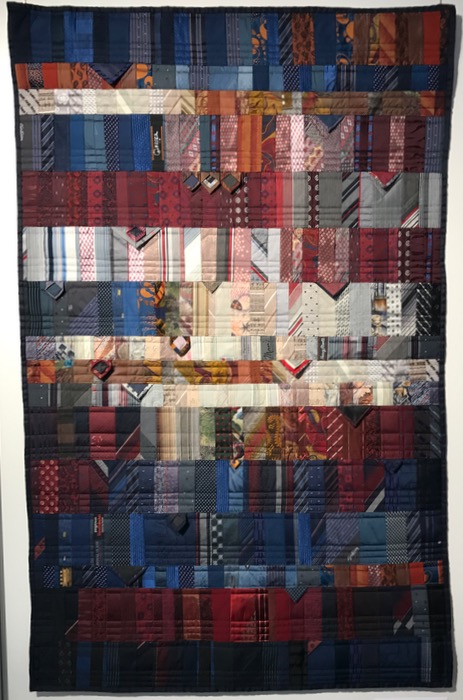
Okay, as near as Google could translate it, I think this means “Men’s Jewelry in Women’s Hand,” which I thought was really clever given that these are neckties.
Ausrangiert-neu sortiert, by Inge Bohl of Germany
Discarded, rearranged is how Google Translate interprets this title.
Zerbrochene Illusionen, by Lilo Hartmann
Zerbrochene Illusionen means Broken Illusions, as translated by Google Translate.
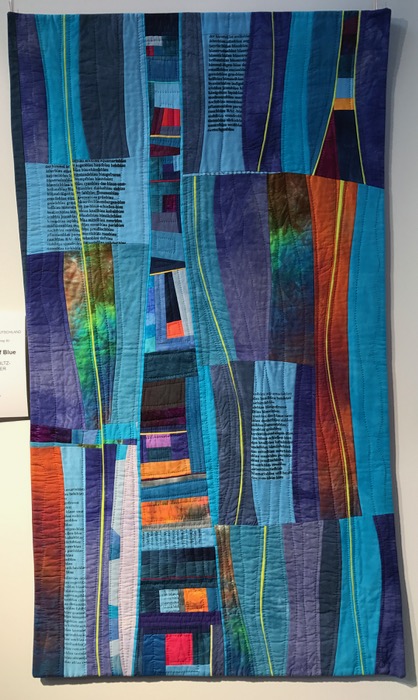
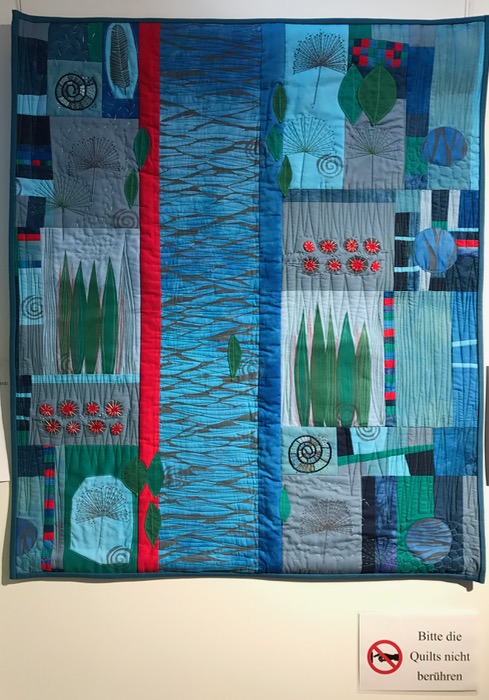
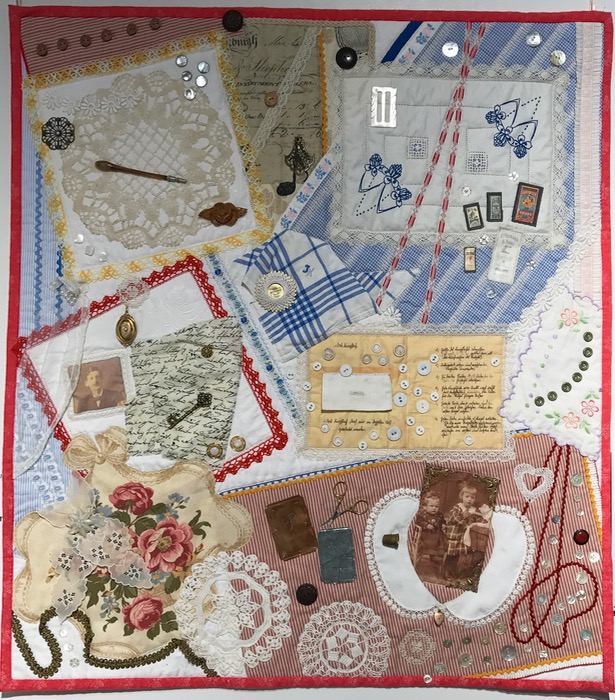
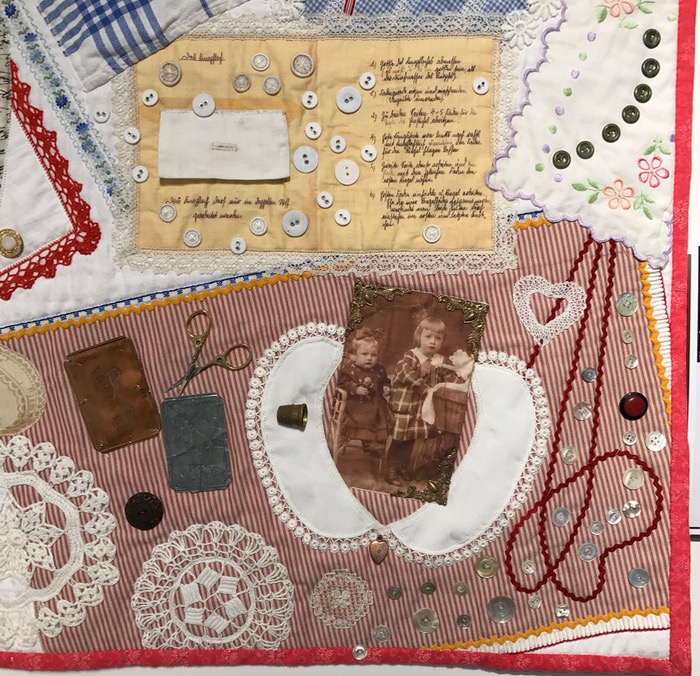
Zerbrochene Illusionen, detailThe Power of Blue, by Gabriele Schultz-Herzberger • 75 x 132 cmFlussaufwarts, by Susanne Fellmann-HorschFlussaufwarts, detailCrazy Canadian Square Dance, by Barber Reschka • 108 x 107 cmSchattenspiel, by Monika Flake • 107 x 131 cmSchattenspiel, detail.In GrossmuttersNahkastchen gekramt, by Christine Naumann • 78 x 86 cmIn GrossmuttersNahkastchen gekramt, detail.So what do you do about it? by Maire-Christine Chammas • 108 x 147 cm
Very cool quilting.
Vogelwild III, by Tina Mast • 129 cm x 94 cm
I was told that she teaches art at the local university. This was stunning.
Leaves, by Christine Brandstetter • 99 x 132 cm
I talked for a few short minutes to the Uta Lenk, who was the International Representative of the German Patchwork Guild, and she said they would welcome the chance to exhibit at American shows. I know our local show, Road to California, often has exhibits come from other places, and I would love to see these there. I almost joined the German guild, but realized that all their materials would be in German, and alas, I wouldn’t be able to read them, but I did buy a pin.
All in all, going to the European Patchwork Meeting taught me that while we Americans fanned the flames of patchwork, the idea of three layers held together somehow, has taken wings, and taken off. If I were to go again, I’d leave at least two days for the show, and perhaps stay somewhere closer (we stayed the first night in Mulhouse, about an hour away) and in Turckheim the second night (35 minutes away). It’s near Colmar, and there is much to see in that town, as well. And…bring an empty suitcase!
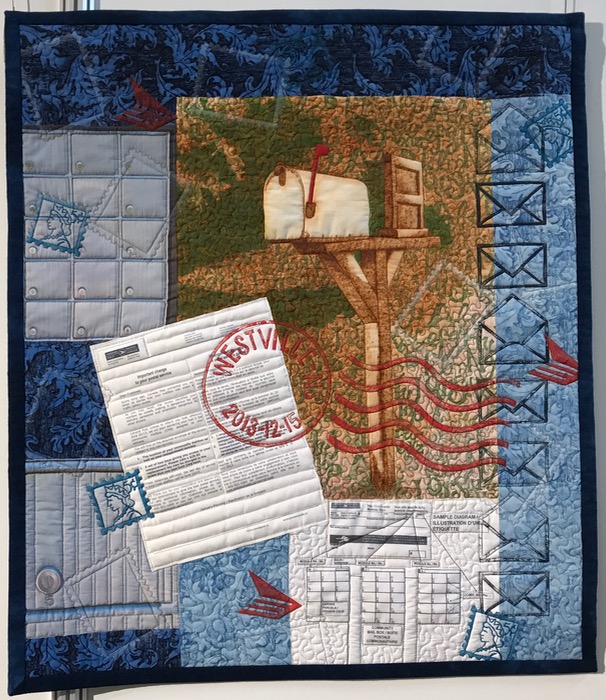
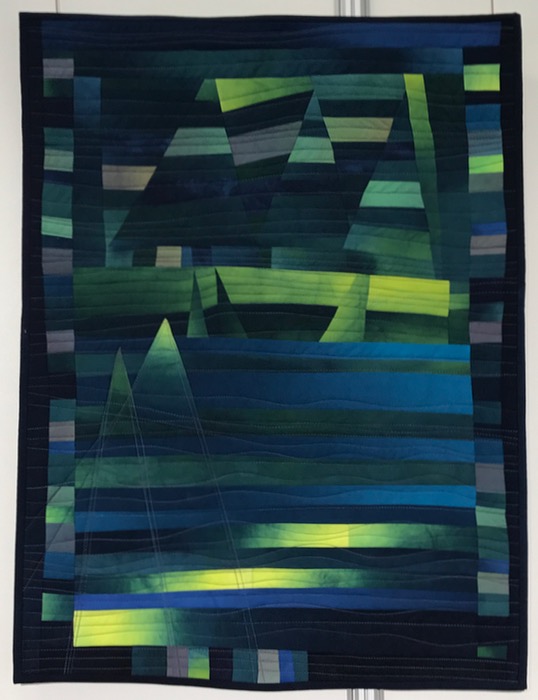
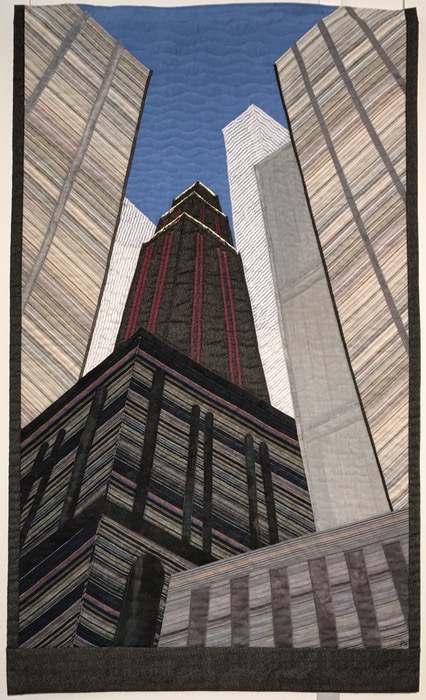
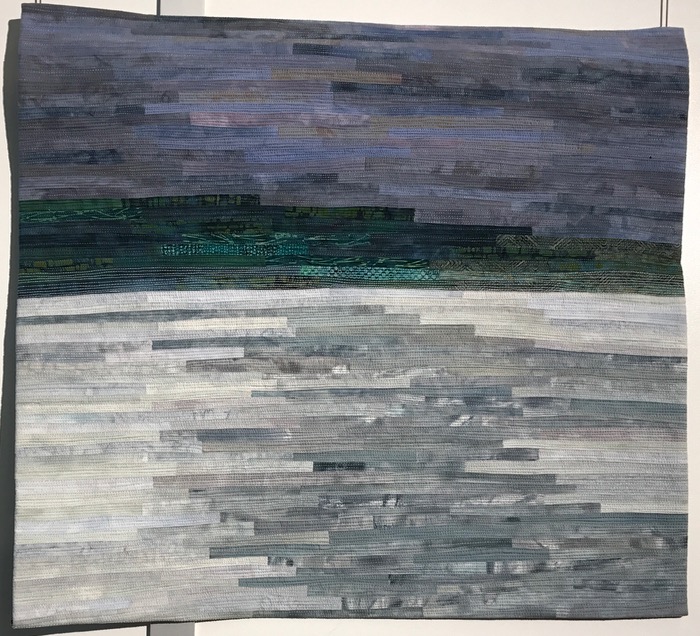
This is one in a series of posts I’ve written about the Carrefours European Patchwork Show held in September of 2017, in the Alsace region of France. This exhibit was titled My Corner of the World — Canadian Quilts, and is by a variety of artists. As I mentioned in the last post, I was giddy with the ability I had to photograph these, as SAQA usually has big NO signs up everywhere, barring us from photography in shows in the United States. Here they are in no particular order:
37″ wide 30″ long
Washday Blues, Northfield Drive by Millie Cumming, 2017
27″ wide 30″ high
You’ve Got Mail by Susan Tilsley Manley (2017) I may get some of the names not quite right, as they had reversed the first names and last names on all the cards.
22″ x 23″
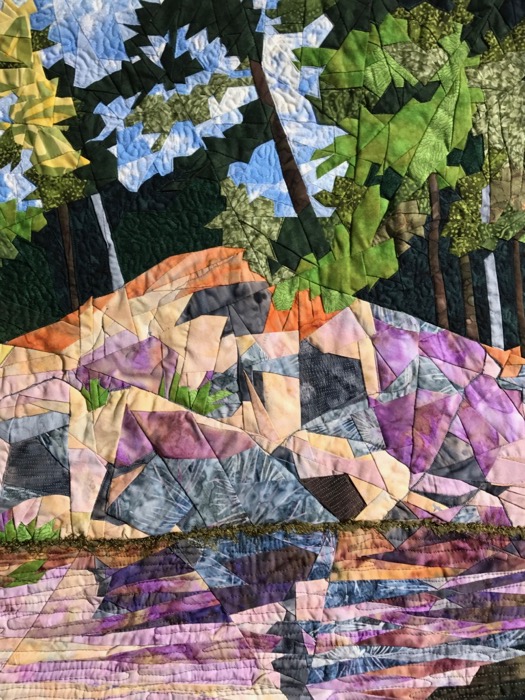
Rocks on Lake Huron by Hag Gunnel (2017)
22″ x 29″
Good Morning, Canada by Toni Major (2017) Detail, below.
28″ x 48″
Looks Like a Nice Day Up There, by Phillida Hargreaves (2017)
27.5″ x 22″
Beaches #1 by Mardell Rampton (2017)
23″ x 34″
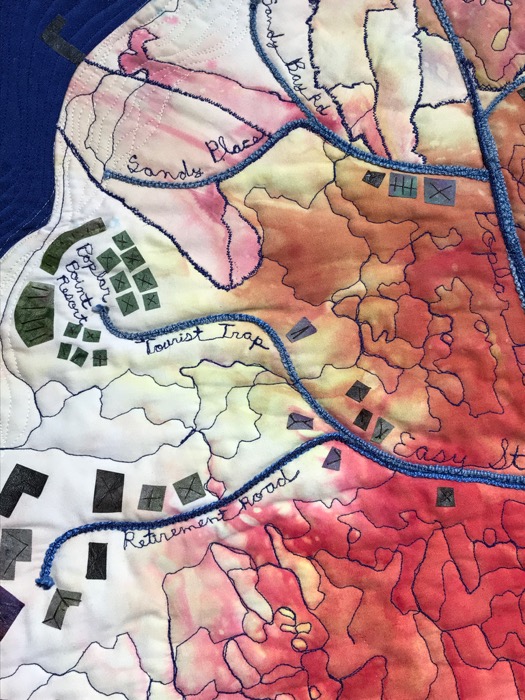
Poplar Point, by Jaynie Himsl (2017) Detail, below.
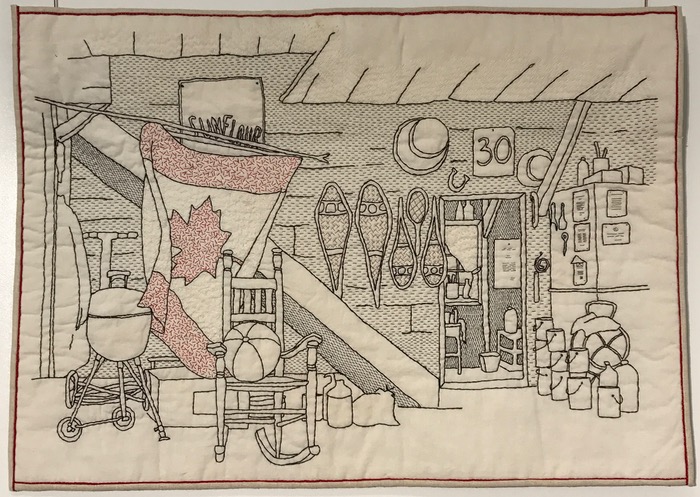
29″ wide 20″ high
Ted’s Garage, by Robin Laws Field (2017)
20″ x 37″
Albert Cote’s All I Need is a Garden and a Chair (2017)
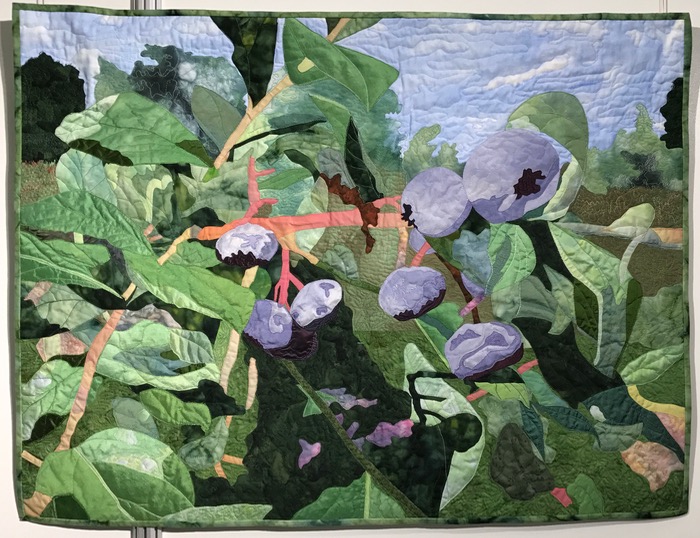
37″ x 28″
Ann Fales’ The Blueberry Patch (2017)
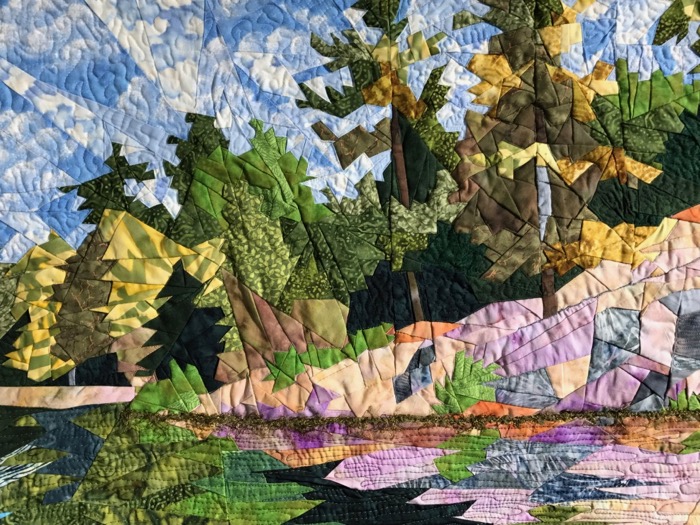
38.5″ x 28″
Reflections of the North, by Arja Speelman (2017) You can tell I really liked this quilt and the way she constructed it, judging by the two detail shots below.
22″ x 20.5″
Down on the Farm, by Shirley Bailey (2017) This handmade, homespun-looking piece is not one I’d usually expect to be in a SAQA show, but I thought it wonderful.
28″ x 21″
Janet Scruggs’ Looking Down (2017) Detail, below.
It appears to be raised and embossed, but most of that was done with color and contrast and quilting. Very cool effect.


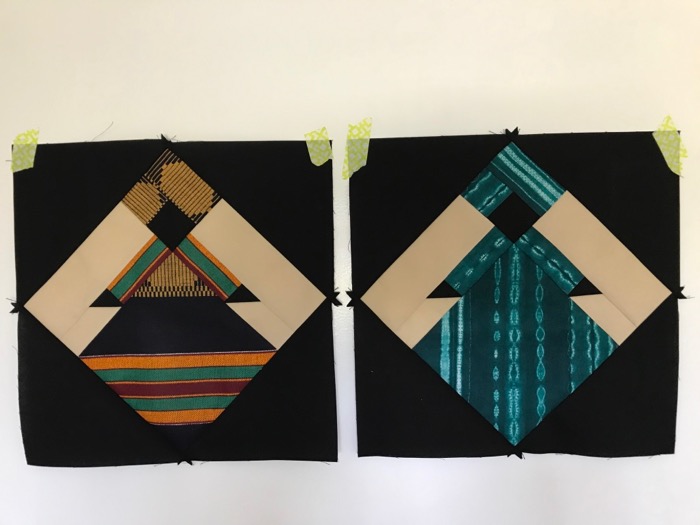 Leisa’s mother used to live in Ghana, a missionary for the LDS church. While she was there, she sent Leisa a box of fabrics that she’s turned into African Queen blocks. In case you want one, here’s the info on the pattern by Anne Batiste.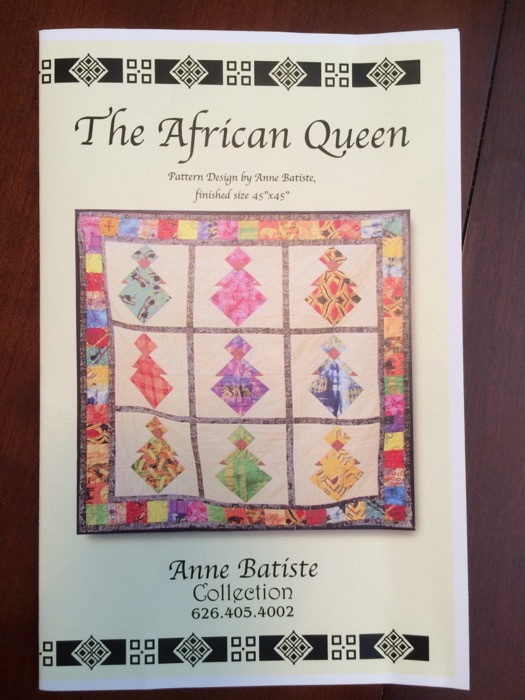


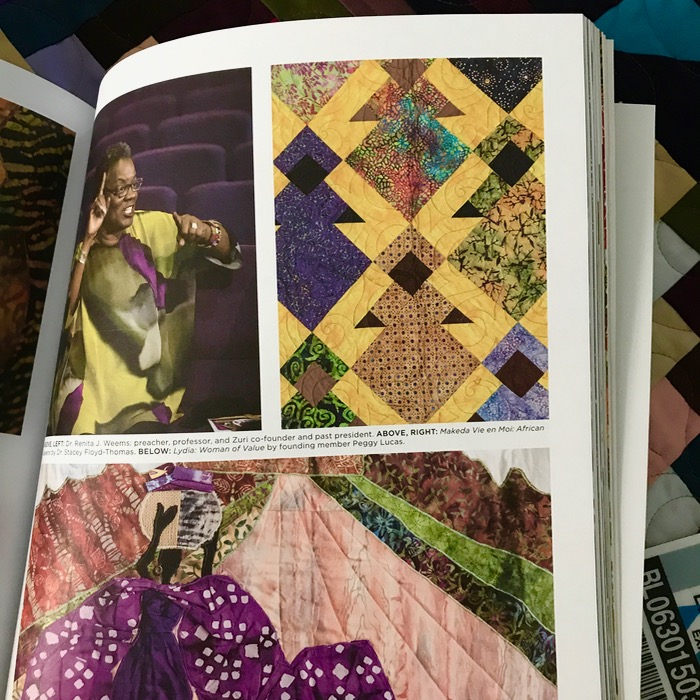 I have to admit, even though it’s a bit more than I’d usually pay for a single issue, I do enjoy this publication, as it generally focuses on the regular people of quilting, not the big Brand Names of Quilt Stardom. A nice change, which exposes me to a wider range of our quilt world (and lets me find an African Queen pattern!).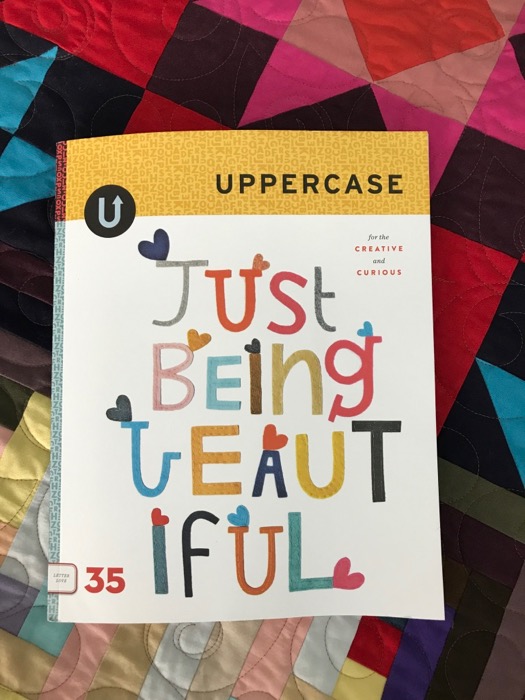






































 OccasionalPiece--Quilt!