Something to Think About

Art Muses/Art Musings

Everyonce in a while it’s good to leave your tribe and take a look at what other artists are doing.  It also helps to be in recovery from shoulder surgery so when that rabbit hole in Instagram opens up, you have too much time are free to follow where it leads.

Polly Apfelbaum_1
Photo: Polly Apfelbaum assembling “Mojo Jojo,” Pérez Art Museum Miami, 2013. (from DrawingCenter on IG)

I first followed the Polly Apfelbaum hashtag.  She is an artist about my age, and still producing interesting and thoughtful works of art, many which seem to intersect my world of quilting. I grabbed this screen shot from DrawingCenter, who also had a series of quotes from her, which I loved:

“Her interdisciplinary approach is most notable in her floor pieces that she refers to as “fallen paintings,” the series of work that she best known for. Laid on the floor in intricate and somewhat psychedelic patterns and forms, the paintings are made of fabrics that have been dyed brilliant hues. The striking use of color aligns her work with abstract expressionism, but rejects the hypermasculinity of the style through the use of fabric and horizontal orientation. Apfelbaum explains that “[the] floor was a place that was inclusive but I could also be reverent.” By installing on the floor, viewers are able to walk around the art making the piece more fluid and approachable.”

She goes on to say “that she wanted “a relaxed sense of form, a form that was more abstract, a form that could kind of be chameleon-like, it could go from talking about minimalism, but could also talk about maximalism…and to craft.” Indeed, the dialogues around her hybridized work are wide-ranging and include feminism, religion, outsider art, and domesticity.”

Loved the “hypermasculinity” idea, reminding me of when I proposed a show of quilts to my Art Professor in college.  “Over my dead body,” he said.  It was then I realized that quilts were essentially, in his mind, NOT art, but I daresay they might be called “hyperfeminine” with the use of fabric, of soft construction.

Polly Apfelbaum_2

Apfelbaum also works by creating shaped woodcuts, which are then inked in vibrant colors, then placed in a design.  Of course I think it looks like a quilt. More images, below:

Polly Apfelbaum_3Polly Apfelbaum_4Polly Apfelbaum_5Polly Apfelbaum_6

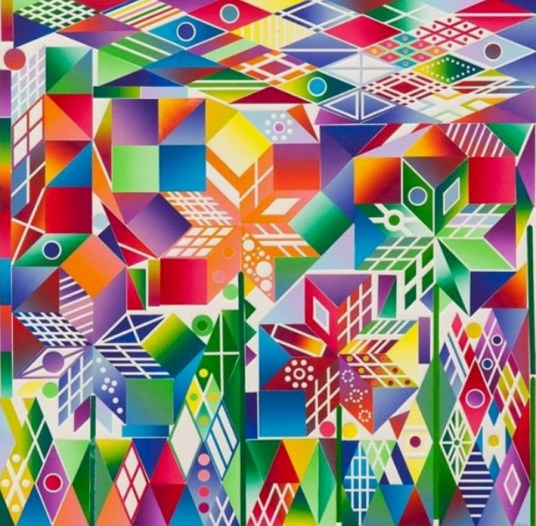
This last one is especially quilt-like, I think, in terms of the shapes.  Is the quilting world is having an impact on others?  They probably don’t know we exist, but I do believe in the idea of cross-pollination:
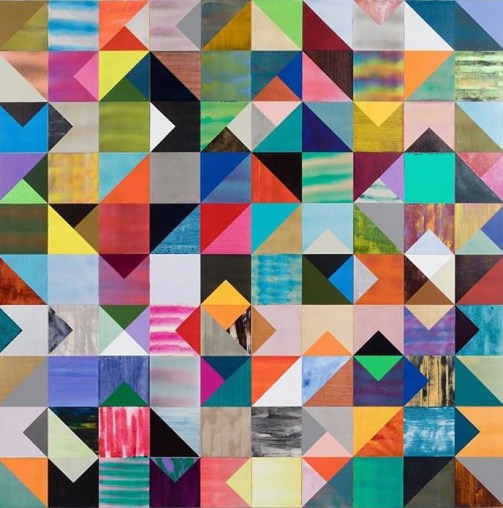
Luis Zerbini2.jpg

Luis Zerbini.jpg

These last two are by Luis Zerbini, a Brazilian artist.  The second one is definately an Orange Peel block, or a Wedding Ring variant, if you ask me.  Even housework can inspire art:

Lynn Aldrich‘s Coral Landscapes made from house cleaning items; the one on the left is titled Marine Preserve.  I wonder if the one on the right is a wannabe Lynn Aldrich?
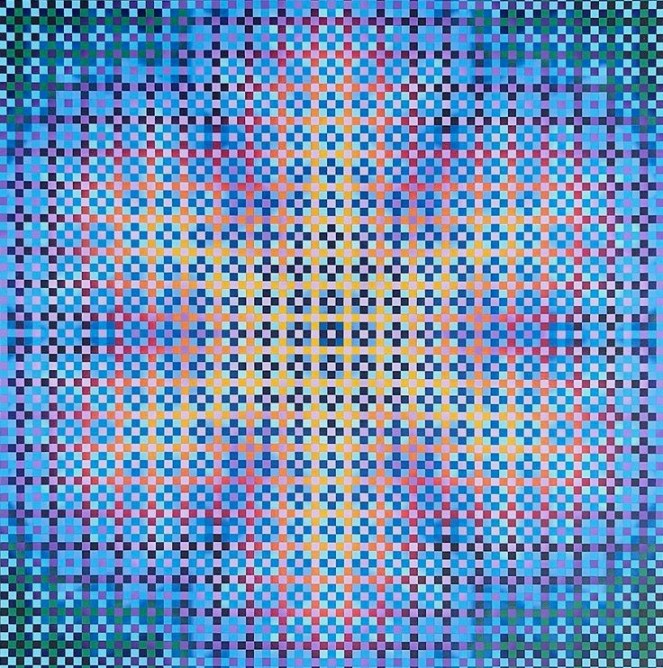
IMG_3238
from OpEdgeArt

Anyone for some Nine-Patch?  With pieced sashings? Start cutting up your solid scraps into squares.

The art world can also be an interesting way to learn about value, a classic part of creating an interesting quilt.  I’ve tried to include the sources so you can go and have a look:

IMG_3236.jpg

Bringing this to a workshop would certainly get everyone’s attention about the impact of using those light-to-dark values.

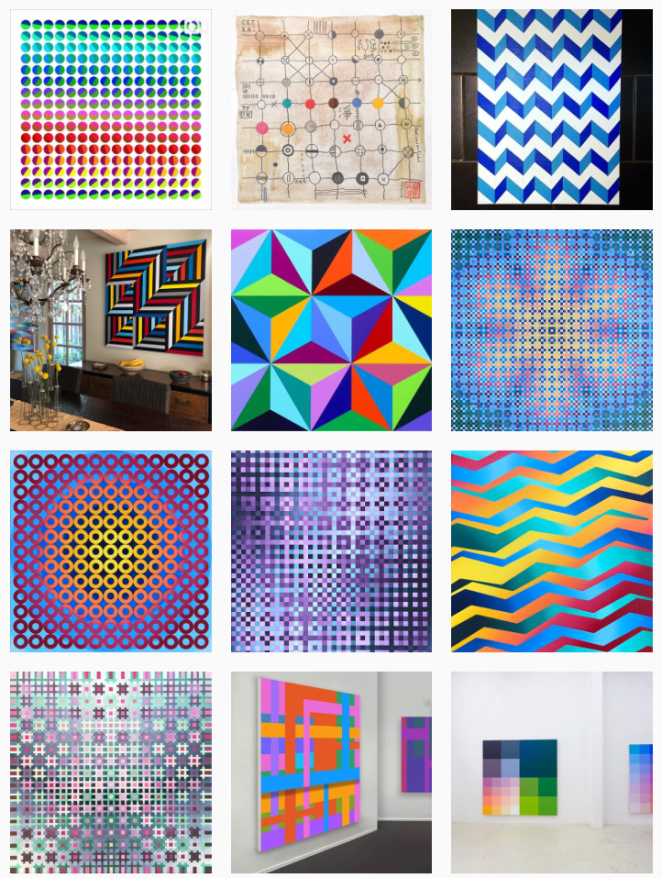
IMG_3239
I’m pretty sure she does this with make-up.

IG feed Jan 2019.png

A screen shot of my Saved images from this morning.  I’ve started making categories and put some of these in the Random Color/Art category of my saves.  Just after you hit that little ribbon to save, the prompt comes up: Save to Collection.  Tap that, and then either direct the save into a category, or make a new one.  It helps in finding things.

IMG_3237.jpg

You might want to try to what I call “focused browsing” if your eyes are glazing over after looking at three billion quilts in your feed, and you’ll scream if you see another heavily curated shot with threads and scissors everywhere where you feel like you are trapped in the Dungeon of Cute.
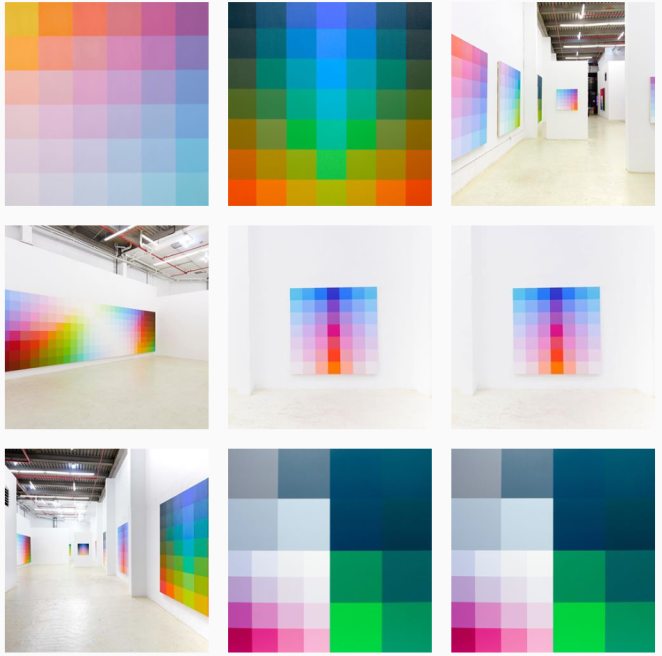
Color theory and effect
a screen shot of the #colortheoryandaffect hashtag on IG

Some of the hashtags I followed were #gridart, or #hardedgepainting, or the names of the artists themselves. @DurhamPress also had some interesting images. Sometimes I would go to an artist, click on the name of the gallery they were showing at, then look at what the gallery had.

Yes, a little focused browsing might just clear the mind a little.
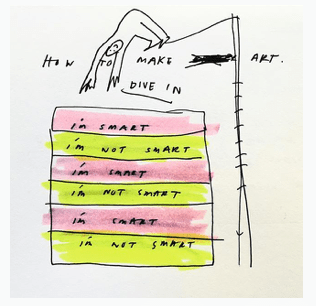
gorkiegork
from @gorkiegork
Travels

Inspiration: Okano, Manzanar, Etc.

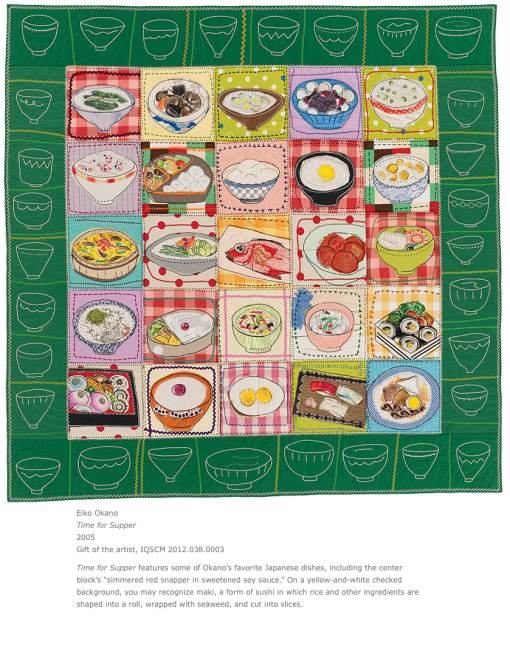
Eiko Okano_Time for Supper

Eiko Okano’s exhibition of quilts is up at the International Quilt Study Center & Museum. (Someday I want to go there.)  I first saw Okano’s quilts long ago and at that time wanted to buzz into her studio and be a fly on the wall as she created.  Unlike our quick-study Instagram world, where quilts are being produced at the rate of 300 a second — or so it seems — I imagine her process would take a bit longer.

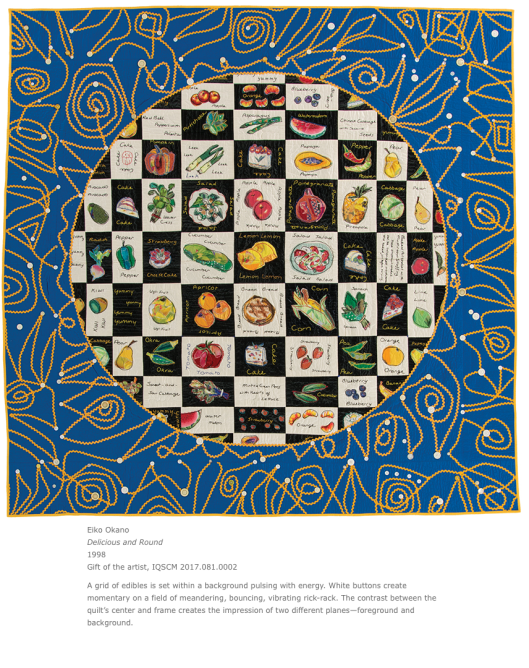
Eiko Okano_Delicious and Round

I love the wild, dancing rick-rack scribbles in the border of this quilt, and those buttons!

Eiko Okano_Delicious Quilt

I want to hang this one in my kitchen.  These photographs are all taken from the IGSC website, where more of her quilts are shown.

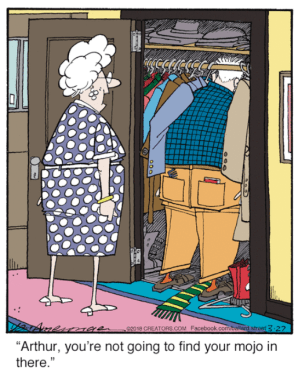
Ballard Street MOJO
Ballard Street cartoon

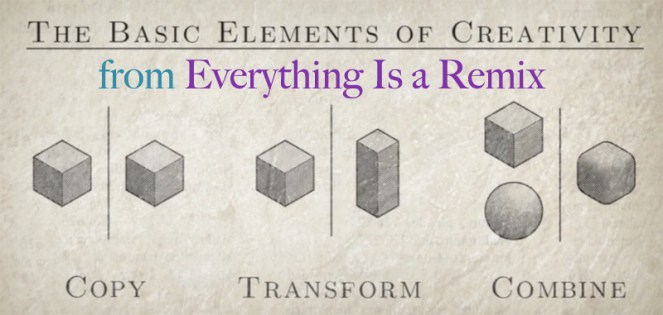
In charging up my creative batteries, which often we speak of as “mojo,” I found this series of ten videos from 99U, which are about the creative process.

Everyting Is a Remix.jpg

I intrigued by the concept that this one gives us, that — believe it or not — springboarding off of things that others have done, is a time-honored path to creativity. Notice I said “springboarding.”  No one likes to have their work cloned, unless maybe you are making a pattern or something that is designed to be cloned.

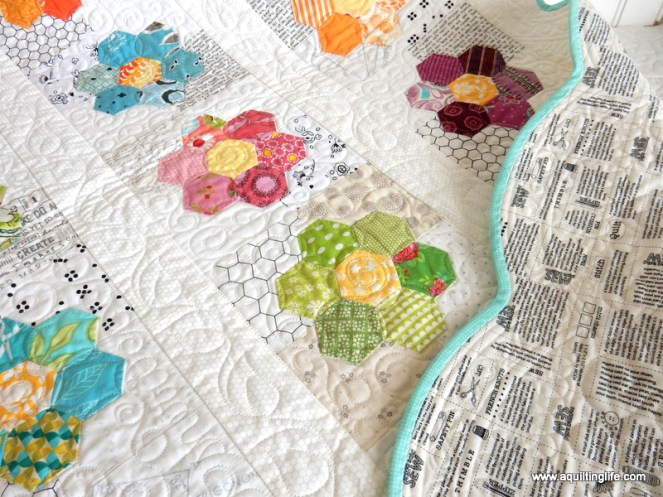
Flower Garden closeup.jpg

I watched this in process with the release of Sherri McConnell’s quilt, “Flower Garden,” in a magazine this week.  It’s the old hexie flower you have come to know and love, but Sherri gives it a modern twist, a new spin, and now I want to gather up hexies and start making my own.  She started this several years ago, once again giving me hope for my own long time lines for some quilts.

And, as usual, after a spurt of creativity, I take time to clear off my workspace, find the floor again (stacks of fabrics often migrate there when I am looking for a “certain piece”) and plan out time in my calendar.

Dilbert List.png

Manzanar Trip_1Manzanar Trip_2jpg

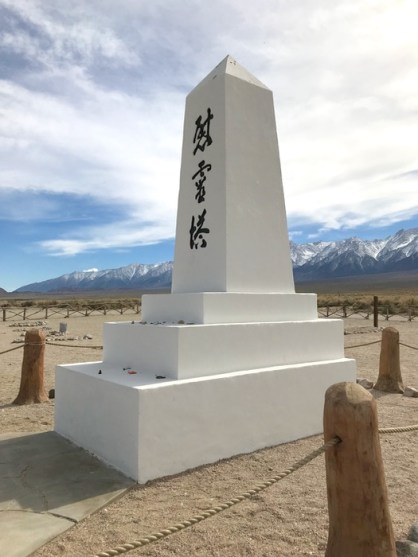
A change is as good as a rest, my mother says, so this past week we took a break from calendars and sewing machines and usual activities when we drove up to Manzanar (about a four-hour’s distance), to visit this National Historic Place.  The memorial is evocative, terribly sad, and enraging, all at once.

Manzanar Trip_2aManzanar Trip_3

The Mt. Whitney mountain range is stunningly beautiful, and we took some time that night to enjoy the sunset and rising moon.

.Manzanar Trip_Bottle Ranch

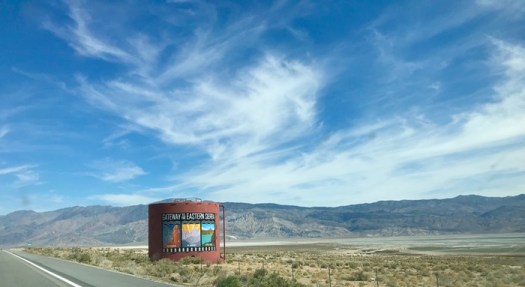
On the way home, we stopped at Elmer’s Bottle Tree Ranch, a Mojave Desert attraction, all built by Elmer, a man who gets up in the morning, fires up his welding torch and gets to work.  Unless, of course, he doesn’t want to.

Thank You.jpeg

I have a re-cap post on the Mad for Solids 2018 coming, but I wanted to thank you all for the efforts you made to put my quilt design and curated stack of solids in the Winner’s Circle.  I enjoyed getting to know new quilters and their creative worlds, not only those who also had stacks, but you quilters, with your IG and FB and blogging sites.  Keep up the good work of interacting and supporting and cheering each other on.  I love this quilty world!

Quilts

Liberty USA Mini Quilt, 3

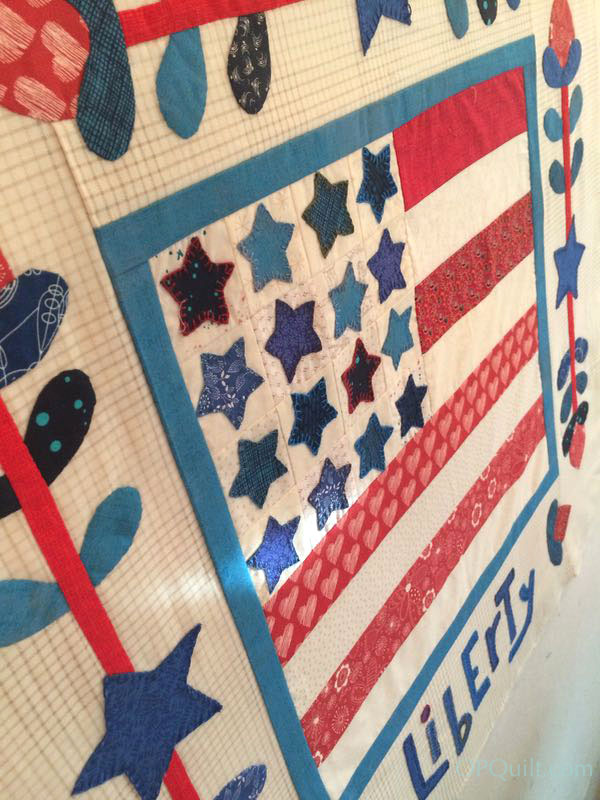
Well, I finished up the top of my Liberty USA quilt.  And in other breaking news, I also was cleared to take off my sling.  My hands are now free-er than they were a week ago (and I’m even typing more, rather than dictating) but it’s still a slog for a long while.  So, this quilt top will rest until I can figure out how to quilt it, since the left arm is more like a wet noodle than a functioning member of a FMQ duo.

But it’s fun to be at this place. 

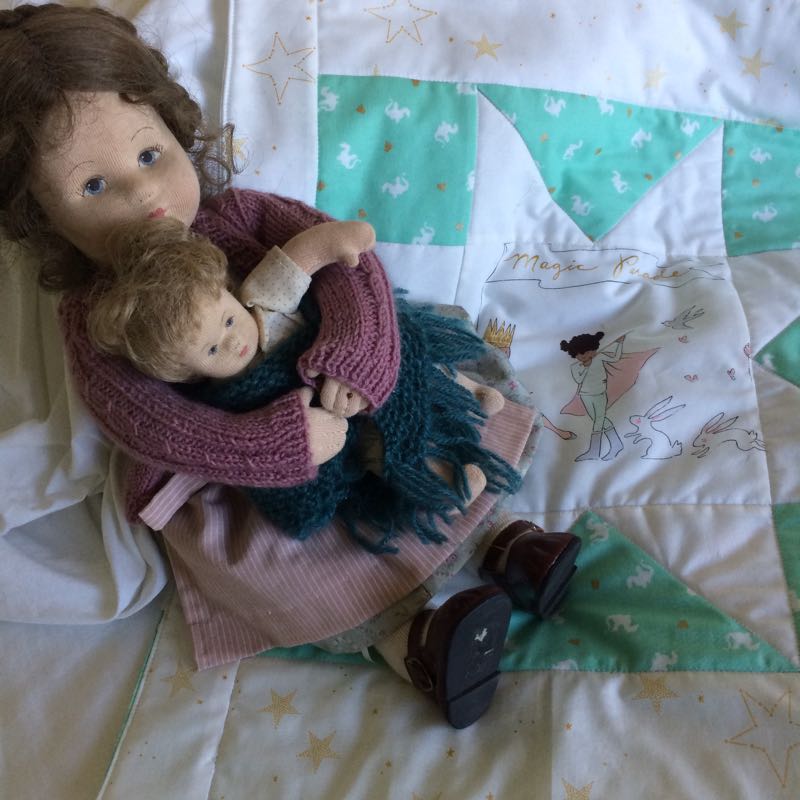
One interesting drawback to this whole one-arm thing, is that you can’t clean up the sewing room very well.  So the day after I got my sling off, I noticed the pile of Sarah Jane scraps on the top of the cutting table, as it was one of the last projects I did before heading into surgery.  I had wanted to make Eliza a doll quilt to match her big-bed quilt, and now was my chance.  I scissor cut some pieces, sewed them together, and finished the top.

I tried quilting my HQ Sweet Sixteen, practicing on a quilt square scrap, but it was a no go.  You need two hands for that.  So I used my walking foot on my regular machine and was able to get it quilted.  Off it goes into the mail today!

I’m not doing much cleaning, or sewing, but I have been doing some thinking about where we get our inspiration from.

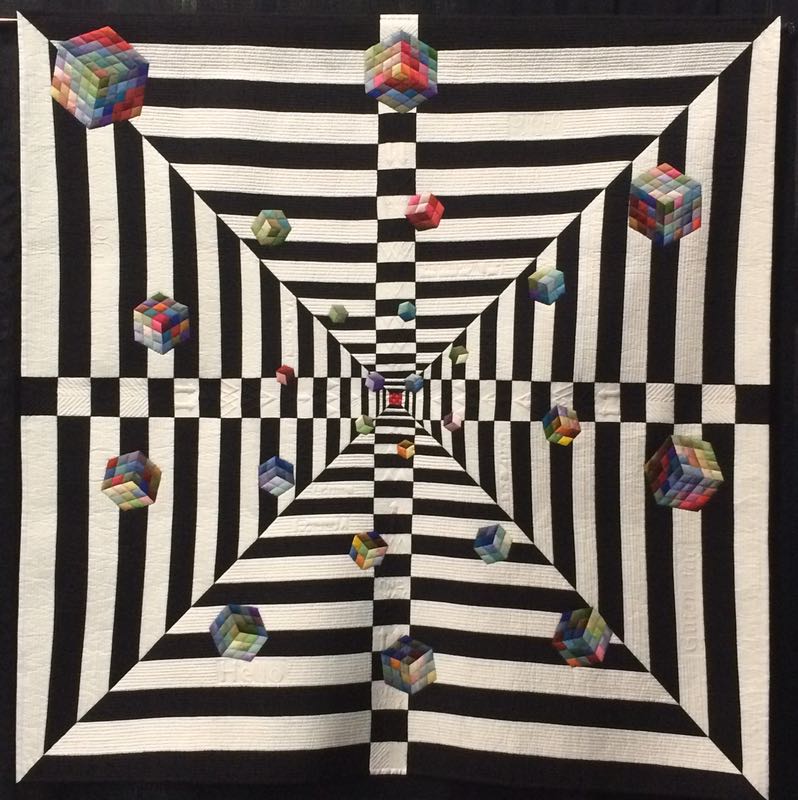
This is Ingrid Blood’s Bye Bye Rubric Cube.  I have seen it twice now, once in the fall, and once at Road to California, and thought it was terrific.  Then, because I sit and read and read and read (lately), I found this:

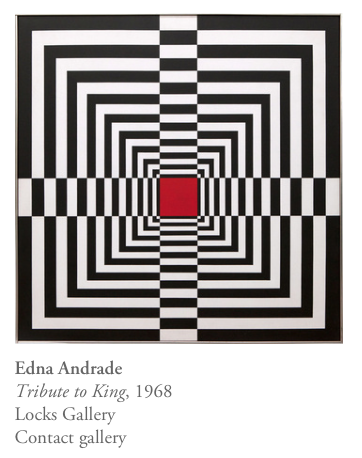
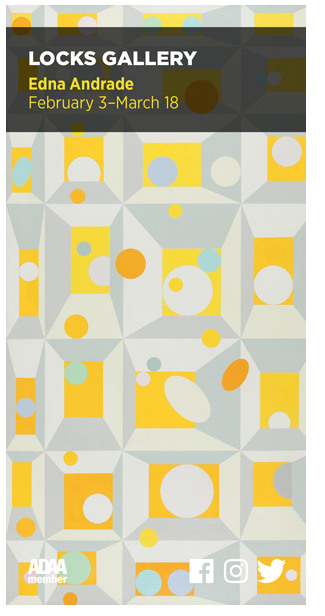
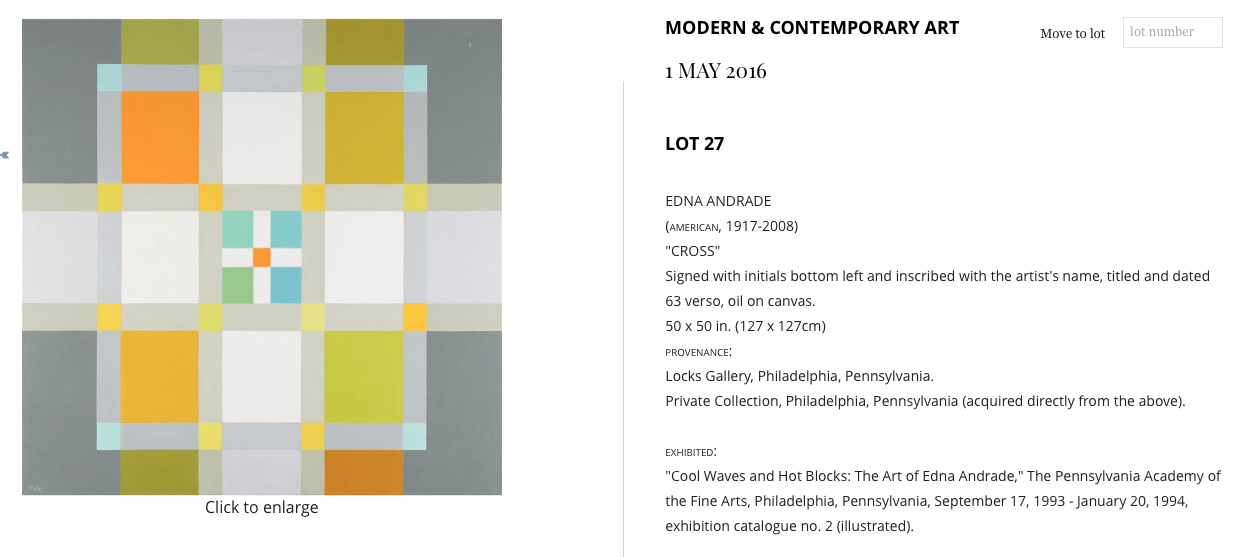
Look familiar?  I wonder if it’s more than a coincidence that Blood used Edna Andrade’s abstracts as inspiration (even to the use of that red center), but I have no way of knowing.  Andrade, although she died some years ago, was more popular at the end of her career and after her death.  She worked in the Hard Edge school of painting, of which June Harwood was a “member” — a painter brought to my attention by my nephew, who is observant in All Things Art & Design.  (I actually have two nephews like this, and their IG feeds are always full of interesting images.)  These painters’s ideas are ripe for the picking by modern quilters, as they have a distinct lines between edges, which suits our medium of fabric.  Here’s some more Andrade:

I remember being in a discussion in a class taught by Ruth McDowell, where someone posed the question if she should be acknowledged when we finally finish our quilts.  Typically self-effacing, she offered that it would be a nice gesture to acknowledge those that inspired us, or helped us.

Why are we loathe to state our sources of inspiration?  Does it diminish our efforts, or is it really unnecessary?  Andrade didn’t acknowledge the other hard-edge painters in the corners of her paintings, but Wikipedia notes that:

Andrade listed artists who particularly influenced her style including Paul Klee, Piet Mondrian, and Josef Albers.  Andrade also notes that she was influenced by architectural design, philosophy, mathematics, and design (Locks bio). She was specifically inspired by things such as astrophysics and Freudian psychology, contributing to the complexity and detail of her paintings.

And from the notes from the Locks Art Gallery:

I think many of us are skittish after the Modern Quilt Guild laid down the law on “derivative works” last year, and we are skittish about recognizing where things come from, just in case the Quilt Juries don’t let us in.  While I do think there is some good things that came out of the pronouncement last year (just how many floating rectangle quilts can we invent?) it also did harm to those of us who dabble far and wide in our inspirations. [For an excellent recap of that tempest, head here.]  I hope we come back to a more even pitch, so that we can give credit to things that inspire us, just as Andrade did.

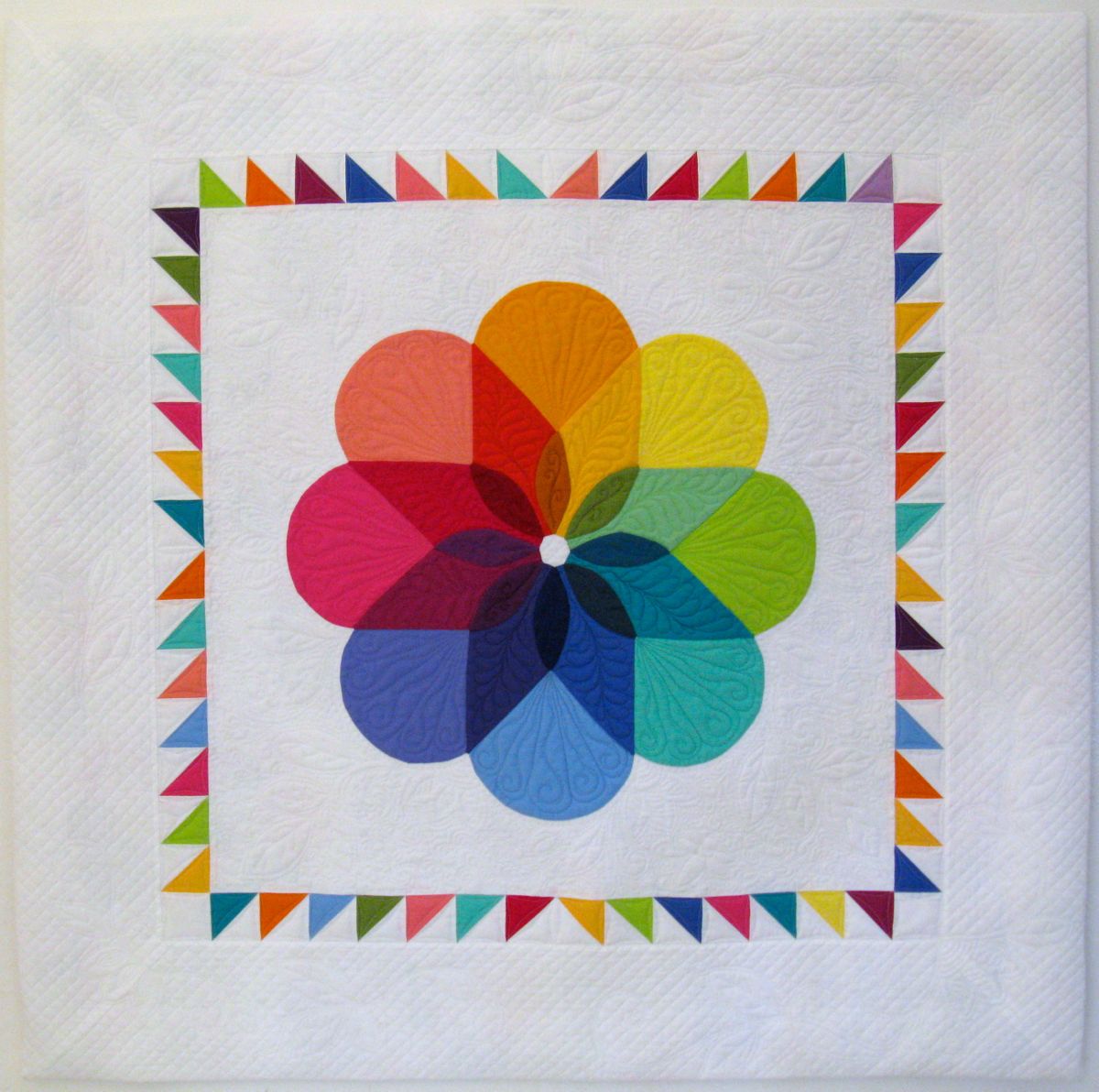
Colorwheel Blossom, 2014

I would never have this quilt if it hadn’t been watching the Apple Keynote address when they launched their iOS system changes a few years ago.  I boldly put the inspiration on the entry form when I entered it into QuiltCon a couple of years, and they rejected it. Did they reject it because of the Apple connection?  I’ll never know, but it doesn’t really matter. Yes, it’s derivative and yes, I love it.  It hangs in the front hallway of my home, and it’s still a favorite.  Instead of worrying about whether or not quilt juries will accept our quilts if we springboard off of someone like Andrade, we should make what we love, from what inspires us, and not be afraid of our inspiration.

Another couple of reads:

Derivative Work from Entropy Always Wins

Derivative Work from the Montreal Modern Quilt Guild

Let’s Be Clear from She Can Quilt

Quilts

Inspiration. . . and a Giveaway!

{@IPTCcontent.headline}

Nancy Crow Crosses Info

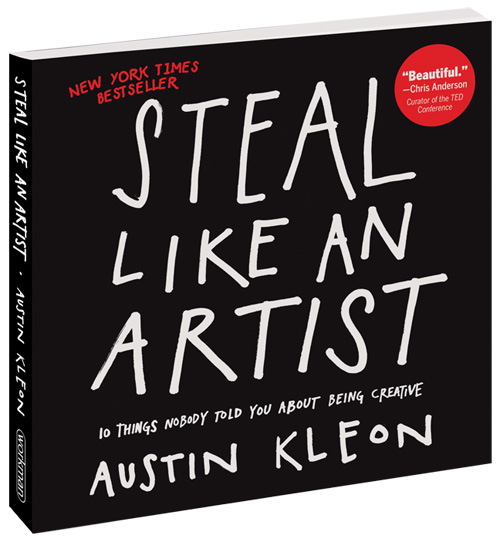
In the book I just finished reading, Steal Like An Artist by Austin Kleon, he writes that “Nothing is original.”  He quotes Jonathan Lethem who notes that “when people call something ‘original,’ nine out of ten times they just don’t know the references or the original sources involved.”  And in our quilt world, I see this all the time manifest in the copyright squabbles, the this-is-my-original-pattern-syndrome and it’s only a variation of a log cabin, the insistence by some in the modern quilt movement that they dreamed it all up — this modernist stuff, without any regard for where the idea first surfaced. . . and then resurfaced.  When I see this stunning quilt by Nancy Crow, made when many young quilters’ parents had not even started dating, I think, as did Kleon when he quoted the Bible, “There is nothing new under the sun.”

But Kleon goes on to say that this idea fills him with hope, rather than despair:  “As the French writer Andre Gide put it, ‘Everything that needs to be said has already been said.  But since no one was listening, everything must be said again.”  Kleon encourages us to note where our influences come from.  I say, if you don’t know about some of the earlier quilters, try heading to the International Quilt Study Center and Museum and browse for a while.  Take a look at these early masters and be inspired.

Steal-Like-an-Artist-Kleon

To inspire you, I’m giving away a copy of Austin Kleon’s book, a small little treasure, perfect for some end-of-summer reading.  To win a copy, leave me a comment below and include a source of inspiration, whether it be another quilter, a photograph, an image, nature or something else–something or someone that provokes or triggers your spark of creativity.  Rather than just saying “nature,”  or “Michael James,” try to be specific, such as “the moment the sun drops to the horizon” or “Michael James’ ‘Aurora’ in his early work”  so that we can learn from each other.

I’ll announce the winner on my next post, and send you a gift card from Amazon so you can order it yourself; for this reason, it will work for international as well as domestic. Have fun, everyone!  This post will close on Saturday morning.

˚˚˚˚˚˚˚˚˚˚˚˚˚˚˚˚˚˚˚˚˚˚˚˚˚˚˚˚˚˚˚˚˚˚˚˚˚˚˚˚

My blogging software runs ads on this blog so I can blog for free.  I do not control the content, nor do I endorse these ads.