EPP · Shine: The Circles Quilt

Shine: The Circles Quilt

Shine-waving

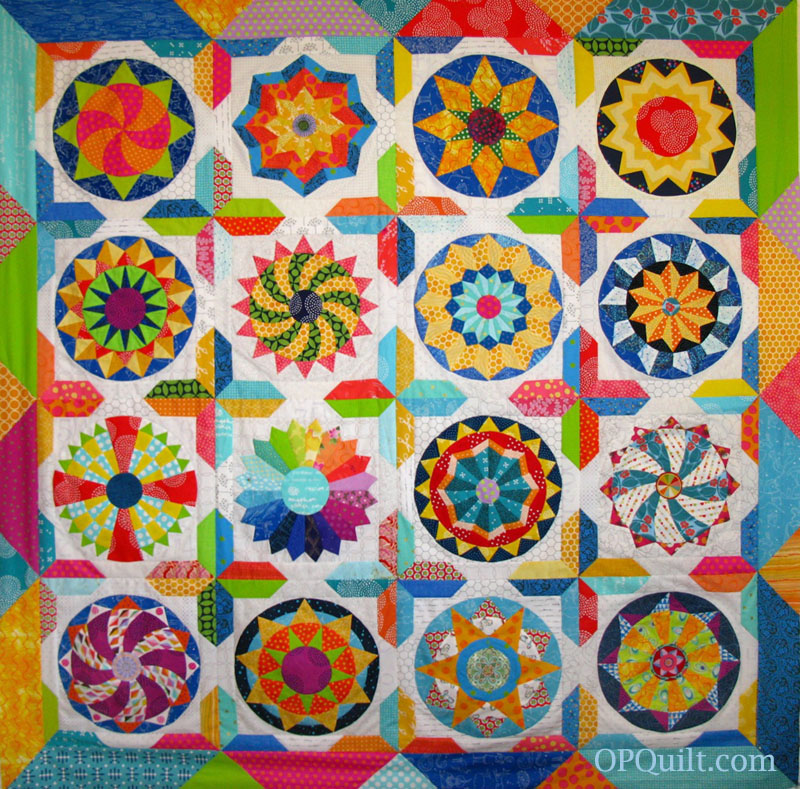
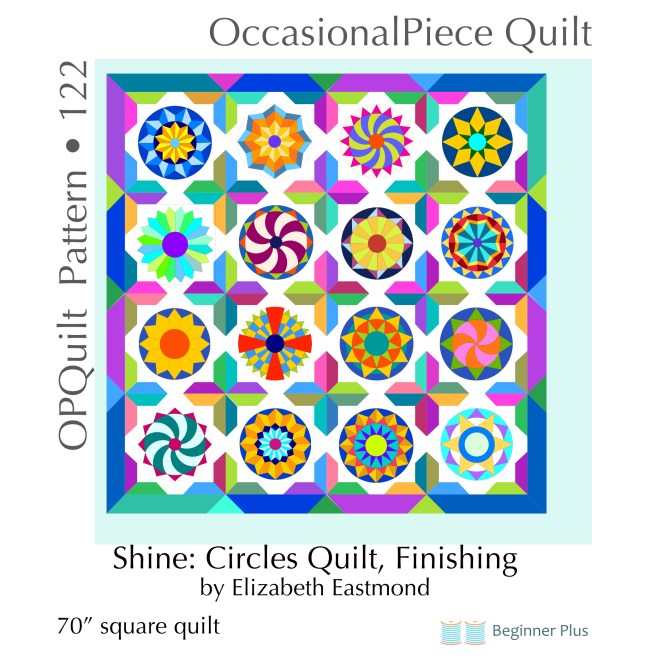
Shine: The Circles Quilt
66″ square
First block started June 2014 • Top finished June 2015

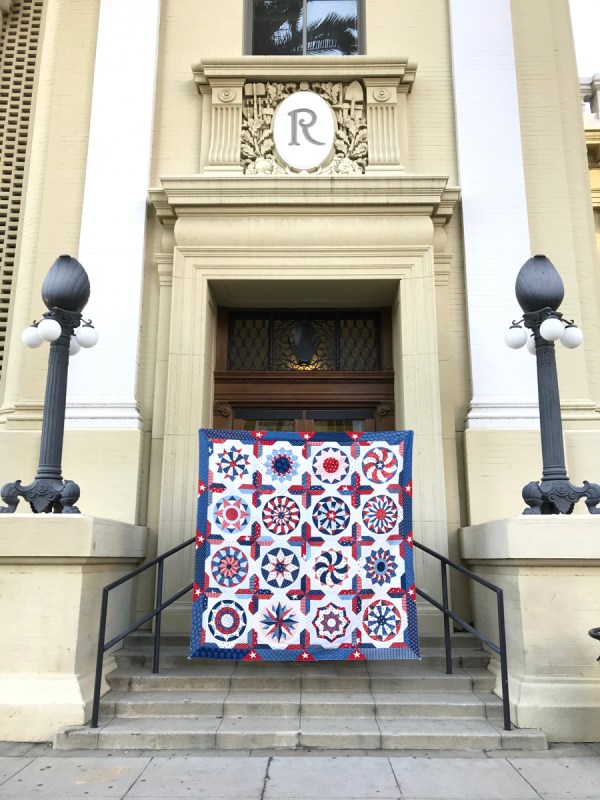
I’ve finished my quilt top and am happy to release it into the world today.  I started sewing these English Paper Piecing patterns after I’d finished Kaleidoscope and needed a new hand project.  I was also sick of straight lines, and though I’d do some circles.  Those of you who have followed along know that I took a lot of inspiration for the circles from a church my husband and I had visited while traveling in Slovenia, the art finding its way into fabric.

Shine_Quilt Top Final800

I named it Shine because of all those circles, those suns, those compass points, radiating out from the quilt.  I could see this all done up in solids, too.  I’ve seen a few of your starting your project.  Please tag me on IG (occasionalpiecequilt) or drop me an email with a photo so I can see what you’ve begun.

I’ve now completed the instructions for this quilt, and have it available for purchase in my PayHip shop, listed as Shine: Circles Quilt Finishing Instructions, so you can finish off your quilt.

The last four circles — numbers 13 to 16 — are also available as a PDF download pattern: Final Four Blocks from Shine, but because the tutorials are image-heavy, I’ve kept the instructions for the circles on the blog.  I’ve loved creating these and sharing them for free, so I hope you’ve enjoyed grabbing them and making them.

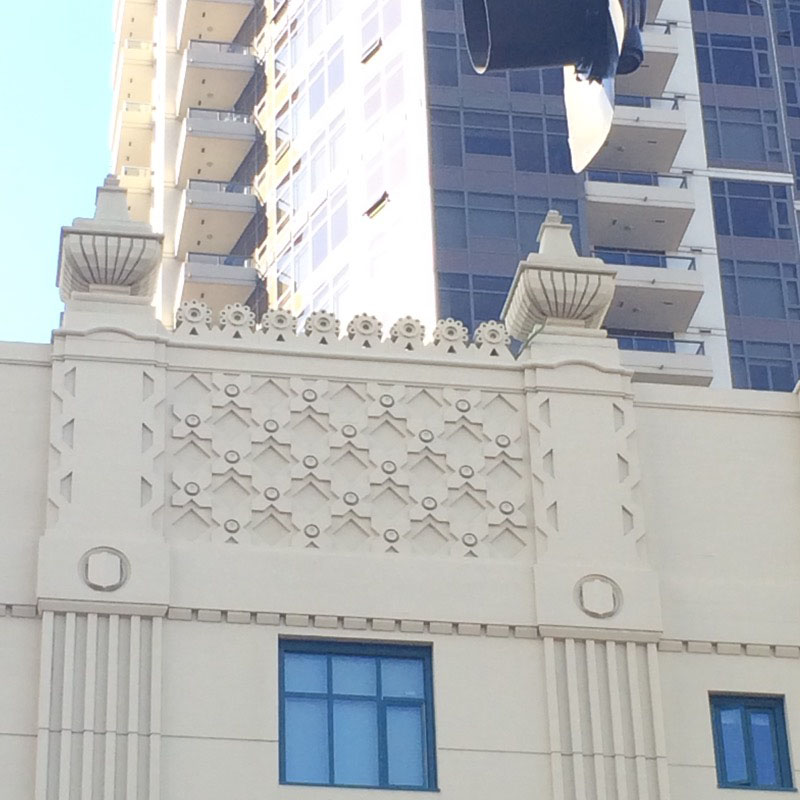
Shine Sashing inspiration

Where did I get the inspiration for the finishing?  One day when I was walking around San Diego, I looked up and saw the facade of the building and thought, aha! — those crosses with circles would be perfect in between my circles.  I ended up leaving off the circles as my quilt had a lot going on , but your quilt may be different, so you decide (the option is in the pattern).

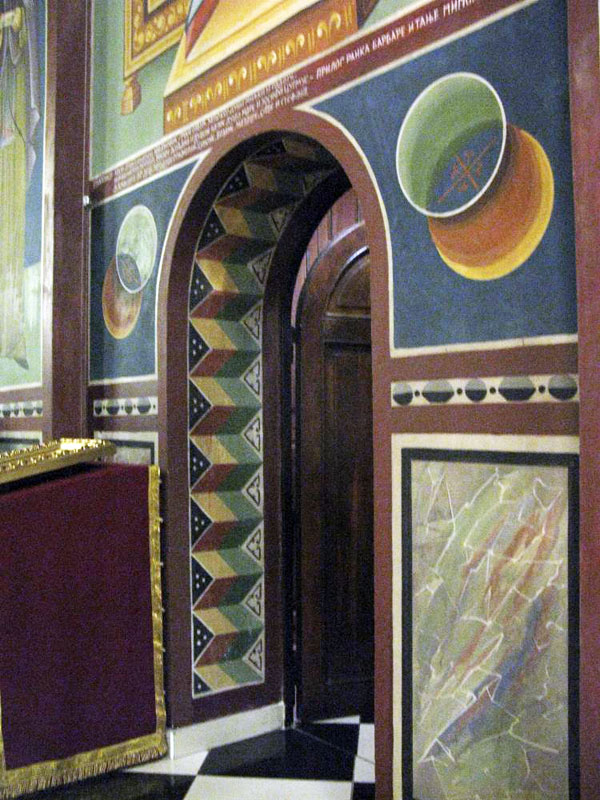
Zagreb doorway design churchAnd the border?  I started here, in this archway from the church in Slovenia, with those triangles.  But again, I wanted my circles — and all that handwork — to stand out, so I simplified it with trapezoidal pieces in between the triangles.

Refer to the main SHINE: The Circles Quilt page, for links to each block.

Thanks for all your support and EPP love while I’ve been working on this project. Happy Piecing!

Quilts

Circles Block #13–EPP Sew-A-Long

Circles EPP Button
Circles Block 13 EPP_OPQuilt.com

Tiny Swirly Gig
Circles Block #13 of the Circles EPP Sew-A-Long

Since I so rationally decided that I needed SIXTEEN blocks to make up my quilt, all I can chalk it up to is summer heat (coupled with our drought, we are going to have so.much.fun), regular old garden variety stress (having cloth in your fingers lowers blood pressure so I heard), or a blissful existence of sitting on sofas eating bonbons while watching videos and stitching.  Choose one.

But here I am again on the Final Four of the Circles Blocks, created because I wanted something more than straight lines to English Paper Piece.

Block 13 is found in my shop, together with all its friends of Blocks 13-19.

As usual, I assume you know how to do some EPP, but do like to give tips and more instructions here on the blog. For starters, I print out my papers on 24-lb. weight copy paper, a bit heavier than the usual stuff, and make sure my printer scaling is at 100%.  Print off four copies of the pattern, and cut them out around all the lines. You only need one circle, though.

EQ7 Block 13

I also print off a color picture of the block (this one made in EQ7) and keep it in my little baggie full of pieces.  It helps when my brain fades, or too much is going on around me, or I’m trying to remember what the heck all those little pieces are for.

Circles 13_1fabric selection

Fabric selection is usually based on what falls out first of my stack, as I glance over at all my blocks up on my pin wall and try to find fabrics that I’ve used before, so the quilt will blend.

The other day I put a photo up on IG and someone asked me what my fabrics were.  If you’ve been following me for any length of time, while I am totally impressed that a designer can make up a line of 14 fabrics that all go together, and I love love love them, doesn’t mean I’m going to use them all in a quilt at the same time (although I have done it once.  Or twice.)  And I’m a selvage cutter-offer, so the chances of me knowing what they are might probably be very slim.  I’ll probably know the designer, but the name of the fabric?  I have a thing for using a LOT of different fabrics in a quilt.  I mean, it’s a great big fabric universe out there.  Why not have fun?

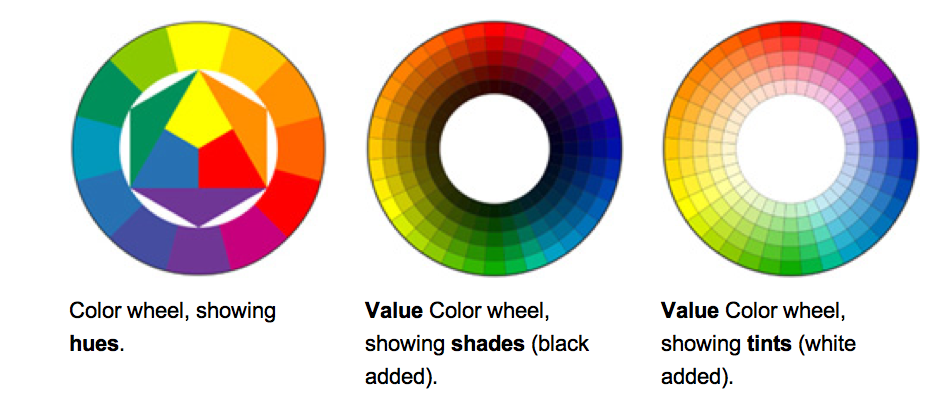
Color and Value Wheels

The other tip to picking good fabrics is to know your color wheel–how it works, as well as your value scale (light-to-dark).  (Illustration above from *here* which has a quick primer on color and value.) More quilts have been ruined by the inclusion of medium-value fabrics only, especially by the use of medium gray (ACK! ACK!).  Try to get a range of hues (colors) in light (tints) to dark (shades).

Circles 13_2

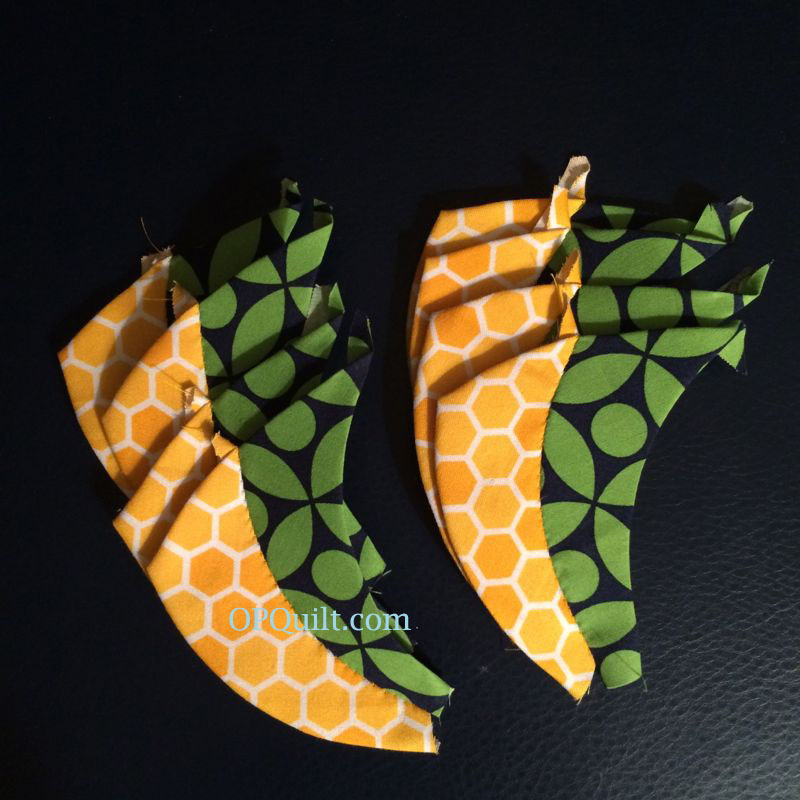
Which direction do you want your swirls to go?  If you want it to look like the pattern, place the printing face down on the wrong side of the pattern.  Whichever way you do it, be consistent on both colors of swirls.  I pin the pieces, slice around them with my rotary cutter (no, I am not exact), then use the glue method of getting the fabrics on the papers. (Your pattern pieces will look different than what is in the photo above, as I have revised and improved the pattern multiple times.)

Circles 13_3

Ta Da! All glued down. I don’t glue down that inner bit as it will be covered by the center circle.

Circles 13_4

I like to lay out all the pieces to see how they play together.  I like this bunch.  Often this is where I’ll switch out fabrics, trying to catch it before I get everything sewed together and then hate it.  If the choices will fight with each other, let it be at this stage.

Circles 13_5

Sew a light swirl to a dark swirl, being consistent as to which color is on the left or the right.

Circles 13_6

Sew the sets of two into sets of four.

Circles 13_7

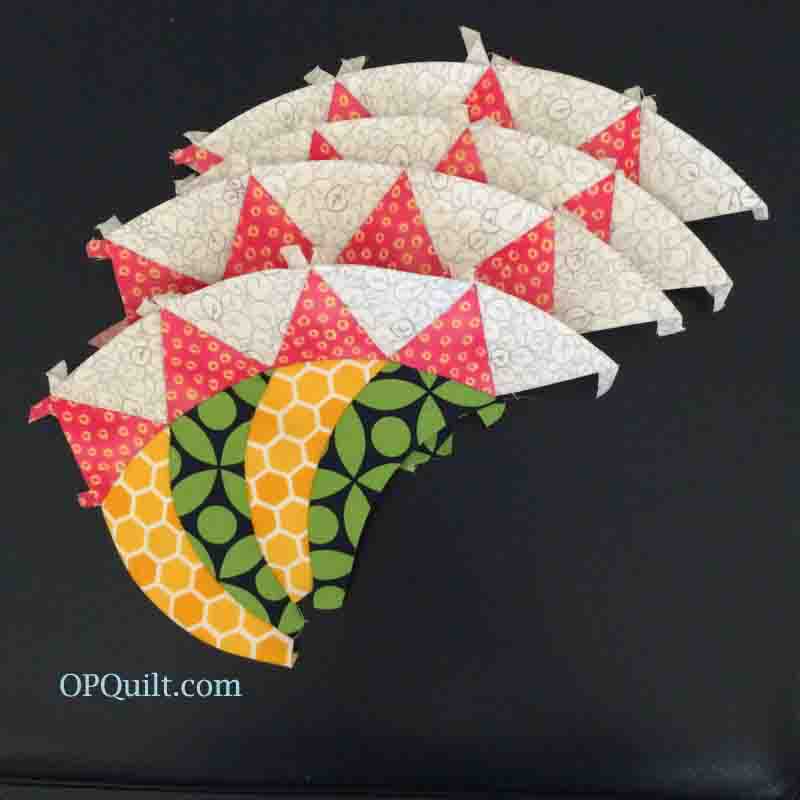
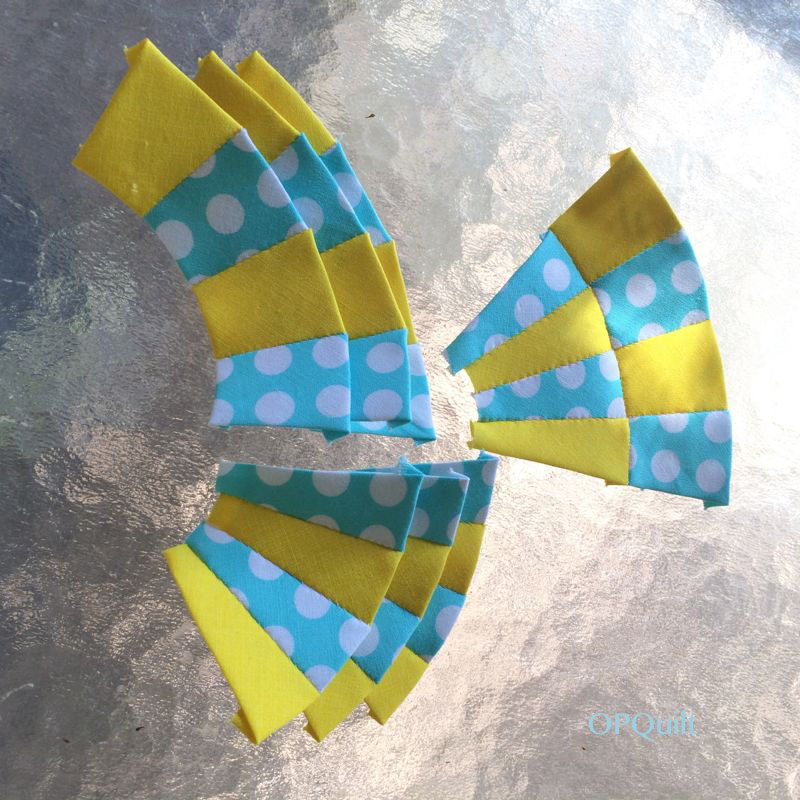
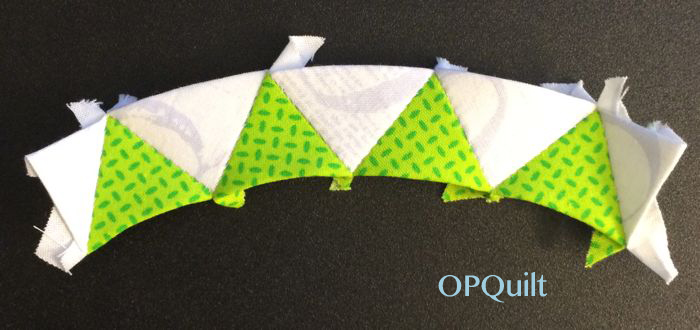
Add the points to the sets of four, attaching the rounded edge of the pointy piece to the swirls.

Circles 13_8

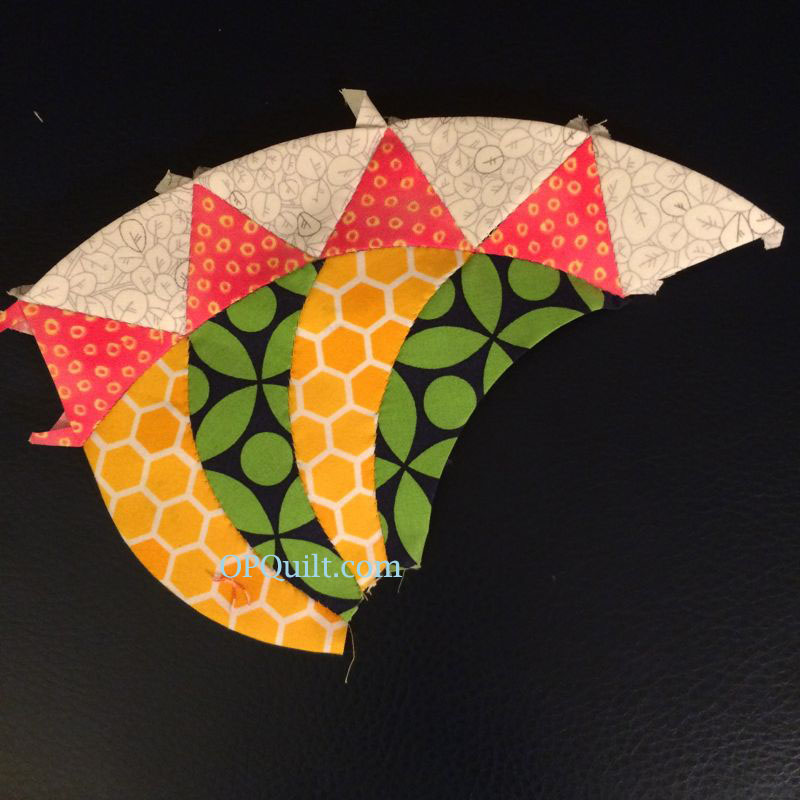
Stitch the background points in between those.  I make sure that the “extra” background point always ends up on the same side, in this case, the right.

Circles 13_9

Don’t they look great?

Circles 13_10

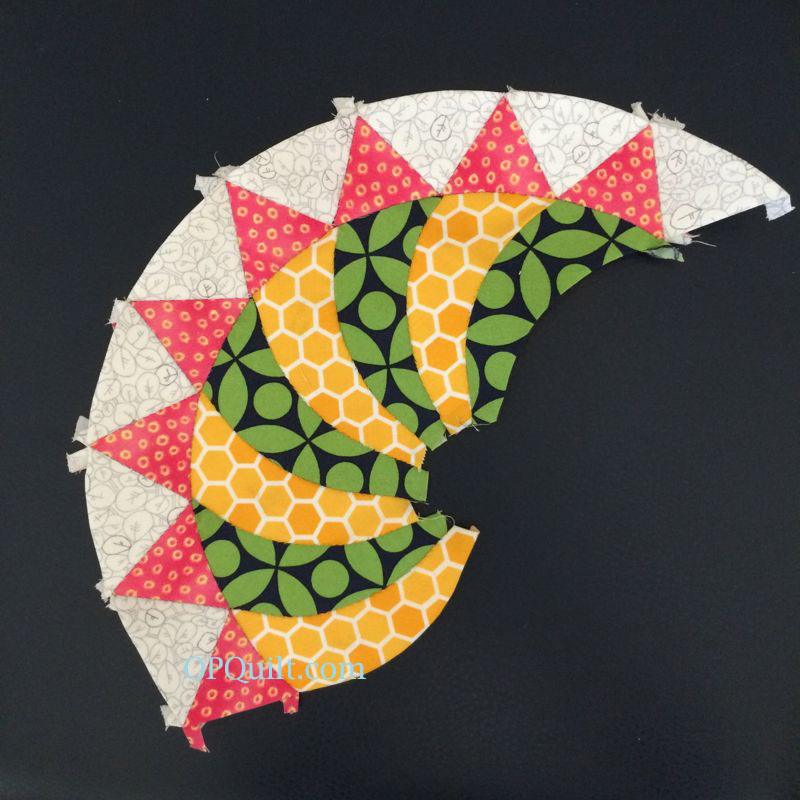
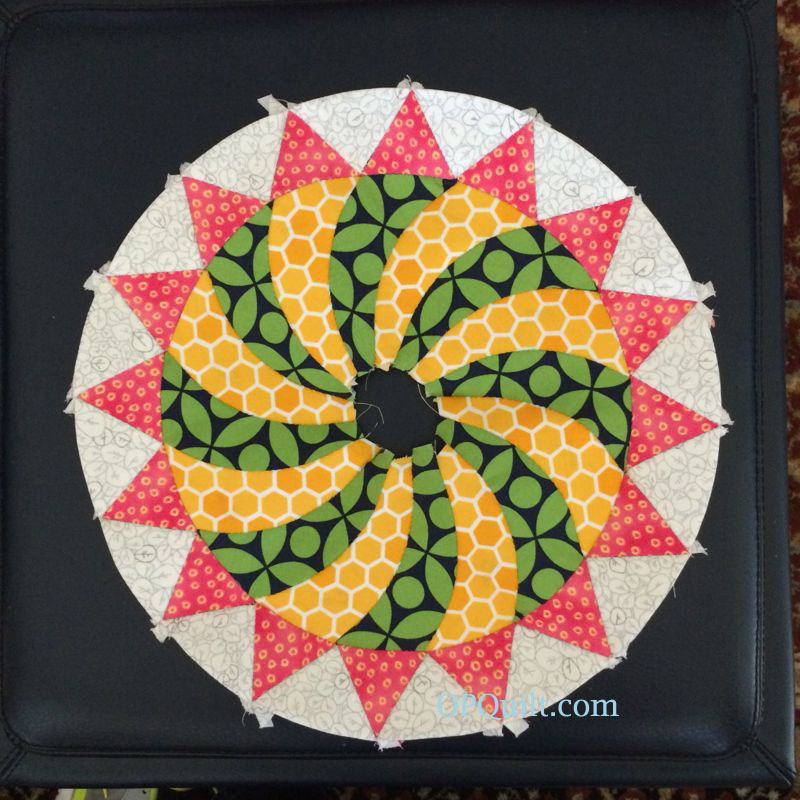
Now join two sets of four to make a set of eight. Beauty shot.  I stitch at night while watching movies with my husband and this dark leather foot rest makes a good backdrop.

Circles 13_11

Now join the last two seams.  Yes, it’s okay to switch thread colors if you want to along one seam.  In this case I used yellow on the swirls and white on the points.

Circles 13_12

Another beauty shot.  

Circles 13_14

And another, from the back.

Circles 13_15

Cut a 14 1/2″ square of background fabric, fold in fourths and lightly iron in the creases so they will serve as registration marks for aligning your circle.  Remove all but the outer-edge papers.  If you see some wild seam allowances, trim them now (you’ll do it again at the end). While this is what you will cut for a background, in the Finishing Pattern, the block may be smaller when trimmed.

You know the point-up or point-down drill by now. (If you don’t know what I mean, I have lots of tips and tricks in the other twelve circle patterns.  Click on the SHINE tab, above, to see the other circles.)  Take time to try yours out on your background.  Obviously I went with point up.  Now I am not liking the center circle I had planned.

Circles 13_16

I have a bag of Rejected Center Circles, and I’m trying more out now.  

Circles Block 13 EPP_OPQuilt.com

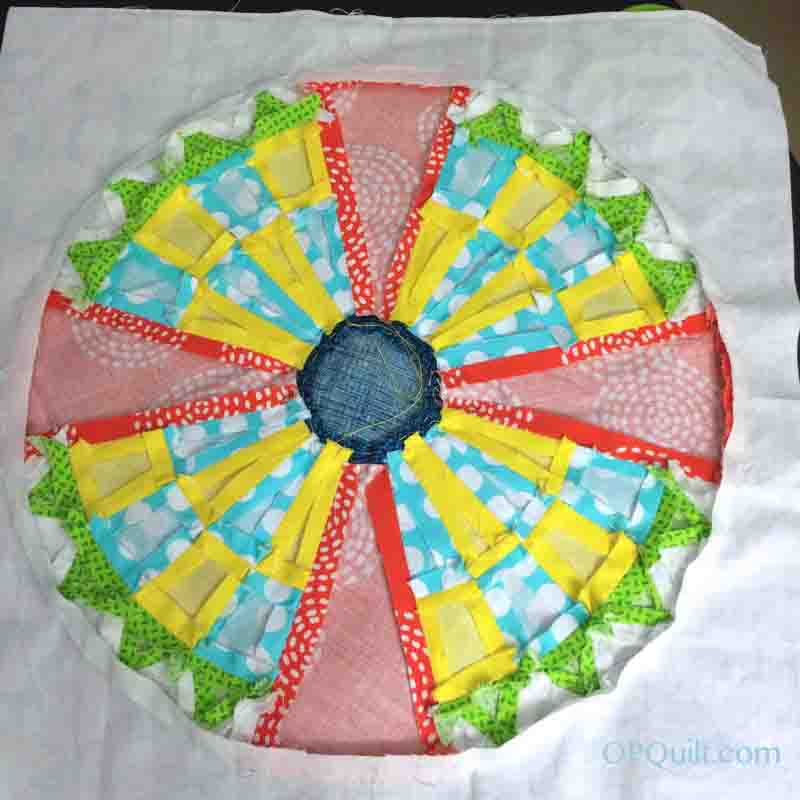
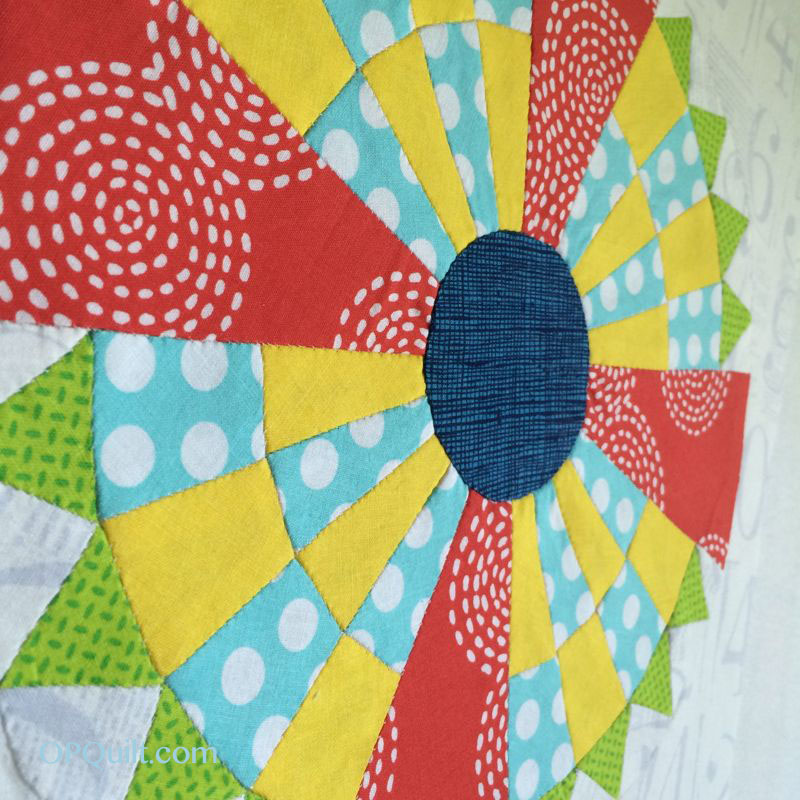
But in the end, I went with this one, because often you just need a dark center to anchor the circle.  Appliqué the large circle to the background, then cut out the back, as shown in earlier circle posts (again, you can access them all by the tab up above). Remove all the papers. Now is the time to trim any wild seam allowances.  

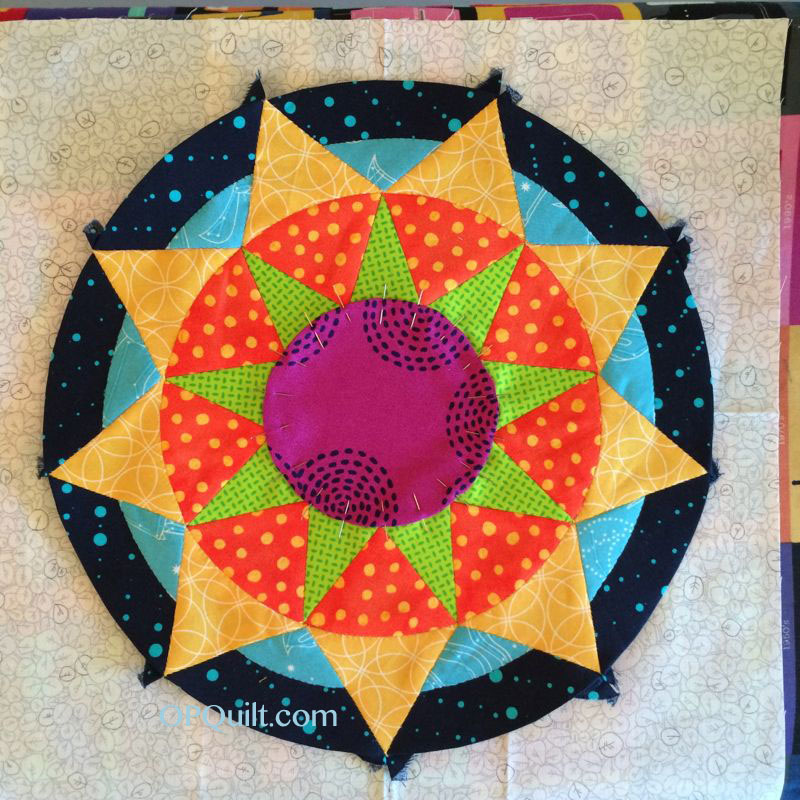
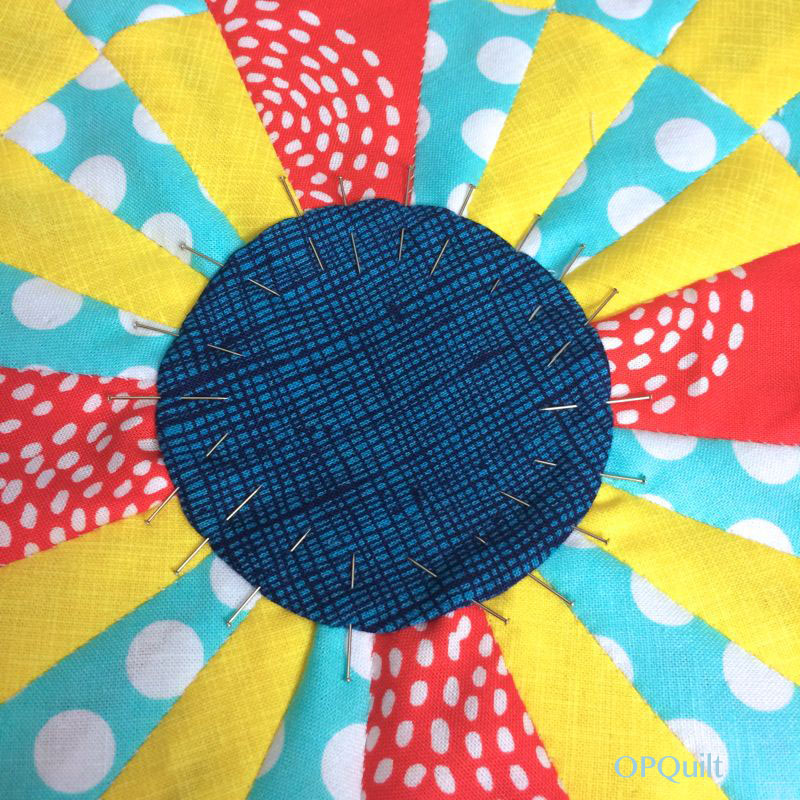
Now appliqué on your middle circle, using tiny stitches.  When finished, press face down on a well-padded ironing board (or a folded towel, if your board isn’t padded). Now you have another circle!

The circle patterns for numbers 13-16, plus new blocks 18-22 are available in my pattern shop.

Also available is the pattern for finishing SHINE: The Circles Quilt.

Happy Making!

updated July 18, 2022

EPP · Shine: The Circles Quilt

Circles Block #12–EPP Sew-A-Long

Circles EPP ButtonCircle Block #12_OPQuiltNine-pointed Compass Rose Block

This is the twelfth block in a series of Circles Blocks.  Why circles?  Mainly because I had done some English Paper-Pieced projects and I was sick of straight lines.  And hexies, although I quite enjoy them both.  The other eleven blocks are available above, under the tab Shine: The Circles Quilt EPP.

Sometimes the inspiration in this series has come from other sources, but this one came out of my head.  And a creative mistake I made when designing another circle, yielding a circle has NINE points, whereas most any other circle you find in the world is divided up into an even number of points.  I liked it and went with it.

shine-rwb-block_12

The free patterns are now returning (Red, White & Blue version is above).  Again, I request that you not distribute them, but send people here to this website to get them.  Click to download a PDF file: 

SHINE Block 12 pattern_opquilt

Please remember to set your printer settings to 100% and check the little scale square included on the pattern.  It should measure 1″ in size. Illustrations below are with the OLD version of the pattern, so it may vary from what’s included now.

This is an easy block to sew, I think.

Circles 12_1 OPQuilt

Fabric auditioning.  This one was pretty straight forward, without any substitutions along the line.

Circles 12_2 OPQuilt

I cut out all the pieces, glue-basted them on (see earlier Circles Blocks for tip and tricks for this series).
Circles 12_3 OPQuilt

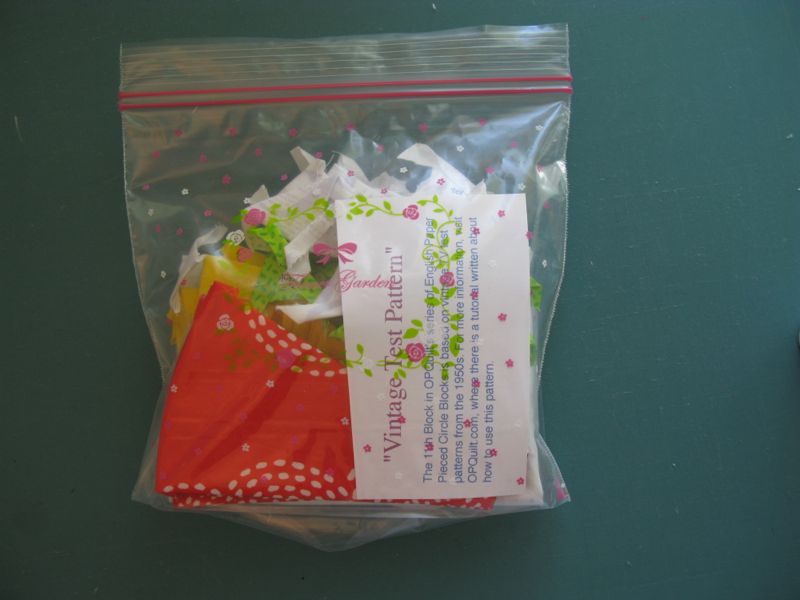
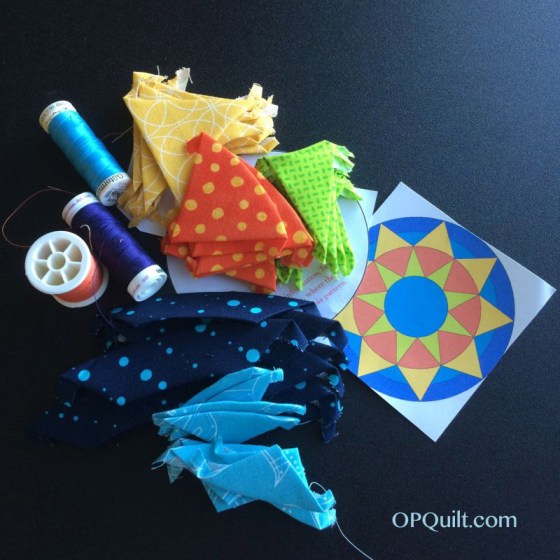
I like to print out a picture of my circle, gather the threads I’ll use, and collect everything into a ziploc baggie for easy toting.
Circles 12_4 OPQuilt

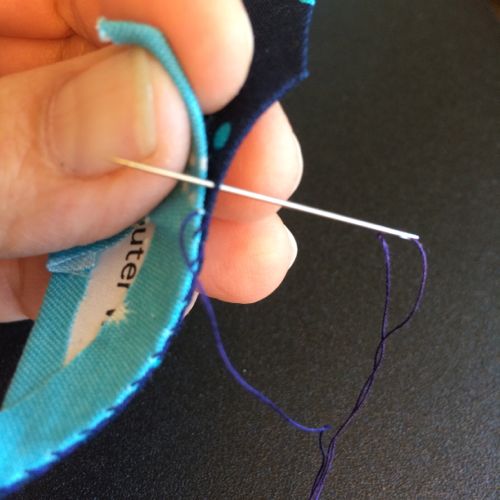
When hand sewing the curves, it’s okay to let the pieces curve in your hand.

Circles 12_5 OPQuilt

Step one: Sew the smaller “sky” piece (light blue) to the larger “sky” piece (dark blue).

Step two: Stitch the points and wedges together in groups of two (and one three) each, as shown above.
Circles 12_6 OPQuilt

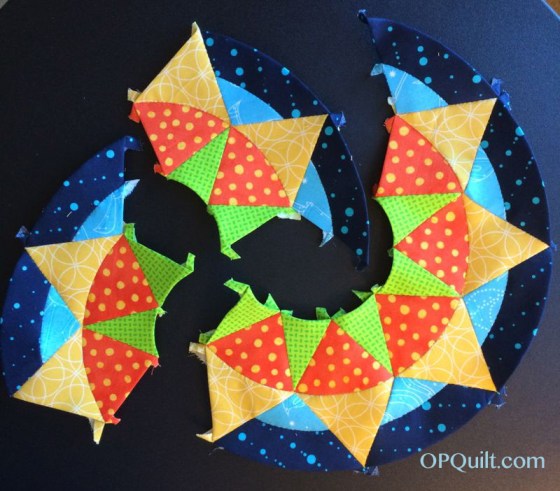
Step Three: Sew the bright orange triangle points to the smaller green triangle points, in groups of two or three.

Step Four: Attach these to a corresponding yellow triangle/sky combo.
Circles 12_7 OPQuilt

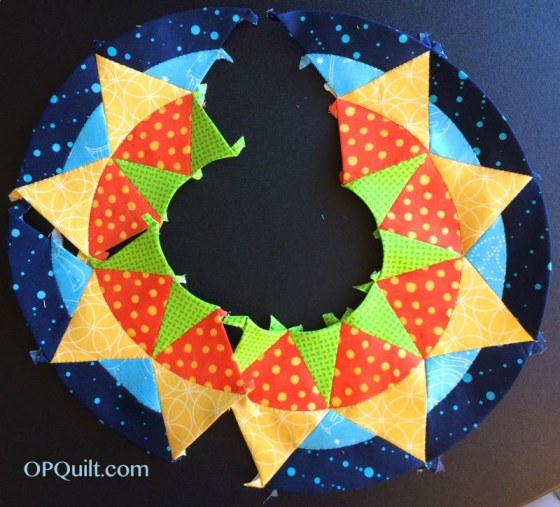
Step Five: Start stitching the units together, however, not like I did above.  Keep track of where the orange/yellow units go, so they all mesh together.  It might be helpful if you lay out half of the circle when you start putting the units together, just to keep track.

Remember: I make the mistakes so you don’t have to.  (Although you can make new ones if you want.)
Circles 12_9 OPQuilt

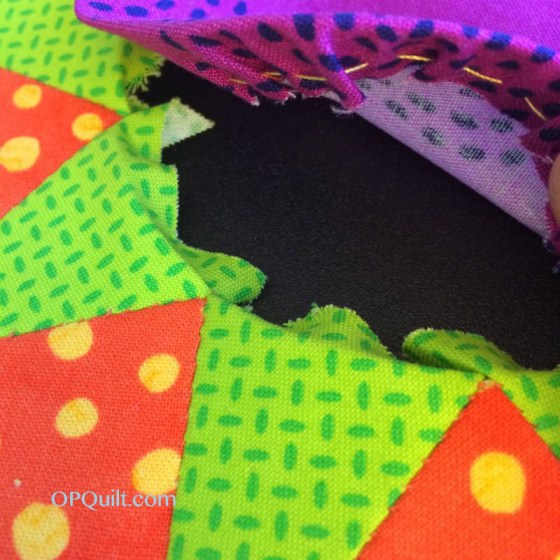
Since EPPing center circles and I don’t get along, I appliqué them all now.  Fluff out the seam allowances on the green so you can appliqué on the large center circle. (I should have thought this one ahead.  Okay.  A new mistake.)

Remove all the papers except those at the outer edge in the dark blue (you’ll need them in the next part when you put the circle onto its background).

Circles 12_10 Point Up

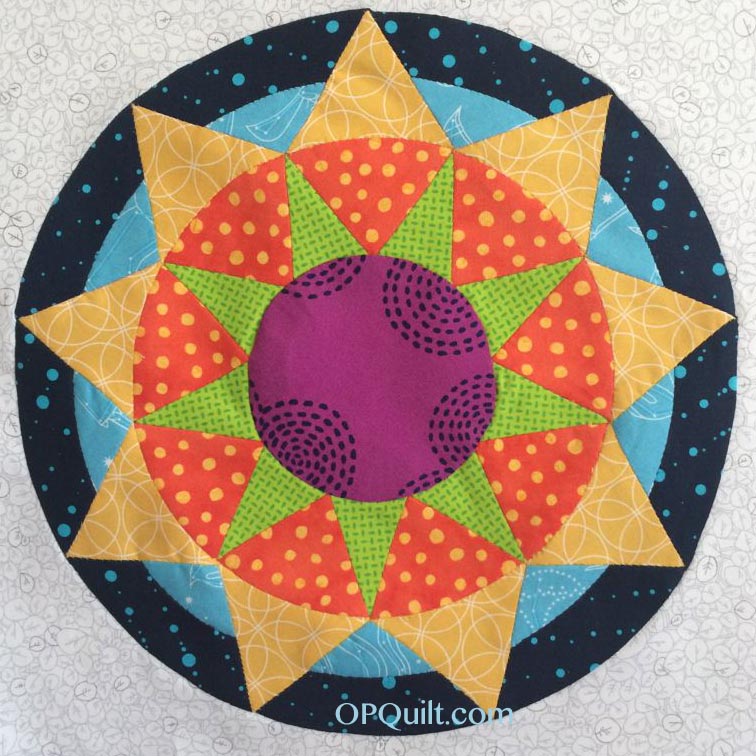
This time, I pinned on the center circle first, then auditioned it on the background, a square cut to 14 1/2.”  Yes, this will give you a little extra room around the edges, handy for when you decide to finish this thing.  Fold the background in fourths, iron a bit of a crease, then align the circle with those creases.  Usually this is easy, but since this is a nine-point star, you may want to measure in from each edge to get it evenly spaced on your background..

Do you want point up on the upper edge (above), or. . . valley up (below)?
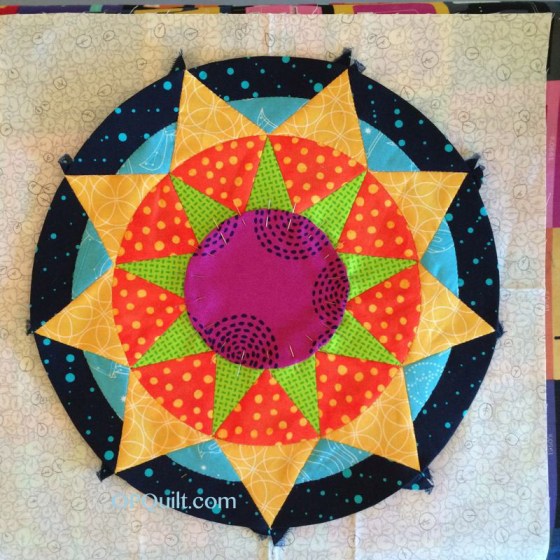
Circles 12_10a Valley Up

Yeah, okay.  You know I already went point up.

Stitch down the circle to the background, folding in the point areas as you come to them to make a smooth line.  Trim away the background, one-fourth inch away from the appliqué stitching line.

Then appliqué on that center circle.  I also like to trim away fly-away seam allowances, especially on those points, getting rid of unnecessary bulk.

Press lightly (face down on a padded ironing board is probably the best–use a light hand as they are hand-stitched and you don’t want to iron them into oblivion.  Any puckering that you see will be gone after quilting this thing, so no fretting unless you have pleats. . .

Double Sunflower

Here’s the drawing of the block in case you want to print it out for a guide.
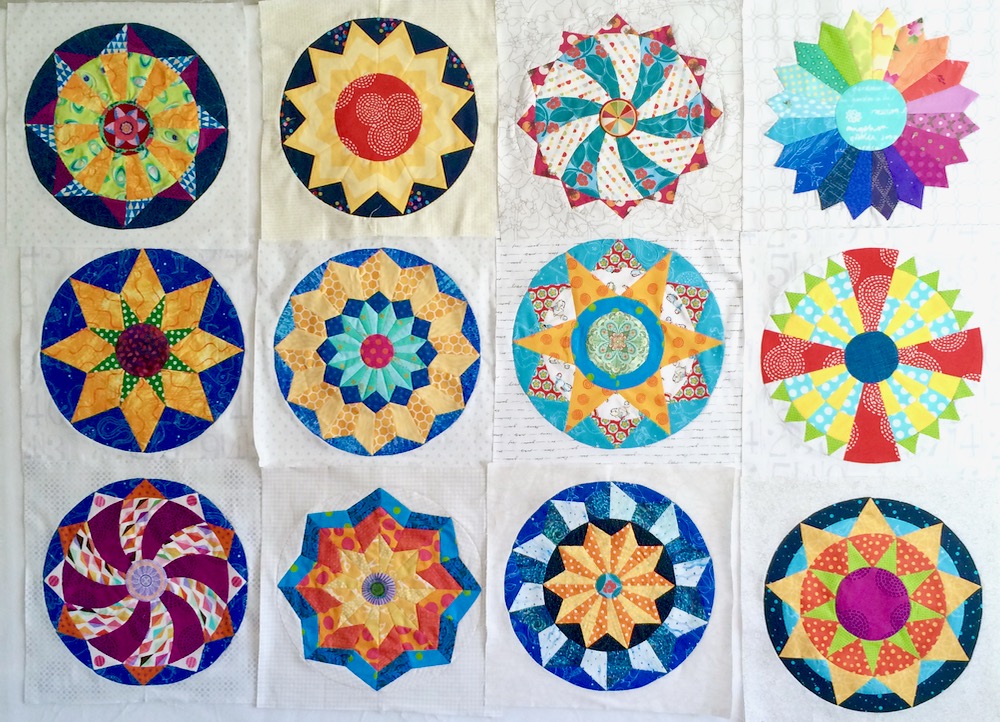
Twelve Circle Blocks Shine.jpgHere are all twelve circles.  You can either finish your quilt now, or keep going.
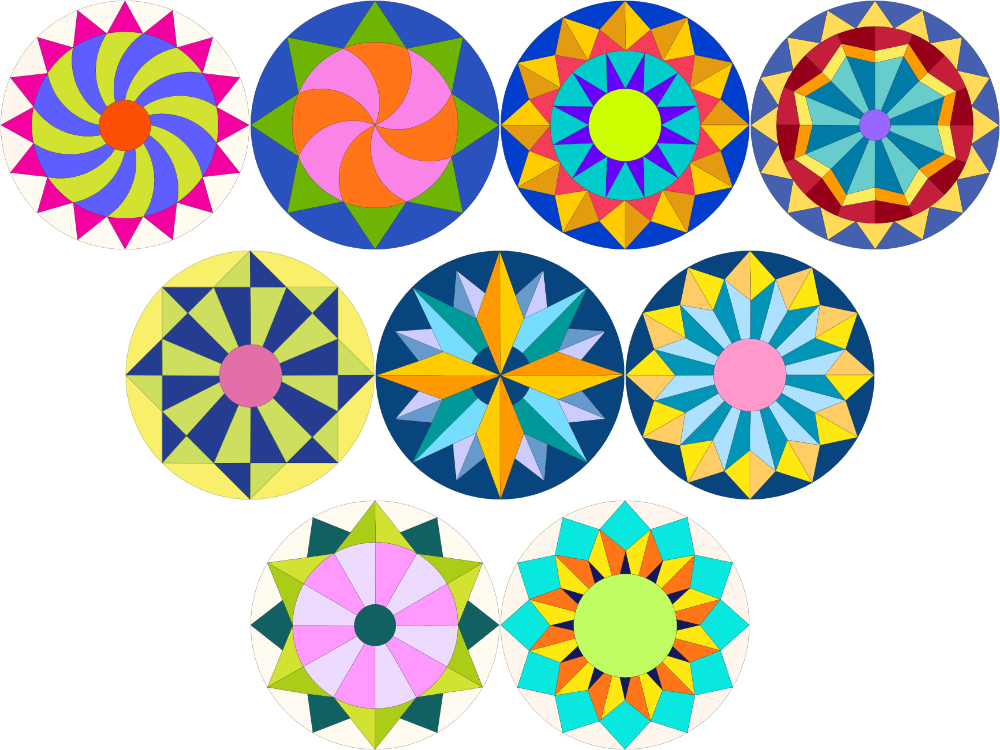
Shine Nine Extra Blocks

I have designed nine more blocks for SHINE, so you can pick and choose, and some of them are different than what is shown in my quilt.  They are available from my PayHip, my pattern site.
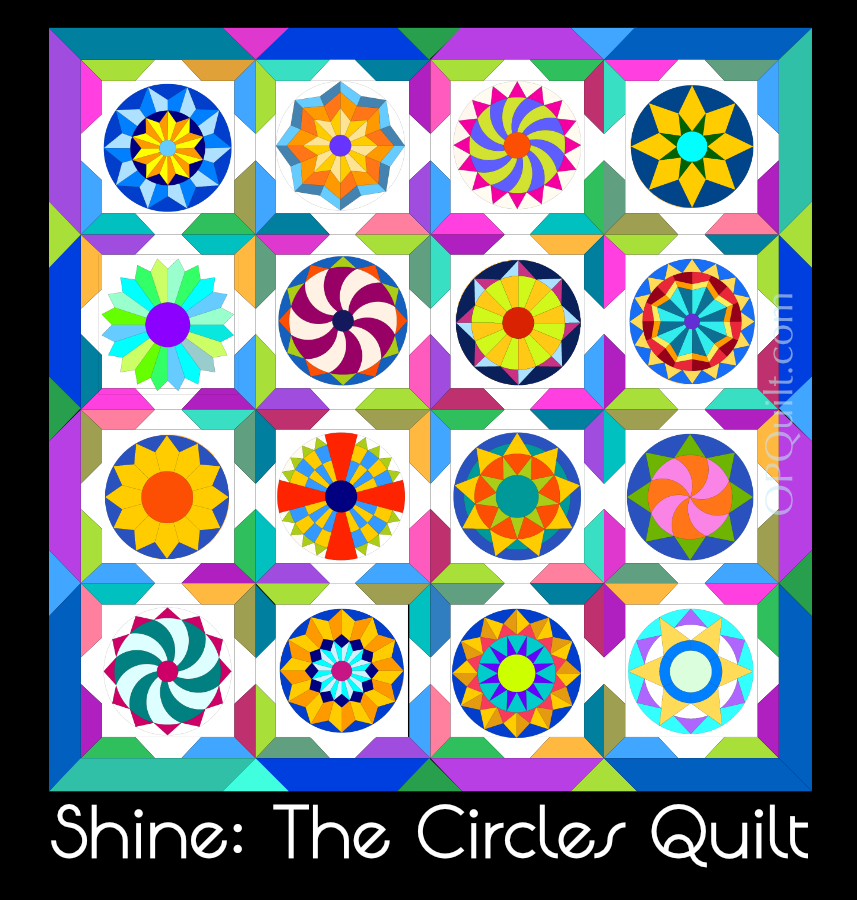
*Full Shine Quilt titled_final I also have a Finishing Pattern, which includes details on how to sew the inner and outer sashing, plus one bonus block. This has also been newly re-designed, but if you purchased it before, you should be able to just download a new version.

I hope you have enjoyed this series of circles as much as I’ve enjoyed creating and sewing them.  Please drop me a note as you make yours, sharing a photo or two.

IG circles blocks

Karen tagged me the other day on Instagram, and I about flipped over with happiness that someone had found these useful.  I love her colors and combos–so fun to see!

Mary_NeedledMomEPP

And here’s another from Mary who blogs at Needled Mom.  I love her colors, too–the pop of that lime in the red star points is terrific against the blues.

There are also Christmas block versions, made by my friend Linda.  You can see them in this post.

Happy Quilting!!

EPP · Quilts · Shine: The Circles Quilt

Circles Block #11–EPP Sew-A-Long

Circles EPP Button

Circle Block #11_OPQuilt

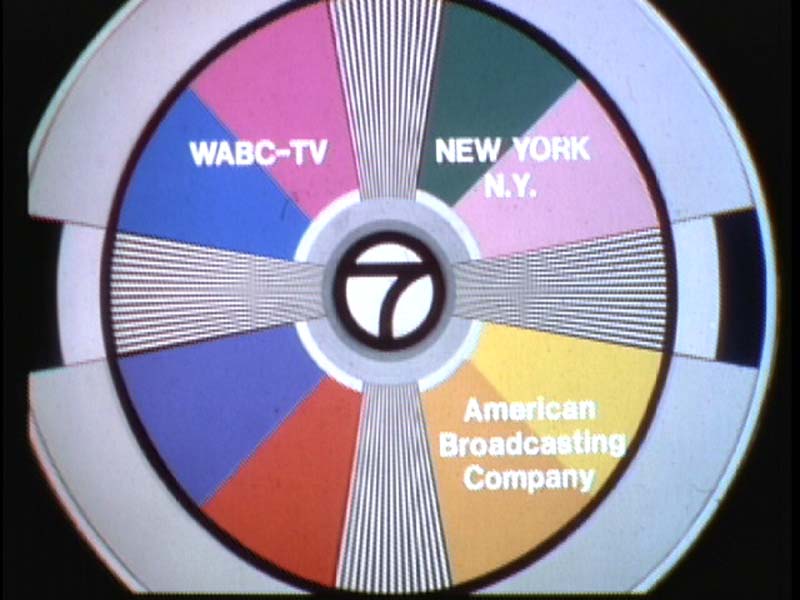
Circle #11: Vintage Test Pattern

This is the eleventh block in a series of twelve circle blocks, conceived and created when I needed another hand-sewing project, and wanted something beyond hexagons.  I had several sources of inspiration for this one:

Vintage TV Test Pattern

TP-WABCcolor

2012-Ma-June-044

1960s-Color-TP-v1As a child, I remember these “television test patterns” on the tube when I’d get up too early, before the station had signed on.  And I liked the Greek Cross reference, too, since many of these circles were designs taken from a Greek Orthodox Church in Ljubljana, Slovenia (from our vacation last year).  So I give credit to both sources of inspiration.

The free patterns are now returning (I did not do Red, White & Blue version of this block).  Again, I request that you not distribute them, but send people here to this website to get them.  Click to download a PDF file: 

SHINE Block 11 pattern_opquilt

Please remember to set your printer settings to 100% and check the little scale square included on the pattern.  It should measure 1″ in size. Illustrations below are with the OLD version of the pattern, so it may vary from what’s included now.

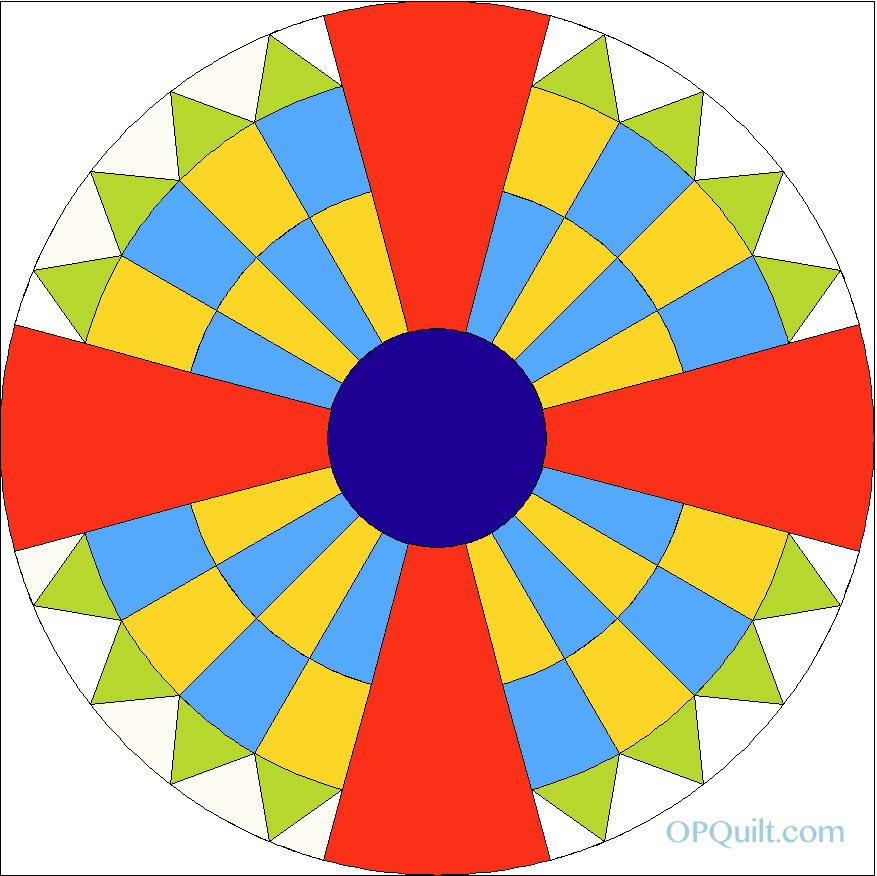
Circles Block Eleven

Here’s the circle drawn up in my quilt software.  I’ve taken to printing out this little color drawing and putting it in a small bag with all the glued-up pieces.  I like referring to the drawing as I work.

Circles 11_1Choosing Fabric

Picking fabrics–I always lay them out.  I jumped the gun and cut the cross-bars early, as I have another circle with that fabric and while I wanted these circles to be different from one another, I still wanted them to be able to have a conversation, so I repeat fabrics here and there.  When you cut out your center circle piece, cut it about 1/4″ bigger than it is.  See Circles #10 for some tips on the center circles.
Circles 11_2points layout

Once I got all the little points around the top of the circle printed out, I noticed that it would be hard to figure out where the “curve” of the triangle was, so I drew little arrows on every one of them.  As it turned out, I was okay about figuring out how they went, but if you think you might need the extra assist, do it now.

Circles 11_3glued points and raysKind of looks like a tomato with leaves.

Circles 11_4 pieces laid out

As is my habit, I lay out all the glued pieces for one final check before I start sewing them together.

IMG_4762

Then I loaded them all up in my little bag with the drawing and went outside to the patio to stitch, while listening to my audio book.

the-last-chinese-chef-cover

This time it was The Last Chinese Chef, and I was craving Chinese food by the time I finished listening to this.  But not Americanized Chinese food; I wanted the food in the book.
Circles 11_5 first units stitched

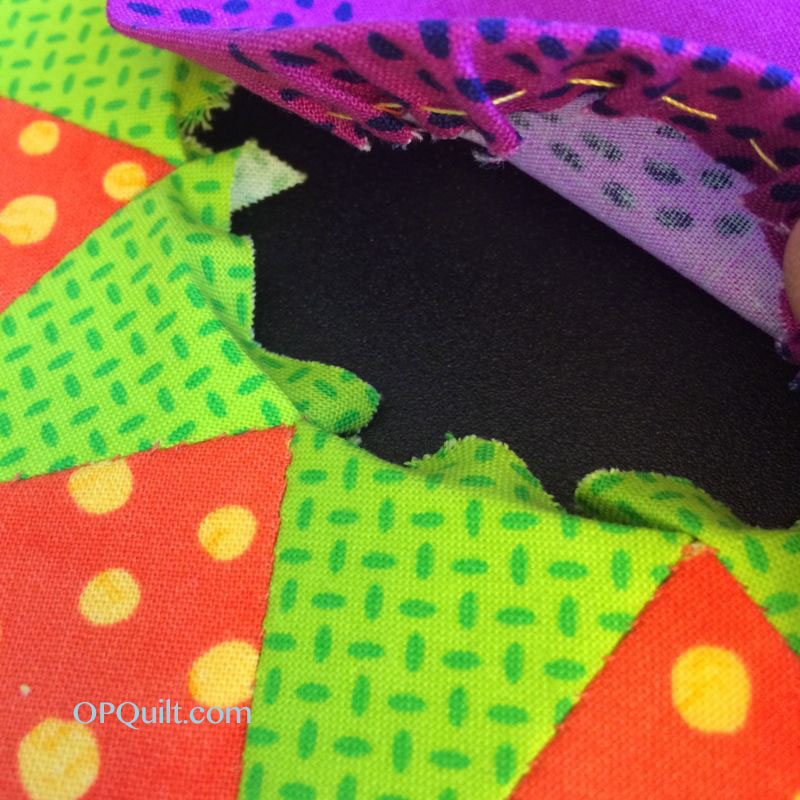
Stitch the upper row sections together, then the lower, then join them, keeping those seams aligned if at all possible.  Notice that I have not glued down the lower edges of the lower section to their papers (the innermost part of the circle), as I want to appliqué the center circle onto the piece, and it’s a lot harder if I’ve folded the edges and glued them down.

Circles 11_6 more bits laid out

Then, line up four green triangles with their curved edges at the bottom, and the points that go in-between them (three pieces). Lastly, lay the half-triangle on each side.  NOW sew them together.  You don’t want to be sewing on a full-triangle on those outer edges; ask me how I know.

Circles 11_7 crown stitched

When sewn together, it should look like this.  It’s now after dinner and I’m inside, still listening, but sewing by lamplight, instead of by sunlight.  I couldn’t stop listening to that book, nor stop sewing.  These get addicting.

Circles 11_8 crown onto first unit

Join a checkerboard unit to the triangles unit.

Circles 11_9 rays to first units

Then stitch one of those ray-sections to the checkboard units, making sure you are attaching it to the same side on all four units. In this photo you can clearly see the raw fabric edges of the lower checkerboard pieces.  Sew together two of these units, then sew those two units together to create a full circle.  At this point, you can remove all the papers, except any that are at that outer edge.  If the papers are hard to slip out because they are glued, use the tip of your small scissors or a stiletto to loosen the fabric (so you won’t have to tug and pull).

Cut a 14 1/2″ square of backing fabric.  Yes, it is bigger than the circle, but I want to make sure I have enough to work with when I figure out how I’m setting all these together.  (I have no clue at this point!)  Now it’s decision time.  This version, with the red rays arranged North-South-East-West, or. . .

Circles 11_10 OPQuilt

Circles 11_ 10aAlternate Circle. . . this version, with the rays arranged like a flower?  I marked the centers of my large backing square, and set down the circle, pinning it for appliqué.  I went with the traditional version (North-South-East-West).

Circles 11_11 OPQuilt

Cut away the backing fabric, leaving a 1/4″ seam allowance. I love these little Karen Kay Buckley scissors, as the tips have little teeth that grip the fabric, holding it while trimming even the smallest bit of fabric.

Circles 11_12 OPQuilt

Pin on, then appliqué the center circle.  See Block #10 for some appliqué tips.  I should have placed that “weave” pattern aligned straight up and down, but instead I just slapped it on.  As a result, I always want to tip my head to the side when looking at the center circle.  I’m sure no one else will notice (well, now you will) so I’m not redoing it.  Keeps it real, keeps it interesting.

Circles 11_13 OPQuilt

Remove all the papers, and admire your work.

Circles 11_14 OPQuilt

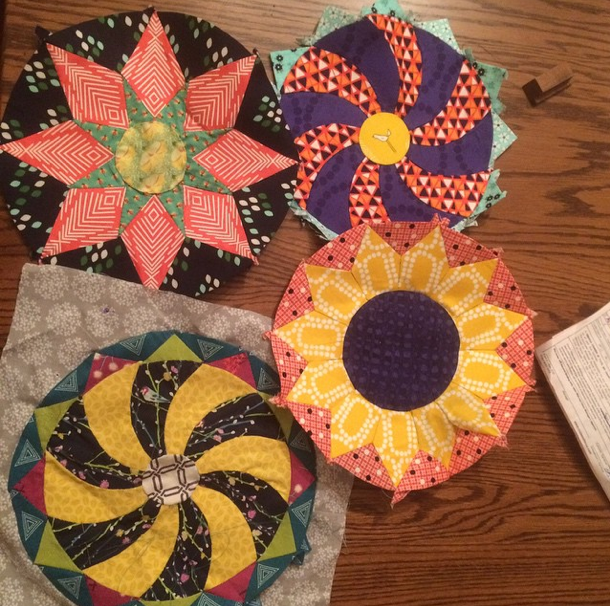
Circles All Eleven by Ironing BoardHere are they all are, lined up on an ironing board that is obviously used for other things than ironing.  (Anyone else have to clear off their ironing board in order to iron something?) I think they do play well together! I’m posting this circle block a wee bit early as we have our Quarterly Four-in-Art Reveal in two days, on May 1st.

4-in-art_3

I hope you’ll join me then for our little gallery of art quilts!