EPP · Quilts · Travels

Catching Up, Keeping Myself Honest

You could skip this post like you might want have to skipped Weight Watchers checkins back in the day…it’s a post that charts progress, keeps me honest and helps me admit my defeats as well as my successes. I watched a well-known recipe developer on Instagram bake her own wedding cakes last week, and I was like…I think I need to go and lie down for a while. It all looked amazing, and I wish I knew her personally so I could taste all her layers and fillings and crumbles.

Is making a quilt like that? We have layers and pieces and threads and in the end, we put a binding on it and call it a quilt? Those who aren’t quilters are amazed, but we just smile and pick the threads off our sweaters.

One of the Important Things is to get your machine serviced once a year.
So I drove out to a neighboring city, and dropped off my machine which caused me some grief (it’s how much?).

To recover, I went across the street, where the delightful ladies of this shop made me feel welcomed. They are in the process of moving, and I look forward to their Grand Opening in June, in a new location. With better parking.

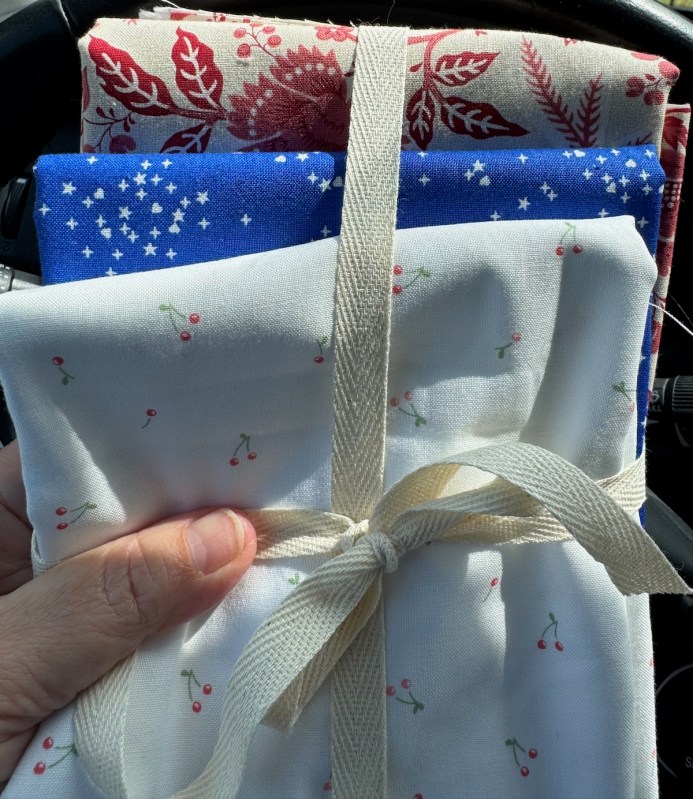
The strawberry quilt was in their back room. Some red, white, and blue fabrics came home with me, and then I popped them in a mailer and sent them to my daughter who is making lots of small, very cute flags. That link will take you to some Stories, and I really like what she says in the last one, that sometimes we have to do a lateral move to keep the creativity flowing. Truth.
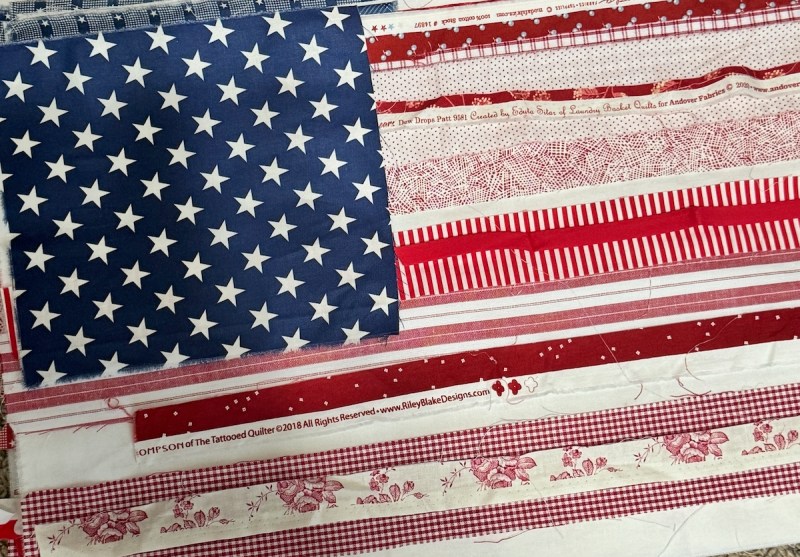
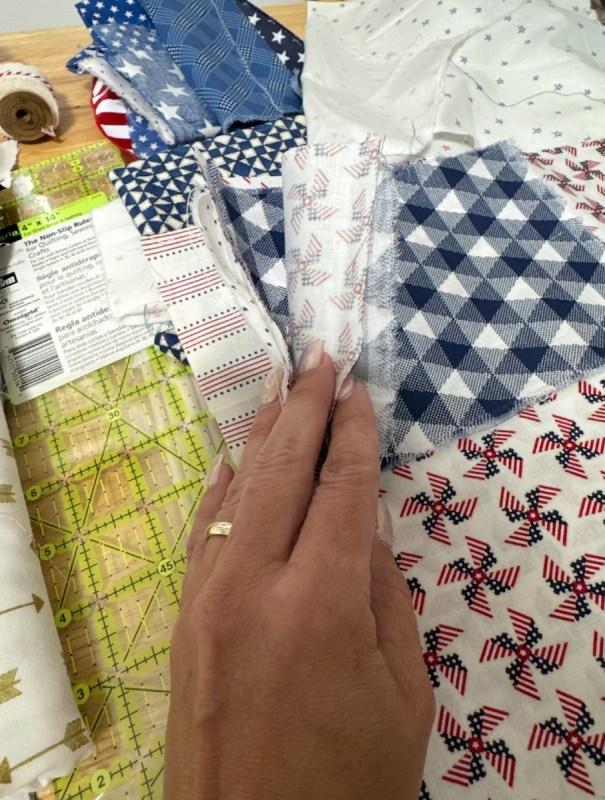
Yes, it cracks me up that she still has the wrapping on her ruler, but if that’s how she rolls, I’m happy. She confessed on another story that she purchased some fabric and then her eyes got really wide and she said, “Fabric’s a mood right now!” Translation: It’s expensive. (I’m loving this.)
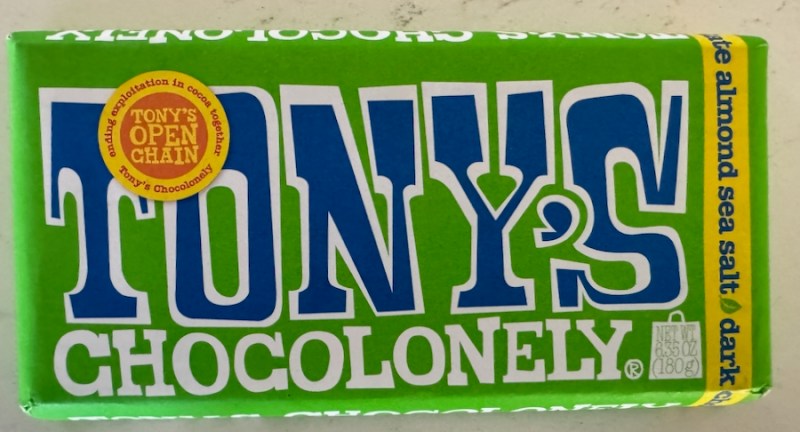
Mary, of Zippy Quilts commented on her Tony’s Chocoloney Bar. Here’s ours. We buy it at Whole Foods, when we go there (rarely), sometimes Sprouts. Sometimes Walmart, but check the expiration date. We chunk it up and keep it in a covered container for an after-dinner treat.
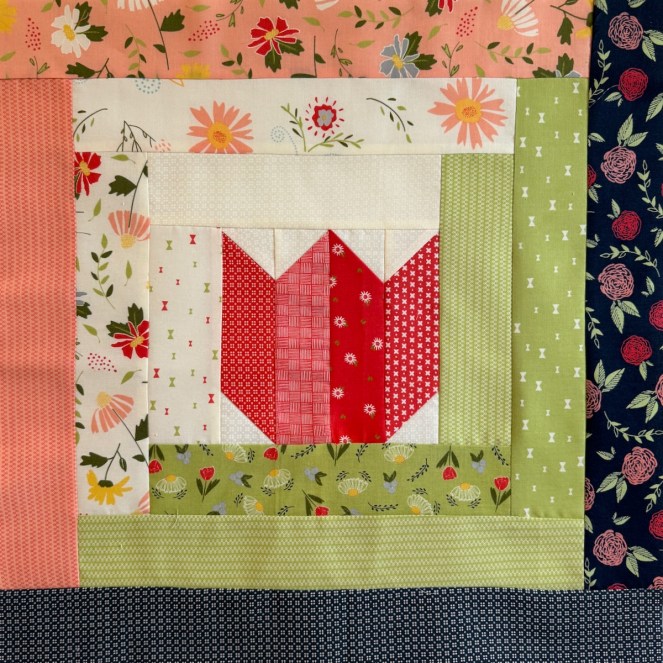
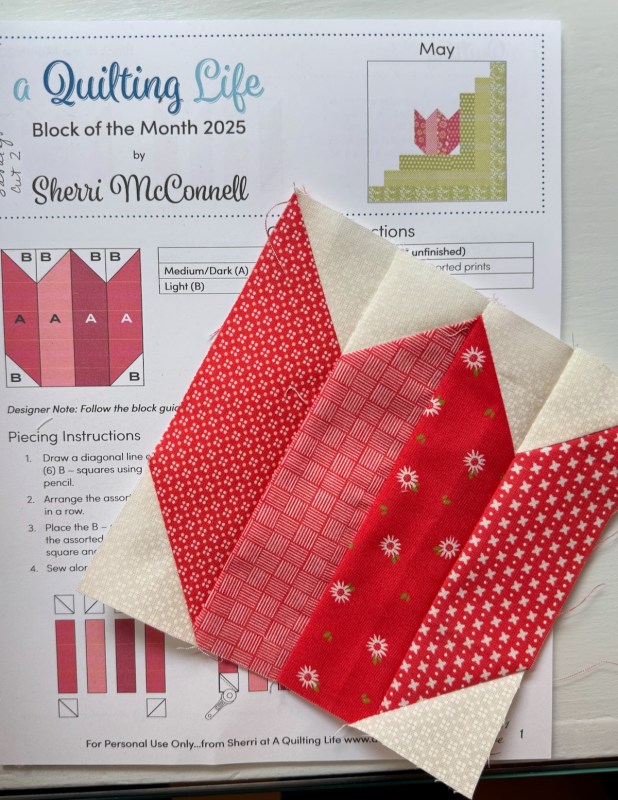
Sherri dropped her free BOM block for May. I’m using an old line of her fabrics, but I love them, so I’m happy.
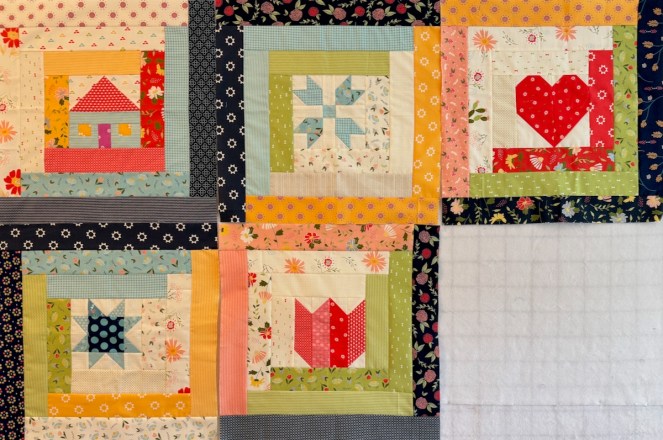
Here are the first five. They are giant blocks, like 18″ big.
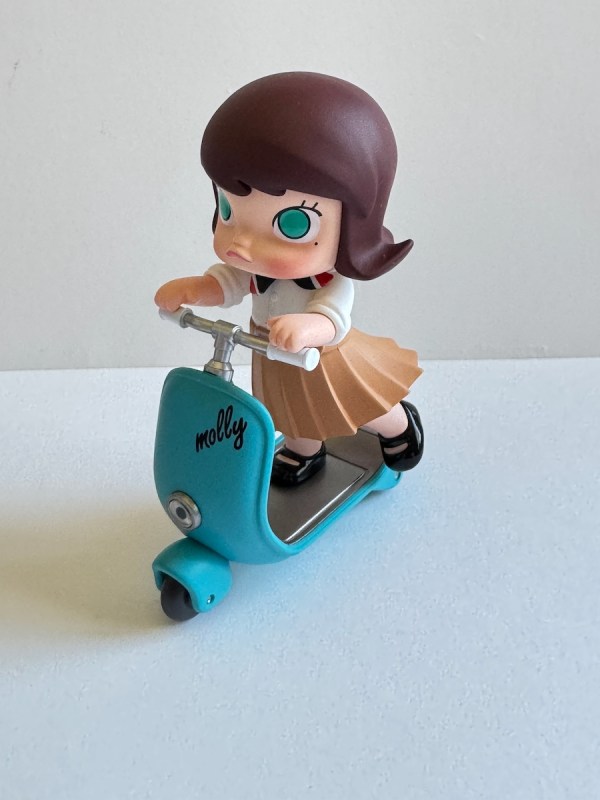
A new Molly arrived…on her Vespa. The price has jumped about 20% in case you were wondering what girls-on-Vespas-from-China cost now that we are having a tariff fight. I’m sadder about the chaos, the destruction, the cruelty — why NPR? Why PBS? According to a poll about the bias in news sources, they come down just about in the middle of the range from right to left. And why the National Parks? Why are they savaging the science funding? The arts funding (including the Quilt Index)? Have we lost our minds? (Yes.)

I fear for my grandchildren’s world.
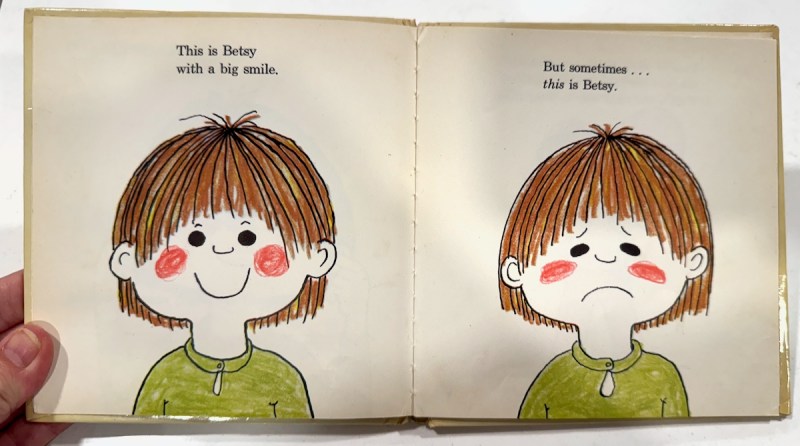
(a childhood book)
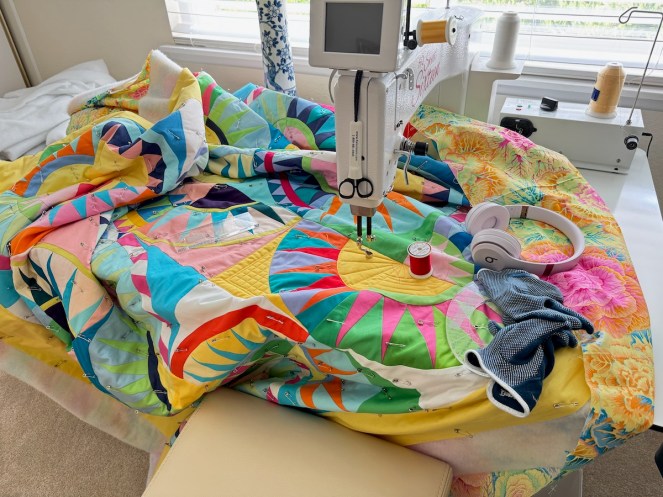
Starting on this to keep my mind off the news. It’s my New York Beauties quilt.

If you are on Instagram, I’m sure you’ve seen that I’m on a trip in another city, so yes, I did all this before I left. I’ll be home soon. No I didn’t visit EnergyLandia, but I’d like to bottle what they have and bring it home. My brain is most likely overloaded with new sights, new sounds, and all the quilt projects are waiting for me back home.

Well, all but one.
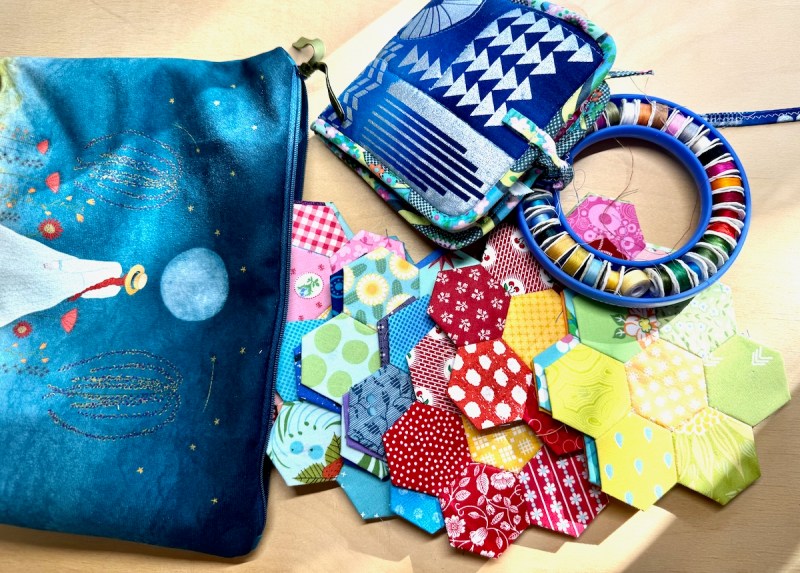
I read this one post on Bluesky where a quilter she said she would just stumble around until she figured out what direction she was going in, and boy did that resonate. I started sewing hexies because I was on a car trip; yes, that’s the whole reason. But this week, I stumbled into the next idea, and what colors I want to use.
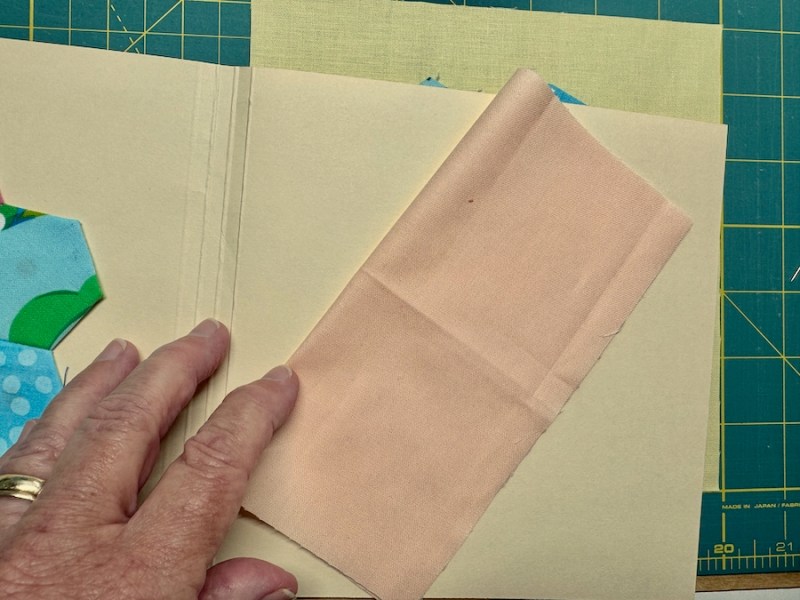
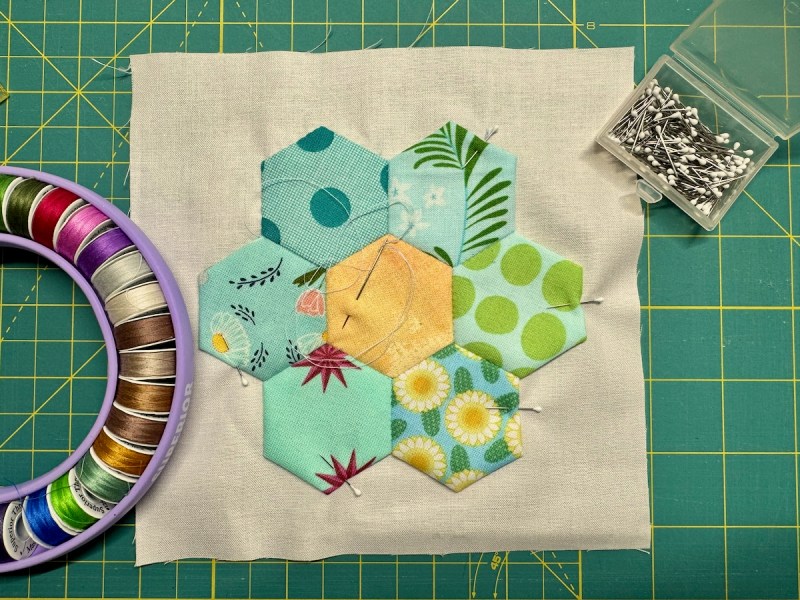
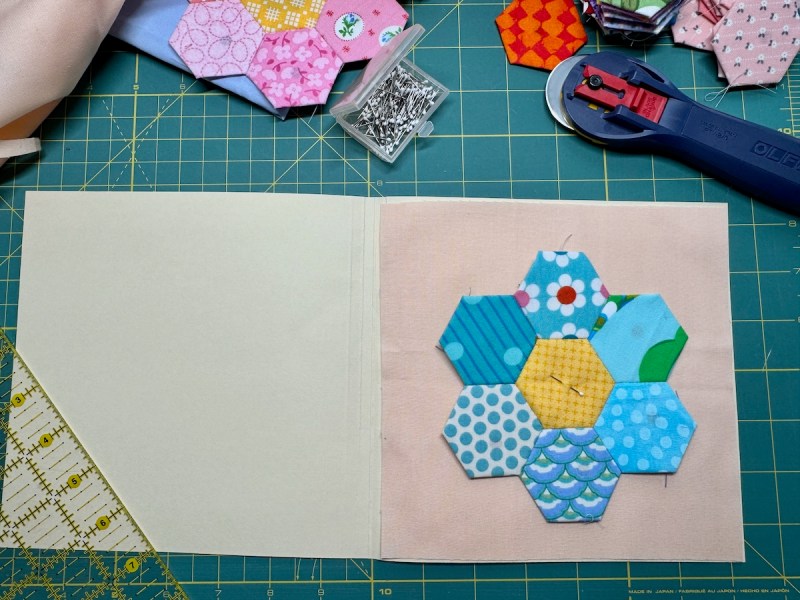
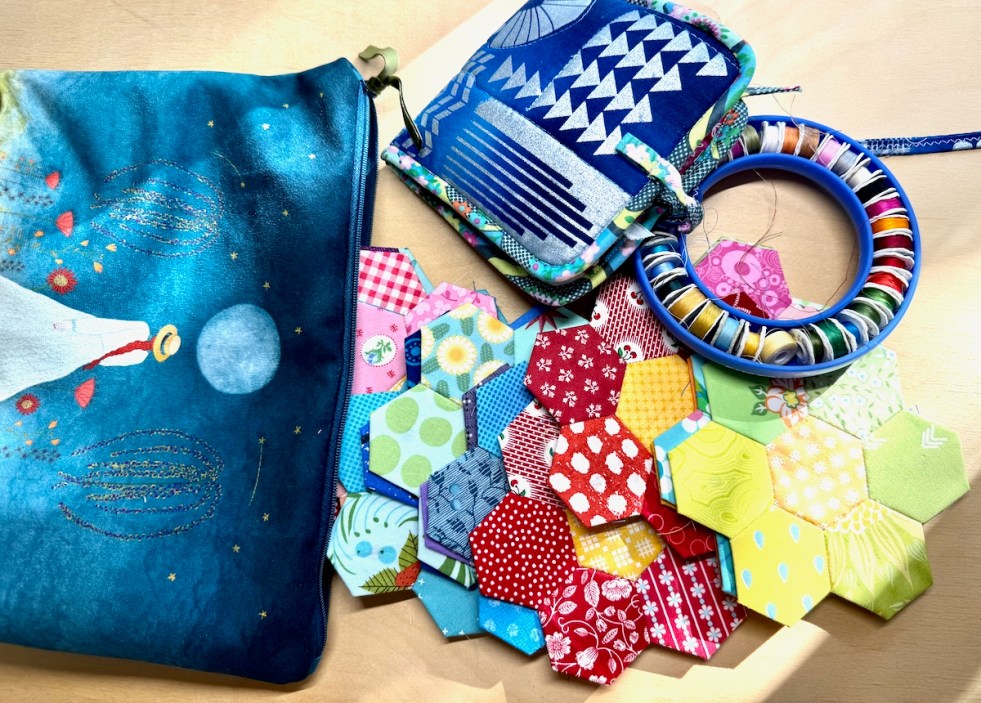
I cut some squares a bit bigger than my hexies. I’m using Painter’s Palette solids in lighter colors. Then I creased the fabric square lightly to get them centered, put a small appliqué pin in the center to hold it, and stacked them up.
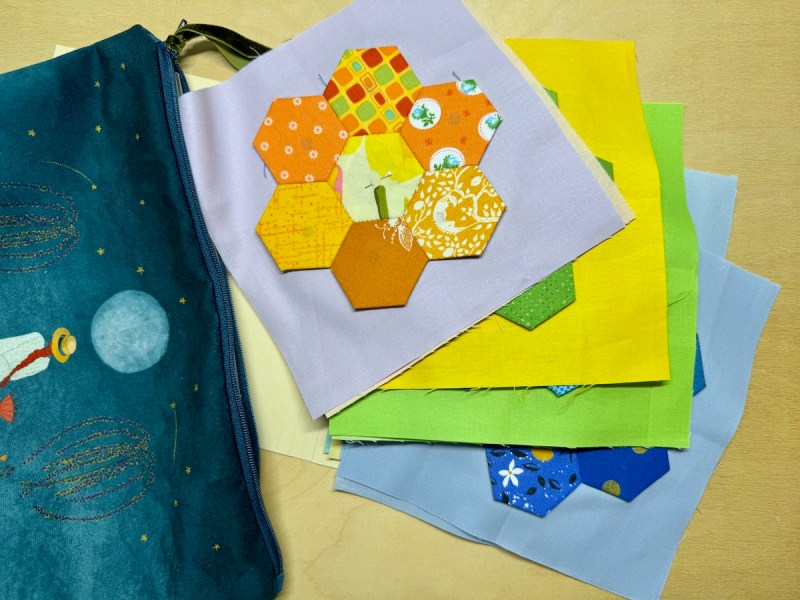
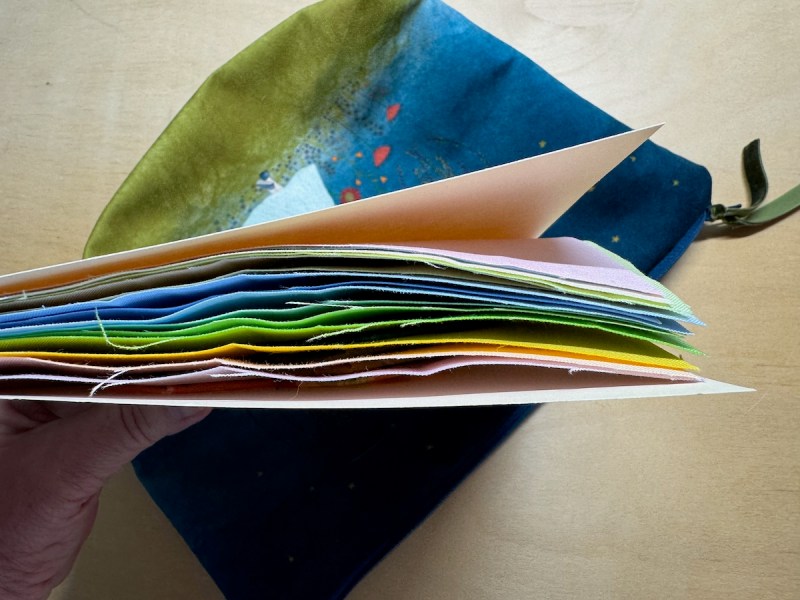
I cut a manila paper folder to size, as I have to be able to transport them and use this set-up in a small space, like a seat-back table on an airplane or a train. The mini-folder fits right into that blue bag. I’m taking this for a hand-work project on trains and planes, and to help me keep my sanity when everything I own is in two small bags and I’m trying to shove in more. (I modified this idea from Becky Goldsmith, who uses a slightly different folder set-up to transport her pieces for appliqué. She explains it thoroughly in this video or more simply in this post.)

Just so you know it’s me, here’s what I went through to cut hexies to sew:
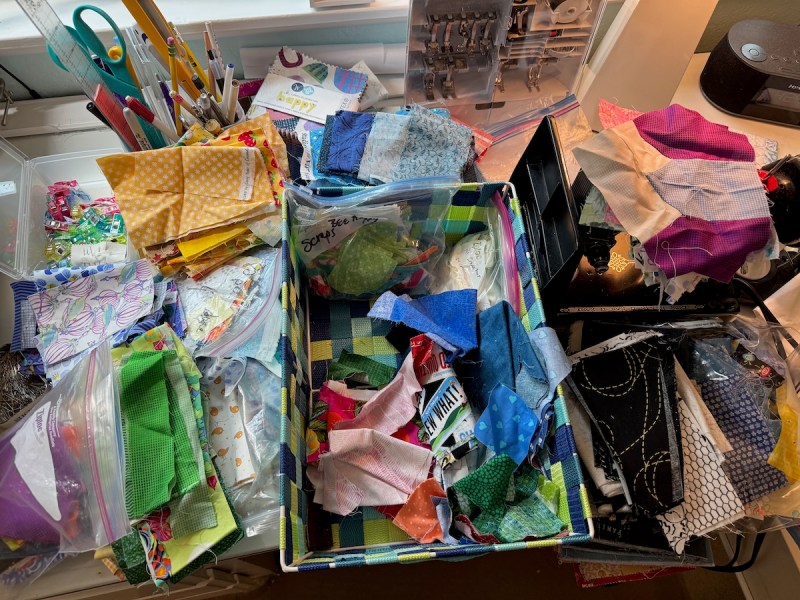
I exploded my scrap basket, but in the last photo — having gone through it all — I stowed it all nicely back in the bottom drawer where I keep my scraps. I’m cutting one last yellow, below (and no, I’m not taking the tin box — too bulky for overseas travel):

See you in a bit–


300 Quilts · Patterns by Elizabeth of OPQuilt · Shine: The Circles Quilt

I Hear America Singing • Quilt Finish

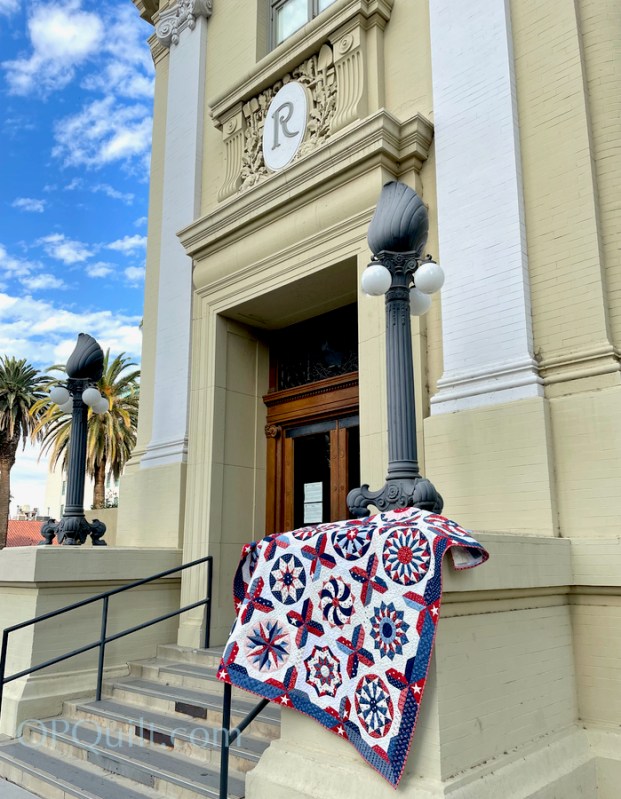
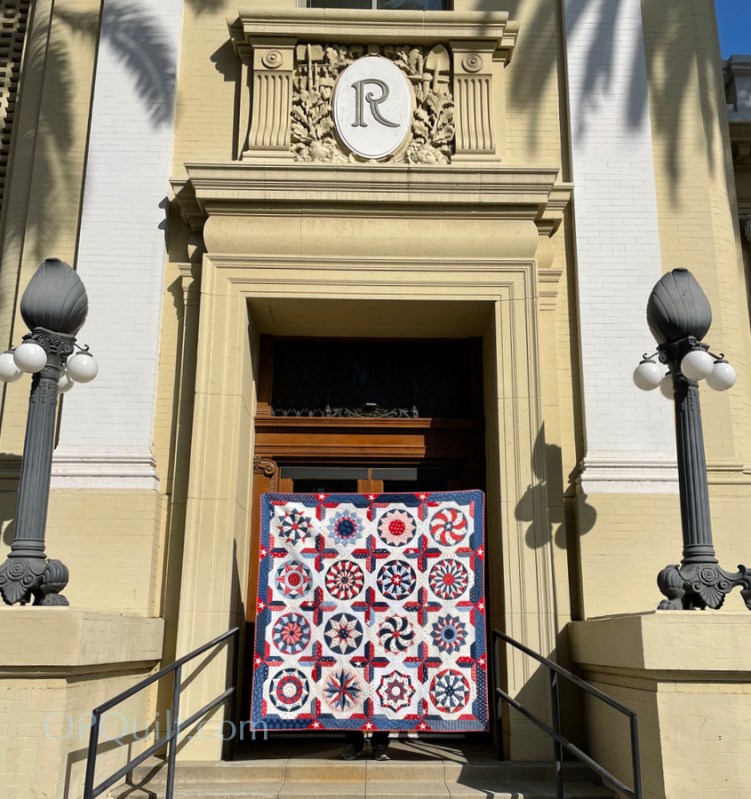
Where does patriotism come from? The title for my quilt, “I Hear America Singing,” is from a poem by poet Walt Whitman. Today he might have been considered a type of patriotic American — one who saw and acknowledged the multitudes of regular Americans — and heard them sing their song of daily work (poem is at end of post).

“The United States themselves are essentially the greatest poem,” said Whitman, and the poem, written in 1860 and published shortly before Lincoln’s inauguration, was a celebratory poem, lauding you and I — she and him, and those people over there. Karen Swallow Prior, in an article from The Atlantic, makes the observation that “Whitman’s claim stemmed from a belief that both poetry and democracy derive their power from their ability to create a unified whole out of disparate parts—a notion that is especially relevant at a time when America feels bitterly divided.” She goes on to say that:

“Notably, Whitman’s grammar (“the United States are”) signals his understanding of the country as a plural noun—not one uniform body, but a union of disparate parts. Whitman was centrally concerned with the American experiment in democracy and its power to produce “out of many, one,” even at as great a cost as the Civil War and the faltering Reconstruction. Whitman thus celebrates in his work the many kinds of individuals who make up a society as well as the tensions that bring individuals together in a variegated community.”

As Whitman asserts later in the preface to his Leaves of Grass:

The genius of the United States is not best or most in its executives or legislatures, nor in its ambassadors or authors or colleges or churches or parlors, nor even in its newspapers or inventors … but always most in the common people.

We often think that the ideal of “patriot” has an affiliation with war: the machines of war, the fighting and dying and the slogans and the confrontations, which leads in the end to the cemeteries of war, with honoring our war dead. We make that connection easily because we honor those who fought for our freedoms. I acknowledge them and am grateful for them. However, if it is defined only this way, it’s easy to feel separated from the idea of being a patriot, from patriotism, and make “them” responsible for the well-being of our country.

So on this Fourth of July, I wanted to emphasize a different sort of connection to patriot. That it is not found in going to war. It’s not in defined battles. It’s in us, the people. It’s in our going out of our way to take care of our neighbors, with their varied songs and carols and labor and daily work. It’s in going to that daily work, from the work of masons and shipbuilders and deckhands and mothering and washing and sewing: “Each singing what belongs to him or her and to none else.”

Stephan Cushman noted, “Although we hear the words “patriot,” “patriotic,” and “patriotism” all around us … we do not have many useful public models for combining genuine celebration of the United States with constructive criticism of it.”  Cushman gives a nod to the idea that “patriot” is a formal label that can be worn on one’s chest. But after noting that Whitman used that word sparingly in his volume of poetry Leaves of Grass, Cushman goes on to say:

“Different readers might offer different explanations for the paucity of direct references to patriotism in Whitman’s writing, but one that feels plausible to me is that someone so deeply engaged in celebrating various aspects of the United States, and in identifying himself with his image or images of an American ethos, had little need or ability to separate himself from that celebration and objectify it with an abstract term like “patriotism.” Or, to put the matter more bluntly and reductively, Whitman was too busy celebrating himself and his country, and insisting on the connections between them, to spend much time crowing self-righteously about how patriotic he was and how deeply he believed in the value of patriotism.”

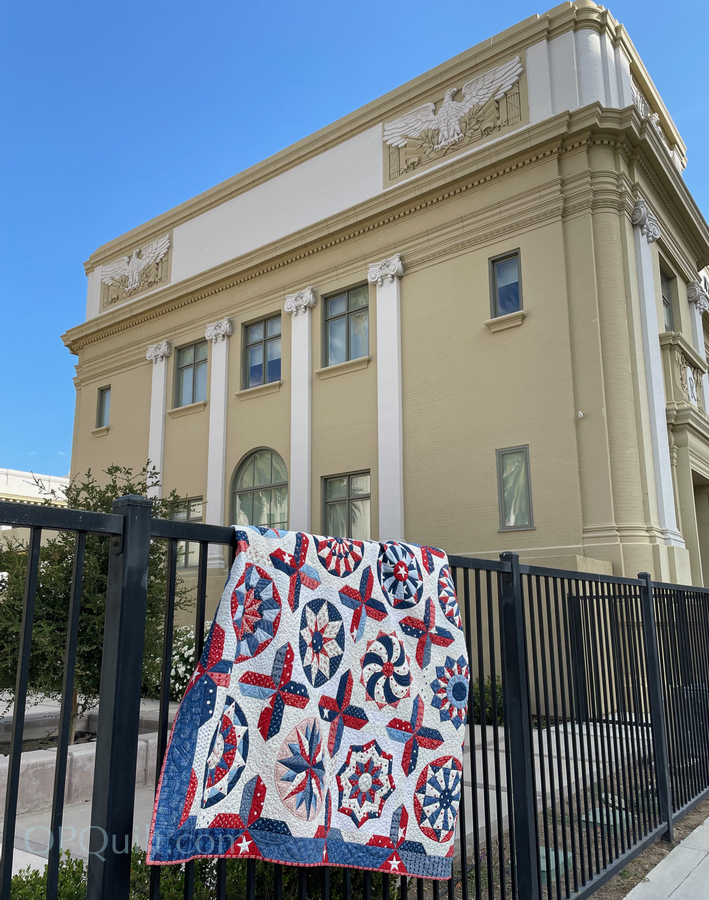
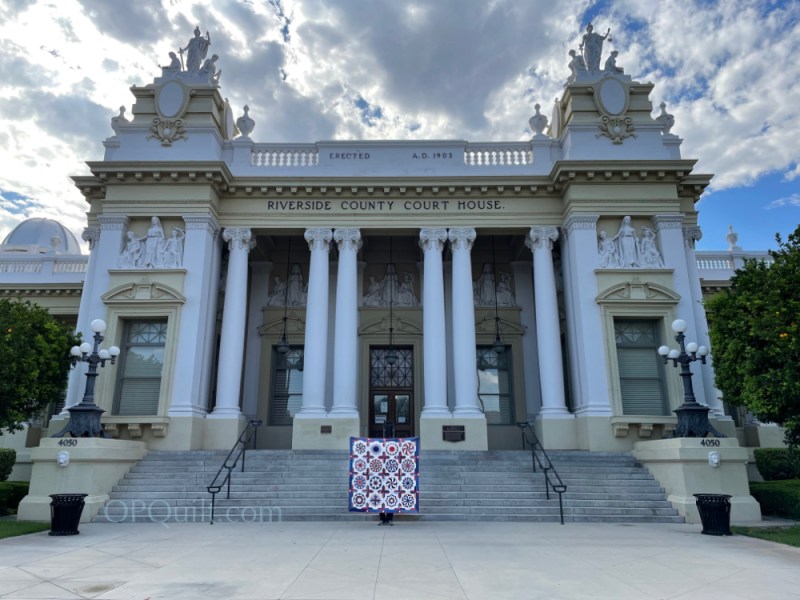
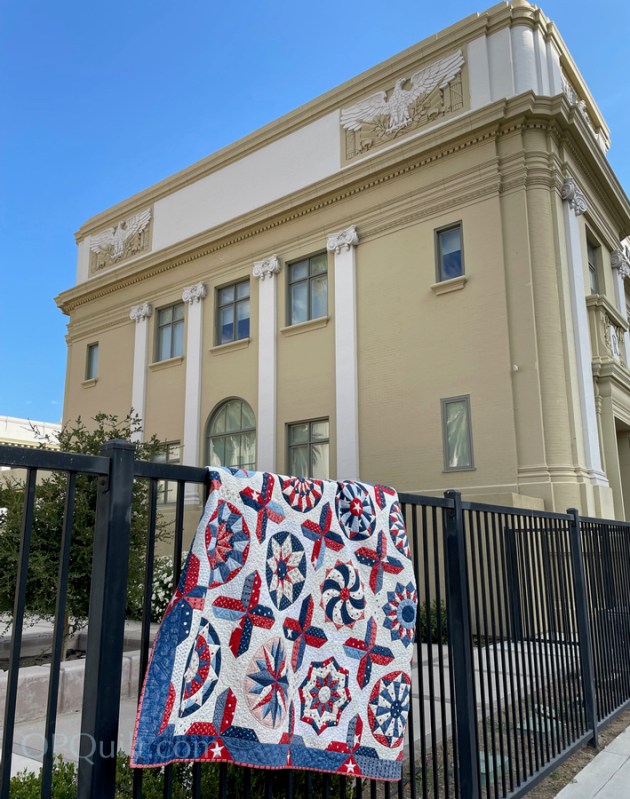
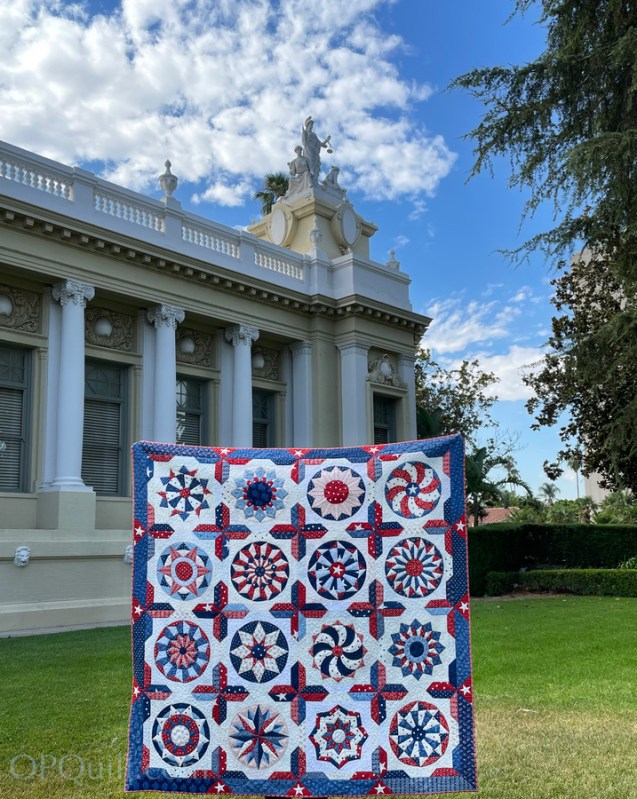
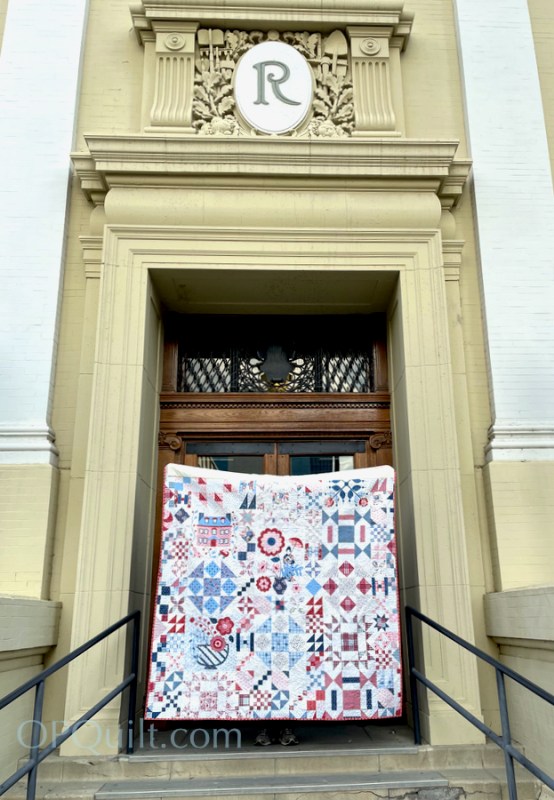
Perhaps the greatest patriotism is in seeing each other, in realizing how alike we are and how dissimilar we are, making us figure out how to negotiate, how to keep the peace, how to be respectful. This is why one reason my husband and I photographed this quilt at our county’s 1903 Courthouse, a place administering and honoring those laws that are part of the the thousand daily comprises we make to keep our country stable and thriving. We also chose this place because it’s also really beautiful, with its craftmanship intact; this place generates in me that old-fashioned kind of feeling of pride, and yes, of patriotism.

As I have traveled around the world, I have found patriots in all countries, loyal to the carols they hear around them, fiercely proud of what makes their country the best one ever. It would indeed be a great world if we could all think like that, seeing this similarity as something that can unite.

Finally, Swallow Prior brings another gentle affirmation for this idea of America as a poem by mentioning Harvard professor Elaine Scarry, who “describes the importance of multiple viewpoints, arguments, and counterarguments to ‘political assembly,’ [and wonders] how ‘will one hear the nuances of even this debate unless one also makes oneself available to the songs of birds or poets?’ The basis of poetry is precisely those connections forged between different elements, different voices, and different perspectives. In envisioning the United States as “the greatest poem,” Whitman links the essence of poetry, which is unity within diversity, to the essence of democracy.”

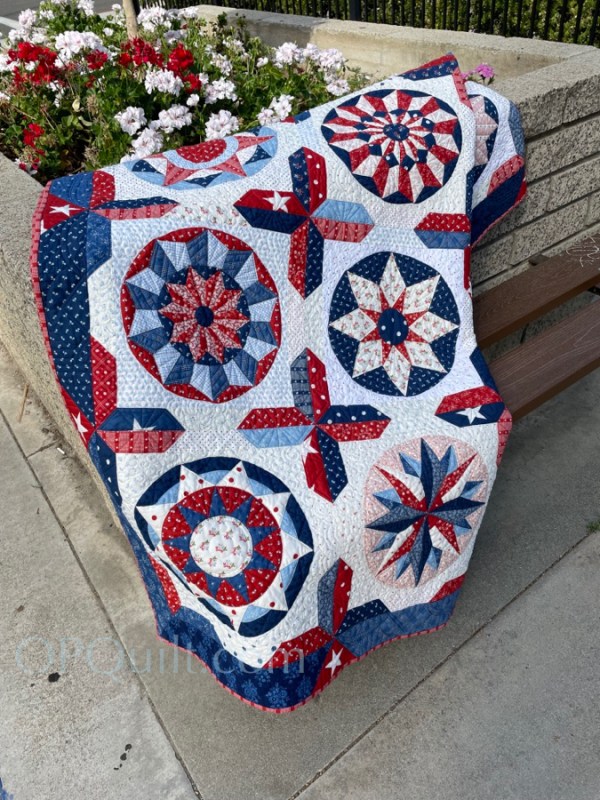
I am a patriot of the singing kind, the poetry kind. I will always love America. And so I present to you my quilt, I Hear America Singing, a celebration of that great American poem that Whitman believed us to be.

I Hear America Singing
Quilt #252
68″ square
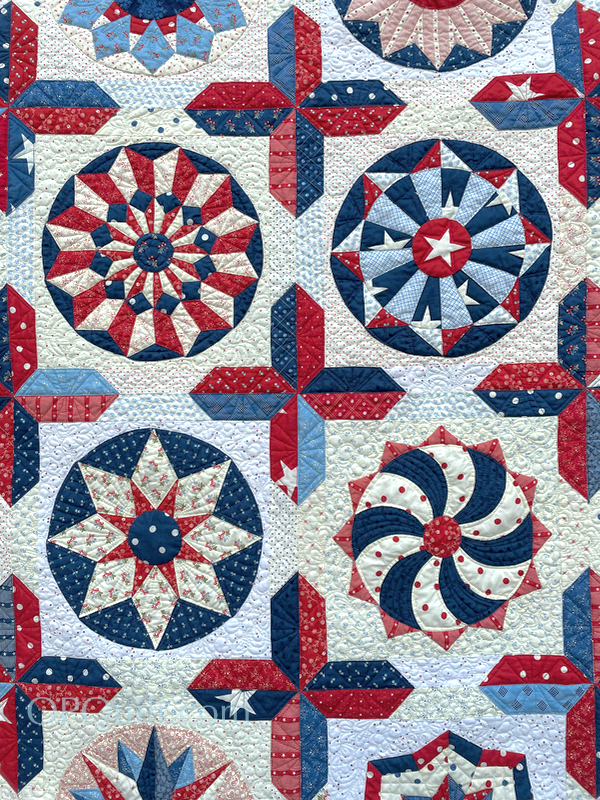
Many of the English paper-pieced blocks for this quilt are available free here on this blog. Other blocks and the finishing instructions are in my pattern shop.

The backing was a printed sateen cotton from the designers Minick and Simpson, using the prints from the front of the quilt. The label was attached later and is not visible.

There’s a lot of quilting in this quilt!

Other posts about this quilt, and the blocks that I designed, are found above in the tab Shine: The Circles Quilt.

I Hear America Singing, by Walt Whitman

I hear America singing, the varied carols I hear,
Those of mechanics, each one singing his as it should be blithe and strong,
The carpenter singing his as he measures his plank or beam,
The mason singing his as he makes ready for work, or leaves off work,
The boatman singing what belongs to him in his boat, the deckhand singing on the steamboat deck,
The shoemaker singing as he sits on his bench, the hatter singing as he stands,
The wood-cutter’s song, the ploughboy’s on his way in the morning, or at noon intermission or at sundown,
The delicious singing of the mother, or of the young wife at work, or of the girl sewing or washing,
Each singing what belongs to him or her and to none else,
The day what belongs to the day—at night the party of young fellows, robust, friendly,
Singing with open mouths their strong melodious songs.

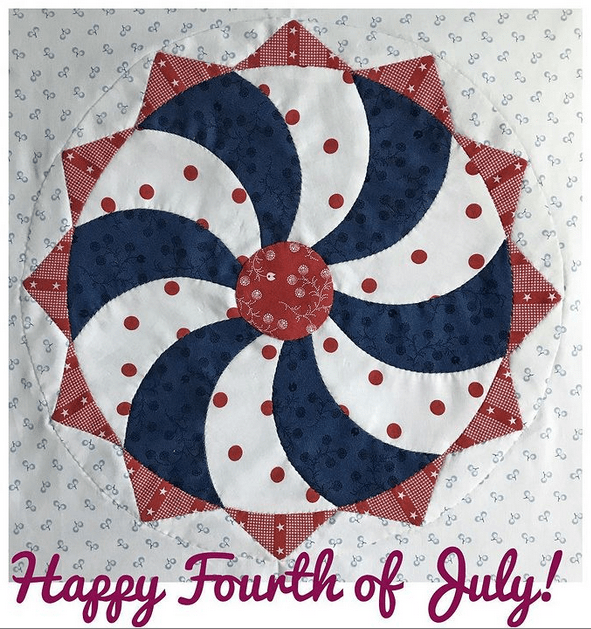
Happy Fourth of July, everyone!
The above Instagram post is from July 2020, when I began this journey.
#ihearamericasinging_quilt

Guild Visits · Quilts

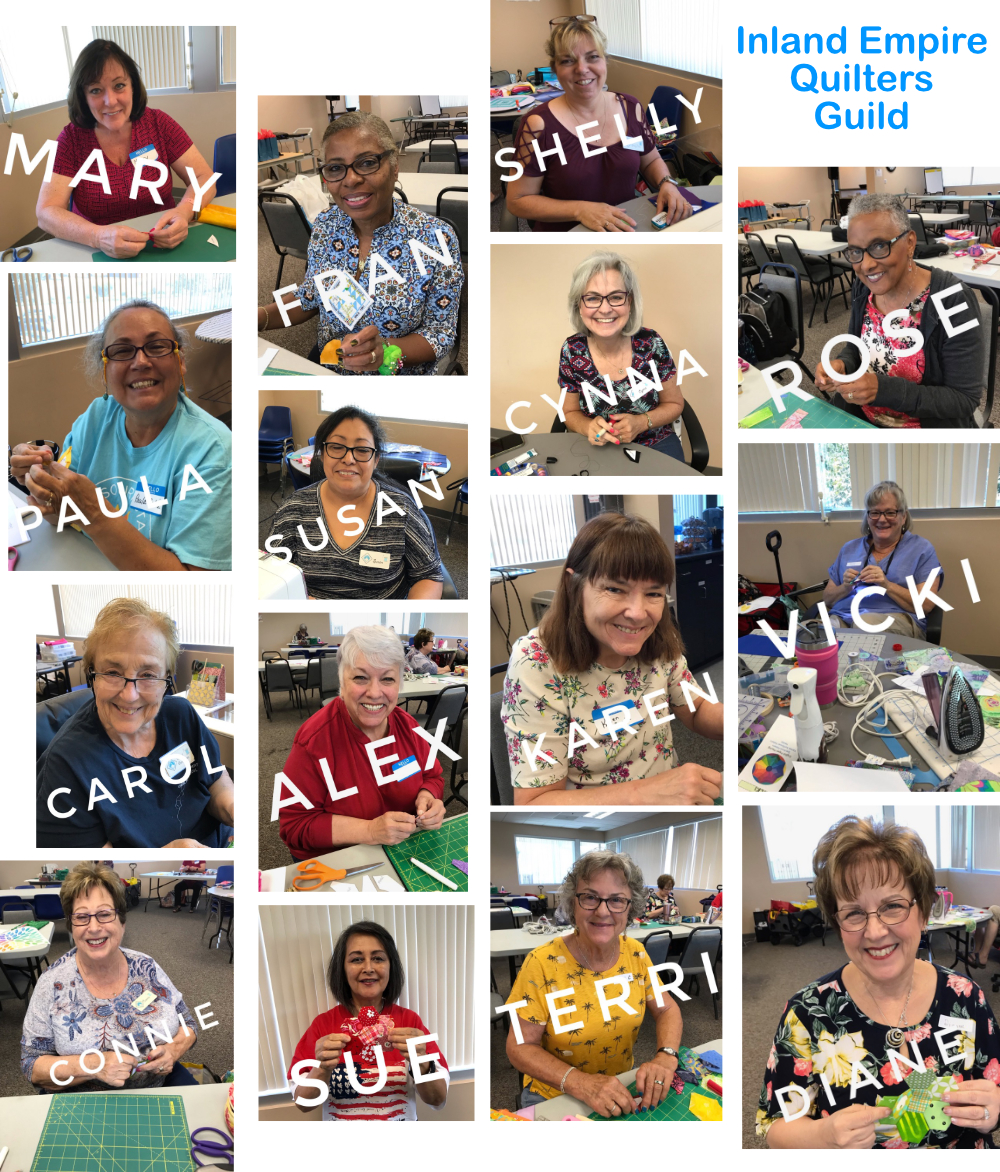
Inland Empire Quilters Quild

EPP Workshop.jpg
Inland Empire Workshop Group

The classroom behind me was abuzz as I set up my Shine quilt on its frame.  I turned around to see that the room had filled up with women from the Inland Empire Quilters Guild, who had come to take my class on English Paper-Piecing (EPP).  I have many Guild visits coming in the next year, but only one group has chosen EPP.  So I challenged myself to come up with something unusual and interesting that would provide a chance for them to learn a variety of skills.

EPP Picture 2
IQSC Collection: Clyde E. and Joan B. Shorey Collection IQSC Object Number: 2006.056.0012

First I gave them a brief history of EPP, showing them quilt pictures from the International Quilt Museum in Lincoln, NE.

EPP Picture 1
International Quilt Study Center, 2006.043.0143, Ardis and Robert James Collection

The International Quilt Museum calls these types of quilts “mosaic” patchwork quilts, and they write: “The earliest examples of mosaic patchwork, from 1700s England, were typically made from lighter-colored silks. Later, during the third quarter of the 1800s, dark-colored silks predominated. Their availability, and the paper-piecing technique, spread widely throughout the United States.”

The three tasks I designed for the Inland Empire Quilters were:

  • baste fabric to hexies and then sew them together
  • learn how to work with paper EPP patterns (batch-cutting, glueing and sewing)
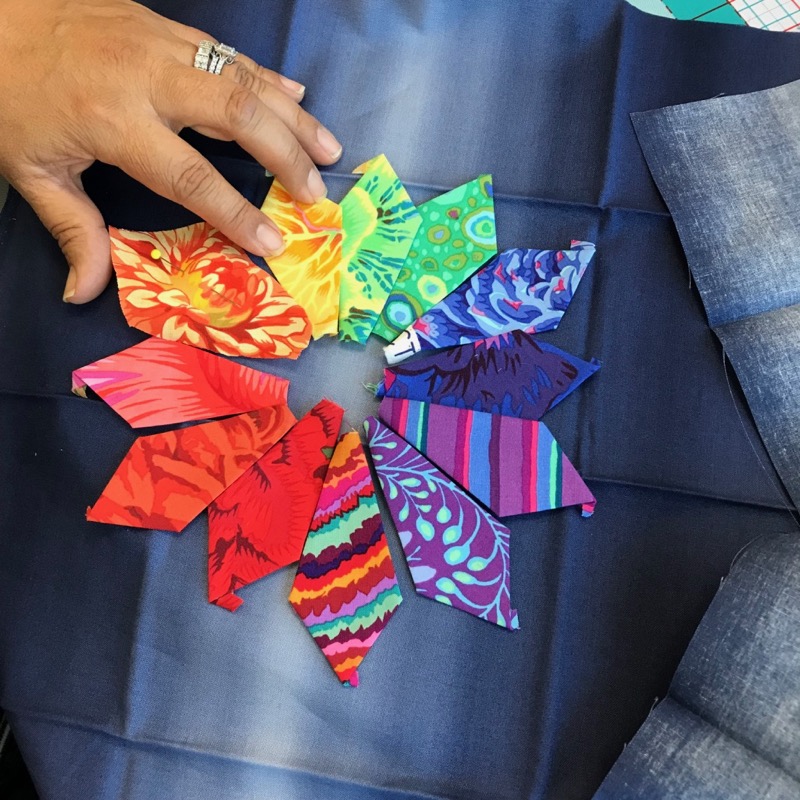
  • work with color and value in creating Spectrum, a circular mini quilt
EPP Workshop_0 hexies

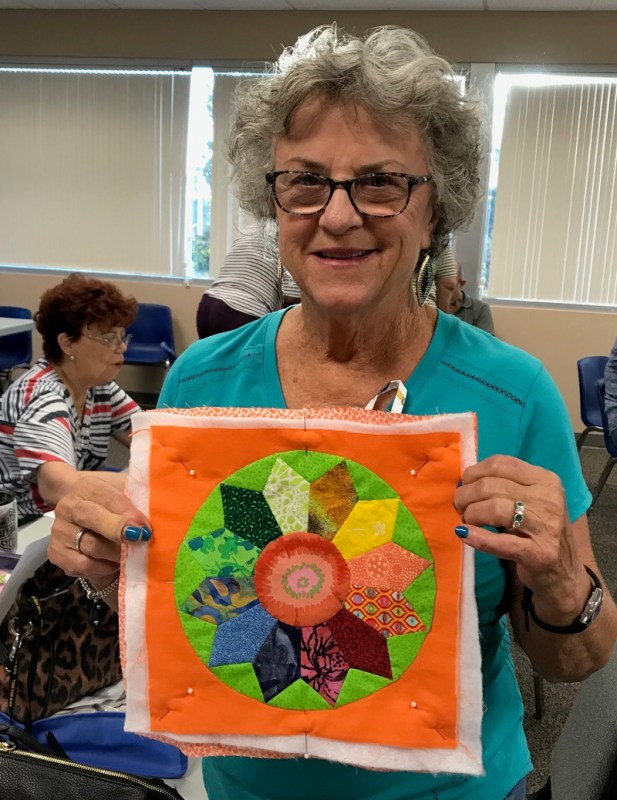
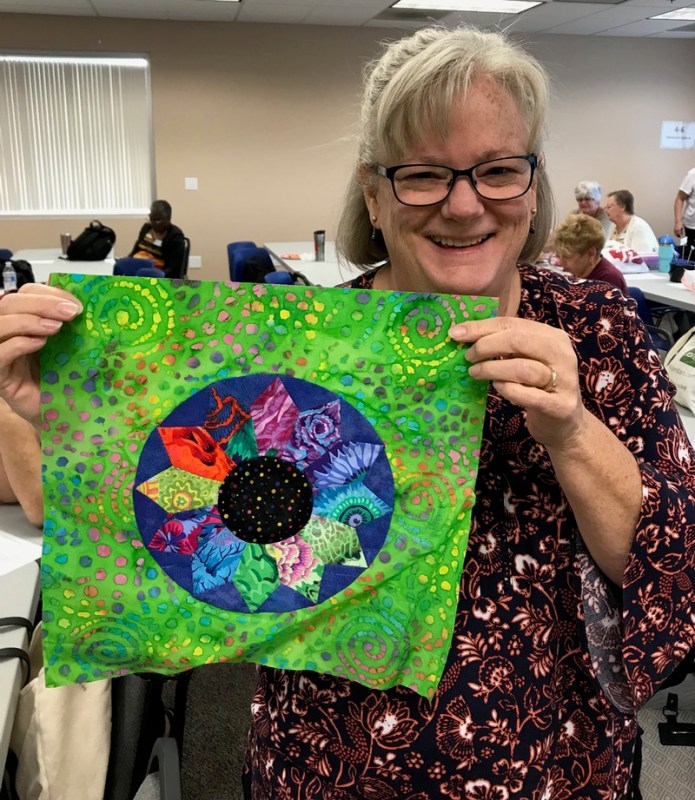
Sue worked diligently on her hexie flower, finishing it up.  Most others shifted off to the mini-mini quilt: a Kansas Sunflower variation, shown at the top of this post.

I was impressed with their designs and the variety of colors they used.

EPP Workshop_5

After lunch, we shifted full gear into working on Spectrum, with collections of Kaffe Fasset fabrics being displayed on tables everywhere.  I was most impressed with the generosity of these women, who shared different colors with each other, helping their fellow quilters get all the hues they needed.

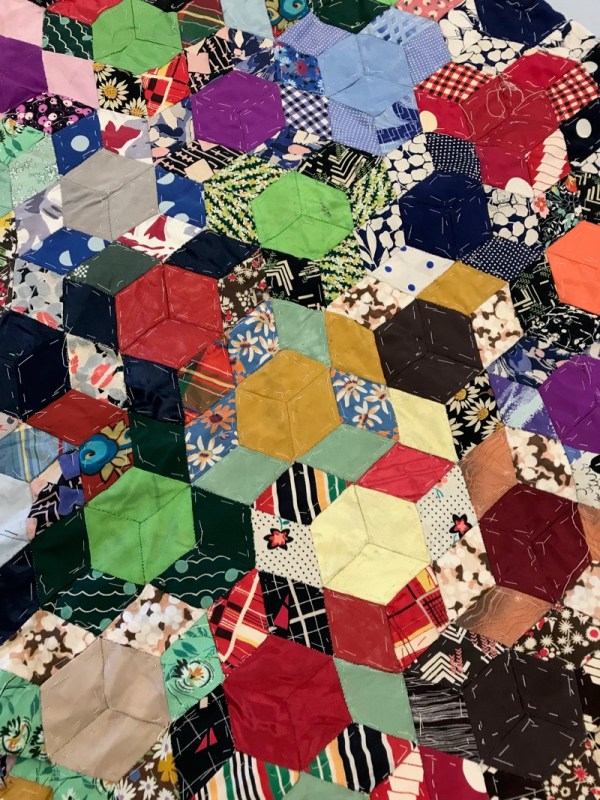
At the end of class, Carol went down to the car and brought up this old EPP quilt, with the papers still in it.  We pulled out a few stitches, removed a few papers and decided it was from the 1930s as the papers were really postcards from a Chicago hotel.  What tales this quilt could tell!

Inland Empire Quilt Guild Meeting_2Monday night, I returned to present a program for them, and at the beginning, those who had made progress on their projects held them up for everyone to see.
I snapped photos of some who came up to show me (including Vicki and Terri).  That’s Cynna’s Spectrum color wheel taking shape, above left, and Paula’s Kansas Sunflower (variation) and small hexie quilt below left.  I was very impressed with everyone’s work.

Susan, the Program Chair, was busy at her table, but she and others had worked hard to show their projects for the meeting.  She has arranged a visit by a noted designer next year and was busy taking sign-ups for that workshop to be held in March.  Program Chairs are critical to a Guild’s success, and this Guild has a wide array of interesting presentations for their members.  They also have engaged chairs for Charity, Outreach, and other, but most of those are discussed at their other meeting (they have two per month).  This month was also the kick-off for their Block of the Month, which looks really fun.

Inland Empire Quilt Guild Meeting_1

One of the best sounds ever is the cheery voice of quilters greeting each other, which you can hear in this video.  I had a wonderful time visiting the Inland Empire Quilters Guild.  Thank you for inviting me!

EPP · Free Quilt Pattern · Quilts

EPPing again with French General

Sometime ago, I glimpsed this quilt in an Instagram feed:

The description says it’s from the North Country of England, so I’ve taken to calling it the North Country Patchwork Quilt.  The more I looked at it, the more I liked how those red squares just kind of blended into the background on the outer rings, but floated over the foreground in the middle.

I tried to convince my husband to buy it.  That was funny, as he made some comment about didn’t we have enough quilts?  Seriously, he’s nearly perfect, but in the end, I decided to go ahead and make it.

too much to do.jpeg

Because I sure need another project.

But the project I need is a hand project, really–one that can be toted around in the car.  I finished my hexies project, and I finished (thankfully) my millefiore quilt, so now what am I going to do on long car rides?  Just sit there?

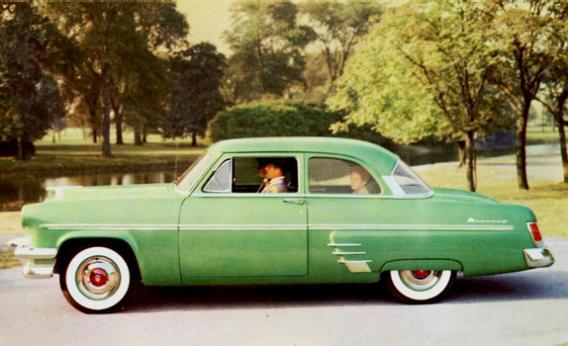
Car from the past.jpg

So I drew up the block, working between two different pieces of software: QuiltPro and Affinity Designer, and have created this pattern (click on the following link for free PDF file): North Country Patchwork Quilt

This quilt has 624 pieces in it, and if you divide that by four, you’d have to print out gazillions of the pattern page. So here are my tips for making that go more quickly:

Print off several of the free North Country Patchwork Quilt page.  Like 10.

Stack each printed page with about 4-5 plain pieces of paper.  Staple them together inside the pieces, as shown on the left.

Cut them apart in chunks, like the image on the right, using an old rotary cutter that you’ve dedicated to paper; or, a guillotine paper cutter; or, your paper scissors.

Then further cut them into the individual shapes: a honeycomb and a square.  Remove the staples.

That ought to get you started. No, I didn’t use cardstock, but I had some 24 lb printing paper that I used.  And yes, I’m gluing the fabric to these pieces of paper.   I used this paper when I did my Shine EPP quilt (most blocks are free on this blog) and it worked out just fine.  Repeat this process as you need to.

vivelafrance-hyb-fan_1.jpg

I’m going to vary from the fabrics in the original quilt, as I fell in love with this Vive La France line of fabrics from French General.  I’m over the moon for those dusky blues and strong reds.

I worked out some variations of this quilt in QuiltPro software, and they vary by how much of a border is around the central rectangle.  Here they are:

I also had some fun with putting the blocks in more contemporary colors (lower left), but decided I didn’t like that version.  The top three are sort of in the colors of the original quilt and it looks like to me, it was someone who was making do with cast-offs from her household clothing, as well as men’s shirtings.  But I’m anxious to get going and trying this out in the Vive La France fabrics.

I have no idea how I’m going to sew this together, but I will be concentrating on those arms that come into an X, and somehow I’ll do the red square.

Lastly, a reminder to pre-wash your fabrics: working with reds can be tricky.

three-year calendar.png

See you in a couple years!