Books · Something to Think About

Age of Subtraction

Many years ago, bricks used to be completely solid. Houses and buildings went up with solid bricks. But in 1927, Anna Wagner Keichline patented a brick known as the K-brick, which was hollow and could be filled with “soundproofing or insulating materials, making it versatile and efficient. The K Brick led to the development of today’s concrete block.” She subtracted something in order to make it better. I heard about her from the Hidden Brain podcast, in an episode titled “Do Less.” Shankar Vedantam, the host, featured Engineer Leidy Klotz and so much of what he said intrigued me: “We pile on ‘to-dos’ but don’t consider ‘stop-doings.’ We collect new-and-improved ideas, but don’t prune the outdated ones. Every day, across challenges big and small…we don’t subtract.”

I learned the phrase in the title of this post from my father, who says that a certain time in our lives we enter the Age of Subtraction. To him, this meant less energy, weaker eyesight, feeble knees, and a general inability to go and do like when he was a younger man. Coming from a different generation, one that had not yet been inundated with ads, consumer spending, The Great Garbage Patch, Climate Change or other such beauties of late 20th century life, the concept of addition was full steam ahead.

These two supposedly opposing ideas intrigued me. Why do we resist subtraction? Why are we all about addition?

For quilters and creatives, it manifests itself in adding to our Works in Progress lists. We grab at the next line of fabric, knowing the last line of fabric is at home. While this idea might certainly have at its root the dopamine ping of a new idea, or a few likes on our work on social media, or a brilliant new color (whether in a paint tube or in cloth). But maybe at its root is also a bit of anxiety. We used to be able to buy a fabric line for months, as it was in our shops. Now fabric lines come-and-go at a fast clip. If you don’t buy it now, it will sell out.

The same with ideas: everyone’s making a quilted jacket, so we’d better get going. There are supply chain line interruptions, so for a while, bakers couldn’t get vanilla except at exorbitant prices. Uncertainty is everywhere, so we buy faster, we make faster, our list of things to make never stops. And all the while, we feel the tick of time like my father, worrying about getting it all done.

In his book, Four Thousand Weeks, by Oliver Burkeman brings forward the idea that if you live to be 80 years old, that’s four-thousand weeks of life. He writes about this idea of trying to get it all done:

[T]he core challenge of managing our limited time isn’t about how to get everything done—that’s never going to happen—but how to decide most wisely what not to do, and how to feel at peace about not doing it.

Burkeman, Oliver. Four Thousand Weeks (p. 71). Farrar, Straus and Giroux. Kindle Edition.

And there’s that subtraction thing again: “decide most wisely what not to do.” Can subtraction be a new way to operate? I’ve been a time efficiency wonk for years, always trying to find a better way to add things in, organize them. Burkeman called himself a “productivity obsessive.” In this book he takes aim at that familiar time management trope of the rocks, pebbles, sand and water all piled into a jar in order, showing so-called good time management. But he notes, that object lesson is rigged, because the person demonstrating it isn’t going to bring bigger rocks, or more rocks and pebbles than can fit in the jar. (What a relief!) Yet, I still wondered about how to handle my Works-in-Progress projects that pile up. I still couldn’t get to subtraction:

[One] approach is to fix a hard upper limit on the number of things that you allow yourself to work on at any given time. In their book Personal Kanban, which explores this strategy in detail, the management experts Jim Benson and Tonianne DeMaria Barry suggest no more than three items. Once you’ve selected those tasks, all other incoming demands on your time must wait until one of the three items has been completed, thereby freeing up a slot. (It’s also permissible to free up a slot by abandoning a project altogether if it isn’t working out. The point isn’t to force yourself to finish absolutely everything you start, but rather to banish the bad habit of keeping an ever-proliferating number of half-finished projects on the back burner.)

Burkeman found that:

Making this rather modest change to my working practices produced a startlingly large effect. It was no longer possible for me to ignore the fact that my capacity for work was strictly finite—because each time I selected a new task from my to-do list, as one of my three work-in-progress items, I was obliged to contemplate all those I’d inevitably be neglecting in order to focus on it. And yet precisely because I was being forced to confront reality in this way—to see that I was always neglecting most tasks, in order to work on anything at all, and that working on everything at once simply wasn’t an option—the result was a powerful sense of undistracted calm, and a lot more productivity than in my days as a productivity obsessive (ibid.,75-76).

So maybe my idea of brain-dumping everything that I think I want to do isn’t so helpful after all. And maybe setting quarterly goals, while perhaps a good idea to guide me, isn’t really helpful on a weekly basis? Being introduced to this idea of subtraction, coupled with reading about my finite life in Burkeman’s book reminds me of that old line: Saying yes to one thing means saying no to other things.

Our lives are often quantified by how money we make, or how many followers we have, or by what we produce. But always when I step back from that race, I have to include satisfaction of the process. To this day, my 96-year-old Dad has a paintbrush in his hand, working on a new painting. I want to be found at 96 (if I’m still around), with a needle in my hand, or typing at the computer writing my history, corresponding with people I love. By subtracting out things I don’t think are important, I hope to do things that I enjoy and that sustain me.

Good luck with your own subtraction challenges–

This-and-That

This and That • (July) & August 2022

Yes, I skipped July, but here we are for August!

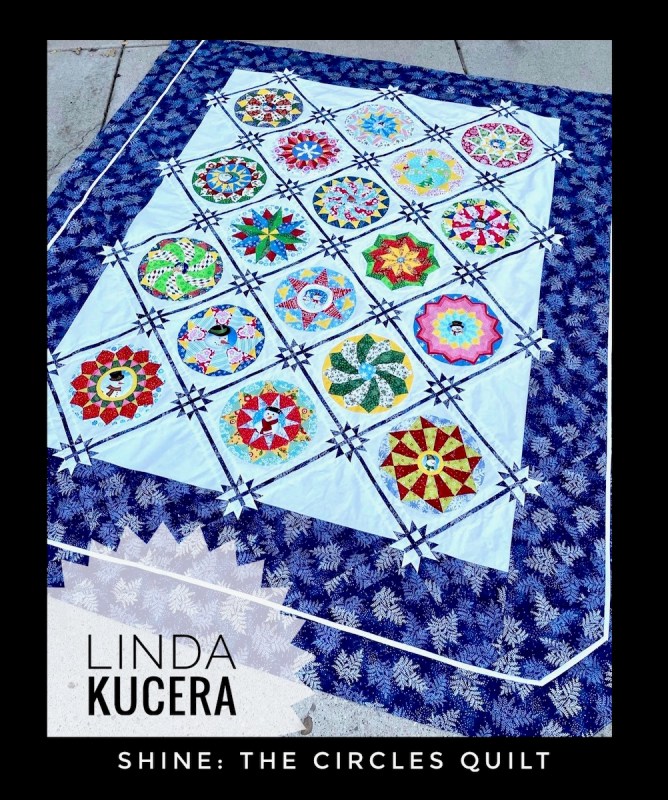
My fabric forest as Queen Bee:

What a leafy wonderland! The small leaves at the top are their signature blocks.

I’m leaving Gridster Bee, my creation of five years-going-on-six at the end of this year. I don’t know what Patti will do with the bee after that, but you can contact her directly if you would like to check if there are any slots available.

(Madeline Dore, now found here, but used to be found *here*)

This worked out for many years and they are still a great group, which you can see by clicking on the Instagram hashtag #gridsterbee.

I did finish the Gridster Bee block for August already. Robin asked us to use colorful, bright, kids-oriented fabrics, of which I’m sad to report I only had a few. How my stash has changed! It was a fun block, and on the signature block, we were to write our favorite (children’s) book:

This was mine. I once raised an “Alexander” and today he is a fabulous father, friend and son. Who would have thought we’d make it through those years in such fine form?

Becky Goldsmith, a favorite, has put up a video on how to change up our EPP stitches. Take a look.

I’m writing this next tip here, and not on IG because I don’t want Them to Find Out.

Although Instagram seems to be behaving a *touch* better these days, I’ve taken to reading Instagram on my home computer, through the browser (like Safari or Firefox, not the IG app). It’s like the Old Days! I only see the people I follow, and I can comment on their posts without the annoying deluge of suggested posts and ads. Try it, before They take it away.

Trip to Utah Last Month was Busy…But Never Fear!

I managed a mini Shop Hop while I was there. In spurts. Like 10 minutes at a time over several days. But it’s always nice to see fabric where it lives on shelves in fabric stores, and Utah has some mighty nice shops. Here’s a link to their website, where it lists some of the shops I was able to hit. However, I missed our Southern California Shop Hop while I was gone. And yes, the yellow fabric from Mother Superior’s Fab! Fabrics (lower right) was used in the making of my Sunflower! block.

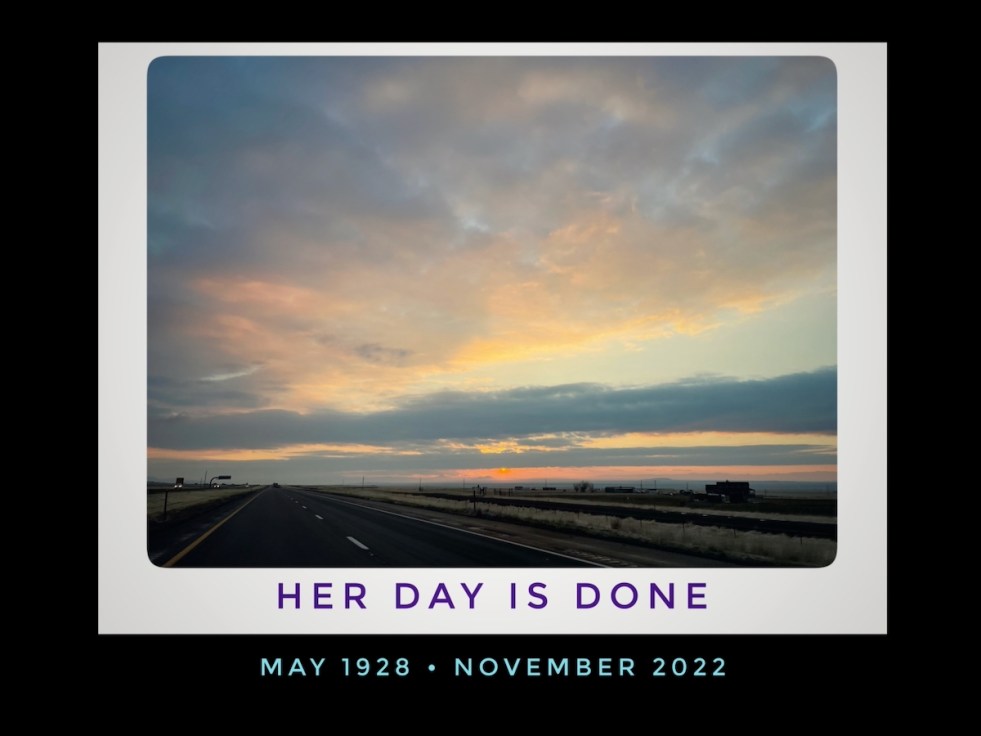
I came home with a horrid case of asthma (I am making progress, having finished with two of the four medications–hooray) but at night, when I think the pollution has cleared out, I’ll go outside in our side garden and enjoy the sky (an old photo, above). We also saw some stellar skies one morning near Beaver, Utah, when an amazing sunrise opened up our travels home that day. So many people around me have had extraordinarily difficult challenges – from devastating health diagnoses to broken hearts — and so I welcome these small colorful blessings, helping me keep my balance.

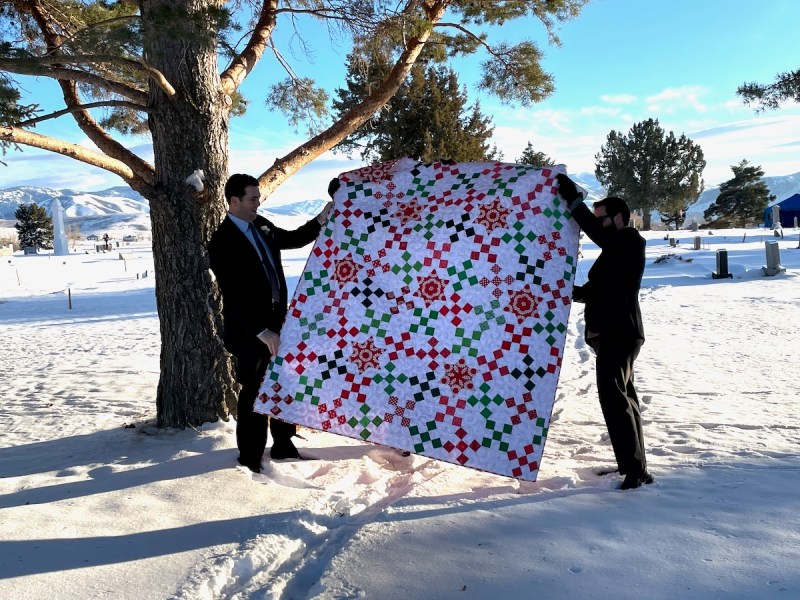
Circling back around to Mother Superior’s Fab Fabric Shop from my Utah Shop-hop, that store was the brainchild of Heather Purcell, who with her husband Bob, started and ran Superior Threads. Yesterday was her funeral, as she died of cancer too early. Mourning her, I clicked in to watch it on Zoom, but was cheered by the view of so many of her quilts, displayed at the front of the church. I listened to her first son, and recognized so many of her sayings and inflections. Her sister spoke, and again, I heard Heather. I went in and out of tears during the 90-minute service — especially during Bob’s talk — and at the end, everyone paused as the choir sang “Aloha ʻOe” (Farewell to Thee), before the family filed out behind her. Aloha, Heather. We will miss you.

Photo of Heather and I in front of one of her quilts, 2012.

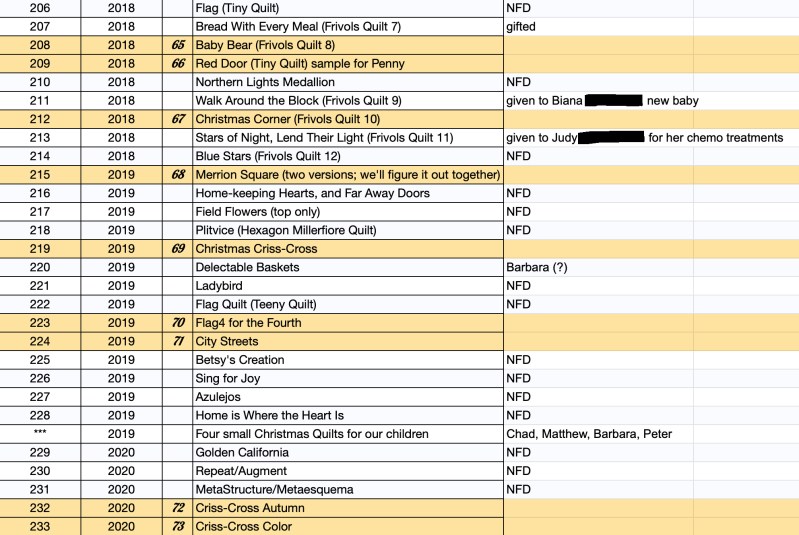
Speaking of 2012, this was my summer To-Do List from a decade ago.

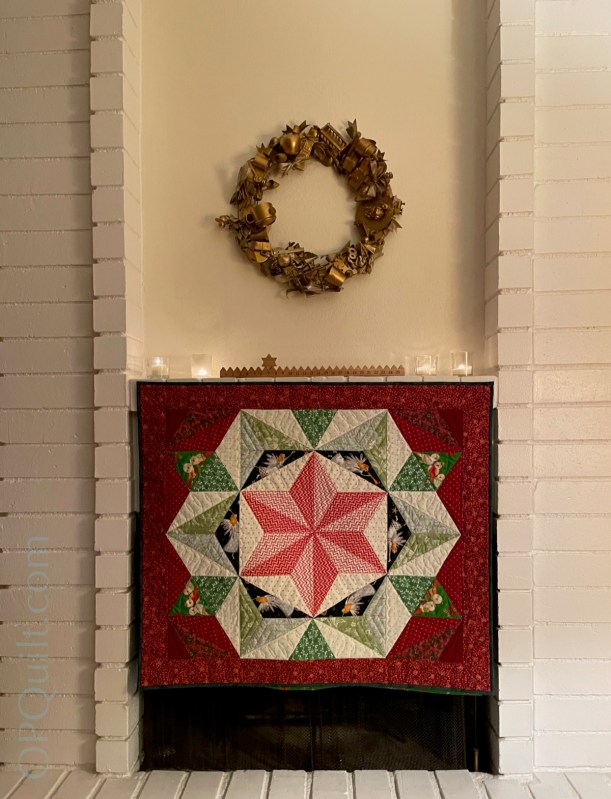
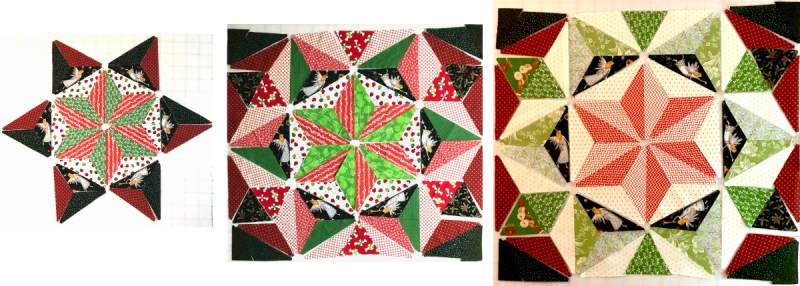
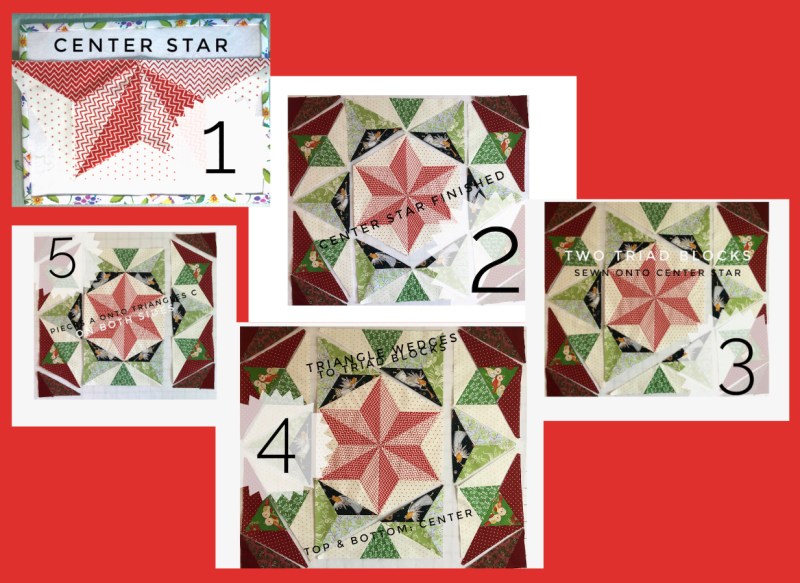
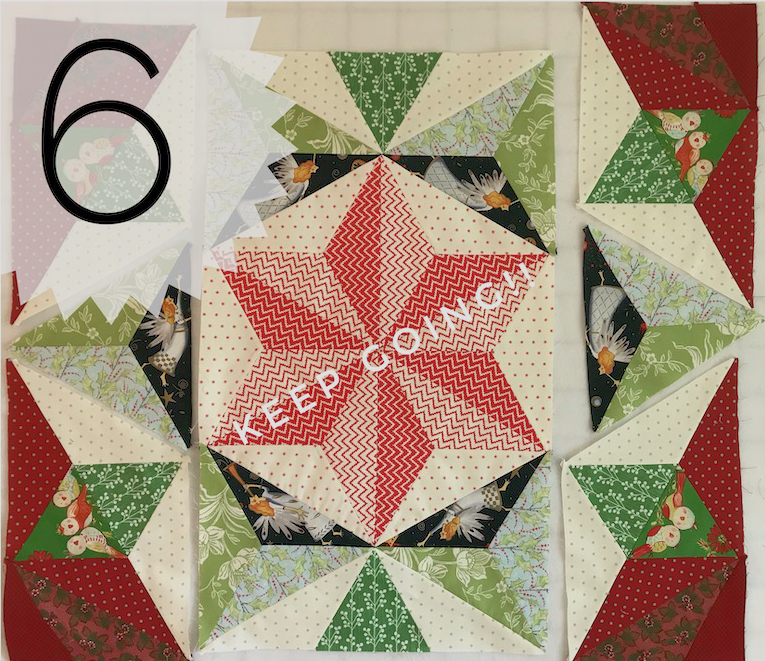
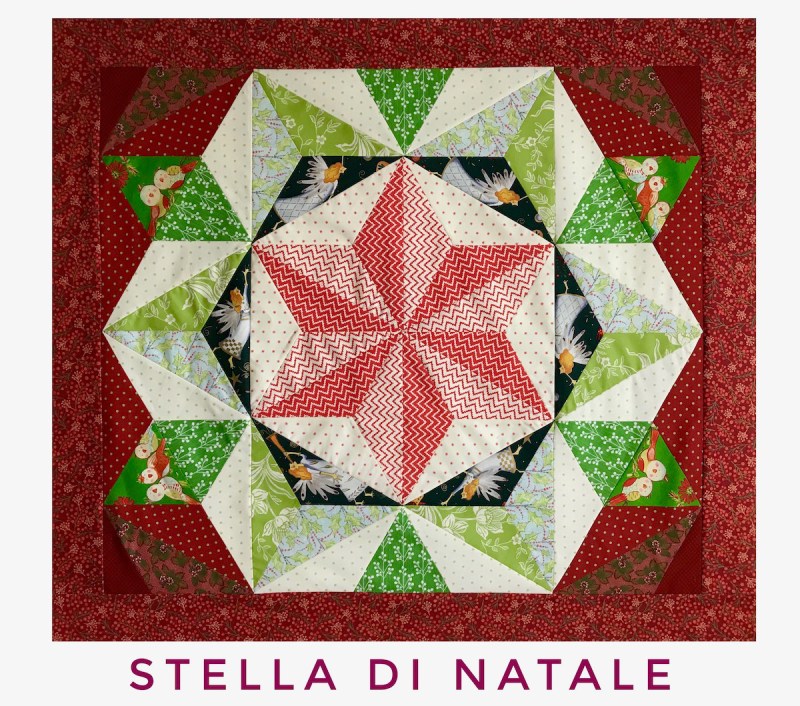
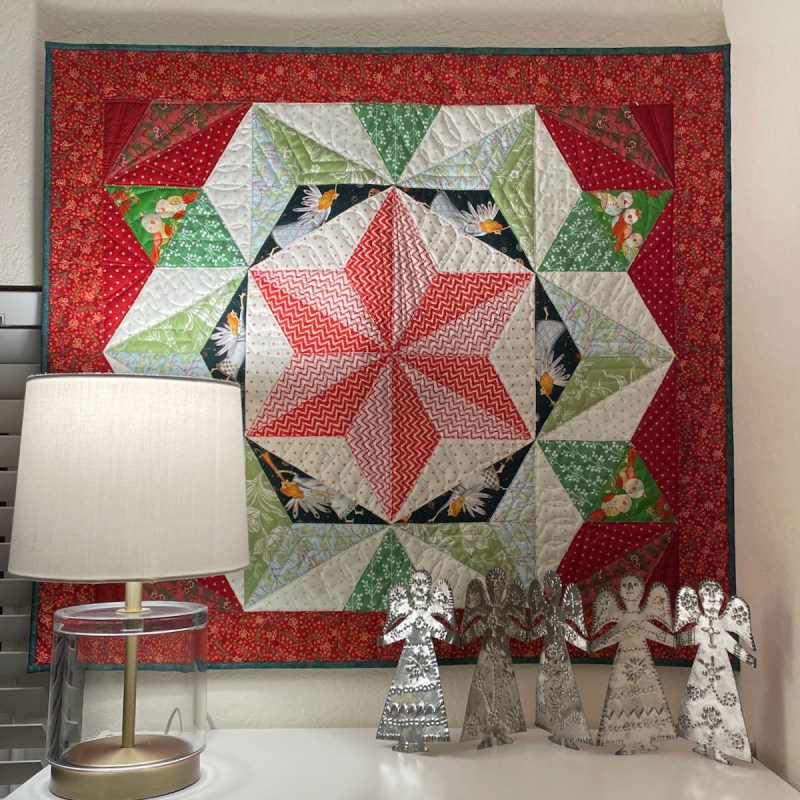
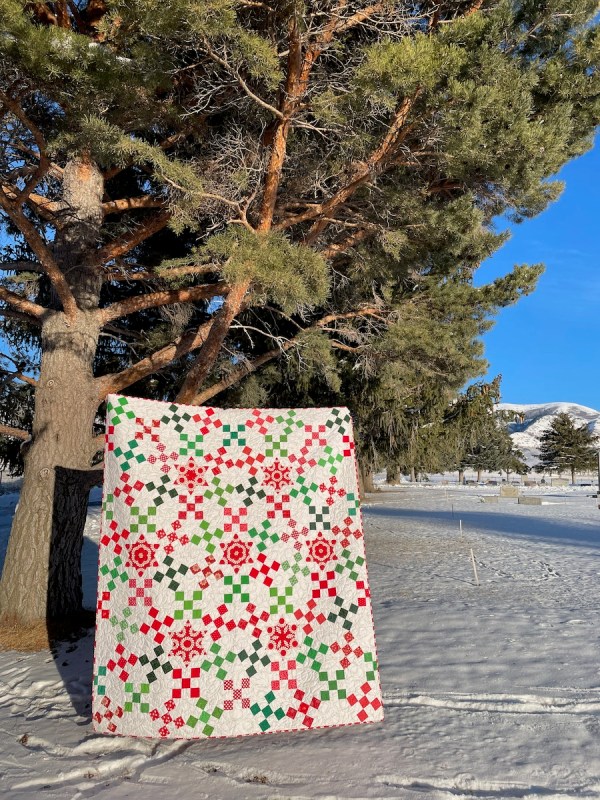
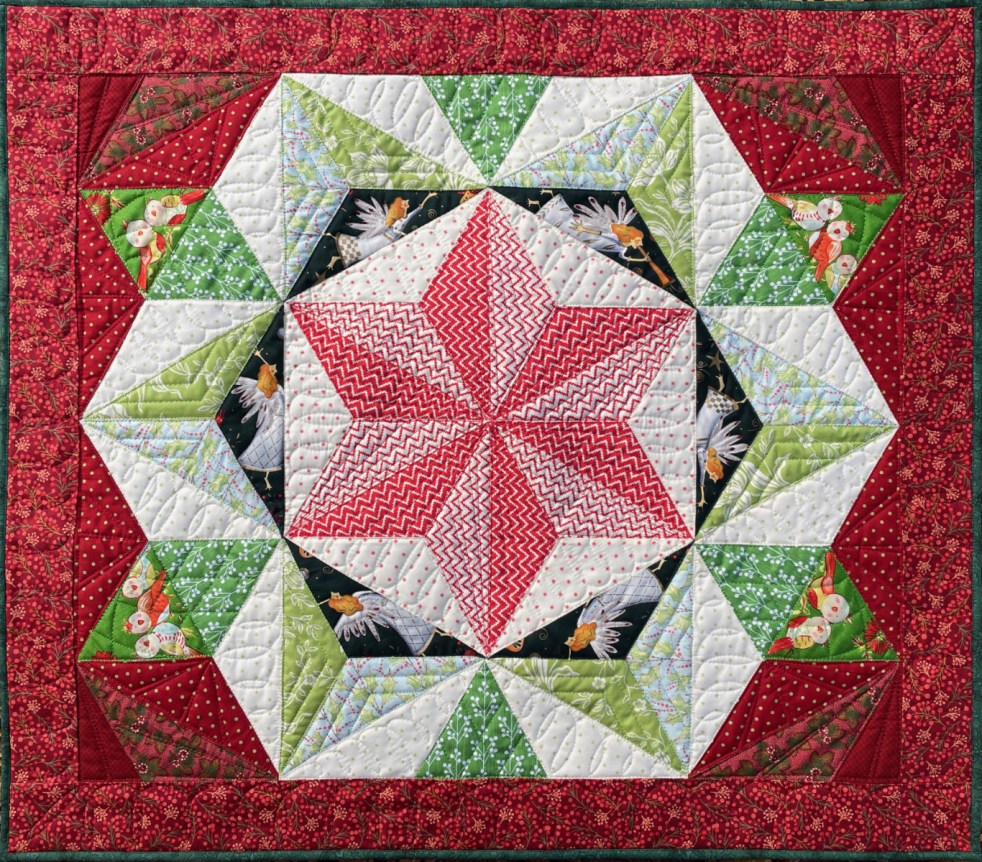
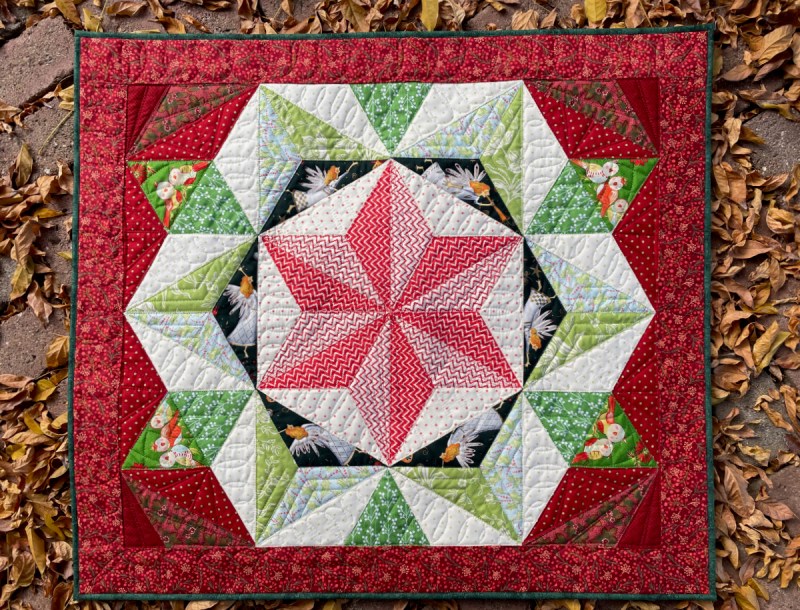
And to wind this up this This & That post, I’m happy to report that I finished my Christmas quilt up in April of this year. I’m calling it early. The inner panel is found here with some changes in the background fabric. I added the outer borders, and yes, the pattern is in my PayHip shop (link on upper right).

Having Christmas lights in our bushes year-round makes me happy.

Take time for a sunset–

300 Quilts · Patterns by Elizabeth of OPQuilt

Secret Garden • Quilt Finish

What is it about Kaffe Fassett fabrics that pulls us in? The rich hues and full range of shades? The interesting patterns, many from old wallpapers and fabrics? I have a couple of stacks of his fabrics and it’s always a delight when I can pull them out from my shelves and start playing.

Secret Garden, quilt number 235, is the original size of my Triad Harmony pattern, measuring 28 1/2″ by 31 1/2″ and was made for a class sample, since my friend Susan loved Kaffe fabrics. She was the program chair and had me teach this class for their Guild.

After several weeks of lallygagging around — or so it felt — this week I put on the binding and the label:

The quilting goes fast with this size! (Click any image to enlarge.)

It also helped to get back into a Guido Brunetti Mystery, after a long time away.

Here’s another scrappy version.

And a bigger version, Eris.

And the first in the series in Jennifer Sampou’s ombré fabrics. I put them all together in a reel on Instagram. (See my tip in my next post for how I deal with that app.)

Triad Harmony and her sisters. One more is coming…

Patterns by Elizabeth of OPQuilt · Quick Quilt

Sunflower Block & Other Flowers!

This block, also known as Rolling Star (Brackman 3795) has several variations that are well-known. I’ve seen this block used in multiple quilts including mine, but what amazes me is how versatile it is just by changing up the colors and the center.

Here’s a line-up from one of my Home, Sweet Home classes — the quilts are similar, but different.

I changed up the center block and added seaming for windows and doors to get this one, after I saw so many quilters turn away from the fused doors and windows, wanting to seam them instead.

Several years ago I’d written a post where I talked about making up some block ideas for my neice-by-marriage, and I still can’t believe how popular the poppy block was from that post, but of course it was a free download and those are ALWAYS popular (I don’t mind). See Notes (at the end) for link to block.

So I thought I would slide down the sunflower rabbit hole this week, and finally get the sunflower version added to my Home, Sweet Home pattern:

I put the pattern on sale (now only $7 instead of the usual $12) as a way of making it easy (no coupons to enter), and hope those looking for this pattern will enjoy it.

Home, Sweet Home with Bonus 18″ Sunflower block available here.

But the rabbit hole of sunflower blocks got deeper and I decided to do a PatternLite pattern (costing less than a Pink Drink at Starbuck’s) with a changed-up method of piecing, to emphasize the petals of the sunflower. I also added a detailed series of instructions for a Four-in-One Flying Geese block, as well as how to trim it up accurately. I put a lot more in this one than usual, but I just kept going, making blocks and having fun.

The PatternLite Sunflower! is now up in my shop.

Make some end-of-July fun!

Notes on this block:

About every other month, someone writes to me, asking if they can buy that sunflower pattern, which was an illustration on the Poppy Flower post (which was very popular in Australia). I popped it into a Google Search, trying to figure out what rando had taken off with my image, and found this:

It’s a sham website, ranking dead last in safety, in security. Don’t go there, but these guys are in the habit of stealing images and trying to sell them off to unsuspecting quilters (9 Pretty Barn Quilt Patterns for $42.88?).

Make this one, instead. It’s a lot cheaper!

Other posts about other Flower Blocks
Poppy Block and debut of Sunflower idea with the free Poppy Block download
April Flowers with a link to Totally Tulips Quilt from Missouri Star
Field Flowers with a link to Sherri McConnell’s pattern Flowers for Emma
June Flowers — a really early day post of mine, with a tutorial for a nine-patch tulip It makes me snort smile to see this post from nearly a decade ago.
I still love Blossom, which has flowering snowball flower blocks in three sizes.
Last, Sunny Flowers quilt, another PatternLite.

Hope that’s enough flower blocks for you. Since August is right around the corner, so many of mine in the garden have dried up with July’s heat. Guess we’ll just have to make them in fabric!

Italy’s field of sunflowers