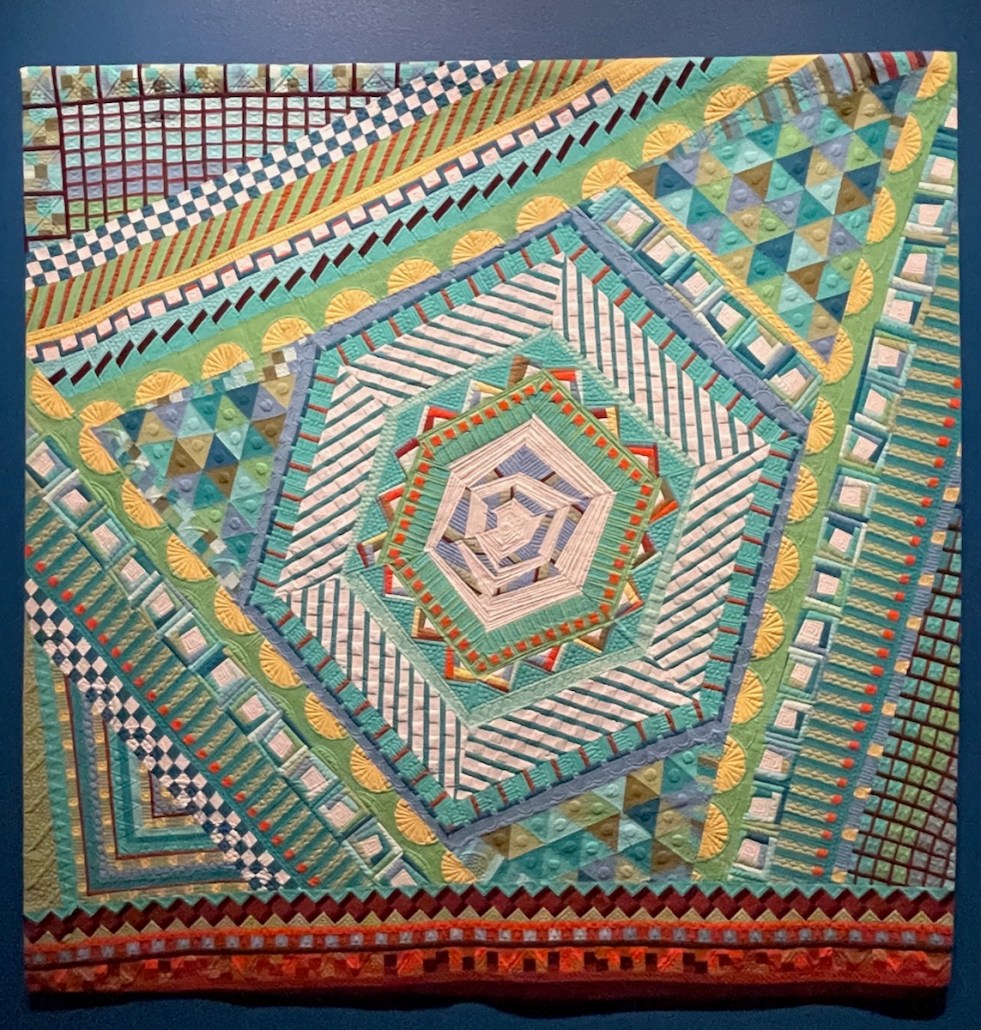
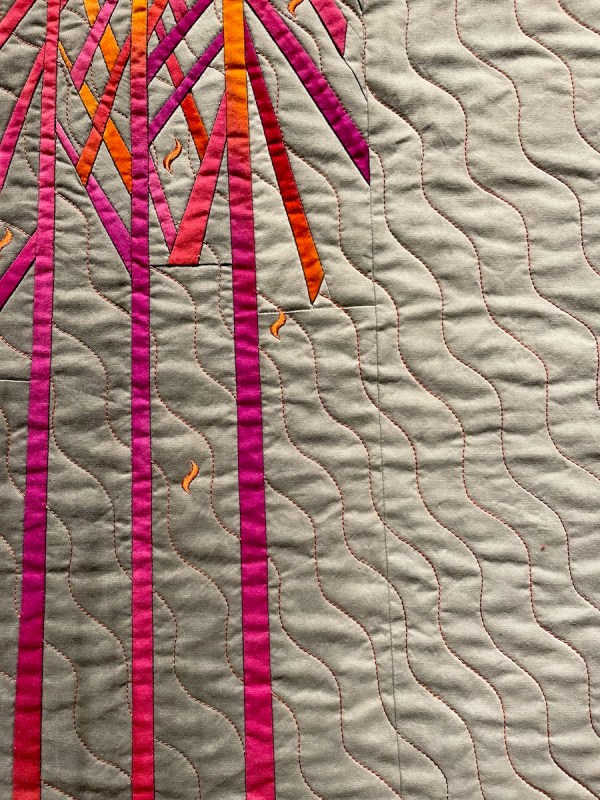
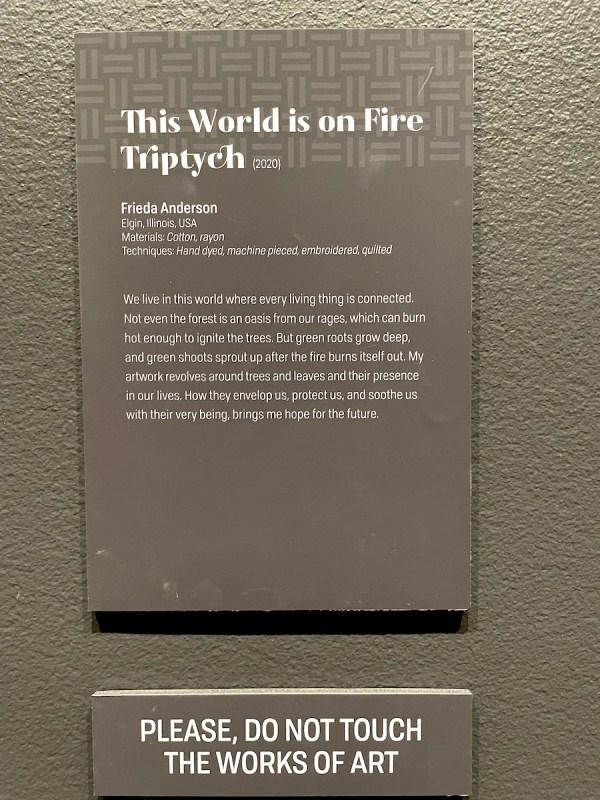
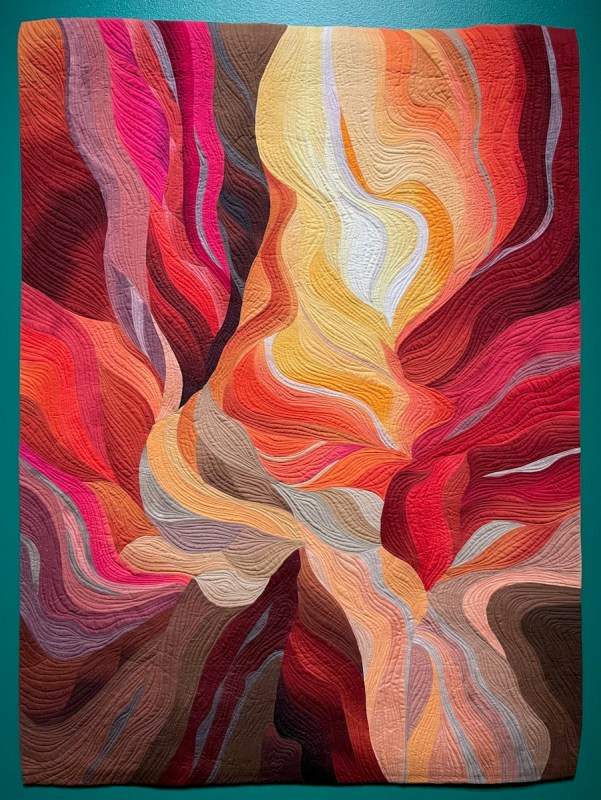
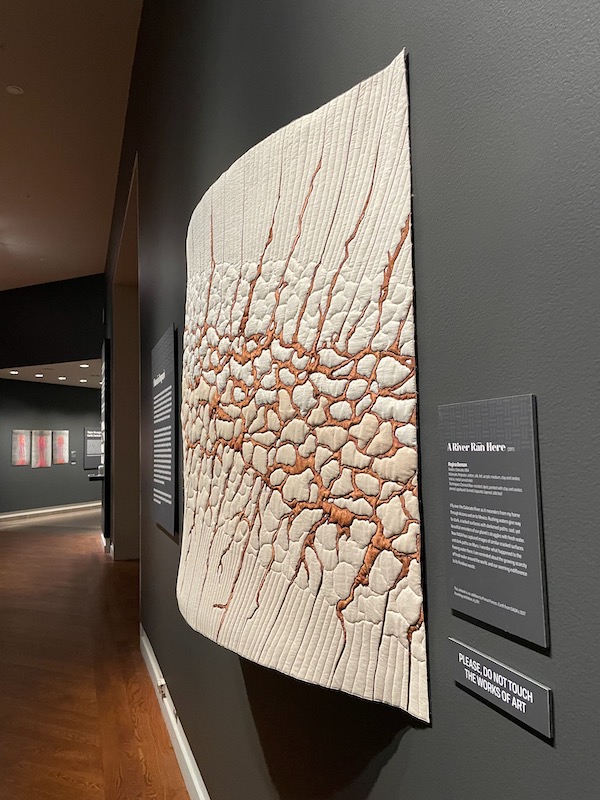
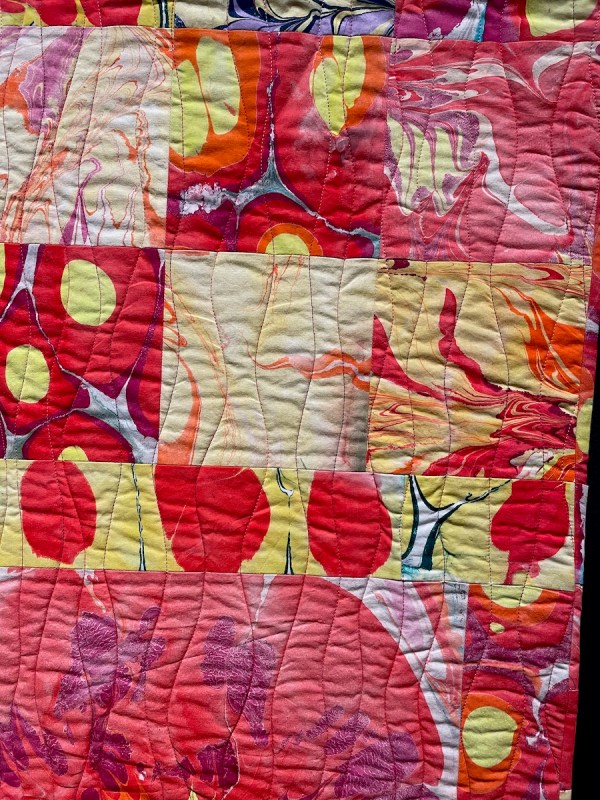
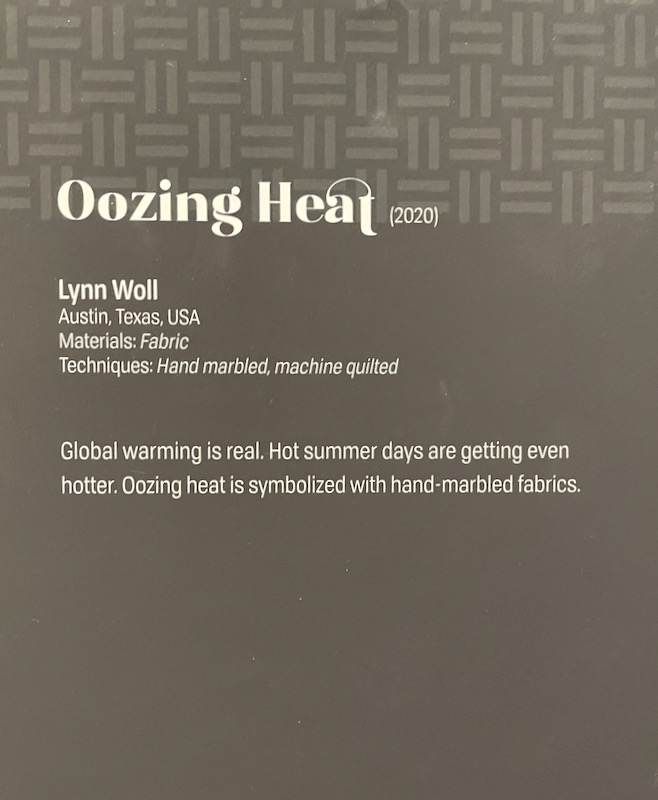
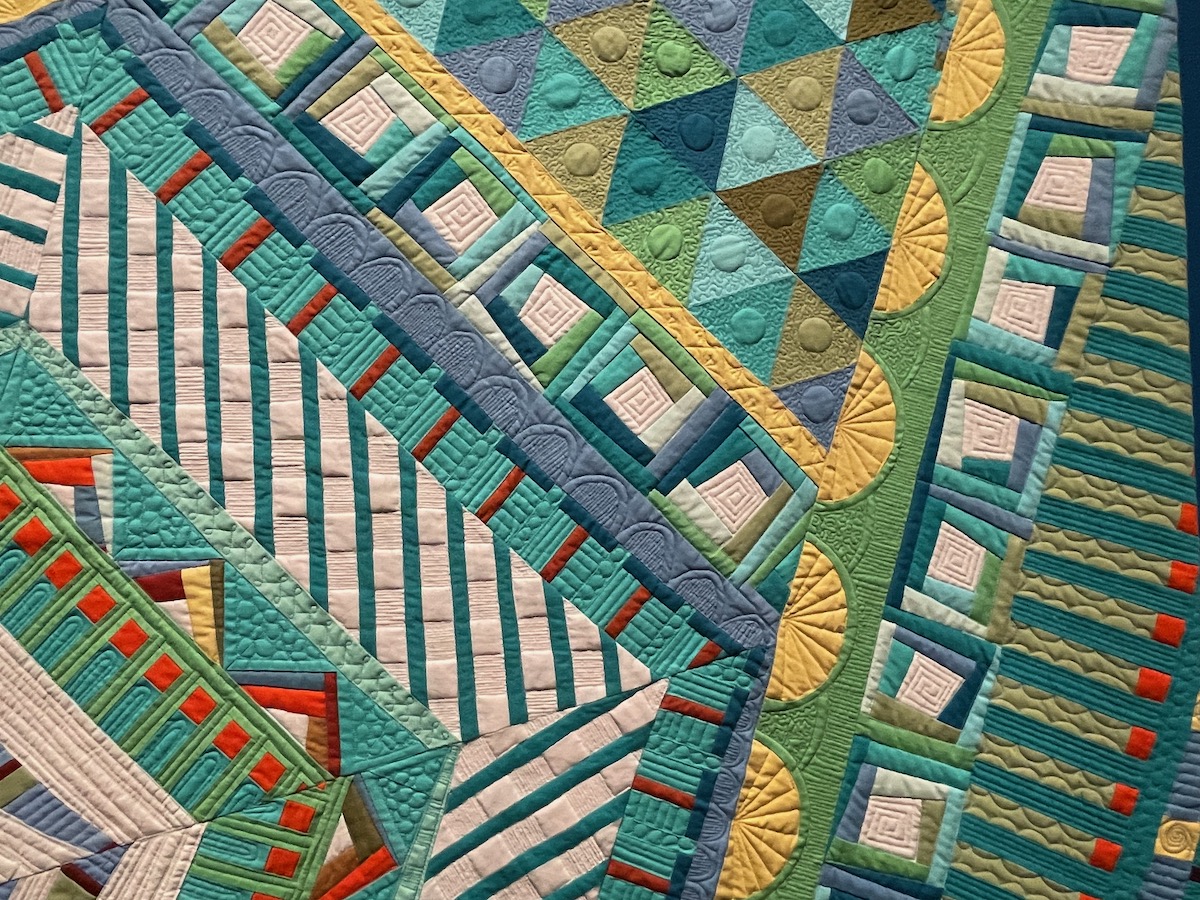
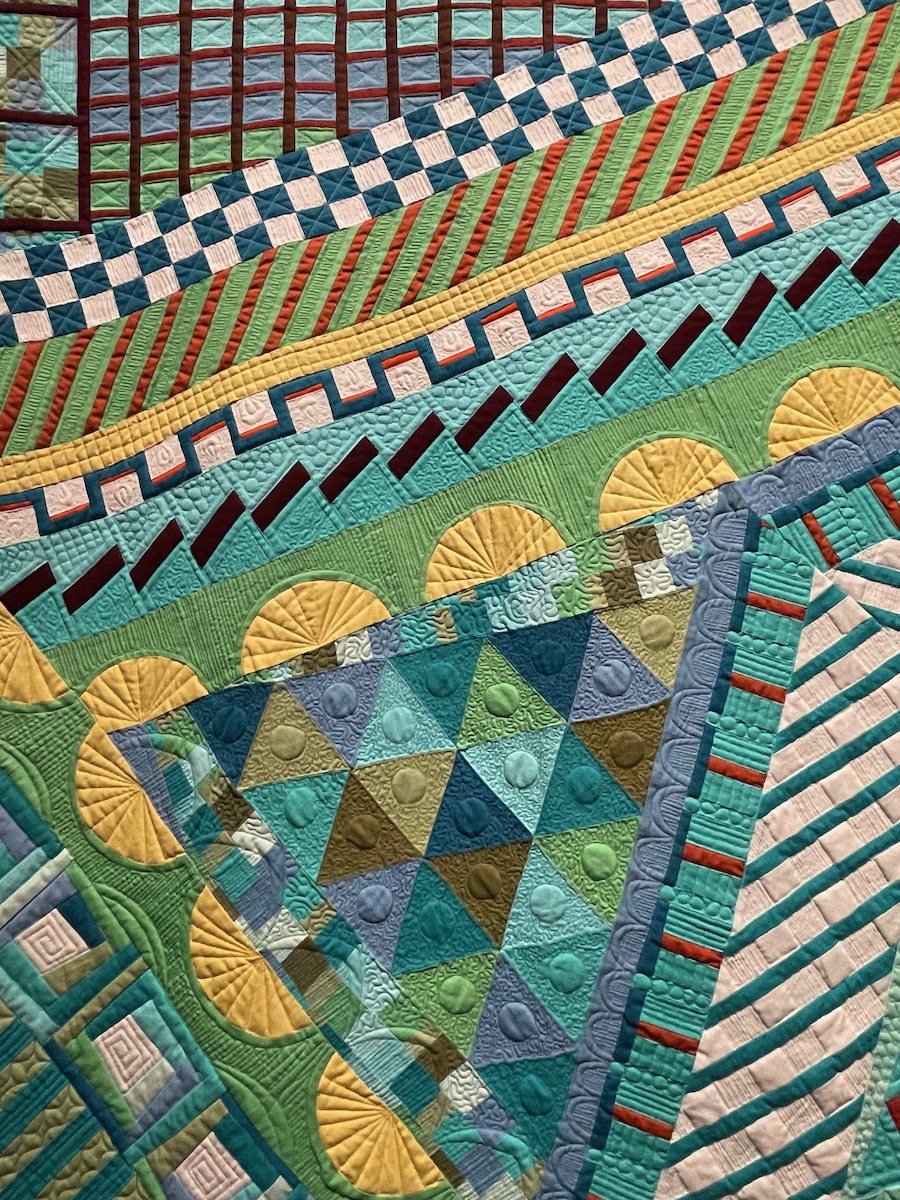
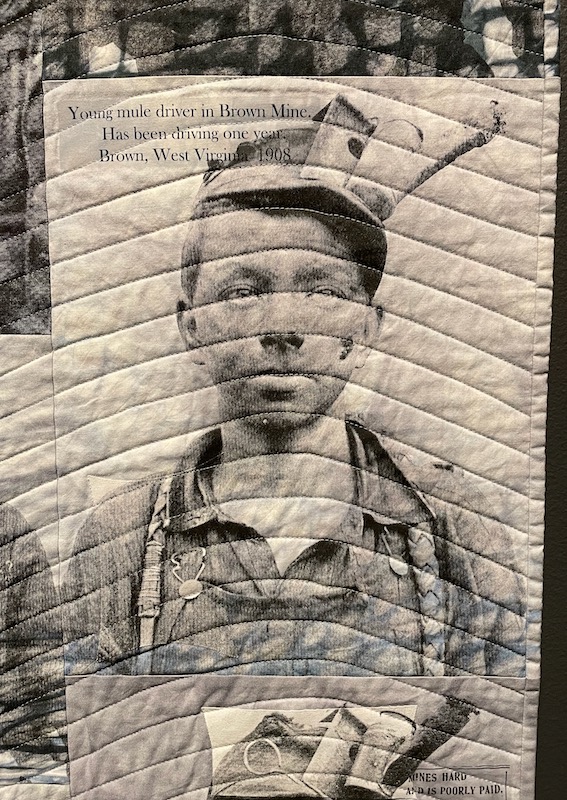
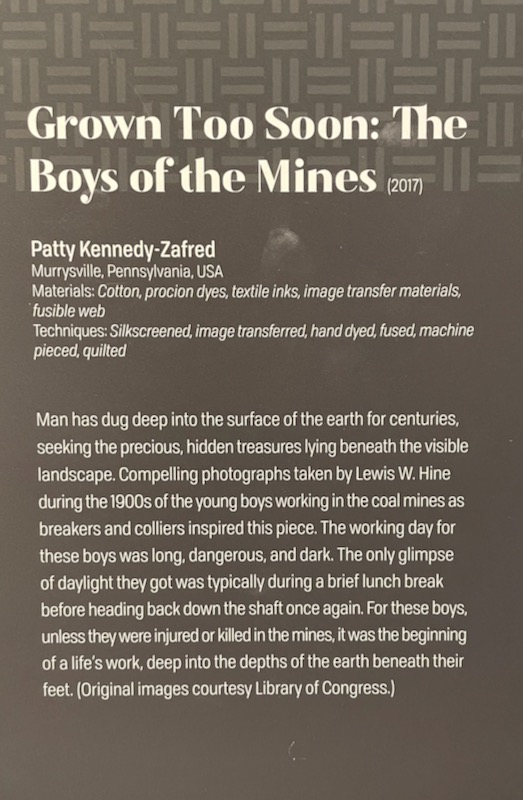
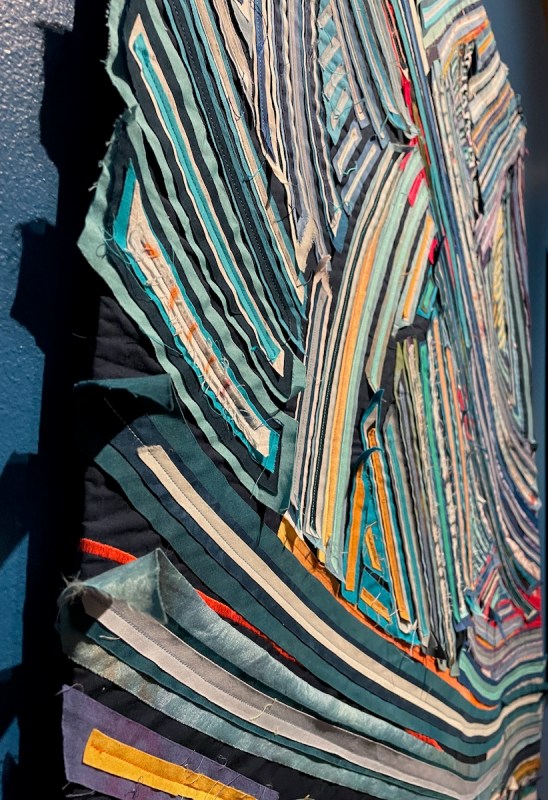
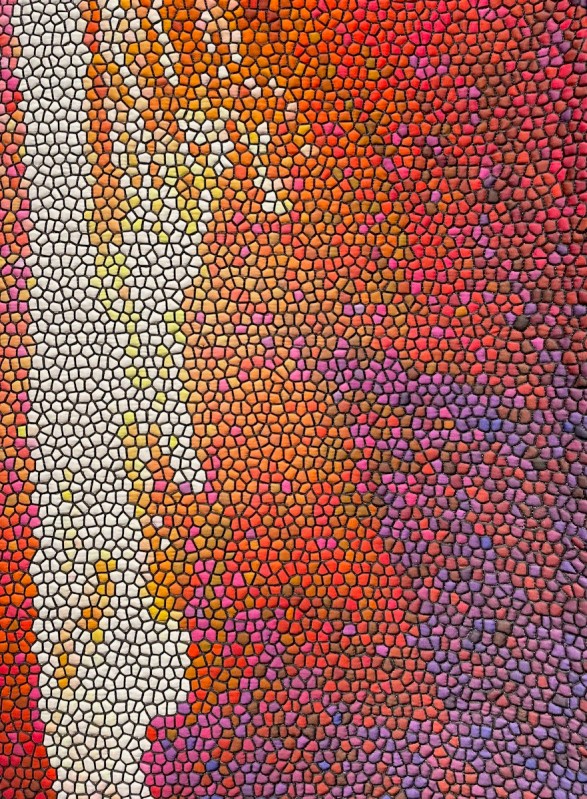
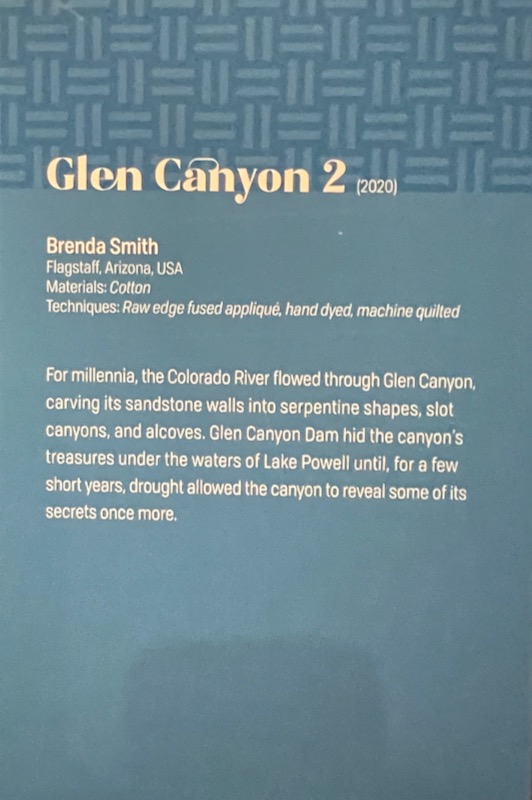
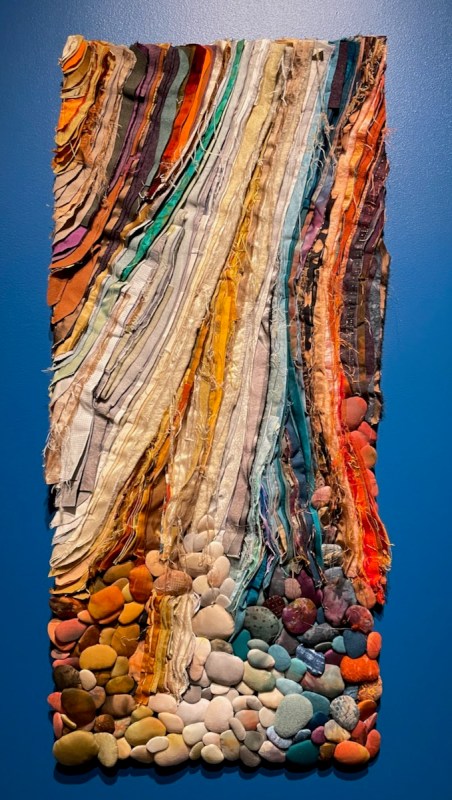
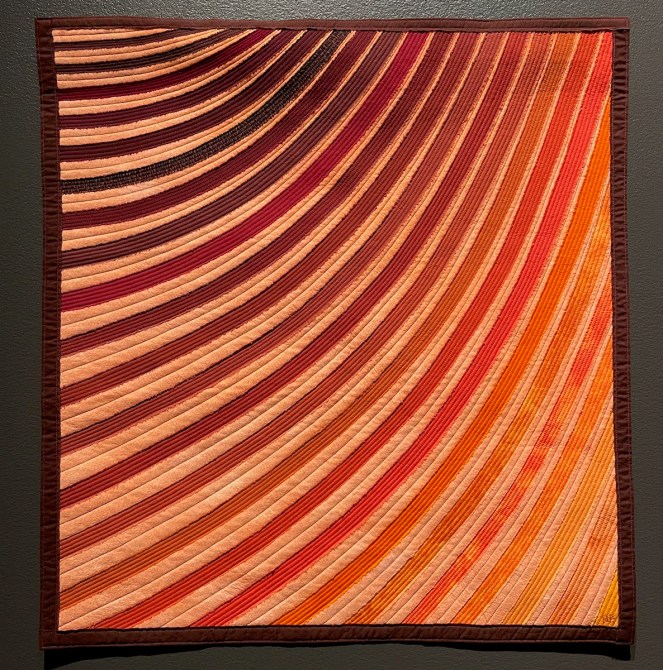
While the original version of the word meant light, frothy entertainment, this grouping of quilts was more serious, found in Primal Forces, an exhibit in the BYU Museum of Art. They were part of a traveling show from SAQA, and I was delighted to see them while visiting there for a wedding this summer. One of them, the quilt with “rocks” and “water,” I first saw in France while at the Carrefour Quilt Show in the Alsace region. It was like seeing an old friend. And yes, I always love that overhead thread sculpture by Gabriel Dawe that I led with. It’s too hot to do anything else, so enjoy the quilts!
NOTE: I put some of them together in “galleries;” click to enlarge.
Sonoran Spring, by Stephanie Nordlin
I loved the shaded window above these two quilts, reflecting the shapes in an architectural way.
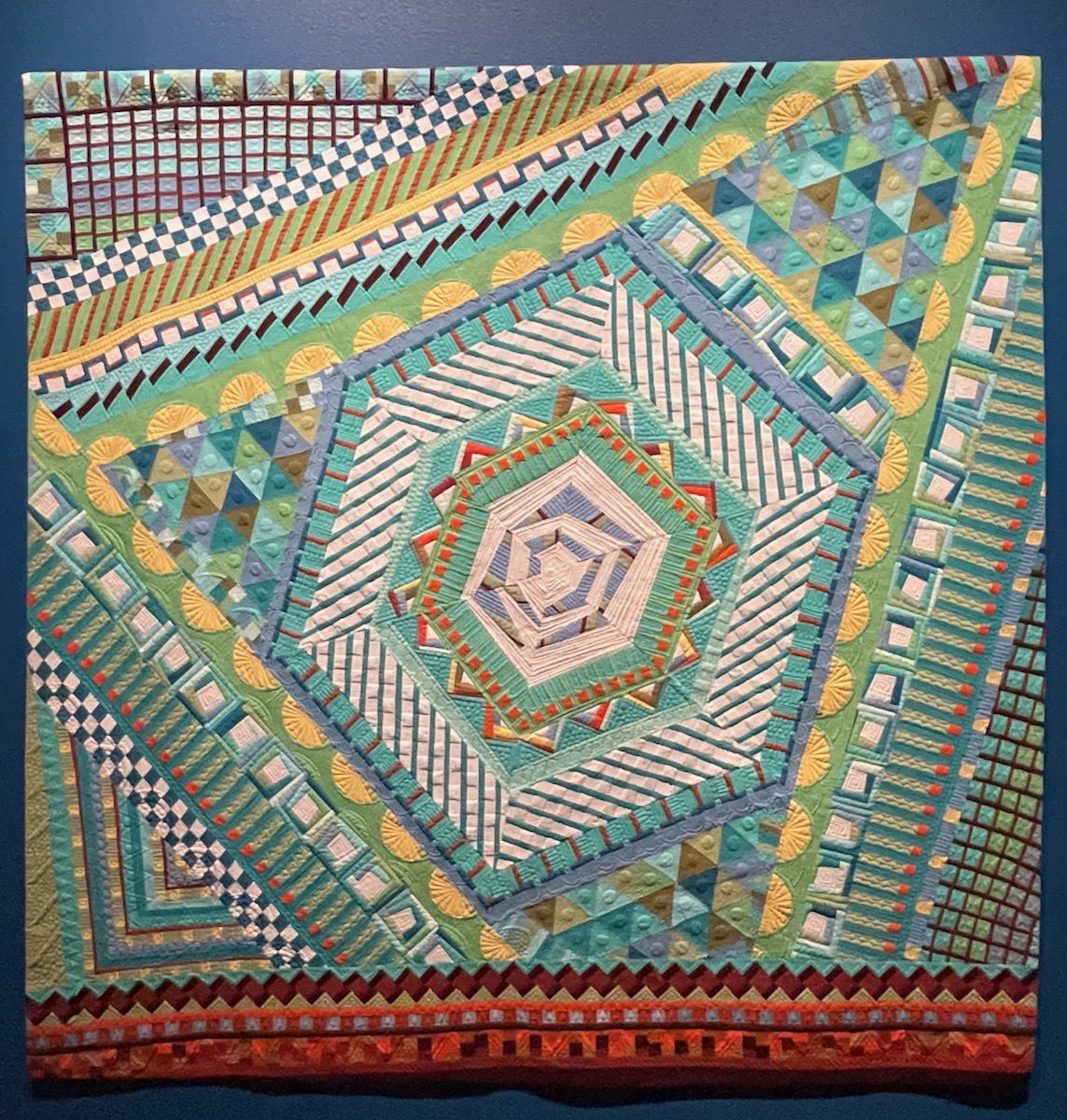
I love the simplicity/complexity of the quilt above. It just vibrated on the wall.
Thank you all for your well wishes in the last post. It’s taken me longer than I wanted to write back to you, but I’m most grateful for all the lovely things you said. We did survive the “storm” and as I read about the weather that’s been going on at my friend Carol’s home this week (tornados! rain! lightning! more rain!), it confirms that we Californians are all a bunch of wimps. But thanks for understanding how excited/worried/confused we get by a change in our (usually) moderate weather.
Okay, summer. You can head on out, now. It’s back to quilting…
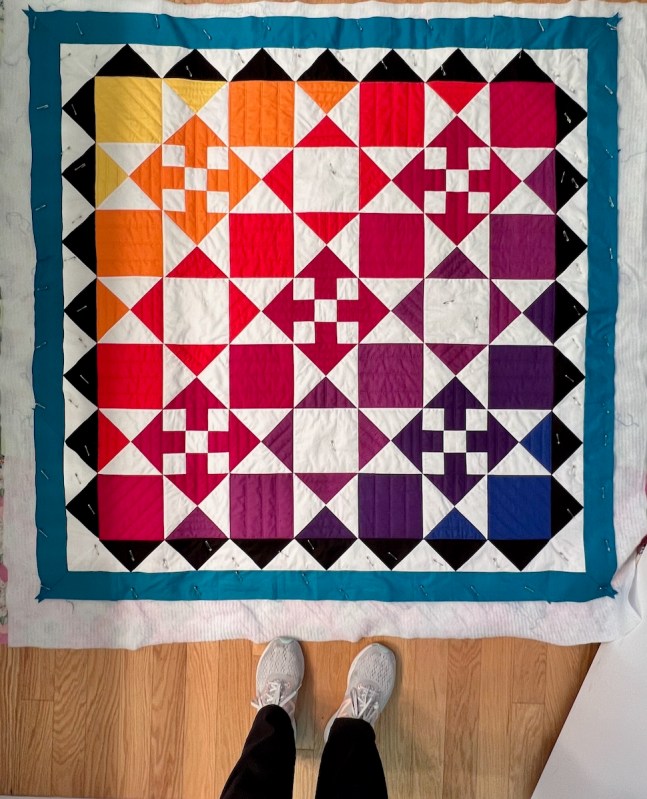
(All the colors in the center have been quilted)
P.S. Summer leaving? HA! In Southern California, our summers stretch outward into October. We have more hot days ahead of us.
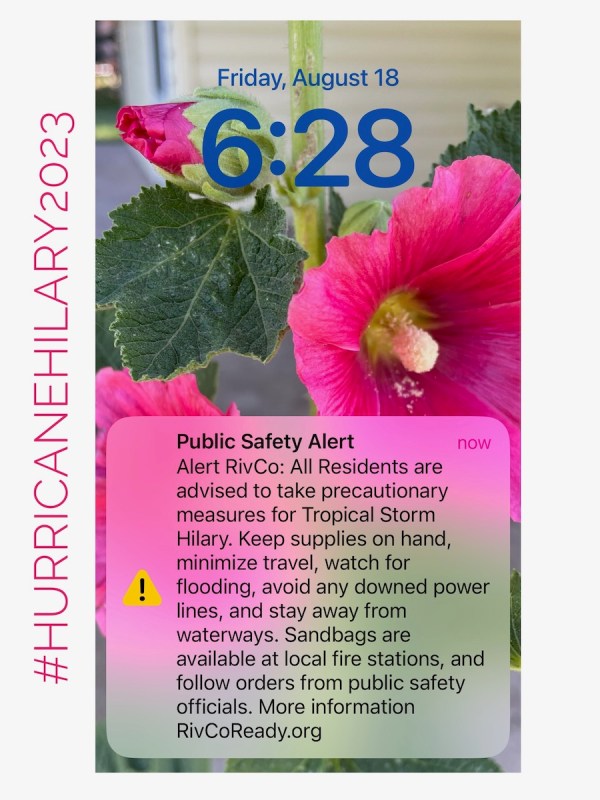
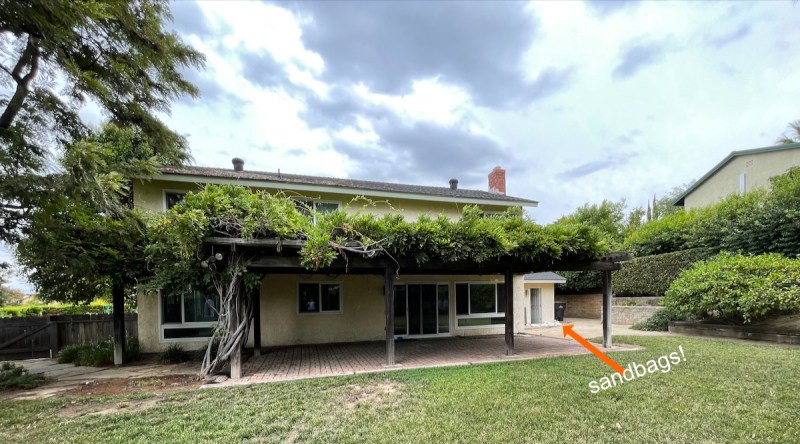
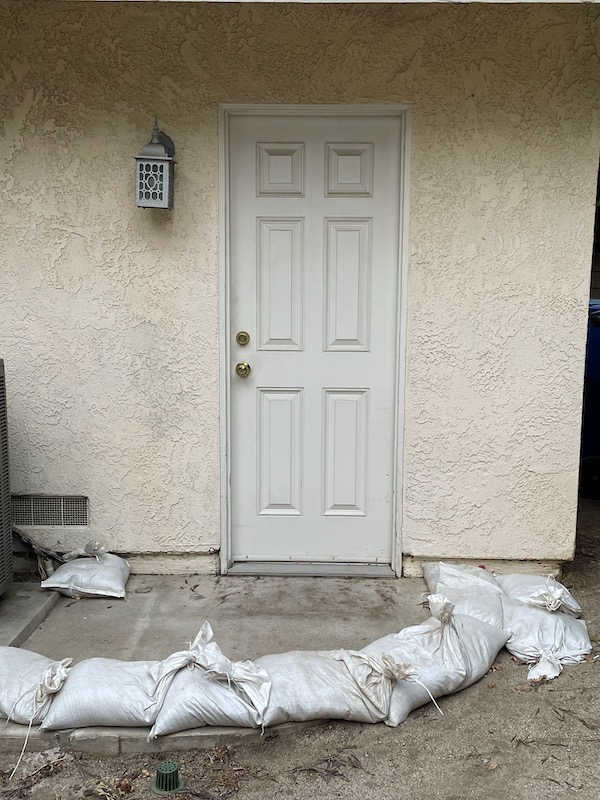
Hurricane Hilary is streaming towards us, so we spent most of Saturday morning doing something that East-Coasters have memorized: make sure we have water, food that can be prepped w/o power, and have sandbagged potential flooding areas. We put in French drains ages ago, but our up-above-neighbor’s water always pours into our yard (unhappy face, here). He’s a nice guy, but we have to prepare against his run-off, so my husband did something we’d never done before: went and got sandbags.
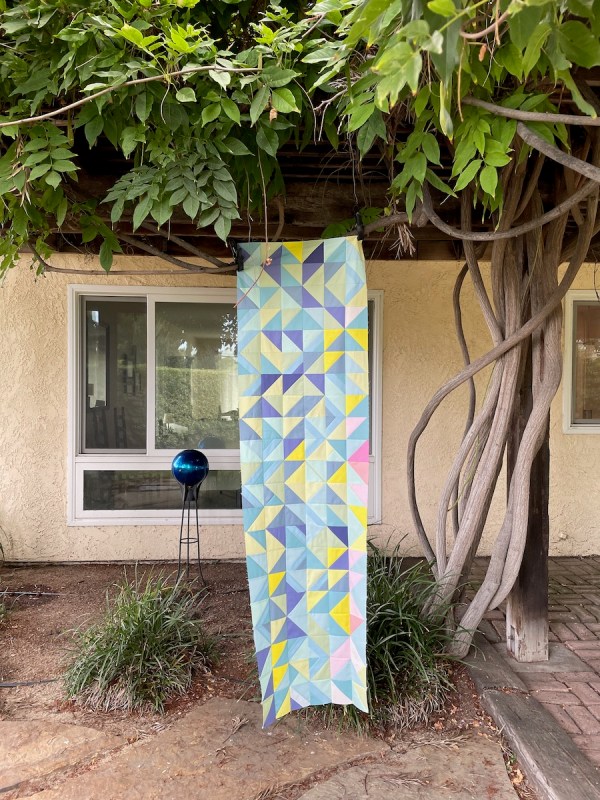
I cleaned out the garage, sweeping it clean and propping up all cardboard boxes off the floor, just in case the water runs through the back door. We then loaded all the patio furniture (even the BBQ) into the extra space. I think we are ready. The humidity is off-the-charts, and the storm hasn’t even arrived yet. (And in case you are wondering, that is a 30-year old wisteria vine on the patio cover. I planted it when we first moved in and I hope it all survives the predicted winds.)
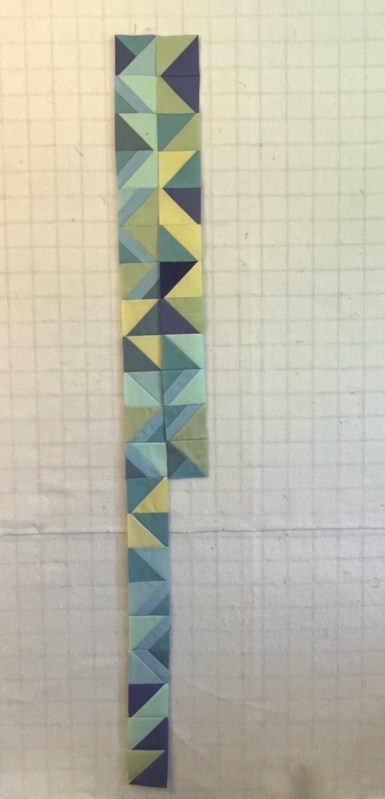
But that’s not the only weather on my mind. On this day as I sewed the squares for January 2023 together, I was thinking about how cool the weather was at that time (yes, we even had a few nights of freezing, which would explain why our jacaranda tree is currently toast — we have hopes it will come back), and how many rainy days we had. When I sewed March, we had one day of 10 minutes of snowflakes (it happens in Southern California), and a third of the month were rainy days.
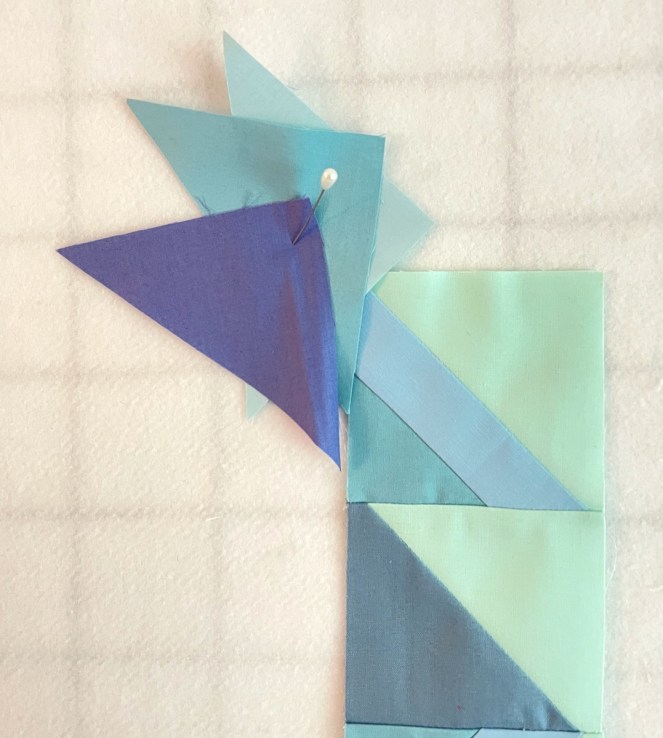
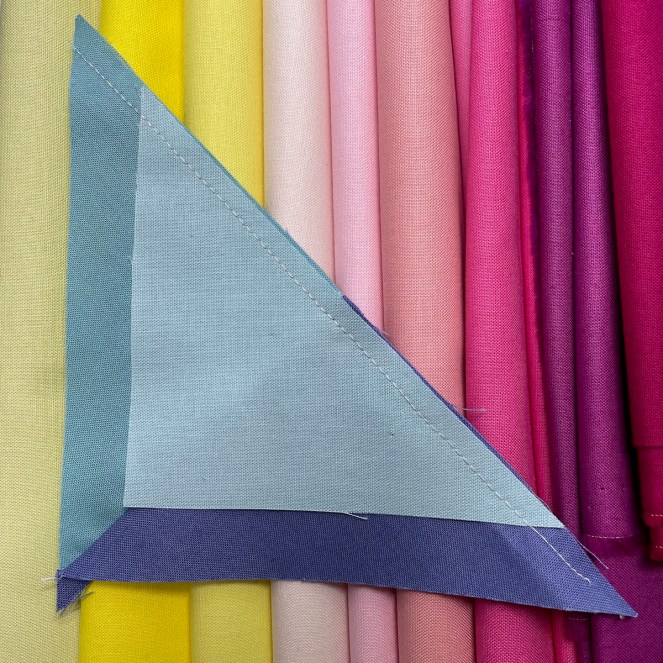
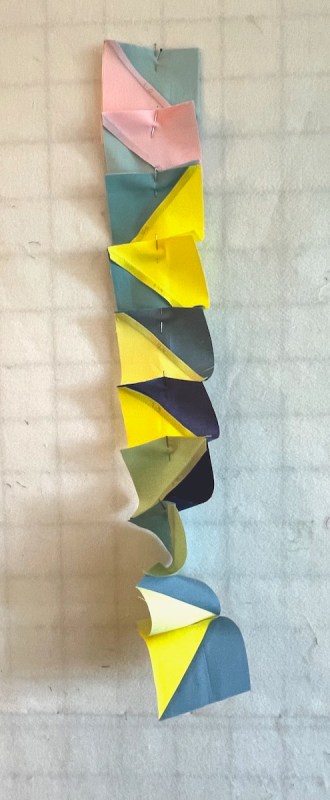
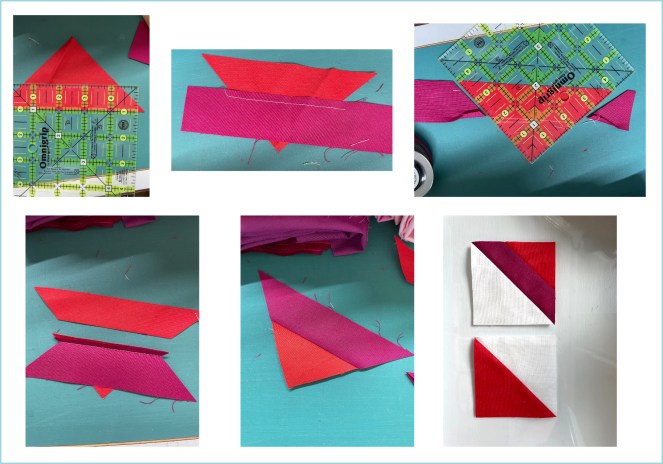
I mentioned how I was needing a month identifier block, and I decided to use whatever colors were in the mix at that month. So for January, they are pinned above the beginning of the month. I sewed two of the triangles together, then added another:
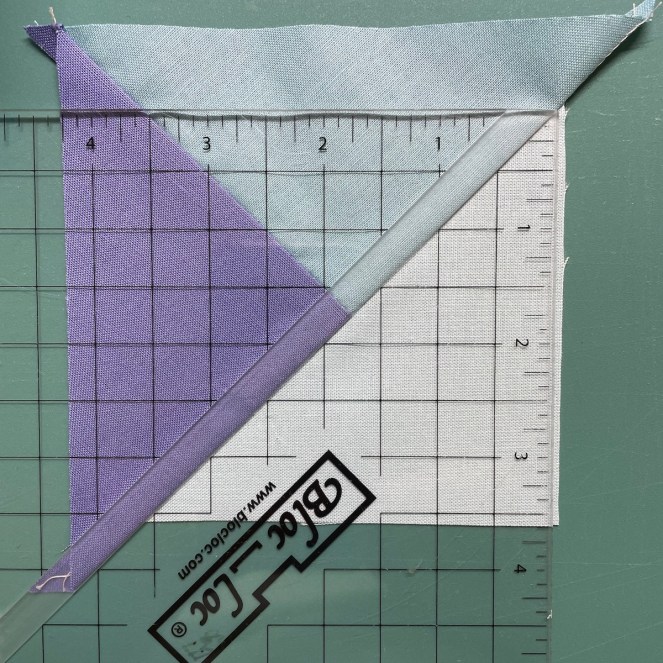
Then trim:
Now I have a month block. Of course, I can’t do them ahead of time, but that’s okay.
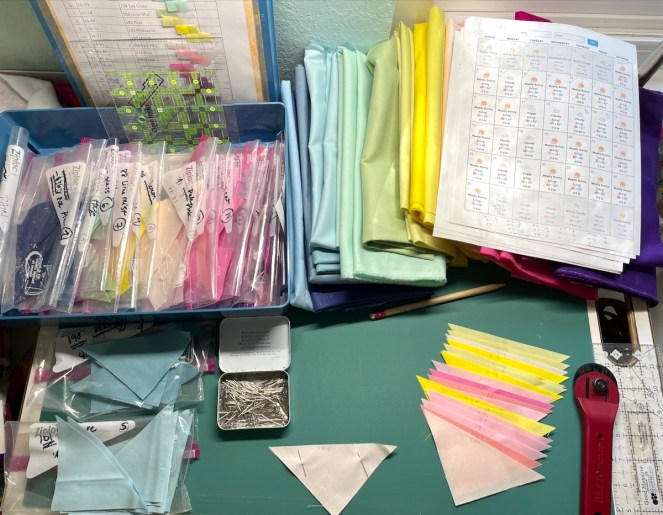
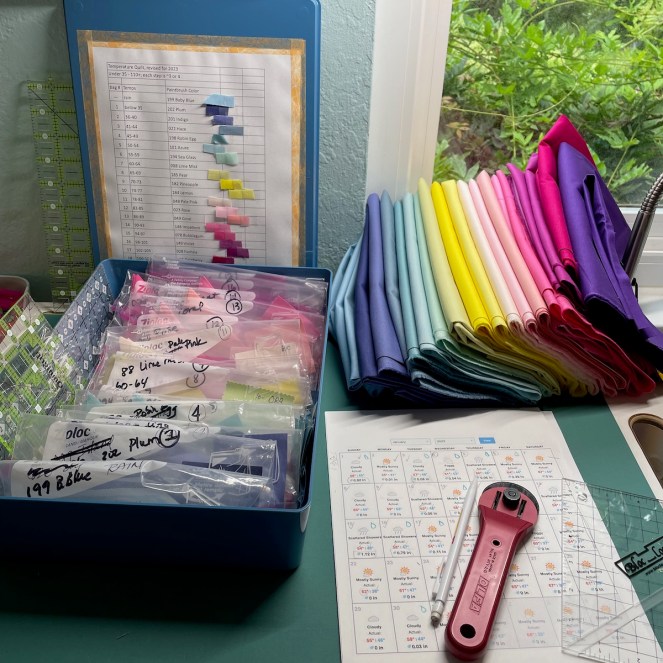
This is how my cutting space looks. It’s getting quite cramped. The box with all the colors-in-bags is next to the yardage. I purchased 1 yard of all the Painters Palette solid colors. In front, the construction/cutting zone, which I clear away and then set up again, as needed.
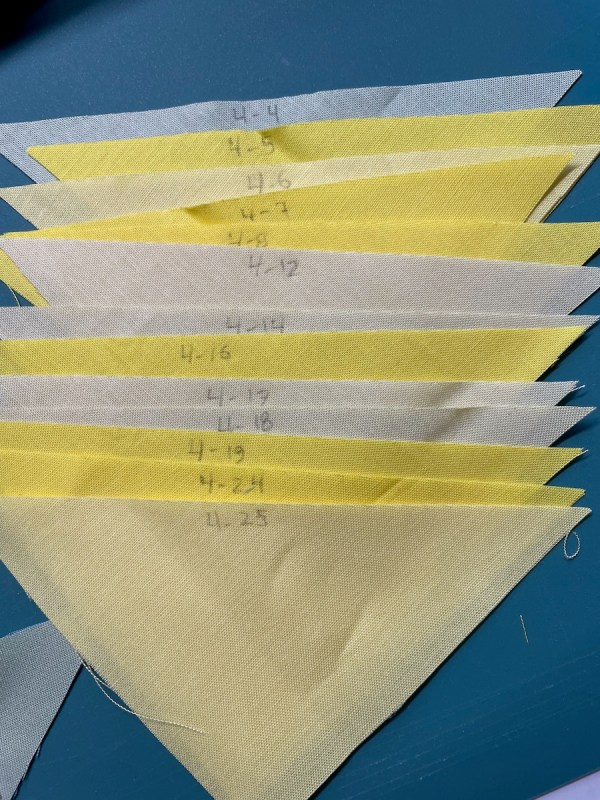
And here I’ve pulled all the “highs” for that month, and have written the dates in the seam allowance. Yes, please, do this.
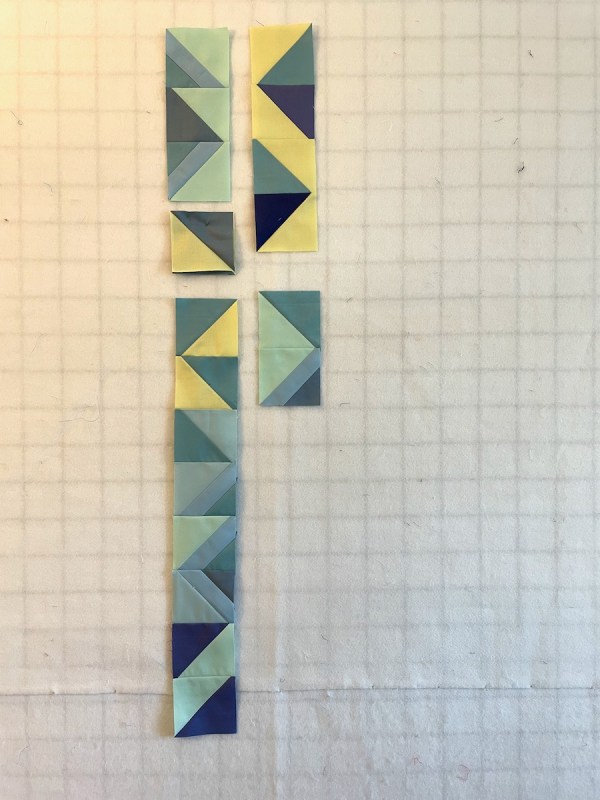
Do I just sew them together randomly by date? Yes, I do them by date, but first pin them up to see how they relate to the other blocks around them. If the temps are lower than the day before, the angle is down to the right. If the temps are higher, angle up to the right. Of course, the first couple of rows, I just sewed, but now it’s a pattern game: what will I see when this one is next to that one. This is the fun part of it all, and I’m enjoying seeing what these HSTs make. (And the temps are getting warmer, shown by the pinks.) I pin the loose ones together:
Then I sew them together. I press one row going down, then the next row going up, so they will nest together and I can sew them together (albeit a bit more slowly) without needing to pin them. If you are a “press-open” sort of sewer, have fun pinning those seams.
Then I got up early Saturday morning, before the work of the day (moving stuff into the garage — even the gazing ball is now tucked away) and take a photo. I just turned the corner on the month of May, so I’m catching up to August. Now I’m thinking I need to make a different color band for our hurricane. Yes, I know it will be a tropical storm by the time it hits us, but wow–this is definitely something I’ve not experienced in Southern California living. Ever.
My Quilt Journal
Now I have a question for you. Have you ever journaled about your quilts? If so, have you tried any of these techniques?
Blog, then print the book
Blog, with no printing
Instagram, with/without printing
a notebook, where I paste in my photos, and write about my quilts
no Quilt Journal
just photos in an album
I’m thinking of proposing to our Guild that we have a Quilt Journal night, prompted by this article in the NYTimes, where Laura Rubin believes corporate American could benefit from the practice. But why not quilters, too? She says that “journaling works. It gets you where you need to go,” but in my life, it’s also a way to collect what I’ve done, to not lose my life in the details.
And do you:
use a pre-designed quilt journal, like the ones available on ETSY?
make your own from a blank spiral-bound book?
Buy a bound book?
Write just about the nuts and bolts of creating that quilt?
Or do you take time to write the inspiration, the story of the quilt, and why you chose the title?
Does it include photos? Fabric swatches? Sketches?
So, anything you have to add about the idea of quilt journaling, leave a comment, or an idea.
The storm is still not here, and we are all in anticipation. It’s killing us, smalls. We’re used to earthquakes, with no advance notice. Boom, and you are shaken. I just came in from outside, the twilight sky is dark and deep, with a thick layer of clouds overhead that deaden all sound. Eerie. Guess I’d better quilt before we lose our power, right?
…who is looking to survive Hurricane Hilary!
First ever appraisal of a quiltOur poor, nearly dead, jacaranda tree.
The title of this post comes from Angela Duckworth, the researcher famous for talking and writing about those who have what she calls “grit” — that innate quality that helps you to keep going. I used to show it to my freshmen English classes, in a teacher’s quest to motivate her students. But in a recent article on IdeasTed.com, she wrote about discouragement and surprisingly, even she gets discouraged. She tells the story of crossing the Rubicon, and how that metaphor came to mean a decision point. Duckworth has a list of “grit” items, available in her Ted Talk (video is at the bottom of that post), but now she adds one to it: “Setbacks don’t discourage me for long.”
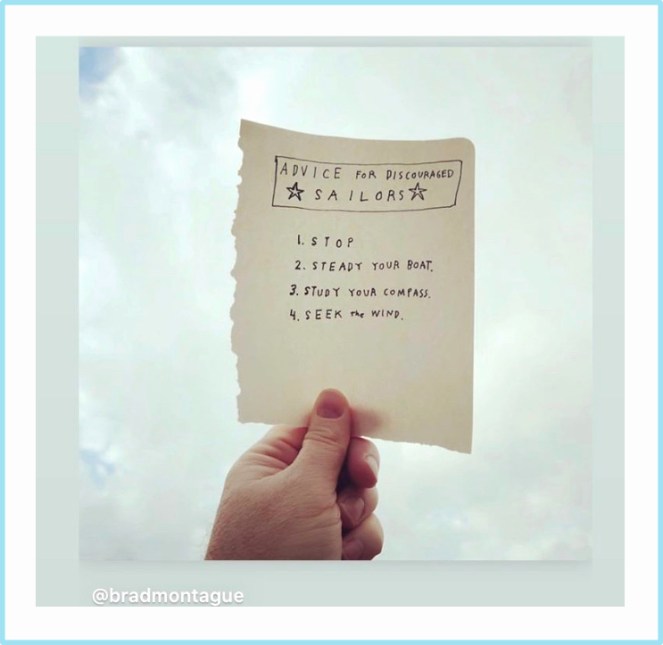
I’ve saved the Advice for Discouraged Sailors in one of my computer files, and just like cleaning out a drawer, this scrap of an idea keeps popping up. And like Duckworth, there is this moment of decision, of stopping and steadying your boat and figuring out where to go. I’ve never been a sailor, but I can only imagine how critical the advice is to “seek the wind,” if you are surrounded by a water everywhere, with no land in sight.
So, incorporating both of those ideas — setbacks don’t discourage me for long, and seek the wind — I started (again) on my 2023 Temperature Quilt. I tried listening to a book when I worked and that was a disaster. I needed to study my compass, not be distracted, even if it is a good book. And I had this in mind:
Yeah, that’s a Temperature Quilt, all right.
I made progress, by cutting triangles, cataloguing them in my box and making a fabric key on the lid. To the lower right is the calendar for January, and that’s when I discovered that the color for 60-64 degrees F was missing. I had to order some, and it will be here hopefully Monday. But I pressed on, keeping notes where the gaps were:
I figured out that I wanted a stripe for precipitation, and figured out how I wanted to make it:
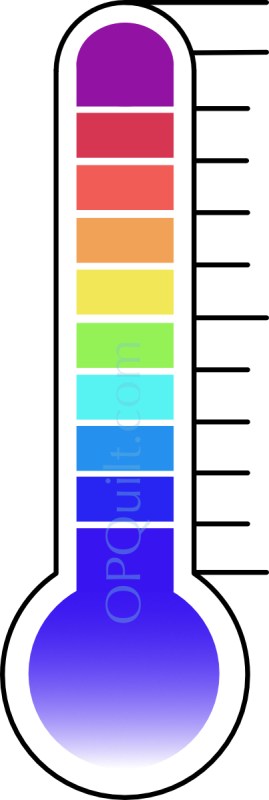
Clunky, but it works. These are my samples, not my quilt blocks. I have a PatternLite I’m working up so that people can download my bits and pieces, but I need to do more trials and add more info before it’s ready. Patience. But here’s my graphic so you’ll know I’m serious.
Sketches of the layout. If you want your strong bands of color vertical, that’s the middle image. If you want them horizontal, that’s the last image. I went with vertical, just like my last quilt. I’m still puzzling over what to do for the month block. I didn’t need a month block in my 2019 Temp Quilt, but I want one here because unlike 2019, I’m wrapping the days from one column into the next. I need something that will blend, but be distinctive.
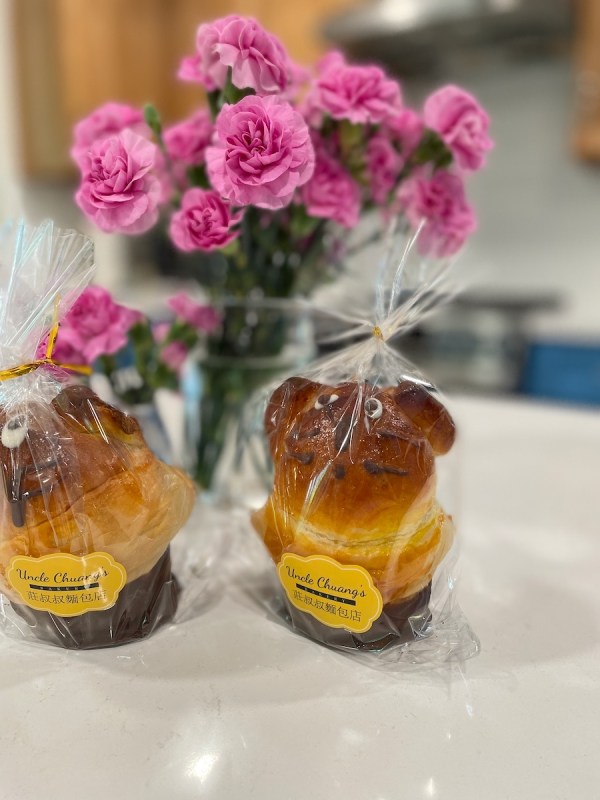
Anniversary treats: two Totoro buns from our local bakery, and pink carnations. The Totoro buns have blueberry jam in them, with chocolate-dipped bases. It was a quiet, but lovely day, and I finished it with the Creatives:
A group of women from my town, and we are quilting, stitching, crocheting. Glad they all could come.
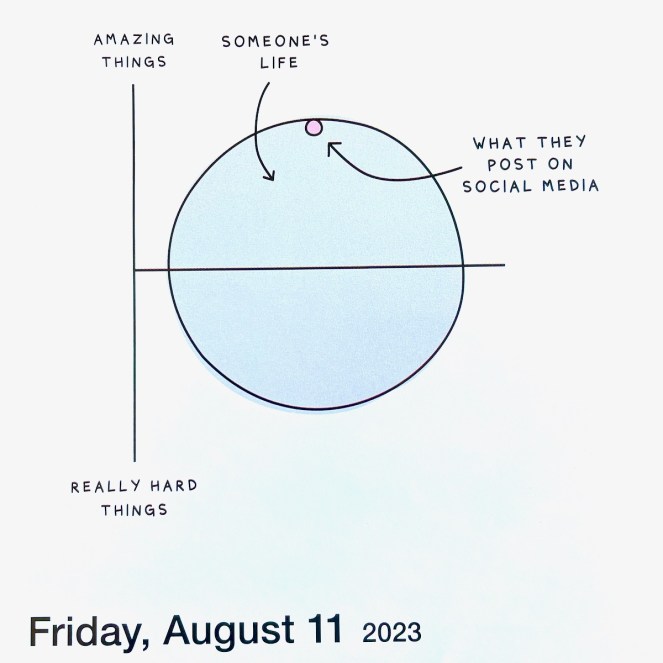
This popped up the next day, and it’s a reminder to myself to take social media posts with some caution. While I’m completely envious — and enjoy the scenery of all your trips and excursions — I’m well aware that there are bee stings, mosquito bites, schlepping the luggage, losing the luggage, fatigue, upset GI systems, missed connections and sore feet as well a glorious flower-filled grand square in Europe. Likewise, for this blog. I have my highs, my lows, my moments of satisfaction and other days when a good piece of chocolate is the only answer. Okay, maybe two.
So cross that Rubicon, seek the wind, and carry on with the journey–
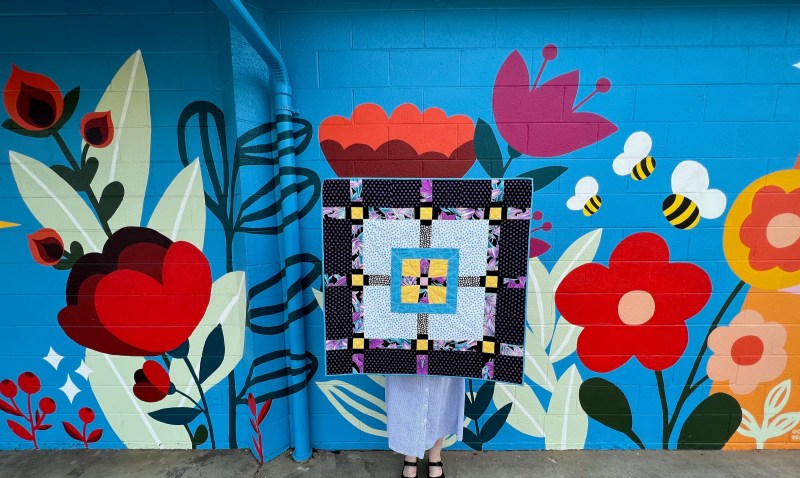
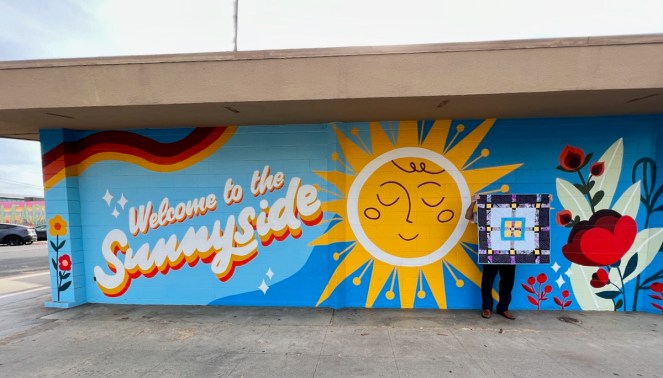
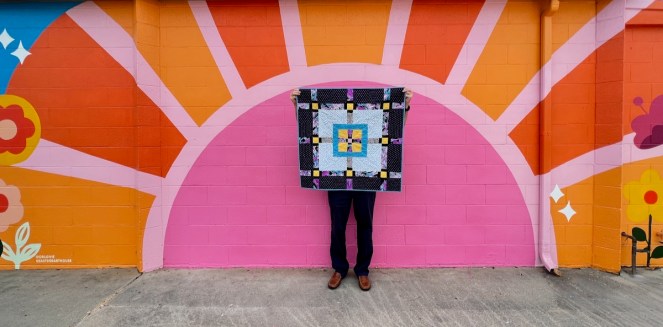
I never hold my own quilts, preferring to be the one behind the camera, taking the shots. But we had a photo shoot for Amarysso, my latest finish, and we traded places. Here’s some more photos, next to two wonderful murals in our mid-town area. Okay, now Dave will hold it:
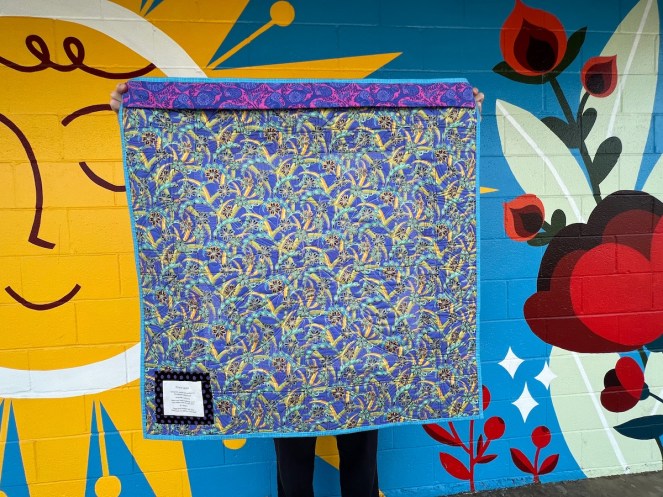
The back is a random print from the stash, with a rod pocket of Tula.
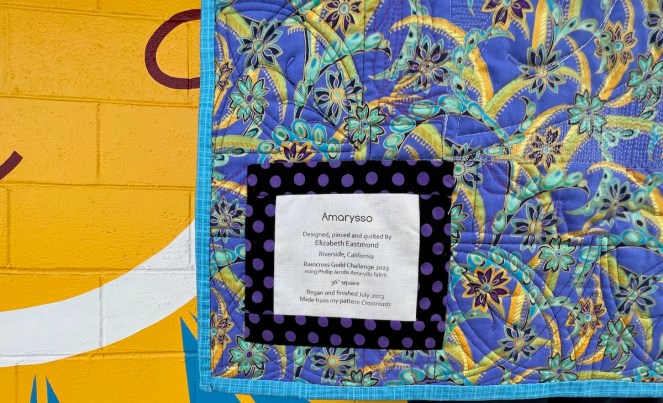
What does amarysso mean? It means “to sparkle.” It’s one of the root words for Amaryllis, the name of the fabric used for our quilt guild challenge, designed by Philip Jacobs.
Now me:
And we’ll give Dave the last shot:
My husband is a mural-and-art spotter for our town. He has a blog with lots of posts of murals and sculptures and interesting art, and was written up in our city’s newspaper. He started this project after he retired, and it just sort of morphed into his site Murals and Art. The thing that is keen about this is that whenever I need a backdrop for a quilt photo, I just go to his blog, point, and say, “Take me There.”
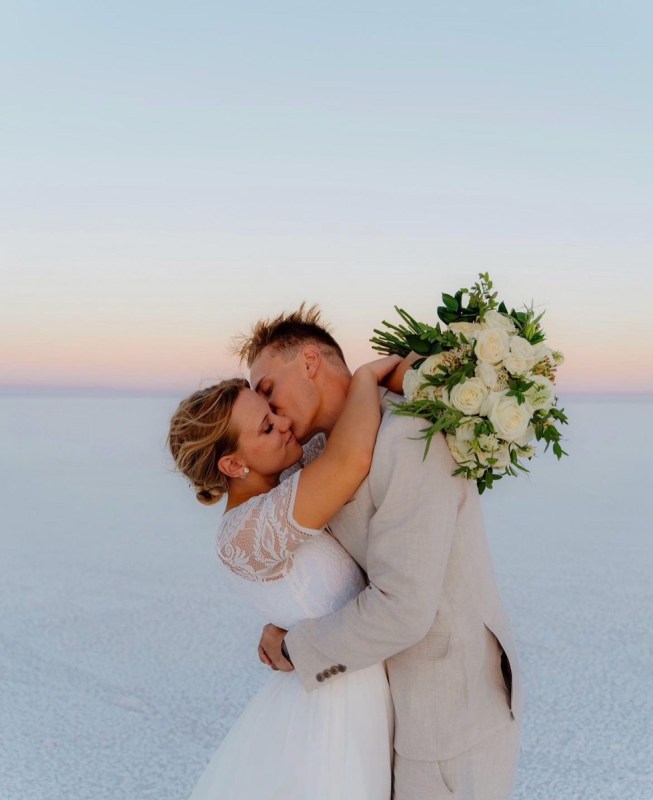
Thirty-four years ago, I pointed to the future and said “Take me There.” And he did, me and my four children, now *our* four children. This past weekend, we went to the wedding of our granddaughter, child of the little girl you see in the photo. In June, we went to the marriage of our grandson, child of the boy with the black tie on the left. We have a granddaughter on a mission for our church in Argentina, and yesterday, she just turned 20. And I wish I knew where that pink ribbon sash was that’s hooked around my waist (when I had one). I sewed it out of imported French ribbons, to accent my dress, also handmade. And where did the time go?
I’ll celebrate that evening by meeting with the Creatives, my name for our little group that gets together monthly for crafting, sewing, talking, sharing, whatever. It had gone defunct right before covid of its own volition, but we think we want to get together again. It will probably be a different, smaller bunch than who was here last go-round, but under the alchemy of Time, things do change.
We live in the now, framed by the past, and guided by the future. Just like my Dave and I.
The most recent newlyweds at their bridal photo shoot

































 OccasionalPiece--Quilt!