Something to Think About

Flame-out? or Creative Spark?

If you are anything like me, there are multiple ideas in your head, lurking in the fabric you’ve purchased, or photos on your phone of projects to make. And if you are really really like me, there are some old magazines piling up — perhaps dragged home from your Guild, or pages ripped out, or maybe even a filer drawer somewhere with the label “Future Projects.” You like to browse your favorite on-line shop web-pages, you happily accept emails from your favorite designers and your Saved to Quilts tab on Instagram is ever-expanding. All of this doesn’t even begin to address the folders on Pinterest, or the patterns you’ve acquired, or the drawers stuffed with new tools, new rulers, or quilting notions.

The term flame-out has multiple meanings, but the one I’m referring to is “lose power through the extinction of the flame in the combustion chamber.” My sewing room is my combustion chamber, so to speak. I bring lots of fuel there (see first paragraph), but somehow things can flame-out. I’ve noticed a healthy amount of January blahs in Instagram, but maybe it’s just that the projects your Past Self wanted to do are not the projects your Present Self thinks are worth tackling.

Laura Entis wrote an interesting article about the getting back the “flame in the combustion chamber,” or turning that creative spark into something that can help you fly. She lists several components: 1) paying attention (done…see first paragraph), 2) write it down (see first paragraph), but it was her third idea that caught my attention: 3) put a stake in the ground. She interprets that to mean going public, and many of us do (see our Instagram accounts), but I think for quilters there is a further aspect. It might mean washing/drying/pressing the fabric and putting it with its pattern in a drawer or a box. It might even mean cutting out some of the basic units before even one stitch takes place, like we do when we have a Mystery Quilt we’re making; they always want us to prep with this step. But any way you do it, putting a stake in the ground can mean committing to sparking that project into life.

I also liked her Step 6: Map it Out. At the end of last year, I became immersed in a project that overwhelmed me. It didn’t help during this time, Mom was dying in a state far away, or that I got really sick in December, and January has me battling a painful sciatica (can hardly wait to see what February brings…not!), but the project felt overwhelming. I should have mapped it out, so I could envision the flow, the places it was going. She got that idea from Kelli Anderson:

When Anderson embarks on something new, whether it’s for a client or a self-directed project, she sets a final deadline, and then breaks down the project into stages. “I draw it out visually,” she says, sketching out each phase in proportion to how long it should take. Next, she maps the visual sketch onto an actual calendar, translating periods of time into numerical blocks. Even the best laid plans can go awry, however. “The schedule is just a suggestion,” Anderson says, one she regularly refines. “If you are indulgent and you spend too much time on one part you can oftentimes make it up later at another stage.” (from here)

So, here are some of my “stakes in the ground”:

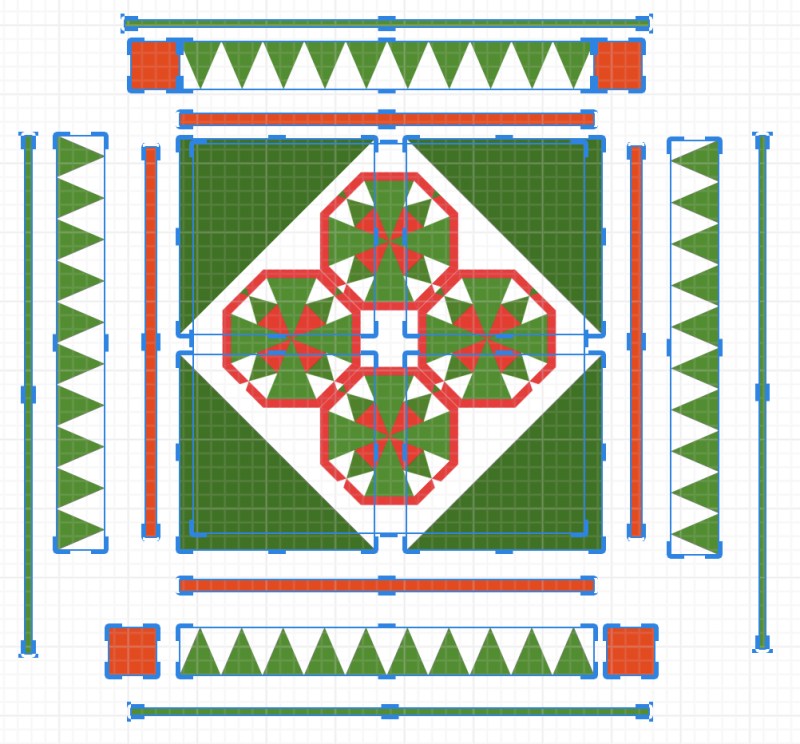
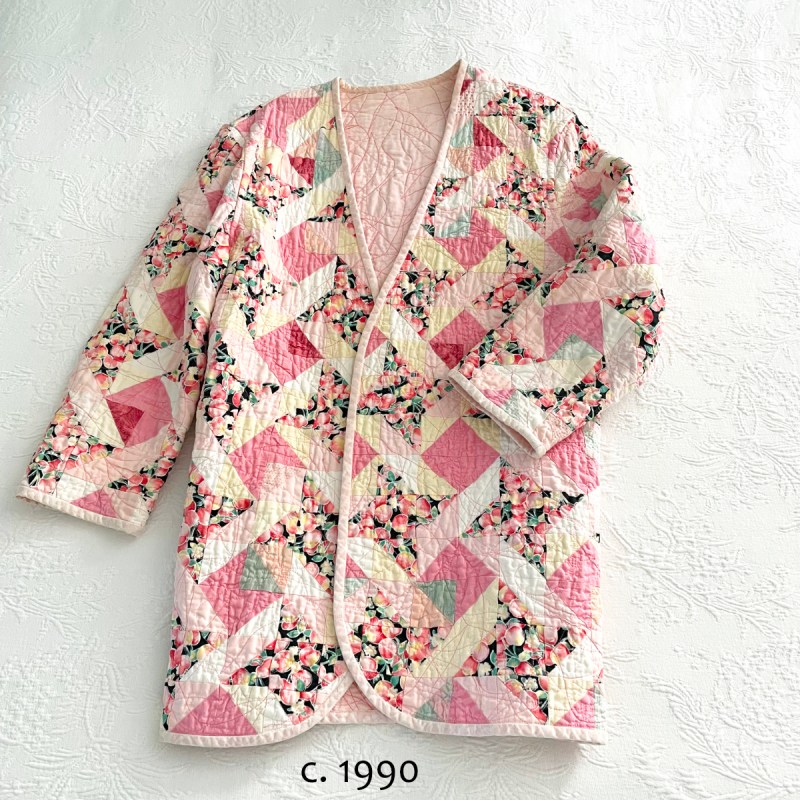
My latest quilt is back from the quilter, who did a wonderful job; now I need to trim it and get it bound. The thing that bogged me down was writing the pattern, but I ended up selling a different version of this to a magazine, so come fall, I’ll let you know where and when. (The pattern for the above quilt will come a year after that publication.)

Chris’ quilt. I made a quilt for my grandson when he came to my son’s family (he was a boy) and within about 20 minutes he out-grew it. I’ve promised him one forever and decided a large format quilt would be fun to make. It has been.
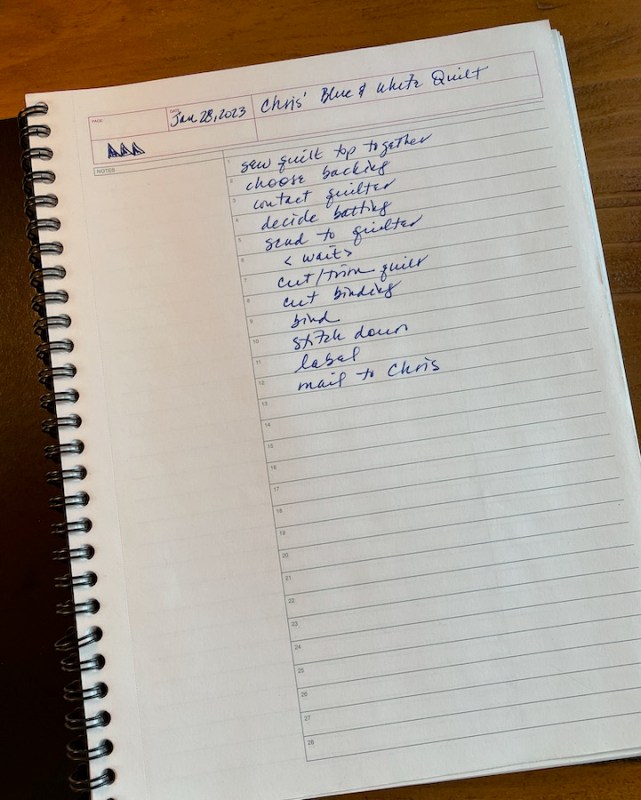
I’ve even mapped it out, as Entis suggested, in a book that helps me break down all the steps. I’m so pathetic I’ve even listed <wait> while it’s at the quilter. I’ve made you a PDF of this format so you can map out your projects, too. Click on the DOWNLOAD button below to get your copy.

Last, and okay-I-know-how-I’m-spending-my-February:

My house is nearing fifty years old. We’ve done some cosmetic updates to the kitchen, and bigger updates to the house, but it’s time to really get serious and update the kitchen. So we’re fridge-counters-cooktop-stove-vent-hardware-sink-etc. shopping. We feel pretty fortunate to be able to do this at this time, and keep wondering if we are too old for all of this. I was encouraged by all the comments left on my Help-Me-I’m-Remodeling post on Instagram. If you have any tips, let me know. I’m really leaning heavily towards an induction cooktop as I think it’s the way of the future. And double ovens? Yes? No? Who Cooks This Much? Leave me your ideas in the comments!

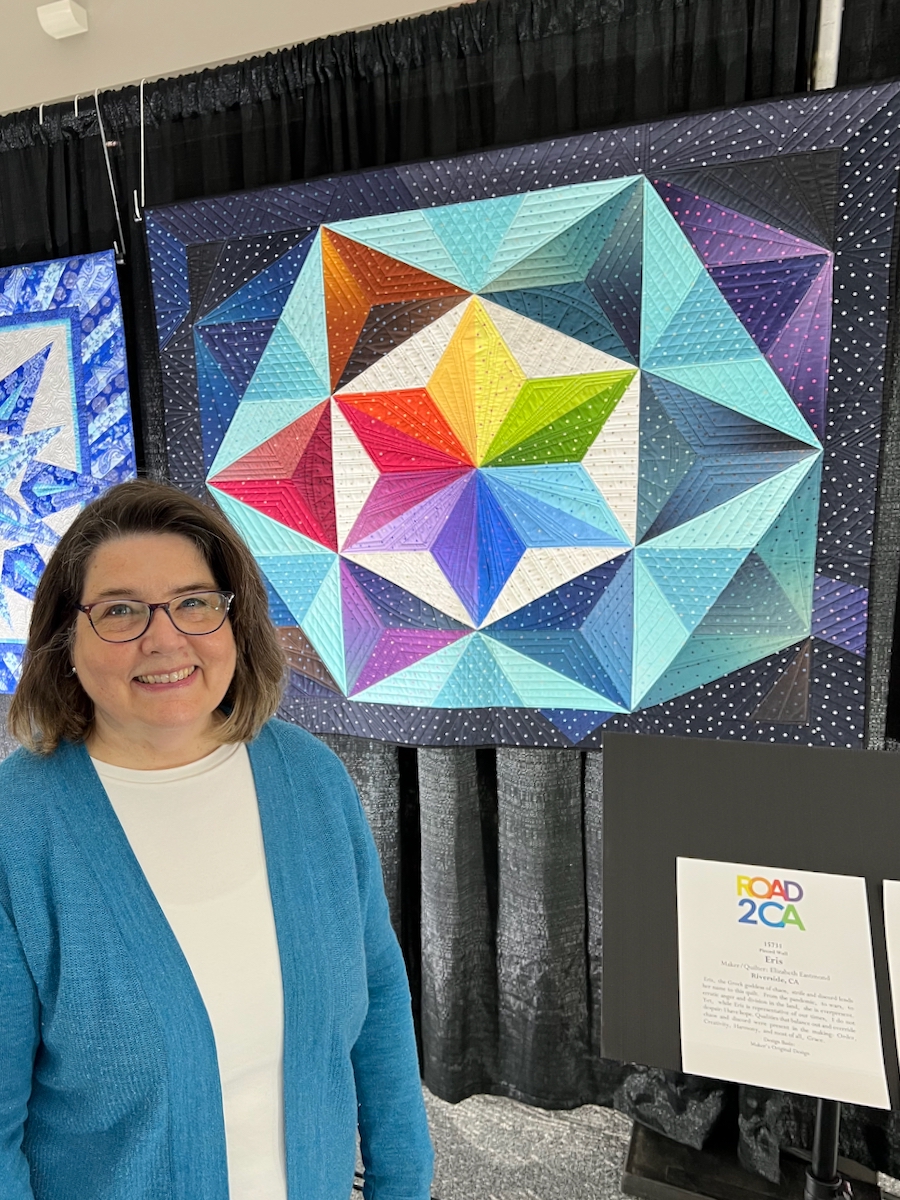
PS: Yes, I was able to attend a bit of Road to California, and saw my quilt, Eris, hanging there (happy dance!):

Something to Think About

Her Day is Done

After 94 years, my mother went Home.

I heeded all your messages and got in the car that afternoon. I made it in time to see her before she lapsed into unconsciousness, then, by a quirk of timing, Dad alone was with her when she died. Thank you for writing. You all made a difference.

I promise we’ll get back to quilting, so no — this blog has not changed into something else. But I might be a bit more erratic in my posting for a minute, as I navigate Thanksgiving, the funeral services and any partly-sunny-with-patches-of-tears moments. (But you weren’t going to read over Thanksgiving, anyway, were you?)

My heart is full, and I’m filled with gratitude for a wonderful mother.

See you on the other side, Mom.

Something to Think About

It Takes Time

It takes time to stare out the window at the welcomed rain, the summer dust washing off, leaving the leaves glistening.

It takes time for my sister Susan to call all seven of us children — the task divided up with my brother David — to tell them that at breakfast that Friday morning mother had a stroke, was rushed to the hospital where she remains in critical care.

It takes time to not sew. Or sew, then un-stitch. Wonder if this was the right set of fabrics where not just four days ago you were certain of it. You were certain of everything: your plans for Thanksgiving, the trip to Utah for your father’s 97th birthday, the relationships you had with your brothers and sisters. Which now, after Mom’s stroke, all looks very uncertain.

It takes time to make contact with all your brothers and sisters, now that you realize that taking time is what you want to do. Some welcome the contact. Others seem to think you are nuts, that Mom will recover, that they were just fine with a little distance. It’s a common refrain in families, this push-pull, in-out, close-far, and we are no exception.

At the end of the time at my friend Joan’s funeral — well, after the funeral — after the family members left who kept you on edge, after the clean-up of the meal and the sweeping of the floor, we took a little time to say our good-byes. I looked at Joan’s daughter and husband, their five daughters and realized that I’d been given a gift by taking this time to serve them. I said as much to them, then added that while I would miss Joan terribly, she was in bits and pieces in all of them: her love of literature, travel, adventure, kindness, curiosity and love for those around her. A moment of final emotion and then having taken the time, we all left.

It takes time to not plan out a Christmas quilt, especially now, when time has to be taken for talking on the phone, reading letters full of treatment details for mother’s care. Photos are texted and I don’t really recognize her, but I recognize her, the strange yin-yang of illness. Her bed is surrounded by upright sentinels: oxygen readers, heart monitors, IV drips, and other machines I can’t even imagine.

It takes quite a few whiles to realize that you don’t have it in you to write back to kind notes on the blog, to talk to people on the phone, to do the grocery shopping. I take time to watch the rain, the hummingbird at my window.

It takes time to scroll and scroll on my phone, eyes glazed over while my heart and mind are focused on a slight elderly woman in a hospital bed far away. She’s 94. When I ask my doctor friend about strokes, I can hardly talk. “But she’s 94,” he said. “It’s not unexpected.” Yes. Right. Until it is. Then an uptick and life is almost normal for a few minutes. I forget that I am keeping company with the unthinkable thought, that my mother got “caught in the door” as my kind friend said, both of us thinking of the door out of this world.

I take the time to talk briefly with Dad; a nurse comes in and he is gone off to be beside my mother, leaving me wanting more time with him.

It took time last night, when talking to my sister, to tell her the story of saying good-bye to Joan’s family. And we are like that, too, I said. All seven of us have bits and splinters of our mother: the woman who loved to read, the 1940s glamour girl, the woman who was smart but stayed home to raise her children, the woman who went back to school in her fifties to earn her college degree, the good cook, the hostess, the loving mother and grandmother, the sharp wit and sometimes sharp tongue — it’s all there in all of us.

It takes time to recognize that you need to plan for an uncertain future. It takes time to wonder if she’ll have another stroke and I take time to do frantic research on the web. It takes time to wander around the house, to talk on the phone, to make and un-make plans. One late night I ask if I should come up. Oh, there’s plenty of time, came the reply.

We always think there is.

Books · Something to Think About

Age of Subtraction

Many years ago, bricks used to be completely solid. Houses and buildings went up with solid bricks. But in 1927, Anna Wagner Keichline patented a brick known as the K-brick, which was hollow and could be filled with “soundproofing or insulating materials, making it versatile and efficient. The K Brick led to the development of today’s concrete block.” She subtracted something in order to make it better. I heard about her from the Hidden Brain podcast, in an episode titled “Do Less.” Shankar Vedantam, the host, featured Engineer Leidy Klotz and so much of what he said intrigued me: “We pile on ‘to-dos’ but don’t consider ‘stop-doings.’ We collect new-and-improved ideas, but don’t prune the outdated ones. Every day, across challenges big and small…we don’t subtract.”

I learned the phrase in the title of this post from my father, who says that a certain time in our lives we enter the Age of Subtraction. To him, this meant less energy, weaker eyesight, feeble knees, and a general inability to go and do like when he was a younger man. Coming from a different generation, one that had not yet been inundated with ads, consumer spending, The Great Garbage Patch, Climate Change or other such beauties of late 20th century life, the concept of addition was full steam ahead.

These two supposedly opposing ideas intrigued me. Why do we resist subtraction? Why are we all about addition?

For quilters and creatives, it manifests itself in adding to our Works in Progress lists. We grab at the next line of fabric, knowing the last line of fabric is at home. While this idea might certainly have at its root the dopamine ping of a new idea, or a few likes on our work on social media, or a brilliant new color (whether in a paint tube or in cloth). But maybe at its root is also a bit of anxiety. We used to be able to buy a fabric line for months, as it was in our shops. Now fabric lines come-and-go at a fast clip. If you don’t buy it now, it will sell out.

The same with ideas: everyone’s making a quilted jacket, so we’d better get going. There are supply chain line interruptions, so for a while, bakers couldn’t get vanilla except at exorbitant prices. Uncertainty is everywhere, so we buy faster, we make faster, our list of things to make never stops. And all the while, we feel the tick of time like my father, worrying about getting it all done.

In his book, Four Thousand Weeks, by Oliver Burkeman brings forward the idea that if you live to be 80 years old, that’s four-thousand weeks of life. He writes about this idea of trying to get it all done:

[T]he core challenge of managing our limited time isn’t about how to get everything done—that’s never going to happen—but how to decide most wisely what not to do, and how to feel at peace about not doing it.

Burkeman, Oliver. Four Thousand Weeks (p. 71). Farrar, Straus and Giroux. Kindle Edition.

And there’s that subtraction thing again: “decide most wisely what not to do.” Can subtraction be a new way to operate? I’ve been a time efficiency wonk for years, always trying to find a better way to add things in, organize them. Burkeman called himself a “productivity obsessive.” In this book he takes aim at that familiar time management trope of the rocks, pebbles, sand and water all piled into a jar in order, showing so-called good time management. But he notes, that object lesson is rigged, because the person demonstrating it isn’t going to bring bigger rocks, or more rocks and pebbles than can fit in the jar. (What a relief!) Yet, I still wondered about how to handle my Works-in-Progress projects that pile up. I still couldn’t get to subtraction:

[One] approach is to fix a hard upper limit on the number of things that you allow yourself to work on at any given time. In their book Personal Kanban, which explores this strategy in detail, the management experts Jim Benson and Tonianne DeMaria Barry suggest no more than three items. Once you’ve selected those tasks, all other incoming demands on your time must wait until one of the three items has been completed, thereby freeing up a slot. (It’s also permissible to free up a slot by abandoning a project altogether if it isn’t working out. The point isn’t to force yourself to finish absolutely everything you start, but rather to banish the bad habit of keeping an ever-proliferating number of half-finished projects on the back burner.)

Burkeman found that:

Making this rather modest change to my working practices produced a startlingly large effect. It was no longer possible for me to ignore the fact that my capacity for work was strictly finite—because each time I selected a new task from my to-do list, as one of my three work-in-progress items, I was obliged to contemplate all those I’d inevitably be neglecting in order to focus on it. And yet precisely because I was being forced to confront reality in this way—to see that I was always neglecting most tasks, in order to work on anything at all, and that working on everything at once simply wasn’t an option—the result was a powerful sense of undistracted calm, and a lot more productivity than in my days as a productivity obsessive (ibid.,75-76).

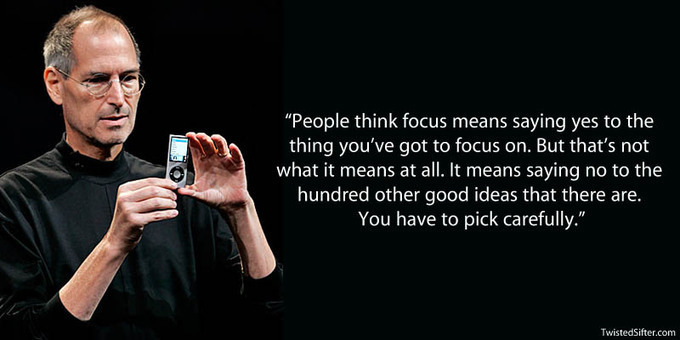
So maybe my idea of brain-dumping everything that I think I want to do isn’t so helpful after all. And maybe setting quarterly goals, while perhaps a good idea to guide me, isn’t really helpful on a weekly basis? Being introduced to this idea of subtraction, coupled with reading about my finite life in Burkeman’s book reminds me of that old line: Saying yes to one thing means saying no to other things.

Our lives are often quantified by how money we make, or how many followers we have, or by what we produce. But always when I step back from that race, I have to include satisfaction of the process. To this day, my 96-year-old Dad has a paintbrush in his hand, working on a new painting. I want to be found at 96 (if I’m still around), with a needle in my hand, or typing at the computer writing my history, corresponding with people I love. By subtracting out things I don’t think are important, I hope to do things that I enjoy and that sustain me.

Good luck with your own subtraction challenges–