Something to Think About · Textiles & Fabric · Travels

When You Can’t Create You Can Work

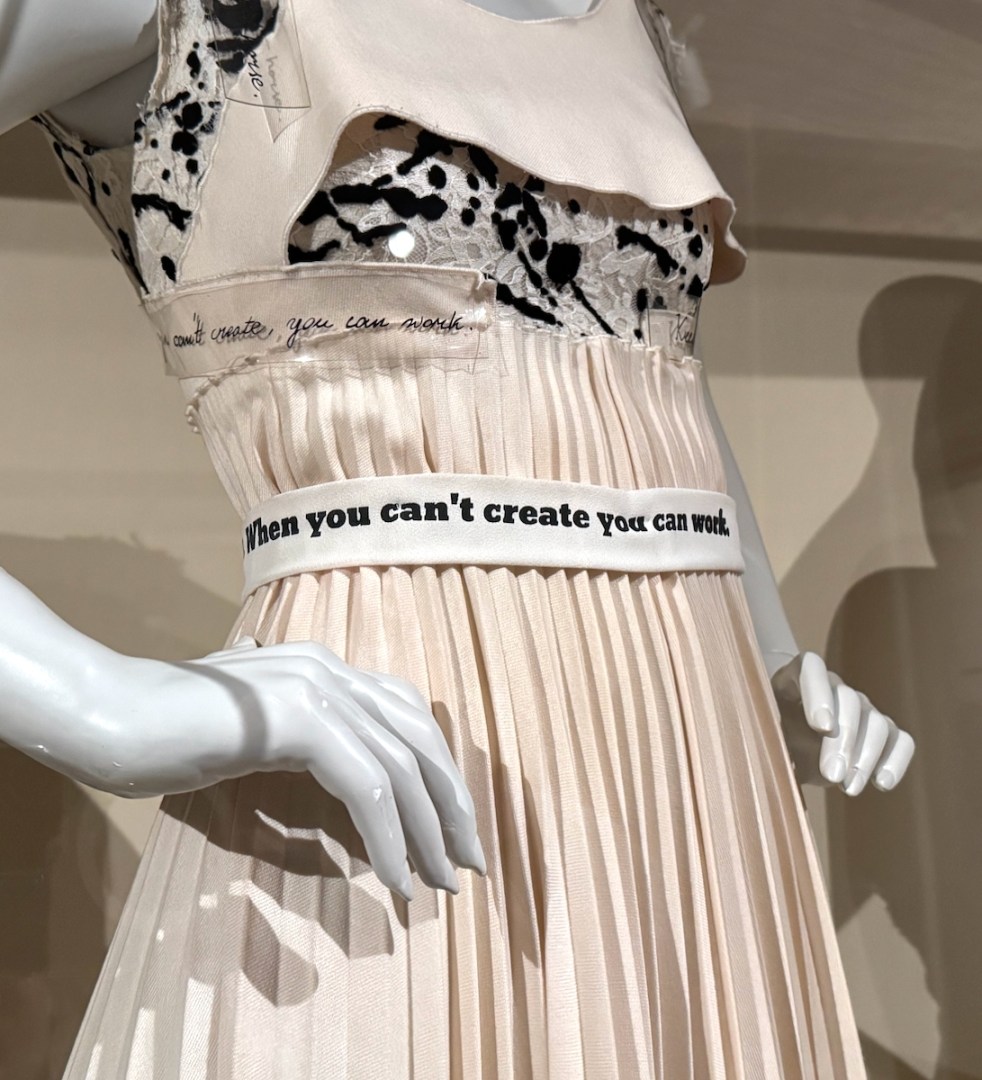
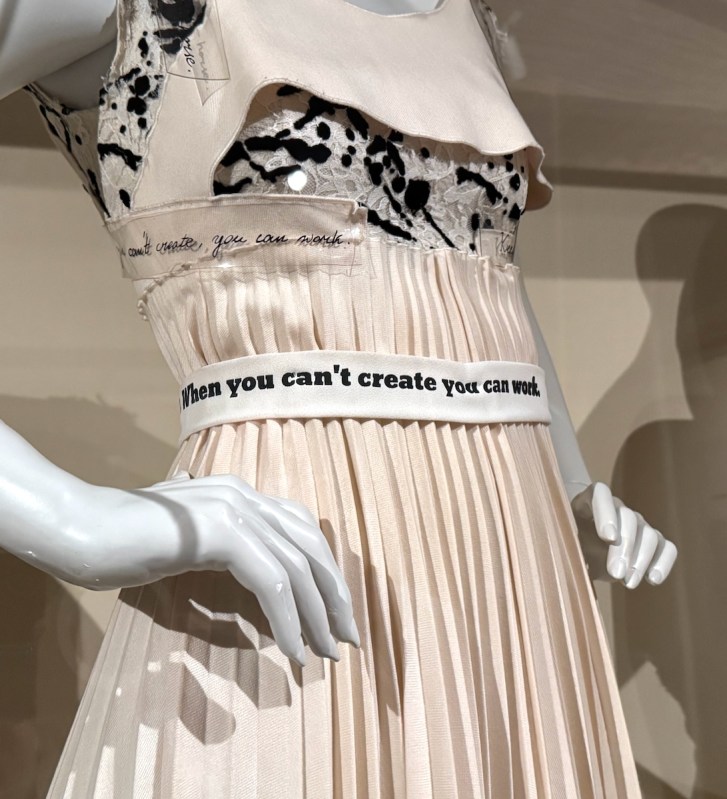
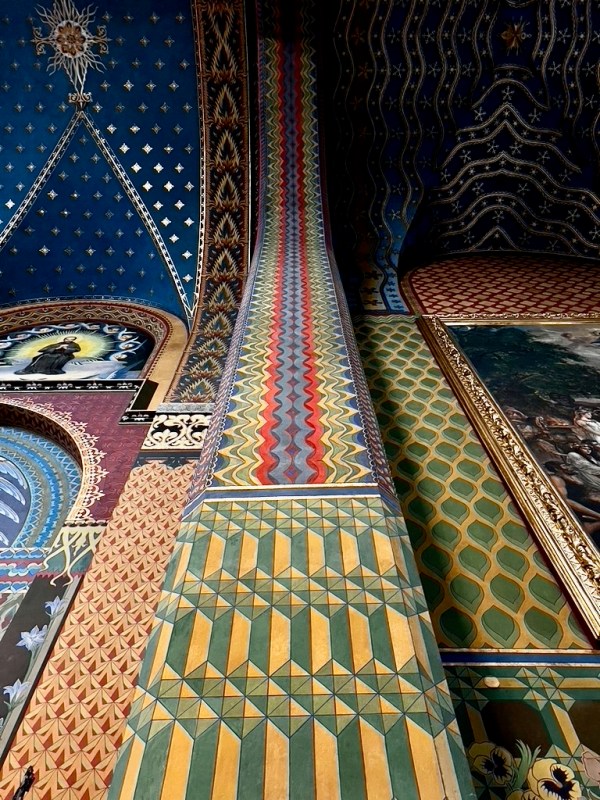
Henry Miller, a writer in the early part of the 20th century, devised a list of rules for himself when writing his first book (Black Spring). I found this whole idea while zipping through an exhibit in Kraków, where a designer tried to incorporate pieces of his so-called Eleven Commandments. One of them, “When you can’t create you can work,” was printed on ribbons and strips of whatever. Of course this phrase caught my eye, and I paused a nano-second to snap a photo then moved on. Tourists! (Look at the end of the post for Miller’s complete list.)

So it’s been that kind of a week, still snowed under by jet lag, I didn’t feel up to creating not one quilty idea. But I could work.

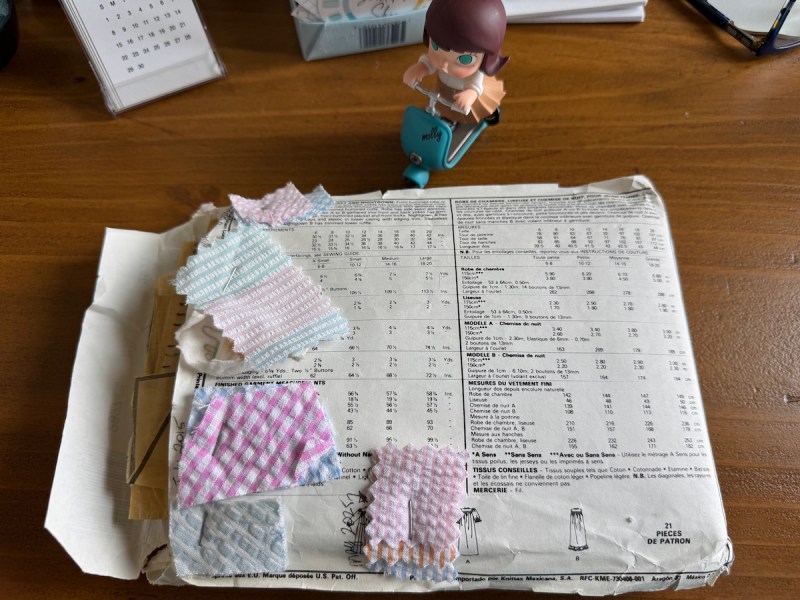
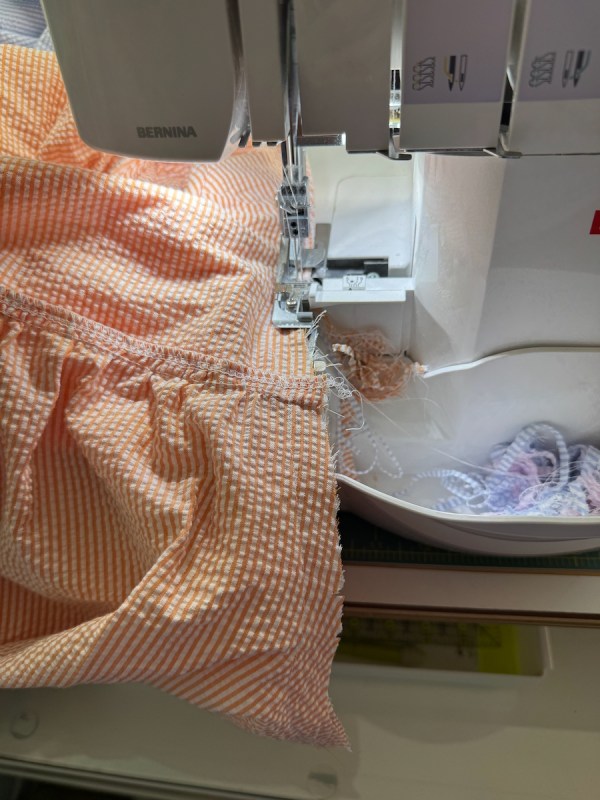
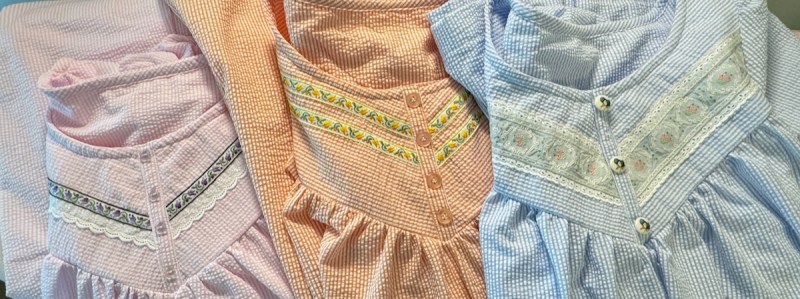
Our weather has started to turn to the hot, dry summer kind of weather, which means that the seersucker that I stashed back in October was going to have to get cut up into my summer nightgowns, using the same pattern that I’ve been using for half my life.

I usually only make two at a time, but this time went for three. I scavenged ribbons, which necessitated digging deep into the garage (more on that, later). The laces bordering the woven ribbon (pink/blue) were picked up on a trip to Austria, a millennia ago. The woven ribbons were purchased when I working at a local fabric store before I had my first child, and when they had wonderful local fabric stores.

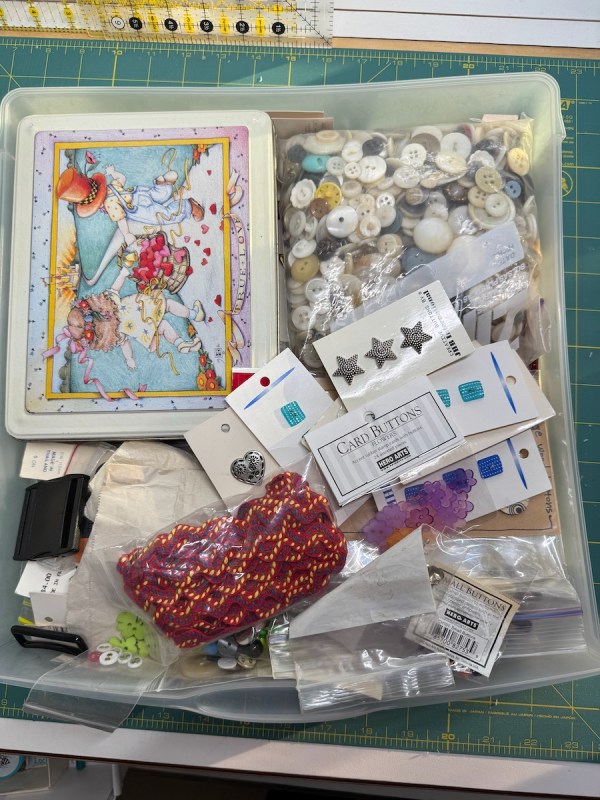
I’d given the Jemima Puddleduck buttons to my mother, which she gave back to me at some point. (Three for only one dollar??!!)

I found them in my button box, still wrapped in the tissue paper the shop lady in Britain had wrapped up for me. Before JoAnn’s closed, I would have felt guilty for stashing away all these treasures. Now I feel sort of proud of myself. We quilters are funny people.

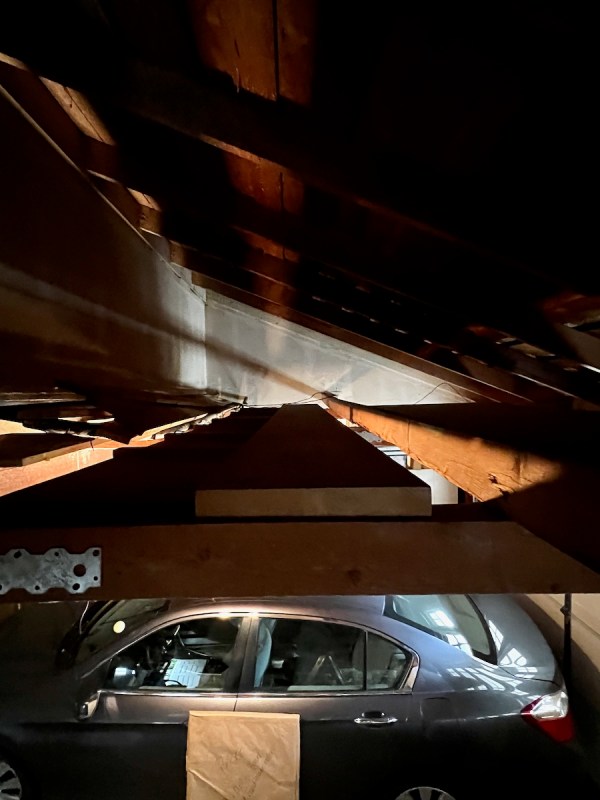
Last time she was here, my daughter said, “Mom, you need to clean out.” Implied was the rest of the sentence: “Clean out before you die so I don’t have to.” Message received; rafters cleared. Working on the rest…later.

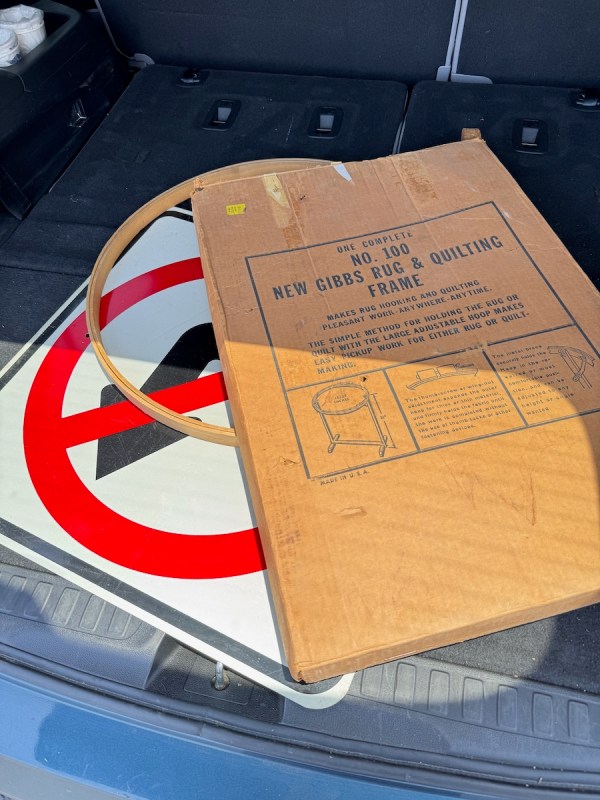
This standing quilt hoop was a heart breaker to leave at the thrift store. The boy taking this treasure from my husband turned it upside, and one side of the stand fell out onto the floor. He kicked it to the side and dumped the rest into the bin. (Perhaps it’s best if we don’t watch what happens to our treasures.)

Sick and tired of podcasts and newscasts, and realizing my stubborn jetlag was still with me — which answers the question about why it took me soooo long to make the nightgowns — I started listening to a new book, recommended by my sister. So far, so good. I will say that I have gotten things put away from the trip, but so much else needs to be dealt with, primarily the emails. Thank you for your lovely notes on the Kraków churches!

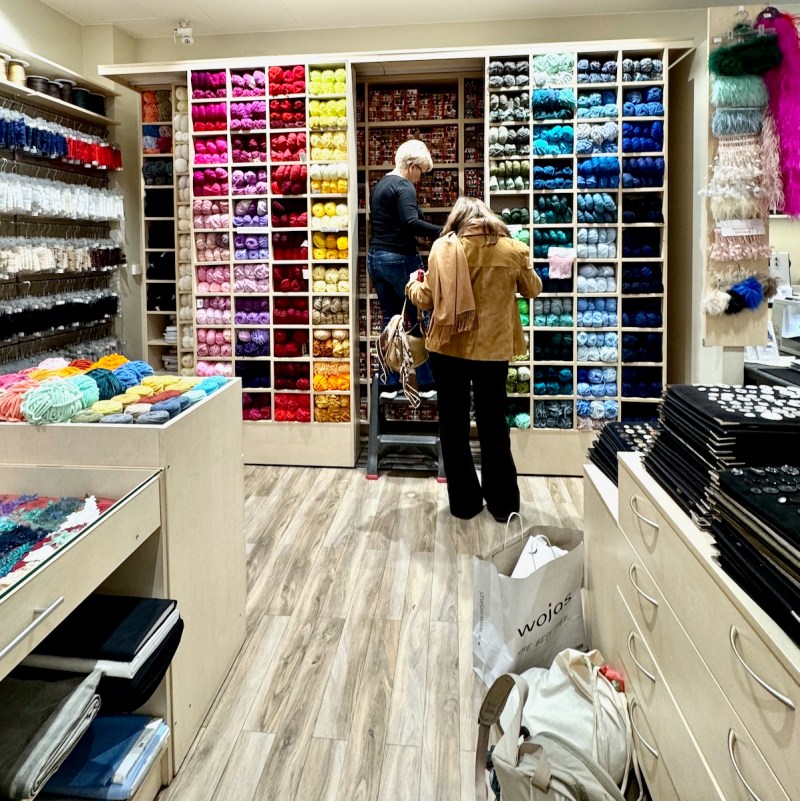
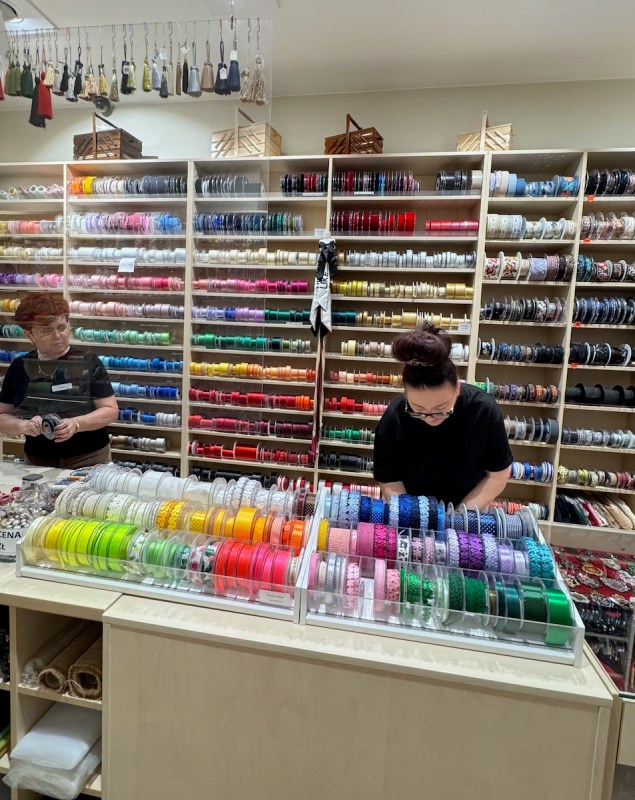
I could have used this Pasmanteria (the word for this kind of a store in Czechia) when I was hunting buttons and trim for the nightgowns. Yes, I found a fabric/notions store while traveling! I purchased the usual: two thimbles.

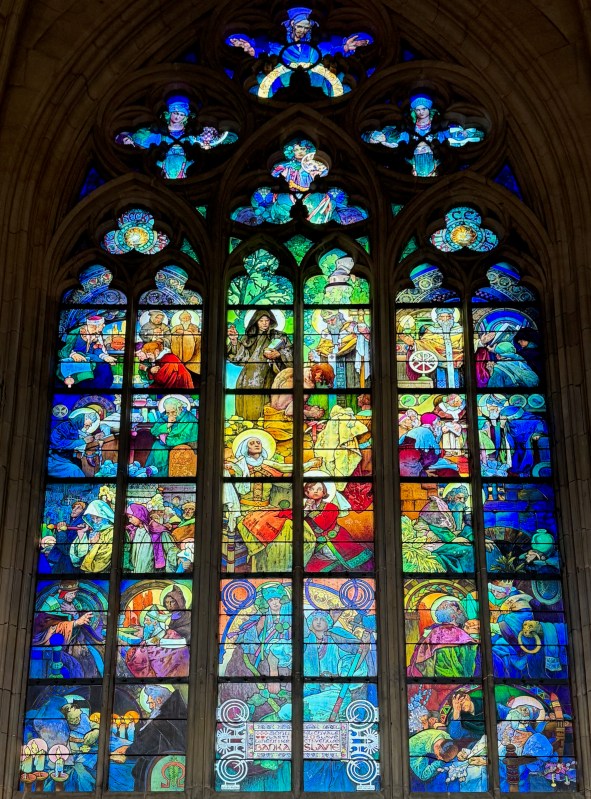
Alphonse Mucha window, St. Vitus Cathedral

I’ll leave you with this two glorious stained glass windows from the St. Vitus Cathedral in Prague, along with (below) this tiny wrought iron work of a woman spinning thread into cloth, from one of the chapel gates:

Happy Working, if not Creating–

Here are the ELEVEN COMMANDMENTS, if you are interested:

  1. Work on one thing at a time until finished.
  2. Start no more new books, add no more new material to ‘Black Spring.’
  3. Don’t be nervous. Work calmly, joyously, recklessly on whatever is in hand.
  4. Work according to Program and not according to mood. Stop at the appointed time!
  5. When you can’t create you can work.
  6. Cement a little every day, rather than add new fertilizers.
  7. Keep human! See people, go places, drink if you feel like it.
  8. Don’t be a draught-horse! Work with pleasure only.
  9. Discard the Program when you feel like it—but go back to it next day. Concentrate. Narrow down. Exclude.
  10. Forget the books you want to write. Think only of the book you are writing.
  11. Write first and always. Painting, music, friends, cinema, all these come afterwards.

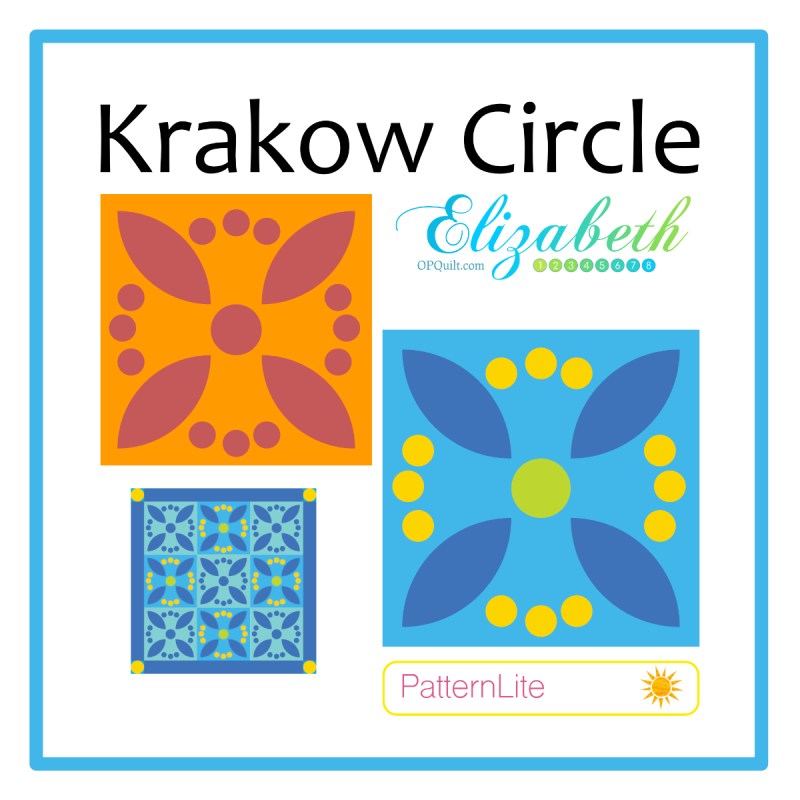
This little PatternLite pattern is a reminder of what we see when we get out of our own town.

You can find it in my Quilt Shop, on PayHip. Enjoy!

Patterns by Elizabeth of OPQuilt · Something to Think About · Travels

Quilting and the Churches of Kraków

Traveling is a blitz on the senses, a clearing of the mind, and making connections that are new or novel. I’m always making quilting connections when I travel, I suppose you are too: new patterns, repetitive designs that could be a quilt are not uncommon on our Instagram feeds or in quilt shows.

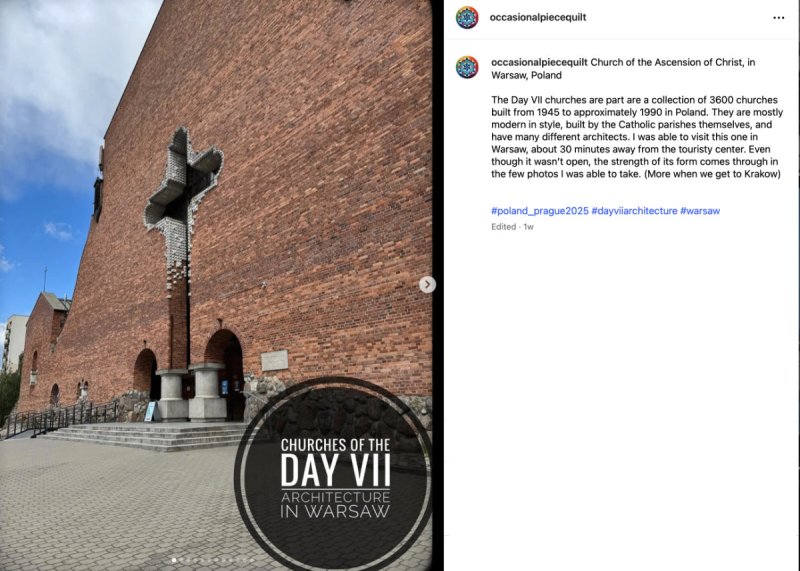
If you are new here — and welcome — I often take a small diversion from the *making* to the ideas that propel our quilts. This is one of those posts, and it centers around the creativity shown by a group of Polish parishes during the Communist years in this country. And actually, they are all over the country of Poland, not just in Kraków.

Screenshot of Instagram post

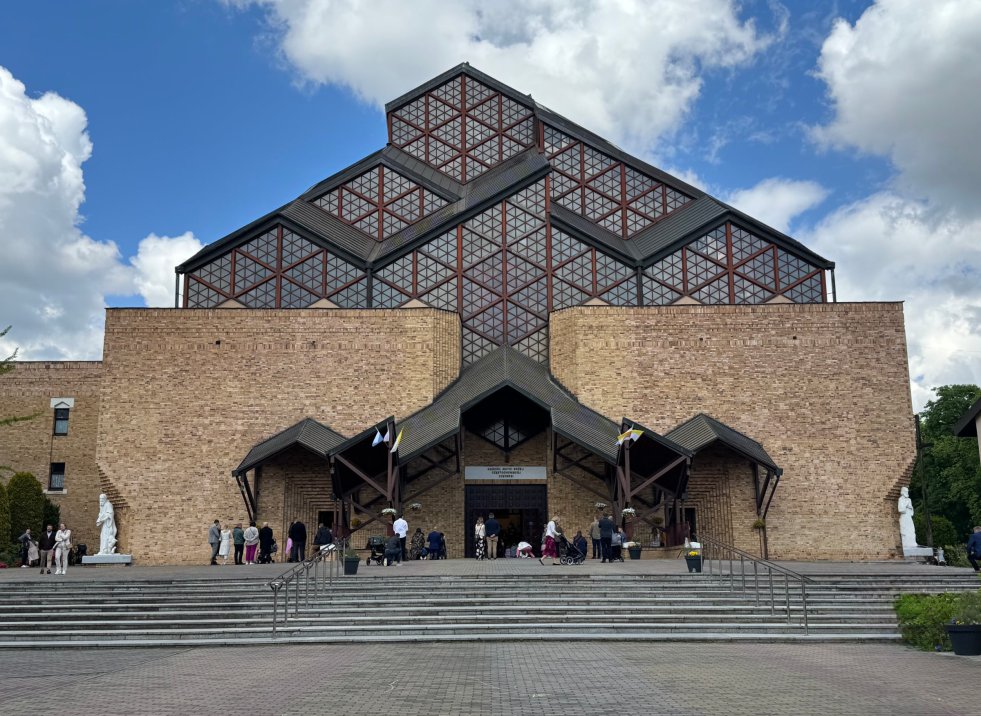
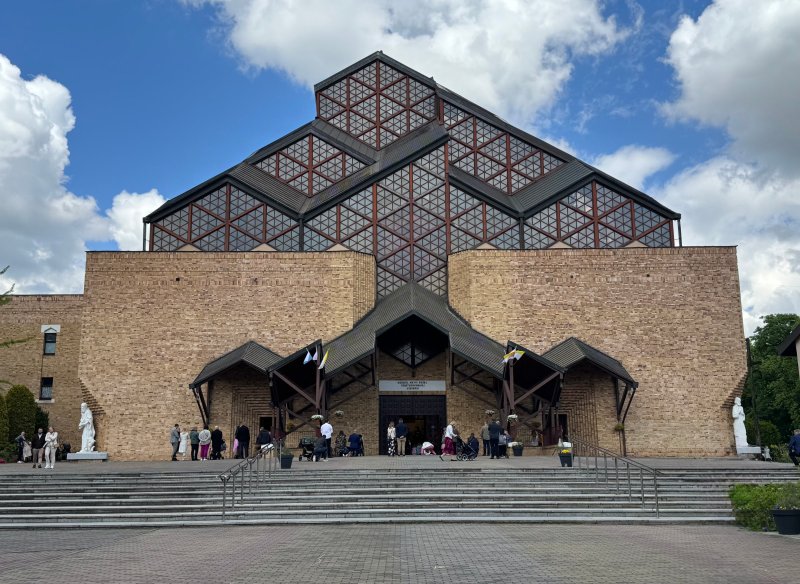
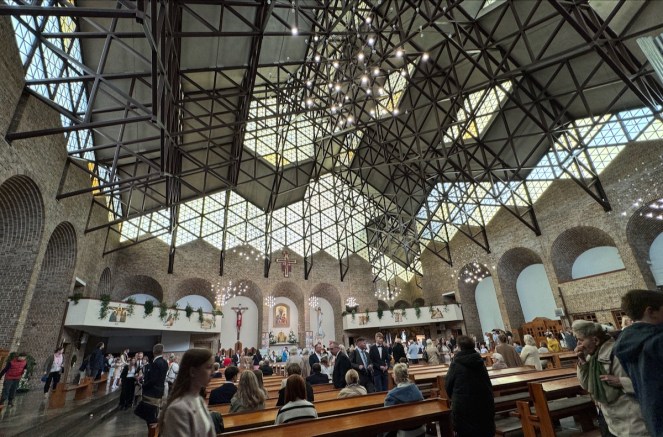
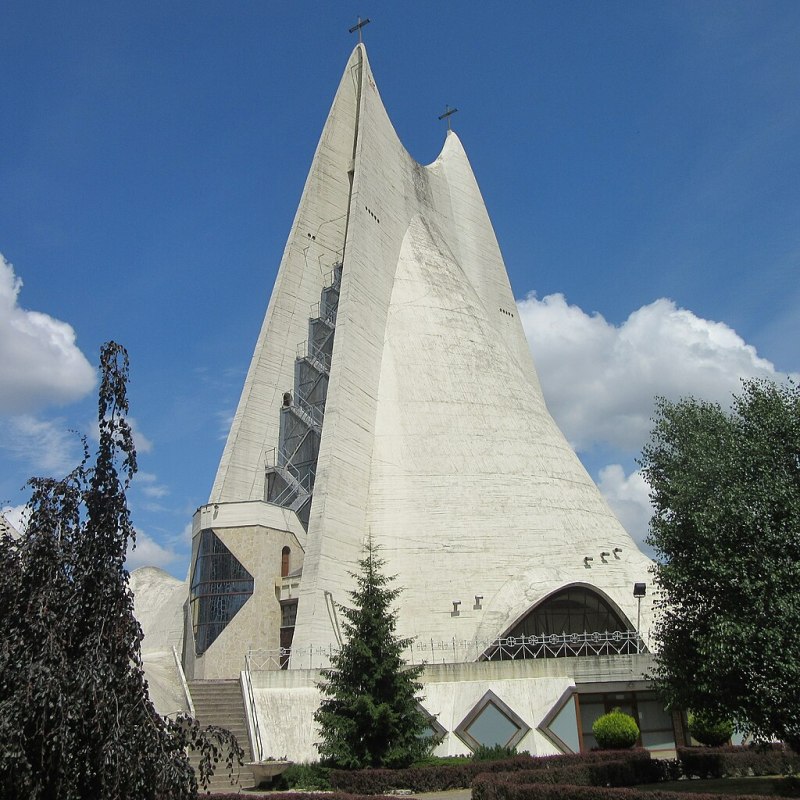
I wrote about the church in Warsaw, our first one to see, and believe me — now that I am home — I vow that if I ever go back to that lovely country my husband and I will rent a car and go see more. They are so different that the usual gothic and decorative churches that we tourists usually go to. (I do like some of these and will show a couple more in this post.) I first found out about what’s known as the Day-VII Churches during the usual pre-trip fatigue: searching for what to see in a given city, I typed in “churches in Kraków” and saw a photo of this church:

Our Lady of Częstochowa Parish, Kraków – Poland

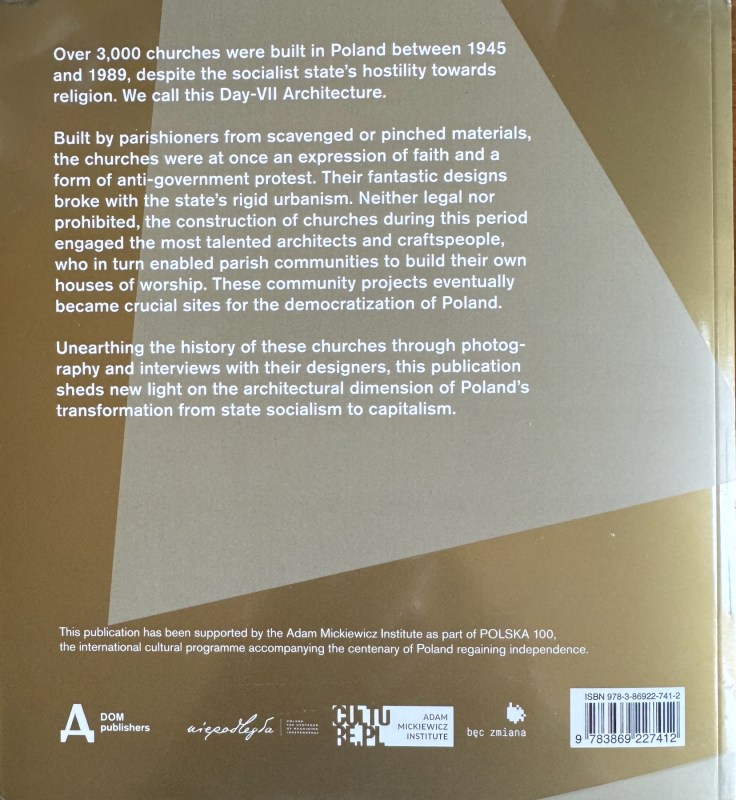
Whoa. All those triangles, the different angles, the airiness — some architect had been incredibly creative in making this. I found out that there were about 3600 churches with similar heritage. The man who hunted down and gathered all these — Kuba Snopek — also worked with Izabela Cichońska and Karolina Popera; together they compiled a catalogue, which I ordered and read. I watched his Powerpoint presentation. I hunted and searched and read and soon realized that I was limited by my time in Poland and had to choose what we would go see. Sometimes there was information and in English, and other times there was not.

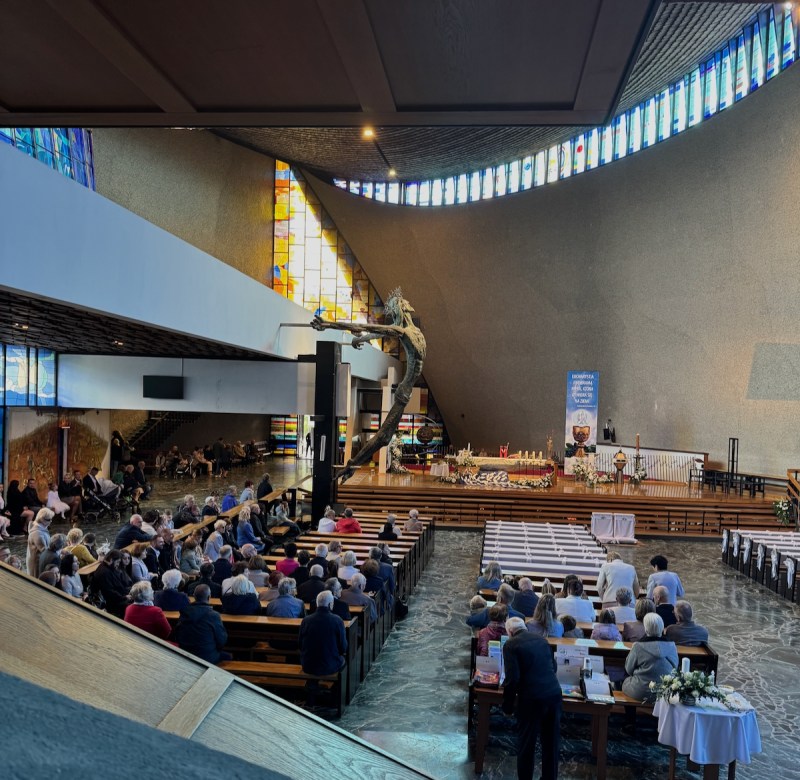
Interior, Our Lady of Częstochowa (Some video of the interior)

A lot of these churches were impacted by the changes of Vatican II. In reading about this preciously unknown subject, I learned a lot about how the desire to have the priests more in front of the congregation and to include the participants in the worship experience, changed how the architects designed the churches. Communication with the Vatican was spotty, at best, during the early years after the war, so some parishes/architects turned to the ideas found in theater construction; broad expanses became more common instead of the more traditional narrow nave and side aisles.

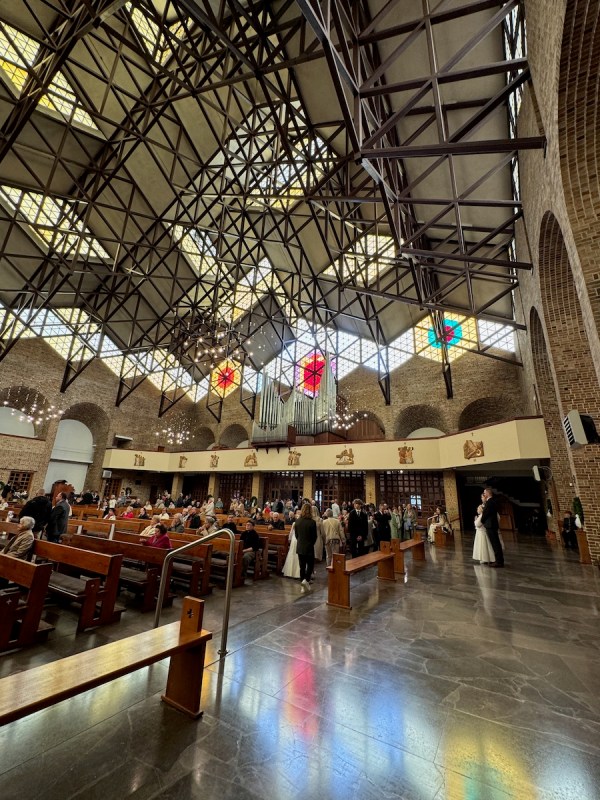
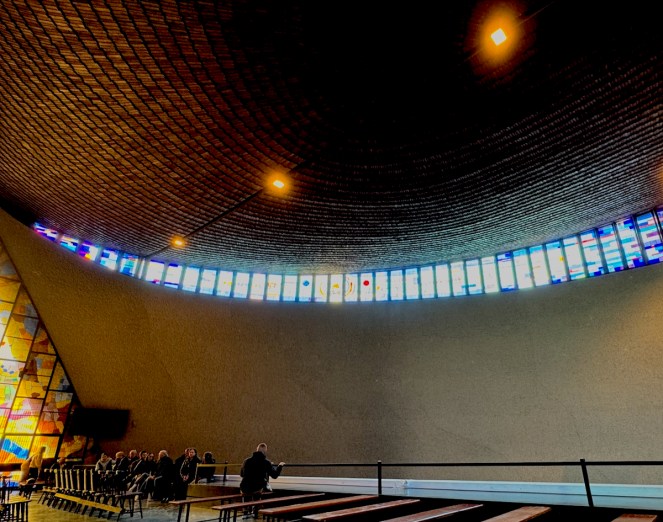
(looking toward the rear of church, with hexagon windows)

While we did go to these on a Sunday, we worked to not take photos during their services, with only a couple of exceptions. However, there were many photographers around that day, as it was a celebration of First Communion for a whole group of young people, and the joy and celebration was palpable and only added to the experience we had.

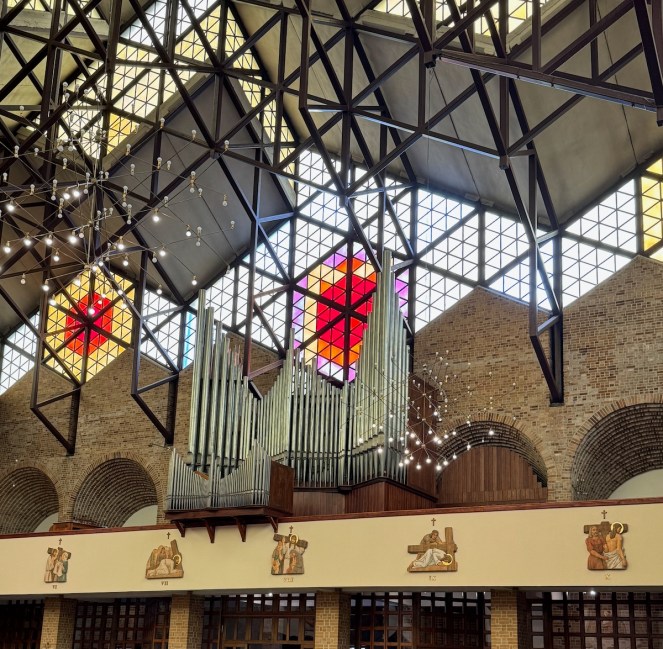
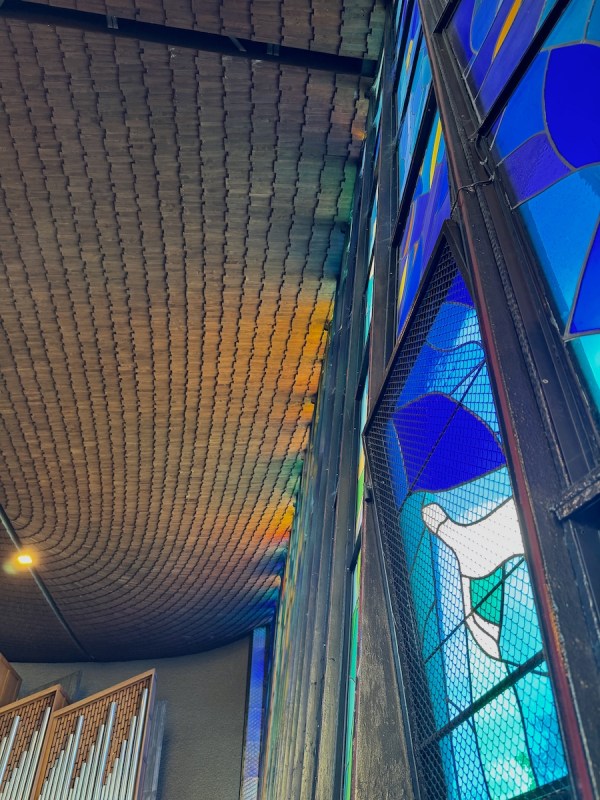
(zoom-in of hexies and organ)

Often when I see a new quilt design, I’m asking How did they do that? Why are the colors distributed that way? Why were those colors used? and finally, Can I replicate this?

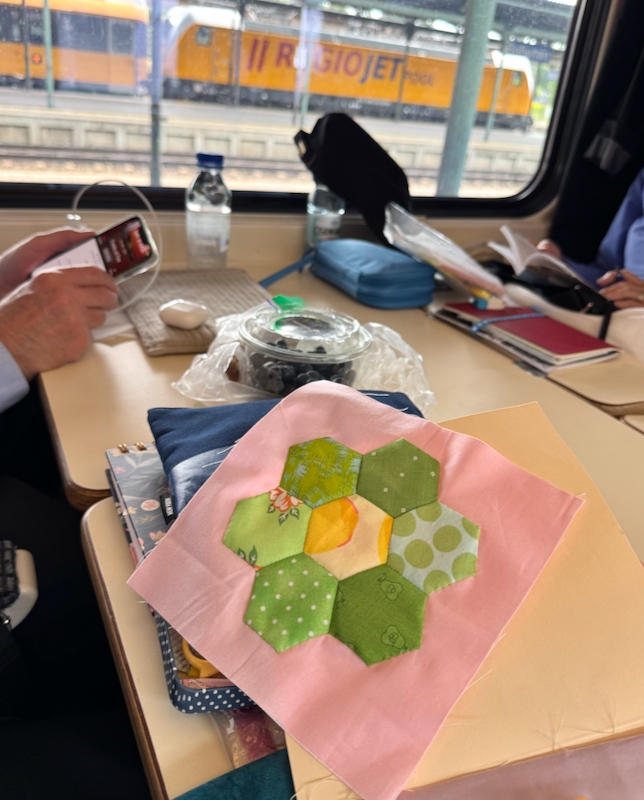
I was already working on hexies on our train and airplane rides, so I was familiar with this element, certainly.

But what prompted the architect to insert them where they were? Was the lack of materials the reason for subdividing all those larger triangle windows? I knew that many of these churches were made from whatever was available, and sometimes the parishioners themselves were working at night by the lights of car headlights, using their own small concrete mixers to help pour the larger structural elements.

from here. This church has a nickname of the White Batman, which we did not get to see. Be sure to link over to see the construction photos, all very rudimentary, with lots of scaffolding since there were no cranes (which couldn’t be obtained at that time).

Do we arrange designs by the amount of fabric we have? All.The.Time. I found myself thinking about the nature of making, of design. Do our construction techniques vary according to the design we have in mind? Yes.

However, mostly I was in awe.

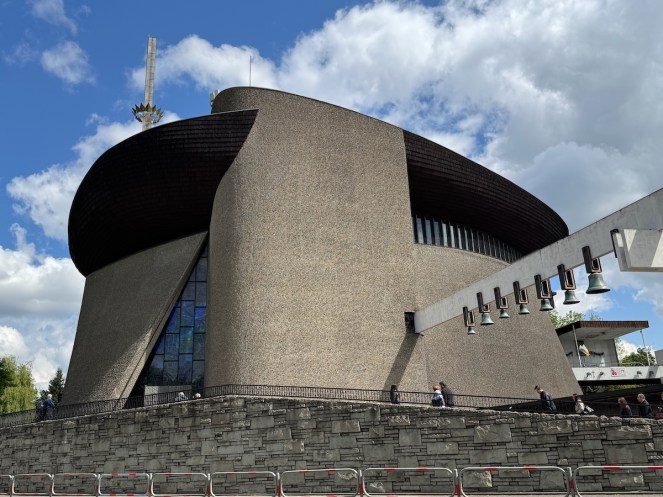
Another church, close by, was built in a giant housing project, nestled beside buildings, as were many churches. Imposing in stature, they nonetheless adapted to the area they were in.
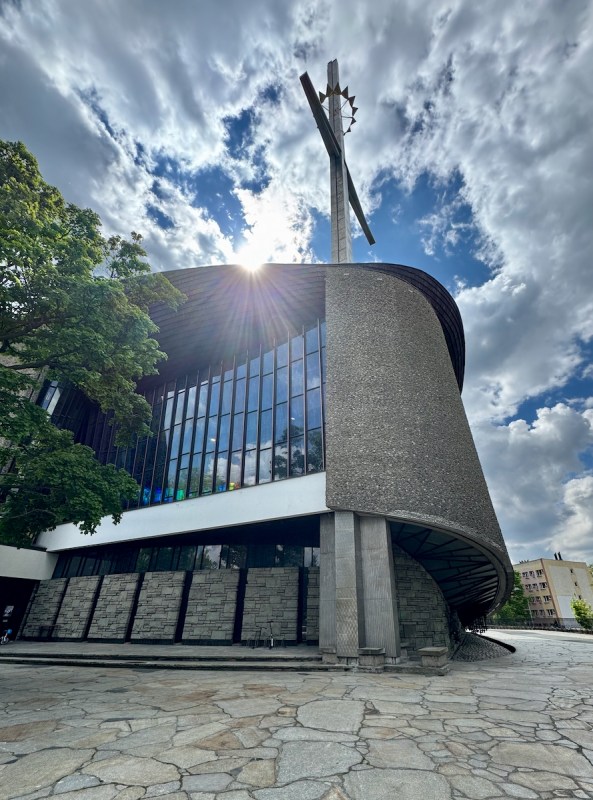
The entry is behind that square stone wall. We arrived about 10 minutes before their services started. I had done my research, but somehow open hours were hard to find, but I knew from my own experience that Sunday was probably a good day to visit a church.

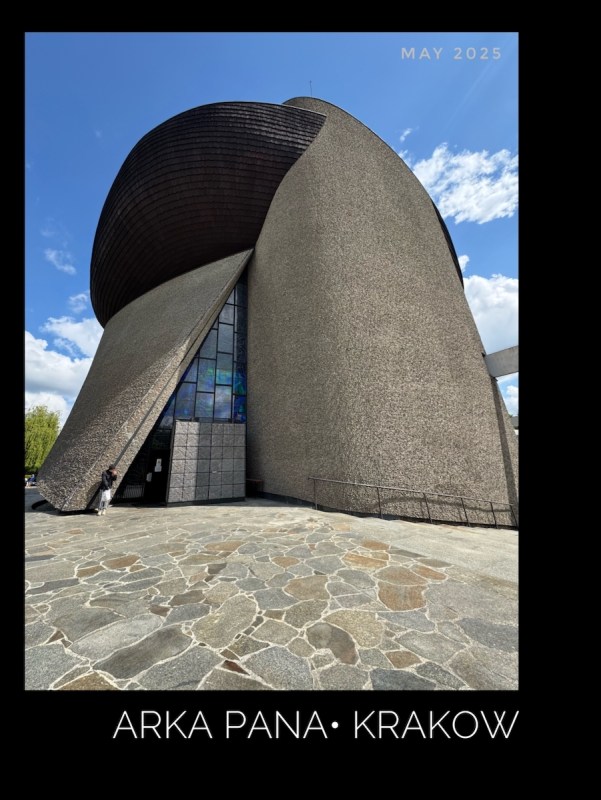
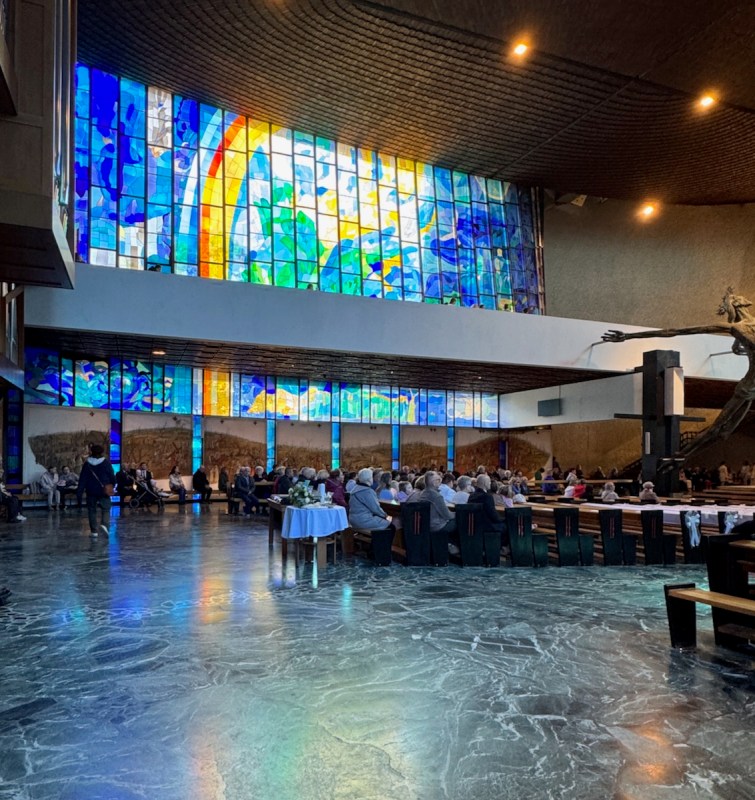
The full name of this church is Church of Our Lady Queen of Poland, Kraków, but they call it Arka Pana, and it is in the Nowa Huta section of the city. The outside is clad in small rocks, and St. John Paul II, who had been given a moon rock, donated it to the church (although I think it is not embedded in this concrete).

(upper balcony) We left just as the service started, and went outside:

I wrote this on Instagram:
Our Lady Queen of Poland Church, also known as Arka Pana, is in Kraków, Poland and is one of the Day-VII churches. They are a group of churches built from 1945 to approximately 1990 in Poland, and they are mostly modern in style, built by the Catholic parishes themselves, with different architects. This church was about 30 minutes away from the touristy center, and we walked through a huge Communist housing block to reach the church. It was well worth the effort. We snapped a few shots before Mass began, and only after seeing all the rest of the congregation snapping photos (it was First Communion Day) did we sneak a few more. We then slipped outside to admire this church, reminiscent of Le Corbusier’s Notre Dame du Haut in France.

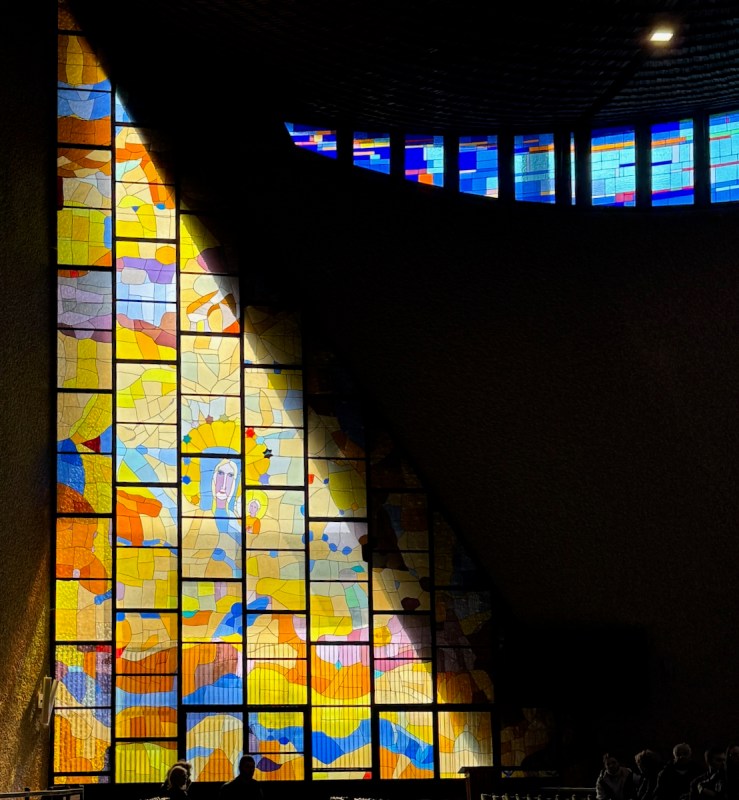
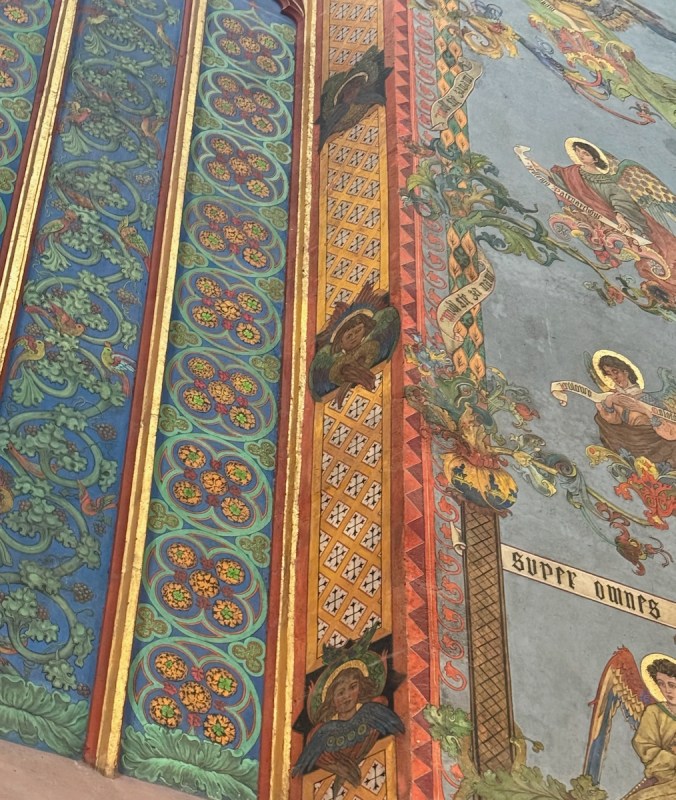
Now for the more traditional inspiration, the Basilica of St. Francis of Assisi. It’s more modern –haha– as compared to some of the other churches in the area. I learned that:

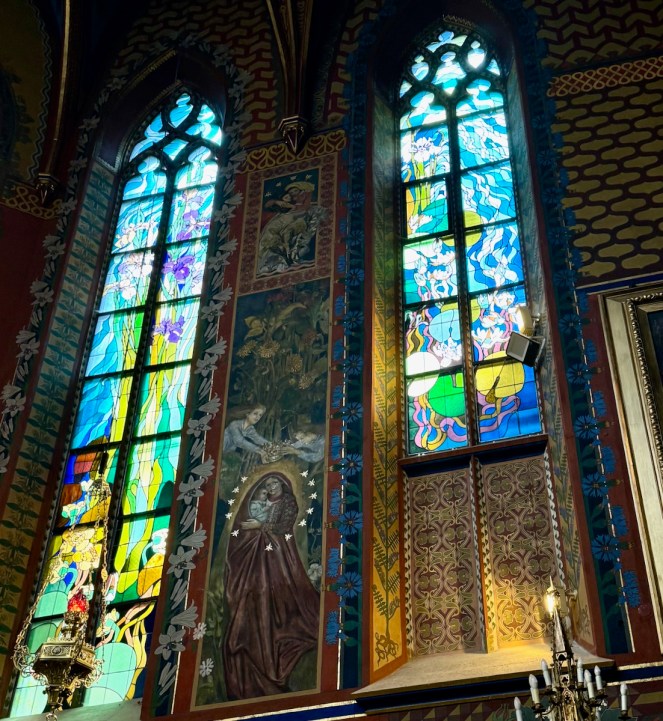
It’s that design by Wyspiański which engaged me:

Parts of these images remind me of the economy blocks I’m currently working on.
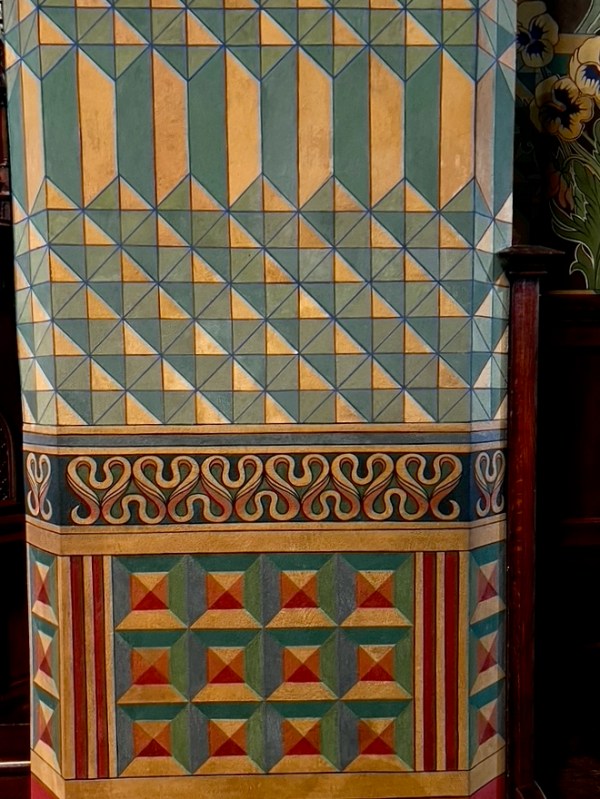
It’s not exactly the same, but a suggestion.
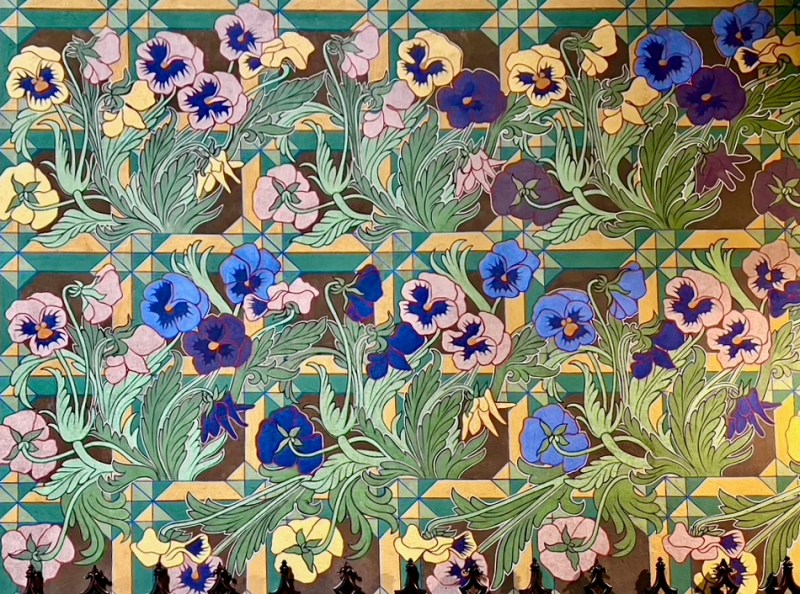
Yep. I collected pattern and image and ideas and great ideas to fold into quilts in the next little while.

a Wyspiański window; I loved all his wall paintings of flowers!

Our trip tag on Instagram is #poland_prague2025 if you want to see more of our trip.

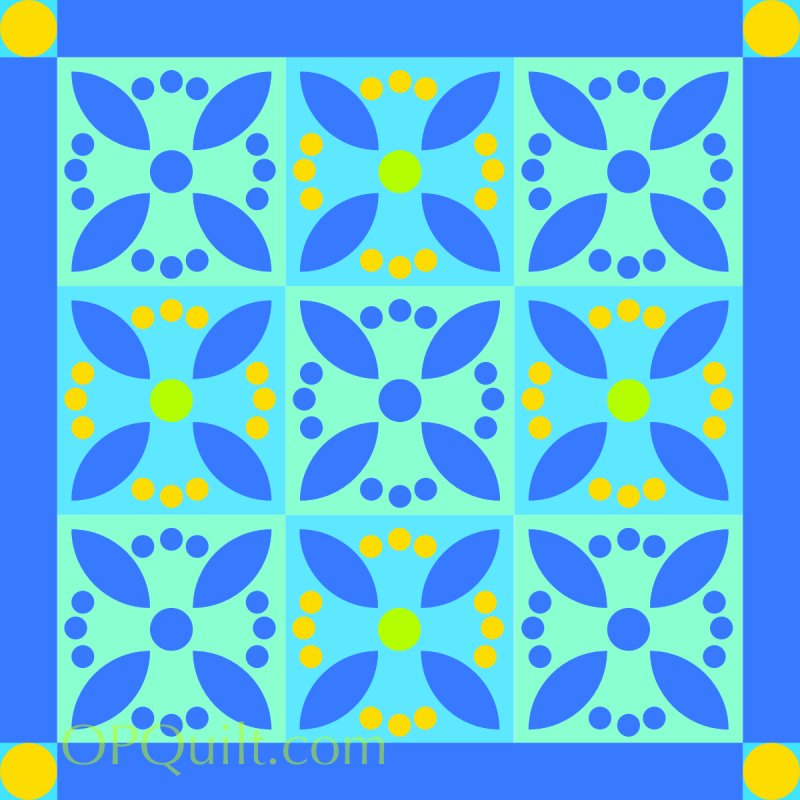
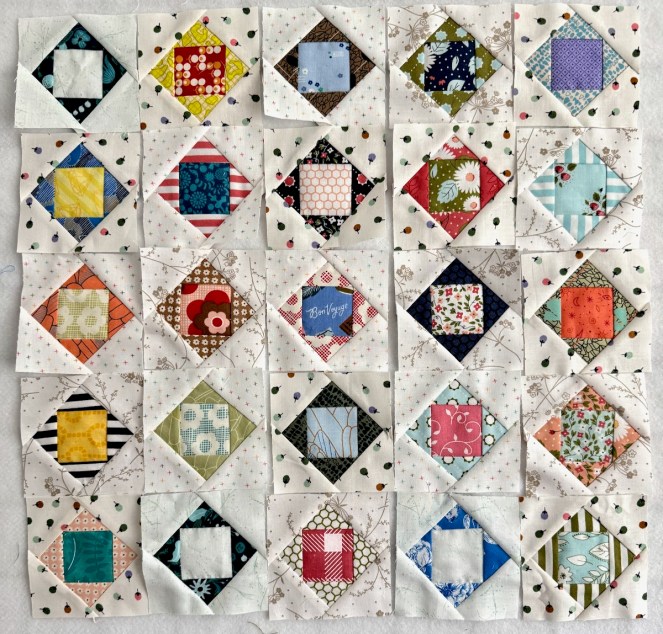
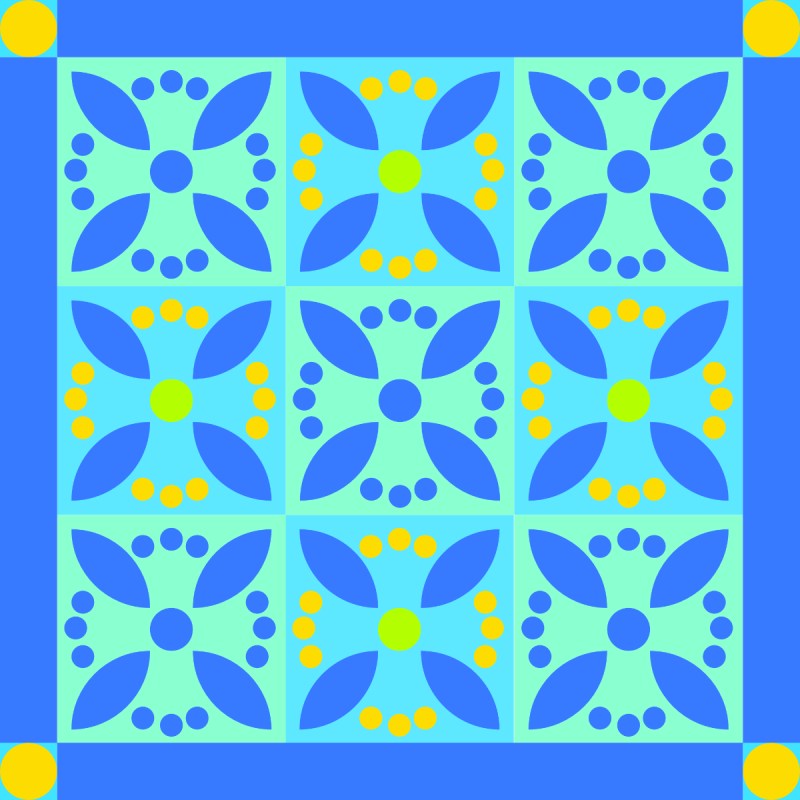
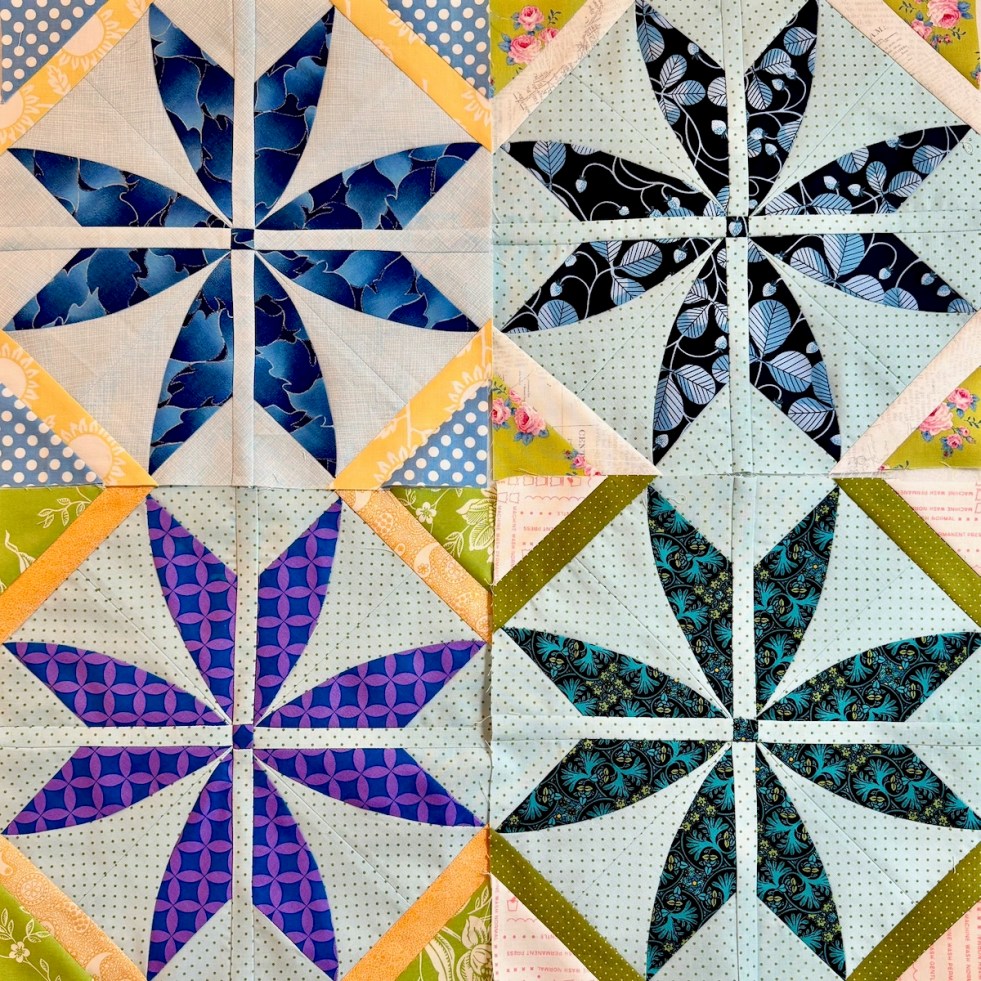
And because you’ve been so patient in exploring these ideas, I worked up a small idea from the blocks in St. Mary’s Basilica. Below is an illustration of the pattern and a mock-up of colors. Link to quilt pattern is here.

Obviously, I drew color inspiration from the windows of Arka Pana and Stanisław Wyspiański!

(back of catalogue)

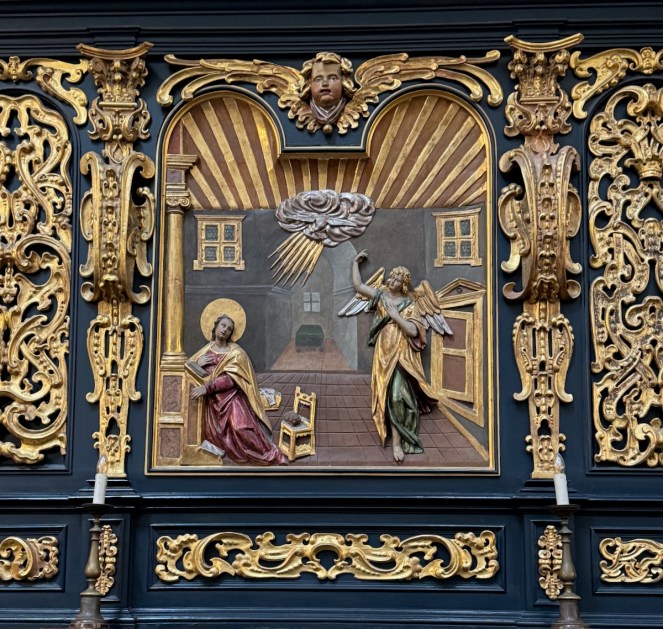
Also from the Basilica of St. Mary in Kraków’s main square. I love seeing depictions of the Annunciation.

300 and Beyond · Quilt Finish · Quilts · Something to Think About

Duck Creek • Quilt Finish

Duck Creek • quilt #302

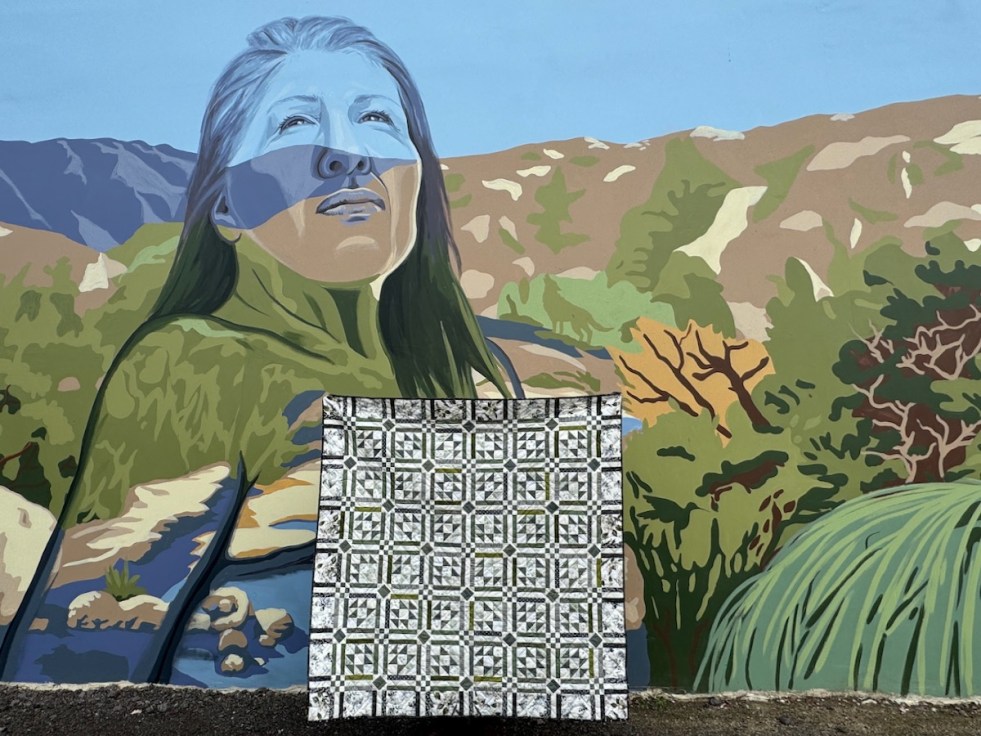
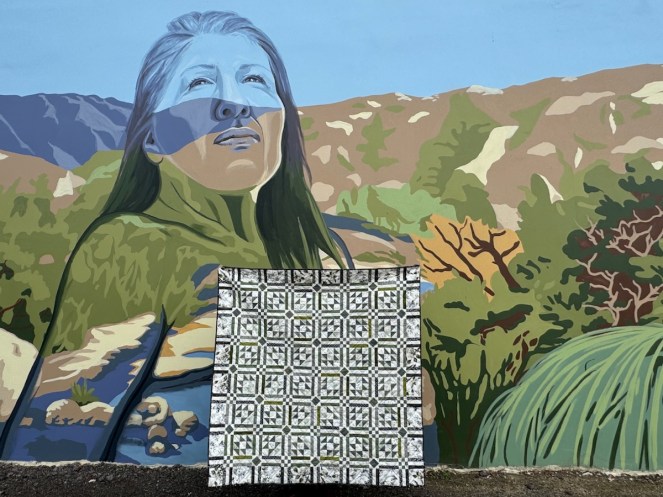
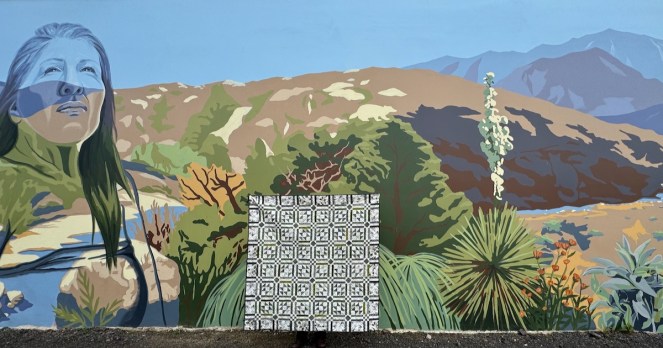
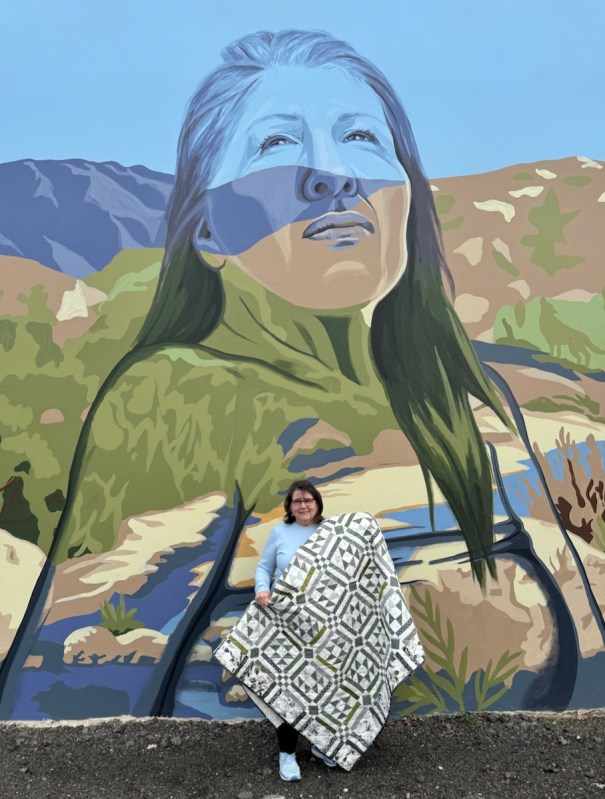
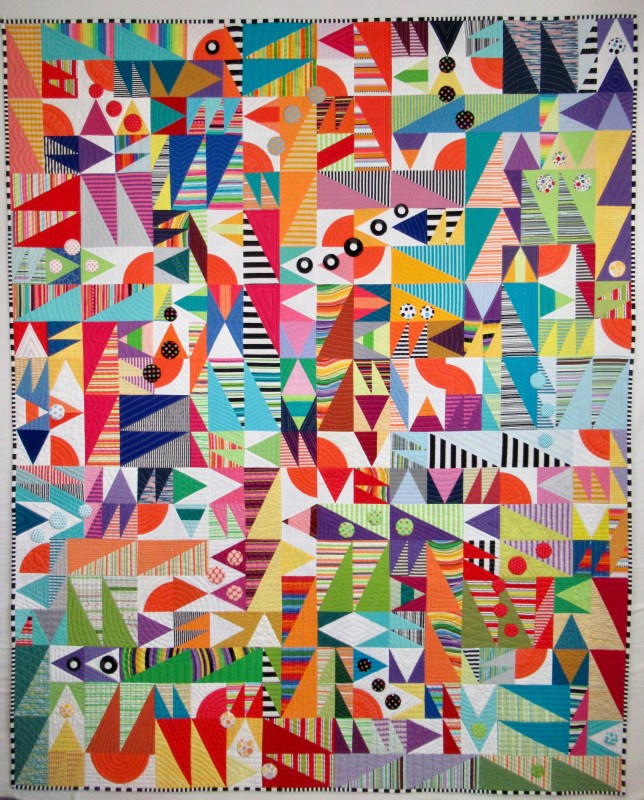
I know you are really here to see the info on this beautiful mural. It’s by Rosy Cortez, and was done under her guidance by a team of helpers. (Links point to her Instagram page as well as to the website for the mural.) I really love that it’s three different ages/stages of women, honoring our local native tribes. I’ve been two of these ages, and am now in the third (hint: I’m not pregnant).

Sometimes the title of this mural, We Are Still Here, reminds me of all my quilter friends. We cut and piece and hang out in our sewing rooms, studios, basements, garages, spare bedrooms. Every once in a while we pop up with another quilt top finished, the binding on another, and still another in stages of quilting. Dedicated, we follow in the way of artists everywhere: we have the vision. We have to see it through.

Recently an article titled “The Art of the Steal,” discussed the number of original book plots possible. In 330 B.C. Aristotle thought there might be just two: “simple (change of fortune) and complex (in which the change of fortune is accompanied by setbacks and reversals)” (by Emily Eakin, link above should allow you to read the entire article). By 1892, Rudyard Kipling thought there were 69 plots. Between Kipling and our current day, the number fluctuated, and by 2004, Christopher Booker proclaimed there were just seven: “the quest, vanquishing the monster, rags to riches, voyage and return, comedy, tragedy and rebirth” (Eakin, ibid). Not to let the number lay there, another group used a computer in 2016, and proclaimed that the “world’s stories boiled down to ‘six basic shapes‘ (Eakin, ibid.)

So how many original quilts are there in our quilting world? Like the novelists, do we have just six basic shapes?

Two of these are triangles, the rectangle is just a stretched-out square, and the curved wedge is just a segment of a circle. We have rectangle triangles, skinnier triangles, ray-shaped triangles. You’ve used them, I’ve used them. Are we like novelists then? Taking a few basic shapes (boy meets girl, etc.) to make our quilts? I have a child who really likes triangles. Another of mine just likes big quilts, bypassing design altogether. Another likes red quilts, and the last child just wants them all (bless her).

I can satisfy all their requests, for sure. And like my children, some of us are attracted to medallion quilts (my hand is the air), others like samplers, and still others would be happy making intricately pieced quilts for the rest of their lives in a blissful sort of who-cares-about-shapes-let’s-throw-them-all-in-at-once attitude, and come out with spectacular pieces of art. The reality is we take, we borrow, we steal, we adapt, we climb on top of, we turn it around, and then make it ours. Here’s one of my recent favorites, from Linda Hungerford, of Flourishing Palms.

Feelin’ Groovy, by Linda Hungerford (used with permission)

So the bottom line is for me, at least, I think there may be very few original quilt designs. No one gets to claim copyright on a triangle, or a circle; we all know that. But where our creativity comes in, and why we are still here, sewing machines humming, has to do with how we use those shapes, those fabrics, and how big we make it and how small we make it.

I have two copies of Barbara Brackman’s Encyclopedia of Pieced Quilt Shapes, and I also have her version of that for Appliqué. Sorry to say that I feel the same about appliqué: most of us are imitating the vines, swirls, flowers, stars and animals of the appliqué world that we’ve seen before. I have twice had famous quilters threaten me with a lawsuit because they believed I was making money off their designs (seriously?). One was well-known for pinching other people’s designs, too. I pulled that pattern, and have made it free for those who are interested, for who needs a lawsuit? The other quilt I never went far with, but I’ve seen variations of it. One last episode of being accused of plagiarism left me shaken, and I lost a good friend over it, even though the design was available freely online. I really hate run-ins with famous territorial quilters, as most of the time I’m just in my tiny world, doing my thing.

The Duck Creek quilt is made of Cat’s Cradle blocks, sashed with cornerstones and pieced rectangles, and it is the design of Lisa Alexander & Susan Ache, from their book Celebrate with Quilts. I saw this pattern at our Guild night, when Char brought her book to show a couple of us. I was hooked on this design, bought the book and went for it.

The subtitle of the Times’ article has the phrase “Copy that” as in, we get it. But sometimes we quilters seem to be the least able to “get it,” I think. I have seen some incredibly original and interesting quilts this last year, and yes, most all used the shapes above. But they are originals because of the way they used the shapes, colors, negative space and so on; maybe we don’t need to get so territorial about our shapes? We quilters can be “original” even when working with those basics, like Linda’s amazing Feelin’ Groovy.

Nobody can “copy that!”

Keep making, keep quilting, keep being here–and have fun at QuiltCon this week, everyone!

UPDATE: Some truly unique and original quilts were hanging this year at QuiltCon 2025. Here’s a post that will show them off. And here. And here. And here. And here. And here. And here. And here.

Quilts · Something to Think About · WIP

Incomplete

I keep finding WIPs. Here’s one from eleven (!) years ago:

More about the process on this post, but this was discovered when I was looking for a February-ish theme for my Instagram Monthly Marker post, and found this.

I have this many finished. Even though I still like this group, I don’t even think selvage quilts are in fashion anymore, are they?

It wasn’t until I tried cutting out pieces for the Oh My Cacti Quilt pattern that I realized what a helpful thing are these little tags. I have digitally wiped all the dimensions off them so as not to give away her pattern, but yes — I’m in favor of little pieces of paper that tell you what to cut.

So this is one of those in-betweeners: technically still a WIP because it’s not yet quilted, bound, or labeled. But hey! The quilt top is finished! I met my goal of piecing a (complicated) quilt in one week’s time. And then I just laid about like a sleepy toddler the next week. Good news: it’s already been dropped off at the quilter.

BLOCK OF THE MONTH 2025 PROGRESS

I finished up Sherri’s February Block of the Month (BOM) and it has this cute little ribbon star in the middle. If you need calming down from the dumpster fire in your life (not naming names, here), put on one of Sherri’s videos and you will end up smiling and believing that you can Conquer All. She’s like that in real life, too.

Here they are together.

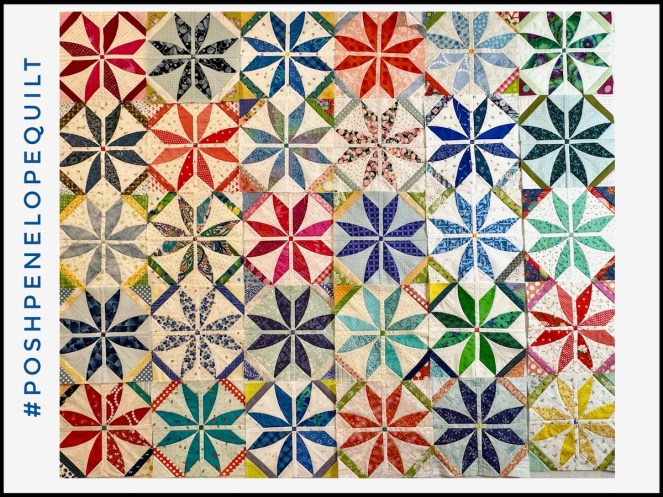
My Posh Penelope blocks are coming along fine. We are supposed to make four per month, Carol and I. I got in the groove and made more:

It’s tempting to just use all one color family in the blocks, but I finally busted out on that last one with the blue corners.

Here’s the family, so far. I could go green in March…but then there are also a TON of blues in my stash closet. One can never have too many blue blocks in my world, so we’ll see.

Farm Report

In spite of the signs on the front of the egg case, we seem to be doing fine in this department. At this point in our new presidency, I’d almost rather have the eggs scarce again and a calmer presence in the White House. When I saw the metal letters for USAID pulled off the building and on the ground, my heart cracked open a little. This agency was one of our best soft powers we had, which made me remember when my family lived in Lima, Peru for two years. My father had a dual appointment with Stanford University and USAID, working with the government of Peru, building bridges, making connections.

This was our family photo in 1966, just before we left our mountain home in Utah Valley and flung into the great wide world. There were many doing this at this time, for we believed in our global mission of making friends across the world, building bridges, and yes, maybe currying favor before the Communists in the Soviet Union got there first. Maybe that idealism just couldn’t be sustained once the enemy had dissipated (I do still have a Soviet Union guidebook), but oh, wow. The scenes and the stories from this week have broken my heart twice: once for the death of the ideals that USAID espoused and worked and accomplished, and once more for the way it was –and is — being done. Not in the open, where it can be debated and talked about, as is our usual approach here in the US, but in secret, with skullduggery and deception and anger, displacement and many many lives at home and abroad being harmed.

Whatever comes of this episode in our American History, our lives in the 1960s as a family were changed forever. We had lived outside our little enclave and safe enclosure and had been exposed to new ideas, and people who spoke a different language. We went to an American school, but the rest of our life was with the community in Lima. We traveled only a bit, for we were not rich, but enough so I have a picture of my little brother and I, standing in the town square in Huancayo, Peru:

I have very few photos from that time. (Wouldn’t I love to go back with an iPhone!) But the best gift from my father’s work at USAID and Stanford was the idea that people are people all over the world. This I hope to carry with me forever: the world is good and welcoming and we need to be a part of it.

Now, stay away from the news and get to quilting!