300 and Beyond · Patterns by Elizabeth of OPQuilt · Quilts · Something to Think About

The Zeigarnik Effect: the Power of the Unfinished

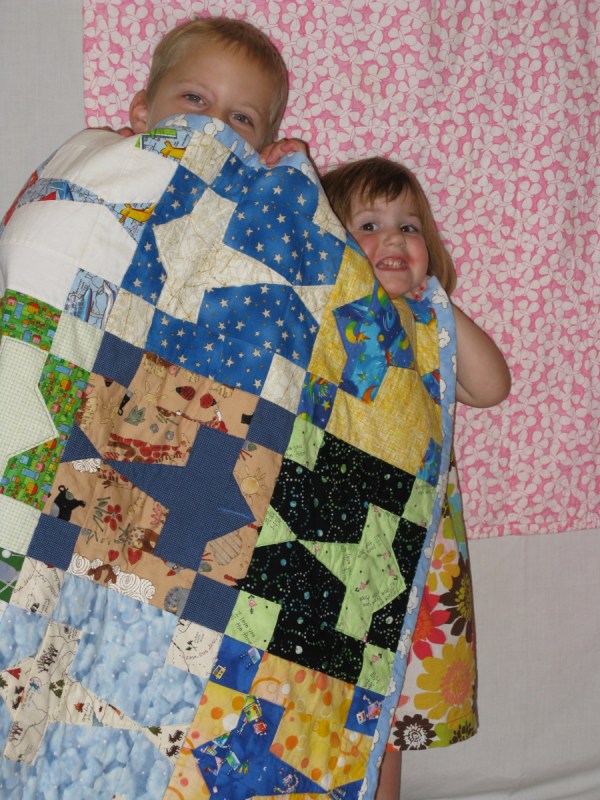
Adrian Zumbrunnen, a human interface designer, wrote recently about how “Blooma Zeigarnik [on the right] and her professor of Gestalt psychology were having coffee at a bustling restaurant…While waiting for the check, the two eagerly discussed an odd observation they both made. Somehow waiters seem to better recall bills that were still open than the ones that had been settled. It seemed like the moment a bill was paid, it vanished from the waiters’ memory. Based on this simple insight, Zeigarnik conducted a series of experiments that showed that unfinished tasks loom larger than finished ones.”
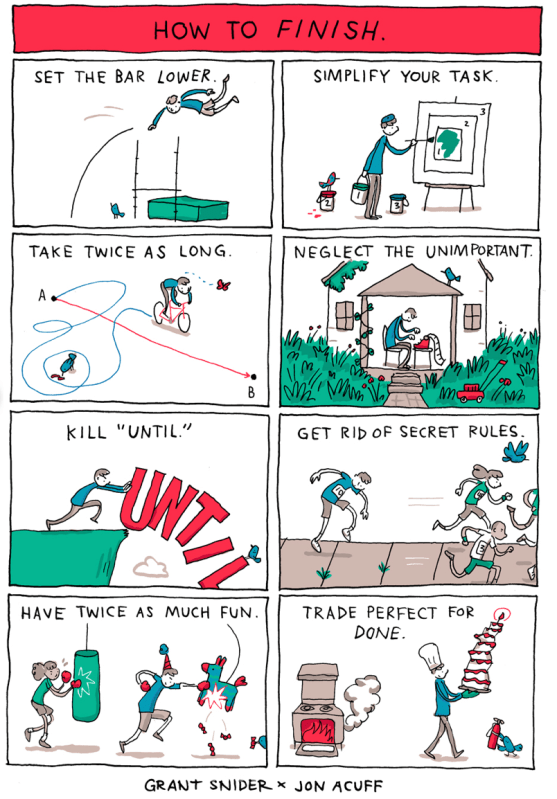
As I was fascinated by this idea, and after chasing down a few rabbit holes (see complete bibliography at the end), I came to learn that the unfinished has a certain power that finished items do not.

The term for this is the Zeigarnik Effect.

This is not hot news for quilters.

Joshua Everts defines it as the “power of unfinished business or interrupted or uncompleted activity to hold a privileged place in memory,” in other words, those undone tasks just won’t leave us alone. He notes that they “create a cognitive burden, weigh more heavily on the mind, and are more easily recalled than completed tasks.”

In another unsigned article, it states that the “Zeigarnik Effect explains why people are haunted by unfulfilled goals and may be more apt to recall what they haven’t achieved than what they have. Some have speculated that the cognitive burden of unfinished work causes some to see themselves negatively and contributes to such problems as impostor syndrome.”

But while it is not hot news for us, the people who coined the term UFO (Un-Finished Object), how do these unfinished objects affect us?

Zumbrunnen notes that “Unfinished tasks lead to cognitive tension, a feeling of restlessness and discomfort that makes us seek closure and come back to it again and again. This effect goes beyond remembering individual items on a bill. It affects whether we achieve our goals, our creative output, and how we pay attention.”

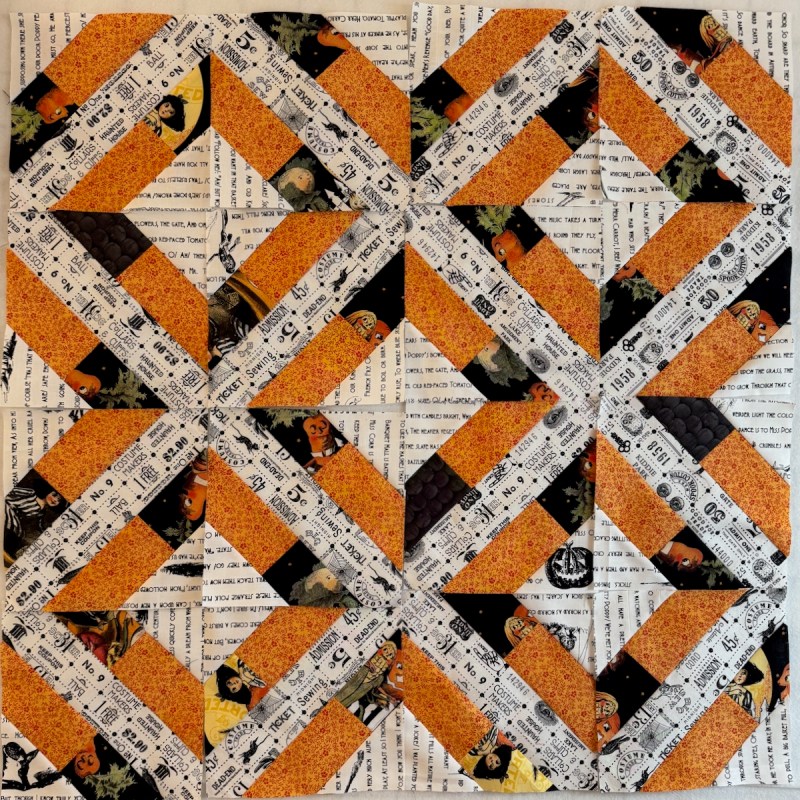
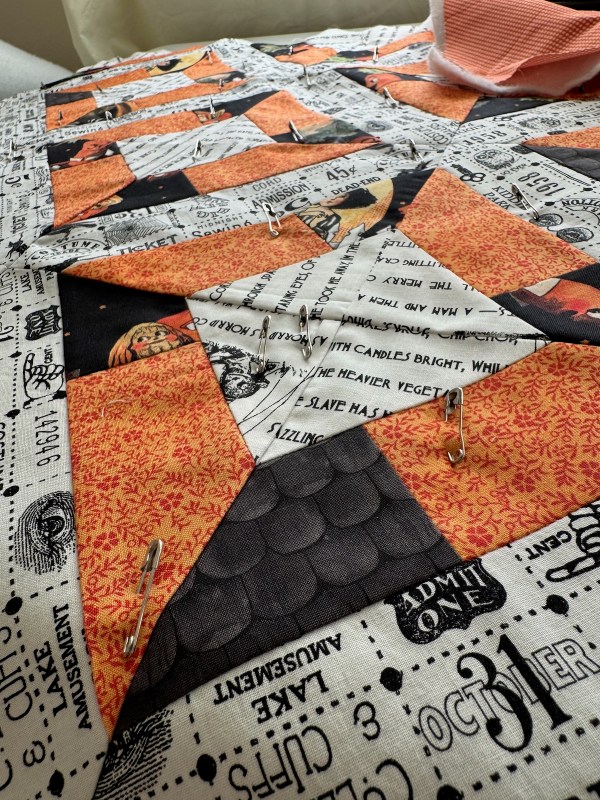
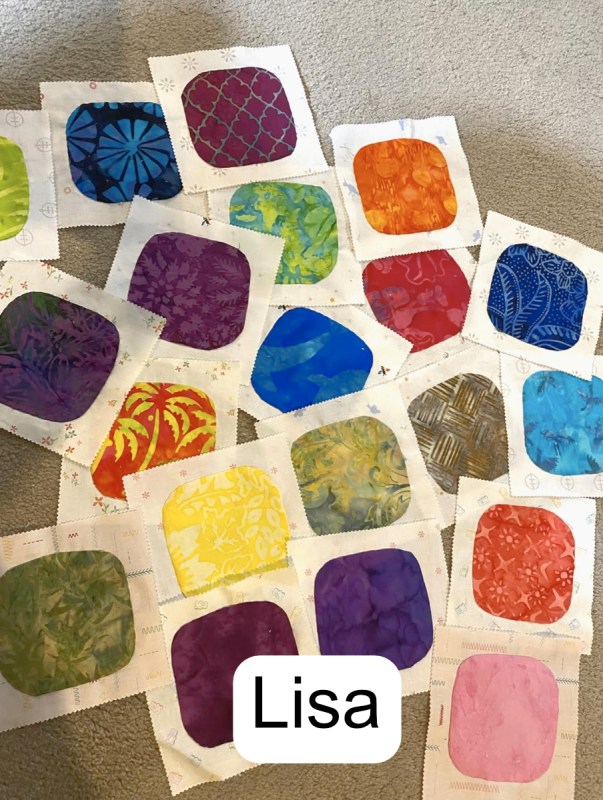
Carol and I were discussing our progress on our Posh Penelope blocks, and I wrote:

Public Service Announcement:

Another Public Service Announcement:
The Zeigarnik effect should not be confused with the Ovsiankina effect, an urge to complete tasks previously initiated. Maria Ovsiankina, a colleague of Zeigarnik, investigated the effect of task interruption on the tendency to resume the task at the next opportunity.

Yes, let’s not confuse the two, although maybe what I was experiencing this week was more of the Ovsiankina effect? Nah. I’ve been working on this Posh Penelope quilt for forever, like since 2020. In my mind, the Ovsiankina effect is more like finishing making dinner. Or changing loads of laundry.

Yet Another Public Service Announcement:
What does the Zeigarnik Effect teach us about multitasking?
The Zeigarnik Effect makes a powerful case against multitasking. Focusing on one task at a time will avert intrusive thoughts of unfinished work that will only create delays in finishing all the tasks. Completion of each task approached sequentially instead of simultaneously will clear mental space for the next task.

Will you please stop with these Public Service Announcements:
Yes. But you should know that taking the first step on a project, no matter how small, can create enough tension when the task is interrupted to motivate the resumption of the task, doing an end-run around procrastination. (I can’t help you if you are addicted to your phone. That’s a whole other blog post.)

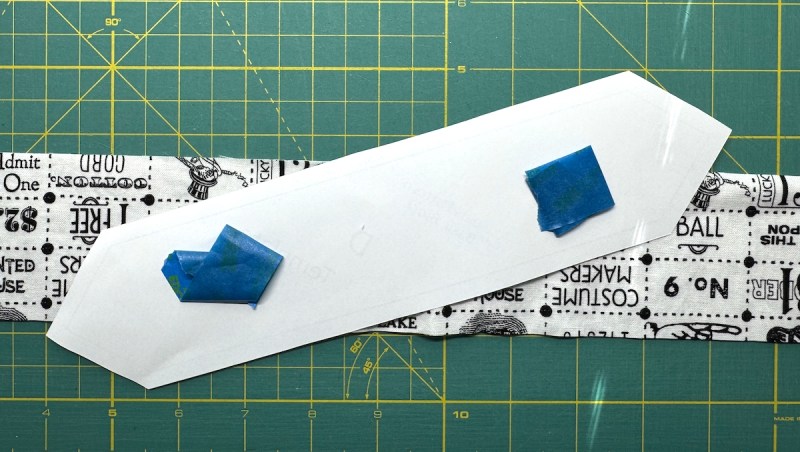
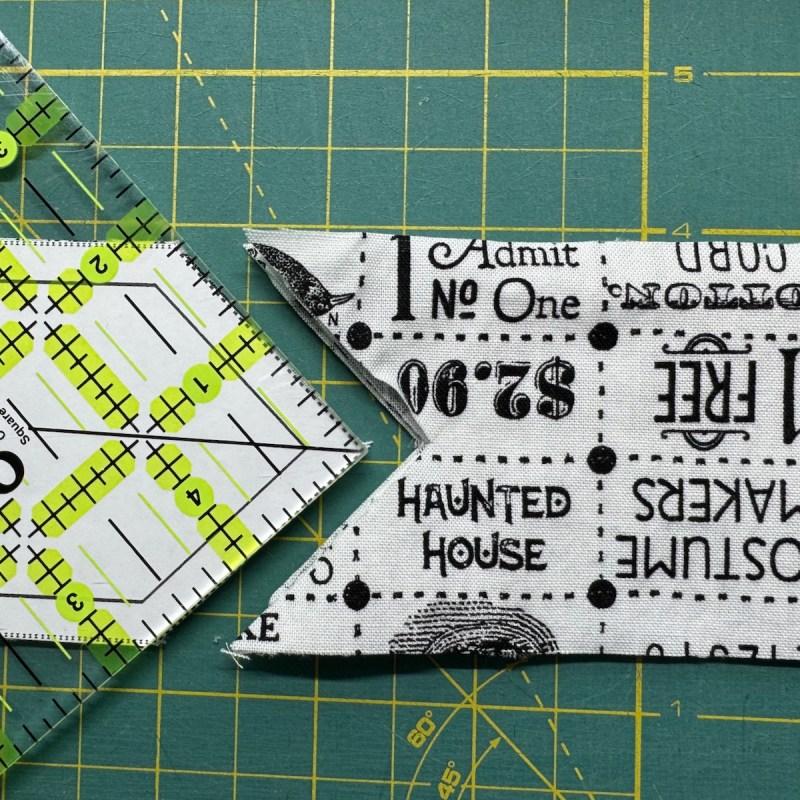
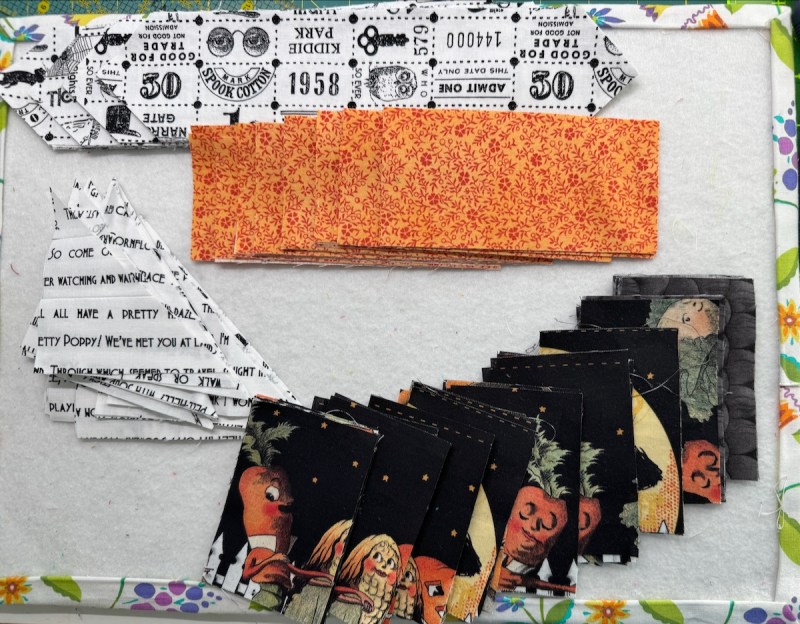
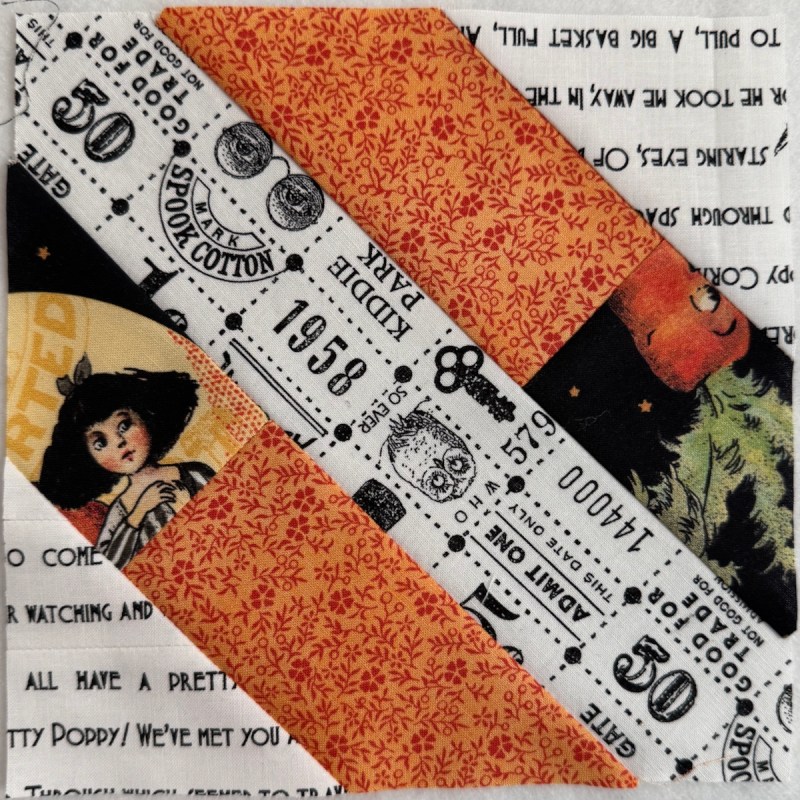
So I cut out the rest of the Posh Penelope blocks. Over the next few days, I’ll get to the sewing. Understanding that having this project hanging over my head (like an anvil) was in reality stopping my creative work, helped me get going in going forward.

Other Interesting ideas from Everts to aid in managing these open-ended tasks are:
Create intentional closure points in ongoing projects. Even if an initiative isn’t fully complete, establishing clear milestones allows your mind to experience completion moments.
Develop systematic ways to document and track progress. This helps reduce the mental load while maintaining awareness of important tasks.
Practice regular “mind clearing” sessions. Whether through journaling, team reviews, or simple list-making, giving your brain regular opportunities to process and organize open loops is crucial.

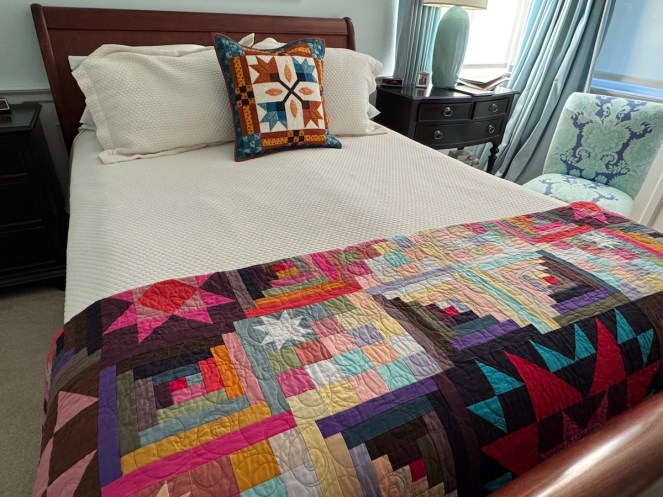
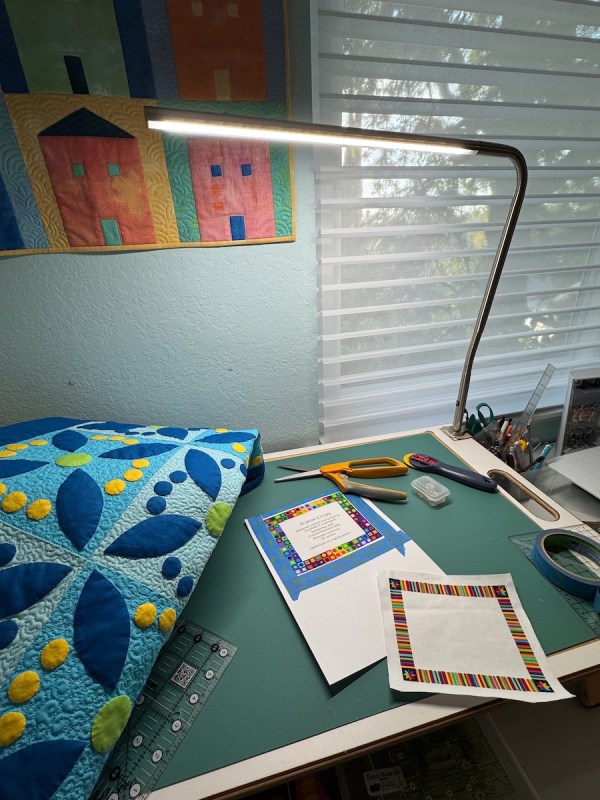
Reading this helped me understand the value of placing little labels (or “intentional closure points”) on my ongoing progress. With the BOM, it will run one year, so I know I’ll be finished with the blocks in December, and the quilt some time after that. With the quilting on my New York Beauties quilt, I mark the days so I know what I have completed as I want to finish this by early fall. With the Posh Penelope blocks, I made a chart to “document and track progress,” coloring in squares. These small signposts help me manage the tension that Zeigarnik identified, and keeps my quilting projects from torturing me with their incomplete state.

Good luck in all that you are working on–

Bibliography, by order of appearance:

Zumbrunnend, Adrian. The Power of Unfinished, blog.

Everts, Joshua. The Zeigarnik Effect: Understanding the Weight of Unfinished Business.

Unsigned article, Zeigarnik Effect, in Psychology Today.

How much does your anvil weigh? question on Reddit, my go-to source for internet information now that Google has jumped the shark and insists on putting resource-intensive AI into every answer.

Ovsiankina effect, discussed in the article on the Zeignernik Effect, Wikipedia.

Multi-tasking discussed in the Psychology Today Article (above), as is Procrastination.

And bonus: a video of Adrian Zumbrunnen talking about talking with bots, if you are into that sort of thing. Starts at 2 minutes in.

Creating · Free Quilt Pattern · Patterns by Elizabeth of OPQuilt · Quilts

This and That: No June Gloom, please.

First off: Happy Father’s Day to the men in your life, and especially the men in mine: my husband, Supreme Quilt Holder, three sons, and one son-in-law, then a gang of grandsons. Here’s a early photo:

(Missing: three more grandsons, three more granddaughters. I just love all those little girls in their beautiful dresses.)

There’s this phenomena about June of every year, when the deserts heat up, drawing cool, moist air further inland from the coast. The locals have a name for it, which I hate. I just call it Reprieve from the Heat for Another Month, or something. because I do love the cool mornings. Yes, I do.

My friend Mary gets too much of this cooling layer and we are always mentioning it in our correspondence, me complaining about the coming heat, and her bemoaning the too-cool summer. Welcome to Sunny California.

So here is my first Posh Penelope for June: all sunny and bright, in a good kind of way.

A little less sunny, but still bright.

Full out fog in these, with all those blues. I’m going to have to ramp up with brighter colors next go-round, but I do like those toothbrushes on the blue fabric.

Here’s the group so far. 41 blocks are planned, and I’ve made 27, more than halfway. But I probably said that last time. You should see Carol’s stack — they are wonderful!!

Here’s Sherri’s Block of the Month for June. It’s a fun series and I’m using all her fabrics (picked up one more new last week). But alas, the Friendship Star and I are NOT friends. Nor do I like these stars:

I also don’t like sour gummies or the smell of coconut shampoo, but I don’t think that has anything to do with quilting.

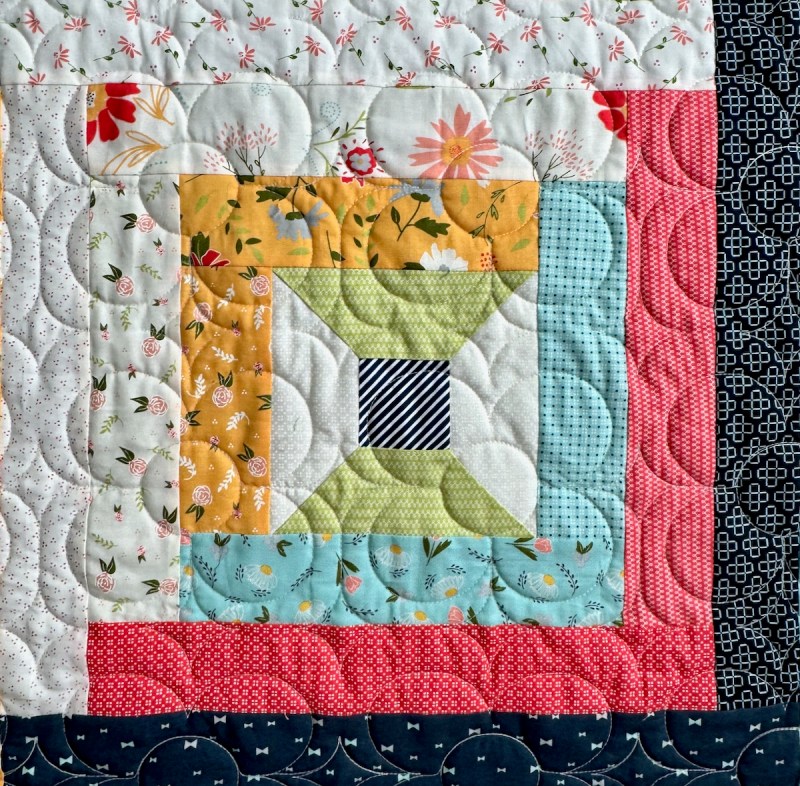
So I substituted this: I have no idea what Sherri has planned next, so I may be moving other centers of hers around, but since I’m allergic to the star she chose, here’s my spool of thread.

And here’s the back of it. It’s fast: sew the sides on, sewing only between the dots. Then sew from the dots to the corners.

And yes, here’s your free PatternLite. And you’re welcome. Click below the spool to download.

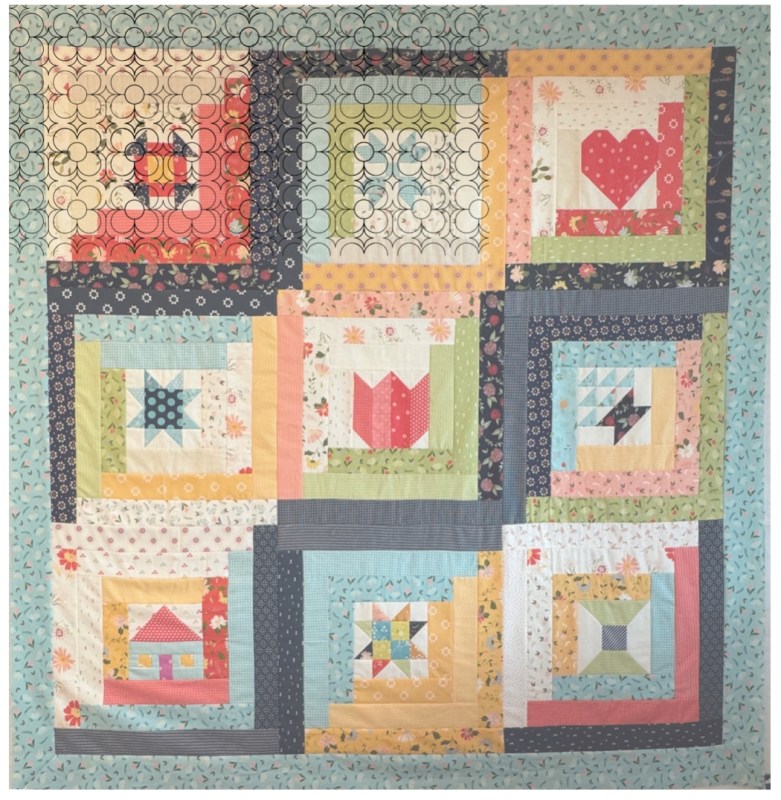
Here are the six I’ve made so far:

This is me, making a mess. It’s good to document messes once in a while. I was learning a new way of making circles. (Last post) I know these photos drives one of my friends crazy; she is a very tidy sewer, but her sewing room is also about 4x as big as mine; a lot of stuff gets piled up in mine. I have learned to focus and ignore the periphery, a skill I learned when I had four small children and had to get the quilt done:

Like this one, from the Early Years. My son Chad now has this Sunshine and Shadow quiltsomewhere, he says — but even if it’s lost in his attic, I still have photos. Machine-pieced, hand quilted with a layer of flannel inside…not batting.

For a fun click, head to this write-up of the kimono exhibit at the National Gallery of Victoria in Australia. The article shows both traditional and more modern kimono.

I think I kind of jumped the shark a couple of posts ago, writing about sewing nightgowns and stuff, but things are going better this week. The New York Times must have known I needed a creative tune-up, and published a five-day “Creativity Challenge.” (If you don’t subscribe, here’s a link to the first article.) In it they note that “Research links creativity to happiness and well-being, and a 2021 study found that older people who participated in creative activities showed less cognitive decline than those who did not” (Passarella, NYTimes).

In an earlier missive, Elizabeth Passarella, the writer, said “You are all creative in some way. There’s a definition of creativity that researchers use: generating something novel that is also useful.”

Generating something novel that is also useful. I need to print that out and tape it to my sewing machine. The first exercise was doodling:

We had to begin with a circle and go from there. I’m do not consider myself a hand-drawing-artist, so I did the best I could with a screen and a mouse. Don’t know where that second drawing came from–maybe from the state of politics in our nation today (doesn’t it make you crazy, too?).

So take a listen to Amie McNee if you need a shot of “why should I create.” Her TEDx talk was something I happened on this week, and I found inspiration in many things she said [words in brackets are mine]:

We need to be at the piano [or the sewing machine] making our art more than ever as we navigate these incredibly difficult things. Art is not just for kids; art is not just for adults…we need it now.  [One reason is that] creativity is the missing pillar of self-development.  [Another reason is that] when we create, we have agency.
Another beautiful reason to create is because it reclaims your most valuable resource…our attention in a society that profits from you being stuck on your phone.  We are a culture of consumption and we’ve forgotten how to make.  We need less consumption, more creation.

The act of making art is inherently generous.

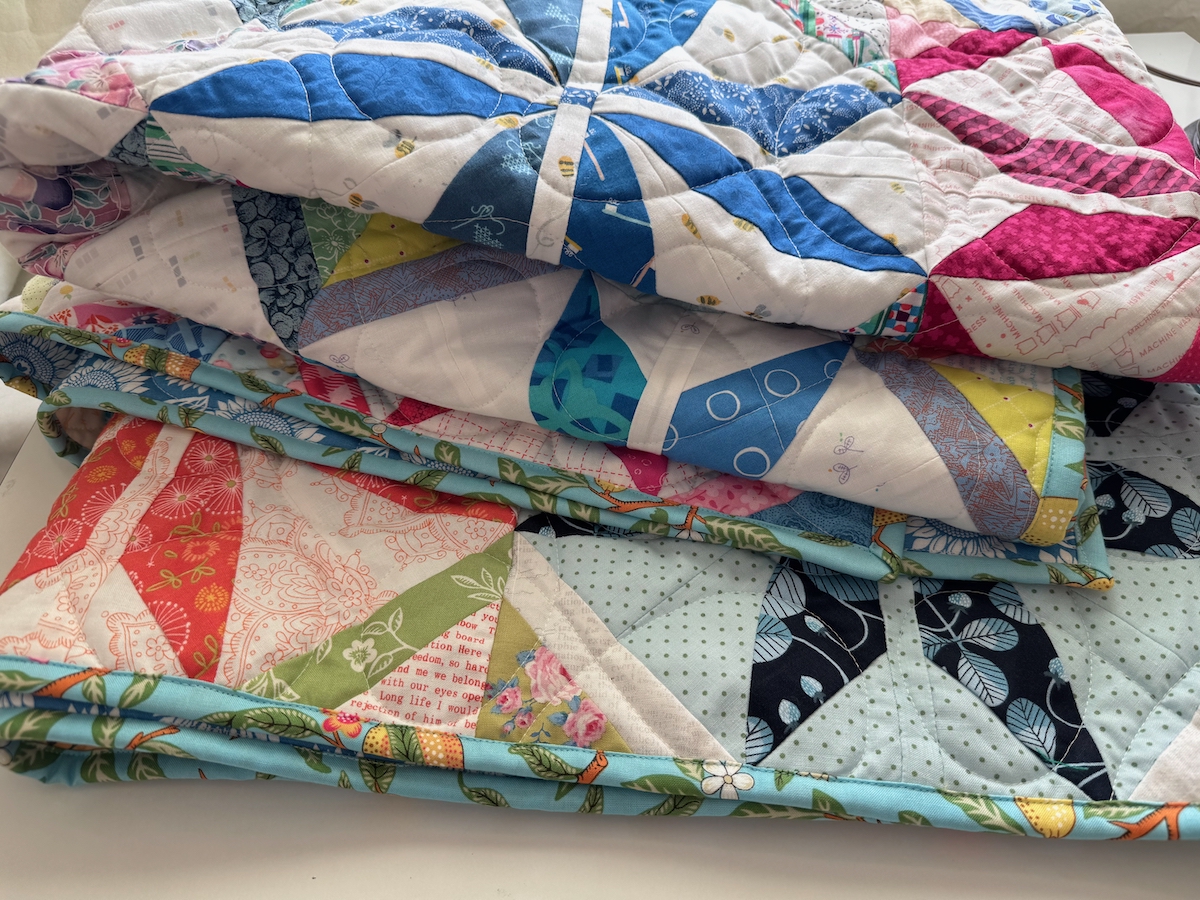
I’ve been slowly working on this. There are a lot of thread changes, and some unpicking, as it’s been a while since I was at the quilting machine. I don’t quilt every day, so I like to keep track with the labels.

That plastic bag in the Messy Room photo? I pulled it off this pile of gorgeous goodness from Stash Fabrics. I wish I could say I was influenced by all the pansies I saw in Krakòw, but the truth is I ordered these before I went. But maybe I could see into the future?

In the NYTimes creative series mentioned above, I especially liked how they talked about a form of daydreaming:
“You’ll be more likely to capture original ideas if you’re in “atypical salience processing mode,” which is a fancy term for a state in which you’re focusing on the unconventional. Look at a piece of abstract art, or stare out your window in a way you usually don’t, paying attention to the space between buildings or the shadows formed by trees.”
(You can read the article with this gift link: here)

Happy Day Dreaming!

Layer your summer salad into a bowl:

  • Cook a cob of corn in the microwave, wrapped in wax paper, for 4 minutes. Run under cool water to cool it down then slice off the cob.
  • Tomatoes (smaller and flavorful like Campari tomatoes)
  • Romaine lettuce, sliced
  • Bit of arugula
  • Radish chunks
  • Cucumbers, cut in half lengthwise, then sliced 1/3″ thick
  • Chunks of rotisserie chicken
  • Focaccia (my favorite recipe is here — I make it every other Saturday night (10 minutes to whip it up in the evening and in the morning, 10 minutes to prep for the baking, plus rising time).
  • Drizzle Lemon Vinaigrette over everything.

Anywhere you travel in Europe, they call arugula “rocket” for some reason. Here’s a little joke for you from the internet.

EPP · Quilts · Travels

Catching Up, Keeping Myself Honest

You could skip this post like you might want have to skipped Weight Watchers checkins back in the day…it’s a post that charts progress, keeps me honest and helps me admit my defeats as well as my successes. I watched a well-known recipe developer on Instagram bake her own wedding cakes last week, and I was like…I think I need to go and lie down for a while. It all looked amazing, and I wish I knew her personally so I could taste all her layers and fillings and crumbles.

Is making a quilt like that? We have layers and pieces and threads and in the end, we put a binding on it and call it a quilt? Those who aren’t quilters are amazed, but we just smile and pick the threads off our sweaters.

One of the Important Things is to get your machine serviced once a year.

So I drove out to a neighboring city, and dropped off my machine which caused me some grief (it’s how much?).

To recover, I went across the street, where the delightful ladies of this shop made me feel welcomed. They are in the process of moving, and I look forward to their Grand Opening in June, in a new location. With better parking.

The strawberry quilt was in their back room. Some red, white, and blue fabrics came home with me, and then I popped them in a mailer and sent them to my daughter who is making lots of small, very cute flags. That link will take you to some Stories, and I really like what she says in the last one, that sometimes we have to do a lateral move to keep the creativity flowing. Truth.

Yes, it cracks me up that she still has the wrapping on her ruler, but if that’s how she rolls, I’m happy. She confessed on another story that she purchased some fabric and then her eyes got really wide and she said, “Fabric’s a mood right now!” Translation: It’s expensive. (I’m loving this.)

Mary, of Zippy Quilts commented on her Tony’s Chocoloney Bar. Here’s ours. We buy it at Whole Foods, when we go there (rarely), sometimes Sprouts. Sometimes Walmart, but check the expiration date. We chunk it up and keep it in a covered container for an after-dinner treat.

Sherri dropped her free BOM block for May. I’m using an old line of her fabrics, but I love them, so I’m happy.

Here are the first five. They are giant blocks, like 18″ big.

A new Molly arrived…on her Vespa. The price has jumped about 20% in case you were wondering what girls-on-Vespas-from-China cost now that we are having a tariff fight. I’m sadder about the chaos, the destruction, the cruelty — why NPR? Why PBS? According to a poll about the bias in news sources, they come down just about in the middle of the range from right to left. And why the National Parks? Why are they savaging the science funding? The arts funding (including the Quilt Index)? Have we lost our minds? (Yes.)

I fear for my grandchildren’s world.

(a childhood book)

Starting on this to keep my mind off the news. It’s my New York Beauties quilt.

If you are on Instagram, I’m sure you’ve seen that I’m on a trip in another city, so yes, I did all this before I left. I’ll be home soon. No I didn’t visit EnergyLandia, but I’d like to bottle what they have and bring it home. My brain is most likely overloaded with new sights, new sounds, and all the quilt projects are waiting for me back home.

Well, all but one.

I read this one post on Bluesky where a quilter she said she would just stumble around until she figured out what direction she was going in, and boy did that resonate. I started sewing hexies because I was on a car trip; yes, that’s the whole reason. But this week, I stumbled into the next idea, and what colors I want to use.

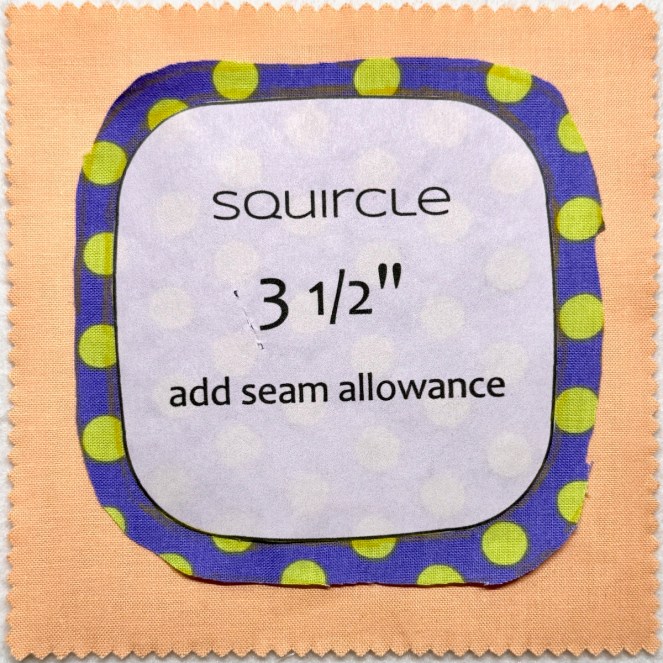
I cut some squares a bit bigger than my hexies. I’m using Painter’s Palette solids in lighter colors. Then I creased the fabric square lightly to get them centered, put a small appliqué pin in the center to hold it, and stacked them up.

I cut a manila paper folder to size, as I have to be able to transport them and use this set-up in a small space, like a seat-back table on an airplane or a train. The mini-folder fits right into that blue bag. I’m taking this for a hand-work project on trains and planes, and to help me keep my sanity when everything I own is in two small bags and I’m trying to shove in more. (I modified this idea from Becky Goldsmith, who uses a slightly different folder set-up to transport her pieces for appliqué. She explains it thoroughly in this video or more simply in this post.)

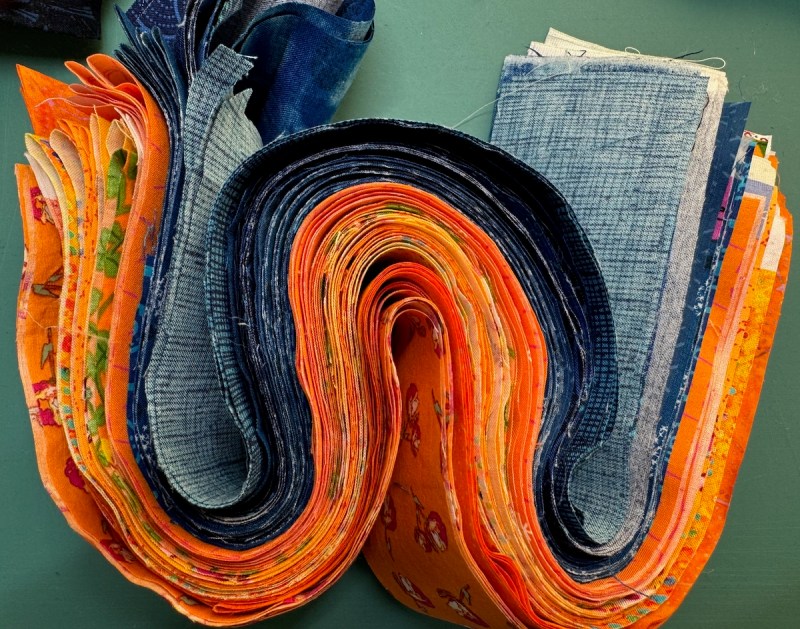
Just so you know it’s me, here’s what I went through to cut hexies to sew:

I exploded my scrap basket, but in the last photo — having gone through it all — I stowed it all nicely back in the bottom drawer where I keep my scraps. I’m cutting one last yellow, below (and no, I’m not taking the tin box — too bulky for overseas travel):

See you in a bit–

300 and Beyond · Quilt-A-Long · Quilts

Flying Through Rainbows

In a series of interviews with new poets, they each expressed their confusion, discussed their work ethic, and acknowledged the daily drudgery — and joy — of being able to create and work. (See some quotes, below.) Do I wish I’d saved the source information for my series of quotes from these young poets at the beginning of their career? Yes, but knowing the internet, it is probably gone. I copied and pasted them into my digital calendar, and they pop up like clockwork every January. Fitting. We all begin creating at the beginning.

We seem to go full-steam in January, the new year giving us a fresh start. But lately, on Bluesky and Instagram, I am hearing often how the well some quilters usually dip into has run dry, that their “sewjo” or “mojo” is just not there. Is it because we are tired of winter? Or that we have early spring fever? Or just that creativity runs in spurts, and we have to step away every once in a while and get back to “real life” with its rainbows, as well as its tornadoes and sudden squalls?

In a slightly related idea, my husband’s father hung crystals in his window so they could flash rainbows around in random ways when the sun came shining through. Today, as my hands fly over the keyboard, typing this post, rainbows are dancing on my fingers, courtesy of two crystals hanging in our window right now from my husband.

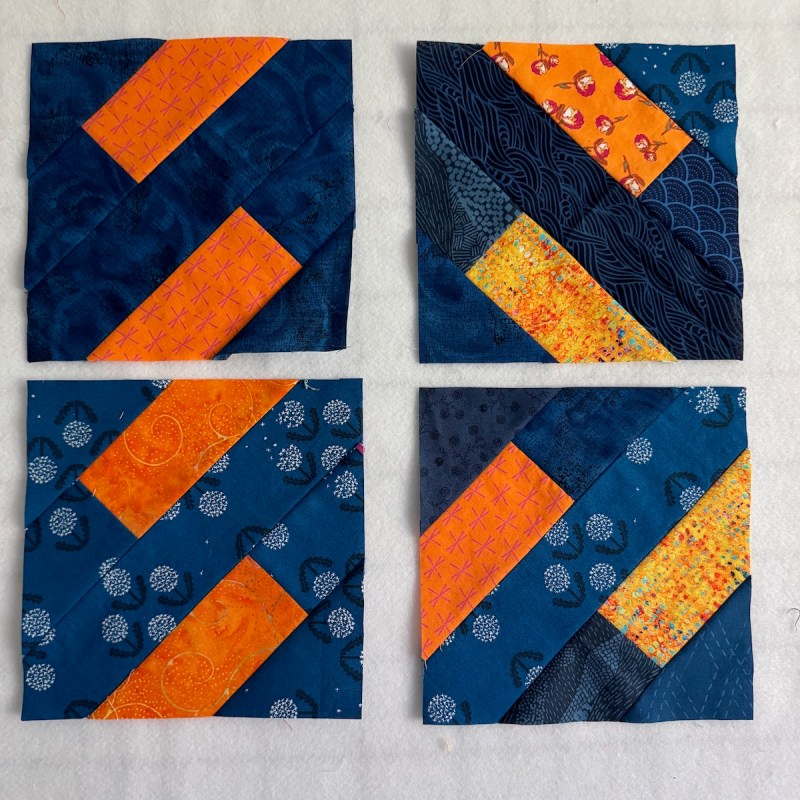
Carol and I made a pact to apply our rotary cutters to fabric and our noses to the grindstone and Make This Quilt: Posh Penelope by Sew Kind of Wonderful. While I usually like to be sewing my own designs, this year, this level of drama, this level of chaos has sent me to “let go of the pressure to be innovative,” as Jane Freilicher puts it (qtd. in Emily Skillings, below). We committed to making four blocks per month.

But even in creating between someone else’s lines, there is room for fabric choice, pawing through the stash or scraps — for as Carol noted this week, all our fabrics are soon going to cost a bazillion dollars — and this month, I went for blues. I thought the blues might calm down the riot of colors I had going on, with their steady approach. After all blue is the color overhead in our sky and of the water that surrounds us and we’ve been crazy for blue way before Yves Klein first mixed up a batch of his trademark Klein Blue. Klein noted that:

“Blue has no dimensions. It is beyond the dimensions of which other colors partake.” Fascinated by … it, [he made] …roughly 300 monochrome paintings in his signature International Klein Blue” (qtd. in article linked above).

(These blues read a bit more red-blue, or purple.)

All of these notes are to say, take a look at these young poets’ advice on if you get “quilter’s block,” or “writer’s block” and just give it time. Take a break to breathe in some of the blue overhead, or swim in the watery blue. Or catch a rainbow on your keyboard, courtesy of a defracting hung crystal.

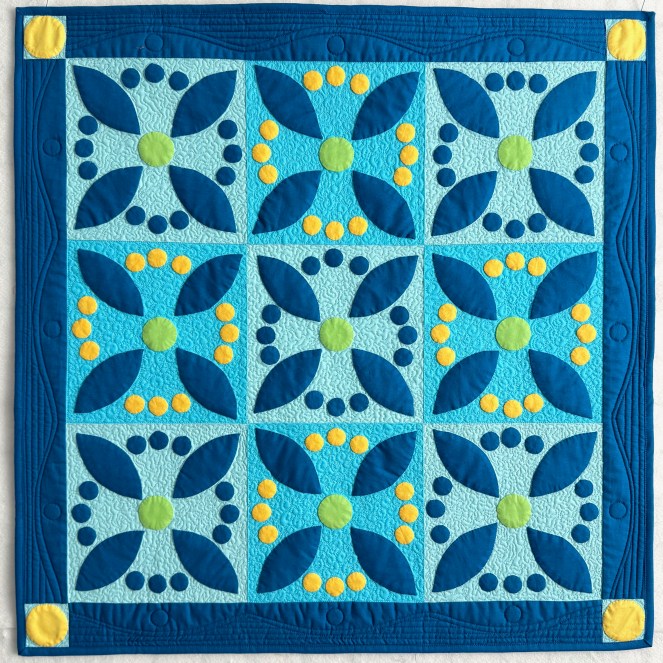
Block by block, I’m making a quilt. I’m up to 23, and the goal is 42.

Advice if you are going to make this pattern: Do more than one block at a time. Do…like four. It’s easy, but complicated, and better if you don’t have to remember all the bits every time. And I say, make the “petal blocks” but before you sew it all up with the sashing, choose your itty-bitty center then, when you can see if it needs a pop, or if it’s okay to just have a fabric from one of the petals. Or do as Carol is, using a single fabric in all the centers. Hers is a black and white linear pattern, and it looks great.

Now I’ll put these all away in their box until next month, along with a a few scraps and bits and bobs, and it will wait for me until next time. After all, as Fatimah Asgha notes, “you’re on no one else’s timeline.”

One Last Thing

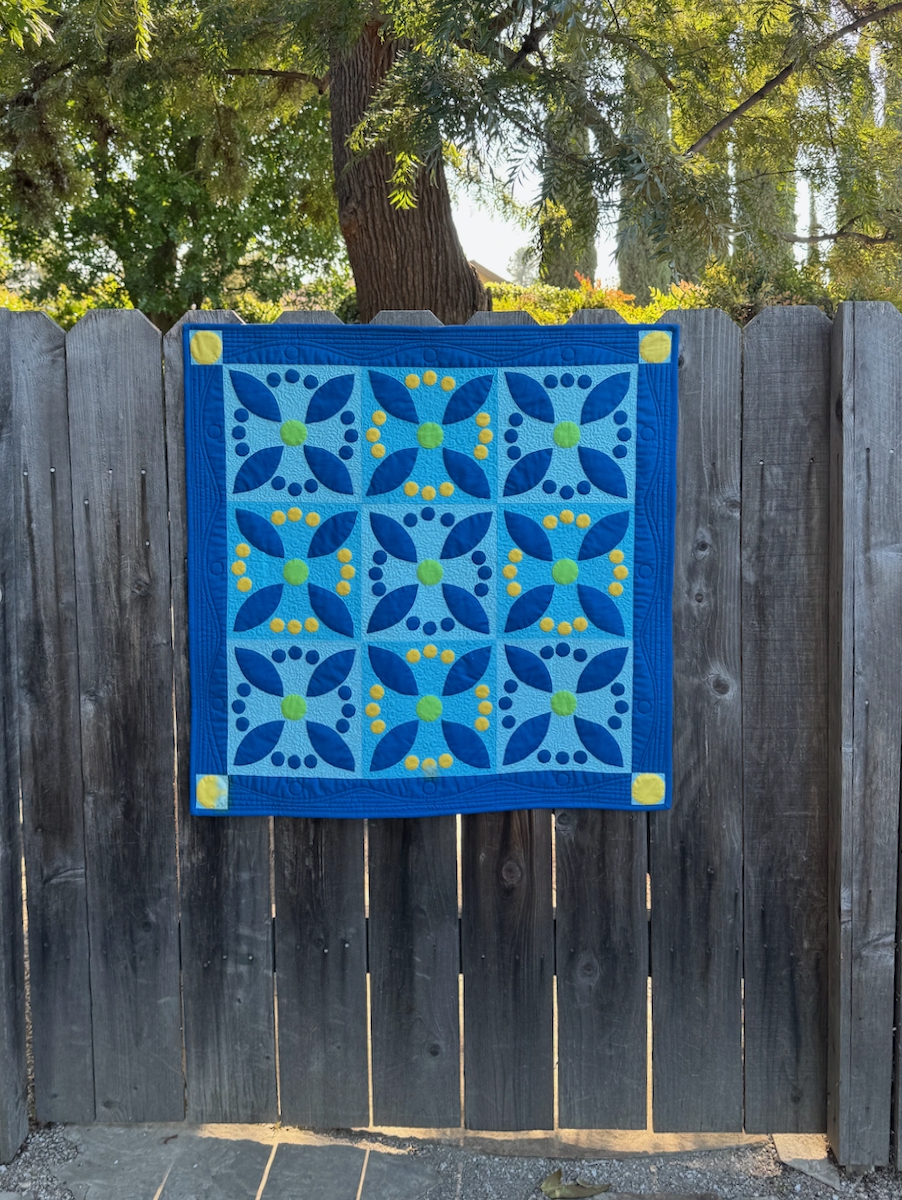
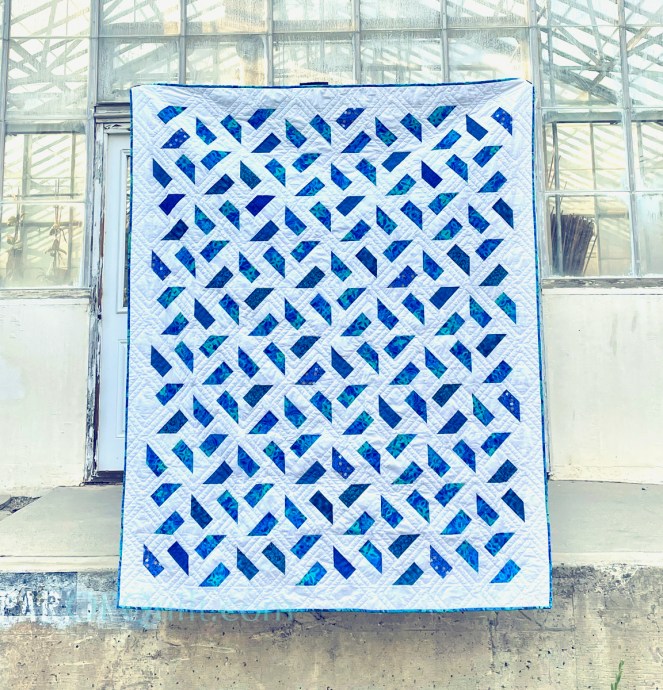
A friend had a new baby boy and I made them a quilt.

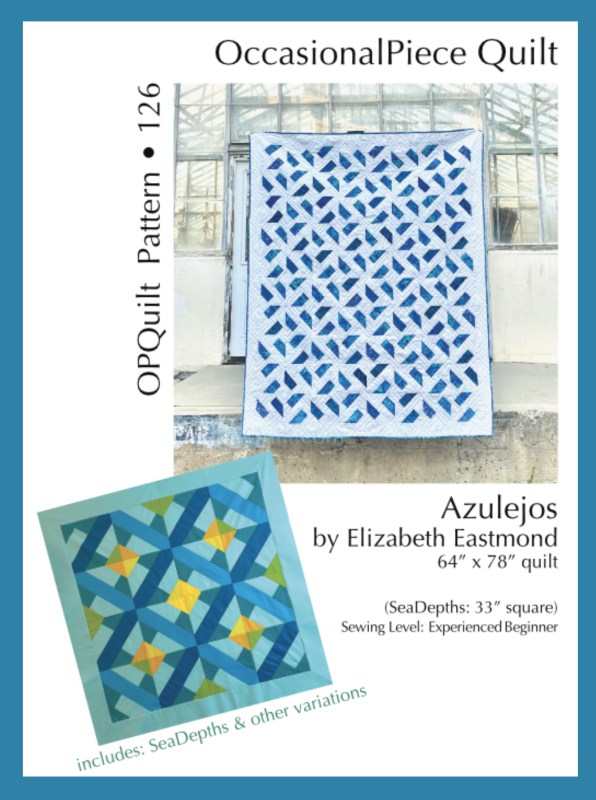
Pattern is Azulejos, from my pattern shop on PayHip. I just used fewer blocks to make it baby-sized. (And she gave permission for the photo.)

Emily Skillings–
One question I am still grappling with is how to negotiate a balance between “innovation,” constraint, and intuition. The painter Jane Freilicher put it best, I think, when she said, “To strain after innovation, to worry about being on ‘the cutting edge’ (a phrase I hate), reflects a concern for a place in history or one’s career rather than the authenticity of one’s painting.” There’s also, I think, a quieter quote somewhere about her letting go of the pressure to be innovative, and that she felt she could really paint after that, but I can’t seem to find it anywhere.
This sounds a little strange, but I like to think of my life so far as a writer as a kind of oscillation between states of openness and movement and states of stillness and solitude. There are islands of production, productivity, and then pockets of…nothing. I think I am grateful to my depression in this way, in that it often forces me to be still.

Phillip B. Williams–
Writer’s Block Remedy: I go for months without writing and then write nonstop for about a month or so. An impasse for me is a sign that I simply have nothing to say, and that is fine. I had to learn that it was fine not to write. As far as what keeps me going, I’m still not sure. Something just clicks on and stays on until it runs its course.

Mario Chard–
Writer’s block remedy: The impasse is never with the writing itself; it is with the reasons to keep going.

Fatimah Asghar–
Writer’s block remedy: I take a break. I think that if you bang your head against the wall trying to create, you’re going to resent the process of creation. Usually when you reach an impasse it’s a signal to move on to another thing. Maybe you haven’t slept in a while. Maybe you need some time to ponder, to just stare at the wall. Maybe you need to live, truly be alive for a little and not near a computer [or sewing machine]. Maybe you need to read, see, watch—to refill your well.

Advice: I’d say you’re on no one else’s timeline.

Solmaz Sharif–
Writer’s Block Remedy: If the causes are perfectionistic, I pull out the collected poems of a poet I greatly admire and flip through to remind myself how many mediocre poems their oeuvre contains. It is my duty, I remind myself, to write even those mediocre, messy poems. These failures are the ones that create openings in the conversation for subsequent writers and poets to enter—I’m not trying to kill the conversation, after all. I pull out journals—André Gide’s, Franz Kafka’s, Susan Sontag’s—to remind myself how long the process is and how often the sense of failure or impasse hits. I watch a movie. Advice: Write a book you want to fight for. Fight for it.
I don’t have answers about “how to be an artist”; I’m not trying to make it sound like I do. But I do want to have that conversation. What do you want to do as a writer in the world? What do you see the arc of your writing life to be?

My corollary: Make the quilt you want to fight for. Fight for it. Acknowledge the arc of your quilting life.