European Patchwork Meeting · Quilt Shows · Travels

Carrefour European Patchwork Show 2024

All posts in order are on the European Patchwork (Carrefour) page.

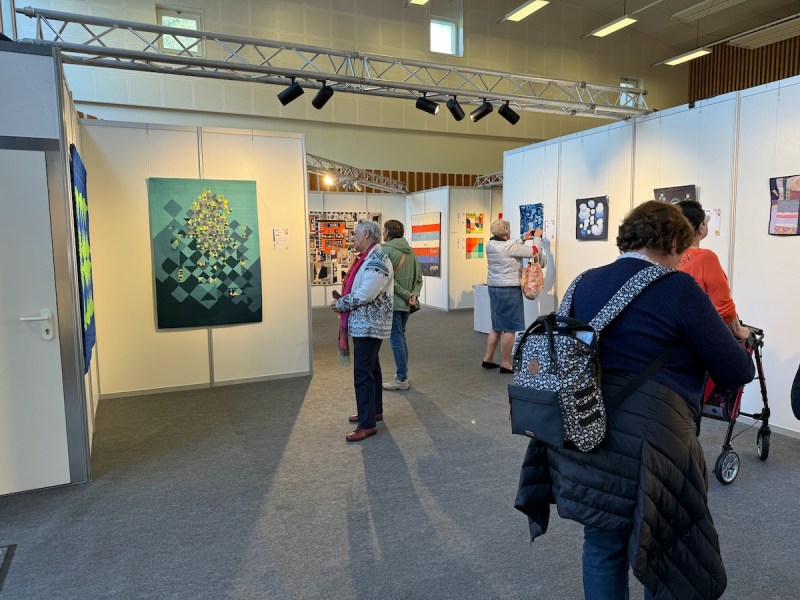
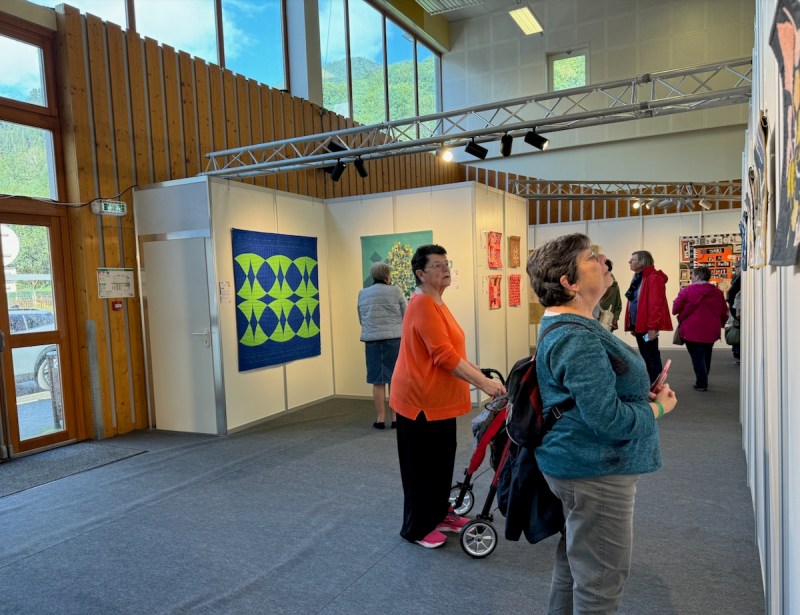
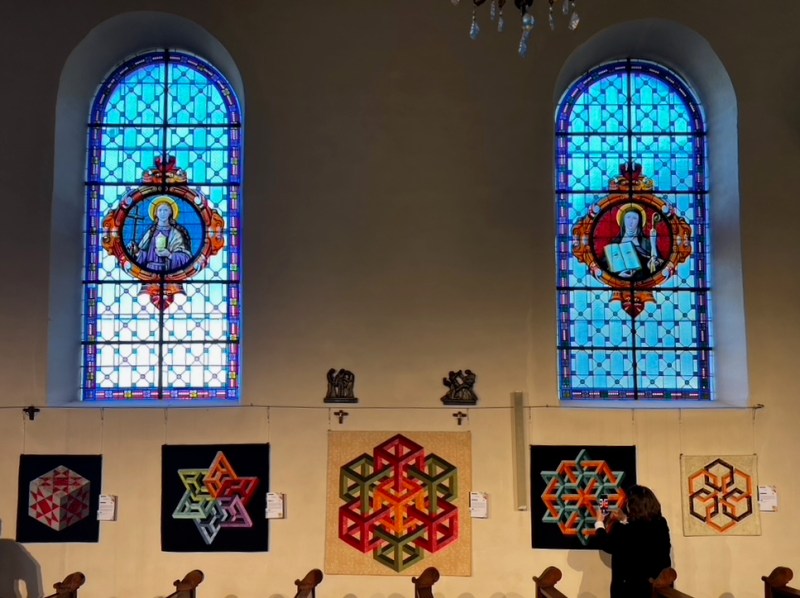
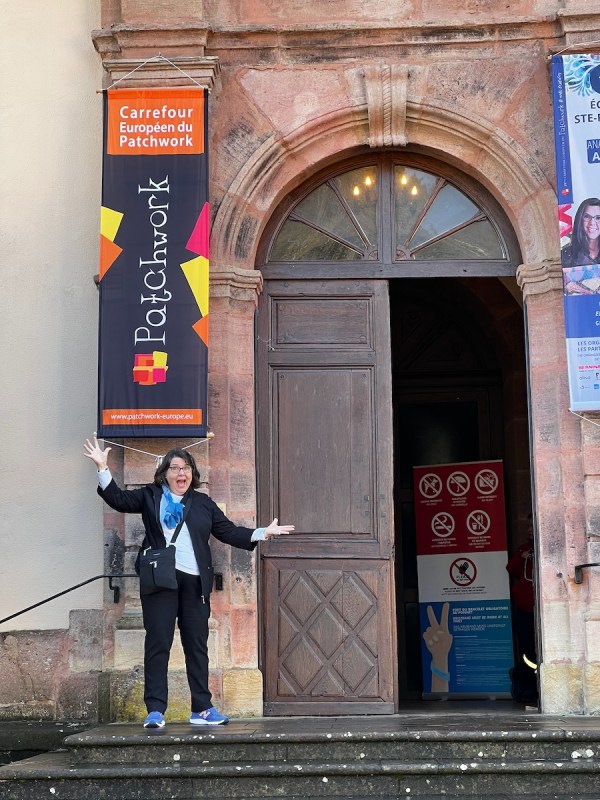
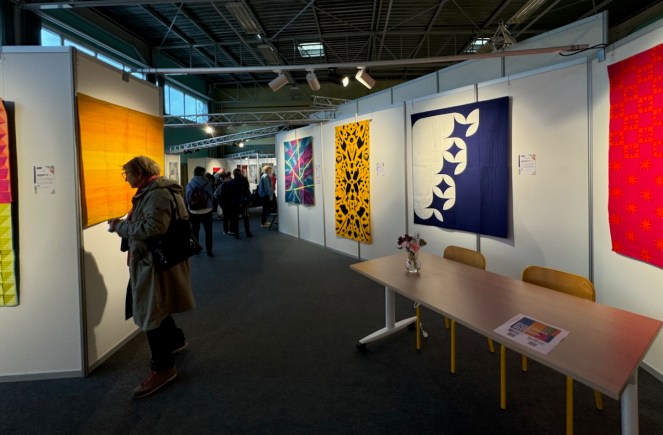
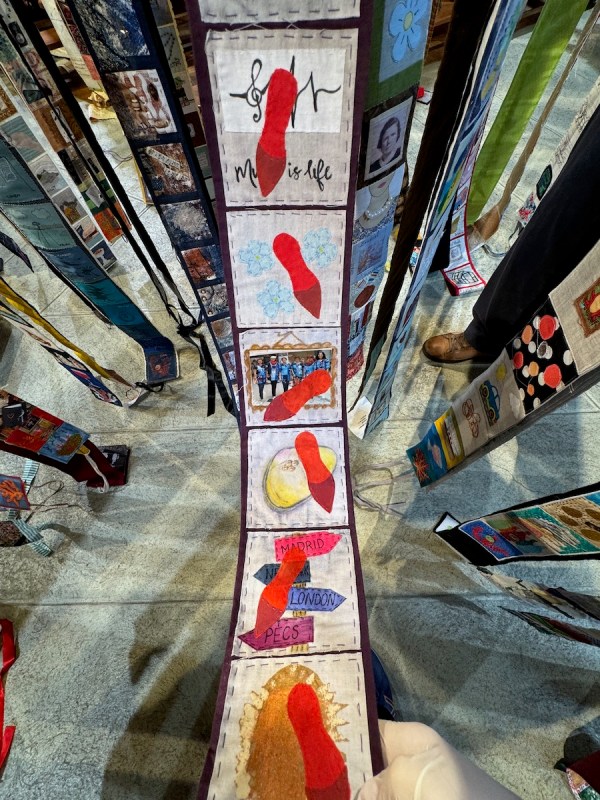
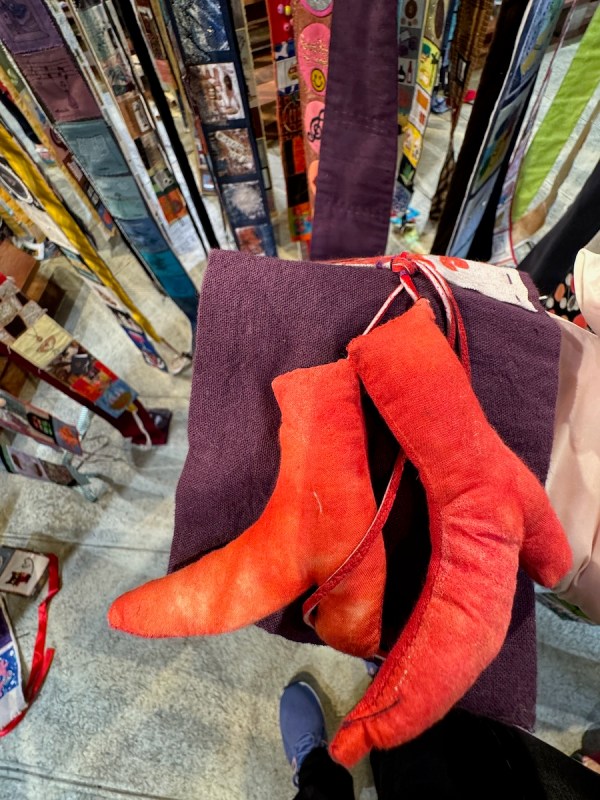
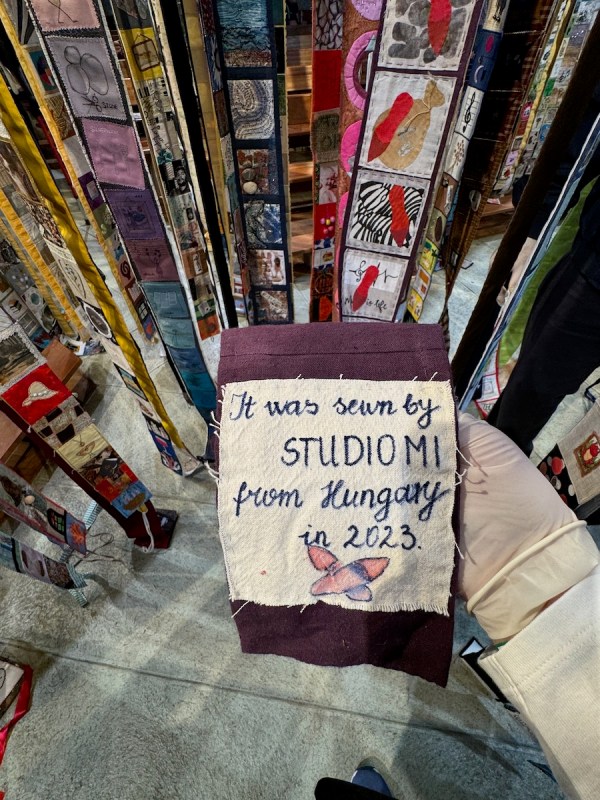
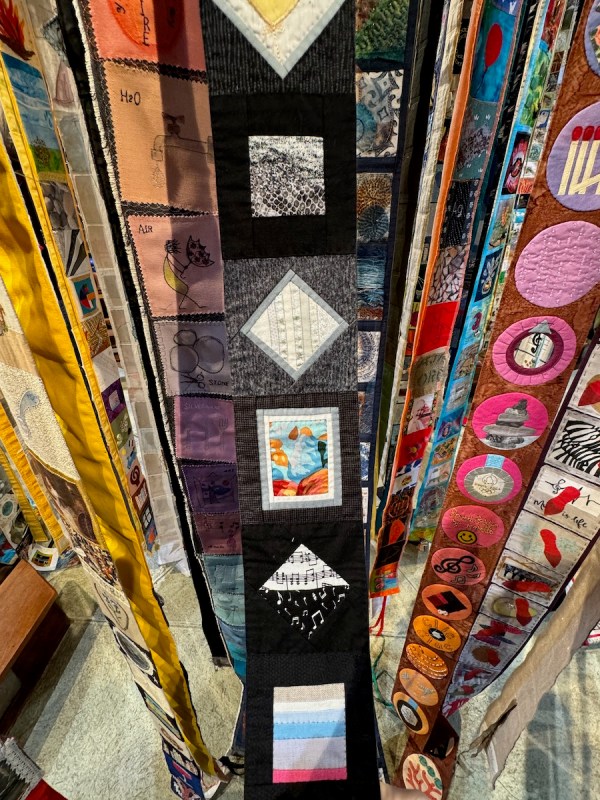
The Carrefour European Patchwork Meeting was held September 12-15, 2024, in a series of small villages in the Alsace region of France, and ever since my husband Dave and I had decided to take a trip to France this year, visiting this quilt show was on the docket. We’d come before and I so enjoyed it, that we planned again to visit. Carrefour means crossroads in French, and this area, where France, Switzerland and Germany meet is a perfect place for quilters to gather. Not only were there many European quilters, but a couple of quilters from the USA that I know also had representation, due to the Modern Quilt Guild’s traveling show (shout-out to Yvonne Fuchs and Ginny Robinson), which I’ll get to in a subsequent post.

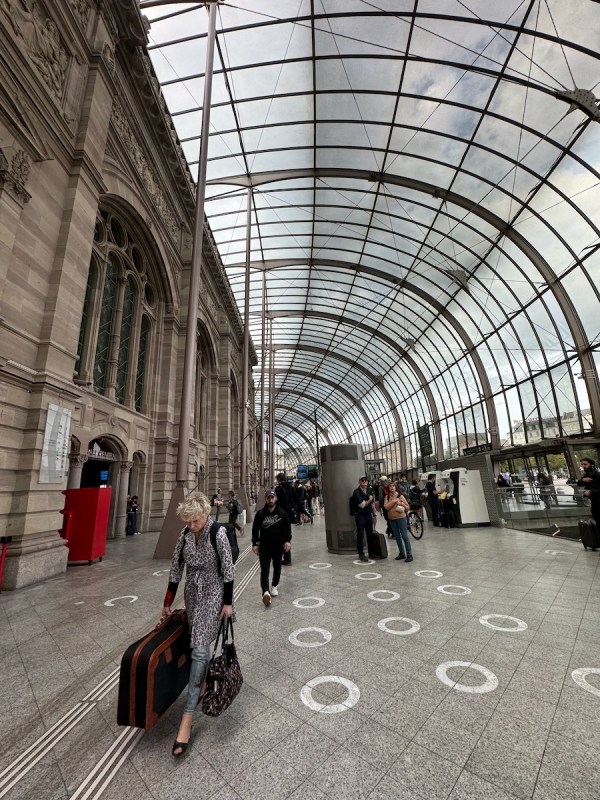
This post is about getting there, and the Vendor Mall.

Other posts are:
  • Carrefour Quilt I: Theater (Venue 1): Red and White quilts, Sarah Luise Kaminski’s art quilts, Pavillon Osmont (Venue 2): Ocean contest quilts, Carmen Netto, and others.
  • Carrefour Quilt II: Église des Chaînes (Venue 4): Amish, Temple Réformé (Venue 5): Val Patch, Église St. Louis (Venue 3): Anne Bellas, Église Ste. Madeleine (Venue 8): Viewpoints.
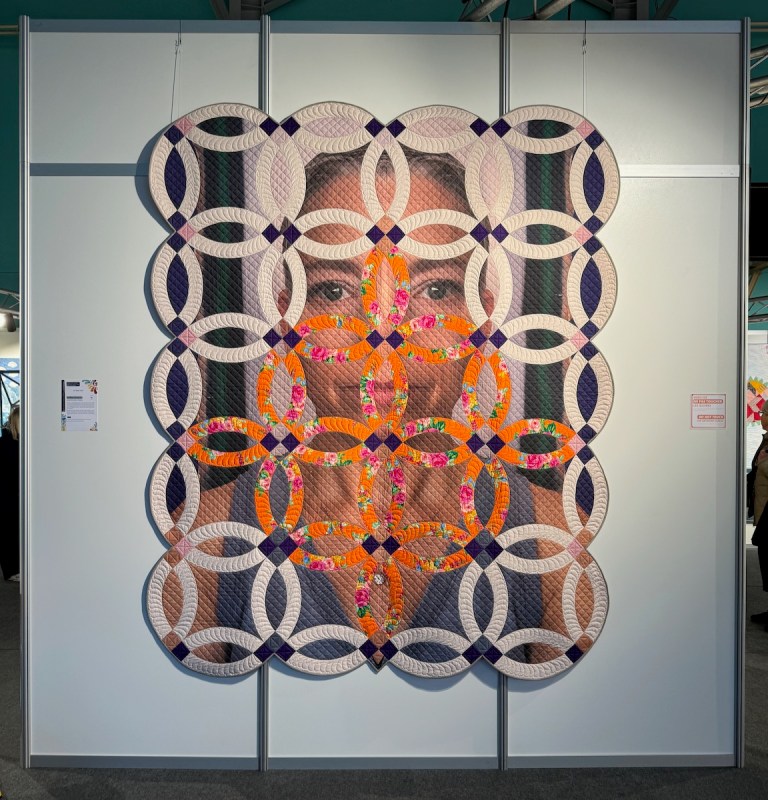
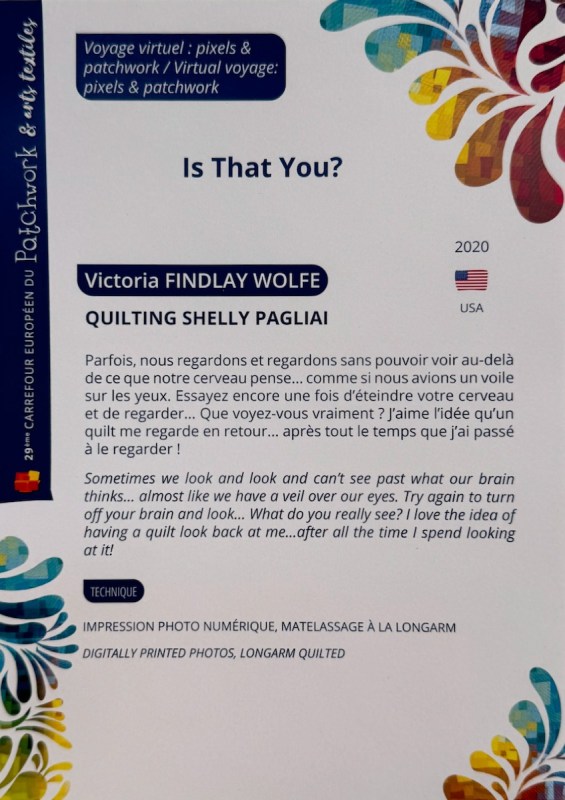
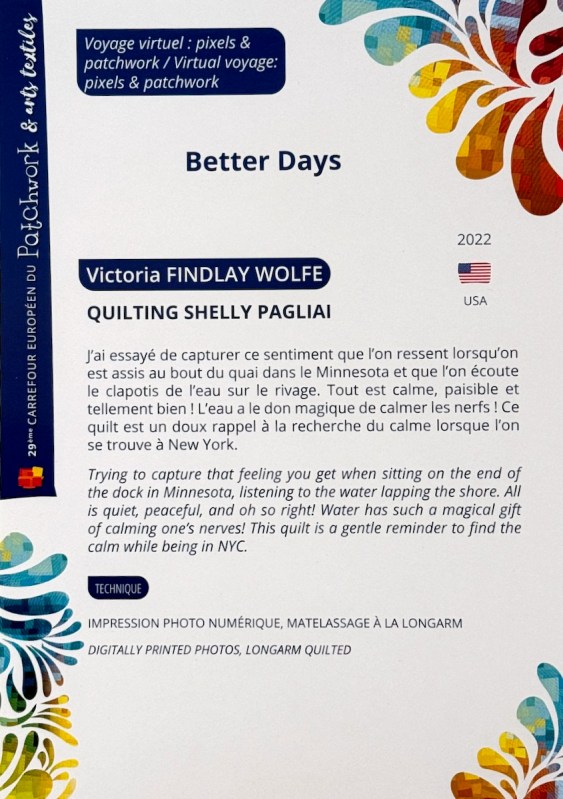
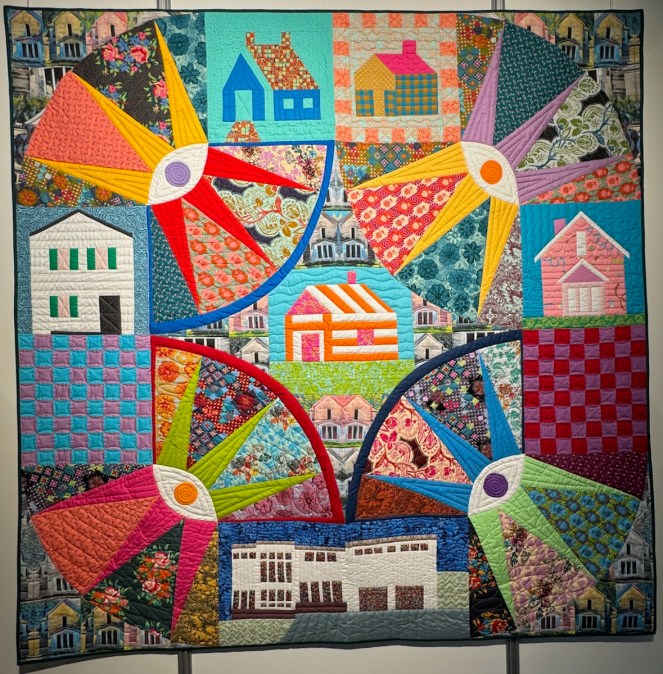
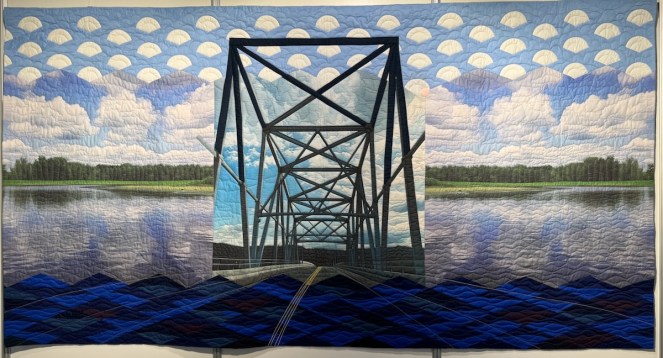
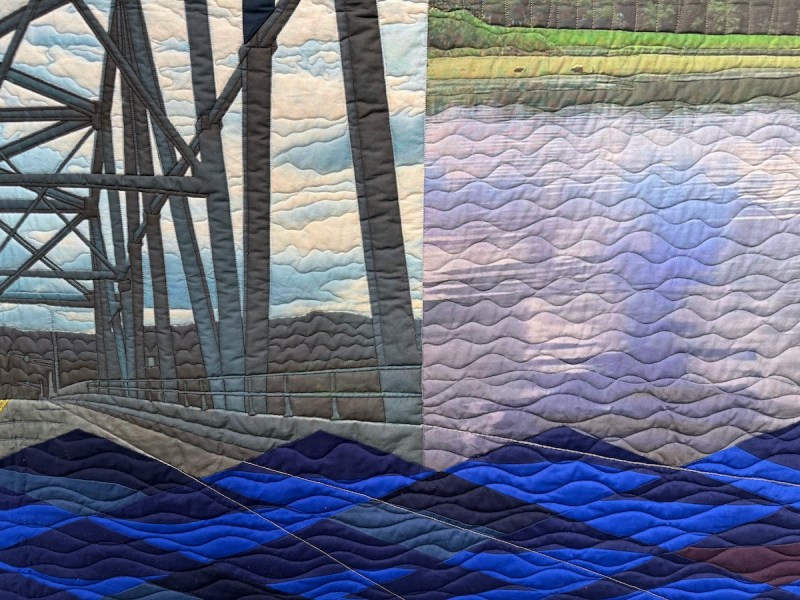
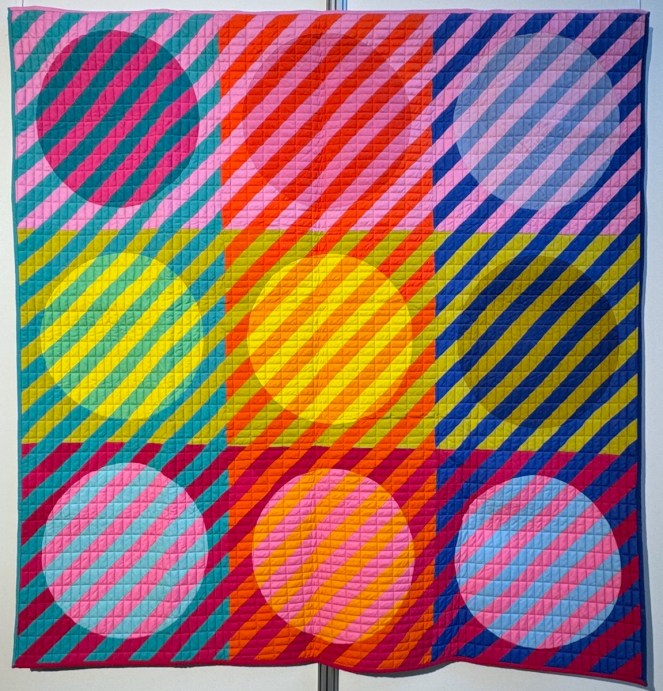
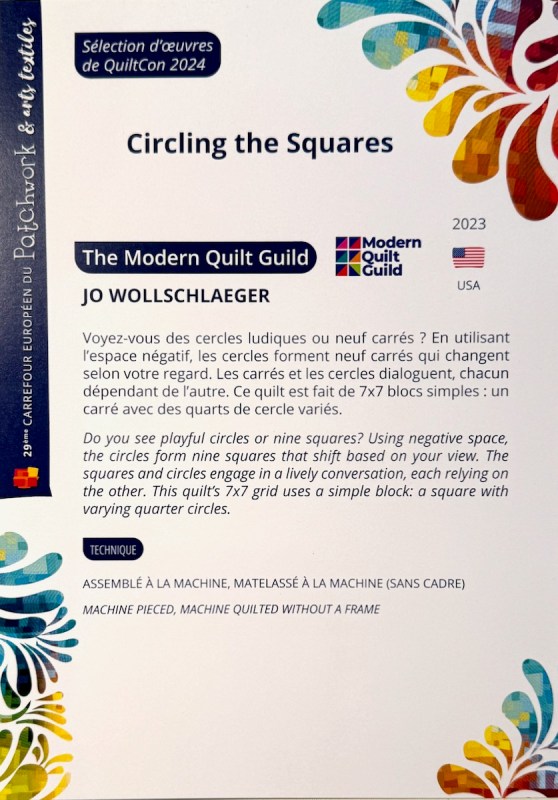
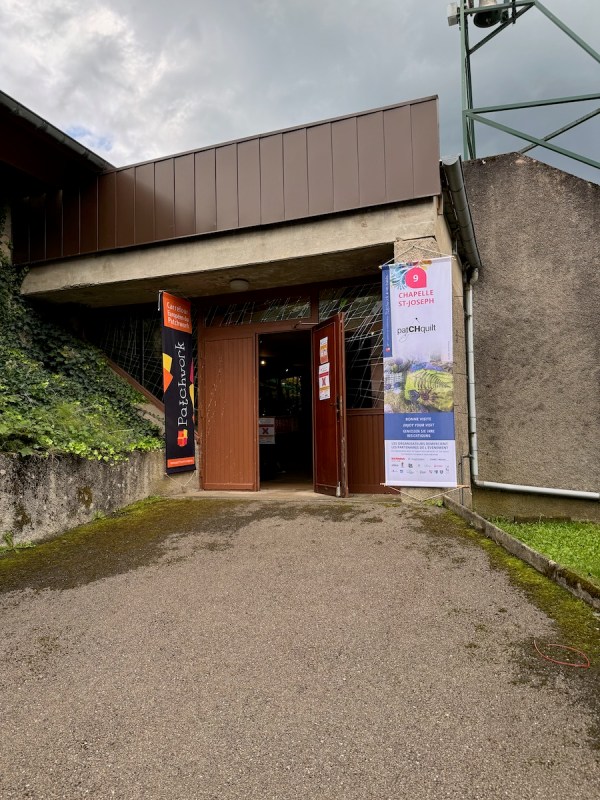
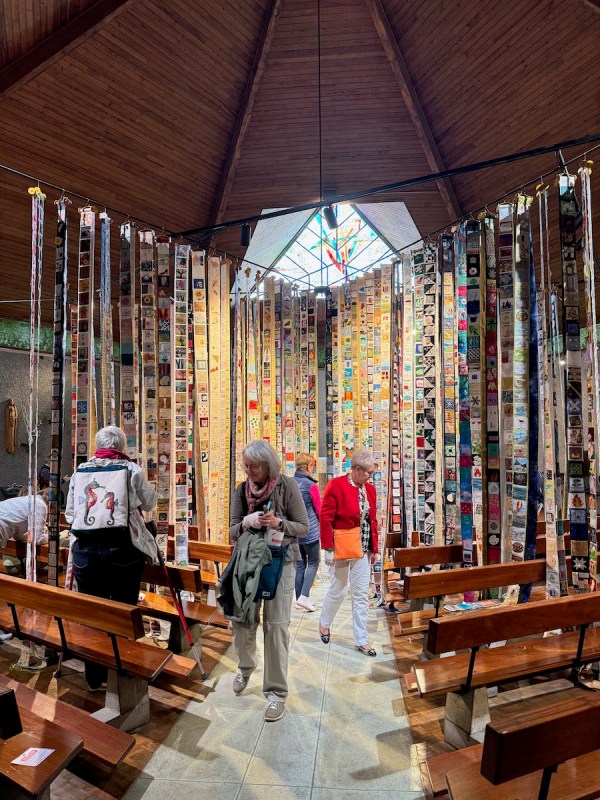
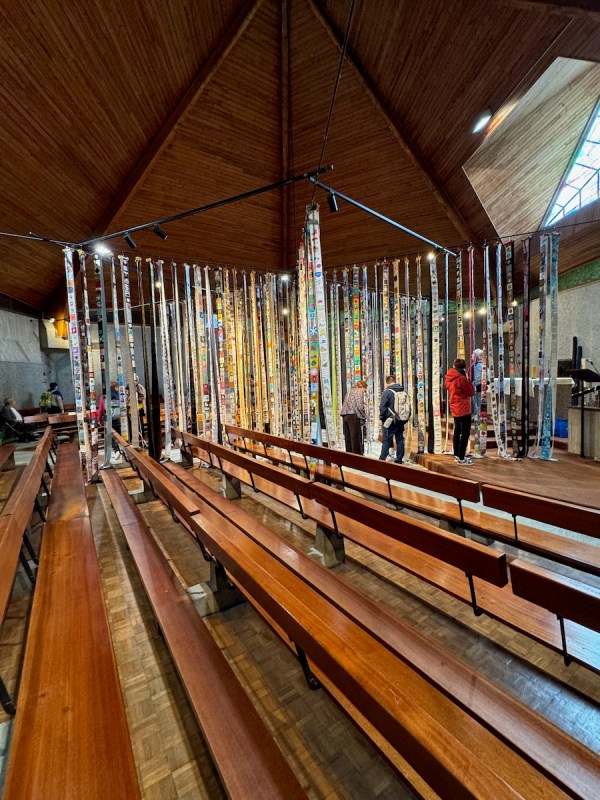
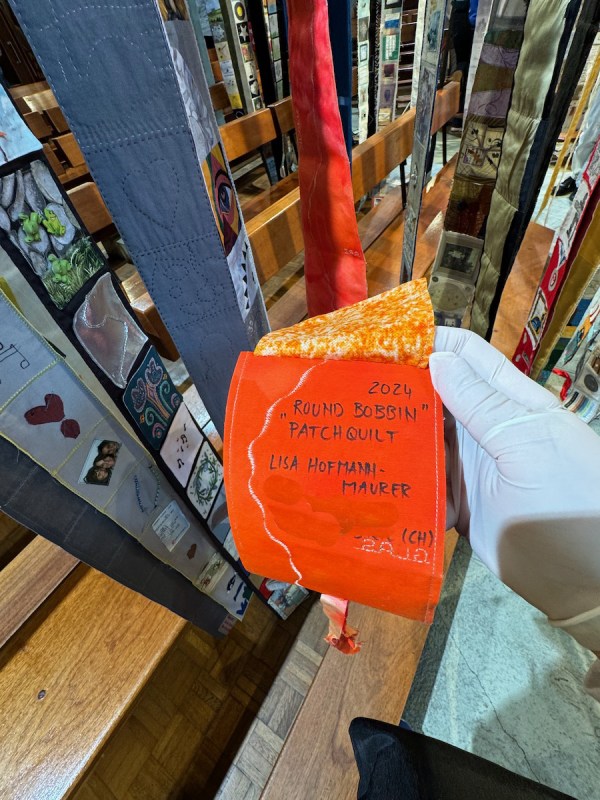
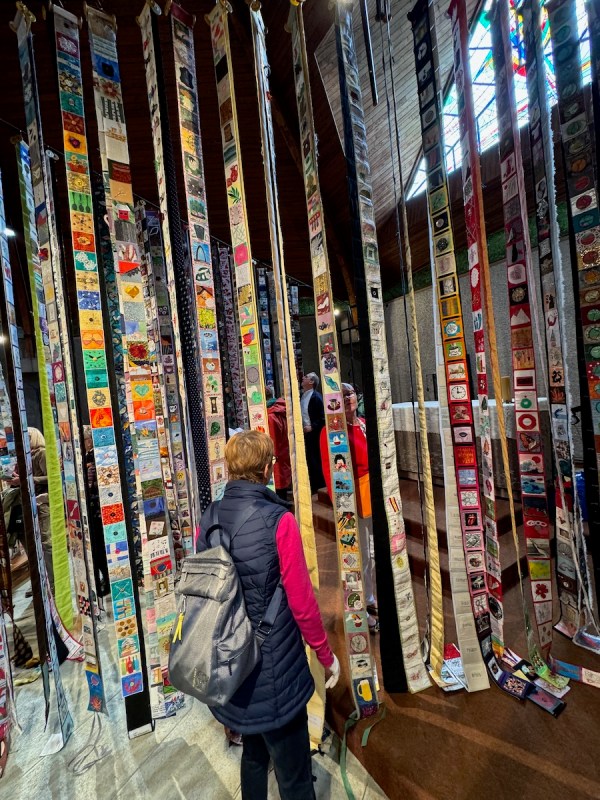
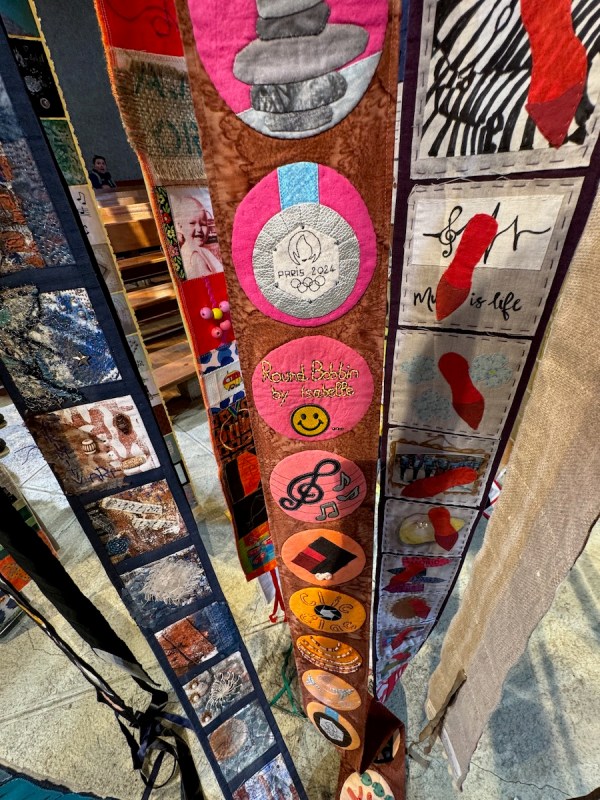
  • Carrefour Quilt III: Espace des Tisserands (Venue 6): Victoria Findlay Wolf, The Modern Quilt Guild, Quilt Art, Léna Meszaros; Chapelle St. Joseph (Venue 9): PatCHquilt’s Concours Round Bobbin Invitational Challenge.
  • Carrefour Quilt IV: Église St. Blaise (Venue 7): Virginie Peyre
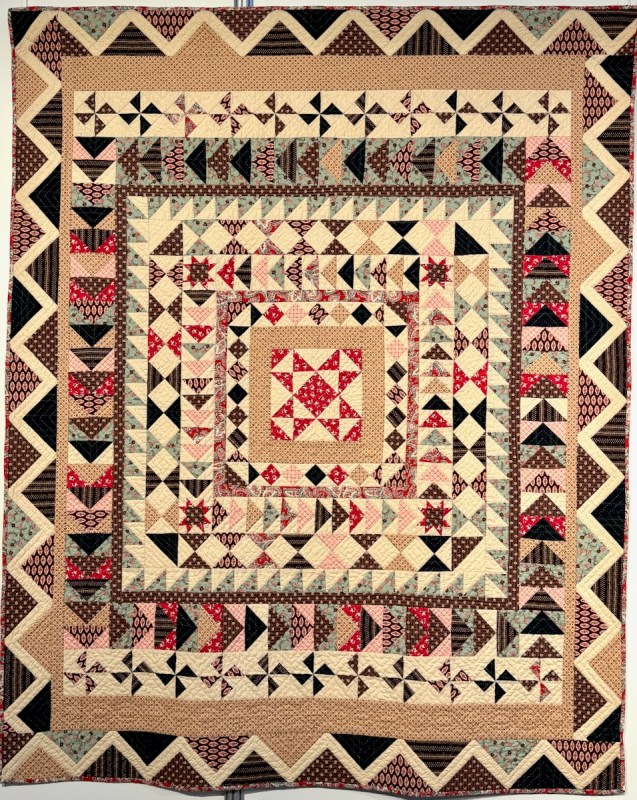
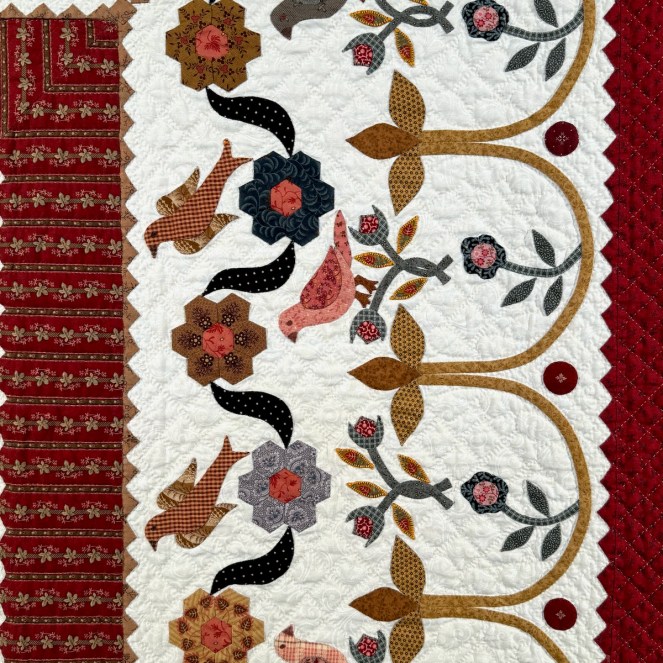
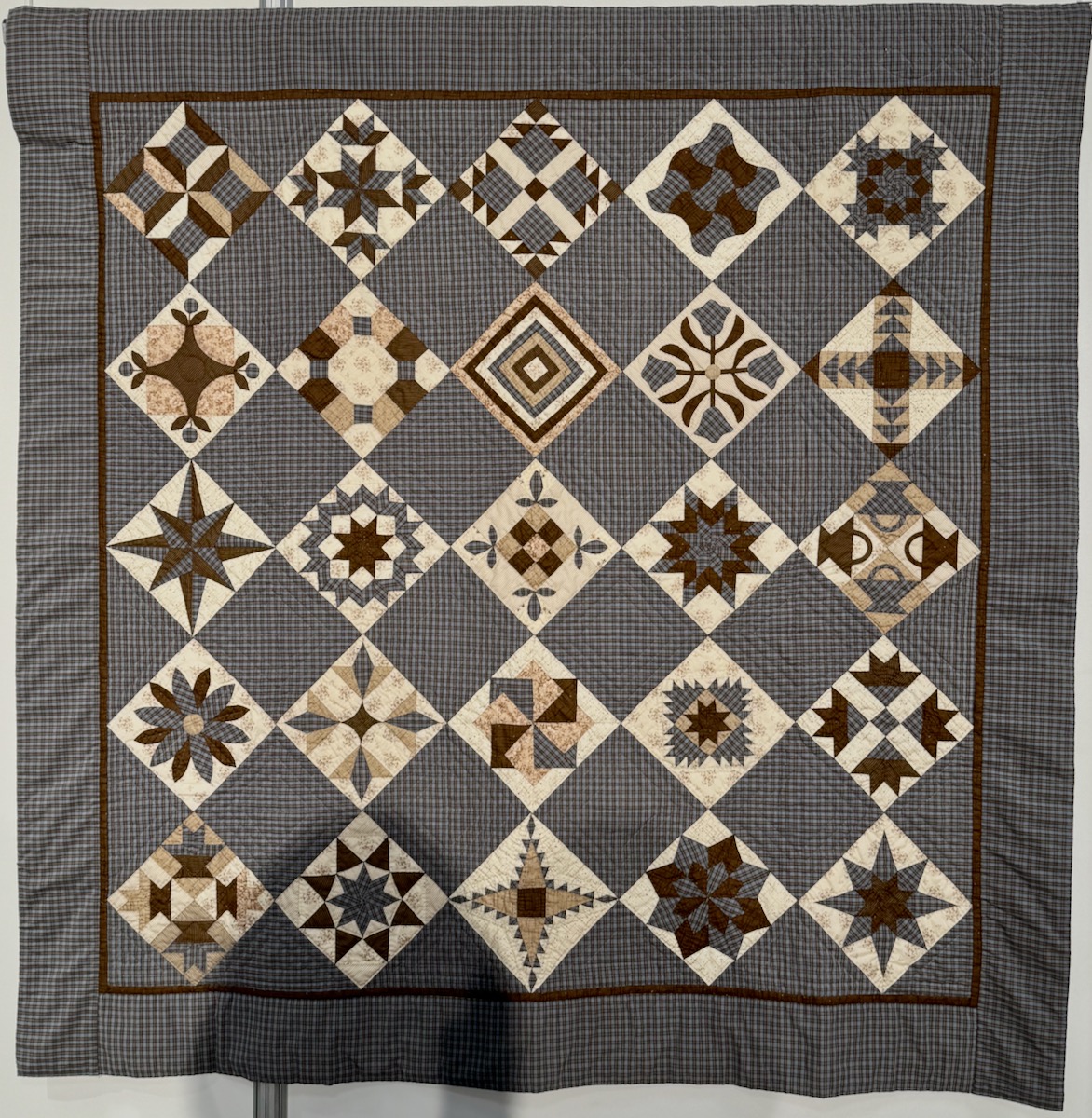
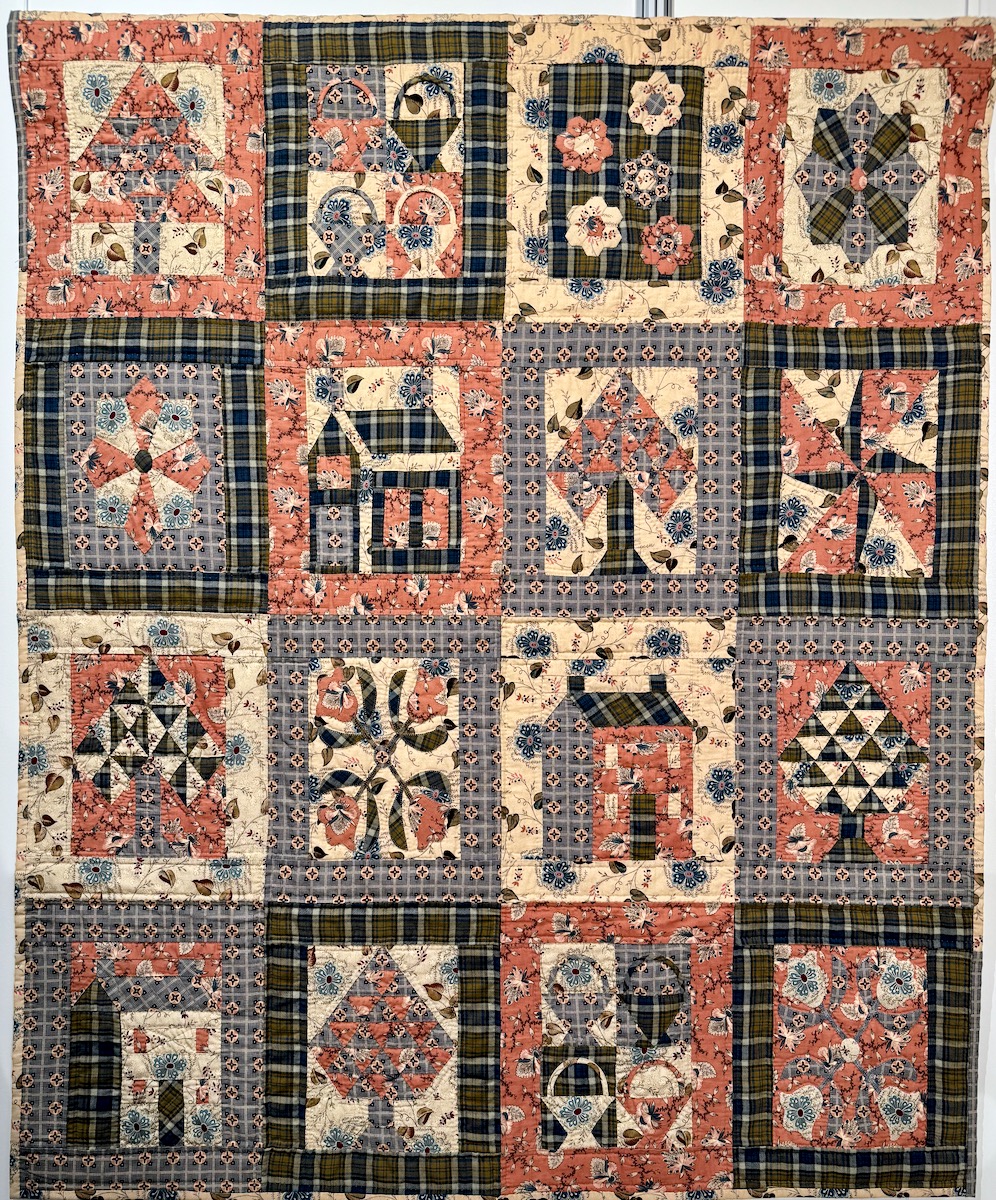
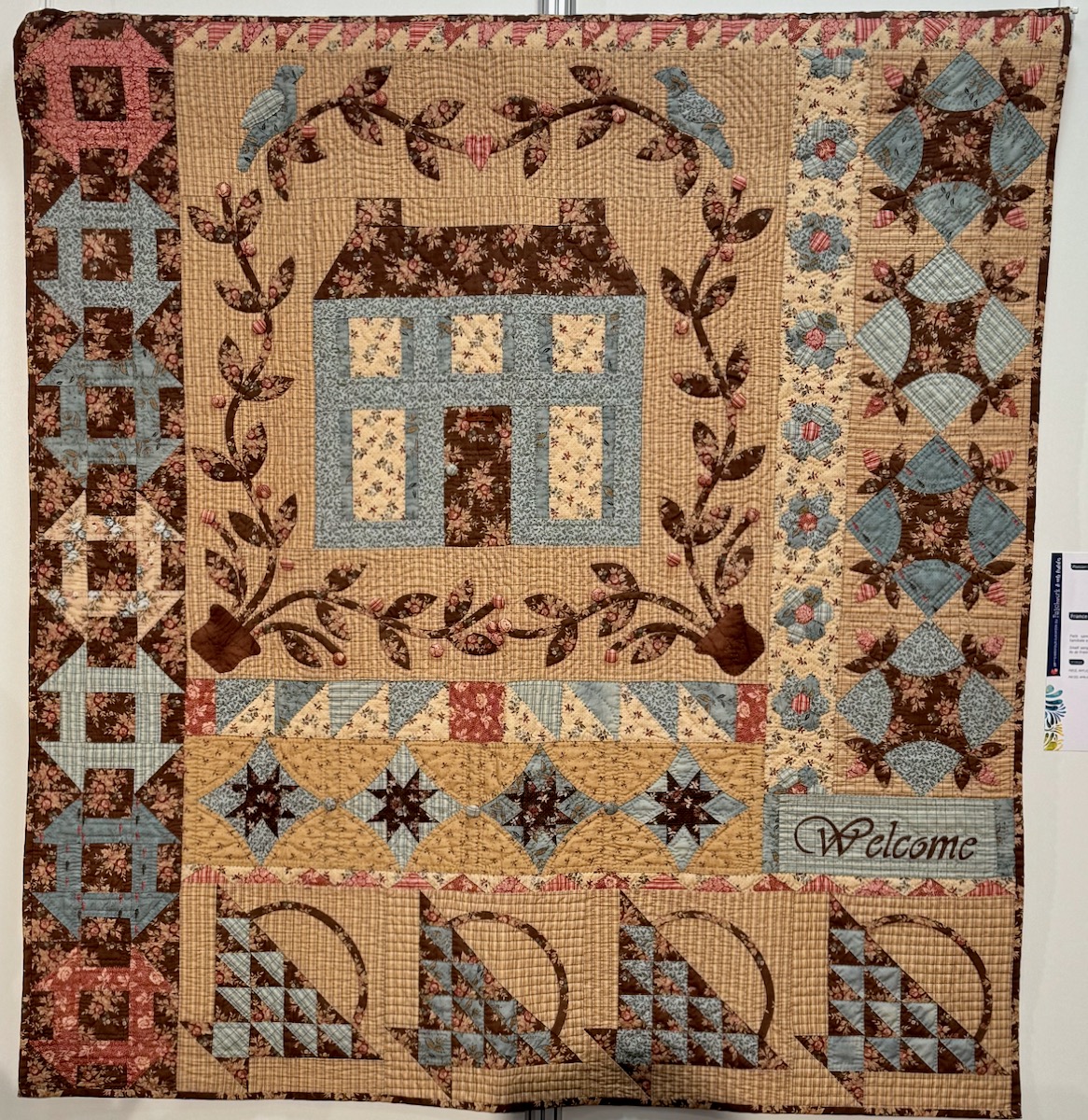
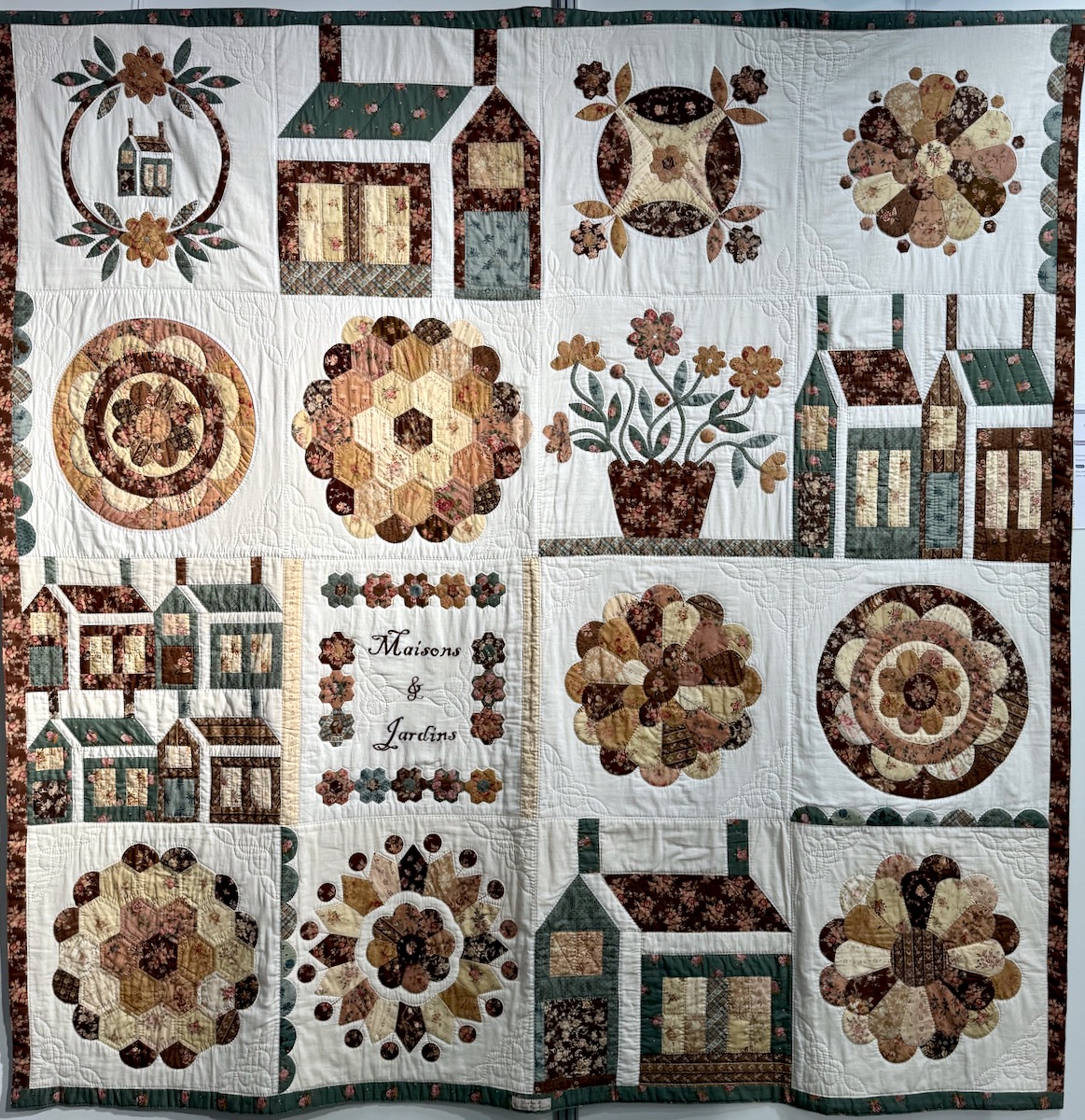
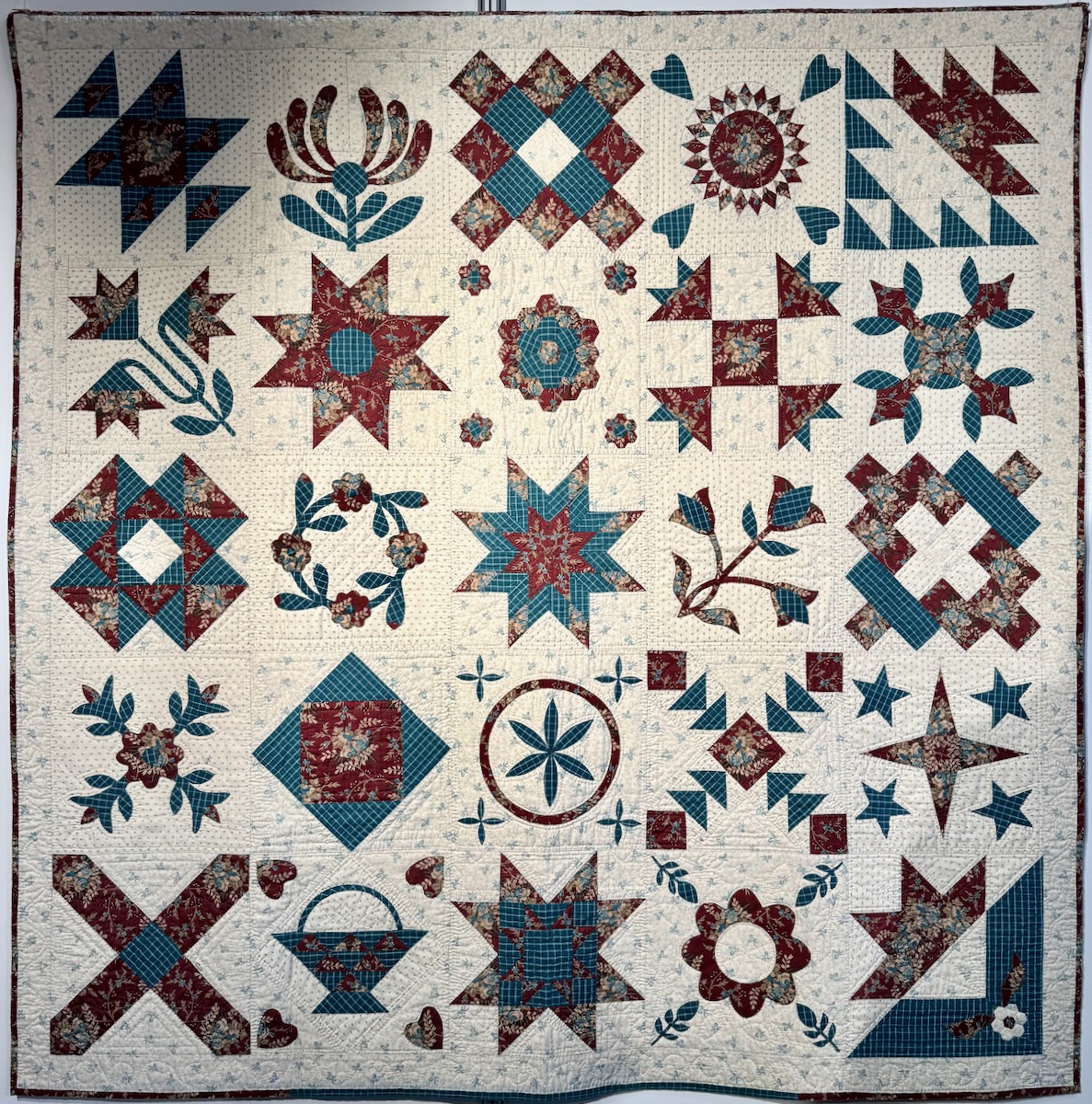
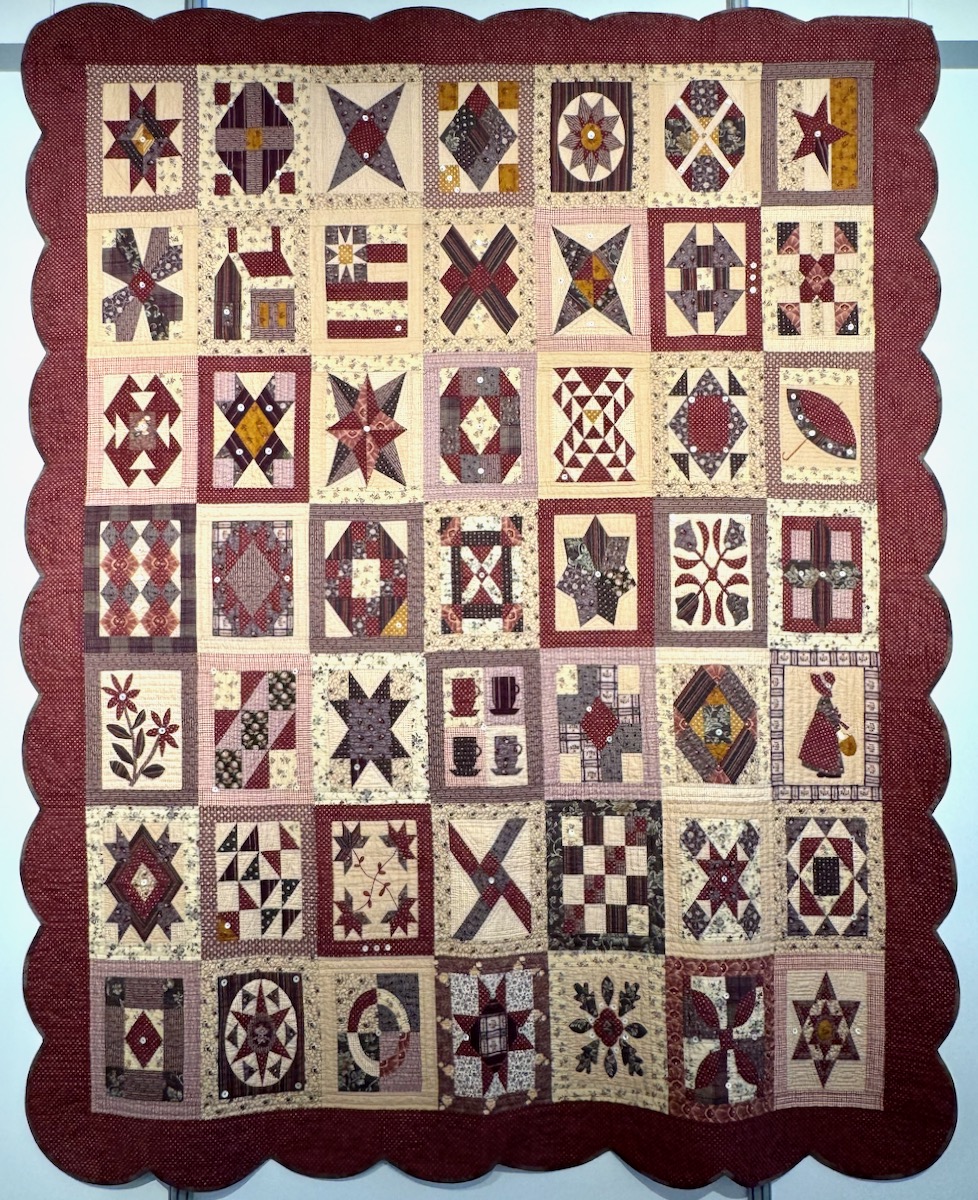
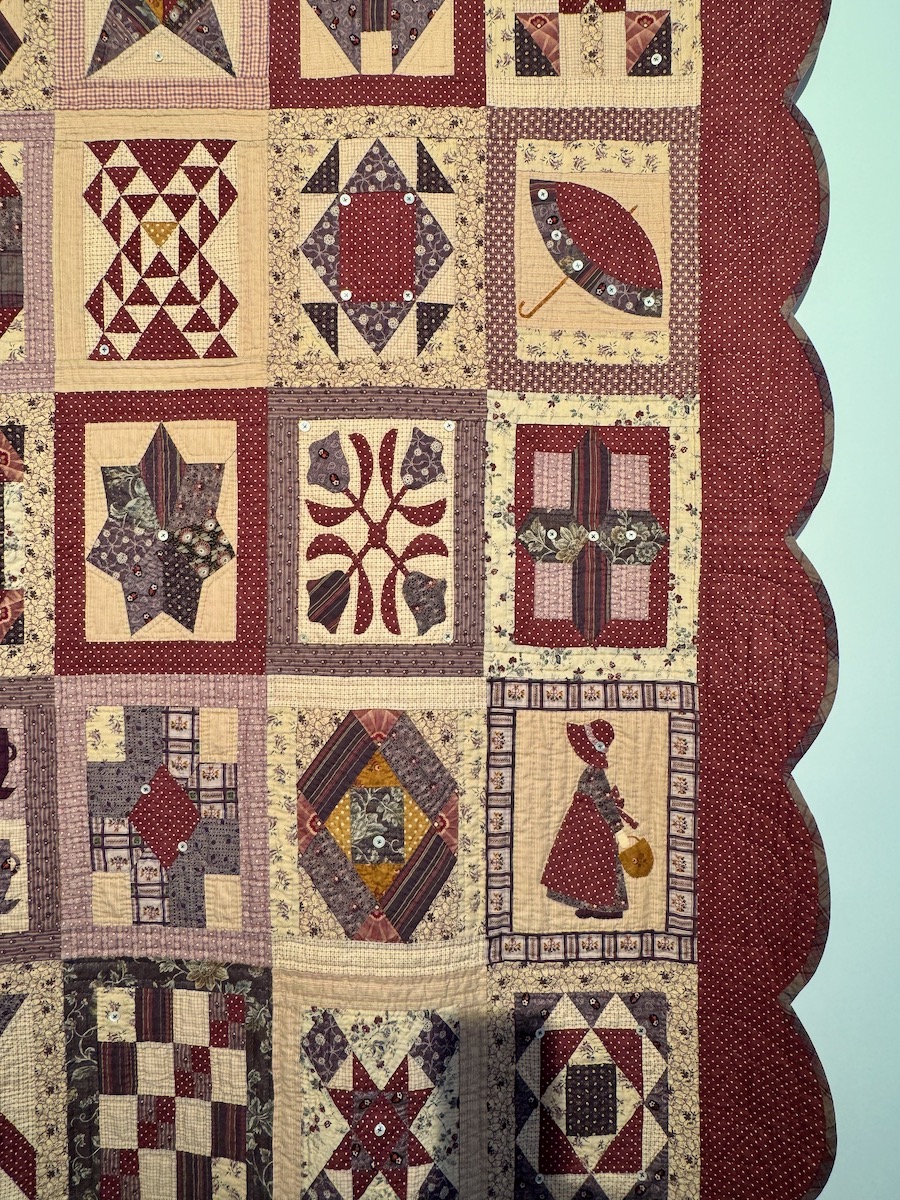
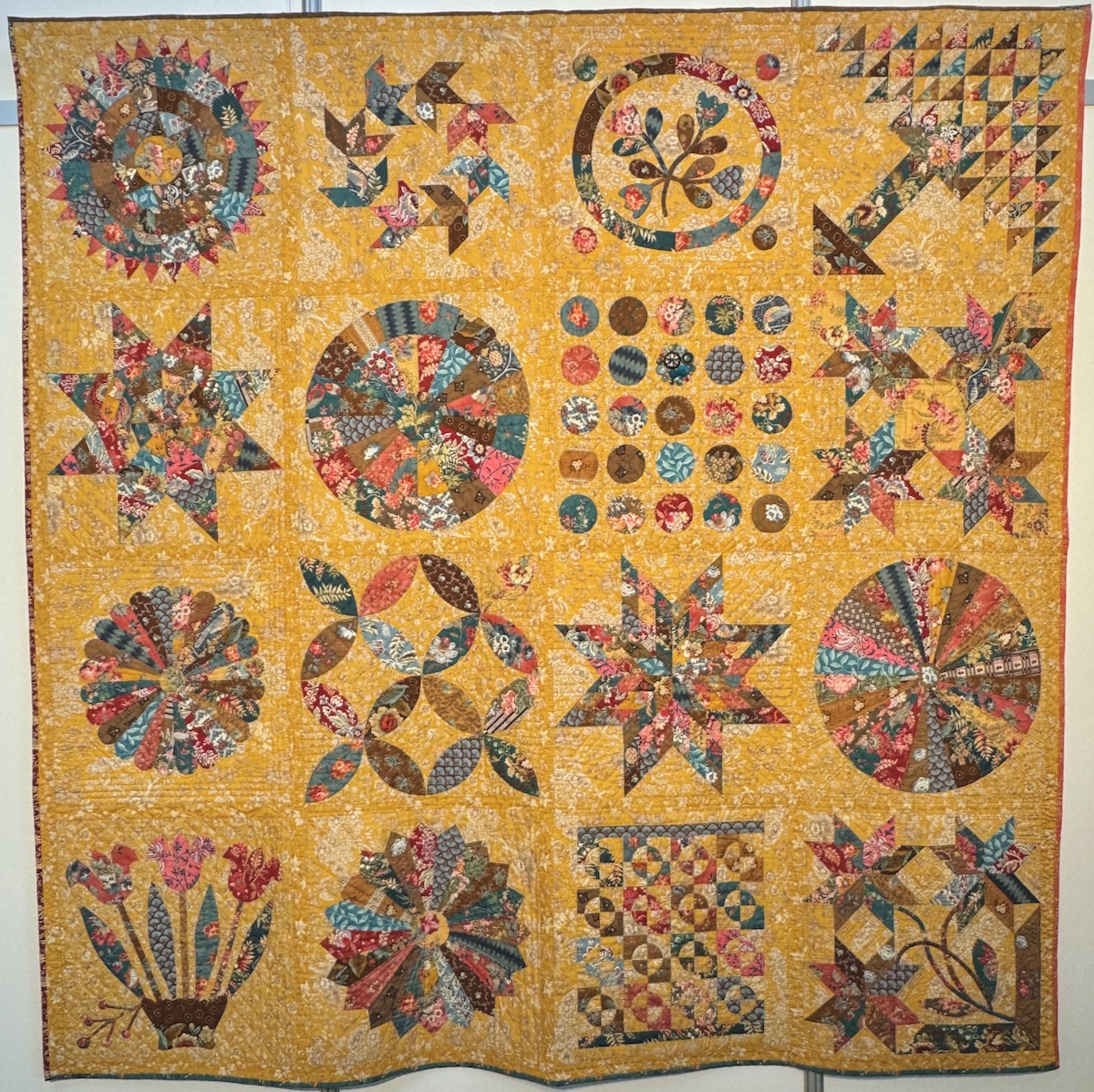
    Espace D’Exposition (Venue 11): Quilt en rêve (remakes of antique quilts), France Aubert (Passion for Samplers), Selma Huisman-Hilderbrand (Walk Down Memory Lane)

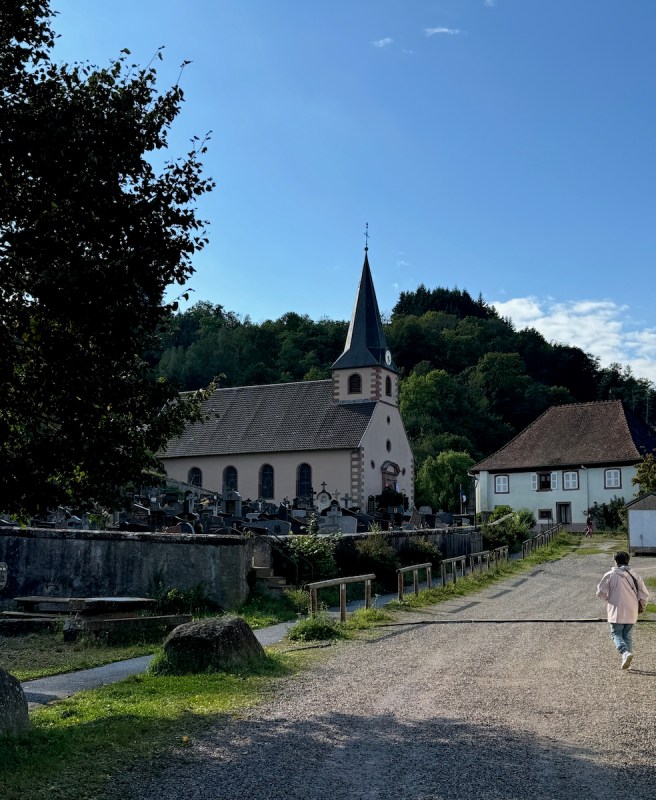
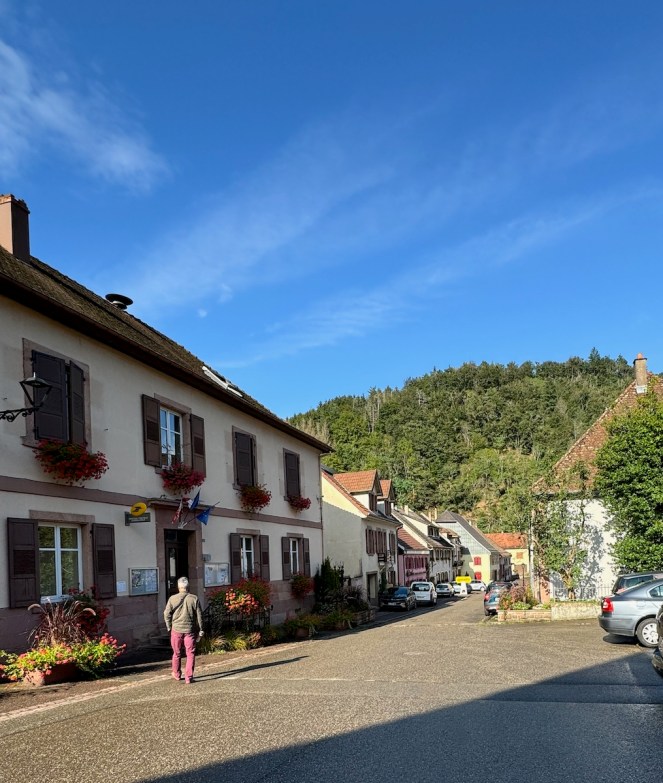
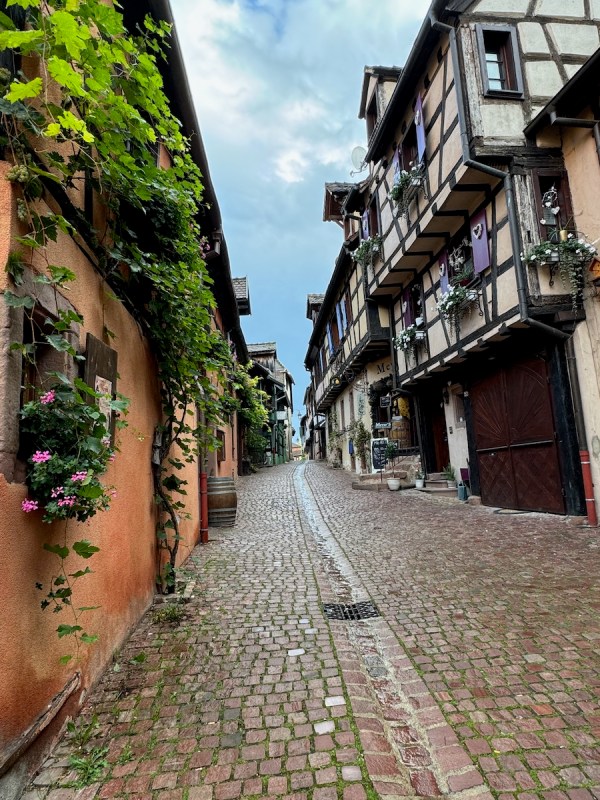
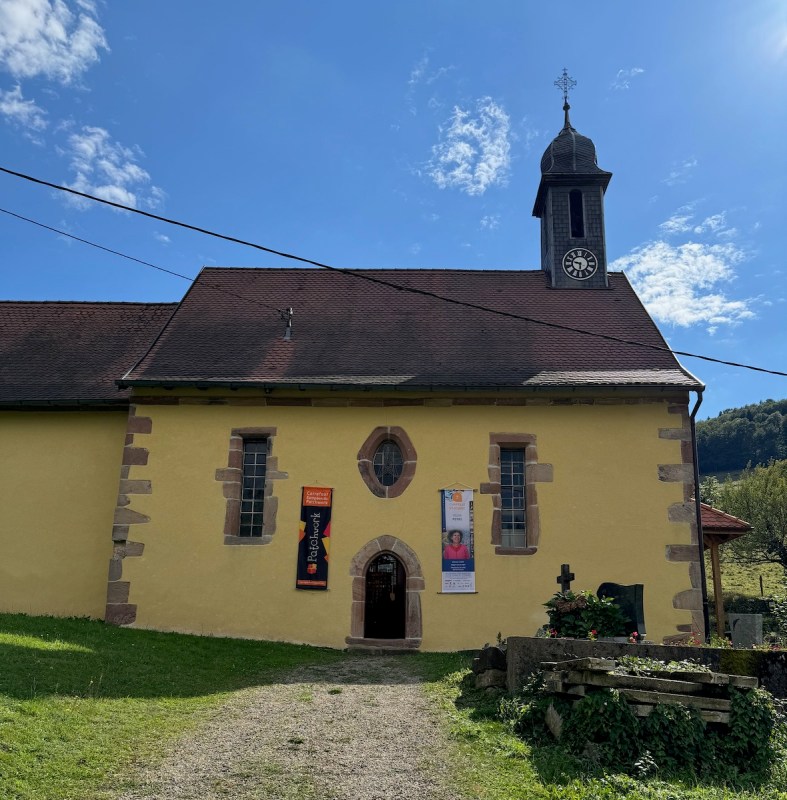
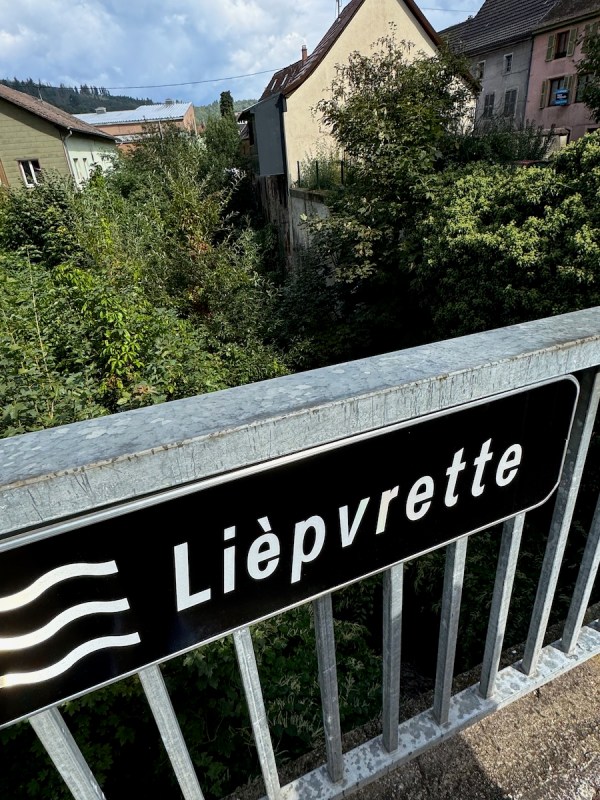
This year it was in four villages: Saint-Marie-Aux-Mines, Saint-Croix-Aux-Mines, Lièpvre (which I could never say), and Rombach-le-Franc. There were multiple sites in the first two towns, and only a couple of venues in the last two. We learned to keep track of where we were by the numbers.

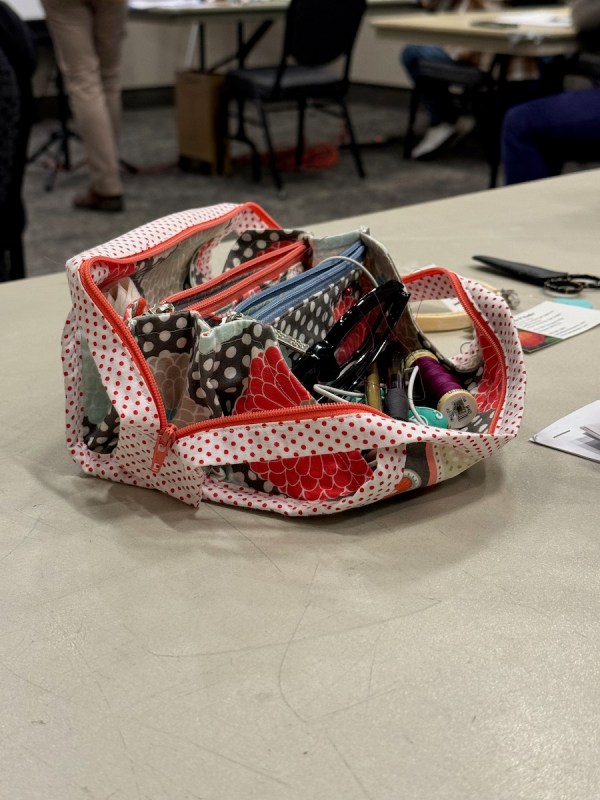
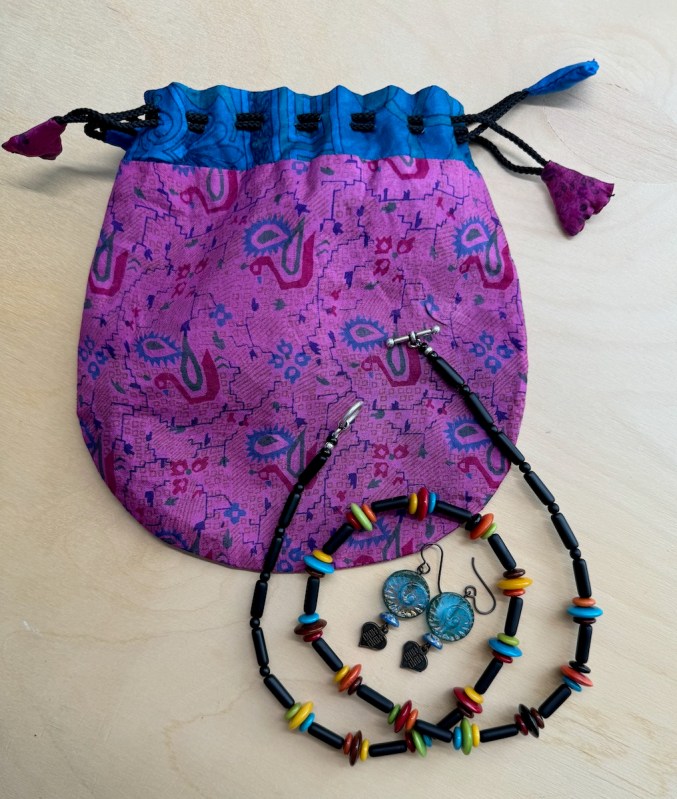
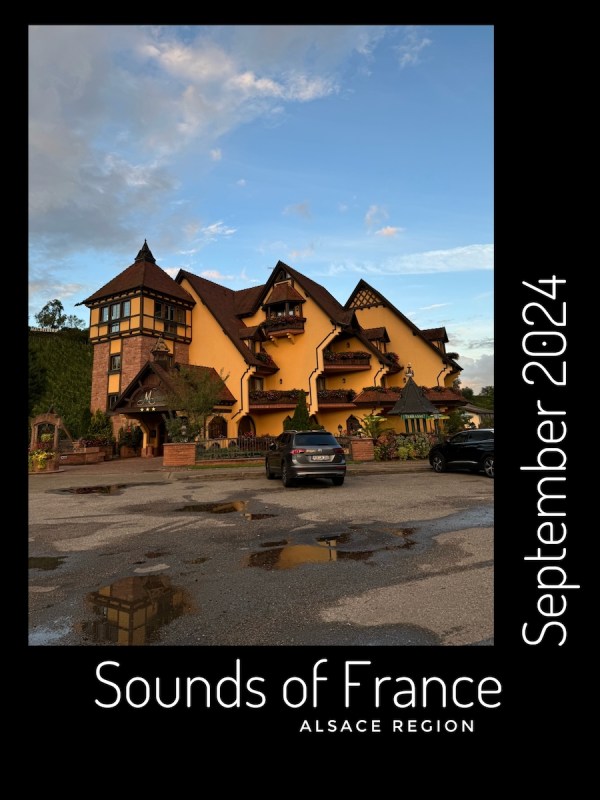
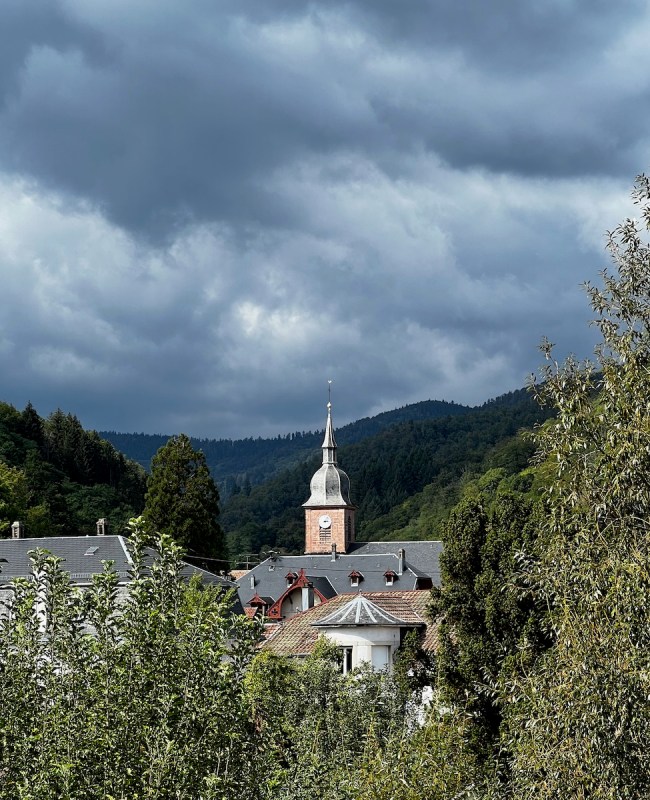
However, the day started here, in my hotel (above), when I noticed this woman’s quilted bag at breakfast. Quilter! I thought, and soon we were trading photos on our phones, and speaking in broken French/English. Her name was Marie, and yes, she was headed to Carrefours.

Saint-Marie-Aux-Mines (yes, this area is also known as the Valley of Silver, where there were a lot of mines) was about 35 minutes away through lush green hills…which turned into 45 minutes away because a road had washed out and we had to take a detour. Luckily we were following someone, who we rightly guessed was going the same place as we were, so we didn’t get (too) lost. Parking was good, and close by.

Okay, yeah. The map (again). We figured out we were standing right in front of Val Expo, the “Espace Commercial” which I took as a sign that we should buy the catalogue, the tote bag and do the shopping first.

Everything looks similar to the US quilt shows…and not similar. I had learned from before that I would not be buying large quantities of American fabrics, or large quantities of anything, even if I wanted to (luggage restrictions), so I spent a lot of time enjoying the booths visually.

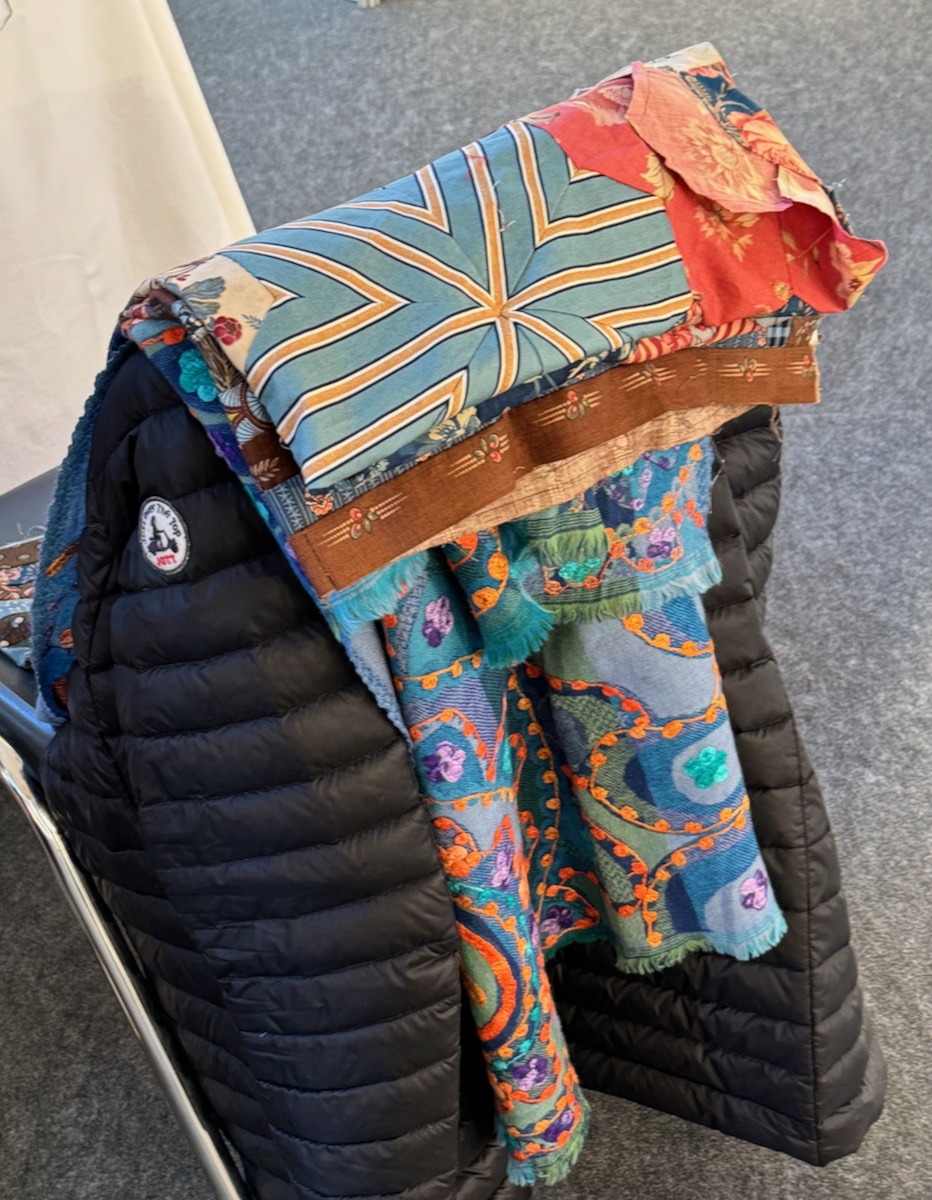
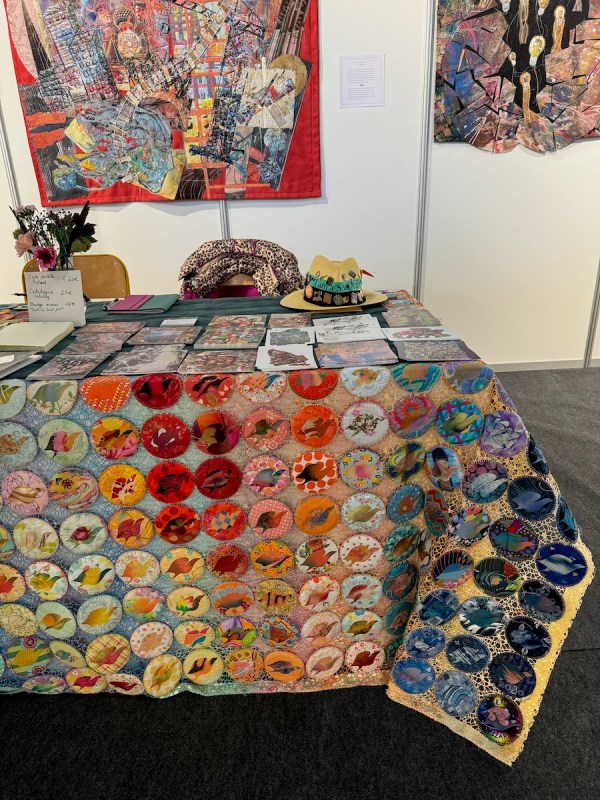
Until I hit Atelier des ABCDaires. Whoa–these were screen-printed velvets that could be made up into bags. (I got permission to take these photos.) The colors were vivid, the product unusual, and she spoke perfect English. I spent some time here.

Three projects came home with me, but I could have purchased waaaay more.

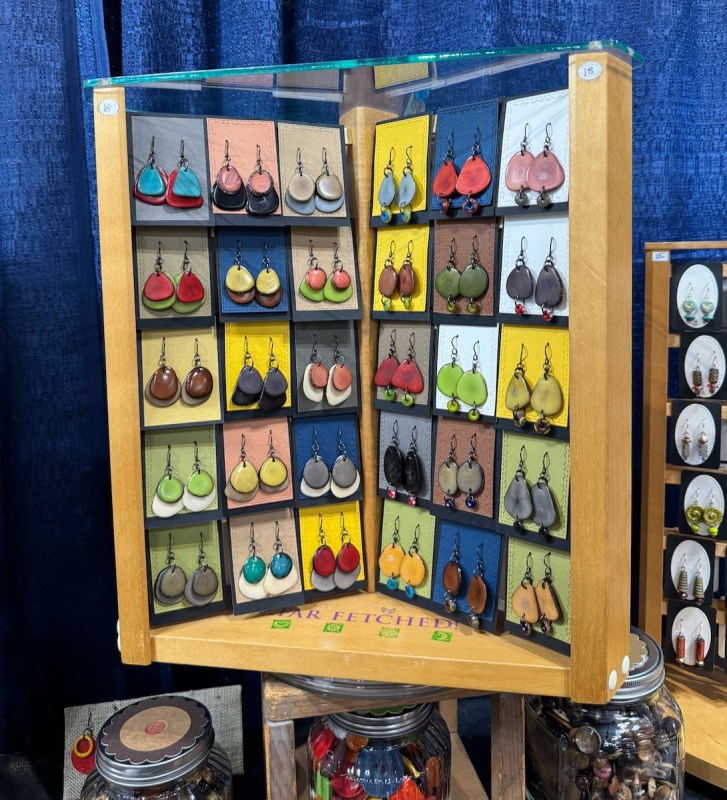
Chifonie Studio‘s booth was filled with wonderful bits of polymer clay, for rings and charms, and she had a whole section of jewelry (yes, I bought some — it fits in the suitcase really well). [I’ve linked her ETSY shops.] And then I saw:

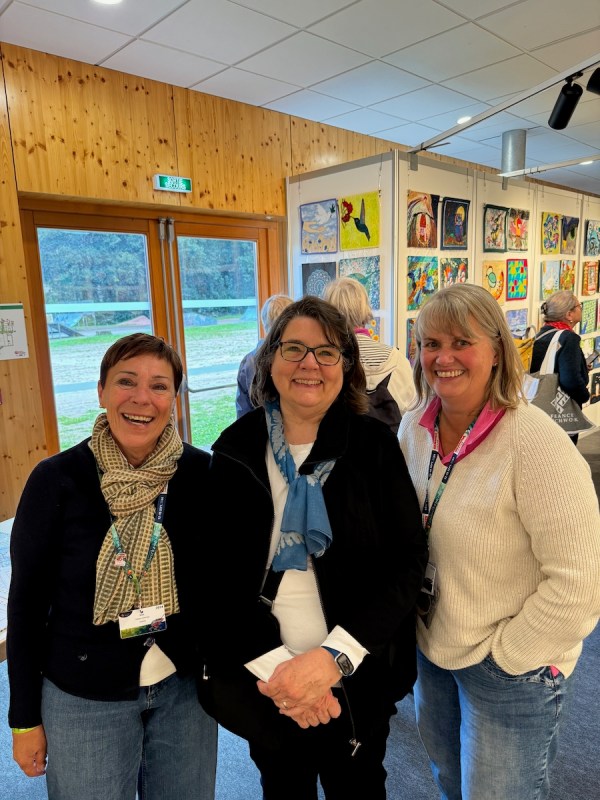
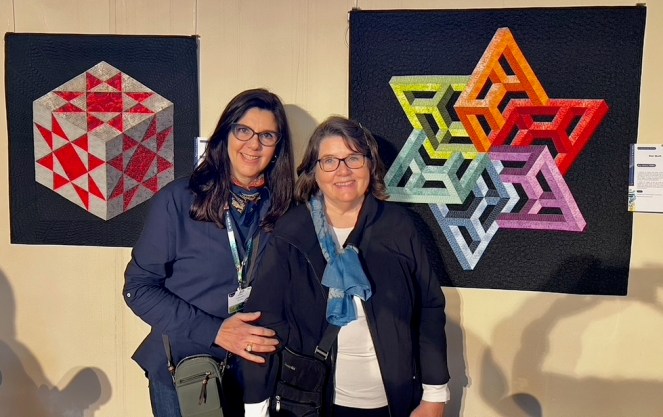
Marie! She was there with her two friends: Marie Claude, and another Marie. And then she told me her full name was Marie Claude, too. Quick quilty friendships–it was fun to see her again.

I love the embroideries from Un Chat Dans L’Aiguille, but I’m still working on the one I bought last time I was here.

I had determined not to buy fabric from the states, but here was a whole booth of fabric from Germany.

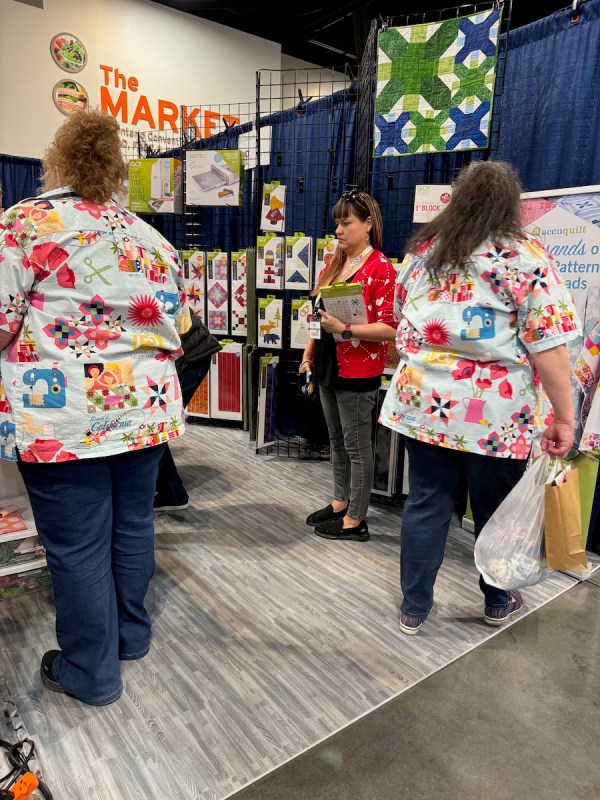
Beautiful cottons with unique designs. Sometimes our fabrics tend to look the same in America, so it was nice to see something different (I got permission to photograph — she’s smiling on the left, in the red shirt). Here’s a link to the Christmas Garland, one of the fabrics in this group I loved.

Fabric from Africa–a riot of colors and prints, and only bought a 1/2 meter of each. They were very stiff, but she promised me they would soften after washing.

I noticed a lot of quilters who looked like me: comfy shoes, and a bag to carry things in. There was also a booth I recognized from last time:

From a booth titled Les Editions de Saxe, I purchased a book of 37 different tote bags and projects, which they slipped into a brightly colored floral bag along with a catalogue. Bonus souvenirs!

The book was written by a Japanese quilter, but published in French. I looked for any magazines that might replace our beloved QuiltMania magazines, and there were some, but alas — not any in English.

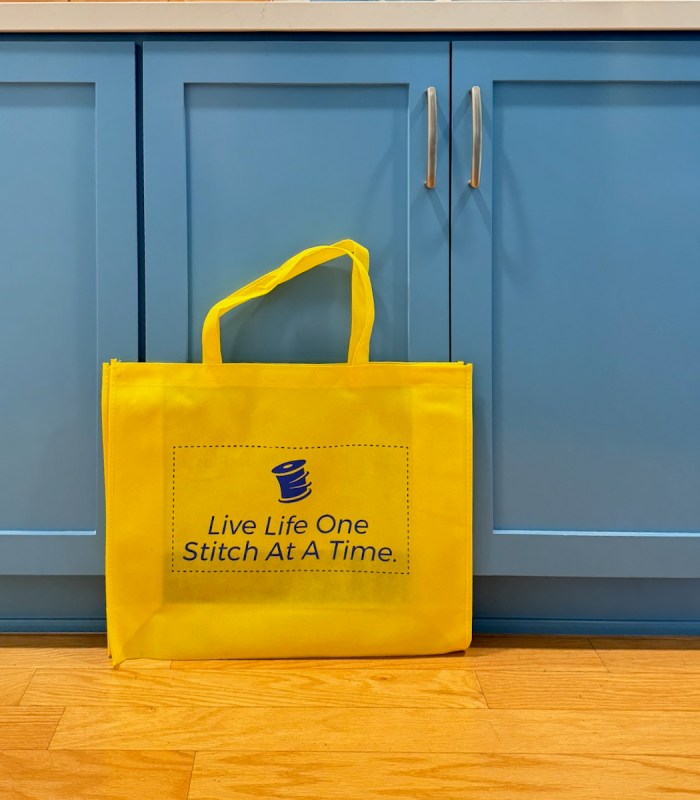
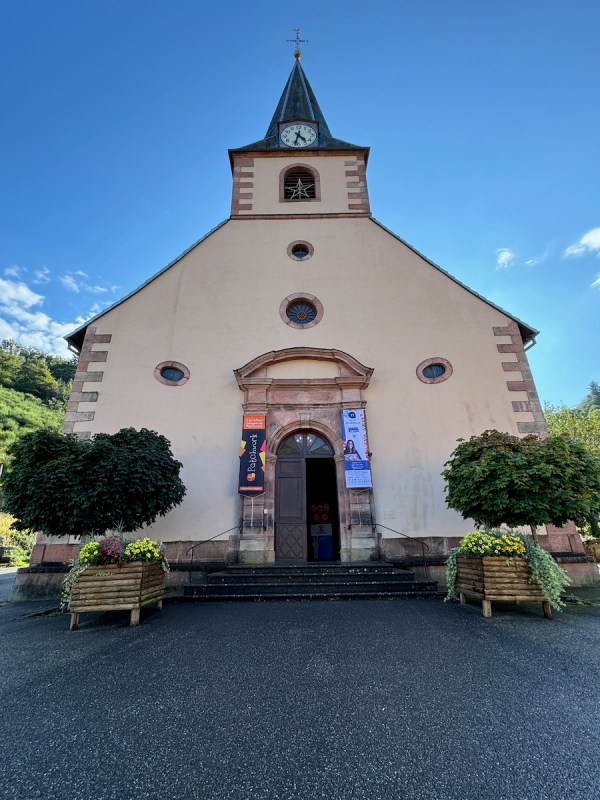
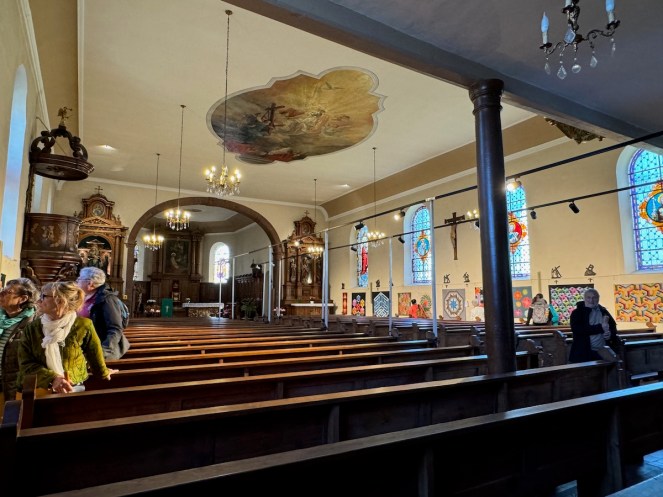
Okay. Enough shopping. I had my tote bag from the show, the catalogue (map), and it wasn’t raining. All good things. We bought a couple of demi-baguettes with ham and butter (French butter!), took a seat and ate lunch. Then we left the Espace Commercial, and headed to other sites in town. Above, you see something you wouldn’t find at an American show: history is all around us here.

Next up: Saint-Marie-Aux-Mines quilt venues: Theater, Pavilion Osmont with the Ocean contest.

Quilt Shows · Quilts

Eye Candy for the End of Summer

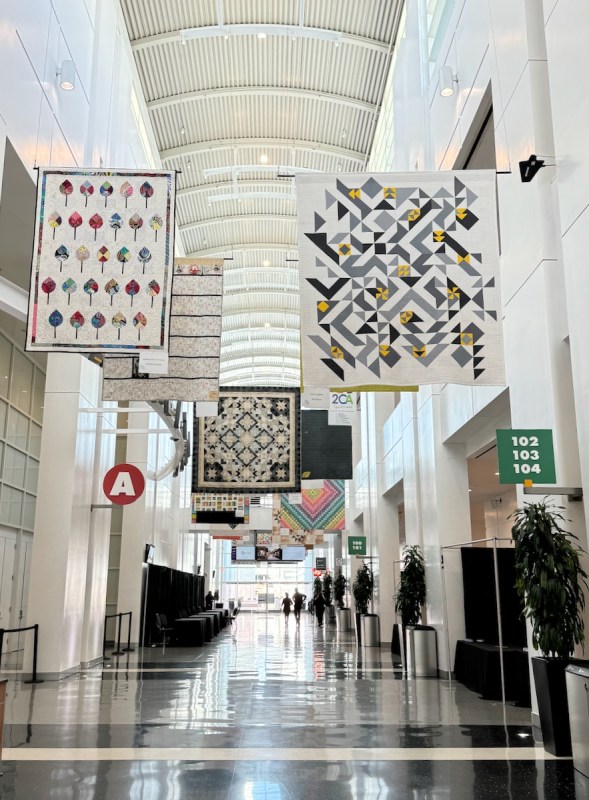
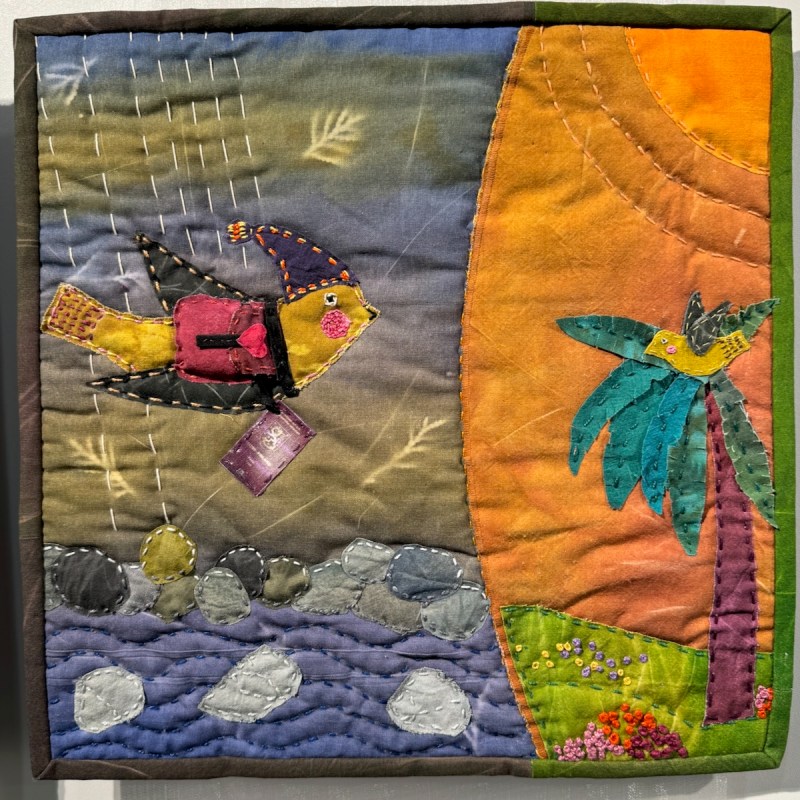
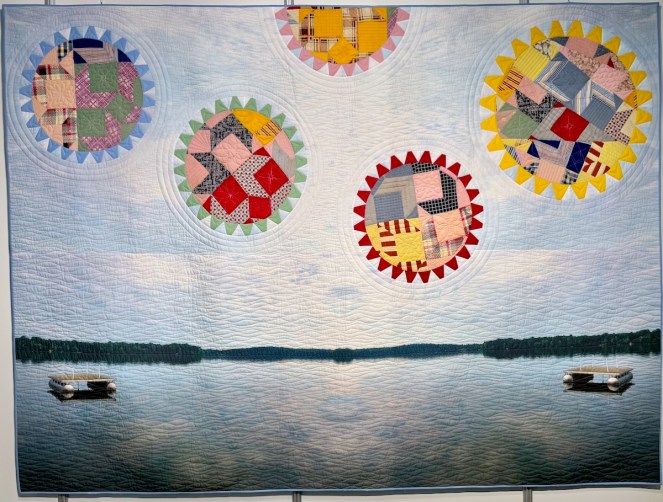
While the original version of the word meant light, frothy entertainment, this grouping of quilts was more serious, found in Primal Forces, an exhibit in the BYU Museum of Art. They were part of a traveling show from SAQA, and I was delighted to see them while visiting there for a wedding this summer. One of them, the quilt with “rocks” and “water,” I first saw in France while at the Carrefour Quilt Show in the Alsace region. It was like seeing an old friend. And yes, I always love that overhead thread sculpture by Gabriel Dawe that I led with. It’s too hot to do anything else, so enjoy the quilts!

NOTE: I put some of them together in “galleries;” click to enlarge.

Sonoran Spring, by Stephanie Nordlin

I loved the shaded window above these two quilts, reflecting the shapes in an architectural way.

I love the simplicity/complexity of the quilt above. It just vibrated on the wall.

Thank you all for your well wishes in the last post. It’s taken me longer than I wanted to write back to you, but I’m most grateful for all the lovely things you said. We did survive the “storm” and as I read about the weather that’s been going on at my friend Carol’s home this week (tornados! rain! lightning! more rain!), it confirms that we Californians are all a bunch of wimps. But thanks for understanding how excited/worried/confused we get by a change in our (usually) moderate weather.

Okay, summer. You can head on out, now. It’s back to quilting…

(All the colors in the center have been quilted)

P.S. Summer leaving? HA! In Southern California, our summers stretch outward into October. We have more hot days ahead of us.

Museums · Quilt Shows · Quilts

The 2022 Springville Art Museum Quilt Show

Springville Art Museum

I was a judge this year for the Springville Art Museum Quilt Show, and while I can’t include all the quilts that were hung, I thought I would post up a few that were my favorites or that caught my eye.

Details from quilt. She used the pattern from Piecemakers: “His Majesty – the Tree.”

Pizzazz! designed and quilted by Ruth Davis — an original pattern!

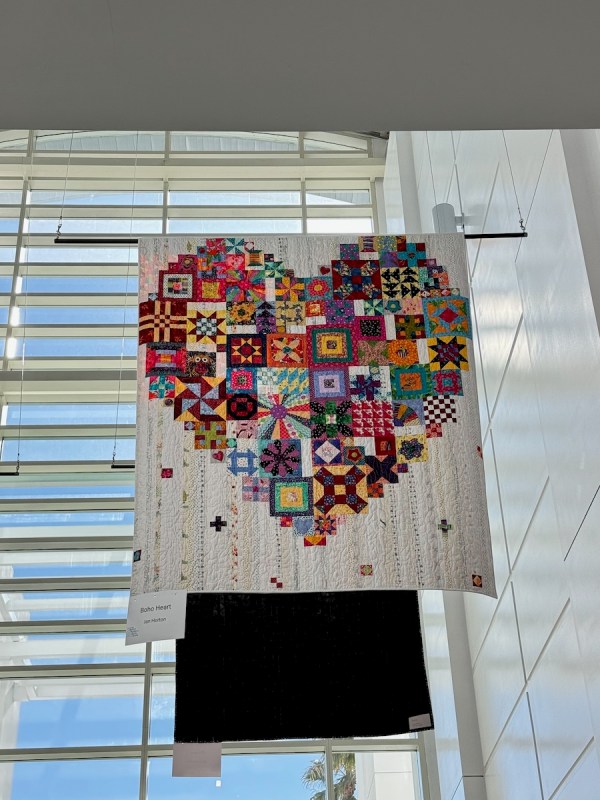
Never a Blue Heart
Made and quilted by Lisa Johnson
(pattern here)

Sheryl Gillilan designed and quilted this quilt, titled, It’s All a Game!

The Boys on the Block
Designed, made and quilted by Marian Eason

Afternoon Delight
Made by Patsy Wall; Quilted by Kim Peterson

Winter Bouquets
Made by Katherine Porter; Quilted by Emmy Evans

At first glance, I thought the flowers were broderie perse, but it’s all appliqué!

Ann Larsen started Nature’s Chorus in 1999 and finished about 30 of the blocks. During the pandemic she finished it. Quilted by Shelly Dahl.

I loved the simplicity and elegance of this design, with outstanding quilting.

Pamela (a fellow judge) and Wendy (Chair of Quilt Committee) on the day the show opened. (Lisa’s quilt is in the background.)

Julie Saville first created the borders of her quilt Star Garden, then did the center. She also did the quilting.

I could have looked at this one for hours–sorry about the images. Photographing in high contrast light (like spotlights on quilts) often does funny things. It was stellar, though!

Florence Evans’ Bow Wow Chow Mein
Made by Evans; Quilted by Quilts on the Corner

Improv Curves, Made and Quilted by Marian Murdock

Effervescence • Made and Quilted by Sheryl D. Gillilan

I loved this quilt, with all its blues and aquas (my colors!). It is titled Straits of Mackinac and was made by Lani Brower (my second scribe) in a Bonnie Hunter class on Mackinac Island, Michigan. Peggy Cameron did the quilting.

Just a handful more quilts for this post.

Diversity – Unity – Harmony (Mobius Radial Quilt)
Made and Quilted by Luanne Olson

I hope you can see what a wide variety of quilts there are in this show!

Andrea Erekson made and quilted Happy Golden Days

Katherine Porter’s Fan Flower • Quilted by Virgina Gore

There were quite a few more quilts, but next year you’ll just have to go and see for yourself. Thank you, Springville Art Museum and the Utah Valley Quilt Guild!

Museums · Quilt Shows

Judging a Quilt Show • July 2022

It starts like this.

Or this.

Or really, it started with an email from the Quilt Show Committee asking me if I would consider judging one of my favorite small shows: the Springville Art Museum Show. The quilt show is put on by the museum, but the Utah Valley Quilt Guild provides the bulk of the volunteers, the manpower to get it all put together. According to Wendy, the chair of the Quilt Show Committee, I would be there all day, and they would provide lunch (which was delicious!). It was a 9-5 job, in other words.

Yes, I was a bit nervous never having done this before, so I did pretty extensive reading before I went, carrying copies of the NQS guidelines, and other references I found. In reviewing them the night before, I thought: “After nearly five decades of quilting, I either know this…or I don’t.”

What I wasn’t always aware of was how to compare quilts that are quite dissimilar in style, execution, materials, etc. According to NQS guidelines, it often comes down to the number of design decisions made by the maker. I let that be a guide as I worked through the quilts.

Wendy (shown here at the end of the day when she was relaxed) was my first scribe, and Lani (on the right) was my “interim scribe” when Wendy went to assemble lunch for us all. In the morning, I met my other two judges, Pamela and Chris (our bios are at the bottom of this page), along with our the other scribes. The Museum Curator, Emily, and Wendy gave us instructions.

Each quilt was to be judged twice, but each judge was to only judge a portion of the quilts (roughly 60). We would look at the quilt, check off the items on the scoring sheet, leave a comment or two about the overall impression of the quilt, then the scribe would leave the paper upside-down under the quilt, to be picked up later.

The scoring sheet had the usual items dealing with construction, design, quality, straightness, buckling or cupping of edges, tension of stitches, and so forth. Having participated in larger shows, I was suprised that they didn’t have two categories for machine: stationary head or moving head (long-arm), but instead lumped them all together (I will compose an email to the curator, later). And I was surprised about the fixation with binding on the score sheet — was it straight? was it even? was it filled? I dutifully did my inspection, but thought this was a minor detail overall. I’d heard about this from others, but still roll my eyes a bit.

The fun part was getting to put my hands all over the quilts. I kept them clean, washing them often, but it was necessary to determine — in one case — whether the tiny circles were appliquéd or painted onto the quilt (painted). I had to pull at design motifs to figure out if it was a panel or appliquéd (panel), and check other various parts of the quilt.

I’d read the phrase in my studying, “If you can see it, the judge can see it.” Yes we can. I spent a lot of time picking off threads only to find they were attached, like this one, above. We had about an average of 3-4 minutes per quilt. I’d read that some shows are judged “flat” and other shows are judged “hung.” Ours was obviously hung, so we couldn’t really examine the top corners, but could do the rest of the quilt pretty well. I spent a lot of time running my fingers down the bindings, picking up corners to check for construction.

My scribe dutifully wrote what I dictated. I soon learned that I was better about commenting about the design right off the bat, then could address the “needs improvement” comment after I’d gotten up close and personal. I think that what I said about those first few quilts were a bit clunky, and wish I could go back and re-do some of them, but we had pretty hard and fast deadlines, so I pressed on.

All three of us.

In later afternoon, after we had all judged the quilts, the real discussion began back at the table. We needed to fill out the top winners, settle our differences about what quilts should be elevated to awards, and choose our own Judge’s Choice. I thought we worked really well together as a team.

There were three major awards, with Best of Show being one of them. Then a few more Awards of Excellence, then Honorable Mentions, along with Sponsor Awards, Museum Awards and others. We had a lot of norming of the score sheets to do, which meant running off to see the quilts yet again, discussing them among ourselves. I liked this part of the best, as I felt we each had different tastes and approaches and this gave a good evaluation of which quilts should get an award. I could point out details in the quilts I’d judged, and they could point out details in the quilts they’d closely looked at. Finally our awards lists were complete and we handed them in…early!

Here I am holding my Judge’s Choice ribbon in front of the quilt I chose. There were some specifications for what we chose, but generally we had free rein. Notice the two judging sheets on the floor (we each had a different color), and the paper pinned to the corner of the quilt with the barest amount of info: no names, no stories of the quilt. It was just us and the quilts that day.

I was surprised that they gave me an honorarium, so I promptly went across the street to Corn Wagon Quilts (one of the sponsors) and went shopping. The Circle of a Quilter’s Life, right? I spent the night at my sister’s house in Provo, and over dinner, she dutifully listened while I talked about my experiences. She also had listened to me years before, after I’d gone to Quilt Market; I’m glad she was there.

So, in the end, did I “know it?”Confidently, I can say yes. Do I want to judge another show? Yes. Do I want to judge a show like Quilt Market or Paducah? Heaven’s no! But many small regional and guild shows need judges, and I feel I could do this. Like every quilter, I’ve made a lot of stitching mistakes in my life which brings one kind of education, but being able to go to — and participate in — some of the shows such as Quilt Market, Houston, Atlanta, PIQF, Road to California and other large national/international shows has given me another kind. After participating all these years, I was happy to be able to give back.

If you haven’t entered a Guild Show, or a regional or national show yet, give it a try. They can only say no, and you might be surprised about getting in!

Happy making–

Next post: Many quilts from Springville. Sneak Peek: