Patterns by Elizabeth of OPQuilt · Quilt Patterns · This-and-That

This and That • October 2024

This month last year I saw an eclipse and cranked out not one, but two quilts to the quilter that month.
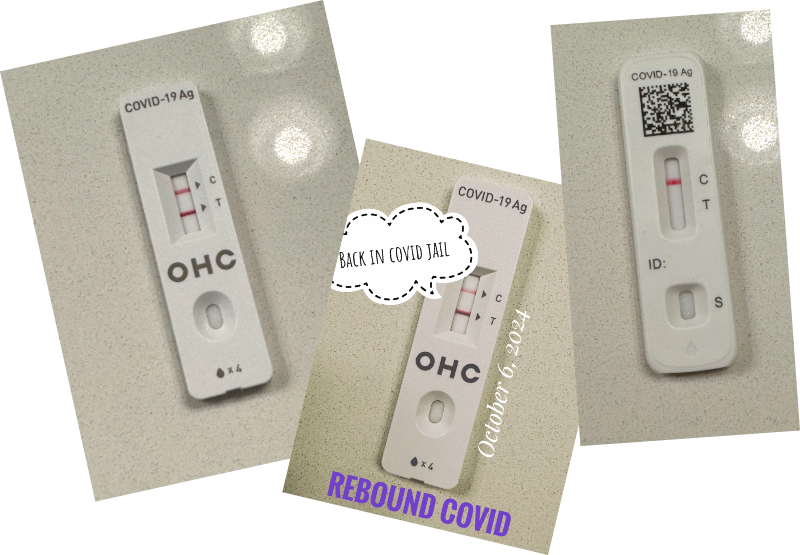
And this year?? A slog through covid, which still lingers with the double whammy of cough and fatigue.

So what a difference a year makes. Oh, maybe I’ve got a triple whammy with the brain fog, which is real. But at any rate, here we go with a This and That, which I haven’t done in a while.

Because I was just hanging around a lot, coughing, I read one book (Orenstein) on my digital reader, and one (Garten) in Real Book form. I learned a lot from both, including the tidbit that Garten and Martha Stewart at one time were friends. But mostly I loved a lot of what Orenstein wrote when she was making “the world’s ugliest sweater.”

and

It was too hot in October, bookending our summer that began all the way in May, which was also too hot.

As you might suspect, this word appeals to me. I’m an autumn-sort-of-girl. (TIL=Today I Learned)

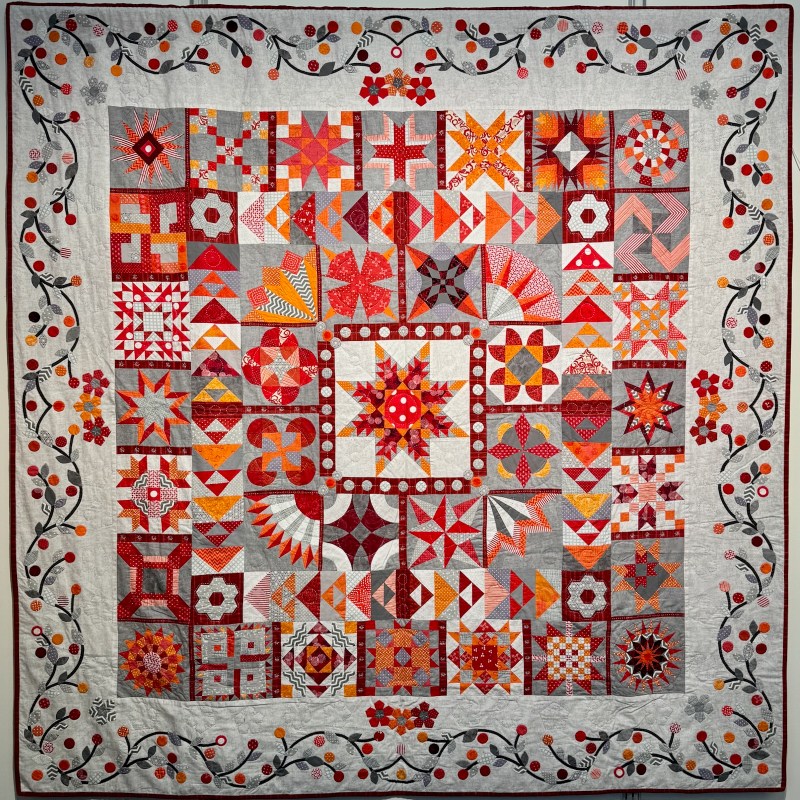
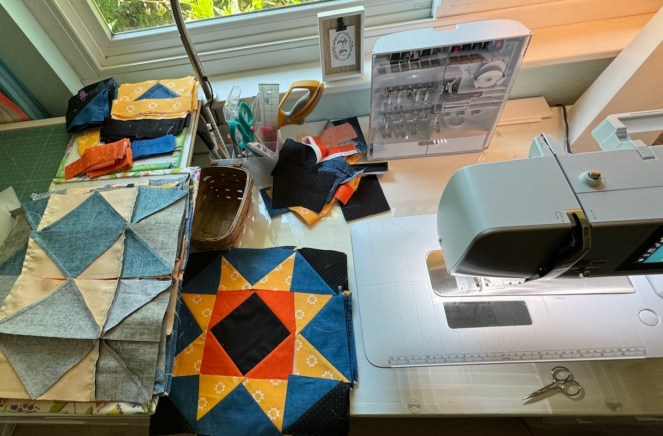
Have I sewn anything? I participated in a bee, and just about half the blocks were unusable. So with my fever-covid-fog (FCF) brain, I unpicked some that were too small and re-sewed them, I was happy I purchased more fabric than I needed, so I could make-from-scratch a handful more. One quilter had eye surgery and I was happy to make hers for her. I was sent some blocks half-finished, and finished them. Some blocks were a couple of weeks late, which gave me angst because of my FCF-brain: I’d grabbed a slot with my quilter so I could have this back for the holidays, and time was slipping away. I decided, in the end, that maybe I’d picked too complicated of a block for some of the quilters, or maybe it was just a bad-karma month for a lot of other people. That happens. But in end, as with most quilts, Mercato Square was finished. I sent it off, after agonizing about which quilting panto to use. Stay tuned.

I sewed my October blocks and November blocks for the bee. One more month to go. I put a tip-sheet on how to make the strawberries and it’s a free download. The block on the right has been around for a while and pops up in different iterations.

Here’s the first example I have for you, from 2013, and I screen-grabbed some of what this quilter wrote:

The above is from a blog titled D & D Adventures (it’s defunct now).
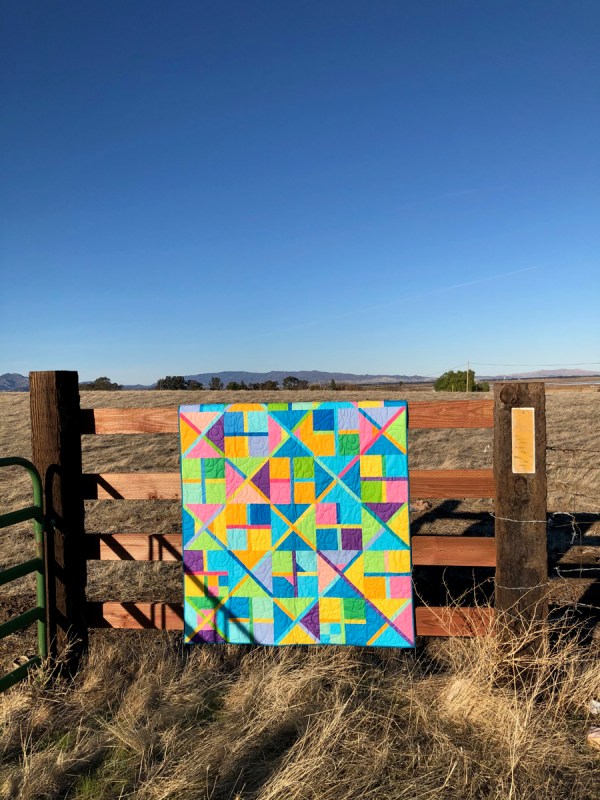
I did a version of cut-block-insert-strip, Criss-Cross Quilt, that uses larger blocks, some with the insert going diagonally and some, vertically/horizontally. I don’t know if you remember, but there is a 31%-off coupon for any one thing in my pattern shop, so if you want this version (or something else), grab the coupon and get it (it expires on Halloween).
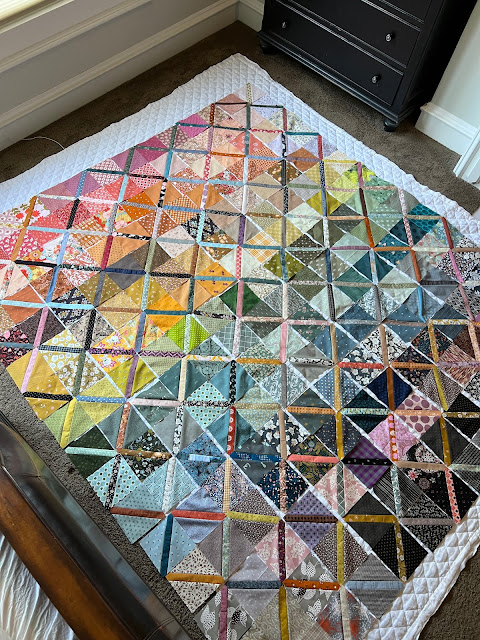
from Gigi’s Thimble

This time around, the Queen Bee sent us to Amber of Gigi’s Thimble, where she has a free tutorial, and her quilt (shown above) is so beautiful. I’ve used Amber’s tutorials before and they are solid. Speaking of quilt patterns, there was a recent kerfuffle online about a pattern maker who resisted the idea that other people could make patterns similar to hers (not copied…just similar). I think, unless it’s a direct plagiarism, ideas get recycled and re-worked. I also check Barbara Brackman‘s Encyclopedia of Pieced Quilt Patterns. If it’s in there, it’s been done before.

And I don’t think I posted about these blocks?

These were spools blocks done in April, and I made a tip sheet for those, too.

from here. Lisa has all the blocks arranged from the Gridster Bee. These are large blocks, not tiny, and what a good way to use up all those long skinny scraps of fabric!

For silliness’ sake, I opened one of my Molly blind-box toys. It was one of those days when FCF-brain was in abundance, I was tired, oh, and about a billion other things, and it was only lunchtime. I make a big deal out of opening these little toy boxes (Baby Molly stands about 4″ tall) by taking it in to sit by my husband in the office and asking him to watch. It was love at first sight with this version, but the motto on the card told me everything: “I can handle it.” (Like, get a grip on things.) The Molly store is far away from us, so I bought two and saved one for Bad Days. Or Good Days.

I have been a collector of political trinkets for ages, even buying one for George Bush from a vendor on the street when we travelled in China in 2001 (after the fact, I know). I have a tin in my trunk holding badges going back to Nixon, the first President I ever voted for (my generation was the first batch of 18-year-olds to get the vote). So when Carol sent me these, I am quite happy to wear them to wherever I go, trying to put country over party, having voted both ways in my life. But won’t we all be happy when these interminable election cycles go away next week!

Please notice I am wearing my Halloween vest in the photo above. I get to wear it about 3x a year, and it makes me smile.

Last October, I was also in Bologna eating persimmons with nuts for breakfast. My husband, Dave, found some more persimmons here at the street market, and we’ve been enjoying them. We peel them, dig out the giant seeds (some varieties have them, some don’t), cut them in half and add a few nuts. Be sure to wait until they are really really soft. If you have a tree, here’s some info and then my version of Persimmon Bread.

I had to look up when my mail-in ballot would be counted. It’s been counted! We’ve used mail-in ballots for a while, and they are so convenient. Last cycle we took them to the drop box at our county building, but this year? The mailbox in front of our own home was so appealing to this FCF-brain. But on balance, we have stupid stickers. After seeing other states’ versions online, our state needs to step up its game.

This year I’ve seen several quilt-a-longs (to get the free patterns you have to agree to sign up for the mailing lists of all the people involved). This one that I’m interested in right now, the #sweaterweathersampler, led me to the QuiltScouts, where I found these badges and stickers. They have more badges, but they ask you to be “on your honor” in buying only the ones that apply. I qualified for most of them, which is what happens when you’ve been quilting for a bazillion years.

On a day where I was feeling better, I opened up my bin of painterly fabrics that I’ve been collecting for a while. I had wanted to make the first pattern (below).

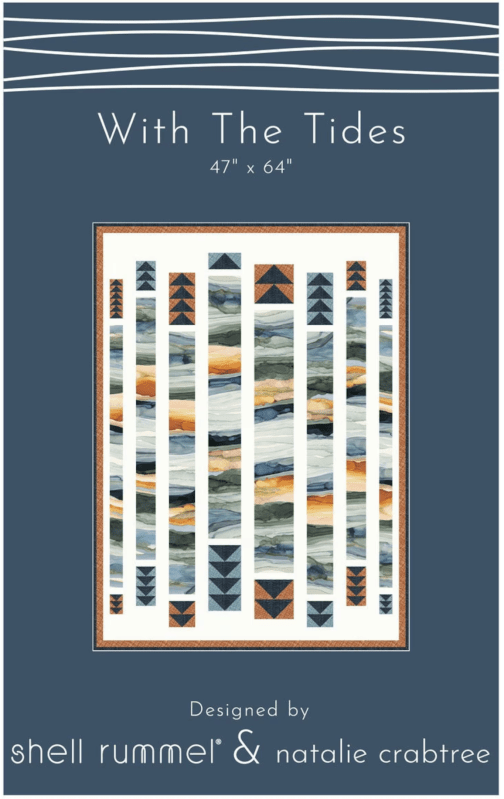
But since they didn’t have any of that panel left I improvised, still using fabric from Shell Rummel (along with William Reue, and snippets from Deborah Edwards & Melanie Samar). I just noticed they’ve updated the pattern (on the right) to accommodate the newest panel and line. My only advice is to lay it out on a large flat surface when stitching everything together. I just sewed, like normal, and when I finished, the left side of the quilt was about 6″ longer from the right, and I still can’t figure out how that went wrong (FCF-brain?). But I fixed it, and have finally figured out how I want to quilt it.

This is me, on the patio of our City Hall building on the Saturday where I went from “being over covid” to feeling crummier and crummier by the end of our tour and rebounding into covid, a surprising frustrating experience. But at least I have this cool photo of this inset medallion, because you know us quilters: always looking for pattern and color wherever we can. And I’m happy to have covid in 2024, not 2020, when we all suffered through the horrific pandemic. And interestingly, that’s the time period of Peggy Orenstein’s book, which brought to memory how awful it all was, and to what a debt we owe so many who took care of us all.

I’ll leave you with a quote from Orenstein, when talking about the mortification of being judged (often harshly) for what we make, which often discourages us:

Happy Halloween, everyone!

Cozy Winter, from the journal Les Nouvelles, published by France Patchwork, issue 160. Seen at the Carrefour European Patchwork Quilt 2024 show.

300 Quilts · Quilt Patterns

Eclipses: Aren’t we so lucky?

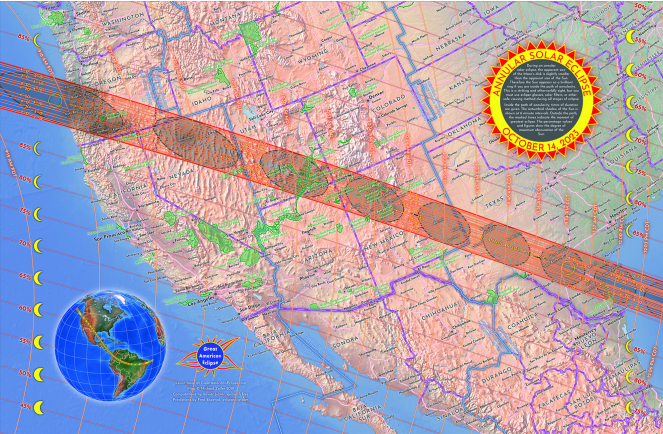
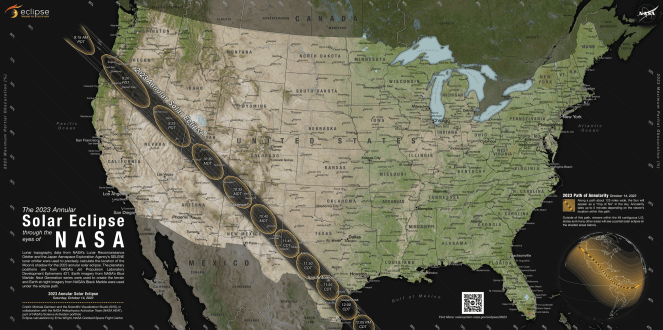
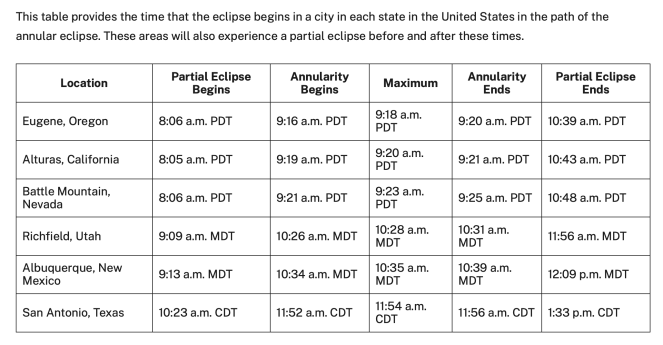
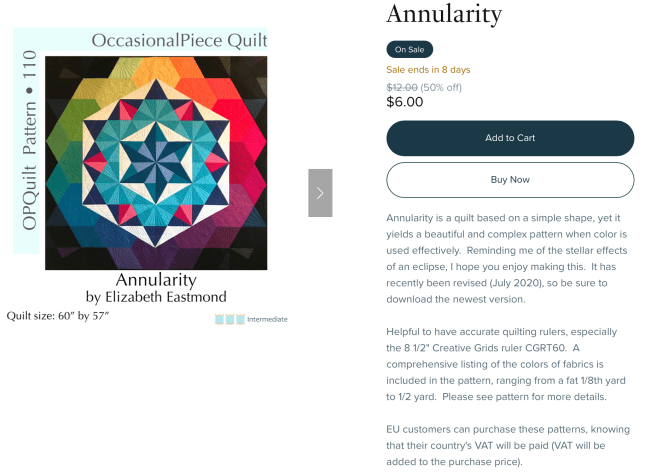
Way back in the darker ages, eclipses were thought to run the gamut of Should Never Be Looked At, to fear and terror. Nowadays, thanks to NASA and all the people like me who love the heavens, eclipses are a big deal, and rightfully so. Way back in the day, I made this quilt and titled it Annularity, never dreaming I might be able to see an a real-life annular eclipse, but it’s going to happen in a week!

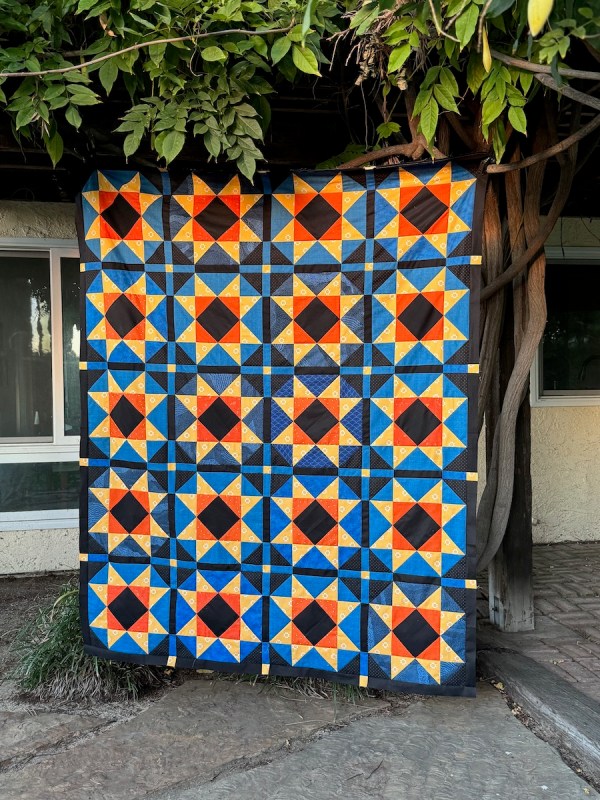
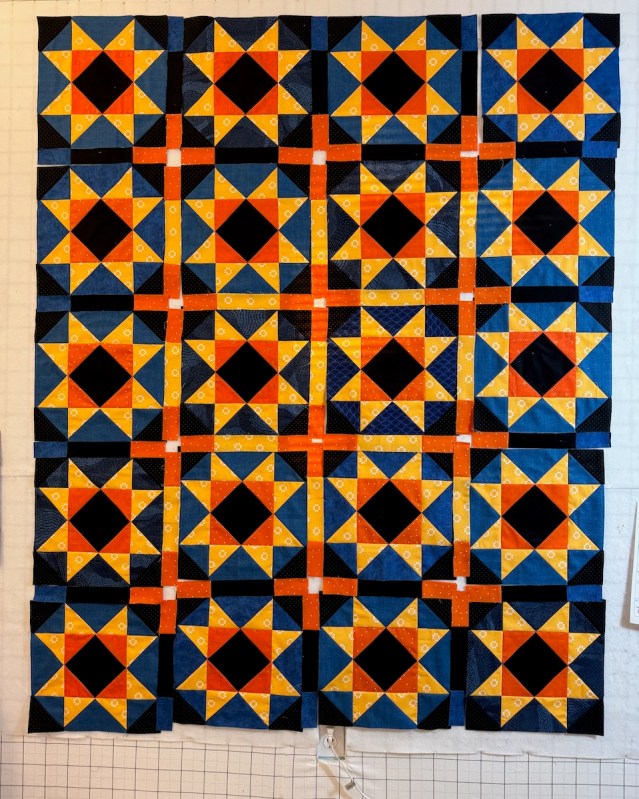
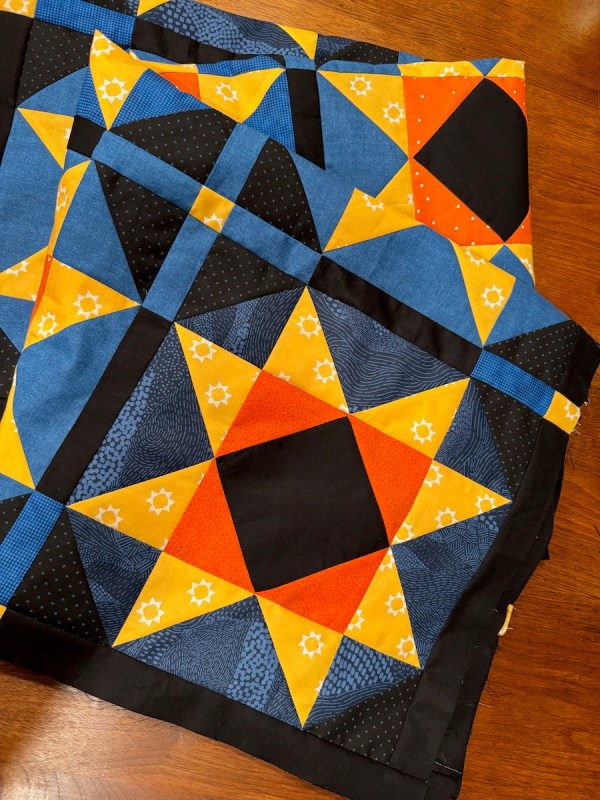
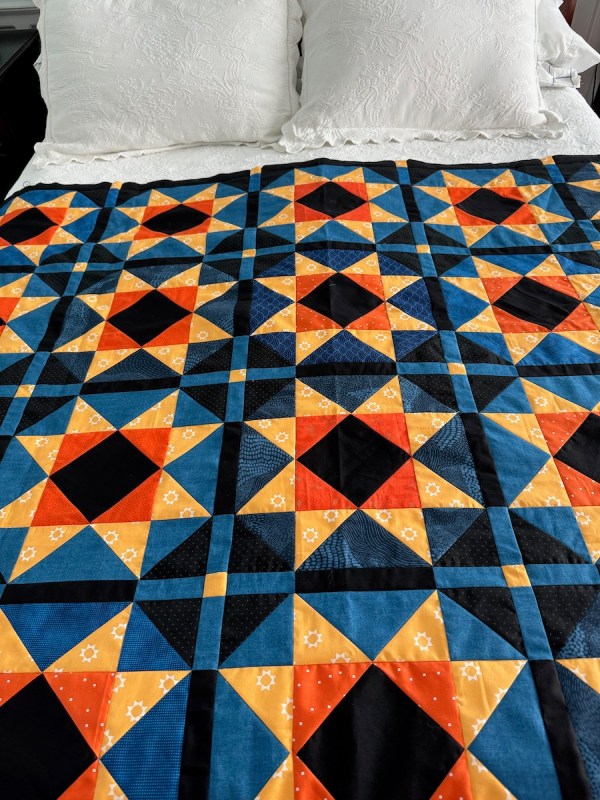
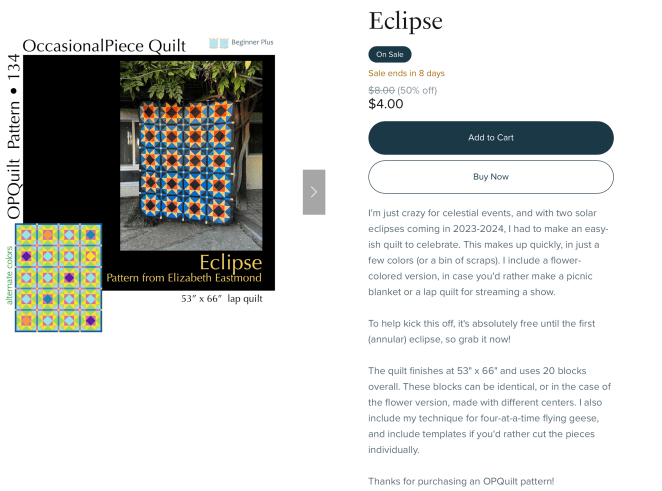
And. . . I made another quilt to celebrate. This one is called Eclipse, and is an easier –much, much easier — quilt to whip up to watch the Real Annular Eclipse. Next week! (Have I mentioned that before?) Here’s proof:

Yeah, I’m pretty interested in this.

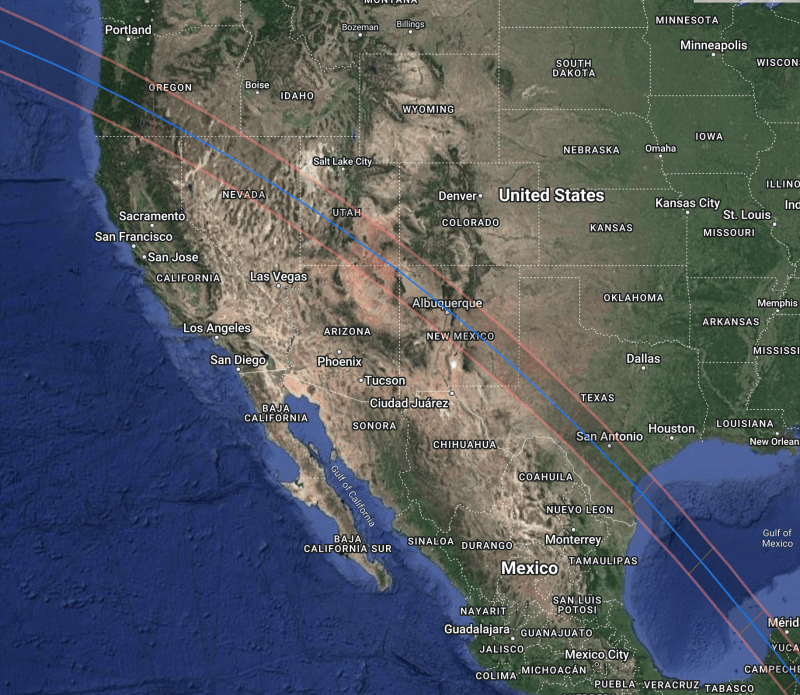
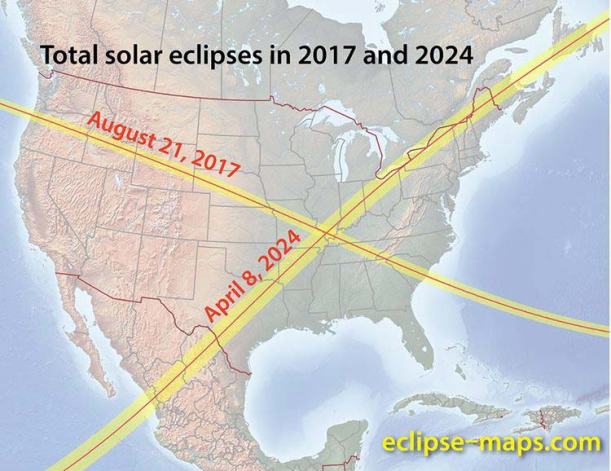
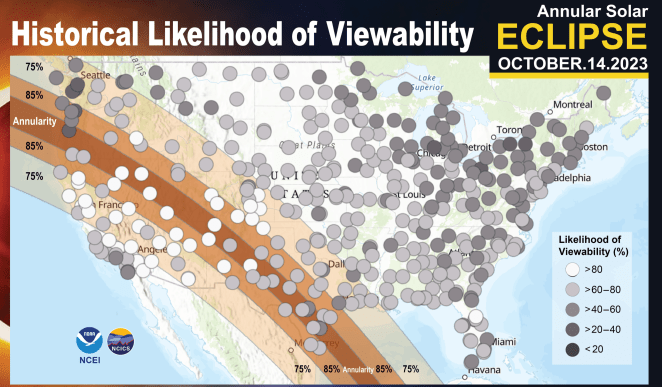
I missed the big one a few years ago, and I’m determined not to miss these two, and am hoping that the weather in Southern Utah will cooperate. Historically, we have a good chance:

(Who makes up these charts? I don’t know, but I’m all in.)

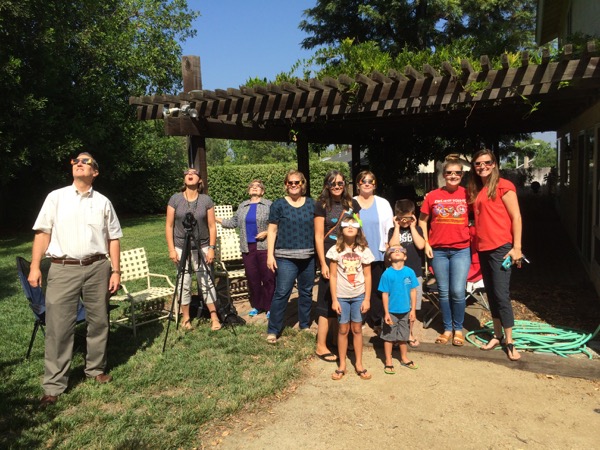
Scenes from the Missed Eclipse in 2017:

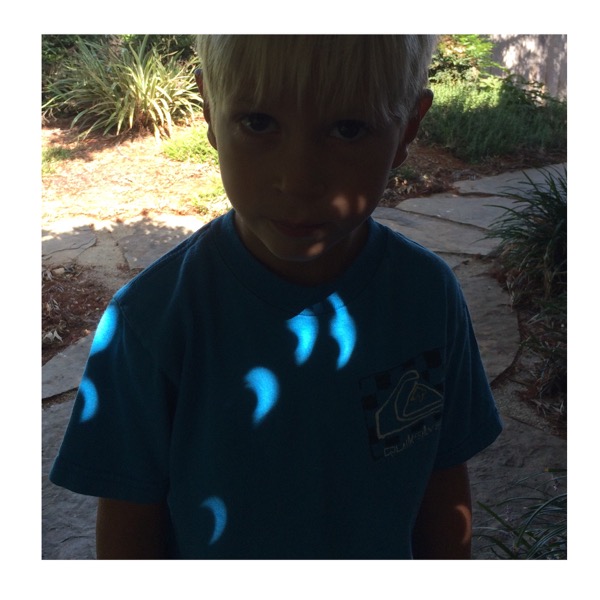
We stayed in Southern California, and I doled out glasses and made eclipse cookies and friends came over. I hear libraries are passing out the solar glasses this year, but you can also rustle some up on Amazon, if you hurry. You HAVE to have them to gaze heavenward. If no glasses, then look at shadows:

Even the shadows in a far-away eclipse are cool. I’ve read advice to take colanders or steamer inserts to hold over white paper to see all the quirky shadows. Yes, I will. Okay, back to threads and fabrics and eclipse patterns.

This was my first thinking: to have the narrow sashing do a dance of colors, too. My husband helped me decide, and yeah — it’s fun, but you lose the eclipse blocks.

So I took out all the colorful bits in the sashing, and then put a narrow black border on it.

I will send it to the quilter when I return home, and get it ready for April 2024.

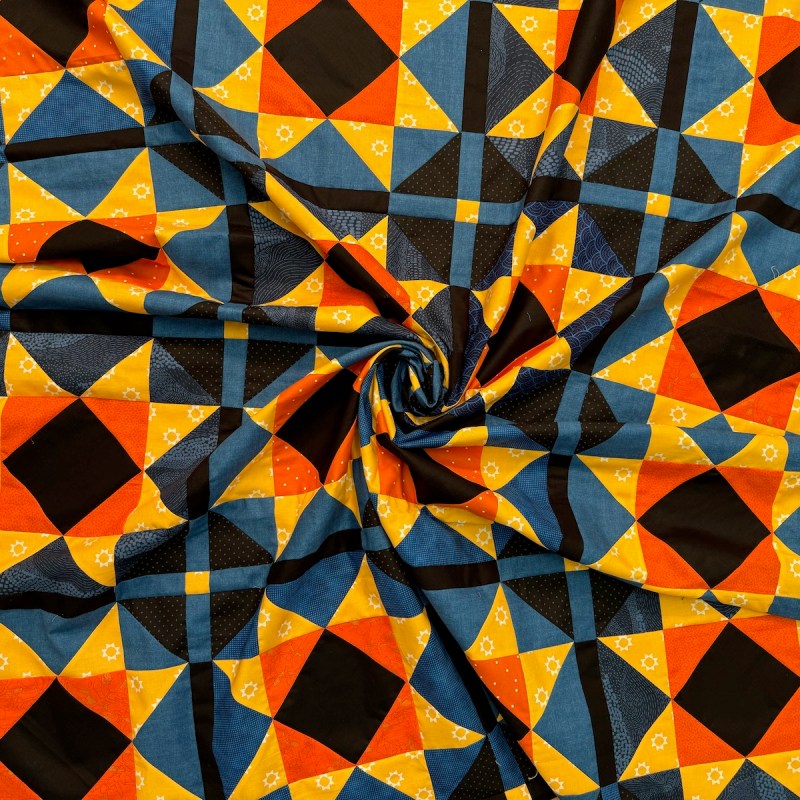
The ubiquitous swirled quilt top photo

And because you might want a dedicated eclipse quilt, too, I made you two patterns. The Eclipse pattern you will have done in two days. Anularitywill be finished by the next solar eclipse. These sales are on until the end of the Annular Eclipse — like in a week. So head to my pattern shop if you want either a quick and easy — or many pieces, but beautiful — pattern. {Note: Sale has expired.}

And in case you aren’t the least bit interested in the heavens, but love a field of flowers, I illustrated this version just for you. All you Kaffe lovers, those centers are calling out for some fussy cutting. All info is on the pattern.

I hope you get a chance to wander outdoors next Saturday, and either with your glasses, or a sheet of white paper, take a look at the dance in the heavens.

Patterns by Elizabeth of OPQuilt · Quilt Patterns

Continuously Hung up In Bias (aka Failing Forward)

Not that kind of bias. I had to teach that subject when I was an English teacher, and it was a struggle getting the ideas of Preferences vs. Bias into college Freshmen Heads, as well as why they should avoid bias if they can help it.

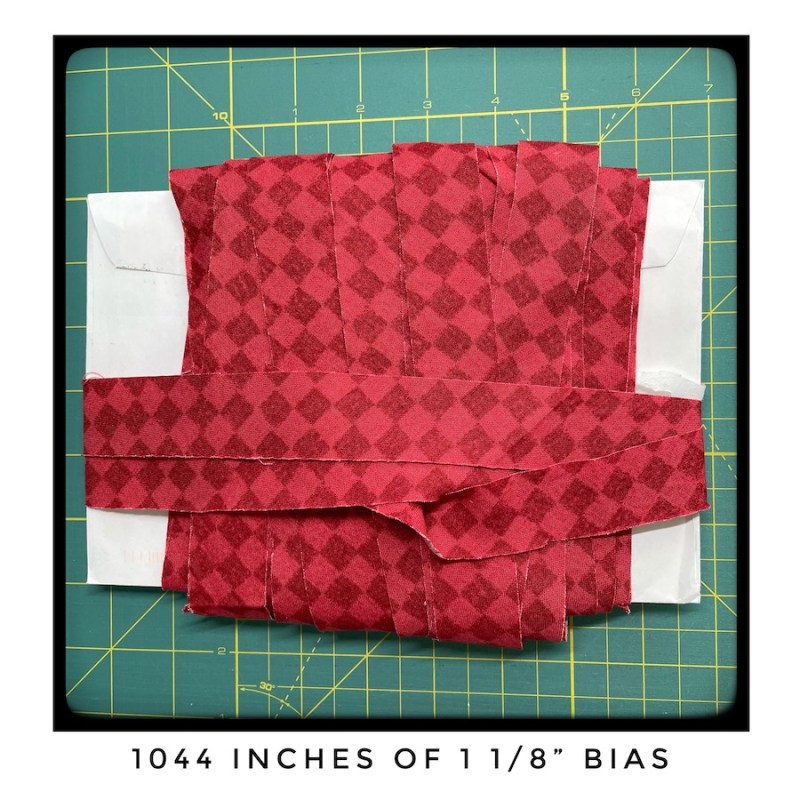
So you know I’m working on this new pattern, and in one section it calls for a lot of self-made bias, kind of like a self-made woman, but less flashy. I knew I needed about 1044 inches, so I thought–sure, I’ll do it all in one swoop.

Wrong.

If I put this into the pattern like this you would all get out your seam rippers and come after me. Thinking about this, I wound it on a large envelope (above), winding and winding and winding.

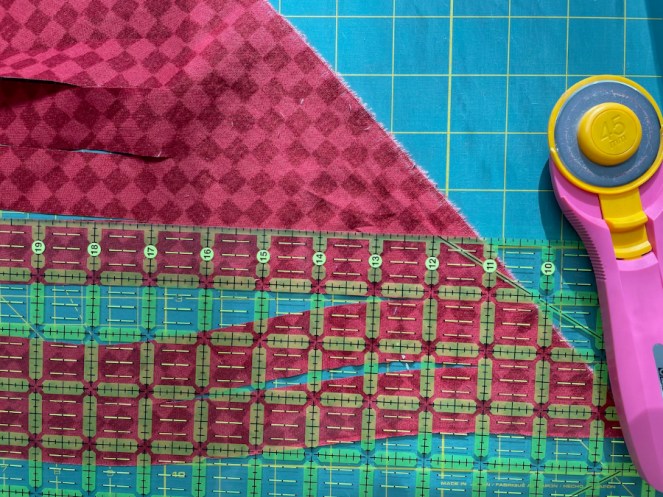
So the basic drill is cut a giant piece of fabric after doing math that involves square roots (!), then slice off a chunk on a 45-degree angle and sew it to the other side. NOT like the arrangement in the first photo, but more like the arrangement in the second photo. Two bias edges on either side and cross-grainy bits on the top and bottom.

Ever tried. Ever failed. No matter. Try again. Fail again. Fail better. (Samuel Beckett)

Usually, then you draw lines parallel to the bias edges the width you want your continuous bias. I looked at several websites, but Ann of Obsessive Quilter had the best explanations I’ve seen. Thank you! I was swimming in a sea of geometry and square root equations. She has three versions of the next steps, and I liked (and tested out more than once) her method of cutting strips:

Using rotary cutter was the selling point. None of that 1000 inches of using scissors for me!

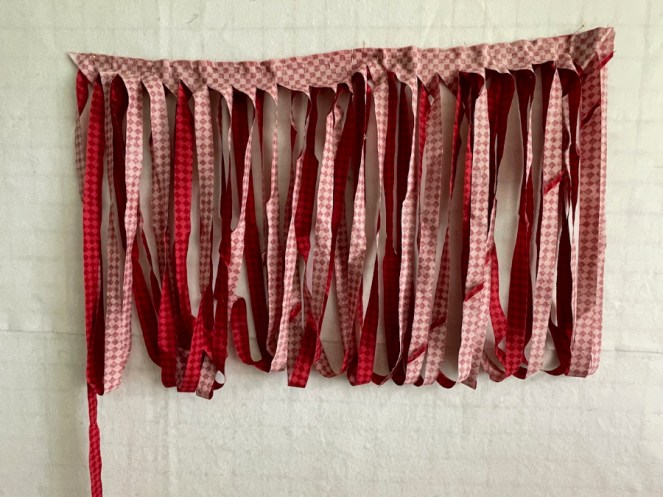
So lovely, I hung it on the wall <cough>. Then proceeded to get it all tangled.

Success consists of going from failure to failure without loss of enthusiasm. Winston Churchill

Untangled and getting ready for the next steps, which are a hybrid of Ann’s. I tried this two more times to make sure I could do this and write it up so you can do this. Instructions will be in the pattern. Which is coming. [Because of recent events, November was obliterated.]

One fails forward toward success. ~ C. S. Lewis

This Quilt Is A Mess, from ages and ages ago — a real genuine failure

Fail early, fail often, but always fail forward, a quote attributed to John Maxwell, was ringing in my head as I cut and cut and tried and tried to master continuous bias. I only seemed to get stuck — not really a failure — but I tried to learn from each of my stuck places. Trying to make all the quilt’s continuous bias all at once? Not a good idea. Figuring out how long the bias needed to be? Thank heavens for scientific calculators (an iPhone tipped on its side while in Calculator mode).

But over and over it’s the user of this pattern I think about. I love the design, although it didn’t come easily. I try to write detailed patterns with clear directions and probably too many illustrations, some drawn in Affinity Designer, and when my skills fail (there’s that word again), I turn to photography. I keep trying to fail forward.

A circle made of my bias tape, then machine appliquéd

Sara Blakely, the woman who invented Spanx, had a question asked of her (and her brother) every night when she was growing up: “What did you fail at today?” When there was no failure to report, Blakely’s father would express disappointment. “What he did was redefine failure for my brother and me,” Blakely said. “And instead of failure being the outcome, failure became not trying. And it forced me at a young age to want to push myself so much further out of my comfort zone.” However, Ron Friedman notes that “Failure, per se, is not enough. The important thing is to analyze the failure for insight that can improve your next attempt.”

I fail a lot in regular life, but after hanging around a sewing machine for the better part of my teenage and adult life, the sewing failures are fewer. However they do arrive in new ways.

Like continuous bias.

P.S. If you want my 1044 inches of 1-1/8″ bias tape (using high quality quilting fabric), please leave a comment. If there are more than one of you who want this, I’ll draw a name from a hat. Bias tape has been distributed.

P.P.S. There is a sneak peek of the quilt in my PayHip shop; the quilt is currently at the quilter and will be revealed soon. It went up because the people at PayHip offered some new designs and I jumped, redesigning my site.
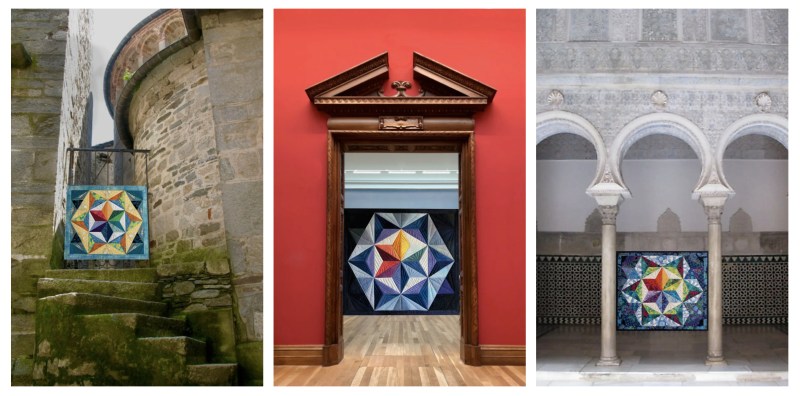
Above is one of the photos. (And no, we didn’t carry the quilts to Italy, Berlin and Spain. I inserted them with my Affinity Photo software…but it is kind of fun to see them like this!)

BlockBase+ · Quilt Patterns

A Week of Creativity using BlockBase+ • Giveaway!

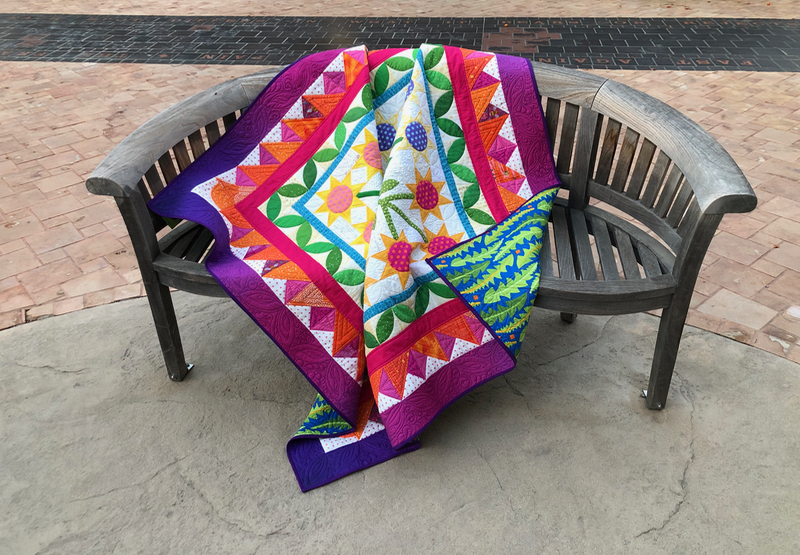
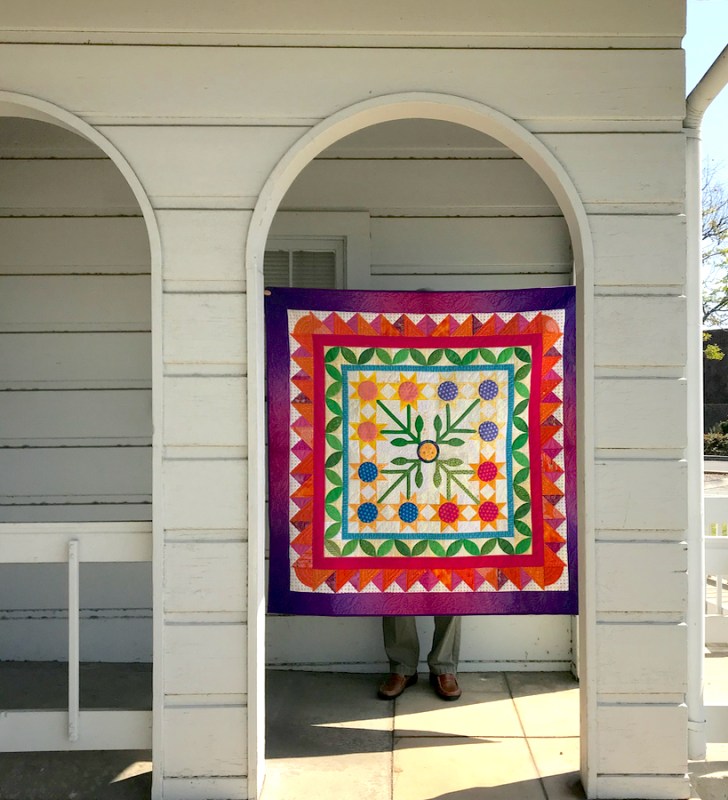
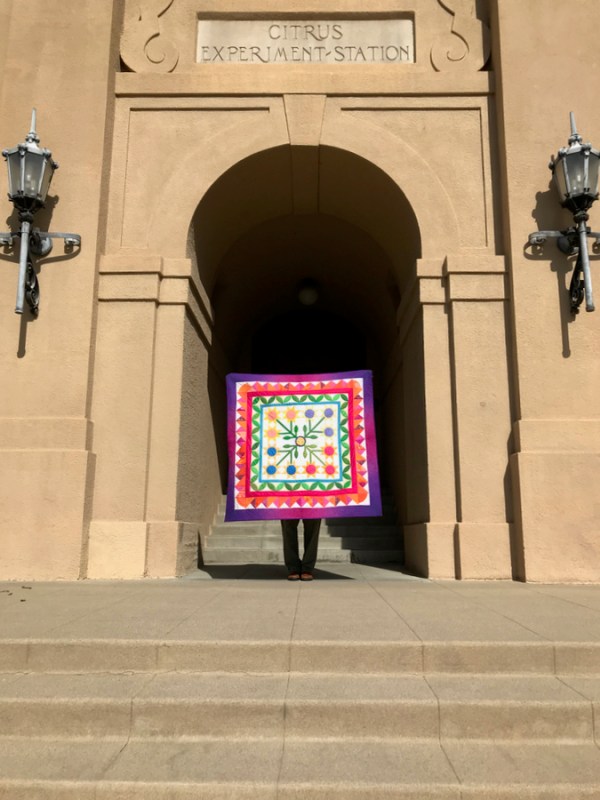
Sunny Flowers • quilt no. 246 • 54″ square

This is BlockBase+ week, and in one week, I’ll be giving away a free copy of the software!

UPDATE: Giveaway is Closed. Thanks to all who entered!

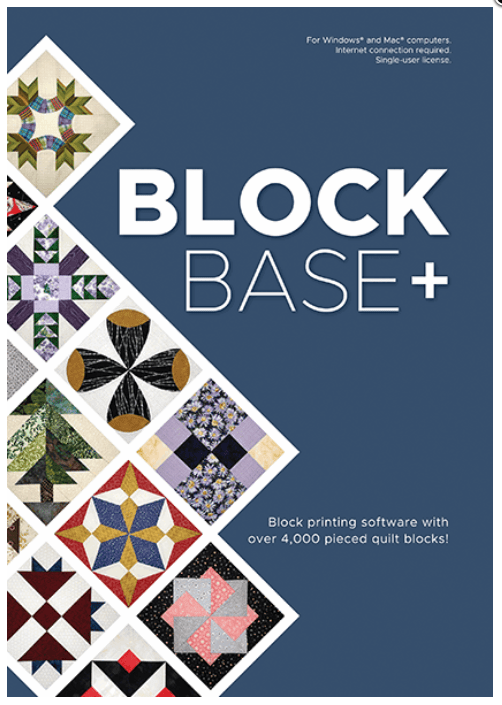
What is BlockBase+ ? It is new software from The Electric Quilt Company that will become your new best friend for creating quilts. It works on Macs and PCs and is a good companion to The Encyclopedia of Pieced Quilt Patterns, if you have that book.

I’m writing four posts, total: the first two posts will be about how I used BlockBase+ to create my Sunny Flowers Medallion Quilt. Today’s is about the selection process and introduction to the features of BlockBase+. On the next post, I’ll give you my formula for making your first Medallion quilt, using blocks in BlockBase+ and showing how I finished out my Sunny Flowers quilt. And then about one week from now, in the last post about this software, I’ll have an entirely new idea for you, showing ways to adapt the blocks you find, making them your own through the software’s ability to make any block any size, in a snap. (I’m telling you, I really like this software!)

Center Block of a Medallion Quilt, and How to use BlockBase +

Many of you have seen this quilt in process on my social media and here, on my website. On this post I go through my process of how I used BlockBase+ from start to finish. If you have more questions on how it works, there is also a database on the EQ website, too.

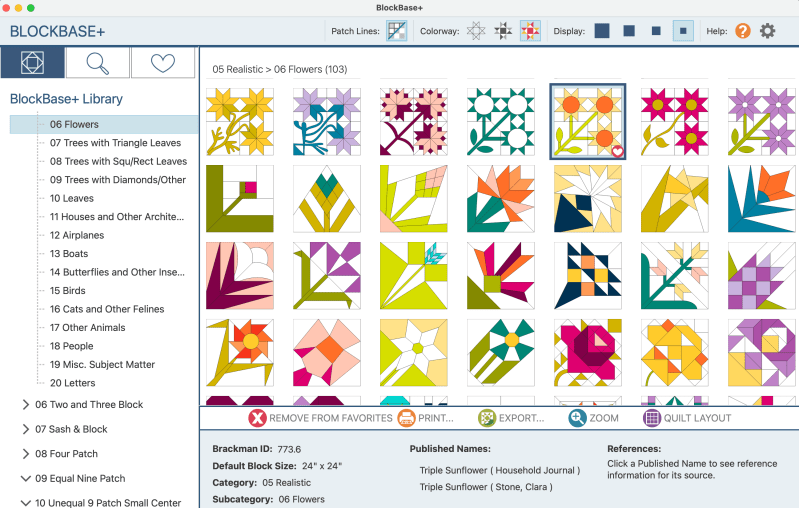
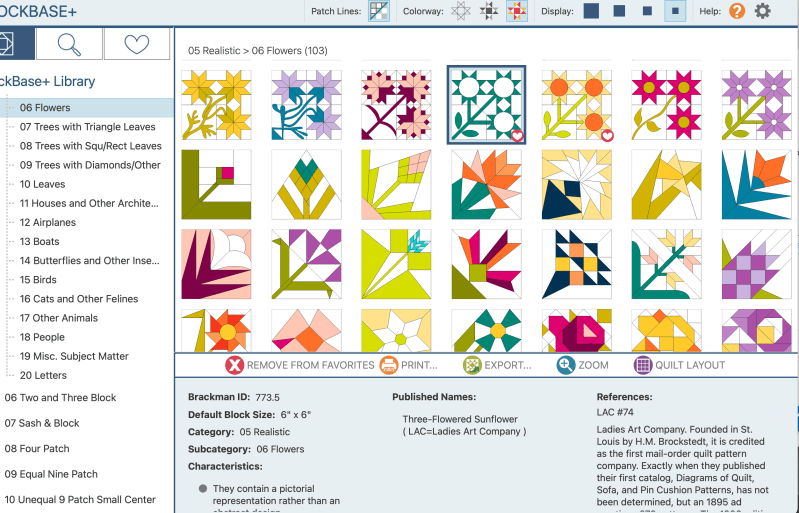
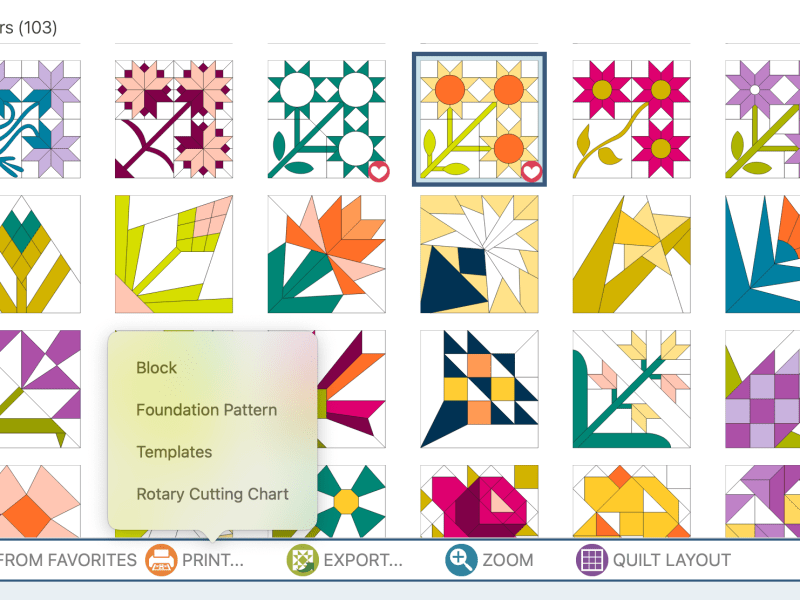
I started my Sunny Flowers Quilt as a sample to show you how you could use BB+ (my shortcut name for the program). I started by having a great time going through different blocks. I knew I wanted something that was sort of vintage, but that would make a great centerpiece. I picked the Sunflowers Block; it looks like this on my BlockBase+ screen:

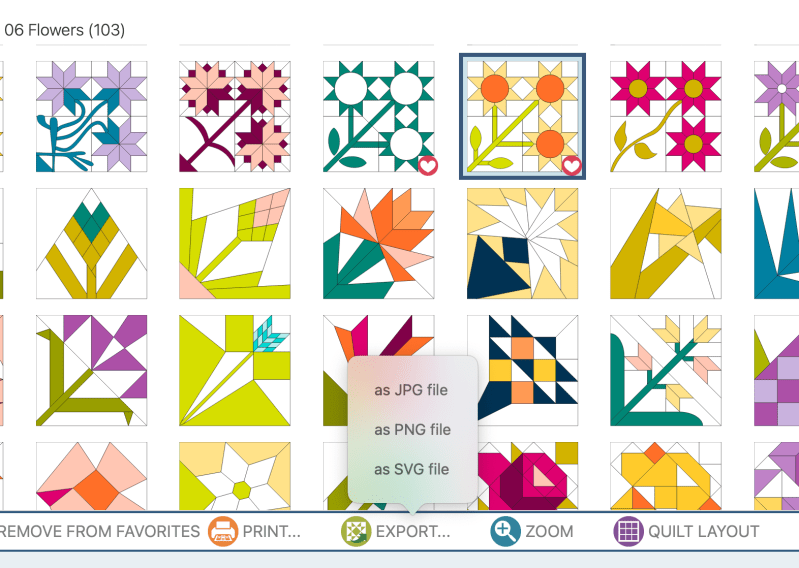
I have it selected, so there is a dark square around it. See the little heart in the lower right corner of that block? You can also tag your favorites, so if you find something you really love, you won’t have to search for it again. The Brackman ID number is 773.6 (all blocks have a Brackman ID number).

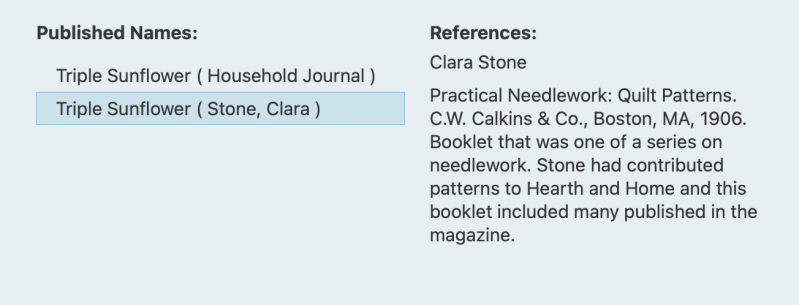
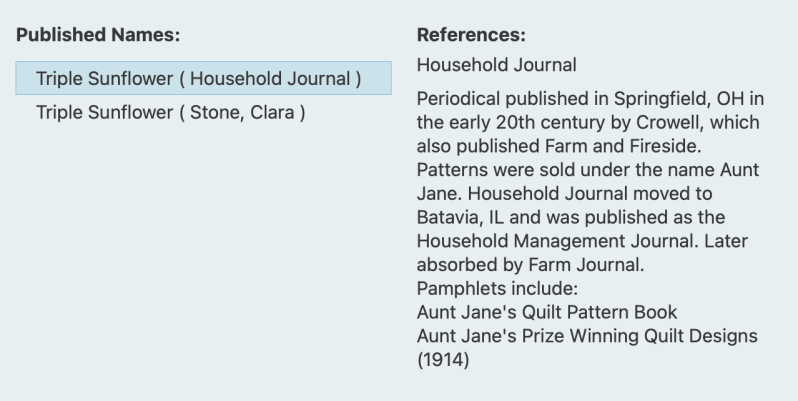
By clicking on the Published Names, you can see the source and information about the block. (Hooray for quilt history!!) This block hails from the beginning of the 20th century, and is not one I’ve seen before.

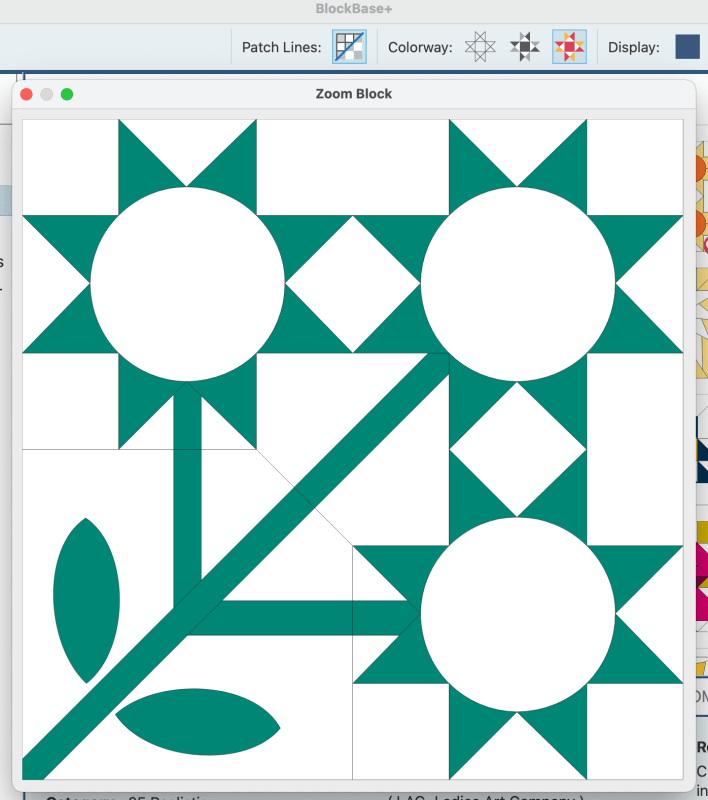
Right now, I’d like to take a look at the one next to it, titled Three-Flowered Sunflower.

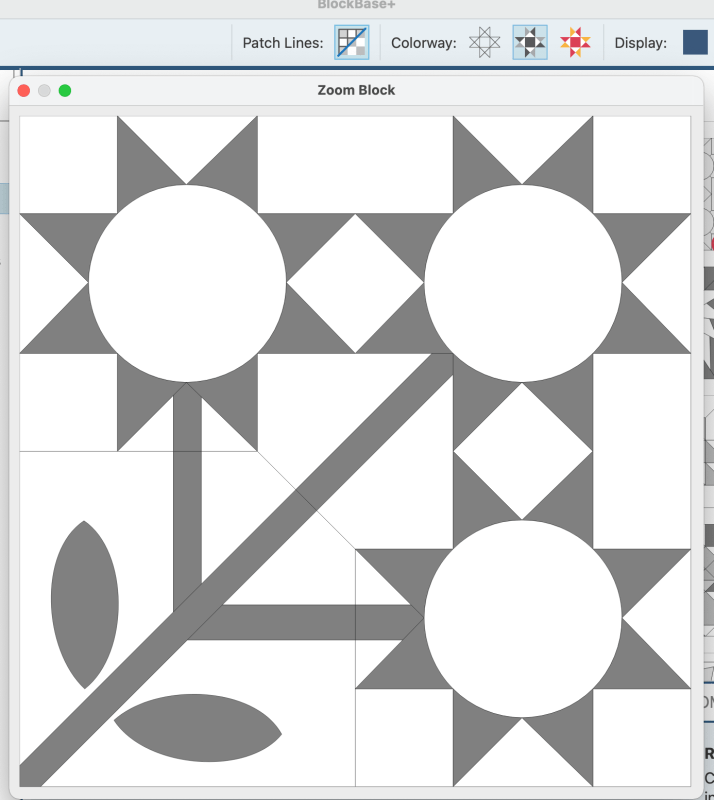
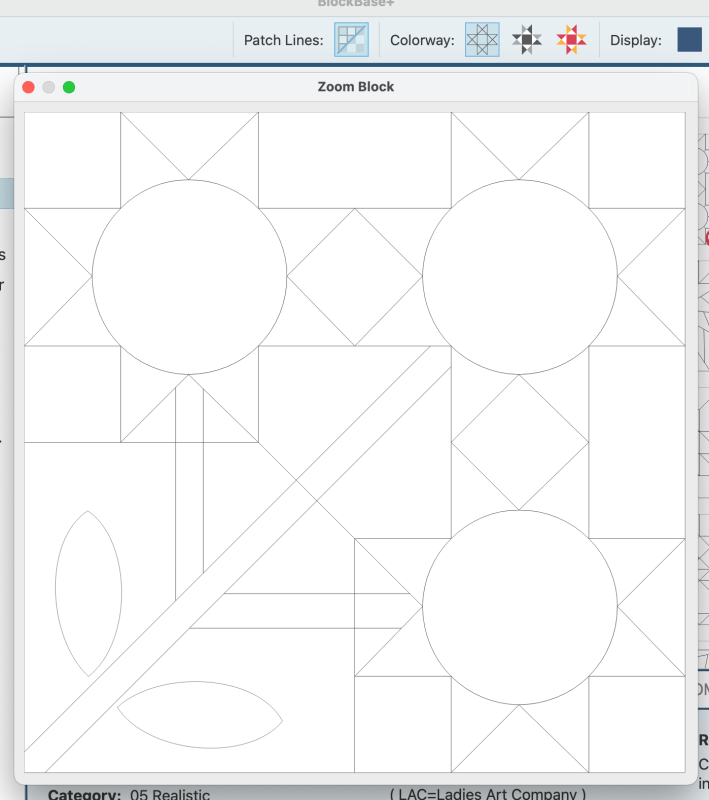
By clicking on the different icons in the Colorway area, I can have the block fully colored, shown in shades, or just in lines. As a newbie working this program during its Beta period, I wish I’d known better how to use these to enable me to see the structure of a block. Although neither of these blocks are the easiest, this second one has easier construction, which is shown by looking at the Line Drawing.

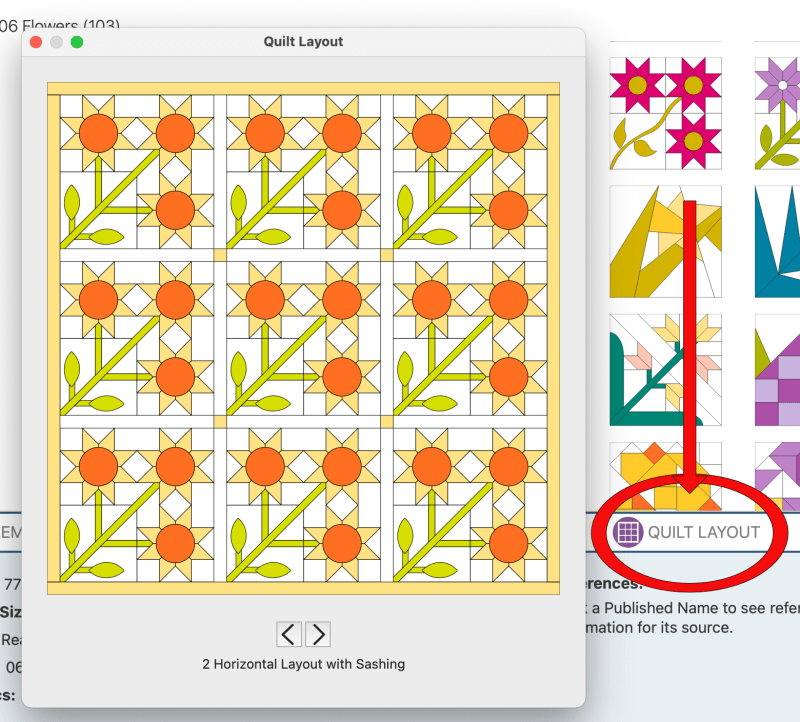
I tried out their quilt layout, just to see the block in different variations (there are seven different ideas to look at), but then decided to export it as an SVG (or Scalable Vector Graphic) into my Affinity Design Software, to see how it would look.

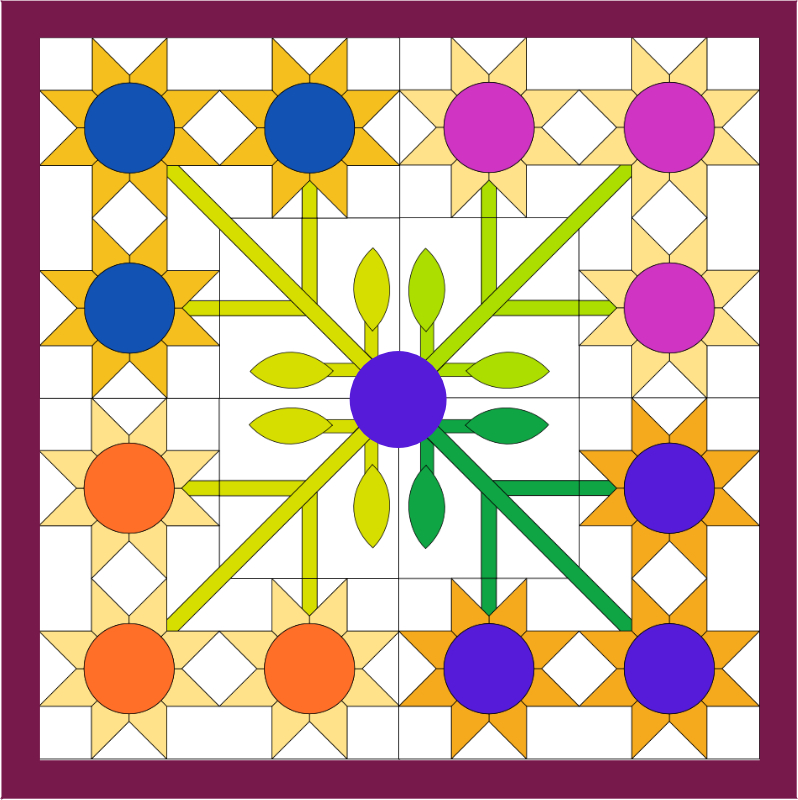
There are three ways to export it (JPG or SVG or PNG). Here’s the first rendition:

I had thought I would just make it a simple series of sunflowers, and put an uncomplicated small border around it and call it done. I know those of you who know me are laughing hilariously right now as I’m not very good at simple and uncomplicated, but I keep trying.

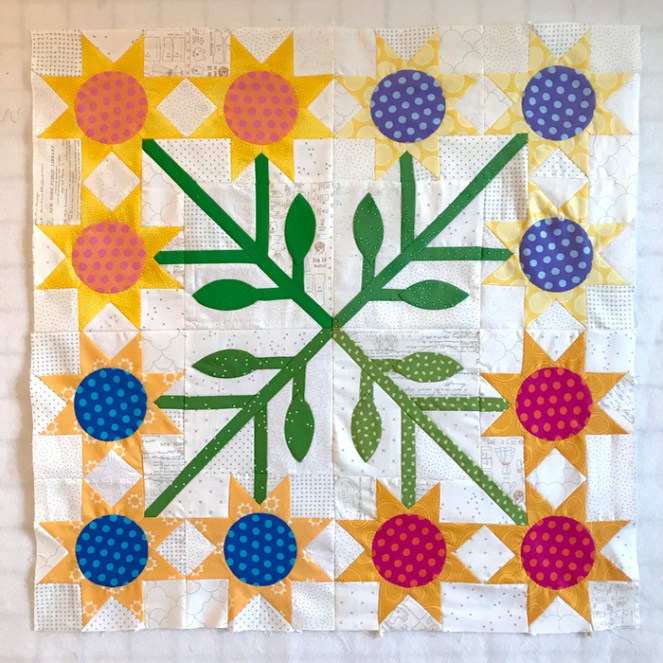
Here it is, all sewn. In my sample, I stitched one flower using EPP, and the other three flowers, I used Templates, sewn on the sewing machine. Just keep your wits about you, or choose another block–there are many more that can serve as centers.

Here’s a potential center for a Fall/Autumn Medallion (I added the center circle). The Brackman ID Number is 1740, but you can also search by name: Maple Leaf. If you are an Electric Quilt 8 user, all these blocks are available to use in that program, so you can build your quilts that way, too.

Printing Out your Pattern

Whichever block you chose, and however you choose to make it (Block, Foundation Pattern, Templates or Rotary Cutting Chart), re-size it to 14″ so the center will finish at 28″ square. We’ll use that measurement to build out our medallion quilt. (More on how to use BlockBase+ to do that will be in the next post. Being able to re-size my blocks made the whole process soooo much easier.)

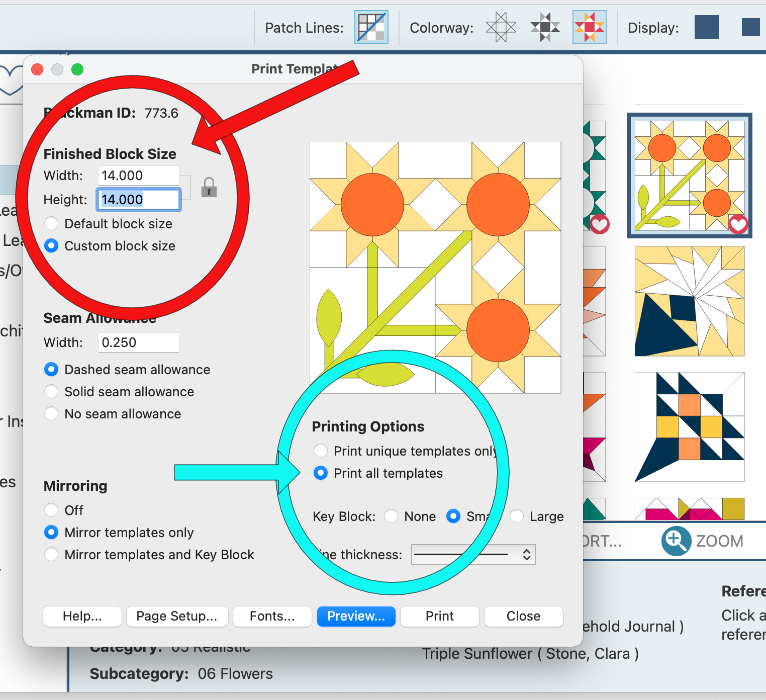
After clicking on your block, go to Print Template. This window pops up. In the red circle, click on the radio button to select Custom Block Size and type in 14″ in both boxes.

In the aqua circle you have Printing Options. I usually use “Print unique templates only” if I’m going to be pinning and cutting out, but for just for fun, I chose “all templates” this time.

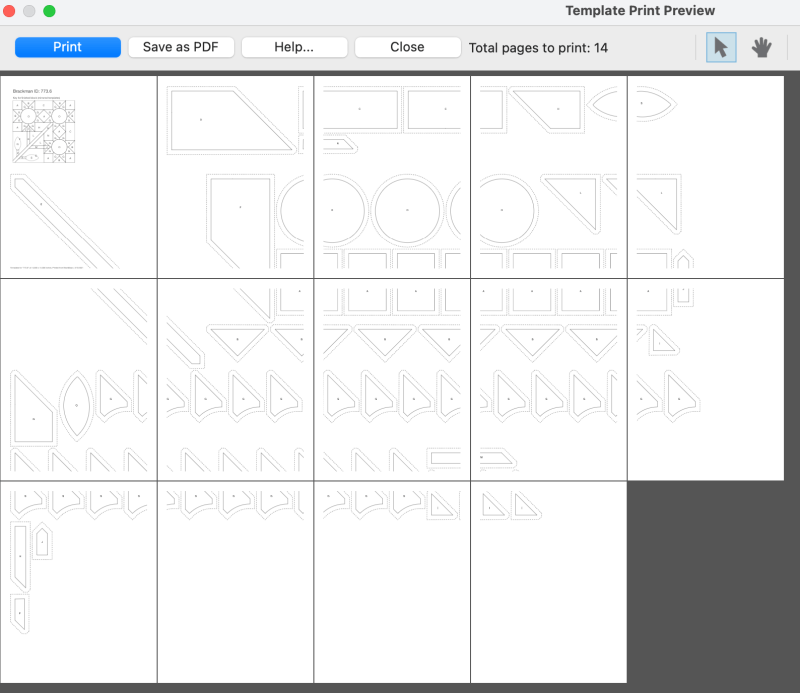
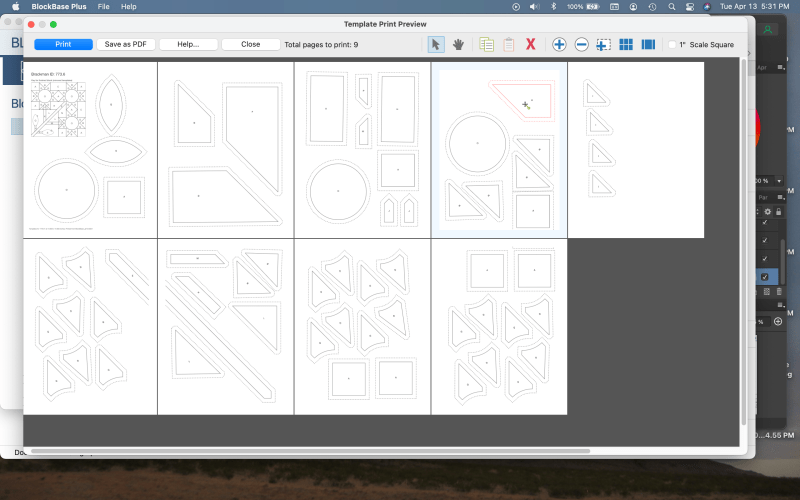
This screen pops up. Whoa! Look at all those pieces broken across two pages.

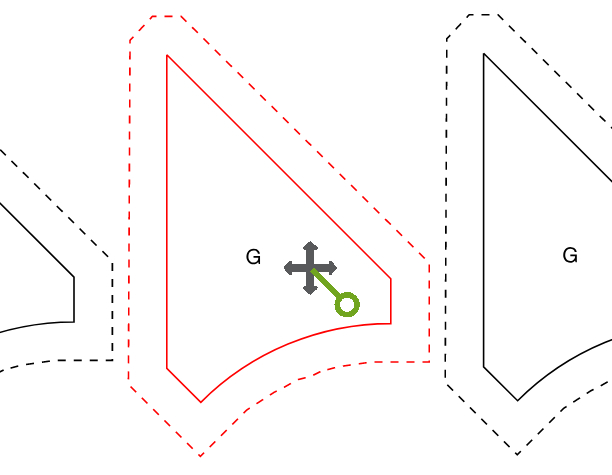
NEVER FEAR! We can fix this by clicking on a template and dragging it around where we want it.

You can also click on the piece to reveal a little green “handle” of sorts that can be rotated in case you want to re-align pieces to nest together more closely together (the above image was blown up by using the plus sign in the upper right of the screen).

I reduced my original 14 pages of printing to nine. As you move things around, the border on that particular page changes to light blue, so you can keep your pieces within the printing area of your page. That long green stem still breaks across two pages, but in the original it was breaking across three, so I consider this an improvement.

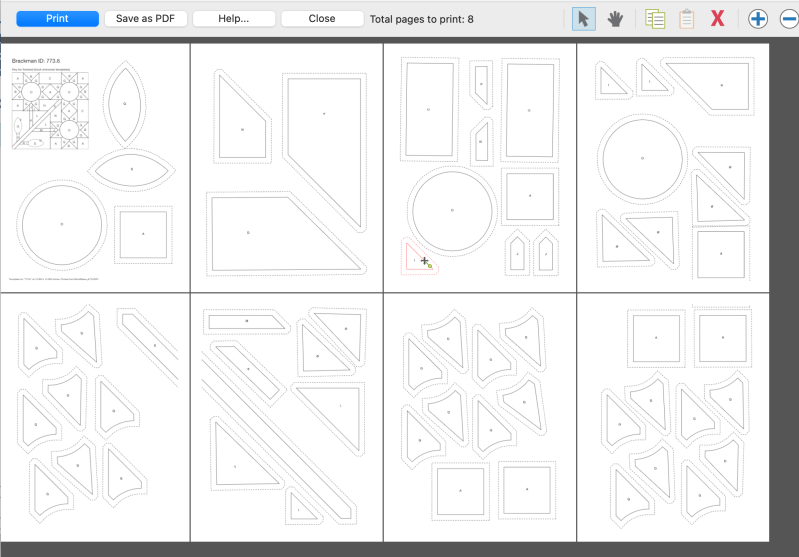
I kept tweaking and got it down to 8 pages. (Pin a ribbon on me!)

So, have any questions? Are you curious about things? Keep reading in this series to get the knack of this, and leave me questions if you have them.

  • Next post on Wednesday: Building a Medallion, using BlockBase+
  • Final BB+ post on Saturday: Winner of the software announced, and more fun things to try with BlockBase+

Are you someone who has only drawn out your patterns with pencil and graph paper? Have you worn an eraser down to nothing, changing lines and shapes? Have you always wanted to create your own designs?

To enter the giveaway, please leave me a comment below telling me how you might use BlockBase+ (and how it might help you bring to life those ideas you’ve thought up all during covid).

Yes, this giveaway will run on Instagram, too, so you can enter there for more chances to win. A n d . . . there is another post where you can enter — we’ll see you on Wednesday!

Italy’s sunflowers

Contest Closed now. Thanks for entering the Giveaway!!