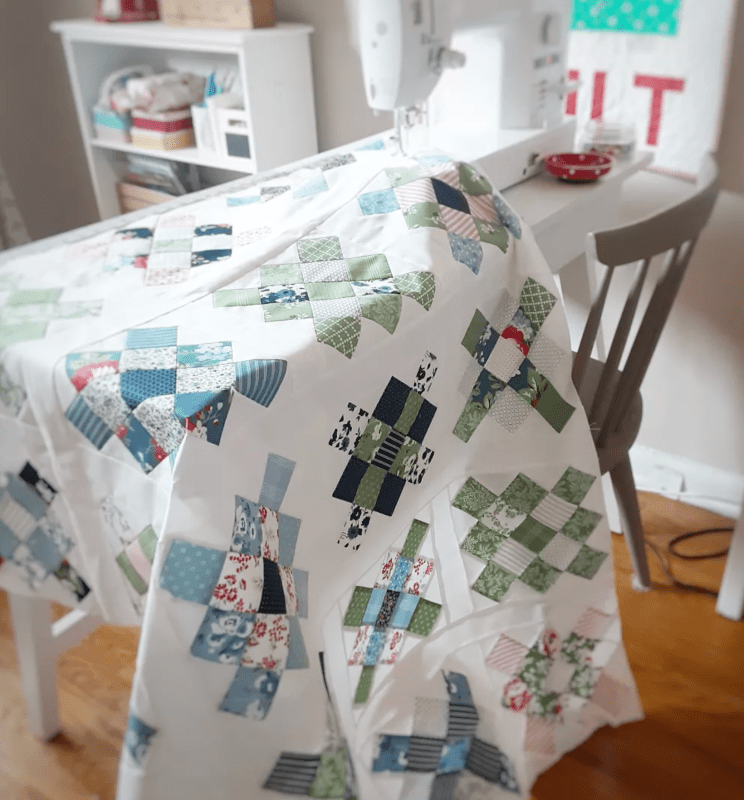
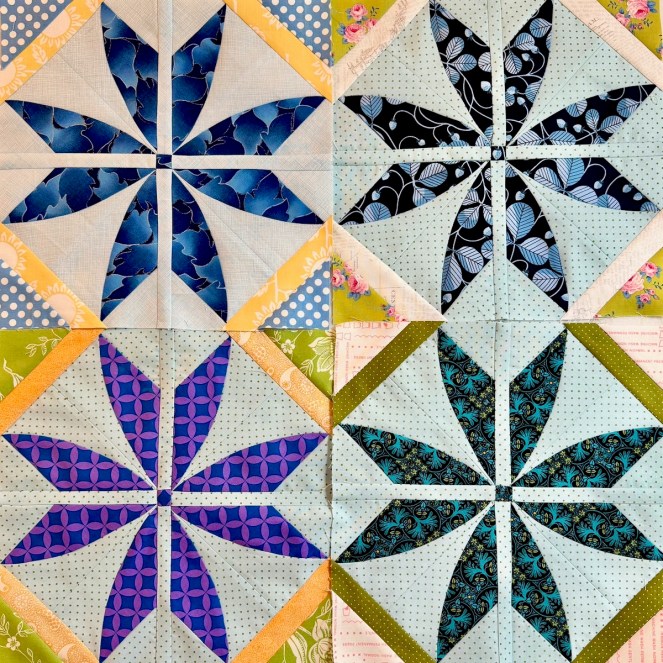
Oh, my! We are already seeing blocks on your design walls, in your IG feeds and on your sewing tables. We’re happy to have company for making Oh! Granny squares. This post is just a quick update, before I start writing/posting about my trip to Nantes and the quilt show there.
Carol and I were finally able to touch base about the timing. The following schedule is just a suggestion…if you need to slow it down, or if you are on a hot take and Want This Thing Done, please make at your speed.
Can you manage two a week?
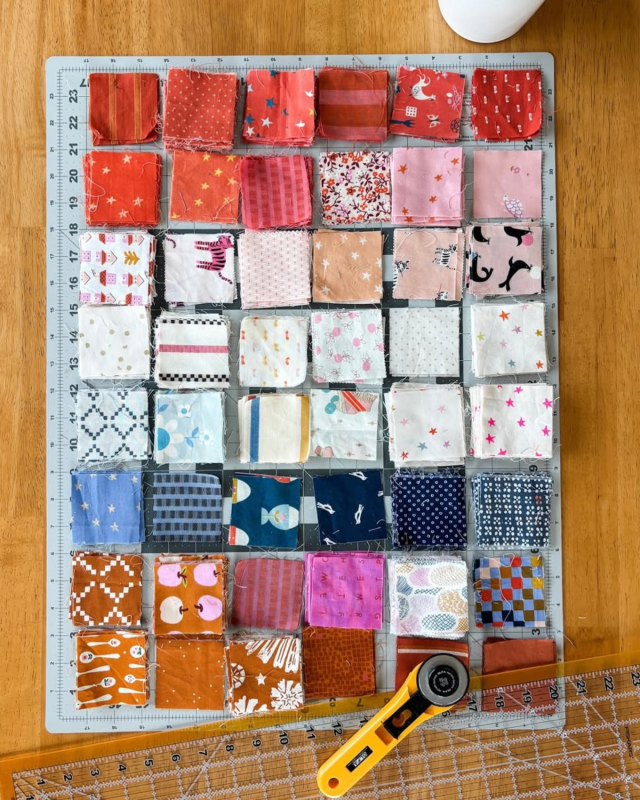
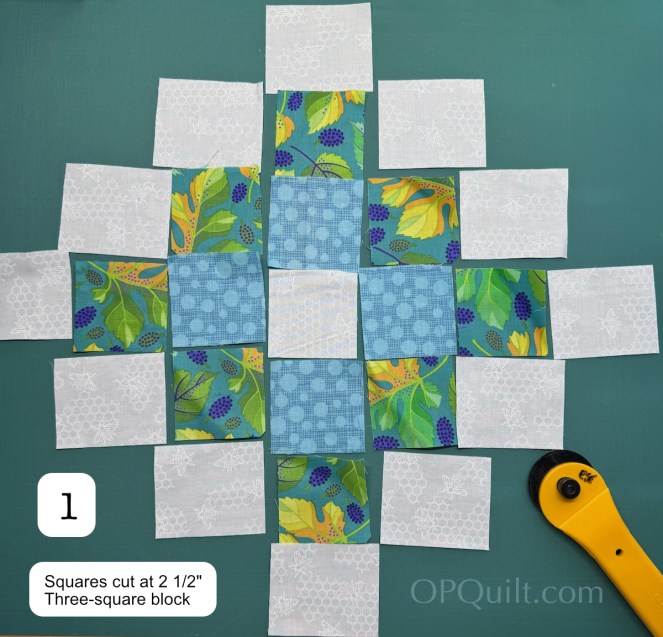
I timed it out and either the 3-squares block OR the 4-squares block (see previous post for info and/or scroll down for free download) take me about 30 minutes. Of course, choosing your fabrics will take you some time, but as many of us are taking from the scraps from our already beautiful coordinated stashes (haha), so probably not as long as you think.
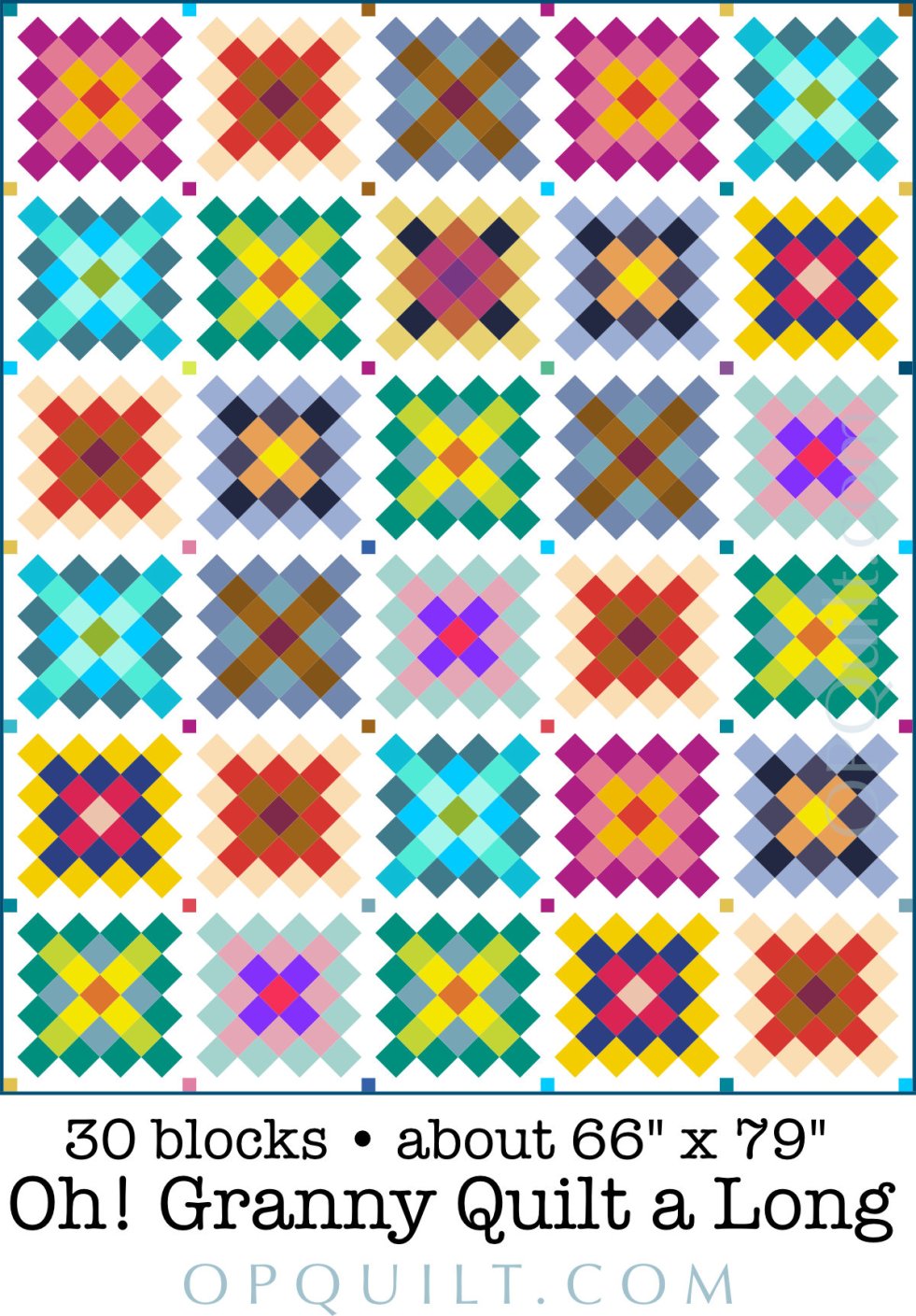
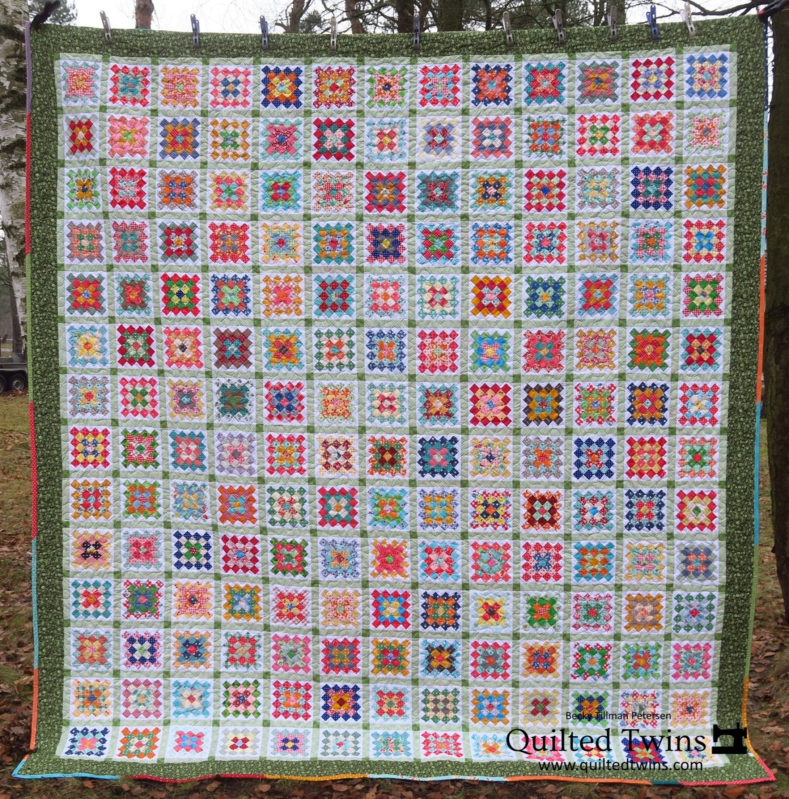
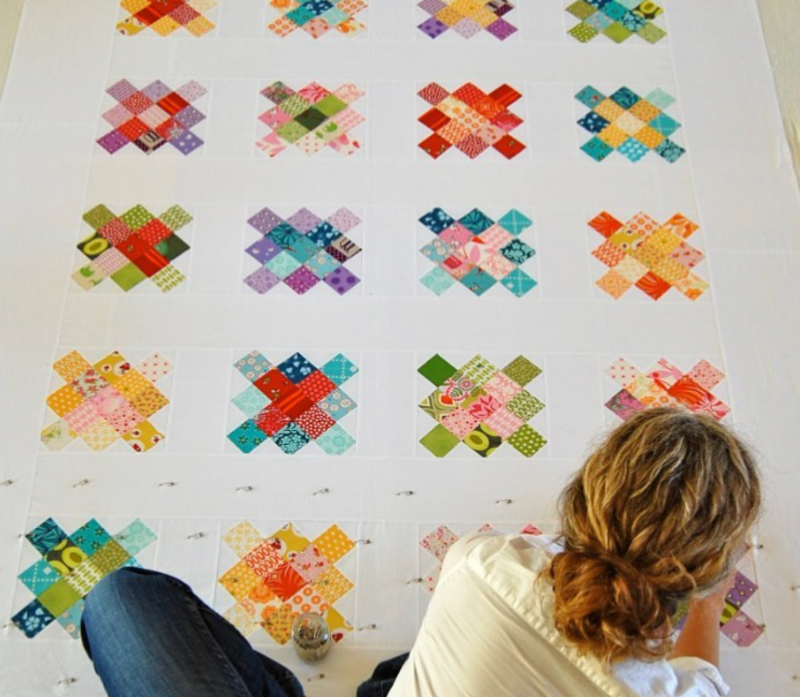
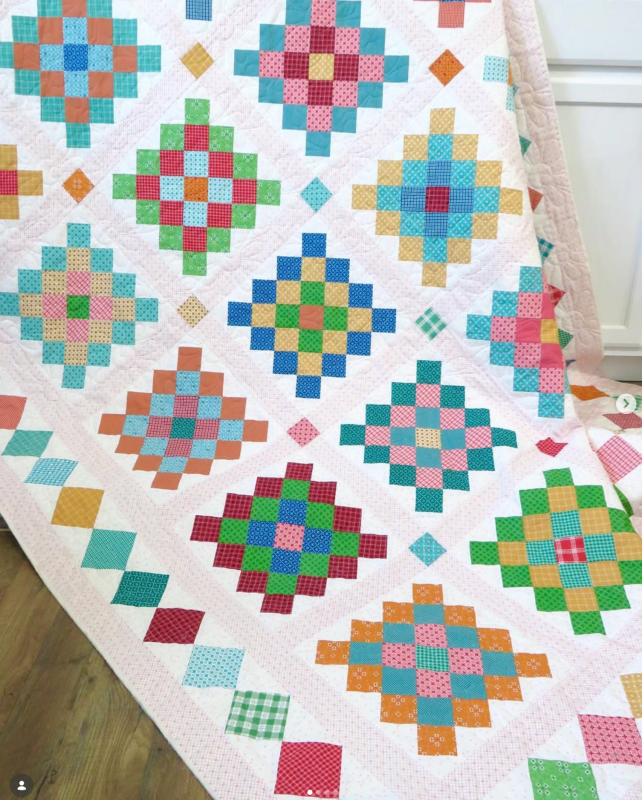
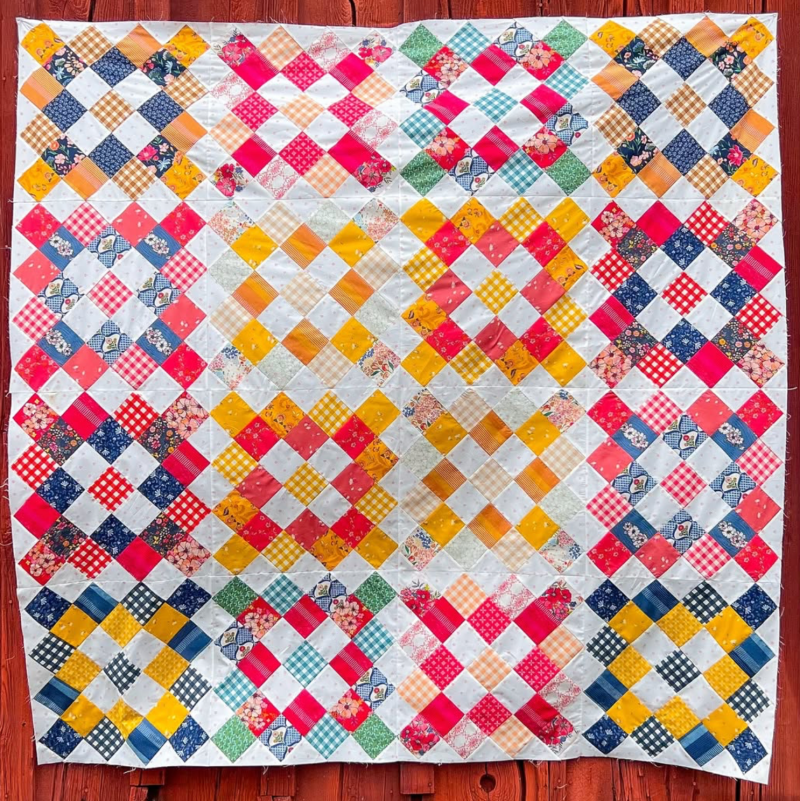
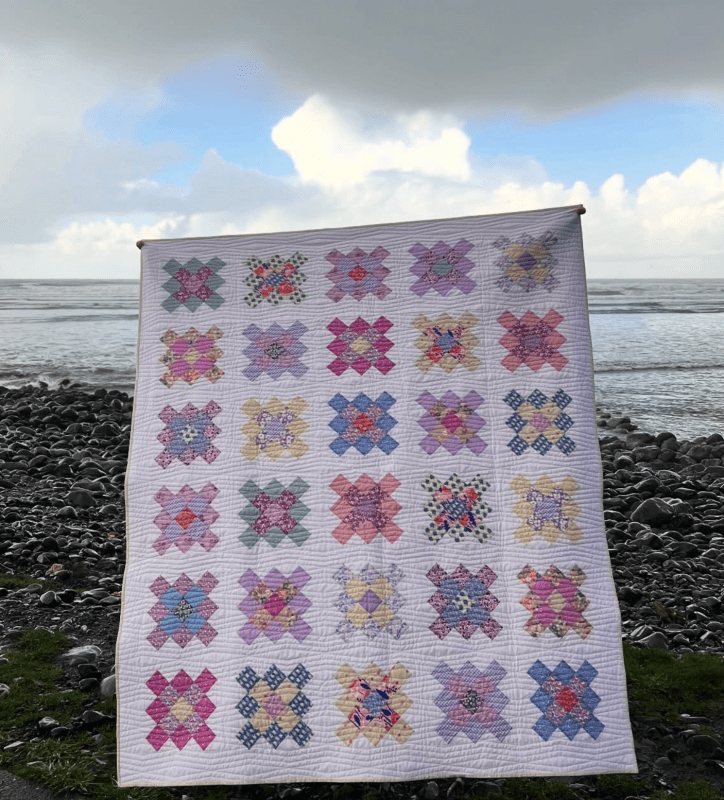
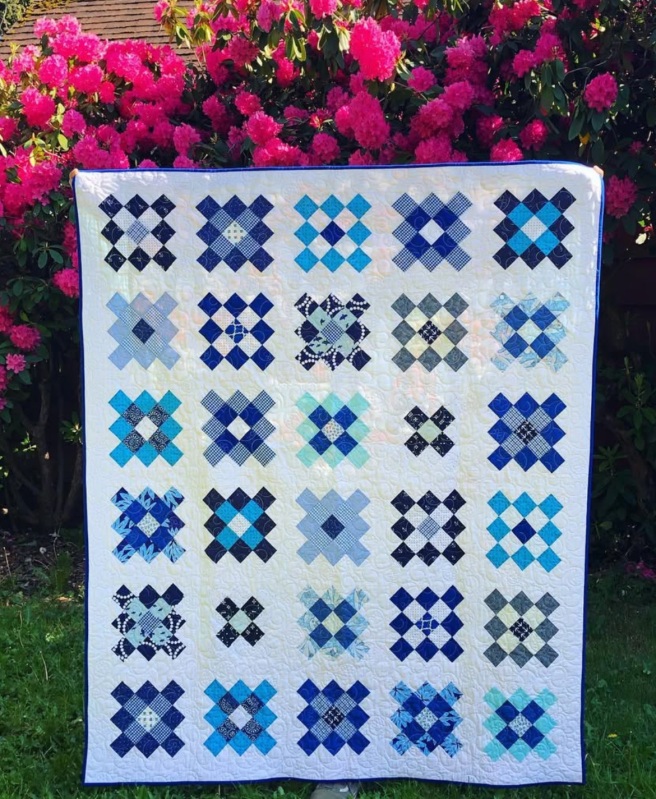
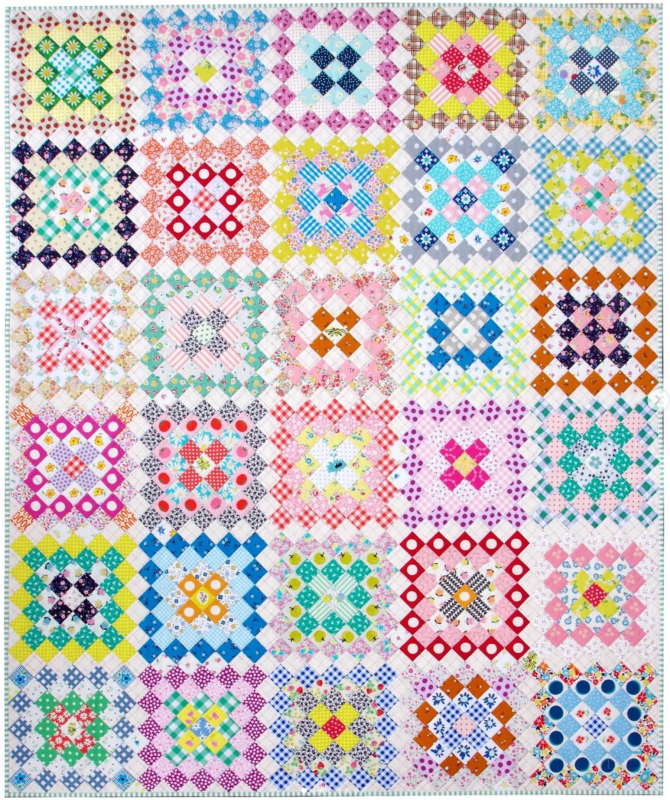
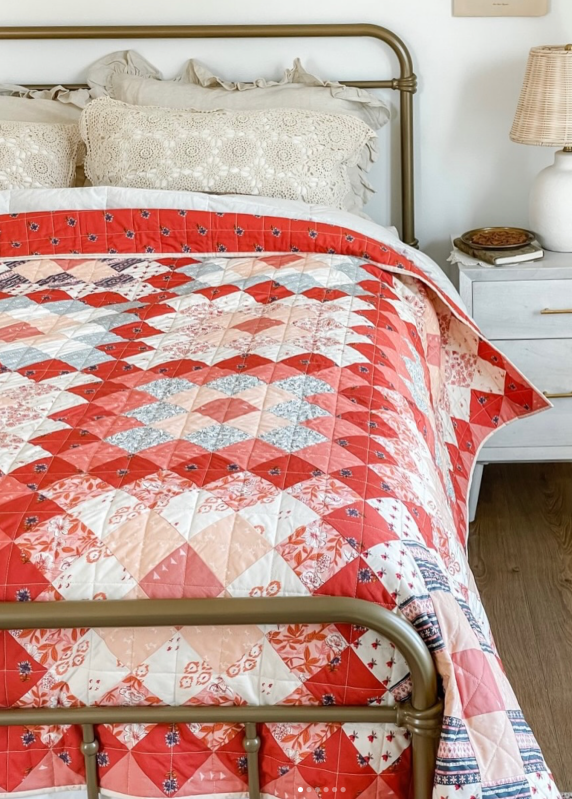
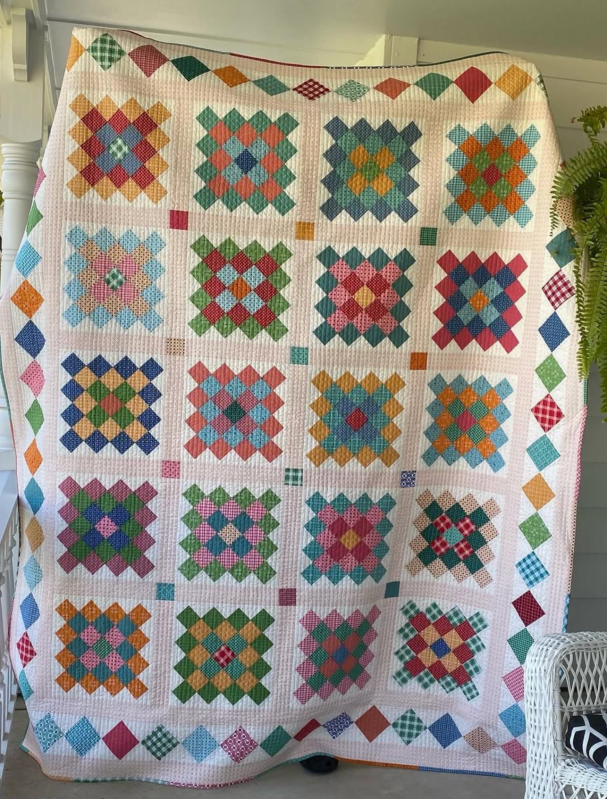
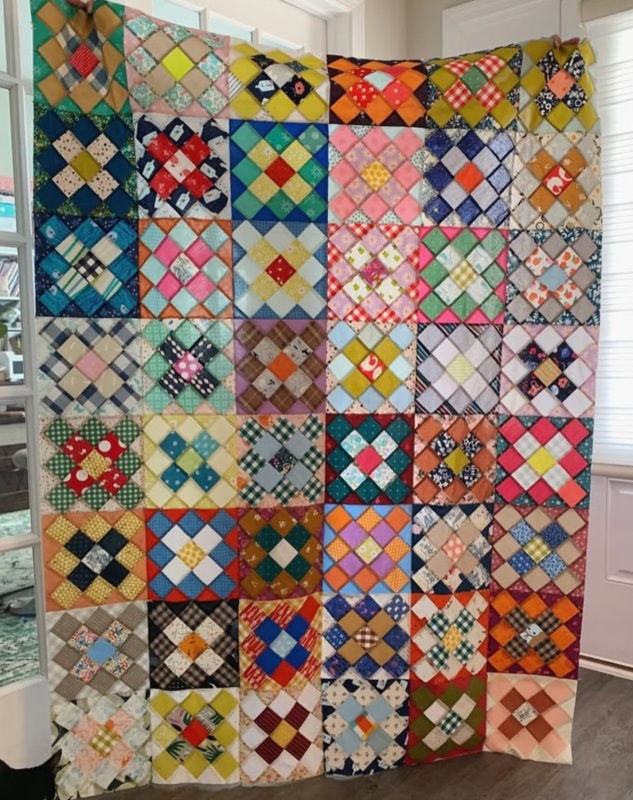
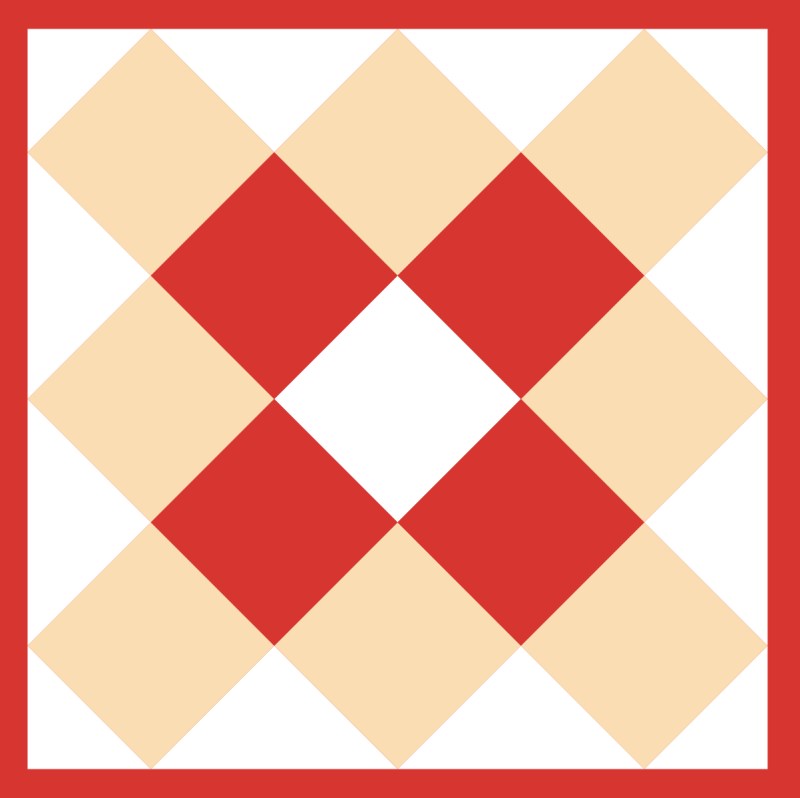
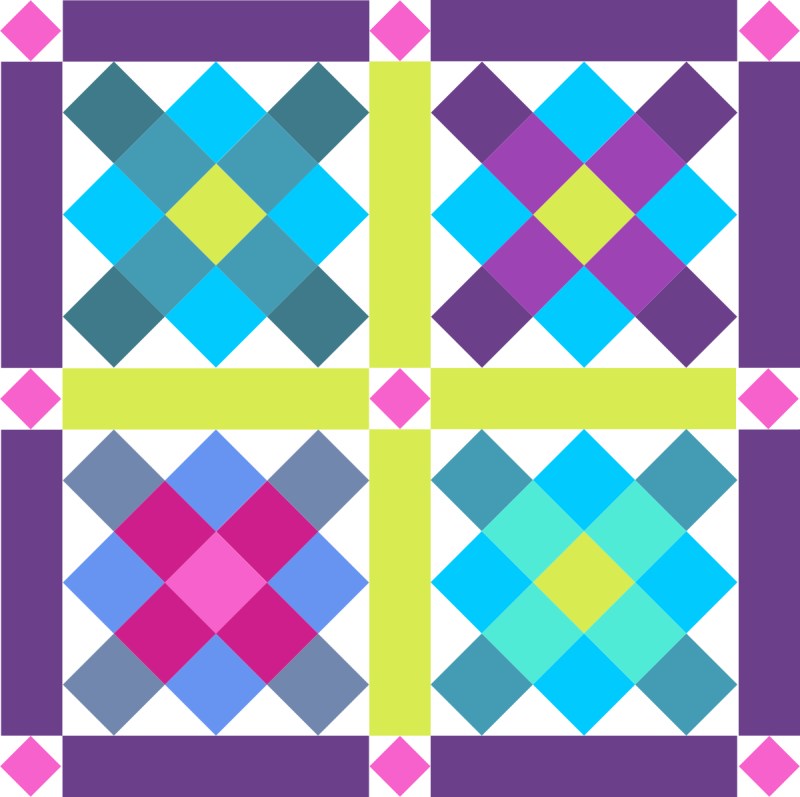
I’m using all the same white for my backgrounds so I can precut the rectangles, as I’m going to follow on the track of the image above: 5 blocks, six rows, 1″ sashing with corner stones at the intersections and a simple binding. Some of my illustration blocks are repeated. Some I went with the “criss-cross” effect and some I didn’t.
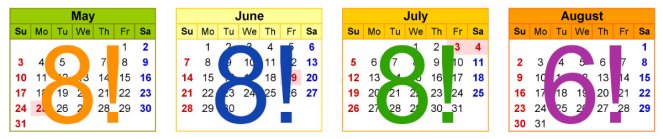
If we do about two a week, that’s 8 per month, which will take us about four months to build a quilt the size above.
Or, you could do it this way:
Whatever works for you. Then, by fall, you could have it draped over the back of your sofa, or wherever you put your newest quilts.
So I have two free downloads for you. The first one (below) is the complete package: how-to’s, pattern directions, etc. AND the schedule. I also put the illustration shown at the top of this post on the last page.
The second one (below) is JUST THE SCHEDULE, complete with little boxes you can check off as you go. Or scribble out. Or put stickers on, whatever floats your boat. Admittedly, I only did it for 30 blocks, but if you decide on a bigger quilt, write them on.
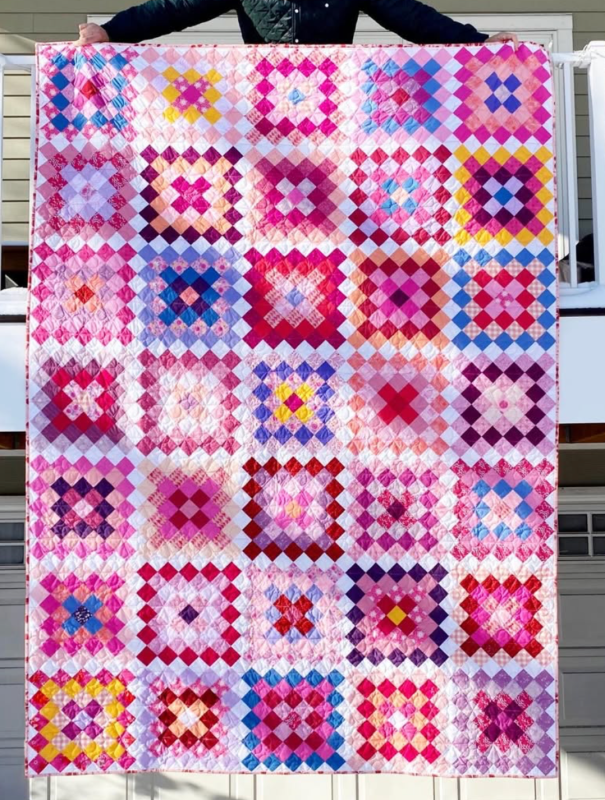
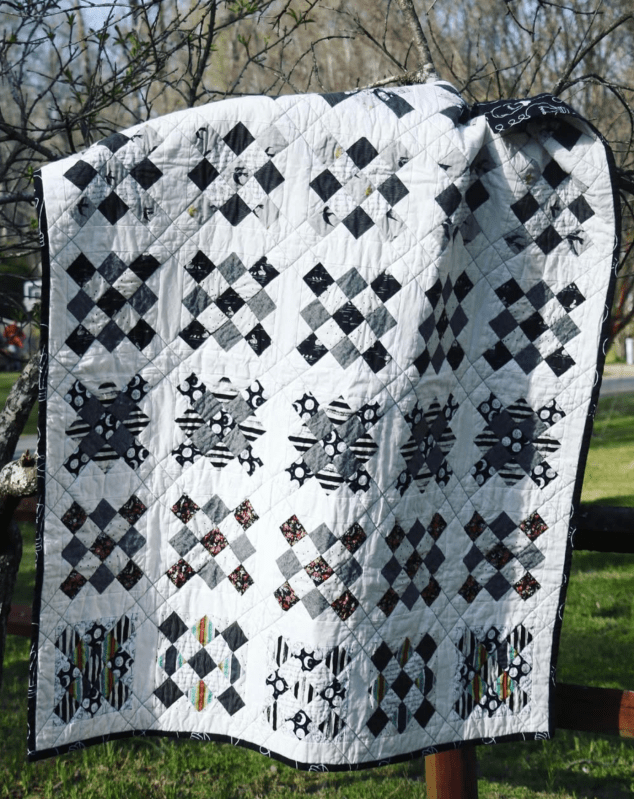
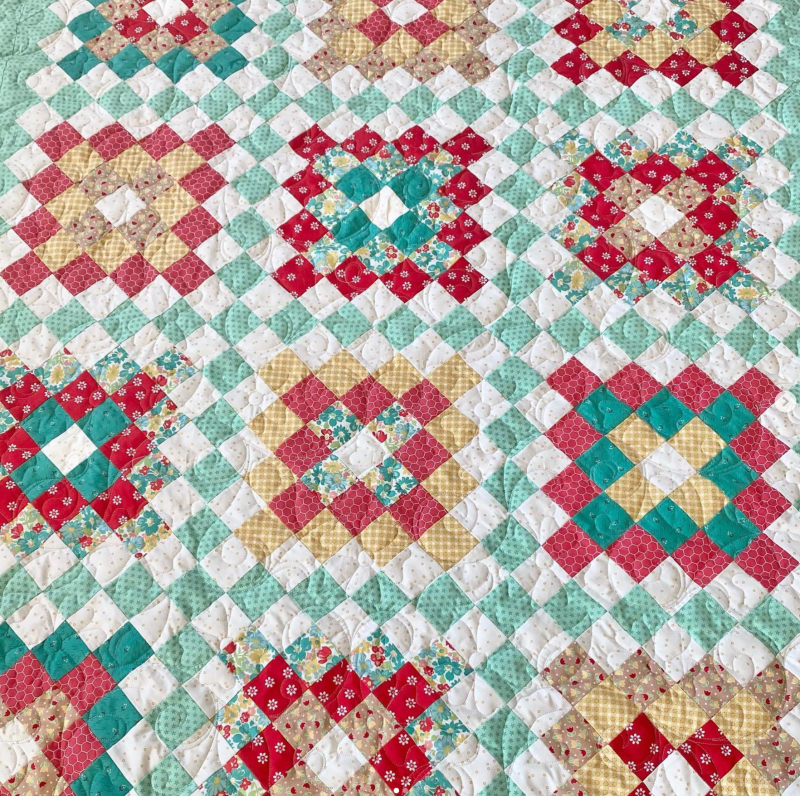
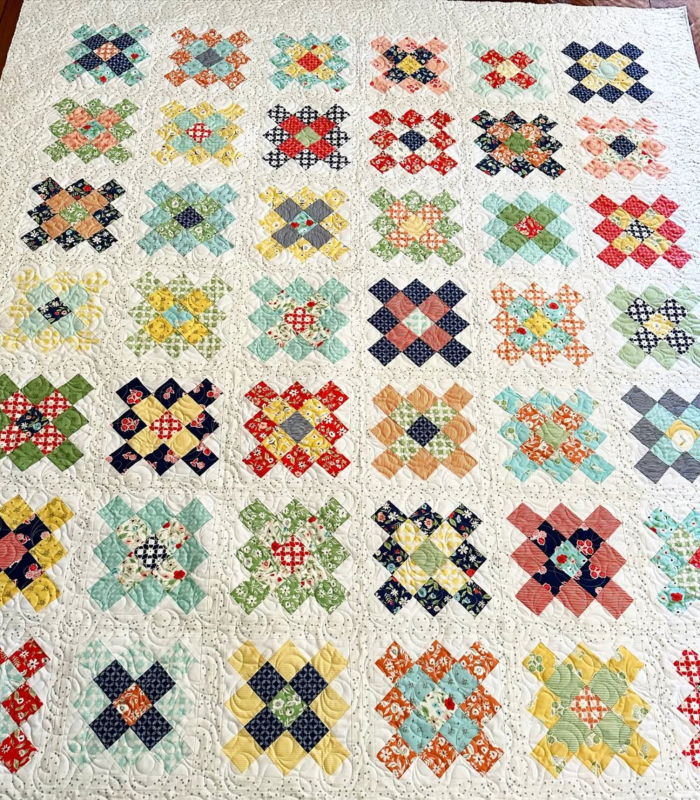
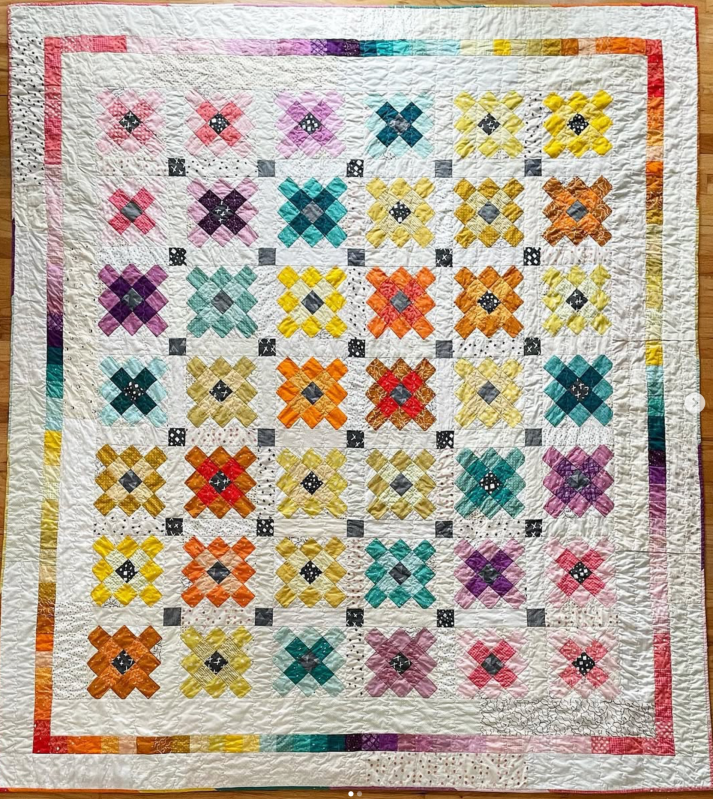
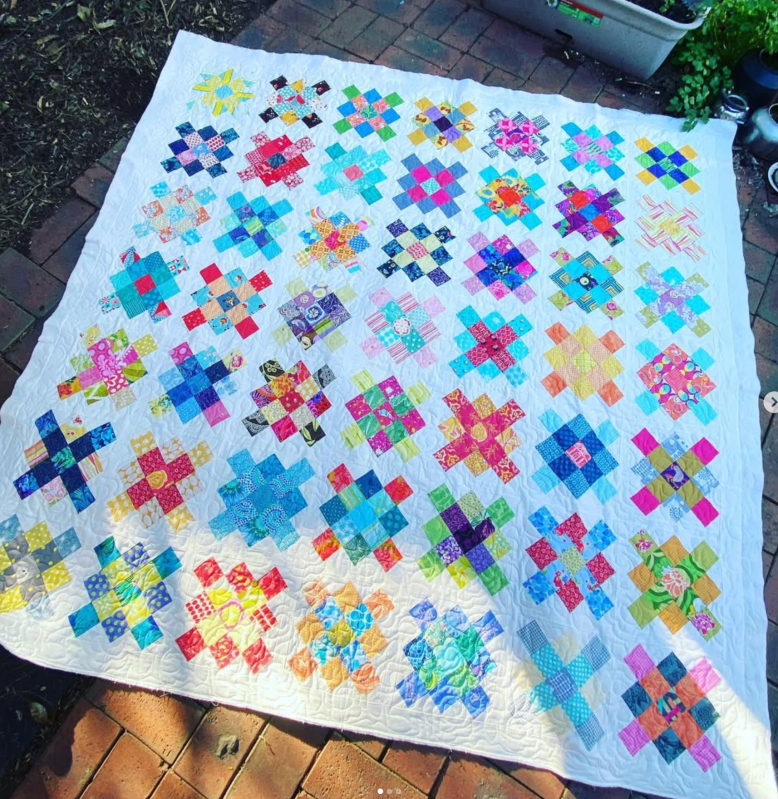
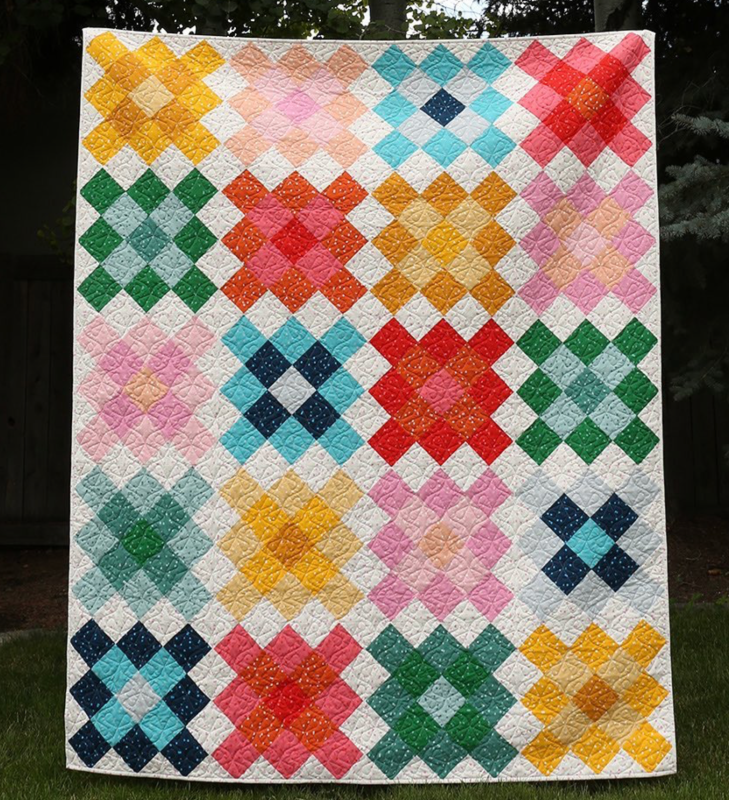
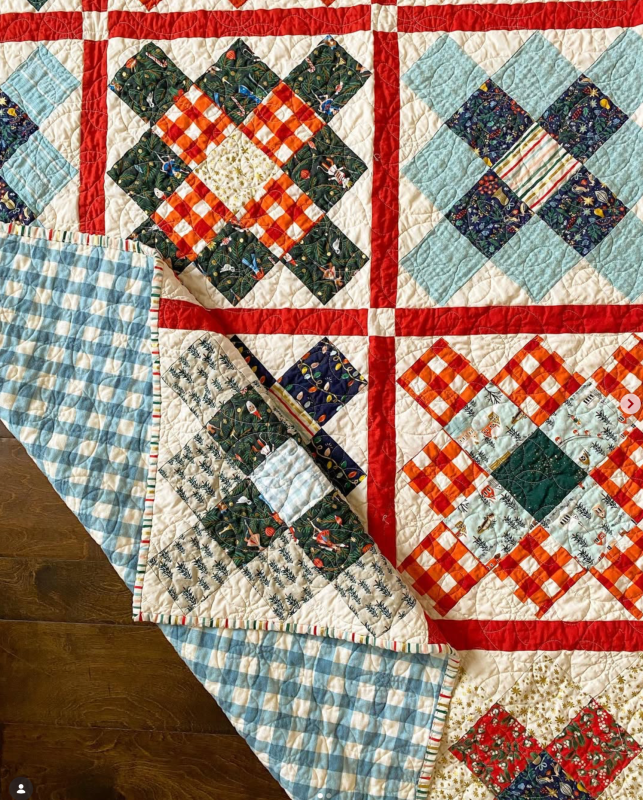
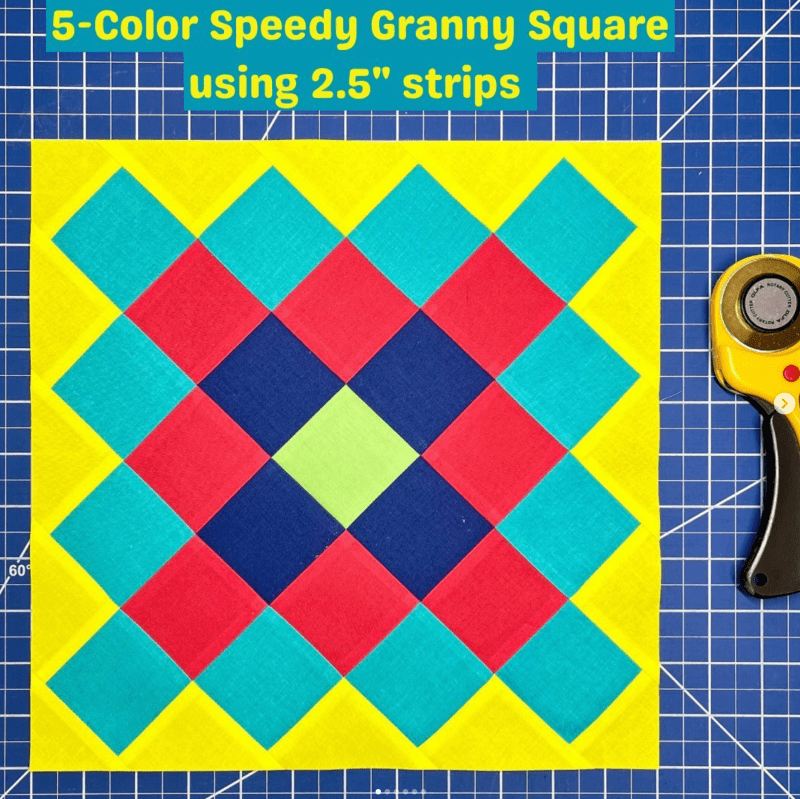
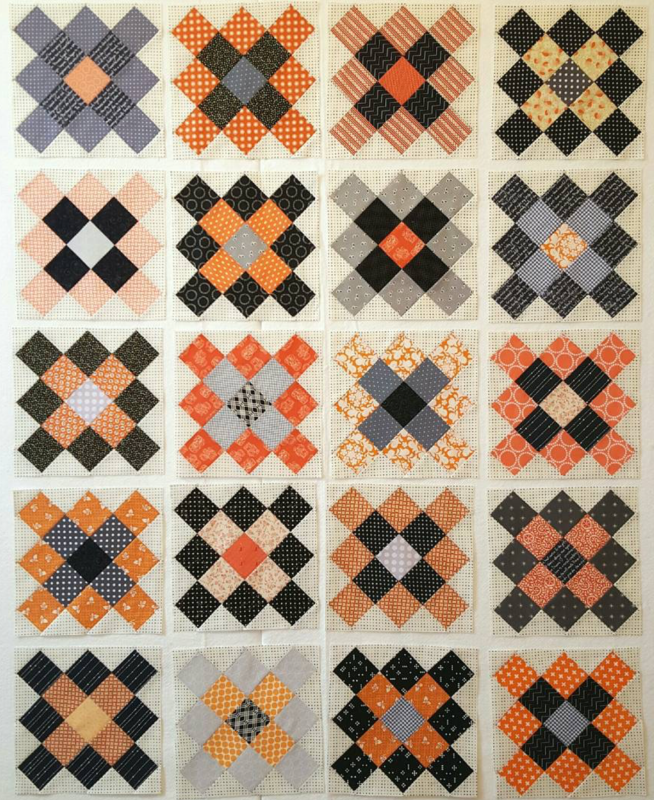
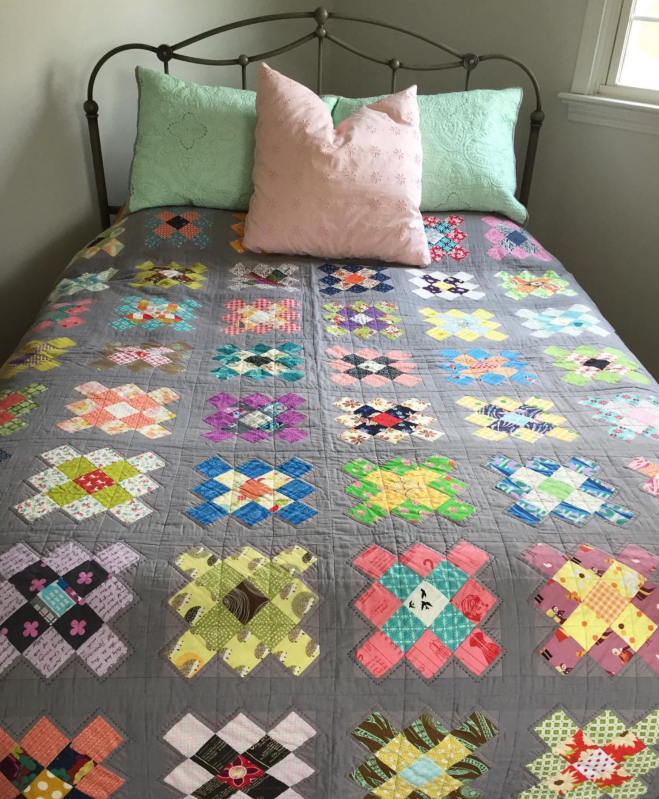
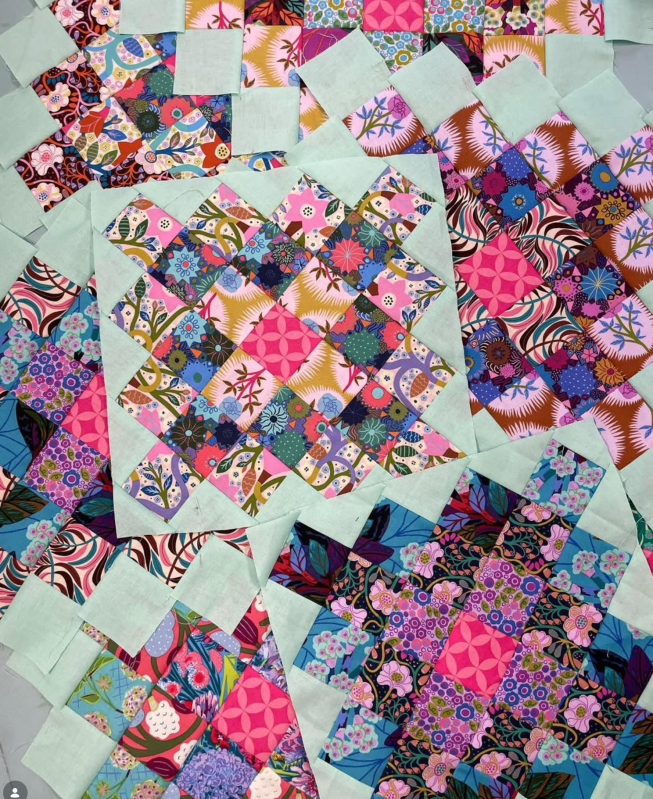
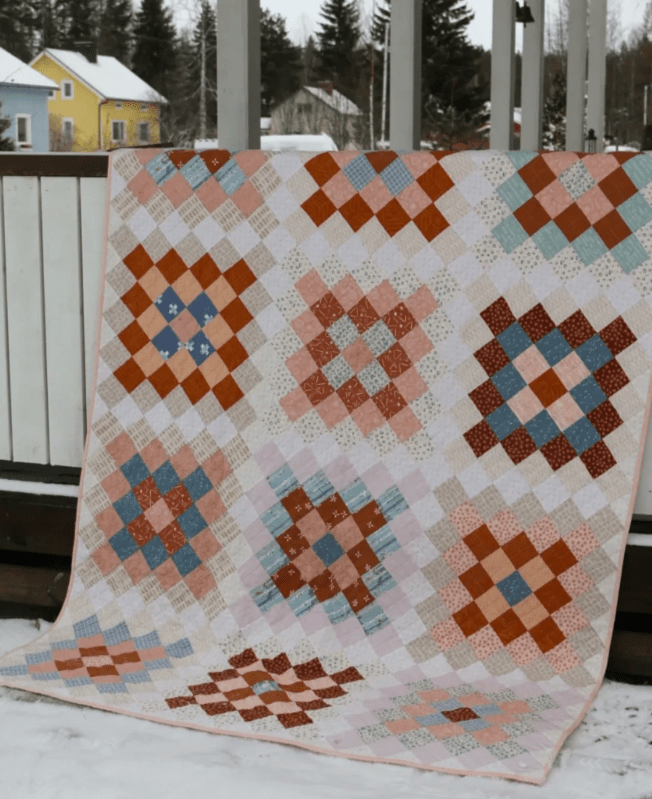
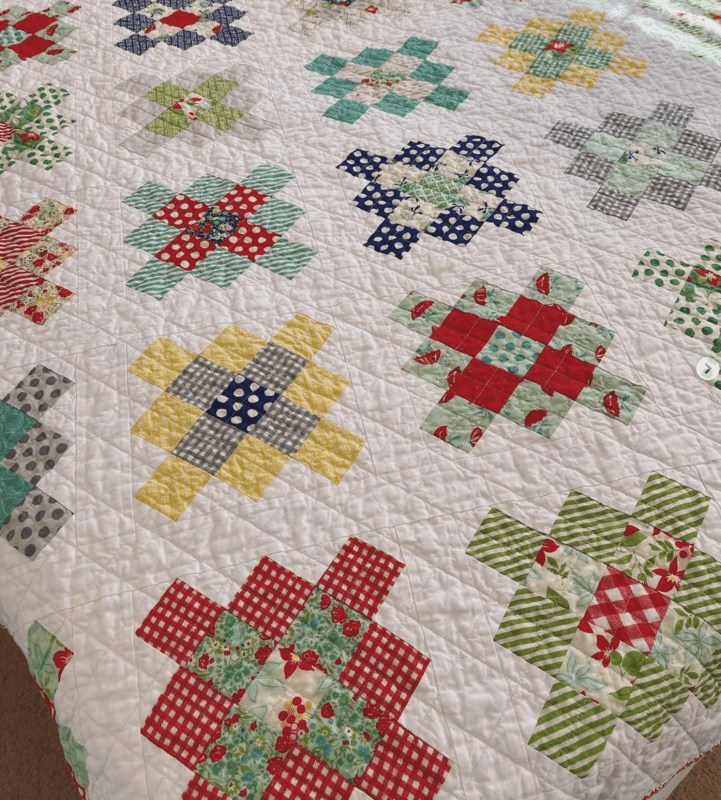
Just for fun’s sake, I decided to do an Instagram search for samples of the ever ubiquitous and pretty famous Granny Squares quilt because the marvelous Carol Gillen and I wanted to do another quilt-a-long with each other in 2026. (I think this will be our fourth?) Come along if you want. First up: the eye candy. I put a conglomeration of links afterwards, and each image is named with the Instagrammer (right-click on any photo to see it in a new tab, and you’ll see the “name” that way, along with the number showing what slide it is).
I think there must have been a lot of Granny Square quilts made in 2020, as a lot of the pictures are from around then.
A bunch of Instagram links that have the quilt, but which don’t necessarily correspond one-to-one to the above gallery:
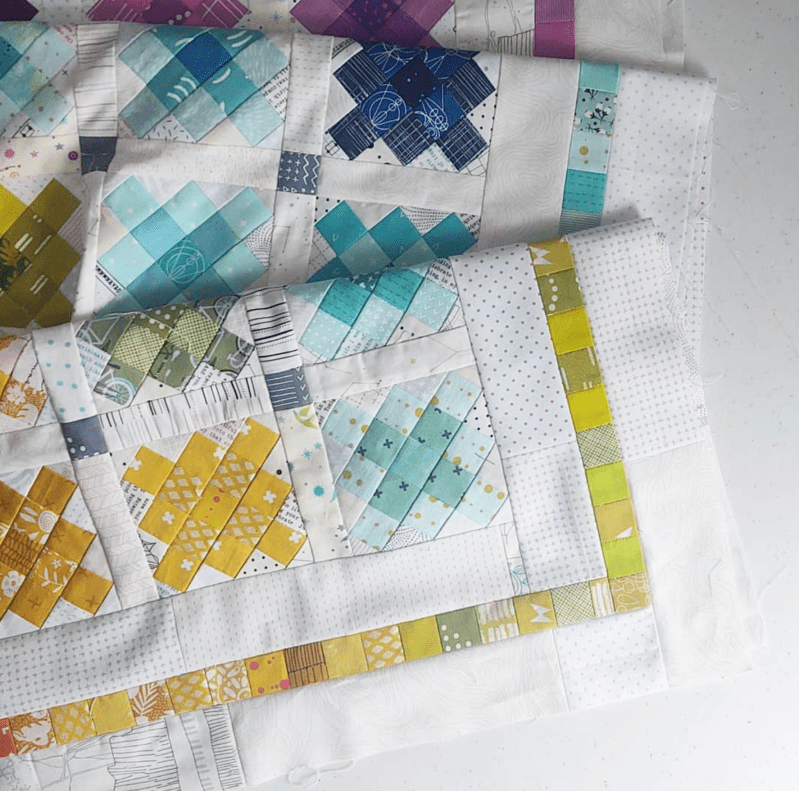
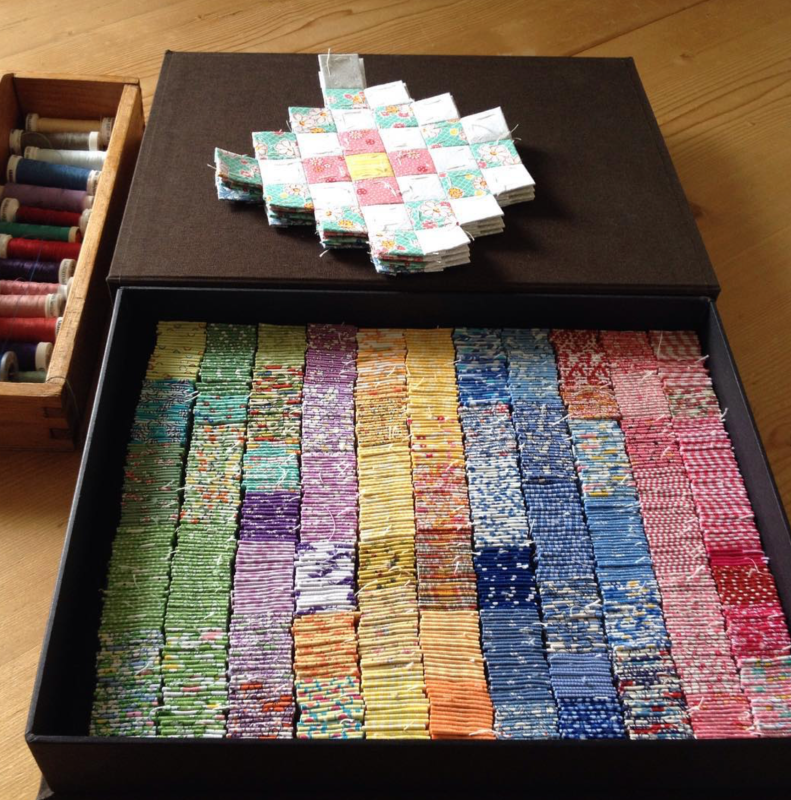
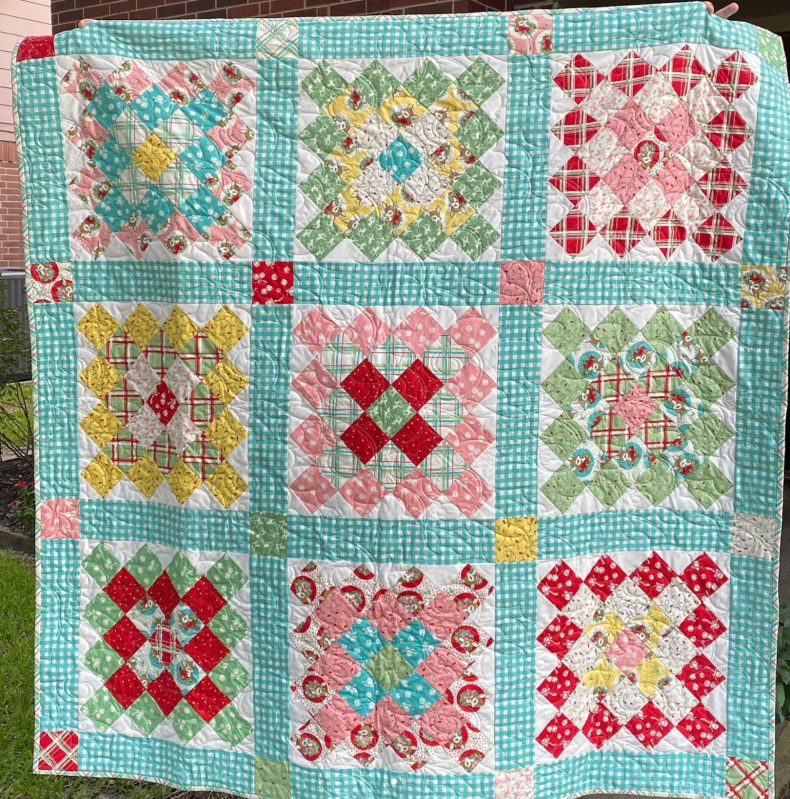
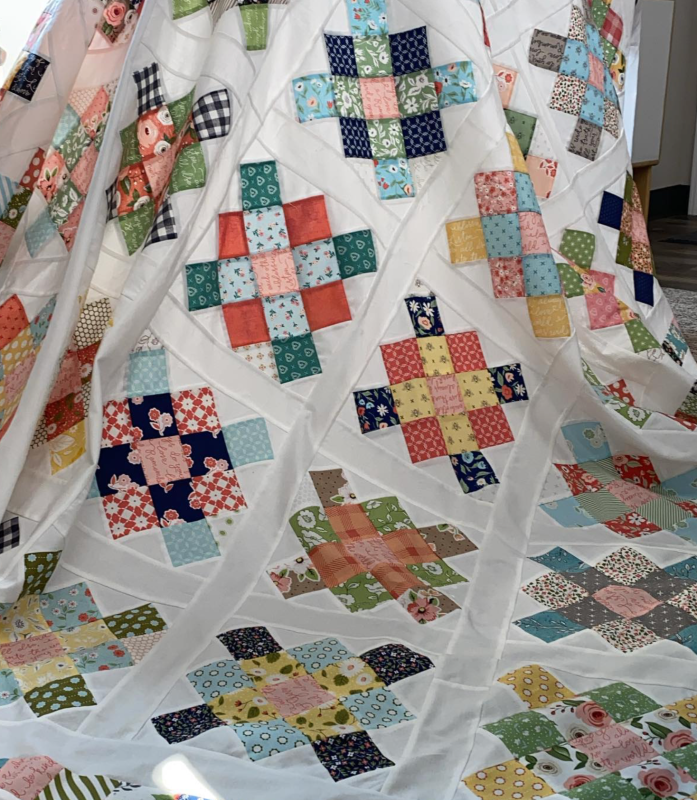
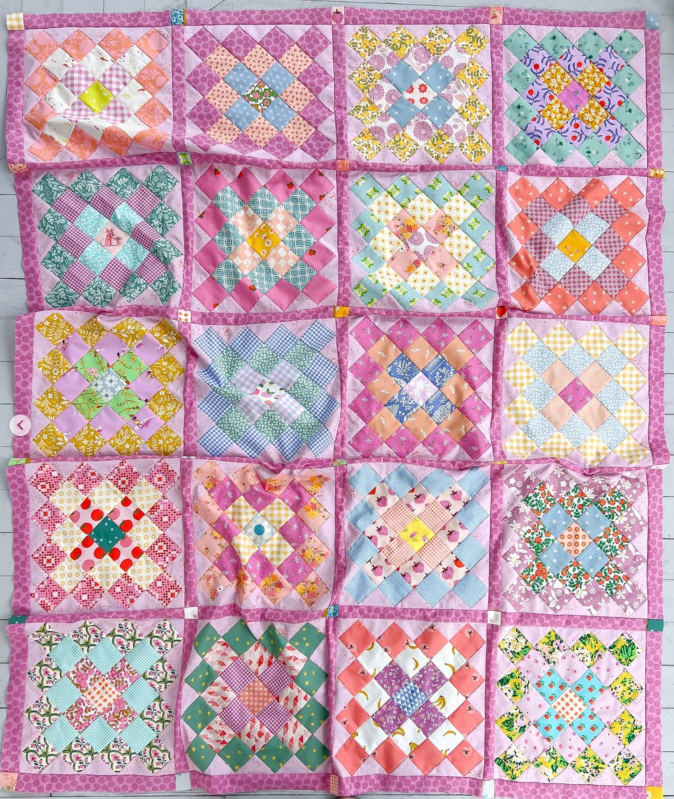
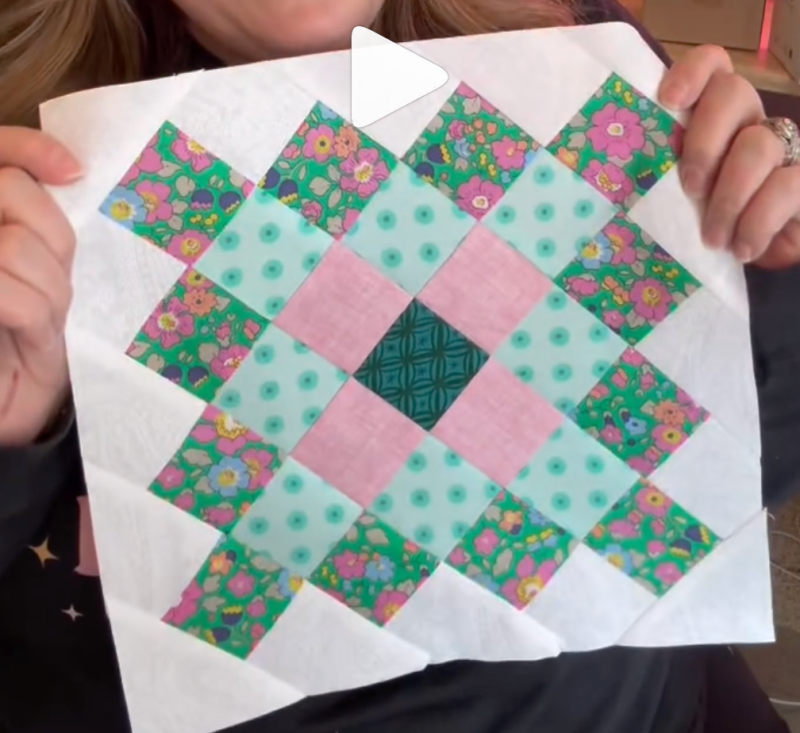
From what I saw, there are two basic kinds: the three-squares-across version and the four-squares-across version — an iteration of the original. (Ignore the photo above with six blocks across; that maker may be an overachiever and she freely admits she only made this one block. And while I admire the quilter who did hers by EPP [shown in the top row], we’re doing Old School Piecing.)
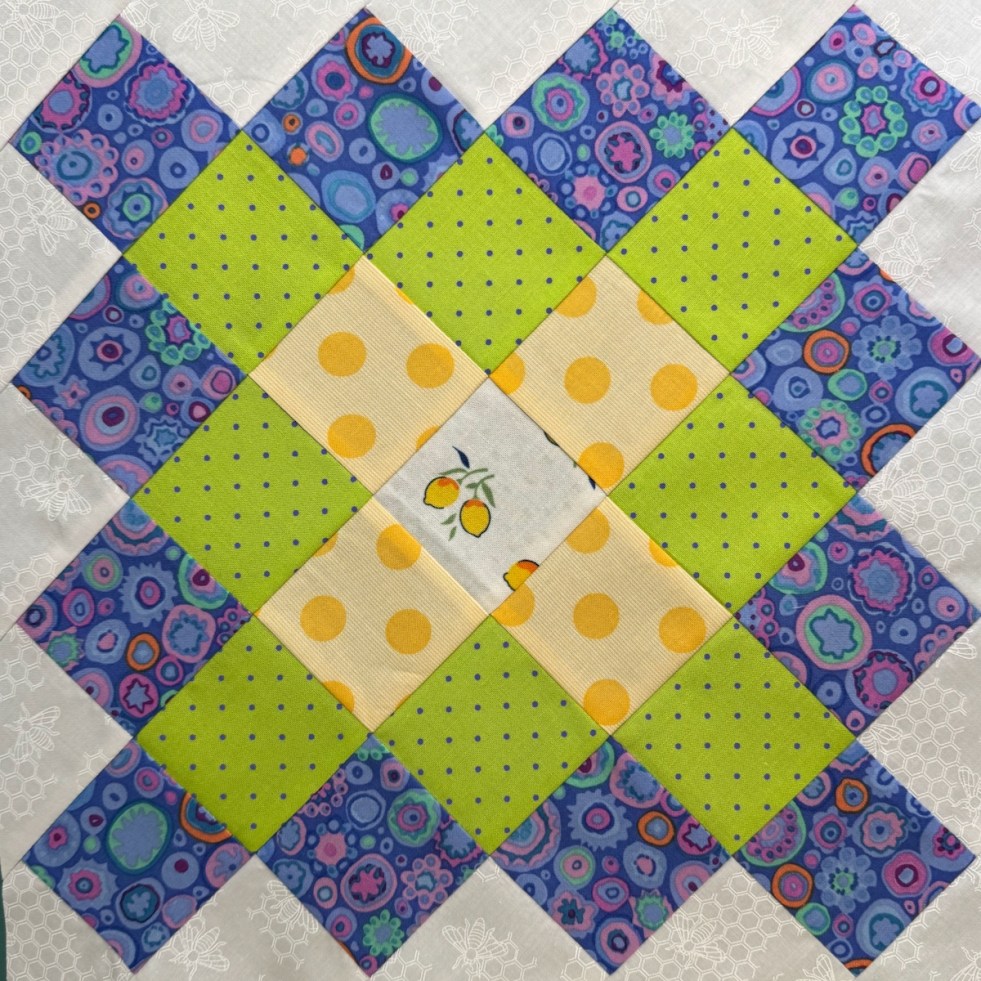
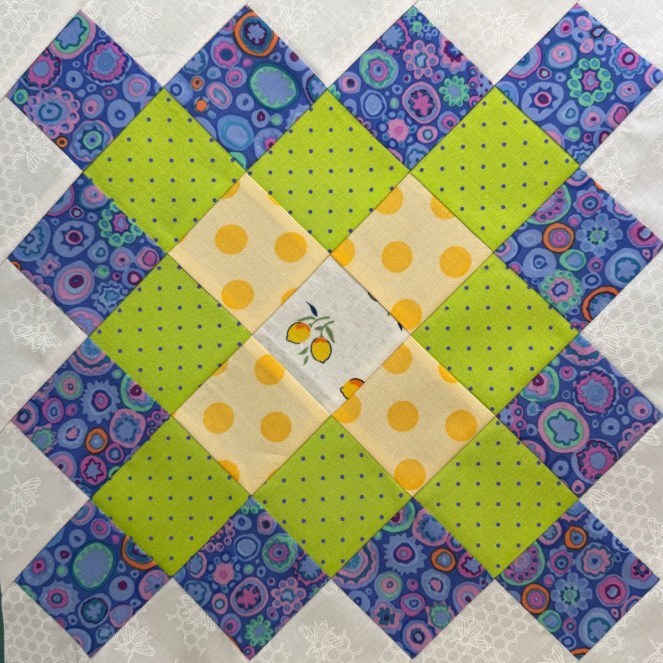
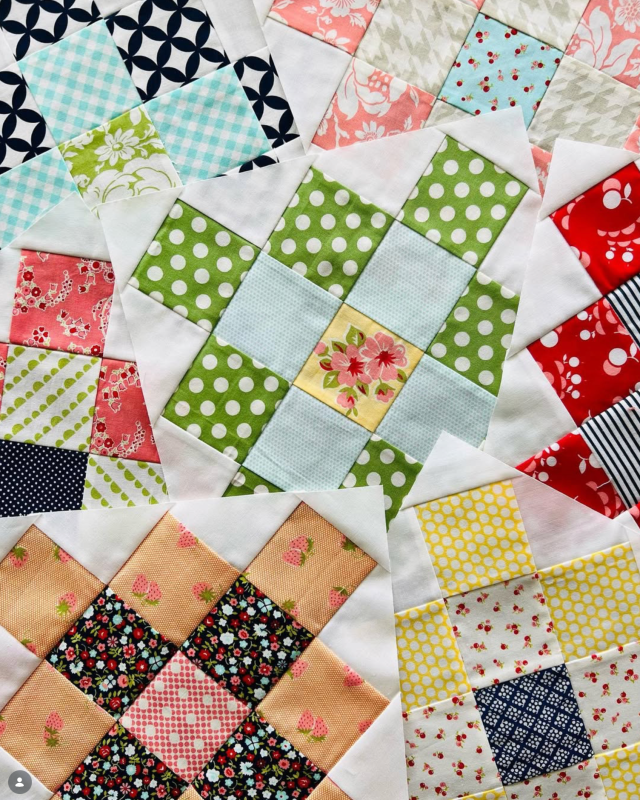
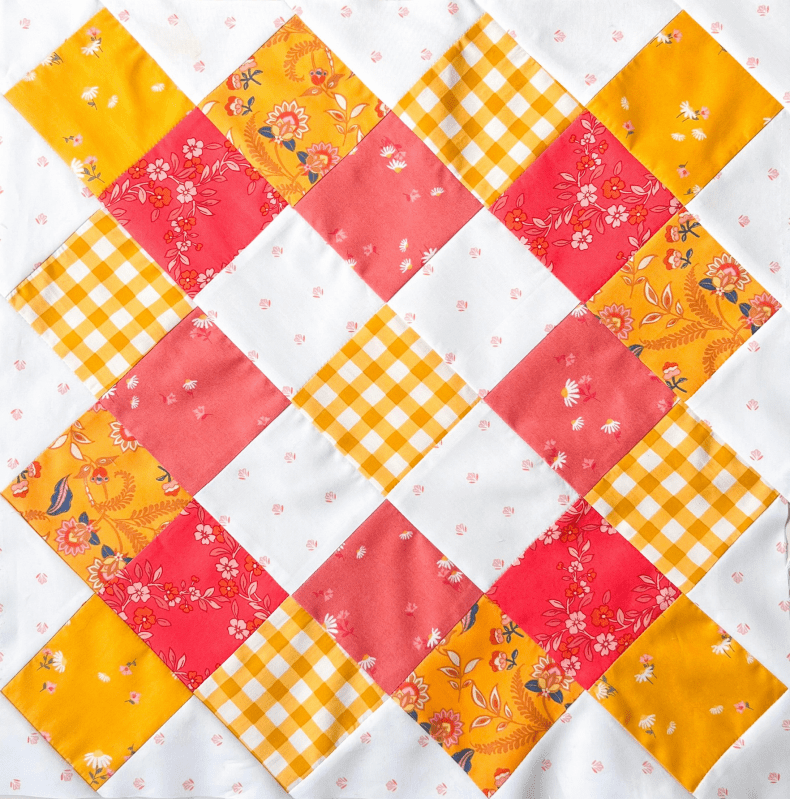
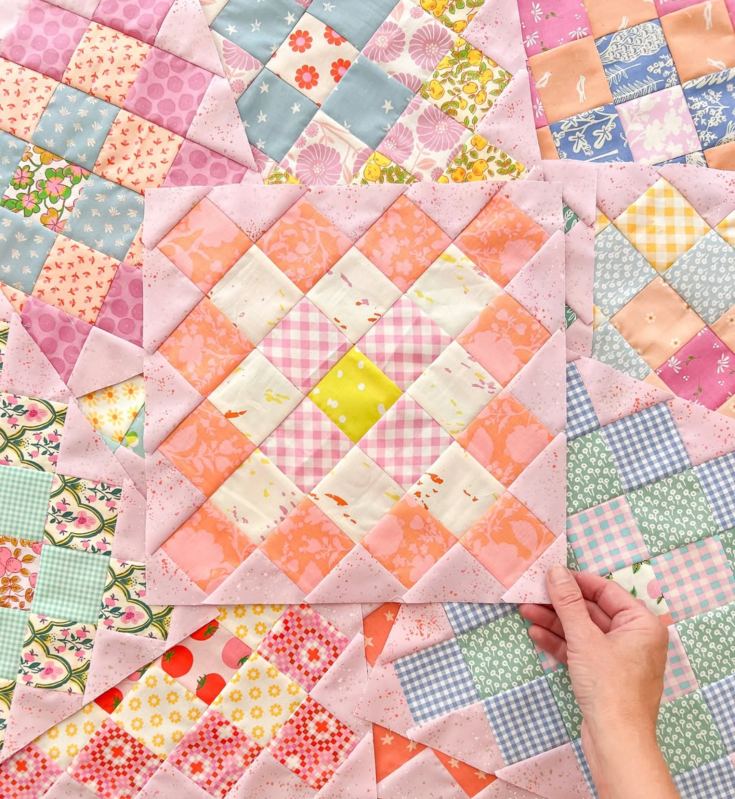
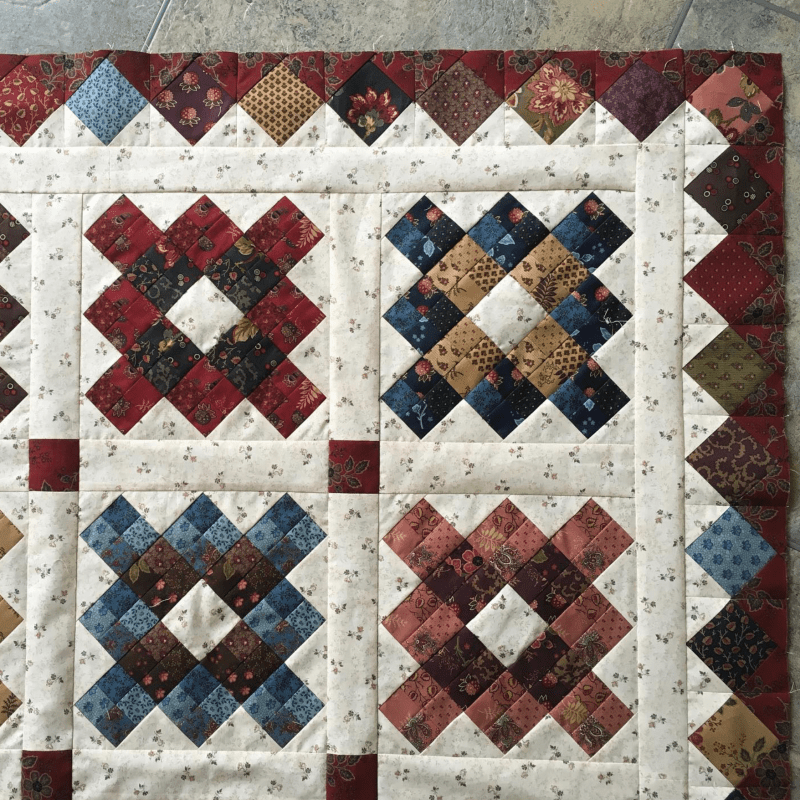
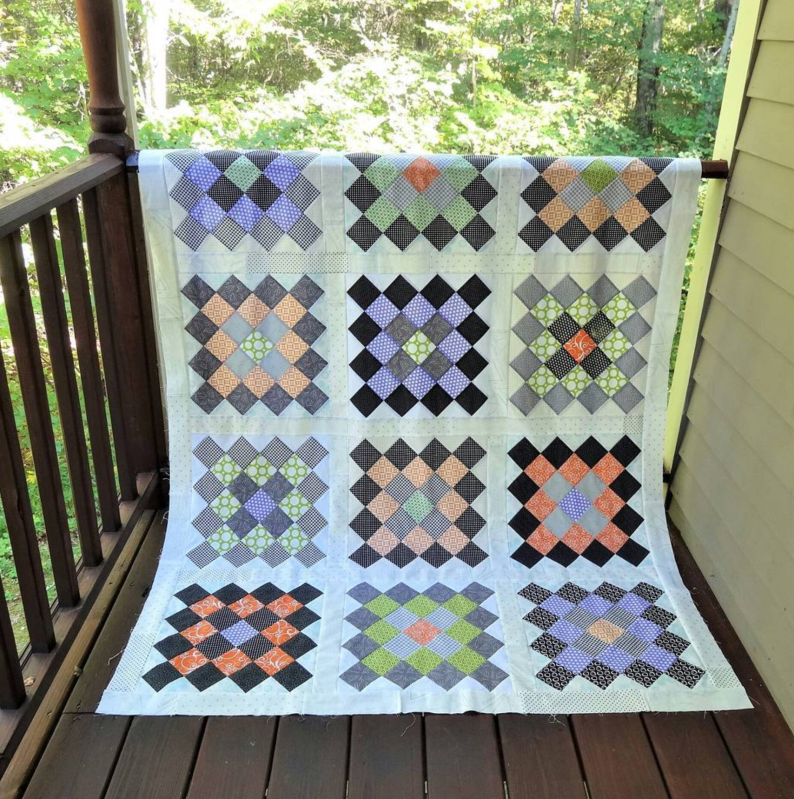
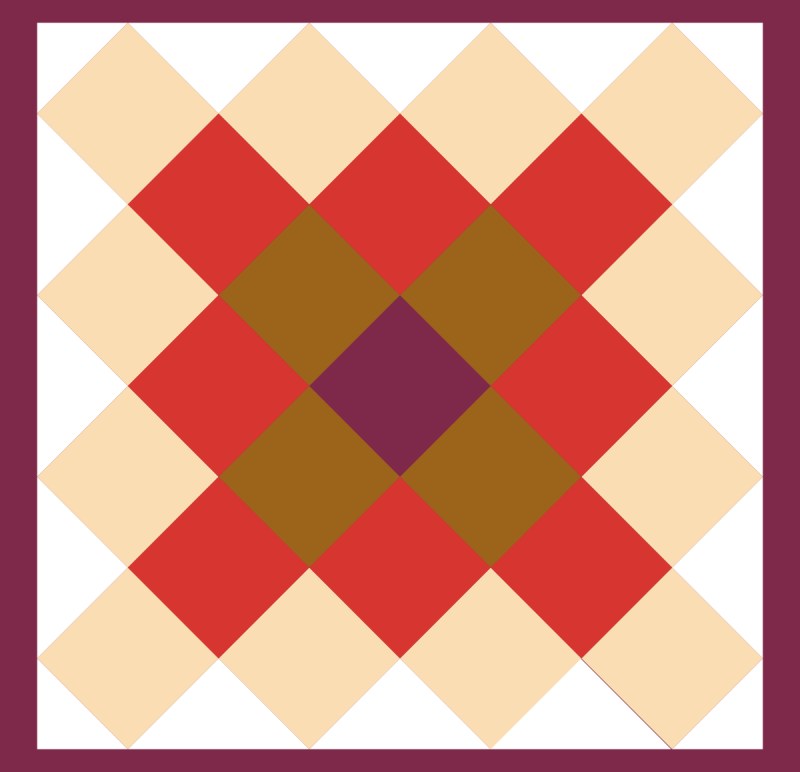
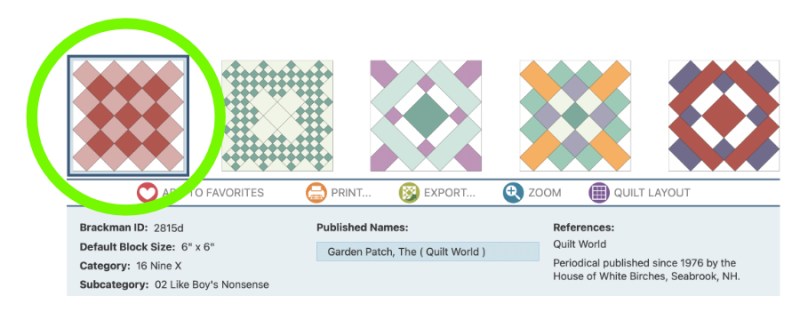
The “OG” Granny Square is the block on the upper left. We also call the one on the upper right a Granny Square, but the original name (according to Brackman) is the Garden Patch block, published in Quilt World in the mid-1970s; the color placement does differ slightly.
I saw a lot of posts, and websites, and perused videos, but I never found the source of the urban legend that says that the center of the block represents the baby, the next row represented the mother (the baby had four mothers?) and the next row was the grandmother (now this child has 8 grandmothers?). Wherever that came from it certainly wasn’t on the radar of quilt historian Barbara Brackman. The block in her book (the Bible of quilt blocks) is called Grandmother’s Pride, and hails from around the 1930s, from a mail order source called Home Art Studios.
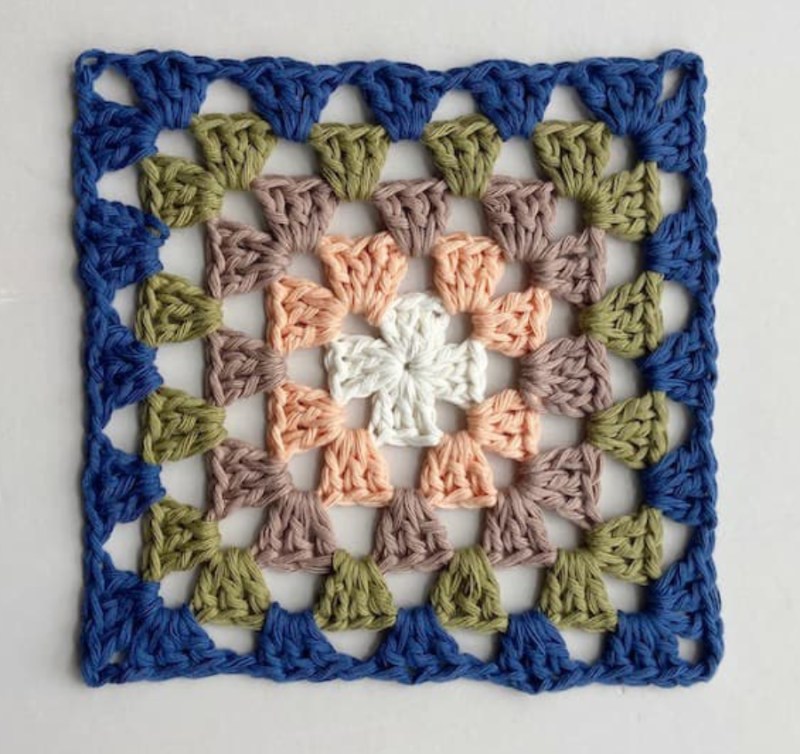
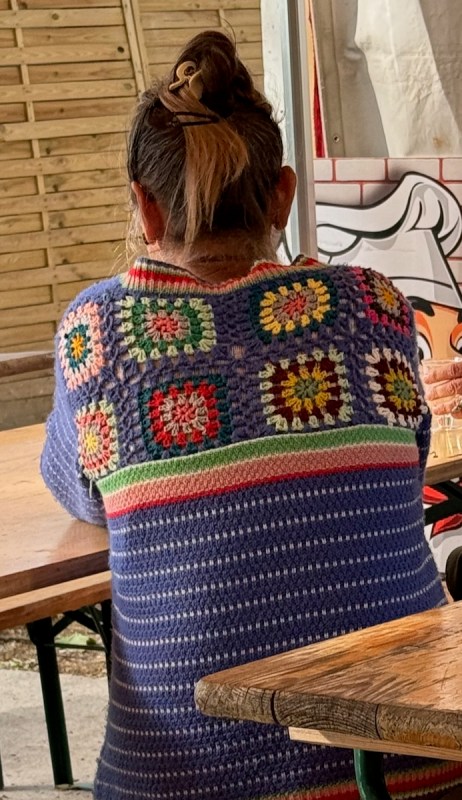
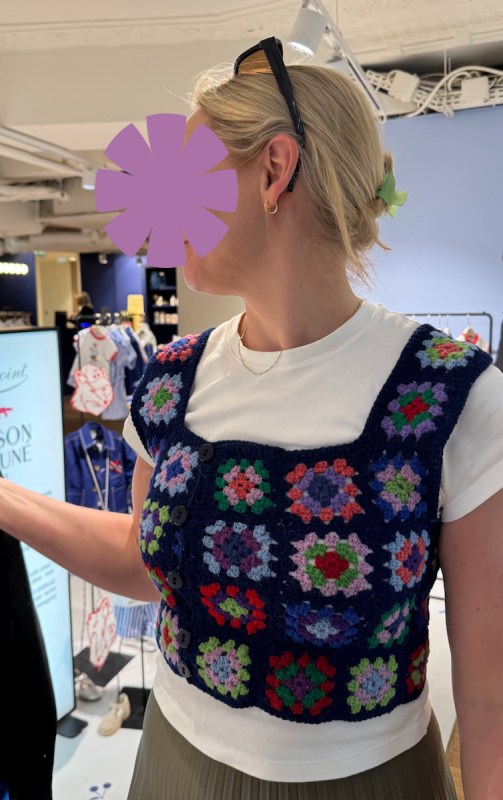
Another blogger had it the other way: the center is the grandmother, the four surrounding blocks are her daughters, and then on to grandchildren. Okey, dokey. I think the origin of this quilt square might have come from a quilter who was trying to mimic the ubiquitous crocheted granny squares whose first origins are from the 1880s, but I have no way of knowing.
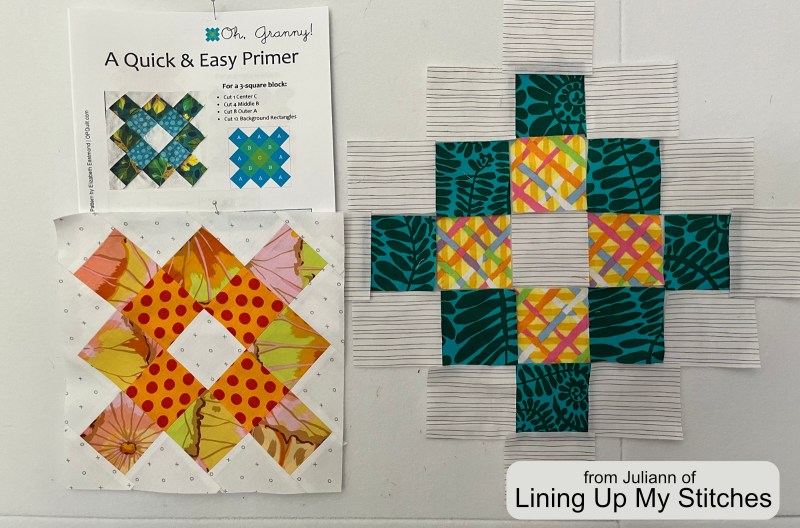
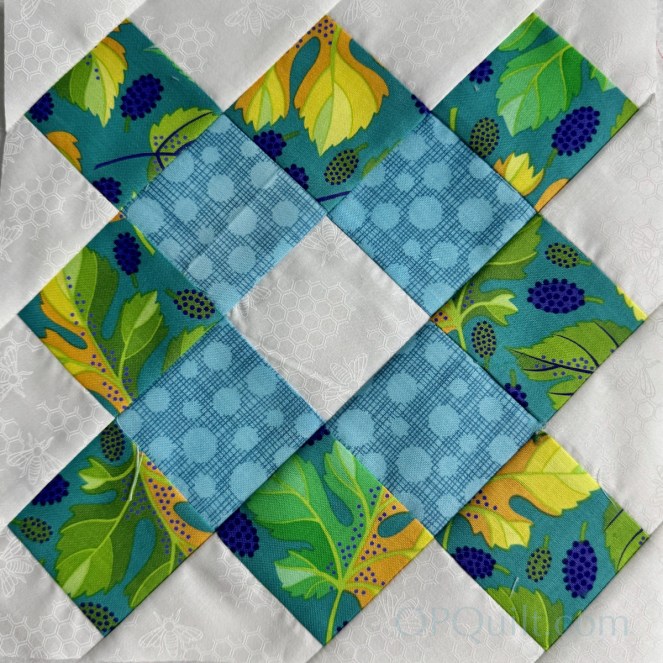
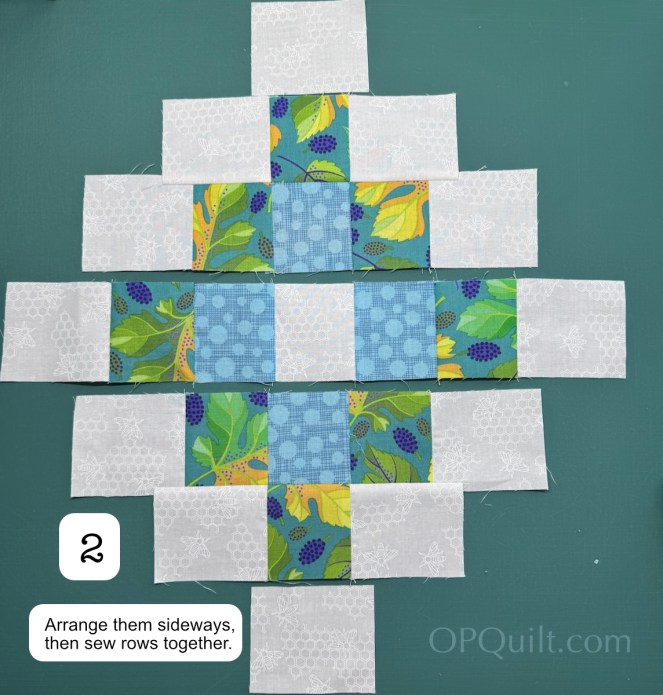
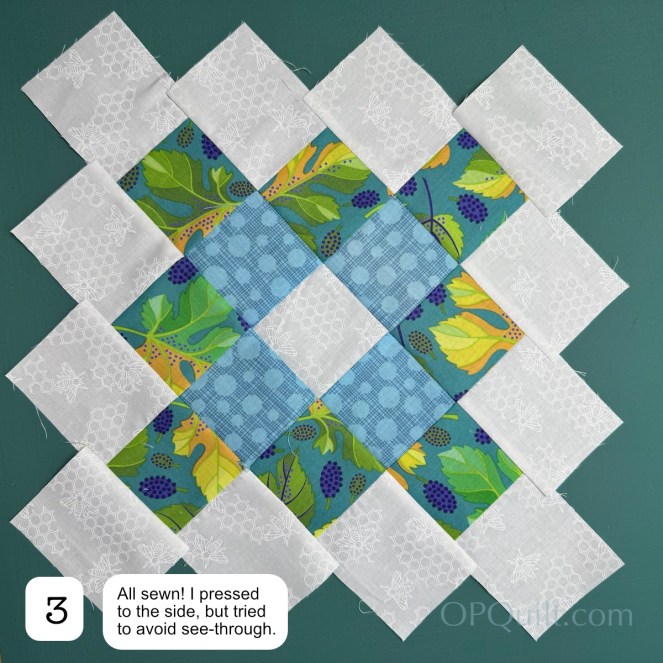
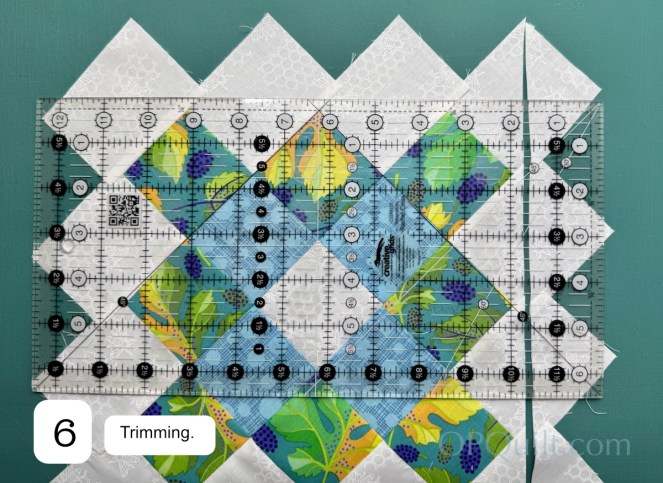
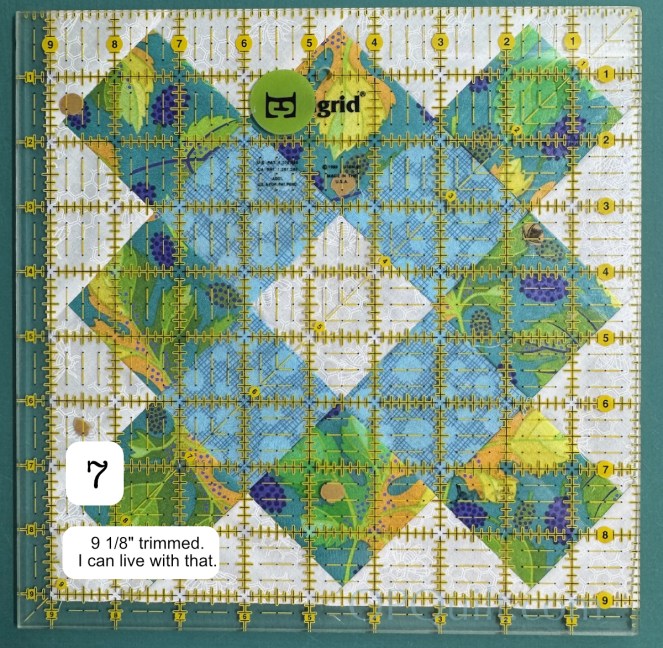
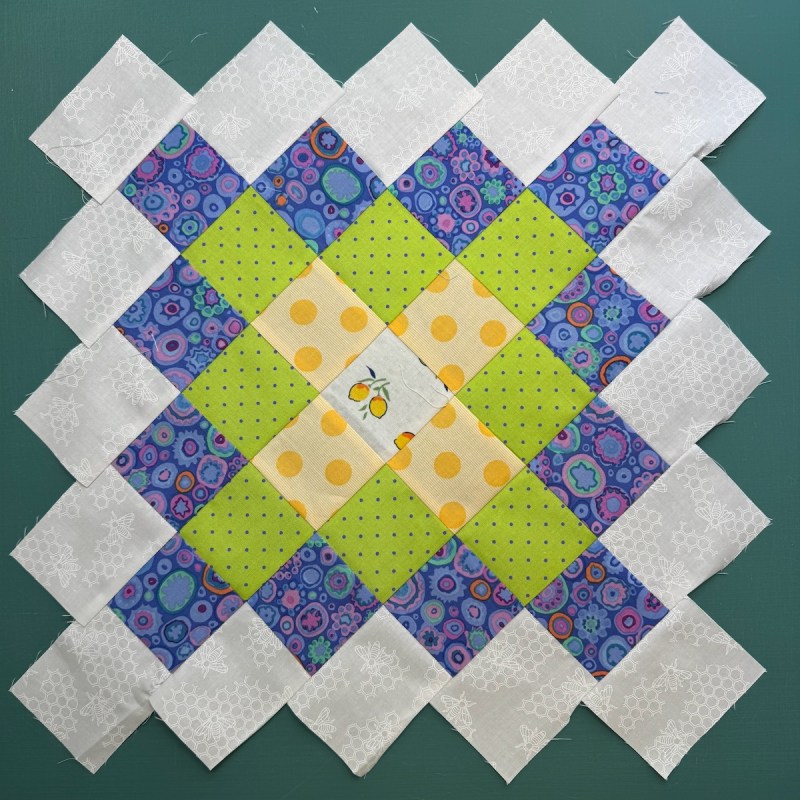
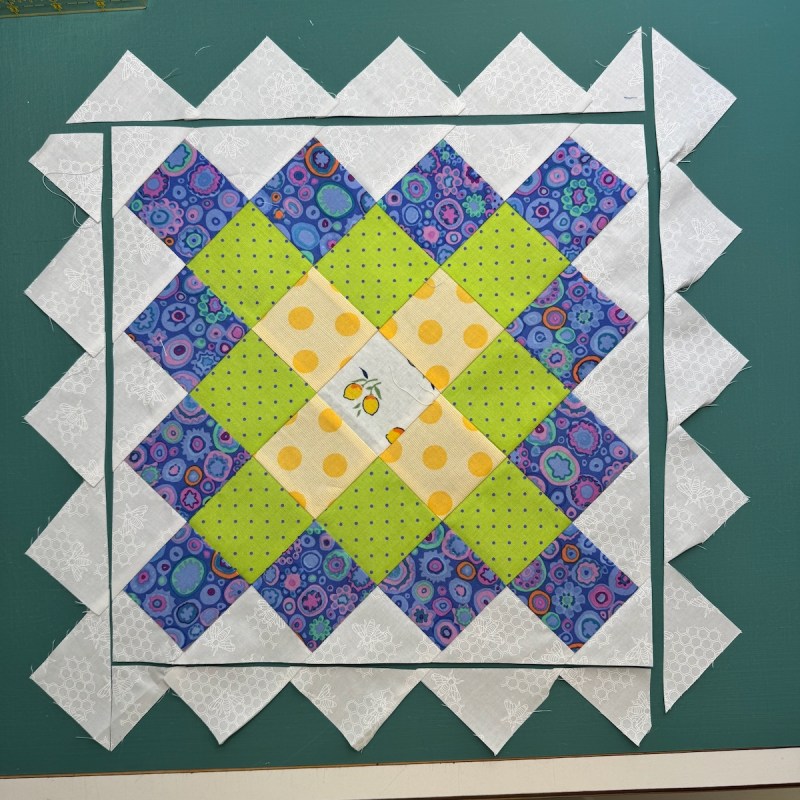
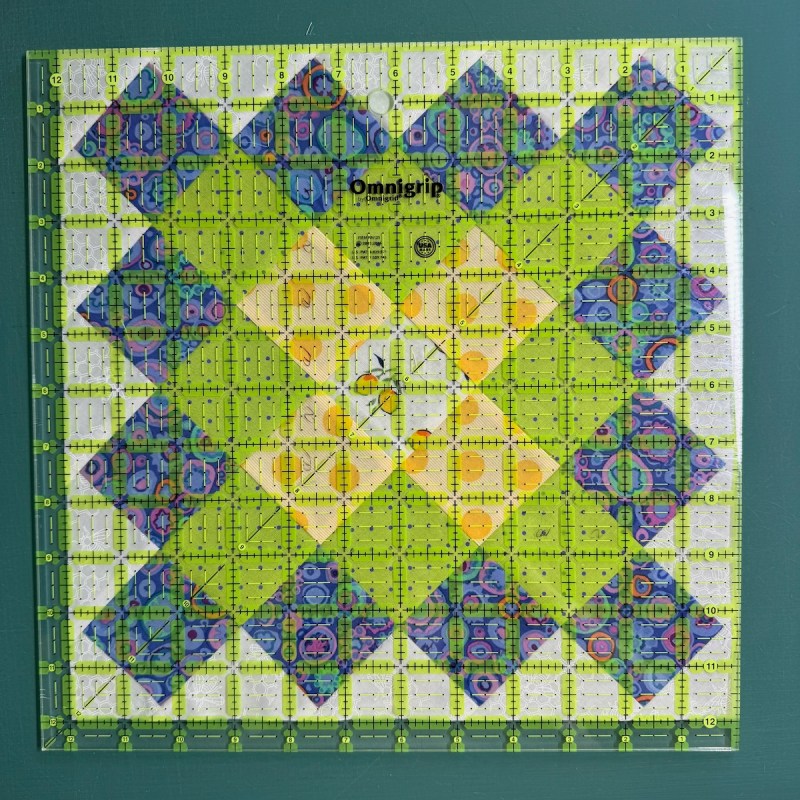
On to the making. Here’s a slideshow with pictures of my first test sample:
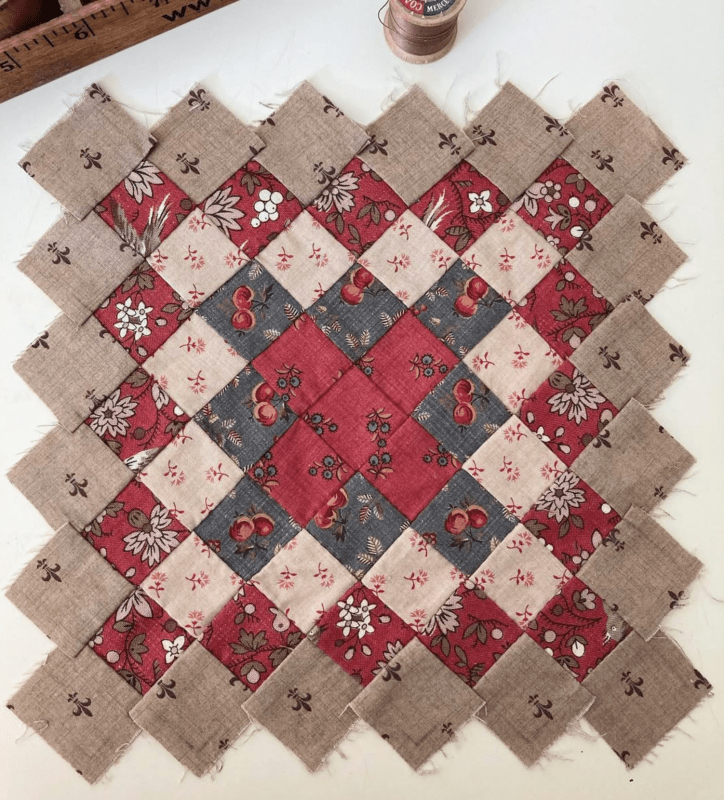
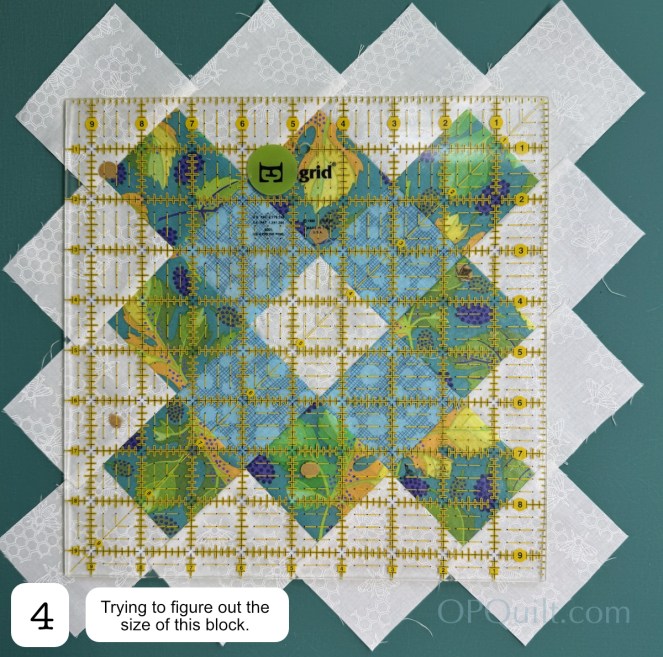
Three-square row blocks using 2 1/2″ squares trims out to be 9 1/8″ which is a block size I can work with.
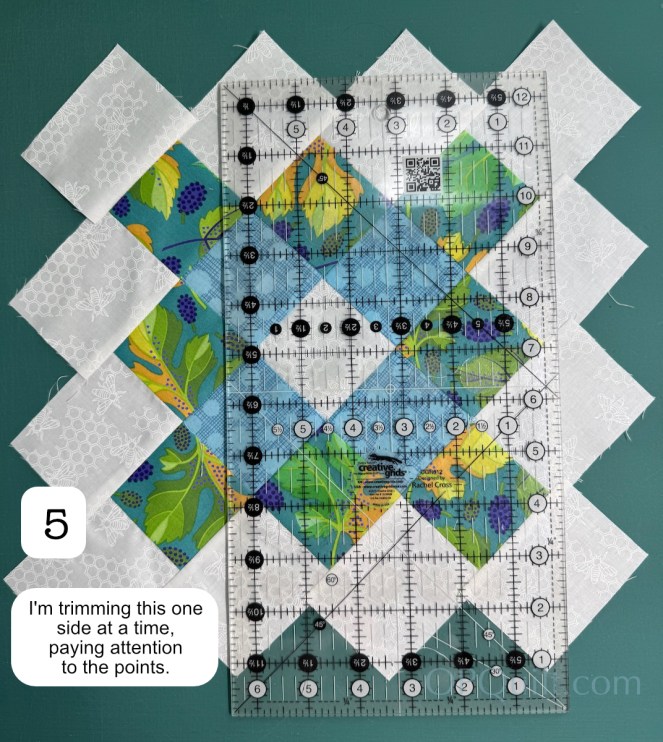
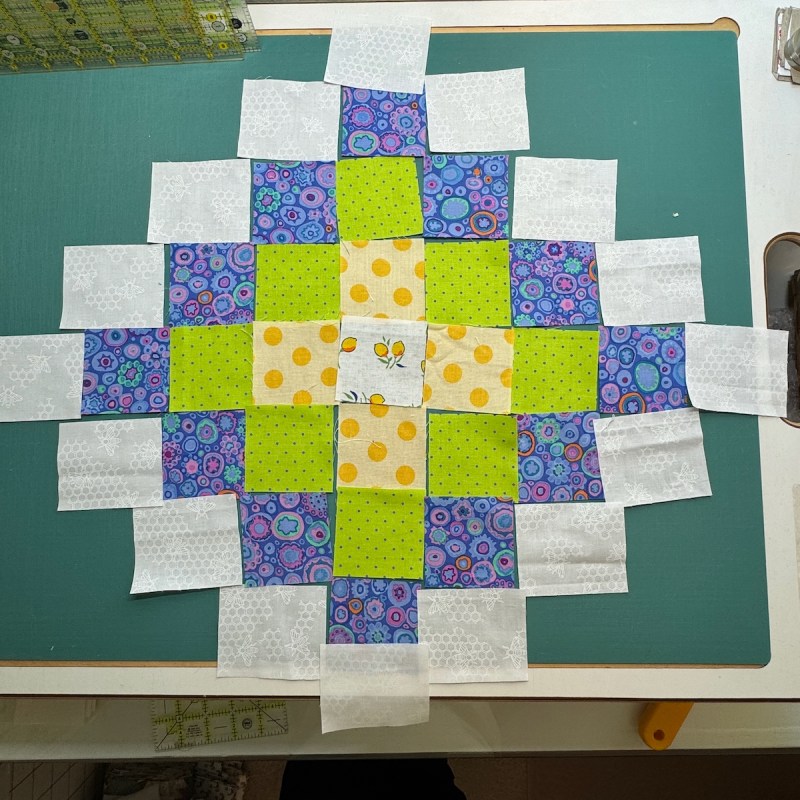
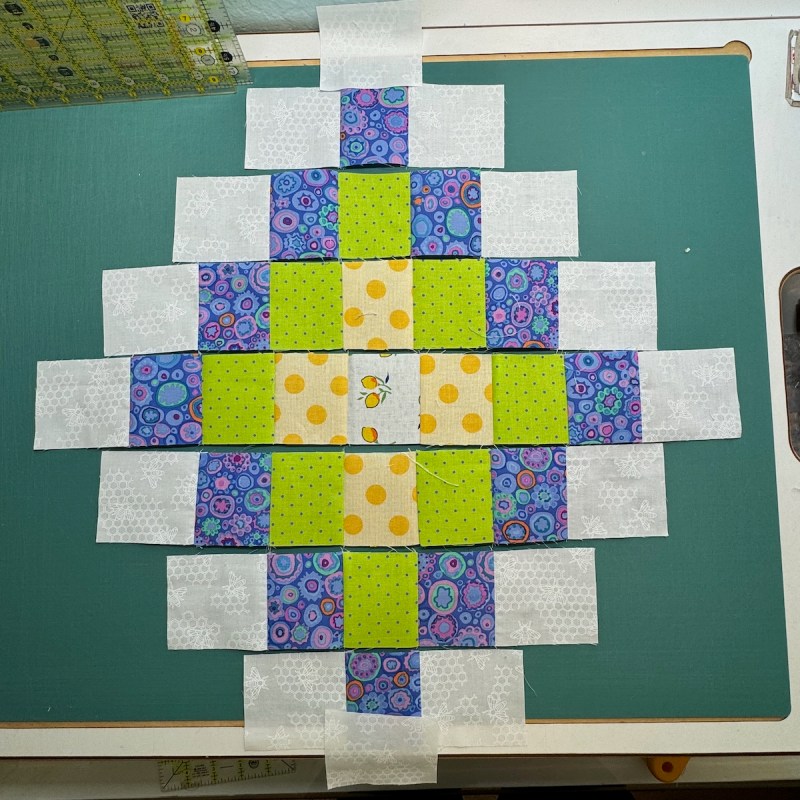
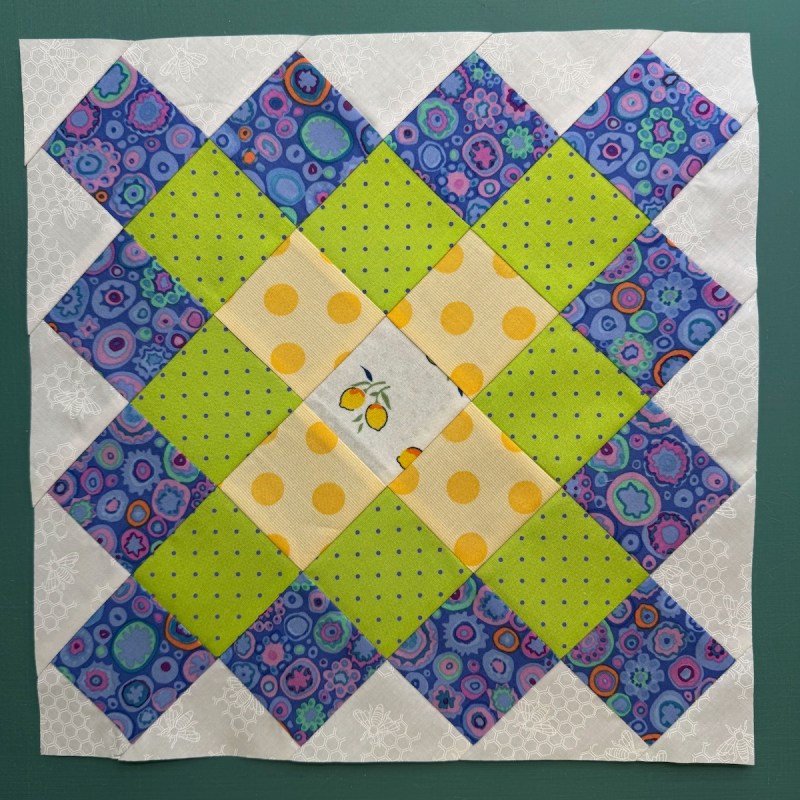
Here’s the test sample for the 4-square block, again using squares cut to 2 1/2″ EXCEPT FOR THE WHITE BACKGROUNDS, which I cut differently (info in the free handout, below):
The dimension after trimming is 12″ square. Again, while it feels counter-intuitive to not know the finished size of a block when you begin, it’s probably easier to figure out what size square you want to work with and cut those, and then figure out the dimension of the final block once it’s all trimmed up.
I give you more dimensions and block sizes in the PatternLite Download, which for a while, is free. After that, it will move to my Pattern Shop and will probablymaybepossibly retail for less than a fancy drink in your favorite restaurant. So download it now, while it’s free.
(This is the updated mini-pattern with the quilt-making schedule.)
Another Hint: color is the thing. Decide what you want in the middle (light, dark?) and in each surrounding row. I did like the quilts that had different colorations, so sometimes you could see crosses going across the block. Two ways to put it together: sashed? Not sashed? A million different tutorials out there in Quiltland. Once Carol and I get rolling, we’ll probably post up our ideas, but for now, let’s just get started on making blocks.
We’ll probably start somewhere in May-ish? We haven’t decided yet. We’ll put it up on my least favorite-which-used-to-be-a-favorite social media, Instagram. Here are our addresses: Carol and Elizabeth. I’ll also post my blocks up on BlueSky, too, and Carol has Threads. Which block am I going to sew? I’m learning towards the 4-square version, although the 3-square version is also tempting.
Final Throught: Hashtags appear to be pretty useless now in Meta’s world However, I will be tagging my posts for organizational reasons: #ohgrannysquare2026 It might be easier just to follow us on Instagram, Threads or BlueSky or type in the words Oh Granny Square and let’s hope for the best!
We Stay-At-Home Round-Robiners are now on Border Two, and the prompt, from Kathleen McMusing was ““Make It A Double.”
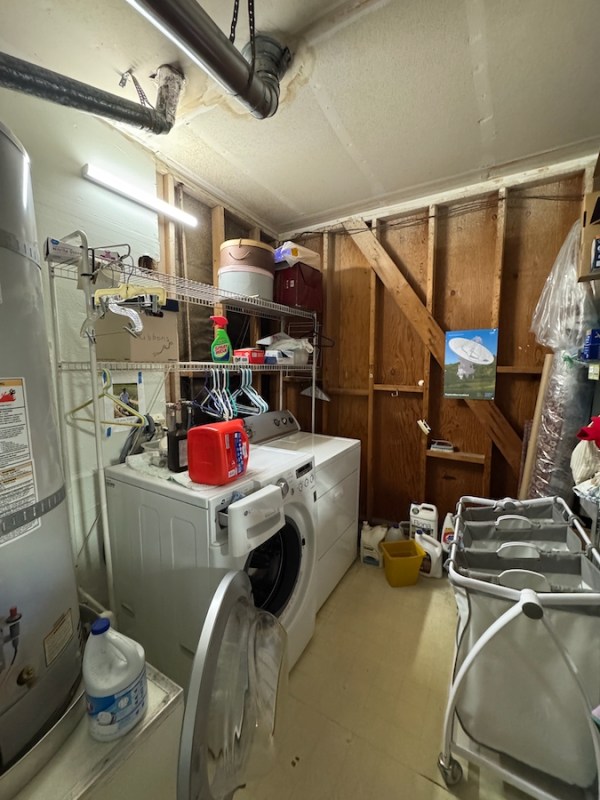
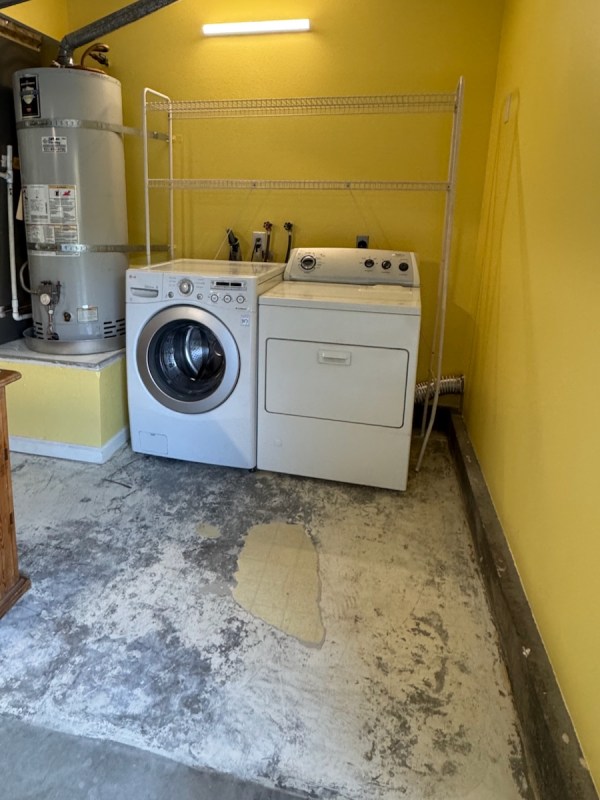
I carried this fully into my life when we decided to rip out the ceiling in the main bathroom and get rid of the fluorescent lights (replaced with LEDs) AND, making it a double, decided to revamp the garage laundry room. Here’s the before and after. We also ripped out the linoleum flooring, and I kind of like the rough, crazy pattern, so we’re leaving it for now. I can only do just so much doubling in one week.
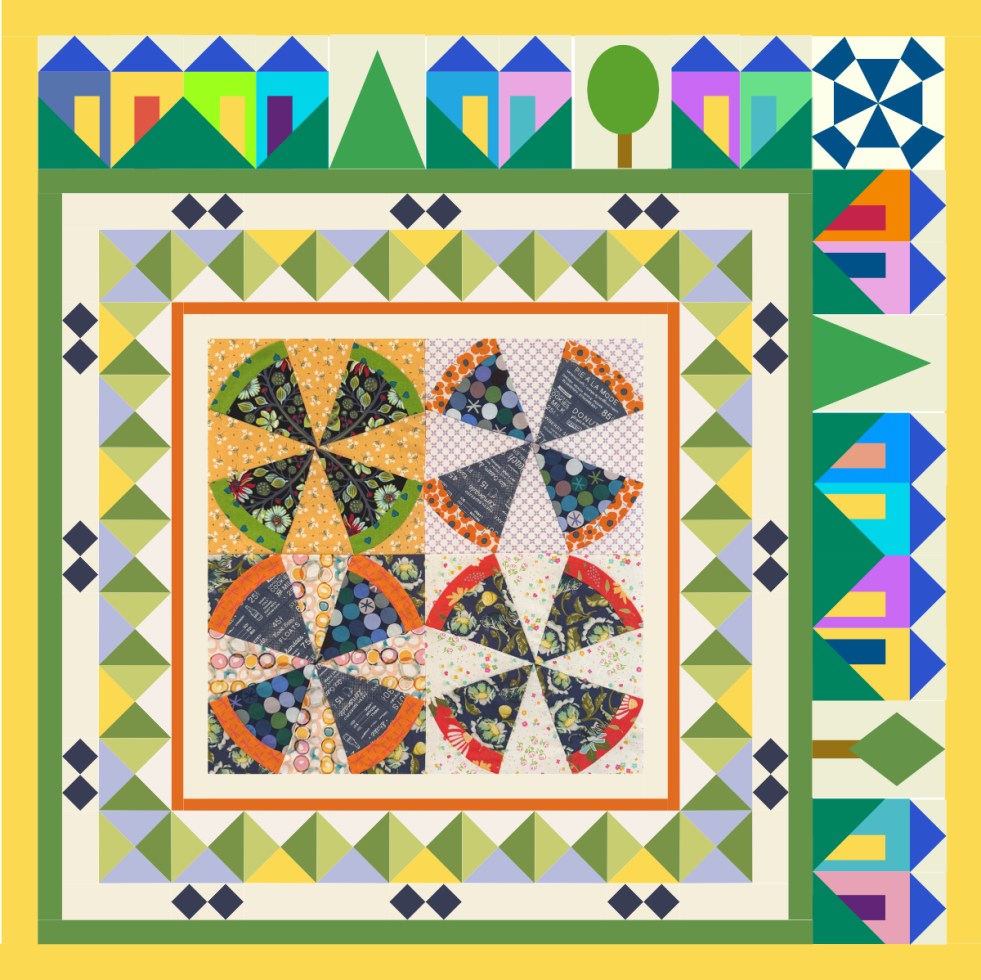
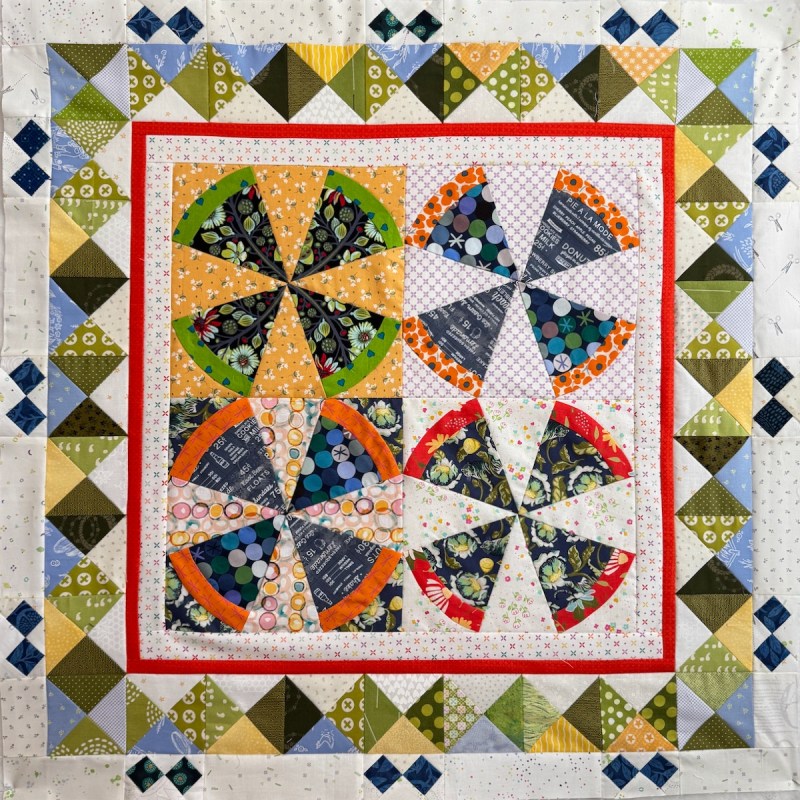
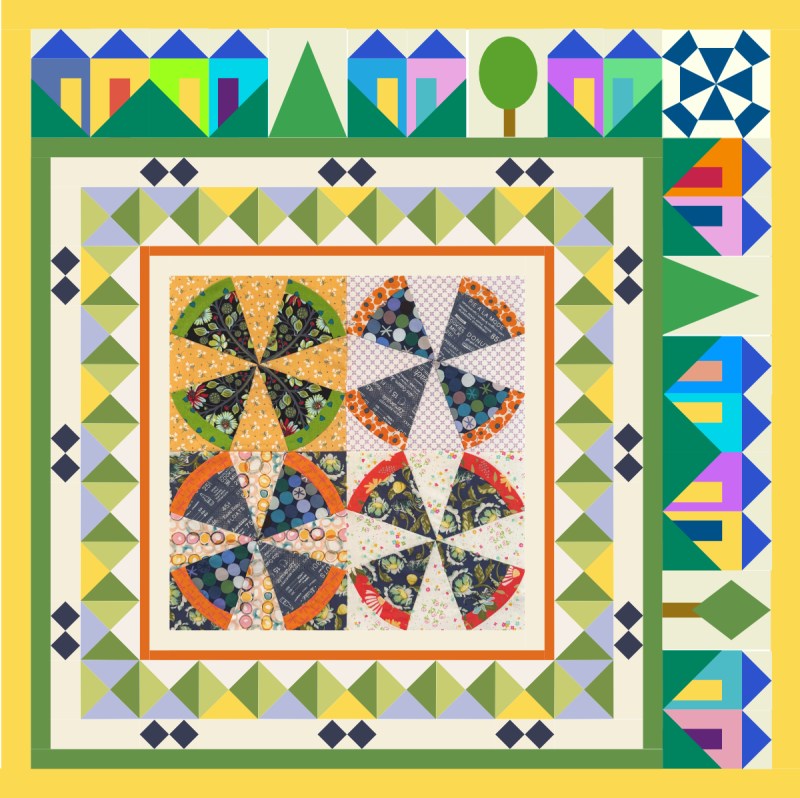
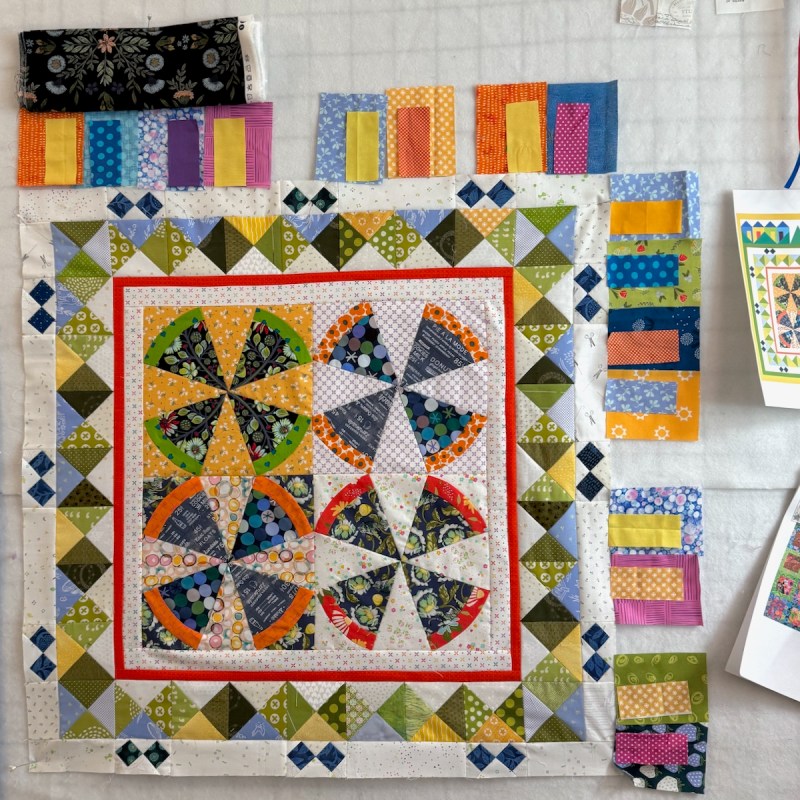
So while hammering, sawing, sheet-rocking, mudding, painting, electrical stuff was going on, I was trying to concentrate on the week’s SAHRR prompt. Kathleen suggested blocks with the word or idea of double. So I created a double block border:
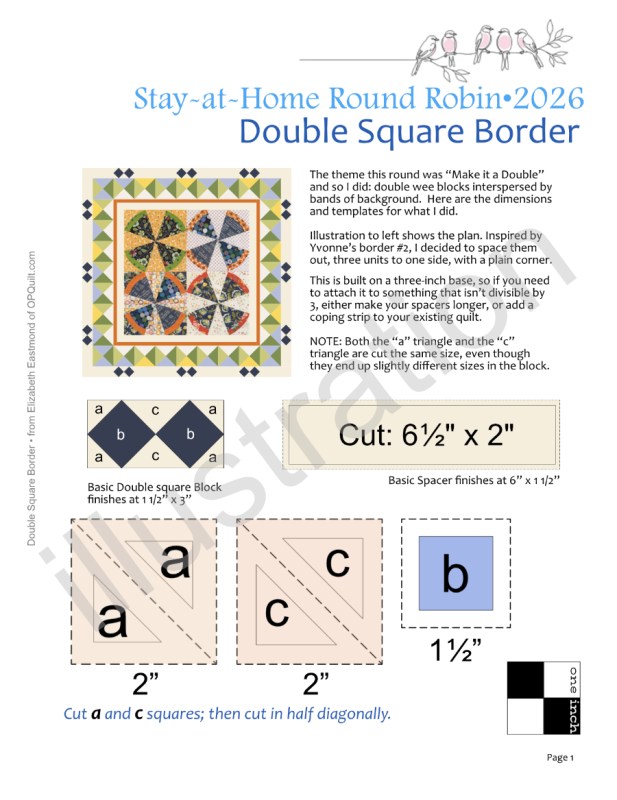
I was inspired by Yvonne’s border last week, with how she spaced out the hourglass blocks, and decided to try something similar. Just sort of simple: a double-block spaced out with low-volume strips. And then I made up a PDF Tip Sheet for you all. Underneath this illustration is a PDF file to download:
Click to download the PDF file. Note: the original post did not include the correct Tip Sheet with the trees. This one, that has the word “Two” at the end, does. Please download it again if you don’t have the complete handout.
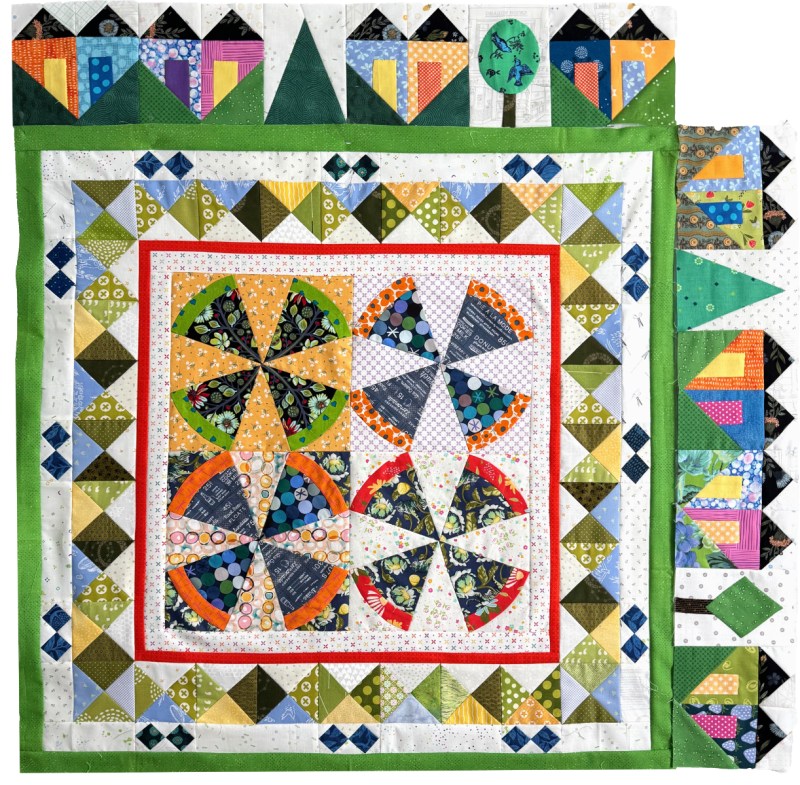
But, yeah. Not quite happy with stopping there, and I remember that Kathleen DID say to make it a double, so I went on to think about a second border — a doubling up on this round.
I worked up a little sketch in my Affinity Designer program (free, from Canva), kind of thinking about the idea of round robins and going around the neighborhood. I used to teach at a lot of Quilt Guilds in Southern California (where I live), from Before Covid Time and Through Covid, and taught this pattern to a lot of guilds:
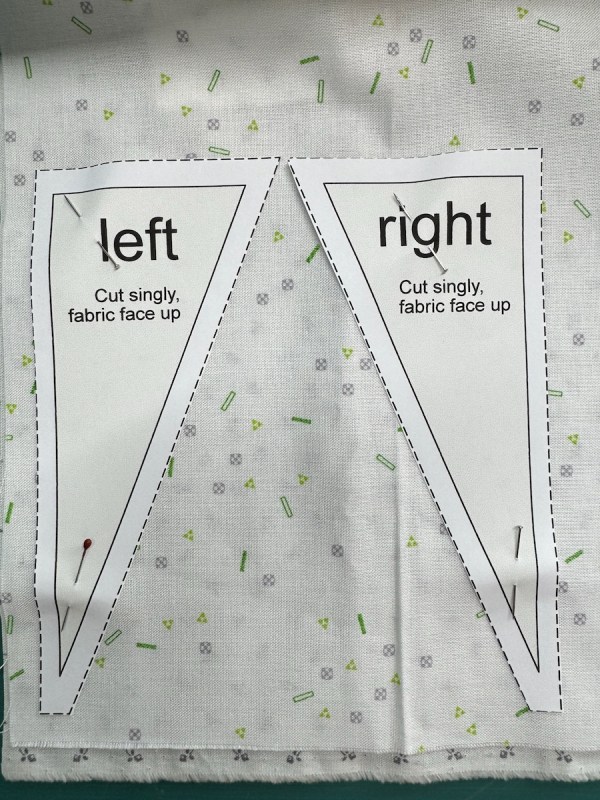
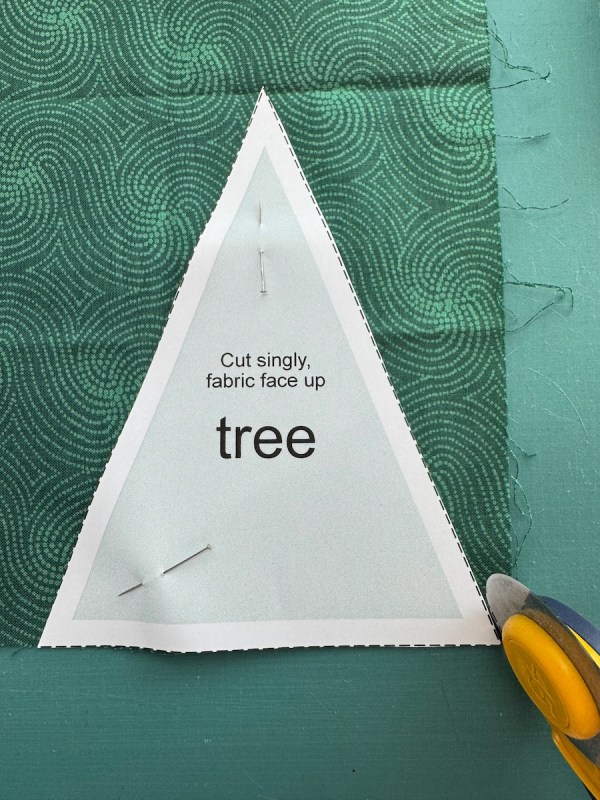
I pinned it up on my design wall, and kept it there while I worked on the houses. These are slightly bigger than what’s in my pattern (but the instructions are all in there, plus a version of Far Away Doors). But this version needed a tree, or four. So in the free tip sheet above, are instructions for some of the trees in this border, too.
I have a climbing tree, and a nesting tree, and a pine tree in the Tip Sheet.
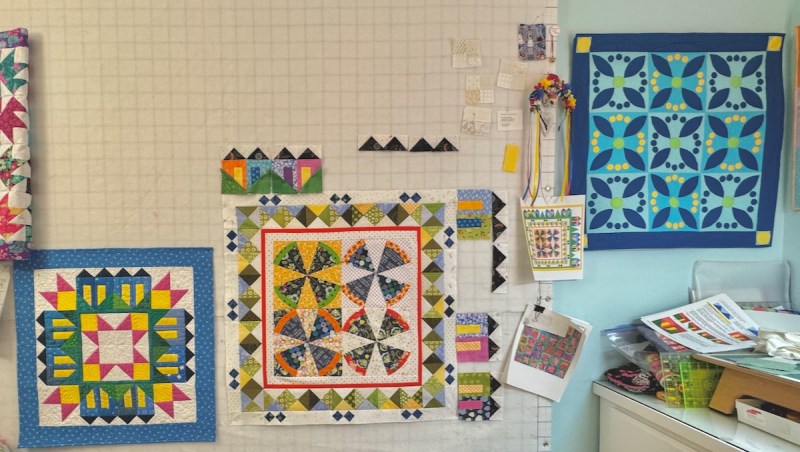
In process. Remember last week when my husband said it was wild, and I said it was going to get wilder? Yep.
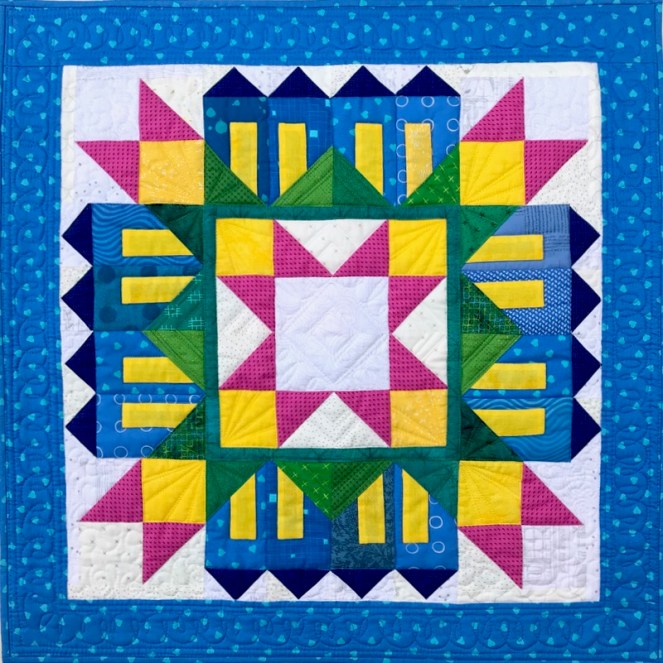
Here’s where I left it (approximate size: 38″ square). I will sew the neighborhood to the slender green border, but I’m missing something for that upper corner. I had an idea (see the sketch at the top of the post), but after a week of double-construction and double-double borders, I was ready to let it rest, and see what our prompt is for Week Three.
I was also thinking about neighbors and neighborhoods and was impressed with how carefully and quickly the Minnesotans came to stand by each other as they are going through these difficult times. And we were asked to take dinner to a friend whose husband grabbed the business end of a live 220-volt electrical wire; they are also going through difficult times. I’m trying to be a good neighbor where I live.
Lastly, l’m looking forward to reading all of your posts in the next couple of days. Can’t wait to see what you all are doing.
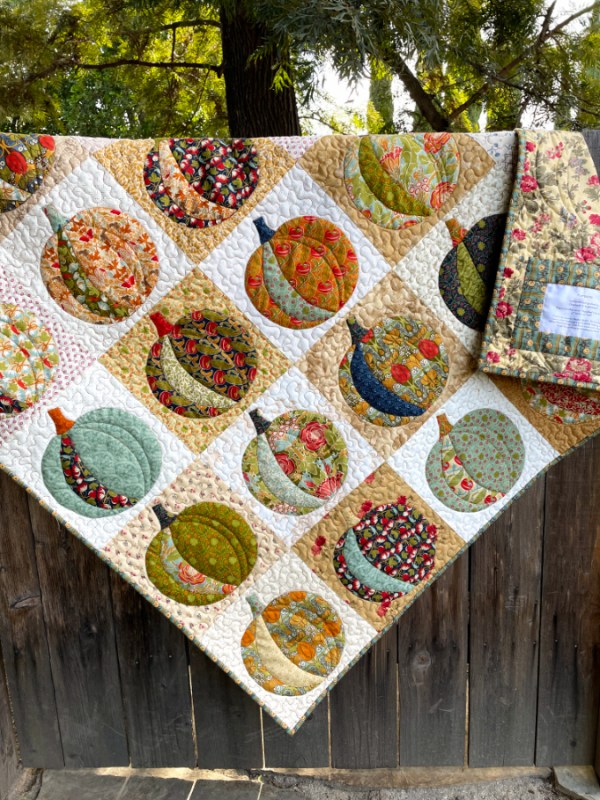
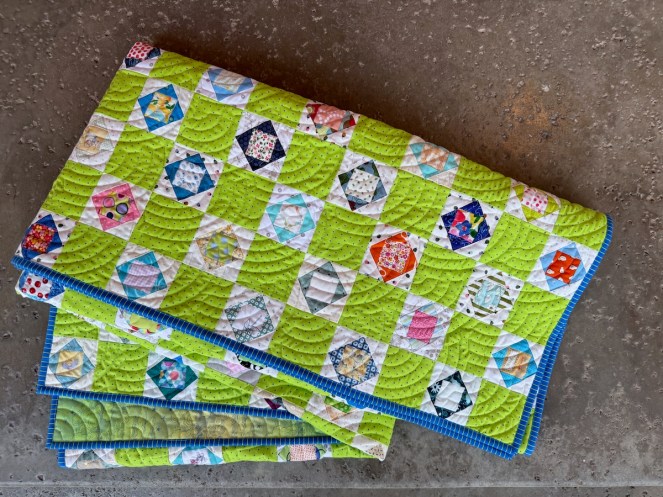
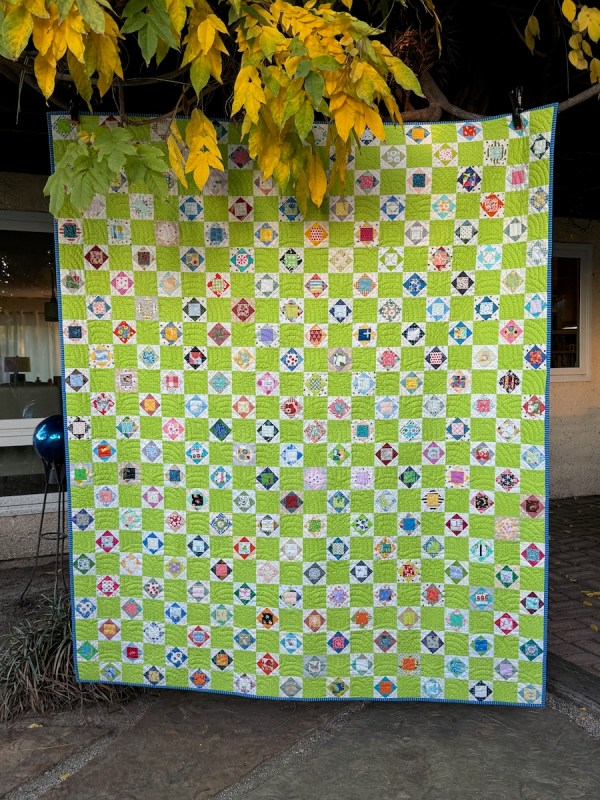
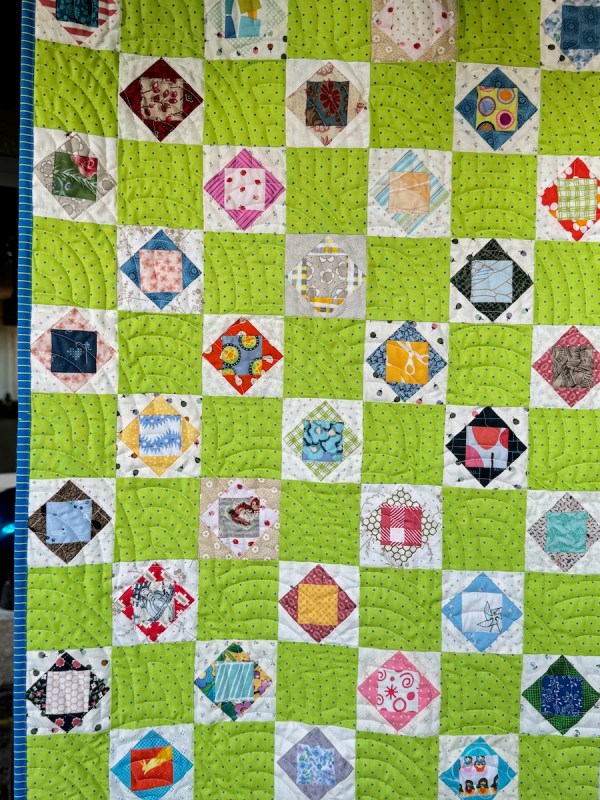
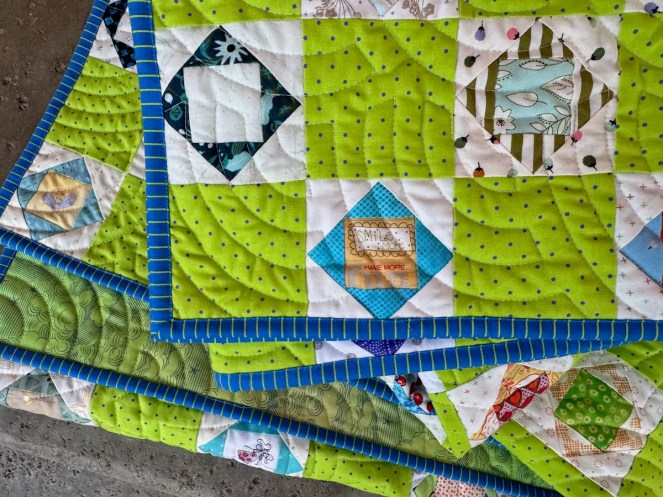
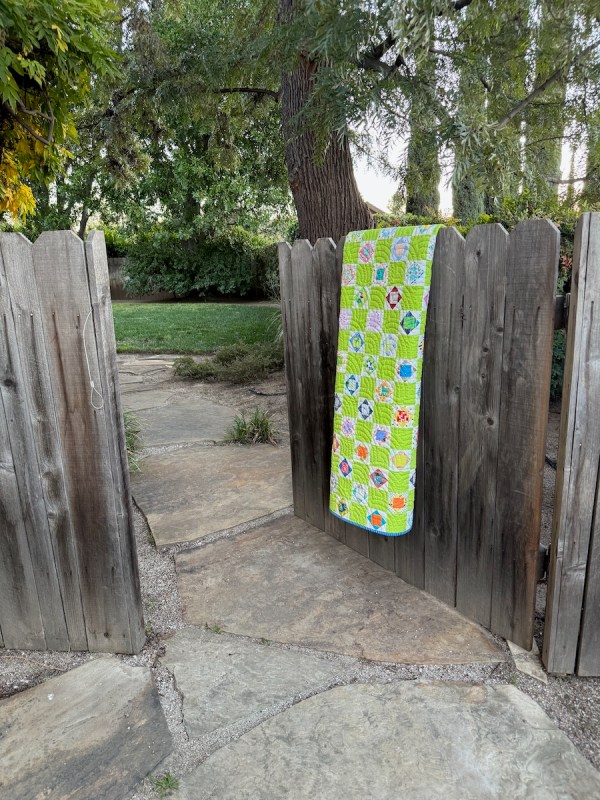
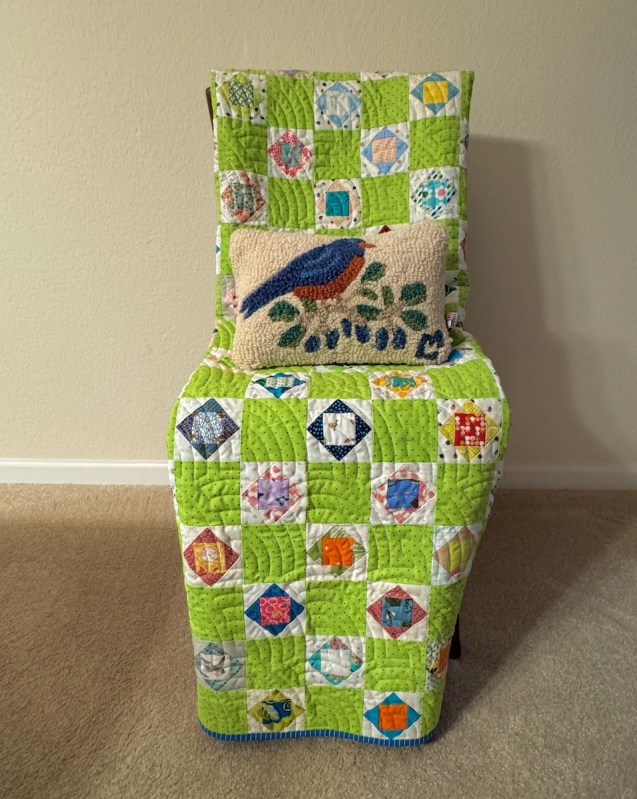
The etymology of the Economy Block is — as are many popular quilt blocks — complicated. According to Barbara Brackman’s Encyclopedia of Pieced Quilt Patterns, it’s titled Economy Patch by Carrie Hall and Rose Kretsinger around 1935. It’s also called the This and That block, in the Kansas City Star around 1944 (you know this is a favorite phrase). And more recently, it’s been known as the Thrift Block as when Taryn of ReproQuiltLover hosted the recent #scrappymeetsthriftchallenge. I have mentioned before that this year I had been making things that helped me make things: quilt-a-longs, Block of the Month, group projects, and so forth. And so this one joined the line-up, and I finished it this week.
I needed a title for this quilt, and since in early 2020 I had taught it to a small beginning quilt group as the Economy Block, so I went with that name (although many now call it Square in a Square).
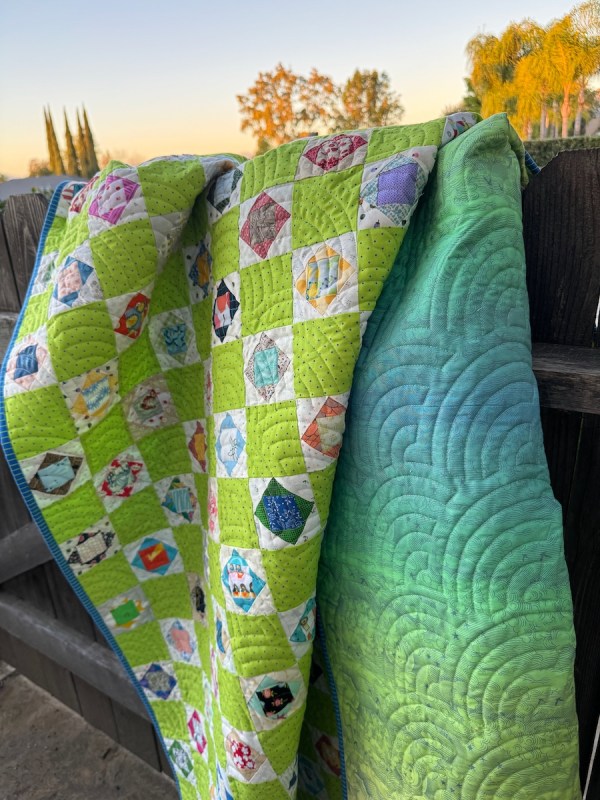
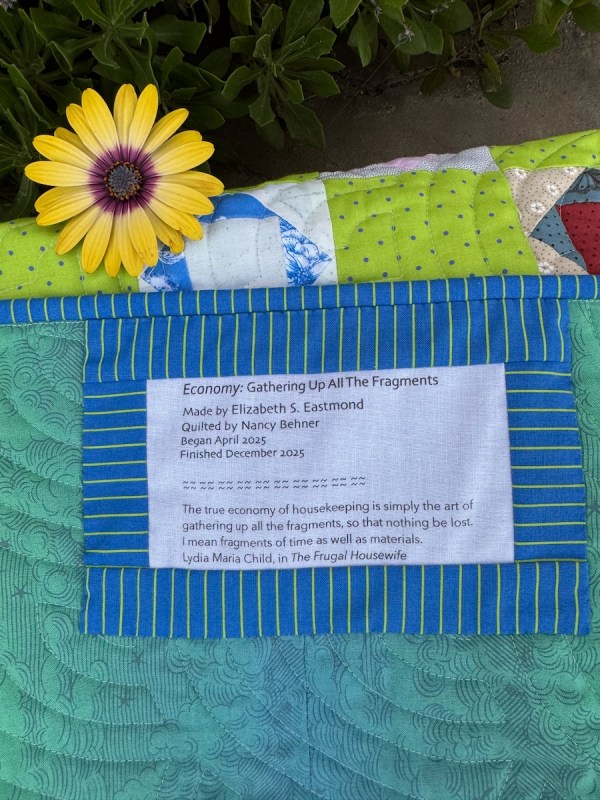
Full quilt title: Economy: Gathering Up All The Fragments.
Economy, as we think about it, means thrift. Saving. Making do with less. The exchange of goods. A dollar is worth something and everything is for sale (as the old saying goes). But the idea of economy, says one wag, is really an enigmata**:
Enigmata refers to things that are puzzling, mysterious, or riddles
OR, a puzzling or inexplicable occurrence or situation
OR, a person of puzzling or contradictory character.
OR, a saying, picture, etc., containing a hidden meaning; riddle.
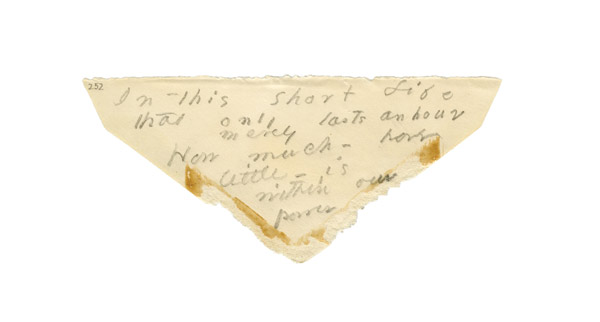
The title of this quilt comes from yet another riddle: the poet Emily Dickinson’s punctuation and shape of her small poems. Some think it began with this:
“‘Preserve the backs of old letters to write upon,’” wrote Lydia Maria Child in The Frugal Housewife, a book Dickinson’s father obtained for her mother when Emily was born. It opens: “‘The true economy of housekeeping is simply the art of gathering up all the fragments, so that nothing be lost. I mean fragments of time as well as materials.’” (from a review by Jen Bervin, titled Studies in Scale).
On one of her envelopes, Dickinson wrote: “Excuse | Emily and | her Atoms | The North | Star is | of small | fabric | but it | implies | much | presides | yet” (fragment A 636 /636a).
Like a star is small…but it is its own world. Or an atom is small… but contains worlds. Or fragments of fabrics are small…but put them together and they make a quilt.
In pulling fragments for this quilt, I opened bag after bag of small scraps from a decade ago, cut into 2 1/2″ squares or 3″ squares, as it had been recommended to me to do that in order to “use up your scraps.” Finally, I was using them up, so this quilt is as much a record of an era, as it is a complication of “gathering up all the fragments.”
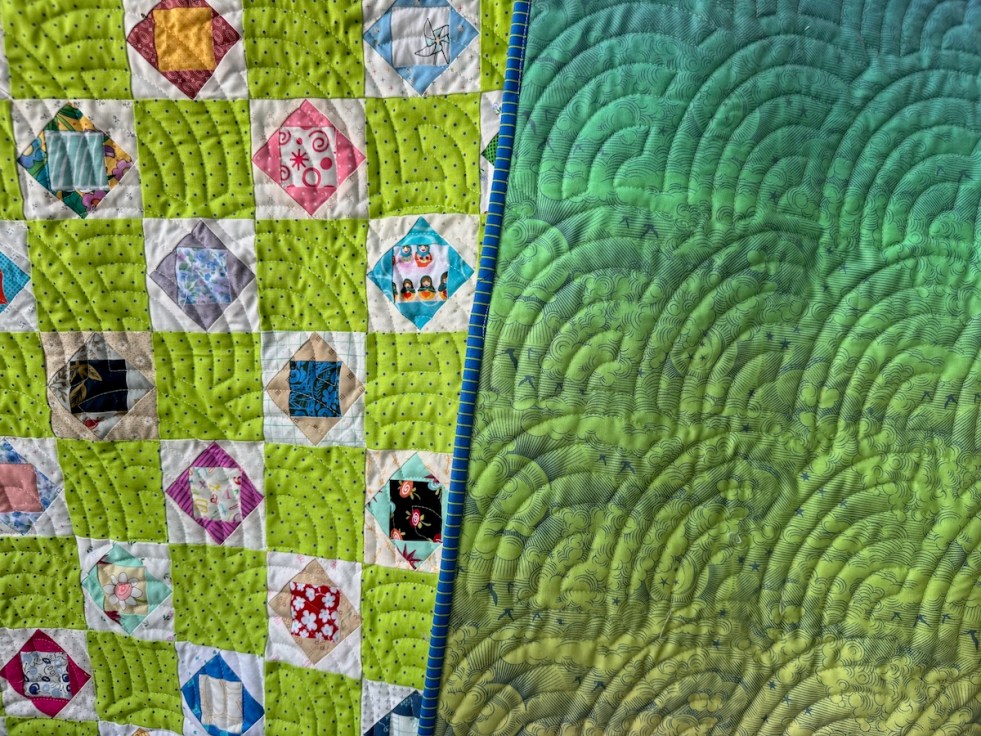
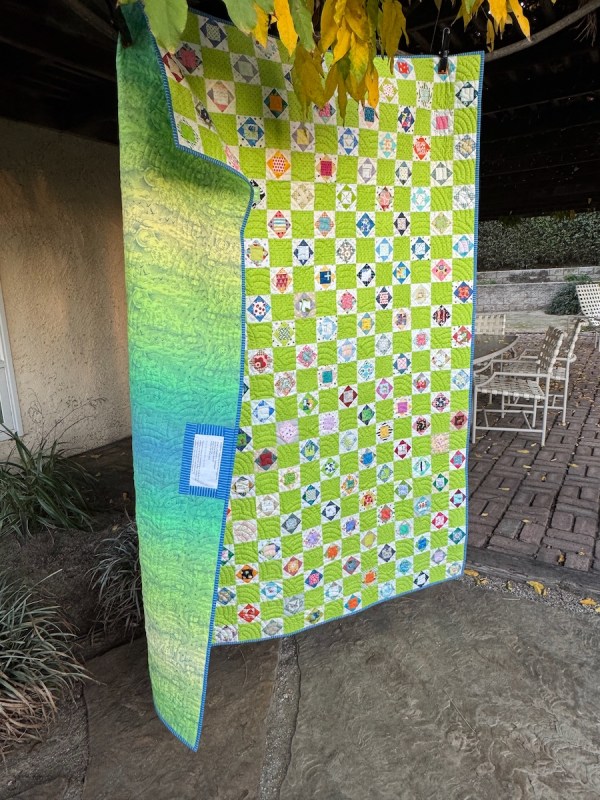
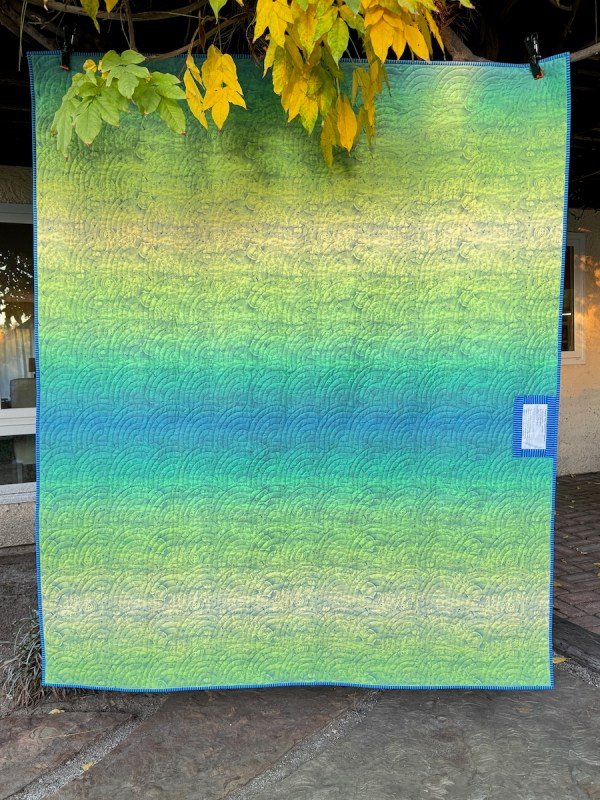
Backing/binding is fabric from Tula Pink, and the quilting is the Continuous Baptist Fan, by Urban Elementz.
Quilt-making is an enigmata, isn’t it? We take our scraps, our fragments, cut them smaller, sew them back together to make something that expresses an idea or a sentiment. And we quilters do it over and over, saving scraps, repeating the process “so that nothing be lost.”
This is Quilt #312, and the last for 2025, as there are no more fragments of time to add to the calendar. I will, however, try to get up another post or two of the beautiful Carrefour quilts, but no promises.
I do promise, however, to make merry the rest of the month and be of good cheer!
Other Posts about this quilt and its process
The Economy Block was in the series First Monday Sew-days, which has morphed to the title Beginning Quilters. There are a raft of free handouts here.
A Life Full of Yes (which includes the free pattern for this quilt block)
NOTE: I put the quilt label on the side, as it doesn’t matter which is the top or which is the bottom. It’s really a great size for naps: 60″ x 72.” I use BlockBase+, which is basically Brackman’s book, but in digital form. I also have her book in paper form, too. I’ve been thinking a lot about my quilt tools, such as the software and book, so will try to note them here on the blog as they’ve been used.
**Apologies to Honkai: Star Rail fans, who see Enigmata as something a bit different. And there is more on Enigmata writings by ancient figures, if you are curious.