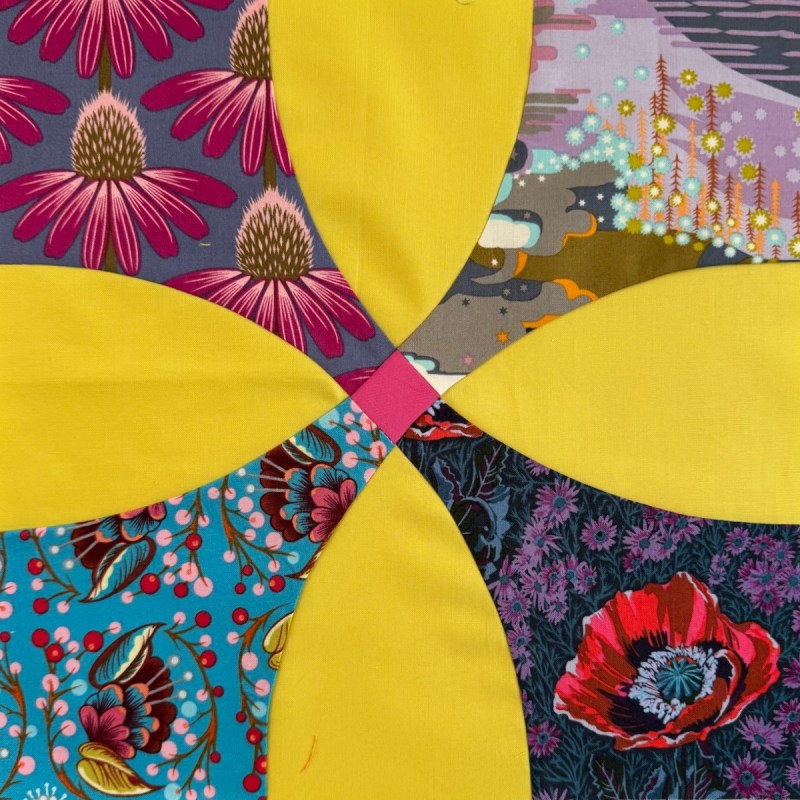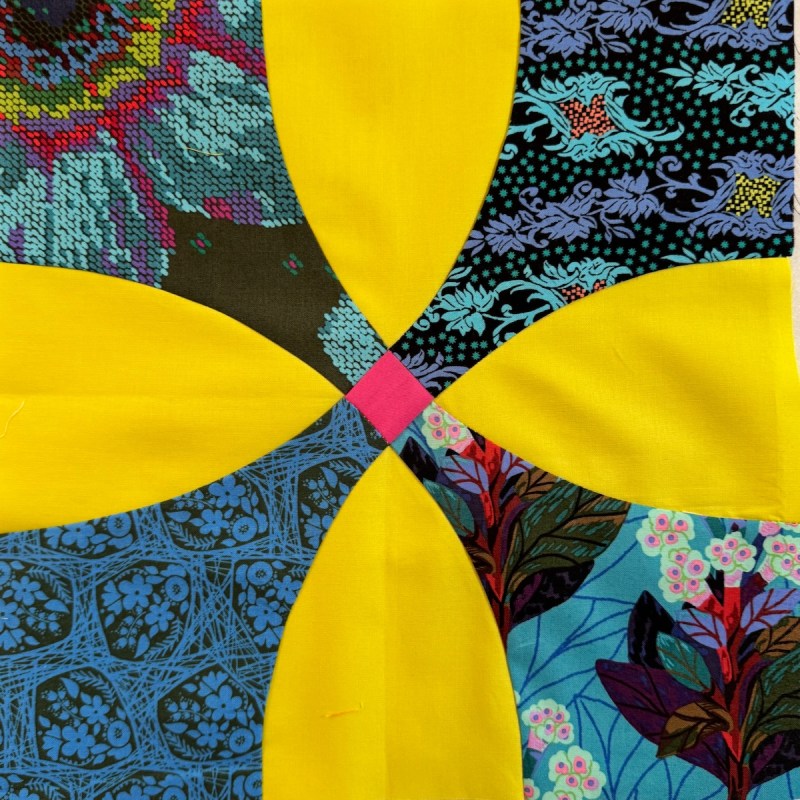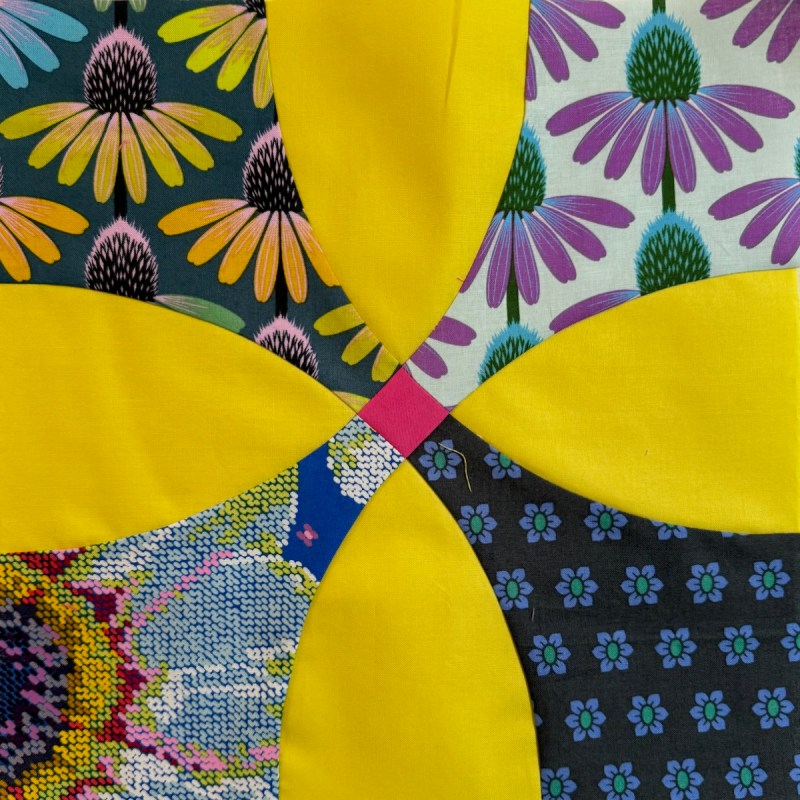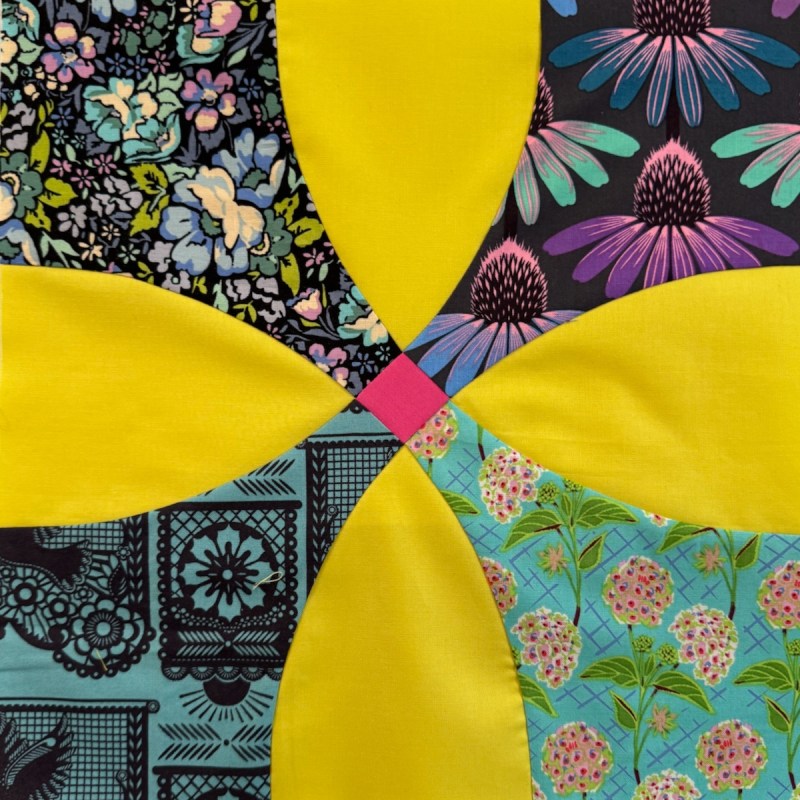
300 and Beyond · Free Download · Free Quilt Pattern · PatternLite · Quilts
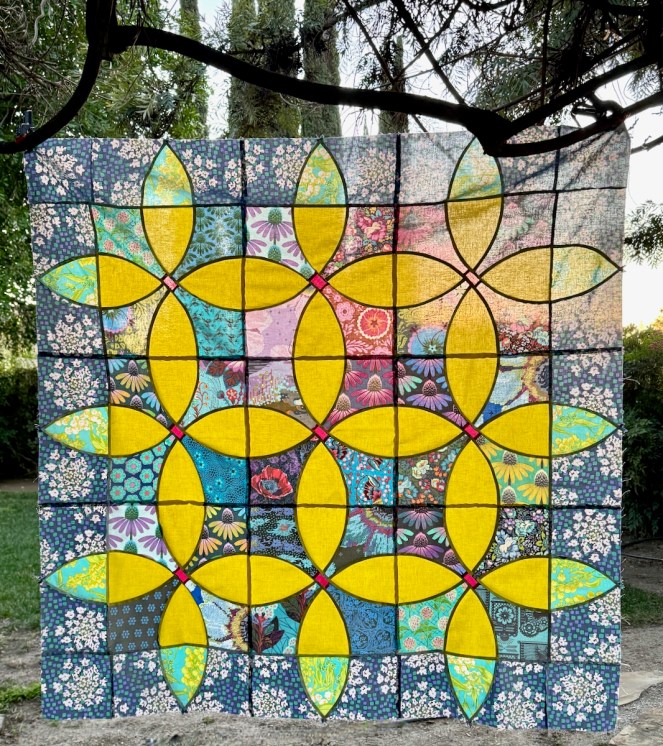
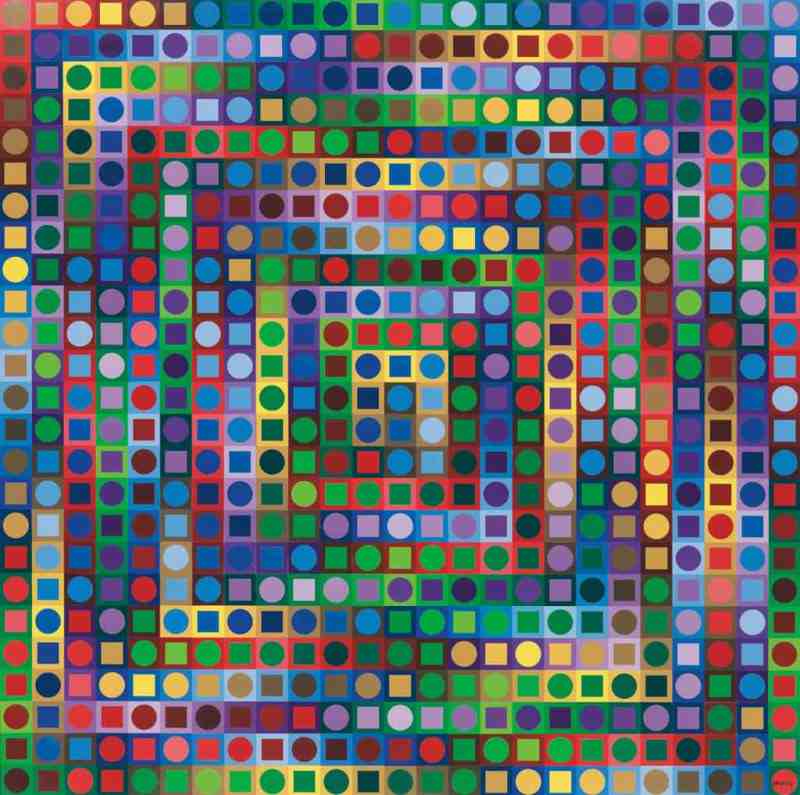
Did Vasarely get there first?

Maybe. Maybe Victor Vasarely got there first in the art world, but I’m guessing the origin of circles on squares, or even squircles on squares, may have come from all the mending the first woman did on her children’s clothes. Just a hunch. I really have no way of knowing this, but when my friend Dot mentioned the artist Vasarely as being reminiscent of our #backtosquircles project, I believe she was on to something. Have fun looking at his art.

My Tips and Tricks

Caveat: If you would rather fold laundry or scrub out the bathroom than do hand appliqué, I have a post on how to do nearly invisible appliqué on machine, using monofilament thread. It’s quick! It’s easy!

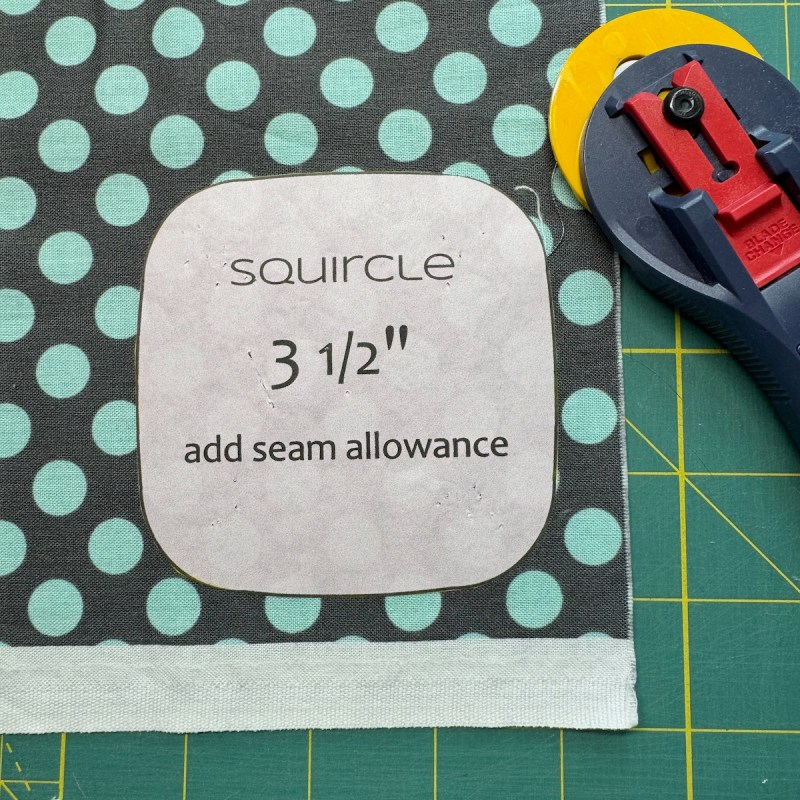
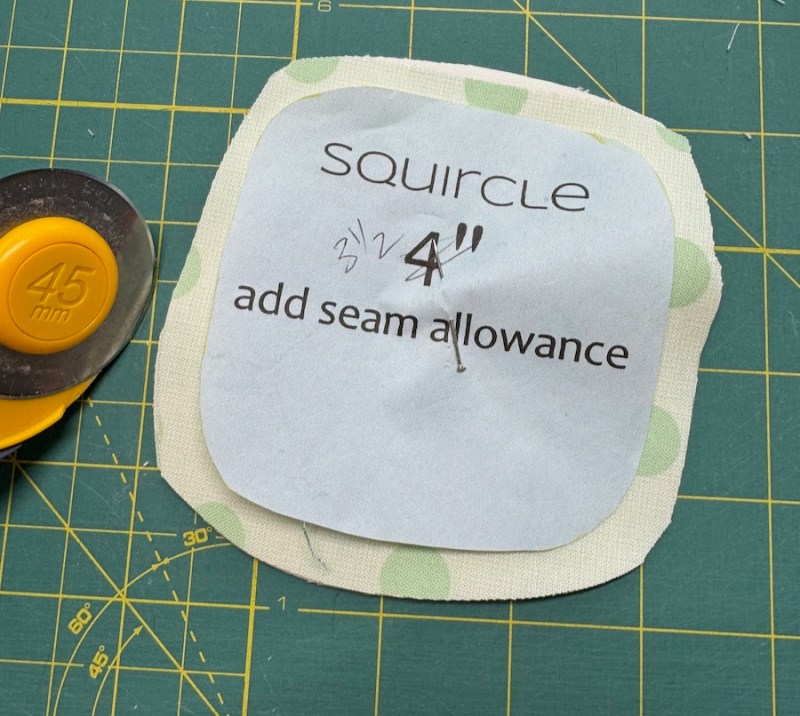
To cut out the shape: I would often iron on my freezer paper version of the pattern (I just printed it directly from the pattern). Other times I would just use a pin. Always I used my rotary cutter to slice around the fabric, and usually I was working with four layers of one polkadot fabric. (I learned in this project how many many many polkadot fabrics I have.)

In my past appliqué lives I have always cut out a bunch of the shapes out of freezer paper and pressed the fabric onto that. I would place shiny side up, and nudge the edges onto the shiny stuff and they would generally stick. When it was cool, I would take the pattern out and use it again.

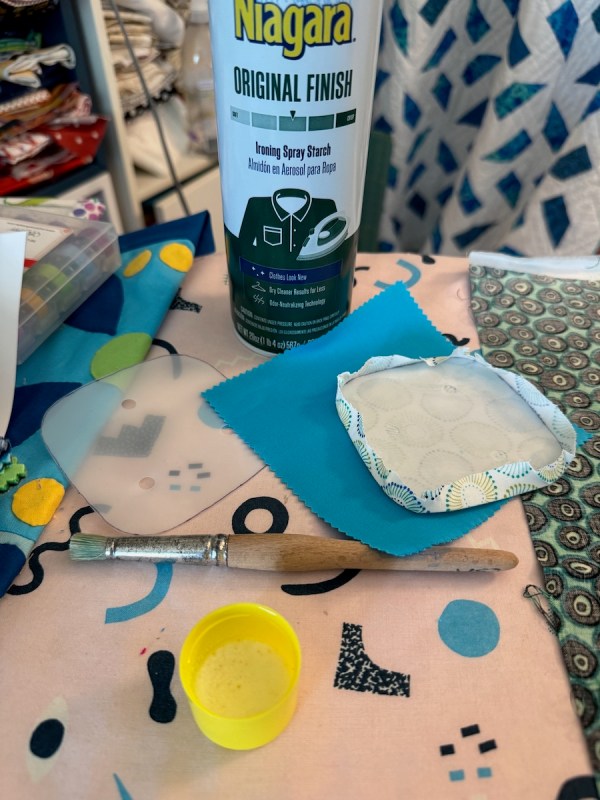
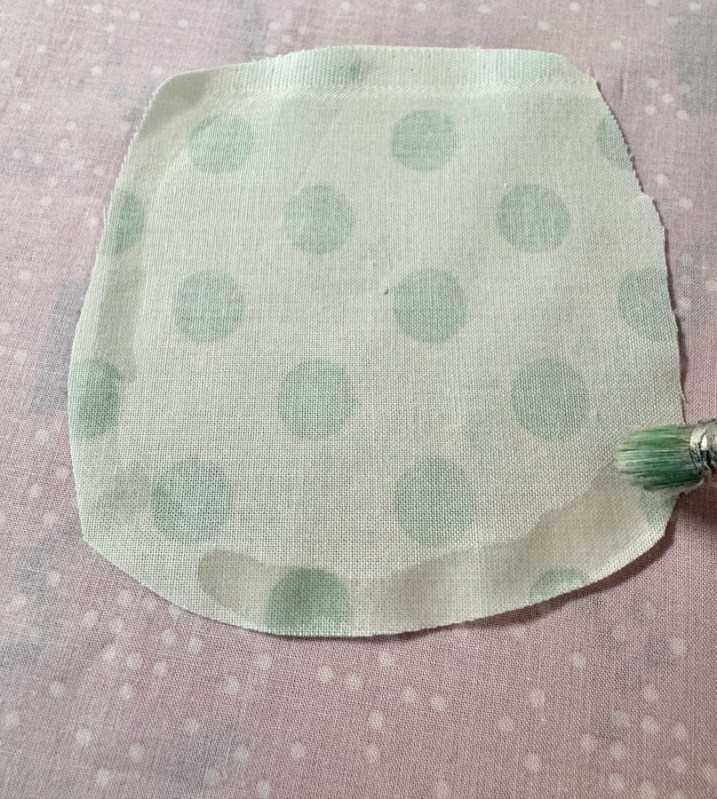
This time I tried Old School Methods: spray some spray starch into the lid, and using a small brush, stroke it around.

Like this.

You can just see where it’s damp from the starch. Don’t use too much. I always lay down a piece of cloth on my ironing board to catch the dribbles.

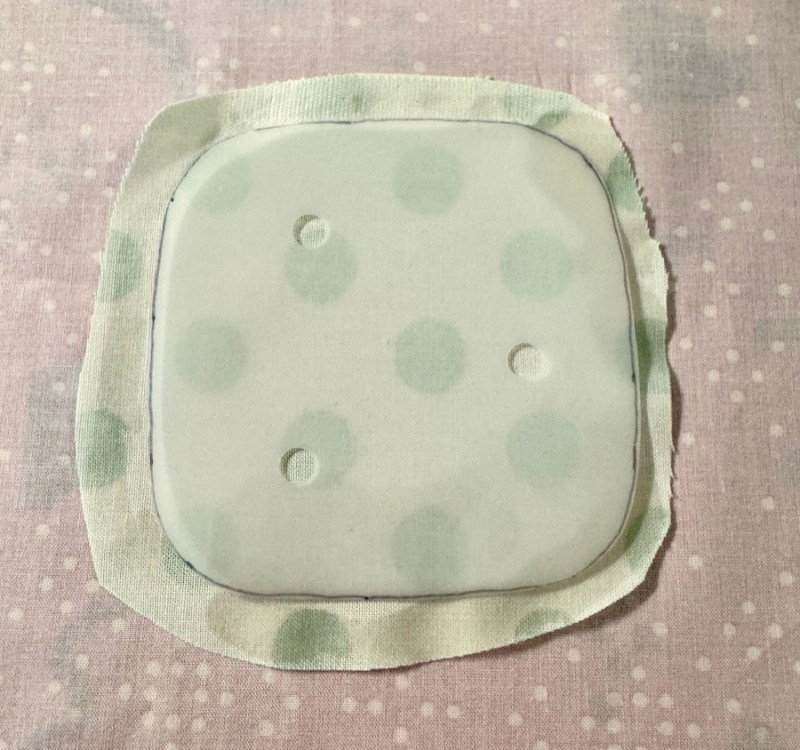
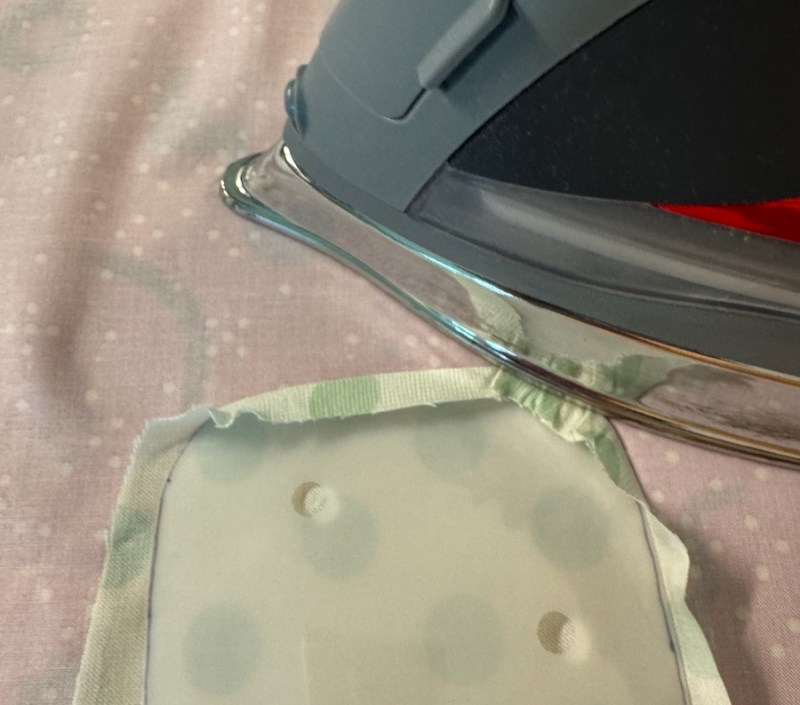
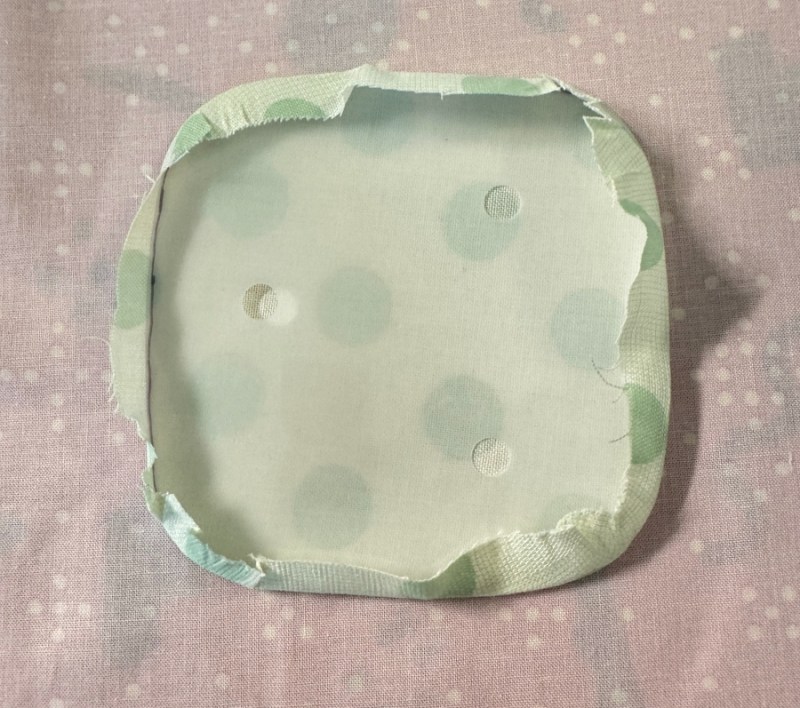
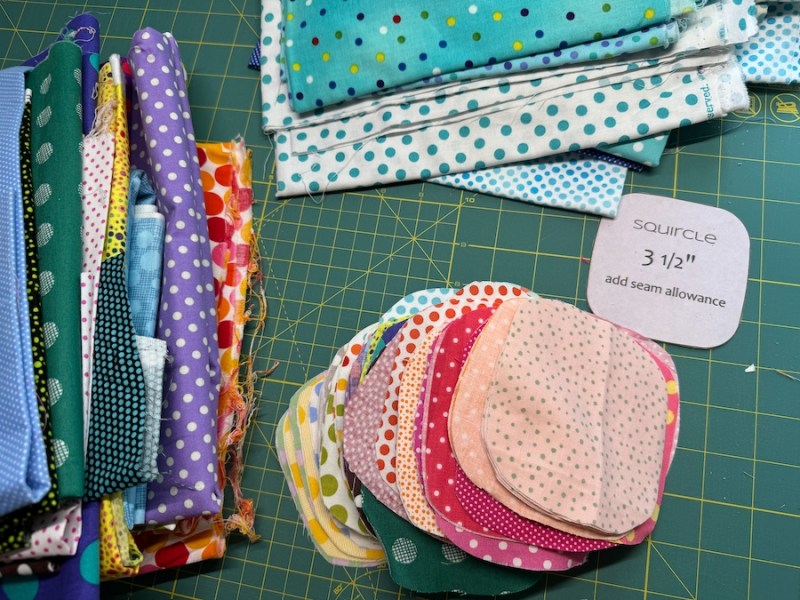
Place a template (here I used mylar and punched holes in it — more on that later), pressing the corners and sides up over the template. The starch should dry and hold it in place. Let it cool, then remove the template. Duh.

I finger press some marks at the centers.

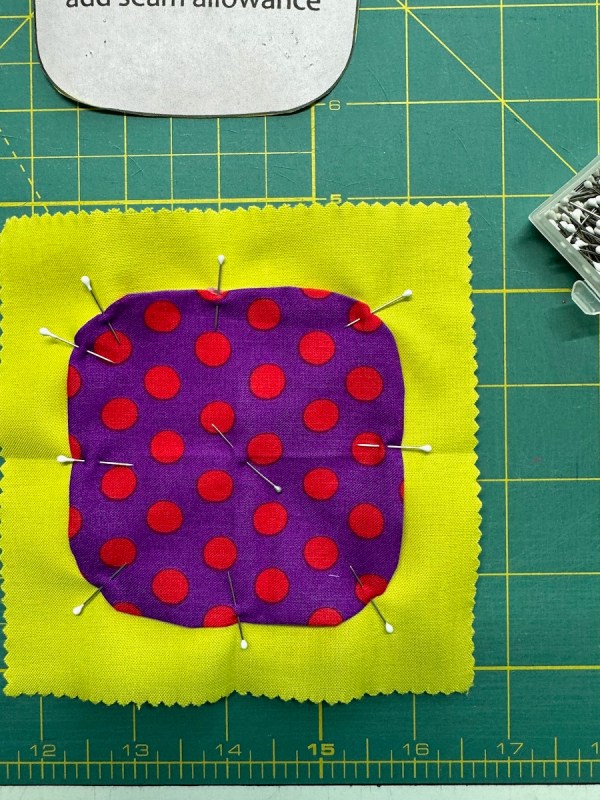
Then I arrange the cooled, pressed squircle by eye and pin it down. Sorry if this is repetitive for you experts — feel free to leave a comment if you have more tips; this is always helpful!

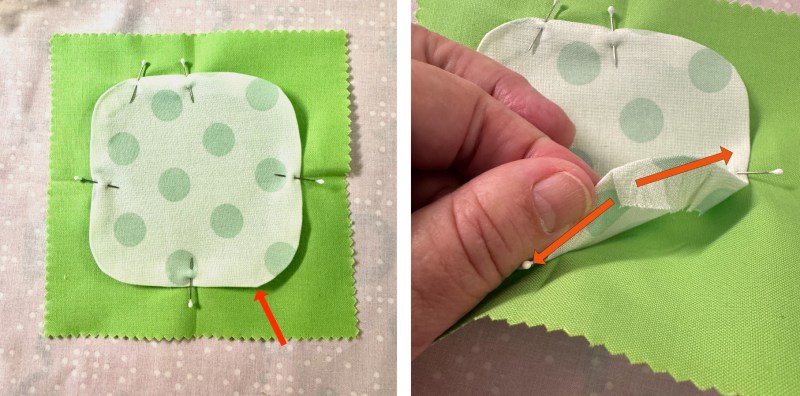
Sometimes you’ll get a little bump out. That just means underneath the seam allowance has its knickers in a twist. As you stitch along to this spot, with your needle, sweep the seam allowance away from the bump (in the directions of the arrows) and it should ease up and smooth out.

Sometimes I just put four pins.

Other times that squircle isn’t going anywhere.

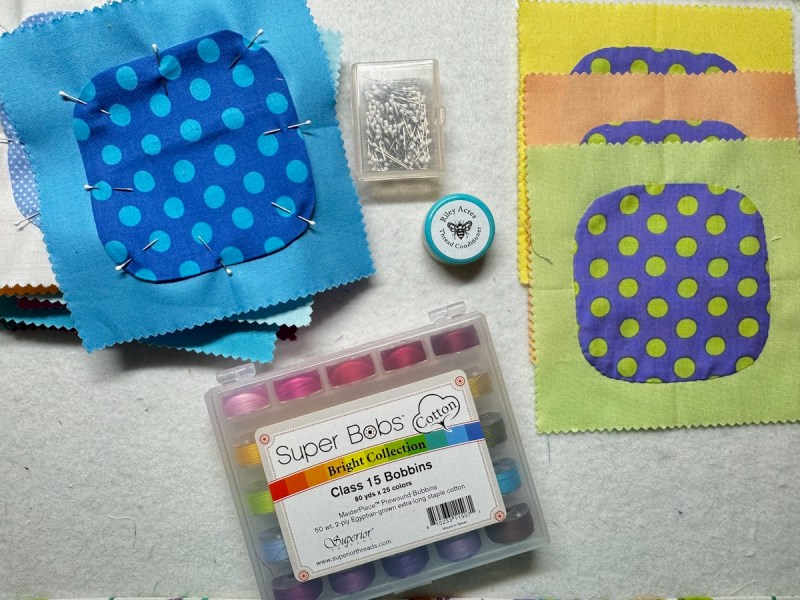
I use the Thread Conditioner from Riley Acres, and I like the Super Bobs Bright Thread Collection. Rachel uses her own bees’ beeswax to make the conditioner, and I like how it feels, and it never gets hard.

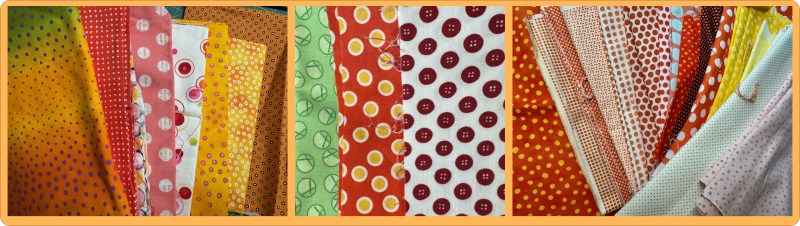
I’ve sort of started evaluating my polkadots for this project. The ones on the left are rejects. The ones in the middle I was thinking about, but in the end, I only used the ones on the right: regularish-shaped dots, with not too much else going on.

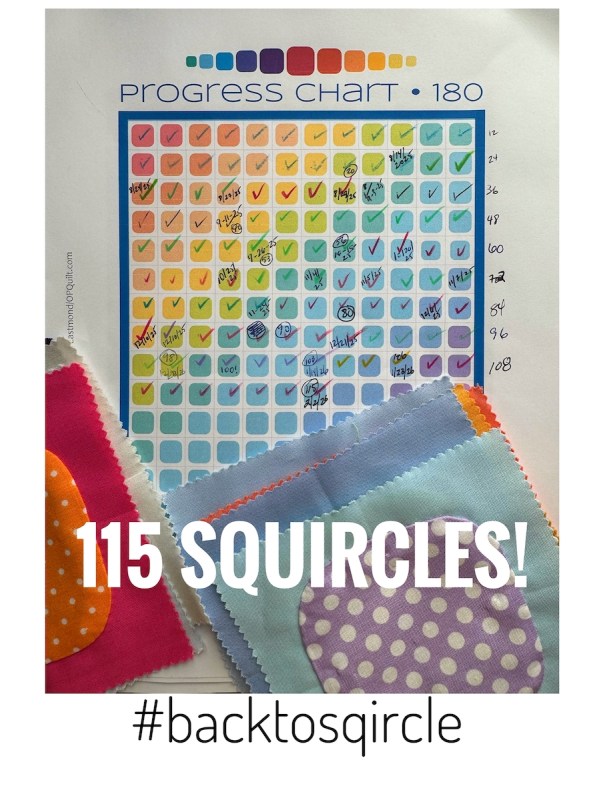
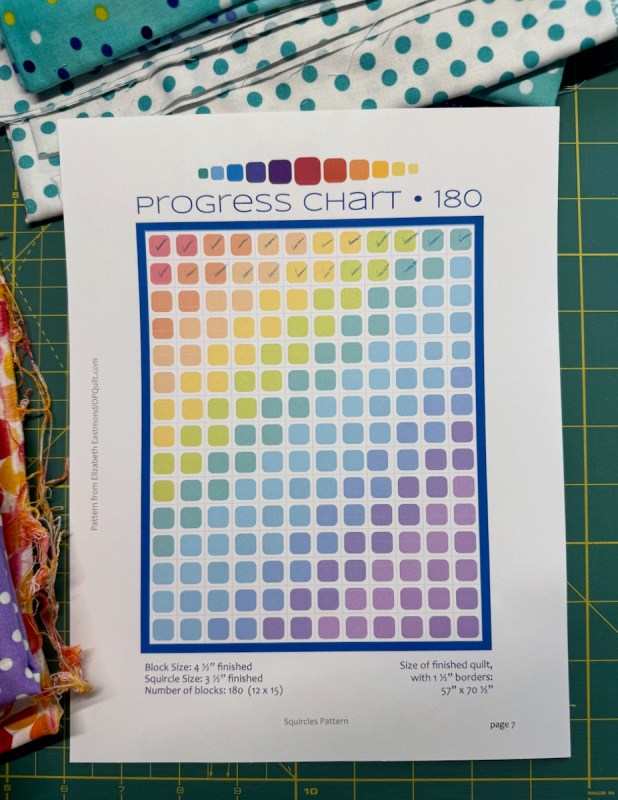
Twenty-two done. I’m ahead of schedule, happily.

I made you a chart to keep track of our squircles. I added it to the pattern, and tweaked the pattern a bit, if you want to download it again:

Okay, that’s it for my squircle tips and tricks.

The mylar sheets can be found on the Great Store in the Sky, and I just slipped the pattern underneath and traced it off with a fine Sharpie marker. The Mylar cut easily with scissors. I punch holes in my Mylar so the steam doesn’t build up and warp the template. Although with the starch, I didn’t use steam this go round.

This little project will sink into the background for a while, so I promise, no more squircles posts for a while. But the pattern (free!) and the tips and tricks will stay here on the website for your use.

keyword search term on this site: squircles
hashtag on Instagram: #backtosquircles

I could listen to Rose talk about her job in the hardware store every day.

300 and Beyond · Free Download · Patterns by Elizabeth of OPQuilt · Quilts

Squircles

You knew this was coming, right? After you saw that last post about squircles, I’ll bet you knew I’d go hunting and fall down a rabbit hole. You are very perceptive.

This is a squircle grapefruit from designer Tai Tan. I found it on Dribble, which is also a website I didn’t know about before.

A squircle is not a rounded square, apparently. There is some design technique that can explain it, and it has to do with the flat edges. In a rounded square there are flat edges. In a squircle, they may LOOK flat, but they are every-so-slightly rounded (from here).
John Uttley also has a nice grid of squircles to admire, and here’s more to see if you want.

Lisa, my quilty friend in the previous post, was as happy as I was with these quilts, so we thought we cook up a project. It went like this:
1st idea: make blocks and swap
2nd idea: swap backgrounds but still do your own appliqué
3rd idea: set up a challenge to do *so many* each month, and check in with each other.

Third time’s the charm. We’re doing a Squircle Challenge. So I went looking and besides the designers, I found some quilters:

Marla Varner’s blog, Penny Lane, feels like the OG.

I did an image search and was able to source this image to Zippy Quilts, my friend Mary’s blog. This quilt alternated squares on squares, and squircles on squares. It was made by Carolyn Brown.

This is from the Instagram feed of laurispringer.

Last quilt I found was from Amanda Jean Nyberg’s website, and she calls it “dot your i’s quilt.” This is different because of the low-value backgrounds.

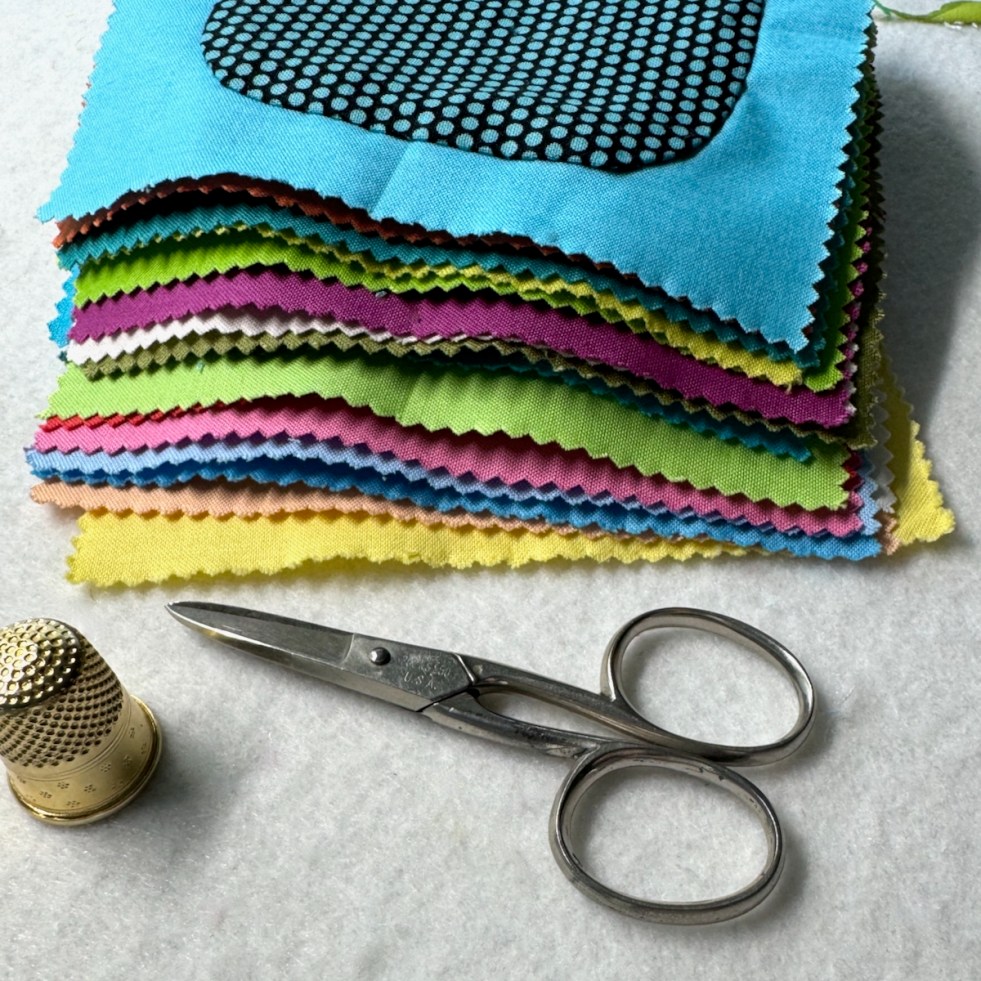
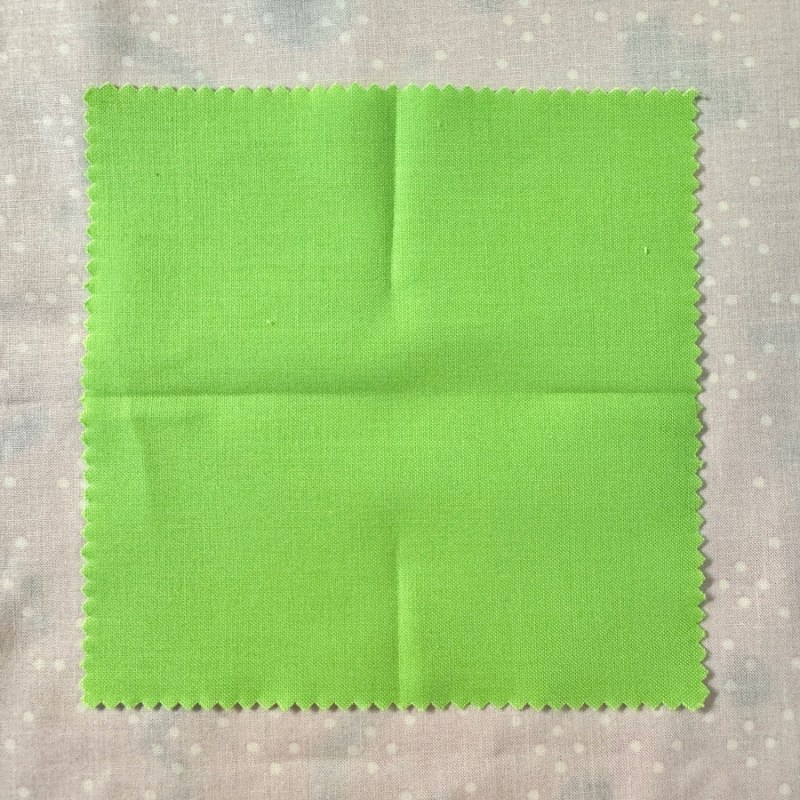
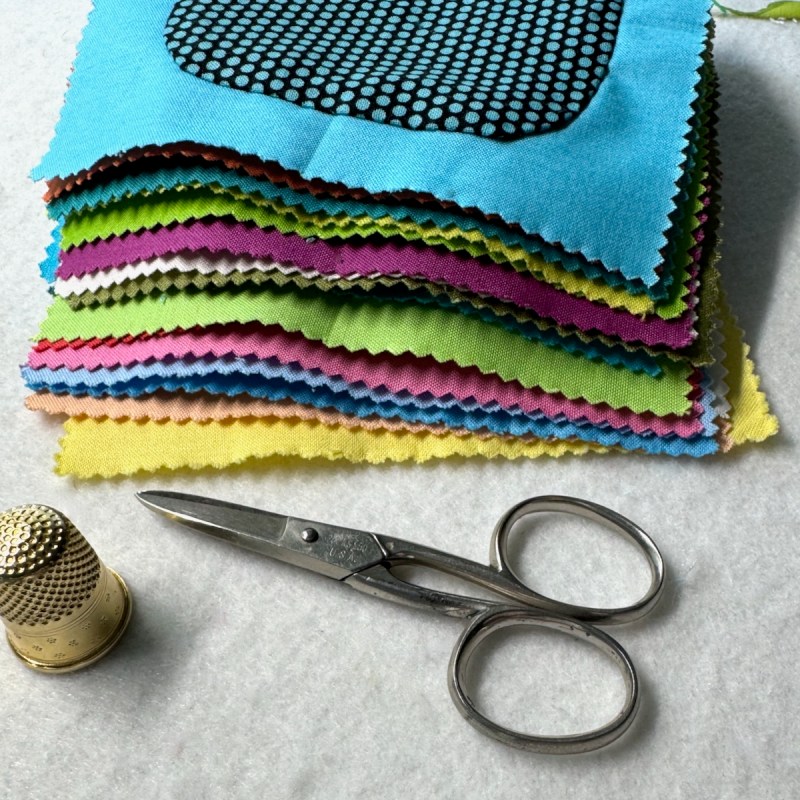
So here’s the story. I started the PatternLite with using a 5″ block (5 1/2″ with seam allowance) and that’s the first one in the pattern. But then in my stash box, way in the back of the closet, I found a stack of Charm Squares in Painter’s Palette Solids, my favorite brand. The 4″ squircle just looked too crowded.

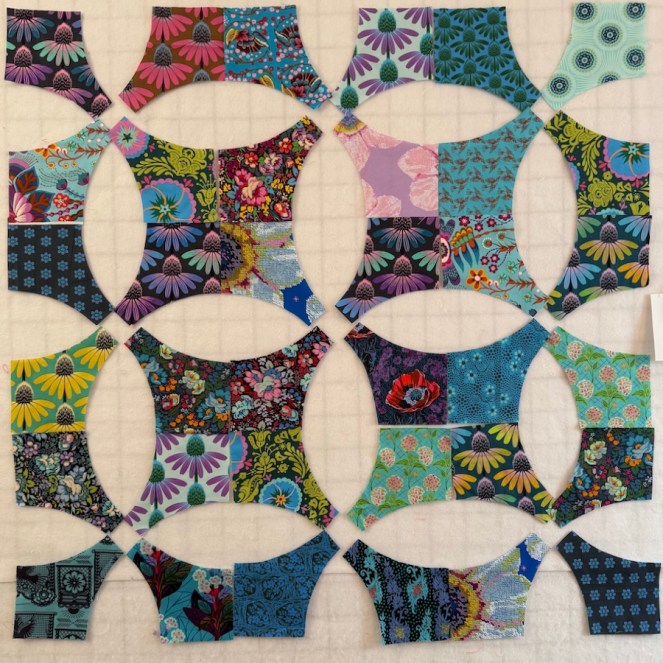
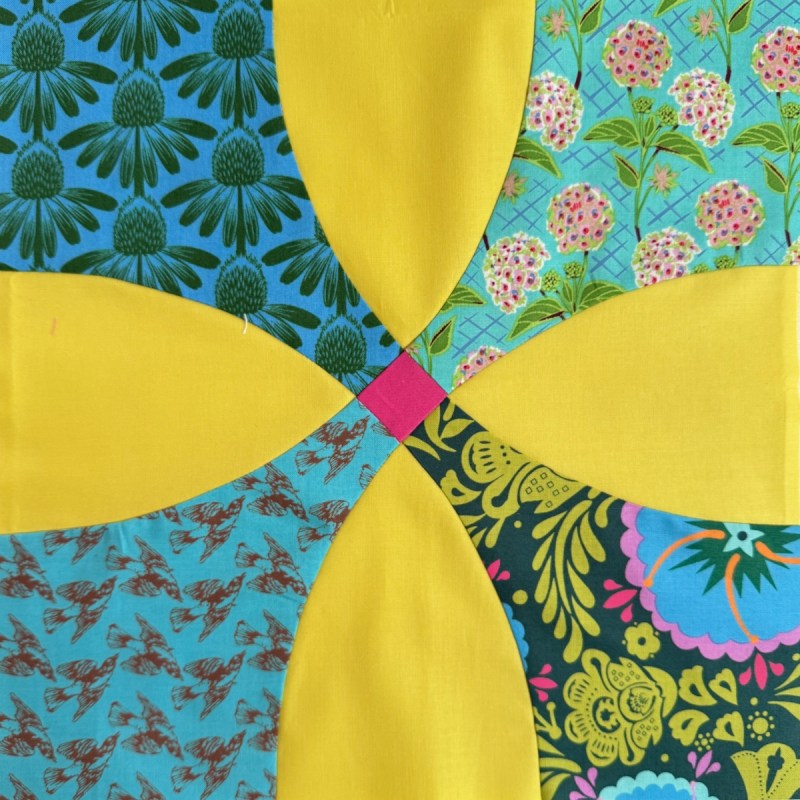
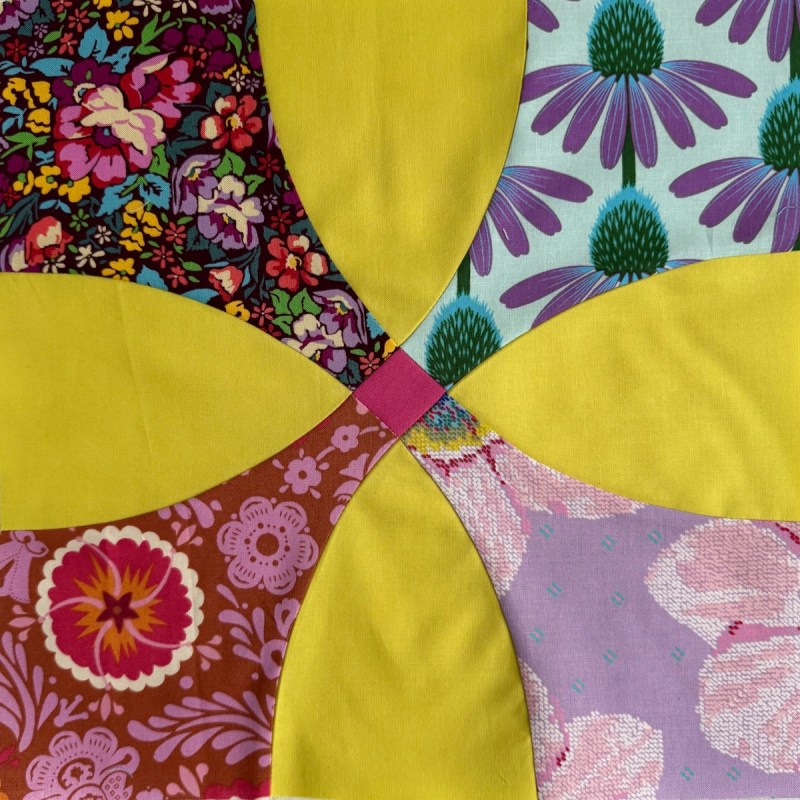
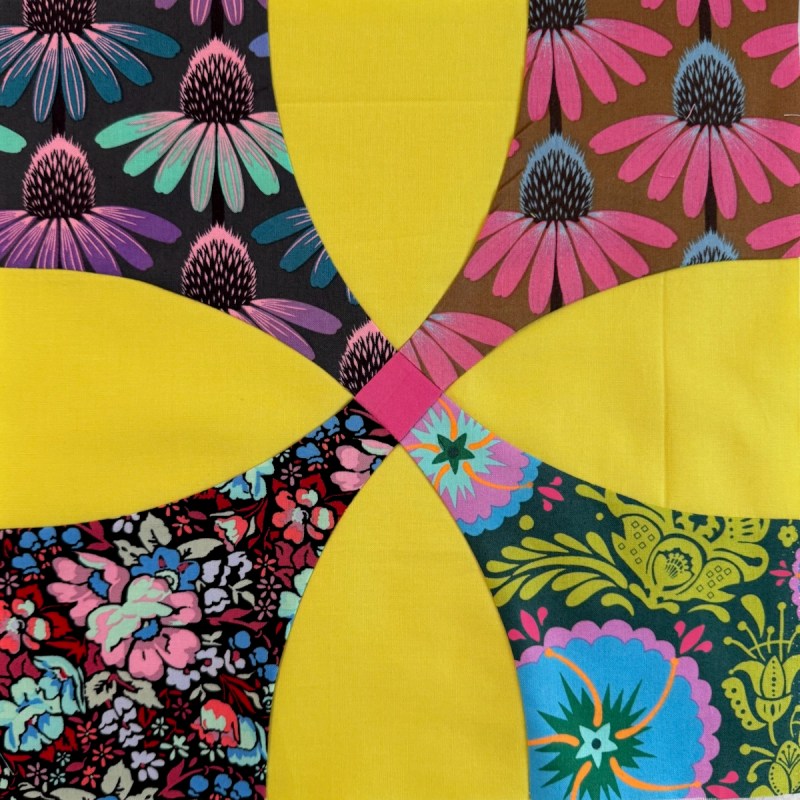
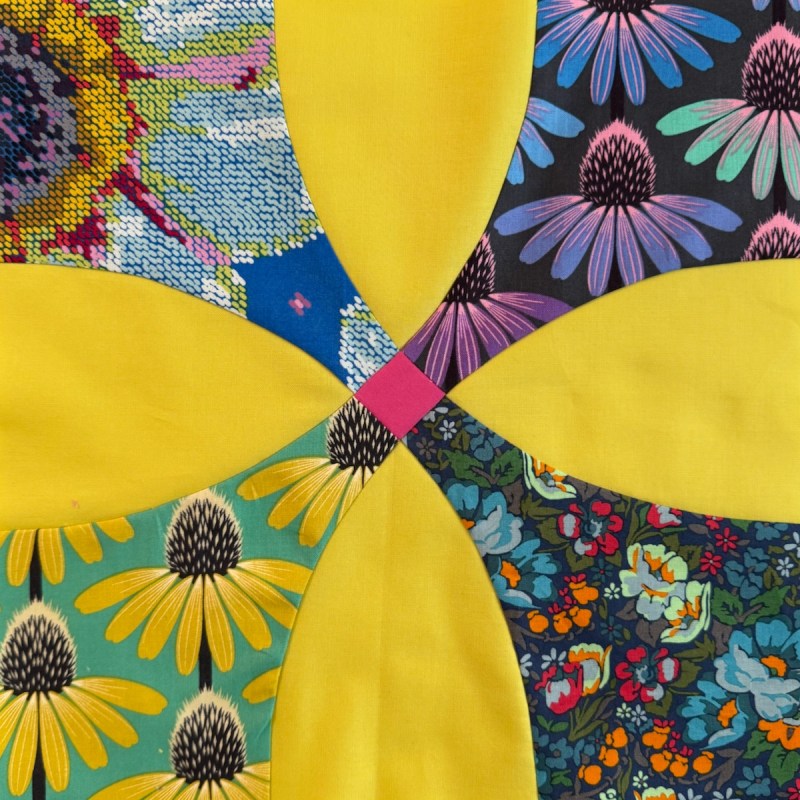
So I redrew the squircle, to be more squircle-y, with slightly rounded sides. Then I resized it to fit — making it a 3 1/2″ (finished) size. That seemed to fit the backgrounds much better. So you have two sizes and two shapes in the free pattern.

I spotted my purple/lime green polka dot fabric at the top of this photo of Machelle Preston’s quilt, in the current Springville Quilt Show (see previous post).

I have been hoarding collecting polka dots for years now. This is why: Come A-Round, from earlier in my making (Quilt #90).

However…I noticed that I seem to have plenty more dotty fabrics, so why not use them again, borrowing Machelle’s idea?

So here are the first three, courtesy of one of those sleepless nights that come along once in a while (if you haven’t seen Melanie, you are missing out). Now I just have about 177 more to go, but don’t worry, in the pattern there are two sizes (the 5-inch requires fewer blocks), and a helpful chart so you don’t panic. Just tote this project around to doctor’s offices, pick it up while watching TV, or while you are hiding from your family in a quiet room.

Because we dreamed this collaboration up in August, and everyone’s going back to school, that’s our theme. Our hashtag is #backtosquircle, a play on Back To School. We have an easy schedule, for who needs more pressure in their lives? The drill:

  • choose your block size/quilt size
  • make a bunch
  • every 20 blocks made, post it up on Instagram with our hashtag #backtosquircle (if you use that social)
  • take it slowly!

Here’s your free 5-page Squircles handout. It has the templates for the 5″ blocks, for a 4″ block and some basic directions.

You know the usual: send your friends over here to download it, rather than making copies for them.

CLICK ON DOWNLOAD BUTTON, below.

Happy Squircling!

(This is the squircle-ish font I could find.)

Bibliography


Clothing · Free Download

The Dress Does not Make the Quilter

Well, actually Rabelais said “The dress does not make the monk,” but since I’m not a monk like Rabelais — although I do sit monk-like day after day at the sewing machine — I prefer my variation for the title of this post.

There comes a day when an occasion arrives and even though Thoreau cautioned us to “Beware of all enterprises that require new clothes,” it was time for a new dress for a granddaughter’s wedding, even though I’m aware that I’ll be mostly on the sidelines as this newer generation Does Things Differently so I need to get with it and adjust. But still, maybe it’s that I wanted a new dress? And that my sister had been making a lot of outfits from Merchant and Mills patterns and I Wanted In On The Fun.

The Beautiful Bride, from her IG account. Her mother is a photographer, so they snapped the bridal portraits early.

IDK how you feel about me sliding a dress post into a quilting blog, but this is what I’ve been doing with my sewing machine and time. The idea was to make a wearable toile out of each of the three patterns I was auditioning. Which meant that the dresses made from the flat folds picked up for cheep at M & L fabric shop probably wouldn’t fit me as well as I would want them to, which is why I’m not modeling them in this post. I also remember why I leapt over to quilting long ago: The Fitting Question. I remember at age 20 feeling like I was as large as a barn. And at 30, I thought I was zaftig. Oh, honey, I now want to say. You looked fabulous. The problem is that I was trained to sew on that 20/30-yo person, and now this person (some years down the road) is not who I know how to sew for. But I’m trying.

Dress Number One

I need to take out most of the extra ease I put in, but I wore it out anyway, along with beads from a quilt show. Jewelry rights a lot of wrongs.

Dress Number Two

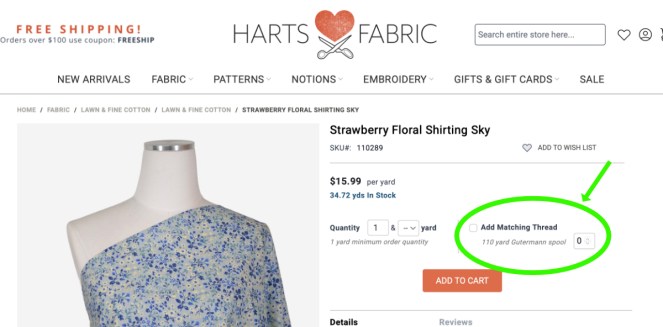
Again, I put too much ease into this wearable toile (again, struggling with fit), and if I choose this one to make for the wedding, I’ll make it more like the pattern. I got all my patterns from Hart’s Fabrics in Santa Cruz, California and they came lickety-split, especially considering that Merchant and Mills patterns are from England.

In five years of owning my sewing machine, purchased in December 2020, I’d never used my buttonholer. I had to watch a video online to figure out how, but it worked like a charm the other night.

Dress Number Three

I’m still in the middle of Dress #3. It’s a Simplicity pattern I’ve had forever, and is a plain-Jane shirtwaist dress. I found two lengths of this blue-and-white fabric in my stash. Guess I forgot and ordered it twice, but it came in handy when I needed to make one more wearable toile. I’ve re-cut the sleeve piece twice; I like my sleeves a little longer — like to my elbow — but we’ll see how this turns out.

Pockets

I don’t know about you, but to me a good pocket is mandatory. I traced off an old pattern to make myself a basic pocket pattern, and here it is for a Free Download:

It basically looks like what’s in the photo, above. I used fat quarter-inch seam allowance on the outside edge, but you can cut it larger, if you want.

For placement on your dress, when holding up the main section of your pattern to your body, bend your elbow and figure out where you’d like your hand to slide in. Think also about where the bottom edge will be; you don’t want to be reaching down to get the car keys out of your pocket. Then mark that.

I sew the pocket onto the side of the dress in a 1/4-inch seam, press to the pocket, then serge that section only. After pinning the side seams/pockets together sew about 1″ below the top edge of the pocket piece, then all the way around the pocket, then to a point on the seamline and then down the seam to the hem. Like this:

Serge or zig-zag the raw edge. Or as Merchant and Mills patterns say, “Tidy up the edge.”

You can also stabilize the pocket by sewing it into a waist seam. To adjust for that, grab a pencil, like the one from your Dad’s art box, and draw a curvy line upward. Try to make it match your waist seamline. This is the cheesy way. Watch the following Video (That May Confuse You or Help You) to see it done more professionally than just a pencil line: How to sew a waist-anchored pocket (this also helps you draft your own)

What else?

Whichever one I think will work best will get sewn up into a light blue linen print I’ve been hoarding for a couple of years. Then I think I’ll sew a skirt or two when I return. I’ve seriously neglected my wardrobe the last few years, and I generally hate all clothes in the stores. (Or maybe it’s just trying them on that I hate.) Thankfully my sister is cheering me on, and my husband is an angel and has learned to say nice things about my wearable toiles, such as “You’ve never looked better,” and tries not to choke as he delivers his scripted lines.

I’m skipping my A Quilting Life QAL update post this month, mainly because I haven’t yet worked on it. I’ll just do both July and August together, after I return from the wedding of this lovely grandchild #3. And then I’ll launch back into some of my Economy Block sewing, too, as well as some quilting on the New York Beauties. Oh! and seaming together my Posh Penelope. August will be busy!

It’s heating up here…enjoy your July–

Reforming a pocket to get anchored at the waist, from In The Folds

Design Your Own In-Seam Pockets

Professor Pincushion Talks You Through Adding a Pocket

Bernadette shows you the same thing, but also how to figure out where to put the pocket

300 and Beyond · Free Download · Quilts
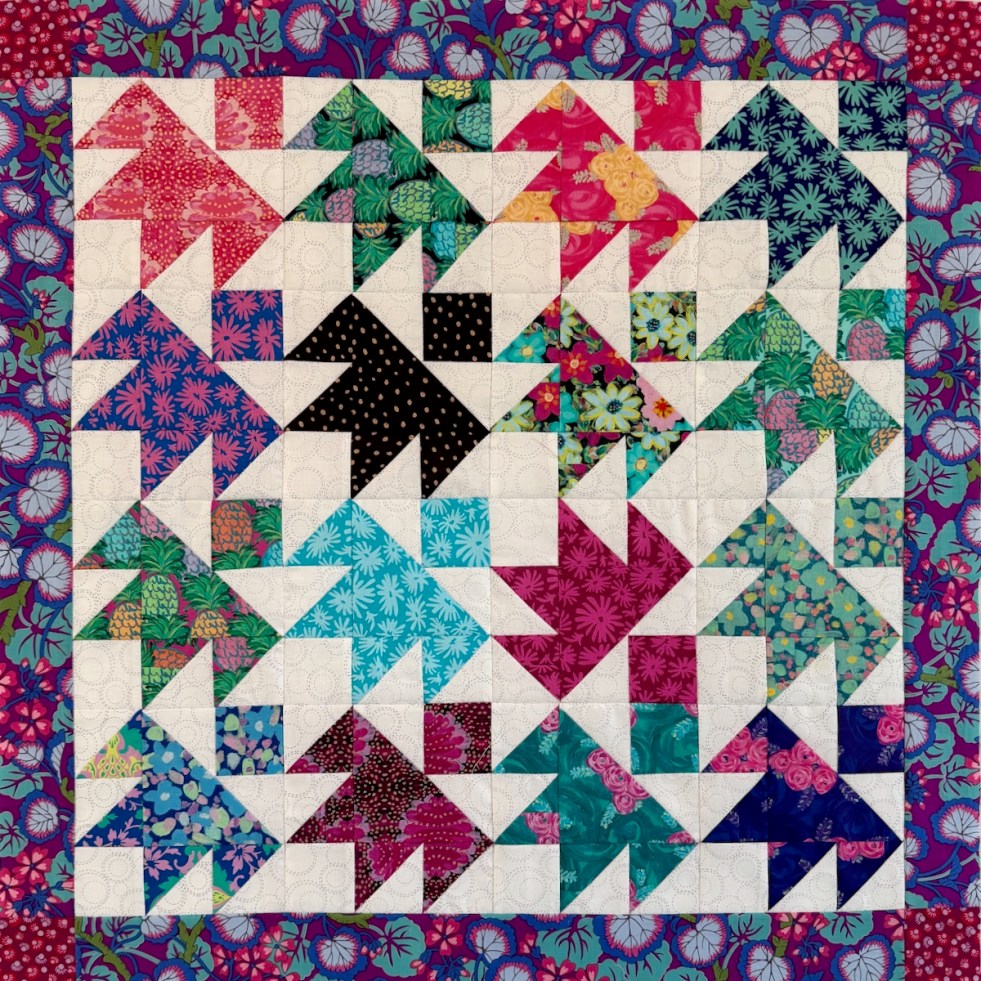
Happy 50 Years!

First, a continuation of a story. Remember this quilt? And how when I went to find the binding, I couldn’t…and then a friend wrote to say, “Oh, you sent me that fabric!”

Then that friend, Mary of Zippy Quilts, performed her usual magic and using that fabric and my Criss-Cross pattern, made this up in no time. Or at least it seems like that. And then, she didn’t have enough for an outside border, but went with what she had in her stash. She wrote it up on her blog, Zippy Quilts, which is always worth reading.

While clearing/cleaning out in another spot, I found this bag of –yes– cut binding for that quilt. But now all that fabric is really gone — to a good home in the guild grab bag. So that’s the end of that story.

Here’s my version of Criss-Cross Color, done all in richly colored solids. One of my children now has this quilt, and I hope it gets lots of use.
In keeping with my discovering more and more WIPs from Days Gone Past, I found seven selvage blocks (mentioned in an earlier post). And since I’m playing the News Avoidance-Call Your Congressman game, I figured it was as good a time as any to finish up this stray project.

Since the universe served me up this quote (which is unverified at this point) I knew what had to be done: write up a free tipsheet on how make these blocks, just in case you might want to sew some up. Keep reading for my final thoughts on this (at the end).

Click below to download the file:

(Don’t click on the illustration—>)

So I had seven, but made two more in the last few days, so here are all nine. I keep wondering about that white in the middle, but I’m in the business of rehoming my orphan blocks, not creating more. It will stay white.

What kept me going in ripping out all those papers:
I’m now going through the fourth book of Osman’s and have the fifth one in my wish list, but it’s not going to be released until September. I think you can also get them through public libraries, too.

Basic Tips for Selvage Blocks

(Tips are also in the free download, above, but here’s some different photos)

The triangles are cut and pinned, and now I’m ready to add my first round of selvages. I check to make sure I’m overlapping at least a 1/4″ and then sew it down, keeping my needle about 1/8″ from the edge.

Since I have a range of blues ready to go, I add more. On the upper left, I pieced the selvage so the pears would end up next to the words. It’s not the most perfect piecing job, but the bright side is that it allows you to see that I did piece it. I do try and arrange the markings (words and designs) when I’m cutting and arranging the strips, so they don’t get cut off. And in the last photo, I’m happy that the bright blue will run around the very center of the block (more on that in the Tip Sheet).

In the top left (I assume you are reading this on a desktop, but if you aren’t, it’s probably the first photo in this group if you are reading on a mobile), I noticed I was not as careful as I should have been in getting the strips on straight, and it was only going to get worse.

So I threw in a “half-length” of selvage on the right and stitched it down. Then the next strip would be more straight and level, and I could move forward. This process is pretty forgiving, so try not to sweat the small stuff. The rest of the photos show an early phase (half done), then a fully covered square. Notice that the “tip” has a rather large piece of selvage on there. I have been known to grab a length of fabric from my stash and cut a selvage to fit.

Flip over your completed piece, and trim to 10-1/2″ square.

Four of them, sewn together, yield this pretty thing.

One last tip: I did plan to keep the paper on until the very end, but hey — paper doesn’t move, stretch, or give. [Or if you’ve been watching all the Saturday Night Live (SNL) videos this week, it also doesn’t kick…stretch…or kick.] While some of these selvages are from 25 years ago, they aren’t as old as Sally O’Malley (she’s 50!).

Although, if you need a good laugh, let me stop you right now and remind you to watch the More Cowbell skit. We burst out laughing one early morning, and in spite of the News (shudder), had a smile on our faces for most of the morning.

The other night I couldn’t sleep so wandered into my sewing room. I typically don’t sew in the middle of the night (you know, sharp things) but I decided to piece together my big blocks. I had some repairing to do after taking all the papers off, so did that, then started –very carefully — pinning and sewing the blocks together. It was a wonderful time to think of the fabrics that I’d used, from baby fabrics to bright bolds, to textures. I found repeats in different color ways, backings (they give the longest lengths of selvage), and bits and pieces of other fabrics.

I realized this quilt is now kind of like a fabric journal, a history of my materials and where my quilting journey has taken me over the last fifty years. Just as SNL is celebrating their 50 years of doing comedy sketches, I guess I should celebrate my fifty years of quilting.

Happy 50 to me!

Guess I’ll go and sew something!